EP3278260B1 - Gesture matching mechanism - Google Patents
Gesture matching mechanism Download PDFInfo
- Publication number
- EP3278260B1 EP3278260B1 EP15886821.6A EP15886821A EP3278260B1 EP 3278260 B1 EP3278260 B1 EP 3278260B1 EP 15886821 A EP15886821 A EP 15886821A EP 3278260 B1 EP3278260 B1 EP 3278260B1
- Authority
- EP
- European Patent Office
- Prior art keywords
- gesture
- user
- gestures
- database
- avatar
- Prior art date
- Legal status (The legal status is an assumption and is not a legal conclusion. Google has not performed a legal analysis and makes no representation as to the accuracy of the status listed.)
- Active
Links
Images


Classifications
-
- G—PHYSICS
- G06—COMPUTING OR CALCULATING; COUNTING
- G06F—ELECTRIC DIGITAL DATA PROCESSING
- G06F21/00—Security arrangements for protecting computers, components thereof, programs or data against unauthorised activity
- G06F21/30—Authentication, i.e. establishing the identity or authorisation of security principals
- G06F21/31—User authentication
- G06F21/32—User authentication using biometric data, e.g. fingerprints, iris scans or voiceprints
-
- G—PHYSICS
- G06—COMPUTING OR CALCULATING; COUNTING
- G06F—ELECTRIC DIGITAL DATA PROCESSING
- G06F21/00—Security arrangements for protecting computers, components thereof, programs or data against unauthorised activity
- G06F21/30—Authentication, i.e. establishing the identity or authorisation of security principals
-
- G—PHYSICS
- G06—COMPUTING OR CALCULATING; COUNTING
- G06F—ELECTRIC DIGITAL DATA PROCESSING
- G06F21/00—Security arrangements for protecting computers, components thereof, programs or data against unauthorised activity
- G06F21/30—Authentication, i.e. establishing the identity or authorisation of security principals
- G06F21/31—User authentication
- G06F21/36—User authentication by graphic or iconic representation
-
- G—PHYSICS
- G06—COMPUTING OR CALCULATING; COUNTING
- G06F—ELECTRIC DIGITAL DATA PROCESSING
- G06F3/00—Input arrangements for transferring data to be processed into a form capable of being handled by the computer; Output arrangements for transferring data from processing unit to output unit, e.g. interface arrangements
- G06F3/01—Input arrangements or combined input and output arrangements for interaction between user and computer
- G06F3/017—Gesture based interaction, e.g. based on a set of recognized hand gestures
-
- G—PHYSICS
- G06—COMPUTING OR CALCULATING; COUNTING
- G06T—IMAGE DATA PROCESSING OR GENERATION, IN GENERAL
- G06T19/00—Manipulating three-dimensional [3D] models or images for computer graphics
-
- G—PHYSICS
- G06—COMPUTING OR CALCULATING; COUNTING
- G06V—IMAGE OR VIDEO RECOGNITION OR UNDERSTANDING
- G06V40/00—Recognition of biometric, human-related or animal-related patterns in image or video data
- G06V40/20—Movements or behaviour, e.g. gesture recognition
- G06V40/28—Recognition of hand or arm movements, e.g. recognition of deaf sign language
-
- H—ELECTRICITY
- H04—ELECTRIC COMMUNICATION TECHNIQUE
- H04L—TRANSMISSION OF DIGITAL INFORMATION, e.g. TELEGRAPHIC COMMUNICATION
- H04L63/00—Network architectures or network communication protocols for network security
- H04L63/08—Network architectures or network communication protocols for network security for authentication of entities
-
- H—ELECTRICITY
- H04—ELECTRIC COMMUNICATION TECHNIQUE
- H04L—TRANSMISSION OF DIGITAL INFORMATION, e.g. TELEGRAPHIC COMMUNICATION
- H04L9/00—Cryptographic mechanisms or cryptographic arrangements for secret or secure communications; Network security protocols
- H04L9/32—Cryptographic mechanisms or cryptographic arrangements for secret or secure communications; Network security protocols including means for verifying the identity or authority of a user of the system or for message authentication, e.g. authorization, entity authentication, data integrity or data verification, non-repudiation, key authentication or verification of credentials
-
- H—ELECTRICITY
- H04—ELECTRIC COMMUNICATION TECHNIQUE
- H04W—WIRELESS COMMUNICATION NETWORKS
- H04W12/00—Security arrangements; Authentication; Protecting privacy or anonymity
- H04W12/06—Authentication
-
- H—ELECTRICITY
- H04—ELECTRIC COMMUNICATION TECHNIQUE
- H04W—WIRELESS COMMUNICATION NETWORKS
- H04W12/00—Security arrangements; Authentication; Protecting privacy or anonymity
- H04W12/06—Authentication
- H04W12/065—Continuous authentication
-
- H—ELECTRICITY
- H04—ELECTRIC COMMUNICATION TECHNIQUE
- H04W—WIRELESS COMMUNICATION NETWORKS
- H04W12/00—Security arrangements; Authentication; Protecting privacy or anonymity
- H04W12/60—Context-dependent security
- H04W12/68—Gesture-dependent or behaviour-dependent
Definitions
- Embodiments described herein generally relate to computers. More particularly, embodiments relate to a mechanism for gesture matching.
- Authentication is implemented in computer security applications to confirm the identify of an individual that is attempting to use a computer system.
- Common authentication systems may employ biometric (e.g., fingerprint and/or facial recognition) applications to authenticate a user.
- biometric e.g., fingerprint and/or facial recognition
- Such systems may be subject to counterfeit measures.
- US6421453B1 relates to a method for controlling access of an individual to one of a computer and a service and a facility comprises the steps of: pre-storing a predefined sequence of intentional gestures performed by the individual during an enrolment session; extracting the predefined sequence of intentional gestures from the individual during a recognition session; and comparing the pre-stored sequence of intentional gestures to the extracted sequence of intentional gestures to recognize the individual.
- Embodiments provide for a gesture matching mechanism that learns gestures and performs user authentication based on the learned gestures.
- the gesture matching mechanism learns gestures during a registration phase in which a user registers a number of gestures for later recognition of a user. Subsequently during an authentication phase, a user is prompted to perform a gesture selected from a database in order to determine whether the user's gesture performance matches the selected gesture. The user is authenticated if a match is detected.
- the gesture matching mechanism may be implemented to screen for health warnings by monitoring a user's facial movement over time to detect changes that may indicate a health problem.
- the gesture matching mechanism may be implemented to perform game control, as well as other applications.
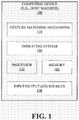
- FIG. 1 illustrates a gesture matching mechanism 110 at a computing device 100 according to one embodiment.
- computing device 100 serves as a host machine for hosting gesture matching mechanism 110 that includes a combination of any number and type of components for facilitating authentication, health indication and/or game control based on gesture recognition at computing devices, such as computing device 100.
- Computing device 100 may include large computing systems, such as server computers, desktop computers, etc., and may further include set-top boxes (e.g., Internet-based cable television set-top boxes, etc.), global positioning system (GPS)-based devices, etc.
- Computing device 100 may include mobile computing devices, such as cellular phones including smartphones, personal digital assistants (PDAs), tablet computers, laptop computers (e.g., notebook, netbook, UltrabookTM, etc.), e-readers, etc.
- PDAs personal digital assistants
- laptop computers e.g., notebook, netbook, UltrabookTM, etc.
- Computing device 100 may include an operating system (OS) 106 serving as an interface between hardware and/or physical resources of the computer device 100 and a user.
- Computing device 100 further includes one or more processors 102, memory devices 104, network devices, drivers, or the like, as well as input/output (I/O) sources 108, such as touchscreens, touch panels, touch pads, virtual or regular keyboards, virtual or regular mice, etc.
- I/O input/output
- gesture matching mechanism 110 may be employed at computing device 100, such as a laptop computer, a desktop computer, a smartphone, a tablet computer, etc.
- gesture matching mechanism 110 may include any number and type of components, such as: reception and capturing logic 201, gesture training module 202, gesture selection engine 203, avatar animation and rendering engine 204, gesture matching component 205 and gesture learning module 206.
- reception and capturing logic 201 facilitates an image capturing device implemented at image sources 225 at computing device 100 to receive and capture an image associated with a user, such as a live and real-time image of a user. As the live image of the user is received and captured, the user's movements may be continuously, and in real-time, detected and tracked in live video frames.
- reception and capturing logic 201 may receive image data from image source 225, where the image data may be in the form of a sequence of images or frames (e.g., video frames).
- Image sources 225 may include an image capturing device, such as a camera.
- Such a device may include various components, such as (but are not limited to) an optics assembly, an image sensor, an image/video encoder, etc., that may be implemented in any combination of hardware and/or software.
- the optics assembly may include one or more optical devices (e.g., lenses, mirrors, etc.) to project an image within a field of view onto multiple sensor elements within the image sensor.
- the optics assembly may include one or more mechanisms to control the arrangement of these optical device(s). For example, such mechanisms may control focusing operations, aperture settings, exposure settings, zooming operations, shutter speed, effective focal length, etc. Embodiments, however, are not limited to these examples.
- Image sources 225 may further include one or more image sensors including an array of sensor elements where these elements may be complementary metal oxide semiconductor (CMOS) sensors, charge coupled devices (CCDs), or other suitable sensor element types. These elements may generate analog intensity signals (e.g., voltages), which correspond to light incident upon the sensor.
- the image sensor may also include analog-to-digital converter(s) ADC(s) that convert the analog intensity signals into digitally encoded intensity values.
- ADC analog-to-digital converter
- an image sensor converts light received through optics assembly into pixel values, where each of these pixel values represents a particular light intensity at the corresponding sensor element. Although these pixel values have been described as digital, they may alternatively be analog.
- the image sensing device may include an image/video encoder to encode and/or compress pixel values.
- image/video encoder to encode and/or compress pixel values.
- Various techniques, standards, and/or formats e.g., Moving Picture Experts Group (MPEG), Joint Photographic Expert Group (JPEG), etc. may be employed for this encoding and/or compression.
- MPEG Moving Picture Experts Group
- JPEG Joint Photographic Expert Group
- image sources 225 may be any number and type of components, such as image capturing devices (e.g., one or more cameras, etc.) and image sensing devices, such as (but not limited to) context-aware sensors (e.g., temperature sensors, facial expression and feature measurement sensors working with one or more cameras, environment sensors (such as to sense background colors, lights, etc.), biometric sensors (such as to detect fingerprints, facial points or features, etc.), and the like.
- context-aware sensors e.g., temperature sensors, facial expression and feature measurement sensors working with one or more cameras, environment sensors (such as to sense background colors, lights, etc.), biometric sensors (such as to detect fingerprints, facial points or features, etc.), and the like.
- Computing device 100 may also include one or more software applications, such as business applications, social network websites, business networking websites, communication applications, games and other entertainment applications, etc., offering one or more user interfaces (e.g., web user interface (WUI), graphical user interface (GUI), touchscreen, etc.) to display the gesture matching and for the user to communicate with other users at other computing devices, while ensuring compatibility with changing technologies, parameters, protocols, standards, etc.
- software applications such as business applications, social network websites, business networking websites, communication applications, games and other entertainment applications, etc.
- user interfaces e.g., web user interface (WUI), graphical user interface (GUI), touchscreen, etc.
- gesture matching mechanism 110 operates in two phases.
- One such phase is a registration phase in which a user registers a number of gestures.
- gesture training module 202 capture a multitude of gestures for later recognition of a user.
- gesture training module 202 identifies new gestures from user images captured at reception and capturing logic 201 and adds the gestures to database 240 as animation parameters.
- each new gesture defines a combination of a pose or expression in a single frame.
- each gesture defines a sequence of poses or expressions occuring within a predetermined time frame (e.g., seconds).
- database 240 may be used to record, store, and maintain data relating to various gestures such as human head, facial, hand and/or finger movements. These gestures may be recorded as sequences of frames where each frame may include multiple features.
- Database 240 may include a data source, an information storage medium, such as memory (volatile or nonvolatile), disk storage, optical storage, etc.
- the second phase is an authentication phase in which a user is authenticated based on recognition of a gesture.
- a user is prompted to perform a gesture selected from database 240 in order to determine whether the user's gesture performance matches the selected gesture.
- Gesture selection engine 203 is implemented to randomly select a gesture from database 240 for user authentication.
- Avatar animation and rendering engine 204 translates the selected gesture into an animated avatar on display 230.
- Display device 230 may be implemented with various display(s) including (but are not limited to) liquid crystal displays (LCDs), light emitting diode (LED) displays, plasma displays, and cathode ray tube (CRT) displays.
- LCDs liquid crystal displays
- LED light emitting diode
- CRT cathode ray tube
- display screen or device 230 visually outputs the avatar to the user.
- avatar animation and rendering engine 204 uses Intel® Pocket Avatars®, which blends shapes to animate a selected avatar.
- a facial gesture e.g., mouth open, eye wink, etc.
- Figure 3 illustrates one embodiment of avatars corresponding to selected gestures that are displayed by avatar animation and rendering engine 204. As shown in Figure 3 , an avatar dynamically poses facial/head gestures.
- avatar animation and rendering engine 204 facilitates the prompting of a user to perform the pose of the displayed avatar.
- reception and capturing logic 201 captures the user's response.
- reception and capturing logic 201 captures video within a predetermined time window.
- gesture matching component 205 compares the captured gesture response with the selected gesture by analyzing the video frame to identify whether the same gesture appears in the predetermined time period.
- Gesture matching component 205 automatically selects a key frame and determines the temporal sequence across multiple frames to compare the user's input (e.g., performed gesture) with database 240 to determine if the input matches the selected gesture.
- Guser and G database are compared by a temporal sequence matching method, such as Dynamic Time Warping. If there is a match, the user is authenticated.
- Gesture learning module 207 identifies new gestures performed by the user and adds the new gestures to database 240. For instance, if G user doesn't match any gestures database 240, database 240 is updated to include this new gesture. As a result, different gestures may be used for subsequent authentication of the user.
- any number and type of components 201-240 of gesture matching mechanism 110 may not necessarily be at a single computing device and may be allocated among or distributed between any number and type of computing devices, including computing device 100 having (but are not limited to) server computing devices, cameras, PDAs, mobile phones (e.g., smartphones, tablet computers, etc.), personal computing devices (e.g., desktop devices, laptop computers, etc.), smart televisions, servers, wearable devices, media players, any smart computing devices, and so forth. Further examples include microprocessors, graphics processors or engines, microcontrollers, application specific integrated circuits (ASICs), and so forth. Embodiments, however, are not limited to these examples.
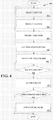
- Figure 4 is a flow diagram illustrating a method 400 for facilitating authentication of a user at a gesture matching mechanism operating on a computing device according to one embodiment.
- Method 400 may be performed by processing logic that may comprise hardware (e.g., circuitry, dedicated logic, programmable logic, etc.), software (such as instructions run on a processing device), or a combination thereof.
- method 400 may be performed by gesture matching mechanism 110.
- the processes of method 400 are illustrated in linear sequences for brevity and clarity in presentation; however, it is contemplated that any number of them can be performed in parallel, asynchronously, or in different orders. For brevity, clarity, and ease of understanding, many of the details discussed with reference to Figures 1 and 2 are not discussed or repeated here.
- Method 400 begins at block 410 with a gesture being selected from database 240.
- the selected gesture is displayed as an avatar.
- the user is prompted to pose according to a gesture being displayed by the avatar.
- the user pose is captured.
- video frame data comprising the user pose is analyzed.
- a determination is made as to whether the captured pose includes a gesture that matches the selected gesture. If not, control is returned to processing block 410, where another gesture is selected for authentication. If there is a determination that the captured pose includes a gesture that matches the selected gesture, the user is authenticated at processing block 470.
- a determination is made as to whether one or more poses included unrecognized gestures. If so, the gestures are added to the database, processing block 490.
- gesture matching mechanism 110 may feature gesture matching mechanism 110 being implemented to screen for health warnings.
- gesture matching mechanism 110 may monitor a user's facial movement (e.g., mouth) over time and analyze the movements for micro changes that may indicate a stroke.
- gesture matching mechanism 110 may be implemented to perform game control.
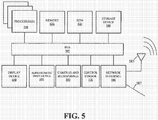
- FIG. 5 illustrates one embodiment of a computer system 500.
- Computing system 500 includes bus 505 (or, for example, a link, an interconnect, or another type of communication device or interface to communicate information) and processor 510 coupled to bus 505 that may process information. While computing system 500 is illustrated with a single processor, electronic system 500 and may include multiple processors and/or co-processors, such as one or more of central processors, graphics processors, and physics processors, etc. Computing system 500 may further include random access memory (RAM) or other dynamic storage device 520 (referred to as main memory), coupled to bus 505 and may store information and instructions that may be executed by processor 510. Main memory 520 may also be used to store temporary variables or other intermediate information during execution of instructions by processor 510.
- RAM random access memory
- main memory main memory
- Computing system 500 may also include read only memory (ROM) and/or other storage device 530 coupled to bus 505 that may store static information and instructions for processor 510.
- Date storage device 540 may be coupled to bus 505 to store information and instructions.
- Date storage device 540 such as magnetic disk or optical disc and corresponding drive may be coupled to computing system 500.
- Computing system 500 may also be coupled via bus 505 to display device 550, such as a cathode ray tube (CRT), liquid crystal display (LCD) or Organic Light Emitting Diode (OLED) array, to display information to a user.
- display device 550 such as a cathode ray tube (CRT), liquid crystal display (LCD) or Organic Light Emitting Diode (OLED) array
- User input device 560 may be coupled to bus 505 to communicate information and command selections to processor 510.
- cursor control 570 such as a mouse, a trackball, a touchscreen, a touchpad, or cursor direction keys to communicate direction information and command selections to processor 510 and to control cursor movement on display 550.
- Camera and microphone arrays 590 of computer system 500 may be coupled to bus 505 to observe gestures, record audio and video and to receive and transmit visual and audio commands.
- Computing system 500 may further include network interface(s) 580 to provide access to a network, such as a local area network (LAN), a wide area network (WAN), a metropolitan area network (MAN), a personal area network (PAN), Bluetooth, a cloud network, a mobile network (e.g., 3 rd Generation (3G), etc.), an intranet, the Internet, etc.
- Network interface(s) 580 may include, for example, a wireless network interface having antenna 585, which may represent one or more antenna(e).
- Network interface(s) 580 may also include, for example, a wired network interface to communicate with remote devices via network cable 587, which may be, for example, an Ethernet cable, a coaxial cable, a fiber optic cable, a serial cable, or a parallel cable.
- Network interface(s) 580 may provide access to a LAN, for example, by conforming to IEEE 802.11b and/or IEEE 802.11g standards, and/or the wireless network interface may provide access to a personal area network, for example, by conforming to Bluetooth standards.
- Other wireless network interfaces and/or protocols, including previous and subsequent versions of the standards, may also be supported.
- network interface(s) 580 may provide wireless communication using, for example, Time Division, Multiple Access (TDMA) protocols, Global Systems for Mobile Communications (GSM) protocols, Code Division, Multiple Access (CDMA) protocols, and/or any other type of wireless communications protocols.
- TDMA Time Division, Multiple Access
- GSM Global Systems for Mobile Communications
- CDMA Code Division, Multiple Access
- Network interface(s) 580 may include one or more communication interfaces, such as a modem, a network interface card, or other well-known interface devices, such as those used for coupling to the Ethernet, token ring, or other types of physical wired or wireless attachments for purposes of providing a communication link to support a LAN or a WAN, for example.
- the computer system may also be coupled to a number of peripheral devices, clients, control surfaces, consoles, or servers via a conventional network infrastructure, including an Intranet or the Internet, for example.
- computing system 500 may vary from implementation to implementation depending upon numerous factors, such as price constraints, performance requirements, technological improvements, or other circumstances.
- Examples of the electronic device or computer system 500 may include without limitation a mobile device, a personal digital assistant, a mobile computing device, a smartphone, a cellular telephone, a handset, a one-way pager, a two-way pager, a messaging device, a computer, a personal computer (PC), a desktop computer, a laptop computer, a notebook computer, a handheld computer, a tablet computer, a server, a server array or server farm, a web server, a network server, an Internet server, a work station, a mini-computer, a main frame computer, a supercomputer, a network appliance, a web appliance, a distributed computing system, multiprocessor systems, processor-based systems, consumer electronics, programmable consumer electronics, television, digital television, set top box, wireless access
- Embodiments may be implemented as any or a combination of: one or more microchips or integrated circuits interconnected using a parentboard, hardwired logic, software stored by a memory device and executed by a microprocessor, firmware, an application specific integrated circuit (ASIC), and/or a field programmable gate array (FPGA).
- logic may include, by way of example, software or hardware and/or combinations of software and hardware.
- Embodiments may be provided, for example, as a computer program product which may include one or more machine-readable media having stored thereon machine-executable instructions that, when executed by one or more machines such as a computer, network of computers, or other electronic devices, may result in the one or more machines carrying out operations in accordance with embodiments described herein.
- a machine-readable medium may include, but is not limited to, floppy diskettes, optical disks, CD-ROMs (Compact Disc-Read Only Memories), and magneto-optical disks, ROMs, RAMs, EPROMs (Erasable Programmable Read Only Memories), EEPROMs (Electrically Erasable Programmable Read Only Memories), magnetic or optical cards, flash memory, or other type of media/machine-readable medium suitable for storing machine-executable instructions.
- embodiments may be downloaded as a computer program product, wherein the program may be transferred from a remote computer (e.g., a server) to a requesting computer (e.g., a client) by way of one or more data signals embodied in and/or modulated by a carrier wave or other propagation medium via a communication link (e.g., a modem and/or network connection).
- a remote computer e.g., a server
- a requesting computer e.g., a client
- a communication link e.g., a modem and/or network connection
- references to “one embodiment”, “an embodiment”, “example embodiment”, “various embodiments”, etc., indicate that the embodiment(s) so described may include particular features, structures, or characteristics, but not every embodiment necessarily includes the particular features, structures, or characteristics. Further, some embodiments may have some, all, or none of the features described for other embodiments.
- Coupled is used to indicate that two or more elements co-operate or interact with each other, but they may or may not have intervening physical or electrical components between them.
Landscapes
- Engineering & Computer Science (AREA)
- Computer Security & Cryptography (AREA)
- Theoretical Computer Science (AREA)
- General Engineering & Computer Science (AREA)
- Signal Processing (AREA)
- Computer Networks & Wireless Communication (AREA)
- Physics & Mathematics (AREA)
- General Physics & Mathematics (AREA)
- Computer Hardware Design (AREA)
- Software Systems (AREA)
- Human Computer Interaction (AREA)
- General Health & Medical Sciences (AREA)
- Health & Medical Sciences (AREA)
- Social Psychology (AREA)
- Computing Systems (AREA)
- Computer Graphics (AREA)
- Psychiatry (AREA)
- Computer Vision & Pattern Recognition (AREA)
- Multimedia (AREA)
- Life Sciences & Earth Sciences (AREA)
- Animal Behavior & Ethology (AREA)
- User Interface Of Digital Computer (AREA)
- Processing Or Creating Images (AREA)
Description
- Embodiments described herein generally relate to computers. More particularly, embodiments relate to a mechanism for gesture matching.
- Authentication is implemented in computer security applications to confirm the identify of an individual that is attempting to use a computer system. Common authentication systems may employ biometric (e.g., fingerprint and/or facial recognition) applications to authenticate a user. However, such systems may be subject to counterfeit measures.
-
US6421453B1 relates to a method for controlling access of an individual to one of a computer and a service and a facility comprises the steps of: pre-storing a predefined sequence of intentional gestures performed by the individual during an enrolment session; extracting the predefined sequence of intentional gestures from the individual during a recognition session; and comparing the pre-stored sequence of intentional gestures to the extracted sequence of intentional gestures to recognize the individual. - The invention is defined in the claims. In the following description, any embodiment referred to and not falling within the scope of the claims is merely an example useful to the understanding of the invention.
- Embodiments are illustrated by way of example, and not by way of limitation, in the figures of the accompanying drawings in which like reference numerals refer to similar elements.
-
Figure 1 illustrates a gesture matching mechanism at a computing device according to one embodiment. -
Figure 2 illustrates a gesture matching mechanism according to one embodiment. -
Figure 3 illustrates avatars displayed by gesture matching mechanism. -
Figure 4 is a flow diagram illustrating the operation of a gesture matching mechanism according to one embodiment. -
Figure 5 illustrates a computer system suitable for implementing embodiments of the present disclosure according to one embodiment. - In the following description, numerous specific details are set forth. However, embodiments, as described herein, may be practiced without these specific details. In other instances, well-known circuits, structures and techniques have not been shown in details in order not to obscure the understanding of this description.
- Embodiments provide for a gesture matching mechanism that learns gestures and performs user authentication based on the learned gestures. In one embodiment, the gesture matching mechanism learns gestures during a registration phase in which a user registers a number of gestures for later recognition of a user. Subsequently during an authentication phase, a user is prompted to perform a gesture selected from a database in order to determine whether the user's gesture performance matches the selected gesture. The user is authenticated if a match is detected. In other embodiment, the gesture matching mechanism may be implemented to screen for health warnings by monitoring a user's facial movement over time to detect changes that may indicate a health problem. In a further embodiment, the gesture matching mechanism may be implemented to perform game control, as well as other applications.
-
Figure 1 illustrates agesture matching mechanism 110 at a computing device 100 according to one embodiment. In one embodiment, computing device 100 serves as a host machine for hostinggesture matching mechanism 110 that includes a combination of any number and type of components for facilitating authentication, health indication and/or game control based on gesture recognition at computing devices, such as computing device 100. Computing device 100 may include large computing systems, such as server computers, desktop computers, etc., and may further include set-top boxes (e.g., Internet-based cable television set-top boxes, etc.), global positioning system (GPS)-based devices, etc. Computing device 100 may include mobile computing devices, such as cellular phones including smartphones, personal digital assistants (PDAs), tablet computers, laptop computers (e.g., notebook, netbook, Ultrabook™, etc.), e-readers, etc. - Computing device 100 may include an operating system (OS) 106 serving as an interface between hardware and/or physical resources of the computer device 100 and a user. Computing device 100 further includes one or
more processors 102,memory devices 104, network devices, drivers, or the like, as well as input/output (I/O)sources 108, such as touchscreens, touch panels, touch pads, virtual or regular keyboards, virtual or regular mice, etc. It is to be noted that terms like "node", "computing node", "server", "server device", "cloud computer", "cloud server", "cloud server computer", "machine", "host machine", "device", "computing device", "computer", "computing system", and the like, may be used interchangeably throughout this document. It is to be further noted that terms like "application", "software application", "program", "software program", "package", and "software package" may be used interchangeably throughout this document. Similarly, terms like "job", "input", "request" and "message" may be used interchangeably throughout this document. -
Figure 2 illustrates agesture matching mechanism 110 according to one embodiment. In one embodiment,gesture matching mechanism 110 may be employed at computing device 100, such as a laptop computer, a desktop computer, a smartphone, a tablet computer, etc. In one embodiment,gesture matching mechanism 110 may include any number and type of components, such as: reception and capturinglogic 201,gesture training module 202,gesture selection engine 203, avatar animation andrendering engine 204, gesture matching component 205 andgesture learning module 206. - In one embodiment, reception and capturing
logic 201 facilitates an image capturing device implemented atimage sources 225 at computing device 100 to receive and capture an image associated with a user, such as a live and real-time image of a user. As the live image of the user is received and captured, the user's movements may be continuously, and in real-time, detected and tracked in live video frames. In embodiments, reception and capturinglogic 201 may receive image data fromimage source 225, where the image data may be in the form of a sequence of images or frames (e.g., video frames).Image sources 225 may include an image capturing device, such as a camera. Such a device may include various components, such as (but are not limited to) an optics assembly, an image sensor, an image/video encoder, etc., that may be implemented in any combination of hardware and/or software. The optics assembly may include one or more optical devices (e.g., lenses, mirrors, etc.) to project an image within a field of view onto multiple sensor elements within the image sensor. In addition, the optics assembly may include one or more mechanisms to control the arrangement of these optical device(s). For example, such mechanisms may control focusing operations, aperture settings, exposure settings, zooming operations, shutter speed, effective focal length, etc. Embodiments, however, are not limited to these examples. -
Image sources 225 may further include one or more image sensors including an array of sensor elements where these elements may be complementary metal oxide semiconductor (CMOS) sensors, charge coupled devices (CCDs), or other suitable sensor element types. These elements may generate analog intensity signals (e.g., voltages), which correspond to light incident upon the sensor. In addition, the image sensor may also include analog-to-digital converter(s) ADC(s) that convert the analog intensity signals into digitally encoded intensity values. Embodiments, however, are not limited to these examples. For example, an image sensor converts light received through optics assembly into pixel values, where each of these pixel values represents a particular light intensity at the corresponding sensor element. Although these pixel values have been described as digital, they may alternatively be analog. As described above, the image sensing device may include an image/video encoder to encode and/or compress pixel values. Various techniques, standards, and/or formats (e.g., Moving Picture Experts Group (MPEG), Joint Photographic Expert Group (JPEG), etc.) may be employed for this encoding and/or compression. - As aforementioned,
image sources 225 may be any number and type of components, such as image capturing devices (e.g., one or more cameras, etc.) and image sensing devices, such as (but not limited to) context-aware sensors (e.g., temperature sensors, facial expression and feature measurement sensors working with one or more cameras, environment sensors (such as to sense background colors, lights, etc.), biometric sensors (such as to detect fingerprints, facial points or features, etc.), and the like. Computing device 100 may also include one or more software applications, such as business applications, social network websites, business networking websites, communication applications, games and other entertainment applications, etc., offering one or more user interfaces (e.g., web user interface (WUI), graphical user interface (GUI), touchscreen, etc.) to display the gesture matching and for the user to communicate with other users at other computing devices, while ensuring compatibility with changing technologies, parameters, protocols, standards, etc. - According to one embodiment,
gesture matching mechanism 110 operates in two phases. One such phase is a registration phase in which a user registers a number of gestures. In such an embodiment,gesture training module 202 capture a multitude of gestures for later recognition of a user. In one embodiment,gesture training module 202 identifies new gestures from user images captured at reception and capturinglogic 201 and adds the gestures todatabase 240 as animation parameters. According to one embodiment, each new gesture defines a combination of a pose or expression in a single frame. In other embodiments, each gesture defines a sequence of poses or expressions occuring within a predetermined time frame (e.g., seconds). In some embodiments,database 240 may be used to record, store, and maintain data relating to various gestures such as human head, facial, hand and/or finger movements. These gestures may be recorded as sequences of frames where each frame may include multiple features.Database 240 may include a data source, an information storage medium, such as memory (volatile or nonvolatile), disk storage, optical storage, etc. - The second phase is an authentication phase in which a user is authenticated based on recognition of a gesture. In one embodiment, a user is prompted to perform a gesture selected from
database 240 in order to determine whether the user's gesture performance matches the selected gesture.Gesture selection engine 203 is implemented to randomly select a gesture fromdatabase 240 for user authentication. Avatar animation andrendering engine 204 translates the selected gesture into an animated avatar ondisplay 230.Display device 230 may be implemented with various display(s) including (but are not limited to) liquid crystal displays (LCDs), light emitting diode (LED) displays, plasma displays, and cathode ray tube (CRT) displays. - In one embodiment, display screen or
device 230 visually outputs the avatar to the user. In further embodiments, avatar animation andrendering engine 204 uses Intel® Pocket Avatars®, which blends shapes to animate a selected avatar. In this embodiment, a facial gesture (e.g., mouth open, eye wink, etc.) may be represented by the blend shape parameters that correspond to facial gesture data).Figure 3 illustrates one embodiment of avatars corresponding to selected gestures that are displayed by avatar animation andrendering engine 204. As shown inFigure 3 , an avatar dynamically poses facial/head gestures. - According to one embodiment, avatar animation and
rendering engine 204 facilitates the prompting of a user to perform the pose of the displayed avatar. Referring back toFigure 2 , reception and capturinglogic 201 captures the user's response. According to one embodiment, reception and capturinglogic 201 captures video within a predetermined time window. Subsequently, gesture matching component 205 compares the captured gesture response with the selected gesture by analyzing the video frame to identify whether the same gesture appears in the predetermined time period. - Gesture matching component 205 automatically selects a key frame and determines the temporal sequence across multiple frames to compare the user's input (e.g., performed gesture) with
database 240 to determine if the input matches the selected gesture. In one embodiment, the user's gesture is recorded as a sequence of t frames: Guser = {p1,p2 ... pt}, where pi is the pose and expression parameters for the ith frame. Similarly, each gesture in the database can be represented as a sequence of s frames: Gdatabase = {p1,p2...ps}. Guser and Gdatabase are compared by a temporal sequence matching method, such as Dynamic Time Warping. If there is a match, the user is authenticated. Gesture learning module 207 identifies new gestures performed by the user and adds the new gestures todatabase 240. For instance, if Guser doesn't match anygestures database 240,database 240 is updated to include this new gesture. As a result, different gestures may be used for subsequent authentication of the user. - It is contemplated that any number and type of components 201-240 of
gesture matching mechanism 110 may not necessarily be at a single computing device and may be allocated among or distributed between any number and type of computing devices, including computing device 100 having (but are not limited to) server computing devices, cameras, PDAs, mobile phones (e.g., smartphones, tablet computers, etc.), personal computing devices (e.g., desktop devices, laptop computers, etc.), smart televisions, servers, wearable devices, media players, any smart computing devices, and so forth. Further examples include microprocessors, graphics processors or engines, microcontrollers, application specific integrated circuits (ASICs), and so forth. Embodiments, however, are not limited to these examples. -
Figure 4 is a flow diagram illustrating amethod 400 for facilitating authentication of a user at a gesture matching mechanism operating on a computing device according to one embodiment.Method 400 may be performed by processing logic that may comprise hardware (e.g., circuitry, dedicated logic, programmable logic, etc.), software (such as instructions run on a processing device), or a combination thereof. In one embodiment,method 400 may be performed bygesture matching mechanism 110. The processes ofmethod 400 are illustrated in linear sequences for brevity and clarity in presentation; however, it is contemplated that any number of them can be performed in parallel, asynchronously, or in different orders. For brevity, clarity, and ease of understanding, many of the details discussed with reference toFigures 1 and2 are not discussed or repeated here. -
Method 400 begins atblock 410 with a gesture being selected fromdatabase 240. Atprocessing block 420, the selected gesture is displayed as an avatar. Atprocessing block 430, the user is prompted to pose according to a gesture being displayed by the avatar. Atprocessing block 440 the user pose is captured. Atprocessing block 450, video frame data comprising the user pose is analyzed. Atdecision block 460, a determination is made as to whether the captured pose includes a gesture that matches the selected gesture. If not, control is returned toprocessing block 410, where another gesture is selected for authentication. If there is a determination that the captured pose includes a gesture that matches the selected gesture, the user is authenticated atprocessing block 470. Atdecision block 480, a determination is made as to whether one or more poses included unrecognized gestures. If so, the gestures are added to the database, processingblock 490. - Although described with reference to authentication, other embodiments may feature
gesture matching mechanism 110 being implemented to screen for health warnings. In such embodiments,gesture matching mechanism 110 may monitor a user's facial movement (e.g., mouth) over time and analyze the movements for micro changes that may indicate a stroke. In a further embodiment,gesture matching mechanism 110 may be implemented to perform game control. -
Figure 5 illustrates one embodiment of a computer system 500. Computing system 500 includes bus 505 (or, for example, a link, an interconnect, or another type of communication device or interface to communicate information) and processor 510 coupled to bus 505 that may process information. While computing system 500 is illustrated with a single processor, electronic system 500 and may include multiple processors and/or co-processors, such as one or more of central processors, graphics processors, and physics processors, etc. Computing system 500 may further include random access memory (RAM) or other dynamic storage device 520 (referred to as main memory), coupled to bus 505 and may store information and instructions that may be executed by processor 510. Main memory 520 may also be used to store temporary variables or other intermediate information during execution of instructions by processor 510. - Computing system 500 may also include read only memory (ROM) and/or
other storage device 530 coupled to bus 505 that may store static information and instructions for processor 510.Date storage device 540 may be coupled to bus 505 to store information and instructions.Date storage device 540, such as magnetic disk or optical disc and corresponding drive may be coupled to computing system 500. - Computing system 500 may also be coupled via bus 505 to display
device 550, such as a cathode ray tube (CRT), liquid crystal display (LCD) or Organic Light Emitting Diode (OLED) array, to display information to a user. User input device 560, including alphanumeric and other keys, may be coupled to bus 505 to communicate information and command selections to processor 510. Another type of user input device 560 is cursor control 570, such as a mouse, a trackball, a touchscreen, a touchpad, or cursor direction keys to communicate direction information and command selections to processor 510 and to control cursor movement ondisplay 550. Camera and microphone arrays 590 of computer system 500 may be coupled to bus 505 to observe gestures, record audio and video and to receive and transmit visual and audio commands. - Computing system 500 may further include network interface(s) 580 to provide access to a network, such as a local area network (LAN), a wide area network (WAN), a metropolitan area network (MAN), a personal area network (PAN), Bluetooth, a cloud network, a mobile network (e.g., 3rd Generation (3G), etc.), an intranet, the Internet, etc. Network interface(s) 580 may include, for example, a wireless network
interface having antenna 585, which may represent one or more antenna(e). Network interface(s) 580 may also include, for example, a wired network interface to communicate with remote devices vianetwork cable 587, which may be, for example, an Ethernet cable, a coaxial cable, a fiber optic cable, a serial cable, or a parallel cable. - Network interface(s) 580 may provide access to a LAN, for example, by conforming to IEEE 802.11b and/or IEEE 802.11g standards, and/or the wireless network interface may provide access to a personal area network, for example, by conforming to Bluetooth standards. Other wireless network interfaces and/or protocols, including previous and subsequent versions of the standards, may also be supported.
- In addition to, or instead of, communication via the wireless LAN standards, network interface(s) 580 may provide wireless communication using, for example, Time Division, Multiple Access (TDMA) protocols, Global Systems for Mobile Communications (GSM) protocols, Code Division, Multiple Access (CDMA) protocols, and/or any other type of wireless communications protocols.
- Network interface(s) 580 may include one or more communication interfaces, such as a modem, a network interface card, or other well-known interface devices, such as those used for coupling to the Ethernet, token ring, or other types of physical wired or wireless attachments for purposes of providing a communication link to support a LAN or a WAN, for example. In this manner, the computer system may also be coupled to a number of peripheral devices, clients, control surfaces, consoles, or servers via a conventional network infrastructure, including an Intranet or the Internet, for example.
- It is to be appreciated that a lesser or more equipped system than the example described above may be preferred for certain implementations. Therefore, the configuration of computing system 500 may vary from implementation to implementation depending upon numerous factors, such as price constraints, performance requirements, technological improvements, or other circumstances. Examples of the electronic device or computer system 500 may include without limitation a mobile device, a personal digital assistant, a mobile computing device, a smartphone, a cellular telephone, a handset, a one-way pager, a two-way pager, a messaging device, a computer, a personal computer (PC), a desktop computer, a laptop computer, a notebook computer, a handheld computer, a tablet computer, a server, a server array or server farm, a web server, a network server, an Internet server, a work station, a mini-computer, a main frame computer, a supercomputer, a network appliance, a web appliance, a distributed computing system, multiprocessor systems, processor-based systems, consumer electronics, programmable consumer electronics, television, digital television, set top box, wireless access point, base station, subscriber station, mobile subscriber center, radio network controller, router, hub, gateway, bridge, switch, machine, or combinations thereof.
- Embodiments may be implemented as any or a combination of: one or more microchips or integrated circuits interconnected using a parentboard, hardwired logic, software stored by a memory device and executed by a microprocessor, firmware, an application specific integrated circuit (ASIC), and/or a field programmable gate array (FPGA). The term "logic" may include, by way of example, software or hardware and/or combinations of software and hardware.
- Embodiments may be provided, for example, as a computer program product which may include one or more machine-readable media having stored thereon machine-executable instructions that, when executed by one or more machines such as a computer, network of computers, or other electronic devices, may result in the one or more machines carrying out operations in accordance with embodiments described herein. A machine-readable medium may include, but is not limited to, floppy diskettes, optical disks, CD-ROMs (Compact Disc-Read Only Memories), and magneto-optical disks, ROMs, RAMs, EPROMs (Erasable Programmable Read Only Memories), EEPROMs (Electrically Erasable Programmable Read Only Memories), magnetic or optical cards, flash memory, or other type of media/machine-readable medium suitable for storing machine-executable instructions.
- Moreover, embodiments may be downloaded as a computer program product, wherein the program may be transferred from a remote computer (e.g., a server) to a requesting computer (e.g., a client) by way of one or more data signals embodied in and/or modulated by a carrier wave or other propagation medium via a communication link (e.g., a modem and/or network connection).
- References to "one embodiment", "an embodiment", "example embodiment", "various embodiments", etc., indicate that the embodiment(s) so described may include particular features, structures, or characteristics, but not every embodiment necessarily includes the particular features, structures, or characteristics. Further, some embodiments may have some, all, or none of the features described for other embodiments.
- In the following description and claims, the term "coupled" along with its derivatives, may be used. "Coupled" is used to indicate that two or more elements co-operate or interact with each other, but they may or may not have intervening physical or electrical components between them.
- As used in the claims, unless otherwise specified the use of the ordinal adjectives "first", "second", "third", etc., to describe a common element, merely indicate that different instances of like elements are being referred to, and are not intended to imply that the elements so described must be in a given sequence, either temporally, spatially, in ranking, or in any other manner.
- The invention is set out and limited in the appended set of claims.
- The scope of protection is limited in the appended set of claims.
Claims (12)
- An apparatus to facilitate gesture matching, comprising:a gesture selection engine (203) to randomly select a gesture from a database (240) during an authentication phase;an avatar animation and rendering engine (204) to translate the selected gesture into poses of an animated avatar for display at a display device (230) with a prompt for a user to perform the pose of the displayed avatar for authenticating the user;reception and capturing logic (201) to capture, in real-time, an image of a user, in response of the user performing the pose of the displayed avatar.a gesture matching component (205) to compare the captured gesture response performed by the user in the captured image to the selected gesture to determine whether the same gesture appears in the captured image, in which case there is a match to authenticate the user; anda gesture learning module (207) to identify, when it is determined that there is a match to authenticate the user, new gestures performed by the user and add the new gestures to the database (240),wherein the gesture learning module (207) identifies a new gesture upon the gesture matching component determining that a gesture performed by the user does not match a gesture in the database (240).
- The apparatus of claim 1 wherein the gesture matching component (205) authenticates the user if the gesture performed by the user in the captured image matches the selected gesture.
- The apparatus of claim 1 further comprising a gesture training module (202) to identify gestures from images of a user captured at reception and capturing logic (201) during a registration phase and store the gestures in the database for recognition.
- The apparatus of claim 3 wherein the gesture training module (202) stores the gestures as animation parameters.
- The apparatus of claim 4 wherein one of the captured gestures is selected from the database (240) by the gesture selection engine (203) during the authentication phase.
- A method to facilitate gesture matching, comprising:randomly selecting a gesture from a database (240) during an authentication phase;translating the selected gesture into poses of an animated avatar;displaying the avatar;prompting a user to perform the pose of the displayed avatar for authenticating the user;capturing a real-time image of the user, in response of the user performing the pose of the displayed avatar;comparing the captured gesture response performed by the user in the captured image to the selected gesture to determine whether the same gesture appears in the captured image, in which case there is a match to authenticate the user;identifying (480), when it is determined that there is a match to authenticate the user, new gestures performed by the user; andadding (490) the new gestures to the database,wherein a new gesture is identified upon determining that a gesture performed by the user does not match a gesture in the database (240).
- The method of claim 6 further comprising authenticating the user if the gesture performed by the user in the captured image matches the selected gesture.
- The method of claim 7 wherein comparing the gesture performed by the user to the selected gesture comprises:selecting a key frame from the user image; anddetermining a temporal sequence across multiple frames.
- The method of claim 6 further comprising performing a registration process prior to the authentication phase.
- The method of claim 9 wherein the registration process comprises:identifying gestures from captured images of the user; andstoring the gestures in the database for recognition.
- The method of claim 10 wherein the gestures are stored as animation parameters.
- At least one machine-readable medium comprising a plurality of instructions that in response to being executed on a computing device, causes the computing device to carry out operations according to any one of claims 6 to 11.
Applications Claiming Priority (1)
| Application Number | Priority Date | Filing Date | Title |
|---|---|---|---|
| PCT/CN2015/075339 WO2016154834A1 (en) | 2015-03-28 | 2015-03-28 | Gesture matching mechanism |
Publications (3)
| Publication Number | Publication Date |
|---|---|
| EP3278260A1 EP3278260A1 (en) | 2018-02-07 |
| EP3278260A4 EP3278260A4 (en) | 2018-08-29 |
| EP3278260B1 true EP3278260B1 (en) | 2021-03-17 |
Family
ID=57003779
Family Applications (1)
| Application Number | Title | Priority Date | Filing Date |
|---|---|---|---|
| EP15886821.6A Active EP3278260B1 (en) | 2015-03-28 | 2015-03-28 | Gesture matching mechanism |
Country Status (4)
| Country | Link |
|---|---|
| US (3) | US10803157B2 (en) |
| EP (1) | EP3278260B1 (en) |
| CN (1) | CN107615288B (en) |
| WO (1) | WO2016154834A1 (en) |
Families Citing this family (18)
| Publication number | Priority date | Publication date | Assignee | Title |
|---|---|---|---|---|
| US10803157B2 (en) | 2015-03-28 | 2020-10-13 | Intel Corporation | Gesture matching mechanism |
| US11256923B2 (en) * | 2016-05-12 | 2022-02-22 | Arris Enterprises Llc | Detecting sentinel frames in video delivery using a pattern analysis |
| US10764281B1 (en) * | 2017-01-09 | 2020-09-01 | United Services Automobile Association (Usaa) | Systems and methods for authenticating a user using an image capture device |
| TWI652614B (en) * | 2017-05-16 | 2019-03-01 | 緯創資通股份有限公司 | Portable electronic device and operating method thereof |
| CN107124664A (en) * | 2017-05-25 | 2017-09-01 | 百度在线网络技术(北京)有限公司 | Exchange method and device applied to net cast |
| EP3769246B1 (en) | 2018-07-18 | 2025-10-29 | Samsung Electronics Co., Ltd. | Method and apparatus for performing user authentication |
| WO2020047281A1 (en) * | 2018-08-30 | 2020-03-05 | Ideola, Inc. | System and method for memetic authentication and identification |
| CN109801625A (en) * | 2018-12-29 | 2019-05-24 | 百度在线网络技术(北京)有限公司 | Control method, device, user equipment and the storage medium of virtual speech assistant |
| US12141251B2 (en) | 2019-02-21 | 2024-11-12 | Jumio Corporation | Authentication of a user based on analyzing touch interactions with a device |
| CN110007765A (en) * | 2019-04-11 | 2019-07-12 | 上海星视度科技有限公司 | A kind of man-machine interaction method, device and equipment |
| US11146442B1 (en) * | 2019-08-15 | 2021-10-12 | Facebook, Inc. | Presenting a user profile page including an animation associated with a type of life event described by content posted to the user profile page |
| US11328047B2 (en) * | 2019-10-31 | 2022-05-10 | Microsoft Technology Licensing, Llc. | Gamified challenge to detect a non-human user |
| JP7380828B2 (en) * | 2020-02-28 | 2023-11-15 | 日本電気株式会社 | Authentication terminal, entrance/exit management system, entrance/exit management method and program |
| US20230359280A1 (en) * | 2022-05-09 | 2023-11-09 | KaiKuTek Inc. | Method of customizing hand gesture |
| CN115586855A (en) * | 2022-09-30 | 2023-01-10 | 珠海傲视创新科技有限公司 | Method and device for quickly selecting article, electronic equipment and storage medium |
| CN116152929A (en) * | 2023-03-06 | 2023-05-23 | 蔚来软件科技(上海)有限公司 | Object recognition method, device, computer equipment and storage medium |
| US20240370536A1 (en) * | 2023-05-05 | 2024-11-07 | Nvidia Corporation | Techniques for authenticating users during computer-mediated interactions |
| US20250323911A1 (en) * | 2024-04-10 | 2025-10-16 | Fmr Llc | Gesture-Based User Authentication |
Family Cites Families (18)
| Publication number | Priority date | Publication date | Assignee | Title |
|---|---|---|---|---|
| US6421453B1 (en) * | 1998-05-15 | 2002-07-16 | International Business Machines Corporation | Apparatus and methods for user recognition employing behavioral passwords |
| US8688148B2 (en) * | 2005-10-25 | 2014-04-01 | Qualcomm Incorporated | Dynamic resource matching system |
| US7558622B2 (en) * | 2006-05-24 | 2009-07-07 | Bao Tran | Mesh network stroke monitoring appliance |
| WO2008134745A1 (en) * | 2007-04-30 | 2008-11-06 | Gesturetek, Inc. | Mobile video-based therapy |
| US20090307595A1 (en) * | 2008-06-09 | 2009-12-10 | Clark Jason T | System and method for associating semantically parsed verbal communications with gestures |
| JP2011133977A (en) * | 2009-12-22 | 2011-07-07 | Sony Corp | Image processor, image processing method, and program |
| US8594374B1 (en) * | 2011-03-30 | 2013-11-26 | Amazon Technologies, Inc. | Secure device unlock with gaze calibration |
| US8897500B2 (en) * | 2011-05-05 | 2014-11-25 | At&T Intellectual Property I, L.P. | System and method for dynamic facial features for speaker recognition |
| US9357174B2 (en) * | 2012-04-09 | 2016-05-31 | Intel Corporation | System and method for avatar management and selection |
| US9092600B2 (en) | 2012-11-05 | 2015-07-28 | Microsoft Technology Licensing, Llc | User authentication on augmented reality display device |
| US9613282B2 (en) * | 2012-11-14 | 2017-04-04 | Golan Weiss | Biometric methods and systems for enrollment and authentication |
| US8856541B1 (en) * | 2013-01-10 | 2014-10-07 | Google Inc. | Liveness detection |
| CN103218842B (en) * | 2013-03-12 | 2015-11-25 | 西南交通大学 | A kind of voice synchronous drives the method for the three-dimensional face shape of the mouth as one speaks and facial pose animation |
| US9274607B2 (en) * | 2013-03-15 | 2016-03-01 | Bruno Delean | Authenticating a user using hand gesture |
| CN103279253A (en) | 2013-05-23 | 2013-09-04 | 广东欧珀移动通信有限公司 | A theme setting method and terminal device |
| CN103714282A (en) * | 2013-12-20 | 2014-04-09 | 天津大学 | Interactive type identification method based on biological features |
| US9348989B2 (en) * | 2014-03-06 | 2016-05-24 | International Business Machines Corporation | Contemporaneous gesture and keyboard entry authentication |
| US10803157B2 (en) | 2015-03-28 | 2020-10-13 | Intel Corporation | Gesture matching mechanism |
-
2015
- 2015-03-28 US US14/911,390 patent/US10803157B2/en active Active
- 2015-03-28 WO PCT/CN2015/075339 patent/WO2016154834A1/en not_active Ceased
- 2015-03-28 CN CN201580077135.0A patent/CN107615288B/en active Active
- 2015-03-28 EP EP15886821.6A patent/EP3278260B1/en active Active
-
2020
- 2020-10-08 US US17/066,138 patent/US11449592B2/en active Active
-
2022
- 2022-09-19 US US17/947,991 patent/US11841935B2/en active Active
Non-Patent Citations (1)
| Title |
|---|
| None * |
Also Published As
| Publication number | Publication date |
|---|---|
| US11841935B2 (en) | 2023-12-12 |
| US11449592B2 (en) | 2022-09-20 |
| EP3278260A4 (en) | 2018-08-29 |
| US20230019957A1 (en) | 2023-01-19 |
| EP3278260A1 (en) | 2018-02-07 |
| CN107615288B (en) | 2021-10-22 |
| US20210026941A1 (en) | 2021-01-28 |
| WO2016154834A1 (en) | 2016-10-06 |
| US20180060550A1 (en) | 2018-03-01 |
| CN107615288A (en) | 2018-01-19 |
| US10803157B2 (en) | 2020-10-13 |
Similar Documents
| Publication | Publication Date | Title |
|---|---|---|
| US11841935B2 (en) | Gesture matching mechanism | |
| US9489760B2 (en) | Mechanism for facilitating dynamic simulation of avatars corresponding to changing user performances as detected at computing devices | |
| KR102374446B1 (en) | Avatar selection mechanism | |
| US10143421B2 (en) | System and method for user nudging via wearable devices | |
| US10542118B2 (en) | Facilitating dynamic filtering and local and/or remote processing of data based on privacy policies and/or user preferences | |
| US9852495B2 (en) | Morphological and geometric edge filters for edge enhancement in depth images | |
| CN106575162B (en) | Facilitating dynamic eye torsion-based eye tracking on computing devices | |
| JP6055156B2 (en) | Method and apparatus for augmented reality target detection | |
| US10045001B2 (en) | Powering unpowered objects for tracking, augmented reality, and other experiences | |
| TW201633199A (en) | Eye gaze authentication | |
| US20160086088A1 (en) | Facilitating dynamic affect-based adaptive representation and reasoning of user behavior on computing devices | |
| US9305227B1 (en) | Hybrid optical character recognition | |
| US9792673B2 (en) | Facilitating projection pre-shaping of digital images at computing devices | |
| US11943227B2 (en) | Data access control for augmented reality devices | |
| WO2016209439A1 (en) | Augmented reality electronic book mechanism | |
| US9392189B2 (en) | Mechanism for facilitating fast and efficient calculations for hybrid camera arrays | |
| US9792671B2 (en) | Code filters for coded light depth acquisition in depth images | |
| EP3210363B1 (en) | Method and apparatus for generating and sending a two-dimensional code in a message | |
| US10733491B2 (en) | Fingerprint-based experience generation | |
| US20170178380A1 (en) | Real-Time Visualization Mechanism | |
| US20220027111A1 (en) | Adjusting camera operation for encoded images |
Legal Events
| Date | Code | Title | Description |
|---|---|---|---|
| STAA | Information on the status of an ep patent application or granted ep patent |
Free format text: STATUS: THE INTERNATIONAL PUBLICATION HAS BEEN MADE |
|
| PUAI | Public reference made under article 153(3) epc to a published international application that has entered the european phase |
Free format text: ORIGINAL CODE: 0009012 |
|
| STAA | Information on the status of an ep patent application or granted ep patent |
Free format text: STATUS: REQUEST FOR EXAMINATION WAS MADE |
|
| 17P | Request for examination filed |
Effective date: 20170829 |
|
| AK | Designated contracting states |
Kind code of ref document: A1 Designated state(s): AL AT BE BG CH CY CZ DE DK EE ES FI FR GB GR HR HU IE IS IT LI LT LU LV MC MK MT NL NO PL PT RO RS SE SI SK SM TR |
|
| AX | Request for extension of the european patent |
Extension state: BA ME |
|
| DAV | Request for validation of the european patent (deleted) | ||
| DAX | Request for extension of the european patent (deleted) | ||
| A4 | Supplementary search report drawn up and despatched |
Effective date: 20180727 |
|
| RIC1 | Information provided on ipc code assigned before grant |
Ipc: H04L 29/06 20060101ALI20180723BHEP Ipc: G06F 3/01 20060101ALI20180723BHEP Ipc: G06F 21/36 20130101ALI20180723BHEP Ipc: H04L 9/32 20060101ALI20180723BHEP Ipc: G06F 21/30 20130101ALI20180723BHEP Ipc: G06F 21/32 20130101AFI20180723BHEP Ipc: G06T 19/00 20110101ALI20180723BHEP Ipc: G06K 9/00 20060101ALI20180723BHEP Ipc: H04W 12/06 20090101ALI20180723BHEP |
|
| STAA | Information on the status of an ep patent application or granted ep patent |
Free format text: STATUS: EXAMINATION IS IN PROGRESS |
|
| 17Q | First examination report despatched |
Effective date: 20200206 |
|
| REG | Reference to a national code |
Ref country code: DE Ref legal event code: R079 Ref document number: 602015067110 Country of ref document: DE Free format text: PREVIOUS MAIN CLASS: G06F0021320000 Ipc: H04W0012000000 |
|
| GRAP | Despatch of communication of intention to grant a patent |
Free format text: ORIGINAL CODE: EPIDOSNIGR1 |
|
| STAA | Information on the status of an ep patent application or granted ep patent |
Free format text: STATUS: GRANT OF PATENT IS INTENDED |
|
| RIC1 | Information provided on ipc code assigned before grant |
Ipc: H04W 12/00 20090101AFI20200909BHEP Ipc: G06F 21/32 20130101ALI20200909BHEP Ipc: H04L 9/32 20060101ALI20200909BHEP Ipc: G06F 21/36 20130101ALI20200909BHEP Ipc: G06F 3/01 20060101ALI20200909BHEP Ipc: H04L 29/06 20060101ALI20200909BHEP Ipc: H04W 12/06 20090101ALI20200909BHEP |
|
| INTG | Intention to grant announced |
Effective date: 20201001 |
|
| GRAS | Grant fee paid |
Free format text: ORIGINAL CODE: EPIDOSNIGR3 |
|
| GRAA | (expected) grant |
Free format text: ORIGINAL CODE: 0009210 |
|
| STAA | Information on the status of an ep patent application or granted ep patent |
Free format text: STATUS: THE PATENT HAS BEEN GRANTED |
|
| AK | Designated contracting states |
Kind code of ref document: B1 Designated state(s): AL AT BE BG CH CY CZ DE DK EE ES FI FR GB GR HR HU IE IS IT LI LT LU LV MC MK MT NL NO PL PT RO RS SE SI SK SM TR |
|
| REG | Reference to a national code |
Ref country code: GB Ref legal event code: FG4D |
|
| REG | Reference to a national code |
Ref country code: CH Ref legal event code: EP |
|
| REG | Reference to a national code |
Ref country code: DE Ref legal event code: R096 Ref document number: 602015067110 Country of ref document: DE |
|
| REG | Reference to a national code |
Ref country code: IE Ref legal event code: FG4D |
|
| REG | Reference to a national code |
Ref country code: AT Ref legal event code: REF Ref document number: 1373409 Country of ref document: AT Kind code of ref document: T Effective date: 20210415 |
|
| REG | Reference to a national code |
Ref country code: NL Ref legal event code: FP |
|
| REG | Reference to a national code |
Ref country code: LT Ref legal event code: MG9D |
|
| PG25 | Lapsed in a contracting state [announced via postgrant information from national office to epo] |
Ref country code: HR Free format text: LAPSE BECAUSE OF FAILURE TO SUBMIT A TRANSLATION OF THE DESCRIPTION OR TO PAY THE FEE WITHIN THE PRESCRIBED TIME-LIMIT Effective date: 20210317 Ref country code: FI Free format text: LAPSE BECAUSE OF FAILURE TO SUBMIT A TRANSLATION OF THE DESCRIPTION OR TO PAY THE FEE WITHIN THE PRESCRIBED TIME-LIMIT Effective date: 20210317 Ref country code: GR Free format text: LAPSE BECAUSE OF FAILURE TO SUBMIT A TRANSLATION OF THE DESCRIPTION OR TO PAY THE FEE WITHIN THE PRESCRIBED TIME-LIMIT Effective date: 20210618 Ref country code: BG Free format text: LAPSE BECAUSE OF FAILURE TO SUBMIT A TRANSLATION OF THE DESCRIPTION OR TO PAY THE FEE WITHIN THE PRESCRIBED TIME-LIMIT Effective date: 20210617 Ref country code: NO Free format text: LAPSE BECAUSE OF FAILURE TO SUBMIT A TRANSLATION OF THE DESCRIPTION OR TO PAY THE FEE WITHIN THE PRESCRIBED TIME-LIMIT Effective date: 20210617 |
|
| REG | Reference to a national code |
Ref country code: AT Ref legal event code: MK05 Ref document number: 1373409 Country of ref document: AT Kind code of ref document: T Effective date: 20210317 |
|
| PG25 | Lapsed in a contracting state [announced via postgrant information from national office to epo] |
Ref country code: LV Free format text: LAPSE BECAUSE OF FAILURE TO SUBMIT A TRANSLATION OF THE DESCRIPTION OR TO PAY THE FEE WITHIN THE PRESCRIBED TIME-LIMIT Effective date: 20210317 Ref country code: RS Free format text: LAPSE BECAUSE OF FAILURE TO SUBMIT A TRANSLATION OF THE DESCRIPTION OR TO PAY THE FEE WITHIN THE PRESCRIBED TIME-LIMIT Effective date: 20210317 Ref country code: SE Free format text: LAPSE BECAUSE OF FAILURE TO SUBMIT A TRANSLATION OF THE DESCRIPTION OR TO PAY THE FEE WITHIN THE PRESCRIBED TIME-LIMIT Effective date: 20210317 |
|
| PG25 | Lapsed in a contracting state [announced via postgrant information from national office to epo] |
Ref country code: AT Free format text: LAPSE BECAUSE OF FAILURE TO SUBMIT A TRANSLATION OF THE DESCRIPTION OR TO PAY THE FEE WITHIN THE PRESCRIBED TIME-LIMIT Effective date: 20210317 Ref country code: SM Free format text: LAPSE BECAUSE OF FAILURE TO SUBMIT A TRANSLATION OF THE DESCRIPTION OR TO PAY THE FEE WITHIN THE PRESCRIBED TIME-LIMIT Effective date: 20210317 Ref country code: CZ Free format text: LAPSE BECAUSE OF FAILURE TO SUBMIT A TRANSLATION OF THE DESCRIPTION OR TO PAY THE FEE WITHIN THE PRESCRIBED TIME-LIMIT Effective date: 20210317 Ref country code: EE Free format text: LAPSE BECAUSE OF FAILURE TO SUBMIT A TRANSLATION OF THE DESCRIPTION OR TO PAY THE FEE WITHIN THE PRESCRIBED TIME-LIMIT Effective date: 20210317 Ref country code: LT Free format text: LAPSE BECAUSE OF FAILURE TO SUBMIT A TRANSLATION OF THE DESCRIPTION OR TO PAY THE FEE WITHIN THE PRESCRIBED TIME-LIMIT Effective date: 20210317 |
|
| REG | Reference to a national code |
Ref country code: CH Ref legal event code: PL |
|
| PG25 | Lapsed in a contracting state [announced via postgrant information from national office to epo] |
Ref country code: PL Free format text: LAPSE BECAUSE OF FAILURE TO SUBMIT A TRANSLATION OF THE DESCRIPTION OR TO PAY THE FEE WITHIN THE PRESCRIBED TIME-LIMIT Effective date: 20210317 Ref country code: PT Free format text: LAPSE BECAUSE OF FAILURE TO SUBMIT A TRANSLATION OF THE DESCRIPTION OR TO PAY THE FEE WITHIN THE PRESCRIBED TIME-LIMIT Effective date: 20210719 Ref country code: RO Free format text: LAPSE BECAUSE OF FAILURE TO SUBMIT A TRANSLATION OF THE DESCRIPTION OR TO PAY THE FEE WITHIN THE PRESCRIBED TIME-LIMIT Effective date: 20210317 Ref country code: SK Free format text: LAPSE BECAUSE OF FAILURE TO SUBMIT A TRANSLATION OF THE DESCRIPTION OR TO PAY THE FEE WITHIN THE PRESCRIBED TIME-LIMIT Effective date: 20210317 Ref country code: IS Free format text: LAPSE BECAUSE OF FAILURE TO SUBMIT A TRANSLATION OF THE DESCRIPTION OR TO PAY THE FEE WITHIN THE PRESCRIBED TIME-LIMIT Effective date: 20210717 |
|
| REG | Reference to a national code |
Ref country code: BE Ref legal event code: MM Effective date: 20210331 |
|
| REG | Reference to a national code |
Ref country code: DE Ref legal event code: R097 Ref document number: 602015067110 Country of ref document: DE |
|
| PLBE | No opposition filed within time limit |
Free format text: ORIGINAL CODE: 0009261 |
|
| STAA | Information on the status of an ep patent application or granted ep patent |
Free format text: STATUS: NO OPPOSITION FILED WITHIN TIME LIMIT |
|
| PG25 | Lapsed in a contracting state [announced via postgrant information from national office to epo] |
Ref country code: DK Free format text: LAPSE BECAUSE OF FAILURE TO SUBMIT A TRANSLATION OF THE DESCRIPTION OR TO PAY THE FEE WITHIN THE PRESCRIBED TIME-LIMIT Effective date: 20210317 Ref country code: IE Free format text: LAPSE BECAUSE OF NON-PAYMENT OF DUE FEES Effective date: 20210328 Ref country code: ES Free format text: LAPSE BECAUSE OF FAILURE TO SUBMIT A TRANSLATION OF THE DESCRIPTION OR TO PAY THE FEE WITHIN THE PRESCRIBED TIME-LIMIT Effective date: 20210317 Ref country code: AL Free format text: LAPSE BECAUSE OF FAILURE TO SUBMIT A TRANSLATION OF THE DESCRIPTION OR TO PAY THE FEE WITHIN THE PRESCRIBED TIME-LIMIT Effective date: 20210317 Ref country code: CH Free format text: LAPSE BECAUSE OF NON-PAYMENT OF DUE FEES Effective date: 20210331 Ref country code: LU Free format text: LAPSE BECAUSE OF NON-PAYMENT OF DUE FEES Effective date: 20210328 Ref country code: LI Free format text: LAPSE BECAUSE OF NON-PAYMENT OF DUE FEES Effective date: 20210331 Ref country code: MC Free format text: LAPSE BECAUSE OF FAILURE TO SUBMIT A TRANSLATION OF THE DESCRIPTION OR TO PAY THE FEE WITHIN THE PRESCRIBED TIME-LIMIT Effective date: 20210317 |
|
| 26N | No opposition filed |
Effective date: 20211220 |
|
| PG25 | Lapsed in a contracting state [announced via postgrant information from national office to epo] |
Ref country code: SI Free format text: LAPSE BECAUSE OF FAILURE TO SUBMIT A TRANSLATION OF THE DESCRIPTION OR TO PAY THE FEE WITHIN THE PRESCRIBED TIME-LIMIT Effective date: 20210317 |
|
| PG25 | Lapsed in a contracting state [announced via postgrant information from national office to epo] |
Ref country code: IT Free format text: LAPSE BECAUSE OF FAILURE TO SUBMIT A TRANSLATION OF THE DESCRIPTION OR TO PAY THE FEE WITHIN THE PRESCRIBED TIME-LIMIT Effective date: 20210317 |
|
| PG25 | Lapsed in a contracting state [announced via postgrant information from national office to epo] |
Ref country code: IS Free format text: LAPSE BECAUSE OF FAILURE TO SUBMIT A TRANSLATION OF THE DESCRIPTION OR TO PAY THE FEE WITHIN THE PRESCRIBED TIME-LIMIT Effective date: 20210717 |
|
| PG25 | Lapsed in a contracting state [announced via postgrant information from national office to epo] |
Ref country code: BE Free format text: LAPSE BECAUSE OF NON-PAYMENT OF DUE FEES Effective date: 20210331 |
|
| P01 | Opt-out of the competence of the unified patent court (upc) registered |
Effective date: 20230518 |
|
| PG25 | Lapsed in a contracting state [announced via postgrant information from national office to epo] |
Ref country code: CY Free format text: LAPSE BECAUSE OF FAILURE TO SUBMIT A TRANSLATION OF THE DESCRIPTION OR TO PAY THE FEE WITHIN THE PRESCRIBED TIME-LIMIT Effective date: 20210317 |
|
| PG25 | Lapsed in a contracting state [announced via postgrant information from national office to epo] |
Ref country code: HU Free format text: LAPSE BECAUSE OF FAILURE TO SUBMIT A TRANSLATION OF THE DESCRIPTION OR TO PAY THE FEE WITHIN THE PRESCRIBED TIME-LIMIT; INVALID AB INITIO Effective date: 20150328 |
|
| PG25 | Lapsed in a contracting state [announced via postgrant information from national office to epo] |
Ref country code: MK Free format text: LAPSE BECAUSE OF FAILURE TO SUBMIT A TRANSLATION OF THE DESCRIPTION OR TO PAY THE FEE WITHIN THE PRESCRIBED TIME-LIMIT Effective date: 20210317 |
|
| PG25 | Lapsed in a contracting state [announced via postgrant information from national office to epo] |
Ref country code: MT Free format text: LAPSE BECAUSE OF FAILURE TO SUBMIT A TRANSLATION OF THE DESCRIPTION OR TO PAY THE FEE WITHIN THE PRESCRIBED TIME-LIMIT Effective date: 20210317 |
|
| PG25 | Lapsed in a contracting state [announced via postgrant information from national office to epo] |
Ref country code: TR Free format text: LAPSE BECAUSE OF FAILURE TO SUBMIT A TRANSLATION OF THE DESCRIPTION OR TO PAY THE FEE WITHIN THE PRESCRIBED TIME-LIMIT Effective date: 20210317 |
|
| PGFP | Annual fee paid to national office [announced via postgrant information from national office to epo] |
Ref country code: NL Payment date: 20260227 Year of fee payment: 12 |
|
| PGFP | Annual fee paid to national office [announced via postgrant information from national office to epo] |
Ref country code: GB Payment date: 20260219 Year of fee payment: 12 |
|
| PGFP | Annual fee paid to national office [announced via postgrant information from national office to epo] |
Ref country code: DE Payment date: 20260102 Year of fee payment: 12 |
|
| PGFP | Annual fee paid to national office [announced via postgrant information from national office to epo] |
Ref country code: FR Payment date: 20260223 Year of fee payment: 12 |