EP3271831B1 - Method and apparatus for conditionally controlled styling - Google Patents
Method and apparatus for conditionally controlled styling Download PDFInfo
- Publication number
- EP3271831B1 EP3271831B1 EP16765801.2A EP16765801A EP3271831B1 EP 3271831 B1 EP3271831 B1 EP 3271831B1 EP 16765801 A EP16765801 A EP 16765801A EP 3271831 B1 EP3271831 B1 EP 3271831B1
- Authority
- EP
- European Patent Office
- Prior art keywords
- property
- document
- style
- permission
- target node
- Prior art date
- Legal status (The legal status is an assumption and is not a legal conclusion. Google has not performed a legal analysis and makes no representation as to the accuracy of the status listed.)
- Active
Links
Images




Classifications
-
- G—PHYSICS
- G06—COMPUTING OR CALCULATING; COUNTING
- G06F—ELECTRIC DIGITAL DATA PROCESSING
- G06F16/00—Information retrieval; Database structures therefor; File system structures therefor
- G06F16/90—Details of database functions independent of the retrieved data types
- G06F16/95—Retrieval from the web
- G06F16/957—Browsing optimisation, e.g. caching or content distillation
- G06F16/9577—Optimising the visualization of content, e.g. distillation of HTML documents
-
- G—PHYSICS
- G06—COMPUTING OR CALCULATING; COUNTING
- G06F—ELECTRIC DIGITAL DATA PROCESSING
- G06F40/00—Handling natural language data
- G06F40/10—Text processing
- G06F40/12—Use of codes for handling textual entities
- G06F40/137—Hierarchical processing, e.g. outlines
-
- G—PHYSICS
- G06—COMPUTING OR CALCULATING; COUNTING
- G06F—ELECTRIC DIGITAL DATA PROCESSING
- G06F40/00—Handling natural language data
- G06F40/10—Text processing
- G06F40/12—Use of codes for handling textual entities
- G06F40/14—Tree-structured documents
- G06F40/143—Markup, e.g. Standard Generalized Markup Language [SGML] or Document Type Definition [DTD]
-
- G—PHYSICS
- G06—COMPUTING OR CALCULATING; COUNTING
- G06F—ELECTRIC DIGITAL DATA PROCESSING
- G06F40/00—Handling natural language data
- G06F40/10—Text processing
- G06F40/12—Use of codes for handling textual entities
- G06F40/151—Transformation
- G06F40/154—Tree transformation for tree-structured or markup documents, e.g. XSLT, XSL-FO or stylesheets
Definitions
- a computing device may render a data content set described in a markup language for presentation to a user as a document.
- a markup language is a language that facilitates annotating a text document that separates an annotation from the text to be presented to the user, such as a hypertext markup language.
- a data content set may describe the document as a document tree having multiple nodes. Each node may describe a document component of the document. Different authors may create different document components of the document.
- D1 US2015007133 A1 Content package generation techniques are described.
- one or more inputs are received via an authoring tool of a computing device to compose a web content project in accordance with a dynamic stylesheet language.
- the web content project is processed into a content package automatically and without user intervention by the computing device.
- the processing includes verifying syntax of the web content project, performing one or more unit tests on web content project, and taking portions of the web content project into corresponding locations in a hierarchical structure of nodes of the content package.
- the document " Shadow DOM 201: CSS and Styling - HTML5 Rocks" by Eric Bidelman discusses APIs that are not yet fully standardized and things that can be done with Shadow DOM.
- the document rendering device may store a document tree having multiple nodes describing a document having component arranged hierarchically in a parent-child relationship.
- the document rendering device may identify a styling permission describing whether a target node representing a child component of the document tree permits application of a style property to the target node.
- the document rendering device may execute an inheritance determination for the target node based on the styling permission to determine whether the target node inherits the style property from a source node representing a parent component.
- the document rendering device may render the target node based on the inheritance determination to create a document component of the document.
- implementations may be a document rendering device, a computing device, or a machine-implemented method.
- a document rendering device may create a document from a document tree by determining whether a style property of a source node of the document tree may be applied to a target node of that document tree.
- the document rendering device may store a document tree having multiple nodes describing a document having component arranged hierarchically in a parent-child relationship.
- the document rendering device may identify a styling permission describing whether a target node representing a child component of the document tree permits application of a style property to the target node.
- the document rendering device may execute an inheritance determination for the target node based on the styling permission to determine whether the target node inherits the style property from a source node representing a parent component.
- the document rendering device may render the target node based on the inheritance determination to create a document component of the document.
- the author of a document may protect that child component from stylistic bleed from a parent component.
- the author of a document may isolate a specific style property of a child component to be available for styling or protected from styling.
- the author may specify a specific range of property values for a style property.
- the author of the main document may maintain the overall stylistic cohesion of the document. Additionally, the author may prevent higher order document components from overwriting the individual styles of the lower order document components.
- Web designers may arrange web pages of a document hierarchically in a parent-child relationship.
- a document tree having multiple nodes may represent the document and component web pages.
- the parent page typically may be called the host, or represented by a source node in a document tree.
- the child page typically may be represented by a target node in a document tree.
- styling of these pages a style may be fully restricted or fully allowed depending on the composition method.
- a document rendering device may use a cascading style sheet to apply a style property across multiple elements, collating style rules.
- a style sheet may propagate a property value across multiple elements.
- a cascading style sheet is a language structure for describing the rendering of a structured document, as described with a hypertext markup language or an extensible markup language, across varied output devices, such as a display screen, a paper, a speech output, or other media.
- Cascading may allow multiple style sheets to influence the presentation of a document.
- the document rendering device may use cascading style sheets to resolve the conflicts.
- a style sheet may have a cascade level indicating a sheet hierarchy for the style sheet to resolve conflicts with style properties in other style sheets.
- the document rendering device may find a value using inheritance and a style property's initial value.
- a document rendering device may determine a cascade level based on the source of the style sheet or by other criteria.
- a style choice imposed by a web-browser may be altered by plug-ins or by the web page being downloaded.
- a style sheet author may restrict styling to certain elements of the page, for example, to prevent accidental styling from other style sheets.
- a style sheet author may grant a host permission to style children elements based on rules defined by the child.
- a cascading style sheet is currently unable to provide style "isolation" within a style sheet.
- a style applied via a selector may apply within the document. Specificity and order may control which properties apply, but individual elements may be "unprotected” from being styled.
- An enhanced style control may enable style sheet authors to control the styles that may or may not be applied to a given element.
- the enhanced style control may provide control at various granularity levels for either local or cross-boundary style sheet rules.
- the enhanced style control may allow an all-or-none application of properties at the element level, styling specific properties on a per-element basis, or specific property values on the property level.
- a style sheet may subject a combinator to permission controls with regard to 'boundary' styling.
- the style sheet may extend the combinator to apply to iframe boundaries, while using the 'boundary' styling control to grant style 'bleed' in specific scenarios.
- a child component may have authority over actions a parent component may perform upon a child component.
- a child components may disallow access to the child component that may affect or alter the stylistic rules.
- the style sheet may construct a styling permission describing whether the target node permits application of a style property to the target node.
- the styling permission may have a styling default to deny or allow access to a style property in a target node.
- the style sheet may list a property exception indicating a style property that the source node may access.
- the style sheet may use different property exception selectors to apply different granularity of controls.
- a cascading style sheet property may apply stylistic controls to an element matched by the selector.
- the selector may define "allowed: all local” to set the default permission of an element to allowed for local author definitions.
- the selector may define “allowed: all boundary” to set the default permission of an element to allowed for cross-boundary applications.
- the selector may define "allowed: none boundary” to set the default permission of an element to restricted for cross-boundary applications.
- the selector may define "allowed: none local boundary” to set the default permission of an element to restricted for local authors and cross-boundary applications.
- the selector may define "allowed: auto” to set the default permission of an element to allowed for local authors and application dependent permission for cross-boundary applications.
- the stylistic control may provide a syntax to define individual properties and property values as exceptions to the defaults defined by the default permission. If no default is defined, the default permission may revert to an auto default. For example, the selector may define "allowed: all my-exceptions local” to set the default permission of an element to allowed for local author definitions, with a list of exceptions. The selector may define "allowed: none my-exceptions local” to set the default permission of an element to restricted for cross-boundary applications, with a list of exceptions. For example, the listed exceptions may read:
- style permissions may combine rules using a comma-separated list of identifier names.
- the selector may define "allowed: color-exceptions, box-model-exceptions;” to set the default permission of an element for cross boundary applications to be application-dependent, dependent on the hosting component.
- the first exception may read:
- the applicability of a declaration may be scoped to include just a certain target domain.
- the selector may define "allowed: defs boundary none" to scope the allowances within a declaration.
- the declaration may read:
- the more granular controls may apply permissions allowing or restricting access at each level in the cascade.
- the syntax of selectors may allow natural rule specificity to apply a final result to every element matched in the document.
- the target node may then apply a final access-allowed flag at the element-level as further style sheets are evaluated.
- a function value "or" may handle enumerated types.
- the syntax in this instance may read as follows:
- the function value may list a range of values.
- a target node may grant changes within a subset of display values, using the following syntax:
- FIG. 1 illustrates a block diagram of an exemplary computing device 100 which may act as a data rendering device.
- the computing device 100 may combine one or more of hardware, software, firmware, and system-on-a-chip technology to implement a data rendering device.
- the computing device 100 may include a bus 110, a processing unit 120, a memory 130, a data storage 140, an input device 150, an output device 160, and a communication interface 170.
- the bus 110, or other component interconnection, may permit communication among the components of the computing device 100.
- the processing unit 120 may include at least one conventional processor or microprocessor that interprets and executes a set of instructions.
- the at least one processor may be configured to identify a styling permission describing whether a target node representing a child component of a document tree permits application of a style property to the target node.
- the at least one processor also may be configured to identify a styling default indicating a default property permission for the target node.
- the at least one processor further may be configured to identify a property exception indicating a property access exception for a style property of the target node.
- the at least one processor further may be configured to identify a property default indicating a default value permission for a style property.
- the at least one processor may identify a value permission describing whether the document tree permits application of a value for a style property of the document tree.
- the at least one processor further may be configured to identify a value exception indicating a value access exception for a value of the style property.
- the at least one processor further may be configured to identify a continuous value range for a value of a style property.
- the at least one processor may be configured to identify a restricted property based on the inheritance determination.
- the at least one processor additionally may be configured to omit processing of a source node style property for a restricted property upon identifying the restricted property based on the inheritance determination.
- the at least one processor further may be configured to execute an inheritance determination for the target node based on the styling permission to determine whether the target node inherits the style property from a source node representing a parent component.
- the at least one processor may further be configured to execute an inheritance determination for a target node representing a child component of the document tree based on the value permission to determine whether the target node inherits the value of the style property from a source node representing a parent component.
- the at least one processor may render the target node based on the inheritance determination to create a document component of the document.
- the at least one process further may be configured to insert a document component into a document represented by the document tree.
- the memory 130 may be a random access memory (RAM) or another type of dynamic data storage that stores information and instructions for execution by the processor 120.
- the memory 130 may also store temporary variables or other intermediate information used during execution of instructions by the processor 120.
- the memory 130 may be configured to store a series of instructions to execute a document rendering application.
- the memory 130 may be configured to store a document tree having multiple nodes describing a document having document components arranged hierarchically in a parent-child relationship.
- the memory 130 may be configured to store a style sheet describing the styling permission as an author style sheet at an author cascade level.
- the data storage 140 may include a conventional ROM device or another type of static data storage that stores static information and instructions for the processor 120.
- the data storage 140 may include any type of tangible machine-readable medium, such as, for example, magnetic or optical recording media, such as a digital video disk, and its corresponding drive.
- a tangible machine-readable medium is a physical medium storing machine-readable code or instructions, as opposed to a signal. Having instructions stored on computer-readable media as described herein is distinguishable from having instructions propagated or transmitted, as the propagation transfers the instructions, versus stores the instructions such as can occur with a computer-readable medium having instructions stored thereon.
- the data storage 140 may store a set of instructions detailing a method that when executed by one or more processors cause the one or more processors to perform the method.
- the data storage 140 may also be a database or a database interface for storing a data content set and style sheets.
- the input device 150 may include one or more conventional mechanisms that permit a user to input information to the computing device 100, such as a keyboard, a mouse, a voice recognition device, a microphone, a headset, a touch screen 152, a touch pad 154, a gesture recognition device 156, etc.
- the output device 160 may include one or more conventional mechanisms that output information to the user, including a display screen 162, a printer, one or more speakers 164, a headset, a vibrator, or a medium, such as a memory, or a magnetic or optical disk and a corresponding disk drive.
- the display screen 162 may be configured to display a document component to a user.
- the communication interface 170 may include any transceiver-like mechanism that enables computing device 100 to communicate with other devices or networks.
- the communication interface 170 may include a network interface or a transceiver interface.
- the communication interface 170 may be a wireless, wired, or optical interface.
- the communication interface 170 may be configured to import a style sheet describing the styling permission from at least one of a plug-in and a data content set containing the document tree.
- the communication interface 170 may be configured to import a style sheet describing the styling permission as a user style sheet at a user cascade level.
- the computing device 100 may perform such functions in response to processor 120 executing sequences of instructions contained in a computer-readable medium, such as, for example, the memory 130, a magnetic disk, or an optical disk. Such instructions may be read into the memory 130 from another computer-readable medium, such as the data storage 140, or from a separate device via the communication interface 160.
- a computer-readable medium such as, for example, the memory 130, a magnetic disk, or an optical disk.
- Such instructions may be read into the memory 130 from another computer-readable medium, such as the data storage 140, or from a separate device via the communication interface 160.
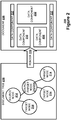
- FIG. 2 illustrates, in a block diagram, one example of a document rendering process 200.
- the document rendering device may process a data content set, written in a markup language organizing the data content set as a document tree 210.
- the document tree 210 may have a set of one or more nodes.
- a node of the document tree 210 may be a source node 212 or a target node 214.
- the source node 212 may provide context or structure within the document tree for the target node 214.
- a node may be a source node 212 for a node lower in the document tree 210 and a target node 214 for a node higher in the document tree 210.
- the document rendering device may render 220 the document tree 210 into a document 230.
- Each node of the document tree 210 may be rendered 220 into a document component 232 composing the document 230.
- the document component 232 may be a graph, a text piece, an audio clip, a video, an applet, a menu, or a frame.
- the document rendering device may format each document component 232 based on a set of one or more style sheets describing a set style properties.
- the document rendering device may introduce a style sheet via any one of a number sources.
- the document rendering device may use a set of cascading style sheets to select between conflicting properties from multiple style sheets.
- a style property of a style sheet from a higher cascade level may overwrite a conflicting style property of a style sheet from a lower cascade level. For example, if a style sheet with a high cascade level describes a text as having a red color and a style sheet with a low cascade level describes a text as having a green color, the text of the rendered document has a red color.
- the document rendering device may assign the cascade level based on the source of the style sheet.
- FIG. 3 illustrates, in a block diagram, one example of a cascade level hierarchy 300.
- the document rendering device may receive a user agent style sheet from a user agent application, such as a browser, at a normal user agent cascade level 302.
- the document rendering device may receive a user style sheet from a user application, such as a user interface add-in, at a normal user cascade level 304.
- the document rendering device may receive an author style sheet from a data content set, such as a web page, at a normal author cascade level 306.
- the document rendering device may receive an override style sheet from an application script, such as an application, at a normal override cascade level 308.
- the document rendering device may receive an animation style sheet from an animation at a normal animation cascade level 310.
- a style sheet may use a property hierarchy indicator label of important to create a reprioritized order of cascade levels on top of the normal cascade levels.
- the property hierarchy indicator label of important may be described using the text string "!important".
- the document rendering device may receive an important author style sheet from a data content set at an important author cascade level 312.
- the document rendering device may receive an important override style sheet from an application script at an important override cascade level 314.
- the document rendering device may receive an important user style sheet from a user application at an important user cascade level 316.
- the document rendering device may receive an important user agent style sheet from a user agent application at an important user agent cascade level 318.
- the document rendering device may receive a transition style sheet to transition a property value from a user agent application at a transition animation cascade level 320.
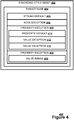
- FIG. 4 illustrates, in a block diagram, one example of a cascading style sheet architecture 400.
- a cascading style sheet 402 may have multiple target node listings 404, each having a styling permission describing whether the target node allows or restricts the document from applying a style property to the target node.
- the target node listing 404 may set a styling default 406 indicating a default property permission for a target node.
- the default property permission may indicate that each source node in the document tree is restricted or allowed from changing any style property in a target node unless explicitly named in a property exception 408.
- a property exception 408 may describe a style property with a different access permission than the default property permission. For example, if the styling default 406 indicates that a target node restricts a source node generally from applying a style property, a property exception 408 for that target node may allow the color of the text to be altered by the source node.
- each property exception 408 may have a property default 410, indicating a default value permission for a style property.
- a value permission describes whether application of a value for a style property is permitted.
- a default value permission may indicate that a source node is restricted or allowed from changing a specific style property in a target node unless explicitly named in a value exception 412.
- a value permission may indicate a value access exception for a value of the style property. For example, if the property exception 408 indicates that a target node restricts a source node generally from altering the color of the text of the target node, a value exception 412 may allow the color of the text to be changed to blue or green by the source node.
- a target node may set a continuous value range 414 for a value of a style property.
- the target node may establish that a source node may set the width of a document component to be between 40 and 50 pixels.
- a target node listing 404 may list a source node exception 416 in instances when the cascading style sheet 402 is used across multiple nodes.
- a source node exception 416 may describe a source node with a different access permission than the styling default 406.
- FIG. 5 illustrates, in a flowchart, one example of a method 500 creating a document.
- the document rendering device may receive a style sheet having a style property describing a formatting to be applied to a data content set (Block 502). If the document rendering device receives the style sheet as part of the overall document (Block 504), the document rendering device may read the style sheet describing the styling permission as an author style sheet at an author cascade level (Block 506). The document rendering device may store the author style sheet at an author cascade level in a memory of the document rendering device (Block 508).
- the document rendering device may import the style sheet describing the styling permission as a user style sheet at a user cascade level (Block 510).
- the document rendering device may store the user style sheet at a user cascade level in a memory of the document rendering device (Block 508).
- the document rendering device may process a document tree having multiple nodes describing a document having document components arranged hierarchically in a parent-child relationship (Block 512).
- the document rendering device may create the document from the document components (Block 514).
- the document rendering device may display the document components in a document to a user (Block 516).
- FIG. 6 illustrates, in a flowchart, one example of a method 600 for conveying an inheritance criteria for creating a document component.
- the cascading style sheet may set a styling permission for a target node of a document tree (Block 602).
- the cascading style sheet may set a styling default indicating a default property permission for the target node (Block 604).
- the cascading style sheet may set a property exception indicating a property access exception for a style property of the target node (Block 606). If the style property has a continuous value range (Block 608), the cascading style sheet may set a continuous value range for a value of the style property (Block 610).
- the cascading style sheet may set a property default indicating a default value permission for a style property (Block 612).
- the cascading style sheet may set a value exception indicating a value access exception for a value of a style property (Block 614).
- FIG. 7 illustrates, in a flowchart, one example of a method 700 for processing a cascading style sheet.
- the document rendering device may select a target node for rendering (Block 702).
- the document rendering device may identify a styling permission describing whether a target node representing a child component of a document tree permits application of a style property to the target node (Block 704).
- the document rendering device may identify a styling default indicating a default property permission for the target node (Block 706).
- the document rendering device may identify a property exception indicating a property access exception for a style property of the target node (Block 708).
- the document rendering device may identify a value permission describing whether the document tree permits application of a value for a style property of the document tree (Block 710). If the style property has a continuous value range (Block 712), the document rendering device may identify a continuous value range for a value of the style property (Block 714). If the style property has a discrete value range (Block 712), the document rendering device may identify a property default indicating a default value permission for a style property (Block 716). The document rendering device may identify a value exception indicating a value access exception for a value of a style property (Block 718).
- the document rendering device may execute an inheritance determination for the target node representing the child component based on the styling permission or a value permission to determine whether a target node may inherit the value from the style property from a source node representing a parent component (Block 720). If the document rendering device identifies a restricted property based on the inheritance determination (Block 722), the document rendering device may omit processing of a source node style property for the restricted property to preserve processing resources (Block 724). The document rendering device may render the target node based on the inheritance determination to create a document component of the document (Block 726). The document rendering device may insert the document component into a document (Block 728).
- Examples within the scope of the present invention may also include computer-readable storage media for carrying or having computer-executable instructions or data structures stored thereon.
- Such computer-readable storage media may be any available media that can be accessed by a general purpose or special purpose computer.
- Such computer-readable storage media can comprise RAM, ROM, EEPROM, CD-ROM or other optical disk storage, magnetic disk storage or other magnetic data storages, or any other medium which can be used to carry or store desired program code means in the form of computer-executable instructions or data structures. Combinations of the above should also be included within the scope of the computer-readable storage media.
- Examples may also be practiced in distributed computing environments where tasks are performed by local and remote processing devices that are linked (either by hardwired links, wireless links, or by a combination thereof) through a communications network.
- Computer-executable instructions include, for example, instructions and data which cause a general purpose computer, special purpose computer, or special purpose processing device to perform a certain function or group of functions.
- Computer-executable instructions also include program modules that are executed by computers in stand-alone or network environments.
- program modules include routines, programs, objects, components, and data structures, etc. that perform particular tasks or implement particular abstract data types.
- Computer-executable instructions, associated data structures, and program modules represent examples of the program code means for executing steps of the methods disclosed herein. The particular sequence of such executable instructions or associated data structures represents examples of corresponding acts for implementing the functions described in such steps.
Landscapes
- Engineering & Computer Science (AREA)
- Theoretical Computer Science (AREA)
- Physics & Mathematics (AREA)
- General Physics & Mathematics (AREA)
- General Engineering & Computer Science (AREA)
- Computational Linguistics (AREA)
- General Health & Medical Sciences (AREA)
- Health & Medical Sciences (AREA)
- Audiology, Speech & Language Pathology (AREA)
- Artificial Intelligence (AREA)
- Databases & Information Systems (AREA)
- Data Mining & Analysis (AREA)
- Document Processing Apparatus (AREA)
- Digital Computer Display Output (AREA)
- User Interface Of Digital Computer (AREA)
- Storage Device Security (AREA)
Description
- A computing device may render a data content set described in a markup language for presentation to a user as a document. A markup language is a language that facilitates annotating a text document that separates an annotation from the text to be presented to the user, such as a hypertext markup language. A data content set may describe the document as a document tree having multiple nodes. Each node may describe a document component of the document. Different authors may create different document components of the document.
- D1
US2015007133 A1 Content package generation techniques are described. In one or more implementations, one or more inputs are received via an authoring tool of a computing device to compose a web content project in accordance with a dynamic stylesheet language. The web content project is processed into a content package automatically and without user intervention by the computing device. The processing includes verifying syntax of the web content project, performing one or more unit tests on web content project, and taking portions of the web content project into corresponding locations in a hierarchical structure of nodes of the content package. The document "Shadow DOM 201: CSS and Styling - HTML5 Rocks" by Eric Bidelman discusses APIs that are not yet fully standardized and things that can be done with Shadow DOM. - This Summary is provided to introduce a selection of concepts in a simplified form that is further described below in the Detailed Description. This Summary is not intended to identify key features or essential features of the claimed subject matter, nor is it intended to be used to limit the scope of the claimed subject matter. Examples of embodiments of the disclosed technology are as set forth in the accompanying claims.
- Examples discussed below relate to creating a document from a document tree by determining whether a style property of a source node of the document tree may be applied to a target node of that document tree. The document rendering device may store a document tree having multiple nodes describing a document having component arranged hierarchically in a parent-child relationship. The document rendering device may identify a styling permission describing whether a target node representing a child component of the document tree permits application of a style property to the target node. The document rendering device may execute an inheritance determination for the target node based on the styling permission to determine whether the target node inherits the style property from a source node representing a parent component. The document rendering device may render the target node based on the inheritance determination to create a document component of the document.
- In order to describe the manner in which the above-recited and other advantages and features can be obtained, a more particular description is set forth and will be rendered by reference to specific examples thereof which are illustrated in the appended drawings. Understanding that these drawings depict only typical examples and are not therefore to be considered to be limiting of its scope, implementations will be described and explained with additional specificity and detail through the use of the accompanying drawings.
-
FIG. 1 illustrates, in a block diagram, one example of a computing device. -
FIG. 2 illustrates, in a block diagram, one example of a document rendering process. -
FIG. 3 illustrates, in a block diagram, one example of a cascade level hierarchy. -
FIG. 4 illustrates, in a block diagram, one example of a cascading style sheet architecture. -
FIG. 5 illustrates, in a flowchart, one example of a method creating a document. -
FIG. 6 illustrates, in a flowchart, one example of a method for conveying an inheritance criteria. -
FIG. 7 illustrates, in a flowchart, one example of a method for processing a cascading style sheet. - Examples are discussed in detail below. While specific implementations are discussed, it should be understood that this is done for illustration purposes only. A person skilled in the relevant art will recognize that other components and configurations may be used without parting from the scope of the subject matter of this disclosure. The implementations may be a document rendering device, a computing device, or a machine-implemented method.
- In one example, a document rendering device may create a document from a document tree by determining whether a style property of a source node of the document tree may be applied to a target node of that document tree. The document rendering device may store a document tree having multiple nodes describing a document having component arranged hierarchically in a parent-child relationship. The document rendering device may identify a styling permission describing whether a target node representing a child component of the document tree permits application of a style property to the target node. The document rendering device may execute an inheritance determination for the target node based on the styling permission to determine whether the target node inherits the style property from a source node representing a parent component. The document rendering device may render the target node based on the inheritance determination to create a document component of the document.
- By creating a styling permission within a target node representing a child component, the author of a document may protect that child component from stylistic bleed from a parent component. The author of a document may isolate a specific style property of a child component to be available for styling or protected from styling. On a more granular level, the author may specify a specific range of property values for a style property. Thus, in a collaborative environment having several authors each creating a document component of the document, the author of the main document may maintain the overall stylistic cohesion of the document. Additionally, the author may prevent higher order document components from overwriting the individual styles of the lower order document components.
- Web designers may arrange web pages of a document hierarchically in a parent-child relationship. A document tree having multiple nodes may represent the document and component web pages. The parent page typically may be called the host, or represented by a source node in a document tree. The child page typically may be represented by a target node in a document tree. In regard to styling of these pages, a style may be fully restricted or fully allowed depending on the composition method.
- A document rendering device may use a cascading style sheet to apply a style property across multiple elements, collating style rules. By way of cascading and inheritance, a style sheet may propagate a property value across multiple elements. A cascading style sheet is a language structure for describing the rendering of a structured document, as described with a hypertext markup language or an extensible markup language, across varied output devices, such as a display screen, a paper, a speech output, or other media.
- Cascading may allow multiple style sheets to influence the presentation of a document. When different declarations describing a style property set a value for the same style property combination, the document rendering device may use cascading style sheets to resolve the conflicts. A style sheet may have a cascade level indicating a sheet hierarchy for the style sheet to resolve conflicts with style properties in other style sheets. Conversely, when a style sheet fails to set a value for a style property, the document rendering device may find a value using inheritance and a style property's initial value.
- A document rendering device may determine a cascade level based on the source of the style sheet or by other criteria. Thus, for example, a style choice imposed by a web-browser may be altered by plug-ins or by the web page being downloaded. Using an element-styling access control language for cascade style sheets, a style sheet author may restrict styling to certain elements of the page, for example, to prevent accidental styling from other style sheets. In composed scenarios, a style sheet author may grant a host permission to style children elements based on rules defined by the child.
- A cascading style sheet is currently unable to provide style "isolation" within a style sheet. A style applied via a selector may apply within the document. Specificity and order may control which properties apply, but individual elements may be "unprotected" from being styled.
- When many designers collaborate on a document, such as a web site, they may work independently. When their respective style sheets are brought together, these style sheets may conflict with each other causing undo styling 'bleed', due to overly generic or overly specific selectors. Authors may wish to describe a set of enforcements on property styling for target elements within a document. In the case of composed web pages, which may bring together two documents via an iframe Hypertext Markup Language (HTML) element or add element trees to a document in a shadow-document object model (DOM), protecting against unwanted styling "bleed" may be even more important in the case where styles would ordinarily 'bleed' naturally. In other cases, current convention may prevent style 'bleed' even where such style 'bleed' may be useful under controlled circumstances.
- An enhanced style control may enable style sheet authors to control the styles that may or may not be applied to a given element. The enhanced style control may provide control at various granularity levels for either local or cross-boundary style sheet rules. The enhanced style control may allow an all-or-none application of properties at the element level, styling specific properties on a per-element basis, or specific property values on the property level.
- By modifying the behavior of the '>>>' shadow-DOM boundary combinator, a style sheet may subject a combinator to permission controls with regard to 'boundary' styling. The style sheet may extend the combinator to apply to iframe boundaries, while using the 'boundary' styling control to grant style 'bleed' in specific scenarios.
- Currently styling for Shadow DOMs may allow for full 'bleed' of styles by default. A child component may have authority over actions a parent component may perform upon a child component. In order for an enhanced stylistic control to be effective, a child components may disallow access to the child component that may affect or alter the stylistic rules. The style sheet may construct a styling permission describing whether the target node permits application of a style property to the target node. The styling permission may have a styling default to deny or allow access to a style property in a target node. The style sheet may list a property exception indicating a style property that the source node may access. The style sheet may use different property exception selectors to apply different granularity of controls.
- At the element level, a cascading style sheet property may apply stylistic controls to an element matched by the selector. For example, the selector may define "allowed: all local" to set the default permission of an element to allowed for local author definitions. The selector may define "allowed: all boundary" to set the default permission of an element to allowed for cross-boundary applications. The selector may define "allowed: none boundary" to set the default permission of an element to restricted for cross-boundary applications. The selector may define "allowed: none local boundary" to set the default permission of an element to restricted for local authors and cross-boundary applications. The selector may define "allowed: auto" to set the default permission of an element to allowed for local authors and application dependent permission for cross-boundary applications.
- The stylistic control may provide a syntax to define individual properties and property values as exceptions to the defaults defined by the default permission. If no default is defined, the default permission may revert to an auto default. For example, the selector may define "allowed: all my-exceptions local" to set the default permission of an element to allowed for local author definitions, with a list of exceptions. The selector may define "allowed: none my-exceptions local" to set the default permission of an element to restricted for cross-boundary applications, with a list of exceptions. For example, the listed exceptions may read:
 @allowed my-exceptions {
    background none;
   color none;
   border none;
 }
 @allowed color-exceptions {
   Color all;
 }
 @allowed box-model-exceptions {
   display none;
 }
Both property exceptions may be merged from each rule, with conflicts resolved based on the order listed.
 @allowed defs {
 @document domain-of-applicability.com {
   display none;
   background-color all;
   visibility none {hidden;}
 }
 }
 @allowed blocky-exceptions {
   display: or(inline, block, inline-block, run-in);
 }
 @allowed blocky-exception {
   display: bnf(block | inline-block | inline);
 }
Claims (9)
- A document rendering device, comprising:memory (130) configured to store a document tree (210) having multiple nodes describing a document (230) to be created having document components (232) arranged hierarchically in a parent-child relationship;a processing unit (120) having at least one processor configured to:identify a styling permission in a style sheet for a target node describing whether the target node (214) representing a child component of the document tree (210) permits application of a style property to the target node (214), wherein the styling permission includes a default property permission for the target node and a property exception to the default property permission for one or more style properties of the target node;
if the style property has a continuous value range, identify a continuous value range for a value of the property permission for the style property, otherwise identify whether the style property is included in the property exception to the default property permission;execute an inheritance determination for the target node (214) based on the styling permission to determine whether the target node (214) inherits the style property from a source node (212) representing a parent component; andrender the target node (214) based on the inheritance determination to create a document component (232) of the document (230); anda display screen (162) configured to display the document component (232) to a user. - The document rendering device of claim 1, wherein the at least one processor is further configured to identify a styling default (406) indicating a default property permission for the target node (214).
- The document rendering device of claim 1, wherein the exception to the default property permission includes a property exception indicating the style property has a different access permission than the default property permission for the target node.
- The document rendering device of claim 1, wherein the at least one processor is further configured to identify a property default (410) of the property exception indicating a default value permission describing whether application of a value for a style property is permitted for the style property.
- The document rendering device of claim 1, wherein the at least one processor is further configured to identify a value exception (412) indicating a value access exception for the default value permission of the style property.
- The document rendering device of claim 1, wherein the at least one processor is further configured to identify a continuous value range (414) for a value of the style property.
- The document rendering device of claim 1, further comprising:
a communication interface (170) configured to import a style sheet describing the styling permission from at least one of a plug-in and a data content set containing the document tree (210). - A machine-implemented method, for use in a document rendering device, comprising:processing a document tree having multiple nodes describing a document to be created having document components arranged hierarchically in a parent-child relationship (512);identifying a styling permission in a style sheet for a target node describing whether the target node representing a child component of the document tree permits application of a style property to the target node (704) wherein the styling permission includes a default property permission for the target node and a property exception to the default
property permission for one or more style properties of the target node; if the style property has a continuous value range (712), identifying a continuous value range for a value of the property permission for the style property (714), otherwise (712) identifying whether the style property is included in the property exception to the default property permission (716, 718);executing an inheritance determination for the target node based on the styling permission to determine whether the target node inherits the style property from a source
node representing a parent component (720) ;rendering the target node based on the inheritance determination to create a document component of the document (726); anddisplay the document to a user (516). - The method of claim 8, further comprising:identifying a restricted property for the target node based on the inheritance determination (722); andomitting processing of a style property of the source node for the restricted property (724).
Applications Claiming Priority (3)
| Application Number | Priority Date | Filing Date | Title |
|---|---|---|---|
| US201562135161P | 2015-03-18 | 2015-03-18 | |
| US15/068,565 US10372795B2 (en) | 2015-03-18 | 2016-03-12 | Conditionally controlled styling |
| PCT/US2016/022992 WO2016149566A1 (en) | 2015-03-18 | 2016-03-17 | Conditionally controlled styling |
Publications (3)
| Publication Number | Publication Date |
|---|---|
| EP3271831A1 EP3271831A1 (en) | 2018-01-24 |
| EP3271831A4 EP3271831A4 (en) | 2018-12-05 |
| EP3271831B1 true EP3271831B1 (en) | 2021-09-29 |
Family
ID=56919458
Family Applications (1)
| Application Number | Title | Priority Date | Filing Date |
|---|---|---|---|
| EP16765801.2A Active EP3271831B1 (en) | 2015-03-18 | 2016-03-17 | Method and apparatus for conditionally controlled styling |
Country Status (16)
| Country | Link |
|---|---|
| US (1) | US10372795B2 (en) |
| EP (1) | EP3271831B1 (en) |
| JP (1) | JP2018508899A (en) |
| KR (1) | KR102601384B1 (en) |
| CN (1) | CN107408105B (en) |
| AU (1) | AU2016232870A1 (en) |
| BR (1) | BR112017018341A2 (en) |
| CA (1) | CA2977579A1 (en) |
| CL (1) | CL2017002307A1 (en) |
| CO (1) | CO2017009120A2 (en) |
| IL (1) | IL253856A0 (en) |
| MX (1) | MX2017011805A (en) |
| PH (1) | PH12017550081A1 (en) |
| RU (1) | RU2017132283A (en) |
| SG (1) | SG11201707177TA (en) |
| WO (1) | WO2016149566A1 (en) |
Families Citing this family (10)
| Publication number | Priority date | Publication date | Assignee | Title |
|---|---|---|---|---|
| CN109558549B (en) * | 2017-09-25 | 2021-02-02 | 北京国双科技有限公司 | Method for eliminating CSS style redundancy and related product |
| CN110543298B (en) * | 2018-05-28 | 2024-11-26 | 北京京东尚科信息技术有限公司 | Web page style generation method and device, web page generation method and device |
| CN109145621B (en) * | 2018-08-14 | 2021-09-14 | 创新先进技术有限公司 | Document management method and device |
| CN111367520B (en) * | 2020-02-14 | 2024-05-14 | 中国平安人寿保险股份有限公司 | Component rendering method and device based on semi-integrated framework and computer equipment |
| US20210312122A1 (en) * | 2020-04-07 | 2021-10-07 | International Business Machines Corporation | Methods and systems for generating documents with a targeted style |
| CN112507385B (en) * | 2020-12-25 | 2022-05-10 | 北京字跳网络技术有限公司 | Information display method and device and electronic equipment |
| CN113987388A (en) * | 2021-11-01 | 2022-01-28 | 北京金山云网络技术有限公司 | Text display method and device and electronic equipment |
| CN116450104A (en) * | 2022-01-10 | 2023-07-18 | 北京字跳网络技术有限公司 | Style determination method, device, device, storage medium and program product |
| CN114741055A (en) * | 2022-04-14 | 2022-07-12 | 北京沃东天骏信息技术有限公司 | Component state management method and device |
| KR20240082905A (en) * | 2022-12-02 | 2024-06-11 | 삼성전자주식회사 | Method, electronic device, and storage medium for adjusting document style |
Family Cites Families (17)
| Publication number | Priority date | Publication date | Assignee | Title |
|---|---|---|---|---|
| US7962522B2 (en) * | 2003-06-03 | 2011-06-14 | Norris Iii Forbes Holten | Flexible, dynamic menu-based web-page architecture |
| US7681178B1 (en) | 2005-07-22 | 2010-03-16 | Adobe Systems Incorporated | Cascading style sheets (CSS) prototype pointer chaining in object-oriented environment |
| US7739612B2 (en) | 2005-09-12 | 2010-06-15 | Microsoft Corporation | Blended editing of literal and non-literal values |
| US8181107B2 (en) * | 2006-12-08 | 2012-05-15 | Bytemobile, Inc. | Content adaptation |
| US7870502B2 (en) | 2007-05-29 | 2011-01-11 | Microsoft Corporation | Retaining style information when copying content |
| US7996765B1 (en) | 2007-09-07 | 2011-08-09 | Adobe Systems Incorporated | System and method for style sheet language coding that maintains a desired relationship between display elements |
| CN101685447A (en) * | 2008-09-28 | 2010-03-31 | 国际商业机器公司 | Method and system for processing CSS in segment cut and mesh-up of Web page |
| US8522132B2 (en) | 2010-09-13 | 2013-08-27 | International Business Machines Corporation | Widget behavior customization via cascaded style sheets |
| CA2772963C (en) | 2011-03-31 | 2016-02-16 | Accenture Global Services Limited | Multilayer style sheet approach and system |
| US8745027B1 (en) | 2011-04-11 | 2014-06-03 | Google Inc. | Jslayout cascading style sheets optimization |
| JP6078057B2 (en) | 2011-06-19 | 2017-02-08 | エムモーダル アイピー エルエルシー | Document expansion in dictation-based document generation workflow |
| US20130159839A1 (en) | 2011-12-14 | 2013-06-20 | Microsoft Corporation | Semantic compression of cascading style sheets |
| CN104025068B (en) | 2012-01-02 | 2017-06-13 | 国际商业机器公司 | The Conflict solving of the CSS definition from multiple sources |
| US9342323B2 (en) * | 2012-08-09 | 2016-05-17 | Google Inc. | Browser-level background page for providing multiple views |
| US10007933B2 (en) * | 2013-02-22 | 2018-06-26 | Swoop Inc. | Systems and methods for integrating dynamic content into electronic media |
| US20150007133A1 (en) | 2013-06-27 | 2015-01-01 | Adobe Systems Incorporated | Content Package Generation for Web Content |
| US10671252B2 (en) * | 2014-09-04 | 2020-06-02 | Home Box Office, Inc. | Styling system |
-
2016
- 2016-03-12 US US15/068,565 patent/US10372795B2/en active Active
- 2016-03-17 CA CA2977579A patent/CA2977579A1/en not_active Abandoned
- 2016-03-17 BR BR112017018341A patent/BR112017018341A2/en not_active Application Discontinuation
- 2016-03-17 RU RU2017132283A patent/RU2017132283A/en not_active Application Discontinuation
- 2016-03-17 WO PCT/US2016/022992 patent/WO2016149566A1/en not_active Ceased
- 2016-03-17 CN CN201680016510.5A patent/CN107408105B/en active Active
- 2016-03-17 JP JP2017544714A patent/JP2018508899A/en active Pending
- 2016-03-17 EP EP16765801.2A patent/EP3271831B1/en active Active
- 2016-03-17 MX MX2017011805A patent/MX2017011805A/en unknown
- 2016-03-17 KR KR1020177029362A patent/KR102601384B1/en active Active
- 2016-03-17 SG SG11201707177TA patent/SG11201707177TA/en unknown
- 2016-03-17 AU AU2016232870A patent/AU2016232870A1/en not_active Abandoned
-
2017
- 2017-08-06 IL IL253856A patent/IL253856A0/en unknown
- 2017-08-11 PH PH12017550081A patent/PH12017550081A1/en unknown
- 2017-09-06 CO CONC2017/0009120A patent/CO2017009120A2/en unknown
- 2017-09-12 CL CL2017002307A patent/CL2017002307A1/en unknown
Also Published As
| Publication number | Publication date |
|---|---|
| EP3271831A4 (en) | 2018-12-05 |
| WO2016149566A1 (en) | 2016-09-22 |
| US20160275053A1 (en) | 2016-09-22 |
| CN107408105B (en) | 2021-01-15 |
| CN107408105A (en) | 2017-11-28 |
| AU2016232870A1 (en) | 2017-09-07 |
| BR112017018341A2 (en) | 2018-04-17 |
| KR102601384B1 (en) | 2023-11-10 |
| SG11201707177TA (en) | 2017-10-30 |
| PH12017550081A1 (en) | 2018-02-12 |
| CA2977579A1 (en) | 2016-09-22 |
| KR20170128476A (en) | 2017-11-22 |
| CO2017009120A2 (en) | 2017-11-21 |
| EP3271831A1 (en) | 2018-01-24 |
| IL253856A0 (en) | 2017-09-28 |
| MX2017011805A (en) | 2017-12-07 |
| RU2017132283A (en) | 2019-03-15 |
| CL2017002307A1 (en) | 2018-03-09 |
| JP2018508899A (en) | 2018-03-29 |
| US10372795B2 (en) | 2019-08-06 |
Similar Documents
| Publication | Publication Date | Title |
|---|---|---|
| US10372795B2 (en) | Conditionally controlled styling | |
| US8893081B2 (en) | Selectively enabling runtime editing of an application | |
| US9141403B2 (en) | Data-driven schema for describing and executing management tasks in a graphical user interface | |
| KR20080033403A (en) | Web page rendering priority mechanism | |
| US10482165B2 (en) | Declarative cascade reordering for styles | |
| KR20040097940A (en) | Method and system for selectively enforcing presentation themes | |
| US8572751B2 (en) | Method, system, and program product for preventing unauthorized changes to an electronic document | |
| US10158711B2 (en) | Website framework | |
| Powers | Learning JavaScript: Add Sparkle and Life to Your Web Pages | |
| Mehta | More About Extensions | |
| Hunt | Decorators | |
| Norberg | Introducing ASP. NET Core | |
| Krause | Professional Components | |
| Libby | Creating Components | |
| Tsadok | Snapshot Testing | |
| CN119166127A (en) | A text content rendering component and method for preventing page text extraction | |
| Collins | Dynamic Styling | |
| Nicholus | Styling Elements | |
| Freeman | Server-Side HTML Elements | |
| Reid et al. | The DOM | |
| Layka et al. | Building the User Interface | |
| GB2429815A (en) | Markup language document processing | |
| Scott et al. | Plugins: by Dan McGhan |
Legal Events
| Date | Code | Title | Description |
|---|---|---|---|
| STAA | Information on the status of an ep patent application or granted ep patent |
Free format text: STATUS: THE INTERNATIONAL PUBLICATION HAS BEEN MADE |
|
| PUAI | Public reference made under article 153(3) epc to a published international application that has entered the european phase |
Free format text: ORIGINAL CODE: 0009012 |
|
| STAA | Information on the status of an ep patent application or granted ep patent |
Free format text: STATUS: REQUEST FOR EXAMINATION WAS MADE |
|
| 17P | Request for examination filed |
Effective date: 20170825 |
|
| AK | Designated contracting states |
Kind code of ref document: A1 Designated state(s): AL AT BE BG CH CY CZ DE DK EE ES FI FR GB GR HR HU IE IS IT LI LT LU LV MC MK MT NL NO PL PT RO RS SE SI SK SM TR |
|
| AX | Request for extension of the european patent |
Extension state: BA ME |
|
| DAV | Request for validation of the european patent (deleted) | ||
| DAX | Request for extension of the european patent (deleted) | ||
| A4 | Supplementary search report drawn up and despatched |
Effective date: 20181025 |
|
| RIC1 | Information provided on ipc code assigned before grant |
Ipc: H04L 29/08 20060101ALI20181020BHEP Ipc: G06F 17/30 20060101ALI20181020BHEP Ipc: G06F 17/22 20060101AFI20181020BHEP |
|
| REG | Reference to a national code |
Ref country code: DE Ref legal event code: R079 Ref document number: 602016064349 Country of ref document: DE Free format text: PREVIOUS MAIN CLASS: G06F0017000000 Ipc: G06F0016957000 |
|
| RIC1 | Information provided on ipc code assigned before grant |
Ipc: G06F 40/154 20200101ALI20210422BHEP Ipc: G06F 40/143 20200101ALI20210422BHEP Ipc: G06F 40/137 20200101ALI20210422BHEP Ipc: G06F 16/957 20190101AFI20210422BHEP |
|
| GRAP | Despatch of communication of intention to grant a patent |
Free format text: ORIGINAL CODE: EPIDOSNIGR1 |
|
| STAA | Information on the status of an ep patent application or granted ep patent |
Free format text: STATUS: GRANT OF PATENT IS INTENDED |
|
| INTG | Intention to grant announced |
Effective date: 20210604 |
|
| GRAS | Grant fee paid |
Free format text: ORIGINAL CODE: EPIDOSNIGR3 |
|
| GRAA | (expected) grant |
Free format text: ORIGINAL CODE: 0009210 |
|
| STAA | Information on the status of an ep patent application or granted ep patent |
Free format text: STATUS: THE PATENT HAS BEEN GRANTED |
|
| AK | Designated contracting states |
Kind code of ref document: B1 Designated state(s): AL AT BE BG CH CY CZ DE DK EE ES FI FR GB GR HR HU IE IS IT LI LT LU LV MC MK MT NL NO PL PT RO RS SE SI SK SM TR |
|
| REG | Reference to a national code |
Ref country code: GB Ref legal event code: FG4D |
|
| REG | Reference to a national code |
Ref country code: DE Ref legal event code: R096 Ref document number: 602016064349 Country of ref document: DE |
|
| REG | Reference to a national code |
Ref country code: CH Ref legal event code: EP Ref country code: AT Ref legal event code: REF Ref document number: 1434829 Country of ref document: AT Kind code of ref document: T Effective date: 20211015 |
|
| REG | Reference to a national code |
Ref country code: IE Ref legal event code: FG4D |
|
| RAP4 | Party data changed (patent owner data changed or rights of a patent transferred) |
Owner name: MICROSOFT TECHNOLOGY LICENSING, LLC |
|
| REG | Reference to a national code |
Ref country code: LT Ref legal event code: MG9D |
|
| PG25 | Lapsed in a contracting state [announced via postgrant information from national office to epo] |
Ref country code: RS Free format text: LAPSE BECAUSE OF FAILURE TO SUBMIT A TRANSLATION OF THE DESCRIPTION OR TO PAY THE FEE WITHIN THE PRESCRIBED TIME-LIMIT Effective date: 20210929 Ref country code: SE Free format text: LAPSE BECAUSE OF FAILURE TO SUBMIT A TRANSLATION OF THE DESCRIPTION OR TO PAY THE FEE WITHIN THE PRESCRIBED TIME-LIMIT Effective date: 20210929 Ref country code: NO Free format text: LAPSE BECAUSE OF FAILURE TO SUBMIT A TRANSLATION OF THE DESCRIPTION OR TO PAY THE FEE WITHIN THE PRESCRIBED TIME-LIMIT Effective date: 20211229 Ref country code: FI Free format text: LAPSE BECAUSE OF FAILURE TO SUBMIT A TRANSLATION OF THE DESCRIPTION OR TO PAY THE FEE WITHIN THE PRESCRIBED TIME-LIMIT Effective date: 20210929 Ref country code: HR Free format text: LAPSE BECAUSE OF FAILURE TO SUBMIT A TRANSLATION OF THE DESCRIPTION OR TO PAY THE FEE WITHIN THE PRESCRIBED TIME-LIMIT Effective date: 20210929 Ref country code: BG Free format text: LAPSE BECAUSE OF FAILURE TO SUBMIT A TRANSLATION OF THE DESCRIPTION OR TO PAY THE FEE WITHIN THE PRESCRIBED TIME-LIMIT Effective date: 20211229 Ref country code: LT Free format text: LAPSE BECAUSE OF FAILURE TO SUBMIT A TRANSLATION OF THE DESCRIPTION OR TO PAY THE FEE WITHIN THE PRESCRIBED TIME-LIMIT Effective date: 20210929 |
|
| REG | Reference to a national code |
Ref country code: NL Ref legal event code: MP Effective date: 20210929 |
|
| REG | Reference to a national code |
Ref country code: AT Ref legal event code: MK05 Ref document number: 1434829 Country of ref document: AT Kind code of ref document: T Effective date: 20210929 |
|
| PG25 | Lapsed in a contracting state [announced via postgrant information from national office to epo] |
Ref country code: LV Free format text: LAPSE BECAUSE OF FAILURE TO SUBMIT A TRANSLATION OF THE DESCRIPTION OR TO PAY THE FEE WITHIN THE PRESCRIBED TIME-LIMIT Effective date: 20210929 Ref country code: GR Free format text: LAPSE BECAUSE OF FAILURE TO SUBMIT A TRANSLATION OF THE DESCRIPTION OR TO PAY THE FEE WITHIN THE PRESCRIBED TIME-LIMIT Effective date: 20211230 |
|
| PG25 | Lapsed in a contracting state [announced via postgrant information from national office to epo] |
Ref country code: AT Free format text: LAPSE BECAUSE OF FAILURE TO SUBMIT A TRANSLATION OF THE DESCRIPTION OR TO PAY THE FEE WITHIN THE PRESCRIBED TIME-LIMIT Effective date: 20210929 |
|
| PG25 | Lapsed in a contracting state [announced via postgrant information from national office to epo] |
Ref country code: IS Free format text: LAPSE BECAUSE OF FAILURE TO SUBMIT A TRANSLATION OF THE DESCRIPTION OR TO PAY THE FEE WITHIN THE PRESCRIBED TIME-LIMIT Effective date: 20220129 Ref country code: SK Free format text: LAPSE BECAUSE OF FAILURE TO SUBMIT A TRANSLATION OF THE DESCRIPTION OR TO PAY THE FEE WITHIN THE PRESCRIBED TIME-LIMIT Effective date: 20210929 Ref country code: RO Free format text: LAPSE BECAUSE OF FAILURE TO SUBMIT A TRANSLATION OF THE DESCRIPTION OR TO PAY THE FEE WITHIN THE PRESCRIBED TIME-LIMIT Effective date: 20210929 Ref country code: PT Free format text: LAPSE BECAUSE OF FAILURE TO SUBMIT A TRANSLATION OF THE DESCRIPTION OR TO PAY THE FEE WITHIN THE PRESCRIBED TIME-LIMIT Effective date: 20220131 Ref country code: PL Free format text: LAPSE BECAUSE OF FAILURE TO SUBMIT A TRANSLATION OF THE DESCRIPTION OR TO PAY THE FEE WITHIN THE PRESCRIBED TIME-LIMIT Effective date: 20210929 Ref country code: NL Free format text: LAPSE BECAUSE OF FAILURE TO SUBMIT A TRANSLATION OF THE DESCRIPTION OR TO PAY THE FEE WITHIN THE PRESCRIBED TIME-LIMIT Effective date: 20210929 Ref country code: ES Free format text: LAPSE BECAUSE OF FAILURE TO SUBMIT A TRANSLATION OF THE DESCRIPTION OR TO PAY THE FEE WITHIN THE PRESCRIBED TIME-LIMIT Effective date: 20210929 Ref country code: EE Free format text: LAPSE BECAUSE OF FAILURE TO SUBMIT A TRANSLATION OF THE DESCRIPTION OR TO PAY THE FEE WITHIN THE PRESCRIBED TIME-LIMIT Effective date: 20210929 Ref country code: CZ Free format text: LAPSE BECAUSE OF FAILURE TO SUBMIT A TRANSLATION OF THE DESCRIPTION OR TO PAY THE FEE WITHIN THE PRESCRIBED TIME-LIMIT Effective date: 20210929 Ref country code: AL Free format text: LAPSE BECAUSE OF FAILURE TO SUBMIT A TRANSLATION OF THE DESCRIPTION OR TO PAY THE FEE WITHIN THE PRESCRIBED TIME-LIMIT Effective date: 20210929 |
|
| REG | Reference to a national code |
Ref country code: DE Ref legal event code: R097 Ref document number: 602016064349 Country of ref document: DE |
|
| PG25 | Lapsed in a contracting state [announced via postgrant information from national office to epo] |
Ref country code: DK Free format text: LAPSE BECAUSE OF FAILURE TO SUBMIT A TRANSLATION OF THE DESCRIPTION OR TO PAY THE FEE WITHIN THE PRESCRIBED TIME-LIMIT Effective date: 20210929 |
|
| PLBE | No opposition filed within time limit |
Free format text: ORIGINAL CODE: 0009261 |
|
| STAA | Information on the status of an ep patent application or granted ep patent |
Free format text: STATUS: NO OPPOSITION FILED WITHIN TIME LIMIT |
|
| 26N | No opposition filed |
Effective date: 20220630 |
|
| PG25 | Lapsed in a contracting state [announced via postgrant information from national office to epo] |
Ref country code: MC Free format text: LAPSE BECAUSE OF FAILURE TO SUBMIT A TRANSLATION OF THE DESCRIPTION OR TO PAY THE FEE WITHIN THE PRESCRIBED TIME-LIMIT Effective date: 20210929 |
|
| REG | Reference to a national code |
Ref country code: CH Ref legal event code: PL |
|
| PG25 | Lapsed in a contracting state [announced via postgrant information from national office to epo] |
Ref country code: SI Free format text: LAPSE BECAUSE OF FAILURE TO SUBMIT A TRANSLATION OF THE DESCRIPTION OR TO PAY THE FEE WITHIN THE PRESCRIBED TIME-LIMIT Effective date: 20210929 |
|
| REG | Reference to a national code |
Ref country code: BE Ref legal event code: MM Effective date: 20220331 |
|
| PG25 | Lapsed in a contracting state [announced via postgrant information from national office to epo] |
Ref country code: LU Free format text: LAPSE BECAUSE OF NON-PAYMENT OF DUE FEES Effective date: 20220317 Ref country code: LI Free format text: LAPSE BECAUSE OF NON-PAYMENT OF DUE FEES Effective date: 20220331 Ref country code: IT Free format text: LAPSE BECAUSE OF FAILURE TO SUBMIT A TRANSLATION OF THE DESCRIPTION OR TO PAY THE FEE WITHIN THE PRESCRIBED TIME-LIMIT Effective date: 20210929 Ref country code: IE Free format text: LAPSE BECAUSE OF NON-PAYMENT OF DUE FEES Effective date: 20220317 Ref country code: CH Free format text: LAPSE BECAUSE OF NON-PAYMENT OF DUE FEES Effective date: 20220331 |
|
| PG25 | Lapsed in a contracting state [announced via postgrant information from national office to epo] |
Ref country code: BE Free format text: LAPSE BECAUSE OF NON-PAYMENT OF DUE FEES Effective date: 20220331 |
|
| P01 | Opt-out of the competence of the unified patent court (upc) registered |
Effective date: 20230429 |
|
| PG25 | Lapsed in a contracting state [announced via postgrant information from national office to epo] |
Ref country code: HU Free format text: LAPSE BECAUSE OF FAILURE TO SUBMIT A TRANSLATION OF THE DESCRIPTION OR TO PAY THE FEE WITHIN THE PRESCRIBED TIME-LIMIT; INVALID AB INITIO Effective date: 20160317 |
|
| PG25 | Lapsed in a contracting state [announced via postgrant information from national office to epo] |
Ref country code: SM Free format text: LAPSE BECAUSE OF FAILURE TO SUBMIT A TRANSLATION OF THE DESCRIPTION OR TO PAY THE FEE WITHIN THE PRESCRIBED TIME-LIMIT Effective date: 20210929 Ref country code: MK Free format text: LAPSE BECAUSE OF FAILURE TO SUBMIT A TRANSLATION OF THE DESCRIPTION OR TO PAY THE FEE WITHIN THE PRESCRIBED TIME-LIMIT Effective date: 20210929 Ref country code: CY Free format text: LAPSE BECAUSE OF FAILURE TO SUBMIT A TRANSLATION OF THE DESCRIPTION OR TO PAY THE FEE WITHIN THE PRESCRIBED TIME-LIMIT Effective date: 20210929 |
|
| PGFP | Annual fee paid to national office [announced via postgrant information from national office to epo] |
Ref country code: FR Payment date: 20240220 Year of fee payment: 9 |
|
| PG25 | Lapsed in a contracting state [announced via postgrant information from national office to epo] |
Ref country code: TR Free format text: LAPSE BECAUSE OF FAILURE TO SUBMIT A TRANSLATION OF THE DESCRIPTION OR TO PAY THE FEE WITHIN THE PRESCRIBED TIME-LIMIT Effective date: 20210929 |
|
| PG25 | Lapsed in a contracting state [announced via postgrant information from national office to epo] |
Ref country code: MT Free format text: LAPSE BECAUSE OF FAILURE TO SUBMIT A TRANSLATION OF THE DESCRIPTION OR TO PAY THE FEE WITHIN THE PRESCRIBED TIME-LIMIT Effective date: 20210929 |
|
| PG25 | Lapsed in a contracting state [announced via postgrant information from national office to epo] |
Ref country code: FR Free format text: LAPSE BECAUSE OF NON-PAYMENT OF DUE FEES Effective date: 20250331 |
|
| PGFP | Annual fee paid to national office [announced via postgrant information from national office to epo] |
Ref country code: GB Payment date: 20260220 Year of fee payment: 11 |
|
| PGFP | Annual fee paid to national office [announced via postgrant information from national office to epo] |
Ref country code: DE Payment date: 20260219 Year of fee payment: 11 |