EP3269807A1 - Immobilized protease with improved resistance to change in external environment - Google Patents
Immobilized protease with improved resistance to change in external environment Download PDFInfo
- Publication number
- EP3269807A1 EP3269807A1 EP15884707.9A EP15884707A EP3269807A1 EP 3269807 A1 EP3269807 A1 EP 3269807A1 EP 15884707 A EP15884707 A EP 15884707A EP 3269807 A1 EP3269807 A1 EP 3269807A1
- Authority
- EP
- European Patent Office
- Prior art keywords
- protease
- immobilized
- trypsin
- nanoparticles
- protein
- Prior art date
- Legal status (The legal status is an assumption and is not a legal conclusion. Google has not performed a legal analysis and makes no representation as to the accuracy of the status listed.)
- Withdrawn
Links
- 239000004365 Protease Substances 0.000 title claims abstract description 175
- 108091005804 Peptidases Proteins 0.000 title claims abstract description 170
- 230000008859 change Effects 0.000 title claims abstract description 11
- 102100037486 Reverse transcriptase/ribonuclease H Human genes 0.000 title abstract 7
- 239000002105 nanoparticle Substances 0.000 claims abstract description 68
- 102000035195 Peptidases Human genes 0.000 claims description 163
- 235000019419 proteases Nutrition 0.000 claims description 150
- 108090000631 Trypsin Proteins 0.000 claims description 72
- 102000004142 Trypsin Human genes 0.000 claims description 72
- 239000012588 trypsin Substances 0.000 claims description 72
- 238000000034 method Methods 0.000 claims description 30
- 239000002245 particle Substances 0.000 claims description 18
- 230000003100 immobilizing effect Effects 0.000 claims description 15
- 108090000317 Chymotrypsin Proteins 0.000 claims description 10
- 108010053229 Lysyl endopeptidase Proteins 0.000 claims description 10
- 229960002376 chymotrypsin Drugs 0.000 claims description 10
- 230000002829 reductive effect Effects 0.000 claims description 10
- 239000002122 magnetic nanoparticle Substances 0.000 claims description 8
- 108090000194 Dipeptidyl-peptidases and tripeptidyl-peptidases Proteins 0.000 claims description 5
- 102000003779 Dipeptidyl-peptidases and tripeptidyl-peptidases Human genes 0.000 claims description 5
- 108010051815 Glutamyl endopeptidase Proteins 0.000 claims description 5
- 108090000526 Papain Proteins 0.000 claims description 5
- 108090000284 Pepsin A Proteins 0.000 claims description 5
- 102000057297 Pepsin A Human genes 0.000 claims description 5
- 235000019834 papain Nutrition 0.000 claims description 5
- 229940055729 papain Drugs 0.000 claims description 5
- 229940111202 pepsin Drugs 0.000 claims description 5
- 230000008569 process Effects 0.000 claims description 2
- 102000004169 proteins and genes Human genes 0.000 abstract description 48
- 108090000623 proteins and genes Proteins 0.000 abstract description 48
- 230000000694 effects Effects 0.000 abstract description 37
- 238000004949 mass spectrometry Methods 0.000 abstract description 21
- 238000002360 preparation method Methods 0.000 abstract description 8
- 238000004519 manufacturing process Methods 0.000 abstract description 2
- 102000004190 Enzymes Human genes 0.000 description 27
- 108090000790 Enzymes Proteins 0.000 description 27
- 229940088598 enzyme Drugs 0.000 description 27
- XSQUKJJJFZCRTK-UHFFFAOYSA-N Urea Chemical compound NC(N)=O XSQUKJJJFZCRTK-UHFFFAOYSA-N 0.000 description 24
- 239000000758 substrate Substances 0.000 description 22
- MQUQNUAYKLCRME-INIZCTEOSA-N N-tosyl-L-phenylalanyl chloromethyl ketone Chemical compound C1=CC(C)=CC=C1S(=O)(=O)N[C@H](C(=O)CCl)CC1=CC=CC=C1 MQUQNUAYKLCRME-INIZCTEOSA-N 0.000 description 21
- 125000006850 spacer group Chemical group 0.000 description 21
- 239000000243 solution Substances 0.000 description 20
- PEDCQBHIVMGVHV-UHFFFAOYSA-N Glycerine Chemical compound OCC(O)CO PEDCQBHIVMGVHV-UHFFFAOYSA-N 0.000 description 18
- 239000000654 additive Substances 0.000 description 18
- FAPWRFPIFSIZLT-UHFFFAOYSA-M Sodium chloride Chemical compound [Na+].[Cl-] FAPWRFPIFSIZLT-UHFFFAOYSA-M 0.000 description 16
- PCHJSUWPFVWCPO-UHFFFAOYSA-N gold Chemical compound [Au] PCHJSUWPFVWCPO-UHFFFAOYSA-N 0.000 description 15
- 239000010931 gold Substances 0.000 description 15
- 229910052737 gold Inorganic materials 0.000 description 15
- 239000000725 suspension Substances 0.000 description 15
- WEVYAHXRMPXWCK-UHFFFAOYSA-N Acetonitrile Chemical compound CC#N WEVYAHXRMPXWCK-UHFFFAOYSA-N 0.000 description 13
- 239000004202 carbamide Substances 0.000 description 12
- 238000006911 enzymatic reaction Methods 0.000 description 12
- 238000004458 analytical method Methods 0.000 description 11
- 239000011324 bead Substances 0.000 description 11
- 239000003795 chemical substances by application Substances 0.000 description 11
- 230000029087 digestion Effects 0.000 description 11
- 235000002639 sodium chloride Nutrition 0.000 description 11
- CGVLVOOFCGWBCS-RGDJUOJXSA-N n-octyl β-d-thioglucopyranoside Chemical compound CCCCCCCCS[C@@H]1O[C@H](CO)[C@@H](O)[C@H](O)[C@H]1O CGVLVOOFCGWBCS-RGDJUOJXSA-N 0.000 description 10
- 239000000523 sample Substances 0.000 description 10
- 108010033276 Peptide Fragments Proteins 0.000 description 9
- 102000007079 Peptide Fragments Human genes 0.000 description 9
- 239000007983 Tris buffer Substances 0.000 description 9
- LENZDBCJOHFCAS-UHFFFAOYSA-N tris Chemical compound OCC(N)(CO)CO LENZDBCJOHFCAS-UHFFFAOYSA-N 0.000 description 9
- 238000006243 chemical reaction Methods 0.000 description 8
- 239000011780 sodium chloride Substances 0.000 description 8
- NQTADLQHYWFPDB-UHFFFAOYSA-N N-Hydroxysuccinimide Chemical compound ON1C(=O)CCC1=O NQTADLQHYWFPDB-UHFFFAOYSA-N 0.000 description 7
- BFNBIHQBYMNNAN-UHFFFAOYSA-N ammonium sulfate Chemical compound N.N.OS(O)(=O)=O BFNBIHQBYMNNAN-UHFFFAOYSA-N 0.000 description 7
- 229910052921 ammonium sulfate Inorganic materials 0.000 description 7
- 235000011130 ammonium sulphate Nutrition 0.000 description 7
- PGLTVOMIXTUURA-UHFFFAOYSA-N iodoacetamide Chemical compound NC(=O)CI PGLTVOMIXTUURA-UHFFFAOYSA-N 0.000 description 7
- 108090000765 processed proteins & peptides Proteins 0.000 description 7
- HDTRYLNUVZCQOY-UHFFFAOYSA-N α-D-glucopyranosyl-α-D-glucopyranoside Natural products OC1C(O)C(O)C(CO)OC1OC1C(O)C(O)C(O)C(CO)O1 HDTRYLNUVZCQOY-UHFFFAOYSA-N 0.000 description 6
- HZAXFHJVJLSVMW-UHFFFAOYSA-N 2-Aminoethan-1-ol Chemical compound NCCO HZAXFHJVJLSVMW-UHFFFAOYSA-N 0.000 description 6
- IAZDPXIOMUYVGZ-UHFFFAOYSA-N Dimethylsulphoxide Chemical compound CS(C)=O IAZDPXIOMUYVGZ-UHFFFAOYSA-N 0.000 description 6
- KCXVZYZYPLLWCC-UHFFFAOYSA-N EDTA Chemical compound OC(=O)CN(CC(O)=O)CCN(CC(O)=O)CC(O)=O KCXVZYZYPLLWCC-UHFFFAOYSA-N 0.000 description 6
- OKKJLVBELUTLKV-UHFFFAOYSA-N Methanol Chemical compound OC OKKJLVBELUTLKV-UHFFFAOYSA-N 0.000 description 6
- HDTRYLNUVZCQOY-WSWWMNSNSA-N Trehalose Natural products O[C@@H]1[C@@H](O)[C@@H](O)[C@@H](CO)O[C@@H]1O[C@@H]1[C@H](O)[C@@H](O)[C@@H](O)[C@@H](CO)O1 HDTRYLNUVZCQOY-WSWWMNSNSA-N 0.000 description 6
- HDTRYLNUVZCQOY-LIZSDCNHSA-N alpha,alpha-trehalose Chemical compound O[C@@H]1[C@@H](O)[C@H](O)[C@@H](CO)O[C@@H]1O[C@@H]1[C@H](O)[C@@H](O)[C@H](O)[C@@H](CO)O1 HDTRYLNUVZCQOY-LIZSDCNHSA-N 0.000 description 6
- 125000004185 ester group Chemical group 0.000 description 6
- PBVAJRFEEOIAGW-UHFFFAOYSA-N 3-[bis(2-carboxyethyl)phosphanyl]propanoic acid;hydrochloride Chemical compound Cl.OC(=O)CCP(CCC(O)=O)CCC(O)=O PBVAJRFEEOIAGW-UHFFFAOYSA-N 0.000 description 5
- 210000004899 c-terminal region Anatomy 0.000 description 5
- 239000003153 chemical reaction reagent Substances 0.000 description 5
- VHJLVAABSRFDPM-QWWZWVQMSA-N dithiothreitol Chemical compound SC[C@@H](O)[C@H](O)CS VHJLVAABSRFDPM-QWWZWVQMSA-N 0.000 description 5
- 125000000524 functional group Chemical group 0.000 description 5
- 239000011859 microparticle Substances 0.000 description 5
- 239000003960 organic solvent Substances 0.000 description 5
- 239000011535 reaction buffer Substances 0.000 description 5
- 239000003381 stabilizer Substances 0.000 description 5
- 239000004094 surface-active agent Substances 0.000 description 5
- LMDZBCPBFSXMTL-UHFFFAOYSA-N 1-ethyl-3-(3-dimethylaminopropyl)carbodiimide Chemical compound CCN=C=NCCCN(C)C LMDZBCPBFSXMTL-UHFFFAOYSA-N 0.000 description 4
- TYMLOMAKGOJONV-UHFFFAOYSA-N 4-nitroaniline Chemical compound NC1=CC=C([N+]([O-])=O)C=C1 TYMLOMAKGOJONV-UHFFFAOYSA-N 0.000 description 4
- QOSSAOTZNIDXMA-UHFFFAOYSA-N Dicylcohexylcarbodiimide Chemical compound C1CCCCC1N=C=NC1CCCCC1 QOSSAOTZNIDXMA-UHFFFAOYSA-N 0.000 description 4
- KFZMGEQAYNKOFK-UHFFFAOYSA-N Isopropanol Chemical compound CC(C)O KFZMGEQAYNKOFK-UHFFFAOYSA-N 0.000 description 4
- VYPSYNLAJGMNEJ-UHFFFAOYSA-N Silicium dioxide Chemical compound O=[Si]=O VYPSYNLAJGMNEJ-UHFFFAOYSA-N 0.000 description 4
- QAOWNCQODCNURD-UHFFFAOYSA-N Sulfuric acid Chemical compound OS(O)(=O)=O QAOWNCQODCNURD-UHFFFAOYSA-N 0.000 description 4
- 125000003277 amino group Chemical group 0.000 description 4
- 238000011156 evaluation Methods 0.000 description 4
- 239000000047 product Substances 0.000 description 4
- 238000011002 quantification Methods 0.000 description 4
- 239000007790 solid phase Substances 0.000 description 4
- UMCMPZBLKLEWAF-BCTGSCMUSA-N 3-[(3-cholamidopropyl)dimethylammonio]propane-1-sulfonate Chemical compound C([C@H]1C[C@H]2O)[C@H](O)CC[C@]1(C)[C@@H]1[C@@H]2[C@@H]2CC[C@H]([C@@H](CCC(=O)NCCC[N+](C)(C)CCCS([O-])(=O)=O)C)[C@@]2(C)[C@@H](O)C1 UMCMPZBLKLEWAF-BCTGSCMUSA-N 0.000 description 3
- LFQSCWFLJHTTHZ-UHFFFAOYSA-N Ethanol Chemical compound CCO LFQSCWFLJHTTHZ-UHFFFAOYSA-N 0.000 description 3
- 229920001213 Polysorbate 20 Polymers 0.000 description 3
- 239000013504 Triton X-100 Substances 0.000 description 3
- 229920004890 Triton X-100 Polymers 0.000 description 3
- 239000002168 alkylating agent Substances 0.000 description 3
- 229940100198 alkylating agent Drugs 0.000 description 3
- 239000000872 buffer Substances 0.000 description 3
- 125000003178 carboxy group Chemical group [H]OC(*)=O 0.000 description 3
- 239000003638 chemical reducing agent Substances 0.000 description 3
- 230000007423 decrease Effects 0.000 description 3
- 238000011161 development Methods 0.000 description 3
- XEEYBQQBJWHFJM-UHFFFAOYSA-N iron Substances [Fe] XEEYBQQBJWHFJM-UHFFFAOYSA-N 0.000 description 3
- -1 iron ion Chemical class 0.000 description 3
- 230000005291 magnetic effect Effects 0.000 description 3
- 239000000203 mixture Substances 0.000 description 3
- 229920000620 organic polymer Polymers 0.000 description 3
- 229920000642 polymer Polymers 0.000 description 3
- 239000000256 polyoxyethylene sorbitan monolaurate Substances 0.000 description 3
- 235000010486 polyoxyethylene sorbitan monolaurate Nutrition 0.000 description 3
- 239000003223 protective agent Substances 0.000 description 3
- 238000011160 research Methods 0.000 description 3
- 238000005185 salting out Methods 0.000 description 3
- 150000003839 salts Chemical class 0.000 description 3
- 238000003756 stirring Methods 0.000 description 3
- KZNICNPSHKQLFF-UHFFFAOYSA-N succinimide Chemical group O=C1CCC(=O)N1 KZNICNPSHKQLFF-UHFFFAOYSA-N 0.000 description 3
- 239000006228 supernatant Substances 0.000 description 3
- 238000012360 testing method Methods 0.000 description 3
- 229910000859 α-Fe Inorganic materials 0.000 description 3
- YBJHBAHKTGYVGT-ZKWXMUAHSA-N (+)-Biotin Chemical compound N1C(=O)N[C@@H]2[C@H](CCCCC(=O)O)SC[C@@H]21 YBJHBAHKTGYVGT-ZKWXMUAHSA-N 0.000 description 2
- JKMHFZQWWAIEOD-UHFFFAOYSA-N 2-[4-(2-hydroxyethyl)piperazin-1-yl]ethanesulfonic acid Chemical compound OCC[NH+]1CCN(CCS([O-])(=O)=O)CC1 JKMHFZQWWAIEOD-UHFFFAOYSA-N 0.000 description 2
- LZZYPRNAOMGNLH-UHFFFAOYSA-M Cetrimonium bromide Chemical compound [Br-].CCCCCCCCCCCCCCCC[N+](C)(C)C LZZYPRNAOMGNLH-UHFFFAOYSA-M 0.000 description 2
- 108010047041 Complementarity Determining Regions Proteins 0.000 description 2
- 238000004252 FT/ICR mass spectrometry Methods 0.000 description 2
- 239000007995 HEPES buffer Substances 0.000 description 2
- VEXZGXHMUGYJMC-UHFFFAOYSA-N Hydrochloric acid Chemical compound Cl VEXZGXHMUGYJMC-UHFFFAOYSA-N 0.000 description 2
- UQSXHKLRYXJYBZ-UHFFFAOYSA-N Iron oxide Chemical compound [Fe]=O UQSXHKLRYXJYBZ-UHFFFAOYSA-N 0.000 description 2
- KDXKERNSBIXSRK-UHFFFAOYSA-N Lysine Natural products NCCCCC(N)C(O)=O KDXKERNSBIXSRK-UHFFFAOYSA-N 0.000 description 2
- CSNNHWWHGAXBCP-UHFFFAOYSA-L Magnesium sulfate Chemical compound [Mg+2].[O-][S+2]([O-])([O-])[O-] CSNNHWWHGAXBCP-UHFFFAOYSA-L 0.000 description 2
- 229920003171 Poly (ethylene oxide) Polymers 0.000 description 2
- 229920002319 Poly(methyl acrylate) Polymers 0.000 description 2
- WCUXLLCKKVVCTQ-UHFFFAOYSA-M Potassium chloride Chemical compound [Cl-].[K+] WCUXLLCKKVVCTQ-UHFFFAOYSA-M 0.000 description 2
- 108010026552 Proteome Proteins 0.000 description 2
- PPBRXRYQALVLMV-UHFFFAOYSA-N Styrene Chemical compound C=CC1=CC=CC=C1 PPBRXRYQALVLMV-UHFFFAOYSA-N 0.000 description 2
- 238000002835 absorbance Methods 0.000 description 2
- 125000003275 alpha amino acid group Chemical group 0.000 description 2
- 230000003321 amplification Effects 0.000 description 2
- 229940125644 antibody drug Drugs 0.000 description 2
- 230000008033 biological extinction Effects 0.000 description 2
- VYLDEYYOISNGST-UHFFFAOYSA-N bissulfosuccinimidyl suberate Chemical compound O=C1C(S(=O)(=O)O)CC(=O)N1OC(=O)CCCCCCC(=O)ON1C(=O)C(S(O)(=O)=O)CC1=O VYLDEYYOISNGST-UHFFFAOYSA-N 0.000 description 2
- 239000007853 buffer solution Substances 0.000 description 2
- 150000001718 carbodiimides Chemical class 0.000 description 2
- 238000005119 centrifugation Methods 0.000 description 2
- 238000000451 chemical ionisation Methods 0.000 description 2
- 238000010168 coupling process Methods 0.000 description 2
- 238000003795 desorption Methods 0.000 description 2
- 239000006185 dispersion Substances 0.000 description 2
- NLEBIOOXCVAHBD-QKMCSOCLSA-N dodecyl beta-D-maltoside Chemical compound O[C@@H]1[C@@H](O)[C@H](OCCCCCCCCCCCC)O[C@H](CO)[C@H]1O[C@@H]1[C@H](O)[C@@H](O)[C@H](O)[C@@H](CO)O1 NLEBIOOXCVAHBD-QKMCSOCLSA-N 0.000 description 2
- 238000000132 electrospray ionisation Methods 0.000 description 2
- 238000001914 filtration Methods 0.000 description 2
- 150000002433 hydrophilic molecules Chemical class 0.000 description 2
- 230000002779 inactivation Effects 0.000 description 2
- 238000005040 ion trap Methods 0.000 description 2
- 238000000752 ionisation method Methods 0.000 description 2
- 230000000670 limiting effect Effects 0.000 description 2
- 125000003588 lysine group Chemical group [H]N([H])C([H])([H])C([H])([H])C([H])([H])C([H])([H])C([H])(N([H])[H])C(*)=O 0.000 description 2
- 238000000816 matrix-assisted laser desorption--ionisation Methods 0.000 description 2
- 238000002156 mixing Methods 0.000 description 2
- 239000002736 nonionic surfactant Substances 0.000 description 2
- 238000003199 nucleic acid amplification method Methods 0.000 description 2
- HEGSGKPQLMEBJL-RKQHYHRCSA-N octyl beta-D-glucopyranoside Chemical compound CCCCCCCCO[C@@H]1O[C@H](CO)[C@@H](O)[C@H](O)[C@H]1O HEGSGKPQLMEBJL-RKQHYHRCSA-N 0.000 description 2
- 230000003287 optical effect Effects 0.000 description 2
- 229920002454 poly(glycidyl methacrylate) polymer Polymers 0.000 description 2
- 229920003229 poly(methyl methacrylate) Polymers 0.000 description 2
- 239000004926 polymethyl methacrylate Substances 0.000 description 2
- 230000017854 proteolysis Effects 0.000 description 2
- 239000000377 silicon dioxide Substances 0.000 description 2
- 239000008279 sol Substances 0.000 description 2
- 238000013112 stability test Methods 0.000 description 2
- 239000011550 stock solution Substances 0.000 description 2
- 239000000126 substance Substances 0.000 description 2
- 238000005406 washing Methods 0.000 description 2
- KCCBGPCYGBPHBR-ZESVGKPKSA-N (2r,3r,4s,5s,6r)-2-[(2r,3s,4r,5r,6r)-4,5-dihydroxy-2-(hydroxymethyl)-6-nonoxyoxan-3-yl]oxy-6-(hydroxymethyl)oxane-3,4,5-triol Chemical compound O[C@@H]1[C@@H](O)[C@H](OCCCCCCCCC)O[C@H](CO)[C@H]1O[C@@H]1[C@H](O)[C@@H](O)[C@H](O)[C@@H](CO)O1 KCCBGPCYGBPHBR-ZESVGKPKSA-N 0.000 description 1
- BDNKZNFMNDZQMI-UHFFFAOYSA-N 1,3-diisopropylcarbodiimide Chemical compound CC(C)N=C=NC(C)C BDNKZNFMNDZQMI-UHFFFAOYSA-N 0.000 description 1
- QKNYBSVHEMOAJP-UHFFFAOYSA-N 2-amino-2-(hydroxymethyl)propane-1,3-diol;hydron;chloride Chemical compound Cl.OCC(N)(CO)CO QKNYBSVHEMOAJP-UHFFFAOYSA-N 0.000 description 1
- PMUNIMVZCACZBB-UHFFFAOYSA-N 2-hydroxyethylazanium;chloride Chemical compound Cl.NCCO PMUNIMVZCACZBB-UHFFFAOYSA-N 0.000 description 1
- GUQQBLRVXOUDTN-XOHPMCGNSA-N 3-[dimethyl-[3-[[(4r)-4-[(3r,5s,7r,8r,9s,10s,12s,13r,14s,17r)-3,7,12-trihydroxy-10,13-dimethyl-2,3,4,5,6,7,8,9,11,12,14,15,16,17-tetradecahydro-1h-cyclopenta[a]phenanthren-17-yl]pentanoyl]amino]propyl]azaniumyl]-2-hydroxypropane-1-sulfonate Chemical compound C([C@H]1C[C@H]2O)[C@H](O)CC[C@]1(C)[C@@H]1[C@@H]2[C@@H]2CC[C@H]([C@@H](CCC(=O)NCCC[N+](C)(C)CC(O)CS([O-])(=O)=O)C)[C@@]2(C)[C@@H](O)C1 GUQQBLRVXOUDTN-XOHPMCGNSA-N 0.000 description 1
- 229920000936 Agarose Polymers 0.000 description 1
- 108090001008 Avidin Proteins 0.000 description 1
- 241000283690 Bos taurus Species 0.000 description 1
- WQZGKKKJIJFFOK-GASJEMHNSA-N Glucose Natural products OC[C@H]1OC(O)[C@H](O)[C@@H](O)[C@@H]1O WQZGKKKJIJFFOK-GASJEMHNSA-N 0.000 description 1
- SXRSQZLOMIGNAQ-UHFFFAOYSA-N Glutaraldehyde Chemical compound O=CCCCC=O SXRSQZLOMIGNAQ-UHFFFAOYSA-N 0.000 description 1
- PEEHTFAAVSWFBL-UHFFFAOYSA-N Maleimide Chemical compound O=C1NC(=O)C=C1 PEEHTFAAVSWFBL-UHFFFAOYSA-N 0.000 description 1
- 239000002202 Polyethylene glycol Substances 0.000 description 1
- 229920002873 Polyethylenimine Polymers 0.000 description 1
- 238000012300 Sequence Analysis Methods 0.000 description 1
- VMHLLURERBWHNL-UHFFFAOYSA-M Sodium acetate Chemical compound [Na+].CC([O-])=O VMHLLURERBWHNL-UHFFFAOYSA-M 0.000 description 1
- DBMJMQXJHONAFJ-UHFFFAOYSA-M Sodium laurylsulphate Chemical compound [Na+].CCCCCCCCCCCCOS([O-])(=O)=O DBMJMQXJHONAFJ-UHFFFAOYSA-M 0.000 description 1
- CZMRCDWAGMRECN-UGDNZRGBSA-N Sucrose Chemical compound O[C@H]1[C@H](O)[C@@H](CO)O[C@@]1(CO)O[C@@H]1[C@H](O)[C@@H](O)[C@H](O)[C@@H](CO)O1 CZMRCDWAGMRECN-UGDNZRGBSA-N 0.000 description 1
- 229930006000 Sucrose Natural products 0.000 description 1
- 230000000996 additive effect Effects 0.000 description 1
- 230000002411 adverse Effects 0.000 description 1
- 238000004220 aggregation Methods 0.000 description 1
- 230000002776 aggregation Effects 0.000 description 1
- 125000003172 aldehyde group Chemical group 0.000 description 1
- HAXFWIACAGNFHA-UHFFFAOYSA-N aldrithiol Chemical compound C=1C=CC=NC=1SSC1=CC=CC=N1 HAXFWIACAGNFHA-UHFFFAOYSA-N 0.000 description 1
- 229910045601 alloy Inorganic materials 0.000 description 1
- 239000000956 alloy Substances 0.000 description 1
- 150000001412 amines Chemical class 0.000 description 1
- 125000000539 amino acid group Chemical group 0.000 description 1
- 239000002280 amphoteric surfactant Substances 0.000 description 1
- 239000000427 antigen Substances 0.000 description 1
- 108091007433 antigens Proteins 0.000 description 1
- 102000036639 antigens Human genes 0.000 description 1
- 239000012736 aqueous medium Substances 0.000 description 1
- IVRMZWNICZWHMI-UHFFFAOYSA-N azide group Chemical group [N-]=[N+]=[N-] IVRMZWNICZWHMI-UHFFFAOYSA-N 0.000 description 1
- WQZGKKKJIJFFOK-VFUOTHLCSA-N beta-D-glucose Chemical compound OC[C@H]1O[C@@H](O)[C@H](O)[C@@H](O)[C@@H]1O WQZGKKKJIJFFOK-VFUOTHLCSA-N 0.000 description 1
- 230000001588 bifunctional effect Effects 0.000 description 1
- 239000012472 biological sample Substances 0.000 description 1
- 229960000074 biopharmaceutical Drugs 0.000 description 1
- 229960002685 biotin Drugs 0.000 description 1
- 235000020958 biotin Nutrition 0.000 description 1
- 239000011616 biotin Substances 0.000 description 1
- 230000000903 blocking effect Effects 0.000 description 1
- 210000004369 blood Anatomy 0.000 description 1
- 239000008280 blood Substances 0.000 description 1
- 210000001124 body fluid Anatomy 0.000 description 1
- 239000010839 body fluid Substances 0.000 description 1
- 239000003093 cationic surfactant Substances 0.000 description 1
- 239000012461 cellulose resin Substances 0.000 description 1
- 239000013522 chelant Substances 0.000 description 1
- 239000002738 chelating agent Substances 0.000 description 1
- 238000007385 chemical modification Methods 0.000 description 1
- 230000037012 chymotrypsin-like activity Effects 0.000 description 1
- 239000011248 coating agent Substances 0.000 description 1
- 238000000576 coating method Methods 0.000 description 1
- 239000000356 contaminant Substances 0.000 description 1
- 230000008602 contraction Effects 0.000 description 1
- 229920001577 copolymer Polymers 0.000 description 1
- 238000005859 coupling reaction Methods 0.000 description 1
- 239000003431 cross linking reagent Substances 0.000 description 1
- 238000001514 detection method Methods 0.000 description 1
- 238000009826 distribution Methods 0.000 description 1
- 229940079593 drug Drugs 0.000 description 1
- 239000003814 drug Substances 0.000 description 1
- 229940126534 drug product Drugs 0.000 description 1
- 238000005516 engineering process Methods 0.000 description 1
- 230000002255 enzymatic effect Effects 0.000 description 1
- 125000003700 epoxy group Chemical group 0.000 description 1
- JARHXLHLCUCUJP-UHFFFAOYSA-N ethene;terephthalic acid Chemical compound C=C.OC(=O)C1=CC=C(C(O)=O)C=C1 JARHXLHLCUCUJP-UHFFFAOYSA-N 0.000 description 1
- DNJIEGIFACGWOD-UHFFFAOYSA-N ethyl mercaptane Natural products CCS DNJIEGIFACGWOD-UHFFFAOYSA-N 0.000 description 1
- 230000005294 ferromagnetic effect Effects 0.000 description 1
- 239000003168 generic drug Substances 0.000 description 1
- 239000011521 glass Substances 0.000 description 1
- 239000008103 glucose Substances 0.000 description 1
- 229930182470 glycoside Natural products 0.000 description 1
- 229960000789 guanidine hydrochloride Drugs 0.000 description 1
- PJJJBBJSCAKJQF-UHFFFAOYSA-N guanidinium chloride Chemical compound [Cl-].NC(N)=[NH2+] PJJJBBJSCAKJQF-UHFFFAOYSA-N 0.000 description 1
- 239000012510 hollow fiber Substances 0.000 description 1
- 125000002887 hydroxy group Chemical group [H]O* 0.000 description 1
- 239000012535 impurity Substances 0.000 description 1
- 230000000415 inactivating effect Effects 0.000 description 1
- 230000003993 interaction Effects 0.000 description 1
- 229910052742 iron Inorganic materials 0.000 description 1
- SZVJSHCCFOBDDC-UHFFFAOYSA-N iron(II,III) oxide Inorganic materials O=[Fe]O[Fe]O[Fe]=O SZVJSHCCFOBDDC-UHFFFAOYSA-N 0.000 description 1
- JEIPFZHSYJVQDO-UHFFFAOYSA-N iron(III) oxide Inorganic materials O=[Fe]O[Fe]=O JEIPFZHSYJVQDO-UHFFFAOYSA-N 0.000 description 1
- 229910052943 magnesium sulfate Inorganic materials 0.000 description 1
- 235000019341 magnesium sulphate Nutrition 0.000 description 1
- 238000007885 magnetic separation Methods 0.000 description 1
- 125000005439 maleimidyl group Chemical group C1(C=CC(N1*)=O)=O 0.000 description 1
- 239000000463 material Substances 0.000 description 1
- 239000012528 membrane Substances 0.000 description 1
- 229910021645 metal ion Inorganic materials 0.000 description 1
- 229910044991 metal oxide Inorganic materials 0.000 description 1
- 150000004706 metal oxides Chemical class 0.000 description 1
- XLDBGFGREOMWSL-UHFFFAOYSA-N n,n'-bis[2,6-di(propan-2-yl)phenyl]methanediimine Chemical compound CC(C)C1=CC=CC(C(C)C)=C1N=C=NC1=C(C(C)C)C=CC=C1C(C)C XLDBGFGREOMWSL-UHFFFAOYSA-N 0.000 description 1
- 210000000496 pancreas Anatomy 0.000 description 1
- 239000000825 pharmaceutical preparation Substances 0.000 description 1
- 239000013612 plasmid Substances 0.000 description 1
- 229920002401 polyacrylamide Polymers 0.000 description 1
- 229920001223 polyethylene glycol Polymers 0.000 description 1
- 229920005862 polyol Polymers 0.000 description 1
- 150000003077 polyols Chemical class 0.000 description 1
- 229920001451 polypropylene glycol Polymers 0.000 description 1
- 239000001103 potassium chloride Substances 0.000 description 1
- 235000011164 potassium chloride Nutrition 0.000 description 1
- 238000001556 precipitation Methods 0.000 description 1
- 150000003141 primary amines Chemical class 0.000 description 1
- 238000012545 processing Methods 0.000 description 1
- 230000002797 proteolythic effect Effects 0.000 description 1
- 238000000746 purification Methods 0.000 description 1
- 238000000275 quality assurance Methods 0.000 description 1
- 230000036632 reaction speed Effects 0.000 description 1
- 238000011084 recovery Methods 0.000 description 1
- 239000011347 resin Substances 0.000 description 1
- 229920005989 resin Polymers 0.000 description 1
- 230000000717 retained effect Effects 0.000 description 1
- 238000000926 separation method Methods 0.000 description 1
- 238000012163 sequencing technique Methods 0.000 description 1
- 239000002002 slurry Substances 0.000 description 1
- 239000001632 sodium acetate Substances 0.000 description 1
- 235000017281 sodium acetate Nutrition 0.000 description 1
- ZNJHFNUEQDVFCJ-UHFFFAOYSA-M sodium;2-[4-(2-hydroxyethyl)piperazin-1-yl]ethanesulfonic acid;hydroxide Chemical compound [OH-].[Na+].OCCN1CCN(CCS(O)(=O)=O)CC1 ZNJHFNUEQDVFCJ-UHFFFAOYSA-M 0.000 description 1
- 230000003381 solubilizing effect Effects 0.000 description 1
- 238000001179 sorption measurement Methods 0.000 description 1
- 229960002317 succinimide Drugs 0.000 description 1
- 239000005720 sucrose Substances 0.000 description 1
- 235000000346 sugar Nutrition 0.000 description 1
- 150000008163 sugars Chemical class 0.000 description 1
- YBBRCQOCSYXUOC-UHFFFAOYSA-N sulfuryl dichloride Chemical compound ClS(Cl)(=O)=O YBBRCQOCSYXUOC-UHFFFAOYSA-N 0.000 description 1
- 238000004885 tandem mass spectrometry Methods 0.000 description 1
- 238000009210 therapy by ultrasound Methods 0.000 description 1
- 125000003396 thiol group Chemical group [H]S* 0.000 description 1
- 125000002088 tosyl group Chemical group [H]C1=C([H])C(=C([H])C([H])=C1C([H])([H])[H])S(*)(=O)=O 0.000 description 1
- DGVVWUTYPXICAM-UHFFFAOYSA-N β‐Mercaptoethanol Chemical compound OCCS DGVVWUTYPXICAM-UHFFFAOYSA-N 0.000 description 1
- 229910006297 γ-Fe2O3 Inorganic materials 0.000 description 1
Images






Classifications
-
- C—CHEMISTRY; METALLURGY
- C12—BIOCHEMISTRY; BEER; SPIRITS; WINE; VINEGAR; MICROBIOLOGY; ENZYMOLOGY; MUTATION OR GENETIC ENGINEERING
- C12N—MICROORGANISMS OR ENZYMES; COMPOSITIONS THEREOF; PROPAGATING, PRESERVING, OR MAINTAINING MICROORGANISMS; MUTATION OR GENETIC ENGINEERING; CULTURE MEDIA
- C12N11/00—Carrier-bound or immobilised enzymes; Carrier-bound or immobilised microbial cells; Preparation thereof
- C12N11/14—Enzymes or microbial cells immobilised on or in an inorganic carrier
-
- C—CHEMISTRY; METALLURGY
- C12—BIOCHEMISTRY; BEER; SPIRITS; WINE; VINEGAR; MICROBIOLOGY; ENZYMOLOGY; MUTATION OR GENETIC ENGINEERING
- C12N—MICROORGANISMS OR ENZYMES; COMPOSITIONS THEREOF; PROPAGATING, PRESERVING, OR MAINTAINING MICROORGANISMS; MUTATION OR GENETIC ENGINEERING; CULTURE MEDIA
- C12N9/00—Enzymes; Proenzymes; Compositions thereof; Processes for preparing, activating, inhibiting, separating or purifying enzymes
- C12N9/14—Hydrolases (3)
- C12N9/48—Hydrolases (3) acting on peptide bonds (3.4)
- C12N9/50—Proteinases, e.g. Endopeptidases (3.4.21-3.4.25)
- C12N9/64—Proteinases, e.g. Endopeptidases (3.4.21-3.4.25) derived from animal tissue
- C12N9/6421—Proteinases, e.g. Endopeptidases (3.4.21-3.4.25) derived from animal tissue from mammals
- C12N9/6424—Serine endopeptidases (3.4.21)
- C12N9/6427—Chymotrypsins (3.4.21.1; 3.4.21.2); Trypsin (3.4.21.4)
-
- C—CHEMISTRY; METALLURGY
- C12—BIOCHEMISTRY; BEER; SPIRITS; WINE; VINEGAR; MICROBIOLOGY; ENZYMOLOGY; MUTATION OR GENETIC ENGINEERING
- C12N—MICROORGANISMS OR ENZYMES; COMPOSITIONS THEREOF; PROPAGATING, PRESERVING, OR MAINTAINING MICROORGANISMS; MUTATION OR GENETIC ENGINEERING; CULTURE MEDIA
- C12N11/00—Carrier-bound or immobilised enzymes; Carrier-bound or immobilised microbial cells; Preparation thereof
-
- C—CHEMISTRY; METALLURGY
- C12—BIOCHEMISTRY; BEER; SPIRITS; WINE; VINEGAR; MICROBIOLOGY; ENZYMOLOGY; MUTATION OR GENETIC ENGINEERING
- C12N—MICROORGANISMS OR ENZYMES; COMPOSITIONS THEREOF; PROPAGATING, PRESERVING, OR MAINTAINING MICROORGANISMS; MUTATION OR GENETIC ENGINEERING; CULTURE MEDIA
- C12N9/00—Enzymes; Proenzymes; Compositions thereof; Processes for preparing, activating, inhibiting, separating or purifying enzymes
- C12N9/14—Hydrolases (3)
- C12N9/48—Hydrolases (3) acting on peptide bonds (3.4)
- C12N9/50—Proteinases, e.g. Endopeptidases (3.4.21-3.4.25)
- C12N9/64—Proteinases, e.g. Endopeptidases (3.4.21-3.4.25) derived from animal tissue
- C12N9/6421—Proteinases, e.g. Endopeptidases (3.4.21-3.4.25) derived from animal tissue from mammals
- C12N9/6424—Serine endopeptidases (3.4.21)
-
- C—CHEMISTRY; METALLURGY
- C12—BIOCHEMISTRY; BEER; SPIRITS; WINE; VINEGAR; MICROBIOLOGY; ENZYMOLOGY; MUTATION OR GENETIC ENGINEERING
- C12Q—MEASURING OR TESTING PROCESSES INVOLVING ENZYMES, NUCLEIC ACIDS OR MICROORGANISMS; COMPOSITIONS OR TEST PAPERS THEREFOR; PROCESSES OF PREPARING SUCH COMPOSITIONS; CONDITION-RESPONSIVE CONTROL IN MICROBIOLOGICAL OR ENZYMOLOGICAL PROCESSES
- C12Q1/00—Measuring or testing processes involving enzymes, nucleic acids or microorganisms; Compositions therefor; Processes of preparing such compositions
- C12Q1/34—Measuring or testing processes involving enzymes, nucleic acids or microorganisms; Compositions therefor; Processes of preparing such compositions involving hydrolase
- C12Q1/37—Measuring or testing processes involving enzymes, nucleic acids or microorganisms; Compositions therefor; Processes of preparing such compositions involving hydrolase involving peptidase or proteinase
-
- C—CHEMISTRY; METALLURGY
- C12—BIOCHEMISTRY; BEER; SPIRITS; WINE; VINEGAR; MICROBIOLOGY; ENZYMOLOGY; MUTATION OR GENETIC ENGINEERING
- C12Y—ENZYMES
- C12Y304/00—Hydrolases acting on peptide bonds, i.e. peptidases (3.4)
- C12Y304/21—Serine endopeptidases (3.4.21)
- C12Y304/21004—Trypsin (3.4.21.4)
-
- C—CHEMISTRY; METALLURGY
- C12—BIOCHEMISTRY; BEER; SPIRITS; WINE; VINEGAR; MICROBIOLOGY; ENZYMOLOGY; MUTATION OR GENETIC ENGINEERING
- C12Y—ENZYMES
- C12Y304/00—Hydrolases acting on peptide bonds, i.e. peptidases (3.4)
- C12Y304/21—Serine endopeptidases (3.4.21)
- C12Y304/2105—Lysyl endopeptidase (3.4.21.50)
Definitions
- the present invention relates to an immobilized protease that has an improved resistance to a change in an external environment and can be used for sample preparation for mass spectrometry of a protein.
- Non-Patent Documents 1 - 5 and the like As an attempt to increase reproducibility of a digestion reaction of a protein, binding of a protease to a solid phase carrier has been performed. So far, there are numerous reports that enzyme activity and a reaction speed are improved by binding a protease such as trypsin to a solid phase carrier, such as a glass surface, a membrane, a hollow fiber, a polymer, a gel, a sol, or porous silica. Further, it has been reported that nanoparticles on which trypsin is immobilized are used in a method in which a protein is selectively hydrolyzed by limiting access to a substrate of a protease (Non-Patent Document 6).
- Performance of these immobilized proteases is evaluated based on indicators such as whether or not an immobilized protease can be repeatedly used, whether or not an immobilized protease can be used in digestion reaction in a short time, and whether or not a peptide sequence recovery rate (sequence coverage) of a substrate protein is sufficient.
- indicators such as whether or not an immobilized protease can be repeatedly used, whether or not an immobilized protease can be used in digestion reaction in a short time, and whether or not a peptide sequence recovery rate (sequence coverage) of a substrate protein is sufficient.
- all the reports so far are only qualitative evaluations, not evaluations based on quantitative physicochemical properties.
- stability against a change in an external environment such as temperature, pH, preparation of an immobilized protease, and various reagents used in reaction with a substrate protein.
- the present invention is intended to provide a highly active protease that can be used in sample preparation for mass spectrometry of a protein and has excellent stability against a change in an external environment.
- the present inventors found that, by immobilizing a protease such as trypsin on nanoparticles, even for a low purity protease that has not been subjected to functional enhancement such as reductive dimethylation, high activity can be maintained over wide ranges of temperatures and pH values, and the protease is not affected by an organic solvent or a surfactant, and thus accomplished the present invention.
- a protease such as trypsin
- the present invention includes the following aspects.
- the immobilized protease of the present invention obtained by immobilizing a protease on surfaces of nanoparticles can maintain high activity without being affected by a change in an external environment such as temperature, pH, and additives, and has excellent stability. Therefore, the immobilized protease of the present invention can improve reliability and reproducibility of data obtained using mass spectrometry by using the immobilized protease for sample preparation of a peptide fragment for quantification or identification of a protein using a mass spectrometry method.
- the immobilized protease of the present invention can achieve excellent performance of a mass spectrometry grade regardless of a type and purity of the protease immobilized on a nanoparticle. Therefore, it is economical to use the immobilized protease of the present invention as a bundled reagent of a kit for quantification or identification of a protein using mass spectrometry, and can improve profitability of the reagent.
- the immobilized protease of the present invention is characterized in that nanoparticles are used as a solid phase carrier and the protease is immobilized on surfaces of the nanoparticles.
- the immobilized protease of the present invention can maintain high activity without being affected by a change in an external environment even for a crudely purified protease or a protease that has not been subjected to a self-digestion resistance treatment by immobilizing the protease on a nanoparticle.
- a size of a nanoparticle used in the present invention is not limited as long as a protease can be bound to a surface of the nanoparticle at multiple points.
- a protease such as trypsin or lysyl endopeptidase has a molecular diameter of about 5 nm
- the particle size of the nanoparticle is preferably 100 - 500 nm, more preferably 150 - 400 nm, and even more preferably 200 - 300 nm.
- the particle size is increased (for example, to an order of a micrometer), it is necessary to consider shrinkage of particles due to influence of an additive and the like.
- the "particle size” refers to a particle size having a highest appearance frequency in a particle distribution, that is, a central particle size.
- An amount of a protease to be immobilized with respect to nanoparticles varies depending on the particle size of the nanoparticles, and the kind and purity of the protease, but is generally 1 - 10% by weight, and preferably 2 - 5% by weight with respect to 1% by weight of the nanoparticles.
- magnetic nanoparticles that can be dispersed or suspended in an aqueous medium and can be easily recovered from the dispersion or suspension by magnetic separation or magnetic precipitation separation are preferable. Further, from a point of view that aggregation is less likely to occur, magnetic nanoparticles covered with an organic polymer are more preferable.
- base materials of magnetic nanoparticles include ferromagnetic alloys such as iron oxide (magnetite (Fe 3 O 4 ), maghemite ( ⁇ -Fe 2 O 3 )), and ferrite (Fe/M) 3 O 4 .
- M means a metal ion that can be used together with an iron ion to form a magnetic metal oxide, and typically, Co 2+ , Ni 2+ , Mn 2+ , Mg 2+ , Cu 2+ , Ni 2+ and the like are used.
- the organic polymer covering the magnetic nanoparticles include polyglycidyl methacrylate (poly GMA), a copolymer of GMA and styrene, polymethyl methacrylate (PMMA), polymethyl acrylate) (PMA), and the like.
- Specific examples of magnetic nanoparticles coated with an organic polymer include FG beads, SG beads, Adembeads, nanomag, and the like.
- FG beads polymer magnetic nanoparticles having a particle size of about 200 nm obtained by coating ferrite particles with polyglycidyl methacrylate (poly GMA)) manufactured by Tamagawa Seiki Co., Ltd. is suitably used.
- the nanoparticles be modified with spacer molecules capable of binding to the protease.
- spacer molecules capable of binding to the protease.
- a protease can be caused to selectively access a desired position of a substrate protein, and position selectivity can be improved.
- a spacer preferably can bind to protease and does not inactivate a protease. From a point of view of controlling an access range of a protease immobilized on surfaces of nanoparticles, a spacer preferably has a small molecular diameter.
- the molecular diameter of the spacer is preferably 5 nm or less, more preferably 3 nm or less, and even more preferably 2 nm or less. Further, a molecular weight of the spacer is preferably 2000 or less, more preferably 1500 or less, and even more preferably 1000 or less.
- a spacer molecule having the above molecular diameter and capable of immobilizing a protease is preferably a non-protein, and is preferably a molecule having a functional group at a terminal, examples of the functional group including an amino group, a carboxyl group, an ester group, an epoxy group, a tosyl group, a hydroxyl group, a thiol group, an aldehyde group, a maleimide group, a succinimide group, an azide group, a biotin, an avidin, and a chelate.
- a spacer molecule having an activated ester group is preferred.
- a hydrophilic molecule can be used, examples of the hydrophilic molecule including polyethylene glycol and its derivatives, polypropylene glycol and its derivatives, polyacrylamide and its derivatives, polyethyleneimine and its derivatives, poly (ethylene oxide) and its derivatives, poly (ethylene terephthalic acid) and its derivatives, and the like.
- Nanoparticles surface-modified with such spacer molecules are also commercially available, and these nanoparticles can be used.
- nanoparticles modified with a spacer molecule having an ester group (active ester group) activated with N-hydroxysuccinimide is commercially available under a trade name "FG beads NHS” (Tamagawa Seiki Co., Ltd.).
- a method for immobilizing a protease on surfaces of nanoparticles is not particularly limited. An appropriate method can be adopted according to characteristics of the protease and the nanoparticles (or spacer molecules modifying the surfaces of the nanoparticles). However, an amine coupling method of the nanoparticles and the protease via the functional groups of the spacer molecules is preferable. For example, a carboxyl group surface-modified on nanoparticles can be esterified with N-hydroxysuccinimide (NHS) to form an activated ester group to which an amino group of a protease can be bound.
- NHS N-hydroxysuccinimide
- This coupling reaction can be performed in the presence of carbodiimide as a condensing agent, examples of the carbodiimide including 1-ethyl-3- (3-dimethylaminopropyl) carbodiimide (EDAC), N,N'-dicyclohexylcarbodiimide (DCC), bis(2,6-diisopropylphenyl) carbodiimide (DIPC), and the like.
- carbodiimide examples of the carbodiimide including 1-ethyl-3- (3-dimethylaminopropyl) carbodiimide (EDAC), N,N'-dicyclohexylcarbodiimide (DCC), bis(2,6-diisopropylphenyl) carbodiimide (DIPC), and the like.
- an amino group of a protease may be bound to an amino group surface-modified on nanoparticles using a cross-linking agent such as glutaraldehyde, bifunctional succinimide, bis(sulfosuccinimidyl) suberate (BS3), sulfonyl chloride, maleimide, and pyridyl disulfide.
- a cross-linking agent such as glutaraldehyde, bifunctional succinimide, bis(sulfosuccinimidyl) suberate (BS3), sulfonyl chloride, maleimide, and pyridyl disulfide.
- the coupling method of the nanoparticles and the protease via the functional groups of the spacer molecules can be performed by a simple operation of adding a protease solution to a suspension of the nanoparticles and mixing and stirring the mixture under certain conditions.
- the reaction conditions are not particularly limited. However, for example, the suspension of the nanoparticles, to which the protease is added, is stirred at a temperature of 1 - 10 °C at pH 7.0 at 50 - 200 rpm for 0.5 - 1 hour.
- an active portion that is not bound to the protease on the surfaces of the nanoparticles.
- problems may occur such as that the unbound spacer molecules bind to contaminants in the sample and adversely affects protease digestion, and that peptide fragments produced by protease digestion are immobilized on the nanoparticles.
- the protease is immobilized, by blocking unbound spacer molecules, such problems are suppressed.
- chemical modification is preferred. For example, an activated ester group can be inactivated by reacting with a primary amine to form an amide bond.
- a kind of a protease to be immobilized on nanoparticles may be appropriately selected according to a kind of a protein to be quantified or identified using mass spectrometry, and is not limited.
- the protease include crudely purified proteases or proteases that have not been subjected to a self-digestion resistance treatment, such as trypsin (peptide is cleaved at a C-terminal side of basic amino acid residues (Arg and Lys)), chymotrypsin (peptide is cleaved at a C-terminal side of aromatic amino acid residues (Phe, Tyr and Trp)), lysyl endopeptidase (peptide is cleaved at a C-terminal side of a Lys residue), V8 protease (peptide is cleaved at a C-terminal side of a Glu residue), Asp N protease (peptide is cleaved at an N-terminal
- trypsin is particularly preferably used in the present invention. Trypsin has a small molecular diameter, and an active site exists inside a molecule. Therefore, a region where the active site can access a substrate protein is restricted, and position selectivity of protease digestion can be improved. In particular, when the substrate protein is an antibody, it is preferable to use trypsin as the protease.
- the protease used in the present invention is a crudely purified or a protease that has not been subjected to a self-digestion resistance treatment, and purity of the protease is not limited. Therefore, when a commercially available protease is used, the protease is not limited to a protease of a mass spectrometry grade or a protease of a sequencing (sequence) grade, and may be a native protease derived from a living body. For example, in the case of trypsin, native trypsin derived from a living body generates pseudo trypsin showing chymotrypsin-like activity by self-digestion.
- trypsin having reduced chymotrypsin activity by being subjected to an N-tosyl-L-phenylalanine chloromethylketone (TPCK) treatment, or, trypsin having increased resistance to self-digestion by subjecting a lysine residue thereof to a reductive dimethylation treatment is commercially available as trypsin of a mass spectrometry grade.
- the trypsin used in the present invention may be trypsin for which such a reductive dimethylation treatment of a lysine residue is not performed.
- Protease bound to nanoparticles as described above has dramatically improved resistance to a change in an external environment.
- the term "external environment” refers to temperature (heat), pH, an organic solvent, a protein denaturing agent, a protein reducing and alkylating agent, a protein protecting and stabilizing agent, a surfactant for solubilizing a protein, a salting-out agent, salts, and the like.
- protein denaturing agents include urea, guanidine hydrochloride, dithiothreitol (DTT), mercaptoethanol, and the like.
- protein reducing and alkylating agents examples include tris (2-carboxyethyl) phosphine hydrochloride (TCEP), iodoacetamide (IAA), and the like.
- protein protecting and stabilizing agents include chelating agents such as EDTA, polyols such as glycerol, sugars such as trehalose, glucose and sucrose, and the like.
- organic solvents include acetonitrile, methanol, ethanol, isopropanol, and the like.
- surfactant examples include polyoxyethylene nonionic surfactant (such as Triton X-100, Tween 20/40/60/80, and Nonidet P-40 (NP-40)), alkyl glycoside-based nonionic surfactant (such as n-octyl- ⁇ -D-glucoside (OG), n-octyl- ⁇ -D-thioglucoside (OTG), n-dodecyl- ⁇ -D-maltoside (DDM), and n-nonyl- ⁇ -D-maltoside (NG)), amphoteric surfactant (such as 3-[(3-cholamidopropyl) dimethylammonio]-1-propanesulfonic acid (CHAPS) or 3-[(3-cholamidopropyl) dimethylammonio]-2-hydroxypropanesulfonic acid (CHAPSO)), and cationic surfactant (such as cetyltrimethylammonium bromide (CTAB)).
- Conditions in the case in which a substrate protein is digested using the immobilized protease of the present invention are not particularly limited, and conditions similar to general protease digestion can be suitably adopted. For example, it is preferable to incubate at a temperature of about 37 °C for about 1 hour - 20 hours in a buffer solution adjusted to a vicinity of an optimum pH of the protease. Further, a quantitative mixing ratio of a substrate protein to an immobilized protease is not particularly limited, and may be set so as to have an amount of the protease corresponding to an amount of the substrate protein.
- a general protease digestion condition is that the ratio (substrate protein):(protease) is about 100:1 - 10:1 (weight ratio).
- Mass spectrometry is suitable for identification and quantification of a substrate protein from a peptide fragment produced by digestion of the substrate protein using the immobilized protease of the present invention
- Mass spectrometry can determine an amino acid sequence and thus can determine whether or not a peptide fragment is a peptide fragment derived from a specific protein such as an antibody. Further, based on a peak intensity, concentration of peptide fragments in a sample can be determined.
- An ionization method in mass spectrometry is not particularly limited, and an electron ionization (EI) method, a chemical ionization (CI) method, a field desorption (FD) method, a fast atom collision (FAB) method, a matrix assisted laser desorption ionization (MALDI) method, an electrospray ionization (ESI) method, and the like can be adopted.
- EI electron ionization
- CI chemical ionization
- FD field desorption
- FAB fast atom collision
- MALDI matrix assisted laser desorption ionization
- ESI electrospray ionization
- a method for analyzing an ionized sample is also not particularly limited, and a method of a magnetic field deflection type, a quadrupole (Q) type, an ion trap (IT) type, a time of flight (TOF) type, a Fourier transform ion cyclotron resonance (FT-ICR) type, or the like can be appropriately determined according to the ionization method. Further, MS/MS analysis or multistage mass spectrometry of MS3 or higher can also be performed using triple quadrupole mass spectrometer or the like.
- the immobilized protease of the present invention can stably maintain high activity in a state of being immobilized on surfaces of nanoparticles and thus can be provided as a component of a kit for sample preparation of a peptide fragment for quantification or identification of a protein using a mass spectrometry method.
- the immobilized protease of the present invention is particularly suitable for detecting and quantifying an antibody. By selectively protease-digesting an Fab region and subjecting an obtained peptide fragment sample to mass spectrometry, a sequence and an amount of a peptide fragment containing an amino acid sequence of a complementarity determining region can be determined.
- the immobilized protease of the present invention can also be used in analysis of pharmacokinetics, analysis of interaction using an antigen antibody reaction, various interactome analysis, basic research such as identification of immunoprecipitated protein, sequence analysis of biomolecule drugs such as antibody drugs, quality assurance, identity check test for generic drugs, and the like.
- FG beads As nanoparticles for protease immobilization, FG beads (FG beads NHS manufactured by Tamagawa Seiki) having an average particle size of 190 nm (dispersion range: ⁇ 20 nm) modified with a spacer (see the following chemical formula (where L is a binding site to a surface of a nanoparticle); spacer length: 1 nm) of which a carboxy group was activated with N-hydroxysuccinimide were used.
- the suspension of the nanoparticles was stirred at 4 °C for 30 minutes and then centrifuged (15000 rpm, 5 minutes) at 4 °C to precipitate the nanoparticles, and supernatant was removed. Subsequently, 200 ⁇ L of an ethanolamine buffer was added to suspend the particles, and the mixture was stirred at 4 °C for 30 minutes, and excess N-hydroxysuccinimide groups on the surfaces of the nanoparticles were blocked with ethanolamine, and a nanoparticle-immobilized protease (50 ⁇ g/mg, solid phase) was obtained. Thereafter, centrifugation (15000 rpm, 5 minutes) at 4 °C was performed to precipitate the nanoparticles, and supernatant was removed. Thereafter, washing with a Tris buffer and centrifugation were repeated twice, and a suspension in a Tris buffer (100 ⁇ L) was formed (protease concentration in the suspension: 0.5 ⁇ g/ ⁇ L).
- Example 2 Enzyme Stability Test 1 (Comparison between Nanoparticle-Immobilized Protease and Non-Immobilized Protease)
- Gold is a protease of a mass spectrometry grade that, by performing a reductive dimethylation treatment in addition to a chymotrypsin inactivation treatment (TPCK treatment), is resistant to self-digestion and broadly maintains high activity without depending on temperature and pH.
- TPCK is a protease for which, although a chymotrypsin inactivation treatment is performed, due to a low degree of purification, chymotrypsin derived from impurities remains and chymotrypsin activity is not completely suppressed, and a self-digestion resistance treatment such as reductive dimethylation is also not performed, and thus, heat resistance is poor, and a pH tolerance range, a compatible buffer solution and pH thereof are also limited.
- a stock solution was prepared by dissolving a protease substrate in DMSO such that a final concentration is 10 mM.
- a substrate solution, a reaction buffer solution, a non-immobilized (free) protease solution or an immobilized protease suspension were mixed at ratios shown in Table 1 to prepare an enzyme reaction solution.
- Enzyme reaction solution composition Content 10 ⁇ L (100 nmol) Reaction buffer solution (25 mM Tris) 500 ⁇ L Immobilized protease suspension (0.5 mg/mL) 25 ⁇ L
- Non-immobilized protease suspension 0.5 mg/mL 5 ⁇ L
- p-NA paranitroaniline
- Figs. 1 - 8 The results are shown in Figs. 1 - 8 .
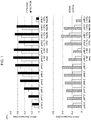
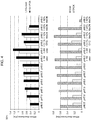
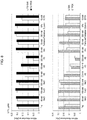
- Gold has trypsin activity in a very wide temperature range of 25 - 70 °C regardless of pH and additives, whereas trypsin activity of TPCK was weak, especially remarkably lower at temperatures of 60 °C or higher (see the lower panels of Figs. 1 - 6 ).
- trypsin activity of TPCK (FG-TPCK) immobilized on FG beads is dramatically increased, regardless of temperature and pH, and exceeds or about the same as that of Gold (FG-Gold) immobilized on FG beads (the upper panels of Figs. 1 - 6 ).
- TPCK is in a state equivalent to having lost trypsin activity despite being at an optimum pH (pH 8) for trypsin, whereas FG-TPCK retained its activity exceeding that of FG-Gold (see the upper panels of Figs. 1 - 6 ).
- a protein denaturing agent, a surfactant, an organic solvent, and the like Even under an environment of other additives (a protein denaturing agent, a surfactant, an organic solvent, and the like), the trypsin activity of FG-TPCK remarkably increased as compared to TPCK, and FG-TPCK and FG-Gold behaved substantially identically (see Figs. 7 and 8 ).
- FG-Gold and “FG-TPCK” were respectively prepared by using FG beads (FG beads NHS manufactured by Tamagawa Seiki Co., Ltd.) as nanoparticles and by immobilizing "Gold” and "TPCK” in the same way as in Example 1, and were each suspended in a Tris buffer (100 ⁇ L) (protease concentration in the suspension: 0.5 ⁇ g/ ⁇ L).
- Tris buffer 100 ⁇ L
- Protease concentration in the suspension 0.5 ⁇ g/ ⁇ L
- Commercially available Promega Immobilized Trypsin Cellulose resin
- CR-TPCK Pierce Immobilized TPCK Trypsin
- AR-TPCK Pierce Immobilized TPCK Trypsin
- the particles were washed five times with 25 mM Tris at pH 8.0 and then made into a slurry of 75 ml.
- a stock solution was prepared by dissolving a protease substrate (N- ⁇ -benzoyl-DL-arginine-p-nitroanilide hydrochloride) in DMSO such that a final concentration is 10 mM.
- An enzyme reaction solution was prepared by adding 50 ⁇ L of a substrate solution, 25 ⁇ L of a nanoparticle-immobilized protease suspension or 12.5 ⁇ L of an ordinary particle (microparticle)-immobilized protease suspension to 500 ⁇ L of a reaction buffer solution (25 mM Tris).
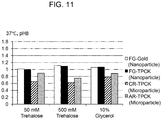
- the results are shown in Figs. 9 - 11 .
- the nanoparticle-immobilized proteases have higher enzyme activities than the microparticle-immobilized proteases in the vicinity of neutrality (pH 7.0 - 7.5), and are able to maintain the activities over a wide pH range including the alkaline side ( Fig. 9 ). From this result, a nanoparticle immobilized protease is advantageous, for example, in a case where a sample such as a human body fluid or blood of about pH 7 is digested.
- the nanoparticle-immobilized proteases had higher enzyme activities than the microparticle-immobilized proteases ( Figs. 10 and 11 ).
- the microparticle-immobilized proteases have no resistance to NaCl, whereas the nanoparticle-immobilized proteases were stable even in the presence of NaCl at high concentrations.
- a nanoparticle-immobilized proteases is suitable for application to a clinical examination test or the like in which a protein or the like in a crudely purified biological sample is to be analyzed.
- the present invention can be used in a reagent manufacturing field for evaluation and analysis tests of products in the development of biopharmaceuticals such as antibody drugs and protein drug products, and for clinical examination at clinical sites.
Landscapes
- Chemical & Material Sciences (AREA)
- Health & Medical Sciences (AREA)
- Life Sciences & Earth Sciences (AREA)
- Engineering & Computer Science (AREA)
- Organic Chemistry (AREA)
- Wood Science & Technology (AREA)
- Zoology (AREA)
- Bioinformatics & Cheminformatics (AREA)
- Genetics & Genomics (AREA)
- Biomedical Technology (AREA)
- General Health & Medical Sciences (AREA)
- Biochemistry (AREA)
- General Engineering & Computer Science (AREA)
- Biotechnology (AREA)
- Microbiology (AREA)
- Molecular Biology (AREA)
- Medicinal Chemistry (AREA)
- Inorganic Chemistry (AREA)
- Proteomics, Peptides & Aminoacids (AREA)
- Physics & Mathematics (AREA)
- Analytical Chemistry (AREA)
- Biophysics (AREA)
- Immunology (AREA)
- Measuring Or Testing Involving Enzymes Or Micro-Organisms (AREA)
- Other Investigation Or Analysis Of Materials By Electrical Means (AREA)
- Immobilizing And Processing Of Enzymes And Microorganisms (AREA)
Abstract
Description
- The present invention relates to an immobilized protease that has an improved resistance to a change in an external environment and can be used for sample preparation for mass spectrometry of a protein.
- Along with progress in mass spectrometry technologies, development of a high-throughput analysis platform for multi-specimen processing for proteins has also been advanced. However, protein analysis, which is a foundation for the development, is behind genome analysis. The reason is that, in genome analysis, there are many very general and quantitative techniques for sample preparation, such as PCR and plasmid amplification, whereas in protein analysis, a technique for preparing samples with high reproducibility has not been established. Firstly, for proteins, an efficient amplification technique has not yet been established. Secondly, when a target of mass spectrometry is a large protein such as an antibody, it is difficult to analyze the protein as it is and thus, as a pretreatment, the protein is digested and fragmented using a protease. However, reproducibility of the digestion reaction is not sufficiently ensured.
- As an attempt to increase reproducibility of a digestion reaction of a protein, binding of a protease to a solid phase carrier has been performed. So far, there are numerous reports that enzyme activity and a reaction speed are improved by binding a protease such as trypsin to a solid phase carrier, such as a glass surface, a membrane, a hollow fiber, a polymer, a gel, a sol, or porous silica (Non-Patent Documents 1 - 5 and the like). Further, it has been reported that nanoparticles on which trypsin is immobilized are used in a method in which a protein is selectively hydrolyzed by limiting access to a substrate of a protease (Non-Patent Document 6). Performance of these immobilized proteases is evaluated based on indicators such as whether or not an immobilized protease can be repeatedly used, whether or not an immobilized protease can be used in digestion reaction in a short time, and whether or not a peptide sequence recovery rate (sequence coverage) of a substrate protein is sufficient. However, all the reports so far are only qualitative evaluations, not evaluations based on quantitative physicochemical properties. Further, no consideration has been given on stability against a change in an external environment such as temperature, pH, preparation of an immobilized protease, and various reagents used in reaction with a substrate protein.
-
- [Non-Patent Document 1] Junfeng Ma, at. al., Organic-Inorganic Hybrid Silica Monolith Based Immobilized Trypsin Reactor with High Enzymatic Activity, Analytical Chemistry, 2008, 80, 2949.
- [Non-Patent Document 2] J.Robert Freije, at. al., Chemically Modified, Immobilized Trypsin Reactor with Improved Digestion Efficiency, Journal of Proteome Research, 2005, 4, 1805.
- [Non-Patent Document 3] Maria T.Dulay, at. al., Enhanced Proteolytic Activity of Covalently Bound Enzymes in Photopolymerized Sol Gel, Analytical Chemistry, 2005, 77, 4604.
- [Non-Patent Document 4] Jana Krenkova, at. al., Highly Efficient Enzyme Reactors Containing Trypsin and Endoproteinase LysC Immobilized on Porous Polymer Monolith Coupled to MS Suitable for Analysis of Antibodies, Analytical Chemistry, 2009, 81, 2004.
- [Non-Patent Document 5] Yan Li, at. al., Immobilization of Trypsin on Superparamagnetic Nanoparticles for Rapid and Effective Proteolysis, Journal of Proteome Research, 2007, 6, 3849.
- [Non-Patent Document 6] Noriko Iwamoto at. al., Selective detection of complementarity determining regions of monoclonal antibody by limiting protease access to the substrate: nanosurface and molecular-orientation limited proteolysis, Analyst, 2014, 139, 576.
- The present invention is intended to provide a highly active protease that can be used in sample preparation for mass spectrometry of a protein and has excellent stability against a change in an external environment.
- As a result of intensive studies to solve the above problems,the present inventors found that, by immobilizing a protease such as trypsin on nanoparticles, even for a low purity protease that has not been subjected to functional enhancement such as reductive dimethylation, high activity can be maintained over wide ranges of temperatures and pH values, and the protease is not affected by an organic solvent or a surfactant, and thus accomplished the present invention.
- That is, the present invention includes the following aspects.
- (1) An immobilized protease is obtained by immobilizing a crudely purified protease or a protease that has not been subjected to a self-digestion resistance treatment on surfaces of nanoparticles.
- (2) In the immobilized protease described in the above aspect (1), the nanoparticle has a particle size of 100 - 500 nm.
- (3) In the immobilized protease described in any one of the above aspects (1) and (2), the nanoparticle is a magnetic nanoparticle.
- (4) In the immobilized protease described in any one of the above aspects (1) - (3), the protease is trypsin, chymotrypsin, lysyl endopeptidase, V8 protease, Asp N protease, Arg C protease, papain, pepsin, or dipeptidyl peptidase.
- (5) In the immobilized protease described in any one of the above aspects (1) - (3), the self-digestion resistance treatment is a reductive dimethylation treatment.
- (6) In the immobilized protease described in the above aspect (5), the protease is trypsin or lysyl endopeptidase.
- (7) A method for preparing an immobilized protease includes a process of immobilizing a crudely purified protease or a protease that has not been subjected to a self-digestion resistance treatment on surfaces of nanoparticles.
- (8) A method of imparting, to a crudely purified protease or a protease that has not been subjected to a self-digestion resistance treatment, resistance to a change in an external environment by immobilizing the protease on surfaces of nanoparticles.
- (9) In the method described in any one of the above aspects (7) and (8), the protease is trypsin, chymotrypsin, lysyl endopeptidase, V8 protease, Asp N protease, Arg C protease, papain, pepsin, or dipeptidyl peptidase.
- (10) In the method described in any one of the above aspects (7) and (8), the self-digestion resistance treatment is a reductive dimethylation treatment.
- (11) In the method described in the above aspect (10), the protease is trypsin or lysyl endopeptidase.
- The present application claims the priority of Japanese Patent Application No.
2015-046380 filed on March 9, 2015 - The immobilized protease of the present invention obtained by immobilizing a protease on surfaces of nanoparticles can maintain high activity without being affected by a change in an external environment such as temperature, pH, and additives, and has excellent stability. Therefore, the immobilized protease of the present invention can improve reliability and reproducibility of data obtained using mass spectrometry by using the immobilized protease for sample preparation of a peptide fragment for quantification or identification of a protein using a mass spectrometry method. The immobilized protease of the present invention can achieve excellent performance of a mass spectrometry grade regardless of a type and purity of the protease immobilized on a nanoparticle. Therefore, it is economical to use the immobilized protease of the present invention as a bundled reagent of a kit for quantification or identification of a protein using mass spectrometry, and can improve profitability of the reagent.
-
- [
Fig. 1] Fig. 1 shows enzyme activities of trypsin at various pH values (pH 6.5, pH 7.0, pH 7.5, pH 8.0, pH 8.5, pH 9.0) in the presence of various additives (urea, OTG, MeCN) at 25 °C (upper panel: immobilized trypsin (FG-Gold, FG-TPCK); lower panel: non-immobilized trypsin (Gold, TPCK)). - [
Fig. 2] Fig. 2 shows enzyme activities of trypsin at various pH values (pH 6.5, pH 7.0, pH 7.5, pH 8.0, pH 8.5, pH 9.0) in the presence of various additives (urea, OTG, MeCN) at 37 °C (upper panel: immobilized trypsin (FG-Gold, FG-TPCK); lower panel: non-immobilized trypsin (Gold, TPCK)). - [
Fig. 3] Fig. 3 shows enzyme activities of trypsin at various pH values (pH 6.5, pH 7.0, pH 7.5, pH 8.0, pH 8.5, pH 9.0) in the presence of various additives (urea, OTG, MeCN) at 45 °C (upper panel: immobilized trypsin (FG-Gold, FG-TPCK); lower panel: non-immobilized trypsin (Gold, TPCK)). - [
Fig. 4] Fig. 4 shows enzyme activities of trypsin at various pH values (pH 6.5, pH 7.0, pH 7.5, pH 8.0, pH 8.5, pH 9.0) in the presence of various additives (urea, OTG, MeCN) at 50 °C (upper panel: immobilized trypsin (FG-Gold, FG-TPCK); lower panel: non-immobilized trypsin (Gold, TPCK)). - [
Fig. 5] Fig. 5 shows enzyme activities of trypsin at various pH values (pH 6.5, pH 7.0, pH 7.5, pH 8.0, pH 8.5, pH 9.0) in the presence of various additives (urea, OTG, MeCN) at 60 °C (upper panel: immobilized trypsin (FG-Gold, FG-TPCK); lower panel: non-immobilized trypsin (Gold, TPCK)). - [
Fig. 6] Fig. 6 shows enzyme activities of trypsin at various pH values (pH 6.5, pH 7.0, pH 7.5, pH 8.0, pH 8.5, pH 9.0) in the presence of various additives (urea, OTG, MeCN) at 70 °C (upper panel: immobilized trypsin (FG-Gold, FG-TPCK); lower panel: non-immobilized trypsin (Gold, TPCK)). - [
Fig. 7] Fig. 7 shows enzyme activities of trypsin at pH 8.0 in the presence of various additives (DTT, TCEP, CHAPS, SDS, Tween 20, Triton X-100, NP-40) at 37 °C (upper panel: immobilized trypsin (FG-Gold, FG-TPCK); lower panel: non-immobilized trypsin (Gold, TPCK)). - [
Fig. 8] Fig. 8 shows enzyme activities of trypsin at pH 8.0 in the presence of various additives (NaCl, AS, IAA, Trehalose, Glycerol, EDTA) at 37 °C (upper panel: immobilized trypsin (FG-Gold, FG-TPCK); lower panel: non-immobilized trypsin (Gold, TPCK)). - [
Fig. 9] Fig. 9 shows enzyme activities of trypsin at various pH values (pH 6.5, pH 7.0, pH 7.5, pH 8.0, pH 8.5, pH 9.0) at 37 °C (FG-Gold, FG-TPCK: nanoparticle immobilized trypsin; CR-TPCK, AR-TPCK: microparticle immobilized trypsin). - [
Fig. 10] Fig. 10 shows enzyme activities of trypsin at pH 8.0 in the presence of various additives (urea, NaCl, AS, IAA, EDTA) at 37 °C (FG-Gold, FG-TPCK: nanoparticle immobilized trypsin; CR-TPCK, AR-TPCK: microparticle immobilized trypsin). - [
Fig. 11] Fig. 11 shows enzyme activities of trypsin at pH 8.0 in the presence of various additives (Trehalose, Glycerol) at 37 °C (FG-Gold, FG-TPCK: nanoparticle immobilized trypsin; CR-TPCK, AR-TPCK: microparticle immobilized trypsin). - In the following, the present invention is described in detail.
- The immobilized protease of the present invention is characterized in that nanoparticles are used as a solid phase carrier and the protease is immobilized on surfaces of the nanoparticles. The immobilized protease of the present invention can maintain high activity without being affected by a change in an external environment even for a crudely purified protease or a protease that has not been subjected to a self-digestion resistance treatment by immobilizing the protease on a nanoparticle.
- A size of a nanoparticle used in the present invention is not limited as long as a protease can be bound to a surface of the nanoparticle at multiple points. However, since a protease such as trypsin or lysyl endopeptidase has a molecular diameter of about 5 nm, the particle size of the nanoparticle is preferably 100 - 500 nm, more preferably 150 - 400 nm, and even more preferably 200 - 300 nm. When the particle size is increased (for example, to an order of a micrometer), it is necessary to consider shrinkage of particles due to influence of an additive and the like. However, in the case of a nanoparticle and immobilizing a protease on the surface of the nanoparticle, it is not necessary to consider this contraction and thus it is possible to prepare a more stable enzyme. Here, the "particle size" refers to a particle size having a highest appearance frequency in a particle distribution, that is, a central particle size.
- An amount of a protease to be immobilized with respect to nanoparticles varies depending on the particle size of the nanoparticles, and the kind and purity of the protease, but is generally 1 - 10% by weight, and preferably 2 - 5% by weight with respect to 1% by weight of the nanoparticles.
- As a kind of the nanoparticles, magnetic nanoparticles that can be dispersed or suspended in an aqueous medium and can be easily recovered from the dispersion or suspension by magnetic separation or magnetic precipitation separation are preferable. Further, from a point of view that aggregation is less likely to occur, magnetic nanoparticles covered with an organic polymer are more preferable. Examples of base materials of magnetic nanoparticles include ferromagnetic alloys such as iron oxide (magnetite (Fe3O4), maghemite (γ-Fe2O3)), and ferrite (Fe/M)3O4. In the ferrite (Fe/M)3O4, M means a metal ion that can be used together with an iron ion to form a magnetic metal oxide, and typically, Co2+, Ni2+, Mn2+, Mg2+, Cu2+, Ni2+ and the like are used. Further, examples of the organic polymer covering the magnetic nanoparticles include polyglycidyl methacrylate (poly GMA), a copolymer of GMA and styrene, polymethyl methacrylate (PMMA), polymethyl acrylate) (PMA), and the like. Specific examples of magnetic nanoparticles coated with an organic polymer include FG beads, SG beads, Adembeads, nanomag, and the like. As a commercially available product, for example, FG beads (polymer magnetic nanoparticles having a particle size of about 200 nm obtained by coating ferrite particles with polyglycidyl methacrylate (poly GMA)) manufactured by Tamagawa Seiki Co., Ltd. is suitably used.
- In order to suppress adsorption of a nonspecific protein and to selectively immobilize a protease, it is preferable that the nanoparticles be modified with spacer molecules capable of binding to the protease. By immobilizing a protease via a spacer molecule, desorption of the protease from surfaces of nanoparticles is suppressed, and position selectivity of protease digestion is improved.
- Further, by adjusting a molecular size of a spacer, a protease can be caused to selectively access a desired position of a substrate protein, and position selectivity can be improved.
- A spacer preferably can bind to protease and does not inactivate a protease. From a point of view of controlling an access range of a protease immobilized on surfaces of nanoparticles, a spacer preferably has a small molecular diameter. The molecular diameter of the spacer is preferably 5 nm or less, more preferably 3 nm or less, and even more preferably 2 nm or less. Further, a molecular weight of the spacer is preferably 2000 or less, more preferably 1500 or less, and even more preferably 1000 or less.
- A spacer molecule having the above molecular diameter and capable of immobilizing a protease is preferably a non-protein, and is preferably a molecule having a functional group at a terminal, examples of the functional group including an amino group, a carboxyl group, an ester group, an epoxy group, a tosyl group, a hydroxyl group, a thiol group, an aldehyde group, a maleimide group, a succinimide group, an azide group, a biotin, an avidin, and a chelate. For example, for immobilization of trypsin, a spacer molecule having an activated ester group is preferred. Further, of a spacer molecule, as a spacer arm portion other the functional group, a hydrophilic molecule can be used, examples of the hydrophilic molecule including polyethylene glycol and its derivatives, polypropylene glycol and its derivatives, polyacrylamide and its derivatives, polyethyleneimine and its derivatives, poly (ethylene oxide) and its derivatives, poly (ethylene terephthalic acid) and its derivatives, and the like.
- Nanoparticles surface-modified with such spacer molecules are also commercially available, and these nanoparticles can be used. For example, nanoparticles modified with a spacer molecule having an ester group (active ester group) activated with N-hydroxysuccinimide is commercially available under a trade name "FG beads NHS" (Tamagawa Seiki Co., Ltd.).
- A method for immobilizing a protease on surfaces of nanoparticles is not particularly limited. An appropriate method can be adopted according to characteristics of the protease and the nanoparticles (or spacer molecules modifying the surfaces of the nanoparticles). However, an amine coupling method of the nanoparticles and the protease via the functional groups of the spacer molecules is preferable. For example, a carboxyl group surface-modified on nanoparticles can be esterified with N-hydroxysuccinimide (NHS) to form an activated ester group to which an amino group of a protease can be bound. This coupling reaction can be performed in the presence of carbodiimide as a condensing agent, examples of the carbodiimide including 1-ethyl-3- (3-dimethylaminopropyl) carbodiimide (EDAC), N,N'-dicyclohexylcarbodiimide (DCC), bis(2,6-diisopropylphenyl) carbodiimide (DIPC), and the like. Further, an amino group of a protease may be bound to an amino group surface-modified on nanoparticles using a cross-linking agent such as glutaraldehyde, bifunctional succinimide, bis(sulfosuccinimidyl) suberate (BS3), sulfonyl chloride, maleimide, and pyridyl disulfide.
- The coupling method of the nanoparticles and the protease via the functional groups of the spacer molecules can be performed by a simple operation of adding a protease solution to a suspension of the nanoparticles and mixing and stirring the mixture under certain conditions. The reaction conditions are not particularly limited. However, for example, the suspension of the nanoparticles, to which the protease is added, is stirred at a temperature of 1 - 10 °C at pH 7.0 at 50 - 200 rpm for 0.5 - 1 hour.
- After the protease is immobilized on the surfaces of the nanoparticles, it is preferable to inactivate an active portion that is not bound to the protease on the surfaces of the nanoparticles. For example, when spacer molecules on which the protease is not immobilized exist on the surfaces of the nanoparticles, problems may occur such as that the unbound spacer molecules bind to contaminants in the sample and adversely affects protease digestion, and that peptide fragments produced by protease digestion are immobilized on the nanoparticles. After the protease is immobilized, by blocking unbound spacer molecules, such problems are suppressed. As a method for inactivating the active portion unbound to the protease, chemical modification is preferred. For example, an activated ester group can be inactivated by reacting with a primary amine to form an amide bond.
- In the present invention, a kind of a protease to be immobilized on nanoparticles may be appropriately selected according to a kind of a protein to be quantified or identified using mass spectrometry, and is not limited. Examples of the protease include crudely purified proteases or proteases that have not been subjected to a self-digestion resistance treatment, such as trypsin (peptide is cleaved at a C-terminal side of basic amino acid residues (Arg and Lys)), chymotrypsin (peptide is cleaved at a C-terminal side of aromatic amino acid residues (Phe, Tyr and Trp)), lysyl endopeptidase (peptide is cleaved at a C-terminal side of a Lys residue), V8 protease (peptide is cleaved at a C-terminal side of a Glu residue), Asp N protease (peptide is cleaved at an N-terminal side of an Asp residue), Arg C protease (peptide is cleaved at a C-terminal side of an Arg residue), papain, pepsin, and dipeptidyl peptidase. Among the above proteases, trypsin is particularly preferably used in the present invention. Trypsin has a small molecular diameter, and an active site exists inside a molecule. Therefore, a region where the active site can access a substrate protein is restricted, and position selectivity of protease digestion can be improved. In particular, when the substrate protein is an antibody, it is preferable to use trypsin as the protease.
- The protease used in the present invention is a crudely purified or a protease that has not been subjected to a self-digestion resistance treatment, and purity of the protease is not limited. Therefore, when a commercially available protease is used, the protease is not limited to a protease of a mass spectrometry grade or a protease of a sequencing (sequence) grade, and may be a native protease derived from a living body. For example, in the case of trypsin, native trypsin derived from a living body generates pseudo trypsin showing chymotrypsin-like activity by self-digestion. Therefore, trypsin having reduced chymotrypsin activity by being subjected to an N-tosyl-L-phenylalanine chloromethylketone (TPCK) treatment, or, trypsin having increased resistance to self-digestion by subjecting a lysine residue thereof to a reductive dimethylation treatment, is commercially available as trypsin of a mass spectrometry grade. However, the trypsin used in the present invention may be trypsin for which such a reductive dimethylation treatment of a lysine residue is not performed.
- Protease bound to nanoparticles as described above has dramatically improved resistance to a change in an external environment. Here, the term "external environment" refers to temperature (heat), pH, an organic solvent, a protein denaturing agent, a protein reducing and alkylating agent, a protein protecting and stabilizing agent, a surfactant for solubilizing a protein, a salting-out agent, salts, and the like. Examples of protein denaturing agents include urea, guanidine hydrochloride, dithiothreitol (DTT), mercaptoethanol, and the like. Examples of protein reducing and alkylating agents include tris (2-carboxyethyl) phosphine hydrochloride (TCEP), iodoacetamide (IAA), and the like. Examples of protein protecting and stabilizing agents include chelating agents such as EDTA, polyols such as glycerol, sugars such as trehalose, glucose and sucrose, and the like. Examples of organic solvents include acetonitrile, methanol, ethanol, isopropanol, and the like. Examples of the surfactant include polyoxyethylene nonionic surfactant (such as Triton X-100,
Tween 20/40/60/80, and Nonidet P-40 (NP-40)), alkyl glycoside-based nonionic surfactant (such as n-octyl-β-D-glucoside (OG), n-octyl-β-D-thioglucoside (OTG), n-dodecyl- β-D-maltoside (DDM), and n-nonyl-β-D-maltoside (NG)), amphoteric surfactant (such as 3-[(3-cholamidopropyl) dimethylammonio]-1-propanesulfonic acid (CHAPS) or 3-[(3-cholamidopropyl) dimethylammonio]-2-hydroxypropanesulfonic acid (CHAPSO)), and cationic surfactant (such as cetyltrimethylammonium bromide (CTAB)). Examples of salting-out agents include ammonium sulfate (AS). Examples of salts include sodium chloride, potassium chloride, sodium acetate, magnesium sulfate, and the like. - Conditions in the case in which a substrate protein is digested using the immobilized protease of the present invention are not particularly limited, and conditions similar to general protease digestion can be suitably adopted. For example, it is preferable to incubate at a temperature of about 37 °C for about 1 hour - 20 hours in a buffer solution adjusted to a vicinity of an optimum pH of the protease. Further, a quantitative mixing ratio of a substrate protein to an immobilized protease is not particularly limited, and may be set so as to have an amount of the protease corresponding to an amount of the substrate protein. A general protease digestion condition is that the ratio (substrate protein):(protease) is about 100:1 - 10:1 (weight ratio).
- Mass spectrometry is suitable for identification and quantification of a substrate protein from a peptide fragment produced by digestion of the substrate protein using the immobilized protease of the present invention Mass spectrometry can determine an amino acid sequence and thus can determine whether or not a peptide fragment is a peptide fragment derived from a specific protein such as an antibody. Further, based on a peak intensity, concentration of peptide fragments in a sample can be determined. An ionization method in mass spectrometry is not particularly limited, and an electron ionization (EI) method, a chemical ionization (CI) method, a field desorption (FD) method, a fast atom collision (FAB) method, a matrix assisted laser desorption ionization (MALDI) method, an electrospray ionization (ESI) method, and the like can be adopted. A method for analyzing an ionized sample is also not particularly limited, and a method of a magnetic field deflection type, a quadrupole (Q) type, an ion trap (IT) type, a time of flight (TOF) type, a Fourier transform ion cyclotron resonance (FT-ICR) type, or the like can be appropriately determined according to the ionization method. Further, MS/MS analysis or multistage mass spectrometry of MS3 or higher can also be performed using triple quadrupole mass spectrometer or the like.
- The immobilized protease of the present invention can stably maintain high activity in a state of being immobilized on surfaces of nanoparticles and thus can be provided as a component of a kit for sample preparation of a peptide fragment for quantification or identification of a protein using a mass spectrometry method. The immobilized protease of the present invention is particularly suitable for detecting and quantifying an antibody. By selectively protease-digesting an Fab region and subjecting an obtained peptide fragment sample to mass spectrometry, a sequence and an amount of a peptide fragment containing an amino acid sequence of a complementarity determining region can be determined. The immobilized protease of the present invention can also be used in analysis of pharmacokinetics, analysis of interaction using an antigen antibody reaction, various interactome analysis, basic research such as identification of immunoprecipitated protein, sequence analysis of biomolecule drugs such as antibody drugs, quality assurance, identity check test for generic drugs, and the like.
- In the following, the present invention is described in detail based on Examples. However, the present invention is not limited by these Examples.
- For reagents used in the following Examples, those not specifically described were obtained from Wako Pure Chemical Industries. Further, pH values of the following buffers were adjusted using a precision pH meter.
- HEPES buffer: 25 mM HEPES-NaOH, pH 7.0
- Ethanolamine buffer: 1 M ethanolamine-HCl, pH 8.0
- Tris buffer: 25 mM Tris-HCl, pH 8.0
- As nanoparticles for protease immobilization, FG beads (FG beads NHS manufactured by Tamagawa Seiki) having an average particle size of 190 nm (dispersion range: ± 20 nm) modified with a spacer (see the following chemical formula (where L is a binding site to a surface of a nanoparticle); spacer length: 1 nm) of which a carboxy group was activated with N-hydroxysuccinimide were used.

- 50 µl of an isopropanol suspension of 1 mg of FG beads was centrifuged at 4 °C (15000 rpm, 5 minutes) to precipitate the nanoparticles, and supernatant was removed, and thereafter, washing with methanol was performed. A solution obtained by dissolving a solution containing 50 µg of a protease in 200 µL of a HEPES buffer was added to the nanoparticles to suspend the nanoparticles. In forming the suspension, an ultrasonic treatment was performed for a few seconds so that a temperature of the suspension did not rise.
- The suspension of the nanoparticles was stirred at 4 °C for 30 minutes and then centrifuged (15000 rpm, 5 minutes) at 4 °C to precipitate the nanoparticles, and supernatant was removed. Subsequently, 200 µL of an ethanolamine buffer was added to suspend the particles, and the mixture was stirred at 4 °C for 30 minutes, and excess N-hydroxysuccinimide groups on the surfaces of the nanoparticles were blocked with ethanolamine, and a nanoparticle-immobilized protease (50 µg/mg, solid phase) was obtained. Thereafter, centrifugation (15000 rpm, 5 minutes) at 4 °C was performed to precipitate the nanoparticles, and supernatant was removed. Thereafter, washing with a Tris buffer and centrifugation were repeated twice, and a suspension in a Tris buffer (100 µL) was formed (protease concentration in the suspension: 0.5 µg/µL).
- Enzyme stability was examined by performing enzymatic reactions under various conditions by using, as a protease substrate, N-α-benzoyl-DL-arginine-p-nitroanilide hydrochloride (MW = 434.9), and using, as proteases, two kinds of trypsins including Trypsin Gold, Mass Spec Grade (manufactured by Promega) (hereinafter referred to as "Gold") and Trypsin TPCK Treated from bovine pancreas, Product Number T1426 (manufactured by Sigma Aldrich) (hereinafter referred to as "TPCK"), and "FG-Gold" and "FG-TPCK" that are respectively obtained by immobilizing "Gold" and "TPCK" on nanoparticles according to the method described in Example 1. "Gold" is a protease of a mass spectrometry grade that, by performing a reductive dimethylation treatment in addition to a chymotrypsin inactivation treatment (TPCK treatment), is resistant to self-digestion and broadly maintains high activity without depending on temperature and pH. On the other hand, "TPCK" is a protease for which, although a chymotrypsin inactivation treatment is performed, due to a low degree of purification, chymotrypsin derived from impurities remains and chymotrypsin activity is not completely suppressed, and a self-digestion resistance treatment such as reductive dimethylation is also not performed, and thus, heat resistance is poor, and a pH tolerance range, a compatible buffer solution and pH thereof are also limited.
- A stock solution was prepared by dissolving a protease substrate in DMSO such that a final concentration is 10 mM. A substrate solution, a reaction buffer solution, a non-immobilized (free) protease solution or an immobilized protease suspension were mixed at ratios shown in Table 1 to prepare an enzyme reaction solution.
[Table 1] Enzyme reaction solution composition Content Substrate solution 10 µL (100 nmol) Reaction buffer solution (25 mM Tris) 500 µL Immobilized protease suspension (0.5 mg/mL) 25 µL Non-immobilized protease suspension (0.5 mg/mL) 5 µL - An enzymatic reaction was performed by using the prepared enzyme reaction solution and by setting the following conditions. Additives of (c) were added to a reaction buffer solution (25 mM Tris) such that a predetermined final concentration was obtained.
-
- (a) Temperature
25 °C, 37 °C, 45 °C, 50 °C, 60 °C, 70 °C - (b) pH
6.5, 7.0, 7.5, 8.0, 8.5, 9.0 - (c) Additives (a protein denaturing agent, a surfactant, an organic solvent and the like / temperature: 37 °C; pH: 8.0)
1M, 2M urea
0.1% n-octyl-β-D-thioglucoside (OTG)
10%, 20%, 50% acetonitrile (MeCN)
5 mM, 10 mM, 20 mM dithiothreitol (DTT)
1 mM, 5 mM, 10 mM tris (2-carboxyethyl) phosphine hydrochloride (TCEP)
0.1% CHAPS
0.1% SDS
0.1% Tween 20
0.1% Triton X-100
0.1% NP-40
50 mM, 150 mM, 500 mM NaCl
50 mM, 150 mM, 500 mM AS
50 mM IAA
50 mM, 500 mM trehalose
10% glycerol
10 mM EDTA - The enzymatic reaction was performed under the respective conditions for 1.5 hours while vortex stirring was performed. At the end of the reaction, 50 µL of 2N-HCl or a 10% sulfuric acid was added to completely stop the enzymatic reaction. After the nanoparticles were removed by filtration with a multi-screen filter plate, the solution was dispensed into an optical bottom plate, absorbance (405 nm, extinction coefficient = 9920 M-1·cm-1) of paranitroaniline (p-NA) released from the substrate was measured using a microplate reader (TECAN Infinite M200 Pro), and enzyme activity was evaluated.
- The results are shown in
Figs. 1 - 8 . Gold has trypsin activity in a very wide temperature range of 25 - 70 °C regardless of pH and additives, whereas trypsin activity of TPCK was weak, especially remarkably lower at temperatures of 60 °C or higher (see the lower panels ofFigs. 1 - 6 ). In contrast, trypsin activity of TPCK (FG-TPCK) immobilized on FG beads is dramatically increased, regardless of temperature and pH, and exceeds or about the same as that of Gold (FG-Gold) immobilized on FG beads (the upper panels ofFigs. 1 - 6 ). In particular, in the presence of urea, which is a protein denaturing agent often used in proteomics, TPCK is in a state equivalent to having lost trypsin activity despite being at an optimum pH (pH 8) for trypsin, whereas FG-TPCK retained its activity exceeding that of FG-Gold (see the upper panels ofFigs. 1 - 6 ). Even under an environment of other additives (a protein denaturing agent, a surfactant, an organic solvent, and the like), the trypsin activity of FG-TPCK remarkably increased as compared to TPCK, and FG-TPCK and FG-Gold behaved substantially identically (seeFigs. 7 and8 ). - "FG-Gold" and "FG-TPCK" were respectively prepared by using FG beads (FG beads NHS manufactured by Tamagawa Seiki Co., Ltd.) as nanoparticles and by immobilizing "Gold" and "TPCK" in the same way as in Example 1, and were each suspended in a Tris buffer (100 µL) (protease concentration in the suspension: 0.5 µg/µL). Commercially available Promega Immobilized Trypsin (Cellulose resin) (hereinafter referred to as "CR-TPCK") or Pierce Immobilized TPCK Trypsin (4% crosslinked Agarose resin) (hereinafter referred to as "AR-TPCK") was used as ordinary particle (microparticle)-immobilized protease. The particles were washed five times with 25 mM Tris at pH 8.0 and then made into a slurry of 75 ml.
- A stock solution was prepared by dissolving a protease substrate (N-α-benzoyl-DL-arginine-p-nitroanilide hydrochloride) in DMSO such that a final concentration is 10 mM. An enzyme reaction solution was prepared by adding 50 µL of a substrate solution, 25 µL of a nanoparticle-immobilized protease suspension or 12.5 µL of an ordinary particle (microparticle)-immobilized protease suspension to 500 µL of a reaction buffer solution (25 mM Tris).
- An enzymatic reaction was performed by using the prepared enzyme reaction solution and by setting the following conditions. Additives of (b) were added to a reaction buffer solution (25 mM Tris) such that a predetermined final concentration was obtained.
-
- (a) pH (Temperature :37 °C)
6.5, 7.0, 7.5, 8.0, 8.5, 9.0 - (b) Additives (protein denaturing agent and the like / pH 8.0; temperature 37 °C)
1M, 2M urea
50 mM, 150 mM, 500 mM NaCl
50 mM, 150 mM, 500 mM AS
50 mM IAA
10 mM EDTA
50 mM, 500 mM trehalose
10% glycerol - The enzymatic reaction was performed under the respective conditions for 1.5 hours while vortex stirring was performed. At the end of the reaction, 50 µL of a 10% sulfuric acid was added to completely stop the enzymatic reaction. After the nanoparticles were removed by filtration with a multi-screen filter plate, the solution was dispensed into an optical bottom plate, absorbance (405 nm, extinction coefficient = 9920 M-1·cm-1) of paranitroaniline (p-NA) released from the substrate was measured using a microplate reader (TECAN Infinite M200 Pro), and enzyme activity was evaluated. Evaluation of enzyme activities of the commercial available products was performed by comparing relative enzyme activities with enzyme activity at pH 8.0 as 1.
- The results are shown in
Figs. 9 - 11 . The nanoparticle-immobilized proteases have higher enzyme activities than the microparticle-immobilized proteases in the vicinity of neutrality (pH 7.0 - 7.5), and are able to maintain the activities over a wide pH range including the alkaline side (Fig. 9 ). From this result, a nanoparticle immobilized protease is advantageous, for example, in a case where a sample such as a human body fluid or blood of about pH 7 is digested. Further, in an environment of a protein denaturing agent (urea), a salt (NaCl), a salting-out agent (AS), a protein reducing and alkylating agent (IAA), or a protein protecting and stabilizing agent (EDTA, Trehalose, or Glycerol), the nanoparticle-immobilized proteases had higher enzyme activities than the microparticle-immobilized proteases (Figs. 10 and11 ). In particular, it is fatal that the microparticle-immobilized proteases have no resistance to NaCl, whereas the nanoparticle-immobilized proteases were stable even in the presence of NaCl at high concentrations. A tendency was observed that, for the microparticle-immobilized proteases, when a stabilizer is present, the enzyme activity rather decreases. In contrast, in the nanoparticle-immobilized proteases, a reason why the enzyme activity does not decrease even when a stabilizer is present is that the particles are nano-sized, and thus, a decrease in dispersibility (probability of being in contact with the substrate) associated with an increase in viscosity of the solution is unlikely to occur. From the above, it can be said that a nanoparticle-immobilized protease is suitable for application to a clinical examination test or the like in which a protein or the like in a crudely purified biological sample is to be analyzed. - The present invention can be used in a reagent manufacturing field for evaluation and analysis tests of products in the development of biopharmaceuticals such as antibody drugs and protein drug products, and for clinical examination at clinical sites.
- All publications, patents and patent applications cited in the present specification are incorporated by reference in their entirety in the present specification.
Claims (11)
- An immobilized protease obtained by immobilizing a crudely purified protease or a protease that has not been subjected to a self-digestion resistance treatment on surfaces of nanoparticles.
- The immobilized protease according to claim 1, wherein the nanoparticle has a particle size of 100 - 500 nm.
- The immobilized protease according to any one of claims 1 and 2, wherein the nanoparticle is a magnetic nanoparticle.
- The immobilized protease according to any one of claims 1 - 3, wherein the protease is trypsin, chymotrypsin, lysyl endopeptidase, V8 protease, Asp N protease, Arg C protease, papain, pepsin, or dipeptidyl peptidase.
- The immobilized protease according to any one of claims 1 - 3, wherein the self-digestion resistance treatment is a reductive dimethylation treatment.
- The immobilized protease according to claim 5, wherein the protease is trypsin or lysyl endopeptidase.
- A method for preparing an immobilized protease comprising a process of immobilizing a crudely purified protease or a protease that has not been subjected to a self-digestion resistance treatment on surfaces of nanoparticles.
- A method of imparting, to a crudely purified protease or a protease that has not been subjected to a self-digestion resistance treatment, resistance to a change in an external environment by immobilizing the protease on surfaces of nanoparticles.
- The method according to any one of claims 7 and 8, wherein the protease is trypsin, chymotrypsin, lysyl endopeptidase, V8 protease, Asp N protease, Arg C protease, papain, pepsin, or dipeptidyl peptidase.
- The method according to any one of claims 7 and 8, wherein the self-digestion resistance treatment is a reductive dimethylation treatment.
- The method according to claim 10, wherein the protease is trypsin or lysyl endopeptidase.
Applications Claiming Priority (2)
| Application Number | Priority Date | Filing Date | Title |
|---|---|---|---|
| JP2015046380 | 2015-03-09 | ||
| PCT/JP2015/085444 WO2016143223A1 (en) | 2015-03-09 | 2015-12-18 | Immobilized protease with improved resistance to change in external environment |
Publications (2)
| Publication Number | Publication Date |
|---|---|
| EP3269807A1 true EP3269807A1 (en) | 2018-01-17 |
| EP3269807A4 EP3269807A4 (en) | 2018-08-08 |
Family
ID=56879446
Family Applications (1)
| Application Number | Title | Priority Date | Filing Date |
|---|---|---|---|
| EP15884707.9A Withdrawn EP3269807A4 (en) | 2015-03-09 | 2015-12-18 | Immobilized protease with improved resistance to change in external environment |
Country Status (7)
| Country | Link |
|---|---|
| US (1) | US20180051272A1 (en) |
| EP (1) | EP3269807A4 (en) |
| JP (1) | JPWO2016143223A1 (en) |
| KR (1) | KR20170120691A (en) |
| CN (1) | CN107406841A (en) |
| BR (1) | BR112017017494A2 (en) |
| WO (1) | WO2016143223A1 (en) |
Families Citing this family (5)
| Publication number | Priority date | Publication date | Assignee | Title |
|---|---|---|---|---|
| CN111512152B (en) * | 2017-12-28 | 2023-08-11 | 株式会社岛津制作所 | Method for improving detection result of monoclonal antibody |
| EP3734268B1 (en) | 2017-12-28 | 2022-07-13 | Shimadzu Corporation | Simplified monoclonal antibody quantification method |
| JP7786458B2 (en) | 2021-06-23 | 2025-12-16 | 株式会社島津製作所 | How to analyze antibodies |
| CN114672475B (en) * | 2022-03-29 | 2024-02-06 | 广东海洋大学 | Immobilized alkaline protease and preparation method thereof |
| CN118546777B (en) * | 2024-07-30 | 2024-11-19 | 杭州珞米医疗科技有限公司 | A protease bioreactor and its preparation method and application |
Family Cites Families (8)
| Publication number | Priority date | Publication date | Assignee | Title |
|---|---|---|---|---|
| US7166441B2 (en) * | 2002-03-12 | 2007-01-23 | Perseptive Biosystems Inc. | Method and apparatus for the identification and quantification of biomolecules |
| JP2004305021A (en) * | 2003-04-02 | 2004-11-04 | Asahi Denka Kogyo Kk | Method for producing enzyme-treated egg yolk |
| CN100363491C (en) * | 2005-07-28 | 2008-01-23 | 浙江大学 | Method for Directly Producing TF2A Crude Extract by Nano-immobilized Enzyme in Vitro |
| KR100819378B1 (en) * | 2006-02-24 | 2008-04-04 | (주)에이티젠 | Magnetic nanocomposite using amphiphilic compound and pharmaceutical composition comprising the same |
| EP2417262B1 (en) * | 2009-04-07 | 2015-05-20 | Dow AgroSciences LLC | Nanoparticle mediated delivery of sequence specific nucleases |
| EP2561072A4 (en) * | 2010-04-20 | 2016-04-06 | Univ Florida | NANOZYMES, PROCESSES FOR PRODUCING NANOZYMES, AND METHODS OF USING NANOZYMES |
| CN103882002B (en) * | 2014-01-16 | 2016-10-19 | 中国人民解放军军事医学科学院放射与辐射医学研究所 | The preparation of a kind of immobilization proteinase reagent and application thereof |
| CN103887030A (en) * | 2014-04-04 | 2014-06-25 | 华东理工大学 | Magnetic affinity nanometer particle used for purifying and immobilizing histidine tag protein, and preparation method and application thereof |
-
2015
- 2015-12-18 US US15/556,909 patent/US20180051272A1/en not_active Abandoned
- 2015-12-18 JP JP2017504577A patent/JPWO2016143223A1/en active Pending
- 2015-12-18 EP EP15884707.9A patent/EP3269807A4/en not_active Withdrawn
- 2015-12-18 BR BR112017017494A patent/BR112017017494A2/en not_active Application Discontinuation
- 2015-12-18 CN CN201580077541.7A patent/CN107406841A/en active Pending
- 2015-12-18 WO PCT/JP2015/085444 patent/WO2016143223A1/en not_active Ceased
- 2015-12-18 KR KR1020177027414A patent/KR20170120691A/en not_active Ceased
Also Published As
| Publication number | Publication date |
|---|---|
| KR20170120691A (en) | 2017-10-31 |
| US20180051272A1 (en) | 2018-02-22 |
| WO2016143223A1 (en) | 2016-09-15 |
| CN107406841A (en) | 2017-11-28 |
| BR112017017494A2 (en) | 2018-04-17 |
| EP3269807A4 (en) | 2018-08-08 |
| JPWO2016143223A1 (en) | 2017-12-28 |
Similar Documents
| Publication | Publication Date | Title |
|---|---|---|
| EP3270154B1 (en) | Method for detecting a monoclonal antibody using mass spectrometry | |
| US12216126B2 (en) | Kit for preparing sample for detecting monoclonal antibody | |
| CN105518447B (en) | The fragments of peptides preparation kit and analysis method used in the preparation method and this method of fragments of peptides | |
| US20180051272A1 (en) | Immobilized protease with improved resistance to change in external environment | |
| US20200011876A1 (en) | Method for Simultaneous Quantification of Monoclonal Antibodies | |
| Bayramoglu et al. | Hydrophilic spacer-arm containing magnetic nanoparticles for immobilization of proteinase K: Employment for speciation of proteins for mass spectrometry-based analysis | |
| Chiu et al. | Nanomaterial based affinity matrix-assisted laser desorption/ionization mass spectrometry for biomolecules and pathogenic bacteria | |
| EP3269821A1 (en) | Method for obtaining peptide fragment from antibody by means of protease decomposition reaction with restricted reaction field | |
| JPWO2019155576A1 (en) | How to improve the detection results of monoclonal antibodies | |
| JP6152908B2 (en) | Method for preparing and analyzing peptide fragment | |
| WO2025114406A1 (en) | Method for analyte quantification | |
| JP2008292390A (en) | Protein identification method | |
| WO2006026416A1 (en) | Compositions, methods, systems, and kits for affinity purification |
Legal Events
| Date | Code | Title | Description |
|---|---|---|---|
| PUAI | Public reference made under article 153(3) epc to a published international application that has entered the european phase |
Free format text: ORIGINAL CODE: 0009012 |
|
| 17P | Request for examination filed |
Effective date: 20170919 |
|
| AK | Designated contracting states |
Kind code of ref document: A1 Designated state(s): AL AT BE BG CH CY CZ DE DK EE ES FI FR GB GR HR HU IE IS IT LI LT LU LV MC MK MT NL NO PL PT RO RS SE SI SK SM TR |
|
| AX | Request for extension of the european patent |
Extension state: BA ME |
|
| DAV | Request for validation of the european patent (deleted) | ||
| DAX | Request for extension of the european patent (deleted) | ||
| RIC1 | Information provided on ipc code assigned before grant |
Ipc: C12N 11/14 20060101ALI20180625BHEP Ipc: C12N 11/00 20060101AFI20180625BHEP |
|
| A4 | Supplementary search report drawn up and despatched |
Effective date: 20180710 |
|
| RIC1 | Information provided on ipc code assigned before grant |
Ipc: C12N 11/14 20060101ALI20180703BHEP Ipc: C12N 11/00 20060101AFI20180703BHEP |
|
| STAA | Information on the status of an ep patent application or granted ep patent |
Free format text: STATUS: THE APPLICATION HAS BEEN WITHDRAWN |
|
| 18W | Application withdrawn |
Effective date: 20200611 |