EP3266596A1 - A method for producing a bulk moulding compound or a sheet moulding compound from pre-impregnated reinforcement fibers - Google Patents
A method for producing a bulk moulding compound or a sheet moulding compound from pre-impregnated reinforcement fibers Download PDFInfo
- Publication number
- EP3266596A1 EP3266596A1 EP16178028.3A EP16178028A EP3266596A1 EP 3266596 A1 EP3266596 A1 EP 3266596A1 EP 16178028 A EP16178028 A EP 16178028A EP 3266596 A1 EP3266596 A1 EP 3266596A1
- Authority
- EP
- European Patent Office
- Prior art keywords
- moulding compound
- reinforcement fibers
- impregnated reinforcement
- laminates
- cut
- Prior art date
- Legal status (The legal status is an assumption and is not a legal conclusion. Google has not performed a legal analysis and makes no representation as to the accuracy of the status listed.)
- Granted
Links
Images
Classifications
-
- B—PERFORMING OPERATIONS; TRANSPORTING
- B29—WORKING OF PLASTICS; WORKING OF SUBSTANCES IN A PLASTIC STATE IN GENERAL
- B29C—SHAPING OR JOINING OF PLASTICS; SHAPING OF MATERIAL IN A PLASTIC STATE, NOT OTHERWISE PROVIDED FOR; AFTER-TREATMENT OF THE SHAPED PRODUCTS, e.g. REPAIRING
- B29C70/00—Shaping composites, i.e. plastics material comprising reinforcements, fillers or preformed parts, e.g. inserts
- B29C70/04—Shaping composites, i.e. plastics material comprising reinforcements, fillers or preformed parts, e.g. inserts comprising reinforcements only, e.g. self-reinforcing plastics
- B29C70/28—Shaping operations therefor
- B29C70/40—Shaping or impregnating by compression not applied
- B29C70/50—Shaping or impregnating by compression not applied for producing articles of indefinite length, e.g. prepregs, sheet moulding compounds [SMC] or cross moulding compounds [XMC]
-
- B—PERFORMING OPERATIONS; TRANSPORTING
- B29—WORKING OF PLASTICS; WORKING OF SUBSTANCES IN A PLASTIC STATE IN GENERAL
- B29B—PREPARATION OR PRETREATMENT OF THE MATERIAL TO BE SHAPED; MAKING GRANULES OR PREFORMS; RECOVERY OF PLASTICS OR OTHER CONSTITUENTS OF WASTE MATERIAL CONTAINING PLASTICS
- B29B17/00—Recovery of plastics or other constituents of waste material containing plastics
- B29B17/0026—Recovery of plastics or other constituents of waste material containing plastics by agglomeration or compacting
- B29B17/0036—Recovery of plastics or other constituents of waste material containing plastics by agglomeration or compacting of large particles, e.g. beads, granules, pellets, flakes, slices
-
- B—PERFORMING OPERATIONS; TRANSPORTING
- B29—WORKING OF PLASTICS; WORKING OF SUBSTANCES IN A PLASTIC STATE IN GENERAL
- B29B—PREPARATION OR PRETREATMENT OF THE MATERIAL TO BE SHAPED; MAKING GRANULES OR PREFORMS; RECOVERY OF PLASTICS OR OTHER CONSTITUENTS OF WASTE MATERIAL CONTAINING PLASTICS
- B29B17/00—Recovery of plastics or other constituents of waste material containing plastics
- B29B17/0026—Recovery of plastics or other constituents of waste material containing plastics by agglomeration or compacting
- B29B17/0042—Recovery of plastics or other constituents of waste material containing plastics by agglomeration or compacting for shaping parts, e.g. multilayered parts with at least one layer containing regenerated plastic
-
- B—PERFORMING OPERATIONS; TRANSPORTING
- B29—WORKING OF PLASTICS; WORKING OF SUBSTANCES IN A PLASTIC STATE IN GENERAL
- B29B—PREPARATION OR PRETREATMENT OF THE MATERIAL TO BE SHAPED; MAKING GRANULES OR PREFORMS; RECOVERY OF PLASTICS OR OTHER CONSTITUENTS OF WASTE MATERIAL CONTAINING PLASTICS
- B29B17/00—Recovery of plastics or other constituents of waste material containing plastics
- B29B17/04—Disintegrating plastics, e.g. by milling
- B29B17/0412—Disintegrating plastics, e.g. by milling to large particles, e.g. beads, granules, flakes, slices
-
- B—PERFORMING OPERATIONS; TRANSPORTING
- B29—WORKING OF PLASTICS; WORKING OF SUBSTANCES IN A PLASTIC STATE IN GENERAL
- B29C—SHAPING OR JOINING OF PLASTICS; SHAPING OF MATERIAL IN A PLASTIC STATE, NOT OTHERWISE PROVIDED FOR; AFTER-TREATMENT OF THE SHAPED PRODUCTS, e.g. REPAIRING
- B29C70/00—Shaping composites, i.e. plastics material comprising reinforcements, fillers or preformed parts, e.g. inserts
- B29C70/04—Shaping composites, i.e. plastics material comprising reinforcements, fillers or preformed parts, e.g. inserts comprising reinforcements only, e.g. self-reinforcing plastics
- B29C70/06—Fibrous reinforcements only
- B29C70/10—Fibrous reinforcements only characterised by the structure of fibrous reinforcements, e.g. hollow fibres
- B29C70/16—Fibrous reinforcements only characterised by the structure of fibrous reinforcements, e.g. hollow fibres using fibres of substantial or continuous length
- B29C70/18—Fibrous reinforcements only characterised by the structure of fibrous reinforcements, e.g. hollow fibres using fibres of substantial or continuous length in the form of a mat, e.g. sheet moulding compound [SMC]
-
- C—CHEMISTRY; METALLURGY
- C08—ORGANIC MACROMOLECULAR COMPOUNDS; THEIR PREPARATION OR CHEMICAL WORKING-UP; COMPOSITIONS BASED THEREON
- C08J—WORKING-UP; GENERAL PROCESSES OF COMPOUNDING; AFTER-TREATMENT NOT COVERED BY SUBCLASSES C08B, C08C, C08F, C08G or C08H
- C08J11/00—Recovery or working-up of waste materials
- C08J11/04—Recovery or working-up of waste materials of polymers
- C08J11/06—Recovery or working-up of waste materials of polymers without chemical reactions
-
- C—CHEMISTRY; METALLURGY
- C08—ORGANIC MACROMOLECULAR COMPOUNDS; THEIR PREPARATION OR CHEMICAL WORKING-UP; COMPOSITIONS BASED THEREON
- C08J—WORKING-UP; GENERAL PROCESSES OF COMPOUNDING; AFTER-TREATMENT NOT COVERED BY SUBCLASSES C08B, C08C, C08F, C08G or C08H
- C08J5/00—Manufacture of articles or shaped materials containing macromolecular substances
- C08J5/24—Impregnating materials with prepolymers which can be polymerised in situ, e.g. manufacture of prepregs
- C08J5/241—Impregnating materials with prepolymers which can be polymerised in situ, e.g. manufacture of prepregs using inorganic fibres
- C08J5/243—Impregnating materials with prepolymers which can be polymerised in situ, e.g. manufacture of prepregs using inorganic fibres using carbon fibres
-
- C—CHEMISTRY; METALLURGY
- C08—ORGANIC MACROMOLECULAR COMPOUNDS; THEIR PREPARATION OR CHEMICAL WORKING-UP; COMPOSITIONS BASED THEREON
- C08J—WORKING-UP; GENERAL PROCESSES OF COMPOUNDING; AFTER-TREATMENT NOT COVERED BY SUBCLASSES C08B, C08C, C08F, C08G or C08H
- C08J5/00—Manufacture of articles or shaped materials containing macromolecular substances
- C08J5/24—Impregnating materials with prepolymers which can be polymerised in situ, e.g. manufacture of prepregs
- C08J5/241—Impregnating materials with prepolymers which can be polymerised in situ, e.g. manufacture of prepregs using inorganic fibres
- C08J5/244—Impregnating materials with prepolymers which can be polymerised in situ, e.g. manufacture of prepregs using inorganic fibres using glass fibres
-
- C—CHEMISTRY; METALLURGY
- C08—ORGANIC MACROMOLECULAR COMPOUNDS; THEIR PREPARATION OR CHEMICAL WORKING-UP; COMPOSITIONS BASED THEREON
- C08J—WORKING-UP; GENERAL PROCESSES OF COMPOUNDING; AFTER-TREATMENT NOT COVERED BY SUBCLASSES C08B, C08C, C08F, C08G or C08H
- C08J5/00—Manufacture of articles or shaped materials containing macromolecular substances
- C08J5/24—Impregnating materials with prepolymers which can be polymerised in situ, e.g. manufacture of prepregs
- C08J5/246—Impregnating materials with prepolymers which can be polymerised in situ, e.g. manufacture of prepregs using polymer based synthetic fibres
-
- C—CHEMISTRY; METALLURGY
- C08—ORGANIC MACROMOLECULAR COMPOUNDS; THEIR PREPARATION OR CHEMICAL WORKING-UP; COMPOSITIONS BASED THEREON
- C08J—WORKING-UP; GENERAL PROCESSES OF COMPOUNDING; AFTER-TREATMENT NOT COVERED BY SUBCLASSES C08B, C08C, C08F, C08G or C08H
- C08J5/00—Manufacture of articles or shaped materials containing macromolecular substances
- C08J5/24—Impregnating materials with prepolymers which can be polymerised in situ, e.g. manufacture of prepregs
- C08J5/247—Impregnating materials with prepolymers which can be polymerised in situ, e.g. manufacture of prepregs using fibres of at least two types
-
- B—PERFORMING OPERATIONS; TRANSPORTING
- B29—WORKING OF PLASTICS; WORKING OF SUBSTANCES IN A PLASTIC STATE IN GENERAL
- B29C—SHAPING OR JOINING OF PLASTICS; SHAPING OF MATERIAL IN A PLASTIC STATE, NOT OTHERWISE PROVIDED FOR; AFTER-TREATMENT OF THE SHAPED PRODUCTS, e.g. REPAIRING
- B29C70/00—Shaping composites, i.e. plastics material comprising reinforcements, fillers or preformed parts, e.g. inserts
- B29C70/04—Shaping composites, i.e. plastics material comprising reinforcements, fillers or preformed parts, e.g. inserts comprising reinforcements only, e.g. self-reinforcing plastics
- B29C70/28—Shaping operations therefor
- B29C70/40—Shaping or impregnating by compression not applied
- B29C70/42—Shaping or impregnating by compression not applied for producing articles of definite length, i.e. discrete articles
- B29C70/46—Shaping or impregnating by compression not applied for producing articles of definite length, i.e. discrete articles using matched moulds, e.g. for deforming sheet moulding compounds [SMC] or prepregs
Definitions
- the invention relates to a method for producing a bulk moulding compound or a sheet moulding compound from pre-impregnated reinforcement fibers.
- the invention further relates to a bulk moulding compound or a sheet moulding compound produced by this method.
- the invention further relates to a method for producing a composite material and a method for utilizing the remainder of pre-impregnated reinforcement fibers.
- the invention also relates to a composite material produced by the methods.
- the aircraft components from composite materials are usually manufactured from semi-finished composite materials, which frequently consist of so-called prepregs, i.e. of pre-impregnated reinforcement fibers, e.g. carbon fiber reinforced plastics (CFRP), which may be arranged in several stacked material layers.
- CFRP carbon fiber reinforced plastics
- the reinforcement fibers may be present as uni-directional layer(s), as fabrics or as laid webs.
- the matrix surrounding the reinforcement fibers can be cured by using temperature and pressure. Frequently a pultrusion process is applied, which is a continuous process for manufacture of fiber-reinforced composite materials.
- the matrix may, for example, comprise a material that can be liquefied through heating.
- the semi-finished composite material may consist of a laminate of several material layers.
- Such laminates can be manufactured via automated techniques (e.g. ATL, (Automated Tape Laying), AFP (Automated Fiber Placement)) or manual lamination techniques.
- the pre-impregnated reinforcement fibers are frequently applied in form of tubes or tapes, wherein the tubes or tapes are wound up on spools.
- a plurality of spools with pre-impregnated reinforcement fibers can, e.g., be processed in a fibre-lay-up process (FLU) into composites parts such as T-stringers, which are used in aircraft construction.
- FLU fibre-lay-up process
- the spools are exchanged, before they are depleted, i.e. before the spool material has been completely used.
- several spools are used in a FLU-process and, once one of the spools is depleted, the process is stopped and all spools are exchanged by new ones.
- the exchanged spools still have unused remainder material. This remainder material (or rest material) on the spools is usually disposed and not utilized in further processes.
- Bulk moulding compounds BMC or sheet moulding compounds (SMC) are ready to mold, pre-impregnated reinforment fibre materials primarily used in injection moulding and compression moulding for preparation of composite materials.
- Bulk moulding compounds are manufactured e.g. by mixing strands of chopped glass fibers in a mixer with polyester resin and additives. The glass fibers in bulk moulding compounds result in better strength properties than standard thermoplastic products.
- Bulk moulding compounds or sheet moulding compounds are usually made from dry fibres that are mixed with additives to achieve a well processable moulding compound to be used in injection or compression moulding processes. In case the remainder of pre-impregnated reinforcement fibers should be used, it would be necessary to either remove the resin from the fibres, e.g. via pyrolysis and use the raw fibres or cure all pre-impregnated reinforcement fibers, grind the fibre-plastic mix and use it as filler in the bulk moulding compounds or a sheet moulding compounds.
- Pre-impregnated reinforcement fibers materials could be used in bulk moulding compounds or sheet moulding compounds.
- the pre-impregnated reinforcement fibers have to be cut down into smaller pieces, e.g. smaller laminates. During the cutting, the material tends to stick to the blade and the cut pieces tend to stick together, impeding a further processing thereof.
- the invention has the objective of providing a method for method for producing a bulk moulding compound or a sheet moulding compound from pre-impregnated reinforcement fibers. In the invention, the sticking together of cuts or strips of pre-impregnated reinforcement fibers is prevented. The invention also allows utilizing remainder material of pre-impregnated reinforcement fibers from other processes, which would otherwise be disposed. Further, the invention has the objective of providing a bulk moulding compound or a sheet moulding compound and a composite material by using pre-impregnated reinforcement fibers.
- a method for producing a bulk moulding compound or a sheet moulding compound from pre-impregnated reinforcement fibers comprises a step of powdering a powdery substance on at least one surface of pre-impregnated reinforcement fibers.
- the pre-impregnated reinforcement fibers may comprise carbon fibers or glass fibers and a resin such as epoxy, other thermoset or thermoplastic polymers, such as polyester, vinyl ester or nylon.
- the pre-impregnated reinforcement fibers may be in form of laminates, tubes or tapes.
- the pre-impregnated reinforcement fibers are present as tapes. These tapes may originate from spools which were used in an upstream manufacturing process and on which remainder material of pre-impregnated reinforcement fibers is present, which would be disposed. This remainder material can be utilized in the preparation of bulk moulding compounds and sheet moulding compounds and thus in the production of composite materials.
- Bulk moulding compounds and sheet moulding compounds may comprise pre-impregnated reinforcement fibers, additional resin and additives and can be used for the production of composite materials, e.g. by moulding.
- the main difference between bulk moulding compounds and sheet moulding compounds is the final product, as the bulk moulding compounds are provided as bulk material, while the sheet moulding compounds are provided as sheets.
- the powdery substance may be any substance that is in powder form.
- the substance is preferably selected from a substance that is commonly added as additive in the compounding into a bulk moulding compound or a sheet moulding compound.
- the powdery substance preferably comprises calcium carbonate, aluminum trihydrate or magnesium hydroxide.
- the powdering according to the present invention encompasses any process by which a powdery substance can be powdered, coated or dusted on at least one surface of pre-impregnated reinforcement fibers.
- the powdering according to the present invention thus encompasses any process by which a powdery substance can be powdered, coated or dusted on onto pre-impregnated reinforcement fibers.
- the powdery substance may be any substance that prevents sticking together of pre-impregnated reinforcement fibers.
- the pre-impregnated reinforcement fibers may, for example, be present as laminates of pre-impregnated reinforcement fibers.
- the powdery substance deposits on the resin on the surface of the laminates and reduces or completely removes the adhesiveness/tackiness of the resin on the surface. Therefore, surfaces of different laminates do not stick together and can easily be processed into a bulk moulding compound or a sheet moulding compound.
- the powdered pre-impregnated reinforcement fibers are compounded with additives.
- the compounding and the additives used in the compounding depend on the properties the final composite material produced by the bulk moulding compound or a sheet moulding compound should have and are known to the skilled person.
- the method for producing a bulk moulding compound or a sheet moulding compound from pre-impregnated reinforcement fibers may comprise a step of powdering the powdery substance on at least one surface of laminates of pre-impregnated reinforcement fibers.
- the pre-impregnated reinforcement fibers are present as laminates, i.e. as multi-layered material.
- the laminates may be present as tapes.
- the method for producing a bulk moulding compound or a sheet moulding compound from pre-impregnated reinforcement fibers may further comprise a step of cutting the powdered laminates of pre-impregnated reinforcement fibers into a plurality of cut laminates.
- the cut laminates are smaller than the uncut laminate.
- the cut laminates can also be considered as cuts or pieces of laminates.
- the cut laminates do not stick together and can easily be processed.
- the cut laminates are preferably of a substantially uniform size of e.g. 1-20 mm length, preferably of 10 mm length. Such cut-offs of a uniform size can be used for reproducible preparation of a bulk moulding compound or a sheet moulding compound having homogeneous properties.
- the method for producing a bulk moulding compound or a sheet moulding compound from pre-impregnated reinforcement fibers may comprise the steps of
- the stacking of a plurality of laminates of pre-impregnated reinforcement fibers into a stack improves the efficiency of the method, as a plurality of laminates can be processed in parallel, i.e. powdered and cut simultaneously.
- the cut stacks each comprise a plurality of cut laminates having substantially the same size. These cut stacks can easily be further processed into a bulk moulding compound or a sheet moulding compound by compounding the stacks with additives.
- the method for producing a bulk moulding compound or a sheet moulding compound from pre-impregnated reinforcement fibers may further comprise a step of powdering the powdery substance onto the plurality of cut laminates or cut stacks. This powdering is thus performed after the laminates or stacks have been cut.
- the method for producing a bulk moulding compound or a sheet moulding compound from pre-impregnated reinforcement fibers may further comprise a step of compounding the cut laminates or cut stacks with additives.
- the compounding itself is known to the skilled person and can be done by any technique known in the art.
- the additives can be used to modify the flow behavior of the bulk moulding compound or sheet moulding compound.
- the amount of additives and the type of additives can be selected according to the desired properties of the composite material that is to be produced with the bulk moulding compound or sheet moulding compound.
- the additives can be similar or identical to the powdery substance used for powdering described above. Common additives are calcium carbonate (e.g. chalk), additional resin or polymer (e.g. epoxy), flow enhancers, initiators, pigments, etc.
- the powdery substance may comprise compounding additives.
- the powdery substance may be identical to at least one of the additives added during the compounding step. Accordingly, for example, a small amount of calcium carbonate that would be added during the compounding, can be powdered onto the pre-impregnated reinforcement fibers and this small amount of calcium carbonate can be subtracted from the amount of calcium carbonate added during the compounding. For example, 5% by volume of the calcium carbonate that would be added during the compounding can be used for powdering and only 95% by volume of the calcium carbonate that would be added during the compounding is indeed added during the compounding. In other words, the amount of powdery substance powdered onto the pre-impregnated reinforcement fibers and the amount of additive (identical to said powdery substance) used during compounding equal the amount of additive that would be used in a normal compounding process.
- the powdery substance preferably comprises calcium carbonate, aluminum trihydrate or magnesium hydroxide.
- the powdery substance preferably comprises calcium carbonate.
- a bulk moulding compound or a sheet moulding compound is produced by a method as described above.
- the bulk moulding compound or a sheet moulding compound may comprise 10-50% by volume fibres, 20-60% by volume resin or polymer and 10-50% by volume additives.
- the bulk moulding compound or a sheet moulding compound preferably comprises 30% by volume fibres, 40% by volume resin or polymer and 30% by volume additives.
- the additives may comprise calcium carbonate (e.g. chalk), additional resin or polymer (e.g. epoxy), flow enhancers, initiators, pigments, etc.
- the additives preferably comprise calcium carbonate, aluminum trihydrate or magnesium hydroxide. Part of the additives might have been added to the bulk moulding compound or sheet moulding compound before the compounding, i.e. before the cutting of pre-impregnated reinforcement fibers into smaller pieces, as described above.
- a method for producing a composite material comprises a step of moulding a bulk moulding compound or a sheet moulding compound prepared as described above into a composite material.
- Preferred moulding processes are injection moulding and compression moulding.
- the method for producing a composite material may comprise the steps of
- the method for producing a composite material may comprise the steps of
- the method may thus comprise two steps of powdering the powdery substance onto laminates or stacks, once before the laminates or stacks are cut and once the laminates or stacks have been cut, in order to ensure that all surfaces of the cut laminates or stacks are covered by the powdery substance. Accordingly, sticking together of the cut laminates or stacks is prevented and processibility thereof is ensured.
- a method for utilizing the remainder of pre-impregnated reinforcement fibers comprises a step of producing a bulk moulding compound or a sheet moulding compound from pre-impregnated reinforcement fibers as described above or producing a composite material as described above.
- the remainder material may originate from an upstream process, where pre-impregnated reinforcement fibers were used to manufacture a composite material, such as a T-stringer.
- the remainder material may originate from tapes of pre-impregnated reinforcement fibers that were wound on spools, which were exchanged before being depleted.
- the method thus allows utilizing pre-impregnated reinforcement fibers that would otherwise be disposed.
- the powdering of the pre-impregnated reinforcement fibers allows processing them, e.g. by cutting into pieces of substantially uniform size and mixing these pieces with additives used in the manufacture of bulk moulding compounds or sheet moulding compounds.
- the cutting in the above-described methods may, for example, be performed with a cutting knife.
- the excess powdery substance that was powdered onto the pre-impregnated reinforcement fibers, but did not adhere thereto, can be collected and be reused in a next powdering step or during the compounding of the powdered pre-impregnated reinforcement fibers with additives.
- a composite material is prepared by a method as described above.
- the composite material is preferably a part that is used in an aircraft.
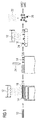
- Figure 1 shows a method for producing a bulk moulding compound or a sheet moulding compound from pre-impregnated reinforcement fibers 10.
- the method comprises a step of powdering the powdery substance 12 onto pre-impregnated reinforcement fibers 10.
- the pre-impregnated reinforcement fibers 10 may comprise carbon fibers or glass fibers and a resin such as epoxy, other thermoset or thermoplastic polymers, such as polyester, vinyl ester or nylon.
- the pre-impregnated reinforcement fibers 10 may be in form of laminates, tubes or tapes.
- the pre-impregnated reinforcement fibers 10 are present as tapes. These tapes may originate from spools which were used in an upstream manufacturing process and on which remainder material of pre-impregnated reinforcement fibers 10 is present, which would be disposed. This remainder material can be utilized in the preparation of bulk moulding compounds and sheet moulding compounds and thus in the production of composite materials.
- Bulk moulding compounds and sheet moulding compounds may comprise pre-impregnated reinforcement fibers 10, additional resin and additives and can be used for the production of composite materials, e.g. by moulding.
- the main difference between bulk moulding compounds and sheet moulding compounds is the final product, as the bulk moulding compounds are provided as bulk material, while the sheet moulding compounds are provided as sheets.
- the powdery substance 12 may be any substance that is in powder form.
- the powdery substance 12 is preferably selected from a substance that is commonly added as additive in the compounding into a bulk moulding compound or a sheet moulding compound.
- the powdery substance 12 preferably comprises calcium carbonate, aluminum trihydrate or magnesium hydroxide.
- the powdering according to the present invention encompasses any process by which the powdery substance can be powdered, coated or dusted onto pre-impregnated reinforcement fibers 10.
- the powdering according to the present invention thus encompasses any process by which a powdery substance can be powdered, coated or dusted on onto pre-impregnated reinforcement fibers 10.
- the powdery substance 12 may be any substance that prevents sticking together of pre-impregnated reinforcement fibers 10.
- the pre-impregnated reinforcement fibers 10 may for example be present as laminates of pre-impregnated reinforcement fibers 10. Without wishing to be bound by theory, it is believed that the powdery substance deposits on the resin on the surface of the laminates and reduces or completely removes the adhesiveness/tackiness of the resin on the surface. Therefore, surfaces of different laminates do not stick together and can easily be processed into a bulk moulding compound or a sheet moulding compound.
- the powdered pre-impregnated reinforcement fibers 10 are compounded with additives 22.
- the compounding and the additives 22 used in the compounding depend on the properties the final composite material produced by the bulk moulding compound or a sheet moulding compound should have and are known to the skilled person.
- the method for producing a bulk moulding compound or a sheet moulding compound from pre-impregnated reinforcement fibers 10 may further comprise a step of powdering the powdery substance 12 onto at least one surface 18 of laminates of pre-impregnated reinforcement fibers 10.
- the pre-impregnated reinforcement fibers 10 are present as laminates, i.e. as multi-layered material.
- the laminates may be present as tapes.
- the method for producing a bulk moulding compound or a sheet moulding compound from pre-impregnated reinforcement fibers 10 may further comprise a step of cutting the powdered laminates of pre-impregnated reinforcement fibers 10 into a plurality of cut laminates 14.
- the cut laminates 14 are smaller than the uncut laminate.
- the cut laminates 14 can also be considered as cuts or pieces of laminates.
- the cut laminates 14 do not stick together and can easily be processed.
- the cut laminates 14 are preferably of a substantially uniform size of e.g. 1-20 mm length, preferably of 10 mm length. Such cut-offs of a uniform size may be used for reproducible preparation of a bulk moulding compound or a sheet moulding compound having homogeneous properties.
- the method for producing a bulk moulding compound or a sheet moulding compound from pre-impregnated reinforcement fibers 10 may comprise the steps of
- the stacking of a plurality of laminates of pre-impregnated reinforcement fibers 10 into a stack 16 improves the efficiency of the method, as a plurality of laminates may be processed in parallel, i.e. powdered and cut simultaneously.
- the cut stacks 20 each comprise a plurality of cut laminates 14 having substantially the same size. These cut stacks can easily be further processed into a bulk moulding compound or a sheet moulding compound by compounding the stacks with additives.
- the method for producing a bulk moulding compound or a sheet moulding compound from pre-impregnated reinforcement fibers 10 may further comprise a step of powdering the powdery substance 12 onto the plurality of cut laminates 14 or cut stacks 20. This powdering is thus performed after the laminates or stacks 16 have been cut.
- the method for producing a bulk moulding compound or a sheet moulding compound from pre-impregnated reinforcement fibers 10 may further comprise a step of compounding the cut laminates 14 or cut stacks 20 with additives 22.
- the additives 22 can be used to modify the flow behavior of the bulk moulding compound or sheet moulding compound.
- the amount of additives and the type of additives can be selected according to the desired properties of the composite material that is to be produced with the bulk moulding compound or sheet moulding compound.
- the additives 22 may be similar or identical to the powdery substance used for powdering described above. Common additives 22 are calcium carbonate (e.g. chalk), additional resin or polymer (e.g. epoxy), flow enhancers, initiators, pigments, etc.
- the powdery substance 12 may comprise compounding additives 22.
- the powdery substance 12 may be identical to at least one of the additives 22 added during the compounding step. Accordingly, for example, a small amount of calcium carbonate that would be added during the compounding, can be powdered onto the pre-impregnated reinforcement fibers 10 and this small amount of calcium carbonate can be subtracted from the amount of calcium carbonate added during the compounding. For example, 5% by volume of the calcium carbonate that would be added during the compounding can be used for powdering and only 95% by volume of the calcium carbonate that would be added during the compounding is indeed added during the compounding. In other words, the amount of powdery substance powdered onto the pre-impregnated reinforcement fibers 10 and the amount of additive 22 (identical to said powdery substance 12) used during compounding equal the amount of additive 22 that would be used in a normal compounding process.
- the powdery substance 12 preferably comprises calcium carbonate, aluminum trihydrate or magnesium hydroxide.
- the powdery substance preferably comprises calcium carbonate.
- a bulk moulding compound or a sheet moulding compound is produced by a method as described above.
- the bulk moulding compound or a sheet moulding compound may comprise 10-50% by volume fibres, 20-60% by volume resin or polymer and 10-50% by volume additives 22.
- the bulk moulding compound or a sheet moulding compound preferably comprises 30% by volume fibres, 40% by volume resin or polymer and 30% by volume additives 22.
- the additives 22 may comprise calcium carbonate (e.g. chalk), additional resin or polymer (e.g. epoxy), flow enhancers, initiators, pigments, etc.
- the additives preferably comprise calcium carbonate, aluminum trihydrate or magnesium hydroxide. Part of the additives might have been added to the bulk moulding compound or sheet moulding compound before the compounding, i.e. before the cutting of pre-impregnated reinforcement fibers 10 into smaller pieces, as described above.
- a method for producing a composite material comprises a step of moulding a bulk moulding compound or a sheet moulding compound prepared as described above into a composite material.
- Preferred moulding processes are injection moulding and compression moulding.
- the method for producing a composite material may comprise the steps of
- the method for producing a composite material may comprise the steps of
- the method may thus comprise two steps of powdering the powdery substance 12 onto laminates or stacks 20, once before the laminates or stacks are cut and once the laminates or stacks have been cut, in order to ensure that all surfaces of the cut laminates or stacks are covered by the powdery substance. Accordingly, sticking together of the cut laminates or stacks is prevented and processibility thereof is ensured.
- a method for utilizing the remainder of pre-impregnated reinforcement fibers 10 comprises a step of producing a bulk moulding compound or a sheet moulding compound from pre-impregnated reinforcement fibers 10 as described above or producing a composite material as described above.
- the remainder material may originate from an upstream process, where pre-impregnated reinforcement fibers 10 were used to manufacture a composite material, such as a T-stringer.
- the remainder material may originate from tapes of pre-impregnated reinforcement fibers 10 that were wound on spools, which were exchanged before being depleted.
- the method thus allows utilizing pre-impregnated reinforcement fibers 10 that would otherwise be disposed.
- the powdering of the pre-impregnated reinforcement fibers 10 allows processing them, e.g. by cutting into pieces of substantially uniform size and mixing these pieces with additives used in the manufacture of bulk moulding compounds or sheet moulding compounds.
- the cutting in the above-described methods may for example be performed with a cutting knife 24.
- the excess powdery substance that was powdered onto the pre-impregnated reinforcement fibers 10, but did not adhere thereto, can be collected and be reused in a next powdering step or during the compounding of the powdered pre-impregnated reinforcement fibers 10 with additives.
- a composite material is prepared by a method as described above.
- the composite material is preferably a part that is used in an aircraft.
- 500 g prepreg (60 vol% fibre, 40 vol% resin) was powdered with 50 g calcium carbonate and cut into prepreg strips of 12 mm length. Resin and rest of the powder substance was mixed, i.e. 200 g powder and 300 g resin. The pre-mixed resin and additive were kneaded with the cut prepreg in order to obtain 1 kg of bulk moulding compound containing 500 g prepreg (60/40 fibre/resin), 250g of powder additive and 250g of additional resin.
Landscapes
- Chemical & Material Sciences (AREA)
- Engineering & Computer Science (AREA)
- Materials Engineering (AREA)
- Organic Chemistry (AREA)
- Polymers & Plastics (AREA)
- Health & Medical Sciences (AREA)
- Chemical Kinetics & Catalysis (AREA)
- Medicinal Chemistry (AREA)
- Manufacturing & Machinery (AREA)
- Mechanical Engineering (AREA)
- Inorganic Chemistry (AREA)
- Environmental & Geological Engineering (AREA)
- Composite Materials (AREA)
- Sustainable Development (AREA)
- Life Sciences & Earth Sciences (AREA)
- Textile Engineering (AREA)
- Reinforced Plastic Materials (AREA)
Abstract
Description
- The invention relates to a method for producing a bulk moulding compound or a sheet moulding compound from pre-impregnated reinforcement fibers. The invention further relates to a bulk moulding compound or a sheet moulding compound produced by this method. The invention further relates to a method for producing a composite material and a method for utilizing the remainder of pre-impregnated reinforcement fibers. The invention also relates to a composite material produced by the methods.
- During manufacture of aircraft, composite materials are frequently deployed. The aircraft components from composite materials are usually manufactured from semi-finished composite materials, which frequently consist of so-called prepregs, i.e. of pre-impregnated reinforcement fibers, e.g. carbon fiber reinforced plastics (CFRP), which may be arranged in several stacked material layers. The reinforcement fibers may be present as uni-directional layer(s), as fabrics or as laid webs. For the manufacture of a composite material component from a semi-finished composite material, the matrix surrounding the reinforcement fibers can be cured by using temperature and pressure. Frequently a pultrusion process is applied, which is a continuous process for manufacture of fiber-reinforced composite materials. The matrix may, for example, comprise a material that can be liquefied through heating.
- The semi-finished composite material may consist of a laminate of several material layers. Such laminates can be manufactured via automated techniques (e.g. ATL, (Automated Tape Laying), AFP (Automated Fiber Placement)) or manual lamination techniques.
- The pre-impregnated reinforcement fibers are frequently applied in form of tubes or tapes, wherein the tubes or tapes are wound up on spools. A plurality of spools with pre-impregnated reinforcement fibers can, e.g., be processed in a fibre-lay-up process (FLU) into composites parts such as T-stringers, which are used in aircraft construction. In order to prevent unnecessary interruptions and delays of the manufacturing process, the spools are exchanged, before they are depleted, i.e. before the spool material has been completely used. For example several spools are used in a FLU-process and, once one of the spools is depleted, the process is stopped and all spools are exchanged by new ones. The exchanged spools still have unused remainder material. This remainder material (or rest material) on the spools is usually disposed and not utilized in further processes.
- Bulk moulding compounds (BMC) or sheet moulding compounds (SMC) are ready to mold, pre-impregnated reinforment fibre materials primarily used in injection moulding and compression moulding for preparation of composite materials. Bulk moulding compounds are manufactured e.g. by mixing strands of chopped glass fibers in a mixer with polyester resin and additives. The glass fibers in bulk moulding compounds result in better strength properties than standard thermoplastic products.
- Bulk moulding compounds or sheet moulding compounds are usually made from dry fibres that are mixed with additives to achieve a well processable moulding compound to be used in injection or compression moulding processes. In case the remainder of pre-impregnated reinforcement fibers should be used, it would be necessary to either remove the resin from the fibres, e.g. via pyrolysis and use the raw fibres or cure all pre-impregnated reinforcement fibers, grind the fibre-plastic mix and use it as filler in the bulk moulding compounds or a sheet moulding compounds.
- Pre-impregnated reinforcement fibers materials, for example originating from the above-described remainder material, could be used in bulk moulding compounds or sheet moulding compounds. However, in order to be used in bulk moulding compounds or sheet moulding compounds, the pre-impregnated reinforcement fibers have to be cut down into smaller pieces, e.g. smaller laminates. During the cutting, the material tends to stick to the blade and the cut pieces tend to stick together, impeding a further processing thereof.
- The invention has the objective of providing a method for method for producing a bulk moulding compound or a sheet moulding compound from pre-impregnated reinforcement fibers. In the invention, the sticking together of cuts or strips of pre-impregnated reinforcement fibers is prevented. The invention also allows utilizing remainder material of pre-impregnated reinforcement fibers from other processes, which would otherwise be disposed. Further, the invention has the objective of providing a bulk moulding compound or a sheet moulding compound and a composite material by using pre-impregnated reinforcement fibers.
- This objective is solved by a method according to claim 1, a bulk moulding compound or a sheet moulding compound according to claim 9, a method for producing a composite material according to claim 11, a method for utilizing the remainder of pre-impregnated reinforcement fibers according to
claim 14 and a composite material according to claim 15. - A method for producing a bulk moulding compound or a sheet moulding compound from pre-impregnated reinforcement fibers comprises a step of powdering a powdery substance on at least one surface of pre-impregnated reinforcement fibers.
- The pre-impregnated reinforcement fibers may comprise carbon fibers or glass fibers and a resin such as epoxy, other thermoset or thermoplastic polymers, such as polyester, vinyl ester or nylon. The pre-impregnated reinforcement fibers may be in form of laminates, tubes or tapes. Preferably, the pre-impregnated reinforcement fibers are present as tapes. These tapes may originate from spools which were used in an upstream manufacturing process and on which remainder material of pre-impregnated reinforcement fibers is present, which would be disposed. This remainder material can be utilized in the preparation of bulk moulding compounds and sheet moulding compounds and thus in the production of composite materials.
- Bulk moulding compounds and sheet moulding compounds may comprise pre-impregnated reinforcement fibers, additional resin and additives and can be used for the production of composite materials, e.g. by moulding. The main difference between bulk moulding compounds and sheet moulding compounds is the final product, as the bulk moulding compounds are provided as bulk material, while the sheet moulding compounds are provided as sheets.
- The powdery substance may be any substance that is in powder form. The substance is preferably selected from a substance that is commonly added as additive in the compounding into a bulk moulding compound or a sheet moulding compound. The powdery substance preferably comprises calcium carbonate, aluminum trihydrate or magnesium hydroxide.
- The powdering according to the present invention encompasses any process by which a powdery substance can be powdered, coated or dusted on at least one surface of pre-impregnated reinforcement fibers. The powdering according to the present invention thus encompasses any process by which a powdery substance can be powdered, coated or dusted on onto pre-impregnated reinforcement fibers. The powdery substance may be any substance that prevents sticking together of pre-impregnated reinforcement fibers. The pre-impregnated reinforcement fibers may, for example, be present as laminates of pre-impregnated reinforcement fibers. Without wishing to be bound by theory, it is believed that the powdery substance deposits on the resin on the surface of the laminates and reduces or completely removes the adhesiveness/tackiness of the resin on the surface. Therefore, surfaces of different laminates do not stick together and can easily be processed into a bulk moulding compound or a sheet moulding compound.
- In order to prepare a bulk moulding compound or a sheet moulding compound, the powdered pre-impregnated reinforcement fibers are compounded with additives. The compounding and the additives used in the compounding depend on the properties the final composite material produced by the bulk moulding compound or a sheet moulding compound should have and are known to the skilled person.
- The method for producing a bulk moulding compound or a sheet moulding compound from pre-impregnated reinforcement fibers may comprise a step of powdering the powdery substance on at least one surface of laminates of pre-impregnated reinforcement fibers. Here, the pre-impregnated reinforcement fibers are present as laminates, i.e. as multi-layered material. The laminates may be present as tapes.
- The method for producing a bulk moulding compound or a sheet moulding compound from pre-impregnated reinforcement fibers may further comprise a step of cutting the powdered laminates of pre-impregnated reinforcement fibers into a plurality of cut laminates. The cut laminates are smaller than the uncut laminate. The cut laminates can also be considered as cuts or pieces of laminates.
- Due to the powdery substance that was powdered or dusted onto the laminates, the cut laminates do not stick together and can easily be processed.
- The cut laminates are preferably of a substantially uniform size of e.g. 1-20 mm length, preferably of 10 mm length. Such cut-offs of a uniform size can be used for reproducible preparation of a bulk moulding compound or a sheet moulding compound having homogeneous properties.
- The method for producing a bulk moulding compound or a sheet moulding compound from pre-impregnated reinforcement fibers may comprise the steps of
- stacking a plurality of laminates of pre-impregnated reinforcement fibers into a stack,
- powdering the powdery substance on at least one surface of the stack, and
- cutting the powdered stack into a plurality of cut stacks.
- The stacking of a plurality of laminates of pre-impregnated reinforcement fibers into a stack improves the efficiency of the method, as a plurality of laminates can be processed in parallel, i.e. powdered and cut simultaneously. The cut stacks each comprise a plurality of cut laminates having substantially the same size. These cut stacks can easily be further processed into a bulk moulding compound or a sheet moulding compound by compounding the stacks with additives.
- The method for producing a bulk moulding compound or a sheet moulding compound from pre-impregnated reinforcement fibers may further comprise a step of powdering the powdery substance onto the plurality of cut laminates or cut stacks. This powdering is thus performed after the laminates or stacks have been cut.
- In the first powdering described above, only the exposed surfaces of the laminates or stacks might be powdered with the powdery substance. In case of stacked tapes, only the tapes on the outside of the stacks would be powdered with the powdery material. Upon cutting the stacks, new surfaces are created, which are not covered by powdery material. Accordingly, even though parts of the stacks are covered by powdery material, other parts may not be covered and may tend to stick together. Accordingly, a second powdering step might be applied in order to also cover the remainder surfaces of the stacks. Accordingly, by powdering the powdery substance onto the plurality of cut laminates or cut stacks, it is ensured that no surfaces of the cut laminates or cut stacks stick together, thus further improving the processibility of the material.
- The method for producing a bulk moulding compound or a sheet moulding compound from pre-impregnated reinforcement fibers may further comprise a step of compounding the cut laminates or cut stacks with additives.
- The compounding itself is known to the skilled person and can be done by any technique known in the art. The additives can be used to modify the flow behavior of the bulk moulding compound or sheet moulding compound. The amount of additives and the type of additives can be selected according to the desired properties of the composite material that is to be produced with the bulk moulding compound or sheet moulding compound. The additives can be similar or identical to the powdery substance used for powdering described above. Common additives are calcium carbonate (e.g. chalk), additional resin or polymer (e.g. epoxy), flow enhancers, initiators, pigments, etc.
- In the method for producing a bulk moulding compound or a sheet moulding compound from pre-impregnated reinforcement fibers, the powdery substance may comprise compounding additives. As described above, the powdery substance may be identical to at least one of the additives added during the compounding step. Accordingly, for example, a small amount of calcium carbonate that would be added during the compounding, can be powdered onto the pre-impregnated reinforcement fibers and this small amount of calcium carbonate can be subtracted from the amount of calcium carbonate added during the compounding. For example, 5% by volume of the calcium carbonate that would be added during the compounding can be used for powdering and only 95% by volume of the calcium carbonate that would be added during the compounding is indeed added during the compounding. In other words, the amount of powdery substance powdered onto the pre-impregnated reinforcement fibers and the amount of additive (identical to said powdery substance) used during compounding equal the amount of additive that would be used in a normal compounding process.
- In the method for producing a bulk moulding compound or a sheet moulding compound from pre-impregnated reinforcement fibers, the powdery substance preferably comprises calcium carbonate, aluminum trihydrate or magnesium hydroxide.
- Calcium carbonate, e.g. provided as chalk is the most common additive and enhances the flow behavior of the bulk moulding compound or sheet moulding compound. Accordingly, the powdery substance preferably comprises calcium carbonate.
- A bulk moulding compound or a sheet moulding compound is produced by a method as described above.
- The bulk moulding compound or a sheet moulding compound may comprise 10-50% by volume fibres, 20-60% by volume resin or polymer and 10-50% by volume additives. The bulk moulding compound or a sheet moulding compound preferably comprises 30% by volume fibres, 40% by volume resin or polymer and 30% by volume additives.
- The additives may comprise calcium carbonate (e.g. chalk), additional resin or polymer (e.g. epoxy), flow enhancers, initiators, pigments, etc. The additives preferably comprise calcium carbonate, aluminum trihydrate or magnesium hydroxide. Part of the additives might have been added to the bulk moulding compound or sheet moulding compound before the compounding, i.e. before the cutting of pre-impregnated reinforcement fibers into smaller pieces, as described above.
- A method for producing a composite material, comprises a step of moulding a bulk moulding compound or a sheet moulding compound prepared as described above into a composite material. Preferred moulding processes are injection moulding and compression moulding.
- The method for producing a composite material may comprise the steps of
- powdering the powdery substance on at least one surface of laminates of pre-impregnated reinforcement fibers,
- cutting the powdered laminates into a plurality of cut laminates,
- optionally, powdering the powdery substance on at least one surface of the plurality of cut laminates,
- compounding the cut laminates with additives,
- moulding the compounded cut laminates.
- The above-described method steps are preferably performed in this sequence.
- The method for producing a composite material may comprise the steps of
- stacking a plurality of laminates of pre-impregnated reinforcement fibers into a stack,
- powdering the powdery substance on at least one surface of the stack,
- cutting the powdered stack into a plurality of cut stacks,
- optionally, powdering the powdery substance on at least one surface of the plurality of cut stacks,
- compounding the cut stacks with additives,
- moulding the compounded cut stacks.
- The above-described method steps are preferably performed in this sequence.
- The method may thus comprise two steps of powdering the powdery substance onto laminates or stacks, once before the laminates or stacks are cut and once the laminates or stacks have been cut, in order to ensure that all surfaces of the cut laminates or stacks are covered by the powdery substance. Accordingly, sticking together of the cut laminates or stacks is prevented and processibility thereof is ensured.
- A method for utilizing the remainder of pre-impregnated reinforcement fibers comprises a step of producing a bulk moulding compound or a sheet moulding compound from pre-impregnated reinforcement fibers as described above or producing a composite material as described above.
- The remainder material may originate from an upstream process, where pre-impregnated reinforcement fibers were used to manufacture a composite material, such as a T-stringer. The remainder material may originate from tapes of pre-impregnated reinforcement fibers that were wound on spools, which were exchanged before being depleted. The method thus allows utilizing pre-impregnated reinforcement fibers that would otherwise be disposed. The powdering of the pre-impregnated reinforcement fibers allows processing them, e.g. by cutting into pieces of substantially uniform size and mixing these pieces with additives used in the manufacture of bulk moulding compounds or sheet moulding compounds.
- The cutting in the above-described methods may, for example, be performed with a cutting knife.
- In all the above-described methods, the excess powdery substance that was powdered onto the pre-impregnated reinforcement fibers, but did not adhere thereto, can be collected and be reused in a next powdering step or during the compounding of the powdered pre-impregnated reinforcement fibers with additives.
- A composite material is prepared by a method as described above. The composite material is preferably a part that is used in an aircraft.
- Preferred embodiments of the invention will be described in further detail in the following, with reference to
- Figure 1
- which shows a schematic view of a method for producing a bulk moulding compound or a sheet moulding compound.
-
Figure 1 shows a method for producing a bulk moulding compound or a sheet moulding compound frompre-impregnated reinforcement fibers 10. The method comprises a step of powdering thepowdery substance 12 ontopre-impregnated reinforcement fibers 10. - The
pre-impregnated reinforcement fibers 10 may comprise carbon fibers or glass fibers and a resin such as epoxy, other thermoset or thermoplastic polymers, such as polyester, vinyl ester or nylon. Thepre-impregnated reinforcement fibers 10 may be in form of laminates, tubes or tapes. Preferably, thepre-impregnated reinforcement fibers 10 are present as tapes. These tapes may originate from spools which were used in an upstream manufacturing process and on which remainder material ofpre-impregnated reinforcement fibers 10 is present, which would be disposed. This remainder material can be utilized in the preparation of bulk moulding compounds and sheet moulding compounds and thus in the production of composite materials. - Bulk moulding compounds and sheet moulding compounds may comprise
pre-impregnated reinforcement fibers 10, additional resin and additives and can be used for the production of composite materials, e.g. by moulding. The main difference between bulk moulding compounds and sheet moulding compounds is the final product, as the bulk moulding compounds are provided as bulk material, while the sheet moulding compounds are provided as sheets. - The
powdery substance 12 may be any substance that is in powder form. Thepowdery substance 12 is preferably selected from a substance that is commonly added as additive in the compounding into a bulk moulding compound or a sheet moulding compound. Thepowdery substance 12 preferably comprises calcium carbonate, aluminum trihydrate or magnesium hydroxide. - The powdering according to the present invention encompasses any process by which the powdery substance can be powdered, coated or dusted onto
pre-impregnated reinforcement fibers 10. The powdering according to the present invention thus encompasses any process by which a powdery substance can be powdered, coated or dusted on ontopre-impregnated reinforcement fibers 10. Thepowdery substance 12 may be any substance that prevents sticking together ofpre-impregnated reinforcement fibers 10. Thepre-impregnated reinforcement fibers 10 may for example be present as laminates ofpre-impregnated reinforcement fibers 10. Without wishing to be bound by theory, it is believed that the powdery substance deposits on the resin on the surface of the laminates and reduces or completely removes the adhesiveness/tackiness of the resin on the surface. Therefore, surfaces of different laminates do not stick together and can easily be processed into a bulk moulding compound or a sheet moulding compound. - In order to prepare a bulk moulding compound or a sheet moulding compound, the powdered
pre-impregnated reinforcement fibers 10 are compounded withadditives 22. The compounding and theadditives 22 used in the compounding depend on the properties the final composite material produced by the bulk moulding compound or a sheet moulding compound should have and are known to the skilled person. - The method for producing a bulk moulding compound or a sheet moulding compound from
pre-impregnated reinforcement fibers 10 may further comprise a step of powdering thepowdery substance 12 onto at least onesurface 18 of laminates ofpre-impregnated reinforcement fibers 10. Here, thepre-impregnated reinforcement fibers 10 are present as laminates, i.e. as multi-layered material. The laminates may be present as tapes. - The method for producing a bulk moulding compound or a sheet moulding compound from
pre-impregnated reinforcement fibers 10 may further comprise a step of cutting the powdered laminates ofpre-impregnated reinforcement fibers 10 into a plurality of cut laminates 14. The cut laminates 14 are smaller than the uncut laminate. The cut laminates 14 can also be considered as cuts or pieces of laminates. - Due to the
powdery substance 12 that was powdered or dusted onto the laminates, the cut laminates 14 do not stick together and can easily be processed. - The cut laminates 14 are preferably of a substantially uniform size of e.g. 1-20 mm length, preferably of 10 mm length. Such cut-offs of a uniform size may be used for reproducible preparation of a bulk moulding compound or a sheet moulding compound having homogeneous properties.
- The method for producing a bulk moulding compound or a sheet moulding compound from
pre-impregnated reinforcement fibers 10 may comprise the steps of - stacking a plurality of laminates of
pre-impregnated reinforcement fibers 10 into astack 16, - powdering the
powdery substance 12 on at least onesurface 18 of thestack 16, and - cutting the powdered stack into a plurality of cut stacks 20.
- The stacking of a plurality of laminates of
pre-impregnated reinforcement fibers 10 into astack 16 improves the efficiency of the method, as a plurality of laminates may be processed in parallel, i.e. powdered and cut simultaneously. The cut stacks 20 each comprise a plurality of cut laminates 14 having substantially the same size. These cut stacks can easily be further processed into a bulk moulding compound or a sheet moulding compound by compounding the stacks with additives. - The method for producing a bulk moulding compound or a sheet moulding compound from
pre-impregnated reinforcement fibers 10 may further comprise a step of powdering thepowdery substance 12 onto the plurality of cut laminates 14 or cut stacks 20. This powdering is thus performed after the laminates or stacks 16 have been cut. - In the first powdering described above, only the exposed surfaces 18 of the laminates or stacks 16 might be powdered with the powdery substance. In case of stacked tapes, only the tapes on the outside of the stacks would be powdered with the powdery material. Upon cutting the stacks,
new surfaces 24 are created, which are not covered bypowdery material 12. Accordingly, even though parts of the stacks are covered by powdery material, other parts may not be covered and may tend to stick together. Accordingly, a second powdering step might be applied in order to also cover the remainder surfaces of the cut stacks 20. Accordingly, by powdering thepowdery substance 12 onto the plurality of cut laminates 14 or cutstacks 20, it is ensured that no surfaces of the cut laminates 14 or cutstacks 20 stick together, thus further improving the processibility of the material. - The method for producing a bulk moulding compound or a sheet moulding compound from
pre-impregnated reinforcement fibers 10 may further comprise a step of compounding the cut laminates 14 or cutstacks 20 withadditives 22. - The compounding itself is known to the skilled person and can be done by any technique known in the art. The
additives 22 can be used to modify the flow behavior of the bulk moulding compound or sheet moulding compound. The amount of additives and the type of additives can be selected according to the desired properties of the composite material that is to be produced with the bulk moulding compound or sheet moulding compound. Theadditives 22 may be similar or identical to the powdery substance used for powdering described above.Common additives 22 are calcium carbonate (e.g. chalk), additional resin or polymer (e.g. epoxy), flow enhancers, initiators, pigments, etc. - In the method for producing a bulk moulding compound or a sheet moulding compound from
pre-impregnated reinforcement fibers 10, thepowdery substance 12 may comprise compoundingadditives 22. As described above, thepowdery substance 12 may be identical to at least one of theadditives 22 added during the compounding step. Accordingly, for example, a small amount of calcium carbonate that would be added during the compounding, can be powdered onto thepre-impregnated reinforcement fibers 10 and this small amount of calcium carbonate can be subtracted from the amount of calcium carbonate added during the compounding. For example, 5% by volume of the calcium carbonate that would be added during the compounding can be used for powdering and only 95% by volume of the calcium carbonate that would be added during the compounding is indeed added during the compounding. In other words, the amount of powdery substance powdered onto thepre-impregnated reinforcement fibers 10 and the amount of additive 22 (identical to said powdery substance 12) used during compounding equal the amount ofadditive 22 that would be used in a normal compounding process. - In the method for producing a bulk moulding compound or a sheet moulding compound from
pre-impregnated reinforcement fibers 10, thepowdery substance 12 preferably comprises calcium carbonate, aluminum trihydrate or magnesium hydroxide. - Calcium carbonate, e.g. provided as chalk is the most common additive and enhances the flow behavior of the bulk moulding compound or sheet moulding compound. Accordingly, the powdery substance preferably comprises calcium carbonate.
- A bulk moulding compound or a sheet moulding compound is produced by a method as described above.
- The bulk moulding compound or a sheet moulding compound may comprise 10-50% by volume fibres, 20-60% by volume resin or polymer and 10-50% by
volume additives 22. The bulk moulding compound or a sheet moulding compound preferably comprises 30% by volume fibres, 40% by volume resin or polymer and 30% byvolume additives 22. - The
additives 22 may comprise calcium carbonate (e.g. chalk), additional resin or polymer (e.g. epoxy), flow enhancers, initiators, pigments, etc. The additives preferably comprise calcium carbonate, aluminum trihydrate or magnesium hydroxide. Part of the additives might have been added to the bulk moulding compound or sheet moulding compound before the compounding, i.e. before the cutting ofpre-impregnated reinforcement fibers 10 into smaller pieces, as described above. - A method for producing a composite material, comprises a step of moulding a bulk moulding compound or a sheet moulding compound prepared as described above into a composite material. Preferred moulding processes are injection moulding and compression moulding.
- The method for producing a composite material may comprise the steps of
- powdering the
powdery substance 12 on at least one surface of laminates ofpre-impregnated reinforcement fibers 10, - cutting the powdered laminates into a plurality of cut laminates 14,
- optionally, powdering the
powdery substance 12 on at least one surface of the plurality of cut laminates 14, - compounding the cut laminates 14 with
additives 22, - moulding the compounded cut laminates.
- The above-described method steps are preferably performed in this sequence.
- The method for producing a composite material may comprise the steps of
- stacking a plurality of laminates of
pre-impregnated reinforcement fibers 10 into astack 16, - powdering the
powdery substance 12 on at least onesurface 18 of thestack 16, - cutting the
powdered stack 16 into a plurality of cut stacks 20, - optionally, powdering the
powdery substance 12 onto the plurality of cut stacks 20, - compounding the cut stacks 20 with
additives 22, - moulding the compounded cut stacks.
- The above-described method steps are preferably performed in this sequence.
- The method may thus comprise two steps of powdering the
powdery substance 12 onto laminates or stacks 20, once before the laminates or stacks are cut and once the laminates or stacks have been cut, in order to ensure that all surfaces of the cut laminates or stacks are covered by the powdery substance. Accordingly, sticking together of the cut laminates or stacks is prevented and processibility thereof is ensured. - A method for utilizing the remainder of
pre-impregnated reinforcement fibers 10 comprises a step of producing a bulk moulding compound or a sheet moulding compound frompre-impregnated reinforcement fibers 10 as described above or producing a composite material as described above. - The remainder material may originate from an upstream process, where
pre-impregnated reinforcement fibers 10 were used to manufacture a composite material, such as a T-stringer. The remainder material may originate from tapes ofpre-impregnated reinforcement fibers 10 that were wound on spools, which were exchanged before being depleted. The method thus allows utilizingpre-impregnated reinforcement fibers 10 that would otherwise be disposed. The powdering of thepre-impregnated reinforcement fibers 10 allows processing them, e.g. by cutting into pieces of substantially uniform size and mixing these pieces with additives used in the manufacture of bulk moulding compounds or sheet moulding compounds. - The cutting in the above-described methods may for example be performed with a cutting
knife 24. - In all the above-described methods, the excess powdery substance that was powdered onto the
pre-impregnated reinforcement fibers 10, but did not adhere thereto, can be collected and be reused in a next powdering step or during the compounding of the powderedpre-impregnated reinforcement fibers 10 with additives. - A composite material is prepared by a method as described above. The composite material is preferably a part that is used in an aircraft.
- 500 g prepreg (60 vol% fibre, 40 vol% resin) was powdered with 50 g calcium carbonate and cut into prepreg strips of 12 mm length. Resin and rest of the powder substance was mixed, i.e. 200 g powder and 300 g resin. The pre-mixed resin and additive were kneaded with the cut prepreg in order to obtain 1 kg of bulk moulding compound containing 500 g prepreg (60/40 fibre/resin), 250g of powder additive and 250g of additional resin.
Claims (15)
- A method for producing a bulk moulding compound or a sheet moulding compound from pre-impregnated reinforcement fibers (10), comprising a step of- powdering a powdery substance (12) on at least one surface of pre-impregnated reinforcement fibers (10).
- The method for producing a bulk moulding compound or a sheet moulding compound from pre-impregnated reinforcement fibers (10) according to claim 1, comprising a step of- powdering the powdery substance (12) on at least one surface of laminates of pre-impregnated reinforcement fibers (10).
- The method for producing a bulk moulding compound or a sheet moulding compound from pre-impregnated reinforcement fibers (10) according to claim 2, the method further comprising a step of- cutting the powdered laminates of pre-impregnated reinforcement fibers (10) into a plurality of cut laminates (14).
- The method for producing a bulk moulding compound or a sheet moulding compound from pre-impregnated reinforcement fibers (10) according to claim 2 or 3, comprising the steps of- stacking a plurality of laminates of pre-impregnated reinforcement fibers into a stack (16),- powdering the powdery substance (12) on at least one surface (18) of the stack (16), and- cutting the powdered stack into a plurality of cut stacks (20).
- The method for producing a bulk moulding compound or a sheet moulding compound from pre-impregnated reinforcement fibers (10) according to claim 3 or 4, further comprising a step of:- powdering the powdery substance (12) on at least one surface of the plurality of cut laminates (14) or cut stacks (20).
- The method for producing a bulk moulding compound or a sheet moulding compound from pre-impregnated reinforcement fibers (10) according to any one of claims 1 to 5, further comprising a step of:- compounding the cut laminates (14) or cut stacks (20) with additives (22).
- The method for producing a bulk moulding compound or a sheet moulding compound from pre-impregnated reinforcement fibers (10) according to any one of claims 1 to 6, wherein the powdery substance (12) comprises compounding additives (22).
- The method for producing a bulk moulding compound or a sheet moulding compound from pre-impregnated reinforcement fibers (10) according to any one of claims 1 to 7, wherein the powdery substance (12) comprises calcium carbonate, aluminum trihydrate or magnesium hydroxide.
- A bulk moulding compound or a sheet moulding compound produced by a method according to any one of claims 1 to 8.
- The bulk moulding compound or a sheet moulding compound according to claim 9, comprising 10-50% by volume fibres, 20-60% by volume resin or polymer and 10-50% by volume additives.
- A method for producing a composite material, comprising a step of- moulding a bulk moulding compound or a sheet moulding compound according to claim 9 or 10 into a composite material.
- The method for producing a composite material according to claim 11, comprising the steps of- powdering the powdery substance (12) on at least one surface of laminates of pre-impregnated reinforcement fibers (10),- cutting the powdered laminates into a plurality of cut laminates (14),- optionally, powdering the powdery substance (12) on at least one surface of the plurality of cut laminates (14),- compounding the cut laminates (14) with additives (22),- moulding the compounded cut laminates.
- The method for producing a composite material according to claim 11, comprising the steps of- stacking a plurality of laminates of pre-impregnated reinforcement fibers into a stack (16),- powdering the powdery substance (12) on at least one surface of at least one surface (18) of the stack (16),- cutting the powdered stack into a plurality of cut stacks (20),- optionally, powdering the powdery substance (18) on at least one surface of the plurality of cut stacks (20),- compounding the cut stacks (20) with additives (22),- moulding the compounded cut stacks.
- A method for utilizing the remainder of pre-impregnated reinforcement fibers comprising a step of producing a bulk moulding compound or a sheet moulding compound from pre-impregnated reinforcement fibers (10) according to any one of claims 1 to 7 or producing a composite material with a method according to any one of claims 11 to 13.
- A composite material prepared by a method according to any one of claims 11 to 13 or a method according claim 14.
Priority Applications (1)
| Application Number | Priority Date | Filing Date | Title |
|---|---|---|---|
| EP16178028.3A EP3266596B1 (en) | 2016-07-05 | 2016-07-05 | A method for producing a bulk moulding compound or a sheet moulding compound from pre-impregnated reinforcement fibers |
Applications Claiming Priority (1)
| Application Number | Priority Date | Filing Date | Title |
|---|---|---|---|
| EP16178028.3A EP3266596B1 (en) | 2016-07-05 | 2016-07-05 | A method for producing a bulk moulding compound or a sheet moulding compound from pre-impregnated reinforcement fibers |
Publications (2)
| Publication Number | Publication Date |
|---|---|
| EP3266596A1 true EP3266596A1 (en) | 2018-01-10 |
| EP3266596B1 EP3266596B1 (en) | 2021-12-08 |
Family
ID=56360279
Family Applications (1)
| Application Number | Title | Priority Date | Filing Date |
|---|---|---|---|
| EP16178028.3A Active EP3266596B1 (en) | 2016-07-05 | 2016-07-05 | A method for producing a bulk moulding compound or a sheet moulding compound from pre-impregnated reinforcement fibers |
Country Status (1)
| Country | Link |
|---|---|
| EP (1) | EP3266596B1 (en) |
Citations (3)
| Publication number | Priority date | Publication date | Assignee | Title |
|---|---|---|---|---|
| EP0518004A2 (en) * | 1991-06-11 | 1992-12-16 | Rütgerswerke Aktiengesellschaft | Process for recycling fibre reinforced thermoplastic materials |
| US20070057404A1 (en) * | 2005-09-12 | 2007-03-15 | Hager William G | Compression and injection molding applications utilizing glass fiber bundles |
| US20160052175A1 (en) * | 2013-04-10 | 2016-02-25 | The Boeing Company | Recycling of broad goods with thermoplastic stabilizer materials |
Family Cites Families (3)
| Publication number | Priority date | Publication date | Assignee | Title |
|---|---|---|---|---|
| EP1563974B1 (en) * | 2002-10-23 | 2009-07-01 | Mitsubishi Rayon Co., Ltd. | Method of manufacturing a prepreg |
| GB2453308B (en) * | 2007-10-03 | 2012-07-25 | Acell Group Ltd | Composite products |
| CN102660148B (en) * | 2012-04-28 | 2014-03-19 | 安徽江东科技粉业有限公司 | Method for preparing toughening calcium carbonate composite powder for sheet molding compound (SMC) |
-
2016
- 2016-07-05 EP EP16178028.3A patent/EP3266596B1/en active Active
Patent Citations (3)
| Publication number | Priority date | Publication date | Assignee | Title |
|---|---|---|---|---|
| EP0518004A2 (en) * | 1991-06-11 | 1992-12-16 | Rütgerswerke Aktiengesellschaft | Process for recycling fibre reinforced thermoplastic materials |
| US20070057404A1 (en) * | 2005-09-12 | 2007-03-15 | Hager William G | Compression and injection molding applications utilizing glass fiber bundles |
| US20160052175A1 (en) * | 2013-04-10 | 2016-02-25 | The Boeing Company | Recycling of broad goods with thermoplastic stabilizer materials |
Non-Patent Citations (1)
| Title |
|---|
| GAURAV NILAKANTAN ET AL: "Reuse and upcycling of aerospace prepreg scrap and waste", REINFORCED PLASTICS., vol. 59, no. 1, 1 January 2015 (2015-01-01), US, pages 44 - 51, XP055312047, ISSN: 0034-3617, DOI: 10.1016/j.repl.2014.12.070 * |
Also Published As
| Publication number | Publication date |
|---|---|
| EP3266596B1 (en) | 2021-12-08 |
Similar Documents
| Publication | Publication Date | Title |
|---|---|---|
| JP6496106B2 (en) | Recycling of wide objects with thermoplastic stabilizing materials | |
| US11168186B2 (en) | Random mat and fiber-reinforced composite material shaped product | |
| DE102011085770B4 (en) | Improvements in composite materials | |
| CN106479186B (en) | Composite feedstock strip for additive manufacturing and method of forming the same | |
| CN103502326B (en) | The molded article being formed by fibre reinforced composites | |
| CN102164725B (en) | Semi-preg material with improved properties surface resin film for improved properties | |
| EP3196238A1 (en) | Notched pre-preg and notched pre-preg sheet | |
| US9884954B2 (en) | Random mat and fiber-reinforced composite material shaped product | |
| KR20190100184A (en) | Composite Structure and Manufacturing Method Thereof | |
| EP3208062A1 (en) | Fiber-reinforced resin intermediate material and method for manufacturing same | |
| EP3390506A1 (en) | Prepreg, laminate body, fiber reinforced composite material, and manufacturing method for fiber reinforced composite material | |
| AU2019242899C1 (en) | Electrically conductive adhesive | |
| CN106393737B (en) | Bar of discontinuous filament matrix | |
| RU2012144654A (en) | FIBER-REINFORCED MOLDING COMPOSITION, DEVICE AND METHOD FOR ITS PRODUCTION, DEVICE AND METHOD FOR PRODUCING LAMINATED MATERIALS AND OTHER FINISHED PRODUCTS FROM THE SPECIFIED FRAMEWORK | |
| CN110267785A (en) | Fiber Reinforced Resin Sheet | |
| EP3578332B1 (en) | Method for producing fiber-reinforced plastic | |
| EP3393769B1 (en) | Electrically conductive materials, related process and use | |
| EP3266596B1 (en) | A method for producing a bulk moulding compound or a sheet moulding compound from pre-impregnated reinforcement fibers | |
| CA3048978A1 (en) | Method for producing fiber-reinforced plastic | |
| CN212242492U (en) | A multi-scale fiber-reinforced thermoplastic composite panel | |
| Bunea et al. | Bending and compressive properties of fabric reinforced composites | |
| US20250170810A1 (en) | Vacuum infusion process into in-situ powder | |
| RU2845073C1 (en) | Method of producing an article with a composition gradient on a non-separable substrate by 3d printing (versions) | |
| CN112874079A (en) | Multi-scale fiber reinforced thermoplastic composite plate and manufacturing method thereof | |
| KR101975003B1 (en) | Apparatus for manufacturing hybrid prepreg chip, Hybrid prepreg chip by the same, Method for manufacturing chip mat using the same and Chip Mat by the same |
Legal Events
| Date | Code | Title | Description |
|---|---|---|---|
| PUAI | Public reference made under article 153(3) epc to a published international application that has entered the european phase |
Free format text: ORIGINAL CODE: 0009012 |
|
| STAA | Information on the status of an ep patent application or granted ep patent |
Free format text: STATUS: THE APPLICATION HAS BEEN PUBLISHED |
|
| AK | Designated contracting states |
Kind code of ref document: A1 Designated state(s): AL AT BE BG CH CY CZ DE DK EE ES FI FR GB GR HR HU IE IS IT LI LT LU LV MC MK MT NL NO PL PT RO RS SE SI SK SM TR |
|
| AX | Request for extension of the european patent |
Extension state: BA ME |
|
| STAA | Information on the status of an ep patent application or granted ep patent |
Free format text: STATUS: REQUEST FOR EXAMINATION WAS MADE |
|
| 17P | Request for examination filed |
Effective date: 20180305 |
|
| RBV | Designated contracting states (corrected) |
Designated state(s): AL AT BE BG CH CY CZ DE DK EE ES FI FR GB GR HR HU IE IS IT LI LT LU LV MC MK MT NL NO PL PT RO RS SE SI SK SM TR |
|
| STAA | Information on the status of an ep patent application or granted ep patent |
Free format text: STATUS: EXAMINATION IS IN PROGRESS |
|
| 17Q | First examination report despatched |
Effective date: 20190320 |
|
| RIC1 | Information provided on ipc code assigned before grant |
Ipc: B29C 70/50 20060101AFI20210429BHEP Ipc: B29B 17/00 20060101ALI20210429BHEP Ipc: C08J 11/06 20060101ALI20210429BHEP Ipc: B29C 70/18 20060101ALI20210429BHEP Ipc: B29B 17/04 20060101ALI20210429BHEP Ipc: C08J 5/24 20060101ALI20210429BHEP Ipc: B29C 70/46 20060101ALN20210429BHEP |
|
| GRAP | Despatch of communication of intention to grant a patent |
Free format text: ORIGINAL CODE: EPIDOSNIGR1 |
|
| STAA | Information on the status of an ep patent application or granted ep patent |
Free format text: STATUS: GRANT OF PATENT IS INTENDED |
|
| INTG | Intention to grant announced |
Effective date: 20210617 |
|
| GRAJ | Information related to disapproval of communication of intention to grant by the applicant or resumption of examination proceedings by the epo deleted |
Free format text: ORIGINAL CODE: EPIDOSDIGR1 |
|
| STAA | Information on the status of an ep patent application or granted ep patent |
Free format text: STATUS: EXAMINATION IS IN PROGRESS |
|
| GRAS | Grant fee paid |
Free format text: ORIGINAL CODE: EPIDOSNIGR3 |
|
| STAA | Information on the status of an ep patent application or granted ep patent |
Free format text: STATUS: GRANT OF PATENT IS INTENDED |
|
| GRAP | Despatch of communication of intention to grant a patent |
Free format text: ORIGINAL CODE: EPIDOSNIGR1 |
|
| INTC | Intention to grant announced (deleted) | ||
| GRAJ | Information related to disapproval of communication of intention to grant by the applicant or resumption of examination proceedings by the epo deleted |
Free format text: ORIGINAL CODE: EPIDOSDIGR1 |
|
| GRAS | Grant fee paid |
Free format text: ORIGINAL CODE: EPIDOSNIGR3 |
|
| RIC1 | Information provided on ipc code assigned before grant |
Ipc: B29C 70/46 20060101ALN20210913BHEP Ipc: C08J 5/24 20060101ALI20210913BHEP Ipc: B29B 17/04 20060101ALI20210913BHEP Ipc: B29C 70/18 20060101ALI20210913BHEP Ipc: C08J 11/06 20060101ALI20210913BHEP Ipc: B29B 17/00 20060101ALI20210913BHEP Ipc: B29C 70/50 20060101AFI20210913BHEP |
|
| GRAP | Despatch of communication of intention to grant a patent |
Free format text: ORIGINAL CODE: EPIDOSNIGR1 |
|
| GRAA | (expected) grant |
Free format text: ORIGINAL CODE: 0009210 |
|
| STAA | Information on the status of an ep patent application or granted ep patent |
Free format text: STATUS: THE PATENT HAS BEEN GRANTED |
|
| INTG | Intention to grant announced |
Effective date: 20211013 |
|
| RIC1 | Information provided on ipc code assigned before grant |
Ipc: B29C 70/46 20060101ALN20211005BHEP Ipc: C08J 5/24 20060101ALI20211005BHEP Ipc: B29B 17/04 20060101ALI20211005BHEP Ipc: B29C 70/18 20060101ALI20211005BHEP Ipc: C08J 11/06 20060101ALI20211005BHEP Ipc: B29B 17/00 20060101ALI20211005BHEP Ipc: B29C 70/50 20060101AFI20211005BHEP |
|
| INTG | Intention to grant announced |
Effective date: 20211027 |
|
| AK | Designated contracting states |
Kind code of ref document: B1 Designated state(s): AL AT BE BG CH CY CZ DE DK EE ES FI FR GB GR HR HU IE IS IT LI LT LU LV MC MK MT NL NO PL PT RO RS SE SI SK SM TR |
|
| REG | Reference to a national code |
Ref country code: GB Ref legal event code: FG4D |
|
| REG | Reference to a national code |
Ref country code: AT Ref legal event code: REF Ref document number: 1453442 Country of ref document: AT Kind code of ref document: T Effective date: 20211215 Ref country code: CH Ref legal event code: EP |
|
| REG | Reference to a national code |
Ref country code: DE Ref legal event code: R096 Ref document number: 602016067069 Country of ref document: DE |
|
| REG | Reference to a national code |
Ref country code: IE Ref legal event code: FG4D |
|
| REG | Reference to a national code |
Ref country code: LT Ref legal event code: MG9D |
|
| REG | Reference to a national code |
Ref country code: NL Ref legal event code: MP Effective date: 20211208 |
|
| PG25 | Lapsed in a contracting state [announced via postgrant information from national office to epo] |
Ref country code: RS Free format text: LAPSE BECAUSE OF FAILURE TO SUBMIT A TRANSLATION OF THE DESCRIPTION OR TO PAY THE FEE WITHIN THE PRESCRIBED TIME-LIMIT Effective date: 20211208 Ref country code: LT Free format text: LAPSE BECAUSE OF FAILURE TO SUBMIT A TRANSLATION OF THE DESCRIPTION OR TO PAY THE FEE WITHIN THE PRESCRIBED TIME-LIMIT Effective date: 20211208 Ref country code: FI Free format text: LAPSE BECAUSE OF FAILURE TO SUBMIT A TRANSLATION OF THE DESCRIPTION OR TO PAY THE FEE WITHIN THE PRESCRIBED TIME-LIMIT Effective date: 20211208 Ref country code: BG Free format text: LAPSE BECAUSE OF FAILURE TO SUBMIT A TRANSLATION OF THE DESCRIPTION OR TO PAY THE FEE WITHIN THE PRESCRIBED TIME-LIMIT Effective date: 20220308 |
|
| REG | Reference to a national code |
Ref country code: AT Ref legal event code: MK05 Ref document number: 1453442 Country of ref document: AT Kind code of ref document: T Effective date: 20211208 |
|
| PG25 | Lapsed in a contracting state [announced via postgrant information from national office to epo] |
Ref country code: SE Free format text: LAPSE BECAUSE OF FAILURE TO SUBMIT A TRANSLATION OF THE DESCRIPTION OR TO PAY THE FEE WITHIN THE PRESCRIBED TIME-LIMIT Effective date: 20211208 Ref country code: NO Free format text: LAPSE BECAUSE OF FAILURE TO SUBMIT A TRANSLATION OF THE DESCRIPTION OR TO PAY THE FEE WITHIN THE PRESCRIBED TIME-LIMIT Effective date: 20220308 Ref country code: LV Free format text: LAPSE BECAUSE OF FAILURE TO SUBMIT A TRANSLATION OF THE DESCRIPTION OR TO PAY THE FEE WITHIN THE PRESCRIBED TIME-LIMIT Effective date: 20211208 Ref country code: HR Free format text: LAPSE BECAUSE OF FAILURE TO SUBMIT A TRANSLATION OF THE DESCRIPTION OR TO PAY THE FEE WITHIN THE PRESCRIBED TIME-LIMIT Effective date: 20211208 Ref country code: GR Free format text: LAPSE BECAUSE OF FAILURE TO SUBMIT A TRANSLATION OF THE DESCRIPTION OR TO PAY THE FEE WITHIN THE PRESCRIBED TIME-LIMIT Effective date: 20220309 Ref country code: ES Free format text: LAPSE BECAUSE OF FAILURE TO SUBMIT A TRANSLATION OF THE DESCRIPTION OR TO PAY THE FEE WITHIN THE PRESCRIBED TIME-LIMIT Effective date: 20211208 |
|
| PG25 | Lapsed in a contracting state [announced via postgrant information from national office to epo] |
Ref country code: NL Free format text: LAPSE BECAUSE OF FAILURE TO SUBMIT A TRANSLATION OF THE DESCRIPTION OR TO PAY THE FEE WITHIN THE PRESCRIBED TIME-LIMIT Effective date: 20211208 |
|
| PG25 | Lapsed in a contracting state [announced via postgrant information from national office to epo] |
Ref country code: SM Free format text: LAPSE BECAUSE OF FAILURE TO SUBMIT A TRANSLATION OF THE DESCRIPTION OR TO PAY THE FEE WITHIN THE PRESCRIBED TIME-LIMIT Effective date: 20211208 Ref country code: SK Free format text: LAPSE BECAUSE OF FAILURE TO SUBMIT A TRANSLATION OF THE DESCRIPTION OR TO PAY THE FEE WITHIN THE PRESCRIBED TIME-LIMIT Effective date: 20211208 Ref country code: RO Free format text: LAPSE BECAUSE OF FAILURE TO SUBMIT A TRANSLATION OF THE DESCRIPTION OR TO PAY THE FEE WITHIN THE PRESCRIBED TIME-LIMIT Effective date: 20211208 Ref country code: PT Free format text: LAPSE BECAUSE OF FAILURE TO SUBMIT A TRANSLATION OF THE DESCRIPTION OR TO PAY THE FEE WITHIN THE PRESCRIBED TIME-LIMIT Effective date: 20220408 Ref country code: EE Free format text: LAPSE BECAUSE OF FAILURE TO SUBMIT A TRANSLATION OF THE DESCRIPTION OR TO PAY THE FEE WITHIN THE PRESCRIBED TIME-LIMIT Effective date: 20211208 Ref country code: CZ Free format text: LAPSE BECAUSE OF FAILURE TO SUBMIT A TRANSLATION OF THE DESCRIPTION OR TO PAY THE FEE WITHIN THE PRESCRIBED TIME-LIMIT Effective date: 20211208 |
|
| PG25 | Lapsed in a contracting state [announced via postgrant information from national office to epo] |
Ref country code: PL Free format text: LAPSE BECAUSE OF FAILURE TO SUBMIT A TRANSLATION OF THE DESCRIPTION OR TO PAY THE FEE WITHIN THE PRESCRIBED TIME-LIMIT Effective date: 20211208 Ref country code: AT Free format text: LAPSE BECAUSE OF FAILURE TO SUBMIT A TRANSLATION OF THE DESCRIPTION OR TO PAY THE FEE WITHIN THE PRESCRIBED TIME-LIMIT Effective date: 20211208 |
|
| REG | Reference to a national code |
Ref country code: DE Ref legal event code: R097 Ref document number: 602016067069 Country of ref document: DE |
|
| PG25 | Lapsed in a contracting state [announced via postgrant information from national office to epo] |
Ref country code: IS Free format text: LAPSE BECAUSE OF FAILURE TO SUBMIT A TRANSLATION OF THE DESCRIPTION OR TO PAY THE FEE WITHIN THE PRESCRIBED TIME-LIMIT Effective date: 20220408 |
|
| PLBE | No opposition filed within time limit |
Free format text: ORIGINAL CODE: 0009261 |
|
| STAA | Information on the status of an ep patent application or granted ep patent |
Free format text: STATUS: NO OPPOSITION FILED WITHIN TIME LIMIT |
|
| PG25 | Lapsed in a contracting state [announced via postgrant information from national office to epo] |
Ref country code: DK Free format text: LAPSE BECAUSE OF FAILURE TO SUBMIT A TRANSLATION OF THE DESCRIPTION OR TO PAY THE FEE WITHIN THE PRESCRIBED TIME-LIMIT Effective date: 20211208 Ref country code: AL Free format text: LAPSE BECAUSE OF FAILURE TO SUBMIT A TRANSLATION OF THE DESCRIPTION OR TO PAY THE FEE WITHIN THE PRESCRIBED TIME-LIMIT Effective date: 20211208 |
|
| 26N | No opposition filed |
Effective date: 20220909 |
|
| PG25 | Lapsed in a contracting state [announced via postgrant information from national office to epo] |
Ref country code: SI Free format text: LAPSE BECAUSE OF FAILURE TO SUBMIT A TRANSLATION OF THE DESCRIPTION OR TO PAY THE FEE WITHIN THE PRESCRIBED TIME-LIMIT Effective date: 20211208 |
|
| PG25 | Lapsed in a contracting state [announced via postgrant information from national office to epo] |
Ref country code: MC Free format text: LAPSE BECAUSE OF FAILURE TO SUBMIT A TRANSLATION OF THE DESCRIPTION OR TO PAY THE FEE WITHIN THE PRESCRIBED TIME-LIMIT Effective date: 20211208 |
|
| REG | Reference to a national code |
Ref country code: CH Ref legal event code: PL |
|
| GBPC | Gb: european patent ceased through non-payment of renewal fee |
Effective date: 20220705 |
|
| REG | Reference to a national code |
Ref country code: BE Ref legal event code: MM Effective date: 20220731 |
|
| PG25 | Lapsed in a contracting state [announced via postgrant information from national office to epo] |
Ref country code: LU Free format text: LAPSE BECAUSE OF NON-PAYMENT OF DUE FEES Effective date: 20220705 Ref country code: LI Free format text: LAPSE BECAUSE OF NON-PAYMENT OF DUE FEES Effective date: 20220731 Ref country code: CH Free format text: LAPSE BECAUSE OF NON-PAYMENT OF DUE FEES Effective date: 20220731 |
|
| PG25 | Lapsed in a contracting state [announced via postgrant information from national office to epo] |
Ref country code: IT Free format text: LAPSE BECAUSE OF FAILURE TO SUBMIT A TRANSLATION OF THE DESCRIPTION OR TO PAY THE FEE WITHIN THE PRESCRIBED TIME-LIMIT Effective date: 20211208 Ref country code: GB Free format text: LAPSE BECAUSE OF NON-PAYMENT OF DUE FEES Effective date: 20220705 Ref country code: BE Free format text: LAPSE BECAUSE OF NON-PAYMENT OF DUE FEES Effective date: 20220731 |
|
| PG25 | Lapsed in a contracting state [announced via postgrant information from national office to epo] |
Ref country code: IE Free format text: LAPSE BECAUSE OF NON-PAYMENT OF DUE FEES Effective date: 20220705 |
|
| PG25 | Lapsed in a contracting state [announced via postgrant information from national office to epo] |
Ref country code: HU Free format text: LAPSE BECAUSE OF FAILURE TO SUBMIT A TRANSLATION OF THE DESCRIPTION OR TO PAY THE FEE WITHIN THE PRESCRIBED TIME-LIMIT; INVALID AB INITIO Effective date: 20160705 |
|
| PG25 | Lapsed in a contracting state [announced via postgrant information from national office to epo] |
Ref country code: MK Free format text: LAPSE BECAUSE OF FAILURE TO SUBMIT A TRANSLATION OF THE DESCRIPTION OR TO PAY THE FEE WITHIN THE PRESCRIBED TIME-LIMIT Effective date: 20211208 Ref country code: CY Free format text: LAPSE BECAUSE OF FAILURE TO SUBMIT A TRANSLATION OF THE DESCRIPTION OR TO PAY THE FEE WITHIN THE PRESCRIBED TIME-LIMIT Effective date: 20211208 |
|
| PG25 | Lapsed in a contracting state [announced via postgrant information from national office to epo] |
Ref country code: TR Free format text: LAPSE BECAUSE OF FAILURE TO SUBMIT A TRANSLATION OF THE DESCRIPTION OR TO PAY THE FEE WITHIN THE PRESCRIBED TIME-LIMIT Effective date: 20211208 |
|
| PG25 | Lapsed in a contracting state [announced via postgrant information from national office to epo] |
Ref country code: MT Free format text: LAPSE BECAUSE OF FAILURE TO SUBMIT A TRANSLATION OF THE DESCRIPTION OR TO PAY THE FEE WITHIN THE PRESCRIBED TIME-LIMIT Effective date: 20211208 |
|
| PGFP | Annual fee paid to national office [announced via postgrant information from national office to epo] |
Ref country code: DE Payment date: 20250722 Year of fee payment: 10 |
|
| PGFP | Annual fee paid to national office [announced via postgrant information from national office to epo] |
Ref country code: FR Payment date: 20250725 Year of fee payment: 10 |