EP3263155A1 - Drug solution administering device - Google Patents
Drug solution administering device Download PDFInfo
- Publication number
- EP3263155A1 EP3263155A1 EP16755188.6A EP16755188A EP3263155A1 EP 3263155 A1 EP3263155 A1 EP 3263155A1 EP 16755188 A EP16755188 A EP 16755188A EP 3263155 A1 EP3263155 A1 EP 3263155A1
- Authority
- EP
- European Patent Office
- Prior art keywords
- liquid medicine
- administration device
- medicine administration
- main body
- device main
- Prior art date
- Legal status (The legal status is an assumption and is not a legal conclusion. Google has not performed a legal analysis and makes no representation as to the accuracy of the status listed.)
- Granted
Links
Images


Classifications
-
- A—HUMAN NECESSITIES
- A61—MEDICAL OR VETERINARY SCIENCE; HYGIENE
- A61M—DEVICES FOR INTRODUCING MEDIA INTO, OR ONTO, THE BODY; DEVICES FOR TRANSDUCING BODY MEDIA OR FOR TAKING MEDIA FROM THE BODY; DEVICES FOR PRODUCING OR ENDING SLEEP OR STUPOR
- A61M5/00—Devices for bringing media into the body in a subcutaneous, intra-vascular or intramuscular way; Accessories therefor, e.g. filling or cleaning devices, arm-rests
- A61M5/50—Devices for bringing media into the body in a subcutaneous, intra-vascular or intramuscular way; Accessories therefor, e.g. filling or cleaning devices, arm-rests having means for preventing re-use, or for indicating if defective, used, tampered with or unsterile
- A61M5/5086—Devices for bringing media into the body in a subcutaneous, intra-vascular or intramuscular way; Accessories therefor, e.g. filling or cleaning devices, arm-rests having means for preventing re-use, or for indicating if defective, used, tampered with or unsterile for indicating if defective, used, tampered with or unsterile
-
- A—HUMAN NECESSITIES
- A61—MEDICAL OR VETERINARY SCIENCE; HYGIENE
- A61M—DEVICES FOR INTRODUCING MEDIA INTO, OR ONTO, THE BODY; DEVICES FOR TRANSDUCING BODY MEDIA OR FOR TAKING MEDIA FROM THE BODY; DEVICES FOR PRODUCING OR ENDING SLEEP OR STUPOR
- A61M5/00—Devices for bringing media into the body in a subcutaneous, intra-vascular or intramuscular way; Accessories therefor, e.g. filling or cleaning devices, arm-rests
- A61M5/14—Infusion devices, e.g. infusing by gravity; Blood infusion; Accessories therefor
- A61M5/142—Pressure infusion, e.g. using pumps
- A61M5/14244—Pressure infusion, e.g. using pumps adapted to be carried by the patient, e.g. portable on the body
- A61M5/14248—Pressure infusion, e.g. using pumps adapted to be carried by the patient, e.g. portable on the body of the skin patch type
-
- A—HUMAN NECESSITIES
- A61—MEDICAL OR VETERINARY SCIENCE; HYGIENE
- A61M—DEVICES FOR INTRODUCING MEDIA INTO, OR ONTO, THE BODY; DEVICES FOR TRANSDUCING BODY MEDIA OR FOR TAKING MEDIA FROM THE BODY; DEVICES FOR PRODUCING OR ENDING SLEEP OR STUPOR
- A61M5/00—Devices for bringing media into the body in a subcutaneous, intra-vascular or intramuscular way; Accessories therefor, e.g. filling or cleaning devices, arm-rests
- A61M5/14—Infusion devices, e.g. infusing by gravity; Blood infusion; Accessories therefor
- A61M5/158—Needles for infusions; Accessories therefor, e.g. for inserting infusion needles, or for holding them on the body
-
- A—HUMAN NECESSITIES
- A61—MEDICAL OR VETERINARY SCIENCE; HYGIENE
- A61M—DEVICES FOR INTRODUCING MEDIA INTO, OR ONTO, THE BODY; DEVICES FOR TRANSDUCING BODY MEDIA OR FOR TAKING MEDIA FROM THE BODY; DEVICES FOR PRODUCING OR ENDING SLEEP OR STUPOR
- A61M5/00—Devices for bringing media into the body in a subcutaneous, intra-vascular or intramuscular way; Accessories therefor, e.g. filling or cleaning devices, arm-rests
- A61M5/14—Infusion devices, e.g. infusing by gravity; Blood infusion; Accessories therefor
- A61M5/168—Means for controlling media flow to the body or for metering media to the body, e.g. drip meters, counters ; Monitoring media flow to the body
- A61M5/172—Means for controlling media flow to the body or for metering media to the body, e.g. drip meters, counters ; Monitoring media flow to the body electrical or electronic
-
- A—HUMAN NECESSITIES
- A61—MEDICAL OR VETERINARY SCIENCE; HYGIENE
- A61M—DEVICES FOR INTRODUCING MEDIA INTO, OR ONTO, THE BODY; DEVICES FOR TRANSDUCING BODY MEDIA OR FOR TAKING MEDIA FROM THE BODY; DEVICES FOR PRODUCING OR ENDING SLEEP OR STUPOR
- A61M2205/00—General characteristics of the apparatus
- A61M2205/02—General characteristics of the apparatus characterised by a particular materials
- A61M2205/0216—Materials providing elastic properties, e.g. for facilitating deformation and avoid breaking
-
- A—HUMAN NECESSITIES
- A61—MEDICAL OR VETERINARY SCIENCE; HYGIENE
- A61M—DEVICES FOR INTRODUCING MEDIA INTO, OR ONTO, THE BODY; DEVICES FOR TRANSDUCING BODY MEDIA OR FOR TAKING MEDIA FROM THE BODY; DEVICES FOR PRODUCING OR ENDING SLEEP OR STUPOR
- A61M2205/00—General characteristics of the apparatus
- A61M2205/18—General characteristics of the apparatus with alarm
-
- A—HUMAN NECESSITIES
- A61—MEDICAL OR VETERINARY SCIENCE; HYGIENE
- A61M—DEVICES FOR INTRODUCING MEDIA INTO, OR ONTO, THE BODY; DEVICES FOR TRANSDUCING BODY MEDIA OR FOR TAKING MEDIA FROM THE BODY; DEVICES FOR PRODUCING OR ENDING SLEEP OR STUPOR
- A61M2205/00—General characteristics of the apparatus
- A61M2205/33—Controlling, regulating or measuring
- A61M2205/3317—Electromagnetic, inductive or dielectric measuring means
-
- A—HUMAN NECESSITIES
- A61—MEDICAL OR VETERINARY SCIENCE; HYGIENE
- A61M—DEVICES FOR INTRODUCING MEDIA INTO, OR ONTO, THE BODY; DEVICES FOR TRANSDUCING BODY MEDIA OR FOR TAKING MEDIA FROM THE BODY; DEVICES FOR PRODUCING OR ENDING SLEEP OR STUPOR
- A61M2205/00—General characteristics of the apparatus
- A61M2205/35—Communication
- A61M2205/3546—Range
- A61M2205/3569—Range sublocal, e.g. between console and disposable
-
- A—HUMAN NECESSITIES
- A61—MEDICAL OR VETERINARY SCIENCE; HYGIENE
- A61M—DEVICES FOR INTRODUCING MEDIA INTO, OR ONTO, THE BODY; DEVICES FOR TRANSDUCING BODY MEDIA OR FOR TAKING MEDIA FROM THE BODY; DEVICES FOR PRODUCING OR ENDING SLEEP OR STUPOR
- A61M2205/00—General characteristics of the apparatus
- A61M2205/58—Means for facilitating use, e.g. by people with impaired vision
- A61M2205/581—Means for facilitating use, e.g. by people with impaired vision by audible feedback
Definitions
- the present invention relates to a portable liquid medicine administration device for continuous or intermittent administration of a liquid medicine filled in a liquid medicine administration device main body into a living body.
- European Patent No. 2185218 discloses a technical idea in which a liquid medicine administration device main body is attached to a cradle adhered to the skin of a user, and is driven to be controlled using a remote controller.
- an alarm unit that outputs an alarm such as an alarm sound on the basis of a notification event may be provided in a liquid medicine administration device main body.
- an alarm is normally stopped by operation of a remote controller.
- a user does not necessarily carry the remote controller at all times, and there are cases where the remote controller is not at hand or not found. In that case, it is possible that the alarm of the alarm unit cannot be stopped for a long time.
- the present invention has been made in consideration of such a problem, and an object of the present invention is to provide a liquid medicine administration device capable of easily and quickly stopping an alarm of an alarm unit of a liquid medicine administration device main body without operation of a remote controller.
- a liquidmedicine administration device of the present invention is a portable liquid medicine administration device for continuous or intermittent administration of a liquidmedicine into a living body, the device including: a liquid medicine administration device main body filled with the liquid medicine; and a cradle to which the liquid medicine administration device main body is detachably attached, in which the liquid medicine administration device main body includes: an alarm unit that outputs an alarm on the basis of a notification event in a state of being attached to the cradle; and an alarm control unit that stops the alarm on the basis of a change in a relative position between the cradle and the liquid medicine administration device main body.
- liquid medicine administration device of the present invention a user can easily and quickly stop, without operating a remote controller, the alarm of the alarm unit by changing the relative position between the cradle and the liquid medicine administration device main body.
- the above-described liquid medicine administration device may further include a notification event determination unit that determines whether the notification event is an emergency notification event or a normal notification event, and in a case where the notification event determination unit determines that the notification event is the emergency notification event, the alarm control unit may stop the alarm on the basis of that the liquid medicine administration device main body has been detached from the cradle, and the alarm control unit may not stop the alarm on the basis of operation of the liquid medicine administration device main body other than the operation that the liquid medicine administration device main body has been detached from the cradle.
- a notification event determination unit determines whether the notification event is an emergency notification event or a normal notification event
- the user can reliably stop the alarm relating to the emergency notification event without operating the remote controller, while suppressing that the alarm relating to the emergency notification event is unintentionally stopped when the user touches the liquid medicine administration device main body.
- the alarm control unit may stop the alarm on the basis of that the liquid medicine administration device main body has been detached from the cradle, or that the liquid medicine administration device main body has been pushed in an attachment direction with respect to the cradle.
- the alarm relating to the normal notification event can be stopped by simple operation of the liquid medicine administration device main body.
- the liquid medicine administration device main body may stop delivery of the liquid medicine.
- the above-described liquid medicine administration device may include: a position detection sensor that detects a position of the liquid medicine administration device main body with respect to the cradle; and an attachment state determination unit that determines, on the basis of an output signal from the position detection sensor, whether or not the liquid medicine administration device main body has been detached from the cradle, and whether or not the liquid medicine administration device main body has been pushed in the attachment direction with respect to the cradle.
- a magnet may be provided to one of the liquid medicine administration device main body and the cradle, and the position detection sensor may be provided to the other one of the liquid medicine administration device main body and the cradle to detect a magnetic field of the magnet.
- the position of the liquid medicine administration device main body with respect to the cradle can be detected with a simple configuration.
- the magnet and the position detection sensor may be opposed to each other along the attachment direction of the liquid medicine administration device main body.
- the attachment state determination unit can determine, on the basis of the output signal from one position detection sensor, whether or not the liquid medicine administration device main body has been detached from the cradle, and whether or not the liquid medicine administration device main body has been pushed in the attachment direction of the cradle.
- the above-described liquid medicine administration device may include an elastic member that returns the liquid medicine administration device main body pushed in the attachment direction with respect to the cradle to an original position.
- the liquid medicine administration device main body pushed in the attachment direction with respect to the cradle can be automatically returned to the original position.
- the alarm of the alarm unit of the liquid medicine administration device main body can be easily and quickly stopped without operation of the remote controller.
- a liquid medicine administration device 10A is a portable liquid medicine administration device 10A that continuously or intermittently administers a liquid medicine filled in a liquid medicine administration device main body 16 into the living body, and is configured as a patch-type insulin pump.
- the liquid medicine administration device 10A is not limited to that of the patch type, but may be of a tube type or the like.
- the liquid medicine administration device 10A includes a cradle 14 provided with a seal portion 12 that can be adhered to the skin of a user (patient), the liquidmedicine administration device main body 16 detachably provided to the cradle 14, a position detection sensor 18 that detects a position of the liquid medicine administration device main body 16 with respect to the cradle 14, and a remote controller 20.
- the cradle 14 is a holder (holding member) that can be fixed to the user and to which the liquidmedicine administration device main body 16 is detachably attached.
- the cradle 14 is integrally formed of a resin material, and includes a substantially rectangular support plate 22 to which the seal portion 12 is stuck, and a side wall 24 provided to an outer peripheral edge portion of the support plate 22.
- a cannula mechanism 26 having a cannula is attached to a corner portion of the support plate 22. Note that, in an initial state of the cradle 14, the cannula mechanism 26 is not attached to the cradle 14, and is held by a puncture mechanism which is not illustrated.
- the puncture mechanism is operated, as the cannula mechanism 26 including the cannula moves to a side of the living body, the cannula is punctured to the living body, and the cannula mechanism 26 is fixed (attached) to the cradle 14.
- the side wall 24 is formed in a substantially U shape in a plan view, and includes a pair of opposite walls 28, 30 opposed to each other, and a connection wall 32 that connects these opposite walls 28, 30.
- the liquid medicine administration device main body 16 is attached to the cradle 14 by being slid toward the connection wall 32 along a longitudinal direction of the support plate 22, and is detached from the cradle 14 by being slid in a direction away from the connection wall 32 along the longitudinal direction of the support plate 22 (see Fig. 1C ). Further, the liquid medicine administration device main body 16 can be pushed in the attachment direction (toward the connection wall 32) with respect to the cradle 14, in a state of being attached to the cradle 14 (see Fig. 1B ).
- the liquid medicine administration device main body 16 includes a housing 34 which is substantially rectangular in a plan view. Although an internal structure of the housing 34 is not illustrated in Figs. 1A to 1C , a barrel filled with the liquid medicine, a plunger provided in the barrel, a drive unit that drives the plunger, and an outlet tube that guides the liquid medicine in the barrel to the cannula mechanism 26 are disposed in the housing 34.
- the cannula and the outlet tube communicate with each other in a state where the liquid medicine administration device main body 16 is attached to the cradle 14, so that the liquid medicine in the barrel can be administered into the living body under pressing operation of the plunger.
- the position detection sensor 18 is configured as a magnetic sensor such as a Hall element, for example, and is provided to the housing 34 so as to oppose to a magnet 40 provided to the connection wall 32 in a state where the liquid medicine administration device main body 16 is attached to the cradle 14. That is, the position detection sensor 18 detects the position of the liquid medicine administration device main body 16 with respect to the cradle 14 by detecting a magnetic field of the magnet 40.
- the magnet 40 may be provided to the housing 34, and the position detection sensor 18 may be provided to the connection wall 32 so as to oppose to the magnet 40. Even in this case, the position detection sensor 18 can preferably detect the magnetic field of the magnet 40.
- the magnet 40 is provided with an elastic member 42 that returns the liquid medicine administration device main body 16 pushed toward the connection wall 32 to the original position.
- an elastic member 42 that returns the liquid medicine administration device main body 16 pushed toward the connection wall 32 to the original position.
- the elastic member 42 can be provided at arbitrary positions of the position detection sensor 18, the housing 34, and the cradle 14. When the elastic member 42 is provided at a position other than a position between the magnet 40 and the position detection sensor 18, the position detection sensor 18 can efficiently detect the magnetic field of the magnet 40. Further, the elastic member 42 can be made of rubber, a spring, or the like.
- the liquid medicine administration device main body 16 includes a transmission/reception unit 36 that performs information communication with the remote controller 20, an alarm unit 38 that outputs an alarm sound, and a control unit 39.
- the alarm unit 38 outputs the alarm sound on the basis of occurrence of a notification event.
- the alarm unit 38 may be configured to output an emergency alarm sound and a normal alarm sound according to urgency of the notification event.
- at least one of a frequency, an amplitude, an output time, and the number of times of output of each of the emergency alarm sound and the normal alarm sound is different so that the user can easily distinguish the emergency alarm sound and the normal alarm sound from each other.
- the alarm unit 38 outputs the same alarm sound regardless of the urgency of the notification event.
- the control unit 39 includes a communication state determination unit 44, a notification event determination unit 46, an attachment state determination unit 48, and an alarm control unit 50.
- the communication state determination unit 44 determines whether or not the transmission/reception unit 36 and the remote controller 20 are in a communicable state.
- the notification event determination unit 46 determines whether the occurred notification event is an emergency notification event or a normal notification event.
- the emergency notification event include an event that notifies occlusion of the cannula and an event that notifies empty of the liquid medicine.
- the normal notification event include an event of an alarm at a preset time, an event that notifies arrival of a bolus administration time, and an event that notifies decrease of a residual amount of the liquid medicine.
- the attachment state determination unit 48 determines whether or not the liquid medicine administration device main body 16 has been pushed in the attachment direction with respect to the cradle 14, and whether or not the liquid medicine administration device main body 16 has been detached from the cradle 14. Specifically, in a case where the output signal from the position detection sensor 18 (magnitude of the detected magnetic field) is smaller than a first threshold value, the attachment state determination unit 48 determines that the liquid medicine administration device main body 16 has been detached from the cradle 14.
- the attachment state determination unit 48 determines that the liquid medicine administration device main body 16 has been pushed in the attachment direction with respect to the cradle 14.
- the second threshold value is normally set larger than the first threshold value.
- the alarm control unit 50 stops the alarm sound on the basis of determination results of the notification event determination unit 46 and the attachment state determination unit 48. Specifically, the alarm control unit 50 stops the alarm sound in a case where the notification event determination unit 46 determines that the occurred notification event is the emergency notification event, and the attachment state determination unit 48 determines that the liquid medicine administration device main body 16 has been detached from the cradle 14.
- the alarm control unit 50 stops the alarm sound in a case where the notification event determination unit 46 determines that the occurred notification event is the normal notification event, and the attachment state determination unit 48 determines that the liquid medicine administration device main body 16 has been detached from the cradle 14, or the liquid medicine administration device main body 16 has been pushed in the attachment direction with respect to the cradle 14.
- the liquid medicine administration device 10A is basically configured as described above, and hereinbelow, operation and effects of the liquid medicine administration device 10A will be described.
- the alarm unit 38 When a notification event occurs during such administration of the liquid medicine (step S1 in Fig. 3 ), the alarm unit 38 outputs an alarm sound (step S2). Then, the communication state determination unit 44 determines whether or not the transmission/reception unit 36 of the liquid medicine administration device main body 16 and the remote controller 20 are in a communicable state (step S3).
- step S4 determines whether or not an instruction to stop the alarm sound is received from the remote controller 20 (step S4).
- step S3 processes after step S3 are performed, and in a case where the instruction to stop the alarm sound is received, the alarm control unit 50 stops the alarm sound (step S5). Then, this flowchart is terminated.
- the notification event determination unit 46 determines whether the occurred notification event is an emergency notification event or a normal notification event (step S6) .
- step S7 In a case where the notification event determination unit 46 determines that the occurred notification event is the emergency notification event, the liquid medicine administration device main body 16 stops delivery of the liquid medicine (step S7). Accordingly, it is possible to suppress that the liquid medicine is administered into the living body when the emergency notification event occurs. Note that step S7 is executed only in a case where the liquid medicine is being delivered by the liquid medicine administration device main body 16.
- the attachment state determination unit 48 determines whether or not the liquid medicine administration device main body 16 has been detached from the cradle 14 on the basis of the output signal from the position detection sensor 18 (step S8). In a case where the liquid medicine administration device main body 16 has not been detached from the cradle 14 (step S8: NO), the processes after step S3 are performed.
- step S8 YES
- the alarm control unit 50 stops the alarm sound, and then this flowchart is terminated.
- the alarm control unit 50 stops the alarm sound on the basis of that the liquid medicine administration device main body 16 has been detached from the cradle 14, and the alarm control unit 50 does not stop the alarm sound on the basis of operation of the liquid medicine administration device main body 16 other than the operation that the liquid medicine administration device main body 16 has been from the cradle 14. Accordingly, the user can reliably stop the alarm sound relating to the emergency notification event of the alarm unit 38 without operating the remote controller 20, while suppressing that the alarm sound relating to the emergency notification event is unintentionally stopped when the user touches the liquid medicine administration device main body 16.
- the attachment state determination unit 48 determines whether or not the liquid medicine administration device main body 16 has been detached from the cradle 14 on the basis of the output signal from the position detection sensor 18 (step S9). In a case where the liquid medicine administration device main body 16 has been detached from the cradle 14 (step S9: YES), the alarm control unit 50 stops the alarm sound, and then this flowchart is terminated.
- the attachment state determination unit 48 determines whether or not the liquid medicine administration device main body 16 has been pushed in the attachment direction with respect to the cradle 14 (step S10).
- step S10: NO the processes after step S3 are performed, and in a case where the liquid medicine administration device main body 16 has been pushed in the attachment direction with respect to the cradle 14 (see Fig. 1B , step S10: YES), after the alarm control unit 50 stops the alarm sound, this flowchart is terminated.
- the alarm control unit 50 stops the alarm sound on the basis of that the liquid medicine administration device main body 16 has been detached from the cradle 14 or the liquid medicine administration device main body 16 has been pushed in the attachment direction with respect to the cradle 14. Therefore, the alarm sound related to the normal notification event can be stopped by simple operation of the liquid medicine administration device main body 16.
- the user can easily and quickly stop, without operating the remote controller 20, the alarm sound of the alarm unit 38 by changing the relative position between the cradle 14 and the liquid medicine administration device main body 16.
- the magnetic field of the magnet 40 provided in the cradle 14 is detected by the position detection sensor 18 provided in the liquid medicine administration device main body 16. Therefore, the position of the liquid medicine administration device main body 16 with respect to the cradle 14 can be detected with a simple configuration.
- the attachment state determination unit 48 can determine, on the basis of the output signal from one position detection sensor 18, whether or not the liquid medicine administration device main body 16 has been detached from the cradle 14, and whether or not the liquid medicine administration device main body 16 has been pushed in the attachment direction of the cradle 14.
- step S3 may be omitted, and the processes after step S6 may be performed in a case where the instruction to stop the alarm sound from the remote controller 20 is not received in step S4.
- the alarm sound of the alarm unit 38 of the liquid medicine administration device main body 16 can be easily and quickly stopped without operation of the remote controller 20 in a case where the remote controller 20 is not at hand or not found.
- liquid medicine administration device 10B according to a second embodiment of the present invention will be described. Note that, in the liquid medicine administration device 10B according to the second embodiment, the same components as those of the liquid medicine administration device 10A according to the first embodiment are denoted by the same reference signs, and a detailed description thereof will be omitted.
- a pair of magnets 60a, 60b is provided in the cradle 14 and a pair of position detection sensors 62a, 62b is provided in the liquid medicine administration device main body 16.
- the magnet 60a is provided to one opposite wall 28, and the magnet 60b is provided to the other opposite wall 30.
- the position detection sensors 62a, 62b are configured similarly to the above-described position detection sensor 18.
- the position detection sensor 62a is opposed to the magnet 60a in a state where the liquid medicine administration device main body 16 is pushed in the attachment direction along the longitudinal direction of the support plate 22 (see Fig. 4B ).
- the position detection sensor 62b is opposed to the magnet 60b in a state where the liquid medicine administration device 10B is attached to the cradle 14 (a state where the liquid medicine administration device main body 16 is not pushed in) (see Fig. 4A ) .
- the attachment state determination unit 48 determines that the liquid medicine administration device main body 16 has been pushed in the attachment direction with respect to the cradle 14 in a case where a magnetic field of the magnet 60a is detected by the position detection sensor 62a and a magnetic field of the magnet 60b is not detected by the position detection sensor 62b. Further, the attachment state determination unit 48 determines that the liquid medicine administration device main body 16 has been detached from the cradle 14 in a case where the magnetic field of the magnet 60a is not detected by the position detection sensor 62a and the magnetic field of the magnet 60b is not detected by the position detection sensor 62b.
- connection wall 32 of the cradle 14 is provided with an elastic member 64 for returning the liquid medicine administration device main body 16 that has been pushed, to its original attachment position.
- the elastic member 64 is configured similarly to the above-described elastic member 42.
- the liquid medicine administration device 10B exerts the operation and effect similar to those of the above-described liquid medicine administration device 10A.
- the position detection sensor 62a may be provided to the one opposite wall 28 and the position detection sensor 62b may be provided to the other opposite wall 30, and the magnets 60a, 60b corresponding to these position detection sensors 62a, 62b may be provided to the liquid medicine administration device main body 16.
- the position detection sensors 62a, 62b may be configured as microswitches (switch units), and a switch operation member capable of operating the microswitches may be provided instead of the magnets 60a, 60b.
- the alarm control unit 50 may stop the alarm sound of the alarm unit 38 by, for example, pushing the liquid medicine administration device main body 16 toward a side of the support plate 22 to change the relative position between the liquid medicine administration device main body 16 and the cradle 14.
- the alarm control unit 50 may output the alarm sound again from the alarm unit 38 after a predetermined time has elapsed since the alarm sound was stopped (snooze operation may be performed) .
- the alarm control unit 50 may stop the snooze operation in a case where the instruction to stop the alarm sound is received from the remote controller 20. Accordingly, a content of the notification event can be confirmed by the user via the remote controller 20.
- the position detection sensors 18, 62a, 62b are disposed outside the housing 34 of the liquid medicine administration device main body 16 in the above-described liquid medicine administration devices 10A, 10B, the position detection sensors 18, 62a, 62b may be disposed inside the housing 34 so as to detect the magnetic fields.
- the alarm unit 38 is not limited to the example of outputting the alarm sound, and notification to the user may be made by output of sound, lighting or blinking of an indicator lamp, epidermis of a character by a display, vibration, or the like.
Landscapes
- Health & Medical Sciences (AREA)
- Heart & Thoracic Surgery (AREA)
- Vascular Medicine (AREA)
- Engineering & Computer Science (AREA)
- Anesthesiology (AREA)
- Biomedical Technology (AREA)
- Hematology (AREA)
- Life Sciences & Earth Sciences (AREA)
- Animal Behavior & Ethology (AREA)
- General Health & Medical Sciences (AREA)
- Public Health (AREA)
- Veterinary Medicine (AREA)
- Dermatology (AREA)
- Infusion, Injection, And Reservoir Apparatuses (AREA)
Abstract
Description
- The present invention relates to a portable liquid medicine administration device for continuous or intermittent administration of a liquid medicine filled in a liquid medicine administration device main body into a living body.
- As this type of the liquid medicine administration device, for example, European Patent No.
2185218 discloses a technical idea in which a liquid medicine administration device main body is attached to a cradle adhered to the skin of a user, and is driven to be controlled using a remote controller. - Incidentally, an alarm unit that outputs an alarm such as an alarm sound on the basis of a notification event may be provided in a liquid medicine administration device main body. In addition, such an alarm is normally stopped by operation of a remote controller.
- However, a user does not necessarily carry the remote controller at all times, and there are cases where the remote controller is not at hand or not found. In that case, it is possible that the alarm of the alarm unit cannot be stopped for a long time.
- The present invention has been made in consideration of such a problem, and an object of the present invention is to provide a liquid medicine administration device capable of easily and quickly stopping an alarm of an alarm unit of a liquid medicine administration device main body without operation of a remote controller.
- To achieve the above obj ect, a liquidmedicine administration device of the present invention is a portable liquid medicine administration device for continuous or intermittent administration of a liquidmedicine into a living body, the device including: a liquid medicine administration device main body filled with the liquid medicine; and a cradle to which the liquid medicine administration device main body is detachably attached, in which the liquid medicine administration device main body includes: an alarm unit that outputs an alarm on the basis of a notification event in a state of being attached to the cradle; and an alarm control unit that stops the alarm on the basis of a change in a relative position between the cradle and the liquid medicine administration device main body.
- According to the liquid medicine administration device of the present invention, a user can easily and quickly stop, without operating a remote controller, the alarm of the alarm unit by changing the relative position between the cradle and the liquid medicine administration device main body.
- The above-described liquid medicine administration device may further include a notification event determination unit that determines whether the notification event is an emergency notification event or a normal notification event, and in a case where the notification event determination unit determines that the notification event is the emergency notification event, the alarm control unit may stop the alarm on the basis of that the liquid medicine administration device main body has been detached from the cradle, and the alarm control unit may not stop the alarm on the basis of operation of the liquid medicine administration device main body other than the operation that the liquid medicine administration device main body has been detached from the cradle.
- According to such a configuration, the user can reliably stop the alarm relating to the emergency notification event without operating the remote controller, while suppressing that the alarm relating to the emergency notification event is unintentionally stopped when the user touches the liquid medicine administration device main body.
- In the above-described liquid medicine administration device, in a case where the notification event determination unit determines that the notification event is the normal notification event, the alarm control unit may stop the alarm on the basis of that the liquid medicine administration device main body has been detached from the cradle, or that the liquid medicine administration device main body has been pushed in an attachment direction with respect to the cradle.
- According to such a configuration, the alarm relating to the normal notification event can be stopped by simple operation of the liquid medicine administration device main body.
- In the above-described liquid medicine administration device, in a case where the notification event determination unit determines that the notification event is the emergency notification event, the liquid medicine administration device main body may stop delivery of the liquid medicine.
- According to such a configuration, it is possible to suppress that the liquid medicine is administered into the living body when the emergency notification event occurs.
- The above-described liquid medicine administration device may include: a position detection sensor that detects a position of the liquid medicine administration device main body with respect to the cradle; and an attachment state determination unit that determines, on the basis of an output signal from the position detection sensor, whether or not the liquid medicine administration device main body has been detached from the cradle, and whether or not the liquid medicine administration device main body has been pushed in the attachment direction with respect to the cradle.
- According to such a configuration, it is possible to reliably determine whether or not the liquid medicine administration device main body has been detached from the cradle, and whether or not the liquid medicine administration device main body has been pushed in the attachment direction with respect to the cradle.
- In the above-described liquid medicine administration device, a magnet may be provided to one of the liquid medicine administration device main body and the cradle, and the position detection sensor may be provided to the other one of the liquid medicine administration device main body and the cradle to detect a magnetic field of the magnet.
- According to such a configuration, the position of the liquid medicine administration device main body with respect to the cradle can be detected with a simple configuration.
- In the above-described liquid medicine administration device, in a state where the liquid medicine administration device main body is attached to the cradle, the magnet and the position detection sensor may be opposed to each other along the attachment direction of the liquid medicine administration device main body.
- According to such a configuration, the attachment state determination unit can determine, on the basis of the output signal from one position detection sensor, whether or not the liquid medicine administration device main body has been detached from the cradle, and whether or not the liquid medicine administration device main body has been pushed in the attachment direction of the cradle.
- The above-described liquid medicine administration device may include an elastic member that returns the liquid medicine administration device main body pushed in the attachment direction with respect to the cradle to an original position.
- According to such a configuration, the liquid medicine administration device main body pushed in the attachment direction with respect to the cradle can be automatically returned to the original position.
- According to the present invention, by changing the relative position between the cradle and the liquid medicine administration device main body, the alarm of the alarm unit of the liquid medicine administration device main body can be easily and quickly stopped without operation of the remote controller.
-
-
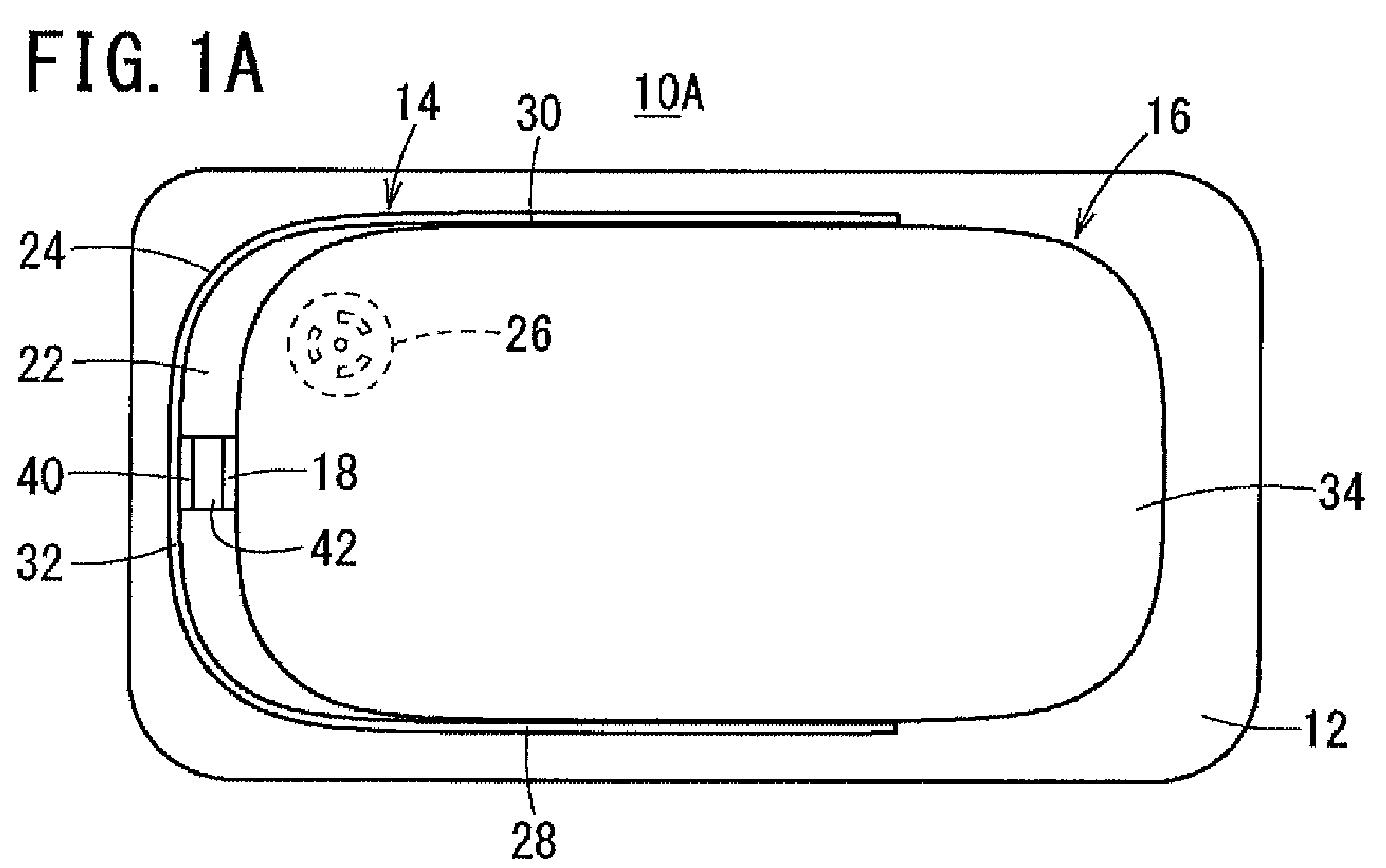
Fig. 1A is a plan view illustrating a first state of a liquid medicine administration device according to a first embodiment of the present invention,Fig. 1B is a plan view illustrating a second state of the liquid medicine administration device, andFig. 1C is a plan view illustrating a third state of the liquid medicine administration device. -
Fig. 2 is a control block diagram of the liquid medicine administration device. -
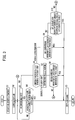
Fig. 3 is a flowchart explaining operation of the liquid medicine administration device. -
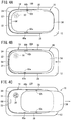
Fig. 4A is a plan view illustrating a first state of a liquid medicine administration device according to a second embodiment of the present invention,Fig. 4B is a plan view illustrating a second state of the liquid medicine administration device, andFig. 4C is a plan view illustrating a third state of the liquid medicine administration device. - Hereinbelow, preferred embodiments of a liquid medicine administration device according to the present invention will be described with reference to the accompanying drawings.
- A liquid
medicine administration device 10A according to the present embodiment is a portable liquidmedicine administration device 10A that continuously or intermittently administers a liquid medicine filled in a liquid medicine administration devicemain body 16 into the living body, and is configured as a patch-type insulin pump. Note that the liquidmedicine administration device 10A is not limited to that of the patch type, but may be of a tube type or the like. - As illustrated in
Figs. 1A and2 , the liquidmedicine administration device 10A includes acradle 14 provided with aseal portion 12 that can be adhered to the skin of a user (patient), the liquidmedicine administration devicemain body 16 detachably provided to thecradle 14, aposition detection sensor 18 that detects a position of the liquid medicine administration devicemain body 16 with respect to thecradle 14, and aremote controller 20. - The
cradle 14 is a holder (holding member) that can be fixed to the user and to which the liquidmedicine administration devicemain body 16 is detachably attached. Thecradle 14 is integrally formed of a resin material, and includes a substantiallyrectangular support plate 22 to which theseal portion 12 is stuck, and aside wall 24 provided to an outer peripheral edge portion of thesupport plate 22. - A
cannula mechanism 26 having a cannula is attached to a corner portion of thesupport plate 22. Note that, in an initial state of thecradle 14, thecannula mechanism 26 is not attached to thecradle 14, and is held by a puncture mechanism which is not illustrated. When the puncture mechanism is operated, as thecannula mechanism 26 including the cannula moves to a side of the living body, the cannula is punctured to the living body, and thecannula mechanism 26 is fixed (attached) to thecradle 14. Theside wall 24 is formed in a substantially U shape in a plan view, and includes a pair ofopposite walls connection wall 32 that connects theseopposite walls - The liquid medicine administration device
main body 16 is attached to thecradle 14 by being slid toward theconnection wall 32 along a longitudinal direction of thesupport plate 22, and is detached from thecradle 14 by being slid in a direction away from theconnection wall 32 along the longitudinal direction of the support plate 22 (seeFig. 1C ). Further, the liquid medicine administration devicemain body 16 can be pushed in the attachment direction (toward the connection wall 32) with respect to thecradle 14, in a state of being attached to the cradle 14 (seeFig. 1B ). - The liquid medicine administration device
main body 16 includes ahousing 34 which is substantially rectangular in a plan view. Although an internal structure of thehousing 34 is not illustrated inFigs. 1A to 1C , a barrel filled with the liquid medicine, a plunger provided in the barrel, a drive unit that drives the plunger, and an outlet tube that guides the liquid medicine in the barrel to thecannula mechanism 26 are disposed in thehousing 34. In addition, the cannula and the outlet tube communicate with each other in a state where the liquid medicine administration devicemain body 16 is attached to thecradle 14, so that the liquid medicine in the barrel can be administered into the living body under pressing operation of the plunger. - The
position detection sensor 18 is configured as a magnetic sensor such as a Hall element, for example, and is provided to thehousing 34 so as to oppose to amagnet 40 provided to theconnection wall 32 in a state where the liquid medicine administration devicemain body 16 is attached to thecradle 14. That is, theposition detection sensor 18 detects the position of the liquid medicine administration devicemain body 16 with respect to thecradle 14 by detecting a magnetic field of themagnet 40. - Note that, in the present embodiment, the
magnet 40 may be provided to thehousing 34, and theposition detection sensor 18 may be provided to theconnection wall 32 so as to oppose to themagnet 40. Even in this case, theposition detection sensor 18 can preferably detect the magnetic field of themagnet 40. - The
magnet 40 is provided with anelastic member 42 that returns the liquid medicine administration devicemain body 16 pushed toward theconnection wall 32 to the original position. By providing such anelastic member 42, the liquid medicine administration devicemain body 16 pushed in the attachment direction with respect to thecradle 14 can be automatically returned to the original position. That is, the user does not need to manually return the liquid medicine administration devicemain body 16 pushed in the attachment direction with respect to thecradle 14 to the original position. - Note that the
elastic member 42 can be provided at arbitrary positions of theposition detection sensor 18, thehousing 34, and thecradle 14. When theelastic member 42 is provided at a position other than a position between themagnet 40 and theposition detection sensor 18, theposition detection sensor 18 can efficiently detect the magnetic field of themagnet 40. Further, theelastic member 42 can be made of rubber, a spring, or the like. - As illustrated in
Fig. 2 , the liquid medicine administration devicemain body 16 includes a transmission/reception unit 36 that performs information communication with theremote controller 20, analarm unit 38 that outputs an alarm sound, and acontrol unit 39. - The
alarm unit 38 outputs the alarm sound on the basis of occurrence of a notification event. It should be noted that thealarm unit 38 may be configured to output an emergency alarm sound and a normal alarm sound according to urgency of the notification event. In this case, at least one of a frequency, an amplitude, an output time, and the number of times of output of each of the emergency alarm sound and the normal alarm sound is different so that the user can easily distinguish the emergency alarm sound and the normal alarm sound from each other. Note that, in the present embodiment, thealarm unit 38 outputs the same alarm sound regardless of the urgency of the notification event. - The
control unit 39 includes a communicationstate determination unit 44, a notificationevent determination unit 46, an attachmentstate determination unit 48, and analarm control unit 50. The communicationstate determination unit 44 determines whether or not the transmission/reception unit 36 and theremote controller 20 are in a communicable state. - The notification
event determination unit 46 determines whether the occurred notification event is an emergency notification event or a normal notification event. Here, examples of the emergency notification event include an event that notifies occlusion of the cannula and an event that notifies empty of the liquid medicine. Examples of the normal notification event include an event of an alarm at a preset time, an event that notifies arrival of a bolus administration time, and an event that notifies decrease of a residual amount of the liquid medicine. - On the basis of an output signal from the
position detection sensor 18, the attachmentstate determination unit 48 determines whether or not the liquid medicine administration devicemain body 16 has been pushed in the attachment direction with respect to thecradle 14, and whether or not the liquid medicine administration devicemain body 16 has been detached from thecradle 14. Specifically, in a case where the output signal from the position detection sensor 18 (magnitude of the detected magnetic field) is smaller than a first threshold value, the attachmentstate determination unit 48 determines that the liquid medicine administration devicemain body 16 has been detached from thecradle 14. Further, in a case where the output signal from theposition detection sensor 18 is larger than a second threshold value, the attachmentstate determination unit 48 determines that the liquid medicine administration devicemain body 16 has been pushed in the attachment direction with respect to thecradle 14. The second threshold value is normally set larger than the first threshold value. - The
alarm control unit 50 stops the alarm sound on the basis of determination results of the notificationevent determination unit 46 and the attachmentstate determination unit 48. Specifically, thealarm control unit 50 stops the alarm sound in a case where the notificationevent determination unit 46 determines that the occurred notification event is the emergency notification event, and the attachmentstate determination unit 48 determines that the liquid medicine administration devicemain body 16 has been detached from thecradle 14. - Further, the
alarm control unit 50 stops the alarm sound in a case where the notificationevent determination unit 46 determines that the occurred notification event is the normal notification event, and the attachmentstate determination unit 48 determines that the liquid medicine administration devicemain body 16 has been detached from thecradle 14, or the liquid medicine administration devicemain body 16 has been pushed in the attachment direction with respect to thecradle 14. - The liquid
medicine administration device 10A according to the present embodiment is basically configured as described above, and hereinbelow, operation and effects of the liquidmedicine administration device 10A will be described. - The user adheres the
cradle 14 to the skin of the user by theseal portion 12 and the cannula is indwelled in the living body by the puncture mechanism which is not illustrated, so that the liquid medicine administration devicemain body 16 in which the barrel is filled with the liquid medicine is attached to the cradle 14 (seeFig. 1A ). Then, by operation of theremote controller 20, the liquid medicine in the liquid medicine administration devicemain body 16 is continuously or intermittently administered into the living body. - When a notification event occurs during such administration of the liquid medicine (step S1 in
Fig. 3 ), thealarm unit 38 outputs an alarm sound (step S2). Then, the communicationstate determination unit 44 determines whether or not the transmission/reception unit 36 of the liquid medicine administration devicemain body 16 and theremote controller 20 are in a communicable state (step S3). - In a case where the transmission/
reception unit 36 and theremote controller 20 are in the communicable state (step S3: YES), thecontrol unit 39 determines whether or not an instruction to stop the alarm sound is received from the remote controller 20 (step S4). - In a case where the instruction to stop the alarm sound is not received, processes after step S3 are performed, and in a case where the instruction to stop the alarm sound is received, the
alarm control unit 50 stops the alarm sound (step S5). Then, this flowchart is terminated. - In a case where the communication
state determination unit 44 determines that the transmission/reception unit 36 and theremote controller 20 are not in the communicable state in step S3 (step S3: NO), the notificationevent determination unit 46 determines whether the occurred notification event is an emergency notification event or a normal notification event (step S6) . - In a case where the notification
event determination unit 46 determines that the occurred notification event is the emergency notification event, the liquid medicine administration devicemain body 16 stops delivery of the liquid medicine (step S7). Accordingly, it is possible to suppress that the liquid medicine is administered into the living body when the emergency notification event occurs. Note that step S7 is executed only in a case where the liquid medicine is being delivered by the liquid medicine administration devicemain body 16. - Subsequently, the attachment
state determination unit 48 determines whether or not the liquid medicine administration devicemain body 16 has been detached from thecradle 14 on the basis of the output signal from the position detection sensor 18 (step S8). In a case where the liquid medicine administration devicemain body 16 has not been detached from the cradle 14 (step S8: NO), the processes after step S3 are performed. - In a case where the liquid medicine administration device
main body 16 has been detached from the cradle 14 (seeFig. 1C , step S8: YES), thealarm control unit 50 stops the alarm sound, and then this flowchart is terminated. - In this way, in a case where the occurred notification event is the emergency notification event, the
alarm control unit 50 stops the alarm sound on the basis of that the liquid medicine administration devicemain body 16 has been detached from thecradle 14, and thealarm control unit 50 does not stop the alarm sound on the basis of operation of the liquid medicine administration devicemain body 16 other than the operation that the liquid medicine administration devicemain body 16 has been from thecradle 14. Accordingly, the user can reliably stop the alarm sound relating to the emergency notification event of thealarm unit 38 without operating theremote controller 20, while suppressing that the alarm sound relating to the emergency notification event is unintentionally stopped when the user touches the liquid medicine administration devicemain body 16. - On the other hand, in a case where the notification
event determination unit 46 determines that the occurred notification event is the normal notification event in step S6, the attachmentstate determination unit 48 determines whether or not the liquid medicine administration devicemain body 16 has been detached from thecradle 14 on the basis of the output signal from the position detection sensor 18 (step S9). In a case where the liquid medicine administration devicemain body 16 has been detached from the cradle 14 (step S9: YES), thealarm control unit 50 stops the alarm sound, and then this flowchart is terminated. - In a case where the liquid medicine administration device
main body 16 has not been detached from the cradle 14 (step S9: NO), the attachmentstate determination unit 48 determines whether or not the liquid medicine administration devicemain body 16 has been pushed in the attachment direction with respect to the cradle 14 (step S10). - In a case where the liquid medicine administration device
main body 16 has not been pushed in the attachment direction with respect to the cradle 14 (step S10: NO), the processes after step S3 are performed, and in a case where the liquid medicine administration devicemain body 16 has been pushed in the attachment direction with respect to the cradle 14 (seeFig. 1B , step S10: YES), after thealarm control unit 50 stops the alarm sound, this flowchart is terminated. - In this way, in a case where the occurred notification event is the normal notification event, the
alarm control unit 50 stops the alarm sound on the basis of that the liquid medicine administration devicemain body 16 has been detached from thecradle 14 or the liquid medicine administration devicemain body 16 has been pushed in the attachment direction with respect to thecradle 14. Therefore, the alarm sound related to the normal notification event can be stopped by simple operation of the liquid medicine administration devicemain body 16. - According to the present embodiment, the user can easily and quickly stop, without operating the
remote controller 20, the alarm sound of thealarm unit 38 by changing the relative position between thecradle 14 and the liquid medicine administration devicemain body 16. - In the present embodiment, the magnetic field of the
magnet 40 provided in thecradle 14 is detected by theposition detection sensor 18 provided in the liquid medicine administration devicemain body 16. Therefore, the position of the liquid medicine administration devicemain body 16 with respect to thecradle 14 can be detected with a simple configuration. - Further, in a state where the liquid medicine administration device
main body 16 is attached to thecradle 14, themagnet 40 and theposition detection sensor 18 are opposed to each other along the attachment direction. Therefore, the attachmentstate determination unit 48 can determine, on the basis of the output signal from oneposition detection sensor 18, whether or not the liquid medicine administration devicemain body 16 has been detached from thecradle 14, and whether or not the liquid medicine administration devicemain body 16 has been pushed in the attachment direction of thecradle 14. - In the present embodiment, in the flowchart of
Fig. 3 described above, step S3 may be omitted, and the processes after step S6 may be performed in a case where the instruction to stop the alarm sound from theremote controller 20 is not received in step S4. - Accordingly, regardless of whether or not the transmission/
reception unit 36 of the liquid medicine administration devicemain body 16 and theremote controller 20 are in the communicable state, the alarm sound of thealarm unit 38 of the liquid medicine administration devicemain body 16 can be easily and quickly stopped without operation of theremote controller 20 in a case where theremote controller 20 is not at hand or not found. - Next, a liquid
medicine administration device 10B according to a second embodiment of the present invention will be described. Note that, in the liquidmedicine administration device 10B according to the second embodiment, the same components as those of the liquidmedicine administration device 10A according to the first embodiment are denoted by the same reference signs, and a detailed description thereof will be omitted. - As illustrated in
Fig. 4A , in the liquidmedicine administration device 10B, a pair ofmagnets cradle 14 and a pair ofposition detection sensors main body 16. Themagnet 60a is provided to oneopposite wall 28, and themagnet 60b is provided to the otheropposite wall 30. - The
position detection sensors position detection sensor 18. Theposition detection sensor 62a is opposed to themagnet 60a in a state where the liquid medicine administration devicemain body 16 is pushed in the attachment direction along the longitudinal direction of the support plate 22 (seeFig. 4B ). - The
position detection sensor 62b is opposed to themagnet 60b in a state where the liquidmedicine administration device 10B is attached to the cradle 14 (a state where the liquid medicine administration devicemain body 16 is not pushed in) (seeFig. 4A ) . - The attachment
state determination unit 48 determines that the liquid medicine administration devicemain body 16 has been pushed in the attachment direction with respect to thecradle 14 in a case where a magnetic field of themagnet 60a is detected by theposition detection sensor 62a and a magnetic field of themagnet 60b is not detected by theposition detection sensor 62b. Further, the attachmentstate determination unit 48 determines that the liquid medicine administration devicemain body 16 has been detached from thecradle 14 in a case where the magnetic field of themagnet 60a is not detected by theposition detection sensor 62a and the magnetic field of themagnet 60b is not detected by theposition detection sensor 62b. - Note that the
connection wall 32 of thecradle 14 is provided with anelastic member 64 for returning the liquid medicine administration devicemain body 16 that has been pushed, to its original attachment position. Theelastic member 64 is configured similarly to the above-describedelastic member 42. - The liquid
medicine administration device 10B according to the present embodiment exerts the operation and effect similar to those of the above-described liquidmedicine administration device 10A. In the present embodiment, theposition detection sensor 62a may be provided to the oneopposite wall 28 and theposition detection sensor 62b may be provided to the otheropposite wall 30, and themagnets position detection sensors main body 16. Further, theposition detection sensors magnets - In the above-described liquid
medicine administration devices alarm control unit 50 may stop the alarm sound of thealarm unit 38 by, for example, pushing the liquid medicine administration devicemain body 16 toward a side of thesupport plate 22 to change the relative position between the liquid medicine administration devicemain body 16 and thecradle 14. - Further, in a case where the
alarm control unit 50 stopped the alarm sound of thealarm unit 38 by changing the relative position between thecradle 14 and the liquid medicine administration devicemain body 16, thealarm control unit 50 may output the alarm sound again from thealarm unit 38 after a predetermined time has elapsed since the alarm sound was stopped (snooze operation may be performed) . In this case, thealarm control unit 50 may stop the snooze operation in a case where the instruction to stop the alarm sound is received from theremote controller 20. Accordingly, a content of the notification event can be confirmed by the user via theremote controller 20. - Further, although the
position detection sensors housing 34 of the liquid medicine administration devicemain body 16 in the above-described liquidmedicine administration devices position detection sensors housing 34 so as to detect the magnetic fields. - Furthermore, in the above-described embodiment, the
alarm unit 38 is not limited to the example of outputting the alarm sound, and notification to the user may be made by output of sound, lighting or blinking of an indicator lamp, epidermis of a character by a display, vibration, or the like.
Claims (8)
- A portable liquid medicine administration device (10A, 10B) for continuous or intermittent administration of a liquid medicine into a living body, the device comprising:a liquidmedicine administration device main body (16) filled with the liquid medicine; anda cradle (14) to which the liquid medicine administration device main body (16) is detachably attached,wherein the liquid medicine administration device main body (16) includes:an alarm unit (38) that outputs an alarm on the basis of a notification event in a state of being attached to the cradle (14); andan alarm control unit (50) that stops the alarm on the basis of a change in a relative position between the cradle (14) and the liquid medicine administration device main body (16).
- The liquid medicine administration device (10A, 10B) according to claim 1, further comprising
a notification event determination unit (46) that determines whether the notification event is an emergency notification event or a normal notification event, wherein
in a case where the notification event determination unit (46) determines that the notification event is the emergency notification event, the alarm control unit (50) stops the alarm on the basis of that the liquid medicine administration device main body (16) has been detached from the cradle (14), and the alarm control unit (50) does not stop the alarm on the basis of operation of the liquid medicine administration device main body (16) other than the operation that the liquid medicine administration device main body (16) has been detached from the cradle (14). - The liquid medicine administration device (10A, 10B) according to claim 2, wherein
in a case where the notification event determination unit (46) determines that the notification event is the normal notification event, the alarm control unit (50) stops the alarm on the basis of that the liquid medicine administration device main body (16) has been detached from the cradle (14), or that the liquid medicine administration device main body (16) has been pushed in an attachment direction with respect to the cradle (14) . - The liquid medicine administration device (10A, 10B) according to claim 2 or 3, wherein
in a case where the notification event determination unit (46) determines that the notification event is the emergency notification event, the liquid medicine administration device main body (16) stops delivery of the liquid medicine. - The liquid medicine administration device (10A, 10B) according to claim 3, comprising:a position detection sensor (18, 62a, 62b) that detects a position of the liquid medicine administration device main body (16) with respect to the cradle (14); andan attachment state determination unit (48) that determines, on the basis of an output signal from the position detection sensor (18, 62a, 62b), whether or not the liquid medicine administration device main body (16) has been detached from the cradle (14), and whether or not the liquid medicine administration device main body (16) has been pushed in the attachment direction with respect to the cradle (14).
- The liquid medicine administration device (10A, 10B) according to claim 5, wherein
a magnet (40, 60a, 60b) is provided to one of the liquid medicine administration device main body (16) and the cradle (14), and
the position detection sensor (18, 62a, 62b) is provided to the other one of the liquid medicine administration device main body (16) and the cradle (14) to detect a magnetic field of the magnet (40, 60a, 60b). - The liquid medicine administration device (10A) according to claim 6, wherein
in a state where the liquid medicine administration device main body (16) is attached to the cradle (14), the magnet (40) and the position detection sensor (18) are opposed to each other along the attachment direction of the liquid medicine administration device main body (16). - The liquid medicine administration device (10A, 10B) according to claim 3, comprising
an elastic member (42, 64) that returns the liquid medicine administration device main body (16) pushed in the attachment direction with respect to the cradle (14) to an original position.
Applications Claiming Priority (2)
| Application Number | Priority Date | Filing Date | Title |
|---|---|---|---|
| JP2015032412 | 2015-02-23 | ||
| PCT/JP2016/053589 WO2016136439A1 (en) | 2015-02-23 | 2016-02-05 | Drug solution administering device |
Publications (3)
| Publication Number | Publication Date |
|---|---|
| EP3263155A1 true EP3263155A1 (en) | 2018-01-03 |
| EP3263155A4 EP3263155A4 (en) | 2018-08-22 |
| EP3263155B1 EP3263155B1 (en) | 2019-11-27 |
Family
ID=56789316
Family Applications (1)
| Application Number | Title | Priority Date | Filing Date |
|---|---|---|---|
| EP16755188.6A Active EP3263155B1 (en) | 2015-02-23 | 2016-02-05 | Drug solution administering device |
Country Status (5)
| Country | Link |
|---|---|
| US (1) | US10857309B2 (en) |
| EP (1) | EP3263155B1 (en) |
| JP (1) | JP6649355B2 (en) |
| CN (1) | CN107106762B (en) |
| WO (1) | WO2016136439A1 (en) |
Families Citing this family (9)
| Publication number | Priority date | Publication date | Assignee | Title |
|---|---|---|---|---|
| PT1762259E (en) | 2005-09-12 | 2010-12-10 | Unomedical As | INSERTER FOR AN INFUSION ASSEMBLY WITH A FIRST AND SECOND SPRING UNITS |
| JP2013523233A (en) | 2010-03-30 | 2013-06-17 | ウノメディカル アクティーゼルスカブ | Medical device |
| US10194938B2 (en) | 2011-03-14 | 2019-02-05 | UnoMedical, AS | Inserter system with transport protection |
| EP2583715A1 (en) | 2011-10-19 | 2013-04-24 | Unomedical A/S | Infusion tube system and method for manufacture |
| EP4740989A2 (en) | 2016-01-19 | 2026-05-13 | Unomedical A/S | Cannula & infusion devices |
| CN109718428A (en) * | 2017-10-31 | 2019-05-07 | 比亚迪股份有限公司 | A kind of locker and portable injection pump |
| CA3141608A1 (en) | 2019-05-20 | 2020-11-26 | Unomedical A/S | Rotatable infusion device and methods thereof |
| WO2021074176A1 (en) * | 2019-10-16 | 2021-04-22 | F. Hoffmann-La Roche Ag | Cradle for a medical device |
| CA3223473A1 (en) * | 2021-06-24 | 2022-12-29 | Nitish Kumar Varma KUNAPARAJU | User removable fill closure tab with integrated membrane |
Family Cites Families (10)
| Publication number | Priority date | Publication date | Assignee | Title |
|---|---|---|---|---|
| JP2004532670A (en) * | 2001-02-22 | 2004-10-28 | インシュレット コーポレイション | Modular infusion device and method |
| GB0604336D0 (en) * | 2006-03-06 | 2006-04-12 | Fireangel Ltd | Alarm system |
| US20080161754A1 (en) * | 2006-12-29 | 2008-07-03 | Medsolve Technologies, Inc. | Method and apparatus for infusing liquid to a body |
| EP2171568B1 (en) * | 2007-06-29 | 2018-05-30 | Roche Diabetes Care GmbH | User interface features for an electronic device |
| WO2009016635A2 (en) * | 2007-08-01 | 2009-02-05 | Medingo Ltd. | Detachable portable infusion device |
| CN114796703B (en) * | 2007-12-31 | 2025-10-21 | 德卡产品有限公司 | Infusion pump components |
| US8547239B2 (en) * | 2009-08-18 | 2013-10-01 | Cequr Sa | Methods for detecting failure states in a medicine delivery device |
| US8486020B2 (en) * | 2010-08-11 | 2013-07-16 | Zevex, Inc. | Pressure sensor and method of use |
| US9308320B2 (en) * | 2010-09-24 | 2016-04-12 | Perqflo, Llc | Infusion pumps |
| EP2788070B1 (en) * | 2011-12-07 | 2018-04-25 | Becton, Dickinson and Company | Infusion device with releasable fluid connector |
-
2016
- 2016-02-05 EP EP16755188.6A patent/EP3263155B1/en active Active
- 2016-02-05 JP JP2017502036A patent/JP6649355B2/en active Active
- 2016-02-05 WO PCT/JP2016/053589 patent/WO2016136439A1/en not_active Ceased
- 2016-02-05 CN CN201680005125.0A patent/CN107106762B/en active Active
-
2017
- 2017-08-18 US US15/680,353 patent/US10857309B2/en active Active
Also Published As
| Publication number | Publication date |
|---|---|
| CN107106762A (en) | 2017-08-29 |
| JP6649355B2 (en) | 2020-02-19 |
| EP3263155A4 (en) | 2018-08-22 |
| EP3263155B1 (en) | 2019-11-27 |
| JPWO2016136439A1 (en) | 2017-11-30 |
| US10857309B2 (en) | 2020-12-08 |
| US20170340841A1 (en) | 2017-11-30 |
| WO2016136439A1 (en) | 2016-09-01 |
| CN107106762B (en) | 2020-07-10 |
Similar Documents
| Publication | Publication Date | Title |
|---|---|---|
| EP3263155B1 (en) | Drug solution administering device | |
| CN108136121B (en) | Device for attaching to an injection device | |
| US7967785B2 (en) | Insulin reservoir detection via magnetic switching | |
| US20160259913A1 (en) | Drug delivery dose indicator | |
| EP3655064A1 (en) | Administration system, delivery device, and notification device for communicating status of a medical device | |
| US20230055834A1 (en) | Liquid drug pumps including user feedback indicating pump orientation | |
| EP2902051B1 (en) | Syringe pump | |
| EP2617445B1 (en) | System for medical treatment | |
| US20180294050A1 (en) | Medication scan acquisition device and method thereof | |
| CN112107761B (en) | Infusion pump, infusion pump working method, medical equipment and storage medium | |
| US11676512B2 (en) | Injection training device | |
| CN112107758B (en) | Infusion pump working method, infusion pump, medical equipment and storage medium | |
| EP3703781B1 (en) | Control of medical device using wireless communication | |
| EP3103505A1 (en) | Joining unit for detecting needle disconnection | |
| JP4949700B2 (en) | Infusion tube loading aid and infusion device | |
| CN104968379B (en) | Infusion pump | |
| JP6050589B2 (en) | Syringe pump | |
| EP2469432A1 (en) | Ambulatory infusion system with alert prioritizing features | |
| CN112107759B (en) | Infusion pump working method, infusion pump, medical equipment and storage medium | |
| WO2019171347A1 (en) | Full path rigid needle | |
| WO2019064903A1 (en) | Medical pump, method for controlling medical pump, and medical pump system | |
| CN113573754A (en) | liquid medicine delivery device | |
| CN112107760A (en) | Infusion pump working method, infusion pump, medical equipment and storage medium | |
| WO2019064953A1 (en) | Medical pump, control method for medical pump, and medical pump system |
Legal Events
| Date | Code | Title | Description |
|---|---|---|---|
| STAA | Information on the status of an ep patent application or granted ep patent |
Free format text: STATUS: THE INTERNATIONAL PUBLICATION HAS BEEN MADE |
|
| PUAI | Public reference made under article 153(3) epc to a published international application that has entered the european phase |
Free format text: ORIGINAL CODE: 0009012 |
|
| STAA | Information on the status of an ep patent application or granted ep patent |
Free format text: STATUS: REQUEST FOR EXAMINATION WAS MADE |
|
| 17P | Request for examination filed |
Effective date: 20170823 |
|
| AK | Designated contracting states |
Kind code of ref document: A1 Designated state(s): AL AT BE BG CH CY CZ DE DK EE ES FI FR GB GR HR HU IE IS IT LI LT LU LV MC MK MT NL NO PL PT RO RS SE SI SK SM TR |
|
| AX | Request for extension of the european patent |
Extension state: BA ME |
|
| DAV | Request for validation of the european patent (deleted) | ||
| DAX | Request for extension of the european patent (deleted) | ||
| A4 | Supplementary search report drawn up and despatched |
Effective date: 20180724 |
|
| RIC1 | Information provided on ipc code assigned before grant |
Ipc: A61M 5/142 20060101AFI20180718BHEP Ipc: A61M 5/168 20060101ALI20180718BHEP Ipc: A61M 5/158 20060101ALI20180718BHEP Ipc: A61M 5/50 20060101ALI20180718BHEP |
|
| REG | Reference to a national code |
Ref country code: DE Ref legal event code: R079 Ref document number: 602016025141 Country of ref document: DE Free format text: PREVIOUS MAIN CLASS: A61M0005142000 Ipc: A61M0005172000 |
|
| GRAP | Despatch of communication of intention to grant a patent |
Free format text: ORIGINAL CODE: EPIDOSNIGR1 |
|
| RIC1 | Information provided on ipc code assigned before grant |
Ipc: A61M 5/158 20060101ALI20190612BHEP Ipc: A61M 5/172 20060101AFI20190612BHEP Ipc: A61M 5/142 20060101ALI20190612BHEP Ipc: A61M 5/168 20060101ALI20190612BHEP |
|
| STAA | Information on the status of an ep patent application or granted ep patent |
Free format text: STATUS: GRANT OF PATENT IS INTENDED |
|
| INTG | Intention to grant announced |
Effective date: 20190718 |
|
| GRAS | Grant fee paid |
Free format text: ORIGINAL CODE: EPIDOSNIGR3 |
|
| GRAA | (expected) grant |
Free format text: ORIGINAL CODE: 0009210 |
|
| STAA | Information on the status of an ep patent application or granted ep patent |
Free format text: STATUS: THE PATENT HAS BEEN GRANTED |
|
| AK | Designated contracting states |
Kind code of ref document: B1 Designated state(s): AL AT BE BG CH CY CZ DE DK EE ES FI FR GB GR HR HU IE IS IT LI LT LU LV MC MK MT NL NO PL PT RO RS SE SI SK SM TR |
|
| REG | Reference to a national code |
Ref country code: GB Ref legal event code: FG4D |
|
| REG | Reference to a national code |
Ref country code: CH Ref legal event code: EP |
|
| REG | Reference to a national code |
Ref country code: AT Ref legal event code: REF Ref document number: 1205999 Country of ref document: AT Kind code of ref document: T Effective date: 20191215 |
|
| REG | Reference to a national code |
Ref country code: DE Ref legal event code: R096 Ref document number: 602016025141 Country of ref document: DE |
|
| REG | Reference to a national code |
Ref country code: IE Ref legal event code: FG4D |
|
| REG | Reference to a national code |
Ref country code: NL Ref legal event code: MP Effective date: 20191127 |
|
| REG | Reference to a national code |
Ref country code: LT Ref legal event code: MG4D |
|
| PG25 | Lapsed in a contracting state [announced via postgrant information from national office to epo] |
Ref country code: SE Free format text: LAPSE BECAUSE OF FAILURE TO SUBMIT A TRANSLATION OF THE DESCRIPTION OR TO PAY THE FEE WITHIN THE PRESCRIBED TIME-LIMIT Effective date: 20191127 Ref country code: LV Free format text: LAPSE BECAUSE OF FAILURE TO SUBMIT A TRANSLATION OF THE DESCRIPTION OR TO PAY THE FEE WITHIN THE PRESCRIBED TIME-LIMIT Effective date: 20191127 Ref country code: NO Free format text: LAPSE BECAUSE OF FAILURE TO SUBMIT A TRANSLATION OF THE DESCRIPTION OR TO PAY THE FEE WITHIN THE PRESCRIBED TIME-LIMIT Effective date: 20200227 Ref country code: BG Free format text: LAPSE BECAUSE OF FAILURE TO SUBMIT A TRANSLATION OF THE DESCRIPTION OR TO PAY THE FEE WITHIN THE PRESCRIBED TIME-LIMIT Effective date: 20200227 Ref country code: GR Free format text: LAPSE BECAUSE OF FAILURE TO SUBMIT A TRANSLATION OF THE DESCRIPTION OR TO PAY THE FEE WITHIN THE PRESCRIBED TIME-LIMIT Effective date: 20200228 Ref country code: LT Free format text: LAPSE BECAUSE OF FAILURE TO SUBMIT A TRANSLATION OF THE DESCRIPTION OR TO PAY THE FEE WITHIN THE PRESCRIBED TIME-LIMIT Effective date: 20191127 Ref country code: FI Free format text: LAPSE BECAUSE OF FAILURE TO SUBMIT A TRANSLATION OF THE DESCRIPTION OR TO PAY THE FEE WITHIN THE PRESCRIBED TIME-LIMIT Effective date: 20191127 Ref country code: NL Free format text: LAPSE BECAUSE OF FAILURE TO SUBMIT A TRANSLATION OF THE DESCRIPTION OR TO PAY THE FEE WITHIN THE PRESCRIBED TIME-LIMIT Effective date: 20191127 |
|
| PG25 | Lapsed in a contracting state [announced via postgrant information from national office to epo] |
Ref country code: RS Free format text: LAPSE BECAUSE OF FAILURE TO SUBMIT A TRANSLATION OF THE DESCRIPTION OR TO PAY THE FEE WITHIN THE PRESCRIBED TIME-LIMIT Effective date: 20191127 Ref country code: IS Free format text: LAPSE BECAUSE OF FAILURE TO SUBMIT A TRANSLATION OF THE DESCRIPTION OR TO PAY THE FEE WITHIN THE PRESCRIBED TIME-LIMIT Effective date: 20200327 Ref country code: HR Free format text: LAPSE BECAUSE OF FAILURE TO SUBMIT A TRANSLATION OF THE DESCRIPTION OR TO PAY THE FEE WITHIN THE PRESCRIBED TIME-LIMIT Effective date: 20191127 |
|
| PG25 | Lapsed in a contracting state [announced via postgrant information from national office to epo] |
Ref country code: AL Free format text: LAPSE BECAUSE OF FAILURE TO SUBMIT A TRANSLATION OF THE DESCRIPTION OR TO PAY THE FEE WITHIN THE PRESCRIBED TIME-LIMIT Effective date: 20191127 |
|
| PG25 | Lapsed in a contracting state [announced via postgrant information from national office to epo] |
Ref country code: RO Free format text: LAPSE BECAUSE OF FAILURE TO SUBMIT A TRANSLATION OF THE DESCRIPTION OR TO PAY THE FEE WITHIN THE PRESCRIBED TIME-LIMIT Effective date: 20191127 Ref country code: EE Free format text: LAPSE BECAUSE OF FAILURE TO SUBMIT A TRANSLATION OF THE DESCRIPTION OR TO PAY THE FEE WITHIN THE PRESCRIBED TIME-LIMIT Effective date: 20191127 Ref country code: PT Free format text: LAPSE BECAUSE OF FAILURE TO SUBMIT A TRANSLATION OF THE DESCRIPTION OR TO PAY THE FEE WITHIN THE PRESCRIBED TIME-LIMIT Effective date: 20200419 Ref country code: DK Free format text: LAPSE BECAUSE OF FAILURE TO SUBMIT A TRANSLATION OF THE DESCRIPTION OR TO PAY THE FEE WITHIN THE PRESCRIBED TIME-LIMIT Effective date: 20191127 Ref country code: ES Free format text: LAPSE BECAUSE OF FAILURE TO SUBMIT A TRANSLATION OF THE DESCRIPTION OR TO PAY THE FEE WITHIN THE PRESCRIBED TIME-LIMIT Effective date: 20191127 Ref country code: CZ Free format text: LAPSE BECAUSE OF FAILURE TO SUBMIT A TRANSLATION OF THE DESCRIPTION OR TO PAY THE FEE WITHIN THE PRESCRIBED TIME-LIMIT Effective date: 20191127 |
|
| REG | Reference to a national code |
Ref country code: DE Ref legal event code: R097 Ref document number: 602016025141 Country of ref document: DE |
|
| PG25 | Lapsed in a contracting state [announced via postgrant information from national office to epo] |
Ref country code: SM Free format text: LAPSE BECAUSE OF FAILURE TO SUBMIT A TRANSLATION OF THE DESCRIPTION OR TO PAY THE FEE WITHIN THE PRESCRIBED TIME-LIMIT Effective date: 20191127 Ref country code: SK Free format text: LAPSE BECAUSE OF FAILURE TO SUBMIT A TRANSLATION OF THE DESCRIPTION OR TO PAY THE FEE WITHIN THE PRESCRIBED TIME-LIMIT Effective date: 20191127 |
|
| REG | Reference to a national code |
Ref country code: AT Ref legal event code: MK05 Ref document number: 1205999 Country of ref document: AT Kind code of ref document: T Effective date: 20191127 |
|
| REG | Reference to a national code |
Ref country code: CH Ref legal event code: PL |
|
| PLBE | No opposition filed within time limit |
Free format text: ORIGINAL CODE: 0009261 |
|
| STAA | Information on the status of an ep patent application or granted ep patent |
Free format text: STATUS: NO OPPOSITION FILED WITHIN TIME LIMIT |
|
| GBPC | Gb: european patent ceased through non-payment of renewal fee |
Effective date: 20200227 |
|
| REG | Reference to a national code |
Ref country code: BE Ref legal event code: MM Effective date: 20200229 |
|
| PG25 | Lapsed in a contracting state [announced via postgrant information from national office to epo] |
Ref country code: MC Free format text: LAPSE BECAUSE OF FAILURE TO SUBMIT A TRANSLATION OF THE DESCRIPTION OR TO PAY THE FEE WITHIN THE PRESCRIBED TIME-LIMIT Effective date: 20191127 Ref country code: LU Free format text: LAPSE BECAUSE OF NON-PAYMENT OF DUE FEES Effective date: 20200205 |
|
| 26N | No opposition filed |
Effective date: 20200828 |
|
| PG25 | Lapsed in a contracting state [announced via postgrant information from national office to epo] |
Ref country code: SI Free format text: LAPSE BECAUSE OF FAILURE TO SUBMIT A TRANSLATION OF THE DESCRIPTION OR TO PAY THE FEE WITHIN THE PRESCRIBED TIME-LIMIT Effective date: 20191127 Ref country code: CH Free format text: LAPSE BECAUSE OF NON-PAYMENT OF DUE FEES Effective date: 20200229 Ref country code: LI Free format text: LAPSE BECAUSE OF NON-PAYMENT OF DUE FEES Effective date: 20200229 Ref country code: AT Free format text: LAPSE BECAUSE OF FAILURE TO SUBMIT A TRANSLATION OF THE DESCRIPTION OR TO PAY THE FEE WITHIN THE PRESCRIBED TIME-LIMIT Effective date: 20191127 Ref country code: PL Free format text: LAPSE BECAUSE OF FAILURE TO SUBMIT A TRANSLATION OF THE DESCRIPTION OR TO PAY THE FEE WITHIN THE PRESCRIBED TIME-LIMIT Effective date: 20191127 |
|
| PG25 | Lapsed in a contracting state [announced via postgrant information from national office to epo] |
Ref country code: IE Free format text: LAPSE BECAUSE OF NON-PAYMENT OF DUE FEES Effective date: 20200205 Ref country code: FR Free format text: LAPSE BECAUSE OF NON-PAYMENT OF DUE FEES Effective date: 20200229 Ref country code: GB Free format text: LAPSE BECAUSE OF NON-PAYMENT OF DUE FEES Effective date: 20200227 |
|
| PG25 | Lapsed in a contracting state [announced via postgrant information from national office to epo] |
Ref country code: BE Free format text: LAPSE BECAUSE OF NON-PAYMENT OF DUE FEES Effective date: 20200229 |
|
| PG25 | Lapsed in a contracting state [announced via postgrant information from national office to epo] |
Ref country code: TR Free format text: LAPSE BECAUSE OF FAILURE TO SUBMIT A TRANSLATION OF THE DESCRIPTION OR TO PAY THE FEE WITHIN THE PRESCRIBED TIME-LIMIT Effective date: 20191127 Ref country code: MT Free format text: LAPSE BECAUSE OF FAILURE TO SUBMIT A TRANSLATION OF THE DESCRIPTION OR TO PAY THE FEE WITHIN THE PRESCRIBED TIME-LIMIT Effective date: 20191127 Ref country code: CY Free format text: LAPSE BECAUSE OF FAILURE TO SUBMIT A TRANSLATION OF THE DESCRIPTION OR TO PAY THE FEE WITHIN THE PRESCRIBED TIME-LIMIT Effective date: 20191127 |
|
| PG25 | Lapsed in a contracting state [announced via postgrant information from national office to epo] |
Ref country code: MK Free format text: LAPSE BECAUSE OF FAILURE TO SUBMIT A TRANSLATION OF THE DESCRIPTION OR TO PAY THE FEE WITHIN THE PRESCRIBED TIME-LIMIT Effective date: 20191127 |
|
| PGFP | Annual fee paid to national office [announced via postgrant information from national office to epo] |
Ref country code: DE Payment date: 20251230 Year of fee payment: 11 |
|
| PGFP | Annual fee paid to national office [announced via postgrant information from national office to epo] |
Ref country code: IT Payment date: 20260122 Year of fee payment: 11 |