EP3263093A1 - Cosmetic composition - Google Patents
Cosmetic composition Download PDFInfo
- Publication number
- EP3263093A1 EP3263093A1 EP17181414.8A EP17181414A EP3263093A1 EP 3263093 A1 EP3263093 A1 EP 3263093A1 EP 17181414 A EP17181414 A EP 17181414A EP 3263093 A1 EP3263093 A1 EP 3263093A1
- Authority
- EP
- European Patent Office
- Prior art keywords
- acid
- carbon atoms
- group
- salt
- composition
- Prior art date
- Legal status (The legal status is an assumption and is not a legal conclusion. Google has not performed a legal analysis and makes no representation as to the accuracy of the status listed.)
- Granted
Links
- 0 *C(CC*1)N1C(*)=O Chemical compound *C(CC*1)N1C(*)=O 0.000 description 2
Classifications
-
- A—HUMAN NECESSITIES
- A61—MEDICAL OR VETERINARY SCIENCE; HYGIENE
- A61K—PREPARATIONS FOR MEDICAL, DENTAL OR TOILETRY PURPOSES
- A61K8/00—Cosmetics or similar toiletry preparations
- A61K8/18—Cosmetics or similar toiletry preparations characterised by the composition
- A61K8/30—Cosmetics or similar toiletry preparations characterised by the composition containing organic compounds
- A61K8/49—Cosmetics or similar toiletry preparations characterised by the composition containing organic compounds containing heterocyclic compounds
- A61K8/4906—Cosmetics or similar toiletry preparations characterised by the composition containing organic compounds containing heterocyclic compounds with one nitrogen as the only hetero atom
- A61K8/4913—Cosmetics or similar toiletry preparations characterised by the composition containing organic compounds containing heterocyclic compounds with one nitrogen as the only hetero atom having five membered rings, e.g. pyrrolidone carboxylic acid
-
- A—HUMAN NECESSITIES
- A01—AGRICULTURE; FORESTRY; ANIMAL HUSBANDRY; HUNTING; TRAPPING; FISHING
- A01N—PRESERVATION OF BODIES OF HUMANS OR ANIMALS OR PLANTS OR PARTS THEREOF; BIOCIDES, e.g. AS DISINFECTANTS, AS PESTICIDES OR AS HERBICIDES; PEST REPELLANTS OR ATTRACTANTS; PLANT GROWTH REGULATORS
- A01N25/00—Biocides, pest repellants or attractants, or plant growth regulators, characterised by their forms, or by their non-active ingredients or by their methods of application, e.g. seed treatment or sequential application; Substances for reducing the noxious effect of the active ingredients to organisms other than pests
-
- A—HUMAN NECESSITIES
- A01—AGRICULTURE; FORESTRY; ANIMAL HUSBANDRY; HUNTING; TRAPPING; FISHING
- A01N—PRESERVATION OF BODIES OF HUMANS OR ANIMALS OR PLANTS OR PARTS THEREOF; BIOCIDES, e.g. AS DISINFECTANTS, AS PESTICIDES OR AS HERBICIDES; PEST REPELLANTS OR ATTRACTANTS; PLANT GROWTH REGULATORS
- A01N31/00—Biocides, pest repellants or attractants, or plant growth regulators containing organic oxygen or sulfur compounds
- A01N31/02—Acyclic compounds
-
- A—HUMAN NECESSITIES
- A01—AGRICULTURE; FORESTRY; ANIMAL HUSBANDRY; HUNTING; TRAPPING; FISHING
- A01N—PRESERVATION OF BODIES OF HUMANS OR ANIMALS OR PLANTS OR PARTS THEREOF; BIOCIDES, e.g. AS DISINFECTANTS, AS PESTICIDES OR AS HERBICIDES; PEST REPELLANTS OR ATTRACTANTS; PLANT GROWTH REGULATORS
- A01N31/00—Biocides, pest repellants or attractants, or plant growth regulators containing organic oxygen or sulfur compounds
- A01N31/08—Oxygen or sulfur directly attached to an aromatic ring system
-
- A—HUMAN NECESSITIES
- A61—MEDICAL OR VETERINARY SCIENCE; HYGIENE
- A61K—PREPARATIONS FOR MEDICAL, DENTAL OR TOILETRY PURPOSES
- A61K8/00—Cosmetics or similar toiletry preparations
- A61K8/18—Cosmetics or similar toiletry preparations characterised by the composition
- A61K8/30—Cosmetics or similar toiletry preparations characterised by the composition containing organic compounds
- A61K8/33—Cosmetics or similar toiletry preparations characterised by the composition containing organic compounds containing oxygen
- A61K8/34—Alcohols
- A61K8/345—Alcohols containing more than one hydroxy group
-
- A—HUMAN NECESSITIES
- A61—MEDICAL OR VETERINARY SCIENCE; HYGIENE
- A61K—PREPARATIONS FOR MEDICAL, DENTAL OR TOILETRY PURPOSES
- A61K8/00—Cosmetics or similar toiletry preparations
- A61K8/18—Cosmetics or similar toiletry preparations characterised by the composition
- A61K8/30—Cosmetics or similar toiletry preparations characterised by the composition containing organic compounds
- A61K8/33—Cosmetics or similar toiletry preparations characterised by the composition containing organic compounds containing oxygen
- A61K8/35—Ketones, e.g. benzophenone
-
- A—HUMAN NECESSITIES
- A61—MEDICAL OR VETERINARY SCIENCE; HYGIENE
- A61K—PREPARATIONS FOR MEDICAL, DENTAL OR TOILETRY PURPOSES
- A61K8/00—Cosmetics or similar toiletry preparations
- A61K8/18—Cosmetics or similar toiletry preparations characterised by the composition
- A61K8/30—Cosmetics or similar toiletry preparations characterised by the composition containing organic compounds
- A61K8/40—Cosmetics or similar toiletry preparations characterised by the composition containing organic compounds containing nitrogen
-
- A—HUMAN NECESSITIES
- A61—MEDICAL OR VETERINARY SCIENCE; HYGIENE
- A61K—PREPARATIONS FOR MEDICAL, DENTAL OR TOILETRY PURPOSES
- A61K8/00—Cosmetics or similar toiletry preparations
- A61K8/18—Cosmetics or similar toiletry preparations characterised by the composition
- A61K8/30—Cosmetics or similar toiletry preparations characterised by the composition containing organic compounds
- A61K8/40—Cosmetics or similar toiletry preparations characterised by the composition containing organic compounds containing nitrogen
- A61K8/42—Amides
-
- A—HUMAN NECESSITIES
- A61—MEDICAL OR VETERINARY SCIENCE; HYGIENE
- A61Q—SPECIFIC USE OF COSMETICS OR SIMILAR TOILETRY PREPARATIONS
- A61Q19/00—Preparations for care of the skin
-
- A—HUMAN NECESSITIES
- A61—MEDICAL OR VETERINARY SCIENCE; HYGIENE
- A61Q—SPECIFIC USE OF COSMETICS OR SIMILAR TOILETRY PREPARATIONS
- A61Q19/00—Preparations for care of the skin
- A61Q19/10—Washing or bathing preparations
-
- A—HUMAN NECESSITIES
- A61—MEDICAL OR VETERINARY SCIENCE; HYGIENE
- A61K—PREPARATIONS FOR MEDICAL, DENTAL OR TOILETRY PURPOSES
- A61K2800/00—Properties of cosmetic compositions or active ingredients thereof or formulation aids used therein and process related aspects
- A61K2800/10—General cosmetic use
-
- A—HUMAN NECESSITIES
- A61—MEDICAL OR VETERINARY SCIENCE; HYGIENE
- A61K—PREPARATIONS FOR MEDICAL, DENTAL OR TOILETRY PURPOSES
- A61K2800/00—Properties of cosmetic compositions or active ingredients thereof or formulation aids used therein and process related aspects
- A61K2800/20—Chemical, physico-chemical or functional or structural properties of the composition as a whole
- A61K2800/30—Characterized by the absence of a particular group of ingredients
-
- A—HUMAN NECESSITIES
- A61—MEDICAL OR VETERINARY SCIENCE; HYGIENE
- A61K—PREPARATIONS FOR MEDICAL, DENTAL OR TOILETRY PURPOSES
- A61K2800/00—Properties of cosmetic compositions or active ingredients thereof or formulation aids used therein and process related aspects
- A61K2800/40—Chemical, physico-chemical or functional or structural properties of particular ingredients
- A61K2800/52—Stabilizers
- A61K2800/524—Preservatives
Definitions
- the present invention relates to a cosmetic composition having high antimicrobial property and superior in preservative quality, which comprises a particular acylproline, and a particular hydroxamic acid derivative, acetophenone derivative or diol compound. Also, the present invention relates to a method of preserving cosmetics, comprising adding the above.
- Non-patent document 1 Cosmetics are assumed to be used for a long term, and constantly at a risk of contamination. Therefore, a preservative is indispensible. On the other hand, since the image of preservatives is worsening due to the aspiration to safety in recent years, various preservatives such as paraben and the like are not favored by consumers in the market. Accordingly, a technique for preserving cosmetics without using such preservatives is desired (non-patent document 1).
- hexylglycerol is also known to have an antiseptic effect.
- addition thereof in large amounts to cosmetics and the like affects texture and viscosity, and is feared to cause irritation. Therefore, the amount of use thereof is limited.
- low-irritative cyclohexylglycerol is known to show only a weak antiseptic effect and requires addition in large amounts, thereby causing an influence on the texture and viscosity.
- decanoylproline or a salt thereof has a superior moisturizing effect, and can provide cosmetics superior in the sense of use while suppressing the smell of antimicrobial agents having a problematic smell (patent document 4).
- a problem of the present invention is provision of a cosmetic composition superior in an antiseptic effect against bacteria and fungi, particularly mold, over a wide pH range, and not requiring addition of conventional preservatives represented by paraben and the like.
- the present inventors have conducted intensive studies in an attempt to solve the aforementioned problem and found that an antiseptic effect can be enhanced by combining a particular hydroxamic acid derivative, an acetophenone derivative or a diol compound with acylproline, and that such combination enables provision of cosmetics free of a peculiar odor and superior in the sense of use, moisturizing property and preservative quality, which resulted in the completion of the present invention.
- the present invention includes the following embodiments.
- propagation of not only bacterium but also mold and the like can be prevented and cosmetics superior in the preservative quality can be provided.
- acylproline is represented by the formula (I):
- the acyl group represented by R 1 -CO- is an acyl group induced from a saturated or unsaturated fatty acid having 2 - 23 carbon atoms, namely, an acyl residue of the saturated or unsaturated fatty acid.
- Examples thereof include acetyl group, isopropanoyl group, propanoyl group, butanoyl group, isobutanoyl group, sec-butanoyl group, tert-butanoyl group, pentanoyl group, sec-pentanoyl group, tert-pentanoyl group, isopentanoyl group, hexanoyl group, heptanoyl group, octanoyl group, 2-ethylhexanoyl group, tert-octanoyl group, nonanoyl group, isononanoyl group, decanoyl group, isodecanoyl group, undecanoy
- the long chain acyl group represented by R 1 -CO- may be an acyl group induced from a single composition acid, or an acyl group induced from naturally obtained mixed fatty acid such as coconut oil fatty acid, castor oil fatty acid, olive oil fatty acid, palm oil fatty acid and the like or synthetically obtained fatty acid (including branched fatty acid).
- a single composition acid or an acyl group induced from naturally obtained mixed fatty acid such as coconut oil fatty acid, castor oil fatty acid, olive oil fatty acid, palm oil fatty acid and the like or synthetically obtained fatty acid (including branched fatty acid).
- acyl group represented by R 1 -CO- may be an acyl group induced from naturally obtained mixed fatty acid such as coconut oil fatty acid, castor oil fatty acid, olive oil fatty acid, palm oil fatty acid and the like or synthetically obtained fatty acid (including branched fatty acid).
- One kind of these may be used, or two or more kinds selected from the above-ment
- the acyl group represented by R 1 -CO- is preferably an acyl group induced from saturated or unsaturated fatty acid having 4 - 18 carbon atoms, more preferably an acyl group induced from saturated or unsaturated fatty acid having 6 - 12 carbon atoms, further preferably an acyl group induced from saturated or unsaturated fatty acid having 8 - 10 carbon atoms, more preferably a decanoyl group.
- R 1 in the formula is a hydrocarbon group having 1 - 22 carbon atoms.
- hydrocarbon group examples include chain hydrocarbon groups such as an alkyl group, an alkynyl group and the like.
- a chain hydrocarbon group is preferable, and both straight chain and branched chain can be used.
- An alkyl group is more preferable, which more preferably has 3 - 17, more preferably 5 - 11, more preferably 7 - 9, carbon atoms.
- Examples of the salt of the compound of the formula (I) include pharmacologically acceptable salts and the like, and include alkali metal salts such as lithium salt, sodium salt, potassium salt and the like; alkaline earth metal salts such as calcium salt, magnesium salt and the like; ammonium salt; basic organic substance salt and the like.
- alkali metal salts such as lithium salt, sodium salt, potassium salt and the like
- alkaline earth metal salts such as calcium salt, magnesium salt and the like
- ammonium salt basic organic substance salt and the like.
- sodium salt, potassium salt and ammonium salt are preferable, sodium salt and potassium salt are more preferable, and sodium salt is further preferable, from the aspect of solubility.
- the compound represented by the formula (I) may also be a hydrate or a non-hydrate, or a non-solvate or solvate.
- acyl proline of the present invention is not particularly limited, and acyl proline can be easily produced by combining known methods.
- acyl proline can be prepared from proline and acid chloride using the Schotten-Baumann method including simultaneous dropwise addition of acid chloride and a base such as sodium hydroxide and the like.
- the proline may be an L form, a D form or a mixture thereof, preferably an L form.
- the content of acylproline in the cosmetic composition of the present invention is generally not less than 0.001 wt%, preferably not less than 0.01 wt%, more preferably not less than 0.05 wt%.
- it is generally not more than 5 wt%, preferably not more than 4 wt%, more preferably not more than 3 wt%, further preferably not more than 2 wt%, particularly preferably not more than 1.5 wt%, especially preferably not more than 1 wt%, most preferably not more than 0.5 wt%.
- an “antiseptic effect” means an effect of suppressing the growth of fungi such as mold and the like and bacteria to prevent denaturation of cosmetics and increase the preservative quality thereof.
- (B) in the present invention is at least one kind selected from the group consisting of a compound represented by the following formula (II) or a salt thereof
- R 2 is a hydrocarbon group having 5 - 11 carbon atoms or a straight chain or branched chain hydrocarbon group.
- R 2 is an alkyl group having 5 - 11 carbon atoms, an alkenyl group having 5 - 11 carbon atoms, an alkynyl group having 5 - 11 carbon atoms or an alkoxy group having 5 - 11 carbon atoms, and a compound represented by the following formula (III) or a salt thereof in the formula (III),
- R 3 and R 4 are each independently hydrogen, a hydroxy group or -OCH 3 .
- R 2 is a hydrocarbon group having 5 - 11 carbon atoms, or a straight chain or branched chain hydrocarbon group.
- R 2 is an alkyl group having 5 - 11 carbon atoms, an alkenyl group having 5 - 11 carbon atoms, an alkynyl group having 5 - 11 carbon atoms or an alkoxy group having 5 - 11 carbon atoms.
- alkyl group having 5 - 11 carbon atoms may be a straight chain or branched chain and, for example, pentyl, isopentyl, neopentyl, 1-ethylpropyl, hexyl, isohexyl, 1,1-dimethylbutyl, 2,2-dimethylbutyl, 3,3-dimethylbutyl, 2-ethylbutyl, heptyl, octyl, nonyl, decyl, undecyl and the like can be mentioned.
- an alkyl group having 6 - 10 carbon atoms is preferable, and an alkyl group having 8 carbon atoms is more preferable.
- alkenyl group having 5 - 11 carbon atoms may be a straight chain or branched chain and, for example, 1-pentenyl, 2-pentenyl, 3-pentenyl, 4-pentenyl, 1-hexenyl, 2-hexenyl, 3-hexenyl, 5-hexenyl, 1-heptenyl, 1-octenyl, 1-nonenyl, 1-decenyl, 1-undecenyl and the like can be mentioned. Of these, an alkenyl group having 6 - 10 carbon atoms is preferable, and an alkenyl group having 8 carbon atoms is more preferable.
- alkynyl group having 5 - 11 carbon atoms may be straight chain or branched chain, for example, 1-pentynyl, 2-pentynyl, 3-pentynyl, 4-pentynyl, 4-methyl-3-pentynyl, 1-hexynyl, 3-hexynyl, 5-hexynyl, 1-heptynyl, 1-octynyl, 1-nonynyl, 1-decynyl, 1-undecynyl and the like can be mentioned.
- an alkynyl group having 6 - 10 carbon atoms is preferable, and an alkynyl group having 8 carbon atoms is more preferable.
- alkoxy group having 5 - 11 carbon atoms examples include pentyloxy, hexyloxy, heptyloxy, octyloxy, nonyloxy, decyloxy, and undecyloxy. Of these, an alkoxy group having 6 - 10 carbon atoms is preferable, and an alkoxy group having 8 carbon atoms is more preferable.
- octanohydroxamic acid As a compound represented by the formula (II), octanohydroxamic acid, heptanohydroxamic acid, or hexanohydroxamic acid is preferable, and octanohydroxamic acid is more preferable.
- Examples of the salt of the compound of the formula (II) include pharmacologically acceptable salts and the like, and include alkali metal salts such as lithium salt, sodium salt, potassium salt and the like; alkaline earth metal salts such as calcium salt, magnesium salt and the like; ammonium salt; basic organic substance salt and the like.
- alkali metal salts such as lithium salt, sodium salt, potassium salt and the like
- alkaline earth metal salts such as calcium salt, magnesium salt and the like
- ammonium salt basic organic substance salt and the like.
- sodium salt, potassium salt and ammonium salt are preferable, sodium salt and potassium salt are more preferable, and sodium salt is further preferable, from the aspect of broad utility.
- the compound represented by the formula (II) may also be a hydrate or a non-hydrate, or a non-solvate or solvate.
- the compound represented by the formula (II) or a salt thereof to be used may be any of one obtained by a chemical synthesis method, a natural one derived from animal or plant, and one obtained by a fermentation method or gene recombination method. For example, it can be synthesized by reacting the corresponding alkylhydroxylamine with an active carbonyl compound such as active ester, acid chloride and the like.
- the content of the compound represented by the formula (II) in the cosmetic composition of the present invention is generally not less than 0.001 wt%, preferably not less than 0.005 wt%, more preferably not less than 0.01 wt%, from the aspects of antiseptic effect. It is generally not more than 1 wt%, preferably not more than 0.5 wt%, more preferably not more than 0.1 wt%.
- R 3 and R 4 are each independently hydrogen, a hydroxy group or -OCH 3 .
- Examples of the salt of the compound of the formula (I) include pharmacologically acceptable salts and the like, and include alkali metal salts such as lithium salt, sodium salt, potassium salt and the like; alkaline earth metal salts such as calcium salt, magnesium salt and the like; ammonium salt; basic organic substance salt and the like.
- alkali metal salts such as lithium salt, sodium salt, potassium salt and the like
- alkaline earth metal salts such as calcium salt, magnesium salt and the like
- ammonium salt basic organic substance salt and the like.
- sodium salt, potassium salt and ammonium salt are preferable, sodium salt and potassium salt are more preferable, and sodium salt is further preferable, from the aspect of broad utility.
- the compound represented by the formula (III) may also be a hydrate or a non-hydrate, or a non-solvate or solvate.
- the compound represented by the formula (III) or a salt thereof to be used may be any of one obtained by a chemical synthesis method, a natural one derived from animal or plant, and one obtained by a fermentation method or gene recombination method.
- the content of the compound represented by the formula (III) in the cosmetic composition of the present invention is generally not less than 0.005 wt%, preferably not less than 0.01 wt%, more preferably not less than 0.05 wt%. From the aspects of texture, stability and peculiar odor of the composition, it is generally not more than 5 wt%, preferably not more than 2 wt%, more preferably not more than 1 wt%.
- the content of (B-1) is generally 0.001 - 50 parts by weight, preferably 0.005 - 20 parts by weight, more preferably 0.01 - 5 parts by weight, per 1 part by weight of (A).
- the content of (B-2) is generally 0.005 - 50 parts by weight, preferably 0.01 - 20 parts by weight, more preferably 0.05 - 10 parts by weight, per 1 part by weight of (A).
- a diol compound having 2 - 12 carbon atoms refers to a compound having a structure wherein two carbon atoms of a chain or cyclic aliphatic hydrocarbon having 2 - 12 carbon atoms are each substituted by one hydroxy group.
- a diol compound having 2 - 12 carbon atoms a 1,2-diol compound, a 1,3-diol compound, a 1,4-diol compound, a 1,5-diol compound, a 1,6-diol compound, dipropyleneglycol and the like can be mentioned. Of these, a 1,2-diol compound, a 1,3-diol compound and dipropyleneglycol are preferable.
- 1,2-pentanediol, 3-methyl-1,3-butanediol, 2-methyl-1,3-propanediol, 1,4-butanediol, 2,4-hexanediol, 1,2-hexanediol, 1,3-butyleneglycol, 1,2-propanediol, 1,3-propanediol, caprylylglycol, glyceryl monocaprate, glyceryl monocaprylate, dipropyleneglycol and the like can be mentioned, 1,2-propanediol, 1,3-propanediol, glyceryl monocaprylate, 1,3-butyleneglycol, caprylylglycol, dipropyleneglycol, 1,2-pentanediol, and 1,2-hexanediol are preferable.
- 1,2-pentanediol, 3-methyl-1,3-butanediol, 2-methyl-1,3-propanediol, 1,4-butanediol, 2,4-hexanediol, 1,2-hexanediol, 1,3-butyleneglycol, 1,2-propanediol, 1,3-propanediol, caprylylglycol, glyceryl monocaprate, glyceryl monocaprylate, dipropyleneglycol, decylene glycol and the like can be mentioned, and 1,2-propanediol, 1,3-propanediol, glyceryl monocaprylate, 1,3-butyleneglycol, caprylylglycol, dipropyleneglycol, 1,2-pentanediol, 1,2-hexanediol, and decylene glycol are preferable.
- hexylglycerol and cyclohexylglycerol can be mentioned as a preferable diol compound.
- Hexylglycerol and cyclohexylglycerol may be any of a commercially available product, one obtained by a chemical synthesis method, a natural one derived from animal or plant, and one obtained by a fermentation method or gene recombination method.
- the content of hexylglycerol or cyclohexylglycerol or a mixture thereof in the cosmetic composition of the present invention is generally not less than 0.01 wt%, preferably not less than 0.05 wt%, more preferably not less than 0.09 wt%. From the aspects of texture, and stability of the composition, it is generally not more than 4 wt%, preferably not more than 2 wt%, more preferably not more than 1.5 wt%. When hexylglycerol and cyclohexylglycerol are used in combination, the total amount only needs to fall within the above-mentioned range. While the weight ratio for combined use is not particularly limited, hexylglycerol:cyclohexylglycerol is generally 1:99 - 20:1, preferably 1:40 - 10:1.
- the content of (C) in the composition of the present invention is generally not less than 0.01 wt%, preferably not less than 0.05 wt%, more preferably not less than 0.1 wt%. It is generally not more than 15 wt%, preferably not more than 10 wt%, more preferably not more than 8 wt%.
- the content of (C) is generally 0.01 - 500 parts by weight, preferably 0.1 - 100 parts by weight, more preferably 0.2 - 20 parts by weight, per 1 part by weight of (A).
- the content of (A) is 0.001 - 5 parts by weight
- the content of (B-1) is 0.001 - 1 wt% and/or the content of (B-2) is 0.005 - 5 wt%
- the content of (C) is 0.01 - 15 wt%, in 100 wt% of the cosmetic composition of the present invention.
- the content of (A) is 0.05 - 2 parts by weight
- the content of (B-1) is 0.01 - 0.1 wt% and/or the content of (B-2) is 0.05 - 1 wt%
- the content of (C) is 0.1 - 8 wt%, in 100 wt% of the cosmetic composition of the present invention.
- the content of (A) is 0.001 - 5 parts by weight
- the content of (B-1) is 0.001 - 1 wt% and/or the content of (B-2) is 0.005 - 5 wt%
- the content of hexylglycerol and/or cyclohexylglycerol is 0.01 - 4 wt%, in 100 wt% of the cosmetic composition of the present invention.
- An embodiment of a cosmetic composition comprising the above-mentioned (A) and (C) and a diol compound having 2 - 12 carbon atoms is also encompassed in the present invention.
- (C) a diol compound having 2 - 12 carbon atoms, hexylglycerol and cyclohexylglycerol are preferable.
- a diol compound having 2 - 12 carbon atoms may be a combination of at least one compound selected from the group consisting of hexylglycerol and cyclohexylglycerol, and a diol compound having 2 - 12 carbon atoms other than hexylglycerol and cyclohexylglycerol (abbreviated as other compound (C)).
- Examples of other compound (C) include the compounds described in the above-mentioned (C), and preferred are, for example, 1,2-pentanediol, 3-methyl-1,3-butanediol, 1,2-hexanediol, 1,3-butyleneglycol, 1,2-propanediol, 1,3-propanediol, caprylylglycol, glyceryl monocaprate, glyceryl monocaprylate, dipropyleneglycol and the like.
- other compound (C) include 1,2-pentanediol, 3-methyl-1,3-butanediol, 2-methyl-1,3-propanediol, 1,4-butanediol, 2,4-hexanediol, 1,2-hexanediol, 1,3-butyleneglycol, 1,2-propanediol, 1,3-propanediol, caprylylglycol, glyceryl monocaprate, glyceryl monocaprylate, dipropyleneglycol, decylene glycol and the like, and 1,2-propanediol, 1,3-propanediol, glyceryl monocaprylate, 1,3-butyleneglycol, caprylylglycol, dipropyleneglycol, 1,2-pentanediol, 1,2-hexanediol, and decylene glycol are preferable.
- the content of hexylglycerol or cyclohexylglycerol or a mixture thereof in the composition of the present invention is generally not less than 0.01 wt%, preferably not less than 0.05 wt%, more preferably not less than 0.09 wt%. From the aspects of texture and stability of the composition, it is generally not more than 4 wt%, preferably not more than 2 wt%, more preferably not more than 1.5 wt%.
- the content of hexylglycerol and/or cyclohexylglycerol is generally 0.01 - 50 parts by weight, preferably 0.05 - 20 parts by weight, more preferably 0.1 - 10 parts by weight, per 1 part by weight of (A).
- the content of other compound (C) is generally 0.01 - 500 parts by weight, preferably 0.1 - 100 parts by weight, more preferably 0.2 - 20 parts by weight, per 1 part by weight of (A).
- the content of (A) is 0.001 - 5 parts by weight and the content of hexylglycerol and/or cyclohexylglycerol is 0.01 - 4 wt%, in 100 wt% of the cosmetic composition of the present invention.
- the content of (A) is 0.001 - 5 parts by weight
- the content of hexylglycerol and/or cyclohexylglycerol is 0.09 - 1.5 wt%
- the content of other compound (C) is 0.05 - 8 wt%, in 100 wt% of the cosmetic composition of the present invention.
- the pH of the composition of the present invention is preferably not less than 3.0, more preferably not less than 4.0, particularly preferably not less than 4.5, from the aspects of suppression of damage on the skin and hair, stability of formulation, and foaming in the case of cleaning agents.
- the pH is preferably not more than 10.0, more preferably not more than 8.0, particularly preferably not more than 7.5.
- the form of the cosmetic composition of the present invention is not particularly limited, and may take any form such as liquid, emulsion, paste, gel, solid, powder and the like. Of these, liquid, emulsion, paste or gel is preferable.
- Examples of the cosmetic composition of the present invention include skin cosmetics such as facial cleanser, skin lotion, skin milk, cream, gel, serum, facial mask, mask, soap, body shampoo, face powder, foundation, lip rouge, blush, eyeliner, mascara, eye shadow, eyebrow pencil and the like, and hair cosmetics such as shampoo, rinse, conditioner, hair styling agent, hair treatment and the like. While the cosmetic composition can be formulated into any cosmetic, skin cosmetics such as facial cleanser, skin lotion, skin milk, cream, gel, serum, facial mask, mask, body shampoo and the like, or hair cosmetics such as shampoo, rinse, conditioner, hair treatment and the like are preferable. A skin cosmetic required to provide moisturizing is more preferable.
- the cosmetic composition of the present invention can be used as it is as a cosmetic, or may contain a component that can be generally added to cosmetic agents as long as the effect of the present invention is not inhibited.
- Specific examples thereof include oil solutions, chelating agents, surfactants, powders, amino acids, polyamino acids and a salt thereof, sugar alcohol and alkylene oxide adducts thereof, lower alcohols, animal and plant extracts, nucleic acids, vitamins, enzymes, anti-inflammatory agents, antimicrobial agents, preservatives, antioxidants, moisturizer, thickener, viscosity modifier, UV absorbers, adiaphoretics, pigments, dyes, flavors, pH adjusters, pearly sheen agents, wetting agents and the like. These are mere examples and components other than these can be added.
- oil solution examples include fatty acids such as isostearic acid, undecylenoic acid, oleic acid and the like; esters such as myristyl myristate, hexyl laurate, decyl oleate, isopropyl myristate, hexyldecyl dimethyl octanoate, glycerine monostearate, diethyl phthalate, ethylene glycol monostearate, cetyl octanoate, octyl oxystearate, benzoic acid alkyl ester and the like; hydrocarbons such as liquid paraffin, polyisobutene, petrolatum, squalane and the like; wax such as lanolin, reduced lanolin, carnauba wax and the like; fats and oils such as silicone oil, mink oil, cacao oil, coconut oil, palm kernel oil, camellia oil, sesame oil, castor oil, olive oil, jojoba oil and the
- silicone oil selected from ether-modified silicone such as methylpolysiloxane, polymeric methylpolysiloxane, polyoxyethylene/methylpolysiloxane copolymer, polyoxypropylene/methylpolysiloxane copolymer and poly(oxyethylene, oxypropylene)/methylpolysiloxane copolymer and the like, stearoxymethylpolysiloxane, stearoxytrimethylsilane, methylhydrogen polysiloxane, cyclic silicone such as decamethylcyclopentasiloxane, octamethylcyclotetrasiloxane, tetrahydrotetramethylcyclotetrasiloxane, methylcyclopolysiloxane, dodecamethylcyclohexasiloxane and the like; methylphenylpolysiloxane, trimethylsiloxysilicate, amino-modified silicone such as amino
- the chelating agent is not particularly limited, preferable examples thereof include a chelating agent selected from triethylenetetramine, 2-thenoyltrifluoroacetone, thioglycolic acid, tartaric acid, succinic acid, 8-quinolinol, pyridine-2,6-dicarboxylic acid, pyridine, 1,10-phenanthroline, lactic acid, 8-hydroxyquinoline-5-sulfonic acid, glycine, 2,2'-pyridylethylenediamine, aurintricarboxylic acid, xylenol orange, 5-sulfosalicylic acid, salicylic acid, pyrocatechol-3,5-disulfonate, 4,5-dihydroxybenzene-1,3-disulfonic acid, 1,2-diaminocyclohexane-N,N,N',N'-tetraacetic acid, citric acid, oxalate, nitrilotriacetic
- surfactant examples include anionic surfactants such as N-long chain acylamino acid salt (N-long chain acyl acidic amino acid salt, N-long chain acyl neutral amino acid salt and the like), N-long chain fatty acid acyl-N-methyl taurate, alkyl sulfate and an alkylene oxide adduct thereof, fatty acid amide ether sulfate, metal salt and weak base salt of fatty acid, sulfosuccinate surfactant, alkylphosphate and an alkylene oxide adduct thereof, alkyl ether carboxylic acid and the like; non-ionic surfactants such as ether-type surfactant (glycerine ether and an alkylene oxide adduct thereof and the like), ester-type surfactant (glycerine ester and an alkylene oxide adduct thereof and the like), ether ester-type surfactant (sorbitan ester and an alkylene oxide adduct thereof and the like), ester
- the powder examples include resin powder such as nylon beads, silicone beads and the like, nylon powder, metal fatty acid soap, yellow iron oxide, red iron oxide, black iron oxide, chromium oxide, cobalt oxide, carbon black, ultramarine, iron blue, zinc oxide, titanium oxide, zirconium oxide, silicon oxide, aluminum oxide, cerium oxide, titanated mica, boron nitride, barium sulfate, calcium carbonate, magnesium carbonate, aluminum silicate, magnesium silicate, silicon carbide, dye, lake, sericite, mica, talc, kaolin, plate-shaped barium sulfate, butterfly-shaped barium sulfate, fine particles of titanium oxide, fine particles of zinc oxide, fine particles of iron oxide, acyl amino acid such as acyl lysine, acylglutamic acid, acylarginine, acylglycine and the like and the like.
- resin powder such as nylon beads, silicone beads and the like, nylon powder, metal fatty acid soap, yellow iron oxide, red iron oxide
- surface treatment such as silicone treatment, fluorine compound treatment, silane coupling agent treatment, silane treatment, organic titanate treatment, acylated lysine treatment, fatty acid treatment, metallic soap treatment, oil solution treatment, amino acid treatment and the like may be applied.
- amino acid examples include glycine, alanine, serine, threonine, arginine, glutamic acid, aspartic acid, isoleucine, leucine, valine and the like.
- polyamino acid and a salt thereof examples include polyglutamic acid, polyaspartic acid and the like.
- sugar alcohol and an alkylene oxide adduct thereof examples include mannitol, sorbitol and the like.
- Examples of the lower alcohol include ethanol, propanol and the like.
- Examples of the animal and plant extracts include lecithin, gelatin and the like; examples of the nucleic acid include disodium 5'-inosinate, disodium 5'-uridylate and the like; examples of the vitamins include vitamin A, C etc. and a derivative thereof and the like; examples of the enzyme include papain, protease and the like; examples of the anti-inflammatory agent include potassium glycyrrhizinate and the like; examples of the antimicrobial agent include triclosan, trichloro calban, octopirox, zinc pyrithione and the like; examples of the preservative include methylparaben, butylparaben and the like; examples of the antioxidant include dibutylhydroxytoluene and the like; examples of the moisturizer include isopentyldiol, Luvitol and the like; examples of the thickener include hydroxypropyl starch phosphoric acid and the like; examples of the viscosity modifier include polyoxyalkylenesorb
- the production method of the cosmetic composition of the present invention is not particularly limited, and the cosmetic composition can be produced by a conventional method by selecting and adding essential components (A) and (B), further (C), and various components generally necessary for producing a cosmetic composition (the above-mentioned other components, water etc.) as appropriate.
- a method of preserving cosmetics comprising a step of adding the above-mentioned (A) and (B) to cosmetics is also the second embodiment of the present invention.
- the order of addition of (A) and (B) may be any and either one may be added first or both of them may be added simultaneously.
- the method may further comprise a step of adding (C).
- the definition of each is as mentioned above.
- the method includes a step of adding 0.001 - 5 wt% of (A), 0.001 - 1 wt% of (B-1) and/or 0.005 - 5 wt% of (B-2), and 0.01 - 15 wt% of (C) to cosmetics.
- the method includes a step of adding 0.001 - 5 wt% of (A), 0.001 - 1 wt% of (B-1) and/or 0.005 - 5 wt% of (B-2), and 0.01 - 4 wt% of hexylglycerol and/or cyclohexylglycerol to cosmetics.
- a preservative containing the above-mentioned (A) and (B) is also another embodiment of the present invention.
- the content of (B-1) is 0.001 - 50 parts by weight, preferably 0.005 - 20 parts by weight, more preferably 0.01 - 5 parts by weight, per 1 part by weight of (A).
- the content of (B-2) in the preservative is generally 0.005 - 50 parts by weight, preferably 0.01 - 20 parts by weight, more preferably 0.05 - 10 parts by weight, per 1 part by weight of (A).
- the preservative may further contain (C).
- the content of (C) in the preservative is generally 0.01 - 500 parts by weight, preferably 0.1 - 100 parts by weight, more preferably 0.2 - 20 parts by weight, per 1 part by weight of (A).
- the content of hexylglycerol and/or cyclohexylglycerol in the preservative is generally 0.01 - 50 parts by weight, preferably 0.05 - 20 parts by weight, more preferably 0.1 - 10 parts by weight, per 1 part by weight of (A).
- a method of preserving cosmetics comprising a step of adding the above-mentioned (A) and (C) to cosmetics is also another embodiment of the present invention.
- the order of addition of (A) and (C) may be any and either one may be added first or both of them may be added simultaneously.
- (C) hexylglycerol and/or cyclohexylglycerol are/is preferable.
- the method includes a step of adding 0.001 - 5 wt% of (A) and 0.01 - 4 wt% of hexylglycerol and/or cyclohexylglycerol to cosmetics.
- a method of preserving cosmetics comprising a step of adding 0.001 - 5 wt% of (A), 0.01 - 4 wt% of hexylglycerol and/or cyclohexylglycerol and 0.01 - 15 wt% of other compound (C) to cosmetics is also encompassed in the embodiment of the present invention.
- a preservative comprising the above-mentioned (A) and (C) is also another embodiment of the present invention.
- the content of hexylglycerol and/or cyclohexylglycerol is 0.01 - 50 parts by weight, preferably 0.05 - 20 parts by weight, more preferably 0.1 - 10 parts by weight, per 1 part by weight of (A).
- the preservative may further contain other compound (C).
- the content of (C) in the preservative is generally 0.01 - 500 parts by weight, preferably 0.1 - 100 parts by weight, more preferably 0.2 - 20 parts by weight, per 1 part by weight of (A).
- Each definition is as described above.
- Proline manufactured by Ajinomoto Co., Inc. (34.54 g) was dissolved in water (100 g), decanoyl chloride (manufactured by Tokyo Chemical Industry Co., Ltd.) (52.01 g) and 25% aqueous sodium hydroxide solution were added while adjusting to pH 12. The mixture was neutralized with 75% sulfuric acid, the aqueous layer was removed, water and ethyl acetate were added, and the aqueous layer was removed. Ethyl acetate was evaporated under reduced pressure to give decanoylproline (68.12 g).
- Decanoylproline obtained in Synthetic Example 1 was suspended in a suitable amount of water and neutralized to pH 5 with sodium hydroxide to give a decanoyl prolinate sodium salt.
- the formulation was prepared based on a known method. That is, each component shown in Table 1 except citric acid was stirred until uniformity while heating at 70°C, and the mixture was cooled to near room temperature, adjusted to pH 5.5 with citric acid and finally adjusted with the amount of water to 100%.
- Microorganisms precultivated in SCD agar medium at 30°C for 20 hr were scraped with a platinum loop, suspended in sterile saline, and adjusted to about 10 8 cells/mL to give a test microorganism culture.
- Microorganisms precultivated in potato dextrose agar medium at 25°C for 48 hr were scraped with a platinum loop, suspended in sterile saline, and adjusted to about 10 8 cells/mL to give a test microorganism culture.
- Microorganisms precultivated in potato dextrose agar medium at 25°C for 7 days were scraped with a platinum loop, suspended in 0.05% polysorbate 80-added sterile saline, and adjusted to about 10 7 cells/mL to give a test microorganism culture.
- test microorganism culture was inoculated. Each was preserved at 25°C, and viable counts were measured on day 7, 14, 21, 28.
- the viable counts were measured by a pour method.
- Formulations of Examples 1 and 2 were confirmed to have an antimicrobial action on bacterium, Candida and Aspergillus brasiliensis.
- the formulation was prepared based on a known method. That is, each component shown in Table 2 except NaOH was stirred until uniformity while heating at 70°C, and the mixture was cooled to near room temperature, adjusted to pH 5.4 with NaOH and finally adjusted with the amount of water to 100%.
- Table 2 shows the results of Aspergillus brasiliensis. They were interpreted as ⁇ for all three kinds of the aforementioned bacterium and Candida. Formulations of Examples 3 and 4 were confirmed to have an antimicrobial action on bacterium and Aspergillus brasiliensis. Table 2 Table 2 Antifungal evaluation of liquid cleansing formulation Ex. 3 Ex. 4 Comp. Ex. 9 Comp. Ex. 10 Comp. Ex. 11 Comp. Ex. 12 Comp. Ex. 13 Comp. Ex. 14 Comp. Ex.
- the antiseptic property was evaluated according to the interpretation criteria 1. The results are shown in Table 3. Formulations of Examples 5 and 6 were confirmed to have an antimicrobial action on bacterium, Candida and Aspergillus brasiliensis. According to the sensory evaluation, a peculiar odor was confirmed with cream containing not less than 0.3% of hydroxyacetophenone; however, the peculiar odor was suppressed and was not felt when combined with decanoylproline. Table 3 Antiseptic property evaluation of cream formulation Ex. 5 Ex. 6 Comp. Ex. 16 Comp. Ex. 17 Comp. Ex. 18 Comp. Ex. 19 Comp. Ex. 20 Comp. Ex. 21 Comp. Ex. 22 Comp. Ex.
- the experiment was repeated 3 times, and average values of 3 evaluations were determined as the growth condition score of A.b.
- Example 8 - 19 Evaluation by interpretation criteria 2 is shown in Table 5.
- the formulations of Examples 8 - 19 showed a superior antiseptic effect against mold.
- a peculiar odor was confirmed with the 4-hydroxyacetophenone and acetophenone-containing skin lotion of Comparative Examples 28 - 31, but a peculiar odor was suppressed in Examples 8 - 19.
- the formulation was prepared based on a known method. That is, each component shown in Table 6 except citric acid was stirred until uniformity while heating at 70°C, and the mixture was cooled to near room temperature, adjusted to pH 5.0 with aqueous sodium hydroxide solution and finally adjusted with the amount of water to 100%.
- the antiseptic effect was evaluated by a method similar to that in Experimental Example 4.
- the formulation was prepared based on a known method. That is, each component shown in Table 1 except citric acid was stirred until uniformity while heating at 70°C, and the mixture was cooled to near room temperature, adjusted to pH 5.5 with aqueous sodium hydroxide solution and finally adjusted with the amount of water to 100%.
- the antiseptic effect was evaluated by a method similar to that in Experimental Example 4.
- PPG-8 ceteth 20 NIKKOLPBC-44 (manufactured by Nikko Chemicals)
- PPG-6 decyltetra deceth-30 NIKKOLPEN-4630 (manufactured by Nikko Chemicals)
- DPG DPG-RF (dipropyleneglycol) (manufactured by ADEKA)
- BG 1,3-BG(1,3-butyleneglycol) UK
- glycerol conc. glycerol for cosmetics (manufactured by Sakamoto Yakuhin Kogyo Co., Ltd.
- a cosmetic composition having a high antiseptic effect and superior in preservative quality can be provided.
Landscapes
- Health & Medical Sciences (AREA)
- Life Sciences & Earth Sciences (AREA)
- General Health & Medical Sciences (AREA)
- Animal Behavior & Ethology (AREA)
- Public Health (AREA)
- Veterinary Medicine (AREA)
- Birds (AREA)
- Epidemiology (AREA)
- Emergency Medicine (AREA)
- Dermatology (AREA)
- Pest Control & Pesticides (AREA)
- Plant Pathology (AREA)
- Engineering & Computer Science (AREA)
- Dentistry (AREA)
- Wood Science & Technology (AREA)
- Zoology (AREA)
- Environmental Sciences (AREA)
- Agronomy & Crop Science (AREA)
- Toxicology (AREA)
- Cosmetics (AREA)
Abstract
Description
- The present invention relates to a cosmetic composition having high antimicrobial property and superior in preservative quality, which comprises a particular acylproline, and a particular hydroxamic acid derivative, acetophenone derivative or diol compound. Also, the present invention relates to a method of preserving cosmetics, comprising adding the above.
- Cosmetics are assumed to be used for a long term, and constantly at a risk of contamination. Therefore, a preservative is indispensible. On the other hand, since the image of preservatives is worsening due to the aspiration to safety in recent years, various preservatives such as paraben and the like are not favored by consumers in the market. Accordingly, a technique for preserving cosmetics without using such preservatives is desired (non-patent document 1).
- However, many problems occur in preserving cosmetics without adding a preservative, and many problems were experienced in actual formulation design, such as (i) limitation on pH (need to lower the formulation pH and the like), (ii) limitation on the containers and methods to be used due to an insufficient antiseptic effect, and (iii) an adverse influence on the sense of use by a material added for an antiseptic effect (e.g., to decrease water activity and the like) since it causes sliminess and stickiness (non-patent document 2). In such cases, prevention of mold (fungus) is known to be particularly difficult since it shows a wider water activity permitting growth, and a growth optimal pH on the acidic side (non-patent documents 1, 2).
- In addition, since cosmetics are often used around water, which is particularly suitable for the growth of microorganisms, and refillable products are increasingly used backed by the awareness of environmental issues in recent years, the risk of contamination with microorganisms increases due to the reuse of containers. In this situation, the standard shown in, for example, the Pharmacopoeia (the Japanese Pharmacopoeia, supplement of the 14th edition, 5. preservatives effectiveness test) may not be sufficient. Generally, it is requested that three kinds of bacteria and Candida reach an eradication level of 10 or less viable counts within 7 days from inoculation and do not grow thereafter, and Aspergillus brasiliensis show a remarkable decrease in the viable counts at an early stage after inoculation. Particularly, when a container is reused, bacteria that acquired resistance to antibacterial agents may emerge, and the standard for bacteria is set to a higher level than usual, as evidenced by the use of a test method for examining the easiness of developing resistant bacteria and the like.
- While a method of preserving cosmetics by using alkylhydroxamic acid and alcohol, particularly diols, has been proposed, this method shows only an insufficient antiseptic effect on Aspergillus brasiliensis and the like (patent document 1). Furthermore, since low molecule diols show a high influence on the sense of use and formulation, an increase in the amount of use thereof is not preferable.
- Since 4-hydroxyacetophenone has an antiseptic effect, a method of preserving cosmetics by using same in combination with various antiseptic materials has been proposed (patent documents 2, 3). However, application thereof to cosmetics is problematic, since 4-hydroxyacetophenone has a peculiar odor unfavorable for cosmetics, and cannot be added in large amounts to enhance an antiseptic effect and the like.
- Furthermore, hexylglycerol is also known to have an antiseptic effect. However, addition thereof in large amounts to cosmetics and the like affects texture and viscosity, and is feared to cause irritation. Therefore, the amount of use thereof is limited. On the other hand, low-irritative cyclohexylglycerol is known to show only a weak antiseptic effect and requires addition in large amounts, thereby causing an influence on the texture and viscosity.
- It has been reported that decanoylproline or a salt thereof has a superior moisturizing effect, and can provide cosmetics superior in the sense of use while suppressing the smell of antimicrobial agents having a problematic smell (patent document 4).
-
- [patent document 1]
WO 2009-070736 - [patent document 2]
WO 2014-135650 - [patent document 3]
JP-A-2014-172908 - [patent document 4]
WO 2013-147328 -
- [non-patent document 1]Science and Technology to Ensure the Safety of Cosmetics (CMC books), chapter 9
- [non-patent document 2]Optimal Addition Method of Antiseptics and Preservatives to Food, Cosmetic, Pharmaceutical Product (Technical Information Institute Co., Ltd.) p225 - 229
- A problem of the present invention is provision of a cosmetic composition superior in an antiseptic effect against bacteria and fungi, particularly mold, over a wide pH range, and not requiring addition of conventional preservatives represented by paraben and the like.
- The present inventors have conducted intensive studies in an attempt to solve the aforementioned problem and found that an antiseptic effect can be enhanced by combining a particular hydroxamic acid derivative, an acetophenone derivative or a diol compound with acylproline, and that such combination enables provision of cosmetics free of a peculiar odor and superior in the sense of use, moisturizing property and preservative quality, which resulted in the completion of the present invention.
- Accordingly, the present invention includes the following embodiments.
- [1] A cosmetic composition comprising the following (A) and (B) :
- (A) an acylproline represented by the formula (I) or a salt thereof;

- (B) at least one kind selected from the group consisting of a compound represented by the formula (II) or a salt thereof;

a compound represented by the formula (III) or a salt thereof;
- (A) an acylproline represented by the formula (I) or a salt thereof;
- [2] The composition of [1], wherein (A) an acyl group represented by R1-CO- is an acyl group induced from a saturated or unsaturated fatty acid having 4 - 18 carbon atoms.
- [3] The composition of [1] or [2], wherein (A) an acylproline represented by the formula (I) is decanoylproline.
- [4] The composition of any one of [1] - [3], wherein (B) R2 is an alkyl group having 5 - 11 carbon atoms.
- [5] The composition of any one of [1] - [4], wherein (B) a compound represented by the formula (II) is octanohydroxamic acid.
- [6] The composition of any one of [1] - [5], wherein (B) a compound represented by the formula (III) is
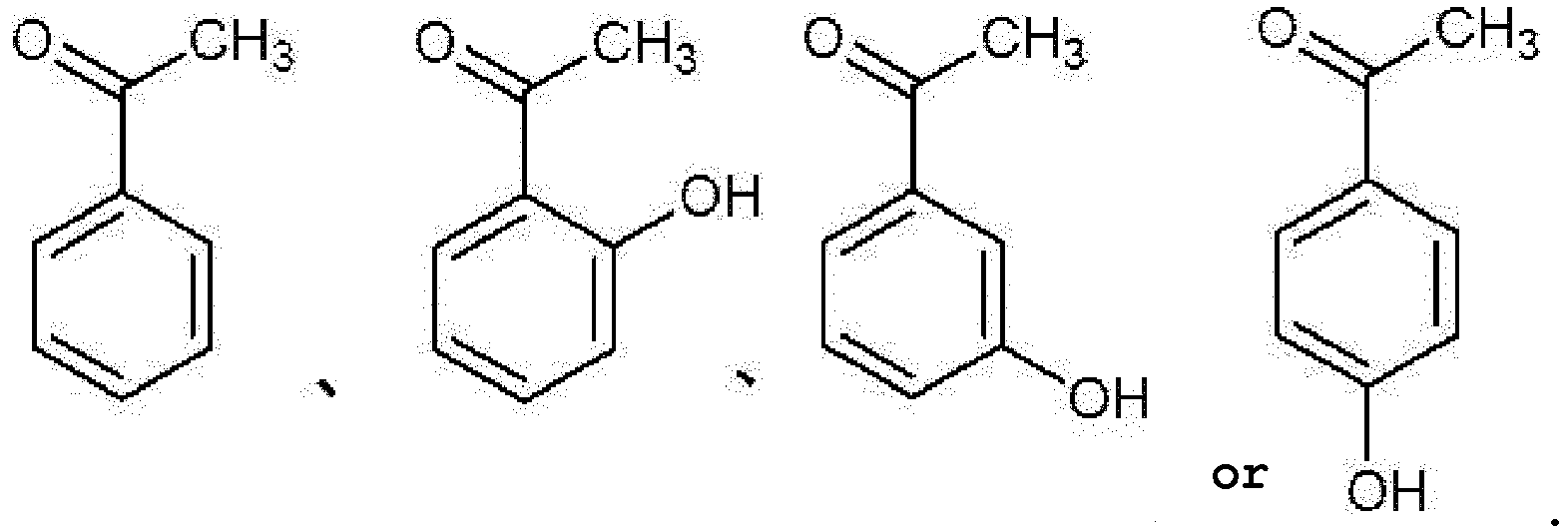
- [7] The composition of any one of [1] - [6], further comprising (C) a diol compound having 2 - 12 carbon atoms.
- [8] The composition of [7], wherein (C) a diol compound having 2 - 12 carbon atoms is one or more compounds selected from the group consisting of a 1,2-diol compound, a 1,3-diol compound and dipropyleneglycol.
- [9] The composition of [7] or [8], wherein (C) a diol compound having 2 - 12 carbon atoms is one or more compounds selected from the group consisting of 1,2-pentanediol, 3-methyl-1,3-butanediol, 1,2-hexanediol, 1,3-butyleneglycol, 1,2-propanediol, 1,3-propanediol, caprylylglycol, glyceryl monocaprate, glyceryl monocaprylate and dipropyleneglycol.
- [10] The composition of [7], wherein (C) a diol compound having 2 - 12 carbon atoms is one or more compounds selected from the group consisting of hexylglycerol and cyclohexylglycerol.
- [11] The composition of any one of [1] - [10], wherein the content of (A) in the composition is 0.001 - 5 wt%.
- [12] The composition of any one of [1] - [11], wherein the content of (B) a compound represented by the formula (II) or a salt thereof in the composition is 0.001 - 1 wt%.
- [13] The composition of any one of [1] - [11], wherein the content of (B) a compound represented by the formula (III) or a salt thereof in the composition is 0.005 - 5 wt%.
- [14] The composition of any one of [7] - [13], wherein the content of (C) in the composition is 0.01 - 15 wt%.
- [15] A cosmetic composition comprising the following (A) and (C) :
- (A) an acylproline represented by the formula (I) or a salt thereof

- (C) a diol compound having 2 - 12 carbon atoms.
- (A) an acylproline represented by the formula (I) or a salt thereof
- [16] The composition of [15], wherein (C) a diol compound having 2 - 12 carbon atoms is one or more compounds selected from the group consisting of hexylglycerol and cyclohexylglycerol.
- [17] The composition of [16], wherein the content of hexylglycerol or cyclohexylglycerol in the composition is 0.01 - 4 wt%.
- [18] A method of preserving cosmetics, comprising a step of adding the following (A) and (B) to cosmetics:
- (A) an acylproline represented by the formula (I) or a salt thereof

- (B) at least one kind selected from the group consisting of a compound represented by the formula (II) or a salt thereof;

a compound represented by the formula (III) or a salt thereof;
- (A) an acylproline represented by the formula (I) or a salt thereof
- [19] The method of [18], further comprising a step of adding (C) a diol compound having 2 - 12 carbon atoms.
- [20] The method of [19], wherein (C) a diol compound having 2 - 12 carbon atoms is one or more compounds selected from the group consisting of hexylglycerol and cyclohexylglycerol.
- [21] A method of preserving cosmetics, comprising a step of adding the following (A) and (C) to cosmetics:
- (A) an acylproline represented by the formula (I) or a salt thereof

- (C) a diol compound having 2 - 12 carbon atoms.
- (A) an acylproline represented by the formula (I) or a salt thereof
- [22] The method of [21], wherein (C) a diol compound having 2 - 12 carbon atoms is one or more compounds selected from the group consisting of hexylglycerol and cyclohexylglycerol.
- According to the present invention, propagation of not only bacterium but also mold and the like can be prevented and cosmetics superior in the preservative quality can be provided.
- According to the present invention, moreover, cosmetics free of or with less peculiar odor or cosmetics imparted with a desired aroma can be provided safely.
- According to the present invention, since an antiseptic effect can be exhibited in any container filled with cosmetics, refillable cosmetics can also be provided.
- In the present invention, acylproline is represented by the formula (I):

- In the formula (I),

- The acyl group represented by R1-CO- is an acyl group induced from a saturated or unsaturated fatty acid having 2 - 23 carbon atoms, namely, an acyl residue of the saturated or unsaturated fatty acid. Examples thereof include acetyl group, isopropanoyl group, propanoyl group, butanoyl group, isobutanoyl group, sec-butanoyl group, tert-butanoyl group, pentanoyl group, sec-pentanoyl group, tert-pentanoyl group, isopentanoyl group, hexanoyl group, heptanoyl group, octanoyl group, 2-ethylhexanoyl group, tert-octanoyl group, nonanoyl group, isononanoyl group, decanoyl group, isodecanoyl group, undecanoyl group, lauroyl group, undecylenoyl group, myristoyl group, palmitoyl group, stearoyl group, behenoyl group and oleoyl group.
- The long chain acyl group represented by R1-CO- may be an acyl group induced from a single composition acid, or an acyl group induced from naturally obtained mixed fatty acid such as coconut oil fatty acid, castor oil fatty acid, olive oil fatty acid, palm oil fatty acid and the like or synthetically obtained fatty acid (including branched fatty acid). One kind of these may be used, or two or more kinds selected from the above-mentioned group may be used in a mixture.
- The acyl group represented by R1-CO- is preferably an acyl group induced from saturated or unsaturated fatty acid having 4 - 18 carbon atoms, more preferably an acyl group induced from saturated or unsaturated fatty acid having 6 - 12 carbon atoms, further preferably an acyl group induced from saturated or unsaturated fatty acid having 8 - 10 carbon atoms, more preferably a decanoyl group.
- Therefore, R1 in the formula is a hydrocarbon group having 1 - 22 carbon atoms. Examples of the "hydrocarbon group" include chain hydrocarbon groups such as an alkyl group, an alkynyl group and the like. A chain hydrocarbon group is preferable, and both straight chain and branched chain can be used. An alkyl group is more preferable, which more preferably has 3 - 17, more preferably 5 - 11, more preferably 7 - 9, carbon atoms.
- Examples of the salt of the compound of the formula (I) include pharmacologically acceptable salts and the like, and include alkali metal salts such as lithium salt, sodium salt, potassium salt and the like; alkaline earth metal salts such as calcium salt, magnesium salt and the like; ammonium salt; basic organic substance salt and the like. Of these, sodium salt, potassium salt and ammonium salt are preferable, sodium salt and potassium salt are more preferable, and sodium salt is further preferable, from the aspect of solubility.
- The compound represented by the formula (I) may also be a hydrate or a non-hydrate, or a non-solvate or solvate.
- The production method of acyl proline of the present invention is not particularly limited, and acyl proline can be easily produced by combining known methods. Specifically, acyl proline can be prepared from proline and acid chloride using the Schotten-Baumann method including simultaneous dropwise addition of acid chloride and a base such as sodium hydroxide and the like. The proline may be an L form, a D form or a mixture thereof, preferably an L form.
- The content of acylproline in the cosmetic composition of the present invention is generally not less than 0.001 wt%, preferably not less than 0.01 wt%, more preferably not less than 0.05 wt%. On the other hand, from the aspects of the texture during application of the composition, it is generally not more than 5 wt%, preferably not more than 4 wt%, more preferably not more than 3 wt%, further preferably not more than 2 wt%, particularly preferably not more than 1.5 wt%, especially preferably not more than 1 wt%, most preferably not more than 0.5 wt%.
- In the present specification, "antiseptic or preservative" means prevention of invasion, development and growth of microorganisms, thereby keeping decay and fermentation from occurring. Therefore, an "antiseptic effect" means an effect of suppressing the growth of fungi such as mold and the like and bacteria to prevent denaturation of cosmetics and increase the preservative quality thereof.
-

a compound represented by the following formula (III) or a salt thereof
- In the formula (II), R2 is a hydrocarbon group having 5 - 11 carbon atoms, or a straight chain or branched chain hydrocarbon group. For example, R2 is an alkyl group having 5 - 11 carbon atoms, an alkenyl group having 5 - 11 carbon atoms, an alkynyl group having 5 - 11 carbon atoms or an alkoxy group having 5 - 11 carbon atoms.
- The "alkyl group having 5 - 11 carbon atoms" may be a straight chain or branched chain and, for example, pentyl, isopentyl, neopentyl, 1-ethylpropyl, hexyl, isohexyl, 1,1-dimethylbutyl, 2,2-dimethylbutyl, 3,3-dimethylbutyl, 2-ethylbutyl, heptyl, octyl, nonyl, decyl, undecyl and the like can be mentioned. Of these, an alkyl group having 6 - 10 carbon atoms is preferable, and an alkyl group having 8 carbon atoms is more preferable.
- The "alkenyl group having 5 - 11 carbon atoms" may be a straight chain or branched chain and, for example, 1-pentenyl, 2-pentenyl, 3-pentenyl, 4-pentenyl, 1-hexenyl, 2-hexenyl, 3-hexenyl, 5-hexenyl, 1-heptenyl, 1-octenyl, 1-nonenyl, 1-decenyl, 1-undecenyl and the like can be mentioned. Of these, an alkenyl group having 6 - 10 carbon atoms is preferable, and an alkenyl group having 8 carbon atoms is more preferable.
- The "alkynyl group having 5 - 11 carbon atoms" may be straight chain or branched chain, for example, 1-pentynyl, 2-pentynyl, 3-pentynyl, 4-pentynyl, 4-methyl-3-pentynyl, 1-hexynyl, 3-hexynyl, 5-hexynyl, 1-heptynyl, 1-octynyl, 1-nonynyl, 1-decynyl, 1-undecynyl and the like can be mentioned. Of these, an alkynyl group having 6 - 10 carbon atoms is preferable, and an alkynyl group having 8 carbon atoms is more preferable.
- Examples of the "alkoxy group having 5 - 11 carbon atoms" include pentyloxy, hexyloxy, heptyloxy, octyloxy, nonyloxy, decyloxy, and undecyloxy. Of these, an alkoxy group having 6 - 10 carbon atoms is preferable, and an alkoxy group having 8 carbon atoms is more preferable.
- As a compound represented by the formula (II), octanohydroxamic acid, heptanohydroxamic acid, or hexanohydroxamic acid is preferable, and octanohydroxamic acid is more preferable.
- Examples of the salt of the compound of the formula (II) include pharmacologically acceptable salts and the like, and include alkali metal salts such as lithium salt, sodium salt, potassium salt and the like; alkaline earth metal salts such as calcium salt, magnesium salt and the like; ammonium salt; basic organic substance salt and the like. Of these, sodium salt, potassium salt and ammonium salt are preferable, sodium salt and potassium salt are more preferable, and sodium salt is further preferable, from the aspect of broad utility.
- The compound represented by the formula (II) may also be a hydrate or a non-hydrate, or a non-solvate or solvate.
- The compound represented by the formula (II) or a salt thereof to be used may be any of one obtained by a chemical synthesis method, a natural one derived from animal or plant, and one obtained by a fermentation method or gene recombination method. For example, it can be synthesized by reacting the corresponding alkylhydroxylamine with an active carbonyl compound such as active ester, acid chloride and the like.
- The content of the compound represented by the formula (II) in the cosmetic composition of the present invention is generally not less than 0.001 wt%, preferably not less than 0.005 wt%, more preferably not less than 0.01 wt%, from the aspects of antiseptic effect. It is generally not more than 1 wt%, preferably not more than 0.5 wt%, more preferably not more than 0.1 wt%.
- In the formula (III), R3 and R4 are each independently hydrogen, a hydroxy group or -OCH3.
- Of the compounds represented by the formula (III),
- (III-a) acetophenone

- (III-b) 2-hydroxyacetophenone

- (III-c) 3-hydroxyacetophenone

- (III-d) 4-hydroxyacetophenone

- Examples of the salt of the compound of the formula (I) include pharmacologically acceptable salts and the like, and include alkali metal salts such as lithium salt, sodium salt, potassium salt and the like; alkaline earth metal salts such as calcium salt, magnesium salt and the like; ammonium salt; basic organic substance salt and the like. Of these, sodium salt, potassium salt and ammonium salt are preferable, sodium salt and potassium salt are more preferable, and sodium salt is further preferable, from the aspect of broad utility.
- The compound represented by the formula (III) may also be a hydrate or a non-hydrate, or a non-solvate or solvate.
- The compound represented by the formula (III) or a salt thereof to be used may be any of one obtained by a chemical synthesis method, a natural one derived from animal or plant, and one obtained by a fermentation method or gene recombination method.
- The content of the compound represented by the formula (III) in the cosmetic composition of the present invention is generally not less than 0.005 wt%, preferably not less than 0.01 wt%, more preferably not less than 0.05 wt%. From the aspects of texture, stability and peculiar odor of the composition, it is generally not more than 5 wt%, preferably not more than 2 wt%, more preferably not more than 1 wt%.
- From the aspects of the antiseptic effect of the composition, the content of (B-1) is generally 0.001 - 50 parts by weight, preferably 0.005 - 20 parts by weight, more preferably 0.01 - 5 parts by weight, per 1 part by weight of (A).
- From the aspects of the antiseptic effect of the composition, the content of (B-2) is generally 0.005 - 50 parts by weight, preferably 0.01 - 20 parts by weight, more preferably 0.05 - 10 parts by weight, per 1 part by weight of (A).
- By a combined use of the above-mentioned (A) and (B), with (C) a diol compound having 2 - 12 carbon atoms, the antiseptic effect can be further enhanced, and cosmetics superior in the stability and sense of use of the cosmetics can be provided.
- In the present invention, a diol compound having 2 - 12 carbon atoms refers to a compound having a structure wherein two carbon atoms of a chain or cyclic aliphatic hydrocarbon having 2 - 12 carbon atoms are each substituted by one hydroxy group. As a diol compound having 2 - 12 carbon atoms, a 1,2-diol compound, a 1,3-diol compound, a 1,4-diol compound, a 1,5-diol compound, a 1,6-diol compound, dipropyleneglycol and the like can be mentioned. Of these, a 1,2-diol compound, a 1,3-diol compound and dipropyleneglycol are preferable.
- Specifically, 1,2-pentanediol, 3-methyl-1,3-butanediol, 2-methyl-1,3-propanediol, 1,4-butanediol, 2,4-hexanediol, 1,2-hexanediol, 1,3-butyleneglycol, 1,2-propanediol, 1,3-propanediol, caprylylglycol, glyceryl monocaprate, glyceryl monocaprylate, dipropyleneglycol and the like can be mentioned, 1,2-propanediol, 1,3-propanediol, glyceryl monocaprylate, 1,3-butyleneglycol, caprylylglycol, dipropyleneglycol, 1,2-pentanediol, and 1,2-hexanediol are preferable.
- Alternatively, 1,2-pentanediol, 3-methyl-1,3-butanediol, 2-methyl-1,3-propanediol, 1,4-butanediol, 2,4-hexanediol, 1,2-hexanediol, 1,3-butyleneglycol, 1,2-propanediol, 1,3-propanediol, caprylylglycol, glyceryl monocaprate, glyceryl monocaprylate, dipropyleneglycol, decylene glycol and the like can be mentioned, and 1,2-propanediol, 1,3-propanediol, glyceryl monocaprylate, 1,3-butyleneglycol, caprylylglycol, dipropyleneglycol, 1,2-pentanediol, 1,2-hexanediol, and decylene glycol are preferable.
- In addition, hexylglycerol and cyclohexylglycerol can be mentioned as a preferable diol compound.
- Hexylglycerol and cyclohexylglycerol may be any of a commercially available product, one obtained by a chemical synthesis method, a natural one derived from animal or plant, and one obtained by a fermentation method or gene recombination method.
- The content of hexylglycerol or cyclohexylglycerol or a mixture thereof in the cosmetic composition of the present invention is generally not less than 0.01 wt%, preferably not less than 0.05 wt%, more preferably not less than 0.09 wt%. From the aspects of texture, and stability of the composition, it is generally not more than 4 wt%, preferably not more than 2 wt%, more preferably not more than 1.5 wt%. When hexylglycerol and cyclohexylglycerol are used in combination, the total amount only needs to fall within the above-mentioned range. While the weight ratio for combined use is not particularly limited, hexylglycerol:cyclohexylglycerol is generally 1:99 - 20:1, preferably 1:40 - 10:1.
- From the aspects of sense of use and influence on the formulation, the content of (C) in the composition of the present invention is generally not less than 0.01 wt%, preferably not less than 0.05 wt%, more preferably not less than 0.1 wt%. It is generally not more than 15 wt%, preferably not more than 10 wt%, more preferably not more than 8 wt%.
- From the aspects of the antiseptic effect, the content of (C) is generally 0.01 - 500 parts by weight, preferably 0.1 - 100 parts by weight, more preferably 0.2 - 20 parts by weight, per 1 part by weight of (A).
- Preferably, from the aspects of the antiseptic effect,
the content of (A) is 0.001 - 5 parts by weight, the content of (B-1) is 0.001 - 1 wt% and/or the content of (B-2) is 0.005 - 5 wt%, and the content of (C) is 0.01 - 15 wt%, in 100 wt% of the cosmetic composition of the present invention. - More preferably, from the similar aspects, the content of (A) is 0.05 - 2 parts by weight, the content of (B-1) is 0.01 - 0.1 wt% and/or the content of (B-2) is 0.05 - 1 wt%, and the content of (C) is 0.1 - 8 wt%, in 100 wt% of the cosmetic composition of the present invention.
- Preferably, from the similar aspects, the content of (A) is 0.001 - 5 parts by weight, the content of (B-1) is 0.001 - 1 wt% and/or the content of (B-2) is 0.005 - 5 wt%, and the content of hexylglycerol and/or cyclohexylglycerol is 0.01 - 4 wt%, in 100 wt% of the cosmetic composition of the present invention.
- An embodiment of a cosmetic composition comprising the above-mentioned (A) and (C) and a diol compound having 2 - 12 carbon atoms is also encompassed in the present invention.
- As (C) a diol compound having 2 - 12 carbon atoms, hexylglycerol and cyclohexylglycerol are preferable.
- Also, (C) a diol compound having 2 - 12 carbon atoms may be a combination of at least one compound selected from the group consisting of hexylglycerol and cyclohexylglycerol, and a diol compound having 2 - 12 carbon atoms other than hexylglycerol and cyclohexylglycerol (abbreviated as other compound (C)).
- Examples of other compound (C) include the compounds described in the above-mentioned (C), and preferred are, for example, 1,2-pentanediol, 3-methyl-1,3-butanediol, 1,2-hexanediol, 1,3-butyleneglycol, 1,2-propanediol, 1,3-propanediol, caprylylglycol, glyceryl monocaprate, glyceryl monocaprylate, dipropyleneglycol and the like.
- Specific examples of other compound (C) include 1,2-pentanediol, 3-methyl-1,3-butanediol, 2-methyl-1,3-propanediol, 1,4-butanediol, 2,4-hexanediol, 1,2-hexanediol, 1,3-butyleneglycol, 1,2-propanediol, 1,3-propanediol, caprylylglycol, glyceryl monocaprate, glyceryl monocaprylate, dipropyleneglycol, decylene glycol and the like, and 1,2-propanediol, 1,3-propanediol, glyceryl monocaprylate, 1,3-butyleneglycol, caprylylglycol, dipropyleneglycol, 1,2-pentanediol, 1,2-hexanediol, and decylene glycol are preferable.
- The content of hexylglycerol or cyclohexylglycerol or a mixture thereof in the composition of the present invention is generally not less than 0.01 wt%, preferably not less than 0.05 wt%, more preferably not less than 0.09 wt%. From the aspects of texture and stability of the composition, it is generally not more than 4 wt%, preferably not more than 2 wt%, more preferably not more than 1.5 wt%.
- From the aspects of the antiseptic effect of the composition, the content of hexylglycerol and/or cyclohexylglycerol is generally 0.01 - 50 parts by weight, preferably 0.05 - 20 parts by weight, more preferably 0.1 - 10 parts by weight, per 1 part by weight of (A).
- From the aspects of the antiseptic effect of the composition, the content of other compound (C) is generally 0.01 - 500 parts by weight, preferably 0.1 - 100 parts by weight, more preferably 0.2 - 20 parts by weight, per 1 part by weight of (A).
- Preferably, from the similar aspects, the content of (A) is 0.001 - 5 parts by weight and the content of hexylglycerol and/or cyclohexylglycerol is 0.01 - 4 wt%, in 100 wt% of the cosmetic composition of the present invention.
- More preferably, from the similar aspects, the content of (A) is 0.001 - 5 parts by weight, the content of hexylglycerol and/or cyclohexylglycerol is 0.09 - 1.5 wt%, and the content of other compound (C) is 0.05 - 8 wt%, in 100 wt% of the cosmetic composition of the present invention.
- The pH of the composition of the present invention is preferably not less than 3.0, more preferably not less than 4.0, particularly preferably not less than 4.5, from the aspects of suppression of damage on the skin and hair, stability of formulation, and foaming in the case of cleaning agents. In addition, the pH is preferably not more than 10.0, more preferably not more than 8.0, particularly preferably not more than 7.5.
- The form of the cosmetic composition of the present invention is not particularly limited, and may take any form such as liquid, emulsion, paste, gel, solid, powder and the like. Of these, liquid, emulsion, paste or gel is preferable.
- Examples of the cosmetic composition of the present invention include skin cosmetics such as facial cleanser, skin lotion, skin milk, cream, gel, serum, facial mask, mask, soap, body shampoo, face powder, foundation, lip rouge, blush, eyeliner, mascara, eye shadow, eyebrow pencil and the like, and hair cosmetics such as shampoo, rinse, conditioner, hair styling agent, hair treatment and the like. While the cosmetic composition can be formulated into any cosmetic, skin cosmetics such as facial cleanser, skin lotion, skin milk, cream, gel, serum, facial mask, mask, body shampoo and the like, or hair cosmetics such as shampoo, rinse, conditioner, hair treatment and the like are preferable. A skin cosmetic required to provide moisturizing is more preferable.
- While the cosmetic composition of the present invention can be used as it is as a cosmetic, or may contain a component that can be generally added to cosmetic agents as long as the effect of the present invention is not inhibited. Specific examples thereof include oil solutions, chelating agents, surfactants, powders, amino acids, polyamino acids and a salt thereof, sugar alcohol and alkylene oxide adducts thereof, lower alcohols, animal and plant extracts, nucleic acids, vitamins, enzymes, anti-inflammatory agents, antimicrobial agents, preservatives, antioxidants, moisturizer, thickener, viscosity modifier, UV absorbers, adiaphoretics, pigments, dyes, flavors, pH adjusters, pearly sheen agents, wetting agents and the like. These are mere examples and components other than these can be added.
- Examples of the oil solution include fatty acids such as isostearic acid, undecylenoic acid, oleic acid and the like; esters such as myristyl myristate, hexyl laurate, decyl oleate, isopropyl myristate, hexyldecyl dimethyl octanoate, glycerine monostearate, diethyl phthalate, ethylene glycol monostearate, cetyl octanoate, octyl oxystearate, benzoic acid alkyl ester and the like; hydrocarbons such as liquid paraffin, polyisobutene, petrolatum, squalane and the like; wax such as lanolin, reduced lanolin, carnauba wax and the like; fats and oils such as silicone oil, mink oil, cacao oil, coconut oil, palm kernel oil, camellia oil, sesame oil, castor oil, olive oil, jojoba oil and the like; cooligomers of ethylene and α-olefin, and the like.
- A particular example of the silicone oil is silicone oil selected from ether-modified silicone such as methylpolysiloxane, polymeric methylpolysiloxane, polyoxyethylene/methylpolysiloxane copolymer, polyoxypropylene/methylpolysiloxane copolymer and poly(oxyethylene, oxypropylene)/methylpolysiloxane copolymer and the like, stearoxymethylpolysiloxane, stearoxytrimethylsilane, methylhydrogen polysiloxane, cyclic silicone such as decamethylcyclopentasiloxane, octamethylcyclotetrasiloxane, tetrahydrotetramethylcyclotetrasiloxane, methylcyclopolysiloxane, dodecamethylcyclohexasiloxane and the like; methylphenylpolysiloxane, trimethylsiloxysilicate, amino-modified silicone such as aminoethylaminopropylsiloxane/dimethylsiloxane copolymer and the like, silanol-modified polysiloxane, alkoxy-modified polysiloxane, fatty acid-modified polysiloxane, fluorine-modified polysiloxane, epoxy-modified polysiloxane, alkoxy-modified polysiloxane perfluoropolyether, polyvinyl acetate dimethyl polysiloxane, and mixtures thereof.
- While the chelating agent is not particularly limited, preferable examples thereof include a chelating agent selected from triethylenetetramine, 2-thenoyltrifluoroacetone, thioglycolic acid, tartaric acid, succinic acid, 8-quinolinol, pyridine-2,6-dicarboxylic acid, pyridine, 1,10-phenanthroline, lactic acid, 8-hydroxyquinoline-5-sulfonic acid, glycine, 2,2'-pyridylethylenediamine, aurintricarboxylic acid, xylenol orange, 5-sulfosalicylic acid, salicylic acid, pyrocatechol-3,5-disulfonate, 4,5-dihydroxybenzene-1,3-disulfonic acid, 1,2-diaminocyclohexane-N,N,N',N'-tetraacetic acid, citric acid, oxalate, nitrilotriacetic acid, ethylenediamine-N,N,N',N'-tetraacetic acid (EDTA), acetylacetone and a salt thereof, and mixtures thereof and the like.
- Examples of the surfactant include anionic surfactants such as N-long chain acylamino acid salt (N-long chain acyl acidic amino acid salt, N-long chain acyl neutral amino acid salt and the like), N-long chain fatty acid acyl-N-methyl taurate, alkyl sulfate and an alkylene oxide adduct thereof, fatty acid amide ether sulfate, metal salt and weak base salt of fatty acid, sulfosuccinate surfactant, alkylphosphate and an alkylene oxide adduct thereof, alkyl ether carboxylic acid and the like; non-ionic surfactants such as ether-type surfactant (glycerine ether and an alkylene oxide adduct thereof and the like), ester-type surfactant (glycerine ester and an alkylene oxide adduct thereof and the like), ether ester-type surfactant (sorbitan ester and an alkylene oxide adduct thereof and the like), ester-type surfactant (polyoxyalkylene fatty acid ester, glycerine ester, fatty acid polyglycerine ester, sorbitan ester, sucrose fatty acid ester and the like), alkylglucosides, hydrogenated castor oil pyroglutamic acid diester and an ethylene oxide adduct thereof, nitrogen-containing non-ionic surfactants (fatty acid alkanolamide and the like), cationic surfactants such as aliphatic amine salt (alkylammonium chloride, dialkylammonium chloride and the like), quaternary ammonium salt thereof, aromatic quaternary ammonium salt (a benzalkonium salt and the like), fatty acid acyl arginine ester and the like; amphoteric surfactant such as betaine-type surfactant (carboxybetaine and the like), aminocarboxylic acid-type surfactant, imidazoline-type surfactant and the like, and the like.
- Examples of the powder include resin powder such as nylon beads, silicone beads and the like, nylon powder, metal fatty acid soap, yellow iron oxide, red iron oxide, black iron oxide, chromium oxide, cobalt oxide, carbon black, ultramarine, iron blue, zinc oxide, titanium oxide, zirconium oxide, silicon oxide, aluminum oxide, cerium oxide, titanated mica, boron nitride, barium sulfate, calcium carbonate, magnesium carbonate, aluminum silicate, magnesium silicate, silicon carbide, dye, lake, sericite, mica, talc, kaolin, plate-shaped barium sulfate, butterfly-shaped barium sulfate, fine particles of titanium oxide, fine particles of zinc oxide, fine particles of iron oxide, acyl amino acid such as acyl lysine, acylglutamic acid, acylarginine, acylglycine and the like and the like. Furthermore, surface treatment such as silicone treatment, fluorine compound treatment, silane coupling agent treatment, silane treatment, organic titanate treatment, acylated lysine treatment, fatty acid treatment, metallic soap treatment, oil solution treatment, amino acid treatment and the like may be applied.
- Examples of the amino acid include glycine, alanine, serine, threonine, arginine, glutamic acid, aspartic acid, isoleucine, leucine, valine and the like.
- Examples of the polyamino acid and a salt thereof include polyglutamic acid, polyaspartic acid and the like.
- Examples of the sugar alcohol and an alkylene oxide adduct thereof include mannitol, sorbitol and the like.
- Examples of the lower alcohol include ethanol, propanol and the like.
- Examples of the animal and plant extracts include lecithin, gelatin and the like; examples of the nucleic acid include disodium 5'-inosinate, disodium 5'-uridylate and the like; examples of the vitamins include vitamin A, C etc. and a derivative thereof and the like; examples of the enzyme include papain, protease and the like; examples of the anti-inflammatory agent include potassium glycyrrhizinate and the like; examples of the antimicrobial agent include triclosan, trichloro calban, octopirox, zinc pyrithione and the like; examples of the preservative include methylparaben, butylparaben and the like; examples of the antioxidant include dibutylhydroxytoluene and the like; examples of the moisturizer include isopentyldiol, Luvitol and the like; examples of the thickener include hydroxypropyl starch phosphoric acid and the like; examples of the viscosity modifier include polyoxyalkylenesorbitan ester, polyoxyethyleneglycol distearate, ethanol and the like; examples of the UV absorber include octyl methoxycinnamate and the like; examples of the adiaphoretic include aluminum oxide and the like; examples of the pigment include titanium dioxide and the like; examples of the dye include tar dye, inorganic dye, dye derived from natural-base and the like; flavor; examples of the pH adjuster include citric acid, trisodium citrate, sodium carbonate, phosphoric acid and the like; examples of the pearly sheen agent include ethyleneglycol distearate and the like; and examples of the wetting agent include propyleneglycol and the like.
- The production method of the cosmetic composition of the present invention is not particularly limited, and the cosmetic composition can be produced by a conventional method by selecting and adding essential components (A) and (B), further (C), and various components generally necessary for producing a cosmetic composition (the above-mentioned other components, water etc.) as appropriate.
- A method of preserving cosmetics comprising a step of adding the above-mentioned (A) and (B) to cosmetics is also the second embodiment of the present invention. The order of addition of (A) and (B) may be any and either one may be added first or both of them may be added simultaneously. The method may further comprise a step of adding (C). The definition of each is as mentioned above. For example, the method includes a step of adding 0.001 - 5 wt% of (A), 0.001 - 1 wt% of (B-1) and/or 0.005 - 5 wt% of (B-2), and 0.01 - 15 wt% of (C) to cosmetics.
- Alternatively, the method includes a step of adding 0.001 - 5 wt% of (A), 0.001 - 1 wt% of (B-1) and/or 0.005 - 5 wt% of (B-2), and 0.01 - 4 wt% of hexylglycerol and/or cyclohexylglycerol to cosmetics.
- A preservative containing the above-mentioned (A) and (B) is also another embodiment of the present invention. For example, the content of (B-1) is 0.001 - 50 parts by weight, preferably 0.005 - 20 parts by weight, more preferably 0.01 - 5 parts by weight, per 1 part by weight of (A).
- Similarly, the content of (B-2) in the preservative is generally 0.005 - 50 parts by weight, preferably 0.01 - 20 parts by weight, more preferably 0.05 - 10 parts by weight, per 1 part by weight of (A).
- The preservative may further contain (C). The content of (C) in the preservative is generally 0.01 - 500 parts by weight, preferably 0.1 - 100 parts by weight, more preferably 0.2 - 20 parts by weight, per 1 part by weight of (A).
- Similarly, the content of hexylglycerol and/or cyclohexylglycerol in the preservative is generally 0.01 - 50 parts by weight, preferably 0.05 - 20 parts by weight, more preferably 0.1 - 10 parts by weight, per 1 part by weight of (A).
- A method of preserving cosmetics comprising a step of adding the above-mentioned (A) and (C) to cosmetics is also another embodiment of the present invention. The order of addition of (A) and (C) may be any and either one may be added first or both of them may be added simultaneously. As (C), hexylglycerol and/or cyclohexylglycerol are/is preferable. Each definition is as described above. For example, the method includes a step of adding 0.001 - 5 wt% of (A) and 0.01 - 4 wt% of hexylglycerol and/or cyclohexylglycerol to cosmetics.
- A method of preserving cosmetics comprising a step of adding 0.001 - 5 wt% of (A), 0.01 - 4 wt% of hexylglycerol and/or cyclohexylglycerol and 0.01 - 15 wt% of other compound (C) to cosmetics is also encompassed in the embodiment of the present invention.
- A preservative comprising the above-mentioned (A) and (C) is also another embodiment of the present invention. For example, the content of hexylglycerol and/or cyclohexylglycerol is 0.01 - 50 parts by weight, preferably 0.05 - 20 parts by weight, more preferably 0.1 - 10 parts by weight, per 1 part by weight of (A). The preservative may further contain other compound (C). The content of (C) in the preservative is generally 0.01 - 500 parts by weight, preferably 0.1 - 100 parts by weight, more preferably 0.2 - 20 parts by weight, per 1 part by weight of (A). Each definition is as described above.
- The present invention is explained in more detail in the following by referring to Examples, which are not to be construed as limitative.
- Proline (manufactured by Ajinomoto Co., Inc.) (34.54 g) was dissolved in water (100 g), decanoyl chloride (manufactured by Tokyo Chemical Industry Co., Ltd.) (52.01 g) and 25% aqueous sodium hydroxide solution were added while adjusting to pH 12. The mixture was neutralized with 75% sulfuric acid, the aqueous layer was removed, water and ethyl acetate were added, and the aqueous layer was removed. Ethyl acetate was evaporated under reduced pressure to give decanoylproline (68.12 g).
- Decanoylproline obtained in Synthetic Example 1 was suspended in a suitable amount of water and neutralized to pH 5 with sodium hydroxide to give a decanoyl prolinate sodium salt.
- The formulation was prepared based on a known method. That is, each component shown in Table 1 except citric acid was stirred until uniformity while heating at 70°C, and the mixture was cooled to near room temperature, adjusted to pH 5.5 with citric acid and finally adjusted with the amount of water to 100%.
- A preservative effectiveness test was performed based on "the Japanese Pharmacopoeia, supplement of the 14th edition, 5. preservatives effectiveness test".
-
- E.c; Escherichia coli NBRC 3972
- P.a; Pseudomonas aeruginosa NBRC 13275
- S.a; Staphylococcus aureus NBRC 13276
- C.a; Candida albicans NBRC 1594
- A.b; Aspergillus brasiliensis NBRC 9455
- Microorganisms precultivated in SCD agar medium at 30°C for 20 hr were scraped with a platinum loop, suspended in sterile saline, and adjusted to about 108 cells/mL to give a test microorganism culture.
- Microorganisms precultivated in potato dextrose agar medium at 25°C for 48 hr were scraped with a platinum loop, suspended in sterile saline, and adjusted to about 108 cells/mL to give a test microorganism culture.
- Microorganisms precultivated in potato dextrose agar medium at 25°C for 7 days were scraped with a platinum loop, suspended in 0.05% polysorbate 80-added sterile saline, and adjusted to about 107 cells/mL to give a test microorganism culture.
- A sample (20 g) per one kind of a test microorganism was placed in a sterile vial container, and 0.2 mL of the test microorganism culture was inoculated. Each was preserved at 25°C, and viable counts were measured on day 7, 14, 21, 28.
- Using the following medium, the viable counts were measured by a pour method.
- bacterium: SCDLP agar medium
- fungi: GPLP agar medium
- The evaluation was performed according to the following interpretation criteria 1.
- bacterium and Candida
- ⊙: Viable counts decrease to less than 10 in the test period on day 7 after inoculation, and stay in that level until completion of 28 day test period.
- ×: failure to meet criteria of ⊙
-
- ⊙: Viable counts thereof decrease to not more than 0.1% of the inoculum counts by day 7 after inoculation, and stay at a level equal to or not more than that until completion of 28 day test period.
- ○: Viable counts thereof decrease to not more than 1% of the inoculum counts by day 7 after inoculation, and stay at a level equal to or not more than that until completion of 28 day test period.
- Δ: Viable counts thereof decrease to not more than 10% of the inoculum counts by day 7 after inoculation, and stay at a level equal to or not more than that until completion of 28 day test period.
- ×: failure to meet criteria of Δ.
- Formulations of Examples 1 and 2 were confirmed to have an antimicrobial action on bacterium, Candida and Aspergillus brasiliensis.
- The formulation was prepared based on a known method. That is, each component shown in Table 2 except NaOH was stirred until uniformity while heating at 70°C, and the mixture was cooled to near room temperature, adjusted to pH 5.4 with NaOH and finally adjusted with the amount of water to 100%.
- Interpreted by the same method as in Experimental Example 1 and using interpretation criteria 1. Table 2 shows the results of Aspergillus brasiliensis. They were interpreted as ⊙ for all three kinds of the aforementioned bacterium and Candida. Formulations of Examples 3 and 4 were confirmed to have an antimicrobial action on bacterium and Aspergillus brasiliensis.
Table 2Table 2 Antifungal evaluation of liquid cleansing formulation Ex. 3 Ex. 4 Comp. Ex. 9 Comp. Ex. 10 Comp. Ex. 11 Comp. Ex. 12 Comp. Ex. 13 Comp. Ex. 14 Comp. Ex. 15 water 43.700 43.700 43.700 43.700 43.700 43.700 43.700 43.700 43.700 cocoylglutamic acid 2Na, cocoylglutamic acid Na (total 25%) 10.000 10.000 10.000 10.000 10.000 10.000 10.000 10.000 10.000 cocoglucoside (52%) 6.000 6.000 6.000 6.000 6.000 6.000 6.000 6.000 6.000 arginine 0.300 0.300 0.300 0.300 0.300 0.300 0.300 0.300 0.300 water 25.000 25.000 25.000 25.000 25.000 25.000 25.000 25.000 25.000 component (A) decanoylproline Na 1.000 1.000 - 1.000 2.000 - - - 1.000 component (B) caprylhydroxamic acid 0.016 0.016 - - - 0.016 0.016 0.080 - component (C) propanediol - 0.184 - - - - 0.184 0.920 0.184 component (C) glyceryl caprylate 2.000 2.000 2.000 2.000 2.000 2.000 2.000 2.000 2.000 20% aqueous citric acid solution 3.000 3.000 3.000 3.000 3.000 3.000 3.000 3.000 3.000 3%NaOH pH 5.4 pH 5.4 pH 5.4 pH 5.4 pH 5.4 pH 5.4 pH 5.4 pH 5.4 pH 5.4 water balance balance balance balance balance balance balance balance balance total 100.000 100.000 100.000 100.000 100.000 100.000 100.000 100.000 100.000 results A.b (Aspergillus brasiliensis) ○ ○ × Δ Δ Δ Δ Δ Δ - The components of (I) described in Table 3 and Table 4 were dissolved by stirring with heating and components (II), (A), (B), after preliminary mixing with heating, were added to allow for emulsification. The mixture was allowed to cool by stirring, and adjusted to pH 5.5 or pH 6.8 with 3% aqueous sodium hydroxide or citric acid solution. The prepared compositions were preserved at room temperature.
- The antiseptic property was evaluated according to the interpretation criteria 1. The results are shown in Table 3. Formulations of Examples 5 and 6 were confirmed to have an antimicrobial action on bacterium, Candida and Aspergillus brasiliensis. According to the sensory evaluation, a peculiar odor was confirmed with cream containing not less than 0.3% of hydroxyacetophenone; however, the peculiar odor was suppressed and was not felt when combined with decanoylproline.
Table 3 Antiseptic property evaluation of cream formulation Ex. 5 Ex. 6 Comp. Ex. 16 Comp. Ex. 17 Comp. Ex. 18 Comp. Ex. 19 Comp. Ex. 20 Comp. Ex. 21 Comp. Ex. 22 Comp. Ex. 23 component (A) decanoylproline Na 0.5 0.5 - 0.5 2.0 0.5 - - - - component (B) hydroxyacetophenone 0.3 0.3 - - - - 0.3 0.5 0.3 0.5 I squalane 5.0 5.0 5.0 5.0 5.0 5.0 5.0 5.0 5.0 5.0 jojoba oil 5.0 5.0 5.0 5.0 5.0 5.0 5.0 5.0 5.0 5.0 macadamia nut oil 5.0 5.0 5.0 5.0 5.0 5.0 5.0 5.0 5.0 5.0 tri(capric acid/caprylic acid) glyceryl 5.0 5.0 5.0 5.0 5.0 5.0 5.0 5.0 5.0 5.0 lauroylglutamic acid di(phytosteryl/ octvldodecvl) 1.0 1.0 1.0 1.0 1.0 1.0 1.0 1.0 1.0 1.0 isostearyl hydroxystearate 2.0 2.0 2.0 2.0 2.0 2.0 2.0 2.0 2.0 2.0 shea butter 2.0 2.0 2.0 2.0 2.0 2.0 2.0 2.0 2.0 2.0 stearyl alcohol 3.8 3.8 3.8 3.8 3.8 3.8 3.8 3.8 3.8 3.8 Carnauba wax 0.1 0.1 0.1 0.1 0.1 0.1 0.1 0.1 0.1 0.1 glyceryl stearate 2.9 2.9 2.9 2.9 2.9 2.9 2.9 2.9 2.9 2.9 II xanthan gum 0.2 0.2 0.2 0.2 0.2 0.2 0.2 0.2 0.2 0.2 water balance balance balance balance balance balance balance balance balance balance sucrose palmitate 0.4 0.4 0.4 0.4 0.4 0.4 0.4 0.4 0.4 0.4 stearoylglutamic acid Na 0.2 0.2 0.2 0.2 0.2 0.2 0.2 0.2 0.2 0.2 citric acid Na 0.2 0.2 0.2 0.2 0.2 0.2 0.2 0.2 0.2 0.2 citric acid or aqueous sodium hydroxide solution to pH 5.5 to pH 6.8 to pH 5.5 to pH 5.5 to pH 5.5 to pH 6.8 to pH 5.5 to pH 5.5 to pH 6.8 to pH 6.8 total (%) 100.00 100.00 100.00 100.00 100.00 100.00 100.00 100.00 100.00 100.00 results E.c (Escherichia coli) ⊙ ⊙ × ⊙ ⊙ ⊙ × × × × P.a (Pseudomonas aeruginosa) ⊙ ⊙ × × × × ⊙ ⊙ ⊙ ⊙ S.a (Staphylococcus aureus) ⊙ ⊙ × ⊙ ⊙ ⊙ × × × × C.a (Candida albicans) ⊙ ⊙ × × ⊙ × × × × × A.b (Aspergillus brasiliensis) ⊙ ⊙ × Δ ○ Δ × ⊙ × ⊙ - Aspergillus brasiliensis was interpreted according to the interpretation criteria 1. The results are shown in Table 4. Example 7 was confirmed to have an extremely superior antimicrobial action. According to the sensory evaluation, a peculiar odor was confirmed with cream containing 0.2% of hydroxyacetophenone; however, the peculiar odor was suppressed when combined with decanoylproline.
[Table 4]Table 4 Antiseptic property evaluation of cream formulation Ex. 7 Comp. Ex. 24 Comp. Ex. 25 component (A) decanoylproline Na 0.5 - - component (B) acetophenone 0.2 0.2 0.5 I squalane 5.0 5.0 5.0 jojoba oil 5.0 5.0 5.0 macadamia nut oil 5.0 5.0 5.0 tri(capric acid/caprylic acid)glyceryl 5.0 5.0 5.0 lauroylglutamic acid di(phytosteryl/octyldodecyl) 1.0 1.0 1.0 isostearyl hydroxystearate 2.0 2.0 2.0 shea butter 2.0 2.0 2.0 stearyl alcohol 3.8 3.8 3.8 Carnauba wax 0.1 0.1 0.1 glyceryl stearate 2.9 2.9 2.9 II xanthan gum 0.2 0.2 0.2 water balance balance balance sucrose palmitate 0.4 0.4 0.4 stearoylglutamic acid Na 0.2 0.2 0.2 citric acid Na 0.2 0.2 0.2 citric acid or aqueous sodium hydroxide solution to pH 5.5 to pH 5.5 to pH 5.5 total (%) 100.00 100.00 100.00 results A.b (Aspergillus brasiliensis) ⊙ × × - The components of (I) described in Table 5 were dissolved by stirring with heating and components (II) after heating was added and the mixture was cooled to near room temperature. Then, the components of (III) preliminarily dissolved by stirring, and the components of (A) - (C) were added, and the mixture was dissolved by stirring and adjusted to pH 5.0 or pH 6.5. The prepared composition was preserved at room temperature.
-
- (1) A microorganism culture of Aspergillus brasiliensis (A.b) was added to each composition (1 mL), prepared as mentioned above, at an initial microorganism number of 105 cells per 1 mL.
- (2) The formulation of (1) was preserved at 25°C for 3 days.
- (3) After 3 days, the formulation (10 µL) and the following medium (190 µL) were mixed well on a 96 well plate, preserved at 25°C for 18 hr, and the degree of mold growth was evaluated by visual observation and according to the following criteria. medium composition: GPLP medium "DAIGO" (Wako Pure Chemical Industries, Ltd.) 3.71 g, lecithin: Wako primary 0.43 g, polysorbate 80: Wako for biochemical 2.90 g, ion exchange water 260 g
- 0: no growth of mold
- 1: slight growth
- 2: growth, less than 1/3 of well
- 3: growth, not less than 1/3 of well
- 4: during propagation, well is generally covered with microorganisms
- The experiment was repeated 3 times, and average values of 3 evaluations were determined as the growth condition score of A.b.
-
- ⊙: A.b growth condition score less than 1.0
- ○: A.b growth condition score not less than 1.0 and less than 1.5
- Δ: A.b growth condition score not less than 1.5 and less than 2.5
- ×: A.b growth condition score not less than 2.5
- Evaluation by interpretation criteria 2 is shown in Table 5. The formulations of Examples 8 - 19 showed a superior antiseptic effect against mold. In addition, a peculiar odor was confirmed with the 4-hydroxyacetophenone and acetophenone-containing skin lotion of Comparative Examples 28 - 31, but a peculiar odor was suppressed in Examples 8 - 19.
- The formulation was prepared based on a known method. That is, each component shown in Table 6 except citric acid was stirred until uniformity while heating at 70°C, and the mixture was cooled to near room temperature, adjusted to pH 5.0 with aqueous sodium hydroxide solution and finally adjusted with the amount of water to 100%. The antiseptic effect was evaluated by a method similar to that in Experimental Example 4.
- The evaluation according to interpretation criteria 2 is shown in Table 6. The formulations of Examples 20 - 27 showed a superior antiseptic effect against mold.


- The components of (I) described in Table 7 were dissolved by stirring with heating and components (II), (A), (B), after preliminary mixing with heating, were added to allow for emulsification. The mixture was allowed to cool by stirring, and adjusted to pH 5.5 or pH 6.8 with 3% aqueous sodium hydroxide or citric acid solution. The prepared compositions were preserved at room temperature.
- The antiseptic property was evaluated according to interpretation criteria 1. The results are shown in Table 7. The formulations of Examples 28 and 29 were confirmed to have an antimicrobial action on bacterium and Aspergillus brasiliensis.
[Table 7]Table 7 Antiseptic property evaluation of cream formulation Ex. 28 Ex. 29 Comp. Ex. 44 component (A) decanoylproline Na 0.5 0.5 - component (B) 4-hydroxyacetophenone 0.1 0.1 0.2 component (C) caprylylglycol 0.2 0.2 0.2 I squalane 5.0 5.0 5.0 jojoba oil 5.0 5.0 5.0 macadamia nut oil 5.0 5.0 5.0 tri(capric acid/caprylic acid)glyceryl 5.0 5.0 5.0 lauroylglutamic acid di(phytosteryl/octyldodecyl) 1.0 1.0 1.0 isostearyl hydroxystearate 2.0 2.0 2.0 shea butter 2.0 2.0 2.0 stearyl alcohol 3.8 3.8 3.8 Carnauba wax 0.1 0.1 0.1 glyceryl stearate 2.9 2.9 2.9 II xanthan gum 0.2 0.2 0.2 water balance balance balance sucrose palmitate 0.4 0.4 0.4 stearoylglutamic acid Na 0.2 0.2 0.2 citric acid Na 0.2 0.2 0.2 citric acid or aqueous sodium hydroxide solution to pH 5.5 to pH 6.8 to pH 6.8 total 100.00 100.00 100.00 results E.c (Escherichia coli) ⊙ ⊙ × P.a (Pseudomonas aeruginosa) ⊙ ⊙ ⊙ S.a (Staphylococcus aureus) ⊙ ⊙ × C.a (Candida albicans) ⊙ ⊙ × A.b (Aspergillus brasiliensis) ⊙ ⊙ ○ - The formulation was prepared based on a known method. That is, each component shown in Table 1 except citric acid was stirred until uniformity while heating at 70°C, and the mixture was cooled to near room temperature, adjusted to pH 5.5 with aqueous sodium hydroxide solution and finally adjusted with the amount of water to 100%. The antiseptic effect was evaluated by a method similar to that in Experimental Example 4.
- The evaluation according to interpretation criteria 2 is shown in Table 8. The formulations of Examples 30 - 32 showed a superior antiseptic effect against mold.
[Table 8] Ex. 30 Ex. 31 Ex. 32 Comp. Ex. 45 Comp. Ex. 27 component (A) decanoylproline Na 0.40 0.50 0.80 - 2.00 component (B) caprylhydroxamic acid 0.048 0.040 0.016 0.08 - component (C) propanediol 0.55 0.46 0.1840 0.92 - DPG 2.00 2.00 2.00 2.00 2.00 BG 3.00 3.00 3.00 3.00 3.00 NaOH aqueous solution pH 5.0 pH 5.0 pH 5.0 pH 5.0 pH 5.0 I lauroylglutamic acid di(phytosteryl/octyldodecyl) 0.35 0.35 0.35 0.35 0.35 cetyl octanoate 0.15 0.15 0.15 0.15 0.15 PPG-8 ceteth 20 0.50 0.50 0.50 0.50 0.50 PPG-6 decyltetra deceth-30 0.50 0.50 0.50 0.50 0.50 glycerol 1.25 1.25 1.25 1.25 1.25 II water 5.00 5.00 5.00 5.00 5.00 III water 75.00 75.00 75.00 75.00 75.00 citric acid 0.20 0.20 0.20 0.20 0.20 water balance balance balance balance balance 100.00 100.00 100.00 100.00 100.00 antiseptic effect (mold) ○ ⊙ ⊙ Δ × - The samples and reagents used are as described below. PPG-8 ceteth 20: NIKKOLPBC-44 (manufactured by Nikko Chemicals) PPG-6 decyltetra deceth-30: NIKKOLPEN-4630 (manufactured by Nikko Chemicals)
DPG: DPG-RF (dipropyleneglycol) (manufactured by ADEKA) BG: 1,3-BG(1,3-butyleneglycol) UK (manufactured by DAICEL) glycerol: conc. glycerol for cosmetics (manufactured by Sakamoto Yakuhin Kogyo Co., Ltd. or manufactured by Kao Corporation)
lauroylglutamic acid di(phytosteryl/octyldodecyl): "ELDEW(Eldew)" PS-203 (manufactured by Ajinomoto Co., Inc.) cetyl octanoate: CHE (manufactured by Kokyu Alcohol Kogyo Co., Ltd.)
4-hydroxyacetophenone: 4'-hydroxyacetophenone (manufactured by Tokyo Chemical Industry Co., Ltd.)
acetophenone: acetophenone (manufactured by Tokyo Chemical Industry Co., Ltd.)
hyaluronic acid Na: Hyaluronsan HA-LQ (manufactured by QP Corporation)
sorbitol; sorbitol Kao Corporation (Kao Corporation)
PCA-Na: "AJIDEW" NL-50 (manufactured by Ajinomoto Co., Inc.) decanoylproline Na; "PRODEW" P-DS-12 (manufactured by Ajinomoto Co., Inc.)
caprylhydroxamic acid; octanohydroxamic acid (manufactured by Tokyo Chemical Industry Co., Ltd.)
glyceryl caprylate; SUNSOFTNo.700-P2 (manufactured by Taiyo chemical)
propanediol: Zemea select propanediol (manufactured by DOW) caprylhydroxamic acid, propanediol: Zeastat (manufactured by Inolex)
cocoylglutamic acid 2Na, cocoylglutamic acid Na (total 25%); "Amisoft" CS-22 (manufactured by Ajinomoto Co., Inc.) cocoglucoside (52%): Plantacare818up (manufactured by BASF) squalane: squalane (manufactured by Maruha)
jojoba oil: purified jojoba oil (manufactured by KOEI KOGYO Co., Ltd.)
macadamia nut oil: NIKKOL macadamia nut oil (manufactured by Nikko Chemicals)
tri(capric acid/caprylic acid)glyceryl: TCG-M (manufactured by Kokyu Alcohol Kogyo Co., Ltd.)
isostearyl hydroxystearate: SCHERCEMOL SHS Ester (manufactured by Lubrizol)
shea butter: Shea butter (manufactured by Kokyu Alcohol Kogyo Co., Ltd.)
stearyl alcohol: KALCOL 8688 (manufactured by Kao Corporation) Carnauba wax: purified Carnauba No.1 (manufactured by CERA RICA NODA)
glyceryl stearate: NIKKOLGMS-BV2 (manufactured by Nikko Chemicals)
xanthan gum: KELTROL CG-T (manufactured by CP Kelco)
sucrose palmitate: surfhope SE COSME C-1615 (manufactured by Mitsubishi Chemical Foods)
stearoylglutamic acid Na: "Amisoft" HS-11P (manufactured by Ajinomoto Co., Inc.)
caprylylglycol: 1,2-octanediol (manufactured by Tokyo Chemical Industry Co., Ltd.)
hexylglycerol: Adekanol NHG (manufactured by ADEKA) cyclohexylglycerol: Adekanol CHG (manufactured by ADEKA) - According to the present invention, a cosmetic composition having a high antiseptic effect and superior in preservative quality can be provided.
- According to the present invention, moreover, since an antiseptic effect can be exhibited in any container filled with cosmetics, refillable cosmetics can also be provided safely.
- In respect of numerical ranges disclosed in the present description it will of course be understood that in the normal way the technical criterion for the upper limit is different from the technical criterion for the lower limit, i.e. the upper and lower limits are intrinsically distinct proposals.
- For the avoidance of doubt it is confirmed that in the general description above, in the usual way the proposal of general preferences and options in respect of different features of the compositions and methods constitutes the proposal of general combinations of those general preferences and options for the different features, insofar as they are combinable and compatible and are put forward in the same context.
| Ex. 1 | Comp. Ex. 1 | Comp. Ex. 2 | Comp. Ex. 3 | Comp. Ex. 4 | Comp. Ex. 5 | Ex. 2 | Comp. Ex. 6 | Comp. Ex. 7 | Comp. Ex. 8 | ||
| hyaluronic acid Na | 0.10 | 0.10 | 0.10 | 0.10 | 0.10 | 0.10 | 0.10 | 0.10 | 0.10 | 0.10 | |
| sorbitol | 5.00 | 5.00 | 5.00 | 5.00 | 5.00 | 5.00 | 5.00 | 5.00 | 5.00 | 5.00 | |
| PCA-Na | 1.50 | 1.50 | 1.50 | 1.50 | 1.50 | 1.50 | 1.50 | 1.50 | 1.50 | 1.50 | |
| glycerol | 5.00 | 5.00 | 5.00 | 5.00 | 5.00 | 5.00 | 5.00 | 5.00 | 5.00 | 5.00 | |
| component (A) | decanoylproline Na | 0.50 | - | 0.50 | 2.00 | - | - | 0.50 | - | - | 2.00 |
| component (B) | capurylhydroxamic acid | 0.08 | - | - | - | 0.08 | 0.12 | 0.04 | 0.04 | 0.08 | - |
| component (C) | propanediol | - | - | - | - | - | - | 0.46 | 0.46 | 0.92 | 0.46 |
| citric acid Na | 0.20 | 0.20 | 0.20 | 0.20 | 0.20 | 0.20 | 0.20 | 0.20 | 0.20 | 0.20 | |
| citric acid | to pH 5.5 | to pH 5.5 | to pH 5.5 | to pH 5.5 | to pH 5.5 | to pH 5.5 | to pH 5.5 | to pH 5.5 | to pH 5.5 | to pH 5.5 | |
| water | balance | balance | balance | balance | balance | balance | balance | balance | balance | balance | |
| total | 100.00 | 100.00 | 100.00 | 100.00 | 100.00 | 100.00 | 100.00 | 100.00 | 100.00 | 100.00 | |
| results | |||||||||||
| E.c (Escherichia coli) | ⊙ | × | ⊙ | ⊙ | × | × | ⊙ | × | × | ⊙ | |
| P.a (Pseudomonas aeruginosa) | ⊙ | × | × | × | ⊙ | ⊙ | ⊙ | ⊙ | ⊙ | ⊙ | |
| S.a (Staphylococcus aureus) | ⊙ | × | ⊙ | ⊙ | × | × | ⊙ | × | × | × | |
| C.a (Candida albicans) | ⊙ | × | ⊙ | ⊙ | × | × | ⊙ | ⊙ | ⊙ | ⊙ | |
| A.b (Aspergillus brasiliensis) | ⊙ | ○ | ⊙ | ⊙ | Δ | ○ | ⊙ | ⊙ | Δ | Δ |


Claims (14)
- A cosmetic composition comprising the following (A) and (C):(A) an acylproline represented by the formula (I) or a salt thereof
 (C) a diol which is one or more compounds selected from the group consisting of hexylglycerol and cyclohexylglycerol.
 - The composition according to claim 1, wherein the content of hexylglycerol or cyclohexylglycerol in the composition is 0.01 - 4 wt%.
- The composition according to claim 1 or 2, wherein (C) is a combination of hexylglycerol and cyclohexylglycerol in a weight range of 1:40 to 10:1.
- The composition according to any one of claims 1 to 3, wherein the content of (C) is 0.01-50 parts by weight per 1 part by weight of (A).
- The composition according to any one of claims 1 to 4, wherein the content of (A) in the composition is 0.001 - 5 wt%.
- The composition according to any one of claims 1 to 5, wherein (A) an acyl group represented by R1-CO- is an acyl group induced from a saturated or unstaturated fatty acid having 4-18 carbon atoms.
- The composition according to any one of claims 1 to 6, wherein (A) an acylproline represented by the formula (I) is decanoylproline.
- A method of preserving cosmetics, comprising a step of adding the following (A) and (C) to cosmetics:(A) an acylproline represented by the formula (I) or a salt thereof
 (C) a diol which is one or more compounds selected from the group consisting of hexylglycerol and cyclohexylglycerol.
 - The method according to claim 8, wherein the content of hexylglycerol or cyclohexylglycerol in the composition is 0.01 - 4 wt%.
- The method according to claim 8 or 9, wherein (C) is a combination of hexylglycerol and cyclohexylglycerol in a weight range of 1:40 to 10:1.
- The method according to any one of claims 8 to 10, wherein the content of (C) is 0.01-50 parts by weight per 1 part by weight of (A).
- The method according to claims 8 to 11, wherein the content of (A) in the composition is 0.001 - 5 wt%.
- The method according to any one of claims 8 to 12, wherein (A) an acyl group represented by R1-CO- is an acyl group induced from a saturated or unstaturated fatty acid having 4-18 carbon atoms.
- The method according to any one of claims 8 to 13, wherein (A) an acylproline represented by the formula (I) is decanoylproline.
Applications Claiming Priority (2)
| Application Number | Priority Date | Filing Date | Title |
|---|---|---|---|
| JP2015112637 | 2015-06-02 | ||
| EP16172597.3A EP3100715B1 (en) | 2015-06-02 | 2016-06-02 | Cosmetic composition |
Related Parent Applications (2)
| Application Number | Title | Priority Date | Filing Date |
|---|---|---|---|
| EP16172597.3A Division EP3100715B1 (en) | 2015-06-02 | 2016-06-02 | Cosmetic composition |
| EP16172597.3A Division-Into EP3100715B1 (en) | 2015-06-02 | 2016-06-02 | Cosmetic composition |
Publications (2)
| Publication Number | Publication Date |
|---|---|
| EP3263093A1 true EP3263093A1 (en) | 2018-01-03 |
| EP3263093B1 EP3263093B1 (en) | 2022-07-20 |
Family
ID=56116259
Family Applications (2)
| Application Number | Title | Priority Date | Filing Date |
|---|---|---|---|
| EP16172597.3A Active EP3100715B1 (en) | 2015-06-02 | 2016-06-02 | Cosmetic composition |
| EP17181414.8A Active EP3263093B1 (en) | 2015-06-02 | 2016-06-02 | Cosmetic composition |
Family Applications Before (1)
| Application Number | Title | Priority Date | Filing Date |
|---|---|---|---|
| EP16172597.3A Active EP3100715B1 (en) | 2015-06-02 | 2016-06-02 | Cosmetic composition |
Country Status (4)
| Country | Link |
|---|---|
| US (1) | US10117820B2 (en) |
| EP (2) | EP3100715B1 (en) |
| JP (1) | JP6759723B2 (en) |
| CN (1) | CN106214504A (en) |
Families Citing this family (15)
| Publication number | Priority date | Publication date | Assignee | Title |
|---|---|---|---|---|
| JP7039968B2 (en) * | 2016-11-30 | 2022-03-23 | 味の素株式会社 | Acyl amino acid high compound composition |
| WO2018101370A1 (en) * | 2016-11-30 | 2018-06-07 | 味の素株式会社 | Acyl amino acid-rich composition |
| KR20190110574A (en) * | 2017-02-03 | 2019-09-30 | 가부시키가이샤 아데카 | How to improve the storage stability of cosmetics |
| JP7047261B2 (en) * | 2017-06-02 | 2022-04-05 | 味の素株式会社 | Compositions with vesicles containing acylproline |
| JP2020002032A (en) * | 2018-06-26 | 2020-01-09 | 株式会社Adeka | Antimicrobial composition, and cosmetics containing antimicrobial composition |
| EP3735958A1 (en) * | 2019-05-10 | 2020-11-11 | DSM IP Assets B.V. | Topical compositions with preservation system |
| EP3838286B8 (en) | 2019-12-19 | 2025-12-31 | Latoxan | ANTIMMICROBIAL PEPTIDE FROM POLISTES GALLICUS VEGETABLE AND ITS ANALOGUES |
| JP2021161046A (en) * | 2020-03-31 | 2021-10-11 | 株式会社 資生堂 | Cosmetic |
| WO2022014487A1 (en) * | 2020-07-16 | 2022-01-20 | 株式会社Adeka | Method for improving effervescence and foam quality of cleaning agent composition, and method for cleaning skin or hair |
| EP4199890A1 (en) * | 2020-12-30 | 2023-06-28 | Colgate-Palmolive Company | Metal complexes and methods for the same |
| JP7820094B2 (en) * | 2021-03-31 | 2026-02-25 | サンスター株式会社 | External composition |
| KR102405175B1 (en) * | 2021-11-30 | 2022-06-07 | 한국콜마주식회사 | Antiseptic system with antiseptic synergistic effect |
| KR102456647B1 (en) * | 2022-03-04 | 2022-10-21 | 주식회사 엑티브온 | A preservative comprising caprylhydroxamic acid, 4'-hydroxyacetophenone, and polyol for skin external application, and a cosmetic composition comprising the same |
| WO2024028417A1 (en) | 2022-08-03 | 2024-02-08 | Institut National de la Santé et de la Recherche Médicale | New composition for the treatment and/or prevention of vitiligo |
| JP7569540B1 (en) | 2023-05-16 | 2024-10-18 | コタ株式会社 | Itch suppressant and cleansing composition |
Citations (5)
| Publication number | Priority date | Publication date | Assignee | Title |
|---|---|---|---|---|
| WO2009070736A1 (en) | 2007-11-29 | 2009-06-04 | Inolex Investment Corporation | Preservatives for cosmetic, toiletry and pharmaceutical compositions |
| WO2012004896A1 (en) * | 2010-07-05 | 2012-01-12 | L'oreal | Powdery cosmetic composition |
| WO2013147328A1 (en) | 2012-03-30 | 2013-10-03 | 味の素株式会社 | Cosmetic composition |
| WO2014135650A1 (en) | 2013-03-08 | 2014-09-12 | Symrise Ag | Antimicrobial compositions |
| US20150111859A1 (en) * | 2012-07-03 | 2015-04-23 | Ajinomoto Co., Inc. | Moisturizer and Cosmetic Agent Containing Same |
Family Cites Families (3)
| Publication number | Priority date | Publication date | Assignee | Title |
|---|---|---|---|---|
| FR2949643B1 (en) | 2009-09-08 | 2012-09-28 | Fonds De Dev Des Filieres Des Oleagineux Et Proteagineux Fidop | USE OF GLYCEROL ETHERS AS ACTIVATORS OF HERBICIDE EFFECTS OF A HERBICIDE SUBSTANCE |
| US9132111B2 (en) | 2011-05-13 | 2015-09-15 | Kewang Lu | Topical antimicrobial compositions |
| WO2016195038A1 (en) * | 2015-06-02 | 2016-12-08 | 味の素株式会社 | Cosmetic composition including acyl-proline |
-
2016
- 2016-06-01 US US15/170,072 patent/US10117820B2/en active Active
- 2016-06-02 CN CN201610388264.8A patent/CN106214504A/en active Pending
- 2016-06-02 EP EP16172597.3A patent/EP3100715B1/en active Active
- 2016-06-02 EP EP17181414.8A patent/EP3263093B1/en active Active
- 2016-06-02 JP JP2016110940A patent/JP6759723B2/en active Active
Patent Citations (8)
| Publication number | Priority date | Publication date | Assignee | Title |
|---|---|---|---|---|
| WO2009070736A1 (en) | 2007-11-29 | 2009-06-04 | Inolex Investment Corporation | Preservatives for cosmetic, toiletry and pharmaceutical compositions |
| WO2012004896A1 (en) * | 2010-07-05 | 2012-01-12 | L'oreal | Powdery cosmetic composition |
| WO2013147328A1 (en) | 2012-03-30 | 2013-10-03 | 味の素株式会社 | Cosmetic composition |
| US20150010489A1 (en) * | 2012-03-30 | 2015-01-08 | Ajinomoto Co., Inc. | Cosmetic composition |
| US20150111859A1 (en) * | 2012-07-03 | 2015-04-23 | Ajinomoto Co., Inc. | Moisturizer and Cosmetic Agent Containing Same |
| EP2870958A1 (en) * | 2012-07-03 | 2015-05-13 | Ajinomoto Co., Inc. | Moisturizer and cosmetic containing same |
| WO2014135650A1 (en) | 2013-03-08 | 2014-09-12 | Symrise Ag | Antimicrobial compositions |
| JP2014172908A (en) | 2013-03-08 | 2014-09-22 | Symrise Ag | Antimicrobial compositions |
Non-Patent Citations (4)
| Title |
|---|
| "Japanese Pharmacopoeia", vol. 5, article "preservatives effectiveness test" |
| "Optimal Addition Method of Antiseptics and Preservatives to Food, Cosmetic, Pharmaceutical Product", TECHNICAL INFORMATION INSTITUTE CO., LTD., pages: 225 - 229 |
| "Science and Technology to Ensure the Safety of Cosmetics", CMC BOOKS |
| KASHIMA, N. ET AL.: "Inhibition of bacteriophages of amino acid producing bacteria by N-acylamino acids", AGR. BIOL. CHEM., vol. 40, no. 1, 9 September 2014 (2014-09-09), pages 41 - 47, XP002759866 * |
Also Published As
| Publication number | Publication date |
|---|---|
| JP6759723B2 (en) | 2020-09-23 |
| JP2016222669A (en) | 2016-12-28 |
| EP3263093B1 (en) | 2022-07-20 |
| EP3100715B1 (en) | 2019-01-02 |
| CN106214504A (en) | 2016-12-14 |
| EP3100715A1 (en) | 2016-12-07 |
| US10117820B2 (en) | 2018-11-06 |
| US20160354294A1 (en) | 2016-12-08 |
Similar Documents
| Publication | Publication Date | Title |
|---|---|---|
| EP3263093B1 (en) | Cosmetic composition | |
| US8309116B2 (en) | Personal care and cosmetics compositions comprising biologically-based mono and di esters | |
| EP2870958B1 (en) | Moisturizer and cosmetic containing same | |
| KR20230117743A (en) | Compositions comprising one or more (bio)-alkanediols with active ingredients | |
| TW200520753A (en) | Agent for skin external use containing salt of ascorbic acid derivative, method for stabilizing the agent for skin external use, and stabilizer | |
| JP5637987B2 (en) | Preservative composition | |
| ES2324417T3 (en) | FOAM POTENTIATING AGENT. | |
| EP2813558B1 (en) | Gelling agent | |
| JP2019014765A (en) | Antimicrobial compositions and production methods thereof | |
| JPWO2016195038A1 (en) | Cosmetic composition containing acylproline | |
| CN115884755A (en) | Compositions comprising glycolipids and salicylic acid derivatives | |
| EP3554233B1 (en) | Quaternary amine formulations and uses thereof | |
| EP2832345B1 (en) | Cosmetic composition | |
| EP2889306B1 (en) | Acyl dipeptide derivative | |
| JP7039967B2 (en) | Acyl amino acid high compound composition | |
| CN120187292A (en) | Antimicrobial compositions | |
| JP7039968B2 (en) | Acyl amino acid high compound composition | |
| CN119584861A (en) | Antimicrobial Combination | |
| CN109562050A (en) | Gel-form composition | |
| JP5019093B2 (en) | Antibacterial composition | |
| WO2018101370A1 (en) | Acyl amino acid-rich composition | |
| WO2024226425A1 (en) | Antimicrobial compositions containing a cationic antimicrobial and an acidic glycolipid | |
| JP2025022026A (en) | Antibacterial composition for cosmetics and cosmetics | |
| JP2005187438A (en) | Preservative | |
| JP2018030786A (en) | Personal care composition |
Legal Events
| Date | Code | Title | Description |
|---|---|---|---|
| PUAI | Public reference made under article 153(3) epc to a published international application that has entered the european phase |
Free format text: ORIGINAL CODE: 0009012 |
|
| STAA | Information on the status of an ep patent application or granted ep patent |
Free format text: STATUS: THE APPLICATION HAS BEEN PUBLISHED |
|
| AC | Divisional application: reference to earlier application |
Ref document number: 3100715 Country of ref document: EP Kind code of ref document: P |
|
| AK | Designated contracting states |
Kind code of ref document: A1 Designated state(s): AL AT BE BG CH CY CZ DE DK EE ES FI FR GB GR HR HU IE IS IT LI LT LU LV MC MK MT NL NO PL PT RO RS SE SI SK SM TR |
|
| AX | Request for extension of the european patent |
Extension state: BA ME |
|
| STAA | Information on the status of an ep patent application or granted ep patent |
Free format text: STATUS: REQUEST FOR EXAMINATION WAS MADE |
|
| 17P | Request for examination filed |
Effective date: 20180627 |
|
| RBV | Designated contracting states (corrected) |
Designated state(s): AL AT BE BG CH CY CZ DE DK EE ES FI FR GB GR HR HU IE IS IT LI LT LU LV MC MK MT NL NO PL PT RO RS SE SI SK SM TR |
|
| STAA | Information on the status of an ep patent application or granted ep patent |
Free format text: STATUS: EXAMINATION IS IN PROGRESS |
|
| 17Q | First examination report despatched |
Effective date: 20181026 |
|
| GRAP | Despatch of communication of intention to grant a patent |
Free format text: ORIGINAL CODE: EPIDOSNIGR1 |
|
| STAA | Information on the status of an ep patent application or granted ep patent |
Free format text: STATUS: GRANT OF PATENT IS INTENDED |
|
| INTG | Intention to grant announced |
Effective date: 20220218 |
|
| GRAS | Grant fee paid |
Free format text: ORIGINAL CODE: EPIDOSNIGR3 |
|
| GRAA | (expected) grant |
Free format text: ORIGINAL CODE: 0009210 |
|
| STAA | Information on the status of an ep patent application or granted ep patent |
Free format text: STATUS: THE PATENT HAS BEEN GRANTED |
|
| AC | Divisional application: reference to earlier application |
Ref document number: 3100715 Country of ref document: EP Kind code of ref document: P |
|
| AK | Designated contracting states |
Kind code of ref document: B1 Designated state(s): AL AT BE BG CH CY CZ DE DK EE ES FI FR GB GR HR HU IE IS IT LI LT LU LV MC MK MT NL NO PL PT RO RS SE SI SK SM TR |
|
| REG | Reference to a national code |
Ref country code: CH Ref legal event code: EP |
|
| REG | Reference to a national code |
Ref country code: DE Ref legal event code: R096 Ref document number: 602016073715 Country of ref document: DE |
|
| REG | Reference to a national code |
Ref country code: AT Ref legal event code: REF Ref document number: 1505087 Country of ref document: AT Kind code of ref document: T Effective date: 20220815 |
|
| REG | Reference to a national code |
Ref country code: IE Ref legal event code: FG4D |
|
| REG | Reference to a national code |
Ref country code: LT Ref legal event code: MG9D |
|
| REG | Reference to a national code |
Ref country code: NL Ref legal event code: MP Effective date: 20220720 |
|
| PG25 | Lapsed in a contracting state [announced via postgrant information from national office to epo] |
Ref country code: SE Free format text: LAPSE BECAUSE OF FAILURE TO SUBMIT A TRANSLATION OF THE DESCRIPTION OR TO PAY THE FEE WITHIN THE PRESCRIBED TIME-LIMIT Effective date: 20220720 Ref country code: RS Free format text: LAPSE BECAUSE OF FAILURE TO SUBMIT A TRANSLATION OF THE DESCRIPTION OR TO PAY THE FEE WITHIN THE PRESCRIBED TIME-LIMIT Effective date: 20220720 Ref country code: PT Free format text: LAPSE BECAUSE OF FAILURE TO SUBMIT A TRANSLATION OF THE DESCRIPTION OR TO PAY THE FEE WITHIN THE PRESCRIBED TIME-LIMIT Effective date: 20221121 Ref country code: NO Free format text: LAPSE BECAUSE OF FAILURE TO SUBMIT A TRANSLATION OF THE DESCRIPTION OR TO PAY THE FEE WITHIN THE PRESCRIBED TIME-LIMIT Effective date: 20221020 Ref country code: NL Free format text: LAPSE BECAUSE OF FAILURE TO SUBMIT A TRANSLATION OF THE DESCRIPTION OR TO PAY THE FEE WITHIN THE PRESCRIBED TIME-LIMIT Effective date: 20220720 Ref country code: LV Free format text: LAPSE BECAUSE OF FAILURE TO SUBMIT A TRANSLATION OF THE DESCRIPTION OR TO PAY THE FEE WITHIN THE PRESCRIBED TIME-LIMIT Effective date: 20220720 Ref country code: LT Free format text: LAPSE BECAUSE OF FAILURE TO SUBMIT A TRANSLATION OF THE DESCRIPTION OR TO PAY THE FEE WITHIN THE PRESCRIBED TIME-LIMIT Effective date: 20220720 Ref country code: FI Free format text: LAPSE BECAUSE OF FAILURE TO SUBMIT A TRANSLATION OF THE DESCRIPTION OR TO PAY THE FEE WITHIN THE PRESCRIBED TIME-LIMIT Effective date: 20220720 Ref country code: ES Free format text: LAPSE BECAUSE OF FAILURE TO SUBMIT A TRANSLATION OF THE DESCRIPTION OR TO PAY THE FEE WITHIN THE PRESCRIBED TIME-LIMIT Effective date: 20220720 |
|
| REG | Reference to a national code |
Ref country code: AT Ref legal event code: MK05 Ref document number: 1505087 Country of ref document: AT Kind code of ref document: T Effective date: 20220720 |
|
| PG25 | Lapsed in a contracting state [announced via postgrant information from national office to epo] |
Ref country code: PL Free format text: LAPSE BECAUSE OF FAILURE TO SUBMIT A TRANSLATION OF THE DESCRIPTION OR TO PAY THE FEE WITHIN THE PRESCRIBED TIME-LIMIT Effective date: 20220720 Ref country code: IS Free format text: LAPSE BECAUSE OF FAILURE TO SUBMIT A TRANSLATION OF THE DESCRIPTION OR TO PAY THE FEE WITHIN THE PRESCRIBED TIME-LIMIT Effective date: 20221120 Ref country code: HR Free format text: LAPSE BECAUSE OF FAILURE TO SUBMIT A TRANSLATION OF THE DESCRIPTION OR TO PAY THE FEE WITHIN THE PRESCRIBED TIME-LIMIT Effective date: 20220720 Ref country code: GR Free format text: LAPSE BECAUSE OF FAILURE TO SUBMIT A TRANSLATION OF THE DESCRIPTION OR TO PAY THE FEE WITHIN THE PRESCRIBED TIME-LIMIT Effective date: 20221021 |
|
| REG | Reference to a national code |
Ref country code: DE Ref legal event code: R097 Ref document number: 602016073715 Country of ref document: DE |
|
| PG25 | Lapsed in a contracting state [announced via postgrant information from national office to epo] |
Ref country code: SM Free format text: LAPSE BECAUSE OF FAILURE TO SUBMIT A TRANSLATION OF THE DESCRIPTION OR TO PAY THE FEE WITHIN THE PRESCRIBED TIME-LIMIT Effective date: 20220720 Ref country code: RO Free format text: LAPSE BECAUSE OF FAILURE TO SUBMIT A TRANSLATION OF THE DESCRIPTION OR TO PAY THE FEE WITHIN THE PRESCRIBED TIME-LIMIT Effective date: 20220720 Ref country code: DK Free format text: LAPSE BECAUSE OF FAILURE TO SUBMIT A TRANSLATION OF THE DESCRIPTION OR TO PAY THE FEE WITHIN THE PRESCRIBED TIME-LIMIT Effective date: 20220720 Ref country code: CZ Free format text: LAPSE BECAUSE OF FAILURE TO SUBMIT A TRANSLATION OF THE DESCRIPTION OR TO PAY THE FEE WITHIN THE PRESCRIBED TIME-LIMIT Effective date: 20220720 Ref country code: AT Free format text: LAPSE BECAUSE OF FAILURE TO SUBMIT A TRANSLATION OF THE DESCRIPTION OR TO PAY THE FEE WITHIN THE PRESCRIBED TIME-LIMIT Effective date: 20220720 |
|
| PLBE | No opposition filed within time limit |
Free format text: ORIGINAL CODE: 0009261 |
|
| STAA | Information on the status of an ep patent application or granted ep patent |
Free format text: STATUS: NO OPPOSITION FILED WITHIN TIME LIMIT |
|
| PG25 | Lapsed in a contracting state [announced via postgrant information from national office to epo] |
Ref country code: SK Free format text: LAPSE BECAUSE OF FAILURE TO SUBMIT A TRANSLATION OF THE DESCRIPTION OR TO PAY THE FEE WITHIN THE PRESCRIBED TIME-LIMIT Effective date: 20220720 Ref country code: EE Free format text: LAPSE BECAUSE OF FAILURE TO SUBMIT A TRANSLATION OF THE DESCRIPTION OR TO PAY THE FEE WITHIN THE PRESCRIBED TIME-LIMIT Effective date: 20220720 |
|
| P01 | Opt-out of the competence of the unified patent court (upc) registered |
Effective date: 20230512 |
|
| 26N | No opposition filed |
Effective date: 20230421 |
|
| PG25 | Lapsed in a contracting state [announced via postgrant information from national office to epo] |
Ref country code: AL Free format text: LAPSE BECAUSE OF FAILURE TO SUBMIT A TRANSLATION OF THE DESCRIPTION OR TO PAY THE FEE WITHIN THE PRESCRIBED TIME-LIMIT Effective date: 20220720 |
|
| PG25 | Lapsed in a contracting state [announced via postgrant information from national office to epo] |
Ref country code: SI Free format text: LAPSE BECAUSE OF FAILURE TO SUBMIT A TRANSLATION OF THE DESCRIPTION OR TO PAY THE FEE WITHIN THE PRESCRIBED TIME-LIMIT Effective date: 20220720 |
|
| PG25 | Lapsed in a contracting state [announced via postgrant information from national office to epo] |
Ref country code: MC Free format text: LAPSE BECAUSE OF FAILURE TO SUBMIT A TRANSLATION OF THE DESCRIPTION OR TO PAY THE FEE WITHIN THE PRESCRIBED TIME-LIMIT Effective date: 20220720 |
|
| PG25 | Lapsed in a contracting state [announced via postgrant information from national office to epo] |
Ref country code: MC Free format text: LAPSE BECAUSE OF FAILURE TO SUBMIT A TRANSLATION OF THE DESCRIPTION OR TO PAY THE FEE WITHIN THE PRESCRIBED TIME-LIMIT Effective date: 20220720 |
|
| REG | Reference to a national code |
Ref country code: CH Ref legal event code: PL |
|
| REG | Reference to a national code |
Ref country code: BE Ref legal event code: MM Effective date: 20230630 |
|
| GBPC | Gb: european patent ceased through non-payment of renewal fee |
Effective date: 20230602 |
|
| PG25 | Lapsed in a contracting state [announced via postgrant information from national office to epo] |
Ref country code: LU Free format text: LAPSE BECAUSE OF NON-PAYMENT OF DUE FEES Effective date: 20230602 |
|
| REG | Reference to a national code |
Ref country code: IE Ref legal event code: MM4A |
|
| PG25 | Lapsed in a contracting state [announced via postgrant information from national office to epo] |
Ref country code: LU Free format text: LAPSE BECAUSE OF NON-PAYMENT OF DUE FEES Effective date: 20230602 |
|
| PG25 | Lapsed in a contracting state [announced via postgrant information from national office to epo] |
Ref country code: IE Free format text: LAPSE BECAUSE OF NON-PAYMENT OF DUE FEES Effective date: 20230602 |
|
| PG25 | Lapsed in a contracting state [announced via postgrant information from national office to epo] |
Ref country code: IE Free format text: LAPSE BECAUSE OF NON-PAYMENT OF DUE FEES Effective date: 20230602 Ref country code: GB Free format text: LAPSE BECAUSE OF NON-PAYMENT OF DUE FEES Effective date: 20230602 Ref country code: CH Free format text: LAPSE BECAUSE OF NON-PAYMENT OF DUE FEES Effective date: 20230630 |
|
| PG25 | Lapsed in a contracting state [announced via postgrant information from national office to epo] |
Ref country code: IT Free format text: LAPSE BECAUSE OF FAILURE TO SUBMIT A TRANSLATION OF THE DESCRIPTION OR TO PAY THE FEE WITHIN THE PRESCRIBED TIME-LIMIT Effective date: 20220720 Ref country code: BE Free format text: LAPSE BECAUSE OF NON-PAYMENT OF DUE FEES Effective date: 20230630 |
|
| PG25 | Lapsed in a contracting state [announced via postgrant information from national office to epo] |
Ref country code: BG Free format text: LAPSE BECAUSE OF FAILURE TO SUBMIT A TRANSLATION OF THE DESCRIPTION OR TO PAY THE FEE WITHIN THE PRESCRIBED TIME-LIMIT Effective date: 20220720 |
|
| PG25 | Lapsed in a contracting state [announced via postgrant information from national office to epo] |
Ref country code: BG Free format text: LAPSE BECAUSE OF FAILURE TO SUBMIT A TRANSLATION OF THE DESCRIPTION OR TO PAY THE FEE WITHIN THE PRESCRIBED TIME-LIMIT Effective date: 20220720 |
|
| PG25 | Lapsed in a contracting state [announced via postgrant information from national office to epo] |
Ref country code: CY Free format text: LAPSE BECAUSE OF FAILURE TO SUBMIT A TRANSLATION OF THE DESCRIPTION OR TO PAY THE FEE WITHIN THE PRESCRIBED TIME-LIMIT; INVALID AB INITIO Effective date: 20160602 |
|
| PG25 | Lapsed in a contracting state [announced via postgrant information from national office to epo] |
Ref country code: HU Free format text: LAPSE BECAUSE OF FAILURE TO SUBMIT A TRANSLATION OF THE DESCRIPTION OR TO PAY THE FEE WITHIN THE PRESCRIBED TIME-LIMIT; INVALID AB INITIO Effective date: 20160602 |
|
| PG25 | Lapsed in a contracting state [announced via postgrant information from national office to epo] |
Ref country code: TR Free format text: LAPSE BECAUSE OF FAILURE TO SUBMIT A TRANSLATION OF THE DESCRIPTION OR TO PAY THE FEE WITHIN THE PRESCRIBED TIME-LIMIT Effective date: 20220720 |
|
| PGFP | Annual fee paid to national office [announced via postgrant information from national office to epo] |
Ref country code: DE Payment date: 20260430 Year of fee payment: 11 |
|
| PGFP | Annual fee paid to national office [announced via postgrant information from national office to epo] |
Ref country code: FR Payment date: 20260511 Year of fee payment: 11 |