EP3258732A1 - Device and method of handling a user equipment access stratum context - Google Patents
Device and method of handling a user equipment access stratum context Download PDFInfo
- Publication number
- EP3258732A1 EP3258732A1 EP17173413.0A EP17173413A EP3258732A1 EP 3258732 A1 EP3258732 A1 EP 3258732A1 EP 17173413 A EP17173413 A EP 17173413A EP 3258732 A1 EP3258732 A1 EP 3258732A1
- Authority
- EP
- European Patent Office
- Prior art keywords
- ran
- rrc
- rat
- context
- communication device
- Prior art date
- Legal status (The legal status is an assumption and is not a legal conclusion. Google has not performed a legal analysis and makes no representation as to the accuracy of the status listed.)
- Granted
Links
Images


Classifications
-
- H—ELECTRICITY
- H04—ELECTRIC COMMUNICATION TECHNIQUE
- H04W—WIRELESS COMMUNICATION NETWORKS
- H04W36/00—Hand-off or reselection arrangements
- H04W36/0005—Control or signalling for completing the hand-off
- H04W36/0011—Control or signalling for completing the hand-off for data sessions of end-to-end connection
- H04W36/0033—Control or signalling for completing the hand-off for data sessions of end-to-end connection with transfer of context information
-
- H—ELECTRICITY
- H04—ELECTRIC COMMUNICATION TECHNIQUE
- H04W—WIRELESS COMMUNICATION NETWORKS
- H04W76/00—Connection management
- H04W76/10—Connection setup
-
- H—ELECTRICITY
- H04—ELECTRIC COMMUNICATION TECHNIQUE
- H04W—WIRELESS COMMUNICATION NETWORKS
- H04W76/00—Connection management
- H04W76/10—Connection setup
- H04W76/18—Management of setup rejection or failure
-
- H—ELECTRICITY
- H04—ELECTRIC COMMUNICATION TECHNIQUE
- H04W—WIRELESS COMMUNICATION NETWORKS
- H04W76/00—Connection management
- H04W76/10—Connection setup
- H04W76/19—Connection re-establishment
-
- H—ELECTRICITY
- H04—ELECTRIC COMMUNICATION TECHNIQUE
- H04W—WIRELESS COMMUNICATION NETWORKS
- H04W76/00—Connection management
- H04W76/20—Manipulation of established connections
- H04W76/27—Transitions between radio resource control [RRC] states
-
- H—ELECTRICITY
- H04—ELECTRIC COMMUNICATION TECHNIQUE
- H04W—WIRELESS COMMUNICATION NETWORKS
- H04W36/00—Hand-off or reselection arrangements
- H04W36/0005—Control or signalling for completing the hand-off
- H04W36/0011—Control or signalling for completing the hand-off for data sessions of end-to-end connection
- H04W36/0022—Control or signalling for completing the hand-off for data sessions of end-to-end connection for transferring data sessions between adjacent core network technologies
- H04W36/00222—Control or signalling for completing the hand-off for data sessions of end-to-end connection for transferring data sessions between adjacent core network technologies between different packet switched [PS] network technologies, e.g. transferring data sessions between LTE and WLAN or LTE and 5G
-
- H—ELECTRICITY
- H04—ELECTRIC COMMUNICATION TECHNIQUE
- H04W—WIRELESS COMMUNICATION NETWORKS
- H04W36/00—Hand-off or reselection arrangements
- H04W36/14—Reselecting a network or an air interface
- H04W36/144—Reselecting a network or an air interface over a different radio air interface technology
-
- H—ELECTRICITY
- H04—ELECTRIC COMMUNICATION TECHNIQUE
- H04W—WIRELESS COMMUNICATION NETWORKS
- H04W84/00—Network topologies
- H04W84/02—Hierarchically pre-organised networks, e.g. paging networks, cellular networks, WLAN [Wireless Local Area Network] or WLL [Wireless Local Loop]
- H04W84/04—Large scale networks; Deep hierarchical networks
- H04W84/042—Public Land Mobile systems, e.g. cellular systems
Definitions
- the present invention relates to a device and a method used in a wireless communication system, and more particularly, to a device and a method of handling a user equipment Access Stratum context.
- a long-term evolution (LTE) system provides high data rate, low latency, packet optimization, and improved system capacity and improved coverage.
- the LTE system is evolved continuously to increase peak data rate and throughput by using advanced techniques, such as carrier aggregation (CA), dual connectivity, licensed-assisted access, etc.
- a radio access network known as an evolved universal terrestrial radio access network (E-UTRAN) includes at least one evolved Node-B (eNB) for communicating with at least one user equipment (UE), and for communicating with a core network.
- the core network may include a mobility management and a Quality of Service (QoS) control of the at least one UE.
- QoS Quality of Service
- the present invention therefore provides a communication device and method for handling a user equipment Access Stratum context to solve the abovementioned problem.
- a communication device for handling a user equipment (UE) Access Stratum (AS) context comprises a storage device for storing instructions and a processing circuit coupled to the storage device.
- the processing circuit is configured to execute the instructions stored in the storage device.
- the instructions comprise being configured a radio resource control (RRC) connection and a data radio bearer (DRB) by a first radio access network (RAN) of a first radio access technology (RAT); receiving a first RRC message via the RRC connection from the first RAN, wherein the first RRC message comprises a resume identity and indicates a RRC suspension; suspending the RRC connection in response to the first RRC message; keeping a UE AS context, when the RRC connection is suspended; selecting a cell of a second RAN of a second RAT different from the first RAT; determining that the UE AS context and the resume identity are invalid in response to the selection; and transmitting a RRC connection request message to the first RAN, when the UE selects back a cell of the first RAN from the second RAN in
- a method for handling a user equipment (UE) Access Stratum (AS) context of a communication device comprises being configured a radio resource control (RRC) connection and a data radio bearer (DRB) by a first radio access network (RAN) of a first radio access technology (RAT); receiving a first RRC message via the RRC connection from the first RAN, wherein the first RRC message comprises a resume identity and indicates a RRC suspension; suspending the RRC connection in response to the first RRC message; keeping a UE AS context, when the RRC connection is suspended; selecting a cell of a second RAN of a second RAT different from the first RAT; determining that the UE AS context and the resume identity are invalid in response to the selection; and transmitting a RRC connection request message to the first RAN, when the UE selects back a cell of the first RAN from the second RAN in response to the determination.
- RRC radio resource control
- DRB data radio bearer
- Fig. 1 is a schematic diagram of a wireless communication system 10 according to an example of the present invention.
- the wireless communication system 10 is composed of a communication device 100, radio access networks (RANs) 102 and 104.
- RANs radio access networks
- the communication device 100, the RANs 102 and 104 are utilized for illustrating the structure of the wireless communication system 10.
- each of the RANs 102 and 104 may include an evolved NB (eNB) or a fifth generation (5G) (or called new radio (NR)) base station (BS).
- eNB evolved NB
- 5G fifth generation
- NR new radio
- the 5G (or NR) BS supports orthogonal frequency-division multiplexing (OFDM) and/or non-OFDM, a transmission time interval (TTI) shorter than 1ms (e.g., 100 or 200 microseconds) and a wider system bandwidth (e.g., 200 MHz).
- OFDM orthogonal frequency-division multiplexing
- TTI transmission time interval
- coverage areas of the RANs 102 and 104 may be overlapped or non-overlapped.
- a BS may also be used to refer any of the eNB and the 5G BS.
- the communication device 100 may be a user equipment (UE), a mobile phone, a laptop, a tablet computer, an electronic book, a portable computer system, a vehicle, or an airplane.
- UE user equipment
- a mobile phone for uplink (UL), the communication device 100 is the transmitter and the RAN 102 and/or the RAN 104 is the receiver, and for downlink (DL), the RAN 102 and/or the RAN 104 is the transmitter and the communication device 100 is the receiver.
- UL user equipment
- DL downlink
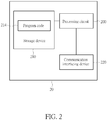
- Fig. 2 is a schematic diagram of a communication device 20 according to an example of the present invention.
- the communication device 20 may be the communication device 100, the RAN 102 and/or the RAN 104 shown in Fig. 1 , but is not limited herein.
- the communication device 20 includes a processing circuit 200 such as a microprocessor or Application Specific Integrated Circuit, a storage device 210 and a communication interfacing device 220.
- the storage device 210 may be any data storage device that stores a program code 214, accessed and executed by the processing circuit 200.
- the storage device 210 examples include but are not limited to read-only memory, flash memory, random-access memory, hard disk, optical data storage device, non-volatile storage device, non-transitory computer-readable medium (e.g., tangible media), etc.
- the communication interfacing device 220 includes a transceiver used to transmit and receive signals (e.g., data, signals, messages and/or packets) according to processing results of the processing circuit 200.
- a UE is used to represent the communication device 100 in Fig. 1 , to simplify the illustration of the embodiments.
- Fig. 3 is a flowchart of a process 30 according to an example of the present invention.
- the process 30 may be utilized in a UE (e.g., the communication device 100).
- the process 30 includes the following steps:
- the UE is configured a RRC connection (e.g., including a signaling radio bearer (SRB)) and a DRB by a first RAN of a first RAT (e.g., the RAN 102).
- the UE receives a first RRC message (e.g., RRCConnectionRelease) via the RRC connection from the first RAN, wherein the first RRC message comprises a resume identity and indicates a RRC suspension.
- the UE suspends the RRC connection in response to the first RRC message.
- the UE keeps (or maintains) a UE AS context, when the RRC connection is suspended.
- the UE may select (or connect) a cell of a second RAN of a second RAT (e.g., the RAN 104) different from the first RAT.
- the UE determines that the UE AS context and the resume identity are invalid in response to the selection. For example, the UE discards, releases, removes, deletes or clears the UE AS context, or marks the UE AS context invalid.
- the UE transmits a RRC connection request message (e.g., RRCConnectionRequest) to the first RAN, when the UE selects back a cell of the first RAN from the second RAN in response to the determination.
- RRC connection request message e.g., RRCConnectionRequest
- whether the UE AS context should be kept i.e., considered as valid
- a rule for handling validity of the UE AS context is provided, and the UE is able to communicate with the first RAN regularly.
- the UE may perform a cell selection and/or reselection according to the first RAT.
- the UE may transmit a resume request message to resume the RRC connection.
- the UE enters an idle mode in response to the first RRC message.
- the UE performs the cell selection and/or reselection in the idle mode according to the first RAT.
- the RRC connection request message may not include the resume identity.
- the RRC connection request message may include a NAS identity (e.g., S-Temporary Mobile Subscriber Identity (S-TMSI)).
- S-TMSI S-Temporary Mobile Subscriber Identity
- the UE receives a RRC connection setup message in response to the RRC connection request message, and enters a connected mode of the first RAT to communicate with the first RAN.
- the UE when the UE AS context and the resume identity are valid, the UE transmits a resume request message (e.g., RRCConnectionResumeRequest) triggered by an initiation of a service request procedure or an extended service request procedure to the first RAN.
- a resume request message e.g., RRCConnectionResumeRequest
- the initiation of the service request procedure or the extended service request procedure may be due data pending for a transmission, a reception of a paging or a signaling pending for a transmission.
- the RRCConnectionResumeRequest message may include the resume identity or a truncated version of the resume identity.
- the UE When the UE receives a connection resume message (e.g., RRCConnectionResume message) in response to the resume request message, the UE resumes the RRC connection according to the kept UE AS context which includes resuming the SRB and the DRB.
- the resume identity is a unique identification for the first RAN to identify the UE.
- the UE transmits the RRC connection request message triggered by an initiation of a service request procedure or an extended service request procedure to the first RAN, instead of the resume request message.
- Realization of the process 30 is not limited to the above description. The following examples may be applied to the process 30.
- the UE selects the cell of the second RAN according to the second RAT, when the cell of the second RAN meets a cell selection (or reselection) criteria.
- the UE initiates a connection establishment to connect to the second RAN by transmitting a connection request message (e.g., a RRC connection request message of the second RAT) to the second RAN.
- the UE receives a connection setup message (e.g., a RRC connection setup message of the second RAT) in response to the connection request message from the second RAN, to enter a connected mode of the second RAT.
- the UE considers that the UE AS context is not valid, in response to that the UE selects (or connects) to the second RAN.
- the UE determines that the UE AS context is not valid, when the UE connects to the second RAN.
- the UE can still resume the RRC connection when selecting back to first RAN.
- the UE determines that the UE AS context is not valid, when the UE selects the second RAN and transmits a request message to the second RAN but receives a reject message in response to the request message.
- the UE is configured the RRC connection and the DRB by the first RAN of the first RAT by receiving a second RRC message (e.g., RRCConnectionReconfiguration) on the RRC connection from the first RAN.
- the second RRC message includes a DRB configuration configuring the DRB.
- the UE configures or setups the DRB according to the DRB configuration.
- the DRB configuration may include at least one of a DRB identity, a Packet Data Convergence Protocol (PDCP) configuration and a Radio Link Control (RLC) configuration.
- the UE AS context may include the DRB configuration.
- the UE AS context may include RRC configuration(s) in addition to the DRB configuration.
- the RRC configuration(s) may include at least one of a measurement configuration, a physical layer configuration and Medium Access Control (MAC) configuration.
- the UE AS context may include a security context.
- the UE attaches to a core network (CN) via the first RAN according to the first RAT. Then, the UE establishes an evolved packet system (EPS) bearer context with the CN, wherein the DRB is associated with the EPS bearer context. Further, the UE may establish the EPS bearer context by transmitting a PDN Connectivity Request or a Bearer Resource Allocation Request message to the CN via the first RAN. The CN may transmit an ACTIVATE DEFAULT EPS BEARER CONTEXT REQUEST message in response to the PDN Connectivity Request message via the first RAN. In one example, the CN transmits an ACTIVATE DEDICATED EPS BEARER CONTEXT REQUEST message via the first RAN to the UE to establish the EPS bearer context in response to the Bearer Resource Allocation Request message.
- EPS evolved packet system
- the first RAT is different from the second RAT.
- the first RAT may be one of Narrow Band Internet of Things (NB-IoT), LTE and 5G.
- the second RAT may be one of Global System for Mobile Communications (GSM), Universal Mobile Telecommunications System (UMTS), NB-IoT, LTE and 5G.
- GSM Global System for Mobile Communications
- UMTS Universal Mobile Telecommunications System
- the present invention provides a device and a method for handling a UE AS context. After a RRC connection of a first RAN is suspended, whether the UE AS context should be kept is determined according whether a cell of a second RAN is selected. Thus, a rule for handling validity of the UE AS context is provided, and the UE is able to operate regularly.
Landscapes
- Engineering & Computer Science (AREA)
- Computer Networks & Wireless Communication (AREA)
- Signal Processing (AREA)
- Mobile Radio Communication Systems (AREA)
Abstract
Description
- The present invention relates to a device and a method used in a wireless communication system, and more particularly, to a device and a method of handling a user equipment Access Stratum context.
- A long-term evolution (LTE) system provides high data rate, low latency, packet optimization, and improved system capacity and improved coverage. The LTE system is evolved continuously to increase peak data rate and throughput by using advanced techniques, such as carrier aggregation (CA), dual connectivity, licensed-assisted access, etc. In the LTE system, a radio access network known as an evolved universal terrestrial radio access network (E-UTRAN) includes at least one evolved Node-B (eNB) for communicating with at least one user equipment (UE), and for communicating with a core network. The core network may include a mobility management and a Quality of Service (QoS) control of the at least one UE.
- The present invention therefore provides a communication device and method for handling a user equipment Access Stratum context to solve the abovementioned problem.
- A communication device for handling a user equipment (UE) Access Stratum (AS) context comprises a storage device for storing instructions and a processing circuit coupled to the storage device. The processing circuit is configured to execute the instructions stored in the storage device. The instructions comprise being configured a radio resource control (RRC) connection and a data radio bearer (DRB) by a first radio access network (RAN) of a first radio access technology (RAT); receiving a first RRC message via the RRC connection from the first RAN, wherein the first RRC message comprises a resume identity and indicates a RRC suspension; suspending the RRC connection in response to the first RRC message; keeping a UE AS context, when the RRC connection is suspended; selecting a cell of a second RAN of a second RAT different from the first RAT; determining that the UE AS context and the resume identity are invalid in response to the selection; and transmitting a RRC connection request message to the first RAN, when the UE selects back a cell of the first RAN from the second RAN in response to the determination.
- A method for handling a user equipment (UE) Access Stratum (AS) context of a communication device comprises being configured a radio resource control (RRC) connection and a data radio bearer (DRB) by a first radio access network (RAN) of a first radio access technology (RAT); receiving a first RRC message via the RRC connection from the first RAN, wherein the first RRC message comprises a resume identity and indicates a RRC suspension; suspending the RRC connection in response to the first RRC message; keeping a UE AS context, when the RRC connection is suspended; selecting a cell of a second RAN of a second RAT different from the first RAT; determining that the UE AS context and the resume identity are invalid in response to the selection; and transmitting a RRC connection request message to the first RAN, when the UE selects back a cell of the first RAN from the second RAN in response to the determination.
- These and other objectives of the present invention will no doubt become obvious to those of ordinary skill in the art after reading the following detailed description of the preferred embodiment that is illustrated in the various figures and drawings.
-
-
Fig. 1 is a schematic diagram of a wireless communication system according to an example of the present invention. -
Fig. 2 is a schematic diagram of a communication device according to an example of the present invention. -
Fig. 3 is a flowchart of a process according to an example of the present invention. -
Fig. 1 is a schematic diagram of awireless communication system 10 according to an example of the present invention. Thewireless communication system 10 is composed of acommunication device 100, radio access networks (RANs) 102 and 104. InFig. 1 , thecommunication device 100, theRANs wireless communication system 10. Practically, each of theRANs Fig. 1 , coverage areas of theRANs - The
communication device 100 may be a user equipment (UE), a mobile phone, a laptop, a tablet computer, an electronic book, a portable computer system, a vehicle, or an airplane. For uplink (UL), thecommunication device 100 is the transmitter and theRAN 102 and/or theRAN 104 is the receiver, and for downlink (DL), theRAN 102 and/or theRAN 104 is the transmitter and thecommunication device 100 is the receiver. -
Fig. 2 is a schematic diagram of acommunication device 20 according to an example of the present invention. Thecommunication device 20 may be thecommunication device 100, theRAN 102 and/or theRAN 104 shown inFig. 1 , but is not limited herein. Thecommunication device 20 includes aprocessing circuit 200 such as a microprocessor or Application Specific Integrated Circuit, astorage device 210 and acommunication interfacing device 220. Thestorage device 210 may be any data storage device that stores aprogram code 214, accessed and executed by theprocessing circuit 200. Examples of thestorage device 210 include but are not limited to read-only memory, flash memory, random-access memory, hard disk, optical data storage device, non-volatile storage device, non-transitory computer-readable medium (e.g., tangible media), etc. Thecommunication interfacing device 220 includes a transceiver used to transmit and receive signals (e.g., data, signals, messages and/or packets) according to processing results of theprocessing circuit 200. - In the following embodiments, a UE is used to represent the
communication device 100 inFig. 1 , to simplify the illustration of the embodiments. -
Fig. 3 is a flowchart of aprocess 30 according to an example of the present invention. Theprocess 30 may be utilized in a UE (e.g., the communication device 100). Theprocess 30 includes the following steps: - Step 300: Start.
- Step 302: Be configured a radio resource control (RRC) connection and a data radio bearer (DRB) by a first RAN of a first radio access technology (RAT).
- Step 304: Receive a first RRC message via the RRC connection from the first RAN, wherein the first RRC message comprises a resume identity and indicates a RRC suspension.
- Step 306: Suspend the RRC connection in response to the first RRC message.
- Step 308: Keep a UE AS context, when the RRC connection is suspended. Step 310: Select a cell of a second RAN of a second RAT different from the first RAT.
- Step 312: Determine that the UE AS context and the resume identity are invalid in response to the selection.
- Step 314: Transmit a RRC connection request message to the first RAN, when the UE selects back a cell of the first RAN from the second RAN in response to the determination.
- Step 316: End.
- According to the
process 30, the UE is configured a RRC connection (e.g., including a signaling radio bearer (SRB)) and a DRB by a first RAN of a first RAT (e.g., the RAN 102). The UE receives a first RRC message (e.g., RRCConnectionRelease) via the RRC connection from the first RAN, wherein the first RRC message comprises a resume identity and indicates a RRC suspension. Accordingly, the UE suspends the RRC connection in response to the first RRC message. The UE keeps (or maintains) a UE AS context, when the RRC connection is suspended. Later, the UE may select (or connect) a cell of a second RAN of a second RAT (e.g., the RAN 104) different from the first RAT. The UE determines that the UE AS context and the resume identity are invalid in response to the selection. For example, the UE discards, releases, removes, deletes or clears the UE AS context, or marks the UE AS context invalid. The UE transmits a RRC connection request message (e.g., RRCConnectionRequest) to the first RAN, when the UE selects back a cell of the first RAN from the second RAN in response to the determination. In other words, whether the UE AS context should be kept (i.e., considered as valid) is determined by the UE according to whether the cell of the second RAN is selected. Thus, a rule for handling validity of the UE AS context is provided, and the UE is able to communicate with the first RAN regularly. - When the RRC connection is suspended, the UE may perform a cell selection and/or reselection according to the first RAT. When the RRC connection is suspended (i.e., the UE AS context and the resume identity are valid), the UE may transmit a resume request message to resume the RRC connection.
- In one example, the UE enters an idle mode in response to the first RRC message. The UE performs the cell selection and/or reselection in the idle mode according to the first RAT.
- The RRC connection request message may not include the resume identity. The RRC connection request message may include a NAS identity (e.g., S-Temporary Mobile Subscriber Identity (S-TMSI)). In one example, the UE receives a RRC connection setup message in response to the RRC connection request message, and enters a connected mode of the first RAT to communicate with the first RAN.
- In one example, when the UE AS context and the resume identity are valid, the UE transmits a resume request message (e.g., RRCConnectionResumeRequest) triggered by an initiation of a service request procedure or an extended service request procedure to the first RAN. The initiation of the service request procedure or the extended service request procedure may be due data pending for a transmission, a reception of a paging or a signaling pending for a transmission. The RRCConnectionResumeRequest message may include the resume identity or a truncated version of the resume identity. When the UE receives a connection resume message (e.g., RRCConnectionResume message) in response to the resume request message, the UE resumes the RRC connection according to the kept UE AS context which includes resuming the SRB and the DRB. The resume identity is a unique identification for the first RAN to identify the UE. When the UE AS context and the resume identity are invalid, the UE transmits the RRC connection request message triggered by an initiation of a service request procedure or an extended service request procedure to the first RAN, instead of the resume request message.
- Realization of the
process 30 is not limited to the above description. The following examples may be applied to theprocess 30. - In one example, the UE selects the cell of the second RAN according to the second RAT, when the cell of the second RAN meets a cell selection (or reselection) criteria. In one example, after selecting the cell of the second RAN, the UE initiates a connection establishment to connect to the second RAN by transmitting a connection request message (e.g., a RRC connection request message of the second RAT) to the second RAN. Further, the UE receives a connection setup message (e.g., a RRC connection setup message of the second RAT) in response to the connection request message from the second RAN, to enter a connected mode of the second RAT. In one example, the UE considers that the UE AS context is not valid, in response to that the UE selects (or connects) to the second RAN.
- In one example, the UE determines that the UE AS context is not valid, when the UE connects to the second RAN. The UE determines the UE AS context is valid, when the UE selects the second RAN but does not connect to the second RAN. That is, the UE does not transmit any request message to the second RAN, or the UE transmits a request message to the second RAN but receives a reject message in response to the request message. Thus, the UE can still resume the RRC connection when selecting back to first RAN. In one example, the UE determines that the UE AS context is not valid, when the UE selects the second RAN and transmits a request message to the second RAN but receives a reject message in response to the request message.
- In one example, the UE is configured the RRC connection and the DRB by the first RAN of the first RAT by receiving a second RRC message (e.g., RRCConnectionReconfiguration) on the RRC connection from the first RAN. The second RRC message includes a DRB configuration configuring the DRB. The UE configures or setups the DRB according to the DRB configuration. The DRB configuration may include at least one of a DRB identity, a Packet Data Convergence Protocol (PDCP) configuration and a Radio Link Control (RLC) configuration. Similarly, the UE AS context may include the DRB configuration. The UE AS context may include RRC configuration(s) in addition to the DRB configuration. The RRC configuration(s) may include at least one of a measurement configuration, a physical layer configuration and Medium Access Control (MAC) configuration. The UE AS context may include a security context.
- In one example, the UE attaches to a core network (CN) via the first RAN according to the first RAT. Then, the UE establishes an evolved packet system (EPS) bearer context with the CN, wherein the DRB is associated with the EPS bearer context. Further, the UE may establish the EPS bearer context by transmitting a PDN Connectivity Request or a Bearer Resource Allocation Request message to the CN via the first RAN. The CN may transmit an ACTIVATE DEFAULT EPS BEARER CONTEXT REQUEST message in response to the PDN Connectivity Request message via the first RAN. In one example, the CN transmits an ACTIVATE DEDICATED EPS BEARER CONTEXT REQUEST message via the first RAN to the UE to establish the EPS bearer context in response to the Bearer Resource Allocation Request message.
- The first RAT is different from the second RAT. The first RAT may be one of Narrow Band Internet of Things (NB-IoT), LTE and 5G. The second RAT may be one of Global System for Mobile Communications (GSM), Universal Mobile Telecommunications System (UMTS), NB-IoT, LTE and 5G.
- Those skilled in the art should readily make combinations, modifications and/or alterations on the abovementioned description and examples. The abovementioned description, steps and/or processes including suggested steps can be realized by means that could be hardware, software, firmware (known as a combination of a hardware device and computer instructions and data that reside as read-only software on the hardware device), an electronic system, or combination thereof. An example of the means may be the
communication device 20. Any of the processes above may be compiled into theprogram code 214. - To sum up, the present invention provides a device and a method for handling a UE AS context. After a RRC connection of a first RAN is suspended, whether the UE AS context should be kept is determined according whether a cell of a second RAN is selected. Thus, a rule for handling validity of the UE AS context is provided, and the UE is able to operate regularly.
- Those skilled in the art will readily observe that numerous modifications and alterations of the device and method may be made while retaining the teachings of the invention. Accordingly, the above disclosure should be construed as limited only by the metes and bounds of the appended claims.
Claims (15)
- A communication device for handling a user equipment, UE, Access Stratum, AS, context, comprising:a storage device (210), for storing instructions; anda processing circuit (200), coupled to the storage unit (210), wherein the storage unit (210) stores, and the processing circuit (200) is configured to execute, the instructions of:being configured a radio resource control, RRC, connection and a data radio bearer, DRB, by a first radio access network, RAN, of a first radio access technology, RAT; receiving a first RRC message via the RRC connection from the first RAN, wherein the first RRC message comprises a resume identity and indicates a RRC suspension;suspending the RRC connection in response to the first RRC message;keeping a UE AS context, when the RRC connection is suspended;selecting a cell of a second RAN of a second RAT different from the first RAT;determining that the UE AS context and the resume identity are invalid in response to the selection; andtransmitting a RRC connection request message to the first RAN, when the UE selects back a cell of the first RAN from the second RAN in response to the determination.
- The communication device of claim 1, wherein the storage device (210) further stores, and the processing circuit (200) is further configured to execute, instructions of:receiving a RRC connection setup message in response to the RRC connection request message; andentering a connected mode of the first RAT.
- The communication device of claim 1, wherein the storage device (210) further stores, and the processing circuit (200) is further configured to execute, an instruction of:transmitting a resume request message triggered by an initiation of a service request procedure or an extended service request procedure to the first RAN, before selecting the second RAN.
- The communication device of claim 1, wherein the communication device selects the cell of the second RAN according to the second RAT, when the cell of the second RAN meets a cell selection or reselection criteria.
- The communication device of claim 1, wherein the storage device further stores, and the processing circuit (200) is further configured to execute, instructions of:initiating a connection establishment to connect to the second RAN by transmitting a connection request message of the second RAT to the second RAN; andreceiving a connection setup message in response to the connection request message from the second RAN, to enter a connected mode of the second RAT.
- The communication device of claim 1, wherein the storage device further stores, and the processing circuit (200) is further configured to execute, instructions of:determining that the UE AS context is not valid, when the communication device connects to the second RAN; anddetermining the UE AS context is valid, when the communication device selects the second RAN but does not connect to the second RAN.
- The communication device of claim 1, wherein the instruction of being configured the RRC connection and the DRB by the first RAN of the first RAT comprises:receiving a second RRC message comprising a DRB configuration configuring the DRB on the RRC connection from the first RAN;wherein the UE AS context comprises the DRB configuration, and the DRB configuration comprises at least one of a DRB identity, a Packet Data Convergence Protocol, PDCP, configuration and a Radio Link Control, RLC, configuration.
- The communication device of claim 1, wherein the storage device (210) further stores, and the processing circuit (200) is further configured to execute, instructions of:attaching to a core network, CN, via the first RAN according to the first RAT; andestablishing an EPS bearer context with the CN by transmitting a PDN Connectivity Request or a Bearer Resource Allocation Request message to the CN, wherein the DRB is associated with the EPS bearer context.
- A method for handling a user equipment, UE, Access Stratum, AS, context of a communication device, comprising:being configured a radio resource control, RRC, connection and a data radio bearer, DRB, by a first radio access network, RAN, of a first radio access technology, RAT;receiving a first RRC message via the RRC connection from the first RAN, wherein the first RRC message comprises a resume identity and indicates a RRC suspension;suspending the RRC connection in response to the first RRC message;keeping a UE AS context, when the RRC connection is suspended;selecting a cell of a second RAN of a second RAT different from the first RAT;determining that the UE AS context and the resume identity are invalid in response to the selection; andtransmitting a RRC connection request message to the first RAN, when the UE selects back a cell of the first RAN from the second RAN in response to the determination.
- The method of claim 9, further comprising:receiving a RRC connection setup message in response to the RRC connection request message; andentering a connected mode of the first RAT.
- The method of claim 9, further comprising:transmitting a resume request message triggered by an initiation of a service request procedure or an extended service request procedure to the first RAN, before selecting the second RAN.
- The method of claim 9, wherein the communication device selects the cell of the second RAN according to the second RAT, when the cell of the second RAN meets a cell selection or reselection criteria.
- The method of claim 9, further comprising:initiating a connection establishment to connect to the second RAN by transmitting a connection request message of the second RAT to the second RAN; andreceiving a connection setup message in response to the connection request message from the second RAN, to enter a connected mode of the second RAT.
- The method of claim 9, further comprising:determining that the UE AS context is not valid, when the communication device connects to the second RAN; anddetermining the UE AS context is valid, when the communication device selects the second RAN but does not connect to the second RAN.
- The method of claim 9, wherein the step of being configured the RRC connection and the DRB by the first RAN of the first RAT comprises:receiving a second RRC message comprising a DRB configuration configuring the DRB on the RRC connection from the first RAN;wherein the UE AS context comprises the DRB configuration, and the DRB configuration comprises at least one of a DRB identity, a Packet Data Convergence Protocol, PDCP, configuration and a Radio Link Control, RLC, configuration.
Applications Claiming Priority (1)
| Application Number | Priority Date | Filing Date | Title |
|---|---|---|---|
| US201662343803P | 2016-05-31 | 2016-05-31 |
Publications (2)
| Publication Number | Publication Date |
|---|---|
| EP3258732A1 true EP3258732A1 (en) | 2017-12-20 |
| EP3258732B1 EP3258732B1 (en) | 2021-12-15 |
Family
ID=59021255
Family Applications (1)
| Application Number | Title | Priority Date | Filing Date |
|---|---|---|---|
| EP17173413.0A Active EP3258732B1 (en) | 2016-05-31 | 2017-05-30 | Device and method of handling a user equipment access stratum context |
Country Status (3)
| Country | Link |
|---|---|
| US (1) | US10111142B2 (en) |
| EP (1) | EP3258732B1 (en) |
| CN (1) | CN107454636B (en) |
Families Citing this family (8)
| Publication number | Priority date | Publication date | Assignee | Title |
|---|---|---|---|---|
| EP4054239A1 (en) | 2016-08-12 | 2022-09-07 | Huawei Technologies Co., Ltd. | Communication method, apparatus, and system |
| EP4210380B1 (en) * | 2017-06-05 | 2025-12-31 | Samsung Electronics Co., Ltd. | METHOD AND DEVICE FOR CONFIGURING A PDCP DEVICE AND SDAP DEVICE IN A NEXT GENERATION MOBILE COMMUNICATIONS SYSTEM |
| CN115002924B (en) * | 2018-02-08 | 2025-10-28 | 大唐移动通信设备有限公司 | Uplink small data transmission method, network side DU and network side CU |
| CN111615856B (en) * | 2018-02-13 | 2024-07-30 | 中兴通讯股份有限公司 | Systems and methods for performing communications in a multi-RAT network |
| CA3097060C (en) | 2018-04-16 | 2023-04-04 | Telefonaktiebolaget Lm Ericsson (Publ) | Security handling for rrc resume from inactive state |
| EP3565373A1 (en) * | 2018-04-26 | 2019-11-06 | HTC Corporation | Device and method of handling a radio resource control reestablishment |
| WO2020033356A1 (en) * | 2018-08-09 | 2020-02-13 | Google Llc | Method and user equipment to resume a wireless connection |
| US12563432B2 (en) * | 2021-08-31 | 2026-02-24 | Apple Inc. | 5G new radio (NR) out of service optimizations for inactive state |
Family Cites Families (8)
| Publication number | Priority date | Publication date | Assignee | Title |
|---|---|---|---|---|
| CN101686577A (en) * | 2008-09-23 | 2010-03-31 | 华为技术有限公司 | Method, device and communication system for triggering buffer state report |
| US8838089B2 (en) * | 2008-10-20 | 2014-09-16 | Htc Corporation | Method of improving radio resource control connenction establishment in a wireless communication system and related communication device |
| KR101622219B1 (en) * | 2008-11-03 | 2016-05-18 | 엘지전자 주식회사 | Method and apparatus for RRC connection reestablishment in wireless communication system |
| US9328692B2 (en) * | 2009-02-20 | 2016-05-03 | Achates Power, Inc. | Opposed piston engines with controlled provision of lubricant for lubrication and cooling |
| CN203990273U (en) * | 2011-08-10 | 2014-12-10 | 燃料技术公司 | Apparatus for reducing the concentration of nitrogen oxides in the combustion gases produced by the burner |
| US10667321B2 (en) * | 2015-02-09 | 2020-05-26 | Intel IP Corporation | Evolved Node-B, user equipment, and methods for transition between idle and connected modes |
| CN107251643B (en) * | 2016-01-08 | 2019-07-05 | 瑞典爱立信有限公司 | Method and apparatus for radio resource control and computer readable medium |
| KR102106581B1 (en) * | 2016-04-20 | 2020-05-04 | 콘비다 와이어리스, 엘엘씨 | System information provisioning and lightweight access signaling |
-
2017
- 2017-05-24 US US15/604,637 patent/US10111142B2/en active Active
- 2017-05-30 EP EP17173413.0A patent/EP3258732B1/en active Active
- 2017-05-31 CN CN201710399605.6A patent/CN107454636B/en active Active
Non-Patent Citations (3)
| Title |
|---|
| HUAWEI ET AL: "Evaluation on RAN initiated paging and MME initiated paging", vol. RAN WG2, no. Nanjing, China; 20160523 - 20160527, 22 May 2016 (2016-05-22), XP051105296, Retrieved from the Internet <URL:http://www.3gpp.org/ftp/Meetings_3GPP_SYNC/RAN2/Docs/> [retrieved on 20160522] * |
| NOKIA NETWORKS: "Signaling details for UP based solution", vol. RAN WG3, no. Budapest, HU; 20160120 - 20160122, 11 January 2016 (2016-01-11), XP051067016, Retrieved from the Internet <URL:http://www.3gpp.org/ftp/tsg_ran/WG3_Iu/TSGR3_AHGs/R3_AHG_NB-IOT/Docs/> [retrieved on 20160111] * |
| NOKIA: "Security for RRC suspend and RRC resume", vol. SA WG3, no. Los Cabos, Mexico; 20160509 - 20160513, 8 May 2016 (2016-05-08), XP051099238, Retrieved from the Internet <URL:http://www.3gpp.org/ftp/Meetings_3GPP_SYNC/Docs/> [retrieved on 20160508] * |
Also Published As
| Publication number | Publication date |
|---|---|
| US20170347296A1 (en) | 2017-11-30 |
| CN107454636A (en) | 2017-12-08 |
| US10111142B2 (en) | 2018-10-23 |
| CN107454636B (en) | 2020-07-14 |
| EP3258732B1 (en) | 2021-12-15 |
Similar Documents
| Publication | Publication Date | Title |
|---|---|---|
| US10111142B2 (en) | Device and method of handling a user equipment access stratum context | |
| US10313934B2 (en) | Device and method of handling communication | |
| US10575349B2 (en) | Device and method for handling a new radio connection in inter-system mobility | |
| US10492108B2 (en) | Device and method of handling transferring of a state | |
| US10194481B2 (en) | Device and method of handling radio resource control connection | |
| US20180227737A1 (en) | Device and Method for Handling New Radio Capabilities | |
| US10292078B1 (en) | Device and method of handling an evolved packet system bearer context | |
| US20160183151A1 (en) | Method of handling simultaneous communications and related communication device | |
| US20180199355A1 (en) | Device and Method of Handling a PDU Session in Inter-system Mobility between a LTE System and a NR/5G System | |
| US10681597B2 (en) | Device and method for handling a packet flow in inter-system mobility | |
| US10912142B2 (en) | Device and method of handling radio resource control connection resume procedure | |
| EP3226473B1 (en) | Device and method of handling user plane evolved packet system optimization procedure | |
| US10462720B2 (en) | Device and method for handling evolved long-term evolution network | |
| US10257757B2 (en) | Device and method of handling connection transfer | |
| US20170332436A1 (en) | Device and Method Handling a Radio Resource Control Connection Resume Procedure | |
| US10764785B2 (en) | Device and method of handling network slice information | |
| US20170048747A1 (en) | Device and Method of Handling Application Specific Congestion Control | |
| US9992804B2 (en) | Device and method of handling non-access stratum procedure | |
| US20170230897A1 (en) | Device and Method of Handling System Information | |
| US10560870B2 (en) | Device and method of handling cellular-WLAN aggregation |
Legal Events
| Date | Code | Title | Description |
|---|---|---|---|
| PUAI | Public reference made under article 153(3) epc to a published international application that has entered the european phase |
Free format text: ORIGINAL CODE: 0009012 |
|
| STAA | Information on the status of an ep patent application or granted ep patent |
Free format text: STATUS: REQUEST FOR EXAMINATION WAS MADE |
|
| 17P | Request for examination filed |
Effective date: 20170530 |
|
| AK | Designated contracting states |
Kind code of ref document: A1 Designated state(s): AL AT BE BG CH CY CZ DE DK EE ES FI FR GB GR HR HU IE IS IT LI LT LU LV MC MK MT NL NO PL PT RO RS SE SI SK SM TR |
|
| AX | Request for extension of the european patent |
Extension state: BA ME |
|
| RBV | Designated contracting states (corrected) |
Designated state(s): AL AT BE BG CH CY CZ DE DK EE ES FI FR GB GR HR HU IE IS IT LI LT LU LV MC MK MT NL NO PL PT RO RS SE SI SK SM TR |
|
| R17P | Request for examination filed (corrected) |
Effective date: 20170530 |
|
| STAA | Information on the status of an ep patent application or granted ep patent |
Free format text: STATUS: EXAMINATION IS IN PROGRESS |
|
| 17Q | First examination report despatched |
Effective date: 20200317 |
|
| RIC1 | Information provided on ipc code assigned before grant |
Ipc: H04W 76/19 20180101ALI20210126BHEP Ipc: H04W 76/27 20180101ALI20210126BHEP Ipc: H04W 76/18 20180101ALI20210126BHEP Ipc: H04W 36/00 20090101AFI20210126BHEP |
|
| REG | Reference to a national code |
Ref country code: DE Ref legal event code: R079 Ref document number: 602017050846 Country of ref document: DE Free format text: PREVIOUS MAIN CLASS: H04W0076020000 Ipc: H04W0036000000 |
|
| GRAP | Despatch of communication of intention to grant a patent |
Free format text: ORIGINAL CODE: EPIDOSNIGR1 |
|
| STAA | Information on the status of an ep patent application or granted ep patent |
Free format text: STATUS: GRANT OF PATENT IS INTENDED |
|
| RIC1 | Information provided on ipc code assigned before grant |
Ipc: H04W 36/00 20090101AFI20210628BHEP Ipc: H04W 76/18 20180101ALI20210628BHEP Ipc: H04W 76/19 20180101ALI20210628BHEP Ipc: H04W 76/27 20180101ALI20210628BHEP Ipc: H04W 36/14 20090101ALN20210628BHEP |
|
| INTG | Intention to grant announced |
Effective date: 20210716 |
|
| GRAS | Grant fee paid |
Free format text: ORIGINAL CODE: EPIDOSNIGR3 |
|
| GRAA | (expected) grant |
Free format text: ORIGINAL CODE: 0009210 |
|
| STAA | Information on the status of an ep patent application or granted ep patent |
Free format text: STATUS: THE PATENT HAS BEEN GRANTED |
|
| AK | Designated contracting states |
Kind code of ref document: B1 Designated state(s): AL AT BE BG CH CY CZ DE DK EE ES FI FR GB GR HR HU IE IS IT LI LT LU LV MC MK MT NL NO PL PT RO RS SE SI SK SM TR |
|
| REG | Reference to a national code |
Ref country code: GB Ref legal event code: FG4D Ref country code: CH Ref legal event code: EP |
|
| REG | Reference to a national code |
Ref country code: DE Ref legal event code: R096 Ref document number: 602017050846 Country of ref document: DE |
|
| REG | Reference to a national code |
Ref country code: IE Ref legal event code: FG4D |
|
| REG | Reference to a national code |
Ref country code: AT Ref legal event code: REF Ref document number: 1456405 Country of ref document: AT Kind code of ref document: T Effective date: 20220115 |
|
| REG | Reference to a national code |
Ref country code: NL Ref legal event code: FP |
|
| REG | Reference to a national code |
Ref country code: LT Ref legal event code: MG9D |
|
| PG25 | Lapsed in a contracting state [announced via postgrant information from national office to epo] |
Ref country code: RS Free format text: LAPSE BECAUSE OF FAILURE TO SUBMIT A TRANSLATION OF THE DESCRIPTION OR TO PAY THE FEE WITHIN THE PRESCRIBED TIME-LIMIT Effective date: 20211215 Ref country code: LT Free format text: LAPSE BECAUSE OF FAILURE TO SUBMIT A TRANSLATION OF THE DESCRIPTION OR TO PAY THE FEE WITHIN THE PRESCRIBED TIME-LIMIT Effective date: 20211215 Ref country code: FI Free format text: LAPSE BECAUSE OF FAILURE TO SUBMIT A TRANSLATION OF THE DESCRIPTION OR TO PAY THE FEE WITHIN THE PRESCRIBED TIME-LIMIT Effective date: 20211215 Ref country code: BG Free format text: LAPSE BECAUSE OF FAILURE TO SUBMIT A TRANSLATION OF THE DESCRIPTION OR TO PAY THE FEE WITHIN THE PRESCRIBED TIME-LIMIT Effective date: 20220315 |
|
| REG | Reference to a national code |
Ref country code: AT Ref legal event code: MK05 Ref document number: 1456405 Country of ref document: AT Kind code of ref document: T Effective date: 20211215 |
|
| PG25 | Lapsed in a contracting state [announced via postgrant information from national office to epo] |
Ref country code: SE Free format text: LAPSE BECAUSE OF FAILURE TO SUBMIT A TRANSLATION OF THE DESCRIPTION OR TO PAY THE FEE WITHIN THE PRESCRIBED TIME-LIMIT Effective date: 20211215 Ref country code: NO Free format text: LAPSE BECAUSE OF FAILURE TO SUBMIT A TRANSLATION OF THE DESCRIPTION OR TO PAY THE FEE WITHIN THE PRESCRIBED TIME-LIMIT Effective date: 20220315 Ref country code: LV Free format text: LAPSE BECAUSE OF FAILURE TO SUBMIT A TRANSLATION OF THE DESCRIPTION OR TO PAY THE FEE WITHIN THE PRESCRIBED TIME-LIMIT Effective date: 20211215 Ref country code: HR Free format text: LAPSE BECAUSE OF FAILURE TO SUBMIT A TRANSLATION OF THE DESCRIPTION OR TO PAY THE FEE WITHIN THE PRESCRIBED TIME-LIMIT Effective date: 20211215 Ref country code: GR Free format text: LAPSE BECAUSE OF FAILURE TO SUBMIT A TRANSLATION OF THE DESCRIPTION OR TO PAY THE FEE WITHIN THE PRESCRIBED TIME-LIMIT Effective date: 20220316 |
|
| PG25 | Lapsed in a contracting state [announced via postgrant information from national office to epo] |
Ref country code: SM Free format text: LAPSE BECAUSE OF FAILURE TO SUBMIT A TRANSLATION OF THE DESCRIPTION OR TO PAY THE FEE WITHIN THE PRESCRIBED TIME-LIMIT Effective date: 20211215 Ref country code: SK Free format text: LAPSE BECAUSE OF FAILURE TO SUBMIT A TRANSLATION OF THE DESCRIPTION OR TO PAY THE FEE WITHIN THE PRESCRIBED TIME-LIMIT Effective date: 20211215 Ref country code: RO Free format text: LAPSE BECAUSE OF FAILURE TO SUBMIT A TRANSLATION OF THE DESCRIPTION OR TO PAY THE FEE WITHIN THE PRESCRIBED TIME-LIMIT Effective date: 20211215 Ref country code: PT Free format text: LAPSE BECAUSE OF FAILURE TO SUBMIT A TRANSLATION OF THE DESCRIPTION OR TO PAY THE FEE WITHIN THE PRESCRIBED TIME-LIMIT Effective date: 20220418 Ref country code: ES Free format text: LAPSE BECAUSE OF FAILURE TO SUBMIT A TRANSLATION OF THE DESCRIPTION OR TO PAY THE FEE WITHIN THE PRESCRIBED TIME-LIMIT Effective date: 20211215 Ref country code: EE Free format text: LAPSE BECAUSE OF FAILURE TO SUBMIT A TRANSLATION OF THE DESCRIPTION OR TO PAY THE FEE WITHIN THE PRESCRIBED TIME-LIMIT Effective date: 20211215 Ref country code: CZ Free format text: LAPSE BECAUSE OF FAILURE TO SUBMIT A TRANSLATION OF THE DESCRIPTION OR TO PAY THE FEE WITHIN THE PRESCRIBED TIME-LIMIT Effective date: 20211215 |
|
| PG25 | Lapsed in a contracting state [announced via postgrant information from national office to epo] |
Ref country code: PL Free format text: LAPSE BECAUSE OF FAILURE TO SUBMIT A TRANSLATION OF THE DESCRIPTION OR TO PAY THE FEE WITHIN THE PRESCRIBED TIME-LIMIT Effective date: 20211215 Ref country code: AT Free format text: LAPSE BECAUSE OF FAILURE TO SUBMIT A TRANSLATION OF THE DESCRIPTION OR TO PAY THE FEE WITHIN THE PRESCRIBED TIME-LIMIT Effective date: 20211215 |
|
| REG | Reference to a national code |
Ref country code: DE Ref legal event code: R097 Ref document number: 602017050846 Country of ref document: DE |
|
| PG25 | Lapsed in a contracting state [announced via postgrant information from national office to epo] |
Ref country code: IS Free format text: LAPSE BECAUSE OF FAILURE TO SUBMIT A TRANSLATION OF THE DESCRIPTION OR TO PAY THE FEE WITHIN THE PRESCRIBED TIME-LIMIT Effective date: 20220415 |
|
| PLBE | No opposition filed within time limit |
Free format text: ORIGINAL CODE: 0009261 |
|
| STAA | Information on the status of an ep patent application or granted ep patent |
Free format text: STATUS: NO OPPOSITION FILED WITHIN TIME LIMIT |
|
| PG25 | Lapsed in a contracting state [announced via postgrant information from national office to epo] |
Ref country code: DK Free format text: LAPSE BECAUSE OF FAILURE TO SUBMIT A TRANSLATION OF THE DESCRIPTION OR TO PAY THE FEE WITHIN THE PRESCRIBED TIME-LIMIT Effective date: 20211215 Ref country code: AL Free format text: LAPSE BECAUSE OF FAILURE TO SUBMIT A TRANSLATION OF THE DESCRIPTION OR TO PAY THE FEE WITHIN THE PRESCRIBED TIME-LIMIT Effective date: 20211215 |
|
| 26N | No opposition filed |
Effective date: 20220916 |
|
| PG25 | Lapsed in a contracting state [announced via postgrant information from national office to epo] |
Ref country code: SI Free format text: LAPSE BECAUSE OF FAILURE TO SUBMIT A TRANSLATION OF THE DESCRIPTION OR TO PAY THE FEE WITHIN THE PRESCRIBED TIME-LIMIT Effective date: 20211215 |
|
| REG | Reference to a national code |
Ref country code: CH Ref legal event code: PL |
|
| REG | Reference to a national code |
Ref country code: BE Ref legal event code: MM Effective date: 20220531 |
|
| PG25 | Lapsed in a contracting state [announced via postgrant information from national office to epo] |
Ref country code: MC Free format text: LAPSE BECAUSE OF FAILURE TO SUBMIT A TRANSLATION OF THE DESCRIPTION OR TO PAY THE FEE WITHIN THE PRESCRIBED TIME-LIMIT Effective date: 20211215 Ref country code: LU Free format text: LAPSE BECAUSE OF NON-PAYMENT OF DUE FEES Effective date: 20220530 Ref country code: LI Free format text: LAPSE BECAUSE OF NON-PAYMENT OF DUE FEES Effective date: 20220531 Ref country code: CH Free format text: LAPSE BECAUSE OF NON-PAYMENT OF DUE FEES Effective date: 20220531 |
|
| REG | Reference to a national code |
Ref country code: FR Ref legal event code: PLFP Year of fee payment: 7 |
|
| PG25 | Lapsed in a contracting state [announced via postgrant information from national office to epo] |
Ref country code: IE Free format text: LAPSE BECAUSE OF NON-PAYMENT OF DUE FEES Effective date: 20220530 |
|
| REG | Reference to a national code |
Ref country code: DE Ref legal event code: R082 Ref document number: 602017050846 Country of ref document: DE Representative=s name: WAGNER & GEYER PARTNERSCHAFT MBB PATENT- UND R, DE |
|
| PG25 | Lapsed in a contracting state [announced via postgrant information from national office to epo] |
Ref country code: IT Free format text: LAPSE BECAUSE OF FAILURE TO SUBMIT A TRANSLATION OF THE DESCRIPTION OR TO PAY THE FEE WITHIN THE PRESCRIBED TIME-LIMIT Effective date: 20211215 Ref country code: BE Free format text: LAPSE BECAUSE OF NON-PAYMENT OF DUE FEES Effective date: 20220531 |
|
| P01 | Opt-out of the competence of the unified patent court (upc) registered |
Effective date: 20230602 |
|
| PG25 | Lapsed in a contracting state [announced via postgrant information from national office to epo] |
Ref country code: HU Free format text: LAPSE BECAUSE OF FAILURE TO SUBMIT A TRANSLATION OF THE DESCRIPTION OR TO PAY THE FEE WITHIN THE PRESCRIBED TIME-LIMIT; INVALID AB INITIO Effective date: 20170530 |
|
| PG25 | Lapsed in a contracting state [announced via postgrant information from national office to epo] |
Ref country code: MK Free format text: LAPSE BECAUSE OF FAILURE TO SUBMIT A TRANSLATION OF THE DESCRIPTION OR TO PAY THE FEE WITHIN THE PRESCRIBED TIME-LIMIT Effective date: 20211215 Ref country code: CY Free format text: LAPSE BECAUSE OF FAILURE TO SUBMIT A TRANSLATION OF THE DESCRIPTION OR TO PAY THE FEE WITHIN THE PRESCRIBED TIME-LIMIT Effective date: 20211215 |
|
| PG25 | Lapsed in a contracting state [announced via postgrant information from national office to epo] |
Ref country code: TR Free format text: LAPSE BECAUSE OF FAILURE TO SUBMIT A TRANSLATION OF THE DESCRIPTION OR TO PAY THE FEE WITHIN THE PRESCRIBED TIME-LIMIT Effective date: 20211215 |
|
| PG25 | Lapsed in a contracting state [announced via postgrant information from national office to epo] |
Ref country code: MT Free format text: LAPSE BECAUSE OF FAILURE TO SUBMIT A TRANSLATION OF THE DESCRIPTION OR TO PAY THE FEE WITHIN THE PRESCRIBED TIME-LIMIT Effective date: 20211215 |
|
| PGFP | Annual fee paid to national office [announced via postgrant information from national office to epo] |
Ref country code: NL Payment date: 20250409 Year of fee payment: 9 |
|
| PGFP | Annual fee paid to national office [announced via postgrant information from national office to epo] |
Ref country code: DE Payment date: 20250402 Year of fee payment: 9 |
|
| PGFP | Annual fee paid to national office [announced via postgrant information from national office to epo] |
Ref country code: FR Payment date: 20250401 Year of fee payment: 9 |
|
| PGFP | Annual fee paid to national office [announced via postgrant information from national office to epo] |
Ref country code: GB Payment date: 20260312 Year of fee payment: 10 |