EP3257970A1 - Cerium citrate, method of making and corrosion inhibitor comprising cerium citrate - Google Patents
Cerium citrate, method of making and corrosion inhibitor comprising cerium citrate Download PDFInfo
- Publication number
- EP3257970A1 EP3257970A1 EP17174490.7A EP17174490A EP3257970A1 EP 3257970 A1 EP3257970 A1 EP 3257970A1 EP 17174490 A EP17174490 A EP 17174490A EP 3257970 A1 EP3257970 A1 EP 3257970A1
- Authority
- EP
- European Patent Office
- Prior art keywords
- cerium
- citrate
- cerium citrate
- corrosion inhibitor
- carbonate
- Prior art date
- Legal status (The legal status is an assumption and is not a legal conclusion. Google has not performed a legal analysis and makes no representation as to the accuracy of the status listed.)
- Granted
Links
Images
Classifications
-
- C—CHEMISTRY; METALLURGY
- C07—ORGANIC CHEMISTRY
- C07C—ACYCLIC OR CARBOCYCLIC COMPOUNDS
- C07C51/00—Preparation of carboxylic acids or their salts, halides or anhydrides
- C07C51/41—Preparation of salts of carboxylic acids
- C07C51/412—Preparation of salts of carboxylic acids by conversion of the acids, their salts, esters or anhydrides with the same carboxylic acid part
-
- C—CHEMISTRY; METALLURGY
- C07—ORGANIC CHEMISTRY
- C07C—ACYCLIC OR CARBOCYCLIC COMPOUNDS
- C07C59/00—Compounds having carboxyl groups bound to acyclic carbon atoms and containing any of the groups OH, O—metal, —CHO, keto, ether, groups, groups, or groups
- C07C59/235—Saturated compounds containing more than one carboxyl group
- C07C59/245—Saturated compounds containing more than one carboxyl group containing hydroxy or O-metal groups
- C07C59/265—Citric acid
-
- C—CHEMISTRY; METALLURGY
- C09—DYES; PAINTS; POLISHES; NATURAL RESINS; ADHESIVES; COMPOSITIONS NOT OTHERWISE PROVIDED FOR; APPLICATIONS OF MATERIALS NOT OTHERWISE PROVIDED FOR
- C09D—COATING COMPOSITIONS, e.g. PAINTS, VARNISHES OR LACQUERS; FILLING PASTES; CHEMICAL PAINT OR INK REMOVERS; INKS; CORRECTING FLUIDS; WOODSTAINS; PASTES OR SOLIDS FOR COLOURING OR PRINTING; USE OF MATERIALS THEREFOR
- C09D5/00—Coating compositions, e.g. paints, varnishes or lacquers, characterised by their physical nature or the effects produced; Filling pastes
-
- C—CHEMISTRY; METALLURGY
- C09—DYES; PAINTS; POLISHES; NATURAL RESINS; ADHESIVES; COMPOSITIONS NOT OTHERWISE PROVIDED FOR; APPLICATIONS OF MATERIALS NOT OTHERWISE PROVIDED FOR
- C09D—COATING COMPOSITIONS, e.g. PAINTS, VARNISHES OR LACQUERS; FILLING PASTES; CHEMICAL PAINT OR INK REMOVERS; INKS; CORRECTING FLUIDS; WOODSTAINS; PASTES OR SOLIDS FOR COLOURING OR PRINTING; USE OF MATERIALS THEREFOR
- C09D5/00—Coating compositions, e.g. paints, varnishes or lacquers, characterised by their physical nature or the effects produced; Filling pastes
- C09D5/08—Anti-corrosive paints
- C09D5/082—Anti-corrosive paints characterised by the anti-corrosive pigment
- C09D5/084—Inorganic compounds
-
- C—CHEMISTRY; METALLURGY
- C09—DYES; PAINTS; POLISHES; NATURAL RESINS; ADHESIVES; COMPOSITIONS NOT OTHERWISE PROVIDED FOR; APPLICATIONS OF MATERIALS NOT OTHERWISE PROVIDED FOR
- C09D—COATING COMPOSITIONS, e.g. PAINTS, VARNISHES OR LACQUERS; FILLING PASTES; CHEMICAL PAINT OR INK REMOVERS; INKS; CORRECTING FLUIDS; WOODSTAINS; PASTES OR SOLIDS FOR COLOURING OR PRINTING; USE OF MATERIALS THEREFOR
- C09D7/00—Features of coating compositions, not provided for in group C09D5/00; Processes for incorporating ingredients in coating compositions
- C09D7/40—Additives
- C09D7/60—Additives non-macromolecular
- C09D7/61—Additives non-macromolecular inorganic
-
- C—CHEMISTRY; METALLURGY
- C23—COATING METALLIC MATERIAL; COATING MATERIAL WITH METALLIC MATERIAL; CHEMICAL SURFACE TREATMENT; DIFFUSION TREATMENT OF METALLIC MATERIAL; COATING BY VACUUM EVAPORATION, BY SPUTTERING, BY ION IMPLANTATION OR BY CHEMICAL VAPOUR DEPOSITION, IN GENERAL; INHIBITING CORROSION OF METALLIC MATERIAL OR INCRUSTATION IN GENERAL
- C23F—NON-MECHANICAL REMOVAL OF METALLIC MATERIAL FROM SURFACE; INHIBITING CORROSION OF METALLIC MATERIAL OR INCRUSTATION IN GENERAL; MULTI-STEP PROCESSES FOR SURFACE TREATMENT OF METALLIC MATERIAL INVOLVING AT LEAST ONE PROCESS PROVIDED FOR IN CLASS C23 AND AT LEAST ONE PROCESS COVERED BY SUBCLASS C21D OR C22F OR CLASS C25
- C23F11/00—Inhibiting corrosion of metallic material by applying inhibitors to the surface in danger of corrosion or adding them to the corrosive agent
- C23F11/08—Inhibiting corrosion of metallic material by applying inhibitors to the surface in danger of corrosion or adding them to the corrosive agent in other liquids
- C23F11/10—Inhibiting corrosion of metallic material by applying inhibitors to the surface in danger of corrosion or adding them to the corrosive agent in other liquids using organic inhibitors
-
- C—CHEMISTRY; METALLURGY
- C23—COATING METALLIC MATERIAL; COATING MATERIAL WITH METALLIC MATERIAL; CHEMICAL SURFACE TREATMENT; DIFFUSION TREATMENT OF METALLIC MATERIAL; COATING BY VACUUM EVAPORATION, BY SPUTTERING, BY ION IMPLANTATION OR BY CHEMICAL VAPOUR DEPOSITION, IN GENERAL; INHIBITING CORROSION OF METALLIC MATERIAL OR INCRUSTATION IN GENERAL
- C23F—NON-MECHANICAL REMOVAL OF METALLIC MATERIAL FROM SURFACE; INHIBITING CORROSION OF METALLIC MATERIAL OR INCRUSTATION IN GENERAL; MULTI-STEP PROCESSES FOR SURFACE TREATMENT OF METALLIC MATERIAL INVOLVING AT LEAST ONE PROCESS PROVIDED FOR IN CLASS C23 AND AT LEAST ONE PROCESS COVERED BY SUBCLASS C21D OR C22F OR CLASS C25
- C23F11/00—Inhibiting corrosion of metallic material by applying inhibitors to the surface in danger of corrosion or adding them to the corrosive agent
- C23F11/08—Inhibiting corrosion of metallic material by applying inhibitors to the surface in danger of corrosion or adding them to the corrosive agent in other liquids
- C23F11/18—Inhibiting corrosion of metallic material by applying inhibitors to the surface in danger of corrosion or adding them to the corrosive agent in other liquids using inorganic inhibitors
-
- C—CHEMISTRY; METALLURGY
- C23—COATING METALLIC MATERIAL; COATING MATERIAL WITH METALLIC MATERIAL; CHEMICAL SURFACE TREATMENT; DIFFUSION TREATMENT OF METALLIC MATERIAL; COATING BY VACUUM EVAPORATION, BY SPUTTERING, BY ION IMPLANTATION OR BY CHEMICAL VAPOUR DEPOSITION, IN GENERAL; INHIBITING CORROSION OF METALLIC MATERIAL OR INCRUSTATION IN GENERAL
- C23F—NON-MECHANICAL REMOVAL OF METALLIC MATERIAL FROM SURFACE; INHIBITING CORROSION OF METALLIC MATERIAL OR INCRUSTATION IN GENERAL; MULTI-STEP PROCESSES FOR SURFACE TREATMENT OF METALLIC MATERIAL INVOLVING AT LEAST ONE PROCESS PROVIDED FOR IN CLASS C23 AND AT LEAST ONE PROCESS COVERED BY SUBCLASS C21D OR C22F OR CLASS C25
- C23F11/00—Inhibiting corrosion of metallic material by applying inhibitors to the surface in danger of corrosion or adding them to the corrosive agent
- C23F11/08—Inhibiting corrosion of metallic material by applying inhibitors to the surface in danger of corrosion or adding them to the corrosive agent in other liquids
- C23F11/18—Inhibiting corrosion of metallic material by applying inhibitors to the surface in danger of corrosion or adding them to the corrosive agent in other liquids using inorganic inhibitors
- C23F11/187—Mixtures of inorganic inhibitors
-
- C—CHEMISTRY; METALLURGY
- C23—COATING METALLIC MATERIAL; COATING MATERIAL WITH METALLIC MATERIAL; CHEMICAL SURFACE TREATMENT; DIFFUSION TREATMENT OF METALLIC MATERIAL; COATING BY VACUUM EVAPORATION, BY SPUTTERING, BY ION IMPLANTATION OR BY CHEMICAL VAPOUR DEPOSITION, IN GENERAL; INHIBITING CORROSION OF METALLIC MATERIAL OR INCRUSTATION IN GENERAL
- C23F—NON-MECHANICAL REMOVAL OF METALLIC MATERIAL FROM SURFACE; INHIBITING CORROSION OF METALLIC MATERIAL OR INCRUSTATION IN GENERAL; MULTI-STEP PROCESSES FOR SURFACE TREATMENT OF METALLIC MATERIAL INVOLVING AT LEAST ONE PROCESS PROVIDED FOR IN CLASS C23 AND AT LEAST ONE PROCESS COVERED BY SUBCLASS C21D OR C22F OR CLASS C25
- C23F13/00—Inhibiting corrosion of metals by anodic or cathodic protection
- C23F13/005—Anodic protection
-
- C—CHEMISTRY; METALLURGY
- C23—COATING METALLIC MATERIAL; COATING MATERIAL WITH METALLIC MATERIAL; CHEMICAL SURFACE TREATMENT; DIFFUSION TREATMENT OF METALLIC MATERIAL; COATING BY VACUUM EVAPORATION, BY SPUTTERING, BY ION IMPLANTATION OR BY CHEMICAL VAPOUR DEPOSITION, IN GENERAL; INHIBITING CORROSION OF METALLIC MATERIAL OR INCRUSTATION IN GENERAL
- C23F—NON-MECHANICAL REMOVAL OF METALLIC MATERIAL FROM SURFACE; INHIBITING CORROSION OF METALLIC MATERIAL OR INCRUSTATION IN GENERAL; MULTI-STEP PROCESSES FOR SURFACE TREATMENT OF METALLIC MATERIAL INVOLVING AT LEAST ONE PROCESS PROVIDED FOR IN CLASS C23 AND AT LEAST ONE PROCESS COVERED BY SUBCLASS C21D OR C22F OR CLASS C25
- C23F13/00—Inhibiting corrosion of metals by anodic or cathodic protection
- C23F13/02—Inhibiting corrosion of metals by anodic or cathodic protection cathodic; Selection of conditions, parameters or procedures for cathodic protection, e.g. of electrical conditions
- C23F13/06—Constructional parts, or assemblies of cathodic-protection apparatus
-
- C—CHEMISTRY; METALLURGY
- C23—COATING METALLIC MATERIAL; COATING MATERIAL WITH METALLIC MATERIAL; CHEMICAL SURFACE TREATMENT; DIFFUSION TREATMENT OF METALLIC MATERIAL; COATING BY VACUUM EVAPORATION, BY SPUTTERING, BY ION IMPLANTATION OR BY CHEMICAL VAPOUR DEPOSITION, IN GENERAL; INHIBITING CORROSION OF METALLIC MATERIAL OR INCRUSTATION IN GENERAL
- C23F—NON-MECHANICAL REMOVAL OF METALLIC MATERIAL FROM SURFACE; INHIBITING CORROSION OF METALLIC MATERIAL OR INCRUSTATION IN GENERAL; MULTI-STEP PROCESSES FOR SURFACE TREATMENT OF METALLIC MATERIAL INVOLVING AT LEAST ONE PROCESS PROVIDED FOR IN CLASS C23 AND AT LEAST ONE PROCESS COVERED BY SUBCLASS C21D OR C22F OR CLASS C25
- C23F13/00—Inhibiting corrosion of metals by anodic or cathodic protection
- C23F13/02—Inhibiting corrosion of metals by anodic or cathodic protection cathodic; Selection of conditions, parameters or procedures for cathodic protection, e.g. of electrical conditions
- C23F13/06—Constructional parts, or assemblies of cathodic-protection apparatus
- C23F13/08—Electrodes specially adapted for inhibiting corrosion by cathodic protection; Manufacture thereof; Conducting electric current thereto
- C23F13/12—Electrodes characterised by the material
- C23F13/14—Material for sacrificial anodes
-
- C—CHEMISTRY; METALLURGY
- C08—ORGANIC MACROMOLECULAR COMPOUNDS; THEIR PREPARATION OR CHEMICAL WORKING-UP; COMPOSITIONS BASED THEREON
- C08K—Use of inorganic or non-macromolecular organic substances as compounding ingredients
- C08K3/00—Use of inorganic substances as compounding ingredients
- C08K3/10—Metal compounds
-
- C—CHEMISTRY; METALLURGY
- C08—ORGANIC MACROMOLECULAR COMPOUNDS; THEIR PREPARATION OR CHEMICAL WORKING-UP; COMPOSITIONS BASED THEREON
- C08K—Use of inorganic or non-macromolecular organic substances as compounding ingredients
- C08K3/00—Use of inorganic substances as compounding ingredients
- C08K3/18—Oxygen-containing compounds, e.g. metal carbonyls
- C08K3/24—Acids; Salts thereof
Definitions
- This disclosure relates to corrosion inhibitors and, more particularly, to methods of making corrosion inhibitors.
- Components made from metallic alloys such as aluminum alloys, achieve higher strengths through inclusion of alloying elements.
- alloying elements tends to make the alloy vulnerable to corrosion.
- the component utilizes a protective coating containing a corrosion-inhibitor to protect the underlying alloy from corrosion.
- hexavalent chromium in the form of a barium or strontium chromate compound, for example.
- hexavalent chromium is commonly recognized as a carcinogen and is therefore undesirable for use as a coating.
- chrome-free corrosion-inhibitors have been used as an alternative to hexavalent chromium inhibitors.
- chrome-free corrosion inhibitors utilize anodic and cathodic corrosion inhibitors to resist corrosion of the underlying alloy.
- the effectiveness of the anodic and cathodic corrosion inhibitors is related to their composition and availability for corrosion inhibition. Accordingly, it is desirable to provide improved methods for the synthesis of corrosion inhibitors to improve the quality and availability of the corrosion inhibitor.
- a method of making cerium citrate includes combining cerium carbonate and citric acid to produce cerium citrate and carbon dioxide.
- the cerium carbonate may be a hydrated cerium carbonate.
- the cerium carbonate and citric acid may be combined in the presence of a solvent.
- the method may further comprises washing the cerium citrate, drying the washed cerium citrate and reducing the dried cerium citrate to a fine powder.
- the cerium citrate may have greater than or equal to 5 weight percent water of hydration.
- the cerium citrate may be a trivalent cerium citrate.
- the cerium carbonate and citric acid may be subjected to high energy ball milling.
- the high energy ball milling may be performed using stainless steel, ceramic, or tungsten balls.
- the cerium carbonate may be a hydrate.
- a cerium citrate (e.g. produced by combining cerium carbonate and citric acid) is described and the cerium citrate is substantially free of negative ions other than citrate.
- the cerium citrate may be hydrated. When hydrated, the cerium citrate may have greater than or equal to 10 weight percent water of hydration. In any of the foregoing embodiments the cerium citrate may be a trivalent cerium citrate.
- a corrosion inhibitor composition comprises a cerium citrate as herein described.
- a corrosion inhibitor composition in another embodiment, includes a cerium citrate (e.g. as herein described) substantially free of negative ions other than citrate.
- the cerium citrate may be a hydrate. When the cerium citrate is a hydrate it may have greater than or equal to 10 weight percent water of hydration.
- the cerium citrate may be a trivalent cerium citrate.
- the corrosion inhibitor composition may include zinc molybdate.
- the corrosion inhibitor composition of any of the foregoing embodiments may be combined with at least one of an adhesive, primer, paint, lubricant, cooling fluid, sealant and epoxy.
- the present disclosure provides an article comprising a metal substrate; and a corrosion inhibitor as herein described disposed on the substrate, wherein the corrosion inhibitor comprises a cerium citrate substantially free of negative ions other than citrate.
- Also described herein is a metal substrate and a corrosion inhibitor disposed on the substrate, wherein the corrosion inhibitor includes a cerium citrate substantially free of negative ions other than citrate.
- Cerium citrate is a cathodic corrosion inhibitor for aluminum alloys. Surprisingly, it has been found that the method of synthesis of the cerium citrate can affect its effectiveness as a corrosion inhibitor. Typically, cerium citrate has been made using cerium chloride or cerium nitrate as a starting material. Unfortunately, the negative ion components of these compounds, the chloride and the nitrate, when released during the synthesis of cerium citrate can adsorb to the cerium citrate surface. These negative ions are then included in the corrosion inhibitor composition and can harm the corrosion protection due to ionic mobility and result in corrosion issues. As a result of this discovery a new method of cerium citrate synthesis was required, one in which the issues of negative ion adsorption would be avoided.
- cerium citrate comprising reacting cerium carbonate hydrate with citric acid as shown in formula (1) Ce 2 (CO 3 ) 3 ⁇ mH 2 O + 2C 6 H 8 O 7 ⁇ 2Ce(C 6 H 5 O 7 ) + 3CO 2 + (m+3)H 2 O (1)
- a product of the reaction is carbon dioxide which is not ionic and is typically a gas under the reaction conditions. Hence, the carbon dioxide product is not adsorbed to the surface of the cerium citrate and the cerium citrate produced in this manner does not comprise negative ions that affect the corrosion protection in a negative manner.
- cerium citrate produced using cerium carbonate as a starting material has a different crystal structure than cerium citrate produced using either cerium nitrate or cerium chloride as a starting material.
- the cerium carbonate hydrate shown in formula (1) has a hydration level m and m can have a value of 0 to 10, or, 1 to 9, or, 2 to 8.
- the cerium citrate produced by the reaction can be a trivalent cerium citrate.
- the reaction described by formula (1) can be performed by combining cerium carbonate hydrate, citric acid and a solvent in an inert atmosphere.
- the cerium carbonate hydrate and citric acid are combined in a molar ratio of 1:1 to 1:3, or 1:2 to 1:2.5, or 1:2.1.
- Useful solvents include water and polar protic solvents having a low boiling point such as methanol, ethanol, and propanol.
- the inert atmosphere typically comprises nitrogen or argon or other inert gas.
- the inert gas is employed to prevent or limit oxidation of the cerium ion during cerium citrate synthesis.
- Carbon dioxide is not a useful gas for the inert atmosphere as it would impede or slow the progress of the reaction.
- the reaction may be performed at a temperature of 50 to 90°C for 5 to 7 hours. Within this range the temperature can be 60 to 80°C.
- the reaction time can be 5.5 to 6.5 hours. At this point the reaction may have a pH of 1 to 3.
- the reaction is then cooled to room temperature. After the reaction is cooled to room temperature additional cerium carbonate hydrate can be added. The reaction is continued for another 8 to 12 hours. At this point the reaction may have a pH of 6 to 7.
- the reaction product, cerium citrate can be isolated by a solid separation method such as filtration, centrifugation, or vacuum evaporation. Following separation the product is typically washed with deionized water to remove any remaining citric acid. After washing the cerium citrate can be dried. Drying can occur at a temperature of 50°C to 85°C for 4 to 12 hours. In some embodiments a vacuum oven is used. Drying is not intended to remove all waters of hydration from the cerium citrate. In some embodiments the cerium citrate has greater than or equal to 5 weight percent water of hydration, or greater than or equal to 10 weight percent water of hydration. When the water of hydration is less than 10 weight percent, the corrosion inhibiting performance of the cerium citrate may be decreased. After drying, the resulting material can be reduced in size to a fine powder by milling, grinding or a combination thereof.
- the reaction described by formula (1) can also be performed using high energy ball milling.
- the cerium carbonate and citric acid can be combined in amounts as described above.
- the cerium carbonate is preferably a hydrate although a hydrated cerium carbonate is not required.
- the reactants are combined in a container, typically stainless steel or tungsten lined, with stainless steel, ceramic or tungsten balls of the desired number and size. The number and size of the balls is typically dictated by the size of the container and the amount of material being reacted.
- cerium carbonate hydrate and 1.92 grams of citric acid can be combined with about a dozen of ceramic balls having a diameter of 0.25 inches in a cylindrical stainless steel autoclave (1.5 inch inner diameter, 2.25 inch in height) having a volume of 65 milliliters with a pressure relief valve.
- the container is purged with an inert gas such as nitrogen or argon, then placed in a shaker mill or similar device and agitated at a speed of 30 to 720 rotations per minute (rpm).
- the cerium carbonate employed is not a hydrate then the reaction may be facilitated by the addition of a small amount of solvent or water, for example, 10 to 1000 microliters of water per gram of cerium carbonate. Agitation continues for approximately 60 hours. After the reaction is complete the product is washed to remove any excess citric acid, dried and reduced to a fine powder as described above.
- the cerium citrate produced as described herein is substantially free of negative ions other than citrate.
- Substantially free as used in this context, is defined as containing less than 1 weight percent (wt%) based on the total weight of the material, or, less than 0.1 wt% of a negative ion other than citrate.
- the cerium citrate substantially free of negative ions other than citrate can be used in a corrosion inhibitor composition.
- the corrosion inhibitor composition can further comprise anodic corrosion inhibitors such as molybdates, permanganates, tungstates, and/or vanadates.
- the corrosion inhibitor composition further comprises zinc molybdate.
- the corrosion inhibitor composition may be included in adhesives, paints and primers, organic sealants, epoxies, cooling fluids, lubricants, and the like (hereafter referred to as a carrier fluid). These products may be applied to a metal substrate that is being protected by any suitable manner such as spraying, brushing, dipping, or the like.
- the corrosion inhibitor composition may be dissolved in a carrier such as alcohol, water or the like and formed on the surface of a substrate as a conversion coating.
- the corrosion inhibitor composition is particularly useful in preventing general corrosion and pitting corrosion on metal substrates, particularly, high strength aluminum alloys for use in the aerospace industry.
- the corrosion inhibitor composition may be applied in any manner known in the art including as a conversion coating, or applied as a primer, adhesive, epoxy, paint, organic sealant, sealer for anodized aluminum, additive for recirculating water system or the like.
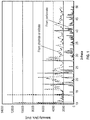
- Cerium citrate samples synthesized from cerium carbonate, cerium nitrate and cerium chloride using wet chemistry were compared using x-ray diffraction (XRD) as shown in Figure 1 .
- Cerium citrate synthesized from carbonate has one type of powder diffraction structure (type I), which is different from cerium citrate synthesized from nitrate or chloride (which have type II structure).
- the cerium citrate synthesized from three different starting materials was each combined with an anodic corrosion inhibitor.
- the corrosion inhibiting properties were evaluated by comparing the corrosion current (in milliamperes per square centimeter) in an aqueous solution comprising 350 ppm NaCl. Lower corrosion current indicates better corrosion inhibiting performance. Results are shown in Table 1. Table 1.
- Cerium citrate was synthesized from cerium carbonate and had differing levels of hydration. 1.92 grams of citric acid was dissolved in 50 milliliters of deionized water. The mixture was heated to 80 °C. 2.88 grams of cerium carbonate hydrate was added slowly over an hour. The reaction was continued for 6 hours and the pH of the reaction mixture was 1-3 (by pH paper). The reaction mixture was cooled and an additional 0.288 grams of cerium carbonate was added slowly and allowed to react overnight. The pH of the reaction mixture was 6-7 at the end of the overnight period. The material was filtered, washed with deionized water and dried in an oven.
Landscapes
- Chemical & Material Sciences (AREA)
- Organic Chemistry (AREA)
- Engineering & Computer Science (AREA)
- Materials Engineering (AREA)
- Metallurgy (AREA)
- Mechanical Engineering (AREA)
- Inorganic Chemistry (AREA)
- Life Sciences & Earth Sciences (AREA)
- Wood Science & Technology (AREA)
- Oil, Petroleum & Natural Gas (AREA)
- Preventing Corrosion Or Incrustation Of Metals (AREA)
- Paints Or Removers (AREA)
- Lubricants (AREA)
- Geology (AREA)
Abstract
Description
- This disclosure relates to corrosion inhibitors and, more particularly, to methods of making corrosion inhibitors.
- Components made from metallic alloys, such as aluminum alloys, achieve higher strengths through inclusion of alloying elements. However, the presence of these alloying elements tends to make the alloy vulnerable to corrosion. Typically, the component utilizes a protective coating containing a corrosion-inhibitor to protect the underlying alloy from corrosion.
- One type of corrosion-inhibitor includes hexavalent chromium in the form of a barium or strontium chromate compound, for example. Although effective, hexavalent chromium is commonly recognized as a carcinogen and is therefore undesirable for use as a coating.
- Chrome-free corrosion-inhibitors have been used as an alternative to hexavalent chromium inhibitors. For example, chrome-free corrosion inhibitors utilize anodic and cathodic corrosion inhibitors to resist corrosion of the underlying alloy.
- The effectiveness of the anodic and cathodic corrosion inhibitors is related to their composition and availability for corrosion inhibition. Accordingly, it is desirable to provide improved methods for the synthesis of corrosion inhibitors to improve the quality and availability of the corrosion inhibitor.
- In some aspects of the disclosure, a method of making cerium citrate includes combining cerium carbonate and citric acid to produce cerium citrate and carbon dioxide.
- In the method described above the cerium carbonate may be a hydrated cerium carbonate.
- In any of the foregoing embodiments, the cerium carbonate and citric acid may be combined in the presence of a solvent.
- In any of the foregoing embodiments, the method may further comprises washing the cerium citrate, drying the washed cerium citrate and reducing the dried cerium citrate to a fine powder.
- In any of the foregoing embodiments, the cerium citrate may have greater than or equal to 5 weight percent water of hydration.
- In any of the foregoing embodiments, the cerium citrate may be a trivalent cerium citrate.
- In any of the foregoing embodiments, the cerium carbonate and citric acid may be subjected to high energy ball milling. The high energy ball milling may be performed using stainless steel, ceramic, or tungsten balls. The cerium carbonate may be a hydrate.
- In another embodiment, a cerium citrate (e.g. produced by combining cerium carbonate and citric acid) is described and the cerium citrate is substantially free of negative ions other than citrate. The cerium citrate may be hydrated. When hydrated, the cerium citrate may have greater than or equal to 10 weight percent water of hydration. In any of the foregoing embodiments the cerium citrate may be a trivalent cerium citrate.
- In another embodiment, a corrosion inhibitor composition comprises a cerium citrate as herein described.
- In another embodiment, a corrosion inhibitor composition includes a cerium citrate (e.g. as herein described) substantially free of negative ions other than citrate. The cerium citrate may be a hydrate. When the cerium citrate is a hydrate it may have greater than or equal to 10 weight percent water of hydration. In any of the foregoing embodiments the cerium citrate may be a trivalent cerium citrate. In any of the foregoing embodiments the corrosion inhibitor composition may include zinc molybdate. The corrosion inhibitor composition of any of the foregoing embodiments may be combined with at least one of an adhesive, primer, paint, lubricant, cooling fluid, sealant and epoxy.
- In another embodiment, the present disclosure provides an article comprising a metal substrate; and a corrosion inhibitor as herein described disposed on the substrate, wherein the corrosion inhibitor comprises a cerium citrate substantially free of negative ions other than citrate.
- Also described herein is a metal substrate and a corrosion inhibitor disposed on the substrate, wherein the corrosion inhibitor includes a cerium citrate substantially free of negative ions other than citrate.
- The foregoing features and elements may be combined in various combinations without exclusivity, unless expressly indicated otherwise. These features and elements as well as the operation thereof will become more apparent in light of the following description and the accompanying drawings. It should be understood, however, that the following description and drawings are intended to be illustrative and explanatory in nature and non-limiting.
- The subject matter which is regarded as the present disclosure is particularly pointed out and distinctly claimed in the claims at the conclusion of the specification. The foregoing and other features, and advantages of the present disclosure are apparent from the following detailed description taken in conjunction with the accompanying drawing in which:
-
Figure 1 shows the x-ray diffraction patterns for cerium citrate synthesized from cerium carbonate, cerium nitrate and cerium chloride. - Cerium citrate is a cathodic corrosion inhibitor for aluminum alloys. Surprisingly, it has been found that the method of synthesis of the cerium citrate can affect its effectiveness as a corrosion inhibitor. Typically, cerium citrate has been made using cerium chloride or cerium nitrate as a starting material. Unfortunately, the negative ion components of these compounds, the chloride and the nitrate, when released during the synthesis of cerium citrate can adsorb to the cerium citrate surface. These negative ions are then included in the corrosion inhibitor composition and can harm the corrosion protection due to ionic mobility and result in corrosion issues. As a result of this discovery a new method of cerium citrate synthesis was required, one in which the issues of negative ion adsorption would be avoided.
- Disclosed herein is a method of making cerium citrate comprising reacting cerium carbonate hydrate with citric acid as shown in formula (1)
Ce2(CO3)3·mH2O + 2C6H8O7 → 2Ce(C6H5O7) + 3CO2 + (m+3)H2O (1)
Advantageously a product of the reaction is carbon dioxide which is not ionic and is typically a gas under the reaction conditions. Hence, the carbon dioxide product is not adsorbed to the surface of the cerium citrate and the cerium citrate produced in this manner does not comprise negative ions that affect the corrosion protection in a negative manner. Additionally, it should be noted that the cerium citrate produced using cerium carbonate as a starting material has a different crystal structure than cerium citrate produced using either cerium nitrate or cerium chloride as a starting material. The cerium carbonate hydrate shown in formula (1) has a hydration level m and m can have a value of 0 to 10, or, 1 to 9, or, 2 to 8. The cerium citrate produced by the reaction can be a trivalent cerium citrate. - The reaction described by formula (1) can be performed by combining cerium carbonate hydrate, citric acid and a solvent in an inert atmosphere. The cerium carbonate hydrate and citric acid are combined in a molar ratio of 1:1 to 1:3, or 1:2 to 1:2.5, or 1:2.1. Useful solvents include water and polar protic solvents having a low boiling point such as methanol, ethanol, and propanol. The inert atmosphere typically comprises nitrogen or argon or other inert gas. The inert gas is employed to prevent or limit oxidation of the cerium ion during cerium citrate synthesis. Carbon dioxide is not a useful gas for the inert atmosphere as it would impede or slow the progress of the reaction. The reaction may be performed at a temperature of 50 to 90°C for 5 to 7 hours. Within this range the temperature can be 60 to 80°C. The reaction time can be 5.5 to 6.5 hours. At this point the reaction may have a pH of 1 to 3. The reaction is then cooled to room temperature. After the reaction is cooled to room temperature additional cerium carbonate hydrate can be added. The reaction is continued for another 8 to 12 hours. At this point the reaction may have a pH of 6 to 7.
- The reaction product, cerium citrate, can be isolated by a solid separation method such as filtration, centrifugation, or vacuum evaporation. Following separation the product is typically washed with deionized water to remove any remaining citric acid. After washing the cerium citrate can be dried. Drying can occur at a temperature of 50°C to 85°C for 4 to 12 hours. In some embodiments a vacuum oven is used. Drying is not intended to remove all waters of hydration from the cerium citrate. In some embodiments the cerium citrate has greater than or equal to 5 weight percent water of hydration, or greater than or equal to 10 weight percent water of hydration. When the water of hydration is less than 10 weight percent, the corrosion inhibiting performance of the cerium citrate may be decreased. After drying, the resulting material can be reduced in size to a fine powder by milling, grinding or a combination thereof.
- The reaction described by formula (1) can also be performed using high energy ball milling. The cerium carbonate and citric acid can be combined in amounts as described above. The cerium carbonate is preferably a hydrate although a hydrated cerium carbonate is not required. The reactants are combined in a container, typically stainless steel or tungsten lined, with stainless steel, ceramic or tungsten balls of the desired number and size. The number and size of the balls is typically dictated by the size of the container and the amount of material being reacted. For example, 2.88 grams of cerium carbonate hydrate and 1.92 grams of citric acid can be combined with about a dozen of ceramic balls having a diameter of 0.25 inches in a cylindrical stainless steel autoclave (1.5 inch inner diameter, 2.25 inch in height) having a volume of 65 milliliters with a pressure relief valve. The container is purged with an inert gas such as nitrogen or argon, then placed in a shaker mill or similar device and agitated at a speed of 30 to 720 rotations per minute (rpm). If the cerium carbonate employed is not a hydrate then the reaction may be facilitated by the addition of a small amount of solvent or water, for example, 10 to 1000 microliters of water per gram of cerium carbonate. Agitation continues for approximately 60 hours. After the reaction is complete the product is washed to remove any excess citric acid, dried and reduced to a fine powder as described above.
- The cerium citrate produced as described herein is substantially free of negative ions other than citrate. Substantially free, as used in this context, is defined as containing less than 1 weight percent (wt%) based on the total weight of the material, or, less than 0.1 wt% of a negative ion other than citrate.
- The cerium citrate substantially free of negative ions other than citrate can be used in a corrosion inhibitor composition. The corrosion inhibitor composition can further comprise anodic corrosion inhibitors such as molybdates, permanganates, tungstates, and/or vanadates. In some embodiments the corrosion inhibitor composition further comprises zinc molybdate.
- The corrosion inhibitor composition may be included in adhesives, paints and primers, organic sealants, epoxies, cooling fluids, lubricants, and the like (hereafter referred to as a carrier fluid). These products may be applied to a metal substrate that is being protected by any suitable manner such as spraying, brushing, dipping, or the like. In addition, the corrosion inhibitor composition may be dissolved in a carrier such as alcohol, water or the like and formed on the surface of a substrate as a conversion coating.
- The corrosion inhibitor composition is particularly useful in preventing general corrosion and pitting corrosion on metal substrates, particularly, high strength aluminum alloys for use in the aerospace industry. The corrosion inhibitor composition may be applied in any manner known in the art including as a conversion coating, or applied as a primer, adhesive, epoxy, paint, organic sealant, sealer for anodized aluminum, additive for recirculating water system or the like.
- Cerium citrate samples synthesized from cerium carbonate, cerium nitrate and cerium chloride using wet chemistry were compared using x-ray diffraction (XRD) as shown in
Figure 1 . Cerium citrate synthesized from carbonate has one type of powder diffraction structure (type I), which is different from cerium citrate synthesized from nitrate or chloride (which have type II structure). The cerium citrate synthesized from three different starting materials was each combined with an anodic corrosion inhibitor. The corrosion inhibiting properties were evaluated by comparing the corrosion current (in milliamperes per square centimeter) in an aqueous solution comprising 350 ppm NaCl. Lower corrosion current indicates better corrosion inhibiting performance. Results are shown in Table 1.Table 1. XRD structure Corrosion Current (mA/cm2) in 350 ppm NaCl Cerium citrate from carbonate Type I 0.02-0.08 Cerium citrate from chloride Type II 0.2-0.3 Cerium citrate from nitrate Type II 0.03-0.04 - The effect of hydrated water was also examined. Cerium citrate was synthesized from cerium carbonate and had differing levels of hydration. 1.92 grams of citric acid was dissolved in 50 milliliters of deionized water. The mixture was heated to 80 °C. 2.88 grams of cerium carbonate hydrate was added slowly over an hour. The reaction was continued for 6 hours and the pH of the reaction mixture was 1-3 (by pH paper). The reaction mixture was cooled and an additional 0.288 grams of cerium carbonate was added slowly and allowed to react overnight. The pH of the reaction mixture was 6-7 at the end of the overnight period. The material was filtered, washed with deionized water and dried in an oven. One sample dried at 60°C overnight had greater than 10 wt% water whereas one sample dried at 90°C overnight had less than 10 wt% water. The cerium citrate with differing water content was each combined with the same anodic corrosion inhibitor. The corrosion inhibiting properties were evaluated by comparing the corrosion current (in milliamperes per square centimeter) in an aqueous solution comprising 350 ppm NaCl. Lower corrosion current indicates better corrosion inhibiting performance. Results are shown in Table 2.
Table 2. Water content Corrosion Current (mA/cm2) in 350 ppm NaCl Cerium citrate from carbonate <10 wt% 1.0-1.3 Cerium citrate from carbonate > 10 wt% 0.1-0.3 - Embodiment 1: A method of making cerium citrate comprising combining cerium carbonate and citric acid to produce cerium citrate and carbon dioxide.
- Embodiment 2: The method of Embodiment 1, wherein the cerium carbonate is a hydrated cerium carbonate.
- Embodiment 3: The method of
Embodiment 1 or 2, wherein the cerium carbonate and citric acid are combined in the presence of a solvent. - Embodiment 4: The method of any one of Embodiments 1-3, further comprising washing the cerium citrate, drying the washed cerium citrate and reducing the dried cerium citrate to a fine powder.
- Embodiment 5: The method of any one of Embodiments 1-4, wherein the cerium citrate has greater than or equal to 5 weight percent water of hydration.
- Embodiment 6: The method of any one of Embodiments 1-5, wherein the cerium citrate is a trivalent cerium citrate.
- Embodiment 7: The method of any one of Embodiments 1-6, wherein the cerium carbonate and citric acid are subjected to high energy ball milling.
- Embodiment 8: The method of Embodiment 7, wherein the high energy ball milling is performed using stainless steel, ceramic, or tungsten balls.
- Embodiment 9: A cerium citrate produced by the method of any one of Embodiments 1-8, wherein the cerium citrate is substantially free of negative ions other than citrate.
- Embodiment 10: The cerium citrate of Embodiment 9, wherein the cerium citrate is hydrated.
- Embodiment 12: The cerium citrate of
Embodiment 9 or 10, wherein the cerium citrate has greater than or equal to 10 weight percent water of hydration. - Embodiment 13: The cerium citrate of any one of Embodiments 9-12, wherein the cerium citrate is a trivalent cerium citrate.
- Embodiment 14: A corrosion inhibitor composition comprising a cerium citrate substantially free of negative ions other than citrate.
- Embodiment 15: The corrosion inhibitor composition of Embodiment 14, wherein the cerium citrate is a hydrate.
- Embodiment 16: The corrosion inhibitor composition of
Embodiment 15, wherein the cerium citrate has greater than or equal to 10 weight percent water of hydration. - Embodiment 17: The corrosion inhibitor composition of any one of Embodiments 14-16, wherein the cerium citrate is a trivalent cerium citrate.
- Embodiment 18: The corrosion inhibitor composition of any one of Embodiments 14-17 further comprising zinc molybdate.
- Embodiment 19: The corrosion inhibitor composition of any one of Embodiments 14 to 18 in combination with at least one of an adhesive, primer, paint, lubricant, cooling fluid, sealant and epoxy.
- Embodiment 20: An article comprising a metal substrate; and a corrosion inhibitor according to any one of Embodiments 14-19 disposed on the substrate.
- The use of the terms "a," "an," "the," and similar references in the context of description (especially in the context of the following claims) are to be construed to cover both the singular and the plural, unless otherwise indicated herein or specifically contradicted by context. All ranges disclosed herein are inclusive of the endpoints, and the endpoints are independently combinable with each other.
- While the present disclosure has been described in detail in connection with only a limited number of embodiments, it should be readily understood that the present disclosure is not limited to such disclosed embodiments. Rather, the present disclosure can be modified to incorporate any number of variations, alterations, substitutions, combinations, sub-combinations, or equivalent arrangements not heretofore described, but which are commensurate with the scope of the present disclosure. Additionally, while various embodiments of the present disclosure have been described, it is to be understood that aspects of the present disclosure may include only some of the described embodiments.
- Accordingly, the present disclosure is not to be seen as limited by the foregoing description, but is only limited by the scope of the appended claims.
Claims (14)
- A method of making cerium citrate comprising combining cerium carbonate and citric acid to produce cerium citrate and carbon dioxide.
- The method of claim 1, wherein the cerium carbonate is a hydrated cerium carbonate.
- The method of claim 1 or 2, wherein the cerium carbonate and citric acid are combined in the presence of a solvent.
- The method of any one of claims 1-3, further comprising washing the cerium citrate, drying the washed cerium citrate and reducing the dried cerium citrate to a fine powder.
- The method of any one of claims 1-4, wherein the cerium citrate has greater than or equal to 5 weight percent water of hydration.
- The method of any one of claims 1-5, wherein the cerium citrate is a trivalent cerium citrate.
- The method of any one of claims 1-6, wherein the cerium carbonate and citric acid are subjected to high energy ball milling.
- The method of claim 7, wherein the high energy ball milling is performed using stainless steel, ceramic, or tungsten balls.
- A cerium citrate (e.g. produced by the method of any one of claims 1-8), wherein the cerium citrate is substantially free of negative ions other than citrate.
- The cerium citrate of claim 9, wherein the cerium citrate has greater than or equal to 10 weight percent water of hydration.
- A corrosion inhibitor composition comprising a cerium citrate according to claim 9 or 10.
- The corrosion inhibitor composition of claim 11 further comprising zinc molybdate.
- The corrosion inhibitor composition of claim 11 or 12 in combination with at least one of an adhesive, primer, paint, lubricant, cooling fluid, sealant and epoxy.
- An article comprising:a metal substrate; anda corrosion inhibitor according to any one of claims 11 to 13 disposed on the substrate, wherein the corrosion inhibitor comprises a cerium citrate substantially free of negative ions other than citrate.
Priority Applications (1)
| Application Number | Priority Date | Filing Date | Title |
|---|---|---|---|
| EP23197785.1A EP4269488B1 (en) | 2016-06-06 | 2017-06-06 | Cerium citrate, method of making and corrosion inhibitor comprising cerium citrate |
Applications Claiming Priority (1)
| Application Number | Priority Date | Filing Date | Title |
|---|---|---|---|
| US15/173,847 US10138561B2 (en) | 2016-06-06 | 2016-06-06 | Cerium citrate, method of making and corrosion inhibitor comprising cerium citrate |
Related Child Applications (1)
| Application Number | Title | Priority Date | Filing Date |
|---|---|---|---|
| EP23197785.1A Division EP4269488B1 (en) | 2016-06-06 | 2017-06-06 | Cerium citrate, method of making and corrosion inhibitor comprising cerium citrate |
Publications (2)
| Publication Number | Publication Date |
|---|---|
| EP3257970A1 true EP3257970A1 (en) | 2017-12-20 |
| EP3257970B1 EP3257970B1 (en) | 2023-09-20 |
Family
ID=59101269
Family Applications (2)
| Application Number | Title | Priority Date | Filing Date |
|---|---|---|---|
| EP17174490.7A Active EP3257970B1 (en) | 2016-06-06 | 2017-06-06 | Cerium citrate, method of making and corrosion inhibitor comprising cerium citrate |
| EP23197785.1A Active EP4269488B1 (en) | 2016-06-06 | 2017-06-06 | Cerium citrate, method of making and corrosion inhibitor comprising cerium citrate |
Family Applications After (1)
| Application Number | Title | Priority Date | Filing Date |
|---|---|---|---|
| EP23197785.1A Active EP4269488B1 (en) | 2016-06-06 | 2017-06-06 | Cerium citrate, method of making and corrosion inhibitor comprising cerium citrate |
Country Status (2)
| Country | Link |
|---|---|
| US (2) | US10138561B2 (en) |
| EP (2) | EP3257970B1 (en) |
Families Citing this family (2)
| Publication number | Priority date | Publication date | Assignee | Title |
|---|---|---|---|---|
| US10829647B2 (en) | 2018-12-11 | 2020-11-10 | Hamilton Sunstrand Corporation | Chromium-free corrosion inhibition coating |
| CN110357778B (en) * | 2019-08-02 | 2022-02-11 | 湖南柿竹园有色金属有限责任公司 | Preparation method of bismuth citrate |
Citations (5)
| Publication number | Priority date | Publication date | Assignee | Title |
|---|---|---|---|---|
| EP1493846A1 (en) * | 2003-06-30 | 2005-01-05 | United Technologies Corporation | Corrosion inhibiting additive and corrosion inhibiting coating |
| EP1842881A1 (en) * | 2006-04-04 | 2007-10-10 | United Technologies Corporation | Chromate free waterborne corrosion resistant primer |
| EP2011899A2 (en) * | 2007-06-27 | 2009-01-07 | United Technologies Corporation | Corrosion inhibiting coating composition for a Zn-containing aluminum alloy |
| US20090117369A1 (en) * | 2007-11-02 | 2009-05-07 | United Technologies Corporation | Anodic-cathodic corrosion inhibitor-conductive polymer composite |
| CN101481510A (en) * | 2008-01-10 | 2009-07-15 | 丁忠 | Cerium citrate nontoxic rust-preventive pigment and coating thereof |
Family Cites Families (2)
| Publication number | Priority date | Publication date | Assignee | Title |
|---|---|---|---|---|
| JP2004529676A (en) | 2000-11-13 | 2004-09-30 | ダブリュ アイ ティー アイ ピー コーポレーション | Treatment catheter with insulated area |
| CN1484970A (en) * | 2003-08-13 | 2004-03-31 | 中国科学院长春应用化学研究所 | Rare earth citric acid complex fish bait additive |
-
2016
- 2016-06-06 US US15/173,847 patent/US10138561B2/en active Active
-
2017
- 2017-06-06 EP EP17174490.7A patent/EP3257970B1/en active Active
- 2017-06-06 EP EP23197785.1A patent/EP4269488B1/en active Active
-
2018
- 2018-11-21 US US16/197,955 patent/US11780799B2/en active Active
Patent Citations (5)
| Publication number | Priority date | Publication date | Assignee | Title |
|---|---|---|---|---|
| EP1493846A1 (en) * | 2003-06-30 | 2005-01-05 | United Technologies Corporation | Corrosion inhibiting additive and corrosion inhibiting coating |
| EP1842881A1 (en) * | 2006-04-04 | 2007-10-10 | United Technologies Corporation | Chromate free waterborne corrosion resistant primer |
| EP2011899A2 (en) * | 2007-06-27 | 2009-01-07 | United Technologies Corporation | Corrosion inhibiting coating composition for a Zn-containing aluminum alloy |
| US20090117369A1 (en) * | 2007-11-02 | 2009-05-07 | United Technologies Corporation | Anodic-cathodic corrosion inhibitor-conductive polymer composite |
| CN101481510A (en) * | 2008-01-10 | 2009-07-15 | 丁忠 | Cerium citrate nontoxic rust-preventive pigment and coating thereof |
Also Published As
| Publication number | Publication date |
|---|---|
| EP4269488A2 (en) | 2023-11-01 |
| EP3257970B1 (en) | 2023-09-20 |
| EP4269488A3 (en) | 2024-01-31 |
| US20190169757A1 (en) | 2019-06-06 |
| US11780799B2 (en) | 2023-10-10 |
| EP4269488B1 (en) | 2025-01-01 |
| US10138561B2 (en) | 2018-11-27 |
| US20170350019A1 (en) | 2017-12-07 |
Similar Documents
| Publication | Publication Date | Title |
|---|---|---|
| RU2453632C2 (en) | Vapour-phase acid corrosion inhibitors and procedure for their production | |
| JP6461815B2 (en) | Method for producing anticorrosion coating | |
| Hang et al. | Layered double hydroxides as containers of inhibitors in organic coatings for corrosion protection of carbon steel | |
| Zeng et al. | Corrosion of molybdate intercalated hydrotalcite coating on AZ31 Mg alloy | |
| Yan et al. | Self-healing system adapted to different pH environments for active corrosion protection of magnesium alloy | |
| Alibakhshi et al. | Corrosion inhibitor release from Zn-Al-[PO43-]-[CO32-] layered double hydroxide nanoparticles | |
| US8722147B2 (en) | Corrosion resistant primer coating | |
| Ishizaki et al. | Corrosion resistance of Mg–Al layered double hydroxide container-containing magnesium hydroxide films formed directly on magnesium alloy by chemical-free steam coating | |
| Buchheit et al. | Corrosion-resistant, chromate-free talc coatings for aluminum | |
| EP2838672B1 (en) | Process for coating metallic surfaces with coating compositions containing particles of a layered double hydroxide | |
| JP2565862B2 (en) | Heterocyclic corrosion inhibitor | |
| US11780799B2 (en) | Cerium citrate, method of making and corrosion inhibitor comprising cerium citrate | |
| EP2011899B1 (en) | Corrosion inhibiting coating composition for a Zn-containing aluminum alloy | |
| US5458678A (en) | Alkaline earth metal salts, transition metal salts and transition metal complexes of ketocarboxylic acids as corrosion inhibitors | |
| WO2005033362A1 (en) | Liquid coolant composition | |
| CN113621955A (en) | Pretreatment composition | |
| Bhoge et al. | Synthesis and anticorrosive performance evaluation of zinc vanadate pigment | |
| EP3255178A2 (en) | Corrosion inhibiting additive | |
| JP2015110486A (en) | Method for producing zinc cyanamide | |
| Kord et al. | Corrosion behavior of carbon steel in HCl solution by Fe and Cr complexes with a Schiff-base ligand derived from salicylaldehyde and 2-(2-aminoethylamino) ethanol | |
| KR20100036320A (en) | Anticorrosive pigment composition and water-based anticorrosive coating material containing the same | |
| Zuo et al. | Inhibition of AA 2024-T3 corrosion in alkaline NaCl solution by compound sodium dodecylbenzenesulfonate and cerium chloride | |
| Kwak et al. | A Study on Volatile Corrosion Inhibitors for Steel with Excellent Long-Term Anti-Rust | |
| Kuznetsov | Triazoles as a class of multifunctional corrosion inhibitors. Review. Part IV. Magnesium alloys | |
| Sharma et al. | Corrosion inhibition and Adsorption characteristics of 3, 4, 5-trihydroxy-n-(3, 4-dimethoxy benzylidene) benzo hydrazide schiff base on aluminium in different concentration of Hydrochloric acid environment |
Legal Events
| Date | Code | Title | Description |
|---|---|---|---|
| PUAI | Public reference made under article 153(3) epc to a published international application that has entered the european phase |
Free format text: ORIGINAL CODE: 0009012 |
|
| STAA | Information on the status of an ep patent application or granted ep patent |
Free format text: STATUS: THE APPLICATION HAS BEEN PUBLISHED |
|
| AK | Designated contracting states |
Kind code of ref document: A1 Designated state(s): AL AT BE BG CH CY CZ DE DK EE ES FI FR GB GR HR HU IE IS IT LI LT LU LV MC MK MT NL NO PL PT RO RS SE SI SK SM TR |
|
| AX | Request for extension of the european patent |
Extension state: BA ME |
|
| STAA | Information on the status of an ep patent application or granted ep patent |
Free format text: STATUS: REQUEST FOR EXAMINATION WAS MADE |
|
| 17P | Request for examination filed |
Effective date: 20180620 |
|
| RBV | Designated contracting states (corrected) |
Designated state(s): AL AT BE BG CH CY CZ DE DK EE ES FI FR GB GR HR HU IE IS IT LI LT LU LV MC MK MT NL NO PL PT RO RS SE SI SK SM TR |
|
| STAA | Information on the status of an ep patent application or granted ep patent |
Free format text: STATUS: EXAMINATION IS IN PROGRESS |
|
| 17Q | First examination report despatched |
Effective date: 20181122 |
|
| RAP1 | Party data changed (applicant data changed or rights of an application transferred) |
Owner name: RAYTHEON TECHNOLOGIES CORPORATION |
|
| GRAP | Despatch of communication of intention to grant a patent |
Free format text: ORIGINAL CODE: EPIDOSNIGR1 |
|
| STAA | Information on the status of an ep patent application or granted ep patent |
Free format text: STATUS: GRANT OF PATENT IS INTENDED |
|
| RIC1 | Information provided on ipc code assigned before grant |
Ipc: C08K 3/24 20060101ALI20230228BHEP Ipc: C08K 3/10 20060101ALI20230228BHEP Ipc: C07C 51/41 20060101ALI20230228BHEP Ipc: C09D 7/61 20180101ALI20230228BHEP Ipc: C23F 11/18 20060101ALI20230228BHEP Ipc: C23F 11/10 20060101ALI20230228BHEP Ipc: C09D 5/08 20060101ALI20230228BHEP Ipc: C23F 13/06 20060101ALI20230228BHEP Ipc: C23F 13/14 20060101AFI20230228BHEP |
|
| INTG | Intention to grant announced |
Effective date: 20230403 |
|
| GRAS | Grant fee paid |
Free format text: ORIGINAL CODE: EPIDOSNIGR3 |
|
| GRAA | (expected) grant |
Free format text: ORIGINAL CODE: 0009210 |
|
| STAA | Information on the status of an ep patent application or granted ep patent |
Free format text: STATUS: THE PATENT HAS BEEN GRANTED |
|
| AK | Designated contracting states |
Kind code of ref document: B1 Designated state(s): AL AT BE BG CH CY CZ DE DK EE ES FI FR GB GR HR HU IE IS IT LI LT LU LV MC MK MT NL NO PL PT RO RS SE SI SK SM TR |
|
| REG | Reference to a national code |
Ref country code: GB Ref legal event code: FG4D |
|
| REG | Reference to a national code |
Ref country code: CH Ref legal event code: EP |
|
| REG | Reference to a national code |
Ref country code: DE Ref legal event code: R096 Ref document number: 602017074357 Country of ref document: DE |
|
| REG | Reference to a national code |
Ref country code: IE Ref legal event code: FG4D |
|
| RAP4 | Party data changed (patent owner data changed or rights of a patent transferred) |
Owner name: RTX CORPORATION |
|
| REG | Reference to a national code |
Ref country code: LT Ref legal event code: MG9D |
|
| PG25 | Lapsed in a contracting state [announced via postgrant information from national office to epo] |
Ref country code: GR Free format text: LAPSE BECAUSE OF FAILURE TO SUBMIT A TRANSLATION OF THE DESCRIPTION OR TO PAY THE FEE WITHIN THE PRESCRIBED TIME-LIMIT Effective date: 20231221 |
|
| REG | Reference to a national code |
Ref country code: NL Ref legal event code: MP Effective date: 20230920 |
|
| PG25 | Lapsed in a contracting state [announced via postgrant information from national office to epo] |
Ref country code: SE Free format text: LAPSE BECAUSE OF FAILURE TO SUBMIT A TRANSLATION OF THE DESCRIPTION OR TO PAY THE FEE WITHIN THE PRESCRIBED TIME-LIMIT Effective date: 20230920 Ref country code: RS Free format text: LAPSE BECAUSE OF FAILURE TO SUBMIT A TRANSLATION OF THE DESCRIPTION OR TO PAY THE FEE WITHIN THE PRESCRIBED TIME-LIMIT Effective date: 20230920 Ref country code: NO Free format text: LAPSE BECAUSE OF FAILURE TO SUBMIT A TRANSLATION OF THE DESCRIPTION OR TO PAY THE FEE WITHIN THE PRESCRIBED TIME-LIMIT Effective date: 20231220 Ref country code: LV Free format text: LAPSE BECAUSE OF FAILURE TO SUBMIT A TRANSLATION OF THE DESCRIPTION OR TO PAY THE FEE WITHIN THE PRESCRIBED TIME-LIMIT Effective date: 20230920 Ref country code: LT Free format text: LAPSE BECAUSE OF FAILURE TO SUBMIT A TRANSLATION OF THE DESCRIPTION OR TO PAY THE FEE WITHIN THE PRESCRIBED TIME-LIMIT Effective date: 20230920 Ref country code: HR Free format text: LAPSE BECAUSE OF FAILURE TO SUBMIT A TRANSLATION OF THE DESCRIPTION OR TO PAY THE FEE WITHIN THE PRESCRIBED TIME-LIMIT Effective date: 20230920 Ref country code: GR Free format text: LAPSE BECAUSE OF FAILURE TO SUBMIT A TRANSLATION OF THE DESCRIPTION OR TO PAY THE FEE WITHIN THE PRESCRIBED TIME-LIMIT Effective date: 20231221 Ref country code: FI Free format text: LAPSE BECAUSE OF FAILURE TO SUBMIT A TRANSLATION OF THE DESCRIPTION OR TO PAY THE FEE WITHIN THE PRESCRIBED TIME-LIMIT Effective date: 20230920 |
|
| REG | Reference to a national code |
Ref country code: AT Ref legal event code: MK05 Ref document number: 1613455 Country of ref document: AT Kind code of ref document: T Effective date: 20230920 |
|
| PG25 | Lapsed in a contracting state [announced via postgrant information from national office to epo] |
Ref country code: NL Free format text: LAPSE BECAUSE OF FAILURE TO SUBMIT A TRANSLATION OF THE DESCRIPTION OR TO PAY THE FEE WITHIN THE PRESCRIBED TIME-LIMIT Effective date: 20230920 |
|
| PG25 | Lapsed in a contracting state [announced via postgrant information from national office to epo] |
Ref country code: IS Free format text: LAPSE BECAUSE OF FAILURE TO SUBMIT A TRANSLATION OF THE DESCRIPTION OR TO PAY THE FEE WITHIN THE PRESCRIBED TIME-LIMIT Effective date: 20240120 |
|
| PG25 | Lapsed in a contracting state [announced via postgrant information from national office to epo] |
Ref country code: AT Free format text: LAPSE BECAUSE OF FAILURE TO SUBMIT A TRANSLATION OF THE DESCRIPTION OR TO PAY THE FEE WITHIN THE PRESCRIBED TIME-LIMIT Effective date: 20230920 |
|
| PG25 | Lapsed in a contracting state [announced via postgrant information from national office to epo] |
Ref country code: ES Free format text: LAPSE BECAUSE OF FAILURE TO SUBMIT A TRANSLATION OF THE DESCRIPTION OR TO PAY THE FEE WITHIN THE PRESCRIBED TIME-LIMIT Effective date: 20230920 |
|
| PG25 | Lapsed in a contracting state [announced via postgrant information from national office to epo] |
Ref country code: SM Free format text: LAPSE BECAUSE OF FAILURE TO SUBMIT A TRANSLATION OF THE DESCRIPTION OR TO PAY THE FEE WITHIN THE PRESCRIBED TIME-LIMIT Effective date: 20230920 Ref country code: RO Free format text: LAPSE BECAUSE OF FAILURE TO SUBMIT A TRANSLATION OF THE DESCRIPTION OR TO PAY THE FEE WITHIN THE PRESCRIBED TIME-LIMIT Effective date: 20230920 Ref country code: IS Free format text: LAPSE BECAUSE OF FAILURE TO SUBMIT A TRANSLATION OF THE DESCRIPTION OR TO PAY THE FEE WITHIN THE PRESCRIBED TIME-LIMIT Effective date: 20240120 Ref country code: ES Free format text: LAPSE BECAUSE OF FAILURE TO SUBMIT A TRANSLATION OF THE DESCRIPTION OR TO PAY THE FEE WITHIN THE PRESCRIBED TIME-LIMIT Effective date: 20230920 Ref country code: EE Free format text: LAPSE BECAUSE OF FAILURE TO SUBMIT A TRANSLATION OF THE DESCRIPTION OR TO PAY THE FEE WITHIN THE PRESCRIBED TIME-LIMIT Effective date: 20230920 Ref country code: CZ Free format text: LAPSE BECAUSE OF FAILURE TO SUBMIT A TRANSLATION OF THE DESCRIPTION OR TO PAY THE FEE WITHIN THE PRESCRIBED TIME-LIMIT Effective date: 20230920 Ref country code: AT Free format text: LAPSE BECAUSE OF FAILURE TO SUBMIT A TRANSLATION OF THE DESCRIPTION OR TO PAY THE FEE WITHIN THE PRESCRIBED TIME-LIMIT Effective date: 20230920 Ref country code: PT Free format text: LAPSE BECAUSE OF FAILURE TO SUBMIT A TRANSLATION OF THE DESCRIPTION OR TO PAY THE FEE WITHIN THE PRESCRIBED TIME-LIMIT Effective date: 20240122 Ref country code: SK Free format text: LAPSE BECAUSE OF FAILURE TO SUBMIT A TRANSLATION OF THE DESCRIPTION OR TO PAY THE FEE WITHIN THE PRESCRIBED TIME-LIMIT Effective date: 20230920 |
|
| PG25 | Lapsed in a contracting state [announced via postgrant information from national office to epo] |
Ref country code: PL Free format text: LAPSE BECAUSE OF FAILURE TO SUBMIT A TRANSLATION OF THE DESCRIPTION OR TO PAY THE FEE WITHIN THE PRESCRIBED TIME-LIMIT Effective date: 20230920 Ref country code: IT Free format text: LAPSE BECAUSE OF FAILURE TO SUBMIT A TRANSLATION OF THE DESCRIPTION OR TO PAY THE FEE WITHIN THE PRESCRIBED TIME-LIMIT Effective date: 20230920 |
|
| REG | Reference to a national code |
Ref country code: DE Ref legal event code: R097 Ref document number: 602017074357 Country of ref document: DE |
|
| PG25 | Lapsed in a contracting state [announced via postgrant information from national office to epo] |
Ref country code: DK Free format text: LAPSE BECAUSE OF FAILURE TO SUBMIT A TRANSLATION OF THE DESCRIPTION OR TO PAY THE FEE WITHIN THE PRESCRIBED TIME-LIMIT Effective date: 20230920 |
|
| PLBE | No opposition filed within time limit |
Free format text: ORIGINAL CODE: 0009261 |
|
| STAA | Information on the status of an ep patent application or granted ep patent |
Free format text: STATUS: NO OPPOSITION FILED WITHIN TIME LIMIT |
|
| PG25 | Lapsed in a contracting state [announced via postgrant information from national office to epo] |
Ref country code: DK Free format text: LAPSE BECAUSE OF FAILURE TO SUBMIT A TRANSLATION OF THE DESCRIPTION OR TO PAY THE FEE WITHIN THE PRESCRIBED TIME-LIMIT Effective date: 20230920 |
|
| 26N | No opposition filed |
Effective date: 20240621 |
|
| PG25 | Lapsed in a contracting state [announced via postgrant information from national office to epo] |
Ref country code: SI Free format text: LAPSE BECAUSE OF FAILURE TO SUBMIT A TRANSLATION OF THE DESCRIPTION OR TO PAY THE FEE WITHIN THE PRESCRIBED TIME-LIMIT Effective date: 20230920 |
|
| PG25 | Lapsed in a contracting state [announced via postgrant information from national office to epo] |
Ref country code: SI Free format text: LAPSE BECAUSE OF FAILURE TO SUBMIT A TRANSLATION OF THE DESCRIPTION OR TO PAY THE FEE WITHIN THE PRESCRIBED TIME-LIMIT Effective date: 20230920 |
|
| PG25 | Lapsed in a contracting state [announced via postgrant information from national office to epo] |
Ref country code: BG Free format text: LAPSE BECAUSE OF FAILURE TO SUBMIT A TRANSLATION OF THE DESCRIPTION OR TO PAY THE FEE WITHIN THE PRESCRIBED TIME-LIMIT Effective date: 20230920 |
|
| PG25 | Lapsed in a contracting state [announced via postgrant information from national office to epo] |
Ref country code: BG Free format text: LAPSE BECAUSE OF FAILURE TO SUBMIT A TRANSLATION OF THE DESCRIPTION OR TO PAY THE FEE WITHIN THE PRESCRIBED TIME-LIMIT Effective date: 20230920 |
|
| PG25 | Lapsed in a contracting state [announced via postgrant information from national office to epo] |
Ref country code: MC Free format text: LAPSE BECAUSE OF FAILURE TO SUBMIT A TRANSLATION OF THE DESCRIPTION OR TO PAY THE FEE WITHIN THE PRESCRIBED TIME-LIMIT Effective date: 20230920 |
|
| REG | Reference to a national code |
Ref country code: CH Ref legal event code: PL |
|
| PG25 | Lapsed in a contracting state [announced via postgrant information from national office to epo] |
Ref country code: LU Free format text: LAPSE BECAUSE OF NON-PAYMENT OF DUE FEES Effective date: 20240606 |
|
| PG25 | Lapsed in a contracting state [announced via postgrant information from national office to epo] |
Ref country code: IE Free format text: LAPSE BECAUSE OF NON-PAYMENT OF DUE FEES Effective date: 20240606 |
|
| PG25 | Lapsed in a contracting state [announced via postgrant information from national office to epo] |
Ref country code: CH Free format text: LAPSE BECAUSE OF NON-PAYMENT OF DUE FEES Effective date: 20240630 Ref country code: BE Free format text: LAPSE BECAUSE OF NON-PAYMENT OF DUE FEES Effective date: 20240630 |
|
| REG | Reference to a national code |
Ref country code: BE Ref legal event code: MM Effective date: 20240630 |
|
| PGFP | Annual fee paid to national office [announced via postgrant information from national office to epo] |
Ref country code: DE Payment date: 20250520 Year of fee payment: 9 |
|
| PGFP | Annual fee paid to national office [announced via postgrant information from national office to epo] |
Ref country code: GB Payment date: 20250520 Year of fee payment: 9 |
|
| PGFP | Annual fee paid to national office [announced via postgrant information from national office to epo] |
Ref country code: FR Payment date: 20250520 Year of fee payment: 9 |
|
| REG | Reference to a national code |
Ref country code: DE Ref legal event code: R081 Ref document number: 602017074357 Country of ref document: DE Owner name: RTX CORPORATION (N.D.GES.D. STAATES DELAWARE),, US Free format text: FORMER OWNER: RAYTHEON TECHNOLOGIES CORPORATION, FARMINGTON, CT, US |
|
| PG25 | Lapsed in a contracting state [announced via postgrant information from national office to epo] |
Ref country code: CY Free format text: LAPSE BECAUSE OF FAILURE TO SUBMIT A TRANSLATION OF THE DESCRIPTION OR TO PAY THE FEE WITHIN THE PRESCRIBED TIME-LIMIT; INVALID AB INITIO Effective date: 20170606 |
|
| P01 | Opt-out of the competence of the unified patent court (upc) registered |
Free format text: CASE NUMBER: UPC_APP_0017268_3257970/2025 Effective date: 20251211 |
|
| PG25 | Lapsed in a contracting state [announced via postgrant information from national office to epo] |
Ref country code: HU Free format text: LAPSE BECAUSE OF FAILURE TO SUBMIT A TRANSLATION OF THE DESCRIPTION OR TO PAY THE FEE WITHIN THE PRESCRIBED TIME-LIMIT; INVALID AB INITIO Effective date: 20170606 |