EP3257524B1 - Stabilized solution preparation of pharmaceutical glp-1r antibody fusion protein - Google Patents
Stabilized solution preparation of pharmaceutical glp-1r antibody fusion protein Download PDFInfo
- Publication number
- EP3257524B1 EP3257524B1 EP16748688.5A EP16748688A EP3257524B1 EP 3257524 B1 EP3257524 B1 EP 3257524B1 EP 16748688 A EP16748688 A EP 16748688A EP 3257524 B1 EP3257524 B1 EP 3257524B1
- Authority
- EP
- European Patent Office
- Prior art keywords
- glp
- fusion protein
- antibody fusion
- solution formulation
- seq
- Prior art date
- Legal status (The legal status is an assumption and is not a legal conclusion. Google has not performed a legal analysis and makes no representation as to the accuracy of the status listed.)
- Active
Links
Classifications
-
- A—HUMAN NECESSITIES
- A61—MEDICAL OR VETERINARY SCIENCE; HYGIENE
- A61K—PREPARATIONS FOR MEDICAL, DENTAL OR TOILETRY PURPOSES
- A61K38/00—Medicinal preparations containing peptides
- A61K38/16—Peptides having more than 20 amino acids; Gastrins; Somatostatins; Melanotropins; Derivatives thereof
- A61K38/17—Peptides having more than 20 amino acids; Gastrins; Somatostatins; Melanotropins; Derivatives thereof from animals; from humans
- A61K38/22—Hormones
- A61K38/26—Glucagons
-
- A—HUMAN NECESSITIES
- A61—MEDICAL OR VETERINARY SCIENCE; HYGIENE
- A61K—PREPARATIONS FOR MEDICAL, DENTAL OR TOILETRY PURPOSES
- A61K39/00—Medicinal preparations containing antigens or antibodies
- A61K39/395—Antibodies; Immunoglobulins; Immune serum, e.g. antilymphocytic serum
- A61K39/39591—Stabilisation, fragmentation
-
- A—HUMAN NECESSITIES
- A61—MEDICAL OR VETERINARY SCIENCE; HYGIENE
- A61K—PREPARATIONS FOR MEDICAL, DENTAL OR TOILETRY PURPOSES
- A61K9/00—Medicinal preparations characterised by special physical form
- A61K9/08—Solutions
-
- A—HUMAN NECESSITIES
- A61—MEDICAL OR VETERINARY SCIENCE; HYGIENE
- A61K—PREPARATIONS FOR MEDICAL, DENTAL OR TOILETRY PURPOSES
- A61K39/00—Medicinal preparations containing antigens or antibodies
- A61K39/395—Antibodies; Immunoglobulins; Immune serum, e.g. antilymphocytic serum
- A61K39/39533—Antibodies; Immunoglobulins; Immune serum, e.g. antilymphocytic serum against materials from animals
- A61K39/3955—Antibodies; Immunoglobulins; Immune serum, e.g. antilymphocytic serum against materials from animals against proteinaceous materials, e.g. enzymes, hormones, lymphokines
-
- A—HUMAN NECESSITIES
- A61—MEDICAL OR VETERINARY SCIENCE; HYGIENE
- A61K—PREPARATIONS FOR MEDICAL, DENTAL OR TOILETRY PURPOSES
- A61K47/00—Medicinal preparations characterised by the non-active ingredients used, e.g. carriers or inert additives; Targeting or modifying agents chemically bound to the active ingredient
- A61K47/06—Organic compounds, e.g. natural or synthetic hydrocarbons, polyolefins, mineral oil, petrolatum or ozokerite
- A61K47/08—Organic compounds, e.g. natural or synthetic hydrocarbons, polyolefins, mineral oil, petrolatum or ozokerite containing oxygen, e.g. ethers, acetals, ketones, quinones, aldehydes, peroxides
- A61K47/12—Carboxylic acids; Salts or anhydrides thereof
-
- A—HUMAN NECESSITIES
- A61—MEDICAL OR VETERINARY SCIENCE; HYGIENE
- A61K—PREPARATIONS FOR MEDICAL, DENTAL OR TOILETRY PURPOSES
- A61K47/00—Medicinal preparations characterised by the non-active ingredients used, e.g. carriers or inert additives; Targeting or modifying agents chemically bound to the active ingredient
- A61K47/06—Organic compounds, e.g. natural or synthetic hydrocarbons, polyolefins, mineral oil, petrolatum or ozokerite
- A61K47/16—Organic compounds, e.g. natural or synthetic hydrocarbons, polyolefins, mineral oil, petrolatum or ozokerite containing nitrogen, e.g. nitro-, nitroso-, azo-compounds, nitriles, cyanates
- A61K47/18—Amines; Amides; Ureas; Quaternary ammonium compounds; Amino acids; Oligopeptides having up to five amino acids
-
- A—HUMAN NECESSITIES
- A61—MEDICAL OR VETERINARY SCIENCE; HYGIENE
- A61K—PREPARATIONS FOR MEDICAL, DENTAL OR TOILETRY PURPOSES
- A61K47/00—Medicinal preparations characterised by the non-active ingredients used, e.g. carriers or inert additives; Targeting or modifying agents chemically bound to the active ingredient
- A61K47/06—Organic compounds, e.g. natural or synthetic hydrocarbons, polyolefins, mineral oil, petrolatum or ozokerite
- A61K47/16—Organic compounds, e.g. natural or synthetic hydrocarbons, polyolefins, mineral oil, petrolatum or ozokerite containing nitrogen, e.g. nitro-, nitroso-, azo-compounds, nitriles, cyanates
- A61K47/18—Amines; Amides; Ureas; Quaternary ammonium compounds; Amino acids; Oligopeptides having up to five amino acids
- A61K47/183—Amino acids, e.g. glycine, EDTA or aspartame
-
- A—HUMAN NECESSITIES
- A61—MEDICAL OR VETERINARY SCIENCE; HYGIENE
- A61K—PREPARATIONS FOR MEDICAL, DENTAL OR TOILETRY PURPOSES
- A61K47/00—Medicinal preparations characterised by the non-active ingredients used, e.g. carriers or inert additives; Targeting or modifying agents chemically bound to the active ingredient
- A61K47/06—Organic compounds, e.g. natural or synthetic hydrocarbons, polyolefins, mineral oil, petrolatum or ozokerite
- A61K47/26—Carbohydrates, e.g. sugar alcohols, amino sugars, nucleic acids, mono-, di- or oligo-saccharides; Derivatives thereof, e.g. polysorbates, sorbitan fatty acid esters or glycyrrhizin
-
- A—HUMAN NECESSITIES
- A61—MEDICAL OR VETERINARY SCIENCE; HYGIENE
- A61K—PREPARATIONS FOR MEDICAL, DENTAL OR TOILETRY PURPOSES
- A61K9/00—Medicinal preparations characterised by special physical form
-
- A—HUMAN NECESSITIES
- A61—MEDICAL OR VETERINARY SCIENCE; HYGIENE
- A61K—PREPARATIONS FOR MEDICAL, DENTAL OR TOILETRY PURPOSES
- A61K9/00—Medicinal preparations characterised by special physical form
- A61K9/0012—Galenical forms characterised by the site of application
- A61K9/0019—Injectable compositions; Intramuscular, intravenous, arterial, subcutaneous administration; Compositions to be administered through the skin in an invasive manner
-
- A—HUMAN NECESSITIES
- A61—MEDICAL OR VETERINARY SCIENCE; HYGIENE
- A61P—SPECIFIC THERAPEUTIC ACTIVITY OF CHEMICAL COMPOUNDS OR MEDICINAL PREPARATIONS
- A61P1/00—Drugs for disorders of the alimentary tract or the digestive system
-
- A—HUMAN NECESSITIES
- A61—MEDICAL OR VETERINARY SCIENCE; HYGIENE
- A61P—SPECIFIC THERAPEUTIC ACTIVITY OF CHEMICAL COMPOUNDS OR MEDICINAL PREPARATIONS
- A61P1/00—Drugs for disorders of the alimentary tract or the digestive system
- A61P1/12—Antidiarrhoeals
-
- A—HUMAN NECESSITIES
- A61—MEDICAL OR VETERINARY SCIENCE; HYGIENE
- A61P—SPECIFIC THERAPEUTIC ACTIVITY OF CHEMICAL COMPOUNDS OR MEDICINAL PREPARATIONS
- A61P3/00—Drugs for disorders of the metabolism
- A61P3/04—Anorexiants; Antiobesity agents
-
- A—HUMAN NECESSITIES
- A61—MEDICAL OR VETERINARY SCIENCE; HYGIENE
- A61P—SPECIFIC THERAPEUTIC ACTIVITY OF CHEMICAL COMPOUNDS OR MEDICINAL PREPARATIONS
- A61P3/00—Drugs for disorders of the metabolism
- A61P3/08—Drugs for disorders of the metabolism for glucose homeostasis
-
- A—HUMAN NECESSITIES
- A61—MEDICAL OR VETERINARY SCIENCE; HYGIENE
- A61P—SPECIFIC THERAPEUTIC ACTIVITY OF CHEMICAL COMPOUNDS OR MEDICINAL PREPARATIONS
- A61P3/00—Drugs for disorders of the metabolism
- A61P3/08—Drugs for disorders of the metabolism for glucose homeostasis
- A61P3/10—Drugs for disorders of the metabolism for glucose homeostasis for hyperglycaemia, e.g. antidiabetics
-
- A—HUMAN NECESSITIES
- A61—MEDICAL OR VETERINARY SCIENCE; HYGIENE
- A61P—SPECIFIC THERAPEUTIC ACTIVITY OF CHEMICAL COMPOUNDS OR MEDICINAL PREPARATIONS
- A61P43/00—Drugs for specific purposes, not provided for in groups A61P1/00-A61P41/00
-
- A—HUMAN NECESSITIES
- A61—MEDICAL OR VETERINARY SCIENCE; HYGIENE
- A61P—SPECIFIC THERAPEUTIC ACTIVITY OF CHEMICAL COMPOUNDS OR MEDICINAL PREPARATIONS
- A61P5/00—Drugs for disorders of the endocrine system
- A61P5/48—Drugs for disorders of the endocrine system of the pancreatic hormones
- A61P5/50—Drugs for disorders of the endocrine system of the pancreatic hormones for increasing or potentiating the activity of insulin
-
- C—CHEMISTRY; METALLURGY
- C07—ORGANIC CHEMISTRY
- C07K—PEPTIDES
- C07K14/00—Peptides having more than 20 amino acids; Gastrins; Somatostatins; Melanotropins; Derivatives thereof
-
- C—CHEMISTRY; METALLURGY
- C07—ORGANIC CHEMISTRY
- C07K—PEPTIDES
- C07K14/00—Peptides having more than 20 amino acids; Gastrins; Somatostatins; Melanotropins; Derivatives thereof
- C07K14/435—Peptides having more than 20 amino acids; Gastrins; Somatostatins; Melanotropins; Derivatives thereof from animals; from humans
- C07K14/575—Hormones
- C07K14/605—Glucagons
-
- C—CHEMISTRY; METALLURGY
- C07—ORGANIC CHEMISTRY
- C07K—PEPTIDES
- C07K16/00—Immunoglobulins [IG], e.g. monoclonal or polyclonal antibodies
-
- C—CHEMISTRY; METALLURGY
- C07—ORGANIC CHEMISTRY
- C07K—PEPTIDES
- C07K16/00—Immunoglobulins [IG], e.g. monoclonal or polyclonal antibodies
- C07K16/18—Immunoglobulins [IG], e.g. monoclonal or polyclonal antibodies against material from animals or humans
- C07K16/28—Immunoglobulins [IG], e.g. monoclonal or polyclonal antibodies against material from animals or humans against receptors, cell surface antigens or cell surface determinants
- C07K16/2869—Immunoglobulins [IG], e.g. monoclonal or polyclonal antibodies against material from animals or humans against receptors, cell surface antigens or cell surface determinants against hormone receptors
Definitions
- the present invention relates to the technical field of biomedicines, especially relating to a stable pharmaceutical solution formulation of a GLP-1R antibody fusion protein.
- GLP-1 derivatives arc used in clinical trials to treat type II diabetes and obesity ( Gallwitz B, Eur. Endocrinol., 2015; 11:21-5 ).
- GLP-1 induces multiple biological effects, for example, stimulation of insulin secretion, inhibition of glucagon secretion, inhibition of gastric emptying, inhibition of gastric and intestinal movement, as well as induction of loss of body weight ( Lund A et al., Eur. J. Intern. Med., 2014; 25:407-14 ).
- One prominent characteristic of GLP-1 is its capability of stimulating the secretion of insulin without the risk of inducing hypoglycemia, which is one of the concern in insulin treatment and some other oral therapies that promote endogenous insulin secretion. Endogenous GLP-1 is degraded very quickly and its extremely short half-life limits the effectiveness of GLP-1 as a therapeutic peptide.
- GLP-1 and its derivatives there are various ways to prolong the half-live of GLP-1 and its derivatives and maintain their biological activity at the same time ( Verspohl EJ, Pharmacol. Rev., 2012; 64:A-AX ), including fusion of GLP-1 and its derivatives with an IgG Fc fragment or human serum albumin (HSA).
- HSA human serum albumin
- the new method we have chosen is fusing GLP-1 with a full-length anti-GLP-1R antibody (IgG).
- IgG anti-GLP-1R antibody
- the IgG can extend the in vivo half-life of its fusion partner and its own half-life in human is 21 days.
- a GLP-1R antibody fusion protein has advantageous stability provided by the IgG moiety.
- the IgG moiety provides the GLP-1R antibody fusion protein molecular targeting properties, thus increasing the possibility of the interactions between GLP-1 and GLP-1R.
- the antibody molecule has lower immunogenicity than most of other commonly used fusion partners. As to a drug for a long-term or even life-long use, low immunogenicity is a necessity.
- Fusion proteins are often produced by mammalian cell lines, for example, CHO, SP2/0 or NSO. It is noted in the present invention that, when CHO cells were used to produce a GLP-1R antibody fusion protein, the fusion protein was subjected to degradation by endogenous proteases or under certain cell culturing physicochemical conditions. The degradation process was faster and more apparent under low pH conditions, and on top of that, the GLP-1R antibody fusion protein was more prone to aggregation when pH was higher than 7. Furthermore, it was discovered in the present invention that under refrigeration conditions (2-8 °C) and in a single buffer solution (for example, a citrate buffer system), the solubility of the GLP-1R antibody fusion protein is too low to meet the requirements for therapeutic dosages. In the present invention, the problems mentioned above are solved through pH control, using a specific combination of certain excipients and a specific concentration of the GLP-1R antibody fusion protein.
- the objective of the present invention is to provide a stable pharmaceutical solution formulation of a GLP-1R antibody fusion protein, and the formulation is stable with a long half-life in vivo and efficacious, and can be used for the treatment of diabetes, obesity and related diseases.
- the present invention provides the following technical solutions.
- a stable pharmaceutical solution formulation of a GLP-1R antibody fusion protein comprises a therapeutically effective amount of the GLP-1R antibody fusion protein, an amino acid, a surfactant and a buffer system, wherein the final concentration of the amino acid is 100-180 mM, the final concentration of the surfactant is 0.05%-0.15%, and the pH of the stable solution formulation is from 5.0 to 8.0; wherein the amino acid is arginine and the surfactant is TWEEN-80.
- the present invention provides a physiochemically stable formulation comprising a GLP-1R antibody fusion protein, and further comprising a buffering system, an amino acid as a stabilizer and an osmoregulator, and a surfactant.
- the stable solution formulation is stable for at least 6 months at 25 °C.
- the stable solution formulation of the present invention comprises the GLP-1R antibody fusion protein at the final concentration of about 0.1-100 mg/mL, a citrate buffer at the concentration of 5-30 mM, TWEEN-80 at the final concentration of 0.05%-0.15%, and L-arginine at the final concentration of 100-180 mM, wherein the pH is from 5 to 8.
- the stable solution formulation enhances the solubility of the GLP-1R antibody fusion protein and its stability under special circumstances, especially at high temperatures.
- the present invention also includes a stable solution formulation for use in a method of treating diabetes, obesity and related diseases, which comprises administering the GLP-1R antibody fusion protein formulation of the present invention.
- the final concentration of the amino acid is 100-180 mM
- the final concentration of the surfactant is 00.05%-0.15%
- the buffer system is a citrate buffer
- the pH of the stable solution formulation is from 5.5 to 7.0.
- the concentration of the citrate buffer is 5-30 mM.
- the amino acid is L-arginine
- the final concentration of L-arginine is 100-180 mM
- the surfactant is TWEEN-80
- the final concentration of TWEEN-80 is 0.05%-0.15%.
- the final concentration of the therapeutically effective amount of the GLP-1R antibody fusion protein is 0.1 mg/mL-100 mg/mL.
- the final concentration of the therapeutically effective amount of GLP-1R antibody fusion protein is 5 mg/mL-40 mg/mL.
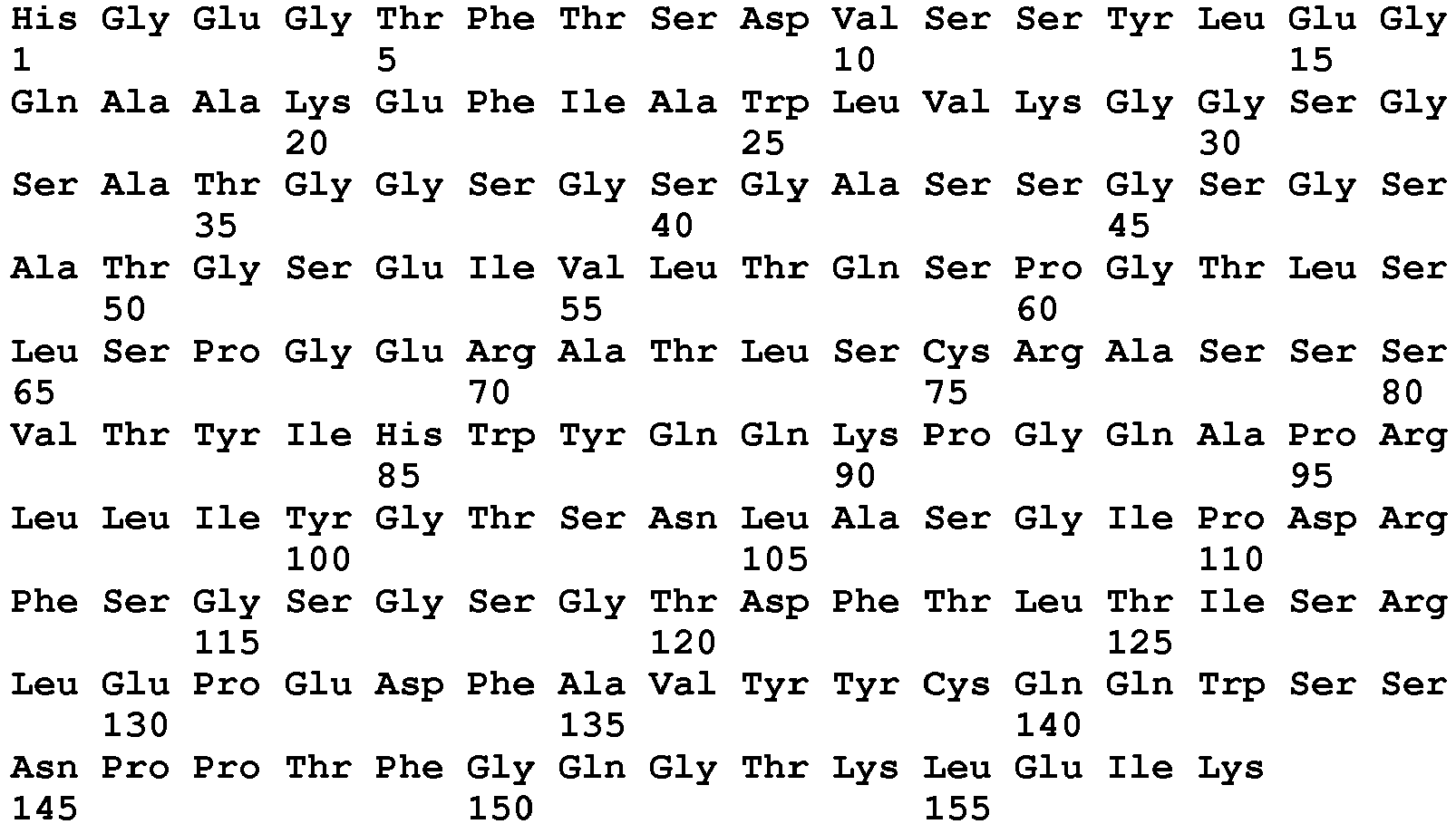
- the amino acid sequence of the light chain variable domain of the GLP-1R antibody fusion protein is one selected from SEQ ID NO: 1, SEQ ID NO: 2, SEQ ID NO: 3, SEQ ID NO: 4, SEQ ID NO: 5, SEQ ID NO: 6, and the amino acid sequence of the heavy chain variable domain is one selected from SEQ ID NO: 7, SEQ ID NO: 8, SEQ ID NO: 9.
- amino acid sequence of the light chain constant domain of the GLP-1R antibody fusion protein is SEQ ID NO: 10 or SEQ ID NO: 11, and the amino acid sequence of the heavy chain constant domain is SEQ ID NO: 12.
- the GLP-1R antibody fusion protein of the present invention comprises GLP-1 or an analog thereof, which is fused at its C-terminus to the N-terminus of the light chain of a GLP-1R antibody by a peptide linker.
- the antibody fusion protein has a similar or improved biological activity and an extended half-life compared to GLP-1 and its analogs.
- the sequence of the light chain variable domain of the preferred GLP-1R antibody fusion protein comprises all or part of SEQ ID NO: 1, 2, 3, 4, 5 or 6, the sequence of the light chain constant domain comprises all or part of SEQ ID NO: 10 or 11, the sequence of the heavy chain variable domain comprises all or part of SEQ ID NO: 7, 8 or 9, and the sequence of the heavy chain constant domain comprises all or part of SEQ ID NO: 12.
- sequence of the light chain variable domain of the more preferred GLP-1R antibody fusion protein is substantially SEQ ID NO: 1, 2, 3, 4, 5 or 6, the sequence of the light chain constant domain is substantially SEQ ID NO: 10 or 11, the sequence of the heavy chain variable domain is substantially SEQ ID NO: 7, 8 or 9, and the sequence of the heavy chain constant domain is substantially SEQ ID NO: 12.
- sequence of the light chain variable domain of the most preferred GLP-1R antibody fusion protein is SEQ ID NO: 1, 2, 3, 4, 5 or 6, the sequence of the light chain constant domain is SEQ ID NO: 10 or 11, the sequence of heavy chain variable domain is SEQ ID NO: 7, 8 or 9, and the sequence of the heavy chain constant domain is SEQ ID NO: 12.
- the stable solution formulation of the present invention can be used to treat diabetes or obesity.
- the stable solution formulation of the present invention can be used to treat irritable bowel syndrome, and other diseases that benefit from decreasing plasma glucose, inhibition of gastric and/or bowel movement, inhibition of gastric and/or intestinal emptying, or inhibition of food intake.
- the beneficial effects of the present invention are: stability, an in vivo long half-life, good efficacy, and suitability for the treatment of diabetes, obesity, irritable bowel syndrome and related diseases.
- Biological activity refers to the ability of a GLP-1R antibody fusion protein to bind and activate GLP-1R in vivo to elicit a response.
- Responses include, but are not limited to, promotion of insulin secretion, inhibition of glucagon secretion, inhibition of appetite, induction of weight loss, induction of satiety, inhibition of pancreatic ⁇ -cell apoptosis and induction of pancreatic ⁇ -cell proliferation.
- the stable pharmaceutical solution formulation of a GLP-1R antibody fusion protein comprises the GLP-1R antibody fusion protein in a buffer, which further comprises an amino acid as a stabilizer and an osmoregulator, and a surfactant.
- the stable solution formulation is stable for at least 6 months, and at 25 °C, more precisely, the stable solution formulation is stable for 6 months to 8 months, 6 months to 12 months, 6 months to 18 months, 6 months to 24 months, 8 months to 12 months, 8 months to 18 months, 8 months to 24 months, 12 months to 18 months, 12 months to 24 months, 18 months to 24 months.
- the buffer system used in the present invention includes, but is not limited to. one or several of the following organic or inorganic compounds: citric acid, salts of citric acid, ascorbic acid, salts of ascorbic acid, gluconic acid, salts of gluconic acid, carbonic acid, salts of carbonic acid, tartaric acid, salts of tartaric acid, succinic acid, salts of succinic acid, acetic acid, salts of acetic acid, phthalic acid, salts of phthalic acid, phosphoric acid, phosphate, hydrochloric acid, Tris, thomethamine, and an amino acid, including, but not limited to, histidine, arginine, glycine.
- the osmoregulator as defined in the present invention is a substance capable of increasing the osmotic pressure of a formulation upon addition.
- the osmoregulators are free amino acids, including, but not limited to, arginine, histidine, methionine, lysine, ornithine, leucine, isoleucine, alanine, glycine, glutamic acid and aspartic acid.
- the basic amino acid is preferably arginine, histidine, lysine or a combination thereof.
- the amino acid used in the present invention is arginine.
- the amino acid can be added in the form of a salt of an amino acid where the added amino acid can be a D-amino acid such as D-arginine or an L-amino acid such as L-arginine.
- the added amino acid is not limited to functioning just as an osmoregulator, but also as a stabilizer at the same time, including, but not limited to, arginine, histidine, methionine, lysine, ornithine, leucine, isoleucine, alanine, glycine, glutamine, glutamic acid, asparagine, aspartic acid, phenylalanine, tyrosine, serine, proline and tryptophan.
- the concentration of the amino acid as a stabilizer and osmoregulator is from 1 to 500 mM.
- Surfactants as defined in the present invention are amphiphilic organic compounds, that is, compounds contain groups having different soluble properties. Typically, these compounds contain both lipophilic hydrocarbon groups and hydrophilic ionic groups.
- the surfactants include, but are not limited to, sorbitan fatty acid esters, e.g., sorbitan monocaprylate, sorbitan monolaurate, sorbitan monopalmitate, sorbitan trioleate; glycerine fatty acid esters, e.g., glycerine monocaprylate, glycerine monomyristate, glycerine monostearate; polyglycerine fatty acid esters, e.g., decaglyceryl monostearate, decaglyceryl distearate, decaglyceryl monolinoleate; polyoxyethylene sorbitan fatty acid esters, e.g., polyoxyethylene sorbitan monolaurate, wherein polyoxyethylene (20)
- the surfactant can include one or more of the surfactants described hereinabove. More suitable surfactants are polyoxyethylene sorbitan fatty acid esters, e.g., TWEEN-20, TWEEN-40, TWEEN-60 and TWEEN-80.
- the stable pharmaceutically solution formulation of a GLP-1R fusion protein comprises the GLP-1R antibody fusion protein at a final concentration from about 0.1 to about 100 mg/mL.
- the preferred concentration (mg/mL) of the GLP-1R antibody fusion protein ranges from about 0.1 to 1, 1 to 5, 5 to 10, 5 to 20, 10 to 20, 20 to 30, 20 to 40, 30 to 40, 40 to 50, 50 to 60, 60 to 70, 70 to 80, 80 to 90, 90 to 100 mg/mL.
- the concentration (mg/mL) of the GLP-1R antibody fusion protein is about 0.1, about 0.25, about 0.5, about 1, about 2, about 3, about 4, about 5, about 6.5, about 8, about 10, about 12.5, about 15, about 17.5, about 20, about 22.5, about 25, about 27.5, about 30, about 32.5, about 35, about 37.5, about 40, about 45, about 50, about 55, about 60, about 65, about 70, about 75, about 80, about 85, about 90, about 95, about 100 mg/mL.
- the preferred buffer system of the stable solution formulation is a citrate salt at it's a concentration ranging from about 5 to 30 mM. More preferably, the citrate concentration (mM) is ranging from about 5 to 25, 5 to 20, 5 to 15, 5 to 12.5, 5 to 10, 7.5 to 30, 7.5 to 25, 7.5 to 20, 7.5 to 15, 7.5 To 12.5, 7.5 to 10, 8 to 30, 8 to 25, 8 to 20, 8 to 15, 8 to 12.5, 8 to 11, 8 to 10, 9 to 30, 9 to 25, 9 to 20, 9 to 15, 9 to 12.5, 10 to 30, 10 to 25, 10 to 20, 10 to 17.5, 10 to 15, 10 to 12.5, 12.5 to 30, 12.5 to 25, 12.5 to 20, 12.5 to 15, 15 to 30, 15 to 25, 15 to 20, 17.5 to 30, 17.5 to 25, 17.5 to 22.5, 17.5 to 20, 20 to 30, 20 to 27.5, 20 to 25, 20 to 22.5, 22.5 to 30, 22.5 to 27.5, 22.5 to 25 , 25 to 30, 25 to 27.5, 27.5 to 30.
- a further preferred citrate concentration is about 5 to 20 mM.
- the pH of the stable pharmaceutical solution formulation of the GLP-1R fusion protein of the present invention ranges from about 5 to 8.
- the pH range provides acceptable stability for the formulation to maintain the solubility of the GLP-1R antibody fusion protein and to promote the activity of stimulating insulin secretion, and suitable for parenteral administration.
- the pH can be adjusted to the desired pH by adding an acid, e.g., HCl, or by adding a base, e.g., NaOH or by a combination of a citrate buffer and citric acid to achieve the desired buffer concentration and pH value.
- the preferred pH ranges from 5 to 7.75, 5 to 7.5, 5 to 7.25, 5 to 7.0, 5 to 6.75, 5 to 6.5, 5 to 6.25, 5 to 6.0, 5 to 5.75, 5 to 5.5, 5 to 5.25, 5.25 to 8.0, 5.25 to 7.75, 5.25 to 7.5, 5.25 to 7.25, 5.25 to 7.0, 5.25 to 6.75, 5.25 to 6.5, 5.25 to 6.25, 5.25 to 6.0, 5.25 to 5.75, 5.25 to 5.5, 5.5 to 8.0, 5.5 to 7.75, 5.5 to 7.5, 5.5 to 7.25, 5.5 to 7.0, 5.5 to 6.75, 5.5 to 6.5, 5.5 to 6.25, 5.5 to 6.0, 5.5 to 5.75, 5.75 to 8.0, 5.75 to 7.75, 5.75 to 7.5, 5.75 to 7.25, 5.75 to 7.0, 5.75 to 6.75, 5.75 to 7.5, 5.75 to 7.25, 5.75 to 7.0, 5.75 to 6.75, 5.75 to 7.5, 5.
- the present description preferably utilizes L-arginine as an osmoregulator and stabilizer for the stable pharmaceutical solution formulation of the GLP-1R fusion protein at a concentration ranging from 1 to 500 mM to stabilize the GLP-1R antibody fusion protein and to increase the solubility, and to adjust the osmotic pressure of the formulation so that it is suitable for parenteral administration and the like.
- the preferred L-arginine concentration ranges from 80 to 200 mM.
- the present description preferably utilizes TWEEN-80 as a surfactant for the stable pharmaceutical solution formulation of a GLP-1R fusion protein at a concentration ranging from 0.01% to 0.5%.
- the preferred concentration of TWEEN-80 ranges from about 0.01% to about 0.2%, and the preferred concentration range is determined by the combination of GLP-1R antibody fusion protein and arginine so that the formation of soluble aggregates and insoluble particles are minimized.
- the further preferred concentration of TWEEN-80 ranges from about 0.01% to 0.2%, 0.01% to 0.15%, 0.01% to 0.1%, 0.01% to 0.05%, 0.01% to 0.025%, 0.025% to 0.2%, 0.025% to 0.15%, 0.025% to 0.1%, 0.025% to 0.05%, 0.05 to 0.2%, 0.05 to 0.15%, 0.05 to 0.1%, 0.05 to 0.075%, 0.075% to 0.2%, 0.075% to 0.15%, 0.075% to 0.1%, 0.1% to 0.2%, 0.1% to 0.15%, 0.15% to 0.2%.
- the further preferred TWEEN-80 concentration ranges from about 0.05% to about 0.15%. Particularly preferred TWEEN-80 concentration is about 0.1%.
- a particularly preferred stable pharmaceutical solution formulation of a GLP-1R fusion protein comprises a GLP-1R antibody fusion protein at the concentration ranging from about 5 to about 20 mg/mL, a citrate buffer at the concentration of about 20 mM, TWEEN-80 at the concentration of about 0.1%, L-arginine at the concentration of about 138 mM, with a pH of about 6.5.
- Another particularly preferred stable pharmaceutical solution formulation of the GLP-1R fusion protein comprises a GLP-1R antibody fusion protein at the concentration ranging from about 20 to about 40 mg/mL, a citrate buffer at the concentration of about 20 mM, TWEEN-80 at the concentration of about 0.1%, L-arginine at the concentration of about 138 mM, with a pH of about 6.5.
- Another particularly preferred stable solution formulation comprises a GLP-1R antibody fusion protein at the concentration ranging from about 5 to about 20 mg/mL, a citrate buffer at the concentration ranging from about 5 to 20 mM, TWEEN-80 at the concentration ranging from about 0.05 to about 0.15%, L-arginine at the concentration ranging from about 100 to 180 mM, with a pH ranging from about 6.0 to 7.
- Another particularly preferred stable solution formulation comprises a GLP-1R antibody fusion protein at the concentration ranging from about 20 to about 40 mg/mL, a citrate buffer at the concentration ranging from about 5 to 20 mM, TWEEN-80 at the concentration ranging from about 0.05 to 0.15%, L-arginine at the concentration ranging from about 100 to 180 mM, with a pH ranging from about 6.0 to 7.
- the administration of the stable solution formulation can be carried out by any effective route known to physicians skilled in the art.
- Parenteral administration is one of the methods.
- Parenteral administration is generally understood in the medical literature to inject a dosage form into an individual via a sterile syringe or some other mechanical devices such as an infusion pump.
- Parenteral routes can include intravenous, intramuscular, subcutaneous and intraperitoneal routes. Subcutaneous administration is the preferred route.
- the stable solution formulation of the present invention can be used to treat an individual with non-insulin dependent diabetes mellitus or in progression to non-insulin dependent diabetes mellitus, insulin-dependent diabetes mellitus or obesity.
- the effective amount of the GLP-1R antibody fusion protein in the stable solution formulation described herein is an amount that causes the desired therapeutic and/or prophylactic effect when administered to an individual in need of GLP-1R stimulation without causing undesirable side effects.
- the fusion proteins are administered either once every two weeks or once a week. Depending on the disease being treated, it may be necessary to administer the fusion protein more frequently such as two to three times per week.
- a reporter gene assay was used to determine the in vitro activation of GLP-1R by a GLP-1 fusion protein.
- the CHO-DHFR- cells co-expressing hGLPIR-CRE-luciferase were seeded into a 96-well cell culture plate with 20000 cells per well, and the plate was cultured at 37 °C overnight. The culture supernatant was removed the next day. The cells were washed twice with serum free medium and the residual liquid was removed by suction. After adding 100 ⁇ L of a GLP-1R antibody fusion protein sample that was pre-diluted with a serum free medium or a control, the cells were incubated at 37 °C for 4 h. After the incubation, 100 ⁇ L of BRIGHT-GLOTM chemiluminescence substrate (Promega) were added.
- the cell lysates were transferred into a white 96-well plate, and the relative luminescence intensities were recorded in a SPECTRAMAX® L (Molecular Devices) microplate reader.
- the dose-response curves (response intensities versus logarithmic concentrations) were analyzed using GraphPad to determine EC50.
- SEC-HPLC was used to analyze the purity of a GLP-1R antibody fusion protein.
- Size-exclusion chromatography was used to determine the formation of aggregates (soluble aggregates) of a GLP-1R antibody fusion protein and the loss of its monomeric form.
- SEC-HPLC Size-exclusion chromatography
- the sample was eluted with the mobile phase at a flow rate of 0.5 mL/min and the absorbance at UV 280 nm was recorded. After each run, the AUCs of absorbance peaks of the monomer (the main peak), dimers and multimers were calculated, the percentage of the AUC for the main peak versus the total AUC was calculated and reported as the purity of the sample.
- pH can affect the solubility and stability of a GLP-1R antibody fusion protein, and is one of the most critical parameters in formulation.
- GLP-1R antibody fusion protein formulation at different pH conditions
- GLP-1R antibody fusion protein 4.5 mg/mL pH Buffer 1 6.5 0.1 M PBS 2 7 0.1 M PBS 3 7.5 0.1 M PBS 4 8 0.1 M PBS
- a pharmaceutical stable solution formulation of a GLP-1R fusion protein was sterilized by filtration through 0.22 ⁇ m polyvinylidene difluoride (PVDF) membrane.
- PVDF polyvinylidene difluoride
- the solution was stored at 45 °C in 2 mL borosilicate glass vials until analysis or up to 3 weeks.
- the ratio of soluble aggregates in each sample was determined by SEC-HPLC. As shown in Table 2, the ratio of soluble aggregates formed was the lowest at the particularly preferred pH of 6.5 and the stability of the formulation was the best; and the stability tends to increase as the pH decreases. Table 2.
- Ratios of soluble aggregates formed in a GLP-1R antibody fusion protein formulation at different pH conditions GLP-1R antibody fusion protein 4.5 mg/mL pH Unit Time point (week) 1 3 1 6.5 % 0.52 4.51 2 7.0 % 0.65 4.80 3 7.5 % 1.12 8.16 4 8.0 % 1.39 14.79
- Formulations of a GLP-1R antibody fusion protein were prepared according to Table 3 for DOE experiments: Table 3.
- GLP-1R antibody fusion protein formulations for DOE experiments Formulation L-arginine(mM) TWEEN-80 (%) pH DOE-1 110 0.05 7 DOE-2 110 0.15 6 DOE-3 166 0.05 6 DOE-4 166 0.15 7 Preferred formulation (repeat 1) 138 0.1 6.5 Preferred formulation (repeat 2) 138 0.1 6.5 DOE-5 110 0.15 7 DOE-6 110 0.05 6 DOE-7 166 0.15 6 DOE-8 166 0.05 7
- Formulations were prepared and sterilized by filtration through 0.22 ⁇ m polyvinylidene difluoride (PVDF) membrane.
- PVDF polyvinylidene difluoride
- the formulations were stored in a 2 mL glass vial at 40 °C until analysis or up to 1 month.
- the purity of each formulation was determined by SEC-HPLC. As shown in Table 4, in the range of pH 6 to 7, L-arginine 110 to 166 mM and TWEEN-80 concentration of 0.05% to 0.15%, the purity for each formulation appeared to be similar and there was no significant difference, indicating that the preferred formulation was of good robustness, the deviation in production should not significantly affect the stability of the actual formulation. Table 4.
- Formulations of the GLP-1R antibody fusion protein were prepared according to Table 5: Table 5. Formulations of the GLP-1R antibody fusion protein at different protein concentrations No. GLP-1R antibody fusion protein concentration (mg/mL) Citrate concentration (mM) L-arginine (mM) TWEEN-80 (%) pH 5 10 20 138 0.1 6.5 6 20 20 138 0.1 6.5
- the formulations were prepared and sterilized by filtration through 0.22 ⁇ m polyvinylidene difluoride (PVDF) membrane. Each formulation was stored at 37 °C in a 2 mL glass vial until analysis or up to 1 month. The purity of each formulation was determined by SEC-HPLC and its biological activity was determined by the reporter gene assay. As shown in Table 6, the preferred formulation provided a high stability for the GLP-1R antibody fusion protein at a concentration of 20 mg/mL, the change in its purity at 37 °C was similar to that at 10 mg/mL, only with non-significant changes, and at the same time, there was no significant difference as to their biological activity. Table 6. Purities and biological activity of GLP-1R antibody fusion protein formulations at different protein concentrations No.
- GLP-1R antibody fusion protein was prepared according to Table 7: Table 7.
- GLP-1R antibody fusion protein formulation for stability under vibration No. GLP-1R antibody fusion protein concentration (mg/mL) Citrate concentration (mM) L-arginine (mM) TWEEN-80 (%) pH 7 10 20 138 0.1 6.5
- a formulation was prepared and sterilized by filtration through 0.22 ⁇ m polyvinylidene difluoride (PVDF) membrane.
- PVDF polyvinylidene difluoride
- the formulation was stored in a 2 mL glass vial at 37 °C and placed on a shaker at a speed of 70 rpm until analysis or up to 15 days.
- the purity of each formulation was determined by SEC-HPLC, and the biological activity was determined by the reporter gene assay.
- the stability and biological activity of the GLP-1R antibody fusion protein were maintained under the vibratory conditions. Table 8. Purities and biological activity of GLP-1R Antibody Fusion Protein Formulation under vibration No.
- GLP-1R antibody fusion protein was prepared according to Table 9: Table 9.
- the formulation was prepared and sterilized by filtration through 0.22 ⁇ m polyvinylidene difluoride (PVDF) membrane.
- PVDF polyvinylidene difluoride
- the formulation was stored at 25 °C in a 2 mL glass vial until analysis or up to 6 months.
- the purity of each formulation was determined by SEC-HPLC and its biological activity was determined by the reporter gene assay.
- Table 10 Purities and biological activity GLP-1R antibody fusion protein formulation under accelerated conditions No.
Landscapes
- Health & Medical Sciences (AREA)
- Chemical & Material Sciences (AREA)
- Life Sciences & Earth Sciences (AREA)
- Medicinal Chemistry (AREA)
- General Health & Medical Sciences (AREA)
- Public Health (AREA)
- Veterinary Medicine (AREA)
- Animal Behavior & Ethology (AREA)
- Pharmacology & Pharmacy (AREA)
- Engineering & Computer Science (AREA)
- Epidemiology (AREA)
- Chemical Kinetics & Catalysis (AREA)
- General Chemical & Material Sciences (AREA)
- Organic Chemistry (AREA)
- Bioinformatics & Cheminformatics (AREA)
- Proteomics, Peptides & Aminoacids (AREA)
- Immunology (AREA)
- Oil, Petroleum & Natural Gas (AREA)
- Endocrinology (AREA)
- Diabetes (AREA)
- Biochemistry (AREA)
- Molecular Biology (AREA)
- Nuclear Medicine, Radiotherapy & Molecular Imaging (AREA)
- Gastroenterology & Hepatology (AREA)
- Zoology (AREA)
- Genetics & Genomics (AREA)
- Biophysics (AREA)
- Obesity (AREA)
- Hematology (AREA)
- Mycology (AREA)
- Microbiology (AREA)
- Emergency Medicine (AREA)
- Toxicology (AREA)
- Biomedical Technology (AREA)
- Neurology (AREA)
- Dermatology (AREA)
- Child & Adolescent Psychology (AREA)
- Peptides Or Proteins (AREA)
- Medicines Containing Antibodies Or Antigens For Use As Internal Diagnostic Agents (AREA)
- Medicinal Preparation (AREA)
Description
- The present invention relates to the technical field of biomedicines, especially relating to a stable pharmaceutical solution formulation of a GLP-1R antibody fusion protein.
- GLP-1 derivatives arc used in clinical trials to treat type II diabetes and obesity (Gallwitz B, Eur. Endocrinol., 2015; 11:21-5). GLP-1 induces multiple biological effects, for example, stimulation of insulin secretion, inhibition of glucagon secretion, inhibition of gastric emptying, inhibition of gastric and intestinal movement, as well as induction of loss of body weight (Lund A et al., Eur. J. Intern. Med., 2014; 25:407-14). One prominent characteristic of GLP-1 is its capability of stimulating the secretion of insulin without the risk of inducing hypoglycemia, which is one of the concern in insulin treatment and some other oral therapies that promote endogenous insulin secretion. Endogenous GLP-1 is degraded very quickly and its extremely short half-life limits the effectiveness of GLP-1 as a therapeutic peptide.
- Currently, there are various ways to prolong the half-live of GLP-1 and its derivatives and maintain their biological activity at the same time (Verspohl EJ, Pharmacol. Rev., 2012; 64:A-AX), including fusion of GLP-1 and its derivatives with an IgG Fc fragment or human serum albumin (HSA). The new method we have chosen is fusing GLP-1 with a full-length anti-GLP-1R antibody (IgG). The IgG can extend the in vivo half-life of its fusion partner and its own half-life in human is 21 days. In addition to maintaining the biological activity of GLP-1, a GLP-1R antibody fusion protein has advantageous stability provided by the IgG moiety. At the same time, the IgG moiety provides the GLP-1R antibody fusion protein molecular targeting properties, thus increasing the possibility of the interactions between GLP-1 and GLP-1R. Furthermore, the antibody molecule has lower immunogenicity than most of other commonly used fusion partners. As to a drug for a long-term or even life-long use, low immunogenicity is a necessity.
- Fusion proteins are often produced by mammalian cell lines, for example, CHO, SP2/0 or NSO. It is noted in the present invention that, when CHO cells were used to produce a GLP-1R antibody fusion protein, the fusion protein was subjected to degradation by endogenous proteases or under certain cell culturing physicochemical conditions. The degradation process was faster and more apparent under low pH conditions, and on top of that, the GLP-1R antibody fusion protein was more prone to aggregation when pH was higher than 7. Furthermore, it was discovered in the present invention that under refrigeration conditions (2-8 °C) and in a single buffer solution (for example, a citrate buffer system), the solubility of the GLP-1R antibody fusion protein is too low to meet the requirements for therapeutic dosages. In the present invention, the problems mentioned above are solved through pH control, using a specific combination of certain excipients and a specific concentration of the GLP-1R antibody fusion protein.
- The objective of the present invention is to provide a stable pharmaceutical solution formulation of a GLP-1R antibody fusion protein, and the formulation is stable with a long half-life in vivo and efficacious, and can be used for the treatment of diabetes, obesity and related diseases.
- To solve the technical problems mentioned above, the present invention provides the following technical solutions.
- A stable pharmaceutical solution formulation of a GLP-1R antibody fusion protein, comprises a therapeutically effective amount of the GLP-1R antibody fusion protein, an amino acid, a surfactant and a buffer system, wherein the final concentration of the amino acid is 100-180 mM, the final concentration of the surfactant is 0.05%-0.15%, and the pH of the stable solution formulation is from 5.0 to 8.0; wherein the amino acid is arginine and the surfactant is TWEEN-80.
- To overcome the problems that a solution formulation of the GLP-1R antibody fusion protein is unstable at low pH and easily aggregated at high pH, and the GLP-1R antibody fusion protein does not have an sufficient solubility in a single buffer solution, the present invention provides a physiochemically stable formulation comprising a GLP-1R antibody fusion protein, and further comprising a buffering system, an amino acid as a stabilizer and an osmoregulator, and a surfactant. The stable solution formulation is stable for at least 6 months at 25 °C. Preferably, the stable solution formulation of the present invention comprises the GLP-1R antibody fusion protein at the final concentration of about 0.1-100 mg/mL, a citrate buffer at the concentration of 5-30 mM, TWEEN-80 at the final concentration of 0.05%-0.15%, and L-arginine at the final concentration of 100-180 mM, wherein the pH is from 5 to 8. The stable solution formulation enhances the solubility of the GLP-1R antibody fusion protein and its stability under special circumstances, especially at high temperatures. The present invention also includes a stable solution formulation for use in a method of treating diabetes, obesity and related diseases, which comprises administering the GLP-1R antibody fusion protein formulation of the present invention.
- Preferably, the final concentration of the amino acid is 100-180 mM, the final concentration of the surfactant is 00.05%-0.15%, and the buffer system is a citrate buffer, and the pH of the stable solution formulation is from 5.5 to 7.0.
- Preferably, the concentration of the citrate buffer is 5-30 mM.
- Preferably, the amino acid is L-arginine, the final concentration of L-arginine is 100-180 mM, the surfactant is TWEEN-80, and the final concentration of TWEEN-80 is 0.05%-0.15%.
- Preferably, the final concentration of the therapeutically effective amount of the GLP-1R antibody fusion protein is 0.1 mg/mL-100 mg/mL.
- Preferably, the final concentration of the therapeutically effective amount of GLP-1R antibody fusion protein is 5 mg/mL-40 mg/mL.
- Preferably, the amino acid sequence of the light chain variable domain of the GLP-1R antibody fusion protein is one selected from SEQ ID NO: 1, SEQ ID NO: 2, SEQ ID NO: 3, SEQ ID NO: 4, SEQ ID NO: 5, SEQ ID NO: 6, and the amino acid sequence of the heavy chain variable domain is one selected from SEQ ID NO: 7, SEQ ID NO: 8, SEQ ID NO: 9.
- Preferably, the amino acid sequence of the light chain constant domain of the GLP-1R antibody fusion protein is SEQ ID NO: 10 or SEQ ID NO: 11, and the amino acid sequence of the heavy chain constant domain is SEQ ID NO: 12.
- The GLP-1R antibody fusion protein of the present invention comprises GLP-1 or an analog thereof, which is fused at its C-terminus to the N-terminus of the light chain of a GLP-1R antibody by a peptide linker. The antibody fusion protein has a similar or improved biological activity and an extended half-life compared to GLP-1 and its analogs. The sequence of the light chain variable domain of the preferred GLP-1R antibody fusion protein comprises all or part of SEQ ID NO: 1, 2, 3, 4, 5 or 6, the sequence of the light chain constant domain comprises all or part of SEQ ID NO: 10 or 11, the sequence of the heavy chain variable domain comprises all or part of SEQ ID NO: 7, 8 or 9, and the sequence of the heavy chain constant domain comprises all or part of SEQ ID NO: 12. The sequence of the light chain variable domain of the more preferred GLP-1R antibody fusion protein is substantially SEQ ID NO: 1, 2, 3, 4, 5 or 6, the sequence of the light chain constant domain is substantially SEQ ID NO: 10 or 11, the sequence of the heavy chain variable domain is substantially SEQ ID NO: 7, 8 or 9, and the sequence of the heavy chain constant domain is substantially SEQ ID NO: 12. The sequence of the light chain variable domain of the most preferred GLP-1R antibody fusion protein is SEQ ID NO: 1, 2, 3, 4, 5 or 6, the sequence of the light chain constant domain is SEQ ID NO: 10 or 11, the sequence of heavy chain variable domain is SEQ ID NO: 7, 8 or 9, and the sequence of the heavy chain constant domain is SEQ ID NO: 12.
- The stable solution formulation of the present invention can be used to treat diabetes or obesity.
- The stable solution formulation of the present invention can be used to treat irritable bowel syndrome, and other diseases that benefit from decreasing plasma glucose, inhibition of gastric and/or bowel movement, inhibition of gastric and/or intestinal emptying, or inhibition of food intake.
- The beneficial effects of the present invention are: stability, an in vivo long half-life, good efficacy, and suitability for the treatment of diabetes, obesity, irritable bowel syndrome and related diseases.
- Through the following specific embodiments, the technical solutions of the present invention are further illustrated.
- In this invention, unless referred specifically, the raw materials and instruments and the like employed are all commercially available or are commonly used in the art. The methods of the following embodiments, if not indicated specifically, are all conventional methods in the art.
- The preparation of the GLP-1R antibody fusion protein of the present invention is described in a prior patent applicant:
CN104371019A ,WO 2015/021871 . - Biological activity refers to the ability of a GLP-1R antibody fusion protein to bind and activate GLP-1R in vivo to elicit a response. Responses include, but are not limited to, promotion of insulin secretion, inhibition of glucagon secretion, inhibition of appetite, induction of weight loss, induction of satiety, inhibition of pancreatic β-cell apoptosis and induction of pancreatic β-cell proliferation.
- The stable pharmaceutical solution formulation of a GLP-1R antibody fusion protein comprises the GLP-1R antibody fusion protein in a buffer, which further comprises an amino acid as a stabilizer and an osmoregulator, and a surfactant. At 25 °C, the stable solution formulation is stable for at least 6 months, and at 25 °C, more precisely, the stable solution formulation is stable for 6 months to 8 months, 6 months to 12 months, 6 months to 18 months, 6 months to 24 months, 8 months to 12 months, 8 months to 18 months, 8 months to 24 months, 12 months to 18 months, 12 months to 24 months, 18 months to 24 months.
- The buffer system used in the present invention includes, but is not limited to. one or several of the following organic or inorganic compounds: citric acid, salts of citric acid, ascorbic acid, salts of ascorbic acid, gluconic acid, salts of gluconic acid, carbonic acid, salts of carbonic acid, tartaric acid, salts of tartaric acid, succinic acid, salts of succinic acid, acetic acid, salts of acetic acid, phthalic acid, salts of phthalic acid, phosphoric acid, phosphate, hydrochloric acid, Tris, thomethamine, and an amino acid, including, but not limited to, histidine, arginine, glycine.
- The osmoregulator as defined in the present invention is a substance capable of increasing the osmotic pressure of a formulation upon addition. The osmoregulators are free amino acids, including, but not limited to, arginine, histidine, methionine, lysine, ornithine, leucine, isoleucine, alanine, glycine, glutamic acid and aspartic acid. The basic amino acid is preferably arginine, histidine, lysine or a combination thereof. The amino acid used in the present invention is arginine. The amino acid can be added in the form of a salt of an amino acid where the added amino acid can be a D-amino acid such as D-arginine or an L-amino acid such as L-arginine.
- The added amino acid is not limited to functioning just as an osmoregulator, but also as a stabilizer at the same time, including, but not limited to, arginine, histidine, methionine, lysine, ornithine, leucine, isoleucine, alanine, glycine, glutamine, glutamic acid, asparagine, aspartic acid, phenylalanine, tyrosine, serine, proline and tryptophan. Preferably, the concentration of the amino acid as a stabilizer and osmoregulator is from 1 to 500 mM.
- Surfactants as defined in the present invention are amphiphilic organic compounds, that is, compounds contain groups having different soluble properties. Typically, these compounds contain both lipophilic hydrocarbon groups and hydrophilic ionic groups. The surfactants include, but are not limited to, sorbitan fatty acid esters, e.g., sorbitan monocaprylate, sorbitan monolaurate, sorbitan monopalmitate, sorbitan trioleate; glycerine fatty acid esters, e.g., glycerine monocaprylate, glycerine monomyristate, glycerine monostearate; polyglycerine fatty acid esters, e.g., decaglyceryl monostearate, decaglyceryl distearate, decaglyceryl monolinoleate; polyoxyethylene sorbitan fatty acid esters, e.g., polyoxyethylene sorbitan monolaurate, wherein polyoxyethylene (20) sorbitan monolaurate is TWEEN-20 and polyoxyethylene sorbitan monopalmitate is TWEEN-40, polyoxyethylene sorbitan monooleate, wherein polyoxyethylene (80) sorbitan monooleate is TWEEN-80, polyoxyethylene sorbitan monostearate, wherein polyoxyethylene (60) sorbitan monostearate is TWEEN-60, polyoxyethylene sorbitan trioleate is TWEEN-85, and polyoxyethylene sorbitan tristearate is TWEEN-65; polyoxyethylene sorbitol fatty acid esters, e.g., polyoxyethylene sorbitol tetrastearate, polyoxyethylene sorbitol tetraoleate; polyoxyethylene glycerine fatty acid esters, e.g., polyoxyethylene glyceryl monostearate; polyethylene glycol fatty acid esters, e.g., polyethylene glycol distearate; polyoxyethylene alkyl ethers, e.g., polyoxyethylene lauryl ether; polyoxyethylene polyoxypropylene alkyl ethers, e.g., polyoxyethylene polyoxypropylene glycol, polyoxyethylene polyoxypropylene propyl ether, polyoxyethylene polyoxypropylene cetyl ether; polyoxyethylene alkylphenyl ethers, e.g., polyoxyethylene nonylphenyl ether; polyoxyethylene hydrogenated castor oils, e.g., polyoxyethylene castor oil, polyoxyethylene hydrogenated castor oil; polyoxyethylene beeswax derivatives, e.g., polyoxyethylene sorbitol beeswax; polyoxyethylene lanolin derivatives, e.g., polyoxyethylene lanolin; and polyoxyethylene fatty acid amides, e.g., polyoxyethylene stearic acid amide; C10-C18 alkyl sulfates, e.g., sodium cetyl sulfate, sodium lauryl sulfate, sodium oleyl sulfate; polyoxyethylene C10-C16 alkyl ether sulfate with an average of 2 to 4 moles of ethylene oxide units added, e.g., sodium polyoxyethylene lauryl sulfate; and C1-C18 alkyl sulfosuccinate ester salts, e.g., sodium lauryl sulfosuccinate ester; and natural surfactants such as lecithin, glycerophospholipid, sphingophospholipids, e.g., sphingomyelin, and sucrose esters of C12-C18 fatty acids. The surfactant can include one or more of the surfactants described hereinabove. More suitable surfactants are polyoxyethylene sorbitan fatty acid esters, e.g., TWEEN-20, TWEEN-40, TWEEN-60 and TWEEN-80.
- The stable pharmaceutically solution formulation of a GLP-1R fusion protein comprises the GLP-1R antibody fusion protein at a final concentration from about 0.1 to about 100 mg/mL. The preferred concentration (mg/mL) of the GLP-1R antibody fusion protein ranges from about 0.1 to 1, 1 to 5, 5 to 10, 5 to 20, 10 to 20, 20 to 30, 20 to 40, 30 to 40, 40 to 50, 50 to 60, 60 to 70, 70 to 80, 80 to 90, 90 to 100 mg/mL. More preferably, the concentration (mg/mL) of the GLP-1R antibody fusion protein is about 0.1, about 0.25, about 0.5, about 1, about 2, about 3, about 4, about 5, about 6.5, about 8, about 10, about 12.5, about 15, about 17.5, about 20, about 22.5, about 25, about 27.5, about 30, about 32.5, about 35, about 37.5, about 40, about 45, about 50, about 55, about 60, about 65, about 70, about 75, about 80, about 85, about 90, about 95, about 100 mg/mL.
- The preferred buffer system of the stable solution formulation is a citrate salt at it's a concentration ranging from about 5 to 30 mM. More preferably, the citrate concentration (mM) is ranging from about 5 to 25, 5 to 20, 5 to 15, 5 to 12.5, 5 to 10, 7.5 to 30, 7.5 to 25, 7.5 to 20, 7.5 to 15, 7.5 To 12.5, 7.5 to 10, 8 to 30, 8 to 25, 8 to 20, 8 to 15, 8 to 12.5, 8 to 11, 8 to 10, 9 to 30, 9 to 25, 9 to 20, 9 to 15, 9 to 12.5, 10 to 30, 10 to 25, 10 to 20, 10 to 17.5, 10 to 15, 10 to 12.5, 12.5 to 30, 12.5 to 25, 12.5 to 20, 12.5 to 15, 15 to 30, 15 to 25, 15 to 20, 17.5 to 30, 17.5 to 25, 17.5 to 22.5, 17.5 to 20, 20 to 30, 20 to 27.5, 20 to 25, 20 to 22.5, 22.5 to 30, 22.5 to 27.5, 22.5 to 25 , 25 to 30, 25 to 27.5, 27.5 to 30. A further preferred citrate concentration is about 5 to 20 mM. A particularly preferred citrate concentration is about 10, 10.0, 20 or 20.0 mM.
- The pH of the stable pharmaceutical solution formulation of the GLP-1R fusion protein of the present invention ranges from about 5 to 8. The pH range provides acceptable stability for the formulation to maintain the solubility of the GLP-1R antibody fusion protein and to promote the activity of stimulating insulin secretion, and suitable for parenteral administration. The pH can be adjusted to the desired pH by adding an acid, e.g., HCl, or by adding a base, e.g., NaOH or by a combination of a citrate buffer and citric acid to achieve the desired buffer concentration and pH value. The preferred pH ranges from 5 to 7.75, 5 to 7.5, 5 to 7.25, 5 to 7.0, 5 to 6.75, 5 to 6.5, 5 to 6.25, 5 to 6.0, 5 to 5.75, 5 to 5.5, 5 to 5.25, 5.25 to 8.0, 5.25 to 7.75, 5.25 to 7.5, 5.25 to 7.25, 5.25 to 7.0, 5.25 to 6.75, 5.25 to 6.5, 5.25 to 6.25, 5.25 to 6.0, 5.25 to 5.75, 5.25 to 5.5, 5.5 to 8.0, 5.5 to 7.75, 5.5 to 7.5, 5.5 to 7.25, 5.5 to 7.0, 5.5 to 6.75, 5.5 to 6.5, 5.5 to 6.25, 5.5 to 6.0, 5.5 to 5.75, 5.75 to 8.0, 5.75 to 7.75, 5.75 to 7.5, 5.75 to 7.25, 5.75 to 7.0, 5.75 to 6.75, 5.75 to 6.5, 5.75 to 6.25, 5.75 to 6.0, 6.0 to 8.0, 6.0 to 7.75, 6.0 to 7.5, 6.0 to 7.25, 6.0 to 7.0, 6.0 to 6.75, 6.0 to 6.5, 6.0 to 6.25, 6.25 to 8.0, 6.25 to 7.75, 6.25 to 7.5, 6.25 to 7.25, 6.25 to 7.0, 6.25 to 6.75, 6.25 to 6.5, 6.5 to 8.0, 6.5 to 7.75, 6.5 to 7.5, 6.5 to 7.25, 6.5 to 7.0, 6.5 to 6.75, 6.75 to 8.0, 6.75 to 7.75, 6.75 to 7.5, 6.75 to 7.25, 6.75 to 7.0, 7.0 to 8.0, 7.0 to 7.75, 7.0 to 7.5, 7.0 to 7.25, 7.25 to 8.0, 7.25 to 7.5, 7.5 to 8.0, 7.5 to 7.75, 7.75 to 8.0. The further preferred pH ranges from 6 to 7, and particularly preferred pH is about 6.5 or 6.50.
- The present description preferably utilizes L-arginine as an osmoregulator and stabilizer for the stable pharmaceutical solution formulation of the GLP-1R fusion protein at a concentration ranging from 1 to 500 mM to stabilize the GLP-1R antibody fusion protein and to increase the solubility, and to adjust the osmotic pressure of the formulation so that it is suitable for parenteral administration and the like. The preferred L-arginine concentration ranges from 80 to 200 mM. Further preferred concentration ranges from 80 to 190, 80 to 180, 80 to 170, 80 to 160, 80 to 150, 80 to 140, 80 to 130, 80 to 120, 80 to 110, 80 to 100, 80 to 90, 90 to 200, 90 to 190, 90 to 180, 90 to 170, 90 to 160, 90 to 150, 90 to 140, 90 to 130, 90 to 120, 90 to 110, 90 to 100, 100 to 200, 100 to 190, 100 to 180, 100 to 170, 100 to 160, 100 to 150, 100 to 140, 100 to 130, 100 to 120, 100 to 110, 110 to 200, 110 to 190, 110 to 180, 110 to 170, 110 to 160, 110 to 150, 110 to 140, 110 to 130, 110 to 120, 120 to 200, 120 to 190, 120 to 180, 120 to 170, 120 to 160, 120 to 150, 120 to 140, 120 to 130, 130 to 200, 130 to 190, 130 to 180, 130 to 170, 130 to 160, 130 to 150, 130 to 140, 140 to 200, 140 to 190, 140 to 180, 140 to 170, 140 to 160, 140 to 150, 150 to 200, 150 to 190, 150 to 180, 150 to 170, 150 to 160, 160 to 200, 160 to 190, 160 to 180, 160 to 170, 170 to 200, 170 to 190, 170 to 180, 180 to 190, 190 to 200. Further preferred L-arginine concentration is 100 to 180 mM. Particularly preferred concentration is about 138 mM or about 138.0 mM.
- The present description preferably utilizes TWEEN-80 as a surfactant for the stable pharmaceutical solution formulation of a GLP-1R fusion protein at a concentration ranging from 0.01% to 0.5%. The preferred concentration of TWEEN-80 ranges from about 0.01% to about 0.2%, and the preferred concentration range is determined by the combination of GLP-1R antibody fusion protein and arginine so that the formation of soluble aggregates and insoluble particles are minimized. The further preferred concentration of TWEEN-80 ranges from about 0.01% to 0.2%, 0.01% to 0.15%, 0.01% to 0.1%, 0.01% to 0.05%, 0.01% to 0.025%, 0.025% to 0.2%, 0.025% to 0.15%, 0.025% to 0.1%, 0.025% to 0.05%, 0.05 to 0.2%, 0.05 to 0.15%, 0.05 to 0.1%, 0.05 to 0.075%, 0.075% to 0.2%, 0.075% to 0.15%, 0.075% to 0.1%, 0.1% to 0.2%, 0.1% to 0.15%, 0.15% to 0.2%. The further preferred TWEEN-80 concentration ranges from about 0.05% to about 0.15%. Particularly preferred TWEEN-80 concentration is about 0.1%.
- A particularly preferred stable pharmaceutical solution formulation of a GLP-1R fusion protein comprises a GLP-1R antibody fusion protein at the concentration ranging from about 5 to about 20 mg/mL, a citrate buffer at the concentration of about 20 mM, TWEEN-80 at the concentration of about 0.1%, L-arginine at the concentration of about 138 mM, with a pH of about 6.5. Another particularly preferred stable pharmaceutical solution formulation of the GLP-1R fusion protein comprises a GLP-1R antibody fusion protein at the concentration ranging from about 20 to about 40 mg/mL, a citrate buffer at the concentration of about 20 mM, TWEEN-80 at the concentration of about 0.1%, L-arginine at the concentration of about 138 mM, with a pH of about 6.5. Another particularly preferred stable solution formulation comprises a GLP-1R antibody fusion protein at the concentration ranging from about 5 to about 20 mg/mL, a citrate buffer at the concentration ranging from about 5 to 20 mM, TWEEN-80 at the concentration ranging from about 0.05 to about 0.15%, L-arginine at the concentration ranging from about 100 to 180 mM, with a pH ranging from about 6.0 to 7. Another particularly preferred stable solution formulation comprises a GLP-1R antibody fusion protein at the concentration ranging from about 20 to about 40 mg/mL, a citrate buffer at the concentration ranging from about 5 to 20 mM, TWEEN-80 at the concentration ranging from about 0.05 to 0.15%, L-arginine at the concentration ranging from about 100 to 180 mM, with a pH ranging from about 6.0 to 7.
- The administration of the stable solution formulation can be carried out by any effective route known to physicians skilled in the art. Parenteral administration is one of the methods. Parenteral administration is generally understood in the medical literature to inject a dosage form into an individual via a sterile syringe or some other mechanical devices such as an infusion pump. Parenteral routes can include intravenous, intramuscular, subcutaneous and intraperitoneal routes. Subcutaneous administration is the preferred route.
- The stable solution formulation of the present invention can be used to treat an individual with non-insulin dependent diabetes mellitus or in progression to non-insulin dependent diabetes mellitus, insulin-dependent diabetes mellitus or obesity. The effective amount of the GLP-1R antibody fusion protein in the stable solution formulation described herein is an amount that causes the desired therapeutic and/or prophylactic effect when administered to an individual in need of GLP-1R stimulation without causing undesirable side effects.
- It is preferable that the fusion proteins are administered either once every two weeks or once a week. Depending on the disease being treated, it may be necessary to administer the fusion protein more frequently such as two to three times per week.
- The present invention will now be described by the following non-limiting examples.
- A reporter gene assay was used to determine the in vitro activation of GLP-1R by a GLP-1 fusion protein.
- The CHO-DHFR- cells co-expressing hGLPIR-CRE-luciferase were seeded into a 96-well cell culture plate with 20000 cells per well, and the plate was cultured at 37 °C overnight. The culture supernatant was removed the next day. The cells were washed twice with serum free medium and the residual liquid was removed by suction. After adding 100 µL of a GLP-1R antibody fusion protein sample that was pre-diluted with a serum free medium or a control, the cells were incubated at 37 °C for 4 h. After the incubation, 100 µL of BRIGHT-GLO™ chemiluminescence substrate (Promega) were added. Finally, the cell lysates were transferred into a white 96-well plate, and the relative luminescence intensities were recorded in a SPECTRAMAX® L (Molecular Devices) microplate reader. The dose-response curves (response intensities versus logarithmic concentrations) were analyzed using GraphPad to determine EC50. SEC-HPLC was used to analyze the purity of a GLP-1R antibody fusion protein.
- Size-exclusion chromatography (SEC-HPLC) was used to determine the formation of aggregates (soluble aggregates) of a GLP-1R antibody fusion protein and the loss of its monomeric form. In AGILENT 1100 HPLC at 25 °C, a TSK-G3000SWxl high performance SEC column was flushed with 200 mM phosphate buffer (pH 6.8) as a mobile phase till the baseline of the UV absorbance was constant and stable. A stable pharmaceutical solution formulation of a GLP-1R antibody fusion protein at the concentration of 1-3 mg/mL (pre-diluted with the mobile phase) was injected in the amount of 50 µL. The sample was eluted with the mobile phase at a flow rate of 0.5 mL/min and the absorbance at UV 280 nm was recorded. After each run, the AUCs of absorbance peaks of the monomer (the main peak), dimers and multimers were calculated, the percentage of the AUC for the main peak versus the total AUC was calculated and reported as the purity of the sample.
- pH can affect the solubility and stability of a GLP-1R antibody fusion protein, and is one of the most critical parameters in formulation. We determined the effect of pH on the stability of the GLP-1R antibody fusion protein in Example 1 by measuring the amount of soluble aggregates (dimers and multimers) formed, by measuring the ratio of the soluble aggregates formed (aggregate %) in each sample after 1 week or 3 weeks at 45 °C to determine the effect of each specific pH on the stability of the GLP-1R antibody fusion protein.
- Stable pharmaceutical solution formulations of the GLP-1R fusion protein were prepared according to Table 1:
Table 1. GLP-1R antibody fusion protein formulation at different pH conditions GLP-1R antibody fusion protein 4.5 mg/mL pH Buffer 1 6.5 0.1 M PBS 2 7 0.1 M PBS 3 7.5 0.1 M PBS 4 8 0.1 M PBS - A pharmaceutical stable solution formulation of a GLP-1R fusion protein was sterilized by filtration through 0.22 µm polyvinylidene difluoride (PVDF) membrane. The solution was stored at 45 °C in 2 mL borosilicate glass vials until analysis or up to 3 weeks. The ratio of soluble aggregates in each sample was determined by SEC-HPLC. As shown in Table 2, the ratio of soluble aggregates formed was the lowest at the particularly preferred pH of 6.5 and the stability of the formulation was the best; and the stability tends to increase as the pH decreases.
Table 2. Ratios of soluble aggregates formed in a GLP-1R antibody fusion protein formulation at different pH conditions GLP-1R antibody fusion protein 4.5 mg/mL pH Unit Time point (week) 1 3 1 6.5 % 0.52 4.51 2 7.0 % 0.65 4.80 3 7.5 % 1.12 8.16 4 8.0 % 1.39 14.79 - We conducted a robustness study on GLP-1R antibody fusion protein formulations at a concentration of 10 mg/mL to examine if errors (± 15%) in the three most important excipients or factors (L-arginine, pH and TWEEN-80) which would have a significant effect on the quality and stability of the drug in the actual production process. Based on general formulation rules and the properties of the GLP-1R antibody fusion protein, the changes in the monomeric purity (that is, the percentage of the main peak) were chosen as the criteria.
- Formulations of a GLP-1R antibody fusion protein were prepared according to Table 3 for DOE experiments:
Table 3. GLP-1R antibody fusion protein formulations for DOE experiments Formulation L-arginine(mM) TWEEN-80 (%) pH DOE-1 110 0.05 7 DOE-2 110 0.15 6 DOE-3 166 0.05 6 DOE-4 166 0.15 7 Preferred formulation (repeat 1) 138 0.1 6.5 Preferred formulation (repeat 2) 138 0.1 6.5 DOE-5 110 0.15 7 DOE-6 110 0.05 6 DOE-7 166 0.15 6 DOE-8 166 0.05 7 - Formulations were prepared and sterilized by filtration through 0.22 µm polyvinylidene difluoride (PVDF) membrane. The formulations were stored in a 2 mL glass vial at 40 °C until analysis or up to 1 month. The purity of each formulation was determined by SEC-HPLC. As shown in Table 4, in the range of pH 6 to 7, L-arginine 110 to 166 mM and TWEEN-80 concentration of 0.05% to 0.15%, the purity for each formulation appeared to be similar and there was no significant difference, indicating that the preferred formulation was of good robustness, the deviation in production should not significantly affect the stability of the actual formulation.
Table 4. Purities of GLP-1R antibody fusion protein formulations in DOE experiments Formulation Purity (%) Purity (%) Purity (%) 0 Day 15 Days 1 Month DOE-1 99.76 96.18 95.94 DOE-2 99.77 95.59 95.34 DOE-3 99.75 96.42 96.20 DOE-4 99.75 94.43 94.10 Preferred formulation (repeat 1) 99.75 95.35 94.58 Preferred formulation (repeat 2) 99.75 95.84 94.88 DOE-5 99.74 96.38 95.91 DOE-6 99.74 95.60 95.23 DOE-7 99.75 96.44 96.33 DOE-8 99.75 94.43 93.77 - We compared the performance of the preferred formulation at two different concentrations of the GLP-1R antibody fusion protein to determine whether the preferred formulation could provide acceptable stability at higher concentrations of GLP-1R antibody fusion protein to facilitate the high dosage use of GLP-1R antibody fusion protein in practice. We selected 10 and 20 mg/mL of the GLP-1R antibody fusion protein for comparison.
- Formulations of the GLP-1R antibody fusion protein were prepared according to Table 5:
Table 5. Formulations of the GLP-1R antibody fusion protein at different protein concentrations No. GLP-1R antibody fusion protein concentration (mg/mL) Citrate concentration (mM) L-arginine (mM) TWEEN-80 (%) pH 5 10 20 138 0.1 6.5 6 20 20 138 0.1 6.5 - The formulations were prepared and sterilized by filtration through 0.22 µm polyvinylidene difluoride (PVDF) membrane. Each formulation was stored at 37 °C in a 2 mL glass vial until analysis or up to 1 month. The purity of each formulation was determined by SEC-HPLC and its biological activity was determined by the reporter gene assay. As shown in Table 6, the preferred formulation provided a high stability for the GLP-1R antibody fusion protein at a concentration of 20 mg/mL, the change in its purity at 37 °C was similar to that at 10 mg/mL, only with non-significant changes, and at the same time, there was no significant difference as to their biological activity.
Table 6. Purities and biological activity of GLP-1R antibody fusion protein formulations at different protein concentrations No. Purity (%) Purity (%) Purity (%) Purity (%) 0 Day 7 Days 15 Days 1 Month 5 98.3 98.2 97.6 96.7 6 96.6 96.85 96.5 96.05 No. Activity (EC50) Activity (EC50) Activity (EC50) Activity (EC50) 0 Day 7 Day 15 Day 1 Month 5 0.1 nM 0.08 nM 0.09 nM 0.11 nM 6 0.06 nM 0.07 nM 0.08 nM 0.08 nM - We conducted a study on the stability of the preferred formulation under vibration conditions to investigate whether the formulation could provide stability for the GLP-1R antibody fusion protein in vibratory environments, to assess the effect of sample transportation and daily carrying.
- The formulation of GLP-1R antibody fusion protein was prepared according to Table 7:
Table 7. GLP-1R antibody fusion protein formulation for stability under vibration No. GLP-1R antibody fusion protein concentration (mg/mL) Citrate concentration (mM) L-arginine (mM) TWEEN-80 (%) pH 7 10 20 138 0.1 6.5 - A formulation was prepared and sterilized by filtration through 0.22 µm polyvinylidene difluoride (PVDF) membrane. The formulation was stored in a 2 mL glass vial at 37 °C and placed on a shaker at a speed of 70 rpm until analysis or up to 15 days. The purity of each formulation was determined by SEC-HPLC, and the biological activity was determined by the reporter gene assay. As shown in Table 8, the stability and biological activity of the GLP-1R antibody fusion protein were maintained under the vibratory conditions.
Table 8. Purities and biological activity of GLP-1R Antibody Fusion Protein Formulation under vibration No. Purity (%) Purity (%) Purity (%) Purity (%) Purity (%) 0 Day 1 Day 5 Days 10 Days 15 Days 7 98.8 99.5 99.5 99.5 99.6 No. Activity (EC50) Activity (EC50) Activity (EC50) Activity (EC50) Activity (EC50) 0 Day 1 Day 5 Days 10 Days 15 Days 7 0.13 nM 0.13 nM 0.13 nM 0.14 nM 0.16 nM - We performed an accelerated stability study on the preferred formulation to rapidly examine the trend of the changes in the stability of the GLP-1R antibody fusion protein in the preferred formulation over time.
- The formulation of the GLP-1R antibody fusion protein was prepared according to Table 9:
Table 9. GLP-1R antibody fusion protein formulation for accelerated stability study No. GLP-1R antibody fusion protein concentration (mg/mL) Citrate concentration (mM) L-arginine (mM) TWEEN-80 (%) pH 8 10 20 138 0.1 6.5 - The formulation was prepared and sterilized by filtration through 0.22 µm polyvinylidene difluoride (PVDF) membrane. The formulation was stored at 25 °C in a 2 mL glass vial until analysis or up to 6 months. The purity of each formulation was determined by SEC-HPLC and its biological activity was determined by the reporter gene assay. As shown in Table 10, the GLP-1R antibody fusion protein formulation withstood a storage temperature of 25 °C for at least 6 months with no significant changes in the purity and biological activity, showing superior stability.
Table 10. Purities and biological activity GLP-1R antibody fusion protein formulation under accelerated conditions No. Purity (%) Purity (%) Purity (%) Purity (%) Purity (%) Purity (%) 0 Month 0.5 Month 1 Month 2 Months 4 Months 6 Months 8 98.4% 98.6% 98.8% 99.4% 97.6% 96.9% No. Activity (EC50) Activity (EC50) Activity (EC50) Activity (EC50) Activity (EC50) Activity (EC50) 0 Month 0.5 Month 1 Month 2 Months 4 Months 6 Months 8 0.17 nM N/A 0.09 nM 0.08 nM 0.1 nM 0.05 nM N/A = not tested. -
- <110> º¼ÖݺèÔË»ªÄÞÉúÎïÒ½Ò©1¤3ÌÓÐÏÞ1«Ë¾
<120> Ò»ÖÖÒ©ÓÃGLP-1R¿1ÌåÈںϵ°°×µÄÎȨÈÜÒºÖƼÁ
<130> 2016.2.2
<160> 12
<170> Patent In version 3.3 - <210> 1
<211> 157
<212> PRT
<213> Artificial - <400> 1

- <210> 2
<211> 164
<212> PRT
<213> Artificial - <400> 2

- <210> 3
<211> 153
<212> PRT
<213> Artificial - <400> 3

- <210> 4
<211> 160
<212> PRT
<213> Artificial - <400> 4

- <210> 5
<211> 151
<212> PRT
<213> Artificial - <400> 5


- <210> 6
<211> 158
<212> PRT
<213> Artificial - <400> 6
- <210> 7
<211> 120
<212> PRT
<213> Artificial - <400> 7

- <210> 8
<211> 125
<212> PRT
<213> Artificial - <400> 8

- <210> 9
<211> 114
<212> PRT
<213> Artificial - <400> 9

- <210> 10
<211> 106
<212> PRT
<213> Homo sapiens - <400> 10

- <210> 11
<211> 101
<212> PRT
<213> Homo sapiens - <400> 11

- <210> 12
<211> 326
<212> PRT
<213> Homo sapiens - <400> 12


Claims (15)
- A stable pharmaceutical solution formulation of a GLP-1R antibody fusion protein, comprising a therapeutically effective amount of the GLP-1R antibody fusion protein, an amino acid, a surfactant, and a buffer system, wherein the final concentration of the amino acid is 100-180 mM, the final concentration of the surfactant is 0.05%-0.15%, and the pH of the stable solution formulation is from 5.0 to 8.0; wherein the amino acid is arginine and the surfactant is TWEEN-80.
- The stable solution formulation of claim 1, wherein the stable solution formulation is stable for at least 6 months at 25 °C.
- The stable solution formulation of claim 1, wherein the buffer system is a citrate buffer and the pH of the stable solution formulation is from 5.5 to 7.0.
- The stable solution formulation of claim 3, wherein the concentration of the citrate buffer is 5-30 mM, preferably 20 mM.
- The stable solution formulation of claim 3, wherein the amino acid is L-arginine and the final concentration of L-arginine is 120-150 mM, preferably 138 mM.
- The stable solution formulation of claim 3, wherein the final concentration of TWEEN-80 is 0.1%.
- The stable solution formulation of claim 1, wherein the final concentration of the GLP-1R antibody fusion protein is 0.1 mg/mL-100 mg/mL, preferably 5 mg/mL-40 mg/mL.
- The stable solution formulation of any one of claims 1-7, wherein the amino acid sequence of the light chain variable domain of the GLP-1R antibody fusion protein is one selected from: SEQ ID NO: 1, SEQ ID NO: 2, SEQ ID NO: 3, SEQ ID NO: 4, SEQ ID NO: 5, and SEQ ID NO: 6; and the amino acid sequence of the heavy chain variable domain of the GLP-1R antibody fusion protein is one selected from: SEQ ID NO: 7, SEQ ID NO: 8, and SEQ ID NO: 9.
- The stable solution formulation of claim 8, wherein the amino acid sequence of the light chain constant domain of the GLP-1R antibody fusion protein is SEQ ID NO: 10 or SEQ ID NO: 11, and the amino acid sequence of the heavy chain constant domain of the GLP-1R antibody fusion protein is SEQ ID NO: 12.
- The stable solution formulation of any one of the claims 1-9, wherein the concentration of the GLP-1R antibody fusion protein is 5 mg/mL-40 mg/mL, the concentration of L-arginine is 138 mM, the concentration of TWEEN-80 is 0.1%, and the pH is between 6 and 7.
- The stable solution formulation of claim 10, wherein the pH is about 6.5.
- The stable solution formulation of claim 10, wherein the concentration of the GLP-1R antibody fusion protein is: 5 mg/mL, 10 mg/mL, 20 mg/mL, 30 mg/mL, or 40 mg/mL.
- The stable solution formulation of any one of claims 1-12, wherein the stable solution formulation is stored in a sterile syringe.
- A stable pharmaceutical solution formulation as defined in any one of claims 1-13 for use in a method of the treatment of diabetes, obesity, or irritable bowel syndrome.
- A stable pharmaceutical solution formulation as defined in any one of claims 1-13 for use in a method of the treatment of non-insulin dependent diabetes mellitus or insulin-dependent diabetes mellitus.
Priority Applications (1)
| Application Number | Priority Date | Filing Date | Title |
|---|---|---|---|
| PL16748688T PL3257524T3 (en) | 2015-02-11 | 2016-02-03 | STABLE PHARMACEUTICAL PREPARATION IN THE FORM OF FUSION PROTEIN SOLUTION ANTIBODY AGAINST GLP-1R |
Applications Claiming Priority (2)
| Application Number | Priority Date | Filing Date | Title |
|---|---|---|---|
| CN201510071304 | 2015-02-11 | ||
| PCT/CN2016/073279 WO2016127887A1 (en) | 2015-02-11 | 2016-02-03 | Stabilized solution preparation of pharmaceutical glp-1r antibody fusion protein |
Publications (3)
| Publication Number | Publication Date |
|---|---|
| EP3257524A1 EP3257524A1 (en) | 2017-12-20 |
| EP3257524A4 EP3257524A4 (en) | 2018-09-05 |
| EP3257524B1 true EP3257524B1 (en) | 2020-08-26 |
Family
ID=56615305
Family Applications (1)
| Application Number | Title | Priority Date | Filing Date |
|---|---|---|---|
| EP16748688.5A Active EP3257524B1 (en) | 2015-02-11 | 2016-02-03 | Stabilized solution preparation of pharmaceutical glp-1r antibody fusion protein |
Country Status (11)
| Country | Link |
|---|---|
| US (1) | US10485870B2 (en) |
| EP (1) | EP3257524B1 (en) |
| JP (1) | JP6731953B2 (en) |
| KR (1) | KR102568272B1 (en) |
| CN (2) | CN121927035A (en) |
| AU (1) | AU2016218759B2 (en) |
| DK (1) | DK3257524T3 (en) |
| ES (1) | ES2833099T3 (en) |
| PL (1) | PL3257524T3 (en) |
| PT (1) | PT3257524T (en) |
| WO (1) | WO2016127887A1 (en) |
Families Citing this family (4)
| Publication number | Priority date | Publication date | Assignee | Title |
|---|---|---|---|---|
| JP7239566B2 (en) | 2017-09-22 | 2023-03-14 | リジェネロン・ファーマシューティカルズ・インコーポレイテッド | Glucagon-like peptide 1 receptor agonists and their uses |
| KR20250075642A (en) | 2022-09-21 | 2025-05-28 | 리제너론 파아마슈티컬스, 인크. | How to treat obesity, diabetes and liver dysfunction |
| KR20260047627A (en) * | 2022-10-19 | 2026-04-08 | 일라이 릴리 앤드 캄파니 | Preserved gip/glp agonist compositions |
| WO2026021575A1 (en) * | 2024-07-26 | 2026-01-29 | 鸿运华宁(杭州)生物医药有限公司 | Pharmaceutically stable solution formulation with gipr antibody fusion protein and use thereof |
Family Cites Families (24)
| Publication number | Priority date | Publication date | Assignee | Title |
|---|---|---|---|---|
| GB9409496D0 (en) | 1994-05-12 | 1994-06-29 | London Health Ass | Method for improving glycaemic control in diabetes |
| US6277819B1 (en) | 1996-08-30 | 2001-08-21 | Eli Lilly And Company | Use of GLP-1 or analogs in treatment of myocardial infarction |
| US6006753A (en) | 1996-08-30 | 1999-12-28 | Eli Lilly And Company | Use of GLP-1 or analogs to abolish catabolic changes after surgery |
| UA65549C2 (en) | 1996-11-05 | 2004-04-15 | Елі Ліллі Енд Компані | Use of glucagon-like peptides such as glp-1, glp-1 analog, or glp-1 derivative in methods and compositions for reducing body weight |
| SE9802080D0 (en) | 1998-06-11 | 1998-06-11 | Hellstroem | Pharmaceutical composition for the treatment of functional dyspepsia and / or irritable bowel syndrome and new use of substances therein |
| US5899883A (en) | 1998-07-08 | 1999-05-04 | Jinq Shing Chern | Safety syringe |
| AU5027299A (en) | 1998-07-31 | 2000-02-28 | Novo Nordisk A/S | Use of glp-1 and analogues for preventing type ii diabetes |
| MY155270A (en) | 1998-09-24 | 2015-09-30 | Lilly Co Eli | Use of glp-1 or analogs in treatment of stroke |
| NZ524482A (en) * | 2000-09-01 | 2005-11-25 | Chugai Pharmaceutical Co Ltd | Solution formulations having long-term stability |
| ES2311560T3 (en) | 2000-12-07 | 2009-02-16 | Eli Lilly And Company | GLP-1 FUSION PROTEINS. |
| BRPI0518761A2 (en) | 2004-12-02 | 2008-12-09 | Domantis Ltd | drug fusion, drug conjugate, Recombinant Nucleic Acid, Nucleic Acid Construction, Host Cell, Method for Producing a Drug Fusion, Pharmaceutical Composition, Drug, Method of Treatment and / or Prevention of a Condition in a Patient, Delay Method or prevention of disease progression, and a method for decreasing food absorption by a patient |
| PT1831252E (en) * | 2004-12-22 | 2009-09-17 | Lilly Co Eli | Glp-1 analog fusion protein formulations |
| US20060275288A1 (en) | 2005-01-20 | 2006-12-07 | Grihalde Nelson D | GLP-1 receptor agonist and allosteric modulator monoclonal antibodies and uses thereof |
| RS51319B (en) | 2005-09-22 | 2010-12-31 | Biocompatibles Uk Limited | GLP-1 (GLUCAGON-LIKE PEPTID-1) FUSION POLYPEPTIDES WITH INCREASED RESISTANCE TO PEPTIDASES |
| US20090098130A1 (en) | 2007-01-05 | 2009-04-16 | Bradshaw Curt W | Glucagon-like protein-1 receptor (glp-1r) agonist compounds |
| HRP20110242T1 (en) | 2007-07-10 | 2011-05-31 | Eli Lilly And Company | GLP-1-FC FUSION PROTEIN FORMULATION |
| US20090021453A1 (en) | 2007-07-19 | 2009-01-22 | Zachary Smith | Fashion accessory including alternating light emitting and non-light emitting elements of consistent lengths |
| JP2011503000A (en) | 2007-11-02 | 2011-01-27 | セントコア・オーソ・バイオテツク・インコーポレーテツド | Semi-synthetic GLP-1 peptide-Fc fusion construct, method and use thereof |
| PE20091174A1 (en) * | 2007-12-27 | 2009-08-03 | Chugai Pharmaceutical Co Ltd | LIQUID FORMULATION WITH HIGH CONCENTRATION OF ANTIBODY CONTENT |
| KR20100132535A (en) | 2008-03-31 | 2010-12-17 | 글락소 그룹 리미티드 | Drug Fusions and Conjugates |
| WO2011056644A2 (en) * | 2009-10-28 | 2011-05-12 | Centocor Ortho Biotech Inc. | Anti-glp-1r antibodies and their uses |
| EP2501367B1 (en) * | 2009-11-17 | 2015-01-21 | Ipsen Pharma S.A.S. | Formulation for HGH and RHIGF-1 combination |
| CN102961745B (en) | 2012-09-27 | 2015-02-18 | 苏州康聚生物科技有限公司 | Antibody composition preparation and application thereof |
| CN104371019B (en) * | 2013-08-13 | 2019-09-10 | 鸿运华宁(杭州)生物医药有限公司 | It is a kind of can with GLP-1R specifically bind antibody and its with the fused protein of GLP-1 |
-
2016
- 2016-02-03 ES ES16748688T patent/ES2833099T3/en active Active
- 2016-02-03 US US15/547,727 patent/US10485870B2/en active Active
- 2016-02-03 PL PL16748688T patent/PL3257524T3/en unknown
- 2016-02-03 CN CN202610244442.3A patent/CN121927035A/en active Pending
- 2016-02-03 PT PT167486885T patent/PT3257524T/en unknown
- 2016-02-03 KR KR1020177023260A patent/KR102568272B1/en active Active
- 2016-02-03 CN CN201610077253.8A patent/CN105854000A/en active Pending
- 2016-02-03 AU AU2016218759A patent/AU2016218759B2/en active Active
- 2016-02-03 WO PCT/CN2016/073279 patent/WO2016127887A1/en not_active Ceased
- 2016-02-03 JP JP2017560858A patent/JP6731953B2/en active Active
- 2016-02-03 EP EP16748688.5A patent/EP3257524B1/en active Active
- 2016-02-03 DK DK16748688.5T patent/DK3257524T3/en active
Non-Patent Citations (1)
| Title |
|---|
| None * |
Also Published As
| Publication number | Publication date |
|---|---|
| EP3257524A1 (en) | 2017-12-20 |
| AU2016218759A1 (en) | 2017-09-21 |
| PL3257524T3 (en) | 2021-03-08 |
| JP2018508571A (en) | 2018-03-29 |
| CN121927035A (en) | 2026-04-28 |
| KR102568272B1 (en) | 2023-08-21 |
| JP6731953B2 (en) | 2020-07-29 |
| US20180000934A1 (en) | 2018-01-04 |
| PT3257524T (en) | 2020-11-27 |
| AU2016218759B2 (en) | 2021-11-25 |
| DK3257524T3 (en) | 2020-11-23 |
| WO2016127887A1 (en) | 2016-08-18 |
| CN105854000A (en) | 2016-08-17 |
| ES2833099T3 (en) | 2021-06-14 |
| KR20170113585A (en) | 2017-10-12 |
| EP3257524A4 (en) | 2018-09-05 |
| US10485870B2 (en) | 2019-11-26 |
| CA2975633A1 (en) | 2016-08-18 |
Similar Documents
| Publication | Publication Date | Title |
|---|---|---|
| EP2568960B1 (en) | Liquid formulation of polypeptides containing an fc domain of an immunoglobulin | |
| EP2676677B1 (en) | Highly concentrated anti-cd40 antibody pharmaceutical preparation | |
| EP3295952B1 (en) | Pharmaceutical formulation comprising glp-1 analogue and preparation method thereof | |
| WO2021136303A1 (en) | Long-acting glp-1 compound | |
| JP7442595B2 (en) | Stable formulation of fibronectin-based scaffold domain proteins that bind myostatin | |
| MX2012005195A (en) | Formulation for hgh and rhigf-1 combination. | |
| EP3558344A1 (en) | Glucagon-like peptide 1 (glp-1) receptor agonist compositions | |
| US10485870B2 (en) | Stable pharmaceutical solution formulation of GLP-1R antibody fusion protein | |
| JP7600244B2 (en) | FGF-21 conjugate preparation | |
| KR20230121822A (en) | Pharmaceutical composition of GLP-1/GLP-2 dual agonist | |
| JP6445169B2 (en) | Stable benzyl alcohol-free aqueous solution containing α-type interferon | |
| JP2015038111A (en) | Liquid formulation of g-csf | |
| CA2975633C (en) | Stable pharmaceutical solution formulation of glp-1r antibody fusion protein | |
| CN119896736A (en) | Combination drug of PCSK9 inhibitor and GLP-1 receptor agonist | |
| AU2013368990A1 (en) | Pharmaceutical composition | |
| WO2021263040A1 (en) | Stable peptibody formulations | |
| CN113527505A (en) | A kind of polypeptide and pharmaceutical composition comprising the polypeptide and their application | |
| HK40017219A (en) | Stable formulations of fibronectin based scaffold domain proteins that bind to myostatin |
Legal Events
| Date | Code | Title | Description |
|---|---|---|---|
| STAA | Information on the status of an ep patent application or granted ep patent |
Free format text: STATUS: THE INTERNATIONAL PUBLICATION HAS BEEN MADE |
|
| PUAI | Public reference made under article 153(3) epc to a published international application that has entered the european phase |
Free format text: ORIGINAL CODE: 0009012 |
|
| STAA | Information on the status of an ep patent application or granted ep patent |
Free format text: STATUS: REQUEST FOR EXAMINATION WAS MADE |
|
| 17P | Request for examination filed |
Effective date: 20170810 |
|
| AK | Designated contracting states |
Kind code of ref document: A1 Designated state(s): AL AT BE BG CH CY CZ DE DK EE ES FI FR GB GR HR HU IE IS IT LI LT LU LV MC MK MT NL NO PL PT RO RS SE SI SK SM TR |
|
| AX | Request for extension of the european patent |
Extension state: BA ME |
|
| DAV | Request for validation of the european patent (deleted) | ||
| DAX | Request for extension of the european patent (deleted) | ||
| A4 | Supplementary search report drawn up and despatched |
Effective date: 20180806 |
|
| RIC1 | Information provided on ipc code assigned before grant |
Ipc: A61P 3/04 20060101ALI20180731BHEP Ipc: A61K 39/395 20060101ALI20180731BHEP Ipc: A61P 3/10 20060101ALI20180731BHEP Ipc: A61K 47/18 20170101ALI20180731BHEP Ipc: A61P 3/08 20060101ALI20180731BHEP Ipc: A61K 47/26 20060101ALI20180731BHEP Ipc: A61K 38/26 20060101AFI20180731BHEP Ipc: C07K 14/605 20060101ALI20180731BHEP Ipc: A61K 9/08 20060101ALI20180731BHEP |
|
| RAP1 | Party data changed (applicant data changed or rights of an application transferred) |
Owner name: GMAX BIOPHARM LLC |
|
| RIN1 | Information on inventor provided before grant (corrected) |
Inventor name: ZHANG, CHENG Inventor name: ZHANG, HUA Inventor name: GUO, YONG Inventor name: JING, SHUQIAN Inventor name: FAN, KESUO |
|
| STAA | Information on the status of an ep patent application or granted ep patent |
Free format text: STATUS: EXAMINATION IS IN PROGRESS |
|
| 17Q | First examination report despatched |
Effective date: 20190718 |
|
| REG | Reference to a national code |
Ref country code: DE Ref legal event code: R079 Ref document number: 602016042772 Country of ref document: DE Free format text: PREVIOUS MAIN CLASS: A61K0038260000 Ipc: A61K0009000000 |
|
| GRAP | Despatch of communication of intention to grant a patent |
Free format text: ORIGINAL CODE: EPIDOSNIGR1 |
|
| STAA | Information on the status of an ep patent application or granted ep patent |
Free format text: STATUS: GRANT OF PATENT IS INTENDED |
|
| RIC1 | Information provided on ipc code assigned before grant |
Ipc: C07K 14/00 20060101ALI20200109BHEP Ipc: A61K 47/26 20060101ALI20200109BHEP Ipc: A61K 9/00 20060101AFI20200109BHEP Ipc: A61K 47/12 20060101ALI20200109BHEP Ipc: A61K 47/18 20170101ALI20200109BHEP Ipc: A61P 3/04 20060101ALI20200109BHEP Ipc: A61P 3/10 20060101ALI20200109BHEP Ipc: A61P 3/08 20060101ALI20200109BHEP Ipc: C07K 16/00 20060101ALI20200109BHEP Ipc: A61K 38/26 20060101ALI20200109BHEP Ipc: A61K 9/08 20060101ALI20200109BHEP |
|
| INTG | Intention to grant announced |
Effective date: 20200207 |
|
| GRAJ | Information related to disapproval of communication of intention to grant by the applicant or resumption of examination proceedings by the epo deleted |
Free format text: ORIGINAL CODE: EPIDOSDIGR1 |
|
| STAA | Information on the status of an ep patent application or granted ep patent |
Free format text: STATUS: EXAMINATION IS IN PROGRESS |
|
| GRAR | Information related to intention to grant a patent recorded |
Free format text: ORIGINAL CODE: EPIDOSNIGR71 |
|
| GRAS | Grant fee paid |
Free format text: ORIGINAL CODE: EPIDOSNIGR3 |
|
| STAA | Information on the status of an ep patent application or granted ep patent |
Free format text: STATUS: GRANT OF PATENT IS INTENDED |
|
| INTC | Intention to grant announced (deleted) | ||
| GRAA | (expected) grant |
Free format text: ORIGINAL CODE: 0009210 |
|
| STAA | Information on the status of an ep patent application or granted ep patent |
Free format text: STATUS: THE PATENT HAS BEEN GRANTED |
|
| INTG | Intention to grant announced |
Effective date: 20200622 |
|
| AK | Designated contracting states |
Kind code of ref document: B1 Designated state(s): AL AT BE BG CH CY CZ DE DK EE ES FI FR GB GR HR HU IE IS IT LI LT LU LV MC MK MT NL NO PL PT RO RS SE SI SK SM TR |
|
| REG | Reference to a national code |
Ref country code: GB Ref legal event code: FG4D |
|
| REG | Reference to a national code |
Ref country code: CH Ref legal event code: EP |
|
| REG | Reference to a national code |
Ref country code: AT Ref legal event code: REF Ref document number: 1305671 Country of ref document: AT Kind code of ref document: T Effective date: 20200915 |
|
| REG | Reference to a national code |
Ref country code: IE Ref legal event code: FG4D |
|
| REG | Reference to a national code |
Ref country code: DE Ref legal event code: R096 Ref document number: 602016042772 Country of ref document: DE |
|
| REG | Reference to a national code |
Ref country code: FI Ref legal event code: FGE |
|
| REG | Reference to a national code |
Ref country code: DK Ref legal event code: T3 Effective date: 20201117 |
|
| REG | Reference to a national code |
Ref country code: PT Ref legal event code: SC4A Ref document number: 3257524 Country of ref document: PT Date of ref document: 20201127 Kind code of ref document: T Free format text: AVAILABILITY OF NATIONAL TRANSLATION Effective date: 20201120 |
|
| REG | Reference to a national code |
Ref country code: SE Ref legal event code: TRGR |
|
| REG | Reference to a national code |
Ref country code: NL Ref legal event code: FP |
|
| REG | Reference to a national code |
Ref country code: LT Ref legal event code: MG4D |
|
| REG | Reference to a national code |
Ref country code: NO Ref legal event code: T2 Effective date: 20200826 |
|
| PG25 | Lapsed in a contracting state [announced via postgrant information from national office to epo] |
Ref country code: LT Free format text: LAPSE BECAUSE OF FAILURE TO SUBMIT A TRANSLATION OF THE DESCRIPTION OR TO PAY THE FEE WITHIN THE PRESCRIBED TIME-LIMIT Effective date: 20200826 Ref country code: HR Free format text: LAPSE BECAUSE OF FAILURE TO SUBMIT A TRANSLATION OF THE DESCRIPTION OR TO PAY THE FEE WITHIN THE PRESCRIBED TIME-LIMIT Effective date: 20200826 Ref country code: BG Free format text: LAPSE BECAUSE OF FAILURE TO SUBMIT A TRANSLATION OF THE DESCRIPTION OR TO PAY THE FEE WITHIN THE PRESCRIBED TIME-LIMIT Effective date: 20201126 |
|
| PG25 | Lapsed in a contracting state [announced via postgrant information from national office to epo] |
Ref country code: RS Free format text: LAPSE BECAUSE OF FAILURE TO SUBMIT A TRANSLATION OF THE DESCRIPTION OR TO PAY THE FEE WITHIN THE PRESCRIBED TIME-LIMIT Effective date: 20200826 Ref country code: LV Free format text: LAPSE BECAUSE OF FAILURE TO SUBMIT A TRANSLATION OF THE DESCRIPTION OR TO PAY THE FEE WITHIN THE PRESCRIBED TIME-LIMIT Effective date: 20200826 Ref country code: IS Free format text: LAPSE BECAUSE OF FAILURE TO SUBMIT A TRANSLATION OF THE DESCRIPTION OR TO PAY THE FEE WITHIN THE PRESCRIBED TIME-LIMIT Effective date: 20201226 |
|
| REG | Reference to a national code |
Ref country code: CH Ref legal event code: NV Representative=s name: VALIPAT S.A. C/O BOVARD SA NEUCHATEL, CH |
|
| PG25 | Lapsed in a contracting state [announced via postgrant information from national office to epo] |
Ref country code: EE Free format text: LAPSE BECAUSE OF FAILURE TO SUBMIT A TRANSLATION OF THE DESCRIPTION OR TO PAY THE FEE WITHIN THE PRESCRIBED TIME-LIMIT Effective date: 20200826 Ref country code: SM Free format text: LAPSE BECAUSE OF FAILURE TO SUBMIT A TRANSLATION OF THE DESCRIPTION OR TO PAY THE FEE WITHIN THE PRESCRIBED TIME-LIMIT Effective date: 20200826 Ref country code: RO Free format text: LAPSE BECAUSE OF FAILURE TO SUBMIT A TRANSLATION OF THE DESCRIPTION OR TO PAY THE FEE WITHIN THE PRESCRIBED TIME-LIMIT Effective date: 20200826 Ref country code: CZ Free format text: LAPSE BECAUSE OF FAILURE TO SUBMIT A TRANSLATION OF THE DESCRIPTION OR TO PAY THE FEE WITHIN THE PRESCRIBED TIME-LIMIT Effective date: 20200826 |
|
| REG | Reference to a national code |
Ref country code: DE Ref legal event code: R097 Ref document number: 602016042772 Country of ref document: DE |
|
| PG25 | Lapsed in a contracting state [announced via postgrant information from national office to epo] |
Ref country code: AL Free format text: LAPSE BECAUSE OF FAILURE TO SUBMIT A TRANSLATION OF THE DESCRIPTION OR TO PAY THE FEE WITHIN THE PRESCRIBED TIME-LIMIT Effective date: 20200826 |
|
| REG | Reference to a national code |
Ref country code: ES Ref legal event code: FG2A Ref document number: 2833099 Country of ref document: ES Kind code of ref document: T3 Effective date: 20210614 |
|
| PG25 | Lapsed in a contracting state [announced via postgrant information from national office to epo] |
Ref country code: SK Free format text: LAPSE BECAUSE OF FAILURE TO SUBMIT A TRANSLATION OF THE DESCRIPTION OR TO PAY THE FEE WITHIN THE PRESCRIBED TIME-LIMIT Effective date: 20200826 |
|
| PLBE | No opposition filed within time limit |
Free format text: ORIGINAL CODE: 0009261 |
|
| STAA | Information on the status of an ep patent application or granted ep patent |
Free format text: STATUS: NO OPPOSITION FILED WITHIN TIME LIMIT |
|
| 26N | No opposition filed |
Effective date: 20210527 |
|
| PG25 | Lapsed in a contracting state [announced via postgrant information from national office to epo] |
Ref country code: SI Free format text: LAPSE BECAUSE OF FAILURE TO SUBMIT A TRANSLATION OF THE DESCRIPTION OR TO PAY THE FEE WITHIN THE PRESCRIBED TIME-LIMIT Effective date: 20200826 |
|
| PG25 | Lapsed in a contracting state [announced via postgrant information from national office to epo] |
Ref country code: CY Free format text: LAPSE BECAUSE OF FAILURE TO SUBMIT A TRANSLATION OF THE DESCRIPTION OR TO PAY THE FEE WITHIN THE PRESCRIBED TIME-LIMIT Effective date: 20200826 |
|
| P01 | Opt-out of the competence of the unified patent court (upc) registered |
Effective date: 20230527 |
|
| PG25 | Lapsed in a contracting state [announced via postgrant information from national office to epo] |
Ref country code: HU Free format text: LAPSE BECAUSE OF FAILURE TO SUBMIT A TRANSLATION OF THE DESCRIPTION OR TO PAY THE FEE WITHIN THE PRESCRIBED TIME-LIMIT; INVALID AB INITIO Effective date: 20160203 |
|
| REG | Reference to a national code |
Ref country code: AT Ref legal event code: UEP Ref document number: 1305671 Country of ref document: AT Kind code of ref document: T Effective date: 20200826 |
|
| PG25 | Lapsed in a contracting state [announced via postgrant information from national office to epo] |
Ref country code: MK Free format text: LAPSE BECAUSE OF FAILURE TO SUBMIT A TRANSLATION OF THE DESCRIPTION OR TO PAY THE FEE WITHIN THE PRESCRIBED TIME-LIMIT Effective date: 20200826 |
|
| PG25 | Lapsed in a contracting state [announced via postgrant information from national office to epo] |
Ref country code: MT Free format text: LAPSE BECAUSE OF FAILURE TO SUBMIT A TRANSLATION OF THE DESCRIPTION OR TO PAY THE FEE WITHIN THE PRESCRIBED TIME-LIMIT Effective date: 20200826 |
|
| PGFP | Annual fee paid to national office [announced via postgrant information from national office to epo] |
Ref country code: FI Payment date: 20251223 Year of fee payment: 11 Ref country code: DK Payment date: 20251224 Year of fee payment: 11 |
|
| REG | Reference to a national code |
Ref country code: CH Ref legal event code: U11 Free format text: ST27 STATUS EVENT CODE: U-0-0-U10-U11 (AS PROVIDED BY THE NATIONAL OFFICE) Effective date: 20260301 |
|
| PGFP | Annual fee paid to national office [announced via postgrant information from national office to epo] |
Ref country code: LU Payment date: 20260223 Year of fee payment: 11 Ref country code: NL Payment date: 20260220 Year of fee payment: 11 |
|
| PGFP | Annual fee paid to national office [announced via postgrant information from national office to epo] |
Ref country code: SE Payment date: 20260224 Year of fee payment: 11 |
|
| PGFP | Annual fee paid to national office [announced via postgrant information from national office to epo] |
Ref country code: GB Payment date: 20260224 Year of fee payment: 11 |
|
| PGFP | Annual fee paid to national office [announced via postgrant information from national office to epo] |
Ref country code: MC Payment date: 20260224 Year of fee payment: 11 Ref country code: ES Payment date: 20260303 Year of fee payment: 11 |
|
| PGFP | Annual fee paid to national office [announced via postgrant information from national office to epo] |
Ref country code: DE Payment date: 20260223 Year of fee payment: 11 Ref country code: NO Payment date: 20260224 Year of fee payment: 11 Ref country code: IE Payment date: 20260220 Year of fee payment: 11 |
|
| PGFP | Annual fee paid to national office [announced via postgrant information from national office to epo] |
Ref country code: AT Payment date: 20260220 Year of fee payment: 11 |
|
| PGFP | Annual fee paid to national office [announced via postgrant information from national office to epo] |
Ref country code: BE Payment date: 20260223 Year of fee payment: 11 Ref country code: IT Payment date: 20260223 Year of fee payment: 11 |
|
| PGFP | Annual fee paid to national office [announced via postgrant information from national office to epo] |
Ref country code: FR Payment date: 20260224 Year of fee payment: 11 |
|
| PGFP | Annual fee paid to national office [announced via postgrant information from national office to epo] |
Ref country code: TR Payment date: 20260130 Year of fee payment: 11 |
|
| PGFP | Annual fee paid to national office [announced via postgrant information from national office to epo] |
Ref country code: PT Payment date: 20260130 Year of fee payment: 11 Ref country code: CH Payment date: 20260301 Year of fee payment: 11 |
|
| PGFP | Annual fee paid to national office [announced via postgrant information from national office to epo] |
Ref country code: GR Payment date: 20260226 Year of fee payment: 11 Ref country code: PL Payment date: 20260202 Year of fee payment: 11 |