EP3254897A1 - Signalling system - Google Patents
Signalling system Download PDFInfo
- Publication number
- EP3254897A1 EP3254897A1 EP17000903.9A EP17000903A EP3254897A1 EP 3254897 A1 EP3254897 A1 EP 3254897A1 EP 17000903 A EP17000903 A EP 17000903A EP 3254897 A1 EP3254897 A1 EP 3254897A1
- Authority
- EP
- European Patent Office
- Prior art keywords
- signalling
- light
- vehicle
- sensors
- trailer board
- Prior art date
- Legal status (The legal status is an assumption and is not a legal conclusion. Google has not performed a legal analysis and makes no representation as to the accuracy of the status listed.)
- Granted
Links
Images




Classifications
-
- B—PERFORMING OPERATIONS; TRANSPORTING
- B60—VEHICLES IN GENERAL
- B60Q—ARRANGEMENT OF SIGNALLING OR LIGHTING DEVICES, THE MOUNTING OR SUPPORTING THEREOF OR CIRCUITS THEREFOR, FOR VEHICLES IN GENERAL
- B60Q1/00—Arrangement of optical signalling or lighting devices, the mounting or supporting thereof or circuits therefor
- B60Q1/26—Arrangement of optical signalling or lighting devices, the mounting or supporting thereof or circuits therefor the devices being primarily intended to indicate the vehicle, or parts thereof, or to give signals, to other traffic
- B60Q1/30—Arrangement of optical signalling or lighting devices, the mounting or supporting thereof or circuits therefor the devices being primarily intended to indicate the vehicle, or parts thereof, or to give signals, to other traffic for indicating rear of vehicle, e.g. by means of reflecting surfaces
- B60Q1/305—Indicating devices for towed vehicles
-
- B—PERFORMING OPERATIONS; TRANSPORTING
- B60—VEHICLES IN GENERAL
- B60Q—ARRANGEMENT OF SIGNALLING OR LIGHTING DEVICES, THE MOUNTING OR SUPPORTING THEREOF OR CIRCUITS THEREFOR, FOR VEHICLES IN GENERAL
- B60Q1/00—Arrangement of optical signalling or lighting devices, the mounting or supporting thereof or circuits therefor
- B60Q1/26—Arrangement of optical signalling or lighting devices, the mounting or supporting thereof or circuits therefor the devices being primarily intended to indicate the vehicle, or parts thereof, or to give signals, to other traffic
- B60Q1/30—Arrangement of optical signalling or lighting devices, the mounting or supporting thereof or circuits therefor the devices being primarily intended to indicate the vehicle, or parts thereof, or to give signals, to other traffic for indicating rear of vehicle, e.g. by means of reflecting surfaces
-
- B—PERFORMING OPERATIONS; TRANSPORTING
- B60—VEHICLES IN GENERAL
- B60P—VEHICLES ADAPTED FOR LOAD TRANSPORTATION OR TO TRANSPORT, TO CARRY, OR TO COMPRISE SPECIAL LOADS OR OBJECTS
- B60P3/00—Vehicles adapted to transport, to carry or to comprise special loads or objects
- B60P3/12—Vehicles adapted to transport, to carry or to comprise special loads or objects for salvaging damaged vehicles
- B60P3/125—Vehicles adapted to transport, to carry or to comprise special loads or objects for salvaging damaged vehicles by supporting only part of the vehicle, e.g. front- or rear-axle
- B60P3/127—Vehicles adapted to transport, to carry or to comprise special loads or objects for salvaging damaged vehicles by supporting only part of the vehicle, e.g. front- or rear-axle on a tow dolly
-
- B—PERFORMING OPERATIONS; TRANSPORTING
- B60—VEHICLES IN GENERAL
- B60Q—ARRANGEMENT OF SIGNALLING OR LIGHTING DEVICES, THE MOUNTING OR SUPPORTING THEREOF OR CIRCUITS THEREFOR, FOR VEHICLES IN GENERAL
- B60Q1/00—Arrangement of optical signalling or lighting devices, the mounting or supporting thereof or circuits therefor
- B60Q1/26—Arrangement of optical signalling or lighting devices, the mounting or supporting thereof or circuits therefor the devices being primarily intended to indicate the vehicle, or parts thereof, or to give signals, to other traffic
-
- B—PERFORMING OPERATIONS; TRANSPORTING
- B60—VEHICLES IN GENERAL
- B60Q—ARRANGEMENT OF SIGNALLING OR LIGHTING DEVICES, THE MOUNTING OR SUPPORTING THEREOF OR CIRCUITS THEREFOR, FOR VEHICLES IN GENERAL
- B60Q1/00—Arrangement of optical signalling or lighting devices, the mounting or supporting thereof or circuits therefor
- B60Q1/26—Arrangement of optical signalling or lighting devices, the mounting or supporting thereof or circuits therefor the devices being primarily intended to indicate the vehicle, or parts thereof, or to give signals, to other traffic
- B60Q1/30—Arrangement of optical signalling or lighting devices, the mounting or supporting thereof or circuits therefor the devices being primarily intended to indicate the vehicle, or parts thereof, or to give signals, to other traffic for indicating rear of vehicle, e.g. by means of reflecting surfaces
- B60Q1/301—Arrangement of optical signalling or lighting devices, the mounting or supporting thereof or circuits therefor the devices being primarily intended to indicate the vehicle, or parts thereof, or to give signals, to other traffic for indicating rear of vehicle, e.g. by means of reflecting surfaces by means of surfaces, e.g. metal plate, reflecting the light of an external light source
- B60Q1/3015—Arrangement of optical signalling or lighting devices, the mounting or supporting thereof or circuits therefor the devices being primarily intended to indicate the vehicle, or parts thereof, or to give signals, to other traffic for indicating rear of vehicle, e.g. by means of reflecting surfaces by means of surfaces, e.g. metal plate, reflecting the light of an external light source combined with a lamp
-
- B—PERFORMING OPERATIONS; TRANSPORTING
- B60—VEHICLES IN GENERAL
- B60Q—ARRANGEMENT OF SIGNALLING OR LIGHTING DEVICES, THE MOUNTING OR SUPPORTING THEREOF OR CIRCUITS THEREFOR, FOR VEHICLES IN GENERAL
- B60Q1/00—Arrangement of optical signalling or lighting devices, the mounting or supporting thereof or circuits therefor
- B60Q1/26—Arrangement of optical signalling or lighting devices, the mounting or supporting thereof or circuits therefor the devices being primarily intended to indicate the vehicle, or parts thereof, or to give signals, to other traffic
- B60Q1/34—Arrangement of optical signalling or lighting devices, the mounting or supporting thereof or circuits therefor the devices being primarily intended to indicate the vehicle, or parts thereof, or to give signals, to other traffic for indicating change of drive direction
-
- B—PERFORMING OPERATIONS; TRANSPORTING
- B60—VEHICLES IN GENERAL
- B60Q—ARRANGEMENT OF SIGNALLING OR LIGHTING DEVICES, THE MOUNTING OR SUPPORTING THEREOF OR CIRCUITS THEREFOR, FOR VEHICLES IN GENERAL
- B60Q9/00—Arrangement or adaptation of signal devices not provided for in one of main groups B60Q1/00 - B60Q7/00, e.g. haptic signalling
- B60Q9/002—Arrangement or adaptation of signal devices not provided for in one of main groups B60Q1/00 - B60Q7/00, e.g. haptic signalling for parking purposes, e.g. for warning the driver that his vehicle has contacted or is about to contact an obstacle
- B60Q9/004—Arrangement or adaptation of signal devices not provided for in one of main groups B60Q1/00 - B60Q7/00, e.g. haptic signalling for parking purposes, e.g. for warning the driver that his vehicle has contacted or is about to contact an obstacle using wave sensors
-
- B—PERFORMING OPERATIONS; TRANSPORTING
- B60—VEHICLES IN GENERAL
- B60Q—ARRANGEMENT OF SIGNALLING OR LIGHTING DEVICES, THE MOUNTING OR SUPPORTING THEREOF OR CIRCUITS THEREFOR, FOR VEHICLES IN GENERAL
- B60Q9/00—Arrangement or adaptation of signal devices not provided for in one of main groups B60Q1/00 - B60Q7/00, e.g. haptic signalling
- B60Q9/008—Arrangement or adaptation of signal devices not provided for in one of main groups B60Q1/00 - B60Q7/00, e.g. haptic signalling for anti-collision purposes
-
- B—PERFORMING OPERATIONS; TRANSPORTING
- B60—VEHICLES IN GENERAL
- B60R—VEHICLES, VEHICLE FITTINGS, OR VEHICLE PARTS, NOT OTHERWISE PROVIDED FOR
- B60R1/00—Optical viewing arrangements; Real-time viewing arrangements for drivers or passengers using optical image capturing systems, e.g. cameras or video systems specially adapted for use in or on vehicles
- B60R1/02—Rear-view mirror arrangements
- B60R1/08—Rear-view mirror arrangements involving special optical features, e.g. avoiding blind spots, e.g. convex mirrors; Side-by-side associations of rear-view and other mirrors
-
- F—MECHANICAL ENGINEERING; LIGHTING; HEATING; WEAPONS; BLASTING
- F21—LIGHTING
- F21S—NON-PORTABLE LIGHTING DEVICES; SYSTEMS THEREOF; VEHICLE LIGHTING DEVICES SPECIALLY ADAPTED FOR VEHICLE EXTERIORS
- F21S43/00—Signalling devices specially adapted for vehicle exteriors, e.g. brake lamps, direction indicator lights or reversing lights
-
- F—MECHANICAL ENGINEERING; LIGHTING; HEATING; WEAPONS; BLASTING
- F21—LIGHTING
- F21S—NON-PORTABLE LIGHTING DEVICES; SYSTEMS THEREOF; VEHICLE LIGHTING DEVICES SPECIALLY ADAPTED FOR VEHICLE EXTERIORS
- F21S43/00—Signalling devices specially adapted for vehicle exteriors, e.g. brake lamps, direction indicator lights or reversing lights
- F21S43/10—Signalling devices specially adapted for vehicle exteriors, e.g. brake lamps, direction indicator lights or reversing lights characterised by the light source
-
- G—PHYSICS
- G01—MEASURING; TESTING
- G01S—RADIO DIRECTION-FINDING; RADIO NAVIGATION; DETERMINING DISTANCE OR VELOCITY BY USE OF RADIO WAVES; LOCATING OR PRESENCE-DETECTING BY USE OF THE REFLECTION OR RERADIATION OF RADIO WAVES; ANALOGOUS ARRANGEMENTS USING OTHER WAVES
- G01S13/00—Systems using the reflection or reradiation of radio waves, e.g. radar systems; Analogous systems using reflection or reradiation of waves whose nature or wavelength is irrelevant or unspecified
- G01S13/88—Radar or analogous systems specially adapted for specific applications
- G01S13/93—Radar or analogous systems specially adapted for specific applications for anti-collision purposes
- G01S13/931—Radar or analogous systems specially adapted for specific applications for anti-collision purposes of land vehicles
-
- G—PHYSICS
- G01—MEASURING; TESTING
- G01S—RADIO DIRECTION-FINDING; RADIO NAVIGATION; DETERMINING DISTANCE OR VELOCITY BY USE OF RADIO WAVES; LOCATING OR PRESENCE-DETECTING BY USE OF THE REFLECTION OR RERADIATION OF RADIO WAVES; ANALOGOUS ARRANGEMENTS USING OTHER WAVES
- G01S17/00—Systems using the reflection or reradiation of electromagnetic waves other than radio waves, e.g. lidar systems
- G01S17/88—Lidar systems specially adapted for specific applications
- G01S17/93—Lidar systems specially adapted for specific applications for anti-collision purposes
- G01S17/931—Lidar systems specially adapted for specific applications for anti-collision purposes of land vehicles
-
- G—PHYSICS
- G08—SIGNALLING
- G08G—TRAFFIC CONTROL SYSTEMS
- G08G1/00—Traffic control systems for road vehicles
- G08G1/16—Anti-collision systems
- G08G1/165—Anti-collision systems for passive traffic, e.g. including static obstacles, trees
-
- B—PERFORMING OPERATIONS; TRANSPORTING
- B60—VEHICLES IN GENERAL
- B60Q—ARRANGEMENT OF SIGNALLING OR LIGHTING DEVICES, THE MOUNTING OR SUPPORTING THEREOF OR CIRCUITS THEREFOR, FOR VEHICLES IN GENERAL
- B60Q2900/00—Features of lamps not covered by other groups in B60Q
- B60Q2900/10—Retrofit arrangements
-
- B—PERFORMING OPERATIONS; TRANSPORTING
- B60—VEHICLES IN GENERAL
- B60Q—ARRANGEMENT OF SIGNALLING OR LIGHTING DEVICES, THE MOUNTING OR SUPPORTING THEREOF OR CIRCUITS THEREFOR, FOR VEHICLES IN GENERAL
- B60Q2900/00—Features of lamps not covered by other groups in B60Q
- B60Q2900/30—Lamps commanded by wireless transmissions
Definitions
- Figure 2 shows a first embodiment vehicular signalling system for overcoming or alleviating the abovementioned disadvantages, in particular without the need for specialised fitting of an electrical connector to the vehicle exterior. It comprises a signalling control unit 9 which is mounted to the vehicle 1, for example to the rear bumper/fender, to the bracket 5 or even to a trailer board 10, and a plurality of optical light sensors 11 in signal communication with the control unit, and which in use are detachably mountable to respective ones of the rear signalling lights.
- a signalling control unit 9 which is mounted to the vehicle 1, for example to the rear bumper/fender, to the bracket 5 or even to a trailer board 10, and a plurality of optical light sensors 11 in signal communication with the control unit, and which in use are detachably mountable to respective ones of the rear signalling lights.
- the trailer board 10 is shown and comprises an elongate mounting board 20 carrying on its rear surface a plurality of electrical lights, comprising in this example of:
- the control unit 9 Connected to the control unit 9 are, in this embodiment, six external optical sensors 11a-f by respective conductors 39a-f. These conductors 39a-f are covered by an insulating sleeve and are of sufficient length to extend to the peripheral edges of the vehicle (where most lights are located) from the centre. Different conductors may have different lengths. Also connected to the control unit 9 is an external 12v plug 41 via lead 43. The 12v plug 41 may be shaped and dimensioned to locate within the provided cigarette lighter receptacle of the vehicle 1, enabling the control unit 9 to be powered by passing the plug and lead 43 through the boot/trunk of the vehicle or some other exterior aperture.
- FIG. 6a which shows only one sensor 11a, it comprises a base member 51, which may be a covered circuit board, onto which is mounted a photodetector 53 or similar component.
- the photodetector 53 generates a signal responsive to emitted light above a certain intensity which it transmits to the conductor 39a.
- a perimeter wall 55 surrounds the photodetector 53 for the purpose of preventing or mitigating other light sources from affecting the operation of the photodetector, and/or debris such as mud from the road affecting performance.
- the perimeter wall 55 is provided in the form of a suction cup made of relatively flexible and deformable material such as rubber which enables straightforward removable attachment of its flat, end surface 57 to the cover of a selected vehicle lamp.
- each of the sensors 11a-f will be labelled for user-attachment to a corresponding one of the rear lights, e.g. using a number or colour code.
- the table below shows an example. Placement of the sensor over the appropriate rear light is for the user to manage.
- the circuitry within the control system 9 is arranged such as to detect the one or more signals produced by the sensors 11a-f and to relay these to the corresponding signal lamp provided on the trailer board 10 as shown in Figures 8a and 8b which are rear and partial side views respectively.
- the term 'relay' in this sense means to receive and pass on.
- processing is involved, for example by means of detecting the signal strength from the sensors 11a-f and only issuing a signal to the corresponding lamp of the trailer board 10 if the signal strength is above a predetermined threshold. This helps avoid, for example, ambient light at one of the sensors 11a-f causing a lamp to erroneously turn on.
- signal strength refers to the brightness or intensity of the sensed light, which could be represented in analogue or digital form.
- the controller 70 can be one or more processors, one or more microcontrollers or a combination of the two.
- the presence of the micro-controller 70 ensures that "false triggers" caused by light pollution from other sources can be effectively filtered out.
- the memory 72 can be a separate hardware module or provided 'on-board' the controller 70.
- the memory 72 can be implemented in any form.
- the memory 72 can store a program which, when executed by the controller 70, performs certain functions of the control system 9.
- any or all of the above-mentioned conductors between the control system 9 and the sensors 11a-f and the trailer board 10 can be replaced with wireless communications devices, e.g. using Bluetooth as a wireless communications protocol.
Landscapes
- Engineering & Computer Science (AREA)
- Mechanical Engineering (AREA)
- Remote Sensing (AREA)
- Radar, Positioning & Navigation (AREA)
- Physics & Mathematics (AREA)
- General Physics & Mathematics (AREA)
- Human Computer Interaction (AREA)
- Transportation (AREA)
- Electromagnetism (AREA)
- Computer Networks & Wireless Communication (AREA)
- General Engineering & Computer Science (AREA)
- Multimedia (AREA)
- Health & Medical Sciences (AREA)
- Public Health (AREA)
- Lighting Device Outwards From Vehicle And Optical Signal (AREA)
Abstract
Description
- This invention relates to a signalling system, particularly, though not exclusively for use with a vehicle trailer board.
- It is common for owners to mount objects such as bicycles onto the rear of their vehicles, usually using a special mounting rack. This tends to obscure some or all of the rear signalling lights which can be dangerous and/or illegal.
- Trailer boards are available for mounting to the rear of vehicle trailers or caravans, which trailer boards comprise an elongate board carrying at least a basic set of signalling lights such as tail lights and indicators. The trailer board has a cable terminating with a special plug adapted to detachably connect to an electrical socket on the car, e.g. a 12N plug and socket system. This physical connection takes power from the car battery, and multiple signals from the car's signalling system. The socket on the car needs to be fitted and wired to its electrical and signalling system by a trained installer, and is typically associated with fitting a tow bar attachment or similar. When connected, the trailer board replicates signalling from the car to the signalling lights to ensure that following vehicles can see them.
- One issue with trailerboards of the prior art is that the power available from a 12n socket would be close to power capacity. None of the prior art disclose the concept of introducing a micro controller for both TX and reverse sensors retrofit which control both units and also filter out unwanted light in turn omitting any unwanted signals.
- Most vehicles are not sold with readily available electrical connectors, particularly external connectors, for relaying signalling to the rear of the vehicle. For owners that simply wish to mount bicycles or similar objects on an occasional basis, there is little or no option for ensuring compliance and safety requirements without having a specially installed tow bar system.
- A first aspect of the invention provides a signalling system for vehicles, comprising: one or more optical sensors for removable attachment to a respective vehicle light, which sensors are configured to generate a signal responsive to detecting emitted light from the vehicle light to which it is attached, the system being arranged responsive to receiving a signal from the one or more optical sensors to output a signal to an external signalling unit to cause a corresponding light on said external signalling unit to operate.
- Plural optical sensors may be provided, each connected to a control unit by means of respective lengthwise conductors, the control unit comprising circuitry for relaying the sensor signals to corresponding lights of an external signalling unit.
- The system may further comprise a trailer board for removable mounting to the rear of a vehicle, the trailer board carrying on a rear surface a plurality of signalling lights, and wherein the control unit is configured to relay sensor signals received from the sensors to a corresponding signalling light on the trailer board.
- The or each optical sensor may comprise a light detector surrounded by a wall having an end surface adapted for removable attachment to a vehicle light.
- The surrounding wall may be formed of a deformable material with a substantially planar end surface which, in use, is removably attached to a vehicle light by suction.
- The surrounding wall may have one or more adhesive parts provided on the end surface for removable attachment to a vehicle light.
- The system may comprise a conductor for receiving electrical power from a vehicle, the conductor being terminated by a plug adapted to connect to an existing power outlet of a vehicle, e.g. a cigarette lighter outlet.
- The system may comprise an external connector plug or socket adapted to connect to an existing socket or plug of a vehicular trailer board.
- The system may further comprise one or more proximity parking sensors adapted for retrofitting to a vehicular trailer board, and means for relaying signals produced by the parking sensors to an audible or visual unit which may be carried within the vehicle. The proximity sensor(s), for example, may be ultrasonic or infrared.
- A second aspect of the invention provides a retrofit trailer board system for vehicles, comprising: a trailer board carrying a plurality of signalling lights on a surface thereof; a plurality of optical sensors for removable connection to the exterior surface of respective vehicle lights, each sensor being configured to issue a signal responsive to operation of a vehicle light; and an electronic control unit in signal communication with each of the optical sensors and arranged in use to relay signals received from respective optical sensors to a corresponding signalling light of the trailer board.
- The invention will now be described by way of example only with reference to the accompanying drawings, in which:
-
Figure 1 is a side view of a vehicle on which is mounted a bicycle by means of a bracket; -
Figure 2 is a side view of a vehicle employing a system according to the invention; -
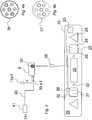
Figure 3 is a schematic diagram of a system according to the invention used in conjunction with a vehicle trailer board; -
Figures 4a and 4b show respective plug and socket terminals of a connector, which is useful for understanding the invention; -
Figure 5 is a partial perspective view of the system mounted to the rear of a trailer board; -
Figures 6a and 6b show respective side and perspective views of different sensor examples that may be used with the system; -
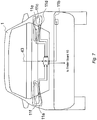
Figure 7 is a schematic view showing the system and connection of its sensors to rear lamps of a vehicle; -
Figures 8a and 8b are respective rear and partial side views of a vehicle with the trailer board mounted; -
Figure 9 is a schematic view of components which may comprise the system, at least in part; and -
Figure 10 is a flow diagram showing processing steps performed by theFigure 9 components. - Referring to
Figure 1 , there is shown a potential situation in which embodiments of the invention provide advantageous use. There is shown avehicle 1 to the rear of which is mounted abicycle 3 by means of a retro-fitbike mounting bracket 5. This common arrangement obscures at least some or all of the rear signallinglights 7 contrary to good safety practise and legislation. -
Figure 2 shows a first embodiment vehicular signalling system for overcoming or alleviating the abovementioned disadvantages, in particular without the need for specialised fitting of an electrical connector to the vehicle exterior. It comprises asignalling control unit 9 which is mounted to thevehicle 1, for example to the rear bumper/fender, to thebracket 5 or even to atrailer board 10, and a plurality ofoptical light sensors 11 in signal communication with the control unit, and which in use are detachably mountable to respective ones of the rear signalling lights. - A
trailer board 10, which may or may not be a conventional trailer board, is mounted behind thebicycle 3 in the conventional manner. Thecontrol unit 9 is in signal communication with thetrailer board 10 and is configured in use to relay signals sensed by thelight sensors 11 to an electrical system of thetrailer board 10 so as to mimic in real-time, or near real-time, signalling from thevehicle 1. - In this context, signalling refers to visible output from any or all of the rear tail lights, indicator (turn) lights, fog light(s), and possibly a reversing light.
- With reference to
Figure 3 , thetrailer board 10 is shown and comprises anelongate mounting board 20 carrying on its rear surface a plurality of electrical lights, comprising in this example of: - a
left indicator 22; - a
fog light 23; - a
right indicator 24; - a
right tail light 25; -
brake lights 26; and - a
left tail light 27. - Two
reflective triangles 29 are also provided for additional safety, as an option. Amounting area 30 is provided for a registration tail plate, if needed, and optionally one ormore mounts 32 are provided for reverse parking sensors, if needed. - Electrical conductors, shown in dotted lines, connect each of the above lights 22 - 27 to a
connector plug 35. The conductors can pass between laminated sheets that form thetrailer board 10 and/or may be wires or conductive tracks printed on substrate. Theplug 35 can be a conventional plug, e.g. a 12N connector currently used for trailer boards in the UK and certain parts of Europe. Other types of connector can also be employed.Figure 4a shows the seven-terminal layout of theplug 35, withterminals terminals - The
control unit 9 comprises circuitry mounted on one or more printed circuit boards and housed within a waterproof casing. Asocket 37 is provided on the exterior of the waterproof casing for receiving theplug 35; thesocket 37 may be covered by a removable waterproof cap for when not in use.Figure 4b shows the layout of thesocket 37, again a 12N socket, which has the opposite male/female orientation of terminals than that shown inFigure 4a , withterminals terminals - In the case of the 12N connector, the wiring of the pins correspond to the following signal functions:
Pin No. Colour Function 1 Yellow Left Indicator 2 Blue Fog Light 3 White Earth 4 Green Right Indicator 5 Brown Right Tail / Side Light 6 Red Brake / Stop Lights 7 Black Left Tail / Side Light - Connected to the
control unit 9 are, in this embodiment, six externaloptical sensors 11a-f byrespective conductors 39a-f. Theseconductors 39a-f are covered by an insulating sleeve and are of sufficient length to extend to the peripheral edges of the vehicle (where most lights are located) from the centre. Different conductors may have different lengths. Also connected to thecontrol unit 9 is anexternal 12v plug 41 vialead 43. The 12v plug 41 may be shaped and dimensioned to locate within the provided cigarette lighter receptacle of thevehicle 1, enabling thecontrol unit 9 to be powered by passing the plug and lead 43 through the boot/trunk of the vehicle or some other exterior aperture. -
Figure 5 shows how thecontrol unit 9 can be directly mounted on the rear of thetrailer board 10, or integrated into the trailer board when sold. Here, it will be seen that theconductors 39a-f are connected to thecontrol unit 9 by asingle plug 47 which locates within a correspondingsocket 48 on the control unit. - Each of the
optical sensors 11a-f is configured to removably attach to the external surface of the vehicle light cluster, which typically comprises a smooth, transparent plastic cover beneath which bulbs are located.Figures 6a and 6b show different types of optical sensor, either of which is suitable. Other types are possible. - Referring particularly to
Figure 6a , which shows only onesensor 11a, it comprises abase member 51, which may be a covered circuit board, onto which is mounted aphotodetector 53 or similar component. As will be appreciated, thephotodetector 53 generates a signal responsive to emitted light above a certain intensity which it transmits to theconductor 39a. Aperimeter wall 55 surrounds thephotodetector 53 for the purpose of preventing or mitigating other light sources from affecting the operation of the photodetector, and/or debris such as mud from the road affecting performance. In this case, theperimeter wall 55 is provided in the form of a suction cup made of relatively flexible and deformable material such as rubber which enables straightforward removable attachment of its flat,end surface 57 to the cover of a selected vehicle lamp. - Referring to
Figure 6b , in an alternative embodiment, thesensor 11a comprises a deformable ornon-deformable perimeter wall 59 which likewise surrounds thephotodetector 53 and which attaches to the vehicle lamp using one or moreadhesive stickers 61, such as provided by 3M (typically referred to as "dual lock coins"). Other forms of adhesion or attachment can be employed, e.g. using a hook and loop system. - Referring to
Figure 7 , a typical attachment of the signalling system, particularly thesensors 11a-f, to the rear lights of avehicle 1 is shown. In practice, each of thesensors 11a-f will be labelled for user-attachment to a corresponding one of the rear lights, e.g. using a number or colour code. The table below shows an example. Placement of the sensor over the appropriate rear light is for the user to manage.Sensor Colour Function 11a Yellow Left Indicator 11b Blue Fog Light 11c Green Right Indicator 11d Brown Right Tail / Side Light 11e Red Brake / Stop Lights 11f Black Left Tail / Side Light - In use, the circuitry within the
control system 9 is arranged such as to detect the one or more signals produced by thesensors 11a-f and to relay these to the corresponding signal lamp provided on thetrailer board 10 as shown inFigures 8a and 8b which are rear and partial side views respectively. The term 'relay' in this sense means to receive and pass on. In some embodiments, processing is involved, for example by means of detecting the signal strength from thesensors 11a-f and only issuing a signal to the corresponding lamp of thetrailer board 10 if the signal strength is above a predetermined threshold. This helps avoid, for example, ambient light at one of thesensors 11a-f causing a lamp to erroneously turn on. In this sense, signal strength refers to the brightness or intensity of the sensed light, which could be represented in analogue or digital form. - The
control system 9 may be provided in hardware, software or a combination of both.Figure 9 shows one example in which thecontrol system 9 comprises amicro-controller 70 and amemory 72. - The
controller 70 can be one or more processors, one or more microcontrollers or a combination of the two. The presence of themicro-controller 70 ensures that "false triggers" caused by light pollution from other sources can be effectively filtered out. - The
memory 72 can be a separate hardware module or provided 'on-board' thecontroller 70. Thememory 72 can be implemented in any form. Thememory 72 can store a program which, when executed by thecontroller 70, performs certain functions of thecontrol system 9. - As an example,
Figure 10 shows in overview the steps performed by a program stored on thememory 72 when executed on thecontroller 70. In a first step 10.1, a signal is received from one or more of thesensors 11a-f. In step 10.2 the signal strength from the, or each, signal is measured. In step 10.3 for each received signal it is determined if the signal strength is above a predetermined threshold. If so, in step 10.4 the corresponding lamp is enabled by means of issuing a corresponding signal to the appropriate terminal of thesocket 37. It will be appreciated that these steps can be implemented in hardware, as opposed to software, or using a combination of both. - In some embodiments, the
controller 70 may be a microcontroller programmed to work in tandem with an embedded analog to digital converter (ADC) to process voltage level samples and compare them to a programmed or runtime adjustable threshold voltage; based on these values, and in some cases combinations of values, the microcontroller illuminates the respective lights of thetrailer board 10. - The
microcontroller 70 may continually instruct the ADC to sample voltage levels from the respective sensor pins, connected torespective sensors 11a - 11f through printed circuit board connectors and traces. Thesensors 11a - 11f may provide a voltage level to the respective pins on themicrocontroller 70 which is dependent on the light intensity the sensors are receiving. The ADC passes the converted digital samples to themicrocontroller 70. Themicrocontroller 70 continuously monitors the digital samples and determines whether or not they are above a threshold voltage. If the digital sample is above the threshold value and/or if a multiplicity of these digital samples are above the threshold value at the same time (in the case of braking) then themicrocontroller 70 toggles the relevant output pin or pins. When the relevant output pin or pins is toggled, the appropriate light on thetrailer board 10 is then illuminated. - The
microcontroller 70 is part of the transmission lights controller board and is one of many components required to make the system work. Themicrocontroller 70 samples the voltage levels from the sensors through the ADC. Themicrocontroller 70 is programmed to compare the voltage levels that are sampled and determine if they are above a threshold or below a threshold. If the voltage levels from the ADC are above a threshold, themicrocontroller 70 controls one of its output port pins to go high, causing the respective light on thetrailer board 10 to illuminate. - A communications peripheral may be provided on the
microcontroller 70 in order to communicate with external devices (e.g. an ultrasonic portion of the product to be described below, which serves as a distance measurement to aid in reversing and parking; other applications may also arise in the future for coupling to the product.) Program and Processing instructions are stored in themicrocontroller 70 allowing it to control - The ability for the
microcontroller 70 and ADC to work in tandem to sample signals provides a precise and consistent way of implementing this product. Themicrocontroller 70 is a programmable device and can be programmed with diagnostic and fault tolerant code to increase reliability and detect and correct for issues while in operation. - In some embodiments, any or all of the above-mentioned conductors between the
control system 9 and thesensors 11a-f and thetrailer board 10 can be replaced with wireless communications devices, e.g. using Bluetooth as a wireless communications protocol. - In some embodiments, a parking sensor facility may be incorporated into the
control system 9. More specifically, housed within the casing of thecontrol system 9 will be circuitry, being a parking sensor controller, which draws power from the above-mentioned components connected to the car's power supply. One or more further conductors will extend from thecontrol system 9 to respective ultrasonic parking sensors which can, e.g. locate within respective mounting holes or recesses 32 of thetrailer board 10 as indicated inFigure 3 . Additionally, therefore, a retro-fit reverse parking system can be provided to account for thevehicle 1 having no such facility, or in which the vehicle's own sensors are obscured by objects mounted to the rear or by the trailer board itself. The audible indication provided by the parking sensor controller can be made via a speaker on the controller, and/or by a separate speaker that can locate within the vehicle itself and which receives signals from the controller by wired or wireless means. Additionally, or alternatively, an application for running on a smartphone or the like can be provided, and arranged to pair and communicate with the parking sensor wirelessly to provide an indication of object proximity. - In some embodiments, the
control system 9 can be provided as a separate module for use with existing trailer boards available on the market. In other embodiments, thecontrol system 9 can be provided as part of a trailer board assembly, being a stand-alone product for purchase. - The reverse parking sensors, for example, may be provided as a separate module such that they are separate from the other sensors. An existing trailerboard socket found on the vehicle is connected to the reverse parking sensor controller to receive a signal from the controller.
- It will be appreciated that the above described embodiments are purely illustrative and are not limiting on the scope of the invention. Other variations and modifications will be apparent to persons skilled in the art upon reading the present application.
- Moreover, the disclosure of the present application should be understood to include any novel features or any novel combination of features either explicitly or implicitly disclosed herein or any generalization thereof and during the prosecution of the present application or of any application derived therefrom, new claims may be formulated to cover any such features and/or combination of such features.
Claims (11)
- A signalling system for vehicles, comprising one or more optical sensors for removable attachment to a respective vehicle light, which sensors are configured to generate a signal responsive to detecting emitted light from the vehicle light to which it is attached, the system being arranged responsive to receiving a signal from the one or more optical sensors to output a signal to an external signalling unit to cause a corresponding light on said external signalling unit to operate and the system further comprising one or more proximity sensors adapted for retrofitting to a vehicular trailer board, and means for relaying signals produced by the parking sensors to an audible or visual unit which may be carried within the vehicle.
- The signalling system of claim 1, wherein plural optical sensors are provided, each connected to a control unit by means of respective lengthwise conductors, the control unit comprising circuitry for relaying the sensor signals to corresponding lights of an external signalling unit.
- The signalling system of claim 2, further comprising a trailer board for removable mounting to the rear of a vehicle, the trailer board carrying on a rear surface a plurality of signalling lights, and wherein the control unit is configured to relay sensor signals received from the sensors to a corresponding signalling light on the trailer board.
- The signalling system of any preceding claim, wherein the or each optical sensor comprises a light detector surrounded by a wall having an end surface adapted for removable attachment to a vehicle light.
- The signalling system of claim 4, wherein the surrounding wall is formed of a deformable material with a substantially planar end surface which, in use, is removably attached to a vehicle light by suction.
- The signalling system of claim 4, wherein the surrounding wall has one or more adhesive parts provided on the end surface for removable attachment to a vehicle light.
- The signalling system of any preceding claim, wherein the system comprises a conductor for receiving electrical power from a vehicle, the conductor being terminated by a plug adapted to connect to an existing power outlet of a vehicle, e.g. a cigarette lighter outlet.
- The signalling system of any preceding claim, wherein the system comprises an external connector plug or socket adapted to connect to an existing socket or plug of a vehicular trailer board.
- The signalling system of any preceding claim, wherein the system is arranged responsive to receiving the signal from the one or more optical sensors, to determine the strength or intensity of light detected by said sensor, and to output the signal to the external signalling unit only if said strength or intensity is above a predetermined threshold.
- The signalling system of claim 9, wherein the system comprises a microcontroller with an on-chip analog to digital converter configured to sample an input signal indicative of the strength or intensity of light detected by said sensor(s), and to determine if the digital representation of said sampled input signal(s) is or are above the predetermined threshold stored in on-chip memory.
- A retrofit trailer board system for vehicles, comprising:a trailer board carrying a plurality of signalling lights on a surface thereof;a plurality of optical sensors for removable connection to the exterior surface of respective vehicle lights, each sensor being configured to issue a signal responsive to operation of a vehicle light; andan electronic control unit in signal communication with each of the optical sensors and arranged in use to relay signals received from respective optical sensors to a corresponding signalling light of the trailer board.
Applications Claiming Priority (1)
| Application Number | Priority Date | Filing Date | Title |
|---|---|---|---|
| GB1609390.8A GB2550896B (en) | 2016-05-27 | 2016-05-27 | Signalling system |
Publications (3)
| Publication Number | Publication Date |
|---|---|
| EP3254897A1 true EP3254897A1 (en) | 2017-12-13 |
| EP3254897C0 EP3254897C0 (en) | 2024-03-27 |
| EP3254897B1 EP3254897B1 (en) | 2024-03-27 |
Family
ID=56410670
Family Applications (1)
| Application Number | Title | Priority Date | Filing Date |
|---|---|---|---|
| EP17000903.9A Active EP3254897B1 (en) | 2016-05-27 | 2017-05-29 | Signalling system |
Country Status (3)
| Country | Link |
|---|---|
| US (2) | US20170341572A1 (en) |
| EP (1) | EP3254897B1 (en) |
| GB (1) | GB2550896B (en) |
Cited By (2)
| Publication number | Priority date | Publication date | Assignee | Title |
|---|---|---|---|---|
| EP4056423A1 (en) * | 2021-03-12 | 2022-09-14 | SNO-Way International, Inc. | Snowplow headlight control system and method |
| WO2024077332A1 (en) * | 2022-10-13 | 2024-04-18 | Brown & Watson International Pty Ltd | Vehicle driving light with internal voltage sensor receiving hi-beam signal |
Families Citing this family (4)
| Publication number | Priority date | Publication date | Assignee | Title |
|---|---|---|---|---|
| CN109507663B (en) * | 2018-11-27 | 2023-09-12 | 贵州省交通规划勘察设计研究院股份有限公司 | Roadbed disease detection vehicle based on multichannel ground penetrating radar technology |
| WO2020112528A1 (en) * | 2018-11-29 | 2020-06-04 | Grote Industries, Inc. | Adapter for selecting lamp function in a truck trailer |
| CN112061027B (en) * | 2020-07-30 | 2022-03-11 | 南京英锐创电子科技有限公司 | Vehicle alarm system, vehicle alarm method and computer equipment |
| DE102021119084A1 (en) | 2021-07-23 | 2023-01-26 | Audi Aktiengesellschaft | auxiliary lighting system |
Citations (5)
| Publication number | Priority date | Publication date | Assignee | Title |
|---|---|---|---|---|
| GB2054290A (en) * | 1979-07-10 | 1981-02-11 | Currey B | Vehicle trailer lighting system |
| US4325052A (en) * | 1980-02-11 | 1982-04-13 | Koerner Steve J | Trailer light connection system |
| DE29801177U1 (en) * | 1998-01-26 | 1998-03-26 | Dörr, Klaus, 74235 Erlenbach | Device for operating a trailer or rear carrier lighting |
| EP2368761A2 (en) * | 2010-03-15 | 2011-09-28 | Mont Blanc Industri UK Limited | Lighting board system |
| WO2015013664A2 (en) * | 2013-07-25 | 2015-01-29 | Peterson John S | Removable signaling apparatus, system, and method |
Family Cites Families (9)
| Publication number | Priority date | Publication date | Assignee | Title |
|---|---|---|---|---|
| US4742387A (en) * | 1986-03-17 | 1988-05-03 | Sony Corporation | Method and apparatus for automatically establishing a color balance of a color television monitor including an ambient light sensing and data compensating function |
| US4800471A (en) * | 1988-08-10 | 1989-01-24 | Lippert Raymond E | Brake light attachment |
| US5400225A (en) * | 1993-10-06 | 1995-03-21 | Currie; Joseph E. | Optical fiber illumination device |
| GB9409548D0 (en) * | 1994-05-12 | 1994-06-29 | Johnstone Martin M | Device |
| US20030189836A1 (en) * | 2002-04-04 | 2003-10-09 | Sparling Teddy Burch | Boat trailer employing immersible fiber-optic lighting means |
| CA2388396A1 (en) * | 2002-06-11 | 2003-12-11 | Daniel Therriault | Lighting generating optical fiber cables system |
| EP1571040A3 (en) * | 2004-03-04 | 2006-07-26 | Parking Angel Ltd | Proximity detection system for a vehicle |
| CA2573778A1 (en) * | 2004-07-13 | 2006-02-16 | Sparks, Terry | Transmitter apparatus and system for remote signaling |
| DE102012002301A1 (en) * | 2012-02-07 | 2013-08-08 | Magna Car Top Systems Gmbh | Rear carrier for vehicle to transport bulky loads, has distance sensor that is integrated in cross-element of rear carrier, where transmission line is provided on rear carrier between distance sensor and plug |
-
2016
- 2016-05-27 GB GB1609390.8A patent/GB2550896B/en active Active
-
2017
- 2017-05-29 EP EP17000903.9A patent/EP3254897B1/en active Active
- 2017-05-30 US US15/608,457 patent/US20170341572A1/en not_active Abandoned
-
2018
- 2018-09-14 US US16/131,725 patent/US10421395B2/en active Active
Patent Citations (5)
| Publication number | Priority date | Publication date | Assignee | Title |
|---|---|---|---|---|
| GB2054290A (en) * | 1979-07-10 | 1981-02-11 | Currey B | Vehicle trailer lighting system |
| US4325052A (en) * | 1980-02-11 | 1982-04-13 | Koerner Steve J | Trailer light connection system |
| DE29801177U1 (en) * | 1998-01-26 | 1998-03-26 | Dörr, Klaus, 74235 Erlenbach | Device for operating a trailer or rear carrier lighting |
| EP2368761A2 (en) * | 2010-03-15 | 2011-09-28 | Mont Blanc Industri UK Limited | Lighting board system |
| WO2015013664A2 (en) * | 2013-07-25 | 2015-01-29 | Peterson John S | Removable signaling apparatus, system, and method |
Cited By (2)
| Publication number | Priority date | Publication date | Assignee | Title |
|---|---|---|---|---|
| EP4056423A1 (en) * | 2021-03-12 | 2022-09-14 | SNO-Way International, Inc. | Snowplow headlight control system and method |
| WO2024077332A1 (en) * | 2022-10-13 | 2024-04-18 | Brown & Watson International Pty Ltd | Vehicle driving light with internal voltage sensor receiving hi-beam signal |
Also Published As
| Publication number | Publication date |
|---|---|
| GB2550896B (en) | 2021-12-15 |
| US20170341572A1 (en) | 2017-11-30 |
| US20190016259A1 (en) | 2019-01-17 |
| US10421395B2 (en) | 2019-09-24 |
| EP3254897C0 (en) | 2024-03-27 |
| EP3254897B1 (en) | 2024-03-27 |
| GB2550896A (en) | 2017-12-06 |
| GB201609390D0 (en) | 2016-07-13 |
Similar Documents
| Publication | Publication Date | Title |
|---|---|---|
| US10421395B2 (en) | Signalling system | |
| US11975702B2 (en) | Portable brake controller with wireless control interface | |
| US20080113522A1 (en) | Surface mount trailer electrical connector | |
| CN113905931B (en) | Tractor Video System | |
| US20040046653A1 (en) | Vehicle back up alarm with associated back up light | |
| US9258869B2 (en) | Trailer tail light adapter/converter | |
| US20170066363A1 (en) | Method and apparatus for installing and operating an auxiliary lighting system using a vehicle light plug | |
| EP3245100B1 (en) | Method and apparatus for installing and operating an auxiliary lighting system using a vehicle electric plug | |
| AU2014224016B2 (en) | Trailer signal converter | |
| US20240051362A1 (en) | Trailer connector | |
| AU2011325877B2 (en) | Electrical coupling | |
| US9955558B1 (en) | Self-contained, removable, wireless turn signal system for motor vehicles and trailers | |
| US10155468B1 (en) | Method and apparatus for controlling auxiliary lighting using a vehicle electric plug | |
| US20210122202A1 (en) | Taillight enhancement harness for a towed vehicle | |
| US9981597B2 (en) | Method and apparatus for installing and operating an auxiliary lighting system using a vehicle electric plug | |
| US20010043142A1 (en) | Vehicle back up alarm with integral back up light | |
| US20040160123A1 (en) | Combined four way and seven way connector assembly for use with a vehicle and for accommodating a trailer tow package and which in particular incorporates circuit protection and power switching capability | |
| US20080238639A1 (en) | Automobile auxiliary light testing device | |
| US20080224843A1 (en) | LED Signal System for Truck | |
| ATE386659T1 (en) | LIGHTING DEVICE FOR A VEHICLE COMPRISING A SENSOR | |
| WO2003066376A1 (en) | A vehicle accessory | |
| EP1819553A1 (en) | Safety system for a vehicle with optical signal transmission | |
| TWM515980U (en) | External brake warning device | |
| TWM540770U (en) | Brake warning device |
Legal Events
| Date | Code | Title | Description |
|---|---|---|---|
| PUAI | Public reference made under article 153(3) epc to a published international application that has entered the european phase |
Free format text: ORIGINAL CODE: 0009012 |
|
| STAA | Information on the status of an ep patent application or granted ep patent |
Free format text: STATUS: THE APPLICATION HAS BEEN PUBLISHED |
|
| AK | Designated contracting states |
Kind code of ref document: A1 Designated state(s): AL AT BE BG CH CY CZ DE DK EE ES FI FR GB GR HR HU IE IS IT LI LT LU LV MC MK MT NL NO PL PT RO RS SE SI SK SM TR |
|
| AX | Request for extension of the european patent |
Extension state: BA ME |
|
| STAA | Information on the status of an ep patent application or granted ep patent |
Free format text: STATUS: REQUEST FOR EXAMINATION WAS MADE |
|
| 17P | Request for examination filed |
Effective date: 20180924 |
|
| RBV | Designated contracting states (corrected) |
Designated state(s): AL AT BE BG CH CY CZ DE DK EE ES FI FR GB GR HR HU IE IS IT LI LT LU LV MC MK MT NL NO PL PT RO RS SE SI SK SM TR |
|
| STAA | Information on the status of an ep patent application or granted ep patent |
Free format text: STATUS: EXAMINATION IS IN PROGRESS |
|
| 17Q | First examination report despatched |
Effective date: 20210322 |
|
| GRAP | Despatch of communication of intention to grant a patent |
Free format text: ORIGINAL CODE: EPIDOSNIGR1 |
|
| STAA | Information on the status of an ep patent application or granted ep patent |
Free format text: STATUS: GRANT OF PATENT IS INTENDED |
|
| INTG | Intention to grant announced |
Effective date: 20231009 |
|
| GRAS | Grant fee paid |
Free format text: ORIGINAL CODE: EPIDOSNIGR3 |
|
| GRAA | (expected) grant |
Free format text: ORIGINAL CODE: 0009210 |
|
| STAA | Information on the status of an ep patent application or granted ep patent |
Free format text: STATUS: THE PATENT HAS BEEN GRANTED |
|
| RBV | Designated contracting states (corrected) |
Designated state(s): AL AT BE BG CH CY CZ DE DK EE ES FI FR GR HR HU IE IS IT LI LT LU LV MC MK MT NL NO PL PT RO RS SE SI SK SM TR |
|
| AK | Designated contracting states |
Kind code of ref document: B1 Designated state(s): AL AT BE BG CH CY CZ DE DK EE ES FI FR GR HR HU IE IS IT LI LT LU LV MC MK MT NL NO PL PT RO RS SE SI SK SM TR |
|
| REG | Reference to a national code |
Ref country code: CH Ref legal event code: EP |
|
| REG | Reference to a national code |
Ref country code: DE Ref legal event code: R096 Ref document number: 602017080322 Country of ref document: DE |
|
| REG | Reference to a national code |
Ref country code: IE Ref legal event code: FG4D |
|
| U01 | Request for unitary effect filed |
Effective date: 20240327 |
|
| U07 | Unitary effect registered |
Designated state(s): AT BE BG DE DK EE FI FR IT LT LU LV MT NL PT SE SI Effective date: 20240404 |
|
| U20 | Renewal fee for the european patent with unitary effect paid |
Year of fee payment: 8 Effective date: 20240530 |
|
| PG25 | Lapsed in a contracting state [announced via postgrant information from national office to epo] |
Ref country code: GR Free format text: LAPSE BECAUSE OF FAILURE TO SUBMIT A TRANSLATION OF THE DESCRIPTION OR TO PAY THE FEE WITHIN THE PRESCRIBED TIME-LIMIT Effective date: 20240628 |
|
| PG25 | Lapsed in a contracting state [announced via postgrant information from national office to epo] |
Ref country code: HR Free format text: LAPSE BECAUSE OF FAILURE TO SUBMIT A TRANSLATION OF THE DESCRIPTION OR TO PAY THE FEE WITHIN THE PRESCRIBED TIME-LIMIT Effective date: 20240327 Ref country code: RS Free format text: LAPSE BECAUSE OF FAILURE TO SUBMIT A TRANSLATION OF THE DESCRIPTION OR TO PAY THE FEE WITHIN THE PRESCRIBED TIME-LIMIT Effective date: 20240627 |
|
| PG25 | Lapsed in a contracting state [announced via postgrant information from national office to epo] |
Ref country code: RS Free format text: LAPSE BECAUSE OF FAILURE TO SUBMIT A TRANSLATION OF THE DESCRIPTION OR TO PAY THE FEE WITHIN THE PRESCRIBED TIME-LIMIT Effective date: 20240627 Ref country code: NO Free format text: LAPSE BECAUSE OF FAILURE TO SUBMIT A TRANSLATION OF THE DESCRIPTION OR TO PAY THE FEE WITHIN THE PRESCRIBED TIME-LIMIT Effective date: 20240627 Ref country code: HR Free format text: LAPSE BECAUSE OF FAILURE TO SUBMIT A TRANSLATION OF THE DESCRIPTION OR TO PAY THE FEE WITHIN THE PRESCRIBED TIME-LIMIT Effective date: 20240327 Ref country code: GR Free format text: LAPSE BECAUSE OF FAILURE TO SUBMIT A TRANSLATION OF THE DESCRIPTION OR TO PAY THE FEE WITHIN THE PRESCRIBED TIME-LIMIT Effective date: 20240628 |
|
| PG25 | Lapsed in a contracting state [announced via postgrant information from national office to epo] |
Ref country code: IS Free format text: LAPSE BECAUSE OF FAILURE TO SUBMIT A TRANSLATION OF THE DESCRIPTION OR TO PAY THE FEE WITHIN THE PRESCRIBED TIME-LIMIT Effective date: 20240727 |
|
| PG25 | Lapsed in a contracting state [announced via postgrant information from national office to epo] |
Ref country code: SM Free format text: LAPSE BECAUSE OF FAILURE TO SUBMIT A TRANSLATION OF THE DESCRIPTION OR TO PAY THE FEE WITHIN THE PRESCRIBED TIME-LIMIT Effective date: 20240327 |
|
| PG25 | Lapsed in a contracting state [announced via postgrant information from national office to epo] |
Ref country code: ES Free format text: LAPSE BECAUSE OF FAILURE TO SUBMIT A TRANSLATION OF THE DESCRIPTION OR TO PAY THE FEE WITHIN THE PRESCRIBED TIME-LIMIT Effective date: 20240327 |
|
| PG25 | Lapsed in a contracting state [announced via postgrant information from national office to epo] |
Ref country code: CZ Free format text: LAPSE BECAUSE OF FAILURE TO SUBMIT A TRANSLATION OF THE DESCRIPTION OR TO PAY THE FEE WITHIN THE PRESCRIBED TIME-LIMIT Effective date: 20240327 |
|
| PG25 | Lapsed in a contracting state [announced via postgrant information from national office to epo] |
Ref country code: PL Free format text: LAPSE BECAUSE OF FAILURE TO SUBMIT A TRANSLATION OF THE DESCRIPTION OR TO PAY THE FEE WITHIN THE PRESCRIBED TIME-LIMIT Effective date: 20240327 |
|
| PG25 | Lapsed in a contracting state [announced via postgrant information from national office to epo] |
Ref country code: SK Free format text: LAPSE BECAUSE OF FAILURE TO SUBMIT A TRANSLATION OF THE DESCRIPTION OR TO PAY THE FEE WITHIN THE PRESCRIBED TIME-LIMIT Effective date: 20240327 |
|
| PG25 | Lapsed in a contracting state [announced via postgrant information from national office to epo] |
Ref country code: SM Free format text: LAPSE BECAUSE OF FAILURE TO SUBMIT A TRANSLATION OF THE DESCRIPTION OR TO PAY THE FEE WITHIN THE PRESCRIBED TIME-LIMIT Effective date: 20240327 Ref country code: SK Free format text: LAPSE BECAUSE OF FAILURE TO SUBMIT A TRANSLATION OF THE DESCRIPTION OR TO PAY THE FEE WITHIN THE PRESCRIBED TIME-LIMIT Effective date: 20240327 Ref country code: RO Free format text: LAPSE BECAUSE OF FAILURE TO SUBMIT A TRANSLATION OF THE DESCRIPTION OR TO PAY THE FEE WITHIN THE PRESCRIBED TIME-LIMIT Effective date: 20240327 Ref country code: PL Free format text: LAPSE BECAUSE OF FAILURE TO SUBMIT A TRANSLATION OF THE DESCRIPTION OR TO PAY THE FEE WITHIN THE PRESCRIBED TIME-LIMIT Effective date: 20240327 Ref country code: IS Free format text: LAPSE BECAUSE OF FAILURE TO SUBMIT A TRANSLATION OF THE DESCRIPTION OR TO PAY THE FEE WITHIN THE PRESCRIBED TIME-LIMIT Effective date: 20240727 Ref country code: ES Free format text: LAPSE BECAUSE OF FAILURE TO SUBMIT A TRANSLATION OF THE DESCRIPTION OR TO PAY THE FEE WITHIN THE PRESCRIBED TIME-LIMIT Effective date: 20240327 Ref country code: CZ Free format text: LAPSE BECAUSE OF FAILURE TO SUBMIT A TRANSLATION OF THE DESCRIPTION OR TO PAY THE FEE WITHIN THE PRESCRIBED TIME-LIMIT Effective date: 20240327 |
|
| REG | Reference to a national code |
Ref country code: CH Ref legal event code: PL |
|
| REG | Reference to a national code |
Ref country code: DE Ref legal event code: R097 Ref document number: 602017080322 Country of ref document: DE |
|
| PG25 | Lapsed in a contracting state [announced via postgrant information from national office to epo] |
Ref country code: MC Free format text: LAPSE BECAUSE OF FAILURE TO SUBMIT A TRANSLATION OF THE DESCRIPTION OR TO PAY THE FEE WITHIN THE PRESCRIBED TIME-LIMIT Effective date: 20240327 |
|
| PG25 | Lapsed in a contracting state [announced via postgrant information from national office to epo] |
Ref country code: MC Free format text: LAPSE BECAUSE OF FAILURE TO SUBMIT A TRANSLATION OF THE DESCRIPTION OR TO PAY THE FEE WITHIN THE PRESCRIBED TIME-LIMIT Effective date: 20240327 Ref country code: CH Free format text: LAPSE BECAUSE OF NON-PAYMENT OF DUE FEES Effective date: 20240531 |
|
| PLBE | No opposition filed within time limit |
Free format text: ORIGINAL CODE: 0009261 |
|
| STAA | Information on the status of an ep patent application or granted ep patent |
Free format text: STATUS: NO OPPOSITION FILED WITHIN TIME LIMIT |
|
| 26N | No opposition filed |
Effective date: 20250103 |
|
| PG25 | Lapsed in a contracting state [announced via postgrant information from national office to epo] |
Ref country code: IE Free format text: LAPSE BECAUSE OF NON-PAYMENT OF DUE FEES Effective date: 20240529 |
|
| U21 | Renewal fee for the european patent with unitary effect paid with additional fee |
Year of fee payment: 9 Effective date: 20250703 |
|
| PG25 | Lapsed in a contracting state [announced via postgrant information from national office to epo] |
Ref country code: CY Free format text: LAPSE BECAUSE OF FAILURE TO SUBMIT A TRANSLATION OF THE DESCRIPTION OR TO PAY THE FEE WITHIN THE PRESCRIBED TIME-LIMIT; INVALID AB INITIO Effective date: 20170529 |
|
| PG25 | Lapsed in a contracting state [announced via postgrant information from national office to epo] |
Ref country code: HU Free format text: LAPSE BECAUSE OF FAILURE TO SUBMIT A TRANSLATION OF THE DESCRIPTION OR TO PAY THE FEE WITHIN THE PRESCRIBED TIME-LIMIT; INVALID AB INITIO Effective date: 20170529 |