EP3253491B1 - System and method for single cell genetic analysis - Google Patents
System and method for single cell genetic analysis Download PDFInfo
- Publication number
- EP3253491B1 EP3253491B1 EP16746208.4A EP16746208A EP3253491B1 EP 3253491 B1 EP3253491 B1 EP 3253491B1 EP 16746208 A EP16746208 A EP 16746208A EP 3253491 B1 EP3253491 B1 EP 3253491B1
- Authority
- EP
- European Patent Office
- Prior art keywords
- cell
- cells
- reservoir
- nucleic acid
- cages
- Prior art date
- Legal status (The legal status is an assumption and is not a legal conclusion. Google has not performed a legal analysis and makes no representation as to the accuracy of the status listed.)
- Active
Links
Images


Classifications
-
- B—PERFORMING OPERATIONS; TRANSPORTING
- B01—PHYSICAL OR CHEMICAL PROCESSES OR APPARATUS IN GENERAL
- B01L—CHEMICAL OR PHYSICAL LABORATORY APPARATUS FOR GENERAL USE
- B01L3/00—Containers or dishes for laboratory use, e.g. laboratory glassware; Droppers
- B01L3/50—Containers for the purpose of retaining a material to be analysed, e.g. test tubes
- B01L3/508—Rigid containers without fluid transport within
- B01L3/5085—Rigid containers without fluid transport within for multiple samples, e.g. microtitration plates
- B01L3/50851—Rigid containers without fluid transport within for multiple samples, e.g. microtitration plates specially adapted for heating or cooling samples
-
- B—PERFORMING OPERATIONS; TRANSPORTING
- B01—PHYSICAL OR CHEMICAL PROCESSES OR APPARATUS IN GENERAL
- B01L—CHEMICAL OR PHYSICAL LABORATORY APPARATUS FOR GENERAL USE
- B01L3/00—Containers or dishes for laboratory use, e.g. laboratory glassware; Droppers
- B01L3/50—Containers for the purpose of retaining a material to be analysed, e.g. test tubes
- B01L3/502—Containers for the purpose of retaining a material to be analysed, e.g. test tubes with fluid transport, e.g. in multi-compartment structures
- B01L3/5027—Containers for the purpose of retaining a material to be analysed, e.g. test tubes with fluid transport, e.g. in multi-compartment structures by integrated microfluidic structures, i.e. dimensions of channels and chambers are such that surface tension forces are important, e.g. lab-on-a-chip
- B01L3/50273—Containers for the purpose of retaining a material to be analysed, e.g. test tubes with fluid transport, e.g. in multi-compartment structures by integrated microfluidic structures, i.e. dimensions of channels and chambers are such that surface tension forces are important, e.g. lab-on-a-chip characterised by the means or forces applied to move the fluids
-
- B—PERFORMING OPERATIONS; TRANSPORTING
- B01—PHYSICAL OR CHEMICAL PROCESSES OR APPARATUS IN GENERAL
- B01L—CHEMICAL OR PHYSICAL LABORATORY APPARATUS FOR GENERAL USE
- B01L3/00—Containers or dishes for laboratory use, e.g. laboratory glassware; Droppers
- B01L3/50—Containers for the purpose of retaining a material to be analysed, e.g. test tubes
- B01L3/502—Containers for the purpose of retaining a material to be analysed, e.g. test tubes with fluid transport, e.g. in multi-compartment structures
- B01L3/5027—Containers for the purpose of retaining a material to be analysed, e.g. test tubes with fluid transport, e.g. in multi-compartment structures by integrated microfluidic structures, i.e. dimensions of channels and chambers are such that surface tension forces are important, e.g. lab-on-a-chip
- B01L3/502761—Containers for the purpose of retaining a material to be analysed, e.g. test tubes with fluid transport, e.g. in multi-compartment structures by integrated microfluidic structures, i.e. dimensions of channels and chambers are such that surface tension forces are important, e.g. lab-on-a-chip specially adapted for handling suspended solids or molecules independently from the bulk fluid flow, e.g. for trapping or sorting beads or physically stretching molecules
-
- C—CHEMISTRY; METALLURGY
- C07—ORGANIC CHEMISTRY
- C07K—PEPTIDES
- C07K1/00—General methods for the preparation of peptides, i.e. processes for the organic chemical preparation of peptides or proteins of any length
-
- C—CHEMISTRY; METALLURGY
- C12—BIOCHEMISTRY; BEER; SPIRITS; WINE; VINEGAR; MICROBIOLOGY; ENZYMOLOGY; MUTATION OR GENETIC ENGINEERING
- C12Q—MEASURING OR TESTING PROCESSES INVOLVING ENZYMES, NUCLEIC ACIDS OR MICROORGANISMS; COMPOSITIONS OR TEST PAPERS THEREFOR; PROCESSES OF PREPARING SUCH COMPOSITIONS; CONDITION-RESPONSIVE CONTROL IN MICROBIOLOGICAL OR ENZYMOLOGICAL PROCESSES
- C12Q1/00—Measuring or testing processes involving enzymes, nucleic acids or microorganisms; Compositions therefor; Processes of preparing such compositions
- C12Q1/68—Measuring or testing processes involving enzymes, nucleic acids or microorganisms; Compositions therefor; Processes of preparing such compositions involving nucleic acids
- C12Q1/6813—Hybridisation assays
- C12Q1/6834—Enzymatic or biochemical coupling of nucleic acids to a solid phase
- C12Q1/6837—Enzymatic or biochemical coupling of nucleic acids to a solid phase using probe arrays or probe chips
-
- C—CHEMISTRY; METALLURGY
- C12—BIOCHEMISTRY; BEER; SPIRITS; WINE; VINEGAR; MICROBIOLOGY; ENZYMOLOGY; MUTATION OR GENETIC ENGINEERING
- C12Q—MEASURING OR TESTING PROCESSES INVOLVING ENZYMES, NUCLEIC ACIDS OR MICROORGANISMS; COMPOSITIONS OR TEST PAPERS THEREFOR; PROCESSES OF PREPARING SUCH COMPOSITIONS; CONDITION-RESPONSIVE CONTROL IN MICROBIOLOGICAL OR ENZYMOLOGICAL PROCESSES
- C12Q1/00—Measuring or testing processes involving enzymes, nucleic acids or microorganisms; Compositions therefor; Processes of preparing such compositions
- C12Q1/68—Measuring or testing processes involving enzymes, nucleic acids or microorganisms; Compositions therefor; Processes of preparing such compositions involving nucleic acids
- C12Q1/6869—Methods for sequencing
- C12Q1/6874—Methods for sequencing involving nucleic acid arrays, e.g. sequencing by hybridisation
-
- G—PHYSICS
- G01—MEASURING; TESTING
- G01N—INVESTIGATING OR ANALYSING MATERIALS BY DETERMINING THEIR CHEMICAL OR PHYSICAL PROPERTIES
- G01N33/00—Investigating or analysing materials by specific methods not covered by groups G01N1/00 - G01N31/00
- G01N33/48—Biological material, e.g. blood, urine; Haemocytometers
- G01N33/483—Physical analysis of biological material
- G01N33/487—Physical analysis of biological material of liquid biological material
- G01N33/48707—Physical analysis of biological material of liquid biological material by electrical means
- G01N33/48721—Investigating individual macromolecules, e.g. by translocation through nanopores
-
- B—PERFORMING OPERATIONS; TRANSPORTING
- B01—PHYSICAL OR CHEMICAL PROCESSES OR APPARATUS IN GENERAL
- B01L—CHEMICAL OR PHYSICAL LABORATORY APPARATUS FOR GENERAL USE
- B01L2200/00—Solutions for specific problems relating to chemical or physical laboratory apparatus
- B01L2200/02—Adapting objects or devices to another
- B01L2200/028—Modular arrangements
-
- B—PERFORMING OPERATIONS; TRANSPORTING
- B01—PHYSICAL OR CHEMICAL PROCESSES OR APPARATUS IN GENERAL
- B01L—CHEMICAL OR PHYSICAL LABORATORY APPARATUS FOR GENERAL USE
- B01L2300/00—Additional constructional details
- B01L2300/06—Auxiliary integrated devices, integrated components
- B01L2300/0627—Sensor or part of a sensor is integrated
- B01L2300/0636—Integrated biosensor, microarrays
-
- B—PERFORMING OPERATIONS; TRANSPORTING
- B01—PHYSICAL OR CHEMICAL PROCESSES OR APPARATUS IN GENERAL
- B01L—CHEMICAL OR PHYSICAL LABORATORY APPARATUS FOR GENERAL USE
- B01L2300/00—Additional constructional details
- B01L2300/08—Geometry, shape and general structure
- B01L2300/0809—Geometry, shape and general structure rectangular shaped
- B01L2300/0819—Microarrays; Biochips
-
- B—PERFORMING OPERATIONS; TRANSPORTING
- B01—PHYSICAL OR CHEMICAL PROCESSES OR APPARATUS IN GENERAL
- B01L—CHEMICAL OR PHYSICAL LABORATORY APPARATUS FOR GENERAL USE
- B01L2300/00—Additional constructional details
- B01L2300/08—Geometry, shape and general structure
- B01L2300/0848—Specific forms of parts of containers
- B01L2300/0851—Bottom walls
-
- C—CHEMISTRY; METALLURGY
- C12—BIOCHEMISTRY; BEER; SPIRITS; WINE; VINEGAR; MICROBIOLOGY; ENZYMOLOGY; MUTATION OR GENETIC ENGINEERING
- C12Q—MEASURING OR TESTING PROCESSES INVOLVING ENZYMES, NUCLEIC ACIDS OR MICROORGANISMS; COMPOSITIONS OR TEST PAPERS THEREFOR; PROCESSES OF PREPARING SUCH COMPOSITIONS; CONDITION-RESPONSIVE CONTROL IN MICROBIOLOGICAL OR ENZYMOLOGICAL PROCESSES
- C12Q2531/00—Reactions of nucleic acids characterised by
- C12Q2531/10—Reactions of nucleic acids characterised by the purpose being amplify/increase the copy number of target nucleic acid
- C12Q2531/113—PCR
-
- C—CHEMISTRY; METALLURGY
- C12—BIOCHEMISTRY; BEER; SPIRITS; WINE; VINEGAR; MICROBIOLOGY; ENZYMOLOGY; MUTATION OR GENETIC ENGINEERING
- C12Q—MEASURING OR TESTING PROCESSES INVOLVING ENZYMES, NUCLEIC ACIDS OR MICROORGANISMS; COMPOSITIONS OR TEST PAPERS THEREFOR; PROCESSES OF PREPARING SUCH COMPOSITIONS; CONDITION-RESPONSIVE CONTROL IN MICROBIOLOGICAL OR ENZYMOLOGICAL PROCESSES
- C12Q2535/00—Reactions characterised by the assay type for determining the identity of a nucleotide base or a sequence of oligonucleotides
- C12Q2535/122—Massive parallel sequencing
-
- C—CHEMISTRY; METALLURGY
- C12—BIOCHEMISTRY; BEER; SPIRITS; WINE; VINEGAR; MICROBIOLOGY; ENZYMOLOGY; MUTATION OR GENETIC ENGINEERING
- C12Q—MEASURING OR TESTING PROCESSES INVOLVING ENZYMES, NUCLEIC ACIDS OR MICROORGANISMS; COMPOSITIONS OR TEST PAPERS THEREFOR; PROCESSES OF PREPARING SUCH COMPOSITIONS; CONDITION-RESPONSIVE CONTROL IN MICROBIOLOGICAL OR ENZYMOLOGICAL PROCESSES
- C12Q2565/00—Nucleic acid analysis characterised by mode or means of detection
- C12Q2565/50—Detection characterised by immobilisation to a surface
- C12Q2565/514—Detection characterised by immobilisation to a surface characterised by the use of the arrayed oligonucleotides as identifier tags, e.g. universal addressable array, anti-tag or tag complement array
Definitions
- the present invention is directed to methods for molecular diagnostics. Specifically, the invention concerns methods and systems useful for genetic analysis of single cells.
- RNAs in a cell In many biomedical applications it is important to characterize the population of RNAs in a cell. This is useful in many research applications and clinical diagnostics. Certain quantitative genetic analyses of biological tissues and organisms are best performed at the single cell level. However, single cells only contain picograms of genetic material. Molecular protocols have been introduced to reveal the transcriptome by sequencing the RNAs of individual cells.
- Microscopy, fluorescence-activated cell sorting (FACS), or real-time PCR-based methods can provide a single-cell aspect to experiments but are able to assay only a handful of genes at a time.
- High-throughput technologies such as microarrays and RNA-Seq provide a full view of the expression of all genes, but require more genetic material than is found in a single cell and are usually performed with thousands to millions of cells. These techniques provide useful genetic information at the cell population level, but have serious limitations for understanding biology at the single cell level.
- CEL-Seq protocol a method, referred to as CEL-Seq protocol, was developed for overcoming the limitation of the small starting amount of RNA ( Hashimshony et al., 2012, Cell Reports 2, p 666-673 ).
- the method utilizes barcoding and pooling samples before linearly amplifying mRNA with the use of one round of in vitro transcription.
- the described method showed more reproducible, linear, and sensitive results than a PCR-based amplification method.
- the robust transcriptome quantifications enabled by the method was also demonstrated to be useful for transcriptomic analyses of complex tissues containing populations of diverse cell types.
- U.S. patent application No. 2014/0066318 describes methods and products for the localized or spatial detection of nucleic acid in a tissue sample.
- International patent applications Nos. WO 2013/180567 , WO 2007/022026 , WO 2010/142954 , WO 2013/188872 , WO 2014/201273 and US patent application US 2011/0111981 relate to single cell isolation and/or analysis.
- the present invention provides a method for parallel analysis of nucleic acid from single cells, the method comprising:
- the present invention provides a system for single cell genetic analysis comprising:
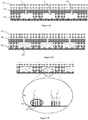
- FIGS 1A-H illustrates, as one embodiment of the present invention, the process for parallel analysis of a single cell RNA expression.
- 1A A membrane with micropores is used to capture individual cells in isolated chambers (IB). The membrane with the cells is then mounted onto a DNA microarray with hundreds of thousands of spots of DNA: each spot contains roughly one million DNA molecules all with the same nucleotide sequence (1C). Each spot contains a different variant of that sequence, and acts as a molecular barcode.
- a gel is added to the membrane (ID) and a solution added to lyse the cells (IE); the gel acting to prevent the leakage of RNAs from the cages.
- an RNA-Seq protocol is then carried out on the microarray (reverse transcription (RT), second-strand synthesis (SSS), and in vitro transcription (IVT)) generating free amplified RNA (1F-H).
- adjectives such as “substantially” and “about” modifying a condition or relationship characteristic of a feature or features of an embodiment of the invention are understood to mean that the condition or characteristic is defined to within tolerances that are acceptable for operation of the embodiment for an application for which it is intended.
- the word “or” in the specification and claims is considered to be the inclusive “or” rather than the exclusive or, and indicates at least one of, or any combination of items it conjoins.
- each of the verbs, "comprise,” “include” and “have” and conjugates thereof, are used to indicate that the object or objects of the verb are not necessarily a complete listing of components, elements or parts of the subject or subjects of the verb.
- single cell refers to one cell.
- isolated single-cell refers to a single cell completely, substantially or partially separated, isolated, excluded or purified from other components, e.g., cells, or cell fragments including but not limited to membranes, proteins or nucleic acid molecules.
- cell refers to a functional basic unit of living organisms. Suspended cells from any population can be used in the methods and/or systems described; examples include, but are not limited to, mammalian cells, mammalian mononuclear blood cells, prokaryotic cells, plant cells, eukaryotic single celled organisms including bacteria or yeast, or combinations thereof. Suspended cells can be obtained from tissues in several ways well known in the art. Cells can be easily purified from blood; Mononuclear cells can be released from soft tissues by enzymatic digestion with enzymes such as collagenase, trypsin, or pronase, which break down the extracellular matrix. Alternatively, pieces of tissue can be placed in growth media, and the cells that grow out are available for culture.
- separating As used herein the term “separating” , “excluding” or “isolating” is intended to mean that the material has been completely, substantially or partially separated, isolated, excluded or purified from other components, e.g., cells, or cell fragments including but not limited to membranes, proteins or nucleic acid molecules.
- nucleic acid is well known in the art.
- a “nucleic acid” as used herein will generally refer to a molecule (i.e., a strand) of DNA, RNA or a derivative or analog thereof, comprising a nucleobase.
- a nucleobase includes, for example, a naturally occurring purine or pyrimidine base found in DNA (e.g., an adenine "A,” a guanine “G,” a thymine “T” or a cytosine “C”) or RNA (e.g., an A, a G, an uracil "U” or a C).
- nucleic acid molecule include but not limited to single-stranded RNA (ssRNA), double-stranded RNA (dsRNA), single-stranded DNA (ssDNA), double-stranded DNA (dsDNA), small RNA such as miRNA, siRNA and other short interfering nucleic acids, snoRNAs, snRNAs, tRNA, piRNA, tnRNA, small rRNA, hnRNA, circulating nucleic acids, fragments of genomic DNA or RNA, degraded nucleic acids, ribozymes, viral RNA or DNA, nucleic acids of infectios origin, amplification products, modified nucleic acids, plasmidical or organellar nucleic acids and artificial nucleic acids such as oligonucleotides.
- ssRNA single-stranded RNA
- dsRNA double-stranded RNA
- ssDNA single-stranded DNA
- dsDNA double-stranded DNA
- a "transcriptome” refers to the set of all RNA molecules, including mRNA, rRNA, tRNA, and other non-coding RNA transcribed in one cell or a population of cells. "Transcriptome” usually includes the amount or concentration of each RNA molecule in addition to the molecular identities.
- RNA-seq RNA Sequencing
- CEL-Seq protocol is known in the art as a method for RNA-seq that is used for overcoming the limitation of the small starting amount of RNA, such as described by Hashimshony et al., 2012, ibid.
- CEL-Seq protocol utilizes barcoding and pooling samples before linearly amplifying mRNA with the use of one round of in vitro transcription.
- the methods of the nucleic acid synthesis and amplification steps of the present invention make take place in a solid-state, i.e., by use of a microarray.
- the nucleic acid synthesis and amplification step may take place in suspension by using a photo cleavage linker for binding the oligonucleotide of the DNA spot to a microarray and photo cleaving the oligonucleotide probes.
- the term "primer” includes an oligonucleotide, either natural or synthetic, that is capable, upon forming a duplex with a polynucleotide template, of acting as a point of initiation of nucleic acid synthesis and being extended from its 3' end along the template so that an extended duplex is formed. Primers within the scope of the present invention bind adjacent to a target sequence.
- a “primer” may be considered a short polynucleotide, generally with a free 3'-OH group that binds to a target or template potentially present in a sample of interest by either hybridization or ligation, and thereafter promoting polymerization of a polynucleotide complementary to the target.
- Primers of the present disclosure may comprise or consist of nucleotides ranging from 8 to 30 nucleotides.
- the primer is at least 8 nucleotides, or alternatively at least 9 nucleotides, or alternatively at least 10 nucleotides, or alternatively at least 11 nucleotides, or alternatively at least 12 nucleotides, or alternatively at least 13 nucleotides, or alternatively at least 14 nucleotides, or alternatively at least 15 nucleotides, or alternatively at least 16 nucleotides, or alternatively at least 17 nucleotides, or alternatively, at least 18 nucleotides, or alternatively, at least 19 nucleotides, or alternatively, at least 20 nucleotides, or alternatively, at least 21 nucleotides, or alternatively, at least 22 nucleotides, or alternatively, at least 23 nucleotides, or alternatively, at least 24 nucleotides, or alternatively, at least 25 nucleotides
- the primer is at most 40 nucleotides, or alternatively at most 50 nucleotides, or alternatively at most 75 nucleotides or alternatively at most 100 nucleotides.
- Primers of the present disclosure may comprise one or more functional units.
- a "DNA spot” is a distinct position on a microarray plate at which one or more species of primers/oligonucleotides, also referred to as probes, are immobilized. Typically, these can be a short section of a gene or other nucleic acid element to which a complementary DNA and/or complementary RNA sample can hybridize or ligate, under appropriate conditions, such as high-stringency hybridization conditions.
- the probes of each DNA spot are attached, directly or indirectly, to the solid surface of the array.
- the oligonucleotides of each DNA spot is immobilized to the microarray through a photo-cleavable linker.
- photo-cleavable linkers may include photo-cleavable linkers having an amine group, such as the PC 5'-Amino-Modifier-CE Phosphoramidite, which undergoes photolysis when illuminated with -360nm.
- the method of the invention further provides a step of releasing the oligonucleotides of each DNA spot by photo cleavage.
- the microarray is a solid surface or substrate.
- the solid surface or substrate is a glass chip.
- the solid surface or substrate is plastic.
- the solid surface or substrate is silicon chip.
- the solid surface or substrate is any suitable material known to the person skilled in the art.
- hybridization or “hybridizes” as used herein refers to the formation of a duplex between nucleotide sequences which are sufficiently complementary to form duplexes via Watson-Crick base pairing. Two nucleotide sequences are “complementary” to one another when those molecules share base pair organization homology. "Complementary" nucleotide sequences will combine with specificity to form a stable duplex under appropriate hybridization conditions.
- two sequences need not have perfect homology to be "complementary" under the invention.
- the present invention provides methods and systems for determining the gene expression of all, or a substantial portion of genes at the single cell level for large populations of cells, in parallel.
- full or partial transcriptome analysis at single cell level for large populations of cells in parallel is performed.
- targeted transcriptome analysis for one or more genes at single cell level for large populations of cells in parallel is performed.
- full or partial genomic DNA analysis at single cell level for large populations of cells in parallel is performed.
- the present invention shows for the first time massively-parallel nucleic acid analysis of single-cells utilizing a micropore cell capture system and/or method and array-bound DNA primers.
- the methods and/or systems described herein posses the ability to harness DNA microarray technology for the rendering of single-cell RNA-Seq as massively parallel.
- the method and/or system described herein allows scaling to millions or more of cells with only simple and inexpensive technology.
- the parallel analysis of cells is achieved by the solid-state massively parallel nature of the microarray coupled barcoding.
- the parallel, low volume enzymatic reaction of the method and/or system described herein low amounts of reagents may be used per cell.
- the methods and/or systems described herein lowers the price of gene expression analysis significantly compared to other typical assays known in the art.
- the present invention provides a method for parallel analysis of single cell's nucleic acid, the method comprises the steps of: receiving a liquid medium containing a suspension of cells to be analyzed into a cell reservoir; pumping the liquid medium from an enclosed reservoir, which is separated from the cell reservoir by a cell cage array, until isolated cells enter into the cell cages, thereby isolating said suspended cells one in each of the cell cages to produce isolated cells; mounting the cell cage array on a microarray comprising a plurality of DNA spots, each DNA spot comprises probes; providing the cell cage with a lysis buffer and a buffer suitable for nucleic acid analysis.
- said nucleic acid analysis comprising nucleic acid amplification, thereby providing a library of amplified nucleic acid molecules, wherein the nucleic acid molecules of each cell are determined according to the nucleic acid barcode.
- the method comprises sequencing the library of amplified nucleic acid molecules, and determining the cell origin of the sequenced nucleic acid molecules.
- the present invention provides a method for parallel analysis of a single cell's transcriptome, the method comprises the steps of: receiving a liquid medium containing a suspension of cells to be analyzed into a cell reservoir; pumping the liquid medium from an enclosed reservoir, which is separated from the cell reservoir by a cell cage array, until isolated cells enter into the cell cages, thereby isolating said suspended cells one in each of the cell cages to produce isolated cells; mounting the cell cage array on a microarray comprising a plurality of DNA spots, each DNA spot comprises probes; providing the cell cage with a lysis buffer and a buffer suitable for reverse transcriptase (RT) amplification, thereby providing a library of amplified RNA, wherein the RNA of each cell are determined according to the nucleic acid barcode.
- the method further comprises sequencing the library of amplified RNA thereby determining the cell origin of the sequenced RNAs.
- the step of providing a library of amplified RNA comprises mounting on the cell cage array a gel pad comprising the lysis buffer and/or the buffer suitable for reverse transcriptase (RT) amplification.
- a gel pad comprising the lysis buffer and/or the buffer suitable for reverse transcriptase (RT) amplification.
- the step of providing or producing a library of amplified RNA comprises in a subsequent manner: (i) an RT reaction; (ii) a second strand synthesis reaction, and (iii) an amplification reaction, thereby providing a library of amplified RNA.
- the second strand synthesis is followed by PCR-based amplification or rolling circle amplification.
- the second strand reaction comprises use of a DNA polymerase-1.
- said DNA polymerase-1 is an E. coli DNA polymerase 1 large Klenow fragment.
- said step further comprises a ribonuclease such as a RNase H.
- the RNase H generates nicks that serve as primers for DNA polymerase.
- the reverse transcription reaction mixture includes a reverse transcriptase, dNTPs and a suitable buffer.
- the reaction mixture further comprises other components, such as RNase inhibitor(s).
- the desired reverse transcriptase activity may be provided by any suitable enzyme.
- the reverse transcriptase enzyme may be selected from the group of: M-MLV, MuLV, A-MLV, HIV, ArrayScriptTM, MultiScribeTM, ThermoScriptTM, PhotoScript® II and SuperScript® I, II, and III enzymes.
- the reverse transcriptase reaction may be carried out at any suitable temperature, which will be dependent on the properties of the enzyme.
- the reverse transcriptase reaction is performed between 37 to 55° C. In one embodiment, the temperatures outside the range of 37 to 55° C may also be appropriate. In one embodiment, the reaction time may be as little as 1, 2, 3, 4 or 5 minutes or as much as 48 hours. In another embodiment, the reaction will be carried out between 5 to 120 minutes, or alternatively between 5 to 60 minutes, or alternatively between 5 to 45 minutes, or alternatively between 5 to 30 minutes, or alternatively between 1 to 10 minutes, or alternatively between 1 to 5 minutes, or alternatively any reaction time can be used. According to one embodiment, each dNTP is present in an amount ranging from about 10 to 5000 ⁇ M. According to one embodiment, each dNTP is present in an amount ranging from about 20 to 1000 ⁇ M. According to one embodiment, the primers and templates for the RT reaction are the probes and the RNA molecules described above.
- reaction may be performed to generate a complementary strand of a captured DNA molecule, using an enzyme with DNA polymerase activity. Reactions of this type are well known in the art.
- the second strand synthesis reaction is performed on the probe bound complementary DNA.
- the second strand synthesis is achieved by any suitable means.
- the first strand complementary DNA is incubated with DNA polymerase, dNTPs and a suitable buffer.
- a RNA:DNA duplex specific nuclease such as a endonuclease RNase H is used, such as to nick the RNA strand thereby forming primers for the second strand synthesis reaction.
- said reaction takes place in a temperature range of 12°C-20°C, 14°C-18 °C, or about 16°C.
- the methods include an amplification step, where the copy number of generated DNA, e.g. complementary DNA molecules is increased.
- the amplification may be linear or exponential.
- the amplification protocols of interest include, but are not limited to: polymerase chain reaction (PCR) or isothermal amplification or in vitro transcription.
- the parallel analysis is massively-parallel analysis of up to 10 5 cells
- the parallel analysis is massively-parallel analysis of up to 10 6 cells.
- the massively-parallel analysis is up to 10 6 cells.
- the massively-parallel analysis is about 10 to 10 6 cells.
- the massively-parallel analysis is about 10 2 to 10 6 cells.
- the massively-parallel analysis is more than 10 5 cells.
- the lysis buffer is a hypotonic buffer containing a detergent.
- typical detergents include Triton X-100, Nonident-P40 or Igepal CA-630 and/or other non-ionic detergents that would not interfere with downstream applications.
- the invention provides a system comprising: a microarray comprising a plurality of DNA spots, each DNA spot comprises a probe and a nucleic acid barcode unique for said DNA spot; and an apparatus configured to isolate cells from a liquid medium, comprising: a cell reservoir; an enclosed reservoir; a cell cage array between said cell reservoir and said enclosed reservoir, each cell cage comprising a large opening adjacent to said first cell reservoir, a cell cage, and at least one small opening adjacent to said enclosed reservoir; a liquid medium pump connected to said enclosed reservoir, said pump is configured to move said suspended cells into cell cages by flowing said liquid medium from said cell reservoir through said cell cage array to said enclosed reservoir; and a mechanical element which when actuated, pushes said cell cage array against said microarray, thereby said microarray forms a contiguous barrier to said large openings, isolating each cell in each of said cell cages.
- the cell reservoir is configured for receiving a liquid medium containing a suspension of cells.
- the enclosed reservoir is configured for receiving the liquid medium through the cell cage array from the cell reservoir.
- each of the cell cages have internal dimensions so that only one cell fits in each cell cage, the large opening has dimensions large enough for the cell to enter the cell cage, and the small openings has dimensions smaller than the cell, prohibiting the cells from exiting the cell cage into the enclosed reservoir.
- each of said large opening is, independently between 10 micrometer to 150 micrometer or alternatively about 10 micrometer or alternatively, about 100 micrometer, or alternatively more than 10 micrometer, or alternatively more than 100 micrometer.
- each of said small opening is, independently, between 1 micrometer to 8 micrometer, between 1 micrometer to 6 micrometer, between 1 micrometer to 4 micrometer or alternatively about 2 micrometer.
- each of said small opening is, independently, less than 10 micrometer, less than 9 micrometer, less than 8 micrometer, less than 7 micrometer, less than 6 micrometer, less than 5 micrometer, less than 4 micrometer, less than 3 micrometer.
- each of the cell cages has an internal shape of a target cell to be isolated.
- captured cells block the small openings in their cage, thereby diminishing the force drawing additional cells into that cage, ensuring that no more than a single cell is to be captured in each cage.
- each of the cell cages has an internal shape selected from the group consisting of a cylindrical shape, an internal conical shape and an internal hemispherical shape.
- each of said cell cages has internal dimensions large enough to fit single cells of different types. According to another embodiment, each of said cell cages has internal dimensions large enough to fit single cells of different sizes. According to another embodiment, each of said cell cages has internal dimensions large enough to fit single cells of different types and sizes.
- cell suspensions analyzed under the method and/or using the system described herein may comprise various populations of cells and/or at various growth stages such as cell cycles. According to another embodiment, each of the cell cages has internal dimensions large enough to fit a single cell.
- the liquid medium pump is any device from the list of an electrical pump, a micropump, a manual syringe with attached caliper, an automatic programmable syringe, a computerized syringe, a syringe driver, a syringe pump, a programmable syringe pump, a media dispenser, an inductive pump, a pressure injection cell dispenser, a peristaltic pump, and an infusion pump.
- cell temperature can be manipulated.
- the manipulation of the cell temperature is enabled by attaching the system (e.g., the cell cage array or the microarray) to an electrically controlled heat source.
- a glass filter support between the cell cage array and the enclosed reservoir there is a glass filter support, such that the glass filter support maintains the cell cage array in a flat two dimensional plane.
- the apparatus is a computerized apparatus comprising at least one user interface, at least one component interface, and at least one processing unit capable of controlling at least one component.
- a "barcode” refers to a nucleic acid sequence that is used to identify the cell origin of nucleic acid after amplification and sequencing processes. According to the teaching of the present invention, the barcode sequences are unique for each DNA spot. In another embodiment, the unique barcode sequence allows each cell's nucleic acids (genome or transcriptome) to be associated with the original cell. In another embodiment the barcode sequence is used to trace back the genome to each cell. In another embodiment the barcode sequence is used to trace back the transcriptome to each cell.
- the barcode sequence comprises at least 2 nucleotides or alternatively, more than 2 nucleotides, or alternatively, at least 4 nucleotides, or alternatively, at least 6 nucleotides, or alternatively, at least 8 nucleotides, or alternatively, at least 10 nucleotides, or alternatively, at least 12 nucleotides, or alternatively, at least 14 nucleotides, or alternatively, at least 20 nucleotides, or alternatively, at most 8 nucleotides, or alternatively, more than 8 nucleotides, or alternatively, at most 10 nucleotides, or alternatively, at most 14 nucleotides, or alternatively, at most 20 nucleotides.
- the probe of each DNA spot further comprises a Unique Molecular Identifier sequence (UMI).
- UMI sequences have been described in the art, such as by Kivioja et al., 2012, Nat Methods 9: 72-74 .
- the UMI sequence is a random sequence which may be added to quantify absolute numbers of each transcript molecule and eliminate amplification biases.
- the probe further comprises a nucleotide sequence that is capable of hybridizing to nucleic acids.
- the nucleotide sequence that is capable of hybridizing to nucleic acids is located directly or indirectly downstream to the barcode sequence, in the 3' end of the probe.
- the nucleotide sequence that is capable of hybridizing to nucleic acids comprises random nucleotide sequence that enables hybridization to RNA.
- the nucleotide sequence that is capable of hybridizing to nucleic acids is designed to hybridize to the poly-A tail of mRNA.
- the nucleotide sequence, that is capable of hybridizing to the poly-A tail of mRNA is a poly T sequence.
- the nucleotide sequence that is capable of hybridizing to the poly-A tail of mRNA, is a poly-U oligonucleotide or an oligonucleotide comprised of deoxythymidine analogues.
- the poly-T sequence and/or poly-U sequence and/or analogues thereof or a combination thereof comprise at least 6 nucleotides, 7, 8, 9, 10, 11, 12, 13, 14, 15, 16, 17, 18, 19, 20, 30 or 40 nucleotides.
- the probes further comprise a promoter on the 5' end.
- the promoter is any promoter that can enables RNA polymerase to transcribe the downstream sequence in the 5' to 3' direction.
- the promoter is a T7 promoter.
- the probes further comprise an adaptor on the 5' end.
- the probes further comprise an adaptor located directly or indirectly downstream to the promoter.
- the probes further comprise an adaptor located directly or indirectly upstream to the barcode sequence and/or the hybridizing sequence.
- the adaptor is a sequencing adaptor (also known as adapter).
- the probes comprise from 5' to 3' a promoter, an adaptor a barcode sequence and a nucleic acids hybridizing sequence.
- the probes further comprise a promoter on the 5' end.
- the different regions of the probe can be directly or indirectly adjacent to each other.
- the promoter is a T7 promoter.
- the adaptor is a sequencing adaptor.
- the nucleic acids hybridizing sequence is a poly-T sequence. In another embodiment there are 4, 5, 6, 7 or 8 random nucleotides directly or indirectly upstream or downstream to the barcode.
- the probes are anchored to the surface of the microarray.
- the probes are attached to the microarray surface by any suitable means.
- the probes are immobilized to the substrate of the array by chemical immobilization.
- the probes are immobilized to the substrate of the array directly or indirectly.
- the probes are synthesized directly on the substrate.
- the present invention provides systems and methods for isolating single cells and performing nucleic acid (e.g., mRNA) analysis to each cell individually.
- the isolation of the cells is preferably performed using a suction pump to draw the cells from a liquid medium into a perforated cell cage array, where each cage may be of a size so that only one cell may fit.
- the present invention is based, in part, on the finding that capturing single cells by pumping a cell suspension into a perforated filter as described herein, advantageously enables fast and highly accurate single cell separation.
- each cell cage may include one large opening, or pore, on the side of the liquid medium with suspended cells to allow one cell to enter each cage, and multiple small openings, or pores, on the side from which the liquid medium is pumped that may be too small for the trapped cell to leave the cage.
- each DNA spot comprises, in some embodiments, an anchor probe primer and a barcode sequence.
- a gel pad comprising a buffer (e.g., buffer suitable for RT amplification) and a lysis buffer (e.g., comprising a detergent) is laid over the membrane. The analysis may be performed by inducing cell lysis and inspecting each cell's contents.
- the cell cage is where lysis takes place after cells are captured, and is composed of the cell cage array from the top, and the microarray from the bottom.
- transcriptome analysis the mRNA released from lysed cells known to have a repetitive adenine (Poly-A) tail allowing it to be captured by the Poly-T probe anchored to the array.
- the probe further comprises a promoter.
- the promoter is a T7 promoter.
- the probe further comprises a sequencing adaptor.
- the probe comprises from 5' to 3' a T7 promoter, a sequencing adaptor, a unique barcode, and a polyT.
- the cage array is removed and a second-strand synthesis may be performed, the complementary DNA samples are pooled and consequently comprise sufficient template material for an IVT reaction.
- the in vitro transcription (IVT) reaction is performed; T7 polymerase binds double stranded DNA on microarray, resulting in amplified RNA.
- the RNA is fragmented to a size distribution appropriate for sequencing, the 3' adaptor is added by ligation, RNA is reverse transcribed to DNA, and fragments that contain both adaptors and a barcode are selected.
- FIG. 1A-H is a schematic illustration of the system and method according to some embodiments of the present invention.
- the figures illustrate certain embodiments and aspects of the present invention and are not to be construed as limiting the scope thereof. Those skilled in the art will appreciate that many changes could be made in the specific embodiments disclosed herein while still obtaining an identical or similar result.
- FIG. 1A illustrates a membrane comprising a cell cage array with cylindrical wells for trapping individual cells (106), according to some embodiments of the invention.
- the cell cage array may contain perforated cell cages (101), each cage has a large opening 102 and a small opening 104.
- each of the large opening 102 may be large enough for a single cell to enter each cage on the side adjacent to the cell reservoir 103.
- the small openings 104 are small enough to prohibit cells to exit on the side adjacent to the enclosed reservoir 105.
- the large and small openings dimensions depend on the size of the target cells.
- the large openings can vary from about 10 micrometer to about 150 micrometer.
- the small openings can vary from about 1 micrometer to about 8 micrometer.
- the cell cage array may comprise two polycarbonate membrane filters, bearing 2 micrometer and 10 micrometer holes, respectively.
- FIG. 1B illustrates a subsequent step of the system and/or method according to an embodiment of the present invention, wherein each cage (101) contains a cell (201) that was isolated from a cell suspension.
- the small openings (104) on the side of an enclosed reservoir (105) are connected to a suction pump mechanism; therefore isolation of the cells may be performed using a suction pump to draw the cells from a liquid medium into a perforated cell cage array.
- FIG. 1C illustrates as one embodiment, a subsequent step wherein the membrane with the cells (106) is then mounted onto a DNA microarray (301) with a plurality (e.g. hundreds of thousands) of spots of DNA (302): each spot may contain roughly one million DNA molecules all with the same nucleotide sequence (probes).
- FIG. 1D illustrates as an embodiment of a subsequent step addition of (i.e., mounting) a gel (401) on the membrane (106) on the side adjacent to the enclosed reservoir 105.
- the gel (401) comprises a lysis solution.
- a lyses solution is added to the wells comprising the cells.
- FIG. 1E illustrates cell lysis and subsequently release of nucleic acid molecules (501) such as RNA.
- the gel (401) acts so as to prevent the leakage of nucleic acid molecules from the cages.
- FIG. 1F shows a subsequent step according to another embodiment of the invention, wherein a single-cell reverse-transcription reaction occurs in each DNA spot, resulting with a complementary DNA bound to the probe.
- the anchored probe comprises a polyT sequence for allowing hybridization to the polyA sequence of mRNA and a unique barcode.
- the probe acts as the reverse transcription primer and the mRNA is the template.
- the primer further comprises a promoter.
- the promoter is a T7 promoter.
- the primer further comprises a sequencing adaptor.
- the adaptor is a 5' Illumina sequencing adaptor.
- the primer comprises anchored polyT, a unique barcode, the 5' Illumina adaptor, and a T7 promoter.
- FIG. 1G illustrates as another subsequent embodiment, performance of a second-strand synthesis after removal of the membrane. Such second strand synthesis may be achieved by suitable means known to a skilled artisan. The complementary DNA samples may be then pooled and consequently comprise sufficient template material for an IVT reaction.
- FIG. 1H illustrates performance of an in vitro transcription (IVT) reaction as another subsequent step according to an embodiment of the invention.
- a polymerase (801) e.g., T7 polymerase, binds double stranded DNA on microarray, resulting in amplified RNA, which can be subsequently harvested.
- RNA libraries are sequenced on the Illumina HiSeq2000 according to standard protocols.
- barcodes has a length of eight nucleotides and designed in groups of four, such that the first five nucleotides will have equal representation of all four nucleotides to allow for template generation and crosstalk corrections that are based on the first four nucleotides read in the Illumina platform.
- the barcodes are designed such that each pair is different by at least two nucleotides. According to said embodiment, a single sequencing error will not produce the wrong barcode.
- a person skilled in the art can recognize that, with minor adjustments of the barcode and primers, libraries can be sequenced using different techniques.
Landscapes
- Chemical & Material Sciences (AREA)
- Health & Medical Sciences (AREA)
- Life Sciences & Earth Sciences (AREA)
- Engineering & Computer Science (AREA)
- Organic Chemistry (AREA)
- Physics & Mathematics (AREA)
- Analytical Chemistry (AREA)
- General Health & Medical Sciences (AREA)
- Proteomics, Peptides & Aminoacids (AREA)
- Biomedical Technology (AREA)
- Zoology (AREA)
- Wood Science & Technology (AREA)
- Hematology (AREA)
- Biophysics (AREA)
- Biochemistry (AREA)
- Molecular Biology (AREA)
- Immunology (AREA)
- Clinical Laboratory Science (AREA)
- Chemical Kinetics & Catalysis (AREA)
- Genetics & Genomics (AREA)
- General Engineering & Computer Science (AREA)
- Bioinformatics & Cheminformatics (AREA)
- Biotechnology (AREA)
- Microbiology (AREA)
- Medicinal Chemistry (AREA)
- Nanotechnology (AREA)
- Spectroscopy & Molecular Physics (AREA)
- Pathology (AREA)
- General Physics & Mathematics (AREA)
- Urology & Nephrology (AREA)
- Food Science & Technology (AREA)
- Dispersion Chemistry (AREA)
- Fluid Mechanics (AREA)
- Measuring Or Testing Involving Enzymes Or Micro-Organisms (AREA)
- Apparatus Associated With Microorganisms And Enzymes (AREA)
Description
- The present invention is directed to methods for molecular diagnostics. Specifically, the invention concerns methods and systems useful for genetic analysis of single cells.
- In many biomedical applications it is important to characterize the population of RNAs in a cell. This is useful in many research applications and clinical diagnostics. Certain quantitative genetic analyses of biological tissues and organisms are best performed at the single cell level. However, single cells only contain picograms of genetic material. Molecular protocols have been introduced to reveal the transcriptome by sequencing the RNAs of individual cells.
- Microscopy, fluorescence-activated cell sorting (FACS), or real-time PCR-based methods can provide a single-cell aspect to experiments but are able to assay only a handful of genes at a time. High-throughput technologies such as microarrays and RNA-Seq provide a full view of the expression of all genes, but require more genetic material than is found in a single cell and are usually performed with thousands to millions of cells. These techniques provide useful genetic information at the cell population level, but have serious limitations for understanding biology at the single cell level.
- Recently, a method, referred to as CEL-Seq protocol, was developed for overcoming the limitation of the small starting amount of RNA (Hashimshony et al., 2012, Cell Reports 2, p 666-673). The method utilizes barcoding and pooling samples before linearly amplifying mRNA with the use of one round of in vitro transcription. The described method showed more reproducible, linear, and sensitive results than a PCR-based amplification method. The robust transcriptome quantifications enabled by the method was also demonstrated to be useful for transcriptomic analyses of complex tissues containing populations of diverse cell types.
- In order to identify transcriptomes, several methods that scale up have been introduced. Current biological tools also lack the capacity to assay genetic measurements in many single cells in parallel. Conventional single cell techniques are slow, tedious, and limited in the quantity of cells that can be analyzed at once. Microfluidics has been used to automate the process, achieving on the order of 100 cells per run, each very expensive. Robotics has also been developed to scale up the process to an order of magnitude of 1000 cells. However, both approaches involve the purchase of costly machines and parts, and in both of them the process is time consuming and not straight forward.
-
U.S. patent application No. 2014/0066318 describes methods and products for the localized or spatial detection of nucleic acid in a tissue sample. International patent applications Nos.WO 2013/180567 ,WO 2007/022026 ,WO 2010/142954 ,WO 2013/188872 ,WO 2014/201273 and US patent applicationUS 2011/0111981 relate to single cell isolation and/or analysis. - International patent application No.
WO 2015/118551 provides an apparatus and a method for isolation and cytometric analysis of cells from a liquid medium. - International patent application No.
WO 2014/137193 describes methods for the capture and hybridization of nucleic acids for sequencing, but does not describe the isolation of single cells in a cell cage array. - There is a need for improved methods and systems for performing massive parallel nucleic acid analysis (e.g., transcriptome analysis) of single cells.
- The present invention provides a method for parallel analysis of nucleic acid from single cells, the method comprising:
- a) receiving into a cell reservoir a liquid medium containing a suspension of cells to be analyzed;
- b) pumping said liquid medium from an enclosed reservoir to flow through a cell cage array, having a plurality of cell cages, wherein each cell cage comprises a large opening adjacent to said cell reservoir and at least one small opening adjacent to said enclosed reservoir, wherein the liquid medium flows through large openings of said cell cages, that are large enough for a single cell to enter each cage on the side adjacent to the cell reservoir, and through the small openings of said cell cages, that are small enough to prohibit cells to exit on the side adjacent to the enclosed reservoir, thereby isolating single-cells in the cell cages of said cell cage array;
- c) mounting said cell cage array on a microarray comprising a plurality of DNA spots, wherein each DNA spot comprises a probe and a nucleic acid barcode unique for said DNA spot;
- d) introducing a buffer and inducing conditions for cell lysis and nucleic acid synthesis and amplification, to produce amplified nucleic acid molecules in the cages; and
- e) sequencing the amplified nucleic acid molecules, and determining the nature of the amplified and sequenced nucleic acid molecules according to the nucleic acid barcode.
- According to another aspect, the present invention provides a system for single cell genetic analysis comprising:
- i. a microarray comprising a plurality of DNA spots, wherein each DNA spot comprises a probe and a nucleic acid barcode unique for said DNA spot; and
- ii. an apparatus configured to isolate cells from a liquid medium, comprising:
- (a) a cell reservoir configured for receiving a liquid medium containing a suspension of cells
- (b) an enclosed reservoir;
- (c) cell cage array, between said cell reservoir and said enclosed reservoir, wherein each cell cage comprises a large opening adjacent to said cell reservoir for receiving cells therefrom, and at least one small opening adjacent to said enclosed reservoir, wherein said large opening is large enough for a single cell to enter each cage on the side adjacent to the cell reservoir, and wherein the small opening is small enough to prohibit cells to exit on the side adjacent to the enclosed reservoir;
- (d) a liquid medium pump configured to move said suspended cells into cell cages by flowing said liquid medium from said cell reservoir through large openings of said cell cages of said cell cage array to said enclosed reservoir through small openings of said cell cages of said cell cage array; and
- This summary is provided to introduce a selection of concepts in a simplified form that are further described below in the detailed description. This summary is not intended to identify key features or essential features of the claimed subject matter, nor is it intended to be used to limit the scope of the claimed subject matter.
-
Figures 1A-H illustrates, as one embodiment of the present invention, the process for parallel analysis of a single cell RNA expression. (1A). A membrane with micropores is used to capture individual cells in isolated chambers (IB). The membrane with the cells is then mounted onto a DNA microarray with hundreds of thousands of spots of DNA: each spot contains roughly one million DNA molecules all with the same nucleotide sequence (1C). Each spot contains a different variant of that sequence, and acts as a molecular barcode. A gel is added to the membrane (ID) and a solution added to lyse the cells (IE); the gel acting to prevent the leakage of RNAs from the cages. In one embodiment, an RNA-Seq protocol is then carried out on the microarray (reverse transcription (RT), second-strand synthesis (SSS), and in vitro transcription (IVT)) generating free amplified RNA (1F-H). - In the discussion unless otherwise stated, adjectives such as "substantially" and "about" modifying a condition or relationship characteristic of a feature or features of an embodiment of the invention, are understood to mean that the condition or characteristic is defined to within tolerances that are acceptable for operation of the embodiment for an application for which it is intended. Unless otherwise indicated, the word "or" in the specification and claims is considered to be the inclusive "or" rather than the exclusive or, and indicates at least one of, or any combination of items it conjoins.
- In the description and claims of the present application, each of the verbs, "comprise," "include" and "have" and conjugates thereof, are used to indicate that the object or objects of the verb are not necessarily a complete listing of components, elements or parts of the subject or subjects of the verb.
- As used herein, a "single cell" refers to one cell. The term "isolated single-cell" refers to a single cell completely, substantially or partially separated, isolated, excluded or purified from other components, e.g., cells, or cell fragments including but not limited to membranes, proteins or nucleic acid molecules.
- The term "cell" refers to a functional basic unit of living organisms. Suspended cells from any population can be used in the methods and/or systems described; examples include, but are not limited to, mammalian cells, mammalian mononuclear blood cells, prokaryotic cells, plant cells, eukaryotic single celled organisms including bacteria or yeast, or combinations thereof. Suspended cells can be obtained from tissues in several ways well known in the art. Cells can be easily purified from blood; Mononuclear cells can be released from soft tissues by enzymatic digestion with enzymes such as collagenase, trypsin, or pronase, which break down the extracellular matrix. Alternatively, pieces of tissue can be placed in growth media, and the cells that grow out are available for culture.
- As used herein the term "separating" , "excluding" or "isolating" is intended to mean that the material has been completely, substantially or partially separated, isolated, excluded or purified from other components, e.g., cells, or cell fragments including but not limited to membranes, proteins or nucleic acid molecules.
- In the description that follows, a number of terms related to recombinant DNA technology are used. In order to provide a clear and consistent understanding of the specification and claims, including the scope to be given such terms, the following definitions are provided.
- The term "nucleic acid" is well known in the art. A "nucleic acid" as used herein will generally refer to a molecule (i.e., a strand) of DNA, RNA or a derivative or analog thereof, comprising a nucleobase. A nucleobase includes, for example, a naturally occurring purine or pyrimidine base found in DNA (e.g., an adenine "A," a guanine "G," a thymine "T" or a cytosine "C") or RNA (e.g., an A, a G, an uracil "U" or a C).
- The terms "nucleic acid molecule" include but not limited to single-stranded RNA (ssRNA), double-stranded RNA (dsRNA), single-stranded DNA (ssDNA), double-stranded DNA (dsDNA), small RNA such as miRNA, siRNA and other short interfering nucleic acids, snoRNAs, snRNAs, tRNA, piRNA, tnRNA, small rRNA, hnRNA, circulating nucleic acids, fragments of genomic DNA or RNA, degraded nucleic acids, ribozymes, viral RNA or DNA, nucleic acids of infectios origin, amplification products, modified nucleic acids, plasmidical or organellar nucleic acids and artificial nucleic acids such as oligonucleotides.
- As used herein, a "transcriptome" refers to the set of all RNA molecules, including mRNA, rRNA, tRNA, and other non-coding RNA transcribed in one cell or a population of cells. "Transcriptome" usually includes the amount or concentration of each RNA molecule in addition to the molecular identities.
- As used herein, "RNA-seq" (RNA Sequencing), is a technology that uses the capabilities of next-generation sequencing to reveal a snapshot of RNA presence and quantity from a genome at a given moment in time. CEL-Seq protocol is known in the art as a method for RNA-seq that is used for overcoming the limitation of the small starting amount of RNA, such as described by Hashimshony et al., 2012, ibid. CEL-Seq protocol utilizes barcoding and pooling samples before linearly amplifying mRNA with the use of one round of in vitro transcription. One skilled in the art will appreciate that while the CEL-Seq protocol, as described by Hashimshony et al., 2012, takes place in a suspension, the methods of the nucleic acid synthesis and amplification steps of the present invention make take place in a solid-state, i.e., by use of a microarray. Alternatively, the nucleic acid synthesis and amplification step may take place in suspension by using a photo cleavage linker for binding the oligonucleotide of the DNA spot to a microarray and photo cleaving the oligonucleotide probes.
- As used herein, the term "primer" includes an oligonucleotide, either natural or synthetic, that is capable, upon forming a duplex with a polynucleotide template, of acting as a point of initiation of nucleic acid synthesis and being extended from its 3' end along the template so that an extended duplex is formed. Primers within the scope of the present invention bind adjacent to a target sequence. A "primer" may be considered a short polynucleotide, generally with a free 3'-OH group that binds to a target or template potentially present in a sample of interest by either hybridization or ligation, and thereafter promoting polymerization of a polynucleotide complementary to the target.
- Primers of the present disclosure may comprise or consist of nucleotides ranging from 8 to 30 nucleotides. In one aspect, the primer is at least 8 nucleotides, or alternatively at least 9 nucleotides, or alternatively at least 10 nucleotides, or alternatively at least 11 nucleotides, or alternatively at least 12 nucleotides, or alternatively at least 13 nucleotides, or alternatively at least 14 nucleotides, or alternatively at least 15 nucleotides, or alternatively at least 16 nucleotides, or alternatively at least 17 nucleotides, or alternatively, at least 18 nucleotides, or alternatively, at least 19 nucleotides, or alternatively, at least 20 nucleotides, or alternatively, at least 21 nucleotides, or alternatively, at least 22 nucleotides, or alternatively, at least 23 nucleotides, or alternatively, at least 24 nucleotides, or alternatively, at least 25 nucleotides, or alternatively, at least 26 nucleotides, or alternatively, at least 27 nucleotides, or alternatively, at least 28 nucleotides, or alternatively, at least 29 nucleotides, or alternatively, at least 30 nucleotides. In one embodiment, the primer is at most 40 nucleotides, or alternatively at most 50 nucleotides, or alternatively at most 75 nucleotides or alternatively at most 100 nucleotides. Primers of the present disclosure may comprise one or more functional units.
- As used herein, a "DNA spot" is a distinct position on a microarray plate at which one or more species of primers/oligonucleotides, also referred to as probes, are immobilized. Typically, these can be a short section of a gene or other nucleic acid element to which a complementary DNA and/or complementary RNA sample can hybridize or ligate, under appropriate conditions, such as high-stringency hybridization conditions. In one embodiment, the probes of each DNA spot are attached, directly or indirectly, to the solid surface of the array.
- In some embodiments, the oligonucleotides of each DNA spot is immobilized to the microarray through a photo-cleavable linker. Non-limiting examples of photo-cleavable linkers may include photo-cleavable linkers having an amine group, such as the PC 5'-Amino-Modifier-CE Phosphoramidite, which undergoes photolysis when illuminated with -360nm. In embodiments utilizing a photo-cleavable linker, the method of the invention further provides a step of releasing the oligonucleotides of each DNA spot by photo cleavage.
- According to an embodiment of the invention, the microarray is a solid surface or substrate. In another embodiment, the solid surface or substrate is a glass chip. In another embodiment, the solid surface or substrate is plastic. In another embodiment, the solid surface or substrate is silicon chip. In another embodiment, the solid surface or substrate is any suitable material known to the person skilled in the art.
- The term "hybridization" or "hybridizes" as used herein refers to the formation of a duplex between nucleotide sequences which are sufficiently complementary to form duplexes via Watson-Crick base pairing. Two nucleotide sequences are "complementary" to one another when those molecules share base pair organization homology. "Complementary" nucleotide sequences will combine with specificity to form a stable duplex under appropriate hybridization conditions. For instance, two sequences are complementary when a section of a first sequence can bind to a section of a second sequence in an anti-parallel sense wherein the 3'-end of each sequence binds to the 5'-end of the other sequence and each A, T (U), G and C of one sequence is then aligned with a T (U), A, C and G, respectively, of the other sequence. RNA sequences can also include complementary G=U or U=G base pairs. Thus, two sequences need not have perfect homology to be "complementary" under the invention.
- The present invention provides methods and systems for determining the gene expression of all, or a substantial portion of genes at the single cell level for large populations of cells, in parallel. In some embodiments, full or partial transcriptome analysis at single cell level for large populations of cells in parallel, is performed. In some embodiments, targeted transcriptome analysis for one or more genes at single cell level for large populations of cells in parallel, is performed. In other embodiments, full or partial genomic DNA analysis at single cell level for large populations of cells in parallel, is performed.
- The present invention shows for the first time massively-parallel nucleic acid analysis of single-cells utilizing a micropore cell capture system and/or method and array-bound DNA primers.
- In some aspects of the invention, the methods and/or systems described herein posses the ability to harness DNA microarray technology for the rendering of single-cell RNA-Seq as massively parallel. In one embodiment, the method and/or system described herein allows scaling to millions or more of cells with only simple and inexpensive technology. In another embodiment, the parallel analysis of cells is achieved by the solid-state massively parallel nature of the microarray coupled barcoding. By virtue of the parallel, low volume enzymatic reaction of the method and/or system described herein, low amounts of reagents may be used per cell. In another embodiment, the methods and/or systems described herein lowers the price of gene expression analysis significantly compared to other typical assays known in the art.
- According to another embodiment, the present invention provides a method for parallel analysis of single cell's nucleic acid, the method comprises the steps of: receiving a liquid medium containing a suspension of cells to be analyzed into a cell reservoir; pumping the liquid medium from an enclosed reservoir, which is separated from the cell reservoir by a cell cage array, until isolated cells enter into the cell cages, thereby isolating said suspended cells one in each of the cell cages to produce isolated cells; mounting the cell cage array on a microarray comprising a plurality of DNA spots, each DNA spot comprises probes; providing the cell cage with a lysis buffer and a buffer suitable for nucleic acid analysis. In one embodiment, said nucleic acid analysis comprising nucleic acid amplification, thereby providing a library of amplified nucleic acid molecules, wherein the nucleic acid molecules of each cell are determined according to the nucleic acid barcode. In another embodiment, the method comprises sequencing the library of amplified nucleic acid molecules, and determining the cell origin of the sequenced nucleic acid molecules.
- According to another embodiment, the present invention provides a method for parallel analysis of a single cell's transcriptome, the method comprises the steps of: receiving a liquid medium containing a suspension of cells to be analyzed into a cell reservoir; pumping the liquid medium from an enclosed reservoir, which is separated from the cell reservoir by a cell cage array, until isolated cells enter into the cell cages, thereby isolating said suspended cells one in each of the cell cages to produce isolated cells; mounting the cell cage array on a microarray comprising a plurality of DNA spots, each DNA spot comprises probes; providing the cell cage with a lysis buffer and a buffer suitable for reverse transcriptase (RT) amplification, thereby providing a library of amplified RNA, wherein the RNA of each cell are determined according to the nucleic acid barcode. In another embodiment, the method further comprises sequencing the library of amplified RNA thereby determining the cell origin of the sequenced RNAs.
- According to another embodiment, the step of providing a library of amplified RNA comprises mounting on the cell cage array a gel pad comprising the lysis buffer and/or the buffer suitable for reverse transcriptase (RT) amplification.
- According to one embodiment, the step of providing or producing a library of amplified RNA comprises in a subsequent manner: (i) an RT reaction; (ii) a second strand synthesis reaction, and (iii) an amplification reaction, thereby providing a library of amplified RNA. In another embodiment, the second strand synthesis is followed by PCR-based amplification or rolling circle amplification. In another embodiment, the second strand reaction comprises use of a DNA polymerase-1. In another embodiment, said DNA polymerase-1 is an E. coli DNA polymerase 1 large Klenow fragment. In another embodiment, said step further comprises a ribonuclease such as a RNase H. In one embodiment, the RNase H generates nicks that serve as primers for DNA polymerase.
- The reverse transcription (RT) reaction is well known to one skilled in the art. In one embodiment, the reverse transcription reaction mixture includes a reverse transcriptase, dNTPs and a suitable buffer. In another embodiment, the reaction mixture further comprises other components, such as RNase inhibitor(s). In one embodiment, the desired reverse transcriptase activity may be provided by any suitable enzyme. In another embodiment, the reverse transcriptase enzyme may be selected from the group of: M-MLV, MuLV, A-MLV, HIV, ArrayScript™, MultiScribe™, ThermoScript™, PhotoScript® II and SuperScript® I, II, and III enzymes. In one embodiment, the reverse transcriptase reaction may be carried out at any suitable temperature, which will be dependent on the properties of the enzyme. In one embodiment, the reverse transcriptase reaction is performed between 37 to 55° C. In one embodiment, the temperatures outside the range of 37 to 55° C may also be appropriate. In one embodiment, the reaction time may be as little as 1, 2, 3, 4 or 5 minutes or as much as 48 hours. In another embodiment, the reaction will be carried out between 5 to 120 minutes, or alternatively between 5 to 60 minutes, or alternatively between 5 to 45 minutes, or alternatively between 5 to 30 minutes, or alternatively between 1 to 10 minutes, or alternatively between 1 to 5 minutes, or alternatively any reaction time can be used. According to one embodiment, each dNTP is present in an amount ranging from about 10 to 5000 µM. According to one embodiment, each dNTP is present in an amount ranging from about 20 to 1000 µM. According to one embodiment, the primers and templates for the RT reaction are the probes and the RNA molecules described above.
- It will be appreciated to a skilled artisan that an equivalent reaction may be performed to generate a complementary strand of a captured DNA molecule, using an enzyme with DNA polymerase activity. Reactions of this type are well known in the art.
- According to one embodiment, the second strand synthesis reaction is performed on the probe bound complementary DNA. In one embodiment, the second strand synthesis is achieved by any suitable means. In another embodiment, the first strand complementary DNA, is incubated with DNA polymerase, dNTPs and a suitable buffer. In another embodiment, a RNA:DNA duplex specific nuclease such as a endonuclease RNase H is used, such as to nick the RNA strand thereby forming primers for the second strand synthesis reaction. In one embodiment, said reaction takes place in a temperature range of 12°C-20°C, 14°C-18 °C, or about 16°C.
- According to one embodiment, the methods include an amplification step, where the copy number of generated DNA, e.g. complementary DNA molecules is increased. In another embodiment, the amplification may be linear or exponential. In another embodiment, the amplification protocols of interest include, but are not limited to: polymerase chain reaction (PCR) or isothermal amplification or in vitro transcription.
- According to one embodiment of the method, the parallel analysis is massively-parallel analysis of up to 105 cells According to one embodiment of the method, the parallel analysis is massively-parallel analysis of up to 106 cells. In another embodiment of the method, the massively-parallel analysis is up to 106 cells. In another embodiment of the method, the massively-parallel analysis is about 10 to 106 cells. In another embodiment of the method, the massively-parallel analysis is about 102 to 106 cells. In another embodiment of the method, the massively-parallel analysis is more than 105 cells.
- According to another embodiment of the method, the lysis buffer is a hypotonic buffer containing a detergent. None limiting examples of typical detergents that may be used include Triton X-100, Nonident-P40 or Igepal CA-630 and/or other non-ionic detergents that would not interfere with downstream applications.
- According to another aspect, the invention provides a system comprising: a microarray comprising a plurality of DNA spots, each DNA spot comprises a probe and a nucleic acid barcode unique for said DNA spot; and an apparatus configured to isolate cells from a liquid medium, comprising: a cell reservoir; an enclosed reservoir; a cell cage array between said cell reservoir and said enclosed reservoir, each cell cage comprising a large opening adjacent to said first cell reservoir, a cell cage, and at least one small opening adjacent to said enclosed reservoir; a liquid medium pump connected to said enclosed reservoir, said pump is configured to move said suspended cells into cell cages by flowing said liquid medium from said cell reservoir through said cell cage array to said enclosed reservoir; and a mechanical element which when actuated, pushes said cell cage array against said microarray, thereby said microarray forms a contiguous barrier to said large openings, isolating each cell in each of said cell cages.
- According to another embodiment of the system, the cell reservoir is configured for receiving a liquid medium containing a suspension of cells.
- According to another embodiment of the system, the enclosed reservoir is configured for receiving the liquid medium through the cell cage array from the cell reservoir.
- According to another embodiment of the system, each of the cell cages have internal dimensions so that only one cell fits in each cell cage, the large opening has dimensions large enough for the cell to enter the cell cage, and the small openings has dimensions smaller than the cell, prohibiting the cells from exiting the cell cage into the enclosed reservoir. In another embodiment, each of said large opening is, independently between 10 micrometer to 150 micrometer or alternatively about 10 micrometer or alternatively, about 100 micrometer, or alternatively more than 10 micrometer, or alternatively more than 100 micrometer. In another embodiment, each of said small opening is, independently, between 1 micrometer to 8 micrometer, between 1 micrometer to 6 micrometer, between 1 micrometer to 4 micrometer or alternatively about 2 micrometer. In another embodiment, each of said small opening is, independently, less than 10 micrometer, less than 9 micrometer, less than 8 micrometer, less than 7 micrometer, less than 6 micrometer, less than 5 micrometer, less than 4 micrometer, less than 3 micrometer.
- According to another embodiment of the system, each of the cell cages has an internal shape of a target cell to be isolated.
- According to another embodiment, captured cells block the small openings in their cage, thereby diminishing the force drawing additional cells into that cage, ensuring that no more than a single cell is to be captured in each cage.
- According to another embodiment of the system, each of the cell cages has an internal shape selected from the group consisting of a cylindrical shape, an internal conical shape and an internal hemispherical shape.
- According to another embodiment, each of said cell cages has internal dimensions large enough to fit single cells of different types. According to another embodiment, each of said cell cages has internal dimensions large enough to fit single cells of different sizes. According to another embodiment, each of said cell cages has internal dimensions large enough to fit single cells of different types and sizes. One skilled in the art will appreciate that cell suspensions analyzed under the method and/or using the system described herein may comprise various populations of cells and/or at various growth stages such as cell cycles. According to another embodiment, each of the cell cages has internal dimensions large enough to fit a single cell.
- According to another embodiment of the system, the liquid medium pump is any device from the list of an electrical pump, a micropump, a manual syringe with attached caliper, an automatic programmable syringe, a computerized syringe, a syringe driver, a syringe pump, a programmable syringe pump, a media dispenser, an inductive pump, a pressure injection cell dispenser, a peristaltic pump, and an infusion pump.
- According to another embodiment of the system, cell temperature can be manipulated. In another embodiment, the manipulation of the cell temperature is enabled by attaching the system (e.g., the cell cage array or the microarray) to an electrically controlled heat source.
- According to another embodiment of the system, between the cell cage array and the enclosed reservoir there is a glass filter support, such that the glass filter support maintains the cell cage array in a flat two dimensional plane.
- According to another embodiment of the system, the apparatus is a computerized apparatus comprising at least one user interface, at least one component interface, and at least one processing unit capable of controlling at least one component.
- As used herein, a "barcode" refers to a nucleic acid sequence that is used to identify the cell origin of nucleic acid after amplification and sequencing processes. According to the teaching of the present invention, the barcode sequences are unique for each DNA spot. In another embodiment, the unique barcode sequence allows each cell's nucleic acids (genome or transcriptome) to be associated with the original cell. In another embodiment the barcode sequence is used to trace back the genome to each cell. In another embodiment the barcode sequence is used to trace back the transcriptome to each cell. According to one embodiment, the barcode sequence comprises at least 2 nucleotides or alternatively, more than 2 nucleotides, or alternatively, at least 4 nucleotides, or alternatively, at least 6 nucleotides, or alternatively, at least 8 nucleotides, or alternatively, at least 10 nucleotides, or alternatively, at least 12 nucleotides, or alternatively, at least 14 nucleotides, or alternatively, at least 20 nucleotides, or alternatively, at most 8 nucleotides, or alternatively, more than 8 nucleotides, or alternatively, at most 10 nucleotides, or alternatively, at most 14 nucleotides, or alternatively, at most 20 nucleotides.
- In some embodiments, the probe of each DNA spot further comprises a Unique Molecular Identifier sequence (UMI). UMI sequences have been described in the art, such as by Kivioja et al., 2012, Nat Methods 9: 72-74. The UMI sequence is a random sequence which may be added to quantify absolute numbers of each transcript molecule and eliminate amplification biases.
- According to another embodiment the probe further comprises a nucleotide sequence that is capable of hybridizing to nucleic acids. In another embodiment, the nucleotide sequence that is capable of hybridizing to nucleic acids is located directly or indirectly downstream to the barcode sequence, in the 3' end of the probe. In another embodiment, the nucleotide sequence that is capable of hybridizing to nucleic acids comprises random nucleotide sequence that enables hybridization to RNA. In another embodiment, the nucleotide sequence that is capable of hybridizing to nucleic acids is designed to hybridize to the poly-A tail of mRNA. In another embodiment, the nucleotide sequence, that is capable of hybridizing to the poly-A tail of mRNA, is a poly T sequence. In another embodiment, the nucleotide sequence, that is capable of hybridizing to the poly-A tail of mRNA, is a poly-U oligonucleotide or an oligonucleotide comprised of deoxythymidine analogues. In another embodiment, the poly-T sequence and/or poly-U sequence and/or analogues thereof or a combination thereof comprise at least 6 nucleotides, 7, 8, 9, 10, 11, 12, 13, 14, 15, 16, 17, 18, 19, 20, 30 or 40 nucleotides.
- In another embodiment, the probes further comprise a promoter on the 5' end. In another embodiment, the promoter is any promoter that can enables RNA polymerase to transcribe the downstream sequence in the 5' to 3' direction. In another embodiment, the promoter is a T7 promoter. In another embodiment, the probes further comprise an adaptor on the 5' end. In another embodiment, the probes further comprise an adaptor located directly or indirectly downstream to the promoter. In another embodiment, the probes further comprise an adaptor located directly or indirectly upstream to the barcode sequence and/or the hybridizing sequence. In another embodiment, the adaptor is a sequencing adaptor (also known as adapter).
- According to an embodiment of the invention, the probes comprise from 5' to 3' a promoter, an adaptor a barcode sequence and a nucleic acids hybridizing sequence. In another embodiment, the probes further comprise a promoter on the 5' end. In another embodiment the different regions of the probe can be directly or indirectly adjacent to each other. In another embodiment, the promoter is a T7 promoter. In another embodiment, the adaptor is a sequencing adaptor. In another embodiment, the nucleic acids hybridizing sequence is a poly-T sequence. In another embodiment there are 4, 5, 6, 7 or 8 random nucleotides directly or indirectly upstream or downstream to the barcode.
- According to an embodiment of the invention, the probes are anchored to the surface of the microarray. In another embodiment, the probes are attached to the microarray surface by any suitable means. In another embodiment, the probes are immobilized to the substrate of the array by chemical immobilization. In another embodiment, the probes are immobilized to the substrate of the array directly or indirectly. In another embodiment, the probes are synthesized directly on the substrate.
- The present invention provides systems and methods for isolating single cells and performing nucleic acid (e.g., mRNA) analysis to each cell individually. The isolation of the cells is preferably performed using a suction pump to draw the cells from a liquid medium into a perforated cell cage array, where each cage may be of a size so that only one cell may fit. The present invention is based, in part, on the finding that capturing single cells by pumping a cell suspension into a perforated filter as described herein, advantageously enables fast and highly accurate single cell separation. As such, cell capture though pumping results in a single cell inside each of the cell cages since the entering of a single cell into a cell cage results in blockade of the pumping into said cell cage, thereby eliminating the driving force for additional cell to enter the cell cage. Further, as opposed to other cell separation methods (e.g., using gravitation) use of a pumping force can be easily accompanied by simple washing for removal of excess cells or debris.
- The perforations of each cell cage may include one large opening, or pore, on the side of the liquid medium with suspended cells to allow one cell to enter each cage, and multiple small openings, or pores, on the side from which the liquid medium is pumped that may be too small for the trapped cell to leave the cage. After the cages are occupied with cells the cage array is mounted on a microarray comprising DNA spots, each DNA spot comprises, in some embodiments, an anchor probe primer and a barcode sequence. In one embodiment, a gel pad comprising a buffer (e.g., buffer suitable for RT amplification) and a lysis buffer (e.g., comprising a detergent) is laid over the membrane. The analysis may be performed by inducing cell lysis and inspecting each cell's contents. The cell cage is where lysis takes place after cells are captured, and is composed of the cell cage array from the top, and the microarray from the bottom. In embodiments wherein transcriptome analysis is requested, the mRNA released from lysed cells known to have a repetitive adenine (Poly-A) tail allowing it to be captured by the Poly-T probe anchored to the array. In some embodiments, the probe further comprises a promoter. In some embodiments, the promoter is a T7 promoter. In some embodiments, the probe further comprises a sequencing adaptor. In some embodiments, the probe comprises from 5' to 3' a T7 promoter, a sequencing adaptor, a unique barcode, and a polyT. Next, the cage array is removed and a second-strand synthesis may be performed, the complementary DNA samples are pooled and consequently comprise sufficient template material for an IVT reaction. The in vitro transcription (IVT) reaction is performed; T7 polymerase binds double stranded DNA on microarray, resulting in amplified RNA. The RNA is fragmented to a size distribution appropriate for sequencing, the 3' adaptor is added by ligation, RNA is reverse transcribed to DNA, and fragments that contain both adaptors and a barcode are selected.
- Reference is now made to
FIG. 1A-H , which is a schematic illustration of the system and method according to some embodiments of the present invention. The figures illustrate certain embodiments and aspects of the present invention and are not to be construed as limiting the scope thereof. Those skilled in the art will appreciate that many changes could be made in the specific embodiments disclosed herein while still obtaining an identical or similar result.FIG. 1A illustrates a membrane comprising a cell cage array with cylindrical wells for trapping individual cells (106), according to some embodiments of the invention. The cell cage array may contain perforated cell cages (101), each cage has alarge opening 102 and asmall opening 104. In some embodiments, each of thelarge opening 102 may be large enough for a single cell to enter each cage on the side adjacent to thecell reservoir 103. In some embodiments, thesmall openings 104 are small enough to prohibit cells to exit on the side adjacent to theenclosed reservoir 105. In some embodiments, the large and small openings dimensions depend on the size of the target cells. In some embodiments, the large openings can vary from about 10 micrometer to about 150 micrometer. In some embodiments, the small openings can vary from about 1 micrometer to about 8 micrometer. For example, the cell cage array may comprise two polycarbonate membrane filters, bearing 2 micrometer and 10 micrometer holes, respectively.FIG. 1B illustrates a subsequent step of the system and/or method according to an embodiment of the present invention, wherein each cage (101) contains a cell (201) that was isolated from a cell suspension. In some embodiments, the small openings (104) on the side of an enclosed reservoir (105) are connected to a suction pump mechanism; therefore isolation of the cells may be performed using a suction pump to draw the cells from a liquid medium into a perforated cell cage array.FIG. 1C illustrates as one embodiment, a subsequent step wherein the membrane with the cells (106) is then mounted onto a DNA microarray (301) with a plurality (e.g. hundreds of thousands) of spots of DNA (302): each spot may contain roughly one million DNA molecules all with the same nucleotide sequence (probes). Each DNA spot (302) contains a unique variant of that sequence, thereby acting as a molecular barcode. A Poly-T DNA sequence may be used as a probe so as to capture mRNAs known in the art to comprise a Poly-A sequence.FIG. 1D illustrates as an embodiment of a subsequent step addition of (i.e., mounting) a gel (401) on the membrane (106) on the side adjacent to theenclosed reservoir 105. In some embodiments, the gel (401) comprises a lysis solution. In another embodiment, a lyses solution is added to the wells comprising the cells.FIG. 1E illustrates cell lysis and subsequently release of nucleic acid molecules (501) such as RNA. In another embodiment, the gel (401) acts so as to prevent the leakage of nucleic acid molecules from the cages.FIG. 1F shows a subsequent step according to another embodiment of the invention, wherein a single-cell reverse-transcription reaction occurs in each DNA spot, resulting with a complementary DNA bound to the probe. In some embodiments, the anchored probe comprises a polyT sequence for allowing hybridization to the polyA sequence of mRNA and a unique barcode. In some embodiments, the probe acts as the reverse transcription primer and the mRNA is the template. In some embodiments, the primer further comprises a promoter. In some embodiments, the promoter is a T7 promoter. In some embodiments, the primer further comprises a sequencing adaptor. In some embodiments, the adaptor is a 5' Illumina sequencing adaptor. In some embodiments, the primer comprises anchored polyT, a unique barcode, the 5' Illumina adaptor, and a T7 promoter.FIG. 1G illustrates as another subsequent embodiment, performance of a second-strand synthesis after removal of the membrane. Such second strand synthesis may be achieved by suitable means known to a skilled artisan. The complementary DNA samples may be then pooled and consequently comprise sufficient template material for an IVT reaction.FIG. 1H illustrates performance of an in vitro transcription (IVT) reaction as another subsequent step according to an embodiment of the invention. In such embodiment, a polymerase (801), e.g., T7 polymerase, binds double stranded DNA on microarray, resulting in amplified RNA, which can be subsequently harvested. - In exemplary embodiments, RNA libraries are sequenced on the Illumina HiSeq2000 according to standard protocols. In some embodiments that utilize the Illumina HiSeq2000, barcodes has a length of eight nucleotides and designed in groups of four, such that the first five nucleotides will have equal representation of all four nucleotides to allow for template generation and crosstalk corrections that are based on the first four nucleotides read in the Illumina platform. In some embodiments, the barcodes are designed such that each pair is different by at least two nucleotides. According to said embodiment, a single sequencing error will not produce the wrong barcode. A person skilled in the art can recognize that, with minor adjustments of the barcode and primers, libraries can be sequenced using different techniques.
Claims (15)
- A method for parallel analysis of nucleic acid from single cells, the method comprising:(a) receiving into a cell reservoir a liquid medium containing a suspension of cells to be analyzed;(b) pumping said liquid medium from an enclosed reservoir to flow through a cell cage array, having a plurality of cell cages, wherein each cell cage comprises a large opening adjacent to said cell reservoir and at least one small opening adjacent to said enclosed reservoir, wherein the liquid medium flows through large openings of said cell cages, that are large enough for a single cell to enter each cage on the side adjacent to the cell reservoir, and through the small openings of said cell cages, that are small enough to prohibit cells to exit on the side adjacent to the enclosed reservoir, thereby isolating single-cells in the cell cages of said cell cage array;(c) mounting said cell cage array on a microarray comprising a plurality of DNA spots, wherein each DNA spot comprises a probe and a nucleic acid barcode unique for said DNA spot;(d) introducing a buffer and inducing conditions for cell lysis and nucleic acid synthesis and amplification, to produce amplified nucleic acid molecules in the cages; and(e) sequencing the amplified nucleic acid molecules, and determining the nature of the amplified and sequenced nucleic acid molecules according to the nucleic acid barcode.
- The method of claim 1, wherein said large opening is between 10 micrometer to 150 micrometer, and said small opening is between 1 micrometer to 8 micrometer.
- The method of claim 1 or 2, further comprises removing excess cells or debris between steps (b) and (c).
- The method of any one of the preceding claims, wherein step (d) comprises mounting on said cell cage array a gel pad comprising at least one buffer selected from the lysis buffer and the buffer suitable for nucleic acid amplification.
- The method of any one of the preceding claims, wherein said conditions comprise: (i) a reverse transcriptase reaction; (ii) a second strand synthesis reaction, and (iii) an amplification reaction to produce amplified RNA.
- The method of claim 5, wherein said second strand synthesis is selected from, DNA polymerase reaction, PCR-based amplification and rolling circle amplification.
- The method of any one of the preceding claims, wherein said second strand synthesis comprises the use of a DNA polymerase 1 and RNase H.
- The method of any one of the preceding claims, wherein said probe comprise a promoter, optionally a T7 promoter.
- A system for single cell genetic analysis comprising:i. a microarray comprising a plurality of DNA spots, wherein each DNA spot comprises a probe and a nucleic acid barcode unique for said DNA spot; andii. an apparatus configured to isolate cells from a liquid medium, comprising:(a) a cell reservoir configured for receiving a liquid medium containing a suspension of cells;(b) an enclosed reservoir;(c) a cell cage array, between said cell reservoir and said enclosed reservoir, wherein each cell cage comprises a large opening adjacent to said cell reservoir for receiving cells therefrom, and at least one small opening adjacent to said enclosed reservoir, wherein said large opening is large enough for a single cell to enter each cage on the side adjacent to the cell reservoir, and wherein the small opening is small enough to prohibit cells to exit on the side adjacent to the enclosed reservoir;(d) a liquid medium pump configured to move said suspended cells into cell cages by flowing said liquid medium from said cell reservoir through large openings of said cell cages of said cell cage array to said enclosed reservoir through small openings of said cell cages of said cell cage array; and(e) a mechanical element which when actuated, pushes said cell cage array against said microarray, thereby said microarray forms a contiguous barrier to said large openings, isolating each cell in each of said cell cages.
- The system of claim 9, wherein said large opening is between 10 micrometer to 150 micrometer, and said small opening is between 1 micrometer to 8 micrometer.
- The system of claim 9 or 10, wherein each of said cell cages has an internal shape selected from the group consisting of a cylindrical shape, an internal conical shape and an internal hemispherical shape.
- The system of any one of claims 9-11, wherein said liquid medium pump is any device from the list of an electrical pump, a micropump, a manual syringe with attached caliper, an automatic programmable syringe, a computerized syringe, a syringe driver, a syringe pump, a programmable syringe pump, a media dispenser, an inductive pump, a pressure injection cell dispenser, a peristaltic pump, and an infusion pump.
- The system of any one of claims 9-12, wherein said apparatus is a computerized apparatus comprising at least one user interface, at least one component interface, and at least one processing unit capable of controlling at least one component.
- The system of any one of claims 9-13, wherein each probe of said microarray further comprises a promoter, optionally the promoter is a T7 promoter.
- The system of any one of claims 9-14, wherein said probe comprises a poly-thymine region.
Applications Claiming Priority (2)
| Application Number | Priority Date | Filing Date | Title |
|---|---|---|---|
| GBGB1501907.8A GB201501907D0 (en) | 2015-02-05 | 2015-02-05 | System and method for single cell genetic analysis |
| PCT/IB2016/050589 WO2016125106A1 (en) | 2015-02-05 | 2016-02-04 | System and method for single cell genetic analysis |
Publications (3)
| Publication Number | Publication Date |
|---|---|
| EP3253491A1 EP3253491A1 (en) | 2017-12-13 |
| EP3253491A4 EP3253491A4 (en) | 2018-08-08 |
| EP3253491B1 true EP3253491B1 (en) | 2021-03-24 |
Family
ID=52746167
Family Applications (1)
| Application Number | Title | Priority Date | Filing Date |
|---|---|---|---|
| EP16746208.4A Active EP3253491B1 (en) | 2015-02-05 | 2016-02-04 | System and method for single cell genetic analysis |
Country Status (6)
| Country | Link |
|---|---|
| US (1) | US10400273B2 (en) |
| EP (1) | EP3253491B1 (en) |
| CN (1) | CN107405620B (en) |
| GB (1) | GB201501907D0 (en) |
| IL (1) | IL253829B (en) |
| WO (1) | WO2016125106A1 (en) |
Families Citing this family (40)
| Publication number | Priority date | Publication date | Assignee | Title |
|---|---|---|---|---|
| US11111543B2 (en) | 2005-07-29 | 2021-09-07 | Natera, Inc. | System and method for cleaning noisy genetic data and determining chromosome copy number |
| US9424392B2 (en) | 2005-11-26 | 2016-08-23 | Natera, Inc. | System and method for cleaning noisy genetic data from target individuals using genetic data from genetically related individuals |
| US11111544B2 (en) | 2005-07-29 | 2021-09-07 | Natera, Inc. | System and method for cleaning noisy genetic data and determining chromosome copy number |
| US11939634B2 (en) | 2010-05-18 | 2024-03-26 | Natera, Inc. | Methods for simultaneous amplification of target loci |
| US8825412B2 (en) | 2010-05-18 | 2014-09-02 | Natera, Inc. | Methods for non-invasive prenatal ploidy calling |
| US12221653B2 (en) | 2010-05-18 | 2025-02-11 | Natera, Inc. | Methods for simultaneous amplification of target loci |
| US11326208B2 (en) | 2010-05-18 | 2022-05-10 | Natera, Inc. | Methods for nested PCR amplification of cell-free DNA |
| US11339429B2 (en) | 2010-05-18 | 2022-05-24 | Natera, Inc. | Methods for non-invasive prenatal ploidy calling |
| US9677118B2 (en) | 2014-04-21 | 2017-06-13 | Natera, Inc. | Methods for simultaneous amplification of target loci |
| US11408031B2 (en) | 2010-05-18 | 2022-08-09 | Natera, Inc. | Methods for non-invasive prenatal paternity testing |
| US12152275B2 (en) | 2010-05-18 | 2024-11-26 | Natera, Inc. | Methods for non-invasive prenatal ploidy calling |
| US10316362B2 (en) | 2010-05-18 | 2019-06-11 | Natera, Inc. | Methods for simultaneous amplification of target loci |
| US20190010543A1 (en) | 2010-05-18 | 2019-01-10 | Natera, Inc. | Methods for simultaneous amplification of target loci |
| US11322224B2 (en) | 2010-05-18 | 2022-05-03 | Natera, Inc. | Methods for non-invasive prenatal ploidy calling |
| US11332793B2 (en) | 2010-05-18 | 2022-05-17 | Natera, Inc. | Methods for simultaneous amplification of target loci |
| US11332785B2 (en) | 2010-05-18 | 2022-05-17 | Natera, Inc. | Methods for non-invasive prenatal ploidy calling |
| EP2656263B1 (en) | 2010-12-22 | 2019-11-06 | Natera, Inc. | Methods for non-invasive prenatal paternity testing |
| JP6153874B2 (en) | 2011-02-09 | 2017-06-28 | ナテラ, インコーポレイテッド | Method for non-invasive prenatal ploidy calls |
| US20140100126A1 (en) | 2012-08-17 | 2014-04-10 | Natera, Inc. | Method for Non-Invasive Prenatal Testing Using Parental Mosaicism Data |
| EP3105570B1 (en) * | 2014-02-10 | 2019-07-10 | Technion Research & Development Foundation Ltd. | Method and apparatus for cell isolation, growth, replication, manipulation, and analysis |
| CN113774132A (en) | 2014-04-21 | 2021-12-10 | 纳特拉公司 | Detection of mutations and ploidy in chromosomal segments |
| WO2015175398A1 (en) | 2014-05-12 | 2015-11-19 | President And Fellows Of Harvard College | Systems and methods for making and using sensors, probes, and other devices |
| US20180173846A1 (en) | 2014-06-05 | 2018-06-21 | Natera, Inc. | Systems and Methods for Detection of Aneuploidy |
| DK3294906T3 (en) | 2015-05-11 | 2024-08-05 | Natera Inc | Methods for determining ploidy |
| DK3443119T3 (en) | 2016-04-15 | 2022-05-23 | Natera Inc | Method for determining lung cancer |
| WO2018067517A1 (en) | 2016-10-04 | 2018-04-12 | Natera, Inc. | Methods for characterizing copy number variation using proximity-litigation sequencing |
| DK3529611T3 (en) * | 2016-10-23 | 2023-02-06 | Berkeley Lights Inc | METHODS FOR SCREENING B CELL LYMPHOCYTES |
| GB201618485D0 (en) | 2016-11-02 | 2016-12-14 | Ucl Business Plc | Method of detecting tumour recurrence |
| US10011870B2 (en) | 2016-12-07 | 2018-07-03 | Natera, Inc. | Compositions and methods for identifying nucleic acid molecules |
| WO2019051181A1 (en) | 2017-09-08 | 2019-03-14 | President And Fellows Of Harvard College | Nanosensor methods and apparatuses for determination of analytes |
| WO2019118926A1 (en) | 2017-12-14 | 2019-06-20 | Tai Diagnostics, Inc. | Assessing graft suitability for transplantation |
| DK3781714T3 (en) | 2018-04-14 | 2026-03-30 | Natera Inc | METHODS FOR CANCER DETECTION AND MONITORING BY PERSONAL DETECTION OF CIRCULATING TUMOR DNA |
| US12234509B2 (en) | 2018-07-03 | 2025-02-25 | Natera, Inc. | Methods for detection of donor-derived cell-free DNA |
| EP3980559A1 (en) | 2019-06-06 | 2022-04-13 | Natera, Inc. | Methods for detecting immune cell dna and monitoring immune system |
| WO2021255727A1 (en) * | 2020-06-16 | 2021-12-23 | Onecell Medical Ltd. | Systems and methods for personalized adoptive cell therapy |
| KR20230080464A (en) | 2020-10-02 | 2023-06-07 | 렉소겐 게엠베하 | Methods and Means for Generating Transcribed Nucleic Acids |
| EP3978626A1 (en) * | 2020-10-02 | 2022-04-06 | Lexogen GmbH | Method and means for generating transcribed nucleic acids |
| EP4267301A1 (en) * | 2020-12-22 | 2023-11-01 | HiFiBiO SAS | Microfluidic methods and systems |
| SE2150546A1 (en) * | 2021-04-29 | 2022-10-30 | Bico Group Ab | A method of culturing at least one cell in a microchamber configured to allow for optical inspection of the at least one cell, a device for use in the method and a system for performing one or more of |
| WO2023188896A1 (en) * | 2022-03-29 | 2023-10-05 | ソニーグループ株式会社 | Bioparticle analysis system, information processing device, and bioparticle analysis method |
Family Cites Families (18)
| Publication number | Priority date | Publication date | Assignee | Title |
|---|---|---|---|---|
| US30240A (en) * | 1860-10-02 | Improvement in oscillating engines | ||
| EP1920045A4 (en) | 2005-08-11 | 2011-07-06 | Life Technologies Corp | Apparatus for assay, synthesis and storage, and methods of manufacture, use, and manipulation thereof |
| GB0625595D0 (en) * | 2006-12-21 | 2007-01-31 | Oxford Gene Tech Ip Ltd | Sample analyser |
| US8822224B2 (en) * | 2008-07-02 | 2014-09-02 | Prairie Ventures Llc | Method for automatic testing of anatomical laboratory specimens |
| US9404924B2 (en) | 2008-12-04 | 2016-08-02 | Massachusetts Institute Of Technology | Method of performing one-step, single cell RT-PCR |
| GB0909923D0 (en) | 2009-06-09 | 2009-07-22 | Oxford Gene Tech Ip Ltd | Picowell capture devices for analysing single cells or other particles |
| EP2625320B1 (en) | 2010-10-08 | 2019-03-27 | President and Fellows of Harvard College | High-throughput single cell barcoding |
| GB201106254D0 (en) * | 2011-04-13 | 2011-05-25 | Frisen Jonas | Method and product |
| WO2012162779A1 (en) * | 2011-05-27 | 2012-12-06 | The University Of British Columbia | Microfluidic cell trap and assay apparatus for high-throughput analysis |
| WO2013180567A2 (en) | 2012-06-01 | 2013-12-05 | Vycap B.V. | A microsieve diagnostic device in the isolation and analysis of single cells |
| EP2861760B1 (en) | 2012-06-15 | 2020-01-01 | The Board of Regents of The University of Texas System | High throughput sequencing of multiple transcripts of a single cell |
| WO2014108850A2 (en) | 2013-01-09 | 2014-07-17 | Yeda Research And Development Co. Ltd. | High throughput transcriptome analysis |
| US9850482B2 (en) * | 2013-03-07 | 2017-12-26 | Seoul National University R&Db Foundation | Heterologous DNA barcoding method |
| CN105026562B (en) * | 2013-03-12 | 2019-06-07 | 株式会社日立制作所 | Two-dimensional cell array device and device for gene quantification and sequence analysis |
| WO2014201273A1 (en) | 2013-06-12 | 2014-12-18 | The Broad Institute, Inc. | High-throughput rna-seq |
| US9567645B2 (en) * | 2013-08-28 | 2017-02-14 | Cellular Research, Inc. | Massively parallel single cell analysis |
| JP6105076B2 (en) * | 2013-10-21 | 2017-03-29 | 株式会社日立製作所 | Genetic analysis system |
| EP3105570B1 (en) | 2014-02-10 | 2019-07-10 | Technion Research & Development Foundation Ltd. | Method and apparatus for cell isolation, growth, replication, manipulation, and analysis |
-
2015
- 2015-02-05 GB GBGB1501907.8A patent/GB201501907D0/en not_active Ceased
-
2016
- 2016-02-04 CN CN201680014690.3A patent/CN107405620B/en active Active
- 2016-02-04 WO PCT/IB2016/050589 patent/WO2016125106A1/en not_active Ceased
- 2016-02-04 EP EP16746208.4A patent/EP3253491B1/en active Active
- 2016-02-04 US US15/548,653 patent/US10400273B2/en active Active
-
2017
- 2017-08-03 IL IL253829A patent/IL253829B/en active IP Right Grant
Non-Patent Citations (1)
| Title |
|---|
| None * |
Also Published As
| Publication number | Publication date |
|---|---|
| IL253829B (en) | 2021-06-30 |
| IL253829A0 (en) | 2017-09-28 |
| CN107405620B (en) | 2020-03-27 |
| US10400273B2 (en) | 2019-09-03 |
| WO2016125106A1 (en) | 2016-08-11 |
| CN107405620A (en) | 2017-11-28 |
| US20180023128A1 (en) | 2018-01-25 |
| EP3253491A4 (en) | 2018-08-08 |
| GB201501907D0 (en) | 2015-03-25 |
| EP3253491A1 (en) | 2017-12-13 |
Similar Documents
| Publication | Publication Date | Title |
|---|---|---|
| US10400273B2 (en) | System and method for single cell genetic analysis | |
| US20210254044A1 (en) | Method for capturing and encoding nucleic acid from a plurality of single cells | |
| US10876108B2 (en) | Compositions and methods for targeted nucleic acid sequence enrichment and high efficiency library generation | |
| US20210047638A1 (en) | Methods for Preparing a Next Generation Sequencing (NGS) Library from a Ribonucleic Acid (RNA) Sample and Compositions for Practicing the Same | |
| JP7535376B2 (en) | Method for preparing a nucleic acid library and compositions and kits for carrying out said method | |
| JP2019500856A (en) | Apparatus and method for pooling samples from multiwell devices | |
| EP2971144B1 (en) | Method for amplification of nucleic acids on solid support | |
| US10202629B2 (en) | Methods for amplification of nucleic acids utilizing clamp oligonucleotides | |
| CA3153256A1 (en) | Methods and systems for rna-seq profiling | |
| WO2025019701A1 (en) | Methods and compositions for resolving multi-bead partitions | |
| CN118265799A (en) | Methods and compositions for producing identifiable collections of nucleic acids of cellular origin | |
| WO2025050036A1 (en) | Methods and compositions for barcoding cdna |
Legal Events
| Date | Code | Title | Description |
|---|---|---|---|
| STAA | Information on the status of an ep patent application or granted ep patent |
Free format text: STATUS: THE INTERNATIONAL PUBLICATION HAS BEEN MADE |
|
| PUAI | Public reference made under article 153(3) epc to a published international application that has entered the european phase |
Free format text: ORIGINAL CODE: 0009012 |
|
| STAA | Information on the status of an ep patent application or granted ep patent |
Free format text: STATUS: REQUEST FOR EXAMINATION WAS MADE |
|
| 17P | Request for examination filed |
Effective date: 20170803 |
|
| AK | Designated contracting states |
Kind code of ref document: A1 Designated state(s): AL AT BE BG CH CY CZ DE DK EE ES FI FR GB GR HR HU IE IS IT LI LT LU LV MC MK MT NL NO PL PT RO RS SE SI SK SM TR |
|
| AX | Request for extension of the european patent |
Extension state: BA ME |
|
| DAV | Request for validation of the european patent (deleted) | ||
| DAX | Request for extension of the european patent (deleted) | ||
| A4 | Supplementary search report drawn up and despatched |
Effective date: 20180709 |
|
| RIC1 | Information provided on ipc code assigned before grant |
Ipc: C12M 3/00 20060101ALI20180703BHEP Ipc: G01N 33/487 20060101ALI20180703BHEP Ipc: C40B 20/04 20060101ALI20180703BHEP Ipc: C12N 15/10 20060101ALI20180703BHEP Ipc: B01L 3/00 20060101AFI20180703BHEP Ipc: C12Q 1/68 20060101ALI20180703BHEP |
|
| STAA | Information on the status of an ep patent application or granted ep patent |
Free format text: STATUS: EXAMINATION IS IN PROGRESS |
|
| 17Q | First examination report despatched |
Effective date: 20190227 |
|
| GRAP | Despatch of communication of intention to grant a patent |
Free format text: ORIGINAL CODE: EPIDOSNIGR1 |
|
| STAA | Information on the status of an ep patent application or granted ep patent |
Free format text: STATUS: GRANT OF PATENT IS INTENDED |
|
| RIC1 | Information provided on ipc code assigned before grant |
Ipc: C40B 20/04 20060101ALI20200904BHEP Ipc: C12Q 1/6837 20180101ALI20200904BHEP Ipc: C12Q 1/68 20180101ALI20200904BHEP Ipc: C12N 15/10 20060101ALI20200904BHEP Ipc: C12M 3/00 20060101ALI20200904BHEP Ipc: G01N 33/487 20060101ALI20200904BHEP Ipc: B01L 3/00 20060101AFI20200904BHEP |
|
| INTG | Intention to grant announced |
Effective date: 20201005 |
|
| GRAS | Grant fee paid |
Free format text: ORIGINAL CODE: EPIDOSNIGR3 |
|
| GRAA | (expected) grant |
Free format text: ORIGINAL CODE: 0009210 |
|
| STAA | Information on the status of an ep patent application or granted ep patent |
Free format text: STATUS: THE PATENT HAS BEEN GRANTED |
|
| AK | Designated contracting states |
Kind code of ref document: B1 Designated state(s): AL AT BE BG CH CY CZ DE DK EE ES FI FR GB GR HR HU IE IS IT LI LT LU LV MC MK MT NL NO PL PT RO RS SE SI SK SM TR |
|
| REG | Reference to a national code |
Ref country code: GB Ref legal event code: FG4D |
|
| REG | Reference to a national code |
Ref country code: CH Ref legal event code: EP |
|
| REG | Reference to a national code |
Ref country code: DE Ref legal event code: R096 Ref document number: 602016054828 Country of ref document: DE |
|
| REG | Reference to a national code |
Ref country code: IE Ref legal event code: FG4D |
|
| REG | Reference to a national code |
Ref country code: AT Ref legal event code: REF Ref document number: 1373952 Country of ref document: AT Kind code of ref document: T Effective date: 20210415 |
|
| REG | Reference to a national code |
Ref country code: NL Ref legal event code: FP |
|
| REG | Reference to a national code |
Ref country code: LT Ref legal event code: MG9D |
|
| PG25 | Lapsed in a contracting state [announced via postgrant information from national office to epo] |
Ref country code: BG Free format text: LAPSE BECAUSE OF FAILURE TO SUBMIT A TRANSLATION OF THE DESCRIPTION OR TO PAY THE FEE WITHIN THE PRESCRIBED TIME-LIMIT Effective date: 20210624 Ref country code: NO Free format text: LAPSE BECAUSE OF FAILURE TO SUBMIT A TRANSLATION OF THE DESCRIPTION OR TO PAY THE FEE WITHIN THE PRESCRIBED TIME-LIMIT Effective date: 20210624 Ref country code: GR Free format text: LAPSE BECAUSE OF FAILURE TO SUBMIT A TRANSLATION OF THE DESCRIPTION OR TO PAY THE FEE WITHIN THE PRESCRIBED TIME-LIMIT Effective date: 20210625 Ref country code: FI Free format text: LAPSE BECAUSE OF FAILURE TO SUBMIT A TRANSLATION OF THE DESCRIPTION OR TO PAY THE FEE WITHIN THE PRESCRIBED TIME-LIMIT Effective date: 20210324 Ref country code: HR Free format text: LAPSE BECAUSE OF FAILURE TO SUBMIT A TRANSLATION OF THE DESCRIPTION OR TO PAY THE FEE WITHIN THE PRESCRIBED TIME-LIMIT Effective date: 20210324 |
|
| PG25 | Lapsed in a contracting state [announced via postgrant information from national office to epo] |
Ref country code: RS Free format text: LAPSE BECAUSE OF FAILURE TO SUBMIT A TRANSLATION OF THE DESCRIPTION OR TO PAY THE FEE WITHIN THE PRESCRIBED TIME-LIMIT Effective date: 20210324 Ref country code: LV Free format text: LAPSE BECAUSE OF FAILURE TO SUBMIT A TRANSLATION OF THE DESCRIPTION OR TO PAY THE FEE WITHIN THE PRESCRIBED TIME-LIMIT Effective date: 20210324 Ref country code: SE Free format text: LAPSE BECAUSE OF FAILURE TO SUBMIT A TRANSLATION OF THE DESCRIPTION OR TO PAY THE FEE WITHIN THE PRESCRIBED TIME-LIMIT Effective date: 20210324 |
|
| REG | Reference to a national code |
Ref country code: AT Ref legal event code: MK05 Ref document number: 1373952 Country of ref document: AT Kind code of ref document: T Effective date: 20210324 |
|
| PG25 | Lapsed in a contracting state [announced via postgrant information from national office to epo] |
Ref country code: SM Free format text: LAPSE BECAUSE OF FAILURE TO SUBMIT A TRANSLATION OF THE DESCRIPTION OR TO PAY THE FEE WITHIN THE PRESCRIBED TIME-LIMIT Effective date: 20210324 Ref country code: AT Free format text: LAPSE BECAUSE OF FAILURE TO SUBMIT A TRANSLATION OF THE DESCRIPTION OR TO PAY THE FEE WITHIN THE PRESCRIBED TIME-LIMIT Effective date: 20210324 Ref country code: CZ Free format text: LAPSE BECAUSE OF FAILURE TO SUBMIT A TRANSLATION OF THE DESCRIPTION OR TO PAY THE FEE WITHIN THE PRESCRIBED TIME-LIMIT Effective date: 20210324 Ref country code: EE Free format text: LAPSE BECAUSE OF FAILURE TO SUBMIT A TRANSLATION OF THE DESCRIPTION OR TO PAY THE FEE WITHIN THE PRESCRIBED TIME-LIMIT Effective date: 20210324 Ref country code: LT Free format text: LAPSE BECAUSE OF FAILURE TO SUBMIT A TRANSLATION OF THE DESCRIPTION OR TO PAY THE FEE WITHIN THE PRESCRIBED TIME-LIMIT Effective date: 20210324 |
|
| PG25 | Lapsed in a contracting state [announced via postgrant information from national office to epo] |
Ref country code: IS Free format text: LAPSE BECAUSE OF FAILURE TO SUBMIT A TRANSLATION OF THE DESCRIPTION OR TO PAY THE FEE WITHIN THE PRESCRIBED TIME-LIMIT Effective date: 20210724 Ref country code: PL Free format text: LAPSE BECAUSE OF FAILURE TO SUBMIT A TRANSLATION OF THE DESCRIPTION OR TO PAY THE FEE WITHIN THE PRESCRIBED TIME-LIMIT Effective date: 20210324 Ref country code: PT Free format text: LAPSE BECAUSE OF FAILURE TO SUBMIT A TRANSLATION OF THE DESCRIPTION OR TO PAY THE FEE WITHIN THE PRESCRIBED TIME-LIMIT Effective date: 20210726 Ref country code: SK Free format text: LAPSE BECAUSE OF FAILURE TO SUBMIT A TRANSLATION OF THE DESCRIPTION OR TO PAY THE FEE WITHIN THE PRESCRIBED TIME-LIMIT Effective date: 20210324 Ref country code: RO Free format text: LAPSE BECAUSE OF FAILURE TO SUBMIT A TRANSLATION OF THE DESCRIPTION OR TO PAY THE FEE WITHIN THE PRESCRIBED TIME-LIMIT Effective date: 20210324 |
|
| REG | Reference to a national code |
Ref country code: DE Ref legal event code: R097 Ref document number: 602016054828 Country of ref document: DE |
|
| PG25 | Lapsed in a contracting state [announced via postgrant information from national office to epo] |
Ref country code: DK Free format text: LAPSE BECAUSE OF FAILURE TO SUBMIT A TRANSLATION OF THE DESCRIPTION OR TO PAY THE FEE WITHIN THE PRESCRIBED TIME-LIMIT Effective date: 20210324 Ref country code: AL Free format text: LAPSE BECAUSE OF FAILURE TO SUBMIT A TRANSLATION OF THE DESCRIPTION OR TO PAY THE FEE WITHIN THE PRESCRIBED TIME-LIMIT Effective date: 20210324 Ref country code: ES Free format text: LAPSE BECAUSE OF FAILURE TO SUBMIT A TRANSLATION OF THE DESCRIPTION OR TO PAY THE FEE WITHIN THE PRESCRIBED TIME-LIMIT Effective date: 20210324 |
|
| PLBE | No opposition filed within time limit |
Free format text: ORIGINAL CODE: 0009261 |
|
| STAA | Information on the status of an ep patent application or granted ep patent |
Free format text: STATUS: NO OPPOSITION FILED WITHIN TIME LIMIT |
|
| PG25 | Lapsed in a contracting state [announced via postgrant information from national office to epo] |
Ref country code: SI Free format text: LAPSE BECAUSE OF FAILURE TO SUBMIT A TRANSLATION OF THE DESCRIPTION OR TO PAY THE FEE WITHIN THE PRESCRIBED TIME-LIMIT Effective date: 20210324 |
|
| 26N | No opposition filed |
Effective date: 20220104 |
|
| PG25 | Lapsed in a contracting state [announced via postgrant information from national office to epo] |
Ref country code: IS Free format text: LAPSE BECAUSE OF FAILURE TO SUBMIT A TRANSLATION OF THE DESCRIPTION OR TO PAY THE FEE WITHIN THE PRESCRIBED TIME-LIMIT Effective date: 20210724 |
|
| PG25 | Lapsed in a contracting state [announced via postgrant information from national office to epo] |
Ref country code: MC Free format text: LAPSE BECAUSE OF FAILURE TO SUBMIT A TRANSLATION OF THE DESCRIPTION OR TO PAY THE FEE WITHIN THE PRESCRIBED TIME-LIMIT Effective date: 20210324 |
|
| REG | Reference to a national code |
Ref country code: CH Ref legal event code: PL |
|
| REG | Reference to a national code |
Ref country code: BE Ref legal event code: MM Effective date: 20220228 |
|
| PG25 | Lapsed in a contracting state [announced via postgrant information from national office to epo] |
Ref country code: LU Free format text: LAPSE BECAUSE OF NON-PAYMENT OF DUE FEES Effective date: 20220204 |
|
| PG25 | Lapsed in a contracting state [announced via postgrant information from national office to epo] |
Ref country code: LI Free format text: LAPSE BECAUSE OF NON-PAYMENT OF DUE FEES Effective date: 20220228 Ref country code: IE Free format text: LAPSE BECAUSE OF NON-PAYMENT OF DUE FEES Effective date: 20220204 Ref country code: CH Free format text: LAPSE BECAUSE OF NON-PAYMENT OF DUE FEES Effective date: 20220228 |
|
| PG25 | Lapsed in a contracting state [announced via postgrant information from national office to epo] |
Ref country code: BE Free format text: LAPSE BECAUSE OF NON-PAYMENT OF DUE FEES Effective date: 20220228 |
|
| P01 | Opt-out of the competence of the unified patent court (upc) registered |
Effective date: 20230505 |
|
| PG25 | Lapsed in a contracting state [announced via postgrant information from national office to epo] |
Ref country code: HU Free format text: LAPSE BECAUSE OF FAILURE TO SUBMIT A TRANSLATION OF THE DESCRIPTION OR TO PAY THE FEE WITHIN THE PRESCRIBED TIME-LIMIT; INVALID AB INITIO Effective date: 20160204 |
|
| PG25 | Lapsed in a contracting state [announced via postgrant information from national office to epo] |
Ref country code: MK Free format text: LAPSE BECAUSE OF FAILURE TO SUBMIT A TRANSLATION OF THE DESCRIPTION OR TO PAY THE FEE WITHIN THE PRESCRIBED TIME-LIMIT Effective date: 20210324 Ref country code: CY Free format text: LAPSE BECAUSE OF FAILURE TO SUBMIT A TRANSLATION OF THE DESCRIPTION OR TO PAY THE FEE WITHIN THE PRESCRIBED TIME-LIMIT Effective date: 20210324 |
|
| PG25 | Lapsed in a contracting state [announced via postgrant information from national office to epo] |
Ref country code: TR Free format text: LAPSE BECAUSE OF FAILURE TO SUBMIT A TRANSLATION OF THE DESCRIPTION OR TO PAY THE FEE WITHIN THE PRESCRIBED TIME-LIMIT Effective date: 20210324 |
|
| PG25 | Lapsed in a contracting state [announced via postgrant information from national office to epo] |
Ref country code: MT Free format text: LAPSE BECAUSE OF FAILURE TO SUBMIT A TRANSLATION OF THE DESCRIPTION OR TO PAY THE FEE WITHIN THE PRESCRIBED TIME-LIMIT Effective date: 20210324 |
|
| PGFP | Annual fee paid to national office [announced via postgrant information from national office to epo] |
Ref country code: NL Payment date: 20260218 Year of fee payment: 11 |
|
| PGFP | Annual fee paid to national office [announced via postgrant information from national office to epo] |
Ref country code: GB Payment date: 20260219 Year of fee payment: 11 |
|
| PGFP | Annual fee paid to national office [announced via postgrant information from national office to epo] |
Ref country code: DE Payment date: 20260218 Year of fee payment: 11 |
|
| PGFP | Annual fee paid to national office [announced via postgrant information from national office to epo] |
Ref country code: IT Payment date: 20260224 Year of fee payment: 11 |
|
| PGFP | Annual fee paid to national office [announced via postgrant information from national office to epo] |
Ref country code: FR Payment date: 20260218 Year of fee payment: 11 |