EP3253071A1 - Sound signal detector - Google Patents
Sound signal detector Download PDFInfo
- Publication number
- EP3253071A1 EP3253071A1 EP17171337.3A EP17171337A EP3253071A1 EP 3253071 A1 EP3253071 A1 EP 3253071A1 EP 17171337 A EP17171337 A EP 17171337A EP 3253071 A1 EP3253071 A1 EP 3253071A1
- Authority
- EP
- European Patent Office
- Prior art keywords
- acoustic energy
- sound signal
- wireless device
- signal
- pressure sensor
- Prior art date
- Legal status (The legal status is an assumption and is not a legal conclusion. Google has not performed a legal analysis and makes no representation as to the accuracy of the status listed.)
- Withdrawn
Links
Images




Classifications
-
- H—ELECTRICITY
- H04—ELECTRIC COMMUNICATION TECHNIQUE
- H04R—LOUDSPEAKERS, MICROPHONES, GRAMOPHONE PICK-UPS OR LIKE ACOUSTIC ELECTROMECHANICAL TRANSDUCERS; ELECTRIC HEARING AIDS; PUBLIC ADDRESS SYSTEMS
- H04R3/00—Circuits for transducers
-
- H—ELECTRICITY
- H04—ELECTRIC COMMUNICATION TECHNIQUE
- H04R—LOUDSPEAKERS, MICROPHONES, GRAMOPHONE PICK-UPS OR LIKE ACOUSTIC ELECTROMECHANICAL TRANSDUCERS; ELECTRIC HEARING AIDS; PUBLIC ADDRESS SYSTEMS
- H04R1/00—Details of transducers, loudspeakers or microphones
- H04R1/10—Earpieces; Attachments therefor ; Earphones; Monophonic headphones
- H04R1/1041—Mechanical or electronic switches, or control elements
-
- G—PHYSICS
- G10—MUSICAL INSTRUMENTS; ACOUSTICS
- G10L—SPEECH ANALYSIS TECHNIQUES OR SPEECH SYNTHESIS; SPEECH RECOGNITION; SPEECH OR VOICE PROCESSING TECHNIQUES; SPEECH OR AUDIO CODING OR DECODING
- G10L21/00—Speech or voice signal processing techniques to produce another audible or non-audible signal, e.g. visual or tactile, in order to modify its quality or its intelligibility
- G10L21/02—Speech enhancement, e.g. noise reduction or echo cancellation
- G10L21/0316—Speech enhancement, e.g. noise reduction or echo cancellation by changing the amplitude
- G10L21/0364—Speech enhancement, e.g. noise reduction or echo cancellation by changing the amplitude for improving intelligibility
-
- G—PHYSICS
- G01—MEASURING; TESTING
- G01H—MEASUREMENT OF MECHANICAL VIBRATIONS OR ULTRASONIC, SONIC OR INFRASONIC WAVES
- G01H17/00—Measuring mechanical vibrations or ultrasonic, sonic or infrasonic waves, not provided for in the other groups of this subclass
-
- G—PHYSICS
- G06—COMPUTING OR CALCULATING; COUNTING
- G06F—ELECTRIC DIGITAL DATA PROCESSING
- G06F3/00—Input arrangements for transferring data to be processed into a form capable of being handled by the computer; Output arrangements for transferring data from processing unit to output unit, e.g. interface arrangements
- G06F3/16—Sound input; Sound output
- G06F3/165—Management of the audio stream, e.g. setting of volume, audio stream path
-
- G—PHYSICS
- G10—MUSICAL INSTRUMENTS; ACOUSTICS
- G10L—SPEECH ANALYSIS TECHNIQUES OR SPEECH SYNTHESIS; SPEECH RECOGNITION; SPEECH OR VOICE PROCESSING TECHNIQUES; SPEECH OR AUDIO CODING OR DECODING
- G10L15/00—Speech recognition
- G10L15/08—Speech classification or search
-
- G—PHYSICS
- G10—MUSICAL INSTRUMENTS; ACOUSTICS
- G10L—SPEECH ANALYSIS TECHNIQUES OR SPEECH SYNTHESIS; SPEECH RECOGNITION; SPEECH OR VOICE PROCESSING TECHNIQUES; SPEECH OR AUDIO CODING OR DECODING
- G10L15/00—Speech recognition
- G10L15/28—Constructional details of speech recognition systems
- G10L15/32—Multiple recognisers used in sequence or in parallel; Score combination systems therefor, e.g. voting systems
-
- G—PHYSICS
- G10—MUSICAL INSTRUMENTS; ACOUSTICS
- G10L—SPEECH ANALYSIS TECHNIQUES OR SPEECH SYNTHESIS; SPEECH RECOGNITION; SPEECH OR VOICE PROCESSING TECHNIQUES; SPEECH OR AUDIO CODING OR DECODING
- G10L21/00—Speech or voice signal processing techniques to produce another audible or non-audible signal, e.g. visual or tactile, in order to modify its quality or its intelligibility
- G10L21/02—Speech enhancement, e.g. noise reduction or echo cancellation
- G10L21/0208—Noise filtering
-
- G—PHYSICS
- G10—MUSICAL INSTRUMENTS; ACOUSTICS
- G10L—SPEECH ANALYSIS TECHNIQUES OR SPEECH SYNTHESIS; SPEECH RECOGNITION; SPEECH OR VOICE PROCESSING TECHNIQUES; SPEECH OR AUDIO CODING OR DECODING
- G10L21/00—Speech or voice signal processing techniques to produce another audible or non-audible signal, e.g. visual or tactile, in order to modify its quality or its intelligibility
- G10L21/02—Speech enhancement, e.g. noise reduction or echo cancellation
- G10L21/0316—Speech enhancement, e.g. noise reduction or echo cancellation by changing the amplitude
- G10L21/0356—Speech enhancement, e.g. noise reduction or echo cancellation by changing the amplitude for synchronising with other signals, e.g. video signals
-
- G—PHYSICS
- G10—MUSICAL INSTRUMENTS; ACOUSTICS
- G10L—SPEECH ANALYSIS TECHNIQUES OR SPEECH SYNTHESIS; SPEECH RECOGNITION; SPEECH OR VOICE PROCESSING TECHNIQUES; SPEECH OR AUDIO CODING OR DECODING
- G10L25/00—Speech or voice analysis techniques not restricted to a single one of groups G10L15/00 - G10L21/00
- G10L25/48—Speech or voice analysis techniques not restricted to a single one of groups G10L15/00 - G10L21/00 specially adapted for particular use
- G10L25/51—Speech or voice analysis techniques not restricted to a single one of groups G10L15/00 - G10L21/00 specially adapted for particular use for comparison or discrimination
-
- G—PHYSICS
- G10—MUSICAL INSTRUMENTS; ACOUSTICS
- G10L—SPEECH ANALYSIS TECHNIQUES OR SPEECH SYNTHESIS; SPEECH RECOGNITION; SPEECH OR VOICE PROCESSING TECHNIQUES; SPEECH OR AUDIO CODING OR DECODING
- G10L25/00—Speech or voice analysis techniques not restricted to a single one of groups G10L15/00 - G10L21/00
- G10L25/78—Detection of presence or absence of voice signals
- G10L25/84—Detection of presence or absence of voice signals for discriminating voice from noise
-
- H—ELECTRICITY
- H04—ELECTRIC COMMUNICATION TECHNIQUE
- H04R—LOUDSPEAKERS, MICROPHONES, GRAMOPHONE PICK-UPS OR LIKE ACOUSTIC ELECTROMECHANICAL TRANSDUCERS; ELECTRIC HEARING AIDS; PUBLIC ADDRESS SYSTEMS
- H04R3/00—Circuits for transducers
- H04R3/005—Circuits for transducers for combining the signals of two or more microphones
-
- G—PHYSICS
- G10—MUSICAL INSTRUMENTS; ACOUSTICS
- G10L—SPEECH ANALYSIS TECHNIQUES OR SPEECH SYNTHESIS; SPEECH RECOGNITION; SPEECH OR VOICE PROCESSING TECHNIQUES; SPEECH OR AUDIO CODING OR DECODING
- G10L15/00—Speech recognition
-
- G—PHYSICS
- G10—MUSICAL INSTRUMENTS; ACOUSTICS
- G10L—SPEECH ANALYSIS TECHNIQUES OR SPEECH SYNTHESIS; SPEECH RECOGNITION; SPEECH OR VOICE PROCESSING TECHNIQUES; SPEECH OR AUDIO CODING OR DECODING
- G10L15/00—Speech recognition
- G10L15/28—Constructional details of speech recognition systems
- G10L15/30—Distributed recognition, e.g. in client-server systems, for mobile phones or network applications
-
- G—PHYSICS
- G10—MUSICAL INSTRUMENTS; ACOUSTICS
- G10L—SPEECH ANALYSIS TECHNIQUES OR SPEECH SYNTHESIS; SPEECH RECOGNITION; SPEECH OR VOICE PROCESSING TECHNIQUES; SPEECH OR AUDIO CODING OR DECODING
- G10L15/00—Speech recognition
- G10L15/22—Procedures used during a speech recognition process, e.g. man-machine dialogue
- G10L2015/223—Execution procedure of a spoken command
-
- G—PHYSICS
- G10—MUSICAL INSTRUMENTS; ACOUSTICS
- G10L—SPEECH ANALYSIS TECHNIQUES OR SPEECH SYNTHESIS; SPEECH RECOGNITION; SPEECH OR VOICE PROCESSING TECHNIQUES; SPEECH OR AUDIO CODING OR DECODING
- G10L21/00—Speech or voice signal processing techniques to produce another audible or non-audible signal, e.g. visual or tactile, in order to modify its quality or its intelligibility
- G10L21/02—Speech enhancement, e.g. noise reduction or echo cancellation
- G10L21/0208—Noise filtering
- G10L21/0216—Noise filtering characterised by the method used for estimating noise
- G10L2021/02161—Number of inputs available containing the signal or the noise to be suppressed
- G10L2021/02166—Microphone arrays; Beamforming
-
- G—PHYSICS
- G10—MUSICAL INSTRUMENTS; ACOUSTICS
- G10L—SPEECH ANALYSIS TECHNIQUES OR SPEECH SYNTHESIS; SPEECH RECOGNITION; SPEECH OR VOICE PROCESSING TECHNIQUES; SPEECH OR AUDIO CODING OR DECODING
- G10L25/00—Speech or voice analysis techniques not restricted to a single one of groups G10L15/00 - G10L21/00
- G10L25/78—Detection of presence or absence of voice signals
- G10L2025/783—Detection of presence or absence of voice signals based on threshold decision
-
- H—ELECTRICITY
- H04—ELECTRIC COMMUNICATION TECHNIQUE
- H04R—LOUDSPEAKERS, MICROPHONES, GRAMOPHONE PICK-UPS OR LIKE ACOUSTIC ELECTROMECHANICAL TRANSDUCERS; ELECTRIC HEARING AIDS; PUBLIC ADDRESS SYSTEMS
- H04R1/00—Details of transducers, loudspeakers or microphones
- H04R1/20—Arrangements for obtaining desired frequency or directional characteristics
- H04R1/32—Arrangements for obtaining desired frequency or directional characteristics for obtaining desired directional characteristic only
- H04R1/326—Arrangements for obtaining desired frequency or directional characteristics for obtaining desired directional characteristic only for microphones
-
- H—ELECTRICITY
- H04—ELECTRIC COMMUNICATION TECHNIQUE
- H04R—LOUDSPEAKERS, MICROPHONES, GRAMOPHONE PICK-UPS OR LIKE ACOUSTIC ELECTROMECHANICAL TRANSDUCERS; ELECTRIC HEARING AIDS; PUBLIC ADDRESS SYSTEMS
- H04R2430/00—Signal processing covered by H04R, not provided for in its groups
-
- H—ELECTRICITY
- H04—ELECTRIC COMMUNICATION TECHNIQUE
- H04R—LOUDSPEAKERS, MICROPHONES, GRAMOPHONE PICK-UPS OR LIKE ACOUSTIC ELECTROMECHANICAL TRANSDUCERS; ELECTRIC HEARING AIDS; PUBLIC ADDRESS SYSTEMS
- H04R2430/00—Signal processing covered by H04R, not provided for in its groups
- H04R2430/20—Processing of the output signals of the acoustic transducers of an array for obtaining a desired directivity characteristic
-
- H—ELECTRICITY
- H04—ELECTRIC COMMUNICATION TECHNIQUE
- H04R—LOUDSPEAKERS, MICROPHONES, GRAMOPHONE PICK-UPS OR LIKE ACOUSTIC ELECTROMECHANICAL TRANSDUCERS; ELECTRIC HEARING AIDS; PUBLIC ADDRESS SYSTEMS
- H04R2460/00—Details of hearing devices, i.e. of ear- or headphones covered by H04R1/10 or H04R5/033 but not provided for in any of their subgroups, or of hearing aids covered by H04R25/00 but not provided for in any of its subgroups
- H04R2460/03—Aspects of the reduction of energy consumption in hearing devices
Definitions
- the present specification relates to systems, methods, apparatuses, devices, articles of manufacture and instructions for sound signal detection.
- an apparatus for sound signal detection comprising: a first wireless device including a first pressure sensor having a first acoustical profile and configured to capture a first set of acoustic energy within a time window; wherein the first wireless device includes a wireless signal input; wherein the first wireless device includes a processing element configured to: receive, through the wireless signal input, a second set of acoustic energy captured by a second pressure sensor, having a second acoustical profile, within a second wireless device and within the time window; apply a signal enhancement technique to the first and second sets of acoustic energy based on the first and second acoustical profiles; search for a predefined sound signal within the enhanced sets of acoustic energy; and initiate a subsequent set of sound signal detection actions if the search finds the sound signal.
- the processing element is configured to search for the predefined sound signal in the first set of acoustic energy, before receiving the second set of acoustic energy and before searching for the predefined sound signal within the enhanced sets of acoustic energy.
- the second set of acoustic energy is not received until the first wireless device requests transfer of the second set of acoustic energy; and the first wireless device is configured to request transfer of the second set of acoustic energy in response to the processing element detecting the predefined sound signal in the first set of acoustic energy.
- the processing element is configured to: calculate a probability that the first set of acoustic energy received within the time window includes the predefined sound signal and only requests transfer of the second set of acoustic energy if the calculated probability is above a predetermined threshold probability.
- a voice activity algorithm enables the search for the predefined sound signal.
- the predefined sound signal includes at least one of: a voice command, an authorized voice signature, child crying, an environmental sound, a breaking glass sound, a dripping water sound, a fire alarm sound or a combustion sound.
- the set of wireless devices are configured to be separated by the predetermined distance within at least one of: an indoor environment, a home, an office, a subway, a vehicle, a car, a train, a plane, or an outdoor environment.
- the first wireless device is configured to receive the second set of acoustic energy encoded within a near-field magnetic induction (NFMI) signal.
- NFMI near-field magnetic induction
- the wireless devices include at least one of: a microphone, an earbud, a hearable, a smartphone, a smartwatch, a wearable device, a tablet or a computer.
- the set of sound signal detected actions include transitioning the wireless device from a standby mode to an operational mode in response to finding the predefined sound signal.
- the set of sound signal detected actions further include, if the signal enhanced sets of acoustic energy included the predefined sound signal, then initiating a wireless connection to a sound signal processing server to further analyze the signal enhanced sets of acoustic energy for specific sound signals, voice commands, words, sounds, or speech phrases.
- the first pressure sensor is configured to receive the acoustic energy via a passage coupling an internal portion of the wireless device to an external ambient environment.
- the signal enhancement technique is a beamforming technique; and the acoustic energy includes noise and the beamforming technique distinguishes the noise from the sound signal.
- an apparatus for sound signal detection comprising: a first wireless device including a first pressure sensor configured to capture a first set of acoustic energy within a time window; a second wireless device including a second pressure sensor configured to capture a second set of acoustic energy within the time window; and a third wireless device including a processing element configured to: request transfer of the first set of acoustic energy captured by the first pressure sensor within the first wireless device and within the time window; request transfer of the second set of acoustic energy captured by the second pressure sensor within the second wireless device and within the time window; apply a signal enhancement technique to the first and second sets of acoustic energy; search for a predefined sound signal within the signal enhanced sets of acoustic energy; and initiate a set of sound signal detected actions if the search finds the predefined sound signal.
- an article of manufacture including at least one non-transitory, tangible machine readable storage medium containing executable machine instructions for sound signal detection: wherein the article includes, a wireless device including a pressure sensor, having a first acoustical profile, and configured to capture a first set of acoustic energy within a time window, and a processing element configured to execute the instructions; and wherein the instructions include, receiving a second set of acoustic energy captured by a second pressure sensor, having a second acoustical profile, within a second wireless device and within the time window; applying a signal enhancement technique to the first and second sets of acoustic energy based on the first and second acoustical profiles; search for a predefined sound signal within the enhanced sets of acoustic energy; and initiate a subsequent set of sound signal detection actions if the search finds the sound signal.
- Wireless devices such as wireless earbuds (also known as Hearables), in various embodiments include embedded sound and sensor capabilities. Such wireless devices can be designed to support playback of stereo sound from an external device such as a cellphone, making phone calls, responding to voice commands, detecting sound events, and so on.
- Some example embodiments communicate with a smartphone or other devices, such as tablet, computers, etc., through Bluetooth Classic or through Bluetooth Low Energy (BLE), and communicate with each other using Near-Field Magnetic Induction (NFMI) signals that can pass through various structures, including the human body, and in the case of hearables, through the human head.
- NFMI Near-Field Magnetic Induction
- One example embodiment for such wireless devices is voice recognition by a set of wearable earbuds.
- a single microphone at one earbud e.g. a single-sided microphone
- sound quality is limited since the single-sided microphone is not be directional and stray environmental noise can obfuscate the desired speech signal.
- Another example embodiment may use two microphones in a single earbud device in an attempt to improve the directionality of the combined microphone signal, suppress environmental noise and increase the level of the speech signal.
- the amount of achievable environment noise suppression is limited.
- Effective voice and sound signal recognition can help improve speech recognition, voice communications, voice commands (e.g. waking-up the wireless device), and alarm generation (e.g. a home security system that recognizes the sound of glass breaking).
- voice and sound signal recognition programs also connect to a more computationally powerful remote server for more effectively decoding a voice or other sound signal so as to perform various speech and sound signal recognition functions.
- Figure 1 is a first example apparatus 100 for sound signal detection.
- the first apparatus 100 shows a single-sided sound signal detection apparatus that includes: a first wireless device 102 (e.g. left earbud, master earbud, etc.) and a second wireless device 104 (e.g. right earbud).
- a first wireless device 102 e.g. left earbud, master earbud, etc.
- a second wireless device 104 e.g. right earbud
- the first wireless device 102 e.g. master earbud
- the first wireless device 102 includes a connection to a cloud network, through a smartphone or other device and performs voice activation based on a first pressure sensor 106 (e.g. local microphone) signal.
- a first pressure sensor 106 e.g. local microphone
- voice activation of and/or speech recognition within the first apparatus 100 is achieved using a power-optimized, multi-stage process where initially the first wireless device 102 (e.g. master earbud) aims to individually detect acoustic energy and then gradually apply more computational processing power to ensure that the detected sound is effectively a voice signal emanating from its wearer (i.e. voice activity detection).
- the first wireless device 102 e.g. master earbud
- voice activity detection i.e. voice activity detection
- the first wireless device 102 e.g. master earbud
- the cloud network i.e. open network connection
- the processing in the cloud network aims to further interpret the meaning and intent of the recorded speech information and/or voice command.
- the right earbud 104 is passive during this whole voice activation of and/or speech recognition process.
- the first wireless device 102 e.g. master earbud
- the first apparatus 100 uses an external microphone (i.e. the first pressure sensor 106) to listen for a user's voice.
- the external microphone however can pick up a lot of interfering sounds and other voices from the surroundings. This setup can lead to a lot of false voice activation triggers and/or garbled speech recognition results, thereby wasting energy and time as false speech signals and/or commands are now transferred to the cloud for further analysis.
- the quality of the recorded voice of the wearer (even when correctly detected and recorded) is still very susceptible to background and other interfering sounds which are also recorded and difficult to remove effectively.
- the first wireless device 102 e.g. master earbud
- the first apparatus 100 uses an internal microphone (i.e. the first pressure sensor 106) wholly located within the master earbud 102 to listen for a user's voice.
- the internal microphone can be well isolated from surrounding noise sources (assuming a tight fitting earbud) and may not pick up a lot of interfering sounds and other voices from the surroundings, the microphone's signal is further attenuated and a user's high frequency speech content tends to be missing.
- Use of an internal microphone also can pick up unwanted interference when music or speech is played back through the first wireless device's 102 (e.g. master earbud's) speaker.
- FIG. 2A is a second example 200 apparatus for sound signal detection.
- the second apparatus 200 includes: a first wireless device 202 having a first pressure sensor 204 and a first processing element 206; and a second wireless device 208 having a second pressure sensor 210 and a second processing element 212.
- Each pressure sensor 204, 210 captures acoustic energy 214 within a time window.
- the time window can be controlled by a clock signal synchronized between the devices 202, 208.
- Acoustic energy is herein defined to include gas pressure variations in an environment.
- a sound (e.g. audio) signal is herein defined as a specific type of acoustic energy, such as: a voice signal, a baby crying, a fire alarm, leaking water, broken glass, shots fired, etc.
- a voice signal is a special type of sound signal and is herein defined as a subset of sound signals which are equivalent to human speech or human-like (e.g. synthetic speech) speech sounds, such as a person's
- the wireless devices 202, 208 need not be the same in all example embodiments.
- the wireless devices 202, 208 could be two earbuds configured to be worn by a person.
- the wireless devices 202, 208 could be a smartwatch and a smartphone configured to be carried or worn by a person.
- the wireless devices could be two or more devices positioned at various locations in a conference room.
- the wireless devices 202, 208 thus could be: an earbud, a hearable, a smartphone, a smartwatch, a wearable device, a tablet, a computer, a wireless microphone, etc.
- the second example 200 apparatus stores an acoustic profile for each of the wireless devices 202, 208.
- the acoustic profile in one example embodiment, provides resonance and attenuation characteristics that are very specific to the wireless devices 202, 208, and in some examples may be specific to a just particular set of the wireless devices 202, 208.
- These acoustic profiles enable more accurate signal enhancements (e.g. beamforming) during later sound detection and processing steps.
- one or more of the wireless device's acoustic profiles could be generic.
- the first and second wireless devices 202, 208 are separated from each other by a predetermined distance.
- Predetermined distance in one example refers to a particular spatial placement of the wireless devices 202, 208 such that the wireless devices 202, 208 are separated by a fixed, or in other embodiments a known variable (e.g. periodic, equation, set of data points) distance. This predetermined distance can be within: a home, a car, an office, an indoor or outdoor environment, etc. If the pressure sensors 204, 210 (e.g. microphones) are further spatially separated, then sound signal enhancements (e.g. beamforming and/or noise reduction) enable more accurate sound signal identification by reducing ambient noise.
- sound signal enhancements e.g. beamforming and/or noise reduction
- Beamforming in one example is a signal enhancement technique used in sensor arrays for directional signal transmission or reception. Beamforming is achieved by combining elements in a phased array in such a way that signals at particular angles experience constructive interference while others experience destructive interference. Beamforming is used to achieve spatial signal selectivity. Thus beamforming defines a particular geometry within a space containing acoustic energy, which excludes other geometries and create a very directional acoustic energy capture technique (e.g. targeting a specific front and center location wherein a person's mouth is likely to be located, using a set of wireless earbuds that are presumed to be worn on the person's ears.
- acoustic energy e.g. targeting a specific front and center location wherein a person's mouth is likely to be located, using a set of wireless earbuds that are presumed to be worn on the person's ears.
- adaptive beamforming is used to zero in on a previously unknown location of a predefined sound target.
- Adaptive beamforming may first identify a specific acoustic profile and/or sound level, before removing other unwanted sounds (e.g. noise).
- the pressure sensors 204, 210 are microphones.
- the pressure sensors 204, 210 can receive the acoustic energy 214 either internal to the wireless device 202, 208 or externally (see internal/external discussion above) through a passage coupling an internal portion of the wireless devices 202, 208 directly to an external ambient environment.
- one or both processing elements 206, 212 are configured with a set of instructions for enabling sound signal detection.
- the order in which these example instructions are presented can be changed or selectively excluded in different example embodiments. Additionally, in some example embodiments certain instructions are implemented in parallel.
- the wireless devices 202, 208 can be configured to communicate and exchange data using near-field magnetic induction (NFMI) circuits and protocols.
- NFMI near-field magnetic induction
- the second set of acoustic energy transferred to the first wireless device 202 can be either a set of real-time acoustic energy 214, if the wireless connection between the wireless devices 202, 208 can be set up sufficiently rapidly, or a buffered version of the acoustic energy 214 to compensate for a delay in setting up the wireless link.
- a third instruction 220 applies a beamforming and/or other signal enhancement techniques to the first and second sets of acoustic energy, based on the first and second acoustical profiles.
- a fourth instruction 222 searches for a predefined sound signal within the signal enhanced (e.g. beamformed) sets of acoustic energy. Since the acoustic energy 214 can include noise, signal enhancement techniques such as beamforming are used to distinguish the noise from the predefined sound signal.
- the predefined sound signal can include: a voice command, an authorized voice signature, a baby crying, an environmental sound, a breaking glass sound, a dripping water sound, a fire alarm sound, a combustion sound, etc.
- a fifth instruction 224 initiates a subsequent set of sound signal detection actions (e.g. instructions) if the search finds the predefined sound signal.
- the second wireless device 208 includes a second processing element 212 having a set of instructions for enabling sound detection 225 which is similar to those in the first processing element 206.
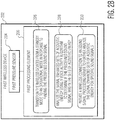
- Figure 2B is an example set of subsequent sound signal detection instructions for enabling sound signal detection.
- one or both processing elements 206, 212 are configured with the set of subsequent sound signal detection instructions.
- the order in which these example instructions are presented can be changed or selectively excluded in different example embodiments. Additionally, in some example embodiments certain instructions are implemented in parallel.
- a sixth instruction 226 transitions the wireless devices 202, 208 from a standby mode to an operational mode in response to finding the predefined sound signal.
- a seventh instruction 228 analyzes the signal enhanced (e.g. beamformed) sets of acoustic energy using a voice activity algorithm to determine if the predefined sound signal was in the sets of acoustic energy. By removing "false alarms", the voice activity algorithm increases voice and sound signal detection accuracy.
- An eighth instruction 230 initiates a wireless connection to a sound signal processing server to further analyze the signal enhanced sets of acoustic energy for specific sound signals, voice commands, words, sounds, or speech phrases, if the voice activity algorithm determines that the sets of acoustic energy included the predefined sound signal.
- Wireless device 202, 208 connection to the sound signal processing server in one example can be through a Bluetooth connection to a smartphone which then has either a WIFI or cellular connection to a remote voice signal processing server.
- the wireless devices 202, 208 perform a double-sided (e.g. dual) sound signal detection, in comparison to the single-sided sound signal detection discussed in Figure 1 .
- the beamforming and/or other signal enhancement processing substantially reduce any environmental noise interference so that predefined sound signal, such as human speech, voice commands, etc., can be more accurately understood (e.g. for speech recognition). Robustness to false predefined sound signal detections is increased compared to single-sided sound signal detection, due to the noise reduction and beamforming of the pressure sensors' 204, 210 (e.g. external microphones') signals.
- One advantage of the double-sided microphone approach is that the computationally intensive speech recognition algorithms need only be designed to run on a signal enhanced (e.g. cleaned-up, beamformed etc.) combination of both pressure sensors 204, 210.
- the double-sided sound signal detection discussed herein can be extended to various smart-home, smart-car, smart-office, or smart-environment applications, detecting perhaps: fire alarms, glass breakage, baby cries, dripping water, structural failures, shots fired, and so on.
- FIG. 3 is a third example 300 apparatus for sound signal detection.
- the third apparatus 300 includes: a first wireless device 302 having a first pressure sensor 304 and a first processing element 306; and a second wireless device 308 having a second pressure sensor 310 and a second processing element 312.
- Each pressure sensor 304, 310 captures acoustic energy 314 within a time window.
- the time window can be controlled by a clock signal synchronized between the devices 302, 308.
- the third apparatus 300 however presents a modified version of the second example 200 apparatus (discussed above) which reduces the wireless devices' 302, 308 power consumption by canceling the second example 200 apparatus' instructions 218 through 232 (i.e. see the Figures 2A and 2B ) and returning to the acoustic energy 314 capture mode (e.g. instruction 216) in certain circumstances.
- one or both of the processing elements 306, 312 are configured with a set of instructions for enabling sound signal detection.
- the order in which these example instructions are presented can be changed or selectively excluded in different example embodiments. Additionally, in some example embodiments certain instructions are implemented in parallel.
- a first instruction 316 retrieves a first set of acoustic energy captured by the first pressure sensor 304 within the first wireless device 302 and within a time window.
- a second instruction 318 searches for the predefined sound signal in the first set of acoustic energy, before receiving the second set of acoustic energy and before searching for the predefined sound signal within the enhanced sets of acoustic energy.
- a fourth instruction 322 calculates a probability that the acoustic energy 314 captured by the first pressure sensor 304 includes the predefined sound signal and only requests transfer of a second set of acoustic energy captured by the second pressure sensor 310 within the second wireless device 308 and within the time window, if the calculated probability is above a predetermined threshold probability. This instruction reduces power consumption for the wireless devices 302, 308 since the devices 302, 308 do not always need to be in communication and exchange data.
- a fifth instruction 324 returns the first wireless device 302 to instruction 316 if the calculated probability is below the predetermined threshold probability.
- a sixth instruction 326 applies a beamforming and/or other signal enhancement techniques to the first and second sets of acoustic energy.
- a seventh instruction 328 searches for a predefined sound signal within the signal enhanced sets of acoustic energy. Since the acoustic energy 314 can include noise, the signal enhancement (e.g. beamforming) techniques are used to distinguish the noise from the predefined sound signal.
- the signal enhancement e.g. beamforming
- An eighth instruction 330 initiates a subsequent set of sound signal detection actions (e.g. instructions) if the search finds the predefined sound signal.
- both wireless devices 302, 308 are in a single-sided voice activation mode and receive the acoustic energy 314 independently on their own pressure sensor 304, 310 (e.g. external microphone), and each wireless device 302, 308 individually calculates a probability that the acoustic energy 314 contains the predefined sound signal (e.g. voice activity from an authorized user).
- either wireless device 302, 308 can set up a wireless connection (e.g. perhaps using NFMI) and initiate the request to transfer the other wireless devices' set of captured acoustic energy.
- the subsequent sound signal detection instructions in the sixth instruction 326 can, in various example embodiments, include one or more of the instructions 226 through 232 discussed in Figure 2A .
- the wireless devices 202, 208 can communicate using a variety of protocols, including Bluetooth Classic (BC), Bluetooth Low-Energy (BLE), WiFi or NFMI.
- BC Bluetooth Classic
- BLE Bluetooth Low-Energy
- WiFi NFMI
- the various instructions here presented need not all be implemented on just the wireless devices 202, 208. Alternatively, such instructions could be executed by transferring the requisite acoustic and/or other data to a third device or to a server for processing. Such embodiments would tend to induce latency which may or may not be acceptable, depending upon a particular example embodiment.
- Figure 4 is an example system for hosting the instructions within either the second or third apparatus for sound signal detection.
- the system 400 shows an input/output data 402 interface with an electronic apparatus 404.
- the electronic apparatus 404 includes a processor 406, a storage device 408, and a non-transient machine-readable storage medium 410.
- the machine-readable storage medium 410 includes instructions 412 which control how the processor 406 receives input data 402 and transforms the input data into output data 402, using data within the storage device 408.
- Example instructions 412 stored in the machine-readable storage medium 410 are discussed elsewhere in this specification.
- the machine-readable storage medium in an alternate example embodiment is a non-transient computer-readable storage medium.
- the processor (such as a central processing unit, CPU, microprocessor, application-specific integrated circuit (ASIC), etc.) controls the overall operation of the storage device (such as random access memory (RAM) for temporary data storage, read only memory (ROM) for permanent data storage, firmware, flash memory, external and internal hard-disk drives, and the like).
- the processor device communicates with the storage device and non-transient machine-readable storage medium using a bus and performs operations and tasks that implement one or more instructions stored in the machine-readable storage medium.
- the machine-readable storage medium in an alternate example embodiment is a computer-readable storage medium.
- Example embodiments of the material discussed in this specification can be implemented in whole or in part through network, computer, or data based devices and/or services. These may include cloud, internet, intranet, mobile, desktop, processor, look-up table, microcontroller, consumer equipment, infrastructure, or other enabling devices and services. As may be used herein and in the claims, the following non-exclusive definitions are provided.
Landscapes
- Engineering & Computer Science (AREA)
- Physics & Mathematics (AREA)
- Acoustics & Sound (AREA)
- Health & Medical Sciences (AREA)
- Signal Processing (AREA)
- Multimedia (AREA)
- Audiology, Speech & Language Pathology (AREA)
- Human Computer Interaction (AREA)
- Computational Linguistics (AREA)
- Quality & Reliability (AREA)
- General Health & Medical Sciences (AREA)
- Theoretical Computer Science (AREA)
- General Physics & Mathematics (AREA)
- Otolaryngology (AREA)
- General Engineering & Computer Science (AREA)
- Circuit For Audible Band Transducer (AREA)
Abstract
Description
- The present specification relates to systems, methods, apparatuses, devices, articles of manufacture and instructions for sound signal detection.
- According to an example embodiment, an apparatus for sound signal detection, comprising: a first wireless device including a first pressure sensor having a first acoustical profile and configured to capture a first set of acoustic energy within a time window; wherein the first wireless device includes a wireless signal input; wherein the first wireless device includes a processing element configured to: receive, through the wireless signal input, a second set of acoustic energy captured by a second pressure sensor, having a second acoustical profile, within a second wireless device and within the time window; apply a signal enhancement technique to the first and second sets of acoustic energy based on the first and second acoustical profiles; search for a predefined sound signal within the enhanced sets of acoustic energy; and initiate a subsequent set of sound signal detection actions if the search finds the sound signal.
- In another example embodiment, the processing element is configured to search for the predefined sound signal in the first set of acoustic energy, before receiving the second set of acoustic energy and before searching for the predefined sound signal within the enhanced sets of acoustic energy.
- In another example embodiment, the second set of acoustic energy is not received until the first wireless device requests transfer of the second set of acoustic energy; and the first wireless device is configured to request transfer of the second set of acoustic energy in response to the processing element detecting the predefined sound signal in the first set of acoustic energy.
- In another example embodiment, the processing element is configured to: calculate a probability that the first set of acoustic energy received within the time window includes the predefined sound signal and only requests transfer of the second set of acoustic energy if the calculated probability is above a predetermined threshold probability.
- In another example embodiment, a voice activity algorithm enables the search for the predefined sound signal.
- In another example embodiment, the predefined sound signal includes at least one of: a voice command, an authorized voice signature, child crying, an environmental sound, a breaking glass sound, a dripping water sound, a fire alarm sound or a combustion sound.
- In another example embodiment, further comprising: the second wireless device, wherein the second wireless device is configured to be separated from the first wireless device by a predetermined distance.
- In another example embodiment, the set of wireless devices are configured to be separated by the predetermined distance within at least one of: an indoor environment, a home, an office, a subway, a vehicle, a car, a train, a plane, or an outdoor environment.
- In another example embodiment, the first wireless device is configured to receive the second set of acoustic energy encoded within a near-field magnetic induction (NFMI) signal.
- In another example embodiment, the wireless devices include at least one of: a microphone, an earbud, a hearable, a smartphone, a smartwatch, a wearable device, a tablet or a computer.
- In another example embodiment, the set of sound signal detected actions include transitioning the wireless device from a standby mode to an operational mode in response to finding the predefined sound signal.
- In another example embodiment, the set of sound signal detected actions further include, if the signal enhanced sets of acoustic energy included the predefined sound signal, then initiating a wireless connection to a sound signal processing server to further analyze the signal enhanced sets of acoustic energy for specific sound signals, voice commands, words, sounds, or speech phrases.
- In another example embodiment, the first pressure sensor is configured to receive the acoustic energy via a passage coupling an internal portion of the wireless device to an external ambient environment.
- In another example embodiment, the signal enhancement technique is a beamforming technique; and the acoustic energy includes noise and the beamforming technique distinguishes the noise from the sound signal.
- According to an example embodiment, an apparatus for sound signal detection, comprising: a first wireless device including a first pressure sensor configured to capture a first set of acoustic energy within a time window; a second wireless device including a second pressure sensor configured to capture a second set of acoustic energy within the time window; and a third wireless device including a processing element configured to: request transfer of the first set of acoustic energy captured by the first pressure sensor within the first wireless device and within the time window; request transfer of the second set of acoustic energy captured by the second pressure sensor within the second wireless device and within the time window; apply a signal enhancement technique to the first and second sets of acoustic energy; search for a predefined sound signal within the signal enhanced sets of acoustic energy; and initiate a set of sound signal detected actions if the search finds the predefined sound signal.
- According to an example embodiment, an article of manufacture including at least one non-transitory, tangible machine readable storage medium containing executable machine instructions for sound signal detection: wherein the article includes, a wireless device including a pressure sensor, having a first acoustical profile, and configured to capture a first set of acoustic energy within a time window, and a processing element configured to execute the instructions; and wherein the instructions include, receiving a second set of acoustic energy captured by a second pressure sensor, having a second acoustical profile, within a second wireless device and within the time window; applying a signal enhancement technique to the first and second sets of acoustic energy based on the first and second acoustical profiles; search for a predefined sound signal within the enhanced sets of acoustic energy; and initiate a subsequent set of sound signal detection actions if the search finds the sound signal.
- The above discussion is not intended to represent every example embodiment or every implementation within the scope of the current or future Claim sets. The Figures and Detailed Description that follow also exemplify various example embodiments.
- Various example embodiments may be more completely understood in consideration of the following Detailed Description in connection with the accompanying Drawings, in which:
-
-
Figure 1 is a first example apparatus for sound signal detection. -
Figure 2A is a second example apparatus for sound signal detection. -
Figure 2B is an example set of subsequent sound signal detection instructions for enabling sound signal detection. -
Figure 3 is a third example apparatus for sound signal detection. -
Figure 4 is an example system for hosting the instructions within either the second or third apparatus for sound signal detection. - While the disclosure is amenable to various modifications and alternative forms, specifics thereof have been shown by way of example in the drawings and will be described in detail. It should be understood, however, that other embodiments, beyond the particular embodiments described, are possible as well. All modifications, equivalents, and alternative embodiments falling within the spirit and scope of the appended claims are covered as well.
- Wireless devices, such as wireless earbuds (also known as Hearables), in various embodiments include embedded sound and sensor capabilities. Such wireless devices can be designed to support playback of stereo sound from an external device such as a cellphone, making phone calls, responding to voice commands, detecting sound events, and so on.
- Some example embodiments communicate with a smartphone or other devices, such as tablet, computers, etc., through Bluetooth Classic or through Bluetooth Low Energy (BLE), and communicate with each other using Near-Field Magnetic Induction (NFMI) signals that can pass through various structures, including the human body, and in the case of hearables, through the human head.
- One example embodiment for such wireless devices is voice recognition by a set of wearable earbuds. When a single microphone at one earbud (e.g. a single-sided microphone) is used to pickup the voice of the wearer, sound quality is limited since the single-sided microphone is not be directional and stray environmental noise can obfuscate the desired speech signal.
- Another example embodiment may use two microphones in a single earbud device in an attempt to improve the directionality of the combined microphone signal, suppress environmental noise and increase the level of the speech signal. However, due to close proximity of such microphones, the amount of achievable environment noise suppression is limited.
- Effective voice and sound signal recognition can help improve speech recognition, voice communications, voice commands (e.g. waking-up the wireless device), and alarm generation (e.g. a home security system that recognizes the sound of glass breaking). Many voice and sound signal recognition programs also connect to a more computationally powerful remote server for more effectively decoding a voice or other sound signal so as to perform various speech and sound signal recognition functions.
-
Figure 1 is afirst example apparatus 100 for sound signal detection. Thefirst apparatus 100 shows a single-sided sound signal detection apparatus that includes: a first wireless device 102 (e.g. left earbud, master earbud, etc.) and a second wireless device 104 (e.g. right earbud). - In single-sided voice activation, the first wireless device 102 (e.g. master earbud) includes a connection to a cloud network, through a smartphone or other device and performs voice activation based on a first pressure sensor 106 (e.g. local microphone) signal.
- In one example, voice activation of and/or speech recognition within the
first apparatus 100 is achieved using a power-optimized, multi-stage process where initially the first wireless device 102 (e.g. master earbud) aims to individually detect acoustic energy and then gradually apply more computational processing power to ensure that the detected sound is effectively a voice signal emanating from its wearer (i.e. voice activity detection). - Once the first wireless device 102 (e.g. master earbud) decides it has correctly detected voice activity from its wearer, it will start to forward the assumed speech information and/or voice commands (i.e. transfer recorded voice) to the cloud network (i.e. open network connection). The processing in the cloud network then aims to further interpret the meaning and intent of the recorded speech information and/or voice command. The
right earbud 104 is passive during this whole voice activation of and/or speech recognition process. - In one example of the first wireless device 102 (e.g. master earbud) in the
first apparatus 100 uses an external microphone (i.e. the first pressure sensor 106) to listen for a user's voice. The external microphone however can pick up a lot of interfering sounds and other voices from the surroundings. This setup can lead to a lot of false voice activation triggers and/or garbled speech recognition results, thereby wasting energy and time as false speech signals and/or commands are now transferred to the cloud for further analysis. Additionally, with a single external microphone, the quality of the recorded voice of the wearer (even when correctly detected and recorded) is still very susceptible to background and other interfering sounds which are also recorded and difficult to remove effectively. - In another example of the first wireless device 102 (e.g. master earbud) in the
first apparatus 100 uses an internal microphone (i.e. the first pressure sensor 106) wholly located within themaster earbud 102 to listen for a user's voice. In this case, while the internal microphone can be well isolated from surrounding noise sources (assuming a tight fitting earbud) and may not pick up a lot of interfering sounds and other voices from the surroundings, the microphone's signal is further attenuated and a user's high frequency speech content tends to be missing. Use of an internal microphone also can pick up unwanted interference when music or speech is played back through the first wireless device's 102 (e.g. master earbud's) speaker. -
Figure 2A is a second example 200 apparatus for sound signal detection. Thesecond apparatus 200 includes: a firstwireless device 202 having afirst pressure sensor 204 and afirst processing element 206; and a secondwireless device 208 having asecond pressure sensor 210 and asecond processing element 212. Eachpressure sensor acoustic energy 214 within a time window. The time window can be controlled by a clock signal synchronized between thedevices - The
wireless devices wireless devices wireless devices wireless devices - The second example 200 apparatus stores an acoustic profile for each of the
wireless devices wireless devices wireless devices - The first and
second wireless devices wireless devices wireless devices pressure sensors 204, 210 (e.g. microphones) are further spatially separated, then sound signal enhancements (e.g. beamforming and/or noise reduction) enable more accurate sound signal identification by reducing ambient noise. - Beamforming (i.e. spatial filtering) in one example is a signal enhancement technique used in sensor arrays for directional signal transmission or reception. Beamforming is achieved by combining elements in a phased array in such a way that signals at particular angles experience constructive interference while others experience destructive interference. Beamforming is used to achieve spatial signal selectivity. Thus beamforming defines a particular geometry within a space containing acoustic energy, which excludes other geometries and create a very directional acoustic energy capture technique (e.g. targeting a specific front and center location wherein a person's mouth is likely to be located, using a set of wireless earbuds that are presumed to be worn on the person's ears. In other example embodiments, adaptive beamforming is used to zero in on a previously unknown location of a predefined sound target. Adaptive beamforming may first identify a specific acoustic profile and/or sound level, before removing other unwanted sounds (e.g. noise).
- In one example embodiment, the
pressure sensors pressure sensors acoustic energy 214 either internal to thewireless device wireless devices - In various example embodiments, one or both
processing elements - A
first instruction 216 for receiving a first set of acoustic energy captured by thefirst pressure sensor 204 within thefirst wireless device 202 and within a time window. - A
second instruction 218 for receiving a second set of acoustic energy captured by thesecond pressure sensor 210 within thesecond wireless device 208 and within the time window. Thewireless devices - The second set of acoustic energy transferred to the
first wireless device 202 can be either a set of real-timeacoustic energy 214, if the wireless connection between thewireless devices acoustic energy 214 to compensate for a delay in setting up the wireless link. - A
third instruction 220 applies a beamforming and/or other signal enhancement techniques to the first and second sets of acoustic energy, based on the first and second acoustical profiles. - A
fourth instruction 222 searches for a predefined sound signal within the signal enhanced (e.g. beamformed) sets of acoustic energy. Since theacoustic energy 214 can include noise, signal enhancement techniques such as beamforming are used to distinguish the noise from the predefined sound signal. The predefined sound signal can include: a voice command, an authorized voice signature, a baby crying, an environmental sound, a breaking glass sound, a dripping water sound, a fire alarm sound, a combustion sound, etc. - A
fifth instruction 224 initiates a subsequent set of sound signal detection actions (e.g. instructions) if the search finds the predefined sound signal. - In some example embodiments, the
second wireless device 208 includes asecond processing element 212 having a set of instructions for enablingsound detection 225 which is similar to those in thefirst processing element 206. -
Figure 2B is an example set of subsequent sound signal detection instructions for enabling sound signal detection. In various example embodiments, one or bothprocessing elements - A
sixth instruction 226 transitions thewireless devices - A
seventh instruction 228 analyzes the signal enhanced (e.g. beamformed) sets of acoustic energy using a voice activity algorithm to determine if the predefined sound signal was in the sets of acoustic energy. By removing "false alarms", the voice activity algorithm increases voice and sound signal detection accuracy. - An
eighth instruction 230 initiates a wireless connection to a sound signal processing server to further analyze the signal enhanced sets of acoustic energy for specific sound signals, voice commands, words, sounds, or speech phrases, if the voice activity algorithm determines that the sets of acoustic energy included the predefined sound signal. -
Wireless device - In the second example 200 apparatus for sound signal detection discussed in
Figures 2A and2B above, thewireless devices Figure 1 . - Also for embodiments where the
pressure sensors - One advantage of the double-sided microphone approach is that the computationally intensive speech recognition algorithms need only be designed to run on a signal enhanced (e.g. cleaned-up, beamformed etc.) combination of both
pressure sensors - As mentioned above, the double-sided sound signal detection discussed herein can be extended to various smart-home, smart-car, smart-office, or smart-environment applications, detecting perhaps: fire alarms, glass breakage, baby cries, dripping water, structural failures, shots fired, and so on.
-
Figure 3 is a third example 300 apparatus for sound signal detection. Thethird apparatus 300 includes: afirst wireless device 302 having afirst pressure sensor 304 and afirst processing element 306; and asecond wireless device 308 having asecond pressure sensor 310 and asecond processing element 312. Eachpressure sensor acoustic energy 314 within a time window. The time window can be controlled by a clock signal synchronized between thedevices - The
third apparatus 300 however presents a modified version of the second example 200 apparatus (discussed above) which reduces the wireless devices' 302, 308 power consumption by canceling the second example 200 apparatus'instructions 218 through 232 (i.e. see theFigures 2A and2B ) and returning to theacoustic energy 314 capture mode (e.g. instruction 216) in certain circumstances. - In various example embodiments, one or both of the
processing elements - A
first instruction 316 retrieves a first set of acoustic energy captured by thefirst pressure sensor 304 within thefirst wireless device 302 and within a time window. - A
second instruction 318 searches for the predefined sound signal in the first set of acoustic energy, before receiving the second set of acoustic energy and before searching for the predefined sound signal within the enhanced sets of acoustic energy. - A
third instruction 320 for not receiving the second set of acoustic energy at thefirst wireless device 302 until thefirst wireless device 302 independently detects the predefined sound signal in the first set of acoustic energy, after which thefirst wireless device 302 is configured to request transfer of the second set of acoustic energy. - A
fourth instruction 322 calculates a probability that theacoustic energy 314 captured by thefirst pressure sensor 304 includes the predefined sound signal and only requests transfer of a second set of acoustic energy captured by thesecond pressure sensor 310 within thesecond wireless device 308 and within the time window, if the calculated probability is above a predetermined threshold probability. This instruction reduces power consumption for thewireless devices devices - A
fifth instruction 324 returns thefirst wireless device 302 toinstruction 316 if the calculated probability is below the predetermined threshold probability. - A
sixth instruction 326 applies a beamforming and/or other signal enhancement techniques to the first and second sets of acoustic energy. - A
seventh instruction 328 searches for a predefined sound signal within the signal enhanced sets of acoustic energy. Since theacoustic energy 314 can include noise, the signal enhancement (e.g. beamforming) techniques are used to distinguish the noise from the predefined sound signal. - An
eighth instruction 330 initiates a subsequent set of sound signal detection actions (e.g. instructions) if the search finds the predefined sound signal. - Thus power consumption is the third example 300 apparatus is reduced since the second set of acoustic energy captured by the
second pressure sensor 310 within thesecond wireless device 308 is not always transferred to thefirst wireless device 302. - In one example embodiment, both
wireless devices 302, 308 (e.g. left and right earbuds) are in a single-sided voice activation mode and receive theacoustic energy 314 independently on theirown pressure sensor 304, 310 (e.g. external microphone), and eachwireless device acoustic energy 314 contains the predefined sound signal (e.g. voice activity from an authorized user). In this example eitherwireless device - The subsequent sound signal detection instructions in the
sixth instruction 326 can, in various example embodiments, include one or more of theinstructions 226 through 232 discussed inFigure 2A . - In various example embodiments, the
wireless devices - Also, the various instructions here presented need not all be implemented on just the
wireless devices - Note that the instructions and/or flowchart steps in the above Figures can be executed in any order, unless a specific order is explicitly stated. Also, those skilled in the art will recognize that while one example set of instructions/method has been discussed, the material in this specification can be combined in a variety of ways to yield other examples as well, and are to be understood within a context provided by this detailed description.
-
Figure 4 is an example system for hosting the instructions within either the second or third apparatus for sound signal detection. Thesystem 400 shows an input/output data 402 interface with anelectronic apparatus 404. Theelectronic apparatus 404 includes aprocessor 406, astorage device 408, and a non-transient machine-readable storage medium 410. The machine-readable storage medium 410 includesinstructions 412 which control how theprocessor 406 receivesinput data 402 and transforms the input data intooutput data 402, using data within thestorage device 408.Example instructions 412 stored in the machine-readable storage medium 410 are discussed elsewhere in this specification. The machine-readable storage medium in an alternate example embodiment is a non-transient computer-readable storage medium. - The processor (such as a central processing unit, CPU, microprocessor, application-specific integrated circuit (ASIC), etc.) controls the overall operation of the storage device (such as random access memory (RAM) for temporary data storage, read only memory (ROM) for permanent data storage, firmware, flash memory, external and internal hard-disk drives, and the like). The processor device communicates with the storage device and non-transient machine-readable storage medium using a bus and performs operations and tasks that implement one or more instructions stored in the machine-readable storage medium. The machine-readable storage medium in an alternate example embodiment is a computer-readable storage medium.
- Example embodiments of the material discussed in this specification can be implemented in whole or in part through network, computer, or data based devices and/or services. These may include cloud, internet, intranet, mobile, desktop, processor, look-up table, microcontroller, consumer equipment, infrastructure, or other enabling devices and services. As may be used herein and in the claims, the following non-exclusive definitions are provided.
- In this specification, example embodiments have been presented in terms of a selected set of details. However, a person of ordinary skill in the art would understand that many other example embodiments may be practiced which include a different selected set of these details. It is intended that the following claims cover all possible example embodiments.
Claims (15)
- Apparatus for sound signal detection, comprising:a first wireless device including a first pressure sensor having a first acoustical profile and configured to capture a first set of acoustic energy within a time window;wherein the first wireless device includes a wireless signal input;wherein the first wireless device includes a processing element configured to:receive, through the wireless signal input, a second set of acoustic energy captured by a second pressure sensor, having a second acoustical profile, within a second wireless device and within the time window;apply a signal enhancement technique to the first and second sets of acoustic energy based on the first and second acoustical profiles;search for a predefined sound signal within the enhanced sets of acoustic energy; andinitiate a subsequent set of sound signal detection actions if the search finds the sound signal.
- The apparatus of claim 1:wherein the processing element is configured to search for the predefined sound signal in the first set of acoustic energy, before receiving the second set of acoustic energy and before searching for the predefined sound signal within the enhanced sets of acoustic energy.
- The apparatus of claim 1 or 2,
wherein the second set of acoustic energy is not received until the first wireless device requests transfer of the second set of acoustic energy; and
wherein the first wireless device is configured to request transfer of the second set of acoustic energy in response to the processing element detecting the predefined sound signal in the first set of acoustic energy. - The apparatus of any preceding claim, wherein the processing element is configured to:calculate a probability that the first set of acoustic energy received within the time window includes the predefined sound signal and only requests transfer of the second set of acoustic energy if the calculated probability is above a predetermined threshold probability.
- The apparatus of any preceding claim:wherein a voice activity algorithm enables the search for the predefined sound signal.
- The apparatus of any preceding claim:wherein the predefined sound signal includes at least one of: a voice command, an authorized voice signature, child crying, an environmental sound, a breaking glass sound, a dripping water sound, a fire alarm sound or a combustion sound.
- The apparatus of any preceding claim, further comprising:the second wireless device, wherein the second wireless device is configured to be separated from the first wireless device by a predetermined distance.
- The apparatus of claim 7:wherein the set of wireless devices are configured to be separated by the predetermined distance within at least one of: an indoor environment, a home, an office, a subway, a vehicle, a car, a train, a plane, or an outdoor environment.
- The apparatus of any preceding claim:wherein the first wireless device is configured to receive the second set of acoustic energy encoded within a near-field magnetic induction (NFMI) signal.
- The apparatus of any preceding claim:wherein the wireless devices include at least one of: a microphone, an earbud, a hearable, a smartphone, a smartwatch, a wearable device, a tablet or a computer.
- The apparatus of any preceding claim:wherein the set of sound signal detected actions include transitioning the wireless device from a standby mode to an operational mode in response to finding the predefined sound signal.
- The apparatus of any preceding claim:wherein the set of sound signal detected actions further include, if the signal enhanced sets of acoustic energy included the predefined sound signal, then initiating a wireless connection to a sound signal processing server to further analyze the signal enhanced sets of acoustic energy for specific sound signals, voice commands, words, sounds, or speech phrases.
- The apparatus of any preceding claim:wherein the first pressure sensor is configured to receive the acoustic energy via a passage coupling an internal portion of the first wireless device to an external ambient environment.
- The apparatus of any preceding claim:wherein the signal enhancement technique is a beamforming technique; andwherein the acoustic energy includes noise and the beamforming technique distinguishes the noise from the sound signal.
- Apparatus for sound signal detection, comprising:a first wireless device including a first pressure sensor configured to capture a first set of acoustic energy within a time window;a second wireless device including a second pressure sensor configured to capture a second set of acoustic energy within the time window; anda third wireless device including a processing element configured to:request transfer of the first set of acoustic energy captured by the first pressure sensor within the first wireless device and within the time window;request transfer of the second set of acoustic energy captured by the second pressure sensor within the second wireless device and within the time window;apply a signal enhancement technique to the first and second sets of acoustic energy;search for a predefined sound signal within the signal enhanced sets of acoustic energy; andinitiate a set of sound signal detected actions if the search finds the predefined sound signal.
Applications Claiming Priority (1)
| Application Number | Priority Date | Filing Date | Title |
|---|---|---|---|
| US15/172,493 US10079027B2 (en) | 2016-06-03 | 2016-06-03 | Sound signal detector |
Publications (1)
| Publication Number | Publication Date |
|---|---|
| EP3253071A1 true EP3253071A1 (en) | 2017-12-06 |
Family
ID=59030745
Family Applications (1)
| Application Number | Title | Priority Date | Filing Date |
|---|---|---|---|
| EP17171337.3A Withdrawn EP3253071A1 (en) | 2016-06-03 | 2017-05-16 | Sound signal detector |
Country Status (3)
| Country | Link |
|---|---|
| US (1) | US10079027B2 (en) |
| EP (1) | EP3253071A1 (en) |
| CN (1) | CN107465974B (en) |
Families Citing this family (63)
| Publication number | Priority date | Publication date | Assignee | Title |
|---|---|---|---|---|
| US9084058B2 (en) | 2011-12-29 | 2015-07-14 | Sonos, Inc. | Sound field calibration using listener localization |
| US9106192B2 (en) | 2012-06-28 | 2015-08-11 | Sonos, Inc. | System and method for device playback calibration |
| US9947316B2 (en) | 2016-02-22 | 2018-04-17 | Sonos, Inc. | Voice control of a media playback system |
| US9811314B2 (en) | 2016-02-22 | 2017-11-07 | Sonos, Inc. | Metadata exchange involving a networked playback system and a networked microphone system |
| US10264030B2 (en) | 2016-02-22 | 2019-04-16 | Sonos, Inc. | Networked microphone device control |
| US9772817B2 (en) | 2016-02-22 | 2017-09-26 | Sonos, Inc. | Room-corrected voice detection |
| US10095470B2 (en) | 2016-02-22 | 2018-10-09 | Sonos, Inc. | Audio response playback |
| US9763018B1 (en) | 2016-04-12 | 2017-09-12 | Sonos, Inc. | Calibration of audio playback devices |
| US9978390B2 (en) | 2016-06-09 | 2018-05-22 | Sonos, Inc. | Dynamic player selection for audio signal processing |
| US10134399B2 (en) | 2016-07-15 | 2018-11-20 | Sonos, Inc. | Contextualization of voice inputs |
| US10372406B2 (en) | 2016-07-22 | 2019-08-06 | Sonos, Inc. | Calibration interface |
| US10115400B2 (en) | 2016-08-05 | 2018-10-30 | Sonos, Inc. | Multiple voice services |
| US11086593B2 (en) | 2016-08-26 | 2021-08-10 | Bragi GmbH | Voice assistant for wireless earpieces |
| US9942678B1 (en) | 2016-09-27 | 2018-04-10 | Sonos, Inc. | Audio playback settings for voice interaction |
| US10181323B2 (en) | 2016-10-19 | 2019-01-15 | Sonos, Inc. | Arbitration-based voice recognition |
| US11183181B2 (en) | 2017-03-27 | 2021-11-23 | Sonos, Inc. | Systems and methods of multiple voice services |
| US10475449B2 (en) | 2017-08-07 | 2019-11-12 | Sonos, Inc. | Wake-word detection suppression |
| US10048930B1 (en) | 2017-09-08 | 2018-08-14 | Sonos, Inc. | Dynamic computation of system response volume |
| US10446165B2 (en) | 2017-09-27 | 2019-10-15 | Sonos, Inc. | Robust short-time fourier transform acoustic echo cancellation during audio playback |
| US10482868B2 (en) | 2017-09-28 | 2019-11-19 | Sonos, Inc. | Multi-channel acoustic echo cancellation |
| US10051366B1 (en) | 2017-09-28 | 2018-08-14 | Sonos, Inc. | Three-dimensional beam forming with a microphone array |
| US10466962B2 (en) * | 2017-09-29 | 2019-11-05 | Sonos, Inc. | Media playback system with voice assistance |
| US11327576B2 (en) * | 2017-10-23 | 2022-05-10 | Sony Corporation | Information processing apparatus, information processing method, and program |
| US10880650B2 (en) | 2017-12-10 | 2020-12-29 | Sonos, Inc. | Network microphone devices with automatic do not disturb actuation capabilities |
| US10818290B2 (en) | 2017-12-11 | 2020-10-27 | Sonos, Inc. | Home graph |
| US11343614B2 (en) | 2018-01-31 | 2022-05-24 | Sonos, Inc. | Device designation of playback and network microphone device arrangements |
| US11175880B2 (en) | 2018-05-10 | 2021-11-16 | Sonos, Inc. | Systems and methods for voice-assisted media content selection |
| EP3621067A1 (en) * | 2018-05-18 | 2020-03-11 | Shenzhen Aukey Smart Information Technology Co., Ltd. | Ai voice interaction method, apparatus and system |
| US10959029B2 (en) | 2018-05-25 | 2021-03-23 | Sonos, Inc. | Determining and adapting to changes in microphone performance of playback devices |
| US10681460B2 (en) | 2018-06-28 | 2020-06-09 | Sonos, Inc. | Systems and methods for associating playback devices with voice assistant services |
| US11076035B2 (en) | 2018-08-28 | 2021-07-27 | Sonos, Inc. | Do not disturb feature for audio notifications |
| US10461710B1 (en) | 2018-08-28 | 2019-10-29 | Sonos, Inc. | Media playback system with maximum volume setting |
| US10587430B1 (en) | 2018-09-14 | 2020-03-10 | Sonos, Inc. | Networked devices, systems, and methods for associating playback devices based on sound codes |
| US10878811B2 (en) | 2018-09-14 | 2020-12-29 | Sonos, Inc. | Networked devices, systems, and methods for intelligently deactivating wake-word engines |
| US11024331B2 (en) | 2018-09-21 | 2021-06-01 | Sonos, Inc. | Voice detection optimization using sound metadata |
| US10811015B2 (en) | 2018-09-25 | 2020-10-20 | Sonos, Inc. | Voice detection optimization based on selected voice assistant service |
| US11100923B2 (en) | 2018-09-28 | 2021-08-24 | Sonos, Inc. | Systems and methods for selective wake word detection using neural network models |
| US10692518B2 (en) | 2018-09-29 | 2020-06-23 | Sonos, Inc. | Linear filtering for noise-suppressed speech detection via multiple network microphone devices |
| CN109413556B (en) * | 2018-09-30 | 2021-03-02 | Oppo广东移动通信有限公司 | Equipment positioning method and device, earphone device and electronic equipment |
| US11899519B2 (en) | 2018-10-23 | 2024-02-13 | Sonos, Inc. | Multiple stage network microphone device with reduced power consumption and processing load |
| EP3654249A1 (en) | 2018-11-15 | 2020-05-20 | Snips | Dilated convolutions and gating for efficient keyword spotting |
| US10952002B2 (en) * | 2018-11-27 | 2021-03-16 | Google Llc | Automatically switching active microphone for wireless headsets |
| US11183183B2 (en) | 2018-12-07 | 2021-11-23 | Sonos, Inc. | Systems and methods of operating media playback systems having multiple voice assistant services |
| US11132989B2 (en) | 2018-12-13 | 2021-09-28 | Sonos, Inc. | Networked microphone devices, systems, and methods of localized arbitration |
| US10602268B1 (en) | 2018-12-20 | 2020-03-24 | Sonos, Inc. | Optimization of network microphone devices using noise classification |
| US10867604B2 (en) | 2019-02-08 | 2020-12-15 | Sonos, Inc. | Devices, systems, and methods for distributed voice processing |
| US11120794B2 (en) | 2019-05-03 | 2021-09-14 | Sonos, Inc. | Voice assistant persistence across multiple network microphone devices |
| US10871943B1 (en) | 2019-07-31 | 2020-12-22 | Sonos, Inc. | Noise classification for event detection |
| US11138969B2 (en) | 2019-07-31 | 2021-10-05 | Sonos, Inc. | Locally distributed keyword detection |
| US11189286B2 (en) | 2019-10-22 | 2021-11-30 | Sonos, Inc. | VAS toggle based on device orientation |
| US11200900B2 (en) | 2019-12-20 | 2021-12-14 | Sonos, Inc. | Offline voice control |
| US11562740B2 (en) | 2020-01-07 | 2023-01-24 | Sonos, Inc. | Voice verification for media playback |
| US11556307B2 (en) | 2020-01-31 | 2023-01-17 | Sonos, Inc. | Local voice data processing |
| US11308958B2 (en) | 2020-02-07 | 2022-04-19 | Sonos, Inc. | Localized wakeword verification |
| US11308962B2 (en) | 2020-05-20 | 2022-04-19 | Sonos, Inc. | Input detection windowing |
| US11482224B2 (en) | 2020-05-20 | 2022-10-25 | Sonos, Inc. | Command keywords with input detection windowing |
| US12387716B2 (en) | 2020-06-08 | 2025-08-12 | Sonos, Inc. | Wakewordless voice quickstarts |
| CN111926894A (en) * | 2020-08-11 | 2020-11-13 | 无锡迪富智能电子股份有限公司 | Remote control assembly applied to intelligent closestool and control method |
| US11698771B2 (en) | 2020-08-25 | 2023-07-11 | Sonos, Inc. | Vocal guidance engines for playback devices |
| US11984123B2 (en) | 2020-11-12 | 2024-05-14 | Sonos, Inc. | Network device interaction by range |
| CN113593610B (en) * | 2021-08-11 | 2024-05-28 | 深圳市威视达康科技有限公司 | Smoke alarm sound recognition method and system |
| WO2023056258A1 (en) | 2021-09-30 | 2023-04-06 | Sonos, Inc. | Conflict management for wake-word detection processes |
| US12327556B2 (en) | 2021-09-30 | 2025-06-10 | Sonos, Inc. | Enabling and disabling microphones and voice assistants |
Citations (4)
| Publication number | Priority date | Publication date | Assignee | Title |
|---|---|---|---|---|
| US20090238377A1 (en) * | 2008-03-18 | 2009-09-24 | Qualcomm Incorporated | Speech enhancement using multiple microphones on multiple devices |
| US20100130198A1 (en) * | 2005-09-29 | 2010-05-27 | Plantronics, Inc. | Remote processing of multiple acoustic signals |
| US20140278435A1 (en) * | 2013-03-12 | 2014-09-18 | Nuance Communications, Inc. | Methods and apparatus for detecting a voice command |
| WO2015092401A2 (en) * | 2013-12-18 | 2015-06-25 | Cirrus Logic International (Uk) Limited | Activating speech process |
Family Cites Families (32)
| Publication number | Priority date | Publication date | Assignee | Title |
|---|---|---|---|---|
| DE69101527T2 (en) * | 1990-08-16 | 1994-07-14 | Fujitsu Ten Ltd | Speech recognition device for a vehicle with a microphone arrangement for locating the seat, from which a command comes. |
| US6594630B1 (en) | 1999-11-19 | 2003-07-15 | Voice Signal Technologies, Inc. | Voice-activated control for electrical device |
| KR20110025853A (en) | 2002-03-27 | 2011-03-11 | 앨리프컴 | Microphone and voice activity detection (vad) configurations for use with communication systems |
| DE502006005495D1 (en) * | 2005-09-30 | 2010-01-14 | Siemens Audiologische Technik | Method for operating a hearing aid device system for the binaural care of a user |
| US8180078B2 (en) | 2007-12-13 | 2012-05-15 | At&T Intellectual Property I, Lp | Systems and methods employing multiple individual wireless earbuds for a common audio source |
| US8194882B2 (en) * | 2008-02-29 | 2012-06-05 | Audience, Inc. | System and method for providing single microphone noise suppression fallback |
| KR20090124588A (en) * | 2008-05-30 | 2009-12-03 | 삼성전자주식회사 | How to connect a plurality of Bluetooth profiles and Bluetooth devices using the same |
| US20110058676A1 (en) * | 2009-09-07 | 2011-03-10 | Qualcomm Incorporated | Systems, methods, apparatus, and computer-readable media for dereverberation of multichannel signal |
| US8948415B1 (en) * | 2009-10-26 | 2015-02-03 | Plantronics, Inc. | Mobile device with discretionary two microphone noise reduction |
| CN102771144B (en) * | 2010-02-19 | 2015-03-25 | 西门子医疗器械公司 | Apparatus and method for direction dependent spatial noise reduction |
| US8626498B2 (en) * | 2010-02-24 | 2014-01-07 | Qualcomm Incorporated | Voice activity detection based on plural voice activity detectors |
| WO2012001928A1 (en) * | 2010-06-30 | 2012-01-05 | パナソニック株式会社 | Conversation detection device, hearing aid and conversation detection method |
| US20130226324A1 (en) * | 2010-09-27 | 2013-08-29 | Nokia Corporation | Audio scene apparatuses and methods |
| EP2464143B1 (en) * | 2010-12-09 | 2013-06-19 | Oticon A/s | Method for operating a hearing system, hearing system and audio gateway devices |
| US9171551B2 (en) * | 2011-01-14 | 2015-10-27 | GM Global Technology Operations LLC | Unified microphone pre-processing system and method |
| US8743809B2 (en) * | 2011-10-07 | 2014-06-03 | Apple Inc. | Channel selection in a multiple carrier multiple radio access technology network |
| US9125158B2 (en) * | 2012-02-06 | 2015-09-01 | Qualcomm Incorporated | Wideband detection of narrowband trigger signals |
| US9842489B2 (en) * | 2013-02-14 | 2017-12-12 | Google Llc | Waking other devices for additional data |
| US10229697B2 (en) * | 2013-03-12 | 2019-03-12 | Google Technology Holdings LLC | Apparatus and method for beamforming to obtain voice and noise signals |
| US11393461B2 (en) * | 2013-03-12 | 2022-07-19 | Cerence Operating Company | Methods and apparatus for detecting a voice command |
| US9854081B2 (en) * | 2013-03-15 | 2017-12-26 | Apple Inc. | Volume control for mobile device using a wireless device |
| US20140270287A1 (en) * | 2013-03-15 | 2014-09-18 | Qualcomm Incorporated | Bluetooth hearing aids enabled during voice activity on a mobile phone |
| US9043211B2 (en) * | 2013-05-09 | 2015-05-26 | Dsp Group Ltd. | Low power activation of a voice activated device |
| EP2813175A3 (en) * | 2013-06-14 | 2015-04-01 | Oticon A/s | A hearing assistance device with brain-computer interface |
| US9264824B2 (en) * | 2013-07-31 | 2016-02-16 | Starkey Laboratories, Inc. | Integration of hearing aids with smart glasses to improve intelligibility in noise |
| EP2849462B1 (en) * | 2013-09-17 | 2017-04-12 | Oticon A/s | A hearing assistance device comprising an input transducer system |
| US9424843B2 (en) * | 2013-09-24 | 2016-08-23 | Starkey Laboratories, Inc. | Methods and apparatus for signal sharing to improve speech understanding |
| US9147397B2 (en) * | 2013-10-29 | 2015-09-29 | Knowles Electronics, Llc | VAD detection apparatus and method of operating the same |
| CN105096946B (en) * | 2014-05-08 | 2020-09-29 | 钰太芯微电子科技(上海)有限公司 | Awakening device and method based on voice activation detection |
| US10310808B2 (en) * | 2014-09-08 | 2019-06-04 | Google Llc | Systems and methods for simultaneously receiving voice instructions on onboard and offboard devices |
| PT3634035T (en) * | 2014-10-28 | 2023-07-11 | Ericsson Telefon Ab L M | Network nodes, a user equipment and methods therein for handling a connection between the user equipment and a wireless communications network |
| US9591175B2 (en) * | 2014-11-02 | 2017-03-07 | Clover Network, Inc. | Connecting a printer and a mobile device using identification information printed by the printer |
-
2016
- 2016-06-03 US US15/172,493 patent/US10079027B2/en active Active
-
2017
- 2017-05-16 EP EP17171337.3A patent/EP3253071A1/en not_active Withdrawn
- 2017-06-02 CN CN201710407563.6A patent/CN107465974B/en not_active Expired - Fee Related
Patent Citations (4)
| Publication number | Priority date | Publication date | Assignee | Title |
|---|---|---|---|---|
| US20100130198A1 (en) * | 2005-09-29 | 2010-05-27 | Plantronics, Inc. | Remote processing of multiple acoustic signals |
| US20090238377A1 (en) * | 2008-03-18 | 2009-09-24 | Qualcomm Incorporated | Speech enhancement using multiple microphones on multiple devices |
| US20140278435A1 (en) * | 2013-03-12 | 2014-09-18 | Nuance Communications, Inc. | Methods and apparatus for detecting a voice command |
| WO2015092401A2 (en) * | 2013-12-18 | 2015-06-25 | Cirrus Logic International (Uk) Limited | Activating speech process |
Also Published As
| Publication number | Publication date |
|---|---|
| CN107465974B (en) | 2021-03-09 |
| CN107465974A (en) | 2017-12-12 |
| US10079027B2 (en) | 2018-09-18 |
| US20170352363A1 (en) | 2017-12-07 |
Similar Documents
| Publication | Publication Date | Title |
|---|---|---|
| US10079027B2 (en) | Sound signal detector | |
| US9905241B2 (en) | Method and apparatus for voice communication using wireless earbuds | |
| US12160699B2 (en) | Two-way wireless headphones | |
| CN106375902B (en) | Audio enhancement via opportunistic use of microphones | |
| US10149049B2 (en) | Processing speech from distributed microphones | |
| US10861450B2 (en) | Method and apparatus for managing voice-based interaction in internet of things network system | |
| US10922044B2 (en) | Wearable audio device capability demonstration | |
| US10468020B2 (en) | Systems and methods for removing interference for audio pattern recognition | |
| EP3470870A1 (en) | Automated user/sensor location recognition to customize audio performance in a distributed multi-sensor environment | |
| WO2014063603A1 (en) | Smart volume control method for electronic device and implementation apparatus | |
| US10916248B2 (en) | Wake-up word detection | |
| US10536191B1 (en) | Maintaining consistent audio setting(s) between wireless headphones | |
| CN106572411A (en) | Noise cancelling control method and relevant device | |
| CN113037394A (en) | Communication connection method and device | |
| CN112104928A (en) | Intelligent sound box and method and system for controlling intelligent sound box | |
| CN110869793B (en) | Determine the location/orientation of audio devices | |
| US11297429B2 (en) | Proximity detection for wireless in-ear listening devices | |
| WO2019059939A1 (en) | Processing speech from distributed microphones | |
| CN114745624A (en) | Wireless earphone finding method, device, earphone and storage medium | |
| US11863927B2 (en) | Audio device proximity detection | |
| CN112102536A (en) | Access controller, access control method, and computer-readable storage medium | |
| CN112102540A (en) | Access controller, access control method, and computer-readable storage medium |
Legal Events
| Date | Code | Title | Description |
|---|---|---|---|
| PUAI | Public reference made under article 153(3) epc to a published international application that has entered the european phase |
Free format text: ORIGINAL CODE: 0009012 |
|
| STAA | Information on the status of an ep patent application or granted ep patent |
Free format text: STATUS: THE APPLICATION HAS BEEN PUBLISHED |
|
| AK | Designated contracting states |
Kind code of ref document: A1 Designated state(s): AL AT BE BG CH CY CZ DE DK EE ES FI FR GB GR HR HU IE IS IT LI LT LU LV MC MK MT NL NO PL PT RO RS SE SI SK SM TR |
|
| AX | Request for extension of the european patent |
Extension state: BA ME |
|
| STAA | Information on the status of an ep patent application or granted ep patent |
Free format text: STATUS: REQUEST FOR EXAMINATION WAS MADE |
|
| 17P | Request for examination filed |
Effective date: 20180606 |
|
| RBV | Designated contracting states (corrected) |
Designated state(s): AL AT BE BG CH CY CZ DE DK EE ES FI FR GB GR HR HU IE IS IT LI LT LU LV MC MK MT NL NO PL PT RO RS SE SI SK SM TR |
|
| STAA | Information on the status of an ep patent application or granted ep patent |
Free format text: STATUS: EXAMINATION IS IN PROGRESS |
|
| 17Q | First examination report despatched |
Effective date: 20181211 |
|
| STAA | Information on the status of an ep patent application or granted ep patent |
Free format text: STATUS: THE APPLICATION IS DEEMED TO BE WITHDRAWN |
|
| 18D | Application deemed to be withdrawn |
Effective date: 20190424 |