EP3252988A1 - Partial unrolling for software security - Google Patents
Partial unrolling for software security Download PDFInfo
- Publication number
- EP3252988A1 EP3252988A1 EP16305629.4A EP16305629A EP3252988A1 EP 3252988 A1 EP3252988 A1 EP 3252988A1 EP 16305629 A EP16305629 A EP 16305629A EP 3252988 A1 EP3252988 A1 EP 3252988A1
- Authority
- EP
- European Patent Office
- Prior art keywords
- parts
- units
- unrolled
- driving value
- computer program
- Prior art date
- Legal status (The legal status is an assumption and is not a legal conclusion. Google has not performed a legal analysis and makes no representation as to the accuracy of the status listed.)
- Granted
Links
Images

Classifications
-
- H—ELECTRICITY
- H04—ELECTRIC COMMUNICATION TECHNIQUE
- H04L—TRANSMISSION OF DIGITAL INFORMATION, e.g. TELEGRAPHIC COMMUNICATION
- H04L9/00—Cryptographic mechanisms or cryptographic arrangements for secret or secure communications; Network security protocols
- H04L9/002—Countermeasures against attacks on cryptographic mechanisms
-
- H—ELECTRICITY
- H04—ELECTRIC COMMUNICATION TECHNIQUE
- H04L—TRANSMISSION OF DIGITAL INFORMATION, e.g. TELEGRAPHIC COMMUNICATION
- H04L2209/00—Additional information or applications relating to cryptographic mechanisms or cryptographic arrangements for secret or secure communication H04L9/00
- H04L2209/16—Obfuscation or hiding, e.g. involving white box
-
- H—ELECTRICITY
- H04—ELECTRIC COMMUNICATION TECHNIQUE
- H04L—TRANSMISSION OF DIGITAL INFORMATION, e.g. TELEGRAPHIC COMMUNICATION
- H04L9/00—Cryptographic mechanisms or cryptographic arrangements for secret or secure communications; Network security protocols
- H04L9/30—Public key, i.e. encryption algorithm being computationally infeasible to invert or user's encryption keys not requiring secrecy
- H04L9/3006—Public key, i.e. encryption algorithm being computationally infeasible to invert or user's encryption keys not requiring secrecy underlying computational problems or public-key parameters
- H04L9/302—Public key, i.e. encryption algorithm being computationally infeasible to invert or user's encryption keys not requiring secrecy underlying computational problems or public-key parameters involving the integer factorization problem, e.g. RSA or quadratic sieve [QS] schemes
-
- H—ELECTRICITY
- H04—ELECTRIC COMMUNICATION TECHNIQUE
- H04L—TRANSMISSION OF DIGITAL INFORMATION, e.g. TELEGRAPHIC COMMUNICATION
- H04L9/00—Cryptographic mechanisms or cryptographic arrangements for secret or secure communications; Network security protocols
- H04L9/30—Public key, i.e. encryption algorithm being computationally infeasible to invert or user's encryption keys not requiring secrecy
- H04L9/3066—Public key, i.e. encryption algorithm being computationally infeasible to invert or user's encryption keys not requiring secrecy involving algebraic varieties, e.g. elliptic or hyper-elliptic curves
Definitions
- the present invention relates to a method to intrinsically protect manipulation of a sensitive value by a computer program, the said value driving the handling of other sensitive data.
- the invention also pertains to a computer program product obtained using said method.
- the invention concerns the security of software products implementing cryptographic algorithms, in particular those implementing RSA (STD/CRT) or ECC algorithms.
- unrolling has two drawbacks. The first is that, if the loop has a large number of iterations, i.e. when the driving value sequence is large, then the code size increase when unrolled is too penalizing. Second, the driving value, which defines the unrolled sequence, cannot change after compilation time as the unrolled code would have to be updated on the field.
- Figure 1B shows a fully unrolled loop case as also known in the prior art for the same driving value as on figure 1A .
- rolled loops are compact and the driving value can be modified, but are unsafe. Totally unrolled loops are safer but not space efficient and enforcing only one driving value and being thus not updatable.
- the present invention aims at providing a better tradeoff between code size increase and ability to modify the value driving the loop.
- the present invention is defined, in its broadest sense, as a method to intrinsically protect a computer program having a driving value dedicated to handle sensitive data, said driving value comprising a plurality of N computation units to perform operation/computation using sensitive data and susceptible to let sensitive data leak, each unit having V possible values, said method comprising the step of unrolling k parts of P units, with P>1 and P ⁇ N and N ⁇ P*k, by rewriting them in an equivalent sequence of operations/computations protecting the sensitive data, said unrolling step resulting in a plurality of V ⁇ P possible parts of P units, said method further comprising the step of introducing, in the finally executed computer program, instructions to dynamically execute the driving value by selecting, at end of each executed part, the next part to be executed among the possible parts.
- the invention pre-computes all possible parts of P units by unrolling the corresponding sequences and embedding them in the implementation. This point addresses the space efficiency problem of unrolling, by giving the opportunity to adjust P. The larger P is, the more possible parts there are, the more space it takes.
- the invention To process the driving value, the invention considers it by part rather than by unit. There are k parts and for each part, the corresponding pre-computed unrolled sequence is processed. This point addresses the ability to dynamically update the driving value, by modifying its parts, as all possible corresponding sequences are embedded in the implementation and thus available. This is in particular of interest in a security context where value randomization is wished and even required in some cases.
- This embodiment particularly applies to cases where N cannot be written as k*P. It consists in a generalization of the principle of the invention. It also offers the possibility to apply different security levels on different parts of the driving value.
- the parts handling sensitive data would be more distributed than for parts not handling sensitive data where the use of loops would not be harmful.
- k and P are chosen taking security and available space into account.
- This feature is essential when security level is previously determined for at least some parts of the driving value and/or when strong space constraints are encountered. It is in particular the case for public key algorithms, for example when manipulating the private exponent during the modular exponentiation to achieve an RSA signature.
- the present invention also relates to a computer program product inherently protected according to the invention and thus comprising unrolled parts and instructions to execute a driving value using the unrolled parts.
- Such a computer program as obtained with the invention presents protection for the sensitive values as handled inside each unrolled parts.
- one or more embodiments comprise the features hereinafter fully described and particularly pointed out in the claims.
- FIG. 2B illustrates the processing of driving value after splitting the original computer program in parts according to the invention. This processing is the structure of the computer program as inherently protected with the invention.
- the second branch is first executed, then the first, then the fourth, and at last the second.
- the computer program of the invention comprises the four branches as unrolled and protecting inherently the sensitive value.
- a sensitive value handled in such a way can benefit of known countermeasures at the level of the driving value on one side, using a different but functionally equivalent driving value each time, also known as exponent blinding for example in the RSA case, and at the computation unit execution level on the other side, for example by the application of code obfuscation techniques. Partial unrolling increases the obfuscation possibilities, therefore increasing the security level, compared to obfuscation applied to only one computation unit.
- Figure 3A shows a plurality of pre-computed equivalent unrolled sequences for other possible parts of three units. All possible eight parts of three units are: AAA, AAB, ABA, ABB, BAA, BAB, BBA, BBB. With the invention, the computer program will comprise all these unrolled sequences which will be called according to the driving value. Such a split of the units is a design decision to be made with regards to space, speed and security constraints and illustrate the flexibility of the proposed invention.
- Figure 3B shows the processing of driving value after splitting the original computer program in parts of three and two units for the following exemplary driving value: abaabbabbbabbaaba.
- Pre-computed unrolled sequences of two units are the ones of figure 2A .
- FIG 3B is illustrated the processing of the driving value according to the invention.
- This feature increases the possibility to render any attack unfruitful as the invention enables that no group or part of loops is reiterated in successive execution of the computer program.
- the driving value can be dynamically updated which is of particular interest when sensitive data is a secret that requires a dynamic protection. It is even possible to process a different but functionally equivalent driving value, e.g. as it would be achieved in the case of an RSA exponent blinding countermeasure.
- FIG. 4 shows a flowchart of the method of the invention.
- Said method comprises a first step S1 of unrolling a driving value DV resulting in a set of possible parts AA AB BA BB of the computer program. Said unrolling is monitored using parameters ki and Pi chosen depending on the security awaited and of the available space in the device where the resulting computer program is to be stored.
- the method further comprises a step S2 of introducing instructions to select the succession of parts at the execution of the driving value. This step can result in a constantly identical succession of parts or, preferably, in an ever changing succession of parts. This introduces a further protection level using the invention.
Landscapes
- Engineering & Computer Science (AREA)
- Computer Security & Cryptography (AREA)
- Computer Networks & Wireless Communication (AREA)
- Signal Processing (AREA)
- Storage Device Security (AREA)
Abstract
Description
- The present invention relates to a method to intrinsically protect manipulation of a sensitive value by a computer program, the said value driving the handling of other sensitive data.
- The invention also pertains to a computer program product obtained using said method. On a general scope, the invention concerns the security of software products implementing cryptographic algorithms, in particular those implementing RSA (STD/CRT) or ECC algorithms.
- The current trend is to implement sensitive functions, handling sensitive data, in software. Regarding cryptographic functions, this trend is designated under the terms "white-box cryptography". This addresses typically any application downloaded from an application store and running on a non-attacker safe smartphone, on an attacker-controlled smartphone, on a phone emulator or any other apparatus used for the purpose of application analysis through its execution. In such a case an attacker has full access to the behavior of the targeted software.
- Software are developed using different control flow structures. A first one, the loop constituting a unit of computation/operations, iterates until an end condition is reached and we will call "driving value" the sequence of values taken by the loop iterator. Two other control flow structures, that serve similar purposes, are the so called if..then..else and switch..case ones. They aim at executing various computation units depending on the value of a condition or of a value used a selector.
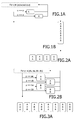
Figure 1A shows a representation of a loop case as known in the prior art for the following driving value = a b a a b b a b. Lowercases are used for values taken by the driving value while caps are used to designate the actual code executed by each computation unit. Thus the number of computation unit is N=8 and the number of possible values for each unit is V=2. - If a loop is based on a secret value that the attacker must not recover, it is well known that the behavior of the loop itself leaks the secret value. The loop case is thus unsafe.
- A known protection against this problem is loop unrolling. According to this technique, the loop is rewritten as an equivalent sequence of operation without leaking the secret value anymore as the sensitive value itself doesn't need to be known nor manipulated at execution time anymore. Sensitive value includes the driving value itself. Known protections are indeed available in the kind of linear code resulting from unrolled loops. These protections are not adapted to implementation in loops. Moreover unrolled loops increase the execution speed. However unrolled loops are space consuming. A loop can indeed be unrolled to gain speed at the expense of code size.
- Thus unrolling has two drawbacks. The first is that, if the loop has a large number of iterations, i.e. when the driving value sequence is large, then the code size increase when unrolled is too penalizing. Second, the driving value, which defines the unrolled sequence, cannot change after compilation time as the unrolled code would have to be updated on the field.
-
Figure 1B shows a fully unrolled loop case as also known in the prior art for the same driving value as onfigure 1A . The resulting code is thus larger than a code based on loops, here N/V=4 times more, as expressed by the cumulated size of the solid boxes in each figure (2x1 computation unit infigure 1A , 1x8 computation units infigure 1B ). No flexibility is thus accessible except if several fully unrolled loops are stored in the computer program which is rapidly not sustainable in terms of space. - As a conclusion, rolled loops are compact and the driving value can be modified, but are unsafe. Totally unrolled loops are safer but not space efficient and enforcing only one driving value and being thus not updatable.
- Further alternative and advantageous solutions would, accordingly, be desirable in the art.
- The present invention aims at providing a better tradeoff between code size increase and ability to modify the value driving the loop.
- The present invention is defined, in its broadest sense, as a method to intrinsically protect a computer program having a driving value dedicated to handle sensitive data, said driving value comprising a plurality of N computation units to perform operation/computation using sensitive data and susceptible to let sensitive data leak, each unit having V possible values, said method comprising the step of unrolling k parts of P units, with P>1 and P<N and N≥P*k, by rewriting them in an equivalent sequence of operations/computations protecting the sensitive data, said unrolling step resulting in a plurality of V^P possible parts of P units, said method further comprising the step of introducing, in the finally executed computer program, instructions to dynamically execute the driving value by selecting, at end of each executed part, the next part to be executed among the possible parts.
- The principle of the invention is to treat the driving value by parts rather than by unit. Let us assume that the value has N units, such that N = k x P. Then the value can also be seen as k parts of P units. Let us assume that a unit can take V possible values, typically a unit is a bit and V = 2.
- There are V^P possible parts of P units. The invention pre-computes all possible parts of P units by unrolling the corresponding sequences and embedding them in the implementation. This point addresses the space efficiency problem of unrolling, by giving the opportunity to adjust P. The larger P is, the more possible parts there are, the more space it takes.
- To process the driving value, the invention considers it by part rather than by unit. There are k parts and for each part, the corresponding pre-computed unrolled sequence is processed. This point addresses the ability to dynamically update the driving value, by modifying its parts, as all possible corresponding sequences are embedded in the implementation and thus available. This is in particular of interest in a security context where value randomization is wished and even required in some cases. The invention enables a code optimization based on a space-time tradeoff, in particular for large N where a fully unrolled loop would not meet size constraints, e.g. for RSA exponent with N=2048 and V=2.
- According to an advantageous embodiment, parameters ki and Pi of the unrolled parts are built to have N = k1 x P1 + ... + ki x Pi + ... + kn x Pn and the finally executed computer program thus embeds V^P1 + ... + V^Pi + ... + V^Pn unrolled possible parts of units to choose from when processing the k1 + ... ki + ... + kn parts.
- This embodiment particularly applies to cases where N cannot be written as k*P. It consists in a generalization of the principle of the invention. It also offers the possibility to apply different security levels on different parts of the driving value. The parts handling sensitive data would be more distributed than for parts not handling sensitive data where the use of loops would not be harmful.
- According to a specific feature, k and P are chosen taking security and available space into account.
- This feature is essential when security level is previously determined for at least some parts of the driving value and/or when strong space constraints are encountered. It is in particular the case for public key algorithms, for example when manipulating the private exponent during the modular exponentiation to achieve an RSA signature.
- The present invention also relates to a computer program product inherently protected according to the invention and thus comprising unrolled parts and instructions to execute a driving value using the unrolled parts.
- Such a computer program as obtained with the invention presents protection for the sensitive values as handled inside each unrolled parts.
- To the accomplishment of the foregoing and related ends, one or more embodiments comprise the features hereinafter fully described and particularly pointed out in the claims.
- The following description and the annexed drawings set forth in detail certain illustrative aspects and are indicative of but a few of the various ways in which the principles of the embodiments may be employed. Other advantages and novel features will become apparent from the following detailed description when considered in conjunction with the drawings and the disclosed embodiments are intended to include all such aspects and their equivalents.
-
Figure 1A and 1B respectively show a representation of a loop case for a given driving value with conditionally executed computing units as known in the prior art and a representation of the equivalent fully unrolled loop case for the same driving value as also known in the prior art; -
Figure 2A and 2B respectively show a plurality of pre-computed equivalent unrolled sequences for all possible parts of P units for the example offigure 1 and the processing of driving value after splitting the original computer program in parts; -
Figure 3A and3B respectively show a plurality of pre-computed equivalent unrolled sequences for other possible parts of three units and the processing of driving value after splitting the original computer program in parts of three and two units; -
Figure 4 shows a flowchart of the method of the invention. - For a more complete understanding of the invention, the invention will now be described in detail with reference to the accompanying drawing. The detailed description will illustrate and describe what is considered as a preferred embodiment of the invention. It should of course be understood that various modifications and changes in form or detail could readily be made without departing from the spirit of the invention. It is therefore intended that the invention may not be limited to the exact form and detail shown and described herein, nor to anything less than the whole of the invention disclosed herein and as claimed hereinafter. The same elements have been designated with the same references in the different drawings. For clarity, only those elements and steps which are useful to the understanding of the present invention have been shown in the drawings and will be described.
-
Figure 2A shows a plurality of pre-computed equivalent unrolled sequences for all possible parts of P units for the example offigure 1 where N=8. In the example offigure 2A , k=4, P=2 and V=2. All possible parts of P units are AA AB BA and BB. -
Figure 2B illustrates the processing of driving value after splitting the original computer program in parts according to the invention. This processing is the structure of the computer program as inherently protected with the invention. - Branches of the processing as shown on
figure 2B are consequently executed according to the value of the pair of units in the driving value. - Thus, when the computer program of the invention is executed, the second branch is first executed, then the first, then the fourth, and at last the second.
- As a result the computer program of the invention comprises the four branches as unrolled and protecting inherently the sensitive value. Typically a sensitive value handled in such a way can benefit of known countermeasures at the level of the driving value on one side, using a different but functionally equivalent driving value each time, also known as exponent blinding for example in the RSA case, and at the computation unit execution level on the other side, for example by the application of code obfuscation techniques. Partial unrolling increases the obfuscation possibilities, therefore increasing the security level, compared to obfuscation applied to only one computation unit.
-
Figure 3A shows a plurality of pre-computed equivalent unrolled sequences for other possible parts of three units. All possible eight parts of three units are: AAA, AAB, ABA, ABB, BAA, BAB, BBA, BBB. With the invention, the computer program will comprise all these unrolled sequences which will be called according to the driving value. Such a split of the units is a design decision to be made with regards to space, speed and security constraints and illustrate the flexibility of the proposed invention. -
Figure 3B shows the processing of driving value after splitting the original computer program in parts of three and two units for the following exemplary driving value: abaabbabbbabbaaba. Here the number of units N=17 and V=2. In this example, parameters to distribute the unrolled sequences may be: k1=3, P1=3, k2=4, P2=2. Pre-computed unrolled sequences of two units are the ones offigure 2A . - On
figure 3B is illustrated the processing of the driving value according to the invention. With the invention, there is no constraint on the choice and the order of the parts. In other words for p in ABA ABB ABB BA BB AA BA could also be processed as for p in AB AAB BA BBB ABB AA BA or other combinations as long as k1 x P1 + ... + ki x Pi + ... + kn x Pn = N and that the initial units order in the driving value is respected. - This feature increases the possibility to render any attack unfruitful as the invention enables that no group or part of loops is reiterated in successive execution of the computer program. Thus the driving value can be dynamically updated which is of particular interest when sensitive data is a secret that requires a dynamic protection. It is even possible to process a different but functionally equivalent driving value, e.g. as it would be achieved in the case of an RSA exponent blinding countermeasure.
-
Figure 4 shows a flowchart of the method of the invention. Said method comprises a first step S1 of unrolling a driving value DV resulting in a set of possible parts AA AB BA BB of the computer program. Said unrolling is monitored using parameters ki and Pi chosen depending on the security awaited and of the available space in the device where the resulting computer program is to be stored. The method further comprises a step S2 of introducing instructions to select the succession of parts at the execution of the driving value. This step can result in a constantly identical succession of parts or, preferably, in an ever changing succession of parts. This introduces a further protection level using the invention. - In the above detailed description, reference is made to the accompanying drawings that show, by way of illustration, specific embodiments in which the invention may be practiced. These embodiments are described in sufficient detail to enable those skilled in the art to practice the invention. The above detailed description is, therefore, not to be taken in a limiting sense, and the scope of the present invention is defined only by the appended claims, appropriately interpreted, along with the full range of equivalents to which the claims are entitled.
Claims (4)
- Method to intrinsically protect a computer program having a driving value (DV) dedicated to handle sensitive data, said driving value (DV) comprising a plurality of N computation units (A,B) to perform computations using sensitive data and susceptible to let sensitive data leak, each unit having V possible values, said method comprising the step (S1) of unrolling k parts of P units, with P>1 and P<N and N≥P*k, by rewriting them in an equivalent sequence of computations (AB, AA, BB, BA) protecting the sensitive data, said unrolling step (S1) resulting in a plurality of V^P possible parts of P units, said method further comprising the step of introducing, in the finally executed computer program, instructions to dynamically execute the driving value (DV) by selecting (S2), at end of each executed part, the next part to be executed among the possible parts.
- Method according to claim 1, wherein parameters ki and Pi of the unrolled parts are built to have N = k1 x P1 + ... + ki x Pi + ... + kn x Pn and the finally executed computer program thus embeds V^P1 + ... + V^Pi + ... + V^Pn unrolled possible parts of units to choose from when processing the k1 + ... ki + ... + kn parts.
- Method according to one of claims 1 and 2, wherein k and P are chosen taking security and available space into account.
- Computer program product inherently protected according to one of claims 1 to 3 and thus comprising unrolled parts and instructions to execute a driving value using the unrolled parts by selecting the branch containing the partially unrolled sequence of computation units corresponding to the value of the part and executing the selected sequence of computation units.
Priority Applications (4)
| Application Number | Priority Date | Filing Date | Title |
|---|---|---|---|
| EP16305629.4A EP3252988B1 (en) | 2016-05-31 | 2016-05-31 | Partial unrolling for software security |
| ES16305629T ES2888429T3 (en) | 2016-05-31 | 2016-05-31 | Partial development for software security |
| PCT/IL2017/050614 WO2017208245A1 (en) | 2016-05-31 | 2017-06-01 | Partial unrolling for software security |
| US16/306,340 US11121852B2 (en) | 2016-05-31 | 2017-06-01 | Partial unrolling for software security |
Applications Claiming Priority (1)
| Application Number | Priority Date | Filing Date | Title |
|---|---|---|---|
| EP16305629.4A EP3252988B1 (en) | 2016-05-31 | 2016-05-31 | Partial unrolling for software security |
Publications (2)
| Publication Number | Publication Date |
|---|---|
| EP3252988A1 true EP3252988A1 (en) | 2017-12-06 |
| EP3252988B1 EP3252988B1 (en) | 2021-07-28 |
Family
ID=56571270
Family Applications (1)
| Application Number | Title | Priority Date | Filing Date |
|---|---|---|---|
| EP16305629.4A Active EP3252988B1 (en) | 2016-05-31 | 2016-05-31 | Partial unrolling for software security |
Country Status (4)
| Country | Link |
|---|---|
| US (1) | US11121852B2 (en) |
| EP (1) | EP3252988B1 (en) |
| ES (1) | ES2888429T3 (en) |
| WO (1) | WO2017208245A1 (en) |
Family Cites Families (4)
| Publication number | Priority date | Publication date | Assignee | Title |
|---|---|---|---|---|
| CA2542556C (en) * | 2005-06-03 | 2014-09-16 | Tata Consultancy Services Limited | An authentication system executing an elliptic curve digital signature cryptographic process |
| US10361844B2 (en) * | 2015-04-20 | 2019-07-23 | Certicom Corp. | Generating cryptographic function parameters based on an observed astronomical event |
| US10375070B2 (en) * | 2015-04-20 | 2019-08-06 | Certicom Corp. | Generating cryptographic function parameters from compact source code |
| US10140437B2 (en) * | 2015-05-05 | 2018-11-27 | Nxp B.V. | Array indexing with modular encoded values |
-
2016
- 2016-05-31 ES ES16305629T patent/ES2888429T3/en active Active
- 2016-05-31 EP EP16305629.4A patent/EP3252988B1/en active Active
-
2017
- 2017-06-01 WO PCT/IL2017/050614 patent/WO2017208245A1/en not_active Ceased
- 2017-06-01 US US16/306,340 patent/US11121852B2/en active Active
Non-Patent Citations (1)
| Title |
|---|
| "CHAPTER 3: Elliptic Curve Arithmetic ED - Darrel Hankerson; Alfred Menezes; Scott Vanstone", 1 January 2004, GUIDE TO ELLIPTIC CURVE CRYPTOGRAPHY, SPRINGER, PAGE(S) 75 - 152, ISBN: 978-0-387-95273-4, XP001525413 * |
Also Published As
| Publication number | Publication date |
|---|---|
| US20190182026A1 (en) | 2019-06-13 |
| US11121852B2 (en) | 2021-09-14 |
| ES2888429T3 (en) | 2022-01-04 |
| WO2017208245A1 (en) | 2017-12-07 |
| EP3252988B1 (en) | 2021-07-28 |
Similar Documents
| Publication | Publication Date | Title |
|---|---|---|
| US10263768B2 (en) | Protection of a calculation against side-channel attacks | |
| US10431123B2 (en) | Method for testing and hardening software applications | |
| EP3241150B1 (en) | Determining cryptographic operation masks for improving resistance to external monitoring attacks | |
| US8774406B2 (en) | Masking addition operation device for prevention of side channel attack | |
| KR101623503B1 (en) | Apparatus and method for white-box cryptography implementation of LEA block cipher | |
| KR102049656B1 (en) | Automatic insertion of masking into an algorithm | |
| CN101006677A (en) | Method and device for carrying out a cryptographic calculation | |
| JP2011072040A (en) | Method for protecting electronic circuit against fault-based attacks | |
| KR100834096B1 (en) | Encryption method of block cipher algorithm ARRIA corresponding to higher power analysis attack | |
| KR102578869B1 (en) | Apparatus and method for performing matrix multiplication operation being secure against side channel attack | |
| Roche et al. | Side-channel attacks on blinded scalar multiplications revisited | |
| JP2005056413A (en) | Protection of multiple identical computations | |
| EP3252988B1 (en) | Partial unrolling for software security | |
| WO2017025252A1 (en) | Method to secure keccak algorithm against side-channel attacks | |
| Vandersmissen et al. | A white-box speck implementation using self-equivalence encodings | |
| CN104700044B (en) | The fault-resistant injection attacks method and apparatus that register input and output are exchanged | |
| RU2708439C1 (en) | Computing device and method | |
| EP4562811A1 (en) | Method and apparatus for storing/recovering a plurality of secret shares | |
| KR20240073510A (en) | Method for calculating using an one-way function effienct in a zero knowledge proof, and apparatus implementing the same method | |
| EP3136645A1 (en) | Mixed hardware and software instructions for cryptographic functionalities implementation | |
| CN108804883B (en) | Method and device for running obfuscated code | |
| US20180357396A1 (en) | Hiding of a program execution | |
| JP6339295B2 (en) | How to perform confidential computations using multiple different and independent branches | |
| KR101300915B1 (en) | Method of generating pseduo-random sequences based on digit derivatives | |
| JP2019506031A (en) | Calculation apparatus and method |
Legal Events
| Date | Code | Title | Description |
|---|---|---|---|
| PUAI | Public reference made under article 153(3) epc to a published international application that has entered the european phase |
Free format text: ORIGINAL CODE: 0009012 |
|
| STAA | Information on the status of an ep patent application or granted ep patent |
Free format text: STATUS: THE APPLICATION HAS BEEN PUBLISHED |
|
| AK | Designated contracting states |
Kind code of ref document: A1 Designated state(s): AL AT BE BG CH CY CZ DE DK EE ES FI FR GB GR HR HU IE IS IT LI LT LU LV MC MK MT NL NO PL PT RO RS SE SI SK SM TR |
|
| AX | Request for extension of the european patent |
Extension state: BA ME |
|
| STAA | Information on the status of an ep patent application or granted ep patent |
Free format text: STATUS: REQUEST FOR EXAMINATION WAS MADE |
|
| 17P | Request for examination filed |
Effective date: 20180606 |
|
| RBV | Designated contracting states (corrected) |
Designated state(s): AL AT BE BG CH CY CZ DE DK EE ES FI FR GB GR HR HU IE IS IT LI LT LU LV MC MK MT NL NO PL PT RO RS SE SI SK SM TR |
|
| RAP1 | Party data changed (applicant data changed or rights of an application transferred) |
Owner name: THALES DIS FRANCE SA |
|
| STAA | Information on the status of an ep patent application or granted ep patent |
Free format text: STATUS: EXAMINATION IS IN PROGRESS |
|
| 17Q | First examination report despatched |
Effective date: 20191002 |
|
| GRAP | Despatch of communication of intention to grant a patent |
Free format text: ORIGINAL CODE: EPIDOSNIGR1 |
|
| STAA | Information on the status of an ep patent application or granted ep patent |
Free format text: STATUS: GRANT OF PATENT IS INTENDED |
|
| INTG | Intention to grant announced |
Effective date: 20210218 |
|
| GRAS | Grant fee paid |
Free format text: ORIGINAL CODE: EPIDOSNIGR3 |
|
| GRAA | (expected) grant |
Free format text: ORIGINAL CODE: 0009210 |
|
| STAA | Information on the status of an ep patent application or granted ep patent |
Free format text: STATUS: THE PATENT HAS BEEN GRANTED |
|
| AK | Designated contracting states |
Kind code of ref document: B1 Designated state(s): AL AT BE BG CH CY CZ DE DK EE ES FI FR GB GR HR HU IE IS IT LI LT LU LV MC MK MT NL NO PL PT RO RS SE SI SK SM TR |
|
| REG | Reference to a national code |
Ref country code: GB Ref legal event code: FG4D |
|
| REG | Reference to a national code |
Ref country code: CH Ref legal event code: EP |
|
| REG | Reference to a national code |
Ref country code: AT Ref legal event code: REF Ref document number: 1415700 Country of ref document: AT Kind code of ref document: T Effective date: 20210815 |
|
| REG | Reference to a national code |
Ref country code: IE Ref legal event code: FG4D |
|
| REG | Reference to a national code |
Ref country code: DE Ref legal event code: R096 Ref document number: 602016061208 Country of ref document: DE |
|
| REG | Reference to a national code |
Ref country code: LT Ref legal event code: MG9D |
|
| REG | Reference to a national code |
Ref country code: NL Ref legal event code: MP Effective date: 20210728 |
|
| REG | Reference to a national code |
Ref country code: AT Ref legal event code: MK05 Ref document number: 1415700 Country of ref document: AT Kind code of ref document: T Effective date: 20210728 |
|
| REG | Reference to a national code |
Ref country code: ES Ref legal event code: FG2A Ref document number: 2888429 Country of ref document: ES Kind code of ref document: T3 Effective date: 20220104 |
|
| RAP2 | Party data changed (patent owner data changed or rights of a patent transferred) |
Owner name: THALES DIS FRANCE SAS |
|
| PG25 | Lapsed in a contracting state [announced via postgrant information from national office to epo] |
Ref country code: RS Free format text: LAPSE BECAUSE OF FAILURE TO SUBMIT A TRANSLATION OF THE DESCRIPTION OR TO PAY THE FEE WITHIN THE PRESCRIBED TIME-LIMIT Effective date: 20210728 Ref country code: SE Free format text: LAPSE BECAUSE OF FAILURE TO SUBMIT A TRANSLATION OF THE DESCRIPTION OR TO PAY THE FEE WITHIN THE PRESCRIBED TIME-LIMIT Effective date: 20210728 Ref country code: LT Free format text: LAPSE BECAUSE OF FAILURE TO SUBMIT A TRANSLATION OF THE DESCRIPTION OR TO PAY THE FEE WITHIN THE PRESCRIBED TIME-LIMIT Effective date: 20210728 Ref country code: AT Free format text: LAPSE BECAUSE OF FAILURE TO SUBMIT A TRANSLATION OF THE DESCRIPTION OR TO PAY THE FEE WITHIN THE PRESCRIBED TIME-LIMIT Effective date: 20210728 Ref country code: BG Free format text: LAPSE BECAUSE OF FAILURE TO SUBMIT A TRANSLATION OF THE DESCRIPTION OR TO PAY THE FEE WITHIN THE PRESCRIBED TIME-LIMIT Effective date: 20211028 Ref country code: NL Free format text: LAPSE BECAUSE OF FAILURE TO SUBMIT A TRANSLATION OF THE DESCRIPTION OR TO PAY THE FEE WITHIN THE PRESCRIBED TIME-LIMIT Effective date: 20210728 Ref country code: NO Free format text: LAPSE BECAUSE OF FAILURE TO SUBMIT A TRANSLATION OF THE DESCRIPTION OR TO PAY THE FEE WITHIN THE PRESCRIBED TIME-LIMIT Effective date: 20211028 Ref country code: PT Free format text: LAPSE BECAUSE OF FAILURE TO SUBMIT A TRANSLATION OF THE DESCRIPTION OR TO PAY THE FEE WITHIN THE PRESCRIBED TIME-LIMIT Effective date: 20211129 Ref country code: HR Free format text: LAPSE BECAUSE OF FAILURE TO SUBMIT A TRANSLATION OF THE DESCRIPTION OR TO PAY THE FEE WITHIN THE PRESCRIBED TIME-LIMIT Effective date: 20210728 Ref country code: FI Free format text: LAPSE BECAUSE OF FAILURE TO SUBMIT A TRANSLATION OF THE DESCRIPTION OR TO PAY THE FEE WITHIN THE PRESCRIBED TIME-LIMIT Effective date: 20210728 |
|
| PG25 | Lapsed in a contracting state [announced via postgrant information from national office to epo] |
Ref country code: PL Free format text: LAPSE BECAUSE OF FAILURE TO SUBMIT A TRANSLATION OF THE DESCRIPTION OR TO PAY THE FEE WITHIN THE PRESCRIBED TIME-LIMIT Effective date: 20210728 Ref country code: LV Free format text: LAPSE BECAUSE OF FAILURE TO SUBMIT A TRANSLATION OF THE DESCRIPTION OR TO PAY THE FEE WITHIN THE PRESCRIBED TIME-LIMIT Effective date: 20210728 Ref country code: GR Free format text: LAPSE BECAUSE OF FAILURE TO SUBMIT A TRANSLATION OF THE DESCRIPTION OR TO PAY THE FEE WITHIN THE PRESCRIBED TIME-LIMIT Effective date: 20211029 |
|
| PG25 | Lapsed in a contracting state [announced via postgrant information from national office to epo] |
Ref country code: DK Free format text: LAPSE BECAUSE OF FAILURE TO SUBMIT A TRANSLATION OF THE DESCRIPTION OR TO PAY THE FEE WITHIN THE PRESCRIBED TIME-LIMIT Effective date: 20210728 |
|
| REG | Reference to a national code |
Ref country code: DE Ref legal event code: R097 Ref document number: 602016061208 Country of ref document: DE |
|
| PG25 | Lapsed in a contracting state [announced via postgrant information from national office to epo] |
Ref country code: SM Free format text: LAPSE BECAUSE OF FAILURE TO SUBMIT A TRANSLATION OF THE DESCRIPTION OR TO PAY THE FEE WITHIN THE PRESCRIBED TIME-LIMIT Effective date: 20210728 Ref country code: SK Free format text: LAPSE BECAUSE OF FAILURE TO SUBMIT A TRANSLATION OF THE DESCRIPTION OR TO PAY THE FEE WITHIN THE PRESCRIBED TIME-LIMIT Effective date: 20210728 Ref country code: RO Free format text: LAPSE BECAUSE OF FAILURE TO SUBMIT A TRANSLATION OF THE DESCRIPTION OR TO PAY THE FEE WITHIN THE PRESCRIBED TIME-LIMIT Effective date: 20210728 Ref country code: EE Free format text: LAPSE BECAUSE OF FAILURE TO SUBMIT A TRANSLATION OF THE DESCRIPTION OR TO PAY THE FEE WITHIN THE PRESCRIBED TIME-LIMIT Effective date: 20210728 Ref country code: CZ Free format text: LAPSE BECAUSE OF FAILURE TO SUBMIT A TRANSLATION OF THE DESCRIPTION OR TO PAY THE FEE WITHIN THE PRESCRIBED TIME-LIMIT Effective date: 20210728 Ref country code: AL Free format text: LAPSE BECAUSE OF FAILURE TO SUBMIT A TRANSLATION OF THE DESCRIPTION OR TO PAY THE FEE WITHIN THE PRESCRIBED TIME-LIMIT Effective date: 20210728 |
|
| PLBE | No opposition filed within time limit |
Free format text: ORIGINAL CODE: 0009261 |
|
| STAA | Information on the status of an ep patent application or granted ep patent |
Free format text: STATUS: NO OPPOSITION FILED WITHIN TIME LIMIT |
|
| 26N | No opposition filed |
Effective date: 20220429 |
|
| PG25 | Lapsed in a contracting state [announced via postgrant information from national office to epo] |
Ref country code: IT Free format text: LAPSE BECAUSE OF FAILURE TO SUBMIT A TRANSLATION OF THE DESCRIPTION OR TO PAY THE FEE WITHIN THE PRESCRIBED TIME-LIMIT Effective date: 20210728 |
|
| REG | Reference to a national code |
Ref country code: CH Ref legal event code: PL |
|
| REG | Reference to a national code |
Ref country code: BE Ref legal event code: MM Effective date: 20220531 |
|
| PG25 | Lapsed in a contracting state [announced via postgrant information from national office to epo] |
Ref country code: MC Free format text: LAPSE BECAUSE OF FAILURE TO SUBMIT A TRANSLATION OF THE DESCRIPTION OR TO PAY THE FEE WITHIN THE PRESCRIBED TIME-LIMIT Effective date: 20210728 Ref country code: LU Free format text: LAPSE BECAUSE OF NON-PAYMENT OF DUE FEES Effective date: 20220531 Ref country code: LI Free format text: LAPSE BECAUSE OF NON-PAYMENT OF DUE FEES Effective date: 20220531 Ref country code: CH Free format text: LAPSE BECAUSE OF NON-PAYMENT OF DUE FEES Effective date: 20220531 |
|
| PG25 | Lapsed in a contracting state [announced via postgrant information from national office to epo] |
Ref country code: IE Free format text: LAPSE BECAUSE OF NON-PAYMENT OF DUE FEES Effective date: 20220531 |
|
| PG25 | Lapsed in a contracting state [announced via postgrant information from national office to epo] |
Ref country code: BE Free format text: LAPSE BECAUSE OF NON-PAYMENT OF DUE FEES Effective date: 20220531 |
|
| P01 | Opt-out of the competence of the unified patent court (upc) registered |
Effective date: 20230502 |
|
| PG25 | Lapsed in a contracting state [announced via postgrant information from national office to epo] |
Ref country code: HU Free format text: LAPSE BECAUSE OF FAILURE TO SUBMIT A TRANSLATION OF THE DESCRIPTION OR TO PAY THE FEE WITHIN THE PRESCRIBED TIME-LIMIT; INVALID AB INITIO Effective date: 20160531 |
|
| PG25 | Lapsed in a contracting state [announced via postgrant information from national office to epo] |
Ref country code: MK Free format text: LAPSE BECAUSE OF FAILURE TO SUBMIT A TRANSLATION OF THE DESCRIPTION OR TO PAY THE FEE WITHIN THE PRESCRIBED TIME-LIMIT Effective date: 20210728 Ref country code: CY Free format text: LAPSE BECAUSE OF FAILURE TO SUBMIT A TRANSLATION OF THE DESCRIPTION OR TO PAY THE FEE WITHIN THE PRESCRIBED TIME-LIMIT Effective date: 20210728 |
|
| PG25 | Lapsed in a contracting state [announced via postgrant information from national office to epo] |
Ref country code: TR Free format text: LAPSE BECAUSE OF FAILURE TO SUBMIT A TRANSLATION OF THE DESCRIPTION OR TO PAY THE FEE WITHIN THE PRESCRIBED TIME-LIMIT Effective date: 20210728 |
|
| PG25 | Lapsed in a contracting state [announced via postgrant information from national office to epo] |
Ref country code: MT Free format text: LAPSE BECAUSE OF FAILURE TO SUBMIT A TRANSLATION OF THE DESCRIPTION OR TO PAY THE FEE WITHIN THE PRESCRIBED TIME-LIMIT Effective date: 20210728 |
|
| PGFP | Annual fee paid to national office [announced via postgrant information from national office to epo] |
Ref country code: ES Payment date: 20260601 Year of fee payment: 11 |
|
| PGFP | Annual fee paid to national office [announced via postgrant information from national office to epo] |
Ref country code: GB Payment date: 20260421 Year of fee payment: 11 |
|
| PGFP | Annual fee paid to national office [announced via postgrant information from national office to epo] |
Ref country code: DE Payment date: 20260421 Year of fee payment: 11 |
|
| PGFP | Annual fee paid to national office [announced via postgrant information from national office to epo] |
Ref country code: FR Payment date: 20260422 Year of fee payment: 11 |