EP3252032A1 - Diglycidic ether derivative therapeutics and methods for their use - Google Patents
Diglycidic ether derivative therapeutics and methods for their use Download PDFInfo
- Publication number
- EP3252032A1 EP3252032A1 EP17177010.0A EP17177010A EP3252032A1 EP 3252032 A1 EP3252032 A1 EP 3252032A1 EP 17177010 A EP17177010 A EP 17177010A EP 3252032 A1 EP3252032 A1 EP 3252032A1
- Authority
- EP
- European Patent Office
- Prior art keywords
- independently
- alkyl
- compound
- unsubstituted
- unbranched
- Prior art date
- Legal status (The legal status is an assumption and is not a legal conclusion. Google has not performed a legal analysis and makes no representation as to the accuracy of the status listed.)
- Withdrawn
Links
- 0 CIIC(*)COC1=NN=C(C(*)(*)N)NN1 Chemical compound CIIC(*)COC1=NN=C(C(*)(*)N)NN1 0.000 description 16
- XZTPDSWHRLGEDB-UHFFFAOYSA-N CC(C)(c(cc1)ccc1OCC(CO)O)c(cc1)ccc1OCC(CF)O Chemical compound CC(C)(c(cc1)ccc1OCC(CO)O)c(cc1)ccc1OCC(CF)O XZTPDSWHRLGEDB-UHFFFAOYSA-N 0.000 description 4
- HSWKCZDEPXFBGJ-UHFFFAOYSA-N CC(C)OCC(COc1ccc(C(C)(C)c(cc2)ccc2OCC(CCl)O)cc1)O Chemical compound CC(C)OCC(COc1ccc(C(C)(C)c(cc2)ccc2OCC(CCl)O)cc1)O HSWKCZDEPXFBGJ-UHFFFAOYSA-N 0.000 description 2
- JYYSDNBUZCQGIV-ZENAZSQFSA-N BC[C@@H](COc1ccc(C(C)(C)c(cc2)ccc2OCC(CO)O)cc1)O Chemical compound BC[C@@H](COc1ccc(C(C)(C)c(cc2)ccc2OCC(CO)O)cc1)O JYYSDNBUZCQGIV-ZENAZSQFSA-N 0.000 description 1
- ULAYYWGDWKCFES-BMHOQUIDSA-N CC(C)([C@H]1C=CC(OC[C@H](CO)O)=CC1)C(C=C1)=CCC1OCC(CF)O Chemical compound CC(C)([C@H]1C=CC(OC[C@H](CO)O)=CC1)C(C=C1)=CCC1OCC(CF)O ULAYYWGDWKCFES-BMHOQUIDSA-N 0.000 description 1
- YFUACPBWPCAUDW-UHFFFAOYSA-N CC(C)(c(cc1)ccc1OCC(CI)O)c(cc1)ccc1OCC(CI)O Chemical compound CC(C)(c(cc1)ccc1OCC(CI)O)c(cc1)ccc1OCC(CI)O YFUACPBWPCAUDW-UHFFFAOYSA-N 0.000 description 1
- QRRZOKONABAEKY-UHFFFAOYSA-N CC(C)(c(cc1)ccc1OCC(CI)O)c(cc1)ccc1OCC(C[Tl])O Chemical compound CC(C)(c(cc1)ccc1OCC(CI)O)c(cc1)ccc1OCC(C[Tl])O QRRZOKONABAEKY-UHFFFAOYSA-N 0.000 description 1
- HDTYUHNZRYZEEB-UHFFFAOYSA-N CC(C)(c(cc1)ccc1OCC(CO)O)c(cc1)ccc1OCC(CCl)O Chemical compound CC(C)(c(cc1)ccc1OCC(CO)O)c(cc1)ccc1OCC(CCl)O HDTYUHNZRYZEEB-UHFFFAOYSA-N 0.000 description 1
- LYXOGVWMBVTDFW-UHFFFAOYSA-N CC(C1)C(OCC(CF)O)=CC=C1C(C)(C)c(cc1)ccc1OCC(CF)O Chemical compound CC(C1)C(OCC(CF)O)=CC=C1C(C)(C)c(cc1)ccc1OCC(CF)O LYXOGVWMBVTDFW-UHFFFAOYSA-N 0.000 description 1
- LLBACOXCQNUNFV-UHFFFAOYSA-N CCC(C)P(OCC)(OCC[N+](CC)(CC)CC)=O Chemical compound CCC(C)P(OCC)(OCC[N+](CC)(CC)CC)=O LLBACOXCQNUNFV-UHFFFAOYSA-N 0.000 description 1
- NSWGUXUIMMBKDB-UHFFFAOYSA-N CCCCOCCOCC(COc1ccc(C(C)(C)c(cc2)ccc2OCC(COC)O)cc1)O Chemical compound CCCCOCCOCC(COc1ccc(C(C)(C)c(cc2)ccc2OCC(COC)O)cc1)O NSWGUXUIMMBKDB-UHFFFAOYSA-N 0.000 description 1
- XQCCWGWHTXVEDK-UHFFFAOYSA-N CCC[N+](CC)(CC)CCOP(OCC[N+](CC)(CC)CC)(S(C)=C)=O Chemical compound CCC[N+](CC)(CC)CCOP(OCC[N+](CC)(CC)CC)(S(C)=C)=O XQCCWGWHTXVEDK-UHFFFAOYSA-N 0.000 description 1
- RVHFNMZJUBGTNH-UHFFFAOYSA-N CCOCC[N+](CCCOC)(CCOC)CCOP(C)(OCC[N+](CCOC)(CCOC)CCOC)=O Chemical compound CCOCC[N+](CCCOC)(CCOC)CCOP(C)(OCC[N+](CCOC)(CCOC)CCOC)=O RVHFNMZJUBGTNH-UHFFFAOYSA-N 0.000 description 1
- JPBGPIXQYCFRSZ-UHFFFAOYSA-O CCP(O)(OCC[N+](CCO)(CCO)CCO)=O Chemical compound CCP(O)(OCC[N+](CCO)(CCO)CCO)=O JPBGPIXQYCFRSZ-UHFFFAOYSA-O 0.000 description 1
- NAEIIJZVIXUWOL-UHFFFAOYSA-O CC[N+](CC)(CC)CCOP(C)(O)=O Chemical compound CC[N+](CC)(CC)CCOP(C)(O)=O NAEIIJZVIXUWOL-UHFFFAOYSA-O 0.000 description 1
- ALRVYTIDNKZCBE-UHFFFAOYSA-N CC[N+](CC)(CC)CCOP(C)(OCC[N+](C)(C)C)=O Chemical compound CC[N+](CC)(CC)CCOP(C)(OCC[N+](C)(C)C)=O ALRVYTIDNKZCBE-UHFFFAOYSA-N 0.000 description 1
- YKTROWAJIRHSKL-UHFFFAOYSA-N CC[N+](CC)(CC)CCOP(C)(OCC[N+](CCOCC)(CCOCC)CCOCC)=O Chemical compound CC[N+](CC)(CC)CCOP(C)(OCC[N+](CCOCC)(CCOCC)CCOCC)=O YKTROWAJIRHSKL-UHFFFAOYSA-N 0.000 description 1
- DZZUBNCPHIUFKS-UHFFFAOYSA-O C[N+](C)(C)CCOP(C)(O)=O Chemical compound C[N+](C)(C)CCOP(C)(O)=O DZZUBNCPHIUFKS-UHFFFAOYSA-O 0.000 description 1
- DJKWFNCQQCBSAR-UHFFFAOYSA-O C[N+](C)(C)CCOP(OCC[N+](CCCO)(CCO)CCO)(S)=O Chemical compound C[N+](C)(C)CCOP(OCC[N+](CCCO)(CCO)CCO)(S)=O DJKWFNCQQCBSAR-UHFFFAOYSA-O 0.000 description 1
- QXUJAHWEITVDJC-UHFFFAOYSA-N NC(c(cc1)ccc1OCC(CO)O)(c(cc1)ccc1OCC(CF)O)N Chemical compound NC(c(cc1)ccc1OCC(CO)O)(c(cc1)ccc1OCC(CF)O)N QXUJAHWEITVDJC-UHFFFAOYSA-N 0.000 description 1
Images




Classifications
-
- C—CHEMISTRY; METALLURGY
- C07—ORGANIC CHEMISTRY
- C07C—ACYCLIC OR CARBOCYCLIC COMPOUNDS
- C07C39/00—Compounds having at least one hydroxy or O-metal group bound to a carbon atom of a six-membered aromatic ring
- C07C39/24—Halogenated derivatives
- C07C39/367—Halogenated derivatives polycyclic non-condensed, containing only six-membered aromatic rings as cyclic parts, e.g. halogenated poly-hydroxyphenylalkanes
-
- A—HUMAN NECESSITIES
- A61—MEDICAL OR VETERINARY SCIENCE; HYGIENE
- A61K—PREPARATIONS FOR MEDICAL, DENTAL OR TOILETRY PURPOSES
- A61K31/00—Medicinal preparations containing organic active ingredients
- A61K31/075—Ethers or acetals
- A61K31/085—Ethers or acetals having an ether linkage to aromatic ring nuclear carbon
- A61K31/09—Ethers or acetals having an ether linkage to aromatic ring nuclear carbon having two or more such linkages
-
- A—HUMAN NECESSITIES
- A61—MEDICAL OR VETERINARY SCIENCE; HYGIENE
- A61K—PREPARATIONS FOR MEDICAL, DENTAL OR TOILETRY PURPOSES
- A61K31/00—Medicinal preparations containing organic active ingredients
- A61K31/21—Esters, e.g. nitroglycerine, selenocyanates
- A61K31/215—Esters, e.g. nitroglycerine, selenocyanates of carboxylic acids
- A61K31/22—Esters, e.g. nitroglycerine, selenocyanates of carboxylic acids of acyclic acids, e.g. pravastatin
- A61K31/225—Polycarboxylic acids
-
- A—HUMAN NECESSITIES
- A61—MEDICAL OR VETERINARY SCIENCE; HYGIENE
- A61P—SPECIFIC THERAPEUTIC ACTIVITY OF CHEMICAL COMPOUNDS OR MEDICINAL PREPARATIONS
- A61P13/00—Drugs for disorders of the urinary system
- A61P13/08—Drugs for disorders of the urinary system of the prostate
-
- A—HUMAN NECESSITIES
- A61—MEDICAL OR VETERINARY SCIENCE; HYGIENE
- A61P—SPECIFIC THERAPEUTIC ACTIVITY OF CHEMICAL COMPOUNDS OR MEDICINAL PREPARATIONS
- A61P15/00—Drugs for genital or sexual disorders; Contraceptives
-
- A—HUMAN NECESSITIES
- A61—MEDICAL OR VETERINARY SCIENCE; HYGIENE
- A61P—SPECIFIC THERAPEUTIC ACTIVITY OF CHEMICAL COMPOUNDS OR MEDICINAL PREPARATIONS
- A61P15/00—Drugs for genital or sexual disorders; Contraceptives
- A61P15/08—Drugs for genital or sexual disorders; Contraceptives for gonadal disorders or for enhancing fertility, e.g. inducers of ovulation or of spermatogenesis
-
- A—HUMAN NECESSITIES
- A61—MEDICAL OR VETERINARY SCIENCE; HYGIENE
- A61P—SPECIFIC THERAPEUTIC ACTIVITY OF CHEMICAL COMPOUNDS OR MEDICINAL PREPARATIONS
- A61P17/00—Drugs for dermatological disorders
-
- A—HUMAN NECESSITIES
- A61—MEDICAL OR VETERINARY SCIENCE; HYGIENE
- A61P—SPECIFIC THERAPEUTIC ACTIVITY OF CHEMICAL COMPOUNDS OR MEDICINAL PREPARATIONS
- A61P17/00—Drugs for dermatological disorders
- A61P17/02—Drugs for dermatological disorders for treating wounds, ulcers, burns, scars, keloids, or the like
-
- A—HUMAN NECESSITIES
- A61—MEDICAL OR VETERINARY SCIENCE; HYGIENE
- A61P—SPECIFIC THERAPEUTIC ACTIVITY OF CHEMICAL COMPOUNDS OR MEDICINAL PREPARATIONS
- A61P17/00—Drugs for dermatological disorders
- A61P17/10—Anti-acne agents
-
- A—HUMAN NECESSITIES
- A61—MEDICAL OR VETERINARY SCIENCE; HYGIENE
- A61P—SPECIFIC THERAPEUTIC ACTIVITY OF CHEMICAL COMPOUNDS OR MEDICINAL PREPARATIONS
- A61P17/00—Drugs for dermatological disorders
- A61P17/14—Drugs for dermatological disorders for baldness or alopecia
-
- A—HUMAN NECESSITIES
- A61—MEDICAL OR VETERINARY SCIENCE; HYGIENE
- A61P—SPECIFIC THERAPEUTIC ACTIVITY OF CHEMICAL COMPOUNDS OR MEDICINAL PREPARATIONS
- A61P27/00—Drugs for disorders of the senses
- A61P27/02—Ophthalmic agents
-
- A—HUMAN NECESSITIES
- A61—MEDICAL OR VETERINARY SCIENCE; HYGIENE
- A61P—SPECIFIC THERAPEUTIC ACTIVITY OF CHEMICAL COMPOUNDS OR MEDICINAL PREPARATIONS
- A61P35/00—Antineoplastic agents
-
- A—HUMAN NECESSITIES
- A61—MEDICAL OR VETERINARY SCIENCE; HYGIENE
- A61P—SPECIFIC THERAPEUTIC ACTIVITY OF CHEMICAL COMPOUNDS OR MEDICINAL PREPARATIONS
- A61P43/00—Drugs for specific purposes, not provided for in groups A61P1/00-A61P41/00
-
- A—HUMAN NECESSITIES
- A61—MEDICAL OR VETERINARY SCIENCE; HYGIENE
- A61P—SPECIFIC THERAPEUTIC ACTIVITY OF CHEMICAL COMPOUNDS OR MEDICINAL PREPARATIONS
- A61P5/00—Drugs for disorders of the endocrine system
- A61P5/24—Drugs for disorders of the endocrine system of the sex hormones
-
- A—HUMAN NECESSITIES
- A61—MEDICAL OR VETERINARY SCIENCE; HYGIENE
- A61P—SPECIFIC THERAPEUTIC ACTIVITY OF CHEMICAL COMPOUNDS OR MEDICINAL PREPARATIONS
- A61P5/00—Drugs for disorders of the endocrine system
- A61P5/24—Drugs for disorders of the endocrine system of the sex hormones
- A61P5/28—Antiandrogens
-
- C—CHEMISTRY; METALLURGY
- C07—ORGANIC CHEMISTRY
- C07B—GENERAL METHODS OF ORGANIC CHEMISTRY; APPARATUS THEREFOR
- C07B55/00—Racemisation; Complete or partial inversion
-
- C—CHEMISTRY; METALLURGY
- C07—ORGANIC CHEMISTRY
- C07C—ACYCLIC OR CARBOCYCLIC COMPOUNDS
- C07C229/00—Compounds containing amino and carboxyl groups bound to the same carbon skeleton
- C07C229/02—Compounds containing amino and carboxyl groups bound to the same carbon skeleton having amino and carboxyl groups bound to acyclic carbon atoms of the same carbon skeleton
- C07C229/04—Compounds containing amino and carboxyl groups bound to the same carbon skeleton having amino and carboxyl groups bound to acyclic carbon atoms of the same carbon skeleton the carbon skeleton being acyclic and saturated
- C07C229/06—Compounds containing amino and carboxyl groups bound to the same carbon skeleton having amino and carboxyl groups bound to acyclic carbon atoms of the same carbon skeleton the carbon skeleton being acyclic and saturated having only one amino and one carboxyl group bound to the carbon skeleton
-
- C—CHEMISTRY; METALLURGY
- C07—ORGANIC CHEMISTRY
- C07C—ACYCLIC OR CARBOCYCLIC COMPOUNDS
- C07C229/00—Compounds containing amino and carboxyl groups bound to the same carbon skeleton
- C07C229/02—Compounds containing amino and carboxyl groups bound to the same carbon skeleton having amino and carboxyl groups bound to acyclic carbon atoms of the same carbon skeleton
- C07C229/04—Compounds containing amino and carboxyl groups bound to the same carbon skeleton having amino and carboxyl groups bound to acyclic carbon atoms of the same carbon skeleton the carbon skeleton being acyclic and saturated
- C07C229/06—Compounds containing amino and carboxyl groups bound to the same carbon skeleton having amino and carboxyl groups bound to acyclic carbon atoms of the same carbon skeleton the carbon skeleton being acyclic and saturated having only one amino and one carboxyl group bound to the carbon skeleton
- C07C229/10—Compounds containing amino and carboxyl groups bound to the same carbon skeleton having amino and carboxyl groups bound to acyclic carbon atoms of the same carbon skeleton the carbon skeleton being acyclic and saturated having only one amino and one carboxyl group bound to the carbon skeleton the nitrogen atom of the amino group being further bound to acyclic carbon atoms or to carbon atoms of rings other than six-membered aromatic rings
- C07C229/12—Compounds containing amino and carboxyl groups bound to the same carbon skeleton having amino and carboxyl groups bound to acyclic carbon atoms of the same carbon skeleton the carbon skeleton being acyclic and saturated having only one amino and one carboxyl group bound to the carbon skeleton the nitrogen atom of the amino group being further bound to acyclic carbon atoms or to carbon atoms of rings other than six-membered aromatic rings to carbon atoms of acyclic carbon skeletons
-
- C—CHEMISTRY; METALLURGY
- C07—ORGANIC CHEMISTRY
- C07C—ACYCLIC OR CARBOCYCLIC COMPOUNDS
- C07C43/00—Ethers; Compounds having groups, groups or groups
- C07C43/02—Ethers
- C07C43/20—Ethers having an ether-oxygen atom bound to a carbon atom of a six-membered aromatic ring
- C07C43/23—Ethers having an ether-oxygen atom bound to a carbon atom of a six-membered aromatic ring containing hydroxy or O-metal groups
-
- C—CHEMISTRY; METALLURGY
- C07—ORGANIC CHEMISTRY
- C07B—GENERAL METHODS OF ORGANIC CHEMISTRY; APPARATUS THEREFOR
- C07B2200/00—Indexing scheme relating to specific properties of organic compounds
- C07B2200/07—Optical isomers
Definitions
- This invention relates to therapeutics, their uses and methods for the treatment of various indications, including various cancers.
- the invention relates to therapies and methods of treatment for cancers such as prostate cancer, including all stages and androgen dependent, androgen-sensitive and androgen-independent (also referred to as hormone refractory, castration resistant, androgen deprivation resistant, androgen ablation resistant, androgen depletion-independent, castration-recurrent, anti-androgen-recurrent).
- Androgens mediate their effects through the androgen receptor (AR). Androgens play a role in a wide range of developmental and physiological responses and are involved in male sexual differentiation, maintenance of spermatogenesis, and male gonadotropin regulation ( R. K. Ross, G. A. Coetzee, C. L. Pearce, J. K. Reichardt, P. Bretsky, L. N. Kolonel, B. E. Henderson, E. Lander, D. Altshuler & G. Daley, Eur Urol 35, 355-361 (1999 ); A. A. Thomson, Reproduction 121, 187-195 (2001 ); N. Tanji, K. Aoki & M. Yokoyama, Arch Androl 47, 1-7 (2001 )).
- Androgens also play a role in female cancers.
- ovarian cancer where elevated levels of androgens are associated with an increased risk of developing ovarian cancer ( K. J. Helzlsouer, A. J. Alberg, G. B. Gordon, C. Longcope, T. L. Bush, S. C. Hoffman & G. W. Comstock, JAMA 274,1926-1930 (1995 ); R. J. Edmondson, J. M. Monaghan & B. R. Davies, Br J Cancer 86, 879-885 (2002 )).
- the AR has been detected in a majority of ovarian cancers ( H. A. Risch, J Natl Cancer Inst 90, 1774-1786 (1998 ); B. R.
- the AR has distinct functional domains that include the carboxy-terminal ligand-binding domain (LBD), a DNA-binding domain (DBD) comprising two zinc finger motifs, and an N-terminus domain (NTD) that contains one or more transcriptional activation domains. Binding of androgen (ligand) to the LBD of the AR results in its activation such that the receptor can effectively bind to its specific DNA consensus site, termed the androgen response element (ARE), on the promoter and enhancer regions of "normally" androgen regulated genes, such as PSA, to initiate transcription.
- LBD carboxy-terminal ligand-binding domain
- DBD DNA-binding domain
- NTD N-terminus domain
- the AR can be activated in the absence of androgen by stimulation of the cAMP-dependent protein kinase (PKA) pathway, with interleukin-6 (IL-6) and by various growth factors ( Culig et al 1994 Cancer Res. 54, 5474-5478 ; Nazareth et al 1996 J. Biol. Chem. 271, 19900-19907 ; Sadar 1999 J. Biol. Chem. 274, 7777-7783 ; Ueda et al 2002 A J. Biol. Chem. 277, 7076-7085 ; and Ueda et al 2002 B J. Biol. Chem. 277, 38087-38094 ).
- PKA cAMP-dependent protein kinase pathway
- IL-6 interleukin-6
- the mechanism of ligand-independent transformation of the AR has been shown to involve: 1) increased nuclear AR protein suggesting nuclear translocation; 2) increased AR/ARE complex formation; and 3) the AR-NTD ( Sadar 1999 J. Biol. Chem. 274, 7777-7783 ; Ueda et al 2002 A J. Biol. Chem. 277, 7076-7085 ; and Ueda et al 2002 B J. Biol. Chem. 277, 38087-38094 ).
- the AR may be activated in the absence of testicular androgens by alternative signal transduction pathways in androgen-independent disease, which is consistent with the finding that nuclear AR protein is present in secondary prostate cancer tumors ( Kim et al 2002 Am. J. Pathol. 160, 219-226 ; and van der Kwast et al 1991 Inter. J. Cancer 48, 189-193 ).
- Nonsteroidal antiandrogens such as bicalutamide (CasodexTM), nilutamide, and flutamide and the steroidal antiandrogen, cyproterone acetate.
- These antiandrogens target the LBD of the AR and predominantly fail presumably due to poor affinity and mutations that lead to activation of the AR by these same antiandrogens ( Taplin, M.E., Bubley, G.J., Kom Y.J., Small E.J., Uptonm M., Rajeshkumarm B., Balkm S.P., Cancer Res., 59, 2511-2515 (1999 )).
- the AR-NTD is also a target for drug development (e.g. WO 2000/001813 ), since the NTD plays a role in activation of the AR in the absence of androgens ( Sadar, M.D. 1999 J. Biol. Chem. 274, 7777-7783 ; Sadar MD et al 1999 Endocr Relat Cancer. 6, 487-502 ; Ueda et al 2002 J. Biol. Chem. 277, 7076-7085 ; Ueda 2002 J. Biol. Chem. 277, 38087-38094 ; Blaszczyk et al 2004 Clin Cancer Res. 10, 1860-9 ; Dehm et al 2006 J Biol Chem.
- the AR-NTD is important in hormonal progression of prostate cancer as shown by application of decoy molecules ( Quayle et al 2007, Proc Natl Acad Sci U S A. 104,1331-1336 ).
- This invention is based in part on the fortuitous discovery that compounds described herein modulate androgen receptor (AR) activity.
- compounds identified herein show inhibition of AR N-Terminal Domain (NTD) transactivation, which may be useful for blocking in vivo tumor growth in the presence and absence of androgens.
- NTD N-Terminal Domain
- the discovery was particularly fortuitous because the initial screen of marine invertebrate extracts was testing for inhibition of AR NTD transactivation by at least 50% and some of the compounds identified in that initial screen were determined to have a structural resemblance to BADGE (Bisphenol A Diglycidic Ether). The resemblance to BADGE suggests that these compounds are most likely of industrial origin and were bioaccumulated by the sponge from the contaminated seawater. Accordingly, due to the known activities for Badge compounds, the present BADGE derivatives are very unlikely to have been screened in the assay under any other circumstances.
- BADGE Bisphenol A Diglycidic Ether
- the compounds described herein may be used for in vivo or in vitro research uses (i.e. non-clinical) to investigate the mechanisms of orphan and nuclear receptors (including steroid receptors such as the androgen receptor). Furthermore, these compounds may be used individually or as part of a kit for in vivo or in vitro research to investigate signal transduction pathways and/or the activation of orphan and nuclear receptors using recombinant proteins, cells maintained in culture, and/or animal models.
- the compounds described herein may also be used to modulate the androgen receptor activity either in vivo or in vitro for both research and therapeutic uses.
- the compounds may be used in an effective amount so that androgen receptor activity may be modulated.
- the androgen receptor may be mammalian. Alternatively, the androgen receptor may be human.
- the compounds may be used to inhibit transactivation of the AR N-terminal domain (NTD).
- the compounds modulatory activity may be used in either an in vivo or an in vitro model for the study of at least one of the following indications: prostate cancer, breast cancer, ovarian cancer, endometrial cancer, hair loss, acne, hirsutism, ovarian cysts, polycystic ovary disease, precocious puberty, and age-related macular degeneration.
- the compounds modulatory activity may be used for the treatment of at least one of the following indications: prostate cancer, breast cancer, ovarian cancer, endometrial cancer, hair loss, acne, hirsutism, ovarian cysts, polycystic ovary disease, precocious puberty (testoxicosis) and age-related macular degeneration.
- the indication for treatment may be prostate cancer.
- the prostate cancer may be androgen-independent prostate cancer.
- the prostate cancer may be androgen-dependent prostate cancer.
- J may be H or a moiety may be selected from TABLE 1;
- L may be O, S, NH, NG, N + H 2 , or N + HG;
- X may be H, CH 3 , CH 2 F, CHF 2 , CF 3 , CH 2 Cl, CHCl 2 , CCl 3 , CH 2 Br, CHBr 2 , CBr 3 , CH 2 I, CHI 2 , CI 3 , CH 2 OJ''', G, CH 2 OG, CH 2 OGOG', GOG', GOG'OG", CH 2 SG, CH 2 NH 2 , CH 2 NHG, or CH 2 NG 2 ;
- Q may be G, O, CH 2 , CHG, CG 2 , S, NH or NG;
- each Z may independently be N, CH, CF, CCl, CBr, CI, COH, CG, COG, C
- R may be an unsubstituted C 1 -C 10 alkyl; for modulating androgen receptor (AR) activity.
- the use may be for the preparation of a medicament for modulating androgen receptor (AR).
- a pharmaceutical composition comprising a compound having a structure of Formula I set out above and a pharmaceutically acceptable excipient.
- a method for modulating AR activity comprising administering to a mammalian cell a compound having a structure of Formula I set out above.
- the modulating of the androgen receptor (AR) activity may be in a mammalian cell.
- the modulating of the androgen receptor (AR) activity may be in a mammal.
- the mammal may be a human.
- the administering may be to a mammal.
- the administering may be to a mammal in need thereof and in an effective amount for the treatment of at least one indication selected from the group consisting of: prostate cancer, breast cancer, ovarian cancer, endometrial cancer, hair loss, acne, hirsutism, ovarian cysts, polycystic ovary disease, precocious puberty, and age-related macular degeneration.
- Each X, X' and X" may independently be H, CH 3 , CH 2 F, CH 2 Cl, CH 2 Br, CH 2 I, CH 2 OJ''', CH 2 OG, CH 2 OGOG', GOG', GOG'OG", CH 2 SG, CH 2 NH 2 , CH 2 NHG, or CH 2 NG 2 .
- Each Z, Z', and Z" may independently be N, CH, CF, CCl, CBr, CI or COH.
- R 3 may be
- Each Z, Z' and Z" may independently be N, CH, CF, CCl, CBr, CI, COH, CNH 2 , COSO 3 H, or COPO 3 H 2 .
- Each Z, Z' and Z" may independently be N, CH, CF, CCl, CBr, CI, or COH.
- Each Z, Z' and Z" may independently be CH, CF, CCl, CBr, or CI.
- Each Z, Z' and Z" may independently be CH, CCl, or CBr.
- Each Z, Z', and Z" may be CH.
- Each of Q, Q' and Q" may be G, O, CH 2 , CHG, S, or NH. Each of Q, Q' and Q" may be O, CH 2 , S, or NH. Each of Q, Q' and Q" may be O, CH 2 , or NH. Each of Q, Q' and Q" may be O, or CH 2 . Each of Q, Q' and Q" may be O. Each of Q, Q' and Q" may be G, O, CHG, or NH. Each of Q, Q' and Q" may be G, O, or CHG. Each of Q, Q' and Q" may be G, or O.
- Each of R 1 , R 1 ', R 2 and R 2 ' may independently be H, or a branched or unbranched, substituted or unsubstituted, C 1 -C 10 alkyl.
- Each of R 1 , R 1 ', R 2 and R 2 ' may independently be H, or a branched or unbranched, substituted or unsubstituted, C 1 -C 9 alkyl.
- Each of R 1 , R 1 ', R 2 and R 2 ' may independently be H, or a branched or unbranched, substituted or unsubstituted, C 1 -C 8 alkyl.
- Each of R 1 , R 1 ', R 2 and R 2 ' may independently be H, or a branched or unbranched, substituted or unsubstituted, C 1 -C 7 alkyl.
- Each of R 1 , R 1 ', R 2 and R 2 ' may independently be H, or a branched or unbranched, substituted or unsubstituted, C 1 -C 6 alkyl.
- Each of R 1 , R 1 ', R 2 and R 2 ' may independently be H, or a branched or unbranched, substituted or unsubstituted, C 1 -C 5 alkyl.
- Each of R 1 , R 1 ', R 2 and R 2 ' may independently be H, or a branched or unbranched, substituted or unsubstituted, C 1 -C 4 alkyl. Each of R 1 , R 1 ', R 2 and R 2 ' may independently be H, or a branched or unbranched, substituted or unsubstituted, C 1 -C 3 alkyl. Each of R 1 , R 1 ', R 2 and R 2 ' may independently be H, or a branched or unbranched, substituted or unsubstituted, C 1 -C 2 alkyl. Each R 1 , R 1 ', R 2 and R 2 ' may be H or CH 3 . Each R 1 , R 1 ', R 2 and R 2 ' may be CH 3 . Each R 1 , R 1 ', R 2 and R 2 ' may be H.
- X may be H, CH 3 , CH 2 F, CHF 2 , CF 3 , CH 2 Cl, CHCl 2 , CCl 3 , CH 2 Br, CHBr 2 , CBr 3 , CH 2 I, CHI 2 , CI 3 , CH 2 OJ''', CH 3 OCH 3 , CH 3 OCH 2 CH 3 , G, CH 2 OG, CH 2 OGOG', GOG', GOG'OG", CH 2 SG, CH 2 NH 2 , CH 2 NHG, or CH 2 NG 2 .
- X may be H, CH 3 , CH 3 OCH 3 , CH 3 OCH 2 CH 3 , CH 2 F, CHF 2 , CF 3 , CH 2 Cl, CHCl 2 , CCl 3 , CH 2 Br, CHBr 2 , CBr 3 , CH 2 I, CHI 2 , CI 3 , CH 2 OJ''', G, CH 2 OG, CH 2 NH 2 , CH 2 NHG, or CH 2 NG 2 .
- X may be H, CH 3 , CH 3 OCH 3 , CH 3 OCH 2 CH 3 , CH 2 F, CH 2 Cl, CH 2 Br, CH 2 I, CH 2 OJ''', CH 2 OG, or CH 2 OGOG'.
- X may be H, CH 3 , CH 3 OCH 3 , CH 3 OCH 2 CH 3 , CH 2 F, CH 2 Cl, CH 2 Br, CH 2 I, CH 2 OJ''', or CH 2 OG.
- X may be H, CH 3 , CH 3 OCH 3 , CH 3 OCH 2 CH 3 , CH 2 F, CH 2 Cl, CH 2 Br, CH 2 I, or CH 2 OJ'''.
- X may be H, CH 3 , CH 3 OCH 3 , CH 3 OCH 2 CH 3 , CH2F, CH 2 Cl, CH 2 Br, or CH 2 I.
- X may be CH 3 , CH 3 OCH 2 CH 3 , CH 2 Cl, CH 2 F, CH 2 I, CH 2 Br, CH 2 OH, CH 2 OCH 3 , or CH 2 O(isopropyl).
- X may be CH 3 , CH 2 Cl, CH 2 F, CH 2 I, CH 2 Br, CH 2 OH, CH 3 OCH 2 CH 3 , or CH 2 OCH 3 .
- X may be CH 3 , CH 2 Cl, CH 2 F, CH 2 I, CH 2 Br, CH 2 OH, or CH 2 OCH 3 .
- X may be CH 3 , CH 2 OH, CH 2 OCH 3 , or CH 2 OCH 2 CH 3 .
- X may be CH 2 Cl, CH 2 F, CH 2 I, or CH 2 Br.
- X' may be H, CH 3 , CH 2 F, CH 2 Cl, CH 2 Br, CH 2 I, CH 2 OJ''', CH 2 OG, CH 2 OGOG', GOG', GOG'OG", CH 2 SG, CH 2 NH 2 , CH 2 NHG, or CH 2 NG 2 .
- X' may be H, CH 3 , CH 2 F, CH 2 Cl, CH 2 Br, CH 2 I,_CH 2 OJ''', CH 2 OG, or CH 2 OGOG'.
- X' may be CH 2 Cl, CH 2 F, CH 2 I, CH 2 Br, CH 2 OH, CH 2 OCH 3 , CH 2 O(isopropyl), or CH 2 OC 2 H 4 OC 4 H 9 .
- X' may be H, CH 3 , CH 3 OCH 3 , CH 3 OCH 2 CH 3 , CH2F, CH 2 Cl, CH 2 Br, or CH 2 I.
- X' maybe CH 3 , CH 3 OCH 2 CH 3 , CH 2 Cl, CH 2 F, CH 2 I, CH 2 Br, CH 2 OH, CH 2 OCH 3 , or CH 2 O(isopropyl).
- X' maybe CH 3 , CH 2 Cl, CH 2 F, CH 2 I, CH 2 Br, CH 2 OH, CH 3 OCH 2 CH 3 , or CH 2 OCH 3 .
- X' may be CH 3 , CH 2 Cl, CH 2 F, CH 2 I, CH 2 Br, CH 2 OH, or CH 2 OCH 3 .
- X' maybe CH 3 , CH 2 OH, CH 2 OCH 3 , or CH 2 OCH 2 CH 3 .
- X' maybe CH 2 Cl, CH 2 F, CH 2 I, or CH 2 Br.
- X" may be H, CH 3 , CH 2 I, CH 2 Cl, CH 2 Br, CH 2 F,_CH 2 OJ''', CH 2 OG or CH 2 OGOG'.
- X" may be CH 2 Cl, CH 2 F, CH 2 I, CH 2 Br, CH 2 OH, CH 2 OCH 3 , CH 2 O(isopropyl), or CH 2 OC 2 H 4 OC 4 H 9 .
- X" maybe H, CH 3 , CH 3 OCH 3 , CH 3 OCH 2 CH 3 , CH2F, CH 2 Cl, CH 2 Br, or CH 2 I.
- X" may be CH 3 , CH 3 OCH 2 CH 3 , CH 2 Cl, CH 2 F, CH 2 I, CH 2 Br, CH 2 OH, CH 2 OCH 3 , or CH 2 O(isopropyl).
- X" may be CH 3 , CH 2 Cl, CH 2 F, CH 2 I, CH 2 Br, CH 2 OH, CH 3 OCH 2 CH 3 , or CH 2 OCH 3 .
- X" may be CH 3 , CH 2 Cl, CH 2 F, CH 2 I, CH 2 Br, CH 2 OH, or CH 2 OCH 3 .
- X" may be CH 3 , CH 2 OH, CH 2 OCH 3 , or CH 2 OCH 2 CH 3 .
- X" may be CH 2 Cl, CH 2 F, CH 2 I, or CH 2 Br.
- X" may be CH 2 OCH 3 and X may be CH 2 OCH 3 .
- Each J, J', J", and J''', when present, may independently be H or an amino acid based moiety or a polyethylene glycol based moiety selected from TABLE 1.
- each J, J', J", and J"', when present, may independently be H or an amino acid based moiety selected from TABLE 1.
- Each J, J', J", and J"', when present, may independently be an amino acid based moiety or a polyethylene glycol based moiety selected from TABLE 1.
- each J, J', J", and J"', when present, may independently be an amino acid based moiety selected from TABLE 1.
- Each J, J' J", J''', when present, may be H.
- Each J, J', J", and J"', when present may be L, L' and L", when present, may independently be O, S, NH or N + H 2 .
- L, L' and L", when present may independently be O, S, or NH.
- L, L' and L", when present, may independently be O, or S.
- L, L' and L", when present, may be O.
- Each G, G' and G" may independently be a branched, unbranched, or aromatic cyclic or non-aromatic cyclic, substituted or unsubstituted, saturated or unsaturated C 1 -C 10 alkyl.
- Each G, G' and G" may independently be a branched, unbranched, or non-aromatic cyclic, substituted or unsubstituted, saturated or unsaturated C 1 -C 10 alkyl.
- Each G, G' and G" may independently be a branched, unbranched, or non-aromatic cyclic, substituted or saturated or unsaturated C 1 -C 10 alkyl.
- Each G G' and G" may independently be a branched, unbranched, or aromatic cyclic or non-aromatic cyclic, substituted or unsubstituted, saturated or unsaturated C 1 -C 9 alkyl.
- Each G G' and G" may independently be a branched, unbranched, or aromatic cyclic or non-aromatic cyclic, substituted or unsubstituted, saturated or unsaturated C 1 -C 8 alkyl.
- Each G G' and G" may independently be a branched, unbranched, or aromatic cyclic or non-aromatic cyclic, substituted or unsubstituted, saturated or unsaturated C 1 -C 7 alkyl.
- Each G G' and G" may independently be a branched, unbranched, or aromatic cyclic or non-aromatic cyclic, substituted or unsubstituted, saturated or unsaturated C 1 -C 6 alkyl.
- Each G, G' and G" may independently be a branched, unbranched, or aromatic cyclic or non-aromatic cyclic, substituted or unsubstituted, saturated or unsaturated C 1 -C 5 alkyl.
- Each G, G' and G" may independently be a branched, unbranched, or non-aromatic cyclic, substituted or unsubstituted, saturated or unsaturated C 1 -C 4 alkyl.
- Each G, G' and G" may independently be a branched, unbranched, or non-aromatic cyclic, substituted or unsubstituted, saturated or unsaturated C 1 -C 3 alkyl.
- R may be an unsubstituted C 1 -C 10 alkyl.
- R may be an unsubstituted C 1 -C 9 alkyl.
- R may be an unsubstituted C 1 -C 8 alkyl.
- R may be an unsubstituted C 1 -C 7 alkyl.
- R may be an unsubstituted C 1 -C 6 alkyl.
- R may be an unsubstituted C 1 -C 5 alkyl.
- R may be an unsubstituted C 1 -C 4 alkyl.
- R may be an unsubstituted C 1 -C 3 alkyl.
- R may be an unsubstituted C 1 -C 2 alkyl.
- R may be an unsubstituted C 1 alkyl.
- the compound may be selected from one or more of the following: and
- the compounds described herein are meant to include all racemic mixtures and all individual enantiomers or combinations thereof, whether or not they are represented herein. Alternatively, one or more of the OH groups on the above compounds may be substituted to replace the H with a moiety selected from TABLE 1.
- the mammalian cell may be a human cell.
- the modulating AR activity may be for inhibiting AR N-terminal domain activity.
- the modulating AR activity may be for inhibiting AR N-terminal domain (NTD) activity.
- the modulating may be in vivo.
- the modulating AR activity may be for treatment of at least one indication selected from the group consisting of: prostate cancer, breast cancer, ovarian cancer, endometrial cancer, hair loss, acne, hirsutism, ovarian cysts, polycystic ovary disease, precocious puberty, and age-related macular degeneration.
- the indication may be prostate cancer.
- the prostate cancer may be androgen-independent prostate cancer.
- the prostate cancer may be androgen-dependent prostate cancer.
- each J and J' may independently be H or a moiety selected from TABLE 1; each L and L' may independently be O, S, NH, NG, N + H 2 or N + HG; each Q and Q' may independently be G, O, CH 2 , CHG, CG 2 , S, NH or NG; each Z and Z' may independently be N, CH, CF, CCl, CI, COH, CG, COG, CNH 2 , CNHG, CNG 2 , COSO 3 H, COPO 3 H 2 ; CSG, CSOG, or CSO 2 G; R 1 and R 2 may each independently be H; or a branched or unbranched, substituted or unsubstituted C 1 -C 10 alkyl or together form a substituted or unsubstituted, saturated, aromatic cyclic or non-aromatic cyclic C 3 -C 10 alkyl; X may be CH 2
- R may be an unsubstituted C 1 -C 10 alkyl.
- each J and J' may independently be H or a moiety selected from TABLE 1; each L and L' may independently be O, S, NH, NG, N + H 2 or N + HG; each Q and Q' may independently be G, O, CH 2 , CHG, CG 2 , S, NH or NG; each Z and Z' may independently be N, CH, CF, CCl, CBr, CI, COH, CG, COG, CNH 2 , CNHG, CNG 2 , COSO 3 H, COPO 3 H 2 ; CSG, CSOG, or CSO 2 G; R 1 and R 2 may each independently be H; or a branched or unbranched, substituted or unsubstituted C 1 -C 10 alkyl or together form a substituted or unsubstituted, saturated, aromatic cyclic or non-aromatic cyclic C 3 -C 10 alkyl; X may be CH 2 OG, CH 2 OGOG', CH 2
- R may be an unsubstituted C 1 -C 10 alkyl.
- each J and J' may independently be H or a moiety selected from TABLE 1; each L and L' may independently be O, S, or NH; each Q and Q' may independently be O, CH 2 , S, or NH; each Z and Z' may independently be N, CH, CF, CCl, CI, COH, or CNH 2 ; R 1 and R 2 may each independently be H; or a branched or unbranched, substituted or unsubstituted C 1 -C 10 alkyl or together form a substituted or unsubstituted, saturated, aromatic cyclic or non-aromatic cyclic C 3 -C 10 alkyl; X may be CH 2 OG, CH 2 OGOG', CH 2 SG, CH 2 NH 2 , CH 2 NHG, CH 2 I, CH 2 Br, CH 2 F, or CH 2 NG 2 ; X' maybe H, CH 3 , CH 2 F, CHF 2 , CF 3 , CH 2 Cl, CHC
- R may be an unsubstituted C 1 -C 5 alkyl.
- X' may be H, CH 3 , CH 2 F, CH 2 Cl, CH 2 Br, CH 2 I, CH 2 OG, CH 2 OGOG', GOG', GOG'OG", CH 2 SG, CH 2 NH 2 , CH 2 NHG, CH 2 NG 2 , or
- X' may be H, CH 3 , CH 2 F, CH 2 Cl, CH 2 Br, CH 2 I, CH 2 OG, CH 2 OGOG', GOG', GOG'OG", CH 2 SG, CH 2 NH 2 , CH 2 NHG, or CH 2 NG 2 .
- X' may be H, CH 3 , CH 2 F, CH 2 Cl, CH 2 Br, CH 2 I, CH 2 OG, CH 2 OGOG', GOG', or GOG'OG”.
- X' may be H, CH 3 , CH 2 F, CH 2 Cl, CH 2 Br, CH 2 I, CH 2 OG, or CH 2 OGOG'.
- X' may be H, CH 3 , CH 2 F, CH 2 Cl, CH 2 Br, CH 2 I, or CH 2 OG.
- X' may be H, CH 3 , CH 2 F, CH 2 Cl, CH 2 Br, CH 2 I, CH 2 O(isopropyl), CH 2 OCH 3 , or CH 2 OCH 2 CH 3 .
- X' may be H, CH 3 , CH 2 F, CH 2 Cl, CH 2 Br, CH 2 I, CH 2 O(isopropyl), CH 2 OCH 3 , or CH 2 OCH 2 CH 3 .
- X' may be H, CH 3 , CH 2 F, CH 2 Cl, CH 2 Br, CH 2 I, or CH 2 OCH 3 .
- X" may be H, CH 3 , CH 2 F, CH 2 Cl, CH 2 Br, CH 2 I, CH 2 OG, CH 2 OGOG', GOG', GOG'OG", CH 2 O(isopropyl), CH 2 SG, CH 2 NH 2 , CH 2 NHG, or CH 2 NG 2 .
- X" may be H, CH 3 , CH 2 F, CH 2 Cl, CH 2 Br, CH 2 I, CH 2 O(isopropyl), CH 2 OG, CH 2 OGOG', GOG', or GOG'OG".
- X" may be H, CH 3 , CH 2 F, CH 2 Cl, CH 2 Br, CH 2 I, CH 2 O(isopropyl), CH 2 OCH 3 , or CH 2 OCH 2 CH 3 .
- X" may be H, CH 3 , CH 2 F, CH 2 Cl, CH 2 Br, CH 2 I, or CH 2 OCH 3 .
- X" may be H, CH 3 , CH 2 F, CH 2 Cl, CH 2 Br, or CH 2 I.
- X may be CH 2 OG, CH 2 OGOG', CH 2 SG, CH 2 I, CH 2 Br, or CH 2 F.
- X may be CH 2 I, CH 2 Br, CH 2 F, CH 2 OG, or CH 2 OGOG'.
- X may be CH 2 I, CH 2 Br, CH 2 F, CH 2 OCH 3 , CH 2 O(isopropyl), or CH 2 OC 2 H 4 OC 4 H 9 .
- X may be CH 2 I, CH 2 Br, CH 2 F, CH 2 OCH 3 , or CH 2 OCH 2 CH 3 .
- X may be CH 2 I, CH 2 Br, CH 2 F, or CH 2 OCH 3 .
- X may be CH 2 I, CH 2 Br, or CH 2 F.
- Each Z, Z' and Z" may independently be N, CH, CF, CCl, CBr, CI or COH. Each Z, Z' and Z" may independently be CH, CF, CCl, CBr, CI or COH. Alternatively, each Z, Z' and Z" may independently be CH, CF, CCl, CBr, or CI. Each Z, Z', and Z" may be CH.
- Each of Q, Q' and Q" may be O.
- Each of R 1 , R 1 ', R 2 and R 2 ' may independently be H, or a branched or unbranched, substituted or unsubstituted, C 1 -C 10 alkyl.
- Each of R 1 , R 1 ', R 2 and R 2 ' may independently be H, or a branched or unbranched, substituted or unsubstituted, C 1 -C 9 alkyl.
- Each of R 1 , R 1 ', R 2 and R 2 ' may independently be H, or a branched or unbranched, substituted or unsubstituted, C 1 -C 8 alkyl.
- Each of R 1 , R 1 ', R 2 and R 2 ' may independently be H, or a branched or unbranched, substituted or unsubstituted, C 1 -C 7 alkyl.
- Each of R 1 , R 1 ', R 2 and R 2 ' may independently be H, or a branched or unbranched, substituted or unsubstituted, C 1 -C 6 alkyl.
- Each of R 1 , R 1 ', R 2 and R 2 ' may independently be H, or a branched or unbranched, substituted or unsubstituted, C 1 -C 5 alkyl.
- Each of R 1 , R 1 ', R 2 and R 2 ' may independently be H, or a branched or unbranched, substituted or unsubstituted, C 1 -C 4 alkyl. Each of R 1 , R 1 ', R 2 and R 2 ' may independently be H, or a branched or unbranched, substituted or unsubstituted, C 1 -C 3 alkyl. Each of R 1 , R 1 ', R 2 and R 2 ' may independently be H, or a branched or unbranched, substituted or unsubstituted, C 1 -C 2 alkyl. Each R 1 , R 1 ', R 2 and R 2 ' may be H or CH 3 . Each R 1 , R 1 ', R 2 and R 2 ' may be CH 3 . Each R 1 , R 1 ', R 2 and R 2 ' may be H.
- Each J, J', J", and J"' when present, may independently be H or an amino acid based moiety or a polyethylene glycol based moiety selected from TABLE 1. Alternatively, each J, J', J", and J"', when present, may independently be H or an amino acid based moiety selected from TABLE 1. Each J, J', J", and J', when present, may independently be an amino acid based moiety or a polyethylene glycol based moiety selected from TABLE 1. Alternatively, each J, J', J", and J"', when present, may independently be an amino acid based moiety selected from TABLE 1. Each J, J' J", J"', when present, may be H. Each J, J', J", and J"', when present may be
- Each L, L', and L", when present, may independently be O, NH or N + H 2 .
- Each L L', and L", when present, may be O or S.
- each L L', and L", when present, may be O.
- Each G, G' and G" may independently be a branched, unbranched, or non-aromatic cyclic, substituted or unsubstituted, saturated C 1 -C 10 alkyl.
- Each G, G' and G" may independently be a branched, unbranched, or non-aromatic cyclic, substituted or unsubstituted, saturated C 1 -C 10 alkyl.
- Each G, G' and G" may independently be a branched, unbranched, or non-aromatic cyclic, substituted or saturated C 1 -C 10 alkyl.
- Each G G' and G" may independently be a branched, unbranched, or non-aromatic cyclic, substituted or unsubstituted, saturated C 1 -C 9 alkyl.
- Each G G' and G" may independently be a branched, unbranched, or non-aromatic cyclic, substituted or unsubstituted, saturated C 1 -C 8 alkyl.
- Each G G' and G" may independently be a branched, unbranched, or non-aromatic cyclic, substituted or unsubstituted, saturated C 1 -C 7 alkyl.
- Each G G' and G" may independently be a branched, unbranched, or non-aromatic cyclic, substituted or unsubstituted, saturated C 1 -C 6 alkyl. Each G, G' and G" may independently be a branched, unbranched, or non-aromatic cyclic, substituted or unsubstituted, saturated C 1 -C 5 alkyl. Each G, G' and G" may independently be a branched, unbranched, or non-aromatic cyclic, substituted or unsubstituted, saturated C 1 -C 4 alkyl. Each G, G' and G" may independently be a branched, unbranched, or non-aromatic cyclic, substituted or unsubstituted, saturated C 1 -C 3 alkyl.
- R maybe an unsubstituted C 1 -C 10 alkyl.
- R may be an unsubstituted C 1 -C 9 alkyl.
- R may be an unsubstituted C 1 -C 8 alkyl.
- R may be an unsubstituted C 1 -C 7 alkyl.
- R may be an unsubstituted C 1 -C 6 alkyl.
- R may be an unsubstituted C 1 -C 5 alkyl.
- R may be an unsubstituted C 1 -C 4 alkyl.
- R may be an unsubstituted C 1 -C 3 alkyl.
- R may be an unsubstituted C 1 -C 2 alkyl.
- R may be an unsubstituted C 1 alkyl.
- the compound may be selected from one or more of the following:
- the compounds described herein are meant to include all racemic mixtures and all individual enantiomers or combinations thereof, whether or not they are represented herein. Alternatively, one or more of the OH groups may be substituted to replace the H with a moiety selected from TABLE 1.
- J may be a moiety selected from TABLE 1;R 1 and R 2 may each independently be H, or a branched, unbranched, substituted or unsubstituted C 1 -C 10 alkyl or together form a substituted or unsubstituted, saturated, aromatic cyclic or non-aromatic cyclic C 3 -C 10 alkyl; and wherein an optional substituent if present may be selected from the group consisting of: oxo (i.e.
- R O
- OJ' COOH, R, OH, OR, F, Cl, Br, I, NH 2 , NHR, NR 2 , CN, SH, SR, SO 3 H, SO 3 R, SO 2 R, OSO 3 R, and NO 2 wherein R may be an unsubstituted C 1 -C 10 alkyl.
- J may be and R 1 and R 2 may each be selected from H and CH 3 .
- one or more of the OH groups of the above compounds may be substituted to replace the H with a moiety selected from TABLE 1.
- each J and J' may independently be H or a moiety selected from TABLE 1; each L and L' may independently be O, S, NH, NG, N + H 2 or N + HG; each Q and Q' may independently be G, O, CH 2 , CHG, CG 2 , S, NH or NG; each Z and Z' may independently be N, CH, CF, CCl, CI, COH, CG, COG, CNH 2 , CNHG, CNG 2 , COSO 3 H, COPO 3 H 2 ; CSG, CSOG, or CSO 2 G; R 1 and R 2 may each independently be H; or a branched or unbranched, substituted or unsubstituted C 2 -C 10 alkyl or a substituted C 1 alkyl or together form a substituted or unsubstituted, saturated, aromatic cyclic or non-aromatic cyclic C 3 -C 10
- R may be an unsubstituted C 1 -C 10 alkyl.
- each J and J' may independently be H or a moiety selected from TABLE 1; each L and L' may independently be O, S, NH, NG, N + H 2 or N + HG; each Q and Q' may independently be G, O, CH 2 , CHG, CG 2 , S, NH or NG; each Z and Z' may independently be N, CH, CF, CCl, CBr, CI, COH, CG, COG, CNH 2 , CNHG, CNG 2 , COSO 3 H, COPO 3 H 2 ; CSG, CSOG, or CSO 2 G; R 1 and R 2 may each independently be H; or a branched or unbranched, substituted or unsubstituted C 1 -C 10 alkyl or together form a substituted or unsubstituted, saturated, aromatic cyclic or non-aromatic cyclic C 3 -C 10 alkyl; X may be CH 2 OG, CH 2 OGOG', CH 2
- R may be an unsubstituted C 1 -C 10 alkyl.
- a pharmaceutical composition comprising a compound according to any one of the above compounds and a pharmaceutically acceptable excipient.
- a method of screening for androgen receptor modulating compounds wherein the compounds screened are selected from compounds having the Formula III: wherein, Q may be G, O, CH 2 , CHG, CG 2 , S, NH or NG; each Z may independently be N, CH, CF, CCl, CBr, CI, COH, CG, COG, CNH 2 , CNHG, CNG 2 , COSO 3 H, COPO 3 H 2 ; CSG, CSOG, or CSO 2 G; R 1 and R 2 may each independently be H, or a branched or unbranched, substituted or unsubstituted C 1 -C 10 alkyl or together form a substituted or unsubstituted, saturated, aromatic cyclic or non-aromatic cyclic C 3 -C 10 alkyl; each G G' and G" may independently be a branched, unbranched, or aromatic cyclic or non-aromatic cycl
- R may be an unsubstituted C 1 -C 10 alkyl.
- C x -C y alkyl is used as it is normally understood to a person of skill in the art and often refers to a chemical entity that has a carbon skeleton or main carbon chain comprising a number from x to y (with all individual integers within the range included, including integers x and y) of carbon atoms.
- a "C 1 -C 10 alkyl” is a chemical entity that has 1, 2, 3, 4, 5, 6, 7, 8, 9 or 10 carbon atom(s) in its carbon skeleton or main chain.
- cyclic C x -C y alkyl is used as it is normally understood to a person of skill in the art and often refers to a compound or a chemical entity in which at least a portion of the carbon skeleton or main chain of the chemical entity is bonded in such a way so as to form a 'loop', circle or ring of atoms that are bonded together.
- the atoms do not have to all be directly bonded to each other, but rather may be directly bonded to as few as two other atoms in the 'loop'.
- Non-limiting examples of cyclic alkyls include benzene, toluene, cyclopentane, bisphenol and 1-chloro-3-ethylcyclohexane.
- branched is used as it is normally understood to a person of skill in the art and often refers to a chemical entity that comprises a skeleton or main chain that splits off into more than one contiguous chain.
- the portions of the skeleton or main chain that split off in more than one direction may be linear, cyclic or any combination thereof.
- Non-limiting examples of a branched alkyl are tert-butyl and isopropyl.
- unbranched is used as it is normally understood to a person of skill in the art and often refers to a chemical entity that comprises a skeleton or main chain that does not split off into more that one contiguous chain.
- unbranched alkyls are methyl, ethyl, n-propyl, and n-butyl.
- substituted is used as it is normally understood to a person of skill in the art and often refers to a chemical entity that has one chemical group replaced with a different chemical group that contains one or more heteroatoms.
- a substituted alkyl is an alkyl in which one or more hydrogen atom(s) is/are replaced with one or more atom(s) that is/are not hydrogen(s).
- chloromethyl is a non-limiting example of a substituted alkyl, more particularly an example of a substituted methyl.
- Aminoethyl is another non-limiting example of a substituted alkyl, more particularly it is a substituted ethyl.
- unsubstituted is used as it is normally understood to a person of skill in the art and often refers to a chemical entity that is a hydrocarbon and/or does not contain a heteroatom.
- unsubstituted alkyls include methyl, ethyl, tert-butyl, and pentyl.
- saturated when referring to a chemical entity is used as it is normally understood to a person of skill in the art and often refers to a chemical entity that comprises only single bonds.
- saturated chemical entities include ethane, tert-butyl, and N + H 3 .
- C 1 -C 10 alkyl may include, for example, and without limitation, saturated C 1 -C 10 alkyl, C 2 -C 10 alkenyl and C 2 -C 10 alkynyl.
- saturated C 1 -C 10 alkyl may include methyl, ethyl, n-propyl, i-propyl, sec-propyl, n-butyl, i-butyl, sec-butyl, t-butyl, n-pentyl, i-pentyl, sec-pentyl, t-pentyl, n-hexyl, i-hexyl, 1,2-dimethylpropyl, 2-ethylpropyl, 1-methyl-2-ethylpropyl, 1-ethyl-2-methylpropyl, 1,1,2-trimethylpropyl, 1,1,2-triethylpropyl, 1,1-dimethylbutyl, 2,2-di
- Non-limiting examples of C 2 -C 10 alkenyl may include vinyl, allyl, isopropenyl, 1-propene-2-yl, 1-butene-1-yl, 1-butene-2-yl, 1-butene-3-yl, 2-butene-1-yl, 2-butene-2-yl, octenyl and decenyl.
- Non-limiting examples of C 2 -C 10 alkynyl may include ethynyl, propynyl, butynyl, pentynyl, hexynyl, heptynyl, octynyl, nonynyl and decynyl.
- Saturated C 1 -C 10 alkyl, C 2 -C 10 alkenyl or C 2 -C 10 alkynyl may be, for example, and without limitation, interrupted by one or more heteroatoms which are independently nitrogen, sulfur or oxygen.
- cyclic C 3 -C 10 alkyl may include, for example, and without limitation, saturated C 3 -C 10 cycloalkyl, C 3 -C 10 cycloalkenyl, C 3 -C 10 cycloalkynyl, C 6-10 aryl, C 6-9 aryl-C 1-4 alkyl, C 6-8 aryl-C 2-4 alkenyl, C 6-8 aryl-C 2-4 alkynyl, a 4- to 10-membered non-aromatic heterocyclic group containing one or more heteroatoms which are independently nitrogen, sulfur or oxygen, and a 5- to 10-membered aromatic heterocyclic group containing one or more heteroatoms which are independently nitrogen, sulfur or oxygen.
- Non-limiting examples of the saturated C 3 -C 10 cycloalkyl group may include cyclopropanyl, cyclobutanyl, cyclopentanyl, cyclohexanyl, cycloheptanyl, cyclooctanyl, cyclononanyl and cyclodecanyl.
- Non-limiting examples of the C 3 -C 10 cycloalkenyl group may include cyclopropenyl, cyclobutenyl, cyclopentenyl, cyclohexenyl, cycloheptenyl, cyclooctenyl, cyclononanenyl and cyclodecanenyl.
- Non-limiting examples of the C 6 -C 10 aryl group may include phenyl (Ph), pentalenyl, indenyl, naphthyl, and azulenyl.
- the C 6-9 aryl-C 1-4 alkyl group may be, for example, and without limitation, a C 1-4 alkyl group as defined anywhere above having a C 6-9 aryl group as defined anywhere above as a substituent.
- the C 6-8 aryl-C 2-4 alkenyl group may be, for example, and without limitation, a C 2-4 alkenyl as defined anywhere above having a C 6-8 aryl group as defined anywhere above as a substituent.
- the C 6-8 aryl-C 2-4 alkynyl group may be, for example, and without limitation, a C 2-4 alkynyl group as defined anywhere above having a C 6-8 aryl group as defined anywhere above as a substituent.
- Non-limiting examples of the 4- to 10-membered non-aromatic heterocyclic group containing one or more heteroatoms which are independently nitrogen, sulfur or oxygen may include pyrrolidinyl, pyrrolinyl, piperidinyl, piperazinyl, imidazolinyl, pyrazolidinyl, imidazolydinyl, morpholinyl, tetrahydropyranyl, azetidinyl, oxetanyl, oxathiolanyl, phthalimide and succinimide.
- Non-limiting examples of the 5- to 10-membered aromatic heterocyclic group containing one or more heteroatoms which are independently nitrogen, sulfur or oxygen may include pyrrolyl, pyridinyl, pyridazinyl, pyrimidinyl, pirazinyl, imidazolyl, thiazolyl and oxazolyl.
- R may be an unsubstituted C 1 -C 5 alkyl.
- Each of C 1 -C 10 alkyl and cyclic C 3 -C 10 alkyl may be substituted with, for example, and without limitation, 1, 2, 3, 4, 5, or 6 substituents.
- a point of attachment bond denotes a bond that is a point of attachment between two chemical entities, one of which is depicted as being attached to the point of attachment bond and the other of which is not depicted as being attached to the point of attachment bond.
- “ " indicates that the chemical entity "XY” is bonded to another chemical entity via the point of attachment bond.
- the specific point of attachment to the non-depicted chemical entity may be specified by inference. For example The compound CH 3 -R 3 , wherein R 3 is H or " “ infers that when R 3 is "XY", the point of attachment bond is the same bond as the bond by which R 3 is depicted as being bonded to CH 3 .
- moiety refers to a moiety set out in the following Table 1.
- Moieties may be, for example, and without limitation, subdivided into three groups: 1) amino acid based moieties; 2) polyethylene glycol based moieties; and 3) phosphate based moieties.
- the first four moieties are amino acid based moieties
- the fifth and sixth are polyethylene glycol based moieties
- the remaining moieties are phosphate based moieties.
- amino acid side chains of naturally occurring amino acids are well known to a person of skill in the art and may be found in a variety of text books such as " Molecular Cell Biology” by James Darnell et al. Third Edition, published by Scientific American Books in 1995 .
- naturally occurring amino acids are represented by the formula (NH 2 )C(COOH)(H)(R), where the chemical groups in brackets are each bonded to the carbon not in brackets.
- R represents the side chains in this particular formula.
- the point of covalent attachment of the moiety to the compounds as described herein may be, for example, and without limitation, cleaved under specified conditions.
- Specified conditions may include, for example, and without limitation, in vivo enzymatic or non-enzymatic means.
- Cleavage of the moiety may occur, for example, and without limitation, spontaneously, or it may be catalyzed, induced by another agent, or a change in a physical parameter or environmental parameter, for example, an enzyme, light, acid, temperature or pH.
- the moiety may be, for example, and without limitation, a protecting group that acts to mask a functional group, a group that acts as a substrate for one or more active or passive transport mechanisms, or a group that acts to impart or enhance a property of the compound, for example, solubility, bioavailability or localization.
- R and R' may be, for example, and without limitation, independently selected from the group consisting of H, Me or alkyl.
- compounds of Formula I or Formula II above may be used for systemic treatment of at least one indication selected from the group consisting of: prostate cancer, breast cancer, ovarian cancer, endometrial cancer, hair loss, acne, hirsutism, ovarian cysts, polycystic ovary disease, precocious puberty and age-related macular degeneration.
- compounds of Formula I or Formula II may be used in the preparation of a medicament or a composition for systemic treatment of an indication described herein.
- methods of systemically treating any of the indications described herein are also provided.
- Compounds as described herein may be in the free form or in the form of a salt thereof.
- compounds as described herein may be in the form of a pharmaceutically acceptable salt, which are known in the art ( Berge et al., J. Pharm. Sci. 1977, 66, 1 ).
- Pharmaceutically acceptable salt as used herein includes, for example, salts that have the desired pharmacological activity of the parent compound (salts which retain the biological effectiveness and/or properties of the parent compound and which are not biologically and/or otherwise undesirable).
- Compounds as described herein having one or more functional groups capable of forming a salt may be, for example, formed as a pharmaceutically acceptable salt.
- Compounds containing one or more basic functional groups may be capable of forming a pharmaceutically acceptable salt with, for example, a pharmaceutically acceptable organic or inorganic acid.
- Pharmaceutically acceptable salts may be derived from, for example, and without limitation, acetic acid, adipic acid, alginic acid, aspartic acid, ascorbic acid, benzoic acid, benzenesulfonic acid, butyric acid, cinnamic acid, citric acid, camphoric acid, camphorsulfonic acid, cyclopentanepropionic acid, diethylacetic acid, digluconic acid, dodecylsulfonic acid, ethanesulfonic acid, formic acid, fumaric acid, glucoheptanoic acid, gluconic acid, glycerophosphoric acid, glycolic acid, hemisulfonic acid, heptanoic acid, hexanoic acid, hydrochloric acid, hydrobromic acid, hydriodic
- Compounds containing one or more acidic functional groups may be capable of forming pharmaceutically acceptable salts with a pharmaceutically acceptable base, for example, and without limitation, inorganic bases based on alkaline metals or alkaline earth metals or organic bases such as primary amine compounds, secondary amine compounds, tertiary amine compounds, quaternary amine compounds, substituted amines, naturally occurring substituted amines, cyclic amines or basic ion-exchange resins.
- inorganic bases based on alkaline metals or alkaline earth metals or organic bases such as primary amine compounds, secondary amine compounds, tertiary amine compounds, quaternary amine compounds, substituted amines, naturally occurring substituted amines, cyclic amines or basic ion-exchange resins.
- Pharmaceutically acceptable salts may be derived from, for example, and without limitation, a hydroxide, carbonate, or bicarbonate of a pharmaceutically acceptable metal cation such as ammonium, sodium, potassium, lithium, calcium, magnesium, iron, zinc, copper, manganese or aluminum, ammonia, benzathine, meglumine, methylamine, dimethylamine, trimethylamine, ethylamine, diethylamine, triethylamine, isopropylamine, tripropylamine, tributylamine, ethanolamine, diethanolamine, 2-dimethylaminoethanol, 2-diethylaminoethanol, dicyclohexylamine, lysine, arginine, histidine, caffeine, hydrabamine, choline, betaine, ethylenediamine, glucosamine, glucamine, methylglucamine, theobromine, purines, piperazine, piperidine, procaine, N-ethylpiperidine, theo
- compounds as described herein may contain both acidic and basic groups and may be in the form of inner salts or zwitterions, for example, and without limitation, betaines.
- Salts as described herein may be prepared by conventional processes known to a person skilled in the art, for example, and without limitation, by reacting the free form with an organic acid or inorganic acid or base, or by anion exchange or cation exchange from other salts. Those skilled in the art will appreciate that preparation of salts may occur in situ during isolation and purification of the compounds or preparation of salts may occur by separately reacting an isolated and purified compound.
- compounds and all different forms thereof may be in the solvent addition form, for example, solvates.
- Solvates contain either stoichiometric or non-stoichiometric amounts of a solvent in physical association the compound or salt thereof.
- the solvent may be, for example, and without limitation, a pharmaceutically acceptable solvent.
- hydrates are formed when the solvent is water or alcoholates are formed when the solvent is an alcohol.
- compounds and all different forms thereof may include crystalline and amorphous forms, for example, polymorphs, pseudopolymorphs, conformational polymorphs, amorphous forms, or a combination thereof.
- Polymorphs include different crystal packing arrangements of the same elemental composition of a compound. Polymorphs usually have different X-ray diffraction patterns, infrared spectra, melting points, density, hardness, crystal shape, optical and electrical properties, stability and/or solubility. Those skilled in the art will appreciate that various factors including recrystallization solvent, rate of crystallization and storage temperature may cause a single crystal form to dominate.
- compounds and all different forms thereof include isomers such as geometrical isomers, optical isomers based on asymmetric carbon, stereoisomers, tautomers, individual enantiomers, individual diastereomers, racemates, diastereomeric mixtures and combinations thereof, and are not limited by the description of the formula illustrated for the sake of convenience.
- compositions in accordance with this invention may comprise a salt of such a compound, preferably a pharmaceutically or physiologically acceptable salt.
- Pharmaceutical preparations will typically comprise one or more carriers, excipients or diluents acceptable for the mode of administration of the preparation, be it by injection, inhalation, topical administration, lavage, or other modes suitable for the selected treatment. Suitable carriers, excipients or diluents are those known in the art for use in such modes of administration.
- Suitable pharmaceutical compositions may be formulated by means known in the art and their mode of administration and dose determined by the skilled practitioner.
- a compound may be dissolved in sterile water or saline or a pharmaceutically acceptable vehicle used for administration of non-water soluble compounds such as those used for vitamin K.
- the compound may be administered in a tablet, capsule or dissolved in liquid form.
- the tablet or capsule may be enteric coated, or in a formulation for sustained release.
- Many suitable formulations are known, including, polymeric or protein microparticles encapsulating a compound to be released, ointments, pastes, gels, hydrogels, or solutions which can be used topically or locally to administer a compound.
- a sustained release patch or implant may be employed to provide release over a prolonged period of time.
- Many techniques known to one of skill in the art are described in Remington: the Science & Practice of Pharmacy by Alfonso Gennaro, 20th ed., Lippencott Williams & Wilkins, (2000 ).
- Formulations for parenteral administration may, for example, contain excipients, polyalkylene glycols such as polyethylene glycol, oils of vegetable origin, or hydrogenated naphthalenes.
- Biocompatible, biodegradable lactide polymer, lactide/glycolide copolymer, or polyoxyethylene-polyoxypropylene copolymers may be used to control the release of the compounds.
- Formulations for inhalation may contain excipients, for example, lactose, or may be aqueous solutions containing, for example, polyoxyethylene-9-lauryl ether, glycocholate and deoxycholate, or may be oily solutions for administration in the form of nasal drops, or as a gel.
- Compounds or pharmaceutical compositions in accordance with this invention or for use in this invention may be administered by means of a medical device or appliance such as an implant, graft, prosthesis, stent, etc.
- a medical device or appliance such as an implant, graft, prosthesis, stent, etc.
- implants may be devised which are intended to contain and release such compounds or compositions.
- An example would be an implant made of a polymeric material adapted to release the compound over a period of time.
- an “effective amount” of a pharmaceutical composition according to the invention includes a therapeutically effective amount or a prophylactically effective amount.
- a “therapeutically effective amount” refers to an amount effective, at dosages and for periods of time necessary, to achieve the desired therapeutic result, such as reduced tumor size, increased life span or increased life expectancy.
- a therapeutically effective amount of a compound may vary according to factors such as the disease state, age, sex, and weight of the subject, and the ability of the compound to elicit a desired response in the subject. Dosage regimens may be adjusted to provide the optimum therapeutic response.
- a therapeutically effective amount is also one in which any toxic or detrimental effects of the compound are outweighed by the therapeutically beneficial effects.
- prophylactically effective amount refers to an amount effective, at dosages and for periods of time necessary, to achieve the desired prophylactic result, such as smaller tumors, increased life span, increased life expectancy or prevention of the progression of prostate cancer to an androgen-independent form.
- a prophylactic dose is used in subjects prior to or at an earlier stage of disease, so that a prophylactically effective amount may be less than a therapeutically effective amount.
- dosage values may vary with the severity of the condition to be alleviated.
- specific dosage regimens may be adjusted over time according to the individual need and the professional judgement of the person administering or supervising the administration of the compositions.
- Dosage ranges set forth herein are exemplary only and do not limit the dosage ranges that may be selected by medical practitioners.
- the amount of active compound(s) in the composition may vary according to factors such as the disease state, age, sex, and weight of the subject. Dosage regimens may be adjusted to provide the optimum therapeutic response. For example, a single bolus may be administered, several divided doses may be administered over time or the dose may be proportionally reduced or increased as indicated by the exigencies of the therapeutic situation. It may be advantageous to formulate parenteral compositions in dosage unit form for ease of administration and uniformity of dosage.
- compounds and all different forms thereof as described herein may be used, for example, and without limitation, in combination with other treatment methods for at least one indication selected from the group consisting of: prostate cancer, breast cancer, ovarian cancer, endometrial cancer, hair loss, acne, hirsutism, ovarian cysts, polycystic ovary disease, precocious puberty and age-related macular degeneration.
- compounds and all their different forms as described herein may be used as neoadjuvant (prior), adjunctive (during), and/or adjuvant (after) therapy with surgery, radiation (brachytherapy or external beam), or other therapies (eg. HIFU).
- Toxicity of the compounds of the invention can be determined using standard techniques, for example, by testing in cell cultures or experimental animals and determining the therapeutic index, i.e., the ratio between the LD50 (the dose lethal to 50% of the population) and the LD100 (the dose lethal to 100% of the population). In some circumstances however, such as in severe disease conditions, it may be necessary to administer substantial excesses of the compositions. Some compounds of this invention may be toxic at some concentrations. Titration studies may be used to determine toxic and non-toxic concentrations. Toxicity may be evaluated by examining a particular compound's or composition's specificity across cell lines using PC3 cells as a negative control that do not express AR. Animal studies may be used to provide an indication if the compound has any effects on other tissues. Systemic therapy that targets the AR will not likely cause major problems to other tissues since antiandrogens and androgen insensitivity syndrome are not fatal.
- a "subject" may be a human, non-human primate, rat, mouse, cow, horse, pig, sheep, goat, dog, cat, etc.
- the subject may be suspected of having or at risk for having a cancer, such as prostate cancer, breast cancer, ovarian cancer or endometrial cancer, or suspected of having or at risk for having acne, hirsutism, alopecia, benign prostatic hyperplasia, ovarian cysts, polycystic ovary disease, precocious puberty, or age-related macular degeneration.
- Diagnostic methods for various cancers such as prostate cancer, breast cancer, ovarian cancer or endometrial cancer, and diagnostic methods for acne, hirsutism, alopecia, benign prostatic hyperplasia, ovarian cysts, polycystic ovary disease, precocious puberty, or age-related macular degeneration and the clinical delineation of cancer, such as prostate cancer, breast cancer, ovarian cancer or endometrial cancer, diagnoses and the clinical delineation of acne, hirsutism, alopecia, benign prostatic hyperplasia, ovarian cysts, polycystic ovary disease, precocious puberty, or age-related macular degeneration are known to those of ordinary skill in the art
- Ligand-independent activation of the AR refers to transactivation of the AR in the absence of androgen (ligand) by, for example, stimulation of the cAMP-dependent protein kinase (PKA) pathway with forskolin (FSK).
- PKA cAMP-dependent protein kinase
- FSK forskolin
- Some compounds and compositions of this invention may inhibit both FSK and R1881 induction of ARE-luciferase (ARE-luc) (See Example 1). Such compounds may block a mechanism that is common to both ligand-dependent and ligand-independent activation of the AR.
- essential posttranslational modifications e.g., acetylation, phosphorylation
- nuclear translocation e.g., nuclear translocation
- protein-protein interactions e.g., formation of the transcriptional complex
- release of co-repressors e.g., co-repressors, and/or increased degradation.
- Some compounds and compositions of this invention may inhibit R1881 only and may interfere with a mechanism specific to ligand-dependent activation (e.g., accessibility of the ligand binding domain (LBD) to androgen).
- a mechanism specific to ligand-dependent activation e.g., accessibility of the ligand binding domain (LBD) to androgen.
- LBD ligand binding domain
- Numerous disorders in addition to prostate cancer involve the androgen axis (e.g., acne, hirsutism, alopecia, benign prostatic hyperplasia) and compounds interfering with this mechanism may be used to treat such conditions.
- Some compounds and compositions of this invention may only inhibit FSK induction and may be specific inhibitors to ligand-independent activation of the AR. These compounds and compositions may interfere with the cascade of events that normally occur with FSK and/or PKA activity or any downstream effects that may play a role on the AR (e.g. FSK increases MAPK activity which has a potent effect on AR activity). Examples may include an inhibitor of cAMP and or PKA or other kinases.
- Some compounds and compositions of this invention may induce basal levels of activity of the AR (no androgen or stimulation of the PKA pathway).
- Some compounds and compositions of this invention may increase induction by R1881 or FSK. Such compounds and compositions may stimulate transcription or transactivation of the AR.
- Some compounds and compositions of this invention may inhibit activity of the androgen receptor N-terminal domain (AR-NTD).
- Interleukin-6 IL-6
- IL-6 also causes ligand-independent activation of the AR in LNCaP cells and can be used in addition to FSK.
- Compounds and compositions of this invention may interact with the AR-NTD or with another protein required for transactivation of the AR-NTD.
- LNCaP cells were employed initially for all experiments because they are well-differentiated human prostate cancer cells in which ligand-independent activation of the AR by FSK has been characterized ( Nazareth et al 1996 J. Biol. Chem. 271, 19900-19907 ; and Sadar 1999 J. Biol. Chem. 274, 7777-7783 ).
- LNCaP cells express endogenous AR and secrete prostate-specific antigen (PSA) ( Horoszewicz et al 1983 Cancer Res. 43, 1809-1818 ).
- PSA prostate-specific antigen
- LNCaP cells can be grown either as monolayers in cell culture or as tumors in the well-characterized xenograft model that progresses to androgen independence in castrated hosts ( Sato et al 1996 J.
- PC3 human prostate cancer cells do not express functional AR ( Kaighn et al 1978 Natl. Cancer Inst. Monogr. 49, 17-21 ) and were used to test specificity of compound for the AR. Small molecules that specifically target the AR-NTD should have no effect on PC3 cells. This means that they should not alter the proliferation of PC3 cells if they specifically block the AR to mediate their inhibitory effects.
- R1881 was employed since it is stable and avoids problems associated with the labile physiological ligand dihydrotestosterone (DHT). Reporter specificity may be determined using several alternative reporter gene constructs. Some well characterized ARE-driven reporter gene constructs that have been used extensively are the PSA (6.1 kb) enhance/promoter which contains several AREs and is highly inducible by androgens as well as by FSK ( Ueda et al 2002 A J. Biol. Chem.
- tk ARR3-thymidine kinase-luciferase
- tk ARR3-thymidine kinase
- SCID mice were chosen because the human cell lines and transplantable tumors survive in immunocompromised animals and SCID mice show the best take rates. All procedures have been approved by the University of British Columbia Committee for Animal Ethics and are annually reviewed. In the event of an emergency where proper animal care can not be provided, animals are euthanized at the discretion of the veterinarians or Animal Care Team. Veterinarians are responsible for inspections and consultation. The signed Animal Care Certificate specifically states, "The Animal Care Committee has examined and approved the use of animals for the above experimental project or teaching course, and have been given an assurance that the animals involved will be cared for in accordance with the principles contained in Care of Experimental Animals - A Guide for Canada, published by the Canadian Council on Animal Care .”
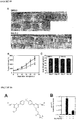
- mice Six to eight-week old male athymic SCID mice were inoculated subcutaneously in the flank region via a 27-gauge needle with a 150 ⁇ l suspension of LNCaP or PC3 human prostate cancer cells (1 x 10 6 cells). The inoculations took place while the animal was under isofluorane anaesthesia. The tumor take rate is approximately 75%. Mice bearing tumors of 100 mm 3 were randomly assigned to treatment groups. Castration was performed as described below. Tumor volume (formula: L x W x H x 0.5236) was measured in mice bearing LNCaP subcutaneous tumors that became palpable or visible and at least 40 mm 3 . The animals were monitored daily and tumors were measured every 5 days.
- Ki-67 immunostaining used the MIB-1 monoclonal antibody at an IgG concentration of 0.5 ⁇ g/ml (1:50) on processed tissue sections. Levels of AR were determined by immunohistochemistry or Western blot analysis.
- Androgen withdrawal was completed by castration. Under isoflurane anaesthesia, a 5mm vertical incision was used to gently withdraw the epididymal fat pad, to which the testis were attached, and to remove the testis from body. The cord connecting the testis to the blood supply was ligated with a suture, then cut. The cord was then returned to the abdominal cavity. Surgical suture was used to close the incision. To relieve pain, buprenorphine (0.05mg/kg) was injected prior to surgery.
- Thin-layer chromatography plates were visualized by exposure to ultraviolet light and a solution of p -anisaldehyde (1% p -anisaldehyde, 2% H 2 SO 4 , 20% acetic acid and 77% ethanol) followed by heating ( ⁇ 1 min) with a heating gun ( ⁇ 250 °C).
- Organic solutions were concentrated on Büchi B-114 rotatory evaporators at ⁇ 25 torr at 25-30 °C.
- the initial screen was a cell-based assay comprising of LNCaP cells maintained in culture.
- the assay consists of activating the AR using both androgen (ligand-dependent) and forskolin (ligand-independent) and measuring the levels of secreted PSA by LNCaP cells in the presence and absence of crude extracts.
- PSA is an androgen-regulated gene that contains several well-characterized AREs. Androgen-independent increases in PSA gene expression occur in prostate cancer cells by a mechanism dependent upon the AR.
- PNG 01-185 extract was observed to block PSA secretion induced by both androgen and forskolin.
- reporter gene constructs were also examined. Activation of the endogenous AR was measured in LNCaP human prostate cancer cells by measuring androgen-responsive reporters that contain androgen response elements (AREs) such as the PSA-luciferase reporter gene construct or the ARR3-luciferase reporter.
- AREs androgen response elements
- LNCaP cells maintained as monolayers were transfected with PSA-luciferase and were used to screen the crude extracts prepared from marine sponges as well as some selected commercial compounds. Measurement of both PSA-luc and ARR3-luc was carried out because PSA-luc is highly induced by androgen and in the absence of androgens induced by FSK.
- R1881 (1nM) was used to mediate ligand-dependent activation of the AR and concentrations of FSK (50 ⁇ M) were used to mediate ligand-independent activation of the AR.
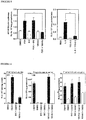
- PNG 01-185 was observed to block PSA-luciferase activity induced by both R1881 and FSK ( Figure 1 ). Controls included parallel experiments with cell lines that do not express AR and other reporters that do not contain AREs.
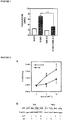
- PNG 01-185 extract was fractionated according to the scheme shown in Figure 2 to produce PNG 01-185-17. Each fraction of PNG 01-185-17 was re-tested on ARR3-luc activity and fractions 3 and 8 showed at least 50% inhibition ( Figure 3 ). These fractions were next tested for their ability to inhibit the AR NTD.
- LNCaP cells were co-transfected with the expression vector for Gal4DBD-AR 1-558 and the complimentary 5XGal4UAS-luciferase reporter as shown in Figure 4 . Induction of this reporter by FSK is a measure of transactivation of the Gal4DBD-AR 1-558 fusion protein ( Sadar 1999 J. Biol. Chem. 274, 7777-7783 ).
- Extracts identified above were screened by such assays as well as some compounds purchased from commercial suppliers.
- R1881 does not induce such assays (binds to the ligand-binding domain (LBD) of the AR which is not present in the Gal4DBD-AR 1-558 chimera) and therefore was not used except as a negative control.
- LBD ligand-binding domain
- IC50s were determined for each hit that showed a dose response. Identified extracts were used to isolate a purified form of the compound from natural compounds library that mediated the inhibitory effect on transactivation of the AR as described in Example 2, followed by secondary screens described in Example 3.
- Bioassay guided fractionation of active extracts followed a standard protocol. Initially, the crude extract was suspended in water and sequentially extracted with hexanes, CH 2 Cl 2 , and EtOAc to generate four sub-fractions of differing polarity. The first chromatography carried out on the active fraction from this initial partition was a Sephadex LH20 chromatography using either pure methanol or a mixed solvent system as the eluent. Subsequent fractionations were carried out by open column flash silica-gel or flash reversed-phase chromatography, HPLC (normal-phase and/or reversed-phase), or centrifugal counter current chromatography (on an Ito Coil apparatus), etc. as the situation warranted.
- the compounds were validated by application of secondary screens. Purified compounds were tested for their ability to inhibit: transactivation of the androgen receptor N-terminal domain (AR NTD); other steroid receptors (specificity); endogenous expression of PSA mRNA; AR interaction on AREs; N/C interaction; and proliferation of prostate cancer cells in response to androgen.
- both forskolin (FSK), which stimulates PKA activity, and IL-6 increase PSA gene expression in prostate cancer cells by a mechanism involving transactivation of the AR NTD ( Sadar, M.D., J. Biol. Chem. 274, 7777-7783 (1999 ); Ueda, T., Bruchovsky, N., Sadar, M.D., J. Biol. Chem. 277, 7076-7085 (2002 ); Ueda, T., Mawji, N.R., Bruchovsky, N., Sadar, M.D., J. Biol. Chem.
- bicalutamide BIC, 10 ⁇ M
- Controls included bicalutamide which does not affect such assays because it binds to the LBD of the AR which is not present in the Gal4DBD-AR 1-558 chimera.
- 185-9-2 was observed to reduce both FSK-induced and IL-6-induced transactivation of the AR NTD to baseline levels ( Figure 5 ).
- 185-9-2 was observed to have an IC 50 of ⁇ 6.6 ⁇ M for inhibition of transactivation of the AR NTD.
- 185-9-2 inhibited AR transcriptional activity, but did NOT inhibit PRE-luciferase or GRE-luciferase activities in response to ligand ( Figure 6 ).
- bicalutamide (10 ⁇ M) inhibited the transcriptional activity of PR.
- Some antiandrogens currently used in the clinic have progestational and glucocorticoidal activities. In adult males, the role of the PR activity is unclear.
- 185-9-2 does not inhibit the transactivation of other steroid receptors.
- 185-9-2 does not have non-specific and general effects on transcription or translation since it did not inhibit induction of these luciferase reporters in response to their cognant ligands. Since 185-9-2 blocks PSA-luciferase reporter gene activity that contains several AREs and is inducible by androgens and FSK supports that its inhibitory effects are at the level of transcription. These studies suggest that 185-9-2 is specific to the AR implying there should be fewer side effects from systemic delivery as opposed to if other steroid receptors are affected.
- Levels of mRNA were measured using QPCR. Levels of PSA mRNA were normalized to levels of GAPDH mRNA. 185-9-2 was observed to block endogenous PSA mRNA induction by R1881 to almost baseline levels ( Figure 7 ).
- Chromatin immunoprecipitation was used to assess if 185-9-2 prevented AR binding to the endogenous AREs in the enhancer region of the PSA gene in the physiological context of chromatin structure.
- the AR shows constitutive occupancy on the PSA promoter ARE, while the enhancer ARE has inducible occupancy in response to androgen ( Jia L, Coetzee GA., Cancer Res. 2005 Sep 1;65(17):8003-8 ).
- the occupancy of AR on these regulatory regions peaks at 16 hr of androgen treatment ( Jia L, Choong CS, Ricciardelli C, Kim J, Tilley WD, Coetzee GA., Cancer Res.
- LNCaP cells were treated for a short (3 h) or optimal (16 h) period of time with DHT plus or minus 185-9-2, prior to cross-linking with 1% formaldehyde and harvesting cells. The cells were lysed, sonicated, and the extracts used for immunoprecipitation with anti-AR antibody.
- 185-9-2 inhibited AR interaction with the ARE on the PSA enhancer in LNCaP cells in response to androgen ( Figure 8A ).
- the decrease in AR interaction with ARE was not due to decreased levels of AR protein.
- Long term incubation of LNCaP cells with 185-9-2 also did not reduce levels of AR protein ( Figure 9 ). Thus, it is believed that 185-9-2 does not inhibit AR transcriptional activity by reducing levels of AR protein.
- AR is primarily cytoplasmic.
- Cellular fractionation and fluorescent microscopy revealed that 185-9-2 did not cause nuclear translocation of the AR on its own in the absence of androgen, nor did it prevent nuclear translocation of AR protein in response to androgen (dihydrotestsosterone, DHT).
- Ligand-dependent activity of the AR requires interaction between the amino (N) and carboxy (C) termini for antiparallel dimer formation ( He B, Kemppainen JA, Voegel JJ, Gronemeyer H, Wilson EM., J Biol Chem. 1999, 274(52):37219-25 .).
- Antiandrogens such as bicalutamide, flutamide and cyproterone acetate do not stimulate this interaction on their own, and each inhibits N/C interaction induced by androgen ( Wong, C. I., Zhou, Z. X., Sar, M., and Wilson, E. M. (1993) J. Biol. Chem. 268, 19004-19012 ; Langley, E., Zhou, Z.
- CV1 cells were cotransfected with the expression vector for a fusion protein of amino acids 1-565 of the AR NTD fused to VP16 at the N-terminus (VP16-ARTAD, the N terminus), the expression vector for the DBD of Gal4 fused to the LBD of the AR (amino acids 628-919; Gal4-ARLBD; the C terminus), and the Gal4-luciferase reporter ( Masiello D, Cheng S, Bubley GJ, Lu ML, Balk SP. (2002) J. Biol. Chem., 277, 29, 26321-26326 ). There was no detectable interaction between the VP16-ARTAD and Gal4-ARLBD in the absence of androgen ( Figure 11 ).
- the prostate gland is an androgen-dependent organ where androgens are the predominant mitogenic stimulus ( Isaacs JT, Scott WW, Coffey DS., Prog Clin Biol Res. 1979;33:133-44 ). This dependency on androgens provides the underlying rationale for treating prostate cancer with chemical or surgical castration. Androgen (0.1 nM) stimulates the proliferation of LNCaP cells.
- LNCaP cells were pretreated for 1h with bicalutamide (10 ⁇ M, positive control) or 185-9-2 (5 ⁇ g/ml) prior to addition of 0.1 nM R1881. BrdU incorporation was measured 4 days later to indicate changes in proliferation in response to androgen ( Figure 12 ). R1881 (0.1nM) increased proliferation over control (vehicle for R1881 and small molecules). 185-9-2 was observed to be as effective as bicalutamide in blocking androgen-induced proliferation.
- the subcutaneous xenograft models were used to test whether the small molecules that inhibit activation of the androgen receptor in vitro have any effect on these tumors.
- PNG01-185-017-9-2 was tested in vivo using the LNCaP and PC3 subcutaneous xenograft models. In vivo experiments were done to provide information relevant to toxicity, the requirement for endogenous expression of AR, and whether PNG01-185-017-9-2 had an effect on tumor growth and progression to androgen independence. Tumor volume was monitored in both xenograft models.
- PNG01-185-017-9-2 reduced the tumor volume of LNCaP xenografts
- LNCaP human prostate cancer cells express endogenous androgen receptor (AR) and prostate-specific antigen (PSA), and progress to androgen independence in castrated hosts.
- 185-9-2 was observed to significantly reduce the tumors, even after the first injection ( Figure 14 ). At the duration of the experiment the 185-9-2-treated tumors were 35.4 ⁇ 15.7 mm 3 , while vehicle-treated tumors continued to grow and were 435.6 ⁇ 334.9 mm 3 . Thus 185-9-2 was observed to reduce the tumor volume and did not just slow the growth.
- 185-9-2 may be curative for androgen-independent prostate cancer.
- I.T delivery of the related compound, racemic BADGE.2HCl (B3) was also observed to reduce tumor volume from 109.6 ⁇ 17.4 mm 3 to 79.0 ⁇ 63.6 mm 3 compared to I.T. delivery of DMSO which continued to grow (starting at 105.2 ⁇ 15.1 mm 3 to 256.6 ⁇ 73.4 mm 3 ) following the same treatment regime as for 185-9-2 ( Figure 15A ).
- Serum PSA measurements correlated with tumor volume data (serum PSA data not shown).
- Immunohistochemistry using a marker for apoptosis (TUNEL) and proliferation (Ki67) shows that intravenous delivery of 185-9-2 increased apoptosis and reduced proliferation ( Figure 15 B) consistent with cytoreduction of the tumors.
- IHC data was prepared by a commercial lab that was blinded to treatments.
- 185-9-2 was observed not to cause general toxicity to animals indicated by no change in animal behavior or body weight ( Figure. 14C and 15C ).
- Pathology review of sections of lung, heart, liver, spleen, and kidney harvested from mice receiving 185-9-2 or DMSO by i.v. delivery showed no signs of toxicity ( Figure 16 ).
- IHC Figure 17A
- western blot analysis Figure 17B
- I.V. or I.T delivery of 185-9-2 did not decrease levels of AR protein in xenografts compared to levels of AR protein in vehicle-treated xenografts.
- Levels of cytokeratin 18 were measured as an indication of amount of epithelial cells in the xenograft samples.
- VEGF vascular endothelial growth factor
- Testosterone is a potent inducer of VEGF in the prostate ( Häggström et al 1999 J Urol. 161, 1620-1625 ) and re-expression of VEGF in androgen independent tumours is consistent with the re-expression of androgen-regulated genes ( Gregory et al 1998 Cancer Res. 58, 5718-5724 ).
- Expression of VEGF is associated with androgen independence ( Mitsiades et al 2001 Expert Opin Investig Drugs. 10, 1099-1115 ) and aggressive metastatic disease ( Harper et al 1998 J Pathol. 186, 169-177 ; Balbay et al 1999 Clin Cancer Res.
- PC3 xenograft model was employed to give an indication of whether endogenous AR must be expressed for the compounds to reduce tumor burden.
- PC3 are human prostate cancer cells that do not express functional AR and should therefore not respond to therapy with these small molecules that have been selected for their specificity in blocking transactivation of the AR-NTD.
Landscapes
- Health & Medical Sciences (AREA)
- Chemical & Material Sciences (AREA)
- Organic Chemistry (AREA)
- Animal Behavior & Ethology (AREA)
- Medicinal Chemistry (AREA)
- Pharmacology & Pharmacy (AREA)
- Life Sciences & Earth Sciences (AREA)
- General Health & Medical Sciences (AREA)
- Public Health (AREA)
- Veterinary Medicine (AREA)
- Nuclear Medicine, Radiotherapy & Molecular Imaging (AREA)
- General Chemical & Material Sciences (AREA)
- Chemical Kinetics & Catalysis (AREA)
- Bioinformatics & Cheminformatics (AREA)
- Engineering & Computer Science (AREA)
- Epidemiology (AREA)
- Endocrinology (AREA)
- Dermatology (AREA)
- Emergency Medicine (AREA)
- Reproductive Health (AREA)
- Diabetes (AREA)
- Urology & Nephrology (AREA)
- Ophthalmology & Optometry (AREA)
- Gynecology & Obstetrics (AREA)
- Pregnancy & Childbirth (AREA)
- Acyclic And Carbocyclic Compounds In Medicinal Compositions (AREA)
- Organic Low-Molecular-Weight Compounds And Preparation Thereof (AREA)
- Pharmaceuticals Containing Other Organic And Inorganic Compounds (AREA)
- Medicines That Contain Protein Lipid Enzymes And Other Medicines (AREA)
- Hydrogenated Pyridines (AREA)
Abstract
Description
- This application claims the benefit of
U.S. Provisional Patent Application Serial No. 61/129,537 - This invention was made in part with government support under grant number W81XWH-05-1-0058 (PC040768), awarded by U.S. Army Medical Research and Materiel Command. The government has certain rights in the invention.
- This invention relates to therapeutics, their uses and methods for the treatment of various indications, including various cancers. In particular the invention relates to therapies and methods of treatment for cancers such as prostate cancer, including all stages and androgen dependent, androgen-sensitive and androgen-independent (also referred to as hormone refractory, castration resistant, androgen deprivation resistant, androgen ablation resistant, androgen depletion-independent, castration-recurrent, anti-androgen-recurrent).
- Androgens mediate their effects through the androgen receptor (AR). Androgens play a role in a wide range of developmental and physiological responses and are involved in male sexual differentiation, maintenance of spermatogenesis, and male gonadotropin regulation (R. K. Ross, G. A. Coetzee, C. L. Pearce, J. K. Reichardt, P. Bretsky, L. N. Kolonel, B. E. Henderson, E. Lander, D. Altshuler & G. Daley, Eur Urol 35, 355-361 (1999); A. A. Thomson, Reproduction 121, 187-195 (2001); N. Tanji, K. Aoki & M. Yokoyama, Arch Androl 47, 1-7 (2001)). Several lines of evidence show that androgens are associated with the development of prostate carcinogenesis. Firstly, androgens induce prostatic carcinogenesis in rodent models (R. L. Noble, Cancer Res 37, 1929-1933 (1977); R. L. Noble, Oncology 34, 138-141 (1977)) and men receiving androgens in the form of anabolic steroids have a higher incidence of prostate cancer (J. T. Roberts & D. M. Essenhigh, Lancet 2, 742 (1986); J. A. Jackson, J. Waxman & A. M. Spiekerman, Arch Intern Med 149, 2365-2366 (1989); P. D. Guinan, W. Sadoughi, H. Alsheik, R. J. Ablin, D. Alrenga & I. M. Bush, Am J Surg 131, 599-600 (1976)). Secondly, prostate cancer does not develop if humans or dogs are castrated before puberty (J. D. Wilson & C. Roehrborn, J Clin Endocrinol Metab 84, 4324-4331 (1999); G. Wilding, Cancer Surv 14, 113-130 (1992)). Castration of adult males causes involution of the prostate and apoptosis of prostatic epithelium while eliciting no effect on other male external genitalia (E. M. Bruckheimer & N. Kyprianou, Cell Tissue Res 301, 153-162 (2000); J. T. Isaacs, )). This dependency on androgens provides the underlying rationale for treating prostate cancer with chemical or surgical castration (androgen ablation).
- Androgens also play a role in female cancers. One example is ovarian cancer where elevated levels of androgens are associated with an increased risk of developing ovarian cancer (K. J. Helzlsouer, A. J. Alberg, G. B. Gordon, C. Longcope, T. L. Bush, S. C. Hoffman & G. W. Comstock, JAMA 274,1926-1930 (1995); R. J. Edmondson, J. M. Monaghan & B. R. Davies, Br J Cancer 86, 879-885 (2002)). The AR has been detected in a majority of ovarian cancers (H. A. Risch, J Natl Cancer Inst 90, 1774-1786 (1998); B. R. Rao & B. J. Slotman, Endocr Rev 12, 14-26 (1991); G. M. Clinton & W. Hua, Crit Rev Oncol Hematol 25, 1-9 (1997)), whereas estrogen receptor-alpha (ERa) and the progesterone receptor are detected in less than 50% of ovarian tumors.
- The only effective treatment available for advanced prostate cancer is the withdrawal of androgens which are essential for the survival of prostate epithelial cells. Androgen ablation therapy causes a temporary reduction in tumor burden concomitant with a decrease in serum prostate-specific antigen (PSA). Unfortunately prostate cancer can eventually grow again in the absence of androgens (androgen-independent disease) (Huber et al 1987 Scand J. Urol Nephrol. 104, 33-39). Androgen-independent disease is biochemically characterized before the onset of symptoms by a rising titre of serum PSA (Miller et al 1992 J. Urol. 147, 956-961). Once the disease becomes androgen-independent most patients succumb to their disease within two years.
- The AR has distinct functional domains that include the carboxy-terminal ligand-binding domain (LBD), a DNA-binding domain (DBD) comprising two zinc finger motifs, and an N-terminus domain (NTD) that contains one or more transcriptional activation domains. Binding of androgen (ligand) to the LBD of the AR results in its activation such that the receptor can effectively bind to its specific DNA consensus site, termed the androgen response element (ARE), on the promoter and enhancer regions of "normally" androgen regulated genes, such as PSA, to initiate transcription. The AR can be activated in the absence of androgen by stimulation of the cAMP-dependent protein kinase (PKA) pathway, with interleukin-6 (IL-6) and by various growth factors (Culig et al 1994 Cancer Res. 54, 5474-5478; Nazareth et al 1996 J. Biol. Chem. 271, 19900-19907; Sadar 1999 J. Biol. Chem. 274, 7777-7783; Ueda et al 2002 A J. Biol. Chem. 277, 7076-7085; and Ueda et al 2002 B J. Biol. Chem. 277, 38087-38094). The mechanism of ligand-independent transformation of the AR has been shown to involve: 1) increased nuclear AR protein suggesting nuclear translocation; 2) increased AR/ARE complex formation; and 3) the AR-NTD (Sadar 1999 J. Biol. Chem. 274, 7777-7783; Ueda et al 2002 A J. Biol. Chem. 277, 7076-7085; and Ueda et al 2002 B J. Biol. Chem. 277, 38087-38094). The AR may be activated in the absence of testicular androgens by alternative signal transduction pathways in androgen-independent disease, which is consistent with the finding that nuclear AR protein is present in secondary prostate cancer tumors (Kim et al 2002 Am. J. Pathol. 160, 219-226; and van der Kwast et al 1991 Inter. J. Cancer 48, 189-193).
- Available inhibitors of the AR include nonsteroidal antiandrogens such as bicalutamide (Casodex™), nilutamide, and flutamide and the steroidal antiandrogen, cyproterone acetate. These antiandrogens target the LBD of the AR and predominantly fail presumably due to poor affinity and mutations that lead to activation of the AR by these same antiandrogens (Taplin, M.E., Bubley, G.J., Kom Y.J., Small E.J., Uptonm M., Rajeshkumarm B., Balkm S.P., Cancer Res., 59, 2511-2515 (1999)). These antiandrogens would also have no effect on the recently discovered AR splice variants that lack the ligand-binding domain (LBD) to result in a constitutively active receptor which promotes progression of androgen-independent prostate cancer (Dehm SM, Schmidt LJ, Heemers HV, Vessella RL, Tindall DJ., Cancer Res 68, 5469-77, 2008; Guo Z, Yang X, Sun F, Jiang R, Linn DE, Chen H, Chen H, Kong X, Melamed J, Tepper CG, Kung HJ, Brodie AM, Edwards J, Qiu Y., Cancer Res. 69, 2305-13, 2009).
- Conventional therapy has concentrated on androgen-dependent activation of the AR through its C-terminal domain. Recent studies developing antagonists to the AR have concentrated on the C-terminus and specifically: 1) the allosteric pocket and AF-2 activity (Estébanez-Perpiña et al 2007, PNAS 104, 16074-16079); 2) in silico "drug repurposing" procedure for identification of nonsteroidal antagonists (Bisson et al 2007, PNAS 104, 11927 - 11932); and coactivator or corepressor interactions (Chang et al 2005, ; Hur et al 2004, ; Estebanez-Perpina et al 2005, JBC 280, 8060-8068; He et al 2004, ).
- The AR-NTD is also a target for drug development (e.g.
WO 2000/001813 ), since the NTD plays a role in activation of the AR in the absence of androgens (Sadar, M.D. 1999 J. Biol. Chem. 274, 7777-7783; Sadar MD et al 1999 Endocr Relat Cancer. 6, 487-502; Ueda et al 2002 J. Biol. Chem. 277, 7076-7085; Ueda 2002 J. Biol. Chem. 277, 38087-38094; Blaszczyk et al 2004 Clin Cancer Res. 10, 1860-9; Dehm et al 2006 J Biol Chem. 28, 27882-93; Gregory et al 2004 J Biol Chem. 279, 7119-30). The AR-NTD is important in hormonal progression of prostate cancer as shown by application of decoy molecules (Quayle et al 2007, Proc Natl Acad Sci U S A. 104,1331-1336). - While the crystal structure has been resolved for the AR C-terminus LBD, this has not been the case for the NTD due to its high flexibility and intrinisic disorder in solution (Reid et al 2002 J. Biol. Chem. 277, 20079-20086) thereby hampering virtual docking drug discovery approaches.
- This invention is based in part on the fortuitous discovery that compounds described herein modulate androgen receptor (AR) activity. Specifically, compounds identified herein, show inhibition of AR N-Terminal Domain (NTD) transactivation, which may be useful for blocking in vivo tumor growth in the presence and absence of androgens. The discovery was particularly fortuitous because the initial screen of marine invertebrate extracts was testing for inhibition of AR NTD transactivation by at least 50% and some of the compounds identified in that initial screen were determined to have a structural resemblance to BADGE (Bisphenol A Diglycidic Ether). The resemblance to BADGE suggests that these compounds are most likely of industrial origin and were bioaccumulated by the sponge from the contaminated seawater. Accordingly, due to the known activities for Badge compounds, the present BADGE derivatives are very unlikely to have been screened in the assay under any other circumstances.
- The compounds described herein may be used for in vivo or in vitro research uses (i.e. non-clinical) to investigate the mechanisms of orphan and nuclear receptors (including steroid receptors such as the androgen receptor). Furthermore, these compounds may be used individually or as part of a kit for in vivo or in vitro research to investigate signal transduction pathways and/or the activation of orphan and nuclear receptors using recombinant proteins, cells maintained in culture, and/or animal models.
- This invention is also based in part on the surprising discovery that the compounds described herein, may also be used to modulate the androgen receptor activity either in vivo or in vitro for both research and therapeutic uses. The compounds may be used in an effective amount so that androgen receptor activity may be modulated. The androgen receptor may be mammalian. Alternatively, the androgen receptor may be human. In particular, the compounds may be used to inhibit transactivation of the AR N-terminal domain (NTD). The compounds modulatory activity may be used in either an in vivo or an in vitro model for the study of at least one of the following indications: prostate cancer, breast cancer, ovarian cancer, endometrial cancer, hair loss, acne, hirsutism, ovarian cysts, polycystic ovary disease, precocious puberty, and age-related macular degeneration. Furthermore, the compounds modulatory activity may be used for the treatment of at least one of the following indications: prostate cancer, breast cancer, ovarian cancer, endometrial cancer, hair loss, acne, hirsutism, ovarian cysts, polycystic ovary disease, precocious puberty (testoxicosis) and age-related macular degeneration. The indication for treatment may be prostate cancer. The prostate cancer may be androgen-independent prostate cancer. The prostate cancer may be androgen-dependent prostate cancer.
- In accordance with one embodiment, there is provided a use of a compound having a structure of Formula I


- In accordance with another embodiment, there is provided a pharmaceutical composition comprising a compound having a structure of Formula I set out above and a pharmaceutically acceptable excipient.
- In accordance with another embodiment, there is provided a method for modulating AR activity, the method comprising administering to a mammalian cell a compound having a structure of Formula I set out above.
- The modulating of the androgen receptor (AR) activity may be in a mammalian cell. The modulating of the androgen receptor (AR) activity may be in a mammal. The mammal may be a human.
- Alternatively, the administering may be to a mammal. The administering may be to a mammal in need thereof and in an effective amount for the treatment of at least one indication selected from the group consisting of: prostate cancer, breast cancer, ovarian cancer, endometrial cancer, hair loss, acne, hirsutism, ovarian cysts, polycystic ovary disease, precocious puberty, and age-related macular degeneration.
- Each X, X' and X" may independently be H, CH3, CH2F, CH2Cl, CH2Br, CH2I, CH2OJ''', CH2OG, CH2OGOG', GOG', GOG'OG", CH2SG, CH2NH2, CH2NHG, or CH2NG2. Each Z, Z', and Z" may independently be N, CH, CF, CCl, CBr, CI or COH. R3 may be

- Each Z, Z' and Z" may independently be N, CH, CF, CCl, CBr, CI, COH, CNH2, COSO3H, or COPO3H2. Each Z, Z' and Z" may independently be N, CH, CF, CCl, CBr, CI, or COH. Each Z, Z' and Z" may independently be CH, CF, CCl, CBr, or CI. Each Z, Z' and Z" may independently be CH, CCl, or CBr. Each Z, Z', and Z" may be CH.
- Each of Q, Q' and Q" may be G, O, CH2, CHG, S, or NH. Each of Q, Q' and Q" may be O, CH2, S, or NH. Each of Q, Q' and Q" may be O, CH2, or NH. Each of Q, Q' and Q" may be O, or CH2. Each of Q, Q' and Q" may be O. Each of Q, Q' and Q" may be G, O, CHG, or NH. Each of Q, Q' and Q" may be G, O, or CHG. Each of Q, Q' and Q" may be G, or O.
- Each of R1, R1', R2 and R2' may independently be H, or a branched or unbranched, substituted or unsubstituted, C1-C10 alkyl. Each of R1, R1', R2 and R2' may independently be H, or a branched or unbranched, substituted or unsubstituted, C1-C9 alkyl. Each of R1, R1', R2 and R2' may independently be H, or a branched or unbranched, substituted or unsubstituted, C1-C8 alkyl. Each of R1, R1', R2 and R2' may independently be H, or a branched or unbranched, substituted or unsubstituted, C1-C7 alkyl. Each of R1, R1', R2 and R2' may independently be H, or a branched or unbranched, substituted or unsubstituted, C1-C6 alkyl. Each of R1, R1', R2 and R2' may independently be H, or a branched or unbranched, substituted or unsubstituted, C1-C5 alkyl. Each of R1, R1', R2 and R2' may independently be H, or a branched or unbranched, substituted or unsubstituted, C1-C4 alkyl. Each of R1, R1', R2 and R2' may independently be H, or a branched or unbranched, substituted or unsubstituted, C1-C3 alkyl. Each of R1, R1', R2 and R2' may independently be H, or a branched or unbranched, substituted or unsubstituted, C1-C2 alkyl. Each R1, R1', R2 and R2' may be H or CH3. Each R1, R1', R2 and R2' may be CH3. Each R1, R1', R2 and R2' may be H.
- X may be H, CH3, CH2F, CHF2, CF3, CH2Cl, CHCl2, CCl3, CH2Br, CHBr2, CBr3, CH2I, CHI2, CI3, CH2OJ''', CH3OCH3, CH3OCH2CH3, G, CH2OG, CH2OGOG', GOG', GOG'OG", CH2SG, CH2NH2, CH2NHG, or CH2NG2. X may be H, CH3, CH3OCH3, CH3OCH2CH3, CH2F, CHF2, CF3, CH2Cl, CHCl2, CCl3, CH2Br, CHBr2, CBr3, CH2I, CHI2, CI3, CH2OJ''', G, CH2OG, CH2NH2, CH2NHG, or CH2NG2. X may be H, CH3, CH3OCH3, CH3OCH2CH3, CH2F, CH2Cl, CH2Br, CH2I, CH2OJ''', CH2OG, or CH2OGOG'. X may be H, CH3, CH3OCH3, CH3OCH2CH3, CH2F, CH2Cl, CH2Br, CH2I, CH2OJ''', or CH2OG. X may be H, CH3, CH3OCH3, CH3OCH2CH3, CH2F, CH2Cl, CH2Br, CH2I, or CH2OJ'''. X may be H, CH3, CH3OCH3, CH3OCH2CH3, CH2F, CH2Cl, CH2Br, or CH2I. X may be CH3, CH3OCH2CH3, CH2Cl, CH2F, CH2I, CH2Br, CH2OH, CH2OCH3, or CH2O(isopropyl). X may be CH3, CH2Cl, CH2F, CH2I, CH2Br, CH2OH, CH3OCH2CH3, or CH2OCH3. X may be CH3, CH2Cl, CH2F, CH2I, CH2Br, CH2OH, or CH2OCH3. X may be CH3, CH2OH, CH2OCH3, or CH2OCH2CH3. X may be CH2Cl, CH2F, CH2I, or CH2Br.
- X' may be H, CH3, CH2F, CH2Cl, CH2Br, CH2I, CH2OJ''', CH2OG, CH2OGOG', GOG', GOG'OG", CH2SG, CH2NH2, CH2NHG, or CH2NG2. X' may be H, CH3, CH2F, CH2Cl, CH2Br, CH2I,_CH2OJ''', CH2OG, or CH2OGOG'. X' may be CH2Cl, CH2F, CH2I, CH2Br, CH2OH, CH2OCH3, CH2O(isopropyl), or CH2OC2H4OC4H9. X' may be H, CH3, CH3OCH3, CH3OCH2CH3, CH2F, CH2Cl, CH2Br, or CH2I. X' maybe CH3, CH3OCH2CH3, CH2Cl, CH2F, CH2I, CH2Br, CH2OH, CH2OCH3, or CH2O(isopropyl). X' maybe CH3, CH2Cl, CH2F, CH2I, CH2Br, CH2OH, CH3OCH2CH3, or CH2OCH3. X' may be CH3, CH2Cl, CH2F, CH2I, CH2Br, CH2OH, or CH2OCH3. X' maybe CH3, CH2OH, CH2OCH3, or CH2OCH2CH3. X' maybe CH2Cl, CH2F, CH2I, or CH2Br.
- X" may be H, CH3, CH2I, CH2Cl, CH2Br, CH2F,_CH2OJ''', CH2OG or CH2OGOG'. X" may be CH2Cl, CH2F, CH2I, CH2Br, CH2OH, CH2OCH3, CH2O(isopropyl), or CH2OC2H4OC4H9. X" maybe H, CH3, CH3OCH3, CH3OCH2CH3, CH2F, CH2Cl, CH2Br, or CH2I. X" may be CH3, CH3OCH2CH3, CH2Cl, CH2F, CH2I, CH2Br, CH2OH, CH2OCH3, or CH2O(isopropyl). X" may be CH3, CH2Cl, CH2F, CH2I, CH2Br, CH2OH, CH3OCH2CH3, or CH2OCH3. X" may be CH3, CH2Cl, CH2F, CH2I, CH2Br, CH2OH, or CH2OCH3. X" may be CH3, CH2OH, CH2OCH3, or CH2OCH2CH3. X" may be CH2Cl, CH2F, CH2I, or CH2Br. X" may be CH2OCH3 and X may be CH2OCH3.
- Each J, J', J", and J''', when present, may independently be H or an amino acid based moiety or a polyethylene glycol based moiety selected from TABLE 1. Alternatively, each J, J', J", and J"', when present, may independently be H or an amino acid based moiety selected from TABLE 1. Each J, J', J", and J"', when present, may independently be an amino acid based moiety or a polyethylene glycol based moiety selected from TABLE 1. Alternatively, each J, J', J", and J"', when present, may independently be an amino acid based moiety selected from TABLE 1. Each J, J' J", J''', when present, may be H. Each J, J', J", and J"', when present may be

- Each G, G' and G" may independently be a branched, unbranched, or aromatic cyclic or non-aromatic cyclic, substituted or unsubstituted, saturated or unsaturated C1-C10 alkyl. Each G, G' and G" may independently be a branched, unbranched, or non-aromatic cyclic, substituted or unsubstituted, saturated or unsaturated C1-C10 alkyl. Each G, G' and G" may independently be a branched, unbranched, or non-aromatic cyclic, substituted or saturated or unsaturated C1-C10 alkyl. Each G G' and G" may independently be a branched, unbranched, or aromatic cyclic or non-aromatic cyclic, substituted or unsubstituted, saturated or unsaturated C1-C9 alkyl. Each G G' and G" may independently be a branched, unbranched, or aromatic cyclic or non-aromatic cyclic, substituted or unsubstituted, saturated or unsaturated C1-C8 alkyl. Each G G' and G" may independently be a branched, unbranched, or aromatic cyclic or non-aromatic cyclic, substituted or unsubstituted, saturated or unsaturated C1-C7 alkyl. Each G G' and G" may independently be a branched, unbranched, or aromatic cyclic or non-aromatic cyclic, substituted or unsubstituted, saturated or unsaturated C1-C6 alkyl. Each G, G' and G" may independently be a branched, unbranched, or aromatic cyclic or non-aromatic cyclic, substituted or unsubstituted, saturated or unsaturated C1-C5 alkyl. Each G, G' and G" may independently be a branched, unbranched, or non-aromatic cyclic, substituted or unsubstituted, saturated or unsaturated C1-C4 alkyl. Each G, G' and G" may independently be a branched, unbranched, or non-aromatic cyclic, substituted or unsubstituted, saturated or unsaturated C1-C3 alkyl.
- An optional substituent, if present, may be selected from the group consisting of: oxo (i.e. =O), OJ''', COOH, R, OH, OR, F, Cl, Br, I, NH2, NHR, NR2, CN, SH, SR, SO3H, SO3R, SO2R, OSO3R, and NO2. An optional substituent, if present, may be selected from the group consisting of: oxo (i.e. =O), OJ''', COOH, R, OH, OR, F, Cl, Br, I, NH2, NHR, NR2, SO3H, SO3R, SO2R, and NO2. An optional substituent, if present, may be selected from the group consisting of: oxo (i.e. =O), OJ''', COOH, R, OH, OR, F, Cl, Br, I, NH2, and NO2. An optional substituent, if present, may be selected from the group consisting of: oxo (i.e. =O), OJ"', COOH, R, OH, OR, F, Cl, Br, and I. An optional substituent, if present, may be selected from the group consisting of: oxo (i.e. =O), OJ''', COOH, OH, F, Cl, Br, and I. An optional substituent, if present, may be selected from the group consisting of: oxo (i.e. =O), OJ"', COOH, OH, F, and Cl. R may be an unsubstituted C1-C10 alkyl. R may be an unsubstituted C1-C9 alkyl. R may be an unsubstituted C1-C8 alkyl. R may be an unsubstituted C1-C7 alkyl. R may be an unsubstituted C1-C6 alkyl. R may be an unsubstituted C1-C5 alkyl. R may be an unsubstituted C1-C4 alkyl. R may be an unsubstituted C1-C3 alkyl. R may be an unsubstituted C1-C2 alkyl. R may be an unsubstituted C1 alkyl.
The compound may be selected from one or more of the following:


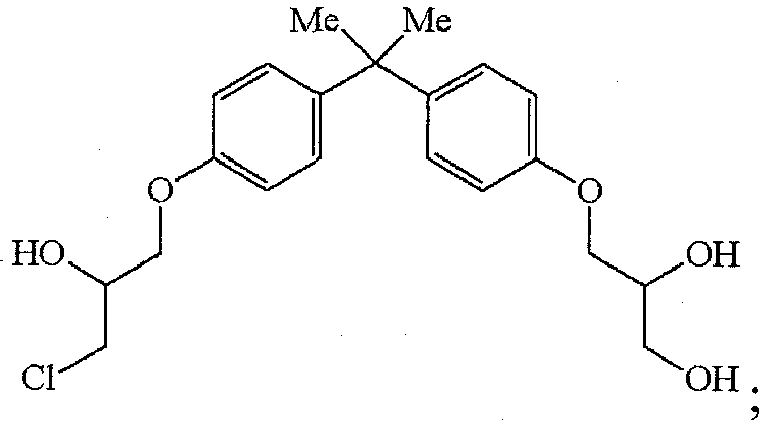


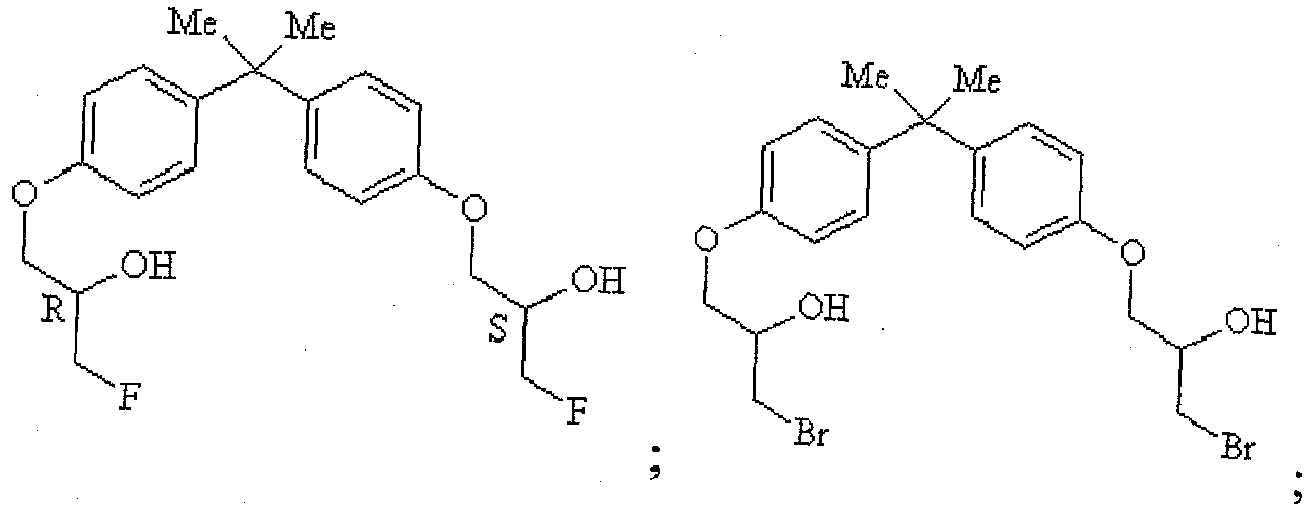


- The compounds described herein are meant to include all racemic mixtures and all individual enantiomers or combinations thereof, whether or not they are represented herein. Alternatively, one or more of the OH groups on the above compounds may be substituted to replace the H with a moiety selected from TABLE 1.
- The mammalian cell may be a human cell. The modulating AR activity may be for inhibiting AR N-terminal domain activity. The modulating AR activity may be for inhibiting AR N-terminal domain (NTD) activity. The modulating may be in vivo. The modulating AR activity may be for treatment of at least one indication selected from the group consisting of: prostate cancer, breast cancer, ovarian cancer, endometrial cancer, hair loss, acne, hirsutism, ovarian cysts, polycystic ovary disease, precocious puberty, and age-related macular degeneration. The indication may be prostate cancer. The prostate cancer may be androgen-independent prostate cancer. The prostate cancer may be androgen-dependent prostate cancer.
- In accordance with another embodiment, there are provided compounds having structures represented by Formula II


- Alternatively, each J and J' may independently be H or a moiety selected from TABLE 1; each L and L' may independently be O, S, NH, NG, N+H2 or N+HG; each Q and Q' may independently be G, O, CH2, CHG, CG2, S, NH or NG; each Z and Z' may independently be N, CH, CF, CCl, CBr, CI, COH, CG, COG, CNH2, CNHG, CNG2, COSO3H, COPO3H2; CSG, CSOG, or CSO2G; R1 and R2 may each independently be H; or a branched or unbranched, substituted or unsubstituted C1-C10 alkyl or together form a substituted or unsubstituted, saturated, aromatic cyclic or non-aromatic cyclic C3-C10 alkyl; X may be CH2OG, CH2OGOG', CH2SG, CH2NH2, CH2NHG, CH2I, CH2Br, or CH2F; X' may be H, CH3, CH2F, CHF2, CF3, CH2Cl, CHCl2, CCl3, CH2Br, CHBr2, CBr3, CH2I, CHI2, CI3, CH2F, CHF2, CF3, CH2OJ''', CH2OG, CH2OGOG', GOG', GOG'OG", CH2SG, CH2NH2, CH2NHG, CH2NG2, or

- Alternatively, wherein each J and J' may independently be H or a moiety selected from TABLE 1; each L and L' may independently be O, S, or NH; each Q and Q' may independently be O, CH2, S, or NH; each Z and Z' may independently be N, CH, CF, CCl, CI, COH, or CNH2; R1 and R2 may each independently be H; or a branched or unbranched, substituted or unsubstituted C1-C10 alkyl or together form a substituted or unsubstituted, saturated, aromatic cyclic or non-aromatic cyclic C3-C10 alkyl; X may be CH2OG, CH2OGOG', CH2SG, CH2NH2, CH2NHG, CH2I, CH2Br, CH2F, or CH2NG2; X' maybe H, CH3, CH2F, CHF2, CF3, CH2Cl, CHCl2, CCl3, CH2Br, CHBr2, CBr3, CH2I, CHI2, CI3, CH2F, CHF2, CF3, CH2OJ''', CH2OG, CH2OGOG', GOG', GOG'OG", CH2SG, CH2NH2, CH2NHG, CH2NG2; R1' and R2 may each independently be H, or a branched or unbranched, substituted or unsubstituted C1-C5 alkyl, or R1' and R2' together form a substituted or unsubstituted, saturated, aromatic cyclic or non-aromatic cyclic C3-C10 alkyl; each J" and J''' may independently be H or a moiety selected from TABLE 1; L" may be O, S, or NH; each Z" may independently be N, CH, CF, CCl, CI, COH, or CNH2; Q" may be O, CH2, S, or NH; X" may be H, CH3, CH2F, CHF2, CF3, CH2Cl, CHCl2, CCl3, CH2Br, CHBr2, CBr3, CH2OJ''', G, CH2OG, CH2OGOG', CH2SG, CH2NH2, CH2NHG, CH2I, CH2Br, CH2F, or CH2NG2 and each G, G', and G" may independently be a branched or unbranched, non-aromatic cyclic, substituted or unsubstituted, saturated C1-C5 alkyl; wherein an optional substituent if present may be selected from the group consisting of: oxo (i.e. =O), OJ"', COOH, R, OH, OR, F, Cl, Br, I, NH2, CN, SH, SO3H, and NO2 wherein R may be an unsubstituted C1-C5 alkyl.
- X' may be H, CH3, CH2F, CH2Cl, CH2Br, CH2I, CH2OG, CH2OGOG', GOG', GOG'OG", CH2SG, CH2NH2, CH2NHG, CH2NG2, or

- X' may be H, CH3, CH2F, CH2Cl, CH2Br, CH2I, CH2OG, CH2OGOG', GOG', GOG'OG", CH2SG, CH2NH2, CH2NHG, or CH2NG2. X' may be H, CH3, CH2F, CH2Cl, CH2Br, CH2I, CH2OG, CH2OGOG', GOG', or GOG'OG". X' may be H, CH3, CH2F, CH2Cl, CH2Br, CH2I, CH2OG, or CH2OGOG'. X' may be H, CH3, CH2F, CH2Cl, CH2Br, CH2I, or CH2OG. X' may be H, CH3, CH2F, CH2Cl, CH2Br, CH2I, CH2O(isopropyl), CH2OCH3, or CH2OCH2CH3. X' may be H, CH3, CH2F, CH2Cl, CH2Br, CH2I, CH2O(isopropyl), CH2OCH3, or CH2OCH2CH3. X' may be H, CH3, CH2F, CH2Cl, CH2Br, CH2I, or CH2OCH3.
- X" may be H, CH3, CH2F, CH2Cl, CH2Br, CH2I, CH2OG, CH2OGOG', GOG', GOG'OG", CH2O(isopropyl), CH2SG, CH2NH2, CH2NHG, or CH2NG2. X" may be H, CH3, CH2F, CH2Cl, CH2Br, CH2I, CH2O(isopropyl), CH2OG, CH2OGOG', GOG', or GOG'OG". X" may be H, CH3, CH2F, CH2Cl, CH2Br, CH2I, CH2O(isopropyl), CH2OCH3, or CH2OCH2CH3. X" may be H, CH3, CH2F, CH2Cl, CH2Br, CH2I, or CH2OCH3. X" may be H, CH3, CH2F, CH2Cl, CH2Br, or CH2I.
- X may be CH2OG, CH2OGOG', CH2SG, CH2I, CH2Br, or CH2F. X may be CH2I, CH2Br, CH2F, CH2OG, or CH2OGOG'. X may be CH2I, CH2Br, CH2F, CH2OCH3, CH2O(isopropyl), or CH2OC2H4OC4H9. X may be CH2I, CH2Br, CH2F, CH2OCH3, or CH2OCH2CH3. X may be CH2I, CH2Br, CH2F, or CH2OCH3. X may be CH2I, CH2Br, or CH2F.
- Each Z, Z' and Z" may independently be N, CH, CF, CCl, CBr, CI or COH. Each Z, Z' and Z" may independently be CH, CF, CCl, CBr, CI or COH. Alternatively, each Z, Z' and Z" may independently be CH, CF, CCl, CBr, or CI. Each Z, Z', and Z" may be CH.
- Each of Q, Q' and Q" may be O.
- Each of R1, R1', R2 and R2' may independently be H, or a branched or unbranched, substituted or unsubstituted, C1-C10 alkyl. Each of R1, R1', R2 and R2' may independently be H, or a branched or unbranched, substituted or unsubstituted, C1-C9 alkyl. Each of R1, R1', R2 and R2' may independently be H, or a branched or unbranched, substituted or unsubstituted, C1-C8 alkyl. Each of R1, R1', R2 and R2' may independently be H, or a branched or unbranched, substituted or unsubstituted, C1-C7 alkyl. Each of R1, R1', R2 and R2' may independently be H, or a branched or unbranched, substituted or unsubstituted, C1-C6 alkyl. Each of R1, R1', R2 and R2' may independently be H, or a branched or unbranched, substituted or unsubstituted, C1-C5 alkyl. Each of R1, R1', R2 and R2' may independently be H, or a branched or unbranched, substituted or unsubstituted, C1-C4 alkyl. Each of R1, R1', R2 and R2' may independently be H, or a branched or unbranched, substituted or unsubstituted, C1-C3 alkyl. Each of R1, R1', R2 and R2' may independently be H, or a branched or unbranched, substituted or unsubstituted, C1-C2 alkyl. Each R1, R1', R2 and R2' may be H or CH3. Each R1, R1', R2 and R2' may be CH3. Each R1, R1', R2 and R2' may be H.
- Each J, J', J", and J"', when present, may independently be H or an amino acid based moiety or a polyethylene glycol based moiety selected from TABLE 1. Alternatively, each J, J', J", and J"', when present, may independently be H or an amino acid based moiety selected from TABLE 1. Each J, J', J", and J"', when present, may independently be an amino acid based moiety or a polyethylene glycol based moiety selected from TABLE 1. Alternatively, each J, J', J", and J"', when present, may independently be an amino acid based moiety selected from TABLE 1. Each J, J' J", J"', when present, may be H. Each J, J', J", and J"', when present may be

- Each L, L', and L", when present, may independently be O, NH or N+H2. Each L L', and L", when present, may be O or S. Alternatively, each L L', and L", when present, may be O.
- Each G, G' and G" may independently be a branched, unbranched, or non-aromatic cyclic, substituted or unsubstituted, saturated C1-C10 alkyl. Each G, G' and G" may independently be a branched, unbranched, or non-aromatic cyclic, substituted or unsubstituted, saturated C1-C10 alkyl. Each G, G' and G" may independently be a branched, unbranched, or non-aromatic cyclic, substituted or saturated C1-C10 alkyl. Each G G' and G" may independently be a branched, unbranched, or non-aromatic cyclic, substituted or unsubstituted, saturated C1-C9 alkyl. Each G G' and G" may independently be a branched, unbranched, or non-aromatic cyclic, substituted or unsubstituted, saturated C1-C8 alkyl. Each G G' and G" may independently be a branched, unbranched, or non-aromatic cyclic, substituted or unsubstituted, saturated C1-C7 alkyl. Each G G' and G" may independently be a branched, unbranched, or non-aromatic cyclic, substituted or unsubstituted, saturated C1-C6 alkyl. Each G, G' and G" may independently be a branched, unbranched, or non-aromatic cyclic, substituted or unsubstituted, saturated C1-C5 alkyl. Each G, G' and G" may independently be a branched, unbranched, or non-aromatic cyclic, substituted or unsubstituted, saturated C1-C4 alkyl. Each G, G' and G" may independently be a branched, unbranched, or non-aromatic cyclic, substituted or unsubstituted, saturated C1-C3 alkyl.
- An optional substituent, if present, may be selected from the group consisting of: oxo (i.e. =O), OJ"', COOH, R, OH, OR, F, Cl, Br, I, NH2, NHR, NR2, CN, SH, SR, SO3H, SO3R, SO2R, OSO3R, and NO2. An optional substituent, if present, may be selected from the group consisting of: oxo (i.e. =O), OJ"', COOH, R, OH, OR, F, Cl, Br, I, NH2, NHR, NR2, SO3H, SO3R, SO2R, and NO2. An optional substituent, if present, may be selected from the group consisting of: oxo (i.e. =O), OJ"', COOH, R, OH, OR, F, Cl, Br, I, NH2, and NO2. An optional substituent, if present, may be selected from the group consisting of: oxo (i.e. =O), OJ'", COOH, R, OH, OR, F, Cl, Br, and I. An optional substituent, if present, may be selected from the group consisting of: oxo (i.e. =O), OJ"', COOH, OH, F, Cl, Br, and I. An optional substituent, if present, may be selected from the group consisting of: oxo (i.e. =O), OJ"', COOH, OH, F, and Cl. R maybe an unsubstituted C1-C10 alkyl. R may be an unsubstituted C1-C9 alkyl. R may be an unsubstituted C1-C8 alkyl. R may be an unsubstituted C1-C7 alkyl. R may be an unsubstituted C1-C6 alkyl. R may be an unsubstituted C1-C5 alkyl. R may be an unsubstituted C1-C4 alkyl. R may be an unsubstituted C1-C3 alkyl. R may be an unsubstituted C1-C2 alkyl. R may be an unsubstituted C1 alkyl.
- The compound may be selected from one or more of the following:


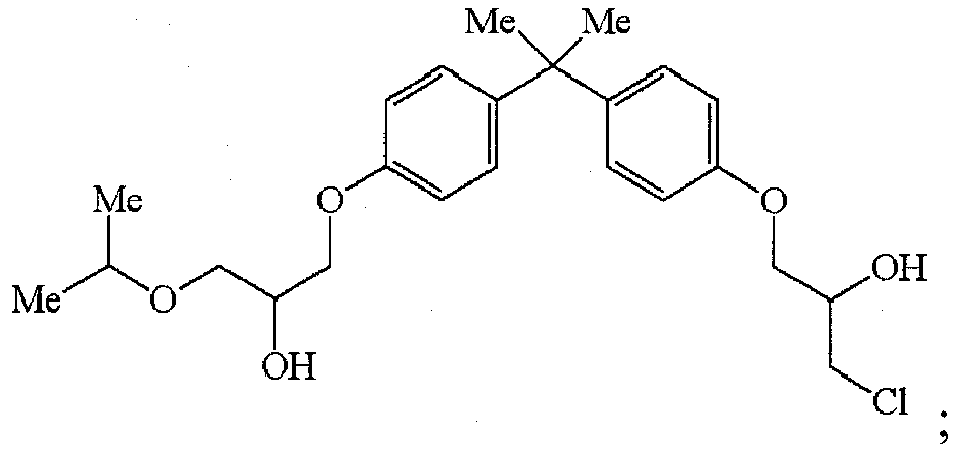


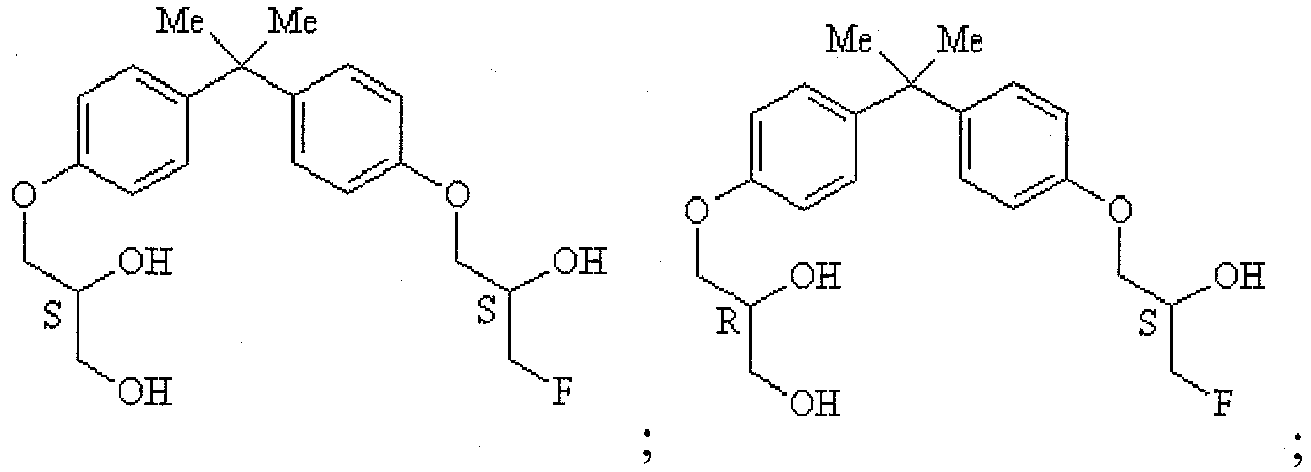


- The compounds described herein are meant to include all racemic mixtures and all individual enantiomers or combinations thereof, whether or not they are represented herein. Alternatively, one or more of the OH groups may be substituted to replace the H with a moiety selected from TABLE 1.
- In accordance with another embodiment, there is provided a compound having the formula:

- Alternatively, J may be

- In accordance with another embodiment, there is provided a compound having one or more of the structures:


- Alternatively, one or more of the OH groups of the above compounds may be substituted to replace the H with a moiety selected from TABLE 1.
- In accordance with another embodiment, there are provided compounds having structures represented by Formula II


- Alternatively, each J and J' may independently be H or a moiety selected from TABLE 1; each L and L' may independently be O, S, NH, NG, N+H2 or N+HG; each Q and Q' may independently be G, O, CH2, CHG, CG2, S, NH or NG; each Z and Z' may independently be N, CH, CF, CCl, CBr, CI, COH, CG, COG, CNH2, CNHG, CNG2, COSO3H, COPO3H2; CSG, CSOG, or CSO2G; R1 and R2 may each independently be H; or a branched or unbranched, substituted or unsubstituted C1-C10 alkyl or together form a substituted or unsubstituted, saturated, aromatic cyclic or non-aromatic cyclic C3-C10 alkyl; X may be CH2OG, CH2OGOG', CH2SG, CH2NH2, CH2NHG, CH2I, CH2Br, or CH2F; X' may be H, CH3, CH2F, CHF2, CF3, CH2Cl, CHCl2, CCl3, CH2Br, CHBr2, CBr3, CH2I, CHI2, CI3, CH2F, CHF2, CF3, CH2OJ"', CH2OG, CH2OGOG', GOG', GOG'OG", CH2SG, CH2NH2, CH2NHG, CH2NG2, or

- In accordance with another embodiment, there is provided a pharmaceutical composition comprising a compound according to any one of the above compounds and a pharmaceutically acceptable excipient.
- In accordance with a further embodiment, there is provided a method of screening for androgen receptor modulating compounds, wherein the compounds screened are selected from compounds having the Formula III:

M may be selected from the following:
R3 may be H, a branched, unbranched, substituted or unsubstituted C1-C10 alkyl, or

-
- Figure 1
- shows that extract PNG 01-185 blocked induction of PSA-luciferase (PSA-luc) activity by forskolin (FSK, 50 µM) and R1881 (1 nM).
- Figure 2
- is a flowchart showing the fractionation of PNG 01-185 compounds to identify PNG 01-185-17-9.
- Figure 3
- shows the effects of fractions of PNG 01-185-17 on ARR3-luciferase (ARR3-luc) activity. Fractions 17-3 and 17-8 caused a 50% inhibition of ARR3-luc activity.
- Figure 4
- shows that the PNG01-185-17-8 fraction inhibited AR-NTDGal4-luc activity.
- Figure 5
- Structural derivative, PNG01-185-17-9-2 (185-9-2) of PNG01-185-17-8 blocked FSK (50 µM) (left) and interleukin-6 (IL-6, 50 ng/ml) (right) induced transactivation of the AR NTD while the antiandrogen bicalutamide (
BIC 10 µM) had no effect. - Figure 6
- 185-9-2 (5 µg/ml) inhibited AR transcriptional activity in response to ligand as measured using the PSA(6.1kb)-luciferase reporter gene construct that contains numerous well-characterized and functional androgen response elements (AREs). Bicalutamide (BIC, 10 µM) was included as a positive control. 185-9-2 does NOT inhibit the activity of progesterone response element (PRE)-luciferase reporter or glucocorticoid response element (GRE)-luciferase reporter in LNCaP cells that were transfected with expression vectors for progesterone receptor (PR) and glucocorticoid receptor (GR) and their relevant reporter gene constructs (PRE-luc or GRE-luc) and exposed to their respective steroid (10nM, black bars). White bars represent no steroid (ethanol control).
- Figure 7
- PNG01-185-17-9-2 (185-9-2, 5 µg/ml) inhibited endogenous PSA gene expression (PSA mRNA) induced by R1881 (1 nM) as measured by QRT-PCR. Levels of PSA mRNA were normalized to levels of GADPH mRNA. MNE is the mean normalized expression.
- Figure 8
- A. ChIP analysis measuring recruitment of AR to the PSA-ARE in the enhancer region in LNCaP cells treated for 0, 3 hr, 16 hr with DHT with or without 185-9-2 (B2, 10µg/ml). B. Levels of AR protein were not decreased in whole cell extracts from cells treated for 3 or 16 hours with 185-9-2 (B2). Western blot analysis of levels of AR using an antibody to the androgen receptor. Levels of b-actin protein are included as a loading control.
- Figure 9
- AR in whole cell lysates from LNCaP cells maintained in vitro for 48 hrs with 185-9-2 (B2) in the presence or absence of DHT. Results are from 3 separate experiments.
- Figure 10
- A. Western blot analyses of levels of AR protein in cytosol or nucleus in LNCaP cells pretreated for 1 hr with 185-9-2 (B2) or DMSO (control) prior to 15, 30, 60, or 120 minutes of treatment with 10 nM DHT. B.
Fluorescence microscopy of LNCaP cells transfected with AR-GFP pretreated for 1 hr with 185-9-2 (B2) or DMSO (control) prior to addition of 10 nM DHT and incubated an additional 2 hrs. - Figure 11
- N/C interaction. CV1 cells were transfected with VP 16-ARTAD, Gal4-ARLBD, and the Gal4-luciferase reporter and treated with R1881 plus or minus 185-9-2 (10µg/ml) or bicalutamide (BIC, 10µM) for 24 hr.
- Figure 12
- PNG01-185-17-9-2 (185-9-2) blocked androgen-dependent proliferation of LNCaP cells. LNCaP cells treated with bicalutamide (BIC, 10µM) or 185-9-2 (5 µg/ml) for 1 hr before the addition of R1881 (0.1nM). Cells were harvested and measured for BrdU incorporation after 4 days of treatment with androgen. p=0.0001 between 185-9-2 plus R1881 and only R1881-treated.
- Figure 13
- PNG01-185-17-9-2 (185-9-2) does NOT block proliferation of PC3 cells (p<0.05, t-test). Cells were treated with vehicle (DMSO) or 185-9-2 (5 µg/ml) for 3 days before harvesting and measurement of BrdU incorporation. Bars represent the mean ± SEM (n=3 separate experiments with 5 replicates per experiment).
- Figure 14
- A. Photographs of a representative harvested LNCaP xenografts from
day 25 after the 1st intratumorial (I.T.) injection of either DMSO (vehicle) or 185-9-2 in castrated animals. The black bar represents 10 mm. B. Time course showing LNCaP xenograft volume over for the duration of the experiment. 185-9-2 reduced the size of the tumors (n=10) while DMSO-treated tumors continued to grow (n=9). Tumor volume at the first injection was set to 100%. Solid line represents DMSO-treated and dashed line represents 185-9-2-treated animals. C. 185-9-2 did not reduce body weight. Body weight measured atday 0 and at the end of the experiment atday 25 in mice bearing LNCaP xenografts receiving vehicle or small molecule. - Figure 15
- A. Time course comparing intravenous (I.V.) injection of 185-9-2 (B2) versus intratumorial (I.T.) injection of 185-9-2 and BADGE.2HCl (B3, I.T. injection of 20 mg/kg body weight every 5 days, n=3 for each group) on LNCaP xenograft volume over for the duration of the experiments. 185-9-2 (B2) and BADGE.2HCl (B3) reduced the size of the tumors while DMSO-treated tumors continued to grow. Tumor volume at the first injection was set to 100%. B. Photographs of a representative harvested LNCaP xenografts from animals injected intravenously with control (DMSO vehicle) or 185-9-2 (50 mg/kg body weight every other day) in castrated
animals 2 days after the last injection. The black bar represents 10 mm. Staining of sections of the shown tumor with TUNEL as an indication of apoptosis, or Ki67 as a marker of proliferation. C. Intravenous injection (I.V.) of 185-9-2 did not reduce body weight. - Figure 16
- Histology of major organs harvested from animals injected I.V. (see
Figure 15 ) with 185-9-2 (50 mg/kg body weight) every other day for a total of 5 injections. Xenografts were harvested 2 days after the last I.V. injection and stained with H&E. DMSO is the vehicle control that was also administered by I.V. - Figure 17
- In vivo, 185-9-2 does not reduce levels of AR protein. A. Xenografts were harvested from animals injected I.V. with 185-9-2 or DMSO (see
Figure 15 ) and sections were stained for AR using a monoclonal antibody to the NTD. B. Western blot analyses of levels of AR protein in whole cell lysates prepared from xenografts harvested atday 25 from animals injected I.T. with 185-9-2 (seeFigure 14 ).Lane Control 1 and 2).Lane cytokeratin 18, a marker of epithelial cells. - Figure 18
- illustrates that 185-9-2 decreased levels of vascular endothelial growth factor (VEGF) protein in LNCaP xenografts harvested at
day 25 from castrated hosts. VEGF is an important growth factor involved in angiogenesis. The left column shows staining of a xenograft treated with vehicle control. - Figure 19
- A. Photographs of a representative harvested PC3 xenografts from
day 25 after the 1st intratumorial (I.T.) injection of either DMSO (vehicle) or 185-9-2 (20 mg/kg body weight) in non-castrated animals. The black bar represents 10 mm. B. PNG01-185-017-9-2 had a small effect on PC3 tumor growth but did not reduce tumor burden. Time course showing PC3 xenograft volume over for the duration of the experiment. Tumor volume at the first injection was set to 100%. Solid line represents DMSO-treated and dashed line represents 185-9-2-treated animals. C. 185-9-2 did not reduce body weight. Body weight measured atday 0 and at the end of the experiment atday 25 in mice bearing PC3 xenografts receiving vehicle or small molecule. - Figure 20
- Glycine ester of the BADGE.HCL.H2O (A) was tested in LNCaP cells transfected with an expression vector for the Gal4DBD-AR1-558 chimera protein with a reporter gene containing the Gal4-binding site as cis-acting elements (p5xGal4UAS-TATA-luciferase) (B). The glycine ester, Gly-B2-HCl of 185-9-2 (25 µM) blocked IL-6 (50ng/ml) induced transactivation of the AR NTD.
- As used herein, the phrase "Cx-Cy alkyl" is used as it is normally understood to a person of skill in the art and often refers to a chemical entity that has a carbon skeleton or main carbon chain comprising a number from x to y (with all individual integers within the range included, including integers x and y) of carbon atoms. For example a "C1-C10 alkyl" is a chemical entity that has 1, 2, 3, 4, 5, 6, 7, 8, 9 or 10 carbon atom(s) in its carbon skeleton or main chain.
- As used herein, the term "cyclic Cx-Cy alkyl" is used as it is normally understood to a person of skill in the art and often refers to a compound or a chemical entity in which at least a portion of the carbon skeleton or main chain of the chemical entity is bonded in such a way so as to form a 'loop', circle or ring of atoms that are bonded together. The atoms do not have to all be directly bonded to each other, but rather may be directly bonded to as few as two other atoms in the 'loop'. Non-limiting examples of cyclic alkyls include benzene, toluene, cyclopentane, bisphenol and 1-chloro-3-ethylcyclohexane.
- As used herein, the term "branched" is used as it is normally understood to a person of skill in the art and often refers to a chemical entity that comprises a skeleton or main chain that splits off into more than one contiguous chain. The portions of the skeleton or main chain that split off in more than one direction may be linear, cyclic or any combination thereof. Non-limiting examples of a branched alkyl are tert-butyl and isopropyl.
- As used herein, the term "unbranched" is used as it is normally understood to a person of skill in the art and often refers to a chemical entity that comprises a skeleton or main chain that does not split off into more that one contiguous chain. Non-limiting examples of unbranched alkyls are methyl, ethyl, n-propyl, and n-butyl.
- As used herein, the term "substituted" is used as it is normally understood to a person of skill in the art and often refers to a chemical entity that has one chemical group replaced with a different chemical group that contains one or more heteroatoms. Unless otherwise specified, a substituted alkyl is an alkyl in which one or more hydrogen atom(s) is/are replaced with one or more atom(s) that is/are not hydrogen(s). For example, chloromethyl is a non-limiting example of a substituted alkyl, more particularly an example of a substituted methyl. Aminoethyl is another non-limiting example of a substituted alkyl, more particularly it is a substituted ethyl.
- As used herein, the term "unsubstituted" is used as it is normally understood to a person of skill in the art and often refers to a chemical entity that is a hydrocarbon and/or does not contain a heteroatom. Non-limiting examples of unsubstituted alkyls include methyl, ethyl, tert-butyl, and pentyl.
- As used herein, the term "saturated" when referring to a chemical entity is used as it is normally understood to a person of skill in the art and often refers to a chemical entity that comprises only single bonds. Non-limiting examples of saturated chemical entities include ethane, tert-butyl, and N+H3.
- As used herein, C1-C10 alkyl may include, for example, and without limitation, saturated C1-C10 alkyl, C2-C10 alkenyl and C2-C10 alkynyl. Non-limiting examples of saturated C1-C10 alkyl may include methyl, ethyl, n-propyl, i-propyl, sec-propyl, n-butyl, i-butyl, sec-butyl, t-butyl, n-pentyl, i-pentyl, sec-pentyl, t-pentyl, n-hexyl, i-hexyl, 1,2-dimethylpropyl, 2-ethylpropyl, 1-methyl-2-ethylpropyl, 1-ethyl-2-methylpropyl, 1,1,2-trimethylpropyl, 1,1,2-triethylpropyl, 1,1-dimethylbutyl, 2,2-dimethylbutyl, 2-ethylbutyl, 1,3-dimethylbutyl, 2-methylpentyl, 3-methylpentyl, sec-hexyl, t-hexyl, n-heptyl, i-heptyl, sec-heptyl, t-heptyl, n-octyl, i-octyl, sec-octyl, t-octyl, n-nonyl, i-nonyl, sec-nonyl, t-nonyl, n-decyl, i-decyl, sec-decyl and t-decyl. Non-limiting examples of C2-C10 alkenyl may include vinyl, allyl, isopropenyl, 1-propene-2-yl, 1-butene-1-yl, 1-butene-2-yl, 1-butene-3-yl, 2-butene-1-yl, 2-butene-2-yl, octenyl and decenyl. Non-limiting examples of C2-C10 alkynyl may include ethynyl, propynyl, butynyl, pentynyl, hexynyl, heptynyl, octynyl, nonynyl and decynyl. Saturated C1-C10 alkyl, C2-C10 alkenyl or C2-C10 alkynyl may be, for example, and without limitation, interrupted by one or more heteroatoms which are independently nitrogen, sulfur or oxygen.
- As used herein, cyclic C3-C10 alkyl may include, for example, and without limitation, saturated C3-C10 cycloalkyl, C3-C10 cycloalkenyl, C3-C10 cycloalkynyl, C6-10 aryl, C6-9 aryl-C1-4 alkyl, C6-8 aryl-C2-4 alkenyl, C6-8 aryl-C2-4 alkynyl, a 4- to 10-membered non-aromatic heterocyclic group containing one or more heteroatoms which are independently nitrogen, sulfur or oxygen, and a 5- to 10-membered aromatic heterocyclic group containing one or more heteroatoms which are independently nitrogen, sulfur or oxygen. Non-limiting examples of the saturated C3-C10 cycloalkyl group may include cyclopropanyl, cyclobutanyl, cyclopentanyl, cyclohexanyl, cycloheptanyl, cyclooctanyl, cyclononanyl and cyclodecanyl. Non-limiting examples of the C3-C10 cycloalkenyl group may include cyclopropenyl, cyclobutenyl, cyclopentenyl, cyclohexenyl, cycloheptenyl, cyclooctenyl, cyclononanenyl and cyclodecanenyl. Non-limiting examples of the C6-C10 aryl group may include phenyl (Ph), pentalenyl, indenyl, naphthyl, and azulenyl. The C6-9 aryl-C1-4 alkyl group may be, for example, and without limitation, a C1-4 alkyl group as defined anywhere above having a C6-9 aryl group as defined anywhere above as a substituent. The C6-8 aryl-C2-4 alkenyl group may be, for example, and without limitation, a C2-4 alkenyl as defined anywhere above having a C6-8 aryl group as defined anywhere above as a substituent. The C6-8 aryl-C2-4 alkynyl group may be, for example, and without limitation, a C2-4 alkynyl group as defined anywhere above having a C6-8 aryl group as defined anywhere above as a substituent. Non-limiting examples of the 4- to 10-membered non-aromatic heterocyclic group containing one or more heteroatoms which are independently nitrogen, sulfur or oxygen may include pyrrolidinyl, pyrrolinyl, piperidinyl, piperazinyl, imidazolinyl, pyrazolidinyl, imidazolydinyl, morpholinyl, tetrahydropyranyl, azetidinyl, oxetanyl, oxathiolanyl, phthalimide and succinimide. Non-limiting examples of the 5- to 10-membered aromatic heterocyclic group containing one or more heteroatoms which are independently nitrogen, sulfur or oxygen may include pyrrolyl, pyridinyl, pyridazinyl, pyrimidinyl, pirazinyl, imidazolyl, thiazolyl and oxazolyl.
- Each of C1-C10 alkyl and cyclic C3-C10 alkyl may be unsubstituted or substituted with one or more substituents independently selected from the group consisting of: oxo (=O), OJ"', COOH, R, OH, OR, F, Cl, Br, I, NH2, NHR, NR2, CN, SH, SR, SO3H, SO3R, SO2R, OSO3R, and NO2 wherein R is an unsubstituted C1-C10 alkyl. Furthermore, the one or more substituents may be independently selected from the group consisting of: oxo (=O), OJ"', COOH, OH, F, Cl, Br, I, NH2, SH, SO3H, and NO2. Furthermore, the one or more substituents may be independently selected from the group consisting of: oxo (=O), OJ"', COOH, OH, F, Cl, Br, and I. Furthermore, the one or more substituents may be independently selected from the group consisting of: oxo (=O), OH, F, Cl, Br, and I. Furthermore, the one or more substituents may be independently selected from the group consisting of: oxo (=O), and OH. Furthermore, R may be an unsubstituted C1-C5 alkyl. Each of C1-C10 alkyl and cyclic C3-C10 alkyl may be substituted with, for example, and without limitation, 1, 2, 3, 4, 5, or 6 substituents.
- As used herein, the symbol "" (hereinafter may be referred to as "a point of attachment bond") denotes a bond that is a point of attachment between two chemical entities, one of which is depicted as being attached to the point of attachment bond and the other of which is not depicted as being attached to the point of attachment bond. For example, "
 " indicates that the chemical entity "XY" is bonded to another chemical entity via the point of attachment bond. Furthermore, the specific point of attachment to the non-depicted chemical entity may be specified by inference. For example The compound CH3-R3, wherein R3 is H or "
 " infers that when R3 is "XY", the point of attachment bond is the same bond as the bond by which R3 is depicted as being bonded to CH3.
- As used herein, the term "moiety" refers to a moiety set out in the following Table 1.
TABLE 1 MOIETIES Amino Acid Based Moieties 

(aa) = any naturally occurring amino acid side chain 

Polyethylene Glycol Based Moieties 

Phosphate Based Moieties 


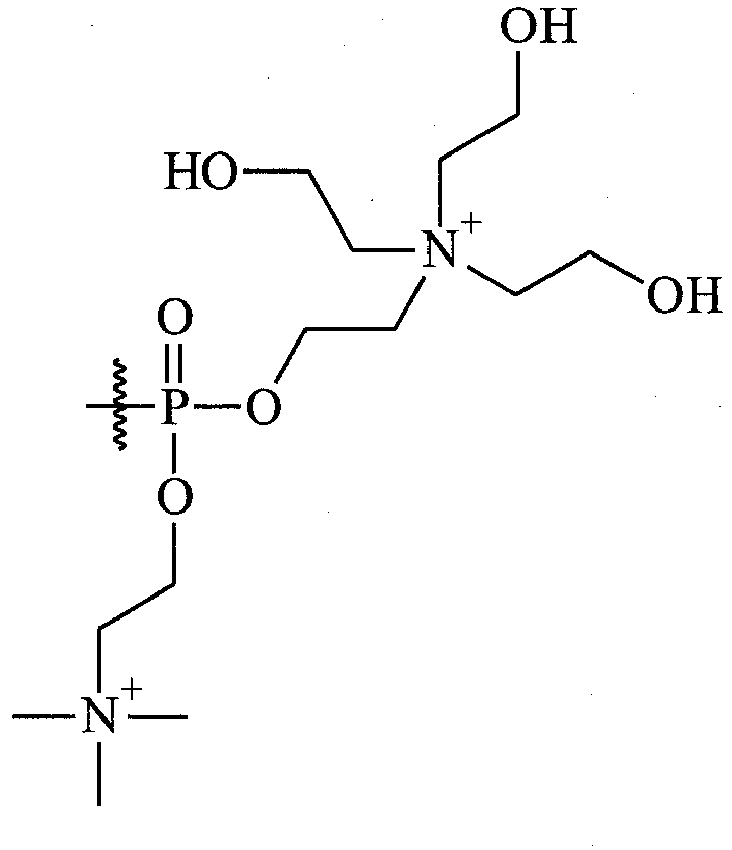


- Moieties may be, for example, and without limitation, subdivided into three groups: 1) amino acid based moieties; 2) polyethylene glycol based moieties; and 3) phosphate based moieties. In the Moieties Table 1 above, the first four moieties are amino acid based moieties, the fifth and sixth are polyethylene glycol based moieties and the remaining moieties are phosphate based moieties.
- The amino acid side chains of naturally occurring amino acids (as often denoted herein using "(aa)") are well known to a person of skill in the art and may be found in a variety of text books such as "Molecular Cell Biology" by James Darnell et al. Third Edition, published by Scientific American Books in 1995. Often the naturally occurring amino acids are represented by the formula (NH2)C(COOH)(H)(R), where the chemical groups in brackets are each bonded to the carbon not in brackets. R represents the side chains in this particular formula.
- Those skilled in the art will appreciate that the point of covalent attachment of the moiety to the compounds as described herein may be, for example, and without limitation, cleaved under specified conditions. Specified conditions may include, for example, and without limitation, in vivo enzymatic or non-enzymatic means. Cleavage of the moiety may occur, for example, and without limitation, spontaneously, or it may be catalyzed, induced by another agent, or a change in a physical parameter or environmental parameter, for example, an enzyme, light, acid, temperature or pH. The moiety may be, for example, and without limitation, a protecting group that acts to mask a functional group, a group that acts as a substrate for one or more active or passive transport mechanisms, or a group that acts to impart or enhance a property of the compound, for example, solubility, bioavailability or localization.
- In other particular embodiments of Formula I and Formula II above, the following compounds in Table 2 are provided:
TABLE 2 

Sponge Extract: Sponge Extract: PNG01-185-017-2 PNG01-185-017-5 

Sponge Extract: Sponge Extract: PNG01-185-017-6 PNG01-185-017-7 

Sponge Extract: Sponge Extract: PNG01-185-017-8 PNG01-185-017-9-2 PNG01-185-17-9-2 185-9-2 B2 

PNG01-185-017-9-1 PNG01-185-17-9-1 185-9-1 
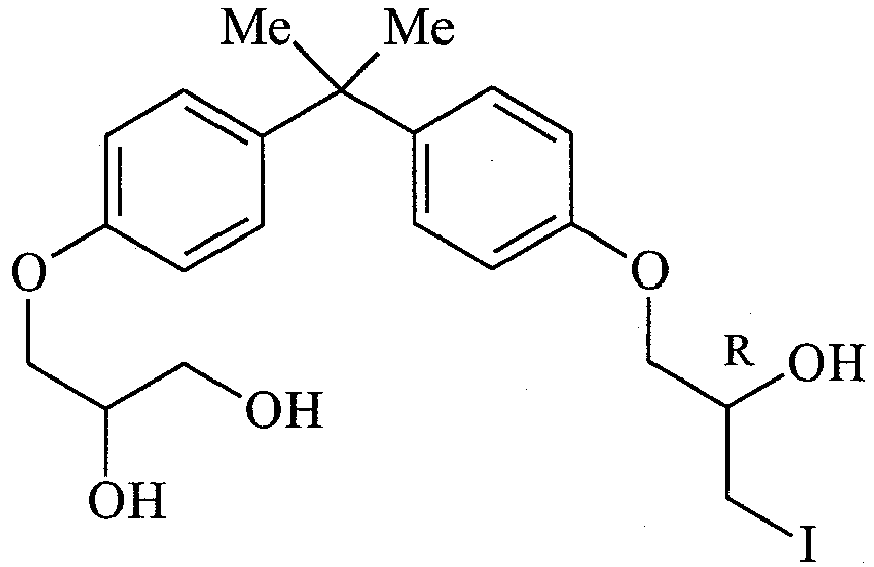
(R)-BADGE x HI x H2O (2-R) Isomers BADGE x HI x H2O 

BADGE x 2HCl BADGE.2HCl B3 

(R)-BADGE x 2HCl BADGE x 2 HI (2-R) isomers BADGE x 2HCl 

(R)-BADGE x 2HI BADGE x 2HBr (2-R) Isomers BADGE x 2HI 

Tri-Gly-BADGE x HCL x H2O 

BADGE x 2HF 


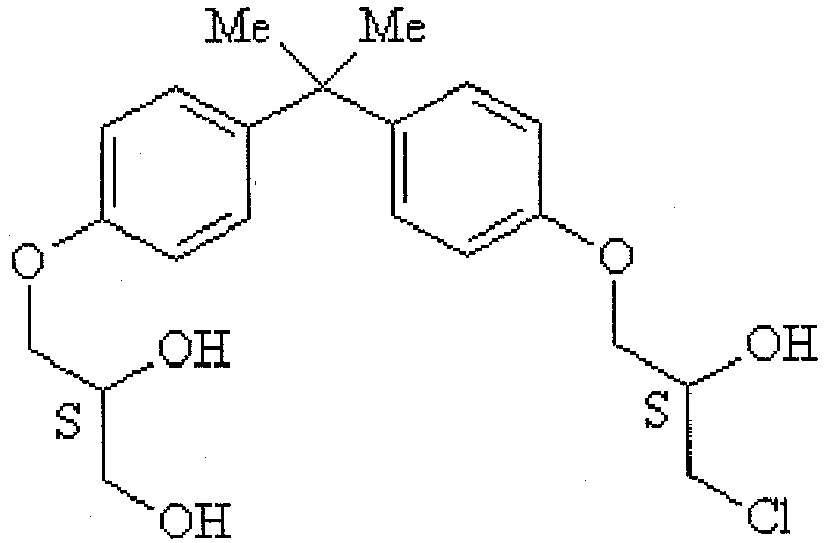


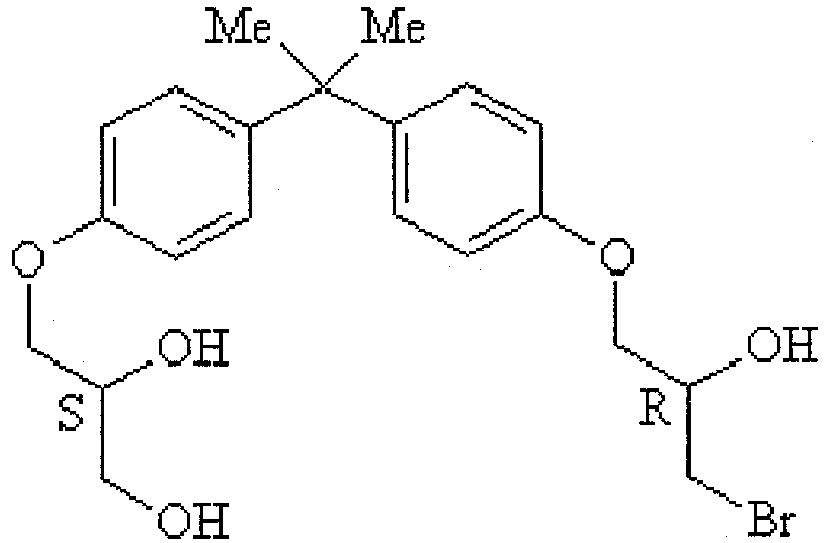
- Methods of preparing or synthesizing compounds of the present invention may also be understood by a person of skill in the art having reference to known chemical synthesis principles. For example, Auzou et al 1974 European Journal of Medicinal Chemistry 9(5), 548-554 describes suitable synthetic procedures that may be considered and suitably adapted for preparing compounds of Formula I or Formula II. Other references that may be helpful in the preparation of compounds of Formula I or Formula II include: Debasish Das, Jyh-Fu Lee and Soofin Cheng "Sulfonic acid functionalized mesoporous MCM-41 silica as a convenient catalyst for Bisphenol-A synthesis" Chemical Communications, (2001) 2178-2179;
US Patent 2571217 Davis, Orris L.; Knight, Horace S.; Skinner, John R. (Shell Development Co.) "Halohydrin ethers of phenols." (1951); and Rokicki, G.; Pawlicki, J.; Kuran, W. "Reactions of 4-chloromethyl-1,3-dioxolan-2-one with phenols as a new route to polyols and cyclic carbonates." Journal fuer Praktische Chemie (Leipzig) (1985) 327, 718-722. - The chemical preparation of compounds of Formula I and Formula II is described below in the Examples and by the following non-limiting exemplary synthetic scheme.

- In the above scheme R and R' may be, for example, and without limitation, independently selected from the group consisting of H, Me or alkyl.
- Compounds falling within the scope of the claims may be prepared by the following exemplary reaction.

- A person of skill in the art will be able to modify the synthetic approaches described herein, in combination with or not in combination with the isolation techniques described herein to prepare the Compounds of Formula I and Formula II.
- In some embodiments, compounds of Formula I or Formula II above may be used for systemic treatment of at least one indication selected from the group consisting of: prostate cancer, breast cancer, ovarian cancer, endometrial cancer, hair loss, acne, hirsutism, ovarian cysts, polycystic ovary disease, precocious puberty and age-related macular degeneration. In some embodiments compounds of Formula I or Formula II may be used in the preparation of a medicament or a composition for systemic treatment of an indication described herein. In some embodiments, methods of systemically treating any of the indications described herein are also provided.
- Compounds as described herein may be in the free form or in the form of a salt thereof. In some embodiment, compounds as described herein may be in the form of a pharmaceutically acceptable salt, which are known in the art (Berge et al., J. Pharm. Sci. 1977, 66, 1). Pharmaceutically acceptable salt as used herein includes, for example, salts that have the desired pharmacological activity of the parent compound (salts which retain the biological effectiveness and/or properties of the parent compound and which are not biologically and/or otherwise undesirable). Compounds as described herein having one or more functional groups capable of forming a salt may be, for example, formed as a pharmaceutically acceptable salt. Compounds containing one or more basic functional groups may be capable of forming a pharmaceutically acceptable salt with, for example, a pharmaceutically acceptable organic or inorganic acid. Pharmaceutically acceptable salts may be derived from, for example, and without limitation, acetic acid, adipic acid, alginic acid, aspartic acid, ascorbic acid, benzoic acid, benzenesulfonic acid, butyric acid, cinnamic acid, citric acid, camphoric acid, camphorsulfonic acid, cyclopentanepropionic acid, diethylacetic acid, digluconic acid, dodecylsulfonic acid, ethanesulfonic acid, formic acid, fumaric acid, glucoheptanoic acid, gluconic acid, glycerophosphoric acid, glycolic acid, hemisulfonic acid, heptanoic acid, hexanoic acid, hydrochloric acid, hydrobromic acid, hydriodic acid, 2-hydroxyethanesulfonic acid, isonicotinic acid, lactic acid, malic acid, maleic acid, malonic acid, mandelic acid, methanesulfonic acid, 2-napthalenesulfonic acid, naphthalenedisulphonic acid, p-toluenesulfonic acid, nicotinic acid, nitric acid, oxalic acid, pamoic acid, pectinic acid, 3-phenylpropionic acid, phosphoric acid, picric acid, pimelic acid, pivalic acid, propionic acid, pyruvic acid, salicylic acid, succinic acid, sulfuric acid, sulfamic acid, tartaric acid, thiocyanic acid or undecanoic acid. Compounds containing one or more acidic functional groups may be capable of forming pharmaceutically acceptable salts with a pharmaceutically acceptable base, for example, and without limitation, inorganic bases based on alkaline metals or alkaline earth metals or organic bases such as primary amine compounds, secondary amine compounds, tertiary amine compounds, quaternary amine compounds, substituted amines, naturally occurring substituted amines, cyclic amines or basic ion-exchange resins. Pharmaceutically acceptable salts may be derived from, for example, and without limitation, a hydroxide, carbonate, or bicarbonate of a pharmaceutically acceptable metal cation such as ammonium, sodium, potassium, lithium, calcium, magnesium, iron, zinc, copper, manganese or aluminum, ammonia, benzathine, meglumine, methylamine, dimethylamine, trimethylamine, ethylamine, diethylamine, triethylamine, isopropylamine, tripropylamine, tributylamine, ethanolamine, diethanolamine, 2-dimethylaminoethanol, 2-diethylaminoethanol, dicyclohexylamine, lysine, arginine, histidine, caffeine, hydrabamine, choline, betaine, ethylenediamine, glucosamine, glucamine, methylglucamine, theobromine, purines, piperazine, piperidine, procaine, N-ethylpiperidine, theobromine, tetramethylammonium compounds, tetraethylammonium compounds, pyridine, N,N-dimethylaniline, N-methylpiperidine, morpholine, N-methylmorpholine, N-ethylmorpholine, dicyclohexylamine, dibenzylamine, N,N-dibenzylphenethylamine, 1-ephenamine, N,N'-dibenzylethylenediamine or polyamine resins. In some embodiments, compounds as described herein may contain both acidic and basic groups and may be in the form of inner salts or zwitterions, for example, and without limitation, betaines. Salts as described herein may be prepared by conventional processes known to a person skilled in the art, for example, and without limitation, by reacting the free form with an organic acid or inorganic acid or base, or by anion exchange or cation exchange from other salts. Those skilled in the art will appreciate that preparation of salts may occur in situ during isolation and purification of the compounds or preparation of salts may occur by separately reacting an isolated and purified compound.
- In some embodiments, compounds and all different forms thereof (e.g. free forms, salts, polymorphs, isomeric forms) as described herein may be in the solvent addition form, for example, solvates. Solvates contain either stoichiometric or non-stoichiometric amounts of a solvent in physical association the compound or salt thereof. The solvent may be, for example, and without limitation, a pharmaceutically acceptable solvent. For example, hydrates are formed when the solvent is water or alcoholates are formed when the solvent is an alcohol.
- In some embodiments, compounds and all different forms thereof (e.g. free forms, salts, solvates, isomeric forms) as described herein may include crystalline and amorphous forms, for example, polymorphs, pseudopolymorphs, conformational polymorphs, amorphous forms, or a combination thereof. Polymorphs include different crystal packing arrangements of the same elemental composition of a compound. Polymorphs usually have different X-ray diffraction patterns, infrared spectra, melting points, density, hardness, crystal shape, optical and electrical properties, stability and/or solubility. Those skilled in the art will appreciate that various factors including recrystallization solvent, rate of crystallization and storage temperature may cause a single crystal form to dominate.
- In some embodiments, compounds and all different forms thereof (e.g. free forms, salts, solvates, polymorphs) as described herein include isomers such as geometrical isomers, optical isomers based on asymmetric carbon, stereoisomers, tautomers, individual enantiomers, individual diastereomers, racemates, diastereomeric mixtures and combinations thereof, and are not limited by the description of the formula illustrated for the sake of convenience.
- In some embodiments, pharmaceutical compositions in accordance with this invention may comprise a salt of such a compound, preferably a pharmaceutically or physiologically acceptable salt. Pharmaceutical preparations will typically comprise one or more carriers, excipients or diluents acceptable for the mode of administration of the preparation, be it by injection, inhalation, topical administration, lavage, or other modes suitable for the selected treatment. Suitable carriers, excipients or diluents are those known in the art for use in such modes of administration.
- Suitable pharmaceutical compositions may be formulated by means known in the art and their mode of administration and dose determined by the skilled practitioner. For parenteral administration, a compound may be dissolved in sterile water or saline or a pharmaceutically acceptable vehicle used for administration of non-water soluble compounds such as those used for vitamin K. For enteral administration, the compound may be administered in a tablet, capsule or dissolved in liquid form. The tablet or capsule may be enteric coated, or in a formulation for sustained release. Many suitable formulations are known, including, polymeric or protein microparticles encapsulating a compound to be released, ointments, pastes, gels, hydrogels, or solutions which can be used topically or locally to administer a compound. A sustained release patch or implant may be employed to provide release over a prolonged period of time. Many techniques known to one of skill in the art are described in Remington: the Science & Practice of Pharmacy by Alfonso Gennaro, 20th ed., Lippencott Williams & Wilkins, (2000). Formulations for parenteral administration may, for example, contain excipients, polyalkylene glycols such as polyethylene glycol, oils of vegetable origin, or hydrogenated naphthalenes. Biocompatible, biodegradable lactide polymer, lactide/glycolide copolymer, or polyoxyethylene-polyoxypropylene copolymers may be used to control the release of the compounds. Other potentially useful parenteral delivery systems for modulatory compounds include ethylene-vinyl acetate copolymer particles, osmotic pumps, implantable infusion systems, and liposomes. Formulations for inhalation may contain excipients, for example, lactose, or may be aqueous solutions containing, for example, polyoxyethylene-9-lauryl ether, glycocholate and deoxycholate, or may be oily solutions for administration in the form of nasal drops, or as a gel.
- Compounds or pharmaceutical compositions in accordance with this invention or for use in this invention may be administered by means of a medical device or appliance such as an implant, graft, prosthesis, stent, etc. Also, implants may be devised which are intended to contain and release such compounds or compositions. An example would be an implant made of a polymeric material adapted to release the compound over a period of time.
- An "effective amount" of a pharmaceutical composition according to the invention includes a therapeutically effective amount or a prophylactically effective amount. A "therapeutically effective amount" refers to an amount effective, at dosages and for periods of time necessary, to achieve the desired therapeutic result, such as reduced tumor size, increased life span or increased life expectancy. A therapeutically effective amount of a compound may vary according to factors such as the disease state, age, sex, and weight of the subject, and the ability of the compound to elicit a desired response in the subject. Dosage regimens may be adjusted to provide the optimum therapeutic response. A therapeutically effective amount is also one in which any toxic or detrimental effects of the compound are outweighed by the therapeutically beneficial effects. A "prophylactically effective amount" refers to an amount effective, at dosages and for periods of time necessary, to achieve the desired prophylactic result, such as smaller tumors, increased life span, increased life expectancy or prevention of the progression of prostate cancer to an androgen-independent form. Typically, a prophylactic dose is used in subjects prior to or at an earlier stage of disease, so that a prophylactically effective amount may be less than a therapeutically effective amount.
- It is to be noted that dosage values may vary with the severity of the condition to be alleviated. For any particular subject, specific dosage regimens may be adjusted over time according to the individual need and the professional judgement of the person administering or supervising the administration of the compositions. Dosage ranges set forth herein are exemplary only and do not limit the dosage ranges that may be selected by medical practitioners. The amount of active compound(s) in the composition may vary according to factors such as the disease state, age, sex, and weight of the subject. Dosage regimens may be adjusted to provide the optimum therapeutic response. For example, a single bolus may be administered, several divided doses may be administered over time or the dose may be proportionally reduced or increased as indicated by the exigencies of the therapeutic situation. It may be advantageous to formulate parenteral compositions in dosage unit form for ease of administration and uniformity of dosage.
- In some embodiments, compounds and all different forms thereof as described herein may be used, for example, and without limitation, in combination with other treatment methods for at least one indication selected from the group consisting of: prostate cancer, breast cancer, ovarian cancer, endometrial cancer, hair loss, acne, hirsutism, ovarian cysts, polycystic ovary disease, precocious puberty and age-related macular degeneration. For example, compounds and all their different forms as described herein may be used as neoadjuvant (prior), adjunctive (during), and/or adjuvant (after) therapy with surgery, radiation (brachytherapy or external beam), or other therapies (eg. HIFU).
- In general, compounds of the invention should be used without causing substantial toxicity. Toxicity of the compounds of the invention can be determined using standard techniques, for example, by testing in cell cultures or experimental animals and determining the therapeutic index, i.e., the ratio between the LD50 (the dose lethal to 50% of the population) and the LD100 (the dose lethal to 100% of the population). In some circumstances however, such as in severe disease conditions, it may be necessary to administer substantial excesses of the compositions. Some compounds of this invention may be toxic at some concentrations. Titration studies may be used to determine toxic and non-toxic concentrations. Toxicity may be evaluated by examining a particular compound's or composition's specificity across cell lines using PC3 cells as a negative control that do not express AR. Animal studies may be used to provide an indication if the compound has any effects on other tissues. Systemic therapy that targets the AR will not likely cause major problems to other tissues since antiandrogens and androgen insensitivity syndrome are not fatal.
- Compounds as described herein may be administered to a subject. As used herein, a "subject" may be a human, non-human primate, rat, mouse, cow, horse, pig, sheep, goat, dog, cat, etc. The subject may be suspected of having or at risk for having a cancer, such as prostate cancer, breast cancer, ovarian cancer or endometrial cancer, or suspected of having or at risk for having acne, hirsutism, alopecia, benign prostatic hyperplasia, ovarian cysts, polycystic ovary disease, precocious puberty, or age-related macular degeneration. Diagnostic methods for various cancers, such as prostate cancer, breast cancer, ovarian cancer or endometrial cancer, and diagnostic methods for acne, hirsutism, alopecia, benign prostatic hyperplasia, ovarian cysts, polycystic ovary disease, precocious puberty, or age-related macular degeneration and the clinical delineation of cancer, such as prostate cancer, breast cancer, ovarian cancer or endometrial cancer, diagnoses and the clinical delineation of acne, hirsutism, alopecia, benign prostatic hyperplasia, ovarian cysts, polycystic ovary disease, precocious puberty, or age-related macular degeneration are known to those of ordinary skill in the art
- Definitions used include ligand-dependent activation of the androgen receptor (AR) by androgens such as dihydrotestosterone (DHT) or the synthetic androgen (R1881) used for research purposes. Ligand-independent activation of the AR refers to transactivation of the AR in the absence of androgen (ligand) by, for example, stimulation of the cAMP-dependent protein kinase (PKA) pathway with forskolin (FSK). Some compounds and compositions of this invention may inhibit both FSK and R1881 induction of ARE-luciferase (ARE-luc) (See Example 1). Such compounds may block a mechanism that is common to both ligand-dependent and ligand-independent activation of the AR. This could involve any step in activation of the AR including dissociation of heatshock proteins, essential posttranslational modifications (e.g., acetylation, phosphorylation), nuclear translocation, protein-protein interactions, formation of the transcriptional complex, release of co-repressors, and/or increased degradation.
- Some compounds and compositions of this invention may inhibit R1881 only and may interfere with a mechanism specific to ligand-dependent activation (e.g., accessibility of the ligand binding domain (LBD) to androgen). Numerous disorders in addition to prostate cancer involve the androgen axis (e.g., acne, hirsutism, alopecia, benign prostatic hyperplasia) and compounds interfering with this mechanism may be used to treat such conditions.
- Some compounds and compositions of this invention may only inhibit FSK induction and may be specific inhibitors to ligand-independent activation of the AR. These compounds and compositions may interfere with the cascade of events that normally occur with FSK and/or PKA activity or any downstream effects that may play a role on the AR (e.g. FSK increases MAPK activity which has a potent effect on AR activity). Examples may include an inhibitor of cAMP and or PKA or other kinases.
- Some compounds and compositions of this invention may induce basal levels of activity of the AR (no androgen or stimulation of the PKA pathway).
- Some compounds and compositions of this invention may increase induction by R1881 or FSK. Such compounds and compositions may stimulate transcription or transactivation of the AR.
- Some compounds and compositions of this invention may inhibit activity of the androgen receptor N-terminal domain (AR-NTD). Interleukin-6 (IL-6) also causes ligand-independent activation of the AR in LNCaP cells and can be used in addition to FSK.
- Compounds and compositions of this invention may interact with the AR-NTD or with another protein required for transactivation of the AR-NTD.
- Various alternative embodiments and examples of the invention are described herein. These embodiments and examples are illustrative and should not be construed as limiting the scope of the invention.
- LNCaP cells were employed initially for all experiments because they are well-differentiated human prostate cancer cells in which ligand-independent activation of the AR by FSK has been characterized (Nazareth et al 1996 J. Biol. Chem. 271, 19900-19907; and Sadar 1999 J. Biol. Chem. 274, 7777-7783). LNCaP cells express endogenous AR and secrete prostate-specific antigen (PSA) (Horoszewicz et al 1983 Cancer Res. 43, 1809-1818). LNCaP cells can be grown either as monolayers in cell culture or as tumors in the well-characterized xenograft model that progresses to androgen independence in castrated hosts (Sato et al 1996 J. Steroid Biochem. Mol. Biol. 58, 139-146; Gleave et al 1991 Cancer Res. 51, 3753-3761; Sato et al 1997 Cancer Res. 57, 1584-1589; and Sadar et al 2002 Mol. Cancer Ther. 1(8), 629-637). PC3 human prostate cancer cells do not express functional AR (Kaighn et al 1978 Natl. Cancer Inst. Monogr. 49, 17-21) and were used to test specificity of compound for the AR. Small molecules that specifically target the AR-NTD should have no effect on PC3 cells. This means that they should not alter the proliferation of PC3 cells if they specifically block the AR to mediate their inhibitory effects. R1881 was employed since it is stable and avoids problems associated with the labile physiological ligand dihydrotestosterone (DHT). Reporter specificity may be determined using several alternative reporter gene constructs. Some well characterized ARE-driven reporter gene constructs that have been used extensively are the PSA (6.1 kb) enhance/promoter which contains several AREs and is highly inducible by androgens as well as by FSK (Ueda et al 2002 A J. Biol. Chem. 277, 7076-7085) and the ARR3-thymidine kinase (tk)-luciferase, which is an artificial reporter construct that contains three tandem repeats of the rat probasin ARE1 and ARE2 regions upstream of a luciferase reporter (Snoek et al 1996 J. Steroid Biochem. Mol. Biol. 59, 243-250). CMV-luc (no AREs and is constitutively active) was employed to determine that a compound does not have a general inhibitory effect on transcription.
- Some experiments involved the use of SCID mice. SCID mice were chosen because the human cell lines and transplantable tumors survive in immunocompromised animals and SCID mice show the best take rates. All procedures have been approved by the University of British Columbia Committee for Animal Ethics and are annually reviewed. In the event of an emergency where proper animal care can not be provided, animals are euthanized at the discretion of the veterinarians or Animal Care Team. Veterinarians are responsible for inspections and consultation. The signed Animal Care Certificate specifically states, "The Animal Care Committee has examined and approved the use of animals for the above experimental project or teaching course, and have been given an assurance that the animals involved will be cared for in accordance with the principles contained in Care of Experimental Animals - A Guide for Canada, published by the Canadian Council on Animal Care."
- Six to eight-week old male athymic SCID mice were inoculated subcutaneously in the flank region via a 27-gauge needle with a 150 µl suspension of LNCaP or PC3 human prostate cancer cells (1 x 10⁶ cells). The inoculations took place while the animal was under isofluorane anaesthesia. The tumor take rate is approximately 75%. Mice bearing tumors of 100 mm3 were randomly assigned to treatment groups. Castration was performed as described below. Tumor volume (formula: L x W x H x 0.5236) was measured in mice bearing LNCaP subcutaneous tumors that became palpable or visible and at least 40 mm3. The animals were monitored daily and tumors were measured every 5 days.
- Assessment of tumor volume (not to exceed 1000 mm3) was the criteria to determine termination of subcutaneous xenograft experiments.
- For routine histology, major organs and xenografts were harvested upon completion of the experiment and were fixed in 10% neutral buffered formalin and then embedded in paraffin. Fixed sections were cut and stained with H&E. To determine possible effects of compounds on the proliferation rates and apoptosis in xenografts, Ki-67 immunostaining and the TUNEL assay was performed. Ki-67 immunostaining used the MIB-1 monoclonal antibody at an IgG concentration of 0.5 µg/ml (1:50) on processed tissue sections. Levels of AR were determined by immunohistochemistry or Western blot analysis.
- Androgen withdrawal was completed by castration. Under isoflurane anaesthesia, a 5mm vertical incision was used to gently withdraw the epididymal fat pad, to which the testis were attached, and to remove the testis from body. The cord connecting the testis to the blood supply was ligated with a suture, then cut. The cord was then returned to the abdominal cavity. Surgical suture was used to close the incision. To relieve pain, buprenorphine (0.05mg/kg) was injected prior to surgery.
- All xenografts and major organs were retrieved for analyses. Retrieval was performed after sacrifice by cardiac arrest by CO2 gas and the xenografts or organs were removed for immunohistochemistry analysis.
- Animals were sacrificed by cardiac arrest by CO2 gas. This method is the policy set by the Animal Care Committee and is environmentally sensitive, effective, economic, and ethically approved.
- All reactions were performed in flame-dried round bottomed flasks. The flasks were fitted with rubber septa and reactions were conducted under a positive pressure of argon unless otherwise specified. Stainless steel syringes were used to transfer air- and moisture-sensitive liquids. Flash column chromatography was performed as described by Still et al. (Still, W. C., Kahn, M., Mitra, A., J. Org. Chem. 1978, 43, 2923) using 230-400 mesh silica gel. Thin-layer chromatography was performed using aluminium plates precoated with 0.25 mm 230-400 mesh silica gel impregnated with a fluorescent indicator (254 nm). Thin-layer chromatography plates were visualized by exposure to ultraviolet light and a solution of p-anisaldehyde (1% p-anisaldehyde, 2% H2SO4, 20% acetic acid and 77% ethanol) followed by heating (∼1 min) with a heating gun (∼250 °C). Organic solutions were concentrated on Büchi B-114 rotatory evaporators at ∼25 torr at 25-30 °C.
- Commercial reagents and solvents were used as received. All solvents used for extraction and chromatography were HPLC grade. Normal-phase Si gel Sep paks™ were purchased from Waters, Inc. Thin-layer chromatography plates were Kieselgel 60F254. All synthetic reagents were purchased from Sigma Aldrich Canada.
- Proton nuclear magnetic resonance (1H NMR) spectra were recorded at 25 °C using a
Bruker 400 with inverse probe andBruker 400 spectrometers, are reported in parts per million on the δ scale, and are referenced from the residual protium in the NMR solvent (CDCl3: δ 7.24 (CHCl3), DMSO-d 6: δ 2.50 (DMSO-d 5)). Data is reported as follows: chemical shift [multiplicity (s = singlet, d = doublet, dd = doublet of doublets, ddd = double doublet of doublets, dm = double multiplet, t = triplet, m = multiplet), coupling constant(s) in Hertz, integration]. Carbon-13 nuclear magnetic resonance (13C NMR) spectra were recorded with aBruker 400 spectrometer, are reported in parts per million on the δ scale, and are referenced from the carbon resonances of the solvent (CDCl3: δ 77.23, DMSO-d 6: δ 39.51). Data is reported as follows: chemical shift. Fluorine nuclear magnetic resonance (19F NMR) spectra were recorded at 25 °C using aBruker 300 spectrometer, are reported in parts per million on the δ scale. Data is reported as follows: chemical shift [multiplicity (td = triplet of doublets), coupling constant(s) in Hertz]. - Application of a number of screens was used to identify active compounds that inhibited the activity of the AR NTD. The initial screen was a cell-based assay comprising of LNCaP cells maintained in culture. The assay consists of activating the AR using both androgen (ligand-dependent) and forskolin (ligand-independent) and measuring the levels of secreted PSA by LNCaP cells in the presence and absence of crude extracts. PSA is an androgen-regulated gene that contains several well-characterized AREs. Androgen-independent increases in PSA gene expression occur in prostate cancer cells by a mechanism dependent upon the AR. PNG 01-185 extract was observed to block PSA secretion induced by both androgen and forskolin.
- To ensure that the inhibitory effects of PNG 01-185 extract on endogenous PSA protein was at the transcriptional level, reporter gene constructs were also examined. Activation of the endogenous AR was measured in LNCaP human prostate cancer cells by measuring androgen-responsive reporters that contain androgen response elements (AREs) such as the PSA-luciferase reporter gene construct or the ARR3-luciferase reporter. LNCaP cells maintained as monolayers were transfected with PSA-luciferase and were used to screen the crude extracts prepared from marine sponges as well as some selected commercial compounds. Measurement of both PSA-luc and ARR3-luc was carried out because PSA-luc is highly induced by androgen and in the absence of androgens induced by FSK. R1881 (1nM) was used to mediate ligand-dependent activation of the AR and concentrations of FSK (50µM) were used to mediate ligand-independent activation of the AR. PNG 01-185 was observed to block PSA-luciferase activity induced by both R1881 and FSK (
Figure 1 ). Controls included parallel experiments with cell lines that do not express AR and other reporters that do not contain AREs. - PNG 01-185 extract was fractionated according to the scheme shown in
Figure 2 to produce PNG 01-185-17. Each fraction of PNG 01-185-17 was re-tested on ARR3-luc activity andfractions Figure 3 ). These fractions were next tested for their ability to inhibit the AR NTD. LNCaP cells were co-transfected with the expression vector for Gal4DBD-AR1-558 and the complimentary 5XGal4UAS-luciferase reporter as shown inFigure 4 . Induction of this reporter by FSK is a measure of transactivation of the Gal4DBD-AR1-558 fusion protein (Sadar 1999 J. Biol. Chem. 274, 7777-7783). Extracts identified above were screened by such assays as well as some compounds purchased from commercial suppliers. R1881 does not induce such assays (binds to the ligand-binding domain (LBD) of the AR which is not present in the Gal4DBD-AR1-558 chimera) and therefore was not used except as a negative control. These studies showed that PNG 01-185-17-8 inhibited activation of the AR NTD. - The following in Table 3 are chemical structures for compounds from sponge extracts or commercially available compounds that showed activity using the above-described assays:
TABLE 3 

Sponge Extract: Sponge Extract: PNG01-185-017-2 PNG01-185-017-5 

Sponge Extract: Sponge Extract: PNG01-185-017-6 PNG01-185-017-7 

Sponge Extract: PNG01-185-017-9-2 Sponge Extract: PNG01-185-17-9-2 PNG01-185-017-8 185-9-2 B2 
Commercially Purchased Compound (Aldrich) PNG01-185-017-9-1 PNG01-185-17-9-1 185-9-1 - IC50s were determined for each hit that showed a dose response. Identified extracts were used to isolate a purified form of the compound from natural compounds library that mediated the inhibitory effect on transactivation of the AR as described in Example 2, followed by secondary screens described in Example 3.
- The following compounds in Table 4 showed no activity in the above-described assays.
TABLE 4 


- The structural resemblance of some of the active compounds to BADGE (Bisphenol A Diglycidic Ether) indicates that they are most likely of industrial origin. The collected sponge presumably bioaccumulated the compounds from the contaminated seawater. This was a fortuitous event because it is unlikely that these compounds would have been screened in the bioassays under any other circumstances.
- Purified active compound from the extracts described in Example 1 were isolated. Specimens of Geodia lindgreni (Lendenfeld, 1903) were collected by hand using SCUBA at a depth of 5 M from under rocks on a protected reef near Loloata Island, Papua New Guinea. The frozen sponge (890 g) was subsequently extracted exhaustively with MeOH and the crude extracts were observed to be active in the assays described above in Example 1. Bioassay guided fractionation of the extract by sequential application of Sephadex LH20, reversed-phase flash column chromatography and reversed-phase gradient HPLC gave purified samples of PNG01-185-017-2, -5, -6, -7 and -8 (
Figure 2 ). The structures have been elucidated by analysis of NMR and MS data and they are shown above in Example 1. - Bioassay guided fractionation of active extracts followed a standard protocol. Initially, the crude extract was suspended in water and sequentially extracted with hexanes, CH2Cl2, and EtOAc to generate four sub-fractions of differing polarity. The first chromatography carried out on the active fraction from this initial partition was a Sephadex LH20 chromatography using either pure methanol or a mixed solvent system as the eluent. Subsequent fractionations were carried out by open column flash silica-gel or flash reversed-phase chromatography, HPLC (normal-phase and/or reversed-phase), or centrifugal counter current chromatography (on an Ito Coil apparatus), etc. as the situation warranted. Structure elucidation of novel metabolites was achieved by spectroscopic analysis, using 1D and 2D NMR techniques and mass spectrometry, including a Bruker AV600 NMR spectrometer equipped with a cryoprobe and the
NANUC Varian 800 MHz NMR spectrometer in Edmonton, Alberta, Canada. Purified compounds were tested for activity using the screens described above in Example 1 (ARE-luciferase activities and NTD transactivation) and then used for secondary screens described in Example 3. - The compounds were validated by application of secondary screens. Purified compounds were tested for their ability to inhibit: transactivation of the androgen receptor N-terminal domain (AR NTD); other steroid receptors (specificity); endogenous expression of PSA mRNA; AR interaction on AREs; N/C interaction; and proliferation of prostate cancer cells in response to androgen.
- In the absence of serum and androgen, both forskolin (FSK), which stimulates PKA activity, and IL-6 increase PSA gene expression in prostate cancer cells by a mechanism involving transactivation of the AR NTD (Sadar, M.D., J. Biol. Chem. 274, 7777-7783 (1999); Ueda, T., Bruchovsky, N., Sadar, M.D., J. Biol. Chem. 277, 7076-7085 (2002); Ueda, T., Mawji, N.R., Bruchovsky, N., Sadar, M.D., J. Biol. Chem. 277, 38087-38094 (2002 B); Quayle SN, Mawji NR, Wang J, Sadar M.D., Proc Natl Acad Sci USA. 2007 Jan 23;104(4): 1331-6.) The ability of 185-9-2 to inhibit transactivation of the AR NTD was tested by cloning amino acids 1-558 of the human AR NTD into the C-terminus of Gal4DBD. Expression vectors for these chimeric proteins were cotransfected into LNCaP cells with a reporter gene containing the Gal4-binding site as cis-acting elements (p5xGal4UAS-TATA-luciferase). Cells were pretreated with bicalutamide (BIC, 10µM) or 185-9-2 (5ug/ml = 12 µM)) before the addition of FSK or IL-6. Controls included bicalutamide which does not affect such assays because it binds to the LBD of the AR which is not present in the Gal4DBD-AR1-558 chimera. 185-9-2 was observed to reduce both FSK-induced and IL-6-induced transactivation of the AR NTD to baseline levels (
Figure 5 ). 185-9-2 was observed to have an IC50 of ∼6.6µM for inhibition of transactivation of the AR NTD. - Sequence similarities of amino acids in the AR with related human steroid receptors PR and glucocorticoid receptor (GR) are significant in some domains such as the DBD. The AR NTD shares less than 15% homology with the PR and GR, but these receptors interact with some of the same proteins (eg., SRC-1 and CBP). Therefore, reporter gene assays were used to determine if candidate compounds that block AR activity have any effect on GR and PR transcriptional activity. Cells were co-transfected with expression plasmids for full-length hGR, PRβ and the relative reporter (i.e., pGR-Luc or PRE-E1b-Luc reporters). Cells were then treated with ethanol vehicle, dexamethasone (GR), 4-pregnene-3,20 dione (progesterone) (PR) followed by measurement of luciferase activity. 185-9-2 inhibited AR transcriptional activity, but did NOT inhibit PRE-luciferase or GRE-luciferase activities in response to ligand (
Figure 6 ). In contrast, bicalutamide (10µM) inhibited the transcriptional activity of PR. Some antiandrogens currently used in the clinic have progestational and glucocorticoidal activities. In adult males, the role of the PR activity is unclear. 185-9-2 does not inhibit the transactivation of other steroid receptors. These studies also provide evidence that 185-9-2 does not have non-specific and general effects on transcription or translation since it did not inhibit induction of these luciferase reporters in response to their cognant ligands. Since 185-9-2 blocks PSA-luciferase reporter gene activity that contains several AREs and is inducible by androgens and FSK supports that its inhibitory effects are at the level of transcription. These studies suggest that 185-9-2 is specific to the AR implying there should be fewer side effects from systemic delivery as opposed to if other steroid receptors are affected. - Induction of PSA mRNA by both R1881 (ligand-dependent) and FSK (ligand-independent) in LNCaP cells is dependent upon AR (Sadar, M.D., J. Biol. Chem. 274, 7777-7783 (1999); Wang G, Jones SJ, Marra MA, Sadar MD, Oncogene 2006;25:7311-23.). To test whether the compounds have an effect on endogenous gene expression, the levels of PSA mRNA in LNCaP cells exposed to R1881 were measured. LNCaP cells (in serum-free and phenol-red free media) were incubated with compounds for 1 hour before the addition of R1881 (1 nM) for an additional 16 hours before harvesting and isolating total RNA. Levels of mRNA were measured using QPCR. Levels of PSA mRNA were normalized to levels of GAPDH mRNA. 185-9-2 was observed to block endogenous PSA mRNA induction by R1881 to almost baseline levels (
Figure 7 ). - Chromatin immunoprecipitation (ChIP) was used to assess if 185-9-2 prevented AR binding to the endogenous AREs in the enhancer region of the PSA gene in the physiological context of chromatin structure. The AR shows constitutive occupancy on the PSA promoter ARE, while the enhancer ARE has inducible occupancy in response to androgen (Jia L, Coetzee GA., Cancer Res. 2005 ). The occupancy of AR on these regulatory regions peaks at 16 hr of androgen treatment (Jia L, Choong CS, Ricciardelli C, Kim J, Tilley WD, Coetzee GA., Cancer Res. 2004 ; Louie MC, Yang HQ, Ma AH, Xu W, Zou JX, Kung HJ, Chen HW., Proc Natl Acad Sci USA. 2003 ; Wang Q, Carroll JS, Brown M., Mol Cell. 2005 .). LNCaP cells were treated for a short (3 h) or optimal (16 h) period of time with DHT plus or minus 185-9-2, prior to cross-linking with 1% formaldehyde and harvesting cells. The cells were lysed, sonicated, and the extracts used for immunoprecipitation with anti-AR antibody. 185-9-2 inhibited AR interaction with the ARE on the PSA enhancer in LNCaP cells in response to androgen (
Figure 8A ). The decrease in AR interaction with ARE was not due to decreased levels of AR protein. Western blot analysis of AR protein from whole lysates prepared from LNCaP cells harvested at these same time points, revealed that 185-9-2 does NOT decrease levels of AR protein (Figure 8B ). Long term incubation of LNCaP cells with 185-9-2 also did not reduce levels of AR protein (Figure 9 ). Thus, it is believed that 185-9-2 does not inhibit AR transcriptional activity by reducing levels of AR protein. This suggests that the mechanism of action of 185-9-2 is unique from other compounds such as AR mRNA hammerhead ribozyme, AR siRNA, pyranocoumarin, calpain, phenethyl isothiocyanate, fulvestrant, decursin, LAQ824, and baicalein that decrease levels of AR protein and are being explored in other laboratories. - Another possible mechanism by which any of these inhibitors may decrease transactivation of the AR could involve prevention of nuclear translocation of AR protein. In the absence of both androgen or stimulation by alternative pathways, AR is primarily cytoplasmic. Cellular fractionation and fluorescent microscopy (
Figure 10A,B ) revealed that 185-9-2 did not cause nuclear translocation of the AR on its own in the absence of androgen, nor did it prevent nuclear translocation of AR protein in response to androgen (dihydrotestsosterone, DHT). - Ligand-dependent activity of the AR requires interaction between the amino (N) and carboxy (C) termini for antiparallel dimer formation (He B, Kemppainen JA, Voegel JJ, Gronemeyer H, Wilson EM., J Biol Chem. 1999, 274(52):37219-25.). Antiandrogens such as bicalutamide, flutamide and cyproterone acetate do not stimulate this interaction on their own, and each inhibits N/C interaction induced by androgen (Wong, C. I., Zhou, Z. X., Sar, M., and Wilson, E. M. (1993) J. Biol. Chem. 268, 19004-19012; Langley, E., Zhou, Z. X., and Wilson, E. M. (1995) J. Biol. Chem. 270, 29983-29990; Kemppainen, J. A., Langley, E., Wong, C. I., Bobseine, K., Kelce, W. R., and Wilson, E. M. (1999) Mol. Endocrinol. 13, 440-454; Masiello D, Cheng S, Bubley GJ, Lu ML, Balk SP. (2002) J. Biol. Chem., 277, 29, 26321-26326). The mammalian two-hybrid system was used to measure this interaction. CV1 cells were cotransfected with the expression vector for a fusion protein of amino acids 1-565 of the AR NTD fused to VP16 at the N-terminus (VP16-ARTAD, the N terminus), the expression vector for the DBD of Gal4 fused to the LBD of the AR (amino acids 628-919; Gal4-ARLBD; the C terminus), and the Gal4-luciferase reporter (Masiello D, Cheng S, Bubley GJ, Lu ML, Balk SP. (2002) J. Biol. Chem., 277, 29, 26321-26326). There was no detectable interaction between the VP16-ARTAD and Gal4-ARLBD in the absence of androgen (
Figure 11 ). Androgen stimulated this interaction as measured by increased luciferase activity which was blocked by bicalutamide (see also, for example, Masiello D, Cheng S, Bubley GJ, Lu ML, Balk SP. (2002) J. Biol. Chem., 277, 29, 26321-26326). Importantly, 185-9-2 was observed to inhibit androgen-stimulated N/C interaction (comparecolumns 6 and 2). Thus, it is believed that 185-9-2 inhibits the transcriptional activity of the AR by preventing N/C interaction. - The prostate gland is an androgen-dependent organ where androgens are the predominant mitogenic stimulus (Isaacs JT, Scott WW, Coffey DS., Prog Clin Biol Res. 1979;33:133-44). This dependency on androgens provides the underlying rationale for treating prostate cancer with chemical or surgical castration. Androgen (0.1 nM) stimulates the proliferation of LNCaP cells. To test whether 185-9-2 interference with AR AF-1 function reduces androgen-dependent proliferation of LNCaP cells, similar to what is observed for antiandrogens used clinically, LNCaP cells were pretreated for 1h with bicalutamide (10 µM, positive control) or 185-9-2 (5 µg/ml) prior to addition of 0.1 nM R1881. BrdU incorporation was measured 4 days later to indicate changes in proliferation in response to androgen (
Figure 12 ). R1881 (0.1nM) increased proliferation over control (vehicle for R1881 and small molecules). 185-9-2 was observed to be as effective as bicalutamide in blocking androgen-induced proliferation. 185-9-2 was observed not to block proliferation of PC3 human prostate cancer cells (Figure 13 , p>0.05) that do not express functional AR and thus do not rely on the AR for growth and survival (Kaighn et al 1978 Natl. Cancer Inst. Monogr. 49, 17-21). - The subcutaneous xenograft models were used to test whether the small molecules that inhibit activation of the androgen receptor in vitro have any effect on these tumors. PNG01-185-017-9-2 was tested in vivo using the LNCaP and PC3 subcutaneous xenograft models. In vivo experiments were done to provide information relevant to toxicity, the requirement for endogenous expression of AR, and whether PNG01-185-017-9-2 had an effect on tumor growth and progression to androgen independence. Tumor volume was monitored in both xenograft models.
- LNCaP human prostate cancer cells express endogenous androgen receptor (AR) and prostate-specific antigen (PSA), and progress to androgen independence in castrated hosts. LNCaP cells (106/ml) were implanted subcutaneously into NOD-SCID male mice that were at least 8 weeks in age. The cells were suspended in 75 µl of RPMI medium 1640 (5% FBS) with 75 µl of Matrigel and injected into the flank region of the host under anesthesia. The animals were castrated when the tumors were approximately 100 mm3 (mean = 131.1 ± 24.9 mm3; n=19) and randomized into two groups. One week after castration the animals were treated every 5 days with an intratumoral (i.t.) dose of 20mg/kg body weight of 185-9-2 or matching volume of vehicle (control, DMSO). Animals were injected with 185-9-2 over a period of 25 days and harvested 5 days after the last injection. A total of five doses were given to the animal. Tumor volume and body weight were measured every 5 days. 185-9-2 was observed to significantly reduce the tumors, even after the first injection (
Figure 14 ). At the duration of the experiment the 185-9-2-treated tumors were 35.4 ± 15.7 mm3, while vehicle-treated tumors continued to grow and were 435.6 ± 334.9 mm3. Thus 185-9-2 was observed to reduce the tumor volume and did not just slow the growth. This suggests 185-9-2 may be curative for androgen-independent prostate cancer. I.T delivery of the related compound, racemic BADGE.2HCl (B3), was also observed to reduce tumor volume from 109.6 ± 17.4 mm3 to 79.0 ± 63.6 mm3 compared to I.T. delivery of DMSO which continued to grow (starting at 105.2 ± 15.1 mm3 to 256.6 ± 73.4 mm3) following the same treatment regime as for 185-9-2 (Figure 15A ). Serum PSA measurements correlated with tumor volume data (serum PSA data not shown). - Importantly, i.v. delivery by tail vein injections every other day (50 mg/kg body weight) showed a similar rate of cytoreduction of tumors (
Figure 15A ). Within just 2 weeks, i.v. injection of 185-9-2 was observed to reduce tumors from 105.6±12.0 mm3 to 64.3±29.6 mm3, while tumors were 187.9±42.8 mm3 in animals receiving i.v. injection of DMSO. These promising data emphasize that systemic delivery is effective in reducing androgen-independent prostate cancer. Immunohistochemistry (IHC) using a marker for apoptosis (TUNEL) and proliferation (Ki67) shows that intravenous delivery of 185-9-2 increased apoptosis and reduced proliferation (Figure 15 B) consistent with cytoreduction of the tumors. IHC data was prepared by a commercial lab that was blinded to treatments. 185-9-2 was observed not to cause general toxicity to animals indicated by no change in animal behavior or body weight (Figure. 14C and15C ). Pathology review of sections of lung, heart, liver, spleen, and kidney harvested from mice receiving 185-9-2 or DMSO by i.v. delivery showed no signs of toxicity (Figure 16 ). - IHC (
Figure 17A ) and western blot analysis (Figure 17B ) provide evidence that I.V. or I.T delivery of 185-9-2 did not decrease levels of AR protein in xenografts compared to levels of AR protein in vehicle-treated xenografts. Levels ofcytokeratin 18 were measured as an indication of amount of epithelial cells in the xenograft samples. - Angiogenesis in prostate cancer is predominantly dependent upon vascular endothelial growth factor (VEGF). Testosterone is a potent inducer of VEGF in the prostate (Häggström et al 1999 J Urol. 161, 1620-1625) and re-expression of VEGF in androgen independent tumours is consistent with the re-expression of androgen-regulated genes (Gregory et al 1998 Cancer Res. 58, 5718-5724). Expression of VEGF is associated with androgen independence (Mitsiades et al 2001 Expert Opin Investig Drugs. 10, 1099-1115) and aggressive metastatic disease (Harper et al 1998 J Pathol. 186, 169-177; Balbay et al 1999 Clin Cancer Res. 5, 783-789; Melnyk et al 1999 J Urol. 161, 960-963). Staining of the harvested tumors for VEGF reveal that PNG01-185-017-9-2 inhibited the expression of VEGF (
Figure 18 ). - The PC3 xenograft model was employed to give an indication of whether endogenous AR must be expressed for the compounds to reduce tumor burden. PC3 are human prostate cancer cells that do not express functional AR and should therefore not respond to therapy with these small molecules that have been selected for their specificity in blocking transactivation of the AR-NTD. PC3 cells were implanted subcutaneously into NOD-SCID male mice. The animals were randomized into two groups when the tumors were approximately 100 mm3 (n=9 and 10; mean tumor volume = 112.1 ± 19.7 mm3). Animals were treated every 5 days with a subcutaneous dose of 20mg/kg body weight of PNG01-185-017-9-2 or matching volume of vehicle (control, DMSO). Tumor volume and body weight were measured every 5 days. In contrast to LNCaP xenografts, PNG01-185-017-9-2 did not reduce tumors but did slightly slow the growth of PC3 xenografts (
Figure 19A, B ). Consistent with previous experiments shown here, no toxicity was observed as indicated by animal behavior and measured by body weight over the course of the treatments (Figure 19C ). - To improve the delivery of 185-9-2, a glycine ester derivative of the BADGE.HCL.H2O (
Figure 20A ) was made. It is freely water soluble. This compound was submitted for cell-based testing and was observed to inhibit transactivation of the AR NTD induced by interleukin-6 (IL-6) (Figure 20B , comparelane 2 with lane 4). - The following Table 5 includes experimental data relating to the compounds shown.
TABLE 5 COMPOUND EXPERIMENTAL DATA 
7% inhibition of Fsk activation of Gal4ARN at 20µM 33% inhibition of R1881 activation of p6.1luc at 20µM and 20% at 12.5µM (R)-BADGE x HI x H2O (2-R) BADGE x HI x H2O 
79% inhibition Fsk activation of gal4ARN at 12.5µM 69% inhibition of R1881 activation p6.1luc at 12.5µM Racemic BADGE x 2HCl 63% inhibition of R1881 activation of p6.1luc at 12.5µM 
88% inhibition of Fsk activation of GalARN at 12.5µM 34.8% inhibition of R1881 activation of p6.1luc (R)-BADGE x 2HCl 55% inhibition of 12.5µM R1881 activation of p6.1luc at 12.5µM (2-R) isomers BADGE x 2HCl 
33% inhibition of Fsk activation of Gal4ARN at 20µM 35% inhibition of R1881 activation of p6.1luc at 12.5µM Racemic BADGE x 2 HI 33% inhibition of R1881 activation of p6.1luc at 12.5µM 
42% inhibition of R1881 activation of p6.1luc at 12.5µM 29% inhibition of R1881 activation of p6.1luc at 12.5µM (R)-BADGE x 2HI (2-R) Isomers BADGE x 2HI 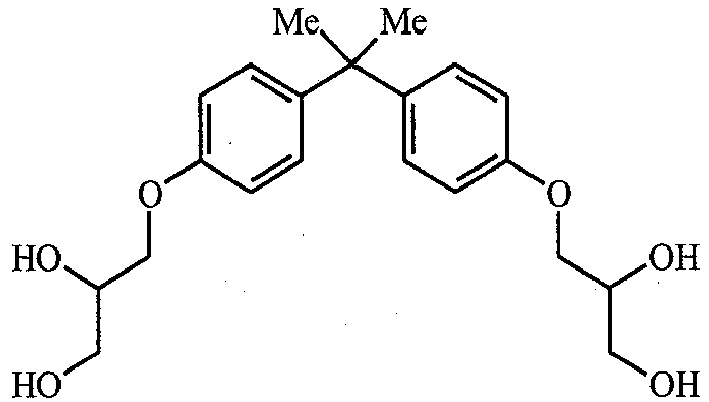
10% inhibition of R1881 activation of ARR3luc at 50µM Commercially Purchased Compound (Aldrich) PNG01-185-017-9-1 PNG01-185-17-9-1 185-9-1 -

- NaH as a 60% dispersion in mineral oil (96 mg, 2.40 mmol, 2.2 equiv) was suspended in anhydrous dimethyl formamide (5 mL) under argon atmosphere. The mixture was cooled to 0 °C and bisphenol A (250 mg, 1.09 mmol, 1 equiv) was added. After 15 min, (R)-epichlorohydrin (214 µL, 2.73 mmol, 2.5 equiv, 99% ee) was added via syringe and the mixture was allowed to react at room temperature for 7 h. Then, the solution was quenched with deionized water (∼ 3 mL) and the mixture was extracted with ethyl acetate (3 x 3 mL). The organic layer was washed with deionized water (2 mL), was dried over anhydrous magnesium sulfate, was filtered, and was concentrated under reduced pressure. The resulting residue was purified by flash column chromatography on silica gel (eluent: dichloromethane and 2% methanol in dichloromethane) to provide (R)-BAGE (67 mg, 22%) as a white foamy residue.
1H NMR (400 MHz, DMSO-d 6): δ 9.13 (s, 1H), 7.09 (d, J= 8.8, 2H), 6.97 (d, J= 8.4, 2H), 6.83 (d, J= 8.8, 2H), 6.63 (d, J = 8.8, 2H), 4.25 (dd, J= 11.2, 2.8, 1H), 3.78 (dd, J= 11.2, 6.4, 1H), 3.29 (m, 1H), 2.82 (t, J= 4.8, 1H), 2.68 (dd, J = 4.8, 2.4, 1H), 1.54 (s, 6H). 13C NMR (100 MHz, DMSO-d 6): δ 156.5, 155.6, 143.8, 141.3, 128.0, 127.9, 115.2, 114.4, 69.5, 50.4, 44.4, 41.7, 31.4. TLC (5% methanol in dichloromethane), Rf: 0.45 (UV, p-anisaldehyde). -

- To a stirred solution of (R)-BAGE (13 mg, 0.045 mmol, 1 equiv) in anhydrous dimethyl formamide (0.3 mL) at rt was added K2CO3 (6 mg, 0.045 mmol, 1 equiv) and racemic glycidol (9 µL, 0.135 mmol, 3 equiv). After stirring for 6h at 60 °C, deionized water (0.2 mL) was added to the resulting orange-brown solution. The mixture was extracted with ethyl acetate (3 x 1 mL). The organic layer was washed with deionized water (2 mL), was dried over anhydrous magnesium sulfate, was filtered, and was concentrated under reduced pressure. The resulting residue was purified by flash column chromatography on silica gel Sep pak 2 g (eluent: dichloromethane and 5% methanol in dichloromethane) to provide (R)-BADGE x H2O (10.3 mg, 63%) as a colourless oil.
1H NMR (400 MHz, DMSO-d 6): δ 7.08 (dd, J= 8.0, 5.2, 4H), 6.83 (dd, J= 10.8, 8, 4H), 4.89 (d, J = 5.2, 1H), 4.62 (t, J = 5.6, 1H), 4.26 (dd, J = 11.6, 2.8, 1H), 3.93 (dd, J = 9.6, 4.0, 1H), 3.78 (m, 3H), 3.42 (t, J = 5.6, 2H), 3.29 (m, 1H), 2.82 (t, J = 4.8, 1H), 2.68 (dd, J = 4.8,2.4 J = 11.6, 2.8, 1H), 1.57 (s, 6H). TLC (5% methanol in dichloromethane), Rf: 0.36 (UV, p-anisaldehyde). -

- To a solution of (R)-BADGE x H2O (10 mg, 0.029 mmol, 1 equiv) in acetonitrile (0.5 mL) was added CeCl3·7H2O (21 mg, 0.057 mmol, 2 equiv) and NaI (9 mg, 0.057 mmol, 2 equiv). After stirring for 6 h at rt, the resulting yellow suspension was concentrated under reduced pressure. The reaction mixture was dissolved with dichloromethane (2 mL) and washed with H2O (3 x 0.5 mL), the organic layer was dried over anhydrous MgSO4 and the solvent was removed under reduced pressure. The resulting residue was purified by flash column chromatography on silica gel Sep pak 2 g (eluent: dichloromethane and 10% methanol in dichloromethane) to provide (R)-BADGE x HI x H2O (9 mg, 67%) as a colourless foam.
1H NMR (400 MHz, DMSO-d 6): δ 7.09 (m, 4H), 6.81 (m, 4H), 5.52 (d, J= 4.8, 1H), 4.86 (d, J= 4.8,1H), 4.59 (t, J= 5.6,1H), 3.88 (m, 3H), 3.75 (m, 3H), 3.40 (m, 3H), 3.31 (m, 1H), 1.57 (s, 6H). 13C NMR (100 MHz, DMSO-d 6): δ 157.1, 156.7, 143.4, 143.0, 128.0, 127.9, 114.5, 114.4, 71.4, 70.6, 70.1, 68.6, 63.4, 41.8, 31.3, 12.7. TLC (5% methanol in dichloromethane), Rf: 0.30 (UV, p-anisaldehyde). -

- A round-bottomed flask was charged sequentially with NaH (200 mg, 4.80 mmol, 2.2 equiv) and bisphenol A (500 mg, 2.18 mmol, 1 equiv), and the contents were placed under an atmosphere of argon. Anhydrous dimethyl formamide (5 mL) was introduced via syringe and the resulting mixture was stirred at room temperature. After 15 min, racemic epichlorohydrin (700 µL, 8.96 mmol, 4.1 equiv) was added via syringe and the mixture was allowed to react at room temperature for 18 h. Then, the solution was quenched with deionized water (∼ 1 mL) and the mixture was extracted with ethyl acetate (3 x 4 mL). The organic layer was washed with deionized water (2 mL), was dried over anhydrous magnesium sulfate, was filtered, and was concentrated under reduced pressure. The resulting residue was purified by flash column chromatography on silica gel (eluent: dichloromethane) to provide racemic BADGE (536 mg, 72%) as a white foamy residue. 1H NMR (400 MHz, DMSO-d 6): δ 7.10 (d, J = 8.8, 4H), 6.84 (d, J = 8.8, 4H), 4.25 (dd, J = 11.6, 2.8, 2H), 3.78 (dd, J = 11.2, 6.4, 2H), 3.29 (m, 2H), 2.81 (t, J = 4.8, 2H), 2.68 (m, 2H), 1.60 (s, 6H). 13C NMR (100 MHz, DMSO-d 6): δ 156.6, 143.5, 128.0, 114.5, 69.5, 50.3, 44.4, 41.8, 31.3. TLC (5% methanol in dichloromethane), Rf: 0.77 (UV, p-anisaldehyde).
-

- Same procedure as previously described for racemic BADGE, but using (R)-epichlorohydrin.
-

- To a solution of racemic BADGE (95 mg, 0.279 mmol, 1 equiv) in acetonitrile (1.0 mL) was added CeCl3·7H2O (208 mg, 0.558 mmol, 2 equiv) and the mixture was refluxed for 6 h. The resulting white paste was filtered with dichloromethane and the clear suspension was concentrated under reduced pressure. The resulting residue was purified by flash column chromatography on silica gel Sep pak 2 g (eluent: dichloromethane and 10% methanol in dichloromethane) to provide racemic BADGE x 2HCl (70 mg, 61 %) as a colourless foam.
1H NMR (400 MHz, DMSO-d 6): δ 7.09 (d, J = 8.8, 4H), 6.83 (d, J = 8.4, 4H), 5.50 (d, J = 5.2, 2H), 3.99 (m, 2H), 3.92 (d, J = 5.6, 4H), 3.73 (dd, J = 11.2, 4.4, 2H), 3.65 (dd, J = 11.2, 5.6, 2H), 1.57 (s, 6H). 13C NMR (100 MHz, DMSO-d 6): δ 156.7, 143.4, 128.0, 114.5, 69.5, 69.3, 47.4, 41.8, 31.3. TLC (5% methanol in dichloromethane), Rf: 0.31 (UV, p-anisaldehyde). -

- Same procedure as previously described for racemic BADGE x 2HCl, but using (R)-BADGE as starting material.
-

- To a solution of racemic BADGE (60 mg, 0.176 mmol, 1 equiv) in acetonitrile (1.0 mL) was added CeCl3·7H2O (131 mg, 0.352 mmol, 2 equiv) and NaI (53 mg, 0.352 mmol, 2 equiv). After stirring for 3 h at rt, the resulting yellow suspension was concentrated under reduced pressure. The reaction mixture was dissolved with dichloromethane (3 mL) and washed with H2O (3 x 1 mL), the organic layer was dried over anhydrous magnesium sulfate and the solvent was removed under reduced pressure. The resulting residue was purified by flash column chromatography on silica gel Sep pak 2 g (eluent: dichloromethane and 10% methanol in dichloromethane) to provide racemic BADGE x 2HI (55 mg, 52%) as a brown foam.
1H NMR (400 MHz, DMSO-d 6): δ 7.09 (d, J= 8.8, 4H), 6.82 (d, J= 8.8, 4H), 5.53 (d, J= 5.2, 2H), 3.87 (m, 4H), 3.71 (m, 2H), 3.40 (dd, J = 10.4, 4.8, 2H), 3.31 (m, 2H), 1.57 (s, 6H). 13C NMR (100 MHz, DMSO-d6): δ 156.7, 143.5, 128.1, 114.5, 71.4, 68.6, 41.8, 31.3, 12.7. TLC (5% methanol in dichloromethane), Rf: 0.43 (UV, p-anisaldehyde). -

- Same procedure as previously described for racemic BADGE x 2HI, but using (R)-BADGE as starting material.
-

- To a solution of racemic BADGE (60 mg, 0.176 mmol, 1 equiv) in acetonitrile (1.0 mL) was added CeCl3·7H2O (131 mg, 0.352 mmol, 2 equiv) and NaBr (36 mg, 0.352 mmol, 2 equiv). After stirring overnight at rt, the suspension was filtered with dichloromethane (6 mL) and washed with H2O (3 x 2 mL), the organic layer was dried over anhydrous magnesium sulfate and the solvent was removed under reduced pressure. The resulting residue was purified by flash column chromatography on silica gel Sep pak 2 g (eluent: dichloromethane and 5 to 10% methanol in dichloromethane) to provide racemic BADGE x 2HBr (33 mg, 58%) as a colourless foam.
1H NMR (400 MHz, DMSO-d 6): δ 7.09 (d, J = 8.4, 4H), 6.83 (d, J = 8.8, 4H), 5.54 (d, J= 5.2, 2H), 3.98 (m, 2H), 3.93 (d, J= 5.6, 4H), 3.62 (dd, J= 10.0, 4.4, 2H), 3.53 (dd, J = 10.4, 5.2, 2H), 1.57 (s, 6H). 13C NMR (100 MHz, DMSO-d 6): δ 156.7, 143.5, 128.1, 114.5, 70.2, 68.8, 41.8, 37.2, 31.3. TLC (5% methanol in dichloromethane), Rf: 0.53 (UV, p-anisaldehyde). -

- To a solution of racemic BADGE (60 mg, 0.176 mmol, 1 equiv) in anhydrous toluene (1.0 mL) was added 1M solution of TBAF in THF (0.88 mL, 0.88 mmol, 5 equiv), and the mixture was allowed to stir at 80 °C for 12h. The mixture was subjected to a short path column chromatography (eluent: dichloromethane and 5% methanol in dichloromethane) to remove TBAF. The resulting residue was purified by flash column chromatography on silica gel Sep pak 2 g (eluent: 30% ethyl acetate in hexane) to provide racemic BADGE x 2HF (14 mg, 22%) as a colourless foam.
1H NMR (400 MHz, DMSO-d 6): δ 7.09 (d, J= 8.4, 4H), 6.82 (d, J = 8.8, 4H), 5.40 (d, J= 5.2, 2H), 4.50 (ddd, J = 47.6, 9.6, 3.6, 2H), 4.39 (ddd, J = 47.6, 9.6, 3.6, 2H), 3.99 (dm, J = 20.8, 2H), 3.90 (m, 4H), 1.56 (s, 6H). 19F NMR (282.4 MHz, DMSO-d 6): δ -230.4 (td, J = 50.4, 22.2). TLC (5% methanol in dichloromethane), Rf: 0.38 (UV, p-anisaldehyde). -

- Experimental for synthesis of the
TFA salt 3 of Tri-Gly-Badge,HCL.H2O (1): To a solution of BADGE.HCL.H2O (1) (8.80 mg, 0.02 mmol) in 1mL of CH2Cl2 was added BOC-GLy-OH (30.8 mg, 0.18 mmol), DMAP (catalytic amount), and DIPC (0.03 mL, 0.18 mmol). The mixture was stirred at room temperature for two hours and then filtered. The filtrate was added to 2mL of TFA, stirred at room temperature for 2 hours, and then concentrated in vacuo. The residue was partitioned between EtOAc and water and the water layer was concentrated, dried, and then passed through a LH-20 column (elueted with 100% MeOH) to givepure product 3. After the TFA salt product was concentrated, it was dissolved in 2mL of MeOH, then 2mL of 2N HCL was added. The mixture was stirred at room temperature for 5 min, concentrated under an N2 stream, and then dried on vacuum for overnight to give the HCl salts. - Although various embodiments of the invention are disclosed herein, many adaptations and modifications may be made within the scope of the invention in accordance with the common general knowledge of those skilled in this art. Such modifications include the substitution of known equivalents for any aspect of the invention in order to achieve the same result in substantially the same way. Numeric ranges are inclusive of the numbers defining the range. The word "comprising" is used herein as an open-ended term, substantially equivalent to the phrase "including, but not limited to", and the word "comprises" has a corresponding meaning. As used herein, the singular forms "a", "an" and "the" include plural referents unless the context clearly dictates otherwise. Thus, for example, reference to "a thing" includes more than one such thing. Citation of references herein is not an admission that such references are prior art to the present invention. Any priority document(s) and all publications, including but not limited to patents and patent applications, cited in this specification are incorporated herein by reference as if each individual publication were specifically and individually indicated to be incorporated by reference herein and as though fully set forth herein. The invention includes all embodiments and variations substantially as hereinbefore described and with reference to the examples and drawings.
Furthermore, the following items are disclosed: - 1. Use of a compound having a structure of Formula I

- J is H or a moiety selected from TABLE 1 ;
- L is O, S, NH, NG, N+H2, or N+HG;
- X is H, CH3, CH2F, CHF2, CF3, CH2Cl, CHCl2, CCl3, CH2Br, CHBr2, CBr3, CH2I, CHI2, CI3, CH2OJ''', G, CH2OG, CH2OGOG', GOG', GOG'OG", CH2SG, CH2NH2, CH2NHG, or CH2NG2;
- Q is G, O, CH2, CHG, CG2, S, NH or NG;
- each Z is independently N, CH, CF, CCl, CBr, CI, COH, CG, COG, CNH2, CNHG, CNG2, COSO3H, COPO3H2; CSG, CSOG, or CSO2G;
- R1 and R2 are each independently H, or a branched or unbranched, substituted or unsubstituted C1-C10 alkyl or together form a substituted or unsubstituted, saturated, aromatic cyclic or non-aromatic cyclic C3-C10 alkyl;
- each G G' and G" is independently a branched, unbranched, or aromatic cyclic or non-aromatic cyclic, substituted or unsubstituted, saturated or unsaturated C1-C10 alkyl;
- R3 is H, a branched, unbranched, substituted or unsubstituted C1-C10 alkyl, or

- J' is H or a moiety selected from TABLE 1;
- L' is O, S, NH, NG, N+H2, or N+HG;
- each Z' is independently N, CH, CF, CCl, CBr, CI, COH, CG, COG, CNH2, CNHG, CNG2, COSO3H, COPO3H2; CSG, CSOG, or CSO2G;
- Q' is G, O, CH2, CHG, CG2, S, NH or NG;
- X' is H, CH3, CH2F, CHF2, CF3, CH2Cl, CHCl2, CCl3, CH2Br, CHBr2, CBr3, CH2I, CHI2, CI3, CH2OJ''', G, CH2OG, CH2OGOG', GOG', GOG'OG", CH2SG, CH2NH2, CH2NHG, CH2NG2, or
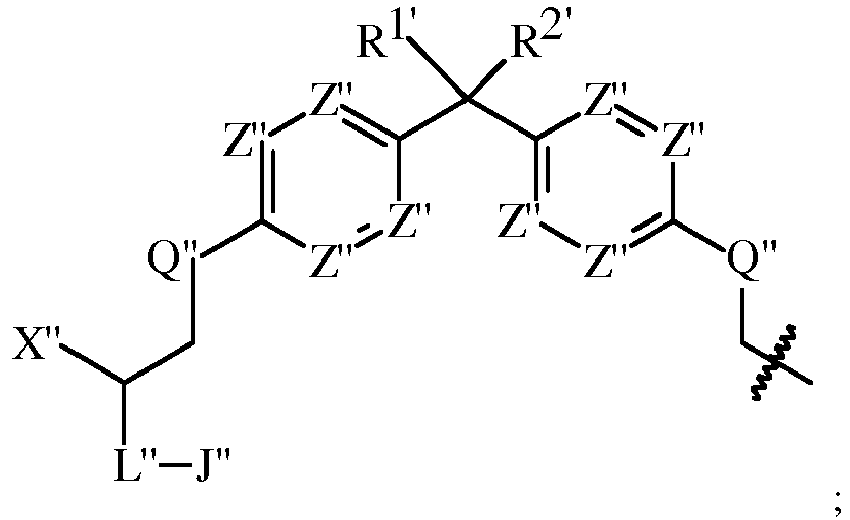
- R1' and R2' are each independently H, or a branched, unbranched, substituted or unsubstituted C1-C10 alkyl or together form a substituted or unsubstituted, saturated, aromatic cyclic or non-aromatic cyclic C3-C10 alkyl;
- each J" and J''' is independently H or a moiety selected from TABLE 1;
- L" is O, S, NH, NG, N+H2, or N+HG;
- each Z" is independently N, CH, CF, CCl, CBr, CI, COH, CG, COG, CNH2, CNHG, CNG2, COSO3H, COPO3H2; CSG, CSOG, or CSO2G;
- Q" is G, O, CH2, CHG, CG2, S, NH or NG; and
- X" is H, CH3, CH2F, CHF2, CF3, CH2Cl, CHCl2, CCl3, CH2Br, CHBr2, CBr3, CH2I, CHI2, CI3, CH2OJ''', G, CH2OG, CH2OGOG', GOG', GOG'OG", CH2SG, CH2NH2, CH2NHG, or CH2NG2;
- wherein the optional substituent is selected from the group consisting of: oxo, OJ''', COOH, R, OH, OR, F, Cl, Br, I, NH2, NHR, NR2, CN, SH, SR, SO3H, SO3R, SO2R, OSO3R, and NO2 wherein R is an unsubstituted C1-C10 alkyl;
- 2. Use of a compound having a structure of Formula I
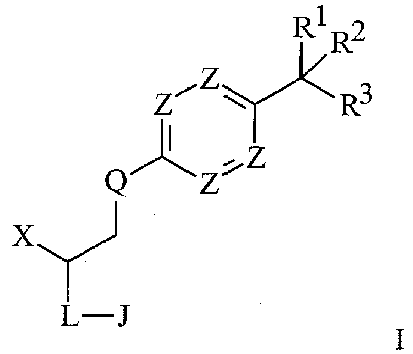
- J is H or a moiety selected from TABLE 1 ;
- L is O, S, NH, NG, N+H2, or N+HG;
- X is H, CH3, CH2F, CHF2, CF3, CH2Cl, CHCl2, CCl3, CH2Br, CHBr2, CBr3, CH2I, CHI2, CI3, CH2OJ''', G, CH2OG, CH2OGOG', GOG', GOG'OG", CH2SG, CH2NH2, CH2NHG, or CH2NG2;
- Q is G, O, CH2, CHG, CG2, S, NH or NG;
- each Z is independently N, CH, CF, CCl, CBr, CI, COH, CG, COG, CNH2, CNHG, CNG2, COSO3H, COPO3H2; CSG, CSOG, or CSO2G;
- R1 and R2 are each independently H, or a branched or unbranched, substituted or unsubstituted C1-C10 alkyl or together form a substituted or unsubstituted, saturated, aromatic cyclic or non-aromatic cyclic C3-C10 alkyl;
- each G, G' and G" is independently a branched, unbranched, or aromatic cyclic or non-aromatic cyclic, substituted or unsubstituted, saturated or unsaturated C1-C10 alkyl;
- R3 is H, a branched, unbranched, substituted or unsubstituted C1-C10 alkyl, or

- J' is H or a moiety selected from TABLE 1;
- L' is O, S, NH, NG, N+H2, or N+HG;
- each Z' is independently N, CH, CF, CCl, CBr, CI, COH, CG, COG, CNH2, CNHG, CNG2, COSO3H, COPO3H2; CSG, CSOG, or CSO2G;
- Q' is G, O, CH2, CHG, CG2, S, NH or NG;
- X' is H, CH3, CH2F, CHF2, CF3, CH2Cl, CHCl2, CCl3, CH2Br, CHBr2, CBr3, CH2I, CHI2, CI3, CH2OJ''', G, CH2OG, CH2OGOG', GOG', GOG'OG", CH2SG, CH2NH2, CH2NHG, CH2NG2, or

- R1' and R2' are each independently H, or a branched, unbranched, substituted or unsubstituted C1-C10 alkyl or together form a substituted or unsubstituted, saturated, aromatic cyclic or non-aromatic cyclic C3-C10 alkyl;
- each J" and J''' is independently H or a moiety selected from TABLE 1;
- L" is O, S, NH, NG, N+H2, or N+HG;
- each Z" is independently N, CH, CF, CCl, CBr, CI, COH, CG, COG, CNH2, CNHG, CNG2, COSO3H, COPO3H2; CSG, CSOG, or CSO2G;
- Q" is G, O, CH2, CHG, CG2, S, NH or NG; and
- X" is H, CH3, CH2F, CHF2, CF3, CH2Cl, CHCl2, CCl3, CH2Br, CHBr2, CBr3, CH2I, CHI2, CI3, CH2OJ''', G, CH2OG, CH2OGOG', GOG', GOG'OG", CH2SG, CH2NH2, CH2NHG, or CH2NG2;
- wherein the optional substituent is selected from the group consisting of: oxo, OJ''', COOH, R, OH, OR, F, Cl, Br, I, NH2, NHR, NR2, CN, SH, SR, SO3H, SO3R, SO2R, OSO3R, and NO2 wherein R is an unsubstituted C1-C10 alkyl;
- 3. The use of
item - 4. The use of any one of
items 1 to 3 wherein each X, X' and X" is independently H, CH3, CH2F, CH2Cl, CH2Br, CH2I, CH2OJ''', CH2OG, CH2OGOG', GOG', GOG'OG", CH2SG, CH2NH2, CH2NHG, or CH2NG2; and each Z, Z', and Z" is independently N, CH, CF, CCl, CBr, CI or COH. - 5. The use of any one of
items 1 to 4 wherein R3 is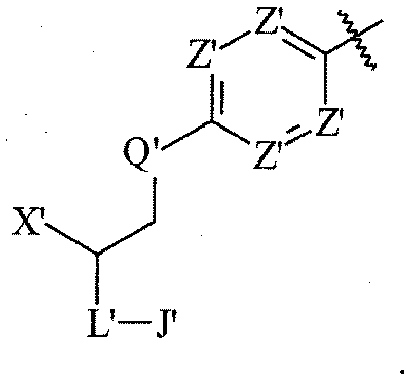
- 6. The use of any one of
items 1 to 5 wherein each Z, Z' and Z" is independently CH, CF, CCl, CBr, or CI. - 7. The use of any one of
items 1 to 6 wherein each Z, Z', and Z" is CH. - 8. The use of any one of
items 1 to 7 wherein each of Q, Q' and Q" are O. - 9. The use of any one of
items 1 to 8 wherein each of R1, R1', R2 and R2' are independently H, or a branched or unbranched, substituted or unsubstituted, C1-C10 alkyl. - 10. The use of any one of
items 1 to 9 wherein each R1, R1', R2 and R2' is CH3. - 11. The use of any one of
items 1 to 10 wherein X is H, CH3, CH2F, CH2Cl, CH2Br, CH2I, CH2OJ''', CH2OG, or CH2OGOG'. - 12. The use of any one of
items 1 to 11 wherein X is CH2Cl, CH2F, CH2I, CH2Br, CH2OH, CH2OCH3, CH2O(isopropyl), or CH2OC2H4OC4H9. - 13. The use of any one of
items 1 to 12 wherein X' is H, CH3, CH2F, CH2Cl, CH2Br, CH2I, CH2OJ''', CH2OG, CH2OGOG', GOG', GOG'OG", CH2SG, CH2NH2, CH2NHG, or CH2NG2. - 14. The use of any one of
items 1 to 13 wherein X' is H, CH3, CH2F, CH2Cl, CH2Br, CH2I, CH2OJ''', CH2OG, or CH2OGOG'. - 15. The use of any one of
items 1 to 14 wherein X' is CH2Cl, CH2F, CH2I, CH2Br, CH2OH, CH2OCH3, CH2O(isopropyl), or CH2OC2H4OC4H9. - 16. The use of any one of
items 1 to 12 wherein X" is H, CH3, CH2F, CH2Cl, CH2Br, CH2F, CH2OJ''', CH2OG or CH2OGOG'. - 17. The use of any one of
items 1 to 12 wherein X" is CH2Cl, CH2F, CH2I, CH2Br, CH2OH, CH2OCH3, CH2O(isopropyl), or CH2OC2H4OC4H9. - 18. The use of any one of
items 1 to 12 wherein X" is CH2OCH3 and X is CH2OCH3. - 19. The use of any one of
items 1 to 18 wherein each J, J', J", and J''', when present, is independently an amino acid based moiety or a polyethylene glycol based moiety selected from TABLE 1. - 20. The use of any one of
items 1 to 18 wherein each J, J', J", and J''', when present, is independently an amino acid based moiety selected from TABLE 1. - 21. The use of any one of
items 1 to 18 wherein each J, J', J", and J''', when present is
- 22. The use of any one of
items 1 to 18 wherein each J, J' J", J''', when present, is H. - 23. The use of any one of
items 1 to 22 wherein each L, L' and L", when present, is independently O, or S. - 24. The use of any one of
items 1 to 23 wherein each L, L' and L", when present, is O. - 25. The use of any one of
items 1 to 3 wherein the compound is selected from one or more of the following:

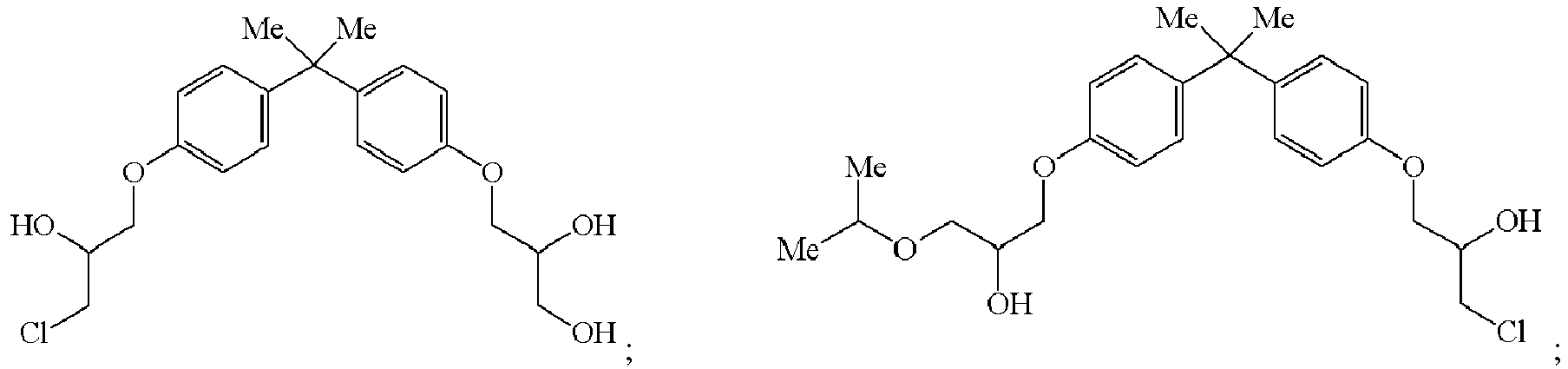


- 26. The use of any one of
items 1 to 25 wherein the mammalian cell is a human cell. - 27. The use of any one of
items 1 to 26 wherein the modulating AR activity is for inhibiting AR N-terminal domain activity. - 28. The use of any one of
items 1 to 27 wherein the modulating AR activity is for inhibiting AR N-terminal domain (NTD) activity. - 29. The use of any one of
items 1 to 28 wherein the modulating is in vivo. - 30. The use of any one of
items 1 to 29 wherein the modulating AR activity is for treatment of at least one indication selected from the group consisting of: prostate cancer, breast cancer, ovarian cancer, endometrial cancer, hair loss, acne, hirsutism, ovarian cysts, polycystic ovary disease, precocious puberty, and age-related macular degeneration. - 31. The use of any one of
items 1 to 30 wherein the indication is prostate cancer. - 32. The use of item 31 wherein the prostate cancer is androgen-independent prostate cancer.
- 33. The use of item 31 wherein the prostate cancer is androgen-dependent prostate cancer.
- 34. A compound having a structure of Formula II

- each J and J' is independently H or a moiety selected from TABLE 1 ;
- each L and L' is independently O, NH, NG, N+H2 or N+HG;
- each Q and Q' is independently G, O, CH2, CHG, CG2, S, NH or NG;
- each Z and Z' is independently N, CH, CF, CCl, CI, COH, CG, COG, CNH2, CNHG, CNG2, COSO3H, COPO3H2; CSG, CSOG, or CSO2G;
- R and R are each independently H; or a branched or unbranched, substituted or unsubstituted C1-C10 alkyl or together form a substituted or unsubstituted, saturated, aromatic cyclic or non-aromatic cyclic C3-C10 alkyl;
- X is CH2OG, CH2OGOG', CH2SG, CH2NH2, CH2NHG, CH2I, CH2Br, CH2F, or CH2NG2;
- X' is H, CH3, CH2F, CHF2, CF3, CH2Cl, CHCl2, CCl3, CH2Br, CHBr2, CBr3, CH2I, CHI2, CI3, CH2F, CHF2, CF3, CH2OJ''', CH2OG, CH2OGOG', GOG', GOG'OG", CH2SG, CH2NH2, CH2NHG, CH2NG2, or

- R1' and R2' are each independently H, or a branched or unbranched, substituted or unsubstituted C1-C10 alkyl, or R and R together form a substituted or unsubstituted, saturated, aromatic cyclic or non-aromatic cyclic C3-C10 alkyl;
- each J" and J''' is independently H or a moiety selected from TABLE 1;
- L" is O, NH, NG, N+H2, or N+HG;
- each Z" is independently N, CH, CF, CCl, CBr, CI, COH, CG, COG, CNH2, CNHG, CNG2, COSO3H, COPO3H2; CSG, CSOG, or CSO2G;
- Q" is G, O, CH2, CHG, CG2, S, NH or NG;
- X" is H, CH3, CH2F, CHF2, CF3, CH2Cl, CHCl2, CCl3, CH2Br, CHBr2, CBr3, CH2OJ''', G, CH2OG, CH2OGOG', GOG', GOG'OG", CH2SG, CH2NH2, CH2NHG, or CH2NG2;
- and each G, G', and G" is independently, a branched or unbranched, non-aromatic cyclic, substituted or unsubstituted, saturated C1-C10 alkyl;
- wherein the optional substituent is selected from the group consisting of: oxo, OJ''', COOH, R, OH, OR, F, Cl, Br, I, NH2, NHR, NR2, CN, SH, SR, SO3H, SO3R, SO2R, OSO3R, and NO2 wherein R is an unsubstituted C1-C10 alkyl.
- 35. The compound of item 34 wherein X' is H, CH3, CH2F, CH2Cl, CH2Br, CH2I, CH2OG, CH2OGOG', GOG', GOG'OG", CH2SG, CH2NH2, CH2NHG, CH2NG2, or

- X" is H, CH3, CH2F, CH2Cl, CH2Br, CH2I, CH2OG, CH2OGOG', GOG', GOG'OG", CH2SG, CH2NH2, CH2NHG, or CH2NG2;
- and each Z, Z' and Z" is independently N, CH, CF, CCl, CBr, CI or COH.
- 36. The compound of
item 34 or 35 wherein each Z, Z' and Z" is independently CH, CF, CCl, CBr, or CI. - 37. The compound of any one of items 34 to 36 wherein each Z, Z', and Z" is CH.
- 38. The compound of any one of items 34 to 37 wherein each of Q, Q' and Q" are O.
- 39. The compound of any one of items 34 to 38 wherein each of R1, R1', R2 and R2' are independently H, or a branched or unbranched, substituted or unsubstituted C1-C10 alkyl.
- 40. The compound of any one of items 34 to 39 wherein each R1, R1', R2 and R2' is CH3.
- 41. The compound of any one of items 34 to 40 wherein X is CH2I, CH2Br, CH2F, CH2OG, or CH2OGOG'.
- 42. The compound of any one of items 34 to 41 wherein X is CH2I, CH2Br, CH2F, CH2OCH3, CH2O(isopropyl), or CH2OC2H4OC4H9.
- 43. The compound of any one of items 34 to 42 wherein X' is H, CH3, CH2F, CH2Cl, CH2Br, CH2I, CH2OG, CH2OGOG', GOG', GOG'OG", CH2SG, CH2NH2, CH2NHG, or CH2NG2.
- 44. The compound of any one of items 34 to 43 wherein X' is H, CH3, CH2F, CH2Cl, CH2Br, CH2I, CH2OG, or CH2OGOG'.
- 45. The compound of any one of items 34 to 44 wherein X' is CH2I, CH2Br, CH2F, CH2Cl, CH2OG, or CH2OGOG'.
- 46. The compound of any one of items 34 to 44 wherein X' is CH2I, CH2Br, CH2F, CH2Cl, CH2OCH3, CH2O(isopropyl), or CH2OC2H4OC4H9.
- 47. The compound of any one of items 34 to 42 wherein X" is H, CH3, CH2F, CH2Cl, CH2Br, CH2I, CH2OJ''', CH2OG or CH2OGOG'.
- 48. The compound of any one of items 34 to 42 wherein X" is H, CH3, CH2F, CH2Cl, CH2Br, CH2I, or CH2OJ'''.
- 49. The compound of any one of items 34 to 42 wherein X" is CH2Cl, CH2OH, CH2OCH3, CH2O(isopropyl), or CH2OC2H4OC4H9.
- 50. The compound of any one of items 34 to 42 wherein X" is CH2OCH3 and X is CH2OCH3.
- 51. The compound of any one of items 34 to 50 wherein each J, J', J", and J''', when present, is independently an amino acid based moiety or a polyethylene glycol based moiety selected from TABLE 1.
- 52. The compound of any one of items 34 to 50 wherein each J, J', J", and J''', when present, is independently an amino acid based moiety selected from TABLE 1.
- 53. The compound of any one of items 34 to 50 wherein each J, J', J", and J''' when present, is

- 54. The compound of any one of items 34 to 50 wherein each J, J', J", and J''', when present, is H.
- 55. The compound of any one of items 34 to 53 wherein each L, L', and L", when present, is independently O, NH or N+H2.
- 56. The compound of any one of items 34 to 54 wherein each L L', and L", when present, is O.
- 57. The compound of item 34 wherein the compound is selected from one or more of the following:


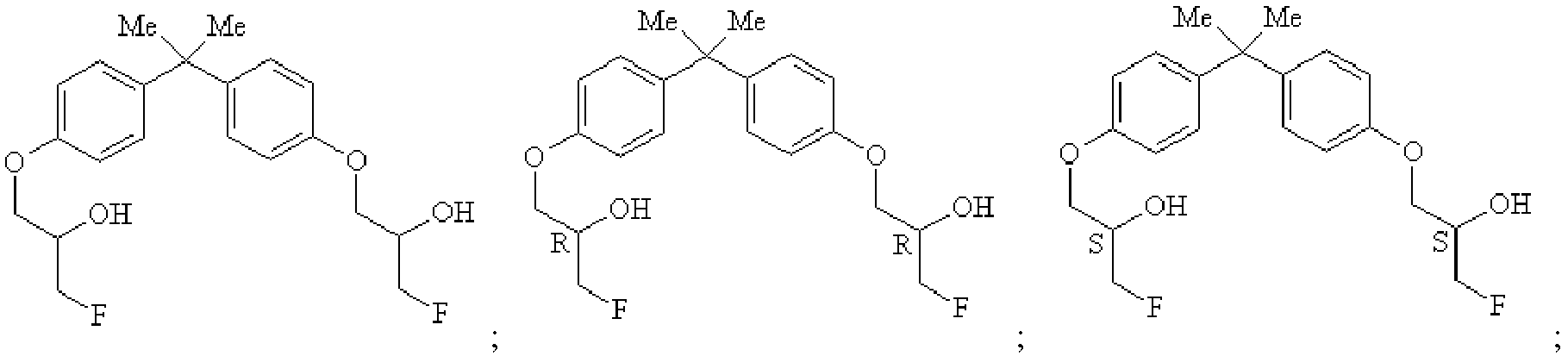


- 58. A compound having the formula:

- J is a moiety selected from TABLE 1;
- R1 and R2 are each independently H, or a branched, unbranched, substituted or unsubstituted C1-C10 alkyl or together form a substituted or unsubstituted, saturated, aromatic cyclic or non-aromatic cyclic C3-C10 alkyl; and wherein the optional substituent is selected from the group consisting of: oxo, OJ''', COOH, R, OH, OR, F, Cl, Br, I, NH2, NHR, NR2, CN, SH, SR, SO3H, SO3R, SO2R, OSO3R, and NO2 wherein R is an unsubstituted C1-C10 alkyl.
- 59. The compound of item 58, wherein J is

each R1 and R2 is selected from H or CH3. - 60. A compound selected from one or more of the following:


- 61. A pharmaceutical composition comprising a compound according to any one of
items 1 to 60 and a pharmaceutically acceptable excipient. - 62. A pharmaceutical composition comprising a compound having a structure of Formula I

- J is H or a moiety selected from TABLE 1 ;
- L is O, S, NH, NG, N+H2, or N+HG;
- X is H, CH3, CH2F, CHF2, CF3, CH2Cl, CHCl2, CCl3, CH2Br, CHBr2, CBr3, CH2I, CHI2, CI3, CH2OJ''', G, CH2OG, CH2OGOG', GOG', GOG'OG", CH2SG, CH2NH2, CH2NHG, or CH2NG2;
- Q is G, O, CH2, CHG, CG2, S, NH or NG;
- each Z is independently N, CH, CF, CCl, CBr, CI, COH, CG, COG, CNH2, CNHG, CNG2, COSO3H, COPO3H2; CSG, CSOG, or CSO2G;
- R1 and R2 are each independently H, or a branched or unbranched, substituted or unsubstituted C1-C10 alkyl or together form a substituted or unsubstituted, saturated, aromatic cyclic or non-aromatic cyclic C3-C10 alkyl;
- each G G' and G" is independently a branched, unbranched, or aromatic cyclic or non-aromatic cyclic, substituted or unsubstituted, saturated or unsaturated C1-C10 alkyl;
- R3 is H, a branched, unbranched, substituted or unsubstituted C1-C10 alkyl, or

- J' is H or a moiety selected from TABLE 1;
- L' is O, S, NH, NG, N+H2, or N+HG;
- each Z' is independently N, CH, CF, CCl, CBr, CI, COH, CG, COG, CNH2, CNHG, CNG2, COSO3H, COPO3H2; CSG, CSOG, or CSO2G;
- Q' is G, O, CH2, CHG, CG2, S, NH or NG;
- X' is H, CH3, CH2F, CHF2, CF3, CH2Cl, CHCl2, CCl3, CH2Br, CHBr2, CBr3, CH2I, CHI2, CI3, CH2OJ''', G, CH2OG, CH2OGOG', GOG', GOG'OG", CH2SG, CH2NH2, CH2NHG, CH2NG2, or

- R1' and R2' are each independently H, or a branched, unbranched, substituted or unsubstituted C1-C10 alkyl or together form a substituted or unsubstituted, saturated, aromatic cyclic or non-aromatic cyclic C3-C10 alkyl;
- each J" and J''' is independently H or a moiety selected from TABLE 1;
- L" is O, S, NH, NG, N+H2, or N+HG;
- each Z" is independently N, CH, CF, CCl, CBr, CI, COH, CG, COG, CNH2, CNHG, CNG2, COSO3H, COPO3H2; CSG, CSOG, or CSO2G;
- Q" is G, O, CH2, CHG, CG2, S, NH or NG; and
- X" is H, CH3, CH2F, CHF2, CF3, CH2Cl, CHCl2, CCl3, CH2Br, CHBr2, CBr3, CH2I, CHI2, CI3, CH2OJ''', G, CH2OG, CH2OGOG', GOG', GOG'OG", CH2SG, CH2NH2, CH2NHG, or CH2NG2;
- wherein the optional substituent is selected from the group consisting of: oxo, OJ"', COOH, R, OH, OR, F, Cl, Br, I, NH2, NHR, NR2, CN, SH, SR, SO3H, SO3R, SO3R, OSO3R, and NO2 wherein R is an unsubstituted C1-C10 alkyl;
- 63. A method for modulating AR activity, the method comprising administering to a mammalian cell a compound having a structure of Formula I:

- J is H or a moiety selected from TABLE 1 ;
- L is O, S, NH, NG, N+H2, or N+HG;
- X is H, CH3, CH2F, CHF2, CF3, CH2Cl, CHCl2, CCl3, CH2Br, CHBr2, CBr3, CH2I, CHI2, CI3, CH2OJ"', G, CH2OG, CH2OGOG', GOG', GOG'OG", CH2SG, CH2NH2, CH2NHG, or CH2NG2;
- Q is G, O, CH2, CHG, CG2, S, NH or NG;
- each Z is independently N, CH, CF, CC1, CBr, CI, COH, CG, COG, CNH2, CNHG, CNG2, COSO3H, COPO3H2; CSG, CSOG, or CSO2G;
- R1 and R2 are each independently H, or a branched or unbranched, substituted or unsubstituted C1-C10 alkyl or together form a substituted or unsubstituted, saturated, aromatic cyclic or non-aromatic cyclic C3-C10 alkyl;
- each G G' and G" is independently a branched, unbranched, or aromatic cyclic or non-aromatic cyclic, substituted or unsubstituted, saturated or unsaturated C1-C10 alkyl;
- R3 is H, a branched, unbranched, substituted or unsubstituted C1-C10 alkyl, or

- J' is H or a moiety selected from TABLE 1;
- L' is O, S, NH, NG, N+H2, or N+HG;
- each Z' is independently N, CH, CF, CC1, CBr, CI, COH, CG, COG, CNH2, CNHG, CNG2, COSO3H, COPO3H2; CSG, CSOG, or CSO2G;
- Q' is G, O, CH2, CHG, CG2, S, NH or NG;
- X' is H, CH3, CH2F, CHF2, CF3, CH2Cl, CHCl2, CCl3, CH2Br, CHBr2, CBr3, CH2I, CHI2, CI3, CH2OJ"', G, CH2OG, CH2OGOG', GOG', GOG'OG", CH2SG, CH2NH2, CH2NHG, CH2NG2, or

- R1' and R2' are each independently H, or a branched, unbranched, substituted or unsubstituted C1-C10 alkyl or together form a substituted or unsubstituted, saturated, aromatic cyclic or non-aromatic cyclic C3-C10 alkyl;
- each J" and J"' is independently H or a moiety selected from TABLE 1;
- L" is O, S, NH, NG, N+H2, or N+HG;
- each Z" is independently N, CH, CF, CC1, CBr, CI, COH, CG, COG, CNH2, CNHG, CNG2, COSO3H, COPO3H2; CSG, CSOG, or CSO2G;
- Q" is G, O, CH2, CHG, CG2, S, NH or NG; and
- X" is H, CH3, CH2F, CHF2, CF3, CH2Cl, CHCl2, CCl3, CH2Br, CHBr2, CBr3, CH2I, CHI2, CI3, CH2OJ"', G, CH2OG, CH2OGOG', GOG', GOG'OG", CH2SG, CH2NH2, CH2NHG, or CH2NG2;
- wherein the optional substituent is selected from the group consisting of: oxo, OJ'", COOH, R, OH, OR, F, Cl, Br, I, NH2, NHR, NR2, CN, SH, SR, SO3H, SO3R, SO3R, OSO3R, and NO2 wherein R is an unsubstituted C1-C10 alkyl.
- 64. The method of item 63 wherein the administering is in vivo.
- 65. The method of item 63 or 64 wherein the administering is to a mammal.
- 66. The method of item 64 or 65 wherein the administering is to a mammal in need thereof and in an effective amount for the treatment of at least one indication selected from the group consisting of: prostate cancer, breast cancer, ovarian cancer, endometrial cancer, hair loss, acne, hirsutism, ovarian cysts, polycystic ovary disease, precocious puberty, and age-related macular degeneration.
- 67. The method of any one of items 63 to 66 wherein each X, X' and X' is independently H, CH3, CH2F, CH2Cl, CH2Br, CH2I, CH2OJ'", CH2OG, CH2OGOG', GOG', GOG'OG", CH2SG, CH2NH2, CH2NHG, or CH2NG2; and
each Z, Z' and Z" is independently N, CH, CF, CC1, CBr, CI or COH. - 68. The method of any one of items 63 to 67 wherein R3 is

- 69. The method of any one of items 63 to 68 wherein each Z, Z' and Z" is independently CH, CF, CC1, CBr, or CI.
- 70. The method of any one of items 63 to 69 wherein each Z, Z', and Z" is CH.
- 71. The method of any one of items 63 to 70 wherein each of Q, Q' and Q" are O.
- 72. The method of any one of claims 63 to 71 wherein each of R1, R1' , R2 and R2' are independently H, or a branched, unbranched, substituted or unsubstituted C1-C10 alkyl.
- 73. The method of any one of items 63 to 72 wherein each R1, R1' , R2 and R2' is CH3.
- 74. The method of any one of items 63 to 73 wherein X is H, CH3, CH2F, CH2Cl, CH2Br, CH2I, CH2OJ"', CH2OG, or CH2OGOG'.
- 75. The method of any one of items 63 to 74 wherein X is CH3, CH2F, CH2Cl, CH2Br, CH2I, CH2OH, CH2OCH3, CH2O(isopropyl), or CH2OC2H4OC4H9.
- 76. The method of any one of items 63 to 75 wherein X' is H, CH3, CH2F, CH2Cl, CH2Br, CH2I, CH2OJ"', CH2OG, CH2OGOG', GOG', GOG'OG", CH2SG, CH2NH2, CH2NHG, or CH2NG2.
- 77. The method of any one of items 63 to 76 wherein X' is H, CH3, CH2F, CH2Cl, CH2Br, CH2I, CH2OJ"', CH2OG, or CH2OGOG'.
- 78. The method of any one of items 63 to 77 wherein X' is CH3, CH2F, CH2Cl, CH2Br, CH2I, CH2OH, CH2OCH3, CH2O(isopropyl), or CH2OC2H4OC4H9.
- 79. The method of any one of items 63 to 75 wherein X" is H, CH3, CH2F, CH2Cl, CH2Br, CH2I, CH2OJ"', CH2OG or CH2OGOG'.
- 80. The method of any one of items 63 to 75 wherein X" is CH3, CH2F, CH2Cl, CH2Br, CH2I, CH2OH, CH2OCH3, CH2O(isopropyl), or CH2OC2H4OC4H9.
- 81. The method of any one of items 63 to 75 wherein X" is CH2OCH3 and X is CH2OCH3.
- 82. The method of any one of items 63 to 81 wherein each J, J', J", and J"', when present, is independently an amino acid based moiety or a polyethylene glycol based moiety selected from TABLE 1.
- 83. The method of any one of items 63 to 81 wherein each J, J', J", and J"', when present, is independently an amino acid based moiety selected from TABLE 1.
- 84. The method of any one of items 63 to 81 wherein each J, J', J", and J'", when present, is

- 85. The method of any one of items 63 to 81 wherein each J, J', J", and J"', when present, is H.
- 86. The method of any one of items 63 to 85 wherein each L, L', and L", when present, is independently O, NH or N+H2.
- 87. The method of any one of items 63 to 86 wherein each L, L', and L", when present, is O.
- 88. The method of items 63 wherein the compound is selected from one or more of the following:


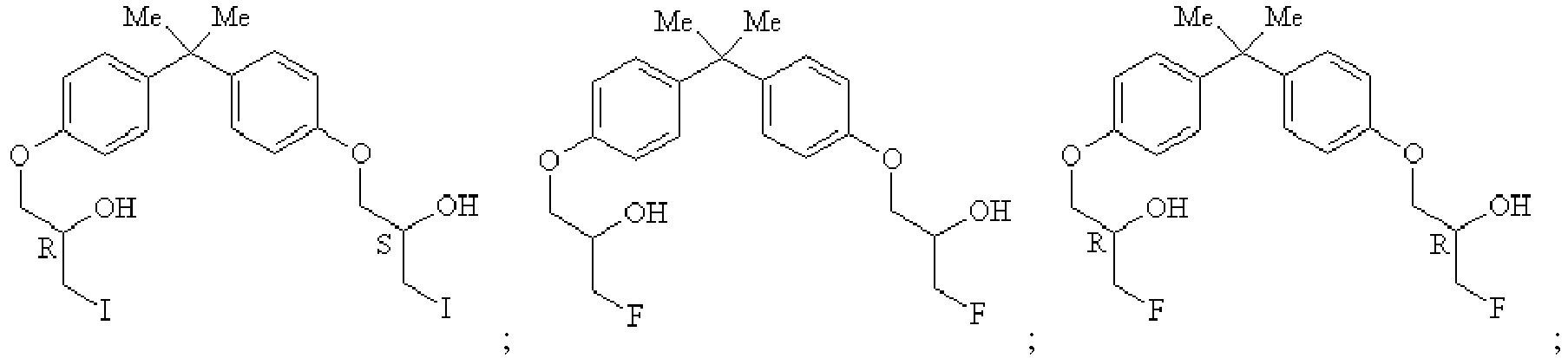


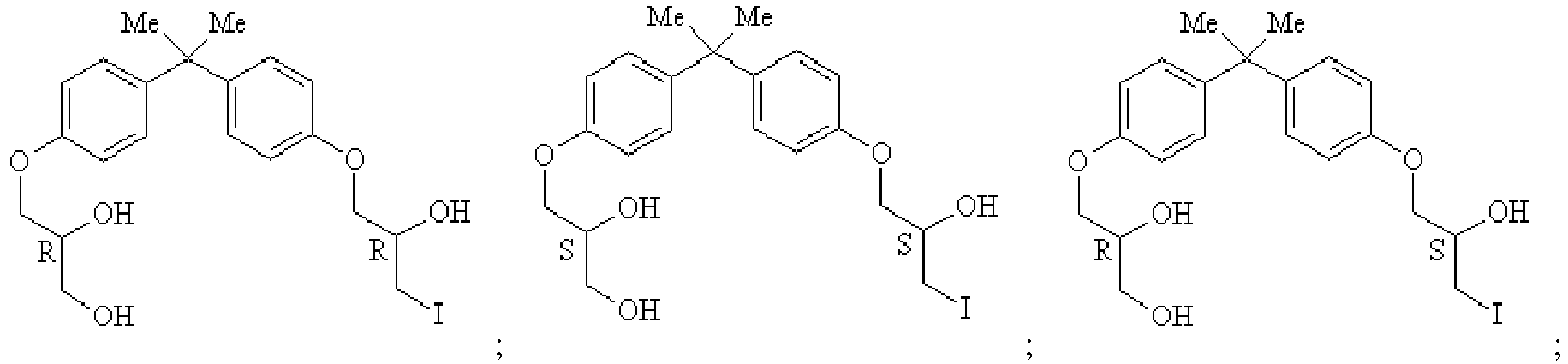


- 89. The method of any one of items 66 to 88 wherein the indication is prostate cancer.
Claims (13)
- A compound having the following structure:
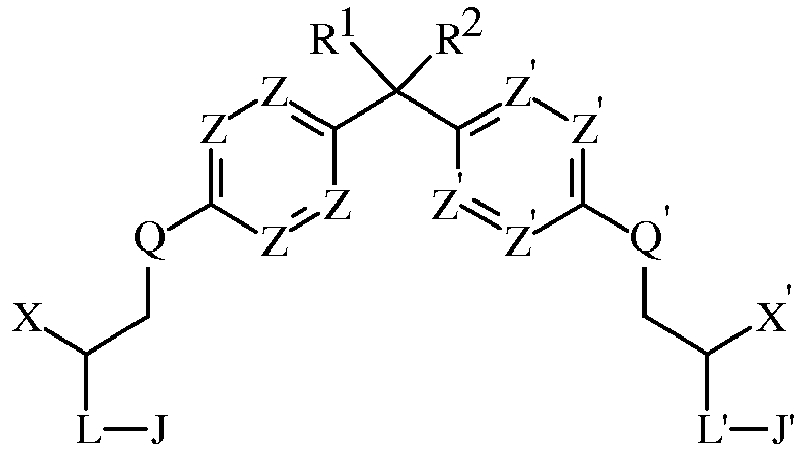 X is CH2SG, CH2NH2, CH2NHG, CH2I, CH2Br, CH2F, or CH2NG2;X' is H, CH3, CH2F, CHF2, CF3, CH2Cl, CHCl2, CCl3, CH2Br, CHBr2, CBr3, CH2I, CHI2, CI3, CH2F, CHF2, CF3, CH2OJ"', CH2OG, CH2OGOG', GOG', GOG'OG", CH2SG, CH2NH2, CH2NHG, or CH2NG2;each of J, J', and J'" is independently H or a moiety that is:


 each L and L' is independently O, NH, NG, N+H2 or N+HG;each Q and Q' is independently G, O, CH2, CHG, CG2, S, NH or NG;each Z and Z' is independently N, CH, CF, CC1, CI, COH, CG, COG, CNH2, CNHG, CNG2, COSO3H, COPO3H2; CSG, CSOG, or CSO2G;R1 and R2 are each independently: H; a branched or unbranched, optionally substituted C1-C10 alkyl; or together form an optionally substituted C3-C10 aromatic or non-aromatic cyclic group;each G, G', and G" is independently: an optionally substituted, branched or unbranched C1-C10 alkyl; or an optionally substituted non-aromatic cyclic C3-C10 alkyl; andwherein each optional substituent is selected from the group consisting of: oxo, OJ"', COOH, R, OH, OR, F, Cl, Br, I, NH2, NHR, NR2, CN, SH, SR, SO3H, SO3R, SO3R, OSO3R, and NO2 wherein R is an unsubstituted C1-C10 alkyl;for use as a medicament.
 - The compound for the use of any one of claims 1 or 2, wherein X' is:(a) H, CH3, CH2F, CH2Cl, CH2Br, CH2I, CH2OJ"', CH2OG, CH2OGOG', GOG', GOG'OG", CH2SG, CH2NH2, CH2NHG, or CH2NG2;(b) H, CH3, CH2F, CH2Cl, CH2Br, CH2I, CH2OJ"', CH2OG, or CH2OGOG'; or(c) CH2Cl, CH2F, CH2I, CH2Br, CH2OH, CH2OCH3, CH2O(isopropyl), or CH2OC2H4OC4H9.
- The compound for the use of claim 1 or 2, wherein(a) X is CH2F, CH2Br, or CH2I;(b) each of Z and Z' is independently N, CH, CF, CC1, CBr, CI or COH; or(c) each of R1 and R2 is independently H, or said branched or unbranched, optionally substituted C1-C10 alkyl.
- The compound for the use of any one of claims 1-3, wherein:(a) each of J, J', and J'" is H;(b) each of Z and Z' is CH;(c) each of Q and Q' is O;(d) each L and L' is independently O; or(e) each R1 and R2 is CH3.
- The compound for the use of any one of claims 1 to 4, wherein the compound inhibits androgen receptor (AR) N-terminal domain (NTD) activity.
- The compound for the use of any one of claims 1 to 5, wherein the compound is for treatment of at least one indication selected from the group consisting of: prostate cancer, breast cancer, ovarian cancer, endometrial cancer, hair loss, acne, hirsutism, ovarian cysts, polycystic ovary disease, precocious puberty, and age-related macular degeneration.
- The compound for the use of claim 6, wherein the indication is prostate cancer.
- The compound of claim 7, wherein the prostate cancer is androgen-independent prostate cancer, androgen-dependent prostate cancer, or castration resistant cancer.
- A compound having the formula:
 each of L and L' is independently O, NH, NG, N+H2 or N+HG;each of Q and Q' is independently G, O, CH2, CHG, CG2, S, NH or NG;each of Z and Z' is independently N, CH, CF, CC1, CI, COH, CG, COG, CNH2, CNHG, CNG2, COSO3H, COPO3H2; CSG, CSOG, or CSO2G;R1 and R2 are each independently: H; or a branched or unbranched, optionally substituted C1-C10 alkyl; or together form an optionally substituted C3-C10 aromatic or non-aromatic cyclic group;X is CH2I, CH2Br, CH2F, or CH2OCH3;X' is CH2F, CH2Cl, CH2O(isopropyl), or CH2OC2H4OC4H9;each of J, J' and J"' is independently H or a moiety that is:


 each of G, G', and G" is independently: an optionally substituted, branched or unbranched C1-C10 alkyl; or an optionally substituted non-aromatic cyclic C3-C10 alkyl;wherein each optional substituent is selected from the group consisting of: oxo, OJ"', COOH, R, OH, OR, F, Cl, Br, I, NH2, NHR, NR2, CN, SH, SR, SO3H, SO3R, SO3R, OSO3R, and NO2, wherein R is an unsubstituted C1-C10 alkyl.
 - The compound of claim 9, wherein:(a) each of Z and Z' is independently N, CH, CF, CCl, CBr, CI or COH;(b) each of R1 and R2 is independently H, or said branched or unbranched, optionally substituted C1-C10 alkyl; or(c) each L and L' is independently O, NH or N+H2.
- The compound of claim 9 or 10, wherein:(a) each of J, J', and J'" is H;(b) each of Z and Z' is CH;(c) each of Q and Q' is O;(d) each R1 and R2 is CH3; or(e) each L and L' is O.
- A pharmaceutical composition comprising a compound as defined in any one of claims 1 to 11 and a pharmaceutically acceptable excipient.
- A method for modulating AR activity in vitro, the method comprising administering to a mammalian cell a compound according to any of claims 1 to 11.
Applications Claiming Priority (2)
| Application Number | Priority Date | Filing Date | Title |
|---|---|---|---|
| US12953708P | 2008-07-02 | 2008-07-02 | |
| EP09771876.1A EP2307342B1 (en) | 2008-07-02 | 2009-07-02 | Diglycidic ether derivative therapeutics and methods for their use |
Related Parent Applications (1)
| Application Number | Title | Priority Date | Filing Date |
|---|---|---|---|
| EP09771876.1A Division EP2307342B1 (en) | 2008-07-02 | 2009-07-02 | Diglycidic ether derivative therapeutics and methods for their use |
Publications (1)
| Publication Number | Publication Date |
|---|---|
| EP3252032A1 true EP3252032A1 (en) | 2017-12-06 |
Family
ID=41465435
Family Applications (2)
| Application Number | Title | Priority Date | Filing Date |
|---|---|---|---|
| EP17177010.0A Withdrawn EP3252032A1 (en) | 2008-07-02 | 2009-07-02 | Diglycidic ether derivative therapeutics and methods for their use |
| EP09771876.1A Active EP2307342B1 (en) | 2008-07-02 | 2009-07-02 | Diglycidic ether derivative therapeutics and methods for their use |
Family Applications After (1)
| Application Number | Title | Priority Date | Filing Date |
|---|---|---|---|
| EP09771876.1A Active EP2307342B1 (en) | 2008-07-02 | 2009-07-02 | Diglycidic ether derivative therapeutics and methods for their use |
Country Status (21)
| Country | Link |
|---|---|
| US (3) | US9862667B2 (en) |
| EP (2) | EP3252032A1 (en) |
| JP (3) | JP2011526250A (en) |
| KR (3) | KR101719550B1 (en) |
| CN (2) | CN105012282A (en) |
| AU (1) | AU2009266379C1 (en) |
| BR (1) | BRPI0913673A2 (en) |
| CA (1) | CA2728219C (en) |
| CL (1) | CL2010001624A1 (en) |
| CO (1) | CO6351774A2 (en) |
| DK (1) | DK2307342T3 (en) |
| ES (1) | ES2640003T3 (en) |
| HK (1) | HK1216608A1 (en) |
| HU (1) | HUE034458T2 (en) |
| IL (1) | IL210120A (en) |
| MX (1) | MX2010014372A (en) |
| NZ (1) | NZ589759A (en) |
| RU (2) | RU2572596C2 (en) |
| TR (1) | TR201011157T1 (en) |
| WO (1) | WO2010000066A1 (en) |
| ZA (1) | ZA201100507B (en) |
Families Citing this family (30)
| Publication number | Priority date | Publication date | Assignee | Title |
|---|---|---|---|---|
| CN105012282A (en) | 2008-07-02 | 2015-11-04 | 不列颠哥伦比亚癌症局分支机构 | Diglycidic ether derivative therapeutics and methods for their use |
| WO2011040421A1 (en) | 2009-09-29 | 2011-04-07 | 武田薬品工業株式会社 | Screening method |
| JP5375502B2 (en) * | 2009-10-06 | 2013-12-25 | 信越化学工業株式会社 | Alcoholic hydroxyl group-containing compound and method for producing the same |
| US20130109758A1 (en) * | 2010-01-06 | 2013-05-02 | The University Of British Columbia | Bisphenol derivative therapeutics and methods for their use |
| AR079846A1 (en) | 2010-01-06 | 2012-02-22 | British Columbia Cancer Agency | THERAPEUTIC AGENTS DERIVED FROM BISPHENOL CONTAINING AN AQUIRAL GROUP AND ITS USE IN CANCER TREATMENT |
| WO2011098440A2 (en) | 2010-02-10 | 2011-08-18 | Bayer Cropscience Ag | Biphenyl substituted cyclical keto-enols |
| WO2012139039A2 (en) | 2011-04-08 | 2012-10-11 | British Columbia Cancer Agency Branch | Bisphenol compounds and methods for their use |
| WO2012145330A1 (en) * | 2011-04-18 | 2012-10-26 | The University Of British Columbia | Fluorene-9-bisphenol compounds and methods for their use |
| WO2012145328A1 (en) * | 2011-04-18 | 2012-10-26 | The University Of British Columbia | Dibenzylphenyl compounds and methods for their use |
| US8533714B2 (en) | 2011-05-03 | 2013-09-10 | International Business Machines Corporation | Dynamic virtual machine domain configuration and virtual machine relocation management |
| EP2744773B1 (en) | 2011-08-19 | 2016-11-02 | British Columbia Cancer Agency Branch | Fluorinated bisphenol ether compounds and methods for their use |
| WO2013028791A1 (en) * | 2011-08-22 | 2013-02-28 | British Columbia Cancer Agency Branch | 18f compounds for cancer imaging and methods for their use |
| US9365510B2 (en) | 2012-04-16 | 2016-06-14 | British Columbia Cancer Agency Branch | Aziridine bisphenol ethers and related compounds and methods for their use |
| CN104755452A (en) * | 2012-11-02 | 2015-07-01 | 株式会社成和化成 | Propyl phenyl ether derivative, melanin production inhibitor, whitening agent, antibacterial agent and cosmetic containing same |
| JP6100439B2 (en) * | 2013-05-10 | 2017-03-22 | ブリティッシュ コロンビア キャンサー エージェンシー ブランチ | Ester derivatives of androgen receptor modulators and methods for their use |
| KR20160054523A (en) * | 2013-09-09 | 2016-05-16 | 브리티쉬 콜롬비아 캔써 에이전시 브랜치 | Halogenated compounds for cancer imaging and treatment and methods for their use |
| CN104059028B (en) * | 2014-06-06 | 2020-10-16 | 北京智博高科生物技术有限公司 | Fluoro-2-aryl benzo heterocyclic compound with affinity with Abeta plaque and substituted chiral side chain, and preparation method and application thereof |
| WO2016058080A1 (en) * | 2014-10-14 | 2016-04-21 | British Columbia Cancer Agency Branch | Fluoro-chloro bisphenol ether compounds and methods for their use |
| ES2907708T3 (en) | 2015-01-13 | 2022-04-26 | British Columbia Cancer Agency Branch | Heterocyclic Compounds for Cancer Imaging and Treatment and Methods for Their Use |
| WO2016141458A1 (en) | 2015-03-12 | 2016-09-15 | British Columbia Cancer Agency Branch | Bisphenol ether derivatives and methods for using the same |
| WO2017059057A1 (en) * | 2015-09-30 | 2017-04-06 | The Regents Of The University Of California | Nano-adhesive and surface primer compound and use thereof |
| US20170298033A1 (en) | 2016-04-15 | 2017-10-19 | The University Of British Columbia | Bisphenol derivatives and their use as androgen receptor activity modulators |
| WO2019226991A1 (en) | 2018-05-25 | 2019-11-28 | Essa Pharma, Inc. | Androgen receptor modulators and methods for their use |
| CN118684633A (en) | 2018-10-18 | 2024-09-24 | 埃萨制药股份有限公司 | Androgen receptor modulators and methods of use thereof |
| US12109179B2 (en) | 2019-03-28 | 2024-10-08 | Essa Pharma Inc. | Pharmaceutical compositions and combinations comprising inhibitors of the androgen receptor and uses thereof |
| WO2021212032A1 (en) | 2020-04-17 | 2021-10-21 | Essa Pharma, Inc. | Solid forms of an n-terminal domain androgen receptor inhibitor and uses thereof |
| CN113666806A (en) * | 2020-05-15 | 2021-11-19 | 上海安谱实验科技股份有限公司 | Preparation method of bisphenol F2, 3-dihydroxypropyl (2-chloro-1-propyl) ethyl ether |
| WO2023046283A1 (en) | 2021-09-22 | 2023-03-30 | Fundació Institut De Recerca Biomèdica (Irb Barcelona) | Compounds and their use in a method for modulating ar (androgen receptor) transcriptional activity |
| TWI874822B (en) * | 2022-09-23 | 2025-03-01 | 上緯創新育成股份有限公司 | Method for degrading acid anhydride epoxy cured product, polyol prepared thereof and thermosetting resin |
| CN121652089A (en) * | 2024-09-11 | 2026-03-13 | 中国海洋大学 | NTD inhibitor and application thereof |
Citations (5)
| Publication number | Priority date | Publication date | Assignee | Title |
|---|---|---|---|---|
| US2571217A (en) | 1951-10-16 | Horace s | ||
| WO1998034930A1 (en) * | 1997-02-07 | 1998-08-13 | Shell Internationale Research Maatschappij B.V. | Process for the manufacture of epoxy compounds |
| WO2000001813A2 (en) | 1998-06-30 | 2000-01-13 | The University Of British Columbia | Peptide inhibitors of androgen-independent activation of androgen receptor |
| WO2001088013A2 (en) * | 2000-05-18 | 2001-11-22 | Dow Global Technologies Inc | Process for manufacturing a hydroxyester derivative intermediate and epoxy resins prepared therefrom |
| US20040049004A1 (en) * | 2001-07-05 | 2004-03-11 | Boriak Clinton J. | Process for manufacturing an alpha-dihydroxy derivative and epoxy resins prepared therefrom |
Family Cites Families (63)
| Publication number | Priority date | Publication date | Assignee | Title |
|---|---|---|---|---|
| US2890189A (en) | 1954-06-14 | 1959-06-09 | Johnson & Son Inc S C | Alkali soluble resins and compositions containing the same |
| US3162615A (en) | 1961-01-03 | 1964-12-22 | Dow Chemical Co | Polyesters from cyclic polyhaloalkane polyols and unsaturated dicarboxylic acids |
| FR1389005A (en) | 1963-01-09 | 1965-02-12 | Bayer Ag | Advanced process for curing polyepoxides |
| US4284574A (en) | 1979-06-15 | 1981-08-18 | Ciba-Geigy Corporation | Diglycidyl ethers of di-secondary alcohols, their preparation, and curable compositions containing them |
| US4369298A (en) | 1980-05-27 | 1983-01-18 | Tokuyama Soda Kabushiki Kaisha | Novel cured resin, process for production thereof, and lens composed of said resin from bis(alkyleneoxyphenyl)-diacrylate, bis(alkyleneoxyphenyl)diallyl ether, bis(alkyleneoxyphenyl)diallyl carbonate monomers |
| EP0056175B1 (en) | 1981-01-13 | 1985-05-02 | Teijin Limited | Ion-permeable composite membrane and its use in selective separation |
| PL141793B1 (en) | 1984-10-08 | 1987-08-31 | Politechnika Warszawska | Method of obtaining bisphenolic resins |
| US5753730A (en) | 1986-12-15 | 1998-05-19 | Mitsui Toatsu Chemicals, Inc. | Plastic lenses having a high-refractive index, process for the preparation thereof and casting polymerization process for preparing sulfur-containing urethane resin lens and lens prepared thereby |
| JPH0832844B2 (en) | 1987-02-09 | 1996-03-29 | パイロツトインキ株式会社 | Opaque ink for writing board |
| EP0290860B1 (en) | 1987-04-27 | 1995-01-25 | Mitsubishi Gas Chemical Company, Inc. | Thermosetting resin composition |
| US5155196A (en) | 1987-06-01 | 1992-10-13 | The Dow Chemical Company | Polymer resulting from the cure of a preformed chromene-containing mixture |
| KR910003821B1 (en) | 1987-06-01 | 1991-06-12 | 더 다우 케미칼 캄파니 | Process for preparing propargyl ethers of hydroxyaromatic compounds |
| DE3821585A1 (en) | 1987-09-13 | 1989-03-23 | Hoechst Ag | POSITIVELY WORKING RADIATION-SENSITIVE MIXTURE AND PRODUCTION OF RADIATION-SENSITIVE RECORDING MATERIAL FOR HIGH-ENERGY RADIATION |
| US4855184A (en) * | 1988-02-02 | 1989-08-08 | Minnesota Mining And Manufacturing Company | Radiation-curable protective coating composition |
| DE3939760A1 (en) | 1989-12-01 | 1991-06-06 | Bayer Ag | METHOD FOR LACQUERING PLASTICS, LACQUERED PLASTICS AND THE USE OF ADHESIVES SUITABLE FOR THIS |
| EP0515128A1 (en) | 1991-05-23 | 1992-11-25 | Konica Corporation | Silver halide color photographic light-sensitive material |
| JPH0649473A (en) | 1992-08-04 | 1994-02-22 | Asahi Chem Ind Co Ltd | Refrigerant composition |
| DE4323512A1 (en) | 1992-09-01 | 1994-04-28 | Agfa Gevaert Ag | Photographic recording material |
| WO1996016646A1 (en) | 1994-11-29 | 1996-06-06 | Hoechst Marion Roussel, Inc. | Method of using triaryl-ethylene derivatives in the treatment and prevention of osteoporosis |
| DE19526146A1 (en) | 1995-07-07 | 1997-01-09 | Schering Ag | Triphenylethylenes, processes for their preparation, pharmaceutical preparations containing these triphenylethylenes and their use for the preparation of medicaments |
| JPH09176240A (en) | 1995-12-27 | 1997-07-08 | Mitsubishi Chem Corp | Photopolymerizable composition |
| JPH10133427A (en) | 1996-11-05 | 1998-05-22 | Fuji Xerox Co Ltd | Carrier for developing electrostatic latent image, electrostatic latent image developer, and image forming method |
| JPH10316803A (en) * | 1997-05-16 | 1998-12-02 | Teijin Chem Ltd | Flame retardant resin composition |
| IL125840A (en) | 1997-08-22 | 2002-12-01 | Teijin Chemicals Ltd | Bromine compound production method |
| JPH11166087A (en) | 1997-12-04 | 1999-06-22 | Teijin Chem Ltd | Flame retardant resin composition |
| US6245117B1 (en) | 1998-08-07 | 2001-06-12 | Ipposha Oil Industries Co., Ltd. | Modifier of cellulose fibers and modification method of cellulose fibers |
| US6218430B1 (en) | 1998-08-24 | 2001-04-17 | Ligand Pharmaceuticals Incorporated | Vitamin D3 mimics |
| JP3795679B2 (en) | 1998-09-01 | 2006-07-12 | 帝人化成株式会社 | Method for producing bromine compound |
| JP2003511467A (en) | 1999-10-14 | 2003-03-25 | ブリストル−マイヤーズ スクイブ カンパニー | Crystal structure of the androgen receptor ligand binding domain |
| US6472436B1 (en) | 2000-07-17 | 2002-10-29 | The Salk Institute For Biological Studies | Methods for protecting cells from amyloid toxicity and for inhibiting amyloid protein production |
| US6756400B2 (en) | 2000-08-31 | 2004-06-29 | Theravance, Inc. | Sodium channel modulators |
| US20030092724A1 (en) | 2001-09-18 | 2003-05-15 | Huaihung Kao | Combination sustained release-immediate release oral dosage forms with an opioid analgesic and a non-opioid analgesic |
| AU2003217304A1 (en) | 2002-02-28 | 2003-09-16 | The University Of Tennessee Research Corporation | Radiolabeled selective androgen receptor modulators and their use in prostate cancer imaging and therapy |
| WO2004020379A1 (en) * | 2002-08-27 | 2004-03-11 | Galderma Research & Development, Snc | Analogues of vitamin d |
| GB0324551D0 (en) | 2003-10-21 | 2003-11-26 | Karobio Ab | Novel compounds |
| CA2544501A1 (en) | 2003-11-20 | 2005-06-09 | Eli Lilly And Company | Vitamin d receptor modulators |
| CA2555597C (en) | 2004-02-13 | 2016-06-14 | The University Of British Columbia | Radiolabeled compounds and compositions, their precursors and methods for their production |
| JP2005325301A (en) | 2004-05-17 | 2005-11-24 | Fuji Photo Film Co Ltd | Cellulose acylate dope composition and cellulose acylate film |
| US20090105349A1 (en) | 2004-08-18 | 2009-04-23 | Warner-Lambert Company Llc | Androgen modulators |
| JP2006208607A (en) * | 2005-01-26 | 2006-08-10 | Fuji Photo Film Co Ltd | Pattern forming material and device, and permanent pattern forming method |
| JP4753601B2 (en) | 2005-03-23 | 2011-08-24 | 旭化成イーマテリアルズ株式会社 | Photosensitive composition |
| EP1717235A3 (en) | 2005-04-29 | 2007-02-28 | Bioprojet | Phenoxypropylpiperidines and -pyrrolidines and their use as histamine H3-receptor ligands |
| FR2885904B1 (en) | 2005-05-19 | 2007-07-06 | Aventis Pharma Sa | NOVEL FLUORENE DERIVATIVES, COMPOSITIONS CONTAINING SAME AND USE THEREOF |
| JP2007290980A (en) | 2006-04-21 | 2007-11-08 | Shin Etsu Chem Co Ltd | Fluorine-containing (meth) acrylic acid ester |
| TW200819421A (en) | 2006-10-31 | 2008-05-01 | Univ Nat Chunghsing | The method of synthesizing biphenol A, BPA having di-alkoxyl group by using polycarbonate or its waste |
| JP2010519369A (en) | 2007-02-20 | 2010-06-03 | ビーエーエスエフ ソシエタス・ヨーロピア | High refractive index monomers, their compositions and uses |
| CN105012282A (en) | 2008-07-02 | 2015-11-04 | 不列颠哥伦比亚癌症局分支机构 | Diglycidic ether derivative therapeutics and methods for their use |
| AR079846A1 (en) | 2010-01-06 | 2012-02-22 | British Columbia Cancer Agency | THERAPEUTIC AGENTS DERIVED FROM BISPHENOL CONTAINING AN AQUIRAL GROUP AND ITS USE IN CANCER TREATMENT |
| US20130109758A1 (en) | 2010-01-06 | 2013-05-02 | The University Of British Columbia | Bisphenol derivative therapeutics and methods for their use |
| WO2012139039A2 (en) | 2011-04-08 | 2012-10-11 | British Columbia Cancer Agency Branch | Bisphenol compounds and methods for their use |
| WO2012145328A1 (en) | 2011-04-18 | 2012-10-26 | The University Of British Columbia | Dibenzylphenyl compounds and methods for their use |
| WO2012145330A1 (en) | 2011-04-18 | 2012-10-26 | The University Of British Columbia | Fluorene-9-bisphenol compounds and methods for their use |
| EP2744773B1 (en) | 2011-08-19 | 2016-11-02 | British Columbia Cancer Agency Branch | Fluorinated bisphenol ether compounds and methods for their use |
| WO2013028791A1 (en) | 2011-08-22 | 2013-02-28 | British Columbia Cancer Agency Branch | 18f compounds for cancer imaging and methods for their use |
| US9365510B2 (en) | 2012-04-16 | 2016-06-14 | British Columbia Cancer Agency Branch | Aziridine bisphenol ethers and related compounds and methods for their use |
| JP6100439B2 (en) | 2013-05-10 | 2017-03-22 | ブリティッシュ コロンビア キャンサー エージェンシー ブランチ | Ester derivatives of androgen receptor modulators and methods for their use |
| CN103342892A (en) | 2013-06-06 | 2013-10-09 | 西安交通大学 | Bimaleimide resin toughening modifiers and preparation method thereof |
| US20150010469A1 (en) | 2013-07-03 | 2015-01-08 | British Columbia Cancer Agency Branch | Bisphenol ether compounds with novel bridging groups and methods for their use |
| KR20160054523A (en) | 2013-09-09 | 2016-05-16 | 브리티쉬 콜롬비아 캔써 에이전시 브랜치 | Halogenated compounds for cancer imaging and treatment and methods for their use |
| WO2016058082A1 (en) | 2014-10-14 | 2016-04-21 | British Columbia Cancer Agency Branch | 18f compounds for cancer imaging and methods for their use |
| WO2016058080A1 (en) | 2014-10-14 | 2016-04-21 | British Columbia Cancer Agency Branch | Fluoro-chloro bisphenol ether compounds and methods for their use |
| ES2907708T3 (en) | 2015-01-13 | 2022-04-26 | British Columbia Cancer Agency Branch | Heterocyclic Compounds for Cancer Imaging and Treatment and Methods for Their Use |
| WO2016141458A1 (en) | 2015-03-12 | 2016-09-15 | British Columbia Cancer Agency Branch | Bisphenol ether derivatives and methods for using the same |
-
2009
- 2009-07-02 CN CN201510367512.6A patent/CN105012282A/en active Pending
- 2009-07-02 RU RU2011103538/04A patent/RU2572596C2/en not_active IP Right Cessation
- 2009-07-02 EP EP17177010.0A patent/EP3252032A1/en not_active Withdrawn
- 2009-07-02 KR KR1020157004535A patent/KR101719550B1/en not_active Expired - Fee Related
- 2009-07-02 NZ NZ589759A patent/NZ589759A/en unknown
- 2009-07-02 JP JP2011515039A patent/JP2011526250A/en active Pending
- 2009-07-02 RU RU2015107733/04A patent/RU2015107733A/en not_active Application Discontinuation
- 2009-07-02 DK DK09771876.1T patent/DK2307342T3/en active
- 2009-07-02 BR BRPI0913673A patent/BRPI0913673A2/en not_active Application Discontinuation
- 2009-07-02 AU AU2009266379A patent/AU2009266379C1/en not_active Ceased
- 2009-07-02 US US12/999,037 patent/US9862667B2/en not_active Expired - Fee Related
- 2009-07-02 KR KR1020117002474A patent/KR20110044216A/en not_active Ceased
- 2009-07-02 WO PCT/CA2009/000902 patent/WO2010000066A1/en not_active Ceased
- 2009-07-02 TR TR2010/11157T patent/TR201011157T1/en unknown
- 2009-07-02 EP EP09771876.1A patent/EP2307342B1/en active Active
- 2009-07-02 KR KR1020167014006A patent/KR101717098B1/en not_active Expired - Fee Related
- 2009-07-02 CA CA2728219A patent/CA2728219C/en active Active
- 2009-07-02 ES ES09771876.1T patent/ES2640003T3/en active Active
- 2009-07-02 HU HUE09771876A patent/HUE034458T2/en unknown
- 2009-07-02 CN CN200980125734.XA patent/CN102083780B/en active Active
- 2009-07-02 MX MX2010014372A patent/MX2010014372A/en active IP Right Grant
-
2010
- 2010-12-20 IL IL210120A patent/IL210120A/en active IP Right Review Request
- 2010-12-30 CL CL2010001624A patent/CL2010001624A1/en unknown
-
2011
- 2011-01-20 ZA ZA2011/00507A patent/ZA201100507B/en unknown
- 2011-02-02 CO CO11011677A patent/CO6351774A2/en active IP Right Grant
-
2013
- 2013-04-19 US US13/866,933 patent/US8686050B2/en not_active Expired - Fee Related
-
2015
- 2015-04-02 JP JP2015075887A patent/JP6023250B2/en active Active
-
2016
- 2016-04-19 HK HK16104479.4A patent/HK1216608A1/en unknown
- 2016-10-06 JP JP2016198004A patent/JP6190025B2/en active Active
- 2016-10-06 US US15/287,483 patent/US20170121261A1/en not_active Abandoned
Patent Citations (5)
| Publication number | Priority date | Publication date | Assignee | Title |
|---|---|---|---|---|
| US2571217A (en) | 1951-10-16 | Horace s | ||
| WO1998034930A1 (en) * | 1997-02-07 | 1998-08-13 | Shell Internationale Research Maatschappij B.V. | Process for the manufacture of epoxy compounds |
| WO2000001813A2 (en) | 1998-06-30 | 2000-01-13 | The University Of British Columbia | Peptide inhibitors of androgen-independent activation of androgen receptor |
| WO2001088013A2 (en) * | 2000-05-18 | 2001-11-22 | Dow Global Technologies Inc | Process for manufacturing a hydroxyester derivative intermediate and epoxy resins prepared therefrom |
| US20040049004A1 (en) * | 2001-07-05 | 2004-03-11 | Boriak Clinton J. | Process for manufacturing an alpha-dihydroxy derivative and epoxy resins prepared therefrom |
Non-Patent Citations (83)
| Title |
|---|
| A. A. THOMSON, REPRODUCTION, vol. 121, 2001, pages 187 - 195 |
| ALFONSO GENNARO: "Remington: the Science & Practice of Pharmacy", 2000, LIPPENCOTT WILLIAMS & WILKINS |
| AUZOU ET AL., EUROPEAN JOURNAL OF MEDICINAL CHEMISTRY, vol. 9, no. 5, 1974, pages 548 - 554 |
| B. R. RAO; B. J. SLOTMAN, ENDOCR REV, vol. 12, 1991, pages 14 - 26 |
| BALBAY ET AL., CLIN CANCER RES, vol. 5, 1999, pages 783 - 789 |
| BERGE ET AL., J. PHARM. SCI., vol. 66, 1977, pages 1 |
| BISSON ET AL., PNAS, vol. 104, 2007, pages 11927 - 11932 |
| BLASZCZYK ET AL., CLIN CANCER RES., vol. 10, 2004, pages 1860 - 9 |
| CHANG ET AL., MOL ENDOCRINOLOGY, vol. 19, 2005, pages 2478 - 2490 |
| CULIG ET AL., CANCER RES, vol. 54, 1994, pages 5474 - 5478 |
| DAVIS, ORRIS L.; KNIGHT, HORACE S.; SKINNER, JOHN R., HALOHYDRIN ETHERS OF PHENOLS, 1951 |
| DEBASISH DAS; JYH-FU LEE; SOOFIN CHENG: "Sulfonic acid functionalized mesoporous MCM-41 silica as a convenient catalyst for Bisphenol-A synthesis", CHEMICAL COMMUNICATIONS, 2001, pages 2178 - 2179, XP002213814, DOI: doi:10.1039/b107155f |
| DEHM ET AL., JBIOL CHEM, vol. 28, 2006, pages 27882 - 93 |
| DEHM SM; SCHMIDT LJ; HEEMERS HV; VESSELLA RL; TINDALL DJ, CANCER RES, vol. 68, 2008, pages 5469 - 77 |
| E. M. BRUCKHEIMER; N. KYPRIANOU, CELL TISSUE RES, vol. 301, 2000, pages 153 - 162 |
| ESTEBANEZ-PERPINA ET AL., JBC, vol. 280, 2005, pages 8060 - 8068 |
| ESTEBANEZ-PERPINA ET AL., PNAS, vol. 104, 2007, pages 16074 - 16079 |
| G. M. CLINTON; W. HUA, CRIT REV ONCOL HEMATOL, vol. 25, 1997, pages 1 - 9 |
| G. WILDING, CANCER SURV, vol. 14, 1992, pages 113 - 130 |
| GLEAVE ET AL., CANCER RES., vol. 51, 1991, pages 3753 - 3761 |
| GREGORY ET AL., CANCER RES., vol. 58, 1998, pages 5718 - 5724 |
| GREGORY ET AL., JBIOL CHEM, vol. 279, 2004, pages 7119 - 30 |
| GUO Z; YANG X; SUN F; JIANG R; LINN DE; CHEN H; CHEN H; KONG X; MELAMED J; TEPPER CG, CANCER RES., vol. 69, 2009, pages 2305 - 13 |
| H. A. RISCH, J NATL CANCER INST, vol. 90, 1998, pages 1774 - 1786 |
| HAGGSTROM ET AL., J UROL., vol. 161, 1999, pages 1620 - 1625 |
| HARPER ET AL., J PATHOL., vol. 186, 1998, pages 169 - 177 |
| HE B; KEMPPAINEN JA; VOEGEL JJ; GRONEMEYER H; WILSON EM, J BIOL CHEM., vol. 274, no. 52, 1999, pages 37219 - 25 |
| HE ET AL., MOL CELL, vol. 16, 2004, pages 425 - 438 |
| HOROSZEWICZ ET AL., CANCER RES., vol. 43, 1983, pages 1809 - 1818 |
| HUBER ET AL., SCAND J. UROL NEPHROL, vol. 104, 1987, pages 33 - 39 |
| HUR ET AL., PLOS BIOL, vol. 2, 2004, pages E274 |
| ISAACS JT; SCOTT WW; COFFEY DS., PROG CLIN BIOL RES., vol. 33, 1979, pages 133 - 44 |
| J. A. JACKSON; J. WAXMAN; A. M. SPIEKERMAN, ARCH INTERN MED, vol. 149, 1989, pages 2365 - 2366 |
| J. D. WILSON; C. ROEHRBORN, J CLIN ENDOCRINOL METAB, vol. 84, 1999, pages 4324 - 4331 |
| J. T. ISAACS, PROSTATE, vol. 5, 1984, pages 545 - 557 |
| J. T. ROBERTS; D. M. ESSENHIGH, LANCET, vol. 2, 1986, pages 742 |
| JIA L; CHOONG CS; RICCIARDELLI C; KIM J; TILLEY WD; COETZEE GA, CANCER RES., vol. 64, no. 7, 1 April 2004 (2004-04-01), pages 2619 - 26 |
| JIA L; COETZEE GA, CANCER RES., vol. 65, no. 17, 1 September 2005 (2005-09-01), pages 8003 - 8 |
| K. J. HELZLSOUER; A. J. ALBERG; G. B. GORDON; C. LONGCOPE; T. L. BUSH; S. C. HOFFMAN; G. W. COMSTOCK, JAMA, vol. 274, 1995, pages 1926 - 1930 |
| KAIGHN ET AL., NATL. CANCER INST. MONOGR, vol. 49, 1978, pages 17 - 21 |
| KAIGHN ET AL., NATL. CANCER INST. MONOGR., vol. 49, 1978, pages 17 - 21 |
| KEMPPAINEN, J. A.; LANGLEY, E.; WONG, C. I.; BOBSEINE, K.; KELCE, W. R.; WILSON, E. M., MOL. ENDOCRINOL., vol. 13, 1999, pages 440 - 454 |
| KIM ET AL., AM. J. PATHOL., vol. 160, 2002, pages 219 - 226 |
| LANGLEY, E.; ZHOU, Z. X.; WILSON, E. M., J. BIOL. CHEM., vol. 270, 1995, pages 29983 - 29990 |
| LOUIE MC; YANG HQ; MA AH; XU W; ZOU JX; KUNG HJ; CHEN HW., PROC NATL ACAD SCI USA., vol. 100, no. 5, 4 March 2003 (2003-03-04), pages 2226 - 30 |
| MASIELLO D; CHENG S; BUBLEY GJ; LU ML; BALK SP., J. BIOL. CHEM., vol. 277, no. 29, 2002, pages 26321 - 26326 |
| MELNYK ET AL., J UROL., vol. 161, 1999, pages 960 - 963 |
| MILLER ET AL., J. UROL., vol. 147, 1992, pages 956 - 961 |
| MITSIADES ET AL., EXPERT OPIN INVESTIG DRUGS., vol. 10, 2001, pages 1099 - 1115 |
| N. TANJI; K. AOKI; M. YOKOYAMA, ARCH ANDROL, vol. 47, 2001, pages 1 - 7 |
| NAZARETH ET AL., J. BIOL. CHEM., vol. 271, 1996, pages 19900 - 19907 |
| P. D. GUINAN; W. SADOUGHI; H. ALSHEIK; R. J. ABLIN; D. ALRENGA; I. M. BUSH, AM J SURG, vol. 131, 1976, pages 599 - 600 |
| QUAYLE ET AL., PROC NATL ACAD SCI USA., vol. 104, 2007, pages 1331 - 1336 |
| QUAYLE SN; MAWJI NR; WANG J; SADAR M.D., PROC NATL ACAD SCI USA., vol. 104, no. 4, 23 January 2007 (2007-01-23), pages 1331 - 6 |
| R. J. EDMONDSON; J. M. MONAGHAN; B. R. DAVIES, BR J CANCER, vol. 86, 2002, pages 879 - 885 |
| R. K. ROSS; G. A. COETZEE; C. L. PEARCE; J. K. REICHARDT; P. BRETSKY; L. N. KOLONEL; B. E. HENDERSON; E. LANDER; D. ALTSHULER; G., EUR UROL, vol. 35, 1999, pages 355 - 361 |
| R. L. NOBLE, CANCER RES, vol. 37, 1977, pages 1929 - 1933 |
| R. L. NOBLE, ONCOLOGY, vol. 34, 1977, pages 138 - 141 |
| REID ET AL., J. BIOL. CHEM., vol. 277, 2002, pages 20079 - 20086 |
| ROKICKI, G.; PAWLICKI, J.; KURAN, W.: "Reactions of 4-chloromethyl-1,3-dioxolan-2-one with phenols as a new route to polyols and cyclic carbonates.", JOURNAL FUER PRAKTISCHE CHEMIE (LEIPZIG, vol. 327, 1985, pages 718 - 722, XP001024458, DOI: doi:10.1002/prac.19853270503 |
| SADAR ET AL., MOL. CANCER THER, vol. 1, no. 8, 2002, pages 629 - 637 |
| SADAR MD ET AL., ENDOCR RELAT CANCER., vol. 6, 1999, pages 487 - 502 |
| SADAR, J. BIOL. CHEM., vol. 274, 1999, pages 7777 - 7783 |
| SADAR, M.D., J. BIOL. CHEM., vol. 274, 1999, pages 7777 - 7783 |
| SATO ET AL., CANCER RES., vol. 57, 1997, pages 1584 - 1589 |
| SATO ET AL., J. STEROID BIOCHEM. MOL. BIOL, vol. 58, 1996, pages 139 - 146 |
| SATOH K ET AL: "Study on anti-androgenic effects of bisphenol a diglycidyl ether (BADGE), bisphenol F diglycidyl ether (BFDGE) and their derivatives using cells stably transfected with human androgen receptor, AR-EcoScreen", FOOD AND CHEMICAL TOXICOLOGY, PERGAMON, GB, vol. 42, no. 6, 1 June 2004 (2004-06-01), pages 983 - 993, XP002626868, ISSN: 0278-6915, [retrieved on 20040316], DOI: 10.1016/J.FCT.2004.02.011 * |
| SCHAEFER A ET AL: "Migration from can coatings: Part 3. Synthesis, identification and quantification of migrating epoxy-based substances below 1000 Da", FOOD ADDITIVES AND CONTAMINA, TAYLOR AND FRANCIS, LONDON, GB, vol. 21, no. 4, 1 April 2004 (2004-04-01), pages 390 - 405, XP008137800, ISSN: 0265-203X, DOI: 10.1080/02652030310001657388 * |
| SEBASTIAN FEHLBERG ET AL: "Bisphenol A diglycidyl ether induces apoptosis in tumour cells independently of peroxisome proliferator-activated receptor-gamma-, in caspase-dependent and -independent manners", BIOCHEMICAL JOU, PORTLAND PRESS LTD, GB, vol. 362, no. 3, 15 March 2002 (2002-03-15), pages 573 - 578, XP008141841, ISSN: 0264-6021, [retrieved on 20020308] * |
| SNOEK ET AL., J. STEROID BIOCHEM. MOL. BIOL, vol. 59, 1996, pages 243 - 250 |
| STILL, W. C.; KAHN, M.; MITRA, A., J. ORG. CHEM., vol. 43, 1978, pages 2923 |
| TAPLIN, M.E.; BUBLEY, G.J.; KOM Y.J.; SMALL E.J; UPTONM M.; RAJESHKUMARM B.; BALKM S.P., CANCER RES., vol. 59, 1999, pages 2511 - 2515 |
| UEDA ET AL., A J. BIOL. CHEM., vol. 277, 2002, pages 7076 - 7085 |
| UEDA ET AL., B J. BIOL. CHEM., vol. 277, 2002, pages 38087 - 38094 |
| UEDA ET AL., J. BIOL. CHEM, vol. 277, 2002, pages 7076 - 7085 |
| UEDA ET AL., J. BIOL. CHEM., vol. 277, 2002, pages 38087 - 38094 |
| UEDA, J. BIOL. CHEM., vol. 277, 2002, pages 38087 - 38094 |
| UEDA, T.; BRUCHOVSKY, N.; SADAR, M.D., J. BIOL. CHEM., vol. 277, 2002, pages 7076 - 7085 |
| UEDA, T.; MAWJI, N.R.; BRUCHOVSKY, N.; SADAR, M.D, J. BIOL. CHEM., vol. 277, 2002, pages 38087 - 38094 |
| VAN DER KWAST ET AL., INTER. J. CANCER, vol. 48, 1991, pages 189 - 193 |
| WANG G; JONES SJ; MARRA MA; SADAR MD, ONCOGENE, vol. 25, 2006, pages 7311 - 23 |
| WANG Q; CARROLL JS; BROWN M, MOL CELL, vol. 19, no. 5, 2 September 2005 (2005-09-02), pages 631 - 42 |
| WONG, C. I.; ZHOU, Z. X.; SAR, M.; WILSON, E. M., J. BIOL. CHEM., vol. 268, 1993, pages 19004 - 19012 |
Also Published As
Similar Documents
| Publication | Publication Date | Title |
|---|---|---|
| EP2307342B1 (en) | Diglycidic ether derivative therapeutics and methods for their use | |
| EP2744773B1 (en) | Fluorinated bisphenol ether compounds and methods for their use | |
| EP2521707B1 (en) | Bisphenol derivatives and their use as androgen receptor activity modulators | |
| WO2012145330A1 (en) | Fluorene-9-bisphenol compounds and methods for their use | |
| EP2331501B1 (en) | Small molecule inhibitors of n-terminus activation of the androgen receptor | |
| WO2012145328A1 (en) | Dibenzylphenyl compounds and methods for their use | |
| AU2014262333A1 (en) | Ester derivatives of androgen receptor modulators and methods for their use | |
| WO2016058080A1 (en) | Fluoro-chloro bisphenol ether compounds and methods for their use | |
| HK1150593B (en) | Diglycidic ether derivative therapeutics and methods for their use | |
| HK1150593A (en) | Diglycidic ether derivative therapeutics and methods for their use | |
| HK1153198B (en) | Small molecule inhibitors of n-terminus activation of the androgen receptor |
Legal Events
| Date | Code | Title | Description |
|---|---|---|---|
| PUAI | Public reference made under article 153(3) epc to a published international application that has entered the european phase |
Free format text: ORIGINAL CODE: 0009012 |
|
| STAA | Information on the status of an ep patent application or granted ep patent |
Free format text: STATUS: THE APPLICATION HAS BEEN PUBLISHED |
|
| AC | Divisional application: reference to earlier application |
Ref document number: 2307342 Country of ref document: EP Kind code of ref document: P |
|
| AK | Designated contracting states |
Kind code of ref document: A1 Designated state(s): AT BE BG CH CY CZ DE DK EE ES FI FR GB GR HR HU IE IS IT LI LT LU LV MC MK MT NL NO PL PT RO SE SI SK SM TR |
|
| RIN1 | Information on inventor provided before grant (corrected) |
Inventor name: WANG, JUN Inventor name: SADAR, MARIANNE D. Inventor name: LEBLANC, MIKE Inventor name: WILLIAMS, DAVID E. Inventor name: ANDERSEN, RAYMOND J. Inventor name: MAWJI, NASRIN R. |
|
| STAA | Information on the status of an ep patent application or granted ep patent |
Free format text: STATUS: THE APPLICATION IS DEEMED TO BE WITHDRAWN |
|
| 18D | Application deemed to be withdrawn |
Effective date: 20180607 |