EP3250008A1 - An apparatus for controlling lighting behaviour of a plurality of lighting elements and a method therefor - Google Patents
An apparatus for controlling lighting behaviour of a plurality of lighting elements and a method therefor Download PDFInfo
- Publication number
- EP3250008A1 EP3250008A1 EP17171909.9A EP17171909A EP3250008A1 EP 3250008 A1 EP3250008 A1 EP 3250008A1 EP 17171909 A EP17171909 A EP 17171909A EP 3250008 A1 EP3250008 A1 EP 3250008A1
- Authority
- EP
- European Patent Office
- Prior art keywords
- lighting
- instruction
- instructions
- user
- audio file
- Prior art date
- Legal status (The legal status is an assumption and is not a legal conclusion. Google has not performed a legal analysis and makes no representation as to the accuracy of the status listed.)
- Withdrawn
Links
- 238000000034 method Methods 0.000 title claims description 13
- 238000012545 processing Methods 0.000 claims description 20
- 230000002452 interceptive effect Effects 0.000 claims description 3
- 230000005236 sound signal Effects 0.000 claims description 2
- 230000009466 transformation Effects 0.000 claims description 2
- 230000007704 transition Effects 0.000 description 8
- 230000000007 visual effect Effects 0.000 description 5
- 239000007787 solid Substances 0.000 description 4
- 230000004913 activation Effects 0.000 description 3
- 230000008878 coupling Effects 0.000 description 3
- 238000010168 coupling process Methods 0.000 description 3
- 238000005859 coupling reaction Methods 0.000 description 3
- 238000010586 diagram Methods 0.000 description 3
- 235000000177 Indigofera tinctoria Nutrition 0.000 description 1
- 230000004397 blinking Effects 0.000 description 1
- 239000003086 colorant Substances 0.000 description 1
- 230000000694 effects Effects 0.000 description 1
- 230000006870 function Effects 0.000 description 1
- 229940097275 indigo Drugs 0.000 description 1
- COHYTHOBJLSHDF-UHFFFAOYSA-N indigo powder Natural products N1C2=CC=CC=C2C(=O)C1=C1C(=O)C2=CC=CC=C2N1 COHYTHOBJLSHDF-UHFFFAOYSA-N 0.000 description 1
- 238000003780 insertion Methods 0.000 description 1
- 230000037431 insertion Effects 0.000 description 1
- 230000004048 modification Effects 0.000 description 1
- 238000012986 modification Methods 0.000 description 1
- 230000008447 perception Effects 0.000 description 1
- 230000002093 peripheral effect Effects 0.000 description 1
- 230000008569 process Effects 0.000 description 1
- 238000012552 review Methods 0.000 description 1
- 230000033764 rhythmic process Effects 0.000 description 1
- 238000012163 sequencing technique Methods 0.000 description 1
- 230000016776 visual perception Effects 0.000 description 1
Images




Classifications
-
- A—HUMAN NECESSITIES
- A63—SPORTS; GAMES; AMUSEMENTS
- A63J—DEVICES FOR THEATRES, CIRCUSES, OR THE LIKE; CONJURING APPLIANCES OR THE LIKE
- A63J17/00—Apparatus for performing colour-music
-
- H—ELECTRICITY
- H05—ELECTRIC TECHNIQUES NOT OTHERWISE PROVIDED FOR
- H05B—ELECTRIC HEATING; ELECTRIC LIGHT SOURCES NOT OTHERWISE PROVIDED FOR; CIRCUIT ARRANGEMENTS FOR ELECTRIC LIGHT SOURCES, IN GENERAL
- H05B45/00—Circuit arrangements for operating light-emitting diodes [LED]
-
- G—PHYSICS
- G10—MUSICAL INSTRUMENTS; ACOUSTICS
- G10H—ELECTROPHONIC MUSICAL INSTRUMENTS; INSTRUMENTS IN WHICH THE TONES ARE GENERATED BY ELECTROMECHANICAL MEANS OR ELECTRONIC GENERATORS, OR IN WHICH THE TONES ARE SYNTHESISED FROM A DATA STORE
- G10H1/00—Details of electrophonic musical instruments
- G10H1/0008—Associated control or indicating means
-
- G—PHYSICS
- G11—INFORMATION STORAGE
- G11B—INFORMATION STORAGE BASED ON RELATIVE MOVEMENT BETWEEN RECORD CARRIER AND TRANSDUCER
- G11B27/00—Editing; Indexing; Addressing; Timing or synchronising; Monitoring; Measuring tape travel
- G11B27/02—Editing, e.g. varying the order of information signals recorded on, or reproduced from, record carriers
- G11B27/022—Electronic editing of analogue information signals, e.g. audio or video signals
- G11B27/028—Electronic editing of analogue information signals, e.g. audio or video signals with computer assistance
-
- G—PHYSICS
- G11—INFORMATION STORAGE
- G11B—INFORMATION STORAGE BASED ON RELATIVE MOVEMENT BETWEEN RECORD CARRIER AND TRANSDUCER
- G11B27/00—Editing; Indexing; Addressing; Timing or synchronising; Monitoring; Measuring tape travel
- G11B27/10—Indexing; Addressing; Timing or synchronising; Measuring tape travel
- G11B27/34—Indicating arrangements
-
- H—ELECTRICITY
- H05—ELECTRIC TECHNIQUES NOT OTHERWISE PROVIDED FOR
- H05B—ELECTRIC HEATING; ELECTRIC LIGHT SOURCES NOT OTHERWISE PROVIDED FOR; CIRCUIT ARRANGEMENTS FOR ELECTRIC LIGHT SOURCES, IN GENERAL
- H05B45/00—Circuit arrangements for operating light-emitting diodes [LED]
- H05B45/20—Controlling the colour of the light
-
- H—ELECTRICITY
- H05—ELECTRIC TECHNIQUES NOT OTHERWISE PROVIDED FOR
- H05B—ELECTRIC HEATING; ELECTRIC LIGHT SOURCES NOT OTHERWISE PROVIDED FOR; CIRCUIT ARRANGEMENTS FOR ELECTRIC LIGHT SOURCES, IN GENERAL
- H05B45/00—Circuit arrangements for operating light-emitting diodes [LED]
- H05B45/30—Driver circuits
-
- H—ELECTRICITY
- H05—ELECTRIC TECHNIQUES NOT OTHERWISE PROVIDED FOR
- H05B—ELECTRIC HEATING; ELECTRIC LIGHT SOURCES NOT OTHERWISE PROVIDED FOR; CIRCUIT ARRANGEMENTS FOR ELECTRIC LIGHT SOURCES, IN GENERAL
- H05B47/00—Circuit arrangements for operating light sources in general, i.e. where the type of light source is not relevant
- H05B47/10—Controlling the light source
- H05B47/155—Coordinated control of two or more light sources
-
- G—PHYSICS
- G10—MUSICAL INSTRUMENTS; ACOUSTICS
- G10H—ELECTROPHONIC MUSICAL INSTRUMENTS; INSTRUMENTS IN WHICH THE TONES ARE GENERATED BY ELECTROMECHANICAL MEANS OR ELECTRONIC GENERATORS, OR IN WHICH THE TONES ARE SYNTHESISED FROM A DATA STORE
- G10H2220/00—Input/output interfacing specifically adapted for electrophonic musical tools or instruments
- G10H2220/021—Indicator, i.e. non-screen output user interfacing, e.g. visual or tactile instrument status or guidance information using lights, LEDs or seven segments displays
- G10H2220/081—Beat indicator, e.g. marks or flashing LEDs to indicate tempo or beat positions
-
- G—PHYSICS
- G10—MUSICAL INSTRUMENTS; ACOUSTICS
- G10H—ELECTROPHONIC MUSICAL INSTRUMENTS; INSTRUMENTS IN WHICH THE TONES ARE GENERATED BY ELECTROMECHANICAL MEANS OR ELECTRONIC GENERATORS, OR IN WHICH THE TONES ARE SYNTHESISED FROM A DATA STORE
- G10H2220/00—Input/output interfacing specifically adapted for electrophonic musical tools or instruments
- G10H2220/155—User input interfaces for electrophonic musical instruments
- G10H2220/405—Beam sensing or control, i.e. input interfaces involving substantially immaterial beams, radiation, or fields of any nature, used, e.g. as a switch as in a light barrier, or as a control device, e.g. using the theremin electric field sensing principle
- G10H2220/411—Light beams
-
- G—PHYSICS
- G10—MUSICAL INSTRUMENTS; ACOUSTICS
- G10H—ELECTROPHONIC MUSICAL INSTRUMENTS; INSTRUMENTS IN WHICH THE TONES ARE GENERATED BY ELECTROMECHANICAL MEANS OR ELECTRONIC GENERATORS, OR IN WHICH THE TONES ARE SYNTHESISED FROM A DATA STORE
- G10H2240/00—Data organisation or data communication aspects, specifically adapted for electrophonic musical tools or instruments
- G10H2240/075—Musical metadata derived from musical analysis or for use in electrophonic musical instruments
Definitions
- the present disclosure generally relates to an electronic device carrying a plurality of light emitting elements such as Light Emitting Diodes (LEDs) which can be configured to display a lighting behaviour/pattern based on a sequence of instructions provided by a user.
- the present disclosure further relates to a method and an apparatus suitable for controlling lighting behaviour of a plurality of light emitting elements.
- LEDs Light Emitting Diodes
- an electronic gadget such as a speaker device can carry light emitting diodes which can be pre-set to present lightshows while music is being played. Hence a listener can be afforded both audio enjoyment and visual enjoyment if desired.
- the extent of customization may also be limited such that the listener may not necessarily be able to customize lightshows to fully suit his/her preferences.
- an apparatus configured to control a plurality of light emitting elements so that the light emitting elements display a lighting behaviour based on audio output which is based on an audio file.
- the apparatus comprises a control portion operable to generate an instruction sequence usable for controlling the lighting behaviour of the light emitting elements, the instruction sequence comprising a plurality of lighting instructions, and a choreography portion operable to associate at least one lighting instruction from the plurality of lighting instructions with at least one portion of the audio file.
- the choreography portion can be operated to associate at least one lighting instruction from the plurality of lighting instructions with at least one portion of the audio file.
- the choreography portion can be used for embedding at least one lighting instruction from the plurality of lighting instructions in the audio file so as to generate a modified audio file.
- the modified audio file can be saved for subsequent replay by one or both of the apparatus and another device.
- a method of controlling lighting behaviour of a plurality of light emitting elements so that the light emitting elements display a lighting behaviour based on audio output which is based on an audio file.
- the method comprises generating an instruction sequence usable for controlling the lighting behaviour of the light emitting elements, the instruction sequence; and associating at least one lighting instruction from the plurality of lighting instructions with at least one portion of the audio file.
- the present disclosure contemplates an electronic device such as a speaker, a soundbar etc. which carries a plurality of light emitting elements such as Light Emitting Diodes (LEDs).
- the light emitting elements can be configured to display a lighting behaviour/pattern based on a sequence of instructions provided by a user.
- the sequence of instructions i.e., instruction sequence
- the control portion can also be software based and/or hardware based.
- the control portion allows the user to enter any number of lighting instructions to form a sequence of instructions so that the lighting behaviour/pattern of the light emitting elements can be customized per user preference in a flexible manner.
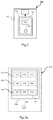
- Fig. 1 a shows a system 100 in accordance with an embodiment of the disclosure.
- the system 100 can include an electronic device 102 such as a speaker or a soundbar.
- the system 100 can further include an apparatus 104 such as a computer (e.g., Smartphones, Tablets, Laptops, Desktops).
- the apparatus 104 can be coupled to the electronic device 102. Coupling between the electronic device 102 and the apparatus 104 can be via one or both of wired coupling and wireless coupling.
- the electronic device 102 can be shaped and dimensioned to carry a plurality of light emitting elements 106 such as LEDs.
- the light emitting elements 106 can be configured to display a lighting behaviour/pattern based on a sequence of instructions provided by a user.
- the sequence of instructions can include a plurality of lighting instructions.
- the apparatus 104 can be used/operated by a user to generate/enter the lighting instructions which can be communicated to the electronic device 102.
- Fig. 1b shows the system 100 of Fig. 1 a in further detail in accordance with an embodiment of the disclosure.
- the apparatus 104 can include an input part 104a, a processing part 104b, a display part 104c and, optionally, a transceiver part 104d.
- the input part 104a can be coupled to the processing part 104b.
- the processing part 104b can be coupled to the display part 104c.
- the processing part 104b can be coupled to the transceiver part 104d.
- the input part 104a can, for example, be a mouse/keyboard
- the processing part 104b can, for example, be a microprocessor
- the display part 104c can, for example, be a display screen
- the transceiver part 104d can, for example, be a modem.
- a user can use the input part 104a to generate input signals which can be communicated to the processing part 104b for processing to generate control signals and output signals.
- the input signals can, for example, include lighting instructions generated/entered by the user.
- the control signals can be communicated to the transceiver part 104d and the transceiver part 104d can, in turn, communicate the control signals to the electronic device 102.
- the output signals can be communicated to the display part 104c for viewing by the user.
- the display part 104c can be configured to display, for example, a graphics user interface (GUI) for viewing by the user.
- GUI graphics user interface
- the GUI can be visually perceived by the user to be updated accordingly based on the output signals.
- the GUI displayed by the display part 104c can be visually updated accordingly as a user enters/generates lighting instructions (i.e., input signals) using the input part 104a.
- control signals can be communicated to the transceiver part 104d and the transceiver part 104d can, in turn, communicate the control signals to the electronic device 102.
- the control signals can be received by the electronic device 102 for controlling the lighting behaviour/pattern of the light emitting elements 106 as will be discussed in further detail hereinafter.
- the electronic device 102 can, for example, include a transceiver module 102a and a driver module 102b.
- the transceiver module 102a can be coupled to the driver module 102b.
- the driver module 102b can be coupled to the light emitting elements 106.
- Control signals communicated from the apparatus 104 can be received by the transceiver module 102a which can in turn communicate the received control signals to the driver module 102b.
- the driver module 102b can be configured to process the received control signals to produce driver signals for driving the light emitting elements 106.
- lighting behaviour/pattern of the light emitting elements 106 is based on the sequence of instructions (i.e., instruction sequence) generated/entered by a user operating the apparatus 104.
- At least the input part 104a and the GUI displayed via the display part 104c can constitute a control portion which can be operated/used by a user to generate an instruction sequence which controls the lighting behaviour/pattern of the light emitting elements 106. Therefore, the control portion can be considered to be both software and hardware based. Moreover, it can be appreciated that, by virtue of at least the input part 104a and the GUI displayed via the display part 104c, the apparatus 104 can be considered to include a control portion.
- control portion is capable of allowing a user to enter/generate any number of lighting instructions (i.e., input signals) to form an instruction sequence (i.e., control signals) so that the lighting behaviour/pattern of the light emitting elements 106 can be customized per user preference in a flexible manner as will be discussed later in further detail with reference to Fig. 2 and Fig. 3 .
- Fig. 2 shows an electronic device 200 in accordance with an embodiment of the disclosure.
- the electronic device 200 can, for example, be an audio output based device such as a speaker or a soundbar.
- the electronic device 200 can include a casing 210 shaped and dimensioned to carry a one or more speaker drivers (not shown), a plurality of light emitting elements 212 and an apparatus 214.
- the light emitting elements 212 can be coupled to the apparatus 214.
- the light emitting elements 212 can be configured to display a lighting behaviour/pattern based on a sequence of instructions provided by a user.
- the user can be able to enjoy a flexibly customized light show (i.e., visual perception of lighting behaviour/pattern from the light emitting elements 212) while enjoying audio output from the speaker drivers.
- a user can choreograph lighting behaviour/pattern based on audio output.
- the sequence of instructions can include a plurality of lighting instructions which can be entered/generated by a user using/operating the apparatus 214.
- the apparatus 214 can include a control portion 216 which can include a display screen 216a and an option portion 216b.
- the apparatus 214 of Fig. 2 can be analogous to the apparatus 104 of Fig. 1 .
- relevant portions of the earlier discussion concerning the apparatus 104 of Fig. 1 can analogously apply to the apparatus 214 of Fig. 2 .
- the apparatus 214 of Fig. 2 can further include an input part and a processing part per the apparatus 104 of Fig. 1 .
- the electronic device 200 can further include a driver module (not shown) analogous to the driver module 102b as discussed with reference to Fig. 1 .
- the driver module can be coupled to the light emitting elements 212 and communicate driver signals (based on control signals) for driving the light emitting elements 212.
- control portion 216 can be operated to generate an instruction sequence (i.e., a sequence of instructions) which controls the lighting behaviour of the light emitting elements 212.
- instruction sequence i.e., a sequence of instructions
- the control portion 216 can be analogous to the control portion earlier mentioned in Fig. 1 .
- the electronic device 200 and the system 100 differ in that the control portion discussed per Fig. 1 is outside of the electronic device 102 (i.e., the apparatus 104 per the system 100 is not a part of, but coupled to, the electronic device 102 per se) whereas the control portion 216 discussed per Fig. 2 is a part of the electronic device 200.
- the control portion per Fig. 1 can be analogous (functionally, operationally and/or structurally etc.) to the control portion 216 per Fig. 2 .
- further discussion(s)/reference(s) to the control portion 216 hereinafter can similarly apply to the control portion per Fig. 1 .
- control portion 216 is capable of allowing a user to enter/generate any number of lighting instructions (i.e., input signals) to form an instruction sequence (i.e., control signals) so that the lighting behaviour/pattern of the light emitting elements can be customized per user preference in a flexible manner as will be discussed in further detail with reference to Fig. 3 hereinafter.
- lighting instructions i.e., input signals
- instruction sequence i.e., control signals
- control portion 216 (and, analogously, the control portion per Fig. 1 ) can include a Graphics User Interface (GUI) 300, in accordance with an embodiment of the disclosure.
- GUI Graphics User Interface
- the display screen 216a (i.e., a display part) can be configured to display the aforementioned GUI 300 for the purpose of allowing a user to enter/generate the lighting instructions
- the option portion 216b can be hardware based in that the option portion 216b can be in the form of a push button.
- the GUI 300 can be configured to present one or more input portions.
- the GUI 300 can have an initial appearance showing an input portion 302 (i.e., a first input portion 302) having one or more sub portions 302a/302b/302c for generating/entering a lighting instruction (i.e., a first lighting instruction).
- the user can press the option portion 216b so that the GUI 300 can be visually updated in that another input portion 304 (i.e., a second input portion 304) having one or more sub portions 304a/304b/304c for generating/entering another lighting instruction can be displayed.
- the user desires to generate/enter yet another lighting instruction (i.e., a third lighting instruction)
- the user can press the option portion 216b so that the GUI can be further visually updated in that yet another input portion 306 (i.e., a third input portion 306) having one or more sub portions 306a/306b/306c for generating/entering yet another lighting instruction can be displayed.
- the display screen 216a can, for example, be configured to display a GUI 300 sequentially presenting a first input portion 302, a second input portion 304 and a third input portion 306 (i.e., starting with the first input portion 302 being initially presented, presenting the second input portion 304 as the user operates the option portion 216b and ending with presenting the third input portion 306 as the user operates the option portion 216b again) which can, all at the same time (i.e., all three input portions 302/304/306), be visibly perceived by the user.
- the first to third input portions 302/304/306 can, functionally, be for the purpose of allowing a user to enter/generate a first lighting instruction to a third lighting instruction respectively.
- the second and third input portions 304/306 are yet presented/displayed.
- the second input portion 304 is presented/displayed only after the user presses the option portion 216b and the third input portion 306 is presented/displayed only after the user presses the option portion 216b yet again.
- the third input portion 306 is displayed/presented, it is appreciable that all three input portions 302/304/306 are presented/displayed and visually perceivable by the user.
- the display screen 216a can be a touch screen based display screen configured to display the aforementioned GUI 300 and the option portion 216b.
- the GUI 300 can, functionally, be for the purpose of allowing a user to enter/generate the lighting instructions.
- the GUI 300 can be configured to present one or more input portions.
- the GUI 300 can have an initial appearance showing an input portion 302 (i.e., a first input portion 302) having one or more sub portions 302a/302b/302c for generating/entering a lighting instruction (i.e., a first lighting instruction).
- the user can touch the display screen 216a where the option portion 216b is displayed so that the GUI 300 can be visually updated in that another input portion 304 (i.e., a second input portion 304) having one or more sub portions 304a/304b/304c for generating/entering another lighting instruction can be displayed.
- the user desires to generate/enter yet another lighting instruction, the user can touch the display screen 216a where the option portion 216b is displayed so that the GUI 300 can be further visually updated in that yet another input portion 306 (i.e., a third input portion) having one or more sub portions 306a/306b/306c for generating/entering yet another lighting instruction can be displayed.
- the option portion 216b can be software based in that a user can touch the display screen 216a where the option portion 216b is visually perceived so as to generate/enter a new lighting instruction.
- the display screen 216a can, for example, be configured to display a GUI 300 sequentially presenting a first input portion 302, a second input portion 304 and a third input portion 306 (i.e., starting with the first input portion 302 being initially presented, presenting the second input portion 304 as the user operates the option portion 216b and ending with presenting the third input portion 306 as the user operates the option portion 216b again) which can, all at the same time (i.e., all three input portions 302/304/306), be visibly perceived by the user.
- the first to third input portions 302/304/306 can, functionally, be for the purpose of allowing a user to enter/generate a first lighting instruction to a third lighting instruction respectively.
- relevant portions of the earlier discussion per Fig. 3a analogously apply.
- the display screen 216a can be a touch screen based display screen configured to display the aforementioned GUI 300.
- the GUI 300 can be configured to present one or more input portions and one or more option portion(s) 216b.
- the GUI 300 can, functionally, be for the purpose of allowing a user to enter/generate the lighting instructions.
- a first option portion 308, a second option portion 310 and a third option portion 312 can, for example, be displayed.
- the GUI 300 can have an initial appearance showing an input portion 302 (i.e., a first input potion 302) having one or more sub portions 302a/302b/302c for generating/entering a lighting instruction (i.e., a first lighting instruction) without displaying any of the first to third option portions 308/310/312.
- a lighting instruction i.e., the first lighting instruction
- the GUI 300 can be visually updated so as to present the first option portion 308 (i.e., the second and third option portions 310/312 are not displayed yet).
- the user can touch the display screen 216a where the first option portion 308 is displayed so that the GUI 300 can be further visually updated in that another input portion 304 (i.e., a second input portion 304) having one or more sub portions 304a/304b/304c for generating/entering another lighting instruction can be displayed.
- another input portion 304 i.e., a second input portion 304
- the GUI 300 can be visually updated so as to present the second option portion 310 (i.e., the third option portion 312 is not displayed yet).
- yet another lighting instruction i.e., a third lighting instruction
- the user can touch the display screen 216a where the second option portion 310 is displayed so that the GUI 300 can be further visually updated in that yet another input portion 306 (i.e., a third input portion 306) having one or more sub portions 306a/306b/306c for generating/entering yet another lighting instruction can be displayed.
- yet another input portion 306 i.e., a third input portion 306
- the GUI 300 can be visually updated so as to present the third option portion 312 (i.e., the first to third option portions 308/310/312 are all displayed).
- the GUI 300 can be generally updated in that an option portion is displayed only after a user has generated/entered a lighting instruction (e.g., the first option portion 308 is only displayed after a user has generated/entered the first lighting instruction and the second option potion 310 is only displayed after a user has generated/entered the second lighting instruction).
- a lighting instruction e.g., the first option portion 308 is only displayed after a user has generated/entered the first lighting instruction and the second option potion 310 is only displayed after a user has generated/entered the second lighting instruction.
- the display screen 216a can, for example, be configured to display a GUI 300 sequentially presenting a first input portion 302, a second input portion 304 and a third input portion 306 (i.e., starting with the first input portion 302 being initially presented, presenting the second input portion 304 as the user operates the option portion 216b and ending with presenting the third input portion 306 as the user operates the option portion 216b again) which can, all at the same time (i.e., all three input portions 302/304/306), be visibly perceived by the user.
- the first to third input portions 302/304/306 can, functionally, be for the purpose of allowing a user to enter/generate a first lighting instruction to a third lighting instruction respectively.
- relevant portions of the earlier discussion per Fig. 3a / Fig.3b analogously apply.
- the display screen 216a can be a touch screen based display screen configured to display the aforementioned GUI 300.
- the GUI 300 can be configured to present one or more input portions and one or more option portion(s) 216b.
- the GUI 300 can, functionally, be for the purpose for the purpose of allowing a user to enter/generate the lighting instructions.
- a first option portion 308, a second option portion 310 and a third option portion 312 can, for example, be sequentially displayed/presented.
- the GUI 300 can have an initial appearance showing the first option portion 308 (i.e., the second and third option portions 310/312 are not yet displayed) and an input portion 302 (i.e., a first input portion 302) having one or more sub portions 302a/302b/302c for generating/entering a lighting instruction (i.e., a first lighting instruction).
- the user can touch the display screen 216a where the first option portion 308 is displayed so that the GUI 300 can be visually updated in that another input portion 304 (i.e., a second input portion 304) having one or more sub portions 304a/304b/304c for generating/entering another lighting instruction and the second option portion 310 can be presented (i.e., the third option portion 312 is not yet presented).
- another input portion 304 i.e., a second input portion 304
- the second option portion 310 can be presented (i.e., the third option portion 312 is not yet presented).
- yet another lighting instruction i.e., a third lighting instruction
- the user can touch the display screen 216a where the second option portion 310 is displayed so that the GUI 300 can be further visually updated in that yet another input portion 306 (i.e., a third input portion 306) having one or more sub portions 306a/306b/306c for generating/entering yet another lighting instruction and the third option portion 312 can be presented.
- yet another input portion 306 i.e., a third input portion 306 having one or more sub portions 306a/306b/306c for generating/entering yet another lighting instruction and the third option portion 312 can be presented.
- the GUI 300 can be generally updated in that a new input portion and a new option portion are presented each time a user makes contact with an option portion on the display screen 216a (e.g., the second input portion 304 and the second option portion 310 are displayed/presented at the same time by the display screen 216a after a user makes contact with the first option portion 308 displayed by the display screen 216a).
- the display screen 216a can, for example, be configured to display a GUI 300 sequentially presenting a first input portion 302, a second input portion 304 and a third input portion 306 (i.e., starting with the first input portion 302 being initially presented, presenting the second input portion 304 as the user operates the option portion 216b and ending with presenting the third input portion 306 as the user operates the option portion 216b again) which can, all at the same time (i.e., all three input portions 302/304/306), be visibly perceived by the user.
- the first to third input portions 302/304/306 can, functionally, be for the purpose of allowing a user to enter/generate a first lighting instruction to a third lighting instruction respectively.
- relevant portions of the earlier discussion per Fig. 3a / Fig.3b/Fig. 3c analogously apply.
- an input portion can include a plurality of sub portions (e.g., the first input portion 302 can include sub portions 302a/302b/302c) for generating/entering a lighting instruction (e.g., the first lighting instruction)
- the aforementioned input portion(s) can be considered to be partitioned into a plurality of sub portions and each sub portion can be operated to generate a sub instruction which constitutes a part of a lighting instruction.
- the first input portion 302 for generating the first lighting instruction can be partitioned into three sub portions 302a/302b/302c.
- Each of the three sub portions 302a/302b/302c can be operated to generate a sub instruction. Therefore, three sub instructions can be generated to form the first lighting instruction.
- the first lighting instruction can be considered to be based on a combination of three sub instructions.
- the first input portion 302 for generating the first lighting instruction can be partitioned into three sub portions 302a/302b/302c.
- Each of the three sub portions 302a/302b/302c can be operated to generate a sub instruction.
- only two (e.g., sub portions 302a/302c) of the three sub portions 302a/302b/302c are operated so that only two sub instructions are generated. Therefore, two sub instructions can be generated to form the first lighting instruction.
- the first lighting instruction can be considered to be based on a combination of two sub instructions.
- the first input portion 302 for generating the first lighting instruction and the second input portion 304 for generating the second lighting instruction can each be partitioned into three sub portions (i.e., sub portions 302a/302b/302c and sub portions 304a/304b/304c respectively). Each sub portion can be operated to generate a sub instruction. Therefore, the first lighting instruction can be considered to be based on a combination of sub instructions generated via sub portions 302a/302b/302c and the second lighting instruction can be considered to be based on a combination of sub instructions generated via sub portions 304a/304b/304c.
- each input portion 302/304/306 can, for example, take the form of a dialog box and the one or more sub portions of each input portion 302/304/306 can, for example, take the form of corresponding one or more dropdown boxes.
- the option portion 216b can be operated to present a fourth input portion (not shown) for generating a fourth lighting instruction in an analogous manner per earlier discussion concerning the first to third lighting instructions.
- more than three sub instructions per lighting instruction can also be possible.
- the plurality lighting instructions (e.g., the first to fourth lighting instructions) generated form the aforementioned sequence of instructions/instruction sequence. Therefore, the instruction sequence/sequence of instructions include the plurality of lighting instructions (e.g., the first to fourth lighting instructions). In the lighting sequence/sequence of instructions, the first lighting instruction is followed by the second lighting instruction which is in turn followed by the third lighting instruction (i.e., the first lighting precedes the second lighting instruction and the second lighting instruction precedes the third lighting instruction). If a fourth lighting instruction is generated, the fourth lighting instruction is preceded by the third lighting instruction.
- the lighting behaviour/pattern displayed by the lighting emitting elements 106/212 can have a lighting sequence. That is, the lighting behaviour/pattern displayed by the light emitting elements 106/212 can have a lighting sequence which is based on an instruction sequence/sequence of instructions where, for example, the first lighting instruction is followed by the second lighting instruction.
- control portion 216 allows a user to enter/generate an instruction sequence/a sequence of instructions in a rather flexible manner.
- a user can enter any number of lighting instructions as desired by simply operating the option portion 216b.
- each lighting instruction can be based on a combination of sub instructions and the combination of sub instructions can be decided by the user (e.g., as discussed earlier, instead of a combination of three sub instructions, a lighting instruction can be based only on two sub instructions if the user so desires). In this manner, the lighting behaviour/pattern of the light emitting elements 106/212 can be customized per user preference in a flexible manner.
- a GUI 300 presenting all input portions can be displayed via the display screen 216a (analogously, via the display part 104c)
- the display part/display screen 104c/216a can effectively display the instruction sequence/sequence of instructions for easy/convenient review by the user.
- a GUI 300 presenting a first input portion 302, a second input portion 304 and a third input portion 306 can be displayed.
- all three input portions 302/304/306) can be visibly perceived by the user at the same time. Consequently, the instruction sequence/sequence of instructions (i.e., based on all three input portions 302/304/306) can be reviewed by the user in a convenient manner.
- the electronic device 102/200 can carry a horizontal row of fourteen light emitting elements 106/212 which can be grouped into a plurality of groups.
- the fourteen light emitting elements 106/212 can be grouped into seven groups (i.e., two light emitting elements per group).
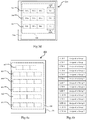
- the control portion 216 can, optionally, be further configured to present a setup portion 402, as shown in Fig. 4a , which allows a user to group the light emitting elements 106/212 by assigning, for example, two light emitting elements 106/212 to each group of the, for example, seven groups as shown in Fig. 4b .
- a user may wish to see, from the light emitting elements 106/212 a lighting sequence of rainbow colour bouncing four times left and right at a frequency of 1 Hertz (Hz) followed by four blue blinks at a frequency of 5Hz.
- the user may further wish for such a lighting sequence to be executed ten times (i.e., repeated ten times).
- the lighting behaviour/pattern displayed by the light emitting elements 106/212 can be a lighting sequence of rainbow colour bouncing four times left and right at a frequency of 1 Hertz (Hz) followed by four blue blinks at a frequency of 5Hz executed/carried out ten times.
- Such a lighting behaviour/pattern can be achieved by entering five lighting instructions.
- the control portion 216 can be configured to present a first input portion 404, a second input portion 406, a third input portion 408, a fourth input portion 410 and a fifth input portion 412 for generating/entering, respectively, a first lighting instruction to a fifth lighting instruction.
- the first input portion 404 can include a first sub portion 404a (i.e., "Group 1 colour setting), a second sub portion 404b (i.e., "Group 2 colour setting"), a third sub portion 404c (i.e., "Group 3 colour setting"), a fourth sub portion 404d (i.e., "Group 4 colour setting), a fifth sub portion 404e (i.e., "Group 5 colour setting), a sixth sub portion 404f (i.e., "Group 6 colour setting”), a seventh sub portion 404g (i.e., "Group 7 colour setting"), an eighth sub portion 404h (i.e., "Transition Type”), a ninth sub portion 404i (i.e., "Duration"), a tenth sub portion 404j (i.e., "Loop Instruction”) and an eleventh sub portion 404k (i.e., "Loop Count”).
- a first sub portion 404a i.e., "Group 1 colour setting
- the first sub portion 404a can be used for generating a first sub instruction indicative of the colour (e.g., red colour) displayed by the light emitting elements 106/212 grouped in a first group (out of the seven groups). Grouping can be based on user grouping using the setup portion 402.
- a first sub instruction indicative of the colour e.g., red colour
- Grouping can be based on user grouping using the setup portion 402.
- each of the second to seventh sub portions 404b/404c/404d/404e/404f/404g can be used for generating a sub instruction (i.e., second to seventh sub instructions respectively) indicative of the colour displayed by the light emitting elements 106/212 grouped in the respective second to seventh groups (e.g., orange colour for group two, yellow colour for group three, green colour for group four, blue colour for group five, Indigo colour for group six and violet colour for group seven).
- the first to seventh group can be positioned in a left to right order in the aforementioned horizontal row.
- the first group can be the left most group in the horizontal row followed by the second group, followed by the third group, followed by the fourth group, followed by the fifth group, followed by the sixth group and, lastly, followed by the seventh group which is the right most group in the horizontal row.
- the eighth sub portion 404h can be used for generating an eighth sub instruction indicative of transition visual effect associated with the first to seventh group.
- the eighth sub instruction can be indicative of a "shift right" visual effect (e.g., red colour can be visually perceived to be “shifted” from the first group to the second group and orange colour can be visually perceived to be shifted from the second group to the third group, and so on and so forth).
- the ninth sub portion 404i can be used for generating a ninth sub instruction indicative of the duration of the transition visual effect.
- the ninth sub instruction can be indicative of a duration of half a second (i.e., 500 milliseconds).
- the tenth and eleventh sub portions 404j/404k can remain unused.
- the first lighting instruction generated/entered by the user using the first input portion 404, can be based on a combination of the first to ninth sub instructions.
- the first lighting instruction effectively allows a user to visually perceive (from the light emitting elements 106/212) a rainbow shifting from left to right for a duration of 500 milliseconds.
- Fig. 4d to Fig. 4g show, respectively, the second to fifth input portions 406/408/410/412 in further detail.
- Each of the second to fifth input portions 406/408/410/412 can, largely, be similar to the first input portion 404 discussed with reference to Fig. 4a .
- each of the second to fifth input portions 406/408/410/412 can include a first to eleventh sub portions which can be used/operated in a similar manner as discussed with reference to Fig. 4a .
- relevant portions of earlier discussion concerning the first input portion 404 analogously apply.
- the second to fifth input portions 406/408/410/412 are used by the user to enter the second to fifth lighting instructions respectively. Therefore, the second to fifth input portions 406/408/410/412 may differ from the first input portion 404 only in use.
- the second lighting instruction generated/entered by the user via the second input portion 406 can, effectively, allow the user to visually perceive (from the light emitting elements 106/212) a rainbow shifting from right to left for a duration of 500 milliseconds.
- the user generates/enters different (as compared to the first input portion 404) sub instructions via relevant sub portions to form the second lighting instruction.
- a sub instruction indicative of "shift left” is generated/entered via an eighth sub portion 406h (i.e., "Transition Type")
- a sub instruction indicative of "Looping to Instruction 1" is generated/entered via a tenth sub portion 406j (i.e., "Loop Instruction”
- a sub instruction indicative of "Loop 4 times” is generated/entered via an eleventh sub portion 406k (i.e., "Loop Count").
- the different colours can be generated/entered in respect to the first to seventh group via a first to a seventh sub portions 406a/406b/406c/406d/406e/406f/406g (i.e., "Group 1 colour setting” to "Group 7 colour setting”).
- a sub instruction indicative of a duration of 500 milliseconds in relation to "shift left” can be entered/generated via a ninth sub portion 406i (i.e., "Duration").
- the third lighting instruction generated/entered by the user via the third input portion 408 can, effectively, allow the user to visually perceive (from the light emitting elements 106/212) blue colour (i.e., from all seven groups) for a duration of 100 milliseconds.
- the user generates/enters different (as compared to the first input portion 404 and the second input portion) sub instructions via relevant sub portions to form the third lighting instruction.
- sub instructions indicative of blue in colour can be generated/entered in respect to the first to seventh group via a first to a seventh sub portions 408a/408b/408c/408d/408e/408f/408g (i.e., "Group 1 colour setting” to “Group 7 colour setting”), a sub instruction indicative of "solid” (signifying "no transition") is entered/generated via an eighth sub portion 408h (i.e., "Transition Type") and a sub instruction indicative of a duration of 100 milliseconds in relation to "solid" can be entered/generated via a ninth sub portion 408i (i.e., "Duration").
- the remaining sub portions i.e., tenth sub portion 408j "Loop Instruction” and eleventh sub portion 408k “Loop Count" can be unused.
- the fourth lighting instruction generated/entered by the user via the fourth input portion 410 can, effectively, allow the user to visually perceive (from the light emitting elements 106/212) black colour (i.e., this technically means there is no display of colour(s)) for a duration of 100 milliseconds.
- the user generates/enters appropriate sub instructions via relevant sub portions to form the fourth lighting instruction.
- sub instructions indicative of black in colour can be generated/entered in respect to the first to seventh group via a first to a seventh sub portions 410a/410b/410c/410d/410e/410f/410g (i.e., "Group 1 colour setting” to "Group 7 colour setting”), a sub instruction indicative of "solid” (signifying "no transition") is entered/generated via an eighth sub portion 410h (i.e., "Transition Type") and a sub instruction indicative of a duration of 100 milliseconds in relation to "solid" can be entered/generated via a ninth sub portion 410i (i.e., "Duration").
- a sub instruction indicative of "Looping to Instruction 3" is generated/entered via a tenth sub portion 410j (i.e., "Loop Instruction”) and a sub instruction indicative of "Loop 4 times” is generated/entered via an eleventh sub portion 410k (i.e., "Loop Count”).
- the fifth lighting instruction generated/entered by the user via the fifth input portion 412 is effectively an instruction for execution of the first to fourth lighting instructions to be repeated ten times.
- the second lighting instruction is executed/carried out after the first lighting instruction has been executed/carried out.
- the second lighting instruction also requires a loop back to the first lighting instruction for four times.
- both the first and second lighting instructions are to be executed/carried out, in sequence, for four times. Therefore, the combination of the first and second lighting instructions (i.e., the first lighting instruction followed by the second lighting instruction), executed/carried out four times, allows a user to visually perceive (from the light emitting elements 106/212) a lighting sequence of rainbow colour bouncing four times left and right at a frequency of 1 Hz.
- the third lighting instruction follows the second lighting instruction and is executed/carried out only after the second lighting instruction has been fully executed/carried out (taking into account the loop back sub instruction included in the second lighting instruction) and the fourth lighting instruction is executed/carried out after the third lighting instruction.
- the user should be able to visually perceive (from the light emitting elements 106/212) four blue blinks at a frequency of 5Hz (i.e., noting there is a loop back instruction to the third lighting instruction for four times).
- Both the third and fourth lighting instructions are to be executed/carried out, in sequence, for four times.
- the fifth lighting instruction follows the fourth lighting instruction and is executed/carried out only after the fourth lighting instruction has been fully executed/carried out (taking into account the loop back sub instruction included in the fourth lighting instruction).
- the fifth lighting instruction is effectively an instruction for execution of the first to fourth lighting instructions to be repeated ten times.
- an instruction sequence/sequence of instructions which includes the first to fifth lighting instructions where the first lighting instruction is carried out/executed, followed by the second lighting instruction, followed by the third lighting instruction, followed by the fourth lighting instruction and followed by, lastly, the fifth lighting instruction, allows a user to visually perceive (from the light emitting elements 106/212) a lighting sequence, repeated ten times, of rainbow colour bouncing four times left and right at a frequency of 1 Hertz (Hz) followed by four blue blinks at a frequency of 5Hz.
- Hz Hertz
- each input portion can include one or more sub portions for generating/entering sub instructions.
- a setup portion can be provided/presented for flexibility in grouping the light emitting elements 106/212 per user preference. Therefore, it is further appreciable that lighting behaviour/ pattern of the light emitting elements 106/212 can be highly customized in accordance with user preference in a highly flexible manner.
- Fig. 5 shows a flow diagram of a method 500 in relation to the earlier discussed system 100 and electronic device 200 per Fig. 1 to Fig. 4 .
- Fig. 5 shows a flow diagram of a method 500 for controlling lighting behaviour of a plurality of light emitting elements 106/212 based on an instruction sequence having a plurality of lighting instructions.
- the plurality of light instructions can be entered/generated by a user via corresponding plurality of input portions displayed/presented by the control portion 216 as earlier discussed with reference to Fig. 1 to Fig. 4 .
- the method 500 can include an initial lighting instruction generating step 502 and an option activation step 504.
- an initial input portion e.g., the first input portion 302
- an initial lighting instruction i.e., a first lighting instruction
- a first input portion 302 can be provided for generating a first lighting instruction of the plurality of lighting instructions.
- one or more option portion(s) 216b can be provided for use by a user to instruct the control portion 216 to present corresponding one or more subsequent input portion(s) (i.e., subsequent to the first input portion 302) for generating/entering corresponding one or more subsequent lighting instruction(s) (i.e., subsequent to the first lighting instruction).
- one option portion 216b can be provided for use by a user to instruct the sequential presentation of a second input portion 304 and a third input portion 306 (i.e., presentation of the second input portion 304 follows the first input portion 302 and presentation of the third input portion 306 follows the second input portion 304).
- the second and the third input portions 304/306 can be used by a user to generate/enter, respectively, a second lighting instruction and a third lighting instruction of the plurality of lighting instructions.
- a plurality of option portions 216b can be provided.
- a first option portion 308 can be provided for use by a user to instruct the presentation of a second input portion 304 and a second option portion 310 can be provided for use by a user to instruct the presentation of a third input portion 306.
- the second and the third input portions 304/306 can be used by a user to generate/enter, respectively, a second lighting instruction and a third lighting instruction of the plurality of lighting instructions.
- the lighting behaviour displayed by the light emitting elements 106/212 can have a lighting sequence which is based on an instruction sequence where the initial lighting instruction is followed by the subsequently generated lighting instructions.
- the instruction sequence is such that the initial lighting instruction (i.e., which is first generated) is followed by the next most immediate subsequently generated lighting instruction (i.e., which is generated second to the initial lighting instruction) followed by the next subsequently generated lighting instruction (i.e., which is generated after the second to the initial lighting instruction). That is, the instruction sequence is, in general, such that the initial lighting instruction is followed by subsequently generated lighting instructions in the order which the subsequent lighting instructions have been generated.
- the lighting behaviour/pattern displayed by the light emitting elements 106/212 can have a lighting sequence which is based on the instruction sequence where the first lighting instruction is followed by the second lighting instruction which is followed by the third lighting instruction.
- a user can use the input part 104a to generate input signals which can be communicated to the processing part 104b for processing to generate control signals and output signals.
- the input signals can, for example, include lighting instructions generated/entered by the user.
- the input signals can, for example, further include instructions for the processing part 104b to generate output signals such that the control portion presents/displays one or more subsequent input portion(s) based on activation (e.g., by manner of user touching the display screen 216a where the option portion 216b is displayed as discussed earlier) of the aforementioned one or more option portions 216b.
- the input signals can, for example, yet further include instructions for the processing part 104b to generate output signals such that the control portion presents/displays a plurality of option portions 216b based on user operation.
- a user can choreograph lighting behaviour/pattern based on audio output.
- the electronic device 200 can be used by a user for choreographing lighting behaviour/pattern in accordance with audio output. This will be discussed in further detail with reference to Fig. 6 hereinafter.
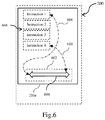
- Fig. 6 shows an exemplary application of the electronic device 200 (and, analogously, the system 100) where a user can choreograph lighting behaviour/pattern based on audio output, according to an embodiment of the disclosure.
- the display screen 216a can be configured to present a choreography portion 602 in accordance with an embodiment of the disclosure.
- the choreography portion 602 can, for example, be presented after the lighting instructions have been generated.
- audio output from the speaker drivers can be based on audio files (e.g., mp3 based audio files) being run/executed by, for example, the apparatus 214.
- the display screen 216a can be configured to display graphical representations (e.g., in the form of tabs 604) of the generated lighting instruction(s).
- the generated plurality lighting instructions e.g., the first to fourth lighting instructions
- the displayed plurality lighting instructions can be graphically presented as interactive tabs 604 (e.g., "instruction 1," “instruction 2,” “instruction 3” and “instruction 4") movable (e.g., by manner of "drag and drop”) by a user within the display screen 216a.
- the choreography portion 602 can be configured to display a representation of an audio file. For example, a graphic representation (e.g., in the form of a timeline bar 606) of the duration of the audio output based on the audio file (e.g., duration of a song) and a user can be allowed to insert (e.g., via "drag and drop") generated lighting instructions at particular points in time for the duration of the audio output. Therefore, the choreography portion 602 can be configured to be usable by a user to associate one or more lighting instructions to corresponding one or more portions of the audio file. Appreciably, it is also possible for a plurality of lighting instructions to be associated with one portion of the audio file (i.e., as opposed to only one lighting instruction being associated with one portion of the audio file).
- a user can drag and drop "instruction 1" at the start of a song (i.e., at the beginning of the timeline bar 606, as depicted by dotted double arrow 608) which has a duration of 6 minutes.
- the user can subsequently drag and drop "instruction 2" one minute into the song, followed by "instruction 3" four minutes into the song and ending with "instruction 4" (e.g., as depicted by dotted double arrow 610) thirty seconds towards the end of the song.
- it is desired for the start of the song to be associated with a plurality of visual effects it is also possible for a user to drag and drop, for example, "instruction 1" and "instruction 3" at the start of the song.
- a user can control what/which lighting effect (i.e., a lighting instruction) can be visually perceived at which particular point in time of the audio output. Therefore, the user can choreograph lighting behaviour/pattern based on audio output.
- the audio file subjected to the user's choreography can be saved and replayed whenever desired (i.e., on the electronic device 200 or on another device).
- lighting instruction(s) can be considered to be embedded in the audio file.
- An audio file having lighting instruction(s) embedded therein can be referred to as a "modified audio file".
- lighting instruction(s) can be embedded in ID3 tag(s) of audio file(s).
- lighting instruction(s) can be embedded in audio signals which frequencies are above human audible range (e.g., via transformation from frequency to time domain using digital signal processing based techniques).
- the processing part 104b of the electronic device 200 and analogously corresponding processing parts of the aforementioned another device) can be configured to embed the lighting instruction(s), save the modified audio file and decode the modified audio file for replay.
- the modified audio file can be saved for replay on the electronic device 200.
- the modified audio file can be saved and communicated to one or more another device (i.e., other than the electronic device 200) for replay on that/those other device(s).
- the modified audio file can be saved and communicated to one or more another device, and the modified audio file can be replayed on the electronic device 200 and/or the one or more another device.
- lighting instructions in the sequence of instructions, for the purpose of choreography can be applied (e.g., inserted) flexibly by a user (e.g., in-sequence, out-of-sequence or certain lighting instructions skipped entirely).
- the processing part of the electronic device 200 can be configured to detect audio parameters such as rhythm or tempo (i.e., beats per minute) etc. associated with an audio file (i.e., music tempo of a song). Lighting instruction(s) can then be automatically assigned, and thus associated with, detected audio parameters by the processing part.
- the processing part can be further configured to embed lighting instruction(s) to an audio file based on such detected audio parameters. For example, during a fast tempo portion of the audio output, a user can visually perceive lighting output from the LEDs to be "blinking" in pace with the fast tempo portion of the audio output.
- the electronic device 200 is mainly discussed in the context of an audio output based device such as a speaker or a soundbar, it is appreciable that other types of devices are also possible.
- the electronic device 200 can be a computer peripheral device such as a pointing device (e.g., a mouse) carrying LED(s)) or a keyboard carrying LED(s).
- a non-audio output based device e.g., a mouse
- a separate audio output based device e.g., a speaker
Landscapes
- Engineering & Computer Science (AREA)
- Multimedia (AREA)
- Physics & Mathematics (AREA)
- Acoustics & Sound (AREA)
- General Engineering & Computer Science (AREA)
- Circuit Arrangement For Electric Light Sources In General (AREA)
Abstract
There is provided an apparatus configured to control a plurality of light emitting elements so that the light emitting elements display a lighting behaviour based on audio output which is based on an audio file. The apparatus can include a control portion and a choreography portion. The control portion is operable to generate an instruction sequence which can be used to control the lighting behaviour of the light emitting elements, the instruction sequence can include a plurality of lighting instructions. The choreography portion is operable to associate at least one lighting instruction from the plurality of lighting instructions with at least one portion of the audio file.
Description
- The present disclosure generally relates to an electronic device carrying a plurality of light emitting elements such as Light Emitting Diodes (LEDs) which can be configured to display a lighting behaviour/pattern based on a sequence of instructions provided by a user. The present disclosure further relates to a method and an apparatus suitable for controlling lighting behaviour of a plurality of light emitting elements.
- It is fairly common for electronic gadgets for entertainment to include lightshows so as to enhance entertainment value.
- For example, an electronic gadget such as a speaker device can carry light emitting diodes which can be pre-set to present lightshows while music is being played. Hence a listener can be afforded both audio enjoyment and visual enjoyment if desired.
- However, lightshows are quite often pre-set and may not necessarily suit the preferences of the listener.
- Moreover, even if some form of customization is provided, the extent of customization may also be limited such that the listener may not necessarily be able to customize lightshows to fully suit his/her preferences.
- It is therefore desirable to provide a solution to address the foregoing problem.
- In accordance with an aspect of the disclosure, there is provided an apparatus configured to control a plurality of light emitting elements so that the light emitting elements display a lighting behaviour based on audio output which is based on an audio file. The apparatus comprises a control portion operable to generate an instruction sequence usable for controlling the lighting behaviour of the light emitting elements, the instruction sequence comprising a plurality of lighting instructions, and a choreography portion operable to associate at least one lighting instruction from the plurality of lighting instructions with at least one portion of the audio file.
- The choreography portion can be operated to associate at least one lighting instruction from the plurality of lighting instructions with at least one portion of the audio file. In one example, the choreography portion can be used for embedding at least one lighting instruction from the plurality of lighting instructions in the audio file so as to generate a modified audio file.
- Preferably, the modified audio file can be saved for subsequent replay by one or both of the apparatus and another device.
- In accordance with another aspect of the disclosure, there is provided a method of controlling lighting behaviour of a plurality of light emitting elements, so that the light emitting elements display a lighting behaviour based on audio output which is based on an audio file. The method comprises generating an instruction sequence usable for controlling the lighting behaviour of the light emitting elements, the instruction sequence; and associating at least one lighting instruction from the plurality of lighting instructions with at least one portion of the audio file.
- Embodiments of the disclosure are described hereinafter with reference to the following drawings, in which:
-
Fig. 1 a shows a system which can include an electronic device and an apparatus, according to an embodiment of the disclosure; -
Fig, 1b shows the electronic device and the apparatus ofFig. 1 a in further detail where the apparatus can include a control portion, according to an embodiment of the disclosure; -
Fig. 2 shows anelectronic device 200 which can include a control portion analogous to the control portion of the apparatus ofFig. 1b , according to an embodiment of the disclosure; -
Fig. 3a to Fig. 3d show that the control portion mentioned in each ofFig. 1 andFig. 2 can include a Graphics User Interface (GUI), according to an embodiment of the disclosure; -
Fig. 4a to Fig. 4h show an exemplary scenario concerning user operation of the control portion mentioned in each ofFig. 1 andFig. 2 , according to an embodiment of the disclosure; -
Fig. 5 shows a flow diagram of a method in relation to the system ofFig. 1 and electronic device ofFig. 2 ., according to an embodiment of the disclosure; and -
Fig. 6 shows an exemplary application of the system ofFig. 1 and electronic device ofFig. 2 where a user can choreograph lighting behaviour/pattern based on audio output, according to an embodiment of the disclosure. - Representative embodiments of the disclosure, for addressing the foregoing problem(s), are described hereinafter with reference to
Fig. 1 to Fig. 5 . - Specifically, the present disclosure contemplates an electronic device such as a speaker, a soundbar etc. which carries a plurality of light emitting elements such as Light Emitting Diodes (LEDs). The light emitting elements can be configured to display a lighting behaviour/pattern based on a sequence of instructions provided by a user. The sequence of instructions (i.e., instruction sequence) can be entered by the user using/operating a control portion which can be a part of the electronic device and/or not a part of the electronic device. The control portion can also be software based and/or hardware based. Preferably, the control portion allows the user to enter any number of lighting instructions to form a sequence of instructions so that the lighting behaviour/pattern of the light emitting elements can be customized per user preference in a flexible manner.
-
Fig. 1 a shows asystem 100 in accordance with an embodiment of the disclosure. Thesystem 100 can include anelectronic device 102 such as a speaker or a soundbar. Thesystem 100 can further include anapparatus 104 such as a computer (e.g., Smartphones, Tablets, Laptops, Desktops). Theapparatus 104 can be coupled to theelectronic device 102. Coupling between theelectronic device 102 and theapparatus 104 can be via one or both of wired coupling and wireless coupling. - The
electronic device 102 can be shaped and dimensioned to carry a plurality oflight emitting elements 106 such as LEDs. As will be discussed later in further detail with reference toFig. 1b , thelight emitting elements 106 can be configured to display a lighting behaviour/pattern based on a sequence of instructions provided by a user. The sequence of instructions can include a plurality of lighting instructions. - Operationally, as will be discussed later in further detail with reference to
Fig. 1b , theapparatus 104 can be used/operated by a user to generate/enter the lighting instructions which can be communicated to theelectronic device 102. -
Fig. 1b shows thesystem 100 ofFig. 1 a in further detail in accordance with an embodiment of the disclosure. - As shown, the
apparatus 104 can include aninput part 104a, aprocessing part 104b, adisplay part 104c and, optionally, atransceiver part 104d. Theinput part 104a can be coupled to theprocessing part 104b. Theprocessing part 104b can be coupled to thedisplay part 104c. Moreover, theprocessing part 104b can be coupled to thetransceiver part 104d. - Where the
apparatus 104 is, for example, a computer, theinput part 104a can, for example, be a mouse/keyboard, theprocessing part 104b can, for example, be a microprocessor, thedisplay part 104c can, for example, be a display screen and thetransceiver part 104d can, for example, be a modem. - Operationally, a user can use the
input part 104a to generate input signals which can be communicated to theprocessing part 104b for processing to generate control signals and output signals. The input signals can, for example, include lighting instructions generated/entered by the user. The control signals can be communicated to thetransceiver part 104d and thetransceiver part 104d can, in turn, communicate the control signals to theelectronic device 102. The output signals can be communicated to thedisplay part 104c for viewing by the user. - The
display part 104c can be configured to display, for example, a graphics user interface (GUI) for viewing by the user. The GUI can be visually perceived by the user to be updated accordingly based on the output signals. Specifically, the GUI displayed by thedisplay part 104c can be visually updated accordingly as a user enters/generates lighting instructions (i.e., input signals) using theinput part 104a. - Earlier mentioned, the control signals can be communicated to the
transceiver part 104d and thetransceiver part 104d can, in turn, communicate the control signals to theelectronic device 102. The control signals can be received by theelectronic device 102 for controlling the lighting behaviour/pattern of thelight emitting elements 106 as will be discussed in further detail hereinafter. - The
electronic device 102 can, for example, include atransceiver module 102a and adriver module 102b. Thetransceiver module 102a can be coupled to thedriver module 102b. Thedriver module 102b can be coupled to thelight emitting elements 106. - Control signals communicated from the
apparatus 104 can be received by thetransceiver module 102a which can in turn communicate the received control signals to thedriver module 102b. Thedriver module 102b can be configured to process the received control signals to produce driver signals for driving thelight emitting elements 106. - In this regard, it is appreciable that lighting behaviour/pattern of the
light emitting elements 106 is based on the sequence of instructions (i.e., instruction sequence) generated/entered by a user operating theapparatus 104. - It is further appreciable at least the
input part 104a and the GUI displayed via thedisplay part 104c can constitute a control portion which can be operated/used by a user to generate an instruction sequence which controls the lighting behaviour/pattern of thelight emitting elements 106. Therefore, the control portion can be considered to be both software and hardware based. Moreover, it can be appreciated that, by virtue of at least theinput part 104a and the GUI displayed via thedisplay part 104c, theapparatus 104 can be considered to include a control portion. - It is yet further appreciable that the control portion is capable of allowing a user to enter/generate any number of lighting instructions (i.e., input signals) to form an instruction sequence (i.e., control signals) so that the lighting behaviour/pattern of the
light emitting elements 106 can be customized per user preference in a flexible manner as will be discussed later in further detail with reference toFig. 2 andFig. 3 . -
Fig. 2 shows anelectronic device 200 in accordance with an embodiment of the disclosure. Theelectronic device 200 can, for example, be an audio output based device such as a speaker or a soundbar. - The
electronic device 200 can include acasing 210 shaped and dimensioned to carry a one or more speaker drivers (not shown), a plurality oflight emitting elements 212 and anapparatus 214. Thelight emitting elements 212 can be coupled to theapparatus 214. - The
light emitting elements 212 can be configured to display a lighting behaviour/pattern based on a sequence of instructions provided by a user. In this regard, the user can be able to enjoy a flexibly customized light show (i.e., visual perception of lighting behaviour/pattern from the light emitting elements 212) while enjoying audio output from the speaker drivers. In one exemplary application, as will be discussed in further detail with reference toFig. 6 , a user can choreograph lighting behaviour/pattern based on audio output. - The sequence of instructions can include a plurality of lighting instructions which can be entered/generated by a user using/operating the
apparatus 214. - The
apparatus 214 can include acontrol portion 216 which can include adisplay screen 216a and anoption portion 216b. Moreover, theapparatus 214 ofFig. 2 can be analogous to theapparatus 104 ofFig. 1 . In this regard, relevant portions of the earlier discussion concerning theapparatus 104 ofFig. 1 can analogously apply to theapparatus 214 ofFig. 2 . For example, theapparatus 214 ofFig. 2 can further include an input part and a processing part per theapparatus 104 ofFig. 1 . Moreover, theelectronic device 200 can further include a driver module (not shown) analogous to thedriver module 102b as discussed with reference toFig. 1 . Appreciably, for theelectronic device 200, the driver module can be coupled to thelight emitting elements 212 and communicate driver signals (based on control signals) for driving thelight emitting elements 212. - Operationally, the
control portion 216 can be operated to generate an instruction sequence (i.e., a sequence of instructions) which controls the lighting behaviour of thelight emitting elements 212. Thecontrol portion 216 can be analogous to the control portion earlier mentioned inFig. 1 . - Considering
Fig. 1 andFig. 2 , it is appreciable that theelectronic device 200 and thesystem 100 differ in that the control portion discussed perFig. 1 is outside of the electronic device 102 (i.e., theapparatus 104 per thesystem 100 is not a part of, but coupled to, theelectronic device 102 per se) whereas thecontrol portion 216 discussed perFig. 2 is a part of theelectronic device 200. However, as mentioned earlier, the control portion perFig. 1 can be analogous (functionally, operationally and/or structurally etc.) to thecontrol portion 216 perFig. 2 . Hence it is understood that further discussion(s)/reference(s) to thecontrol portion 216 hereinafter can similarly apply to the control portion perFig. 1 . - Additionally, as with the control portion mentioned in
Fig. 1 , thecontrol portion 216 is capable of allowing a user to enter/generate any number of lighting instructions (i.e., input signals) to form an instruction sequence (i.e., control signals) so that the lighting behaviour/pattern of the light emitting elements can be customized per user preference in a flexible manner as will be discussed in further detail with reference toFig. 3 hereinafter. - Referring to
Fig. 3a to Fig. 3d , the control portion 216 (and, analogously, the control portion perFig. 1 ) can include a Graphics User Interface (GUI) 300, in accordance with an embodiment of the disclosure. - In one embodiment, as shown in
Fig. 3a , thedisplay screen 216a (i.e., a display part) can be configured to display theaforementioned GUI 300 for the purpose of allowing a user to enter/generate the lighting instructions, and theoption portion 216b can be hardware based in that theoption portion 216b can be in the form of a push button. TheGUI 300 can be configured to present one or more input portions. Specifically, theGUI 300 can have an initial appearance showing an input portion 302 (i.e., a first input portion 302) having one ormore sub portions 302a/302b/302c for generating/entering a lighting instruction (i.e., a first lighting instruction). Where the user desires to generate/enter another lighting instruction (i.e., a second lighting instruction), the user can press theoption portion 216b so that theGUI 300 can be visually updated in that another input portion 304 (i.e., a second input portion 304) having one ormore sub portions 304a/304b/304c for generating/entering another lighting instruction can be displayed. Where the user desires to generate/enter yet another lighting instruction (i.e., a third lighting instruction), the user can press theoption portion 216b so that the GUI can be further visually updated in that yet another input portion 306 (i.e., a third input portion 306) having one ormore sub portions 306a/306b/306c for generating/entering yet another lighting instruction can be displayed. In this regard, based on user operation of theoption portion 216b, thedisplay screen 216a can, for example, be configured to display aGUI 300 sequentially presenting afirst input portion 302, asecond input portion 304 and a third input portion 306 (i.e., starting with thefirst input portion 302 being initially presented, presenting thesecond input portion 304 as the user operates theoption portion 216b and ending with presenting thethird input portion 306 as the user operates theoption portion 216b again) which can, all at the same time (i.e., all threeinput portions 302/304/306), be visibly perceived by the user. The first tothird input portions 302/304/306 can, functionally, be for the purpose of allowing a user to enter/generate a first lighting instruction to a third lighting instruction respectively. - Moreover, it is appreciable that when the user is entering/generating lighting instructions, a subsequent input portion is presented/displayed only after the user presses the
option portion 216b. - For example, in regard to the initial appearance, the second and
third input portions 304/306 are yet presented/displayed. Thesecond input portion 304 is presented/displayed only after the user presses theoption portion 216b and thethird input portion 306 is presented/displayed only after the user presses theoption portion 216b yet again. After thethird input portion 306 is displayed/presented, it is appreciable that all threeinput portions 302/304/306 are presented/displayed and visually perceivable by the user. - In another embodiment, as shown in
Fig. 3b , thedisplay screen 216a can be a touch screen based display screen configured to display theaforementioned GUI 300 and theoption portion 216b. As mentioned earlier, theGUI 300 can, functionally, be for the purpose of allowing a user to enter/generate the lighting instructions. TheGUI 300 can be configured to present one or more input portions. Specifically, theGUI 300 can have an initial appearance showing an input portion 302 (i.e., a first input portion 302) having one ormore sub portions 302a/302b/302c for generating/entering a lighting instruction (i.e., a first lighting instruction). Where the user desires to generate/enter another lighting instruction (i.e., a second lighting instruction), the user can touch thedisplay screen 216a where theoption portion 216b is displayed so that theGUI 300 can be visually updated in that another input portion 304 (i.e., a second input portion 304) having one ormore sub portions 304a/304b/304c for generating/entering another lighting instruction can be displayed. Where the user desires to generate/enter yet another lighting instruction, the user can touch thedisplay screen 216a where theoption portion 216b is displayed so that theGUI 300 can be further visually updated in that yet another input portion 306 (i.e., a third input portion) having one ormore sub portions 306a/306b/306c for generating/entering yet another lighting instruction can be displayed. Therefore, theoption portion 216b can be software based in that a user can touch thedisplay screen 216a where theoption portion 216b is visually perceived so as to generate/enter a new lighting instruction. - Moreover, based on user operation of the
option portion 216b, thedisplay screen 216a can, for example, be configured to display aGUI 300 sequentially presenting afirst input portion 302, asecond input portion 304 and a third input portion 306 (i.e., starting with thefirst input portion 302 being initially presented, presenting thesecond input portion 304 as the user operates theoption portion 216b and ending with presenting thethird input portion 306 as the user operates theoption portion 216b again) which can, all at the same time (i.e., all threeinput portions 302/304/306), be visibly perceived by the user. The first tothird input portions 302/304/306 can, functionally, be for the purpose of allowing a user to enter/generate a first lighting instruction to a third lighting instruction respectively. In this regard, relevant portions of the earlier discussion perFig. 3a analogously apply. - In yet another embodiment, as shown in
Fig. 3c , thedisplay screen 216a can be a touch screen based display screen configured to display theaforementioned GUI 300. TheGUI 300 can be configured to present one or more input portions and one or more option portion(s) 216b. Earlier mentioned, theGUI 300 can, functionally, be for the purpose of allowing a user to enter/generate the lighting instructions. Depending on user usage/operation, afirst option portion 308, asecond option portion 310 and athird option portion 312 can, for example, be displayed. In a more specific example, theGUI 300 can have an initial appearance showing an input portion 302 (i.e., a first input potion 302) having one ormore sub portions 302a/302b/302c for generating/entering a lighting instruction (i.e., a first lighting instruction) without displaying any of the first tothird option portions 308/310/312. After a user has entered/generated a lighting instruction (i.e., the first lighting instruction) using theinput portion 302, theGUI 300 can be visually updated so as to present the first option portion 308 (i.e., the second andthird option portions 310/312 are not displayed yet). Where the user desires to enter another lighting instruction (i.e., a second lighting instruction), the user can touch thedisplay screen 216a where thefirst option portion 308 is displayed so that theGUI 300 can be further visually updated in that another input portion 304 (i.e., a second input portion 304) having one ormore sub portions 304a/304b/304c for generating/entering another lighting instruction can be displayed. After a user has entered/generated another lighting instruction (i.e., the second lighting instruction) using the most recently displayed input portion 304 (i.e., the second input portion 304), theGUI 300 can be visually updated so as to present the second option portion 310 (i.e., thethird option portion 312 is not displayed yet). Where the user desires to enter yet another lighting instruction (i.e., a third lighting instruction), the user can touch thedisplay screen 216a where thesecond option portion 310 is displayed so that theGUI 300 can be further visually updated in that yet another input portion 306 (i.e., a third input portion 306) having one ormore sub portions 306a/306b/306c for generating/entering yet another lighting instruction can be displayed. After a user has entered/generated yet another lighting instruction (i.e., the third lighting instruction) using the most recently displayed input portion 306 (i.e., the third input portion 306), theGUI 300 can be visually updated so as to present the third option portion 312 (i.e., the first tothird option portions 308/310/312 are all displayed). In this regard, it is appreciable that theGUI 300 can be generally updated in that an option portion is displayed only after a user has generated/entered a lighting instruction (e.g., thefirst option portion 308 is only displayed after a user has generated/entered the first lighting instruction and thesecond option potion 310 is only displayed after a user has generated/entered the second lighting instruction). - Moreover, based on user operation of the
option portion 216b, thedisplay screen 216a can, for example, be configured to display aGUI 300 sequentially presenting afirst input portion 302, asecond input portion 304 and a third input portion 306 (i.e., starting with thefirst input portion 302 being initially presented, presenting thesecond input portion 304 as the user operates theoption portion 216b and ending with presenting thethird input portion 306 as the user operates theoption portion 216b again) which can, all at the same time (i.e., all threeinput portions 302/304/306), be visibly perceived by the user. The first tothird input portions 302/304/306 can, functionally, be for the purpose of allowing a user to enter/generate a first lighting instruction to a third lighting instruction respectively. In this regard, relevant portions of the earlier discussion perFig. 3a /Fig.3b analogously apply. - In yet a further embodiment, as shown in
Fig. 3d , thedisplay screen 216a can be a touch screen based display screen configured to display theaforementioned GUI 300. TheGUI 300 can be configured to present one or more input portions and one or more option portion(s) 216b. Earlier mentioned, theGUI 300 can, functionally, be for the purpose for the purpose of allowing a user to enter/generate the lighting instructions. Depending on user usage/operation, afirst option portion 308, asecond option portion 310 and athird option portion 312 can, for example, be sequentially displayed/presented. In a more specific example, theGUI 300 can have an initial appearance showing the first option portion 308 (i.e., the second andthird option portions 310/312 are not yet displayed) and an input portion 302 (i.e., a first input portion 302) having one ormore sub portions 302a/302b/302c for generating/entering a lighting instruction (i.e., a first lighting instruction). Where the user desires to enter another lighting instruction (i.e., a second lighting instruction), the user can touch thedisplay screen 216a where thefirst option portion 308 is displayed so that theGUI 300 can be visually updated in that another input portion 304 (i.e., a second input portion 304) having one ormore sub portions 304a/304b/304c for generating/entering another lighting instruction and thesecond option portion 310 can be presented (i.e., thethird option portion 312 is not yet presented). Where the user desires to enter yet another lighting instruction (i.e., a third lighting instruction), the user can touch thedisplay screen 216a where thesecond option portion 310 is displayed so that theGUI 300 can be further visually updated in that yet another input portion 306 (i.e., a third input portion 306) having one ormore sub portions 306a/306b/306c for generating/entering yet another lighting instruction and thethird option portion 312 can be presented. In this regard, it is appreciable that theGUI 300 can be generally updated in that a new input portion and a new option portion are presented each time a user makes contact with an option portion on thedisplay screen 216a (e.g., thesecond input portion 304 and thesecond option portion 310 are displayed/presented at the same time by thedisplay screen 216a after a user makes contact with thefirst option portion 308 displayed by thedisplay screen 216a). - Moreover, based on user operation of the
option portion 216b, thedisplay screen 216a can, for example, be configured to display aGUI 300 sequentially presenting afirst input portion 302, asecond input portion 304 and a third input portion 306 (i.e., starting with thefirst input portion 302 being initially presented, presenting thesecond input portion 304 as the user operates theoption portion 216b and ending with presenting thethird input portion 306 as the user operates theoption portion 216b again) which can, all at the same time (i.e., all threeinput portions 302/304/306), be visibly perceived by the user. The first tothird input portions 302/304/306 can, functionally, be for the purpose of allowing a user to enter/generate a first lighting instruction to a third lighting instruction respectively. In this regard, relevant portions of the earlier discussion perFig. 3a /Fig.3b/Fig. 3c analogously apply. - Appreciably, since an input portion can include a plurality of sub portions (e.g., the
first input portion 302 can includesub portions 302a/302b/302c) for generating/entering a lighting instruction (e.g., the first lighting instruction), the aforementioned input portion(s) can be considered to be partitioned into a plurality of sub portions and each sub portion can be operated to generate a sub instruction which constitutes a part of a lighting instruction. - In one example, the
first input portion 302 for generating the first lighting instruction can be partitioned into threesub portions 302a/302b/302c. Each of the threesub portions 302a/302b/302c can be operated to generate a sub instruction. Therefore, three sub instructions can be generated to form the first lighting instruction. Hence the first lighting instruction can be considered to be based on a combination of three sub instructions. - In another example, the
first input portion 302 for generating the first lighting instruction can be partitioned into threesub portions 302a/302b/302c. Each of the threesub portions 302a/302b/302c can be operated to generate a sub instruction. However, only two (e.g.,sub portions 302a/302c) of the threesub portions 302a/302b/302c are operated so that only two sub instructions are generated. Therefore, two sub instructions can be generated to form the first lighting instruction. Hence the first lighting instruction can be considered to be based on a combination of two sub instructions. - In yet another example, the
first input portion 302 for generating the first lighting instruction and thesecond input portion 304 for generating the second lighting instruction can each be partitioned into three sub portions (i.e.,sub portions 302a/302b/302c andsub portions 304a/304b/304c respectively). Each sub portion can be operated to generate a sub instruction. Therefore, the first lighting instruction can be considered to be based on a combination of sub instructions generated viasub portions 302a/302b/302c and the second lighting instruction can be considered to be based on a combination of sub instructions generated viasub portions 304a/304b/304c. - Moreover, each
input portion 302/304/306 can, for example, take the form of a dialog box and the one or more sub portions of eachinput portion 302/304/306 can, for example, take the form of corresponding one or more dropdown boxes. - Additionally, although three lighting instructions or less than three lighting instructions have been discussed in the context of
Fig. 3 , it is further appreciable that more than three lighting instructions can be possible. For example, theoption portion 216b can be operated to present a fourth input portion (not shown) for generating a fourth lighting instruction in an analogous manner per earlier discussion concerning the first to third lighting instructions. Furthermore, more than three sub instructions per lighting instruction can also be possible. - The plurality lighting instructions (e.g., the first to fourth lighting instructions) generated form the aforementioned sequence of instructions/instruction sequence. Therefore, the instruction sequence/sequence of instructions include the plurality of lighting instructions (e.g., the first to fourth lighting instructions). In the lighting sequence/sequence of instructions, the first lighting instruction is followed by the second lighting instruction which is in turn followed by the third lighting instruction (i.e., the first lighting precedes the second lighting instruction and the second lighting instruction precedes the third lighting instruction). If a fourth lighting instruction is generated, the fourth lighting instruction is preceded by the third lighting instruction.
- Hence, based on the instruction sequence/sequence of instructions (e.g., first lighting instruction followed by the second lighting instruction), the lighting behaviour/pattern displayed by the
lighting emitting elements 106/212 can have a lighting sequence. That is, the lighting behaviour/pattern displayed by thelight emitting elements 106/212 can have a lighting sequence which is based on an instruction sequence/sequence of instructions where, for example, the first lighting instruction is followed by the second lighting instruction. - Appreciably, the
control portion 216 allows a user to enter/generate an instruction sequence/a sequence of instructions in a rather flexible manner. Specifically, a user can enter any number of lighting instructions as desired by simply operating theoption portion 216b. Moreover, each lighting instruction can be based on a combination of sub instructions and the combination of sub instructions can be decided by the user (e.g., as discussed earlier, instead of a combination of three sub instructions, a lighting instruction can be based only on two sub instructions if the user so desires). In this manner, the lighting behaviour/pattern of thelight emitting elements 106/212 can be customized per user preference in a flexible manner. - Further appreciably, since a
GUI 300 presenting all input portions (based on user operation of the option portion(s) 216b) can be displayed via thedisplay screen 216a (analogously, via thedisplay part 104c), the display part/display screen 104c/216a can effectively display the instruction sequence/sequence of instructions for easy/convenient review by the user. For example, aGUI 300 presenting afirst input portion 302, asecond input portion 304 and athird input portion 306 can be displayed. Hence all threeinput portions 302/304/306) can be visibly perceived by the user at the same time. Consequently, the instruction sequence/sequence of instructions (i.e., based on all threeinput portions 302/304/306) can be reviewed by the user in a convenient manner. - The foregoing will now be discussed in the context of an
exemplary scenario 400 with reference toFig. 4 hereinafter. - In an
exemplary scenario 400, theelectronic device 102/200 can carry a horizontal row of fourteenlight emitting elements 106/212 which can be grouped into a plurality of groups. For example, the fourteenlight emitting elements 106/212 can be grouped into seven groups (i.e., two light emitting elements per group). In this regard, thecontrol portion 216 can, optionally, be further configured to present asetup portion 402, as shown inFig. 4a , which allows a user to group thelight emitting elements 106/212 by assigning, for example, twolight emitting elements 106/212 to each group of the, for example, seven groups as shown inFig. 4b . - Additionally, a user may wish to see, from the
light emitting elements 106/212 a lighting sequence of rainbow colour bouncing four times left and right at a frequency of 1 Hertz (Hz) followed by four blue blinks at a frequency of 5Hz. The user may further wish for such a lighting sequence to be executed ten times (i.e., repeated ten times). In this regard, the lighting behaviour/pattern displayed by thelight emitting elements 106/212 can be a lighting sequence of rainbow colour bouncing four times left and right at a frequency of 1 Hertz (Hz) followed by four blue blinks at a frequency of 5Hz executed/carried out ten times. - Such a lighting behaviour/pattern can be achieved by entering five lighting instructions. In this regard, based on user operation to generate/enter the requisite five lighting instructions, the
control portion 216 can be configured to present afirst input portion 404, asecond input portion 406, athird input portion 408, afourth input portion 410 and afifth input portion 412 for generating/entering, respectively, a first lighting instruction to a fifth lighting instruction. -
Fig. 4c shows thefirst input portion 404 in further detail. Thefirst input portion 404 can include afirst sub portion 404a (i.e., "Group 1 colour setting), asecond sub portion 404b (i.e., "Group 2 colour setting"), athird sub portion 404c (i.e., "Group 3 colour setting"), afourth sub portion 404d (i.e., "Group 4 colour setting), afifth sub portion 404e (i.e., "Group 5 colour setting), asixth sub portion 404f (i.e., "Group 6 colour setting"), aseventh sub portion 404g (i.e., "Group 7 colour setting"), aneighth sub portion 404h (i.e., "Transition Type"), aninth sub portion 404i (i.e., "Duration"), atenth sub portion 404j (i.e., "Loop Instruction") and aneleventh sub portion 404k (i.e., "Loop Count"). - The
first sub portion 404a can be used for generating a first sub instruction indicative of the colour (e.g., red colour) displayed by thelight emitting elements 106/212 grouped in a first group (out of the seven groups). Grouping can be based on user grouping using thesetup portion 402. - Similarly, each of the second to
seventh sub portions 404b/404c/404d/404e/404f/404g can be used for generating a sub instruction (i.e., second to seventh sub instructions respectively) indicative of the colour displayed by thelight emitting elements 106/212 grouped in the respective second to seventh groups (e.g., orange colour for group two, yellow colour for group three, green colour for group four, blue colour for group five, Indigo colour for group six and violet colour for group seven). The first to seventh group can be positioned in a left to right order in the aforementioned horizontal row. Specifically, the first group can be the left most group in the horizontal row followed by the second group, followed by the third group, followed by the fourth group, followed by the fifth group, followed by the sixth group and, lastly, followed by the seventh group which is the right most group in the horizontal row. - The
eighth sub portion 404h can be used for generating an eighth sub instruction indicative of transition visual effect associated with the first to seventh group. For example, the eighth sub instruction can be indicative of a "shift right" visual effect (e.g., red colour can be visually perceived to be "shifted" from the first group to the second group and orange colour can be visually perceived to be shifted from the second group to the third group, and so on and so forth). - The
ninth sub portion 404i can be used for generating a ninth sub instruction indicative of the duration of the transition visual effect. For example, the ninth sub instruction can be indicative of a duration of half a second (i.e., 500 milliseconds). - Meanwhile, the tenth and
eleventh sub portions 404j/404k can remain unused. - In this regard, the first lighting instruction, generated/entered by the user using the
first input portion 404, can be based on a combination of the first to ninth sub instructions. The first lighting instruction effectively allows a user to visually perceive (from thelight emitting elements 106/212) a rainbow shifting from left to right for a duration of 500 milliseconds. -
Fig. 4d to Fig. 4g show, respectively, the second tofifth input portions 406/408/410/412 in further detail. Each of the second tofifth input portions 406/408/410/412 can, largely, be similar to thefirst input portion 404 discussed with reference toFig. 4a . For example, like thefirst input portion 404, each of the second tofifth input portions 406/408/410/412 can include a first to eleventh sub portions which can be used/operated in a similar manner as discussed with reference toFig. 4a . In this regard, relevant portions of earlier discussion concerning thefirst input portion 404 analogously apply. - Appreciably, the second to
fifth input portions 406/408/410/412 are used by the user to enter the second to fifth lighting instructions respectively. Therefore, the second tofifth input portions 406/408/410/412 may differ from thefirst input portion 404 only in use. - As shown in
Fig. 4d , the second lighting instruction generated/entered by the user via thesecond input portion 406 can, effectively, allow the user to visually perceive (from thelight emitting elements 106/212) a rainbow shifting from right to left for a duration of 500 milliseconds. In this regard, the user generates/enters different (as compared to the first input portion 404) sub instructions via relevant sub portions to form the second lighting instruction. Notably, a sub instruction indicative of "shift left" is generated/entered via aneighth sub portion 406h (i.e., "Transition Type"), a sub instruction indicative of "Looping toInstruction 1" is generated/entered via atenth sub portion 406j (i.e., "Loop Instruction") and a sub instruction indicative of "Loop 4 times" is generated/entered via aneleventh sub portion 406k (i.e., "Loop Count"). Moreover, the different colours (relative to the first input portion 404) can be generated/entered in respect to the first to seventh group via a first to aseventh sub portions 406a/406b/406c/406d/406e/406f/406g (i.e., "Group 1 colour setting" to "Group 7 colour setting"). Meanwhile, a sub instruction indicative of a duration of 500 milliseconds in relation to "shift left" can be entered/generated via aninth sub portion 406i (i.e., "Duration"). - As shown in
Fig. 4e , the third lighting instruction generated/entered by the user via thethird input portion 408 can, effectively, allow the user to visually perceive (from thelight emitting elements 106/212) blue colour (i.e., from all seven groups) for a duration of 100 milliseconds. In this regard, the user generates/enters different (as compared to thefirst input portion 404 and the second input portion) sub instructions via relevant sub portions to form the third lighting instruction. Notably, sub instructions indicative of blue in colour can be generated/entered in respect to the first to seventh group via a first to aseventh sub portions 408a/408b/408c/408d/408e/408f/408g (i.e., "Group 1 colour setting" to "Group 7 colour setting"), a sub instruction indicative of "solid" (signifying "no transition") is entered/generated via aneighth sub portion 408h (i.e., "Transition Type") and a sub instruction indicative of a duration of 100 milliseconds in relation to "solid" can be entered/generated via aninth sub portion 408i (i.e., "Duration"). The remaining sub portions (i.e.,tenth sub portion 408j "Loop Instruction" andeleventh sub portion 408k "Loop Count") can be unused. - As shown in
Fig. 4f , the fourth lighting instruction generated/entered by the user via thefourth input portion 410 can, effectively, allow the user to visually perceive (from thelight emitting elements 106/212) black colour (i.e., this technically means there is no display of colour(s)) for a duration of 100 milliseconds. In this regard, the user generates/enters appropriate sub instructions via relevant sub portions to form the fourth lighting instruction. Notably, sub instructions indicative of black in colour can be generated/entered in respect to the first to seventh group via a first to aseventh sub portions 410a/410b/410c/410d/410e/410f/410g (i.e., "Group 1 colour setting" to "Group 7 colour setting"), a sub instruction indicative of "solid" (signifying "no transition") is entered/generated via aneighth sub portion 410h (i.e., "Transition Type") and a sub instruction indicative of a duration of 100 milliseconds in relation to "solid" can be entered/generated via aninth sub portion 410i (i.e., "Duration"). Additionally, a sub instruction indicative of "Looping toInstruction 3" is generated/entered via atenth sub portion 410j (i.e., "Loop Instruction") and a sub instruction indicative of "Loop 4 times" is generated/entered via aneleventh sub portion 410k (i.e., "Loop Count"). - As shown in
Fig. 4g , the fifth lighting instruction generated/entered by the user via thefifth input portion 412 is effectively an instruction for execution of the first to fourth lighting instructions to be repeated ten times. - In operation, the second lighting instruction is executed/carried out after the first lighting instruction has been executed/carried out. In executing/carrying out the second lighting instruction, it should be noted that the second lighting instruction also requires a loop back to the first lighting instruction for four times. Appreciably, both the first and second lighting instructions are to be executed/carried out, in sequence, for four times. Therefore, the combination of the first and second lighting instructions (i.e., the first lighting instruction followed by the second lighting instruction), executed/carried out four times, allows a user to visually perceive (from the
light emitting elements 106/212) a lighting sequence of rainbow colour bouncing four times left and right at a frequency of 1 Hz. - Moreover, the third lighting instruction follows the second lighting instruction and is executed/carried out only after the second lighting instruction has been fully executed/carried out (taking into account the loop back sub instruction included in the second lighting instruction) and the fourth lighting instruction is executed/carried out after the third lighting instruction. Considering the combination of the third and fourth lighting instructions, it is appreciable that the user should be able to visually perceive (from the
light emitting elements 106/212) four blue blinks at a frequency of 5Hz (i.e., noting there is a loop back instruction to the third lighting instruction for four times). Both the third and fourth lighting instructions are to be executed/carried out, in sequence, for four times. - The fifth lighting instruction follows the fourth lighting instruction and is executed/carried out only after the fourth lighting instruction has been fully executed/carried out (taking into account the loop back sub instruction included in the fourth lighting instruction). As mentioned earlier, the fifth lighting instruction is effectively an instruction for execution of the first to fourth lighting instructions to be repeated ten times.
- Therefore, an instruction sequence/sequence of instructions which includes the first to fifth lighting instructions where the first lighting instruction is carried out/executed, followed by the second lighting instruction, followed by the third lighting instruction, followed by the fourth lighting instruction and followed by, lastly, the fifth lighting instruction, allows a user to visually perceive (from the
light emitting elements 106/212) a lighting sequence, repeated ten times, of rainbow colour bouncing four times left and right at a frequency of 1 Hertz (Hz) followed by four blue blinks at a frequency of 5Hz. - Hence, it is appreciable that according to the present disclosure, there is flexibility in the addition of any number of input portions for generating corresponding any number of lighting instructions. Moreover, each input portion can include one or more sub portions for generating/entering sub instructions. Furthermore, a setup portion can be provided/presented for flexibility in grouping the
light emitting elements 106/212 per user preference. Therefore, it is further appreciable that lighting behaviour/ pattern of thelight emitting elements 106/212 can be highly customized in accordance with user preference in a highly flexible manner. -
Fig. 5 shows a flow diagram of amethod 500 in relation to the earlier discussedsystem 100 andelectronic device 200 perFig. 1 to Fig. 4 . - Specifically,
Fig. 5 shows a flow diagram of amethod 500 for controlling lighting behaviour of a plurality oflight emitting elements 106/212 based on an instruction sequence having a plurality of lighting instructions. The plurality of light instructions can be entered/generated by a user via corresponding plurality of input portions displayed/presented by thecontrol portion 216 as earlier discussed with reference toFig. 1 to Fig. 4 . - The
method 500 can include an initial lightinginstruction generating step 502 and anoption activation step 504. - In regard to the initial lighting
instruction generating step 502, an initial input portion (e.g., the first input portion 302) can be presented for use by a user to generate an initial lighting instruction (i.e., a first lighting instruction). Specifically, afirst input portion 302 can be provided for generating a first lighting instruction of the plurality of lighting instructions. - In regard to the
option activation step 504, one or more option portion(s) 216b can be provided for use by a user to instruct thecontrol portion 216 to present corresponding one or more subsequent input portion(s) (i.e., subsequent to the first input portion 302) for generating/entering corresponding one or more subsequent lighting instruction(s) (i.e., subsequent to the first lighting instruction). - In one example, one
option portion 216b can be provided for use by a user to instruct the sequential presentation of asecond input portion 304 and a third input portion 306 (i.e., presentation of thesecond input portion 304 follows thefirst input portion 302 and presentation of thethird input portion 306 follows the second input portion 304). The second and thethird input portions 304/306 can be used by a user to generate/enter, respectively, a second lighting instruction and a third lighting instruction of the plurality of lighting instructions. - In another example, a plurality of
option portions 216b can be provided. Specifically, afirst option portion 308 can be provided for use by a user to instruct the presentation of asecond input portion 304 and asecond option portion 310 can be provided for use by a user to instruct the presentation of athird input portion 306. The second and thethird input portions 304/306 can be used by a user to generate/enter, respectively, a second lighting instruction and a third lighting instruction of the plurality of lighting instructions. - Therefore, the lighting behaviour displayed by the
light emitting elements 106/212 can have a lighting sequence which is based on an instruction sequence where the initial lighting instruction is followed by the subsequently generated lighting instructions. Specifically, the instruction sequence is such that the initial lighting instruction (i.e., which is first generated) is followed by the next most immediate subsequently generated lighting instruction (i.e., which is generated second to the initial lighting instruction) followed by the next subsequently generated lighting instruction (i.e., which is generated after the second to the initial lighting instruction). That is, the instruction sequence is, in general, such that the initial lighting instruction is followed by subsequently generated lighting instructions in the order which the subsequent lighting instructions have been generated. For example, the lighting behaviour/pattern displayed by thelight emitting elements 106/212 can have a lighting sequence which is based on the instruction sequence where the first lighting instruction is followed by the second lighting instruction which is followed by the third lighting instruction. - Earlier mentioned, operationally, a user can use the
input part 104a to generate input signals which can be communicated to theprocessing part 104b for processing to generate control signals and output signals. The input signals can, for example, include lighting instructions generated/entered by the user. - Appreciably, the input signals can, for example, further include instructions for the
processing part 104b to generate output signals such that the control portion presents/displays one or more subsequent input portion(s) based on activation (e.g., by manner of user touching thedisplay screen 216a where theoption portion 216b is displayed as discussed earlier) of the aforementioned one ormore option portions 216b. - The input signals can, for example, yet further include instructions for the
processing part 104b to generate output signals such that the control portion presents/displays a plurality ofoption portions 216b based on user operation. - Earlier mentioned, in an exemplary application, a user can choreograph lighting behaviour/pattern based on audio output. Specifically, the
electronic device 200 can be used by a user for choreographing lighting behaviour/pattern in accordance with audio output. This will be discussed in further detail with reference toFig. 6 hereinafter. - Specifically,
Fig. 6 shows an exemplary application of the electronic device 200 (and, analogously, the system 100) where a user can choreograph lighting behaviour/pattern based on audio output, according to an embodiment of the disclosure. - As shown in
Fig. 6 , thedisplay screen 216a can be configured to present achoreography portion 602 in accordance with an embodiment of the disclosure. Thechoreography portion 602 can, for example, be presented after the lighting instructions have been generated. Additionally, audio output from the speaker drivers can be based on audio files (e.g., mp3 based audio files) being run/executed by, for example, theapparatus 214. - Moreover, the
display screen 216a can be configured to display graphical representations (e.g., in the form of tabs 604) of the generated lighting instruction(s). For example, the generated plurality lighting instructions (e.g., the first to fourth lighting instructions) can be graphically presented as interactive tabs 604 (e.g., "instruction 1," "instruction 2," "instruction 3" and "instruction 4") movable (e.g., by manner of "drag and drop") by a user within thedisplay screen 216a. - The
choreography portion 602 can be configured to display a representation of an audio file. For example, a graphic representation (e.g., in the form of a timeline bar 606) of the duration of the audio output based on the audio file (e.g., duration of a song) and a user can be allowed to insert (e.g., via "drag and drop") generated lighting instructions at particular points in time for the duration of the audio output. Therefore, thechoreography portion 602 can be configured to be usable by a user to associate one or more lighting instructions to corresponding one or more portions of the audio file. Appreciably, it is also possible for a plurality of lighting instructions to be associated with one portion of the audio file (i.e., as opposed to only one lighting instruction being associated with one portion of the audio file). - In one specific example, a user can drag and drop "
instruction 1" at the start of a song (i.e., at the beginning of thetimeline bar 606, as depicted by dotted double arrow 608) which has a duration of 6 minutes. The user can subsequently drag and drop "instruction 2" one minute into the song, followed by "instruction 3" four minutes into the song and ending with "instruction 4" (e.g., as depicted by dotted double arrow 610) thirty seconds towards the end of the song. In another variation, if it is desired for the start of the song to be associated with a plurality of visual effects, it is also possible for a user to drag and drop, for example, "instruction 1" and "instruction 3" at the start of the song. - In the above manner, a user can control what/which lighting effect (i.e., a lighting instruction) can be visually perceived at which particular point in time of the audio output. Therefore, the user can choreograph lighting behaviour/pattern based on audio output.
- Preferably, the audio file subjected to the user's choreography can be saved and replayed whenever desired (i.e., on the
electronic device 200 or on another device). By using thechoreography portion 602 to insert generated lighting instructions per earlier discussion, lighting instruction(s) can be considered to be embedded in the audio file. An audio file having lighting instruction(s) embedded therein can be referred to as a "modified audio file". In one example, lighting instruction(s) can be embedded in ID3 tag(s) of audio file(s). In another example, lighting instruction(s) can be embedded in audio signals which frequencies are above human audible range (e.g., via transformation from frequency to time domain using digital signal processing based techniques). In this regard, it is appreciable that theprocessing part 104b of the electronic device 200 (and analogously corresponding processing parts of the aforementioned another device) can be configured to embed the lighting instruction(s), save the modified audio file and decode the modified audio file for replay. - In one embodiment, the modified audio file can be saved for replay on the
electronic device 200. In another embodiment, the modified audio file can be saved and communicated to one or more another device (i.e., other than the electronic device 200) for replay on that/those other device(s). In yet another embodiment, the modified audio file can be saved and communicated to one or more another device, and the modified audio file can be replayed on theelectronic device 200 and/or the one or more another device. - In the foregoing manner, various embodiments of the disclosure are described for addressing at least one of the foregoing disadvantages. Such embodiments are intended to be encompassed by the following claims, and are not to be limited to specific forms or arrangements of parts so described and it will be apparent to one skilled in the art in view of this disclosure that numerous changes and/or modification can be made, which are also intended to be encompassed by the following claims.
- In one example, in regard to the exemplary application concerning choreography of lighting behaviour/pattern based on audio output, it is appreciable that there is no strict requirement for sequencing per se (i.e., where the initial lighting instruction is followed by the subsequently generated lighting instructions). For example, a user may choose to drag and drop "
instruction 3" at the start of the song and "instruction 1" four minutes into the song (instead of "instruction 1" at the start of the song and "instruction 3" four minutes into the song as discussed in an example earlier). Therefore, lighting instructions in the sequence of instructions, for the purpose of choreography, can be applied (e.g., inserted) flexibly by a user (e.g., in-sequence, out-of-sequence or certain lighting instructions skipped entirely). - In another example, in regard to the exemplary application concerning choreography of lighting behaviour/pattern based on audio output, although manual based choreography is discussed (i.e., a user is required to perform the function of "drag and drop"), it is appreciable that automatic choreography is also possible. For example, the processing part of the
electronic device 200 can be configured to detect audio parameters such as rhythm or tempo (i.e., beats per minute) etc. associated with an audio file (i.e., music tempo of a song). Lighting instruction(s) can then be automatically assigned, and thus associated with, detected audio parameters by the processing part. In one embodiment, the processing part can be further configured to embed lighting instruction(s) to an audio file based on such detected audio parameters. For example, during a fast tempo portion of the audio output, a user can visually perceive lighting output from the LEDs to be "blinking" in pace with the fast tempo portion of the audio output. - In yet another example, although the
electronic device 200 is mainly discussed in the context of an audio output based device such as a speaker or a soundbar, it is appreciable that other types of devices are also possible. For example, theelectronic device 200 can be a computer peripheral device such as a pointing device (e.g., a mouse) carrying LED(s)) or a keyboard carrying LED(s). Of course, if theelectronic device 200 is, for example, a non-audio output based device (e.g., a mouse), it is appreciable that a separate audio output based device (e.g., a speaker) is required for audible perception of the aforementioned audio output. - In yet a further example, in regard to the exemplary application concerning choreography of lighting behaviour/pattern based on audio output, although embedding of lighting instructions to generate/produce a modified audio file is discussed using the example of graphics user interface based insertion (i.e., dragging and dropping of tabs 604), it is appreciable that other ways are also possible. One other possible way can be by manner of programming using a software development kit (SDK). Another possible way can be by manner of programming via disk operating system (DOS) based programming environment.
Claims (12)
- An apparatus configured to control a plurality of light emitting elements so that the light emitting elements display a lighting behaviour based on audio output which is based on an audio file, the apparatus comprising:a control portion operable to generate an instruction sequence usable for controlling the lighting behaviour of the light emitting elements, the instruction sequence comprising a plurality of lighting instructions, anda choreography portion operable to associate at least one lighting instruction from the plurality of lighting instructions with at least one portion of the audio file.
- The apparatus of claim 1 wherein the choreography portion is usable for embedding at least one lighting instruction from the plurality of lighting instructions in the audio file to generate a modified audio file.
- The apparatus of claim 2 wherein the modified audio file is saved for subsequent replay by at least one of the apparatus and another device.
- The apparatus of claim 2 or claim 3, wherein the at least one lighting instruction is embedded in an ID3 tag of an audio file.
- The apparatus of any one of claims 2 to 3, wherein the at least one lighting instruction is embedded in audio signals having frequencies above human audible range.
- The apparatus of claim 5, wherein the at least one lighting instruction is embedded via transformation from frequency to time domain using digital signal processing based techniques.
- The apparatus of any one of the preceding claims, further comprising a display screen, wherein the plurality of lighting instructions are graphically presented as interactive tabs, said interactive tabs being moveable by a user within the display screen.
- The apparatus of any one of claims 2 to 7, wherein the at least one lighting instruction is embedded using one of: a software development kit (SDK), a disk operating system (DOS) based programming environment.
- The apparatus of any one of the preceding claims, wherein the choreography portion is configured to display a representation of a duration of the audio output of the audio file and is usable to associate one or more lighting instructions to one or more portions of the audio file.
- The apparatus of claim 9, wherein the choreography portion is usable to associate a plurality of lighting instructions with one portion of the audio file.
- The apparatus of any one of the preceding claims, further comprising a processing part configurable to detect audio parameters associated with an audio file and to automatically associate one or more lighting instructions with the detected audio parameters.
- A method of controlling lighting behaviour of a plurality of light emitting elements, so that the light emitting elements display a lighting behaviour based on audio output which is based on an audio file, the method comprising:generating an instruction sequence usable for controlling the lighting behaviour of the light emitting elements, the instruction sequence; andassociating at least one lighting instruction from the plurality of lighting instructions with at least one portion of the audio file.
Applications Claiming Priority (2)
| Application Number | Priority Date | Filing Date | Title |
|---|---|---|---|
| SG10201604137QA SG10201604137QA (en) | 2016-05-24 | 2016-05-24 | An apparatus for controlling lighting behavior of a plurality of lighting elements and a method therefor |
| SG10201606668TA SG10201606668TA (en) | 2016-05-24 | 2016-08-11 | An apparatus for controlling lighting behavior of a plurality of lighting elements and a method therefor |
Publications (1)
| Publication Number | Publication Date |
|---|---|
| EP3250008A1 true EP3250008A1 (en) | 2017-11-29 |
Family
ID=59070394
Family Applications (1)
| Application Number | Title | Priority Date | Filing Date |
|---|---|---|---|
| EP17171909.9A Withdrawn EP3250008A1 (en) | 2016-05-24 | 2017-05-19 | An apparatus for controlling lighting behaviour of a plurality of lighting elements and a method therefor |
Country Status (3)
| Country | Link |
|---|---|
| US (1) | US10010806B2 (en) |
| EP (1) | EP3250008A1 (en) |
| CN (1) | CN107426858B (en) |
Families Citing this family (6)
| Publication number | Priority date | Publication date | Assignee | Title |
|---|---|---|---|---|
| SG10201604137QA (en) * | 2016-05-24 | 2017-12-28 | Creative Tech Ltd | An apparatus for controlling lighting behavior of a plurality of lighting elements and a method therefor |
| US10010806B2 (en) * | 2016-05-24 | 2018-07-03 | Creative Technology Ltd | Apparatus for controlling lighting behavior of a plurality of lighting elements and a method therefor |
| US12471197B2 (en) | 2020-08-21 | 2025-11-11 | Harman International Industries, Incorporated | Method and system for lighting interaction |
| IT202100001259A1 (en) * | 2021-01-25 | 2022-07-25 | Visual Note Srl | DEVICE FOR DISPLAYING LIGHT EFFECTS ON A STRINGED MUSICAL INSTRUMENT |
| CN115150998B (en) * | 2022-06-30 | 2025-10-31 | 纳欣科技有限公司 | Electronic equipment and method for converting light effect of audio frequency thereof |
| CN116319340A (en) * | 2023-02-06 | 2023-06-23 | 北京百度网讯科技有限公司 | Service reminder method, device, equipment and storage medium |
Citations (3)
| Publication number | Priority date | Publication date | Assignee | Title |
|---|---|---|---|---|
| US4995026A (en) * | 1987-02-10 | 1991-02-19 | Sony Corporation | Apparatus and method for encoding audio and lighting control data on the same optical disc |
| US20070008711A1 (en) * | 2005-07-11 | 2007-01-11 | Mox Tronix Co., Ltd. | Multifunction lighting and audio system |
| US20090192636A1 (en) * | 2008-01-28 | 2009-07-30 | Fortium Technologies, Ltd. | Media Modeling |
Family Cites Families (40)
| Publication number | Priority date | Publication date | Assignee | Title |
|---|---|---|---|---|
| US4386550A (en) * | 1980-09-10 | 1983-06-07 | Calfax, Inc. | Optically coupled decorative light controller |
| US4563933A (en) * | 1984-01-26 | 1986-01-14 | Kim Chung C | Dynamically illuminated guitar |
| US5056399A (en) * | 1990-11-21 | 1991-10-15 | Mark Watts | Audio reactive light display |
| US5501131A (en) * | 1991-09-30 | 1996-03-26 | Jalco Co., Ltd. | Decorative light blinking device using PLL circuitry for blinking to music |
| US5461188A (en) * | 1994-03-07 | 1995-10-24 | Drago; Marcello S. | Synthesized music, sound and light system |
| JPH09319292A (en) * | 1996-05-28 | 1997-12-12 | Kawai Musical Instr Mfg Co Ltd | Display device and keyboard instrument using the display device |
| US6016038A (en) * | 1997-08-26 | 2000-01-18 | Color Kinetics, Inc. | Multicolored LED lighting method and apparatus |
| US6342663B1 (en) * | 1999-10-27 | 2002-01-29 | Casio Computer Co., Ltd. | Musical performance training apparatus and record medium with musical performance training program |
| US6585554B1 (en) * | 2000-02-11 | 2003-07-01 | Mattel, Inc. | Musical drawing assembly |
| ATE539593T1 (en) * | 2000-06-21 | 2012-01-15 | Philips Solid State Lighting | METHOD AND DEVICE FOR CONTROLLING A LIGHTING SYSTEM DEPENDENT ON AN AUDIO INPUT |
| TW571266B (en) * | 2002-02-27 | 2004-01-11 | Friend Spring Ind Co Ltd | Control method and device of full-color LED audio/visual generating system |
| DE10254893B4 (en) * | 2002-11-19 | 2004-08-26 | Rainer Haase | Process for program-controlled, visually perceptible representation of a musical work |
| JP4536554B2 (en) * | 2004-03-30 | 2010-09-01 | ローム株式会社 | Electronics |
| US7227075B2 (en) * | 2004-08-06 | 2007-06-05 | Henry Chang | Lighting controller |
| US7385128B2 (en) * | 2004-12-06 | 2008-06-10 | Tailgaitor, Inc. | Metronome with projected beat image |
| CN1703131B (en) * | 2004-12-24 | 2010-04-14 | 北京中星微电子有限公司 | Method for controlling brightness and color of light-emitting lamp set through music |
| US7501571B2 (en) * | 2005-06-14 | 2009-03-10 | Jon Forsman | Lighting display responsive to vibration |
| JP3985830B2 (en) * | 2005-07-29 | 2007-10-03 | ヤマハ株式会社 | Performance equipment |
| ES2706729T3 (en) * | 2005-12-02 | 2019-04-01 | Irobot Corp | Robot system |
| US20090120267A1 (en) * | 2007-10-18 | 2009-05-14 | Baggs Lloyd R | Method of constructing a light display for a musical instrument |
| US8300853B2 (en) * | 2009-03-26 | 2012-10-30 | Yamaha Corporation | Audio mixing console capable of adjusting brightness of LED operator, and method of operating the same |
| US20100302799A1 (en) * | 2009-05-29 | 2010-12-02 | Nokia Corporation | Moving light effect using a light-guide structure |
| US8269646B2 (en) * | 2009-10-30 | 2012-09-18 | Robert Francis Exman | Audio driven synchronized light display |
| US8697977B1 (en) * | 2010-10-12 | 2014-04-15 | Travis Lysaght | Dynamic lighting for musical instrument |
| GB201113805D0 (en) * | 2011-08-11 | 2011-09-21 | Rb Concepts Ltd | Interactive lighting effect and wristband |
| JP2013088780A (en) * | 2011-10-21 | 2013-05-13 | Roland Corp | Light emission control device |
| US9817440B2 (en) * | 2012-09-11 | 2017-11-14 | L.I.F.E. Corporation S.A. | Garments having stretchable and conductive ink |
| US9681523B2 (en) * | 2013-03-14 | 2017-06-13 | Jessica Wang | Multifunction light controller equipped with localized control |
| US8901405B1 (en) * | 2013-08-22 | 2014-12-02 | McCarthy Music Corp. | Electronic piano training device |
| US9439272B2 (en) * | 2013-10-07 | 2016-09-06 | Bose Corporation | Display lighting and related devices and methods |
| CN103763811B (en) * | 2013-10-25 | 2016-07-06 | 深圳市镭润科技有限公司 | Light source dynamically changes the method for control, terminal and controller |
| CN103985387A (en) * | 2014-04-17 | 2014-08-13 | 苏州乐聚一堂电子科技有限公司 | Audio instruction and intelligent control method thereof |
| US20160192308A1 (en) * | 2014-08-11 | 2016-06-30 | Dylan Elliot Turney | Mobile Device Synchronization of Screen Content and Audio |
| US9655218B1 (en) * | 2015-08-19 | 2017-05-16 | Thomas DePhillips | Modular intelligent electronic decoration system |
| CN105451413B (en) * | 2015-11-13 | 2018-06-19 | 小米科技有限责任公司 | Lamp light control method, apparatus and system |
| SG10201604137QA (en) * | 2016-05-24 | 2017-12-28 | Creative Tech Ltd | An apparatus for controlling lighting behavior of a plurality of lighting elements and a method therefor |
| CN105744431A (en) * | 2016-01-29 | 2016-07-06 | 深圳市因为科技有限公司 | Acoustic-optical matching system and method |
| KR102168974B1 (en) * | 2016-05-10 | 2020-10-22 | 구글 엘엘씨 | Implementations for voice assistant on devices |
| US10010806B2 (en) * | 2016-05-24 | 2018-07-03 | Creative Technology Ltd | Apparatus for controlling lighting behavior of a plurality of lighting elements and a method therefor |
| CN106205281A (en) * | 2016-08-30 | 2016-12-07 | 广州音乐猫乐器科技有限公司 | Piano study instructs system |
-
2017
- 2017-05-02 US US15/584,976 patent/US10010806B2/en active Active
- 2017-05-19 EP EP17171909.9A patent/EP3250008A1/en not_active Withdrawn
- 2017-05-23 CN CN201710370501.2A patent/CN107426858B/en active Active
Patent Citations (3)
| Publication number | Priority date | Publication date | Assignee | Title |
|---|---|---|---|---|
| US4995026A (en) * | 1987-02-10 | 1991-02-19 | Sony Corporation | Apparatus and method for encoding audio and lighting control data on the same optical disc |
| US20070008711A1 (en) * | 2005-07-11 | 2007-01-11 | Mox Tronix Co., Ltd. | Multifunction lighting and audio system |
| US20090192636A1 (en) * | 2008-01-28 | 2009-07-30 | Fortium Technologies, Ltd. | Media Modeling |
Non-Patent Citations (1)
| Title |
|---|
| DAVID WHEELER, DARYL JOHNSON, BO YUAN, PETER LUTZ: "Audio Steganography Using High Frequency NoiseIntroduction", 2012, XP002773073, Retrieved from the Internet <URL:http://scholarworks.rit.edu/cgi/viewcontent.cgi?article=1305&context=other> [retrieved on 20170818] * |
Also Published As
| Publication number | Publication date |
|---|---|
| US10010806B2 (en) | 2018-07-03 |
| CN107426858B (en) | 2021-07-16 |
| CN107426858A (en) | 2017-12-01 |
| US20170340984A1 (en) | 2017-11-30 |
Similar Documents
| Publication | Publication Date | Title |
|---|---|---|
| EP3250008A1 (en) | An apparatus for controlling lighting behaviour of a plurality of lighting elements and a method therefor | |
| TWI712335B (en) | An apparatus for controlling lighting behavior of a plurality of lighting elements and a method therefor | |
| US10306347B2 (en) | Audio reproduction device | |
| EP1295515B1 (en) | Method and apparatus for controlling a lighting system in response to an audio input | |
| US20150115836A1 (en) | Dimming console | |
| US7732694B2 (en) | Portable music player with synchronized transmissive visual overlays | |
| NO20053658D0 (en) | Improved interface for displaying selectable application functionality controllers relevant to a selected object | |
| GB2434957A (en) | Method and apparatus for enabling a user to amend an audio file | |
| EP2362377B1 (en) | Sound generation control apparatus | |
| JPWO2018016008A1 (en) | Audio equipment control operation input device and audio equipment control operation input program | |
| US20210151015A1 (en) | System and method for a visualizing characteristics of an audio event | |
| CN102481489B (en) | A music game system that can output text | |
| US11056088B2 (en) | System and method for grouping audio events in an electronic percussion device | |
| HK1247767B (en) | An apparatus for controlling lighting behavior of a plurality of lighting elements and a method therefor | |
| JP2011107370A (en) | Sound recording device with metronome, and control method and program for sound recording device with metronome | |
| JP2008216023A (en) | Electronic metronome device and rhythm reporting program | |
| JP4872665B2 (en) | Music data reproducing apparatus and program | |
| JP2015088341A (en) | Light control table | |
| JP4627363B2 (en) | Automatic accompaniment device | |
| EP3457817A1 (en) | Illumination control device, illumination control method and illumination control program | |
| JP2008072400A (en) | SOUND DEVICE, SOUND FIELD SETTING METHOD, AND PROGRAM | |
| WO2018066098A1 (en) | Lighting control device | |
| JP2003326009A (en) | Embroidery data editing device, embroidery data editing program, and recording medium recording embroidery data editing program | |
| HK1054839B (en) | Method and apparatus for controlling a lighting system in response to an audio input | |
| JP2009216970A (en) | Electronic musical device and processing program corresponding to performance technique |
Legal Events
| Date | Code | Title | Description |
|---|---|---|---|
| PUAI | Public reference made under article 153(3) epc to a published international application that has entered the european phase |
Free format text: ORIGINAL CODE: 0009012 |
|
| STAA | Information on the status of an ep patent application or granted ep patent |
Free format text: STATUS: THE APPLICATION HAS BEEN PUBLISHED |
|
| AK | Designated contracting states |
Kind code of ref document: A1 Designated state(s): AL AT BE BG CH CY CZ DE DK EE ES FI FR GB GR HR HU IE IS IT LI LT LU LV MC MK MT NL NO PL PT RO RS SE SI SK SM TR |
|
| AX | Request for extension of the european patent |
Extension state: BA ME |
|
| STAA | Information on the status of an ep patent application or granted ep patent |
Free format text: STATUS: THE APPLICATION IS DEEMED TO BE WITHDRAWN |
|
| 18D | Application deemed to be withdrawn |
Effective date: 20180530 |