EP3249839B1 - Method and device for acquiring pre-coding information - Google Patents
Method and device for acquiring pre-coding information Download PDFInfo
- Publication number
- EP3249839B1 EP3249839B1 EP15878357.1A EP15878357A EP3249839B1 EP 3249839 B1 EP3249839 B1 EP 3249839B1 EP 15878357 A EP15878357 A EP 15878357A EP 3249839 B1 EP3249839 B1 EP 3249839B1
- Authority
- EP
- European Patent Office
- Prior art keywords
- precoding
- groups
- group
- precoded pilot
- precoded
- Prior art date
- Legal status (The legal status is an assumption and is not a legal conclusion. Google has not performed a legal analysis and makes no representation as to the accuracy of the status listed.)
- Active
Links
Images



Classifications
-
- H—ELECTRICITY
- H04—ELECTRIC COMMUNICATION TECHNIQUE
- H04L—TRANSMISSION OF DIGITAL INFORMATION, e.g. TELEGRAPHIC COMMUNICATION
- H04L5/00—Arrangements affording multiple use of the transmission path
- H04L5/003—Arrangements for allocating sub-channels of the transmission path
- H04L5/0048—Allocation of pilot signals, i.e. of signals known to the receiver
- H04L5/005—Allocation of pilot signals, i.e. of signals known to the receiver of common pilots, i.e. pilots destined for multiple users or terminals
-
- H—ELECTRICITY
- H04—ELECTRIC COMMUNICATION TECHNIQUE
- H04B—TRANSMISSION
- H04B7/00—Radio transmission systems, i.e. using radiation field
- H04B7/02—Diversity systems; Multi-antenna system, i.e. transmission or reception using multiple antennas
- H04B7/04—Diversity systems; Multi-antenna system, i.e. transmission or reception using multiple antennas using two or more spaced independent antennas
- H04B7/06—Diversity systems; Multi-antenna system, i.e. transmission or reception using multiple antennas using two or more spaced independent antennas at the transmitting station
- H04B7/0613—Diversity systems; Multi-antenna system, i.e. transmission or reception using multiple antennas using two or more spaced independent antennas at the transmitting station using simultaneous transmission
- H04B7/0615—Diversity systems; Multi-antenna system, i.e. transmission or reception using multiple antennas using two or more spaced independent antennas at the transmitting station using simultaneous transmission of weighted versions of same signal
- H04B7/0619—Diversity systems; Multi-antenna system, i.e. transmission or reception using multiple antennas using two or more spaced independent antennas at the transmitting station using simultaneous transmission of weighted versions of same signal using feedback from receiving side
- H04B7/0636—Feedback format
- H04B7/0639—Using selective indices, e.g. of a codebook, e.g. pre-distortion matrix index [PMI] or for beam selection
-
- H—ELECTRICITY
- H04—ELECTRIC COMMUNICATION TECHNIQUE
- H04L—TRANSMISSION OF DIGITAL INFORMATION, e.g. TELEGRAPHIC COMMUNICATION
- H04L1/00—Arrangements for detecting or preventing errors in the information received
- H04L1/02—Arrangements for detecting or preventing errors in the information received by diversity reception
- H04L1/06—Arrangements for detecting or preventing errors in the information received by diversity reception using space diversity
-
- H—ELECTRICITY
- H04—ELECTRIC COMMUNICATION TECHNIQUE
- H04L—TRANSMISSION OF DIGITAL INFORMATION, e.g. TELEGRAPHIC COMMUNICATION
- H04L27/00—Modulated-carrier systems
- H04L27/26—Systems using multi-frequency codes
- H04L27/2601—Multicarrier modulation systems
- H04L27/2602—Signal structure
- H04L27/261—Details of reference signals
-
- H—ELECTRICITY
- H04—ELECTRIC COMMUNICATION TECHNIQUE
- H04W—WIRELESS COMMUNICATION NETWORKS
- H04W24/00—Supervisory, monitoring or testing arrangements
- H04W24/10—Scheduling measurement reports ; Arrangements for measurement reports
-
- H—ELECTRICITY
- H04—ELECTRIC COMMUNICATION TECHNIQUE
- H04B—TRANSMISSION
- H04B7/00—Radio transmission systems, i.e. using radiation field
- H04B7/02—Diversity systems; Multi-antenna system, i.e. transmission or reception using multiple antennas
- H04B7/04—Diversity systems; Multi-antenna system, i.e. transmission or reception using multiple antennas using two or more spaced independent antennas
- H04B7/0413—MIMO systems
- H04B7/0456—Selection of precoding matrices or codebooks, e.g. using matrices antenna weighting
- H04B7/0482—Adaptive codebooks
-
- H—ELECTRICITY
- H04—ELECTRIC COMMUNICATION TECHNIQUE
- H04L—TRANSMISSION OF DIGITAL INFORMATION, e.g. TELEGRAPHIC COMMUNICATION
- H04L5/00—Arrangements affording multiple use of the transmission path
- H04L5/0001—Arrangements for dividing the transmission path
- H04L5/0014—Three-dimensional division
- H04L5/0023—Time-frequency-space
-
- H—ELECTRICITY
- H04—ELECTRIC COMMUNICATION TECHNIQUE
- H04L—TRANSMISSION OF DIGITAL INFORMATION, e.g. TELEGRAPHIC COMMUNICATION
- H04L5/00—Arrangements affording multiple use of the transmission path
- H04L5/003—Arrangements for allocating sub-channels of the transmission path
- H04L5/0048—Allocation of pilot signals, i.e. of signals known to the receiver
- H04L5/0051—Allocation of pilot signals, i.e. of signals known to the receiver of dedicated pilots, i.e. pilots destined for a single user or terminal
Definitions
- Embodiments of the present invention relate to the field of communications technologies, and in particular, to a precoding information obtaining method, and a device.
- a channel status affects quality of communication between the network device and the terminal device.
- data transmitted in different transmission locations in transmission resources undergoes different channel statuses.
- the network device generally sends, to the terminal device in a downlink timeslot in each resource block (resource block, RB for short) that can be scheduled, a pilot used for channel measurement, so as to obtain precoding information.
- the terminal device determines, according to the received pilot, a channel status undergone by a pilot in each RB.
- the terminal device traverses all precoding vectors in a configured precoding codebook according to a channel status undergone by a pilot in each RB, determines a precoding vector appropriate to each RB, and feeds back an index of a precoding vector appropriate to each RB to the network device, so that the network device uses an appropriate precoding vector when subsequently sending data information to the terminal device in each RB, so as to ensure the quality of communication with the terminal device.
- MIMO Multiple-Input Multiple-Output, multiple-input multiple-output
- a pilot signal has relatively high overheads in one channel measurement process, and communication efficiency is reduced.
- US 2015/016379 A1 relates to a multi-input multi-output (MIMO) communication method in a large-scale antenna system.
- CN 104202073A discloses a channel information feedback method, pilot and beam transmitting method.
- the present invention provides a precoding information obtaining method and a device, so as to optimize a precoding information obtaining process and improve communication efficiency.
- Embodiments of the present invention provide a precoding information obtaining method and a device.
- a network device divides a precoding codebook into multiple sub-codebooks, and a quantity of precoding vectors in each sub-codebook is relatively small. Therefore, a quantity of pilot signals sent by the network device in each RB group is reduced, and pilot overheads in each RB group are reduced. In this way, resources used for data transmission are added while channel measurement is completed, so that a communication capacity of a communications system is improved.
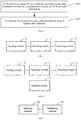
- FIG. 1 is a schematic diagram of an application scenario of a precoding information obtaining method according to the present invention.
- multiple antennas are disposed on a network device, and one or more antennas may be disposed on each terminal device that communicates with the network device.
- the network device may transmit a to-be-transmitted signal by using each antenna on the network device.
- a signal transmitted by each antenna is received by an antenna of the terminal device.
- the terminal device analyzes the received signal, and learns a status of the channel between the terminal device and the network device. It may be understood that the status of the channel between the network device and the terminal device changes in real time.
- the network device sends information in each transmission location in a resource block RB (resource block). Therefore, information in different transmission locations undergoes different channel statuses. However, information in transmission locations relatively close to each other undergoes similar channel statuses. Therefore, in this embodiment, one RB or multiple adjacent RBs are used as one RB group, and the status of the channel between the network device and the terminal device is measured based on an RB group, so as to obtain precoding information.
- resource block resource block
- the network device may be a device that is configured to communicate with a mobile device.
- the network device may be a BTS (Base Transceiver Station, base transceiver station) in GSM (Global System of Mobile Communication, Global System for Mobile communications) or CDMA (Code Division Multiple Access, Code Division Multiple Access); may be an NB (NodeB, NodeB) in WCDMA (Wideband Code Division Multiple Access, Wideband Code Division Multiple Access); or may be an eNB or an eNodeB (Evolved Node B, evolved NodeB), an access point in LTE (Long Term Evolution, Long Term Evolution), a vehicle-mounted device, a wearable device, or a network device in a future 5G network, or a network device in a future evolved PLMN (Public Land Mobile Network, public land mobile network).
- BTS Base Transceiver Station, base transceiver station
- GSM Global System of Mobile Communication, Global System for Mobile communications
- CDMA Code Division Multiple Access
- NB NodeB
- the terminal device may also be referred to as user equipment (User Equipment), an access terminal, a subscriber unit, a subscriber station, a mobile station, a remote station, a remote terminal, a mobile device, a user terminal, a terminal, a wireless communications device, a user agent, or a user apparatus.
- User Equipment User Equipment
- an access terminal a subscriber unit, a subscriber station, a mobile station, a remote station, a remote terminal, a mobile device, a user terminal, a terminal, a wireless communications device, a user agent, or a user apparatus.
- the access terminal may be a cellular phone, a cordless phone, a SIP (Session Initiation Protocol, Session Initiation Protocol) phone, a WLL (Wireless Local Loop, wireless local loop) station, a PDA (Personal Digital Assistant, personal digital assistant), a handheld device having a wireless communication function, a computing device, or another processing device connected to a wireless modem, a vehicle-mounted device, a wearable device, a terminal device in a future 5G network, or a terminal device in a future evolved PLMN (Public Land Mobile Network, public land mobile network) network.
- PLMN Public Land Mobile Network, public land mobile network
- FIG. 2 is a schematic flowchart of Embodiment 1 of a precoding information obtaining method according to the present invention. As shown in FIG. 2 , this embodiment includes the following steps.
- a network device separately precodes, by using N sub-codebooks, a pilot group including K pilots to obtain N precoded pilot groups.
- the sub-codebooks are subsets of a precoding codebook, the precoding codebook includes M precoding vectors, and each sub-codebook includes K precoding vectors, where K is a positive integer, N and M are integers greater than 1, and M is greater than K.
- the network device may generate the pilot group including the K pilots by itself.
- the network device precodes the pilot group by using a first sub-codebook of the N sub-codebooks, and obtains a precoded pilot group, and precodes the pilot group again by using a second sub-codebook of the N sub-codebooks, and obtains another precoded pilot group, and so on.
- the N sub-codebooks are separately used to precode the same pilot group, and the N precoded pilot groups are obtained. Pilots in the pilot group and precoding vectors in each sub-codebook may be in a one-to-one correspondence.
- the precoding vectors in the sub-codebook is used to precode the pilots in the pilot group in a one-to-one correspondence manner. That is, for a same sub-codebook, different precoding vectors are used to precode different pilots. For example, a precoding vector in the sub-codebook is used to precode a first pilot in the pilot group, and a first precoded pilot is obtained; then, another precoding vector is used to precode a second pilot in the pilot group, and a second precoded pilot is obtained; and by analogy, K precoded pilots are obtained, that is, a precoded pilot group including the K precoded pilots is obtained.
- the precoding codebook may be configured by a communications system for the network device according to a communications protocol. That is, it may be considered that the network device divides the precoding codebook and obtains the N sub-codebooks.
- each precoding vector in the precoding codebook includes T elements.
- all the pilots in the pilot group are orthogonal to each other.
- the network device sends a precoded pilot group to a terminal device in each of W RB groups.
- the W RB groups are in a same downlink subframe. Any RB group may include at least one RB or at least two adjacent RBs. RBs included in the W RB groups in a same downlink subframe are all RBs that can be scheduled by the network device in the downlink subframe. That is, the network device groups the RBs that can be scheduled in the downlink subframe to form the W RB groups. W is a positive integer.
- the network device receives precoding information fed back by the terminal device for any one of W precoded pilot groups.
- the network device sends the precoded pilot group to the terminal device in each RB group of the W RB groups. After receiving the precoded pilot group in any RB group, the terminal device feeds back precoding information of the RB group to the network device.
- a precoded pilot group sent by the network device in any RB group is obtained by precoding a pilot group by the network device by using a sub-codebook in the N sub-codebooks. It may be equivalent to the fact that the network device allocates the sub-codebook to the RB group. Therefore, K to-be-sent precoded pilots in the RB group are obtained by precoding, by the network device by using the sub-codebook allocated to the RB group, the pilot group including the K pilots.
- any two sub-codebooks of the N sub-codebooks are different, so that relatively accurate precoding information may be obtained.
- the network device may learn that which precoding vector in the sub-codebook allocated to the any RB group is appropriate to the RB group. That is, a current channel status is estimated by using the precoding information, so that the network device determines, for the any RB group, a precoding vector that adapts to the current channel status.
- a network device divides a precoding codebook into multiple sub-codebooks, and a quantity of precoding vectors in each sub-codebook is relatively small. Therefore, a quantity of pilot signals sent by the network device in each RB group is reduced, and pilot overheads in each RB group are reduced. In this way, resources used for data transmission are added while channel measurement is completed, so that a communication capacity of a communications system is improved.
- FIG. 3 is a schematic flowchart of Embodiment 2 of a precoding information obtaining method according to the present invention. As shown in FIG. 3 , this embodiment includes the following steps.
- a terminal device receives a precoded pilot group in any one of W RB groups.
- the precoded pilot group is obtained by precoding, by a network device by using any one of N sub-codebooks, a pilot group including K pilots.
- the sub-codebooks are subsets of a precoding codebook, the precoding codebook includes M precoding vectors, and each sub-codebook includes K precoding vectors, where K is a positive integer, N and M are integers greater than 1, M is greater than K, and W is a positive integer.
- This embodiment is executed by the terminal device corresponding to the network device.
- S201 corresponds to S103 in the embodiment shown in FIG. 2 .
- the terminal device feeds back precoding information of the any precoded pilot group to the network device according to the any received precoded pilot group.
- the network device sends a precoded pilot group in all the W RB groups.
- the terminal device feeds back precoding information of the precoded pilot group to the network device.
- the terminal device when feeding back precoding information of the precoded pilot group to the network device, the terminal device specifically feeds back precoding information of the precoded pilot group sent by the network device in the first RB group; if the terminal device receives a precoded pilot group in a W th RB group of the W RB groups, when feeding back precoding information of the precoded pilot group to the network device, the terminal device specifically feeds back precoding information of the precoded pilot group sent by the network device in the W th RB group.
- the terminal device receives, in all the W RB groups, a precoded pilot group sent by the network device, when feeding back precoding information of a precoded pilot group, the terminal device feeds back precoding information of W precoded pilot groups to the network device for the W RB groups.
- the terminal device and the network device may negotiate all pilots (that is, to-be-precoded pilots) in a pilot group used for precoding; alternatively, the terminal device and the network device may prestore the pilot group used for precoding, a precoding codebook, or a precoding sub-codebook. In this way, after receiving any precoded pilot group, the terminal device may determine precoding information of the any precoded pilot group, and then feed back the precoding information of the any precoded pilot group to the network device in S202.
- a precoded pilot group sent by the network device in each RB group is obtained by performing precoding by using a sub-codebook.
- a precoding vector included in the sub-codebook is a subset of a precoding vector included in the precoding codebook, and a quantity of precoding vectors included in the sub-codebook may be less than a quantity of precoding vectors included in the precoding codebook. Therefore, a quantity of precoded pilots included in the precoded pilot group sent in each RB group is relatively small, that is, K, which is equal to the quantity of the precoding vectors included in the sub-codebook.
- the terminal device determines precoding information of a precoded pilot group for any RB group, the determining is performed based on K precoded pilots sent by the network device in the RB group.
- a quantity of pilots in each RB group is equal to the quantity of the precoding vectors in the precoding codebook, and therefore, for any RB group, the terminal device can determine, only by traversing all the precoding vectors in the precoding codebook based on a large quantity of pilots in the RB group, precoding information of a precoded pilot group sent by the network device in the RB group.
- pilot overheads in each RB group are reduced in this embodiment. Therefore, the terminal device determines precoding information based on only a relatively small quantity of pilots in the RB group. Therefore, in this embodiment, the terminal device requires a relatively small computation amount to complete a feedback, so that load of the terminal device is reduced.
- a terminal device determines precoding information based on only a relatively small quantity of pilots in each RB group. Therefore, in this embodiment, the terminal device requires a relatively small computation amount to complete a feedback of the precoding information, so that burden of the terminal device is reduced.
- FIG. 4 is a schematic flowchart of Embodiment 3 of a precoding information obtaining method according to the present invention. As shown in FIG. 4 , this embodiment includes the following steps.
- a network device separately precodes, by using N sub-codebooks, a pilot group including K pilots to obtain N precoded pilot groups.
- one pilot group includes K pilots
- one sub-codebook includes K precoding vectors.
- K pilot signals are obtained by respectively multiplying the K precoding vectors included in the sub-codebook by the K pilots in the pilot group; that is, one precoded pilot group is obtained.
- the network device sends a precoded pilot group to a terminal device in each of W resource block RB groups.
- each RB group includes one RB.
- One RB may be further divided into transmission locations, and the transmission locations may be indicated by using OFDM (Orthogonal Frequency Division Multiplexing, orthogonal frequency division multiplexing) symbol indexes and subcarrier indexes.
- OFDM Orthogonal Frequency Division Multiplexing, orthogonal frequency division multiplexing
- One transmission location is used for transmitting one precoded pilot in one precoded pilot group.
- an obtained precoded pilot group in S301 includes K precoded pilots.
- the K precoded pilots included in the precoded pilot group are respectively sent in K transmission locations that are used for transmitting pilots (that is, precoded pilots) and that are in the RB group.
- FIG. 5 is a schematic diagram of a sub-codebook according to Embodiment 3 of the present invention.
- a precoded pilot group sent in a first RB group is obtained by performing precoding by using a sub-codebook 1;
- a precoded pilot group sent in a second RB group is obtained by performing precoding by using a sub-codebook 2;
- a precoded pilot group sent in a sixth RB group is obtained by performing precoding by using a sub-codebook 6.
- sub-codebooks 1 to 6 are successively reused to precode pilot groups to obtain precoded pilot groups that need to be sent in a seventh to a twelfth RB groups.
- N sub-codebooks may be cyclically allocated to each RB group. That is, when W is greater than N, in the W RB groups, a sub-codebook allocated to a W N ⁇ N + i th RB group is the same as a sub-codebook allocated to an i th RB group, where "[]" indicates a rounding operation, and i is any integer from 1 to W (including 1 and W).
- the foregoing sending operation is performed in each of W RB groups in each downlink subframe. That is, because a quantity of pilots that need to be transmitted in each RB group in this embodiment is reduced, it is relatively easy to implement an operation of sending a precoded pilot group in each of W RB groups in each downlink subframe. Therefore, S302 or S301 and S302 are performed in each downlink subframe.
- the network device may measure a channel between the network device and the terminal device in real time to obtain specific precoding information, thereby improving timeliness of obtaining the precoding information by the network device.
- the terminal device receives, in any RB group of the W RB groups, a precoded pilot group sent by the network device.
- the network device sends K precoded pilots in any RB group.
- the network device notifies the terminal device of a value of K. Therefore, after the terminal device receives the value of K sent by the network device, the terminal device receives, in any one of W RB groups in each downlink subframe, a pilot group that includes K precoded pilots and that is sent by the network device. More specifically, before the network device and the terminal device implement this embodiment, the network device and the terminal device determine in advance, by means of negotiation, transmission locations that are used for transmitting precoded pilots and that are in each RB group, and information such as content and a size of K to-be-precoded pilots in a to-be-precoded pilot group.
- the terminal device learns in advance a value of K and K transmission locations used for transmitting precoded pilots.
- the terminal device receives K precoded pilots in K transmission locations that are used for transmitting precoded pilots and that are in any RB group, that is, receives, in the any RB group, a precoded pilot group sent by the network device.
- the terminal device feeds back precoding information of the precoded pilot group to the network device according to the precoded pilot group received in the any RB group.
- the precoding information of the precoded pilot group includes a pilot index, and the pilot index is an index of a precoded pilot in K precoded pilots included in the precoded pilot group.
- the precoding information of the precoded pilot group includes a precoding vector index, and the precoding vector index is an index of a precoding vector corresponding to a precoded pilot in K precoded pilots included in the precoded pilot group. It may be understood that whether the index of the precoded pilot or the index of the precoding vector is fed back, the index of the precoded pilot or the index of the precoding vector corresponding to the precoded pilot may be first selected, in the precoded pilot group, as a precoded pilot used to feed back the precoding information.
- a precoded pilot in the K precoded pilots included in the precoded pilot group needs to be selected.
- the terminal device determines, according to the K precoded pilots included in the received precoded pilot group, K equivalent channel values corresponding to the K precoded pilots.
- the equivalent channel value may be a ratio of a precoded pilot received by the terminal device to a to-be-precoded pilot.
- the network device separately sends a precoded pilot group to the terminal device in each RB group of a first to a W th RB groups. That is, a first to a W th precoded pilot groups are sent in total.
- the terminal device may receive the first to the W th precoded pilot groups in total in the first to the W th RB groups.
- An example in which the terminal device receives an i th precoded pilot group of the first to the W th precoded pilot groups in an i th RB group is used for description in detail.
- x r is an r th (r is any integer from 1 to K) to-be-precoded pilot in a to-be-precoded pilot group.
- P r i x r is an r th precoded pilot in an i th precoded pilot group that is of the first to the W th precoded pilot groups and that is sent by the network device.
- a channel status undergone by any data transmitted in the i th RB group is reflected by using a channel matrix H i .
- the r th precoded pilot in the i th precoded pilot group sent by the network device in the i th RB group is affected by the channel status
- the r th precoded pilot in the i th precoded pilot group received by the terminal device is y r i .
- P r i is a precoding vector used by the network device to precode x r .
- the network device and the terminal device determine in advance each RB group by means of negotiation.
- the network device and the terminal device specify in advance each RB group and transmission location used for transmitting each pilot (or a precoded pilot).
- the network device precodes a first to a K th pilots (to-be-precoded pilots) in a pilot group (that is, a to-be-precoded pilot group) by using an S th (S is any integer from 1 to N) sub-codebook, and obtains a first to a K th corresponding precoded pilots.
- the network device sends the first to the K th precoded pilots in K transmission locations that are used for transmitting precoded pilots and that are in the i th RB group. Therefore, the terminal device receives K precoded pilots in the K transmission locations used for transmitting the precoded pilots, and learns in advance K to-be-precoded pilots.
- the terminal device learns in advance that the network device sends the r th precoded pilot in the i th precoded pilot group in a q th (q is a positive integer and is not greater than a total quantity of the transmission locations in the i th RB group) transmission location; a precoded pilot received by the terminal device in the q th transmission location is y r i ; and the terminal device learns that the precoded pilot sent by the network device in the q th transmission location in the i th RB group is obtained by precoding the to-be-precoded pilot x r .
- An equivalent channel value corresponding to y r i is determined.
- N 0 is a channel noise.
- S304 may be performed by referring to the example of the i th RB group.
- the terminal device may determine a maximum value in the K equivalent channel values. Certainly, the maximum value may not be used in an implementation process. For example, a second maximum value may be used.
- the terminal device may determine one maximum value in the K equivalent channel values as the maximum value, or may determine first Z (Z is a positive integer and is less than K) maximum values in the K equivalent channel values as the maximum values.
- the terminal device determines that a precoded pilot corresponding to the maximum value is a precoded pilot in the K precoded pilots included in the any precoded pilot group.
- the precoding information that needs to be fed back may be determined. For example, when determining, according to C1 to C3, that the equivalent channel value corresponding to y r i is the maximum value, the terminal device determines that y r i is the precoded pilot in the K precoded pilots in the i th precoded pilot group. It may be understood that y r i is formed after P r i x r undergoes a channel status. Therefore, the precoded pilot corresponding to the maximum value may also be P r i x r .
- the precoded pilot corresponding to the maximum value is y r i .
- the precoding information that is determined in S304 and that is of the i th precoded pilot group is r. That is, the network device is notified of an index of the r th precoded pilot sent by the network device in the i th RB group; that is, the network device is notified of the index of the r th precoded pilot received by the terminal device in the i th RB group.
- y r i is formed after P r i x r undergoes a channel status.
- an index of the sent precoded pilot P r i x r is r, and is the same as an index of the precoded pilot y r i received by the terminal device.
- r when precoding information of the i th precoded pilot group determined in S304 is r, r may be considered as an index of a precoding vector.
- the network device precodes x r by using the precoding vector P r i in the S th sub-codebook, and obtains the r th precoded pilot. Therefore, when receiving the precoding information r, the network device may determine, in the S th sub-codebook, the precoding vector P r i used to obtain the r th precoded pilot, that is, a precoding vector corresponding to the precoded pilot P r i x r (or y r i ). Therefore, r is also an index of the precoding vector P r i .
- the precoding vector used by the network device to precode x r is written as P r i . That is, P r i indicates only a precoding vector used to precode x r .
- precoding vectors in the S th sub-codebook are in a specified sequence, P r i is not limited to an r th precoding vector in the S th sub-codebook. Flexibly, when the network device selects a precoding vector, P r i may be specifically any precoding vector that is in the S th sub-codebook and that is selected by the network device to precode x r .
- the terminal device when performing S304, the terminal device further feeds back a CQI (channel quality indication, channel quality indication) corresponding to the RB group.
- CQI channel quality indication, channel quality indication
- the terminal device when completing a feedback of the precoding information, the terminal device does not need to learn specific content of a precoding vector corresponding to each precoded pilot, and does not need to obtain, by means of calculation, specific content of a precoded pilot sent by the network device or a channel status (a channel matrix) undergone by the precoded pilot; the terminal device needs to determine only K equivalent channel values according to K received precoded pilots, and may subsequently complete the feedback of the precoding information according to a maximum value in the K equivalent channel values.
- the network device after the network device receives precoding information of each precoded pilot group of W precoded pilot groups, the network device further performs the following steps.
- the network device determines, according to the precoding information that is of the precoded pilot group and that is fed back by the terminal device, a preferred precoding vector for an RB group used for sending the precoded pilot group.
- the i th RB group is used as an example.
- precoding information that is of a precoded pilot group in the i th RB group and that is received in S304 is r
- it is determined that the precoding vector P r i used to obtain the precoded pilot P r i x r is the preferred precoding vector. That is, the r th precoding vector P r i in the S th sub-codebook may be directly determined as the preferred precoding vector.
- the network device precodes to-be-sent data in each RB group by using a preferred precoding vector of the RB group.
- a preferred precoding vector of each RB group adapts to the RB group. Therefore, when sending data to the terminal device by scheduling a specific RB group, the network device precodes to-be-sent data by using a preferred precoding vector that adapts to the RB group, so that a channel status has relatively little impact on the data in a transmission process.
- a network device divides a precoding codebook into multiple sub-codebooks, and a quantity of precoding vectors in each sub-codebook is relatively small. Therefore, a quantity of pilot signals sent by the network device in each RB group is reduced, and pilot overheads in each RB group are reduced. In this way, resources used for data transmission are added while channel measurement is completed, so that a communication capacity of a communications system is improved.
- FIG. 6 is a schematic flowchart of Embodiment 4 of a precoding information obtaining method according to the present invention. As shown in FIG. 6 , this embodiment gives further description based on Embodiment 1 to Embodiment 3.
- a network device updates N sub-codebooks according to precoding information fed back by a terminal device for any one of W precoded pilot groups.
- the network device and each terminal device perform S301 to S304 in downlink subframe. That is, the network device determines a to-be-replaced precoding vector in the N sub-codebooks according to precoding information fed back by each terminal device for any one of the W precoded pilot groups in a preset quantity of feedbacks. Specifically, the network device may send, to the terminal device in each of W RB groups in each downlink subframe, a pilot group precoded by the network device. Subsequently, the network device may continuously collect statistics about precoding information that is fed back by each terminal device for multiple times, and determines the to-be-replaced precoding vector in the N sub-codebooks.
- the to-be-replaced precoding vector should meet the following condition:an index that is of a pilot obtained by using the to-be-replaced precoding vector by the network device is not included in all precoding information fed back by any terminal device in the preset quantity of feedbacks; or an index of the to-be-replaced precoding vector is not included in precoding information fed back by any terminal device in the preset quantity of feedbacks. That is, the to-be-replaced precoding vector is a precoding vector related to precoding information that is not fed back by a terminal device in the preset quantity of feedbacks. It may be learned that the to-be-replaced precoding vector has relatively poor precoding performance, and needs to be replaced, so as to update a sub-codebook.
- the network device learns, by means of statistics collection, that an index that is of a precoded pilot obtained by using a K th precoding vector in a second sub-codebook by the network device is not included in indexes of all precoded pilots fed back by two terminal devices in five feedbacks. Therefore, it may be determined that the K th precoding vector in the second sub-codebook is the to-be-replaced precoding vector; or the network device learns, by means of statistics collection, that an index of a K th precoding vector in a second sub-codebook is not included in indexes of all precoding vectors fed back by two terminal devices in five feedbacks. Therefore, it may be determined that the K th precoding vector in the second sub-codebook is the to-be-replaced precoding vector.
- the network device performs a precoding operation by using N updated sub-codebooks.
- a sub-codebook is a subset of a precoding codebook. Therefore, when the sub-codebook is updated, it is equivalent to the fact that the precoding codebook is updated.
- the network device dynamically adjusts a precoding vector or each sub-codebook in real time based on a change of a channel status, so that adaptability between a precoding vector used by the network device for precoding and the channel status is continuously improved, and precoding performance of the network device is improved.
- the network device may further determine a first sub-codebook in the N sub-codebooks according to precoding information fed back by each terminal device for each precoded pilot group of the W precoded pilot groups in the preset quantity of feedbacks, and a quantity of precoding vectors that are used as preferred precoding vectors and that are in precoding vectors included in the first sub-codebook meets a preset value. Specifically, it may be learned according to S305 and S306 that the precoding information fed back by the terminal device is used to determine a preferred precoding vector that adapts to each RB group.
- the network device obtains, by means of statistics collection, precoding information that is of precoded pilot groups obtained by performing precoding by using a first to an N th sub-codebooks and that is fed back by the terminal device, and separately determines a preferred precoding vector in each sub-codebook according to the precoding information.
- Each sub-codebook is a subset of the precoding codebook.
- Precoding vectors included in any two different sub-codebooks may include same precoding vectors.
- the network device learns, after determining a preferred precoding vector in each sub-codebook, that a quantity of preferred precoding vectors that are in N determined preferred precoding vectors and that are precoding vectors in a fourth sub-codebook (which is merely used as an example) exceeds a preset quantity, it may be considered that the fourth sub-codebook has relatively good precoding performance, and precoded pilot groups obtained by performing precoding by using the fourth sub-codebook may be sent in at least two RB groups. That is, the network device may flexibly update a sub-codebook according to precoding information that is fed back by the terminal device and that is continuously received by the network device.
- the network device sends a pilot group to the terminal device again according to the fed-back precoding information, that is, performs S301 and S302 again
- the precoded pilot groups sent to the terminal device in the at least two of the W RB groups are obtained by performing precoding by using a same sub-codebook.
- a network device may flexibly adjust, by using received precoding information fed back by a terminal device, a sub-codebook used for precoding, so that adaptability between a precoding vector used by the network device for precoding and a channel status is continuously improved, and precoding performance of the network device is improved.
- FIG. 7 is a schematic structural diagram of Embodiment 1 of a device according to the present invention.
- the device is a network device and includes:
- a network device divides a precoding codebook into multiple sub-codebooks, and a quantity of precoding vectors in each sub-codebook is relatively small. Therefore, a quantity of pilot signals sent by the network device in each RB group is reduced, and pilot overheads in each RB group are reduced. In this way, resources used for data transmission are added while channel measurement is completed, so that a communication capacity of a communications system is improved.
- FIG. 8 is a schematic structural diagram of Embodiment 2 of a device according to the present invention. As shown in FIG. 8 , this embodiment gives further description based on the embodiment shown in FIG. 7 , and is specifically as follows.
- the precoding information fed back for the any one of the W precoded pilot groups includes a pilot index, and the pilot index is an index of a precoded pilot in K precoded pilots included in the precoded pilot group.
- the precoding information fed back for each precoded pilot group of the W precoded pilot groups includes a precoding vector index, and the precoding vector index is an index of a precoding vector corresponding to a precoded pilot in K precoded pilots included in the precoded pilot group; in addition, optionally, W is greater than N.
- the sending module 12 is further configured to notify the terminal device of a value of K.
- the device further includes an updating module 14 that is configured to update the N sub-codebooks according to the precoding information fed back by the terminal device for the any one of the W precoded pilot groups.
- any two sub-codebooks of the N sub-codebooks are different.
- precoded pilot groups sent by the sending module 12 to the terminal device in at least two of the W RB groups are obtained by performing precoding by using a same sub-codebook.
- a sending operation performed by the sending module 12 is performed in each of W RB groups in each downlink subframe.
- a network device divides a precoding codebook into multiple sub-codebooks, and a quantity of precoding vectors in each sub-codebook is relatively small. Therefore, a quantity of pilot signals sent by the network device in each RB group is reduced, and pilot overheads in each RB group are reduced. In this way, resources used for data transmission are added while channel measurement is completed, so that a communication capacity of a communications system is improved.
- FIG. 9 is a schematic structural diagram of Embodiment 3 of a device according to the present invention. As shown in FIG. 9 , the device in this embodiment is a terminal device and includes:
- a terminal device determines precoding information based on only a relatively small quantity of pilots in each RB group. Therefore, in this embodiment, the terminal device requires a relatively small computation amount to complete a feedback of the precoding information, so that burden of the terminal device is reduced.
- FIG. 10 is a schematic structural diagram of Embodiment 4 of a device according to the present invention. As shown in FIG. 10 , this embodiment gives further description based on the embodiment shown in FIG. 9 , and is specifically as follows.
- the precoding information of the precoded pilot group includes a pilot index, and the pilot index is an index of a precoded pilot in K precoded pilots included in the precoded pilot group.
- the precoding information of the precoded pilot group includes a precoding vector index, and the precoding vector index is an index of a precoding vector corresponding to a precoded pilot in K precoded pilots included in the precoded pilot group.
- the device further includes a determining module 23 that is configured to determine, according to the K precoded pilots included in the received precoded pilot group, K equivalent channel values corresponding to the K precoded pilots, where an equivalent channel value is a ratio of a precoded pilot received by the terminal device to a to-be-precoded pilot.
- the determining module 23 is configured to determine a maximum value in the K equivalent channel values.
- the determining module 23 is configured to determine that a precoded pilot corresponding to the maximum value is a precoded pilot in the K precoded pilots included in the any precoded pilot group.
- the determining module 23 is configured to determine, according to the K precoded pilots included in the received precoded pilot group, K equivalent channel values corresponding to the K precoded pilots, where an equivalent channel value is a ratio of a precoded pilot received by the terminal device to a sum of a to-be-precoded pilot and a channel noise.
- the determining module 23 is configured to determine a maximum value in the K equivalent channel values.
- the determining module 23 is configured to determine that a precoded pilot corresponding to the maximum value is a precoded pilot in the K precoded pilots included in the any precoded pilot group.
- the device further includes a storage module 24 that is configured to prestore the to-be-precoded pilot.
- the receiving module 21 is further configured to receive a value of K sent by the network device, and the receiving module is specifically configured to receive, in any RB group of the W RB groups, a pilot group that includes K precoded pilots and that is sent by the network device.
- a terminal device determines precoding information based on only a relatively small quantity of pilots in each RB group. Therefore, in this embodiment, the terminal device requires a relatively small computation amount to complete a feedback of the precoding information, so that burden of the terminal device is reduced.
- FIG. 11 is a schematic structural diagram of Embodiment 5 of a device according to the present invention. As shown in FIG. 11 , the device is a network device and includes:
- the precoding information fed back for the any one of the W precoded pilot groups includes a pilot index, and the pilot index is an index of a precoded pilot in K precoded pilots included in the precoded pilot group.
- the precoding information fed back for each precoded pilot group of the W precoded pilot groups includes a precoding vector index, and the precoding vector index is an index of a precoding vector corresponding to a precoded pilot in K precoded pilots included in the precoded pilot group.
- W is greater than N.
- the transmitter 32 is further configured to notify the terminal device of a value of K.
- the processor 31 is further configured to update the N sub-codebooks according to the precoding information fed back by the terminal device for the any one of the W precoded pilot groups.
- any two sub-codebooks of the N sub-codebooks are different.
- precoded pilot groups sent by the transmitter 32 to the terminal device in at least two of the W RB groups are obtained by performing precoding by using a same sub-codebook.
- a sending operation performed by the transmitter 32 is performed in each of W RB groups in each downlink subframe.
- a network device divides a precoding codebook into multiple sub-codebooks, and a quantity of precoding vectors in each sub-codebook is relatively small. Therefore, a quantity of pilot signals sent by the network device in each RB group is reduced, and pilot overheads in each RB group are reduced. In this way, resources used for data transmission are added while channel measurement is completed, so that a communication capacity of a communications system is improved.
- FIG. 12 is a schematic structural diagram of Embodiment 6 of a device according to the present invention. As shown in FIG. 12 , the device is a terminal device and includes:
- a terminal device determines precoding information based on only a relatively small quantity of pilots in each RB group. Therefore, in this embodiment, the terminal device requires a relatively small computation amount to complete a feedback of the precoding information, so that burden of the terminal device is reduced.
- FIG. 13 is a schematic structural diagram of Embodiment 7 of a device according to the present invention. As shown in FIG. 13 , this embodiment gives further description based on the embodiment shown in FIG. 12 , and is specifically as follows.
- the precoding information of the precoded pilot group includes a pilot index, and the pilot index is an index of a precoded pilot in K precoded pilots included in the precoded pilot group.
- the precoding information of the precoded pilot group includes a precoding vector index, and the precoding vector index is an index of a precoding vector corresponding to a precoded pilot in K precoded pilots included in the precoded pilot group.
- the device further includes a processor 43 that is configured to determine, according to the K precoded pilots included in the received precoded pilot group, K equivalent channel values corresponding to the K precoded pilots, where an equivalent channel value is a ratio of a precoded pilot received by the terminal device to a to-be-precoded pilot.
- the processor 43 is configured to determine a maximum value in the K equivalent channel values.
- the processor 43 is configured to determine that a precoded pilot corresponding to the maximum value is a precoded pilot in the K precoded pilots included in the any precoded pilot group.
- the processor 43 included in the device is configured to determine, according to the K precoded pilots included in the received precoded pilot group, K equivalent channel values corresponding to the K precoded pilots, where an equivalent channel value is a ratio of a precoded pilot received by the terminal device to a sum of a to-be-precoded pilot and a channel noise.
- the processor 43 is configured to determine a maximum value in the K equivalent channel values.
- the processor 43 is configured to determine that a precoded pilot corresponding to the maximum value is a precoded pilot in the K precoded pilots included in the any precoded pilot group.
- the device further includes a memory 44 that is configured to prestore the to-be-precoded pilot.
- the receiver 41 is further configured to receive a value of K sent by the network device, and the receiver 41 is specifically configured to receive, in any RB group of the W RB groups, a pilot group that includes K precoded pilots and that is sent by the network device.
- a terminal device determines precoding information based on only a relatively small quantity of pilots in each RB group. Therefore, in this embodiment, the terminal device requires a relatively small computation amount to complete a feedback of the precoding information, so that burden of the terminal device is reduced.
- the program may be stored in a computer readable storage medium.
- the foregoing storage medium includes: any medium that can store program code, such as a ROM, a RAM, a magnetic disk, or an optical disc.
Landscapes
- Engineering & Computer Science (AREA)
- Signal Processing (AREA)
- Computer Networks & Wireless Communication (AREA)
- Physics & Mathematics (AREA)
- Mathematical Physics (AREA)
- Mobile Radio Communication Systems (AREA)
- Compression, Expansion, Code Conversion, And Decoders (AREA)
Description
- Embodiments of the present invention relate to the field of communications technologies, and in particular, to a precoding information obtaining method, and a device.
- Generally, in a process in which a network device communicates with a terminal device in a communications system, a channel status affects quality of communication between the network device and the terminal device. However, data transmitted in different transmission locations in transmission resources undergoes different channel statuses. To ensure the quality of communication with the terminal device, the network device generally sends, to the terminal device in a downlink timeslot in each resource block (resource block, RB for short) that can be scheduled, a pilot used for channel measurement, so as to obtain precoding information. Specifically, the terminal device determines, according to the received pilot, a channel status undergone by a pilot in each RB. Subsequently, the terminal device traverses all precoding vectors in a configured precoding codebook according to a channel status undergone by a pilot in each RB, determines a precoding vector appropriate to each RB, and feeds back an index of a precoding vector appropriate to each RB to the network device, so that the network device uses an appropriate precoding vector when subsequently sending data information to the terminal device in each RB, so as to ensure the quality of communication with the terminal device.
- As mobile communications continuously develops, a next generation cellular communications system is urgently required to improve a system throughput. MIMO (Multiple-Input Multiple-Output, multiple-input multiple-output) is a commonly used technology. That is, a large quantity of antennas are deployed on a network device side to improve the system throughput. Correspondingly, as the quantity of the antennas on the network device side increases, a quantity of pilots sent by the network device in each RB also continuously increases. Therefore, a pilot signal has relatively high overheads in one channel measurement process, and communication efficiency is reduced.
-
US 2015/016379 A1 relates to a multi-input multi-output (MIMO) communication method in a large-scale antenna system.CN 104202073A discloses a channel information feedback method, pilot and beam transmitting method. - The present invention provides a precoding information obtaining method and a device, so as to optimize a precoding information obtaining process and improve communication efficiency.
- This problem is solved by the subject matter of the independent claims.
- While several embodiments and/or examples have been disclosed in the description, the subject matter for which protection is sought is strictly and solely limited to those embodiments and/or examples encompassed by the scope of the appended claims. Embodiments and/or examples mentioned in the description that do not fall under the scope of the claims are useful for understanding the invention.
- Embodiments of the present invention provide a precoding information obtaining method and a device. A network device divides a precoding codebook into multiple sub-codebooks, and a quantity of precoding vectors in each sub-codebook is relatively small. Therefore, a quantity of pilot signals sent by the network device in each RB group is reduced, and pilot overheads in each RB group are reduced. In this way, resources used for data transmission are added while channel measurement is completed, so that a communication capacity of a communications system is improved.
- To describe the technical solutions in the embodiments of the present invention more clearly, the following briefly describes the accompanying drawings required for describing the embodiments or the prior art. Apparently, the accompanying drawings in the following description show some embodiments of the present invention, and persons of ordinary skill in the art may still derive other drawings from these accompanying drawings without creative efforts.
-
FIG. 1 is a schematic diagram of an application scenario of a precoding information obtaining method according to the present invention; -
FIG. 2 is a schematic flowchart ofEmbodiment 1 of a precoding information obtaining method according to the present invention; -
FIG. 3 is a schematic flowchart ofEmbodiment 2 of a precoding information obtaining method according to the present invention; -
FIG. 4 is a schematic flowchart ofEmbodiment 3 of a precoding information obtaining method according to the present invention; -
FIG. 5 is a schematic diagram of a sub-codebook according toEmbodiment 3 of the present invention; -
FIG. 6 is a schematic flowchart ofEmbodiment 4 of a precoding information obtaining method according to the present invention; -
FIG. 7 is a schematic structural diagram ofEmbodiment 1 of a device according to the present invention; -
FIG. 8 is a schematic structural diagram ofEmbodiment 2 of a device according to the present invention; -
FIG. 9 is a schematic structural diagram ofEmbodiment 3 of a device according to the present invention; -
FIG. 10 is a schematic structural diagram ofEmbodiment 4 of a device according to the present invention; -
FIG. 11 is a schematic structural diagram ofEmbodiment 5 of a device according to the present invention; -
FIG. 12 is a schematic structural diagram ofEmbodiment 6 of a device according to the present invention; and -
FIG. 13 is a schematic structural diagram ofEmbodiment 7 of a device according to the present invention. - To make the objectives, technical solutions, and advantages of the embodiments of the present invention clearer, the following clearly describes the technical solutions in the embodiments of the present invention with reference to the accompanying drawings in the embodiments of the present invention. Apparently, the described embodiments are some but not all of the embodiments of the present invention. The scope of the invention is defined by the appended claims.
FIG. 1 is a schematic diagram of an application scenario of a precoding information obtaining method according to the present invention. As shown inFIG. 1 , multiple antennas are disposed on a network device, and one or more antennas may be disposed on each terminal device that communicates with the network device. The network device may transmit a to-be-transmitted signal by using each antenna on the network device. After passing through a channel between the network device and the terminal device, a signal transmitted by each antenna is received by an antenna of the terminal device. The terminal device analyzes the received signal, and learns a status of the channel between the terminal device and the network device. It may be understood that the status of the channel between the network device and the terminal device changes in real time. The network device sends information in each transmission location in a resource block RB (resource block). Therefore, information in different transmission locations undergoes different channel statuses. However, information in transmission locations relatively close to each other undergoes similar channel statuses. Therefore, in this embodiment, one RB or multiple adjacent RBs are used as one RB group, and the status of the channel between the network device and the terminal device is measured based on an RB group, so as to obtain precoding information. - The network device may be a device that is configured to communicate with a mobile device. The network device may be a BTS (Base Transceiver Station, base transceiver station) in GSM (Global System of Mobile Communication, Global System for Mobile communications) or CDMA (Code Division Multiple Access, Code Division Multiple Access); may be an NB (NodeB, NodeB) in WCDMA (Wideband Code Division Multiple Access, Wideband Code Division Multiple Access); or may be an eNB or an eNodeB (Evolved Node B, evolved NodeB), an access point in LTE (Long Term Evolution, Long Term Evolution), a vehicle-mounted device, a wearable device, or a network device in a future 5G network, or a network device in a future evolved PLMN (Public Land Mobile Network, public land mobile network).
- The terminal device may also be referred to as user equipment (User Equipment), an access terminal, a subscriber unit, a subscriber station, a mobile station, a remote station, a remote terminal, a mobile device, a user terminal, a terminal, a wireless communications device, a user agent, or a user apparatus. The access terminal may be a cellular phone, a cordless phone, a SIP (Session Initiation Protocol, Session Initiation Protocol) phone, a WLL (Wireless Local Loop, wireless local loop) station, a PDA (Personal Digital Assistant, personal digital assistant), a handheld device having a wireless communication function, a computing device, or another processing device connected to a wireless modem, a vehicle-mounted device, a wearable device, a terminal device in a future 5G network, or a terminal device in a future evolved PLMN (Public Land Mobile Network, public land mobile network) network.
- Specifically,
FIG. 2 is a schematic flowchart ofEmbodiment 1 of a precoding information obtaining method according to the present invention. As shown inFIG. 2 , this embodiment includes the following steps. - S101. A network device separately precodes, by using N sub-codebooks, a pilot group including K pilots to obtain N precoded pilot groups.
- The sub-codebooks are subsets of a precoding codebook, the precoding codebook includes M precoding vectors, and each sub-codebook includes K precoding vectors, where K is a positive integer, N and M are integers greater than 1, and M is greater than K.
- Specifically, the network device may generate the pilot group including the K pilots by itself. The network device precodes the pilot group by using a first sub-codebook of the N sub-codebooks, and obtains a precoded pilot group, and precodes the pilot group again by using a second sub-codebook of the N sub-codebooks, and obtains another precoded pilot group, and so on. The N sub-codebooks are separately used to precode the same pilot group, and the N precoded pilot groups are obtained. Pilots in the pilot group and precoding vectors in each sub-codebook may be in a one-to-one correspondence. It may be understood as the fact that when a sub-codebook is used to precode the pilot group, the precoding vectors in the sub-codebook is used to precode the pilots in the pilot group in a one-to-one correspondence manner. That is, for a same sub-codebook, different precoding vectors are used to precode different pilots. For example, a precoding vector in the sub-codebook is used to precode a first pilot in the pilot group, and a first precoded pilot is obtained; then, another precoding vector is used to precode a second pilot in the pilot group, and a second precoded pilot is obtained; and by analogy, K precoded pilots are obtained, that is, a precoded pilot group including the K precoded pilots is obtained.
- The precoding codebook may be configured by a communications system for the network device according to a communications protocol. That is, it may be considered that the network device divides the precoding codebook and obtains the N sub-codebooks. When T antennas are configured for the network device, each precoding vector in the precoding codebook includes T elements. In addition, preferably, all the pilots in the pilot group are orthogonal to each other.
- S102. The network device sends a precoded pilot group to a terminal device in each of W RB groups.
- The W RB groups are in a same downlink subframe. Any RB group may include at least one RB or at least two adjacent RBs. RBs included in the W RB groups in a same downlink subframe are all RBs that can be scheduled by the network device in the downlink subframe. That is, the network device groups the RBs that can be scheduled in the downlink subframe to form the W RB groups. W is a positive integer.
- S103. The network device receives precoding information fed back by the terminal device for any one of W precoded pilot groups.
- In S102, the network device sends the precoded pilot group to the terminal device in each RB group of the W RB groups. After receiving the precoded pilot group in any RB group, the terminal device feeds back precoding information of the RB group to the network device.
- A precoded pilot group sent by the network device in any RB group is obtained by precoding a pilot group by the network device by using a sub-codebook in the N sub-codebooks. It may be equivalent to the fact that the network device allocates the sub-codebook to the RB group. Therefore, K to-be-sent precoded pilots in the RB group are obtained by precoding, by the network device by using the sub-codebook allocated to the RB group, the pilot group including the K pilots. Optionally, in consideration of the fact that information in different RB groups undergoes different channel statuses, any two sub-codebooks of the N sub-codebooks are different, so that relatively accurate precoding information may be obtained. Therefore, a probability of allocating a same sub-codebook to the W RB groups is relatively low, so that accurate precoding information may be obtained. Further, after receiving the precoding information fed back by the terminal device for the any one of the W precoded pilot groups, the network device may learn that which precoding vector in the sub-codebook allocated to the any RB group is appropriate to the RB group. That is, a current channel status is estimated by using the precoding information, so that the network device determines, for the any RB group, a precoding vector that adapts to the current channel status.
- In this embodiment, a network device divides a precoding codebook into multiple sub-codebooks, and a quantity of precoding vectors in each sub-codebook is relatively small. Therefore, a quantity of pilot signals sent by the network device in each RB group is reduced, and pilot overheads in each RB group are reduced. In this way, resources used for data transmission are added while channel measurement is completed, so that a communication capacity of a communications system is improved.
-
FIG. 3 is a schematic flowchart ofEmbodiment 2 of a precoding information obtaining method according to the present invention. As shown inFIG. 3 , this embodiment includes the following steps. - S201. A terminal device receives a precoded pilot group in any one of W RB groups.
- The precoded pilot group is obtained by precoding, by a network device by using any one of N sub-codebooks, a pilot group including K pilots. The sub-codebooks are subsets of a precoding codebook, the precoding codebook includes M precoding vectors, and each sub-codebook includes K precoding vectors, where K is a positive integer, N and M are integers greater than 1, M is greater than K, and W is a positive integer.
- This embodiment is executed by the terminal device corresponding to the network device. S201 corresponds to S103 in the embodiment shown in
FIG. 2 . For specific description of the pilot group, the sub-codebook, and the precoded pilot group, refer to S101 to S103. - S202. The terminal device feeds back precoding information of the any precoded pilot group to the network device according to the any received precoded pilot group.
- The network device sends a precoded pilot group in all the W RB groups. When receiving, in any RB group of the W RB groups, a precoded pilot group sent by the network device, the terminal device feeds back precoding information of the precoded pilot group to the network device. For example, if the terminal device receives a precoded pilot group in a first RB group of the W RB groups, when feeding back precoding information of the precoded pilot group to the network device, the terminal device specifically feeds back precoding information of the precoded pilot group sent by the network device in the first RB group; if the terminal device receives a precoded pilot group in a Wth RB group of the W RB groups, when feeding back precoding information of the precoded pilot group to the network device, the terminal device specifically feeds back precoding information of the precoded pilot group sent by the network device in the Wth RB group. It may be understood that if the terminal device receives, in all the W RB groups, a precoded pilot group sent by the network device, when feeding back precoding information of a precoded pilot group, the terminal device feeds back precoding information of W precoded pilot groups to the network device for the W RB groups.
- Further, when a precoded pilot group sent by the network device in an RB group is transmitted by using a channel between the network device and the terminal device, the precoded pilot group is affected by a channel status. Therefore, a precoded pilot group received by the terminal device in the RB group is different from the precoded pilot group sent by the network device in the RB group. However, before this embodiment is implemented, the terminal device and the network device may negotiate all pilots (that is, to-be-precoded pilots) in a pilot group used for precoding; alternatively, the terminal device and the network device may prestore the pilot group used for precoding, a precoding codebook, or a precoding sub-codebook. In this way, after receiving any precoded pilot group, the terminal device may determine precoding information of the any precoded pilot group, and then feed back the precoding information of the any precoded pilot group to the network device in S202.
- Specifically, a precoded pilot group sent by the network device in each RB group is obtained by performing precoding by using a sub-codebook. A precoding vector included in the sub-codebook is a subset of a precoding vector included in the precoding codebook, and a quantity of precoding vectors included in the sub-codebook may be less than a quantity of precoding vectors included in the precoding codebook. Therefore, a quantity of precoded pilots included in the precoded pilot group sent in each RB group is relatively small, that is, K, which is equal to the quantity of the precoding vectors included in the sub-codebook. When the terminal device determines precoding information of a precoded pilot group for any RB group, the determining is performed based on K precoded pilots sent by the network device in the RB group. However, in the prior art, a quantity of pilots in each RB group is equal to the quantity of the precoding vectors in the precoding codebook, and therefore, for any RB group, the terminal device can determine, only by traversing all the precoding vectors in the precoding codebook based on a large quantity of pilots in the RB group, precoding information of a precoded pilot group sent by the network device in the RB group. In comparison with the prior art, pilot overheads in each RB group are reduced in this embodiment. Therefore, the terminal device determines precoding information based on only a relatively small quantity of pilots in the RB group. Therefore, in this embodiment, the terminal device requires a relatively small computation amount to complete a feedback, so that load of the terminal device is reduced.
- In this embodiment, because a pilot group is precoded by using a sub-codebook, for each RB group, a quantity of precoding vectors that need to be used for precoding is reduced, so that a quantity of pilots sent by a network device in each RB group is reduced. Therefore, a terminal device determines precoding information based on only a relatively small quantity of pilots in each RB group. Therefore, in this embodiment, the terminal device requires a relatively small computation amount to complete a feedback of the precoding information, so that burden of the terminal device is reduced.
-
FIG. 4 is a schematic flowchart ofEmbodiment 3 of a precoding information obtaining method according to the present invention. As shown inFIG. 4 , this embodiment includes the following steps. - S301. A network device separately precodes, by using N sub-codebooks, a pilot group including K pilots to obtain N precoded pilot groups.
- Specifically, one pilot group includes K pilots, and one sub-codebook includes K precoding vectors. K pilot signals are obtained by respectively multiplying the K precoding vectors included in the sub-codebook by the K pilots in the pilot group; that is, one precoded pilot group is obtained.
- S302. The network device sends a precoded pilot group to a terminal device in each of W resource block RB groups.
- For example, there are 100 RBs that can be scheduled by the network device in one downlink subframe. If the 100 RBs are divided into 100 groups, each RB group includes one RB. One RB may be further divided into transmission locations, and the transmission locations may be indicated by using OFDM (Orthogonal Frequency Division Multiplexing, orthogonal frequency division multiplexing) symbol indexes and subcarrier indexes. One transmission location is used for transmitting one precoded pilot in one precoded pilot group. For example, an obtained precoded pilot group in S301 includes K precoded pilots. Further, when the precoded pilot group is sent in an RB group, the K precoded pilots included in the precoded pilot group are respectively sent in K transmission locations that are used for transmitting pilots (that is, precoded pilots) and that are in the RB group.
-
FIG. 5 is a schematic diagram of a sub-codebook according toEmbodiment 3 of the present invention. As shown inFIG. 5 , a precoded pilot group sent in a first RB group is obtained by performing precoding by using asub-codebook 1; a precoded pilot group sent in a second RB group is obtained by performing precoding by using asub-codebook 2; and by analogy, a precoded pilot group sent in a sixth RB group is obtained by performing precoding by using asub-codebook 6. Subsequently, starting from a seventh RB group, sub-codebooks 1 to 6 are successively reused to precode pilot groups to obtain precoded pilot groups that need to be sent in a seventh to a twelfth RB groups. By analogy, the six sub-codebooks can be cyclically used. That is, in actual application, N sub-codebooks may be cyclically allocated to each RB group. That is, when W is greater than N, in the W RB groups, a sub-codebook allocated to a
- Optionally, the foregoing sending operation is performed in each of W RB groups in each downlink subframe. That is, because a quantity of pilots that need to be transmitted in each RB group in this embodiment is reduced, it is relatively easy to implement an operation of sending a precoded pilot group in each of W RB groups in each downlink subframe. Therefore, S302 or S301 and S302 are performed in each downlink subframe. The network device may measure a channel between the network device and the terminal device in real time to obtain specific precoding information, thereby improving timeliness of obtaining the precoding information by the network device.
- S303. The terminal device receives, in any RB group of the W RB groups, a precoded pilot group sent by the network device.
- It should be noted that the network device sends K precoded pilots in any RB group. Optionally, before S303, the network device notifies the terminal device of a value of K. Therefore, after the terminal device receives the value of K sent by the network device, the terminal device receives, in any one of W RB groups in each downlink subframe, a pilot group that includes K precoded pilots and that is sent by the network device. More specifically, before the network device and the terminal device implement this embodiment, the network device and the terminal device determine in advance, by means of negotiation, transmission locations that are used for transmitting precoded pilots and that are in each RB group, and information such as content and a size of K to-be-precoded pilots in a to-be-precoded pilot group. That is, for any RB group, the terminal device learns in advance a value of K and K transmission locations used for transmitting precoded pilots. The terminal device receives K precoded pilots in K transmission locations that are used for transmitting precoded pilots and that are in any RB group, that is, receives, in the any RB group, a precoded pilot group sent by the network device.
- S304. The terminal device feeds back precoding information of the precoded pilot group to the network device according to the precoded pilot group received in the any RB group.
- In this embodiment, the precoding information of the precoded pilot group includes a pilot index, and the pilot index is an index of a precoded pilot in K precoded pilots included in the precoded pilot group. Alternatively, the precoding information of the precoded pilot group includes a precoding vector index, and the precoding vector index is an index of a precoding vector corresponding to a precoded pilot in K precoded pilots included in the precoded pilot group. It may be understood that whether the index of the precoded pilot or the index of the precoding vector is fed back, the index of the precoded pilot or the index of the precoding vector corresponding to the precoded pilot may be first selected, in the precoded pilot group, as a precoded pilot used to feed back the precoding information. That is, a precoded pilot in the K precoded pilots included in the precoded pilot group needs to be selected. Optionally, there may be multiple methods for determining the precoded pilot in the K precoded pilots included in the precoded pilot group. The following describes the methods by using a precoded pilot group in an RB group as an example.
- C1. The terminal device determines, according to the K precoded pilots included in the received precoded pilot group, K equivalent channel values corresponding to the K precoded pilots.
- The equivalent channel value may be a ratio of a precoded pilot received by the terminal device to a to-be-precoded pilot.
- Specifically, in S302, the network device separately sends a precoded pilot group to the terminal device in each RB group of a first to a Wth RB groups. That is, a first to a Wth precoded pilot groups are sent in total. Correspondingly, the terminal device may receive the first to the Wth precoded pilot groups in total in the first to the Wth RB groups. An example in which the terminal device receives an ith precoded pilot group of the first to the Wth precoded pilot groups in an ith RB group is used for description in detail. An rth precoded pilot in the ith precoded pilot group received by the terminal device is


- Optionally, before this embodiment is implemented, the network device and the terminal device determine in advance each RB group by means of negotiation. Alternatively, the network device and the terminal device specify in advance each RB group and transmission location used for transmitting each pilot (or a precoded pilot). For example, in S302, the network device precodes a first to a Kth pilots (to-be-precoded pilots) in a pilot group (that is, a to-be-precoded pilot group) by using an Sth (S is any integer from 1 to N) sub-codebook, and obtains a first to a Kth corresponding precoded pilots. Subsequently, the network device sends the first to the Kth precoded pilots in K transmission locations that are used for transmitting precoded pilots and that are in the ith RB group. Therefore, the terminal device receives K precoded pilots in the K transmission locations used for transmitting the precoded pilots, and learns in advance K to-be-precoded pilots. For example, the terminal device learns in advance that the network device sends the rth precoded pilot in the ith precoded pilot group in a qth (q is a positive integer and is not greater than a total quantity of the transmission locations in the ith RB group) transmission location; a precoded pilot received by the terminal device in the qth transmission location is


- In addition, an equivalent channel value is a ratio of a precoded pilot received by the terminal device to a sum of a to-be-precoded pilot and a channel noise, and may be mathematically represented for example, as


- C2. The terminal device may determine a maximum value in the K equivalent channel values. Certainly, the maximum value may not be used in an implementation process. For example, a second maximum value may be used.
- Flexibly, there may be one or more maximum values. For example, the terminal device may determine one maximum value in the K equivalent channel values as the maximum value, or may determine first Z (Z is a positive integer and is less than K) maximum values in the K equivalent channel values as the maximum values.
- C3. The terminal device determines that a precoded pilot corresponding to the maximum value is a precoded pilot in the K precoded pilots included in the any precoded pilot group.
- After the precoded pilot in the K precoded pilots included in the any precoded pilot group is determined, the precoding information that needs to be fed back may be determined. For example, when determining, according to C1 to C3, that the equivalent channel value corresponding to


- Alternatively, when precoding information of the ith precoded pilot group determined in S304 is r, r may be considered as an index of a precoding vector. The network device precodes xr by using the precoding vector


- It should be additionally noted that, for ease of description, the precoding vector used by the network device to precode xr is written as


- Optionally, when performing S304, the terminal device further feeds back a CQI (channel quality indication, channel quality indication) corresponding to the RB group.
- It should be additionally noted that, when precoding information of each precoded pilot group includes a pilot index, when completing a feedback of the precoding information, the terminal device does not need to learn specific content of a precoding vector corresponding to each precoded pilot, and does not need to obtain, by means of calculation, specific content of a precoded pilot sent by the network device or a channel status (a channel matrix) undergone by the precoded pilot; the terminal device needs to determine only K equivalent channel values according to K received precoded pilots, and may subsequently complete the feedback of the precoding information according to a maximum value in the K equivalent channel values.
- Optionally, after the network device receives precoding information of each precoded pilot group of W precoded pilot groups, the network device further performs the following steps.
- S305. The network device determines, according to the precoding information that is of the precoded pilot group and that is fed back by the terminal device, a preferred precoding vector for an RB group used for sending the precoded pilot group.
- The ith RB group is used as an example. When precoding information that is of a precoded pilot group in the ith RB group and that is received in S304 is r, it is determined that the precoding vector


- S306. The network device precodes to-be-sent data in each RB group by using a preferred precoding vector of the RB group.
- A preferred precoding vector of each RB group adapts to the RB group. Therefore, when sending data to the terminal device by scheduling a specific RB group, the network device precodes to-be-sent data by using a preferred precoding vector that adapts to the RB group, so that a channel status has relatively little impact on the data in a transmission process.
- In this embodiment, a network device divides a precoding codebook into multiple sub-codebooks, and a quantity of precoding vectors in each sub-codebook is relatively small. Therefore, a quantity of pilot signals sent by the network device in each RB group is reduced, and pilot overheads in each RB group are reduced. In this way, resources used for data transmission are added while channel measurement is completed, so that a communication capacity of a communications system is improved.
-
FIG. 6 is a schematic flowchart ofEmbodiment 4 of a precoding information obtaining method according to the present invention. As shown inFIG. 6 , this embodiment gives further description based onEmbodiment 1 toEmbodiment 3. - S401. A network device updates N sub-codebooks according to precoding information fed back by a terminal device for any one of W precoded pilot groups.
- It may be understood that there are multiple terminal devices in a communications network. The network device and each terminal device perform S301 to S304 in downlink subframe. That is, the network device determines a to-be-replaced precoding vector in the N sub-codebooks according to precoding information fed back by each terminal device for any one of the W precoded pilot groups in a preset quantity of feedbacks. Specifically, the network device may send, to the terminal device in each of W RB groups in each downlink subframe, a pilot group precoded by the network device. Subsequently, the network device may continuously collect statistics about precoding information that is fed back by each terminal device for multiple times, and determines the to-be-replaced precoding vector in the N sub-codebooks. The to-be-replaced precoding vector should meet the following condition:an index that is of a pilot obtained by using the to-be-replaced precoding vector by the network device is not included in all precoding information fed back by any terminal device in the preset quantity of feedbacks; or an index of the to-be-replaced precoding vector is not included in precoding information fed back by any terminal device in the preset quantity of feedbacks. That is, the to-be-replaced precoding vector is a precoding vector related to precoding information that is not fed back by a terminal device in the preset quantity of feedbacks. It may be learned that the to-be-replaced precoding vector has relatively poor precoding performance, and needs to be replaced, so as to update a sub-codebook.
- For example, the network device learns, by means of statistics collection, that an index that is of a precoded pilot obtained by using a Kth precoding vector in a second sub-codebook by the network device is not included in indexes of all precoded pilots fed back by two terminal devices in five feedbacks. Therefore, it may be determined that the Kth precoding vector in the second sub-codebook is the to-be-replaced precoding vector; or the network device learns, by means of statistics collection, that an index of a Kth precoding vector in a second sub-codebook is not included in indexes of all precoding vectors fed back by two terminal devices in five feedbacks. Therefore, it may be determined that the Kth precoding vector in the second sub-codebook is the to-be-replaced precoding vector.
- S402. The network device performs a precoding operation by using N updated sub-codebooks.
- A sub-codebook is a subset of a precoding codebook. Therefore, when the sub-codebook is updated, it is equivalent to the fact that the precoding codebook is updated. In this embodiment, the network device dynamically adjusts a precoding vector or each sub-codebook in real time based on a change of a channel status, so that adaptability between a precoding vector used by the network device for precoding and the channel status is continuously improved, and precoding performance of the network device is improved.
- In addition, the network device may further determine a first sub-codebook in the N sub-codebooks according to precoding information fed back by each terminal device for each precoded pilot group of the W precoded pilot groups in the preset quantity of feedbacks, and a quantity of precoding vectors that are used as preferred precoding vectors and that are in precoding vectors included in the first sub-codebook meets a preset value. Specifically, it may be learned according to S305 and S306 that the precoding information fed back by the terminal device is used to determine a preferred precoding vector that adapts to each RB group. For example, the network device obtains, by means of statistics collection, precoding information that is of precoded pilot groups obtained by performing precoding by using a first to an Nth sub-codebooks and that is fed back by the terminal device, and separately determines a preferred precoding vector in each sub-codebook according to the precoding information. Each sub-codebook is a subset of the precoding codebook. Precoding vectors included in any two different sub-codebooks may include same precoding vectors. Therefore, if the network device learns, after determining a preferred precoding vector in each sub-codebook, that a quantity of preferred precoding vectors that are in N determined preferred precoding vectors and that are precoding vectors in a fourth sub-codebook (which is merely used as an example) exceeds a preset quantity, it may be considered that the fourth sub-codebook has relatively good precoding performance, and precoded pilot groups obtained by performing precoding by using the fourth sub-codebook may be sent in at least two RB groups. That is, the network device may flexibly update a sub-codebook according to precoding information that is fed back by the terminal device and that is continuously received by the network device. In addition, when the network device sends a pilot group to the terminal device again according to the fed-back precoding information, that is, performs S301 and S302 again, the precoded pilot groups sent to the terminal device in the at least two of the W RB groups are obtained by performing precoding by using a same sub-codebook.
- In this embodiment, a network device may flexibly adjust, by using received precoding information fed back by a terminal device, a sub-codebook used for precoding, so that adaptability between a precoding vector used by the network device for precoding and a channel status is continuously improved, and precoding performance of the network device is improved.
-
FIG. 7 is a schematic structural diagram ofEmbodiment 1 of a device according to the present invention. As shown inFIG. 7 , the device is a network device and includes: - a
precoding module 11, configured to separately precode, by using N sub-codebooks, a pilot group including K pilots to obtain N precoded pilot groups, where the sub-codebooks are subsets of a precoding codebook, the precoding codebook includes M precoding vectors, each sub-codebook includes K precoding vectors, K is a positive integer, N and M are integers greater than 1, and M is greater than K; - a sending
module 12, configured to send a precoded pilot group to a terminal device in each of W resource block RB groups, where W is a positive integer; and - a receiving
module 13, configured to receive precoding information fed back by the terminal device for any one of W precoded pilot groups. - In this embodiment, a network device divides a precoding codebook into multiple sub-codebooks, and a quantity of precoding vectors in each sub-codebook is relatively small. Therefore, a quantity of pilot signals sent by the network device in each RB group is reduced, and pilot overheads in each RB group are reduced. In this way, resources used for data transmission are added while channel measurement is completed, so that a communication capacity of a communications system is improved.
-
FIG. 8 is a schematic structural diagram ofEmbodiment 2 of a device according to the present invention. As shown inFIG. 8 , this embodiment gives further description based on the embodiment shown inFIG. 7 , and is specifically as follows. - The precoding information fed back for the any one of the W precoded pilot groups includes a pilot index, and the pilot index is an index of a precoded pilot in K precoded pilots included in the precoded pilot group.
- Alternatively, the precoding information fed back for each precoded pilot group of the W precoded pilot groups includes a precoding vector index, and the precoding vector index is an index of a precoding vector corresponding to a precoded pilot in K precoded pilots included in the precoded pilot group; in addition, optionally, W is greater than N.
- Further, the sending
module 12 is further configured to notify the terminal device of a value of K. - Further, the device further includes an updating
module 14 that is configured to update the N sub-codebooks according to the precoding information fed back by the terminal device for the any one of the W precoded pilot groups. - Optionally, any two sub-codebooks of the N sub-codebooks are different.
- Flexibly, precoded pilot groups sent by the sending
module 12 to the terminal device in at least two of the W RB groups are obtained by performing precoding by using a same sub-codebook. - Flexibly, a sending operation performed by the sending
module 12 is performed in each of W RB groups in each downlink subframe. - In this embodiment, a network device divides a precoding codebook into multiple sub-codebooks, and a quantity of precoding vectors in each sub-codebook is relatively small. Therefore, a quantity of pilot signals sent by the network device in each RB group is reduced, and pilot overheads in each RB group are reduced. In this way, resources used for data transmission are added while channel measurement is completed, so that a communication capacity of a communications system is improved.
-
FIG. 9 is a schematic structural diagram ofEmbodiment 3 of a device according to the present invention. As shown inFIG. 9 , the device in this embodiment is a terminal device and includes: - a receiving
module 21, configured to receive, in any one of W resource block RB groups, a precoded pilot group sent by a network device, where the precoded pilot group is obtained by precoding, by the network device by using any one of N sub-codebooks, a pilot group including K pilots, the sub-codebooks are subsets of a precoding codebook, the precoding codebook includes M precoding vectors, each sub-codebook includes K precoding vectors, K is a positive integer, N and M are integers greater than 1, M is greater than K, and W is a positive integer; and - a sending
module 22, configured to feed back precoding information of the any precoded pilot group to the network device according to the any received precoded pilot group. - In this embodiment, because a pilot group is precoded by using a sub-codebook, for each RB group, a quantity of precoding vectors that need to be used for precoding is reduced, so that a quantity of pilots sent by a network device in each RB group is reduced. Therefore, a terminal device determines precoding information based on only a relatively small quantity of pilots in each RB group. Therefore, in this embodiment, the terminal device requires a relatively small computation amount to complete a feedback of the precoding information, so that burden of the terminal device is reduced.
-
FIG. 10 is a schematic structural diagram ofEmbodiment 4 of a device according to the present invention. As shown inFIG. 10 , this embodiment gives further description based on the embodiment shown inFIG. 9 , and is specifically as follows. - The precoding information of the precoded pilot group includes a pilot index, and the pilot index is an index of a precoded pilot in K precoded pilots included in the precoded pilot group. Alternatively, the precoding information of the precoded pilot group includes a precoding vector index, and the precoding vector index is an index of a precoding vector corresponding to a precoded pilot in K precoded pilots included in the precoded pilot group.
- Flexibly, the device further includes a determining
module 23 that is configured to determine, according to the K precoded pilots included in the received precoded pilot group, K equivalent channel values corresponding to the K precoded pilots, where an equivalent channel value is a ratio of a precoded pilot received by the terminal device to a to-be-precoded pilot. - The determining
module 23 is configured to determine a maximum value in the K equivalent channel values. The determiningmodule 23 is configured to determine that a precoded pilot corresponding to the maximum value is a precoded pilot in the K precoded pilots included in the any precoded pilot group. - Optionally, the determining
module 23 is configured to determine, according to the K precoded pilots included in the received precoded pilot group, K equivalent channel values corresponding to the K precoded pilots, where an equivalent channel value is a ratio of a precoded pilot received by the terminal device to a sum of a to-be-precoded pilot and a channel noise. - The determining
module 23 is configured to determine a maximum value in the K equivalent channel values. The determiningmodule 23 is configured to determine that a precoded pilot corresponding to the maximum value is a precoded pilot in the K precoded pilots included in the any precoded pilot group. - Optionally, the device further includes a
storage module 24 that is configured to prestore the to-be-precoded pilot. - The receiving
module 21 is further configured to receive a value of K sent by the network device, and the receiving module is specifically configured to receive, in any RB group of the W RB groups, a pilot group that includes K precoded pilots and that is sent by the network device. - In this embodiment, because a pilot group is precoded by using a sub-codebook, for each RB group, a quantity of precoding vectors that need to be used for precoding is reduced, so that a quantity of pilots sent by a network device in each RB group is reduced. Therefore, a terminal device determines precoding information based on only a relatively small quantity of pilots in each RB group. Therefore, in this embodiment, the terminal device requires a relatively small computation amount to complete a feedback of the precoding information, so that burden of the terminal device is reduced.
-
FIG. 11 is a schematic structural diagram ofEmbodiment 5 of a device according to the present invention. As shown inFIG. 11 , the device is a network device and includes: - a
processor 31, configured to separately precode, by using N sub-codebooks, a pilot group including K pilots to obtain N precoded pilot groups, where the sub-codebooks are subsets of a precoding codebook, the precoding codebook includes M precoding vectors, each sub-codebook includes K precoding vectors, K is a positive integer, N and M are integers greater than 1, and M is greater than K; - a
transmitter 32, configured to send a precoded pilot group to a terminal device in each of W resource block RB groups, where W is a positive integer; and - a
receiver 33, configured to receive precoding information fed back by the terminal device for any one of W precoded pilot groups. - Further, the precoding information fed back for the any one of the W precoded pilot groups includes a pilot index, and the pilot index is an index of a precoded pilot in K precoded pilots included in the precoded pilot group. Alternatively, the precoding information fed back for each precoded pilot group of the W precoded pilot groups includes a precoding vector index, and the precoding vector index is an index of a precoding vector corresponding to a precoded pilot in K precoded pilots included in the precoded pilot group. Flexibly, W is greater than N.
- Further, the
transmitter 32 is further configured to notify the terminal device of a value of K. - The
processor 31 is further configured to update the N sub-codebooks according to the precoding information fed back by the terminal device for the any one of the W precoded pilot groups. - Optionally, any two sub-codebooks of the N sub-codebooks are different.
- Optionally, precoded pilot groups sent by the
transmitter 32 to the terminal device in at least two of the W RB groups are obtained by performing precoding by using a same sub-codebook. - Optionally, a sending operation performed by the
transmitter 32 is performed in each of W RB groups in each downlink subframe. - In this embodiment, a network device divides a precoding codebook into multiple sub-codebooks, and a quantity of precoding vectors in each sub-codebook is relatively small. Therefore, a quantity of pilot signals sent by the network device in each RB group is reduced, and pilot overheads in each RB group are reduced. In this way, resources used for data transmission are added while channel measurement is completed, so that a communication capacity of a communications system is improved.
-
FIG. 12 is a schematic structural diagram ofEmbodiment 6 of a device according to the present invention. As shown inFIG. 12 , the device is a terminal device and includes: - a
receiver 41, configured to receive, in any one of W resource block RB groups, a precoded pilot group sent by a network device, where the precoded pilot group is obtained by precoding, by the network device by using any one of N sub-codebooks, a pilot group including K pilots, the sub-codebooks are subsets of a precoding codebook, the precoding codebook includes M precoding vectors, each sub-codebook includes K precoding vectors, K is a positive integer, N and M are integers greater than 1, M is greater than K, and W is a positive integer; and - a
transmitter 42, configured to feed back precoding information of the any precoded pilot group to the network device according to the any received precoded pilot group. - In this embodiment, because a pilot group is precoded by using a sub-codebook, for each RB group, a quantity of precoding vectors that need to be used for precoding is reduced, so that a quantity of pilots sent by a network device in each RB group is reduced. Therefore, a terminal device determines precoding information based on only a relatively small quantity of pilots in each RB group. Therefore, in this embodiment, the terminal device requires a relatively small computation amount to complete a feedback of the precoding information, so that burden of the terminal device is reduced.
-
FIG. 13 is a schematic structural diagram ofEmbodiment 7 of a device according to the present invention. As shown inFIG. 13 , this embodiment gives further description based on the embodiment shown inFIG. 12 , and is specifically as follows. - The precoding information of the precoded pilot group includes a pilot index, and the pilot index is an index of a precoded pilot in K precoded pilots included in the precoded pilot group. Alternatively, the precoding information of the precoded pilot group includes a precoding vector index, and the precoding vector index is an index of a precoding vector corresponding to a precoded pilot in K precoded pilots included in the precoded pilot group.
- Further, the device further includes a
processor 43 that is configured to determine, according to the K precoded pilots included in the received precoded pilot group, K equivalent channel values corresponding to the K precoded pilots, where an equivalent channel value is a ratio of a precoded pilot received by the terminal device to a to-be-precoded pilot. - The
processor 43 is configured to determine a maximum value in the K equivalent channel values. - The
processor 43 is configured to determine that a precoded pilot corresponding to the maximum value is a precoded pilot in the K precoded pilots included in the any precoded pilot group. - Alternatively, the
processor 43 included in the device is configured to determine, according to the K precoded pilots included in the received precoded pilot group, K equivalent channel values corresponding to the K precoded pilots, where an equivalent channel value is a ratio of a precoded pilot received by the terminal device to a sum of a to-be-precoded pilot and a channel noise. - The
processor 43 is configured to determine a maximum value in the K equivalent channel values. - The
processor 43 is configured to determine that a precoded pilot corresponding to the maximum value is a precoded pilot in the K precoded pilots included in the any precoded pilot group. - Further, the device further includes a
memory 44 that is configured to prestore the to-be-precoded pilot. - The
receiver 41 is further configured to receive a value of K sent by the network device, and thereceiver 41 is specifically configured to receive, in any RB group of the W RB groups, a pilot group that includes K precoded pilots and that is sent by the network device. - In this embodiment, because a pilot group is precoded by using a sub-codebook, for each RB group, a quantity of precoding vectors that need to be used for precoding is reduced, so that a quantity of pilots sent by a network device in each RB group is reduced. Therefore, a terminal device determines precoding information based on only a relatively small quantity of pilots in each RB group. Therefore, in this embodiment, the terminal device requires a relatively small computation amount to complete a feedback of the precoding information, so that burden of the terminal device is reduced.
- It should be noted that all modules and devices (such as a processor, a transmitter, and a receiver) in the device embodiments correspondingly perform the method embodiments. For specific implementation details and technical solutions, refer to the method embodiments.
- Persons of ordinary skill in the art may understand that all or some of the steps of the method embodiments may be implemented by a program instructing relevant hardware. The program may be stored in a computer readable storage medium. When the program runs, the steps of the method embodiments are performed. The foregoing storage medium includes: any medium that can store program code, such as a ROM, a RAM, a magnetic disk, or an optical disc.
- Finally, it should be noted that the foregoing embodiments are merely intended for describing the technical solutions of the present invention, but not for limiting the present invention. Although the present invention is described in detail with reference to the foregoing embodiments, persons of ordinary skill in the art should understand that they may still make modifications to the technical solutions described in the foregoing embodiments or make equivalent replacements to some or all technical features thereof, without departing from the scope of the technical solutions of the embodiments of the present invention.
Claims (4)
- A precoding information obtaining method, comprising:• separately precoding (S101), by a network device, by using each of N sub-codebooks, a same pilot group comprising K pilots to obtain N precoded pilot groups, wherein the sub-codebooks are subsets of a precoding codebook, the precoding codebook comprises M precoding vectors, each sub-codebook comprises K precoding vectors, K is a positive integer, N and M are integers greater than 1, and M is greater than K;• sending (S102), by the network device, in each of W resource block, RB, groups a precoded pilot group among the N precoded pilot groups to a terminal device, wherein W is a positive integer and is greater than N, wherein each RB group among the W RB groups includes at least one RB, and the W RB groups are in a same downlink subframe,
wherein precoded pilot groups among the N precoded pilot groups in at least two of the W RB groups are obtained by performing precoding by using a same sub-codebook;• receiving (S103), by the network device, precoding information fed back by the terminal device for each of the W RB groups;• updating the N sub-codebooks according to the precoding information fed back by the terminal device for the W RB groups. - A device, wherein the device is a network device and comprises:• a precoding module (11), configured to separately precode, by using each of N sub-codebooks, a same pilot group comprising K pilots to obtain N precoded pilot groups, wherein the sub-codebooks are subsets of a precoding codebook, the precoding codebook comprises M precoding vectors, each sub-codebook comprises K precoding vectors, K is a positive integer, N and M are integers greater than 1, and M is greater than K;• a sending module (12), configured to send, in each of W resource block, RB, groups a precoded pilot group among the N precoded pilot groups to a terminal device, wherein W is a positive integer and greater than N, wherein each RB group among the W RB groups includes at least one RB, and the W RB groups are in a same downlink subframe,
wherein precoded pilot groups among the N precoded pilot groups in at least two of the W RB groups are obtained by performing precoding by using a same sub-codebook;• a receiving module (13), configured to receive precoding information fed back by the terminal device for each of the W RB groups;• an updating module (14) configured to update the N sub-codebooks according to the precoding information fed back by the terminal device for the W RB groups. - A precoding information obtaining method, comprising:• receiving (S201), by a terminal device, in each of W resource block, RB, groups a precoded pilot group among N precoded pilot groups from a network device, wherein W is a positive integer and greater than N, wherein each RB group among the W RB groups includes at least one RB, and the W RB groups are in a same downlink subframe,• wherein precoded pilot groups among the N precoded pilot groups in at least two of the W RB groups are the same;• feeding back (S202), by the terminal device, precoding information of each of the W RB groups to the network device according to the W RB groups.
- A device, wherein the device is a terminal device and comprises:• a receiving module (21), configured to receive in each of W resource block, RB, groups a precoded pilot group among N precoded pilot groups from a network device, wherein W is a positive integer and greater than N,wherein each RB group among the W RB groups includes at least one RB, and the W RB groups are in a same downlink subframe, wherein precoded pilot groups among the N precoded pilot groups in at least two of the W RB groups are the same;• a sending module (22), configured to feed back precoding information of each of the W RB groups to the network device according to the W RB groups.
Applications Claiming Priority (1)
| Application Number | Priority Date | Filing Date | Title |
|---|---|---|---|
| PCT/CN2015/071108 WO2016115679A1 (en) | 2015-01-20 | 2015-01-20 | Method and device for acquiring pre-coding information |
Publications (3)
| Publication Number | Publication Date |
|---|---|
| EP3249839A1 EP3249839A1 (en) | 2017-11-29 |
| EP3249839A4 EP3249839A4 (en) | 2018-02-28 |
| EP3249839B1 true EP3249839B1 (en) | 2019-12-18 |
Family
ID=56416264
Family Applications (1)
| Application Number | Title | Priority Date | Filing Date |
|---|---|---|---|
| EP15878357.1A Active EP3249839B1 (en) | 2015-01-20 | 2015-01-20 | Method and device for acquiring pre-coding information |
Country Status (6)
| Country | Link |
|---|---|
| US (1) | US10516516B2 (en) |
| EP (1) | EP3249839B1 (en) |
| JP (1) | JP6472886B2 (en) |
| CN (1) | CN107431576B (en) |
| CA (1) | CA2974624C (en) |
| WO (1) | WO2016115679A1 (en) |
Families Citing this family (2)
| Publication number | Priority date | Publication date | Assignee | Title |
|---|---|---|---|---|
| EP4109776A1 (en) | 2017-05-05 | 2022-12-28 | Apple Inc. | Management of mimo communication systems |
| CN109150452B (en) * | 2017-06-16 | 2021-03-09 | 电信科学技术研究院 | Method for indicating pilot frequency precoding mode, network side equipment and terminal |
Family Cites Families (18)
| Publication number | Priority date | Publication date | Assignee | Title |
|---|---|---|---|---|
| CN101485107B (en) * | 2006-07-07 | 2013-08-28 | 三菱电机株式会社 | Wireless communication system and communication control method |
| MX2009010074A (en) * | 2007-03-21 | 2010-03-03 | Interdigital Tech Corp | Mimo wireless communication method and apparatus for transmitting and decoding resource block structures based on a dedicated reference signal mode. |
| US7957701B2 (en) * | 2007-05-29 | 2011-06-07 | Alcatel-Lucent Usa Inc. | Closed-loop multiple-input-multiple-output scheme for wireless communication based on hierarchical feedback |
| US20120026964A1 (en) * | 2009-03-27 | 2012-02-02 | Nokia Corporation | System and method for signaling of interfering spatial layers with dedicated reference signal |
| CN101594208B (en) * | 2009-06-24 | 2014-04-09 | 中兴通讯股份有限公司 | Method for allocating pre-coding matrix |
| US20110026459A1 (en) * | 2009-07-28 | 2011-02-03 | Samsung Electronics Co., Ltd. | Method and apparatus for closed-loop transformed codebook based antenna beamforming |
| CN102035619B (en) * | 2009-09-29 | 2016-05-25 | 电信科学技术研究院 | Method, system and the equipment of channel quality information feedback |
| CN101777968B (en) * | 2010-01-08 | 2015-05-20 | 中兴通讯股份有限公司 | Method, system and mobile terminal for transmitting channel information |
| US9148205B2 (en) * | 2010-01-25 | 2015-09-29 | Qualcomm Incorporated | Feedback for supporting SU-MIMO and MU-MIMO operation in wireless communication |
| JP5258002B2 (en) | 2010-02-10 | 2013-08-07 | マーベル ワールド トレード リミテッド | Device, mobile communication terminal, chipset, and method in MIMO communication system |
| CN101931513B (en) * | 2010-05-18 | 2016-06-15 | 中兴通讯股份有限公司 | The feedback method of channel condition information and terminal |
| JP2012004609A (en) * | 2010-06-14 | 2012-01-05 | Sharp Corp | Base station device, terminal device, communication system and communication method |
| KR102109655B1 (en) * | 2012-02-23 | 2020-05-12 | 한국전자통신연구원 | Method for multi-input multi-output communication in a large-scale antenna system |
| WO2014073805A1 (en) * | 2012-11-09 | 2014-05-15 | Lg Electronics Inc. | Method for feeding back channel state information in wireless communication system and apparatus therefor |
| CN104144027A (en) * | 2013-05-07 | 2014-11-12 | 北京三星通信技术研究有限公司 | Feedback method for channel state information |
| CN104184506A (en) * | 2013-05-24 | 2014-12-03 | 北京三星通信技术研究有限公司 | Adaptive codebook type selection method and terminal |
| CN104202073A (en) * | 2014-03-04 | 2014-12-10 | 中兴通讯股份有限公司 | Channel information feedback method, pilot frequency and wave beam transmitting methods, systems and devices |
| CN105322988B (en) * | 2014-08-01 | 2018-09-07 | 电信科学技术研究院 | It is a kind of three-dimensional wave beam precoding information determine method and device |
-
2015
- 2015-01-20 CN CN201580073369.8A patent/CN107431576B/en active Active
- 2015-01-20 CA CA2974624A patent/CA2974624C/en active Active
- 2015-01-20 EP EP15878357.1A patent/EP3249839B1/en active Active
- 2015-01-20 WO PCT/CN2015/071108 patent/WO2016115679A1/en not_active Ceased
- 2015-01-20 JP JP2017538412A patent/JP6472886B2/en active Active
-
2017
- 2017-07-20 US US15/655,189 patent/US10516516B2/en active Active
Non-Patent Citations (1)
| Title |
|---|
| None * |
Also Published As
| Publication number | Publication date |
|---|---|
| EP3249839A4 (en) | 2018-02-28 |
| CN107431576A (en) | 2017-12-01 |
| CA2974624C (en) | 2020-03-24 |
| US10516516B2 (en) | 2019-12-24 |
| CN107431576B (en) | 2020-06-16 |
| JP2018510530A (en) | 2018-04-12 |
| WO2016115679A1 (en) | 2016-07-28 |
| CA2974624A1 (en) | 2016-07-28 |
| EP3249839A1 (en) | 2017-11-29 |
| BR112017015524A2 (en) | 2018-01-30 |
| US20170317795A1 (en) | 2017-11-02 |
| JP6472886B2 (en) | 2019-02-20 |
Similar Documents
| Publication | Publication Date | Title |
|---|---|---|
| US12212384B2 (en) | Channel state information feedback in wireless communication | |
| US10469143B2 (en) | Precoding matrix set determining method and apparatus, and parameter indication information sending method and apparatus | |
| EP3123627B1 (en) | Method and apparatus for scheduling in a multi-input multi-output system | |
| US9258048B2 (en) | Method and terminal for feeding back channel state information | |
| US9408196B2 (en) | Method and terminal for feeding back channel state information | |
| US8908811B2 (en) | Method and system for acquiring channel state information | |
| US10419090B2 (en) | Method for precoding matrix indicator feedback and apparatus | |
| EP3800798B1 (en) | Information feedback method, user equipment, and network device | |
| EP3832933B1 (en) | Channel state information reporting method and apparatus | |
| CN102237969B (en) | Channel state information transmission method and device | |
| CN102237968B (en) | Channel state information transmission method and device | |
| EP3614590B1 (en) | Data transmission method, terminal device and network device | |
| US10333687B2 (en) | Method and apparatus for implementing interference alignment on the basis of codebook design and selection | |
| EP2637340B1 (en) | Method and device for feeding back downlink channel feedback information, and method and device for user matching | |
| CN103532661A (en) | Method and apparatus for bit-adaptive precoding matrix indicator feedback | |
| US10567054B2 (en) | Channel state information sending method and receiving method, apparatus, and system | |
| EP2076086A2 (en) | Multi-user multi-input multi-output system and node B, user equipment, and CQI feedback method | |
| EP2409422B1 (en) | Wireless communication in a multi-user network using precoding | |
| WO2017157282A1 (en) | Channel information reporting method, apparatus and system | |
| US10516516B2 (en) | Precoding information obtaining method, and device | |
| CN102468935B (en) | Channel state information feedback and acquisition methods and device thereof | |
| US9467980B2 (en) | Mobile communication system, base station apparatus, and communication control method | |
| EP2637346B1 (en) | Method and apparatus of enhancing performance of downlink multi-user multiple-input-multiple-output transmissions in wireless communication system | |
| EP3550735A1 (en) | Channel information feedback method, channel information determining method, receive-end device, and transmit-end device |
Legal Events
| Date | Code | Title | Description |
|---|---|---|---|
| STAA | Information on the status of an ep patent application or granted ep patent |
Free format text: STATUS: THE INTERNATIONAL PUBLICATION HAS BEEN MADE |
|
| PUAI | Public reference made under article 153(3) epc to a published international application that has entered the european phase |
Free format text: ORIGINAL CODE: 0009012 |
|
| STAA | Information on the status of an ep patent application or granted ep patent |
Free format text: STATUS: REQUEST FOR EXAMINATION WAS MADE |
|
| 17P | Request for examination filed |
Effective date: 20170818 |
|
| AK | Designated contracting states |
Kind code of ref document: A1 Designated state(s): AL AT BE BG CH CY CZ DE DK EE ES FI FR GB GR HR HU IE IS IT LI LT LU LV MC MK MT NL NO PL PT RO RS SE SI SK SM TR |
|
| AX | Request for extension of the european patent |
Extension state: BA ME |
|
| A4 | Supplementary search report drawn up and despatched |
Effective date: 20180129 |
|
| RIC1 | Information provided on ipc code assigned before grant |
Ipc: H04B 7/06 20060101ALI20180123BHEP Ipc: H04B 7/04 20170101ALN20180123BHEP Ipc: H04L 5/00 20060101ALI20180123BHEP Ipc: H04L 27/26 20060101ALI20180123BHEP Ipc: H04W 24/10 20090101ALI20180123BHEP Ipc: H04L 1/06 20060101AFI20180123BHEP |
|
| DAX | Request for extension of the european patent (deleted) | ||
| STAA | Information on the status of an ep patent application or granted ep patent |
Free format text: STATUS: EXAMINATION IS IN PROGRESS |
|
| 17Q | First examination report despatched |
Effective date: 20190204 |
|
| GRAP | Despatch of communication of intention to grant a patent |
Free format text: ORIGINAL CODE: EPIDOSNIGR1 |
|
| STAA | Information on the status of an ep patent application or granted ep patent |
Free format text: STATUS: GRANT OF PATENT IS INTENDED |
|
| RIC1 | Information provided on ipc code assigned before grant |
Ipc: H04L 1/06 20060101AFI20190628BHEP Ipc: H04B 7/0456 20170101ALN20190628BHEP Ipc: H04L 5/00 20060101ALI20190628BHEP Ipc: H04W 24/10 20090101ALI20190628BHEP Ipc: H04B 7/06 20060101ALI20190628BHEP Ipc: H04L 27/26 20060101ALI20190628BHEP |
|
| RIC1 | Information provided on ipc code assigned before grant |
Ipc: H04B 7/06 20060101ALI20190710BHEP Ipc: H04L 1/06 20060101AFI20190710BHEP Ipc: H04L 5/00 20060101ALI20190710BHEP Ipc: H04B 7/0456 20170101ALN20190710BHEP Ipc: H04L 27/26 20060101ALI20190710BHEP Ipc: H04W 24/10 20090101ALI20190710BHEP |
|
| INTG | Intention to grant announced |
Effective date: 20190723 |
|
| GRAS | Grant fee paid |
Free format text: ORIGINAL CODE: EPIDOSNIGR3 |
|
| GRAA | (expected) grant |
Free format text: ORIGINAL CODE: 0009210 |
|
| STAA | Information on the status of an ep patent application or granted ep patent |
Free format text: STATUS: THE PATENT HAS BEEN GRANTED |
|
| AK | Designated contracting states |
Kind code of ref document: B1 Designated state(s): AL AT BE BG CH CY CZ DE DK EE ES FI FR GB GR HR HU IE IS IT LI LT LU LV MC MK MT NL NO PL PT RO RS SE SI SK SM TR |
|
| REG | Reference to a national code |
Ref country code: CH Ref legal event code: EP |
|
| REG | Reference to a national code |
Ref country code: IE Ref legal event code: FG4D |
|
| REG | Reference to a national code |
Ref country code: DE Ref legal event code: R096 Ref document number: 602015044086 Country of ref document: DE |
|
| REG | Reference to a national code |
Ref country code: AT Ref legal event code: REF Ref document number: 1215736 Country of ref document: AT Kind code of ref document: T Effective date: 20200115 |
|
| REG | Reference to a national code |
Ref country code: NL Ref legal event code: MP Effective date: 20191218 |
|
| PG25 | Lapsed in a contracting state [announced via postgrant information from national office to epo] |
Ref country code: LT Free format text: LAPSE BECAUSE OF FAILURE TO SUBMIT A TRANSLATION OF THE DESCRIPTION OR TO PAY THE FEE WITHIN THE PRESCRIBED TIME-LIMIT Effective date: 20191218 Ref country code: GR Free format text: LAPSE BECAUSE OF FAILURE TO SUBMIT A TRANSLATION OF THE DESCRIPTION OR TO PAY THE FEE WITHIN THE PRESCRIBED TIME-LIMIT Effective date: 20200319 Ref country code: FI Free format text: LAPSE BECAUSE OF FAILURE TO SUBMIT A TRANSLATION OF THE DESCRIPTION OR TO PAY THE FEE WITHIN THE PRESCRIBED TIME-LIMIT Effective date: 20191218 Ref country code: BG Free format text: LAPSE BECAUSE OF FAILURE TO SUBMIT A TRANSLATION OF THE DESCRIPTION OR TO PAY THE FEE WITHIN THE PRESCRIBED TIME-LIMIT Effective date: 20200318 Ref country code: NO Free format text: LAPSE BECAUSE OF FAILURE TO SUBMIT A TRANSLATION OF THE DESCRIPTION OR TO PAY THE FEE WITHIN THE PRESCRIBED TIME-LIMIT Effective date: 20200318 Ref country code: SE Free format text: LAPSE BECAUSE OF FAILURE TO SUBMIT A TRANSLATION OF THE DESCRIPTION OR TO PAY THE FEE WITHIN THE PRESCRIBED TIME-LIMIT Effective date: 20191218 Ref country code: LV Free format text: LAPSE BECAUSE OF FAILURE TO SUBMIT A TRANSLATION OF THE DESCRIPTION OR TO PAY THE FEE WITHIN THE PRESCRIBED TIME-LIMIT Effective date: 20191218 |
|
| REG | Reference to a national code |
Ref country code: LT Ref legal event code: MG4D |
|
| PG25 | Lapsed in a contracting state [announced via postgrant information from national office to epo] |
Ref country code: RS Free format text: LAPSE BECAUSE OF FAILURE TO SUBMIT A TRANSLATION OF THE DESCRIPTION OR TO PAY THE FEE WITHIN THE PRESCRIBED TIME-LIMIT Effective date: 20191218 Ref country code: HR Free format text: LAPSE BECAUSE OF FAILURE TO SUBMIT A TRANSLATION OF THE DESCRIPTION OR TO PAY THE FEE WITHIN THE PRESCRIBED TIME-LIMIT Effective date: 20191218 |
|
| PG25 | Lapsed in a contracting state [announced via postgrant information from national office to epo] |
Ref country code: AL Free format text: LAPSE BECAUSE OF FAILURE TO SUBMIT A TRANSLATION OF THE DESCRIPTION OR TO PAY THE FEE WITHIN THE PRESCRIBED TIME-LIMIT Effective date: 20191218 |
|
| PG25 | Lapsed in a contracting state [announced via postgrant information from national office to epo] |
Ref country code: NL Free format text: LAPSE BECAUSE OF FAILURE TO SUBMIT A TRANSLATION OF THE DESCRIPTION OR TO PAY THE FEE WITHIN THE PRESCRIBED TIME-LIMIT Effective date: 20191218 Ref country code: PT Free format text: LAPSE BECAUSE OF FAILURE TO SUBMIT A TRANSLATION OF THE DESCRIPTION OR TO PAY THE FEE WITHIN THE PRESCRIBED TIME-LIMIT Effective date: 20200513 Ref country code: CZ Free format text: LAPSE BECAUSE OF FAILURE TO SUBMIT A TRANSLATION OF THE DESCRIPTION OR TO PAY THE FEE WITHIN THE PRESCRIBED TIME-LIMIT Effective date: 20191218 Ref country code: RO Free format text: LAPSE BECAUSE OF FAILURE TO SUBMIT A TRANSLATION OF THE DESCRIPTION OR TO PAY THE FEE WITHIN THE PRESCRIBED TIME-LIMIT Effective date: 20191218 Ref country code: EE Free format text: LAPSE BECAUSE OF FAILURE TO SUBMIT A TRANSLATION OF THE DESCRIPTION OR TO PAY THE FEE WITHIN THE PRESCRIBED TIME-LIMIT Effective date: 20191218 |
|
| PG25 | Lapsed in a contracting state [announced via postgrant information from national office to epo] |
Ref country code: SK Free format text: LAPSE BECAUSE OF FAILURE TO SUBMIT A TRANSLATION OF THE DESCRIPTION OR TO PAY THE FEE WITHIN THE PRESCRIBED TIME-LIMIT Effective date: 20191218 Ref country code: IS Free format text: LAPSE BECAUSE OF FAILURE TO SUBMIT A TRANSLATION OF THE DESCRIPTION OR TO PAY THE FEE WITHIN THE PRESCRIBED TIME-LIMIT Effective date: 20200418 Ref country code: SM Free format text: LAPSE BECAUSE OF FAILURE TO SUBMIT A TRANSLATION OF THE DESCRIPTION OR TO PAY THE FEE WITHIN THE PRESCRIBED TIME-LIMIT Effective date: 20191218 |
|
| REG | Reference to a national code |
Ref country code: CH Ref legal event code: PL |
|
| REG | Reference to a national code |
Ref country code: DE Ref legal event code: R097 Ref document number: 602015044086 Country of ref document: DE |
|
| PG25 | Lapsed in a contracting state [announced via postgrant information from national office to epo] |
Ref country code: MC Free format text: LAPSE BECAUSE OF FAILURE TO SUBMIT A TRANSLATION OF THE DESCRIPTION OR TO PAY THE FEE WITHIN THE PRESCRIBED TIME-LIMIT Effective date: 20191218 |
|
| REG | Reference to a national code |
Ref country code: AT Ref legal event code: MK05 Ref document number: 1215736 Country of ref document: AT Kind code of ref document: T Effective date: 20191218 Ref country code: BE Ref legal event code: MM Effective date: 20200131 |
|
| PLBE | No opposition filed within time limit |
Free format text: ORIGINAL CODE: 0009261 |
|
| STAA | Information on the status of an ep patent application or granted ep patent |
Free format text: STATUS: NO OPPOSITION FILED WITHIN TIME LIMIT |
|
| PG25 | Lapsed in a contracting state [announced via postgrant information from national office to epo] |
Ref country code: ES Free format text: LAPSE BECAUSE OF FAILURE TO SUBMIT A TRANSLATION OF THE DESCRIPTION OR TO PAY THE FEE WITHIN THE PRESCRIBED TIME-LIMIT Effective date: 20191218 Ref country code: DK Free format text: LAPSE BECAUSE OF FAILURE TO SUBMIT A TRANSLATION OF THE DESCRIPTION OR TO PAY THE FEE WITHIN THE PRESCRIBED TIME-LIMIT Effective date: 20191218 Ref country code: LU Free format text: LAPSE BECAUSE OF NON-PAYMENT OF DUE FEES Effective date: 20200120 |
|
| 26N | No opposition filed |
Effective date: 20200921 |
|
| PG25 | Lapsed in a contracting state [announced via postgrant information from national office to epo] |
Ref country code: BE Free format text: LAPSE BECAUSE OF NON-PAYMENT OF DUE FEES Effective date: 20200131 Ref country code: SI Free format text: LAPSE BECAUSE OF FAILURE TO SUBMIT A TRANSLATION OF THE DESCRIPTION OR TO PAY THE FEE WITHIN THE PRESCRIBED TIME-LIMIT Effective date: 20191218 Ref country code: AT Free format text: LAPSE BECAUSE OF FAILURE TO SUBMIT A TRANSLATION OF THE DESCRIPTION OR TO PAY THE FEE WITHIN THE PRESCRIBED TIME-LIMIT Effective date: 20191218 Ref country code: LI Free format text: LAPSE BECAUSE OF NON-PAYMENT OF DUE FEES Effective date: 20200131 Ref country code: CH Free format text: LAPSE BECAUSE OF NON-PAYMENT OF DUE FEES Effective date: 20200131 |
|
| PG25 | Lapsed in a contracting state [announced via postgrant information from national office to epo] |
Ref country code: FR Free format text: LAPSE BECAUSE OF NON-PAYMENT OF DUE FEES Effective date: 20200218 Ref country code: IT Free format text: LAPSE BECAUSE OF FAILURE TO SUBMIT A TRANSLATION OF THE DESCRIPTION OR TO PAY THE FEE WITHIN THE PRESCRIBED TIME-LIMIT Effective date: 20191218 Ref country code: IE Free format text: LAPSE BECAUSE OF NON-PAYMENT OF DUE FEES Effective date: 20200120 |
|
| PG25 | Lapsed in a contracting state [announced via postgrant information from national office to epo] |
Ref country code: PL Free format text: LAPSE BECAUSE OF FAILURE TO SUBMIT A TRANSLATION OF THE DESCRIPTION OR TO PAY THE FEE WITHIN THE PRESCRIBED TIME-LIMIT Effective date: 20191218 |
|
| GBPC | Gb: european patent ceased through non-payment of renewal fee |
Effective date: 20200318 |
|
| PG25 | Lapsed in a contracting state [announced via postgrant information from national office to epo] |
Ref country code: GB Free format text: LAPSE BECAUSE OF NON-PAYMENT OF DUE FEES Effective date: 20200318 |
|
| PG25 | Lapsed in a contracting state [announced via postgrant information from national office to epo] |
Ref country code: TR Free format text: LAPSE BECAUSE OF FAILURE TO SUBMIT A TRANSLATION OF THE DESCRIPTION OR TO PAY THE FEE WITHIN THE PRESCRIBED TIME-LIMIT Effective date: 20191218 Ref country code: MT Free format text: LAPSE BECAUSE OF FAILURE TO SUBMIT A TRANSLATION OF THE DESCRIPTION OR TO PAY THE FEE WITHIN THE PRESCRIBED TIME-LIMIT Effective date: 20191218 Ref country code: CY Free format text: LAPSE BECAUSE OF FAILURE TO SUBMIT A TRANSLATION OF THE DESCRIPTION OR TO PAY THE FEE WITHIN THE PRESCRIBED TIME-LIMIT Effective date: 20191218 |
|
| PG25 | Lapsed in a contracting state [announced via postgrant information from national office to epo] |
Ref country code: MK Free format text: LAPSE BECAUSE OF FAILURE TO SUBMIT A TRANSLATION OF THE DESCRIPTION OR TO PAY THE FEE WITHIN THE PRESCRIBED TIME-LIMIT Effective date: 20191218 |
|
| PGFP | Annual fee paid to national office [announced via postgrant information from national office to epo] |
Ref country code: DE Payment date: 20241203 Year of fee payment: 11 |