EP3247136A1 - Method for provisioning an applet with credentials of a terminal application provided by an application server and corresponding ota platform - Google Patents
Method for provisioning an applet with credentials of a terminal application provided by an application server and corresponding ota platform Download PDFInfo
- Publication number
- EP3247136A1 EP3247136A1 EP16305568.4A EP16305568A EP3247136A1 EP 3247136 A1 EP3247136 A1 EP 3247136A1 EP 16305568 A EP16305568 A EP 16305568A EP 3247136 A1 EP3247136 A1 EP 3247136A1
- Authority
- EP
- European Patent Office
- Prior art keywords
- applet
- credentials
- terminal
- msisdn
- application
- Prior art date
- Legal status (The legal status is an assumption and is not a legal conclusion. Google has not performed a legal analysis and makes no representation as to the accuracy of the status listed.)
- Withdrawn
Links
- 238000000034 method Methods 0.000 title claims abstract description 12
- 238000004590 computer program Methods 0.000 claims description 6
- 230000004044 response Effects 0.000 description 7
- 230000006870 function Effects 0.000 description 3
- 230000008859 change Effects 0.000 description 2
- 230000008569 process Effects 0.000 description 2
- 239000000284 extract Substances 0.000 description 1
- 230000003993 interaction Effects 0.000 description 1
- CSRZQMIRAZTJOY-UHFFFAOYSA-N trimethylsilyl iodide Substances C[Si](C)(C)I CSRZQMIRAZTJOY-UHFFFAOYSA-N 0.000 description 1
Images

Classifications
-
- H—ELECTRICITY
- H04—ELECTRIC COMMUNICATION TECHNIQUE
- H04W—WIRELESS COMMUNICATION NETWORKS
- H04W4/00—Services specially adapted for wireless communication networks; Facilities therefor
- H04W4/50—Service provisioning or reconfiguring
-
- H—ELECTRICITY
- H04—ELECTRIC COMMUNICATION TECHNIQUE
- H04L—TRANSMISSION OF DIGITAL INFORMATION, e.g. TELEGRAPHIC COMMUNICATION
- H04L63/00—Network architectures or network communication protocols for network security
- H04L63/08—Network architectures or network communication protocols for network security for authentication of entities
- H04L63/0853—Network architectures or network communication protocols for network security for authentication of entities using an additional device, e.g. smartcard, SIM or a different communication terminal
-
- H—ELECTRICITY
- H04—ELECTRIC COMMUNICATION TECHNIQUE
- H04W—WIRELESS COMMUNICATION NETWORKS
- H04W12/00—Security arrangements; Authentication; Protecting privacy or anonymity
- H04W12/06—Authentication
- H04W12/068—Authentication using credential vaults, e.g. password manager applications or one time password [OTP] applications
-
- H—ELECTRICITY
- H04—ELECTRIC COMMUNICATION TECHNIQUE
- H04W—WIRELESS COMMUNICATION NETWORKS
- H04W4/00—Services specially adapted for wireless communication networks; Facilities therefor
- H04W4/12—Messaging; Mailboxes; Announcements
- H04W4/14—Short messaging services, e.g. short message services [SMS] or unstructured supplementary service data [USSD]
Definitions
- the present invention enters in the scope of telecommunications and in particular in the provisioning of credentials for an application present in a telecommunication terminal.
- the present invention concerns among others a method for verifying seamlessly the MSISDN (Mobile Station International Subscriber Directory Number) of an end-user when he wants to subscribe to a service identifying the subscriber identity based on his MSISDN.
- MSISDN Mobile Station International Subscriber Directory Number
- the MSISDN is the telephone number that is assigned to a mobile user.
- Figure 1 represents a system in which an application server 10 containing applications or services 11, 12 can interact with a terminal 13.
- Application server 10 acts as a service provider.
- the terminal 13 is typically a handset, a smartphone or a PDA and contains a security element 14, typically a SIM card, a UICC or an embedded UICC also called eUICC (UICC not extractible from the terminal 13).
- Terminal 13 can communicate with the network of a MNO (Mobile Network Operator) and especially with an OTA platform 15.
- This OTA platform 15 can communicate with the application server 10 and constitutes a bridge between the terminal 13 and the application server 10.
- the user of the terminal 13 wishes to download a service 11, 12 from the application server 10, it connects to the OTA platform 15 and downloads this service after having entered a login and a password.
- the service is then stored in the terminal 13 in a so called terminal application 16.
- the application server 10 is for example a server belonging to Google (TM) or Apple (TM).
- the user In order to activate the terminal application 16 in his terminal 13 (for installing it), the user has generally to enter his MSISDN for ensuring the application server 10 that the terminal 13 on which the application 16 has been downloaded is the one that is entitled to use it.
- This is called the "OTP solution”.
- the application server 10 sends (via SMS) a OTP (One Time Password) to the terminal 13.
- OTP One Time Password
- the user has then to type in the OTP in the user interface of the handset application.
- the issue with this solution is that it obliges the end-user to go "out" on the handset application, enter the SMS application, open the received SMS containing the OTP, read and remember the OTP, reopen the handset application and type in the OTP.
- the gateway GPRS support node is a main component of the GPRS network.
- the GGSN is responsible for the internet working between the GPRS network and external packet switched networks, like the Internet and X.25 networks.
- the terminal application 16 sends a http request to the application server 10 through the GGSN, the GGSN intercepts the request and adds the MSISDN as a header.
- the application server 10 can then automatically know the MSISDN of the end-user.
- the issue here is that not all the MNOs are able and/or willing to change their GGSN behaviour in order to add the MSISDN in the request.
- the terminal application 16 asks the end-user to type his MSISDN and sends a http request to the server 10 with the MSISDN.
- the server sends a formatted SMS to a Mobile ID applet based on OTP.
- the applet prompts the end-user to confirm the request and sends back the response to the application server 10.
- the issue with this solution is that it requires a specific authentication server and a large applet (25 Kbytes) not easy to deploy (especially to SIMs already deployed) and requires large free memory space.
- the problem solved by the present invention is to avoid impersonation and to ensure that the MSISDN belongs effectively to the end-user, in a user friendly manner.
- one of the purposes of the invention is to propose a solution that can be easily pre-deployed or even deployed during provisioning process.
- Another purpose is to propose a solution that is user friendly with no end-user interaction (no manual entry of the MSISDN).
- the invention also concerns a computer program product implemented in an applet comprised in a security element, the computer program product being configured to be operable to:
- the invention concerns an OTA platform comprising means for:
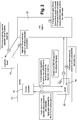
- Figure 2 represents the provisioning steps of an applet with credentials of an application server according to the present invention.
- a terminal application 16 is one of the terminal applications 11 or 12 represented in figure 1 .
- the enrolment has the purpose to store credentials of the application server 10 in the security element 14 without requiring from the end-user to enter his MSISDN in his terminal 13.
- the security element 14 contains, according to the invention, an applet 20 which function will now be described. Prior to this enrolment, the terminal application 16 has been downloaded in the terminal 13.
- the first step (1) of the enrolment consists in sending from the terminal application 16 to the applet 20 a request to provision the applet 20 with credentials. These credentials are typically at the level of the application server 10 from which the terminal application 16 has been downloaded.
- the credentials of a terminal application 16 can for example consist in a security key.
- This request also consists in requiring to the applet 20 to check the MSISDN of the security element 14, here constituted by a UICC. In the scope of the invention, the terminal application 16 has access to the security element 14.
- the second step (2) consists in sending from the applet 20 to an OTA platform 15 a SMS message containing an identifier of the applet 20 (for example its AID - AID standing for Application Identifier).
- An AID is defined in ISO 7816-5 and is a sequence of bytes between 5 and 16 bytes in length.
- This SMS contains information requesting the provisioning of the applet 20 with credentials relative to the terminal application 16.
- the wireless network between the terminal 13 and the OTA platform 15 supports the sending of SMS (2G, 3G, or VoLTE for example).
- the third step (3) consists in adding the MSISDN of the security element 14 by a SMSC not represented (Short Message Service Center) located in front of the OTA platform 15 in the header of the SMS (i.e. between the terminal 13 and the OTA platform 15).
- the SMSC has a table of correspondence between the received IMSI (or TMSI) transmitted by the terminal 13 when communication is established with the OTA platform and the MSISDN.
- the OTA platform 15 extracts the applet identifier and understands that there is a request to provision the applet 20 with credentials of the terminal application 16.
- the OTA platform 15 also retrieves from the header of the received SMS the MSISDN that has been added by the SMSC.
- the fourth step (4) consists in requesting from the OTA platform 15 to the application server 10 credentials for the terminal application 16. In this request, at least the MSISDN of the security element 14 is transmitted to the application server 10.
- the fifth step (5) consists in sending from the application server 10 to the OTA platform 15 the requested credentials to be associated with the received MSISDN.
- the credentials are unique for each MSISDN in order that if credentials are hacked, the hacker will not have access to the service provided to each end-user.
- the OTA platform 15 then (at step 6) sends back to the applet 20 the requested credentials associated with the MSISDN.
- the applet 20 is provisioned with credentials (a key for example) and the MSISDN of the security element 14.
- the seventh step (7) consists in sending from the applet 20 to the terminal application 16 a message informing the terminal application 16 that the applet 20 has been provisioned with credentials of the terminal application 16.
- the applet 20 also transmits the received MSISDN to the terminal application 16.
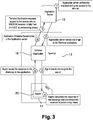
- Figure 3 represents the access to a service of a terminal application provisioned according to figure 2 .
- the access to a service does not require the presence of an OTA platform.
- a first step (1) the terminal application 16 requests access to a service provided by the application server 10. This request includes the sending of the MSISDN of the security element 14. If the MSISDN has not been transmitted optionally during step 7 of figure 2 to the terminal application 16, the terminal application 16 requests this MSISDN in a precedent step to the applet 20. The important point is that the terminal application must have the MSISDN in order to be able to transmit it to the application server 10.
- the application server 10 sends a challenge (a random value) to the terminal application 16 that forwards this challenge (in a third step (3)) to the applet 20.
- the applet 20 then computes (step 4) the response to the challenge by using the credentials received at provisioning stage (step 6 of fig.2 ).
- the applet then sends this response to the terminal application 16 (step 5).
- the terminal application 16 forwards this response to the application server 10 and in a final step (7), the application server 10 verifies the response (by using the sent challenge and the credentials assigned during the enrolment procedure to the MSISDN of the security element 14). If the response computed by the applet 20 is identical to the result of the same function computed at the level of the application server 10, the MSISDN is correct (the credentials assigned to the applet 20 correspond to the MSISDN used for getting these credentials during the enrolment phase of figure 2 ) and access to the service is allowed. Otherwise, access to the service is denied.
- This process for accessing to a service occurs at each request of the end-user for accessing to the specifies service.
- the present invention also concerns a computer program product implemented in the applet 20 comprised in the security element 14.
- the computer program product is configured to be operable to:
- the present invention also concerns an OTA platform 15 comprising means for:
Landscapes
- Engineering & Computer Science (AREA)
- Computer Networks & Wireless Communication (AREA)
- Signal Processing (AREA)
- Computer Security & Cryptography (AREA)
- Computer Hardware Design (AREA)
- Computing Systems (AREA)
- General Engineering & Computer Science (AREA)
- Telephonic Communication Services (AREA)
- Mobile Radio Communication Systems (AREA)
- Information Transfer Between Computers (AREA)
Abstract
The present invention concerns among others a method for provisioning an applet 20 with credentials of a terminal application 16 provided by an application server 10, the applet 20 being comprised in a security element 14 of a terminal 13, the method consisting in:
- Sending a request to provision the applet 20 with credentials from the terminal application 16 to the applet 20;
- Sending a SMS message containing an identifier of the applet 20 from the applet 20 to an OTA platform 15;
- Adding the MSISDN of the security element 14 by a SMSC located in front of the OTA platform 15 in the header of the SMS;
- Requesting the credentials from the OTA platform 15 to the application server 10;
- Sending from the application server 10 to the OTA platform 15 the credentials to be associated with the MSISDN;
- Sending from the OTA platform 15 to the applet 20 the credentials associated with the MSISDN;
- Sending from the applet 20 to the terminal application 16 a message informing the terminal application 16 that it has been provisioned with credentials of the terminal application 16.
- Sending a request to provision the applet 20 with credentials from the terminal application 16 to the applet 20;
- Sending a SMS message containing an identifier of the applet 20 from the applet 20 to an OTA platform 15;
- Adding the MSISDN of the security element 14 by a SMSC located in front of the OTA platform 15 in the header of the SMS;
- Requesting the credentials from the OTA platform 15 to the application server 10;
- Sending from the application server 10 to the OTA platform 15 the credentials to be associated with the MSISDN;
- Sending from the OTA platform 15 to the applet 20 the credentials associated with the MSISDN;
- Sending from the applet 20 to the terminal application 16 a message informing the terminal application 16 that it has been provisioned with credentials of the terminal application 16.
Description
- The present invention enters in the scope of telecommunications and in particular in the provisioning of credentials for an application present in a telecommunication terminal.
- More precisely, the present invention concerns among others a method for verifying seamlessly the MSISDN (Mobile Station International Subscriber Directory Number) of an end-user when he wants to subscribe to a service identifying the subscriber identity based on his MSISDN. The MSISDN is the telephone number that is assigned to a mobile user.
- There are a large number of handset applications (or terminal applications in general) that are identifying the end-user with his MSISDN, for example WiFi Offload applications, VoLTE, VoWiFi, VoIP, etc...
-
Figure 1 represents a system in which anapplication server 10 containing applications orservices terminal 13.Application server 10 acts as a service provider. - The
terminal 13 is typically a handset, a smartphone or a PDA and contains asecurity element 14, typically a SIM card, a UICC or an embedded UICC also called eUICC (UICC not extractible from the terminal 13). Terminal 13 can communicate with the network of a MNO (Mobile Network Operator) and especially with anOTA platform 15. This OTAplatform 15 can communicate with theapplication server 10 and constitutes a bridge between theterminal 13 and theapplication server 10. - When the user of the
terminal 13 wishes to download aservice application server 10, it connects to theOTA platform 15 and downloads this service after having entered a login and a password. The service is then stored in theterminal 13 in a so calledterminal application 16. - The
application server 10 is for example a server belonging to Google (TM) or Apple (TM). - In order to activate the
terminal application 16 in his terminal 13 (for installing it), the user has generally to enter his MSISDN for ensuring theapplication server 10 that theterminal 13 on which theapplication 16 has been downloaded is the one that is entitled to use it. This is called the "OTP solution". For this purpose, theapplication server 10 sends (via SMS) a OTP (One Time Password) to theterminal 13. The user has then to type in the OTP in the user interface of the handset application. The issue with this solution is that it obliges the end-user to go "out" on the handset application, enter the SMS application, open the received SMS containing the OTP, read and remember the OTP, reopen the handset application and type in the OTP. - This is not a user friendly solution at all and it requires an additional authentication server (for generating and verifying the OTP).
- Another known solution is called "GGSN solution". The gateway GPRS support node (GGSN) is a main component of the GPRS network. The GGSN is responsible for the internet working between the GPRS network and external packet switched networks, like the Internet and X.25 networks.
- In this solution, the
terminal application 16 sends a http request to theapplication server 10 through the GGSN, the GGSN intercepts the request and adds the MSISDN as a header. Theapplication server 10 can then automatically know the MSISDN of the end-user. The issue here is that not all the MNOs are able and/or willing to change their GGSN behaviour in order to add the MSISDN in the request. - Another solution is called "mobile ID solution": The
terminal application 16 asks the end-user to type his MSISDN and sends a http request to theserver 10 with the MSISDN. The server sends a formatted SMS to a Mobile ID applet based on OTP. The applet prompts the end-user to confirm the request and sends back the response to theapplication server 10. The issue with this solution is that it requires a specific authentication server and a large applet (25 Kbytes) not easy to deploy (especially to SIMs already deployed) and requires large free memory space. - The problem solved by the present invention is to avoid impersonation and to ensure that the MSISDN belongs effectively to the end-user, in a user friendly manner.
- More precisely, one of the purposes of the invention is to propose a solution that can be easily pre-deployed or even deployed during provisioning process.
- Another purpose is to propose a solution that is user friendly with no end-user interaction (no manual entry of the MSISDN).
- These purposes, among others, are reached thanks to a method for provisioning an applet with credentials of a terminal application provided by an application server, the applet being comprised in a security element of a terminal, the method consisting in:
- Sending a request to provision the applet with credentials from the terminal application to the applet;
- Sending a SMS message containing an identifier of the applet from the applet to an OTA platform;
- Adding the MSISDN of the security element by a SMSC located in front of the OTA platform in the header of the SMS;
- Requesting the credentials from the OTA platform to the application server;
- Sending from the application server to the OTA platform the credentials to be associated with the MSISDN;
- Sending from the OTA platform to the applet the credentials associated with the MSISDN;
- Sending from the applet to the terminal application a message informing the terminal application that it has been provisioned with credentials of the terminal application.
- The invention also concerns a computer program product implemented in an applet comprised in a security element, the computer program product being configured to be operable to:
- Send a SMS message containing an identifier of the applet to an OTA platform, at the request of a terminal application to be provisioned with credentials;
- Receive from the OTA platform the credentials of the terminal application and the MSISDN of the security element;
- Send to the terminal application a message informing the terminal application that it has been provisioned with credentials of the terminal application .
- Finally, the invention concerns an OTA platform comprising means for:
- Receiving from an applet comprised in a security element of a terminal a SMS message containing an identifier of the applet, the SMS message containing the MSISDN of the security element and a request for getting credentials for a terminal application present in the terminal;
- Sending the request to an application server with the MSISDN;
- Receiving from the application server the credentials to be associated with the MSISDN;
- Sending to the applet the credentials associated with the MSISDN.
- These features will now be described in regard of the following figures which describe:
-
Figure 1 the state of the art; -
Figure 2 the provisioning steps of an applet with credentials of an application server according to the present invention; -
Figure 3 the access to a service of a terminal application provisioned according tofigure 2 . -
Figure 2 represents the provisioning steps of an applet with credentials of an application server according to the present invention. - The provisioning steps of this figure have the purpose to enrol the
terminal application 16 with theapplication server 10. Aterminal application 16 is one of theterminal applications figure 1 . The enrolment has the purpose to store credentials of theapplication server 10 in thesecurity element 14 without requiring from the end-user to enter his MSISDN in histerminal 13. Thesecurity element 14 contains, according to the invention, anapplet 20 which function will now be described. Prior to this enrolment, theterminal application 16 has been downloaded in theterminal 13. - Seven main steps are represented in
figure 2 . - The first step (1) of the enrolment consists in sending from the
terminal application 16 to the applet 20 a request to provision theapplet 20 with credentials. These credentials are typically at the level of theapplication server 10 from which theterminal application 16 has been downloaded. The credentials of aterminal application 16 can for example consist in a security key. This request also consists in requiring to theapplet 20 to check the MSISDN of thesecurity element 14, here constituted by a UICC. In the scope of the invention, theterminal application 16 has access to thesecurity element 14. - The second step (2) consists in sending from the
applet 20 to an OTA platform 15 a SMS message containing an identifier of the applet 20 (for example its AID - AID standing for Application Identifier). An AID is defined in ISO 7816-5 and is a sequence of bytes between 5 and 16 bytes in length. This SMS contains information requesting the provisioning of theapplet 20 with credentials relative to theterminal application 16. The wireless network between the terminal 13 and theOTA platform 15 supports the sending of SMS (2G, 3G, or VoLTE for example). - The third step (3) consists in adding the MSISDN of the
security element 14 by a SMSC not represented (Short Message Service Center) located in front of theOTA platform 15 in the header of the SMS (i.e. between the terminal 13 and the OTA platform 15). The SMSC has a table of correspondence between the received IMSI (or TMSI) transmitted by the terminal 13 when communication is established with the OTA platform and the MSISDN. When receiving this SMS, theOTA platform 15 extracts the applet identifier and understands that there is a request to provision theapplet 20 with credentials of theterminal application 16. - The
OTA platform 15 also retrieves from the header of the received SMS the MSISDN that has been added by the SMSC. - The fourth step (4) consists in requesting from the
OTA platform 15 to theapplication server 10 credentials for theterminal application 16. In this request, at least the MSISDN of thesecurity element 14 is transmitted to theapplication server 10. - The fifth step (5) consists in sending from the
application server 10 to theOTA platform 15 the requested credentials to be associated with the received MSISDN. The credentials are unique for each MSISDN in order that if credentials are hacked, the hacker will not have access to the service provided to each end-user. - The
OTA platform 15 then (at step 6) sends back to theapplet 20 the requested credentials associated with the MSISDN. At this step, theapplet 20 is provisioned with credentials (a key for example) and the MSISDN of thesecurity element 14. - The seventh step (7) consists in sending from the
applet 20 to the terminal application 16 a message informing theterminal application 16 that theapplet 20 has been provisioned with credentials of theterminal application 16. Optionally, theapplet 20 also transmits the received MSISDN to theterminal application 16. -
Figure 3 represents the access to a service of a terminal application provisioned according tofigure 2 . The access to a service does not require the presence of an OTA platform. - In a first step (1), the
terminal application 16 requests access to a service provided by theapplication server 10. This request includes the sending of the MSISDN of thesecurity element 14. If the MSISDN has not been transmitted optionally duringstep 7 offigure 2 to theterminal application 16, theterminal application 16 requests this MSISDN in a precedent step to theapplet 20. The important point is that the terminal application must have the MSISDN in order to be able to transmit it to theapplication server 10. - In a second step (2), the
application server 10 sends a challenge (a random value) to theterminal application 16 that forwards this challenge (in a third step (3)) to theapplet 20. Theapplet 20 then computes (step 4) the response to the challenge by using the credentials received at provisioning stage (step 6 offig.2 ). The computation can be expressed by the following function F:
- The applet then sends this response to the terminal application 16 (step 5).
- In a sixth step (6), the
terminal application 16 forwards this response to theapplication server 10 and in a final step (7), theapplication server 10 verifies the response (by using the sent challenge and the credentials assigned during the enrolment procedure to the MSISDN of the security element 14). If the response computed by theapplet 20 is identical to the result of the same function computed at the level of theapplication server 10, the MSISDN is correct (the credentials assigned to theapplet 20 correspond to the MSISDN used for getting these credentials during the enrolment phase offigure 2 ) and access to the service is allowed. Otherwise, access to the service is denied. - This process for accessing to a service occurs at each request of the end-user for accessing to the specifies service.
- The present invention also concerns a computer program product implemented in the
applet 20 comprised in thesecurity element 14. According to the invention, the computer program product is configured to be operable to: - Send a SMS message containing an identifier of the
applet 20 to theOTA platform 15, at the request of theterminal application 16 to be provisioned with credentials; - Receive from the
OTA platform 15 the credentials of theterminal application 16 and the MSISDN of thesecurity element 14; - Send to the terminal application 16 a message informing the
terminal application 16 that it has been provisioned with credentials of theterminal application 16. - The present invention also concerns an
OTA platform 15 comprising means for: - Receiving from the
applet 20 comprised in thesecurity element 14 of the terminal 13 a SMS message containing an identifier of theapplet 20, the SMS message containing the MSISDN of the security element 14 (added by the SMSC) and a request for getting credentials for theterminal application 16 present in the terminal 13; - Sending the request to the
application server 10 with the MSISDN; - Receiving from the
application server 10 the credentials to be associated with the MSISDN; - Sending to the
applet 20 the credentials associated with this MSISDN. - The advantages of the inventions are:
- The size of the
applet 20 is very limited (around 1 KB); - The enrolling method is very secured since it is based on a security element like a Sim, a UICC or a eUICC;
- It does not require any change in the operator's network neither additional server.
Claims (3)
- Method for provisioning an applet (20) with credentials of a terminal application (16) provided by an application server (10), said applet (20) being comprised in a security element (14) of a terminal (13), said method consisting in:- Sending a request to provision said applet (20) with credentials from said terminal application (16) to said applet (20);- Sending a SMS message containing an identifier of said applet (20) from said applet (20) to an OTA platform (15);- Adding the MSISDN of said security element (14) by a SMSC located in front of said OTA platform (15) in the header of said SMS;- Requesting said credentials from said OTA platform (15) to said application server (10);- Sending from said application server (10) to said OTA platform (15) said credentials to be associated with said MSISDN;- Sending from said OTA platform (15) to said applet (20) said credentials associated with said MSISDN;- Sending from said applet (20) to said terminal application (16) a message informing said terminal application (16) that it has been provisioned with credentials of said terminal application (16).
- A computer program product implemented in an applet (20) comprised in a security element (14), said computer program product being configured to be operable to:- Send a SMS message containing an identifier of said applet (20) to an OTA platform (15), at the request of a terminal application (16) to be provisioned with credentials;- Receive from said OTA platform (15) said credentials of said terminal application (16) and the MSISDN of said security element (14);- Send to said terminal application (16) a message informing said terminal application (16) that it has been provisioned with credentials of said terminal application (16).
- OTA platform (15) comprising means for:- Receiving from an applet (20) comprised in a security element (14) of a terminal (13) a SMS message containing an identifier of said applet (20), said SMS message containing the MSISDN of said security element (14) and a request for getting credentials for a terminal (13) application(16) present in said terminal (13);- Sending said request to an application server (10) with said MSISDN;- Receiving from said application server (10) said credentials to be associated with said MSISDN;- Sending to said applet (20) said credentials associated with said MSISDN.
Priority Applications (7)
| Application Number | Priority Date | Filing Date | Title |
|---|---|---|---|
| EP16305568.4A EP3247136A1 (en) | 2016-05-16 | 2016-05-16 | Method for provisioning an applet with credentials of a terminal application provided by an application server and corresponding ota platform |
| EP17722481.3A EP3459269B1 (en) | 2016-05-16 | 2017-05-15 | Method for provisioning an applet with credentials of a terminal application provided by an application server and corresponding ota platform |
| MX2018013991A MX386442B (en) | 2016-05-16 | 2017-05-15 | METHOD FOR PROVIDING AN MINIAPPLICATION WITH CREDENTIALS OF A TERMINAL APPLICATION PROVIDED BY AN APPLICATION SERVER AND CORRESPONDING OTA PLATFORM. |
| PCT/EP2017/061574 WO2017198595A1 (en) | 2016-05-16 | 2017-05-15 | Method for provisioning an applet with credentials of a terminal application provided by an application server and corresponding ota platform |
| JP2018560159A JP6634530B2 (en) | 2016-05-16 | 2017-05-15 | Method of provisioning terminal application authentication information provided by an application server to an applet and corresponding OTA platform |
| US16/301,762 US11082821B2 (en) | 2016-05-16 | 2017-05-15 | Method for provisioning an applet with credentials of a terminal application provided by an application server and corresponding OTA platform |
| BR112018073519-1A BR112018073519B1 (en) | 2016-05-16 | 2017-05-15 | A METHOD FOR PROVISIONING AN APPLET WITH CREDENTIALS FROM A TERMINAL APPLICATION PRESENT ON A TERMINAL AND PROVIDED BY AN APPLICATION SERVER, A PRODUCT IMPLEMENTED IN AN APPLET, AND AN OTA PLATFORM. |
Applications Claiming Priority (1)
| Application Number | Priority Date | Filing Date | Title |
|---|---|---|---|
| EP16305568.4A EP3247136A1 (en) | 2016-05-16 | 2016-05-16 | Method for provisioning an applet with credentials of a terminal application provided by an application server and corresponding ota platform |
Publications (1)
| Publication Number | Publication Date |
|---|---|
| EP3247136A1 true EP3247136A1 (en) | 2017-11-22 |
Family
ID=56557643
Family Applications (2)
| Application Number | Title | Priority Date | Filing Date |
|---|---|---|---|
| EP16305568.4A Withdrawn EP3247136A1 (en) | 2016-05-16 | 2016-05-16 | Method for provisioning an applet with credentials of a terminal application provided by an application server and corresponding ota platform |
| EP17722481.3A Active EP3459269B1 (en) | 2016-05-16 | 2017-05-15 | Method for provisioning an applet with credentials of a terminal application provided by an application server and corresponding ota platform |
Family Applications After (1)
| Application Number | Title | Priority Date | Filing Date |
|---|---|---|---|
| EP17722481.3A Active EP3459269B1 (en) | 2016-05-16 | 2017-05-15 | Method for provisioning an applet with credentials of a terminal application provided by an application server and corresponding ota platform |
Country Status (5)
| Country | Link |
|---|---|
| US (1) | US11082821B2 (en) |
| EP (2) | EP3247136A1 (en) |
| JP (1) | JP6634530B2 (en) |
| MX (1) | MX386442B (en) |
| WO (1) | WO2017198595A1 (en) |
Cited By (1)
| Publication number | Priority date | Publication date | Assignee | Title |
|---|---|---|---|---|
| WO2019120610A1 (en) * | 2017-12-22 | 2019-06-27 | Giesecke+Devrient Mobile Security Gmbh | Msisdn registration |
Families Citing this family (1)
| Publication number | Priority date | Publication date | Assignee | Title |
|---|---|---|---|---|
| TWI748725B (en) * | 2020-11-03 | 2021-12-01 | 中華電信股份有限公司 | Data exchange method for universal sim card |
Citations (2)
| Publication number | Priority date | Publication date | Assignee | Title |
|---|---|---|---|---|
| WO2012091349A2 (en) * | 2010-12-30 | 2012-07-05 | Sk C&C Co., Ltd. | System and method for managing mobile wallet and its related credentials |
| US20120252531A1 (en) * | 2011-03-31 | 2012-10-04 | Verizon Patent And Licensing Inc. | Provisioning mobile terminals with a trusted key for generic bootstrap architecutre |
Family Cites Families (11)
| Publication number | Priority date | Publication date | Assignee | Title |
|---|---|---|---|---|
| EP1536606A1 (en) * | 2003-11-27 | 2005-06-01 | Nagracard S.A. | Method for authenticating applications |
| FR2878685B1 (en) * | 2004-11-30 | 2007-02-02 | Gemplus Sa | PRO-ACTIVE SESSION TRIGGER FROM AN APPLET IN A CHIP CARD |
| KR100840901B1 (en) * | 2007-06-22 | 2008-06-24 | 주식회사 케이티프리텔 | System and method for providing OTA service |
| EP2469408A1 (en) * | 2010-12-22 | 2012-06-27 | France Telecom | System and method for remotely triggering actions on a mobile device |
| US8843125B2 (en) * | 2010-12-30 | 2014-09-23 | Sk C&C | System and method for managing mobile wallet and its related credentials |
| KR20120094284A (en) * | 2011-02-16 | 2012-08-24 | 경남대학교 산학협력단 | A management method of application license in the android platform using usim chip |
| EP2725758A1 (en) * | 2012-10-29 | 2014-04-30 | Gemalto SA | Method for mutual authentication between a terminal and a remote server via a third-party portal |
| US9313660B2 (en) * | 2013-11-01 | 2016-04-12 | At&T Intellectual Property I, Lp | Apparatus and method for secure provisioning of a communication device |
| WO2015077247A1 (en) * | 2013-11-19 | 2015-05-28 | Visa International Service Association | Automated account provisioning |
| FR3013479B1 (en) * | 2013-11-21 | 2015-12-18 | Oberthur Technologies | NOTIFICATION METHOD FOR CONFIGURING A SECURE ELEMENT |
| KR102200209B1 (en) * | 2014-04-22 | 2021-01-08 | 삼성전자 주식회사 | Method and apparatus for provisioning profiles |
-
2016
- 2016-05-16 EP EP16305568.4A patent/EP3247136A1/en not_active Withdrawn
-
2017
- 2017-05-15 WO PCT/EP2017/061574 patent/WO2017198595A1/en not_active Ceased
- 2017-05-15 MX MX2018013991A patent/MX386442B/en unknown
- 2017-05-15 US US16/301,762 patent/US11082821B2/en active Active
- 2017-05-15 JP JP2018560159A patent/JP6634530B2/en active Active
- 2017-05-15 EP EP17722481.3A patent/EP3459269B1/en active Active
Patent Citations (2)
| Publication number | Priority date | Publication date | Assignee | Title |
|---|---|---|---|---|
| WO2012091349A2 (en) * | 2010-12-30 | 2012-07-05 | Sk C&C Co., Ltd. | System and method for managing mobile wallet and its related credentials |
| US20120252531A1 (en) * | 2011-03-31 | 2012-10-04 | Verizon Patent And Licensing Inc. | Provisioning mobile terminals with a trusted key for generic bootstrap architecutre |
Non-Patent Citations (2)
| Title |
|---|
| HART JONATHAN ET AL: "Website Credential Storage and Two-Factor Web Authentication with a Java SIM", 12 April 2010, CORRECT SYSTEM DESIGN; [LECTURE NOTES IN COMPUTER SCIENCE; LECT.NOTES COMPUTER], SPRINGER INTERNATIONAL PUBLISHING, CHAM, PAGE(S) 229 - 236, ISBN: 978-3-642-02770-3, ISSN: 0302-9743, XP047307849, DOI: 10.1007/978-3-642-12368-9_17 * |
| NIKOLAY ELENKOV: "Using the SIM card as a secure element in Android", 27 September 2013 (2013-09-27), XP055178469, Retrieved from the Internet <URL:http://nelenkov.blogspot.de/2013/09/using-sim-card-as-secure-element.html> [retrieved on 20150323] * |
Cited By (2)
| Publication number | Priority date | Publication date | Assignee | Title |
|---|---|---|---|---|
| WO2019120610A1 (en) * | 2017-12-22 | 2019-06-27 | Giesecke+Devrient Mobile Security Gmbh | Msisdn registration |
| US10966081B2 (en) | 2017-12-22 | 2021-03-30 | Giesecke+Devrient Mobile Security Gmbh | MSISDN registration |
Also Published As
| Publication number | Publication date |
|---|---|
| JP6634530B2 (en) | 2020-01-22 |
| US11082821B2 (en) | 2021-08-03 |
| US20190158996A1 (en) | 2019-05-23 |
| MX2018013991A (en) | 2019-04-01 |
| MX386442B (en) | 2025-03-18 |
| WO2017198595A1 (en) | 2017-11-23 |
| EP3459269B1 (en) | 2020-04-29 |
| EP3459269A1 (en) | 2019-03-27 |
| JP2019523576A (en) | 2019-08-22 |
| BR112018073519A2 (en) | 2019-03-19 |
Similar Documents
| Publication | Publication Date | Title |
|---|---|---|
| US11825551B2 (en) | Method for establishing a bidirectional communication channel between a server and a secure element, corresponding servers and secure element | |
| US11089480B2 (en) | Provisioning electronic subscriber identity modules to mobile wireless devices | |
| US11463883B2 (en) | Cellular service account transfer for accessory wireless devices | |
| EP2884785B1 (en) | Service Sharing System and Apparatus | |
| EP2938106B1 (en) | Method and system for utilizing a multi-identity uicc | |
| US10721616B2 (en) | Subscription information download method, related device, and system | |
| KR102017442B1 (en) | Method and devices for providing a subscription profile on a mobile terminal | |
| CN103493541B (en) | Method and terminal for switching operator network | |
| EP3433994B1 (en) | Methods and apparatus for sim-based authentication of non-sim devices | |
| WO2018206636A1 (en) | Selection of ip version | |
| US20170269918A1 (en) | Implicit file creation in apdu scripts | |
| US20140304323A1 (en) | Flexible device management bootstrap | |
| KR20150111173A (en) | Apparatus and method for subscribing to network in wireless communication system | |
| US11082821B2 (en) | Method for provisioning an applet with credentials of a terminal application provided by an application server and corresponding OTA platform | |
| US20250193652A1 (en) | DYNAMIC eSIM CUSTOMIZATION WITH PRESET TEMPLATES | |
| EP3105900B1 (en) | Method and system for determining that a sim and a sip client are co-located in the same mobile equipment | |
| US12335719B2 (en) | Method for recovering a profile of a MNO | |
| WO2025128196A1 (en) | Dynamic esim customization with preset templates | |
| KR102271597B1 (en) | Server and method for remote device management based on Network | |
| EP3651489A1 (en) | Method for authenticating a secure element cooperating with a terminal, corresponding applet, system and server |
Legal Events
| Date | Code | Title | Description |
|---|---|---|---|
| PUAI | Public reference made under article 153(3) epc to a published international application that has entered the european phase |
Free format text: ORIGINAL CODE: 0009012 |
|
| AK | Designated contracting states |
Kind code of ref document: A1 Designated state(s): AL AT BE BG CH CY CZ DE DK EE ES FI FR GB GR HR HU IE IS IT LI LT LU LV MC MK MT NL NO PL PT RO RS SE SI SK SM TR |
|
| AX | Request for extension of the european patent |
Extension state: BA ME |
|
| STAA | Information on the status of an ep patent application or granted ep patent |
Free format text: STATUS: THE APPLICATION IS DEEMED TO BE WITHDRAWN |
|
| 18D | Application deemed to be withdrawn |
Effective date: 20180523 |