EP3244688A1 - Enhanced signaling for communicating device and network - Google Patents
Enhanced signaling for communicating device and network Download PDFInfo
- Publication number
- EP3244688A1 EP3244688A1 EP17170823.3A EP17170823A EP3244688A1 EP 3244688 A1 EP3244688 A1 EP 3244688A1 EP 17170823 A EP17170823 A EP 17170823A EP 3244688 A1 EP3244688 A1 EP 3244688A1
- Authority
- EP
- European Patent Office
- Prior art keywords
- request message
- bearer
- network
- message
- communication device
- Prior art date
- Legal status (The legal status is an assumption and is not a legal conclusion. Google has not performed a legal analysis and makes no representation as to the accuracy of the status listed.)
- Granted
Links
Images
Classifications
-
- H—ELECTRICITY
- H04—ELECTRIC COMMUNICATION TECHNIQUE
- H04W—WIRELESS COMMUNICATION NETWORKS
- H04W76/00—Connection management
- H04W76/10—Connection setup
- H04W76/15—Setup of multiple wireless link connections
-
- H—ELECTRICITY
- H04—ELECTRIC COMMUNICATION TECHNIQUE
- H04W—WIRELESS COMMUNICATION NETWORKS
- H04W68/00—User notification, e.g. alerting and paging, for incoming communication, change of service or the like
- H04W68/005—Transmission of information for alerting of incoming communication
-
- H—ELECTRICITY
- H04—ELECTRIC COMMUNICATION TECHNIQUE
- H04W—WIRELESS COMMUNICATION NETWORKS
- H04W76/00—Connection management
- H04W76/20—Manipulation of established connections
- H04W76/27—Transitions between radio resource control [RRC] states
-
- H—ELECTRICITY
- H04—ELECTRIC COMMUNICATION TECHNIQUE
- H04W—WIRELESS COMMUNICATION NETWORKS
- H04W76/00—Connection management
- H04W76/30—Connection release
- H04W76/34—Selective release of ongoing connections
Definitions
- the present invention relates to a communication device and a method used in a wireless communication system, and more particularly, to a communication device and method of communicating with a network.
- a user equipment establishes a plurality of bearer contexts with a network.
- the network needs to configure a plurality of bearers for all of the plurality of bearer contexts for the UE, when the UE transmits a Service Request message to the network.
- it is unnecessary to configure the plurality of bearers for all of the plurality of bearer contexts, if the UE intends to transmit data associated with only a bearer context of the plurality of bearer contexts. Accordingly, communication between the UE and the network cannot be performed efficiently.
- the present invention therefore provides a method and related communication device for communicating with the network to solve the abovementioned problem.
- a communication device of communicating with a network comprises a storage unit for storing instructions and a processing circuit coupled to the storage unit.
- the processing circuit is configured to execute the instructions stored in the storage unit.
- the instructions comprise establishing a plurality of bearer contexts with the network; initiating a data transmission associated with a first bearer context of the plurality of bearer contexts; transmitting a first Non Access stratum (NAS) request message comprising only a first bearer identity for the first bearer context to the network in response to the initiation; receiving a first radio resource control (RRC) message configuring only a data radio bearer (DRB) for the first bearer context from the network, after transmitting the first NAS request message; transmitting a second NAS request message not comprising any bearer identity for the first bearer context to the network in response to the initiation; and receiving a second RRC message configuring a plurality of DRBs for the plurality of bearer contexts from the network, after transmitting the second NAS request message.
- RRC radio resource control
- a network of communicating with a plurality of communication devices comprises a storage unit for storing instructions and a processing circuit coupled to the storage unit.
- the processing circuit is configured to execute the instructions stored in the storage unit.
- the instructions comprise receiving a first Non Access stratum (NAS) request message comprising only a bearer identity for a bearer context; transmitting a first radio resource control (RRC) message configuring only a data radio bearer (DRB) for the bearer context, after receiving the first NAS request message; receiving a second NAS request message not comprising any bearer identity; and transmitting a second RRC message configuring a plurality of DRBs for a plurality of bearer contexts, after receiving the second NAS request message.
- NAS Non Access stratum
- RRC radio resource control
- DRB data radio bearer
- a network of communicating with a communication device comprises a storage unit for storing instructions and a processing circuit coupled to the storage unit.
- the processing circuit is configured to execute the instructions stored in the storage unit.
- the instructions comprise transmitting a paging message comprising a bearer identity to the communication device; receiving a Non Access stratum (NAS) request message comprising the bearer identity ; and transmitting a radio resource control (RRC) message configuring a data radio bearer (DRB) for the bearer context in response to the NAS request message.
- NAS Non Access stratum
- RRC radio resource control
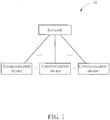
- Fig. 1 is a schematic diagram of a wireless communication system 10 according to an example of the present invention.
- the wireless communication system 10 is briefly composed of a network and a plurality of communication devices.
- the network and the communication devices are simply utilized for illustrating the structure of the wireless communication system 10.
- the network may be an evolved UTRAN (E-UTRAN) including at least one evolved NB (eNB) or a fifth generation (5G) RAN including at least one 5G base station.
- E-UTRAN evolved UTRAN
- eNB evolved NB
- 5G fifth generation
- the network may also include both the E-UTRAN/5G RAN and a core network (CN), wherein the CN includes network entities such as a Mobility Management Entity (MME), a Serving Gateway (S-GW), a Packet Data Network (PDN) Gateway (P-GW), 5G MME and/or 5G S-GW, etc.
- MME Mobility Management Entity
- S-GW Serving Gateway
- PDN Packet Data Network Gateway
- 5G MME 5G MME and/or 5G S-GW, etc.
- the communication device may be a user equipment (UE), a mobile phone, a laptop, a tablet computer, an electronic book, a portable computer system, a vehicle or an aircraft.
- UE user equipment
- DL downlink
- the network is the transmitter and the communication device is the receiver.
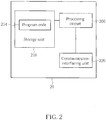
- Fig. 2 is a schematic diagram of a communication device 20 according to an example of the present invention.
- the communication device 20 may be the communication device or the network shown in Fig. 1 , but is not limited herein.
- the communication device 20 may include a processing means 200 such as a microprocessor or Application Specific Integrated Circuit (ASIC), a storage unit 210 and a communication interfacing unit 220.
- the storage unit 210 may be any data storage device that stores a program code 214, accessed and executed by the processing circuit 200.
- the storage unit 210 examples include but are not limited to a read-only memory (ROM), flash memory, random-access memory (RAM), hard disk, optical data storage device, non-volatile storage unit, non-transitory computer-readable medium (e.g., tangible media), etc.
- the communication interfacing unit 220 includes a transceiver used to transmit and receive signals (e.g., data, signals, messages and/or packets) according to processing results of the processing circuit 200.
- a UE is used for representing the communication device in Fig. 1 , to simplify the illustration of the examples.
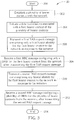
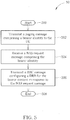
- Fig. 3 is a flowchart of a process 30 according to an example of the present invention.
- the process 30 is utilized in a UE (e.g., the communication device in Fig. 1 ), to communicate with a network (e. g. , the network in Fig. 1 ) .
- the process 30 includes the following steps: Step 300: Start.
- Step 302 Establish a plurality of bearer contexts with the network.
- Step 306 Transmit a first Non Access stratum (NAS) request message comprising only a first bearer identity for the first bearer context to the network in response to the initiation.
- NAS Non Access stratum
- Step 308 Receive a first radio resource control (RRC) message configuring only a data radio bearer (DRB) for the first bearer context from the network, after transmitting the first NAS request message.
- Step 310 Transmit a second NAS request message not comprising any bearer identity for the first bearer context to the network in response to the initiation.
- Step 312 Receive a second RRC message configuring a plurality of DRBs for the plurality of bearer contexts from the network, after transmitting the second NAS request message.
- Step 314 End.
- the UE establishes a plurality of bearer contexts with the network, and initiates a data transmission associated with a first bearer context of the plurality of bearer contexts. Then, the UE transmits a first NAS request message including only a first bearer identity for the first bearer context-to the network in response to the initiation, and receives a first RRC message configuring only a DRB for the first bearer context from the network after transmitting the first NAS request message.
- the UE transmits a second NAS request message not including any bearer identity for the first bearer context to the network in response to the initiation, and receives a second RRC message configuring a plurality of DRBs for the plurality of bearer contexts from the network after transmitting the second NAS request message. That is, the UE indicates to the network that the first bearer context identified by the first bearer identity has UL data pending for transmission. Accordingly, the network configures only one DRB for the first bearer context. Thus, communication between the UE and the network is performed efficiently.
- Realization of the process 30 is not limited to the above description. The following examples may be applied for realizing the process 30.
- the UE transmits the first NAS request message to the network in response to the initiation, when the UE has UL data pending for transmission and associated to the first bearer context only.
- the UE transmits the second NAS request message to the network in response to the initiation, when the UE has UL data pending for transmission and associated to the first bearer context and a second bearer context of the plurality of bearer contexts.
- the UE transmits the first NAS request message including the first bearer identity for the first bearer context to the network in response to the initiation, when the network supports a Cellular Internet of Thing (CIoT) optimization.
- the UE transmits the second NAS request message not including any bearer identity for the first bearer context to the network in response to the initiation, when the network does not support the CIoT optimization. That is, the UE determines whether to transmit the bearer identity according to whether the network supports the CIoT optimization.
- CIoT Cellular Internet of Thing
- the UE determines that the network supports the CIoT optimization, when the UE receives a NAS message (e. g. , "Attach Accept” or "Tracking Area Update Accept") indicating a support of the CIoT optimization.
- a NAS message e. g. , "Attach Accept” or "Tracking Area Update Accept”
- the UE determines that the network supports the CIoT optimization, when the UE receives a broadcast message (e.g., system information) indicating a support of the CIoT optimization.
- the CIoT optimization includes a Control Plane (CP) CIoT optimization, a User Plane (UP) CIoT optimization or an attach without PDN connection establishment.
- the CIoT optimization includes a transmission request for pending a data transmission associated with a bearer context of the plurality of bearer contexts. That is, the network can handle (e.g., support) the first NAS request message. The network may transmit "transmission request for pending data of a bearer context" in a broadcast message (e.g., system information) or in a NAS message (e.g., "Attach Accept" or "Tracking Area Update Accept").
- the UE establishes the plurality of bearer contexts with the network by transmitting at least one PDN Connectivity Request message and/or at least one Bearer Resource Allocation Request message to the network.
- the network transmits at least one "ACTIVATE DEFAULT EPS BEARER CONTEXT REQUEST" message to the UE in response to the at least one PDN Connectivity Request message, and transmits at least one "ACTIVATE DEDICATED EPS BEARER CONTEXT REQUEST" message to the UE in response to the at least one Bearer Resource Allocation Request message.
- the first RRC message may not configure another DRB for a second bearer context of the plurality of bearer contexts.
- the UE may not deactivate (e. g. , locally) any bearer context of the plurality of bearer contexts, which does not have a DRB established when a first NAS request procedure initiated by a transmission of the first NAS request message is completed (e.g., successfully).
- the UE transmits a third NAS request message to the network, when receiving a paging message.
- the third NAS request message may not include any bearer identity indicating data pending for transmission.
- the UE may not deactivate (e.g., locally) any bearer context of the plurality of bearer contexts, which does not have a DRB established when a third NAS request procedure initiated by a transmission of the third NAS request message is completed (e.g., successfully).
- the UE transmits the second NAS request message not including any bearer identity for the first bearer context to the network in response to the initiation, when the network supports the CIoT optimization (e.g., when the UE intends the network to configure the plurality of DRBs for all of the plurality of bearer contexts identified by a plurality of bearer identities).
- the UE deactivates (e.g., locally) at least one bearer context of the plurality of bearer contexts, which does not have a DRB established when a second NAS request procedure initiated by a transmission of the second NAS request message is completed (e.g., successfully).
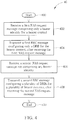
- Fig. 4 is a flowchart of a process 40 according to an example of the present invention.
- the process 40 is utilized in a network (e.g., the network in Fig. 1 ), to communicate with a plurality of UEs (e.g., the communication devices in Fig. 1 ).
- the process 40 includes the following steps: Step 400: Start.
- Step 402 Receive a first NAS request message comprising only a bearer identity for a bearer context.
- Step 404 Transmit a first RRC message configuring only a DRB for the bearer context, after receiving the first NAS request message.
- Step 406 Receive a second NAS request message not comprising any bearer identity.
- Step 408 Transmit a second RRC message configuring a plurality of DRBs for a plurality of bearer contexts, after receiving the second NAS request message.
- Step 410 End.
- the network receives a first NAS request message including only a bearer identity for a bearer context, and transmits a first RRC message configuring only a DRB for the bearer context after receiving (e.g., in response to) the first NAS request message. Then, the network receives a second NAS request message not including any bearer identity, and transmits a second RRC message configuring a plurality of DRBs for a plurality of bearer contexts after receiving (e.g. in response to) the second NAS request message. That is, the network is indicated by the UE that the bearer context identified by the bearer identity has UL data pending for transmission. Accordingly, the network configures only one DRB for the bearer context. Thus, communication between the UE and the network is performed efficiently.
- Realization of the process 40 is not limited to the above description. The following examples may be applied for realizing the process 40.
- the network supports the CIoT optimization and indicates a support of the CIoT optimization (e.g. , in a NAS message or a broadcast message) as described in process 30 and related examples.
- the network receives the first NAS request message and the second NAS request message from a first UE of the plurality of UEs.
- the network establishes a plurality of bearer contexts with the first UE, and the first bearer context is one of the plurality of bearer contexts.
- the first UE may transmit the first NAS request message to initiate a data transmission associated with the first bearer context of the plurality of bearer contexts.
- the first UE may transmit the second NAS request message to initiate a data transmission associated with the plurality of bearer contexts.
- the network may transmit the first RRC message and the second RRC message to the first UE.
- the network receives the first NAS request message from a first UE of the plurality of UEs, and transmits the first RRC message to the first UE.
- the network establishes a first plurality of bearer contexts with the first UE.
- the network establishes a second plurality of bearer contexts with the second UE.
- the first UE may support the CIoT optimization, and may transmit the first NAS request message to initiate a data transmission associated with the first bearer context of the first plurality of bearer contexts.
- the network transmits the first RRC message to the first UE in response to the first NAS request message.
- the second UE supports the CIoT optimization, and transmits the second NAS request message to initiate data transmission associated with the second plurality of bearer contexts.
- the second UE may not support the CIoT optimization, and transmits the second NAS request message to initiate the data transmission associated with the second plurality of bearer contexts.
- the second plurality of bearer contexts may include all of bearer contexts established by the second UE with the network.
- the network transmits the second RRC message to the second UE in response to the second NAS request message.
- the first NAS request message is a Service Request message, an Extended Service Request message or a Data Service Request message
- the second NAS request message is a Service Request message
- the third NAS request message is an Extended Service Request message, a Data Service Request message or a Service Request message.
- the first RRC message and the second RRC message are RRC Connection Reconfiguration messages.
- the UE transmits a RRC Connection Reconfiguration Complete message to the network in response to a RRC Connection Reconfiguration message.
- the first RRC message may include the first bearer identity.
- the second RRC message may include a plurality of bearer identities for the (or second) plurality of bearer contexts.
- the (or second) plurality of bearer contexts may include all of the (or second) plurality of bearer contexts established by the first/second UE with the network.
- Fig. 5 is a flowchart of a process 50 according to an example of the present invention.
- the process 50 is utilized in a network (e.g., the network in Fig. 1 ), to communicate with a UE (e.g., the communication device in Fig. 1 ).
- the process 50 includes the following steps: Step 500: Start.
- Step 502 Transmit a paging message comprising a bearer identity to the UE.
- Step 504 Receive a NAS request message comprising the bearer identity.
- Step 506 Transmit a RRC message configuring a DRB for the bearer context in response to the NAS request message.
- Step 508 End.
- the network pages the UE with a bearer identity for a bearer context established between the UE and network.
- the UE receives the bearer identity
- the UE obtains that the network intends to transmit data associated with the bearer context to the UE and transmits the NAS request message including the bearer identity to the network.
- the network transmits a RRC message configuring a DRB for the bearer context in response to the NAS request message.
- both the network and the UE communicate with each other operated according to the processes 30 and/or 40.
- the bearer identity is an Evolved Packet System (EPS) bearer identity and the bearer context is an EPS bearer context.
- EPS Evolved Packet System
- the bearer identity is a 5G bearer identity and the bearer context is a 5G bearer context.
- the present invention provides a method and related communication device for communicating with a network. Accordingly, the network configures only one DRB for the bearer context identified by the bearer identity indicated by the UE. Thus, communication between the UE and the network is performed efficiently.
Landscapes
- Engineering & Computer Science (AREA)
- Computer Networks & Wireless Communication (AREA)
- Signal Processing (AREA)
- Mobile Radio Communication Systems (AREA)
Abstract
Description
- The present invention relates to a communication device and a method used in a wireless communication system, and more particularly, to a communication device and method of communicating with a network.
- A user equipment (UE) establishes a plurality of bearer contexts with a network. The network needs to configure a plurality of bearers for all of the plurality of bearer contexts for the UE, when the UE transmits a Service Request message to the network. However, it is unnecessary to configure the plurality of bearers for all of the plurality of bearer contexts, if the UE intends to transmit data associated with only a bearer context of the plurality of bearer contexts. Accordingly, communication between the UE and the network cannot be performed efficiently.
- Thus, how to communicate with the network efficiently is an important problem to be solved.
- The present invention therefore provides a method and related communication device for communicating with the network to solve the abovementioned problem.
- A communication device of communicating with a network comprises a storage unit for storing instructions and a processing circuit coupled to the storage unit. The processing circuit is configured to execute the instructions stored in the storage unit. The instructions comprise establishing a plurality of bearer contexts with the network; initiating a data transmission associated with a first bearer context of the plurality of bearer contexts; transmitting a first Non Access stratum (NAS) request message comprising only a first bearer identity for the first bearer context to the network in response to the initiation; receiving a first radio resource control (RRC) message configuring only a data radio bearer (DRB) for the first bearer context from the network, after transmitting the first NAS request message; transmitting a second NAS request message not comprising any bearer identity for the first bearer context to the network in response to the initiation; and receiving a second RRC message configuring a plurality of DRBs for the plurality of bearer contexts from the network, after transmitting the second NAS request message.
- A network of communicating with a plurality of communication devices comprises a storage unit for storing instructions and a processing circuit coupled to the storage unit. The processing circuit is configured to execute the instructions stored in the storage unit. The instructions comprise receiving a first Non Access stratum (NAS) request message comprising only a bearer identity for a bearer context; transmitting a first radio resource control (RRC) message configuring only a data radio bearer (DRB) for the bearer context, after receiving the first NAS request message; receiving a second NAS request message not comprising any bearer identity; and transmitting a second RRC message configuring a plurality of DRBs for a plurality of bearer contexts, after receiving the second NAS request message.
- A network of communicating with a communication device comprises a storage unit for storing instructions and a processing circuit coupled to the storage unit. The processing circuit is configured to execute the instructions stored in the storage unit. The instructions comprise transmitting a paging message comprising a bearer identity to the communication device; receiving a Non Access stratum (NAS) request message comprising the bearer identity ; and transmitting a radio resource control (RRC) message configuring a data radio bearer (DRB) for the bearer context in response to the NAS request message.
- These and other objectives of the present invention will no doubt become obvious to those of ordinary skill in the art after reading the following detailed description of the preferred embodiment that is illustrated in the various figures and drawings.
-
-
Fig. 1 is a schematic diagram of a wireless communication system according to an example of the present invention. -
Fig. 2 is a schematic diagram of a communication device according to an example of the present invention. -
Fig. 3 is a flowchart of a process according to an example of the present invention. -
Fig. 4 is a flowchart of a process according to an example of the present invention. -
Fig. 5 is a flowchart of a process according to an example of the present invention. -
Fig. 1 is a schematic diagram of awireless communication system 10 according to an example of the present invention. Thewireless communication system 10 is briefly composed of a network and a plurality of communication devices. InFig. 1 , the network and the communication devices are simply utilized for illustrating the structure of thewireless communication system 10. Practically, the network may be an evolved UTRAN (E-UTRAN) including at least one evolved NB (eNB) or a fifth generation (5G) RAN including at least one 5G base station. Further, the network may also include both the E-UTRAN/5G RAN and a core network (CN), wherein the CN includes network entities such as a Mobility Management Entity (MME), a Serving Gateway (S-GW), a Packet Data Network (PDN) Gateway (P-GW), 5G MME and/or 5G S-GW, etc. - The communication device may be a user equipment (UE), a mobile phone, a laptop, a tablet computer, an electronic book, a portable computer system, a vehicle or an aircraft. For an uplink (UL), the communication device is the transmitter and the network is the receiver, and for a downlink (DL), the network is the transmitter and the communication device is the receiver.
-
Fig. 2 is a schematic diagram of acommunication device 20 according to an example of the present invention. Thecommunication device 20 may be the communication device or the network shown inFig. 1 , but is not limited herein. Thecommunication device 20 may include a processing means 200 such as a microprocessor or Application Specific Integrated Circuit (ASIC), astorage unit 210 and acommunication interfacing unit 220. Thestorage unit 210 may be any data storage device that stores aprogram code 214, accessed and executed by theprocessing circuit 200. Examples of thestorage unit 210 include but are not limited to a read-only memory (ROM), flash memory, random-access memory (RAM), hard disk, optical data storage device, non-volatile storage unit, non-transitory computer-readable medium (e.g., tangible media), etc. Thecommunication interfacing unit 220 includes a transceiver used to transmit and receive signals (e.g., data, signals, messages and/or packets) according to processing results of theprocessing circuit 200. - In the following diagrams and examples, a UE is used for representing the communication device in
Fig. 1 , to simplify the illustration of the examples. -
Fig. 3 is a flowchart of aprocess 30 according to an example of the present invention. Theprocess 30 is utilized in a UE (e.g., the communication device inFig. 1 ), to communicate with a network (e. g. , the network inFig. 1 ) . Theprocess 30 includes the following steps:Step 300: Start. Step 302: Establish a plurality of bearer contexts with the network. Step 304: Initiate a data transmission associated with a first bearer context of the plurality of bearer contexts. Step 306: Transmit a first Non Access stratum (NAS) request message comprising only a first bearer identity for the first bearer context to the network in response to the initiation. Step 308: Receive a first radio resource control (RRC) message configuring only a data radio bearer (DRB) for the first bearer context from the network, after transmitting the first NAS request message. Step 310: Transmit a second NAS request message not comprising any bearer identity for the first bearer context to the network in response to the initiation. Step 312: Receive a second RRC message configuring a plurality of DRBs for the plurality of bearer contexts from the network, after transmitting the second NAS request message. Step 314: End. - According to the
process 30, the UE establishes a plurality of bearer contexts with the network, and initiates a data transmission associated with a first bearer context of the plurality of bearer contexts. Then, the UE transmits a first NAS request message including only a first bearer identity for the first bearer context-to the network in response to the initiation, and receives a first RRC message configuring only a DRB for the first bearer context from the network after transmitting the first NAS request message. Further, the UE transmits a second NAS request message not including any bearer identity for the first bearer context to the network in response to the initiation, and receives a second RRC message configuring a plurality of DRBs for the plurality of bearer contexts from the network after transmitting the second NAS request message. That is, the UE indicates to the network that the first bearer context identified by the first bearer identity has UL data pending for transmission. Accordingly, the network configures only one DRB for the first bearer context. Thus, communication between the UE and the network is performed efficiently. - Realization of the
process 30 is not limited to the above description. The following examples may be applied for realizing theprocess 30. - In one example, the UE transmits the first NAS request message to the network in response to the initiation, when the UE has UL data pending for transmission and associated to the first bearer context only. The UE transmits the second NAS request message to the network in response to the initiation, when the UE has UL data pending for transmission and associated to the first bearer context and a second bearer context of the plurality of bearer contexts.
- In one example, the UE transmits the first NAS request message including the first bearer identity for the first bearer context to the network in response to the initiation, when the network supports a Cellular Internet of Thing (CIoT) optimization. In one example, the UE transmits the second NAS request message not including any bearer identity for the first bearer context to the network in response to the initiation, when the network does not support the CIoT optimization. That is, the UE determines whether to transmit the bearer identity according to whether the network supports the CIoT optimization.
- In one example, the UE determines that the network supports the CIoT optimization, when the UE receives a NAS message (e. g. , "Attach Accept" or "Tracking Area Update Accept") indicating a support of the CIoT optimization. In one example, the UE determines that the network supports the CIoT optimization, when the UE receives a broadcast message (e.g., system information) indicating a support of the CIoT optimization.
- In one example, the CIoT optimization includes a Control Plane (CP) CIoT optimization, a User Plane (UP) CIoT optimization or an attach without PDN connection establishment. In one example, the CIoT optimization includes a transmission request for pending a data transmission associated with a bearer context of the plurality of bearer contexts. That is, the network can handle (e.g., support) the first NAS request message. The network may transmit "transmission request for pending data of a bearer context" in a broadcast message (e.g., system information) or in a NAS message (e.g., "Attach Accept" or "Tracking Area Update Accept").
- In one example, the UE establishes the plurality of bearer contexts with the network by transmitting at least one PDN Connectivity Request message and/or at least one Bearer Resource Allocation Request message to the network. In one example, the network transmits at least one "ACTIVATE DEFAULT EPS BEARER CONTEXT REQUEST" message to the UE in response to the at least one PDN Connectivity Request message, and transmits at least one "ACTIVATE DEDICATED EPS BEARER CONTEXT REQUEST" message to the UE in response to the at least one Bearer Resource Allocation Request message.
- In one example of
Step 308, the first RRC message may not configure another DRB for a second bearer context of the plurality of bearer contexts. In one example, the UE may not deactivate (e. g. , locally) any bearer context of the plurality of bearer contexts, which does not have a DRB established when a first NAS request procedure initiated by a transmission of the first NAS request message is completed (e.g., successfully). - In one example, the UE transmits a third NAS request message to the network, when receiving a paging message. The third NAS request message may not include any bearer identity indicating data pending for transmission. In one example, the UE may not deactivate (e.g., locally) any bearer context of the plurality of bearer contexts, which does not have a DRB established when a third NAS request procedure initiated by a transmission of the third NAS request message is completed (e.g., successfully).
- In one example, the UE transmits the second NAS request message not including any bearer identity for the first bearer context to the network in response to the initiation, when the network supports the CIoT optimization (e.g., when the UE intends the network to configure the plurality of DRBs for all of the plurality of bearer contexts identified by a plurality of bearer identities). In one example, the UE deactivates (e.g., locally) at least one bearer context of the plurality of bearer contexts, which does not have a DRB established when a second NAS request procedure initiated by a transmission of the second NAS request message is completed (e.g., successfully).
-
Fig. 4 is a flowchart of aprocess 40 according to an example of the present invention. Theprocess 40 is utilized in a network (e.g., the network inFig. 1 ), to communicate with a plurality of UEs (e.g., the communication devices inFig. 1 ). Theprocess 40 includes the following steps:Step 400: Start. Step 402: Receive a first NAS request message comprising only a bearer identity for a bearer context. Step 404: Transmit a first RRC message configuring only a DRB for the bearer context, after receiving the first NAS request message. Step 406: Receive a second NAS request message not comprising any bearer identity. Step 408: Transmit a second RRC message configuring a plurality of DRBs for a plurality of bearer contexts, after receiving the second NAS request message. Step 410: End. - According to the
process 40, the network receives a first NAS request message including only a bearer identity for a bearer context, and transmits a first RRC message configuring only a DRB for the bearer context after receiving (e.g., in response to) the first NAS request message. Then, the network receives a second NAS request message not including any bearer identity, and transmits a second RRC message configuring a plurality of DRBs for a plurality of bearer contexts after receiving (e.g. in response to) the second NAS request message. That is, the network is indicated by the UE that the bearer context identified by the bearer identity has UL data pending for transmission. Accordingly, the network configures only one DRB for the bearer context. Thus, communication between the UE and the network is performed efficiently. - Realization of the
process 40 is not limited to the above description. The following examples may be applied for realizing theprocess 40. - In one example, the network supports the CIoT optimization and indicates a support of the CIoT optimization (e.g. , in a NAS message or a broadcast message) as described in
process 30 and related examples. - In one example, the network receives the first NAS request message and the second NAS request message from a first UE of the plurality of UEs. The network establishes a plurality of bearer contexts with the first UE, and the first bearer context is one of the plurality of bearer contexts. The first UE may transmit the first NAS request message to initiate a data transmission associated with the first bearer context of the plurality of bearer contexts. The first UE may transmit the second NAS request message to initiate a data transmission associated with the plurality of bearer contexts. The network may transmit the first RRC message and the second RRC message to the first UE.
- In one example, the network receives the first NAS request message from a first UE of the plurality of UEs, and transmits the first RRC message to the first UE. The network receives the second NAS request message from a second UE of the plurality of UEs, and transmits the second RRC message to the second UE. The network establishes a first plurality of bearer contexts with the first UE. The network establishes a second plurality of bearer contexts with the second UE. The first UE may support the CIoT optimization, and may transmit the first NAS request message to initiate a data transmission associated with the first bearer context of the first plurality of bearer contexts. The network transmits the first RRC message to the first UE in response to the first NAS request message. In one example, the second UE supports the CIoT optimization, and transmits the second NAS request message to initiate data transmission associated with the second plurality of bearer contexts. In another example, the second UE may not support the CIoT optimization, and transmits the second NAS request message to initiate the data transmission associated with the second plurality of bearer contexts. The second plurality of bearer contexts may include all of bearer contexts established by the second UE with the network. The network transmits the second RRC message to the second UE in response to the second NAS request message.
- In one example of the processes above, the first NAS request message is a Service Request message, an Extended Service Request message or a Data Service Request message, the second NAS request message is a Service Request message, and the third NAS request message is an Extended Service Request message, a Data Service Request message or a Service Request message.
- In one example of the processes above, the first RRC message and the second RRC message are RRC Connection Reconfiguration messages. The UE transmits a RRC Connection Reconfiguration Complete message to the network in response to a RRC Connection Reconfiguration message. The first RRC message may include the first bearer identity. The second RRC message may include a plurality of bearer identities for the (or second) plurality of bearer contexts. The (or second) plurality of bearer contexts may include all of the (or second) plurality of bearer contexts established by the first/second UE with the network.
-
Fig. 5 is a flowchart of aprocess 50 according to an example of the present invention. Theprocess 50 is utilized in a network (e.g., the network inFig. 1 ), to communicate with a UE (e.g., the communication device inFig. 1 ). Theprocess 50 includes the following steps:Step 500: Start. Step 502: Transmit a paging message comprising a bearer identity to the UE. Step 504: Receive a NAS request message comprising the bearer identity. Step 506: Transmit a RRC message configuring a DRB for the bearer context in response to the NAS request message. Step 508: End. - According to the
process 50, the network pages the UE with a bearer identity for a bearer context established between the UE and network. When the UE receives the bearer identity, the UE obtains that the network intends to transmit data associated with the bearer context to the UE and transmits the NAS request message including the bearer identity to the network. The network transmits a RRC message configuring a DRB for the bearer context in response to the NAS request message. Thus, when the network receives the NAS request message from the UE, both the network and the UE communicate with each other operated according to theprocesses 30 and/or 40. - In one example of the processes above, the bearer identity is an Evolved Packet System (EPS) bearer identity and the bearer context is an EPS bearer context. In another example, the bearer identity is a 5G bearer identity and the bearer context is a 5G bearer context.
- It should be noted that although the above examples are illustrated to clarify the related operations of corresponding processes. The examples can be combined and/or modified arbitrarily according to system requirements and/or design considerations.
- Those skilled in the art should readily make combinations, modifications and/or alterations on the abovementioned description and examples. The abovementioned description, steps and/or processes including suggested steps can be realized by means that could be hardware, software, firmware (known as a combination of a hardware device and computer instructions and data that reside as read-only software on the hardware device), an electronic system, or combination thereof. An example of the means be the
communication device 20. Any of the abovementioned processes may be compiled into theprogram code 214. - To sum up, the present invention provides a method and related communication device for communicating with a network. Accordingly, the network configures only one DRB for the bearer context identified by the bearer identity indicated by the UE. Thus, communication between the UE and the network is performed efficiently.
- Those skilled in the art will readily observe that numerous modifications and alterations of the device and method may be made while retaining the teachings of the invention. Accordingly, the above disclosure should be construed as limited only by the metes and bounds of the appended claims.
Claims (14)
- A communication device of communicating with a network, comprising:a storage unit for storing instructions of:establishing a plurality of bearer contexts with the network;initiating a data transmission associated with a first bearer context of the plurality of bearer contexts;transmitting a first Non Access stratum (NAS) request message comprising only a first bearer identity for the first bearer context to the network in response to the initiation;receiving a first radio resource control (RRC) message configuring only a data radio bearer (DRB) for the first bearer context from the network, after transmitting the first NAS request message;transmitting a second NAS request message not comprising any bearer identity for the first bearer context to the network in response to the initiation; andreceiving a second RRC message configuring a plurality of DRBs for the plurality of bearer contexts from the network, after transmitting the second NAS request message; anda processing circuit, coupled to the storage unit, configured to execute the instructions stored in the storage unit.
- The communication device of claim 1, wherein the communication device transmits the first NAS request message comprising only the first bearer identity for the first bearer context to the network in response to the initiation when the network supports a Cellular Internet of Thing (CIoT) optimization, and transmits the second NAS request message not comprising any bearer identity for the first bearer context to the network in response to the initiation when the network does not support the CIoT optimization.
- The communication device of claim 2, wherein the communication device determines that the network supports the CIoT optimization, when the communication device receives a NAS message indicating a support of the CIoT optimization or receives a broadcast message indicating a support of the CIoT optimization.
- The communication device of claim 2, wherein the CIoT optimization comprises a Control Plane (CP) CIoT optimization, a User Plane (UP) CIoT optimization or an attach without Packet Data Network (PDN) connection establishment.
- The communication device of claim 1, wherein the instruction of establishing the plurality of bearer contexts with the network comprises:transmitting at least one PDN Connectivity Request message and/or at least one Bearer Resource Allocation Request message to the network.
- The communication device of claim 1, wherein the first RRC message does not configure another DRB for a second bearer context of the plurality of bearer contexts.
- The communication device of claim 1, wherein the storage unit further stores the instruction of:not deactivating any bearer context of the plurality of bearer contexts, which does not have a DRB established when a first NAS request procedure initiated by a transmission of the first NAS request message is completed; anddeactivating at least one bearer context of the plurality of bearer contexts, which does not have the DRB established when a second NAS request procedure initiated by a transmission of the second NAS request message is completed.
- The communication device of claim 1, wherein the first NAS request message is a Service Request message, an Extended Service Request message or a Data Service Request message, the second NAS request message is the Service Request message, and the first RRC message and the second RRC message are RRC Connection Reconfiguration messages.
- The communication device of claim 1, wherein the communication device transmits the first NAS request message to the network in response to the initiation, when the UE has UL data pending for transmission and associated to the first bearer context only; and the communication device transmits the second NAS request message to the network in response to the initiation, when the UE has UL data pending for transmission and associated to the first bearer context and a second bearer context of the plurality of bearer contexts.
- A network of communicating with a plurality of communication devices, comprising:a storage unit for storing instructions of:receiving a first Non Access stratum (NAS) request message comprising only a bearer identity for a bearer context;transmitting a first radio resource control (RRC) message configuring only a data radio bearer (DRB) for the bearer context, after receiving the first NAS request message;receiving a second NAS request message not comprising any bearer identity; andtransmitting a second RRC message configuring a plurality of DRBs for a plurality of bearer contexts, after receiving the second NAS request message; anda processing circuit, coupled to the storage unit, configured to execute the instructions stored in the storage unit.
- The network of claim 10, wherein the network receives the first NAS request message and the second NAS request message from a first communication device of the plurality of communication devices, and transmits the first RRC message and the second RRC message to the first communication device.
- The network of claim 10, wherein the network receives the first NAS request message from a first communication device of the plurality of communication devices and transmits the first RRC message to the first communication device in response to the first NAS request message, and receives the second NAS request message from a second communication device of the plurality of communication devices and transmits the second RRC message to the second communication device in response to the second NAS request message.
- The network of claim 10, wherein the first NAS request message is a Service Request message, an Extended Service Request message or a Data Service Request message, the second NAS request message is the Service Request message, and the first RRC message and the second RRC message are RRC Connection Reconfiguration messages.
- A network of communicating with a communication device, comprising:a storage unit for storing instructions of:transmitting a paging message comprising a bearer identity to the communication device;receiving a Non Access stratum (NAS) request message comprising the bearer identity; andtransmitting a radio resource control (RRC) message configuring a data radio bearer (DRB) for the bearer context in response to the NAS request message; anda processing circuit, coupled to the storage unit, configured to execute the instructions stored in the storage unit.
Applications Claiming Priority (2)
| Application Number | Priority Date | Filing Date | Title |
|---|---|---|---|
| US201662335707P | 2016-05-13 | 2016-05-13 | |
| US201662337304P | 2016-05-16 | 2016-05-16 |
Publications (2)
| Publication Number | Publication Date |
|---|---|
| EP3244688A1 true EP3244688A1 (en) | 2017-11-15 |
| EP3244688B1 EP3244688B1 (en) | 2018-11-28 |
Family
ID=58709821
Family Applications (1)
| Application Number | Title | Priority Date | Filing Date |
|---|---|---|---|
| EP17170823.3A Active EP3244688B1 (en) | 2016-05-13 | 2017-05-12 | Enhanced signaling for communicating device and network |
Country Status (2)
| Country | Link |
|---|---|
| US (1) | US20170332428A1 (en) |
| EP (1) | EP3244688B1 (en) |
Families Citing this family (1)
| Publication number | Priority date | Publication date | Assignee | Title |
|---|---|---|---|---|
| US10645615B2 (en) * | 2017-11-17 | 2020-05-05 | Hon Hai Precision Industry Co., Ltd. | Method and apparatus for establishing bearers in a wireless communication system |
-
2017
- 2017-05-11 US US15/592,212 patent/US20170332428A1/en not_active Abandoned
- 2017-05-12 EP EP17170823.3A patent/EP3244688B1/en active Active
Non-Patent Citations (1)
| Title |
|---|
| "3rd Generation Partnership Project; Technical Specification Group Core Network and Terminals; Non-Access-Stratum (NAS) protocol for Evolved Packet System (EPS); Stage 3 (Release 13)", 3GPP STANDARD; 3GPP TS 24.301, 3RD GENERATION PARTNERSHIP PROJECT (3GPP), MOBILE COMPETENCE CENTRE ; 650, ROUTE DES LUCIOLES ; F-06921 SOPHIA-ANTIPOLIS CEDEX ; FRANCE, vol. CT WG1, no. V13.5.0, 18 March 2016 (2016-03-18), pages 1 - 414, XP051088177 * |
Also Published As
| Publication number | Publication date |
|---|---|
| US20170332428A1 (en) | 2017-11-16 |
| EP3244688B1 (en) | 2018-11-28 |
Similar Documents
| Publication | Publication Date | Title |
|---|---|---|
| US11553388B2 (en) | Device and method of handling mobility between long-term evolution network and fifth generation network | |
| US20180227737A1 (en) | Device and Method for Handling New Radio Capabilities | |
| EP3474601B1 (en) | Device and method of handling a protocol data unit session and a network slice | |
| US10397891B2 (en) | Device and method of handling multiple cellular radio operations | |
| US10856343B2 (en) | Device and method of handling full configuration | |
| US10292078B1 (en) | Device and method of handling an evolved packet system bearer context | |
| US10206208B2 (en) | Device and method of handling channel access procedures | |
| CN108541034A (en) | Apparatus and method for processing state transition | |
| US10327270B2 (en) | Device and method for handling a feature | |
| EP3573359B1 (en) | Base station and method for handling user equipment configuration | |
| WO2019033402A1 (en) | Method for paging, and access network device, terminal device and core network device | |
| US10568012B2 (en) | Device and method of handling mobility management | |
| EP3402308B1 (en) | Coordination between multirat base stations in dual connectivity | |
| CN108811184B (en) | Apparatus and method for handling dual connectivity | |
| US10021624B2 (en) | Device and method of handling network feature | |
| US9955455B2 (en) | Device and method of handling paging procedure | |
| US9992804B2 (en) | Device and method of handling non-access stratum procedure | |
| EP3499959A1 (en) | Devices handling a signalling radio bearer configuration | |
| EP3477992B1 (en) | Base station for handling radio bearer configurations of radio access technologies | |
| EP3244688B1 (en) | Enhanced signaling for communicating device and network | |
| US20150365991A1 (en) | Device and Method of Handling Device-to-Device communication |
Legal Events
| Date | Code | Title | Description |
|---|---|---|---|
| PUAI | Public reference made under article 153(3) epc to a published international application that has entered the european phase |
Free format text: ORIGINAL CODE: 0009012 |
|
| STAA | Information on the status of an ep patent application or granted ep patent |
Free format text: STATUS: EXAMINATION IS IN PROGRESS |
|
| 17P | Request for examination filed |
Effective date: 20170512 |
|
| AK | Designated contracting states |
Kind code of ref document: A1 Designated state(s): AL AT BE BG CH CY CZ DE DK EE ES FI FR GB GR HR HU IE IS IT LI LT LU LV MC MK MT NL NO PL PT RO RS SE SI SK SM TR |
|
| AX | Request for extension of the european patent |
Extension state: BA ME |
|
| REG | Reference to a national code |
Ref country code: DE Ref legal event code: R079 Ref document number: 602017001068 Country of ref document: DE Free format text: PREVIOUS MAIN CLASS: H04W0076020000 Ipc: H04W0076150000 |
|
| GRAP | Despatch of communication of intention to grant a patent |
Free format text: ORIGINAL CODE: EPIDOSNIGR1 |
|
| STAA | Information on the status of an ep patent application or granted ep patent |
Free format text: STATUS: GRANT OF PATENT IS INTENDED |
|
| RBV | Designated contracting states (corrected) |
Designated state(s): AL AT BE BG CH CY CZ DE DK EE ES FI FR GB GR HR HU IE IS IT LI LT LU LV MC MK MT NL NO PL PT RO RS SE SI SK SM TR |
|
| RIC1 | Information provided on ipc code assigned before grant |
Ipc: H04W 76/27 20180101ALI20180523BHEP Ipc: H04W 76/15 20180101AFI20180523BHEP Ipc: H04W 68/00 20090101ALI20180523BHEP |
|
| INTG | Intention to grant announced |
Effective date: 20180608 |
|
| GRAS | Grant fee paid |
Free format text: ORIGINAL CODE: EPIDOSNIGR3 |
|
| GRAA | (expected) grant |
Free format text: ORIGINAL CODE: 0009210 |
|
| STAA | Information on the status of an ep patent application or granted ep patent |
Free format text: STATUS: THE PATENT HAS BEEN GRANTED |
|
| AK | Designated contracting states |
Kind code of ref document: B1 Designated state(s): AL AT BE BG CH CY CZ DE DK EE ES FI FR GB GR HR HU IE IS IT LI LT LU LV MC MK MT NL NO PL PT RO RS SE SI SK SM TR |
|
| REG | Reference to a national code |
Ref country code: CH Ref legal event code: EP |
|
| REG | Reference to a national code |
Ref country code: AT Ref legal event code: REF Ref document number: 1071812 Country of ref document: AT Kind code of ref document: T Effective date: 20181215 |
|
| REG | Reference to a national code |
Ref country code: DE Ref legal event code: R096 Ref document number: 602017001068 Country of ref document: DE |
|
| REG | Reference to a national code |
Ref country code: IE Ref legal event code: FG4D |
|
| REG | Reference to a national code |
Ref country code: NL Ref legal event code: FP |
|
| REG | Reference to a national code |
Ref country code: LT Ref legal event code: MG4D |
|
| REG | Reference to a national code |
Ref country code: AT Ref legal event code: MK05 Ref document number: 1071812 Country of ref document: AT Kind code of ref document: T Effective date: 20181128 |
|
| PG25 | Lapsed in a contracting state [announced via postgrant information from national office to epo] |
Ref country code: NO Free format text: LAPSE BECAUSE OF FAILURE TO SUBMIT A TRANSLATION OF THE DESCRIPTION OR TO PAY THE FEE WITHIN THE PRESCRIBED TIME-LIMIT Effective date: 20190228 Ref country code: LV Free format text: LAPSE BECAUSE OF FAILURE TO SUBMIT A TRANSLATION OF THE DESCRIPTION OR TO PAY THE FEE WITHIN THE PRESCRIBED TIME-LIMIT Effective date: 20181128 Ref country code: AT Free format text: LAPSE BECAUSE OF FAILURE TO SUBMIT A TRANSLATION OF THE DESCRIPTION OR TO PAY THE FEE WITHIN THE PRESCRIBED TIME-LIMIT Effective date: 20181128 Ref country code: HR Free format text: LAPSE BECAUSE OF FAILURE TO SUBMIT A TRANSLATION OF THE DESCRIPTION OR TO PAY THE FEE WITHIN THE PRESCRIBED TIME-LIMIT Effective date: 20181128 Ref country code: FI Free format text: LAPSE BECAUSE OF FAILURE TO SUBMIT A TRANSLATION OF THE DESCRIPTION OR TO PAY THE FEE WITHIN THE PRESCRIBED TIME-LIMIT Effective date: 20181128 Ref country code: ES Free format text: LAPSE BECAUSE OF FAILURE TO SUBMIT A TRANSLATION OF THE DESCRIPTION OR TO PAY THE FEE WITHIN THE PRESCRIBED TIME-LIMIT Effective date: 20181128 Ref country code: IS Free format text: LAPSE BECAUSE OF FAILURE TO SUBMIT A TRANSLATION OF THE DESCRIPTION OR TO PAY THE FEE WITHIN THE PRESCRIBED TIME-LIMIT Effective date: 20190328 Ref country code: BG Free format text: LAPSE BECAUSE OF FAILURE TO SUBMIT A TRANSLATION OF THE DESCRIPTION OR TO PAY THE FEE WITHIN THE PRESCRIBED TIME-LIMIT Effective date: 20190228 Ref country code: LT Free format text: LAPSE BECAUSE OF FAILURE TO SUBMIT A TRANSLATION OF THE DESCRIPTION OR TO PAY THE FEE WITHIN THE PRESCRIBED TIME-LIMIT Effective date: 20181128 |
|
| PG25 | Lapsed in a contracting state [announced via postgrant information from national office to epo] |
Ref country code: PT Free format text: LAPSE BECAUSE OF FAILURE TO SUBMIT A TRANSLATION OF THE DESCRIPTION OR TO PAY THE FEE WITHIN THE PRESCRIBED TIME-LIMIT Effective date: 20190328 Ref country code: AL Free format text: LAPSE BECAUSE OF FAILURE TO SUBMIT A TRANSLATION OF THE DESCRIPTION OR TO PAY THE FEE WITHIN THE PRESCRIBED TIME-LIMIT Effective date: 20181128 Ref country code: RS Free format text: LAPSE BECAUSE OF FAILURE TO SUBMIT A TRANSLATION OF THE DESCRIPTION OR TO PAY THE FEE WITHIN THE PRESCRIBED TIME-LIMIT Effective date: 20181128 Ref country code: GR Free format text: LAPSE BECAUSE OF FAILURE TO SUBMIT A TRANSLATION OF THE DESCRIPTION OR TO PAY THE FEE WITHIN THE PRESCRIBED TIME-LIMIT Effective date: 20190301 Ref country code: SE Free format text: LAPSE BECAUSE OF FAILURE TO SUBMIT A TRANSLATION OF THE DESCRIPTION OR TO PAY THE FEE WITHIN THE PRESCRIBED TIME-LIMIT Effective date: 20181128 |
|
| PG25 | Lapsed in a contracting state [announced via postgrant information from national office to epo] |
Ref country code: PL Free format text: LAPSE BECAUSE OF FAILURE TO SUBMIT A TRANSLATION OF THE DESCRIPTION OR TO PAY THE FEE WITHIN THE PRESCRIBED TIME-LIMIT Effective date: 20181128 Ref country code: DK Free format text: LAPSE BECAUSE OF FAILURE TO SUBMIT A TRANSLATION OF THE DESCRIPTION OR TO PAY THE FEE WITHIN THE PRESCRIBED TIME-LIMIT Effective date: 20181128 Ref country code: CZ Free format text: LAPSE BECAUSE OF FAILURE TO SUBMIT A TRANSLATION OF THE DESCRIPTION OR TO PAY THE FEE WITHIN THE PRESCRIBED TIME-LIMIT Effective date: 20181128 Ref country code: IT Free format text: LAPSE BECAUSE OF FAILURE TO SUBMIT A TRANSLATION OF THE DESCRIPTION OR TO PAY THE FEE WITHIN THE PRESCRIBED TIME-LIMIT Effective date: 20181128 |
|
| REG | Reference to a national code |
Ref country code: DE Ref legal event code: R097 Ref document number: 602017001068 Country of ref document: DE |
|
| PG25 | Lapsed in a contracting state [announced via postgrant information from national office to epo] |
Ref country code: SK Free format text: LAPSE BECAUSE OF FAILURE TO SUBMIT A TRANSLATION OF THE DESCRIPTION OR TO PAY THE FEE WITHIN THE PRESCRIBED TIME-LIMIT Effective date: 20181128 Ref country code: SM Free format text: LAPSE BECAUSE OF FAILURE TO SUBMIT A TRANSLATION OF THE DESCRIPTION OR TO PAY THE FEE WITHIN THE PRESCRIBED TIME-LIMIT Effective date: 20181128 Ref country code: EE Free format text: LAPSE BECAUSE OF FAILURE TO SUBMIT A TRANSLATION OF THE DESCRIPTION OR TO PAY THE FEE WITHIN THE PRESCRIBED TIME-LIMIT Effective date: 20181128 Ref country code: RO Free format text: LAPSE BECAUSE OF FAILURE TO SUBMIT A TRANSLATION OF THE DESCRIPTION OR TO PAY THE FEE WITHIN THE PRESCRIBED TIME-LIMIT Effective date: 20181128 |
|
| PLBE | No opposition filed within time limit |
Free format text: ORIGINAL CODE: 0009261 |
|
| STAA | Information on the status of an ep patent application or granted ep patent |
Free format text: STATUS: NO OPPOSITION FILED WITHIN TIME LIMIT |
|
| PG25 | Lapsed in a contracting state [announced via postgrant information from national office to epo] |
Ref country code: SI Free format text: LAPSE BECAUSE OF FAILURE TO SUBMIT A TRANSLATION OF THE DESCRIPTION OR TO PAY THE FEE WITHIN THE PRESCRIBED TIME-LIMIT Effective date: 20181128 |
|
| 26N | No opposition filed |
Effective date: 20190829 |
|
| PG25 | Lapsed in a contracting state [announced via postgrant information from national office to epo] |
Ref country code: MC Free format text: LAPSE BECAUSE OF FAILURE TO SUBMIT A TRANSLATION OF THE DESCRIPTION OR TO PAY THE FEE WITHIN THE PRESCRIBED TIME-LIMIT Effective date: 20181128 |
|
| REG | Reference to a national code |
Ref country code: BE Ref legal event code: MM Effective date: 20190531 |
|
| PG25 | Lapsed in a contracting state [announced via postgrant information from national office to epo] |
Ref country code: LU Free format text: LAPSE BECAUSE OF NON-PAYMENT OF DUE FEES Effective date: 20190512 |
|
| PG25 | Lapsed in a contracting state [announced via postgrant information from national office to epo] |
Ref country code: TR Free format text: LAPSE BECAUSE OF FAILURE TO SUBMIT A TRANSLATION OF THE DESCRIPTION OR TO PAY THE FEE WITHIN THE PRESCRIBED TIME-LIMIT Effective date: 20181128 |
|
| PG25 | Lapsed in a contracting state [announced via postgrant information from national office to epo] |
Ref country code: IE Free format text: LAPSE BECAUSE OF NON-PAYMENT OF DUE FEES Effective date: 20190512 |
|
| PG25 | Lapsed in a contracting state [announced via postgrant information from national office to epo] |
Ref country code: BE Free format text: LAPSE BECAUSE OF NON-PAYMENT OF DUE FEES Effective date: 20190531 |
|
| PG25 | Lapsed in a contracting state [announced via postgrant information from national office to epo] |
Ref country code: LI Free format text: LAPSE BECAUSE OF NON-PAYMENT OF DUE FEES Effective date: 20200531 Ref country code: CH Free format text: LAPSE BECAUSE OF NON-PAYMENT OF DUE FEES Effective date: 20200531 |
|
| PG25 | Lapsed in a contracting state [announced via postgrant information from national office to epo] |
Ref country code: CY Free format text: LAPSE BECAUSE OF FAILURE TO SUBMIT A TRANSLATION OF THE DESCRIPTION OR TO PAY THE FEE WITHIN THE PRESCRIBED TIME-LIMIT Effective date: 20181128 |
|
| PG25 | Lapsed in a contracting state [announced via postgrant information from national office to epo] |
Ref country code: HU Free format text: LAPSE BECAUSE OF FAILURE TO SUBMIT A TRANSLATION OF THE DESCRIPTION OR TO PAY THE FEE WITHIN THE PRESCRIBED TIME-LIMIT; INVALID AB INITIO Effective date: 20170512 Ref country code: MT Free format text: LAPSE BECAUSE OF FAILURE TO SUBMIT A TRANSLATION OF THE DESCRIPTION OR TO PAY THE FEE WITHIN THE PRESCRIBED TIME-LIMIT Effective date: 20181128 |
|
| PG25 | Lapsed in a contracting state [announced via postgrant information from national office to epo] |
Ref country code: MK Free format text: LAPSE BECAUSE OF FAILURE TO SUBMIT A TRANSLATION OF THE DESCRIPTION OR TO PAY THE FEE WITHIN THE PRESCRIBED TIME-LIMIT Effective date: 20181128 |
|
| P01 | Opt-out of the competence of the unified patent court (upc) registered |
Effective date: 20230602 |
|
| PGFP | Annual fee paid to national office [announced via postgrant information from national office to epo] |
Ref country code: DE Payment date: 20250319 Year of fee payment: 9 |
|
| PGFP | Annual fee paid to national office [announced via postgrant information from national office to epo] |
Ref country code: GB Payment date: 20260312 Year of fee payment: 10 |
|
| PGFP | Annual fee paid to national office [announced via postgrant information from national office to epo] |
Ref country code: NL Payment date: 20260317 Year of fee payment: 10 |
|
| PGFP | Annual fee paid to national office [announced via postgrant information from national office to epo] |
Ref country code: FR Payment date: 20260309 Year of fee payment: 10 |