EP3243861A1 - Method for preparing polyurethane and/or polycarbonate surface-modified substrates - Google Patents
Method for preparing polyurethane and/or polycarbonate surface-modified substrates Download PDFInfo
- Publication number
- EP3243861A1 EP3243861A1 EP16305560.1A EP16305560A EP3243861A1 EP 3243861 A1 EP3243861 A1 EP 3243861A1 EP 16305560 A EP16305560 A EP 16305560A EP 3243861 A1 EP3243861 A1 EP 3243861A1
- Authority
- EP
- European Patent Office
- Prior art keywords
- polycarbonate
- substrate
- polymer
- modified
- polyurethane
- Prior art date
- Legal status (The legal status is an assumption and is not a legal conclusion. Google has not performed a legal analysis and makes no representation as to the accuracy of the status listed.)
- Withdrawn
Links
- 238000000034 method Methods 0.000 title claims abstract description 70
- 239000000758 substrate Substances 0.000 title claims abstract description 58
- 229920002635 polyurethane Polymers 0.000 title claims description 64
- 239000004814 polyurethane Substances 0.000 title claims description 64
- 229920000515 polycarbonate Polymers 0.000 title claims description 54
- 239000004417 polycarbonate Substances 0.000 title claims description 53
- 229920000642 polymer Polymers 0.000 claims abstract description 129
- 150000001875 compounds Chemical class 0.000 claims abstract description 54
- 239000002904 solvent Substances 0.000 claims abstract description 21
- 125000002887 hydroxy group Chemical group [H]O* 0.000 claims abstract description 19
- 229920001577 copolymer Polymers 0.000 claims abstract description 16
- 230000003252 repetitive effect Effects 0.000 claims abstract description 16
- 238000004519 manufacturing process Methods 0.000 claims abstract description 12
- 239000000463 material Substances 0.000 claims abstract description 9
- 230000003373 anti-fouling effect Effects 0.000 claims abstract description 7
- 229920000307 polymer substrate Polymers 0.000 claims abstract description 6
- -1 poly(methyl vinyl ether) Polymers 0.000 claims description 32
- 229920001223 polyethylene glycol Polymers 0.000 claims description 30
- 102000004169 proteins and genes Human genes 0.000 claims description 23
- 108090000623 proteins and genes Proteins 0.000 claims description 23
- 241000894006 Bacteria Species 0.000 claims description 19
- 125000003118 aryl group Chemical group 0.000 claims description 17
- 229920001282 polysaccharide Polymers 0.000 claims description 17
- 150000004676 glycans Chemical class 0.000 claims description 16
- 229920001692 polycarbonate urethane Polymers 0.000 claims description 16
- 239000005017 polysaccharide Substances 0.000 claims description 16
- 230000000181 anti-adherent effect Effects 0.000 claims description 15
- WMFOQBRAJBCJND-UHFFFAOYSA-M Lithium hydroxide Chemical compound [Li+].[OH-] WMFOQBRAJBCJND-UHFFFAOYSA-M 0.000 claims description 13
- ZMANZCXQSJIPKH-UHFFFAOYSA-N Triethylamine Chemical compound CCN(CC)CC ZMANZCXQSJIPKH-UHFFFAOYSA-N 0.000 claims description 13
- 125000001931 aliphatic group Chemical group 0.000 claims description 12
- 229920001983 poloxamer Polymers 0.000 claims description 12
- 229910000104 sodium hydride Inorganic materials 0.000 claims description 12
- 150000003673 urethanes Chemical class 0.000 claims description 12
- 239000002202 Polyethylene glycol Substances 0.000 claims description 11
- 230000000844 anti-bacterial effect Effects 0.000 claims description 10
- FVKFHMNJTHKMRX-UHFFFAOYSA-N 3,4,6,7,8,9-hexahydro-2H-pyrimido[1,2-a]pyrimidine Chemical compound C1CCN2CCCNC2=N1 FVKFHMNJTHKMRX-UHFFFAOYSA-N 0.000 claims description 9
- 230000002209 hydrophobic effect Effects 0.000 claims description 9
- 230000021164 cell adhesion Effects 0.000 claims description 8
- 229920000570 polyether Polymers 0.000 claims description 8
- 229920001296 polysiloxane Polymers 0.000 claims description 8
- 229920002451 polyvinyl alcohol Polymers 0.000 claims description 8
- 235000019422 polyvinyl alcohol Nutrition 0.000 claims description 8
- 229920000036 polyvinylpyrrolidone Polymers 0.000 claims description 8
- 235000013855 polyvinylpyrrolidone Nutrition 0.000 claims description 8
- 229920002307 Dextran Polymers 0.000 claims description 7
- 230000001472 cytotoxic effect Effects 0.000 claims description 7
- 229920000609 methyl cellulose Polymers 0.000 claims description 7
- 239000001923 methylcellulose Substances 0.000 claims description 7
- 150000005846 sugar alcohols Polymers 0.000 claims description 7
- 230000003253 viricidal effect Effects 0.000 claims description 7
- 230000003115 biocidal effect Effects 0.000 claims description 6
- 230000000855 fungicidal effect Effects 0.000 claims description 6
- 229920002432 poly(vinyl methyl ether) polymer Polymers 0.000 claims description 6
- LPNYRYFBWFDTMA-UHFFFAOYSA-N potassium tert-butoxide Chemical compound [K+].CC(C)(C)[O-] LPNYRYFBWFDTMA-UHFFFAOYSA-N 0.000 claims description 6
- 230000009257 reactivity Effects 0.000 claims description 6
- 239000004721 Polyphenylene oxide Substances 0.000 claims description 5
- KWYUFKZDYYNOTN-UHFFFAOYSA-M Potassium hydroxide Chemical compound [OH-].[K+] KWYUFKZDYYNOTN-UHFFFAOYSA-M 0.000 claims description 5
- KEAYESYHFKHZAL-UHFFFAOYSA-N Sodium Chemical compound [Na] KEAYESYHFKHZAL-UHFFFAOYSA-N 0.000 claims description 5
- RQPZNWPYLFFXCP-UHFFFAOYSA-L barium dihydroxide Chemical compound [OH-].[OH-].[Ba+2] RQPZNWPYLFFXCP-UHFFFAOYSA-L 0.000 claims description 5
- 239000008280 blood Substances 0.000 claims description 5
- 210000004369 blood Anatomy 0.000 claims description 5
- 229910052799 carbon Inorganic materials 0.000 claims description 5
- 239000012312 sodium hydride Substances 0.000 claims description 5
- 229920000122 acrylonitrile butadiene styrene Polymers 0.000 claims description 4
- 229920000058 polyacrylate Polymers 0.000 claims description 4
- 229920000193 polymethacrylate Polymers 0.000 claims description 4
- RVGRUAULSDPKGF-UHFFFAOYSA-N Poloxamer Chemical compound C1CO1.CC1CO1 RVGRUAULSDPKGF-UHFFFAOYSA-N 0.000 claims description 3
- 230000002429 anti-coagulating effect Effects 0.000 claims description 3
- 229910001863 barium hydroxide Inorganic materials 0.000 claims description 3
- 239000002649 leather substitute Substances 0.000 claims description 3
- 229960000502 poloxamer Drugs 0.000 claims description 3
- 229920000728 polyester Polymers 0.000 claims description 3
- 239000004753 textile Substances 0.000 claims description 3
- 229920003232 aliphatic polyester Polymers 0.000 claims description 2
- 239000000010 aprotic solvent Substances 0.000 claims description 2
- 238000007598 dipping method Methods 0.000 claims description 2
- 239000000203 mixture Substances 0.000 claims description 2
- 238000006243 chemical reaction Methods 0.000 description 46
- RYECOJGRJDOGPP-UHFFFAOYSA-N Ethylurea Chemical compound CCNC(N)=O RYECOJGRJDOGPP-UHFFFAOYSA-N 0.000 description 42
- WEVYAHXRMPXWCK-UHFFFAOYSA-N Acetonitrile Chemical compound CC#N WEVYAHXRMPXWCK-UHFFFAOYSA-N 0.000 description 21
- 210000004027 cell Anatomy 0.000 description 18
- JOYRKODLDBILNP-UHFFFAOYSA-N Ethyl urethane Chemical compound CCOC(N)=O JOYRKODLDBILNP-UHFFFAOYSA-N 0.000 description 17
- 230000004048 modification Effects 0.000 description 14
- 238000012986 modification Methods 0.000 description 14
- 239000000243 solution Substances 0.000 description 13
- XLYOFNOQVPJJNP-UHFFFAOYSA-N water Substances O XLYOFNOQVPJJNP-UHFFFAOYSA-N 0.000 description 11
- 125000005587 carbonate group Chemical group 0.000 description 10
- 230000000051 modifying effect Effects 0.000 description 10
- 238000004458 analytical method Methods 0.000 description 8
- 230000015572 biosynthetic process Effects 0.000 description 8
- MTHSVFCYNBDYFN-UHFFFAOYSA-N diethylene glycol Chemical compound OCCOCCO MTHSVFCYNBDYFN-UHFFFAOYSA-N 0.000 description 8
- LFQSCWFLJHTTHZ-UHFFFAOYSA-N Ethanol Chemical compound CCO LFQSCWFLJHTTHZ-UHFFFAOYSA-N 0.000 description 7
- 238000004833 X-ray photoelectron spectroscopy Methods 0.000 description 7
- 239000012620 biological material Substances 0.000 description 7
- 229920001451 polypropylene glycol Polymers 0.000 description 7
- BVKZGUZCCUSVTD-UHFFFAOYSA-L Carbonate Chemical compound [O-]C([O-])=O BVKZGUZCCUSVTD-UHFFFAOYSA-L 0.000 description 6
- UIIMBOGNXHQVGW-UHFFFAOYSA-M Sodium bicarbonate Chemical compound [Na+].OC([O-])=O UIIMBOGNXHQVGW-UHFFFAOYSA-M 0.000 description 6
- HEMHJVSKTPXQMS-UHFFFAOYSA-M Sodium hydroxide Chemical compound [OH-].[Na+] HEMHJVSKTPXQMS-UHFFFAOYSA-M 0.000 description 6
- WYURNTSHIVDZCO-UHFFFAOYSA-N Tetrahydrofuran Chemical compound C1CCOC1 WYURNTSHIVDZCO-UHFFFAOYSA-N 0.000 description 6
- 238000012512 characterization method Methods 0.000 description 6
- 238000001179 sorption measurement Methods 0.000 description 6
- 238000004483 ATR-FTIR spectroscopy Methods 0.000 description 5
- 150000004649 carbonic acid derivatives Chemical class 0.000 description 5
- 125000002915 carbonyl group Chemical group [*:2]C([*:1])=O 0.000 description 5
- 239000000178 monomer Substances 0.000 description 5
- 229920006264 polyurethane film Polymers 0.000 description 5
- 238000001542 size-exclusion chromatography Methods 0.000 description 5
- GQHTUMJGOHRCHB-UHFFFAOYSA-N 2,3,4,6,7,8,9,10-octahydropyrimido[1,2-a]azepine Chemical compound C1CCCCN2CCCN=C21 GQHTUMJGOHRCHB-UHFFFAOYSA-N 0.000 description 4
- VHYFNPMBLIVWCW-UHFFFAOYSA-N 4-Dimethylaminopyridine Chemical compound CN(C)C1=CC=NC=C1 VHYFNPMBLIVWCW-UHFFFAOYSA-N 0.000 description 4
- 108010088751 Albumins Proteins 0.000 description 4
- 102000009027 Albumins Human genes 0.000 description 4
- VTYYLEPIZMXCLO-UHFFFAOYSA-L Calcium carbonate Chemical compound [Ca+2].[O-]C([O-])=O VTYYLEPIZMXCLO-UHFFFAOYSA-L 0.000 description 4
- 241000588724 Escherichia coli Species 0.000 description 4
- 102000008946 Fibrinogen Human genes 0.000 description 4
- 108010049003 Fibrinogen Proteins 0.000 description 4
- KFZMGEQAYNKOFK-UHFFFAOYSA-N Isopropanol Chemical compound CC(C)O KFZMGEQAYNKOFK-UHFFFAOYSA-N 0.000 description 4
- MZRVEZGGRBJDDB-UHFFFAOYSA-N N-Butyllithium Chemical compound [Li]CCCC MZRVEZGGRBJDDB-UHFFFAOYSA-N 0.000 description 4
- 229920003171 Poly (ethylene oxide) Polymers 0.000 description 4
- CDBYLPFSWZWCQE-UHFFFAOYSA-L Sodium Carbonate Chemical compound [Na+].[Na+].[O-]C([O-])=O CDBYLPFSWZWCQE-UHFFFAOYSA-L 0.000 description 4
- WQDUMFSSJAZKTM-UHFFFAOYSA-N Sodium methoxide Chemical compound [Na+].[O-]C WQDUMFSSJAZKTM-UHFFFAOYSA-N 0.000 description 4
- 230000010065 bacterial adhesion Effects 0.000 description 4
- 238000002474 experimental method Methods 0.000 description 4
- 229940012952 fibrinogen Drugs 0.000 description 4
- 229920001519 homopolymer Polymers 0.000 description 4
- 238000002360 preparation method Methods 0.000 description 4
- 230000035484 reaction time Effects 0.000 description 4
- 238000001228 spectrum Methods 0.000 description 4
- 238000003756 stirring Methods 0.000 description 4
- 239000000126 substance Substances 0.000 description 4
- 230000002792 vascular Effects 0.000 description 4
- RAXXELZNTBOGNW-UHFFFAOYSA-N 1H-imidazole Chemical group C1=CNC=N1 RAXXELZNTBOGNW-UHFFFAOYSA-N 0.000 description 3
- LZZYPRNAOMGNLH-UHFFFAOYSA-M Cetrimonium bromide Chemical compound [Br-].CCCCCCCCCCCCCCCC[N+](C)(C)C LZZYPRNAOMGNLH-UHFFFAOYSA-M 0.000 description 3
- ZRALSGWEFCBTJO-UHFFFAOYSA-N Guanidine Chemical group NC(N)=N ZRALSGWEFCBTJO-UHFFFAOYSA-N 0.000 description 3
- KWYHDKDOAIKMQN-UHFFFAOYSA-N N,N,N',N'-tetramethylethylenediamine Chemical compound CN(C)CCN(C)C KWYHDKDOAIKMQN-UHFFFAOYSA-N 0.000 description 3
- 239000004793 Polystyrene Substances 0.000 description 3
- YXFVVABEGXRONW-UHFFFAOYSA-N Toluene Chemical compound CC1=CC=CC=C1 YXFVVABEGXRONW-UHFFFAOYSA-N 0.000 description 3
- 238000013019 agitation Methods 0.000 description 3
- 125000003158 alcohol group Chemical group 0.000 description 3
- 230000008901 benefit Effects 0.000 description 3
- 239000003054 catalyst Substances 0.000 description 3
- 231100000433 cytotoxic Toxicity 0.000 description 3
- 102000034287 fluorescent proteins Human genes 0.000 description 3
- 108091006047 fluorescent proteins Proteins 0.000 description 3
- 238000011534 incubation Methods 0.000 description 3
- 238000005259 measurement Methods 0.000 description 3
- 239000012528 membrane Substances 0.000 description 3
- 230000003287 optical effect Effects 0.000 description 3
- 125000005496 phosphonium group Chemical group 0.000 description 3
- 229920002223 polystyrene Polymers 0.000 description 3
- 239000001267 polyvinylpyrrolidone Substances 0.000 description 3
- 125000001453 quaternary ammonium group Chemical group 0.000 description 3
- 239000011541 reaction mixture Substances 0.000 description 3
- 229910000030 sodium bicarbonate Inorganic materials 0.000 description 3
- RWSOTUBLDIXVET-UHFFFAOYSA-O sulfonium group Chemical group [SH3+] RWSOTUBLDIXVET-UHFFFAOYSA-O 0.000 description 3
- CSDQQAQKBAQLLE-UHFFFAOYSA-N 4-(4-chlorophenyl)-4,5,6,7-tetrahydrothieno[3,2-c]pyridine Chemical compound C1=CC(Cl)=CC=C1C1C(C=CS2)=C2CCN1 CSDQQAQKBAQLLE-UHFFFAOYSA-N 0.000 description 2
- 108091003079 Bovine Serum Albumin Proteins 0.000 description 2
- OKTJSMMVPCPJKN-UHFFFAOYSA-N Carbon Chemical compound [C] OKTJSMMVPCPJKN-UHFFFAOYSA-N 0.000 description 2
- RTZKZFJDLAIYFH-UHFFFAOYSA-N Diethyl ether Chemical compound CCOCC RTZKZFJDLAIYFH-UHFFFAOYSA-N 0.000 description 2
- LCGLNKUTAGEVQW-UHFFFAOYSA-N Dimethyl ether Chemical compound COC LCGLNKUTAGEVQW-UHFFFAOYSA-N 0.000 description 2
- 239000006144 Dulbecco’s modified Eagle's medium Substances 0.000 description 2
- HTTJABKRGRZYRN-UHFFFAOYSA-N Heparin Chemical compound OC1C(NC(=O)C)C(O)OC(COS(O)(=O)=O)C1OC1C(OS(O)(=O)=O)C(O)C(OC2C(C(OS(O)(=O)=O)C(OC3C(C(O)C(O)C(O3)C(O)=O)OS(O)(=O)=O)C(CO)O2)NS(O)(=O)=O)C(C(O)=O)O1 HTTJABKRGRZYRN-UHFFFAOYSA-N 0.000 description 2
- 241001082241 Lythrum hyssopifolia Species 0.000 description 2
- LRHPLDYGYMQRHN-UHFFFAOYSA-N N-Butanol Chemical compound CCCCO LRHPLDYGYMQRHN-UHFFFAOYSA-N 0.000 description 2
- 239000004372 Polyvinyl alcohol Substances 0.000 description 2
- JUJWROOIHBZHMG-UHFFFAOYSA-N Pyridine Chemical compound C1=CC=NC=C1 JUJWROOIHBZHMG-UHFFFAOYSA-N 0.000 description 2
- 241000700605 Viruses Species 0.000 description 2
- 238000005804 alkylation reaction Methods 0.000 description 2
- 150000001412 amines Chemical group 0.000 description 2
- 238000007098 aminolysis reaction Methods 0.000 description 2
- 230000001580 bacterial effect Effects 0.000 description 2
- 230000023555 blood coagulation Effects 0.000 description 2
- 229910000019 calcium carbonate Inorganic materials 0.000 description 2
- AXCZMVOFGPJBDE-UHFFFAOYSA-L calcium dihydroxide Chemical compound [OH-].[OH-].[Ca+2] AXCZMVOFGPJBDE-UHFFFAOYSA-L 0.000 description 2
- 239000000920 calcium hydroxide Substances 0.000 description 2
- 229910001861 calcium hydroxide Inorganic materials 0.000 description 2
- 229920002678 cellulose Polymers 0.000 description 2
- 239000001913 cellulose Substances 0.000 description 2
- 230000000052 comparative effect Effects 0.000 description 2
- 238000004090 dissolution Methods 0.000 description 2
- 239000012153 distilled water Substances 0.000 description 2
- 238000012377 drug delivery Methods 0.000 description 2
- 239000012091 fetal bovine serum Substances 0.000 description 2
- BRZYSWJRSDMWLG-CAXSIQPQSA-N geneticin Chemical compound O1C[C@@](O)(C)[C@H](NC)[C@@H](O)[C@H]1O[C@@H]1[C@@H](O)[C@H](O[C@@H]2[C@@H]([C@@H](O)[C@H](O)[C@@H](C(C)O)O2)N)[C@@H](N)C[C@H]1N BRZYSWJRSDMWLG-CAXSIQPQSA-N 0.000 description 2
- 238000004128 high performance liquid chromatography Methods 0.000 description 2
- 239000007943 implant Substances 0.000 description 2
- 230000006872 improvement Effects 0.000 description 2
- 238000000338 in vitro Methods 0.000 description 2
- 150000007529 inorganic bases Chemical class 0.000 description 2
- UBJFKNSINUCEAL-UHFFFAOYSA-N lithium;2-methylpropane Chemical compound [Li+].C[C-](C)C UBJFKNSINUCEAL-UHFFFAOYSA-N 0.000 description 2
- WGOPGODQLGJZGL-UHFFFAOYSA-N lithium;butane Chemical compound [Li+].CC[CH-]C WGOPGODQLGJZGL-UHFFFAOYSA-N 0.000 description 2
- 239000002609 medium Substances 0.000 description 2
- 238000000386 microscopy Methods 0.000 description 2
- 150000002772 monosaccharides Chemical class 0.000 description 2
- 150000007530 organic bases Chemical class 0.000 description 2
- 229920003213 poly(N-isopropyl acrylamide) Polymers 0.000 description 2
- 229920000083 poly(allylamine) Polymers 0.000 description 2
- 229920002401 polyacrylamide Polymers 0.000 description 2
- 239000003586 protic polar solvent Substances 0.000 description 2
- 229910000029 sodium carbonate Inorganic materials 0.000 description 2
- QDRKDTQENPPHOJ-UHFFFAOYSA-N sodium ethoxide Chemical compound [Na+].CC[O-] QDRKDTQENPPHOJ-UHFFFAOYSA-N 0.000 description 2
- 241000894007 species Species 0.000 description 2
- 238000004381 surface treatment Methods 0.000 description 2
- 238000012360 testing method Methods 0.000 description 2
- YLQBMQCUIZJEEH-UHFFFAOYSA-N tetrahydrofuran Natural products C=1C=COC=1 YLQBMQCUIZJEEH-UHFFFAOYSA-N 0.000 description 2
- 238000005809 transesterification reaction Methods 0.000 description 2
- 238000002834 transmittance Methods 0.000 description 2
- 125000000008 (C1-C10) alkyl group Chemical group 0.000 description 1
- PSBDWGZCVUAZQS-UHFFFAOYSA-N (dimethylsulfonio)acetate Chemical compound C[S+](C)CC([O-])=O PSBDWGZCVUAZQS-UHFFFAOYSA-N 0.000 description 1
- SGUVLZREKBPKCE-UHFFFAOYSA-N 1,5-diazabicyclo[4.3.0]-non-5-ene Chemical compound C1CCN=C2CCCN21 SGUVLZREKBPKCE-UHFFFAOYSA-N 0.000 description 1
- FIXBBOOKVFTUMJ-UHFFFAOYSA-N 1-(2-aminopropoxy)propan-2-amine Chemical compound CC(N)COCC(C)N FIXBBOOKVFTUMJ-UHFFFAOYSA-N 0.000 description 1
- NJNWCIAPVGRBHO-UHFFFAOYSA-N 2-hydroxyethyl-dimethyl-[(oxo-$l^{5}-phosphanylidyne)methyl]azanium Chemical class OCC[N+](C)(C)C#P=O NJNWCIAPVGRBHO-UHFFFAOYSA-N 0.000 description 1
- NGHVIOIJCVXTGV-ALEPSDHESA-N 6-aminopenicillanic acid Chemical compound [O-]C(=O)[C@H]1C(C)(C)S[C@@H]2[C@H]([NH3+])C(=O)N21 NGHVIOIJCVXTGV-ALEPSDHESA-N 0.000 description 1
- 108010017384 Blood Proteins Proteins 0.000 description 1
- 102000004506 Blood Proteins Human genes 0.000 description 1
- KYDJQJAIHCVQPO-UHFFFAOYSA-N CC(C)(C)NC(OC(C)(C)C)=O Chemical compound CC(C)(C)NC(OC(C)(C)C)=O KYDJQJAIHCVQPO-UHFFFAOYSA-N 0.000 description 1
- KXDHJXZQYSOELW-UHFFFAOYSA-M Carbamate Chemical compound NC([O-])=O KXDHJXZQYSOELW-UHFFFAOYSA-M 0.000 description 1
- 239000004424 Durolon Substances 0.000 description 1
- 241000660147 Escherichia coli str. K-12 substr. MG1655 Species 0.000 description 1
- QUSNBJAOOMFDIB-UHFFFAOYSA-N Ethylamine Chemical compound CCN QUSNBJAOOMFDIB-UHFFFAOYSA-N 0.000 description 1
- 108010010803 Gelatin Proteins 0.000 description 1
- 102000003886 Glycoproteins Human genes 0.000 description 1
- 108090000288 Glycoproteins Proteins 0.000 description 1
- 229920000663 Hydroxyethyl cellulose Polymers 0.000 description 1
- 239000004354 Hydroxyethyl cellulose Substances 0.000 description 1
- 229920004142 LEXAN™ Polymers 0.000 description 1
- 239000004418 Lexan Substances 0.000 description 1
- 239000006137 Luria-Bertani broth Substances 0.000 description 1
- 239000004425 Makrolon Substances 0.000 description 1
- 241001465754 Metazoa Species 0.000 description 1
- 239000004952 Polyamide Substances 0.000 description 1
- 239000004698 Polyethylene Substances 0.000 description 1
- 229920002873 Polyethylenimine Polymers 0.000 description 1
- 229920002396 Polyurea Polymers 0.000 description 1
- FAPWRFPIFSIZLT-UHFFFAOYSA-M Sodium chloride Chemical compound [Na+].[Cl-] FAPWRFPIFSIZLT-UHFFFAOYSA-M 0.000 description 1
- 229920002125 Sokalan® Polymers 0.000 description 1
- 239000004433 Thermoplastic polyurethane Substances 0.000 description 1
- 208000007536 Thrombosis Diseases 0.000 description 1
- 150000001298 alcohols Chemical class 0.000 description 1
- 125000000217 alkyl group Chemical group 0.000 description 1
- 150000001408 amides Chemical class 0.000 description 1
- 150000001413 amino acids Chemical class 0.000 description 1
- 230000000845 anti-microbial effect Effects 0.000 description 1
- 230000002965 anti-thrombogenic effect Effects 0.000 description 1
- 230000002785 anti-thrombosis Effects 0.000 description 1
- 238000002617 apheresis Methods 0.000 description 1
- 239000007864 aqueous solution Substances 0.000 description 1
- 239000012300 argon atmosphere Substances 0.000 description 1
- 239000012298 atmosphere Substances 0.000 description 1
- 230000000975 bioactive effect Effects 0.000 description 1
- 229920000249 biocompatible polymer Polymers 0.000 description 1
- 230000004071 biological effect Effects 0.000 description 1
- 229920001400 block copolymer Polymers 0.000 description 1
- 238000009835 boiling Methods 0.000 description 1
- HQABUPZFAYXKJW-UHFFFAOYSA-N butan-1-amine Chemical compound CCCCN HQABUPZFAYXKJW-UHFFFAOYSA-N 0.000 description 1
- 238000011088 calibration curve Methods 0.000 description 1
- 150000004657 carbamic acid derivatives Chemical class 0.000 description 1
- 150000001720 carbohydrates Chemical class 0.000 description 1
- 230000000747 cardiac effect Effects 0.000 description 1
- 230000015556 catabolic process Effects 0.000 description 1
- 210000000170 cell membrane Anatomy 0.000 description 1
- 238000007385 chemical modification Methods 0.000 description 1
- 239000003153 chemical reaction reagent Substances 0.000 description 1
- 238000005253 cladding Methods 0.000 description 1
- 238000000576 coating method Methods 0.000 description 1
- 239000000084 colloidal system Substances 0.000 description 1
- 150000005676 cyclic carbonates Chemical class 0.000 description 1
- 230000003247 decreasing effect Effects 0.000 description 1
- 238000006731 degradation reaction Methods 0.000 description 1
- 238000011161 development Methods 0.000 description 1
- 230000018109 developmental process Effects 0.000 description 1
- 238000000502 dialysis Methods 0.000 description 1
- 150000004985 diamines Chemical group 0.000 description 1
- HPNMFZURTQLUMO-UHFFFAOYSA-N diethylamine Chemical compound CCNCC HPNMFZURTQLUMO-UHFFFAOYSA-N 0.000 description 1
- 125000005442 diisocyanate group Chemical group 0.000 description 1
- 150000002009 diols Chemical class 0.000 description 1
- LOKCTEFSRHRXRJ-UHFFFAOYSA-I dipotassium trisodium dihydrogen phosphate hydrogen phosphate dichloride Chemical compound P(=O)(O)(O)[O-].[K+].P(=O)(O)([O-])[O-].[Na+].[Na+].[Cl-].[K+].[Cl-].[Na+] LOKCTEFSRHRXRJ-UHFFFAOYSA-I 0.000 description 1
- 230000000694 effects Effects 0.000 description 1
- 230000008030 elimination Effects 0.000 description 1
- 238000003379 elimination reaction Methods 0.000 description 1
- 210000003038 endothelium Anatomy 0.000 description 1
- 229920006351 engineering plastic Polymers 0.000 description 1
- 230000001747 exhibiting effect Effects 0.000 description 1
- 239000004744 fabric Substances 0.000 description 1
- 235000013305 food Nutrition 0.000 description 1
- 239000012737 fresh medium Substances 0.000 description 1
- 238000007306 functionalization reaction Methods 0.000 description 1
- 230000002496 gastric effect Effects 0.000 description 1
- 229920000159 gelatin Polymers 0.000 description 1
- 239000008273 gelatin Substances 0.000 description 1
- 235000019322 gelatine Nutrition 0.000 description 1
- 235000011852 gelatine desserts Nutrition 0.000 description 1
- 239000011521 glass Substances 0.000 description 1
- 229920000578 graft copolymer Polymers 0.000 description 1
- 239000003102 growth factor Substances 0.000 description 1
- 239000001963 growth medium Substances 0.000 description 1
- 230000036541 health Effects 0.000 description 1
- 210000003709 heart valve Anatomy 0.000 description 1
- 229920000669 heparin Polymers 0.000 description 1
- 230000007062 hydrolysis Effects 0.000 description 1
- 238000006460 hydrolysis reaction Methods 0.000 description 1
- 235000019447 hydroxyethyl cellulose Nutrition 0.000 description 1
- 238000002513 implantation Methods 0.000 description 1
- 238000000099 in vitro assay Methods 0.000 description 1
- 238000001727 in vivo Methods 0.000 description 1
- 208000015181 infectious disease Diseases 0.000 description 1
- 238000001802 infusion Methods 0.000 description 1
- 239000012948 isocyanate Substances 0.000 description 1
- 150000002513 isocyanates Chemical class 0.000 description 1
- 231100001231 less toxic Toxicity 0.000 description 1
- 238000002844 melting Methods 0.000 description 1
- 230000008018 melting Effects 0.000 description 1
- 239000003863 metallic catalyst Substances 0.000 description 1
- 239000011859 microparticle Substances 0.000 description 1
- 238000012544 monitoring process Methods 0.000 description 1
- 125000000449 nitro group Chemical group [O-][N+](*)=O 0.000 description 1
- 102000039446 nucleic acids Human genes 0.000 description 1
- 108020004707 nucleic acids Proteins 0.000 description 1
- 150000007523 nucleic acids Chemical class 0.000 description 1
- 229960002378 oftasceine Drugs 0.000 description 1
- 229920001542 oligosaccharide Polymers 0.000 description 1
- 150000002482 oligosaccharides Chemical class 0.000 description 1
- 210000000056 organ Anatomy 0.000 description 1
- 125000002524 organometallic group Chemical group 0.000 description 1
- 238000012856 packing Methods 0.000 description 1
- 239000002245 particle Substances 0.000 description 1
- UKODFQOELJFMII-UHFFFAOYSA-N pentamethyldiethylenetriamine Chemical compound CN(C)CCN(C)CCN(C)C UKODFQOELJFMII-UHFFFAOYSA-N 0.000 description 1
- 239000008363 phosphate buffer Substances 0.000 description 1
- 239000002953 phosphate buffered saline Substances 0.000 description 1
- YHHSONZFOIEMCP-UHFFFAOYSA-O phosphocholine Chemical class C[N+](C)(C)CCOP(O)(O)=O YHHSONZFOIEMCP-UHFFFAOYSA-O 0.000 description 1
- 229920003229 poly(methyl methacrylate) Polymers 0.000 description 1
- 229920002647 polyamide Polymers 0.000 description 1
- 229920000768 polyamine Polymers 0.000 description 1
- 229920000573 polyethylene Polymers 0.000 description 1
- 239000004926 polymethyl methacrylate Substances 0.000 description 1
- 229920005862 polyol Polymers 0.000 description 1
- 150000003077 polyols Chemical class 0.000 description 1
- 108010082974 polysarcosine Proteins 0.000 description 1
- BWHMMNNQKKPAPP-UHFFFAOYSA-L potassium carbonate Chemical compound [K+].[K+].[O-]C([O-])=O BWHMMNNQKKPAPP-UHFFFAOYSA-L 0.000 description 1
- 238000011533 pre-incubation Methods 0.000 description 1
- 150000003141 primary amines Chemical class 0.000 description 1
- 230000008569 process Effects 0.000 description 1
- 102000004196 processed proteins & peptides Human genes 0.000 description 1
- 108090000765 processed proteins & peptides Proteins 0.000 description 1
- UMJSCPRVCHMLSP-UHFFFAOYSA-N pyridine Natural products COC1=CC=CN=C1 UMJSCPRVCHMLSP-UHFFFAOYSA-N 0.000 description 1
- 230000009467 reduction Effects 0.000 description 1
- 230000008929 regeneration Effects 0.000 description 1
- 238000011069 regeneration method Methods 0.000 description 1
- 238000009877 rendering Methods 0.000 description 1
- 150000003335 secondary amines Chemical class 0.000 description 1
- 238000007086 side reaction Methods 0.000 description 1
- 235000017557 sodium bicarbonate Nutrition 0.000 description 1
- 239000011780 sodium chloride Substances 0.000 description 1
- 239000012453 solvate Substances 0.000 description 1
- 125000006850 spacer group Chemical class 0.000 description 1
- 229920006301 statistical copolymer Polymers 0.000 description 1
- 238000003860 storage Methods 0.000 description 1
- 229960002317 succinimide Drugs 0.000 description 1
- 229940117986 sulfobetaine Drugs 0.000 description 1
- 238000003786 synthesis reaction Methods 0.000 description 1
- 150000003512 tertiary amines Chemical class 0.000 description 1
- 229920002803 thermoplastic polyurethane Polymers 0.000 description 1
- 125000003396 thiol group Chemical group [H]S* 0.000 description 1
- 210000001519 tissue Anatomy 0.000 description 1
- 239000003106 tissue adhesive Substances 0.000 description 1
- 229940075469 tissue adhesives Drugs 0.000 description 1
- 231100000331 toxic Toxicity 0.000 description 1
- 230000002588 toxic effect Effects 0.000 description 1
- 229920000428 triblock copolymer Polymers 0.000 description 1
- IMFACGCPASFAPR-UHFFFAOYSA-N tributylamine Chemical compound CCCCN(CCCC)CCCC IMFACGCPASFAPR-UHFFFAOYSA-N 0.000 description 1
- IMNIMPAHZVJRPE-UHFFFAOYSA-N triethylenediamine Chemical compound C1CN2CCN1CC2 IMNIMPAHZVJRPE-UHFFFAOYSA-N 0.000 description 1
- 238000000108 ultra-filtration Methods 0.000 description 1
- AVWRKZWQTYIKIY-UHFFFAOYSA-N urea-1-carboxylic acid Chemical compound NC(=O)NC(O)=O AVWRKZWQTYIKIY-UHFFFAOYSA-N 0.000 description 1
- 238000009423 ventilation Methods 0.000 description 1
- 229920002554 vinyl polymer Polymers 0.000 description 1
- 229920003169 water-soluble polymer Polymers 0.000 description 1
Images




Classifications
-
- C—CHEMISTRY; METALLURGY
- C08—ORGANIC MACROMOLECULAR COMPOUNDS; THEIR PREPARATION OR CHEMICAL WORKING-UP; COMPOSITIONS BASED THEREON
- C08G—MACROMOLECULAR COMPOUNDS OBTAINED OTHERWISE THAN BY REACTIONS ONLY INVOLVING UNSATURATED CARBON-TO-CARBON BONDS
- C08G71/00—Macromolecular compounds obtained by reactions forming a ureide or urethane link, otherwise, than from isocyanate radicals in the main chain of the macromolecule
- C08G71/04—Polyurethanes
-
- C—CHEMISTRY; METALLURGY
- C08—ORGANIC MACROMOLECULAR COMPOUNDS; THEIR PREPARATION OR CHEMICAL WORKING-UP; COMPOSITIONS BASED THEREON
- C08G—MACROMOLECULAR COMPOUNDS OBTAINED OTHERWISE THAN BY REACTIONS ONLY INVOLVING UNSATURATED CARBON-TO-CARBON BONDS
- C08G18/00—Polymeric products of isocyanates or isothiocyanates
- C08G18/06—Polymeric products of isocyanates or isothiocyanates with compounds having active hydrogen
- C08G18/83—Chemically modified polymers
- C08G18/831—Chemically modified polymers by oxygen-containing compounds inclusive of carbonic acid halogenides, carboxylic acid halogenides and epoxy halides
-
- C—CHEMISTRY; METALLURGY
- C08—ORGANIC MACROMOLECULAR COMPOUNDS; THEIR PREPARATION OR CHEMICAL WORKING-UP; COMPOSITIONS BASED THEREON
- C08G—MACROMOLECULAR COMPOUNDS OBTAINED OTHERWISE THAN BY REACTIONS ONLY INVOLVING UNSATURATED CARBON-TO-CARBON BONDS
- C08G64/00—Macromolecular compounds obtained by reactions forming a carbonic ester link in the main chain of the macromolecule
- C08G64/42—Chemical after-treatment
-
- C—CHEMISTRY; METALLURGY
- C08—ORGANIC MACROMOLECULAR COMPOUNDS; THEIR PREPARATION OR CHEMICAL WORKING-UP; COMPOSITIONS BASED THEREON
- C08J—WORKING-UP; GENERAL PROCESSES OF COMPOUNDING; AFTER-TREATMENT NOT COVERED BY SUBCLASSES C08B, C08C, C08F, C08G or C08H
- C08J7/00—Chemical treatment or coating of shaped articles made of macromolecular substances
- C08J7/12—Chemical modification
-
- C—CHEMISTRY; METALLURGY
- C08—ORGANIC MACROMOLECULAR COMPOUNDS; THEIR PREPARATION OR CHEMICAL WORKING-UP; COMPOSITIONS BASED THEREON
- C08J—WORKING-UP; GENERAL PROCESSES OF COMPOUNDING; AFTER-TREATMENT NOT COVERED BY SUBCLASSES C08B, C08C, C08F, C08G or C08H
- C08J2369/00—Characterised by the use of polycarbonates; Derivatives of polycarbonates
-
- C—CHEMISTRY; METALLURGY
- C08—ORGANIC MACROMOLECULAR COMPOUNDS; THEIR PREPARATION OR CHEMICAL WORKING-UP; COMPOSITIONS BASED THEREON
- C08J—WORKING-UP; GENERAL PROCESSES OF COMPOUNDING; AFTER-TREATMENT NOT COVERED BY SUBCLASSES C08B, C08C, C08F, C08G or C08H
- C08J2375/00—Characterised by the use of polyureas or polyurethanes; Derivatives of such polymers
- C08J2375/04—Polyurethanes
Definitions
- the present invention relates to a method to functionalize surfaces of polymers, especially of the polyurethane and polycarbonate type, and for example for providing an improved biocompatible polymer surface. It is more particularly directed to a method of surface modification of such polymer surfaces in the presence of a solvent.
- Said polymers are in particular suitable as substrates for biomedical and drug delivery applications.
- the alkylation reaction is a first step towards functionalization of the surface with antiadhesive moieties.
- transcarbamoylation and transcarbonatation are known in the literature as reactions achieving a radical conversion at the carbonyl group of the urethane or carbonate function.
- Such specific reactions are additionally known as alternative routes to synthesize polyurethanes and polycarbonates starting from the reaction of diurethane with diol segments, and respectively cyclic carbonates, sometimes in presence of various catalysts.
- the present invention has for purpose to meet these needs.
- transcarbamoylation and transcarbonatation reactions may be implemented in mild conditions on the surface of polymers, especially of the polyurethane and polycarbonate type to modify their properties.
- ready-to-use solution comprising at least one compound containing at least one hydroxyl group and a part thereof being able to confer said modified property to said surface of a polymer, have been developed for the present purpose.
- the present invention relates to a method for treating the surface of a polymer substrate to confer to said substrate surface a physical and/or biochemical surface-modified property, said polymer and/or copolymer containing in at least one of its repetitive units at least a function of formula (I): with X representing either -O- or a -NH- group, and wherein it comprises at least a step consisting of exposing, within a solvent, said substrate surface with at least one compound containing at least a hydroxyl group and a part thereof being able to confer said modified property to said substrate surface, said step being carried out in efficient conditions to promote the covalent binding of said compound to said surface.
- the invention also relates to a surface modified substrate essentially made of a polymer containing in at least one of its repetitive units at least a function of formula (I) as defined above, whose surface has been treated to confer to said substrate surface a physical and/or biochemical surface-modified property wherein it is obtainable by a method according to the present invention.
- the invention furthermore concerns the use of a modified substrate as defined above for the production of medical devices or antifouling materials; or in the field of microfluidics, automotive, appliances and consumer goods, electronics or textile and artificial leather, preferably for the production of medical devices.
- the inventors have found that unexpectedly the method of the present invention enables to quickly modify the surface properties of a polymeric substrate in a single step thus providing an improved biocompatibility to the so-obtained surface-modified substrate.
- the process is performed without any metallic catalysts that are known to be toxic, difficult to manipulate and could contaminate the surface.
- the fact that the method of the invention is operated within a solvent advantageously allows a better control of the surface modification and avoids side reactions such as hydrolysis that degrades the substrate.
- cytotoxic which is employed to qualify the modified properties of the substrate should be deemed to include not only the bactericidal or antibiotic properties, but also virucidal, fungicidal or in general any bioactive substance that is cytotoxic to any living cell the elimination of which is desired.
- anti-adhesive properties encompasses the properties imparting repellency to proteins, bacteries, viruses, cells etc ...
- the compound that confers the modifying properties i.e the compound containing at least one hydroxyl group and a part thereof being able to confer a modified property to the surface substrate, is also named "reactive compound”.
- carbonate and urethane groups are as follows:
- the polymer as considered in the present invention may comprise at least one repetitive unit that contains at least one carbonate function.
- a polymer is also called polycarbonate.
- the polymer as considered in the present invention may comprise at least one repetitive unit that contains at least one urethane function.
- a polymer is also called polyurethane.
- the polymer as considered in the present invention may comprise only repetitive unit(s) that contain urethane function(s) and no carbonate function.
- the polymer as considered in the present invention may comprise only repetitive unit(s) that contain carbonate function(s) and no urethane function.
- the method according to the present invention may be implemented on copolymers comprising both repetitive unit(s) that contain carbonate function(s) and repetitive unit(s) that contain urethane function(s).
- copolymer is also called a polymer of urethane/carbonate or polymer of polyurethane and polycarbonate.
- carbonates are able to react by transcarbonatation and urethanes are able to react by transcarbamoylation, with an alcohol in a solvent, preferably in the presence of a base.
- polymer substrates to be treated may take all forms, for example material surfaces, films or particles.
- the preferred polymers used in the present invention are polyurethanes based polymers, polycarbonates based polymers and polymers of polyurethane and polycarbonate.
- Preferred polymer types are detailed herein after.
- polyurethanes i.e any polymer comprising at least one repetitive unit that contains at least one urethane function may be used in the method according to the present invention.
- any polymer comprising and/or made from a hard segment "isocyanate” and a soft segment “polyol” may be treated by the method of the present invention.
- the polyurethanes may be chosen among:
- the method according to the present invention may advantageously be carried out on
- Pellethanes ® are polyurethanes sold by the company Lubrizol which may be used in the framework of the present invention and which are used in example 1. They are medical grade polymers.
- polymers that are considered as polycarbonates i.e any polymer comprising at least one repetitive unit that contains at least one carbonate function, may be used in the method according to the present invention.
- the polycarbonates may be chosen among:
- These polymers are copolymers. They may be used in the method according to the present invention and may be of any type of copolymer, i.e. block copolymer, statistical copolymer or graft copolymer.
- polyurethane and polycarbonate may be cited:
- Carbothane ® as sold by Lubrizol is a family of aliphatic and aromatic, polycarbonate-based thermoplastic polyurethanes which may be used in the framework of the present invention and which is used in example 2 herein after.
- Figure 10 represents such a Carbothane ® polymer.
- the method according to the present invention allows the surface modification of polymers, especially of the polyurethane and polycarbonate type, in view of conferring it a wide range of physical and/or biochemical surface-modified properties.
- the method according to the present invention allows to confer to said polymer or copolymer among all: hydrophilic character; improved hydrophobic character, cytotoxic properties such as antibiotic, bactericidal, virucidal and/or fungicidal properties; cell-adhesion property; improved biocompatibility such as protein/bacteria/cell repellency or adhesion property; and reactivity property which renders said surface able to immobilize biomolecules.
- the method of treatment is mainly dedicated to confer hydrophilic character to polymers, especially of the polyurethane and polycarbonate type.
- the treated substrate can for instance find applications for the manufacture of optical articles, in particular synthetic glasses, lens; microfluidic devices; or medical devices, in particular catheters or guide wires to improve lubricity.
- the method of treatment is mainly dedicated to confer improved hydrophobic character to polymers, especially of the polyurethane and polycarbonate type.
- the treated substrate can find applications for the manufacture of clothings, fabrics or microfluidic devices for instance.
- the method of treatment is mainly dedicated to confer antibacterial properties to polymers, especially of the polyurethane and polycarbonate type.
- said method prevents the formation of biofilms and the development of bacterial colonies.
- the method when dedicated to confer bactericidal properties to polymers, especially of the polyurethane and polycarbonate type, it can find applications in medical (clinical hospital and personal care), as well as in domestic and industrial (food industry for example) environments.
- the method of treatment is mainly dedicated to confer improved biocompatibility such as protein/bacteria/cell repellency or antiadhesive properties to polymers, especially of the polyurethane and polycarbonate type.
- the treated substrate can find applications for the manufacture of biomedical implants.
- the method of treatment is mainly dedicated to confer reactivity property which render said surface able to immobilize biomolecules to polymers, especially of the polyurethane and polycarbonate type.
- the treated polymer can find applications for the manufacture of biosensors, biodiagnostic, bioaffinity and related applications or of biomedical materials such as stents, shunts, catheters or lenses for example provided with coatings exhibiting for example antithrombogenic or antifouling properties.
- the present invention benefits from transcarbamoylation and transcarbonatation reactions. Such reactions are well known to the man skilled in the art.
- Transcabamoylation may also classically be named transurethanisation, transcarbamation, transurethane reaction or transesterification of urethanes.
- transcarbamoylation may be represented in the following scheme 1.
- the R 3 -OH indeed attacks the electrophilic carbon of the carbonyl group, resulting in the departure of the O-R 2 radical and thus to the formation of a new carbamate.
- the reaction occurs in the framework of the present invention on the surface of a polymer, the polymeric chain is therefore interrupted on each attacked carbonyl group and a group comprising the modifying property group is covalently bound to the carbonyl group.
- Transcarbonatation may also classically be named transcarbonation, transesterification of carbonate esters, carbonate exchange reaction or carbonate titiysis.
- transcarbonatation may be represented in the following scheme 2.
- reaction conditions may be chosen in such a manner that a sufficient amount of polymer chains are interrupted and that a modification of the surface properties occurs. They are also chosen in such a manner that not a too big part of the carbonyl groups of the surface is attacked in order to avoid damaging the surface. It clearly belongs to the expertise of the skilled artisan to determine such reactional conditions.
- Such reactions conditions are mainly constituted by a compromise between the base, the solvent, the molar ratio between the substrate and the reactive compound, the temperature and the reaction time.
- the conditions should be preferably chosen so as to achieve a solvatation of the polymer chains on the surface of the polymer but so as to avoid a degradation of the polymer in mass, and of course on the whole depth of the polymer.
- the step of exposing the surface substrate to be treated with the reactive compound is carried out by dipping the substrate into a solution containing at least the solvent and the reactive compound.
- the reaction is performed in the presence of a base.
- a base it clearly belongs to the expertise of the skilled artisan to determine the kind of base and the amount that has to be introduced in correlation with the other reactional conditions to arrive at the expected result.
- the reaction is performed without the presence of an organometallic catalyst.
- the suitable reaction conditions will have to be adapted for achieving efficient conditions to promote the covalent binding of the compound containing a hydroxyl group to the surface of the considered polymer.
- the modified surface may be characterized by ATR-FTIR analysis, by contact angle measurements of a drop of water (this method enables to point out differences in terms of hydrophilicity between two surfaces) or by XPS analysis, to show that the reaction occurred.
- the method according to the present invention is carried out in the presence of a base.
- transcarbamoylation and transcarbonatation reactions may be performed using a wide variety of bases, which play the role of a catalyst.
- n -butyllithium ( n -BuLi), sec -butyllithium ( sec -BuLi), tert -butyllithium ( tert -BuLi), calcium hydride (CaH 2 ), sodium hydride (NaH), carbonates (for example calcium carbonate (CaCO 3 ), sodium carbonate (Na 2 CO 3 ), potassium carbonate (K 2 CO 3 )), sodium methoxide (NaOMe), sodium ethoxide (NaOEt), potassium hydroxide (KOH), sodium hydroxide (NaOH), lithium hydroxide (LiOH), calcium hydroxide Ca(OH) 2 , barium hydroxide (Ba(OH) 2 ) and potassium tert-butoxide ( t BuOK) and preferably NaH.
- n -butyllithium ( n -BuLi), sec -butyllithium ( sec -BuLi), tert -butyllithium (
- Such inorganic bases are more particularly suitable for the modification of polymer surfaces via a transcarbamoylation reaction according to the present invention.
- organic bases may also be used in the present invention such as tertiary amines (for example triethylamine (Et 3 N), N,N,N',N' -tetramethylethylenediamine (TMEDA), N,N,N' ; N'',N" -pentamethyldiethylenetriamine (PMDTA) or Bu 3 N), secondary amines (for example Et 2 NH), primary amines (for example EtNH 2 , BuNH 2 ) or cyclic amines such as 1,5,7-triazabicyclo[4.4.0]dec-5-ene (TBD), 1,8-diazabicyclo[5.4.0]undec-7-ene (DBU), 1,4-diazabicyclo[2.2.2]octane (DABCO), 1,5-diazabicyclo[4.3.0]non-5-ene (DBN), 4-dimethylaminopyridine (DMAP) or pyridine.
- Et 3 N triethyl
- Such organic bases are more particularly suitable for the modification of polymer surfaces via a transcarbonatation reaction according to the present invention.
- potassium hydroxide (KOH), potassium tert-butoxide (t BuOK), sodium hydride (NaH), lithium hydroxide (LiOH), barium hydroxide (Ba(OH) 2 ), triethylamine (Et 3 N) and 1,5,7-triazabicyclo[4.4.0]dec-5-ene (TBD) are particularly preferred, and more particularly NaH and TBD.
- NaH may be preferably used in case of a transcabamoylation reaction and TBD may be preferably used in case of a transcarbonatation reaction.
- the inventors have observed that the concentration used of compound containing at least one hydroxyl group and a part thereof being able to confer a modified property, such as a PEG as detailed herein after, can be lowered when the base is t BuOK.
- a base When a base is used according to the method of the invention it may be introduced in an amount such that:
- the solvent should not dissolve the polymer to be reacted at its surface. It should rather have a low solvating power in order to only solvate the surface of the polymer substrate or even the extreme surface of said surface in order to avoid decreasing the mechanical properties of the material.
- the solvent may also be chosen such that it enables the dissolution of the reactive compound while being unreactive towards both the reactive compound and the polymer substrate.
- said solvent should also have a higher boiling point than the reaction temperature and be as less toxic as possible.
- protic solvents are likely to react with the polymeric substrate, aprotic solvents are much more preferred in the framework of the present invention. However in some cases some protic solvents may be convenient to perform the method of the invention and may thus also be used.
- Various solvents may be used to implement said reactions.
- toluene or acetonitrile may be used for the performance of said reactions.
- the amount of reactive compound used is adjusted such that it is in a large excess with respect to the amount of the polymer surface to be treated.
- the reactive compound used according to the method of the invention may be introduced in a concentration ranging from 1.10 -7 to 20 mol/L, preferably from 5.10 -7 to 5 mol/L and even more preferably from 1.10 -6 to 1 mol/L.
- the reaction time may range between 1 s and 24 h, in particular between 1 min and 8 h, and even more particularly between 5 min and 4 h.
- the method according to the present invention may be implemented at a temperature greater than 30°C, in particular greater than 40°C, more particularly greater than 50°C.
- the method according to the present invention may be implemented at a temperature ranging from 0°C to 100°C, in particular at a temperature ranging from 20°C to 80°C, and even more particularly at a temperature ranging from 20°C to 60°C.
- the method according to the present invention when carried on a polyurethane surface, it may be implemented at a temperature ranging from 40 to 80°C.
- the method according to the present invention When the method according to the present invention is carried on a polycarbonate surface or on a polymer of polyurethane and polycarbonate surface, it may be implemented at a temperature ranging from 20 to 80°C.
- the polymer to which the method of the present invention is applied should for example not melt. Therefore temperatures above the melting point of the polymer should preferably be avoided.
- the compound conferring the modifying properties is a compound containing at least one hydroxyl group and a part thereof being able to confer a modified property, i.e. a modified physical and/or biochemical property.
- a large variety of molecules and polymers may be grafted on the surface of a polyurethane, a polycarbonate and a polymer or polyurethane and polycarbonate.
- the reactive compound may comprise an alcohol moiety and a part of said compound may be able to modify the property of the surface of a polyurethane or polycarbonate substrate.
- the said reactive compound may in particular comprise a polymeric chain.
- Said polymeric chain may either be a homopolymeric chain or a copolymeric chain.
- the part of the reactive compound conferring the modifying property may come from the polymeric backbone or from the lateral chains.
- the alcohol moiety may either be a terminal group or a group that is present in a repetitive unit.
- the alcohol moiety may either be a terminal group or a group that is present in one or more of the repetitive units.
- the hydroxyl group is preferably a terminal group of the polymeric chain.
- the chain backbone of polymers or copolymers may be chosen among:
- the polymeric chain is chosen from polysaccharide, modified polysaccharides such as methylcellulose, polysulfobetaine, polycarboxybetaine, polyvinylpyrrolidone, polyethylene glycol and poloxamer.
- Said polymeric chain backbone may be of homopolymeric or copolymeric nature.
- the selection of said chain backbone can vary according to the required effect of the reactive compound in view of the desired properties for the surface of the substrate.
- the part of said compound being able to modify the surface property may be polyethylene glycol (PEG) or poloxamers, which confer anti-adhesive properties.
- PEG polyethylene glycol
- poloxamers which confer anti-adhesive properties.
- PEG with a molar mass higher than 500 g/mol, preferably higher than 1000 g/mol are more particularly preferred. They may be functionalized or not. They may be methylated or not. They may also be linear or branched. PEG based copolymer such as pluronics are also suitable for the present invention.
- PEG2000 the following may be more particularly implemented: PEG2000.
- Poloxamers are nonionic triblock copolymers composed of a central hydrophobic chain of polyoxypropylene (poly(propylene oxide)) flanked by two hydrophilic chains of polyoxyethylene (poly(ethylene oxide)). Poloxamers are also known by the trade names Synperonics, Pluronics, and Kolliphor.
- Said PEG and poloxamer may present a molecular weight ranging from 500 g/mol to 1 000 000 g/mol, in particular from 500 g/mol to 100 000 g/mol, and more particularly from 1000 g/mol to 10 000 g/mol.
- the compound conferring the modifying properties is able to confer anti-adhesive properties.
- the compound containing at least a hydroxyl group according to the present invention comprises a polymeric chain selected from polysaccharides, polysaccharide derivatives such as methylcellulose or dextran, polyvinylpyrrolidones, polyacrylates, polymethacrylates, polyalcohols in particular polyvinylalcohols and their derivatives such as poly(methyl vinyl ether), or polymethacrylamides.
- the part of said compound being able to modify the surface property may be chosen from polyvinylalcohols and their derivatives such as poly(methyl vinyl ether), polysaccharides and polysaccharide derivatives. These compounds are able to confer anti-adhesive properties, hydrophilic properties and/or an improvement of biocompatible properties of the treated surface.
- the present invention further relates to a polymer, in particular of the polyurethane or polycarbonate type, provided with a given property, such as previously recited, obtainable by a method according to the present invention.
- a polymer preferably of the polyurethane or polycarbonate type, to which at least one of the following properties can be conferred by a proper chemical treatment: hydrophilic character; improved hydrophobic character, cytotoxic properties such as antibiotic, bactericidal, virucidal and/or fungicidal properties; cell-adhesion property; improved biocompatibility such as protein/bacteria/cell repellency or anti-adhesive property; improved blood compatibility such as anticoagulant properties; and reactivity property which renders said surface able to immobilize biomolecules.
- Said treated polymer does not request particular storage conditions to keep its modified properties.
- the surface treatment is indeed advantageously resistant to water and other solvents up to certain limits and is to be noticed that said modified-property.
- the surface treatment may last six months or even one year or more.
- the density of active sites has to be adjusted with respect to the chemical nature of the considered reactive compound and more particularly by taking account its cytotoxic power. This adjustment may be performed by the man skilled in the art.
- the invention more particularly relates to a method for modifying polyurethane and/or a polycarbonate substrate endowed with anti-adhesive properties characterized in that the compound comprising a hydroxyl group and a part thereof being able to confer said modified property is a PEG.
- the anti-adhesive property can for example be evaluated by epifluorescence microscope observation.
- a treated substrate may be treated again one or several times according to the method as described above. Said substrates are also encompassed within the scope of the present invention.
- some polymers substrates that have been treated on their surface according to the method of the present invention exhibit strongly improved anti-adhesive properties compared to the same substrate which has not been treated.
- Some surface-modified substrates after having been put in contact with some proteins show a surface concentration of absorbed protein at least 2 times, preferably at least 4 times, more preferably at least 7 times lower than the concentration measured on the unmodified substrate.
- Some surface-modified substrates after having been put in contact with MDCK cells show a density of adhered MDCK cells on their surface at least 100 times, preferably at least 300 times, more preferably at least 400 times lower than the density measured on the unmodified substrate.
- the present invention also encompasses the use of the surface-modified polymer of the invention described above, and which can be obtained by the method described above and illustrated in the following examples.
- Various industrial fields may implement the treated polymer according to the present invention, such as health, hygiene and agro-alimentary industries.
- the surface-modified polymer of the invention is used for the production of medical devices.
- the used polyurethane is pellethane ® 2363 AE80, as commercialized by Lubrizol.
- Transcarbamoylation reaction of urethanes was used to efficiently modify polyurethane surfaces and confer them antiadhesive properties.
- Poly(ethylene glycol) (PEG) was grafted to the surface in a single step reaction. The formation of a polymer brush at the surface of the substrate conferred it with anti-fouling properties.
- Figure 1 depicts the reaction as occurring at the surface of the polyurethane.
- the surface is modified by transcarbamoylation reaction between PEG2000 and surface urethanes.
- PEG2000 (1g) (commercialized by Alfa Aesar) was dried under vacuum at 60°C for 4 hours. Then it was dissolved in acetonitrile (ACN) (commercialized by Carlo Erba, dry HPLC grade) (20 mL) in a 50 mL round bottom flask equipped with a stirring bar. Sodium hydride (NaH) (12 mg) (commercialized by Sigma-Aldrich) was added under stirring and the flask was put under argon atmosphere. The solution was stirred for 1 hour at 20°C to form the reactive PEG 440ate.
- ACN acetonitrile
- NaH sodium hydride
- the polyurethane film (surface of pellethane 2363AE80 ® of dimensions in the order of 1x1x0.1 cm) was dipped into the solution and the whole was heated at 60°C for 15 min under agitation.
- the polyurethane films were taken out of the solution and dipped into an acetonitrile bath for 10 min, followed by an isopropanol bath for 10 min and finally a distilled water bath for 16 hours.
- the modified polyurethane films were dried in an oven at 60°C for 16 hours.
- Dynamic contact angle between a drop of water and modified pellethane ® as prepared at point 1.1 was measured using a digidrop goniometer. Advancing and receding contact angles were measured. These results have been compared to the dynamic contact angle between a drop of water and unmodified pellethane ® commercialized by Lubrizol.
- Figure 2 depicts the advancing and receding contact angles between a drop of water and pellethane ® and between a drop of water and the modified pellethane ® prepared at point 1.1 above.
- the modified polyurethane prepared at point 1.1 and the unmodified polyurethane were analyzed using an ATR-FTIR Nicolet Magna IR550 spectrometer. An average of 5 spectra was calculated.
- XPS analysis was performed on the modified and unmodified pellethanes ® of example 1.1 using an ESCALAB 250 spectrometer (Thermo Electron Corporation).
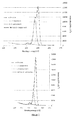
- Figure 3 depicts the high resolution XPS analysis of modified pellethane ® (top) and unmodified pellethane ® (down) of example 1.1.
- Bacterial adhesion onto surfaces can be quantified in vitro using a direct observation of surfaces after incubation with bacteria. Following pre-incubation in phosphate buffer saline (PBS), the surfaces are placed in a solution of Escherichia coli (E. coli MG1655 GFP) which has been diluted overnight from a culture to a concentration of 1-5x10 8 CFU/mL in Luria-Bertani (LB) broth.
- PBS phosphate buffer saline
- the surfaces are incubated at 37°C under gentle agitation (50 rpm) for 2 hours. After incubation, the surfaces are washed in PBS for 2x10 min at 70 rpm to remove non adhered bacteria. Then, the surfaces are observed using an epifluorescence microscope equipped with x20 and x40 objectives (Leica DMRX upright optical microscope equipped with a Retiga EXi CCD camera (QImaging, USA)). 10 pictures are taken for each sample and the number of bacteria per picture is calculated using the Image-Pro software. The average density of bacteria is calculated and compared to a control surface, usually unmodified pellethane ® .
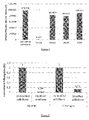
- Figure 4 shows that the only efficient surface to reduce the adhesion of bacteria is the surface prepared in example 1.1 (N932A). Indeed, the density of adhered bacteria on this surface is more than 200 times lower than the density measured on the unmodified pellethane ® .
- the density of bacteria adhered on the other surfaces is of the same order of magnitude as on the unmodified pellethane ® thus showing the importance of the reactional conditions to modify the polyurethane surface.
- the ability of a surface to avoid protein adsorption can be evaluated by measuring the quantity of adsorbed proteins on the surfaces.
- Protein adsorption on surface can be quantified using fluorescent proteins and a spectroscopic analytical method.
- the surfaces are washed in ethanol, dried and equilibrated in phosphate buffered saline (PBS) for 2 hours. Then, they are dipped into a freshly prepared solution of fluorescent protein (1 mg/mL) and incubated under gentle stirring at 37°C for 2 hours.
- PBS phosphate buffered saline
- the surfaces are washed with PBS (3 baths of 5 min) and transferred to an Eppendorf tube containing an aqueous solution of cetyltrimethylammonium bromide (CTAB) (10 mg/mL) and sodium bicarbonate (NaHCO 3 ) (0.1M).
- CTAB cetyltrimethylammonium bromide
- NaHCO 3 sodium bicarbonate
- the Eppendorf tube is sonicated for 15 min at 30°C.
- the fluorescence of the solutions is then measured using a spectrofluorometer (JOBIN-YVON, Fluoromax) and compared to the calibration curve obtained by measuring the fluorescence of the same protein in different concentrations (from 6.25 ng/mL to 1 mg/mL) in the same solution of CTAB and NaHCO 3 .
- the concentration of proteins in the solution is calculated and converted into surface concentration of adsorbed protein.
- Figure 5 shows the obtained results in which the adsorption result has been normalized to the value of 1 for the control measurement.
- Figure 5 clearly shows that the protein adsorption was drastically lowered for both fibrinogen and albumin.
- the surface concentration of adsorbed fibrinogen is more than 7 times lower on the modified pellethane ® than on the unmodified pellethane ® .
- MDCK cell adhesion on surfaces is measured by incubating the surfaces in culture medium (Dulbecco's Modified Eagle Medium (DMEM) + 10% fetal bovine serum (FBS) + 5mL pen/strep + 0.4 mg/mL geneticin) and inoculating the medium with cells. After 2h of incubation at 37°C to allow the cells to adhere to surfaces, the old medium is removed and fresh medium is added and the surfaces are incubated at 37°C in a 5% CO 2 atmosphere for 72 hours or more until confluence is reached on the control surface.
- culture medium Dulbecco's Modified Eagle Medium (DMEM) + 10% fetal bovine serum (FBS) + 5mL pen/strep + 0.4 mg/mL geneticin
- the surfaces are transferred to a PBS bath for 10 min, then the cells are colored with calcein acetoxymethyl and observed with an epifluorescence microscope equipped with x20 and x40 objectives (Leica DMRX upright optical microscope equipped with a Retiga EXi CCD camera (QImaging, USA)).
- the density of adhered MDCK cells has been evaluated with the pellethane ® commercialized by Lubrizol also called “unmodified pellethane ® (control) and with the surface-modified pellethane ® obtained at point 1.1, also called “modified pellethane ® ".
- the density of adhered MDCK cells is 500 times lower on the modified pellethane ® than on the unmodified pellethane ® .
- a first experiment was performed for proving the reactivity of the polycarbonate in a transcarbonatation reaction condition, i.e. in presence of an alcohol and a base.
- the evolution of the molar mass of the polymer was followed as a function of time.
- Carbothane PC3595A ® which is a polyurethane comprising polycarbonate segments, is dissolved in tetrahydrofuran at a concentration of 20 mg/mL. After complete dissolution of the polyurethane, 1 mL of butanol is added to the reaction mixture. Then 50 mg of 1,5,7-Triazabicyclo[4.4.0]dec-5-ene is added as a base and the reaction mixture is stirred at 20°C for 2h. The mean molar mass of carbothane ® is followed by size exclusion chromatography (SEC).
- SEC size exclusion chromatography
- carbothane ® is contacted with the base alone: 400 mg of carbothane® PC3595A is dissolved in tetrahydrofuran (20 mL) and 50 mg of 1,5,7-Triazabicyclo[4.4.0]dec-5-ene is added as a base. The reaction mixture is stirred at 20°C for 2h and the mean molar mass of the carbothane ® is monitored by size exclusion chromatography.
- Size exclusion chromatography (SEC) of polymers was performed in THF at 35°C using an Agilent 1260 Infinity Series GPC (ResiPore 3 ⁇ m, 300 x 7.5 mm, 1.0 ml/min, UV (250 nm) and RI (PL-GPC 220) detectors).
- Transcarbonatation of a carbothane ® polymer was used to efficiently modify the polymer surface and confer them antiadhesive properties.
- Poly(ethylene glycol) (PEG) was grafted to the surface in a single step reaction. The formation of a polymer brush at the surface of the material conferred it with anti-fouling properties.
- Figure 8 depicts the reaction as occurring at the surface of the polycarbonate.
- the surface is modified by transcarbonatation reaction between PEG2000 and surface carbonates.
- PEG2000 (1g) (Alfa Aesar) was dried under vacuum at 60°C for 4 hours. Then it was dissolved in dry HPLC grade acetonitrile (ACN, Carlo Erba) (20 mL) in a 50 mL round bottom flask equipped with a stirring bar. 100 mg of 1,5,7-Triazabicyclo[4.4.0]dec-5-ene (TBD) was added. Then, the carbothane PC3595A ® surface of dimensions in the order of 1x1x0.1 cm was dipped into the solution and the whole was heated at 60°C for 2h under agitation.
- ACN dry HPLC grade acetonitrile
- TBD 1,5,7-Triazabicyclo[4.4.0]dec-5-ene
- the polyurethane films were taken out of the solution and dipped into an acetonitrile bath for 10 min, followed by an isopropanol bath for 10 min and finally a distilled water bath for 16 hours. Then the modified polyurethane films were dried in an oven at 60°C for 16 hours.
- the modified polymer prepared at point 3.1 and the unmodified polymer were analyzed using an ATR-FTIR Nicolet Magna IR550 spectrometer.
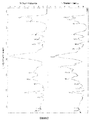
- Figure 9 depicts the ATR-FTIR spectra of modified carbothane ® (top) and unmodified carbothane ® (down) of example 3.1.
- the spectra shows that for the modified polymer, a new peak appears at 1113 cm -1 , characteristic of the C-O stretching of PEG, indicating that the reaction occurred at the surface.
Landscapes
- Chemical & Material Sciences (AREA)
- Health & Medical Sciences (AREA)
- Chemical Kinetics & Catalysis (AREA)
- Medicinal Chemistry (AREA)
- Polymers & Plastics (AREA)
- Organic Chemistry (AREA)
- General Chemical & Material Sciences (AREA)
- Materials For Medical Uses (AREA)
Abstract
The present invention refers to a method for treating the surface of a polymer substrate to confer to said substrate surface a physical and/or biochemical surface-modified property, said polymer and/or copolymer containing in at least one of its repetitive units at least a function of formula (I):

wherein it comprises at least a step consisting of exposing, within a solvent, said substrate surface with at least one compound containing at least a hydroxyl group and a part thereof being able to confer said modified property to said substrate surface.
The present invention further relates to a surface modified substrate essentially made of said polymer, whose surface has been treated to confer to said substrate surface a physical and/or biochemical surface-modified property wherein it is obtainable by a method according to the present invention and to the use of said modified substrate for the production of medical devices or antifouling materials.
Description
- The present invention relates to a method to functionalize surfaces of polymers, especially of the polyurethane and polycarbonate type, and for example for providing an improved biocompatible polymer surface. It is more particularly directed to a method of surface modification of such polymer surfaces in the presence of a solvent.
- Said polymers are in particular suitable as substrates for biomedical and drug delivery applications.
- Two major problems are associated with the implantation of medical devices in the bloodstream: infection due to the adhesion of bacteria to the surface of the device and the formation of a biofilm; blood coagulation when blood proteins adsorb on the surface, as a starting point to the blood coagulation cascade that can lead to the adhesion of platelets and the formation of a blood clot in catheters for example.
- To avoid these complications, various chemical modifications of polyurethane surface have been disclosed by applying different reactions at the surface. One common way is the use of the allophanate reaction to graft a diisocyanate on the surface and then use this spacer to graft various polymers or active molecules such as PEG for instance (for example in J.G. Archambault et al. "Protein resistant polyurethane surfaces by chemical grafting of PEO: amino-terminated PEO as grafting reagent" Colloids Surf. B Biointerfaces 39 (2004) 9-16).
- Another two steps strategy based on the alkylation reaction of polyurethane has also been described (for example in I.S. Alferiev, et al. "Activated polyurethane modified with latent thiol groups" Biomaterials 23 (2002) 4753-4758). The alkylation reaction is a first step towards functionalization of the surface with antiadhesive moieties.
- It also known from Y.Zhu et al. "Endothelium regeneration on luminal surface of polyurethane vascular scaffold modified with diamine and covalently grafted with gelatin" Biomaterials 25 (2004) 432-430, to benefit from the aminolysis reaction to covalently attach species modifying surface properties of polycarbonate-urethane.
- However, these methods require several synthetic steps, so that said techniques are not easy to implement at an industrial scale.
- As far as a surface modification of polycarbonate polymers is concerned, various solutions have also been proposed in the past.
- It is among all disclosed in Yeow, B. et al. "Surface modification and characterization of polycarbonate microdevices for capture of circulating biomakers, both in vitro and in vivo" Anal. Chem. 85 (2013) 10196-10204, that PEG can be grafted on such polycarbonate surfaces by reduction of nitro groups for obtaining reactive amine functions.
- Moreover, as for polycarbonate-urethane, works have been also performed to benefit from the aminolysis reaction to covalently attach species modifying surface properties of polycarbonate substrates, in particular in the microfluidic field (it may be for example reported to Jankowski, P. et al. "Hydrophobic modification of polycarbonate for reproducible and stable formation of biocompatible microparticles" Lab Chip 11 (2011) 748-752).
- Moreover, reactions with alcohols, named transcarbamoylation and transcarbonatation are known in the literature as reactions achieving a radical conversion at the carbonyl group of the urethane or carbonate function.
- As far as transcarbamoylation of non-polymeric structures, the article Tundo et al. "Synthesis of carbamates from amines and dialkyl carbonates: influence of leaving and entering groups" Synlett 10 (2010) 1567-1571 may be cited.
- Such specific reactions are additionally known as alternative routes to synthesize polyurethanes and polycarbonates starting from the reaction of diurethane with diol segments, and respectively cyclic carbonates, sometimes in presence of various catalysts.
- However, to the knowledge of the inventors, such reactions have never been implemented for the purpose of surface modification, i.e. for achieving new properties of the polymers specifically on their surface.
- It follows that there still exists a need for a simple, inexpensive and widely accessible method conferring desired modified properties to polymers, especially of the polyurethane and polycarbonate type in high density.
- It is moreover desirable to have at one's disposal a generic method able to confer to polymers, especially of the polyurethane and polycarbonate type surfaces a wide range of modified properties which can for example be chosen among: hydrophilic character; improved hydrophobic character, cytotoxic properties such as antibiotic, bactericidal, virucidal and/or fungicidal properties; cell-adhesion property; improved biocompatibility such as protein/bacteria/cell repellency or adhesion property and reactivity property which renders said surface able to immobilize biomolecules.
- Moreover, there exists a need to find new methods for surface modification of polymers comprising urethane and/or carbonate functions able to be performed under simple conditions, and in particular in a solvent.
- There is an additional need to provide the skilled person with a new method to functionalize polymers comprising urethane and/or carbonate functions specifically on their surface in order to confer to said surface new physical and/or biochemical properties.
- The present invention has for purpose to meet these needs.
- Unexpectedly, the inventors have found that transcarbamoylation and transcarbonatation reactions may be implemented in mild conditions on the surface of polymers, especially of the polyurethane and polycarbonate type to modify their properties.
- In other words, ready-to-use solution comprising at least one compound containing at least one hydroxyl group and a part thereof being able to confer said modified property to said surface of a polymer, have been developed for the present purpose.
- Therefore, the present invention relates to a method for treating the surface of a polymer substrate to confer to said substrate surface a physical and/or biochemical surface-modified property, said polymer and/or copolymer containing in at least one of its repetitive units at least a function of formula (I):

wherein it comprises at least a step consisting of exposing, within a solvent,
said substrate surface with at least one compound containing at least a hydroxyl group and a part thereof being able to confer said modified property to said substrate surface,
said step being carried out in efficient conditions to promote the covalent binding of said compound to said surface. - The invention also relates to a surface modified substrate essentially made of a polymer containing in at least one of its repetitive units at least a function of formula (I) as defined above, whose surface has been treated to confer to said substrate surface a physical and/or biochemical surface-modified property wherein it is obtainable by a method according to the present invention.
- The invention furthermore concerns the use of a modified substrate as defined above for the production of medical devices or antifouling materials; or in the field of microfluidics, automotive, appliances and consumer goods, electronics or textile and artificial leather, preferably for the production of medical devices.
- The inventors have found that unexpectedly the method of the present invention enables to quickly modify the surface properties of a polymeric substrate in a single step thus providing an improved biocompatibility to the so-obtained surface-modified substrate.
- Moreover, according to a preferred embodiment the process is performed without any metallic catalysts that are known to be toxic, difficult to manipulate and could contaminate the surface.
- Besides, the fact that the method of the invention is operated within a solvent advantageously allows a better control of the surface modification and avoids side reactions such as hydrolysis that degrades the substrate.
- In the context of the present invention:
- the term "monomer" as used herein refers to a molecule or compound that usually contains carbon as its major component, is of relatively low molecular weight, and has a simple structure that is capable of assembling in polymeric chains by combination with itself or other similar molecules or compounds,
- the term "monomer unit" as used herein refers to a constitutional unit of a polymer, which is formed starting from a unique monomer,
- the term "polymer" as used therein denotes homopolymers as well as copolymers,
- the term "homopolymer" as used herein is defined as a polymer that is made up of only one type of monomer,
- the term "copolymer" as used herein is defined as a polymer that is made up of more than one type of monomer,
- the term "modified physical and/or biochemical property" refers to any physical and/or biochemical property which is different from the original property of the surface to be treated. A surface which has been treated and which exhibits a "modified physical and/or biochemical property" extends to a surface bearing reactive groups able to react with any reactive group on any biomolecule so biomolecules become covalently attached to the surface via the polymer,
- the term "biocompatible" as used herein refers to the capacity to be usable in biological environment in particular animal subjects, including humans. Biocompatibility may be achieved via various properties which are depending from the context of the application. For example, a substrate may be rendered biocompatible or may exhibit improved biocompatibility by improved protein/bacteria/cell repellency, by improved adhesion property or by introduction of any biological property which render the substrate compatible with its use in said biological environment, such as antithrombotic property,
- the term "biomolecule" as used herein encompasses any molecule known to be found in biological systems and includes amino acids, peptides, proteins, nucleic acids (including DNA and RNA), saccharides, polysaccharides, growth factors and glycoproteins. Biomolecule includes a biomolecule naturally occurring as well as a biomolecule which has been modified using techniques known from the man skilled in the art,
- the term "efficient conditions to" means the usual conditions to perform a chemical reaction defined by the usual parameters, i.e. temperature, solvent, duration, etc., which fall within the standard skills of a man of the art,
- The term "able to confer said modified property" refers to the ability to confer said given property which can be measured at the macroscopic and/or microscopic scale by known methods,
- For simplification reasons, in the framework of the invention, the term "cytotoxic", which is employed to qualify the modified properties of the substrate should be deemed to include not only the bactericidal or antibiotic properties, but also virucidal, fungicidal or in general any bioactive substance that is cytotoxic to any living cell the elimination of which is desired. Moreover, the term "anti-adhesive properties" encompasses the properties imparting repellency to proteins, bacteries, viruses, cells etc ...
- Still for simplification reasons, in the framework of the invention, the compound that confers the modifying properties, i.e the compound containing at least one hydroxyl group and a part thereof being able to confer a modified property to the surface substrate, is also named "reactive compound".
-
-
Figure 1 depicts the reaction of transcarbamoylation as occurring at the surface of the polyurethane of example 1 herein after. -
Figure 2 depicts the advancing and receding contact angles between a drop of water and pellethane® and between a drop of water and the modified pellethane® as prepared in example 1. -
Figure 3 depicts the high resolution (C(1s)) X-ray photoelectron spectroscopy (XPS) analysis of modified pellethane® (top) and unmodified pellethane® (down) of example 1. -
Figure 4 depicts the density of adhered bacteria on modified and unmodified surfaces in example 1. -
Figure 5 depicts the normalized adsorption of proteins (albumin and fibrinogen) on modified and unmodified pellethane® in example 1. -
Figure 6 depicts the density of adhered MDCK cells on unmodified (left) and modified (right) pellethane® in example 1. -
Figure 7 depicts the evolution of the molar mass of carbothane® as a function of time when exposed to the reaction conditions of example 2. -
Figure 8 depicts the reaction of transcarbonatation as occurring at the surface of the polycarbonate of example 3 herein after. -
Figure 9 depicts the ATR-FTIR spectra of modified carbothane® (top) and unmodified carbothane® (down) of example 3. -
Figure 10 represents a carbothane® polymer. - In the framework of the present invention, carbonate and urethane groups are as follows:

- Therefore, with respect to formula

- According to a particular embodiment, the polymer as considered in the present invention may comprise at least one repetitive unit that contains at least one carbonate function. Such a polymer is also called polycarbonate.
- According to another particular embodiment, the polymer as considered in the present invention may comprise at least one repetitive unit that contains at least one urethane function. Such a polymer is also called polyurethane.
- Still according to a further embodiment, the polymer as considered in the present invention may comprise only repetitive unit(s) that contain urethane function(s) and no carbonate function.
- Still according to a further embodiment, the polymer as considered in the present invention may comprise only repetitive unit(s) that contain carbonate function(s) and no urethane function.
- Alternatively, according to another embodiment, the method according to the present invention may be implemented on copolymers comprising both repetitive unit(s) that contain carbonate function(s) and repetitive unit(s) that contain urethane function(s). Such copolymer is also called a polymer of urethane/carbonate or polymer of polyurethane and polycarbonate.
- As explained herein after, carbonates are able to react by transcarbonatation and urethanes are able to react by transcarbamoylation, with an alcohol in a solvent, preferably in the presence of a base.
- All types of polyurethanes, polycarbonates and polymers of urethane/carbonate may be treated by the method according to the present invention.
- It is also worth to notice that the polymer substrates to be treated may take all forms, for example material surfaces, films or particles.
- As detailed below, the preferred polymers used in the present invention are polyurethanes based polymers, polycarbonates based polymers and polymers of polyurethane and polycarbonate.
- Preferred polymer types are detailed herein after.
- Generally, all the polymers that are considered as polyurethanes, i.e any polymer comprising at least one repetitive unit that contains at least one urethane function may be used in the method according to the present invention.
- In other words, any polymer comprising and/or made from a hard segment "isocyanate" and a soft segment "polyol" may be treated by the method of the present invention.
- According to a preferred embodiment, the polyurethanes may be chosen among:
- aromatic or aliphatic polyether urethanes such as Pellethane® (commercialized by Lubrizol), Tecoflex™ (commercialized by Lubrizol), Quadraflex™ (commercialized by Biomerics), Elasthane™ (commercialized by DSM) or Texin® (commercialized by Covestro);
- aromatic or aliphatic polyester urethanes such as Estane® (commercialized by Lubrizol) or Texin® (commercialized by Covestro);
- aromatic or aliphatic polycarbonate urethanes such as Bionate® (commercialized by DSM), Carbothane™ (commercialized by Lubrizol), Chronoflex® (commercialized by AdvanSource biomaterials) or Quadrathane™ (commercialized by Biomerics);
- silicone polyethers urethanes or silicone polycarbonate urethanes such as CarboSil® (commercialized by DSM), Pursil® (commercialized by DSM), Chronosil® (commercialized by AdvanSource biomaterials) or QuadraSil™ (commercialized by Biomerics); and
- aromatic rigid polyurethanes such as Isoplast® (commercialized by Lubrizol) or Quadraplast™ (commercialized by Biomerics).
- More particularly, the method according to the present invention may advantageously be carried out on
- aromatic or aliphatic polyether urethanes, preferably Pellethane® (commercialized by Lubrizol) and Tecoflex™ (commercialized by Lubrizol); and
- aromatic or aliphatic polycarbonate urethanes, preferably Carbothane™ (commercialized by Lubrizol) and Chronoflex® (commercialized by AdvanSource biomaterials).
- Among the commercialized polyurethanes which may be treated by the method according to the present invention, the following may be cited.
- Pellethanes® are polyurethanes sold by the company Lubrizol which may be used in the framework of the present invention and which are used in example 1. They are medical grade polymers.
- Generally, all the polymers that are considered as polycarbonates, i.e any polymer comprising at least one repetitive unit that contains at least one carbonate function, may be used in the method according to the present invention.
- According to a preferred embodiment, the polycarbonates may be chosen among:
- polycarbonates such as Makrolon® (commercialized by Covestro), Apec® (commercialized by Covestro), Lexan® (commercialized by Sabic), Xantar® (commercialized by Mitsubishi Engineering Plastics) or Durolon® (commercialized by Unigel Plásticos);
- polycarbonate-acrylonitrile butadiene styrenes (ABS) or polycarbonate-polyester blends such as Bayblend® (commercialized by Covestro) or Mackroblend® (commercialized Covestro);
- polycarbonate urethanes chosen from aromatic or aliphatic polycarbonate urethanes such as Bionate® (commercialized by DSM), Carbothane™ (commercialized by Lubrizol), Chronoflex® (commercialized by AdvanSource biomaterials) or Quadrathane™ (commercialized by Biomerics); and
- silicone polycarbonate urethanes such as CarboSil® (commercialized by DSM).
- These polymers are copolymers. They may be used in the method according to the present invention and may be of any type of copolymer, i.e. block copolymer, statistical copolymer or graft copolymer.
- According to a particular embodiment, the following polymers of polyurethane and polycarbonate may be cited:
- polycarbonate urethanes chosen from aromatic or aliphatic polycarbonate urethanes such as Bionate® (commercialized by DSM), Carbothane™ (commercialized by Lubrizol), Chronoflex® (commercialized by AdvanSource biomaterials) or Quadrathane™ (commercialized by Biomerics); and
- silicone polycarbonate polyurethanes such as CarboSil® (commercialized by DSM).
- Carbothane® as sold by Lubrizol is a family of aliphatic and aromatic, polycarbonate-based thermoplastic polyurethanes which may be used in the framework of the present invention and which is used in example 2 herein after.
-
Figure 10 represents such a Carbothane® polymer. - The method according to the present invention allows the surface modification of polymers, especially of the polyurethane and polycarbonate type, in view of conferring it a wide range of physical and/or biochemical surface-modified properties.
- In other words, for the sake of rendering polymers, especially of the polyurethane and polycarbonate type, usable in a broader range of technical applications, the method according to the present invention allows to confer to said polymer or copolymer among all: hydrophilic character; improved hydrophobic character, cytotoxic properties such as antibiotic, bactericidal, virucidal and/or fungicidal properties; cell-adhesion property; improved biocompatibility such as protein/bacteria/cell repellency or adhesion property; and reactivity property which renders said surface able to immobilize biomolecules.
- According to a first embodiment of the present invention, the method of treatment is mainly dedicated to confer hydrophilic character to polymers, especially of the polyurethane and polycarbonate type. In such a case, the treated substrate can for instance find applications for the manufacture of optical articles, in particular synthetic glasses, lens; microfluidic devices; or medical devices, in particular catheters or guide wires to improve lubricity.
- According to a second embodiment of the present invention, the method of treatment is mainly dedicated to confer improved hydrophobic character to polymers, especially of the polyurethane and polycarbonate type. In such a case, the treated substrate can find applications for the manufacture of clothings, fabrics or microfluidic devices for instance.
- According to a third embodiment of the present invention, the method of treatment is mainly dedicated to confer antibacterial properties to polymers, especially of the polyurethane and polycarbonate type. In other words, said method prevents the formation of biofilms and the development of bacterial colonies.
- In particular, when the method is dedicated to confer bactericidal properties to polymers, especially of the polyurethane and polycarbonate type, it can find applications in medical (clinical hospital and personal care), as well as in domestic and industrial (food industry for example) environments.
- According to a fourth embodiment of the present invention, the method of treatment is mainly dedicated to confer improved biocompatibility such as protein/bacteria/cell repellency or antiadhesive properties to polymers, especially of the polyurethane and polycarbonate type. In such a case, the treated substrate can find applications for the manufacture of biomedical implants.
- According to a fifth embodiment of the present invention, the method of treatment is mainly dedicated to confer reactivity property which render said surface able to immobilize biomolecules to polymers, especially of the polyurethane and polycarbonate type. In such a case, the treated polymer can find applications for the manufacture of biosensors, biodiagnostic, bioaffinity and related applications or of biomedical materials such as stents, shunts, catheters or lenses for example provided with coatings exhibiting for example antithrombogenic or antifouling properties.
- The present invention benefits from transcarbamoylation and transcarbonatation reactions. Such reactions are well known to the man skilled in the art.
- Transcabamoylation may also classically be named transurethanisation, transcarbamation, transurethane reaction or transesterification of urethanes.
- Namely the transcarbamoylation may be represented in the following
scheme 1.
- As it is apparent on this scheme, it is as if an exchange was occurring between the radical R2 and the radical R3.
- The R3-OH indeed attacks the electrophilic carbon of the carbonyl group, resulting in the departure of the O-R2 radical and thus to the formation of a new carbamate. As the reaction occurs in the framework of the present invention on the surface of a polymer, the polymeric chain is therefore interrupted on each attacked carbonyl group and a group comprising the modifying property group is covalently bound to the carbonyl group.
- Transcarbonatation may also classically be named transcarbonation, transesterification of carbonate esters, carbonate exchange reaction or carbonate alcoolysis.
- Namely the transcarbonatation may be represented in the following
scheme 2.
- The reaction conditions may be chosen in such a manner that a sufficient amount of polymer chains are interrupted and that a modification of the surface properties occurs. They are also chosen in such a manner that not a too big part of the carbonyl groups of the surface is attacked in order to avoid damaging the surface. It clearly belongs to the expertise of the skilled artisan to determine such reactional conditions.
- Such reactions conditions are mainly constituted by a compromise between the base, the solvent, the molar ratio between the substrate and the reactive compound, the temperature and the reaction time. In other words, the conditions should be preferably chosen so as to achieve a solvatation of the polymer chains on the surface of the polymer but so as to avoid a degradation of the polymer in mass, and of course on the whole depth of the polymer.
- According to a preferred embodiment, the step of exposing the surface substrate to be treated with the reactive compound is carried out by dipping the substrate into a solution containing at least the solvent and the reactive compound.
- According to a preferred embodiment, the reaction is performed in the presence of a base. In this case, it clearly belongs to the expertise of the skilled artisan to determine the kind of base and the amount that has to be introduced in correlation with the other reactional conditions to arrive at the expected result.
- According to a further particular embodiment of the present invention, the reaction is performed without the presence of an organometallic catalyst.
- As a general remark, it is described that the carbonate functions are much more reactive that the urethane functions, as illustrated in example 2. Namely, in said example, in the reported reaction conditions, only the carbonate functions are able to react with the alcohol.
- It follows that depending of the nature of the functions present in the polymer or copolymer to which the method according to the present invention is applied; the suitable reaction conditions will have to be adapted for achieving efficient conditions to promote the covalent binding of the compound containing a hydroxyl group to the surface of the considered polymer.
- Guidance for such conditions, which are mainly depending on the choice of the base, the solvent, the reaction time and the temperature, is given herein after.
- As illustrated in the examples, the modified surface may be characterized by ATR-FTIR analysis, by contact angle measurements of a drop of water (this method enables to point out differences in terms of hydrophilicity between two surfaces) or by XPS analysis, to show that the reaction occurred.
- According to a particular embodiment of the present invention, the method according to the present invention is carried out in the presence of a base.
- The transcarbamoylation and transcarbonatation reactions may be performed using a wide variety of bases, which play the role of a catalyst.
- Among said bases, the following inorganic bases may be cited: n-butyllithium (n-BuLi), sec-butyllithium (sec-BuLi), tert-butyllithium (tert-BuLi), calcium hydride (CaH2), sodium hydride (NaH), carbonates (for example calcium carbonate (CaCO3), sodium carbonate (Na2CO3), potassium carbonate (K2CO3)), sodium methoxide (NaOMe), sodium ethoxide (NaOEt), potassium hydroxide (KOH), sodium hydroxide (NaOH), lithium hydroxide (LiOH), calcium hydroxide Ca(OH)2, barium hydroxide (Ba(OH)2) and potassium tert-butoxide (tBuOK) and preferably NaH.
- Such inorganic bases are more particularly suitable for the modification of polymer surfaces via a transcarbamoylation reaction according to the present invention.
- Some organic bases may also be used in the present invention such as tertiary amines (for example triethylamine (Et3N), N,N,N',N'-tetramethylethylenediamine (TMEDA), N,N,N';N'',N"-pentamethyldiethylenetriamine (PMDTA) or Bu3N), secondary amines (for example Et2NH), primary amines (for example EtNH2, BuNH2) or cyclic amines such as 1,5,7-triazabicyclo[4.4.0]dec-5-ene (TBD), 1,8-diazabicyclo[5.4.0]undec-7-ene (DBU), 1,4-diazabicyclo[2.2.2]octane (DABCO), 1,5-diazabicyclo[4.3.0]non-5-ene (DBN), 4-dimethylaminopyridine (DMAP) or pyridine.
- Such organic bases are more particularly suitable for the modification of polymer surfaces via a transcarbonatation reaction according to the present invention.
- Among all these bases, potassium hydroxide (KOH), potassium tert-butoxide (tBuOK), sodium hydride (NaH), lithium hydroxide (LiOH), barium hydroxide (Ba(OH)2), triethylamine (Et3N) and 1,5,7-triazabicyclo[4.4.0]dec-5-ene (TBD) are particularly preferred, and more particularly NaH and TBD. In particular, NaH may be preferably used in case of a transcabamoylation reaction and TBD may be preferably used in case of a transcarbonatation reaction.
- The inventors have observed that the concentration used of compound containing at least one hydroxyl group and a part thereof being able to confer a modified property, such as a PEG as detailed herein after, can be lowered when the base is tBuOK.
- When a base is used according to the method of the invention it may be introduced in an amount such that:
- the molar ratio between the reactive compound and the base (reactive compound/base) ranges from 1000 to 0.01, preferably from 100 to 0.1 and even more preferably from 10 to 1.
- the content of base ranges from 0.0001 to 10 mol/L, preferably from 0.001 to 1 mol/L and even more preferably from 0.01 to 0.5 mol/L when the surface of polymer to be treated ranges from 0.01 to 100 cm2, preferably from 0.05 to 50 cm2 and even more preferably from 0.1 to 10 cm2.
- As above mentioned the choice of the solvent is important for the method according to the present invention.
- More particularly, the solvent should not dissolve the polymer to be reacted at its surface. It should rather have a low solvating power in order to only solvate the surface of the polymer substrate or even the extreme surface of said surface in order to avoid decreasing the mechanical properties of the material. The solvent may also be chosen such that it enables the dissolution of the reactive compound while being unreactive towards both the reactive compound and the polymer substrate.
- For obvious reasons, said solvent should also have a higher boiling point than the reaction temperature and be as less toxic as possible.
- It clearly belongs to the expertise of the skilled artisan to determine a convenient solvent for the method according to the present invention with respect to the nature of the substrate, of the reactive compound and of the reaction temperature.
- Since protic solvents are likely to react with the polymeric substrate, aprotic solvents are much more preferred in the framework of the present invention. However in some cases some protic solvents may be convenient to perform the method of the invention and may thus also be used.
- Various solvents may be used to implement said reactions. According to an embodiment of the present invention toluene or acetonitrile may be used for the performance of said reactions.
- Generally, the amount of reactive compound used is adjusted such that it is in a large excess with respect to the amount of the polymer surface to be treated.
- It clearly belongs to the expertise of the skilled artisan to determine an amount of reactive compound that is suitable for the method according to the present invention. More particularly, he is able to adapt the amount of reactive compound to use in accordance with the expected modified properties for the treated surface.
- In particular, the reactive compound used according to the method of the invention may be introduced in a concentration ranging from 1.10-7 to 20 mol/L, preferably from 5.10-7 to 5 mol/L and even more preferably from 1.10-6 to 1 mol/L.
- The reaction time may range between 1 s and 24 h, in particular between 1 min and 8 h, and even more particularly between 5 min and 4 h.
- According to a particular embodiment, the method according to the present invention may be implemented at a temperature greater than 30°C, in particular greater than 40°C, more particularly greater than 50°C.
- According to another particular embodiment, the method according to the present invention may be implemented at a temperature ranging from 0°C to 100°C, in particular at a temperature ranging from 20°C to 80°C, and even more particularly at a temperature ranging from 20°C to 60°C.
- More particularly, when the method according to the present invention is carried on a polyurethane surface, it may be implemented at a temperature ranging from 40 to 80°C.
- When the method according to the present invention is carried on a polycarbonate surface or on a polymer of polyurethane and polycarbonate surface, it may be implemented at a temperature ranging from 20 to 80°C.
- Indeed the polymer to which the method of the present invention is applied should for example not melt. Therefore temperatures above the melting point of the polymer should preferably be avoided.
- According to the present invention, the compound conferring the modifying properties, also named the "reactive compound", is a compound containing at least one hydroxyl group and a part thereof being able to confer a modified property, i.e. a modified physical and/or biochemical property.
- In the framework of the present invention, a large variety of molecules and polymers may be grafted on the surface of a polyurethane, a polycarbonate and a polymer or polyurethane and polycarbonate.
- In particular the reactive compound may comprise an alcohol moiety and a part of said compound may be able to modify the property of the surface of a polyurethane or polycarbonate substrate.
- The said reactive compound may in particular comprise a polymeric chain.
- Said polymeric chain may either be a homopolymeric chain or a copolymeric chain.
- In the case of a reactive compound comprising a polymeric chain, the part of the reactive compound conferring the modifying property may come from the polymeric backbone or from the lateral chains.
- In the case of a reactive compound comprising a polymeric chain, the alcohol moiety may either be a terminal group or a group that is present in a repetitive unit. In the specific case of a reactive compound that is a copolymer the alcohol moiety may either be a terminal group or a group that is present in one or more of the repetitive units.
- Still in this case, the hydroxyl group is preferably a terminal group of the polymeric chain.
- According to a particular embodiment, the chain backbone of polymers or copolymers may be chosen among:
- polyethylene,
- polyacrylamide,
- polyacrylate,
- polyvinyl derivatives (e.g. polyvinylpyrrolidone),
- polystyrene,
- polyalcohol (e.g. polyvinylalcohol, polyallylalcohol),
- polyvinylbenzyl,
- polyamine (such as polyethyleneimine, polyallylamin),
- polymethacrylate (such as polymethylmethacrylate),
- polymethacrylamide,
- polyether (e.g. polyethylene glycol),
- polyester (e.g. poly(DL-lactide)),
- polyamide,
- polyurethane,
- poly(ethylene-alt-succinimide),
- polysaccharide derivatives (such as dextran, cellulose, hydroxyethylcellulose, methylcellulose),
- polyureas, and
- poly(diallyldimethylammonium).
- More specifically:
- among the polymeric backbone conferring hydrophilic properties, the following may be cited: polysaccharides, polysaccharide derivatives such as methylcellulose or dextran, polyvinylpyrrolidones, polyacrylates, polymethacrylates, polyalcohols in particular polyvinylalcohols and their derivatives such as poly(methyl vinyl ether), or polymethacrylamides backbones;
- among the polymeric chain backbone conferring anti-adhesive properties, the following may be cited: polyvinylpyrrolidones, polyalcohols in particular polyvinylalcohols and their derivatives such as poly(methyl vinyl ether), polysulfobetaines, polycarboxybetaines, polysaccharides, polysaccharide derivatives such as methylcellulose or dextran, polyethylene glycol or poloxamers;
- among the polymeric chain backbone conferring hydrophobic properties, the following may be cited: polystyrenes, polyvinylbenzyls or perflorinated derivatives;
- among the polymeric chain backbone conferring an improvement of biocompatible properties via protein/bacteria/cell repellency, the following may be cited: polyethers, polysulfobetaines, polycarboxybetaines, polyvinylpyrrolidones, polyalcohols in particular polyvinylalcohols and their derivatives such as poly(methyl vinyl ether), polysaccharides, polysaccharide derivatives such as methylcellulose or dextran or poloxamers.
- According to a preferred embodiment, the polymeric chain is chosen from polysaccharide, modified polysaccharides such as methylcellulose, polysulfobetaine, polycarboxybetaine, polyvinylpyrrolidone, polyethylene glycol and poloxamer.
- Also more specifically, among the lateral chain that may impart a modifying property the following ones may be cited:
- lateral chain imparting improved hydrophilic properties, i.e. for example containing monosaccharides, zwitterionic (betaïne and phosphocholine derivatives) moieties or polymer chains of water-soluble polymers; polyethylene glycol (PEG); amino-terminated polyethylene glycol (PEG-NH2); polypropylene glycol (PPG); polypropylene oxide (PPO); polypropylene glycol bis(2-amino-propyl ether) (PPG-NH2); polyalcohols, for example polyvinylalcohol; polysaccarides (e.g. dextran cellulose) and related compounds; poly(vinyl pyridine); polyacids, for example poly(acrylic acid); polyacrylamides e.g. poly(N-isopropylacrylamide) (polyNIPAM) and polyallylamine (PAM),
- lateral chain imparting improved hydrophobic properties, i.e. for example containing fluorinated groups, (C1-C10)alkyl groups,
- lateral chain imparting improved biocompatible properties via protein repellancy, i.e. for example containing polyethylene glycol (PEG), polysarcosine, polyvinylpyrrolidone, sulfobetaine, carboxycellulose, mono- or oligosaccharide,
- lateral chain imparting improved adsorption resistance, i.e. for example containing polyethyleneglycol (PEG), phosphorylcholines, sulfobetaines or carboxybetaines,
- lateral chain imparting antibiotic, bactericidal, virucidal properties, which may contain aminopenicillanic acid that is known to interact with cell membranes,
- lateral chain imparting bactericidal properties, which may contain positively charged groups such as quaternary ammonium groups, quaternary phosphonium groups guanidinium groups, imidazolium groups and sulfonium groups,
- lateral chain imparting virucidal properties, which may contain quaternary ammonium groups (especially for bacterial viruses), quaternary phosphonium groups and guanidinium groups, imidazolium groups and sulfonium groups,
- lateral chain imparting fungicidal properties, which may contain quaternary ammonium groups, quaternary phosphonium groups, guanidinium groups, imidazolium groups and sulfonium groups, and
- lateral chain imparting anticoagulant properties, which may contain heparine, heparine derivatives and fluorinated alkyl groups.
- Said polymeric chain backbone may be of homopolymeric or copolymeric nature.
- The selection of said chain backbone can vary according to the required effect of the reactive compound in view of the desired properties for the surface of the substrate.
- According to a particular embodiment of the present invention, the part of said compound being able to modify the surface property may be polyethylene glycol (PEG) or poloxamers, which confer anti-adhesive properties.
- PEG with a molar mass higher than 500 g/mol, preferably higher than 1000 g/mol are more particularly preferred. They may be functionalized or not. They may be methylated or not. They may also be linear or branched. PEG based copolymer such as pluronics are also suitable for the present invention.
- With respect to PEG, the following may be more particularly implemented: PEG2000.
- Poloxamers are nonionic triblock copolymers composed of a central hydrophobic chain of polyoxypropylene (poly(propylene oxide)) flanked by two hydrophilic chains of polyoxyethylene (poly(ethylene oxide)). Poloxamers are also known by the trade names Synperonics, Pluronics, and Kolliphor.
- Said PEG and poloxamer may present a molecular weight ranging from 500 g/mol to 1 000 000 g/mol, in particular from 500 g/mol to 100 000 g/mol, and more particularly from 1000 g/mol to 10 000 g/mol.
- According to a particular embodiment, the compound conferring the modifying properties is able to confer anti-adhesive properties.
- According to a particular embodiment, the compound containing at least a hydroxyl group according to the present invention comprises a polymeric chain selected from polysaccharides, polysaccharide derivatives such as methylcellulose or dextran, polyvinylpyrrolidones, polyacrylates, polymethacrylates, polyalcohols in particular polyvinylalcohols and their derivatives such as poly(methyl vinyl ether), or polymethacrylamides.
- According to a particular embodiment of the present invention, the part of said compound being able to modify the surface property may be chosen from polyvinylalcohols and their derivatives such as poly(methyl vinyl ether), polysaccharides and polysaccharide derivatives. These compounds are able to confer anti-adhesive properties, hydrophilic properties and/or an improvement of biocompatible properties of the treated surface.
- The present invention further relates to a polymer, in particular of the polyurethane or polycarbonate type, provided with a given property, such as previously recited, obtainable by a method according to the present invention.
- According to a particular embodiment it relates to a polymer, preferably of the polyurethane or polycarbonate type, to which at least one of the following properties can be conferred by a proper chemical treatment: hydrophilic character; improved hydrophobic character, cytotoxic properties such as antibiotic, bactericidal, virucidal and/or fungicidal properties; cell-adhesion property; improved biocompatibility such as protein/bacteria/cell repellency or anti-adhesive property; improved blood compatibility such as anticoagulant properties; and reactivity property which renders said surface able to immobilize biomolecules.
- Said treated polymer does not request particular storage conditions to keep its modified properties. The surface treatment is indeed advantageously resistant to water and other solvents up to certain limits and is to be noticed that said modified-property. In particular the surface treatment may last six months or even one year or more.
- When the polyurethane and/or polycarbonate substrate may be used to promote cell-adhesion without bactericidal activities, the density of active sites has to be adjusted with respect to the chemical nature of the considered reactive compound and more particularly by taking account its cytotoxic power. This adjustment may be performed by the man skilled in the art.
- The antimicrobial activity of modified surfaces has then been tested against E. coli bacteria as illustrated in example 1.
- The invention more particularly relates to a method for modifying polyurethane and/or a polycarbonate substrate endowed with anti-adhesive properties characterized in that the compound comprising a hydroxyl group and a part thereof being able to confer said modified property is a PEG.
- The anti-adhesive property can for example be evaluated by epifluorescence microscope observation.
- It has been demonstrated and illustrated in example 1 that substrates treated with PEG, and in particular PEG2000 can suppress the adhesion of E. coli bacteria.
- A treated substrate may be treated again one or several times according to the method as described above. Said substrates are also encompassed within the scope of the present invention.
- In particular, as shown in example 1, some polymers substrates that have been treated on their surface according to the method of the present invention exhibit strongly improved anti-adhesive properties compared to the same substrate which has not been treated.
- Indeed some surface-modified substrates, after having been put in contact with some bacteria show a density of adhered bacteria on their surface at least 50 times, preferably at least 100 times, more preferably at least 200 times lower than the density measured on the unmodified substrate.
- Some surface-modified substrates, after having been put in contact with some proteins show a surface concentration of absorbed protein at least 2 times, preferably at least 4 times, more preferably at least 7 times lower than the concentration measured on the unmodified substrate.
- Some surface-modified substrates, after having been put in contact with MDCK cells show a density of adhered MDCK cells on their surface at least 100 times, preferably at least 300 times, more preferably at least 400 times lower than the density measured on the unmodified substrate.
- The present invention also encompasses the use of the surface-modified polymer of the invention described above, and which can be obtained by the method described above and illustrated in the following examples.
- Various industrial fields may implement the treated polymer according to the present invention, such as health, hygiene and agro-alimentary industries.
- Examples of uses may be listed herein after:
- using a treated polymer for the production of medical devices such as vascular grafts, aortic grafts, arterial, venous, or vascular tubing, vascular stents, dialysis membranes, tubing, blood oxygenator tubing or membranes, ultrafiltration membranes, intra-aortic balloons, blood bags, catheters such as vesical/rectal catheters, epidural and perineural catheters, sutures, soft or hard tissue prostheses, synthetic prostheses, prosthetic heart valves, tissue adhesives, cardiac pacemaker leads, artificial organs, endotracheal tubes, lenses for the eye such as contact or intraocular lenses, blood handling equipment, apheresis equipment, enteral feeding devices, gastric tubes, nasal ventilation, nasal packing, diagnostic and monitoring catheters and sensors, biosensors, dental devices, drug delivery systems, infusion line accessories such as connectors, bidirectionnal valves, extension and needle hub or bodily implants of any kind;
- using a treated polymer for the production of antifouling materials (e.g. inflatable boats or surfboards);
- using a treated polymer in the field of micro fluidics;
- using a treated polymer in the field of automotive (e.g. automotive lighting, head lamp lenses, dashboards or interior cladding);
- using a treated polymer in the field of appliances and consumer goods (e.g. water dispensers, garden equipment or furniture);
- using a treated polymer in the field of electronics (e.g. mobile phones, electrical chargers or lighting); and
- using a treated polymer in the field of textile and artificial leather.
- Preferably the surface-modified polymer of the invention is used for the production of medical devices.
- The following examples illustrate the present invention.
- The used polyurethane is pellethane® 2363 AE80, as commercialized by Lubrizol.
- Transcarbamoylation reaction of urethanes was used to efficiently modify polyurethane surfaces and confer them antiadhesive properties. Poly(ethylene glycol) (PEG) was grafted to the surface in a single step reaction. The formation of a polymer brush at the surface of the substrate conferred it with anti-fouling properties.
-
Figure 1 depicts the reaction as occurring at the surface of the polyurethane. - The surface is modified by transcarbamoylation reaction between PEG2000 and surface urethanes.
- PEG2000 (1g) (commercialized by Alfa Aesar) was dried under vacuum at 60°C for 4 hours. Then it was dissolved in acetonitrile (ACN) (commercialized by Carlo Erba, dry HPLC grade) (20 mL) in a 50 mL round bottom flask equipped with a stirring bar. Sodium hydride (NaH) (12 mg) (commercialized by Sigma-Aldrich) was added under stirring and the flask was put under argon atmosphere. The solution was stirred for 1 hour at 20°C to form the reactive PEG alcoolate. Then, the polyurethane film (surface of pellethane 2363AE80® of dimensions in the order of 1x1x0.1 cm) was dipped into the solution and the whole was heated at 60°C for 15 min under agitation. The polyurethane films were taken out of the solution and dipped into an acetonitrile bath for 10 min, followed by an isopropanol bath for 10 min and finally a distilled water bath for 16 hours. Then the modified polyurethane films were dried in an oven at 60°C for 16 hours.
- Dynamic contact angle between a drop of water and modified pellethane® as prepared at point 1.1 was measured using a digidrop goniometer. Advancing and receding contact angles were measured. These results have been compared to the dynamic contact angle between a drop of water and unmodified pellethane® commercialized by Lubrizol.
- The lower the value of dynamic contact angle, the more hydrophilic the polyurethane.
- Advancing and receding contact angles with the modified pellethane® as prepared at point 1.1 was respectively 60° and 5° whereas these values are respectively 95° and 65° with the unmodified pellethane®, thus confirming the modification of the surface.
-
Figure 2 depicts the advancing and receding contact angles between a drop of water and pellethane® and between a drop of water and the modified pellethane® prepared at point 1.1 above. - As a result, the modification of the surface was confirmed as far as the modified pellethane® prepared at point 1.1 is more hydrophilic than the unmodified pellethane®.
- The modified polyurethane prepared at point 1.1 and the unmodified polyurethane were analyzed using an ATR-FTIR Nicolet Magna IR550 spectrometer. An average of 5 spectra was calculated.
- The transmittance results are gathered in table 1 as follows.
Table 1 Transmittance results attribution ν(cm-1) Unmodified pellethane® Modified pellethane® Difference (%) C=O, urethane, non bonded 1729 64,3 66,2 -1,9 C=O, urethane, bonded 1700 41,9 46,9 -5 C=C aromatic ring 1596 67,9 71,6 -3,7 N-H+C-N, amide 1528 27,4 34,4 -7 C-C aromatic ring 1413 55,6 61,2 -5,6 1309 52,3 56,1 -3,8 C-N urethane 1219 15,8 22,7 -6,9 C-O-C, aliphatic ether 1104 10,9 10,1 +0,8 C-O-C of C-O-C=O, urethane 1075 10,1 11,1 -1 - The difference of values between modified and unmodified polyurethane clearly show that the pellethane® obtained at point 1.1 is different from the initial pellethane®.
- XPS analysis was performed on the modified and unmodified pellethanes® of example 1.1 using an ESCALAB 250 spectrometer (Thermo Electron Corporation).
-
Figure 3 depicts the high resolution XPS analysis of modified pellethane® (top) and unmodified pellethane® (down) of example 1.1. - Said XPS analysis proved the presence of PEG on the surface.
- In vitro assays: Bacterial adhesion was tested (divided by 200 for E. coli MG1655GFP).
- Bacterial adhesion onto surfaces can be quantified in vitro using a direct observation of surfaces after incubation with bacteria. Following pre-incubation in phosphate buffer saline (PBS), the surfaces are placed in a solution of Escherichia coli (E. coli MG1655 GFP) which has been diluted overnight from a culture to a concentration of 1-5x10⁸ CFU/mL in Luria-Bertani (LB) broth.
- The surfaces are incubated at 37°C under gentle agitation (50 rpm) for 2 hours. After incubation, the surfaces are washed in PBS for 2x10 min at 70 rpm to remove non adhered bacteria. Then, the surfaces are observed using an epifluorescence microscope equipped with x20 and x40 objectives (Leica DMRX upright optical microscope equipped with a Retiga EXi CCD camera (QImaging, USA)). 10 pictures are taken for each sample and the number of bacteria per picture is calculated using the Image-Pro software. The average density of bacteria is calculated and compared to a control surface, usually unmodified pellethane®.
- The following conditions were implemented and the corresponding densities calculated as depicted on
figure 4 and also confirmed by microscopy pictures. -
- N932A: conditions of example 1.1.
- N932B: conditions of example 1.1 but without NaH
- N932C: conditions of example 1.1 but without PEG
- N872: conditions of example 1.1 but with PEG2000 dimethyl ether (supposed to be non-reactive) instead of PEG2000.
-
Figure 4 shows that the only efficient surface to reduce the adhesion of bacteria is the surface prepared in example 1.1 (N932A). Indeed, the density of adhered bacteria on this surface is more than 200 times lower than the density measured on the unmodified pellethane®. - The density of bacteria adhered on the other surfaces is of the same order of magnitude as on the unmodified pellethane® thus showing the importance of the reactional conditions to modify the polyurethane surface.
- Indeed, a surface modified without a basis (see N932B) or without any alcohol (see N932C and N872) does not enable to decrease bacterial adhesion.
- The ability of a surface to avoid protein adsorption can be evaluated by measuring the quantity of adsorbed proteins on the surfaces. Protein adsorption on surface can be quantified using fluorescent proteins and a spectroscopic analytical method. The surfaces are washed in ethanol, dried and equilibrated in phosphate buffered saline (PBS) for 2 hours. Then, they are dipped into a freshly prepared solution of fluorescent protein (1 mg/mL) and incubated under gentle stirring at 37°C for 2 hours. The surfaces are washed with PBS (3 baths of 5 min) and transferred to an Eppendorf tube containing an aqueous solution of cetyltrimethylammonium bromide (CTAB) (10 mg/mL) and sodium bicarbonate (NaHCO3) (0.1M). The Eppendorf tube is sonicated for 15 min at 30°C. The fluorescence of the solutions is then measured using a spectrofluorometer (JOBIN-YVON, Fluoromax) and compared to the calibration curve obtained by measuring the fluorescence of the same protein in different concentrations (from 6.25 ng/mL to 1 mg/mL) in the same solution of CTAB and NaHCO3. The concentration of proteins in the solution is calculated and converted into surface concentration of adsorbed protein.
- This experiment has been conducted with two fluorescent proteins, albumin and fibrinogen.
- In both cases the concentration of adsorbed protein has been measured with the pellethane® commercialized by Lubrizol also called "unmodified pellethane® (control) and with the surface-modified pellethane® obtained at point 1.1, also called "modified pellethane®".
-
Figure 5 shows the obtained results in which the adsorption result has been normalized to the value of 1 for the control measurement. -
Figure 5 clearly shows that the protein adsorption was drastically lowered for both fibrinogen and albumin. - Indeed the surface concentration of adsorbed albumin is 25 times lower on the modified pellethane® than on the unmodified pellethane®.
- The surface concentration of adsorbed fibrinogen is more than 7 times lower on the modified pellethane® than on the unmodified pellethane®.
- MDCK cell adhesion on surfaces is measured by incubating the surfaces in culture medium (Dulbecco's Modified Eagle Medium (DMEM) + 10% fetal bovine serum (FBS) + 5mL pen/strep + 0.4 mg/mL geneticin) and inoculating the medium with cells. After 2h of incubation at 37°C to allow the cells to adhere to surfaces, the old medium is removed and fresh medium is added and the surfaces are incubated at 37°C in a 5% CO2 atmosphere for 72 hours or more until confluence is reached on the control surface. At this point, the surfaces are transferred to a PBS bath for 10 min, then the cells are colored with calcein acetoxymethyl and observed with an epifluorescence microscope equipped with x20 and x40 objectives (Leica DMRX upright optical microscope equipped with a Retiga EXi CCD camera (QImaging, USA)).
- The density of adhered MDCK cells has been evaluated with the pellethane® commercialized by Lubrizol also called "unmodified pellethane® (control) and with the surface-modified pellethane® obtained at point 1.1, also called "modified pellethane®".
- The results obtained are represented in
Figure 6 . - Cell adhesion of MDCK cells was strongly reduced as demonstrated on
figure 6 and also confirmed by microscopy pictures. - Indeed, the density of adhered MDCK cells is 500 times lower on the modified pellethane® than on the unmodified pellethane®.
- A first experiment was performed for proving the reactivity of the polycarbonate in a transcarbonatation reaction condition, i.e. in presence of an alcohol and a base. The evolution of the molar mass of the polymer was followed as a function of time.
- Carbothane PC3595A®, which is a polyurethane comprising polycarbonate segments, is dissolved in tetrahydrofuran at a concentration of 20 mg/mL. After complete dissolution of the polyurethane, 1 mL of butanol is added to the reaction mixture. Then 50 mg of 1,5,7-Triazabicyclo[4.4.0]dec-5-ene is added as a base and the reaction mixture is stirred at 20°C for 2h. The mean molar mass of carbothane® is followed by size exclusion chromatography (SEC).
- As a comparative experiment, carbothane® is contacted with the base alone: 400 mg of carbothane® PC3595A is dissolved in tetrahydrofuran (20 mL) and 50 mg of 1,5,7-Triazabicyclo[4.4.0]dec-5-ene is added as a base. The reaction mixture is stirred at 20°C for 2h and the mean molar mass of the carbothane® is monitored by size exclusion chromatography.
- Size exclusion chromatography (SEC) of polymers was performed in THF at 35°C using an Agilent 1260 Infinity Series GPC (ResiPore 3 µm, 300 x 7.5 mm, 1.0 ml/min, UV (250 nm) and RI (PL-GPC 220) detectors). The number average molecular masses (M n) of the polymer was calculated with reference to a universal calibration vs. polystyrene standards (limits M w = 200 to 400,000 g/mol).
- As reported in
figure 7 , the evolution of the molar mass shows that chain interruptions intervene demonstrating that a reaction occurs indeed. - It is also worth to notice that without contacting alcohol, no reaction occurs.
- As another comparative experiment, when pellethane® is used (i.e. without polycarbonate segments), in the same conditions, no molar mass decrease is observed. This shows that the chain interruption indeed takes place on the polycarbonate segments.
- This example demonstrates that transcarbonatation indeed occurs at the polymer scale.
- Transcarbonatation of a carbothane® polymer was used to efficiently modify the polymer surface and confer them antiadhesive properties. Poly(ethylene glycol) (PEG) was grafted to the surface in a single step reaction. The formation of a polymer brush at the surface of the material conferred it with anti-fouling properties.
-
Figure 8 depicts the reaction as occurring at the surface of the polycarbonate. - The surface is modified by transcarbonatation reaction between PEG2000 and surface carbonates.
- PEG2000 (1g) (Alfa Aesar) was dried under vacuum at 60°C for 4 hours. Then it was dissolved in dry HPLC grade acetonitrile (ACN, Carlo Erba) (20 mL) in a 50 mL round bottom flask equipped with a stirring bar. 100 mg of 1,5,7-Triazabicyclo[4.4.0]dec-5-ene (TBD) was added. Then, the carbothane PC3595A® surface of dimensions in the order of 1x1x0.1 cm was dipped into the solution and the whole was heated at 60°C for 2h under agitation. The polyurethane films were taken out of the solution and dipped into an acetonitrile bath for 10 min, followed by an isopropanol bath for 10 min and finally a distilled water bath for 16 hours. Then the modified polyurethane films were dried in an oven at 60°C for 16 hours.
- The modified polymer prepared at point 3.1 and the unmodified polymer were analyzed using an ATR-FTIR Nicolet Magna IR550 spectrometer.
-
Figure 9 depicts the ATR-FTIR spectra of modified carbothane® (top) and unmodified carbothane® (down) of example 3.1. - The spectra shows that for the modified polymer, a new peak appears at 1113 cm-1, characteristic of the C-O stretching of PEG, indicating that the reaction occurred at the surface.
Claims (15)
- A method for treating the surface of a polymer substrate to confer to said substrate surface a physical and/or biochemical surface-modified property, said polymer and/or copolymer containing in at least one of its repetitive units at least a function of formula (I):
 with X representing either -O- or a -NH- group, andwherein it comprises at least a step consisting of exposing, within a solvent, said substrate surface with at least one compound containing at least a hydroxyl group and a part thereof being able to confer said modified property to said substrate surface,said step being carried out in efficient conditions to promote the covalent binding of said compound to said surface.
 - The method according to claim 1, wherein the polymer is a polyurethane, a polycarbonate or a polymer of polyurethane and polycarbonate.
- The method according to claim 2, wherein said polyurethane is chosen among aromatic or aliphatic polyether urethanes, aromatic or aliphatic polyester urethanes, aromatic or aliphatic polycarbonate urethanes, silicone polyethers urethanes or silicone polycarbonate urethanes and aromatic rigid polyurethanes; preferably said polyurethane being chosen among aromatic or aliphatic polyether urethanes and aromatic or aliphatic polycarbonate urethanes, wherein the polycarbonate encompasses polycarbonate-acrylonitrile butadiene styrenes (ABS) or polycarbonate-polyester blends, polycarbonate urethanes and silicone polycarbonate urethanes and wherein the polymer of polyurethane and polycarbonate encompasses polycarbonate urethanes and silicone polycarbonate polyurethanes.
- The method according to any one of the preceding claims, wherein the solvent is selected from aprotic solvents.
- The method according to any one of the preceding claims, wherein the step of exposing the substrate with said compound containing at least a hydroxyl group is carried out in presence of a base.
- The method according to the preceding claim, wherein the base is chosen from potassium hydroxide, potassium tert-butoxide, sodium hydride, lithium hydroxide, barium hydroxide, triethylamine and 1,5,7-triazabicyclo[4.4.0]dec-5-ene, in particular from sodium hydride and 1,5,7-triazabicyclo[4.4.0]dec-5-ene.
- The method according to any one of the preceding claims, wherein the step of exposing the substrate with said compound containing at least a hydroxyl group is carried out at a temperature ranging from 0°C to 100°C, in particular at a temperature ranging from 20°C to 80°C, and even more particularly at a temperature ranging from 20°C to 60°C.
- The method according to any one of the preceding claims, wherein the step of exposing the substrate with said compound containing at least a hydroxyl group is carried out for a period of from 1 s to 24 h, in particular from 1 min to 8 h, and even more particularly from 5 min to 4 h.
- The method according to any one of the preceding claims, wherein the step of exposing the surface substrate with said compound containing at least a hydroxyl group is carried out by dipping said substrate into a solution containing at least the solvent and said compound containing at least a hydroxyl group.
- The method according to any one of the preceding claims, wherein said compound containing at least a hydroxyl group comprises a polymeric chain, said hydroxyl group being either a terminal group or a group present in one or more of the repetitive units of said polymeric chain and preferably being a terminal group of said polymeric chain.
- The method according to claim 10, wherein said polymeric chain is chosen from polysaccharides, polysaccharide derivatives such as methylcellulose or dextran, polyvinylpyrrolidones, polyacrylates, polymethacrylates, polyalcohols in particular polyvinylalcohols and their derivatives such as poly(methyl vinyl ether), or polymethacrylamides.
- The method according to any one of the preceding claims, wherein said compound containing at least a hydroxyl group is chosen from polyethylene glycol and poloxamer.
- The method according to any one of the preceding claims, wherein the modified property is selected from the group consisting in: hydrophilic character; improved hydrophobic character, cytotoxic properties such as antibiotic, bactericidal, virucidal and/or fungicidal properties; cell-adhesion property; improved biocompatibility such as protein/bacteria/cell repellency or anti-adhesive property; improved blood compatibility such as anticoagulant properties; and reactivity property which renders said surface able to immobilize biomolecules.
- A surface modified substrate essentially made of a polymer containing in at least one of its repetitive units at least a function of formula (I) as defined in claim 1, whose surface has been treated to confer to said substrate surface a physical and/or biochemical surface-modified property wherein it is obtainable by a method according to anyone of the preceding claims.
- Use of a modified substrate as defined in the preceding claim for the production of medical devices or antifouling materials; or in the field of microfluidics, automotive, appliances and consumer goods, electronics or textile and artificial leather, preferably for the production of medical devices.
Priority Applications (1)
| Application Number | Priority Date | Filing Date | Title |
|---|---|---|---|
| EP16305560.1A EP3243861A1 (en) | 2016-05-13 | 2016-05-13 | Method for preparing polyurethane and/or polycarbonate surface-modified substrates |
Applications Claiming Priority (1)
| Application Number | Priority Date | Filing Date | Title |
|---|---|---|---|
| EP16305560.1A EP3243861A1 (en) | 2016-05-13 | 2016-05-13 | Method for preparing polyurethane and/or polycarbonate surface-modified substrates |
Publications (1)
| Publication Number | Publication Date |
|---|---|
| EP3243861A1 true EP3243861A1 (en) | 2017-11-15 |
Family
ID=56507539
Family Applications (1)
| Application Number | Title | Priority Date | Filing Date |
|---|---|---|---|
| EP16305560.1A Withdrawn EP3243861A1 (en) | 2016-05-13 | 2016-05-13 | Method for preparing polyurethane and/or polycarbonate surface-modified substrates |
Country Status (1)
| Country | Link |
|---|---|
| EP (1) | EP3243861A1 (en) |
Cited By (2)
| Publication number | Priority date | Publication date | Assignee | Title |
|---|---|---|---|---|
| US11168287B2 (en) | 2016-05-26 | 2021-11-09 | Kimberly-Clark Worldwide, Inc. | Anti-adherent compositions and methods of inhibiting the adherence of microbes to a surface |
| US12037497B2 (en) | 2016-01-28 | 2024-07-16 | Kimberly-Clark Worldwide, Inc. | Anti-adherent composition against DNA viruses and method of inhibiting the adherence of DNA viruses to a surface |
Citations (2)
| Publication number | Priority date | Publication date | Assignee | Title |
|---|---|---|---|---|
| EP0061312A1 (en) * | 1981-03-19 | 1982-09-29 | Board Of Regents, The University Of Texas System | Alkyl-substituted polymers having enhanced albumin affinity |
| CN101032692A (en) * | 2007-04-17 | 2007-09-12 | 武汉理工大学 | Polyurethane material for improving adhering growing of cells and rombolytic function |
-
2016
- 2016-05-13 EP EP16305560.1A patent/EP3243861A1/en not_active Withdrawn
Patent Citations (2)
| Publication number | Priority date | Publication date | Assignee | Title |
|---|---|---|---|---|
| EP0061312A1 (en) * | 1981-03-19 | 1982-09-29 | Board Of Regents, The University Of Texas System | Alkyl-substituted polymers having enhanced albumin affinity |
| CN101032692A (en) * | 2007-04-17 | 2007-09-12 | 武汉理工大学 | Polyurethane material for improving adhering growing of cells and rombolytic function |
Non-Patent Citations (6)
Cited By (2)
| Publication number | Priority date | Publication date | Assignee | Title |
|---|---|---|---|---|
| US12037497B2 (en) | 2016-01-28 | 2024-07-16 | Kimberly-Clark Worldwide, Inc. | Anti-adherent composition against DNA viruses and method of inhibiting the adherence of DNA viruses to a surface |
| US11168287B2 (en) | 2016-05-26 | 2021-11-09 | Kimberly-Clark Worldwide, Inc. | Anti-adherent compositions and methods of inhibiting the adherence of microbes to a surface |
Similar Documents
| Publication | Publication Date | Title |
|---|---|---|
| Mitra et al. | Polymer-based coatings with integrated antifouling and bactericidal properties for targeted biomedical applications | |
| CN107206119B (en) | Medical device coating with biocompatible layer | |
| Chang | Designs of zwitterionic polymers | |
| EP2352797B1 (en) | Non-fouling, anti-microbial, anti-thrombogenic graft-from compositions | |
| CA2910000C (en) | Bioactive coating comprising a polymer having both guandine and heparin covalently bonded thereto as pendant groups | |
| CN112552765B (en) | Quaternary ammonium salt cation antibacterial antifouling coating and preparation method and application thereof | |
| EP3380536B1 (en) | A polymeric composition | |
| US9155301B2 (en) | Antimicrobial agent comprising a cysteine component covalently bound to a substrate in particular by binding through an S-S bridge via a spacer molecule | |
| Yuan et al. | Enabling antibacterial and antifouling coating via grafting of a nitric oxide-releasing ionic liquid on silicone rubber | |
| Chu et al. | Significantly improved antifouling capability of silicone rubber surfaces by covalently bonded acrylated agarose towards biomedical applications | |
| JP2009518516A (en) | Nitric oxide releasing polymer | |
| Morro et al. | Surface modification of poly (ε-caprolactone) by oxygen plasma for antibacterial applications. Biocompatibility and monitoring of live cells | |
| US20170202217A1 (en) | Antibacterial polymer, production method therefor, and usage thereof | |
| KR101053246B1 (en) | Self-assembled polymer having Purin Mimic at the brush end and its manufacturing method | |
| KR20120109248A (en) | Dialkyl aminoalkyl sulfone and their mimics containing self-assembled brush polyether-based polymers for bio-applications, preparation thereof products comprising the polymer | |
| WO2016144169A1 (en) | Trifunctional coating | |
| Almousa | Surface Modification of PVC/PU for Enhanced Biofouling Resistance | |
| WO2026099110A1 (en) | Zwitterionic backbone polyurethane surface modifying additive | |
| HK1111858B (en) | An antimicrobial agent comprising a cysteine compound covalently bound to a substrate, in particular by binding through an s-s bridge via a spacer molecule | |
| McGinty | Surface modification of poly (vinyl chloride) by physisorbed free radical initiation for reduced plasticizer migration and antimicrobial properties |
Legal Events
| Date | Code | Title | Description |
|---|---|---|---|
| PUAI | Public reference made under article 153(3) epc to a published international application that has entered the european phase |
Free format text: ORIGINAL CODE: 0009012 |
|
| STAA | Information on the status of an ep patent application or granted ep patent |
Free format text: STATUS: THE APPLICATION HAS BEEN PUBLISHED |
|
| AK | Designated contracting states |
Kind code of ref document: A1 Designated state(s): AL AT BE BG CH CY CZ DE DK EE ES FI FR GB GR HR HU IE IS IT LI LT LU LV MC MK MT NL NO PL PT RO RS SE SI SK SM TR |
|
| AX | Request for extension of the european patent |
Extension state: BA ME |
|
| STAA | Information on the status of an ep patent application or granted ep patent |
Free format text: STATUS: THE APPLICATION IS DEEMED TO BE WITHDRAWN |
|
| 18D | Application deemed to be withdrawn |
Effective date: 20180516 |