EP3242127A1 - Method and system for liquid detection - Google Patents
Method and system for liquid detection Download PDFInfo
- Publication number
- EP3242127A1 EP3242127A1 EP17154154.3A EP17154154A EP3242127A1 EP 3242127 A1 EP3242127 A1 EP 3242127A1 EP 17154154 A EP17154154 A EP 17154154A EP 3242127 A1 EP3242127 A1 EP 3242127A1
- Authority
- EP
- European Patent Office
- Prior art keywords
- liquid substance
- xrd
- energy spectrum
- function
- liquid
- Prior art date
- Legal status (The legal status is an assumption and is not a legal conclusion. Google has not performed a legal analysis and makes no representation as to the accuracy of the status listed.)
- Granted
Links
Images


Classifications
-
- G—PHYSICS
- G01—MEASURING; TESTING
- G01N—INVESTIGATING OR ANALYSING MATERIALS BY DETERMINING THEIR CHEMICAL OR PHYSICAL PROPERTIES
- G01N23/00—Investigating or analysing materials by the use of wave or particle radiation, e.g. X-rays or neutrons, not covered by groups G01N3/00 – G01N17/00, G01N21/00 or G01N22/00
- G01N23/20—Investigating or analysing materials by the use of wave or particle radiation, e.g. X-rays or neutrons, not covered by groups G01N3/00 – G01N17/00, G01N21/00 or G01N22/00 by using diffraction of the radiation by the materials, e.g. for investigating crystal structure; by using scattering of the radiation by the materials, e.g. for investigating non-crystalline materials; by using reflection of the radiation by the materials
- G01N23/20083—Investigating or analysing materials by the use of wave or particle radiation, e.g. X-rays or neutrons, not covered by groups G01N3/00 – G01N17/00, G01N21/00 or G01N22/00 by using diffraction of the radiation by the materials, e.g. for investigating crystal structure; by using scattering of the radiation by the materials, e.g. for investigating non-crystalline materials; by using reflection of the radiation by the materials by using a combination of at least two measurements at least one being a transmission measurement and one a scatter measurement
-
- G—PHYSICS
- G01—MEASURING; TESTING
- G01N—INVESTIGATING OR ANALYSING MATERIALS BY DETERMINING THEIR CHEMICAL OR PHYSICAL PROPERTIES
- G01N23/00—Investigating or analysing materials by the use of wave or particle radiation, e.g. X-rays or neutrons, not covered by groups G01N3/00 – G01N17/00, G01N21/00 or G01N22/00
- G01N23/20—Investigating or analysing materials by the use of wave or particle radiation, e.g. X-rays or neutrons, not covered by groups G01N3/00 – G01N17/00, G01N21/00 or G01N22/00 by using diffraction of the radiation by the materials, e.g. for investigating crystal structure; by using scattering of the radiation by the materials, e.g. for investigating non-crystalline materials; by using reflection of the radiation by the materials
- G01N23/20075—Investigating or analysing materials by the use of wave or particle radiation, e.g. X-rays or neutrons, not covered by groups G01N3/00 – G01N17/00, G01N21/00 or G01N22/00 by using diffraction of the radiation by the materials, e.g. for investigating crystal structure; by using scattering of the radiation by the materials, e.g. for investigating non-crystalline materials; by using reflection of the radiation by the materials by measuring interferences of X-rays, e.g. Borrmann effect
-
- G—PHYSICS
- G01—MEASURING; TESTING
- G01N—INVESTIGATING OR ANALYSING MATERIALS BY DETERMINING THEIR CHEMICAL OR PHYSICAL PROPERTIES
- G01N2223/00—Investigating materials by wave or particle radiation
- G01N2223/05—Investigating materials by wave or particle radiation by diffraction, scatter or reflection
- G01N2223/056—Investigating materials by wave or particle radiation by diffraction, scatter or reflection diffraction
-
- G—PHYSICS
- G01—MEASURING; TESTING
- G01N—INVESTIGATING OR ANALYSING MATERIALS BY DETERMINING THEIR CHEMICAL OR PHYSICAL PROPERTIES
- G01N2223/00—Investigating materials by wave or particle radiation
- G01N2223/10—Different kinds of radiation or particles
- G01N2223/101—Different kinds of radiation or particles electromagnetic radiation
- G01N2223/1016—X-ray
-
- G—PHYSICS
- G01—MEASURING; TESTING
- G01N—INVESTIGATING OR ANALYSING MATERIALS BY DETERMINING THEIR CHEMICAL OR PHYSICAL PROPERTIES
- G01N2223/00—Investigating materials by wave or particle radiation
- G01N2223/60—Specific applications or type of materials
- G01N2223/637—Specific applications or type of materials liquid
-
- G—PHYSICS
- G01—MEASURING; TESTING
- G01N—INVESTIGATING OR ANALYSING MATERIALS BY DETERMINING THEIR CHEMICAL OR PHYSICAL PROPERTIES
- G01N23/00—Investigating or analysing materials by the use of wave or particle radiation, e.g. X-rays or neutrons, not covered by groups G01N3/00 – G01N17/00, G01N21/00 or G01N22/00
- G01N23/02—Investigating or analysing materials by the use of wave or particle radiation, e.g. X-rays or neutrons, not covered by groups G01N3/00 – G01N17/00, G01N21/00 or G01N22/00 by transmitting the radiation through the material
- G01N23/04—Investigating or analysing materials by the use of wave or particle radiation, e.g. X-rays or neutrons, not covered by groups G01N3/00 – G01N17/00, G01N21/00 or G01N22/00 by transmitting the radiation through the material and forming images of the material
- G01N23/046—Investigating or analysing materials by the use of wave or particle radiation, e.g. X-rays or neutrons, not covered by groups G01N3/00 – G01N17/00, G01N21/00 or G01N22/00 by transmitting the radiation through the material and forming images of the material using tomography, e.g. computed tomography [CT]
-
- G—PHYSICS
- G01—MEASURING; TESTING
- G01N—INVESTIGATING OR ANALYSING MATERIALS BY DETERMINING THEIR CHEMICAL OR PHYSICAL PROPERTIES
- G01N23/00—Investigating or analysing materials by the use of wave or particle radiation, e.g. X-rays or neutrons, not covered by groups G01N3/00 – G01N17/00, G01N21/00 or G01N22/00
- G01N23/20—Investigating or analysing materials by the use of wave or particle radiation, e.g. X-rays or neutrons, not covered by groups G01N3/00 – G01N17/00, G01N21/00 or G01N22/00 by using diffraction of the radiation by the materials, e.g. for investigating crystal structure; by using scattering of the radiation by the materials, e.g. for investigating non-crystalline materials; by using reflection of the radiation by the materials
- G01N23/20091—Measuring the energy-dispersion spectrum [EDS] of diffracted radiation
Definitions
- the invention generally relates to substance identification, and more particularly, to a method and system for liquid detection.
- diffraction imaging which implements detection of a liquid substance without sampling based on a principle that substances with different molecular structures will produce different X-Ray Diffraction (XRD) patterns.
- the invention provides a method and system for liquid detection.
- the method for liquid detection comprises: performing CT scanning and XRD scanning on a liquid substance simultaneously to obtain CT data and XRD energy spectrum data of the liquid substance; extracting a molecular interference function of the liquid substance based on the CT data and the XRD energy spectrum data of the liquid substance; and identifying the liquid substance by using the molecular interference function and the CT data of the liquid substance.
- the system for liquid detection comprises: a data obtaining device configured to perform CT scanning and XRD scanning on a liquid substance simultaneously to obtain CT data and XRD energy spectrum data of the liquid substance; a function extracting unit configured to extract a molecular interference function of the liquid substance based on the CT data and the XRD energy spectrum data of the liquid substance; and a substance identifying unit configured to identify the liquid substance by using the molecular interference function and the CT data of the liquid substance.
- the method and system for liquid detection according to embodiments of the invention may obtain the molecular interference function with a higher signal-to-noise ratio and a larger effective range of the liquid substance and thus identify a wider range of liquid substances.
- Liquid identification by means of XRD is implemented based on a Molecular Interference Function (MIF) of a liquid, as some substance information for liquid identification may be extracted from the MIF.
- MIF Molecular Interference Function
- US invention patent application US7519154 provides a method for extracting the MIF, including: obtaining an equivalent atomic number of the liquid substance by using XRD energy spectrum data in a high energy range of the liquid substance by means of a ratio method and a statistical law; obtaining estimations of F 2 and S of the liquid substance based on an empirical formula or from a lookup table; and iteratively solving and optimizing the MIF of the liquid substance based on a fact that the MIF fluctuates around 1, wherein the method is referred to as a High Energy Tip Region Analysis (HETRA) based method.
- HETRA High Energy Tip Region Analysis
- US invention patent application US8582718 provides a method for extracting the MIF, including: linearly fitting a certain section of the XRD energy spectrum data of the liquid substance to obtain linear approximations of F 2 and S of the liquid substance; and extracting the MIF of the liquid substance, wherein the method is referred to as a linear-approximation based method.
- the above two methods approximately calculate the MIF of the liquid substance by using information contained in the XRD energy spectrum data of the liquid substance and thus obtain a good result within a certain range.
- the critical point of the HETRA based method is to extract the equivalent atomic number of the liquid substance from the XRD energy spectrum data of the liquid substance, wherein the equivalent atomic number extracted from the XRD energy spectrum data is different from the equivalent atomic number extracted from CT data.
- the high range, for example, 3 nm -1 ⁇ 4 nm -1 of the scattering vector corresponds to high energy tip data in the XRD energy spectrum data of energy dispersion.
- the XRD energy spectrum data is obtained by XRD scanning of the energy dispersion; as the scattering angle ⁇ is fixed, the XRD energy spectrum data may be transformed to XRD spectrum data that takes the scattering vector q as its horizontal coordinate; there is a linear relationship between the photon energy E and the scattering vector q , so the term of "energy spectrum data" is used throughout the whole description.
- the HETRA based method is not applicable. Furthermore, according to relevant documents describing the HETRA based method, the HETRA based method is applicable to obtain the equivalent atomic number within a certain range of the liquid substance.
- the HETRA based method has a good performance; for substances whose equivalent atomic number is larger, as the accuracy of the equivalent atomic number estimated by means of the ratio method and the statistics law cannot be ensured, the types of liquid substance to which the HETRA based method is applicable are somewhat limited.
- the linear-approximation based method is different from the HETRA based method in that the XRD energy spectrum data in a middle range, in which the signal-to-noise ratio is high, rather than the high range of the scattering vector is analyzed, so the linear-approximation based method is less interfered by noises.
- the linear-approximation based method estimates F 2 and S using a straight line, the approximate range of which is small, i.e. the linearity of F 2 + S is good only in a range less than 2.5 nm -1 of the scattering vector, so only the MIF in a limited range may be obtained by the linear-approximation based method.
- the invention proposes a novel method and system for liquid detection, which processes the XRD energy spectrum data of the liquid substance in combination with the CT data of the liquid substance and thus extracts the MIF of the liquid substance.
- the equivalent atomic number of the liquid substance may be obtained by CT scanning such as dual-energy CT scanning, spectrum CT scanning, or phase contrast CT scanning.
- the equivalent molecular formula of the liquid substance may be obtained by combining two or more elements, and then approximate functions of F 2 and S of the liquid substance may be obtained by means of Independent Atomic Modeling (IAM).
- IAM Independent Atomic Modeling
- the MIF of the liquid substance may be extracted by the above approximation functions of F 2 and S.
- the accuracy of the estimated F 2 and S of the liquid substance is effectively improved, and the MIF with a higher signal-to-noise ratio and a larger effective range may be obtained.
- Fig. 1 illustrates a flow diagram of a method for liquid detection according to an embodiment of the invention.
- the method for liquid detection includes: S102, performing CT scanning and XRD scanning on the liquid substance within an detection area simultaneously to obtain the CT data and the XRD energy spectrum data of the liquid substance, wherein the CT data of the liquid substance is obtained by CT scanning, the CT data includes the equivalent atomic number of the liquid substance, the XRD scattering energy spectrum data and transmission energy spectrum data of the liquid substance are obtained by XRD scanning, and the XRD energy spectrum data of the liquid substance is obtained as a result of correcting the XRD scattering energy spectrum data by using the XRD transmission energy spectrum data; S104, extracting the MIF of the liquid substance by integrating the CT data and the XRD energy spectrum data of the liquid substance; and S106, identifying the liquid substance by using the MIF and the CT data of the liquid substance.
- Fig. 2 illustrates a flow diagram of the processing of extracting a MIF of a liquid substance according to an embodiment of the invention.
- the processing of extracting the MIF includes: S202, obtaining the equivalent atomic number of the liquid substance by using the CT data of the liquid substance; S204, performing two-element or multi-element decomposition of the liquid substance by using the equivalent atomic number of the liquid substance to obtain the equivalent molecular formula, for example, A m B n , of the liquid substance; S206, estimating F 2 and S of the liquid substance based on the equivalent molecular formula of the liquid substance; and S208, extracting the MIF of the liquid substance by using F 2 and S of the liquid substance.
- the equivalent atomic number of the liquid substance may be obtained by reconstructing the CT data of the liquid substance.
- the equivalent molecular formula of the liquid substance is obtained by performing two-element or multi-element decomposition of the liquid substance using the equivalent atomic number of the liquid substance.
- H hydrogen
- the element B is H.
- the liquid substance further contains other known elements.
- equation (2) ensures that the liquid substance represented by the equivalent molecular formula has a same equivalent atomic number as a real substance in dual energy decomposition, wherein m and n represent a number ratio of the elements A and B in the liquid substance.
- Equation (4) represents ceil of Z eff and it is an approach to solve the element A. Of course, other approaches may also be used as long as the above equation set may be solved.
- the equivalent molecular formula of the liquid substance may be obtained by the equations (2)-(4).
- Premises for approximating F 2 and S by using F AB 2 and S AB are the following: a. most liquid objects in security check contain hydrogen; b. most liquids are composed of elements having a low atomic number; c. shape similarities of F 2 and S of the elements having the low atomic number are high; d. the shape similarities of F 2 and S of the elements having similar atomic numbers are high. It is assumed that the reliability of the above premises "a” and "b” may be verified by statistics and the above premises "c" and "d” may be verified by table look-up.
- F AB 2 and S AB have similar shapes, i.e., similar variation tendencies with F IAM 2 and S IAM or real F 2 and S of the liquid substance
- the values of F AB 2 and S AB are multiples of those of F IAM 2 and S IAM or real F 2 and S, wherein the multiples are related to the liquid substance.
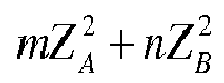
- the largest values of F IAM 2 and S IAM are ⁇ N i Z i 2 and ⁇ N i Z i , respectively; and the largest values of F AB 2 and S AB are mZ A 2 + nZ B 2 and mZ A + nZ B , respectively.
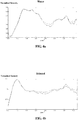
- Fig. 3a illustrates F AB 2 , S AB and F IAM 2 , S IAM of water
- Fig. 3b illustrates F AB 2 , S AB and F IAM 2 , S IAM of ethanol, wherein their largest intensities are normalized.
- solid lines represent F IAM 2 and S IAM
- dotted lines represent F AB 2 and S AB .
- the coefficients of b and c may be solved by minimization of the following expression: argmin b , c ⁇ q 1 q 2 M q ⁇ 1 2 d q wherein an upper limit q 2 and a lower limit q 1 may be selected according to an effective range, for example, (3.0 nm -1 ⁇ 4.0 nm -1 ) of the actually measured XRD energy spectrum data or other priori knowledge.
- an effective range for example, (3.0 nm -1 ⁇ 4.0 nm -1 ) of the actually measured XRD energy spectrum data or other priori knowledge.
- the upper limit and the lower limit of the scattering vector q of the liquid substance may be selected based on the effective range of the XRD energy spectrum data of the liquid substance; and the molecular interference function of the liquid substance is extracted based on the XRD energy spectrum intensity formula by using the upper limit and the lower limit of the scattering vector q.
- the exact solution is similar to the HETRA based method in that after the estimations of F 2 and S of the liquid substance are obtained, the MIF of the liquid substance is solved and optimized in the high range of the scattering vector q .
- the exact solution differs from the HETRA based method in that F 2 and S of the liquid substance are estimated based on the equivalent atomic number, which is obtained by using the CT data, of the liquid substance.
- the equivalent atomic number obtained by using the CT data may be within 5% or 3% and may not be influenced by noises in the high range of the XRD energy spectrum data, the estimation accuracy of F 2 and S may be improved.
- the equivalent atomic number represented by the equation (1) is applicable to various substances.
- the method of solving the equivalent molecular formula by means of multi-element decomposition is more suitable for the liquid substance, and may obtain a good estimation result for substances whose equivalent atomic number is larger than 11.
- the exact solution solves the MIF by using the equations (11) and (12), and the MIF solved by the exact solution is more consistent with physical essence as compared with the MIF solved by using the total scattering cross section F 2 + S, wherein the latter method deems that the diffraction intensity is proportional to ( F 2 + S ) M.
- the MIF of the liquid substance may be solved based on the following approximate equation of the diffraction intensity formula by using the total scattering cross section F 2 + S : I XRD ⁇ ⁇ F 2 + S M ⁇ K F AB 2 + S AB M i.e.: M ⁇ I XRD / K F AB 2 + S AB
- Constant K may be calculated by using expression (16). argmin K ⁇ q 1 q 2 M ⁇ 1 2 d q
- the expression (16) is similar with the expression (13), both of which need to be optimized in the high range ( q 1 , q 2 ) of the scattering vector.
- M' has a similar shape with the real MIF of the liquid substance, and is a constant multiple of the real MIF.
- the people is concerned about the shape of the MIF, for example, locations of peaks and peak widths and so on of the shape of the MIF, so M ' may also satisfy requirements of liquid identification.
- the approximate solution is not limited by the measurement scope of the XRD energy spectrum data, and may also obtain a good result when the exact solution cannot be used.
- the calculation result of the approximate solution is close to that of the exact solution in the low range of the scattering vector q and is slightly different from that of the exact solution in the high range of the scattering vector q.
- the application scope of the approximate solution is larger than that of the exact solution, so it has a good practicability.
- Fig. 4a illustrates MIF calculation results of water obtained by the above two solutions
- Fig. 4b illustrates MIF calculation results of ethanol obtained by the above two solutions.
- the curve obtained by the approximate solution is consistent with the result obtained by the exact solution at 1.61 nm -1 , i.e. their intensities are equal, so that curve shapes obtained by the two solutions may be conveniently compared with each other.
- the solid lines represent the MIF calculation results of the exact solution
- the dotted lines represent the MIF calculation results of the approximate solution.
- the method for liquid detection according to embodiments of the invention utilizes the CT data and the XRD energy spectrum data in a rational way, makes a rational assumption of elements of the liquid, and obtains the equivalent molecular formula of the liquid substance via multi-element combination, so that the coherent scattering formation factor and the incoherent scattering function of the liquid substance may be estimated more accurately and then the MIF of the liquid substance may be obtained.
- the method for liquid detection according to embodiments of the invention avoids using the XRD energy spectrum data whose signal-to-noise radio is low to estimate the MIF and may obtain a good result in the case that the deviation of the equivalent atomic number calculated by using the CT data is less than 5%.
- the method for liquid detection according to embodiments of the invention has low noise sensitivity and a broad application scope, and may use the XRD energy spectrum data measured under different conditions and obtain a more accurate molecular interference function with a wider scope.
- the above described processing S102 may be implemented by a X-ray source and an energy resolving detector, which constitute a data obtaining device
- the above described processing S104-S106 may be implemented by corresponding function modules, for example, a function obtaining unit and a substance identifying unit, wherein the X-ray source, the energy resolving detector and the function modules may constitute the system for liquid detection for implementing the method for liquid detection according to embodiments of the invention.
- the function modules may be implemented in hardware, software, firmware or a combination thereof.
- the hardware may be for example, an electronic circuit, an Application Specific Integrated Circuit (ASIC), a proper firmware, plug-in, or function card and so on.
- ASIC Application Specific Integrated Circuit
- elements of the invention are programs or code segments for implementing tasks.
- the programs or code segments may be stored in a machine-readable medium, or may be transmitted on a transmission media or a communication link via data signals carried in carriers.
- the "machine-readable medium” may include any medium capable of storing and transmitting information. Examples of the machine-readable medium includes the electronic circuit, a semiconductor storage, a ROM, a flash memory, a Erasable ROM (EROM), a floppy disk, a CD-ROM, an optical disk, a hard disk, an optical medium, a Radio Frequency (RF) link and so on.
- the code segments may be downloaded via a computer network such as Internet and Intranet.
Landscapes
- Chemical & Material Sciences (AREA)
- Analytical Chemistry (AREA)
- Crystallography & Structural Chemistry (AREA)
- Physics & Mathematics (AREA)
- Health & Medical Sciences (AREA)
- Life Sciences & Earth Sciences (AREA)
- Biochemistry (AREA)
- General Health & Medical Sciences (AREA)
- General Physics & Mathematics (AREA)
- Immunology (AREA)
- Pathology (AREA)
- Dispersion Chemistry (AREA)
- Analysing Materials By The Use Of Radiation (AREA)
- Other Investigation Or Analysis Of Materials By Electrical Means (AREA)
Abstract
Description
- The invention generally relates to substance identification, and more particularly, to a method and system for liquid detection.
- In existing radiation imaging techniques, a main way to implement nondestructive detection is diffraction imaging, which implements detection of a liquid substance without sampling based on a principle that substances with different molecular structures will produce different X-Ray Diffraction (XRD) patterns.
- The invention provides a method and system for liquid detection.
- The method for liquid detection according to embodiments of the invention comprises: performing CT scanning and XRD scanning on a liquid substance simultaneously to obtain CT data and XRD energy spectrum data of the liquid substance; extracting a molecular interference function of the liquid substance based on the CT data and the XRD energy spectrum data of the liquid substance; and identifying the liquid substance by using the molecular interference function and the CT data of the liquid substance.
- The system for liquid detection according to embodiments of the invention comprises: a data obtaining device configured to perform CT scanning and XRD scanning on a liquid substance simultaneously to obtain CT data and XRD energy spectrum data of the liquid substance; a function extracting unit configured to extract a molecular interference function of the liquid substance based on the CT data and the XRD energy spectrum data of the liquid substance; and a substance identifying unit configured to identify the liquid substance by using the molecular interference function and the CT data of the liquid substance.
- The method and system for liquid detection according to embodiments of the invention may obtain the molecular interference function with a higher signal-to-noise ratio and a larger effective range of the liquid substance and thus identify a wider range of liquid substances.
- The invention may be better understood from the following description of implementations of the invention in conjunction with accompanying drawings, wherein:
-
Fig. 1 illustrates a flow diagram of a method for liquid detection according to an embodiment of the invention; -
Fig. 2 illustrates a flow diagram of the processing of extracting a MIF of a liquid substance according to an embodiment of the invention; -
Fig. 3a and Fig. 3b illustrate

-
FIG. 4a and Fig. 4b illustrate MIF calculation results, which are obtained by employing an exact solution and an approximate solution, of water and ethanol, respectively. - Features and exemplary embodiments of various aspects of the invention will be described in detail below. In the following detailed description, numerous specific details are provided so as to provide thorough understanding of the invention. However, it is apparent for those skilled in the art that the invention may be practiced without some of the specific details. The following description of the embodiments is merely provided for the purpose of providing better understanding of the invention by illustrating examples of the invention. The invention is not limited to any of the following specific configurations and algorithms and covers any modification, substitution and improvement of elements, components and algorithms without departing from the scope of the invention. In the accompany drawings and the following description, well-known structures and techniques are not illustrated so as to avoid unnecessarily obscuring the invention.
- Liquid identification by means of XRD is implemented based on a Molecular Interference Function (MIF) of a liquid, as some substance information for liquid identification may be extracted from the MIF. When extracting the MIF of an unknown liquid substance, it is general to obtain a coherent scattering formation factor F 2 and an incoherent scattering function S of the liquid substance firstly.
- US invention patent application
US7519154 provides a method for extracting the MIF, including: obtaining an equivalent atomic number of the liquid substance by using XRD energy spectrum data in a high energy range of the liquid substance by means of a ratio method and a statistical law; obtaining estimations of F 2 and S of the liquid substance based on an empirical formula or from a lookup table; and iteratively solving and optimizing the MIF of the liquid substance based on a fact that the MIF fluctuates around 1, wherein the method is referred to as a High Energy Tip Region Analysis (HETRA) based method. US invention patent applicationUS8582718 provides a method for extracting the MIF, including: linearly fitting a certain section of the XRD energy spectrum data of the liquid substance to obtain linear approximations of F 2 and S of the liquid substance; and extracting the MIF of the liquid substance, wherein the method is referred to as a linear-approximation based method. The above two methods approximately calculate the MIF of the liquid substance by using information contained in the XRD energy spectrum data of the liquid substance and thus obtain a good result within a certain range. - For liquid security check, it is critical for identifying the liquid substance to extract the MIF of the liquid substance. Although the existing methods for extracting the MIF may obtain accurate MIF calculation results, there still exist some problems.
- The critical point of the HETRA based method is to extract the equivalent atomic number of the liquid substance from the XRD energy spectrum data of the liquid substance, wherein the equivalent atomic number extracted from the XRD energy spectrum data is different from the equivalent atomic number extracted from CT data. A method for extracting the equivalent atomic number of the liquid substance from the XRD energy spectrum data of the liquid substance relies on the XRD energy spectrum data in a high range of a scattering vector, wherein the scattering vector is defined as

- Generally, signals in the high range of the scattering vector are weak and a signal-to-noise ratio in the high range of the scattering vector is low and difficult to obtain, so a deviation of the extracted equivalent atomic number is large and the accuracy of the extracted MIF is reduced. For a system in which the scattering angle is small and the energy of a X-ray source is limited, the HETRA based method is not applicable. Furthermore, according to relevant documents describing the HETRA based method, the HETRA based method is applicable to obtain the equivalent atomic number within a certain range of the liquid substance. For example, for substances such as organics, water and hydrogen peroxide whose equivalent atomic number is less than 11, the HETRA based method has a good performance; for substances whose equivalent atomic number is larger, as the accuracy of the equivalent atomic number estimated by means of the ratio method and the statistics law cannot be ensured, the types of liquid substance to which the HETRA based method is applicable are somewhat limited.
- The linear-approximation based method is different from the HETRA based method in that the XRD energy spectrum data in a middle range, in which the signal-to-noise ratio is high, rather than the high range of the scattering vector is analyzed, so the linear-approximation based method is less interfered by noises. However, the linear-approximation based method estimates F 2 and S using a straight line, the approximate range of which is small, i.e. the linearity of F 2 + S is good only in a range less than 2.5nm -1 of the scattering vector, so only the MIF in a limited range may be obtained by the linear-approximation based method.
- Therefore, the existing methods for extracting the MIF cannot obtain good MIF calculation results with respect to the XRD energy spectrum data under various cases.
- The invention proposes a novel method and system for liquid detection, which processes the XRD energy spectrum data of the liquid substance in combination with the CT data of the liquid substance and thus extracts the MIF of the liquid substance. Firstly, the equivalent atomic number of the liquid substance may be obtained by CT scanning such as dual-energy CT scanning, spectrum CT scanning, or phase contrast CT scanning. Secondly, based on the equivalent atomic number of the liquid substance, the equivalent molecular formula of the liquid substance may be obtained by combining two or more elements, and then approximate functions of F 2 and S of the liquid substance may be obtained by means of Independent Atomic Modeling (IAM). Finally, the MIF of the liquid substance may be extracted by the above approximation functions of F 2 and S.
- In the method and system for liquid detection according to embodiments of the invention, the accuracy of the estimated F 2 and S of the liquid substance is effectively improved, and the MIF with a higher signal-to-noise ratio and a larger effective range may be obtained.
- The method and system for liquid detection according to embodiments of the invention will be described in detail below.
Fig. 1 illustrates a flow diagram of a method for liquid detection according to an embodiment of the invention. As shown inFig. 1 , the method for liquid detection includes: S102, performing CT scanning and XRD scanning on the liquid substance within an detection area simultaneously to obtain the CT data and the XRD energy spectrum data of the liquid substance, wherein the CT data of the liquid substance is obtained by CT scanning, the CT data includes the equivalent atomic number of the liquid substance, the XRD scattering energy spectrum data and transmission energy spectrum data of the liquid substance are obtained by XRD scanning, and the XRD energy spectrum data of the liquid substance is obtained as a result of correcting the XRD scattering energy spectrum data by using the XRD transmission energy spectrum data; S104, extracting the MIF of the liquid substance by integrating the CT data and the XRD energy spectrum data of the liquid substance; and S106, identifying the liquid substance by using the MIF and the CT data of the liquid substance. -
Fig. 2 illustrates a flow diagram of the processing of extracting a MIF of a liquid substance according to an embodiment of the invention. As shown inFig. 2 , the processing of extracting the MIF includes: S202, obtaining the equivalent atomic number of the liquid substance by using the CT data of the liquid substance; S204, performing two-element or multi-element decomposition of the liquid substance by using the equivalent atomic number of the liquid substance to obtain the equivalent molecular formula, for example, AmBn , of the liquid substance; S206, estimating F 2 and S of the liquid substance based on the equivalent molecular formula of the liquid substance; and S208, extracting the MIF of the liquid substance by using F 2 and S of the liquid substance. - Specific processes of implementing the steps S202-S208 according to some embodiments are described in detail below.
- S202, the equivalent atomic number of the liquid substance is obtained.
- The equivalent atomic number of the liquid substance may be obtained by reconstructing the CT data of the liquid substance. For example, in the case that the CT data of the liquid substance is obtained by dual-energy CT scanning, the equivalent atomic number of the liquid substance may be defined as follows:

- Those skilled in the art will appreciate that although definition formulas of the equivalent atomic number that are reconstructed by the CT data obtained by energy-spectrum CT scanning and phase contrast CT scanning of the liquid substance are slightly different from equation (1), these definition formulas of the equivalent atomic number also provide calculation relations between the equivalent molecular formula and the equivalent atomic number.
- S204, the equivalent molecular formula of the liquid substance is obtained.
- The equivalent molecular formula of the liquid substance is obtained by performing two-element or multi-element decomposition of the liquid substance using the equivalent atomic number of the liquid substance. Here, assuming that the liquid substance is composed of two elements of A and B (or composed of multiple elements), and its equivalent molecular formula is AmBn , wherein m+n=1 and both m and n are positive rational numbers. As most detection objects contain hydrogen (H) in liquid security check, it is assumed that the element B is H. Of course, it may also be assumed that the liquid substance further contains other known elements.
- The equivalent molecular formula AmBn, for example, AmHn may be solved by the following equation set:


- S206, F 2 and S of the liquid substance are estimated.
- In the case that a molecular formula of the liquid substance is known, it is common to estimate F 2 and S of the liquid substance by means of Independent Atomic Modeling (IAM), which may estimates F 2 and S of the liquid substance more accurately according to a superposition principle.


- It is difficult to obtain accurate F2 and S of the liquid substance, so it is common to replace real values of F 2 and S with
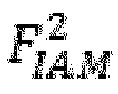


- Premises for approximating F 2 and S by using

- Although


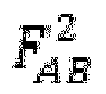


-
Fig. 3a illustrates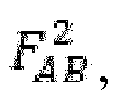

Fig. 3b illustrates

Figs. 3a-3b , solid lines represent

- S208, the MIF of the liquid substance is extracted by using F 2 and S of the liquid substance.
- In consideration of different XRD measurement conditions, an exact solution and an approximate solution are provided herein.
- After the XRD scattering energy spectrum data of the liquid substance is obtained by means of energy dispersion in which the energy spectrum of photons scattered at a fixed angle is measured by using a polychromatic X-ray source and an energy resolving detector, the XRD energy spectrum data of the liquid substance may be obtained by correcting the XRD scattering energy spectrum data of the liquid substance using the XRD transmission energy spectrum data of the liquid substance, wherein the XRD energy spectrum data of the liquid substance may be transformed to the scattering vector "q" according to the following equation:

- The XRD energy spectrum intensity formula of the liquid substance may be represented as follows:


- As the MIF of the liquid substance fluctuates around 1 and the fluctuation of the MIF gradually decreases as q increases, the coefficients of b and c may be solved by minimization of the following expression:

- That is to say, the upper limit and the lower limit of the scattering vector q of the liquid substance may be selected based on the effective range of the XRD energy spectrum data of the liquid substance; and the molecular interference function of the liquid substance is extracted based on the XRD energy spectrum intensity formula by using the upper limit and the lower limit of the scattering vector q.
- The exact solution is similar to the HETRA based method in that after the estimations of F 2 and S of the liquid substance are obtained, the MIF of the liquid substance is solved and optimized in the high range of the scattering vector q. The exact solution differs from the HETRA based method in that F 2 and S of the liquid substance are estimated based on the equivalent atomic number, which is obtained by using the CT data, of the liquid substance. As the calculation error of the equivalent atomic number obtained by using the CT data may be within 5% or 3% and may not be influenced by noises in the high range of the XRD energy spectrum data, the estimation accuracy of F 2 and S may be improved.
- Meanwhile, the equivalent atomic number represented by the equation (1) is applicable to various substances. The method of solving the equivalent molecular formula by means of multi-element decomposition is more suitable for the liquid substance, and may obtain a good estimation result for substances whose equivalent atomic number is larger than 11. Furthermore, the exact solution solves the MIF by using the equations (11) and (12), and the MIF solved by the exact solution is more consistent with physical essence as compared with the MIF solved by using the total scattering cross section F 2 + S, wherein the latter method deems that the diffraction intensity is proportional to (F 2 + S)M.
- The MIF of the liquid substance may be solved based on the following approximate equation of the diffraction intensity formula by using the total scattering cross section F2 +S:


- Constant K may be calculated by using expression (16).

- The expression (16) is similar with the expression (13), both of which need to be optimized in the high range (q 1 , q 2) of the scattering vector.
- When the actually measured XRD energy spectrum data does not include the data in such a high range of the scattering vector or the noises included in the high range of the scattering vector are too high to be used, the approximate solution may obtain the approximation result of the MIF according to equation (17):

- M' has a similar shape with the real MIF of the liquid substance, and is a constant multiple of the real MIF. Generally, when identifying the liquid substance by using the MIF, the people is concerned about the shape of the MIF, for example, locations of peaks and peak widths and so on of the shape of the MIF, so M' may also satisfy requirements of liquid identification.
- The approximate solution is not limited by the measurement scope of the XRD energy spectrum data, and may also obtain a good result when the exact solution cannot be used. The calculation result of the approximate solution is close to that of the exact solution in the low range of the scattering vector q and is slightly different from that of the exact solution in the high range of the scattering vector q. The application scope of the approximate solution is larger than that of the exact solution, so it has a good practicability.
-
Fig. 4a illustrates MIF calculation results of water obtained by the above two solutions, andFig. 4b illustrates MIF calculation results of ethanol obtained by the above two solutions. The curve obtained by the approximate solution is consistent with the result obtained by the exact solution at 1.61nm -1, i.e. their intensities are equal, so that curve shapes obtained by the two solutions may be conveniently compared with each other. InFigs. 4a-4b , the solid lines represent the MIF calculation results of the exact solution, and the dotted lines represent the MIF calculation results of the approximate solution. - The method for liquid detection according to embodiments of the invention utilizes the CT data and the XRD energy spectrum data in a rational way, makes a rational assumption of elements of the liquid, and obtains the equivalent molecular formula of the liquid substance via multi-element combination, so that the coherent scattering formation factor and the incoherent scattering function of the liquid substance may be estimated more accurately and then the MIF of the liquid substance may be obtained. The method for liquid detection according to embodiments of the invention avoids using the XRD energy spectrum data whose signal-to-noise radio is low to estimate the MIF and may obtain a good result in the case that the deviation of the equivalent atomic number calculated by using the CT data is less than 5%. Furthermore, the method for liquid detection according to embodiments of the invention has low noise sensitivity and a broad application scope, and may use the XRD energy spectrum data measured under different conditions and obtain a more accurate molecular interference function with a wider scope.
- Those skilled in the art should appreciate that the above described processing S102 may be implemented by a X-ray source and an energy resolving detector, which constitute a data obtaining device, and the above described processing S104-S106 may be implemented by corresponding function modules, for example, a function obtaining unit and a substance identifying unit, wherein the X-ray source, the energy resolving detector and the function modules may constitute the system for liquid detection for implementing the method for liquid detection according to embodiments of the invention. Here, the function modules may be implemented in hardware, software, firmware or a combination thereof. When the function modules are implemented by hardware, the hardware may be for example, an electronic circuit, an Application Specific Integrated Circuit (ASIC), a proper firmware, plug-in, or function card and so on. When the function modules are implemented in software, elements of the invention are programs or code segments for implementing tasks. The programs or code segments may be stored in a machine-readable medium, or may be transmitted on a transmission media or a communication link via data signals carried in carriers. The "machine-readable medium" may include any medium capable of storing and transmitting information. Examples of the machine-readable medium includes the electronic circuit, a semiconductor storage, a ROM, a flash memory, a Erasable ROM (EROM), a floppy disk, a CD-ROM, an optical disk, a hard disk, an optical medium, a Radio Frequency (RF) link and so on. The code segments may be downloaded via a computer network such as Internet and Intranet.
- The invention may be implemented in other specific ways without departing from the substantive characteristics of the invention. For example, algorithms described in specific embodiments may be modified while the system architecture does not depart from the scope of the invention. Therefore, present embodiments are considered as illustrative rather than limiting in all aspects, and scopes of the invention are defined by the accompany claims rather than the above description and all changes falling within the scopes of the claims and the equivalents thereof are included within the scopes of the invention.
Claims (16)
- A method for liquid detection, characterized in comprising:performing CT scanning and XRD scanning on a liquid substance simultaneously to obtain CT data and XRD energy spectrum data of the liquid substance (S102);extracting a molecular interference function of the liquid substance based on the CT data and the XRD energy spectrum data (S104); andidentifying the liquid substance by using the molecular interference function and the CT data (S106).
- The method for liquid detection of claim 1, characterized in that the processing of extracting the molecular interference function comprises:obtaining an equivalent atomic number of the liquid substance by using the CT data (S202);performing two-element or multi-element decomposition of the liquid substance by using the equivalent atomic number to obtain an equivalent molecular formula of the liquid substance (S204);estimating a coherent scattering formation factor and an incoherent scattering function of the liquid substance based on the equivalent molecular formula (S206); andextracting the molecular interference function by using the coherent scattering formation factor, the incoherent scattering function and the XRD energy spectrum data (S208).
- The method for liquid detection of claim 2, characterized in that the coherent scattering formation factor and the incoherent scattering function are estimated by means of independent atomic modeling.
- The method for liquid detection of claim 3, characterized in that the molecular interference function is extracted based on an XRD energy spectrum intensity formula.
- The method for liquid detection of claim 4, characterized in that the processing of extracting the molecular interference function comprises:selecting an upper limit and a lower limit of a scattering vector corresponding to the XRD energy spectrum data based on an effective range of the XRD energy spectrum data;extracting the molecular interference function based on the XRD energy spectrum intensity formula by using the upper limit and the lower limit of the scattering vector.
- The method for liquid detection of claim 3, characterized in that the molecular interference function is extracted based on a diffraction intensity formula.
- The method for liquid detection of claim 6, characterized in that the molecular interference function is extracted based on an approximate equation of the diffraction intensity formula by using a total scattering cross section that is dependent on the incoherent scattering function and the coherent scattering formation factor.
- The method for liquid detection of claim 1, characterized in that the XRD energy spectrum data is obtained by correcting XRD scattering energy spectrum data of the liquid substance by using XRD transmission energy spectrum data of the liquid substance.
- A system for liquid detection, characterized in comprising:a data obtaining device configured to perform CT scanning and XRD scanning on a liquid substance simultaneously to obtain CT data and XRD energy spectrum data of the liquid substance;a function extracting unit configured to extract a molecular interference function of the liquid substance based on the CT data and the XRD energy spectrum data; anda substance identifying unit configured to identify the liquid substance by using the molecular interference function and the CT data.
- The system for liquid detection of claim 9, characterized in that the function extracting unit is further configured to:obtain an equivalent atomic number of the liquid substance by using the CT data;perform two-element or multi-element decomposition of the liquid substance by using the equivalent atomic number to obtain an equivalent molecular formula of the liquid substance;estimate a coherent scattering formation factor and an incoherent scattering function of the liquid substance based on the equivalent molecular formula; andextract the molecular interference function by using the coherent scattering formation factor, the incoherent scattering function and the XRD energy spectrum data.
- The system for liquid detection of claim 10, characterized in that the function extracting unit estimates the coherent scattering formation factor and the incoherent scattering function by means of independent atomic modeling.
- The system for liquid detection of claim 11, characterized in that the function extracting unit extracts the molecular interference function based on an XRD energy spectrum intensity formula.
- The system for liquid detection of claim 12, characterized in that the function extracting unit is further configured to:select an upper limit and a lower limit of a scattering vector corresponding to the XRD energy spectrum data based on an effective range of the XRD energy spectrum data;extract the molecular interference function based on the XRD energy spectrum intensity formula by using the upper limit and the lower limit of the scattering vector.
- The system for liquid detection of claim 11, characterized in that the function extracting unit extracts the molecular interference function based on a diffraction intensity formula.
- The system for liquid detection of claim 14, characterized in that the function extracting unit extracts the molecular interference function based on an approximate equation of the diffraction intensity formula by using a total scattering cross section that is dependent on the incoherent scattering function and the coherent scattering formation factor.
- The system for liquid detection of claim 10, characterized in that the XRD energy spectrum data is obtained by correcting XRD scattering energy spectrum data of the liquid substance by using XRD transmission energy spectrum data of the liquid substance.
Priority Applications (1)
| Application Number | Priority Date | Filing Date | Title |
|---|---|---|---|
| PL17154154T PL3242127T3 (en) | 2016-05-05 | 2017-02-01 | Method and system for liquid detection |
Applications Claiming Priority (1)
| Application Number | Priority Date | Filing Date | Title |
|---|---|---|---|
| CN201610294907.2A CN107345925B (en) | 2016-05-05 | 2016-05-05 | Liquid detection method and system |
Publications (2)
| Publication Number | Publication Date |
|---|---|
| EP3242127A1 true EP3242127A1 (en) | 2017-11-08 |
| EP3242127B1 EP3242127B1 (en) | 2018-11-28 |
Family
ID=57963044
Family Applications (1)
| Application Number | Title | Priority Date | Filing Date |
|---|---|---|---|
| EP17154154.3A Not-in-force EP3242127B1 (en) | 2016-05-05 | 2017-02-01 | Method and system for liquid detection |
Country Status (4)
| Country | Link |
|---|---|
| EP (1) | EP3242127B1 (en) |
| CN (1) | CN107345925B (en) |
| PL (1) | PL3242127T3 (en) |
| TR (1) | TR201902478T4 (en) |
Cited By (2)
| Publication number | Priority date | Publication date | Assignee | Title |
|---|---|---|---|---|
| CN115078414A (en) * | 2022-08-18 | 2022-09-20 | 湖南苏科智能科技有限公司 | Liquid component anti-interference intelligent detection method based on multi-energy X-rays |
| WO2026138631A1 (en) * | 2024-12-23 | 2026-07-02 | 杭州海康威视数字技术股份有限公司 | Liquid identification |
Citations (4)
| Publication number | Priority date | Publication date | Assignee | Title |
|---|---|---|---|---|
| US7519154B2 (en) | 2006-08-15 | 2009-04-14 | Ge Security, Inc. | Systems and methods for using a crystallinity of a substance to identify the substance |
| EP2075570A1 (en) * | 2007-12-28 | 2009-07-01 | GE Security, Inc. | A system and methods for characterizing a substance |
| US8582718B2 (en) | 2010-11-30 | 2013-11-12 | Morpho Detection, Inc. | Method and system for deriving molecular interference functions from XRD profiles |
| FR3023001A1 (en) * | 2014-06-30 | 2016-01-01 | Commissariat Energie Atomique | METHOD FOR ANALYZING A TWO-STAGE OBJECT USING TRANSMITTED RADIATION THEN A DIFFUSION SPECTRUM |
Family Cites Families (4)
| Publication number | Priority date | Publication date | Assignee | Title |
|---|---|---|---|---|
| ATE385595T1 (en) * | 2004-03-17 | 2008-02-15 | Koninkl Philips Electronics Nv | CORRECTION OF RADIATION HARDENING AND ATTENUATION IN COHERENT SCATTER COMPUTED TOMOGRAPHY (CSCT) |
| US8938045B2 (en) * | 2012-01-13 | 2015-01-20 | Ingrain, Inc. | Method of determining reservoir properties and quality with multiple energy X-ray imaging |
| CN103913472B (en) * | 2012-12-31 | 2016-04-20 | 同方威视技术股份有限公司 | Ct imaging system and method |
| CN106896122B (en) * | 2015-12-18 | 2019-07-30 | 清华大学 | Liquid detection method and system |
-
2016
- 2016-05-05 CN CN201610294907.2A patent/CN107345925B/en active Active
-
2017
- 2017-02-01 EP EP17154154.3A patent/EP3242127B1/en not_active Not-in-force
- 2017-02-01 TR TR2019/02478T patent/TR201902478T4/en unknown
- 2017-02-01 PL PL17154154T patent/PL3242127T3/en unknown
Patent Citations (4)
| Publication number | Priority date | Publication date | Assignee | Title |
|---|---|---|---|---|
| US7519154B2 (en) | 2006-08-15 | 2009-04-14 | Ge Security, Inc. | Systems and methods for using a crystallinity of a substance to identify the substance |
| EP2075570A1 (en) * | 2007-12-28 | 2009-07-01 | GE Security, Inc. | A system and methods for characterizing a substance |
| US8582718B2 (en) | 2010-11-30 | 2013-11-12 | Morpho Detection, Inc. | Method and system for deriving molecular interference functions from XRD profiles |
| FR3023001A1 (en) * | 2014-06-30 | 2016-01-01 | Commissariat Energie Atomique | METHOD FOR ANALYZING A TWO-STAGE OBJECT USING TRANSMITTED RADIATION THEN A DIFFUSION SPECTRUM |
Non-Patent Citations (1)
| Title |
|---|
| ZHANG LI ET AL: "Determination of liquid's molecular interference function based on X-ray diffraction and dual-energy CT in security screening", APPLIED RADIATION AND ISOTOPES, ELSEVIER, OXFORD, GB, vol. 114, 14 May 2016 (2016-05-14), pages 179 - 187, XP029596192, ISSN: 0969-8043, DOI: 10.1016/J.APRADISO.2016.05.019 * |
Cited By (2)
| Publication number | Priority date | Publication date | Assignee | Title |
|---|---|---|---|---|
| CN115078414A (en) * | 2022-08-18 | 2022-09-20 | 湖南苏科智能科技有限公司 | Liquid component anti-interference intelligent detection method based on multi-energy X-rays |
| WO2026138631A1 (en) * | 2024-12-23 | 2026-07-02 | 杭州海康威视数字技术股份有限公司 | Liquid identification |
Also Published As
| Publication number | Publication date |
|---|---|
| TR201902478T4 (en) | 2019-03-21 |
| EP3242127B1 (en) | 2018-11-28 |
| PL3242127T3 (en) | 2019-05-31 |
| CN107345925A (en) | 2017-11-14 |
| CN107345925B (en) | 2019-10-15 |
Similar Documents
| Publication | Publication Date | Title |
|---|---|---|
| Frery et al. | Entropy-based statistical analysis of PolSAR data | |
| Statham | Limitations to accuracy in extracting characteristic line intensities from X-ray spectra | |
| US20070211248A1 (en) | Advanced pattern recognition systems for spectral analysis | |
| US10969220B2 (en) | Characterizing a sample by material basis decomposition | |
| US7949476B2 (en) | Method for estimating molecule concentrations in a sampling and equipment therefor | |
| Macquart et al. | On the reliability of polarization estimation using Rotation Measure Synthesis | |
| AU2016201618A1 (en) | Method for the Correction of Background Signals in a Spectrum | |
| CN109580497B (en) | Hyperspectral mineral abnormal information extraction method based on singularity theory | |
| US9081093B2 (en) | Processing SAR imagery | |
| US20160103018A1 (en) | Calibration curve generation method, calibration curve generation device, target component calibration method, target component calibration device, electronic device, glucose concentration calibration method, and glucose concentration calibration device | |
| EP3242127B1 (en) | Method and system for liquid detection | |
| Guo et al. | A comparison between subset selection and L1 regularisation with an application in spectroscopy | |
| EP2431764A1 (en) | Processing SAR imagery | |
| Zhang et al. | Bayesian constrained energy minimization for hyperspectral target detection | |
| Akbari et al. | The Hotelling-Lawley trace statistic for change detection in polarimetric SAR data under the complex Wishart distribution | |
| Buddenbaum et al. | Mapping the distribution of chemical properties in soil profiles using laboratory imaging spectroscopy, SVM and PLS regression | |
| Koner et al. | Hybrid cloud and error masking to improve the quality of deterministic satellite sea surface temperature retrieval and data coverage | |
| Pasanen et al. | A scale space multiresolution method for extraction of time series features | |
| EP3588120B1 (en) | System and method for improved signal detection in nmr spectroscopy | |
| Xia et al. | Influence of fractional differential on correlation coefficient between EC1: 5 and reflectance spectra of saline soil | |
| Sizikov et al. | Reconstruction of continuous spectra by the regularization method using model spectra | |
| CN114047510A (en) | Low-sidelobe forest TomosAR nonparametric spectrum estimation method and system | |
| US20180195981A1 (en) | Material identification method | |
| Song et al. | Statistically homogeneous pixel selection for small SAR data sets based on the similarity test of the covariance matrix | |
| Liu et al. | Resolving severely overlapping ion mobility peaks using enhanced Fourier self-deconvolution |
Legal Events
| Date | Code | Title | Description |
|---|---|---|---|
| PUAI | Public reference made under article 153(3) epc to a published international application that has entered the european phase |
Free format text: ORIGINAL CODE: 0009012 |
|
| STAA | Information on the status of an ep patent application or granted ep patent |
Free format text: STATUS: REQUEST FOR EXAMINATION WAS MADE |
|
| 17P | Request for examination filed |
Effective date: 20170815 |
|
| AK | Designated contracting states |
Kind code of ref document: A1 Designated state(s): AL AT BE BG CH CY CZ DE DK EE ES FI FR GB GR HR HU IE IS IT LI LT LU LV MC MK MT NL NO PL PT RO RS SE SI SK SM TR |
|
| AX | Request for extension of the european patent |
Extension state: BA ME |
|
| STAA | Information on the status of an ep patent application or granted ep patent |
Free format text: STATUS: EXAMINATION IS IN PROGRESS |
|
| 17Q | First examination report despatched |
Effective date: 20180321 |
|
| RIC1 | Information provided on ipc code assigned before grant |
Ipc: G01N 23/20091 20180101ALN20180712BHEP Ipc: G01N 23/046 20180101ALN20180712BHEP Ipc: G01N 23/20 20060101AFI20180712BHEP |
|
| GRAP | Despatch of communication of intention to grant a patent |
Free format text: ORIGINAL CODE: EPIDOSNIGR1 |
|
| STAA | Information on the status of an ep patent application or granted ep patent |
Free format text: STATUS: GRANT OF PATENT IS INTENDED |
|
| INTG | Intention to grant announced |
Effective date: 20180830 |
|
| RIN1 | Information on inventor provided before grant (corrected) |
Inventor name: ZHANG, LI Inventor name: CHANG, MING Inventor name: CHEN, ZHIQIANG Inventor name: XING, YUXIANG Inventor name: LI, LIANG Inventor name: HUANG, QINGPING Inventor name: JIN, XIN Inventor name: SUN, YUNDA Inventor name: SHEN, LE Inventor name: YANG DAI, TIANYI |
|
| GRAS | Grant fee paid |
Free format text: ORIGINAL CODE: EPIDOSNIGR3 |
|
| GRAA | (expected) grant |
Free format text: ORIGINAL CODE: 0009210 |
|
| STAA | Information on the status of an ep patent application or granted ep patent |
Free format text: STATUS: THE PATENT HAS BEEN GRANTED |
|
| AK | Designated contracting states |
Kind code of ref document: B1 Designated state(s): AL AT BE BG CH CY CZ DE DK EE ES FI FR GB GR HR HU IE IS IT LI LT LU LV MC MK MT NL NO PL PT RO RS SE SI SK SM TR |
|
| REG | Reference to a national code |
Ref country code: CH Ref legal event code: EP |
|
| REG | Reference to a national code |
Ref country code: AT Ref legal event code: REF Ref document number: 1070815 Country of ref document: AT Kind code of ref document: T Effective date: 20181215 |
|
| REG | Reference to a national code |
Ref country code: DE Ref legal event code: R096 Ref document number: 602017001016 Country of ref document: DE |
|
| REG | Reference to a national code |
Ref country code: IE Ref legal event code: FG4D |
|
| REG | Reference to a national code |
Ref country code: CH Ref legal event code: NV Representative=s name: SERVOPATENT GMBH, CH |
|
| REG | Reference to a national code |
Ref country code: SE Ref legal event code: TRGR |
|
| REG | Reference to a national code |
Ref country code: NL Ref legal event code: FP |
|
| REG | Reference to a national code |
Ref country code: LT Ref legal event code: MG4D |
|
| REG | Reference to a national code |
Ref country code: AT Ref legal event code: MK05 Ref document number: 1070815 Country of ref document: AT Kind code of ref document: T Effective date: 20181128 |
|
| PG25 | Lapsed in a contracting state [announced via postgrant information from national office to epo] |
Ref country code: IS Free format text: LAPSE BECAUSE OF FAILURE TO SUBMIT A TRANSLATION OF THE DESCRIPTION OR TO PAY THE FEE WITHIN THE PRESCRIBED TIME-LIMIT Effective date: 20190328 Ref country code: NO Free format text: LAPSE BECAUSE OF FAILURE TO SUBMIT A TRANSLATION OF THE DESCRIPTION OR TO PAY THE FEE WITHIN THE PRESCRIBED TIME-LIMIT Effective date: 20190228 Ref country code: LT Free format text: LAPSE BECAUSE OF FAILURE TO SUBMIT A TRANSLATION OF THE DESCRIPTION OR TO PAY THE FEE WITHIN THE PRESCRIBED TIME-LIMIT Effective date: 20181128 Ref country code: AT Free format text: LAPSE BECAUSE OF FAILURE TO SUBMIT A TRANSLATION OF THE DESCRIPTION OR TO PAY THE FEE WITHIN THE PRESCRIBED TIME-LIMIT Effective date: 20181128 Ref country code: ES Free format text: LAPSE BECAUSE OF FAILURE TO SUBMIT A TRANSLATION OF THE DESCRIPTION OR TO PAY THE FEE WITHIN THE PRESCRIBED TIME-LIMIT Effective date: 20181128 Ref country code: LV Free format text: LAPSE BECAUSE OF FAILURE TO SUBMIT A TRANSLATION OF THE DESCRIPTION OR TO PAY THE FEE WITHIN THE PRESCRIBED TIME-LIMIT Effective date: 20181128 Ref country code: HR Free format text: LAPSE BECAUSE OF FAILURE TO SUBMIT A TRANSLATION OF THE DESCRIPTION OR TO PAY THE FEE WITHIN THE PRESCRIBED TIME-LIMIT Effective date: 20181128 Ref country code: BG Free format text: LAPSE BECAUSE OF FAILURE TO SUBMIT A TRANSLATION OF THE DESCRIPTION OR TO PAY THE FEE WITHIN THE PRESCRIBED TIME-LIMIT Effective date: 20190228 |
|
| PG25 | Lapsed in a contracting state [announced via postgrant information from national office to epo] |
Ref country code: AL Free format text: LAPSE BECAUSE OF FAILURE TO SUBMIT A TRANSLATION OF THE DESCRIPTION OR TO PAY THE FEE WITHIN THE PRESCRIBED TIME-LIMIT Effective date: 20181128 Ref country code: RS Free format text: LAPSE BECAUSE OF FAILURE TO SUBMIT A TRANSLATION OF THE DESCRIPTION OR TO PAY THE FEE WITHIN THE PRESCRIBED TIME-LIMIT Effective date: 20181128 Ref country code: PT Free format text: LAPSE BECAUSE OF FAILURE TO SUBMIT A TRANSLATION OF THE DESCRIPTION OR TO PAY THE FEE WITHIN THE PRESCRIBED TIME-LIMIT Effective date: 20190328 Ref country code: GR Free format text: LAPSE BECAUSE OF FAILURE TO SUBMIT A TRANSLATION OF THE DESCRIPTION OR TO PAY THE FEE WITHIN THE PRESCRIBED TIME-LIMIT Effective date: 20190301 |
|
| PG25 | Lapsed in a contracting state [announced via postgrant information from national office to epo] |
Ref country code: DK Free format text: LAPSE BECAUSE OF FAILURE TO SUBMIT A TRANSLATION OF THE DESCRIPTION OR TO PAY THE FEE WITHIN THE PRESCRIBED TIME-LIMIT Effective date: 20181128 Ref country code: CZ Free format text: LAPSE BECAUSE OF FAILURE TO SUBMIT A TRANSLATION OF THE DESCRIPTION OR TO PAY THE FEE WITHIN THE PRESCRIBED TIME-LIMIT Effective date: 20181128 Ref country code: IT Free format text: LAPSE BECAUSE OF FAILURE TO SUBMIT A TRANSLATION OF THE DESCRIPTION OR TO PAY THE FEE WITHIN THE PRESCRIBED TIME-LIMIT Effective date: 20181128 |
|
| REG | Reference to a national code |
Ref country code: DE Ref legal event code: R097 Ref document number: 602017001016 Country of ref document: DE |
|
| PG25 | Lapsed in a contracting state [announced via postgrant information from national office to epo] |
Ref country code: EE Free format text: LAPSE BECAUSE OF FAILURE TO SUBMIT A TRANSLATION OF THE DESCRIPTION OR TO PAY THE FEE WITHIN THE PRESCRIBED TIME-LIMIT Effective date: 20181128 Ref country code: SM Free format text: LAPSE BECAUSE OF FAILURE TO SUBMIT A TRANSLATION OF THE DESCRIPTION OR TO PAY THE FEE WITHIN THE PRESCRIBED TIME-LIMIT Effective date: 20181128 Ref country code: RO Free format text: LAPSE BECAUSE OF FAILURE TO SUBMIT A TRANSLATION OF THE DESCRIPTION OR TO PAY THE FEE WITHIN THE PRESCRIBED TIME-LIMIT Effective date: 20181128 Ref country code: SK Free format text: LAPSE BECAUSE OF FAILURE TO SUBMIT A TRANSLATION OF THE DESCRIPTION OR TO PAY THE FEE WITHIN THE PRESCRIBED TIME-LIMIT Effective date: 20181128 |
|
| PLBE | No opposition filed within time limit |
Free format text: ORIGINAL CODE: 0009261 |
|
| STAA | Information on the status of an ep patent application or granted ep patent |
Free format text: STATUS: NO OPPOSITION FILED WITHIN TIME LIMIT |
|
| PG25 | Lapsed in a contracting state [announced via postgrant information from national office to epo] |
Ref country code: SI Free format text: LAPSE BECAUSE OF FAILURE TO SUBMIT A TRANSLATION OF THE DESCRIPTION OR TO PAY THE FEE WITHIN THE PRESCRIBED TIME-LIMIT Effective date: 20181128 Ref country code: MC Free format text: LAPSE BECAUSE OF FAILURE TO SUBMIT A TRANSLATION OF THE DESCRIPTION OR TO PAY THE FEE WITHIN THE PRESCRIBED TIME-LIMIT Effective date: 20181128 Ref country code: LU Free format text: LAPSE BECAUSE OF NON-PAYMENT OF DUE FEES Effective date: 20190201 |
|
| 26N | No opposition filed |
Effective date: 20190829 |
|
| REG | Reference to a national code |
Ref country code: BE Ref legal event code: MM Effective date: 20190228 |
|
| REG | Reference to a national code |
Ref country code: IE Ref legal event code: MM4A |
|
| REG | Reference to a national code |
Ref country code: DE Ref legal event code: R082 Ref document number: 602017001016 Country of ref document: DE Representative=s name: BOULT WADE TENNANT LLP, DE Ref country code: DE Ref legal event code: R082 Ref document number: 602017001016 Country of ref document: DE Representative=s name: MAIER, LL.M., MICHAEL C., DE |
|
| PG25 | Lapsed in a contracting state [announced via postgrant information from national office to epo] |
Ref country code: IE Free format text: LAPSE BECAUSE OF NON-PAYMENT OF DUE FEES Effective date: 20190201 |
|
| REG | Reference to a national code |
Ref country code: DE Ref legal event code: R082 Ref document number: 602017001016 Country of ref document: DE Representative=s name: BOULT WADE TENNANT LLP, DE |
|
| PG25 | Lapsed in a contracting state [announced via postgrant information from national office to epo] |
Ref country code: BE Free format text: LAPSE BECAUSE OF NON-PAYMENT OF DUE FEES Effective date: 20190228 |
|
| PGFP | Annual fee paid to national office [announced via postgrant information from national office to epo] |
Ref country code: DE Payment date: 20200121 Year of fee payment: 4 Ref country code: PL Payment date: 20200131 Year of fee payment: 4 Ref country code: SE Payment date: 20200210 Year of fee payment: 4 Ref country code: FI Payment date: 20200210 Year of fee payment: 4 Ref country code: NL Payment date: 20200130 Year of fee payment: 4 |
|
| PGFP | Annual fee paid to national office [announced via postgrant information from national office to epo] |
Ref country code: CH Payment date: 20200213 Year of fee payment: 4 |
|
| REG | Reference to a national code |
Ref country code: CH Ref legal event code: PCAR Free format text: NEW ADDRESS: WANNERSTRASSE 9/1, 8045 ZUERICH (CH) |
|
| PG25 | Lapsed in a contracting state [announced via postgrant information from national office to epo] |
Ref country code: MT Free format text: LAPSE BECAUSE OF NON-PAYMENT OF DUE FEES Effective date: 20190201 |
|
| PGFP | Annual fee paid to national office [announced via postgrant information from national office to epo] |
Ref country code: FR Payment date: 20200127 Year of fee payment: 4 Ref country code: TR Payment date: 20200131 Year of fee payment: 4 |
|
| PG25 | Lapsed in a contracting state [announced via postgrant information from national office to epo] |
Ref country code: CY Free format text: LAPSE BECAUSE OF FAILURE TO SUBMIT A TRANSLATION OF THE DESCRIPTION OR TO PAY THE FEE WITHIN THE PRESCRIBED TIME-LIMIT Effective date: 20181128 |
|
| PG25 | Lapsed in a contracting state [announced via postgrant information from national office to epo] |
Ref country code: HU Free format text: LAPSE BECAUSE OF FAILURE TO SUBMIT A TRANSLATION OF THE DESCRIPTION OR TO PAY THE FEE WITHIN THE PRESCRIBED TIME-LIMIT; INVALID AB INITIO Effective date: 20170201 |
|
| REG | Reference to a national code |
Ref country code: DE Ref legal event code: R119 Ref document number: 602017001016 Country of ref document: DE |
|
| REG | Reference to a national code |
Ref country code: SE Ref legal event code: EUG |
|
| REG | Reference to a national code |
Ref country code: FI Ref legal event code: MAE |
|
| GBPC | Gb: european patent ceased through non-payment of renewal fee |
Effective date: 20210201 |
|
| PG25 | Lapsed in a contracting state [announced via postgrant information from national office to epo] |
Ref country code: FI Free format text: LAPSE BECAUSE OF NON-PAYMENT OF DUE FEES Effective date: 20210201 Ref country code: LI Free format text: LAPSE BECAUSE OF NON-PAYMENT OF DUE FEES Effective date: 20210228 Ref country code: CH Free format text: LAPSE BECAUSE OF NON-PAYMENT OF DUE FEES Effective date: 20210228 |
|
| PG25 | Lapsed in a contracting state [announced via postgrant information from national office to epo] |
Ref country code: SE Free format text: LAPSE BECAUSE OF NON-PAYMENT OF DUE FEES Effective date: 20210202 |
|
| REG | Reference to a national code |
Ref country code: NL Ref legal event code: MM Effective date: 20210301 |
|
| PG25 | Lapsed in a contracting state [announced via postgrant information from national office to epo] |
Ref country code: NL Free format text: LAPSE BECAUSE OF NON-PAYMENT OF DUE FEES Effective date: 20210301 |
|
| PG25 | Lapsed in a contracting state [announced via postgrant information from national office to epo] |
Ref country code: DE Free format text: LAPSE BECAUSE OF NON-PAYMENT OF DUE FEES Effective date: 20210901 Ref country code: GB Free format text: LAPSE BECAUSE OF NON-PAYMENT OF DUE FEES Effective date: 20210201 Ref country code: FR Free format text: LAPSE BECAUSE OF NON-PAYMENT OF DUE FEES Effective date: 20210228 |
|
| PG25 | Lapsed in a contracting state [announced via postgrant information from national office to epo] |
Ref country code: MK Free format text: LAPSE BECAUSE OF FAILURE TO SUBMIT A TRANSLATION OF THE DESCRIPTION OR TO PAY THE FEE WITHIN THE PRESCRIBED TIME-LIMIT Effective date: 20181128 |
|
| PG25 | Lapsed in a contracting state [announced via postgrant information from national office to epo] |
Ref country code: PL Free format text: LAPSE BECAUSE OF NON-PAYMENT OF DUE FEES Effective date: 20210201 |
|
| PG25 | Lapsed in a contracting state [announced via postgrant information from national office to epo] |
Ref country code: TR Free format text: LAPSE BECAUSE OF NON-PAYMENT OF DUE FEES Effective date: 20210201 |