EP3241904B1 - Factor xia-specific aptamers - Google Patents
Factor xia-specific aptamers Download PDFInfo
- Publication number
- EP3241904B1 EP3241904B1 EP17169437.5A EP17169437A EP3241904B1 EP 3241904 B1 EP3241904 B1 EP 3241904B1 EP 17169437 A EP17169437 A EP 17169437A EP 3241904 B1 EP3241904 B1 EP 3241904B1
- Authority
- EP
- European Patent Office
- Prior art keywords
- seq
- fxia
- aptamer
- aptamers
- nucleotides
- Prior art date
- Legal status (The legal status is an assumption and is not a legal conclusion. Google has not performed a legal analysis and makes no representation as to the accuracy of the status listed.)
- Active
Links
Images




Classifications
-
- C—CHEMISTRY; METALLURGY
- C12—BIOCHEMISTRY; BEER; SPIRITS; WINE; VINEGAR; MICROBIOLOGY; ENZYMOLOGY; MUTATION OR GENETIC ENGINEERING
- C12N—MICROORGANISMS OR ENZYMES; COMPOSITIONS THEREOF; PROPAGATING, PRESERVING, OR MAINTAINING MICROORGANISMS; MUTATION OR GENETIC ENGINEERING; CULTURE MEDIA
- C12N15/00—Mutation or genetic engineering; DNA or RNA concerning genetic engineering, vectors, e.g. plasmids, or their isolation, preparation or purification; Use of hosts therefor
- C12N15/09—Recombinant DNA-technology
- C12N15/11—DNA or RNA fragments; Modified forms thereof; Non-coding nucleic acids having a biological activity
- C12N15/115—Aptamers, i.e. nucleic acids binding a target molecule specifically and with high affinity without hybridising therewith ; Nucleic acids binding to non-nucleic acids, e.g. aptamers
-
- C—CHEMISTRY; METALLURGY
- C12—BIOCHEMISTRY; BEER; SPIRITS; WINE; VINEGAR; MICROBIOLOGY; ENZYMOLOGY; MUTATION OR GENETIC ENGINEERING
- C12N—MICROORGANISMS OR ENZYMES; COMPOSITIONS THEREOF; PROPAGATING, PRESERVING, OR MAINTAINING MICROORGANISMS; MUTATION OR GENETIC ENGINEERING; CULTURE MEDIA
- C12N15/00—Mutation or genetic engineering; DNA or RNA concerning genetic engineering, vectors, e.g. plasmids, or their isolation, preparation or purification; Use of hosts therefor
- C12N15/09—Recombinant DNA-technology
- C12N15/11—DNA or RNA fragments; Modified forms thereof; Non-coding nucleic acids having a biological activity
- C12N15/113—Non-coding nucleic acids modulating the expression of genes, e.g. antisense oligonucleotides; Antisense DNA or RNA; Triplex- forming oligonucleotides; Catalytic nucleic acids, e.g. ribozymes; Nucleic acids used in co-suppression or gene silencing
- C12N15/1137—Non-coding nucleic acids modulating the expression of genes, e.g. antisense oligonucleotides; Antisense DNA or RNA; Triplex- forming oligonucleotides; Catalytic nucleic acids, e.g. ribozymes; Nucleic acids used in co-suppression or gene silencing against enzymes
-
- A—HUMAN NECESSITIES
- A61—MEDICAL OR VETERINARY SCIENCE; HYGIENE
- A61K—PREPARATIONS FOR MEDICAL, DENTAL OR TOILETRY PURPOSES
- A61K49/00—Preparations for testing in vivo
- A61K49/0004—Screening or testing of compounds for diagnosis of disorders, assessment of conditions, e.g. renal clearance, gastric emptying, testing for diabetes, allergy, rheuma, pancreas functions
-
- C—CHEMISTRY; METALLURGY
- C12—BIOCHEMISTRY; BEER; SPIRITS; WINE; VINEGAR; MICROBIOLOGY; ENZYMOLOGY; MUTATION OR GENETIC ENGINEERING
- C12Y—ENZYMES
- C12Y304/00—Hydrolases acting on peptide bonds, i.e. peptidases (3.4)
- C12Y304/21—Serine endopeptidases (3.4.21)
- C12Y304/21027—Coagulation factor XIa (3.4.21.27)
-
- G—PHYSICS
- G01—MEASURING; TESTING
- G01N—INVESTIGATING OR ANALYSING MATERIALS BY DETERMINING THEIR CHEMICAL OR PHYSICAL PROPERTIES
- G01N33/00—Investigating or analysing materials by specific methods not covered by groups G01N1/00 - G01N31/00
- G01N33/48—Biological material, e.g. blood, urine; Haemocytometers
- G01N33/50—Chemical analysis of biological material, e.g. blood, urine; Testing involving biospecific ligand binding methods; Immunological testing
- G01N33/86—Chemical analysis of biological material, e.g. blood, urine; Testing involving biospecific ligand binding methods; Immunological testing involving blood coagulating time or factors, or their receptors
-
- C—CHEMISTRY; METALLURGY
- C12—BIOCHEMISTRY; BEER; SPIRITS; WINE; VINEGAR; MICROBIOLOGY; ENZYMOLOGY; MUTATION OR GENETIC ENGINEERING
- C12N—MICROORGANISMS OR ENZYMES; COMPOSITIONS THEREOF; PROPAGATING, PRESERVING, OR MAINTAINING MICROORGANISMS; MUTATION OR GENETIC ENGINEERING; CULTURE MEDIA
- C12N2310/00—Structure or type of the nucleic acid
- C12N2310/10—Type of nucleic acid
- C12N2310/16—Aptamers
-
- G—PHYSICS
- G01—MEASURING; TESTING
- G01N—INVESTIGATING OR ANALYSING MATERIALS BY DETERMINING THEIR CHEMICAL OR PHYSICAL PROPERTIES
- G01N2333/00—Assays involving biological materials from specific organisms or of a specific nature
- G01N2333/90—Enzymes; Proenzymes
- G01N2333/914—Hydrolases (3)
- G01N2333/948—Hydrolases (3) acting on peptide bonds (3.4)
- G01N2333/95—Proteinases, i.e. endopeptidases (3.4.21-3.4.99)
- G01N2333/964—Proteinases, i.e. endopeptidases (3.4.21-3.4.99) derived from animal tissue
- G01N2333/96425—Proteinases, i.e. endopeptidases (3.4.21-3.4.99) derived from animal tissue from mammals
- G01N2333/96427—Proteinases, i.e. endopeptidases (3.4.21-3.4.99) derived from animal tissue from mammals in general
- G01N2333/9643—Proteinases, i.e. endopeptidases (3.4.21-3.4.99) derived from animal tissue from mammals in general with EC number
- G01N2333/96433—Serine endopeptidases (3.4.21)
- G01N2333/96441—Serine endopeptidases (3.4.21) with definite EC number
- G01N2333/96452—Factor XI (3.4.21.27)
Definitions
- the present disclosure relates to compounds capable of specifically binding to and limiting the biological activity of Factor Xla.
- Thromboembolic diseases are a leading cause of morbidity and mortality in the developed world and are rapidly emerging in the developing world.
- Currently commercialized antithrombotic agents are usually associated with the side effect of causing bleeding.
- new oral anticoagulants e.g ., dabigatran etexilate, rivaroxaban, edoxaban for example
- FXI inhibition has been identified as an attractive target for drug development because mice or humans with abnormally low FXI levels appear to be protected from thrombosis.
- An antisense oligonucleotide to FXI named FXI-ASO is under clinical development (Büller et al., 2014) and was determined to be superior in preventing venous thromboembolism in patients undergoing total knee replacement than the standard of care. Importantly, the study demonstrated that the antisense oligonucleotide did not promote bleeding in orthopedic surgery, a major challenge with any antithrombic agent.
- FXIa Factor XIa
- a specific inhibitor of Factor XIa e.g., a compound which would specifically bind to (and inhibit the biological activity of) Factor Xla.
- FXIa inhibitor which would have a rapid onset of action and/or a short duration of action for treating and/or preventing thrombosis.
- FXIa inhibitor which would exhibit little to no immunogenicity (upon administration to the intended recipient).
- the present disclosure concerns Factor XIa-specific aptamers.
- the aptamers of the present disclosure are also capable of limiting the biological activity (e.g., the proteolytic activity) of Factor Xla.
- the present disclosure provides an aptamer having the structure of formula (I): 5' - 5W-C-3W - 3' (I) wherein:
- the aptamer can have or consists essentially of the nucleic acid sequence of SEQ ID NO: 64.
- the nucleotides at positions 12 and 13 of SEQ ID NO: 66 are present, and the nucleotides at position 12 and 13 (N 28 A) of SEQ ID NO: 66 are capable of base pairing with the nucleotides at position 35 to 34 (N 10 T) of SEQ ID NO: 24, 30, 32, 35, 36 or 69.
- the aptamer can have or consist essentially of the nucleic acid sequence of SEQ ID NO: 63.
- the nucleotides at position 8 to 11 of SEQ ID NO: 66, at position 1 to 5 of SEQ ID NO: 67 are present, and the nucleotide at position (N 24 ) of SEQ ID NO: 66 is capable of base pairing with the nucleotide a position 2 (N 32 ) of SEQ ID NO: 67.
- the aptamer of can have or consist essentially of the nucleic acid sequence of SEQ ID NO: 62.
- the nucleotides at position 5 to 7 of SEQ ID NO: 66 and at position 3 to 5 of SEQ ID NO: 67 are present, and the nucleotides at position 6 to 7 (N 22 N 23 ) of SEQ ID NO: 66 are capable of base pairing with the nucleotides at positions 4 to 3 (N 34 N 33 ) of SEQ ID NO: 67.
- the aptamer can have or consist essentially of the nucleic acid sequence of SEQ ID NO: 61.
- nucleotides 1 to 4 of SEQ ID NO: 66 and nucleotides 6 to 11 of SEQ ID NO: 67 are present.
- the aptamer can have or consist essentially of the nucleic acid sequence of SEQ ID NO: 60.
- the present disclosure provides an aptamer having the structure of formula (I) wherein:
- 5W has or consists essentially of the nucleotide sequence of SEQ ID NO: 26.
- 3W has of consists essentially of the nucleotide sequence of SEQ ID NO: 28.
- C has or consists essentially of the nucleotide sequence of SEQ ID NO: 24.
- the aptamer has or consists essentially of the nucleotide sequence of SEQ ID NO: 1, SEQ ID SEQ ID NO: 6, SEQ ID NO: 8, SEQ ID NO: 9, SEQ ID NO: 10, SEQ ID NO: 11 or SEQ ID NO: 13.
- the present disclosure provides an aptamer having the nucleotide sequence of SEQ ID NO: 2 or SEQ ID NO: 3.
- the present disclosure provides a variant of the aptamer described herewith.
- the present disclosure provides a fragment of the aptamer described herein.
- the present disclosure provides the aptamer described herein, the variant described herein or the fragment described herein for use as a medicament, for example for preventing, treating or alleviating the symptoms of thrombosis.
- the aptamer, variant or fragment are for the treatment of initial thrombosis.
- the aptamer, variant or fragment are for the prevention of secondary thrombosis.
- the present disclosure provides, the aptamer described herein, the variant described herein or the fragment described herein for detecting Factor Xla in a biological sample.
- the present disclosure provides a method for detecting Factor Xla in a sample.
- the method comprises (i) contacting the aptamer described herein, the variant described herein or the fragment described herein with the sample; (ii) determining the presence or the absence of a complex between Factor Xla and the aptamer, the variant or the fragment; and (iii) detecting Factor Xla in the sample if the complex of step (ii) is determined to be present.
- the method further comprises, when the complex of step (ii) is determined to be present, (iv) quantifying the amount of Factor Xla in the sample based on the amount of the complex.
- the present disclosure comprises a method of imaging a clot in a subject.
- the method comprises: (i) administering the aptamer described herein, the variant described herein or the fragment described herein to the subject; (ii) determining the presence or the absence of a complex between Factor Xla and the aptamer, the variant or the fragment; and (iii) imaging a clot in the subject at the location of the complex.
- the present disclosure comprises a method of purifying Factor Xla from a sample.
- the method comprises:(i) contacting the aptamer described herein, the variant described herein or the fragment described herein with the sample; (ii) allowing for a complex between Factor Xla and the aptamer, the variant or the fragment to form; and (iii) removing the complex from the sample.
- the present disclosure comprises a method of determining the usefulness of a test agent for the prevention, treatment or the alleviation of symptoms of thrombosis in a subject.
- the method comprises: (i) contacting the test agent with Factor Xla to obtain a test level of the biological activity of Factor Xla, (ii) comparing the test level to a control level of the biological activity of Factor Xla, the control level being derived from or obtained by contacting Factor Xla with the aptamer described herein, the variant described herein or the fragment described herein; and (iii) determining the test agent as being useful for the prevention, treatment or the alleviation of symptoms of thrombosis if the test level is equal to or lower than the control level.
- step (i) and/or (ii) further comprises determining the biological activity of Factor Xla by measuring the proteolytic activity of Factor Xla. In another embodiment, step (ii) further comprises providing the aptamer, the variant or the fragment and determining the control level of the biological activity of Factor Xla.
- the present disclosure comprises a method of determining if a test aptamer is useful for the prevention, treatment or the alleviations of symptoms of thrombosis in a subject.
- the method comprises: (i) contacting a test aptamer with Factor Xla to obtain a test level of the biological activity of Factor Xla, (ii) comparing the test level to a control level of the biological activity of Factor Xla, the control level being derived from or obtained by contacting Factor Xla with the aptamer described herein, the variant described herein or the fragment described herein; and (iii) determining the test aptamer as being useful for the prevention, treatment or the alleviation of symptoms of thrombosis if the test level is equal to or lower than the control level.
- step (i) and/or (ii) further comprises determining the biological activity of Factor Xla by measuring the proteolytic activity of Factor Xla.
- step (ii) further comprises providing the aptamer, the variant or the fragment and determining the control level of the biological activity of Factor Xla.
- the control level is derived from or obtained by contacting FXIa with a control aptamer having the nucleotide sequence of SEQ ID NO: 1.
- the test aptamer has at least one nucleotide addition, substitution or deletion when compared to the control aptamer having the nucleotide sequence of SEQ ID NO: 1.
- aptamers capable of specifically binding to FXIa.
- the aptamers of the present disclosure were obtained using a negative selection with active-site blocked FXIa, they are presumed to specifically bind to the active site of FXIa and, ultimately limit FXIa's biological activity (e.g ., proteolytic activity).
- the aptamers of the present disclosure are defined by their nucleotide sequence as well as their secondary structure. Since FXIa is involved in the onset and maintenance of thrombosis, the aptamers of the present disclosure can be used for preventing, treating or alleviating the symptoms associated with thrombosis.
- the aptamers specifically bind to FXIa, they can also be used to determine the presence or the absence and, optionally the amount, of FXIa in a sample. Further, since the aptamers exhibit inhibitory activity towards FXIa, they can also be used as a control to screen and identify therapeutic agents having improved antithrombotic properties.
- the aptamers of the present disclosure specifically bind to (e.g ., are specific for) FXIa.
- the expressions "specific binding” or “specifically bind” refer to the interaction between two elements in a manner that is determinative of the presence of the elements in the presence or absence of a heterogeneous population of molecules.
- the aptamers of the present disclosure bind to FXIa and do not bind in a significant manner to other molecules (such as FXI or thrombin for example).
- the aptamers of the present disclosure are single-stranded molecules composed of deoxyribonucleic acid (DNA) nucleotides, ribonucleic acid (RNA) nucleotides or a combination of both deoxyribonucleic and ribonucleic acid nucleotides.
- the aptamers of the present disclosure are exclusively made of deoxyribonucleic acid (DNA) nucleotides.
- the aptamers can be composed of naturally-occurring nucleobases (also referred to as bases), sugars and covalent internucleoside (backbone) linkages.
- the aptamers can also have "non-naturally-occurring" or "synthetic" portions which function similarly.
- the term “nucleotides” refers to a deoxyribonucleic acid nucleotide or to a ribonucleic acid nucleotides.
- the aptamers of the present disclosure can include various modifications, e.g., stabilizing modifications, and thus can include at least one modification in the phosphodiester linkage and/or on the sugar, and/or on the base.
- the aptamer can include one or more phosphorothioate linkages, phosphorodithioate linkages, and/or methylphosphonate linkages.
- Different chemically compatible modified linkages can be combined, e.g., modifications where the synthesis conditions are chemically compatible.
- the aptamer can include phosphodiester linkages, e.g., include at least one phosphodiester linkage, or at least 5%, 10%, 20%, 30% or more phosphodiester linkages.
- Additional useful modifications include, without restriction, modifications at the 2'-position of the sugar (such as 2'-O-alkyl modifications, 2'-O-methyl modifications, 2'-amino modifications, 2'-halo modifications ( e.g ., 2'-fluoro) as well as acyclic nucleotide analogs.
- the aptamer has modified linkages throughout, e.g., phosphorothioate; has a 3'- and/or 5'-cap; includes a terminal 3'-5' linkage.
- the aptamer includes a concatemer and comprises two or more oligonucleotide sequences joined by one or more linker.
- the linker may, for example, consist of modified nucleotides or non-nucleotide units.
- the linker can provide flexibility to the aptamer.
- concatemers as aptamers can provide a facile method to synthesize a final molecule, by joining smaller oligonucleotides building blocks to obtain the desired length.
- a 12 carbon linker (C 12 phosphoramidite) can be used to join two or more concatemers and provide length, stability and flexibility.
- the aptamers of the present disclosure can include a natural or a non-natural backbone.
- Non-natural or synthetic backbones include, for example, phosphorothioates, chiral phosphorothioates, phosphorodithioates, phosphotriesters aminoalkylphosphotri-esters, methyl and other alkyl phosphonates including 3'-alkylene phosphonates, 5'-alkylene phosphonates and chiral phosphonates, phosphinates, phosphoramidates including 3'-amino phosphoramidate and aminoalkylphosphoramidates, thionophosphoramidates, thionoalkylphosphonates, thionoalkylphosphotriesters, selenophosphates, carboranyl phosphate and borano-phosphates having normal 3'-5' linkages, 2'-5' linked analogs of these, and those having inverted polarity wherein one or more internucleotide linkages is a
- Aptamers having inverted polarity typically include a single 3' to 3' linkage at the 3'-most internucleotide linkage i.e. a single inverted nucleoside residue which may be abasic (the nucleobase is missing or has a hydroxyl group in place thereof).
- Some exemplary modified aptamers' backbones that do not include a phosphodiester linkage have backbones that are formed by short chain alkyl or cycloalkyl internucleoside linkages, mixed heteroatom and alkyl or cycloalkyl internucleoside linkages, or one or more short chain heteroatomic or heterocyclic internucleoside linkages.
- morpholino linkages formed in part from the sugar portion of a nucleoside
- siloxane backbones sulfide, sulfoxide and sulfone backbones
- formacetyl and thioformacetyl backbones methylene formacetyl and thioformacetyl backbones
- riboacetyl backbones alkene containing backbones; sulfamate backbones; methyleneimino and methylenehydrazino backbones; sulfonate and sulfonamide backbones; amide backbones; and others having mixed N, 0, S and CH 2 component parts.
- Particularly advantageous are backbone linkages that include one or more charged moieties.
- the aptamers of the present disclosure may also contain one or more substituted sugar moieties.
- such oligonucleotides can include one of the following 2'-modifications: OH; F; O-, S-, or N-alkyl; O-, S-, or N-alkenyl; O-, S- or N-alkynyl; or O-alkyl-O-alkyl, wherein the alkyl, alkenyl and alkynyl may be substituted or unsubstituted C1 to C 10 alkyl or C 2 to C 10 alkenyl and alkynyl, or 2'-O-(O-carboran-1-yl)methyl.
- Particular examples are O[(CH 2 )nO] m CH 3 , O(CH 2 ) ⁇ OCH 3 , O(CH 2 ) n NH 2 , O(CH 2 ) n CH 3 , O(CH 2 ) n ONH 2 , and O(CH 2 ) n ON[(CH 2 ) n CH 3 )] 2 , where n and m are from 1 to 10.
- exemplary aptamers can include one of the following 2'-modifications: C 1 to C 10 lower alkyl, substituted lower alkyl, alkenyl, alkynyl, alkaryl, aralkyl, O-alkaryl or O-aralkyl, SH, SCH 3 , OCN, Cl, Br, CN, CF 3 .
- LNAs Locked Nucleic Acids
- Other modifications to the aptamers include Locked Nucleic Acids (LNAs) in which the 2'-hydroxyl group is linked to the 3' or 4' carbon atom of the sugar ring thereby forming a bicyclic sugar moiety.
- LNAs Locked Nucleic Acids
- LNAs Locked Nucleic Acids
- the 2'-modification may be in the arabino (up) position or ribo (down) position. Similar modifications may also be made at other positions on the aptamers, particularly the 3' position of the sugar on the 3' terminal nucleotide or in 2'-5' linked oligonucleotides and the 5' position of the 5' terminal nucleotide.
- the aptamers may also have sugar mimetics such as cyclobutyl moieties in place of the pentofuranosyl sugar.
- the aptamers of the present disclosure can include "unmodified” or “natural” bases (nucleobases) such as adenine (A) and guanine (G), and the pyrimidine bases thymine (T), cytosine (C) and uracil (U).
- nucleobases such as adenine (A) and guanine (G), and the pyrimidine bases thymine (T), cytosine (C) and uracil (U).
- the aptamers may also include base modifications or substitutions.
- Modified bases include, but are not limited to other synthetic and naturally-occurring bases such as 5-methylcytosine, 5-hydroxymethyl cytosine, xanthine, hypoxanthine, 2-aminoadenine, 6-methyl and other alkyl derivatives of adenine and guanine, 2-propyl and other alkyl derivatives of adenine and guanine, 2-thiouracil, 2-thiothymine and 2-thiocytosine, 5-halouracil and cytosine, 5-propynyl(-C ⁇ C-CH 3 ) uracil and cytosine and other alkynyl derivatives of pyrimidine bases, 6-azo uracil, cytosine and thymine, 5-uracil (pseudouracil), 4-thiouracil, 8-halo, 8-amino, 8-thiol, 8-thioalkyl, 8-hydroxyl and other 8-substituted adenines and guanines,
- the aptamers comprising modified oligonucleotides containing phosphorothioate or dithioate linkages may also contain one or more substituted sugar moieties particularly modifications at the sugar moieties including, without restriction, 2'-ethyl, 2'-ethoxy, 2'-methoxy, 2'-aminopropoxy, 2'-allyl, 2'-fluoro, 2'-pentyl, 2'-propyl, 2'-dimethylaminooxyethoxy, and 2'-dimethylaminoethoxyethoxy.
- the 2'-modification may be in the arabino (up) position or ribo (down) position.
- a preferred 2'-arabino modification is 2'-fluoro.
- Similar modifications may also be made at other positions on the aptamer, particularly the 3' position of the sugar on the 3' terminal nucleotide or in 2 '-5' linked oligonucleotides and the 5' position of 5' terminal nucleotide.
- the aptamers of the present disclosure are synthesized as single-stranded molecules they can, under the appropriate conditions (e.g ., salt, pH, temperature), form a secondary "hairpin" structure.
- the aptamer FELIAP forms a hairpin structure in which some stretches of the molecule are capable of base-pairing (e.g ., capable of forming sections of double-stranded DNA and/or RNA) with other stretches of the molecule which are located several nucleotides upstream or downstream.
- the double-stranded configuration of FELIAP is not observed on the entire length of the molecule, but only in some regions.
- the aptamers of the present disclosure are also capable of forming a secondary "hairpin" structure which is substantially similar to the one shown on Figure 1B .
- the aptamer of the present disclosure forms a hairpin structure in which some stretches of the molecule are capable of base-pairing (e.g ., capable of forming sections of double-stranded DNA and/or RNA) with other stretches of the molecule which may be located several nucleotides upstream or downstream.
- the double-stranded configuration of the aptamer of the present disclosure is not observed on the entire length of the molecule, but only in some regions.
- the aptamers of the present disclosure can form at least one stretch (and in an embodiment a combination of stretches) of double stranded DNA and/or RNA between at the following positions:
- nucleotides which are not considered capable of base pairing with another nucleotide can form a bulge structure and only form (covalent) bonds with adjacent nucleotides.
- the aptamers of the present disclosure include more than contiguous 36 nucleotides.
- the aptamers of the present disclosure include at least 37, 38, 39, 40, 41, 42, 43, 44, 45, 46, 47, 48, 49, 50, 51, 52, 53, 54, 55, 56, 57, 58, 59, 60, 61, 62, 63, 64, 65, 66, 67, 68, 69, 70, 71, 72, 73, 74, 75, 76, 77 or 78 contiguous nucleotides.
- the aptamers of the present disclosure comprise any range of nucleotides between 37 and 78 nucleotides contiguous nucleotides.
- the aptamers of the present disclosure have 78 contiguous nucleotides.
- the aptamers of the present disclosure have the structure of formula (I): 5W-C-3W (I).
- the structure of formula (I) comprises three main sections: a 5' wing (referred to as “5W” in formula (I)), a core (referred to as “C” in formula (I)) and an optional 3' wing (referred to as “3W” in formula (I)).
- the 3' end of the 5W section is associated ( e.g ., "-" which can be a covalent bond such as, for example, a nucleotide bond, a 5' to 3' nucleotide bond for example) to the 5' end of the C section of the aptamers of the present disclosure.
- the 3' end of the C section is associated (e.g ., "-" which can be a covalent bond such as, for example, a nucleotide bond, a 5' to 3' nucleotide bond for example) to the 5' end of the 3W section of the aptamers of the present disclosure.
- the 3W section of the aptamers is absent.
- the aptamers of the present disclosure are defined both by their nucleotide sequence and their secondary structure.
- some of the nucleotides of formula (I) are described of being capable of base pairing with another nucleotide.
- a nucleotide is considered as "being capable of base pairing" with another nucleotide when they can form Watson-Crick base pairing.
- C is considered of being capable of base pairing with G
- G is considered of being capable of base pairing with C
- A is considered of being capable of base pairing with T or U
- T or U are considered of being capable of base pairing with A.
- Other nucleotides of formula (I) are described as not being able to base pair with another nucleotide.
- a nucleotide is considered of "not being able to base pair" with another nucleotide when they cannot form Watson-Crick base pairing.
- C is not able of base pairing with C, A, T or U
- G is not able of base pairing with G, A, T or U
- A is not able of base pairing with A, C or G
- T is not able of base pairing with C, G, T or U
- U is not able of base pairing with C, G, T or U.
- the core (C) section of the aptamers formula (I) has the following generic nucleotide sequence (IIa) ot (IIb):
- the core section of the aptamers of the present disclosure have nucleotides N 1 to N 11 which are each generic with respect to the identity of the nucleotide base.
- the aptamers of the present disclosure include all combinations (e.g., generic and specific) of N 1 to N 11 described herewith:
- the core region of the aptamers of the present disclosure comprises or consists essentially of any one of the nucleotide sequence of SEQ ID NO: 24, 30 to 35 and 69.
- the core region of the aptamers of the present disclosure comprises or consists essentially of any one of the nucleotide sequence of SEQ ID NO: 24, 30, 32, 35, 36 and 69.
- the core region of the aptamers of the present disclosure can include or consist essentially of the nucleotide sequence of SEQ ID NO: 24.
- the 5' wing (5W) section of the aptamers of formula (I) has the following generic nucleotide sequence of Formula (IIIa) or (IIIb):
- the 5W section of the aptamers of the present disclosure have nucleotides which are each generic with respect to the identity of the nucleotide base.
- the aptamers of the present disclosure include all combinations ( e.g ., generic and specific) of the nucleotides described herewith.
- the 5W region can have or consist essentially of the nucleic acid sequence of SEQ ID : 25.
- the aptamers of the present disclosure include all combinations ( e.g ., generic and specific) of N 12 to N 30 described herewith.
- the 5W region has or consists essentially of SEQ ID NO: 25 the following embodiments are contemplated:
- the 5W region of the aptamers of the present disclosure include or consist essentially of of the nucleotide sequence of GAATTCTAATACGACTCACTATA (SEQ ID NO: 26).
- the 5W region can be truncated (as provided in the nucleic acid sequence of SEQ ID NO: 66) and each nucleotides can be generic with respect to the identity of the nucleotide base.
- the aptamers of the present disclosure include all combinations ( e.g ., generic and specific) of N 17 to N 30 described herewith.
- the 5W region has or consists essentially of SEQ ID NO: 66, the following embodiments are contemplated:
- the 5W region has the nucleic acid sequence of SEQ ID NO: 66, it is provided that the 5W region can correspond to residues 14 to 18, 12 to 18, 5 to 18 or 1 to 18.
- the "3' wing"(3W) section of the aptamers of formula (I) has the following generic nucleotide sequence of Formula (IVa) or (IVb):
- the 3W section of the aptamers of the present disclosure have nucleotides which are each generic with respect to the identity of the nucleotide base.
- the aptamers of the present disclosure include all combinations ( e.g. , generic and specific) of the nucleotides described herewith.
- the 3W region has or consists essentially of SEQ ID NO: 27, the following embodiments are contemplated:
- the 3W region of the aptamers of the present disclosure include or consist essentially of the nucleotide sequence of GCGTCCAACACATCG (SEQ ID NO: 28).
- the 3W region can be truncated (as provided in the nucleic acid sequence of SEQ ID NO: 67) and each nucleotides can be generic with respect to the identity of the nucleotide base.
- the aptamers of the present disclosure include all combinations ( e.g ., generic and specific) of N 31 to N 41 described herewith.
- the 5W region has or consists essentially of SEQ ID NO: 67, the following embodiments are contemplated:
- the 3W region has the nucleic acid sequence of SEQ ID NO: 67, it is provided that the 3W region can correspond to residues 1 and 2, 1 to 5 or 1 to 11.
- the aptamers of the present disclosure forms a modified "hairpin" structure comprising both regions of double stranded (e.g ., Watson-Crick base paired) nucleotides (e.g ., stems) and regions of single stranded nucleotides ( e.g ., bulges).
- the "stem” regions refer to regions of the aptamers that are capable of base pairing and, under the appropriate conditions, form double stranded regions. Since the aptamers are in an hairpin configuration, the stem regions involve base pairing of a first section in the 5' ⁇ 3' orientation with a second section in the 3' ⁇ 5' orientation.
- the “bulge” regions refer to regions of the aptamers which remain single stranded and, due to the secondary structure of the rest of the aptamers, protrude outward from the stem regions.
- the aptamers of the present disclosure have at least one stem region and at least one bulge region.
- the aptamers of the present disclosure comprise four "stem” regions and five “bulge” regions. In such embodiments, each stem region is flanked (on each side) by a bulge region.
- the aptamers of formula (I) can have up to four stem regions (designated herein as a first, a second, a third and a fourth stem region) and the nucleotides which are not located in the stem regions (e.g ., the remaining nucleotides) are considered to be located in one of the bulge regions.
- the nucleotides at position 3 to 5, 9, 10, 15 to 18, 26 and 36 of SEQ ID NO: 23 (as well as the corresponding positions in SEQ ID NO: 68) lack the ability to base pair ( e.g ., cannot base pair) with any other nucleotides of the aptamers Formula (I) and are in a single stranded configuration.
- nucleotides at position 1 to 10 and 14 to 16 of SEQ ID NO: 25 (as well the corresponding positions in SEQ ID NO: 66) lack the ability to base pair ( e.g ., cannot base pair) with any other nucleotides of the aptamers Formula (I) and are in a single stranded configuration.
- nucleotides at position 1 and 5 to 15 of SEQ ID NO: 27 (as well as the corresponding positions in SEQ ID NO: 67) lack the ability to base pair with any other nucleotides of Formula (I) and are in a single stranded configuration.
- the first stem region of the aptamers of Formula (I) involves the base pairing of the nucleotides located at position 11 to 14 of SEQ ID NO: 23 or 68 with the nucleotides located at positions 22 to 19 of SEQ ID NO: 23 or 68.
- the nucleotides at position 11 to 14 of SEQ ID NO: 23 or 68 are capable of base pairing with nucleotides at position 22 to 19 of SEQ ID NO: 23 or 68.
- the first stem region can be flanked by a first bulge region and a second bulge region.
- the first bulge region can consist of nucleotides located at positions 15 to 18 of SEQ ID NO: 23 or 68.
- the second bulge region can consist of nucleotides located at positions 9 and 10 of SEQ ID NO: 23 or 68.
- the second stem region of the aptamers of Formula (I) involves the base pairing of the nucleotides located at position 6 to 8 of SEQ ID NO: 23 or 68 with the nucleotides located at positions 17 to 23 of SEQ ID NO: 23 or 68.
- the nucleotides at position 6 to 8 of SEQ ID NO: 23 or 68 are capable of base pairing with the nucleotides at position 17 to 23 of SEQ ID NO: 23 or 68.
- the second stem region can be flanked by the second bulge region (described above) and a third bulge region.
- the third bulge region can consist of nucleotides at positions 2 to 4 and 26 of SEQ ID NO: 23 or 68.
- the third stem region of the aptamers of formula (I) involves the base pairing of the nucleotides located at position 17 to 23 of SEQ ID NO: 25 (or position 12 to 18 of SEQ ID NO: 66) and at positions 1 and 2 of SEQ ID NO: 23 or 68 with the nucleotides located at positions 35 to 27 of SEQ ID NO: 23 or 68.
- the nucleotides at position 19 to 23 of SEQ ID NO: 25 (or position 12 to 18 of SEQ ID NO: 66) and at position 1 and 2 of SEQ ID NO: 23 or 68 are capable of base pairing with the nucleotides at positions 35 to 27 of SEQ ID NO: 23 or 68.
- the third stem region can flanked by the third bulge region (as indicated above) and a fourth bulge region.
- the fourth bulge region can consist of the nucleotides at position of 14 to 16 SEQ ID NO: 25 (or position 9 to 11 of SEQ ID NO: 66), the nucleotide at position 36 of SEQ ID NO: 23 or 68 and the nucleotide at position 1 of SEQ ID NO: 27 or 67.
- the fourth stem region of the aptamers of formula (I) involves the base pairing of the nucleotides located at position 11 to 13 of SEQ ID NO: 25 (or position 6 to 8 of SEQ ID NO: 66) with the nucleotides located at positions 4 to 2 of SEQ ID NO: 27 or 67.
- the nucleotides at position 11 to 13 of SEQ ID NO: 25 or at position 6 to 8 of SEQ ID NO: 66
- the fourth stem regions can be flanked by the fourth bulge region (as indicated above) and a fifth bulge region.
- the fifth bulge region can consist of the nucleotides at position 1 to 10 of SEQ ID NO: 25 (or position 1 to 6 of SEQ ID NO: 66) and the nucleotides at position 15 to 5 of SEQ ID NO: 27 (or position 11 to 5 of SEQ ID NO: 68).
- the present disclosure also provides variants of the aptamers of Formula (I) provided that such variants are capable of specifically binding to FXIa.
- the variants of the aptamers of Formula (I) can exhibit some FXIa inhibitory activity.
- a "variant" of the aptamers of Formula (I) (also referred to as an aptamer variant) has at least one nucleotide addition or substitution when compared to the aptamers of Formula (I). The one or more added or substituted nucleotides that can be located anywhere in the molecule.
- the level of identity between the variants and the aptamers of Formula (I) is at least 70%, 75%, 80%, 85%, 90%, 95%, 96%, 97%, 98% or 99% over the entire length of the aptamers.
- the variant aptamer has one or more of the stem and buldge region as described herein.
- the present disclosure further provides fragments of the aptamers of Formula (I) and variants of the aptamers of Formula (I) provided that such fragments retain the ability to specifically bind to FXIa.
- the fragments of the aptamers of Formula (I) and of the aptamers of Formula (I) can exhibit some FXIa inhibitory activity.
- a "fragment" of the aptamers of Formula (I) (also referred to as an aptamer fragment) has at least one less nucleotide than the aptamers of Formula (I) or the variants described herein.
- the one or more nucleotides that can be removed from the aptamers of Formula (I) to provide the "fragments" can be located anywhere in the molecule.
- the one or more nucleotide that can be removed from the aptamers of Formula (I) can be located, at the 5' end of the molecule, at the vicinity of the 5' end of the molecule, at the 3' end of the molecule and/or at the vicinity of the 3' end of the molecule.
- the fragment is a 5'- and/or a 3'-end truncation of one or more nucleotides.
- the fragments of the aptamers of Formula (I) have at least 37, 38, 39, 40, 41, 42, 43, 44, 45, 46, 47, 48, 49, 50, 51, 52, 53, 54, 55, 56, 57, 58, 59, 60, 61, 62, 63, 64, 65, 66, 67, 68, 69, 70, 71, 72, 73, 74, 75, 76 or 77 contiguous nucleotides of the aptamers of Formula (I).
- the aptamer fragment has one or more of the stem and buldge region as described herein.
- the FXIa-specific aptamers are capable of limiting (and in some embodiments, inhibiting) the activation of Factor IX (e.g ., the proteolytic cleavage of Factor IX into Factor IXa).
- the FXIa-specific aptamers are capable of limiting (and in some embodiments, inhibiting) the generation of thrombin in plasma. Since the FXIa-specific aptamers have a rapid onset of action, they can be used in an acute setting to achieve therapeutic effects. In addition, since the FXIa-specific aptamers have a relatively short duration of therapeutic action (when compared to FXI-specific antisense), they provide ease in ending the therapy and limiting unwanted side effects.
- the FXIa-specific aptamers of the present disclosure have a short duration of action, e.g. after administration, they exhibit their therapeutic activity during one or more hours, during one or more days, but during less than a week. Consequently, the FXIa-specific aptamers can be used to prevent, treat or alleviate the symptoms of thrombosis (or a thrombotic condition) in a subject in need thereof.
- the Factor XIa-specific aptamers disclosed herein can be formulated into a pharmaceutical composition for administration to a subject in need thereof.
- the subject is a mammal, such as a human.
- the FXIa-specific aptamers can be admixed with a carrier and formulated in a pharmaceutical composition.
- a carrier or "pharmaceutically acceptable carrier” is a pharmaceutically acceptable solvent, suspending agent or any other pharmacologically inert vehicle for delivering one or more compounds to the subject, and is typically liquid or solid.
- a pharmaceutical carrier is generally selected to provide the desired property (bulk, consistency, etc.), when combined with components of a given pharmaceutical composition, in view of the intended administration mode.
- the FXIa-specific aptamers or the pharmaceutical composition comprising same may be administered in a unit dosage form.
- Conventional pharmaceutical practice may be employed to provide suitable formulations or compositions to administer such compositions to subjects.
- intravenous administration is preferred, any appropriate route of administration may be employed, for example, oral, parenteral, subcutaneous, intramuscular, intracranial, intraorbital, ophthalmic, intraventricular, intracapsular, intraspinal, intrathecal, epidural, intracisternal, intraperitoneal, intranasal, or aerosol administration.
- the FXIa aptamers or the pharmaceutical composition may be in the form of a liquid solution or a suspension for intravenous administration, in the form of a tablet or a capsule for oral administration, in the form of a powder, nasal drops, or an aerosol for intranasal formulations.
- the FXIa-specific aptamers or the pharmaceutical composition comprising same is administered at a "pharmaceutically/therapeutically effective amount".
- pharmaceutically effective amount or “therapeutically effective amount” refers to an amount (dose) effective in preventing a condition in a subject, treating a subject and/or alleviating its symptoms. It is also to be understood herein that a "pharmaceutically effective amount" of the FXIa-specific aptamers can be interpreted as an amount giving a desired therapeutic effect, either taken in one dose or in any dosage or route, taken alone or in combination with other therapeutic agents.
- a modified FXIa-specific aptamer bearing a biotin group can be located at any position on the aptamer, but is preferably located at or near the 5' or the 3' end of the molecule.
- the biotin group itself is not intended to reduce or dampen the therapeutic activity of the FXIa-specific aptamer but provides means for removing (inactivating) the aptamer of the present disclosure.
- the biotin group in the presence of avidin, is capable of forming a complex which will prevent the FXIa-specific aptamer from mediating its therapeutic activity (e.g ., limiting the biological activity of FXIa) by removing it from general circulation.
- the FXIa-specific aptamers when therapeutic effects of the FXIa-specific aptamers are warranted, no avidin is administered to the treated subject.
- avidin can be administered to the treated subject to reduce the therapeutic activity of the aptamers.
- the FXIa-specific aptamers can be used to prevent, treat or alleviation the symptoms of thrombosis (e.g . including initial thrombosis and a secondary thrombosis).
- the FXIa-specific aptamers can be used as thrombolytic agents, adjunct therapy or as anticoagulants.
- the FXIa-specific aptamers can be used to treat an initial thrombosis (e.g ., a first diagnosed thrombosis in a subject) and/or prevent a secondary thrombosis ( e.g ., a subsequent thrombosis in a subject).
- the FXIa-specific aptamers can be used as thrombolytic agents (e.g ., indirect thrombolytic agents) for dissolving a clot in vivo.
- thrombolytic agents e.g ., indirect thrombolytic agents
- a therapeutic dose of the FXIa-specific aptamers is administered to a subject in need thereof (having one or more clots and would benefit from reducing the size and/or number of the one or more clots).
- the FXIa-specific aptamers can be used to treat thrombosis (or a thrombotic-associated condition) in a subject in need thereof.
- the FXIa-specific aptamers can be used to treat an initial thrombosis (e.g ., a first thrombotic event in a subject).
- the FXIa-specific aptamers can be used alone, or in combination with another thrombolytic agent.
- the administration of the FXIa-specific aptamers or the pharmaceutical composition comprising same can be used as an adjunct therapy to bolster the effect of a thrombolytic agent.
- agents include, but are not limited to, tPA, a tissue plasminogen activator variant (such as, for example, tenecteplase), urokinase and streptokinase.
- thrombolytic agent when used in combination with a FXIa-specific aptamer, it may be possible to administer the thrombolytic agent at a time which is considered outside the effective window after the onset of symptoms (e.g . more than three hours after myocardial infarction or 5 hours after stroke) and still observe beneficial therapeutic effect in the subject.
- the FXIa-specific aptamers are able to reduce the formation of a clot and as such can be used as anticoagulants.
- a therapeutic dose of the the FXIa-specific aptamers of the pharmaceutical composition comprising same is administered to a subject in need thereof (having a clot(s) and could benefit from reducing the formation of the clot(s)).
- the FXIa-specific aptamers can be used alone or in combination with another anticoagulant, such as, for example, heparin or its derivatives.
- the FXIa-specific aptamers can be used to prevent an initial thrombosis (e.g ., a first thrombotic event in a subject) in a subject at risk of developing the initial thrombosis ( e.g . a subject intended to be surgically operated).
- the FXIa-specific aptamers can be used to prevent a secondary thrombosis ( e.g ., a subsequent thrombotic event in the subject).
- the aptamers of the present disclosure are able to specifically bind to Factor Xla, they can be used to either detect the presence of Factor Xla or purify Factor Xla from a mixture comprising other components.
- a label (either covalently associated or non-covalently associated) is preferably used.
- the label is preferably a detectable label.
- the label is an affinity label.
- the FXIa-specific aptamers are used in a method to detect the presence and optionally quantify the amount of FXIa or localize FXIa.
- the FXIa-specific aptamers can be used to detect the presence of FXIa in a sample.
- a sample is mixture (either already in a liquid or capable of being provided as in a liquid form) suspected of comprising FXIa.
- the sample can be a solution or a suspension.
- the sample can be processed into a solution or a suspension.
- the sample can be a biological sample.
- Exemplary biological samples include, but are not limited to, bodily fluids (e.g ., blood, urine, gastro-intestinal juice, interstitial fluid, lachrymal fluid, sweat, saliva, stools, sputum, pus, cerebrospinal fluid, semen, prostatic fluid, milk, nipple aspirate fluid, lachrymal fluid, perspiration), tissues (swabs ( e.g ., cheek swabs), tissue biopsy), fractionated bodily fluids (serum, plasma, etc.), cell extracts (e.g ., cytoplasmic membrane, mitochondrial extract, nuclear extracts, etc.), cell suspensions, secretions as well as cultures of such biological samples.
- bodily fluids e.g ., blood, urine, gastro-intestinal juice, interstitial fluid, lachrymal fluid, sweat, saliva, stools, sputum, pus, cerebrospinal fluid, semen, prostatic fluid, milk, nipple aspirate fluid, lachrymal fluid,
- the aptamers of the present disclosure are admixed with the sample under conditions favoring the formation of a complex between the aptamers and FXIa.
- the presence of complex between the aptamer and FXIa is indicative of the presence of FXIa in the sample.
- the absence of a complex between the aptamer and FXIa is indicative of the absence of FXIa in the sample.
- a detectable label e.g ., a radioactive label, an enzymatic label or a fluorescent label for example.
- the label is a solid support and the solid support is washed from the unbound elements of the sample to detect and optionally quantify FXIa.
- the FXIa-specific aptamers can be used in an imaging method to detect the presence and localize FXIa in a subject.
- the aptamers of the present disclosure preferably modified to be associated with a detectable label such as a radioactive label
- the subject is then submitted to an imaging technique to determine if the detectable label associated with the aptamers localize in one or more areas in the subject.
- the detection of the label in the individual is indicative of the presence (and optionally the localization) of one or more clots in the subject.
- the FXIa-specific aptamers can be used to enrich or purify FXIa from a sample comprising other components than FXIa.
- the FXIa-specific aptamers are modified either to bear or be associated with an affinity label.
- the FXIa-specific aptamers are admixed with the sample (which is preferably a liquid sample) under conditions allowing for the formation of a complex between the FXIa-specific aptamers and FXIa. Then, the complex is retrieved from the sample using the affinity label present on or associated with the aptamers in order to enrich the concentration or even purify FXIa from the sample.
- the label is a solid support and the solid support is washed from the unbound elements of the sample to enrich or purify FXIa.
- the present disclosure provides FXIa-specific aptamers which can be used as controls to develop additional therapeutics, including additional aptamers, having improved therapeutic or safety properties for the prevention, treatment or the alleviation of symptoms associated with thrombosis in a subject (such as a mammal, e.g., a human).
- the present disclosure provides a method of determining if a putative therapeutic agent (herein referred to as a test agent) would be useful for the prevention, treatment or the alleviation of symptoms of thrombosis in a subject.
- a test agent a putative therapeutic agent
- the test agent is contacted with Factor Xla to obtain a test level of the biological activity of Factor Xla.
- the contacting step between the test agent and FXIa can be done in vivo ( e.g., in a non-human animal) or in vitro.
- the test level can be obtained by measuring the proteolytic activity of FXIa (in the presence of the test agent) be either determining the amount of an uncleaved substrate of FXIa or a proteolytic product generated by FXIa.
- the substrate of FXIa is FIX and the proteolytic product is FIXa.
- the substrate is a synthetic substrate of FXIa (e.g ., S2366) and the proteolytic product is a chromogenic or fluorescent label of the synthetic substrate.
- the control level can be derived from or obtained by contacting FXIa with the aptamer described herein, the aptamer variant described herein or the aptamer fragment described herein.
- the FELIAP aptamer is used to obtain or derive the control level.
- the method can comprise determining the control level of the biological activity of FXIa and providing the aptamer, the aptamer variant or the aptamer fragment. Once the comparison is made, then it can be determined if the test agent is useful for preventing, treating or alleviating the symptoms associated with thrombosis.
- test level is equal to or lower than the control level (e.g ., if the test agent inhibits more the biological activity of FXIa than the aptamers, the aptamer variants or the aptamer fragments), then it is determined that the test agent is useful for preventing, treating or alleviating the symptoms associated with thrombosis. However, if the test level is higher than the control level ( e.g. , if the test agent inhibits less the biological activity of FXIa than the aptamers, the aptamer variants or the aptamer fragments), then it is determined that the test agent is not useful for preventing, treating or alleviating the symptoms associated with thrombosis.
- the present disclosure provides a method of using the aptamers, the aptamer variants or the aptamer fragments described herein as "leads" to screen for aptamers having improved properties.
- the present disclosure also provides a method of determining if an aptamer (herein referred to as a test aptamer) would be useful for the prevention, treatment or the alleviation of symptoms of thrombosis in a subject.
- the method can be used to screen a library of aptamers having at least one nucleotide substitution, addition or deletion when compared to the aptamers/variants/fragments of the present disclosure.
- the test aptamer is contacted with Factor Xla to obtain a test level of the biological activity of Factor Xla.
- the contacting step between the test aptamer and FXIa can be done in vivo ( e.g., in a non-human animal) or in vitro. Since FXIa's biological activity is a proteolytic activity, the test level can be obtained by measuring the proteolytic activity of FXIa (in the presence of the test aptamer) be either determining the amount of an uncleaved substrate of FXIa or a proteolytic product generated by FXIa.
- the substrate of FXIa is FIX and the proteolytic product is FIXa.
- the substrate is a synthetic substrate of FXIa (e.g., S2366) and the proteolytic product is a chromogenic or fluorescent label of the synthetic substrate.
- the test level is compared to a control level of the biological activity of FXIa.
- the control level can be derived from or obtained by contacting FXIa with the aptamer described herein, the aptamer variant described herein or the aptamer fragment described herein.
- the FELIAP aptamer is used to obtain or derive the control level.
- the method can comprise determining the control level of the biological activity of FXIa and providing the aptamer, the aptamer variant or the aptamer fragment.
- test aptamer is useful for preventing, treating or alleviating the symptoms associated with thrombosis. If the test level is equal to or lower the control level (e.g ., if the test aptamer inhibits more the biological activity of FXIa than the aptamers, the aptamer variants or the aptamer fragments), then it is determined that the test aptamer is useful for preventing, treating or alleviating the symptoms associated with thrombosis.
- test level is higher than the control level (e.g ., if the test aptamer inhibits less the biological activity of FXIa than the aptamers, the aptamer variants or the aptamer fragments), then it is determined that the test aptamer is not useful for preventing, treating or alleviating the symptoms associated with thrombosis.
- the aptamer library comprised a ssDNA template with sequence 5'-GAATTCTAAT ACGACTCACT ATA-N 40 -GCGTCCAACA CATCG-3' (SEQ ID NO: 29).
- the forward (A) and reverse primers (B) were 5'-GAATTCTAAT ACGACTCACT ATA-3' (SEQ ID NO: 40) and 5'-GCGTCCAACAC ATCG-3' (SEQ ID NO: 41) respectively.
- These and all other oligonucleotides employed were purchased from Integrated DNA Technologies (IDT, Coralville, IA).
- FXI, FXIa, FIX and FXIIa were bought from Enzyme Research Laboratories (South Bend, IN).
- Biotinylated goat anti-human Factor XI (FXI) antibody was purchased from Affinity Biologicals (Ancaster, ON).
- Dynabeads Biotin Binder was bought from Thermo Fisher Scientific (Waltham, MA).
- TGA thrombin generation assays
- TGA substrate and TGA calibrator sets were obtained from Technothrombin GmbH (Vienna, Austria).
- Activated Partial Thromboplastin Time (APTT) reagent was from Diagnostica Stago (Asnieres, France).
- Chromogenic substrate S2366 was purchased from Instrumentation Laboratory (Lexington, MA).
- streptavidin-coated magnetic beads (5 ⁇ L packed volume) were prewashed five times in Aptamer Folding Buffer (AFB; 20 mM Tris-HCl pH 7.4, 140 mM NaCl, 5 mM KCI, 1 mM MgCl 2 and 1 mM CaCl 2 ). All reactions took place at room temperature; washes were performed using a magnet to concentrate the beads at the bottom of the reaction tube. Next, biotinylated goat anti-human factor XI antibody (Affinity Biologicals) was added at quadruple the FXIa concentration to be employed, and incubated for 45 minutes prior to washing.
- Affinity Biologicals biotinylated goat anti-human factor XI antibody
- FXIa (60 nM) was then added to the antibody-coated beads and incubated for 1 hour. Five washes were carried out prior to the addition of 1 000 picomoles of aptamer library which had been diluted to 4 nM in AFB and heated to 90°C for 5 minutes before being cooled on ice. The folded library was then added to the immobilized FXIa and incubated for 1 hour with end-over-end rotation on a Barnstead Thermolyne Labquake. Unbound aptamers were removed by five washes in AFB.
- Bound aptamers were extracted from protein/antibody/bead assemblies using phenol: chloroform: isoamyl alcohol (71:24:1, vol/vol, saturated with Tris-Cl, Thermo Fisher Scientific) and precipitated with 2/3 vol/vol absolute ethanol to conclude the selection round.
- the pool of selected aptamers was then PCR-amplified using a high-fidelity heat-stable DNA polymerase (Phusion; Thermo Fisher Scientific) in an asymmetric PCR protocol in which 13-fold more primer A than primer B was employed; the ssDNA sense strand was then purified by preparative agarose gel electrophoresis using a 2% (w/vol) agarose gel and an Ultrafree-DA centrifugal filter unit (Millipore Sigma, Billerica, MA) to produce the amplified aptamer library and conclude the first selection round (Round 1).
- a high-fidelity heat-stable DNA polymerase Phusion; Thermo Fisher Scientific
- the ssDNA sense strand was then purified by preparative agarose gel electrophoresis using a 2% (w/vol) agarose gel and an Ultrafree-DA centrifugal filter unit (Millipore Sigma, Billerica, MA) to produce the amplified aptamer library and conclude the first
- selection stringency was increased by switching from AFB to stringent wash buffer (SWB; 20 mM Tris-HCI pH 7.4, 4 M NaCl, 5 mM KCl, 1 mM MgCl 2 , 1 mM CaCl 2 , 0.005% Tween 20) and gradually reducing the incubation time of the library with FXIa such that it was only 15 min in Round 10.
- SWB stringent wash buffer
- the resulting amplified library was combined with beads, biotinylated anti-FXIa, and FXIa as described above, and negatively selected using recombinant His-tagged Kunitz Protease Inhibitor domain of human protease nexin 2 (KPI, 63 amino acids) expressed in Pichia pastoris yeast and purified exactly as previously described (Navaneetham et al., 2005), at a concentration of 6.8 ⁇ M, to block the FXIa active site.
- KPI Kunitz Protease Inhibitor domain of human protease nexin 2
- High-throughput sequencing was employed to characterize the selected aptamer populations following four and ten rounds of SELEX.
- Single-stranded aptamers generated by asymmetric PCR were PCR-amplified using forward primer 5'-AATGATACGGC GACCACCGAG ATCTACACTA GATCGCACAC TCTTTCCCTA CACGACGCTC TTCCGATCTN NNNGAATTCT AATACGACTC ACTATA-3' (SEQ ID NO: 42) and reverse primer 5'-CAAGCAGAAG ACGGCATACG AGATTCGCCT TAGTGACTGG AGTTCAGACG TGTGCTCTTC CGATCTCGAT GTGTTGGACA AGCAGAAGAC GGCATACGAG ATTCGCCTTA GTGACTGGAG TTCAGACGTG TGCTCTTCCG ATCTCGATGT GTTGGACGCC GC-3' (SEQ ID NO: 43).
- the resulting amplicons were sequenced using an Illumina Miseq DNA sequencer at the Farncombe Metagenomics Facility, McMaster University.
- the raw sequencing data was processed using Illumina's Basespace online NGS platform for tagged sequence pool sorting, and to ensure sequence data output was converted to FASTQ format. Further data processing was as described (Gysbers et al., 2015).
- the full length FELIAP aptamer sequence was determined to be 5'-GAATTCTAAT ACGACTCACT ATAAACCTAT CGGACTATTG TTAGTGATTT TTATAGTGTG CGTCCAACAC ATCG-3' (SEQ ID NO: 1).
- a control aptamer of the same length but scrambled DNA sequence (SCRAPT) was synthesized for comparative purposes, with sequence 5'-TTCTAATACG ACTCACTATA AGGGAGGGCA GTGGGATGGC GTTAGTGAGG GAGGGTGTGG GGCGTCCAAC ACAT-3' (SEQ ID NO: 44).
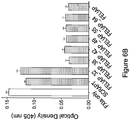
- nucleotides from both the 3' and 5' ends were sequentially removed as depicted schematically in Figure 6A and presented in Table 4.
- all aptamer preparations were diluted into AF buffer, 10 mM Tris-Cl, 1mM EDTA pH 8.0, Tris-buffered saline, or PPNE kinetics buffer (20 mM sodium phosphate, 100 mM NaCl, 0.1 mM EDTA, 0.1% polyethylene glycol (PEG) 8000, pH 7.4).
- the diluted aptamers were refolded by heating to 90°C for 5 min and then cooled for 10 min on ice.
- Chromogenic Assay Assays were performed in a 96-well flat bottom microtiter plate (Corning Incorporated, Corning, NY) at 37°C in reaction buffer PPNE. Reactions (200 ⁇ L) contained 1nM FXIa, 90 ⁇ M chromogenic substrate S2336 and aptamer concentrations ranging from 0.78 to 10 ⁇ M. The rate of substrate hydrolysis was recorded at 405 nm on an ELx808 Absorbance Microplate Reader (Biotek, Winooski, VT, USA).
- FIXIa-Mediated FIX Activation FIX (6.2 ⁇ M) was incubated with 2 nM FXIa in the presence of 10 ⁇ M FELIAP, 10 ⁇ M scrambled DNA or 2.6 ⁇ M KPI in TBS supplemented with 5 mM CaCl 2 at 37°C. Samples were incubated for 30 min. Following the 30 min incubation, the reactions were quenched using Sodium Dodecyl Sulphate (SDS) polyacrylamide gel electrophoresis (SDS-PAGE) loading buffer containing dithiothreitol and electrophoresed on a 12% SDS-polyacrylamide gel. Protein bands were visualized by staining with Coomassie Brilliant Blue.
- SDS Sodium Dodecyl Sulphate
- SDS-PAGE polyacrylamide gel electrophoresis
- FXIa Inhibition of FXIa by antithrombin.
- FXIa 200 nM was pre-incubated with 10 ⁇ M FELIAP or SCRAPT at 37°C for 5 minutes, and then combined with 2 ⁇ M purified human antithrombin in the presence of 2 U/mL sodium heparin (Sigma-Aldrich) for a further 1 or 5 minutes.
- samples were quenched and subjected to electrophoresis as described above.
- FXI activation assay FXI (700 nM) in PPNE buffer was reacted with 70 nM thrombin in the presence or absence of 1 mg/L dextran sulphate (molecular weight 500 kDa) at 37° C for 30 minutes in the presence or absence of 10 ⁇ M FELIAP or SCRAPT or 1.5 ⁇ M recombinant His-tagged hirudin variant 3 (HV3) (Sheffield et al., 2001). At the conclusion of the reaction samples were quenched and subjected to electrophoresis as described above.
- Thrombin generation assays were performed using either human normal pooled plasma (NPP) or FXI-depleted plasma (FXI-DP), (Haematologic Technologies, Essex Junction, VT, USA) with or without supplementation with FXIa. Three variations of TGA were performed, using: human normal pooled plasma (NPP) activated with silicates; FXI-DP activated with tissue factor; and FXI-DP supplemented with FXIa. All TGA reactions were performed in black flat bottom 96-well microtiter plates (Greiner Bio One).
- the APTT reagent was substituted with the prothrombin time reagent Innovin (recombinant human tissue factor (Dade Behring, Deerfield, IL, USA) and NPP was substituted with FXI-DP. His-tagged recombinant hirudin variant 3 purified from Pichia pastoris (Sheffield et al., 2001) served as a positive control for TGA inhibition.
- Innovin recombinant human tissue factor (Dade Behring, Deerfield, IL, USA)
- NPP was substituted with FXI-DP.
- His-tagged recombinant hirudin variant 3 purified from Pichia pastoris (Sheffield et al., 2001) served as a positive control for TGA inhibition.
- 1 ⁇ M FELIAP, SCRAPT, or KPI were combined with 0.71 nM FXIa (10 ⁇ L) and pre-incubated for 5 min at room temperature prior to combination with FXI-DP and activ
- thrombin generation was then followed at 37°C for 60 min at 1 min intervals using a Fluoroskan Ascent plate reader (Thermo Scientific) set to a wavelength of 380/460 nm. Data was imported into a Microsoft Excel evaluation spreadsheet (www.technoclone.com) for analysis and derivation of TGA test parameters.
- APTT assays were performed using a STart 4 coagulometer (Diagnostica Stago) with some modifications. For the reactions, 5 ⁇ L of aptamer or PBS buffer control (FELIAP or SCRAPT, 30 ⁇ M) was heat-denatured and combined with an equal volume of varying concentrations of purified human FXIa at 37°C for 3 min. APTT reagent (APTT-XL, 50 uL) was separately preincubated with 45 ⁇ L FXI-deficient human plasma under the same conditions, and then clotting was initiated by mixing both sets of components with 50 ⁇ L of 71 mM CaCl 2 and the clotting time was determined.
- STart 4 coagulometer Diagnostica Stago
- SPR Surface Plasmon Resonance
- the signal from the SCRAPT-immobilized flow cell was used as a reference and subtracted from the signal arising from FXIa binding to the FELIAP-immobilized cell. Binding of FXIa and aptamer was quantified by global analysis of on and off rates using the Langmuir 1:1 binding model, as determined with the instrument's software provided by the manufacturer (Biacore). All experiments were done in triplicate.
- FXIa-binding aptamer from a combinatorial library.
- the objective was to select FXIa-inhibiting aptamers from a large library of ssDNA molecules 80 nucleotides in length containing an internal randomized 40 nucleotide region flanked by primer binding sites. Such a library theoretically contains 4 40 different DNA molecules.
- An in vitro aptamer selection protocol was employed. Initially, only positive selection was employed to enrich for aptamers binding to FXIa. After 4 and 10 rounds of selection, no inhibition of FXIa-mediated amidolysis was noted when the selected aptamer pool was introduced into the reaction (data not shown).
- the selection protocol was modified by the addition of alternating positive and negative selection steps and rescreened the initial library.
- the modified protocol included negative selection of aptamers binding to any component of the FXIa-antibody-bead assemblies except the FXIa active site, by introducing the FXIa active site-binding, small protein inhibitor KPI (Navaneetham et al., 2005), after Round 4.
- KPI small protein inhibitor KPI
- DNA sequence of the core of the aptamers (name and SEQ ID NOs, column 3) isolated after 4 or 10 rounds of screening (column 1) corresponding to the N 40 variable domain in the original aptamer library (5'-GAATTCTAAT ACGACTCACT ATA-N 40 -GCGTCCAACA CATCG-3' or SEQ ID NO: 29) is given in column 2. Whether (+) or not (-) the aptamer had inhibitory activity when introduced into FXIa-mediated amidolysis of S2366 is shown in column 4. The ten most abundant sequences obtained after Rounds 4 or 10 are shown in rank order; NT signifies not tested.
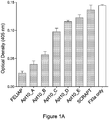
- Comparison of FELIAP to related aptamer candidates Comparison of FELIAP to the other 78 sequences of lesser abundance found in Round 10 revealed five related aptamers, four of which (Apt10_A through D) were closely related, differing in at most two of 36 positions; the fifth (Apt10_E) was only distantly related by virtue of T-rich areas (38.9% identical - see Table 3). The aligned sequences are shown in Table 1. When these aptamers were tested for their ability to inhibit FXIa amidolysis, FELIAP was found to be the most active and Apt10_E the least active, although all six selected aptamers showed greater inhibitory activity than SCRAPT ( Figure 1A ).
- FELIAP Kinetic characterization of FELIAP as an inhibitor of FXIa-mediated amidolysis and clotting.
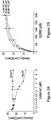
- the mode of inhibition of FELIAP was investigated by fixing the concentrations of chromogenic substrate and FXIa and increasing the concentration of FELIAP and measuring the rate of substrate cleavage. A dose-dependent reduction in the reaction rate was observed as FELIAP was increased from 0 to 20 ⁇ M, while the same concentrations of SCRAPT had no inhibitory effect ( Figure 2A ).
- the concentration of chromogenic substrate S2366 was varied while keeping FXIa constant at different concentrations of FELIAP ( Figure 2B ).
- FELIAP Prior to examining the inhibitory effects of FELIAP on FXIa-mediated interactions with specific macromolecular substrates, the capacity of FELIAP to inhibit FXIa-induced clotting in plasma was examined.
- FXIa was pre-incubated with buffer, FELIAP, or SCRAPT, and combined with FXI-deficient plasma and APTT reagent containing kaolin and cephalin, and recalcified.
- Figure 2D at all three FXIa concentrations tested, FELIAP delayed plasma clot formation to a greater extent than SCRAPT or buffer controls.
- FXIa activates FIX by cleaving two peptide bonds, one at Arg145-Ala146, and the other at Arg180-Val181 of the FIX polypeptide30. This reaction liberates a glycosylated activation peptide (Ala146-Arg180, 10 kDa), and a disulphide-linked ⁇ -carboxylated light chain (Tyr1-Arg145, 71 kDa) and heavy chain (VaI181-Thr405, 30 kDa)31,32.
- FIG. 3A shows that FXIa-mediated FIX activation was unaffected by SCRAPT (compare heavy and light chains, lanes 1 and 2), while introduction of excess FELIAP (lane 3) or KPI (lane 4) reduced FIXa generation to background levels (lane 5, no FXIa added).
- FXIa also reacts with its natural inhibitor, antithrombin, in a reaction that is accelerated by heparin, to form a denaturation-resistant complex between the FXIa active site and the reactive centre of antithrombin, in which the light chain of FXIa (IIe370-Val607) is joined to antithrombin residues His1-Arg393 via an acyl linkage10,33.
- Figure 3B shows SDS-PAGE evidence of this 90 kDa complex after 1 or 5 minutes of reaction (lanes 2 and 3) and in the presence of excess SCRAPT (lanes 6 and 7) but not in the presence of excess FELIAP (lanes 4 and 5).
- thrombin generation assay provides information on the timing and kinetics of thrombin generation in plasma using a thrombin-specific fluorogenic substrate and calibrators unaffected by fibrin clot formation, using standardized analytic methods and parameters35. As shown in Figure 4A , FELIAP had greater effects on thrombin generation in recalcified dilute plasma than SCRAPT.
- FELIAP prolonged the lag time of thrombin generation relative to either 30 ⁇ M SCRAPT or buffer controls (data not shown).
- FELIAP reduced the endogenous thrombin potential (ETP; the area under the thrombin generation curve) by 3.2-fold, versus 1.4-fold for SCRAPT ( Figure 4B ; both reductions p ⁇ 0.001).
- EDP endogenous thrombin potential
- Figure 4C both reductions p ⁇ 0.001
- SPR Surface Plasmon Resonance
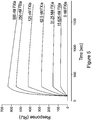
- the net binding isotherm was characterized by relatively rapid association kinetics and very slow dissociation kinetics. Analysis of these isotherms yielded values for dissociation rate constant (Kd) and the association rate constant (Ka), permitting calculation of the equilibrium binding constant KD, which is Kd divided by Ka. Ka values of 5.2 ⁇ 0.1 X 10⁴ M-1 S-1, Kd values of 9.5 ⁇ 0.1 X 10⁻⁵ S-1, and KD values of 1.8 ⁇ 0.1 X 10⁻⁹ M were obtained (mean ⁇ SD of three determinations).
- FELIAP acted as a competitive inhibitor of chromogenic substrate S2366, which is a tripeptide nitroanilide compound (pyroglutamyl-prolyl-arginyl-p-nitroanilide) which must, by virtue of its small size, enter the interior of the FXIa active site pocket to be cleaved and liberate the coloured product nitroanilide.
- chromogenic substrate S2366 which is a tripeptide nitroanilide compound (pyroglutamyl-prolyl-arginyl-p-nitroanilide) which must, by virtue of its small size, enter the interior of the FXIa active site pocket to be cleaved and liberate the coloured product nitroanilide.
- FXIa-mediated activation of FIX and FXIa-mediated formation of FXIa-antithrombin complexes. While this observation does not per se exclude an allosteric effect of FELIAP on FXIa, it renders it less likely
- FELIAP had no effect on FXI activation, further indicating specificity for FXIa, one of whose cardinal features is the active site.
- FELIAP binds specifically to FXIa at or near its active site, with high affinity consistent with the observed nanomolar KD.
- KPI was employed to obscure the active site of FXIa in KPI-FXIa-anti-FXI-bead assemblies for negative selection, reasoning that depletion of the aptamer library of candidates binding to any of the constituent parts of these assemblies would enrich for those binding the FXIa active site.
- KPI is the Kunitz protease inhibitor domain of protease nexin 2, which is an isoform of the 3-amyloid precursor protein (APP) secreted from ⁇ -granules on platelet activation.
- the 57 amino acid KPI domain accounts for all of the FXIa-inhibitory activity of APP36 and has been crystallized in complex with FXIa28.
- RNA 16.3 bound FVII or FVIIa with KD values of 10-13 nM, inhibiting the enzyme by disrupting tissue factor-FVII(a) complex assembly.
- a truncated form of a selected RNA aptamer designated 9.3t was found to bind FIXa with a KD of 0.58 nM38, specifically at an extended substrate binding position, or exosite.
- RNA11F7t aptamer bound FXa with a reported KD of 1.1 nM and inhibited prothrombinase activity by interfering with the interaction between FXa and FVa, while R4CxII-It bound FXII or FXIIa with KD values of 8.9 and 0.4 nM, respectively, by interfering with FXII and anionic binding.
- RNAR9D-14T bound thrombin or prothrombin with KD values of 1 or 10 nM via anion binding exosite I.
- target coagulation factors are HD1 and HD22, which bind prothrombin with KD values of 7.1 and 2.4 nM, via exosites I and II, respectively. All previously described aptamers targeting coagulation factors, therefore, act at sites distinct from the active site of these serine proteases.
- FELIAP which acts at or near the active site of FXIa, may have been facilitated by the use of KPI in negative selection, as screening protocols employed in previously published studies used only positive selection.
- anecdotally FELIAP selection was observed within ten rounds of screening with positive and negative steps, but not until twenty rounds of screening with positive steps alone.
Landscapes
- Health & Medical Sciences (AREA)
- Life Sciences & Earth Sciences (AREA)
- Engineering & Computer Science (AREA)
- Genetics & Genomics (AREA)
- Biomedical Technology (AREA)
- Chemical & Material Sciences (AREA)
- Organic Chemistry (AREA)
- Molecular Biology (AREA)
- Wood Science & Technology (AREA)
- General Engineering & Computer Science (AREA)
- Zoology (AREA)
- Bioinformatics & Cheminformatics (AREA)
- General Health & Medical Sciences (AREA)
- Biotechnology (AREA)
- Biochemistry (AREA)
- Physics & Mathematics (AREA)
- Microbiology (AREA)
- Urology & Nephrology (AREA)
- Hematology (AREA)
- Plant Pathology (AREA)
- Biophysics (AREA)
- Pathology (AREA)
- Immunology (AREA)
- Analytical Chemistry (AREA)
- Endocrinology (AREA)
- Medicinal Chemistry (AREA)
- Cell Biology (AREA)
- General Physics & Mathematics (AREA)
- Virology (AREA)
- Diabetes (AREA)
- Food Science & Technology (AREA)
- Gastroenterology & Hepatology (AREA)
- Rheumatology (AREA)
- Toxicology (AREA)
- Epidemiology (AREA)
- Animal Behavior & Ethology (AREA)
- Public Health (AREA)
- Veterinary Medicine (AREA)
- Pharmaceuticals Containing Other Organic And Inorganic Compounds (AREA)
Description
- The present disclosure relates to compounds capable of specifically binding to and limiting the biological activity of Factor Xla.
- Thromboembolic diseases are a leading cause of morbidity and mortality in the developed world and are rapidly emerging in the developing world. Currently commercialized antithrombotic agents are usually associated with the side effect of causing bleeding. In spite of the introduction of new oral anticoagulants into the clinic in the last few years (e.g., dabigatran etexilate, rivaroxaban, edoxaban for example) there remain unmet needs.
- Factor XI inhibition has been identified as an attractive target for drug development because mice or humans with abnormally low FXI levels appear to be protected from thrombosis. An antisense oligonucleotide to FXI named FXI-ASO (ISIS416858) is under clinical development (Büller et al., 2014) and was determined to be superior in preventing venous thromboembolism in patients undergoing total knee replacement than the standard of care. Importantly, the study demonstrated that the antisense oligonucleotide did not promote bleeding in orthopedic surgery, a major challenge with any antithrombic agent. However, it took five weeks for the antisense oligonucleotide FXI-ASO (ISIS416858) to reduce FXI levels by 10 to 20% of normal (e.g. pre-treatment) levels and FXI levels were also slow to recover after the drug was stopped (Büller et al., 2014).
- Rami A. Al-Horani et al.: "Factor XIa inhibitors: A review of the patent literature", Expert opinion on therapeutic patents., vol. 26, no. 3, 25 February 2016, pages 323-345 is a review article on patent literature concerning Factor XIa inhibitors. It discloses that antisense oligonucleotides targeting factor XI and antibodies targeting factor XI/XIa are promising candidates for therapy.
- Boller et al. : "Factor XI Antisense Oligonucleotidefor Prevention of Venous Thrombosis", N ENGL J MED, vol. 372, no. 3, 15 January 2015, pages 232-240 discloses an antisense oligonucleotide targeting factor XI comparing the efficacy and safety of it with those of enoxaparin in patients undergoing total knee arthroplasty.
- It would be highly desirable to be provided with a specific inhibitor of Factor XIa (FXIa), e.g., a compound which would specifically bind to (and inhibit the biological activity of) Factor Xla. It would also be desirable to be provided with a FXIa inhibitor, which would have a rapid onset of action and/or a short duration of action for treating and/or preventing thrombosis. It would further be highly desirable to be provided with a FXIa inhibitor which would exhibit little to no immunogenicity (upon administration to the intended recipient).
- The present disclosure concerns Factor XIa-specific aptamers. The aptamers of the present disclosure are also capable of limiting the biological activity (e.g., the proteolytic activity) of Factor Xla.
- In a first aspect, the present disclosure provides an aptamer having the structure of formula (I):
5' - 5W-C-3W - 3' (I)
wherein: - "-" refers to a nucleotide bond;
- 5W has the following first nucleic acid sequence:
N17N18N19N20N21N22N23N24N71N26N27N28AN29TN30TA (SEQ ID NO: 66); - C has the nucleic acid sequence SEQ ID NO: 24, 30, 32, 35, 36 or 69
- 3W can be present or absent and when present has the following third nucleic acid sequence:
5'-N31N32N33N34N35N36N37N38N39N40N41-3'(SEQ ID NO: 67); - the nucleotides at positions 14 to 18 of SEQ ID NO: 66 are present;
- the nucleotides at position 14 to 18 (N29TN30TA) of SEQ ID NO: 66 are capable of base pairing with the nucleotides at position 33 to 29 of SEQ ID NO: 24, 30, 32, 35, 36 or 69.
- In such embodiment, the aptamer can have or consists essentially of the nucleic acid sequence of SEQ ID NO: 64. In still another embodiment, the nucleotides at positions 12 and 13 of SEQ ID NO: 66 are present, and the nucleotides at position 12 and 13 (N28A) of SEQ ID NO: 66 are capable of base pairing with the nucleotides at position 35 to 34 (N10T) of SEQ ID NO: 24, 30, 32, 35, 36 or 69. In such embodiment, the aptamer can have or consist essentially of the nucleic acid sequence of SEQ ID NO: 63. In still another embodiment, the nucleotides at
position 8 to 11 of SEQ ID NO: 66, atposition 1 to 5 of SEQ ID NO: 67 are present, and the nucleotide at position (N24) of SEQ ID NO: 66 is capable of base pairing with the nucleotide a position 2 (N32) of SEQ ID NO: 67. In such embodiment, the aptamer of can have or consist essentially of the nucleic acid sequence of SEQ ID NO: 62. In still another embodiment, the nucleotides atposition 5 to 7 of SEQ ID NO: 66 and atposition 3 to 5 of SEQ ID NO: 67 are present, and the nucleotides atposition 6 to 7 (N22N23) of SEQ ID NO: 66 are capable of base pairing with the nucleotides atpositions 4 to 3 (N34N33) of SEQ ID NO: 67. In such embodiment, the aptamer can have or consist essentially of the nucleic acid sequence of SEQ ID NO: 61. In yet another embodiment,nucleotides 1 to 4 of SEQ ID NO: 66 andnucleotides 6 to 11 of SEQ ID NO: 67 are present. In such embodiment, the aptamer can have or consist essentially of the nucleic acid sequence of SEQ ID NO: 60. - In an second aspect, the present disclosure provides an aptamer having the structure of formula (I) wherein:
- 5W has the following first nucleic acid sequence:
5'-N12N13N14N15N16N17N18N19N20N21N22N23N24N71N26N27N28AN29TN30TA 3' (SEQ ID NO: 25); - C has the following second nucleotide sequence:
5'-AACCTATN1N2N3ACTATTN4TN5AN6TN7ATTTTTAN8AN9TN10N11-3' (SEQ ID NO: 23). - 3W is present and has the following third nucleotide sequence:
5'-N31N32N33N34N35N36N37N38N39N40N41N42N43N44N45-3' (SEQ ID NO: 27); "-" refers to a nucleotide bond; - the nucleotides at
position 1 to 36 of SEQ ID NO: 23, atposition 6 to 23 of SEQ ID NO: 25 and atposition 1 to 11 of SEQ ID NO: 27 are present; - the nucleotides at position 11 to 13 (ACTA) of SEQ ID NO: 23 are capable of base pairing with the nucleotides at position 22 to 19 (TN6AN5) of SEQ ID NO: 23;
- the nucleotides at
position 6 to 8 (ATN1) of SEQ ID NO: 23 are capable of base pairing with the nucleotides at position 25 to 23 (TAN7) of SEQ ID NO: 23; - the nucleotides at
position 1 to 2 (AA) of SEQ ID NO: 23 are capable of base pairing with the nucleotides at positions 28 to 27 (TT) of SEQ ID NO: 23; - the nucleotides at position 17 to 23 (N28AN29TN30T) of SEQ ID NO: 25 are capable of base pairing with the nucleotides at positions 35 to 27 of SEQ ID NO: 23 (N10TN9AN8A); and
- the nucleotides at
position 6 to 8 (N22N23N24) of SEQ ID NO: 25 are capable of base pairing with the nucleotides atposition 4 to 2 (N34N33N32) of SEQ ID NO: 27. - In an embodiment, 5W has or consists essentially of the nucleotide sequence of SEQ ID NO: 26. In another embodiment, 3W has of consists essentially of the nucleotide sequence of SEQ ID NO: 28. In still another embodiment, C has or consists essentially of the nucleotide sequence of SEQ ID NO: 24. In yet a further embodiment, the aptamer has or consists essentially of the nucleotide sequence of SEQ ID NO: 1, SEQ ID SEQ ID NO: 6, SEQ ID NO: 8, SEQ ID NO: 9, SEQ ID NO: 10, SEQ ID NO: 11 or SEQ ID NO: 13.
- In a third aspect, the present disclosure provides an aptamer having the nucleotide sequence of SEQ ID NO: 2 or SEQ ID NO: 3.
- In a fourth aspect, the present disclosure provides a variant of the aptamer described herewith.
- In a fifth aspect, the present disclosure provides a fragment of the aptamer described herein.
- In a sixth aspect, the present disclosure provides the aptamer described herein, the variant described herein or the fragment described herein for use as a medicament, for example for preventing, treating or alleviating the symptoms of thrombosis. In an embodiment, the aptamer, variant or fragment are for the treatment of initial thrombosis. In another embodiment, the aptamer, variant or fragment are for the prevention of secondary thrombosis.
- In a seventh aspect, the present disclosure provides, the aptamer described herein, the variant described herein or the fragment described herein for detecting Factor Xla in a biological sample.
- In an eigth aspect, the present disclosure provides a method for detecting Factor Xla in a sample. Broadly, the method comprises (i) contacting the aptamer described herein, the variant described herein or the fragment described herein with the sample; (ii) determining the presence or the absence of a complex between Factor Xla and the aptamer, the variant or the fragment; and (iii) detecting Factor Xla in the sample if the complex of step (ii) is determined to be present. In an embodiment, the method further comprises, when the complex of step (ii) is determined to be present, (iv) quantifying the amount of Factor Xla in the sample based on the amount of the complex.
- In a ninth aspect, the present disclosure comprises a method of imaging a clot in a subject. Broadly, the method comprises: (i) administering the aptamer described herein, the variant described herein or the fragment described herein to the subject; (ii) determining the presence or the absence of a complex between Factor Xla and the aptamer, the variant or the fragment; and (iii) imaging a clot in the subject at the location of the complex.
- In a tenth aspect, the present disclosure comprises a method of purifying Factor Xla from a sample. Broadly, the method comprises:(i) contacting the aptamer described herein, the variant described herein or the fragment described herein with the sample; (ii) allowing for a complex between Factor Xla and the aptamer, the variant or the fragment to form; and (iii) removing the complex from the sample.
- In an elevent aspect, the present disclosure comprises a method of determining the usefulness of a test agent for the prevention, treatment or the alleviation of symptoms of thrombosis in a subject. Broadly, the method comprises: (i) contacting the test agent with Factor Xla to obtain a test level of the biological activity of Factor Xla, (ii) comparing the test level to a control level of the biological activity of Factor Xla, the control level being derived from or obtained by contacting Factor Xla with the aptamer described herein, the variant described herein or the fragment described herein; and (iii) determining the test agent as being useful for the prevention, treatment or the alleviation of symptoms of thrombosis if the test level is equal to or lower than the control level. In an embodiment, step (i) and/or (ii) further comprises determining the biological activity of Factor Xla by measuring the proteolytic activity of Factor Xla. In another embodiment, step (ii) further comprises providing the aptamer, the variant or the fragment and determining the control level of the biological activity of Factor Xla.
- In a twelveth aspect, the present disclosure comprises a method of determining if a test aptamer is useful for the prevention, treatment or the alleviations of symptoms of thrombosis in a subject. Broadly, the method comprises: (i) contacting a test aptamer with Factor Xla to obtain a test level of the biological activity of Factor Xla, (ii) comparing the test level to a control level of the biological activity of Factor Xla, the control level being derived from or obtained by contacting Factor Xla with the aptamer described herein, the variant described herein or the fragment described herein; and (iii) determining the test aptamer as being useful for the prevention, treatment or the alleviation of symptoms of thrombosis if the test level is equal to or lower than the control level. In an embodiment, step (i) and/or (ii) further comprises determining the biological activity of Factor Xla by measuring the proteolytic activity of Factor Xla. In still another embodiment, step (ii) further comprises providing the aptamer, the variant or the fragment and determining the control level of the biological activity of Factor Xla. In still another embodiment, the control level is derived from or obtained by contacting FXIa with a control aptamer having the nucleotide sequence of SEQ ID NO: 1. In yet another embodiment, the test aptamer has at least one nucleotide addition, substitution or deletion when compared to the control aptamer having the nucleotide sequence of SEQ ID NO: 1.
- Having thus generally described the nature of the invention, reference will now be made to the accompanying drawings, showing by way of illustration, a preferred embodiment thereof, and in which:
-
Figures 1A and1B illustrates how aptamers can be used as inhibitors of FXIa-mediated amidolysis. (A) Means ± SEM (n=3) of colour generation following FXIa-mediated amidolysis of chromogenic substrate S2366, in the presence (black bars) ofRound 10 aptamers identified on the x axis or a scrambled negative control sequence (SCRAPT), or in the absence of added DNA molecules (white bar). (B) Mfold-generated predicted secondary structure of FELIAP. The positions of base substitutions between FELIAP and other Round 10-selected aptamers are indicated by arrows. -
Figures 2A to 2D provide the kinetic characterization of FELIAP inhibition of FXIa-mediated amidolysis. (A) Means ± SEM (n=3) of reaction velocity for FXIa-mediated amidolysis of S2366 versus aptamer concentration (FELIAP, circles; SCRAPT, squares). (B) Means ± SEM (n=3) of reaction velocity versus S2366 concentration in the presence of 0, 10, or 20 µM FELIAP. (C) Lineweaver-Burke transformation of data in (B). (D) Means ± SEM (n=7) of modified APTT assays in which FELIAP or SCRAPT were pre-incubated with FXIa, at concentrations given on the x axis, prior to dilution into recalcified FXI-deficient plasma. -
Figures 3A to 3C show the effects of FELIAP on reactions of FXIa and FXI with macromolecular substrates. (A) Coomassie-stained reduced SDS-polyacrylamide gel. FIX was reacted with FXIa in the presence (+) or absence (-) of SCRAPT (lane 2), FELIAP (lane 3) or KPI (lane 4). Arrows and labels, at right, identify the position of FIX, forms of FIXa (including HC, heavy chain, HC + AP, heavy chain + activation peptide intermediate, LC, light chain) and KPI. M, markers (kDa), at left: 220; 160; 120; 100; 90; 80; 70; 60; 50; 40; 30; 25; 20; 15. (B) As in (A), except antithrombin (AT, lane 1) was reacted with FXIa (lane 8) in the presence of heparin for 1 (lane 2) or 5 (lane 3) minutes with FELIAP (lanes 4 and 5) or SCRAPT (lanes 6 and 7) or no DNA addition (lanes 2 and 3). Arrows and labels identify the position of AT, FXIa-AT covalent complex, FXIa heavy chain (HC) and light chain (LC). M, markers (kDa), at left: 220; 160; 120; 100; 90; 80; 70; 60; 50; 40; 30; 25; 20 (C) As in (A) and (B) except FXI and thrombin (IIa, lane 1) were reacted in the absence (lane 2) or presence of dextran sulphate (DS, lanes 3-7) with the addition of FELIAP (lane 4) or SCRAPT (lane 5) or the thrombin inhibitor hirudin (lane 7).Lane 8, purified FXIa. M, markers (kDa), at left: 220; 160; 120; 100; 90; 80; 70; 60; 50; 40; 30; 25; 20; 15. -
Figures 4A to 4I show the inhibition of thrombin generation by FELIAP. Thrombin generation assays (TGA) were conducted in 3 different ways: in recalcified human normal pooled plasma (NPP) using micronized silica (SIL) for contact activation as the initiator (NPP + SIL, panels A-C); in FXI-depleted plasma (FXI-DP) using tissue factor for extrinsic pathway activation as the initiator (FXI-DP + TF, panels D-F); and following 0.25 nM FXIa preincubation with Buffer, 1 µM SCRAPT, or 1 µM FELIAP, in FXI-DP activated with micronized silica (FXI-DP + FXIa + SIL). Thrombin concentration was determined fluorescently every minute for 60 minutes in each case. (A) TGA progress curves (mean ± SD (n=6) with addition of agents (Buffer, 30 µM FELIAP, or 30 µM SCRAPT) as indicated by labels and arrows. Upwards error bars are shown. (B) As in (A), but n=5, and with the addition of 2 µM recombinant hirudin variant 3 (hirudin). (C) As in (B), with the addition of agents (Buffer, 2 µM FELIAP, or 2 µM SCRAPT, or 2 µM KPI. Each set of thrombograms are quantified with respect to endogenous thrombin potential (the area under the thrombogram curve) (B, E, H) and time to peak thrombin (C, F, I) below the progress curve panels. Bar graphs are derived from analysis of individual thrombogram curves corresponding to plasma supplementation with Buffer (white), SCRAPT (grey), FELIAP (black), or, in some reactions KPI or Hirudin (light grey). Symbols (above the error bars) indicate statistically significant differences from Buffer reactions, while symbols above the horizontal bar indicate statistically significant differences between SCRAPT- and FELIAP-supplemented and other reactions: p < 0.001, **; p< 0.001, ***. -
Figure 5 illustrates the binding of FELIAP to immobilized FXIa. An SPR sensogram showing the interactions between 3'biotinylated FELIAP immobilized on a streptavidin-coated chip and FXIa at 25°C at FXIa concentrations given above each progress curves. Association was allowed to proceed for 180 seconds followed by 1800 seconds of dissociation. All curves were corrected for non-specific effects by signal subtraction using a reference cell containing 3' biotinylated SCRAPT immobilized on a streptavidin-coated chip. A single dilution series of curves representative of a total of 3 others is shown. -
Figures 6A and6B provide the characterization of truncated derivatives of FELIAP as inhibitors of FXIa-mediated amidolysis. (A) Extent of truncation analysis. Sequences to the left of bolded lines crossing the Mfold-generated predicted secondary structure of FELIAP are identified as FELIAP_X, where X = the length of the truncated aptamer (32, 38, 42, 49, 55, 64, or 74 for full-length FELIAP. (B) Means ± SEM (n=3) of colour generation following FXIa-mediated amidolysis of chromogenic substrate S2366, in the presence (black bars) of SCRAPT, FELIAP, or truncated derivatives of FELIAP identified in panels A and B, or in the absence of of added DNA molecules (white bar). - In accordance with the present disclosure, there is provided aptamers capable of specifically binding to FXIa. As the aptamers of the present disclosure were obtained using a negative selection with active-site blocked FXIa, they are presumed to specifically bind to the active site of FXIa and, ultimately limit FXIa's biological activity (e.g., proteolytic activity). The aptamers of the present disclosure are defined by their nucleotide sequence as well as their secondary structure. Since FXIa is involved in the onset and maintenance of thrombosis, the aptamers of the present disclosure can be used for preventing, treating or alleviating the symptoms associated with thrombosis. Since the aptamers specifically bind to FXIa, they can also be used to determine the presence or the absence and, optionally the amount, of FXIa in a sample. Further, since the aptamers exhibit inhibitory activity towards FXIa, they can also be used as a control to screen and identify therapeutic agents having improved antithrombotic properties.
- The aptamers of the present disclosure specifically bind to (e.g., are specific for) FXIa. In the context of the present disclosure, the expressions "specific binding" or "specifically bind" refer to the interaction between two elements in a manner that is determinative of the presence of the elements in the presence or absence of a heterogeneous population of molecules. For example, under designated conditions, the aptamers of the present disclosure bind to FXIa and do not bind in a significant manner to other molecules (such as FXI or thrombin for example).
- The aptamers of the present disclosure are single-stranded molecules composed of deoxyribonucleic acid (DNA) nucleotides, ribonucleic acid (RNA) nucleotides or a combination of both deoxyribonucleic and ribonucleic acid nucleotides. In an embodiment, the aptamers of the present disclosure are exclusively made of deoxyribonucleic acid (DNA) nucleotides. The aptamers can be composed of naturally-occurring nucleobases (also referred to as bases), sugars and covalent internucleoside (backbone) linkages. The aptamers can also have "non-naturally-occurring" or "synthetic" portions which function similarly. In the context of the present disclosure, the term "nucleotides" refers to a deoxyribonucleic acid nucleotide or to a ribonucleic acid nucleotides.
- The aptamers of the present disclosure can include various modifications, e.g., stabilizing modifications, and thus can include at least one modification in the phosphodiester linkage and/or on the sugar, and/or on the base. For example, the aptamer can include one or more phosphorothioate linkages, phosphorodithioate linkages, and/or methylphosphonate linkages. Different chemically compatible modified linkages can be combined, e.g., modifications where the synthesis conditions are chemically compatible. While modified linkages are useful, the aptamer can include phosphodiester linkages, e.g., include at least one phosphodiester linkage, or at least 5%, 10%, 20%, 30% or more phosphodiester linkages. Additional useful modifications include, without restriction, modifications at the 2'-position of the sugar (such as 2'-O-alkyl modifications, 2'-O-methyl modifications, 2'-amino modifications, 2'-halo modifications (e.g., 2'-fluoro) as well as acyclic nucleotide analogs. In another embodiment, the aptamer has modified linkages throughout, e.g., phosphorothioate; has a 3'- and/or 5'-cap; includes a terminal 3'-5' linkage.
- In some embodiments, the aptamer includes a concatemer and comprises two or more oligonucleotide sequences joined by one or more linker. The linker may, for example, consist of modified nucleotides or non-nucleotide units. In some embodiments, the linker can provide flexibility to the aptamer. The use of concatemers as aptamers can provide a facile method to synthesize a final molecule, by joining smaller oligonucleotides building blocks to obtain the desired length. For example, a 12 carbon linker (C12 phosphoramidite) can be used to join two or more concatemers and provide length, stability and flexibility.
- The aptamers of the present disclosure can include a natural or a non-natural backbone. Non-natural or synthetic backbones include, for example, phosphorothioates, chiral phosphorothioates, phosphorodithioates, phosphotriesters aminoalkylphosphotri-esters, methyl and other alkyl phosphonates including 3'-alkylene phosphonates, 5'-alkylene phosphonates and chiral phosphonates, phosphinates, phosphoramidates including 3'-amino phosphoramidate and aminoalkylphosphoramidates, thionophosphoramidates, thionoalkylphosphonates, thionoalkylphosphotriesters, selenophosphates, carboranyl phosphate and borano-phosphates having normal 3'-5' linkages, 2'-5' linked analogs of these, and those having inverted polarity wherein one or more internucleotide linkages is a 3' to 3', 5' to 5' or 2' to 2' linkage. Aptamers having inverted polarity typically include a single 3' to 3' linkage at the 3'-most internucleotide linkage i.e. a single inverted nucleoside residue which may be abasic (the nucleobase is missing or has a hydroxyl group in place thereof). Some exemplary modified aptamers' backbones that do not include a phosphodiester linkage have backbones that are formed by short chain alkyl or cycloalkyl internucleoside linkages, mixed heteroatom and alkyl or cycloalkyl internucleoside linkages, or one or more short chain heteroatomic or heterocyclic internucleoside linkages. These include those having morpholino linkages (formed in part from the sugar portion of a nucleoside); siloxane backbones; sulfide, sulfoxide and sulfone backbones; formacetyl and thioformacetyl backbones; methylene formacetyl and thioformacetyl backbones; riboacetyl backbones; alkene containing backbones; sulfamate backbones; methyleneimino and methylenehydrazino backbones; sulfonate and sulfonamide backbones; amide backbones; and others having mixed N, 0, S and CH2 component parts. Particularly advantageous are backbone linkages that include one or more charged moieties.
- The aptamers of the present disclosure may also contain one or more substituted sugar moieties. For example, such oligonucleotides can include one of the following 2'-modifications: OH; F; O-, S-, or N-alkyl; O-, S-, or N-alkenyl; O-, S- or N-alkynyl; or O-alkyl-O-alkyl, wherein the alkyl, alkenyl and alkynyl may be substituted or unsubstituted C1 to C10 alkyl or C2 to C10 alkenyl and alkynyl, or 2'-O-(O-carboran-1-yl)methyl. Particular examples are O[(CH2)nO]mCH3, O(CH2)∼OCH3, O(CH2)nNH2, O(CH2)nCH3, O(CH2)nONH2, and O(CH2)nON[(CH2)nCH3)]2, where n and m are from 1 to 10. Other exemplary aptamers can include one of the following 2'-modifications: C1 to C10 lower alkyl, substituted lower alkyl, alkenyl, alkynyl, alkaryl, aralkyl, O-alkaryl or O-aralkyl, SH, SCH3, OCN, Cl, Br, CN, CF3. OCF3, SOCH3, SO2CH3, ONO2, NO2, N3, NH2, heterocycloalkyl, heterocycloalkaryl, aminoalkylamino, polyalkylamino or substituted silyl.
- Other modifications to the aptamers include Locked Nucleic Acids (LNAs) in which the 2'-hydroxyl group is linked to the 3' or 4' carbon atom of the sugar ring thereby forming a bicyclic sugar moiety. Other modifications include 2'-methoxy (2'-O-CH3), 2'-methoxyethyl (2'O-CH2-CH3), 2'-ethyl, 2'-ethoxy, 2'-aminopropoxy (2'-OCH2CH2CH2NH2), 2'-allyl (2'-CH2-CH=CH2), 2'-O-allyl (2'-O-CH2-CH=CH2) and 2'-fluoro (2'-F).
- The 2'-modification may be in the arabino (up) position or ribo (down) position. Similar modifications may also be made at other positions on the aptamers, particularly the 3' position of the sugar on the 3' terminal nucleotide or in 2'-5' linked oligonucleotides and the 5' position of the 5' terminal nucleotide. The aptamers may also have sugar mimetics such as cyclobutyl moieties in place of the pentofuranosyl sugar.
- The aptamers of the present disclosure can include "unmodified" or "natural" bases (nucleobases) such as adenine (A) and guanine (G), and the pyrimidine bases thymine (T), cytosine (C) and uracil (U). The aptamers may also include base modifications or substitutions. Modified bases include, but are not limited to other synthetic and naturally-occurring bases such as 5-methylcytosine, 5-hydroxymethyl cytosine, xanthine, hypoxanthine, 2-aminoadenine, 6-methyl and other alkyl derivatives of adenine and guanine, 2-propyl and other alkyl derivatives of adenine and guanine, 2-thiouracil, 2-thiothymine and 2-thiocytosine, 5-halouracil and cytosine, 5-propynyl(-C≡C-CH3) uracil and cytosine and other alkynyl derivatives of pyrimidine bases, 6-azo uracil, cytosine and thymine, 5-uracil (pseudouracil), 4-thiouracil, 8-halo, 8-amino, 8-thiol, 8-thioalkyl, 8-hydroxyl and other 8-substituted adenines and guanines, 5-halo particularly 5-bromo, 5-trifluoromethyl and other 5-substituted uracils and cytosines, 7-methylguanine and 7-methyladenine, 2-F-adenine, 2-amino-adenine, 8-azaguanine and 8-azaadenine, 7-deazaguanine and 7-deazaadenine and 3-deazaguanine and 3-deazaadenine. Modified bases may also include those in which the purine or pyrimidine base is replaced with other heterocycles, for example 7-deaza-adenine, 7-deazaguanosine, 2-aminopyridine and 2-pyridone.
- Another type of modification that can be included in the aptamers of the present disclosure are phosphorodithioate linkages. The aptamers comprising modified oligonucleotides containing phosphorothioate or dithioate linkages may also contain one or more substituted sugar moieties particularly modifications at the sugar moieties including, without restriction, 2'-ethyl, 2'-ethoxy, 2'-methoxy, 2'-aminopropoxy, 2'-allyl, 2'-fluoro, 2'-pentyl, 2'-propyl, 2'-dimethylaminooxyethoxy, and 2'-dimethylaminoethoxyethoxy. The 2'-modification may be in the arabino (up) position or ribo (down) position. A preferred 2'-arabino modification is 2'-fluoro. Similar modifications may also be made at other positions on the aptamer, particularly the 3' position of the sugar on the 3' terminal nucleotide or in 2 '-5' linked oligonucleotides and the 5' position of 5' terminal nucleotide.
- Even though the aptamers of the present disclosure are synthesized as single-stranded molecules they can, under the appropriate conditions (e.g., salt, pH, temperature), form a secondary "hairpin" structure. As shown in
Figure 1B , the aptamer FELIAP forms a hairpin structure in which some stretches of the molecule are capable of base-pairing (e.g., capable of forming sections of double-stranded DNA and/or RNA) with other stretches of the molecule which are located several nucleotides upstream or downstream. As also shown inFigure 1B , the double-stranded configuration of FELIAP is not observed on the entire length of the molecule, but only in some regions. The aptamers of the present disclosure (which include FELIAP) are also capable of forming a secondary "hairpin" structure which is substantially similar to the one shown onFigure 1B . The aptamer of the present disclosure forms a hairpin structure in which some stretches of the molecule are capable of base-pairing (e.g., capable of forming sections of double-stranded DNA and/or RNA) with other stretches of the molecule which may be located several nucleotides upstream or downstream. The double-stranded configuration of the aptamer of the present disclosure is not observed on the entire length of the molecule, but only in some regions. - The aptamers of the present disclosure can form at least one stretch (and in an embodiment a combination of stretches) of double stranded DNA and/or RNA between at the following positions:
- the nucleotides at
position 1 to 2 (AA) of SEQ ID NO: 68 with the nucleotides at position 28 to 27 (TT) of SEQ ID NO: 68; - the nucleotides at
position 6 to 8 (ATC) of SEQ ID NO: 68 with the nucleotides at position 25 to 23 (TAG) of SEQ ID NO: 68; - the nucleotides at position 11 to 14 (ACTA) of SEQ ID NO: 68 with the nucleotides at position 22 to 19 (TN6AN5) of SEQ ID NO: 68;
- the nucleotides at position 14 to 18 (N29TN30TA) of SEQ ID NO: 66 with the nucleotides at position 33 to 29 (N9AN8AT) of SEQ ID NO: 68;
- the nucleotides at position 12 and 13 (N28A) of SEQ ID NO: 66 with the nucleotides at position 35 to 34 (N10T) of SEQ ID NO: 68;
- the nucleotide at position (N24) of SEQ ID NO: 66 with the nucleotide a position 2 (N32) of SEQ ID NO: 67;
- the nucleotides at
position 6 to 7 (N22N23) of SEQ ID NO: 66 with the nucleotides atpositions 4 to 3 (N34N33) of SEQ ID NO: 67; - the nucleotides at position 11 to 13 (ACTA) of SEQ ID NO: 23 with the nucleotides at position 22 to 19 (TN6AN5) of SEQ ID NO: 23;
- the nucleotides at
position 6 to 8 (ATN1) of SEQ ID NO: 23 with the nucleotides at position 25 to 23 (TAN7) of SEQ ID NO: 23; - the nucleotides at
position 1 to 2 (AA) of SEQ ID NO: 23 with the nucleotides at positions 28 to 27 (TT) of SEQ ID NO: 23; - the nucleotides at position 17 to 23 (N28AN29TN30T) of SEQ ID NO: 25 with the nucleotides at positions 35 to 27 of SEQ ID NO: 23 (N10TN9AN8A); and/or
- the nucleotides at
position 6 to 8 (N22N23N24) of SEQ ID NO: 25 with the nucleotides atposition 4 to 2 (N34N33N32) of SEQ ID NO: 27. - In the context of the present disclosure, the nucleotides which are not considered capable of base pairing with another nucleotide can form a bulge structure and only form (covalent) bonds with adjacent nucleotides.
- The aptamers of the present disclosure include more than contiguous 36 nucleotides. In an embodiment, the aptamers of the present disclosure include at least 37, 38, 39, 40, 41, 42, 43, 44, 45, 46, 47, 48, 49, 50, 51, 52, 53, 54, 55, 56, 57, 58, 59, 60, 61, 62, 63, 64, 65, 66, 67, 68, 69, 70, 71, 72, 73, 74, 75, 76, 77 or 78 contiguous nucleotides. In still another embodiment, the aptamers of the present disclosure comprise any range of nucleotides between 37 and 78 nucleotides contiguous nucleotides. In yet a further embodiment, the aptamers of the present disclosure have 78 contiguous nucleotides.
- The aptamers of the present disclosure have the structure of formula (I):
5W-C-3W (I).
- The structure of formula (I) comprises three main sections: a 5' wing (referred to as "5W" in formula (I)), a core (referred to as "C" in formula (I)) and an optional 3' wing (referred to as "3W" in formula (I)). The 3' end of the 5W section is associated (e.g., "-" which can be a covalent bond such as, for example, a nucleotide bond, a 5' to 3' nucleotide bond for example) to the 5' end of the C section of the aptamers of the present disclosure. The 3' end of the C section is associated (e.g., "-" which can be a covalent bond such as, for example, a nucleotide bond, a 5' to 3' nucleotide bond for example) to the 5' end of the 3W section of the aptamers of the present disclosure. In some embodiments, the 3W section of the aptamers is absent.
- The aptamers of the present disclosure are defined both by their nucleotide sequence and their secondary structure. For example, some of the nucleotides of formula (I) are described of being capable of base pairing with another nucleotide. In the context of the present disclosure, a nucleotide is considered as "being capable of base pairing" with another nucleotide when they can form Watson-Crick base pairing. In such embodiment, C is considered of being capable of base pairing with G, G is considered of being capable of base pairing with C, A is considered of being capable of base pairing with T or U and T or U are considered of being capable of base pairing with A. Other nucleotides of formula (I) are described as not being able to base pair with another nucleotide. Still in the context of the present disclosure, a nucleotide is considered of "not being able to base pair" with another nucleotide when they cannot form Watson-Crick base pairing. For example, C is not able of base pairing with C, A, T or U, G is not able of base pairing with G, A, T or U, A is not able of base pairing with A, C or G, T is not able of base pairing with C, G, T or U and U is not able of base pairing with C, G, T or U.
- The core (C) section of the aptamers formula (I) has the following generic nucleotide sequence (IIa) ot (IIb):
- 5'-AACCTATN1N2N3ACTATTN4TN5AN6TN7ATTTTTAN8AN9TN10N11-3' (IIa - SEQ ID NO : 23) or
- 5'-AACCTATN1N2N3ACTATTN4TN5AN6TN7ATTTTTAN8AN9-3' (IIb - SEQ ID NO: 68)
- The core section of the aptamers of the present disclosure have nucleotides N1 to N11 which are each generic with respect to the identity of the nucleotide base. The aptamers of the present disclosure include all combinations (e.g., generic and specific) of N1 to N11 described herewith:
- N1 is located at
position 8 of SEQ ID NO: 23 and 68 and is any nucleotide (e.g., C, G, A, T/U), provided that it is capable of base-pairing with N7 (e.g., when N1 is C, N7 is G; when N1 is G, N7 is C; when N1 is A, N7 is T or U; when N1 is T or U, N7 is A). In an example, N1 is V (e.g., not T/U). In yet another example, N1 can be A, C or G. In still another example, N1 can be C. - N2 is located at position 9 of SEQ ID NO: 23 and 68 and is any nucleotide (e.g., A, T/U, C or G). In an embodiment, N2 can be K (e.g., G or T/U). In still another embodiment, N2 can be G.
- N3 is located at
position 10 of SEQ ID NO: 23 and 68 and is any nucleotide (e.g., A, T/U, C or G). For example, N3 can be K (e.g., G or T/U). In another example, N3 can be G. - N4 is located at position 17 of SEQ ID NO: 23 and 68 and is V (e.g., not T/U). For example, N4 can be A, C or G. In yet another example, N4 can be G.
- N5 is located at position 19 of SEQ ID NO: 23 and 68 and is D (e.g., not C). For example, N5 can be A, G or T/U. In some embodiments, N5 can be T/U, such as, for example, T.
- N6 is located at position 21 of SEQ ID NO: 23 and 68 and is any nucleotide (e.g., A, T/U, C or G). In an embodiment, N6 can be K (e.g., G or T/U). In yet another embodiment, N6 can be G.
- N7 is located at position 23 of SEQ ID NO: 23 and 68 and is any nucleotide (e.g., A, T/U, C or G), provided that it is capable of base pairing with N1 (e.g., when N7 is C, N1 is G; when N7 is G, N1 is C; when N7 is A, N1 is T or U; when N7 is T or U, N1 is A). In an embodiment, N7 can be V (e.g., not T/U). In an embodiment, N7 can be A, C or G. For example, N7 can be G.
- N8 is located at position 31 of SEQ ID NO: 23 and 68 and is any nucleotide (e.g., A, T/U, C or G), provided that it is capable of base pairing with N30 of SEQ ID NO: 25 or 66 (e.g., when N8 is C, N30 is G; when N8 is G, N30 is C; when N8 is A, N30 is T or U; when N8 is T or U, N30 is A). For example, N8 can be K (e.g., G or T/U). In yet another example, N8 can be T/U, such as, for example, T.
- N9 is located at position 33 of SEQ ID NO: 23 and 68 and is any nucleotide (e.g., A, T/U, C or G), provided that it is capable of base pairing with N29 of SEQ ID NO: 25 or 66 (e.g., when N9 is C, N29 is G; when N9 is G, N29 is C; when N9 is A, N29 is T or U; when N9 is T or U, N29 is A). In an embodiment, N9 can be K (e.g., G or T/U). In still another embodiment, N9 can be G.
- N10 is located at position 35 of SEQ ID NO: 23 and is any nucleotide (e.g., A, T/U, C or G), provided that it is capable of base pairing with N28 of SEQ ID NO: 25 or 66 (e.g., when N10 is C, N28 is G; when N10 is G, N28 is C; when N10 is A, N28 is T or U; when N10 is T or U, N28 is A). For example, N10 can be K (e.g., G or T/U). In still another example, N10 can be G.
- N11 is located at position 36 of SEQ ID NO: 23. N11 can be present or absent. When present, N11 can be any nucleotide (e.g., A, T/U, C or G). In an embodiment, N11 can be present. In still yet another example, N11 can be T.
- A comparison of the core sections of some of the aptamers of the Example is presented in Table 1. In an embodiment, the core region of the aptamers of the present disclosure comprises or consists essentially of any one of the nucleotide sequence of SEQ ID NO: 24, 30 to 35 and 69. In yet another embodiment, the core region of the aptamers of the present disclosure comprises or consists essentially of any one of the nucleotide sequence of SEQ ID NO: 24, 30, 32, 35, 36 and 69. In still another embodiment, the core region of the aptamers of the present disclosure can include or consist essentially of the nucleotide sequence of SEQ ID NO: 24.

- 5'-N12N13N14N15N16N17N18N19N20N21N22N23N24N25N26N27N28AN29TN30TA-3' (IIIa - SEQ ID NO: 25) or
- 5'-N17N18N19N20N21N22N23N24N25N26N27N28AN29TN30TA-3' (IIIb - SEQ ID NO: 66)
- The 5W section of the aptamers of the present disclosure have nucleotides which are each generic with respect to the identity of the nucleotide base. The aptamers of the present disclosure include all combinations (e.g., generic and specific) of the nucleotides described herewith.
- In an embodiment, the 5W region can have or consist essentially of the nucleic acid sequence of SEQ ID : 25. The aptamers of the present disclosure include all combinations (e.g., generic and specific) of N12 to N30 described herewith. In embodiments in which the 5W region has or consists essentially of SEQ ID NO: 25, the following embodiments are contemplated:
- N12 is located at
position 1 of SEQ ID NO: 25 and is any nucleotide (e.g., A, T/U, C or G). In an example, N12 can be G. - N13 is located at
position 2 of SEQ ID NO: 25 and is any nucleotide (e.g., A, T/U, C or G). In an example, N13 can be A. - N14 is located at
position 3 of SEQ ID NO: 25 and is any nucleotide (e.g., A, T/U, C or G). For example, N14 can be A. - N15 is located at
position 4 of SEQ ID NO: 25 and is any nucleotide (e.g., A, T/U, C or G). In an embodiment, N15 can be T. - N16 is located at
position 5 of SEQ ID NO: 25 and is any nucleotide (e.g., A, T/U, C or G). In an example, N16 can be T. - N17 is located at
position 6 of SEQ ID NO: 25 and is any nucleotide (e.g., A, T/U, C or G). For example, N17 can be C. - N18 is located at
position 7 of SEQ ID NO: 25 and is any nucleotide (e.g., A, T/U, C or G). In an embodiment, N18 can be T. - N19 is located at
position 8 of SEQ ID NO: 25 and is any nucleotide (e.g., A, T/U, C or G). For example, N19 can be A. - N20 is located at position 9 of SEQ ID NO: 25 and is any nucleotide (e.g., A, T/U, C or G). In an embodiment, N20 can be A.
- N21 is located at
position 10 of SEQ ID NO: 25 and is any nucleotide (e.g., A, T/U, C or G). For example, N21 can be T. - N22 is located at position 11 of SEQ ID NO: 25 and is any nucleotide (e.g., A, T/U, C or G), provided that it is capable of base pairing with N34 of SEQ ID NO: 27 (e.g., when N22 is C, N34 is G; when N22 is G, N34 is C; when N22 is A, N34 is T or U; when N22 is T or U, N34 is A). In an embodiment, N22 can be A.
- N23 is located at position 12 of SEQ ID NO: 25 and is any nucleotide (e.g., A, T/U, C or G), provided that it is capable of base pairing with N33 of SEQ ID NO: 27 (e.g., when N23 is C, N33 is G; when N23 is G, N33 is C; when N23 is A, N33 is T or U; when N23 is T or U, N33 is A). For example, N23 can be C.
- N24 is located at position 13 of SEQ ID NO: 25 and is any nucleotide (e.g., A, T/U, C or G), provided that it is capable of base pairing with N32 of SEQ ID NO: 27 (e.g., when N24 is C, N32 is G; when N24 is G, N32 is C; when N24 is A, N32 is T or U; when N24 is T or U, N32 is A). For example, N24 can be G.
- N25 is located at position 14 of SEQ ID NO: 25 and is any nucleotide (e.g., A, T/U, C or G). For example, N25 can be A.
- N26 is located at position 15 of SEQ ID NO: 25 and is any nucleotide (e.g., A, T/U, C or G). For example, N26 can be C.
- N27 is located at position 16 of SEQ ID NO: 25 and is any nucleotide (e.g., A, T/U, C or G). For example N27 can be T.
- N28 is located at position 17 of SEQ ID NO: 25 and is any nucleotide (e.g., A, T/U, C or G), provided that it is capable of base pairing with N10 of SEQ ID NO: 23 (e.g., when N28 is C, N10 is G; when N28 is G, N10 is C; when N28 is A, N10 is T or U; when N28 is T or U, N10 is A). For example, N28 can be C.
- N29 is located at position 19 of SEQ ID NO: 25 and is any nucleotide (e.g., A, T/U, C or G), provided that it is capable of base pairing with N9 of SEQ ID NO: 23 (e.g., when N29 is C, N9 is G; when N29 is G, N9 is C; when N29 is A, N9 is T or U; when N29 is T or U, N9 is A). For example, N29 can be C.
- N30 is located at position 21 of SEQ ID NO: 25 and is any nucleotide (e.g., A, T/U, C or G), provided that it is capable of base pairing with N8 of SEQ ID NO: 23 (e.g., when N30 is C, N8 is G; when N30 is G, N8 is C; when N30 is A, N8 is T or U; when N30 is T or U, N8 is A). For example, N30 can be A.
- In another embodiment, the 5W region of the aptamers of the present disclosure include or consist essentially of of the nucleotide sequence of GAATTCTAATACGACTCACTATA (SEQ ID NO: 26).
- In an embodiment, the 5W region can be truncated (as provided in the nucleic acid sequence of SEQ ID NO: 66) and each nucleotides can be generic with respect to the identity of the nucleotide base. The aptamers of the present disclosure include all combinations (e.g., generic and specific) of N17 to N30 described herewith. In embodiments in which the 5W region has or consists essentially of SEQ ID NO: 66, the following embodiments are contemplated:
- N17 is located at
position 1 of SEQ ID NO: 66. It can be present of absent. When present, it can be any nucleotide (e.g., A, T/U, C or G). For example, N17 can be C. - N18 is located at
position 2 of SEQ ID NO: 66. It can be absent when N17 is also absent. When present, it can be any nucleotide (e.g., A, T/U, C or G). In an embodiment, N18 can be T. - N19 is located at
position 3 of SEQ ID NO: 66. It can be absent when N17 and N18 are also absent. It can be any nucleotide (e.g., A, T/U, C or G). For example, N19 can be A. - N20 is located at
position 4 of SEQ ID NO: 66. It can be absent when N17, N18 and N19 are also absent. It can be any nucleotide (e.g., A, T/U, C or G). In an embodiment, N20 can be A. - N21 is located at
position 5 of SEQ ID NO: 66. It can be absent when N17, N18, N19 and N20 are also absent. It can be any nucleotide (e.g., A, T/U, C or G). For example, N21 can be T. - N22 is located at
position 6 of SEQ ID NO: 66. It can be absent when N17, N18, N19, N20 and N21 are also absent. It can be any nucleotide (e.g., A, T/U, C or G), provided that it is capable of base pairing with N34 of SEQ ID NO: 67 (e.g., when N22 is C, N34 is G; when N22 is G, N34 is C; when N22 is A, N34 is T or U; when N22 is T or U, N34 is A). In an embodiment, N22 can be A. - N23 is located at
position 7 of SEQ ID NO: 66. It can be absent when N17, N18, N19, N20, N21 and N22 are also absent. It can be and is any nucleotide (e.g., A, T/U, C or G), provided that it is capable of base pairing with N33 of SEQ ID NO: 67 (e.g., when N23 is C, N33 is G; when N23 is G, N33 is C; when N23 is A, N33 is T or U; when N23 is T or U, N33 is A). For example, N23 can be C. - N24 is located at
position 8 of SEQ ID NO: 66. It can be absent when N17, N18, N19, N20, N21, N22 and N23 are also absent. It can be and is any nucleotide nucleotide (e.g., A, T/U, C or G), provided that it is capable of base pairing with N32 of SEQ ID NO: 67 (e.g., when N24 is C, N32 is G; when N24 is G, N32 is C; when N24 is A, N32 is T or U; when N24 is T or U, N32 is A). For example, N24 can be G. - N25 is located at position 9 of SEQ ID NO: 66. It can be absent when N17, N18, N19, N20, N21, N22, N23 and N24 are also absent. It can be and is any nucleotide (e.g., A, T/U, C or G). For example, N71 can be A.
- N26 is located at
position 10 of SEQ ID NO: 66. It can be absent when N17, N18, N19, N20, N21, N22, N23, N24 and N25 are also absent. It can be any nucleotide (e.g., A, T/U, C or G). For example, N26 can be C. - N27 is located at position 11 of SEQ ID NO: 66. It can be absent when N17, N18, N19, N20, N21, N22, N23, N24, N25 and N26 are also absent. It can be any nucleotide (e.g., A, T/U, C or G). For example N27 can be T.
- N28 is located at position 12 of SEQ ID NO: 66. It can be absent when N17, N18, N19, N20, N21, N22, N23, N24, N25, N26 and N27 are also absent. It can be any nucleotide (e.g., A, T/U, C or G), provided that it is capable of base pairing with N10 of SEQ ID NO: 67 (e.g., when N28 is C, N10 is G; when N28 is G, N10 is C; when N28 is A, N10 is T or U; when N28 is T or U, N10 is A). For example, N28 can be C.
- N29 is located at position 14 of SEQ ID NO: 66. It can be absent when N17, N18, N19, N20, N21, N22, N23, N24, N25, N26, N27 and N28 are also absent. It can be any nucleotide (e.g., A, T/U, C or G), provided that it is capable of base pairing with N9 of SEQ ID NO: 67 (e.g., when N29 is C, N9 is G; when N29 is G, N9 is C; when N29 is A, N9 is T or U; when N29 is T or U, N9 is A). For example, N29 can be C.
- N30 is located at position 16 of SEQ ID NO: 66. It can be absent when N17, N18, N19, N20, N21, N22, N23, N24, N25, N26, N27, N28 and N29 are also absent. It can be any nucleotide (e.g., A, T/U, C or G), provided that it is capable of base pairing with N8 of SEQ ID NO: 67 (e.g., when N30 is C, N8 is G; when N30 is G, N8 is C; when N30 is A, N8 is T or U; when N30 is T or U, N8 is A). For example, N30 can be A.
- In embodiments in which the 5W region has the nucleic acid sequence of SEQ ID NO: 66, it is provided that the 5W region can correspond to residues 14 to 18, 12 to 18, 5 to 18 or 1 to 18.
- The "3' wing"(3W) section of the aptamers of formula (I) has the following generic nucleotide sequence of Formula (IVa) or (IVb):
- 5'-N31N32N33N34N35N36N37N38N39N40N41N42N43N44N45-3'(IVa - SEQ ID NO: 27) or
- 5'-N31N32N33N34N35N36N37N38N39N40N41-3'(IVb - SEQ ID NO: 67)
- The 3W section of the aptamers of the present disclosure have nucleotides which are each generic with respect to the identity of the nucleotide base. The aptamers of the present disclosure include all combinations (e.g., generic and specific) of the nucleotides described herewith. In embodiments in which the the 3W region has or consists essentially of SEQ ID NO: 27, the following embodiments are contemplated:
- N31 is located at
position 1 of SEQ ID NO: 27 and is any nucleotide (e.g., A, T/U, C or G). For example, N31 can be G. - N32 is located at
position 2 of SEQ ID NO: 27 and is any nucleotide (e.g., A, T/U, C or G), provided that it is capable of base pairing with N24 of SEQ ID NO: 25 (e.g., when N32 is C, N24 is G; when N32 is G, N24 is C; when N32 is A, N24 is T or U; when N32 is T or U, N24 is A). For example, N32 can be C. - N33 is located at
position 3 of SEQ ID NO: 27 and is any nucleotide (e.g., A, T/U, C or G), provided that it is capable of base pairing with N23 of SEQ ID NO: 25 (e.g., when N33 is C, N23 is G; when N33 is G, N23 is C; when N33 is A, N23 is T or U; when N33 is T or U, N23 is A). For example, N33 can be G. - N34 is located at
position 4 of SEQ ID NO: 27 and is any nucleotide (e.g., A, T/U, C or G), provided that it can base pair with N22 of SEQ ID NO: 25 (e.g., when N34 is C, N22 is G; when N34 is G, N22 is C; when N34 is A, N22 is T or U; when N34 is T or U, N22 is A). For example, N34 can be T. - N35 is located at
position 5 of SEQ ID NO: 27 and is any nucleotide (e.g., A, T/U, C or G). For example, N35 can be C. - N36 is located at
position 6 of SEQ ID NO: 27 and is any nucleotide (e.g., A, T/U, C or G). For example, N36 can be C. - N37 is located at
position 7 of SEQ ID NO: 27 and is any nucleotide (e.g., A, T/U, C or G). For example, N37 can be A. - N38 is located at
position 8 of SEQ ID NO: 27 and is any nucleotide (e.g., A, T/U, C or G). For example, N38 can be A. - N39 is located at position 9 of SEQ ID NO: 27 and is any nucleotide (e.g., A, T/U, C or G). For example, N39 can be C.
- N40 is located at
position 10 of SEQ ID NO: 27 and is any nucleotide (e.g., A, T/U, C or G). For example, N40 can be A. - N41 is located at position 11 of SEQ ID NO: 27 and is any nucleotide (e.g., A, T/U, C or G). For example, N41 can be C.
- N42 is located at position 12 of SEQ ID NO: 27 and is any nucleotide (e.g., A, T/U, C or G). For example, N42 can be A.
- N43 is located at position 13 of SEQ ID NO: 27 and is any nucleotide (e.g., A, T/U, C or G). For example, N43 can be T.
- N44 is located at position 14 of SEQ ID NO: 27 and is any nucleotide (e.g., A, T/U, C or G). For example, N44 can be C.
- N45 is located at position 15 of SEQ ID NO: 27 and is any nucleotide (e.g., A, T/U, C or G). For example, N45 can be G.
- In an embodiment, the 3W region of the aptamers of the present disclosure include or consist essentially of the nucleotide sequence of GCGTCCAACACATCG (SEQ ID NO: 28).
- In an embodiment, the 3W region can be truncated (as provided in the nucleic acid sequence of SEQ ID NO: 67) and each nucleotides can be generic with respect to the identity of the nucleotide base. The aptamers of the present disclosure include all combinations (e.g., generic and specific) of N31 to N41 described herewith. In embodiments in which the 5W region has or consists essentially of SEQ ID NO: 67, the following embodiments are contemplated:
- N31 is located at
position 1 of SEQ ID NO: 67. It can be absent if N32, N33, N34, N35, N36, N37, N38, N39, N40 and N41 are absent. It can be and is any nucleotide (e.g., A, T/U, C or G). For example, N31 can be G. - N32 is located at
position 2 of SEQ ID NO: 67. It can be absent if N33, N34, N35, N36, N37, N38, N39, N40 and N41 are absent. It can be any nucleotide (e.g., A, T/U, C or G), provided that it is capable of base pairing with N24 of SEQ ID NO: 66 (e.g., when N32 is C, N24 is G; when N32 is G, N24 is C; when N32 is A, N24 is T or U; when N32 is T or U, N24 is A). For example, N32 can be C. - N33 is located at
position 3 of SEQ ID NO: 67. It can be absent if N34, N35, N36, N37, N38, N39, N40 and N41 are absent. It can be any nucleotide (e.g., A, T/U, C or G), provided that it is capable of base pairing with N23 of SEQ ID NO: 66 (e.g., when N33 is C, N23 is G; when N33 is G, N23 is C; when N33 is A, N23 is T or U; when N33 is T or U, N23 is A). For example, N33 can be G. - N34 is located at
position 4 of SEQ ID NO: 67. It can be absent if N35, N36, N37, N38, N39, N40 and N41 are absent. It can be any nucleotide (e.g., A, T/U, C or G), provided that it can base pair with N22 of SEQ ID NO: 66 (e.g., when N34 is C, N22 is G; when N34 is G, N22 is C; when N34 is A, N22 is T or U; when N34 is T or U, N22 is A). For example, N34 can be T. - N35 is located at
position 5 of SEQ ID NO: 67. It can be absent if N36, N37, N38, N39, N40 and N41 are absent. It can be any nucleotide (e.g., A, T/U, C or G). For example, N35 can be C. - N36 is located at
position 6 of SEQ ID NO: 67. It can be absent if N37, N38, N39, N40 and N41 are absent. It can be any nucleotide (e.g., A, T/U, C or G). For example, N36 can be C. - N37 is located at
position 7 of SEQ ID NO: 67. It can be absent if N38, N39, N40 and N41 are absent. It can be any nucleotide (e.g., A, T/U, C or G). For example, N37 can be A. - N38 is located at
position 8 of SEQ ID NO: 67. It can be absent if N39, N40 and N41 are absent. It can be any nucleotide (e.g., A, T/U, C or G). For example, N38 can be A. - N39 is located at position 9 of SEQ ID NO: 67. It can be absent if N40 and N41 are absent. It can be any nucleotide (e.g., A, T/U, C or G). For example, N39 can be C.
- N40 is located at
position 10 of SEQ ID NO: 67. It can be absent if N41 is absent. It can be any nucleotide (e.g., A, T/U, C or G). For example, N40 can be A. - N41 is located at position 11 of SEQ ID NO: 67. It can be absent. It can be any nucleotide (e.g., A, T/U, C or G). For example, N41 can be C.
- In embodiments in which the 3W region has the nucleic acid sequence of SEQ ID NO: 67, it is provided that the 3W region can correspond to
residues - The aptamers of the present disclosure forms a modified "hairpin" structure comprising both regions of double stranded (e.g., Watson-Crick base paired) nucleotides (e.g., stems) and regions of single stranded nucleotides (e.g., bulges). The "stem" regions refer to regions of the aptamers that are capable of base pairing and, under the appropriate conditions, form double stranded regions. Since the aptamers are in an hairpin configuration, the stem regions involve base pairing of a first section in the 5' → 3' orientation with a second section in the 3' → 5' orientation. The "bulge" regions refer to regions of the aptamers which remain single stranded and, due to the secondary structure of the rest of the aptamers, protrude outward from the stem regions. The aptamers of the present disclosure have at least one stem region and at least one bulge region. In an embodiment, the aptamers of the present disclosure comprise four "stem" regions and five "bulge" regions. In such embodiments, each stem region is flanked (on each side) by a bulge region.
- The aptamers of formula (I) can have up to four stem regions (designated herein as a first, a second, a third and a fourth stem region) and the nucleotides which are not located in the stem regions (e.g., the remaining nucleotides) are considered to be located in one of the bulge regions. As such, the nucleotides at
position 3 to 5, 9, 10, 15 to 18, 26 and 36 of SEQ ID NO: 23 (as well as the corresponding positions in SEQ ID NO: 68) lack the ability to base pair (e.g., cannot base pair) with any other nucleotides of the aptamers Formula (I) and are in a single stranded configuration. In addition, the nucleotides atposition 1 to 10 and 14 to 16 of SEQ ID NO: 25 (as well the corresponding positions in SEQ ID NO: 66) lack the ability to base pair (e.g., cannot base pair) with any other nucleotides of the aptamers Formula (I) and are in a single stranded configuration. Further, the nucleotides atposition - The first stem region of the aptamers of Formula (I) involves the base pairing of the nucleotides located at position 11 to 14 of SEQ ID NO: 23 or 68 with the nucleotides located at positions 22 to 19 of SEQ ID NO: 23 or 68. As such, in the aptamers of formula (I), the nucleotides at position 11 to 14 of SEQ ID NO: 23 or 68 are capable of base pairing with nucleotides at position 22 to 19 of SEQ ID NO: 23 or 68.
- The first stem region can be flanked by a first bulge region and a second bulge region. The first bulge region can consist of nucleotides located at positions 15 to 18 of SEQ ID NO: 23 or 68. The second bulge region can consist of nucleotides located at
positions 9 and 10 of SEQ ID NO: 23 or 68. - The second stem region of the aptamers of Formula (I) involves the base pairing of the nucleotides located at
position 6 to 8 of SEQ ID NO: 23 or 68 with the nucleotides located at positions 17 to 23 of SEQ ID NO: 23 or 68. As such, in the aptamers of formula (I), the nucleotides atposition 6 to 8 of SEQ ID NO: 23 or 68 are capable of base pairing with the nucleotides at position 17 to 23 of SEQ ID NO: 23 or 68. - The second stem region can be flanked by the second bulge region (described above) and a third bulge region. The third bulge region can consist of nucleotides at
positions 2 to 4 and 26 of SEQ ID NO: 23 or 68. - The third stem region of the aptamers of formula (I) involves the base pairing of the nucleotides located at position 17 to 23 of SEQ ID NO: 25 (or position 12 to 18 of SEQ ID NO: 66) and at
positions position - The third stem region can flanked by the third bulge region (as indicated above) and a fourth bulge region. The fourth bulge region can consist of the nucleotides at position of 14 to 16 SEQ ID NO: 25 (or position 9 to 11 of SEQ ID NO: 66), the nucleotide at position 36 of SEQ ID NO: 23 or 68 and the nucleotide at
position 1 of SEQ ID NO: 27 or 67. - The fourth stem region of the aptamers of formula (I) involves the base pairing of the nucleotides located at position 11 to 13 of SEQ ID NO: 25 (or
position 6 to 8 of SEQ ID NO: 66) with the nucleotides located atpositions 4 to 2 of SEQ ID NO: 27 or 67. As such, in the aptamers of formula (I), the nucleotides at position 11 to 13 of SEQ ID NO: 25 (or atposition 6 to 8 of SEQ ID NO: 66) are capable of base pairing with the nucleotides atposition 4 to 2 of SEQ ID NO: 27 or 67. - The fourth stem regions can be flanked by the fourth bulge region (as indicated above) and a fifth bulge region. The fifth bulge region can consist of the nucleotides at
position 1 to 10 of SEQ ID NO: 25 (orposition 1 to 6 of SEQ ID NO: 66) and the nucleotides at position 15 to 5 of SEQ ID NO: 27 (or position 11 to 5 of SEQ ID NO: 68). - The present disclosure also provides variants of the aptamers of Formula (I) provided that such variants are capable of specifically binding to FXIa. In some embodiments, the variants of the aptamers of Formula (I) can exhibit some FXIa inhibitory activity. A "variant" of the aptamers of Formula (I) (also referred to as an aptamer variant) has at least one nucleotide addition or substitution when compared to the aptamers of Formula (I). The one or more added or substituted nucleotides that can be located anywhere in the molecule. The level of identity between the variants and the aptamers of Formula (I) is at least 70%, 75%, 80%, 85%, 90%, 95%, 96%, 97%, 98% or 99% over the entire length of the aptamers. In an embodiment, the variant aptamer has one or more of the stem and buldge region as described herein.
- The present disclosure further provides fragments of the aptamers of Formula (I) and variants of the aptamers of Formula (I) provided that such fragments retain the ability to specifically bind to FXIa. In some embodiments, the fragments of the aptamers of Formula (I) and of the aptamers of Formula (I) can exhibit some FXIa inhibitory activity. A "fragment" of the aptamers of Formula (I) (also referred to as an aptamer fragment) has at least one less nucleotide than the aptamers of Formula (I) or the variants described herein. The one or more nucleotides that can be removed from the aptamers of Formula (I) to provide the "fragments" can be located anywhere in the molecule. For example, the one or more nucleotide that can be removed from the aptamers of Formula (I) can be located, at the 5' end of the molecule, at the vicinity of the 5' end of the molecule, at the 3' end of the molecule and/or at the vicinity of the 3' end of the molecule. In an embodiment, the fragment is a 5'- and/or a 3'-end truncation of one or more nucleotides. In some embodiments, the fragments of the aptamers of Formula (I) have at least 37, 38, 39, 40, 41, 42, 43, 44, 45, 46, 47, 48, 49, 50, 51, 52, 53, 54, 55, 56, 57, 58, 59, 60, 61, 62, 63, 64, 65, 66, 67, 68, 69, 70, 71, 72, 73, 74, 75, 76 or 77 contiguous nucleotides of the aptamers of Formula (I). In an embodiment, the aptamer fragment has one or more of the stem and buldge region as described herein.
- The FXIa-specific aptamers are capable of limiting (and in some embodiments, inhibiting) the activation of Factor IX (e.g., the proteolytic cleavage of Factor IX into Factor IXa). The FXIa-specific aptamers are capable of limiting (and in some embodiments, inhibiting) the generation of thrombin in plasma. Since the FXIa-specific aptamers have a rapid onset of action, they can be used in an acute setting to achieve therapeutic effects. In addition, since the FXIa-specific aptamers have a relatively short duration of therapeutic action (when compared to FXI-specific antisense), they provide ease in ending the therapy and limiting unwanted side effects. In some embodiment, the FXIa-specific aptamers of the present disclosure have a short duration of action, e.g. after administration, they exhibit their therapeutic activity during one or more hours, during one or more days, but during less than a week. Consequently, the FXIa-specific aptamers can be used to prevent, treat or alleviate the symptoms of thrombosis (or a thrombotic condition) in a subject in need thereof.
- The Factor XIa-specific aptamers disclosed herein can be formulated into a pharmaceutical composition for administration to a subject in need thereof. In an embodiment, the subject is a mammal, such as a human. More specifically, the FXIa-specific aptamers can be admixed with a carrier and formulated in a pharmaceutical composition. As used herein, a carrier or "pharmaceutically acceptable carrier" is a pharmaceutically acceptable solvent, suspending agent or any other pharmacologically inert vehicle for delivering one or more compounds to the subject, and is typically liquid or solid. A pharmaceutical carrier is generally selected to provide the desired property (bulk, consistency, etc.), when combined with components of a given pharmaceutical composition, in view of the intended administration mode.
- The FXIa-specific aptamers or the pharmaceutical composition comprising same may be administered in a unit dosage form. Conventional pharmaceutical practice may be employed to provide suitable formulations or compositions to administer such compositions to subjects. Although intravenous administration is preferred, any appropriate route of administration may be employed, for example, oral, parenteral, subcutaneous, intramuscular, intracranial, intraorbital, ophthalmic, intraventricular, intracapsular, intraspinal, intrathecal, epidural, intracisternal, intraperitoneal, intranasal, or aerosol administration. The FXIa aptamers or the pharmaceutical composition may be in the form of a liquid solution or a suspension for intravenous administration, in the form of a tablet or a capsule for oral administration, in the form of a powder, nasal drops, or an aerosol for intranasal formulations.
- In order to provide a therapeutic benefit, the FXIa-specific aptamers or the pharmaceutical composition comprising same is administered at a "pharmaceutically/therapeutically effective amount". The expressions "pharmaceutically effective amount" or "therapeutically effective amount" refers to an amount (dose) effective in preventing a condition in a subject, treating a subject and/or alleviating its symptoms. It is also to be understood herein that a "pharmaceutically effective amount" of the FXIa-specific aptamers can be interpreted as an amount giving a desired therapeutic effect, either taken in one dose or in any dosage or route, taken alone or in combination with other therapeutic agents.
- When used in therapy and a very specific window of exposure to the FXIa-specific aptamers is warranted (for example to limit the appearance or maintenance of unwanted side effects), it is possible to use a modified FXIa-specific aptamer bearing a biotin group. The biotin group can be located at any position on the aptamer, but is preferably located at or near the 5' or the 3' end of the molecule. The biotin group itself is not intended to reduce or dampen the therapeutic activity of the FXIa-specific aptamer but provides means for removing (inactivating) the aptamer of the present disclosure. In fact, in the presence of avidin, the biotin group is capable of forming a complex which will prevent the FXIa-specific aptamer from mediating its therapeutic activity (e.g., limiting the biological activity of FXIa) by removing it from general circulation. As such, when therapeutic effects of the FXIa-specific aptamers are warranted, no avidin is administered to the treated subject. However, when the therapeutic effects of the FXIa-specific aptamers are no longer warranted, avidin can be administered to the treated subject to reduce the therapeutic activity of the aptamers.
- The FXIa-specific aptamers can be used to prevent, treat or alleviation the symptoms of thrombosis (e.g. including initial thrombosis and a secondary thrombosis). The FXIa-specific aptamers can be used as thrombolytic agents, adjunct therapy or as anticoagulants. In some embodiments, the FXIa-specific aptamers can be used to treat an initial thrombosis (e.g., a first diagnosed thrombosis in a subject) and/or prevent a secondary thrombosis (e.g., a subsequent thrombosis in a subject).
- In another embodiment, the FXIa-specific aptamers can be used as thrombolytic agents (e.g., indirect thrombolytic agents) for dissolving a clot in vivo. In order to do so, a therapeutic dose of the FXIa-specific aptamers is administered to a subject in need thereof (having one or more clots and would benefit from reducing the size and/or number of the one or more clots). In some embodiments, the FXIa-specific aptamers can be used to treat thrombosis (or a thrombotic-associated condition) in a subject in need thereof. For example, the FXIa-specific aptamers can be used to treat an initial thrombosis (e.g., a first thrombotic event in a subject). In such embodiments, the FXIa-specific aptamers can be used alone, or in combination with another thrombolytic agent.
- In another embodiment, the administration of the FXIa-specific aptamers or the pharmaceutical composition comprising same can be used as an adjunct therapy to bolster the effect of a thrombolytic agent. Such agents include, but are not limited to, tPA, a tissue plasminogen activator variant (such as, for example, tenecteplase), urokinase and streptokinase. When used in combination with the FXIa-specific aptamers, it is possible to administer a lower dose of a thrombolytic agent, even a dose to be considered sub-therapeutic (when administered in the absence of the FXIa-specific aptamers). In an additional or optional embodiment, when used in combination with a FXIa-specific aptamer, it may be possible to administer the thrombolytic agent at a time which is considered outside the effective window after the onset of symptoms (e.g. more than three hours after myocardial infarction or 5 hours after stroke) and still observe beneficial therapeutic effect in the subject.
- In yet another embodiment, the FXIa-specific aptamers are able to reduce the formation of a clot and as such can be used as anticoagulants. In order to do so, a therapeutic dose of the the FXIa-specific aptamers of the pharmaceutical composition comprising same is administered to a subject in need thereof (having a clot(s) and could benefit from reducing the formation of the clot(s)). The FXIa-specific aptamers can be used alone or in combination with another anticoagulant, such as, for example, heparin or its derivatives. For example, the FXIa-specific aptamers can be used to prevent an initial thrombosis (e.g., a first thrombotic event in a subject) in a subject at risk of developing the initial thrombosis (e.g. a subject intended to be surgically operated). In another example, the FXIa-specific aptamers can be used to prevent a secondary thrombosis (e.g., a subsequent thrombotic event in the subject).
- Since the aptamers of the present disclosure are able to specifically bind to Factor Xla, they can be used to either detect the presence of Factor Xla or purify Factor Xla from a mixture comprising other components. In the methods using the aptamers of the present disclosure, a label (either covalently associated or non-covalently associated) is preferably used. In methods of detecting FXIa, the label is preferably a detectable label. In methods of purifying FXIa, the label is an affinity label.
- In an embodiment, the FXIa-specific aptamers are used in a method to detect the presence and optionally quantify the amount of FXIa or localize FXIa. For example, the FXIa-specific aptamers can be used to detect the presence of FXIa in a sample. In the context of the present disclosure, a sample is mixture (either already in a liquid or capable of being provided as in a liquid form) suspected of comprising FXIa. The sample can be a solution or a suspension. The sample can be processed into a solution or a suspension. The sample can be a biological sample. Exemplary biological samples include, but are not limited to, bodily fluids (e.g., blood, urine, gastro-intestinal juice, interstitial fluid, lachrymal fluid, sweat, saliva, stools, sputum, pus, cerebrospinal fluid, semen, prostatic fluid, milk, nipple aspirate fluid, lachrymal fluid, perspiration), tissues (swabs (e.g., cheek swabs), tissue biopsy), fractionated bodily fluids (serum, plasma, etc.), cell extracts (e.g., cytoplasmic membrane, mitochondrial extract, nuclear extracts, etc.), cell suspensions, secretions as well as cultures of such biological samples. In order to detect the presence of FXIa in a sample, the aptamers of the present disclosure are admixed with the sample under conditions favoring the formation of a complex between the aptamers and FXIa. In such conditions, the presence of complex between the aptamer and FXIa is indicative of the presence of FXIa in the sample. Still in such conditions, the absence of a complex between the aptamer and FXIa is indicative of the absence of FXIa in the sample. In such method, it is possible to quantify the amount of the FXIa in the sample, especially when the aptamer is modified to be associated with a detectable label (e.g., a radioactive label, an enzymatic label or a fluorescent label for example). By measuring the signal associated with the label, it is possible to determine or estimate the amount complexes formed between the aptamer and FXIa. Alternatively, the label is a solid support and the solid support is washed from the unbound elements of the sample to detect and optionally quantify FXIa.
- In another embodiment, the FXIa-specific aptamers can be used in an imaging method to detect the presence and localize FXIa in a subject. In such embodiment, the aptamers of the present disclosure (preferably modified to be associated with a detectable label such as a radioactive label) are administered to the subject under conditions to allow the formation of a complex between the aptamers and FXIa. Since FXIa is mostly located in a clot or in the vicinity of a clot, then, the subject is then submitted to an imaging technique to determine if the detectable label associated with the aptamers localize in one or more areas in the subject. The detection of the label in the individual is indicative of the presence (and optionally the localization) of one or more clots in the subject.
- In yet another embodiment, the FXIa-specific aptamers can be used to enrich or purify FXIa from a sample comprising other components than FXIa. In such embodiments, the FXIa-specific aptamers are modified either to bear or be associated with an affinity label. The FXIa-specific aptamers are admixed with the sample (which is preferably a liquid sample) under conditions allowing for the formation of a complex between the FXIa-specific aptamers and FXIa. Then, the complex is retrieved from the sample using the affinity label present on or associated with the aptamers in order to enrich the concentration or even purify FXIa from the sample. Alternatively, the label is a solid support and the solid support is washed from the unbound elements of the sample to enrich or purify FXIa.
- The present disclosure provides FXIa-specific aptamers which can be used as controls to develop additional therapeutics, including additional aptamers, having improved therapeutic or safety properties for the prevention, treatment or the alleviation of symptoms associated with thrombosis in a subject (such as a mammal, e.g., a human).
- In an embodiment, the present disclosure provides a method of determining if a putative therapeutic agent (herein referred to as a test agent) would be useful for the prevention, treatment or the alleviation of symptoms of thrombosis in a subject. In order to do so, the test agent is contacted with Factor Xla to obtain a test level of the biological activity of Factor Xla. The contacting step between the test agent and FXIa can be done in vivo (e.g., in a non-human animal) or in vitro. Since FXIa's biological activity is a proteolytic activity, the test level can be obtained by measuring the proteolytic activity of FXIa (in the presence of the test agent) be either determining the amount of an uncleaved substrate of FXIa or a proteolytic product generated by FXIa. In an embodiment, the substrate of FXIa is FIX and the proteolytic product is FIXa. In another embodiment, the substrate is a synthetic substrate of FXIa (e.g., S2366) and the proteolytic product is a chromogenic or fluorescent label of the synthetic substrate. Once the test level has been determined, it is compared to a control level of the biological activity of FXIa. The control level can be derived from or obtained by contacting FXIa with the aptamer described herein, the aptamer variant described herein or the aptamer fragment described herein. In some embodiments, the FELIAP aptamer is used to obtain or derive the control level. Optionally, the method can comprise determining the control level of the biological activity of FXIa and providing the aptamer, the aptamer variant or the aptamer fragment. Once the comparison is made, then it can be determined if the test agent is useful for preventing, treating or alleviating the symptoms associated with thrombosis. If the test level is equal to or lower than the control level (e.g., if the test agent inhibits more the biological activity of FXIa than the aptamers, the aptamer variants or the aptamer fragments), then it is determined that the test agent is useful for preventing, treating or alleviating the symptoms associated with thrombosis. However, if the test level is higher than the control level (e.g., if the test agent inhibits less the biological activity of FXIa than the aptamers, the aptamer variants or the aptamer fragments), then it is determined that the test agent is not useful for preventing, treating or alleviating the symptoms associated with thrombosis.
- In another embodiment, the present disclosure provides a method of using the aptamers, the aptamer variants or the aptamer fragments described herein as "leads" to screen for aptamers having improved properties. As such, the present disclosure also provides a method of determining if an aptamer (herein referred to as a test aptamer) would be useful for the prevention, treatment or the alleviation of symptoms of thrombosis in a subject. In some embodiments, the method can be used to screen a library of aptamers having at least one nucleotide substitution, addition or deletion when compared to the aptamers/variants/fragments of the present disclosure. In order to do so, the test aptamer is contacted with Factor Xla to obtain a test level of the biological activity of Factor Xla. The contacting step between the test aptamer and FXIa can be done in vivo (e.g., in a non-human animal) or in vitro. Since FXIa's biological activity is a proteolytic activity, the test level can be obtained by measuring the proteolytic activity of FXIa (in the presence of the test aptamer) be either determining the amount of an uncleaved substrate of FXIa or a proteolytic product generated by FXIa. In an embodiment, the substrate of FXIa is FIX and the proteolytic product is FIXa. In another embodiment, the substrate is a synthetic substrate of FXIa (e.g., S2366) and the proteolytic product is a chromogenic or fluorescent label of the synthetic substrate. Once the test level has been determined it is compared to a control level of the biological activity of FXIa. The control level can be derived from or obtained by contacting FXIa with the aptamer described herein, the aptamer variant described herein or the aptamer fragment described herein. In some embodiments, the FELIAP aptamer is used to obtain or derive the control level. Optionally, the method can comprise determining the control level of the biological activity of FXIa and providing the aptamer, the aptamer variant or the aptamer fragment. Once the comparison is made, then it can be determined if the test aptamer is useful for preventing, treating or alleviating the symptoms associated with thrombosis. If the test level is equal to or lower the control level (e.g., if the test aptamer inhibits more the biological activity of FXIa than the aptamers, the aptamer variants or the aptamer fragments), then it is determined that the test aptamer is useful for preventing, treating or alleviating the symptoms associated with thrombosis. However, if the test level is higher than the control level (e.g., if the test aptamer inhibits less the biological activity of FXIa than the aptamers, the aptamer variants or the aptamer fragments), then it is determined that the test aptamer is not useful for preventing, treating or alleviating the symptoms associated with thrombosis.
- The present invention will be more readily understood by referring to the following examples which are given to illustrate the invention rather than to limit its scope.
- Reagents. The aptamer library comprised a ssDNA template with sequence 5'-GAATTCTAAT ACGACTCACT ATA-N40-GCGTCCAACA CATCG-3' (SEQ ID NO: 29). The forward (A) and reverse primers (B) were 5'-GAATTCTAAT ACGACTCACT ATA-3' (SEQ ID NO: 40) and 5'-GCGTCCAACAC ATCG-3' (SEQ ID NO: 41) respectively. These and all other oligonucleotides employed (see Table 2 below for a description of their nucleic acid sequence) were purchased from Integrated DNA Technologies (IDT, Coralville, IA). FXI, FXIa, FIX and FXIIa were bought from Enzyme Research Laboratories (South Bend, IN). Biotinylated goat anti-human Factor XI (FXI) antibody was purchased from Affinity Biologicals (Ancaster, ON). Dynabeads Biotin Binder was bought from Thermo Fisher Scientific (Waltham, MA). For thrombin generation assays (TGA), TGA substrate and TGA calibrator sets were obtained from Technothrombin GmbH (Vienna, Austria). Activated Partial Thromboplastin Time (APTT) reagent was from Diagnostica Stago (Asnieres, France). Chromogenic substrate S2366 was purchased from Instrumentation Laboratory (Lexington, MA).
Table 2. Nucleotidic sequence of the tested aptamers. The underlined regions of the sequences refer to the "constant primer binding" sites (e.g., the 5' wing or the 3' wing). The italicized regions represent the "variable" domains (e.g., the core region). FXIa inhibitory activity was assessed as the inhibition of amidolytic activity of chromogenic substrate SEQ ID NOs are provided for the entire aptamer as well as the varibale (core) region. S2366. +++ = highest FXIa inhibitory activity, ++ = active FXIa inhibitory activity, + = slightly active FXIa inhibitory activity, - = no FXIa inhibitory activity. Designation Nucleotide sequence FXIa inhibitory activity SEQ ID NOs FELIAP GAATTCTAATACGACTCACTATA AACCTATCGGACTATTGTTAGTGATTTTTATAGTGT GCGTCCAACACATCG +++ 1 and 24 NRMAPT1 GAATTCTAATACGACTCACTATA TACGTGGTTCTTTTTTTAGGGAGTTCGATCCTGAGGCCT GCGTCCAACACATCG + 2 APT10_E GAATTCTAATACGACTCACTATA TGTCACTCTGATCAAAAATTTTGTAGTCATCTTGTTATGC GCGTCCAACACATCG + 3 and 69 NRMAPT3 GAATTCTAATACGACTCACTATA CATAAAAACTATATACGTGGTTCTTTTTTTAGTTTTTCGT GCGTCCAACACATCG - 4 NRMAPT4 GAATTCTAATACGACTCACTATA TCTTACATGGCCCCATTATTTTAGAGTTCATTCCGATTGG GCGTCCAACACATCG - 5 APT10_D GAATTCTAATACGACTCACTATA AACCTATCGGACTATTGTTAGTGATTTTTAGAGTG GCGTCCAACACATCG + 6 and 30 NRMAPT6 GAATTCTAATACGACTCACTATAGCGTATACGTGGTTCTTTTTTCGCAGGATAGTATGTATTTGCGTCCAACACATCG - 7 NRMAPT7 GAATTCTAATACGACTCACTATA AACCTATCGTACTATTGTTAGTGATTTTTATAGTGT GCGTCCAACACATCG - 8 and 31 APT10_A GAATTCTAATACGACTCACTATA AACCTATCGGACTATTGTTAGTGATTTTTATAGTTT GCGTCCAACACATCG ++ 9 and 32 NRMAPT9 GAATTCTAATACGACTCACTATA AACCTATCTGACTATTGTTAGTGATTTTTATAGTGT GCGTCCAACACATCG - 10 and 33 NRMAPT10 GAATTCTAATACGACTCACTATA AACCTATCGGACTATTGTTATTGATTTTTATAGTGTGCGTCCAACACATCG - 11 and 34 NRMAPT11 GAATTCTAATACGACTCACTATA CATAAAAACTATATACGTGGTTCTTTTTTTAGTTTTTCTT GCGTCCAACACATCG - 12 APT10_B GAATTCTAATACGACTCACTATA AACCTATCGGACTATTGTTAGTGATTTTTATATTGT GCGTCCAACACATCG ++ 13 and 35 APT10_C GAATTCTAATACGACTCACTATA AACCTATCGGACTATTTTTAGTGATTTTTATAGTGT GCGTCCAACACATCG - 14 and 36 NRMAPT14 GAATTCTAATACGACTCACTATA AACCTATTGGACTATTGTTAGTGATTTTTATAGTGT GCGTCCAACACATCG - 15 and 37 NRMAPT15 GAATTCTAATACGACTCACTATA CACGTGGTTCTTTATTTAGTTATGTCGTCGTTTTTTCAT GCGTCCAACACATCG - 16 NRMAPT16 GAATTCTAATACGACTCACTATA AACCTATCGGACTATTGTTAGTTATTTTTATAGTGT GCGTCCAACACATCG - 17 and 38 NRMAPT17 GAATTCTAATACGACTCACTATA AACCTATCGGACTATTGTCAGTGATTTTTATAGTGT GCGTCCAACACATCG - 18 and 39 NRMAPT18 GAATTCTAATACGACTCACTATA CATAAAAACTATATACTTGGTTGTTTTTTTAGTTTTTCGT GCGTCCAACACATCG - 19 NRMAPT19 GAATTCTAATACGACTCACTATA CACAAAAACTATATACCTGGTCTTTTTTTAGTTTTTCGT GCGTCCAACATCG - 20 NRMAPT20 GAATTCTAATACGACTCACTATA AACACACAAACCTATTTTTCGATTTTCCTGCCATCACTCC GCGTCCAACACATCG - 21 NRMAPT21 GAATTCTAATACGACTCACTATA CATAAAAACTATATACGTTGTTCTTTTTTTCGT GCGTCCAACACATCG - 22 - Systemic Evolution of Ligands by Exponential Enrichment (SELEX). Solution-based SELEX was performed as previously described (Tuerk et al., 1990) with some modifications. In the sequence of the starting ssDNA library, 5'-GAATTCTAAT ACGACTCACT ATA-N40-GCGTCCAACA CATCG-3' (SEQ ID NO: 29), N40 represents a 40 nucleotide randomized region. Before selection, streptavidin-coated magnetic beads (5 µL packed volume) were prewashed five times in Aptamer Folding Buffer (AFB; 20 mM Tris-HCl pH 7.4, 140 mM NaCl, 5 mM KCI, 1 mM MgCl2 and 1 mM CaCl2). All reactions took place at room temperature; washes were performed using a magnet to concentrate the beads at the bottom of the reaction tube. Next, biotinylated goat anti-human factor XI antibody (Affinity Biologicals) was added at quadruple the FXIa concentration to be employed, and incubated for 45 minutes prior to washing. FXIa (60 nM) was then added to the antibody-coated beads and incubated for 1 hour. Five washes were carried out prior to the addition of 1 000 picomoles of aptamer library which had been diluted to 4 nM in AFB and heated to 90°C for 5 minutes before being cooled on ice. The folded library was then added to the immobilized FXIa and incubated for 1 hour with end-over-end rotation on a Barnstead Thermolyne Labquake. Unbound aptamers were removed by five washes in AFB. Bound aptamers were extracted from protein/antibody/bead assemblies using phenol: chloroform: isoamyl alcohol (71:24:1, vol/vol, saturated with Tris-Cl, Thermo Fisher Scientific) and precipitated with 2/3 vol/vol absolute ethanol to conclude the selection round. The pool of selected aptamers was then PCR-amplified using a high-fidelity heat-stable DNA polymerase (Phusion; Thermo Fisher Scientific) in an asymmetric PCR protocol in which 13-fold more primer A than primer B was employed; the ssDNA sense strand was then purified by preparative agarose gel electrophoresis using a 2% (w/vol) agarose gel and an Ultrafree-DA centrifugal filter unit (Millipore Sigma, Billerica, MA) to produce the amplified aptamer library and conclude the first selection round (Round 1). for
Round 3, selection stringency was increased by switching from AFB to stringent wash buffer (SWB; 20 mM Tris-HCI pH 7.4, 4 M NaCl, 5 mM KCl, 1 mM MgCl2, 1 mM CaCl2, 0.005% Tween 20) and gradually reducing the incubation time of the library with FXIa such that it was only 15 min inRound 10. - After five rounds of positive selection, the resulting amplified library was combined with beads, biotinylated anti-FXIa, and FXIa as described above, and negatively selected using recombinant His-tagged Kunitz Protease Inhibitor domain of human protease nexin 2 (KPI, 63 amino acids) expressed in Pichia pastoris yeast and purified exactly as previously described (Navaneetham et al., 2005), at a concentration of 6.8 µM, to block the FXIa active site. Washing and incubations were as described above for positive selection, except that aptamers from the amplified library not binding to the KPI-FXIa-antibody-bead assemblies were magnetically separated and combined with fresh FXIa, anti-FXI antibodies and magnetic beads to start the next round of selection. Rounds six through ten of SELEX thus combined positively selecting aptamer candidates with unblocked FXIa and negatively selecting against aptamer candidates binding to KPI-blocked FXIa or anti-FXI antibodies or magnetic beads.
- High-throughput sequencing. High-throughput (also known as deep) sequencing was employed to characterize the selected aptamer populations following four and ten rounds of SELEX. Single-stranded aptamers generated by asymmetric PCR were PCR-amplified using forward primer 5'-AATGATACGGC GACCACCGAG ATCTACACTA GATCGCACAC TCTTTCCCTA CACGACGCTC TTCCGATCTN NNNGAATTCT AATACGACTC ACTATA-3' (SEQ ID NO: 42) and reverse primer 5'-CAAGCAGAAG ACGGCATACG AGATTCGCCT TAGTGACTGG AGTTCAGACG TGTGCTCTTC CGATCTCGAT GTGTTGGACA AGCAGAAGAC GGCATACGAG ATTCGCCTTA GTGACTGGAG TTCAGACGTG TGCTCTTCCG ATCTCGATGT GTTGGACGCC GC-3' (SEQ ID NO: 43). The resulting amplicons were sequenced using an Illumina Miseq DNA sequencer at the Farncombe Metagenomics Facility, McMaster University. The raw sequencing data was processed using Illumina's Basespace online NGS platform for tagged sequence pool sorting, and to ensure sequence data output was converted to FASTQ format. Further data processing was as described (Gysbers et al., 2015).
- Aptamers. The full length FELIAP aptamer sequence was determined to be 5'-GAATTCTAAT ACGACTCACT ATAAACCTAT CGGACTATTG TTAGTGATTT TTATAGTGTG CGTCCAACAC ATCG-3' (SEQ ID NO: 1). A control aptamer of the same length but scrambled DNA sequence (SCRAPT) was synthesized for comparative purposes, with sequence 5'-TTCTAATACG ACTCACTATA AGGGAGGGCA GTGGGATGGC GTTAGTGAGG GAGGGTGTGG GGCGTCCAAC ACAT-3' (SEQ ID NO: 44). To generate truncated versions of FELIAP, nucleotides from both the 3' and 5' ends were sequentially removed as depicted schematically in
Figure 6A and presented in Table 4. Before use, all aptamer preparations were diluted into AF buffer, 10 mM Tris-Cl, 1mM EDTA pH 8.0, Tris-buffered saline, or PPNE kinetics buffer (20 mM sodium phosphate, 100 mM NaCl, 0.1 mM EDTA, 0.1% polyethylene glycol (PEG) 8000, pH 7.4). The diluted aptamers were refolded by heating to 90°C for 5 min and then cooled for 10 min on ice. - Chromogenic Assay. Assays were performed in a 96-well flat bottom microtiter plate (Corning Incorporated, Corning, NY) at 37°C in reaction buffer PPNE. Reactions (200 µL) contained 1nM FXIa, 90 µM chromogenic substrate S2336 and aptamer concentrations ranging from 0.78 to 10 µM. The rate of substrate hydrolysis was recorded at 405 nm on an ELx808 Absorbance Microplate Reader (Biotek, Winooski, VT, USA).
- FXIa-Mediated FIX Activation. FIX (6.2 µM) was incubated with 2 nM FXIa in the presence of 10 µM FELIAP, 10 µM scrambled DNA or 2.6 µM KPI in TBS supplemented with 5 mM CaCl2 at 37°C. Samples were incubated for 30 min. Following the 30 min incubation, the reactions were quenched using Sodium Dodecyl Sulphate (SDS) polyacrylamide gel electrophoresis (SDS-PAGE) loading buffer containing dithiothreitol and electrophoresed on a 12% SDS-polyacrylamide gel. Protein bands were visualized by staining with Coomassie Brilliant Blue.
- Inhibition of FXIa by antithrombin. FXIa (200 nM) was pre-incubated with 10 µM FELIAP or SCRAPT at 37°C for 5 minutes, and then combined with 2 µM purified human antithrombin in the presence of 2 U/mL sodium heparin (Sigma-Aldrich) for a further 1 or 5 minutes. At the end of the antithrombin incubation time, samples were quenched and subjected to electrophoresis as described above.
- FXI activation assay. FXI (700 nM) in PPNE buffer was reacted with 70 nM thrombin in the presence or absence of 1 mg/L dextran sulphate (
molecular weight 500 kDa) at 37° C for 30 minutes in the presence or absence of 10 µM FELIAP or SCRAPT or 1.5 µM recombinant His-tagged hirudin variant 3 (HV3) (Sheffield et al., 2001). At the conclusion of the reaction samples were quenched and subjected to electrophoresis as described above. - Thrombin Generation Assay. Thrombin generation assays (TGA) were performed using either human normal pooled plasma (NPP) or FXI-depleted plasma (FXI-DP), (Haematologic Technologies, Essex Junction, VT, USA) with or without supplementation with FXIa. Three variations of TGA were performed, using: human normal pooled plasma (NPP) activated with silicates; FXI-DP activated with tissue factor; and FXI-DP supplemented with FXIa. All TGA reactions were performed in black flat bottom 96-well microtiter plates (Greiner Bio One). In the first protocol, 40 µL of NPP (diluted 1:5 in phosphate-buffered saline (PBS) was mixed with 10 µL of 300 µM FELIAP or SCRAPT) or PBS, 10 µL of APTT reagent (PTT-A, Diagnostica Stago, silica activator diluted 1:20 in PBS), 71 µL of 2 mM TGA substrate solution containing calcium chloride, and 15 µL of PBS, to comprise a total reaction volume of 100 µL. In the second protocol, the APTT reagent was substituted with the prothrombin time reagent Innovin (recombinant human tissue factor (Dade Behring, Deerfield, IL, USA) and NPP was substituted with FXI-DP. His-tagged
recombinant hirudin variant 3 purified from Pichia pastoris (Sheffield et al., 2001) served as a positive control for TGA inhibition. In the third protocol, 1 µM FELIAP, SCRAPT, or KPI were combined with 0.71 nM FXIa (10 µL) and pre-incubated for 5 min at room temperature prior to combination with FXI-DP and activation with APTT reagent as in the first protocol. In all protocols, thrombin generation was then followed at 37°C for 60 min at 1 min intervals using a Fluoroskan Ascent plate reader (Thermo Scientific) set to a wavelength of 380/460 nm. Data was imported into a Microsoft Excel evaluation spreadsheet (www.technoclone.com) for analysis and derivation of TGA test parameters. - Modified APTT assay. APTT assays were performed using a
STart 4 coagulometer (Diagnostica Stago) with some modifications. For the reactions, 5 µL of aptamer or PBS buffer control (FELIAP or SCRAPT, 30 µM) was heat-denatured and combined with an equal volume of varying concentrations of purified human FXIa at 37°C for 3 min. APTT reagent (APTT-XL, 50 uL) was separately preincubated with 45 µL FXI-deficient human plasma under the same conditions, and then clotting was initiated by mixing both sets of components with 50 µL of 71 mM CaCl2 and the clotting time was determined. - Surface Plasmon Resonance (SPR). Kinetic measurements of aptamer binding were analyzed by SPR on a Biacore T200 (GE Healthcare). To immobilize the aptamer, a CM5 sensor chip (GE Healthcare) was activated with a 0.2 M N-ethyl-N'-(dimethylamino-propyl) carbodiimide (EDC) and 0.05 M N-hydroxysuccinimide (NHS) (Sigma) solution, followed by binding of streptavidin (0.2 mg/ml, pH 4.5). FELIAP and SCRAPT (3' biotinylated) in 100 mM HEPES (pH 7.4), 150 mM NaCl, 0.01
% Tween 20 were immobilized on the streptavidin-coated chips at a flow rate of 10 µL/min to 100 response units (RU). Flow cells were regenerated with 0.2% SDS (w/vol). FXIa at concentrations varying from 15.671 nM to 500 nM was injected at a flow rate of 50 µl/min for 180 s to monitor association, and HEPES buffer for 1800 s to monitor dissociation. The signal from the SCRAPT-immobilized flow cell was used as a reference and subtracted from the signal arising from FXIa binding to the FELIAP-immobilized cell. Binding of FXIa and aptamer was quantified by global analysis of on and off rates using the Langmuir 1:1 binding model, as determined with the instrument's software provided by the manufacturer (Biacore). All experiments were done in triplicate. - Selection of FXIa-binding aptamer from a combinatorial library. The objective was to select FXIa-inhibiting aptamers from a large library of
ssDNA molecules 80 nucleotides in length containing an internal randomized 40 nucleotide region flanked by primer binding sites. Such a library theoretically contains 440 different DNA molecules. An in vitro aptamer selection protocol was employed. Initially, only positive selection was employed to enrich for aptamers binding to FXIa. After 4 and 10 rounds of selection, no inhibition of FXIa-mediated amidolysis was noted when the selected aptamer pool was introduced into the reaction (data not shown). Accordingly, the selection protocol was modified by the addition of alternating positive and negative selection steps and rescreened the initial library. The modified protocol included negative selection of aptamers binding to any component of the FXIa-antibody-bead assemblies except the FXIa active site, by introducing the FXIa active site-binding, small protein inhibitor KPI (Navaneetham et al., 2005), afterRound 4. In contrast to the initial results, afterRound 10, a small but reproducible reduction in amidolysis was observed in the presence of the selected aptamer pool. - Sequencing of the pool after
Round 4 indicated that the number of unique sequences had been reduced to 289; Table 3 shows the ten most abundant of these sequences. None elicited any inhibition of FXIa activity when tested individually. The majority of these abundant aptamer sequences contained variable sequences of 21 to 23 nucleotides, rather than the 40 nucleotide variable sequences present in the initial library. ByRound 10, the selected pool contained only 79 different sequences, as judged by high-throughput sequencing; eight of the ten most abundant sequences were 36-40 nucleotides long. Two abundant sequences, Apt10-1 and Apt10-3, were also found in theRound 4 pool (Apt4-1 and Apt4-2). When the ten most abundant sequences in theRound 10 pool were tested individually, a single aptamer, Apt10-10, was found to inhibit FXIa-mediated cleavage of chromogenic substrate S2366. This tenth most abundant aptamer sequence inRound 10 was designated Factor ELeven(a) Inhibitory Aptamer (FELIAP). When the initial screen of the aptamer library that involved only positive selection with FXIa was continued in parallel to the positive/negative approach, both anti-FXIa activity of the pool and the presence of FELIAP in the pool were noted at Round 20 (data not shown).Table 3. DNA sequence of the core of the aptamers (name and SEQ ID NOs, column 3) isolated after 4 or 10 rounds of screening (column 1) corresponding to the N40 variable domain in the original aptamer library (5'-GAATTCTAAT ACGACTCACT ATA-N40-GCGTCCAACA CATCG-3' or SEQ ID NO: 29) is given in column 2. Whether (+) or not (-) the aptamer had inhibitory activity when introduced into FXIa-mediated amidolysis of S2366 is shown incolumn 4. The ten most abundant sequences obtained afterRounds Round N40 Variable sequence Name, (SEQ ID NO) FXIa Inhibition 4 GCGTCCAACACATCGTATTCAT Apt4-1 (45) - 4 
Apt4-2 (46) NT 4 
Apt4-3 (47) - 4 GGGAGCGTTCAGTGGGT Apt4-4 (48) NT 4 GCGTCCAACACATCGGATGATAT Apt4-5 (49) NT 4 TGCGTCCAACACATCGTATTCAT Apt4-6 (50) NT 4 
Apt4-7 (51) NT 4 CGTCCAACACATCGTATTCAT Apt4-8 (52) NT 4 CTTGCCCACTATCGACTTCACC Apt4-9 (53) NT 4 GCGTCCAACACATCGTAAGTA Apt4-10 (54) NT 10 GCGTCCAACACATCGTATTCAT Apt10-1 (45) - 10 CACTGCGTCCAACACATCGTATTCAT Apt10-2 (55) - 10 
Apt10-3 (46) - 10 
Apt10-4 (51) - 10 
Apt10-5 (56) - 10 
Apt10-6 (57) - 10 
Apt10-7 (58) - 10 
Apt10-8 (47) - 10 
Apt10-9 (59) - 10 AACCTATCGGACTATTGTTAGTGATTTTTATAGTGT Apt10-10 (24) + - Comparison of FELIAP to related aptamer candidates. Comparison of FELIAP to the other 78 sequences of lesser abundance found in
Round 10 revealed five related aptamers, four of which (Apt10_A through D) were closely related, differing in at most two of 36 positions; the fifth (Apt10_E) was only distantly related by virtue of T-rich areas (38.9% identical - see Table 3). The aligned sequences are shown in Table 1. When these aptamers were tested for their ability to inhibit FXIa amidolysis, FELIAP was found to be the most active and Apt10_E the least active, although all six selected aptamers showed greater inhibitory activity than SCRAPT (Figure 1A ). Modeling of predicted secondary structure using the Mfold web server showed that the portion of FELIAP corresponding to the variable part of the aptamer library likely adopted an extended stem-loop structure containing a bulge separated by two small loops (Figure 1B ). Three of four substitutions correlating with reduced anti-FXIa activity were found in a predicted extended 9 base pair stem structure at the distal end of this structure, while the substitution in APT10_C was at the very apex of the predicted hairpin. As FELIAP was the most potent inhibitor identified in the library, it was employed in all subsequent experiments. - Kinetic characterization of FELIAP as an inhibitor of FXIa-mediated amidolysis and clotting. The mode of inhibition of FELIAP was investigated by fixing the concentrations of chromogenic substrate and FXIa and increasing the concentration of FELIAP and measuring the rate of substrate cleavage. A dose-dependent reduction in the reaction rate was observed as FELIAP was increased from 0 to 20 µM, while the same concentrations of SCRAPT had no inhibitory effect (
Figure 2A ). Next, the concentration of chromogenic substrate S2366 was varied while keeping FXIa constant at different concentrations of FELIAP (Figure 2B ). The reaction demonstrated competitive inhibition, as suggested by the apparent lack of alteration of the maximum reaction velocity (Figure 2B ) with increasing FELIAP concentrations, and by the common y intercept on the Lineweaver-Burke transformation of the velocity versus substrate curves for increasing FELIAP concentrations (Figure 2C ). Fitting the curves to a competitive inhibition model yielded an estimated Ki for FELIAP of 29 µM by non-linear regression. - Prior to examining the inhibitory effects of FELIAP on FXIa-mediated interactions with specific macromolecular substrates, the capacity of FELIAP to inhibit FXIa-induced clotting in plasma was examined. FXIa was pre-incubated with buffer, FELIAP, or SCRAPT, and combined with FXI-deficient plasma and APTT reagent containing kaolin and cephalin, and recalcified. As shown in
Figure 2D , at all three FXIa concentrations tested, FELIAP delayed plasma clot formation to a greater extent than SCRAPT or buffer controls. - Effects of FELIAP on macromolecular reactions of FXI and FXIa. FXIa activates FIX by cleaving two peptide bonds, one at Arg145-Ala146, and the other at Arg180-Val181 of the FIX polypeptide30. This reaction liberates a glycosylated activation peptide (Ala146-Arg180, 10 kDa), and a disulphide-linked γ-carboxylated light chain (Tyr1-Arg145, 71 kDa) and heavy chain (VaI181-Thr405, 30 kDa)31,32. An intermediate product comprised of the activation peptide linked to the heavy chain (Ala146-Thr405, 40 kDa) may also be detected.
Figure 3A shows that FXIa-mediated FIX activation was unaffected by SCRAPT (compare heavy and light chains,lanes 1 and 2), while introduction of excess FELIAP (lane 3) or KPI (lane 4) reduced FIXa generation to background levels (lane 5, no FXIa added). - FXIa also reacts with its natural inhibitor, antithrombin, in a reaction that is accelerated by heparin, to form a denaturation-resistant complex between the FXIa active site and the reactive centre of antithrombin, in which the light chain of FXIa (IIe370-Val607) is joined to antithrombin residues His1-Arg393 via an acyl linkage10,33.
Figure 3B shows SDS-PAGE evidence of this 90 kDa complex after 1 or 5 minutes of reaction (lanes 2 and 3) and in the presence of excess SCRAPT (lanes 6 and 7) but not in the presence of excess FELIAP (lanes 4 and 5). - Having demonstrated that FELIAP inhibited the action of FXIa on two macromolecular substrates, FIX and antithrombin, it was then determined if it had any effect on the activation of FXI by thrombin. In the presence of cofactor dextran sulphate (
Figure 3C , lane 3), but not its absence (lane 2), FXI was efficiently activated into FXIa, as previously reported. No inhibition of this reaction was noted in the presence of either excess FELIAP (lane 4) or SCRAPT (lane 5), but activation of FXI was abrogated in the presence of excess hirudin, a potent thrombin inhibitor (lane 6). FELIAP therefore inhibited FXIa-dependent but not FXI-dependent reactions. - Inhibition of thrombin generation in plasma by FELIAP. Recalcified dilute normal human pooled plasma, in which the contact pathway of coagulation was activated by micronized silica, was employed to assess the effects of FELIAP on thrombin generation. The thrombin generation assay (TGA) provides information on the timing and kinetics of thrombin generation in plasma using a thrombin-specific fluorogenic substrate and calibrators unaffected by fibrin clot formation, using standardized analytic methods and parameters35. As shown in
Figure 4A , FELIAP had greater effects on thrombin generation in recalcified dilute plasma than SCRAPT. Firstly, 30 µM FELIAP prolonged the lag time of thrombin generation relative to either 30 µM SCRAPT or buffer controls (data not shown). Similarly, FELIAP reduced the endogenous thrombin potential (ETP; the area under the thrombin generation curve) by 3.2-fold, versus 1.4-fold for SCRAPT (Figure 4B ; both reductions p< 0.001). Finally, the mean time to peak thrombin was increased 1.5-fold by FELIAP but was unaffected by SCRAPT (Figure 4C ). - The partial anticoagulant activity observed for SCRAPT in silica-activated TGA using normal pooled plasma was also noted for other single-stranded oligonucleotides of similar length (70 - 80 nucleotides; data not shown) at equimolar concentrations. To ascertain whether or not this phenomenon was related to FXIa inhibition, TGA was repeated, substituting FXI-depleted plasma for normal plasma and tissue factor for silicates as activators (
Figure 4D ). SCRAPT or FELIAP exhibited indistinguishable 1.24- to 1.27-fold reductions in endogenous thrombin potential relative to buffer under these conditions (Figure 4E ), but unaltered times to peak thrombin (Figure 4F ). In contrast, the specific thrombin inhibitor hirudin, at 200 nM, elicited a significantly greater reduction in ETP than 30 µM FELIAP or SCRAPT, and extended the time to peak thrombin by 3.1-fold (p < 0.001 versus FELIAP, SCRAPT or buffer,Figure 4F ). SCRAPT or FELIAP effects were eliminated when the aptamers (1.0 µM) were combined with 0.71 nM FXIa and then combined with FXI-depleted plasma activated by silicates (Figures 4G-I ). In contrast, substitution of KPI for either aptamer significantly reduced the ETP and the time to peak thrombin (Figures 4G-I ). FELIAP therefore inhibited TGA to a greater extent than SCRAPT in plasma activated via the contact pathway, but not the extrinsic pathway, but to a considerably lesser extent than KPI. - Use of Surface Plasmon Resonance (SPR) to characterize FELIAP binding to FXIa. FELIAP and SCRAPT were biotinylated at their 3' ends and immobilized on a streptavidin-coated gold chip. Immobilized SCRAPT served as the reference cell. When increasing concentrations of FXIa from 0 to 500 nM were flowed over these surfaces, increasing response unit binding isotherms were generated when the difference between immobilized FELIAP and immobilized SCRAPT binding was plotted (
Figure 5 ). It should be noted that the maximum response for SCRAPT binding did not exceed 71 response units at 500 nM FXIa, 1800 seconds (data not shown). The net binding isotherm was characterized by relatively rapid association kinetics and very slow dissociation kinetics. Analysis of these isotherms yielded values for dissociation rate constant (Kd) and the association rate constant (Ka), permitting calculation of the equilibrium binding constant KD, which is Kd divided by Ka. Ka values of 5.2 ± 0.1 X 10⁴ M-1 S-1, Kd values of 9.5 ± 0.1 X 10⁻⁵ S-1, and KD values of 1.8 ± 0.1 X 10⁻⁹ M were obtained (mean ± SD of three determinations). - Effects of progressive truncation of FELIAP on inhibition of FXIa-mediated amidolysis. To determine the minimum active sequence of FELIAP required for inhibition of FXIa, several truncated forms of FELIAP were synthesized, using the predicted structure of the aptamer to delete predicted loops and stems progressively. The truncated sequences ranged from 32 to 64 nucleotides long (compared to 74 for full-length FELIAP), were designated FELIAP_X (where X = 32, 38, 49, 56 and 64), and constituted 5' and 3' deletion mutants of FELIAP (see Table 4 as well as
Figure 6A ). As shown inFigure 6B , deletion of two predicted loop structures and an intervening short stem (in FELIAP_38) had no effect on anti-FXIa activity. However, reduction of the predicted terminal stem structure from seven (in FELIAP_38) to four base pairs (in FELIAP_32) reduced anti-FXIa activity to background levels equivalent to SCRAPT.Table 4. DNA sequence of truncated aptamers used to provide the results of Figure 6. The underlined regions of the sequences refer to the "constant primer binding" sites (e.g., the 5' wing or the 3' wing) while the italicized regions refer to the core region. Name (SEQ ID NO) Nucleotide sequence SEQ ID NO FELIAP GAATTCTAATACGACTCACTATA AACCTATCGGACTATTGTTAGTGATTTTTATAGTGT GCGTCCAACACATCG 1 FELIAP_64 CTAATACGACTCACTATA AACCTATCGGACTATTGTTAGTGATTTTTATAGTGT GCGTCCAACAC 60 FELIAP_55 TACGACTCACTATA AACCTATCGGACTATTGTTAGTGATTTTTATAGTGT GCGTC 61 FELIAP_49 GACTCACTATA AACCTATCGGACTATTGTTAGTGATTTTTATAGTGT GC 62 FELIAP_42 CACTATA AACCTATCGGACTATTGTTAGTGATTTTTATAGTG 63 FELIAP_38 CTATA AACCTATCGGACTATTGTTAGTGATTTTTATAG 64 FELIAP_32 TA AACCTATCGGACTATTGTTAGTGATTTTTA 65 - Aptamers from combinatorial libraries can be selected to bind virtually any protein of interest. Here, the selection and characterization of FELIAP, a FXIa-binding DNA aptamer was described. The protocol used favoured the selection of aptamers binding at or near the active site of FXIa over those binding to other portions of the enzyme. Several lines of indirect evidence support the conclusion that this strategy was successful. Firstly, FELIAP acted as a competitive inhibitor of chromogenic substrate S2366, which is a tripeptide nitroanilide compound (pyroglutamyl-prolyl-arginyl-p-nitroanilide) which must, by virtue of its small size, enter the interior of the FXIa active site pocket to be cleaved and liberate the coloured product nitroanilide. Secondly, it inhibited two different FXIa-dependent reactions: FXIa-mediated activation of FIX; and FXIa-mediated formation of FXIa-antithrombin complexes. While this observation does not per se exclude an allosteric effect of FELIAP on FXIa, it renders it less likely than active site binding. Thirdly, FELIAP had no effect on FXI activation, further indicating specificity for FXIa, one of whose cardinal features is the active site. Taken together, these data suggest that FELIAP binds specifically to FXIa at or near its active site, with high affinity consistent with the observed nanomolar KD.
- KPI was employed to obscure the active site of FXIa in KPI-FXIa-anti-FXI-bead assemblies for negative selection, reasoning that depletion of the aptamer library of candidates binding to any of the constituent parts of these assemblies would enrich for those binding the FXIa active site. KPI is the Kunitz protease inhibitor domain of
protease nexin 2, which is an isoform of the 3-amyloid precursor protein (APP) secreted from α-granules on platelet activation. The 57 amino acid KPI domain accounts for all of the FXIa-inhibitory activity of APP36 and has been crystallized in complex with FXIa28. The crystal structure revealed that two loops in KPI formed extensive contacts with FXIa; in particular residues in the KPI Thr11-Arg20 loop extend into the substrate pocket, rationalizing the high affinity binding evidenced by reported Ki values of 300 - 500 pM. While it may seem somewhat circular to use a polypeptide active site inhibitor to identify a ssDNA aptamer inhibitor, aptamers provide multiple potential advantages over proteinaceous inhibitors with respect to immunogenicity, cost of production, antidote generation, and the potential to fine-tune binding via mutagenesis. - While to our knowledge no aptamers to FXI or FXIa have been previously described in the biomedical literature, several aptamers to other coagulation factor targets have been isolated.
- Among RNA aptamers, RNA 16.3 bound FVII or FVIIa with KD values of 10-13 nM, inhibiting the enzyme by disrupting tissue factor-FVII(a) complex assembly. A truncated form of a selected RNA aptamer designated 9.3t was found to bind FIXa with a KD of 0.58 nM38, specifically at an extended substrate binding position, or exosite. RNA11F7t aptamer bound FXa with a reported KD of 1.1 nM and inhibited prothrombinase activity by interfering with the interaction between FXa and FVa, while R4CxII-It bound FXII or FXIIa with KD values of 8.9 and 0.4 nM, respectively, by interfering with FXII and anionic binding. RNAR9D-14T bound thrombin or prothrombin with KD values of 1 or 10 nM via anion binding exosite I. With respect to DNA aptamers, the only ones described to date that target coagulation factors are HD1 and HD22, which bind prothrombin with KD values of 7.1 and 2.4 nM, via exosites I and II, respectively. All previously described aptamers targeting coagulation factors, therefore, act at sites distinct from the active site of these serine proteases. The fact that FELIAP, which acts at or near the active site of FXIa, may have been facilitated by the use of KPI in negative selection, as screening protocols employed in previously published studies used only positive selection. Although the time- and labour-intensive nature of aptamer library screening precluded a systematic analysis, anecdotally FELIAP selection was observed within ten rounds of screening with positive and negative steps, but not until twenty rounds of screening with positive steps alone.
- Although SELEX and SELEX-related aptamer screening protocols have been employed to isolate aptamers that bind to their targets with high affinity, numerous limitations need to be overcome for successful application of this biotechnological approach. These include interference from non-degenerate sequences flanking the variable regions in the aptamer library; non-specific retention of sequences not binding the desired target; and accumulation of amplification artifacts and artifactual sequences arising from library regeneration. Many examples of such artifacts were observed using high throughput sequencing after
Round 4, some of which persisted toRound 10, as well as the selection of aptamers with barely detectable affinity for FXIa (e.g. Apt10_E). Our results are therefore consistent with the known limitations of SELEX. - Inspection of the Mfold generated secondary structural folding prediction showed that the extended stem-loop structure predicted for FELIAP encompassed more than the variable region nucleotides 24 to 59. FELIAP_38 retained all of full-length FELIAP's anti-FXIa activity, but only three additional base pairs in a predicted terminal stem than non-inhibitory FELIAP_32. These results, taken together with the finding that mutation of the guanosine residue at the predicted turn of the hairpin at
nucleotide 40, support the secondary structure model and likely indicate that the AT-rich stem disrupted in FELIAP_32 must be stabilized by additional A-T hydrogen bonds or by the C-G bonding between residues 19 and 56 in FELIAP_38. It is likely that this stem stabilizes the "loop-bulge-loop" conformation of FELIAP_38 for direct contact with FXIa. Localization of the aptamer within the FXIa active site by cross-linking, modeling or co-crystallization will in future be used to test this working hypothesis and to provide clues to how to increase its potency as an inhibitor to match its high affinity as a FXIa ligand. - While the invention has been described in connection with specific embodiments thereof, it will be understood that the scope of the claims should not be limited by the preferred embodiments set forth in the examples, but should be given the broadest interpretation consistent with the description as a whole.
-
- Büller HR, Bethune C, Bhanot S, Gailani D, Monia BP, Raskob GE, Segers A, Verhamme P, Weitz JI; FXI-ASO TKA Investigators. Factor XI antisense oligonucleotide for prevention of venous thrombosis. N Engl J Med. 2015 Jan 15;372(3):232-40.
- Gysbers, R., Tram, K., Gu, J. & Li, Y. Evolution of an Enzyme from a Noncatalytic Nucleic Acid Sequence. ).
- Navaneetham, D. et al. Structural and mutational analyses of the molecular interactions between the catalytic domain of factor Xla and the Kunitz protease inhibitor domain of ).
- Sheffield, W. P., Smith, I. J., Syed, S. & Bhakta, V. Prolonged in vivo anticoagulant activity of a hirudin-albumin fusion protein secreted from Pichia pastoris. Blood Coagul Fibrinolysis 12, 433-443 (2001).
- Tripodi A. Thrombin generation assay and Its application in the clinical laboratory. Clin Chem. 2016 May;62(5):699-707.
- Tuerk, C. & Gold, L. Systematic evolution of ligands by exponential enrichment: RNA ligands to bacteriophage T4 DNA polymerase. Science 249, 505-510 (1990).
-
- <110> CANADIAN BLOOD SERVICES
- <120> FACTOR XIA-SPECIFIC APTAMERS
- <130> 05013453-148EP
- <150>
62/331626
<151> 2016-05-04 - <160> 69
- <170> PatentIn version 3.5
- <210> 1
<211> 74
<212> DNA
<213> Artificial Sequence - <220>
<223> FELLIAP aptamer - <400> 1

- <210> 2
<211> 77
<212> DNA
<213> Artificial Sequence - <220>
<223> NRMAPT1 aptamer - <400> 2

- <210> 3
<211> 78
<212> DNA
<213> Artificial Sequence - <220>
<223> APT10_E aptamer - <400> 3

- <210> 4
<211> 78
<212> DNA
<213> Artificial Sequence - <220>
<223> NRMAPT3 aptamer - <400> 4

- <210> 5
<211> 78
<212> DNA
<213> Artificial Sequence - <220>
<223> NRMAPT4 aptamer - <400> 5

- <210> 6
<211> 73
<212> DNA
<213> Artificial Sequence - <220>
<223> APT10_D aptamer - <400> 6

- <210> 7
<211> 78
<212> DNA
<213> Artificial Sequence - <220>
<223> NRMAPT6 aptamer - <400> 7

- <210> 8
<211> 74
<212> DNA
<213> Artificial Sequence - <220>
<223> NRMAPT7 aptamer - <400> 8

- <210> 9
<211> 74
<212> DNA
<213> Artificial Sequence - <220>
<223> APT10_A aptamer - <400> 9

- <210> 10
<211> 74
<212> DNA
<213> Artificial Sequence - <220>
<223> NRMAPT9 aptamer - <400> 10

- <210> 11
<211> 74
<212> DNA
<213> Artificial Sequence - <220>
<223> NRMAPT10 aptamer - <400> 11

- <210> 12
<211> 78
<212> DNA
<213> Artificial Sequence - <220>
<223> NRMAPT11 aptamer - <400> 12

- <210> 13
<211> 74
<212> DNA
<213> Artificial Sequence - <220>
<223> APT10_B aptamer - <400> 13

- <210> 14
<211> 74
<212> DNA
<213> Artificial Sequence - <220>
<223> APT10_C aptamer - <400> 14

- <210> 15
<211> 74
<212> DNA
<213> Artificial Sequence - <220>
<223> NRMAPT14 - <400> 15

- <210> 16
<211> 77
<212> DNA
<213> Artificial Sequence - <220>
<223> NRMAPT15 aptamer - <400> 16

- <210> 17
<211> 74
<212> DNA
<213> Artificial Sequence - <220>
<223> NRMAPT16 aptamer - <400> 17

- <210> 18
<211> 74
<212> DNA
<213> Artificial Sequence - <220>
<223> NRMAPT17 aptamer - <400> 18

- <210> 19
<211> 78
<212> DNA
<213> Artificial Sequence - <220>
<223> NRMAPT18 aptamer - <400> 19

- <210> 20
<211> 78
<212> DNA
<213> Artificial Sequence - <220>
<223> NRMAPT19 aptamer - <400> 20

- <210> 21
<211> 78
<212> DNA
<213> Artificial Sequence - <220>
<223> NRMAPT20 aptamer - <400> 21

- <210> 22
<211> 78
<212> DNA
<213> Artificial Sequence - <220>
<223> NRMAPT21 - <400> 22

- <210> 23
<211> 36
<212> DNA
<213> Artificial Sequence - <220>
<223> Core consensus sequence (IIa) - <220>
<221> variation
<222> (8)..(8)
<223> n is a, t/u, c or g - <220>
<221> misc_feature
<222> (8)..(10)
<223> n is a, c, g, t or u - <220>
<221> variation
<222> (9)..(9)
<223> n is a, t/u, c or g - <220>
<221> variation
<222> (10)..(10)
<223> n is a, t/u, c or g - <220>
<221> variation
<222> (21)..(21)
<223> n is a, t/u, c or g - <220>
<221> misc_feature
<222> (21)..(21)
<223> n is a, c, g, t or u - <220>
<221> variation
<222> (23)..(23)
<223> n is a, t/u, c or g - <220>
<221> misc_feature
<222> (23)..(23)
<223> n is a, c, g, t or u - <220>
<221> variation
<222> (31)..(31)
<223> n is a, t/u, c or g - <220>
<221> misc_feature
<222> (31)..(31)
<223> n is a, c, g, t or u - <220>
<221> variation
<222> (33)..(33)
<223> n is a, t/u, c or g - <220>
<221> misc_feature
<222> (33)..(33)
<223> n is a, c, g, t or u - <220>
<221> variation
<222> (35)..(35)
<223> n is a, t/u, c or g - <220>
<221> misc_feature
<222> (35)..(36)
<223> n is a, c, g, t or u - <220>
<221> variation
<222> (36)..(36)
<223> n is absent or is a, t/u, c or g - <400> 23
aacctatnnn actattvtda ntnattttta nantnn 36 - <210> 24
<211> 36
<212> DNA
<213> Artificial Sequence - <220>
<223> Core region of the FELIAP aptamer - <400> 24
aacctatcgg actattgtta gtgattttta tagtgt 36 - <210> 25
<211> 23
<212> DNA
<213> Artificial Sequence - <220>
<223> 5W consensus sequence (IIIa) - <220>
<221> variation
<222> (1)..(17)
<223> n is a, t/u, c or g - <220>
<221> misc_feature
<222> (1)..(17)
<223> n is a, c, g, t or u - <220>
<221> variation
<222> (19)..(19)
<223> n is a, t/u, c or g - <220>
<221> misc_feature
<222> (19)..(19)
<223> n is a, c, g, t or u - <220>
<221> variation
<222> (21)..(21)
<223> n is a, t/u, c or g - <220>
<221> misc_feature
<222> (21)..(21)
<223> n is a, c, g, t or u - <400> 25
nnnnnnnnnn nnnnnnnant nta 23 - <210> 26
<211> 23
<212> DNA
<213> Artificial Sequence - <220>
<223> 5' wing of the aptamers of the Example - <400> 26
gaattctaat acgactcact ata 23 - <210> 27
<211> 15
<212> DNA
<213> Artificial Sequence - <220>
<223> 3W consensus sequence (VIa) - <220>
<221> variation
<222> (1)..(15)
<223> n = a, t/u, c or g - <220>
<221> misc_feature
<222> (1)..(15)
<223> n is a, c, g, t or u - <400> 27
nnnnnnnnnn nnnnn 15 - <210> 28
<211> 15
<212> DNA
<213> Artificial Sequence - <220>
<223> 3' wing of the aptamers of the Example - <400> 28
gcgtccaaca catcg 15 - <210> 29
<211> 78
<212> DNA
<213> Artificial Sequence - <220>
<223> Aptamers of the library of the Examples - <220>
<221> variation
<222> (24)..(64)
<223> n is a, t, c or g - <220>
<221> misc_feature
<222> (24)..(63)
<223> n is a, c, g, or t - <400> 29

- <210> 30
<211> 35
<212> DNA
<213> Artificial Sequence - <220>
<223> Core of the APT10_A aptamer - <400> 30
aacctatcgg actattgtta gtgattttta gagtg 35 - <210> 31
<211> 36
<212> DNA
<213> Artificial Sequence - <220>
<223> Core of the NRMAPT7 aptamer - <400> 31
aacctatcgt actattgtta gtgattttta tagtgt 36 - <210> 32
<211> 36
<212> DNA
<213> Artificial Sequence - <220>
<223> Core of the APT10_A aptamer - <400> 32
aacctatcgg actattgtta gtgattttta tagttt 36 - <210> 33
<211> 36
<212> DNA
<213> Artificial Sequence - <220>
<223> Core of the NRMAPT9 aptamer - <400> 33
aacctatctg actattgtta gtgattttta tagtgt 36 - <210> 34
<211> 36
<212> DNA
<213> Artificial Sequence - <220>
<223> Core of the NRMAPT10 aptamer - <400> 34
aacctatcgg actattgtta ttgattttta tagtgt 36 - <210> 35
<211> 36
<212> DNA
<213> Artificial Sequence - <220>
<223> Core of the APT10_B aptamer - <400> 35
aacctatcgg actattgtta gtgattttta tattgt 36 - <210> 36
<211> 36
<212> DNA
<213> Artificial Sequence - <220>
<223> Core of the APT10_C aptamer - <400> 36
aacctatcgg actattttta gtgattttta tagtgt 36 - <210> 37
<211> 36
<212> DNA
<213> Artificial Sequence - <220>
<223> Core of the NRMAPT14 aptamer - <400> 37
aacctattgg actattgtta gtgattttta tagtgt 36 - <210> 38
<211> 36
<212> DNA
<213> Artificial Sequence - <220>
<223> Core of the NRMAPT16 aptamer - <400> 38
aacctatcgg actattgtta gttattttta tagtgt 36 - <210> 39
<211> 36
<212> DNA
<213> Artificial Sequence - <220>
<223> Core of the NRMAPT17 aptamer - <400> 39
aacctatcgg actattgtca gtgattttta tagtgt 36 - <210> 40
<211> 23
<212> DNA
<213> Artificial Sequence - <220>
<223> Forward primer (A) - <400> 40
gaattctaat acgactcact ata 23 - <210> 41
<211> 15
<212> DNA
<213> Artificial Sequence - <220>
<223> Reverse primer (B) - <400> 41
gcgtccaaca catcg 15 - <210> 42
<211> 97
<212> DNA
<213> Artificial Sequence - <220>
<223> Forward primer HTS - <220>
<221> variation
<222> (71)..(74)
<223> n is a, t, c or g - <220>
<221> misc_feature
<222> (71)..(74)
<223> n is a, c, g, or t - <400> 42

- <210> 43
<211> 162
<212> DNA
<213> Artificial Sequence - <220>
<223> Reverse primer HTS - <400> 43

- <210> 44
<211> 74
<212> DNA
<213> Artificial Sequence - <220>
<223> SCRAPT control aptamer - <400> 44

- <210> 45
<211> 22
<212> DNA
<213> Artificial Sequence - <220>
<223> Core of Apt4-1 aptamer - <400> 45
gcgtccaaca catcgtattc at 22 - <210> 46
<211> 40
<212> DNA
<213> Artificial Sequence - <220>
<223> Core of Apt4-2 aptamer - <400> 46
tgggatggcg tgggagggct gtagggagcg ttcagtgggt 40 - <210> 47
<211> 40
<212> DNA
<213> Artificial Sequence - <220>
<223> Core of Apt4-3 aptamer - <400> 47
gggagggcgt ggatggctgg tgtgaggtct tgtgtttgtt 40 - <210> 48
<211> 17
<212> DNA
<213> Artificial Sequence - <220>
<223> Core of Apt4-4 aptamer - <400> 48
gggagcgttc agtgggt 17 - <210> 49
<211> 23
<212> DNA
<213> Artificial Sequence - <220>
<223> Core of Apt4-5 aptamer - <400> 49
gcgtccaaca catcggatga tat 23 - <210> 50
<211> 23
<212> DNA
<213> Artificial Sequence - <220>
<223> Core of Apt4-6 aptamer - <400> 50
tgcgtccaac acatcgtatt cat 23 - <210> 51
<211> 40
<212> DNA
<213> Artificial Sequence - <220>
<223> Core of Apt4-7 aptamer - <400> 51
tgggatggcg tgggagggct gtagtgagcg ttcagtgggt 40 - <210> 52
<211> 21
<212> DNA
<213> Artificial Sequence - <220>
<223> Core of Apt4-8 aptamer - <400> 52
cgtccaacac atcgtattca t 21 - <210> 53
<211> 22
<212> DNA
<213> Artificial Sequence - <220>
<223> Core of Apt4-9 aptamer - <400> 53
cttgcccact atcgacttca cc 22 - <210> 54
<211> 21
<212> DNA
<213> Artificial Sequence - <220>
<223> Core of Apt4-10 aptamer - <400> 54
gcgtccaaca catcgtaagt a 21 - <210> 55
<211> 26
<212> DNA
<213> Artificial Sequence - <220>
<223> Core of Apt10-2 aptamer - <400> 55
cactgcgtcc aacacatcgt attcat 26 - <210> 56
<211> 40
<212> DNA
<213> Artificial Sequence - <220>
<223> Core of Apt10-5 aptamer - <400> 56
gggagggcgt ggatggctgt tgtgaggtct tgtgtttgtt 40 - <210> 57
<211> 40
<212> DNA
<213> Artificial Sequence - <220>
<223> Core of Apt10-6 aptamer - <400> 57
tgggatggcg tgggagggct gtagggagcg tttagtgggt 40 - <210> 58
<211> 40
<212> DNA
<213> Artificial Sequence - <220>
<223> Core of Apt10-7 aptamer - <400> 58
tgggatggcg tgggagggct gtagtgagcg ttcattgggt 40 - <210> 59
<211> 40
<212> DNA
<213> Artificial Sequence - <220>
<223> Core of Apt10-9 aptamer - <400> 59
tgggatggcg tgggagggct gtagtgagcg tttagtgggt 40 - <210> 60
<211> 65
<212> DNA
<213> Artificial Sequence - <220>
<223> FELIAP_64 aptamer - <400> 60

- <210> 61
<211> 55
<212> DNA
<213> Artificial Sequence - <220>
<223> FELIAP_55 aptamer - <400> 61
tacgactcac tataaaccta tcggactatt gttagtgatt tttatagtgt gcgtc 55 - <210> 62
<211> 49
<212> DNA
<213> Artificial Sequence - <220>
<223> FELIAP_49 aptamer - <400> 62
gactcactat aaacctatcg gactattgtt agtgattttt atagtgtgc 49 - <210> 63
<211> 42
<212> DNA
<213> Artificial Sequence - <220>
<223> FELIAP_42 aptamer - <400> 63
cactataaac ctatcggact attgttagtg atttttatag tg 42 - <210> 64
<211> 38
<212> DNA
<213> Artificial Sequence - <220>
<223> FELIAP_38 aptamer - <400> 64
ctataaacct atcggactat tgttagtgat ttttatag 38 - <210> 65
<211> 32
<212> DNA
<213> Artificial Sequence - <220>
<223> FELIAP_32 aptamer - <400> 65
taaacctatc ggactattgt tagtgatttt ta 32 - <210> 66
<211> 18
<212> DNA
<213> Artificial Sequence - <220>
<223> 5W consensus sequence (IIIb) - <220>
<221> variation
<222> (1)..(12)
<223> n is present or absent and can be a, t/u, c or g - <220>
<221> misc_feature
<222> (1)..(12)
<223> n is a, c, g, t or u - <220>
<221> variation
<222> (14)..(14)
<223> n is present or absent and can be a, t/u, c or g - <220>
<221> misc_feature
<222> (14)..(14)
<223> n is a, c, g, t or u - <220>
<221> variation
<222> (16)..(16)
<223> n is present or absent and can be a, t/u, c or g - <220>
<221> misc_feature
<222> (16)..(16)
<223> n is a, c, g, t or u - <400> 66
nnnnnnnnnn nnantnta 18 - <210> 67
<211> 11
<212> DNA
<213> Artificial Sequence - <220>
<223> 3W consensus sequence (IVb) - <220>
<221> variation
<222> (1)..(11)
<223> n is absent or present and can be a, t/u, c or g - <220>
<221> misc_feature
<222> (1)..(11)
<223> n is a, c, g, t or u - <400> 67
nnnnnnnnnn n 11 - <210> 68
<211> 33
<212> DNA
<213> Artificial Sequence - <220>
<223> Core consensus sequence (IIb) - <220>
<221> variation
<222> (8)..(10)
<223> n is a, t/u, c or g - <220>
<221> misc_feature
<222> (8)..(10)
<223> n is a, c, g, t or u - <220>
<221> variation
<222> (17)..(17)
<223> n is a, t/u, c or g - <220>
<221> misc_feature
<222> (17)..(17)
<223> n is a, c, g, t or u - <220>
<221> variation
<222> (19)..(19)
<223> n is a, t/u, c or g - <220>
<221> misc_feature
<222> (19)..(19)
<223> n is a, c, g, t or u - <220>
<221> variation
<222> (21)..(21)
<223> n is a, t/u, c or g - <220>
<221> misc_feature
<222> (21)..(21)
<223> n is a, c, g, t or u - <220>
<221> variation
<222> (23)..(23)
<223> n is a, t/u, c or g - <220>
<221> misc_feature
<222> (23)..(23)
<223> n is a, c, g, t or u - <220>
<221> variation
<222> (31)..(31)
<223> n is a, t/u, c or g - <220>
<221> misc_feature
<222> (31)..(31)
<223> n is a, c, g, t or u - <220>
<221> variation
<222> (33)..(33)
<223> n is a, t/u, c or g - <220>
<221> misc_feature
<222> (33)..(33)
<223> n is a, c, g, t or u - <400> 68
aacctatnnn actattntna ntnattttta nan 33 - <210> 69
<211> 40
<212> DNA
<213> Artificial Sequence - <220>
<223> Core of APT10_E aptamer - <400> 69
tgtcactctg atcaaaaatt ttgtagtcat cttgttatgc 40
Claims (13)
- An aptamer having the structure of formula (I):
5' - 5W-C-3W - 3' (I)
wherein:- "-" refers to a nucleotide bond;- 5W has the following first nucleic acid sequence:
N17N18N19N20N21N22N23N24N71N26N27N28AN29TN30TA (SEQ ID NO: 66);- C has the nucleic acid sequence SEQ ID NO: 24, 30, 32, 35, 36 or 69- 3W can be present or absent and when present has the following third nucleic acid sequence:
5' - N31N32N33N34N35N36N37N38N39N40N41 - 3'(SEQ ID NO: 67);- the nucleotides at positions 14 to 18 of SEQ ID NO: 66 are present;- the nucleotides at position 14 to 18 (N29TN30TA) of SEQ ID NO: 66 are capable of base pairing with the nucleotides at position 33 to 29 of SEQ ID NO:24, 30, 32, 35, 36 or 69. - The aptamer of claim 1 having the nucleic acid sequence of SEQ ID NO: 64.
- The aptamer of claim 1, wherein, the nucleotides at positions 12 and 13 of SEQ ID NO: 66 are present, and the nucleotides at position 12 and 13 (N28A) of SEQ ID NO: 66 are capable of base pairing with the nucleotides at position 35 to 34 (N10T) of SEQ ID NO:24, 30, 32, 35, 36 or 69.
- The aptamer of claim 3 having the nucleic acid sequence of SEQ ID NO: 63.
- The aptamer of claim 2, wherein the nucleotides at position 8 to 11 of SEQ ID NO: 66, at position 1 to 5 of SEQ ID NO: 67 are present, and the nucleotide at position (N24) of SEQ ID NO: 66 is capable of base pairing with the nucleotide at position 2 (N32) of SEQ ID NO: 67.
- The aptamer of claim 5 having the nucleic acid sequence of SEQ ID NO: 62.
- The aptamer of claim 3, wherein the nucleotides at position 5 to 7 of SEQ ID NO: 66 and at position 3 to 5 of SEQ ID NO: 67 are present, and the nucleotides at position 6 to 7 (N22N23) of SEQ ID NO: 66 are capable of base pairing with the nucleotides at positions 4 to 3 (N34N33) of SEQ ID NO: 67.
- The aptamer of claim 7 having the nucleic acid sequence of SEQ ID NO: 61.
- The aptamer of claim 4, wherein nucleotides 1 to 4 of SEQ ID NO: 66 and nucleotides 6 to 11 of SEQ ID NO: 67 are present.
- The aptamer of claim 9 having the nucleic acid sequence of SEQ ID NO: 60.
- The aptamer of claim 1 having the nucleic acid sequence of SEQ ID NO: 1, 3, 6, 9, 13
- The aptamer of any one of claims 1 to 11 for use in a medicine.
- The aptamer of claim 12 for use in preventing, treating or alleviating the symptoms of thrombosis.
Applications Claiming Priority (1)
| Application Number | Priority Date | Filing Date | Title |
|---|---|---|---|
| US201662331626P | 2016-05-04 | 2016-05-04 |
Publications (2)
| Publication Number | Publication Date |
|---|---|
| EP3241904A1 EP3241904A1 (en) | 2017-11-08 |
| EP3241904B1 true EP3241904B1 (en) | 2019-07-03 |
Family
ID=58669712
Family Applications (1)
| Application Number | Title | Priority Date | Filing Date |
|---|---|---|---|
| EP17169437.5A Active EP3241904B1 (en) | 2016-05-04 | 2017-05-04 | Factor xia-specific aptamers |
Country Status (4)
| Country | Link |
|---|---|
| US (1) | US10494634B2 (en) |
| EP (1) | EP3241904B1 (en) |
| CA (1) | CA2966425A1 (en) |
| DK (1) | DK3241904T3 (en) |
Families Citing this family (3)
| Publication number | Priority date | Publication date | Assignee | Title |
|---|---|---|---|---|
| CN112538482A (en) * | 2019-09-23 | 2021-03-23 | 华东理工大学 | RNA detection and quantification method |
| US11649460B2 (en) | 2020-03-20 | 2023-05-16 | Joao Francisco Peinado Pereira | DNA aptamers, method for inhibiting human galectin-1 and method of treating a mammal in need thereof |
| JP6883899B1 (en) * | 2020-12-07 | 2021-06-09 | 株式会社血栓トランスレーショナルリサーチラボ | Blood coagulation test reagent and blood coagulation test method |
-
2017
- 2017-05-04 EP EP17169437.5A patent/EP3241904B1/en active Active
- 2017-05-04 US US15/586,581 patent/US10494634B2/en not_active Expired - Fee Related
- 2017-05-04 CA CA2966425A patent/CA2966425A1/en not_active Abandoned
- 2017-05-04 DK DK17169437.5T patent/DK3241904T3/en active
Non-Patent Citations (1)
| Title |
|---|
| H. S. YOUNIS ET AL: "Antisense inhibition of coagulation factor XI prolongs APTT without increased bleeding risk in cynomolgus monkeys", BLOOD, vol. 119, no. 10, 13 January 2012 (2012-01-13), pages 2401 - 2408, XP055025597, ISSN: 0006-4971, DOI: 10.1182/blood-2011-10-387134 * |
Also Published As
| Publication number | Publication date |
|---|---|
| DK3241904T3 (en) | 2019-10-14 |
| US10494634B2 (en) | 2019-12-03 |
| CA2966425A1 (en) | 2017-11-04 |
| US20170321218A1 (en) | 2017-11-09 |
| EP3241904A1 (en) | 2017-11-08 |
Similar Documents
| Publication | Publication Date | Title |
|---|---|---|
| Donkor et al. | Selection and characterization of a DNA aptamer inhibiting coagulation factor XIa | |
| US7741307B2 (en) | RNA aptamers and methods for identifying the same | |
| ES2257735T3 (en) | NUCLEIC ACID LINKS AND PRODUCTION PROCEDURE. | |
| JP6163304B2 (en) | Unit dose formulations of factor Xa inhibitor antidote and methods of use thereof | |
| AU2010284329B2 (en) | Aptamers to tissue factor pathway inhibitor and their use as bleeding disorder therapeutics | |
| CA3009854A1 (en) | Complement binding aptamers and anti-c5 agents useful in the treatment of ocular disorders | |
| JPH09502354A (en) | Nucleic acid ligands and improved methods for making the same | |
| WO2008125116A2 (en) | Upar inhibition | |
| KR20120028973A (en) | Aptamer for chymase, and use thereof | |
| CN114901654B (en) | RNA targeting ligands, compositions thereof, and methods of making and using the same | |
| US10494634B2 (en) | Factor XIa-specific aptamers | |
| Gopinath | Anti-coagulant aptamers | |
| KR20080042091A (en) | Aptamers that bind to thrombin with high affinity | |
| JP7675008B2 (en) | Compositions and methods relating to nucleic acid anticoagulants | |
| JP6002691B2 (en) | Aptamers for tissue factor pathway inhibitors and their use as therapeutic agents for bleeding disorders | |
| JP6824041B2 (en) | Nucleic acid compounds for binding three proteins to complement components | |
| Hamada | Identifying and Characterizing Novel Antithrombin-Inhibiting RNA Aptamers | |
| WO2019107532A1 (en) | Anti-chymase aptamer and use for same | |
| US9970014B2 (en) | Factor V/Va-targeting aptamer compositions and methods of using the same | |
| EP4194555A1 (en) | Dna aptamers inhibiting binding of urokinase type plasminogen activator (upa) with urokinase type plasminogen activator receptor (upar) and inhibiting upa activity | |
| Chinnappan | Exploring the utility of ssDNA aptamers directed against snake venom toxins as new therapeutics for tropical snakebite envenoming | |
| Shahidi Hamedani | Functional Modulation of Activated Protein C using DNA-Aptamers | |
| HK40018876A (en) | Nucleic acid compounds for binding to complement component 3 protein |
Legal Events
| Date | Code | Title | Description |
|---|---|---|---|
| PUAI | Public reference made under article 153(3) epc to a published international application that has entered the european phase |
Free format text: ORIGINAL CODE: 0009012 |
|
| STAA | Information on the status of an ep patent application or granted ep patent |
Free format text: STATUS: REQUEST FOR EXAMINATION WAS MADE |
|
| 17P | Request for examination filed |
Effective date: 20170504 |
|
| AK | Designated contracting states |
Kind code of ref document: A1 Designated state(s): AL AT BE BG CH CY CZ DE DK EE ES FI FR GB GR HR HU IE IS IT LI LT LU LV MC MK MT NL NO PL PT RO RS SE SI SK SM TR |
|
| AX | Request for extension of the european patent |
Extension state: BA ME |
|
| STAA | Information on the status of an ep patent application or granted ep patent |
Free format text: STATUS: EXAMINATION IS IN PROGRESS |
|
| 17Q | First examination report despatched |
Effective date: 20180718 |
|
| GRAP | Despatch of communication of intention to grant a patent |
Free format text: ORIGINAL CODE: EPIDOSNIGR1 |
|
| STAA | Information on the status of an ep patent application or granted ep patent |
Free format text: STATUS: GRANT OF PATENT IS INTENDED |
|
| INTG | Intention to grant announced |
Effective date: 20190211 |
|
| GRAS | Grant fee paid |
Free format text: ORIGINAL CODE: EPIDOSNIGR3 |
|
| GRAA | (expected) grant |
Free format text: ORIGINAL CODE: 0009210 |
|
| STAA | Information on the status of an ep patent application or granted ep patent |
Free format text: STATUS: THE PATENT HAS BEEN GRANTED |
|
| AK | Designated contracting states |
Kind code of ref document: B1 Designated state(s): AL AT BE BG CH CY CZ DE DK EE ES FI FR GB GR HR HU IE IS IT LI LT LU LV MC MK MT NL NO PL PT RO RS SE SI SK SM TR |
|
| REG | Reference to a national code |
Ref country code: GB Ref legal event code: FG4D |
|
| REG | Reference to a national code |
Ref country code: CH Ref legal event code: EP Ref country code: AT Ref legal event code: REF Ref document number: 1151029 Country of ref document: AT Kind code of ref document: T Effective date: 20190715 |
|
| REG | Reference to a national code |
Ref country code: IE Ref legal event code: FG4D |
|
| REG | Reference to a national code |
Ref country code: DE Ref legal event code: R096 Ref document number: 602017004925 Country of ref document: DE |
|
| REG | Reference to a national code |
Ref country code: CH Ref legal event code: NV Representative=s name: RENTSCH PARTNER AG, CH |
|
| REG | Reference to a national code |
Ref country code: DK Ref legal event code: T3 Effective date: 20191010 |
|
| REG | Reference to a national code |
Ref country code: NL Ref legal event code: FP |
|
| REG | Reference to a national code |
Ref country code: LT Ref legal event code: MG4D |
|
| REG | Reference to a national code |
Ref country code: AT Ref legal event code: MK05 Ref document number: 1151029 Country of ref document: AT Kind code of ref document: T Effective date: 20190703 |
|
| PG25 | Lapsed in a contracting state [announced via postgrant information from national office to epo] |
Ref country code: NO Free format text: LAPSE BECAUSE OF FAILURE TO SUBMIT A TRANSLATION OF THE DESCRIPTION OR TO PAY THE FEE WITHIN THE PRESCRIBED TIME-LIMIT Effective date: 20191003 Ref country code: AT Free format text: LAPSE BECAUSE OF FAILURE TO SUBMIT A TRANSLATION OF THE DESCRIPTION OR TO PAY THE FEE WITHIN THE PRESCRIBED TIME-LIMIT Effective date: 20190703 Ref country code: PT Free format text: LAPSE BECAUSE OF FAILURE TO SUBMIT A TRANSLATION OF THE DESCRIPTION OR TO PAY THE FEE WITHIN THE PRESCRIBED TIME-LIMIT Effective date: 20191104 Ref country code: BG Free format text: LAPSE BECAUSE OF FAILURE TO SUBMIT A TRANSLATION OF THE DESCRIPTION OR TO PAY THE FEE WITHIN THE PRESCRIBED TIME-LIMIT Effective date: 20191003 Ref country code: SE Free format text: LAPSE BECAUSE OF FAILURE TO SUBMIT A TRANSLATION OF THE DESCRIPTION OR TO PAY THE FEE WITHIN THE PRESCRIBED TIME-LIMIT Effective date: 20190703 Ref country code: FI Free format text: LAPSE BECAUSE OF FAILURE TO SUBMIT A TRANSLATION OF THE DESCRIPTION OR TO PAY THE FEE WITHIN THE PRESCRIBED TIME-LIMIT Effective date: 20190703 Ref country code: CZ Free format text: LAPSE BECAUSE OF FAILURE TO SUBMIT A TRANSLATION OF THE DESCRIPTION OR TO PAY THE FEE WITHIN THE PRESCRIBED TIME-LIMIT Effective date: 20190703 Ref country code: LT Free format text: LAPSE BECAUSE OF FAILURE TO SUBMIT A TRANSLATION OF THE DESCRIPTION OR TO PAY THE FEE WITHIN THE PRESCRIBED TIME-LIMIT Effective date: 20190703 Ref country code: HR Free format text: LAPSE BECAUSE OF FAILURE TO SUBMIT A TRANSLATION OF THE DESCRIPTION OR TO PAY THE FEE WITHIN THE PRESCRIBED TIME-LIMIT Effective date: 20190703 |
|
| PG25 | Lapsed in a contracting state [announced via postgrant information from national office to epo] |
Ref country code: ES Free format text: LAPSE BECAUSE OF FAILURE TO SUBMIT A TRANSLATION OF THE DESCRIPTION OR TO PAY THE FEE WITHIN THE PRESCRIBED TIME-LIMIT Effective date: 20190703 Ref country code: LV Free format text: LAPSE BECAUSE OF FAILURE TO SUBMIT A TRANSLATION OF THE DESCRIPTION OR TO PAY THE FEE WITHIN THE PRESCRIBED TIME-LIMIT Effective date: 20190703 Ref country code: GR Free format text: LAPSE BECAUSE OF FAILURE TO SUBMIT A TRANSLATION OF THE DESCRIPTION OR TO PAY THE FEE WITHIN THE PRESCRIBED TIME-LIMIT Effective date: 20191004 Ref country code: IS Free format text: LAPSE BECAUSE OF FAILURE TO SUBMIT A TRANSLATION OF THE DESCRIPTION OR TO PAY THE FEE WITHIN THE PRESCRIBED TIME-LIMIT Effective date: 20191103 Ref country code: RS Free format text: LAPSE BECAUSE OF FAILURE TO SUBMIT A TRANSLATION OF THE DESCRIPTION OR TO PAY THE FEE WITHIN THE PRESCRIBED TIME-LIMIT Effective date: 20190703 Ref country code: AL Free format text: LAPSE BECAUSE OF FAILURE TO SUBMIT A TRANSLATION OF THE DESCRIPTION OR TO PAY THE FEE WITHIN THE PRESCRIBED TIME-LIMIT Effective date: 20190703 |
|
| PG25 | Lapsed in a contracting state [announced via postgrant information from national office to epo] |
Ref country code: TR Free format text: LAPSE BECAUSE OF FAILURE TO SUBMIT A TRANSLATION OF THE DESCRIPTION OR TO PAY THE FEE WITHIN THE PRESCRIBED TIME-LIMIT Effective date: 20190703 |
|
| PG25 | Lapsed in a contracting state [announced via postgrant information from national office to epo] |
Ref country code: PL Free format text: LAPSE BECAUSE OF FAILURE TO SUBMIT A TRANSLATION OF THE DESCRIPTION OR TO PAY THE FEE WITHIN THE PRESCRIBED TIME-LIMIT Effective date: 20190703 Ref country code: RO Free format text: LAPSE BECAUSE OF FAILURE TO SUBMIT A TRANSLATION OF THE DESCRIPTION OR TO PAY THE FEE WITHIN THE PRESCRIBED TIME-LIMIT Effective date: 20190703 Ref country code: EE Free format text: LAPSE BECAUSE OF FAILURE TO SUBMIT A TRANSLATION OF THE DESCRIPTION OR TO PAY THE FEE WITHIN THE PRESCRIBED TIME-LIMIT Effective date: 20190703 |
|
| PG25 | Lapsed in a contracting state [announced via postgrant information from national office to epo] |
Ref country code: SK Free format text: LAPSE BECAUSE OF FAILURE TO SUBMIT A TRANSLATION OF THE DESCRIPTION OR TO PAY THE FEE WITHIN THE PRESCRIBED TIME-LIMIT Effective date: 20190703 Ref country code: IS Free format text: LAPSE BECAUSE OF FAILURE TO SUBMIT A TRANSLATION OF THE DESCRIPTION OR TO PAY THE FEE WITHIN THE PRESCRIBED TIME-LIMIT Effective date: 20200224 Ref country code: SM Free format text: LAPSE BECAUSE OF FAILURE TO SUBMIT A TRANSLATION OF THE DESCRIPTION OR TO PAY THE FEE WITHIN THE PRESCRIBED TIME-LIMIT Effective date: 20190703 |
|
| REG | Reference to a national code |
Ref country code: DE Ref legal event code: R097 Ref document number: 602017004925 Country of ref document: DE |
|
| PLBE | No opposition filed within time limit |
Free format text: ORIGINAL CODE: 0009261 |
|
| STAA | Information on the status of an ep patent application or granted ep patent |
Free format text: STATUS: NO OPPOSITION FILED WITHIN TIME LIMIT |
|
| PG2D | Information on lapse in contracting state deleted |
Ref country code: IS |
|
| 26N | No opposition filed |
Effective date: 20200603 |
|
| PG25 | Lapsed in a contracting state [announced via postgrant information from national office to epo] |
Ref country code: SI Free format text: LAPSE BECAUSE OF FAILURE TO SUBMIT A TRANSLATION OF THE DESCRIPTION OR TO PAY THE FEE WITHIN THE PRESCRIBED TIME-LIMIT Effective date: 20190703 |
|
| PG25 | Lapsed in a contracting state [announced via postgrant information from national office to epo] |
Ref country code: MC Free format text: LAPSE BECAUSE OF FAILURE TO SUBMIT A TRANSLATION OF THE DESCRIPTION OR TO PAY THE FEE WITHIN THE PRESCRIBED TIME-LIMIT Effective date: 20190703 |
|
| REG | Reference to a national code |
Ref country code: BE Ref legal event code: MM Effective date: 20200531 |
|
| PG25 | Lapsed in a contracting state [announced via postgrant information from national office to epo] |
Ref country code: LU Free format text: LAPSE BECAUSE OF NON-PAYMENT OF DUE FEES Effective date: 20200504 |
|
| PG25 | Lapsed in a contracting state [announced via postgrant information from national office to epo] |
Ref country code: IE Free format text: LAPSE BECAUSE OF NON-PAYMENT OF DUE FEES Effective date: 20200504 |
|
| PG25 | Lapsed in a contracting state [announced via postgrant information from national office to epo] |
Ref country code: BE Free format text: LAPSE BECAUSE OF NON-PAYMENT OF DUE FEES Effective date: 20200531 |
|
| PGFP | Annual fee paid to national office [announced via postgrant information from national office to epo] |
Ref country code: FR Payment date: 20210514 Year of fee payment: 5 Ref country code: DE Payment date: 20210427 Year of fee payment: 5 Ref country code: NL Payment date: 20210512 Year of fee payment: 5 Ref country code: IT Payment date: 20210428 Year of fee payment: 5 |
|
| PGFP | Annual fee paid to national office [announced via postgrant information from national office to epo] |
Ref country code: GB Payment date: 20210429 Year of fee payment: 5 Ref country code: DK Payment date: 20210511 Year of fee payment: 5 Ref country code: CH Payment date: 20210519 Year of fee payment: 5 |
|
| PG25 | Lapsed in a contracting state [announced via postgrant information from national office to epo] |
Ref country code: MT Free format text: LAPSE BECAUSE OF FAILURE TO SUBMIT A TRANSLATION OF THE DESCRIPTION OR TO PAY THE FEE WITHIN THE PRESCRIBED TIME-LIMIT Effective date: 20190703 Ref country code: CY Free format text: LAPSE BECAUSE OF FAILURE TO SUBMIT A TRANSLATION OF THE DESCRIPTION OR TO PAY THE FEE WITHIN THE PRESCRIBED TIME-LIMIT Effective date: 20190703 |
|
| PG25 | Lapsed in a contracting state [announced via postgrant information from national office to epo] |
Ref country code: MK Free format text: LAPSE BECAUSE OF FAILURE TO SUBMIT A TRANSLATION OF THE DESCRIPTION OR TO PAY THE FEE WITHIN THE PRESCRIBED TIME-LIMIT Effective date: 20190703 |
|
| REG | Reference to a national code |
Ref country code: DE Ref legal event code: R119 Ref document number: 602017004925 Country of ref document: DE |
|
| REG | Reference to a national code |
Ref country code: DK Ref legal event code: EBP Effective date: 20220531 |
|
| REG | Reference to a national code |
Ref country code: CH Ref legal event code: PL |
|
| REG | Reference to a national code |
Ref country code: NL Ref legal event code: MM Effective date: 20220601 |
|
| GBPC | Gb: european patent ceased through non-payment of renewal fee |
Effective date: 20220504 |
|
| PG25 | Lapsed in a contracting state [announced via postgrant information from national office to epo] |
Ref country code: LI Free format text: LAPSE BECAUSE OF NON-PAYMENT OF DUE FEES Effective date: 20220531 Ref country code: CH Free format text: LAPSE BECAUSE OF NON-PAYMENT OF DUE FEES Effective date: 20220531 |
|
| PG25 | Lapsed in a contracting state [announced via postgrant information from national office to epo] |
Ref country code: FR Free format text: LAPSE BECAUSE OF NON-PAYMENT OF DUE FEES Effective date: 20220531 Ref country code: DK Free format text: LAPSE BECAUSE OF NON-PAYMENT OF DUE FEES Effective date: 20220531 |
|
| PG25 | Lapsed in a contracting state [announced via postgrant information from national office to epo] |
Ref country code: GB Free format text: LAPSE BECAUSE OF NON-PAYMENT OF DUE FEES Effective date: 20220504 Ref country code: DE Free format text: LAPSE BECAUSE OF NON-PAYMENT OF DUE FEES Effective date: 20221201 |
|
| PG25 | Lapsed in a contracting state [announced via postgrant information from national office to epo] |
Ref country code: NL Free format text: LAPSE BECAUSE OF NON-PAYMENT OF DUE FEES Effective date: 20220601 |
|
| PG25 | Lapsed in a contracting state [announced via postgrant information from national office to epo] |
Ref country code: IT Free format text: LAPSE BECAUSE OF NON-PAYMENT OF DUE FEES Effective date: 20220504 |