EP3239841A1 - Method and device for managing application program - Google Patents
Method and device for managing application program Download PDFInfo
- Publication number
- EP3239841A1 EP3239841A1 EP16202284.2A EP16202284A EP3239841A1 EP 3239841 A1 EP3239841 A1 EP 3239841A1 EP 16202284 A EP16202284 A EP 16202284A EP 3239841 A1 EP3239841 A1 EP 3239841A1
- Authority
- EP
- European Patent Office
- Prior art keywords
- application program
- type information
- debugging
- program
- debugged
- Prior art date
- Legal status (The legal status is an assumption and is not a legal conclusion. Google has not performed a legal analysis and makes no representation as to the accuracy of the status listed.)
- Granted
Links
Images


Classifications
-
- G—PHYSICS
- G06—COMPUTING OR CALCULATING; COUNTING
- G06F—ELECTRIC DIGITAL DATA PROCESSING
- G06F11/00—Error detection; Error correction; Monitoring
- G06F11/36—Prevention of errors by analysis, debugging or testing of software
- G06F11/3698—Environments for analysis, debugging or testing of software
-
- G—PHYSICS
- G06—COMPUTING OR CALCULATING; COUNTING
- G06F—ELECTRIC DIGITAL DATA PROCESSING
- G06F21/00—Security arrangements for protecting computers, components thereof, programs or data against unauthorised activity
- G06F21/50—Monitoring users, programs or devices to maintain the integrity of platforms, e.g. of processors, firmware or operating systems
- G06F21/52—Monitoring users, programs or devices to maintain the integrity of platforms, e.g. of processors, firmware or operating systems during program execution, e.g. stack integrity ; Preventing unwanted data erasure; Buffer overflow
-
- G—PHYSICS
- G06—COMPUTING OR CALCULATING; COUNTING
- G06F—ELECTRIC DIGITAL DATA PROCESSING
- G06F11/00—Error detection; Error correction; Monitoring
- G06F11/36—Prevention of errors by analysis, debugging or testing of software
- G06F11/362—Debugging of software
-
- G—PHYSICS
- G06—COMPUTING OR CALCULATING; COUNTING
- G06F—ELECTRIC DIGITAL DATA PROCESSING
- G06F21/00—Security arrangements for protecting computers, components thereof, programs or data against unauthorised activity
- G06F21/50—Monitoring users, programs or devices to maintain the integrity of platforms, e.g. of processors, firmware or operating systems
- G06F21/55—Detecting local intrusion or implementing counter-measures
- G06F21/554—Detecting local intrusion or implementing counter-measures involving event detection and direct action
-
- G—PHYSICS
- G06—COMPUTING OR CALCULATING; COUNTING
- G06F—ELECTRIC DIGITAL DATA PROCESSING
- G06F21/00—Security arrangements for protecting computers, components thereof, programs or data against unauthorised activity
- G06F21/60—Protecting data
- G06F21/62—Protecting access to data via a platform, e.g. using keys or access control rules
- G06F21/6218—Protecting access to data via a platform, e.g. using keys or access control rules to a system of files or objects, e.g. local or distributed file system or database
- G06F21/6245—Protecting personal data, e.g. for financial or medical purposes
Definitions
- the present disclosure generally relates to the technical field of computers, and more particularly, to a method and device for managing an application program.
- a system program usually provides a debugging function for an application program such that another application program can perform processing such as testing and regulation on the application program.
- an application program When an application program runs, some data is required to be processed by a system program, and the data is cached in a corresponding cache space by the system program. If an application program A debugs an application program B, the application program A may send a request for acquiring data of the application program B to the system program. The system program may further call the data of the application program B from a corresponding cache space of the application program B and send the data to the application program A.
- virus application program may acquire private data of a user through the system program, so that security of user information is poor.
- the present invention provides a method and device for managing an application program.
- the invention relates to a method for managing an application program, comprising: acquiring type information of a first application program running on a foreground of a terminal; and preventing the first application program from being debugged by other application program if the type information of the first application program is preset type information.
- the type information of the first application program running on the foreground of the terminal is acquired; the first application program is prevented from being debugged by the other application program if the type information of the first application program is the preset type information; and in such a manner, when the first application program runs, the other application program cannot debug the first application program to acquire the user information, so that the security of the user information can be enhanced.
- preventing the first application program from being debugged by the other application program if the type information of the first application program is the preset type information comprises: disabling a debugging function of the first application program if the type information of the first application program is the preset type information.
- all application programs may be stopped to debug the first application program to acquire related information.
- preventing the first application program from being debugged by the other application program if the type information of the first application program is the preset type information comprises: debugging, by a system program, the first application program to occupy a debugging channel of the first application program if the type information of the first application program is the preset type information.
- preventing the first application program from being debugged by the other application program if the type information of the first application program is the preset type information comprises: continuously detecting a debugging state of the first application program if the type information of the first application program is the preset type information; and closing an application program initiating debugging to the first application program when it is detected that the first application program enters the debugging state.
- the other application program may be closed when the other application program debugs the first application program, such that security of the user information corresponding to the first application program is ensured.
- closing the application program initiating debugging to the first application program when it is detected that the first application program enters the debugging state comprises: when it is detected that the first application program enters the debugging state, determining the application program initiating debugging to the first application program, and acquiring a pre-stored list of application programs, which are authorized to perform debugging, corresponding to the first application program; and if the application program initiating debugging to the first application program is not contained in the list of application programs, which are authorized to perform debugging, closing the application program initiating debugging to the first application program.
- the method further comprises: when an input instruction for authorizing a second application program to debug the first application program is received from a user, canceling the operation of preventing the first application program from being debugged by the second application program.
- the user can debug the first application program by any application program at any time.
- the invention relates to a device for managing an application program, comprising: an acquisition module configured to acquire type information of a first application program running on a foreground of a terminal; and a preventing module configured to prevent the first application program from being debugged by other application program if the type information of the first application program is preset type information.
- the type information of the first application program running on the foreground of the terminal is acquired; the first application program is prevented from being debugged by the other application program if the type information of the first application program is the preset type information; and in such a manner, when the first application program runs, the other application program cannot debug the first application program to acquire the user information, so that the security of the user information can be enhanced.
- the preventing module is configured to: disable a debugging function of the first application program if the type information of the first application program is the preset type information.
- all application programs may be stopped to debug the first application program to acquire related information.
- the preventing module is configured to: debug the first application program by a system program to occupy a debugging channel of the first application program if the type information of the first application program is the preset type information.
- the preventing module comprises: a detection sub-module configured to continuously detect a debugging state of the first application program if the type information of the first application program is the preset type information; and a closing sub-module configured to close an application program initiating debugging to the first application program when it is detected that the first application program enters the debugging state.
- the other application program may be closed when the other application program debugs the first application program, such that security of the user information corresponding to the first application program is ensured.
- the closing sub-module comprises: an acquisition unit configured to, when it is detected that the first application program enters the debugging state, determine the application program initiating debugging to the first application program, and acquire a pre-stored list of application programs, which are authorized to perform debugging, corresponding to the first application program; and a closing unit configured to, if the application program initiating debugging to the first application program is not contained in the list of application programs which are authorized to perform debugging, close the application program initiating debugging to the first application program.
- the device further comprises: a cancellation module configured to, when an input instruction for authorizing a second application program to debug the first application program is received from a user, cancel the operation of preventing the first application program from being debugged by the second application program.
- a cancellation module configured to, when an input instruction for authorizing a second application program to debug the first application program is received from a user, cancel the operation of preventing the first application program from being debugged by the second application program.
- the user can debug the first application program by any application program at any time.
- the invention relates to a device for managing an application program, comprising: a processor; and a memory configured to store instructions executable by the processor, wherein the processor is configured to: acquire type information of a first application program running on a foreground of a terminal; and prevent the first application program from being debugged by other application program if the type information of the first application program is preset type information.
- the type information of the first application program running on the foreground of the terminal is acquired; the first application program is prevented from being debugged by the other application program if the type information of the first application program is the preset type information; and in such a manner, when the first application program runs, the other application program cannot debug the first application program to acquire the user information, so that the security of the user information can be enhanced.
- the steps of the method for managing an application program are determined by computer program instructions.
- the invention is also directed to a computer program for executing the steps of a method for managing an application program as described above when this program is executed by a computer.
- This program can use any programming language and take the form of source code, object code or a code intermediate between source code and object code, such as a partially compiled form, or any other desirable form.
- the invention is also directed to a computer-readable information medium containing instructions of a computer program as described above.
- the information medium can be any entity or device capable of storing the program.
- the support can include storage means such as a ROM, for example a CD ROM or a microelectronic circuit ROM, or magnetic storage means, for example a diskette (floppy disk) or a hard disk.
- the information medium can be an integrated circuit in which the program is incorporated, the circuit being adapted to execute the method in question or to be used in its execution.
- the embodiment of the present disclosure provides a method for managing an application program, and an execution subject of the method is a terminal.
- the terminal may be any mobile terminal, such as a mobile phone and a tablet computer, having installed thereon an application program.
- a processor, a memory, a screen, an input unit and a communication part may be arranged in the terminal.
- the processor may be configured to process a process of managing the application program.
- the memory may be configured to store data required and data generated in the following processing process.
- the screen may be configured to display a content required to be displayed to a user in the following processing process, such as state information of the application program.
- the input unit such as a keyboard and a Microphone (MIC), may be configured for a user to input an instruction or set information to the terminal.
- MIC Microphone
- the communication part such as a BlueTooth (BT) part and an antenna, may be configured to receive or send data involved in the following processing process.
- BT BlueTooth
- the solution is described in detail by taking a mobile phone as an example of the terminal, and solutions under other conditions are similar, and will not be elaborated in the present embodiment.
- a subject for the following processing may be the terminal, or a security management program installed on the terminal.
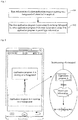
- FIG. 1 A processing flow shown in Fig. 1 will be described in detail below with reference to specific implementations, and may include the following contents.
- step 101 type information of a first application program running on a foreground of a terminal is acquired.
- an application program running on the terminal may have two states of running on the foreground and running on a background.
- the application program running on the foreground is specifically characterized by whether a page content of the application program is displayed on a screen of the terminal or not, and under most conditions when using the terminal, the user interacts with the application program running on the foreground.
- a certain application program When a certain application program is started on the terminal, it may be considered to run on the foreground, and then may selectively enter the background of the terminal for running or keep running on the foreground of the terminal according to a requirement of the user or a setting of the terminal. Meanwhile, there is only one application program running on the foreground of the terminal at any time. Specifically, the terminal may monitor a foreground process of a system program.
- type information of the application program may be acquired by the system program.
- the application program may be divided into an instant messaging type, a shopping type, a payment type, an entertainment type and the like according to a main function or effect.
- step 102 the first application program is prevented from being debugged by other application program if the type information of the first application program is preset type information.
- a developer of the application program may set a debugging function for the application program, that is, the system program or another application program may debug the application program to further implement operation, such as key file modification and log data reading, which may not be implemented in a normal running state over the application program.
- a debugging initiator of the application program may apply for and acquire all data information of the application program from the system program, including a basic setting of the application program, private data of the user and the like.
- debugging functions of application programs of some types may be controlled to stop malicious software or viruses to debug the application programs of these types to acquire the user information.
- the user may preset a type of an application program, for which a data protection is required, on the terminal, such as an application program of the payment type and an application program of the instant messaging type.
- the terminal may judge whether the type information of the first application program belongs to the preset type information or not after acquiring the type information of the first application program running on the foreground.
- the system program may prevent the first application program from being debugged by other application program to ensure that the other application program cannot acquire related data of the first application program by debugging the first application program.
- Fig. 2 is a simple diagram of the abovementioned processing. It is to be noted that the first application program may enter a debugging mode when the other application program debugs the first application program, and the other application program may acquire a cache address of the related data of the first application program so as to apply for and acquire data corresponding to the cache address from the system program.
- Manner 1 a debugging function of the first application program is disabled if the type information of the first application program is the preset type information.
- the debugging function of the first application program may be disabled, that is, all application programs are rejected to initiate debugging to the first application program.
- Manner 2 the first application program is debugged by the system program to occupy a debugging channel of the first application program if the type information of the first application program is the preset type information.
- the first application program when the type information, acquired by the terminal, of the first application program is the preset type information, the first application program may be debugged by the system program. In such a manner, since the first application program may be debugged by only one application program at the same time, the other application program cannot debug the first application program when the system program debugs the first application program, so that it can be ensured that data of the first application program may not be stolen by malicious software or a virus by means of debugging the first application program.
- Manner 3 if the type information of the first application program is the preset type information, a debugging state of the first application program is continuously detected; and when it is detected that the first application program enters the debugging state, an application program initiating debugging to the first application program is closed.
- whether the first application program enters the debugging state or not may be judged according to running state information of the first application program at first. Specifically, when the type information, acquired by the terminal, of the first application program is the preset type information, the debugging state of the first application program may be continuously monitored. When it is detected that the first application program enters the debugging state, the application program initiating debugging to the first application program may be closed to prevent user information stored in a cache of the first application program being acquired by the application program.
- the debugging function of the first application program may be opened for some secure application programs,.
- Specific processing may be as follows: when it is detected that the first application program enters the debugging state, the application program initiating debugging to the first application program is determined, and a pre-stored list of application programs, which are authorized to perform debugging, corresponding to the first application program are acquired; and if the application program initiating debugging to the first application program is not contained in the list of application program, which are authorized to perform debugging, the application program initiating debugging to the first application program is closed.
- a list of application programs which are authorized to perform debugging may be set for each application program, as shown in Table 1, and identification information of the application programs allowed to debug the first application program may be recorded in the list.
- identification information such as a packet name, of a debugging initiator may be acquired based on a running log of the first application program, so that the application program initiating debugging to the first application program may be determined.
- the application programs which are authorized to perform debugging may be determined by acquiring the list of application programs, which are authorized to perform debugging, corresponding to the first application program.
- the identification information of the application program initiating debugging to the first application program is not contained in the list of application programs which are authorized to perform debugging, it may be determined that the application program is not allowed to debug the first application program, and thus the application program may be closed. Furthermore, security detection may be performed on the application program, and if it is determined that the application program is malicious software or a virus, the application program may be unloaded. Table 1 Party to be debugged Initiating party which is authorized to perform debugging Application program A Application program 1 Application program 5 Application program 7 Application program B Application program 1 Application program 9 Application program C None ... ...
- the user may authorize any application program to debug the first application program, and corresponding processing may be as follows: when an input instruction for authorizing a second application program to debug the first application program is received from a user, the operation of preventing the first application program from being debugged by the second application program is canceled.
- a debugging authorization page of the system program may be opened, identification information of the party initiating debugging such as the second application program and the party to be debugged such as the first application program may be input into the debugging authorization page respectively. Then the terminal may receive the input instruction for authorizing the second application program to perform debugging over the first application program from the user, thereby canceling the operation of preventing the first application program from being debugged by the second application program.
- the debugging function of the first application program may be temporarily enabled, and after the second application program finishes debugging the first application program, the debugging function of the first application program is disabled; for Manner 2, debugging of the system program over the first application program may be stopped immediately to make the debugging channel of the first application program idle for the second application program, and after the second application program finishes debugging the first application program, the first application program is debugged by the system program again; and for Manner 3, the second application program may be directly added into the list of application programs which are authorized to perform debugging, and when the second application program initiates debugging to the first application program, no operation of preventing is performed.
- the first application program when the first application program is switched from running on the foreground into running on the background, the first application program may be continuously prevented from being debugged by the other application program.
- the first application program may be continuously prevented from being debugged by the other application program until the user closes the first application program.
- the type information of the first application program running on the foreground of the terminal is acquired; the first application program is prevented from being debugged by the other application program if the type information of the first application program is the preset type information.
- the other application program cannot debug the first application program to acquire the user information, so that the security of the user information can be enhanced.
- the embodiment of the present disclosure further provides a device for managing an application program, and as shown in Fig. 3 , the device includes an acquisition module 301 and a preventing module 302.
- the acquisition module 301 is configured to acquire type information of a first application program running on a foreground of a terminal.
- the preventing module 302 is configured to prevent the first application program from being debugged by other application program if the type information of the first application program is preset type information.
- the preventing module 302 is configured to disable a debugging function of the first application program if the type information of the first application program is the preset type information.
- the preventing module 302 is configured to debug the first application program by a system program to occupy a debugging channel of the first application program if the type information of the first application program is the preset type information.
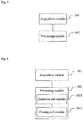
- the preventing module 302 includes a detection sub-module 3021 and a closing sub-module 3022.
- the detection sub-module 3021 is configured to continuously detect a debugging state of the first application program if the type information of the first application program is the preset type information.
- the closing sub-module 3022 is configured to close an application program initiating debugging to the first application program when it is detected that the first application program enters the debugging state.
- the closing sub-module 3022 includes an acquisition unit 30221 and a closing unit 30222.
- the acquisition unit 30221 is configured to, when it is detected that the first application program enters the debugging state, determine the application program initiating debugging to the first application program, and acquire a pre-stored list of application programs, which are authorized to perform debugging, corresponding to the first application program.
- the closing unit 30222 is configured to, if the application program initiating debugging to the first application program is not contained in the list of application programs which are authorized to perform debugging, close the application program initiating debugging to the first application program.
- the device further includes a cancellation module 303.
- the cancellation module 303 is configured to, when an input instruction for authorizing a second application program to debug the first application program is received from a user, cancel the operation of preventing the first application program from being debugged by the second application program.
- the type information of the first application program running on the foreground of the terminal is acquired; the first application program is prevented from being debugged by the other application program if the type information of the first application program is the preset type information.
- the other application program cannot debug the first application program to acquire user information, so that security of the user information can be enhanced.
- the device for managing the application program provided by the embodiment manages the application program
- descriptions are made only with division of each of the abovementioned functional modules as an example, and during a practical application, the abovementioned functions may be allocated to different functional modules for realization according to a requirement, that is, an internal structure of the device is divided into different functional modules to realize all or part of the abovementioned functions.
- the device for managing the application program provided by the embodiment belongs to the same concept with the embodiment of the method for managing the application program, and for details about its specific implantation process, please refer to the embodiment of the method, and will not be elaborated herein.
- the terminal may be a mobile phone and the like.
- the terminal 700 may include one or more of the following components: a processing component 702, a memory 704, a power component 706, a multimedia component 708, an audio component 710, an Input/Output (I/O) interface 712, a sensor component 714, and a communication component 716.
- a processing component 702 a memory 704
- a power component 706 a multimedia component 708, an audio component 710, an Input/Output (I/O) interface 712, a sensor component 714, and a communication component 716.
- I/O Input/Output
- the processing component 702 typically controls overall operations of the terminal 700, such as the operations associated with display, telephone calls, data communications, camera operations, and recording operations.
- the processing component 702 may include one or more processors 720 to execute instructions to perform all or part of the steps in the abovementioned method.
- the processing component 702 may include one or more modules which facilitate interaction between the processing component 702 and the other components.
- the processing component 702 may include a multimedia module to facilitate interaction between the multimedia component 708 and the processing component 702.
- the memory 704 is configured to store various types of data to support the operation of the terminal 700. Examples of such data include instructions for any application programs or methods configured for operating on the terminal 700, contact data, phonebook data, messages, pictures, video, etc.
- the memory 704 may be implemented by any type of volatile or non-volatile memory devices, or a combination thereof, such as a Static Random Access Memory (SRAM), an Electrically Erasable Programmable Read-Only Memory (EEPROM), an Erasable Programmable Read-Only Memory (EPROM), a Programmable Read-Only Memory (PROM), a Read-Only Memory (ROM), a magnetic memory, a flash memory, and a magnetic or optical disk.
- SRAM Static Random Access Memory
- EEPROM Electrically Erasable Programmable Read-Only Memory
- EPROM Erasable Programmable Read-Only Memory
- PROM Programmable Read-Only Memory
- ROM Read-Only Memory
- the power component 706 provides power for various components of the terminal 700.
- the power component 706 may include a power management system, one or more power supplies, and other components associated with the generation, management and distribution of power for the terminal 700.
- the multimedia component 708 includes a screen providing an output interface between the terminal 700 and a user.
- the screen may include a Liquid Crystal Display (LCD) and a Touch Panel (TP). If the screen includes the TP, the screen may be implemented as a touch screen to receive an input signal from the user.
- the TP includes one or more touch sensors to sense touches, swipes and gestures on the TP. The touch sensors may not only sense a boundary of a touch or swipe action, but also sense a duration and pressure associated with the touch or swipe action.
- the multimedia component 708 includes a front camera and/or a rear camera.
- the front camera and/or the rear camera may receive external multimedia data when the terminal 700 is in an operation mode, such as a photographing mode or a video mode.
- an operation mode such as a photographing mode or a video mode.
- Each of the front camera and the rear camera may be a fixed optical lens system or have capabilities of focusing and optical zooming.
- the audio component 710 is configured to output and/or input an audio signal.
- the audio component 710 includes a MIC which is configured to receive an external audio signal when the terminal 700 is in the operation mode, such as a call mode, a recording mode and a voice recognition mode.
- the received audio signal may be further stored in the memory 704 or sent through the communication component 716.
- the I/O interface 712 provides an interface between the processing component 702 and a peripheral interface module, and the peripheral interface module may be a keyboard, a click wheel, a button and the like.
- the button may include, but not limited to: a home button, a volume button, a starting button and a locking button.
- the sensor component 714 includes one or more sensors configured to provide status assessment in various aspects for the terminal 700. For instance, the sensor component 714 may detect an on/off status of the terminal 700 and relative positioning of components, such as a display and keypad of the terminal 700, and the sensor component 714 may further detect a change in a position of the terminal 700 or a component of the terminal 700, presence or absence of contact between the user and the terminal 700, orientation or acceleration/deceleration of the terminal 700 and a change in temperature of the terminal 700.
- the sensor component 714 may include a proximity sensor which is configured to detect presence of an object nearby without any physical contact.
- the sensor component 714 may also include a light sensor, such as a Complementary Metal Oxide Semiconductor (CMOS) or Charge Coupled Device (CCD) image sensor which is configured for use in an imaging application.
- CMOS Complementary Metal Oxide Semiconductor
- CCD Charge Coupled Device
- the sensor component 714 may also include an acceleration sensor, a gyroscope sensor, a magnetic sensor, a pressure sensor or a temperature sensor.
- the communication component 716 is configured to facilitate wired or wireless communication between the terminal 700 and another device.
- the terminal 700 may access a communication-standard-based wireless network, such as a Wireless Fidelity (WiFi) network, a 2 nd -Generation (2G) or 3 rd -Generation (3G) network or a combination thereof.
- WiFi Wireless Fidelity
- 2G 2 nd -Generation
- 3G 3 rd -Generation
- the communication component 716 receives a broadcast signal or broadcast associated information from an external broadcast management system via a broadcast channel.
- the communication component 716 further includes a Near Field Communication (NFC) module to facilitate short-range communication.
- NFC Near Field Communication
- the NFC module may be implemented on the basis of a Radio Frequency Identification (RFID) technology, an Infrared Data Association (IrDA) technology, an Ultra-WideBand (UWB) technology, a BT technology and another technology.
- RFID Radio Frequency Identification
- IrDA Infrared Data Association
- UWB Ultra-WideBand
- the terminal 700 may be implemented by one or more Application Specific Integrated Circuits (ASICs), Digital Signal Processors (DSPs), Digital Signal Processing Devices (DSPDs), Programmable Logic Devices (PLDs), Field Programmable Gate Arrays (FPGAs), controllers, micro-controllers, microprocessors or other electronic components, which are configured to execute the abovementioned method.
- ASICs Application Specific Integrated Circuits
- DSPs Digital Signal Processors
- DSPDs Digital Signal Processing Devices
- PLDs Programmable Logic Devices
- FPGAs Field Programmable Gate Arrays
- controllers micro-controllers, microprocessors or other electronic components, which are configured to execute the abovementioned method.
- a non-transitory computer-readable storage medium containing instructions, such as the memory 704 containing instructions, and the instructions may be executed by the processor 720 of the terminal 700 to perform the abovementioned method.
- the non-transitory computer-readable storage medium may be a ROM, a Compact Disc Read-Only Memory (CD-ROM), a magnetic tape, a floppy disc, an optical data storage device and the like.
- the instructions in the storage medium is executed by a processor of a terminal to enable the terminal to perform a method for managing an application program, which includes that:
- the step that the first application program is prevented from being debugged by the other application program if the type information of the first application program is the preset type information includes that:
- the step that the first application program is prevented from being debugged by the other application program if the type information of the first application program is the preset type information includes that:
- the step that the first application program is prevented from being debugged by the other application program if the type information of the first application program is the preset type information includes that:
- the step that the application program initiating debugging to the first application program is closed when it is detected that the first application program enters the debugging state includes that:
- the method further includes that:
- the type information of the first application program running on the foreground of the terminal is acquired; the first application program is prevented from being debugged by the other application program if the type information of the first application program is the preset type information.
- the other application program cannot debug the first application program to acquire user information, so that security of the user information can be enhanced.
Landscapes
- Engineering & Computer Science (AREA)
- Theoretical Computer Science (AREA)
- Computer Security & Cryptography (AREA)
- Computer Hardware Design (AREA)
- Physics & Mathematics (AREA)
- General Engineering & Computer Science (AREA)
- General Physics & Mathematics (AREA)
- Software Systems (AREA)
- Health & Medical Sciences (AREA)
- Bioethics (AREA)
- General Health & Medical Sciences (AREA)
- Quality & Reliability (AREA)
- Medical Informatics (AREA)
- Databases & Information Systems (AREA)
- Stored Programmes (AREA)
- Debugging And Monitoring (AREA)
Abstract
Description
- The present disclosure generally relates to the technical field of computers, and more particularly, to a method and device for managing an application program.
- Along with continuous development of a mobile terminal technology, more and more application programs are developed and become indispensible assistants in people's lives. A system program usually provides a debugging function for an application program such that another application program can perform processing such as testing and regulation on the application program.
- When an application program runs, some data is required to be processed by a system program, and the data is cached in a corresponding cache space by the system program. If an application program A debugs an application program B, the application program A may send a request for acquiring data of the application program B to the system program. The system program may further call the data of the application program B from a corresponding cache space of the application program B and send the data to the application program A.
- One problem with existing systems is that when a certain application program runs, if a virus application program debugs the application program by certain means, the virus application program may acquire private data of a user through the system program, so that security of user information is poor.
- Accordingly, the present invention provides a method and device for managing an application program.
- According to a first aspect, the invention relates to a method for managing an application program, comprising: acquiring type information of a first application program running on a foreground of a terminal; and preventing the first application program from being debugged by other application program if the type information of the first application program is preset type information.
- In the first aspect, the type information of the first application program running on the foreground of the terminal is acquired; the first application program is prevented from being debugged by the other application program if the type information of the first application program is the preset type information; and in such a manner, when the first application program runs, the other application program cannot debug the first application program to acquire the user information, so that the security of the user information can be enhanced.
- According to an exemplary embodiment, preventing the first application program from being debugged by the other application program if the type information of the first application program is the preset type information comprises: disabling a debugging function of the first application program if the type information of the first application program is the preset type information.
- In such a manner, all application programs may be stopped to debug the first application program to acquire related information.
- According to a particular embodiment, preventing the first application program from being debugged by the other application program if the type information of the first application program is the preset type information comprises: debugging, by a system program, the first application program to occupy a debugging channel of the first application program if the type information of the first application program is the preset type information.
- In such a manner, when the system program debugs the first application program, the other application program cannot debug the first application program, and thus cannot acquire user information.
- According to a particular embodiment, preventing the first application program from being debugged by the other application program if the type information of the first application program is the preset type information comprises: continuously detecting a debugging state of the first application program if the type information of the first application program is the preset type information; and closing an application program initiating debugging to the first application program when it is detected that the first application program enters the debugging state.
- In such a manner, the other application program may be closed when the other application program debugs the first application program, such that security of the user information corresponding to the first application program is ensured.
- According to a particular embodiment, closing the application program initiating debugging to the first application program when it is detected that the first application program enters the debugging state comprises: when it is detected that the first application program enters the debugging state, determining the application program initiating debugging to the first application program, and acquiring a pre-stored list of application programs, which are authorized to perform debugging, corresponding to the first application program; and if the application program initiating debugging to the first application program is not contained in the list of application programs, which are authorized to perform debugging, closing the application program initiating debugging to the first application program.
- In such a manner, it is ensured that the application programs, which are authorized to perform debugging, corresponding to the first application program may debug the first application program, while the other application program cannot debug the first application program, so that security of the user information can be enhanced.
- According to a particular embodiment, the method further comprises: when an input instruction for authorizing a second application program to debug the first application program is received from a user, canceling the operation of preventing the first application program from being debugged by the second application program.
- In such a manner, the user can debug the first application program by any application program at any time.
- According to a second aspect, the invention relates to a device for managing an application program, comprising: an acquisition module configured to acquire type information of a first application program running on a foreground of a terminal; and a preventing module configured to prevent the first application program from being debugged by other application program if the type information of the first application program is preset type information.
- In the second aspect, the type information of the first application program running on the foreground of the terminal is acquired; the first application program is prevented from being debugged by the other application program if the type information of the first application program is the preset type information; and in such a manner, when the first application program runs, the other application program cannot debug the first application program to acquire the user information, so that the security of the user information can be enhanced.
- According to a particular embodiment, the preventing module is configured to: disable a debugging function of the first application program if the type information of the first application program is the preset type information.
- In such a manner, all application programs may be stopped to debug the first application program to acquire related information.
- According to a particular embodiment, the preventing module is configured to: debug the first application program by a system program to occupy a debugging channel of the first application program if the type information of the first application program is the preset type information.
- In such a manner, when the system program debugs the first application program, the other application program cannot debug the first application program, and thus cannot acquire user information.
- According to a particular embodiment, the preventing module comprises: a detection sub-module configured to continuously detect a debugging state of the first application program if the type information of the first application program is the preset type information; and a closing sub-module configured to close an application program initiating debugging to the first application program when it is detected that the first application program enters the debugging state.
- In such a manner, the other application program may be closed when the other application program debugs the first application program, such that security of the user information corresponding to the first application program is ensured.
- According to a particular embodiment, the closing sub-module comprises: an acquisition unit configured to, when it is detected that the first application program enters the debugging state, determine the application program initiating debugging to the first application program, and acquire a pre-stored list of application programs, which are authorized to perform debugging, corresponding to the first application program; and a closing unit configured to, if the application program initiating debugging to the first application program is not contained in the list of application programs which are authorized to perform debugging, close the application program initiating debugging to the first application program.
- In such a manner, it is ensured that the application programs, which are authorized to perform debugging, corresponding to the first application program may debug the first application program, while the other application program cannot debug the first application program, so that security of the user information can be enhanced.
- According to a particular embodiment, the device further comprises: a cancellation module configured to, when an input instruction for authorizing a second application program to debug the first application program is received from a user, cancel the operation of preventing the first application program from being debugged by the second application program.
- In such a manner, the user can debug the first application program by any application program at any time.
- According to a third aspect, the invention relates to a device for managing an application program, comprising: a processor; and a memory configured to store instructions executable by the processor, wherein the processor is configured to: acquire type information of a first application program running on a foreground of a terminal; and prevent the first application program from being debugged by other application program if the type information of the first application program is preset type information.
- In the third aspect, the type information of the first application program running on the foreground of the terminal is acquired; the first application program is prevented from being debugged by the other application program if the type information of the first application program is the preset type information; and in such a manner, when the first application program runs, the other application program cannot debug the first application program to acquire the user information, so that the security of the user information can be enhanced.
- In one particular embodiment, the steps of the method for managing an application program are determined by computer program instructions.
- Consequently, according to a third aspect, the invention is also directed to a computer program for executing the steps of a method for managing an application program as described above when this program is executed by a computer.
- This program can use any programming language and take the form of source code, object code or a code intermediate between source code and object code, such as a partially compiled form, or any other desirable form.
- The invention is also directed to a computer-readable information medium containing instructions of a computer program as described above.
- The information medium can be any entity or device capable of storing the program. For example, the support can include storage means such as a ROM, for example a CD ROM or a microelectronic circuit ROM, or magnetic storage means, for example a diskette (floppy disk) or a hard disk.
- Alternatively, the information medium can be an integrated circuit in which the program is incorporated, the circuit being adapted to execute the method in question or to be used in its execution.
- It is to be understood that both the foregoing general description and the following detailed description are exemplary and explanatory only and are not restrictive of the present disclosure.
- In order to describe the technical solutions in the embodiment of the present disclosure more clearly, the drawings required by description about the embodiment will be simply introduced below, the drawings described below are apparently only some embodiments of the present disclosure, and those skilled in the art may also obtain other drawings according to these drawings without creative work.
-
Fig. 1 is a flow chart showing a method for managing an application program, according to an embodiment of the present disclosure. -
Fig. 2 is a diagram of preventing debugging, according to an embodiment of the present disclosure. -
Fig. 3 is a schematic diagram of a structure of a device for managing an application program, according to an embodiment of the present disclosure. -
Fig. 4 is a schematic diagram of a structure of another device for managing an application program, according to an embodiment of the present disclosure. -
Fig. 5 is a schematic diagram of a structure of another device for managing an application program, according to an embodiment of the present disclosure. -
Fig. 6 is a schematic diagram of a structure of another device for managing an application program, according to an embodiment of the present disclosure. -
Fig. 7 is a schematic diagram of a structure of a terminal, according to an embodiment of the present disclosure. - In order to make the purpose, technical solutions and advantages of the present disclosure clearer, implementations of the present disclosure will be further described in detail below with reference to the drawings.
- The embodiment of the present disclosure provides a method for managing an application program, and an execution subject of the method is a terminal. The terminal may be any mobile terminal, such as a mobile phone and a tablet computer, having installed thereon an application program. A processor, a memory, a screen, an input unit and a communication part may be arranged in the terminal. The processor may be configured to process a process of managing the application program. The memory may be configured to store data required and data generated in the following processing process. The screen may be configured to display a content required to be displayed to a user in the following processing process, such as state information of the application program. The input unit, such as a keyboard and a Microphone (MIC), may be configured for a user to input an instruction or set information to the terminal. The communication part, such as a BlueTooth (BT) part and an antenna, may be configured to receive or send data involved in the following processing process. In the embodiment, the solution is described in detail by taking a mobile phone as an example of the terminal, and solutions under other conditions are similar, and will not be elaborated in the present embodiment. In addition, a subject for the following processing may be the terminal, or a security management program installed on the terminal.
- A processing flow shown in
Fig. 1 will be described in detail below with reference to specific implementations, and may include the following contents. - In
step 101, type information of a first application program running on a foreground of a terminal is acquired. - During implementation, an application program running on the terminal may have two states of running on the foreground and running on a background. The application program running on the foreground is specifically characterized by whether a page content of the application program is displayed on a screen of the terminal or not, and under most conditions when using the terminal, the user interacts with the application program running on the foreground. When a certain application program is started on the terminal, it may be considered to run on the foreground, and then may selectively enter the background of the terminal for running or keep running on the foreground of the terminal according to a requirement of the user or a setting of the terminal. Meanwhile, there is only one application program running on the foreground of the terminal at any time. Specifically, the terminal may monitor a foreground process of a system program. When a certain application program (i.e. the first application program) is started or enters the foreground of the terminal for running, type information of the application program may be acquired by the system program. The application program may be divided into an instant messaging type, a shopping type, a payment type, an entertainment type and the like according to a main function or effect.
- In
step 102, the first application program is prevented from being debugged by other application program if the type information of the first application program is preset type information. - During implementation, under a normal condition, in order to facilitate important operation such as bug fixation and function regulation over an application program, a developer of the application program may set a debugging function for the application program, that is, the system program or another application program may debug the application program to further implement operation, such as key file modification and log data reading, which may not be implemented in a normal running state over the application program. When the application program runs in a debugging state, a debugging initiator of the application program may apply for and acquire all data information of the application program from the system program, including a basic setting of the application program, private data of the user and the like. In order to protect important information of a user from being stolen by malicious software or a virus, debugging functions of application programs of some types may be controlled to stop malicious software or viruses to debug the application programs of these types to acquire the user information. Specifically, the user may preset a type of an application program, for which a data protection is required, on the terminal, such as an application program of the payment type and an application program of the instant messaging type. Furthermore, the terminal may judge whether the type information of the first application program belongs to the preset type information or not after acquiring the type information of the first application program running on the foreground. If the type information of the first application program is the preset type information, the system program may prevent the first application program from being debugged by other application program to ensure that the other application program cannot acquire related data of the first application program by debugging the first application program.
Fig. 2 is a simple diagram of the abovementioned processing. It is to be noted that the first application program may enter a debugging mode when the other application program debugs the first application program, and the other application program may acquire a cache address of the related data of the first application program so as to apply for and acquire data corresponding to the cache address from the system program. - Optionally, there are various manners in which the first application program is prevented from being debugged by the other application program, and three feasible manners are provided below.
- Manner 1: a debugging function of the first application program is disabled if the type information of the first application program is the preset type information.
- During implementation, when the type information, acquired by the terminal, of the first application program is the preset type information, the debugging function of the first application program may be disabled, that is, all application programs are rejected to initiate debugging to the first application program.
- Manner 2: the first application program is debugged by the system program to occupy a debugging channel of the first application program if the type information of the first application program is the preset type information.
- During implementation, when the type information, acquired by the terminal, of the first application program is the preset type information, the first application program may be debugged by the system program. In such a manner, since the first application program may be debugged by only one application program at the same time, the other application program cannot debug the first application program when the system program debugs the first application program, so that it can be ensured that data of the first application program may not be stolen by malicious software or a virus by means of debugging the first application program.
- Manner 3: if the type information of the first application program is the preset type information, a debugging state of the first application program is continuously detected; and when it is detected that the first application program enters the debugging state, an application program initiating debugging to the first application program is closed.
- During implementation, whether the first application program enters the debugging state or not may be judged according to running state information of the first application program at first. Specifically, when the type information, acquired by the terminal, of the first application program is the preset type information, the debugging state of the first application program may be continuously monitored. When it is detected that the first application program enters the debugging state, the application program initiating debugging to the first application program may be closed to prevent user information stored in a cache of the first application program being acquired by the application program.
- Optionally, for manner 3, the debugging function of the first application program may be opened for some secure application programs,. Specific processing may be as follows: when it is detected that the first application program enters the debugging state, the application program initiating debugging to the first application program is determined, and a pre-stored list of application programs, which are authorized to perform debugging, corresponding to the first application program are acquired; and if the application program initiating debugging to the first application program is not contained in the list of application program, which are authorized to perform debugging, the application program initiating debugging to the first application program is closed.
- During implementation, a list of application programs which are authorized to perform debugging may be set for each application program, as shown in Table 1, and identification information of the application programs allowed to debug the first application program may be recorded in the list. When it is detected that the first application program enters the debugging state, identification information, such as a packet name, of a debugging initiator may be acquired based on a running log of the first application program, so that the application program initiating debugging to the first application program may be determined. Meanwhile, the application programs which are authorized to perform debugging may be determined by acquiring the list of application programs, which are authorized to perform debugging, corresponding to the first application program. If the identification information of the application program initiating debugging to the first application program is not contained in the list of application programs which are authorized to perform debugging, it may be determined that the application program is not allowed to debug the first application program, and thus the application program may be closed. Furthermore, security detection may be performed on the application program, and if it is determined that the application program is malicious software or a virus, the application program may be unloaded.
Table 1 Party to be debugged Initiating party which is authorized to perform debugging Application program A Application program 1 Application program 5 Application program 7 Application program B Application program 1 Application program 9 Application program C None ... ... - Optionally, the user may authorize any application program to debug the first application program, and corresponding processing may be as follows: when an input instruction for authorizing a second application program to debug the first application program is received from a user, the operation of preventing the first application program from being debugged by the second application program is canceled.
- During implementation, if the user is required to debug the first application program through other application program such as the second application program, a debugging authorization page of the system program may be opened, identification information of the party initiating debugging such as the second application program and the party to be debugged such as the first application program may be input into the debugging authorization page respectively. Then the terminal may receive the input instruction for authorizing the second application program to perform debugging over the first application program from the user, thereby canceling the operation of preventing the first application program from being debugged by the second application program. Specifically, for the abovementioned three preventing manners, there are provided three feasible manners here respectively: for Manner 1, the debugging function of the first application program may be temporarily enabled, and after the second application program finishes debugging the first application program, the debugging function of the first application program is disabled; for Manner 2, debugging of the system program over the first application program may be stopped immediately to make the debugging channel of the first application program idle for the second application program, and after the second application program finishes debugging the first application program, the first application program is debugged by the system program again; and for Manner 3, the second application program may be directly added into the list of application programs which are authorized to perform debugging, and when the second application program initiates debugging to the first application program, no operation of preventing is performed.
- Optionally, when the first application program is switched from running on the foreground into running on the background, the first application program may be continuously prevented from being debugged by the other application program.
- During implementation, after the first application program is prevented from being debugged by the other application program, if the first application program is switched to run on the background of the terminal, the first application program may be continuously prevented from being debugged by the other application program until the user closes the first application program.
- In the embodiment of the present disclosure, the type information of the first application program running on the foreground of the terminal is acquired; the first application program is prevented from being debugged by the other application program if the type information of the first application program is the preset type information. In such a manner, when the first application program runs, the other application program cannot debug the first application program to acquire the user information, so that the security of the user information can be enhanced.
- Based on the same technical concept, the embodiment of the present disclosure further provides a device for managing an application program, and as shown in
Fig. 3 , the device includes anacquisition module 301 and a preventingmodule 302. - The
acquisition module 301 is configured to acquire type information of a first application program running on a foreground of a terminal. - The preventing
module 302 is configured to prevent the first application program from being debugged by other application program if the type information of the first application program is preset type information. - Optionally, the preventing
module 302 is configured to disable a debugging function of the first application program if the type information of the first application program is the preset type information. - Optionally, the preventing
module 302 is configured to debug the first application program by a system program to occupy a debugging channel of the first application program if the type information of the first application program is the preset type information. - Optionally, as shown in
Fig. 4 , the preventingmodule 302 includes adetection sub-module 3021 and aclosing sub-module 3022. - The
detection sub-module 3021 is configured to continuously detect a debugging state of the first application program if the type information of the first application program is the preset type information. - The
closing sub-module 3022 is configured to close an application program initiating debugging to the first application program when it is detected that the first application program enters the debugging state. - Optionally, as shown in
Fig. 5 , theclosing sub-module 3022 includes anacquisition unit 30221 and aclosing unit 30222. - The
acquisition unit 30221 is configured to, when it is detected that the first application program enters the debugging state, determine the application program initiating debugging to the first application program, and acquire a pre-stored list of application programs, which are authorized to perform debugging, corresponding to the first application program. - The
closing unit 30222 is configured to, if the application program initiating debugging to the first application program is not contained in the list of application programs which are authorized to perform debugging, close the application program initiating debugging to the first application program. - Optionally, as shown in
Fig. 6 , the device further includes acancellation module 303. - The
cancellation module 303 is configured to, when an input instruction for authorizing a second application program to debug the first application program is received from a user, cancel the operation of preventing the first application program from being debugged by the second application program. - In the embodiment of the present disclosure, the type information of the first application program running on the foreground of the terminal is acquired; the first application program is prevented from being debugged by the other application program if the type information of the first application program is the preset type information. In such a manner, when the first application program runs, the other application program cannot debug the first application program to acquire user information, so that security of the user information can be enhanced.
- It is to be noted that: when the device for managing the application program provided by the embodiment manages the application program, descriptions are made only with division of each of the abovementioned functional modules as an example, and during a practical application, the abovementioned functions may be allocated to different functional modules for realization according to a requirement, that is, an internal structure of the device is divided into different functional modules to realize all or part of the abovementioned functions. In addition, the device for managing the application program provided by the embodiment belongs to the same concept with the embodiment of the method for managing the application program, and for details about its specific implantation process, please refer to the embodiment of the method, and will not be elaborated herein.
- There is provided a schematic diagram of a structure of a terminal, according to another exemplary embodiment of the present disclosure. The terminal may be a mobile phone and the like.
- Referring to
Fig. 7 , the terminal 700 may include one or more of the following components: aprocessing component 702, amemory 704, apower component 706, amultimedia component 708, anaudio component 710, an Input/Output (I/O)interface 712, asensor component 714, and acommunication component 716. - The
processing component 702 typically controls overall operations of the terminal 700, such as the operations associated with display, telephone calls, data communications, camera operations, and recording operations. Theprocessing component 702 may include one ormore processors 720 to execute instructions to perform all or part of the steps in the abovementioned method. Moreover, theprocessing component 702 may include one or more modules which facilitate interaction between theprocessing component 702 and the other components. For instance, theprocessing component 702 may include a multimedia module to facilitate interaction between themultimedia component 708 and theprocessing component 702. - The
memory 704 is configured to store various types of data to support the operation of the terminal 700. Examples of such data include instructions for any application programs or methods configured for operating on the terminal 700, contact data, phonebook data, messages, pictures, video, etc. Thememory 704 may be implemented by any type of volatile or non-volatile memory devices, or a combination thereof, such as a Static Random Access Memory (SRAM), an Electrically Erasable Programmable Read-Only Memory (EEPROM), an Erasable Programmable Read-Only Memory (EPROM), a Programmable Read-Only Memory (PROM), a Read-Only Memory (ROM), a magnetic memory, a flash memory, and a magnetic or optical disk. - The
power component 706 provides power for various components of the terminal 700. Thepower component 706 may include a power management system, one or more power supplies, and other components associated with the generation, management and distribution of power for the terminal 700. - The
multimedia component 708 includes a screen providing an output interface between the terminal 700 and a user. In some embodiments, the screen may include a Liquid Crystal Display (LCD) and a Touch Panel (TP). If the screen includes the TP, the screen may be implemented as a touch screen to receive an input signal from the user. The TP includes one or more touch sensors to sense touches, swipes and gestures on the TP. The touch sensors may not only sense a boundary of a touch or swipe action, but also sense a duration and pressure associated with the touch or swipe action. In some embodiments, themultimedia component 708 includes a front camera and/or a rear camera. The front camera and/or the rear camera may receive external multimedia data when the terminal 700 is in an operation mode, such as a photographing mode or a video mode. Each of the front camera and the rear camera may be a fixed optical lens system or have capabilities of focusing and optical zooming. - The
audio component 710 is configured to output and/or input an audio signal. For example, theaudio component 710 includes a MIC which is configured to receive an external audio signal when the terminal 700 is in the operation mode, such as a call mode, a recording mode and a voice recognition mode. The received audio signal may be further stored in thememory 704 or sent through thecommunication component 716. - The I/
O interface 712 provides an interface between theprocessing component 702 and a peripheral interface module, and the peripheral interface module may be a keyboard, a click wheel, a button and the like. The button may include, but not limited to: a home button, a volume button, a starting button and a locking button. - The
sensor component 714 includes one or more sensors configured to provide status assessment in various aspects for the terminal 700. For instance, thesensor component 714 may detect an on/off status of the terminal 700 and relative positioning of components, such as a display and keypad of the terminal 700, and thesensor component 714 may further detect a change in a position of the terminal 700 or a component of the terminal 700, presence or absence of contact between the user and the terminal 700, orientation or acceleration/deceleration of the terminal 700 and a change in temperature of the terminal 700. Thesensor component 714 may include a proximity sensor which is configured to detect presence of an object nearby without any physical contact. Thesensor component 714 may also include a light sensor, such as a Complementary Metal Oxide Semiconductor (CMOS) or Charge Coupled Device (CCD) image sensor which is configured for use in an imaging application. In some embodiments, thesensor component 714 may also include an acceleration sensor, a gyroscope sensor, a magnetic sensor, a pressure sensor or a temperature sensor. - The
communication component 716 is configured to facilitate wired or wireless communication between the terminal 700 and another device. The terminal 700 may access a communication-standard-based wireless network, such as a Wireless Fidelity (WiFi) network, a 2nd-Generation (2G) or 3rd-Generation (3G) network or a combination thereof. In an exemplary embodiment, thecommunication component 716 receives a broadcast signal or broadcast associated information from an external broadcast management system via a broadcast channel. In an exemplary embodiment, thecommunication component 716 further includes a Near Field Communication (NFC) module to facilitate short-range communication. For example, the NFC module may be implemented on the basis of a Radio Frequency Identification (RFID) technology, an Infrared Data Association (IrDA) technology, an Ultra-WideBand (UWB) technology, a BT technology and another technology. - In an exemplary embodiment, the terminal 700 may be implemented by one or more Application Specific Integrated Circuits (ASICs), Digital Signal Processors (DSPs), Digital Signal Processing Devices (DSPDs), Programmable Logic Devices (PLDs), Field Programmable Gate Arrays (FPGAs), controllers, micro-controllers, microprocessors or other electronic components, which are configured to execute the abovementioned method.
- In an exemplary embodiment, there is also provided a non-transitory computer-readable storage medium containing instructions, such as the
memory 704 containing instructions, and the instructions may be executed by theprocessor 720 of the terminal 700 to perform the abovementioned method. For example, the non-transitory computer-readable storage medium may be a ROM, a Compact Disc Read-Only Memory (CD-ROM), a magnetic tape, a floppy disc, an optical data storage device and the like. - According to a non-transitory computer-readable storage medium, the instructions in the storage medium is executed by a processor of a terminal to enable the terminal to perform a method for managing an application program, which includes that:
- type information of a first application program running on a foreground of the terminal is acquired; and
- the first application program is prevented from being debugged by other application program if the type information of the first application program is preset type information.
- Optionally, the step that the first application program is prevented from being debugged by the other application program if the type information of the first application program is the preset type information includes that:
- a debugging function of the first application program is disabled if the type information of the first application program is the preset type information.
- Optionally, the step that the first application program is prevented from being debugged by the other application program if the type information of the first application program is the preset type information includes that:
- the first application program is debugged by a system program to occupy a debugging channel of the first application program if the type information of the first application program is the preset type information.
- Optionally, the step that the first application program is prevented from being debugged by the other application program if the type information of the first application program is the preset type information includes that:
- a debugging state of the first application program is continuously detected if the type information of the first application program is the preset type information; and
- an application program initiating debugging to the first application program is closed when it is detected that the first application program enters the debugging state.
- Optionally, the step that the application program initiating debugging to the first application program is closed when it is detected that the first application program enters the debugging state includes that:
- when it is detected that the first application program enters the debugging state, the application program initiating debugging to the first application program is determined, and a pre-stored list of application programs, which are authorized to perform debugging, corresponding to the first application program are acquired; and
- if the application program initiating debugging to the first application program is not contained in the list of application programs which are authorized to perform debugging, the application program initiating debugging to the first application program is closed.
- Optionally, the method further includes that:
- when an input instruction for authorizing a second application program to debug the first application program is received from a user, the operation of preventing the first application program from being debugged by the second application program is canceled.
- In the embodiment of the present disclosure, the type information of the first application program running on the foreground of the terminal is acquired; the first application program is prevented from being debugged by the other application program if the type information of the first application program is the preset type information. In such a manner, when the first application program runs, the other application program cannot debug the first application program to acquire user information, so that security of the user information can be enhanced.
- Those skilled in the art may understand that all or part of the steps for implementing the embodiments may be implemented by hardware, and may also be implemented by related hardware instructed by a program which may be stored in a computer-readable storage medium which may be a ROM, a magnetic, optical disk or the like.
- The above is only the preferred embodiment of the present disclosure and not intended to limit the present disclosure, and any modifications, equivalent replacements, improvements and the like made within the spirit and principle of the present disclosure shall fall within the scope of protection of the present disclosure.
Claims (15)
- A method for managing an application program, characterized by comprising:acquiring type information of a first application program running on a foreground of a terminal (101); andpreventing the first application program from being debugged by other application program if the type information of the first application program is preset type information (102).
- The method according to claim 1, wherein preventing the first application program from being debugged by the other application program if the type information of the first application program is the preset type information (102) comprises:disabling a debugging function of the first application program if the type information of the first application program is the preset type information.
- The method according to claim 1, wherein preventing the first application program from being debugged by the other application program if the type information of the first application program is the preset type information (102) comprises:debugging, by a system program, the first application program to occupy a debugging channel of the first application program if the type information of the first application program is the preset type information.
- The method according to claim 1, wherein preventing the first application program from being debugged by the other application program if the type information of the first application program is the preset type information (102) comprises:continuously detecting a debugging state of the first application program if the type information of the first application program is the preset type information; andclosing an application program initiating debugging to the first application program when it is detected that the first application program enters the debugging state.
- The method according to claim 4, wherein closing the application program initiating debugging to the first application program when it is detected that the first application program enters the debugging state comprises:when it is detected that the first application program enters the debugging state, determining the application program initiating debugging to the first application program, and acquiring a pre-stored list of application programs, which are authorized to perform debugging, corresponding to the first application program; andif the application program initiating debugging to the first application program is not contained in the list of application programs, which are authorized to perform debugging, closing the application program initiating debugging to the first application program.
- The method according to claim 1, further comprising:when an input instruction for authorizing a second application program to debug the first application program is received from a user, canceling the operation of preventing the first application program from being debugged by the second application program.
- A device for managing an application program, characterized by comprising:an acquisition module (301) configured to acquire type information of a first application program running on a foreground of a terminal; anda preventing module (302) configured to prevent the first application program from being debugged by other application program if the type information of the first application program is preset type information.
- The device according to claim 7, wherein the preventing module (302) is configured to:disable a debugging function of the first application program if the type information of the first application program is the preset type information.
- The device according to claim 7, wherein the preventing module (302) is configured to:debug the first application program by a system program to occupy a debugging channel of the first application program if the type information of the first application program is the preset type information.
- The device according to claim 7, wherein the preventing module (302) comprises:a detection sub-module (3021) configured to continuously detect a debugging state of the first application program if the type information of the first application program is the preset type information; anda closing sub-module (3022) configured to close an application program initiating debugging to the first application program when it is detected that the first application program enters the debugging state.
- The device according to claim 10, wherein the closing sub-module (3022) comprises:an acquisition unit (30221) configured to, when it is detected that the first application program enters the debugging state, determine the application program initiating debugging to the first application program, and acquire a pre-stored list of application programs, which are authorized to perform debugging, corresponding to the first application program; anda closing unit (30222) configured to, if the application program initiating debugging to the first application program is not contained in the list of application programs which are authorized to perform debugging, close the application program initiating debugging to the first application program.
- The device according to claim 7, further comprising:a cancellation module (303) configured to, when an input instruction for authorizing a second application program to debug the first application program is received from a user, cancel the operation of preventing the first application program from being debugged by the second application program.
- A device for managing an application program, characterized by comprising:a processor; anda memory configured to store instructions executable by the processor,wherein the processor is configured to:acquire type information of a first application program running on a foreground of a terminal; andprevent the first application program from being debugged by other application program if the type information of the first application program is preset type information.
- A computer program including instructions for executing the steps of a method for managing an application program according to any one of claims 1 to 6 when said program is executed by a computer.
- A recording medium readable by a computer and having recorded thereon a computer program including instructions for executing the steps of a method for managing an application program according to any one of claims 1 to 6.
Applications Claiming Priority (1)
| Application Number | Priority Date | Filing Date | Title |
|---|---|---|---|
| CN201610273902.1A CN105930721B (en) | 2016-04-28 | 2016-04-28 | A kind of method and apparatus managing application program |
Publications (2)
| Publication Number | Publication Date |
|---|---|
| EP3239841A1 true EP3239841A1 (en) | 2017-11-01 |
| EP3239841B1 EP3239841B1 (en) | 2021-09-01 |
Family
ID=56837621
Family Applications (1)
| Application Number | Title | Priority Date | Filing Date |
|---|---|---|---|
| EP16202284.2A Active EP3239841B1 (en) | 2016-04-28 | 2016-12-05 | Method and device for managing application program |
Country Status (4)
| Country | Link |
|---|---|
| US (1) | US10114735B2 (en) |
| EP (1) | EP3239841B1 (en) |
| CN (1) | CN105930721B (en) |
| WO (1) | WO2017185568A1 (en) |
Cited By (1)
| Publication number | Priority date | Publication date | Assignee | Title |
|---|---|---|---|---|
| CN113343221A (en) * | 2020-02-18 | 2021-09-03 | 厦门网宿有限公司 | Terminal early warning method and device |
Families Citing this family (5)
| Publication number | Priority date | Publication date | Assignee | Title |
|---|---|---|---|---|
| CN106777381A (en) * | 2017-02-13 | 2017-05-31 | 广东欧珀移动通信有限公司 | Database access control method and device and intelligent terminal |
| US11750623B2 (en) * | 2017-09-04 | 2023-09-05 | ITsMine Ltd. | System and method for conducting a detailed computerized surveillance in a computerized environment |
| JP7286913B2 (en) * | 2018-03-27 | 2023-06-06 | カシオ計算機株式会社 | COMMUNICATION DEVICE, COMMUNICATION DEVICE CONTROL METHOD, AND PROGRAM |
| US11113177B1 (en) * | 2020-07-23 | 2021-09-07 | Tracelink, Inc. | Securely debugging different applications in a single short-lived container |
| US11829278B2 (en) * | 2021-11-01 | 2023-11-28 | Sap Se | Secure debugging in multitenant cloud environment |
Citations (3)
| Publication number | Priority date | Publication date | Assignee | Title |
|---|---|---|---|---|
| US20060005260A1 (en) * | 2004-06-24 | 2006-01-05 | Hiroyoshi Haruki | Microprocessor |
| EP2023248A1 (en) * | 2006-04-24 | 2009-02-11 | Panasonic Corporation | Data processing device, method, program, integrated circuit, and program generating device |
| WO2015072689A1 (en) * | 2013-11-14 | 2015-05-21 | (주)잉카엔트웍스 | Anti-debugging method |
Family Cites Families (7)
| Publication number | Priority date | Publication date | Assignee | Title |
|---|---|---|---|---|
| US6931545B1 (en) * | 2000-08-28 | 2005-08-16 | Contentguard Holdings, Inc. | Systems and methods for integrity certification and verification of content consumption environments |
| EP1680724B1 (en) | 2003-08-26 | 2019-05-08 | Panasonic Intellectual Property Corporation of America | Program execution device |
| US8271803B2 (en) * | 2003-10-08 | 2012-09-18 | Microsoft Corporation | Anti-debugging protection of binaries with proxy code execution |
| EP1708071B1 (en) * | 2005-03-31 | 2010-11-03 | Texas Instruments Incorporated | Method and system for detection and neutralization of buffer overflow attacks |
| US20070168972A1 (en) * | 2005-11-30 | 2007-07-19 | International Business Machines Corporation | Debugging a computer program |
| CN103713889B (en) | 2012-09-29 | 2018-07-13 | 三亚中兴软件有限责任公司 | A kind of exploitation of application, compiling and adjustment method and device |
| CN104932972B (en) * | 2014-03-19 | 2018-10-09 | 北京娜迦信息科技发展有限公司 | A kind of method and device of reaction state debugging utility |
-
2016
- 2016-04-28 CN CN201610273902.1A patent/CN105930721B/en active Active
- 2016-08-18 WO PCT/CN2016/095904 patent/WO2017185568A1/en not_active Ceased
- 2016-12-05 EP EP16202284.2A patent/EP3239841B1/en active Active
- 2016-12-14 US US15/378,051 patent/US10114735B2/en active Active
Patent Citations (4)
| Publication number | Priority date | Publication date | Assignee | Title |
|---|---|---|---|---|
| US20060005260A1 (en) * | 2004-06-24 | 2006-01-05 | Hiroyoshi Haruki | Microprocessor |
| EP2023248A1 (en) * | 2006-04-24 | 2009-02-11 | Panasonic Corporation | Data processing device, method, program, integrated circuit, and program generating device |
| WO2015072689A1 (en) * | 2013-11-14 | 2015-05-21 | (주)잉카엔트웍스 | Anti-debugging method |
| US20160300044A1 (en) * | 2013-11-14 | 2016-10-13 | Inka Entworks, Inc. | Anti-debugging method |
Cited By (1)
| Publication number | Priority date | Publication date | Assignee | Title |
|---|---|---|---|---|
| CN113343221A (en) * | 2020-02-18 | 2021-09-03 | 厦门网宿有限公司 | Terminal early warning method and device |
Also Published As
| Publication number | Publication date |
|---|---|
| US20170315901A1 (en) | 2017-11-02 |
| WO2017185568A1 (en) | 2017-11-02 |
| CN105930721B (en) | 2018-11-23 |
| EP3239841B1 (en) | 2021-09-01 |
| CN105930721A (en) | 2016-09-07 |
| US10114735B2 (en) | 2018-10-30 |
Similar Documents
| Publication | Publication Date | Title |
|---|---|---|
| US10114735B2 (en) | Method, device and medium for managing application program | |
| CN109557999B (en) | Bright screen control method and device and storage medium | |
| US9860844B2 (en) | Method and apparatus of temperature control | |
| EP3226167A1 (en) | Payment method and apparatus | |
| EP3089065A1 (en) | Method and device for permission management | |
| US10409684B2 (en) | Method, device and storage medium for cleaning memory | |
| EP3136216A1 (en) | Method for controlling mobile terminal and mobile terminal | |
| WO2017071050A1 (en) | Mistaken touch prevention method and device for terminal with touch screen | |
| CN106775298A (en) | The processing method and processing device of sectional drawing | |
| EP3163834A1 (en) | Method and device for equipment control | |
| WO2016150104A1 (en) | App theme loading method and device | |
| CN106302528B (en) | Short message processing method and device | |
| CN106462698A (en) | Authority control method and device | |
| CN104360875B (en) | Privacy mode starts method and apparatus | |
| CN105045686A (en) | File recovery method and apparatus | |
| CN105100135A (en) | Network sharing setting method and device | |
| CN108446226A (en) | Using abnormal processing method | |
| CN111353427B (en) | Fingerprint unlocking signal processing method, device and medium | |
| CN112083841A (en) | Information input method, device and storage medium | |
| CN106709285B (en) | Display method and device of application lock interface | |
| WO2018058517A1 (en) | Secure scanning method and apparatus, and electronic device | |
| CN108319828A (en) | Screen locking management method and device | |
| CN106502719A (en) | The method and device of the component of management application program | |
| US12292956B2 (en) | Method for setting permission of application, electronic device and storage medium | |
| CN106485109A (en) | The method to set up of procedure lock and device |
Legal Events
| Date | Code | Title | Description |
|---|---|---|---|
| PUAI | Public reference made under article 153(3) epc to a published international application that has entered the european phase |
Free format text: ORIGINAL CODE: 0009012 |
|
| STAA | Information on the status of an ep patent application or granted ep patent |
Free format text: STATUS: THE APPLICATION HAS BEEN PUBLISHED |
|
| AK | Designated contracting states |
Kind code of ref document: A1 Designated state(s): AL AT BE BG CH CY CZ DE DK EE ES FI FR GB GR HR HU IE IS IT LI LT LU LV MC MK MT NL NO PL PT RO RS SE SI SK SM TR |
|
| AX | Request for extension of the european patent |
Extension state: BA ME |
|
| STAA | Information on the status of an ep patent application or granted ep patent |
Free format text: STATUS: REQUEST FOR EXAMINATION WAS MADE |
|
| 17P | Request for examination filed |
Effective date: 20180501 |
|
| RBV | Designated contracting states (corrected) |
Designated state(s): AL AT BE BG CH CY CZ DE DK EE ES FI FR GB GR HR HU IE IS IT LI LT LU LV MC MK MT NL NO PL PT RO RS SE SI SK SM TR |
|
| STAA | Information on the status of an ep patent application or granted ep patent |
Free format text: STATUS: EXAMINATION IS IN PROGRESS |
|
| 17Q | First examination report despatched |
Effective date: 20190514 |
|
| GRAP | Despatch of communication of intention to grant a patent |
Free format text: ORIGINAL CODE: EPIDOSNIGR1 |
|
| STAA | Information on the status of an ep patent application or granted ep patent |
Free format text: STATUS: GRANT OF PATENT IS INTENDED |
|
| RIC1 | Information provided on ipc code assigned before grant |
Ipc: G06F 21/62 20130101ALI20201207BHEP Ipc: G06F 21/55 20130101ALI20201207BHEP Ipc: G06F 11/36 20060101AFI20201207BHEP |
|
| INTG | Intention to grant announced |
Effective date: 20210113 |
|
| GRAJ | Information related to disapproval of communication of intention to grant by the applicant or resumption of examination proceedings by the epo deleted |
Free format text: ORIGINAL CODE: EPIDOSDIGR1 |
|
| STAA | Information on the status of an ep patent application or granted ep patent |
Free format text: STATUS: EXAMINATION IS IN PROGRESS |
|
| INTC | Intention to grant announced (deleted) | ||
| GRAP | Despatch of communication of intention to grant a patent |
Free format text: ORIGINAL CODE: EPIDOSNIGR1 |
|
| STAA | Information on the status of an ep patent application or granted ep patent |
Free format text: STATUS: GRANT OF PATENT IS INTENDED |
|
| INTG | Intention to grant announced |
Effective date: 20210616 |
|
| GRAS | Grant fee paid |
Free format text: ORIGINAL CODE: EPIDOSNIGR3 |
|
| GRAA | (expected) grant |
Free format text: ORIGINAL CODE: 0009210 |
|
| STAA | Information on the status of an ep patent application or granted ep patent |
Free format text: STATUS: THE PATENT HAS BEEN GRANTED |
|
| AK | Designated contracting states |
Kind code of ref document: B1 Designated state(s): AL AT BE BG CH CY CZ DE DK EE ES FI FR GB GR HR HU IE IS IT LI LT LU LV MC MK MT NL NO PL PT RO RS SE SI SK SM TR |
|
| REG | Reference to a national code |
Ref country code: GB Ref legal event code: FG4D |
|
| REG | Reference to a national code |
Ref country code: CH Ref legal event code: EP Ref country code: AT Ref legal event code: REF Ref document number: 1426942 Country of ref document: AT Kind code of ref document: T Effective date: 20210915 |
|
| REG | Reference to a national code |
Ref country code: DE Ref legal event code: R096 Ref document number: 602016063004 Country of ref document: DE |
|
| REG | Reference to a national code |
Ref country code: IE Ref legal event code: FG4D |
|
| REG | Reference to a national code |
Ref country code: LT Ref legal event code: MG9D |
|
| REG | Reference to a national code |
Ref country code: NL Ref legal event code: MP Effective date: 20210901 |
|
| PG25 | Lapsed in a contracting state [announced via postgrant information from national office to epo] |
Ref country code: HR Free format text: LAPSE BECAUSE OF FAILURE TO SUBMIT A TRANSLATION OF THE DESCRIPTION OR TO PAY THE FEE WITHIN THE PRESCRIBED TIME-LIMIT Effective date: 20210901 Ref country code: SE Free format text: LAPSE BECAUSE OF FAILURE TO SUBMIT A TRANSLATION OF THE DESCRIPTION OR TO PAY THE FEE WITHIN THE PRESCRIBED TIME-LIMIT Effective date: 20210901 Ref country code: RS Free format text: LAPSE BECAUSE OF FAILURE TO SUBMIT A TRANSLATION OF THE DESCRIPTION OR TO PAY THE FEE WITHIN THE PRESCRIBED TIME-LIMIT Effective date: 20210901 Ref country code: NO Free format text: LAPSE BECAUSE OF FAILURE TO SUBMIT A TRANSLATION OF THE DESCRIPTION OR TO PAY THE FEE WITHIN THE PRESCRIBED TIME-LIMIT Effective date: 20211201 Ref country code: FI Free format text: LAPSE BECAUSE OF FAILURE TO SUBMIT A TRANSLATION OF THE DESCRIPTION OR TO PAY THE FEE WITHIN THE PRESCRIBED TIME-LIMIT Effective date: 20210901 Ref country code: ES Free format text: LAPSE BECAUSE OF FAILURE TO SUBMIT A TRANSLATION OF THE DESCRIPTION OR TO PAY THE FEE WITHIN THE PRESCRIBED TIME-LIMIT Effective date: 20210901 Ref country code: LT Free format text: LAPSE BECAUSE OF FAILURE TO SUBMIT A TRANSLATION OF THE DESCRIPTION OR TO PAY THE FEE WITHIN THE PRESCRIBED TIME-LIMIT Effective date: 20210901 Ref country code: BG Free format text: LAPSE BECAUSE OF FAILURE TO SUBMIT A TRANSLATION OF THE DESCRIPTION OR TO PAY THE FEE WITHIN THE PRESCRIBED TIME-LIMIT Effective date: 20211201 |
|
| REG | Reference to a national code |
Ref country code: AT Ref legal event code: MK05 Ref document number: 1426942 Country of ref document: AT Kind code of ref document: T Effective date: 20210901 |
|
| PG25 | Lapsed in a contracting state [announced via postgrant information from national office to epo] |
Ref country code: PL Free format text: LAPSE BECAUSE OF FAILURE TO SUBMIT A TRANSLATION OF THE DESCRIPTION OR TO PAY THE FEE WITHIN THE PRESCRIBED TIME-LIMIT Effective date: 20210901 Ref country code: LV Free format text: LAPSE BECAUSE OF FAILURE TO SUBMIT A TRANSLATION OF THE DESCRIPTION OR TO PAY THE FEE WITHIN THE PRESCRIBED TIME-LIMIT Effective date: 20210901 Ref country code: GR Free format text: LAPSE BECAUSE OF FAILURE TO SUBMIT A TRANSLATION OF THE DESCRIPTION OR TO PAY THE FEE WITHIN THE PRESCRIBED TIME-LIMIT Effective date: 20211202 |
|
| PG25 | Lapsed in a contracting state [announced via postgrant information from national office to epo] |
Ref country code: AT Free format text: LAPSE BECAUSE OF FAILURE TO SUBMIT A TRANSLATION OF THE DESCRIPTION OR TO PAY THE FEE WITHIN THE PRESCRIBED TIME-LIMIT Effective date: 20210901 |
|
| PG25 | Lapsed in a contracting state [announced via postgrant information from national office to epo] |
Ref country code: IS Free format text: LAPSE BECAUSE OF FAILURE TO SUBMIT A TRANSLATION OF THE DESCRIPTION OR TO PAY THE FEE WITHIN THE PRESCRIBED TIME-LIMIT Effective date: 20220101 Ref country code: SM Free format text: LAPSE BECAUSE OF FAILURE TO SUBMIT A TRANSLATION OF THE DESCRIPTION OR TO PAY THE FEE WITHIN THE PRESCRIBED TIME-LIMIT Effective date: 20210901 Ref country code: SK Free format text: LAPSE BECAUSE OF FAILURE TO SUBMIT A TRANSLATION OF THE DESCRIPTION OR TO PAY THE FEE WITHIN THE PRESCRIBED TIME-LIMIT Effective date: 20210901 Ref country code: RO Free format text: LAPSE BECAUSE OF FAILURE TO SUBMIT A TRANSLATION OF THE DESCRIPTION OR TO PAY THE FEE WITHIN THE PRESCRIBED TIME-LIMIT Effective date: 20210901 Ref country code: PT Free format text: LAPSE BECAUSE OF FAILURE TO SUBMIT A TRANSLATION OF THE DESCRIPTION OR TO PAY THE FEE WITHIN THE PRESCRIBED TIME-LIMIT Effective date: 20220103 Ref country code: NL Free format text: LAPSE BECAUSE OF FAILURE TO SUBMIT A TRANSLATION OF THE DESCRIPTION OR TO PAY THE FEE WITHIN THE PRESCRIBED TIME-LIMIT Effective date: 20210901 Ref country code: EE Free format text: LAPSE BECAUSE OF FAILURE TO SUBMIT A TRANSLATION OF THE DESCRIPTION OR TO PAY THE FEE WITHIN THE PRESCRIBED TIME-LIMIT Effective date: 20210901 Ref country code: CZ Free format text: LAPSE BECAUSE OF FAILURE TO SUBMIT A TRANSLATION OF THE DESCRIPTION OR TO PAY THE FEE WITHIN THE PRESCRIBED TIME-LIMIT Effective date: 20210901 Ref country code: AL Free format text: LAPSE BECAUSE OF FAILURE TO SUBMIT A TRANSLATION OF THE DESCRIPTION OR TO PAY THE FEE WITHIN THE PRESCRIBED TIME-LIMIT Effective date: 20210901 |
|
| REG | Reference to a national code |
Ref country code: DE Ref legal event code: R097 Ref document number: 602016063004 Country of ref document: DE |
|
| PLBE | No opposition filed within time limit |
Free format text: ORIGINAL CODE: 0009261 |
|
| STAA | Information on the status of an ep patent application or granted ep patent |
Free format text: STATUS: NO OPPOSITION FILED WITHIN TIME LIMIT |
|
| PG25 | Lapsed in a contracting state [announced via postgrant information from national office to epo] |
Ref country code: MC Free format text: LAPSE BECAUSE OF FAILURE TO SUBMIT A TRANSLATION OF THE DESCRIPTION OR TO PAY THE FEE WITHIN THE PRESCRIBED TIME-LIMIT Effective date: 20210901 Ref country code: IT Free format text: LAPSE BECAUSE OF FAILURE TO SUBMIT A TRANSLATION OF THE DESCRIPTION OR TO PAY THE FEE WITHIN THE PRESCRIBED TIME-LIMIT Effective date: 20210901 Ref country code: DK Free format text: LAPSE BECAUSE OF FAILURE TO SUBMIT A TRANSLATION OF THE DESCRIPTION OR TO PAY THE FEE WITHIN THE PRESCRIBED TIME-LIMIT Effective date: 20210901 |
|
| REG | Reference to a national code |
Ref country code: CH Ref legal event code: PL |
|
| 26N | No opposition filed |
Effective date: 20220602 |
|
| PG25 | Lapsed in a contracting state [announced via postgrant information from national office to epo] |
Ref country code: SI Free format text: LAPSE BECAUSE OF FAILURE TO SUBMIT A TRANSLATION OF THE DESCRIPTION OR TO PAY THE FEE WITHIN THE PRESCRIBED TIME-LIMIT Effective date: 20210901 |
|
| REG | Reference to a national code |
Ref country code: BE Ref legal event code: MM Effective date: 20211231 |
|
| PG25 | Lapsed in a contracting state [announced via postgrant information from national office to epo] |
Ref country code: LU Free format text: LAPSE BECAUSE OF NON-PAYMENT OF DUE FEES Effective date: 20211205 Ref country code: IE Free format text: LAPSE BECAUSE OF NON-PAYMENT OF DUE FEES Effective date: 20211205 |
|
| PG25 | Lapsed in a contracting state [announced via postgrant information from national office to epo] |
Ref country code: BE Free format text: LAPSE BECAUSE OF NON-PAYMENT OF DUE FEES Effective date: 20211231 |
|
| PG25 | Lapsed in a contracting state [announced via postgrant information from national office to epo] |
Ref country code: LI Free format text: LAPSE BECAUSE OF NON-PAYMENT OF DUE FEES Effective date: 20211231 Ref country code: CH Free format text: LAPSE BECAUSE OF NON-PAYMENT OF DUE FEES Effective date: 20211231 |
|
| PG25 | Lapsed in a contracting state [announced via postgrant information from national office to epo] |
Ref country code: HU Free format text: LAPSE BECAUSE OF FAILURE TO SUBMIT A TRANSLATION OF THE DESCRIPTION OR TO PAY THE FEE WITHIN THE PRESCRIBED TIME-LIMIT; INVALID AB INITIO Effective date: 20161205 |
|
| P01 | Opt-out of the competence of the unified patent court (upc) registered |
Effective date: 20230523 |
|
| PG25 | Lapsed in a contracting state [announced via postgrant information from national office to epo] |
Ref country code: CY Free format text: LAPSE BECAUSE OF FAILURE TO SUBMIT A TRANSLATION OF THE DESCRIPTION OR TO PAY THE FEE WITHIN THE PRESCRIBED TIME-LIMIT Effective date: 20210901 |
|
| PG25 | Lapsed in a contracting state [announced via postgrant information from national office to epo] |
Ref country code: MK Free format text: LAPSE BECAUSE OF FAILURE TO SUBMIT A TRANSLATION OF THE DESCRIPTION OR TO PAY THE FEE WITHIN THE PRESCRIBED TIME-LIMIT Effective date: 20210901 |
|
| PG25 | Lapsed in a contracting state [announced via postgrant information from national office to epo] |
Ref country code: TR Free format text: LAPSE BECAUSE OF FAILURE TO SUBMIT A TRANSLATION OF THE DESCRIPTION OR TO PAY THE FEE WITHIN THE PRESCRIBED TIME-LIMIT Effective date: 20210901 |
|
| PG25 | Lapsed in a contracting state [announced via postgrant information from national office to epo] |
Ref country code: MT Free format text: LAPSE BECAUSE OF FAILURE TO SUBMIT A TRANSLATION OF THE DESCRIPTION OR TO PAY THE FEE WITHIN THE PRESCRIBED TIME-LIMIT Effective date: 20210901 |
|
| PGFP | Annual fee paid to national office [announced via postgrant information from national office to epo] |
Ref country code: GB Payment date: 20241226 Year of fee payment: 9 |
|
| PGFP | Annual fee paid to national office [announced via postgrant information from national office to epo] |
Ref country code: FR Payment date: 20241224 Year of fee payment: 9 |
|
| PGFP | Annual fee paid to national office [announced via postgrant information from national office to epo] |
Ref country code: DE Payment date: 20251212 Year of fee payment: 10 |