EP3236347A1 - Procédé d'assistance sonore d'interface de contrôle d'un terminal, un programme et un terminal - Google Patents
Procédé d'assistance sonore d'interface de contrôle d'un terminal, un programme et un terminal Download PDFInfo
- Publication number
- EP3236347A1 EP3236347A1 EP17165744.8A EP17165744A EP3236347A1 EP 3236347 A1 EP3236347 A1 EP 3236347A1 EP 17165744 A EP17165744 A EP 17165744A EP 3236347 A1 EP3236347 A1 EP 3236347A1
- Authority
- EP
- European Patent Office
- Prior art keywords
- sound
- assistance
- interface
- terminal
- control interface
- Prior art date
- Legal status (The legal status is an assumption and is not a legal conclusion. Google has not performed a legal analysis and makes no representation as to the accuracy of the status listed.)
- Ceased
Links
Images



Classifications
-
- G—PHYSICS
- G06—COMPUTING OR CALCULATING; COUNTING
- G06F—ELECTRIC DIGITAL DATA PROCESSING
- G06F3/00—Input arrangements for transferring data to be processed into a form capable of being handled by the computer; Output arrangements for transferring data from processing unit to output unit, e.g. interface arrangements
- G06F3/16—Sound input; Sound output
- G06F3/167—Audio in a user interface, e.g. using voice commands for navigating, audio feedback
-
- G—PHYSICS
- G06—COMPUTING OR CALCULATING; COUNTING
- G06F—ELECTRIC DIGITAL DATA PROCESSING
- G06F3/00—Input arrangements for transferring data to be processed into a form capable of being handled by the computer; Output arrangements for transferring data from processing unit to output unit, e.g. interface arrangements
- G06F3/01—Input arrangements or combined input and output arrangements for interaction between user and computer
- G06F3/048—Interaction techniques based on graphical user interfaces [GUI]
- G06F3/0481—Interaction techniques based on graphical user interfaces [GUI] based on specific properties of the displayed interaction object or a metaphor-based environment, e.g. interaction with desktop elements like windows or icons, or assisted by a cursor's changing behaviour or appearance
-
- G—PHYSICS
- G06—COMPUTING OR CALCULATING; COUNTING
- G06F—ELECTRIC DIGITAL DATA PROCESSING
- G06F9/00—Arrangements for program control, e.g. control units
- G06F9/06—Arrangements for program control, e.g. control units using stored programs, i.e. using an internal store of processing equipment to receive or retain programs
- G06F9/44—Arrangements for executing specific programs
- G06F9/451—Execution arrangements for user interfaces
- G06F9/453—Help systems
Definitions
- the invention relates to a sound control interface method for controlling a terminal, a program and a terminal.
- the sound assistance is provided for a control interface of a processing implemented by the terminal.
- the integration of sound elements in interfaces of a terminal such as a computer or a smartphone is currently performed by associating a sound element with a function. It makes it possible to provide the user with sound information about a state of the service, an audible notification of the service, a sound feedback on a user action relative to the service.
- Sound elements are available in the office environment such as Windows regardless of the system or OS (including iOS, Android ).
- the sound elements are then associated with actions of the user. This means that the sound elements are triggered by an action of the user and therefore heard by the user after an action on his part on the interface of the terminal. It is therefore a sound return on the action performed, such as, for example, the noise of crumpled paper heard after requesting the deletion of a file.
- the terminal user To activate, deactivate, modify these sound elements (speech synthesis, audio events), the terminal user must open the system configuration window (iOS, Android %) of the terminal.
- the terminal user must go into the accessibility settings of the terminal.
- One of the aims of the present invention is to provide improvements over the state of the art.
- An object of the invention is a sound control interface of a terminal control method, said sound assistance method comprises, following the triggering of an execution by the terminal of a processing activating a control interface enabling a user of the terminal to interact with the executed processing, providing the active control interface of a support activation controller enabling the terminal user to activate a sound assistance adapted to the active control interface.
- the acoustic assistance method comprises, following an activation of a sound assistance of an active control interface of a processing executed by the terminal, a supply to an active interface of the executed processing of a deactivation controller assistance enabling the user of the terminal to deactivate the sound assistance of the control interface of the executed processing.
- the sound assistance interface of a treatment does not require the provision of specific controllers to trigger the execution of the treatment subprocessing since the user easily switches from the control interface of a treatment to the audio assistance interface of the treatment.
- the sound assistance method comprises, following an activation of a sound assistance, a replacement, only and at least for one of the selection controllers of the active control interface, of a triggering of an execution. subprocessing associated with the selection controller of the active control interface by a triggering a sound reproduction of descriptive data relating to the subprocessing associated with the selection controller.
- the audio assistance is provided not on a single page of the processing control interface but on all its pages when it has several and without the need for the addition of a specific scroll controller for the interface. sound assistance.
- the sound assistance method comprises generating a sound assistance interface from a modification only of the selection controllers of the active control interface.
- the audio assistance interface is generated not for a single page of the processing control interface but for all its pages when it has several and without the need to add specific scroll controller for the sound assistance interface.
- triggering the generation of a sound assistance interface upon activation of sound assistance from a control interface limits the generation of sound assistance interface only to those used.
- the generation of the sound assistance interface comprises a storage in the terminal in association with the processing of the generated sound assistance interface, allowing a subsequent activation of the sound assistance for the control interface.
- processing triggers the implementation of the stored sound assistance interface in association with the processing.
- the storage of a sound assistance interface already generated reduces the delay of implementation of the sound assistance during its activation.
- this reduction of the delay is possible while reducing the use of the resources when the generation is triggered only on activation of the sound assistance.
- a first activation of sound assistance triggers the generation of a sound assistance interface only for this processing limiting the number of sound assistance interfaces generated and stored relative to the number of available treatments on the terminal.
- the storage of this sound assistance interface generated during a first activation makes it possible to use it without generating delay during subsequent activations.
- the sound assistance method comprises an activation of the sound assistance on command of a user of the terminal triggering a reproduction of a sound assistance interface for the processing in progress, the assistance interface. sound that has been generated from a change only of the selection controllers of the active control interface.
- the user controls the reproduction of an interface specific to sound assistance which is a copy of the interface for which assistance is provided facilitating the learning of the control interface by means of assistance. sound.
- the sound assistance method comprises an activation of the sound assistance on command of a user of the terminal triggering a reproduction of a sound assistance interface superimposed on the active control interface reproduced, the interface of sound assistance that has been generated from a modification only of the selection controllers of the active control interface.
- the user controls the superimposed reproduction of an interface specific to sound assistance which is a copy of the interface for which assistance is provided facilitating the learning of the control interface by means of the interface.
- sound assistance not only because of the exact copy but also the superposition allowing the user to become familiar with the control interface.
- An object of the invention is also a processing method capable of being executed by a terminal, the processing method comprising an activation of a control interface of a terminal allowing a user of the terminal to interact with the method of executed processing, characterized in that the processing method comprises, following the initiation of an execution by the terminal of the processing method, a supply to the active control interface of an activation controller of a sound assistance enabling the user of the terminal to activate a sound assistance adapted to the active control interface .
- the various steps of the method according to the invention are implemented by software or computer program, this software comprising software instructions intended to be executed by a data processor of a computer.
- device forming part of a terminal and being designed to control the execution of the various steps of this method.
- the invention therefore also relates to a program comprising program code instructions for executing the steps of the sound assistance method and / or the processing method when said program is executed by a processor.
- This program can use any programming language and be in the form of source code, object code or intermediate code between source code and object code such as in a partially compiled form or in any other desirable form.
- the figures 1a and 1b illustrate simplified diagrams of a sound assistance method NOT of a control interface of a terminal, according to the invention.
- the figure 1a illustrates a simplified diagram of a sound assistance method PAS of a control interface of a terminal in which sound assistance is delivered on the control interface.
- the sound assistance method PAS comprises, following the trigger tt_req of an execution exe (tt) by the terminal of a processing activating act (ic) a control interface allowing a user of the terminal to interact with the executed processing , an onc_prv supply to the active control interface of an onc assistance activation controller allowing the terminal user to activate sound assistance adapted to the active control interface.
- the sound assistance method PAS comprises, following an activation of a sound assistance as _ req of an active control interface of a processing executed by the terminal, an offc_prv supply to an active interface of the executed process. an offc assistance disable controller allowing the terminal user to disable the sound assistance of the processing control interface executed.
- the sound assistance method PAS comprises, following an activation of a sound assistance, a replacement rplc (icc k , icc ' k ), only and at least for one of the selection controllers of the interface of active control icc k , of triggering an execution of an associated subprocess exe (stt k ) to the selection controller icc k of the active control interface by triggering a sound reproduction of descriptive data rpr (s k ) relating to the subprocessing associated with the selection controller icc k .
- the sound assistance method PAS is proposed for at least one processing method PT capable of being executed by a terminal, the processing method PT comprising an activation act (ic) of a control interface of a terminal allowing a user of the terminal to interact with the processing method executed.
- a processing method PT comprises executing a treatment exe (tt) following a request to start the processing tt_req, in particular from a terminal control interface.
- a user U notably requests the execution of the processing by selecting a selection controller of the control interface of the terminal associated with the triggering of the execution of the processing.
- the execution of the exe (tt) processing triggers ic_trg, possibly an activation a control interface specific to the act (ic) processing.
- the request for processing tt_req or the execution of the processing exe (tt) or the triggering of the activation of the control interface ic_trg or the activation of the control interface act (ic) triggers directly or indirectly the provision of the sound assistance activation controller to the onc-prv control interface.
- the sound assistance method PAS comprises a detection dtct triggering the execution by the terminal of a processing activating a control interface allowing a user of the terminal to interact with the processing executed.
- the detection detects either one of the processing request signals tt_req or triggering the activation of the control interface ic_trg, or the execution of the exe (tt) processing or the activation of the interface of act (ic) control.
- a PT processing method comprises one or more of the steps of the PAS sound assistance method.
- the processing method PT according to the invention comprises, following the trigger tt_req of an execution by the terminal of the processing method, an onc_prv supply to the active control interface of an activation controller of an assistance sound allowing the terminal user to activate sound assistance adapted to the active control interface.
- the audible assistance method comprises dtct detection
- the onc assistance activation control is provided to the detected active control interface.
- the processing method PT provides a control interface rpr (ic + onc) of the processing comprising a sound assistance activation controller.
- the provision of the processing control interface comprises the association of one or more controllers of a control interface of a terminal (push button, zone of a screen, etc.) with the execution of sub-functions. treatment (s) of the executed processing and, in particular, the reproduction of the processing control interface on a screen in the case of a graphical and / or tactile interface.
- control interface database IC_BDD in which are stored each association of a controller of a control interface of a terminal for a given processing icc k to the execution of subprocessing (s) of the given processing exe (stt k ).
- the activation controller is a zone of the graphic interface, a push button of the terminal associated with the activation of the sound assistance.
- a text will possibly be displayed on this zone allowing the user of the terminal to understand that the selection of this zone is associated with the activation of the sound assistance.
- the zone or button associated with the activation is, for example, chosen from an angle of the control interface in order to facilitate its access to the user (particularly the person who is visually impaired).
- the PAS sound assistance method comprises an activation of a sound assistance exe (as) adapted to the onc activated activation control oncommand control interface provided by a user of the terminal.
- a user U of the terminal executing a processing requests activation of the sound assistance by selecting the activation controller slct (onc).
- the processing method comprises, following this request slct (onc), an execution of the exe controller (onc) triggering as _ req the activation of the sound assistance, including the execution of sound assistance exe ( as).
- the execution of the sound assistance exe comprises in particular the replacement rplc in at least one control icc k of selection of the active control interface of the execution of an associated subprocess exe (sst k ) by sound reproduction of a description of the associated subprocessing rpr (s k ).
- This new association is notably stored in an AS_BDD support database.
- the replacement rplc in a controller icc k further comprises the addition of graphic data dg + k to the associated graphic data dg k to the modified controller icc ' k by this replacement.
- the modified graphic data (dg k , dg + k ) reproduced on the modified control interface ic 'by the sound assistance during the replacement rplc allow the user to identify the controller (s) for which one (s) a sound assistance is provided.
- the execution of the sound assistance provides the data of the modified control interface ic 'by this replacement so that the modified control interface is activated and proposed to the user U of the terminal.
- the method of NO sound support comprises, upon activation of a sound support as req _ a supply offc_prv an active interface, in this case to the modified control interface processing performed ic ' Offc support disable controller
- the processing method PT comprises the supply rpr (ic '+ offc) of the modified control interface ic' integrating offc offc controller.
- a user wishing sound assistance relative to a controller icc k of the control interface selects the corresponding controller slct (icc ' k ) on the modified control interface provided ic'.
- This selection slct (icc ' k ) causes an execution of the modified controller exe (icc' k ) by the processing method PT which triggers the sound reproduction of the description of the subprocessing associated with the controller rpr (s k ).
- the sound reproduction of the description is in particular a vocalization of the displayed description or a noise associated with the sub-processing (for example a noise of a coin clashing for a payment, a crumpling of paper for a deletion, a "clink" for a creation).
- the processing method and / or the sound assistance method comprises a deactivation of the sound assistance exe (offc) on command offc off controller provided by a user of the terminal.
- a user U of the terminal executing a processing requests a deactivation of the sound assistance by selecting the activation controller slct (offc).
- the deactivation exe (offc) then triggers the provision of the control interface rpr (ic + onc) of the processing comprising the sound assistance activation controller by the processing method PT.
- the sound assistance method provides at least one controller for triggering the activation or deactivation of sound assistance.
- the triggering of activation or deactivation of the sound assistance is a function of the status of the controller. For example, when the controller status changes from a disabled status to an enabled status or from a 0 status to a 1 ... status, it triggers the activation of the sound assistance. Conversely, when the status of the controller changes from an activated status to a deactivated status or from a status 1 to a status 0 ..., it triggers the deactivation of the sound assistance.
- the figure 1b illustrates a simplified diagram of a sound assistance method of a control interface of a terminal in which the sound assistance is delivered on a specific sound assistance interface according to the invention.
- the sound assistance method PAS comprises, following the trigger tt_req of an execution exe (tt) by the terminal of a processing activating act (ic) a control interface allowing a user of the terminal to interact with the executed processing , an onc_prv supply to the active control interface of an onc assistance activation controller allowing the terminal user to activate sound assistance adapted to the active control interface.
- the sound assistance method PAS comprises, following an activation of a sound assistance as _ req of an active control interface of a processing executed by the terminal, an offc_prv supply to an active interface of the executed process. an offc assistance disable controller allowing the terminal user to disable the sound assistance of the processing control interface executed.
- the sound assistance method PAS comprises, following an activation of a sound assistance, a replacement rplc (icc k , icc ' k ), only and at least for one of the selection controllers of the interface of active control icc k , of triggering an execution of an associated subprocess exe (stt k ) to the selection controller icc k of the active control interface by triggering a sound reproduction of descriptive data rpr (s k ) relating to the subprocessing associated with the selection controller icc k .
- the sound assistance method PAS is proposed for at least one processing method PT capable of being executed by a terminal, the processing method PT comprising an activation act (ic) of a control interface of a terminal allowing a user of the terminal to interact with the processing method executed.
- a processing method PT comprises executing a treatment exe (tt) following a request to start the processing tt_req coming in particular from a control interface of the terminal.
- a user U notably requests the execution of the processing by selecting a selection controller of the control interface of the terminal associated with the triggering of the execution of the processing.
- the execution of the exe (tt) processing triggers ic_trg, possibly an activation a control interface specific to the act (ic) processing.
- the request for processing tt_req or the execution of the processing exe (tt) or the triggering of the activation of the control interface ic_trg or the activation of the control interface act (ic) triggers directly or indirectly the provision of the sound assistance activation controller to the onc-prv control interface.
- the sound assistance method PAS comprises a detection dtct triggering the execution by the terminal of a processing activating a control interface allowing a user of the terminal to interact with the processing executed.
- the detection detects either one of the processing request signals tt_req or triggering the activation of the control interface ic_trg, or the execution of the exe (tt) processing or the activation of the act control interface ( ic).
- a PT processing method comprises one or more of the steps of the PAS sound assistance method.
- the processing method PT according to the invention comprises, following the trigger tt_req of an execution by the terminal of the processing method, an onc_prv supply to the active control interface of an activation controller of an assistance sound allowing the terminal user to activate sound assistance adapted to the active control interface.
- the audible assistance method comprises dtct detection
- the onc assistance activation control is provided to the detected active control interface.
- the processing method PT provides a control interface rpr (ic + onc) of the processing comprising a sound assistance activation controller.
- the provision of the processing control interface comprises the association of one or more controllers of a control interface of a terminal (push button, zone of a screen, etc.) with the execution of sub-functions. treatment (s) of the executed processing and, in particular, the reproduction of the processing control interface on a screen in the case of a graphical and / or tactile interface.
- control interface database IC_BDD in which are stored each association of a controller of a control interface of a terminal for a given processing icc k to the execution of subprocessing (s) of the given processing exe (stt k ).
- the activation controller is a zone of the graphic interface, a push button of the terminal associated with the activation of the sound assistance.
- a text will possibly be displayed on this zone allowing the user of the terminal to understand that the selection of this zone is associated with the activation of the sound assistance.
- the zone or button associated with the activation is, for example, chosen from an angle of the control interface in order to facilitate its access to the user (particularly the person who is visually impaired).
- the PAS sound assistance method comprises an activation of a sound assistance exe (as) adapted to the onc activated activation control oncommand control interface provided by a user of the terminal.
- a user U of the terminal executing a processing requests activation of the sound assistance by selecting the activation controller slct (onc).
- the processing method comprises, following this request slct (onc), an execution of the exe controller (onc) triggering as _ req the activation of the sound assistance, including the execution of sound assistance exe ( as).
- the execution of the sound assistance exe comprises in particular the replacement rplc in at least one control icc k of selection of the active control interface of the execution of an associated subprocess exe (sst k ) by sound reproduction of a description of the associated subprocessing rpr (s k ).
- This new association is notably stored in an AS_BDD support database.
- the sound assistance method comprises a gen generation (ic, ⁇ icc k ⁇ , ⁇ icc ' k ⁇ ) of a sound assistance interface ias (tt) from a modification only of the selection controllers icc k of the active control interface.
- a second solution is to generate on the fly a new audio assistance interface window from a quick analysis of the control interface window displayed and this during the execution of the treatment contrary to the previous method which implied the generation of the sound assistance interface during the design of the treatment process).
- This analysis goes through the hierarchy, in particular the graphic, of the selection controllers of the window of the control interface for extracting the controllers associated with sound reproduction of descriptive data or sound event. From the final position of each controller in the control interface, a representation of the sound assistance interface is generated and displayed in superposition of the initial window of the control interface.
- gen generation of the sound assistance interface comprises ias_mem storage in the terminal in association with the processing of the generated sound assistance interface AS_BDD, allowing a subsequent activation of the sound assistance for the processing control interface triggers the implementation of the stored sound assistance interface in association with the processing.
- the sound assistance method PAS comprises an act_ias supply of a sound assistance interface ias (tt) adapted to the processing being executed.
- the supply of the sound assistance interface act_ias is triggered by the activation of the sound assistance exe (as).
- the audio assistance interface is then active.
- the sound assistance method PAS comprises a reproduction of a sound assistance interface orpr (ias) for the processing in progress, the sound assistance interface having been generated from a modification only selection controllers of the active control interface.
- the activation of the sound assistance exe (as) triggers the reproduction of the sound assistance interface orpr (ias).
- the sound assistance interface is reproduced orpr (ias) for the running processing instead of the active control interface rpr (ic).
- the ias_trg triggering of the orpr (ias) sound assist interface reproduction or the orpr (ias) sound assistance interface triggering stops the interface's provision of the interface.
- rpr (ic) control including its reproduction.
- the control interface ic of the executed process is then inactive.
- the sound assistance method PAS comprises a reproduction of an orpr (ias) sound assistance interface superimposed on the reproduced active control interface.
- the reproduced sound assistance interface is active, and the control interface reproduced under the sound assistance interface is also possibly active.
- the reproduction rpr (ic + onc) of the control interface is hatched to represent the fact that the reproduced control interface can be deactivated during the reproduction of the sound assistance interface orpr (ias).
- the user can easily switch from the control interface to the assistance interface and vice versa avoiding the generation of a specific interface including the generation of new specific controllers for the sound assistance interface so reducing the costs of generating calculations related to sound assistance and the need for resources including audio assistance interface storage.
- the sound assistance interface ias is generated from the control interface ic (tt) in which the replacement rplc in a controller icc k further comprises the addition of graphic data dg + k to the associated graphic data dg k to the modified controller iasc ' k by this replacement.
- the modified graphic data (dg k , dg + k ) reproduced on the modified control interface ic 'by the sound assistance during the replacement rplc allow the user to identify the controller (s) for which one (s) a sound assistance is provided.
- displacement in the processing or service refers to displacements in the page or in the active interface of the processing (control interface or sound assistance interface) by manipulation of an area of the window and not a selection controller generally corresponding to a specific cell / area of a graphical interface, the latter referring to a text element, a button, or an icon for example.
- the concept of displacement makes it possible to make visible part of the active interface not visible by default (eg: access to elements in a list, menus, functional tabs including touching a mobile terminal from one of its edges to the opposite side, etc.).
- the audio assist interface window superimposed on the control interface window may display all or some of the selection controllers associated with a sound event.
- the display of a page of the audio assistance interface can be divided into several windows taking into account the architecture of the page. Each window displays a focus on specific selection controllers grouped for example by hierarchical display level (page header, paragraphs, processed themes, arrow keys, selection button, etc.).
- the automatic activation of the scrolling of the windows corresponding to the same page can be done by means of a double tap or double click or with a parameterized delay.
- the manual activation of the scrolling can be done by a tap or click on the mask of the window (that is to say outside the controllers of selection).
- the execution of the sound assistance provides the data of the sound assistance interface ias (tt) so that the sound assistance interface is activated act_ias and proposed orpr (ias) to the user U of the terminal.
- the execution of the sound assistance triggers ias trg an act_ias supply of data of the sound assistance interface which is then active.
- the method of NO sound support comprises, upon activation of a sound support as req _ a supply offc_prv to the active interface, in this case the support ias sound interface, a offcontrol controller offc.
- the sound assistance method PAS includes the supply orpr (ias ⁇ offc) of the sound assistance interface ias integrating offc offc controller.
- a user wishing sound assistance relative to a controller icc k of the control interface selects the corresponding controller slct (iasck) on the provided sound assistance interface ias.
- This selection slct (iasc k ) causes an execution of the modified controller exe (iasc ' k ) by the sound assistance method PAS which triggers the sound reproduction rpr (s k ) of the description of the subprocessing associated with the controller.
- the sound assistance method includes a deactivation of the sound assistance exe (offc) on command offc off controller provided by a user of the terminal.
- a user U of the terminal executing a processing requests a deactivation of the sound assistance by selecting the activation controller slct (offc).
- the deactivation exe (offc) then triggers the provision of the control interface rpr (ic + onc) of the executed processing including the sound assistance activation controller by the processing method PT.
- the sound assistance method is implemented in the form of a program comprising program code instructions for executing the steps of the sound assistance method when said program is executed by a program. processor.
- the processing method is implemented in the form of a program comprising program code instructions for executing the steps of the processing method when said program is executed by a processor.
- the invention relates to the treatments also called services accessible on the terminals, using control interfaces such as a digital interface, in particular a graphical or tactile interface. It proposes a method of audio assistance of the interface of control of the treatment allowing the novice user notably a user having difficulties of reading: illiteracy, low vision ... to explore the controllers of selection of the interface in him transmitting information on the subprocessing associated with this selection controller by one of the sound descriptive data also named associated sound events (vocalization or sound ...) to guide it in the use of a service or a terminal.
- control interfaces such as a digital interface, in particular a graphical or tactile interface.
- the sound assistance method by replacing a trigger of an execution of a sub-processing associated with a selection controller by triggering a sound reproduction of descriptive data of the sub-processing makes it possible not to trigger the initial action corresponding to an interaction element (or selection controller).
- the sound assistance method makes it possible to maintain and not to conflict with the navigation principles initially defined in a processing, more precisely in a processing control interface (by clicking, sliding, pressing, etc.) by proposing a activation / deactivation of assistance at the active interface of the processing for switching from the processing control interface to an interface providing sound assistance for at least one controller (such as a sound assistance interface) and Conversely.
- the sound assistance method makes it possible to preserve direct access to the selection controller of the control interface associated with descriptive sound data without having to listen sequentially to descriptive data of the other control controllers of the control interface. indeed, the user can interact with the active interface providing sound assistance for at least one selection controller by using the initial scrolling rules of the processing.
- the assistance method proposes an activation / deactivation of the sound assistance, in particular by means of a sound assistance interface, at any time during the course of the processing and not a global tutorial-type activation, that is to say a tutorial for all the processing and not just for one of the interface controllers.
- the assistance method has not modified the scrolling rules but only the consequences of a selection of a controller and providing an active interface providing sound assistance depending on the control interface, the active interface, such as that the audio assistance interface is possibly in several windows to lighten the amount of information broadcast by the same window.
- the passage from one window to the other is either automated (triggered automatically at the end of a predetermined period of time or at the end of a given stage of the processing executed ...) or triggered manually, for example by sliding vertical or horizontal, selection of a next / previous / indicated page ... as for the control interface.
- the Figures 2a and 2b illustrate a simplified diagram of the exchanges in a terminal implementing the invention.
- the exchange scheme is divided on both Figures 2a and 2b .
- the figure 2a includes the exchanges during the start of the execution of a processing by the terminal, when activating the sound assistant.
- a user U interacts with a terminal T by means of a control interface IC of the terminal T.
- the terminal T comprises in particular a processing device DTT, in particular a processor implementing a processing tt.
- the control interface IC is adapted to the running processing tt:
- the user U can interact with the processing device by means of a control interface specific to the processing IC (tt).
- the invention proposes that the terminal T further comprises a sound assistance DAS.
- the user U interacts with the sound assistant DAS by means of a sound assistance interface adapted to the running processing IAS (tt).
- the figure 2a illustrates a first phase TT_STRT during which a processing device DTT of the terminal T is started.
- a user U requires the implementation of a tt_req processing in particular by selecting a selection controller of a control interface of the terminal T (not shown), including the launch of an application on a smartphone, a tablet.
- the processing device DTT executes the exe (tt) processing, in particular a processor of the terminal executing the processing. This triggers ic_trg the activation of a control interface adapted to act_ic processing.
- the control interface IC (tt) activating act_ic notably provides control interface data: for example, the association data adapted for processing between the selection controllers of the control interface IC of the terminal T and subroutine execution triggers sst k of the executed process tt.
- the control interface IC (tt) provides rpr (ic) then a control interface adapted to the processing being executed.
- the sound assistant DAS provides an onc_prv support activation controller to the control interface IC (tt).
- the control interface IC (tt) provides rpr (ic) then a control interface adapted to the running processing including a helper activation controller.
- the control interface will propose a controller to activate the sound assistance. This prevents the user from returning to the terminal settings to activate the sound assistance.
- the sound assistance can be activated more simply, the assistance interface requires fewer controllers and less resources in terms of calculations and storage.
- the processing device DTT executes the activation controller exe (onc) and requires the audio assistance as_req to the sound assistant DAS which activates the sound assistance exe (as).
- Activating the sound assistance exe (as) by the DAS sound wizard triggers the sound assistance interface ias_trg which activates act_ias the IAS sound assistance interface for the running process.
- the as_req sound assistance request triggers the supply of an offc support controller offc_prv by the DAS sound assistant.
- the DAS Sound Assist provides the offc support disable controller to the IAS (tt) sound assist interface.
- the sound assistance interface IAS (tt) provides orpr (ias ⁇ offc) then a sound assistance interface adapted to the processing performed, in particular by reproducing the sound assistance interface.
- This provision of the adapted audio assistance interface triggers off_trg possibly the deactivation of the control interface IC (tt) of the executed processing.
- the figure 2b includes the exchanges when the sound assistant is active, during and after the stop of the sound assistant.
- the interface is waiting for user interaction. Then, when the user U performs an action a on the sound assist interface IAS (tt), the sound assistance device performs a task. According to the type of action typ a? , the sound assistance device DAS performs an update of the supply of the sound assistance interface maj_orpr (ias) in the case of a scroll action nvg, or a sound reproduction rpr (s k ) of descriptive data s k associated with the controller in the case of a selection action slct (iasc k ).
- the sound assistance device notably uses the sound event libraries or the audience database in which each selection control is associated with triggering a sound reproduction of descriptive data.
- This sound reproduction or sound event is either specific to the processing performed or standard (that is to say common to several treatments).
- the sound assistance device reads the sound event that is to say that it reproduces the descriptive data in a sound manner, possibly with a writing in a temporary memory (cache memory) of the terminal of the descriptive data so as not to have to search them in the libraries if the user wishes to listen again during this phase of assistance PhA.
- the IAS sound assistance interface proposes a modification of the IC control interface only for one or more selection controllers. For a scrolling action on the IAS sound assistance interface, the result will be scrolling in the requested direction, possibly supplying the next or previous page of the sound assistance interface relating to the next or previous page of the sound assistance interface. control interface.
- a user U requires the deactivation of the sound assistance slct (offc) at the IAS sound assistance interface.
- the DAS sound wizard performs the exe (offc) deactivation stopping the orpr (ias) provision of the ias sound assistance interface and, if necessary, activating the rpr (ic + onc) provision of the control interface enabling to start the treatment phase.
- the deactivation can be triggered by proximity / distance detection and / or movement, distance from the screen, breath or by the selection of a dedicated button (deactivation controller). etc.
- the terminal is then in the processing phase Ph TT during which the user can interact with the processing device DTT by means of the control interface IC according to the rules defined by the processing.
- the user U can reactivate and deactivate the sound assistance at will during the execution of each processing executable by the terminal, thus making it possible to go after a treatment phase Ph TT to an activation phase Ph I, a phase of assistance Ph A, a phase of deactivation, then again a treatment phase Ph TT at a phase of activation Ph I, a phase of assistance Ph A, a phase of deactivation ...
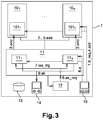
- the figure 3 illustrates a simplified diagram of a terminal comprising a sound assistant according to the invention.
- the terminal 1 comprises one or more processing devices 10 1 ... 10 n .
- the device of a processing 10 1 ... 10 n triggers in particular the execution of the processing by the processor 12.
- the sound assistant 11 comprises at least one sound assistance interface adapted to each treatment 11 1 ... 11 n .
- the terminal 1 comprises an input interface 15 such as a touch screen, a keyboard, a mouse ... for controlling the sound assistance interface adapted to each treatment 11 1 ... 11 n .
- an input interface 15 such as a touch screen, a keyboard, a mouse ... for controlling the sound assistance interface adapted to each treatment 11 1 ... 11 n .
- the terminal comprises a reproduction interface 14 for providing the control interface 101 1 ... 101 n and the sound assistance interface 11 1 ... 11 n .
- the terminal 1 comprises at least one memory 13 in which the data of the control interfaces and / or the audio assistance interfaces are stored.
- the user requires 1.tt_req by means of the input interface 15 the execution of a process that triggers the start of the corresponding processing device 10 1 ... 10 n .
- the processing device 10 1 ... 10 n activates the control interface 101 1 ... 101 n .
- the start of the processing device 10 1 ... 10 n in particular the activation of its control interface 101 1 ... 101 n , triggers 2. a supply of an activation controller 3.on by the sound assistant 11 at the control interface 101 1 ... 101 n .
- the control interface 101 1 ... 101 n activates the 5.exe sound support.
- the sound assistant 11 then provides a sound assistance interface 11 1 ... 11 n adapted to the processing performed.
- the sound assistant 11 uses the processor 12 of the terminal 1 to implement the sound assistance and require 6.as_req the activation of the sound assistance by the sound assistant 11 which provides the assistance interface sound 7.ias_trg.
- the user can then perform an action 8.a relative to the sound assistance interface 11 1 ... 11 n adapted to the processing performed.
- This action 8.a triggers a sound reproduction of the descriptive data 9.s k of the subprocessing associated with the controller selected by the action, in particular by means of the reproduction interface 14 comprising at least one or more loudspeakers.
- the Figures 4a, 4b and 4c illustrate examples of sound assistance interfaces according to the invention.
- the Figures 4a and 4b represent two different pages of the same audio assistance interface for a smartphone-type application.
- the Figures 4a and 4b represents two pages IAS 11 and IAS 12 of an IAS1 sound support interface of the same processing tt 1 .
- the IAS1 sound assistance interface includes an offc off controller.
- the IAS1 sound assistance interface is superimposed on the control interface of the tt 1 processing.
- Selection Controllers for which sound assistance is available are played uncluttered, while selection controllers for which sound assistance is not available are played back in a veiled manner.
- the IAS 11 page provides a sound assistance for 5 sub-processes named ttl 1 , ttl 2 , ttl 5 , ttl 7 , ttl 8 but not for the 3 other sub-treatments of the control interface named ttl 3 , ttl 4 , and ttl 6 .
- the page IAS 12 provides audio assistance for 3 subprocesses whose wording lbl 1 , lbl 2 , lbl 3 but not for the subprocessing lbl 4 .
- the figure 4c illustrates an IAS 3 (tt 3 ) sound support interface of a web page displayed by a browser on a tablet or computer.
- This page consists of text txt 1 ... txt 6 , lbl 1 , titles ttl 1 and descriptive data d 1 ... d 18 .
- the selection controllers for which sound assistance is available are reproduced in boxes (for example, the selection controllers associated with the descriptive data d 1 ... d 7 , texts txt 1 ... txt 3 , etc., knowing that the interface control is veiled.
- the assistance process can be integrated into service access, transaction and game access interfaces for use on nomadic terminals (tablets, smartphones).
- the invention also relates to a support.
- the information carrier may be any entity or device capable of storing at least one of the programs according to the invention.
- the medium may include storage means, such as a ROM, for example a CD ROM or a microelectronic circuit ROM or a magnetic recording means, for example a diskette or a hard disk.
- the information medium can be a transmissible medium such as an electrical or optical signal that can be conveyed via an electrical or optical cable, by radio or by other means.
- the program according to the invention may in particular be downloaded to a network, particularly of the Internet type.
- the information carrier may be an integrated circuit in which the program is incorporated, the circuit being adapted to execute or to be used in the execution of the method in question.
- the invention is implemented by means of software and / or hardware components.
- module can correspond to a software component or a hardware component as well.
- a software component corresponds to one or more computer programs, one or more subroutines of a program, or more generally to any element of a program or software capable of implementing a function or a program. function set as described above.
- a hardware component corresponds to any element of a hardware set (or hardware) capable of implementing a function or a set of functions.
Landscapes
- Engineering & Computer Science (AREA)
- Theoretical Computer Science (AREA)
- General Engineering & Computer Science (AREA)
- Software Systems (AREA)
- Physics & Mathematics (AREA)
- Human Computer Interaction (AREA)
- General Physics & Mathematics (AREA)
- General Health & Medical Sciences (AREA)
- Audiology, Speech & Language Pathology (AREA)
- Health & Medical Sciences (AREA)
- Multimedia (AREA)
- Telephone Function (AREA)
- User Interface Of Digital Computer (AREA)
Abstract
Description
- L'invention concerne un procédé d'assistance sonore d'interface de contrôle d'un terminal, un programme et un terminal. Notamment, l'assistance sonore est fournie pour une interface de contrôle d'un traitement mis en oeuvre par le terminal.
- L'intégration d'éléments sonores dans des interfaces d'un terminal tel qu'un ordinateur ou un smartphone est actuellement effectuée en associant un élément sonore à une fonction. Elle permet de fournir à l'utilisateur une information sonore sur un état du service, une notification sonore du service, un retour sonore sur une action de l'utilisateur relativement au service.
- Des éléments sonores sont disponibles dans l'environnement bureautique tel que Windows quel que soit le système ou OS (notamment iOS, Android...). Les éléments sonores sont alors associés à des actions de l'utilisateur. Cela signifie que les éléments sonores sont déclenchés par une action de l'utilisateur et donc entendus par l'utilisateur après une action de sa part sur l'interface du terminal. Il s'agit donc de retour sonore sur l'action réalisée, tel que par exemple, le bruit de papier froissé entendu après avoir demandé la suppression d'un fichier.
- Pour activer, désactiver, modifier ces éléments sonores (synthèse vocale, évènements audio), l'utilisateur du terminal doit ouvrir la fenêtre de paramétrage du système (iOS, Android...) du terminal.
- Il existe aussi des solutions pour aveugles ou malvoyants avec des procédés comme TalkBack sur Android ou VoiceOver sur IOS... Ces environnements dédiés aux personnes aveugles ou malvoyantes génèrent de la synthèse vocale pour permettre à l'utilisateur d'explorer toute l'interface et entendre vocalement les informations contenues sur l'écran pour pouvoir sélectionner les actions souhaitées.
- Afin de permettre aisément à l'utilisateur d'accéder à l'assistance vocale, les actions simples de sélection (clic de souris, tap tactile...) et de défilement (glissé avec un doigt, déplacement de la souris...) sont réservées à l'assistance vocale. Par conséquent, dans ces environnements spécifiques d'assistance vocale, les règles de défilement classiques proposées par les interfaces sont changées. L'exploration se fait par déplacement du focus, le défilement sur plusieurs pages (c'est-à-dire au-delà de la zone visible de l'écran) ne se fait plus pas un simple glisser d'un doigt mais par un geste dédié inconnu du grand public tel que un glissé de 3 doigts simultanément en contact avec l'écran. L'utilisateur du terminal mettant en oeuvre cette assistance vocale doit alors apprendre les normes d'interaction spécifiques à cet environnement avec des risques d'erreurs dans les services fournis liés à des manipulations erronées ou à une manipulation intervenant après une période de temps supérieur à une temporisation prévue par une interface lors de son affichage...
- En outre, pour activer/désactiver cet environnement d'assistance vocale, l'utilisateur du terminal doit aller dans les paramètres d'accessibilité du terminal.
- Un des buts de la présente invention est d'apporter des améliorations par rapport à l'état de la technique.
- Un objet de l'invention est un procédé d'assistance sonore d'interface de contrôle d'un terminal, ledit procédé d'assistance sonore comporte, suite au déclenchement d'une exécution par le terminal d'un traitement activant une interface de contrôle permettant à un utilisateur du terminal d'interagir avec le traitement exécuté, une fourniture à l'interface de contrôle active d'un contrôleur d'activation d'assistance permettant à l'utilisateur du terminal d'activer une assistance sonore adaptée à l'interface de contrôle active.
- Ainsi, le risque d'erreur d'interaction est réduit car l'utilisateur peut activer plus facilement l'assistance sonore puisqu'il n'a pas besoin de revenir aux paramètres du système du terminal pour activer l'assistance sonore.
- Avantageusement, le procédé d'assistance sonore comporte, suite à une activation d'une assistance sonore d'une interface de contrôle active d'un traitement exécuté par le terminal, une fourniture à une interface active du traitement exécuté d'un contrôleur de désactivation d'assistance permettant à l'utilisateur du terminal de désactiver l'assistance sonore de l'interface de contrôle du traitement exécuté.
- Ainsi, le risque d'erreur d'interaction est réduit car l'utilisateur peut désactiver plus facilement l'assistance sonore puisqu'il n'a pas besoin de revenir aux paramètres du système du terminal pour désactiver l'assistance sonore.
- En outre, l'interface d'assistance sonore d'un traitement ne nécessite pas de prévoir des contrôleurs spécifiques pour déclencher l'exécution des sous-traitements du traitement puisque l'utilisateur bascule facilement de l'interface de contrôle d'un traitement à l'interface d'assistance sonore du traitement.
- Avantageusement, le procédé d'assistance sonore comporte suite à une activation d'une assistance sonore, un remplacement, uniquement et au moins pour l'un des contrôleurs de sélection de l'interface de contrôle active, d'un déclenchement d'une exécution d'un sous-traitement associé au contrôleur de sélection de l'interface de contrôle active par un déclenchement d'une reproduction sonore de données descriptives relatives au sous-traitement associé au contrôleur de sélection.
- Ainsi, l'assistance sonore est fourni non pas sur une seule page de l'interface de contrôle du traitement mais sur toutes ses pages lorsqu'elle en comporte plusieurs et sans nécessité l'ajout de contrôleur de défilement spécifique pour l'interface d'assistance sonore.
- Avantageusement, le procédé d'assistance sonore comporte une génération d'une interface d'assistance sonore à partir d'une modification uniquement des contrôleurs de sélection de l'interface de contrôle active.
- Ainsi, l'interface d'assistance sonore est généré non pas pour une seule page de l'interface de contrôle du traitement mais pour toutes ses pages lorsqu'elle en comporte plusieurs et sans nécessité d'ajout de contrôleur de défilement spécifique pour l'interface d'assistance sonore.
- Avantageusement, la génération d'une interface d'assistance sonore pour une interface de contrôle d'un traitement est déclenchée dès qu'au moins un des événements suivants se produit:
- Une activation d'une assistance sonore à partir d'une interface de contrôle d'un traitement ;
- Une installation du procédé d'assistance sonore sur le terminal ;
- Une installation d'un traitement sur le terminal ;
- Une mise à jour d'un traitement sur le terminal.
- Ainsi, le déclenchement de la génération d'une interface d'assistance sonore dès l'activation d'une assistance sonore à partir d'une interface de contrôle limite la génération d'interface d'assistance sonore uniquement à celles utilisées.
- Alors que le déclenchement de la génération d'une interface d'assistance sonore suite à une installation du procédé d'assistance sonore et/ou d'un traitement et/ou d'une mise à jour d'un traitement sur le terminal permet de réduire le délai de mise en oeuvre de l'assistance sonore lors de son activation.
- Avantageusement, la génération de l'interface d'assistance sonore comporte un stockage dans le terminal en association avec le traitement de l'interface d'assistance sonore générée, permettant qu'une activation ultérieure de l'assistance sonore pour l'interface de contrôle du traitement déclenche la mise en oeuvre de l'interface d'assistance sonore stockée en association avec le traitement.
- Ainsi, le stockage d'une interface d'assistance sonore déjà générée permet de réduire le délai de mise en oeuvre de l'assistance sonore lors de son activation. En outre, cette réduction du délai est possible tout en réduisant l'utilisation des ressources lors que la génération est déclenchée uniquement sur activation de l'assistance sonore. En effet, une première activation d'assistance sonore déclenche la génération d'une interface d'assistance sonore uniquement pour ce traitement limitant le nombre d'interfaces d'assistance sonore générées et stockées relativement au nombre de traitements disponibles sur le terminal. Le stockage de cette interface d'assistance sonore générée lors d'une première activation permet de l'utiliser sans délai de génération lors des activations ultérieures.
- Avantageusement, le procédé d'assistance sonore comporte une activation de l'assistance sonore sur commande d'un utilisateur du terminal déclenchant une reproduction d'une interface d'assistance sonore pour le traitement en cours d'exécution, l'interface d'assistance sonore ayant été générée à partir d'une modification uniquement des contrôleurs de sélection de l'interface de contrôle active.
- Ainsi, l'utilisateur commande la reproduction d'une interface propre à l'assistance sonore qui est une copie conforme de l'interface pour laquelle l'assistance est fournie facilitant l'apprentissage de l'interface de contrôle au moyen de l'assistance sonore.
- Avantageusement, le procédé d'assistance sonore comporte une activation de l'assistance sonore sur commande d'un utilisateur du terminal déclenchant une reproduction d'une interface d'assistance sonore en superposition à l'interface de contrôle active reproduite, l'interface d'assistance sonore ayant été générée à partir d'une modification uniquement des contrôleurs de sélection de l'interface de contrôle active.
- Ainsi, l'utilisateur commande la reproduction en superposition d'une interface propre à l'assistance sonore qui est une copie conforme de l'interface pour laquelle l'assistance est fournie facilitant l'apprentissage de l'interface de contrôle au moyen de l'assistance sonore non seulement en raison de la copie conforme mais aussi de la superposition permettant à l'utilisateur de se familiariser avec l'interface de contrôle.
- Avantageusement, l'interface de contrôle est au moins d'un des types suivants:
- Une interface graphique,
- Une interface tactile.
- Un objet de l'invention est encore un procédé de traitement apte à être exécuté par un terminal, le procédé de traitement comportant une activation d'une interface de contrôle d'un terminal permettant à un utilisateur du terminal d'interagir avec le procédé de traitement exécuté, caractérisé en ce que le procédé de traitement comporte, suite au déclenchement d'une exécution par le terminal du procédé de traitement, une fourniture à l'interface de contrôle active d'un contrôleur d'activation d'une assistance sonore permettant à l'utilisateur du terminal d'activer une assistance sonore adaptée à l'interface de contrôle active.
- Avantageusement, selon une implémentation de l'invention, les différentes étapes du procédé selon l'invention sont mises en oeuvre par un logiciel ou programme d'ordinateur, ce logiciel comprenant des instructions logicielles destinées à être exécutées par un processeur de données d'un dispositif faisant partie d'un terminal et étant conçus pour commander l'exécution des différentes étapes de ce procédé.
- L'invention vise donc aussi un programme comprenant des instructions de code de programme pour l'exécution des étapes du procédé d'assistance sonore et/ou du procédé de traitement lorsque ledit programme est exécuté par un processeur.
- Ce programme peut utiliser n'importe quel langage de programmation et être sous la forme de code source, code objet ou code intermédiaire entre code source et code objet tel que dans une forme partiellement compilée ou dans n'importe quelle autre forme souhaitable.
- Un objet de l'invention est aussi un terminal comportant :
- un processeur exécutant au moins un traitement ;
- au moins une interface de contrôle d'un des au moins un traitement ;
- Les caractéristiques et avantages de l'invention apparaîtront plus clairement à la lecture de la description, faite à titre d'exemple, et des figures s'y rapportant qui représentent :
-
Figures 1a et1b , des schémas simplifiés d'un procédé d'assistance sonore d'une interface de contrôle d'un terminal, selon l'invention, respectivement délivré ou non au moyen d'une interface d'assistance sonore selon l'invention; -
Figures 2a et2b , un schéma simplifié des échanges dans un terminal mettant en oeuvre l'invention, respectivement lors du démarrage de l'exécution d'un traitement par le terminal, lors de l'activation de l'assistant sonore pour lafigure 2a , et lorsque l'assistant sonore est actif, lors et après l'arrêt de l'assistant sonore pour lafigure 2b ; -
Figure 3 , un schéma simplifié d'un terminal comportant un assistant sonore selon l'invention ; -
Figures 4a, 4b et 4c , des exemples d'interfaces d'assistance sonore selon l'invention, respectivement pour un traitement de type application pour smartphone pour lesfigures 4a et 4b , pour une page internet afficher par un navigateur sur une tablette ou un ordinateur. - Les
figures 1a et1b illustrent des schémas simplifiés d'un procédé d'assistance sonore PAS d'une interface de contrôle d'un terminal, selon l'invention. Lafigure 1a illustre un schéma simplifié d'un procédé d'assistance sonore PAS d'une interface de contrôle d'un terminal dans lequel l'assistance sonore est délivrée sur l'interface de contrôle. - Le procédé d'assistance sonore PAS comporte, suite au déclenchement tt_req d'une exécution exe(tt) par le terminal d'un traitement activant act(ic) une interface de contrôle permettant à un utilisateur du terminal d'interagir avec le traitement exécuté, une fourniture onc_prv à l'interface de contrôle active d'un contrôleur d'activation d'assistance onc permettant à l'utilisateur du terminal d'activer une assistance sonore adaptée à l'interface de contrôle active.
- En particulier, le procédé d'assistance sonore PAS comporte, suite à une activation d'une assistance sonore as_req d'une interface de contrôle active d'un traitement exécuté par le terminal, une fourniture offc_prv à une interface active du traitement exécuté d'un contrôleur de désactivation offc d'assistance permettant à l'utilisateur du terminal de désactiver l'assistance sonore de l'interface de contrôle du traitement exécuté.
- En particulier, le procédé d'assistance sonore PAS comporte, suite à une activation d'une assistance sonore, un remplacement rplc(icck,icc'k), uniquement et au moins pour l'un des contrôleurs de sélection de l'interface de contrôle active icck, d'un déclenchement d'une exécution d'un sous-traitement associée exe(sttk) au contrôleur de sélection icck de l'interface de contrôle active par un déclenchement d'une reproduction sonore de données descriptives rpr(sk) relatives au sous-traitement associé au contrôleur de sélection icck.
- En particulier, l'interface de contrôle ic est au moins d'un des types suivants:
- Une interface graphique (par interface graphique, dite aussi interface visuelle, est entendue une interface lisible tel qu'une interface affichable),
- Une interface tactile.
- Le procédé d'assistance sonore PAS selon l'invention est proposé pour au moins un procédé de traitement PT apte à être exécuté par un terminal, le procédé de traitement PT comportant une activation act(ic) d'une interface de contrôle d'un terminal permettant à un utilisateur du terminal d'interagir avec le procédé de traitement exécuté.
- En particulier, un procédé de traitement PT comporte une exécution d'un traitement exe(tt) suite à une requête de démarrage du traitement tt_req provenant notamment d'une interface de contrôle du terminal. Un utilisateur U demande notamment l'exécution du traitement en sélectionnant un contrôleur de sélection de l'interface de contrôle du terminal associé au déclenchement de l'exécution du traitement.
- Si le traitement tt exécuté nécessite une interaction avec l'utilisateur, l'exécution du traitement exe(tt) déclenche ic_trg, éventuellement, une activation une interface de contrôle propre au traitement act(ic).
- En particulier, la requête de traitement tt_req ou l'exécution du traitement exe(tt) ou le déclenchement de l'activation de l'interface de contrôle ic_trg ou l'activation de l'interface de contrôle act(ic) déclenche directement ou indirectement la fourniture du contrôleur d'activation d'assistance sonore à l'interface de contrôle onc-prv.
- En particulier, le procédé d'assistance sonore PAS comporte une détection dtct de déclenchement de l'exécution par le terminal d'un traitement activant une interface de contrôle permettant à un utilisateur du terminal d'interagir avec le traitement exécuté. Notamment, la détection détecte soit l'un des signaux de requête de traitement tt_req ou de déclenchement de l'activation de l'interface de contrôle ic_trg, soit l'exécution du traitement exe(tt) ou l'activation de l'interface de contrôle act(ic).
- En particulier, un procédé de traitement PT selon l'invention comporte une ou plusieurs des étapes du procédé d'assistance sonore PAS. Notamment, le procédé de traitement PT selon l'invention comporte, suite au déclenchement tt_req d'une exécution par le terminal du procédé de traitement, une fourniture onc_prv à l'interface de contrôle active d'un contrôleur d'activation d'une assistance sonore permettant à l'utilisateur du terminal d'activer une assistance sonore adaptée à l'interface de contrôle active. Dans le cas où le procédé d'assistance sonore comporte une détection dtct, le contrôle d'activation d'assistance onc est fourni à l'interface de contrôle active détectée.
- Ainsi, le procédé de traitement PT fournit une interface de contrôle rpr(ic+onc) du traitement comportant un contrôleur d'activation d'assistance sonore. La fourniture de l'interface de contrôle du traitement comporte l'association d'un ou plusieurs contrôleurs d'une interface de contrôle d'un terminal (bouton poussoir, zone d'un écran...) à l'exécution de sous-traitement(s) du traitement exécuté et, notamment, la reproduction de l'interface de contrôle du traitement sur un écran dans le cas d'une interface graphique et/ou tactile.
- En particulier, la fourniture de l'interface de contrôle d'un traitement repr(ic+onc) utilise une base de données d'interface de contrôle IC_BDD dans laquelle sont stockées chaque association d'un contrôleur d'une interface de contrôle d'un terminal pour un traitement donné icck à l'exécution de sous-traitement(s) du traitement donné exe(sttk).
- En particulier, si l'interface de contrôle est une interface graphique, le contrôleur d'activation est une zone de l'interface graphique, un bouton poussoir du terminal... associé à l'activation de l'assistance sonore. Dans le cas de la zone de l'interface graphique, un texte sera éventuellement affiché sur cette zone permettant à l'utilisateur du terminal de comprendre que la sélection de cette zone soit associée à l'activation de l'assistance sonore. La zone ou le bouton associé à l'activation est, par exemple, choisi dans un angle de l'interface de contrôle afin de faciliter son accès à l'utilisateur (en particulier malvoyant).
- En particulier, le procédé d'assistance sonore PAS comporte une activation d'une assistance sonore exe(as) adaptée à l'interface de contrôle active sur commande du contrôleur d'activation onc fourni par un utilisateur du terminal. Notamment, un utilisateur U du terminal exécutant un traitement demande l'activation de l'assistance sonore en sélectionnant le contrôleur d'activation slct(onc).
- En particulier, le procédé de traitement comporte, suite à cette demande slct(onc), une exécution du contrôleur exe(onc) déclenchant as_req l'activation de l'assistance sonore, notamment l'exécution de l'assistance sonore exe(as).
- En particulier, l'exécution de l'assistance sonore exe(as) comporte notamment le remplacement rplc dans au moins un contrôleur icck de sélection de l'interface de contrôle active de l'exécution d'un sous-traitement associé exe(sstk) par une reproduction sonore d'un descriptif du sous traitement associé rpr(sk). Cette nouvelle association est notamment stockée dans une base de données d'assistance AS_BDD.
- En particulier, dans le cas d'une interface graphique, le remplacement rplc dans un contrôleur icck comporte en outre l'ajout de données graphiques dg+ k aux données graphiques associées dgk au contrôleur modifié icc'k par ce remplacement. Ainsi, les données graphiques modifiées (dgk,dg+ k) reproduites sur l'interface de contrôle modifiée ic' par l'assistance sonore lors du remplacement rplc permettent à l'utilisateur d'identifier le(s) contrôleur(s) pour le(s)quel(s) une assistance sonore est fournie.
- En particulier, l'exécution de l'assistance sonore fournit les données de l'interface de contrôle modifiée ic' par ce remplacement afin que l'interface de contrôle modifiée soit activée et proposée à l'utilisateur U du terminal.
- En particulier, le procédé d'assistance sonore PAS comporte, suite à une activation d'une assistance sonore as_req, une fourniture offc_prv à une interface active, en l'occurrence à l'interface de contrôle modifiée du traitement exécuté ic', d'un contrôleur de désactivation d'assistance offc.
- Alors, le procédé de traitement PT comporte la fourniture rpr(ic'+offc) de l'interface de contrôle modifiée ic' intégrant le contrôleur de désactivation offc.
- En particulier, un utilisateur souhaitant une assistance sonore relative à un contrôleur icck de l'interface de contrôle sélectionne le contrôleur correspondant slct(icc'k) sur l'interface de contrôle modifiée fournie ic'. Cette sélection slct(icc'k) entraine une exécution du contrôleur modifié exe(icc'k) par le procédé de traitement PT qui déclenche la reproduction sonore du descriptif du sous-traitement associé au contrôleur rpr(sk). La reproduction sonore du descriptif est notamment une vocalisation du descriptif affiché ou un bruit associé au sous-traitement (par exemple un bruit de pièce de monnaie s'entrechoquant pour un paiement, un froissement de papier pour une suppression, un « clink » pour une création...).
- En particulier, le procédé de traitement et/ou le procédé d'assistance sonore comporte une désactivation de l'assistance sonore exe(offc) sur commande du contrôleur de désactivation offc fourni par un utilisateur du terminal. Notamment, un utilisateur U du terminal exécutant un traitement demande une désactivation de l'assistance sonore en sélectionnant le contrôleur d'activation slct(offc). La désactivation exe(offc) déclenche alors la fourniture de l'interface de contrôle rpr(ic+onc) du traitement comportant le contrôleur d'activation d'assistance sonore par le procédé de traitement PT.
- Le procédé d'assistance sonore selon l'invention fournit au moins un contrôleur permettant de déclencher l'activation ou la désactivation d'assistance sonore. Dans le cas où le procédé d'assistance sonore fournit, par exemple, un seul contrôleur disposant d'au moins deux statuts, le déclenchement d'une activation ou d'une désactivation de l'assistance sonore est fonction du statut du contrôleur. Par exemple, lorsque le statut du contrôleur passe d'un statut désactivé à un statut activé ou d'un statut 0 à un statut 1..., il déclenche l'activation de l'assistance sonore. Inversement, lorsque le statut du contrôleur passe d'un statut activé à un statut désactivé ou d'un statut 1 à un statut 0..., il déclenche la désactivation de l'assistance sonore.
- La
figure 1b illustre un schéma simplifié d'un procédé d'assistance sonore d'une interface de contrôle d'un terminal dans lequel l'assistance sonore est délivrée sur une interface spécifique d'assistance sonore selon l'invention. - Le procédé d'assistance sonore PAS comporte, suite au déclenchement tt_req d'une exécution exe(tt) par le terminal d'un traitement activant act(ic) une interface de contrôle permettant à un utilisateur du terminal d'interagir avec le traitement exécuté, une fourniture onc_prv à l'interface de contrôle active d'un contrôleur d'activation d'assistance onc permettant à l'utilisateur du terminal d'activer une assistance sonore adaptée à l'interface de contrôle active.
- En particulier, le procédé d'assistance sonore PAS comporte, suite à une activation d'une assistance sonore as_req d'une interface de contrôle active d'un traitement exécuté par le terminal, une fourniture offc_prv à une interface active du traitement exécuté d'un contrôleur de désactivation offc d'assistance permettant à l'utilisateur du terminal de désactiver l'assistance sonore de l'interface de contrôle du traitement exécuté.
- En particulier, le procédé d'assistance sonore PAS comporte, suite à une activation d'une assistance sonore, un remplacement rplc(icck,icc'k), uniquement et au moins pour l'un des contrôleurs de sélection de l'interface de contrôle active icck, d'un déclenchement d'une exécution d'un sous-traitement associée exe(sttk) au contrôleur de sélection icck de l'interface de contrôle active par un déclenchement d'une reproduction sonore de données descriptives rpr(sk) relatives au sous-traitement associé au contrôleur de sélection icck.
- En particulier, l'interface de contrôle ic est au moins d'un des types suivants:
- Une interface tactile,
- Une interface graphique.
- Le procédé d'assistance sonore PAS selon l'invention est proposé pour au moins un procédé de traitement PT apte à être exécuté par un terminal, le procédé de traitement PT comportant une activation act(ic) d'une interface de contrôle d'un terminal permettant à un utilisateur du terminal d'interagir avec le procédé de traitement exécuté.
- En particulier, un procédé de traitement PT comporte une exécution d'un traitement exe(tt) suite à une requête de démarrage du traitement tt_req provenant notamment d'une interface de contrôle du terminal. Un utilisateur U demande notamment l'exécution du traitement en sélectionnant un contrôleur de sélection de l'interface de contrôle du terminal associé au déclenchement de l'exécution du traitement.
- Si le traitement tt exécuté nécessite une interaction avec l'utilisateur, l'exécution du traitement exe(tt) déclenche ic_trg, éventuellement, une activation une interface de contrôle propre au traitement act(ic).
- En particulier, la requête de traitement tt_req ou l'exécution du traitement exe(tt) ou le déclenchement de l'activation de l'interface de contrôle ic_trg ou l'activation de l'interface de contrôle act(ic) déclenche directement ou indirectement la fourniture du contrôleur d'activation d'assistance sonore à l'interface de contrôle onc-prv.
- En particulier, le procédé d'assistance sonore PAS comporte une détection dtct de déclenchement de l'exécution par le terminal d'un traitement activant une interface de contrôle permettant à un utilisateur du terminal d'interagir avec le traitement exécuté. Notamment, la détection détecte soit l'un des signaux de requête de traitement tt_req ou de déclenchement de l'activation de l'interface de contrôle ic_trg, soit l'exécution du traitement exe(tt) ou l'activation de l'interface de contrôle act(ic).
- En particulier, un procédé de traitement PT selon l'invention comporte une ou plusieurs des étapes du procédé d'assistance sonore PAS. Notamment, le procédé de traitement PT selon l'invention comporte, suite au déclenchement tt_req d'une exécution par le terminal du procédé de traitement, une fourniture onc_prv à l'interface de contrôle active d'un contrôleur d'activation d'une assistance sonore permettant à l'utilisateur du terminal d'activer une assistance sonore adaptée à l'interface de contrôle active. Dans le cas où le procédé d'assistance sonore comporte une détection dtct, le contrôle d'activation d'assistance onc est fourni à l'interface de contrôle active détectée.
- Ainsi, le procédé de traitement PT fournit une interface de contrôle rpr(ic+onc) du traitement comportant un contrôleur d'activation d'assistance sonore. La fourniture de l'interface de contrôle du traitement comporte l'association d'un ou plusieurs contrôleurs d'une interface de contrôle d'un terminal (bouton poussoir, zone d'un écran...) à l'exécution de sous-traitement(s) du traitement exécuté et, notamment, la reproduction de l'interface de contrôle du traitement sur un écran dans le cas d'une interface graphique et/ou tactile.
- En particulier, la fourniture de l'interface de contrôle d'un traitement repr(ic+onc) utilise une base de données d'interface de contrôle IC_BDD dans laquelle sont stockées chaque association d'un contrôleur d'une interface de contrôle d'un terminal pour un traitement donné icck à l'exécution de sous-traitement(s) du traitement donné exe(sttk).
- En particulier, si l'interface de contrôle est une interface graphique, le contrôleur d'activation est une zone de l'interface graphique, un bouton poussoir du terminal... associé à l'activation de l'assistance sonore. Dans le cas de la zone de l'interface graphique, un texte sera éventuellement affiché sur cette zone permettant à l'utilisateur du terminal de comprendre que la sélection de cette zone soit associée à l'activation de l'assistance sonore. La zone ou le bouton associé à l'activation est, par exemple, choisi dans un angle de l'interface de contrôle afin de faciliter son accès à l'utilisateur (en particulier malvoyant).
- En particulier, le procédé d'assistance sonore PAS comporte une activation d'une assistance sonore exe(as) adaptée à l'interface de contrôle active sur commande du contrôleur d'activation onc fourni par un utilisateur du terminal. Notamment, un utilisateur U du terminal exécutant un traitement demande l'activation de l'assistance sonore en sélectionnant le contrôleur d'activation slct(onc).
- En particulier, le procédé de traitement comporte, suite à cette demande slct(onc), une exécution du contrôleur exe(onc) déclenchant as_req l'activation de l'assistance sonore, notamment l'exécution de l'assistance sonore exe(as).
- En particulier, l'exécution de l'assistance sonore exe(as) comporte notamment le remplacement rplc dans au moins un contrôleur icck de sélection de l'interface de contrôle active de l'exécution d'un sous-traitement associé exe(sstk) par une reproduction sonore d'un descriptif du sous traitement associé rpr(sk). Cette nouvelle association est notamment stockée dans une base de données d'assistance AS_BDD.
- En particulier, le procédé d'assistance sonore comporte une génération gen(ic,{icck},{icc'k}) d'une interface d'assistance sonore ias(tt) à partir d'une modification uniquement des contrôleurs de sélection icck de l'interface de contrôle active.
- En particulier, la génération gen d'une interface d'assistance sonore pour une interface de contrôle d'un traitement ic est déclenchée dès qu'au moins un des événements suivants se produit:
- Une activation as_req d'une assistance sonore à partir d'une interface de contrôle d'un traitement ;
- Une installation du procédé d'assistance sonore sur le terminal (non illustré) ;
- Une installation d'un traitement sur le terminal (non illustré);
- Une mise à jour d'un traitement sur le terminal (non illustré).
- En effet, l'interface d'assistance sonore, notamment, placée en superposition de l'interface de contrôle peut être générée de différentes façons :
- Une première solution consiste à précalculer l'ensemble des données de l'interface d'assistance sonore (notamment des informations d'association des contrôleurs de sélection et des déclencheurs de reproduction de données descriptives de sous-traitements associés) à partir des données de l'interface de contrôle (notamment des informations d'association des contrôleurs de sélection et des déclencheurs d'exécution de sous-traitements associés). L'interface d'assistance sonore est générée a priori au moment de la génération de l'interface de contrôle du traitement. Ainsi, chaque dispositif de traitement disposerait de son propre dispositif d'assistance sonore embarqué lors de sa fabrication.
- Une deuxième solution consiste à générer à la volée une nouvelle fenêtre d'interface d'assistance sonore à partir d'une analyse rapide de la fenêtre d'interface de contrôle affichée et ceci lors de l'exécution du traitement contrairement à la méthode précédente qui impliquait la génération de l'interface d'assistance sonore lors de la conception du procédé de traitement). Cette analyse parcourt la hiérarchie, notamment graphique, des contrôleurs de sélection de la fenêtre de l'interface de contrôle pour extraire les contrôleurs associés à une reproduction sonore de données descriptives ou évènement sonore. A partir de la position finale de chaque contrôleur dans l'interface de contrôle, une représentation de l'interface d'assistance sonore est générée et affichée en superposition de la fenêtre initiale de l'interface de contrôle.
- En particulier, la génération gen de l'interface d'assistance sonore comporte un stockage ias_mem dans le terminal en association avec le traitement de l'interface d'assistance sonore générée AS_BDD, permettant qu'une activation ultérieure de l'assistance sonore pour l'interface de contrôle du traitement déclenche la mise en oeuvre de l'interface d'assistance sonore stockée en association avec le traitement.
- En particulier, le procédé d'assistance sonore PAS comporte une fourniture act_ias d'une interface d'assistance sonore ias(tt) adapté au traitement en cours d'exécution. Eventuellement, la fourniture de l'interface d'assistance sonore act_ias est délenchée par l'activation de l'assistance sonore exe(as). L'interface d'assistance sonore est alors active.
- En particulier, le procédé d'assistance sonore PAS comporte une reproduction d'une interface d'assistance sonore orpr(ias) pour le traitement en cours d'exécution, l'interface d'assistance sonore ayant été générée à partir d'une modification uniquement des contrôleurs de sélection de l'interface de contrôle active. Par exemple l'activation de l'assistance sonore exe(as) déclenche la reproduction de l'interface d'assistance sonore orpr(ias).
- Notamment, l'interface d'assistance sonore est reproduite orpr(ias) pour le traitement en cours d'exécution à la place de l'interface de contrôle active rpr(ic). Par exemple, soit le déclenchement ias_trg de la reproduction de l'interface d'assistance sonore orpr(ias), soit la reproduction de l'interface d'assistance sonore orpr(ias) déclenche l'arrêt de la fourniture de l'interface de contrôle rpr(ic), notamment de sa reproduction. L'interface de contrôle ic du traitement exécuté est alors inactive.
- En particulier, le procédé d'assistance sonore PAS comporte une reproduction d'une interface d'assistance sonore orpr(ias) en superposition à l'interface de contrôle active reproduite. Ainsi, l'interface d'assistance sonore reproduite est active, et l'interface de contrôle reproduite sous l'interface d'assistance sonore est aussi éventuellement active. Sur la
figure 1b , la reproduction rpr(ic+onc) de l'interface de contrôle est hachuré pour représenter le fait que l'interface de contrôle reproduite peut être désactivé pendant la reproduction de l'interface d'assistance sonore orpr(ias). - L'utilisateur peut ainsi facilement basculer de l'interface de contrôle à l'interface d'assistance et inversement évitant la génération d'une interface spécifique comportant la génération de nouveaux contrôleurs spécifiques pour l'interface d'assistance sonore donc réduisant les couts de calculs de génération lié à l'assistance sonore et les besoins en ressources notamment de stockage d'interface d'assistance sonore.
- En particulier, dans le cas d'une interface graphique, l'interface d'assistance sonore ias est générée à partir de l'interface de contrôle ic(tt) dans laquelle le remplacement rplc dans un contrôleur icck comporte en outre l'ajout de données graphiques dg+ k aux données graphiques associées dgk au contrôleur modifié iasc'k par ce remplacement. Ainsi, les données graphiques modifiées (dgk,dg+ k) reproduites sur l'interface de contrôle modifiée ic' par l'assistance sonore lors du remplacement rplc permettent à l'utilisateur d'identifier le(s) contrôleur(s) pour le(s)quel(s) une assistance sonore est fournie.
- Ainsi, une nouvelle fenêtre de l'interface d'assistance sonore affichée en superposition de la fenêtre initiale de l'interface de contrôle et générée par l'une ou l'autre des méthodes suscitées contient :
- Les règles initiales d'interaction dans le traitement qui vont permettre de distinguer celles qui concernent :
- ∘ Les actions sur un contrôleur de sélection (ou élément graphique) spécifique dont l'exécution est inhibée durant l'assistance sonore ;
- ∘ Les actions qui vont permettre de se déplacer dans l'interface de contrôle/d'assistance sonore du traitement (de faire défiler) et qui sont conservées à l'identique durant l'assistance sonore
- Et/ou des indicateurs des contrôleurs de sélection associés à une reproduction sonore de données descriptives
- Et/ou des données graphiques additionnelles des contrôleurs de sélection sur l'interface d'assistance sonore (contour des contrôleurs de sélections ou halo ou icône spécifique incitant l'utilisateur à l'écoute...).
- La notion de déplacement dans le traitement ou service fait référence à des déplacements dans la page ou dans l'interface active du traitement (interface de contrôle ou interface d'assistance sonore) par manipulation d'une zone de la fenêtre et non d'un contrôleur de sélection correspondant généralement à une cellule/zone précise d'une interface graphique, cette dernière faisant référence à un élément texte, un bouton, ou une icône par exemple. La notion de déplacement permet de rendre visible une partie de l'interface active non visible par défaut (ex : accès à des éléments dans une liste, à des menus, des onglets fonctionnels notamment en effleurant un terminal mobile en partant d'un de ses bords vers le côté opposé, etc.).
- La fenêtre de l'interface d'assistance sonore superposée à la fenêtre d'interface de contrôle peut être affichée sous différentes formes selon les contraintes :
- Un voile avec une forte opacité permettant d'afficher des données graphiques spécifiques ;
- Une image superposée à la fenêtre initiale ne montrant que les contrôleurs de sélection associée à un son, etc.
- La fenêtre de l'interface d'assistance sonore superposée à la fenêtre d'interface de contrôle peut afficher tout ou partie des contrôleurs de sélection associés à un évènement sonore. L'affichage d'une page de l'interface d'assistance sonore peut se diviser en plusieurs fenêtres en prenant en compte l'architecture de la page. Chaque fenêtre affiche un focus sur des contrôleurs de sélection spécifiques regroupés par exemple par niveau d'affichage hiérarchiques (en-tête de page, paragraphes, thèmes traités, flèches de déplacement, bouton de sélection, etc.). L'activation automatique du défilement des fenêtres correspondant à une même page pourra se faire au moyen d'un double tap ou double clic ou avec une temporisation paramétrée. L'activation manuelle du défilement pourra se faire par un tap ou clic sur le masque de la fenêtre (c'est-à-dire en dehors des contrôleurs de sélection).
- En particulier, l'exécution de l'assistance sonore fournit les données de l'interface d'assistance sonore ias(tt) afin que l'interface d'assistance sonore soit activée act_ias et proposée orpr(ias) à l'utilisateur U du terminal. Notamment, l'exécution de l'assistance sonore déclenche ias_trg une fourniture act_ias des données de l'interface d'assistance sonore qui est alors active.
- En particulier, le procédé d'assistance sonore PAS comporte, suite à une activation d'une assistance sonore as_req, une fourniture offc_prv à l'interface active, en l'occurrence l'interface d'assistance sonore ias, d'un contrôleur de désactivation d'assistance offc.
- Alors, le procédé d'assistance sonore PAS comporte la fourniture orpr(ias⊃offc) de l'interface d'assistance sonore ias intégrant le contrôleur de désactivation offc.
- En particulier, un utilisateur souhaitant une assistance sonore relative à un contrôleur icck de l'interface de contrôle sélectionne le contrôleur correspondant slct(iasck) sur l'interface d'assistance sonore fournie ias. Cette sélection slct(iasck) entraine une exécution du contrôleur modifié exe(iasc'k) par le procédé d'assistance sonore PAS qui déclenche la reproduction rpr(sk) sonore du descriptif du sous-traitement associé au contrôleur.
- En particulier, le procédé d'assistance sonore comporte une désactivation de l'assistance sonore exe(offc) sur commande du contrôleur de désactivation offc fourni par un utilisateur du terminal. Notamment, un utilisateur U du terminal exécutant un traitement demande une désactivation de l'assistance sonore en sélectionnant le contrôleur d'activation slct(offc). La désactivation exe(offc) déclenche alors la fourniture de l'interface de contrôle rpr(ic+onc) du traitement exécuté comportant le contrôleur d'activation d'assistance sonore par le procédé de traitement PT.
- Dans un mode de réalisation particulier, le procédé d'assistance sonore est mis en oeuvre sous la forme d'un programme comprenant des instructions de code de programme pour l'exécution des étapes du procédé d'assistance sonore lorsque ledit programme est exécuté par un processeur.
- Dans un mode de réalisation particulier, le procédé de traitement est mis en oeuvre sous la forme d'un programme comprenant des instructions de code de programme pour l'exécution des étapes du procédé de traitement lorsque ledit programme est exécuté par un processeur.
- L'invention vise les traitements aussi nommés services accessibles sur les terminaux, à l'aide d'interfaces de contrôles telles qu'une interface numérique, en particulier une interface graphique ou tactile. Elle propose un procédé d'assistance sonore de l'interface de contrôle du traitement permettant à l'utilisateur novice notamment un utilisateur ayant des difficultés de lecture : illettrisme, malvoyance... d'explorer les contrôleurs de sélection de l'interface en lui transmettant une information sur le sous-traitement associé à ce contrôleur de sélection par une des données descriptives sonores aussi nommés évènements sonores associés (vocalisation ou sonorité...) pour le guider dans l'utilisation d'un service ou d'un terminal.
- Le procédé d'assistance sonore en remplaçant un déclenchement d'une exécution d'un sous-traitement associé à un contrôleur de sélection par un déclenchement d'une reproduction sonore de données descriptives du sous-traitement permet de ne pas déclencher l'action initiale correspondant à un élément d'interaction (ou contrôleur de sélection).
- Le procédé d'assistance sonore permet de conserver et de ne pas entrer en conflit avec les principes de navigation définis initialement dans un traitement, plus précisément dans une interface de contrôle du traitement (par clic, glissement, pression, etc.) en proposant une activation/désactivation d'assistance au niveau de l'interface active du traitement permettant de basculer de l'interface de contrôle du traitement à une interface proposant une assistance sonore pour au moins un contrôleur (telle qu'une interface d'assistance sonore) et inversement.
- Le procédé d'assistance sonore permet de préserver l'accès direct au contrôleur de sélection de l'interface de contrôle associé à des données sonores descriptives sans passer par une écoute séquentielle de des données descriptives des autres contrôleurs de sélection de l'interface de contrôle : en effet, l'utilisateur peut interagir avec l'interface active proposant une assistance sonore pour au moins un contrôleur de sélection en utilisant les règles de défilement initiales du traitement.
- Le procédé d'assistance propose une activation/désactivation de l'assistance sonore, notamment au moyen d'une interface d'assistance sonore, à tout moment du déroulement du traitement et pas une activation de type tutoriel global, c'est-à-dire un tutoriel pour tout le traitement et pas seulement pour un des contrôleurs de l'interface.
- Le procédé d'assistance n'ayant pas modifié les règles de défilement mais seulement les conséquences d'une sélection d'un contrôleur et fournissant une interface active proposant une assistance sonore en fonction de l'interface de contrôle, l'interface active, telle que l'interface d'assistance sonore se présente éventuellement en plusieurs fenêtres permettant d'alléger la quantité d'information diffusée par une même fenêtre. Le passage d'une fenêtre à l'autre est soit automatisée (déclenchée automatiquement à la fin d'une période de temps prédéterminée ou à la fin d'une étape donnée du traitement exécuté...) ou déclenchée manuellement, par exemple par glissement verticale ou horizontale, sélection d'une page suivante/précédente/indiquée... comme pour l'interface de contrôle.
- Les
figures 2a et2b illustrent un schéma simplifié des échanges dans un terminal mettant en oeuvre l'invention. Le schéma d'échange est divisé sur les deuxfigures 2a et2b . Lafigure 2a comporte les échanges lors du démarrage de l'exécution d'un traitement par le terminal, lors de l'activation de l'assistant sonore. - Un utilisateur U interagit avec un terminal T au moyen d'une interface de contrôle IC du terminal T. Le terminal T comporte notamment un dispositif de traitement DTT, notamment un processeur mettant en oeuvre un traitement tt. Dans l'exemple des
figures 2a et2b , l'interface de contrôle IC est adaptée au traitement en cours d'exécution tt : Ainsi, l'utilisateur U peut interagir avec le dispositif de traitement au moyen d'une interface de contrôle propre au traitement IC(tt). L'invention propose que le terminal T comporte en outre une assistance sonore DAS. L'utilisateur U interagit avec l'assistant sonore DAS au moyen d'une interface d'assistance sonore adaptée au traitement en cours d'exécution IAS(tt). Ainsi, sur un terminal T proposant plusieurs traitements tt1...ttn exécutés simultanément, l'assistant sonore DAS dispose d'une interface d'assistance sonore par traitement respectivement IAS1=IAS(tt1)...IASn=IAS(ttn) - non illustré. - La
figure 2a illustre une première phase TT_STRT durant laquelle un dispositif de traitement DTT du terminal T est démarré. Un utilisateur U requiert la mise en oeuvre d'un traitement tt_req notamment en sélectionnant un contrôleur de sélection d'une interface de contrôle du terminal T (non illustré), notamment le lancement d'une application sur un smartphone, une tablette. Le dispositif de traitement DTT exécute le traitement exe(tt), notamment un processeur du terminal exécute le traitement. Cela déclenche ic_trg l'activation d'une interface de contrôle adaptée au traitement act_ic. L'interface de contrôle IC(tt) s'activant act_ic fournit notamment des données d'interface de contrôle : par exemple, les données d'association adaptée au traitement entre les contrôleurs de sélection de l'interface de contrôle IC du terminal T et des déclencheurs d'exécution de sous-traitements sstk du traitement exécuté tt. L'interface de contrôle IC(tt) fournit rpr(ic) alors une interface de contrôle adapté au traitement en cours d'exécution. - Par exemple, l'interface de contrôle est affiché sur l'écran du smartphone avec des éléments d'interface ou contrôleurs de sélection sous forme d'au moins un des éléments suivants:
- boutons,
- labels de menus,
- messages d'information
- en-têtes de page...
- Durant cette première phase, suite au déclenchement tt_req de l'exécution d'un traitement activant une interface de contrôle act_ic, l'assistant sonore DAS selon l'invention fournit un contrôleur d'activation d'assistance onc_prv à l'interface de contrôle IC(tt). L'interface de contrôle IC(tt) fournit rpr(ic) alors une interface de contrôle adapté au traitement en cours d'exécution comportant un contrôleur d'activation d'assistance.
- Ainsi, pour tout traitement en cours d'exécution, l'interface de contrôle proposera un contrôleur permettant d'activer l'assistance sonore. Cela évite à l'utilisateur de retourner au paramétrage du terminal pour activer l'assistance sonore. L'assistance sonore pouvant être activée plus simplement, l'interface d'assistance nécessite moins de contrôleurs donc moins de ressources en termes de calculs et de stockage.
- Dans une deuxième phase dite d'activation Ph I, l'utilisateur U requiert l'activation de l'assistance pour le traitement en cours d'exécution en utilisant slct(onc) le contrôleur d'activation onc de l'interface de contrôle IC(tt). Par exemple, l'utilisateur déclenche l'activation de l'assistance sonore par :
- détection de proximité et/ou de mouvement,
- en fonction de la distance par rapport à l'écran (par exemple, un malvoyant se rapprochant de l'écran pour mieux distinguer les écritures déclenchera l'activation de l'assistance sonore...),
- détection de souffle (par exemple, un utilisateur soufflant sur l'écran en faisant des efforts pour lire les libellés pour diverses raisons : malvoyance, illettrisme, complexité du traitement... déclenchera l'activation de l'assistance sonore),
- par sélection d'un contrôleur de sélection dédié ou contrôleur d'activation onc (ex : bouton...)
- Le dispositif de traitement DTT exécute le contrôleur d'activation exe(onc) et requiert l'assistance sonore as_req à l'assistant sonore DAS qui active l'assistance sonore exe(as). L'activation de l'assistance sonore exe(as) par l'assistant sonore DAS déclenche l'interface d'assistance sonore ias_trg qui active act_ias l'interface d'assistance sonore IAS pour le traitement en cours d'exécution.
- En parallèle, la requête d'assistance sonore as_req déclenche la fourniture d'un contrôleur de désactivation d'assistance offc_prv par l'assistant sonore DAS. L'assistance sonore DAS fournit le contrôleur de désactivation d'assistance offc à l'interface d'assistance sonore IAS(tt).
- L'interface d'assistance sonore IAS(tt) fournit orpr(ias⊃offc) alors une interface d'assistance sonore adaptée au traitement exécuté, notamment en reproduisant l'interface d'assistance sonore. Cette fourniture de l'interface d'assistance sonore adaptée déclenche off_trg éventuellement la désactivation de l'interface de contrôle IC(tt) du traitement exécuté.
- La
figure 2b comporte les échanges lorsque l'assistant sonore est actif, lors et après l'arrêt de l'assistant sonore. - Dans une troisième phase dite d'assistance active Ph A, l'interface est en attente d'une interaction de l'utilisateur. Puis, lorsque l'utilisateur U effectue une action a sur l'interface d'assistance sonore IAS(tt), le dispositif d'assistance sonore effectue une tâche. Suivant le type d'action typ a ?, le dispositif d'assistance sonore DAS effectue soit une mise à jour de la fourniture de l'interface d'assistance sonore maj_orpr(ias) dans le cas d'une action de défilement nvg, soit une reproduction sonore rpr(sk) de données descriptives sk associées au contrôleur dans le cas d'une action de sélection slct(iasck).
- Dans le cas de la reproduction sonore, le dispositif d'assistance sonore fait notamment appel aux librairies des évènements sonores ou à la base de données d'assistances dans laquelle chaque contrôle de sélection est associé à un déclenchement d'une reproduction sonore de données descriptives. Cette reproduction sonore ou évènement sonore est soit spécifique au traitement exécuté soit standard (c'est-à-dire commun à plusieurs traitements). Puis, le dispositif d'assistance sonore lit l'évènement sonore c'est dire qu'il reproduit de manière sonore les données descriptives avec éventuellement une écriture dans une mémoire temporaire (mémoire cache) du terminal des données descriptives afin de ne pas avoir à les rechercher dans les librairies si l'utilisateur souhaite les réécouter durant cette phase d'assistance Ph A.
- Ainsi, l'interface d'assistance sonore IAS propose une modification de l'interface de contrôle IC uniquement pour un ou plusieurs contrôleurs de sélection. Pour une action de défilement sur l'interface d'assistance sonore IAS, le résultat sera un défilement dans le sens demandé éventuellement la fourniture de la page suivante ou précédente de l'interface d'assistance sonore relative à la page suivante ou précédente de l'interface de contrôle.
- Ces étapes peuvent être renouvelées autant de fois que requis par l'utilisateur U pour les différentes actions possibles sur l'interface d'assistance sonore IAS(tt) tant que l'interface d'assistance sonore est active.
- Durant une phase de désactivation Ph I, un utilisateur U requiert la désactivation de l'assistance sonore slct(offc) à l'interface d'assistance sonore IAS. L'assistant sonore DAS exécute la désactivation exe(offc) arrêtant la fourniture orpr(ias) de l'interface d'assistance sonore ias et, le cas échéant, activant la fourniture rpr(ic+onc) de l'interface de contrôle permettant de démarrer la phase de traitement.
- De même que l'activation, la désactivation peut être déclenchée par détection de proximité/éloignement et/ou de mouvement, de distance par rapport à l'écran, de souffle ou par la sélection d'un bouton dédié (contrôleur de désactivation), etc.
- Le terminal est alors en phase de traitement Ph TT durant laquelle l'utilisateur peut interagir avec le dispositif de traitement DTT au moyen de l'interface de contrôle IC selon les règles définies par le traitement.
- L'utilisateur U peut réactiver et désactiver à volonté l'assistance sonore durant toute l'exécution de chaque traitement exécutable par le terminal permettant ainsi de passer après une phase de traitement Ph TT à une phase d'activation Ph I, une phase d'assistance Ph A, une phase de désactivation, puis à nouveau une phase de traitement Ph TT à une phase d'activation Ph I, une phase d'assistance Ph A, une phase de désactivation...
- La
figure 3 illustre un schéma simplifié d'un terminal comportant un assistant sonore selon l'invention. - Le terminal 1 comporte :
- un processeur 12 exécutant au moins un traitement ;
- au moins une interface de contrôle 1011... 101n d'un des au moins un traitement ; et
- un assistant sonore 11 d'interface de contrôle, l'assistance sonore 11 fournissant, suite au déclenchement d'une exécution par le terminal 1 d'un traitement activant une interface de contrôle permettant à un utilisateur du terminal 1 d'interagir avec le traitement exécuté, à l'interface de contrôle active un contrôleur d'activation d'assistance permettant à l'utilisateur du terminal 1 d'activer une assistance sonore adaptée à l'interface de contrôle active.
- En particulier, le terminal 1 comporte un ou plusieurs dispositifs de traitement 101...10n. Le dispositif d'un traitement 101...10n déclenche notamment l'exécution du traitement par le processeur 12.
- En particulier, l'assistant sonore 11 comporte au moins une interface d'assistance sonore adapté à chaque traitement 111...11n.
- En particulier, le terminal 1 comporte une interface de saisie 15 tel qu'un écran tactile, un clavier, une souris... permettant de commander l'interface d'assistance sonore adaptée à chaque traitement 111...11n.
- En particulier, le terminal comporte une interface de reproduction 14 permettant de fournir l'interface de contrôle 1011...101n et l'interface d'assistance sonore 111...11n.
- En particulier, le terminal 1 comporte au moins une mémoire 13 dans laquelle sont stockées les données des interfaces de contrôle et/ou des interfaces d'assistance sonore.
- Par exemple, l'utilisateur requiert 1.tt_req au moyen de l'interface de saisie 15 l'exécution d'un traitement qui déclenche le démarrage du dispositif de traitement 101...10n correspondant. Le dispositif de traitement 101...10n active l'interface de contrôle 1011...101n. Le démarrage du dispositif de traitement 101...10n, en particulier l'activation de son interface de contrôle 1011...101n, déclenche 2. une fourniture d'un contrôleur d'activation 3.onc par l'assistant sonore 11 à l'interface de contrôle 1011...101n.
- Si l'utilisateur sélectionne 4.slct au moyen de l'interface de saisie 15 le contrôleur d'activation d'assistance onc de l'interface de contrôle 1011...101n, l'interface de contrôle 1011...101n active l'assistance sonore 5.exe.
- L'assistant sonore 11 fournit alors une interface d'assistance sonore 111...11n adaptée au traitement exécuté. Par exemple, l'assistant sonore 11 utilise le processeur 12 du terminal 1 pour mettre en oeuvre l'assistance sonore et requérir 6.as_req l'activation de l'assistance sonore par l'assistant sonore 11 qui fournit l'interface d'assistance sonore 7.ias_trg.
- L'utilisateur peut alors effectuer une action 8.a relativement à l'interface d'assistance sonore 111...11n adaptée au traitement exécuté. Cette action 8.a déclenche une reproduction sonore des données descriptives 9.sk du sous-traitement associé au contrôleur sélectionné par l'action notamment au moyen de l'interface de reproduction 14 comportant au moins un ou plusieurs haut-parleurs.
- Les
figures 4a, 4b et 4c illustrent des exemples d'interfaces d'assistance sonore selon l'invention. Lesfigures 4a et 4b représentent deux pages différentes d'une même interface d'assistance sonore pour un traitement de type application pour smartphone. - Le procédé d'assistance sonore est mis en oeuvre pour l'interface de contrôle active (généralement l'interface de contrôle affiché, voire la fenêtre affichée de l'interface de contrôle). Lorsque l'assistance sonore est :
- active : une interface d'assistance sonore est placée en superposition sur la fenêtre courante de l'interface de contrôle et permet à l'utilisateur une découverte sonore des différentes éléments de la fenêtre courante de l'interface de contrôle comme illustrées par les
figures 4a à 4c ; - non active : l'utilisateur interagit avec une interface de contrôle du traitement selon des règles d'interactions initiales prédéfinies (c'est-à-dire les associations entre un contrôleur de sélection et une exécution d'un sous-traitement associé).
- Les
figures 4a et 4b représente deux pages IAS11 et IAS12 d'une interface d'assistance sonore IAS1 du même traitement tt1. Sur ces deux pages IAS11 et IAS12, l'interface d'assistance sonore IAS1 comporte un contrôleur de désactivation offc. L'interface d'assistance sonore IAS1 est reproduite en superposition à l'interface de contrôle du traitement tt1. - Les contrôleurs de sélection pour lesquels une assistance sonore est disponible sont reproduits non voilés alors que les contrôleurs de sélection pour lesquels une assistance sonore n'est pas disponible sont reproduits voilés.
- Ainsi, la page IAS11 fournit une assistance sonore pour 5 sous-traitements nommés ttl1, ttl2, ttl5, ttl7, ttl8 mais pas pour les 3 autres sous-traitements de l'interface de contrôle nommés ttl3, ttl4, et ttl6. Et, la page IAS12 fournit une assistance sonore pour 3 sous-traitements dont le libellé lbl1, lbl2, lbl3 mais pas pour le sous-traitement libellé lbl4.
- La
figure 4c illustre une interface d'assistance sonore IAS3(tt3) d'une page internet affichée par un navigateur sur une tablette ou un ordinateur. Cette page est constituée de textes txt1... txt6, de libellé lbl1, de titres ttl1 et de données descriptives d1...d18. - Les contrôleurs de sélection pour lesquels une assistance sonore est disponible sont reproduits encadrés (par notamment, les contrôleurs de sélection associés aux données descriptives d1...d7, textes txt1...txt3, etc. sachant que l'interface de contrôle est voilée.
- Le procédé d'assistance est intégrable à des interfaces de services d'accès à l'information, de transaction, de jeu... pour des situations d'usages sur terminaux nomades (tablettes, smartphone).
- L'invention vise aussi un support. Le support d'informations peut être n'importe quelle entité ou dispositif capable de stocker au moins l'un des programmes selon l'invention. Par exemple, le support peut comporter un moyen de stockage, tel qu'une ROM, par exemple un CD ROM ou une ROM de circuit microélectronique ou encore un moyen d'enregistrement magnétique, par exemple une disquette ou un disque dur.
- D'autre part, le support d'informations peut être un support transmissible tel qu'un signal électrique ou optique qui peut être acheminé via un câble électrique ou optique, par radio ou par d'autres moyens. Le programme selon l'invention peut être en particulier téléchargé sur un réseau notamment de type Internet.
- Alternativement, le support d'informations peut être un circuit intégré dans lequel le programme est incorporé, le circuit étant adapté pour exécuter ou pour être utilisé dans l'exécution du procédé en question.
- Dans une autre implémentation, l'invention est mise en oeuvre au moyen de composants logiciels et/ou matériels. Dans cette optique le terme module peut correspondre aussi bien à un composant logiciel ou à un composant matériel. Un composant logiciel correspond à un ou plusieurs programmes d'ordinateur, un ou plusieurs sous-programmes d'un programme, ou de manière plus générale à tout élément d'un programme ou d'un logiciel apte à mettre en oeuvre une fonction ou un ensemble de fonction selon la description ci-dessus. Un composant matériel correspond à tout élément d'un ensemble matériel (ou hardware) apte à mettre en oeuvre une fonction ou un ensemble de fonctions.
Claims (12)
- Procédé d'assistance sonore d'interface de contrôle d'un terminal, ledit procédé d'assistance sonore comporte, suite au déclenchement d'une exécution par le terminal d'un traitement activant une interface de contrôle permettant à un utilisateur du terminal d'interagir avec le traitement exécuté, une fourniture à l'interface de contrôle active d'un contrôleur d'activation d'assistance permettant à l'utilisateur du terminal d'activer une assistance sonore adaptée à l'interface de contrôle active.
- Procédé d'assistance sonore selon la revendication précédente, caractérisé en ce que le procédé d'assistance sonore comporte, suite à une activation d'une assistance sonore d'une interface de contrôle active d'un traitement exécuté par le terminal, une fourniture à une interface active du traitement exécuté d'un contrôleur de désactivation d'assistance permettant à l'utilisateur du terminal de désactiver l'assistance sonore de l'interface de contrôle du traitement exécuté.
- Procédé d'assistance sonore selon l'une quelconque des revendications précédentes, caractérisé en ce que le procédé d'assistance sonore comporte, suite à une activation d'une assistance sonore, un remplacement, uniquement et au moins pour l'un des contrôleurs de sélection de l'interface de contrôle active, d'un déclenchement d'une exécution d'un sous-traitement associé au contrôleur de sélection de l'interface de contrôle active par un déclenchement d'une reproduction sonore de données descriptives relatives au sous-traitement associé au contrôleur de sélection.
- Procédé d'assistance sonore selon l'une quelconque des revendications précédentes, caractérisé en ce que le procédé d'assistance sonore comporte une génération d'une interface d'assistance sonore à partir d'une modification uniquement des contrôleurs de sélection de l'interface de contrôle active.
- Procédé d'assistance sonore selon l'une quelconque des revendications précédentes, caractérisé en ce que la génération d'une interface d'assistance sonore pour une interface de contrôle d'un traitement est déclenchée dès qu'au moins un des événements suivants se produit:• Une activation d'une assistance sonore à partir d'une interface de contrôle d'un traitement ;• Une installation du procédé d'assistance sonore sur le terminal ;• Une installation d'un traitement sur le terminal ;• Une mise à jour d'un traitement sur le terminal.
- Procédé d'assistance selon la revendication précédente, caractérisée en ce que la génération de l'interface d'assistance sonore comporte un stockage dans le terminal en association avec le traitement de l'interface d'assistance sonore générée, permettant qu'une activation ultérieure de l'assistance sonore pour l'interface de contrôle du traitement déclenche la mise en oeuvre de l'interface d'assistance sonore stockée en association avec le traitement.
- Procédé d'assistance sonore selon l'une quelconque des revendications précédentes, caractérisé en ce que le procédé d'assistance sonore comporte une activation de l'assistance sonore sur commande d'un utilisateur du terminal déclenchant une reproduction d'une interface d'assistance sonore pour le traitement en cours d'exécution, l'interface d'assistance sonore ayant été générée à partir d'une modification uniquement des contrôleurs de sélection de l'interface de contrôle active.
- Procédé d'assistance sonore selon l'une quelconque des revendications précédentes, caractérisé en ce que le procédé d'assistance sonore comporte une activation de l'assistance sonore sur commande d'un utilisateur du terminal déclenchant une reproduction d'une interface d'assistance sonore en superposition à l'interface de contrôle active reproduite, l'interface d'assistance sonore ayant été générée à partir d'une modification uniquement des contrôleurs de sélection de l'interface de contrôle active.
- Procédé d'assistance sonore selon l'une quelconque des revendications précédentes, caractérisé en ce que l'interface de contrôle est au moins d'un des types suivants:• Une interface visuelle,• Une interface graphique.
- Procédé de traitement apte à être exécuté par un terminal, le procédé de traitement comportant une activation d'une interface de contrôle d'un terminal permettant à un utilisateur du terminal d'interagir avec le procédé de traitement exécuté, caractérisé en ce que le procédé de traitement comporte, suite au déclenchement d'une exécution par le terminal du procédé de traitement, une fourniture à l'interface de contrôle active d'un contrôleur d'activation d'une assistance sonore permettant à l'utilisateur du terminal d'activer une assistance sonore adaptée à l'interface de contrôle active.
- Programme comprenant des instructions de code de programme pour l'exécution des étapes du procédé d'assistance sonore et/ou du procédé de traitement selon l'une quelconque des revendications précédentes lorsque ledit programme est exécuté par un processeur.
- Terminal comportant :• un processeur exécutant au moins un traitement ;• au moins une interface de contrôle d'un des au moins un traitement ;caractérisé en ce que le terminal comporte un assistant sonore d'interface de contrôle, l'assistance sonore fournissant, suite au déclenchement d'une exécution par le terminal d'un traitement activant une interface de contrôle permettant à un utilisateur du terminal d'interagir avec le traitement exécuté, à l'interface de contrôle active un contrôleur d'activation d'assistance permettant à l'utilisateur du terminal d'activer une assistance sonore adaptée à l'interface de contrôle active.
Applications Claiming Priority (1)
| Application Number | Priority Date | Filing Date | Title |
|---|---|---|---|
| FR1653414A FR3050293A1 (fr) | 2016-04-18 | 2016-04-18 | Procede d'assistance sonore d'interface de controle d'un terminal, un programme et un terminal |
Publications (1)
| Publication Number | Publication Date |
|---|---|
| EP3236347A1 true EP3236347A1 (fr) | 2017-10-25 |
Family
ID=56787511
Family Applications (1)
| Application Number | Title | Priority Date | Filing Date |
|---|---|---|---|
| EP17165744.8A Ceased EP3236347A1 (fr) | 2016-04-18 | 2017-04-10 | Procédé d'assistance sonore d'interface de contrôle d'un terminal, un programme et un terminal |
Country Status (3)
| Country | Link |
|---|---|
| US (1) | US20170300294A1 (fr) |
| EP (1) | EP3236347A1 (fr) |
| FR (1) | FR3050293A1 (fr) |
Families Citing this family (1)
| Publication number | Priority date | Publication date | Assignee | Title |
|---|---|---|---|---|
| CN107885569A (zh) * | 2017-11-16 | 2018-04-06 | 口碑(上海)信息技术有限公司 | 基于听单模式的推送消息接收方法及装置 |
Citations (5)
| Publication number | Priority date | Publication date | Assignee | Title |
|---|---|---|---|---|
| WO2006101649A2 (fr) * | 2005-03-23 | 2006-09-28 | Motorola, Inc. | Menu adaptatif pour interface utilisateur |
| US20070025335A1 (en) * | 2005-07-29 | 2007-02-01 | Cisco Technology, Inc. | Selective mute / unmute control over applications running on a PC |
| US20110173539A1 (en) * | 2010-01-13 | 2011-07-14 | Apple Inc. | Adaptive audio feedback system and method |
| US20130159853A1 (en) * | 2011-12-20 | 2013-06-20 | Guy A. Story, Jr. | Managing playback of supplemental information |
| US20150248887A1 (en) * | 2014-02-28 | 2015-09-03 | Comcast Cable Communications, Llc | Voice Enabled Screen reader |
Family Cites Families (32)
| Publication number | Priority date | Publication date | Assignee | Title |
|---|---|---|---|---|
| US6181837B1 (en) * | 1994-11-18 | 2001-01-30 | The Chase Manhattan Bank, N.A. | Electronic check image storage and retrieval system |
| US7673241B2 (en) * | 2002-06-26 | 2010-03-02 | Siebel Systems, Inc. | User interface for multi-media communication for the visually disabled |
| US20020152255A1 (en) * | 2001-02-08 | 2002-10-17 | International Business Machines Corporation | Accessibility on demand |
| GB0110326D0 (en) * | 2001-04-27 | 2001-06-20 | Ibm | Method and apparatus for interoperation between legacy software and screen reader programs |
| US20050015780A1 (en) * | 2003-05-16 | 2005-01-20 | Microsoft Corporation | Method and system for providing information related to elements of a user interface |
| US20050164153A1 (en) * | 2004-01-28 | 2005-07-28 | Beatty Alejandra L. | Method and apparatus for providing presentation options during an on-line educational exam based upon a user's profile |
| US7657844B2 (en) * | 2004-04-30 | 2010-02-02 | International Business Machines Corporation | Providing accessibility compliance within advanced componentry |
| US7554522B2 (en) * | 2004-12-23 | 2009-06-30 | Microsoft Corporation | Personalization of user accessibility options |
| US7620890B2 (en) * | 2004-12-30 | 2009-11-17 | Sap Ag | Presenting user interface elements to a screen reader using placeholders |
| US20070211071A1 (en) * | 2005-12-20 | 2007-09-13 | Benjamin Slotznick | Method and apparatus for interacting with a visually displayed document on a screen reader |
| US9063647B2 (en) * | 2006-05-12 | 2015-06-23 | Microsoft Technology Licensing, Llc | Multi-touch uses, gestures, and implementation |
| US20080129520A1 (en) * | 2006-12-01 | 2008-06-05 | Apple Computer, Inc. | Electronic device with enhanced audio feedback |
| US8103956B2 (en) * | 2008-09-12 | 2012-01-24 | International Business Machines Corporation | Adaptive technique for sightless accessibility of dynamic web content |
| US9489131B2 (en) * | 2009-02-05 | 2016-11-08 | Apple Inc. | Method of presenting a web page for accessibility browsing |
| US20100205523A1 (en) * | 2009-02-09 | 2010-08-12 | International Business Machines Corporation | Web Widget for Enabling Screen Reader Accessibility for a Web Application |
| US20120327009A1 (en) * | 2009-06-07 | 2012-12-27 | Apple Inc. | Devices, methods, and graphical user interfaces for accessibility using a touch-sensitive surface |
| US9811602B2 (en) * | 2009-12-30 | 2017-11-07 | International Business Machines Corporation | Method and apparatus for defining screen reader functions within online electronic documents |
| US8600447B2 (en) * | 2010-03-30 | 2013-12-03 | Flextronics Ap, Llc | Menu icons with descriptive audio |
| KR101783049B1 (ko) * | 2010-05-13 | 2017-09-28 | 인터내셔널 비지네스 머신즈 코포레이션 | 맞춤식 유저 인터페이스들을 위한 유저 도움 정보를 생성하는 방법 및 장치 |
| US8667468B2 (en) * | 2011-06-14 | 2014-03-04 | International Business Machines Corporation | Software accessibility testing |
| US9086794B2 (en) * | 2011-07-14 | 2015-07-21 | Microsoft Technology Licensing, Llc | Determining gestures on context based menus |
| US20130063494A1 (en) * | 2011-09-12 | 2013-03-14 | Microsoft Corporation | Assistive reading interface |
| US20130300590A1 (en) * | 2012-05-14 | 2013-11-14 | Paul Henry Dietz | Audio Feedback |
| US8868426B2 (en) * | 2012-08-23 | 2014-10-21 | Freedom Scientific, Inc. | Screen reader with focus-based speech verbosity |
| US9483573B2 (en) * | 2012-12-07 | 2016-11-01 | International Business Machines Corporation | Context awareness in auditory browsing |
| US9507561B2 (en) * | 2013-03-15 | 2016-11-29 | Verizon Patent And Licensing Inc. | Method and apparatus for facilitating use of touchscreen devices |
| US9612740B2 (en) * | 2013-05-06 | 2017-04-04 | Barnes & Noble College Booksellers, Inc. | Swipe-based delete confirmation for touch sensitive devices |
| US9143880B2 (en) * | 2013-08-23 | 2015-09-22 | Tobii Ab | Systems and methods for providing audio to a user based on gaze input |
| US9836192B2 (en) * | 2014-02-25 | 2017-12-05 | Evan Glenn Katsuranis | Identifying and displaying overlay markers for voice command user interface |
| US10592095B2 (en) * | 2014-05-23 | 2020-03-17 | Apple Inc. | Instantaneous speaking of content on touch devices |
| US10466883B2 (en) * | 2015-03-02 | 2019-11-05 | Apple Inc. | Screenreader user interface |
| US10444934B2 (en) * | 2016-03-18 | 2019-10-15 | Audioeye, Inc. | Modular systems and methods for selectively enabling cloud-based assistive technologies |
-
2016
- 2016-04-18 FR FR1653414A patent/FR3050293A1/fr active Pending
-
2017
- 2017-04-10 EP EP17165744.8A patent/EP3236347A1/fr not_active Ceased
- 2017-04-17 US US15/489,641 patent/US20170300294A1/en not_active Abandoned
Patent Citations (5)
| Publication number | Priority date | Publication date | Assignee | Title |
|---|---|---|---|---|
| WO2006101649A2 (fr) * | 2005-03-23 | 2006-09-28 | Motorola, Inc. | Menu adaptatif pour interface utilisateur |
| US20070025335A1 (en) * | 2005-07-29 | 2007-02-01 | Cisco Technology, Inc. | Selective mute / unmute control over applications running on a PC |
| US20110173539A1 (en) * | 2010-01-13 | 2011-07-14 | Apple Inc. | Adaptive audio feedback system and method |
| US20130159853A1 (en) * | 2011-12-20 | 2013-06-20 | Guy A. Story, Jr. | Managing playback of supplemental information |
| US20150248887A1 (en) * | 2014-02-28 | 2015-09-03 | Comcast Cable Communications, Llc | Voice Enabled Screen reader |
Also Published As
| Publication number | Publication date |
|---|---|
| FR3050293A1 (fr) | 2017-10-20 |
| US20170300294A1 (en) | 2017-10-19 |
Similar Documents
| Publication | Publication Date | Title |
|---|---|---|
| KR102669152B1 (ko) | 사용자, 자동화된 어시스턴트 및 컴퓨팅 서비스 간의 다중 모드 상호 작용 | |
| US11200893B2 (en) | Multi-modal interaction between users, automated assistants, and other computing services | |
| JP7384976B2 (ja) | 割込みをかける第2のセッションの終了時に第1の自動アシスタントセッションを自動的に再開するかどうかを決定すること | |
| US11347801B2 (en) | Multi-modal interaction between users, automated assistants, and other computing services | |
| US8108783B2 (en) | System and method of GUI overlaying for migrating from a first application to a second application | |
| JP5903107B2 (ja) | システムレベル検索ユーザーインターフェース | |
| US20240420699A1 (en) | Voice commands for an automated assistant utilized in smart dictation | |
| Sciarretta et al. | Smart speakers for inclusion: How can intelligent virtual assistants really assist everybody? | |
| US20190272086A1 (en) | Devices, methods, and computer program for displaying user interfaces | |
| US20240428793A1 (en) | Multi-modal interaction between users, automated assistants, and other computing services | |
| FR2995704A1 (fr) | Methode de selection de mode d'interactivite | |
| EP3236347A1 (fr) | Procédé d'assistance sonore d'interface de contrôle d'un terminal, un programme et un terminal | |
| US20070061749A1 (en) | Virtual focus for contextual discovery | |
| KR101853322B1 (ko) | 학습 콘텐츠 편집 기능을 가진 학습 애플리케이션 제공 단말 및 그 학습 콘텐츠 편집 방법 | |
| Friberg | Cloud-based UI personalization: Accessibility made easier | |
| FR2860900A1 (fr) | Procede & systeme d'interface homme-machine a choix contextualises de taches et de configurations par auxiliaire proposant | |
| FR3044435A1 (fr) | Interface simplifiee d'un terminal utilisateur |
Legal Events
| Date | Code | Title | Description |
|---|---|---|---|
| PUAI | Public reference made under article 153(3) epc to a published international application that has entered the european phase |
Free format text: ORIGINAL CODE: 0009012 |
|
| STAA | Information on the status of an ep patent application or granted ep patent |
Free format text: STATUS: THE APPLICATION HAS BEEN PUBLISHED |
|
| AK | Designated contracting states |
Kind code of ref document: A1 Designated state(s): AL AT BE BG CH CY CZ DE DK EE ES FI FR GB GR HR HU IE IS IT LI LT LU LV MC MK MT NL NO PL PT RO RS SE SI SK SM TR |
|
| AX | Request for extension of the european patent |
Extension state: BA ME |
|
| STAA | Information on the status of an ep patent application or granted ep patent |
Free format text: STATUS: REQUEST FOR EXAMINATION WAS MADE |
|
| 17P | Request for examination filed |
Effective date: 20180417 |
|
| RBV | Designated contracting states (corrected) |
Designated state(s): AL AT BE BG CH CY CZ DE DK EE ES FI FR GB GR HR HU IE IS IT LI LT LU LV MC MK MT NL NO PL PT RO RS SE SI SK SM TR |
|
| RAP1 | Party data changed (applicant data changed or rights of an application transferred) |
Owner name: ORANGE |
|
| STAA | Information on the status of an ep patent application or granted ep patent |
Free format text: STATUS: EXAMINATION IS IN PROGRESS |
|
| 17Q | First examination report despatched |
Effective date: 20200923 |
|
| RAP3 | Party data changed (applicant data changed or rights of an application transferred) |
Owner name: ORANGE |
|
| STAA | Information on the status of an ep patent application or granted ep patent |
Free format text: STATUS: THE APPLICATION HAS BEEN REFUSED |
|
| 18R | Application refused |
Effective date: 20230615 |