EP3232622A1 - Netzwerkentität in einem subnetzwerk einer mehrzahl von subnetzwerken - Google Patents
Netzwerkentität in einem subnetzwerk einer mehrzahl von subnetzwerken Download PDFInfo
- Publication number
- EP3232622A1 EP3232622A1 EP16165422.3A EP16165422A EP3232622A1 EP 3232622 A1 EP3232622 A1 EP 3232622A1 EP 16165422 A EP16165422 A EP 16165422A EP 3232622 A1 EP3232622 A1 EP 3232622A1
- Authority
- EP
- European Patent Office
- Prior art keywords
- service
- quality
- subnetwork
- network
- traffic
- Prior art date
- Legal status (The legal status is an assumption and is not a legal conclusion. Google has not performed a legal analysis and makes no representation as to the accuracy of the status listed.)
- Granted
Links
Images


Classifications
-
- H—ELECTRICITY
- H04—ELECTRIC COMMUNICATION TECHNIQUE
- H04L—TRANSMISSION OF DIGITAL INFORMATION, e.g. TELEGRAPHIC COMMUNICATION
- H04L41/00—Arrangements for maintenance, administration or management of data switching networks, e.g. of packet switching networks
- H04L41/50—Network service management, e.g. ensuring proper service fulfilment according to agreements
- H04L41/5003—Managing SLA; Interaction between SLA and QoS
-
- H—ELECTRICITY
- H04—ELECTRIC COMMUNICATION TECHNIQUE
- H04W—WIRELESS COMMUNICATION NETWORKS
- H04W28/00—Network traffic management; Network resource management
- H04W28/16—Central resource management; Negotiation of resources or communication parameters, e.g. negotiating bandwidth or QoS [Quality of Service]
- H04W28/24—Negotiating SLA [Service Level Agreement]; Negotiating QoS [Quality of Service]
-
- H—ELECTRICITY
- H04—ELECTRIC COMMUNICATION TECHNIQUE
- H04L—TRANSMISSION OF DIGITAL INFORMATION, e.g. TELEGRAPHIC COMMUNICATION
- H04L47/00—Traffic control in data switching networks
- H04L47/70—Admission control; Resource allocation
- H04L47/82—Miscellaneous aspects
- H04L47/824—Applicable to portable or mobile terminals
Definitions
- the present invention relates to the control of radio access resources in a communication network having separate subnetworks, for example slices of a 5G communication network.
- quality of service is an important factor in assessing the performance of a communication technology.
- the quality of service is described within the framework of the 3GPP standard.
- the quality of service is user-specifically defined in terms of quality of service parameters such as throughput, latency, bit error rate.
- quality of service parameters are used, for example, in a base station such as eNodeB in an LTE network, for example, to determine the scheduling of the data of a user, in which the required quality of service is ensured.
- the following generations of mobile technologies for example the fifth generation of mobile technology (5G) are changing the classic network architecture in favor of heterogeneous subnetworks, so-called slices, which are logically separated from each other.
- different radio access technologies can be used for communication via the slices in FIG. 5G.
- the present invention is based on the recognition that heterogeneous subnetworks of a communication network, for example slices of a 5G communication network, can be assigned quality of service which applies per se for the respective subnetwork.
- These qualities of service are assigned to subnetworks of the communication network.
- the subnetworks are for example provided different services and therefore provide service-specific data streams with quality of service, which are provided according to service level agreements. Therefore, different quality of service can be assigned to different subnetworks of the same communication network.
- different quality of service for different data streams can be provided or agreed within a subnetwork.
- the quality of service can, for example, define the minimum quality of service requirements to be met, for example, at least 95% of the transmission time is to be provided with the quality of service.
- data streams with higher quality of service than the at least agreed quality of service for the respective subnetwork can be routed via the subnetworks.
- the respective subnetwork can carry a plurality of data streams with one or different service classes, wherein the quality of service agreed upon for the respective subnetwork is the lowest quality of service.
- the transmission quality With increasing quality of service, for example, the transmission quality also increases.
- the quality of service may differ, for example, in data rate, bandwidth, latency or bit or block error rate.
- a subnetwork may also support further quality of service, which has higher quality of service than the quality of service according to the respective service level agreement.
- the radio access resources or communication resources such as time and / or frequency resources in, for example, an OFMDA system
- the radio access technologies so-called.
- RAT Radio Access Technology
- a subnetwork for example a slice, can be provided with additional radio access resources by a radio access entity such as base station in order to ensure the quality of service assigned to the subnetwork.
- the data streams or data traffic of the subnetworks are provided with quality of service indicators. This characterizes the data traffic for all network entities, including radio access entities, so that these network entities provide the designated data streams with the communication resources, in particular radio access resources, according to the quality of service in order to maintain the quality of service.
- one or more quality of service may be agreed and assigned to the respective subnetwork.
- the quality of service may, for example, indicate different quality of service qualities for different data streams or services, such as best effort service with a lower quality of service or an ultra-reliable communication with a higher quality of service.
- the indication of the quality of service can specify the respective quality of service.
- the indication can, for example, have a QoS identifier which indicates a quality of service (QoS).
- the subnetworks can provide different services.
- a first subnetwork may be an LTE subnetwork with a quality of service
- another subnetwork may be a one or more grade of service mMTC subnetwork
- another subnetwork may be a car-to-X subnetwork supporting two quality of service, such as Best Effort or ultra-reliable communication.
- the invention relates to a network entity in a subnetwork of a plurality of subnetworks of a communication network, wherein the subnetwork is assigned at least one predetermined quality of service according to at least one service level agreement, the network entity comprising: a communication interface for receiving the data traffic of the subnetwork, and an indexer configured to add a quality of service indicator to the traffic to obtain indexed traffic, wherein the quality of service indicator indicates the quality of service.
- all network entities of the communication network for network traffic can allocate those communication resources, such as bandwidth, required to maintain quality of service in the subnetwork.
- the communication resources may be uniquely assigned to the quality of service in the network entities, for example in the form of a look-up table.
- the indexer is adapted to add the quality of service indicator to at least one data packet or data packet of the data traffic of the subnetwork in order to obtain the indexed data traffic.
- the quality of service indicator is added to at least one data packet or data packet of the data traffic of the subnetwork in order to obtain the indexed data traffic.
- those communication resources assigned to the quality of service can be provided.
- the indexer is designed to write the quality of service indicator into a data packet field of a data frame of the data traffic, in particular of a data frame of a data packet of the data traffic.
- the data packet field may be a free field of the data frame reserved for data or control information according to a communication protocol such as IPV6.
- the quality of service defines at least one of the following communication resources in the subnetwork: bandwidth, data rate, bit rate, bit error rate, block error rate, transmission delay, number and / or timing of time slots, frequency spectrum.
- a network entity such as a base station, can allocate to the data traffic those communication resources, for example the number of time slots or bandwidth, which are provided for the quality of service.
- the quality of service indicator further comprises a subnetwork identifier designating the subnetwork. In this way, the quality of service can be assigned to the subnetwork.
- the quality of service indicator further comprises a Service Level Agreement (SLA) indicator, the SLA indicator indicating the service level agreement of the subnetwork in which the quality of service is specified.
- SLA Service Level Agreement
- further information can be transmitted which does not necessarily indicate the communication resources, for example the percentage specification of the communication time in which the respective service level agreement and thus quality of service are valid.
- this indication may specify that the service level agreement applies in 95% of the communication time. This allows the network entities to decide to allocate the communication resources in the rest of the time, for example, to other data streams.
- the quality of service indicator further comprises a status indicator, the status indicator indicating the current quality of service status of the traffic displays.
- the status indicator can therefore indicate to what extent the respective service level agreement has already been adhered to, for example that 99% of the previous communication time was effected with the agreed quality of service. In this way, for example, a radio access entity may decide to release the communication resources if the service level agreement has been reached or maintained to provide the quality of service in accordance with the service level agreement.
- the quality of service defines a minimum quality of service for the traffic in the subnetwork. Therefore, it is possible that data traffic or data streams of the subnetwork are transmitted with a higher quality of service than it is characterized by the quality of service.
- the quality of service indicator further comprises a traffic indicator, the traffic indicator additionally indicating a quality of service of the traffic.
- the quality of service of the data traffic can be, for example, higher than the quality of service of the subnetwork according to the quality of service and, for example, assigned to the data traffic itself or to a user. In this way, the network entities of the communication network may allocate even more communication resources to the traffic to achieve this higher quality of service.
- the communication interface is designed to transmit the indexed data traffic to a further network entity of the subnetwork or to a radio access entity, in particular a base station, of a radio access network.
- the further network entity can be, for example, a function of the subnetwork, such as router, firewall, etc.
- the radio access entity is preferably provided for the radio access to the communication network or to the subnetwork, for example by a mobile terminal such as a smartphone.
- the radio access entity or the network entity assigns to the data traffic or the subnetwork those communication resources or radio access resources which are required for compliance with the respective quality of service account.
- the radio access entity or the network entity each have a database or a look-up table in which the radio access resources and / or the Processing resources are assigned to the quality of service.
- the radio access entity can, however, determine the radio access resources or the communication resources on the basis of the information about the quality of service. For this purpose, for example, optimization programs can be executed which determine the radio access resources for the respective quality of service.
- the communication interface is an optical communication interface.
- the communication interface may further be configured to transmit the indexed data traffic.
- the invention relates to a communication network having a plurality of subnetworks, wherein each subnetwork is assigned at least one quality of service, and wherein in each subnetwork a network entity according to the first aspect is arranged to add a quality of service indicator to the traffic in each subnetwork indicates the quality of service of the respective subnetwork.
- the subnetworks are, for example, network slices of a communications network, for example a 5G communications network.
- the subnetworks are point-to-point networks which are communication-wise separate from one another.
- the communication network is a communication network of at least the fifth (5G) generation, the subnetworks being network slices.
- the method can be carried out by means of the network entity according to the first aspect.
- the indexed data traffic is transmitted to a further network entity of the subnetwork or to a radio access entity of the communication network, in particular a base station, of a radio access network.
- the invention relates to a radio access entity of a radio access network, in particular a base station, for the communication between a mobile terminal and a subnetwork of a communication network having a plurality of subnetworks, wherein the subnetwork is assigned at least one predetermined quality of service according to at least one service level agreement, comprising: a communications interface for receiving indexed traffic from the communications network, the indexed traffic having a quality of service indicator indicative of the quality of service of the subnetwork; and a resource manager configured to assign communication resources associated with the quality of service to the indexed traffic.
- the communication interface may be an optical communication interface.
- the quality of service indicator further comprises a status indicator, the status indicator indicating the current quality of service status of the traffic.
- the status indicator can therefore indicate to what extent the respective service level agreement has already been adhered to, for example that 99% of the previous communication time was effected with the agreed quality of service. In this way, the radio access entity or resource manager may decide to release the communication resources if the service level agreement has been reached, or maintain, to provide the quality of service in accordance with the service level agreement.
- the resource manager is configured to assign to the indexed data traffic at least one of the following communication resources according to the quality of service: bandwidth, data rate, bit rate, bit error rate, block error rate, transmission delay, number and / or timing of time slots, frequency spectrum.
- the resource manager can
- the radio access entity decides independently according to an embodiment on the radio access resources to be distributed.
- the resource manager may control or allocate the radio access resources based on the quality of service. This can be done, for example, on the basis of a look-up table in which different quality of service is assigned different radio access resources or communication resources.
- the quality of service corresponds to the QCI classes (QCI: QoS Class Identifier), for example of an LTE communication system.
- QCI QoS Class Identifier
- the radio access resources comprise at least one of the following radio access resources: bandwidth, frequency spectrum, time resources, number of transmission frames, number of time slots, transmission power, time slot of timeslots, timing of transmission frames.
- the respective quality of service defines at least one of the following parameters: bandwidth, data rate, bit rate, bit error rate, block error rate, transmission delay.
- the radio access entity is designed for one of the following radio access technologies: LTE, WLAN, UMTS, GSM, 5G, and Machine Type Communication (MTC) communication technologies.
- LTE Long Term Evolution
- WLAN Wireless Fidelity
- UMTS Universal Mobile Telecommunications
- GSM Global System for Mobile communications
- 5G Fifth Generation
- MTC Machine Type Communication
- the methods and systems presented below may be of various types.
- the individual elements described may be realized by hardware or software components, for example electronic components that can be manufactured by various technologies and include, for example, semiconductor chips, ASICs, microprocessors, digital signal processors, integrated electrical circuits, electro-optical circuits and / or passive components.
- the devices, systems and methods presented below are capable of transmitting information over a communication network.
- the term communication network or communication network designates the technical infrastructure on which the transmission of signals takes place.
- the communication network essentially comprises the switching network, in which the transmission and switching of the signals take place between the stationary devices and platforms of the mobile radio network or fixed network, and the radio access network, in which the transmission of the signals takes place between a network access device and the communication terminal.
- the communication network may include both components of a mobile network and components of a fixed network.
- the radio access network is also referred to as an air interface and includes, for example, a base station (NodeB, eNodeB, radio cell) with mobile antenna to establish communication with a communication terminal such as a mobile phone or smartphone or a mobile device with mobile adapter.
- the radio access network includes, for example, a DSLAM (Digital Subscriber Line Access Multiplexer) to connect the communication terminals of multiple participants wired or wired. Over the switching network can the communication in other networks, for example, other network operators, such as foreign networks, be forwarded.
- a base station NodeB, eNodeB, radio cell
- DSLAM Digital Subscriber Line Access Multiplexer
- Fig. 1 5G shows a schematic representation of such a 5G system architecture 100.
- the 5G system architecture 100 comprises an area with 5G communication terminals 101, which are connected via different access technologies 102 to a multilayer communication structure comprising an infrastructure & resource layer 105, an activation layer 104 and an application layer 103 managed by a management & instrumentation level 106.
- the infrastructure & resource layer 105 comprises the physical resources of a converged network structure of fixed network and mobile network components (so-called fixed-mobile convergence) with access nodes, cloud nodes (consisting of processing and storage nodes), 5G devices such as e.g. Mobile phones, portable devices, CPEs, machine communication modules and others, network nodes and associated links.
- 5G devices can include a variety of configurable capabilities, such as acting as a relay or hub, or working as a computer / storage resource, depending on the context.
- These resources are provided to the higher layers 104, 103 and management & instrumentation layer 106 via corresponding APIs (application program interfaces). Monitoring performance and configurations are an inherent part of such APIs.
- the activation layer 104 includes a library of functions needed within a converged network in the form of building blocks of a modular architecture. These include functions realized by software modules that can be retrieved from a repository of the desired location, and a set of configuration parameters for particular parts of the network, eg, radio access. These functions and capabilities may be invoked upon request by the management & instrumentation level 106 using the APIs provided for this purpose. For certain functions, multiple variants may exist eg different implementations of the same functionality which have different performance or characteristics. The various levels of performance and capabilities offered can be used to further differentiate network functionality from what is possible in today's networks, such as providing nomadic mobility, vehicle mobility or aviation mobility depending on specific needs as a mobility function.
- the application layer 103 comprises specific applications and services of the network operator, the enterprise, the vertical operator, or third parties using the 5G network.
- the interface to management & instrumentation layer 106 allows certain, i. building dedicated network slices (slices or subnetworks) for an application, or assigning an application to an existing network slice.
- the management & instrumentation layer 106 is the point of contact to translate the required use cases into actual network functions and slices. It defines the network slices for a given application scenario, concatenates the relevant modular network functions, maps the relevant performance configurations, and maps everything to the infrastructure & resource layer 105 resources.
- the management & instrumentation layer 106 also manages the scaling of the capacity of these functions as well as their geographic distribution. In certain applications, it may also have capabilities that allow third parties to create and manage their own network slices by using the APIs. Because of the multiple tasks of management & instrumentation layer 106, this is not a monolithic block of functionality, but rather a collection of modular functions that integrate advances made in various network domains, such as NFV (Network Function Virtualization). , SDN (Software-defined Networking) or SON (Self-organizing Networks).
- the management & instrumentation level 106 uses data-aided intelligence to optimize all aspects of service placement and provisioning.
- the devices, systems, and methods presented herein are intended to enhance communications in communication networks, particularly in 5G communication networks with multiple network slices, as described below.
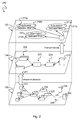
- Fig. 2 shows a schematic representation of a 5G communication network 200 with multiple network slices (network slices).
- the 5G communication network 200 includes an infrastructure & resource layer 105, an activation layer 104, and an application layer 103.
- Infrastructure & Resource Layer 105 includes all physical assets associated with a network operator, i. Locations, cables, network nodes, etc. This layer 105 forms the basis for all network slices. It is as generic as possible without too many specialized physical units. The infrastructure & resource layer 105 obfuscates any type of custom implementation over the upper layers, so that the remaining systems can best be used for different slices. Infrastructure & resource layer components 105 are based on the hardware and software or firmware needed for the particular operation, provided as infrastructure objects and resource layer 105 to the overlying layers as resource objects. For example, objects of infrastructure & resource layer 105 include virtual machines, virtual links, and virtual networks, e.g.
- infrastructure & resource layer 105 presents the objects in the form of an "infrastructure as a service "251, ie in an abstracting, virtualized form of the next higher layer 104.
- the activation layer 104 is located above the infrastructure & resource layer 105. It uses the infrastructure & resource layer objects 105 and adds additional functionality to them in the form of software objects / VNFs to allow for the generation of any type of network slices, thus providing a platform as the next higher layer 103 service.
- Software objects can exist in any granularity, and can include a tiny or a very large fragment of a network slice.
- different abstracted objects 221 may be combined with other abstracted objects and virtual network functions 222 to form combined objects 223 that may be merged into aggregated objects 224 and an object library 225 of the next higher level are made available.
- This can hide the complexity behind the network slices. For example, a user may create a mobile broadband slice, defining only KPI (Key Performance Indicator) without having to specify specific features such as individual local antenna coverage, backhaul connections, and specific parameterization levels.
- KPI Key Performance Indicator
- an important capability of the activation layer 104 is that it supports the dynamic reordering of functions and connectivities in a network slice, e.g. by using Service Function Chaining (SFC) or modifying software so that the functionality of a slice can be completely pre-defined and can include both near-static software modules and dynamically-addable software modules.
- SFC Service Function Chaining
- a network slice can be viewed as a software-defined entity based on a set of objects that define a complete network.
- the activation layer 104 plays a key role in the success of this concept as it may include all the software objects necessary to provide the network slices and the appropriate skills to handle the objects.
- the activation layer 104 may be considered as a type of network operating system complemented by a network creation environment.
- One task of the activation layer 104 is to define the appropriate abstraction levels. This gives network operators sufficient freedom to design their network slices while the platform operator can still maintain and optimize the physical nodes. For example, the execution of everyday tasks such as adding or replacing NodeBs etc. is supported without the intervention of network customers.
- the definition of suitable objects, which is a complete Modeling telecommunications network is one of the essential tasks of the activation layer 104 in developing the network slices environment.
- a network slice also referred to as a 5G slice, supports the communication services of a particular type of connection with a particular type of handling of the C (Control) and U (User Data) layer.
- a 5G slice is composed of a collection of different 5G network features and specific Radio Access Technology (RAT) settings, which are combined together to benefit the specific use case. Therefore, a 5G slice can span all domains of the network, e.g. Software modules that run on cloud nodes, specific transport network configurations that support flexible location of features, a particular wireless configuration, or even a particular access technology as well as a configuration of 5G devices. Not all slices contain the same features, some features that seem essential today for a mobile network can not even exist in some slices.
- the intention of the 5G Slice is to provide only those functions that are necessary for the specific use case and to avoid all other unnecessary functionalities.
- the flexibility behind the slice concept is the key to both expanding existing use cases and creating new use cases.
- Third party devices may be granted permission to control certain aspects of slicing through appropriate APIs to provide tailored services.
- the application layer 103 comprises all generated network slices 210b, 211b, 212b and offers them as "network as a service" to different network users, eg different customers.
- the concept allows the reuse of defined network slices 210b, 211b, 212b for different users, eg customers, for example as a new network slice instance 210a, 211a, 212a. That is to say that a network slice 210b, 211b, 212b, which is assigned for example to an automotive application, can also be used for applications of various other industrial applications.
- the slices instances 210a, 211a, 212a generated by a first user may be independent of the slice instances generated by a second user, even though the overall network slice functionality may be the same.
- the slices 210b, 211b, 212b form embodiments of subnetworks of a communication network.
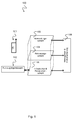
- Fig. 3 shows a network entity 301 in a subnetwork 305 of a plurality of subnetworks of a communication network 300, wherein the subnetwork 305 is assigned at least one predetermined quality of service according to at least one service level agreement.
- the network entity includes a communication interface 303 for receiving the traffic of the subnetwork 305, and an indexer (307) configured to add a quality of service indicator to the traffic to obtain indexed traffic, the quality of service indicator indicating the quality of service.
- FIG. 12 shows a communication system in which the elements according to the aspects of the invention are shown in common, with a communication network 300 having a plurality of subnetworks 305, for example a first subnetwork 305-1 and a second subnetwork 305-2, each subnetwork 305 having a predetermined quality of service is assigned according to a service level agreement.
- the quality of service defines the communication quality for the subnetworks 305-1, 305-2.
- the quality of service may specify or specify a data rate, a latency, a bit or block error rate, frequencies and / or resources such as bandwidth or timeslots.
- the quality of service can be defined according to a service level agreement (SLA) for the subnetworks 305 or for the data streams of the subnetworks 305.
- SLA service level agreement
- the QoSs of subnetworks 305 are user independent in one embodiment. However, subnetworks 305 may also consider user dependent service classes.
- each subnetwork 305 a network entity 301, 301-1, 301-2 is arranged, wherein the network entities 301 are provided, a data traffic 306, 306-1, 306-2 of the respective subnetwork according to a quality of service, which is assigned to the respective subnetwork 305 to index to receive indexed traffic 308, 308-1, 308-2, respectively.
- the subnetworks 305 communicate, for example via a radio access network 303 (RAN, Radio Access Network) with mobile terminals 311, 311-1, 311-2.
- RAN Radio Access Network
- the radio access network 303 includes radio access entities 309, 309-1, 309-2, such as base stations, routers or remote radio units (RRU).
- radio access entities 309, 309-1, 309-2 such as base stations, routers or remote radio units (RRU).
- the radio access entities 309, 309-1, 309-2 may be associated with different radio access technologies (RAT: Radio Access Technology), such as LTE, WLAN, WiFi, UMTS, GSM, and radio access technology for machine type communication (MTC).
- RAT Radio Access Technology
- MTC machine type communication
- the mobile terminals (UE) 311-1, 311-2 can communicate via the subnetworks 305-1, 305-2.
- a single radio access entity can also be arranged.
- the network entities 301 are connected to the radio access network 303 and provide the radio access network 303 with the indexed data streams 308, i. the indexed data traffic.
- the network entities 301 may be located between any network entities in the subnetworks 305, such as routers, firewalls, or gateways. The other network entities do not change the indexing of the data streams.
- the indexed data traffic 308 each contain a quality of service indicator which indicates the quality of service of the respective subnetwork 305.
- the radio access entities 309 may, on this basis, assign the communication resources to the indexed data traffic 308 to satisfy the quality of service. This can be effected, for example, by the allocation of more communication time, bandwidth or frequency spectra, for example in the case of a multi-carrier transmission such as OFDM.
- the radio access entities 309 independently assign the own radio access resources according to the required quality of service to the indexed data traffic 308.
- the radio access entities 309 may have the resource managers 603 shown in FIG. 6, which include the resources of the radio access entities such as Bandwidth, transmit power to the respective subnetwork 305-1, 305-2 assign.
- the resource managers 603 may be schedulers.
- the quality of service may indicate that a subnetwork is guaranteed 95% of the communication time at 10 Mbps.
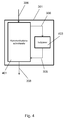
- Fig. 4 12 shows a block diagram of a network entity 301 with a communication interface 401 for receiving the data traffic 306 of the subnetwork 305 to which the network entity 301 is assigned.
- the network entity 301 includes an indexer 403 configured to add a quality of service indicator to the traffic 306 to obtain indexed traffic 308, the quality of service indicator indicating the quality of service associated with the subnetwork 305.
- the indexer 403 may be configured to add the quality of service indicator to one or each packet of the data traffic 307. This can be done, for example, by writing the quality of service indicator into a data field of a data frame in which the respective data pack is arranged.
- the indexed data traffic 308 is supplied to the communication interface 401 and sent out, for example, to a radio access entity 309.
- the communication interface 401 can for this purpose have a network-side interface for the data traffic 306 and an access-side interface for the indexed data traffic 308.
- the radio access entity 309 includes a communication interface 601 for receiving the indexed data traffic 308 from the communication network 300, for example, from the network entity 301, wherein the indexed traffic comprises a quality of service indicator indicating the quality of service of the subnetwork 305 and the aforementioned resource manager 603, which is configured to assign to the indexed data traffic 308 communication resources associated with the quality of service.
- the communication interface 601 may be configured to extract the quality of service indicator from the indexed data traffic 308 and to communicate the quality of service indicator to the resource manager 603.
- the resource manager 603 may control the processing resources of the radio access entity 309 such that the communication resources are set according to the quality of service.
- resource manager 603 may control hardware and / or software resources such as a modulator, an encoder, radio access entity filter 309.
- the resource manager 603 may also operate as a scheduler and allocate time and / or frequency resources to the indexed data stream 308 according to the quality of service.
- the resource manager 603 may have a database in which quality of service or quality of service indicators are assigned to communication or radio access resources.
Landscapes
- Engineering & Computer Science (AREA)
- Quality & Reliability (AREA)
- Computer Networks & Wireless Communication (AREA)
- Signal Processing (AREA)
- Mobile Radio Communication Systems (AREA)
Abstract
Description
- Die vorliegende Erfindung betrifft die Steuerung von Funkzugangsressourcen in einem Kommunikationsnetzwerk mit voneinander getrennten Subnetzwerken, beispielsweise Slices eines 5G-Kommunikationsneetzwerks.
- In modernen Kommunikationsnetzwerken ist die Dienstgüte (Quality of Service) ein wichtiger Faktor zur Beurteilung der Leistungsfähigkeit einer Kommunikationstechnologie. In LTE-Kommunikationssystemen ist die Dienstgüte im Rahmen des 3GPP-Standards beschrieben. Gemäß 3GPP14-23203 ist die Dienstgüte benutzerspezifisch in Abhängigkeit von Dienstgüteparametern wie Durchsatz, Latenz, Bitfehlerrate definiert. Diese Dienstgüteparameter werden beispielswiese in einer Basisstation wie eNodeB in einem LTE-Netzwerk benutzt, um beispielsweise das Scheduling der Daten eines Benutzers zu bestimmen, bei dem die geforderte Dienstgüte sichergestellt wird.
- Die nachfolgenden Generationen der mobilen Technologien, beispielsweise die fünfte Generation der mobilen Technologie (5G), verändern jedoch die klassische Netzwerkarchitektur zugunsten von heterogenen Subnetzwerken, sog. Slices, welche logisch voneinander separiert sind. In 5G können insbesondere unterschiedliche Funkzugangstechnologien für die Kommunikation über die Slices verwendet werden.
- Es ist die Aufgabe der vorliegenden Erfindung, ein effizientes Dienstgüte-Konzept in einem Kommunikationsnetzwerk mit heterogenen Subnetzwerken, welche über Funkzugangstechnologien erreichbar sind, zu schaffen.
- Diese Aufgabe wird durch die Merkmale der unabhängigen Ansprüche gelöst. Vorteilhafte Weiterbildungsformen der Erfindung sind Gegenstand der Beschreibung, der abhängigen Ansprüche, sowie der Figuren.
- Die vorliegende Erfindung basiert auf der Erkenntnis, dass heterogene Subnetzwerke eines Kommunikationsnetzwerks, beispielsweise Slices eines 5G-Kommunikationsnetzwerks, Dienstgüten zugeordnet werden können, welche für das jeweilige Subnetzwerk an sich gelten. Diese Dienstgüten sind Subnetzwerken des Kommunikationsnetzwerks zugeordnet. Die Subnetzwerke sind beispielsweise für unterschiedliche Dienste vorgesehen und führen daher dienstspezifische Datenströme mit Dienstgüten, welche gemäß Dienstgütevereinbarungen vorgesehen sind. Daher können unterschiedlichen Subnetzwerken desselben Kommunikationsnetzwerks unterschiedliche Dienstgüten zugeordnet werden. Darüber hinaus können innerhalb eines Subnetzwerks unterschiedliche Dienstgüten für unterschiedliche Datenströme vorgesehen oder vereinbart werden. Die Dienstgüten können beispielsweise die Mindestanforderungen an Dienstgüte definieren, welche einzuhalten sind, beispielsweise zu 95% der Übertragungszeit soll zumindest mit der Dienstgüte bereitgestellt werden. Daher können über die Subnetzwerke auch Datenströme mit höheren Dienstgüten als die zumindest vereinbarte Dienstgüte für das jeweilige Subnetzwerk geführt werden. Im Allgemeinen kann das jeweilige Subnetzwerk mehrere Datenströme mit einer oder unterschiedlichen Dienstklassen führen, wobei die für das jeweilige Subnetzwerk vereinbarte Dienstgüte die niedrigste Dienstgüte ist. Mit zunehmender Dienstgüte nimmt beispielsweise auch die Übertragungsqualität zu. Die Dienstgüten können sich beispielsweise in Datenrate, Bandbreite, Latenzzeit oder Bit- bzw. Blockfehlerrate unterscheiden.
- Ein Subnetzwerk kann auch weitere Dienstgüten unterstützen, welche höhere Dienstgüten als die Dienstgüte gemäß der jeweiligen Dienstgütevereinbarung aufweisen.
- Zur Einhaltung der Dienstgüten in den Subnetzwerken wird beispielsweise die Vergabe der Funkzugangsressourcen bzw. Kommunikationsressourcen, wie beispielsweise Zeit und/oder Frequenzressourcen in beispielsweise einem OFMDA-System, der Funkzugangstechnologien, sog. RAT (Radio Access Technology), Dienstgüten abhängig bewirkt. Hierbei können einem Subnetzwerk, beispielsweise einem Slice, durch eine Funkzugangsentität wie Basisstation zusätzliche Funkzugangsressourcen bereitgestellt werden, um die dem Subnetzwerk zugewiesene Dienstgüte zu gewährleisten.
- Zur Angabe der Dienstgüten werden die Datenströme bzw. Datenverkehre der Subnetzwerke mit Dienstgüteindikatoren versehen. Dadurch werden die Datenverkehre für sämtliche Netzentitäten, also auch Funkzugangsentitäten, gekennzeichnet, sodass diese Netzwerkentitäten den gekennzeichneten Datenströmen die Kommunikationsressourcen, insbesondere Funkzugangsressourcen, gemäß den Dienstgüten zur Verfügung stellen, um die Dienstgüten einzuhalten.
- Für ein Subnetzwerk können eine oder mehrere Dienstgüten vereinbart sein und dem jeweiligen Subnetzwerk zugeordnet sein. Die Dienstgüten können beispielsweise unterschiedliche Dienstgütequalitäten für unterschiedliche Datenströme oder Services angeben, wie beispielsweise Best-Effort-Service mit einer geringeren Dienstgüte oder eine Ultra-Reliable-Communication mit einer höheren Dienstgüte.
- Die Angabe über die Dienstgüte kann die jeweilige Dienstgüte spezifizieren. Die Angabe kann beispielsweise eine QoS-Identifier aufweisen, welcher auf eine Dienstgüte (QoS, Quality of Service) hinweist.
- Die Subnetzwerke können unterschiedliche Services bereitstellen. So kann ein erstes Subnetzwerl ein LTE-Subnetzwerk mit einer Dienstgüte, ein weiteres Subnetzwerk kann ein mMTC-Subnetzwerk mit einer oder mehreren Dienstgüten, und ein weiteres Subnetzwerk kann ein Car-to-X-Subnetzwerk sein, welches zwei Dienstgüten unterstützt, wie beispielsweise Best Effort oder Ultra-Reliable-Communication.
- Gemäß einem ersten Aspekt betrifft die Erfindung eine Netzwerkentität in einem Subnetzwerk einer Mehrzahl von Subnetzwerken eines Kommunikationsnetzwerks, wobei dem Subnetzwerk zumindest eine vorgegebene Dienstgüte gemäß zumindest einer Dienstgütevereinbarung zugeordnet ist, wobei die Netzwerkentität die folgenden Merkmale aufweist: eine Kommunikationsschnittstelle zum Empfangen des Datenverkehrs des Subnetzwerks, und einem Indizierer, welcher ausgebildet ist, dem Datenverkehr einen Dienstgüteindikator hinzuzufügen, um einen indizierten Datenverkehr zu erhalten, wobei der Dienstgüteindikator die Dienstgüte angibt. Dadurch können sämtliche Netzentitäten des Kommunikationsnetzwerks für einen Datenverkehr des Netzwerks diejenigen Kommunikationsressourcen wie beispielsweise Bandbreite zuordnen, welche für die Einhaltung der Dienstgüte im Subnetzwerk erforderlich sind. Die Kommunikationsressourcen können in den Netzwerkentitäten den Dienstgüten eindeutig zugeordnet sein, beispielsweise in der Form eine Look-up-Tabelle.
- Gemäß einer Ausführungsform ist der Indizierer ausgebildet, den Dienstgüteindikator zumindest einem Datenpaket oder jedem Datenpaket des Datenverkehrs des Subnetzwerks hinzuzufügen, um den indizierten Datenverkehr zu erhalten. Auf diese Weise können für die Datenpakete diejenigen Kommunikationsressourcen bereitgestellt werden, welche der Dienstgüte zugeordnet sind.
- Gemäß einer Ausführungsform ist der Indizierer ausgebildet, den Dienstgüteindikator in ein Datenpaketfeld eines Datenrahmens des Datenverkehrs, insbesondere eines Datenrahmens eines Datenpaketes des Datenverkehrs hineinzuschreiben. Das Datenpaketfeld kann ein freies Feld des Datenrahmens sein, das für Daten oder Kontrollinformation gemäß einem Kommunikationsprotokoll wie IPV6 freigehalten ist.
- Gemäß einer Ausführungsform definiert die Dienstgüte zumindest eine der folgenden Kommunikationsressourcen in dem Subnetzwerk: Bandbreite, Datenrate, Bitrate, Bitfehlerrate, Blockfehlerrate, Übertragungsverzögerung, Anzahl und/oder Zeitlage von Zeitschlitzen, Frequenzspektrum. Durch diese Angaben kann eine Netzentität wie beispielsweise eine Basisstation dem Datenverkehr diejenigen Kommunikationsressourcen, beispielsweise Anzahl der Zeitschlitze oder Bandbreite, zuweisen, welche für die Dienstgüte vorgesehen sind.
- Gemäß einer Ausführungsform weist der Dienstgüteindikator ferner einen Subnetzwerk-Identifikator, welcher das Subnetzwerk bezeichnet. Auf diese Weise kann die Dienstgüte dem Subnetzwerk zugeordnet werden.
- Gemäß einer Ausführungsform weist der Dienstgüteindikator ferner einen SLA-Indikator (SLA: Service Level Agreement) auf, wobei der SLA-Indikator die Dienstgütevereinbarung des Subnetzwerks anzeigt, in welcher die Dienstgüte spezifiziert ist. Auf diese Weise können weitere Angaben übertragen werden, welche nicht zwingend die Kommunikationsressourcen angeben, beispielsweise die prozentuale Angabe der Kommunikationszeit, in welcher die jeweilige Dienstgütevereinbarung und somit Dienstgüte gültig sind. Diese Angabe kann beispielsweise spezifizieren, dass die Dienstgütevereinbarung in 95% der Kommunikationszeit gilt. Dadurch können die Netzwerkentitäten entscheiden, die Kommunikationsressourcen in der restlichen Zeit beispielsweise anderen Datenströmen bzw. verkehren zuzuweisen.
- Gemäß einer Ausführungsform weist der Dienstgüteindikator ferner einen Status-Indikator auf, wobei der Status-Indikator den gegenwärtigen Dienstgüte-Status des Datenverkehrs anzeigt. Durch den Status-Indikator kann daher angezeigt werden, inwiefern die jeweilige Dienstgütevereinbarung bereits eingehalten wurde, beispielsweise dass 99% der bisherigen Kommunikationszeit mit der vereinbarten Dienstgüte bewirkt wurde. Auf diese Weise kann beispielsweise eine Funkzugangsentität entscheiden, die Kommunikationsressourcen freizugeben, falls die Dienstgütevereinbarung erreicht wurde, oder aufrechterhalten bzw. zu erhöhen, um die Dienstgüte gemäß der Dienstgütevereinbarung bereitzustellen.
Gemäß einer Ausführungsform definiert die Dienstgüte eine Mindestdienstgüte für den Datenverkehr in dem Subnetzwerk. Daher ist es möglich, dass Datenverkehre bzw. Datenströme des Subnetzwerks mit einer höheren Dienstgüte übertragen werden als diese durch die Dienstgüte gekennzeichnet ist. - Gemäß einer Ausführungsform weist der Dienstgüteindikator ferner einen Datenverkehr-Indikator auf, wobei der Datenverkehr-Indikator zusätzlich eine Dienstgüte des Datenverkehrs anzeigt. Die Dienstgüte des Datenverkehrs kann beispielsweise höher als die Dienstgüte des Subnetzwerks gemäß der Dienstgüte sein und beispielsweise dem Datenverkehr an sich oder einem Benutzer zugeordnet sein. Auf diese Weise können die Netzwerkentitäten des Kommunikationsnetzwerks dem Datenverkehr noch mehr Kommunikationsressourcen zuweisen, um diese höhere Dienstgüte zu erreichen.
- Gemäß einer Ausführungsform ist die Kommunikationsschnittstelle ausgebildet, den indizierten Datenverkehr an eine weitere Netzentität des Subnetzwerkes oder an eine Funkzugangsentität, insbesondere eine Basisstation, eines Funkzugangsnetzwerkes auszusenden. Die weitere Netzentität kann beispielsweise eine Funktion des Subnetzwerks sein, wie beispielswese Router, Firewall etc. Die Funkzugangsentität ist bevorzugt für den Funkzugang zu dem Kommunikationsnetzwerk bzw. zu dem Subnetzwerk, beispielsweise durch ein mobiles Endgeräte wie ein Smartphone, vorgesehen.
- Die Funkzugangsentität bzw. die Netzwerkentität weist dem Datenverkehr bzw. dem Subnetzwerk diejenigen Kommunikationsressourcen bzw. Funkzugangsressourcen zu, welche für die Einhaltung der jeweiligen Dienstgütekasse benötigt werden. Hierzu kann die Funkzugangsentität bzw. die Netzwerkentität jeweils eine Datenbank oder eine Look-up-Tabelle aufweisen, in welcher die Funkzugangsressourcen und/oder die Verarbeitungsressourcen den Dienstgüten zugeordnet sind. Die Funkzugangsentität kann die Funkzugangsressourcen bzw. die Kommunikationsressourcen jedoch anhand der Angaben über die Dienstgüten ermitteln. Hierzu können beispielsweise Optimierungsprogramme ausgeführt werden, welche die Funkzugangsressourcen für die jeweiligen Dienstgüten ermitteln.
- Gemäß einer Ausführungsform ist die Kommunikationsschnittstelle eine optische Kommunikationsschnittstelle. Die Kommunikationsschnittstelle kann ferner ausgebildet sein, den indizierten Datenverkehr auszusenden.
- Gemäß einem zweiten Aspekt betrifft die Erfindung ein Kommunikationsnetzwerk mit einer Mehrzahl von Subnetzwerken, wobei jedem Subnetzwerk zumindest eine Dienstgüte zugeordnet ist, und wobei in jedem Subnetzwerk eine Netzwerkentität nach dem ersten Aspekt angeordnet ist, um dem Datenverkehr in jedem Subnetzwerk jeweils einen Dienstgüteindikator hinzuzufügen, welcher die Dienstgüte des jeweiligen Subnetzwerks anzeigt.
- Die Subnetzwerke sind beispielsweise Netzwerk-Slices eines Kommunikationsnetzwerks, beispielsweise eines 5G-Kommunikationsnetzwerks.
- Gemäß einer Ausführungsform sind die Subnetzwerke Punkt-zu-Punkt-Netzwerke, welche kommunikationstechnisch voneinander getrennt sind.
- Gemäß einer Ausführungsform ist das Kommunikationsnetzwerk ein Kommunikationssetzwerk zumindest der fünften (5G) Generation ist, wobei die Subnetzwerke Netzwerk-Slices sind.
- Gemäß einem dritten Aspekt betrifft die Erfindung ein Verfahren zum Indizieren eines Datenverkehrs in einem Subnetzwerk eines Kommunikationsnetzwerks mit einer Mehrzahl von Subnetzwerken, wobei dem Subnetzwerk zumindest eine vorgegebene Dienstgüte gemäß zumindest einer Dienstgütevereinbarung zugeordnet ist, mit:
- Empfangen des Datenverkehrs des Subnetzwerks (305); und
- Indizieren des Datenverkehrs mit einem Dienstgüteindikator, um den indizierten Datenverkehr zu erhalten, wobei der Dienstgüteindikator die Dienstgüte angibt.
- Das Verfahren kann mittels der Netzwerkentität nach dem ersten Aspekt ausgeführt werden.
Gemäß einer Ausführungsform wird der indizierte Datenverkehr an eine weitere Netzentität des Subnetzwerkes oder an eine Funkzugangsentität des Kommunikationsnetzwerks, insbesondere eine Basisstation, eines Funkzugangsnetzwerkes ausgesendet. - Gemäß einem vierten Aspekt betrifft die Erfindung eine Funkzugangsentität eines Funkzugangsnetzwerks, insbesondere eine Basisstation, für die Kommunikation zwischen einem mobilen Endgerät und einem Subnetzwerk eines Kommunikationsnetzwerks mit einer Mehrzahl von Subnetzwerken, wobei dem Subnetzwerk zumindest eine vorgegebene Dienstgüte gemäß zumindest einer Dienstgütevereinbarung zugeordnet ist, mit: einer Kommunikationsschnittstelle zum Empfangen eines indizierten Datenverkehrs von dem Kommunikationsnetzwerk, wobei der indizierte Datenverkehr einen Dienstgüteindikator aufweist, welcher die Dienstgüte des Subnetzwerks angibt; und einem Ressourcenmanager, welcher ausgebildet ist, dem indizierten Datenverkehr Kommunikationsressourcen zuzuweisen, welche der Dienstgüte zugeordnet sind.
- Die Kommunikationsschnittstelle kann eine optische Kommunikationsschnittstelle sein.
- Gemäß einer Ausführungsform weist der Dienstgüteindikator ferner einen Status-Indikator auf, wobei der Status-Indikator den gegenwärtigen Dienstgüte-Status des Datenverkehrs anzeigt. Durch den Status-Indikator kann daher angezeigt werden, inwiefern die jeweilige Dienstgütevereinbarung bereits eingehalten wurde, beispielsweise dass 99% der bisherigen Kommunikationszeit mit der vereinbarten Dienstgüte bewirkt wurde. Auf diese Weise kann die Funkzugangsentität bzw. der Ressourcenmanager entscheiden, die Kommunikationsressourcen freizugeben, falls die Dienstgütevereinbarung erreicht wurde, oder aufrechterhalten bzw. zu erhöhen, um die Dienstgüte gemäß der Dienstgütevereinbarung bereitzustellen.
- Gemäß einer Ausführungsform ist der Ressourcenmanager ausgebildet, dem indizierten Datenverkehr zumindest eine der folgenden Kommunikationsressourcen gemäß der Dienstgüte zuzuweisen: Bandbreite, Datenrate, Bitrate, Bitfehlerrate, Blockfehlerrate, Übertragungsverzögerung, Anzahl und/oder Zeitlage von Zeitschlitzen, Frequenzspektrum. Der Ressourcenmanager kann
- Die Funkzugangsentität entscheidet gemäß einer Ausführungsform eigenständig über die zu verteilenden Funkzugangsressourcen. Der Ressourcen-Manager kann die Funkzugangsressourcen bzw. Kommunikationsressourcen auf der Basis der Dienstgüte steuern bzw. dem Datenverkehr zuweisen. Dies kann beispielsweise auf der Basis einer Look-up-Tabelle erfolgen, in welcher unterschiedlichen Dienstgüten unterschiedliche Funkzugangsressourcen bzw. Kommunikationsressourcen zugeordnet sind.
- Gemäß einer Ausführungsform entsprechen die Dienstgüten den QCI-Klassen (QCI: QoS Class Identifier), beispielsweise eines LTE-Kommunikationssystems.
- Gemäß einer Ausführungsform weisen die Funkzugangsressourcen zumindest eine der folgenden Funkzugangsressourcen auf: Bandbreite, Frequenzspektrum, Zeitressourcen, Anzahl von Übertragungsrahmen, Anzahl von Zeitschlitzen, Sendeleistung, Zeitlage von Zeitschlitzen, Zeitlage von Übertragungsrahmen.
- Gemäß einer Ausführungsform definiert die jeweilige Dienstgüte zumindest einen der folgenden Parameter auf: Bandbreite, Datenrate, Bitrate, Bitfehlerrate, Blockfehlerrate, Übertragungsverzögerung.
- Gemäß einer Ausführungsform ist die Funkzugangsentität für eine der folgenden Funkzugangstechnologien ausgelegt: LTE, WLAN, UMTS, GSM, 5G, und Kommunikationstechnologien für Maschine Type Communication (MTC).
- Weitere Ausführungsbeispiele werden Bezug nehmend auf die beiliegenden Zeichnungen erläutert. Es zeigen:
- Fig. 1
- eine beispielhafte 5G-Systemarchitektur;
- Fig. 2
- eine schematische Darstellung eines 5G-Kommunikationsnetzwerks;
- Fig. 3
- ein Kommunikationssystem;
- Fig. 4
- ein Blockdiagramm einer Netzwerkentität; und
- Fig. 5
- ein Blockdiagramm einer Funkzugangsentität.
- Die im Folgenden vorgestellten Verfahren und Systeme können von verschiedener Art sein. Die einzelnen beschriebenen Elemente können durch Hardware- oder Softwarekomponenten realisiert sein, beispielsweise elektronische Komponenten, die durch verschiedene Technologien hergestellt werden können und zum Beispiel Halbleiterchips, ASICs, Mikroprozessoren, digitale Signalprozessoren, integrierte elektrische Schaltungen, elektrooptische Schaltungen und/oder passive Bauelemente umfassen.
- Die im Folgenden vorgestellten Geräte, Systeme und Verfahren sind dafür geeignet, Informationen über ein Kommunikationsnetzwerk zu übertragen. Der Begriff Kommunikationsnetzwerk oder Kommunikationsnetz bezeichnet dabei die technische Infrastruktur, auf der die Übertragung von Signalen stattfindet. Das Kommunikationsnetz umfasst im Wesentlichen das Vermittlungsnetz, in dem die Übertragung und Vermittlung der Signale zwischen den ortsfesten Einrichtungen und Plattformen des Mobilfunknetzes oder Festnetzes stattfinden, sowie das Funkzugangsnetz, in dem die Übertragung der Signale zwischen einer Netzwerkzugangseinrichtung und dem Kommunikationsendgerät stattfindet. Das Kommunikationsnetz kann hierbei sowohl Komponenten eines Mobilfunknetzes als auch Komponenten eines Festnetzes umfassen. Im Mobilfunknetz wird das Funkzugangsnetz auch als Luftschnittstelle bezeichnet und umfasst beispielsweise eine Basisstation (NodeB, eNodeB, Funkzelle) mit Mobilfunkantenne, um die Kommunikation zu einem Kommunikationsendgerät wie beispielsweise einem Mobiltelefon bzw. Smartphone oder einer mobilen Einrichtung mit Mobilfunkadapter aufzubauen. Im Festnetz umfasst das Funkzugangsnetz beispielsweise einen DSLAM (Digital Subscriber Line Access Multiplexer), um die Kommunikationsendgeräte mehrerer Teilnehmer draht- bzw. kabelgebunden anzuschließen. Über das Vermittlungsnetz kann die Kommunikation in weitere Netze, beispielsweise anderer Netzbetreiber, z.B. Auslandsnetze, weitervermittelt werden.
- Die im Folgenden vorgestellten Geräte, Systeme und Verfahren sind dazu vorgesehen, die Kommunikation in Kommunikationsnetzen zu steigern, insbesondere in Kommunikationsnetzen gemäß der im Folgenden vorgestellten 5G Systemarchitektur.
Fig. 1 zeigt eine schematische Darstellung einer solchen 5G Systemarchitektur 100. Die 5G Systemarchitektur 100 umfasst einen Bereich mit 5G Kommunikationsendgeräten 101, die über verschiedene Zugangstechnologien 102 mit einer mehrschichtigen Kommunikationsstruktur verbunden sind, welche eine Infrastruktur- & Ressourcenschicht 105, eine Aktivierungsschicht 104 und eine Anwendungsschicht 103 umfasst, die über eine Management- & Instrumentierungsebene 106 verwaltet werden. - Die Infrastruktur- & Ressourcenschicht 105 umfasst die physikalischen Ressourcen einer konvergenten Netzwerkstruktur aus Festnetz- und Mobilfunknetzkomponenten (sog. Fixed-Mobile Convergence) mit Zugangsknoten, Cloud-Knoten (bestehend aus Verarbeitungs- und Speicherknoten), 5G Geräten wie z.B. Mobiltelefonen, tragbaren Geräten, CPEs, Maschinenkommunikationsmodulen und anderen, Netzwerkknoten und zugehörigen Links. 5G Geräte können vielfältige und konfigurierbare Fähigkeiten umfassen und beispielsweise als Relay oder Hub agieren oder abhängig von dem jeweiligen Kontext als Computer/Speicher Ressource arbeiten. Diese Ressourcen werden den höheren Schichten 104, 103 und der Management- & Instrumentierungsebene 106 über entsprechend APIs (Anwendungsprogramm-Schnittstellen) zur Verfügung gestellt. Das Überwachen der Leistungsfähigkeit und der Konfigurationen sind inhärenter Teil solcher APIs.
- Die Aktivierungsschicht 104 umfasst eine Bibliothek von Funktionen, die innerhalb eines konvergierten Netzwerks in Form von Bausteinen einer modularen Architektur benötigt werden. Diese umfassen Funktionen, die durch Softwaremodule realisiert werden, die von einem Aufbewahrungsort der gewünschten Lokation abgerufen werden können, und einen Satz von Konfigurationsparametern für bestimmte Teile des Netzwerks, z.B. den Funkzugang. Diese Funktionen und Fähigkeiten können auf Anforderung durch die Management- & Instrumentierungsebene 106 aufgerufen werden durch Nutzung der dafür vorgesehenen APIs. Für bestimmte Funktionen können mehrfache Varianten existieren, z.B. verschiedene Implementierungen derselben Funktionalität welche verschiedene Leistungsfähigkeit oder Charakteristik haben. Die verschiedenen Grade der Leistungsfähigkeit und der angebotenen Fähigkeiten können dazu verwendet werden, um die Netzwerkfunktionalitäten wesentlich weiter zu unterscheiden als es in heutigen Netzen möglich ist, z.B. als Mobilitätsfunktion eine nomadische Mobilität, eine Fahrzeugmobilität oder eine Luftverkehrsmobilität in Abhängigkeit der spezifischen Bedürfnisse anzubieten.
- Die Anwendungsschicht 103 umfasst spezifische Anwendungen und Dienste des Netzwerkbetreibers, des Unternehmens, des vertikalen Operators oder von Drittparteien, die das 5G Netzwerk nutzen. Die Schnittstelle zu der Management- & Instrumentierungsebene 106 erlaubt zum Beispiel, bestimmte, d.h. dedizierte Netzwerk Slices (Netzwerkscheiben bzw. Subnetzwerke) für eine Anwendung aufzubauen, oder eine Anwendung einem existierenden Netzwerk Slice zuzuweisen.
- Die Management- & Instrumentierungsebene 106 ist der Kontaktpunkt, um die geforderten Anwendungsfälle in tatsächliche Netzwerkfunktionen und Slices umzusetzen. Sie definiert die Netzwerk Slices für ein gegebenes Anwendungsszenario, verkettet die dafür relevanten modularen Netzwerkfunktionen, ordnet die relevanten Leistungsfähigkeitskonfigurationen zu und bildet alles auf die Ressourcen der Infrastruktur- & Ressourcenschicht 105 ab. Die Management- & Instrumentierungsebene 106 verwaltet auch die Skalierung der Kapazität dieser Funktionen als auch ihre geographische Verteilung. In bestimmten Anwendungsfällen kann sie auch Fähigkeiten aufweisen, die es Drittparteien erlauben, durch Nutzung der APIs ihre eigenen Netzwerk Slices zu erzeugen und zu verwalten. Aufgrund der vielzähligen Aufgaben der Management- & Instrumentierungsebene 106 handelt es sich dabei nicht um einen monolithischen Block von Funktionalität sondern vielmehr um eine Sammlung modularer Funktionen, die Fortschritte integrieren, die in verschiedenen Netzwerkdomänen erzielt wurden, wie beispielsweise NFV (Network Function Virtualization, Netzwerkfunktionsvirtualisierung), SDN (Software-defined Networking, Software-definierte Vernetzung) oder SON (Self-organizing Networks, selbstorganisierende Netzwerke). Die Management- & Instrumentierungsebene 106 nutzt dabei datenunterstützte Intelligenz, um alle Aspekte der Dienstanordnung und -bereitstellung zu optimieren.
- Die hier vorgestellten Geräte, Systeme und Verfahren sind dazu vorgesehen, die Kommunikation in Kommunikationsnetzen zu verbessern, insbesondere in 5G Kommunikationsnetzen mit mehreren Netzwerk Slices (Netzwerkscheiben), wie im Folgenden beschrieben.
-
Fig. 2 zeigt eine schematische Darstellung eines 5G-Kommunikationsnetzwerks 200 mit mehreren Netzwerk Slices (Netzwerkscheiben). Das 5G-Kommunikationsnetzwerks 200 umfasst eine Infrastruktur- & Ressourcenschicht 105, eine Aktivierungsschicht 104 und eine Anwendungsschicht 103. - Die Infrastruktur- & Ressourcenschicht 105 umfasst alle physikalischen Aktiva, die einem Netzwerkbetreiber zugeordnet sind, d.h. Standorte, Kabel, Netzwerkknoten etc. Diese Schicht 105 bildet die Grundlage für alle Netzwerk Slices. Sie ist so generisch wie möglich aufgebaut ohne zu viele spezialisierte physikalische Einheiten. Die Infrastruktur- & Ressourcenschicht 105 verschleiert jede Art von anwenderspezifischer Implementierung gegenüber den oberen Schichten, so dass die verbleibenden Systeme für verschiedene Slices bestmöglich genutzt werden können. Komponenten der Infrastruktur- & Ressourcenschicht 105 basieren auf Hardware und Software bzw. Firmware, die für die jeweilige Operation benötigt wird und dabei als Infrastruktur- & Ressourcenschicht 105 den darüber liegenden Schichten als Ressourcenobjekte zu Verfügung gestellt wird. Beispielsweise umfassen Objekte der Infrastruktur- & Ressourcenschicht 105 virtuelle Maschinen, virtuelle Links bzw. Verbindungen und virtuelle Netzwerke, z.B. virtuelle Zugangsknoten 231, 232, 233, virtuelle Netzwerkknoten 234, 235, 236, 237 und virtuelle Computerknoten 238, 239, 240. Wie der Begriff "virtuell" bereits sagt, stellt die Infrastruktur- & Ressourcenschicht 105 die Objekte in der Form einer "Infrastruktur als Dienst" 251, d.h. in einer abstrahierenden, virtualisierten Form der nächsthöheren Schicht 104 zur Verfügung.
- Die Aktivierungsschicht 104 ist oberhalb der Infrastruktur- & Ressourcenschicht 105 angeordnet. Sie nutzt die Objekte der Infrastruktur- & Ressourcenschicht 105 und fügt diesen zusätzliche Funktionalität in Form von Software Objekten /VNFs hinzu um das Erzeugen von jeder Art von Netzwerk Slices zu ermöglichen und so eine Plattform als Dienst der nächsthöheren Schicht 103 bereitzustellen.
- Softwareobjekte können in jeder Granularität existieren, und ein winziges oder ein sehr großes Fragment eines Netzwerk-Slice umfassen. Um die Erzeugung von Netzwerk Slices auf einem geeigneten Abstraktionslevel zu erlauben können in der Aktivierungsschicht 104 verschiedene abstrahierte Objekte 221 mit anderen abstrahierten Objekten und mit virtuellen Netzwerkfunktionen 222 kombiniert werden, um kombinierte Objekte 223 zu bilden, die in aggregierte Objekten 224 überführt werden können und in einer Objektbibliothek 225 der nächsthöheren Ebene zur Verfügung gestellt werden. Damit kann die Komplexität hinter den Netzwerk Slices verborgen werden. Beispielsweise kann ein Nutzer einen mobilen Breitband-Slice erzeugen und dabei lediglich KPI (Key Performance Indikator) definieren ohne dabei spezifische Features wie individuelle lokale Antennenbedeckung, Backhaul-Verbindungen und spezifische Parametrisierungsgrade spezifizieren zu müssen. Um eine offene Umgebung zu unterstützen und es zu erlauben, Netzwerkfunktionen auf Anforderung hinzuzufügen oder zu löschen, ist eine wichtige Fähigkeit der Aktivierungsschicht 104, dass sie die dynamische Umordnung von Funktionen und Konnektivitäten in einem Netzwerk Slice unterstützt, z.B. durch Verwendung von SFC ("Service Function Chaining" = Dienstfunktionenverkettung) oder modifizierender Software, so dass die Funktionalität eines Slice vollständig vordefiniert werden kann und sowohl näherungsweise statische Softwaremodule als auch dynamisch hinzufügbare Softwaremodule umfassen kann.
- Ein Netzwerk Slice kann dabei als software-definierte Entität betrachtet werden, die auf einem Satz von Objekten basiert, welche ein vollständiges Netzwerk definieren. Die Aktivierungsschicht 104 spielt für den Erfolg dieses Konzepts eine Schlüsselrolle da sie alle Softwareobjekte umfasst kann, die notwendig sind, um die Netzwerk Slices und die entsprechenden Fertigkeiten zum Handhaben der Objekte bereitzustellen. Die Aktivierungsschicht 104 kann als eine Art von Netzwerk-Betriebssystem betrachtet werden komplementiert durch eine Netzwerkerzeugungsumgebung. Eine Aufgabe der Aktivierungsschicht 104 ist das Definieren der entsprechenden Abstraktionsebenen. So haben Netzwerkbetreiber ausreichend Freiraum um ihre Netzwerk Slices zu designen während der Plattform-Betreiber immer noch die physikalischen Knoten instandhalten und optimieren kann. So wird beispielsweise die Ausführung der alltäglichen Aufgaben wie das Hinzufügen oder Ersetzen von NodeBs etc. ohne das Einschreiten der Netzwerkkunden unterstützt. Die Definition geeigneter Objekte, welche ein vollständiges Telekommunikationsnetz modellieren, ist eine der wesentlichen Aufgaben der Aktivierungsschicht 104 beim Entwickeln der Netzwerk Slices Umgebung.
- Ein Netzwerk Slice, auch als 5G Slice bezeichnet unterstützt die Kommunikationsdienste eines bestimmten Verbindungstyps mit einer bestimmten Art der Handhabung der C (Control bzw. Steuerungs-) und U-(User Data bzw. Nutzerdaten) Schicht. Ein 5G Slice setzt sich zusammen aus einer Sammlung von verschiedenen 5G Netzwerkfunktionen und spezifischen Funkzugangstechnologie- (RAT) Einstellungen, die zusammen kombiniert werden zum Nutzen des spezifischen Anwendungsfalls bzw. Use Case. Daher kann ein 5G Slice alle Domänen des Netzwerks umspannen, z.B. Softwaremodule, die auf Cloud-Knoten laufen, spezifische Konfigurationen des Transportnetzwerks, die eine flexible Lokation der Funktionen unterstützen, eine bestimmte Funkkonfiguration oder selbst eine bestimmte Zugangstechnologie so gut wie einer Konfiguration der 5G Geräte. Nicht alle Slices enthalten dieselben Funktionen, einige Funktionen die heute als wesentlich erscheinen für eine mobiles Netzwerk können sogar in einigen Slices nicht vorkommen. Die Intention des 5G Slice ist es, nur die Funktionen bereitzustellen, die für den spezifischen Use Case notwendig sind und alle anderen unnötigen Funktionalitäten zu vermeiden. Die Flexibilität hinter dem Slice Konzept ist der Schlüssel sowohl für das Ausweiten existierender Anwendungsfälle als auch für das Erzeugen neuer Anwendungsfälle. Drittpartei-Geräten kann damit Erlaubnis gewährt werden, bestimmte Aspekte des Slicing über geeignete APIs zu steuern, um so maßgeschneiderte Dienste bereitstellen zu können.
- Die Anwendungsschicht 103 umfasst alle erzeugten Netzwerk Slices 210b, 211 b, 212b und bietet diese als "Netzwerk als Service" verschiedenen Netzwerknutzern, z.B. verschiedenen Kunden an. Das Konzept erlaubt die Wiederbenutzung von definierten Netzwerk Slices 210b, 211 b, 212b für verschiedene Anwender, z.B. Kunden, beispielsweise als eine neue Netzwerk Slice Instanz 210a, 211 a, 212a. D.h. ein Netzwerk Slice 210b, 211 b, 212b, welcher beispielsweise einer Automotive Anwendung zugeordnet ist, kann auch für Anwendungen verschiedener anderer industrieller Anwendungen genutzt werden. Die Slices Instanzen 210a, 211 a, 212a, die von einem ersten Anwender erzeugt wurden, können beispielsweise unabhängig von den Slice Instanzen sein, die von einem zweiten Anwender erzeugt wurden, und das obwohl die gesamte Netzwerk Slice Funktionalität dieselbe sein kann.
- Die Slices 210b, 211b, 212b formen Ausführungsbeispiele von Subnetzwerken eines Kommunikationsnetzwerks.
-
Fig. 3 zeigt eine Netzwerkentität 301 in einem Subnetzwerk 305 einer Mehrzahl von Subnetzwerken eines Kommunikationsnetzwerks 300, wobei dem Subnetzwerk 305 zumindest eine vorgegebene Dienstgüte gemäß zumindest einer Dienstgütevereinbarung zugeordnet ist. Die Netzwerkentität umfasst eine Kommunikationsschnittstelle 303 zum Empfangen des Datenverkehrs des Subnetzwerks 305, und einen Indizierer (307), welcher ausgebildet ist, dem Datenverkehr einen Dienstgüteindikator hinzuzufügen, um einen indizierten Datenverkehr zu erhalten, wobei der Dienstgüteindikator die Dienstgüte angibt. -
Fig. 3 zeigt ein Kommunikationssystem, in welchem die Elemente gemäß den Aspekten der Erfindung gemeinsam dargestellt sind, mit einem Kommunikationsnetzwerk 300 mit einer Mehrzahl von Subnetzwerken 305, beispielsweise mit einem ersten Subnetzwerk 305-1 und mit einem zweiten Subnetzwerk 305-2, wobei jedem Subnetzwerk 305 eine vorgegebene Dienstgüte gemäß einer Dienstgütevereinbarung zugeordnet ist. Die Dienstgüten (QoS) definieren die Kommunikationsqualität für die Subnetzwerke 305-1, 305-2 an. Die Dienstgüten können beispielsweise eine Datenrate, eine Latenzzeit, eine Bit- oder Blockfehlerrate, Frequenz- und/oder Ressourcen wie Bandbreite oder Zeitschlitze spezifizieren bzw. angeben. Die Dienstgüten können gemäß einer Dienstgütevereinbarung (SLA: Service Level Agreement) für die Subnetzwerke 305 bzw. für die Datenströme der Subnetzwerke 305 definiert sein. - Die Dienstgüten der Subnetzwerke 305 sind gemäß einer Ausführungsform Benutzer unabhängig. Die Subnetzwerke 305 können darüber hinaus jedoch Benutzer abhängige Dienstklassen berücksichtigen.
- In jedem Subnetzwerk 305 ist eine Netzwerkentität 301, 301-1, 301-2 angeordnet, wobei die Netzwerkentitäten 301 vorgesehen sind, einen Datenverkehr 306, 306-1, 306-2 des jeweiligen Subnetzwerks gemäß einer Dienstgüte, welche dem jeweiligen Subnetzwerk 305 zugeordnet ist, zu indizieren, um jeweils einen indizierten Datenverkehr 308, 308-1, 308-2 zu erhalten.
- Die Subnetzwerke 305 kommunizieren beispielsweise über ein Funkzugangsnetzwerk 303 (RAN, Radio Access Network) mit mobilen Endgeräten 311, 311-1, 311-2.
- Das Funkzugangsnetzwerk 303 umfasst Funkzugangsentitäten 309, 309-1, 309-2, beispielsweise Basisstationen, Router oder Remote Radio Units (RRU).
- Die Funkzugangsentitäten 309, 309-1, 309-2 können unterschiedlichen Funkzugangstechnologien (RAT: Radio Acces Technology) zugeordnet sein, wie beispielsweise LTE, WLAN, WiFi, UMTS, GSM, und Funkzugangstechnologie für Machine Type Communication (MTC). Auf diese Weise können die mobilen Endgeräte (UE) 311-1, 311-2 über die Subnetzwerke 305-1, 305-2 kommunizieren. Im Funkzugangsnetzwerk 303 kann auch eine einzige Funkzugangsentität angeordnet sein.
- Gemäß einer beispielhaften Ausführungsform sind die Netzwerkentitäten 301 mit dem Funkzugangsnetzwerk 303 verbunden und übermitteln dem Funkzugangsnetzwerk 303 die indizierten Datenströme 308, d.h. die indizierten Datenverkehre. Die Netzwerkentitäten 301 können jedoch zwischen beliebigen Netzwerkentitäten in den Subnetzwerken 305 angeordnet sein, beispielsweise Routern, Firewalls oder Gateways. Die weiteren Netzwerkentitäten verändern die Indizierung der Datenströme nicht.
- Die indizierten Datenverkehre 308 enthalten jeweils einen Dienstgüteindikator, welcher die Dienstgüte des jeweiligen Subnetzwerks 305 angibt. Die Funkzugangsentitäten 309 können auf dieser Basis den indizierten Datenverkehren 308 die Kommunikationsressourcen zuweisen, um die Dienstgüten zu erfüllen. Dies kann beispielswese durch die Zuweisung von mehr Kommunikationszeit, Bandbreite oder Frequenzspektren, beispielsweise im Falle einer Multiträgerübertragung wie OFDM, bewirkt werden.
- Die Funkzugangsentitäten 309 weisen die eigenen Funkzugangsressourcen gemäß den geforderten Dienstgüten den indizierten Datenverkehren 308 eigenständig zu.
- Hierzu können die Funkzugangsentitäten 309 die in Fig. 6 dargestellten Ressourcen-Manager 603 aufweisen, welche die Ressourcen der Funkzugangsentitäten wie Bandbreite, Sendeleistung dem jeweiligen Subnetzwerk 305-1, 305-2 zuordnen. Die Ressourcenmanager 603 können Scheduler sein.
- Die Dienstgüte kann beispielsweise angeben, dass einem Subnetzwerk 95% der Kommunikationszeit mit 10 Mbps zugesichert werden.
-
Fig. 4 zeigt ein Blockdiagramm einer Netzwerkentität 301 mit einer Kommunikationsschnittstelle 401 zum Empfangen des Datenverkehrs 306 des Subnetzwerks 305, welchem die Netzwerkentität 301 zugeordnet ist. - Die Netzwerkentität 301 umfasst einen Indizierer 403, welcher ausgebildet ist, dem Datenverkehr 306 einen Dienstgüteindikator hinzuzufügen, um einen indizierten Datenverkehr 308 zu erhalten, wobei der Dienstgüteindikator die Dienstgüte angibt, welche dem Subnetzwerk 305 zugeordnet ist.
- Der Indizierer 403 kann ausgebildet sein, den Dienstgüteindikator einem oder jedem Paket des Datenverkehrs 307 hinzuzufügen. Dies kann beispielswese dadurch geschehen, dass der Dienstgüteindikator in ein Datenfeld eines Datenrahmens, in welchem das jeweilige Datenpacken angeordnet ist, hineingeschrieben wird.
- Der indizierte Datenverkehr 308 wird der Kommunikationsschnittstelle 401 zugeführt und ausgesendet, beispielsweise an eine Funkzugangsentität 309. Die Kommunikationsschnittstelle 401 kann hierzu eine netzseitige Schnittstelle für den Datenverkehr 306 sowie eine zugangsseitige Schnittstelle für den indizierten Datenverkehr 308 aufweisen.
- Fig. 6 zeigt ein Blockdiagramm einer beispielhaften Funkzugangsentität 309 für die Kommunikation zwischen einem mobilen Endgerät 311 und einem Subnetzwerk 305 des Kommunikationsnetzwerks 300. Die Funkzugangsentität 309 umfasst eine Kommunikationsschnittstelle 601 zum Empfangen des indizierten Datenverkehrs 308 von dem Kommunikationsnetzwerk 300, beispielswiese von der Netzwerkentität 301, wobei der indizierte Datenverkehr einen Dienstgüteindikator aufweist, welcher die Dienstgüte des Subnetzwerks 305 angibt, und den vorstehend erwähnten Ressourcenmanager 603, welcher ausgebildet ist, dem indizierten Datenverkehr 308 Kommunikationsressourcen zuzuweisen, welche der Dienstgüte zugeordnet sind.
- Die Kommunikationsschnittstelle 601 kann ausgebildet sein, den Dienstgüteindikator aus dem indizierten Datenverkehr 308 zu extrahieren und den Dienstgüteindikator dem Ressourcenmanager 603 zu übermitteln.
- Der Ressourcenmanager 603 kann die Verarbeitungsressourcen der Funkzugangsentität 309 derart steuern, dass die Kommunikationsressourcen gemäß der Dienstgüte eingestellt werden. Hierzu kann der Ressourcenmanager 603 Hardware- und/oder Softwareressourcen wie beispielsweise einen Modulator, einen Codierer, Filter der Funkzugangsentität 309 steuern. Der Ressourcenmanager 603 kann ferner als Scheduler arbeiten und dem indizierten Datenstrom 308 Zeit- und/oder Frequenzressourcen gemäß der Dienstgüte zuweisen. Hierzu kann der Ressourcenmanager 603 eine Datenbank aufweisen, in welcher Dienstgüten bzw. Dienstgüteindikatoren Kommunikations- bzw. Funkzugangsressourcen zugeordnet sind.
Claims (17)
- Netzwerkentität (301) in einem Subnetzwerk (305) einer Mehrzahl von Subnetzwerken (305) eines Kommunikationsnetzwerks (300), wobei dem Subnetzwerk (305) zumindest eine vorgegebene Dienstgüte gemäß zumindest einer Dienstgütevereinbarung zugeordnet ist, wobei die Netzwerkentität (301) die folgenden Merkmale aufweist:eine Kommunikationsschnittstelle (401) zum Empfangen eines Datenverkehrs (306) des Subnetzwerks (305); undeinen Indizierer (403), welcher ausgebildet ist, dem Datenverkehr (306) einen Dienstgüteindikator hinzuzufügen, um einen indizierten Datenverkehr (308) zu erhalten, wobei der Dienstgüteindikator die Dienstgüte des Subnetzwerks (305) angibt.
- Netzwerkentität (301) nach einem der vorstehenden Ansprüche, wobei der Indizierer (403) ausgebildet ist, den Dienstgüteindikator zumindest einem Datenpaket oder jedem Datenpaket des Datenverkehrs (306) des Subnetzwerks (305) hinzuzufügen, um den indizierten Datenverkehr (308) zu erhalten.
- Netzwerkentität (301) nach einem der vorstehenden Ansprüche, wobei der Indizierer (403) ausgebildet ist, den Dienstgüteindikator in ein Datenpaketfeld eines Datenrahmens des Datenverkehrs (306), insbesondere eines Datenrahmens eines Datenpaketes des Datenverkehrs (306), hineinzuschreiben.
- Netzwerkentität (301) nach einem der vorstehenden Ansprüche, wobei die Dienstgüte zumindest eine der folgenden Kommunikationsressourcen in dem Subnetzwerk definiert: Bandbreite, Datenrate, Bitrate, Bitfehlerrate, Blockfehlerrate, Übertragungsverzögerung, Anzahl und/oder Zeitlage von Zeitschlitzen, Frequenzspektrum.
- Netzwerkentität (301) nach einem der vorstehenden Ansprüche, wobei der Dienstgüteindikator ferner einen Subnetzwerk-Identifikator aufweist, welcher das Subnetzwerk (305) bezeichnet.
- Netzwerkentität (301) nach einem der vorstehenden Ansprüche, wobei der Dienstgüteindikator ferner einen SLA-Indikator aufweist, wobei der SLA-Indikator die Dienstgütevereinbarung des Subnetzwerks (305) anzeigt, in welcher die Dienstgüte spezifiziert ist.
- Netzwerkentität (301) nach einem der vorstehenden Ansprüche, wobei der Dienstgüteindikator ferner einen Datenverkehr-Indikator aufweist, wobei der Datenverkehr-Indikator zusätzlich eine Dienstgüte des Datenverkehrs (306) anzeigt.
- Netzwerkentität (301) nach einem der vorstehenden Ansprüche, wobei der Dienstgüteindikator ferner einen Status-Indikator aufweist, wobei der Status-Indikator den gegenwärtigen Dienstgüte-Status des Datenverkehrs (306) anzeigt.
- Netzwerkentität (301) nach einem der vorstehenden Ansprüche, wobei die Kommunikationsschnittstelle (401) ausgebildet ist, den indizierten Datenverkehr (308= an eine weitere Netzwerkentität des Subnetzwerkes oder an eine Funkzugangsentität (309), insbesondere eine Basisstation, eines Funkzugangsnetzwerkes (303) auszusenden.
- Netzwerkentität (301) nach einem der vorstehenden Ansprüche, wobei die Kommunikationsschnittstelle (401) eine optische Kommunikationsschnittstelle ist.
- Kommunikationsnetzwerk (300) mit einer Mehrzahl von Subnetzwerken (305), wobei jedem Subnetzwerk (305) eine zumindest eine Dienstgüte zugeordnet ist, und wobei in jedem Subnetzwerk (305) eine Netzwerkentität (301) nach einem der vorstehenden Ansprüche angeordnet ist, um dem Datenverkehr (306) in jedem Subnetzwerk (305) jeweils einen Dienstgüteindikator hinzuzufügen, welcher die Dienstgüte des jeweiligen Subnetzwerks (305) anzeigt.
- Kommunikationsnetzwerk (300) nach Anspruch 9, wobei die Subnetzwerke (305) Punkt-zu-Punkt-Netzwerke sind.
- Kommunikationsnetzwerk (300) nach einem der vorstehenden Ansprüche, wobei das Kommunikationsnetzwerk (300) ein Kommunikationssetzwerk zumindest der fünften (5G) Generation ist, und wobei die Subnetzwerke (305) Netzwerk-Slices sind.
- Verfahren zum Indizieren eines Datenverkehrs (306) in einem Subnetzwerk (305) eines Kommunikationsnetzwerks (300) mit einer Mehrzahl von Subnetzwerken (305), wobei dem Subnetzwerk (305) zumindest eine vorgegebene Dienstgüte gemäß zumindest einer Dienstgütevereinbarung zugeordnet ist, mit:Empfangen des Datenverkehrs des Subnetzwerks (305); undIndizieren des Datenverkehrs (306) mit einem Dienstgüteindikator, um den indizierten Datenverkehr (308) zu erhalten, wobei der Dienstgüteindikator die Dienstgüte es Subnetzwerks (305) angibt.
- Verfahren nach Anspruch 14, wobei der indizierte Datenverkehr (308) an eine weitere Netzwerkentität des Subnetzwerkes (305) oder an eine Funkzugangsentität (309), insbesondere eine Basisstation, eines Funkzugangsnetzwerkes (303) ausgesendet wird.
- Funkzugangsentität (309) eines Funkzugangsnetzwerks (303), insbesondere eine Basisstation, für die Kommunikation zwischen einem mobilen Endgerät (311) und einem Subnetzwerk (305) eines Kommunikationsnetzwerks (300) mit einer Mehrzahl von Subnetzwerken (305), wobei dem Subnetzwerk (305) zumindest eine vorgegebene Dienstgüte gemäß zumindest einer Dienstgütevereinbarung zugeordnet ist, mit:einer Kommunikationsschnittstelle (601) zum Empfangen eines indizierten Datenverkehrs (308) von dem Kommunikationsnetzwerk, wobei der indizierte Datenverkehr einen Dienstgüteindikator aufweist, welcher die Dienstgüte des Subnetzwerks angibt; undeinem Ressourcenmanager (603), welcher ausgebildet ist, dem indizierten Datenverkehr (308) Kommunikationsressourcen zuzuweisen, welche der Dienstgüte zugeordnet sind.
- Funkzugangsentität (309) nach Anspruch 16, wobei der Ressourcenmanager (603) ausgebildet ist, dem indizierten Datenverkehr (308) zumindest eine der folgenden Kommunikationsressourcen gemäß der Dienstgüte zuzuweisen: Bandbreite, Datenrate, Bitrate, Bitfehlerrate, Blockfehlerrate, Übertragungsverzögerung, Anzahl und/oder Zeitlage von Zeitschlitzen, Frequenzspektrum.
Priority Applications (5)
| Application Number | Priority Date | Filing Date | Title |
|---|---|---|---|
| ES16165422T ES2751304T3 (es) | 2016-04-14 | 2016-04-14 | Entidad de red en una subred de una pluralidad de subredes |
| PL16165422T PL3232622T3 (pl) | 2016-04-14 | 2016-04-14 | Jednostka sieciowa w podsieci spośród wielu podsieci |
| HUE16165422A HUE046763T2 (hu) | 2016-04-14 | 2016-04-14 | Hálózati entitás több alhálózatból álló rendszer egy alhálózatához |
| EP16165422.3A EP3232622B1 (de) | 2016-04-14 | 2016-04-14 | Netzwerkentität in einem subnetzwerk einer mehrzahl von subnetzwerken |
| PCT/EP2017/056450 WO2017178192A1 (de) | 2016-04-14 | 2017-03-17 | Netzwerkentität in einem subnetzwerk einer mehrzahl von subnetzwerken |
Applications Claiming Priority (1)
| Application Number | Priority Date | Filing Date | Title |
|---|---|---|---|
| EP16165422.3A EP3232622B1 (de) | 2016-04-14 | 2016-04-14 | Netzwerkentität in einem subnetzwerk einer mehrzahl von subnetzwerken |
Publications (2)
| Publication Number | Publication Date |
|---|---|
| EP3232622A1 true EP3232622A1 (de) | 2017-10-18 |
| EP3232622B1 EP3232622B1 (de) | 2019-07-24 |
Family
ID=55759500
Family Applications (1)
| Application Number | Title | Priority Date | Filing Date |
|---|---|---|---|
| EP16165422.3A Active EP3232622B1 (de) | 2016-04-14 | 2016-04-14 | Netzwerkentität in einem subnetzwerk einer mehrzahl von subnetzwerken |
Country Status (5)
| Country | Link |
|---|---|
| EP (1) | EP3232622B1 (de) |
| ES (1) | ES2751304T3 (de) |
| HU (1) | HUE046763T2 (de) |
| PL (1) | PL3232622T3 (de) |
| WO (1) | WO2017178192A1 (de) |
Citations (2)
| Publication number | Priority date | Publication date | Assignee | Title |
|---|---|---|---|---|
| US20140376563A1 (en) * | 2013-06-25 | 2014-12-25 | Qualcomm Incorporated | Selectively transferring high-priority non-audio data over a quality of service channel |
| WO2016045702A1 (en) * | 2014-09-23 | 2016-03-31 | Nokia Solutions And Networks Oy | Transmitting data based on flow input from base station |
-
2016
- 2016-04-14 PL PL16165422T patent/PL3232622T3/pl unknown
- 2016-04-14 HU HUE16165422A patent/HUE046763T2/hu unknown
- 2016-04-14 EP EP16165422.3A patent/EP3232622B1/de active Active
- 2016-04-14 ES ES16165422T patent/ES2751304T3/es active Active
-
2017
- 2017-03-17 WO PCT/EP2017/056450 patent/WO2017178192A1/de not_active Ceased
Patent Citations (2)
| Publication number | Priority date | Publication date | Assignee | Title |
|---|---|---|---|---|
| US20140376563A1 (en) * | 2013-06-25 | 2014-12-25 | Qualcomm Incorporated | Selectively transferring high-priority non-audio data over a quality of service channel |
| WO2016045702A1 (en) * | 2014-09-23 | 2016-03-31 | Nokia Solutions And Networks Oy | Transmitting data based on flow input from base station |
Non-Patent Citations (1)
| Title |
|---|
| "3rd Generation Partnership Project; Technical Specification Group Services and System Aspects; Study on Architecture for Next Generation System (Release 14)", 5 April 2016 (2016-04-05), XP051086427, Retrieved from the Internet <URL:http://www.3gpp.org/ftp/tsg_sa/WG2_Arch/TSGS2_114_Sophia_Antipolis/Docs/> [retrieved on 20160405] * |
Also Published As
| Publication number | Publication date |
|---|---|
| EP3232622B1 (de) | 2019-07-24 |
| ES2751304T3 (es) | 2020-03-31 |
| WO2017178192A1 (de) | 2017-10-19 |
| PL3232622T3 (pl) | 2020-01-31 |
| HUE046763T2 (hu) | 2020-04-28 |
Similar Documents
| Publication | Publication Date | Title |
|---|---|---|
| EP3229524B1 (de) | Verfahren zur steuerung von funkzugangsressourcen in einem kommunikationsnetzwerk | |
| EP3398377B1 (de) | Verfahren zum zuordnen eines subnetzes zu einem kommunikationsendgerät | |
| EP3398378B1 (de) | Verfahren zum aufbauen einer roaming-verbindung | |
| DE112005001958B4 (de) | Verfahren und System zur Netzverwaltung und Dienstbereitstellung für Breitband-Funknetze | |
| EP3398362B1 (de) | Kommunikationssystem für die kommunikation in einem kommunikationsnetzwerk mit subnetzwerken | |
| EP3398379B1 (de) | Verfahren zum aufbauen einer kommunikationsverbindung eines kommunikationsendgerätes über ein kommunikationsnetzwerk-slice | |
| EP3267701B1 (de) | Server und verfahren zum positionsabhängigen freischalten einer applikation auf einem mobilen endgerät | |
| EP3229526B1 (de) | Steuerung von kommunikationsressourcen in einem kommunikationsnetzwerk | |
| EP3232622B1 (de) | Netzwerkentität in einem subnetzwerk einer mehrzahl von subnetzwerken | |
| EP3466152B1 (de) | Kommunikationsnetzwerk mit subnetzen und einstellbarer netzwerkfunktion basierend auf geographischer position eines mobilen endgeräts | |
| EP3276994B1 (de) | Teilnehmeridentitätsmodul für einen zugriff auf ein mobilfunknetzwerk | |
| EP3229525B1 (de) | Verfahren zur steuerung von funkzugangsressourcen in einem kommunikationsnetzwerk | |
| WO2018001878A1 (de) | Vorrichtungen und verfahren zum betreiben eines mobilfunknetzwerks mit mehreren logischen subnetzwerken | |
| EP3277028B1 (de) | Verfahren und vorrichtungen zum betreiben eines mobilfunknetzwerks | |
| EP3466149B1 (de) | Kommunikationsnetzwerk mit subnetzwerkmanager zur überwachung von ressourcen einer mehrzahl von subnetzwerken | |
| EP3188550A1 (de) | Verfahren zum aufbauen einer kommunikationsverbindung eines kommunikationsendgerätes über ein kommunikations-subnetzwerk | |
| DE102016110430A1 (de) | Kommunikationsnetzwerk mit Subnetzen und einstellbarer Netzwerkfunktion basierend auf geographischer Position eines mobilen Endgeräts | |
| DE102016110424A1 (de) | Kommunikationsnetzwerk mit Subnetzwerkmanager zur Überwachung von Ressourcen einer Mehrzahl von Subnetzwerken | |
| EP3188551A1 (de) | Verfahren zum aufbauen einer roaming-verbindung | |
| EP3188523A1 (de) | Kommunikationssystem für die kommunikation in einem kommunikationsnetzwerk mit subnetzwerken | |
| DE102015122980A1 (de) | Verfahren zum Aufbauen einer Kommunikationsverbindung eines Kommunikationsendgerätes über ein Kommunikationsnetzwerk | |
| DE102015122981A1 (de) | Verfahren zum Aufbauen einer Roaming-Verbindung | |
| DE102015122983A1 (de) | Kommunikationssystem für die Kommunikation in einem Kommunikationsnetzwerk mit Subnetzwerken | |
| EP3188552A1 (de) | Verfahren zum zuordnen eines subnetzes zu einem kommunikationsendgerät | |
| DE102015122987A1 (de) | Verfahren zum Zuordnen eines Subnetzes zu einem Kommunikationsendgerät |
Legal Events
| Date | Code | Title | Description |
|---|---|---|---|
| PUAI | Public reference made under article 153(3) epc to a published international application that has entered the european phase |
Free format text: ORIGINAL CODE: 0009012 |
|
| STAA | Information on the status of an ep patent application or granted ep patent |
Free format text: STATUS: REQUEST FOR EXAMINATION WAS MADE |
|
| 17P | Request for examination filed |
Effective date: 20161219 |
|
| AK | Designated contracting states |
Kind code of ref document: A1 Designated state(s): AL AT BE BG CH CY CZ DE DK EE ES FI FR GB GR HR HU IE IS IT LI LT LU LV MC MK MT NL NO PL PT RO RS SE SI SK SM TR |
|
| AX | Request for extension of the european patent |
Extension state: BA ME |
|
| STAA | Information on the status of an ep patent application or granted ep patent |
Free format text: STATUS: EXAMINATION IS IN PROGRESS |
|
| 17Q | First examination report despatched |
Effective date: 20180822 |
|
| GRAP | Despatch of communication of intention to grant a patent |
Free format text: ORIGINAL CODE: EPIDOSNIGR1 |
|
| STAA | Information on the status of an ep patent application or granted ep patent |
Free format text: STATUS: GRANT OF PATENT IS INTENDED |
|
| INTG | Intention to grant announced |
Effective date: 20190426 |
|
| GRAS | Grant fee paid |
Free format text: ORIGINAL CODE: EPIDOSNIGR3 |
|
| GRAA | (expected) grant |
Free format text: ORIGINAL CODE: 0009210 |
|
| STAA | Information on the status of an ep patent application or granted ep patent |
Free format text: STATUS: THE PATENT HAS BEEN GRANTED |
|
| AK | Designated contracting states |
Kind code of ref document: B1 Designated state(s): AL AT BE BG CH CY CZ DE DK EE ES FI FR GB GR HR HU IE IS IT LI LT LU LV MC MK MT NL NO PL PT RO RS SE SI SK SM TR |
|
| REG | Reference to a national code |
Ref country code: GB Ref legal event code: FG4D Free format text: NOT ENGLISH |
|
| REG | Reference to a national code |
Ref country code: CH Ref legal event code: EP |
|
| REG | Reference to a national code |
Ref country code: DE Ref legal event code: R096 Ref document number: 502016005652 Country of ref document: DE |
|
| REG | Reference to a national code |
Ref country code: AT Ref legal event code: REF Ref document number: 1159581 Country of ref document: AT Kind code of ref document: T Effective date: 20190815 |
|
| REG | Reference to a national code |
Ref country code: IE Ref legal event code: FG4D Free format text: LANGUAGE OF EP DOCUMENT: GERMAN |
|
| REG | Reference to a national code |
Ref country code: RO Ref legal event code: EPE |
|
| REG | Reference to a national code |
Ref country code: NL Ref legal event code: FP |
|
| REG | Reference to a national code |
Ref country code: LT Ref legal event code: MG4D |
|
| PG25 | Lapsed in a contracting state [announced via postgrant information from national office to epo] |
Ref country code: HR Free format text: LAPSE BECAUSE OF FAILURE TO SUBMIT A TRANSLATION OF THE DESCRIPTION OR TO PAY THE FEE WITHIN THE PRESCRIBED TIME-LIMIT Effective date: 20190724 Ref country code: NO Free format text: LAPSE BECAUSE OF FAILURE TO SUBMIT A TRANSLATION OF THE DESCRIPTION OR TO PAY THE FEE WITHIN THE PRESCRIBED TIME-LIMIT Effective date: 20191024 Ref country code: SE Free format text: LAPSE BECAUSE OF FAILURE TO SUBMIT A TRANSLATION OF THE DESCRIPTION OR TO PAY THE FEE WITHIN THE PRESCRIBED TIME-LIMIT Effective date: 20190724 Ref country code: FI Free format text: LAPSE BECAUSE OF FAILURE TO SUBMIT A TRANSLATION OF THE DESCRIPTION OR TO PAY THE FEE WITHIN THE PRESCRIBED TIME-LIMIT Effective date: 20190724 Ref country code: BG Free format text: LAPSE BECAUSE OF FAILURE TO SUBMIT A TRANSLATION OF THE DESCRIPTION OR TO PAY THE FEE WITHIN THE PRESCRIBED TIME-LIMIT Effective date: 20191024 Ref country code: PT Free format text: LAPSE BECAUSE OF FAILURE TO SUBMIT A TRANSLATION OF THE DESCRIPTION OR TO PAY THE FEE WITHIN THE PRESCRIBED TIME-LIMIT Effective date: 20191125 Ref country code: LT Free format text: LAPSE BECAUSE OF FAILURE TO SUBMIT A TRANSLATION OF THE DESCRIPTION OR TO PAY THE FEE WITHIN THE PRESCRIBED TIME-LIMIT Effective date: 20190724 |
|
| PG25 | Lapsed in a contracting state [announced via postgrant information from national office to epo] |
Ref country code: IS Free format text: LAPSE BECAUSE OF FAILURE TO SUBMIT A TRANSLATION OF THE DESCRIPTION OR TO PAY THE FEE WITHIN THE PRESCRIBED TIME-LIMIT Effective date: 20191124 Ref country code: RS Free format text: LAPSE BECAUSE OF FAILURE TO SUBMIT A TRANSLATION OF THE DESCRIPTION OR TO PAY THE FEE WITHIN THE PRESCRIBED TIME-LIMIT Effective date: 20190724 Ref country code: AL Free format text: LAPSE BECAUSE OF FAILURE TO SUBMIT A TRANSLATION OF THE DESCRIPTION OR TO PAY THE FEE WITHIN THE PRESCRIBED TIME-LIMIT Effective date: 20190724 Ref country code: LV Free format text: LAPSE BECAUSE OF FAILURE TO SUBMIT A TRANSLATION OF THE DESCRIPTION OR TO PAY THE FEE WITHIN THE PRESCRIBED TIME-LIMIT Effective date: 20190724 Ref country code: GR Free format text: LAPSE BECAUSE OF FAILURE TO SUBMIT A TRANSLATION OF THE DESCRIPTION OR TO PAY THE FEE WITHIN THE PRESCRIBED TIME-LIMIT Effective date: 20191025 |
|
| REG | Reference to a national code |
Ref country code: ES Ref legal event code: FG2A Ref document number: 2751304 Country of ref document: ES Kind code of ref document: T3 Effective date: 20200331 |
|
| REG | Reference to a national code |
Ref country code: HU Ref legal event code: AG4A Ref document number: E046763 Country of ref document: HU |
|
| PG25 | Lapsed in a contracting state [announced via postgrant information from national office to epo] |
Ref country code: DK Free format text: LAPSE BECAUSE OF FAILURE TO SUBMIT A TRANSLATION OF THE DESCRIPTION OR TO PAY THE FEE WITHIN THE PRESCRIBED TIME-LIMIT Effective date: 20190724 Ref country code: EE Free format text: LAPSE BECAUSE OF FAILURE TO SUBMIT A TRANSLATION OF THE DESCRIPTION OR TO PAY THE FEE WITHIN THE PRESCRIBED TIME-LIMIT Effective date: 20190724 |
|
| PG25 | Lapsed in a contracting state [announced via postgrant information from national office to epo] |
Ref country code: SM Free format text: LAPSE BECAUSE OF FAILURE TO SUBMIT A TRANSLATION OF THE DESCRIPTION OR TO PAY THE FEE WITHIN THE PRESCRIBED TIME-LIMIT Effective date: 20190724 Ref country code: IS Free format text: LAPSE BECAUSE OF FAILURE TO SUBMIT A TRANSLATION OF THE DESCRIPTION OR TO PAY THE FEE WITHIN THE PRESCRIBED TIME-LIMIT Effective date: 20200224 Ref country code: CZ Free format text: LAPSE BECAUSE OF FAILURE TO SUBMIT A TRANSLATION OF THE DESCRIPTION OR TO PAY THE FEE WITHIN THE PRESCRIBED TIME-LIMIT Effective date: 20190724 Ref country code: SK Free format text: LAPSE BECAUSE OF FAILURE TO SUBMIT A TRANSLATION OF THE DESCRIPTION OR TO PAY THE FEE WITHIN THE PRESCRIBED TIME-LIMIT Effective date: 20190724 |
|
| REG | Reference to a national code |
Ref country code: DE Ref legal event code: R097 Ref document number: 502016005652 Country of ref document: DE |
|
| PLBE | No opposition filed within time limit |
Free format text: ORIGINAL CODE: 0009261 |
|
| STAA | Information on the status of an ep patent application or granted ep patent |
Free format text: STATUS: NO OPPOSITION FILED WITHIN TIME LIMIT |
|
| PG2D | Information on lapse in contracting state deleted |
Ref country code: IS |
|
| 26N | No opposition filed |
Effective date: 20200603 |
|
| PG25 | Lapsed in a contracting state [announced via postgrant information from national office to epo] |
Ref country code: SI Free format text: LAPSE BECAUSE OF FAILURE TO SUBMIT A TRANSLATION OF THE DESCRIPTION OR TO PAY THE FEE WITHIN THE PRESCRIBED TIME-LIMIT Effective date: 20190724 |
|
| PG25 | Lapsed in a contracting state [announced via postgrant information from national office to epo] |
Ref country code: MC Free format text: LAPSE BECAUSE OF FAILURE TO SUBMIT A TRANSLATION OF THE DESCRIPTION OR TO PAY THE FEE WITHIN THE PRESCRIBED TIME-LIMIT Effective date: 20190724 |
|
| REG | Reference to a national code |
Ref country code: CH Ref legal event code: PL |
|
| PG25 | Lapsed in a contracting state [announced via postgrant information from national office to epo] |
Ref country code: CH Free format text: LAPSE BECAUSE OF NON-PAYMENT OF DUE FEES Effective date: 20200430 Ref country code: LI Free format text: LAPSE BECAUSE OF NON-PAYMENT OF DUE FEES Effective date: 20200430 Ref country code: LU Free format text: LAPSE BECAUSE OF NON-PAYMENT OF DUE FEES Effective date: 20200414 |
|
| REG | Reference to a national code |
Ref country code: BE Ref legal event code: MM Effective date: 20200430 |
|
| PG25 | Lapsed in a contracting state [announced via postgrant information from national office to epo] |
Ref country code: BE Free format text: LAPSE BECAUSE OF NON-PAYMENT OF DUE FEES Effective date: 20200430 |
|
| PG25 | Lapsed in a contracting state [announced via postgrant information from national office to epo] |
Ref country code: IE Free format text: LAPSE BECAUSE OF NON-PAYMENT OF DUE FEES Effective date: 20200414 |
|
| REG | Reference to a national code |
Ref country code: DE Ref legal event code: R079 Ref document number: 502016005652 Country of ref document: DE Free format text: PREVIOUS MAIN CLASS: H04L0012911000 Ipc: H04L0047700000 |
|
| PG25 | Lapsed in a contracting state [announced via postgrant information from national office to epo] |
Ref country code: MT Free format text: LAPSE BECAUSE OF FAILURE TO SUBMIT A TRANSLATION OF THE DESCRIPTION OR TO PAY THE FEE WITHIN THE PRESCRIBED TIME-LIMIT Effective date: 20190724 Ref country code: CY Free format text: LAPSE BECAUSE OF FAILURE TO SUBMIT A TRANSLATION OF THE DESCRIPTION OR TO PAY THE FEE WITHIN THE PRESCRIBED TIME-LIMIT Effective date: 20190724 |
|
| PG25 | Lapsed in a contracting state [announced via postgrant information from national office to epo] |
Ref country code: MK Free format text: LAPSE BECAUSE OF FAILURE TO SUBMIT A TRANSLATION OF THE DESCRIPTION OR TO PAY THE FEE WITHIN THE PRESCRIBED TIME-LIMIT Effective date: 20190724 |
|
| PGFP | Annual fee paid to national office [announced via postgrant information from national office to epo] |
Ref country code: GB Payment date: 20260324 Year of fee payment: 11 |
|
| PGFP | Annual fee paid to national office [announced via postgrant information from national office to epo] |
Ref country code: NL Payment date: 20260422 Year of fee payment: 11 |
|
| PGFP | Annual fee paid to national office [announced via postgrant information from national office to epo] |
Ref country code: HU Payment date: 20260410 Year of fee payment: 11 |
|
| PGFP | Annual fee paid to national office [announced via postgrant information from national office to epo] |
Ref country code: ES Payment date: 20260520 Year of fee payment: 11 |
|
| PGFP | Annual fee paid to national office [announced via postgrant information from national office to epo] |
Ref country code: PL Payment date: 20260413 Year of fee payment: 11 |
|
| PGFP | Annual fee paid to national office [announced via postgrant information from national office to epo] |
Ref country code: IT Payment date: 20260430 Year of fee payment: 11 |
|
| PGFP | Annual fee paid to national office [announced via postgrant information from national office to epo] |
Ref country code: DE Payment date: 20260420 Year of fee payment: 11 |
|
| PGFP | Annual fee paid to national office [announced via postgrant information from national office to epo] |
Ref country code: AT Payment date: 20260420 Year of fee payment: 11 |
|
| PGFP | Annual fee paid to national office [announced via postgrant information from national office to epo] |
Ref country code: RO Payment date: 20260406 Year of fee payment: 11 |
|
| PGFP | Annual fee paid to national office [announced via postgrant information from national office to epo] |
Ref country code: TR Payment date: 20260409 Year of fee payment: 11 |
|
| PGFP | Annual fee paid to national office [announced via postgrant information from national office to epo] |
Ref country code: FR Payment date: 20260423 Year of fee payment: 11 |