EP3232017A1 - Nacelle deflection measurement assembly - Google Patents
Nacelle deflection measurement assembly Download PDFInfo
- Publication number
- EP3232017A1 EP3232017A1 EP17166095.4A EP17166095A EP3232017A1 EP 3232017 A1 EP3232017 A1 EP 3232017A1 EP 17166095 A EP17166095 A EP 17166095A EP 3232017 A1 EP3232017 A1 EP 3232017A1
- Authority
- EP
- European Patent Office
- Prior art keywords
- assembly
- nacelle
- cable
- transducer
- recited
- Prior art date
- Legal status (The legal status is an assumption and is not a legal conclusion. Google has not performed a legal analysis and makes no representation as to the accuracy of the status listed.)
- Granted
Links
Images



Classifications
-
- G—PHYSICS
- G01—MEASURING; TESTING
- G01L—MEASURING FORCE, STRESS, TORQUE, WORK, MECHANICAL POWER, MECHANICAL EFFICIENCY, OR FLUID PRESSURE
- G01L5/00—Apparatus for, or methods of, measuring force, work, mechanical power, or torque, specially adapted for specific purposes
- G01L5/13—Apparatus for, or methods of, measuring force, work, mechanical power, or torque, specially adapted for specific purposes for measuring the tractive or propulsive power of vehicles
- G01L5/133—Apparatus for, or methods of, measuring force, work, mechanical power, or torque, specially adapted for specific purposes for measuring the tractive or propulsive power of vehicles for measuring thrust of propulsive devices, e.g. of propellers
-
- F—MECHANICAL ENGINEERING; LIGHTING; HEATING; WEAPONS; BLASTING
- F01—MACHINES OR ENGINES IN GENERAL; ENGINE PLANTS IN GENERAL; STEAM ENGINES
- F01D—NON-POSITIVE DISPLACEMENT MACHINES OR ENGINES, e.g. STEAM TURBINES
- F01D21/00—Shutting-down of machines or engines, e.g. in emergency; Regulating, controlling, or safety means not otherwise provided for
- F01D21/003—Arrangements for testing or measuring
-
- B—PERFORMING OPERATIONS; TRANSPORTING
- B64—AIRCRAFT; AVIATION; COSMONAUTICS
- B64C—AEROPLANES; HELICOPTERS
- B64C7/00—Structures or fairings not otherwise provided for
- B64C7/02—Nacelles
-
- B—PERFORMING OPERATIONS; TRANSPORTING
- B64—AIRCRAFT; AVIATION; COSMONAUTICS
- B64D—EQUIPMENT FOR FITTING IN OR TO AIRCRAFT; FLIGHT SUITS; PARACHUTES; ARRANGEMENT OR MOUNTING OF POWER PLANTS OR PROPULSION TRANSMISSIONS IN AIRCRAFT
- B64D27/00—Arrangement or mounting of power plants in aircraft; Aircraft characterised by the type or position of power plants
- B64D27/02—Aircraft characterised by the type or position of power plants
- B64D27/10—Aircraft characterised by the type or position of power plants of gas-turbine type
-
- F—MECHANICAL ENGINEERING; LIGHTING; HEATING; WEAPONS; BLASTING
- F02—COMBUSTION ENGINES; HOT-GAS OR COMBUSTION-PRODUCT ENGINE PLANTS
- F02K—JET-PROPULSION PLANTS
- F02K1/00—Plants characterised by the form or arrangement of the jet pipe or nozzle; Jet pipes or nozzles peculiar thereto
- F02K1/06—Varying effective area of jet pipe or nozzle
- F02K1/15—Control or regulation
-
- G—PHYSICS
- G01—MEASURING; TESTING
- G01M—TESTING STATIC OR DYNAMIC BALANCE OF MACHINES OR STRUCTURES; TESTING OF STRUCTURES OR APPARATUS, NOT OTHERWISE PROVIDED FOR
- G01M15/00—Testing of engines
- G01M15/14—Testing gas-turbine engines or jet-propulsion engines
-
- F—MECHANICAL ENGINEERING; LIGHTING; HEATING; WEAPONS; BLASTING
- F05—INDEXING SCHEMES RELATING TO ENGINES OR PUMPS IN VARIOUS SUBCLASSES OF CLASSES F01-F04
- F05D—INDEXING SCHEME FOR ASPECTS RELATING TO NON-POSITIVE-DISPLACEMENT MACHINES OR ENGINES, GAS-TURBINES OR JET-PROPULSION PLANTS
- F05D2260/00—Function
- F05D2260/50—Kinematic linkage, i.e. transmission of position
-
- F—MECHANICAL ENGINEERING; LIGHTING; HEATING; WEAPONS; BLASTING
- F05—INDEXING SCHEMES RELATING TO ENGINES OR PUMPS IN VARIOUS SUBCLASSES OF CLASSES F01-F04
- F05D—INDEXING SCHEME FOR ASPECTS RELATING TO NON-POSITIVE-DISPLACEMENT MACHINES OR ENGINES, GAS-TURBINES OR JET-PROPULSION PLANTS
- F05D2270/00—Control
- F05D2270/80—Devices generating input signals, e.g. transducers, sensors, cameras or strain gauges
-
- F—MECHANICAL ENGINEERING; LIGHTING; HEATING; WEAPONS; BLASTING
- F05—INDEXING SCHEMES RELATING TO ENGINES OR PUMPS IN VARIOUS SUBCLASSES OF CLASSES F01-F04
- F05D—INDEXING SCHEME FOR ASPECTS RELATING TO NON-POSITIVE-DISPLACEMENT MACHINES OR ENGINES, GAS-TURBINES OR JET-PROPULSION PLANTS
- F05D2270/00—Control
- F05D2270/80—Devices generating input signals, e.g. transducers, sensors, cameras or strain gauges
- F05D2270/821—Displacement measuring means, e.g. inductive
Definitions
- This disclosure relates to measuring deflection of a nacelle assembly under pressure loads.
- Gas turbine engines can include a fan for propulsion air.
- the fan also delivers air into a core engine where it is compressed.
- the compressed air is then delivered into a combustion section, where it is mixed with fuel and ignited.
- the combustion gas expands downstream over and drives turbine blades.
- the fan and gas turbine engine can be surrounded by a nacelle to direct incoming airflow to the engine and to a bypass duct.
- the propulsion air exerts pressure loads on surfaces of the nacelle.
- a deflection measurement assembly includes a nacelle arranged about an axis to define a flow path, a cable assembly arranged at least partially about the axis, and a transducer coupled to the cable assembly.
- the cable assembly includes at least one cable disposed at least partially about a periphery of the nacelle.
- the transducer is coupled to a first end of the at least one cable.
- the transducer is coupled to a second end of the at least one cable.
- the assembly includes a mount that has a first portion fixedly attached to the nacelle and a second portion fixedly attached to the transducer.
- the transducer is a linear variable differential transducer.
- the assembly includes a controller coupled to the transducer.
- the controller is operable to determine a deflection of the nacelle in response to actuation of the transducer.
- the deflection relates to a change in a cross-sectional area of the flow path at a location corresponding to the cable assembly.
- the nacelle includes an annular body extending between a leading edge region and a trailing edge region, and the cable assembly is situated adjacent to the trailing edge region.
- the trailing edge region is moveable relative to the leading edge region.
- a propulsion system includes a gas turbine engine defining an engine axis, the engine including a turbine section configured to drive a fan section, a nacelle assembly including a fan nacelle and a core cowling arranged about the engine axis to define a bypass flow path, the core cowling defining a core flow path, and a deflection measurement assembly including a cable assembly coupled to the nacelle assembly and a transducer coupled to the cable assembly.
- the transducer is configured to be actuated in response to a change in a cross-sectional area of at least one of the bypass flow path and the core flow path.
- the transducer is a linear variable differential transducer.
- the cable assembly is arranged at least partially about the engine axis.
- a controller is coupled to the transducer.
- the controller is operable to determine a deflection of the nacelle assembly based upon the change in the cross-section area.
- the cable assembly includes at least one cable disposed along a perimeter of the nacelle assembly.
- the fan nacelle is fixedly attached to a pylon
- the transducer is coupled to a first end of the at least one cable
- a second end of the at least one cable is coupled to the pylon.
- a method of measuring deflection of a nacelle assembly includes providing a nacelle defining a flow path that extends along an axis, and positioning a cable assembly about the axis.
- the cable assembly is moveable relative to the axis in response to a change in a cross-sectional area of the flow path, and actuates a transducer is response to movement of the cable assembly.
- the cable assembly includes at least one cable disposed along a perimeter of the nacelle, and the transducer is coupled to a first end of the at least one cable.
- a further embodiment of any of the foregoing embodiments includes determining a deflection of the nacelle at a location adjacent to the cable assembly based upon the step of actuating the transducer.
- the step of determining the deflection of the nacelle includes comparing the change in the cross-section area to a predetermined quantity.
- FIG. 1 schematically illustrates a gas turbine engine 20.
- the gas turbine engine 20 is disclosed herein as a two-spool turbofan that generally incorporates a fan section 22, a compressor section 24, a combustor section 26 and a turbine section 28.
- Alternative engines might include an augmentor section (not shown) among other systems or features.
- the fan section 22 drives air along a bypass flow path B in a bypass duct defined within a nacelle 15, while the compressor section 24 drives air along a core flow path C for compression and communication into the combustor section 26 then expansion through the turbine section 28.
- the exemplary engine 20 generally includes a low speed spool 30 and a high speed spool 32 mounted for rotation about an engine central longitudinal axis A relative to an engine static structure 36 via several bearing systems 38. It should be understood that various bearing systems 38 at various locations may alternatively or additionally be provided, and the location of bearing systems 38 may be varied as appropriate to the application.
- the low speed spool 30 generally includes an inner shaft 40 that interconnects a fan 42, a first (or low) pressure compressor 44 and a first (or low) pressure turbine 46.
- the inner shaft 40 is connected to the fan 42 through a speed change mechanism, which in exemplary gas turbine engine 20 is illustrated as a geared architecture 48 to drive the fan 42 at a lower speed than the low speed spool 30.
- the high speed spool 32 includes an outer shaft 50 that interconnects a second (or high) pressure compressor 52 and a second (or high) pressure turbine 54.
- a combustor 56 is arranged in exemplary gas turbine 20 between the high pressure compressor 52 and the high pressure turbine 54.
- a mid-turbine frame 57 of the engine static structure 36 is arranged generally between the high pressure turbine 54 and the low pressure turbine 46.
- the mid-turbine frame 57 further supports bearing systems 38 in the turbine section 28.
- the inner shaft 40 and the outer shaft 50 are concentric and rotate via bearing systems 38 about the engine central longitudinal axis A which is collinear with their longitudinal axes.
- the core airflow is compressed by the low pressure compressor 44 then the high pressure compressor 52, mixed and burned with fuel in the combustor 56, then expanded over the high pressure turbine 54 and low pressure turbine 46.
- the mid-turbine frame 57 includes airfoils 59 which are in the core airflow path C.
- the turbines 46, 54 rotationally drive the respective low speed spool 30 and high speed spool 32 in response to the expansion.
- gear system 48 may be located aft of combustor section 26 or even aft of turbine section 28, and fan section 22 may be positioned forward or aft of the location of gear system 48.
- the engine 20 in one example is a high-bypass geared aircraft engine.
- the engine 20 bypass ratio is greater than about six, with an example embodiment being greater than about ten
- the geared architecture 48 is an epicyclic gear train, such as a planetary gear system or other gear system, with a gear reduction ratio of greater than about 2.3 and the low pressure turbine 46 has a pressure ratio that is greater than about five.
- the engine 20 bypass ratio is greater than about ten
- the fan diameter is significantly larger than that of the low pressure compressor 44
- the low pressure turbine 46 has a pressure ratio that is greater than about five.
- Low pressure turbine 46 pressure ratio is pressure measured prior to inlet of low pressure turbine 46 as related to the pressure at the outlet of the low pressure turbine 46 prior to an exhaust nozzle.
- the geared architecture 48 may be an epicycle gear train, such as a planetary gear system or other gear system, with a gear reduction ratio of greater than about 2.3:1. It should be understood, however, that the above parameters are only exemplary of one embodiment of a geared architecture engine and that the present invention is applicable to other gas turbine engines including direct drive turbofans.
- the fan section 22 of the engine 20 is designed for a particular flight condition -- typically cruise at about 0.8 Mach and about 35,000 feet (10,668 m).
- the flight condition of 0.8 Mach and 35,000 ft (10,668 m), with the engine at its best fuel consumption - also known as "bucket cruise Thrust Specific Fuel Consumption ('TSFC')" - is the industry standard parameter of lbm of fuel being burned divided by lbf of thrust the engine produces at that minimum point.
- "Low fan pressure ratio” is the pressure ratio across the fan blade alone, without a Fan Exit Guide Vane (“FEGV”) system.
- the low fan pressure ratio as disclosed herein according to one non-limiting embodiment is less than about 1.45.
- the "Low corrected fan tip speed" as disclosed herein according to one non-limiting embodiment is less than about 1150 ft / second (350.5 m/s).
- a nacelle assembly 60 is shown disposed about the engine axis A.
- like reference numerals designate like elements where appropriate and reference numerals with the addition of one-hundred or multiples thereof designate modified elements that are understood to incorporate the same features and benefits of the corresponding original elements.
- the nacelle assembly 60 can be fixedly attached to a pylon P.
- the pylon P is configured to support the nacelle assembly 60 and engine 20 on an aircraft.
- the nacelle assembly 60 includes a core cowling 62, a fan nacelle 64 and a bypass duct 66 defining the bypass flow path B.
- the core cowling 62 extends circumferentially around, and at least partially houses, the engine sections 24, 26, 28 and geared architecture 48.
- the core cowling 62 extends axially along the engine axis A between a core inlet 68 and a core nozzle 70 to define the core flow path C.
- the core nozzle 70 defines an exhaust flow path for combustion products communicated from the turbine section 28.
- the fan nacelle 64 extends circumferentially around and houses the fan 42 and at least a portion of the core cowling 62 to define the bypass flow path B.
- the fan nacelle 64 includes an annular body 64 A that extends axially along the engine axis A between a nacelle inlet 72 and a bypass nozzle 74 of the bypass flow path B.
- a leading edge region 64 B of fan nacelle 64 defines the nacelle inlet 72.
- the leading edge region 64 B extends axially between the nacelle inlet 72 and the fan 42.
- a trailing edge region 64 C of the fan nacelle 64 defines the bypass nozzle 74.
- the fan nacelle 64 can include one or more segments fixed or moveable relative to each other and/or the engine axis A.
- the bypass nozzle 74 can be substantially fixed relative to the nacelle inlet 72 such that an exit area of the bypass flow path B remains substantially constant.
- the nacelle assembly 60 includes a thrust reverser 82 and a variable area nozzle 84 for adjusting various characteristics of the bypass flow path B.
- Figure 2A illustrates the thrust reverser 82 and the variable area nozzle 84 in stowed positions.
- Figure 2B illustrates the thrust reverser 82 in a deployed position and the variable area nozzle 84 in a stowed position.
- Figure 2C illustrates the thrust reverser 82 in the stowed position and the variable area nozzle 84 in a deployed position.
- the nacelle assembly 60 includes only one of the thrust reverser 82 and variable area nozzle 84.
- the fan nacelle 64 includes a stationary first nacelle section 78 and a second nacelle section 80 aft of the first nacelle section 78.
- the second nacelle section 80 is moveable relative to the first nacelle section 78.
- the second nacelle section 80 can translate along a supporting structure such as a plurality of guides or tracks 81 ( Figure 2B ).
- the thrust reverser 82 can include one or more cascades 85 of turning vanes and blocker doors 83 (shown in dashed lines) arranged circumferentially around the engine axis A to direct flow F from the bypass flow path B for providing reverse engine thrust.
- the thrust reverser 82 is configured without blocker doors.
- the second nacelle section 80 is moveable relative to the first nacelle section 78 to deploy and stow the cascades 85.
- the variable area nozzle 84 is defined by a third nacelle section 86 of the fan nacelle 64.
- the third nacelle section 86 is moveable between the stowed position of Figures 2A-2B and the deployed position of Figure 2C utilizing one or more actuators.
- the first nacelle section 78 defines the leading edge region 64 B and the third nacelle section 86 defines the trailing edge region 64 C of the fan nacelle 64.
- the second nacelle section 80 defines the trailing edge region 64 C .
- a radial distance 75 of the bypass nozzle 74 between a trailing edge of the third nacelle section 86 and the core cowling 62 may change (e.g., increase) to radial distance 75' and thereby change (e.g., increase) a flow area of the bypass nozzle 74.
- the variable area nozzle 84 may adjust a pressure ratio across the bypass flow path B by changing the flow area of the bypass nozzle 74.
- the variable area nozzle 84 can define at least one auxiliary port 77 to affect the bypass flow.
- the auxiliary port 77 is defined between an upstream portion of the second nacelle section 80 and the third nacelle section 86 as the third nacelle section 86 translates axially aftwards relative to the upstream portion.
- Communication of flow F A ( Figure 2C ) through auxiliary port 77 increases an effective flow area of the variable area nozzle 84.
- the variable area nozzle 84 therefore may adjust a pressure ratio across the bypass flow path B.
- the variable area nozzle 84 includes one or more bodies (e.g., flaps similar to blocker doors 83) that may move radially and/or axially to change the flow area of the bypass nozzle 74.
- Figures 3A-3B illustrate a deflection measurement assembly 88, according to an example.
- the deflection measurement assembly 88 is operable to determine or sense a change in a cross-sectional area of the bypass or core flow paths B, C due to a change in loads caused by pressure loads exerted on surfaces of the nacelle assembly 60 during engine operation or test conditions.
- the deflection measurement assembly 88 may utilize the sensed change in the cross-sectional area to determine a deflection of the nacelle assembly 60 at a corresponding location of the cross-section.
- the deflection measurement assembly 88 includes a cable assembly 89 and at least one transducer 90 actuated by the cable assembly 89.
- the transducer 90 is a linear variable differential transducer (LVDT).
- the transducer 90 includes an actuator 90 A moveable relative to a body 90 B , and can be spring loaded to return the actuator 90 A to a neutral position or state.
- the transducer 90 is a rotary variable differential transducer (RVDT).
- Other example transducers can include a load cell responsive to force changes caused by movement of the cable assembly 89.
- body 90 B can be a tension load cell
- actuator 90 A can be a linkage rod 90 A coupled to the tension load cell.
- the cable assembly 89 includes at least one cable 92 or cable segments circumferentially arranged at least partially about the engine axis A.
- the cable 92 can be disposed at least partially about a peripheral region 61 of the nacelle assembly 60.
- the peripheral region 61 can be defined as a perimeter of one of the first, second or third nacelle sections 78, 80, 86 of the nacelle assembly 60, the core cowling 62, or along the bypass or core flow paths B, C.
- the cable 92 is adjacent to an outer diameter of the bypass nozzle 74 to form a partial loop which extends at least 180 degrees about the engine axis A.
- the cable assembly 89 can be situated at other locations of the nacelle assembly 60, such as an inner or outer diameter of core cowling 62 adjacent to the core nozzle 70.
- the cable 92 can be configured to extend less than 180 degrees about the engine axis A to determine deflection of a localized region of the nacelle assembly 60.
- the deflection measurement assembly includes an array of transducers and cable assemblies arranged about the engine axis A to determine deflection at different localized areas of the nacelle assembly 60.
- Figure 8 illustrates deflection measurement assembly 388 having a plurality of transducers 390 arranged about engine axis A, with each transducer 390 coupled to a corresponding cable assembly 289.
- a length of the cable 92 extends through one or more guides 94 positioned at spaced intervals along the nacelle assembly 60.
- Each guide 94 includes a body 94 A attachable to the nacelle assembly 60.
- the body 94 A defines a contoured opening 94 B for routing a portion of the cable 92, as illustrated by Figures 4A and 4B .
- a first end 92 A of the cable 92 is fixedly attached or otherwise coupled to actuator 90 A of the transducer 90, and a second end 92 B of the cable 92 is fixedly attached or otherwise coupled to the pylon P.
- the second end 92 B is fixedly attached to the nacelle assembly 60.
- the deflection measurement assembly 88 includes a mount 96 configured to attach the transducer 90 to the nacelle assembly 60.
- the mount 96 includes a first portion 96 A and a second portion 96 B .
- the first and second portions 96 A , 96 B can define a passage 96 C for receiving a portion of the transducer 90.
- the first portion 96 A can be fixedly attached to the transducer 90, and the second portion 96 B can be fixedly attached to the nacelle assembly 60 at a desired location.
- the first and second portions 96 A , 96 B are fixedly attached by one or more fasteners such that relative movement is minimized.
- the first portion 96 A is moveable relative to the second portion 96 B such that the transducer 90 is moveable relative to the nacelle assembly 60.
- the mount 96 includes a cable interface 97 and one or more springs 98, with the first end 92 A of the cable 92 coupled to the cable interface 97.
- Each spring 98 is coupled to the cable interface 97 and to a post 99 extending from the mount 96.
- the springs 98 bias the cable 92 towards the transducer 90 to provide a desired amount of tension on the cable 92.
- the first end 92 A of the cable 92 is attached to the actuator 90 A via a spring to provide a desired tension, or is directly attached to the actuator 90 A .
- the deflection measurement assembly 88 includes a controller 91 coupled to secondary coils of the transducer 90.
- the controller 91 is configured to measure a linear displacement of actuator 90 A based upon measured induced voltage changes caused by movement of a core of the actuator 90 A relative to primary and secondary coils of the transducer 90.
- the controller 91 is operable to determine a deflection of the nacelle assembly 60 at a desired location L 1 corresponding to the cable assembly 89 based upon the displacement.
- the desired location L 1 can include any of the locations discussed herein relative to the nacelle assembly 60 and/or engine axis A.
- the controller 91 is operable to determine the deflection based on comparing the voltage changes of the transducer 90 to one or more predetermined values.
- the controller 91 typically includes a processor, a memory and an interface.
- the processor may, for example only, be any type of known microprocessor having desired performance characteristics.
- the memory may, for example only, includes UVPROM, EEPROM, FLASH, RAM, ROM, DVD, CD, a hard drive, or other computer readable medium which may store data and an algorithm for operation of the deflection measurement assembly as described herein.
- the interface facilitates communication with the other systems or components of the engine 20 or aircraft.
- the controller 91 can be a portion of a full authority digital engine control (FADEC) such as an electronic engine controller (EEC), another system, or a stand-alone system, for example.
- FADEC full authority digital engine control
- EEC electronic engine controller
- deflection can occur due to pressure loads which cause surfaces of the nacelle assembly 60 to move radially outward.
- the cable assembly 89 is moveable relative to the engine axis A in response to a change in a cross-sectional area of the flow path.
- the transducer 90 is actuated in response to movement of the cable assembly 89 caused by a change in the effective length of the cable assembly 89.
- the controller 91 is operable to determine a change in the cross-sectional area based on comparing the displacement of the actuator 90 A to a predetermined quantity at a corresponding operating condition.
- the corresponding operating condition may be full power of the engine 20 or another operating condition, such as a cruise condition.
- the controller 91 is operable to determine deflection of the nacelle assembly 60 based on the change in the cross-sectional area.
- the controller 91 can be operable to cause a performance characteristic of the engine 20 to change based upon the deflection, such as adjusting a power output of the engine 20 at a desired operating condition.
- the calculated deflection can be utilized for adjusting flow and thrust performance calculations during design, testing or calibration.
- Figure 6 illustrates a deflection measurement assembly 188 according to a second example.
- Cable assembly 189 is situated at least partially within a cavity 163 of the nacelle assembly 160.
- the cavity 163 can be defined by trailing edge region 64 C of the fan nacelle 64 or a trailing edge region 62 C of the core cowling 62 ( Figure 2A ), for example.
- Transducer 190 is coupled to first end 192 A and second end 192 B of cable 192 to form a substantially full loop.
- the mount 196 is configured to permit the transducer 190 to move relative to the nacelle assembly 160.
- FIG 7 illustrates a plan view of a deflection measurement assembly 288 according to a third embodiment.
- Transducer 290 can be a rotary variable differential transducer (RVDT).
- Actuator 290 A extends outward from body 290 B .
- the actuator 290 A can extend radially outwardly with respect to engine axis A ( Figure 2 ).
- the actuator 290 A can extend in the circumferential direction with respect to engine axis A ( Figure 2 ).
- the actuator 290 A is offset from, and pivotably coupled to, cable 292 of cable assembly 289 by one or more linkage arms 295. Movement of cable 292 causes the linkage arms 295 to rotate actuator 290 A .
- Controller 291 is operable to determine a change in the cross-sectional area or also deflection based on comparing a radial displacement of actuator 290 A .
Landscapes
- Engineering & Computer Science (AREA)
- Chemical & Material Sciences (AREA)
- Combustion & Propulsion (AREA)
- Mechanical Engineering (AREA)
- General Engineering & Computer Science (AREA)
- Physics & Mathematics (AREA)
- General Physics & Mathematics (AREA)
- Aviation & Aerospace Engineering (AREA)
- Ocean & Marine Engineering (AREA)
- Testing Of Engines (AREA)
- Structures Of Non-Positive Displacement Pumps (AREA)
Abstract
Description
- This disclosure relates to measuring deflection of a nacelle assembly under pressure loads.
- Gas turbine engines can include a fan for propulsion air. The fan also delivers air into a core engine where it is compressed. The compressed air is then delivered into a combustion section, where it is mixed with fuel and ignited. The combustion gas expands downstream over and drives turbine blades. The fan and gas turbine engine can be surrounded by a nacelle to direct incoming airflow to the engine and to a bypass duct. The propulsion air exerts pressure loads on surfaces of the nacelle.
- A deflection measurement assembly according to an example of the present disclosure includes a nacelle arranged about an axis to define a flow path, a cable assembly arranged at least partially about the axis, and a transducer coupled to the cable assembly.
- In an embodiment of the foregoing embodiment, the cable assembly includes at least one cable disposed at least partially about a periphery of the nacelle.
- In a further embodiment of any of the foregoing embodiments, the transducer is coupled to a first end of the at least one cable.
- In a further embodiment of any of the foregoing embodiments, the transducer is coupled to a second end of the at least one cable.
- In a further embodiment of any of the foregoing embodiments, the assembly includes a mount that has a first portion fixedly attached to the nacelle and a second portion fixedly attached to the transducer.
- In a further embodiment of any of the foregoing embodiments, the transducer is a linear variable differential transducer.
- In a further embodiment of any of the foregoing embodiments, the assembly includes a controller coupled to the transducer. The controller is operable to determine a deflection of the nacelle in response to actuation of the transducer.
- In a further embodiment of any of the foregoing embodiments, the deflection relates to a change in a cross-sectional area of the flow path at a location corresponding to the cable assembly.
- In a further embodiment of any of the foregoing embodiments, the nacelle includes an annular body extending between a leading edge region and a trailing edge region, and the cable assembly is situated adjacent to the trailing edge region.
- In a further embodiment of any of the foregoing embodiments, the trailing edge region is moveable relative to the leading edge region.
- A propulsion system according to an example of the present disclosure includes a gas turbine engine defining an engine axis, the engine including a turbine section configured to drive a fan section, a nacelle assembly including a fan nacelle and a core cowling arranged about the engine axis to define a bypass flow path, the core cowling defining a core flow path, and a deflection measurement assembly including a cable assembly coupled to the nacelle assembly and a transducer coupled to the cable assembly. The transducer is configured to be actuated in response to a change in a cross-sectional area of at least one of the bypass flow path and the core flow path.
- In an embodiment of the foregoing embodiment, the transducer is a linear variable differential transducer.
- In a further embodiment of any of the foregoing embodiments, the cable assembly is arranged at least partially about the engine axis.
- In a further embodiment of any of the foregoing embodiments, a controller is coupled to the transducer. The controller is operable to determine a deflection of the nacelle assembly based upon the change in the cross-section area.
- In a further embodiment of any of the foregoing embodiments, the cable assembly includes at least one cable disposed along a perimeter of the nacelle assembly.
- In a further embodiment of any of the foregoing embodiments, the fan nacelle is fixedly attached to a pylon, the transducer is coupled to a first end of the at least one cable, and a second end of the at least one cable is coupled to the pylon.
- A method of measuring deflection of a nacelle assembly according to an example of the present disclosure includes providing a nacelle defining a flow path that extends along an axis, and positioning a cable assembly about the axis. The cable assembly is moveable relative to the axis in response to a change in a cross-sectional area of the flow path, and actuates a transducer is response to movement of the cable assembly.
- In an embodiment of the foregoing embodiment, the cable assembly includes at least one cable disposed along a perimeter of the nacelle, and the transducer is coupled to a first end of the at least one cable.
- A further embodiment of any of the foregoing embodiments includes determining a deflection of the nacelle at a location adjacent to the cable assembly based upon the step of actuating the transducer.
- In a further embodiment of any of the foregoing embodiments, the step of determining the deflection of the nacelle includes comparing the change in the cross-section area to a predetermined quantity.
- The various features and advantages of this invention will become apparent to those skilled in the art from the following detailed description of an embodiment. The drawings that accompany the detailed description can be briefly described as follows.
-
-
Figure 1 schematically shows a gas turbine engine. -
Figure 2A illustrates an example nacelle assembly including a thrust reverser and a variable area nozzle each in a stowed position. -
Figure 2B illustrates the example nacelle assembly ofFigure 2A with the thrust reverser in a deployed position and the variable area nozzle in the stowed position. -
Figure 2C illustrates the example nacelle assembly ofFigure 2A with the thrust reverser in the stowed position and the variable area nozzle in a deployed position. -
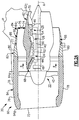
Figure 3A illustrates a side view of an example deflection measurement assembly. -
Figure 3B illustrates an axial view of the deflection measurement assembly ofFigure 3A . -
Figure 4A illustrates a perspective view of an example guide. -
Figure 4B illustrates a side view of the guide ofFigure 4A . -
Figure 5A illustrates a perspective view of selected portions of the deflection measurement assembly ofFigure 3A . -
Figure 5B illustrates a side view of the deflection measurement assembly ofFigure 5A . -
Figure 6 illustrates a deflection measurement assembly according to a second embodiment. -
Figure 7 illustrates a plan view of a deflection measurement assembly according to a third embodiment. -
Figure 8 illustrates a deflection measurement assembly according to a fourth embodiment. -
Figure 1 schematically illustrates agas turbine engine 20. Thegas turbine engine 20 is disclosed herein as a two-spool turbofan that generally incorporates afan section 22, acompressor section 24, acombustor section 26 and aturbine section 28. Alternative engines might include an augmentor section (not shown) among other systems or features. Thefan section 22 drives air along a bypass flow path B in a bypass duct defined within anacelle 15, while thecompressor section 24 drives air along a core flow path C for compression and communication into thecombustor section 26 then expansion through theturbine section 28. Although depicted as a two-spool turbofan gas turbine engine in the disclosed non-limiting embodiment, it should be understood that the concepts described herein are not limited to use with two-spool turbofans as the teachings may be applied to other types of turbine engines including three-spool architectures. - The
exemplary engine 20 generally includes alow speed spool 30 and ahigh speed spool 32 mounted for rotation about an engine central longitudinal axis A relative to an enginestatic structure 36 viaseveral bearing systems 38. It should be understood thatvarious bearing systems 38 at various locations may alternatively or additionally be provided, and the location ofbearing systems 38 may be varied as appropriate to the application. - The
low speed spool 30 generally includes aninner shaft 40 that interconnects afan 42, a first (or low)pressure compressor 44 and a first (or low)pressure turbine 46. Theinner shaft 40 is connected to thefan 42 through a speed change mechanism, which in exemplarygas turbine engine 20 is illustrated as a gearedarchitecture 48 to drive thefan 42 at a lower speed than thelow speed spool 30. Thehigh speed spool 32 includes anouter shaft 50 that interconnects a second (or high)pressure compressor 52 and a second (or high)pressure turbine 54. Acombustor 56 is arranged inexemplary gas turbine 20 between thehigh pressure compressor 52 and thehigh pressure turbine 54. Amid-turbine frame 57 of the enginestatic structure 36 is arranged generally between thehigh pressure turbine 54 and thelow pressure turbine 46. Themid-turbine frame 57 further supports bearingsystems 38 in theturbine section 28. Theinner shaft 40 and theouter shaft 50 are concentric and rotate viabearing systems 38 about the engine central longitudinal axis A which is collinear with their longitudinal axes. - The core airflow is compressed by the
low pressure compressor 44 then thehigh pressure compressor 52, mixed and burned with fuel in thecombustor 56, then expanded over thehigh pressure turbine 54 andlow pressure turbine 46. Themid-turbine frame 57 includesairfoils 59 which are in the core airflow path C. Theturbines low speed spool 30 andhigh speed spool 32 in response to the expansion. It will be appreciated that each of the positions of thefan section 22,compressor section 24,combustor section 26,turbine section 28, and fandrive gear system 48 may be varied. For example,gear system 48 may be located aft ofcombustor section 26 or even aft ofturbine section 28, andfan section 22 may be positioned forward or aft of the location ofgear system 48. - The
engine 20 in one example is a high-bypass geared aircraft engine. In a further example, theengine 20 bypass ratio is greater than about six, with an example embodiment being greater than about ten, the gearedarchitecture 48 is an epicyclic gear train, such as a planetary gear system or other gear system, with a gear reduction ratio of greater than about 2.3 and thelow pressure turbine 46 has a pressure ratio that is greater than about five. In one disclosed embodiment, theengine 20 bypass ratio is greater than about ten, the fan diameter is significantly larger than that of thelow pressure compressor 44, and thelow pressure turbine 46 has a pressure ratio that is greater than about five.Low pressure turbine 46 pressure ratio is pressure measured prior to inlet oflow pressure turbine 46 as related to the pressure at the outlet of thelow pressure turbine 46 prior to an exhaust nozzle. The gearedarchitecture 48 may be an epicycle gear train, such as a planetary gear system or other gear system, with a gear reduction ratio of greater than about 2.3:1. It should be understood, however, that the above parameters are only exemplary of one embodiment of a geared architecture engine and that the present invention is applicable to other gas turbine engines including direct drive turbofans. - A significant amount of thrust is provided by the bypass flow B due to the high bypass ratio. The
fan section 22 of theengine 20 is designed for a particular flight condition -- typically cruise at about 0.8 Mach and about 35,000 feet (10,668 m). The flight condition of 0.8 Mach and 35,000 ft (10,668 m), with the engine at its best fuel consumption - also known as "bucket cruise Thrust Specific Fuel Consumption ('TSFC')" - is the industry standard parameter of lbm of fuel being burned divided by lbf of thrust the engine produces at that minimum point. "Low fan pressure ratio" is the pressure ratio across the fan blade alone, without a Fan Exit Guide Vane ("FEGV") system. The low fan pressure ratio as disclosed herein according to one non-limiting embodiment is less than about 1.45. "Low corrected fan tip speed" is the actual fan tip speed in ft/sec divided by an industry standard temperature correction of [(Tram °R) / (518.7 °R)]^0.5 (where °R = K x 9/5). The "Low corrected fan tip speed" as disclosed herein according to one non-limiting embodiment is less than about 1150 ft / second (350.5 m/s). - Referring to
Figures 2A to 2C , anacelle assembly 60 is shown disposed about the engine axis A. In this disclosure, like reference numerals designate like elements where appropriate and reference numerals with the addition of one-hundred or multiples thereof designate modified elements that are understood to incorporate the same features and benefits of the corresponding original elements. Thenacelle assembly 60 can be fixedly attached to a pylon P. The pylon P is configured to support thenacelle assembly 60 andengine 20 on an aircraft. Thenacelle assembly 60 includes acore cowling 62, afan nacelle 64 and abypass duct 66 defining the bypass flow path B. - The
core cowling 62 extends circumferentially around, and at least partially houses, theengine sections architecture 48. Thecore cowling 62 extends axially along the engine axis A between acore inlet 68 and acore nozzle 70 to define the core flow path C. Thecore nozzle 70 defines an exhaust flow path for combustion products communicated from theturbine section 28. - The
fan nacelle 64 extends circumferentially around and houses thefan 42 and at least a portion of thecore cowling 62 to define the bypass flow path B. Thefan nacelle 64 includes anannular body 64A that extends axially along the engine axis A between anacelle inlet 72 and abypass nozzle 74 of the bypass flow path B. A leadingedge region 64B offan nacelle 64 defines thenacelle inlet 72. Theleading edge region 64B extends axially between thenacelle inlet 72 and thefan 42. A trailingedge region 64C of thefan nacelle 64 defines thebypass nozzle 74. Thefan nacelle 64 can include one or more segments fixed or moveable relative to each other and/or the engine axis A. Thebypass nozzle 74 can be substantially fixed relative to thenacelle inlet 72 such that an exit area of the bypass flow path B remains substantially constant. - In the illustrated example of
Figures 2A-2C , thenacelle assembly 60 includes athrust reverser 82 and avariable area nozzle 84 for adjusting various characteristics of the bypass flow path B.Figure 2A illustrates thethrust reverser 82 and thevariable area nozzle 84 in stowed positions.Figure 2B illustrates thethrust reverser 82 in a deployed position and thevariable area nozzle 84 in a stowed position.Figure 2C illustrates thethrust reverser 82 in the stowed position and thevariable area nozzle 84 in a deployed position. In alternative examples, thenacelle assembly 60 includes only one of thethrust reverser 82 andvariable area nozzle 84. - The
fan nacelle 64 includes a stationaryfirst nacelle section 78 and asecond nacelle section 80 aft of thefirst nacelle section 78. Thesecond nacelle section 80 is moveable relative to thefirst nacelle section 78. Thesecond nacelle section 80 can translate along a supporting structure such as a plurality of guides or tracks 81 (Figure 2B ). - The
thrust reverser 82 can include one ormore cascades 85 of turning vanes and blocker doors 83 (shown in dashed lines) arranged circumferentially around the engine axis A to direct flow F from the bypass flow path B for providing reverse engine thrust. In alternative examples, thethrust reverser 82 is configured without blocker doors. Thesecond nacelle section 80 is moveable relative to thefirst nacelle section 78 to deploy and stow thecascades 85. - The
variable area nozzle 84 is defined by athird nacelle section 86 of thefan nacelle 64. Thethird nacelle section 86 is moveable between the stowed position ofFigures 2A-2B and the deployed position ofFigure 2C utilizing one or more actuators. In the illustrated example, thefirst nacelle section 78 defines theleading edge region 64B and thethird nacelle section 86 defines the trailingedge region 64C of thefan nacelle 64. In alternative examples, thesecond nacelle section 80 defines the trailingedge region 64C. - As the
third nacelle section 86 translates aftwards relative to the engine axis A, aradial distance 75 of thebypass nozzle 74 between a trailing edge of thethird nacelle section 86 and thecore cowling 62 may change (e.g., increase) to radial distance 75' and thereby change (e.g., increase) a flow area of thebypass nozzle 74. In this manner, thevariable area nozzle 84 may adjust a pressure ratio across the bypass flow path B by changing the flow area of thebypass nozzle 74. - The
variable area nozzle 84 can define at least oneauxiliary port 77 to affect the bypass flow. In the illustrated example, theauxiliary port 77 is defined between an upstream portion of thesecond nacelle section 80 and thethird nacelle section 86 as thethird nacelle section 86 translates axially aftwards relative to the upstream portion. Communication of flow FA (Figure 2C ) throughauxiliary port 77 increases an effective flow area of thevariable area nozzle 84. Thevariable area nozzle 84 therefore may adjust a pressure ratio across the bypass flow path B. In alternative examples, thevariable area nozzle 84 includes one or more bodies (e.g., flaps similar to blocker doors 83) that may move radially and/or axially to change the flow area of thebypass nozzle 74. -
Figures 3A-3B illustrate adeflection measurement assembly 88, according to an example. Thedeflection measurement assembly 88 is operable to determine or sense a change in a cross-sectional area of the bypass or core flow paths B, C due to a change in loads caused by pressure loads exerted on surfaces of thenacelle assembly 60 during engine operation or test conditions. Thedeflection measurement assembly 88 may utilize the sensed change in the cross-sectional area to determine a deflection of thenacelle assembly 60 at a corresponding location of the cross-section. - The
deflection measurement assembly 88 includes a cable assembly 89 and at least onetransducer 90 actuated by the cable assembly 89. In the illustrated example, thetransducer 90 is a linear variable differential transducer (LVDT). Thetransducer 90 includes anactuator 90A moveable relative to abody 90B, and can be spring loaded to return theactuator 90A to a neutral position or state. In another example, thetransducer 90 is a rotary variable differential transducer (RVDT). Other example transducers can include a load cell responsive to force changes caused by movement of the cable assembly 89. For example,body 90B can be a tension load cell, andactuator 90A can be alinkage rod 90A coupled to the tension load cell. - The cable assembly 89 includes at least one
cable 92 or cable segments circumferentially arranged at least partially about the engine axis A. Thecable 92 can be disposed at least partially about aperipheral region 61 of thenacelle assembly 60. Theperipheral region 61 can be defined as a perimeter of one of the first, second orthird nacelle sections nacelle assembly 60, thecore cowling 62, or along the bypass or core flow paths B, C. In the illustrated example ofFigure 3B , thecable 92 is adjacent to an outer diameter of thebypass nozzle 74 to form a partial loop which extends at least 180 degrees about the engine axis A. The cable assembly 89 can be situated at other locations of thenacelle assembly 60, such as an inner or outer diameter ofcore cowling 62 adjacent to thecore nozzle 70. Thecable 92 can be configured to extend less than 180 degrees about the engine axis A to determine deflection of a localized region of thenacelle assembly 60. In some examples, the deflection measurement assembly includes an array of transducers and cable assemblies arranged about the engine axis A to determine deflection at different localized areas of thenacelle assembly 60. For example,Figure 8 illustratesdeflection measurement assembly 388 having a plurality oftransducers 390 arranged about engine axis A, with eachtransducer 390 coupled to acorresponding cable assembly 289. - A length of the
cable 92 extends through one ormore guides 94 positioned at spaced intervals along thenacelle assembly 60. Eachguide 94 includes abody 94A attachable to thenacelle assembly 60. Thebody 94A defines a contouredopening 94B for routing a portion of thecable 92, as illustrated byFigures 4A and 4B . Afirst end 92A of thecable 92 is fixedly attached or otherwise coupled toactuator 90A of thetransducer 90, and asecond end 92B of thecable 92 is fixedly attached or otherwise coupled to the pylon P. In alternative examples, thesecond end 92B is fixedly attached to thenacelle assembly 60. - Referring to
Figures 5A and 5B , thedeflection measurement assembly 88 includes amount 96 configured to attach thetransducer 90 to thenacelle assembly 60. Themount 96 includes afirst portion 96A and asecond portion 96B. The first andsecond portions passage 96C for receiving a portion of thetransducer 90. Thefirst portion 96A can be fixedly attached to thetransducer 90, and thesecond portion 96B can be fixedly attached to thenacelle assembly 60 at a desired location. The first andsecond portions first portion 96A is moveable relative to thesecond portion 96B such that thetransducer 90 is moveable relative to thenacelle assembly 60. - The
mount 96 includes acable interface 97 and one ormore springs 98, with thefirst end 92A of thecable 92 coupled to thecable interface 97. Eachspring 98 is coupled to thecable interface 97 and to apost 99 extending from themount 96. Thesprings 98 bias thecable 92 towards thetransducer 90 to provide a desired amount of tension on thecable 92. In alternative examples, thefirst end 92A of thecable 92 is attached to theactuator 90A via a spring to provide a desired tension, or is directly attached to theactuator 90A. - Referring back to
Figure 3B , thedeflection measurement assembly 88 includes acontroller 91 coupled to secondary coils of thetransducer 90. Thecontroller 91 is configured to measure a linear displacement ofactuator 90A based upon measured induced voltage changes caused by movement of a core of theactuator 90A relative to primary and secondary coils of thetransducer 90. Thecontroller 91 is operable to determine a deflection of thenacelle assembly 60 at a desired location L1 corresponding to the cable assembly 89 based upon the displacement. The desired location L1 can include any of the locations discussed herein relative to thenacelle assembly 60 and/or engine axis A. Thecontroller 91 is operable to determine the deflection based on comparing the voltage changes of thetransducer 90 to one or more predetermined values. - The
controller 91 typically includes a processor, a memory and an interface. The processor may, for example only, be any type of known microprocessor having desired performance characteristics. The memory may, for example only, includes UVPROM, EEPROM, FLASH, RAM, ROM, DVD, CD, a hard drive, or other computer readable medium which may store data and an algorithm for operation of the deflection measurement assembly as described herein. The interface facilitates communication with the other systems or components of theengine 20 or aircraft. Thecontroller 91 can be a portion of a full authority digital engine control (FADEC) such as an electronic engine controller (EEC), another system, or a stand-alone system, for example. - During operation, deflection can occur due to pressure loads which cause surfaces of the
nacelle assembly 60 to move radially outward. The cable assembly 89 is moveable relative to the engine axis A in response to a change in a cross-sectional area of the flow path. Thetransducer 90 is actuated in response to movement of the cable assembly 89 caused by a change in the effective length of the cable assembly 89. Thecontroller 91 is operable to determine a change in the cross-sectional area based on comparing the displacement of theactuator 90A to a predetermined quantity at a corresponding operating condition. The corresponding operating condition may be full power of theengine 20 or another operating condition, such as a cruise condition. Thecontroller 91 is operable to determine deflection of thenacelle assembly 60 based on the change in the cross-sectional area. - The
controller 91 can be operable to cause a performance characteristic of theengine 20 to change based upon the deflection, such as adjusting a power output of theengine 20 at a desired operating condition. In other examples, the calculated deflection can be utilized for adjusting flow and thrust performance calculations during design, testing or calibration. -
Figure 6 illustrates adeflection measurement assembly 188 according to a second example.Cable assembly 189 is situated at least partially within acavity 163 of thenacelle assembly 160. Thecavity 163 can be defined by trailingedge region 64C of thefan nacelle 64 or a trailingedge region 62C of the core cowling 62 (Figure 2A ), for example.Transducer 190 is coupled tofirst end 192A andsecond end 192B ofcable 192 to form a substantially full loop. Themount 196 is configured to permit thetransducer 190 to move relative to thenacelle assembly 160. -
Figure 7 illustrates a plan view of adeflection measurement assembly 288 according to a third embodiment.Transducer 290 can be a rotary variable differential transducer (RVDT).Actuator 290A extends outward frombody 290B. For example, theactuator 290A can extend radially outwardly with respect to engine axis A (Figure 2 ). In alternative examples, theactuator 290A can extend in the circumferential direction with respect to engine axis A (Figure 2 ). Theactuator 290A is offset from, and pivotably coupled to,cable 292 ofcable assembly 289 by one ormore linkage arms 295. Movement ofcable 292 causes thelinkage arms 295 to rotateactuator 290A.Controller 291 is operable to determine a change in the cross-sectional area or also deflection based on comparing a radial displacement ofactuator 290A. - It should be understood that relative positional terms such as "forward," "aft," "upper," "lower," "above," "below," and the like are with reference to the normal operational attitude of the vehicle and should not be considered otherwise limiting. Although the different examples have the specific components shown in the illustrations, embodiments of this disclosure are not limited to those particular combinations. It is possible to use some of the components or features from one of the examples in combination with features or components from another one of the examples. Although particular step sequences are shown, described, and claimed, it should be understood that steps may be performed in any order, separated or combined unless otherwise indicated and will still benefit from the present disclosure.
- The foregoing description is exemplary rather than defined by the limitations within. Various non-limiting embodiments are disclosed herein, however, one of ordinary skill in the art would recognize that various modifications and variations in light of the above teachings will fall within the scope of the appended claims. It is therefore to be understood that within the scope of the appended claims, the disclosure may be practiced other than as specifically described. For that reason the appended claims should be studied to determine true scope and content.
Claims (15)
- A deflection measurement assembly (88;188;288;388), comprising:a nacelle (64) arranged about an axis (A) to define a flow path (B,C);a cable assembly (89;189;289;389) arranged at least partially about the axis (A); anda transducer (90;190;290;390) coupled to the cable assembly (89...389).
- The assembly as recited in claim 1, wherein the cable assembly (89...389) includes at least one cable (92;192;292;392) disposed at least partially about a periphery (61) of the nacelle (64).
- The assembly as recited in claim 2, wherein the transducer (90...390) is coupled to a first end (92A; 192A) of the at least one cable (92...392).
- The assembly as recited in claim 3, wherein the transducer (90...390) is coupled to a second end (92B;192B) of the at least one cable (92...392).
- The assembly as recited in any preceding claim, comprising a mount (96;196;296;396) including a first portion (96A) fixedly attached to the nacelle (64) and a second portion (96B) fixedly attached to the transducer (90...390).
- The assembly as recited in any preceding claim, comprising a controller (91;191;291;391) coupled to the transducer (90...390), the controller (91...391) operable to determine a deflection of the nacelle (64) in response to actuation of the transducer (90...390), wherein, optionally, the deflection relates to a change in a cross-sectional area of the flow path (B,C) at a location corresponding to the cable assembly (89...389).
- The assembly as recited in any preceding claim, wherein the nacelle (64) includes an annular body (64A) extending between a leading edge region (64B) and a trailing edge region (64C), and the cable assembly (89...389) is situated adjacent to the trailing edge region (64C), and wherein, optionally, the trailing edge region (64C) is moveable relative to the leading edge region (64B).
- A propulsion system, comprising:a gas turbine engine (20) defining an engine axis (A), the engine (20) including a turbine section (28) configured to drive a fan section (22);a nacelle assembly (60;160;360) including a fan nacelle (64) and a core cowling (62) arranged about the engine axis (A) to define a bypass flow path (B), and the core cowling (62) defining a core flow path (C); anda deflection measurement assembly (88...388), comprising:a cable assembly (89...389) coupled to the nacelle assembly (60;160;360); anda transducer (90...390) coupled to the cable assembly (89...389), the transducer (90...390) configured to be actuated in response to a change in a cross-sectional area of at least one of the bypass flow path (B) and the core flow path (C).
- The propulsion system as recited in claim 8, wherein the cable assembly (89...389) is arranged at least partially about the engine axis (A).
- The propulsion system as recited in claim 8 or 9, comprising a controller (91...391) coupled to the transducer (90...390), the controller (91...391) operable to determine a deflection of the nacelle assembly (60;160;360) based upon the change in the cross-section area.
- The propulsion system as recited in claim 8, 9 or 10, wherein the cable assembly (89...389) includes at least one cable (92...392) disposed along a perimeter (61) of the nacelle assembly (60;160;360), and wherein, optionally, the fan nacelle (64) is fixedly attached to a pylon (P), the transducer (90...390) is coupled to a first end (92A;192A) of the at least one cable (92... 392), and a second end (92B;192B) of the at least one cable (92...392) is coupled to the pylon (P).
- The assembly or propulsion system as recited in any preceding claim, wherein the transducer (90...390) is a linear variable differential transducer.
- A method of measuring deflection of a nacelle assembly (60;160;360), comprising:providing a nacelle (64) defining a flow path (B,C) that extends along an axis (A);positioning a cable assembly (89...389) about the axis (A), the cable assembly (89...389) moveable relative to the axis (A) in response to a change in a cross-sectional area of the flow path (B,C); andactuating a transducer (90...390) is response to movement of the cable assembly (89...389).
- The method as recited in claim 13, wherein the cable assembly (89...389) includes at least one cable (92...392) disposed along a perimeter (61) of the nacelle (64), and the transducer (90...390) is coupled to a first end (92A;192A) of the at least one cable (92...392).
- The method as recited in claim 13 or 14, comprising determining a deflection of the nacelle (64) at a location adjacent to the cable assembly (89...389) based upon the step of actuating the transducer (90...390), wherein, optionally, the step of determining the deflection of the nacelle (64) includes comparing the change in the cross-section area to a predetermined quantity.
Applications Claiming Priority (1)
| Application Number | Priority Date | Filing Date | Title |
|---|---|---|---|
| US15/095,199 US10295420B2 (en) | 2016-04-11 | 2016-04-11 | Nacelle deflection measurement assembly |
Publications (2)
| Publication Number | Publication Date |
|---|---|
| EP3232017A1 true EP3232017A1 (en) | 2017-10-18 |
| EP3232017B1 EP3232017B1 (en) | 2023-12-20 |
Family
ID=58548563
Family Applications (1)
| Application Number | Title | Priority Date | Filing Date |
|---|---|---|---|
| EP17166095.4A Active EP3232017B1 (en) | 2016-04-11 | 2017-04-11 | Nacelle deflection measurement assembly |
Country Status (2)
| Country | Link |
|---|---|
| US (1) | US10295420B2 (en) |
| EP (1) | EP3232017B1 (en) |
Families Citing this family (4)
| Publication number | Priority date | Publication date | Assignee | Title |
|---|---|---|---|---|
| CN112985812B (en) * | 2019-12-18 | 2023-01-06 | 中国航发商用航空发动机有限责任公司 | Nacelle testing device and engine testing system |
| CN114379795B (en) * | 2020-10-16 | 2025-06-13 | 通用电气公司 | Propulsion engines and fairings |
| US11421607B1 (en) | 2021-06-10 | 2022-08-23 | Raytheon Technologies Corporation | Fiber optic exit area sensing for gas turbine engine nozzles |
| FR3158499A1 (en) * | 2024-01-22 | 2025-07-25 | Safran Aircraft Engines | SET COMPRISING AN AIRCRAFT TURBOMACHINE AND ITS MOUNTING PYLON |
Citations (3)
| Publication number | Priority date | Publication date | Assignee | Title |
|---|---|---|---|---|
| US3233405A (en) * | 1964-07-02 | 1966-02-08 | Pacific Scientific Co | Jet nozzle feedback control system |
| WO2008045034A1 (en) * | 2006-10-12 | 2008-04-17 | United Technologies Corporation | Fan variable area nozzle with cable actuator system |
| US20160281639A1 (en) * | 2015-03-23 | 2016-09-29 | The Boeing Company | Controlling nozzle areas of variable area fan nozzles |
Family Cites Families (8)
| Publication number | Priority date | Publication date | Assignee | Title |
|---|---|---|---|---|
| US2634578A (en) * | 1949-02-19 | 1953-04-14 | Mcdonnell Aircraft Corp | Device for varying the effective area of discharge orifices of jet engines or afterburners therefor |
| US5385013A (en) | 1993-03-03 | 1995-01-31 | General Electric Company | Aircraft gas turbine engine backbone deflection thermal control |
| US5524847A (en) | 1993-09-07 | 1996-06-11 | United Technologies Corporation | Nacelle and mounting arrangement for an aircraft engine |
| US8235325B2 (en) | 2005-10-04 | 2012-08-07 | United Technologies Corporation | Fan variable area nozzle positional measurement system |
| GB0820174D0 (en) | 2008-11-05 | 2008-12-10 | Rolls Royce Plc | A gas turbine engine variable area exhaust nozzle |
| US20110120079A1 (en) | 2009-11-24 | 2011-05-26 | Schwark Jr Fred W | Variable area fan nozzle stiffeners and placement |
| US9316112B2 (en) | 2011-12-21 | 2016-04-19 | Rohr, Inc. | Variable area fan nozzle with drive system health monitoring |
| US9303590B2 (en) * | 2012-05-22 | 2016-04-05 | Spirit Aerosystems, Inc. | Variable area fan nozzle actuation system |
-
2016
- 2016-04-11 US US15/095,199 patent/US10295420B2/en active Active
-
2017
- 2017-04-11 EP EP17166095.4A patent/EP3232017B1/en active Active
Patent Citations (3)
| Publication number | Priority date | Publication date | Assignee | Title |
|---|---|---|---|---|
| US3233405A (en) * | 1964-07-02 | 1966-02-08 | Pacific Scientific Co | Jet nozzle feedback control system |
| WO2008045034A1 (en) * | 2006-10-12 | 2008-04-17 | United Technologies Corporation | Fan variable area nozzle with cable actuator system |
| US20160281639A1 (en) * | 2015-03-23 | 2016-09-29 | The Boeing Company | Controlling nozzle areas of variable area fan nozzles |
Also Published As
| Publication number | Publication date |
|---|---|
| US20170292882A1 (en) | 2017-10-12 |
| US10295420B2 (en) | 2019-05-21 |
| EP3232017B1 (en) | 2023-12-20 |
Similar Documents
| Publication | Publication Date | Title |
|---|---|---|
| US10822989B2 (en) | Adjustable blade outer air seal apparatus | |
| EP3199766B1 (en) | Variable pitch fan blade arrangement for gas turbine engine | |
| EP2971598B1 (en) | Variable vane control system | |
| EP3232016B1 (en) | Method and apparatus for adjusting variable vanes | |
| US10400621B2 (en) | Pivot door thrust reverser with variable area nozzle | |
| US8961115B2 (en) | Clearance control for gas turbine engine seal | |
| EP2957754B1 (en) | Variable area nozzle for gas turbine engine | |
| EP3232017B1 (en) | Nacelle deflection measurement assembly | |
| EP2998522B1 (en) | Gas turbine engine variable stator vane | |
| EP3869024B1 (en) | High bypass ratio engine bypass duct nozzle with controlled nozzle area | |
| EP3564495B1 (en) | Gas turbine engine exhaust component | |
| US20170204735A1 (en) | Gas turbine engine components with optimized leading edge geometry | |
| US10006404B2 (en) | Gas turbine engine thrust reverser system | |
| WO2015065597A2 (en) | Translating compressor and turbine rotors for clearance control | |
| US20140064969A1 (en) | Blade outer air seal |
Legal Events
| Date | Code | Title | Description |
|---|---|---|---|
| PUAI | Public reference made under article 153(3) epc to a published international application that has entered the european phase |
Free format text: ORIGINAL CODE: 0009012 |
|
| STAA | Information on the status of an ep patent application or granted ep patent |
Free format text: STATUS: THE APPLICATION HAS BEEN PUBLISHED |
|
| AK | Designated contracting states |
Kind code of ref document: A1 Designated state(s): AL AT BE BG CH CY CZ DE DK EE ES FI FR GB GR HR HU IE IS IT LI LT LU LV MC MK MT NL NO PL PT RO RS SE SI SK SM TR |
|
| AX | Request for extension of the european patent |
Extension state: BA ME |
|
| STAA | Information on the status of an ep patent application or granted ep patent |
Free format text: STATUS: REQUEST FOR EXAMINATION WAS MADE |
|
| 17P | Request for examination filed |
Effective date: 20180417 |
|
| RBV | Designated contracting states (corrected) |
Designated state(s): AL AT BE BG CH CY CZ DE DK EE ES FI FR GB GR HR HU IE IS IT LI LT LU LV MC MK MT NL NO PL PT RO RS SE SI SK SM TR |
|
| RAP1 | Party data changed (applicant data changed or rights of an application transferred) |
Owner name: RAYTHEON TECHNOLOGIES CORPORATION |
|
| STAA | Information on the status of an ep patent application or granted ep patent |
Free format text: STATUS: EXAMINATION IS IN PROGRESS |
|
| 17Q | First examination report despatched |
Effective date: 20210507 |
|
| GRAP | Despatch of communication of intention to grant a patent |
Free format text: ORIGINAL CODE: EPIDOSNIGR1 |
|
| STAA | Information on the status of an ep patent application or granted ep patent |
Free format text: STATUS: GRANT OF PATENT IS INTENDED |
|
| INTG | Intention to grant announced |
Effective date: 20230718 |
|
| RAP3 | Party data changed (applicant data changed or rights of an application transferred) |
Owner name: RTX CORPORATION |
|
| GRAS | Grant fee paid |
Free format text: ORIGINAL CODE: EPIDOSNIGR3 |
|
| GRAA | (expected) grant |
Free format text: ORIGINAL CODE: 0009210 |
|
| STAA | Information on the status of an ep patent application or granted ep patent |
Free format text: STATUS: THE PATENT HAS BEEN GRANTED |
|
| AK | Designated contracting states |
Kind code of ref document: B1 Designated state(s): AL AT BE BG CH CY CZ DE DK EE ES FI FR GB GR HR HU IE IS IT LI LT LU LV MC MK MT NL NO PL PT RO RS SE SI SK SM TR |
|
| REG | Reference to a national code |
Ref country code: GB Ref legal event code: FG4D |
|
| REG | Reference to a national code |
Ref country code: CH Ref legal event code: EP |
|
| REG | Reference to a national code |
Ref country code: DE Ref legal event code: R096 Ref document number: 602017077638 Country of ref document: DE |
|
| REG | Reference to a national code |
Ref country code: IE Ref legal event code: FG4D |
|
| PG25 | Lapsed in a contracting state [announced via postgrant information from national office to epo] |
Ref country code: GR Free format text: LAPSE BECAUSE OF FAILURE TO SUBMIT A TRANSLATION OF THE DESCRIPTION OR TO PAY THE FEE WITHIN THE PRESCRIBED TIME-LIMIT Effective date: 20240321 |
|
| REG | Reference to a national code |
Ref country code: LT Ref legal event code: MG9D |
|
| PG25 | Lapsed in a contracting state [announced via postgrant information from national office to epo] |
Ref country code: LT Free format text: LAPSE BECAUSE OF FAILURE TO SUBMIT A TRANSLATION OF THE DESCRIPTION OR TO PAY THE FEE WITHIN THE PRESCRIBED TIME-LIMIT Effective date: 20231220 |
|
| REG | Reference to a national code |
Ref country code: NL Ref legal event code: MP Effective date: 20231220 |
|
| PG25 | Lapsed in a contracting state [announced via postgrant information from national office to epo] |
Ref country code: ES Free format text: LAPSE BECAUSE OF FAILURE TO SUBMIT A TRANSLATION OF THE DESCRIPTION OR TO PAY THE FEE WITHIN THE PRESCRIBED TIME-LIMIT Effective date: 20231220 |
|
| PG25 | Lapsed in a contracting state [announced via postgrant information from national office to epo] |
Ref country code: LT Free format text: LAPSE BECAUSE OF FAILURE TO SUBMIT A TRANSLATION OF THE DESCRIPTION OR TO PAY THE FEE WITHIN THE PRESCRIBED TIME-LIMIT Effective date: 20231220 Ref country code: GR Free format text: LAPSE BECAUSE OF FAILURE TO SUBMIT A TRANSLATION OF THE DESCRIPTION OR TO PAY THE FEE WITHIN THE PRESCRIBED TIME-LIMIT Effective date: 20240321 Ref country code: FI Free format text: LAPSE BECAUSE OF FAILURE TO SUBMIT A TRANSLATION OF THE DESCRIPTION OR TO PAY THE FEE WITHIN THE PRESCRIBED TIME-LIMIT Effective date: 20231220 Ref country code: ES Free format text: LAPSE BECAUSE OF FAILURE TO SUBMIT A TRANSLATION OF THE DESCRIPTION OR TO PAY THE FEE WITHIN THE PRESCRIBED TIME-LIMIT Effective date: 20231220 Ref country code: BG Free format text: LAPSE BECAUSE OF FAILURE TO SUBMIT A TRANSLATION OF THE DESCRIPTION OR TO PAY THE FEE WITHIN THE PRESCRIBED TIME-LIMIT Effective date: 20240320 |
|
| REG | Reference to a national code |
Ref country code: AT Ref legal event code: MK05 Ref document number: 1642620 Country of ref document: AT Kind code of ref document: T Effective date: 20231220 |
|
| PG25 | Lapsed in a contracting state [announced via postgrant information from national office to epo] |
Ref country code: NL Free format text: LAPSE BECAUSE OF FAILURE TO SUBMIT A TRANSLATION OF THE DESCRIPTION OR TO PAY THE FEE WITHIN THE PRESCRIBED TIME-LIMIT Effective date: 20231220 |
|
| PG25 | Lapsed in a contracting state [announced via postgrant information from national office to epo] |
Ref country code: SE Free format text: LAPSE BECAUSE OF FAILURE TO SUBMIT A TRANSLATION OF THE DESCRIPTION OR TO PAY THE FEE WITHIN THE PRESCRIBED TIME-LIMIT Effective date: 20231220 Ref country code: RS Free format text: LAPSE BECAUSE OF FAILURE TO SUBMIT A TRANSLATION OF THE DESCRIPTION OR TO PAY THE FEE WITHIN THE PRESCRIBED TIME-LIMIT Effective date: 20231220 Ref country code: NO Free format text: LAPSE BECAUSE OF FAILURE TO SUBMIT A TRANSLATION OF THE DESCRIPTION OR TO PAY THE FEE WITHIN THE PRESCRIBED TIME-LIMIT Effective date: 20240320 Ref country code: NL Free format text: LAPSE BECAUSE OF FAILURE TO SUBMIT A TRANSLATION OF THE DESCRIPTION OR TO PAY THE FEE WITHIN THE PRESCRIBED TIME-LIMIT Effective date: 20231220 Ref country code: LV Free format text: LAPSE BECAUSE OF FAILURE TO SUBMIT A TRANSLATION OF THE DESCRIPTION OR TO PAY THE FEE WITHIN THE PRESCRIBED TIME-LIMIT Effective date: 20231220 Ref country code: HR Free format text: LAPSE BECAUSE OF FAILURE TO SUBMIT A TRANSLATION OF THE DESCRIPTION OR TO PAY THE FEE WITHIN THE PRESCRIBED TIME-LIMIT Effective date: 20231220 |
|
| PG25 | Lapsed in a contracting state [announced via postgrant information from national office to epo] |
Ref country code: IS Free format text: LAPSE BECAUSE OF FAILURE TO SUBMIT A TRANSLATION OF THE DESCRIPTION OR TO PAY THE FEE WITHIN THE PRESCRIBED TIME-LIMIT Effective date: 20240420 |
|
| PG25 | Lapsed in a contracting state [announced via postgrant information from national office to epo] |
Ref country code: CZ Free format text: LAPSE BECAUSE OF FAILURE TO SUBMIT A TRANSLATION OF THE DESCRIPTION OR TO PAY THE FEE WITHIN THE PRESCRIBED TIME-LIMIT Effective date: 20231220 Ref country code: AT Free format text: LAPSE BECAUSE OF FAILURE TO SUBMIT A TRANSLATION OF THE DESCRIPTION OR TO PAY THE FEE WITHIN THE PRESCRIBED TIME-LIMIT Effective date: 20231220 |
|
| PG25 | Lapsed in a contracting state [announced via postgrant information from national office to epo] |
Ref country code: SK Free format text: LAPSE BECAUSE OF FAILURE TO SUBMIT A TRANSLATION OF THE DESCRIPTION OR TO PAY THE FEE WITHIN THE PRESCRIBED TIME-LIMIT Effective date: 20231220 |
|
| PG25 | Lapsed in a contracting state [announced via postgrant information from national office to epo] |
Ref country code: SM Free format text: LAPSE BECAUSE OF FAILURE TO SUBMIT A TRANSLATION OF THE DESCRIPTION OR TO PAY THE FEE WITHIN THE PRESCRIBED TIME-LIMIT Effective date: 20231220 Ref country code: SK Free format text: LAPSE BECAUSE OF FAILURE TO SUBMIT A TRANSLATION OF THE DESCRIPTION OR TO PAY THE FEE WITHIN THE PRESCRIBED TIME-LIMIT Effective date: 20231220 Ref country code: RO Free format text: LAPSE BECAUSE OF FAILURE TO SUBMIT A TRANSLATION OF THE DESCRIPTION OR TO PAY THE FEE WITHIN THE PRESCRIBED TIME-LIMIT Effective date: 20231220 Ref country code: IT Free format text: LAPSE BECAUSE OF FAILURE TO SUBMIT A TRANSLATION OF THE DESCRIPTION OR TO PAY THE FEE WITHIN THE PRESCRIBED TIME-LIMIT Effective date: 20231220 Ref country code: IS Free format text: LAPSE BECAUSE OF FAILURE TO SUBMIT A TRANSLATION OF THE DESCRIPTION OR TO PAY THE FEE WITHIN THE PRESCRIBED TIME-LIMIT Effective date: 20240420 Ref country code: EE Free format text: LAPSE BECAUSE OF FAILURE TO SUBMIT A TRANSLATION OF THE DESCRIPTION OR TO PAY THE FEE WITHIN THE PRESCRIBED TIME-LIMIT Effective date: 20231220 Ref country code: CZ Free format text: LAPSE BECAUSE OF FAILURE TO SUBMIT A TRANSLATION OF THE DESCRIPTION OR TO PAY THE FEE WITHIN THE PRESCRIBED TIME-LIMIT Effective date: 20231220 Ref country code: AT Free format text: LAPSE BECAUSE OF FAILURE TO SUBMIT A TRANSLATION OF THE DESCRIPTION OR TO PAY THE FEE WITHIN THE PRESCRIBED TIME-LIMIT Effective date: 20231220 |
|
| PG25 | Lapsed in a contracting state [announced via postgrant information from national office to epo] |
Ref country code: PT Free format text: LAPSE BECAUSE OF FAILURE TO SUBMIT A TRANSLATION OF THE DESCRIPTION OR TO PAY THE FEE WITHIN THE PRESCRIBED TIME-LIMIT Effective date: 20240422 Ref country code: PL Free format text: LAPSE BECAUSE OF FAILURE TO SUBMIT A TRANSLATION OF THE DESCRIPTION OR TO PAY THE FEE WITHIN THE PRESCRIBED TIME-LIMIT Effective date: 20231220 |
|
| PG25 | Lapsed in a contracting state [announced via postgrant information from national office to epo] |
Ref country code: PT Free format text: LAPSE BECAUSE OF FAILURE TO SUBMIT A TRANSLATION OF THE DESCRIPTION OR TO PAY THE FEE WITHIN THE PRESCRIBED TIME-LIMIT Effective date: 20240422 Ref country code: PL Free format text: LAPSE BECAUSE OF FAILURE TO SUBMIT A TRANSLATION OF THE DESCRIPTION OR TO PAY THE FEE WITHIN THE PRESCRIBED TIME-LIMIT Effective date: 20231220 |
|
| REG | Reference to a national code |
Ref country code: DE Ref legal event code: R097 Ref document number: 602017077638 Country of ref document: DE |
|
| PG25 | Lapsed in a contracting state [announced via postgrant information from national office to epo] |
Ref country code: DK Free format text: LAPSE BECAUSE OF FAILURE TO SUBMIT A TRANSLATION OF THE DESCRIPTION OR TO PAY THE FEE WITHIN THE PRESCRIBED TIME-LIMIT Effective date: 20231220 |
|
| PLBE | No opposition filed within time limit |
Free format text: ORIGINAL CODE: 0009261 |
|
| STAA | Information on the status of an ep patent application or granted ep patent |
Free format text: STATUS: NO OPPOSITION FILED WITHIN TIME LIMIT |
|
| PG25 | Lapsed in a contracting state [announced via postgrant information from national office to epo] |
Ref country code: SI Free format text: LAPSE BECAUSE OF FAILURE TO SUBMIT A TRANSLATION OF THE DESCRIPTION OR TO PAY THE FEE WITHIN THE PRESCRIBED TIME-LIMIT Effective date: 20231220 |
|
| PG25 | Lapsed in a contracting state [announced via postgrant information from national office to epo] |
Ref country code: SI Free format text: LAPSE BECAUSE OF FAILURE TO SUBMIT A TRANSLATION OF THE DESCRIPTION OR TO PAY THE FEE WITHIN THE PRESCRIBED TIME-LIMIT Effective date: 20231220 Ref country code: DK Free format text: LAPSE BECAUSE OF FAILURE TO SUBMIT A TRANSLATION OF THE DESCRIPTION OR TO PAY THE FEE WITHIN THE PRESCRIBED TIME-LIMIT Effective date: 20231220 |
|
| PG25 | Lapsed in a contracting state [announced via postgrant information from national office to epo] |
Ref country code: MC Free format text: LAPSE BECAUSE OF FAILURE TO SUBMIT A TRANSLATION OF THE DESCRIPTION OR TO PAY THE FEE WITHIN THE PRESCRIBED TIME-LIMIT Effective date: 20231220 |
|
| 26N | No opposition filed |
Effective date: 20240923 |
|
| PG25 | Lapsed in a contracting state [announced via postgrant information from national office to epo] |
Ref country code: MC Free format text: LAPSE BECAUSE OF FAILURE TO SUBMIT A TRANSLATION OF THE DESCRIPTION OR TO PAY THE FEE WITHIN THE PRESCRIBED TIME-LIMIT Effective date: 20231220 |
|
| REG | Reference to a national code |
Ref country code: CH Ref legal event code: PL |
|
| PG25 | Lapsed in a contracting state [announced via postgrant information from national office to epo] |
Ref country code: LU Free format text: LAPSE BECAUSE OF NON-PAYMENT OF DUE FEES Effective date: 20240411 |
|
| REG | Reference to a national code |
Ref country code: BE Ref legal event code: MM Effective date: 20240430 |
|
| PG25 | Lapsed in a contracting state [announced via postgrant information from national office to epo] |
Ref country code: LU Free format text: LAPSE BECAUSE OF NON-PAYMENT OF DUE FEES Effective date: 20240411 |
|
| PG25 | Lapsed in a contracting state [announced via postgrant information from national office to epo] |
Ref country code: BE Free format text: LAPSE BECAUSE OF NON-PAYMENT OF DUE FEES Effective date: 20240430 |
|
| PG25 | Lapsed in a contracting state [announced via postgrant information from national office to epo] |
Ref country code: BE Free format text: LAPSE BECAUSE OF NON-PAYMENT OF DUE FEES Effective date: 20240430 Ref country code: CH Free format text: LAPSE BECAUSE OF NON-PAYMENT OF DUE FEES Effective date: 20240430 |
|
| PG25 | Lapsed in a contracting state [announced via postgrant information from national office to epo] |
Ref country code: IE Free format text: LAPSE BECAUSE OF NON-PAYMENT OF DUE FEES Effective date: 20240411 |
|
| PGFP | Annual fee paid to national office [announced via postgrant information from national office to epo] |
Ref country code: DE Payment date: 20250319 Year of fee payment: 9 |
|
| PG25 | Lapsed in a contracting state [announced via postgrant information from national office to epo] |
Ref country code: CY Free format text: LAPSE BECAUSE OF FAILURE TO SUBMIT A TRANSLATION OF THE DESCRIPTION OR TO PAY THE FEE WITHIN THE PRESCRIBED TIME-LIMIT; INVALID AB INITIO Effective date: 20170411 |
|
| PG25 | Lapsed in a contracting state [announced via postgrant information from national office to epo] |
Ref country code: HU Free format text: LAPSE BECAUSE OF FAILURE TO SUBMIT A TRANSLATION OF THE DESCRIPTION OR TO PAY THE FEE WITHIN THE PRESCRIBED TIME-LIMIT; INVALID AB INITIO Effective date: 20170411 |
|
| P01 | Opt-out of the competence of the unified patent court (upc) registered |
Free format text: CASE NUMBER: UPC_APP_0017126_3232017/2025 Effective date: 20251211 |
|
| PGFP | Annual fee paid to national office [announced via postgrant information from national office to epo] |
Ref country code: GB Payment date: 20260319 Year of fee payment: 10 |
|
| PGFP | Annual fee paid to national office [announced via postgrant information from national office to epo] |
Ref country code: FR Payment date: 20260319 Year of fee payment: 10 |