EP3231619A1 - Label creation device and label creation system - Google Patents
Label creation device and label creation system Download PDFInfo
- Publication number
- EP3231619A1 EP3231619A1 EP15868197.3A EP15868197A EP3231619A1 EP 3231619 A1 EP3231619 A1 EP 3231619A1 EP 15868197 A EP15868197 A EP 15868197A EP 3231619 A1 EP3231619 A1 EP 3231619A1
- Authority
- EP
- European Patent Office
- Prior art keywords
- numerical sequence
- group
- numbers
- terminal
- block
- Prior art date
- Legal status (The legal status is an assumption and is not a legal conclusion. Google has not performed a legal analysis and makes no representation as to the accuracy of the status listed.)
- Withdrawn
Links
Images


Classifications
-
- B—PERFORMING OPERATIONS; TRANSPORTING
- B41—PRINTING; LINING MACHINES; TYPEWRITERS; STAMPS
- B41J—TYPEWRITERS; SELECTIVE PRINTING MECHANISMS, i.e. MECHANISMS PRINTING OTHERWISE THAN FROM A FORME; CORRECTION OF TYPOGRAPHICAL ERRORS
- B41J3/00—Typewriters or selective printing or marking mechanisms characterised by the purpose for which they are constructed
- B41J3/407—Typewriters or selective printing or marking mechanisms characterised by the purpose for which they are constructed for marking on special material
- B41J3/4075—Tape printers; Label printers
-
- B—PERFORMING OPERATIONS; TRANSPORTING
- B41—PRINTING; LINING MACHINES; TYPEWRITERS; STAMPS
- B41J—TYPEWRITERS; SELECTIVE PRINTING MECHANISMS, i.e. MECHANISMS PRINTING OTHERWISE THAN FROM A FORME; CORRECTION OF TYPOGRAPHICAL ERRORS
- B41J11/00—Devices or arrangements of selective printing mechanisms, e.g. ink-jet printers or thermal printers, for supporting or handling copy material in sheet or web form
- B41J11/008—Controlling printhead for accurately positioning print image on printing material, e.g. with the intention to control the width of margins
-
- B—PERFORMING OPERATIONS; TRANSPORTING
- B41—PRINTING; LINING MACHINES; TYPEWRITERS; STAMPS
- B41J—TYPEWRITERS; SELECTIVE PRINTING MECHANISMS, i.e. MECHANISMS PRINTING OTHERWISE THAN FROM A FORME; CORRECTION OF TYPOGRAPHICAL ERRORS
- B41J21/00—Column, tabular or like printing arrangements; Means for centralising short lines
-
- B—PERFORMING OPERATIONS; TRANSPORTING
- B41—PRINTING; LINING MACHINES; TYPEWRITERS; STAMPS
- B41J—TYPEWRITERS; SELECTIVE PRINTING MECHANISMS, i.e. MECHANISMS PRINTING OTHERWISE THAN FROM A FORME; CORRECTION OF TYPOGRAPHICAL ERRORS
- B41J5/00—Devices or arrangements for controlling character selection
- B41J5/30—Character or syllable selection controlled by recorded information
-
- B—PERFORMING OPERATIONS; TRANSPORTING
- B41—PRINTING; LINING MACHINES; TYPEWRITERS; STAMPS
- B41J—TYPEWRITERS; SELECTIVE PRINTING MECHANISMS, i.e. MECHANISMS PRINTING OTHERWISE THAN FROM A FORME; CORRECTION OF TYPOGRAPHICAL ERRORS
- B41J11/00—Devices or arrangements of selective printing mechanisms, e.g. ink-jet printers or thermal printers, for supporting or handling copy material in sheet or web form
- B41J11/66—Applications of cutting devices
- B41J11/70—Applications of cutting devices cutting perpendicular to the direction of paper feed
- B41J11/703—Cutting of tape
-
- B—PERFORMING OPERATIONS; TRANSPORTING
- B41—PRINTING; LINING MACHINES; TYPEWRITERS; STAMPS
- B41J—TYPEWRITERS; SELECTIVE PRINTING MECHANISMS, i.e. MECHANISMS PRINTING OTHERWISE THAN FROM A FORME; CORRECTION OF TYPOGRAPHICAL ERRORS
- B41J29/00—Details of, or accessories for, typewriters or selective printing mechanisms not otherwise provided for
- B41J29/40—Means for printing fixed, i.e. unchanging, matter in addition to selectable matter
Definitions
- the present invention relates to a label creation apparatus and a label creation system for creating a label on which numbers of a plurality of terminals on a terminal board are printed.
- a label creation apparatus of this type terminal-board-symbol paper print-data creation apparatus
- a label creation apparatus including an input unit, a calculation unit that creates user terminal board symbol paper sheet data by using various data input from the input unit, and a print unit that prints the created user terminal board symbol paper sheet data on a sheet (see PTL 1).
- the apparatus creates a terminal board symbol paper corresponding to the label by printing the user terminal board symbol paper sheet data on the sheet.
- the apparatus has a function of automatically assigning numbers to each terminal.
- the automatic assignment function when setting a radix, the head number, and an order of terminal numbering, a number (a so-called numerical sequence) of a continuous sequence starting with a head number set is automatically assigned to each terminal. Accordingly, it is possible to easily create the terminal board symbol paper to which a numerical sequence is added.
- the present invention provides a label creation apparatus and a label creation system capable of adding sequential numbers with a high degree of freedom when creating labels on which numbers of a plurality of terminals on a terminal board are printed.
- a label creation apparatus of the present invention that creates a label on which numbers of a plurality of terminals on a terminal board having the plurality of terminals grouped into two or more groups are printed, includes: a head number designation unit that designates a head number of a numerical sequence for each group; and a numerical sequence print unit that assigns numerical sequence numbers continuously from the designated head number to each terminal and prints the numerical sequence numbers for each group.
- a label creation system of the present invention that creates a label on which numbers of a plurality of terminals on a terminal board having the plurality of terminals grouped into two or more groups are printed, includes: a head number designation unit that designates a head number of a numerical sequence for each group; and a numerical sequence print unit that assigns numerical sequence numbers continuously from the designated head number to each terminal and prints the numerical sequence numbers for each group.
- the configuration it is possible to designate the head number of the numerical sequence for each group, and it is possible to add (assign) different sequential numbers for each group to a single label. Therefore, it is possible to add sequential numbers with a high degree of freedom, and it is possible to easily create a label to which two or more sets of sequential numbers are added. Therefore, it is possible to improve usability.
- the head number designation unit set a number following a tail number of the numerical sequence numbers in the previous group in the set order as an initial value at the time of designating the head number.
- the configuration since the number following the tail number of the numerical sequence in the previous group in the set order is set to the initial value at the time of designating the head number, if the initial value is designated as is, it is possible to add a series of numerical sequence across two groups. In this manner, it is also possible to easily add the series of numerical sequence between groups while maintaining the function of adding different sequential numbers for each group. Therefore, it is possible to further improve usability.
- the label creation apparatus further include a group configuration designation unit that designates a group configuration, that the head number designation unit designate the head number of the numerical sequence numbers for each group based on the designated group configuration, and that the numerical sequence print unit assign the numerical sequence numbers to each terminal and prints the numerical sequence numbers for each group based on the designated group configuration.
- the numerical sequence print unit assign the numerical sequence numbers to each block, which is a set of two or more terminals, instead of to each terminal and print the numerical sequence numbers.
- the label creation apparatus further include: a block terminal number designation unit that designates the number of terminals per the block and that the numerical sequence print unit assign and print the numerical sequence numbers for each block based on the designated number of terminals.
- the label creation apparatus is a tape print apparatus which prints on an elongated print tape and creates a label (tape piece) by cutting a printed portion of the print tape.
- the label creation apparatus has a function (hereinafter, referred to as punch block label creation function) of creating a punch block label to be affixed to a punch block (terminal board).
- a label creation apparatus 1 includes a display 11, a keyboard 12, a cartridge mount unit 13, a print unit 14, a cutting unit 15, a control unit 16, and a storage unit 17.
- the display 11 displays various kinds of information during label creation, mainly various selection screens and various input screens.
- the keyboard 12 is an operation unit to enable various operations to be performed, and the keyboard 12 functions as a selection unit for selecting various kinds of information and as an input unit for inputting various kinds of information.
- the cartridge mount unit 13 enables a tape cartridge C in which the elongated print tape is accommodated to be detachably mounted thereon.
- the print tape accommodated in the tape cartridge C is formed by stacking a recording tape on which a printed image is formed on a surface thereof and a peeling tape affixed to the back side of the recording tape by a pressure-sensitive adhesive layer.
- the label created from the print tape is used by peeling a peeling tape portion from a recording tape portion and causing the recording tape portion to adhere to an object through use of the pressure-sensitive adhesive layer.
- the print unit 14 includes a print head 31 and performs printing on the print tape fed out from the tape cartridge C. By this printing, a printed image is formed on a surface of the recording tape.
- the cutting unit 15 includes a tape cutter 32 and cuts the printed portion of the print tape.
- the label on which the printed image is formed on a surface thereof is created by printing on the print tape with the print unit 14 and cutting (separating) the printed portion with the cutting unit 15.
- the control unit 16 is formed of a central processing unit (CPU), a read-only memory (ROM), a random access memory (RAM), and the like and controls the entire label creation apparatus 1.
- the control unit 16 controls each unit of the label creation apparatus 1 by executing each program stored in the storage unit 17.
- the storage unit 17 is formed of a flash ROM or the like. Further, the storage unit 17 stores, as a program related to the punch block label creation function, a block terminal number selection program 41, a display number selection program 42, a head number input program 43, a frame length input program 44, a print data generation program 45, and a label creation program 46. In the present embodiment, by executing these programs in the control unit 16, the punch block label creation function is realized. Here, before explaining each program, a punch block label R created by the punch block label creation function will be described.
- the punch block label R is affixed to a punch block PB having a plurality of terminals (pins) 51.
- a plurality of terminals 51 are arranged as groups divided into a first group G1 of an upper row which is a first group and a second group G2 of a lower row which is a second group.
- the punch block label R is affixed between terminal groups of the groups G1 and G2.
- the punch block label R shows mainly terminal numbers 61 of the plurality of terminals 51 and block numbers 62 of blocks 52, which are sets of two or more terminals 51 in the plurality of terminals 51.
- the blocks 52 correspond to a connector connected to the punch block PB, and the number of terminals per each block (hereinafter, referred to as the number of terminals per block) is determined according to the number of terminals of the connector. As will be described in detail below, the number of terminals per block is selected and set by users when creating the punch block label R.
- Figs. 2(a) and 2(b) are diagrams showing the punch block label R that shows the terminal numbers 61
- Fig. 2(c) is a diagram showing the punch block label R that shows the block numbers 62.
- the punch block label R is formed by printing the terminal numbers 61 of a plurality of terminals 51 or the block numbers 62 of a plurality of blocks 52 and a partition frame 63 corresponding to each block 52, on a tape piece 60 formed by cutting a print tape.
- Each terminal number 61 and each block numbers 62 are arranged at positions corresponding to each terminal 51 or each block 52 at the upper or lower portion of the tape piece 60.
- the plurality of terminal numbers 61 and the plurality of block numbers 62 are numerical sequence numbers for each series or each group. As shown in Figs. 2(a) and 2(b) , in the punch block label R showing the terminal numbers 61, only the tail number of the terminal numbers 61 is printed, and printing of a subsequent number of the terminal numbers 61 is omitted in each block 52 excluding the block 52 of the left end.
- the block terminal number selection program 41 is a program for receiving selection (designation) of the number of terminals per block from the keyboard 12 by displaying a block terminal number selection screen D1 (see Fig. 3(a) ). That is, the control unit 16 displays the block terminal number selection screen D1 and receives the selection of the block terminal number from the keyboard 12 in accordance with the block terminal number selection program 41. In this manner, a "block terminal number designation unit" is formed of the keyboard 12, the control unit 16, and the block terminal number selection program 41. In the selection of the number of terminals per block, two (“2 pairs"), three (“3 pairs"), four (“4 pairs"), five (“5 pairs”), and an unspecified (“Blank”) option can be selected as the number of terminals per block.
- the display number selection program 42 is a program for receiving selection (designation) of a display number from the keyboard 12 by displaying a display number selection screen D2 (see Fig. 3(b) ). That is, the control unit 16 displays the display number selection screen D2 and receives the selection of the display number from the keyboard 12, in accordance with the display number selection program 42.
- the selection of the display number it is possible to select whether the number represented on the punch block label R is the terminal numbers 61 or the block numbers 62. More specifically, as the display number, the terminal numbers 61 ("Pins"), the block numbers 62 ("Siri.”), and the unspecified (“Blank”) option can be selected.
- the head number input program 43 is a program for receiving input of the head number of the numerical sequence from the keyboard 12 by displaying the head number input screens D3 and D4. That is, in accordance with the head number input program 43, the control unit 16 displays the head number input screens D3 and D4 and receives the input of the head number from the keyboard 12. In this manner, the "head number designation unit" is formed of the keyboard 12, the control unit 16, and the head number input program 43. In the input of the head number, the head number can be input (designated) for each of the above-described groups. That is, in accordance with the head number input program 43, the control unit 16 receives the input of the head number of the numerical sequence of the first group G1 by displaying a first head number input screen D3 (see Fig.
- control unit 16 receives the input of the head number of the numerical sequence of the second group G2 by displaying a second head number input screen D4 (see Fig. 3(d) ) for inputting the head number of the numerical sequence of the second group G2 in accordance with the head number input program 43.
- a number following the tail number of the numerical sequence of the first group G1 is set as an initial value at the time of inputting.
- the frame length input program 44 is a program for receiving input of a frame length L (see Fig. 2 (a) ) of the partition frame 63 from the keyboard 12 by displaying a frame length input screen D5 (see Fig. 3(e) ). That is, the control unit 16 receives the input of the frame length L of the partition frame 63 from the keyboard 12 by displaying the frame length input screen D5 in accordance with the frame length input program 44.
- the print data generation program 45 is a program for generating print data for creating the punch block label R based on each selection result of each selection and input results of each input operation described above. That is, in accordance with the print data generation program 45, the control unit 16 generates the print data based on each selection result of each selection and input results of each input operation described above. Specifically, based on the number of terminals per block and the frame length L, the partition frame 63 is generated, and a numerical sequence continuous from the head number is generated for each group, based on the number of terminals per block, the display number, and the head number according to the number of the terminals 51 and the blocks 52 to be an assignment target.
- the generated partition frame 63 is disposed at a predetermined location, and the generated numerical sequence for each group is assigned to and disposed on each terminal 51 or each block 52. That is, generated sequential numbers for each group are assigned to each terminal 51 or each block 52 within each group and are disposed at a location corresponding to each terminal 51 or each block 52 as individual numbers of the terminal numbers 61 or the block numbers 62 in a numerical order from the left. Thus, print data is generated.
- terminal numbers 61 are selected as the display number, a part of the terminal numbers 61 are omitted. That is, in each block 52 excluding the block 52 of the left end, only the terminal numbers 61 of the tail are disposed, and the disposition of other terminal numbers 61 is omitted.
- the label creation program 46 is a program for performing a printing process and a cutting process (label creation process) based on the print data generated by the print data generation program 45 by controlling the print unit 14 and the cutting unit 15. That is, in accordance with the label creation program 46, the control unit 16 performs the printing process and the cutting process based on the print data. Specifically, the print unit 14 prints the print data on the print tape, and the cutting unit 15 cuts the print tape to a tape length based on the print data. Thus, the punch block label R is created.
- the "numerical sequence print unit" is formed of the control unit 16, the print data generation program 45, and the label creation program 46.
- a label creation operation for creating the punch block label will be described. It is assumed that the label creation operation is performed in a state where a punch block label creation mode, as a print mode, using a punch block label creation function is selected and the print mode is shifted to the punch block label creation mode by using the keyboard 12.
- the control unit 16 displays the block terminal number selection screen D1 in accordance with the block terminal number selection program 41 (S1) and receives the selection of the number of terminals per block (S2) (see Fig. 5(a) ).
- a user selects the number of terminals per block by using the keyboard 12.
- selection of the display number (S3 and S4) and selection of respective head numbers (S5 to S8) are skipped, and the process transitions to the inputting of the frame length L (S9 and S10).
- the control unit 16 displays the display number selection screen D2 (S3) in accordance with the display number selection program 42 and receives the selection of the display number (S4) (see Fig. 5(b) ).
- a user selects the display number by using the keyboard 12.
- selection of each head number S5 to S8 is skipped, and the process transitions to the inputting of the frame length L (S9 and S10).
- the control unit 16 displays the first head number input screen D3 in accordance with the head number input program 43 (S5) and receives input of the head number of the numerical sequence of the first group G1 (S6) (see Fig. 5(c) ).
- a user inputs the head number of the numerical sequence of the first group G1 by using the keyboard 12.
- the control unit 16 displays the second head number input screen D4 in accordance with the head number input program 43 (S7) and receives input of the head number of the numerical sequence of the second group G2 (S8) (see Fig. 5(d) ).
- the tail number of the numerical sequence of the first group G1 is calculated based on the number of terminals and the display number of the selected block and the head number of the numerical sequence of the first group G1 that is input, and the number following the tail number is set as an initial value for the input of the second head number. That is, the number following the tail number is displayed in an editable manner on the first head number input screen D4 as the initial value.
- the number of numbers assigned in the first group G1 is 24.
- the head number of the numerical sequence is "1”
- the tail number of the numerical sequence is "24". Therefore, "25”, following "24", is set as an initial value of an input of the second head number.
- a user inputs (designates) the head number of the numerical sequence of the second group G2 by the keyboard 12. In a case where the initial value is set as is as the head number of the numerical sequence of the second group G2, the initial value is designated as is as the head number without needing to be input.
- the control unit 16 displays the frame length input screen D5 (S9) and receives input of the frame length L (S10) (see Fig. 5(e) ), in accordance with the frame length input program 44.
- a user inputs the frame length L by the keyboard 12.
- the control unit 16 If the frame length L is input (S10: Yes), the control unit 16 generates print data based on the selection result and the input result of each process in accordance with the print data generation program 45 (S11). That is, based on the number of terminals per block and the frame length L, the partition frame 63 is generated, and the numerical sequence, which is continuous from the head number, and based on the number of the terminals 51 and the blocks 52 to be an assignment target is generated based on the number of terminals per block, the display number, and the head number, for each group. Thus, the generated partition frame 63 is disposed at a predetermined location, and generated sequential numbers are assigned to and disposed on each terminal 51 or each block 52 within each group, and thereby the print data is generated, for each group.
- the print data to which the sequential numbers for each group are added is generated.
- the print data of only the partition frame 63 is generated without generation and disposition of the sequential numbers.
- the control unit 16 controls the print unit 14 and the cutting unit 15 in accordance with the label creation program 46, and performs the printing process and the cutting process based on the print data (S12).
- the print data the numerical sequence numbers for each group are assigned to and disposed on each terminal 51 or each block 52 within each group, as the terminal numbers 61 or the block numbers 62. Therefore, by the printing process, the numerical sequence numbers of each group are assigned to each terminal or each block within each group and printed. As a result, the punch block label R to which the sequential numbers for each group are added is created. Thus, the label creation operation is ended.
- the configuration since a configuration in which the head number of the numerical sequence can be designated for each group, and the numerical sequence continuous from the designated head number is assigned to each terminal 51 or each block 52 for each group, as the terminal numbers 61 or the block numbers 62 and printed, is implemented, it is possible to add (assign) different sequential numbers for each group to a single punch block label R. Therefore, it is possible to add the sequential numbers with the high degree of freedom, and it is possible to easily create the punch block label R to which two or more sets of sequential numbers are added. Thus, it is possible to improve the usability.
- the block 52 corresponds to a connector.
- the block 52 may correspond to the connector unit.
- the embodiment is configured to create the punch block label R that represents the terminal numbers 61 and the block numbers 62.
- the embodiment may be configured to create the punch block label R that represents a connection destination name of the terminal 51 and the block 52.
- a "conference room 1" is input as the head number of the first group G1
- a numerical sequence (conference room 1, conference room 2, conference room 3, ...) continuous from the “conference room 1”
- a "reception room 1” is input as the head number of the second group G2
- a numerical sequence (reception room 1, reception room 2, reception room 3, ...) continuous from the "reception room 1” is generated.
- these are assigned to each terminal 51 and each block 52 as the connection destination name and printed.
- the embodiment is implemented as a configuration in which the terminal group in the upper row is set as the first group G1, the terminal group in the lower row is set as the second group G2, and the sequential numbers are added for each group.
- the configuration of the group is not limited thereto.
- a configuration in which the terminal group of the upper row and the terminal group of the lower row are respectively divided into two or four in right and left, that is, grouped into four groups or eight groups, and sequential numbers of four sets or eight sets are added, may be implemented.
- the group configuration may be arbitrarily set by users. That is, the label creation apparatus 1 further includes the group configuration designation unit (control unit 16 and group configuration selection program) for selecting (designating) the group configuration by users.
- the head number designation unit (keyboard 12, control unit 16, and head number input program 43) designates the head number of the numerical sequence for each group based on the group configuration designated by the group configuration designation unit.
- the numerical sequence print unit (control unit 16, print data generation program 45, and label creation program 46) assigns the numerical sequence numbers continuously from the head number for each group based on the group configuration designated by the group configuration designation unit, to each terminal 51 or each block 52 and prints the numerical sequence. According to such a configuration, it is possible to add the sequential numbers with a higher degree of freedom.
- the punch block label R to be affixed to the punch block PB installed in a sideways posture is created.
- a configuration in which the punch block label R to be affixed to the punch block PB installed in an upright position is created may be implemented.
- a configuration in which this can be selected by users may be implemented.
- each terminal numbers 61 and block numbers 62 of the punch block label R shown in Fig. 2 are printed sideways.
- the present invention is applied to the label creation apparatus 1.
- the present invention may be applied to a label creation system SY formed by connecting a host computer 101 and the label creation apparatus 1.
- a storage unit of the host computer stores the block terminal number selection program 41, the display number selection program 42, the head number input program 43, the frame length input program 44, and the print data generation program 45.
- the storage unit 17 of the label creation apparatus 1 stores the label creation program 46, and the printing process and the cutting process are performed based on the print data generated by the host computer in a label creation apparatus 1 side.
Landscapes
- Accessory Devices And Overall Control Thereof (AREA)
- Record Information Processing For Printing (AREA)
- Printers Characterized By Their Purpose (AREA)
- Labeling Devices (AREA)
- Processing Or Creating Images (AREA)
Abstract
Description
- The present invention relates to a label creation apparatus and a label creation system for creating a label on which numbers of a plurality of terminals on a terminal board are printed.
- In the related art, as a label creation apparatus of this type (terminal-board-symbol paper print-data creation apparatus), there is known a label creation apparatus including an input unit, a calculation unit that creates user terminal board symbol paper sheet data by using various data input from the input unit, and a print unit that prints the created user terminal board symbol paper sheet data on a sheet (see PTL 1). The apparatus creates a terminal board symbol paper corresponding to the label by printing the user terminal board symbol paper sheet data on the sheet.
- In addition, the apparatus has a function of automatically assigning numbers to each terminal. In the automatic assignment function, when setting a radix, the head number, and an order of terminal numbering, a number (a so-called numerical sequence) of a continuous sequence starting with a head number set is automatically assigned to each terminal. Accordingly, it is possible to easily create the terminal board symbol paper to which a numerical sequence is added.
- PTL 1: Japanese Unexamined Patent Application Publication No.
2006-150739 - However, in the automatic assignment function of the apparatus, there is a problem that it is possible to add only one set (a series) of sequential numbers per terminal board symbol paper. For example, as shown in
Fig. 2(a) , in a case where a terminal board has upper and lower sets of terminal groups on upper and lower sides, different sequential numbers are requested to be added to each of the upper and lower sets. However, in the automatic assignment function, it is possible to add only a series of numerical sequence as shown inFig. 2(b) . Therefore, in a case where the different sequential numbers are added to each set, users have to manually input numbers one-by-one without using the automatic assignment function. As described above, usability is remarkably poor in the configuration of the related art. - The present invention provides a label creation apparatus and a label creation system capable of adding sequential numbers with a high degree of freedom when creating labels on which numbers of a plurality of terminals on a terminal board are printed.
- A label creation apparatus of the present invention that creates a label on which numbers of a plurality of terminals on a terminal board having the plurality of terminals grouped into two or more groups are printed, includes: a head number designation unit that designates a head number of a numerical sequence for each group; and a numerical sequence print unit that assigns numerical sequence numbers continuously from the designated head number to each terminal and prints the numerical sequence numbers for each group.
- A label creation system of the present invention that creates a label on which numbers of a plurality of terminals on a terminal board having the plurality of terminals grouped into two or more groups are printed, includes: a head number designation unit that designates a head number of a numerical sequence for each group; and a numerical sequence print unit that assigns numerical sequence numbers continuously from the designated head number to each terminal and prints the numerical sequence numbers for each group.
- According to the configuration, it is possible to designate the head number of the numerical sequence for each group, and it is possible to add (assign) different sequential numbers for each group to a single label. Therefore, it is possible to add sequential numbers with a high degree of freedom, and it is possible to easily create a label to which two or more sets of sequential numbers are added. Therefore, it is possible to improve usability.
- In this case, it is preferable that an order be set for each group and that with the exception of the first group, the head number designation unit set a number following a tail number of the numerical sequence numbers in the previous group in the set order as an initial value at the time of designating the head number.
- According to the configuration, since the number following the tail number of the numerical sequence in the previous group in the set order is set to the initial value at the time of designating the head number, if the initial value is designated as is, it is possible to add a series of numerical sequence across two groups. In this manner, it is also possible to easily add the series of numerical sequence between groups while maintaining the function of adding different sequential numbers for each group. Therefore, it is possible to further improve usability.
- In addition, it is preferable that the label creation apparatus further include a group configuration designation unit that designates a group configuration, that the head number designation unit designate the head number of the numerical sequence numbers for each group based on the designated group configuration, and that the numerical sequence print unit assign the numerical sequence numbers to each terminal and prints the numerical sequence numbers for each group based on the designated group configuration.
- According to the configuration, it is possible to add the sequential numbers with a higher degree of freedom.
- In addition, it is preferable that the numerical sequence print unit assign the numerical sequence numbers to each block, which is a set of two or more terminals, instead of to each terminal and print the numerical sequence numbers.
- In this case, it is preferable that the label creation apparatus further include: a block terminal number designation unit that designates the number of terminals per the block and that the numerical sequence print unit assign and print the numerical sequence numbers for each block based on the designated number of terminals.
- According to the configuration, even when creating the label for printing the number in block units, it is possible to add the sequential numbers with a high degree of freedom. Brief Description of Drawings
-
- [
Fig. 1] Fig. 1 is a block diagram showing a configuration of a label creation apparatus according to an embodiment of the present invention. - [
Fig. 2] Fig. 2 is a diagram showing an example of a created punch block label. - [
Fig. 3] Fig. 3(a) is a diagram showing a block terminal number selection screen,Fig. 3(b) is a diagram showing a display number selection screen,Fig. 3(c) is a diagram showing a first head number input screen,Fig. 3(d) is a diagram showing a second head number input screen, andFig. 3(e) is a diagram showing a frame length input screen. - [
Fig. 4] Fig. 4 is a flowchart showing a label creation operation of the punch block label. - [
Fig. 5] Fig. 5 is a screen transition diagram showing the label creation operation of the punch block label. Description of Embodiments - Hereinafter, a label creation apparatus according to an embodiment of the present invention will be described with reference to the accompanying drawings. The label creation apparatus is a tape print apparatus which prints on an elongated print tape and creates a label (tape piece) by cutting a printed portion of the print tape. Particularly, the label creation apparatus has a function (hereinafter, referred to as punch block label creation function) of creating a punch block label to be affixed to a punch block (terminal board).
- As shown in
Fig. 1 , alabel creation apparatus 1 includes adisplay 11, akeyboard 12, acartridge mount unit 13, aprint unit 14, acutting unit 15, acontrol unit 16, and astorage unit 17. - The
display 11 displays various kinds of information during label creation, mainly various selection screens and various input screens. - The
keyboard 12 is an operation unit to enable various operations to be performed, and thekeyboard 12 functions as a selection unit for selecting various kinds of information and as an input unit for inputting various kinds of information. - The
cartridge mount unit 13 enables a tape cartridge C in which the elongated print tape is accommodated to be detachably mounted thereon. The print tape accommodated in the tape cartridge C is formed by stacking a recording tape on which a printed image is formed on a surface thereof and a peeling tape affixed to the back side of the recording tape by a pressure-sensitive adhesive layer. The label created from the print tape is used by peeling a peeling tape portion from a recording tape portion and causing the recording tape portion to adhere to an object through use of the pressure-sensitive adhesive layer. - The
print unit 14 includes aprint head 31 and performs printing on the print tape fed out from the tape cartridge C. By this printing, a printed image is formed on a surface of the recording tape. On the other hand, thecutting unit 15 includes atape cutter 32 and cuts the printed portion of the print tape. In thelabel creation apparatus 1, the label on which the printed image is formed on a surface thereof is created by printing on the print tape with theprint unit 14 and cutting (separating) the printed portion with thecutting unit 15. - The
control unit 16 is formed of a central processing unit (CPU), a read-only memory (ROM), a random access memory (RAM), and the like and controls the entirelabel creation apparatus 1. Thecontrol unit 16 controls each unit of thelabel creation apparatus 1 by executing each program stored in thestorage unit 17. - The
storage unit 17 is formed of a flash ROM or the like. Further, thestorage unit 17 stores, as a program related to the punch block label creation function, a block terminalnumber selection program 41, a displaynumber selection program 42, a headnumber input program 43, a framelength input program 44, a printdata generation program 45, and alabel creation program 46. In the present embodiment, by executing these programs in thecontrol unit 16, the punch block label creation function is realized. Here, before explaining each program, a punch block label R created by the punch block label creation function will be described. - As shown in
Fig. 2 , the punch block label R is affixed to a punch block PB having a plurality of terminals (pins) 51. In the punch block PB, a plurality ofterminals 51 are arranged as groups divided into a first group G1 of an upper row which is a first group and a second group G2 of a lower row which is a second group. On the other hand, the punch block label R is affixed between terminal groups of the groups G1 and G2. As shown in the same figure, the punch block label R shows mainlyterminal numbers 61 of the plurality ofterminals 51 andblock numbers 62 ofblocks 52, which are sets of two ormore terminals 51 in the plurality ofterminals 51. Theblocks 52 correspond to a connector connected to the punch block PB, and the number of terminals per each block (hereinafter, referred to as the number of terminals per block) is determined according to the number of terminals of the connector. As will be described in detail below, the number of terminals per block is selected and set by users when creating the punch block label R. -
Figs. 2(a) and 2(b) are diagrams showing the punch block label R that shows theterminal numbers 61, andFig. 2(c) is a diagram showing the punch block label R that shows theblock numbers 62. As shown inFig. 2 , the punch block label R is formed by printing theterminal numbers 61 of a plurality ofterminals 51 or theblock numbers 62 of a plurality ofblocks 52 and apartition frame 63 corresponding to eachblock 52, on atape piece 60 formed by cutting a print tape. Eachterminal number 61 and each block numbers 62 are arranged at positions corresponding to each terminal 51 or eachblock 52 at the upper or lower portion of thetape piece 60. The plurality ofterminal numbers 61 and the plurality ofblock numbers 62 are numerical sequence numbers for each series or each group. As shown inFigs. 2(a) and 2(b) , in the punch block label R showing theterminal numbers 61, only the tail number of theterminal numbers 61 is printed, and printing of a subsequent number of theterminal numbers 61 is omitted in eachblock 52 excluding theblock 52 of the left end. - Returning to
Fig. 1 , the block terminalnumber selection program 41, the displaynumber selection program 42, the headnumber input program 43, the framelength input program 44, the printdata generation program 45, and thelabel creation program 46 will be described. - The block terminal
number selection program 41 is a program for receiving selection (designation) of the number of terminals per block from thekeyboard 12 by displaying a block terminal number selection screen D1 (seeFig. 3(a) ). That is, thecontrol unit 16 displays the block terminal number selection screen D1 and receives the selection of the block terminal number from thekeyboard 12 in accordance with the block terminalnumber selection program 41. In this manner, a "block terminal number designation unit" is formed of thekeyboard 12, thecontrol unit 16, and the block terminalnumber selection program 41. In the selection of the number of terminals per block, two ("2 pairs"), three ("3 pairs"), four ("4 pairs"), five ("5 pairs"), and an unspecified ("Blank") option can be selected as the number of terminals per block. - The display
number selection program 42 is a program for receiving selection (designation) of a display number from thekeyboard 12 by displaying a display number selection screen D2 (seeFig. 3(b) ). That is, thecontrol unit 16 displays the display number selection screen D2 and receives the selection of the display number from thekeyboard 12, in accordance with the displaynumber selection program 42. In the selection of the display number, it is possible to select whether the number represented on the punch block label R is theterminal numbers 61 or the block numbers 62. More specifically, as the display number, the terminal numbers 61 ("Pins"), the block numbers 62 ("Siri."), and the unspecified ("Blank") option can be selected. - The head
number input program 43 is a program for receiving input of the head number of the numerical sequence from thekeyboard 12 by displaying the head number input screens D3 and D4. That is, in accordance with the headnumber input program 43, thecontrol unit 16 displays the head number input screens D3 and D4 and receives the input of the head number from thekeyboard 12. In this manner, the "head number designation unit" is formed of thekeyboard 12, thecontrol unit 16, and the headnumber input program 43. In the input of the head number, the head number can be input (designated) for each of the above-described groups. That is, in accordance with the headnumber input program 43, thecontrol unit 16 receives the input of the head number of the numerical sequence of the first group G1 by displaying a first head number input screen D3 (seeFig. 3(c) ) for inputting the head number of the numerical sequence of a first group G1. In addition, thecontrol unit 16 receives the input of the head number of the numerical sequence of the second group G2 by displaying a second head number input screen D4 (seeFig. 3(d) ) for inputting the head number of the numerical sequence of the second group G2 in accordance with the headnumber input program 43. As will be described below in detail, in the input of the head number of the second group G2, a number following the tail number of the numerical sequence of the first group G1 is set as an initial value at the time of inputting. - The frame
length input program 44 is a program for receiving input of a frame length L (seeFig. 2 (a) ) of thepartition frame 63 from thekeyboard 12 by displaying a frame length input screen D5 (seeFig. 3(e) ). That is, thecontrol unit 16 receives the input of the frame length L of thepartition frame 63 from thekeyboard 12 by displaying the frame length input screen D5 in accordance with the framelength input program 44. - The print
data generation program 45 is a program for generating print data for creating the punch block label R based on each selection result of each selection and input results of each input operation described above. That is, in accordance with the printdata generation program 45, thecontrol unit 16 generates the print data based on each selection result of each selection and input results of each input operation described above. Specifically, based on the number of terminals per block and the frame length L, thepartition frame 63 is generated, and a numerical sequence continuous from the head number is generated for each group, based on the number of terminals per block, the display number, and the head number according to the number of theterminals 51 and theblocks 52 to be an assignment target. Accordingly, the generatedpartition frame 63 is disposed at a predetermined location, and the generated numerical sequence for each group is assigned to and disposed on each terminal 51 or eachblock 52. That is, generated sequential numbers for each group are assigned to each terminal 51 or eachblock 52 within each group and are disposed at a location corresponding to each terminal 51 or eachblock 52 as individual numbers of theterminal numbers 61 or theblock numbers 62 in a numerical order from the left. Thus, print data is generated. - As described above, in a case where the
terminal numbers 61 are selected as the display number, a part of theterminal numbers 61 are omitted. That is, in eachblock 52 excluding theblock 52 of the left end, only theterminal numbers 61 of the tail are disposed, and the disposition of otherterminal numbers 61 is omitted. - The
label creation program 46 is a program for performing a printing process and a cutting process (label creation process) based on the print data generated by the printdata generation program 45 by controlling theprint unit 14 and the cuttingunit 15. That is, in accordance with thelabel creation program 46, thecontrol unit 16 performs the printing process and the cutting process based on the print data. Specifically, theprint unit 14 prints the print data on the print tape, and the cuttingunit 15 cuts the print tape to a tape length based on the print data. Thus, the punch block label R is created. The "numerical sequence print unit" is formed of thecontrol unit 16, the printdata generation program 45, and thelabel creation program 46. - Next, with reference to
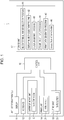
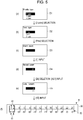
Fig. 4 andFig. 5 , a label creation operation for creating the punch block label will be described. It is assumed that the label creation operation is performed in a state where a punch block label creation mode, as a print mode, using a punch block label creation function is selected and the print mode is shifted to the punch block label creation mode by using thekeyboard 12. - As shown in
Fig. 4 , when shifting to the punch block label creation mode, thecontrol unit 16 displays the block terminal number selection screen D1 in accordance with the block terminal number selection program 41 (S1) and receives the selection of the number of terminals per block (S2) (seeFig. 5(a) ). On the other hand, a user selects the number of terminals per block by using thekeyboard 12. Although not shown, in a case where the unspecified ("Blank") option is selected in the selection, selection of the display number (S3 and S4) and selection of respective head numbers (S5 to S8) are skipped, and the process transitions to the inputting of the frame length L (S9 and S10). - If the number of terminals per block is selected (S2: Yes), the
control unit 16 displays the display number selection screen D2 (S3) in accordance with the displaynumber selection program 42 and receives the selection of the display number (S4) (seeFig. 5(b) ). On the other hand, a user selects the display number by using thekeyboard 12. Although not shown, in a case where the unspecified ("Blank") option is selected in the selection, selection of each head number (S5 to S8) is skipped, and the process transitions to the inputting of the frame length L (S9 and S10). - If the presentation number is selected (S4: Yes), the
control unit 16 displays the first head number input screen D3 in accordance with the head number input program 43 (S5) and receives input of the head number of the numerical sequence of the first group G1 (S6) (seeFig. 5(c) ). On the other hand, a user inputs the head number of the numerical sequence of the first group G1 by using thekeyboard 12. - If the head number of the numerical sequence of the first group G1 is input (S6: Yes), the
control unit 16 displays the second head number input screen D4 in accordance with the head number input program 43 (S7) and receives input of the head number of the numerical sequence of the second group G2 (S8) (seeFig. 5(d) ). At this time, the tail number of the numerical sequence of the first group G1 is calculated based on the number of terminals and the display number of the selected block and the head number of the numerical sequence of the first group G1 that is input, and the number following the tail number is set as an initial value for the input of the second head number. That is, the number following the tail number is displayed in an editable manner on the first head number input screen D4 as the initial value. For example, in a case where the number of terminals per block is two and the display numbers of theterminal numbers 61 are displayed, the number of numbers assigned in the first group G1 is 24. In this case, when the head number of the numerical sequence is "1", the tail number of the numerical sequence is "24". Therefore, "25", following "24", is set as an initial value of an input of the second head number. On the other hand, a user inputs (designates) the head number of the numerical sequence of the second group G2 by thekeyboard 12. In a case where the initial value is set as is as the head number of the numerical sequence of the second group G2, the initial value is designated as is as the head number without needing to be input. - If the head number of the numerical sequence of the second group G2 is input (designated) (S8: Yes), the
control unit 16 displays the frame length input screen D5 (S9) and receives input of the frame length L (S10) (seeFig. 5(e) ), in accordance with the framelength input program 44. On the other hand, a user inputs the frame length L by thekeyboard 12. - If the frame length L is input (S10: Yes), the
control unit 16 generates print data based on the selection result and the input result of each process in accordance with the print data generation program 45 (S11). That is, based on the number of terminals per block and the frame length L, thepartition frame 63 is generated, and the numerical sequence, which is continuous from the head number, and based on the number of theterminals 51 and theblocks 52 to be an assignment target is generated based on the number of terminals per block, the display number, and the head number, for each group. Thus, the generatedpartition frame 63 is disposed at a predetermined location, and generated sequential numbers are assigned to and disposed on each terminal 51 or eachblock 52 within each group, and thereby the print data is generated, for each group. As a result, the print data to which the sequential numbers for each group are added is generated. In a case where the unspecified ("Blank") option is selected in the selection of the number of terminals per block (S2) or selection of the display number (S4), the print data of only thepartition frame 63 is generated without generation and disposition of the sequential numbers. - After generating the print data, the
control unit 16 controls theprint unit 14 and the cuttingunit 15 in accordance with thelabel creation program 46, and performs the printing process and the cutting process based on the print data (S12). In the print data, the numerical sequence numbers for each group are assigned to and disposed on each terminal 51 or eachblock 52 within each group, as theterminal numbers 61 or the block numbers 62. Therefore, by the printing process, the numerical sequence numbers of each group are assigned to each terminal or each block within each group and printed. As a result, the punch block label R to which the sequential numbers for each group are added is created. Thus, the label creation operation is ended. - According to the configuration, since a configuration in which the head number of the numerical sequence can be designated for each group, and the numerical sequence continuous from the designated head number is assigned to each terminal 51 or each
block 52 for each group, as theterminal numbers 61 or theblock numbers 62 and printed, is implemented, it is possible to add (assign) different sequential numbers for each group to a single punch block label R. Therefore, it is possible to add the sequential numbers with the high degree of freedom, and it is possible to easily create the punch block label R to which two or more sets of sequential numbers are added. Thus, it is possible to improve the usability. - In addition, for each group excluding the first group in the order, by setting the number following the tail number of the numerical sequence in the previous group in the order as an initial value at the time of designating the head number, if the initial value is designated as is, it is possible to add a series of numerical sequence across two groups. Therefore, it is also possible to easily add the series of numerical sequence between groups while maintaining the function of adding the different sequential numbers for each group. Thus, it is possible to further improve the usability.
- In the embodiment, the
block 52 corresponds to a connector. However, since it is conceivable to connect a connector unit in which a plurality of connectors are grouped together to the punch block PB, theblock 52 may correspond to the connector unit. - In addition, the embodiment is configured to create the punch block label R that represents the
terminal numbers 61 and the block numbers 62. However, in addition to theterminal numbers 61 and theblock numbers 62, the embodiment may be configured to create the punch block label R that represents a connection destination name of the terminal 51 and theblock 52. In addition, in such a case, it is preferable to use a numerical sequence for each group also with respect to the connection destination name. That is, with respect to the connection destination name, the head number of the numerical sequence for each group is input (designated) and the numerical sequence for each group is generated, and thereby generated sequential numbers are assigned to each terminal 51 and eachblock 52 and printed. For example, a "conference room 1" is input as the head number of the first group G1, a numerical sequence (conference room 1,conference room 2,conference room 3, ...) continuous from the "conference room 1" is generated, a "reception room 1" is input as the head number of the second group G2, and a numerical sequence (reception room 1,reception room 2,reception room 3, ...) continuous from the "reception room 1" is generated. Thus, these are assigned to each terminal 51 and eachblock 52 as the connection destination name and printed. - Furthermore, the embodiment is implemented as a configuration in which the terminal group in the upper row is set as the first group G1, the terminal group in the lower row is set as the second group G2, and the sequential numbers are added for each group. However, the configuration of the group is not limited thereto. For example, a configuration in which the terminal group of the upper row and the terminal group of the lower row are respectively divided into two or four in right and left, that is, grouped into four groups or eight groups, and sequential numbers of four sets or eight sets are added, may be implemented. In addition, the group configuration may be arbitrarily set by users. That is, the
label creation apparatus 1 further includes the group configuration designation unit (controlunit 16 and group configuration selection program) for selecting (designating) the group configuration by users. Accordingly, the head number designation unit (keyboard 12,control unit 16, and head number input program 43) designates the head number of the numerical sequence for each group based on the group configuration designated by the group configuration designation unit. In addition, the numerical sequence print unit (controlunit 16, printdata generation program 45, and label creation program 46) assigns the numerical sequence numbers continuously from the head number for each group based on the group configuration designated by the group configuration designation unit, to each terminal 51 or eachblock 52 and prints the numerical sequence. According to such a configuration, it is possible to add the sequential numbers with a higher degree of freedom. - In the embodiment, the punch block label R to be affixed to the punch block PB installed in a sideways posture is created. However, a configuration in which the punch block label R to be affixed to the punch block PB installed in an upright position is created, may be implemented. In turn, a configuration in which this can be selected by users, may be implemented. In a case where the punch block label R to be affixed to the punch block PB installed in the upright posture is created, each
terminal numbers 61 andblock numbers 62 of the punch block label R shown inFig. 2 are printed sideways. - In addition, in the embodiment, the present invention is applied to the
label creation apparatus 1. However, the present invention may be applied to a label creation system SY formed by connecting a host computer 101 and thelabel creation apparatus 1. In such a case, a storage unit of the host computer stores the block terminalnumber selection program 41, the displaynumber selection program 42, the headnumber input program 43, the framelength input program 44, and the printdata generation program 45. In a host computer side, above-described each selection and each input are received, and the print data is generated based on the reception. On the other hand, thestorage unit 17 of thelabel creation apparatus 1 stores thelabel creation program 46, and the printing process and the cutting process are performed based on the print data generated by the host computer in alabel creation apparatus 1 side. Reference Signs List -
- 1
- LABEL CREATION APPARATUS
- 12
- KEYBOARD
- 16
- CONTROL UNIT
- 51
- TERMINAL
- 52
- BLOCK
- 43
- HEAD NUMBER INPUT PROGRAM
- 45
- PRINT DATA GENERATION PROGRAM
- 46
- LABEL CREATION PROGRAM
- PB
- PUNCH BLOCK
- R
- PUNCH BLOCK LABEL
Claims (6)
- A label creation apparatus that creates a label on which numbers of a plurality of terminals on a terminal board having the plurality of terminals grouped into two or more groups are printed, the apparatus comprising:a head number designation unit that designates a head number of a numerical sequence for each group; anda numerical sequence print unit that assigns numerical sequence numbers continuously from the designated head number to each terminal and prints the numerical sequence numbers for each group.
- The label creation apparatus according to claim 1,
wherein an order is set for each group, and with the exception of the first group, the head number designation unit sets a number following a tail number of the numerical sequence numbers in the previous group in the set order as an initial value at the time of designating the head number. - The label creation apparatus according to claim 1 or 2, further comprising:a group configuration designation unit that designates a group configuration,wherein the head number designation unit designates the head number of the numerical sequence numbers for each group based on the designated group configuration, andthe numerical sequence print unit assigns the numerical sequence numbers to each terminal and prints the numerical sequence numbers for each group based on the designated group configuration.
- The label creation apparatus according to any one of claims 1 to 3,
wherein the numerical sequence print unit assigns the numerical sequence numbers to each block, which is a set of two or more terminals, instead of to each terminal and prints the numerical sequence numbers. - The label creation apparatus according to claim 4, further comprising:a block terminal number designation unit that designates the number of terminals per the block,wherein the numerical sequence print unit assigns and prints the numerical sequence numbers for each block based on the designated number of terminals.
- A label creation system that creates a label on which numbers of a plurality of terminals on a terminal board having the plurality of terminals grouped into two or more groups are printed, the system comprising:a head number designation unit that designates a head number of a numerical sequence for each group; anda numerical sequence print unit that assigns numerical sequence numbers continuously from the designated head number to each terminal and prints the numerical sequence numbers for each group.
Applications Claiming Priority (2)
| Application Number | Priority Date | Filing Date | Title |
|---|---|---|---|
| JP2014251245A JP6447076B2 (en) | 2014-12-11 | 2014-12-11 | Label making apparatus and label making system |
| PCT/JP2015/005738 WO2016092748A1 (en) | 2014-12-11 | 2015-11-17 | Label creation device and label creation system |
Publications (2)
| Publication Number | Publication Date |
|---|---|
| EP3231619A1 true EP3231619A1 (en) | 2017-10-18 |
| EP3231619A4 EP3231619A4 (en) | 2018-09-12 |
Family
ID=56106982
Family Applications (1)
| Application Number | Title | Priority Date | Filing Date |
|---|---|---|---|
| EP15868197.3A Withdrawn EP3231619A4 (en) | 2014-12-11 | 2015-11-17 | Label creation device and label creation system |
Country Status (5)
| Country | Link |
|---|---|
| US (2) | US20180147857A1 (en) |
| EP (1) | EP3231619A4 (en) |
| JP (1) | JP6447076B2 (en) |
| CN (1) | CN107000448B (en) |
| WO (1) | WO2016092748A1 (en) |
Family Cites Families (11)
| Publication number | Priority date | Publication date | Assignee | Title |
|---|---|---|---|---|
| JPH08230242A (en) * | 1995-02-27 | 1996-09-10 | Max Co Ltd | Printer |
| JP3365242B2 (en) * | 1997-02-04 | 2003-01-08 | マックス株式会社 | Tape printer |
| JP4300948B2 (en) * | 2003-09-08 | 2009-07-22 | ブラザー工業株式会社 | Tape printer |
| JP3831739B2 (en) * | 2004-11-29 | 2006-10-11 | 三菱電機エンジニアリング株式会社 | Terminal block symbol print data creation method and terminal block symbol print data creation device |
| US7945549B2 (en) * | 2007-06-21 | 2011-05-17 | Windy City Wire Cable And Technology Products, Llc | Electrical or electronic cable system design tool |
| JP5609405B2 (en) * | 2010-08-09 | 2014-10-22 | セイコーエプソン株式会社 | Label producing apparatus and method for controlling label producing apparatus |
| US9139023B2 (en) * | 2012-06-21 | 2015-09-22 | Sanford L.P. | Label printing apparatus |
| US9361549B2 (en) * | 2012-06-21 | 2016-06-07 | Sanford, L.P. | User interface for a label printer |
| US9185249B2 (en) * | 2012-06-21 | 2015-11-10 | Sanford L.P. | Method of creating a label, a printing apparatus, and a computer-readable medium |
| CN105431812B (en) * | 2013-03-15 | 2019-04-19 | 桑福德有限合伙人公司 | User Interface for Label Printers |
| JP6146560B2 (en) * | 2013-05-24 | 2017-06-14 | ブラザー工業株式会社 | Printed matter creation program and printed matter creation method |
-
2014
- 2014-12-11 JP JP2014251245A patent/JP6447076B2/en active Active
-
2015
- 2015-11-17 EP EP15868197.3A patent/EP3231619A4/en not_active Withdrawn
- 2015-11-17 WO PCT/JP2015/005738 patent/WO2016092748A1/en not_active Ceased
- 2015-11-17 CN CN201580064275.4A patent/CN107000448B/en active Active
- 2015-11-17 US US15/534,997 patent/US20180147857A1/en not_active Abandoned
-
2020
- 2020-02-21 US US16/798,150 patent/US20200262215A1/en not_active Abandoned
Also Published As
| Publication number | Publication date |
|---|---|
| JP2016112719A (en) | 2016-06-23 |
| JP6447076B2 (en) | 2019-01-09 |
| US20200262215A1 (en) | 2020-08-20 |
| WO2016092748A1 (en) | 2016-06-16 |
| CN107000448A (en) | 2017-08-01 |
| US20180147857A1 (en) | 2018-05-31 |
| CN107000448B (en) | 2019-03-19 |
| EP3231619A4 (en) | 2018-09-12 |
Similar Documents
| Publication | Publication Date | Title |
|---|---|---|
| US20180056676A1 (en) | Label creating method, program, tape printing device, and cable label | |
| JP6437339B2 (en) | Image forming system and image forming apparatus | |
| US10338868B2 (en) | Apparatus, method and non-transitory computer readable medium for displaying omission information to print serial number | |
| JP2017147612A (en) | Image information conversion device, image forming apparatus, image information conversion system, and image information conversion program | |
| US20200262215A1 (en) | Label creation apparatus and label creation system | |
| US10752019B2 (en) | Print system, printed matter creating device, and non-transitory computer-readable recording medium therefor | |
| JP2020031709A (en) | Object replacement supporting method, object replacement supporting device, and computer program | |
| JP2013214754A (en) | Component mounting device and display device | |
| KR100594713B1 (en) | Spooling control device and its spooling control method for efficiently printing several print jobs | |
| JP6803795B2 (en) | Printer driver and information processing equipment | |
| JP2010201704A (en) | Image forming device | |
| US20200094578A1 (en) | Print data generation device, print data generation method of print data generation device, program, tape printing device, and tape printing system | |
| JP5075520B2 (en) | Print data output apparatus and method | |
| US9001375B2 (en) | Medium storing instructions for information processing apparatus and print control apparatus | |
| US12039212B2 (en) | Non-transitory medium storing program executable by computer of information processing apparatus for controlling specific label data having text objects | |
| JP6525807B2 (en) | PRINT SETTING PROGRAM, PRINT SETTING DISPLAY METHOD, INFORMATION PROCESSING DEVICE, AND INFORMATION PROCESSING SERVER | |
| JP5909876B2 (en) | Printing system | |
| JP2021026736A (en) | program | |
| JP2020161013A (en) | Control program | |
| JP2002007090A5 (en) | ||
| JP2024093046A (en) | Program and editing device | |
| JP3979414B2 (en) | Related drawing Print control processing device | |
| JP2008125031A (en) | Printing device | |
| JPS6361321A (en) | Output equipment selection system | |
| JP6144478B2 (en) | Print control apparatus and control method therefor |
Legal Events
| Date | Code | Title | Description |
|---|---|---|---|
| STAA | Information on the status of an ep patent application or granted ep patent |
Free format text: STATUS: THE INTERNATIONAL PUBLICATION HAS BEEN MADE |
|
| PUAI | Public reference made under article 153(3) epc to a published international application that has entered the european phase |
Free format text: ORIGINAL CODE: 0009012 |
|
| STAA | Information on the status of an ep patent application or granted ep patent |
Free format text: STATUS: REQUEST FOR EXAMINATION WAS MADE |
|
| 17P | Request for examination filed |
Effective date: 20170711 |
|
| AK | Designated contracting states |
Kind code of ref document: A1 Designated state(s): AL AT BE BG CH CY CZ DE DK EE ES FI FR GB GR HR HU IE IS IT LI LT LU LV MC MK MT NL NO PL PT RO RS SE SI SK SM TR |
|
| AX | Request for extension of the european patent |
Extension state: BA ME |
|
| DAV | Request for validation of the european patent (deleted) | ||
| DAX | Request for extension of the european patent (deleted) | ||
| A4 | Supplementary search report drawn up and despatched |
Effective date: 20180814 |
|
| RIC1 | Information provided on ipc code assigned before grant |
Ipc: B41J 21/00 20060101ALI20180808BHEP Ipc: B41J 5/30 20060101ALI20180808BHEP Ipc: B41J 11/00 20060101ALI20180808BHEP Ipc: B41J 29/40 20060101ALI20180808BHEP Ipc: B41J 3/407 20060101ALI20180808BHEP Ipc: B41J 3/36 20060101AFI20180808BHEP |
|
| STAA | Information on the status of an ep patent application or granted ep patent |
Free format text: STATUS: EXAMINATION IS IN PROGRESS |
|
| 17Q | First examination report despatched |
Effective date: 20200910 |
|
| GRAP | Despatch of communication of intention to grant a patent |
Free format text: ORIGINAL CODE: EPIDOSNIGR1 |
|
| STAA | Information on the status of an ep patent application or granted ep patent |
Free format text: STATUS: GRANT OF PATENT IS INTENDED |
|
| INTG | Intention to grant announced |
Effective date: 20221222 |
|
| RIN1 | Information on inventor provided before grant (corrected) |
Inventor name: HARIGAE, YUSUKE Inventor name: OIDA, MASAHIRO Inventor name: HOSAKAWA, TAKESHI Inventor name: MURAYAMA, NORIAKI |
|
| STAA | Information on the status of an ep patent application or granted ep patent |
Free format text: STATUS: THE APPLICATION IS DEEMED TO BE WITHDRAWN |
|
| 18D | Application deemed to be withdrawn |
Effective date: 20230503 |