EP3229157A1 - Image analytics question answering - Google Patents
Image analytics question answering Download PDFInfo
- Publication number
- EP3229157A1 EP3229157A1 EP17163780.4A EP17163780A EP3229157A1 EP 3229157 A1 EP3229157 A1 EP 3229157A1 EP 17163780 A EP17163780 A EP 17163780A EP 3229157 A1 EP3229157 A1 EP 3229157A1
- Authority
- EP
- European Patent Office
- Prior art keywords
- question
- sentence
- embedding
- vector
- subset
- Prior art date
- Legal status (The legal status is an assumption and is not a legal conclusion. Google has not performed a legal analysis and makes no representation as to the accuracy of the status listed.)
- Withdrawn
Links
Images

Classifications
-
- G—PHYSICS
- G06—COMPUTING OR CALCULATING; COUNTING
- G06F—ELECTRIC DIGITAL DATA PROCESSING
- G06F16/00—Information retrieval; Database structures therefor; File system structures therefor
- G06F16/30—Information retrieval; Database structures therefor; File system structures therefor of unstructured textual data
- G06F16/33—Querying
- G06F16/332—Query formulation
- G06F16/3329—Natural language query formulation
-
- G—PHYSICS
- G06—COMPUTING OR CALCULATING; COUNTING
- G06N—COMPUTING ARRANGEMENTS BASED ON SPECIFIC COMPUTATIONAL MODELS
- G06N5/00—Computing arrangements using knowledge-based models
- G06N5/02—Knowledge representation; Symbolic representation
- G06N5/022—Knowledge engineering; Knowledge acquisition
-
- G—PHYSICS
- G06—COMPUTING OR CALCULATING; COUNTING
- G06F—ELECTRIC DIGITAL DATA PROCESSING
- G06F16/00—Information retrieval; Database structures therefor; File system structures therefor
- G06F16/20—Information retrieval; Database structures therefor; File system structures therefor of structured data, e.g. relational data
- G06F16/24—Querying
- G06F16/245—Query processing
- G06F16/2452—Query translation
- G06F16/24522—Translation of natural language queries to structured queries
-
- G—PHYSICS
- G06—COMPUTING OR CALCULATING; COUNTING
- G06F—ELECTRIC DIGITAL DATA PROCESSING
- G06F40/00—Handling natural language data
- G06F40/20—Natural language analysis
- G06F40/205—Parsing
- G06F40/211—Syntactic parsing, e.g. based on context-free grammar [CFG] or unification grammars
-
- G—PHYSICS
- G06—COMPUTING OR CALCULATING; COUNTING
- G06F—ELECTRIC DIGITAL DATA PROCESSING
- G06F40/00—Handling natural language data
- G06F40/20—Natural language analysis
- G06F40/279—Recognition of textual entities
- G06F40/284—Lexical analysis, e.g. tokenisation or collocates
-
- G—PHYSICS
- G06—COMPUTING OR CALCULATING; COUNTING
- G06F—ELECTRIC DIGITAL DATA PROCESSING
- G06F40/00—Handling natural language data
- G06F40/30—Semantic analysis
-
- G—PHYSICS
- G06—COMPUTING OR CALCULATING; COUNTING
- G06F—ELECTRIC DIGITAL DATA PROCESSING
- G06F40/00—Handling natural language data
- G06F40/30—Semantic analysis
- G06F40/35—Discourse or dialogue representation
-
- G—PHYSICS
- G06—COMPUTING OR CALCULATING; COUNTING
- G06N—COMPUTING ARRANGEMENTS BASED ON SPECIFIC COMPUTATIONAL MODELS
- G06N3/00—Computing arrangements based on biological models
- G06N3/02—Neural networks
- G06N3/04—Architecture, e.g. interconnection topology
- G06N3/044—Recurrent networks, e.g. Hopfield networks
- G06N3/0442—Recurrent networks, e.g. Hopfield networks characterised by memory or gating, e.g. long short-term memory [LSTM] or gated recurrent units [GRU]
-
- G—PHYSICS
- G06—COMPUTING OR CALCULATING; COUNTING
- G06N—COMPUTING ARRANGEMENTS BASED ON SPECIFIC COMPUTATIONAL MODELS
- G06N3/00—Computing arrangements based on biological models
- G06N3/02—Neural networks
- G06N3/08—Learning methods
- G06N3/09—Supervised learning
-
- G—PHYSICS
- G16—INFORMATION AND COMMUNICATION TECHNOLOGY [ICT] SPECIALLY ADAPTED FOR SPECIFIC APPLICATION FIELDS
- G16H—HEALTHCARE INFORMATICS, i.e. INFORMATION AND COMMUNICATION TECHNOLOGY [ICT] SPECIALLY ADAPTED FOR THE HANDLING OR PROCESSING OF MEDICAL OR HEALTHCARE DATA
- G16H30/00—ICT specially adapted for the handling or processing of medical images
- G16H30/20—ICT specially adapted for the handling or processing of medical images for handling medical images, e.g. DICOM, HL7 or PACS
-
- G—PHYSICS
- G16—INFORMATION AND COMMUNICATION TECHNOLOGY [ICT] SPECIALLY ADAPTED FOR SPECIFIC APPLICATION FIELDS
- G16H—HEALTHCARE INFORMATICS, i.e. INFORMATION AND COMMUNICATION TECHNOLOGY [ICT] SPECIALLY ADAPTED FOR THE HANDLING OR PROCESSING OF MEDICAL OR HEALTHCARE DATA
- G16H50/00—ICT specially adapted for medical diagnosis, medical simulation or medical data mining; ICT specially adapted for detecting, monitoring or modelling epidemics or pandemics
- G16H50/20—ICT specially adapted for medical diagnosis, medical simulation or medical data mining; ICT specially adapted for detecting, monitoring or modelling epidemics or pandemics for computer-aided diagnosis, e.g. based on medical expert systems
Definitions
- the present invention relates generally to methods, systems, and apparatuses for automatically understanding results from image analytics through a question answering system.
- Using the disclosed methods, systems, and apparatuses may be applied to the processing for information gathered from a variety of imaging modalities including, without limitation, Computed Tomography (CT), Magnetic Resonance (MR), Positron Emission Tomography (PET), and Ultrasound (US) technologies.
- CT Computed Tomography
- MR Magnetic Resonance
- PET Positron Emission Tomography
- US Ultrasound
- Embodiments of the present invention address and overcome one or more of the above shortcomings and drawbacks, by providing methods, systems, and apparatuses related to automatically understanding the results presented in image analytics reports through a question answering system. These techniques described herein can be applied towards generating natural language findings to fill out a structured radiology report. The use of standardized report templates and fields will streamline comparison to longitudinal data and similar cases from the past reports, which allows this system to quickly process and interpret the current patient data in the context of historical big data.
- a computer-implemented method for predicting answers to questions concerning medical image analytics reports includes splitting a medical image analytics report into the sentences and generating the sentence embedding vectors by applying a natural language processing framework to the sentences.
- a question related to subject matter included in the medical image analytics report is received and a question embedding vector is generated by applying the natural language processing framework to the question.
- a subset of the sentence embedding vectors most similar to the question embedding vector is identified by applying a similarity matching process to the sentence embedding vectors and the question embedding vector.
- a trained recurrent neural network is used to determine a predicted answer to the question based on the subset of the sentence embedding vectors.
- the trained RNN is a long short-term memory (LSTM) RNN and the predicted answer is determined by dividing the subset of the sentence embedding vectors into a first sequence of words and dividing the subset of the question embedding vector into a second sequence of words.
- the first sequence of words and the second sequence of words are passed through the LSTM cells sequentially to yield the outputs corresponding to different states.
- the outputs are combined using linear operations into a single input vector and a softmax function is applied to the single input vector to generate the predicted answer.
- each sentence embedding vector is created by first generating an embedding for each word in a particular sentence using the natural language processing framework. Then, the embedding of each word in the particular sentence is averaged to yield the sentence embedding vector.
- the natural language processing framework may identify the target medical syntax, for example, by matching the sentences to one or more ontology references such as a Unified Medical Language System (UMLS) dataset.
- UMLS Unified Medical Language System
- the target medical syntax may include a description of one or more diseases and/or a description of one or more anatomical entities.
- the natural language processing framework is trained with one or more medical knowledge datasets such as radiology guidelines from the American College of Radiology.
- the similarity matching process includes calculating a cosine product between each sentence embedding vector and the question embedding vector to yield a similarity score for each sentence embedding vector.
- the sentence embedding vectors are ranked according to similarity score and a predetermined number of the highest ranking sentence embedding vectors are selected as the subset of the sentence embedding vectors.
- a computer-implemented method for predicting answers to questions concerning medical image analytics reports includes generating sentence embedding vectors by applying a natural language processing framework to sentences in a medical image analytics report.
- a question related to subject matter included in the medical image analytics report is received and a question embedding vector is generated by applying the natural language processing framework to the question.
- the subset of the sentence embedding vectors most similar to the question embedding vector is identified and divided into a first sequence of words.
- the subset of the question embedding vector is divided into a second sequence of words.
- the first sequence of words and the second sequence of words are passed through a plurality of LSTM cells sequentially to yield a plurality of outputs corresponding to different states.
- the outputs are combined into a single input vector and a softmax function is applied to the single input vector to generate a predicted answer.
- a system for predicting answers to questions concerning medical image analytics reports includes a host computer comprising one or more processors and a device computer comprising a graphics processing unit (GPU).
- the processors of the host computer is configured to generate a plurality of sentence embedding vectors by applying a natural language processing framework to the plurality of sentences included in a medical image analytics report.
- the processors are further configured to receive a question related to subject matter included in the medical image analytics report and generate a question embedding vector by applying the natural language processing framework to the question.
- the processor identifies a subset of the sentence embedding vectors most similar to the question embedding vector by applying a similarity matching process to the sentence embedding vectors and the question embedding vector.
- the device computer uses a LSTM-based RNN to determine a predicted answer to the question based on the subset of the sentence embedding vectors.
- Each element included in the subset of the sentence embedding vectors is processed by a LSTM cell in parallel using processing resources of the GPU.
- the system is configured to perform a computer-implemented method for predicting answers to questions concerning medical image analytics reports according to any one of the claims 1 to 19.
- the following disclosure describes the present invention according to several embodiments directed at methods, systems, and apparatuses related to techniques for understanding image analytics results through a question answering system. More specifically, the techniques described herein are capable of demonstrating an understanding of results from image analytics through a question answering system. Given a set of results from image analytics and a natural language question about the data, the system is capable of providing an accurate natural language answer. Answering such questions require a detailed understanding of the image, language and reasoning within the appropriate image context. This includes, for example, radiologic readings of medical image data, where quantitative and qualitative measurements from image parsing can be collected as results from image analytics and answers to questions regarding the image data to fill out a radiology report.
- the main challenge of such a system is to overcome data sparsity from unbalanced data representation and inconsistent quality of annotations.
- the techniques described herein leverage natural language processing parsing to select medical syntax and learn a language embedding from large medical text corpus.
- the question answering system described herein is flexible and adaptable to different (spoken) languages for the generated reports, templates and clinical report concepts.
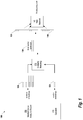
- FIG. 1 illustrates a pipeline 100 for answering a question based on a report, according to some embodiments.
- reading and reporting from medical images is a manual unstructured task subject to human interpretation of not only the current data but also in reference to historical information.
- pipeline 100 uses a trained image analytics question answering system to generate natural language findings for structured radiology reports.
- the input data comprises results from the analysis of diagnostic image data, their radiology reports and related non-image patient meta-data. These results provide dense anatomical or functional qualitative and quantitative measurements.
- Optional requirements include a large medical text corpus in the appropriate medical domain.
- a medical image analytics report 105 (e.g., a radiology report) is split into sentences using techniques generally known in the art.
- a plurality of sentence embedding vectors 110 are generated by applying a natural language processing framework to the sentences from the medical image analytics report 105.
- the term "embedding,” as used herein refers to words or phrases from the vocabulary are mapped to vectors of real numbers.
- An embedding simultaneously provides a distributed representation for each word along with the probability function for word sequences.
- the sentence embedding vectors 110 captures the semantics of the sentence.
- the sentence embedding vectors 110 are calculated by taking an average of the embedding of each of the word in the corresponding sentence.
- the embedding for each of the word may be obtained by training a model (e.g., word2vec) over a large bio-medical corpus (e.g., Pub Med Central).
- Various natural language processing frameworks known in the art can be used to create the sentence embedding 110 including, without limitation, Apache cTAKES, Stanford Parser, and NLTK.
- the framework used in generating the embedding is specifically trained to the clinical domain related to the subject matter of medical image analytics report 105.
- the purpose of this training is twofold.
- target medical syntax such as known anatomical entities and diseases, as indicated by patient medical history and image acquisition objectives will be located and prioritized by matching to standard ontology references (e.g., Unified Medical Language System).
- semantic parsing will help address ambiguities or mistakes created from lower-quality annotations. Emphasizing known key words, and their role in the semantics of the training data, allows us to address the challenge of inconsistent quality of annotations.
- a learned embedding of established medical knowledge bases is integrated into training. Leveraging medical text corpus informs the model of the semantic relationships of neighboring words and phrases used in radiology reports. Training such large models (with millions of parameters) within a reasonable time is itself a significant challenge. However, as discussed below with respect to FIG. 4 , processing time can be minimized through the use of parallel computing platforms such as NVIDIA CUDATM.
- question 115 relates to the subject matter of the medical image analytics report 105.
- This question 115 is used to generate a question embedding vector 120 by applying the natural language processing framework to the question 115.
- the techniques and motivation for using the natural language processing framework for question processing are similar to those discussed above with respect to the medical image analytics report 105.
- the question 115 can be of any form including, but not limited to binary, multiple choice, or opened ended. In general, the question may be received and interpreted using any technique known in the art. Thus, in some embodiments, a clinician may type the question 115 into a graphical user interface (GUI) associated with medical image analytics software (or similar software).
- GUI graphical user interface
- the question 115 may be extracted from a larger text (e.g., an email). Additionally, in embodiments where the question 115 is spoken by the clinician, the question may be interpreted and translated into text form using speech-to-text techniques generally known in the art.
- Answering a question would require understanding the text in the medical analytics report and narrowing down attention on specific sentences which potentially contain the answer.
- the pipeline implements this local attention focusing mechanism by calculating the similarity between the sentences in the report and the question. More specifically, as shown in FIG. 1 , a similarity matching process 125 is applied to the sentence embedding vectors 110 and the question embedding vector 120 to generate a similarity score for each of the sentence embedding vectors 110.
- the similarity score is generated by calculating the cosine product between the two embedding vectors. Based on the similarity score, the sentences are then ranked by this similarity score and we select the top k (e.g., 5) sentences. If the similarity score is representative of good semantic match then these top k sentences should contain the information required for answering.
- words 135 from the most similar sentences and words 140 from the question are used as input to a trained recurrent neural network (RNN) to determine a predicted answer to the question.
- RNN recurrent neural network
- Answers can be full sentences, or sentence fragments that are either generated or matched.
- the overall pipeline is amenable to automatic evaluation, since many open-ended answers contain only a few words or a closed set of answers that can be provided in a multiple choice format.
- the answer explains a specific clinical finding in the report by indicating the image features used to derive it.
- the RNN used in the pipeline can generally be any artificial neural network where connections between units form a directed cycle.
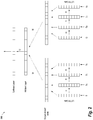
- FIG. 2 illustrates an example where a LSTM (Long Short Term Memory) based RNN is applied for answering the question.
- Input to the network is sequence of words (S 1 , S2 etc.) from the sentence and the question (Q 1 , Q2 etc.) These are passed through the LSTM cells sequentially.
- Output at each state is passed into another hidden layer and all these are combined via linear operations to be passed into a softmax function, to predict the answer.
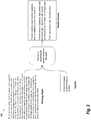
- FIG. 3 shows an example application of the pipeline 100 described above with reference to FIG. 1 .
- the medical image analytics report is a radiology report, for example "The liver presents a newly occurred hypodense lesion in segment 2 (2.8x2.1 cm, image 54). The liver shows a hypodense, clearly limited lesion of constant size in segment 6, with up to 0.6 cm (images 62, 63, 64), which is most likely cystic. The intra- and extrahepatic bile ducts are normal wide. The gallbladder is filled.
- the adrenals present new nodular lesions in the left adrenal measuring 2.5x1.2 cm at the medial crus (image 61) and 2.7x1.8 cm at the lateral crus (image 65), and on the right measuring 1.5x0.7 cm at the medial crus (image 61). Both kidneys are in orthotopic position. The kidneys show simultaneous contrast enhancement. The kidneys presents new hypodense lesion. The right kidney presents a lesion at the middle level with 1.8x1.2 cm (image 81). The left kidney presents a lesion and at the middle with 1.9x1.5 cm (image 73).
- the pipeline 100 is a component which can be incorporated into the generation of natural language findings in a workflow for automated radiology reporting and other medical imaging processing.
- a workflow and related systems are described in United States Patent Application No. 15,158,375 filed May 18, 2016 , entitled “Automatic Generation of Radiology Reports from Images and Automatic Rule Out of Images without Findings,” the entirety of which is incorporated herein by reference.
- FIG. 4 provides an example of a parallel processing memory architecture 400 that may be utilized to implement the pipeline 100 shown FIG. 1 , according to some embodiments of the present invention.
- This architecture 400 may be used in embodiments of the present invention where NVIDIA CUDATM (or a similar parallel computing platform) is used.
- the architecture includes a host computing unit (“host") 405 and a graphics processing unit (GPU) device (“device”) 410 connected via a bus 415 (e.g., a PCIe bus).
- the host 405 includes the central processing unit, or "CPU” (not shown in FIG. 4 ), and host memory 425 accessible to the CPU.
- the device 410 includes the graphics processing unit (GPU) and its associated memory 420, referred to herein as device memory.
- the device memory 420 may include various types of memory, each optimized for different memory usages. For example, in some embodiments, the device memory includes global memory, constant memory, and texture memory.
- Parallel portions of a big data platform and/or big simulation platform may be executed on the architecture 400 as "device kernels" or simply “kernels.”
- a kernel comprises parameterized code configured to perform a particular function.
- the parallel computing platform is configured to execute these kernels in an optimal manner across the architecture 400 based on parameters, settings, and other selections provided by the user. Additionally, in some embodiments, the parallel computing platform may include additional functionality to allow for automatic processing of kernels in an optimal manner with minimal input provided by the user.
- each kernel is performed by grid of thread blocks (described in greater detail below).
- the architecture 400 of FIG. 4 may be used to parallelize portions of the model based operations performed in training or utilizing the pipeline 100. For example, in some embodiments, training of the natural language format or application of the RNN in the framework may be performed. In other embodiments, the LSTM cells (see FIG. 2 ) may be used to analyze elements of each embedding vector in parallel.
- the device 410 includes one or more thread blocks 430 which represent the computation unit of the device 410.
- the term thread block refers to a group of threads that can cooperate via shared memory and synchronize their execution to coordinate memory accesses. For example, in FIG. 4 , threads 440, 445 and 450 operate in thread block 430 and access shared memory 435.
- thread blocks may be organized in a grid structure. A computation or series of computations may then be mapped onto this grid. For example, in embodiments utilizing CUDA, computations may be mapped on one-, two-, or three-dimensional grids. Each grid contains multiple thread blocks, and each thread block contains multiple threads. For example, in FIG.
- the thread blocks 430 are organized in a two dimensional grid structure with m +1 rows and n +1 columns.
- threads in different thread blocks of the same grid cannot communicate or synchronize with each other.
- thread blocks in the same grid can run on the same multiprocessor within the GPU at the same time.
- the number of threads in each thread block may be limited by hardware or software constraints.
- registers 455, 460, and 465 represent the fast memory available to thread block 430. Each register is only accessible by a single thread. Thus, for example, register 455 may only be accessed by thread 440. Conversely, shared memory is allocated per thread block, so all threads in the block have access to the same shared memory. Thus, shared memory 435 is designed to be accessed, in parallel, by each thread 440, 445, and 450 in thread block 430. Threads can access data in shared memory 435 loaded from device memory 420 by other threads within the same thread block (e.g., thread block 430). The device memory 420 is accessed by all blocks of the grid and may be implemented using, for example, Dynamic Random-Access Memory (DRAM).
- DRAM Dynamic Random-Access Memory
- Each thread can have one or more levels of memory access.
- each thread may have three levels of memory access.
- Second, each thread 440, 445, 450 in thread block 430, may read and write data to the shared memory 435 corresponding to that block 430.
- the time required for a thread to access shared memory exceeds that of register access due to the need to synchronize access among all the threads in the thread block.
- the shared memory is typically located close to the multiprocessor executing the threads.
- the third level of memory access allows all threads on the device 410 to read and/or write to the device memory.
- Device memory requires the longest time to access because access must be synchronized across the thread blocks operating on the device.
- the processing of each sentence included in a report (or the processing of the sentence's corresponding embedding) is coded such that it primarily utilizes registers and shared memory and only utilizes device memory as necessary to move data in and out of a thread block.
- the embodiments of the present disclosure may be implemented with any combination of hardware and software.
- standard computing platforms e.g., servers, desktop computer, etc.
- the embodiments of the present disclosure may be included in an article of manufacture (e.g., one or more computer program products) having, for example, computer-readable, non-transitory media.
- the media may have embodied therein computer readable program code for providing and facilitating the mechanisms of the embodiments of the present disclosure.
- the article of manufacture can be included as part of a computer system or sold separately.
- An executable application comprises code or machine readable instructions for conditioning the processor to implement predetermined functions, such as those of an operating system, a context data acquisition system or other information processing system, for example, in response to user command or input.
- An executable procedure is a segment of code or machine readable instruction, sub-routine, or other distinct section of code or portion of an executable application for performing one or more particular processes. These processes may include receiving input data and/or parameters, performing operations on received input data and/or performing functions in response to received input parameters, and providing resulting output data and/or parameters.
- a graphical user interface comprises one or more display images, generated by a display processor and enabling user interaction with a processor or other device and associated data acquisition and processing functions.
- the GUI also includes an executable procedure or executable application.
- the executable procedure or executable application conditions the display processor to generate signals representing the GUI display images. These signals are supplied to a display device which displays the image for viewing by the user.
- the processor under control of an executable procedure or executable application, manipulates the GUI display images in response to signals received from the input devices. In this way, the user may interact with the display image using the input devices, enabling user interaction with the processor or other device.
- An activity performed automatically is performed in response to one or more executable instructions or device operation without user direct initiation of the activity.
Landscapes
- Engineering & Computer Science (AREA)
- Theoretical Computer Science (AREA)
- Physics & Mathematics (AREA)
- Health & Medical Sciences (AREA)
- General Engineering & Computer Science (AREA)
- Artificial Intelligence (AREA)
- Computational Linguistics (AREA)
- General Physics & Mathematics (AREA)
- General Health & Medical Sciences (AREA)
- Data Mining & Analysis (AREA)
- Mathematical Physics (AREA)
- Biomedical Technology (AREA)
- Medical Informatics (AREA)
- Public Health (AREA)
- Databases & Information Systems (AREA)
- Evolutionary Computation (AREA)
- Computing Systems (AREA)
- Software Systems (AREA)
- Epidemiology (AREA)
- Primary Health Care (AREA)
- Audiology, Speech & Language Pathology (AREA)
- Molecular Biology (AREA)
- Biophysics (AREA)
- Life Sciences & Earth Sciences (AREA)
- Pathology (AREA)
- Human Computer Interaction (AREA)
- Nuclear Medicine, Radiotherapy & Molecular Imaging (AREA)
- Radiology & Medical Imaging (AREA)
- Medical Treatment And Welfare Office Work (AREA)
- Measuring And Recording Apparatus For Diagnosis (AREA)
Abstract
Description
- The present invention relates generally to methods, systems, and apparatuses for automatically understanding results from image analytics through a question answering system. Using the disclosed methods, systems, and apparatuses may be applied to the processing for information gathered from a variety of imaging modalities including, without limitation, Computed Tomography (CT), Magnetic Resonance (MR), Positron Emission Tomography (PET), and Ultrasound (US) technologies.
- Traditionally, medical image radiology reports are created by transcribing a recording of interpretations of the image data by a radiologist. This results in an unstructured collection of findings subject to the experience and organization of individual radiologists, which varies in syntax and semantics. In contrast, recent studies have shown the advantages of consistent communication and superior evaluation from structured radiology reports. As such there are several ongoing radiology initiatives to standardize templates and lexicography.
- Research in natural language processing of medical data have developed models to represent the linguistics and language of reporting by creating a comprehensive interpretation of diagnostic semantics. Recently, work from the National Institute of Heath presented the first study performing a large-scale image/text analysis on a hospital picture archiving and communication system database. While previous studies and proprietary efforts mainly focus on specific domain and ontology to derive text descriptions for report, there is a need for a generic architecture which can accommodate different forms of analytical data as well as being adaptable to multiple clinical domains.
- Embodiments of the present invention address and overcome one or more of the above shortcomings and drawbacks, by providing methods, systems, and apparatuses related to automatically understanding the results presented in image analytics reports through a question answering system. These techniques described herein can be applied towards generating natural language findings to fill out a structured radiology report. The use of standardized report templates and fields will streamline comparison to longitudinal data and similar cases from the past reports, which allows this system to quickly process and interpret the current patient data in the context of historical big data.
- According to some embodiments, a computer-implemented method for predicting answers to questions concerning medical image analytics reports includes splitting a medical image analytics report into the sentences and generating the sentence embedding vectors by applying a natural language processing framework to the sentences. A question related to subject matter included in the medical image analytics report is received and a question embedding vector is generated by applying the natural language processing framework to the question. A subset of the sentence embedding vectors most similar to the question embedding vector is identified by applying a similarity matching process to the sentence embedding vectors and the question embedding vector. A trained recurrent neural network (RNN) is used to determine a predicted answer to the question based on the subset of the sentence embedding vectors. In some embodiments, the trained RNN is a long short-term memory (LSTM) RNN and the predicted answer is determined by dividing the subset of the sentence embedding vectors into a first sequence of words and dividing the subset of the question embedding vector into a second sequence of words. The first sequence of words and the second sequence of words are passed through the LSTM cells sequentially to yield the outputs corresponding to different states. The outputs are combined using linear operations into a single input vector and a softmax function is applied to the single input vector to generate the predicted answer.
- Various refinements, enhancements, and other modifications can be made to the aforementioned method in different embodiments of the present invention. For example, in one embodiment, each sentence embedding vector is created by first generating an embedding for each word in a particular sentence using the natural language processing framework. Then, the embedding of each word in the particular sentence is averaged to yield the sentence embedding vector. The natural language processing framework may identify the target medical syntax, for example, by matching the sentences to one or more ontology references such as a Unified Medical Language System (UMLS) dataset. The target medical syntax may include a description of one or more diseases and/or a description of one or more anatomical entities. In some embodiments, the natural language processing framework is trained with one or more medical knowledge datasets such as radiology guidelines from the American College of Radiology.
- In some embodiments of the aforementioned method, the similarity matching process includes calculating a cosine product between each sentence embedding vector and the question embedding vector to yield a similarity score for each sentence embedding vector. The sentence embedding vectors are ranked according to similarity score and a predetermined number of the highest ranking sentence embedding vectors are selected as the subset of the sentence embedding vectors.
- According to another aspect of the present invention, a computer-implemented method for predicting answers to questions concerning medical image analytics reports includes generating sentence embedding vectors by applying a natural language processing framework to sentences in a medical image analytics report. A question related to subject matter included in the medical image analytics report is received and a question embedding vector is generated by applying the natural language processing framework to the question. The subset of the sentence embedding vectors most similar to the question embedding vector is identified and divided into a first sequence of words. The subset of the question embedding vector is divided into a second sequence of words. The first sequence of words and the second sequence of words are passed through a plurality of LSTM cells sequentially to yield a plurality of outputs corresponding to different states. The outputs are combined into a single input vector and a softmax function is applied to the single input vector to generate a predicted answer.
- According to other embodiments, a system for predicting answers to questions concerning medical image analytics reports includes a host computer comprising one or more processors and a device computer comprising a graphics processing unit (GPU). The processors of the host computer is configured to generate a plurality of sentence embedding vectors by applying a natural language processing framework to the plurality of sentences included in a medical image analytics report. The processors are further configured to receive a question related to subject matter included in the medical image analytics report and generate a question embedding vector by applying the natural language processing framework to the question. Additionally, the processor identifies a subset of the sentence embedding vectors most similar to the question embedding vector by applying a similarity matching process to the sentence embedding vectors and the question embedding vector. The device computer uses a LSTM-based RNN to determine a predicted answer to the question based on the subset of the sentence embedding vectors. Each element included in the subset of the sentence embedding vectors is processed by a LSTM cell in parallel using processing resources of the GPU. The system is configured to perform a computer-implemented method for predicting answers to questions concerning medical image analytics reports according to any one of the claims 1 to 19.
- Additional features and advantages of the invention will be made apparent from the following detailed description of illustrative embodiments that proceeds with reference to the accompanying drawings.
- The foregoing and other aspects of the present invention are best understood from the following detailed description when read in connection with the accompanying drawings. For the purpose of illustrating the invention, there are shown in the drawings embodiments that are presently preferred, it being understood, however, that the invention is not limited to the specific instrumentalities disclosed. Included in the drawings are the following Figures:
-
FIG. 1 illustrates a pipeline for answering a question based on a report, according to some embodiments; -
FIG. 2 illustrates an example where a LSTM (Long Short Term Memory) based RNN is applied for answering a question, according to some embodiments; -
FIG. 3 shows an example application of the pipeline described above with reference toFIG. 1 ; and -
FIG. 4 provides an example of a parallelprocessing memory architecture 400 that may be utilized to implement the pipeline shownFIG. 1 , according to some embodiments of the present invention. - The following disclosure describes the present invention according to several embodiments directed at methods, systems, and apparatuses related to techniques for understanding image analytics results through a question answering system. More specifically, the techniques described herein are capable of demonstrating an understanding of results from image analytics through a question answering system. Given a set of results from image analytics and a natural language question about the data, the system is capable of providing an accurate natural language answer. Answering such questions require a detailed understanding of the image, language and reasoning within the appropriate image context. This includes, for example, radiologic readings of medical image data, where quantitative and qualitative measurements from image parsing can be collected as results from image analytics and answers to questions regarding the image data to fill out a radiology report. In the context of radiology reporting, the main challenge of such a system is to overcome data sparsity from unbalanced data representation and inconsistent quality of annotations. To address these challenges the techniques described herein leverage natural language processing parsing to select medical syntax and learn a language embedding from large medical text corpus. The question answering system described herein is flexible and adaptable to different (spoken) languages for the generated reports, templates and clinical report concepts.
-
FIG. 1 illustrates apipeline 100 for answering a question based on a report, according to some embodiments. In conventional systems, reading and reporting from medical images is a manual unstructured task subject to human interpretation of not only the current data but also in reference to historical information. To improve this process,pipeline 100 uses a trained image analytics question answering system to generate natural language findings for structured radiology reports. The input data comprises results from the analysis of diagnostic image data, their radiology reports and related non-image patient meta-data. These results provide dense anatomical or functional qualitative and quantitative measurements. Optional requirements include a large medical text corpus in the appropriate medical domain. - At the initial stage of the pipeline, a medical image analytics report 105 (e.g., a radiology report) is split into sentences using techniques generally known in the art. Next, a plurality of
sentence embedding vectors 110 are generated by applying a natural language processing framework to the sentences from the medicalimage analytics report 105. The term "embedding," as used herein refers to words or phrases from the vocabulary are mapped to vectors of real numbers. An embedding simultaneously provides a distributed representation for each word along with the probability function for word sequences. Thus, thesentence embedding vectors 110 captures the semantics of the sentence. In some embodiments, thesentence embedding vectors 110 are calculated by taking an average of the embedding of each of the word in the corresponding sentence. The embedding for each of the word may be obtained by training a model (e.g., word2vec) over a large bio-medical corpus (e.g., Pub Med Central). - Various natural language processing frameworks known in the art can be used to create the sentence embedding 110 including, without limitation, Apache cTAKES, Stanford Parser, and NLTK. The framework used in generating the embedding is specifically trained to the clinical domain related to the subject matter of medical
image analytics report 105. The purpose of this training is twofold. First, target medical syntax, such as known anatomical entities and diseases, as indicated by patient medical history and image acquisition objectives will be located and prioritized by matching to standard ontology references (e.g., Unified Medical Language System). Second, semantic parsing will help address ambiguities or mistakes created from lower-quality annotations. Emphasizing known key words, and their role in the semantics of the training data, allows us to address the challenge of inconsistent quality of annotations. - In some embodiments, a learned embedding of established medical knowledge bases (e.g., radiology guidelines from the American College of Radiology) is integrated into training. Leveraging medical text corpus informs the model of the semantic relationships of neighboring words and phrases used in radiology reports. Training such large models (with millions of parameters) within a reasonable time is itself a significant challenge. However, as discussed below with respect to
FIG. 4 , processing time can be minimized through the use of parallel computing platforms such as NVIDIA CUDA™. - Continuing with reference to
FIG. 1 ,question 115 relates to the subject matter of the medicalimage analytics report 105. Thisquestion 115 is used to generate aquestion embedding vector 120 by applying the natural language processing framework to thequestion 115. The techniques and motivation for using the natural language processing framework for question processing are similar to those discussed above with respect to the medicalimage analytics report 105. Thequestion 115 can be of any form including, but not limited to binary, multiple choice, or opened ended. In general, the question may be received and interpreted using any technique known in the art. Thus, in some embodiments, a clinician may type thequestion 115 into a graphical user interface (GUI) associated with medical image analytics software (or similar software). Alternatively, thequestion 115 may be extracted from a larger text (e.g., an email). Additionally, in embodiments where thequestion 115 is spoken by the clinician, the question may be interpreted and translated into text form using speech-to-text techniques generally known in the art. - Answering a question would require understanding the text in the medical analytics report and narrowing down attention on specific sentences which potentially contain the answer. The pipeline implements this local attention focusing mechanism by calculating the similarity between the sentences in the report and the question. More specifically, as shown in
FIG. 1 , asimilarity matching process 125 is applied to thesentence embedding vectors 110 and thequestion embedding vector 120 to generate a similarity score for each of thesentence embedding vectors 110. In some embodiments, the similarity score is generated by calculating the cosine product between the two embedding vectors. Based on the similarity score, the sentences are then ranked by this similarity score and we select the top k (e.g., 5) sentences. If the similarity score is representative of good semantic match then these top k sentences should contain the information required for answering. - At the final stage of the pipeline,
words 135 from the most similar sentences andwords 140 from the question are used as input to a trained recurrent neural network (RNN) to determine a predicted answer to the question. Answers can be full sentences, or sentence fragments that are either generated or matched. The overall pipeline is amenable to automatic evaluation, since many open-ended answers contain only a few words or a closed set of answers that can be provided in a multiple choice format. In some embodiments, the answer explains a specific clinical finding in the report by indicating the image features used to derive it. - The RNN used in the pipeline can generally be any artificial neural network where connections between units form a directed cycle.
FIG. 2 illustrates an example where a LSTM (Long Short Term Memory) based RNN is applied for answering the question. Input to the network is sequence of words (S1, S2 etc.) from the sentence and the question (Q1, Q2 etc.) These are passed through the LSTM cells sequentially. Output at each state is passed into another hidden layer and all these are combined via linear operations to be passed into a softmax function, to predict the answer. -
FIG. 3 shows an example application of thepipeline 100 described above with reference toFIG. 1 . Here, the medical image analytics report is a radiology report, for example "The liver presents a newly occurred hypodense lesion in segment 2 (2.8x2.1 cm, image 54). The liver shows a hypodense, clearly limited lesion of constant size in segment 6, with up to 0.6 cm (images 62, 63, 64), which is most likely cystic. The intra- and extrahepatic bile ducts are normal wide. The gallbladder is filled. The adrenals present new nodular lesions in the left adrenal measuring 2.5x1.2 cm at the medial crus (image 61) and 2.7x1.8 cm at the lateral crus (image 65), and on the right measuring 1.5x0.7 cm at the medial crus (image 61). Both kidneys are in orthotopic position. The kidneys show simultaneous contrast enhancement. The kidneys presents new hypodense lesion. The right kidney presents a lesion at the middle level with 1.8x1.2 cm (image 81). The left kidney presents a lesion and at the middle with 1.9x1.5 cm (image 73). There are no urinary constructions." and a question has been posed "where is the largest hypodense lesion in the liver." In this case, rather than provide a single answer following application of the RNN in the pipeline for answering the question based on the report, three possible answers are suggested: - 1) The liver presents a newly occurred hypodense lesion in segment 2 (2.8x2.1 cm, image 54).
- 2) The liver shows a hypodense, clearly limited lesion of constant size in segment 6, with up to 0.6 cm (images 62, 63, 64), which is most likely cystic.
- 3) The kidneys presents new hypodense lesion.
- In some embodiments, the
pipeline 100 is a component which can be incorporated into the generation of natural language findings in a workflow for automated radiology reporting and other medical imaging processing. Such a workflow and related systems are described in United States Patent Application No.15,158,375 filed May 18, 2016 -
FIG. 4 provides an example of a parallelprocessing memory architecture 400 that may be utilized to implement thepipeline 100 shownFIG. 1 , according to some embodiments of the present invention. Thisarchitecture 400 may be used in embodiments of the present invention where NVIDIA CUDA™ (or a similar parallel computing platform) is used. The architecture includes a host computing unit ("host") 405 and a graphics processing unit (GPU) device ("device") 410 connected via a bus 415 (e.g., a PCIe bus). Thehost 405 includes the central processing unit, or "CPU" (not shown inFIG. 4 ), andhost memory 425 accessible to the CPU. Thedevice 410 includes the graphics processing unit (GPU) and its associatedmemory 420, referred to herein as device memory. Thedevice memory 420 may include various types of memory, each optimized for different memory usages. For example, in some embodiments, the device memory includes global memory, constant memory, and texture memory. - Parallel portions of a big data platform and/or big simulation platform (see
FIG. 4 ) may be executed on thearchitecture 400 as "device kernels" or simply "kernels." A kernel comprises parameterized code configured to perform a particular function. The parallel computing platform is configured to execute these kernels in an optimal manner across thearchitecture 400 based on parameters, settings, and other selections provided by the user. Additionally, in some embodiments, the parallel computing platform may include additional functionality to allow for automatic processing of kernels in an optimal manner with minimal input provided by the user. - The processing required for each kernel is performed by grid of thread blocks (described in greater detail below). Using concurrent kernel execution, streams, and synchronization with lightweight events, the
architecture 400 ofFIG. 4 (or similar architectures) may be used to parallelize portions of the model based operations performed in training or utilizing thepipeline 100. For example, in some embodiments, training of the natural language format or application of the RNN in the framework may be performed. In other embodiments, the LSTM cells (seeFIG. 2 ) may be used to analyze elements of each embedding vector in parallel. - The
device 410 includes one or more thread blocks 430 which represent the computation unit of thedevice 410. The term thread block refers to a group of threads that can cooperate via shared memory and synchronize their execution to coordinate memory accesses. For example, inFIG. 4 ,threads thread block 430 and access sharedmemory 435. Depending on the parallel computing platform used, thread blocks may be organized in a grid structure. A computation or series of computations may then be mapped onto this grid. For example, in embodiments utilizing CUDA, computations may be mapped on one-, two-, or three-dimensional grids. Each grid contains multiple thread blocks, and each thread block contains multiple threads. For example, inFIG. 4 , the thread blocks 430 are organized in a two dimensional grid structure with m+1 rows and n+1 columns. Generally, threads in different thread blocks of the same grid cannot communicate or synchronize with each other. However, thread blocks in the same grid can run on the same multiprocessor within the GPU at the same time. The number of threads in each thread block may be limited by hardware or software constraints. - Continuing with reference to
FIG. 4 , registers 455, 460, and 465 represent the fast memory available tothread block 430. Each register is only accessible by a single thread. Thus, for example, register 455 may only be accessed bythread 440. Conversely, shared memory is allocated per thread block, so all threads in the block have access to the same shared memory. Thus, sharedmemory 435 is designed to be accessed, in parallel, by eachthread thread block 430. Threads can access data in sharedmemory 435 loaded fromdevice memory 420 by other threads within the same thread block (e.g., thread block 430). Thedevice memory 420 is accessed by all blocks of the grid and may be implemented using, for example, Dynamic Random-Access Memory (DRAM). - Each thread can have one or more levels of memory access. For example, in the
architecture 400 ofFIG. 4 , each thread may have three levels of memory access. First, eachthread corresponding registers thread thread block 430, may read and write data to the sharedmemory 435 corresponding to thatblock 430. Generally, the time required for a thread to access shared memory exceeds that of register access due to the need to synchronize access among all the threads in the thread block. However, like the registers in the thread block, the shared memory is typically located close to the multiprocessor executing the threads. The third level of memory access allows all threads on thedevice 410 to read and/or write to the device memory. Device memory requires the longest time to access because access must be synchronized across the thread blocks operating on the device. Thus, in some embodiments, the processing of each sentence included in a report (or the processing of the sentence's corresponding embedding) is coded such that it primarily utilizes registers and shared memory and only utilizes device memory as necessary to move data in and out of a thread block. - The embodiments of the present disclosure may be implemented with any combination of hardware and software. For example, aside from parallel processing architecture presented in
FIG. 4 , standard computing platforms (e.g., servers, desktop computer, etc.) may be specially configured to perform the techniques discussed herein. In addition, the embodiments of the present disclosure may be included in an article of manufacture (e.g., one or more computer program products) having, for example, computer-readable, non-transitory media. The media may have embodied therein computer readable program code for providing and facilitating the mechanisms of the embodiments of the present disclosure. The article of manufacture can be included as part of a computer system or sold separately. - While various aspects and embodiments have been disclosed herein, other aspects and embodiments will be apparent to those skilled in the art. The various aspects and embodiments disclosed herein are for purposes of illustration and are not intended to be limiting, with the true scope and spirit being indicated by the following claims.
- An executable application, as used herein, comprises code or machine readable instructions for conditioning the processor to implement predetermined functions, such as those of an operating system, a context data acquisition system or other information processing system, for example, in response to user command or input. An executable procedure is a segment of code or machine readable instruction, sub-routine, or other distinct section of code or portion of an executable application for performing one or more particular processes. These processes may include receiving input data and/or parameters, performing operations on received input data and/or performing functions in response to received input parameters, and providing resulting output data and/or parameters.
- A graphical user interface (GUI), as used herein, comprises one or more display images, generated by a display processor and enabling user interaction with a processor or other device and associated data acquisition and processing functions. The GUI also includes an executable procedure or executable application. The executable procedure or executable application conditions the display processor to generate signals representing the GUI display images. These signals are supplied to a display device which displays the image for viewing by the user. The processor, under control of an executable procedure or executable application, manipulates the GUI display images in response to signals received from the input devices. In this way, the user may interact with the display image using the input devices, enabling user interaction with the processor or other device.
- The functions and process steps herein may be performed automatically or wholly or partially in response to user command. An activity (including a step) performed automatically is performed in response to one or more executable instructions or device operation without user direct initiation of the activity.
- The system and processes of the figures are not exclusive. Other systems, processes and menus may be derived in accordance with the principles of the invention to accomplish the same objectives. Although this invention has been described with reference to particular embodiments, it is to be understood that the embodiments and variations shown and described herein are for illustration purposes only. Modifications to the current design may be implemented by those skilled in the art, without departing from the scope of the invention. As described herein, the various systems, subsystems, agents, managers and processes can be implemented using hardware components, software components, and/or combinations thereof. No claim element herein is to be construed under the provisions of 35 U.S.C. 112, sixth paragraph, unless the element is expressly recited using the phrase "means for."
Claims (20)
- A computer-implemented method for predicting answers to questions concerning medical image analytics reports, the method comprising:splitting a medical image analytics report into a plurality of sentences;generating a plurality of sentence embedding vectors by applying a natural language processing framework to the plurality of sentences;receiving a question related to subject matter included in the medical image analytics report;generating a question embedding vector by applying the natural language processing framework to the question;identifying a subset of the sentence embedding vectors most similar to the question embedding vector by applying a similarity matching process to the sentence embedding vectors and the question embedding vector; andusing a trained recurrent neural network (RNN) to determine a predicted answer to the question based on the subset of the sentence embedding vectors.
- The method according to claim 1, wherein each sentence embedding vector is generated by:generating an embedding for each word in a particular sentence using the natural language processing framework; andaveraging the embedding of each word in the particular sentence to yield the sentence embedding vector.
- The method according to claims 1 or 2, wherein the natural language processing framework identifies target medical syntax by matching the plurality of sentences to one or more ontology references.
- The method according to claim 3, wherein the target medical syntax comprises a description of one or more diseases.
- The method according to claims 3 or 4, wherein the target medical syntax comprises a description of one or more anatomical entities.
- The method according to any of the claims 3 to 5, wherein the one or more ontology references include a Unified Medical Language System (UMLS) dataset.
- The method according to any of the claims 1 to 6, further comprising:training the natural language processing framework with one or more medical knowledge datasets.
- The method according to claim 7, wherein the one or more medical knowledge datasets include radiology guidelines from the American College of Radiology.
- The method according to any of the claims 1 to 8, wherein the similarity matching process comprises:calculating a cosine product between each sentence embedding vector and the question embedding vector to yield a similarity score for each sentence embedding vector;ranking the sentence embedding vectors according to similarity score;selecting a predetermined number of the highest ranking sentence embedding vectors as the subset of the sentence embedding vectors.
- The method according to any of the claims 1 to 9, wherein the trained RNN is a long short-term memory (LSTM) RNN and the predicted answer is determined by:dividing the subset of the sentence embedding vectors into a first sequence of words;dividing the subset of the question embedding vector into a second sequence of words;passing the first sequence of words and the second sequence of words through a plurality of LSTM cells sequentially to yield a plurality of outputs corresponding to different states;combining the plurality of outputs using linear operations into a single input vector; andapplying a softmax function to the single input vector to generate the predicted answer.
- A computer-implemented method for predicting answers to questions concerning medical image analytics reports, the method comprising:generating a plurality of sentence embedding vectors by applying a natural language processing framework to sentences in a medical image analytics report;receiving a question related to subject matter included in the medical image analytics report;generating a question embedding vector by applying the natural language processing framework to the question;identifying a subset of the sentence embedding vectors most similar to the question embedding vector;dividing the subset of the sentence embedding vectors into a first sequence of words;dividing the subset of the question embedding vector into a second sequence of words;passing the first sequence of words and the second sequence of words through a plurality of long short-term memory (LSTM) cells sequentially to yield a plurality of outputs corresponding to different states;combining the plurality of outputs into a single input vector; andapplying a softmax function to the single input vector to generate a predicted answer.
- The method according to claim 11, wherein the subset of the sentence embedding vectors most similar to the question embedding vector are identified by applying a similarity matching process to the sentence embedding vectors and the question embedding vector.
- The method according to claims 11 or 12, wherein each sentence embedding vector is generated by:generating an embedding for each word in a particular sentence using the natural language processing framework; andaveraging the embedding of each word in the particular sentence to yield the sentence embedding vector.
- The method according to any of the claims 11 to 13, wherein the natural language processing framework identifies target medical syntax by matching the plurality of sentences to one or more ontology references.
- The method according to claim 14, wherein the target medical syntax comprises a description of one or more diseases.
- The method according to claims 14 or 15, wherein the target medical syntax comprises a description of one or more anatomical entities.
- The method according to any of the claims 11 to 16, further comprising:training the natural language processing framework with one or more medical knowledge datasets.
- The method according to claim 17, wherein the one or more medical knowledge datasets include radiology guidelines from the American College of Radiology.
- The method according to any of the claims 11 to 18, wherein the similarity matching process comprises:calculating a cosine product between each sentence embedding vector and the question embedding vector to yield a similarity score for each sentence embedding vector;ranking the sentence embedding vectors according to similarity score;selecting a predetermined number of highest ranking sentence embedding vectors as the subset of the sentence embedding vectors.
- A system for predicting answers to questions concerning medical image analytics reports, the system comprising:a host computer comprising one or more processor configured to:generate a plurality of sentence embedding vectors by applying a natural language processing framework to the plurality of sentences included in a medical image analytics report;receive a question related to subject matter included in the medical image analytics report;generate a question embedding vector by applying the natural language processing framework to the question;identify a subset of the sentence embedding vectors most similar to the question embedding vector by applying a similarity matching process to the sentence embedding vectors and the question embedding vector; anda device computer comprising a graphics processing unit (GPU) configured to use a LSTM-based RNN to determine a predicted answer to the question based on the subset of the sentence embedding vectors, wherein each element included in the subset of the sentence embedding vectors is processed by a LSTM cell in parallel using processing resources of the GPU.
Applications Claiming Priority (2)
| Application Number | Priority Date | Filing Date | Title |
|---|---|---|---|
| US201662319572P | 2016-04-07 | 2016-04-07 | |
| US15/455,591 US9984772B2 (en) | 2016-04-07 | 2017-03-10 | Image analytics question answering |
Publications (1)
| Publication Number | Publication Date |
|---|---|
| EP3229157A1 true EP3229157A1 (en) | 2017-10-11 |
Family
ID=58644786
Family Applications (1)
| Application Number | Title | Priority Date | Filing Date |
|---|---|---|---|
| EP17163780.4A Withdrawn EP3229157A1 (en) | 2016-04-07 | 2017-03-30 | Image analytics question answering |
Country Status (3)
| Country | Link |
|---|---|
| US (1) | US9984772B2 (en) |
| EP (1) | EP3229157A1 (en) |
| CN (1) | CN107292086A (en) |
Cited By (14)
| Publication number | Priority date | Publication date | Assignee | Title |
|---|---|---|---|---|
| CN107766894A (en) * | 2017-11-03 | 2018-03-06 | 吉林大学 | Remote sensing images spatial term method based on notice mechanism and deep learning |
| CN108364066A (en) * | 2017-11-30 | 2018-08-03 | 中国科学院计算技术研究所 | Artificial neural network chip and its application process based on N-GRAM and WFST models |
| CN109376896A (en) * | 2018-08-29 | 2019-02-22 | 国网重庆市电力公司南岸供电分公司 | A short-term load forecasting method for distribution network based on multi-mode fusion |
| CN109408619A (en) * | 2018-10-10 | 2019-03-01 | 桂林电子科技大学 | A method of question sentence and answer similitude are calculated towards question and answer field dynamic |
| CN109545302A (en) * | 2018-10-22 | 2019-03-29 | 复旦大学 | A kind of semantic-based medical image report template generation method |
| CN109741824A (en) * | 2018-12-21 | 2019-05-10 | 质直(上海)教育科技有限公司 | A kind of medical way of inquisition based on machine learning |
| EP3557584A1 (en) * | 2018-04-19 | 2019-10-23 | Siemens Healthcare GmbH | Artificial intelligence querying for radiology reports in medical imaging |
| WO2019220113A1 (en) * | 2018-05-17 | 2019-11-21 | Babylon Partners Limited | Device and method for natural language processing |
| EP3637428A1 (en) * | 2018-10-12 | 2020-04-15 | Siemens Healthcare GmbH | Natural language sentence generation for radiology reports |
| EP3842988A1 (en) * | 2019-12-27 | 2021-06-30 | Beijing Baidu Netcom Science And Technology Co. Ltd. | Method and apparatus for processing questions and answers, electronic device and storage medium |
| US11232261B2 (en) | 2018-06-06 | 2022-01-25 | Koninklijke Philips N.V. | Open domain real-time question answering |
| WO2022112133A1 (en) * | 2020-11-24 | 2022-06-02 | International Business Machines Corporation | Enhancing multi-lingual embeddings for cross-lingual question-answer system |
| CN115619363A (en) * | 2021-07-13 | 2023-01-17 | 上海近屿智能科技有限公司 | An interview method and device |
| CN110459287B (en) * | 2018-05-08 | 2024-03-22 | 西门子医疗有限公司 | Structured report data from medical text reports |
Families Citing this family (42)
| Publication number | Priority date | Publication date | Assignee | Title |
|---|---|---|---|---|
| US10614196B2 (en) | 2014-08-14 | 2020-04-07 | Accenture Global Services Limited | System for automated analysis of clinical text for pharmacovigilance |
| US10706234B2 (en) * | 2017-04-12 | 2020-07-07 | Petuum Inc. | Constituent centric architecture for reading comprehension |
| US10762169B2 (en) | 2017-06-16 | 2020-09-01 | Accenture Global Solutions Limited | System and method for determining side-effects associated with a substance |
| US10325020B2 (en) * | 2017-06-29 | 2019-06-18 | Accenture Global Solutions Limited | Contextual pharmacovigilance system |
| US11620506B2 (en) * | 2017-09-18 | 2023-04-04 | Koninklijke Philips N.V. | Condensed memory networks |
| WO2019081776A1 (en) * | 2017-10-27 | 2019-05-02 | Babylon Partners Limited | A computer implemented determination method and system |
| CN107993724B (en) * | 2017-11-09 | 2020-11-13 | 易保互联医疗信息科技(北京)有限公司 | Medical intelligent question and answer data processing method and device |
| EP3499384A1 (en) * | 2017-12-18 | 2019-06-19 | Fortia Financial Solutions | Word and sentence embeddings for sentence classification |
| US11334806B2 (en) * | 2017-12-22 | 2022-05-17 | International Business Machines Corporation | Registration, composition, and execution of analytics in a distributed environment |
| US11151465B2 (en) | 2017-12-22 | 2021-10-19 | International Business Machines Corporation | Analytics framework for selection and execution of analytics in a distributed environment |
| CN109979558B (en) * | 2017-12-27 | 2022-12-20 | 中国科学院沈阳自动化研究所 | Symptom medicine association relation analysis method based on artificial intelligence technology |
| US11250038B2 (en) * | 2018-01-21 | 2022-02-15 | Microsoft Technology Licensing, Llc. | Question and answer pair generation using machine learning |
| EP3518245B1 (en) * | 2018-01-29 | 2026-05-06 | Siemens Healthineers AG | Image generation from a medical text report |
| US10431210B1 (en) * | 2018-04-16 | 2019-10-01 | International Business Machines Corporation | Implementing a whole sentence recurrent neural network language model for natural language processing |
| JP7007469B2 (en) | 2018-04-24 | 2022-01-24 | 富士フイルム株式会社 | Medical document creation support devices, methods and programs, trained models, and learning devices, methods and programs |
| EP3564964A1 (en) * | 2018-05-04 | 2019-11-06 | Avaintec Oy | Method for utilising natural language processing technology in decision-making support of abnormal state of object |
| CN109002500B (en) * | 2018-06-29 | 2024-08-27 | 北京百度网讯科技有限公司 | Dialogue generation method, device, equipment and computer readable medium |
| EP3830748A4 (en) * | 2018-08-02 | 2022-04-27 | Imedis AI Ltd | SYSTEMS AND METHODS FOR ENHANCED MEDICAL IMAGING REPORT GENERATION AND ANALYSIS |
| US11036774B2 (en) * | 2018-10-04 | 2021-06-15 | Robert Bosch Gmbh | Knowledge-based question answering system for the DIY domain |
| US10949613B2 (en) | 2019-01-11 | 2021-03-16 | International Business Machines Corporation | Dynamic natural language processing |
| US10909180B2 (en) * | 2019-01-11 | 2021-02-02 | International Business Machines Corporation | Dynamic query processing and document retrieval |
| US10915795B2 (en) * | 2019-02-05 | 2021-02-09 | International Business Machines Corporation | Image object recognition through multimodal conversation templates |
| US10956682B2 (en) | 2019-02-05 | 2021-03-23 | International Business Machines Corporation | Image object disambiguation resolution using learner model based conversation templates |
| US10910100B2 (en) * | 2019-03-14 | 2021-02-02 | Fuji Xerox Co., Ltd. | System and method for generating descriptions of abnormalities in medical images |
| CN111753080B (en) * | 2019-03-28 | 2023-08-22 | 百度在线网络技术(北京)有限公司 | Method and device for outputting information |
| US11593589B2 (en) * | 2019-05-17 | 2023-02-28 | Robert Bosch Gmbh | System and method for interpretable sequence and time-series data modeling |
| US12340293B2 (en) | 2019-07-18 | 2025-06-24 | International Business Machines Corporation | Machine learning model repository management and search engine |
| CN110427624B (en) * | 2019-07-30 | 2023-04-25 | 北京百度网讯科技有限公司 | Entity relationship extraction method and device |
| US11601453B2 (en) * | 2019-10-31 | 2023-03-07 | Hewlett Packard Enterprise Development Lp | Methods and systems for establishing semantic equivalence in access sequences using sentence embeddings |
| CN113111642B (en) * | 2020-01-13 | 2024-07-02 | 京东方科技集团股份有限公司 | Natural language recognition model generation and natural language processing method and equipment |
| CN111445024B (en) * | 2020-03-31 | 2021-01-08 | 上海全景医学影像诊断中心有限公司 | Medical image recognition training method |
| WO2021209838A1 (en) | 2020-04-15 | 2021-10-21 | 3M Innovative Properties Company | Bootstrapping topic detection in conversations |
| KR102429319B1 (en) * | 2020-05-20 | 2022-08-04 | 서울대학교병원 | Method and system for predicting patients needs for hospital resources |
| US11508051B2 (en) * | 2020-06-05 | 2022-11-22 | Leica Microsystems Cms Gmbh | Image and data analystics model compatibility regulation methods |
| CN112309528B (en) * | 2020-10-27 | 2023-04-07 | 上海交通大学 | Medical image report generation method based on visual question-answering method |
| CN114595348B (en) * | 2022-03-04 | 2025-04-25 | 北京三快在线科技有限公司 | Answer information acquisition method, device, equipment and storage medium |
| EP4270403A1 (en) * | 2022-04-25 | 2023-11-01 | Fujitsu Limited | Health metric and diagnosis determination |
| CN116775818A (en) * | 2023-04-17 | 2023-09-19 | 平安科技(深圳)有限公司 | Data reasoning method, device, equipment and medium based on deep learning |
| CN116758333A (en) * | 2023-05-19 | 2023-09-15 | 上海联影智能医疗科技有限公司 | Explain information generation methods, apparatus, equipment, media and program products |
| CN117407541B (en) * | 2023-12-15 | 2024-03-29 | 中国科学技术大学 | A knowledge graph question answering method based on knowledge enhancement |
| US12183468B1 (en) * | 2024-09-04 | 2024-12-31 | Ambient, Inc. | Methods and systems for determining health of an organ based on medical image data using artificial intelligence |
| US12254990B2 (en) * | 2024-09-04 | 2025-03-18 | Ambient, Inc. | Methods and systems for determining health of an organ based on medical image data using artificial intelligence |
Citations (1)
| Publication number | Priority date | Publication date | Assignee | Title |
|---|---|---|---|---|
| US20160210531A1 (en) * | 2015-01-15 | 2016-07-21 | Siemens Product Lifecycle Management Software Inc. | Robust automatic computation of ridges and valleys of a height field |
Family Cites Families (18)
| Publication number | Priority date | Publication date | Assignee | Title |
|---|---|---|---|---|
| EP1156430A2 (en) * | 2000-05-17 | 2001-11-21 | Matsushita Electric Industrial Co., Ltd. | Information retrieval system |
| US20040006567A1 (en) * | 2002-07-02 | 2004-01-08 | International Business Machines Corporation | Decision support system using narratives for detecting patterns |
| US7492949B1 (en) * | 2005-09-20 | 2009-02-17 | Patrick William Jamieson | Process and system for the semantic selection of document templates |
| CN101377777A (en) * | 2007-09-03 | 2009-03-04 | 北京百问百答网络技术有限公司 | Automatic inquiring and answering method and system |
| US9053089B2 (en) * | 2007-10-02 | 2015-06-09 | Apple Inc. | Part-of-speech tagging using latent analogy |
| US8112269B2 (en) * | 2008-08-25 | 2012-02-07 | Microsoft Corporation | Determining utility of a question |
| EP2561458B1 (en) * | 2010-04-19 | 2021-07-21 | Koninklijke Philips N.V. | Report viewer using radiological descriptors |
| US8488916B2 (en) * | 2011-07-22 | 2013-07-16 | David S Terman | Knowledge acquisition nexus for facilitating concept capture and promoting time on task |
| US20140214402A1 (en) * | 2013-01-25 | 2014-07-31 | Cisco Technology, Inc. | Implementation of unsupervised topic segmentation in a data communications environment |
| US20140236578A1 (en) * | 2013-02-15 | 2014-08-21 | Nec Laboratories America, Inc. | Question-Answering by Recursive Parse Tree Descent |
| CN105468596B (en) * | 2014-08-12 | 2019-06-18 | 腾讯科技(深圳)有限公司 | Image retrieval method and device |
| CN104462489B (en) * | 2014-12-18 | 2018-02-23 | 北京邮电大学 | A kind of cross-module state search method based on Deep model |
| CN104598885B (en) * | 2015-01-23 | 2017-09-22 | 西安理工大学 | The detection of word label and localization method in street view image |
| US10467268B2 (en) * | 2015-06-02 | 2019-11-05 | International Business Machines Corporation | Utilizing word embeddings for term matching in question answering systems |
| CN105068661B (en) * | 2015-09-07 | 2018-09-07 | 百度在线网络技术(北京)有限公司 | Man-machine interaction method based on artificial intelligence and system |
| CN105159996B (en) * | 2015-09-07 | 2018-09-07 | 百度在线网络技术(北京)有限公司 | Depth question and answer service providing method based on artificial intelligence and device |
| CN105279495B (en) * | 2015-10-23 | 2019-06-04 | 天津大学 | A video description method based on deep learning and text summarization |
| US20170212872A1 (en) * | 2016-01-22 | 2017-07-27 | International Business Machines Corporation | Duplicate post handling with natural language processing |
-
2017
- 2017-03-10 US US15/455,591 patent/US9984772B2/en active Active
- 2017-03-30 EP EP17163780.4A patent/EP3229157A1/en not_active Withdrawn
- 2017-04-07 CN CN201710329190.5A patent/CN107292086A/en active Pending
Patent Citations (1)
| Publication number | Priority date | Publication date | Assignee | Title |
|---|---|---|---|---|
| US20160210531A1 (en) * | 2015-01-15 | 2016-07-21 | Siemens Product Lifecycle Management Software Inc. | Robust automatic computation of ridges and valleys of a height field |
Non-Patent Citations (5)
| Title |
|---|
| 175.138.236.8 ET AL: "CUDA", WIKIPEDIA, THE FREE ENCYCLOPEDIA, 5 April 2016 (2016-04-05), pages 1 - 14, XP055401182, Retrieved from the Internet <URL:https://en.wikipedia.org/w/index.php?title=CUDA&oldid=713790163> [retrieved on 20170825] * |
| FELIX WENINGER ET AL: "Introducing CURRENNT", JOURNAL OF MACHINE LEARNING RESEARCH, MIT PRESS, CAMBRIDGE, MA, US, vol. 16, no. 1, 2015, pages 547 - 551, XP058069848, ISSN: 1532-4435 * |
| FERNANDO LLOPIS ET AL: "Passage selection to improve Question Answering", MULTILINGUAL SUMMARIZATION AND QUESTION ANSWERING, ASSOCIATION FOR COMPUTATIONAL LINGUISTICS, N. EIGHT STREET, STROUDSBURG, PA, 18360 07960-1961 USA, 31 August 2002 (2002-08-31), pages 1 - 6, XP058144577, DOI: 10.3115/1118845.1118851 * |
| JEREMY APPLEYARD ET AL: "Optimizing Performance of Recurrent Neural Networks on GPUs", ARXIV.ORG, CORNELL UNIVERSITY LIBRARY, 201 OLIN LIBRARY CORNELL UNIVERSITY ITHACA, NY 14853, 7 April 2016 (2016-04-07), XP080693971 * |
| MARTIN HOVORKA: "Training of neural networks using CUDA technology", 28 May 2010 (2010-05-28), XP055579338, Retrieved from the Internet <URL:http://citeseerx.ist.psu.edu/viewdoc/download?doi=10.1.1.476.9498&rep=rep1&type=pdf> [retrieved on 20190409] * |
Cited By (23)
| Publication number | Priority date | Publication date | Assignee | Title |
|---|---|---|---|---|
| CN107766894A (en) * | 2017-11-03 | 2018-03-06 | 吉林大学 | Remote sensing images spatial term method based on notice mechanism and deep learning |
| CN107766894B (en) * | 2017-11-03 | 2021-01-22 | 吉林大学 | Remote sensing image natural language generation method based on attention mechanism and deep learning |
| CN108364066A (en) * | 2017-11-30 | 2018-08-03 | 中国科学院计算技术研究所 | Artificial neural network chip and its application process based on N-GRAM and WFST models |
| CN108364066B (en) * | 2017-11-30 | 2019-11-08 | 中国科学院计算技术研究所 | Artificial neural network chip and its application method based on N-GRAM and WFST model |
| EP3557584A1 (en) * | 2018-04-19 | 2019-10-23 | Siemens Healthcare GmbH | Artificial intelligence querying for radiology reports in medical imaging |
| CN110459287B (en) * | 2018-05-08 | 2024-03-22 | 西门子医疗有限公司 | Structured report data from medical text reports |
| US10628529B2 (en) | 2018-05-17 | 2020-04-21 | Babylon Partners Limited | Device and method for natural language processing |
| WO2019220113A1 (en) * | 2018-05-17 | 2019-11-21 | Babylon Partners Limited | Device and method for natural language processing |
| US11232261B2 (en) | 2018-06-06 | 2022-01-25 | Koninklijke Philips N.V. | Open domain real-time question answering |
| CN109376896B (en) * | 2018-08-29 | 2022-05-20 | 国网重庆市电力公司南岸供电分公司 | Power distribution network short-term load prediction method based on multi-mode fusion |
| CN109376896A (en) * | 2018-08-29 | 2019-02-22 | 国网重庆市电力公司南岸供电分公司 | A short-term load forecasting method for distribution network based on multi-mode fusion |
| CN109408619B (en) * | 2018-10-10 | 2021-09-07 | 桂林电子科技大学 | A method for dynamically calculating the similarity between question and answer for question answering |
| CN109408619A (en) * | 2018-10-10 | 2019-03-01 | 桂林电子科技大学 | A method of question sentence and answer similitude are calculated towards question and answer field dynamic |
| US11341333B2 (en) | 2018-10-12 | 2022-05-24 | Siemens Healthcare Gmbh | Natural language sentence generation for radiology |
| EP3637428A1 (en) * | 2018-10-12 | 2020-04-15 | Siemens Healthcare GmbH | Natural language sentence generation for radiology reports |
| CN109545302A (en) * | 2018-10-22 | 2019-03-29 | 复旦大学 | A kind of semantic-based medical image report template generation method |
| CN109545302B (en) * | 2018-10-22 | 2023-12-22 | 复旦大学 | A semantic-based method for generating medical imaging report templates |
| CN109741824B (en) * | 2018-12-21 | 2023-08-04 | 质直(上海)教育科技有限公司 | A machine learning-based medical consultation method |
| CN109741824A (en) * | 2018-12-21 | 2019-05-10 | 质直(上海)教育科技有限公司 | A kind of medical way of inquisition based on machine learning |
| EP3842988A1 (en) * | 2019-12-27 | 2021-06-30 | Beijing Baidu Netcom Science And Technology Co. Ltd. | Method and apparatus for processing questions and answers, electronic device and storage medium |
| US11461556B2 (en) | 2019-12-27 | 2022-10-04 | Beijing Baidu Netcom Science Technology Co., Ltd. | Method and apparatus for processing questions and answers, electronic device and storage medium |
| WO2022112133A1 (en) * | 2020-11-24 | 2022-06-02 | International Business Machines Corporation | Enhancing multi-lingual embeddings for cross-lingual question-answer system |
| CN115619363A (en) * | 2021-07-13 | 2023-01-17 | 上海近屿智能科技有限公司 | An interview method and device |
Also Published As
| Publication number | Publication date |
|---|---|
| CN107292086A (en) | 2017-10-24 |
| US20170293725A1 (en) | 2017-10-12 |
| US9984772B2 (en) | 2018-05-29 |
Similar Documents
| Publication | Publication Date | Title |
|---|---|---|
| US9984772B2 (en) | Image analytics question answering | |
| US11176188B2 (en) | Visualization framework based on document representation learning | |
| Beddiar et al. | Automatic captioning for medical imaging (MIC): a rapid review of literature | |
| US10366490B2 (en) | Highly integrated annotation and segmentation system for medical imaging | |
| US20190221304A1 (en) | Method and system for evaluating medical examination results of a patient, computer program and electronically readable storage medium | |
| US12008313B2 (en) | Medical data verification method and electronic device | |
| US20190197419A1 (en) | Registration, Composition, and Execution of Analytics in a Distributed Environment | |
| Till et al. | Development and optimization of AI algorithms for wrist fracture detection in children using a freely available dataset | |
| Gai et al. | Medthink: Explaining medical visual question answering via multimodal decision-making rationale | |
| CN120108736A (en) | Multi-label chronic disease risk prediction device based on multimodal and graph neural network | |
| Alghamdi et al. | Advancing EHR analysis: Predictive medication modeling using LLMs | |
| US20250265743A1 (en) | Methods and systems for providing an image acquisition information of a medical image | |
| CN120126807A (en) | Multi-agent medical diagnosis and treatment system | |
| Ucan et al. | Generating medical reports with a novel deep learning architecture | |
| CN114241261A (en) | Image processing-based skin disease identification method, device, equipment and storage medium | |
| US12524504B2 (en) | Method and data processing system for providing explanatory radiomics-related information | |
| Tavakoli et al. | Generative AI and Foundation Models in Radiology: Applications, Opportunities, and Potential Challenges | |
| Fanni et al. | Structured reporting and artificial intelligence | |
| Mickley et al. | A stepwise approach to analyzing musculoskeletal imaging data with artificial intelligence | |
| Elboardy et al. | Benchmarking vision-language models for brain cancer diagnosis using multisequence MRI | |
| Guo et al. | From spoken narratives to domain knowledge: Mining linguistic data for medical image understanding | |
| Jiao et al. | Foundation Model for Medical Imaging: A Comprehensive Review | |
| Jaiswal et al. | Advancing Medical Image Captioning: A Dynamic Convolution Encoder-Decoder Network Approach for Automatic Generation of Descriptive Captions for Chest X-Ray Images | |
| Liao et al. | Medical visual question answering | |
| Tel et al. | Assessment of ChatGPT performance in orbital MRI reporting with multimetric evaluation of transformer based language models |
Legal Events
| Date | Code | Title | Description |
|---|---|---|---|
| PUAI | Public reference made under article 153(3) epc to a published international application that has entered the european phase |
Free format text: ORIGINAL CODE: 0009012 |
|
| STAA | Information on the status of an ep patent application or granted ep patent |
Free format text: STATUS: REQUEST FOR EXAMINATION WAS MADE |
|
| 17P | Request for examination filed |
Effective date: 20170330 |
|
| AK | Designated contracting states |
Kind code of ref document: A1 Designated state(s): AL AT BE BG CH CY CZ DE DK EE ES FI FR GB GR HR HU IE IS IT LI LT LU LV MC MK MT NL NO PL PT RO RS SE SI SK SM TR |
|
| AX | Request for extension of the european patent |
Extension state: BA ME |
|
| RBV | Designated contracting states (corrected) |
Designated state(s): AL AT BE BG CH CY CZ DE DK EE ES FI FR GB GR HR HU IE IS IT LI LT LU LV MC MK MT NL NO PL PT RO RS SE SI SK SM TR |
|
| STAA | Information on the status of an ep patent application or granted ep patent |
Free format text: STATUS: EXAMINATION IS IN PROGRESS |
|
| 17Q | First examination report despatched |
Effective date: 20181016 |
|
| STAA | Information on the status of an ep patent application or granted ep patent |
Free format text: STATUS: THE APPLICATION HAS BEEN WITHDRAWN |
|
| 18W | Application withdrawn |
Effective date: 20191213 |