EP3228602B1 - Method for preparing nano lithium disilicate glass-ceramic - Google Patents
Method for preparing nano lithium disilicate glass-ceramic Download PDFInfo
- Publication number
- EP3228602B1 EP3228602B1 EP16198397.8A EP16198397A EP3228602B1 EP 3228602 B1 EP3228602 B1 EP 3228602B1 EP 16198397 A EP16198397 A EP 16198397A EP 3228602 B1 EP3228602 B1 EP 3228602B1
- Authority
- EP
- European Patent Office
- Prior art keywords
- glass
- ceramics
- lithium disilicate
- heat treatment
- sio
- Prior art date
- Legal status (The legal status is an assumption and is not a legal conclusion. Google has not performed a legal analysis and makes no representation as to the accuracy of the status listed.)
- Active
Links
Images
Classifications
-
- C—CHEMISTRY; METALLURGY
- C03—GLASS; MINERAL OR SLAG WOOL
- C03C—CHEMICAL COMPOSITION OF GLASSES, GLAZES OR VITREOUS ENAMELS; SURFACE TREATMENT OF GLASS; SURFACE TREATMENT OF FIBRES OR FILAMENTS MADE FROM GLASS, MINERALS OR SLAGS; JOINING GLASS TO GLASS OR OTHER MATERIALS
- C03C3/00—Glass compositions
- C03C3/04—Glass compositions containing silica
- C03C3/076—Glass compositions containing silica with 40% to 90% silica, by weight
- C03C3/097—Glass compositions containing silica with 40% to 90% silica, by weight containing phosphorus, niobium or tantalum
-
- C—CHEMISTRY; METALLURGY
- C03—GLASS; MINERAL OR SLAG WOOL
- C03C—CHEMICAL COMPOSITION OF GLASSES, GLAZES OR VITREOUS ENAMELS; SURFACE TREATMENT OF GLASS; SURFACE TREATMENT OF FIBRES OR FILAMENTS MADE FROM GLASS, MINERALS OR SLAGS; JOINING GLASS TO GLASS OR OTHER MATERIALS
- C03C3/00—Glass compositions
- C03C3/04—Glass compositions containing silica
- C03C3/076—Glass compositions containing silica with 40% to 90% silica, by weight
- C03C3/11—Glass compositions containing silica with 40% to 90% silica, by weight containing halogen or nitrogen
- C03C3/112—Glass compositions containing silica with 40% to 90% silica, by weight containing halogen or nitrogen containing fluorine
-
- A—HUMAN NECESSITIES
- A61—MEDICAL OR VETERINARY SCIENCE; HYGIENE
- A61C—DENTISTRY; APPARATUS OR METHODS FOR ORAL OR DENTAL HYGIENE
- A61C13/00—Dental prostheses; Making same
- A61C13/0003—Making bridge-work, inlays, implants or the like
- A61C13/0004—Computer-assisted sizing or machining of dental prostheses
-
- A—HUMAN NECESSITIES
- A61—MEDICAL OR VETERINARY SCIENCE; HYGIENE
- A61C—DENTISTRY; APPARATUS OR METHODS FOR ORAL OR DENTAL HYGIENE
- A61C13/00—Dental prostheses; Making same
- A61C13/08—Artificial teeth; Making same
- A61C13/082—Cosmetic aspects, e.g. inlays; Determination of the colour
-
- A—HUMAN NECESSITIES
- A61—MEDICAL OR VETERINARY SCIENCE; HYGIENE
- A61C—DENTISTRY; APPARATUS OR METHODS FOR ORAL OR DENTAL HYGIENE
- A61C13/00—Dental prostheses; Making same
- A61C13/08—Artificial teeth; Making same
- A61C13/083—Porcelain or ceramic teeth
-
- A—HUMAN NECESSITIES
- A61—MEDICAL OR VETERINARY SCIENCE; HYGIENE
- A61C—DENTISTRY; APPARATUS OR METHODS FOR ORAL OR DENTAL HYGIENE
- A61C13/00—Dental prostheses; Making same
- A61C13/08—Artificial teeth; Making same
- A61C13/09—Composite teeth, e.g. front and back section; Multilayer teeth
-
- A—HUMAN NECESSITIES
- A61—MEDICAL OR VETERINARY SCIENCE; HYGIENE
- A61C—DENTISTRY; APPARATUS OR METHODS FOR ORAL OR DENTAL HYGIENE
- A61C13/00—Dental prostheses; Making same
- A61C13/20—Methods or devices for soldering, casting, moulding or melting
-
- A—HUMAN NECESSITIES
- A61—MEDICAL OR VETERINARY SCIENCE; HYGIENE
- A61C—DENTISTRY; APPARATUS OR METHODS FOR ORAL OR DENTAL HYGIENE
- A61C13/00—Dental prostheses; Making same
- A61C13/225—Fastening prostheses in the mouth
- A61C13/30—Fastening of peg-teeth in the mouth
-
- A—HUMAN NECESSITIES
- A61—MEDICAL OR VETERINARY SCIENCE; HYGIENE
- A61C—DENTISTRY; APPARATUS OR METHODS FOR ORAL OR DENTAL HYGIENE
- A61C5/00—Filling or capping teeth
- A61C5/70—Tooth crowns; Making thereof
- A61C5/73—Composite crowns
-
- A—HUMAN NECESSITIES
- A61—MEDICAL OR VETERINARY SCIENCE; HYGIENE
- A61C—DENTISTRY; APPARATUS OR METHODS FOR ORAL OR DENTAL HYGIENE
- A61C5/00—Filling or capping teeth
- A61C5/70—Tooth crowns; Making thereof
- A61C5/77—Methods or devices for making crowns
-
- C—CHEMISTRY; METALLURGY
- C03—GLASS; MINERAL OR SLAG WOOL
- C03C—CHEMICAL COMPOSITION OF GLASSES, GLAZES OR VITREOUS ENAMELS; SURFACE TREATMENT OF GLASS; SURFACE TREATMENT OF FIBRES OR FILAMENTS MADE FROM GLASS, MINERALS OR SLAGS; JOINING GLASS TO GLASS OR OTHER MATERIALS
- C03C10/00—Devitrified glass ceramics, i.e. glass ceramics having a crystalline phase dispersed in a glassy phase and constituting at least 50% by weight of the total composition
- C03C10/0009—Devitrified glass ceramics, i.e. glass ceramics having a crystalline phase dispersed in a glassy phase and constituting at least 50% by weight of the total composition containing silica as main constituent
-
- C—CHEMISTRY; METALLURGY
- C03—GLASS; MINERAL OR SLAG WOOL
- C03C—CHEMICAL COMPOSITION OF GLASSES, GLAZES OR VITREOUS ENAMELS; SURFACE TREATMENT OF GLASS; SURFACE TREATMENT OF FIBRES OR FILAMENTS MADE FROM GLASS, MINERALS OR SLAGS; JOINING GLASS TO GLASS OR OTHER MATERIALS
- C03C27/00—Joining pieces of glass to pieces of other inorganic material; Joining glass to glass other than by fusing
-
- C—CHEMISTRY; METALLURGY
- C03—GLASS; MINERAL OR SLAG WOOL
- C03C—CHEMICAL COMPOSITION OF GLASSES, GLAZES OR VITREOUS ENAMELS; SURFACE TREATMENT OF GLASS; SURFACE TREATMENT OF FIBRES OR FILAMENTS MADE FROM GLASS, MINERALS OR SLAGS; JOINING GLASS TO GLASS OR OTHER MATERIALS
- C03C4/00—Compositions for glass with special properties
- C03C4/0007—Compositions for glass with special properties for biologically-compatible glass
- C03C4/0021—Compositions for glass with special properties for biologically-compatible glass for dental use
-
- C—CHEMISTRY; METALLURGY
- C03—GLASS; MINERAL OR SLAG WOOL
- C03C—CHEMICAL COMPOSITION OF GLASSES, GLAZES OR VITREOUS ENAMELS; SURFACE TREATMENT OF GLASS; SURFACE TREATMENT OF FIBRES OR FILAMENTS MADE FROM GLASS, MINERALS OR SLAGS; JOINING GLASS TO GLASS OR OTHER MATERIALS
- C03C4/00—Compositions for glass with special properties
- C03C4/02—Compositions for glass with special properties for coloured glass
-
- C—CHEMISTRY; METALLURGY
- C03—GLASS; MINERAL OR SLAG WOOL
- C03C—CHEMICAL COMPOSITION OF GLASSES, GLAZES OR VITREOUS ENAMELS; SURFACE TREATMENT OF GLASS; SURFACE TREATMENT OF FIBRES OR FILAMENTS MADE FROM GLASS, MINERALS OR SLAGS; JOINING GLASS TO GLASS OR OTHER MATERIALS
- C03C8/00—Enamels; Glazes; Fusion seal compositions being frit compositions having non-frit additions
- C03C8/24—Fusion seal compositions being frit compositions having non-frit additions, i.e. for use as seals between dissimilar materials, e.g. glass and metal; Glass solders
-
- C—CHEMISTRY; METALLURGY
- C04—CEMENTS; CONCRETE; ARTIFICIAL STONE; CERAMICS; REFRACTORIES
- C04B—LIME, MAGNESIA; SLAG; CEMENTS; COMPOSITIONS THEREOF, e.g. MORTARS, CONCRETE OR LIKE BUILDING MATERIALS; ARTIFICIAL STONE; CERAMICS; REFRACTORIES; TREATMENT OF NATURAL STONE
- C04B35/00—Shaped ceramic products characterised by their composition; Ceramics compositions; Processing powders of inorganic compounds preparatory to the manufacturing of ceramic products
- C04B35/01—Shaped ceramic products characterised by their composition; Ceramics compositions; Processing powders of inorganic compounds preparatory to the manufacturing of ceramic products based on oxide ceramics
- C04B35/14—Shaped ceramic products characterised by their composition; Ceramics compositions; Processing powders of inorganic compounds preparatory to the manufacturing of ceramic products based on oxide ceramics based on silica
-
- C—CHEMISTRY; METALLURGY
- C04—CEMENTS; CONCRETE; ARTIFICIAL STONE; CERAMICS; REFRACTORIES
- C04B—LIME, MAGNESIA; SLAG; CEMENTS; COMPOSITIONS THEREOF, e.g. MORTARS, CONCRETE OR LIKE BUILDING MATERIALS; ARTIFICIAL STONE; CERAMICS; REFRACTORIES; TREATMENT OF NATURAL STONE
- C04B35/00—Shaped ceramic products characterised by their composition; Ceramics compositions; Processing powders of inorganic compounds preparatory to the manufacturing of ceramic products
- C04B35/01—Shaped ceramic products characterised by their composition; Ceramics compositions; Processing powders of inorganic compounds preparatory to the manufacturing of ceramic products based on oxide ceramics
- C04B35/16—Shaped ceramic products characterised by their composition; Ceramics compositions; Processing powders of inorganic compounds preparatory to the manufacturing of ceramic products based on oxide ceramics based on silicates other than clay
-
- C—CHEMISTRY; METALLURGY
- C04—CEMENTS; CONCRETE; ARTIFICIAL STONE; CERAMICS; REFRACTORIES
- C04B—LIME, MAGNESIA; SLAG; CEMENTS; COMPOSITIONS THEREOF, e.g. MORTARS, CONCRETE OR LIKE BUILDING MATERIALS; ARTIFICIAL STONE; CERAMICS; REFRACTORIES; TREATMENT OF NATURAL STONE
- C04B37/00—Joining burned ceramic articles with other burned ceramic articles or other articles by heating
- C04B37/001—Joining burned ceramic articles with other burned ceramic articles or other articles by heating directly with other burned ceramic articles
-
- C—CHEMISTRY; METALLURGY
- C04—CEMENTS; CONCRETE; ARTIFICIAL STONE; CERAMICS; REFRACTORIES
- C04B—LIME, MAGNESIA; SLAG; CEMENTS; COMPOSITIONS THEREOF, e.g. MORTARS, CONCRETE OR LIKE BUILDING MATERIALS; ARTIFICIAL STONE; CERAMICS; REFRACTORIES; TREATMENT OF NATURAL STONE
- C04B37/00—Joining burned ceramic articles with other burned ceramic articles or other articles by heating
- C04B37/04—Joining burned ceramic articles with other burned ceramic articles or other articles by heating with articles made from glass
- C04B37/042—Joining burned ceramic articles with other burned ceramic articles or other articles by heating with articles made from glass in a direct manner
-
- C—CHEMISTRY; METALLURGY
- C04—CEMENTS; CONCRETE; ARTIFICIAL STONE; CERAMICS; REFRACTORIES
- C04B—LIME, MAGNESIA; SLAG; CEMENTS; COMPOSITIONS THEREOF, e.g. MORTARS, CONCRETE OR LIKE BUILDING MATERIALS; ARTIFICIAL STONE; CERAMICS; REFRACTORIES; TREATMENT OF NATURAL STONE
- C04B37/00—Joining burned ceramic articles with other burned ceramic articles or other articles by heating
- C04B37/04—Joining burned ceramic articles with other burned ceramic articles or other articles by heating with articles made from glass
- C04B37/045—Joining burned ceramic articles with other burned ceramic articles or other articles by heating with articles made from glass characterised by the interlayer used
-
- C—CHEMISTRY; METALLURGY
- C03—GLASS; MINERAL OR SLAG WOOL
- C03C—CHEMICAL COMPOSITION OF GLASSES, GLAZES OR VITREOUS ENAMELS; SURFACE TREATMENT OF GLASS; SURFACE TREATMENT OF FIBRES OR FILAMENTS MADE FROM GLASS, MINERALS OR SLAGS; JOINING GLASS TO GLASS OR OTHER MATERIALS
- C03C2204/00—Glasses, glazes or enamels with special properties
-
- C—CHEMISTRY; METALLURGY
- C04—CEMENTS; CONCRETE; ARTIFICIAL STONE; CERAMICS; REFRACTORIES
- C04B—LIME, MAGNESIA; SLAG; CEMENTS; COMPOSITIONS THEREOF, e.g. MORTARS, CONCRETE OR LIKE BUILDING MATERIALS; ARTIFICIAL STONE; CERAMICS; REFRACTORIES; TREATMENT OF NATURAL STONE
- C04B2235/00—Aspects relating to ceramic starting mixtures or sintered ceramic products
- C04B2235/02—Composition of constituents of the starting material or of secondary phases of the final product
- C04B2235/30—Constituents and secondary phases not being of a fibrous nature
- C04B2235/32—Metal oxides, mixed metal oxides, or oxide-forming salts thereof, e.g. carbonates, nitrates, (oxy)hydroxides, chlorides
- C04B2235/3201—Alkali metal oxides or oxide-forming salts thereof
-
- C—CHEMISTRY; METALLURGY
- C04—CEMENTS; CONCRETE; ARTIFICIAL STONE; CERAMICS; REFRACTORIES
- C04B—LIME, MAGNESIA; SLAG; CEMENTS; COMPOSITIONS THEREOF, e.g. MORTARS, CONCRETE OR LIKE BUILDING MATERIALS; ARTIFICIAL STONE; CERAMICS; REFRACTORIES; TREATMENT OF NATURAL STONE
- C04B2235/00—Aspects relating to ceramic starting mixtures or sintered ceramic products
- C04B2235/02—Composition of constituents of the starting material or of secondary phases of the final product
- C04B2235/30—Constituents and secondary phases not being of a fibrous nature
- C04B2235/32—Metal oxides, mixed metal oxides, or oxide-forming salts thereof, e.g. carbonates, nitrates, (oxy)hydroxides, chlorides
- C04B2235/3201—Alkali metal oxides or oxide-forming salts thereof
- C04B2235/3203—Lithium oxide or oxide-forming salts thereof
-
- C—CHEMISTRY; METALLURGY
- C04—CEMENTS; CONCRETE; ARTIFICIAL STONE; CERAMICS; REFRACTORIES
- C04B—LIME, MAGNESIA; SLAG; CEMENTS; COMPOSITIONS THEREOF, e.g. MORTARS, CONCRETE OR LIKE BUILDING MATERIALS; ARTIFICIAL STONE; CERAMICS; REFRACTORIES; TREATMENT OF NATURAL STONE
- C04B2235/00—Aspects relating to ceramic starting mixtures or sintered ceramic products
- C04B2235/02—Composition of constituents of the starting material or of secondary phases of the final product
- C04B2235/30—Constituents and secondary phases not being of a fibrous nature
- C04B2235/32—Metal oxides, mixed metal oxides, or oxide-forming salts thereof, e.g. carbonates, nitrates, (oxy)hydroxides, chlorides
- C04B2235/3205—Alkaline earth oxides or oxide forming salts thereof, e.g. beryllium oxide
- C04B2235/3206—Magnesium oxides or oxide-forming salts thereof
-
- C—CHEMISTRY; METALLURGY
- C04—CEMENTS; CONCRETE; ARTIFICIAL STONE; CERAMICS; REFRACTORIES
- C04B—LIME, MAGNESIA; SLAG; CEMENTS; COMPOSITIONS THEREOF, e.g. MORTARS, CONCRETE OR LIKE BUILDING MATERIALS; ARTIFICIAL STONE; CERAMICS; REFRACTORIES; TREATMENT OF NATURAL STONE
- C04B2235/00—Aspects relating to ceramic starting mixtures or sintered ceramic products
- C04B2235/02—Composition of constituents of the starting material or of secondary phases of the final product
- C04B2235/30—Constituents and secondary phases not being of a fibrous nature
- C04B2235/32—Metal oxides, mixed metal oxides, or oxide-forming salts thereof, e.g. carbonates, nitrates, (oxy)hydroxides, chlorides
- C04B2235/3205—Alkaline earth oxides or oxide forming salts thereof, e.g. beryllium oxide
- C04B2235/3208—Calcium oxide or oxide-forming salts thereof, e.g. lime
-
- C—CHEMISTRY; METALLURGY
- C04—CEMENTS; CONCRETE; ARTIFICIAL STONE; CERAMICS; REFRACTORIES
- C04B—LIME, MAGNESIA; SLAG; CEMENTS; COMPOSITIONS THEREOF, e.g. MORTARS, CONCRETE OR LIKE BUILDING MATERIALS; ARTIFICIAL STONE; CERAMICS; REFRACTORIES; TREATMENT OF NATURAL STONE
- C04B2235/00—Aspects relating to ceramic starting mixtures or sintered ceramic products
- C04B2235/02—Composition of constituents of the starting material or of secondary phases of the final product
- C04B2235/30—Constituents and secondary phases not being of a fibrous nature
- C04B2235/32—Metal oxides, mixed metal oxides, or oxide-forming salts thereof, e.g. carbonates, nitrates, (oxy)hydroxides, chlorides
- C04B2235/3217—Aluminum oxide or oxide forming salts thereof, e.g. bauxite, alpha-alumina
-
- C—CHEMISTRY; METALLURGY
- C04—CEMENTS; CONCRETE; ARTIFICIAL STONE; CERAMICS; REFRACTORIES
- C04B—LIME, MAGNESIA; SLAG; CEMENTS; COMPOSITIONS THEREOF, e.g. MORTARS, CONCRETE OR LIKE BUILDING MATERIALS; ARTIFICIAL STONE; CERAMICS; REFRACTORIES; TREATMENT OF NATURAL STONE
- C04B2235/00—Aspects relating to ceramic starting mixtures or sintered ceramic products
- C04B2235/02—Composition of constituents of the starting material or of secondary phases of the final product
- C04B2235/30—Constituents and secondary phases not being of a fibrous nature
- C04B2235/32—Metal oxides, mixed metal oxides, or oxide-forming salts thereof, e.g. carbonates, nitrates, (oxy)hydroxides, chlorides
- C04B2235/3224—Rare earth oxide or oxide forming salts thereof, e.g. scandium oxide
- C04B2235/3227—Lanthanum oxide or oxide-forming salts thereof
-
- C—CHEMISTRY; METALLURGY
- C04—CEMENTS; CONCRETE; ARTIFICIAL STONE; CERAMICS; REFRACTORIES
- C04B—LIME, MAGNESIA; SLAG; CEMENTS; COMPOSITIONS THEREOF, e.g. MORTARS, CONCRETE OR LIKE BUILDING MATERIALS; ARTIFICIAL STONE; CERAMICS; REFRACTORIES; TREATMENT OF NATURAL STONE
- C04B2235/00—Aspects relating to ceramic starting mixtures or sintered ceramic products
- C04B2235/02—Composition of constituents of the starting material or of secondary phases of the final product
- C04B2235/30—Constituents and secondary phases not being of a fibrous nature
- C04B2235/32—Metal oxides, mixed metal oxides, or oxide-forming salts thereof, e.g. carbonates, nitrates, (oxy)hydroxides, chlorides
- C04B2235/3231—Refractory metal oxides, their mixed metal oxides, or oxide-forming salts thereof
- C04B2235/3244—Zirconium oxides, zirconates, hafnium oxides, hafnates, or oxide-forming salts thereof
-
- C—CHEMISTRY; METALLURGY
- C04—CEMENTS; CONCRETE; ARTIFICIAL STONE; CERAMICS; REFRACTORIES
- C04B—LIME, MAGNESIA; SLAG; CEMENTS; COMPOSITIONS THEREOF, e.g. MORTARS, CONCRETE OR LIKE BUILDING MATERIALS; ARTIFICIAL STONE; CERAMICS; REFRACTORIES; TREATMENT OF NATURAL STONE
- C04B2235/00—Aspects relating to ceramic starting mixtures or sintered ceramic products
- C04B2235/02—Composition of constituents of the starting material or of secondary phases of the final product
- C04B2235/30—Constituents and secondary phases not being of a fibrous nature
- C04B2235/32—Metal oxides, mixed metal oxides, or oxide-forming salts thereof, e.g. carbonates, nitrates, (oxy)hydroxides, chlorides
- C04B2235/3284—Zinc oxides, zincates, cadmium oxides, cadmiates, mercury oxides, mercurates or oxide forming salts thereof
-
- C—CHEMISTRY; METALLURGY
- C04—CEMENTS; CONCRETE; ARTIFICIAL STONE; CERAMICS; REFRACTORIES
- C04B—LIME, MAGNESIA; SLAG; CEMENTS; COMPOSITIONS THEREOF, e.g. MORTARS, CONCRETE OR LIKE BUILDING MATERIALS; ARTIFICIAL STONE; CERAMICS; REFRACTORIES; TREATMENT OF NATURAL STONE
- C04B2235/00—Aspects relating to ceramic starting mixtures or sintered ceramic products
- C04B2235/02—Composition of constituents of the starting material or of secondary phases of the final product
- C04B2235/30—Constituents and secondary phases not being of a fibrous nature
- C04B2235/34—Non-metal oxides, non-metal mixed oxides, or salts thereof that form the non-metal oxides upon heating, e.g. carbonates, nitrates, (oxy)hydroxides, chlorides
-
- C—CHEMISTRY; METALLURGY
- C04—CEMENTS; CONCRETE; ARTIFICIAL STONE; CERAMICS; REFRACTORIES
- C04B—LIME, MAGNESIA; SLAG; CEMENTS; COMPOSITIONS THEREOF, e.g. MORTARS, CONCRETE OR LIKE BUILDING MATERIALS; ARTIFICIAL STONE; CERAMICS; REFRACTORIES; TREATMENT OF NATURAL STONE
- C04B2235/00—Aspects relating to ceramic starting mixtures or sintered ceramic products
- C04B2235/02—Composition of constituents of the starting material or of secondary phases of the final product
- C04B2235/30—Constituents and secondary phases not being of a fibrous nature
- C04B2235/36—Glass starting materials for making ceramics, e.g. silica glass
-
- C—CHEMISTRY; METALLURGY
- C04—CEMENTS; CONCRETE; ARTIFICIAL STONE; CERAMICS; REFRACTORIES
- C04B—LIME, MAGNESIA; SLAG; CEMENTS; COMPOSITIONS THEREOF, e.g. MORTARS, CONCRETE OR LIKE BUILDING MATERIALS; ARTIFICIAL STONE; CERAMICS; REFRACTORIES; TREATMENT OF NATURAL STONE
- C04B2235/00—Aspects relating to ceramic starting mixtures or sintered ceramic products
- C04B2235/02—Composition of constituents of the starting material or of secondary phases of the final product
- C04B2235/30—Constituents and secondary phases not being of a fibrous nature
- C04B2235/44—Metal salt constituents or additives chosen for the nature of the anions, e.g. hydrides or acetylacetonate
- C04B2235/444—Halide containing anions, e.g. bromide, iodate, chlorite
- C04B2235/445—Fluoride containing anions, e.g. fluosilicate
-
- C—CHEMISTRY; METALLURGY
- C04—CEMENTS; CONCRETE; ARTIFICIAL STONE; CERAMICS; REFRACTORIES
- C04B—LIME, MAGNESIA; SLAG; CEMENTS; COMPOSITIONS THEREOF, e.g. MORTARS, CONCRETE OR LIKE BUILDING MATERIALS; ARTIFICIAL STONE; CERAMICS; REFRACTORIES; TREATMENT OF NATURAL STONE
- C04B2235/00—Aspects relating to ceramic starting mixtures or sintered ceramic products
- C04B2235/70—Aspects relating to sintered or melt-casted ceramic products
- C04B2235/80—Phases present in the sintered or melt-cast ceramic products other than the main phase
-
- C—CHEMISTRY; METALLURGY
- C04—CEMENTS; CONCRETE; ARTIFICIAL STONE; CERAMICS; REFRACTORIES
- C04B—LIME, MAGNESIA; SLAG; CEMENTS; COMPOSITIONS THEREOF, e.g. MORTARS, CONCRETE OR LIKE BUILDING MATERIALS; ARTIFICIAL STONE; CERAMICS; REFRACTORIES; TREATMENT OF NATURAL STONE
- C04B2235/00—Aspects relating to ceramic starting mixtures or sintered ceramic products
- C04B2235/70—Aspects relating to sintered or melt-casted ceramic products
- C04B2235/96—Properties of ceramic products, e.g. mechanical properties such as strength, toughness, wear resistance
- C04B2235/9646—Optical properties
- C04B2235/9661—Colour
-
- C—CHEMISTRY; METALLURGY
- C04—CEMENTS; CONCRETE; ARTIFICIAL STONE; CERAMICS; REFRACTORIES
- C04B—LIME, MAGNESIA; SLAG; CEMENTS; COMPOSITIONS THEREOF, e.g. MORTARS, CONCRETE OR LIKE BUILDING MATERIALS; ARTIFICIAL STONE; CERAMICS; REFRACTORIES; TREATMENT OF NATURAL STONE
- C04B2237/00—Aspects relating to ceramic laminates or to joining of ceramic articles with other articles by heating
- C04B2237/02—Aspects relating to interlayers, e.g. used to join ceramic articles with other articles by heating
- C04B2237/10—Glass interlayers, e.g. frit or flux
-
- C—CHEMISTRY; METALLURGY
- C04—CEMENTS; CONCRETE; ARTIFICIAL STONE; CERAMICS; REFRACTORIES
- C04B—LIME, MAGNESIA; SLAG; CEMENTS; COMPOSITIONS THEREOF, e.g. MORTARS, CONCRETE OR LIKE BUILDING MATERIALS; ARTIFICIAL STONE; CERAMICS; REFRACTORIES; TREATMENT OF NATURAL STONE
- C04B2237/00—Aspects relating to ceramic laminates or to joining of ceramic articles with other articles by heating
- C04B2237/30—Composition of layers of ceramic laminates or of ceramic or metallic articles to be joined by heating, e.g. Si substrates
- C04B2237/32—Ceramic
- C04B2237/34—Oxidic
- C04B2237/341—Silica or silicates
-
- C—CHEMISTRY; METALLURGY
- C04—CEMENTS; CONCRETE; ARTIFICIAL STONE; CERAMICS; REFRACTORIES
- C04B—LIME, MAGNESIA; SLAG; CEMENTS; COMPOSITIONS THEREOF, e.g. MORTARS, CONCRETE OR LIKE BUILDING MATERIALS; ARTIFICIAL STONE; CERAMICS; REFRACTORIES; TREATMENT OF NATURAL STONE
- C04B2237/00—Aspects relating to ceramic laminates or to joining of ceramic articles with other articles by heating
- C04B2237/30—Composition of layers of ceramic laminates or of ceramic or metallic articles to be joined by heating, e.g. Si substrates
- C04B2237/32—Ceramic
- C04B2237/34—Oxidic
- C04B2237/345—Refractory metal oxides
- C04B2237/348—Zirconia, hafnia, zirconates or hafnates
Definitions
- the present invention relates to a method for preparing a nano lithium disilicate glass-ceramics by using the silicate glass, and more particularly, to a method for preparing a glass-ceramics containing a nano lithium disilicate phase and a silicate crystalline phase.
- the crown materials mean prosthetic materials for restoring enamel and dentin parts of the damaged tooth.
- the crown materials are classified into inlay, onlay, veneer, crown, and the like according to an applied region. Since the region restored by the crown material is the outer surface of the tooth, the aesthetics is highly required and the high strength is required due to fractures such as abrasion and chipping of antagonist teeth.
- Materials which are used as the crown materials in the related art are leucite glass-ceramics, reinforced porcelain, or fluorapatite (Ca 5 (PO 4 ) 3 F) glass-ceramics. Even thought the materials have the excellent aesthetics, there is a disadvantage in that the possibility of fracture is high due to low strength of 80 to 120 MPa. Therefore, currently, studies of developing various high-strength crown materials have been conducted.
- Lithium silicate glass-ceramics was introduced by Marcus P. Borom and Anna M. Turkalo (The Pacific Coast Regional Meeting, The American Ceramic Society, San Francisco, CA, October 31, 1973 (Glass division, No. 3-G-73P)) in 1973.
- the formation of various crystalline nuclei and the crystalline and the strength for each growth heat treatment condition were studies by using Li 2 O-Al 2 O 3 -SiO 2 -Li 2 O-K 2 O-B 2 O 3 -P 2 O 5 -based glasses.
- the strength of 30 to 35 KPS is shown. The strength is caused by residual stress due to a difference in thermal expansion coefficient between base glass, mother glass, Li 2 SiO 5 , and Li 2 SiO 3 crystals.
- a material and a method for manufacturing an artificial tooth (monolithic dental crown) by using glass containing a lithium disilicate crystal are disclosed in a plurality of patent documents.
- due to a coarse crystalline phase it is difficult to directly machine the glass containing the lithium disilicate crystal.
- In order for machining it is necessary to primarily form and machine a lithium metasilicate crystalline phase (machinable crystalline) and secondarily form a high-strength lithium disilicate crystalline phase by performing a heat treatment.
- dimension accuracy is lowered due to shrinkage caused by the heat treatment, and it is inconvenient to additionally perform the heat treatment.
- CAD/CAM machining is directly performed in a dental clinic and needs to be applied to a patient as quickly as possible (one-day appointment), a time delay due to a heat treatment imposes financial difficulties on a patient and a user.
- lithium metasilicate glass-ceramics having excellent machinability are primarily prepared, and then, lithium disilicate is prepared through a secondary crystallization heat treatment to improve strength.
- a crystalline phase has a size of 3 ⁇ m or more. In this state, machinability is considerably lowered and only high strength is obtained.
- the present invention is directed to methods for preparing glass-ceramics according to claims 1 and 2.
- the present invention is directed to propose a method for preparing a glass-ceramics containing lithium disilicate and a silicate crystalline phase, which has excellent machinability.
- the present invention is directed to propose a method for preparing a glass-ceramics containing nano lithium disilicate and silicate crystalline phase, which is capable of realizing aesthetics such as opalescence similar to that of a natural tooth due to causing scattering of light caused by fine particles.
- the present invention is directed to propose a method for preparing a glass-ceramics containing a nano lithium disilicate phase and a silicate crystalline phase, which has excellent light transmittance due to a fine crystalline phase.
- a nano lithium disilicate glass-ceramics containing a SiO 2 crystalline phase includes: a glass composition including 70 to 85 wt% SiO 2 , 10 to 13 wt% Li 2 O, 3 to 7 wt% P 2 O 5 working as a nuclei formation agent, 0 to 5 wt% Al 2 O 3 for increasing a glass transition temperature and a softening point and enhancing chemical durability of glass, 0 to 2 wt% ZrO 2 , 0.5 to 3 wt% CaO for increasing a thermal expansion coefficient of the glass, 0.5 to 3 wt% Na 2 O, 0.5 to 3 wt% K 2 O, and 1 to 2 wt% colorants, and 0 to 2.0 wt% mixture of MgO, ZnO, F, and La 2 O 3 .
- a method for preparing a nano lithium disilicate glass-ceramics containing a SiO 2 crystalline phase includes: melting the glass composition of any one of claims 1 to 3 and performing crystal growth; performing a primary heat treatment at a temperature of 300 to 700°C for 1 minute to 2 hours; and bonding primarily heat-treated glass-ceramics to a zirconia post by using an inorganic bond, wherein the bonding comprises heat-treating the inorganic bond at a temperature of 700 to 900°C for 1 minute to 2 hours.
- the inorganic bond of the present invention may include 8 to 12 wt% Li 2 O, 50 to 75 wt% SiO 2 , 0 to 3 wt% Al 2 O 3 , .5 to 5 wt% CaO, 0.5 to 3 wt% Na 2 O, 0.5 to 3 wt% K 2 O, 0.5 to 7 wt% P 2 O 5 as a nuclei formation agent, 0.5 to 1 wt% colorant, and 0 to 1.0 wt% mixture of MgO, ZnO, F, and La 2 O 3 , and the thermal expansion coefficient is 9.5 to 10.8 x 10 -6 /°C.
- a high-strength glass-ceramics for a tooth according to the present invention includes a SiO 2 cluster, a lithium disilicate crystal, and hyaline. Since the high-strength glass-ceramics exhibits a very similar color to that of a natural tooth as a whole, the high-strength glass-ceramics is highly aesthetic and is suitable for use as a dental material.
- the aesthetics, particularly, light transmittance is largely affected by the degree of light scattering caused by a difference in refractive index between different crystallines in dense bulk.
- the SiO 2 cluster has a refractive index of 1.48.
- a content of the SiO 2 cluster increases, an interface between the SiO 2 cluster and mother glass or a lithium disilicate crystalline phase increases. Accordingly, transmittance decreases due to high scattering of light. Therefore, in order to obtain light-transmitting properties usable for the dental material, a prosthetic material having various light-transmitting properties may be prepared by forming an appropriate amount of only a SiO 2 cluster crystalline phase within a glass.
- a prosthesis has been manufactured by primarily forming a lithium metasilicate glass-ceramics having low strength of 220 MPa or less, machining the lithium metasilicate glass-ceramics, and increasing strength to 350 MP through a secondary heat treatment. Due to shrinkage generated in the secondary heat treatment and the inconvenience of the process, the above-described prosthesis manufacturing method is time-consuming in a dental clinic which requires a prompt clinical treatment. In particular, since a recent dental treatment takes only several hours until the dental treatment is completed after a patient comes in for the dental treatment, the existing glass-ceramic material is not suitable for a current dental treatment.
- the present invention proposes a novel method capable of directly machining a high-strength material by forming a nano-sized lithium disilicate crystalline phase and a SiO 2 cluster coarser than the nano-sized lithium disilicate crystalline phase.
- the novel method is applicable to a dentistry to secure dimension accuracy and prompt prosthesis machining, thereby satisfying both of a patient and a dentist.
- the high-strength material may be used as a block material in which an implant case and a zirconia post are combined.
- the present invention proposes an artificial prosthetic material which is directly applicable to a clinical treatment after 1:1 machining, without a heat treatment, by adjusting a crystalloid size of the high-strength glass-ceramics to a nanosize of 0.2 to 0.5 ⁇ m, so that the high-strength glass-ceramics is machinable.
- the SiO 2 cluster having a size of 0.5 to 1.0 ⁇ m is precipitated together with the nano crystalline phase (lithium disilicate) for improving machinability.
- a high-strength glass-ceramics for a tooth according to the present invention includes a lithium disilicate crystal and SiO 2 .
- a glass applicable for improving strength and aesthetic light-transmitting properties includes: a glass composition including 70 to 85 wt% SiO 2 , 10 to 13 wt% Li 2 O, 3 to 7 wt% P 2 O 5 working as a nuclei formation agent, 0 to 5 wt% Al 2 O 3 for increasing a glass transition temperature and a softening point and enhancing chemical durability of the glass, 0 to 2 wt% ZrO 2 , 0.5 to 3 wt% CaO for increasing a thermal expansion coefficient of the glass, 0.5 to 3 wt% Na 2 O, 0.5 to 3 wt% K 2 O, 1 to 2 wt% colorants, and 0 to 2.0 wt% mixture of MgO, ZnO, F, and La 2 O 3 .
- Alkali oxide may be K 2 O or Na 2 O, and further,
- the dental high-strength glass-ceramics according to the exemplary embodiment of the present invention may further include 1 to 2 wt% colorant as described above in order to provide the same or similar color as or to the teeth.
- the colorant is to provide the same or similar color and fluorescence as or to the teeth and may use red iron oxide (Fe 2 O 3 ), yellow ceria (CeO 2 ), orange vanadium pentoxide (V 2 O 5 ), black vanadium trioxide V 2 O 3 , Er 2 O 3 , Tb 2 O 3 , Pr 2 O 3 , TaO 2 , MnO 2 , or a mixture thereof.
- red iron oxide (Fe 2 O 3 ), ceria (CeO 2 ), or vanadium pentoxide (V 2 O 5 ) is added together with starting materials to be melted to have a light yellow which is similar to the teeth's color.
- Titanium oxide (TiO 2 ) has white to provide a very similar color to the teeth's color.
- the aforementioned starting materials are measured and mixed.
- Li 2 CO 3 instead of Li 2 O may be added and carbon dioxide (CO 2 ) as a carbon (C) component of Li 2 CO 3 is discharged and removed as gas in a melting process of the glass.
- K 2 CO 3 and Na 2 CO 3 instead of K 2 O and Na 2 O may be added, respectively, and carbon dioxide (CO 2 ) as carbon (C) components of K 2 CO 3 and Na 2 CO 3 is discharged and removed as gas in a melting process of the glass.
- the mixing process uses a dry mixing process, and a ball milling process and the like may be used as the dry mixing process.
- a ball milling process and the like may be used as the dry mixing process.
- the starting materials are put in a ball milling machine and mechanically grinded and uniformly mixed by rotating the ball milling machine at a predetermined speed.
- the balls used in the ball milling machine may use balls made of ceramic materials such as zirconia or alumina, and the sizes of the balls may be the same as each other or has at least two sizes.
- the size of the ball, milling time, rpm of the ball milling machine, and the like are controlled by considering a desired size of the particle.
- a size of a ball may be set to a range of 1 to 30 mm, and a rotational speed of a ball milling machine may be set to a range of 50 to 500 rpm.
- a targeted particle size or the like it is desirable that ball milling is performed for 1 to 48 hours.
- a starting raw material is pulverized into fine particles through the ball milling, and the fine particles have a uniform particle size and are also uniformly mixed.
- the mixed starting material is put in a melting furnace and melted by heating the melting furnace with the starting material.
- the melting means that the starting materials are changed into a material state having viscosity in a liquid state other than a solid state.
- the melting furnace is made of a material having a high melting point, a large strength, and a low contact angle in order to suppress a molten material from being attached.
- the melting furnace is a melting furnace made of a material such as platinum (Pt), diamond-like-carbon (DLC), and chamotte or coated on the surface with a material such as platinum (Pt) or diamond-like-carbon (DLC).
- the melting is performed for 1 to 12 hours at atmospheric pressure.
- the melting temperature is less than 1,400 °C, the starting materials may not be melted.
- the melting temperature is more than 2,000 °C, the starting materials are not economic due to excessive energy consumption, and thus, it is preferred that the starting materials are melted in the aforementioned range.
- the melting time is too short, the starting materials may not be sufficiently melted, and when the melting time is very large, the starting materials are not economic due to excessive energy consumption. It is preferred that the heating rate of the melting furnace is 5 to 50 °C/min.
- the temperature of the melting furnace is increased at the heating rate in the aforementioned range. It is preferred that the melting is performed at an oxygen atmosphere such as air.
- the molten material is poured in a predetermined mold.
- the mold is made of a material having a high melting point, a large strength, and a low contact angle for suppressing the glass molten material from being attached.
- the mold is made of a material such as graphite and carbon, and it is preferred that the molten material is preheated at 200 to 300 °C and poured in the mold in order to prevent thermal shock.
- the molten material is poured in a predetermined mold.
- the mold is made of a material having a high melting point, a large strength, and a low contact angle for suppressing the glass molten material from being attached.
- the mold is made of a material such as graphite and carbon, and it is preferred that the molten material is preheated at 200 to 300 °C and poured in the mold in order to prevent thermal shock.
- the molten material contained in the mold is cooled and transferred to a crystallization heat-treatment furnace to perform nuclei formation and crystal growth of the glass.
- the crystallization heat treatment is performed at 300 to 700 °C and a holding time is 1 minute to 2 hours. Since the second heat treatment process is a selective process, the glass-ceramics may be immediately applied to the prosthesis after processing without the second heat treatment process after the first heat treatment, or applied to the prosthesis after increasing the strength by increasing the crystal growth through the second heat treatment process.
- the second heat treatment process is performed for the holding time of 1 minute to 2 hours at 750 to 950 °C, and the second heat treatment may be selectively determined by customers by considering a strength requirement degree, shortage of the prosthesis preparing process, and the like.
- a temperature of a primary heat treatment When a temperature of a primary heat treatment is lower than 300°C, a nucleus may not be formed due to a low temperature. When the temperature of the primary heat treatment is higher than or equal to 700°C, a size of the nucleus may increase, and thus, machining may be difficult and a block may be deformed.
- a secondary heat treatment is an option for a user. When a temperature of the secondary heat treatment is lower than 750°C, a crystalline phase may be scarcely formed, and thus, the secondary heat treatment is inefficient. When the temperature of the secondary heat treatment is higher than or equal to 950°C, a glass-ceramics may be deformed, and thus, the secondary heat treatment is not applicable.
- CAD/CAM machining may be performed after a heat treatment for nuclei formation or a heat treatment for nuclei formation-crystal growth. After the secondary heat treatment, aesthetics to which 1:1 machining is applicable is predetermined.
- the heating rate up to the heat treatment temperature is approximately .
- the heating rate is too slow, a lot of time is taken and thus, the productivity is deteriorated.
- the heating rate is too fast, the volatile amount of the starting materials is increased due to the rapid temperature increase, and thus, the property of the glass-ceramics may be bad.
- the temperature of the melting furnace is increased at the heating rate in the aforementioned range.
- the heat treatment is performed at an oxygen atmosphere such as oxygen (O 2 ) and air. Atoms in the glass structure move by heat treatment and thus, the phase transition of the glass occurs. That is, when the crystal growth occurs by the heat treatment, the crystallization including lithium silicate crystal occurs, and as a result, the glass-ceramics may be obtained.
- the zirconia-boned glass-ceramics block or the metal/zirconia-bonded glass-ceramics block obtained through the aforementioned crystallization heat treatment is processed in a crown shape through cutting to provide a color characteristic to be close to natural teeth, and then, bonded to an implant material.
- the squeeze casting is performed by a method of pushing a glass or glass-ceramics ingot into a crown-shaped empty space positioned in an embedded material by lowering the viscosity of the glass at 920 °C to 1,000 °C. Further, simultaneously, the glass phase is phase-converted into the lithium disilicate crystalline, the lithium disilicate ingot becomes the lithium disilicate crystalline as it is after squeeze casting heat treatment, and there is a difference that the crystal shape is increased in a uni-axial direction.
- the metal/ zirconia/ glass-ceramics bonding by the inorganic bond may be simultaneously or separately performed.
- the bonding condition of the metal/ zirconia/ glass-ceramics is performed by hot bonding at 700 to 900 °C for 1 minute to 2 hours as described above.
- the inorganic bond was invented by a highly active composition which is bondable with an inert zirconia material.
- the composition of the inorganic bond is designed to a composition having the thermal expansion coefficient of 9.5-10.8 x 10⁻⁶/°C so that the thermal expansion efficient is matched between the metal and zirconia and between zirconia and the glass-ceramics block in addition to the chemical bond with zirconia.
- the glass-ceramics for bonding zirconia and the inorganic bond according to the present invention may prepare the crown prosthetic material including metal link/ zirconia post/ glass-ceramics which is impossible in the related to an artificial aesthetic prosthesis through CAD/CAM processing.
- the present invention has an advantage of improving low bonding strength between the metal/ glass-ceramics, low fracture resistance, and aesthetics inhibition of the existing implant aesthetic prosthesis.
- the inorganic bond which is chemically bondable with zirconia as an inert material through hot bonding is a bonding method which is first attempted.
- the glass-ceramics composition is the invention which is first proposed in zirconia hot bonding.
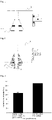
- FIG. 1 is a schematic view of a CAD/CAM processed aesthetic prosthetic block to which glass-ceramics block/ zirconia post/ metal link are applied.
- Hot bonding of a glass-ceramics block 1 and a zirconia post 2 is performed by the inorganic bond.
- the glass-ceramics block is not deformed even at a hot bonding temperature and processibility needs to be ensured.
- the glass-ceramics of the present invention can be mechanically processed even through a hot bonding condition at 700 to 900 °C for 1 minute to 2 hours, and thereafter, light transmittance and a color which are aesthetic characteristics to be applicable as the artificial prosthetic material need to be expressed.
- the glass-ceramics is a selectable material which may be used in an application field to which higher load is applied by increasing the strength through the second crystallization heat treatment process (at 750 to 920 °C for the holding time of 1 minute to 2 hours).
- a metal holder 3 is coupled to machine equipment.
- FIG. 2 is a conceptual diagram of an aesthetic prosthetic block for CAD/CAM machining, to which glass-ceramic block/zirconia post/metal link is applied.
- a glass-ceramic block 1 and a zirconia post 2 are hot-bonded by an inorganic bond.
- the glass-ceramic block 1 must have a composition that is not deformed and secures machinability at a temperature at which the hot bonding is performed.
- a bonding heat treatment condition is substantially the same as that described with reference to FIG. 1 .
- a metal link 5 is coupled to an implant fixture, and a coupling screw hole 4 is formed in the metal link 5.
- resin-based cement has been used for bonding between a metal link and zirconia.
- the hot bonding is performed to increase an adhesive force and improve prosthesis applicability.
- the bonding between the metal link 5 and the zirconia post 2 may be performed even upon bonding of glass/zirconia/metal.
- the metal link 5 may be separately bonded to pre-bonded glass-ceramics/zirconia at a low temperature.
- the metal holder 3 is coupled to the machine equipment.
- the block of the machining state according to the present invention has strength greater than that of an existing product and is also machinable. Since the block exhibits high strength in the machining state, the block is directly applicable to a clinical treatment after machining. Also, a color thereof matches a color of a natural tooth.
- FIG. 3 is a graph showing a comparison of flexural strength between an existing lithium disilicate glass-ceramic product and a product to which the technology proposed in the present invention is applied.
- the product to which the technology proposed in the present invention is applied exhibits a color matching a color of a natural tooth, has high flexural strength, and is machinable, as compared to the existing product, the product is directly applicable to a clinical treatment.
- the existing product exhibits a color of a natural tooth only when the product experiences a phase transition through a secondary heat treatment. After the phase transition, the product has high strength.
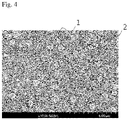
- FIG. 4 is an image showing a microstructure of the block of the machining after etching according to the present invention.
- a nano-sized lithium disilicate crystalline phase and a SiO 2 cluster coarser than the nano-sized lithium disilicate crystalline phase can be confirmed, and it is possible to realize machinability, strength, and aesthetics.
- the artificial tooth is manufactured by performing CAD/CAM machining on the artificial tooth block made of the material prepared by the method for preparing glass-ceramics containing nano lithium disilicate and silicate crystalline phase.
- the artificial tooth block has high strength of 300 MPa or more due to a fine crystalline phase and is machinable.
- aesthetics such as opalescence similar to that of a natural tooth.
- a SiO 2 cluster having a size of 0.5 to 1.0 ⁇ m is precipitated in the fine crystalline phase, it is possible to improve machinability for the CAD/CAM machining and adjust light transmittance. That is, when the SiO 2 cluster is applied to a material having high light transmittance, the light transmittance is lowered due to the fine crystalline phase. Accordingly, it is possible to develop a material for an artificial tooth having various light-transmitting properties.
- a high-strength material developed in the present invention is particularly useful for a 1:1 machining clinic treatment and an implant prosthetic application, which require dimension accuracy.
- the block since the inside of the block is machinable and the high-strength zirconia post is bonded to the block, the block is applicable as the prosthetic material capable of realizing both of strength and aesthetics.
Landscapes
- Chemical & Material Sciences (AREA)
- Health & Medical Sciences (AREA)
- Engineering & Computer Science (AREA)
- Life Sciences & Earth Sciences (AREA)
- Ceramic Engineering (AREA)
- Materials Engineering (AREA)
- Organic Chemistry (AREA)
- Oral & Maxillofacial Surgery (AREA)
- Animal Behavior & Ethology (AREA)
- Veterinary Medicine (AREA)
- Public Health (AREA)
- General Health & Medical Sciences (AREA)
- Dentistry (AREA)
- Epidemiology (AREA)
- Geochemistry & Mineralogy (AREA)
- General Chemical & Material Sciences (AREA)
- Chemical Kinetics & Catalysis (AREA)
- Structural Engineering (AREA)
- Manufacturing & Machinery (AREA)
- Molecular Biology (AREA)
- Dispersion Chemistry (AREA)
- Crystallography & Structural Chemistry (AREA)
- Glass Compositions (AREA)
Description
- The present invention relates to a method for preparing a nano lithium disilicate glass-ceramics by using the silicate glass, and more particularly, to a method for preparing a glass-ceramics containing a nano lithium disilicate phase and a silicate crystalline phase.
- With economic development and increased income, an interest in appearance has been increased, and an interest in aesthetics of dental prosthetic materials has been increased in response to the interest in appearance. As a result, various kinds of dental prosthetic restoration materials with the aesthetics are introduced, and among them, various non-metal crown materials without using metals have been developed.
- The crown materials mean prosthetic materials for restoring enamel and dentin parts of the damaged tooth. The crown materials are classified into inlay, onlay, veneer, crown, and the like according to an applied region. Since the region restored by the crown material is the outer surface of the tooth, the aesthetics is highly required and the high strength is required due to fractures such as abrasion and chipping of antagonist teeth. Materials which are used as the crown materials in the related art are leucite glass-ceramics, reinforced porcelain, or fluorapatite (Ca5(PO4)3F) glass-ceramics. Even thought the materials have the excellent aesthetics, there is a disadvantage in that the possibility of fracture is high due to low strength of 80 to 120 MPa. Therefore, currently, studies of developing various high-strength crown materials have been conducted.
- Lithium silicate glass-ceramics was introduced by Marcus P. Borom and Anna M. Turkalo (The Pacific Coast Regional Meeting, The American Ceramic Society, San Francisco, CA, October 31, 1973 (Glass division, No. 3-G-73P)) in 1973. The formation of various crystalline nuclei and the crystalline and the strength for each growth heat treatment condition were studies by using Li2O-Al2O3-SiO2-Li2O-K2O-B2O3-P2O5-based glasses. When the high-temperature lithium disilicate crystalline is shown from low-temperature lithium metasilicate, the strength of 30 to 35 KPS is shown. The strength is caused by residual stress due to a difference in thermal expansion coefficient between base glass, mother glass, Li2SiO5, and Li2SiO3 crystals.
- A material and a method for manufacturing an artificial tooth (monolithic dental crown) by using glass containing a lithium disilicate crystal are disclosed in a plurality of patent documents. However, according to the known techniques, due to a coarse crystalline phase, it is difficult to directly machine the glass containing the lithium disilicate crystal. In order for machining, it is necessary to primarily form and machine a lithium metasilicate crystalline phase (machinable crystalline) and secondarily form a high-strength lithium disilicate crystalline phase by performing a heat treatment. Thus, dimension accuracy is lowered due to shrinkage caused by the heat treatment, and it is inconvenient to additionally perform the heat treatment. Generally, since CAD/CAM machining is directly performed in a dental clinic and needs to be applied to a patient as quickly as possible (one-day appointment), a time delay due to a heat treatment imposes financial difficulties on a patient and a user.
- In addition, since an existing lithium disilicate glass-ceramic material has a coarse crystalline phase, there is a limitation in realizing high light transmittance or opalescence similar to those of a natural tooth.
- In particular, in order to machine the existing lithium disilicate glass-ceramic material, lithium metasilicate glass-ceramics having excellent machinability are primarily prepared, and then, lithium disilicate is prepared through a secondary crystallization heat treatment to improve strength. In this case, a crystalline phase has a size of 3 µm or more. In this state, machinability is considerably lowered and only high strength is obtained.
-
- The present invention is directed to methods for preparing glass-ceramics according to
claims - The present invention is directed to propose a method for preparing a glass-ceramics containing nano lithium disilicate and silicate crystalline phase, which is capable of realizing aesthetics such as opalescence similar to that of a natural tooth due to causing scattering of light caused by fine particles.
- The present invention is directed to propose a method for preparing a glass-ceramics containing a nano lithium disilicate phase and a silicate crystalline phase, which has excellent light transmittance due to a fine crystalline phase.
- According to an embodiment of the present invention, a nano lithium disilicate glass-ceramics containing a SiO2 crystalline phase includes: a glass composition including 70 to 85 wt% SiO2, 10 to 13 wt% Li2O, 3 to 7 wt% P2O5 working as a nuclei formation agent, 0 to 5 wt% Al2O3 for increasing a glass transition temperature and a softening point and enhancing chemical durability of glass, 0 to 2 wt% ZrO2, 0.5 to 3 wt% CaO for increasing a thermal expansion coefficient of the glass, 0.5 to 3 wt% Na2O, 0.5 to 3 wt% K2O, and 1 to 2 wt% colorants, and 0 to 2.0 wt% mixture of MgO, ZnO, F, and La2O3.
- According to an embodiment of the present invention, a method for preparing a nano lithium disilicate glass-ceramics containing a SiO2 crystalline phase includes: melting the glass composition of any one of
claims 1 to 3 and performing crystal growth; performing a primary heat treatment at a temperature of 300 to 700°C for 1 minute to 2 hours; and bonding primarily heat-treated glass-ceramics to a zirconia post by using an inorganic bond, wherein the bonding comprises heat-treating the inorganic bond at a temperature of 700 to 900°C for 1 minute to 2 hours. - The inorganic bond of the present invention may include 8 to 12 wt% Li2O, 50 to 75 wt% SiO2, 0 to 3 wt% Al2O3, .5 to 5 wt% CaO, 0.5 to 3 wt% Na2O, 0.5 to 3 wt% K2O, 0.5 to 7 wt% P2O5 as a nuclei formation agent, 0.5 to 1 wt% colorant, and 0 to 1.0 wt% mixture of MgO, ZnO, F, and La2O3, and the thermal expansion coefficient is 9.5 to 10.8 x 10⁻⁶/°C.
-
-
FIG. 1 is a conceptual diagram of an aesthetic prosthetic block for CAD/CAM machining, to which two materials, that is, a glass-ceramics and zirconia proposed in the present invention are applied. -
FIG. 2 is a conceptual diagram of an aesthetic prosthetic block for CAD/CAM machining, to which three materials, that is, a glass-ceramic block, a zirconia post, and a metal link proposed in the present invention are applied. -
FIG. 3 is a graph showing a comparison of flexural strength between an existing product and a product of a machining state according to the present invention. -
FIG. 4 is an image showing a microstructure of a block of a machining state according to an embodiment of the present invention. - The aforementioned and additional aspects of the present invention will be clearer through exemplary embodiments described with reference to the accompanying drawings. Hereinafter, the present invention will be described in detail so as to be easily understood and reproduced by those skilled in the art through the exemplary embodiments.
- A high-strength glass-ceramics for a tooth according to the present invention includes a SiO2 cluster, a lithium disilicate crystal, and hyaline. Since the high-strength glass-ceramics exhibits a very similar color to that of a natural tooth as a whole, the high-strength glass-ceramics is highly aesthetic and is suitable for use as a dental material.
- The aesthetics, particularly, light transmittance is largely affected by the degree of light scattering caused by a difference in refractive index between different crystallines in dense bulk. The SiO2 cluster has a refractive index of 1.48. As a content of the SiO2 cluster increases, an interface between the SiO2 cluster and mother glass or a lithium disilicate crystalline phase increases. Accordingly, transmittance decreases due to high scattering of light. Therefore, in order to obtain light-transmitting properties usable for the dental material, a prosthetic material having various light-transmitting properties may be prepared by forming an appropriate amount of only a SiO2 cluster crystalline phase within a glass.
- In the case of an existing lithium disilicate glass-ceramics, a prosthesis has been manufactured by primarily forming a lithium metasilicate glass-ceramics having low strength of 220 MPa or less, machining the lithium metasilicate glass-ceramics, and increasing strength to 350 MP through a secondary heat treatment. Due to shrinkage generated in the secondary heat treatment and the inconvenience of the process, the above-described prosthesis manufacturing method is time-consuming in a dental clinic which requires a prompt clinical treatment. In particular, since a recent dental treatment takes only several hours until the dental treatment is completed after a patient comes in for the dental treatment, the existing glass-ceramic material is not suitable for a current dental treatment.
- The present invention proposes a novel method capable of directly machining a high-strength material by forming a nano-sized lithium disilicate crystalline phase and a SiO2 cluster coarser than the nano-sized lithium disilicate crystalline phase. The novel method is applicable to a dentistry to secure dimension accuracy and prompt prosthesis machining, thereby satisfying both of a patient and a dentist. In addition, since 1:1 machining is applicable to the high-strength material, the high-strength material may be used as a block material in which an implant case and a zirconia post are combined.
- More specifically, the present invention proposes an artificial prosthetic material which is directly applicable to a clinical treatment after 1:1 machining, without a heat treatment, by adjusting a crystalloid size of the high-strength glass-ceramics to a nanosize of 0.2 to 0.5 µm, so that the high-strength glass-ceramics is machinable. This is because the SiO2 cluster having a size of 0.5 to 1.0 µm is precipitated together with the nano crystalline phase (lithium disilicate) for improving machinability.
- Hereinafter, a method for preparing a glass-ceramics for CAD/CAM machining, to which a zirconia post is coupled by an inorganic bond, according to a preferred embodiment of the present invention, will be described.
- A high-strength glass-ceramics for a tooth according to the present invention includes a lithium disilicate crystal and SiO2. A glass applicable for improving strength and aesthetic light-transmitting properties includes: a glass composition including 70 to 85 wt% SiO2, 10 to 13 wt% Li2O, 3 to 7 wt% P2O5 working as a nuclei formation agent, 0 to 5 wt% Al2O3 for increasing a glass transition temperature and a softening point and enhancing chemical durability of the glass, 0 to 2 wt% ZrO2, 0.5 to 3 wt% CaO for increasing a thermal expansion coefficient of the glass, 0.5 to 3 wt% Na2O, 0.5 to 3 wt% K2O, 1 to 2 wt% colorants, and 0 to 2.0 wt% mixture of MgO, ZnO, F, and La2O3. Alkali oxide may be K2O or Na2O, and further, may include both K2O and Na2O.
- The dental high-strength glass-ceramics according to the exemplary embodiment of the present invention may further include 1 to 2 wt% colorant as described above in order to provide the same or similar color as or to the teeth. The colorant is to provide the same or similar color and fluorescence as or to the teeth and may use red iron oxide (Fe2O3), yellow ceria (CeO2), orange vanadium pentoxide (V2O5), black vanadium trioxide V2O3, Er2O3, Tb2O3, Pr2O3, TaO2, MnO2, or a mixture thereof. For example, red iron oxide (Fe2O3), ceria (CeO2), or vanadium pentoxide (V2O5) is added together with starting materials to be melted to have a light yellow which is similar to the teeth's color. Titanium oxide (TiO2) has white to provide a very similar color to the teeth's color.
- The aforementioned starting materials are measured and mixed. In this case, Li2CO3 instead of Li2O may be added and carbon dioxide (CO2) as a carbon (C) component of Li2CO3 is discharged and removed as gas in a melting process of the glass. Further, in alkali oxide, K2CO3 and Na2CO3 instead of K2O and Na2O may be added, respectively, and carbon dioxide (CO2) as carbon (C) components of K2CO3 and Na2CO3 is discharged and removed as gas in a melting process of the glass.
- The mixing process uses a dry mixing process, and a ball milling process and the like may be used as the dry mixing process. When describing the ball milling process in detail, the starting materials are put in a ball milling machine and mechanically grinded and uniformly mixed by rotating the ball milling machine at a predetermined speed. The balls used in the ball milling machine may use balls made of ceramic materials such as zirconia or alumina, and the sizes of the balls may be the same as each other or has at least two sizes. The size of the ball, milling time, rpm of the ball milling machine, and the like are controlled by considering a desired size of the particle. In an example, taking into account a particle size, a size of a ball may be set to a range of 1 to 30 mm, and a rotational speed of a ball milling machine may be set to a range of 50 to 500 rpm. Taking into account a targeted particle size or the like, it is desirable that ball milling is performed for 1 to 48 hours. A starting raw material is pulverized into fine particles through the ball milling, and the fine particles have a uniform particle size and are also uniformly mixed.
- The mixed starting material is put in a melting furnace and melted by heating the melting furnace with the starting material. Herein, the melting means that the starting materials are changed into a material state having viscosity in a liquid state other than a solid state. It is preferred that the melting furnace is made of a material having a high melting point, a large strength, and a low contact angle in order to suppress a molten material from being attached. To this end, it is preferred that the melting furnace is a melting furnace made of a material such as platinum (Pt), diamond-like-carbon (DLC), and chamotte or coated on the surface with a material such as platinum (Pt) or diamond-like-carbon (DLC).
- The melting is performed for 1 to 12 hours at atmospheric pressure. When the melting temperature is less than 1,400 °C, the starting materials may not be melted. When the melting temperature is more than 2,000 °C, the starting materials are not economic due to excessive energy consumption, and thus, it is preferred that the starting materials are melted in the aforementioned range. Further, when the melting time is too short, the starting materials may not be sufficiently melted, and when the melting time is very large, the starting materials are not economic due to excessive energy consumption. It is preferred that the heating rate of the melting furnace is 5 to 50 °C/min. When the heating rate of the melting furnace is very slow, a lot of time is taken and thus, productivity is deteriorated, and when the heating rate of the melting furnace is very fast, the volatile amount of the starting materials is increased, and thus, the property of the glass-ceramics may be bad. As a result, it is preferred that the temperature of the melting furnace is increased at the heating rate in the aforementioned range. It is preferred that the melting is performed at an oxygen atmosphere such as air.
- In order to obtain the dental glass-ceramics having desired shape and size, the molten material is poured in a predetermined mold. It is preferred that the mold is made of a material having a high melting point, a large strength, and a low contact angle for suppressing the glass molten material from being attached. To this end, the mold is made of a material such as graphite and carbon, and it is preferred that the molten material is preheated at 200 to 300 °C and poured in the mold in order to prevent thermal shock.
- In order to obtain the dental glass-ceramics having desired shape and size, the molten material is poured in a predetermined mold. It is preferred that the mold is made of a material having a high melting point, a large strength, and a low contact angle for suppressing the glass molten material from being attached. To this end, the mold is made of a material such as graphite and carbon, and it is preferred that the molten material is preheated at 200 to 300 °C and poured in the mold in order to prevent thermal shock.
- The molten material contained in the mold is cooled and transferred to a crystallization heat-treatment furnace to perform nuclei formation and crystal growth of the glass. In the first heat treatment, the crystallization heat treatment is performed at 300 to 700 °C and a holding time is 1 minute to 2 hours. Since the second heat treatment process is a selective process, the glass-ceramics may be immediately applied to the prosthesis after processing without the second heat treatment process after the first heat treatment, or applied to the prosthesis after increasing the strength by increasing the crystal growth through the second heat treatment process. In this case, the second heat treatment process is performed for the holding time of 1 minute to 2 hours at 750 to 950 °C, and the second heat treatment may be selectively determined by customers by considering a strength requirement degree, shortage of the prosthesis preparing process, and the like.
- When a temperature of a primary heat treatment is lower than 300°C, a nucleus may not be formed due to a low temperature. When the temperature of the primary heat treatment is higher than or equal to 700°C, a size of the nucleus may increase, and thus, machining may be difficult and a block may be deformed. A secondary heat treatment is an option for a user. When a temperature of the secondary heat treatment is lower than 750°C, a crystalline phase may be scarcely formed, and thus, the secondary heat treatment is inefficient. When the temperature of the secondary heat treatment is higher than or equal to 950°C, a glass-ceramics may be deformed, and thus, the secondary heat treatment is not applicable. CAD/CAM machining may be performed after a heat treatment for nuclei formation or a heat treatment for nuclei formation-crystal growth. After the secondary heat treatment, aesthetics to which 1:1 machining is applicable is predetermined.
- When the heat treatment time is too short, the crystal growth may not sufficiently occur, and when the heat treatment time is too long, the consumption of excessive energy is required, and thus, it is not economical. It is preferred that the heating rate up to the heat treatment temperature is approximately . When the heating rate is too slow, a lot of time is taken and thus, the productivity is deteriorated. When the heating rate is too fast, the volatile amount of the starting materials is increased due to the rapid temperature increase, and thus, the property of the glass-ceramics may be bad. As a result, it is preferred that the temperature of the melting furnace is increased at the heating rate in the aforementioned range. The heat treatment is performed at an oxygen atmosphere such as oxygen (O2) and air. Atoms in the glass structure move by heat treatment and thus, the phase transition of the glass occurs. That is, when the crystal growth occurs by the heat treatment, the crystallization including lithium silicate crystal occurs, and as a result, the glass-ceramics may be obtained.
- The zirconia-boned glass-ceramics block or the metal/zirconia-bonded glass-ceramics block obtained through the aforementioned crystallization heat treatment is processed in a crown shape through cutting to provide a color characteristic to be close to natural teeth, and then, bonded to an implant material.
- Hereinafter, a preparation method of lithium disilicate glass-ceramics or glass to an artificial prosthesis will be described by using a squeeze casting method.
- The squeeze casting is performed by a method of pushing a glass or glass-ceramics ingot into a crown-shaped empty space positioned in an embedded material by lowering the viscosity of the glass at 920 °C to 1,000 °C. Further, simultaneously, the glass phase is phase-converted into the lithium disilicate crystalline, the lithium disilicate ingot becomes the lithium disilicate crystalline as it is after squeeze casting heat treatment, and there is a difference that the crystal shape is increased in a uni-axial direction.
- The metal/ zirconia/ glass-ceramics bonding by the inorganic bond may be simultaneously or separately performed. The bonding condition of the metal/ zirconia/ glass-ceramics is performed by hot bonding at 700 to 900 °C for 1 minute to 2 hours as described above. The inorganic bond was invented by a highly active composition which is bondable with an inert zirconia material. 8 to 12 wt% Li2O having high reaction with zirconia, 50 to 70 wt% SiO2 corresponding to a structural frame, 0 to 3 wt% Al2O3 to increase a glass transition temperature and a softening point and enhance chemical durability of the glass, 0.5 to 5 wt% CaO to increase the thermal expansion coefficient of the glass, 0.5 to 3 wt% Na2O, and 0.5 to 3 wt% K2O are added, 0.5 to 7 wt% P2O5 as a nuclei formation agent for indicating the opacity when applying the colorant to the bond and 0.5 to 1 wt% of other colorants are included, and MgO, ZnO, F, and La2O3 are mixed and added with 0 to 1.0 wt% due to the effect on light transmittance. The composition of the inorganic bond is designed to a composition having the thermal expansion coefficient of 9.5-10.8 x 10⁻⁶/°C so that the thermal expansion efficient is matched between the metal and zirconia and between zirconia and the glass-ceramics block in addition to the chemical bond with zirconia.
- The glass-ceramics for bonding zirconia and the inorganic bond according to the present invention may prepare the crown prosthetic material including metal link/ zirconia post/ glass-ceramics which is impossible in the related to an artificial aesthetic prosthesis through CAD/CAM processing. The present invention has an advantage of improving low bonding strength between the metal/ glass-ceramics, low fracture resistance, and aesthetics inhibition of the existing implant aesthetic prosthesis. Particularly, the inorganic bond which is chemically bondable with zirconia as an inert material through hot bonding is a bonding method which is first attempted. In addition, since the inorganic bond can not be produced when the glass-ceramics is not matched with the thermal expansion coefficient of zirconia even though the predetermined condition is set, the glass-ceramics composition is the invention which is first proposed in zirconia hot bonding.
-
FIG. 1 is a schematic view of a CAD/CAM processed aesthetic prosthetic block to which glass-ceramics block/ zirconia post/ metal link are applied. Hot bonding of a glass-ceramics block 1 and azirconia post 2 is performed by the inorganic bond. In this case, the glass-ceramics block is not deformed even at a hot bonding temperature and processibility needs to be ensured. The glass-ceramics of the present invention can be mechanically processed even through a hot bonding condition at 700 to 900 °C for 1 minute to 2 hours, and thereafter, light transmittance and a color which are aesthetic characteristics to be applicable as the artificial prosthetic material need to be expressed. In addition, if necessary, the glass-ceramics is a selectable material which may be used in an application field to which higher load is applied by increasing the strength through the second crystallization heat treatment process (at 750 to 920 °C for the holding time of 1 minute to 2 hours). Ametal holder 3 is coupled to machine equipment. -
FIG. 2 is a conceptual diagram of an aesthetic prosthetic block for CAD/CAM machining, to which glass-ceramic block/zirconia post/metal link is applied. A glass-ceramic block 1 and azirconia post 2 are hot-bonded by an inorganic bond. At this time, the glass-ceramic block 1 must have a composition that is not deformed and secures machinability at a temperature at which the hot bonding is performed. - A bonding heat treatment condition is substantially the same as that described with reference to
FIG. 1 . Ametal link 5 is coupled to an implant fixture, and a coupling screw hole 4 is formed in themetal link 5. In the past, resin-based cement has been used for bonding between a metal link and zirconia. However, according to the present invention, the hot bonding is performed to increase an adhesive force and improve prosthesis applicability. The bonding between themetal link 5 and thezirconia post 2 may be performed even upon bonding of glass/zirconia/metal. In order to reduce oxidation of the metal during the heat treatment, themetal link 5 may be separately bonded to pre-bonded glass-ceramics/zirconia at a low temperature. Themetal holder 3 is coupled to the machine equipment. - The block of the machining state according to the present invention has strength greater than that of an existing product and is also machinable. Since the block exhibits high strength in the machining state, the block is directly applicable to a clinical treatment after machining. Also, a color thereof matches a color of a natural tooth.
-
FIG. 3 is a graph showing a comparison of flexural strength between an existing lithium disilicate glass-ceramic product and a product to which the technology proposed in the present invention is applied. As shown inFIG. 3 , since the product to which the technology proposed in the present invention is applied exhibits a color matching a color of a natural tooth, has high flexural strength, and is machinable, as compared to the existing product, the product is directly applicable to a clinical treatment. On the contrary, the existing product exhibits a color of a natural tooth only when the product experiences a phase transition through a secondary heat treatment. After the phase transition, the product has high strength. -
FIG. 4 is an image showing a microstructure of the block of the machining after etching according to the present invention. A nano-sized lithium disilicate crystalline phase and a SiO2 cluster coarser than the nano-sized lithium disilicate crystalline phase can be confirmed, and it is possible to realize machinability, strength, and aesthetics. - The artificial tooth is manufactured by performing CAD/CAM machining on the artificial tooth block made of the material prepared by the method for preparing glass-ceramics containing nano lithium disilicate and silicate crystalline phase. The artificial tooth block has high strength of 300 MPa or more due to a fine crystalline phase and is machinable. In addition, since light is scattered due to fine particles, it is possible to realize aesthetics such as opalescence similar to that of a natural tooth.
- Furthermore, since a SiO2 cluster having a size of 0.5 to 1.0 µm is precipitated in the fine crystalline phase, it is possible to improve machinability for the CAD/CAM machining and adjust light transmittance. That is, when the SiO2 cluster is applied to a material having high light transmittance, the light transmittance is lowered due to the fine crystalline phase. Accordingly, it is possible to develop a material for an artificial tooth having various light-transmitting properties.
- A high-strength material developed in the present invention is particularly useful for a 1:1 machining clinic treatment and an implant prosthetic application, which require dimension accuracy. In addition, since the inside of the block is machinable and the high-strength zirconia post is bonded to the block, the block is applicable as the prosthetic material capable of realizing both of strength and aesthetics.
DESCRIPTION OF REFERENCE NUMERALS 1: glass-ceramic block 2: zirconia post 3: metal holder 4: coupling screw hole 5: metal link
Claims (3)
- A method for preparing a nano lithium disilicate glass-ceramics as an artificial tooth block for CAD/CAM machining, the lithium disilicate glass-ceramics containing a nanosized lithium disilicate crystalline phase of 0.2 to 0.5 µm and a SiO2 crystalline phase of 0.5 to 1.0 µm, the method comprising:melting a glass composition comprising70 to 85 wt% SiO2,10 to 13 wt% Li2O,3 to 7 wt% P2O5 working as a nuclei formation agent,0 to 5 wt% Al2O3 for increasing a glass transition temperature and a softening point and enhancing chemical durability of glass,0 to 2 wt% ZrO2,0.5 to 3 wt% CaO for increasing a thermal expansion coefficient of the glass,0.5 to 3 wt% Na2O,0.5 to 5 wt% K2O,1 to 2 wt% colorants, and0 to 2.0 wt% mixture of MgO, ZnO, F and La2O3; andperforming a primary heat treatment at a temperature of 300 to 700°C for 1 minute to 2 hours,after the primary heat treatment, performing crystal growth through a secondary heat treatment at a temperature of 750 to 950°C for 1 minute to 2 hours.
- A method for preparing a zirconia-bonded nano lithium disilicate glass-ceramics as an artificial tooth block for CAD/CAM machining, the lithium disilicate glass-ceramics containing a nanosized lithium disilicate crystalline phase of 0.2 to 0.5 µm and a SiO2 crystalline phase of 0.5 to 1.0 µm, the method comprising:melting the glass composition comprising70 to 85 wt% SiO2,10 to 13 wt% Li2O,3 to 7 wt% P2O5 working as a nuclei formation agent,0 to 5 wt% Al2O3 for increasing a glass transition temperature and a softening point and enhancing chemical durability of glass,0 to 2 wt% ZrO2,0.5 to 3 wt% CaO for increasing a thermal expansion coefficient of the glass,0.5 to 3 wt% Na2O,0.5 to 5 wt% K2O,1 to 2 wt% colorants, and0 to 2.0 wt% mixture of MgO, ZnO, F and La2O3;performing a primary heat treatment at a temperature of 300 to 700°C for 1 minute to 2 hours; andbonding primarily heat-treated glass-ceramics to a zirconia post by using an inorganic bond,wherein the bonding comprises heat-treating the inorganic bond at a temperature of 700 to 900°C for 1 minute to 2 hours.
- The preparation method of claim 2, wherein the composition of the inorganic bond includes 8 to 12 wt% Li2O, 50 to 75 wt% SiO2, 0 to 3 wt% Al2O3, 0.5 to 5 wt% CaO, 0.5 to 3 wt% Na2O, 0.5 to 3 wt% K2O, 0.5 to 7 wt% P2O5 as a nuclei formation agent, 0.5 to 1 wt% colorant, and 0 to 1.0 wt% mixture of MgO, ZnO, F, and La2O3, and the thermal expansion coefficient is 9.5 to 10.8 × 10⁻⁶/°C.
Applications Claiming Priority (1)
| Application Number | Priority Date | Filing Date | Title |
|---|---|---|---|
| KR1020160042157A KR101813488B1 (en) | 2016-04-06 | 2016-04-06 | Silicate class, method for manufacturing silicate glass-ceramics and lithium desilicateglass-ceramics using the same |
Publications (2)
| Publication Number | Publication Date |
|---|---|
| EP3228602A1 EP3228602A1 (en) | 2017-10-11 |
| EP3228602B1 true EP3228602B1 (en) | 2022-08-31 |
Family
ID=57286369
Family Applications (1)
| Application Number | Title | Priority Date | Filing Date |
|---|---|---|---|
| EP16198397.8A Active EP3228602B1 (en) | 2016-04-06 | 2016-11-11 | Method for preparing nano lithium disilicate glass-ceramic |
Country Status (4)
| Country | Link |
|---|---|
| US (2) | US20170290641A1 (en) |
| EP (1) | EP3228602B1 (en) |
| KR (1) | KR101813488B1 (en) |
| ES (1) | ES2927590T3 (en) |
Families Citing this family (10)
| Publication number | Priority date | Publication date | Assignee | Title |
|---|---|---|---|---|
| JP6993093B2 (en) * | 2016-03-31 | 2022-01-13 | 株式会社松風 | Lithium silicate glass composition containing no Al2O3 |
| CN109279781A (en) * | 2018-10-12 | 2019-01-29 | 沈阳建筑大学 | Binder for zirconia and lithium disilicate glass ceramics and its preparation and application |
| KR102228118B1 (en) * | 2019-02-12 | 2021-03-16 | 주식회사 하스 | Dentistry composite comprising a Glass-ceramics |
| JP6903815B2 (en) * | 2019-03-29 | 2021-07-14 | 株式会社ジーシー | Block body for dental prosthesis |
| KR102246195B1 (en) * | 2019-05-29 | 2021-04-29 | 주식회사 하스 | Dental bulk block for cad/cam machining process and manufacturing method of the same |
| CN112939472B (en) * | 2019-12-11 | 2022-04-26 | 四川旭虹光电科技有限公司 | Microcrystalline glass and preparation method and application thereof |
| KR102426218B1 (en) * | 2020-07-24 | 2022-07-28 | 주식회사 하스 | Dental implant and manufacturing method thereof |
| KR102446072B1 (en) * | 2020-09-28 | 2022-09-23 | 주식회사 하스 | Dental bulk block for cutting and manufacturing method thereof |
| CN113831019B (en) * | 2021-08-31 | 2023-05-30 | 重庆鑫景特种玻璃有限公司 | Glass ceramic and protective piece |
| CN114349348B (en) * | 2021-12-20 | 2024-01-12 | 浙江丹斯登生物材料有限公司 | Lithium disilicate glass ceramic for all-ceramic denture and preparation method thereof |
Citations (6)
| Publication number | Priority date | Publication date | Assignee | Title |
|---|---|---|---|---|
| US5702514A (en) | 1994-05-31 | 1997-12-30 | Tec Ventures, Inc. | Method for molding dental restorations and related apparatus |
| DE19750794A1 (en) | 1997-11-10 | 1999-06-17 | Ivoclar Ag | Process for the preparation of shaped translucent lithium disilicate glass-ceramic products |
| US20150104655A1 (en) | 2013-10-14 | 2015-04-16 | Hass Co., Ltd. | Lithium silicate amorphous or crystalline glass overlaying top surface of zirconia and preparation methods thereof |
| US20160060159A1 (en) | 2014-08-29 | 2016-03-03 | Hass Co., Ltd. | High strength and aesthetic lithium disilicate crystalline glass-ceramics containing cristobalite crystal and preparation method thereof |
| EP3135269A1 (en) | 2015-08-26 | 2017-03-01 | Hass Co., Ltd. | Dental glass-ceramic block bonded with abutment and preparation method thereof |
| EP3135641A1 (en) * | 2015-08-25 | 2017-03-01 | Ivoclar Vivadent AG | Lithium silicate glass ceramic with alpha quartz |
Family Cites Families (25)
| Publication number | Priority date | Publication date | Assignee | Title |
|---|---|---|---|---|
| GB1374605A (en) | 1971-05-24 | 1974-11-20 | Pilkington Brothers Ltd | Method of manufacturing glass ceramic material |
| US4189325A (en) | 1979-01-09 | 1980-02-19 | The Board of Regents, State of Florida, University of Florida | Glass-ceramic dental restorations |
| US4515634A (en) | 1983-10-17 | 1985-05-07 | Johnson & Johnson Dental Products Company | Castable glass-ceramic composition useful as dental restorative |
| US5219799A (en) | 1991-10-07 | 1993-06-15 | Corning Incorporated | Lithium disilicate-containing glass-ceramics some of which are self-glazing |
| US6818573B2 (en) | 1994-05-31 | 2004-11-16 | Tec Ventures, Inc. | Method for molding dental restorations and related apparatus |
| US5968856A (en) | 1996-09-05 | 1999-10-19 | Ivoclar Ag | Sinterable lithium disilicate glass ceramic |
| US6420288B2 (en) | 1997-11-10 | 2002-07-16 | Ivoclar Ag | Process for the preparation of shaped translucent lithium disilicate glass ceramic products |
| US6802894B2 (en) * | 1998-12-11 | 2004-10-12 | Jeneric/Pentron Incorporated | Lithium disilicate glass-ceramics |
| US6517623B1 (en) | 1998-12-11 | 2003-02-11 | Jeneric/Pentron, Inc. | Lithium disilicate glass ceramics |
| JP2000086289A (en) | 1998-09-10 | 2000-03-28 | Ngk Insulators Ltd | Crystallized glass nucleating agent, crystallized glass, magnetic disk substrate and magnetic disk |
| JP2000203880A (en) | 1998-09-11 | 2000-07-25 | Ohara Inc | Glass ceramic substrate for information storage medium, method for manufacturing the same, and information storage medium disk |
| WO2000034196A2 (en) | 1998-12-11 | 2000-06-15 | Jeneric/Pentron Incorporated | Pressable lithium disilicate glass ceramics |
| US6375729B1 (en) * | 1999-03-19 | 2002-04-23 | Jeneric/Pentron, Inc. | Machinable glass-ceramics |
| NL1017895C2 (en) | 2001-04-20 | 2002-10-22 | Elephant Dental Bv | Pressable glass ceramic, method for the preparation thereof, and a method for manufacturing a dental restoration using said glass ceramic. |
| EP1396237A1 (en) | 2002-09-05 | 2004-03-10 | Elephant Dental B.V. | Strengthened ceramic restoration |
| PT1688398E (en) | 2005-02-08 | 2014-07-25 | Ivoclar Vivadent Ag | Lithium silicate glass ceramic |
| TW200724506A (en) * | 2005-10-07 | 2007-07-01 | Ohara Kk | Inorganic composition |
| PT2377830T (en) | 2010-04-16 | 2016-07-18 | Ivoclar Vivadent Ag | Lithium silicate glass ceramic and glass with transition metal oxide |
| US9345561B2 (en) * | 2010-12-22 | 2016-05-24 | 3M Innovative Properties Company | Fireable dental blank assembly |
| KR101262121B1 (en) | 2010-12-27 | 2013-05-14 | 주식회사 하스 | Manufacturing method of high strength glass ceramics for teeth |
| EP2792345B1 (en) * | 2013-04-15 | 2019-10-09 | Ivoclar Vivadent AG | Lithium silicate glass ceramic and glass with caesium oxide content |
| KR101450190B1 (en) | 2013-11-19 | 2014-10-13 | (주)더스타일코리아 | Zirconia prosthesis for dental using lithium disilicate and manufacturing method |
| DE102014104401A1 (en) * | 2014-03-28 | 2015-10-01 | Degudent Gmbh | Process for producing a lithium silicate glass blank and a lithium silicate glass ceramic blank |
| US9409815B2 (en) * | 2014-04-04 | 2016-08-09 | Corning Incorporated | Opaque colored glass-ceramics comprising nepheline crystal phases |
| EP3168199B1 (en) | 2015-11-11 | 2022-04-13 | Ivoclar Vivadent AG | Method for making glasses and glass ceramics with sio2 as main crystal phase |
-
2016
- 2016-04-06 KR KR1020160042157A patent/KR101813488B1/en active Active
- 2016-11-07 US US15/344,918 patent/US20170290641A1/en not_active Abandoned
- 2016-11-11 ES ES16198397T patent/ES2927590T3/en active Active
- 2016-11-11 EP EP16198397.8A patent/EP3228602B1/en active Active
-
2022
- 2022-01-06 US US17/569,947 patent/US11759290B2/en active Active
Patent Citations (6)
| Publication number | Priority date | Publication date | Assignee | Title |
|---|---|---|---|---|
| US5702514A (en) | 1994-05-31 | 1997-12-30 | Tec Ventures, Inc. | Method for molding dental restorations and related apparatus |
| DE19750794A1 (en) | 1997-11-10 | 1999-06-17 | Ivoclar Ag | Process for the preparation of shaped translucent lithium disilicate glass-ceramic products |
| US20150104655A1 (en) | 2013-10-14 | 2015-04-16 | Hass Co., Ltd. | Lithium silicate amorphous or crystalline glass overlaying top surface of zirconia and preparation methods thereof |
| US20160060159A1 (en) | 2014-08-29 | 2016-03-03 | Hass Co., Ltd. | High strength and aesthetic lithium disilicate crystalline glass-ceramics containing cristobalite crystal and preparation method thereof |
| EP3135641A1 (en) * | 2015-08-25 | 2017-03-01 | Ivoclar Vivadent AG | Lithium silicate glass ceramic with alpha quartz |
| EP3135269A1 (en) | 2015-08-26 | 2017-03-01 | Hass Co., Ltd. | Dental glass-ceramic block bonded with abutment and preparation method thereof |
Non-Patent Citations (1)
| Title |
|---|
| D7 - Nacharbeitung Dokument D1 (EP 3135641 A1) |
Also Published As
| Publication number | Publication date |
|---|---|
| US20170290641A1 (en) | 2017-10-12 |
| KR20170114714A (en) | 2017-10-16 |
| EP3228602A1 (en) | 2017-10-11 |
| US20220125554A1 (en) | 2022-04-28 |
| KR101813488B1 (en) | 2017-12-29 |
| US11759290B2 (en) | 2023-09-19 |
| ES2927590T3 (en) | 2022-11-08 |
Similar Documents
| Publication | Publication Date | Title |
|---|---|---|
| US11759290B2 (en) | Silicate glass, method for preparing silicate glass-ceramics by using the silicate glass, and method for preparing nano lithium disilicate glass-ceramics by using the silicate glass | |
| EP3135269B1 (en) | Dental glass-ceramic block bonded with abutment and preparation method thereof | |
| US9676656B2 (en) | High strength and aesthetic lithium disilicate crystalline glass-ceramics containing cristobalite crystal and preparation method thereof | |
| AU2019448021B2 (en) | Dental bulk block for machining and manufacturing method therefor | |
| KR101975548B1 (en) | Method for preparing glass-ceramics, capable of adjusting machinability or translucency through change in temperature of heat treatment | |
| EP3059214B1 (en) | Preparation method for lithium silicate crystallized glass to be placed on upper end of zirconia, | |
| US10882776B2 (en) | Method for preparing glass-ceramics, capable of adjusting machinability or translucency through change in temperature of heat treatment | |
| EP3372568B1 (en) | Method for preparing glass-ceramics, capable of adjusting machinability or translucency through change in temperature of heat treatment |
Legal Events
| Date | Code | Title | Description |
|---|---|---|---|
| PUAI | Public reference made under article 153(3) epc to a published international application that has entered the european phase |
Free format text: ORIGINAL CODE: 0009012 |
|
| STAA | Information on the status of an ep patent application or granted ep patent |
Free format text: STATUS: REQUEST FOR EXAMINATION WAS MADE |
|
| 17P | Request for examination filed |
Effective date: 20161111 |
|
| AK | Designated contracting states |
Kind code of ref document: A1 Designated state(s): AL AT BE BG CH CY CZ DE DK EE ES FI FR GB GR HR HU IE IS IT LI LT LU LV MC MK MT NL NO PL PT RO RS SE SI SK SM TR |
|
| AX | Request for extension of the european patent |
Extension state: BA ME |
|
| TPAC | Observations filed by third parties |
Free format text: ORIGINAL CODE: EPIDOSNTIPA |
|
| STAA | Information on the status of an ep patent application or granted ep patent |
Free format text: STATUS: EXAMINATION IS IN PROGRESS |
|
| 17Q | First examination report despatched |
Effective date: 20200728 |
|
| TPAC | Observations filed by third parties |
Free format text: ORIGINAL CODE: EPIDOSNTIPA |
|
| GRAP | Despatch of communication of intention to grant a patent |
Free format text: ORIGINAL CODE: EPIDOSNIGR1 |
|
| STAA | Information on the status of an ep patent application or granted ep patent |
Free format text: STATUS: GRANT OF PATENT IS INTENDED |
|
| GRAS | Grant fee paid |
Free format text: ORIGINAL CODE: EPIDOSNIGR3 |
|
| GRAA | (expected) grant |
Free format text: ORIGINAL CODE: 0009210 |
|
| STAA | Information on the status of an ep patent application or granted ep patent |
Free format text: STATUS: THE PATENT HAS BEEN GRANTED |
|
| INTG | Intention to grant announced |
Effective date: 20220706 |
|
| AK | Designated contracting states |
Kind code of ref document: B1 Designated state(s): AL AT BE BG CH CY CZ DE DK EE ES FI FR GB GR HR HU IE IS IT LI LT LU LV MC MK MT NL NO PL PT RO RS SE SI SK SM TR |
|
| REG | Reference to a national code |
Ref country code: CH Ref legal event code: EP Ref country code: GB Ref legal event code: FG4D |
|
| REG | Reference to a national code |
Ref country code: AT Ref legal event code: REF Ref document number: 1515197 Country of ref document: AT Kind code of ref document: T Effective date: 20220915 Ref country code: DE Ref legal event code: R096 Ref document number: 602016074615 Country of ref document: DE |
|
| REG | Reference to a national code |
Ref country code: IE Ref legal event code: FG4D |
|
| REG | Reference to a national code |
Ref country code: ES Ref legal event code: FG2A Ref document number: 2927590 Country of ref document: ES Kind code of ref document: T3 Effective date: 20221108 |
|
| REG | Reference to a national code |
Ref country code: LT Ref legal event code: MG9D |
|
| REG | Reference to a national code |
Ref country code: NL Ref legal event code: MP Effective date: 20220831 |
|
| PG25 | Lapsed in a contracting state [announced via postgrant information from national office to epo] |
Ref country code: SE Free format text: LAPSE BECAUSE OF FAILURE TO SUBMIT A TRANSLATION OF THE DESCRIPTION OR TO PAY THE FEE WITHIN THE PRESCRIBED TIME-LIMIT Effective date: 20220831 Ref country code: RS Free format text: LAPSE BECAUSE OF FAILURE TO SUBMIT A TRANSLATION OF THE DESCRIPTION OR TO PAY THE FEE WITHIN THE PRESCRIBED TIME-LIMIT Effective date: 20220831 Ref country code: NO Free format text: LAPSE BECAUSE OF FAILURE TO SUBMIT A TRANSLATION OF THE DESCRIPTION OR TO PAY THE FEE WITHIN THE PRESCRIBED TIME-LIMIT Effective date: 20221130 Ref country code: LV Free format text: LAPSE BECAUSE OF FAILURE TO SUBMIT A TRANSLATION OF THE DESCRIPTION OR TO PAY THE FEE WITHIN THE PRESCRIBED TIME-LIMIT Effective date: 20220831 Ref country code: LT Free format text: LAPSE BECAUSE OF FAILURE TO SUBMIT A TRANSLATION OF THE DESCRIPTION OR TO PAY THE FEE WITHIN THE PRESCRIBED TIME-LIMIT Effective date: 20220831 Ref country code: FI Free format text: LAPSE BECAUSE OF FAILURE TO SUBMIT A TRANSLATION OF THE DESCRIPTION OR TO PAY THE FEE WITHIN THE PRESCRIBED TIME-LIMIT Effective date: 20220831 |
|
| REG | Reference to a national code |
Ref country code: AT Ref legal event code: MK05 Ref document number: 1515197 Country of ref document: AT Kind code of ref document: T Effective date: 20220831 |
|
| PG25 | Lapsed in a contracting state [announced via postgrant information from national office to epo] |
Ref country code: PL Free format text: LAPSE BECAUSE OF FAILURE TO SUBMIT A TRANSLATION OF THE DESCRIPTION OR TO PAY THE FEE WITHIN THE PRESCRIBED TIME-LIMIT Effective date: 20220831 Ref country code: IS Free format text: LAPSE BECAUSE OF FAILURE TO SUBMIT A TRANSLATION OF THE DESCRIPTION OR TO PAY THE FEE WITHIN THE PRESCRIBED TIME-LIMIT Effective date: 20221231 Ref country code: HR Free format text: LAPSE BECAUSE OF FAILURE TO SUBMIT A TRANSLATION OF THE DESCRIPTION OR TO PAY THE FEE WITHIN THE PRESCRIBED TIME-LIMIT Effective date: 20220831 Ref country code: GR Free format text: LAPSE BECAUSE OF FAILURE TO SUBMIT A TRANSLATION OF THE DESCRIPTION OR TO PAY THE FEE WITHIN THE PRESCRIBED TIME-LIMIT Effective date: 20221201 |
|
| PG25 | Lapsed in a contracting state [announced via postgrant information from national office to epo] |
Ref country code: SM Free format text: LAPSE BECAUSE OF FAILURE TO SUBMIT A TRANSLATION OF THE DESCRIPTION OR TO PAY THE FEE WITHIN THE PRESCRIBED TIME-LIMIT Effective date: 20220831 Ref country code: RO Free format text: LAPSE BECAUSE OF FAILURE TO SUBMIT A TRANSLATION OF THE DESCRIPTION OR TO PAY THE FEE WITHIN THE PRESCRIBED TIME-LIMIT Effective date: 20220831 Ref country code: PT Free format text: LAPSE BECAUSE OF FAILURE TO SUBMIT A TRANSLATION OF THE DESCRIPTION OR TO PAY THE FEE WITHIN THE PRESCRIBED TIME-LIMIT Effective date: 20230102 Ref country code: DK Free format text: LAPSE BECAUSE OF FAILURE TO SUBMIT A TRANSLATION OF THE DESCRIPTION OR TO PAY THE FEE WITHIN THE PRESCRIBED TIME-LIMIT Effective date: 20220831 Ref country code: CZ Free format text: LAPSE BECAUSE OF FAILURE TO SUBMIT A TRANSLATION OF THE DESCRIPTION OR TO PAY THE FEE WITHIN THE PRESCRIBED TIME-LIMIT Effective date: 20220831 Ref country code: AT Free format text: LAPSE BECAUSE OF FAILURE TO SUBMIT A TRANSLATION OF THE DESCRIPTION OR TO PAY THE FEE WITHIN THE PRESCRIBED TIME-LIMIT Effective date: 20220831 |
|
| PG25 | Lapsed in a contracting state [announced via postgrant information from national office to epo] |
Ref country code: SK Free format text: LAPSE BECAUSE OF FAILURE TO SUBMIT A TRANSLATION OF THE DESCRIPTION OR TO PAY THE FEE WITHIN THE PRESCRIBED TIME-LIMIT Effective date: 20220831 Ref country code: EE Free format text: LAPSE BECAUSE OF FAILURE TO SUBMIT A TRANSLATION OF THE DESCRIPTION OR TO PAY THE FEE WITHIN THE PRESCRIBED TIME-LIMIT Effective date: 20220831 |
|
| REG | Reference to a national code |
Ref country code: DE Ref legal event code: R026 Ref document number: 602016074615 Country of ref document: DE |
|
| PLBI | Opposition filed |
Free format text: ORIGINAL CODE: 0009260 |
|
| PLAB | Opposition data, opponent's data or that of the opponent's representative modified |
Free format text: ORIGINAL CODE: 0009299OPPO |
|
| PLAX | Notice of opposition and request to file observation + time limit sent |
Free format text: ORIGINAL CODE: EPIDOSNOBS2 |
|
| PG25 | Lapsed in a contracting state [announced via postgrant information from national office to epo] |
Ref country code: NL Free format text: LAPSE BECAUSE OF FAILURE TO SUBMIT A TRANSLATION OF THE DESCRIPTION OR TO PAY THE FEE WITHIN THE PRESCRIBED TIME-LIMIT Effective date: 20220831 Ref country code: MC Free format text: LAPSE BECAUSE OF FAILURE TO SUBMIT A TRANSLATION OF THE DESCRIPTION OR TO PAY THE FEE WITHIN THE PRESCRIBED TIME-LIMIT Effective date: 20220831 Ref country code: AL Free format text: LAPSE BECAUSE OF FAILURE TO SUBMIT A TRANSLATION OF THE DESCRIPTION OR TO PAY THE FEE WITHIN THE PRESCRIBED TIME-LIMIT Effective date: 20220831 |
|
| 26 | Opposition filed |
Opponent name: IVOCLAR VIVADENT AG Effective date: 20230531 |
|
| R26 | Opposition filed (corrected) |
Opponent name: IVOCLAR VIVADENT AG Effective date: 20230531 |
|
| REG | Reference to a national code |
Ref country code: BE Ref legal event code: MM Effective date: 20221130 |
|
| P01 | Opt-out of the competence of the unified patent court (upc) registered |
Effective date: 20230707 |
|
| PG25 | Lapsed in a contracting state [announced via postgrant information from national office to epo] |
Ref country code: SI Free format text: LAPSE BECAUSE OF FAILURE TO SUBMIT A TRANSLATION OF THE DESCRIPTION OR TO PAY THE FEE WITHIN THE PRESCRIBED TIME-LIMIT Effective date: 20220831 Ref country code: LU Free format text: LAPSE BECAUSE OF NON-PAYMENT OF DUE FEES Effective date: 20221111 |
|
| PLBB | Reply of patent proprietor to notice(s) of opposition received |
Free format text: ORIGINAL CODE: EPIDOSNOBS3 |
|
| PG25 | Lapsed in a contracting state [announced via postgrant information from national office to epo] |
Ref country code: IE Free format text: LAPSE BECAUSE OF NON-PAYMENT OF DUE FEES Effective date: 20221111 |
|
| PG25 | Lapsed in a contracting state [announced via postgrant information from national office to epo] |
Ref country code: BE Free format text: LAPSE BECAUSE OF NON-PAYMENT OF DUE FEES Effective date: 20221130 |
|
| PG25 | Lapsed in a contracting state [announced via postgrant information from national office to epo] |
Ref country code: HU Free format text: LAPSE BECAUSE OF FAILURE TO SUBMIT A TRANSLATION OF THE DESCRIPTION OR TO PAY THE FEE WITHIN THE PRESCRIBED TIME-LIMIT; INVALID AB INITIO Effective date: 20161111 |
|
| PG25 | Lapsed in a contracting state [announced via postgrant information from national office to epo] |
Ref country code: CY Free format text: LAPSE BECAUSE OF FAILURE TO SUBMIT A TRANSLATION OF THE DESCRIPTION OR TO PAY THE FEE WITHIN THE PRESCRIBED TIME-LIMIT Effective date: 20220831 |
|
| PG25 | Lapsed in a contracting state [announced via postgrant information from national office to epo] |
Ref country code: MK Free format text: LAPSE BECAUSE OF FAILURE TO SUBMIT A TRANSLATION OF THE DESCRIPTION OR TO PAY THE FEE WITHIN THE PRESCRIBED TIME-LIMIT Effective date: 20220831 |
|
| PG25 | Lapsed in a contracting state [announced via postgrant information from national office to epo] |
Ref country code: TR Free format text: LAPSE BECAUSE OF FAILURE TO SUBMIT A TRANSLATION OF THE DESCRIPTION OR TO PAY THE FEE WITHIN THE PRESCRIBED TIME-LIMIT Effective date: 20220831 |
|
| PG25 | Lapsed in a contracting state [announced via postgrant information from national office to epo] |
Ref country code: BG Free format text: LAPSE BECAUSE OF FAILURE TO SUBMIT A TRANSLATION OF THE DESCRIPTION OR TO PAY THE FEE WITHIN THE PRESCRIBED TIME-LIMIT Effective date: 20220831 |
|
| PG25 | Lapsed in a contracting state [announced via postgrant information from national office to epo] |
Ref country code: MT Free format text: LAPSE BECAUSE OF FAILURE TO SUBMIT A TRANSLATION OF THE DESCRIPTION OR TO PAY THE FEE WITHIN THE PRESCRIBED TIME-LIMIT Effective date: 20220831 |
|
| REG | Reference to a national code |
Ref country code: CH Ref legal event code: U11 Free format text: ST27 STATUS EVENT CODE: U-0-0-U10-U11 (AS PROVIDED BY THE NATIONAL OFFICE) Effective date: 20251201 |
|
| REG | Reference to a national code |
Ref country code: CH Ref legal event code: W10 Free format text: ST27 STATUS EVENT CODE: U-0-0-W10-W00 (AS PROVIDED BY THE NATIONAL OFFICE) Effective date: 20251217 |
|
| PGFP | Annual fee paid to national office [announced via postgrant information from national office to epo] |
Ref country code: DE Payment date: 20251118 Year of fee payment: 10 |
|
| PGFP | Annual fee paid to national office [announced via postgrant information from national office to epo] |
Ref country code: GB Payment date: 20251120 Year of fee payment: 10 |
|
| PGFP | Annual fee paid to national office [announced via postgrant information from national office to epo] |
Ref country code: IT Payment date: 20251128 Year of fee payment: 10 |
|
| PGFP | Annual fee paid to national office [announced via postgrant information from national office to epo] |
Ref country code: FR Payment date: 20251120 Year of fee payment: 10 |
|
| PGFP | Annual fee paid to national office [announced via postgrant information from national office to epo] |
Ref country code: CH Payment date: 20251201 Year of fee payment: 10 |
|
| PGFP | Annual fee paid to national office [announced via postgrant information from national office to epo] |
Ref country code: ES Payment date: 20251216 Year of fee payment: 10 |
|
| APBP | Date of receipt of notice of appeal recorded |
Free format text: ORIGINAL CODE: EPIDOSNNOA2O |
|
| APAH | Appeal reference modified |
Free format text: ORIGINAL CODE: EPIDOSCREFNO |
|
| APAW | Appeal reference deleted |
Free format text: ORIGINAL CODE: EPIDOSDREFNO |
|
| APBQ | Date of receipt of statement of grounds of appeal recorded |
Free format text: ORIGINAL CODE: EPIDOSNNOA3O |