EP3226192A1 - Security system monitoring techniques - Google Patents
Security system monitoring techniques Download PDFInfo
- Publication number
- EP3226192A1 EP3226192A1 EP17161711.1A EP17161711A EP3226192A1 EP 3226192 A1 EP3226192 A1 EP 3226192A1 EP 17161711 A EP17161711 A EP 17161711A EP 3226192 A1 EP3226192 A1 EP 3226192A1
- Authority
- EP
- European Patent Office
- Prior art keywords
- security
- score
- new
- original
- mapping
- Prior art date
- Legal status (The legal status is an assumption and is not a legal conclusion. Google has not performed a legal analysis and makes no representation as to the accuracy of the status listed.)
- Withdrawn
Links
Images


Classifications
-
- H—ELECTRICITY
- H04—ELECTRIC COMMUNICATION TECHNIQUE
- H04L—TRANSMISSION OF DIGITAL INFORMATION, e.g. TELEGRAPHIC COMMUNICATION
- H04L63/00—Network architectures or network communication protocols for network security
- H04L63/14—Network architectures or network communication protocols for network security for detecting or protecting against malicious traffic
- H04L63/1408—Network architectures or network communication protocols for network security for detecting or protecting against malicious traffic by monitoring network traffic
- H04L63/1425—Traffic logging, e.g. anomaly detection
-
- G—PHYSICS
- G06—COMPUTING OR CALCULATING; COUNTING
- G06Q—INFORMATION AND COMMUNICATION TECHNOLOGY [ICT] SPECIALLY ADAPTED FOR ADMINISTRATIVE, COMMERCIAL, FINANCIAL, MANAGERIAL OR SUPERVISORY PURPOSES; SYSTEMS OR METHODS SPECIALLY ADAPTED FOR ADMINISTRATIVE, COMMERCIAL, FINANCIAL, MANAGERIAL OR SUPERVISORY PURPOSES, NOT OTHERWISE PROVIDED FOR
- G06Q20/00—Payment architectures, schemes or protocols
- G06Q20/08—Payment architectures
- G06Q20/10—Payment architectures specially adapted for electronic funds transfer [EFT] systems; specially adapted for home banking systems
- G06Q20/108—Remote banking, e.g. home banking
- G06Q20/1085—Remote banking, e.g. home banking involving automatic teller machines [ATMs]
-
- G—PHYSICS
- G06—COMPUTING OR CALCULATING; COUNTING
- G06F—ELECTRIC DIGITAL DATA PROCESSING
- G06F16/00—Information retrieval; Database structures therefor; File system structures therefor
- G06F16/20—Information retrieval; Database structures therefor; File system structures therefor of structured data, e.g. relational data
- G06F16/24—Querying
- G06F16/245—Query processing
- G06F16/2457—Query processing with adaptation to user needs
- G06F16/24578—Query processing with adaptation to user needs using ranking
-
- G—PHYSICS
- G06—COMPUTING OR CALCULATING; COUNTING
- G06Q—INFORMATION AND COMMUNICATION TECHNOLOGY [ICT] SPECIALLY ADAPTED FOR ADMINISTRATIVE, COMMERCIAL, FINANCIAL, MANAGERIAL OR SUPERVISORY PURPOSES; SYSTEMS OR METHODS SPECIALLY ADAPTED FOR ADMINISTRATIVE, COMMERCIAL, FINANCIAL, MANAGERIAL OR SUPERVISORY PURPOSES, NOT OTHERWISE PROVIDED FOR
- G06Q20/00—Payment architectures, schemes or protocols
- G06Q20/38—Payment protocols; Details thereof
- G06Q20/40—Authorisation, e.g. identification of payer or payee, verification of customer or shop credentials; Review and approval of payers, e.g. check credit lines or negative lists
- G06Q20/401—Transaction verification
- G06Q20/4016—Transaction verification involving fraud or risk level assessment in transaction processing
-
- G—PHYSICS
- G06—COMPUTING OR CALCULATING; COUNTING
- G06Q—INFORMATION AND COMMUNICATION TECHNOLOGY [ICT] SPECIALLY ADAPTED FOR ADMINISTRATIVE, COMMERCIAL, FINANCIAL, MANAGERIAL OR SUPERVISORY PURPOSES; SYSTEMS OR METHODS SPECIALLY ADAPTED FOR ADMINISTRATIVE, COMMERCIAL, FINANCIAL, MANAGERIAL OR SUPERVISORY PURPOSES, NOT OTHERWISE PROVIDED FOR
- G06Q40/00—Finance; Insurance; Tax strategies; Processing of corporate or income taxes
- G06Q40/02—Banking, e.g. interest calculation or account maintenance
-
- H—ELECTRICITY
- H04—ELECTRIC COMMUNICATION TECHNIQUE
- H04L—TRANSMISSION OF DIGITAL INFORMATION, e.g. TELEGRAPHIC COMMUNICATION
- H04L63/00—Network architectures or network communication protocols for network security
- H04L63/20—Network architectures or network communication protocols for network security for managing network security; network security policies in general
Definitions
- risk management is also more than just fraud detection and prevention, risk management also includes ensuring credit is not extended to a debtor deemed to be too risky to the financial institution or too risky according to compliance regulations.
- a risk management system typically includes a scoring mechanism where a variety of factors are evaluated to produce scores. The factors and weighting mechanisms of those factors are regularly updated to improve the scores for purposes of accounting for new situations (new data points) or for purposes of accounting for better knowledge by an institution about known situations.
- Risk management analysts develop rules relying on the scores produced by their underlying risk management system. These rules are used for determining, in real time, whether any given transaction should: proceed as requested, be flagged for manual inspection, or be denied.
- Each rule can potentially raise one or more alerts for each transaction.
- a large financial institution can have thousands of transactions per minute.
- the alert rate for each rule is monitored closely by a financial institution because it should remain stable when the underlying scoring mechanism changes within the risk management system. That is, any given existing rule relies on a score (or score range) produced by the at-the-time existing scoring mechanism as a condition for whether or not to raise an alert within the risk management system. If the scoring mechanism changes to a different set of scores or range of scores, the existing rule condition should remain unchanged if the condition having the old score is properly updated to include the new equivalent score from the new scoring mechanism.
- a method for security system monitoring is presented. Specifically, a security score is received along with an alert rate for the security score. Next, a new security score is identified by matching the alert rate with the new security score. Finally, the security score is mapped to the new security score.
- a method comprising: receiving a security score along with an alert rate for the security score; identifying a new security score by matching the alert rate with the new security score; and mapping the security score to the new security score.
- receiving further includes receiving the security score from a security rule being evaluated in a security system, wherein the security score produced by an original scoring mechanism.
- identifying further includes obtaining the new security score by searching a mapping table having the alert rate and other alert rates produced by an updated scoring mechanism of an original scoring mechanism, wherein an original scoring mechanism produced the security score.
- mapping further includes updating an original security rule that utilizes the security score as a condition within the original security rule with the new security score.
- the method further comprises, maintaining an original score mapping table that includes entries for the security score and other security scores produced by an original scoring mechanism of a security system, each entry includes a unique security score and particular alert rate combination.
- the method further comprises, maintaining a new score mapping table that includes new entries for the new security score and other new security scores produced by an updated version of the original scoring mechanism, each new entry includes a unique new security score and a particular alert rate combination.
- the method further comprises, creating a mapping transition table that includes mapping entries, each mapping entry including: a unique security score, a unique new security score, and a particular alert rate.
- the method further comprises, processing, in real time within a context of a security system, the original score mapping table, the new score mapping table, and the mapping transition table to update security rules of the security system by replacing the security scores identified in the security rules with the new security scores.
- the method further comprises, logging the original score mapping table, the new score mapping table, and the mapping transition table when each of the security rules have been successfully updated within the security system.
- a method comprising: maintaining an original mapping between original security scores and alert rates produced by an original scoring mechanism of a risk management system; creating a new mapping between new security scores and the alert rates produced by a new scoring mechanism that is to update the original scoring mechanism within the risk management system; and updating security rules that include the original security scores with the new security scores and maintaining for each security rule update a proper alert rate that corresponds to both that security rule's original security score and a replacement new security score for that security rule by utilizing the original mapping and the new mapping.
- maintaining further includes maintaining the original mapping as an original score-to-alert rate mapping table.
- creating further includes dynamically building the new mapping as a new-score-to-alert rate mapping table for a configurable period of time as the new scoring mechanism processes within a non-production environment of the risk management system.
- dynamically building further includes promoting the new scoring mechanism to a production environment of the risk management system to replace the original scoring mechanism after the configurable period of time.
- updating further includes dynamically and in real time performing the updating of the security rules within the risk management system as each security rule is accessed for evaluation within the risk management system for a first time after the new scoring mechanism is active within a production environment of the risk management system and has replaced the original scoring mechanism.
- the method further comprises, retiring and logging the original mapping as an archived original mapping once each security rule has been updated with that security rule's new security score.
- the method further comprises, iterating processing of the method by replacing the original mapping with the new mapping and creating a second mapping as the new mapping when a subsequent update is made to the new scoring mechanism within the risk management system.
- the method further comprises, managing the alert rates as basis points within the risk management system.
- a system comprising: a processor configured to execute instructions representing a score mapper from memory or a non-transitory computer-readable storage medium; and the score mapper configured and adapted to: i) execute on the processor, ii) maintain a linkage between original security scores embedded in security rules of a security system and alert rates, and iii) update the security rules with new security scores when a scoring mechanism of the security system is updated by maintaining a same alert rate for each updated security rule that existed prior to update.
- the security system is a risk management system.
- the risk management system is part of a core banking system of a financial institution.
- FIG. 1A is a diagram of a banking retail system 100 providing security system monitoring, according to an example embodiment. It is to be noted that the components are shown schematically in greatly simplified form, with only those components relevant to understanding of the embodiments being illustrated.
- the banking retail system 100 includes a bank branch 110, an ATM host/switch 120, a core banking system 130, and one or more remote teller/analyst terminals or tablets 140 (each having a remote risk management interface 141).
- the bank branch 110 includes ATMs 111, a communication server 112, a branch server 113, and one or more teller/analyst terminals or tablets 114 (each having a risk management interface 115).
- the core banking system 130 includes a risk management system 131, a score mechanism 132, rules 133, a mapping table 134, and a score mapper 135.
- the ATMs 111 conduct financial transactions through the ATMs' host/switch 120 and can request assistance (or have transactions monitored) through the branch server 113 (via the communication server 112).
- Remote assistance is available to customers at the ATMs 111 over a network connection between the communication server 112 and the remote teller/analyst terminals or tablets 140.
- All financial transactions (electronic from the ATMs 111, remote teller/analyst terminals or tablets 140, or the teller/analyst terminals or tables 140) generate metrics captured and reported to the risk management system 131 of the core banking system 130 in real time.
- the metrics are used to generate scores from a scoring mechanism 132. These scores are evaluated in real time by rules 133 (having conditions that include the scores). When the conditions within the rules 133 evaluated to true, alerts are raised within the risk management system 111 that trigger automated actions, reports, and/or notifications.
- the rule 133 relies on the scoring mechanism's score, such that when the scoring mechanism 132 is updated with a new scoring mechanism, the rule 133 may not properly evaluate to true for purposes of declining a transaction that needs to be declined.
- the alert rates should remain constant when a new scoring mechanism is deployed for an existing rule 133. That is, if a score of 91 (in the present rule example) produced by a pre-updated scoring mechanism 132 generated an alert rate of .05%, then a new score of 150 for updated scoring mechanism 132 that produces an alert rate of .05% for the rule 133 needs to replace the score of 91 (150 needs to replace 91) in the example rule 133.
- the alert rate is often expressed in terms of basis points.
- FIG. 1 B is an example graph depicting risk management score mapping for an example scenario, according to an example embodiment.
- the graph depicts the relationship between scores (ranging from 0 to 100) and alert rates (expressed as basis points and ranging from 0 to 200).
- An updated scoring mechanism's new scores and alert rates are depicted in the graph as the black and more linear line in the graph.
- the original score mechanism's scores and alert rates are depicted in the graph as the greyer more quadratic line in the graph. Comparison between the two lines permits the original scores from the original scoring mechanism 132 to be mapped to new scores for the new scoring mechanism 132 to ensure that each original score include a new score mapping to produce the same alert rates (may also be referred herein as alert basis points (BP)) that a given rule 133 produced before the new scoring mechanism 132 was introduced into the risk management system 131.
- BP alert basis points
- the score mapper 135 is a software module implemented as executable instructions that reside in memory or a non-transitory computer-readable media and those instructions are executed by one or more hardware processors of the core banking server(s) (which also execute the core banking system 130 and the risk management system 131).
- the score mapper 135 performs the comparison between any new/updated scoring mechanism 132 and the original scoring mechanism 132 to map original scores embedded in rules 133 to new scores for purposes of ensuring that the rules 133 produce stable and constant alert rates within the risk management system 132 during a transaction to the new/updated scoring mechanism 132 from the original scoring mechanism 132.
- each rule 133 within the risk management system 131 needs to be manually updated to change the original scores to the new scores. As stated before, this is a significant manual and time consuming processing on the part of a financial institution.
- the score mapper 135 maintains a mapping table 134 during execution that includes the original scores for a given rule 133 and each of those score's expected alert rates along with new scores for the original scores that generate the same expected alert rates. For example, a single score entry in the mapping table 134 managed by the score mapper 135 may appear as follows: Original Score Alert Rate (BP) New Score 21.9 91 53.1
- the score mapper 135 executes in real time, utilizing (initially) two tables.
- the first table maintains a linkage (mapping) between all original scores used in the rules 133 along with each original score's expected alert rate.
- the second table maintains all the new scores (produced by the updated scoring mechanism 132) along with each new score's produced alert rate.
- the rules 133 are updated with the new mapped scores by matching the alert rates for the original scores embedded in the rules from the first table with the corresponding new scores that produce the same alert rates as identified in the second table.
- the first table and the mapping table 134 are no longer needed because all the mappings for the original scores to the new scores are present in the rules 133.
- the second table can be used as a first table along with a new mapping table 134 when the scoring mechanism 132 is changed or updated a second time. So, the process is self-sustaining as new scoring mechanisms 132 are introduced to the risk management system 131 without the need to manual identify and change all the rules 133 each time the scoring mechanism 132 is updated.
- the alert rates are resolved for the new scores of a new scoring mechanism 132 after a configurable period of time when the new scoring mechanism 132 is running in a non-production environment in parallel with the original scoring mechanism 132, such that once all original scores embedded in the rules 133 have been encountered and the alert rates for the new scoring mechanism 132 are known, the new scoring mechanism 132 can be updated to the production environment to replace the original scoring mechanism 132.
- the mapping table 134 is fully resolved as well to permit the score mapper 135 to dynamically and in real time update the rules as they are called for evaluation.
- FIG. 1C is an example diagram depicting real-time original score mapping to an alert-rate based new score, according to an example embodiment.
- the diagram of the FIG. 1C shows an original mapping between original scores from the rules 133 and their alert rates to a new score for a new/updated scoring mechanism 132 utilizing the mapping produced from the new/updated scoring mechanism 132 with its alert rates and corresponding new scores.
- the new score is produced by matching the original score found in a given rule 133 to the corresponding alert rate and then searching on that alert rate to find the new score in the alert rates and new score mappings produced from the new/updated scoring mechanism 132.
- mapping tables 134 and original mappings for current scoring mechanisms 132 are maintained for audit, compliance, history, and problem resolution and can be time stamped and/or version stamped.
- tellers/analysts have access to the risk management system 131 through the risk management interfaces 115 and 141.
- the interfaces 115 and 141 may be used to create/modify/delete rules, receive alert notifications, and/or generate or receive reports produced by the risk management system 131.
- the risk management interfaces 115 and 141 are web-based browser interfaces to the risk management system 131.
- new scoring mechanisms 132 replacement scoring mechanisms 132 or updated scoring mechanisms 132
- new scoring mechanisms 132 can be introduced into a production (live) environment within a risk management system 131 of a financial institution without having to worry about rules 133 being manually updated to ensure that the alert rates remain constant and stable during the transition.
- this process is self-sustaining for each iteration of a change to the scoring mechanism 132.
- This can be achieved through the real-time processing of the score mapper 135 (as described above) within the risk management system 131. This provides a substantial improvement and more timely transition than what has heretofore been available in the industry.
- FIGS. 2-4 Some of the embodiments discussed above and other embodiments are now discussed with reference to the FIGS. 2-4 .
- FIG. 2 is a diagram of a method 200 for providing security system monitoring, according to an example embodiment.
- the software module(s) that implements the method 200 is referred to as a "score mapping manager.”
- the score mapping manager is implemented as executable instructions programmed and residing within memory and/or a non-transitory computer-readable (processor-readable) storage medium and executed by one or more processors of a device.
- the processor(s) of the device that executes the score mapping manager are specifically configured and programmed to process the score mapping manager.
- the score mapping manager has access to one or more network connections during its processing.
- the network connections can be wired, wireless, or a combination of wired and wireless.
- the device that executes the score mapping manager is a server.
- the score mapping manager executes on the device within a processing context of the risk management system 131 of the FIG. 1 A .
- the score mapping manager is the score mapper 135 of the FIG. 1A .
- the score mapping manager receives a security score along with an alert rate for the security store.
- the alert rate is equal to the total number of alerts raised by a security rule associated with the security score divided by a total number of transactions processed by a security system that includes the security rule.
- the score mapping manager receives the security score from a security rule being evaluated in a security system.
- the security rule is produced by an original scoring mechanism of the security system that evaluates and weights factors to produce a range of security scores that are evaluated within the security rule.
- the security score is identified as part of a condition defined within the security rule.
- the score mapping manager identifies a new security score by matching the alert rate with the new security score. That is, and as described in detail above, the alert rate for a new security score produced by a new scoring mechanism (updated or changed original scoring mechanism) of a security system should remain constant when the security rule having the original security score is updated with the new security score. To ensure that this is the case, the distribution of new scores associated with the new scoring mechanism and each new score includes an alert rate.
- the alert rate for the original security score (identified as just security score in 210) can be used to search this distribution to find a matching alert rate associated with the new scoring mechanism and obtain the new score that is linked to the matching alert rate.
- the score mapping manager obtains the new security score by searching a mapping table having the alert rate and other alert rates produced by an updated scoring mechanism for the security system.
- An original scoring mechanism produces the original security score (again identified as just security score in 210 above).
- the score mapping manager maps the original security score to the new security score based on the matching alert rate, which is the same for the original scoring mechanism that produced the original security score and the new or updated original scoring mechanism that produced the new security score.
- the score mapping manager updates an original security rule (which utilizes the original security score as a condition (or portion of a condition) within the original security rule) with the new security score produced by a new or updated version of the original scoring mechanism for the security system.
- the score mapping manager maintains an original score mapping table that includes entries for the original security scores and other security scores produced by an original scoring mechanism of a security system. Each entry in the original score mapping table includes a unique security score and a particular alert rate combination. Essentially, the distribution of the original score ranges for the original scoring mechanism and each original score's corresponding alert rate are maintained in the original score mapping table.
- the score mapping manager maintains a new score mapping table for the new security score and other security scores produced by an updated version of the original scoring mechanism.
- Each entry in the new score mapping table includes a unique new security score and a particular alert rate combination. So, the distribution of the new score ranges for the updated original scoring mechanism and each new score's corresponding alert rate are maintained in the new score mapping table.
- the score mapping manager creates a mapping transition table that includes mapping entries.
- Each mapping entry of the mapping transition table includes a unique original security score, a unique new security score, and a single particular alert rate.
- the score mapping manager processes, in real time and within a context of a security system, the original security score mapping table, the new score mapping table, and the mapping transition table to update the security rules of the security system by replacing original security scores identified in the security rules with the corresponding new security scores (ensuring that reach replacement maintains a same alert rate for both the original security score that is being replaced and the new security score that is being updated to the security rule being processed).
- the score mapping manager logs the original score mapping table, the new score mapping table, and the mapping transition table when each or all of the security rules have been successfully updated within the security system.
- the security system is any security system that utilizes a scoring mechanism to produce security risk scores where those scores are embedded as conditions (or portions of conditions) within security rules to raise alerts.
- FIG. 3 is a diagram of another method 300 for providing security system monitoring, according to an example embodiment.
- the software module(s) that implements the method 300 is referred to as a "risk management score mapper."
- the risk management score mapper is implemented as executable instructions programmed and residing within memory and/or a non-transitory computer-readable (processor-readable) storage medium and executed by one or more processors of a device.
- the processors that execute the risk management score mapper are specifically configured and programmed to process the risk management score mapper.
- the risk management score mapper has access to one or more network connections during its processing.
- the network connections can be wired, wireless, or a combination of wired and wireless.
- the device that executes risk management score mapper is a server.
- the risk management score mapper executes within a processing context of the risk management system 131 of the FIG. 1A .
- risk management score mapper is the score mapper 135 of the FIG. 1A .
- the risk management score mapper is the score mapping manager described with respect to the FIG. 2 .
- the risk management score mapper maintains an original mapping between original security scores and alert rates produced by an original scoring mechanism of a risk management system.
- the risk management score mapper maintains the original mapping as an original score-to-alert rate mapping table having the distribution of the original scoring mechanisms range of scores and the corresponding alert rates for each score within the range of scores.
- the risk management score mapper creates a new mapping between new security scores and the alert rates produced by a new scoring mechanism that is to update the original scoring mechanism within the risk management system.
- the risk management score mapper dynamically builds the new mapping as a new-score-to-alert rate mapping for a configurable period of time as the new scoring mechanism processes within a non-production environment of the risk management system. This ensures that the new mapping is properly established with scores and their corresponding alert rates before the new scoring mechanism is promoted to a live production environment.
- the risk management score mapper promotes the new scoring mechanism to a production environment of the risk management system to replace the original scoring mechanism after the configurable period of time.
- the risk management score mapper updates the security rules that include the original security scores with the new security scores while maintaining for each security rule update a proper alert rate that corresponds to both that security rule's original security score and a replacement new security score for that security rule by utilizing the original mapping and the new mapping.
- the risk management score mapper dynamically and in real time, performs the update of the security rules within the risk management system as each security rule is accessed for evaluation within the risk management system for a first time after the new scoring mechanism is active within a production environment of the risk management system and has replaced the original scoring mechanism.
- the risk management score mapper retires and logs the original mapping and an archived mapping once each security rule has been updated with that security rule's new security score.
- the risk management score mapper iterates the processing 310-330 by replacing the original mapping with the new mapping and creating a second mapping as the new mapping when a subsequent update is made to the new scoring mechanism within the risk management system. So, in this way, the risk management score mapper is self-sustaining and automated each time the risk management's scoring mechanism is changed.
- the risk management score mapper manages the alert rates as basis points. This was discussed above with reference to the FIGS. 1A-1C .
- FIG. 4 is a diagram of a security system monitoring system 400, according to an example embodiment.
- the security system monitoring system 400 includes a variety of hardware components and software components.
- the software components of the security system monitoring system 400 are programmed and reside within memory and/or a non-transitory computer-readable medium and execute on one or more processors of the security system monitoring system 400.
- the security system monitoring system 400 communicates over one or more networks, which can be wired, wireless, or a combination of wired and wireless.
- the security system monitoring system 400 is configured to provide, inter alia , the processing described above with respect to the score mapper 135 of the FIG. 1A .
- the security system monitoring system 400 is configured to provide, inter alia , the processing described above with respect to the FIG. 2 .
- the security system monitoring system 400 is configured to provide, inter alia , the processing described above with respect to the FIG. 3 .
- the security system monitoring system 400 is configured to provide, inter alia , the processing described above with respect to all or some combination of the FIGS. 1A , 2 , and 3 .
- the security system monitoring system 400 includes a hardware processor 401 and a score mapper 402.
- the hardware processor 401 is specifically configured as a special purpose processor to execute instructions representing the score mapper 402 from memory and/or a non-transitory computer-readable storage medium.
- the hardware processor 401 is part of a hardware server.
- the score mapper 402 is adapted and configured to: execute on the hardware processor 401, maintain a linkage between original security scores embedded in security rules of a security system and alert rates, and iii) update the security rules with new security scores when a scoring mechanism of the security system is updated by maintaining a same alert rate for each updated security rule that existed prior to update.
- the security system is a risk management system.
- the risk management system is part of a core banking system of a financial institution.
- the risk management system is the risk management system 131 of the FIG. 1A .
- the core banking system is the core banking system 130 of the FIG. 1A .
- the security system is any network-based security system that includes a scoring mechanism and rules that rely on scores produced by the scoring mechanism to raise alerts.
- modules are illustrated as separate modules, but may be implemented as homogenous code, as individual components, some, but not all of these modules may be combined, or the functions may be implemented in software structured in any other convenient manner.
Landscapes
- Engineering & Computer Science (AREA)
- Business, Economics & Management (AREA)
- Accounting & Taxation (AREA)
- Finance (AREA)
- Theoretical Computer Science (AREA)
- General Physics & Mathematics (AREA)
- Physics & Mathematics (AREA)
- Computer Security & Cryptography (AREA)
- Strategic Management (AREA)
- General Business, Economics & Management (AREA)
- General Engineering & Computer Science (AREA)
- Economics (AREA)
- Development Economics (AREA)
- Computer Hardware Design (AREA)
- Computing Systems (AREA)
- Computer Networks & Wireless Communication (AREA)
- Signal Processing (AREA)
- Marketing (AREA)
- Technology Law (AREA)
- Databases & Information Systems (AREA)
- Data Mining & Analysis (AREA)
- Computational Linguistics (AREA)
- Financial Or Insurance-Related Operations Such As Payment And Settlement (AREA)
Abstract
Description
- Security risks that financial institutions are exposed to are constantly evolving and changing. Online network connectivity combined with the perseverance and ingenuity of criminals ensure that financial institutions have to invest heavily in risk management systems for timely responding to potential fraud. Moreover, governments impose significant compliance regulations, such that even if a financial institution wanted to attempt to forego some security to reduce expenditures, compliance strictures ensure that reducing the investment in risk management is a challenging task.
- Of course risk management is also more than just fraud detection and prevention, risk management also includes ensuring credit is not extended to a debtor deemed to be too risky to the financial institution or too risky according to compliance regulations.
- Typically, a risk management system includes a scoring mechanism where a variety of factors are evaluated to produce scores. The factors and weighting mechanisms of those factors are regularly updated to improve the scores for purposes of accounting for new situations (new data points) or for purposes of accounting for better knowledge by an institution about known situations.
- Risk management analysts develop rules relying on the scores produced by their underlying risk management system. These rules are used for determining, in real time, whether any given transaction should: proceed as requested, be flagged for manual inspection, or be denied.
- Each rule can potentially raise one or more alerts for each transaction. A large financial institution can have thousands of transactions per minute. The alert rate for each rule is monitored closely by a financial institution because it should remain stable when the underlying scoring mechanism changes within the risk management system. That is, any given existing rule relies on a score (or score range) produced by the at-the-time existing scoring mechanism as a condition for whether or not to raise an alert within the risk management system. If the scoring mechanism changes to a different set of scores or range of scores, the existing rule condition should remain unchanged if the condition having the old score is properly updated to include the new equivalent score from the new scoring mechanism.
- So, when a new scoring mechanism is deployed within a risk management system, a significant manual effort is undertaking to update each of the existing rules based on the new scoring values. If this is not done, then the alert rates will dramatically change and resources will be immediately diverted to discover what is occurring within the risk management system.
- In various embodiments, methods and a system for security system monitoring are presented.
- According to an embodiment, a method for security system monitoring is presented. Specifically, a security score is received along with an alert rate for the security score. Next, a new security score is identified by matching the alert rate with the new security score. Finally, the security score is mapped to the new security score.
- According to a first aspect of the present invention there is provided a method, comprising: receiving a security score along with an alert rate for the security score; identifying a new security score by matching the alert rate with the new security score; and mapping the security score to the new security score.
- Optionally, receiving further includes receiving the security score from a security rule being evaluated in a security system, wherein the security score produced by an original scoring mechanism.
- Optionally, identifying further includes obtaining the new security score by searching a mapping table having the alert rate and other alert rates produced by an updated scoring mechanism of an original scoring mechanism, wherein an original scoring mechanism produced the security score.
- Optionally, mapping further includes updating an original security rule that utilizes the security score as a condition within the original security rule with the new security score.
- Optionally, the method further comprises, maintaining an original score mapping table that includes entries for the security score and other security scores produced by an original scoring mechanism of a security system, each entry includes a unique security score and particular alert rate combination.
- Optionally, the method further comprises, maintaining a new score mapping table that includes new entries for the new security score and other new security scores produced by an updated version of the original scoring mechanism, each new entry includes a unique new security score and a particular alert rate combination.
- Optionally, the method further comprises, creating a mapping transition table that includes mapping entries, each mapping entry including: a unique security score, a unique new security score, and a particular alert rate.
- Optionally, the method further comprises, processing, in real time within a context of a security system, the original score mapping table, the new score mapping table, and the mapping transition table to update security rules of the security system by replacing the security scores identified in the security rules with the new security scores.
- Optionally, the method further comprises, logging the original score mapping table, the new score mapping table, and the mapping transition table when each of the security rules have been successfully updated within the security system.
- According to a second aspect of the present invention there is provided a method, comprising: maintaining an original mapping between original security scores and alert rates produced by an original scoring mechanism of a risk management system; creating a new mapping between new security scores and the alert rates produced by a new scoring mechanism that is to update the original scoring mechanism within the risk management system; and updating security rules that include the original security scores with the new security scores and maintaining for each security rule update a proper alert rate that corresponds to both that security rule's original security score and a replacement new security score for that security rule by utilizing the original mapping and the new mapping.
- Optionally, maintaining further includes maintaining the original mapping as an original score-to-alert rate mapping table.
- Optionally, creating further includes dynamically building the new mapping as a new-score-to-alert rate mapping table for a configurable period of time as the new scoring mechanism processes within a non-production environment of the risk management system.
- Optionally, dynamically building further includes promoting the new scoring mechanism to a production environment of the risk management system to replace the original scoring mechanism after the configurable period of time.
- Optionally, updating further includes dynamically and in real time performing the updating of the security rules within the risk management system as each security rule is accessed for evaluation within the risk management system for a first time after the new scoring mechanism is active within a production environment of the risk management system and has replaced the original scoring mechanism.
- Optionally, the method further comprises, retiring and logging the original mapping as an archived original mapping once each security rule has been updated with that security rule's new security score.
- Optionally, the method further comprises, iterating processing of the method by replacing the original mapping with the new mapping and creating a second mapping as the new mapping when a subsequent update is made to the new scoring mechanism within the risk management system.
- Optionally, the method further comprises, managing the alert rates as basis points within the risk management system.
- According to a third aspect of the present invention there is provided a system, comprising: a processor configured to execute instructions representing a score mapper from memory or a non-transitory computer-readable storage medium; and the score mapper configured and adapted to: i) execute on the processor, ii) maintain a linkage between original security scores embedded in security rules of a security system and alert rates, and iii) update the security rules with new security scores when a scoring mechanism of the security system is updated by maintaining a same alert rate for each updated security rule that existed prior to update.
- Optionally, the security system is a risk management system.
- Optionally, the risk management system is part of a core banking system of a financial institution.
- These and other aspects of the present invention will be apparent from the following specific description, given by way of example, with reference to the accompanying drawings, in which:
-
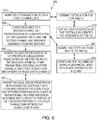
FIG. 1A is a diagram of a banking retail system providing security system monitoring, according to an example embodiment. -
FIG. 1B is an example graph depicting risk management score mapping for an example scenario, according to an example embodiment. -
FIG. 1C is an example diagram depicting real-time original score mapping to an alert-rate based new score, according to an example embodiment. -
FIG. 2 is a diagram of a method for providing security system monitoring, according to an example embodiment. -
FIG. 3 is a diagram of another method for providing security system monitoring, according to an example embodiment. -
FIG. 4 is a diagram of a security system monitoring system, according to an example embodiment. - Reference is first made to
FIG. 1A , which is a diagram of abanking retail system 100 providing security system monitoring, according to an example embodiment. It is to be noted that the components are shown schematically in greatly simplified form, with only those components relevant to understanding of the embodiments being illustrated. - Furthermore, the various components (that are identified in the
FIG. 1 ) are illustrated and the arrangement of the components is presented for purposes of illustration only. It is to be noted that other arrangements with more or less components are possible without departing from the teachings of security system monitoring, presented herein and below. - The
banking retail system 100 includes abank branch 110, an ATM host/switch 120, acore banking system 130, and one or more remote teller/analyst terminals or tablets 140 (each having a remote risk management interface 141). Thebank branch 110 includesATMs 111, acommunication server 112, abranch server 113, and one or more teller/analyst terminals or tablets 114 (each having a risk management interface 115). Thecore banking system 130 includes arisk management system 131, ascore mechanism 132,rules 133, a mapping table 134, and ascore mapper 135. - The
ATMs 111 conduct financial transactions through the ATMs' host/switch 120 and can request assistance (or have transactions monitored) through the branch server 113 (via the communication server 112). - Remote assistance is available to customers at the
ATMs 111 over a network connection between thecommunication server 112 and the remote teller/analyst terminals ortablets 140. - All financial transactions (electronic from the
ATMs 111, remote teller/analyst terminals ortablets 140, or the teller/analyst terminals or tables 140) generate metrics captured and reported to therisk management system 131 of thecore banking system 130 in real time. - The metrics are used to generate scores from a
scoring mechanism 132. These scores are evaluated in real time by rules 133 (having conditions that include the scores). When the conditions within therules 133 evaluated to true, alerts are raised within therisk management system 111 that trigger automated actions, reports, and/or notifications. - For example, consider the following rule 133:
- IF AMOUNT > 1000 AND RISK SCORE > 90 THEN DECLINE TRANSACTION
- The
rule 133 relies on the scoring mechanism's score, such that when thescoring mechanism 132 is updated with a new scoring mechanism, therule 133 may not properly evaluate to true for purposes of declining a transaction that needs to be declined. - When a
rule 133 evaluates to true an alert is raised. The alert rates (total number of alerts per rule divided by the total number of transactions) should remain constant when a new scoring mechanism is deployed for an existingrule 133. That is, if a score of 91 (in the present rule example) produced by apre-updated scoring mechanism 132 generated an alert rate of .05%, then a new score of 150 for updatedscoring mechanism 132 that produces an alert rate of .05% for therule 133 needs to replace the score of 91 (150 needs to replace 91) in theexample rule 133. - The alert rate is often expressed in terms of basis points. A basis point is 1 divided by 10,000. So, an alert rate of .05% is expressed as 5 basis points (.05% = .0005 (.05 divided by 100) times 10,000 = 5).
-
FIG. 1 B is an example graph depicting risk management score mapping for an example scenario, according to an example embodiment. - The graph depicts the relationship between scores (ranging from 0 to 100) and alert rates (expressed as basis points and ranging from 0 to 200). An updated scoring mechanism's new scores and alert rates are depicted in the graph as the black and more linear line in the graph. The original score mechanism's scores and alert rates are depicted in the graph as the greyer more quadratic line in the graph. Comparison between the two lines permits the original scores from the
original scoring mechanism 132 to be mapped to new scores for thenew scoring mechanism 132 to ensure that each original score include a new score mapping to produce the same alert rates (may also be referred herein as alert basis points (BP)) that a givenrule 133 produced before thenew scoring mechanism 132 was introduced into therisk management system 131. Some of these alert rates and new scores are identified as points in the graph (as significant new scores):BP Score 10 92.7 20 86.5 50 70.3 100 50 - The
score mapper 135 is a software module implemented as executable instructions that reside in memory or a non-transitory computer-readable media and those instructions are executed by one or more hardware processors of the core banking server(s) (which also execute thecore banking system 130 and the risk management system 131). - The
score mapper 135 performs the comparison between any new/updatedscoring mechanism 132 and theoriginal scoring mechanism 132 to map original scores embedded inrules 133 to new scores for purposes of ensuring that therules 133 produce stable and constant alert rates within therisk management system 132 during a transaction to the new/updatedscoring mechanism 132 from theoriginal scoring mechanism 132. - Conventionally, when transition to new scores produced from a new/updated scoring mechanism, each
rule 133 within therisk management system 131 needs to be manually updated to change the original scores to the new scores. As stated before, this is a significant manual and time consuming processing on the part of a financial institution. - The
score mapper 135 maintains a mapping table 134 during execution that includes the original scores for a givenrule 133 and each of those score's expected alert rates along with new scores for the original scores that generate the same expected alert rates. For example, a single score entry in the mapping table 134 managed by thescore mapper 135 may appear as follows:Original Score Alert Rate (BP) New Score 21.9 91 53.1 - During operation, the
score mapper 135 executes in real time, utilizing (initially) two tables. The first table maintains a linkage (mapping) between all original scores used in therules 133 along with each original score's expected alert rate. The second table maintains all the new scores (produced by the updated scoring mechanism 132) along with each new score's produced alert rate. Asrules 133 are selected for evaluation within therisk management system 131, therules 133 are updated with the new mapped scores by matching the alert rates for the original scores embedded in the rules from the first table with the corresponding new scores that produce the same alert rates as identified in the second table. After some configurable period of time (or once all rules have been updated), the first table and the mapping table 134 are no longer needed because all the mappings for the original scores to the new scores are present in therules 133. At this point, the second table can be used as a first table along with a new mapping table 134 when thescoring mechanism 132 is changed or updated a second time. So, the process is self-sustaining asnew scoring mechanisms 132 are introduced to therisk management system 131 without the need to manual identify and change all therules 133 each time thescoring mechanism 132 is updated. - This is an entirely automated process performed by the
score mapper 135 that does not require any manual intervention. The alert rates are resolved for the new scores of anew scoring mechanism 132 after a configurable period of time when thenew scoring mechanism 132 is running in a non-production environment in parallel with theoriginal scoring mechanism 132, such that once all original scores embedded in therules 133 have been encountered and the alert rates for thenew scoring mechanism 132 are known, thenew scoring mechanism 132 can be updated to the production environment to replace theoriginal scoring mechanism 132. At this point the mapping table 134 is fully resolved as well to permit thescore mapper 135 to dynamically and in real time update the rules as they are called for evaluation. -
FIG. 1C is an example diagram depicting real-time original score mapping to an alert-rate based new score, according to an example embodiment. - The diagram of the
FIG. 1C shows an original mapping between original scores from therules 133 and their alert rates to a new score for a new/updatedscoring mechanism 132 utilizing the mapping produced from the new/updatedscoring mechanism 132 with its alert rates and corresponding new scores. The new score is produced by matching the original score found in a givenrule 133 to the corresponding alert rate and then searching on that alert rate to find the new score in the alert rates and new score mappings produced from the new/updatedscoring mechanism 132. - In an embodiment, the mapping tables 134 and original mappings for
current scoring mechanisms 132 are maintained for audit, compliance, history, and problem resolution and can be time stamped and/or version stamped. - It is noted that tellers/analysts have access to the
risk management system 131 through therisk management interfaces interfaces risk management system 131. - In an embodiment, the
risk management interfaces risk management system 131. - One now appreciates how new scoring mechanisms 132 (replaced
scoring mechanisms 132 or updated scoring mechanisms 132) can be introduced into a production (live) environment within arisk management system 131 of a financial institution without having to worry aboutrules 133 being manually updated to ensure that the alert rates remain constant and stable during the transition. Moreover, this process is self-sustaining for each iteration of a change to thescoring mechanism 132. This can be achieved through the real-time processing of the score mapper 135 (as described above) within therisk management system 131. This provides a substantial improvement and more timely transition than what has heretofore been available in the industry. - Some of the embodiments discussed above and other embodiments are now discussed with reference to the
FIGS. 2-4 . -
FIG. 2 is a diagram of amethod 200 for providing security system monitoring, according to an example embodiment. The software module(s) that implements themethod 200 is referred to as a "score mapping manager." The score mapping manager is implemented as executable instructions programmed and residing within memory and/or a non-transitory computer-readable (processor-readable) storage medium and executed by one or more processors of a device. The processor(s) of the device that executes the score mapping manager are specifically configured and programmed to process the score mapping manager. The score mapping manager has access to one or more network connections during its processing. The network connections can be wired, wireless, or a combination of wired and wireless. - In an embodiment, the device that executes the score mapping manager is a server.
- In an embodiment, the score mapping manager executes on the device within a processing context of the
risk management system 131 of theFIG. 1 A . - In an embodiment, the score mapping manager is the
score mapper 135 of theFIG. 1A . - At 210, the score mapping manager receives a security score along with an alert rate for the security store. The alert rate is equal to the total number of alerts raised by a security rule associated with the security score divided by a total number of transactions processed by a security system that includes the security rule.
- According to an embodiment, at 211, the score mapping manager receives the security score from a security rule being evaluated in a security system. The security rule is produced by an original scoring mechanism of the security system that evaluates and weights factors to produce a range of security scores that are evaluated within the security rule. The security score is identified as part of a condition defined within the security rule.
- At 220, the score mapping manager identifies a new security score by matching the alert rate with the new security score. That is, and as described in detail above, the alert rate for a new security score produced by a new scoring mechanism (updated or changed original scoring mechanism) of a security system should remain constant when the security rule having the original security score is updated with the new security score. To ensure that this is the case, the distribution of new scores associated with the new scoring mechanism and each new score includes an alert rate. The alert rate for the original security score (identified as just security score in 210) can be used to search this distribution to find a matching alert rate associated with the new scoring mechanism and obtain the new score that is linked to the matching alert rate.
- Thus, in an embodiment, at 221, the score mapping manager obtains the new security score by searching a mapping table having the alert rate and other alert rates produced by an updated scoring mechanism for the security system. An original scoring mechanism produces the original security score (again identified as just security score in 210 above).
- At 230, the score mapping manager maps the original security score to the new security score based on the matching alert rate, which is the same for the original scoring mechanism that produced the original security score and the new or updated original scoring mechanism that produced the new security score.
- According to an embodiment, at 231, the score mapping manager updates an original security rule (which utilizes the original security score as a condition (or portion of a condition) within the original security rule) with the new security score produced by a new or updated version of the original scoring mechanism for the security system.
- In an embodiment, at 240, the score mapping manager maintains an original score mapping table that includes entries for the original security scores and other security scores produced by an original scoring mechanism of a security system. Each entry in the original score mapping table includes a unique security score and a particular alert rate combination. Essentially, the distribution of the original score ranges for the original scoring mechanism and each original score's corresponding alert rate are maintained in the original score mapping table.
- Continuing with the embodiment of 240 and at 241, the score mapping manager maintains a new score mapping table for the new security score and other security scores produced by an updated version of the original scoring mechanism. Each entry in the new score mapping table includes a unique new security score and a particular alert rate combination. So, the distribution of the new score ranges for the updated original scoring mechanism and each new score's corresponding alert rate are maintained in the new score mapping table.
- Continuing with the embodiment of 241 and at 242, the score mapping manager creates a mapping transition table that includes mapping entries. Each mapping entry of the mapping transition table includes a unique original security score, a unique new security score, and a single particular alert rate.
- Still continuing with the embodiment of 242 and at 243, the score mapping manager processes, in real time and within a context of a security system, the original security score mapping table, the new score mapping table, and the mapping transition table to update the security rules of the security system by replacing original security scores identified in the security rules with the corresponding new security scores (ensuring that reach replacement maintains a same alert rate for both the original security score that is being replaced and the new security score that is being updated to the security rule being processed).
- Continuing with the embodiment of 243 and at 244, the score mapping manager logs the original score mapping table, the new score mapping table, and the mapping transition table when each or all of the security rules have been successfully updated within the security system.
- In an embodiment, the security system is any security system that utilizes a scoring mechanism to produce security risk scores where those scores are embedded as conditions (or portions of conditions) within security rules to raise alerts.
-
FIG. 3 is a diagram of anothermethod 300 for providing security system monitoring, according to an example embodiment. The software module(s) that implements themethod 300 is referred to as a "risk management score mapper." The risk management score mapper is implemented as executable instructions programmed and residing within memory and/or a non-transitory computer-readable (processor-readable) storage medium and executed by one or more processors of a device. The processors that execute the risk management score mapper are specifically configured and programmed to process the risk management score mapper. The risk management score mapper has access to one or more network connections during its processing. The network connections can be wired, wireless, or a combination of wired and wireless. - In an embodiment, the device that executes risk management score mapper is a server.
- In an embodiment, the risk management score mapper executes within a processing context of the
risk management system 131 of theFIG. 1A . - In an embodiment, risk management score mapper is the
score mapper 135 of theFIG. 1A . - In an embodiment, the risk management score mapper is the score mapping manager described with respect to the
FIG. 2 . - At 310, the risk management score mapper maintains an original mapping between original security scores and alert rates produced by an original scoring mechanism of a risk management system.
- In an embodiment, at 311, the risk management score mapper maintains the original mapping as an original score-to-alert rate mapping table having the distribution of the original scoring mechanisms range of scores and the corresponding alert rates for each score within the range of scores.
- At 320, the risk management score mapper creates a new mapping between new security scores and the alert rates produced by a new scoring mechanism that is to update the original scoring mechanism within the risk management system.
- According to an embodiment, at 321, the risk management score mapper dynamically builds the new mapping as a new-score-to-alert rate mapping for a configurable period of time as the new scoring mechanism processes within a non-production environment of the risk management system. This ensures that the new mapping is properly established with scores and their corresponding alert rates before the new scoring mechanism is promoted to a live production environment.
- In an embodiment of 321 and at 322, the risk management score mapper promotes the new scoring mechanism to a production environment of the risk management system to replace the original scoring mechanism after the configurable period of time.
- At 330, the risk management score mapper updates the security rules that include the original security scores with the new security scores while maintaining for each security rule update a proper alert rate that corresponds to both that security rule's original security score and a replacement new security score for that security rule by utilizing the original mapping and the new mapping.
- In an embodiment, at 331, the risk management score mapper, dynamically and in real time, performs the update of the security rules within the risk management system as each security rule is accessed for evaluation within the risk management system for a first time after the new scoring mechanism is active within a production environment of the risk management system and has replaced the original scoring mechanism.
- In an embodiment of 331 and at 332, the risk management score mapper retires and logs the original mapping and an archived mapping once each security rule has been updated with that security rule's new security score.
- In an embodiment of 332 and at 333, the risk management score mapper iterates the processing 310-330 by replacing the original mapping with the new mapping and creating a second mapping as the new mapping when a subsequent update is made to the new scoring mechanism within the risk management system. So, in this way, the risk management score mapper is self-sustaining and automated each time the risk management's scoring mechanism is changed.
- According to an embodiment, at 340, the risk management score mapper manages the alert rates as basis points. This was discussed above with reference to the
FIGS. 1A-1C . -
FIG. 4 is a diagram of a securitysystem monitoring system 400, according to an example embodiment. The securitysystem monitoring system 400 includes a variety of hardware components and software components. The software components of the securitysystem monitoring system 400 are programmed and reside within memory and/or a non-transitory computer-readable medium and execute on one or more processors of the securitysystem monitoring system 400. The securitysystem monitoring system 400 communicates over one or more networks, which can be wired, wireless, or a combination of wired and wireless. - In an embodiment, the security
system monitoring system 400 is configured to provide, inter alia, the processing described above with respect to thescore mapper 135 of theFIG. 1A . - In an embodiment, the security
system monitoring system 400 is configured to provide, inter alia, the processing described above with respect to theFIG. 2 . - In an embodiment, the security
system monitoring system 400 is configured to provide, inter alia, the processing described above with respect to theFIG. 3 . - In an embodiment, the security
system monitoring system 400 is configured to provide, inter alia, the processing described above with respect to all or some combination of theFIGS. 1A ,2 , and3 . - The security
system monitoring system 400 includes ahardware processor 401 and ascore mapper 402. - The
hardware processor 401 is specifically configured as a special purpose processor to execute instructions representing thescore mapper 402 from memory and/or a non-transitory computer-readable storage medium. - In an embodiment, the
hardware processor 401 is part of a hardware server. - The
score mapper 402 is adapted and configured to: execute on thehardware processor 401, maintain a linkage between original security scores embedded in security rules of a security system and alert rates, and iii) update the security rules with new security scores when a scoring mechanism of the security system is updated by maintaining a same alert rate for each updated security rule that existed prior to update. - In an embodiment, the security system is a risk management system. In an embodiment of the latter embodiment, the risk management system is part of a core banking system of a financial institution. In an embodiment, the risk management system is the
risk management system 131 of theFIG. 1A . In an embodiment, the core banking system is thecore banking system 130 of theFIG. 1A . - In an embodiment, the security system is any network-based security system that includes a scoring mechanism and rules that rely on scores produced by the scoring mechanism to raise alerts.
- It should be appreciated that where software is described in a particular form (such as a component or module) this is merely to aid understanding and is not intended to limit how software that implements those functions may be architected or structured. For example, modules are illustrated as separate modules, but may be implemented as homogenous code, as individual components, some, but not all of these modules may be combined, or the functions may be implemented in software structured in any other convenient manner.
- Furthermore, although the software modules are illustrated as executing on one piece of hardware, the software may be distributed over multiple processors or in any other convenient manner.
- The above description is illustrative, and not restrictive. Many other embodiments will be apparent to those of skill in the art upon reviewing the above description. The scope of embodiments should therefore be determined with reference to the appended claims, along with the full scope of equivalents to which such claims are entitled.
- In the foregoing description of the embodiments, various features are grouped together in a single embodiment for the purpose of streamlining the disclosure. This method of disclosure is not to be interpreted as reflecting that the claimed embodiments have more features than are expressly recited in each claim. Rather, as the following claims reflect, inventive subject matter lies in less than all features of a single disclosed embodiment.
Claims (12)
- A method (200), comprising:receiving a security score along with an alert rate for the security score (step 210);identifying a new security score by matching the alert rate with the new security score (step 220); andmapping the security score to the new security score (step 230).
- The method of claim 1, wherein receiving further includes receiving the security score from a security rule being evaluated in a security system, wherein the security score produced by an original scoring mechanism (step 211).
- The method of claim 1 or 2, wherein identifying further includes obtaining the new security score by searching a mapping table having the alert rate and other alert rates produced by an updated scoring mechanism of an original scoring mechanism, wherein an original scoring mechanism produced the security score (step 221).
- The method of any preceding claim, wherein mapping further includes updating an original security rule that utilizes the security score as a condition within the original security rule with the new security score (step 231).
- The method of any preceding claim further comprising, maintaining an original score mapping table that includes entries for the security score and other security scores produced by an original scoring mechanism of a security system, each entry includes a unique security score and particular alert rate combination (step 240).
- The method of claim 5 further comprising, maintaining a new score mapping table that includes new entries for the new security score and other new security scores produced by an updated version of the original scoring mechanism, each new entry includes a unique new security score and a particular alert rate combination (step 241).
- The method of claim 6 further comprising, creating a mapping transition table that includes mapping entries, each mapping entry including: a unique security score, a unique new security score, and a particular alert rate (step 242).
- The method of claim 7 further comprising, processing, in real time within a context of a security system, the original score mapping table, the new score mapping table, and the mapping transition table to update security rules of the security system by replacing the security scores identified in the security rules with the new security scores (step 243).
- The method of claim 8, further comprising, logging the original score mapping table, the new score mapping table, and the mapping transition table when each of the security rules have been successfully updated within the security system (step 244).
- A system (400) comprising:a processor (401) configured to execute instructions representing a score mapper from memory or a non-transitory computer-readable storage medium; andthe score mapper (402) configured and adapted to: i) execute on the processor (401), ii) maintain a linkage between original security scores embedded in security rules of a security system and alert rates, and iii) update the security rules with new security scores when a scoring mechanism of the security system is updated by maintaining a same alert rate for each updated security rule that existed prior to update.
- The system of claim 10, wherein the security system is a risk management system.
- The system of claim 11, wherein the risk management system is part of a core banking system (130) of a financial institution.
Applications Claiming Priority (1)
| Application Number | Priority Date | Filing Date | Title |
|---|---|---|---|
| US15/083,691 US10341369B2 (en) | 2016-03-29 | 2016-03-29 | Security system monitoring techniques by mapping received security score with newly identified security score |
Publications (1)
| Publication Number | Publication Date |
|---|---|
| EP3226192A1 true EP3226192A1 (en) | 2017-10-04 |
Family
ID=58387710
Family Applications (1)
| Application Number | Title | Priority Date | Filing Date |
|---|---|---|---|
| EP17161711.1A Withdrawn EP3226192A1 (en) | 2016-03-29 | 2017-03-17 | Security system monitoring techniques |
Country Status (2)
| Country | Link |
|---|---|
| US (1) | US10341369B2 (en) |
| EP (1) | EP3226192A1 (en) |
Families Citing this family (2)
| Publication number | Priority date | Publication date | Assignee | Title |
|---|---|---|---|---|
| US10826942B2 (en) * | 2018-08-10 | 2020-11-03 | Servicenow, Inc. | Creating security incident records using a remote network management platform |
| US20200226606A1 (en) * | 2020-03-26 | 2020-07-16 | Alipay Labs (singapore) Pte. Ltd. | Method and system for maximizing risk-detection coverage with constraint |
Citations (6)
| Publication number | Priority date | Publication date | Assignee | Title |
|---|---|---|---|---|
| US20060282660A1 (en) * | 2005-04-29 | 2006-12-14 | Varghese Thomas E | System and method for fraud monitoring, detection, and tiered user authentication |
| WO2013082190A1 (en) * | 2011-11-28 | 2013-06-06 | Visa International Service Association | Transaction security graduated seasoning and risk shifting apparatuses, methods and systems |
| US20140279512A1 (en) * | 2013-03-14 | 2014-09-18 | American Express Travel Related Services Company, Inc. | Reserve card system and method |
| WO2014160296A1 (en) * | 2013-03-13 | 2014-10-02 | Guardian Analytics, Inc. | Fraud detection and analysis |
| US20150339637A1 (en) * | 2012-11-01 | 2015-11-26 | Double Check Solutions, Llc | Financial measure of good action metric system |
| US20160005045A1 (en) * | 2013-02-25 | 2016-01-07 | Mei, Inc. | System to accept an item of value |
Family Cites Families (20)
| Publication number | Priority date | Publication date | Assignee | Title |
|---|---|---|---|---|
| US9569797B1 (en) * | 2002-05-30 | 2017-02-14 | Consumerinfo.Com, Inc. | Systems and methods of presenting simulated credit score information |
| US9843596B1 (en) * | 2007-11-02 | 2017-12-12 | ThetaRay Ltd. | Anomaly detection in dynamically evolving data and systems |
| US20090172021A1 (en) * | 2007-12-28 | 2009-07-02 | Kane Francis J | Recommendations based on actions performed on multiple remote servers |
| US20090276257A1 (en) * | 2008-05-01 | 2009-11-05 | Bank Of America Corporation | System and Method for Determining and Managing Risk Associated with a Business Relationship Between an Organization and a Third Party Supplier |
| US20100223099A1 (en) * | 2008-12-10 | 2010-09-02 | Eric Johnson | Method and apparatus for a multi-dimensional offer optimization (mdoo) |
| WO2010123586A2 (en) * | 2009-04-24 | 2010-10-28 | Allgress, Inc. | Enterprise information security management software for prediction modeling with interactive graphs |
| US9058607B2 (en) * | 2010-12-16 | 2015-06-16 | Verizon Patent And Licensing Inc. | Using network security information to detection transaction fraud |
| WO2013102153A1 (en) * | 2011-12-30 | 2013-07-04 | Rev2 Networks, Inc. | Automated network disturbance prediction system method & apparatus |
| US20130268632A1 (en) * | 2012-04-05 | 2013-10-10 | Canon Kabushiki Kaisha | Server assisted authenticated device |
| US9323935B2 (en) * | 2012-12-18 | 2016-04-26 | Mcafee, Inc. | User device security profile |
| CN104239338A (en) * | 2013-06-19 | 2014-12-24 | 阿里巴巴集团控股有限公司 | Information recommendation method and information recommendation device |
| US9601000B1 (en) * | 2013-09-27 | 2017-03-21 | EMC IP Holding Company LLC | Data-driven alert prioritization |
| US20150095212A1 (en) * | 2013-09-27 | 2015-04-02 | REmeter LLC | Financial data ranking system |
| US9361463B2 (en) * | 2013-12-11 | 2016-06-07 | Ut-Batelle, Llc | Detection of anomalous events |
| US9798883B1 (en) * | 2014-10-06 | 2017-10-24 | Exabeam, Inc. | System, method, and computer program product for detecting and assessing security risks in a network |
| TW201617922A (en) * | 2014-11-14 | 2016-05-16 | 廣達電腦股份有限公司 | Data accessing system and method for data storing method and data reading |
| US9525697B2 (en) * | 2015-04-02 | 2016-12-20 | Varmour Networks, Inc. | Delivering security functions to distributed networks |
| US10038697B2 (en) * | 2015-05-19 | 2018-07-31 | Cisco Technology, Inc. | Determining similarity between security rules based on weighted comparisons of their rule parameters |
| US9699205B2 (en) * | 2015-08-31 | 2017-07-04 | Splunk Inc. | Network security system |
| US9912686B2 (en) * | 2016-02-18 | 2018-03-06 | Tracker Networks Inc. | Methods and systems for enhancing data security in a computer network |
-
2016
- 2016-03-29 US US15/083,691 patent/US10341369B2/en active Active
-
2017
- 2017-03-17 EP EP17161711.1A patent/EP3226192A1/en not_active Withdrawn
Patent Citations (6)
| Publication number | Priority date | Publication date | Assignee | Title |
|---|---|---|---|---|
| US20060282660A1 (en) * | 2005-04-29 | 2006-12-14 | Varghese Thomas E | System and method for fraud monitoring, detection, and tiered user authentication |
| WO2013082190A1 (en) * | 2011-11-28 | 2013-06-06 | Visa International Service Association | Transaction security graduated seasoning and risk shifting apparatuses, methods and systems |
| US20150339637A1 (en) * | 2012-11-01 | 2015-11-26 | Double Check Solutions, Llc | Financial measure of good action metric system |
| US20160005045A1 (en) * | 2013-02-25 | 2016-01-07 | Mei, Inc. | System to accept an item of value |
| WO2014160296A1 (en) * | 2013-03-13 | 2014-10-02 | Guardian Analytics, Inc. | Fraud detection and analysis |
| US20140279512A1 (en) * | 2013-03-14 | 2014-09-18 | American Express Travel Related Services Company, Inc. | Reserve card system and method |
Also Published As
| Publication number | Publication date |
|---|---|
| US10341369B2 (en) | 2019-07-02 |
| US20170289182A1 (en) | 2017-10-05 |
Similar Documents
| Publication | Publication Date | Title |
|---|---|---|
| US10115108B1 (en) | Rendering transaction data to identify fraud detection rule strength | |
| US20200134629A1 (en) | False positive reduction in abnormality detection system models | |
| EP2555153A1 (en) | Financial activity monitoring system | |
| CN111915316A (en) | A method, device, computer equipment and storage medium for monitoring suspicious transactions | |
| US12619995B2 (en) | Detecting and preventing duplicate transactions on a transaction exchange platform | |
| US12056713B2 (en) | Transaction exchange platform with a validation microservice for validating transactions before being processed | |
| US12118566B2 (en) | Removing duplicate transactions from a transaction exchange platform | |
| US12165156B2 (en) | Transaction exchange platform for handling returned transactions | |
| US8688572B2 (en) | Financial account related trigger feature for risk mitigation | |
| US8768803B2 (en) | System and method for identifying suspicious financial related activity | |
| US12079182B2 (en) | Systems and methods for data verification | |
| US10341369B2 (en) | Security system monitoring techniques by mapping received security score with newly identified security score | |
| KR101926270B1 (en) | Analysis apparatus for foreign exchange abnormal transaction and method thereof | |
| US11436605B2 (en) | Sandbox based testing and updating of money laundering detection platform | |
| CN117011026A (en) | Associated risk identification method, device, equipment, storage medium and program product | |
| CN117557373A (en) | Method, device, equipment, storage medium and program product for processing business of the same industry | |
| CN115564593A (en) | Financing early warning method, equipment and storage medium for crops | |
| US20140279319A1 (en) | Billing account reject solution | |
| RU2823915C1 (en) | Method and device for processing events in anti-fraud system | |
| CN115619411B (en) | A method, apparatus, device, and storage medium for monitoring suspicious transactions. | |
| US20260127616A1 (en) | Neuro-Symbolic Intelligence Configured for Transaction Dispute Resolution | |
| US20240362703A1 (en) | System and method for assessing risk level of transactions based on routing number | |
| US20260127605A1 (en) | Intelligence Model for Analyzing and Determining Transaction Dispute Propensity | |
| CN115526697A (en) | Bond issuer default risk identification method, device, equipment, medium and product | |
| WO2025110894A1 (en) | Method and device for event processing in an anti-fraud system |
Legal Events
| Date | Code | Title | Description |
|---|---|---|---|
| PUAI | Public reference made under article 153(3) epc to a published international application that has entered the european phase |
Free format text: ORIGINAL CODE: 0009012 |
|
| AK | Designated contracting states |
Kind code of ref document: A1 Designated state(s): AL AT BE BG CH CY CZ DE DK EE ES FI FR GB GR HR HU IE IS IT LI LT LU LV MC MK MT NL NO PL PT RO RS SE SI SK SM TR |
|
| AX | Request for extension of the european patent |
Extension state: BA ME |
|
| 17P | Request for examination filed |
Effective date: 20180404 |
|
| RAP1 | Party data changed (applicant data changed or rights of an application transferred) |
Owner name: NCR CORPORATION |
|
| RBV | Designated contracting states (corrected) |
Designated state(s): AL AT BE BG CH CY CZ DE DK EE ES FI FR GB GR HR HU IE IS IT LI LT LU LV MC MK MT NL NO PL PT RO RS SE SI SK SM TR |
|
| 17Q | First examination report despatched |
Effective date: 20180515 |
|
| STAA | Information on the status of an ep patent application or granted ep patent |
Free format text: STATUS: THE APPLICATION HAS BEEN WITHDRAWN |
|
| 18W | Application withdrawn |
Effective date: 20190517 |