EP3223629B1 - Antimicrobial copper compositions and their use in treatment of foodstuffs and surfaces - Google Patents
Antimicrobial copper compositions and their use in treatment of foodstuffs and surfaces Download PDFInfo
- Publication number
- EP3223629B1 EP3223629B1 EP15816571.2A EP15816571A EP3223629B1 EP 3223629 B1 EP3223629 B1 EP 3223629B1 EP 15816571 A EP15816571 A EP 15816571A EP 3223629 B1 EP3223629 B1 EP 3223629B1
- Authority
- EP
- European Patent Office
- Prior art keywords
- composition
- acid
- seconds
- optionally
- combination
- Prior art date
- Legal status (The legal status is an assumption and is not a legal conclusion. Google has not performed a legal analysis and makes no representation as to the accuracy of the status listed.)
- Active
Links
Images

Classifications
-
- A—HUMAN NECESSITIES
- A01—AGRICULTURE; FORESTRY; ANIMAL HUSBANDRY; HUNTING; TRAPPING; FISHING
- A01N—PRESERVATION OF BODIES OF HUMANS OR ANIMALS OR PLANTS OR PARTS THEREOF; BIOCIDES, e.g. AS DISINFECTANTS, AS PESTICIDES OR AS HERBICIDES; PEST REPELLANTS OR ATTRACTANTS; PLANT GROWTH REGULATORS
- A01N59/00—Biocides, pest repellants or attractants, or plant growth regulators containing elements or inorganic compounds
- A01N59/16—Heavy metals; Compounds thereof
- A01N59/20—Copper
-
- A—HUMAN NECESSITIES
- A23—FOODS OR FOODSTUFFS; TREATMENT THEREOF, NOT COVERED BY OTHER CLASSES
- A23B—PRESERVATION OF FOODS, FOODSTUFFS OR NON-ALCOHOLIC BEVERAGES; CHEMICAL RIPENING OF FRUIT OR VEGETABLES
- A23B2/00—Preservation of foods or foodstuffs, in general
- A23B2/70—Preservation of foods or foodstuffs, in general by treatment with chemicals
- A23B2/725—Preservation of foods or foodstuffs, in general by treatment with chemicals in the form of liquids or solids
- A23B2/729—Organic compounds; Microorganisms; Enzymes
- A23B2/742—Organic compounds containing oxygen
- A23B2/754—Organic compounds containing oxygen containing carboxyl groups
-
- A—HUMAN NECESSITIES
- A23—FOODS OR FOODSTUFFS; TREATMENT THEREOF, NOT COVERED BY OTHER CLASSES
- A23B—PRESERVATION OF FOODS, FOODSTUFFS OR NON-ALCOHOLIC BEVERAGES; CHEMICAL RIPENING OF FRUIT OR VEGETABLES
- A23B2/00—Preservation of foods or foodstuffs, in general
- A23B2/70—Preservation of foods or foodstuffs, in general by treatment with chemicals
- A23B2/725—Preservation of foods or foodstuffs, in general by treatment with chemicals in the form of liquids or solids
- A23B2/788—Inorganic compounds
-
- A—HUMAN NECESSITIES
- A23—FOODS OR FOODSTUFFS; TREATMENT THEREOF, NOT COVERED BY OTHER CLASSES
- A23B—PRESERVATION OF FOODS, FOODSTUFFS OR NON-ALCOHOLIC BEVERAGES; CHEMICAL RIPENING OF FRUIT OR VEGETABLES
- A23B4/00—Preservation of meat, sausages, fish or fish products
- A23B4/14—Preserving with chemicals not covered by groups A23B4/02 or A23B4/12
- A23B4/18—Preserving with chemicals not covered by groups A23B4/02 or A23B4/12 in the form of liquids or solids
- A23B4/20—Organic compounds; Microorganisms; Enzymes
-
- A—HUMAN NECESSITIES
- A23—FOODS OR FOODSTUFFS; TREATMENT THEREOF, NOT COVERED BY OTHER CLASSES
- A23B—PRESERVATION OF FOODS, FOODSTUFFS OR NON-ALCOHOLIC BEVERAGES; CHEMICAL RIPENING OF FRUIT OR VEGETABLES
- A23B5/00—Preservation of eggs or egg products
- A23B5/08—Preserving with chemicals
- A23B5/12—Preserving with chemicals in the form of liquids or solids
- A23B5/14—Organic compounds; Microorganisms; Enzymes
-
- A—HUMAN NECESSITIES
- A23—FOODS OR FOODSTUFFS; TREATMENT THEREOF, NOT COVERED BY OTHER CLASSES
- A23B—PRESERVATION OF FOODS, FOODSTUFFS OR NON-ALCOHOLIC BEVERAGES; CHEMICAL RIPENING OF FRUIT OR VEGETABLES
- A23B7/00—Preservation of fruit or vegetables; Chemical ripening of fruit or vegetables
- A23B7/14—Preserving or ripening with chemicals not covered by group A23B7/08 or A23B7/10
- A23B7/153—Preserving or ripening with chemicals not covered by group A23B7/08 or A23B7/10 in the form of liquids or solids
- A23B7/154—Organic compounds; Microorganisms; Enzymes
-
- A—HUMAN NECESSITIES
- A23—FOODS OR FOODSTUFFS; TREATMENT THEREOF, NOT COVERED BY OTHER CLASSES
- A23B—PRESERVATION OF FOODS, FOODSTUFFS OR NON-ALCOHOLIC BEVERAGES; CHEMICAL RIPENING OF FRUIT OR VEGETABLES
- A23B9/00—Preservation of edible seeds, e.g. cereals
- A23B9/16—Preserving with chemicals
- A23B9/24—Preserving with chemicals in the form of liquids or solids
- A23B9/26—Organic compounds; Microorganisms; Enzymes
-
- A—HUMAN NECESSITIES
- A61—MEDICAL OR VETERINARY SCIENCE; HYGIENE
- A61L—METHODS OR APPARATUS FOR STERILISING MATERIALS OR OBJECTS IN GENERAL; DISINFECTION, STERILISATION OR DEODORISATION OF AIR; CHEMICAL ASPECTS OF BANDAGES, DRESSINGS, ABSORBENT PADS OR SURGICAL ARTICLES; MATERIALS FOR BANDAGES, DRESSINGS, ABSORBENT PADS OR SURGICAL ARTICLES
- A61L2/00—Disinfection or sterilisation of materials or objects, in general; Accessories therefor
- A61L2/16—Disinfection or sterilisation of materials or objects, in general; Accessories therefor using chemical substances
- A61L2/18—Liquid substances
-
- A—HUMAN NECESSITIES
- A23—FOODS OR FOODSTUFFS; TREATMENT THEREOF, NOT COVERED BY OTHER CLASSES
- A23V—INDEXING SCHEME RELATING TO FOODS, FOODSTUFFS OR NON-ALCOHOLIC BEVERAGES AND LACTIC OR PROPIONIC ACID BACTERIA USED IN FOODSTUFFS OR FOOD PREPARATION
- A23V2002/00—Food compositions, function of food ingredients or processes for food or foodstuffs
-
- Y—GENERAL TAGGING OF NEW TECHNOLOGICAL DEVELOPMENTS; GENERAL TAGGING OF CROSS-SECTIONAL TECHNOLOGIES SPANNING OVER SEVERAL SECTIONS OF THE IPC; TECHNICAL SUBJECTS COVERED BY FORMER USPC CROSS-REFERENCE ART COLLECTIONS [XRACs] AND DIGESTS
- Y02—TECHNOLOGIES OR APPLICATIONS FOR MITIGATION OR ADAPTATION AGAINST CLIMATE CHANGE
- Y02A—TECHNOLOGIES FOR ADAPTATION TO CLIMATE CHANGE
- Y02A40/00—Adaptation technologies in agriculture, forestry, livestock or agroalimentary production
- Y02A40/90—Adaptation technologies in agriculture, forestry, livestock or agroalimentary production in food processing or handling, e.g. food conservation
Definitions
- the invention is in the field of antimicrobial treatments of foodstuffs and hard surfaces using compositions comprising a mineral acid, optionally in a combination with an organic acid; a copper(II) salt; and a mineral acid buffered by a conjugate salt, and alkyl polyglycoside.
- Antimicrobial compositions used in the food industry must not only be capable of reducing the number of surface pathogens, they must be safe for human consumption. In addition, antimicrobial compositions should not detrimentally affect the quality of the foodstuff or surface being treated. Antimicrobial compositions for use on foodstuffs and surfaces should also be easy to apply and be relatively inexpensive to ensure they are economical for the intended output.
- US2007/269563 discloses compositions, methods, and systems for reducing microbial contamination in meat processing. It discloses a disinfection composition comprising an acid, a buffer, and optionally an antimicrobial metal, applying it to a carcass during at least one processing step of sacrificing, scalding, feather/hair/hide removal, eviscerating, and washing.
- US2006/189483 discloses a metal containing composition including (i) at least one water soluble metal compound which forms metal ions when dissolved in water, (ii) at least one metal ion modifier, (iii) at least one acid, and (iv) water.
- the composition has a pH of less than 6 and an electrolytic potential in excess of 10 millivolts.
- the compositions are described as having uses in the prevention and/or treatment of pathogenic disease or disorder, as foodstuff supplements, in the treatment by disinfection of meat and other foodstuffs, in the coating, sealing and plating of metals, and in the treatment of water and sewage.
- US2014/322352 discloses an antimicrobial solution for disinfecting or removing micro-organisms from a surface used by animals or for use as an animal shampoo is described.
- the solution is active against bacteria, fungi, and viruses, including enveloped viruses, and skin disorders related to insect infestation.
- US2008/292673 discloses bioactive agrichemical concentrates and compositions having improved bioactivity comprising combinations of acid solutions and conventional bioactive agrichemical actives or formulations.
- US2012/060258 discloses a composition for coating a polypropylene-based fabric or polypropylene-based material for use in decreasing the transmission of human pathogens. It also discloses a device such as a protective face mask made from a polypropylene-based fabric or polypropylene-based material coated with the composition.
- US2011/206790 discloses environmentally-friendly, natural essential oil based foamable compositions that can be used as antimicrobial substances.
- the foamable compositions contain thyme oil as the sole or principal antimicrobial agent.
- the foamable compositions can be topically applied and may be used as a preventative and/or a therapeutic.
- US5,997,911 discloses a composition and method for reducing the incidence of Poult Enteritis Mortality Syndrome in young turkeys, flushing in mature turkeys, and scours in swine.
- US5,997,911 describes a composition comprising in combination, a simple copper (II) salt, a hydroxycarboxylic acid, and a buffering agent solubilized within the drinking water of turkeys and/or swine in an antidiarrheal effective dosage as preventative maintenance in avoiding the diarrheal conditions associated with PEMS, flushing, and scours.
- Rabin Gyawali et al. , Emir. J. Food Agric.; NUTRITION AND FOOD SCIENCE, vol. 24, no. 1, (2012-01-18 ) relates to the synergistic effect of copper and lactic acid against Salmonella and Escherichia coli 0157:H7.
- the present invention provides a composition comprising:
- the present invention provides a method of reducing the number of pathogens on a foodstuff surface comprising applying the composition described herein to the surface, wherein the surface is optionally a hard surface, a meat product, optionally a poultry product, an egg, a beef product, a pork product, or a seafood product, a produce product, optionally a fruit, a vegetable, an algae, a seed, a grain, a sprout, a legume, soy, or a nut, or a dairy product.
- the present invention provides a method of reducing the number of pathogens in a volume of a liquid food product comprising adding the composition described herein to the volume of the liquid food product.
- Solid food products refers to solid and liquid food products that are edible by humans or domesticated animals.
- Solid food products include but are not limited to meat products such as poultry products (e.g., chicken, duck, and turkey products), eggs, beef products, pork products, and seafood products (e.g., fish, shellfish, crustaceans, mollusks, echinoderms, seaweed).
- Solid food products also include produce products, for example, fruits, vegetables, algae, seeds, grains, sprouts, legumes, soy, and nuts.
- Solid food products also include dairy products such as hard, soft, and semi-soft cheeses.
- Liquid food products can include beverages (e.g., juices, soda), liquid dairy products (e.g., milk and cream), fermented beverages (e.g., beer and wine), and liquid feed ingredients and liquid feeds used as animal feed (e.g. fermented liquid feeds fed to farm livestock and poultry).
- beverages e.g., juices, soda
- liquid dairy products e.g., milk and cream
- fermented beverages e.g., beer and wine
- liquid feed ingredients and liquid feeds used as animal feed e.g. fermented liquid feeds fed to farm livestock and poultry.
- hard surfaces refers to surfaces including but not limited to wood (hardwood and engineered), travertine, MDF (medium density fiberboard), plywood, ceramic, concrete, porcelain, linoleum, laminates, granite, marble, quartz, soapstone, stainless steel, copper, metal alloys, iron, plastic, brick, other masonry, sheetrock, plaster, glass, card stock, corrugated fiberboard, paperboard, rubber, latex, plastic, composite materials that may include two or more of the above materials, and the like.
- wood hardwood and engineered
- MDF medium density fiberboard
- plywood ceramic, concrete, porcelain, linoleum, laminates, granite, marble, quartz, soapstone, stainless steel, copper, metal alloys, iron, plastic, brick, other masonry, sheetrock, plaster, glass, card stock, corrugated fiberboard, paperboard, rubber, latex, plastic, composite materials that may include two or more of the above materials, and the like.
- pathogens include bacteria, viruses, and parasites.
- bacteria that can be reduced using the compositions of the disclosure include gram positive bacteria and gram negative bacteria, for example, Salmonella enterica, Listeria monocytogenes, Escherichia coli, Clostridium botulinum, Clostridium difficile, Campylobacter, Bacillus cereus, Vibrio parahaemolyticus, Vibrio cholerae, Vibrio vulnificus, Staphylococcus aureus, Yersinia enterocolitica, shigella, and combinations thereof.
- Salmonella enterica Listeria monocytogenes
- Escherichia coli Clostridium botulinum
- Clostridium difficile Clostridium difficile
- Campylobacter Bacillus cereus
- Vibrio parahaemolyticus Vibrio cholerae
- Vibrio vulnificus Staphylococcus aureus
- Yersinia enterocolitica shig
- Salmonella enterica serovars that can be reduced using the compositions of the disclosure include, for example, Salmonella Enteriditis, Salmonella Typhimurium, Salmonella Poona, Salmonella Heidelberg, and Salmonella Anatum.
- viruses that can be reduced using the compositions of the disclosure include enterovirus, norovirus, influenza, rotavirus, or combinations thereof.
- parasites include Cryptosporidium, Toxoplasma gondii, Giardia duodenalis, Cyclospora cayetanensis, Trichinella spiralis, Taenia saginata, Taenia solium, or combinations thereof.
- compositions comprising a mineral acid, optionally in a combination with an organic acid; a copper(II) salt; and a buffering salt, and alkyl polyglycoside.
- these compositions exclude chlorine and sources of chlorine.
- preferred compositions of the invention exclude hypochlorite salts such as sodium hypochlorite and calcium hypochlorite.
- Preferred mineral acids are known in the art. Mineral acids useful in the inventive compositions and methods will have a pKa of less than or equal to 1. Preferred mineral acids include, for example, sulfuric acid, phosphoric acid, hydrochloric acid, nitric acid, boric acid, hydrobromic acid, perchloric acid, hydroiodic acid, and combinations thereof.
- the mineral acid is sulfuric acid.
- the mineral acid is phosphoric acid.
- the mineral acid is hydrochloric acid.
- the mineral acid can be present in any amount so as to achieve a predetermined pH, as described herein. In some embodiments, the mineral acid is present in a concentration of between about 0.1 and about 3 wt.%, preferably about 0.1 and about 1 wt.%, based on the weight of the composition.
- Organic acids are known in the art.
- Organic acids useful in the inventive compositions and methods will have a pKa of between 1 and 7.
- Organic acids include citric acid, ascorbic acid, lactic acid, acetic acid, peracetic acid, formic acid, propionic acid, butyric acid, valeric acid, caproic acid, oxalic acid, malic acid, benzoic acid, carbonic acid, phenol, uric acid, taurine, p -toluenesulfonic acid, triflic acid, aminomethylphosphonic acid, and combinations thereof.
- the organic acid is citric acid.
- the organic acid is ascorbic acid.
- the organic acid is lactic acid.
- the organic acid is acetic acid.
- the organic acid is peracetic acid.
- compositions of the invention include a mineral acid or combination of mineral acids.
- the compositions of the invention can include a mixture of mineral acid(s) and organic acid(s).
- the total amount of acid is sufficient to achieve a predetermined pH, as described herein.
- the combination of acids is at a concentration of between about 0.1 and about 3 wt.%, between about 0.1 and about 2 wt.%, preferably about 0.1 and about 1 wt.%, based on the weight of the composition.
- Preferred copper (II) salts include copper (II) sulfate, copper (II) chloride, copper (II) bromide, and the like.
- a preferred copper (II) salt is copper (II) sulfate, with copper(II)sulfate pentahydrate being particularly preferred.
- the copper (II) salt is copper (II) chloride.
- the copper (II) salt is copper (II) bromide. Combinations of copper (II) salts are also within the scope of the invention.
- the copper salt concentration used in the compositions of the invention can be determined by one skilled in the art and will be in an amount effective to achieve pathogen reduction on the particular surface being treated.
- the copper salt concentration used in the compositions of the invention is 35, 36, 37, 38, 39, 40, 41, 42, 43, 44, 45, 46, 47, 48, 49, 50, 51, 52, 53, 54, 55, 56, 57, 58, 59, 60, 61, 62, 63, 64, 65, 66, 67, 68, 69, 70, 71, 72, 73, 74, 75, 76, 77, 78, 79, 80, 81, 82, 83, 84, 85, 86, 87, 88, 89, 90, 91, 92, 93, 94, 95, 96, 97, 98, 99, or 100 ppm of the copper (II) salt
- Preferred buffering salts for use in the invention include ammonium sulfate, sodium sulfate, sodium chloride, calcium sulfate, and combinations thereof.
- Sodium sulfate, ammonium sulfate, and calcium sulfate are particularly preferred buffering salts.
- the buffering salt is ammonium sulfate.
- the buffering salt is sodium sulfate.
- the buffering salt is sodium chloride.
- the buffering salt is calcium sulfate.
- Alkyl polyglycosides are used at at concentrations that are preferably Generally Recognized as Safe by the U.S. Food and Drug Administration.
- a "detergent” refers to a surfactant or a mixture of surfactants.
- the detergent consist of alkyl polyglycoside.
- Particular preferred alkyl polyglycosides include alkyl polyglucoside, decyl polyglucose, lauryl polyglucose, and combinations thereof.
- the buffering salt and/or alkyl polyglycoside are present in the compositions each at concentrations of between 0.01 wt.% and 0.34 wt.%, based on the weight of the composition.
- Preferred amounts of buffering salts and/or alkyl polyglycoside maintain the pH of aqueous compositions of the invention within preselected ranges.
- Preferred amounts of buffering salts and/or alkyl polyglycoside can also control surface tension changes to allow for improved reduction of pathogens on a surface.
- compositions of the invention include a buffering salt and/or alkyl polyglycoside each at a concentration of about 0.01, 0.02, 0.03, 0.04, 0.05, 0.06, 0.07, 0.08, 0.09, 0.1, 0.11, 0.12, 0.13, 0.14, 0.15, 0.16, 0.17, 0.18, 0.19, 0.20, 0.21, 0.22, 0.23, 0.24, 0.25, 0.26, 0.27, 0.28, 0.29, 0.30, 0.31, 0.32, 0.33, 0.34, wt.%, based on the weight of the composition.
- Preferred amounts of conjugate salts and/or alkyl polyglycoside can provide for reduced organoleptic damage at low pH levels and can provide for reduced causticity, reduced toxicity, and safer handling for human workers, which have not been observed with prior compositions used in the art.
- compositions of the invention consist essentially of the mineral acid, the copper (II) salt, and the buffering salt and alkyl polyglycoside, as described herein. That is, the invention envisions compositions that include the mineral acid, the copper (II) salt, and the buffering salt and alkyl polyglycoside as described herein, and only those additional materials, for example, water, that do not materially affect the basic and novel characteristics of the inventions disclosed herein. Preferably, these compositions exclude chlorine and sources of chlorine such as hypochlorite salts.
- compositions comprising additionally an organic acid, for example ascorbic acid, will possess antioxidative properties.
- the compositions can further comprise a non-organic acid antioxidant.
- Antioxidants that are Generally Recognized As Safe by the FDA are known in the art and include, for example, plant extracts.
- the antioxidant can be included in a concentration of between about 0.01 wt.% and about 1.0 wt.%, between about 0.01 wt.% and about 0.2 wt.%, between about 0.01 wt.% and about 0.15 wt.%, between about 0.01 wt.% and about 0.10 wt.%, or between about 0.01 wt.% and about 0.05 wt.%.
- preferred compositions of the invention are non-oxidizing and may exclude, or contain in minute amounts, ozone, peracetic acid, chlorine dioxide, and hypochlorite salts.
- the non-oxidizing compositions of the invention are advantageous for water re-circulation applications and can result in significant water savings.
- the compositions of the invention are aqueous compositions.
- concentration of the mineral and optionally the organic acid, the copper salt, and the buffering salt and/or alkyl polyglycoside in the aqueous solutions can vary, based on the particular application in which the aqueous solution is being used.
- the ratio of water to the other composition components is about 1:1. In other embodiments, the ratio of water to the other composition components is between 1:1 and 2:1. In other embodiments, the ratio of water to the other composition components is between about 1:1 and about 20:1 or between about 1:1 and about 500:1. In some embodiments, the ratio of water to the other composition components is about 20:1 to about 500:1.
- concentrations useful for final applications in aqueous solutions may be lower than the concentrations in an original solid form, which can be diluted about 500-fold, about 450-fold, about 400-fold, about 350-fold, about 300-fold, about 250-fold, about 200-fold, about 150-fold, about 100-fold, about 90-fold, about 80-fold, about 70-fold, about 60-fold, about 50-fold, about 40-fold, about 30-fold, about 20-fold, about 10-fold, about 5-fold, about 4-fold, about 3-fold, or even about 2-fold.
- Appropriate dilution amounts can be selected based upon the concentrate strength and the expected pathogenic loading of the incoming treated article.
- the pH of the aqueous solutions of the invention is about 1, 1.1, 1.2, 1.3, 1.4, 1.5, 1.6., 1.7, 1.8, 1.9, 2.0, 2.1, 2.2, 2.3, 2.4, 2.5, 2.6, 2.7, 2.8, 2.9, 3, 3.1, 3.2, 3.3, 3.4, 3.5, 4
- the pH of the aqueous solutions is tested at about 5 °C or about 22 °C, depending on the selected application, using methods known in the art.
- the pH of the aqueous solutions of the invention can be adjusted by adjusting the amount of the acid in the solution.
- the compositions can alternatively be in the form of a solid and can be pellets, granules, powders, pods, other dissolvable/water-soluble films or packaging, or tablets. These compositions comprise 10% or less, by weight, of water/moisture.
- the compositions can be encased in a water-soluble film.
- Water-soluble films can be formed from, for example, a polyvinyl alcohol film, an aliphatic polyether film, or a polyethylene glycol film. Such films are known in the art. Suitable films will be completely soluble or dispersible in water at temperatures above about 5 °C. The films will have a thickness of about 0.5 mils to about 5 mils, preferably from about 1 to 3 mils.
- the water-soluble films can be sealed using, for example, heat or ultrasonic sealing methods known in the art.
- the present invention provides methods of reducing the number of pathogens on a surface comprising applying any of the compositions of the invention to a surface.
- the surface can be a foodstuff surface or a hard surface.
- the compositions used in the described methods are aqueous solutions.
- the surfaces can be treated via any means known in the art.
- any composition of the invention can be applied to the surfaces of the foodstuffs via sprinkling, spraying, rinsing, soaking, immersing, washing, or the like. Dip treatments can be used, and include full submersion, whether through mechanical or manual addition, in single or multiple tank designs.
- Spray applications can be used, and can consist of single or multiple spray nozzles or drip applicators. In some embodiments, spray application can utilize ultrasonic nozzling or can be combined with mechanical abrasion to improve surface area contact.
- the aqueous solutions used in the described methods can be at any commercially viable temperature that will not harm the surface to which the aqueous solution will be applied, for example, between about 0 °C (32 °F) and 100 °C (212 °F) or between about 0 °C (32 °F) and 57 °C (135 °F).
- the solutions can be cold, for example, about 0 (32 °F) or about 3 °C (about 38 °F), or warm, for example, about 57 °C (135) °F.
- these solutions can be about 0 (32 °F), 1, 2, 3, 4, 5, 6, 7, 8, 9, 10, 11, 12, 13, 14, 15, 16, 17, 18, 19, 20, 21, 22, 23, 24, 25, 26, 27, 28, 29, 30, 31, 32, 33, 34, 35, 36, 37, 38, 39, 40, 41, 42, 43, 44, 45, 46, 47, 48, 49, 50, 51, 52, 53, 54, 55, 56, 57, 58, 59, 60 °C (140 °F).
- the aqueous solutions used in the described methods can be at temperatures between about 60 (140 °F) and about 100°C (212 °F). Higher temperatures can be preferred for use on hard surfaces.
- applying comprises submerging the surface for a time sufficient to ensure adequate coverage and/or penetration of the described compositions to and/or in the surface.
- the submersion times can be up to, for example, 5 minutes, up to about 4 minutes, up to about 3 minutes, up to about 2 minutes, or up to about 1 minute.
- Submersion times of less than 1 minute are also envisioned and may be as short as two seconds at certain lower pH levels.
- Preferred submersion times are between about 2 seconds and about 180 seconds, between about 2 seconds and about 120 seconds, between about 2 seconds and about 90 seconds, between about 2 seconds and about 60 seconds, between about 2 seconds and about 45 seconds, or between about 2 seconds and about 30 seconds.
- compositions of the invention are effective in reducing the number of pathogens, i.e., microbes, viruses, or parasites on a surface. That is, treating surfaces with compositions of the invention reduces the growth and/or propagation of bacteria, viruses, and/or parasites (for example, by killing or materially mitigating the growth of such bacteria, viruses, and/or parasites) on the surface, as compared to a surface that has not been treated with a composition of the invention.
- the compositions of the invention are effective in reducing the number of pathogens by about 10%, as compared to a surface that has not been treated with a composition of the invention.
- the compositions of the invention are about 20%, 30%, 40%, 50%, 60%, 70%, 80%, 90%, 100%, 110%, 120%, 130%, 140%, 150%, 160%, 170%, 180%, 190%, 200% , 300%, 400%, 500%, or greater, more effective in reducing pathogens on a surface, when compared to a surface that has not been treated with a composition of the invention.
- the compositions of the invention are effective in reducing the number of pathogens by about 10%, about 20%, about 30%, about 40%, about 50%, about 60%, about 70%, about 80%, or about 90% as compared to a surface that has been treated with standard chlorine and citric acid treatment.
- Turbid conditions increase the risk of pathogens producing foodborne illness.
- the compositions of the invention are effective in reducing the number of pathogens, even in turbid conditions, for example at food processing facilities.
- Example 1 General Bacteria Assay.
- Vivione RAPID-B instrument start-up was performed using manufacturer's instructions (Vivione Biosciences, LLC, Pine Bluff, AR). Performance Verification was performed per manufacturer's instructions to verify performance and identify any potential problems.
- the Rapid-B system was then prepped for running General Bacteria Total Plate Count Assays. Treatment solutions were then prepared based on the protocol being tested. Solutions were inoculated 99:1; meaning 99 mL of treatment solution was combined with 1 mL of bacterial bird rinse, creating a 10 -2 dilution. Serial dilutions (10 -3 dilution was commonly used) were performed using sterile buffered peptone water to amplify the dilution factor.
- Samples were prepared by combining 570 ⁇ l of sterile buffered peptone water, 330 ⁇ l of TPC (Total Plate Count) Reagent, and 100 ⁇ l from the dilution tube being tested into a reaction tube. This process dilutes the sample an additional 10 -1 (Therefore, 10 -4 was the general dilution tested).
- the sample reaction tube was left for 15 minutes, being periodically vortexed.
- the General Bacteria Protocol on the Vivione machine was opened and operational settings confirmed as instructed in the Vivione Biosciences manual. After 15 minutes, the reaction tube was placed on the sample arm and moved into the run position to begin analysis. Once the sample was running, the arm was returned to the flush position to allow for flushing upon completion.
- wash water was formulated with antimicrobial compositions: referred to as comparative Composition A or inventive Composition PS+, and used in a dip tank for treatment of post-harvest leafy green vegetables. Wash water treated with standard chlorine and citric acid treatment was also tested for comparison. The wash water samples were each used in dip tanks at temperatures of approximately 3 °C (38 °F) and were used to treat leafy green vegetables for thirty (30) seconds in turbulent water with over 250 samples taken for results directly from the surface of the leafy green vegetables.
- comparative Composition A or inventive Composition PS+ wash water treated with standard chlorine and citric acid treatment was also tested for comparison.
- the wash water samples were each used in dip tanks at temperatures of approximately 3 °C (38 °F) and were used to treat leafy green vegetables for thirty (30) seconds in turbulent water with over 250 samples taken for results directly from the surface of the leafy green vegetables.
- Comparative Composition A comprised a mineral acid with low pKa value (sulfuric acid), combined with copper sulfate pentahydrate at 35-40 ppm (copper ion at 9-10 ppm), buffering salt (ammonium sulfate at 0.5 percent) in water at 3 °C (38 °F).
- the pH of the wash water solution was 2.2.
- Composition PS+ comprised a mineral acid with low pKa value (sulfuric acid), combined with copper sulfate pentahydrate at 35-40 ppm (copper ion at 9-10 ppm), buffering salt (ammonium sulfate at 0.05 percent) and surfactant (alkyl polyglycoside) in water at 3 °C (38 °F).
- the pH of the wash water solution was 2.2.
- Leafy green vegetables were treated with either comparative Composition A or with a standard chlorine and citric acid treatment. Following treatment, the leafy green vegetables were inspected for sensory characteristics and visible decay and measured for microbial loading via total plate count (TPC). Results are summarized in Table 1.
- TPC Day Average TPC: Composition A Treatment Composition A Treated Product Sensory Characteristics Average TPC: Standard Chlorine Treatment Standard Chlorine Treated Product Sensory Characteristics 0 7,265 Texture: Crisp 208,217 Texture: Crisp Color: Bright, Fresh Appearance Color: Bright, Fresh Appearance Odor: No Off Odor Odor: No Off Odor 7 60,833 Texture: Crisp 558,100 Texture: less crisp, less springiness Color: Bright, Fresh Appearance Color: Some decline in appearance (dull) Odor: No Off Odor Odor: Slight "musty" 14 652,500 Texture: Crisp 1,064,652 Texture: beginning to decline, less crisp, less springiness Color: Bright, Fresh Appearance Color: Less bright, more of a dull appearance Odor: No Off Odor Odor: Increasing off-odor Visible Decay: ⁇ 1% Visible Decay: 4-6% Over-all Acceptability: Acceptable with some increase in visible defects Over-all Acceptability: Not Acceptable due to general decline, increased
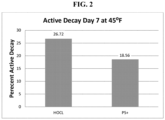
- FIG. 2 shows the results of accelerated shelf-life testing at 7 °C (45 °F). Approximately 30% reduction in active decay was achieved with treatment in antimicrobial solution with Composition PS+ compared to the standard hypochlorous acid treatment. While not wishing to be bound by any particular theory, it is speculated that this reductions can be attributed to materially-reduced pathogen load at the onset of treatment.
- Example 3 Absence of organisms in wash water formulated with antimicrobial composition of the invention.
- the wash waters with Composition PS+ used in Example 2 were tested for yeast and mold and for Total Plate Count (TPC) following treatments of post-harvest leafy green vegetables.
- TPC Total Plate Count
- CFU colony forming units
- a limit of detection of 1 CFU/mL was used.
- Out of thirty (30) samples of wash water treated with Composition PS+, 29 resulted in detection of ⁇ 1 CFU/mL and 1 resulted in a reported result of 1 CFU/mL, the limit of detection.
- Standard chlorine-treated wash water indicated ⁇ 10 CFU/mL for yeast, an average of 55 CFU/mL for mold, and an average of 3,172 for TPC.
- Example 4 Significant reduction of pathogenic organisms by exposure to the antimicrobial composition of the invention.
- Example 2 Challenge cultures were exposed to comparative Composition A and Composition PS+ used in Example 2 at predetermined concentrations and exposure times and then enumerated. The population of the challenge organism prior to exposure was compared to the population present post-exposure to determine the germicidal ability of each composition.
- the cultures were prepared from a lyophilized preparation according to manufacturer's instructions (American Type Culture Collection (“ATCC”), Manassas, VA) or from stock plates.
- the culture was transferred into Tryptic Soy Broth (TSB, Neogen, Lansing, MI) and incubated at 35 ⁇ 2°C for 24 ⁇ 2 hours. After incubation, the culture was centrifuged (Multifuge X1R, ThermoScientific, Waltham, MA), washed in sterile peptone water and resuspended to its original volume.
- the culture was plated onto Tryptic Soy Agar (TSA, Neogen) at appropriate dilutions to determine the actual final concentration.
- TSA Tryptic Soy Agar
- the culture was exposed to each sanitizer, comparative Composition A and Composition PS+, diluted with sterile DI water to a pH of 2.2 or 1.3.
- a separate 250 mL Erlenmeyer flask containing 99 mL of each sanitizer was prepared, along with a duplicate flask containing 99 mL of Butterfield's phosphate diluent (BPB) as a control.
- BPB Butterfield's phosphate diluent
- Sanitizer flasks were gently whirled to create residual liquid motion, and then a 1 mL aliquot of the test culture was added in the center of each flask, avoiding both the neck and sides of the flask during inoculation.
- samples were pour plated at serial dilutions up to 10-6 (treating the neutralized tube as a 10-1) with Tryptone Glucose Extract Agar (TGEA, Neogen). TGEA plates were incubated at 36 ⁇ 1°C for 27 ⁇ 3 hours. After incubation, plates were enumerated using a Quebec colony counter (Model #3325, Reichert Technologies, Depew, NY). The numbers of observed colonies for the treated and untreated samples were recorded.
- TGEA Tryptone Glucose Extract Agar
- the raw count observed for each sample was converted to log10 CFU/mL.
- the amount of challenge organism present in the treated samples was compared to the amount present in the control samples to determine the log reduction for each challenge organism.
- Table 2 AOAC EVALUATION (LOGARITHMIC REDUCTION) WITH COMPOSITIONS Treatment Composition A Composition PS+ pH 1.3 2.2 1.3 2.2 S. aureus 3.42 3.16 >5.91 >5.84 E. coli 3.08 3.60 >5.56 >5.67 Salmonella enterica serovar Anatum 3.1 3.02 >5.7 >5.78 Listeria monocytogenes 3.79 3.08 >5.7 >5.82 MRSA 3.93 3.93 >5.73 >5.73
- Example 5 Organic load spike control through use of the inventive composition versus traditional compositional methods
- FIG. 3 shows the results of measurements of organic load (in APC CFUs) on actual lettuce leaf surfaces from 250 randomized samples taken over a six week period. Lettuce leaf samples were treated either with Composition PS+ of Example 2 or with standard hypochlorous acid treatment. This is of particular importance to reduce the likelihood of unexpected spikes that can lead to high levels of pathogens that may result in foodborne illness.
Landscapes
- Life Sciences & Earth Sciences (AREA)
- Engineering & Computer Science (AREA)
- Chemical & Material Sciences (AREA)
- Wood Science & Technology (AREA)
- Zoology (AREA)
- Food Science & Technology (AREA)
- Polymers & Plastics (AREA)
- Health & Medical Sciences (AREA)
- General Health & Medical Sciences (AREA)
- Chemical Kinetics & Catalysis (AREA)
- General Chemical & Material Sciences (AREA)
- Pest Control & Pesticides (AREA)
- Inorganic Chemistry (AREA)
- Environmental Sciences (AREA)
- Dentistry (AREA)
- Plant Pathology (AREA)
- Agronomy & Crop Science (AREA)
- Microbiology (AREA)
- Animal Behavior & Ethology (AREA)
- Veterinary Medicine (AREA)
- Public Health (AREA)
- Epidemiology (AREA)
- Agricultural Chemicals And Associated Chemicals (AREA)
- Food Preservation Except Freezing, Refrigeration, And Drying (AREA)
- Detergent Compositions (AREA)
- Toxicology (AREA)
- Apparatus For Disinfection Or Sterilisation (AREA)
Description
- The invention is in the field of antimicrobial treatments of foodstuffs and hard surfaces using compositions comprising a mineral acid, optionally in a combination with an organic acid; a copper(II) salt; and a mineral acid buffered by a conjugate salt, and alkyl polyglycoside.
- Contamination of surfaces by toxic levels of bacteria, viruses, and parasites ("pathogens") is a significant concern. Antimicrobial compositions used in the food industry must not only be capable of reducing the number of surface pathogens, they must be safe for human consumption. In addition, antimicrobial compositions should not detrimentally affect the quality of the foodstuff or surface being treated. Antimicrobial compositions for use on foodstuffs and surfaces should also be easy to apply and be relatively inexpensive to ensure they are economical for the intended output.
- Thus, there is a need for antimicrobial compositions that are safe, effective, easy to apply, and economical/commercially viable. The disclosure is directed to these and other important needs.
-
US2007/269563 discloses compositions, methods, and systems for reducing microbial contamination in meat processing. It discloses a disinfection composition comprising an acid, a buffer, and optionally an antimicrobial metal, applying it to a carcass during at least one processing step of sacrificing, scalding, feather/hair/hide removal, eviscerating, and washing. -
US2006/189483 discloses a metal containing composition including (i) at least one water soluble metal compound which forms metal ions when dissolved in water, (ii) at least one metal ion modifier, (iii) at least one acid, and (iv) water. The composition has a pH of less than 6 and an electrolytic potential in excess of 10 millivolts. The compositions are described as having uses in the prevention and/or treatment of pathogenic disease or disorder, as foodstuff supplements, in the treatment by disinfection of meat and other foodstuffs, in the coating, sealing and plating of metals, and in the treatment of water and sewage. -
US2014/322352 discloses an antimicrobial solution for disinfecting or removing micro-organisms from a surface used by animals or for use as an animal shampoo is described. The solution is active against bacteria, fungi, and viruses, including enveloped viruses, and skin disorders related to insect infestation. -
US2008/292673 discloses bioactive agrichemical concentrates and compositions having improved bioactivity comprising combinations of acid solutions and conventional bioactive agrichemical actives or formulations. -
US2012/060258 discloses a composition for coating a polypropylene-based fabric or polypropylene-based material for use in decreasing the transmission of human pathogens. It also discloses a device such as a protective face mask made from a polypropylene-based fabric or polypropylene-based material coated with the composition. -
US2011/206790 discloses environmentally-friendly, natural essential oil based foamable compositions that can be used as antimicrobial substances. The foamable compositions contain thyme oil as the sole or principal antimicrobial agent. The foamable compositions can be topically applied and may be used as a preventative and/or a therapeutic. -
US5,997,911 discloses a composition and method for reducing the incidence of Poult Enteritis Mortality Syndrome in young turkeys, flushing in mature turkeys, and scours in swine.US5,997,911 describes a composition comprising in combination, a simple copper (II) salt, a hydroxycarboxylic acid, and a buffering agent solubilized within the drinking water of turkeys and/or swine in an antidiarrheal effective dosage as preventative maintenance in avoiding the diarrheal conditions associated with PEMS, flushing, and scours. - RITSUKO KIKUNO et al.: KANSENSHOGAKU ZASSHI, vol. 78, no. 2, (2004-02-16) discloses the inactivation of Cryptosporidium parvum Oocysts by Copper Ions.
- Rabin Gyawali et al.: , Emir. J. Food Agric.; NUTRITION AND FOOD SCIENCE, vol. 24, no. 1, (2012-01-18) relates to the synergistic effect of copper and lactic acid against Salmonella and Escherichia coli 0157:H7.
- Jack N Bone et al.: Journal of the American Pharmaceutical Association (Scientific ed.) (1958-11-01) relates to synthesis and biotesting of metallic surfactants.
- The present invention provides a composition comprising:
- a mineral acid buffered by a conjugate salt; about 35,36,37,38,39,40,41,42,43,44,45,46,47,48,49,50,51,52,53,54, 55,56,57,58,59,60,61,62,63,64,65,66,67,68,69, 70, 71, 72, 73, 74, 75, 76, 77, 78, 79, 80, 81, 82, 83, 84, 85, 86, 87, 88, 89, 90, 91, 92, 93, 94, 95, 96, 97, 98, 99, or 100 ppm of a copper(II) salt; and between 0.01 wt.% and 0.3 wt.% of an alkyl polyglycoside,
- wherein the composition is an aqeous solution with a pH of about 1, 1.1, 1.2, 1.3, 1.4, 1.5, 1.6., 1.7, 1.8, 1.9, 2.0, 2.1, 2.2, 2.3, 2.4, 2.5, 2.6, 2.7, 2.8, 2.9, 3, 3.1, 3.2, 3.3, 3.4, 3.5, or 4.
- The present invention provides a method of reducing the number of pathogens on a foodstuff surface comprising applying the composition described herein to the surface, wherein the surface is optionally a hard surface, a meat product, optionally a poultry product, an egg, a beef product, a pork product, or a seafood product, a produce product, optionally a fruit, a vegetable, an algae, a seed, a grain, a sprout, a legume, soy, or a nut, or a dairy product.
- The present invention provides a method of reducing the number of pathogens in a volume of a liquid food product comprising adding the composition described herein to the volume of the liquid food product.
-
-
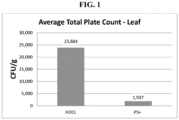
Figure 1 depicts the results of individual trials (214 data points) at a pH of 2.2 of wash water samples formulated with a composition of the invention. -
Figure 2 depicts the results of accelerated shelf-life testing at 7 °C. Approximately 30% reduction in active decay was achieved with treatment in antimicrobial solution with a composition of the invention compared to a standard hypochlorous acid treatment. -
Figure 3 depicts the results of measurements of organic load (in APC CFUs) on actual lettuce leaf surfaces from 250 randomized samples taken over a six week period. Lettuce leaf samples were treated either with a composition of the invention or with a standard hypochlorous acid treatment that is commonly used in the produce industry, and includes a combination of citric acid and chlorine. - The present invention may be understood more readily by reference to the following detailed description taken in connection with the accompanying figures and examples, which form a part of this disclosure. Also, as used in the specification including the appended claims, the singular forms "a," "an," and "the" include the plural, and reference to a particular numerical value includes at least that particular value, unless the context clearly dictates otherwise. When a range of values is expressed, another embodiment includes from the one particular value and/or to the other particular value. Similarly, when values are expressed as approximations, by use of the antecedent "about," it will be understood that the particular value forms another embodiment.
- As used herein, "foodstuffs" refers to solid and liquid food products that are edible by humans or domesticated animals. Solid food products include but are not limited to meat products such as poultry products (e.g., chicken, duck, and turkey products), eggs, beef products, pork products, and seafood products (e.g., fish, shellfish, crustaceans, mollusks, echinoderms, seaweed). Solid food products also include produce products, for example, fruits, vegetables, algae, seeds, grains, sprouts, legumes, soy, and nuts. Solid food products also include dairy products such as hard, soft, and semi-soft cheeses. Liquid food products can include beverages (e.g., juices, soda), liquid dairy products (e.g., milk and cream), fermented beverages (e.g., beer and wine), and liquid feed ingredients and liquid feeds used as animal feed (e.g. fermented liquid feeds fed to farm livestock and poultry).
- As used herein, "hard surfaces" refers to surfaces including but not limited to wood (hardwood and engineered), travertine, MDF (medium density fiberboard), plywood, ceramic, concrete, porcelain, linoleum, laminates, granite, marble, quartz, soapstone, stainless steel, copper, metal alloys, iron, plastic, brick, other masonry, sheetrock, plaster, glass, card stock, corrugated fiberboard, paperboard, rubber, latex, plastic, composite materials that may include two or more of the above materials, and the like.
- As used herein, "pathogens" include bacteria, viruses, and parasites. Examples of bacteria that can be reduced using the compositions of the disclosure include gram positive bacteria and gram negative bacteria, for example, Salmonella enterica, Listeria monocytogenes, Escherichia coli, Clostridium botulinum, Clostridium difficile, Campylobacter, Bacillus cereus, Vibrio parahaemolyticus, Vibrio cholerae, Vibrio vulnificus, Staphylococcus aureus, Yersinia enterocolitica, shigella, and combinations thereof. Examples of Salmonella enterica serovars that can be reduced using the compositions of the disclosure include, for example, Salmonella Enteriditis, Salmonella Typhimurium, Salmonella Poona, Salmonella Heidelberg, and Salmonella Anatum. Examples of viruses that can be reduced using the compositions of the disclosure include enterovirus, norovirus, influenza, rotavirus, or combinations thereof. Examples of parasites include Cryptosporidium, Toxoplasma gondii, Giardia duodenalis, Cyclospora cayetanensis, Trichinella spiralis, Taenia saginata, Taenia solium, or combinations thereof.
- In one aspect, the present disclosure provides compositions comprising a mineral acid, optionally in a combination with an organic acid; a copper(II) salt; and a buffering salt, and alkyl polyglycoside. In preferred embodiments, these compositions exclude chlorine and sources of chlorine. For example, preferred compositions of the invention exclude hypochlorite salts such as sodium hypochlorite and calcium hypochlorite.
- Preferred mineral acids are known in the art. Mineral acids useful in the inventive compositions and methods will have a pKa of less than or equal to 1. Preferred mineral acids include, for example, sulfuric acid, phosphoric acid, hydrochloric acid, nitric acid, boric acid, hydrobromic acid, perchloric acid, hydroiodic acid, and combinations thereof. In some aspects, the mineral acid is sulfuric acid. In other aspects, the mineral acid is phosphoric acid. In yet other aspects, the mineral acid is hydrochloric acid. The mineral acid can be present in any amount so as to achieve a predetermined pH, as described herein. In some embodiments, the mineral acid is present in a concentration of between about 0.1 and about 3 wt.%, preferably about 0.1 and about 1 wt.%, based on the weight of the composition.
- Preferred organic acids are known in the art. Organic acids useful in the inventive compositions and methods will have a pKa of between 1 and 7. Organic acids include citric acid, ascorbic acid, lactic acid, acetic acid, peracetic acid, formic acid, propionic acid, butyric acid, valeric acid, caproic acid, oxalic acid, malic acid, benzoic acid, carbonic acid, phenol, uric acid, taurine, p-toluenesulfonic acid, triflic acid, aminomethylphosphonic acid, and combinations thereof. In some aspects, the organic acid is citric acid. In other aspects, the organic acid is ascorbic acid. In still other aspects, the organic acid is lactic acid. In some aspects, the organic acid is acetic acid. In some aspects, the organic acid is peracetic acid.
- The compositions of the invention include a mineral acid or combination of mineral acids. The compositions of the invention can include a mixture of mineral acid(s) and organic acid(s). In those embodiments comprising a mixture of mineral acids, or a mixture of mineral acid(s) and organic acid(s), the total amount of acid is sufficient to achieve a predetermined pH, as described herein. In some embodiments, the combination of acids is at a concentration of between about 0.1 and about 3 wt.%, between about 0.1 and about 2 wt.%, preferably about 0.1 and about 1 wt.%, based on the weight of the composition.
- Preferred copper (II) salts include copper (II) sulfate, copper (II) chloride, copper (II) bromide, and the like. A preferred copper (II) salt is copper (II) sulfate, with copper(II)sulfate pentahydrate being particularly preferred. In some aspects, the copper (II) salt is copper (II) chloride. In other aspects, the copper (II) salt is copper (II) bromide. Combinations of copper (II) salts are also within the scope of the invention.
- The copper salt concentration used in the compositions of the invention can be determined by one skilled in the art and will be in an amount effective to achieve pathogen reduction on the particular surface being treated. According to the invention the copper salt concentration used in the compositions of the invention is 35, 36, 37, 38, 39, 40, 41, 42, 43, 44, 45, 46, 47, 48, 49, 50, 51, 52, 53, 54, 55, 56, 57, 58, 59, 60, 61, 62, 63, 64, 65, 66, 67, 68, 69, 70, 71, 72, 73, 74, 75, 76, 77, 78, 79, 80, 81, 82, 83, 84, 85, 86, 87, 88, 89, 90, 91, 92, 93, 94, 95, 96, 97, 98, 99, or 100 ppm of the copper (II) salt
- Preferred buffering salts for use in the invention include ammonium sulfate, sodium sulfate, sodium chloride, calcium sulfate, and combinations thereof. Sodium sulfate, ammonium sulfate, and calcium sulfate are particularly preferred buffering salts. In some aspects, the buffering salt is ammonium sulfate. In other aspects, the buffering salt is sodium sulfate. In some aspects, the buffering salt is sodium chloride. In other aspects, the buffering salt is calcium sulfate.
- Alkyl polyglycosides are used at at concentrations that are preferably Generally Recognized as Safe by the U.S. Food and Drug Administration. Within the scope of the disclosure, a "detergent" refers to a surfactant or a mixture of surfactants. The detergent consist of alkyl polyglycoside. Particular preferred alkyl polyglycosides include alkyl polyglucoside, decyl polyglucose, lauryl polyglucose, and combinations thereof.
- According to the invention the buffering salt and/or alkyl polyglycoside are present in the compositions each at concentrations of between 0.01 wt.% and 0.34 wt.%, based on the weight of the composition. Preferred amounts of buffering salts and/or alkyl polyglycoside maintain the pH of aqueous compositions of the invention within preselected ranges. Preferred amounts of buffering salts and/or alkyl polyglycoside can also control surface tension changes to allow for improved reduction of pathogens on a surface. Other preferred compositions of the invention include a buffering salt and/or alkyl polyglycoside each at a concentration of about 0.01, 0.02, 0.03, 0.04, 0.05, 0.06, 0.07, 0.08, 0.09, 0.1, 0.11, 0.12, 0.13, 0.14, 0.15, 0.16, 0.17, 0.18, 0.19, 0.20, 0.21, 0.22, 0.23, 0.24, 0.25, 0.26, 0.27, 0.28, 0.29, 0.30, 0.31, 0.32, 0.33, 0.34, wt.%, based on the weight of the composition. Preferred amounts of conjugate salts and/or alkyl polyglycoside can provide for reduced organoleptic damage at low pH levels and can provide for reduced causticity, reduced toxicity, and safer handling for human workers, which have not been observed with prior compositions used in the art.
- Some compositions of the invention consist essentially of the mineral acid, the copper (II) salt, and the buffering salt and alkyl polyglycoside, as described herein. That is, the invention envisions compositions that include the mineral acid, the copper (II) salt, and the buffering salt and alkyl polyglycoside as described herein, and only those additional materials, for example, water, that do not materially affect the basic and novel characteristics of the inventions disclosed herein. Preferably, these compositions exclude chlorine and sources of chlorine such as hypochlorite salts.
- In certain embodiments, the compositions comprising additionally an organic acid, for example ascorbic acid, will possess antioxidative properties. In other embodiments, the compositions can further comprise a non-organic acid antioxidant. Antioxidants that are Generally Recognized As Safe by the FDA are known in the art and include, for example, plant extracts. The antioxidant can be included in a concentration of between about 0.01 wt.% and about 1.0 wt.%, between about 0.01 wt.% and about 0.2 wt.%, between about 0.01 wt.% and about 0.15 wt.%, between about 0.01 wt.% and about 0.10 wt.%, or between about 0.01 wt.% and about 0.05 wt.%.
- In some embodiments, preferred compositions of the invention are non-oxidizing and may exclude, or contain in minute amounts, ozone, peracetic acid, chlorine dioxide, and hypochlorite salts. The non-oxidizing compositions of the invention are advantageous for water re-circulation applications and can result in significant water savings.
- In particularly preferred embodiments, the compositions of the invention are aqueous compositions. The concentration of the mineral and optionally the organic acid, the copper salt, and the buffering salt and/or alkyl polyglycoside in the aqueous solutions can vary, based on the particular application in which the aqueous solution is being used. In some embodiments, the ratio of water to the other composition components is about 1:1. In other embodiments, the ratio of water to the other composition components is between 1:1 and 2:1. In other embodiments, the ratio of water to the other composition components is between about 1:1 and about 20:1 or between about 1:1 and about 500:1. In some embodiments, the ratio of water to the other composition components is about 20:1 to about 500:1. The concentrations useful for final applications in aqueous solutions may be lower than the concentrations in an original solid form, which can be diluted about 500-fold, about 450-fold, about 400-fold, about 350-fold, about 300-fold, about 250-fold, about 200-fold, about 150-fold, about 100-fold, about 90-fold, about 80-fold, about 70-fold, about 60-fold, about 50-fold, about 40-fold, about 30-fold, about 20-fold, about 10-fold, about 5-fold, about 4-fold, about 3-fold, or even about 2-fold. Appropriate dilution amounts can be selected based upon the concentrate strength and the expected pathogenic loading of the incoming treated article.
- The pH of the aqueous solutions of the invention is about 1, 1.1, 1.2, 1.3, 1.4, 1.5, 1.6., 1.7, 1.8, 1.9, 2.0, 2.1, 2.2, 2.3, 2.4, 2.5, 2.6, 2.7, 2.8, 2.9, 3, 3.1, 3.2, 3.3, 3.4, 3.5, 4 According to the invention the pH of the aqueous solutions is tested at about 5 °C or about 22 °C, depending on the selected application, using methods known in the art. Those skilled in the art readily appreciate that the pH of the aqueous solutions of the invention can be adjusted by adjusting the amount of the acid in the solution.
- In some embodiments of the invention the compositions can alternatively be in the form of a solid and can be pellets, granules, powders, pods, other dissolvable/water-soluble films or packaging, or tablets. These compositions comprise 10% or less, by weight, of water/moisture. The compositions can be encased in a water-soluble film. Water-soluble films can be formed from, for example, a polyvinyl alcohol film, an aliphatic polyether film, or a polyethylene glycol film. Such films are known in the art. Suitable films will be completely soluble or dispersible in water at temperatures above about 5 °C. The films will have a thickness of about 0.5 mils to about 5 mils, preferably from about 1 to 3 mils. The water-soluble films can be sealed using, for example, heat or ultrasonic sealing methods known in the art.
- In other aspects the present invention provides methods of reducing the number of pathogens on a surface comprising applying any of the compositions of the invention to a surface. The surface can be a foodstuff surface or a hard surface. Preferably, the compositions used in the described methods are aqueous solutions. The surfaces can be treated via any means known in the art. For example, in preferred embodiments, any composition of the invention can be applied to the surfaces of the foodstuffs via sprinkling, spraying, rinsing, soaking, immersing, washing, or the like. Dip treatments can be used, and include full submersion, whether through mechanical or manual addition, in single or multiple tank designs. Spray applications can be used, and can consist of single or multiple spray nozzles or drip applicators. In some embodiments, spray application can utilize ultrasonic nozzling or can be combined with mechanical abrasion to improve surface area contact.
- The aqueous solutions used in the described methods can be at any commercially viable temperature that will not harm the surface to which the aqueous solution will be applied, for example, between about 0 °C (32 °F) and 100 °C (212 °F) or between about 0 °C (32 °F) and 57 °C (135 °F). The solutions can be cold, for example, about 0 (32 °F) or about 3 °C (about 38 °F), or warm, for example, about 57 °C (135) °F. In other embodiments, these solutions can be about 0 (32 °F), 1, 2, 3, 4, 5, 6, 7, 8, 9, 10, 11, 12, 13, 14, 15, 16, 17, 18, 19, 20, 21, 22, 23, 24, 25, 26, 27, 28, 29, 30, 31, 32, 33, 34, 35, 36, 37, 38, 39, 40, 41, 42, 43, 44, 45, 46, 47, 48, 49, 50, 51, 52, 53, 54, 55, 56, 57, 58, 59, 60 °C (140 °F). In yet other embodiments, the aqueous solutions used in the described methods can be at temperatures between about 60 (140 °F) and about 100°C (212 °F). Higher temperatures can be preferred for use on hard surfaces.
- In preferred embodiments, applying comprises submerging the surface for a time sufficient to ensure adequate coverage and/or penetration of the described compositions to and/or in the surface. The submersion times can be up to, for example, 5 minutes, up to about 4 minutes, up to about 3 minutes, up to about 2 minutes, or up to about 1 minute. Submersion times of less than 1 minute are also envisioned and may be as short as two seconds at certain lower pH levels. Preferred submersion times are between about 2 seconds and about 180 seconds, between about 2 seconds and about 120 seconds, between about 2 seconds and about 90 seconds, between about 2 seconds and about 60 seconds, between about 2 seconds and about 45 seconds, or between about 2 seconds and about 30 seconds.
- The compositions of the invention are effective in reducing the number of pathogens, i.e., microbes, viruses, or parasites on a surface. That is, treating surfaces with compositions of the invention reduces the growth and/or propagation of bacteria, viruses, and/or parasites (for example, by killing or materially mitigating the growth of such bacteria, viruses, and/or parasites) on the surface, as compared to a surface that has not been treated with a composition of the invention. For example, the compositions of the invention are effective in reducing the number of pathogens by about 10%, as compared to a surface that has not been treated with a composition of the invention. In other embodiments, the compositions of the invention are about 20%, 30%, 40%, 50%, 60%, 70%, 80%, 90%, 100%, 110%, 120%, 130%, 140%, 150%, 160%, 170%, 180%, 190%, 200% , 300%, 400%, 500%, or greater, more effective in reducing pathogens on a surface, when compared to a surface that has not been treated with a composition of the invention. The compositions of the invention are effective in reducing the number of pathogens by about 10%, about 20%, about 30%, about 40%, about 50%, about 60%, about 70%, about 80%, or about 90% as compared to a surface that has been treated with standard chlorine and citric acid treatment.
- Turbid conditions increase the risk of pathogens producing foodborne illness. The compositions of the invention are effective in reducing the number of pathogens, even in turbid conditions, for example at food processing facilities.
- The following examples are provided to illustrate compositions, processes, and properties described herein. The examples are merely illustrative and are not intended to limit the disclosure to the materials, conditions, or process parameters set forth therein.
- The Vivione RAPID-B instrument start-up was performed using manufacturer's instructions (Vivione Biosciences, LLC, Pine Bluff, AR). Performance Verification was performed per manufacturer's instructions to verify performance and identify any potential problems. The Rapid-B system was then prepped for running General Bacteria Total Plate Count Assays. Treatment solutions were then prepared based on the protocol being tested. Solutions were inoculated 99:1; meaning 99 mL of treatment solution was combined with 1 mL of bacterial bird rinse, creating a 10-2 dilution. Serial dilutions (10-3 dilution was commonly used) were performed using sterile buffered peptone water to amplify the dilution factor. Samples were prepared by combining 570 µl of sterile buffered peptone water, 330 µl of TPC (Total Plate Count) Reagent, and 100 µl from the dilution tube being tested into a reaction tube. This process dilutes the sample an additional 10-1 (Therefore, 10-4 was the general dilution tested). The sample reaction tube was left for 15 minutes, being periodically vortexed. The General Bacteria Protocol on the Vivione machine was opened and operational settings confirmed as instructed in the Vivione Biosciences manual. After 15 minutes, the reaction tube was placed on the sample arm and moved into the run position to begin analysis. Once the sample was running, the arm was returned to the flush position to allow for flushing upon completion.
- Wash water was formulated with antimicrobial compositions: referred to as comparative Composition A or inventive Composition PS+, and used in a dip tank for treatment of post-harvest leafy green vegetables. Wash water treated with standard chlorine and citric acid treatment was also tested for comparison. The wash water samples were each used in dip tanks at temperatures of approximately 3 °C (38 °F) and were used to treat leafy green vegetables for thirty (30) seconds in turbulent water with over 250 samples taken for results directly from the surface of the leafy green vegetables.
- Comparative Composition A comprised a mineral acid with low pKa value (sulfuric acid), combined with copper sulfate pentahydrate at 35-40 ppm (copper ion at 9-10 ppm), buffering salt (ammonium sulfate at 0.5 percent) in water at 3 °C (38 °F). The pH of the wash water solution was 2.2.
- Composition PS+ comprised a mineral acid with low pKa value (sulfuric acid), combined with copper sulfate pentahydrate at 35-40 ppm (copper ion at 9-10 ppm), buffering salt (ammonium sulfate at 0.05 percent) and surfactant (alkyl polyglycoside) in water at 3 °C (38 °F). The pH of the wash water solution was 2.2.
- Leafy green vegetables were treated with either comparative Composition A or with a standard chlorine and citric acid treatment. Following treatment, the leafy green vegetables were inspected for sensory characteristics and visible decay and measured for microbial loading via total plate count (TPC). Results are summarized in Table 1.
Table 1 Day Average TPC: Composition A Treatment Composition A Treated Product Sensory Characteristics Average TPC: Standard Chlorine Treatment Standard Chlorine Treated Product Sensory Characteristics 0 7,265 Texture: Crisp 208,217 Texture: Crisp Color: Bright, Fresh Appearance Color: Bright, Fresh Appearance Odor: No Off Odor Odor: No Off Odor 7 60,833 Texture: Crisp 558,100 Texture: less crisp, less springiness Color: Bright, Fresh Appearance Color: Some decline in appearance (dull) Odor: No Off Odor Odor: Slight "musty" 14 652,500 Texture: Crisp 1,064,652 Texture: beginning to decline, less crisp, less springiness Color: Bright, Fresh Appearance Color: Less bright, more of a dull appearance Odor: No Off Odor Odor: Increasing off-odor Visible Decay: <1% Visible Decay: 4-6% Over-all Acceptability: Acceptable with some increase in visible defects Over-all Acceptability: Not Acceptable due to general decline, increased visible defects, Secondary Decay 18 4,200,000 Texture: Crisp 4,333,333 Texture: beginning to decline leaf is flaccid, less springiness. Color: Bright Color: less "bright", more of a dull appearance Odor: Slight "musty" Odor: : Increased Off-Odor, "musty" Visible Decay: less than 3% Visible Decay: 6 - 8+% and increased "wetness." Over-all Acceptability:Not Acceptable due to generaldecline, Increased visible defects. Over-all Acceptability: Not Acceptable due to general decline, increased visible defects, Severe Decay. - For products treated with the comparative Composition A, there was a materially lower level of TPC at day 0 (7,268 vs 208,217). At day 7, the TPC was still material lower than standard treatment while providing for improved relative texture, color, and odor. At
day 15, the TPC remained significantly below standard treatment with a materially improved difference in texture, color, odor, decay and acceptability for commercial use. After 14 to 16 days there was an increase in visible decay, primarily at the cut end of the leaves where the cuts are ragged and crushed, yet still at lower levels and superior texture, color, odor, and decay. There was an apparent reduction in oxidative discoloration in undamaged leaf. Standard chlorine-treated leaves began showing a general decline at 10 to 14 days in association with tissue damage. Pockets of secondary decay rapidly advanced in the standard chlorine-treated product, while decay in product treated with the comparative Composition A (even at day 20) remained associated with individual leaves - Wash water samples formulated with Composition PS+ were treated at a pH of 2.2. Subsequent trials showed a significant reduction in Total Plate Count (TPC). The results of individual trials (214 data points) at a pH of 2.2 are shown in
FIG. 1 . The results demonstrated a 92% reduction in TPC across all trials versus optimized chlorinated treatments of 20 ppm chlorine at a pH of 6.0. The reductions were generally the highest during the most turbid conditions where foodborne illness risks are highest. -
FIG. 2 shows the results of accelerated shelf-life testing at 7 °C (45 °F). Approximately 30% reduction in active decay was achieved with treatment in antimicrobial solution with Composition PS+ compared to the standard hypochlorous acid treatment. While not wishing to be bound by any particular theory, it is speculated that this reductions can be attributed to materially-reduced pathogen load at the onset of treatment. - The wash waters with Composition PS+ used in Example 2 were tested for yeast and mold and for Total Plate Count (TPC) following treatments of post-harvest leafy green vegetables. For yeast and mold, colony forming units (CFU)/mL were measured. A limit of detection of 1 CFU/mL was used. Out of thirty (30) samples of wash water treated with Composition PS+, 29 resulted in detection of <1 CFU/mL and 1 resulted in a reported result of 1 CFU/mL, the limit of detection. Standard chlorine-treated wash water indicated <10 CFU/mL for yeast, an average of 55 CFU/mL for mold, and an average of 3,172 for TPC.
- Challenge cultures were exposed to comparative Composition A and Composition PS+ used in Example 2 at predetermined concentrations and exposure times and then enumerated. The population of the challenge organism prior to exposure was compared to the population present post-exposure to determine the germicidal ability of each composition.
- The following challenge microorganisms were evaluated:
- Staphylococcus aureus (ATCC #6538)
- Listeria monocytogenes (ATCC #7646)
- Escherichia coli 0157:H7 (ATCC #35150)
- Salmonella enterica serovar Anatum (ATCC #9270)
- Methicillin-resistant Staphylococcus aureus ("MRSA") (ATCC #33592)
- The cultures were prepared from a lyophilized preparation according to manufacturer's instructions (American Type Culture Collection ("ATCC"), Manassas, VA) or from stock plates. The culture was transferred into Tryptic Soy Broth (TSB, Neogen, Lansing, MI) and incubated at 35 ± 2°C for 24 ± 2 hours. After incubation, the culture was centrifuged (Multifuge X1R, ThermoScientific, Waltham, MA), washed in sterile peptone water and resuspended to its original volume. The culture was plated onto Tryptic Soy Agar (TSA, Neogen) at appropriate dilutions to determine the actual final concentration.
- The culture was exposed to each sanitizer, comparative Composition A and Composition PS+, diluted with sterile DI water to a pH of 2.2 or 1.3. A separate 250 mL Erlenmeyer flask containing 99 mL of each sanitizer was prepared, along with a duplicate flask containing 99 mL of Butterfield's phosphate diluent (BPB) as a control. Sanitizer flasks were gently whirled to create residual liquid motion, and then a 1 mL aliquot of the test culture was added in the center of each flask, avoiding both the neck and sides of the flask during inoculation. Each flask was swirled for 1 minute to thoroughly mix the contents, and then a 1 mL portion of the mix was added to a 9 mL tube of a lecithin neutralizing solution, prepared as per the AOAC International (Rockville, MD) Official Method SM 960.09 (Germicidal and Detergent Sanitizing Action of Disinfectants). This procedure was repeated for the BPB control using the same challenge inoculum.
- After treatment and neutralization, samples were pour plated at serial dilutions up to 10-6 (treating the neutralized tube as a 10-1) with Tryptone Glucose Extract Agar (TGEA, Neogen). TGEA plates were incubated at 36 ± 1°C for 27 ± 3 hours. After incubation, plates were enumerated using a Quebec colony counter (Model #3325, Reichert Technologies, Depew, NY). The numbers of observed colonies for the treated and untreated samples were recorded.
- The raw count observed for each sample was converted to log10 CFU/mL. The amount of challenge organism present in the treated samples was compared to the amount present in the control samples to determine the log reduction for each challenge organism.
- The results of the testing are shown in Table 2.
Table 2 AOAC EVALUATION (LOGARITHMIC REDUCTION) WITH COMPOSITIONS Treatment Composition A Composition PS+ pH 1.3 2.2 1.3 2.2 S. aureus 3.42 3.16 >5.91 >5.84 E. coli 3.08 3.60 >5.56 >5.67 Salmonella enterica serovar Anatum 3.1 3.02 >5.7 >5.78 Listeria monocytogenes 3.79 3.08 >5.7 >5.82 MRSA 3.93 3.93 >5.73 >5.73 - Testing demonstrated significant antimicrobial reduction with a synergistic effect found when copper ion was combined with polyglycoside addition. Mineral acid, when buffered with a conjugate salt, yields significant antimicrobial capability without organoleptic damage when combined with copper and polyglycoside.
- The compositions of the invention demonstrated significant organic load spike suppression versus traditional treatments.
FIG. 3 shows the results of measurements of organic load (in APC CFUs) on actual lettuce leaf surfaces from 250 randomized samples taken over a six week period. Lettuce leaf samples were treated either with Composition PS+ of Example 2 or with standard hypochlorous acid treatment. This is of particular importance to reduce the likelihood of unexpected spikes that can lead to high levels of pathogens that may result in foodborne illness. - When ranges are used herein for physical properties, such as molecular weight, or chemical properties, such as chemical formulae, all combinations, and subcombinations of ranges for specific embodiments therein are intended to be included.
Claims (17)
- A composition comprising:a mineral acid buffered by a conjugate salt;about 35,36,37,38,39,40,41,42,43,44,45,46,47,48,49,50,51,52,53,54, 55,56,57,58,59,60,61,62,63,64,65,66,67,68,69, 70, 71, 72, 73, 74, 75, 76, 77, 78, 79, 80, 81, 82, 83, 84, 85, 86, 87, 88, 89, 90, 91, 92, 93, 94, 95, 96, 97, 98, 99, or 100 ppm of a copper(II) salt; andbetween 0.01 wt.% and 0.3 wt.% of a detergent consisting of an alkyl polyglycoside,wherein the composition is an aqueous solution with a pH of about 1, 1.1, 1.2, 1.3, 1.4, 1.5, 1.6., 1.7, 1.8, 1.9, 2.0, 2.1, 2.2, 2.3, 2.4, 2.5, 2.6, 2.7, 2.8, 2.9, 3, 3.1, 3.2, 3.3, 3.4, 3.5, or 4.
- The composition of claim 1, wherein the copper(II) salt is copper(II) sulfate.
- The composition of any one of the preceding claims, comprising a mineral acid wherein the mineral acid is sulfuric acid, phosphoric acid, hydrochloric acid, or a combination thereof.
- The composition of any one of the preceding claims, further comprising an organic acid wherein the organic acid is citric acid, ascorbic acid, lactic acid, acetic acid, peracetic acid, or a combination thereof, optionally ascorbic acid, lactic acid, acetic acid, peracetic acid, or a combination thereof.
- The composition of any one of the preceding claims, wherein the conjugate salt is selected from the group consisting of: ammonium sulfate, sodium sulfate, sodium chloride, calcium sulfate, and a combination thereof.
- The composition of claim 5, wherein the concentration of buffering salts consisting of the conjugate salt of mineral acid is between 0.01 and 0.5 percent, between 0.01 and 0.4 percent, between 0.01 and 0.3 percent, or between 0.01 and 0.25 percent.
- The composition of any one of the preceding claims, further comprising an antioxidant.
- The composition of claim 7, wherein the antioxidant concentration is between 0.01 and 1 percent or between 0.01 and 0.05 percent.
- The composition of any one of the preceding claims, wherein the ratio of water to the remaining composition components is between 1:1 and 500:1 or between 50:1 and 500:1.
- The composition of any one of the preceding claims, wherein the composition is in the form of a solid that is a pellet, granule, powder, pod, or tablet, optionally encased in a water-soluble film or packaging, wherein the water-soluble film or packaging is a polyvinyl alcohol film, an aliphatic polyether film, or a polyethylene glycol film.
- A method of reducing the number of pathogens on a foodstuff surface comprising applying the composition of any one of claims 1 to 10 to the surface, wherein the surface is optionally a hard surface, a meat product, optionally a poultry product, an egg, a beef product, a pork product, or a seafood product, a produce product, optionally a fruit, a vegetable, an algae, a seed, a grain, a sprout, a legume, soy, or a nut, or a dairy product.
- The method of claim 11, wherein the pathogen is a bacterium that is optionally Salmonella enterica, Listeria monocytogenes, Escherichia coli, Clostridium botulinum, Clostridium difficile, Campylobacter, Bacillus cereus, Vibrio parahaemolyticus, Vibrio cholerae, Vibrio vulnificus, Staphylococcus aureus, Yersinia enterocolitica, shigella, or a combination thereof; a virus that is optionally enterovirus, norovirus, influenza, rotavirus, or a combination thereof; or a parasite that is optionally Cryptosporidium, Toxoplasma gondii, Giardia duodenalis, Cyclospora cayetanensis, Trichinella spiralis, Taenia saginata, Taenia solium, or a combination thereof.
- The method of any one of claims 11 to 12, wherein the composition is an aqueous solution at a temperature between 0 °C (32 °F) and 100 °C (212 °F) or between 0 °C (32 °F) and 57 °C (135 °F).
- The method of claim 13, wherein the applying comprises a submersion time between 2 seconds and 180 seconds, between 2 seconds and 120 seconds, between 2 seconds and 90 seconds, between 2 seconds and 60 seconds, or between 2 seconds and 30 seconds.
- The method of any one of claims 11 to 14, wherein the applying comprises sprinkling, spraying, rinsing, soaking, immersing, preferably in a dip tank comprising the composition, or washing.
- A method of reducing the number of pathogens in a volume of a liquid food product comprising adding the composition of any one of claims 1 to 10 to the volume of the liquid food product.
- The method of claim 16, wherein the pathogen is a bacterium that is optionally Salmonella enterica, Listeria monocytogenes, Escherichia coli, Clostridium botulinum, Clostridium difficile, Campylobacter, Bacillus cereus, Vibrio parahaemolyticus, Vibrio cholerae, Vibrio vulnificus, Staphylococcus aureus, Yersinia enterocolitica, shigella, or a combination thereof; a virus that is optionally enterovirus, norovirus, influenza, rotavirus, or a combination thereof; or a parasite that is optionally Cryptosporidium, Toxoplasma gondii, Giardia duodenalis, Cyclospora cayetanensis, Trichinella spiralis, Taenia saginata, Taenia solium, or a combination thereof.
Applications Claiming Priority (2)
| Application Number | Priority Date | Filing Date | Title |
|---|---|---|---|
| US201462084278P | 2014-11-25 | 2014-11-25 | |
| PCT/US2015/062586 WO2016086087A1 (en) | 2014-11-25 | 2015-11-25 | Antimicrobial copper compositions and their use in treatment of foodstuffs and surfaces |
Publications (2)
| Publication Number | Publication Date |
|---|---|
| EP3223629A1 EP3223629A1 (en) | 2017-10-04 |
| EP3223629B1 true EP3223629B1 (en) | 2023-08-23 |
Family
ID=55024227
Family Applications (1)
| Application Number | Title | Priority Date | Filing Date |
|---|---|---|---|
| EP15816571.2A Active EP3223629B1 (en) | 2014-11-25 | 2015-11-25 | Antimicrobial copper compositions and their use in treatment of foodstuffs and surfaces |
Country Status (14)
| Country | Link |
|---|---|
| US (2) | US10264793B2 (en) |
| EP (1) | EP3223629B1 (en) |
| JP (1) | JP6804444B2 (en) |
| KR (1) | KR102298372B1 (en) |
| CN (1) | CN107257627B (en) |
| AR (1) | AR102790A1 (en) |
| AU (2) | AU2015353556A1 (en) |
| BR (1) | BR112017010669B1 (en) |
| CA (1) | CA2968965C (en) |
| EA (1) | EA201791140A1 (en) |
| MA (1) | MA41021A (en) |
| MX (1) | MX388163B (en) |
| NZ (1) | NZ732089A (en) |
| WO (1) | WO2016086087A1 (en) |
Families Citing this family (14)
| Publication number | Priority date | Publication date | Assignee | Title |
|---|---|---|---|---|
| MX2020002986A (en) * | 2017-09-21 | 2020-09-28 | Contact Organics Tech Pty Ltd | Acetic acid-based herbicide composition. |
| WO2019140481A1 (en) * | 2018-01-19 | 2019-07-25 | Legioguard Pty Ltd | Cleaning and/or disinfecting compositions |
| MX2018002983A (en) * | 2018-03-09 | 2019-09-10 | Inst Tecnologico Jose Mario Molina Pasquel Y Henriquez | Enhancing antiviral suspension for treatment of fibres and preparation method thereof. |
| US10506811B1 (en) | 2018-11-21 | 2019-12-17 | Pur Products LLC | Anti-microbial solution for seeds, crops, livestock and processed foods |
| US20200239324A1 (en) | 2019-01-28 | 2020-07-30 | ITI Technolgies, Inc. | Solubility Enhancing Composition |
| US11441000B2 (en) | 2019-04-11 | 2022-09-13 | Iti Technologies, Inc. | Plastic modifying compositions and enhanced carbonate compositions |
| US11432569B2 (en) | 2019-10-31 | 2022-09-06 | Iti Technologies, Inc. | Domestic animal water and feed modifying compositions |
| JP2021176282A (en) * | 2020-05-08 | 2021-11-11 | 東洋インキScホールディングス株式会社 | Non-food sample spoilage inspection method |
| US12421665B2 (en) | 2020-06-09 | 2025-09-23 | Iti Technologies, Inc. | Paper enhancing compositions, uses thereof and enhanced paper |
| US20210381169A1 (en) | 2020-06-09 | 2021-12-09 | Iti Technologies, Inc. | Paper enhancing compositions, uses thereof and enhanced paper |
| PY21104302A (en) * | 2020-11-27 | 2022-08-09 | Syngenta Crop Protection Ag | PESTICIDE COMPOSITION |
| KR102516405B1 (en) * | 2021-01-27 | 2023-04-03 | (주)피스코 | Transparent antimicrobial composition having excellent formulation stability |
| WO2024257103A1 (en) * | 2023-06-14 | 2024-12-19 | Coppter Water Technologies Ltd. | Aqueous germicidal composition |
| KR20250177428A (en) | 2024-06-15 | 2025-12-23 | 장세창 | A ring that enables scrolling on your phone using Bluetooth |
Family Cites Families (12)
| Publication number | Priority date | Publication date | Assignee | Title |
|---|---|---|---|---|
| JPH06153744A (en) | 1992-09-25 | 1994-06-03 | Riyouyou Sangyo Kk | Method for diminishing parasite of fishes and bacterium and removing living thing attached to crawl net |
| US5997911A (en) * | 1996-08-27 | 1999-12-07 | Brinton Veterinary Supply, Inc. | Composition and method for reducing diarrhea in poultry and swine |
| CN1376036A (en) * | 1999-08-31 | 2002-10-23 | 药物研究有限公司 | Metal-containing compositions, preparations and uses |
| DE10015126B4 (en) * | 2000-03-28 | 2006-04-27 | Henkel Kgaa | Cleaning fruits and vegetables |
| GB0112939D0 (en) | 2001-05-29 | 2001-07-18 | Mini Agriculture & Fisheries | Anti-microbials |
| US20070269563A1 (en) * | 2006-05-17 | 2007-11-22 | Tasker Products, Inc. | Compositions and methods for reducing microbial contamination in meat processing |
| US20080292721A1 (en) * | 2007-05-18 | 2008-11-27 | Crudden Joseph J | Bioactive acid agrichemical compositrions and use thereof |
| US20110236504A1 (en) | 2008-05-01 | 2011-09-29 | Panacea Disinfectant Co. Limited | Versatile disinfectant |
| AU2009317951B2 (en) * | 2008-10-30 | 2014-07-31 | Cleanwell, Llc | Antimicrobial foamable soaps |
| EP2435139B1 (en) * | 2009-05-29 | 2016-10-05 | Innonix Technologies, Incorporated | Composition for use in decreasing the transmission of human pathogens |
| JP2012131836A (en) * | 2010-12-17 | 2012-07-12 | Lion Corp | Granular detergent composition |
| WO2013096577A1 (en) * | 2011-12-22 | 2013-06-27 | Contact Marketing Solutions Innovative Technologies | Antimicrobial composition for animal welfare |
-
2015
- 2015-11-24 MA MA041021A patent/MA41021A/en unknown
- 2015-11-25 KR KR1020177017034A patent/KR102298372B1/en active Active
- 2015-11-25 EP EP15816571.2A patent/EP3223629B1/en active Active
- 2015-11-25 NZ NZ732089A patent/NZ732089A/en unknown
- 2015-11-25 AU AU2015353556A patent/AU2015353556A1/en not_active Abandoned
- 2015-11-25 EA EA201791140A patent/EA201791140A1/en unknown
- 2015-11-25 CN CN201580064154.XA patent/CN107257627B/en active Active
- 2015-11-25 MX MX2017006674A patent/MX388163B/en unknown
- 2015-11-25 JP JP2017527691A patent/JP6804444B2/en active Active
- 2015-11-25 BR BR112017010669-8A patent/BR112017010669B1/en active IP Right Grant
- 2015-11-25 CA CA2968965A patent/CA2968965C/en active Active
- 2015-11-25 WO PCT/US2015/062586 patent/WO2016086087A1/en not_active Ceased
- 2015-11-25 US US15/529,265 patent/US10264793B2/en active Active
- 2015-11-25 AR ARP150103859A patent/AR102790A1/en active IP Right Grant
-
2019
- 2019-03-05 US US16/292,713 patent/US20200000095A1/en not_active Abandoned
-
2020
- 2020-03-06 AU AU2020201702A patent/AU2020201702B2/en active Active
Non-Patent Citations (2)
| Title |
|---|
| JACK N BONE ET AL: "Synthesis and Biotesting of Metallic SurfactantsUniversity of Wyoming, College of Pharmacy, Laramie", JOURNAL OF THE AMERICAN PHARMACEUTICAL ASSOCIATION (SCIENTIFIC ED.), 1 November 1958 (1958-11-01), pages 795 - 799, XP055538411, Retrieved from the Internet <URL:DOI: 10.1002/jps.3030471110> DOI: 10.1002/jps.3030471110 * |
| RABIN GYAWALI ET AL: "Synergistic effect of copper and lactic acid against Salmonella and Escherichia coli O157:H7: A review", EMIR. J. FOOD AGRIC.; NUTRITION AND FOOD SCIENCE, vol. 24, no. 1, 18 January 2012 (2012-01-18), pages 1 - 11, XP055538398, DOI: https://www.ejmanager.com/mnstemps/137/10592-29421-1-PB.pdf * |
Also Published As
| Publication number | Publication date |
|---|---|
| CN107257627B (en) | 2021-05-04 |
| NZ732089A (en) | 2022-01-28 |
| MX2017006674A (en) | 2018-01-11 |
| US20200000095A1 (en) | 2020-01-02 |
| BR112017010669A2 (en) | 2018-02-14 |
| EP3223629A1 (en) | 2017-10-04 |
| JP2017536376A (en) | 2017-12-07 |
| AU2020201702A1 (en) | 2020-03-26 |
| AR102790A1 (en) | 2017-03-22 |
| CA2968965A1 (en) | 2016-06-02 |
| MX388163B (en) | 2025-03-19 |
| CA2968965C (en) | 2021-10-19 |
| KR102298372B1 (en) | 2021-09-07 |
| JP6804444B2 (en) | 2020-12-23 |
| MA41021A (en) | 2017-10-03 |
| BR112017010669B1 (en) | 2022-06-28 |
| US20170258093A1 (en) | 2017-09-14 |
| KR20170106956A (en) | 2017-09-22 |
| EA201791140A1 (en) | 2017-09-29 |
| AU2015353556A1 (en) | 2017-06-15 |
| WO2016086087A1 (en) | 2016-06-02 |
| CN107257627A (en) | 2017-10-17 |
| US10264793B2 (en) | 2019-04-23 |
| AU2020201702B2 (en) | 2020-05-28 |
Similar Documents
| Publication | Publication Date | Title |
|---|---|---|
| AU2020201702B2 (en) | Antimicrobial copper compositions and their use in treatment of foodstuffs and surfaces | |
| AU2015314884C1 (en) | Antimicrobial compositions and methods of their use | |
| US20110054026A1 (en) | Antimicrobial composition and use | |
| EP2094118A1 (en) | An improved peracetic acid composition | |
| US8722123B2 (en) | Antimicrobial composition and use as food treatment | |
| Chen et al. | Organic acids, detergents, and their combination for inactivation of foodborne pathogens and spoilage microorganisms | |
| Naito | Ozone in seafood processing | |
| KR101124700B1 (en) | Antimicrobial agent composition by lactic acid and grapefruit seed extract and method for preparing abalone using the same | |
| EA041635B1 (en) | ANTIMICROBIAL COMPOSITION AND METHOD FOR TREATMENT OF FOOD PRODUCTS AND HARD SURFACES | |
| US20130078315A1 (en) | Eggshell antimicrobial agent and method of use | |
| Gómez‐López | Miscellaneous decontaminants | |
| CA3107415A1 (en) | Antimicrobial ozone compositions and methods of use thereof | |
| MX2014014677A (en) | Method for producing detoxified liver. | |
| JPS5881770A (en) | Germicide for food or apparatus for processing food and use thereof |
Legal Events
| Date | Code | Title | Description |
|---|---|---|---|
| STAA | Information on the status of an ep patent application or granted ep patent |
Free format text: STATUS: THE INTERNATIONAL PUBLICATION HAS BEEN MADE |
|
| PUAI | Public reference made under article 153(3) epc to a published international application that has entered the european phase |
Free format text: ORIGINAL CODE: 0009012 |
|
| STAA | Information on the status of an ep patent application or granted ep patent |
Free format text: STATUS: REQUEST FOR EXAMINATION WAS MADE |
|
| 17P | Request for examination filed |
Effective date: 20170609 |
|
| AK | Designated contracting states |
Kind code of ref document: A1 Designated state(s): AL AT BE BG CH CY CZ DE DK EE ES FI FR GB GR HR HU IE IS IT LI LT LU LV MC MK MT NL NO PL PT RO RS SE SI SK SM TR |
|
| AX | Request for extension of the european patent |
Extension state: BA ME |
|
| RIN1 | Information on inventor provided before grant (corrected) |
Inventor name: DIETRICH, JAMES Inventor name: MECCIA, JOHN Inventor name: DAUTREUIL, FRANCIS Inventor name: SHAPIRA, RON |
|
| DAX | Request for extension of the european patent (deleted) | ||
| RAV | Requested validation state of the european patent: fee paid |
Extension state: MA Effective date: 20170609 |
|
| STAA | Information on the status of an ep patent application or granted ep patent |
Free format text: STATUS: EXAMINATION IS IN PROGRESS |
|
| 17Q | First examination report despatched |
Effective date: 20190110 |
|
| REG | Reference to a national code |
Ref country code: DE Ref legal event code: R079 Free format text: PREVIOUS MAIN CLASS: A23L0003358000 Ipc: A23L0003350800 Ref document number: 602015085300 Country of ref document: DE |
|
| GRAP | Despatch of communication of intention to grant a patent |
Free format text: ORIGINAL CODE: EPIDOSNIGR1 |
|
| STAA | Information on the status of an ep patent application or granted ep patent |
Free format text: STATUS: GRANT OF PATENT IS INTENDED |
|
| RIC1 | Information provided on ipc code assigned before grant |
Ipc: A01N 25/32 20060101ALI20230217BHEP Ipc: A01N 25/30 20060101ALI20230217BHEP Ipc: A01N 59/02 20060101ALI20230217BHEP Ipc: A01N 37/02 20060101ALI20230217BHEP Ipc: A01N 37/36 20060101ALI20230217BHEP Ipc: A01N 25/02 20060101ALI20230217BHEP Ipc: A61K 33/34 20060101ALI20230217BHEP Ipc: A61L 2/18 20060101ALI20230217BHEP Ipc: A01P 1/00 20060101ALI20230217BHEP Ipc: A01N 59/20 20060101ALI20230217BHEP Ipc: A23L 3/358 20060101ALI20230217BHEP Ipc: A23L 3/3508 20060101AFI20230217BHEP |
|
| INTG | Intention to grant announced |
Effective date: 20230314 |
|
| GRAS | Grant fee paid |
Free format text: ORIGINAL CODE: EPIDOSNIGR3 |
|
| P01 | Opt-out of the competence of the unified patent court (upc) registered |
Effective date: 20230614 |
|
| GRAA | (expected) grant |
Free format text: ORIGINAL CODE: 0009210 |
|
| STAA | Information on the status of an ep patent application or granted ep patent |
Free format text: STATUS: THE PATENT HAS BEEN GRANTED |
|
| AK | Designated contracting states |
Kind code of ref document: B1 Designated state(s): AL AT BE BG CH CY CZ DE DK EE ES FI FR GB GR HR HU IE IS IT LI LT LU LV MC MK MT NL NO PL PT RO RS SE SI SK SM TR |
|
| REG | Reference to a national code |
Ref country code: GB Ref legal event code: FG4D |
|
| REG | Reference to a national code |
Ref country code: CH Ref legal event code: EP |
|
| REG | Reference to a national code |
Ref country code: DE Ref legal event code: R096 Ref document number: 602015085300 Country of ref document: DE |
|
| REG | Reference to a national code |
Ref country code: IE Ref legal event code: FG4D |
|
| REG | Reference to a national code |
Ref country code: LT Ref legal event code: MG9D |
|
| REG | Reference to a national code |
Ref country code: NL Ref legal event code: MP Effective date: 20230823 |
|
| REG | Reference to a national code |
Ref country code: AT Ref legal event code: MK05 Ref document number: 1601473 Country of ref document: AT Kind code of ref document: T Effective date: 20230823 |
|
| PG25 | Lapsed in a contracting state [announced via postgrant information from national office to epo] |
Ref country code: GR Free format text: LAPSE BECAUSE OF FAILURE TO SUBMIT A TRANSLATION OF THE DESCRIPTION OR TO PAY THE FEE WITHIN THE PRESCRIBED TIME-LIMIT Effective date: 20231124 |
|
| PG25 | Lapsed in a contracting state [announced via postgrant information from national office to epo] |
Ref country code: IS Free format text: LAPSE BECAUSE OF FAILURE TO SUBMIT A TRANSLATION OF THE DESCRIPTION OR TO PAY THE FEE WITHIN THE PRESCRIBED TIME-LIMIT Effective date: 20231223 |
|
| PG25 | Lapsed in a contracting state [announced via postgrant information from national office to epo] |
Ref country code: SE Free format text: LAPSE BECAUSE OF FAILURE TO SUBMIT A TRANSLATION OF THE DESCRIPTION OR TO PAY THE FEE WITHIN THE PRESCRIBED TIME-LIMIT Effective date: 20230823 Ref country code: RS Free format text: LAPSE BECAUSE OF FAILURE TO SUBMIT A TRANSLATION OF THE DESCRIPTION OR TO PAY THE FEE WITHIN THE PRESCRIBED TIME-LIMIT Effective date: 20230823 Ref country code: PT Free format text: LAPSE BECAUSE OF FAILURE TO SUBMIT A TRANSLATION OF THE DESCRIPTION OR TO PAY THE FEE WITHIN THE PRESCRIBED TIME-LIMIT Effective date: 20231226 Ref country code: NO Free format text: LAPSE BECAUSE OF FAILURE TO SUBMIT A TRANSLATION OF THE DESCRIPTION OR TO PAY THE FEE WITHIN THE PRESCRIBED TIME-LIMIT Effective date: 20231123 Ref country code: NL Free format text: LAPSE BECAUSE OF FAILURE TO SUBMIT A TRANSLATION OF THE DESCRIPTION OR TO PAY THE FEE WITHIN THE PRESCRIBED TIME-LIMIT Effective date: 20230823 Ref country code: LV Free format text: LAPSE BECAUSE OF FAILURE TO SUBMIT A TRANSLATION OF THE DESCRIPTION OR TO PAY THE FEE WITHIN THE PRESCRIBED TIME-LIMIT Effective date: 20230823 Ref country code: LT Free format text: LAPSE BECAUSE OF FAILURE TO SUBMIT A TRANSLATION OF THE DESCRIPTION OR TO PAY THE FEE WITHIN THE PRESCRIBED TIME-LIMIT Effective date: 20230823 Ref country code: IS Free format text: LAPSE BECAUSE OF FAILURE TO SUBMIT A TRANSLATION OF THE DESCRIPTION OR TO PAY THE FEE WITHIN THE PRESCRIBED TIME-LIMIT Effective date: 20231223 Ref country code: HR Free format text: LAPSE BECAUSE OF FAILURE TO SUBMIT A TRANSLATION OF THE DESCRIPTION OR TO PAY THE FEE WITHIN THE PRESCRIBED TIME-LIMIT Effective date: 20230823 Ref country code: GR Free format text: LAPSE BECAUSE OF FAILURE TO SUBMIT A TRANSLATION OF THE DESCRIPTION OR TO PAY THE FEE WITHIN THE PRESCRIBED TIME-LIMIT Effective date: 20231124 Ref country code: FI Free format text: LAPSE BECAUSE OF FAILURE TO SUBMIT A TRANSLATION OF THE DESCRIPTION OR TO PAY THE FEE WITHIN THE PRESCRIBED TIME-LIMIT Effective date: 20230823 Ref country code: AT Free format text: LAPSE BECAUSE OF FAILURE TO SUBMIT A TRANSLATION OF THE DESCRIPTION OR TO PAY THE FEE WITHIN THE PRESCRIBED TIME-LIMIT Effective date: 20230823 |
|
| PG25 | Lapsed in a contracting state [announced via postgrant information from national office to epo] |
Ref country code: PL Free format text: LAPSE BECAUSE OF FAILURE TO SUBMIT A TRANSLATION OF THE DESCRIPTION OR TO PAY THE FEE WITHIN THE PRESCRIBED TIME-LIMIT Effective date: 20230823 |
|
| RAP4 | Party data changed (patent owner data changed or rights of a patent transferred) |
Owner name: CMS TECHNOLOGY, LLC |
|
| PG25 | Lapsed in a contracting state [announced via postgrant information from national office to epo] |
Ref country code: ES Free format text: LAPSE BECAUSE OF FAILURE TO SUBMIT A TRANSLATION OF THE DESCRIPTION OR TO PAY THE FEE WITHIN THE PRESCRIBED TIME-LIMIT Effective date: 20230823 |
|
| PG25 | Lapsed in a contracting state [announced via postgrant information from national office to epo] |
Ref country code: SM Free format text: LAPSE BECAUSE OF FAILURE TO SUBMIT A TRANSLATION OF THE DESCRIPTION OR TO PAY THE FEE WITHIN THE PRESCRIBED TIME-LIMIT Effective date: 20230823 Ref country code: RO Free format text: LAPSE BECAUSE OF FAILURE TO SUBMIT A TRANSLATION OF THE DESCRIPTION OR TO PAY THE FEE WITHIN THE PRESCRIBED TIME-LIMIT Effective date: 20230823 Ref country code: ES Free format text: LAPSE BECAUSE OF FAILURE TO SUBMIT A TRANSLATION OF THE DESCRIPTION OR TO PAY THE FEE WITHIN THE PRESCRIBED TIME-LIMIT Effective date: 20230823 Ref country code: EE Free format text: LAPSE BECAUSE OF FAILURE TO SUBMIT A TRANSLATION OF THE DESCRIPTION OR TO PAY THE FEE WITHIN THE PRESCRIBED TIME-LIMIT Effective date: 20230823 Ref country code: DK Free format text: LAPSE BECAUSE OF FAILURE TO SUBMIT A TRANSLATION OF THE DESCRIPTION OR TO PAY THE FEE WITHIN THE PRESCRIBED TIME-LIMIT Effective date: 20230823 Ref country code: CZ Free format text: LAPSE BECAUSE OF FAILURE TO SUBMIT A TRANSLATION OF THE DESCRIPTION OR TO PAY THE FEE WITHIN THE PRESCRIBED TIME-LIMIT Effective date: 20230823 Ref country code: SK Free format text: LAPSE BECAUSE OF FAILURE TO SUBMIT A TRANSLATION OF THE DESCRIPTION OR TO PAY THE FEE WITHIN THE PRESCRIBED TIME-LIMIT Effective date: 20230823 |
|
| REG | Reference to a national code |
Ref country code: DE Ref legal event code: R097 Ref document number: 602015085300 Country of ref document: DE |
|
| PG25 | Lapsed in a contracting state [announced via postgrant information from national office to epo] |
Ref country code: IT Free format text: LAPSE BECAUSE OF FAILURE TO SUBMIT A TRANSLATION OF THE DESCRIPTION OR TO PAY THE FEE WITHIN THE PRESCRIBED TIME-LIMIT Effective date: 20230823 |
|
| PLBE | No opposition filed within time limit |
Free format text: ORIGINAL CODE: 0009261 |
|
| STAA | Information on the status of an ep patent application or granted ep patent |
Free format text: STATUS: NO OPPOSITION FILED WITHIN TIME LIMIT |
|
| REG | Reference to a national code |
Ref country code: CH Ref legal event code: PL |
|
| PG25 | Lapsed in a contracting state [announced via postgrant information from national office to epo] |
Ref country code: MC Free format text: LAPSE BECAUSE OF FAILURE TO SUBMIT A TRANSLATION OF THE DESCRIPTION OR TO PAY THE FEE WITHIN THE PRESCRIBED TIME-LIMIT Effective date: 20230823 |
|
| PG25 | Lapsed in a contracting state [announced via postgrant information from national office to epo] |
Ref country code: LU Free format text: LAPSE BECAUSE OF NON-PAYMENT OF DUE FEES Effective date: 20231125 |
|
| PG25 | Lapsed in a contracting state [announced via postgrant information from national office to epo] |
Ref country code: CH Free format text: LAPSE BECAUSE OF NON-PAYMENT OF DUE FEES Effective date: 20231130 |
|
| 26N | No opposition filed |
Effective date: 20240524 |
|
| PG25 | Lapsed in a contracting state [announced via postgrant information from national office to epo] |
Ref country code: MC Free format text: LAPSE BECAUSE OF FAILURE TO SUBMIT A TRANSLATION OF THE DESCRIPTION OR TO PAY THE FEE WITHIN THE PRESCRIBED TIME-LIMIT Effective date: 20230823 Ref country code: LU Free format text: LAPSE BECAUSE OF NON-PAYMENT OF DUE FEES Effective date: 20231125 Ref country code: CH Free format text: LAPSE BECAUSE OF NON-PAYMENT OF DUE FEES Effective date: 20231130 Ref country code: SI Free format text: LAPSE BECAUSE OF FAILURE TO SUBMIT A TRANSLATION OF THE DESCRIPTION OR TO PAY THE FEE WITHIN THE PRESCRIBED TIME-LIMIT Effective date: 20230823 |
|
| REG | Reference to a national code |
Ref country code: BE Ref legal event code: MM Effective date: 20231130 |
|
| REG | Reference to a national code |
Ref country code: IE Ref legal event code: MM4A |
|
| PG25 | Lapsed in a contracting state [announced via postgrant information from national office to epo] |
Ref country code: IE Free format text: LAPSE BECAUSE OF NON-PAYMENT OF DUE FEES Effective date: 20231125 |
|
| PG25 | Lapsed in a contracting state [announced via postgrant information from national office to epo] |
Ref country code: BE Free format text: LAPSE BECAUSE OF NON-PAYMENT OF DUE FEES Effective date: 20231130 |
|
| REG | Reference to a national code |
Ref country code: DE Ref legal event code: R081 Ref document number: 602015085300 Country of ref document: DE Owner name: CMS TECHNOLOGY, LLC (N.D.GES. DES STAATES DELA, US Free format text: FORMER OWNER: CMS TECHNOLOGY, INC., NEW YORK, NY, US |
|
| PG25 | Lapsed in a contracting state [announced via postgrant information from national office to epo] |
Ref country code: IE Free format text: LAPSE BECAUSE OF NON-PAYMENT OF DUE FEES Effective date: 20231125 Ref country code: BE Free format text: LAPSE BECAUSE OF NON-PAYMENT OF DUE FEES Effective date: 20231130 |
|
| PG25 | Lapsed in a contracting state [announced via postgrant information from national office to epo] |
Ref country code: BG Free format text: LAPSE BECAUSE OF FAILURE TO SUBMIT A TRANSLATION OF THE DESCRIPTION OR TO PAY THE FEE WITHIN THE PRESCRIBED TIME-LIMIT Effective date: 20230823 |
|
| REG | Reference to a national code |
Ref country code: DE Ref legal event code: R079 Ref document number: 602015085300 Country of ref document: DE Free format text: PREVIOUS MAIN CLASS: A23L0003350800 Ipc: A23B0002754000 |
|
| PG25 | Lapsed in a contracting state [announced via postgrant information from national office to epo] |
Ref country code: BG Free format text: LAPSE BECAUSE OF FAILURE TO SUBMIT A TRANSLATION OF THE DESCRIPTION OR TO PAY THE FEE WITHIN THE PRESCRIBED TIME-LIMIT Effective date: 20230823 |
|
| PG25 | Lapsed in a contracting state [announced via postgrant information from national office to epo] |
Ref country code: CY Free format text: LAPSE BECAUSE OF FAILURE TO SUBMIT A TRANSLATION OF THE DESCRIPTION OR TO PAY THE FEE WITHIN THE PRESCRIBED TIME-LIMIT; INVALID AB INITIO Effective date: 20151125 |
|
| PG25 | Lapsed in a contracting state [announced via postgrant information from national office to epo] |
Ref country code: HU Free format text: LAPSE BECAUSE OF FAILURE TO SUBMIT A TRANSLATION OF THE DESCRIPTION OR TO PAY THE FEE WITHIN THE PRESCRIBED TIME-LIMIT; INVALID AB INITIO Effective date: 20151125 |
|
| PGFP | Annual fee paid to national office [announced via postgrant information from national office to epo] |
Ref country code: FR Payment date: 20250930 Year of fee payment: 11 |
|
| VS25 | Lapsed in a validation state [announced via postgrant information from nat. office to epo] |
Ref country code: MA Free format text: FAILURE TO ELECT DOMICILE IN THE NATIONAL COUNTRY Effective date: 20231124 |
|
| PG25 | Lapsed in a contracting state [announced via postgrant information from national office to epo] |
Ref country code: TR Free format text: LAPSE BECAUSE OF FAILURE TO SUBMIT A TRANSLATION OF THE DESCRIPTION OR TO PAY THE FEE WITHIN THE PRESCRIBED TIME-LIMIT Effective date: 20230823 |
|
| PGFP | Annual fee paid to national office [announced via postgrant information from national office to epo] |
Ref country code: DE Payment date: 20250930 Year of fee payment: 11 |
|
| PGFP | Annual fee paid to national office [announced via postgrant information from national office to epo] |
Ref country code: GB Payment date: 20251001 Year of fee payment: 11 |