EP3223606B1 - Transgenic mouse for the assessment of thyroid hormone (th) action - Google Patents
Transgenic mouse for the assessment of thyroid hormone (th) action Download PDFInfo
- Publication number
- EP3223606B1 EP3223606B1 EP15828366.3A EP15828366A EP3223606B1 EP 3223606 B1 EP3223606 B1 EP 3223606B1 EP 15828366 A EP15828366 A EP 15828366A EP 3223606 B1 EP3223606 B1 EP 3223606B1
- Authority
- EP
- European Patent Office
- Prior art keywords
- thyroid hormone
- action
- expression
- dna construct
- promoter
- Prior art date
- Legal status (The legal status is an assumption and is not a legal conclusion. Google has not performed a legal analysis and makes no representation as to the accuracy of the status listed.)
- Active
Links
Images




Classifications
-
- C—CHEMISTRY; METALLURGY
- C12—BIOCHEMISTRY; BEER; SPIRITS; WINE; VINEGAR; MICROBIOLOGY; ENZYMOLOGY; MUTATION OR GENETIC ENGINEERING
- C12N—MICROORGANISMS OR ENZYMES; COMPOSITIONS THEREOF; PROPAGATING, PRESERVING, OR MAINTAINING MICROORGANISMS; MUTATION OR GENETIC ENGINEERING; CULTURE MEDIA
- C12N15/00—Mutation or genetic engineering; DNA or RNA concerning genetic engineering, vectors, e.g. plasmids, or their isolation, preparation or purification; Use of hosts therefor
- C12N15/09—Recombinant DNA-technology
- C12N15/63—Introduction of foreign genetic material using vectors; Vectors; Use of hosts therefor; Regulation of expression
- C12N15/65—Introduction of foreign genetic material using vectors; Vectors; Use of hosts therefor; Regulation of expression using markers
-
- A—HUMAN NECESSITIES
- A01—AGRICULTURE; FORESTRY; ANIMAL HUSBANDRY; HUNTING; TRAPPING; FISHING
- A01K—ANIMAL HUSBANDRY; AVICULTURE; APICULTURE; PISCICULTURE; FISHING; REARING OR BREEDING ANIMALS, NOT OTHERWISE PROVIDED FOR; NEW BREEDS OF ANIMALS
- A01K67/00—Rearing or breeding animals, not otherwise provided for; New or modified breeds of animals
- A01K67/027—New or modified breeds of vertebrates
- A01K67/0275—Genetically modified vertebrates, e.g. transgenic
-
- A—HUMAN NECESSITIES
- A61—MEDICAL OR VETERINARY SCIENCE; HYGIENE
- A61K—PREPARATIONS FOR MEDICAL, DENTAL OR TOILETRY PURPOSES
- A61K49/00—Preparations for testing in vivo
-
- A—HUMAN NECESSITIES
- A61—MEDICAL OR VETERINARY SCIENCE; HYGIENE
- A61K—PREPARATIONS FOR MEDICAL, DENTAL OR TOILETRY PURPOSES
- A61K49/00—Preparations for testing in vivo
- A61K49/0004—Screening or testing of compounds for diagnosis of disorders, assessment of conditions, e.g. renal clearance, gastric emptying, testing for diabetes, allergy, rheuma, pancreas functions
- A61K49/0008—Screening agents using (non-human) animal models or transgenic animal models or chimeric hosts, e.g. Alzheimer disease animal model, transgenic model for heart failure
-
- C—CHEMISTRY; METALLURGY
- C12—BIOCHEMISTRY; BEER; SPIRITS; WINE; VINEGAR; MICROBIOLOGY; ENZYMOLOGY; MUTATION OR GENETIC ENGINEERING
- C12N—MICROORGANISMS OR ENZYMES; COMPOSITIONS THEREOF; PROPAGATING, PRESERVING, OR MAINTAINING MICROORGANISMS; MUTATION OR GENETIC ENGINEERING; CULTURE MEDIA
- C12N15/00—Mutation or genetic engineering; DNA or RNA concerning genetic engineering, vectors, e.g. plasmids, or their isolation, preparation or purification; Use of hosts therefor
-
- C—CHEMISTRY; METALLURGY
- C12—BIOCHEMISTRY; BEER; SPIRITS; WINE; VINEGAR; MICROBIOLOGY; ENZYMOLOGY; MUTATION OR GENETIC ENGINEERING
- C12N—MICROORGANISMS OR ENZYMES; COMPOSITIONS THEREOF; PROPAGATING, PRESERVING, OR MAINTAINING MICROORGANISMS; MUTATION OR GENETIC ENGINEERING; CULTURE MEDIA
- C12N15/00—Mutation or genetic engineering; DNA or RNA concerning genetic engineering, vectors, e.g. plasmids, or their isolation, preparation or purification; Use of hosts therefor
- C12N15/09—Recombinant DNA-technology
-
- C—CHEMISTRY; METALLURGY
- C12—BIOCHEMISTRY; BEER; SPIRITS; WINE; VINEGAR; MICROBIOLOGY; ENZYMOLOGY; MUTATION OR GENETIC ENGINEERING
- C12N—MICROORGANISMS OR ENZYMES; COMPOSITIONS THEREOF; PROPAGATING, PRESERVING, OR MAINTAINING MICROORGANISMS; MUTATION OR GENETIC ENGINEERING; CULTURE MEDIA
- C12N15/00—Mutation or genetic engineering; DNA or RNA concerning genetic engineering, vectors, e.g. plasmids, or their isolation, preparation or purification; Use of hosts therefor
- C12N15/09—Recombinant DNA-technology
- C12N15/63—Introduction of foreign genetic material using vectors; Vectors; Use of hosts therefor; Regulation of expression
-
- C—CHEMISTRY; METALLURGY
- C12—BIOCHEMISTRY; BEER; SPIRITS; WINE; VINEGAR; MICROBIOLOGY; ENZYMOLOGY; MUTATION OR GENETIC ENGINEERING
- C12N—MICROORGANISMS OR ENZYMES; COMPOSITIONS THEREOF; PROPAGATING, PRESERVING, OR MAINTAINING MICROORGANISMS; MUTATION OR GENETIC ENGINEERING; CULTURE MEDIA
- C12N15/00—Mutation or genetic engineering; DNA or RNA concerning genetic engineering, vectors, e.g. plasmids, or their isolation, preparation or purification; Use of hosts therefor
- C12N15/09—Recombinant DNA-technology
- C12N15/63—Introduction of foreign genetic material using vectors; Vectors; Use of hosts therefor; Regulation of expression
- C12N15/79—Vectors or expression systems specially adapted for eukaryotic hosts
- C12N15/85—Vectors or expression systems specially adapted for eukaryotic hosts for animal cells
-
- C—CHEMISTRY; METALLURGY
- C12—BIOCHEMISTRY; BEER; SPIRITS; WINE; VINEGAR; MICROBIOLOGY; ENZYMOLOGY; MUTATION OR GENETIC ENGINEERING
- C12N—MICROORGANISMS OR ENZYMES; COMPOSITIONS THEREOF; PROPAGATING, PRESERVING, OR MAINTAINING MICROORGANISMS; MUTATION OR GENETIC ENGINEERING; CULTURE MEDIA
- C12N15/00—Mutation or genetic engineering; DNA or RNA concerning genetic engineering, vectors, e.g. plasmids, or their isolation, preparation or purification; Use of hosts therefor
- C12N15/09—Recombinant DNA-technology
- C12N15/63—Introduction of foreign genetic material using vectors; Vectors; Use of hosts therefor; Regulation of expression
- C12N15/79—Vectors or expression systems specially adapted for eukaryotic hosts
- C12N15/85—Vectors or expression systems specially adapted for eukaryotic hosts for animal cells
- C12N15/8509—Vectors or expression systems specially adapted for eukaryotic hosts for animal cells for producing genetically modified animals, e.g. transgenic
-
- C—CHEMISTRY; METALLURGY
- C12—BIOCHEMISTRY; BEER; SPIRITS; WINE; VINEGAR; MICROBIOLOGY; ENZYMOLOGY; MUTATION OR GENETIC ENGINEERING
- C12Q—MEASURING OR TESTING PROCESSES INVOLVING ENZYMES, NUCLEIC ACIDS OR MICROORGANISMS; COMPOSITIONS OR TEST PAPERS THEREFOR; PROCESSES OF PREPARING SUCH COMPOSITIONS; CONDITION-RESPONSIVE CONTROL IN MICROBIOLOGICAL OR ENZYMOLOGICAL PROCESSES
- C12Q1/00—Measuring or testing processes involving enzymes, nucleic acids or microorganisms; Compositions therefor; Processes of preparing such compositions
- C12Q1/68—Measuring or testing processes involving enzymes, nucleic acids or microorganisms; Compositions therefor; Processes of preparing such compositions involving nucleic acids
- C12Q1/6897—Measuring or testing processes involving enzymes, nucleic acids or microorganisms; Compositions therefor; Processes of preparing such compositions involving nucleic acids involving reporter genes operably linked to promoters
-
- G—PHYSICS
- G01—MEASURING; TESTING
- G01N—INVESTIGATING OR ANALYSING MATERIALS BY DETERMINING THEIR CHEMICAL OR PHYSICAL PROPERTIES
- G01N33/00—Investigating or analysing materials by specific methods not covered by groups G01N1/00 - G01N31/00
- G01N33/48—Biological material, e.g. blood, urine; Haemocytometers
- G01N33/50—Chemical analysis of biological material, e.g. blood, urine; Testing involving biospecific ligand binding methods; Immunological testing
- G01N33/5005—Chemical analysis of biological material, e.g. blood, urine; Testing involving biospecific ligand binding methods; Immunological testing involving human or animal cells
- G01N33/5008—Chemical analysis of biological material, e.g. blood, urine; Testing involving biospecific ligand binding methods; Immunological testing involving human or animal cells for testing or evaluating the effect of chemical or biological compounds, e.g. drugs, cosmetics
- G01N33/5082—Supracellular entities, e.g. tissue, organisms
- G01N33/5088—Supracellular entities, e.g. tissue, organisms of vertebrates
-
- G—PHYSICS
- G01—MEASURING; TESTING
- G01N—INVESTIGATING OR ANALYSING MATERIALS BY DETERMINING THEIR CHEMICAL OR PHYSICAL PROPERTIES
- G01N33/00—Investigating or analysing materials by specific methods not covered by groups G01N1/00 - G01N31/00
- G01N33/48—Biological material, e.g. blood, urine; Haemocytometers
- G01N33/50—Chemical analysis of biological material, e.g. blood, urine; Testing involving biospecific ligand binding methods; Immunological testing
- G01N33/74—Chemical analysis of biological material, e.g. blood, urine; Testing involving biospecific ligand binding methods; Immunological testing involving hormones or other non-cytokine intercellular protein regulatory factors such as growth factors, including receptors to hormones and growth factors
- G01N33/78—Thyroid gland hormones, e.g. T3, T4, TBH, TBG or their receptors
-
- A—HUMAN NECESSITIES
- A01—AGRICULTURE; FORESTRY; ANIMAL HUSBANDRY; HUNTING; TRAPPING; FISHING
- A01K—ANIMAL HUSBANDRY; AVICULTURE; APICULTURE; PISCICULTURE; FISHING; REARING OR BREEDING ANIMALS, NOT OTHERWISE PROVIDED FOR; NEW BREEDS OF ANIMALS
- A01K2217/00—Genetically modified animals
- A01K2217/05—Animals comprising random inserted nucleic acids (transgenic)
- A01K2217/052—Animals comprising random inserted nucleic acids (transgenic) inducing gain of function
-
- A—HUMAN NECESSITIES
- A01—AGRICULTURE; FORESTRY; ANIMAL HUSBANDRY; HUNTING; TRAPPING; FISHING
- A01K—ANIMAL HUSBANDRY; AVICULTURE; APICULTURE; PISCICULTURE; FISHING; REARING OR BREEDING ANIMALS, NOT OTHERWISE PROVIDED FOR; NEW BREEDS OF ANIMALS
- A01K2217/00—Genetically modified animals
- A01K2217/07—Animals genetically altered by homologous recombination
-
- A—HUMAN NECESSITIES
- A01—AGRICULTURE; FORESTRY; ANIMAL HUSBANDRY; HUNTING; TRAPPING; FISHING
- A01K—ANIMAL HUSBANDRY; AVICULTURE; APICULTURE; PISCICULTURE; FISHING; REARING OR BREEDING ANIMALS, NOT OTHERWISE PROVIDED FOR; NEW BREEDS OF ANIMALS
- A01K2217/00—Genetically modified animals
- A01K2217/20—Animal model comprising regulated expression system
-
- A—HUMAN NECESSITIES
- A01—AGRICULTURE; FORESTRY; ANIMAL HUSBANDRY; HUNTING; TRAPPING; FISHING
- A01K—ANIMAL HUSBANDRY; AVICULTURE; APICULTURE; PISCICULTURE; FISHING; REARING OR BREEDING ANIMALS, NOT OTHERWISE PROVIDED FOR; NEW BREEDS OF ANIMALS
- A01K2217/00—Genetically modified animals
- A01K2217/20—Animal model comprising regulated expression system
- A01K2217/203—Animal model comprising inducible/conditional expression system, e.g. hormones, tet
-
- A—HUMAN NECESSITIES
- A01—AGRICULTURE; FORESTRY; ANIMAL HUSBANDRY; HUNTING; TRAPPING; FISHING
- A01K—ANIMAL HUSBANDRY; AVICULTURE; APICULTURE; PISCICULTURE; FISHING; REARING OR BREEDING ANIMALS, NOT OTHERWISE PROVIDED FOR; NEW BREEDS OF ANIMALS
- A01K2227/00—Animals characterised by species
- A01K2227/10—Mammal
- A01K2227/105—Murine
-
- A—HUMAN NECESSITIES
- A01—AGRICULTURE; FORESTRY; ANIMAL HUSBANDRY; HUNTING; TRAPPING; FISHING
- A01K—ANIMAL HUSBANDRY; AVICULTURE; APICULTURE; PISCICULTURE; FISHING; REARING OR BREEDING ANIMALS, NOT OTHERWISE PROVIDED FOR; NEW BREEDS OF ANIMALS
- A01K2267/00—Animals characterised by purpose
- A01K2267/03—Animal model, e.g. for test or diseases
- A01K2267/0393—Animal model comprising a reporter system for screening tests
-
- C—CHEMISTRY; METALLURGY
- C07—ORGANIC CHEMISTRY
- C07H—SUGARS; DERIVATIVES THEREOF; NUCLEOSIDES; NUCLEOTIDES; NUCLEIC ACIDS
- C07H21/00—Compounds containing two or more mononucleotide units having separate phosphate or polyphosphate groups linked by saccharide radicals of nucleoside groups, e.g. nucleic acids
- C07H21/04—Compounds containing two or more mononucleotide units having separate phosphate or polyphosphate groups linked by saccharide radicals of nucleoside groups, e.g. nucleic acids with deoxyribosyl as saccharide radical
-
- C—CHEMISTRY; METALLURGY
- C12—BIOCHEMISTRY; BEER; SPIRITS; WINE; VINEGAR; MICROBIOLOGY; ENZYMOLOGY; MUTATION OR GENETIC ENGINEERING
- C12N—MICROORGANISMS OR ENZYMES; COMPOSITIONS THEREOF; PROPAGATING, PRESERVING, OR MAINTAINING MICROORGANISMS; MUTATION OR GENETIC ENGINEERING; CULTURE MEDIA
- C12N15/00—Mutation or genetic engineering; DNA or RNA concerning genetic engineering, vectors, e.g. plasmids, or their isolation, preparation or purification; Use of hosts therefor
- C12N15/09—Recombinant DNA-technology
- C12N15/63—Introduction of foreign genetic material using vectors; Vectors; Use of hosts therefor; Regulation of expression
- C12N15/79—Vectors or expression systems specially adapted for eukaryotic hosts
- C12N15/85—Vectors or expression systems specially adapted for eukaryotic hosts for animal cells
- C12N15/8509—Vectors or expression systems specially adapted for eukaryotic hosts for animal cells for producing genetically modified animals, e.g. transgenic
- C12N2015/8527—Vectors or expression systems specially adapted for eukaryotic hosts for animal cells for producing genetically modified animals, e.g. transgenic for producing animal models, e.g. for tests or diseases
- C12N2015/859—Animal models comprising reporter system for screening tests
-
- C—CHEMISTRY; METALLURGY
- C12—BIOCHEMISTRY; BEER; SPIRITS; WINE; VINEGAR; MICROBIOLOGY; ENZYMOLOGY; MUTATION OR GENETIC ENGINEERING
- C12N—MICROORGANISMS OR ENZYMES; COMPOSITIONS THEREOF; PROPAGATING, PRESERVING, OR MAINTAINING MICROORGANISMS; MUTATION OR GENETIC ENGINEERING; CULTURE MEDIA
- C12N2800/00—Nucleic acids vectors
- C12N2800/90—Vectors containing a transposable element
-
- C—CHEMISTRY; METALLURGY
- C12—BIOCHEMISTRY; BEER; SPIRITS; WINE; VINEGAR; MICROBIOLOGY; ENZYMOLOGY; MUTATION OR GENETIC ENGINEERING
- C12N—MICROORGANISMS OR ENZYMES; COMPOSITIONS THEREOF; PROPAGATING, PRESERVING, OR MAINTAINING MICROORGANISMS; MUTATION OR GENETIC ENGINEERING; CULTURE MEDIA
- C12N2830/00—Vector systems having a special element relevant for transcription
- C12N2830/001—Vector systems having a special element relevant for transcription controllable enhancer/promoter combination
- C12N2830/002—Vector systems having a special element relevant for transcription controllable enhancer/promoter combination inducible enhancer/promoter combination, e.g. hypoxia, iron, transcription factor
Definitions
- the invention relates to the field of cell or tissue specific assessing of thyroid hormone (TH) action in vivo and in vitro.
- a thyroid hormone action indicator non human animal model that allows assessing in vivo cell or tissue specific thyroid hormone action is provided together with the thyroid hormone action indicator transgenic recombinant DNA construct (THAIC) suitable to generate such a transgenic model animal.
- TAAIC thyroid hormone action indicator transgenic recombinant DNA construct
- Thyroid hormone is a key regulator of a wide range of biological processes. Thyroid hormone exerts its effect on a broad range of crucial phenomena including cell proliferation, energy homeostasis, brain development and function. It is necessary for normal growth in children and young animals, as evidenced by the growth-retardation observed in thyroid deficiency. TH increases heart rate, cardiac contractility and cardiac output. It also promotes vasodilation, which leads to enhanced blood flow to many organs.
- thyroid hormones stimulate almost all aspects of carbohydrate metabolism, including enhancement of insulin-dependent entry of glucose into cells and increased gluconeogenesis and glycogenolysis to generate free glucose.
- Thyroid hormone levels are relatively stable in the plasma, but intracellular TH concentration undergoes turbulent and tightly controlled changes evoked by specific physiological or pathophysiological stimuli. Thus TH action on the nuclear receptors is evoked by cell and tissue specific processes.
- the cell and tissue specific action of thyroid hormones is governed by local thyroid hormone metabolizing enzymes, transporter molecules, receptors and co-regulators (2-5).
- the cell type specific action of thyroid hormones is regulated by thyroid hormone transporters, deiodinase enzymes, thyroid hormone receptors and co-regulators relatively independently from the circulating thyroid hormone levels.
- TR thyroid hormones
- TRE thyroid hormone responsive element
- TR ⁇ plays major role in the regulation of heart rate and muscle whereas TP ⁇ modulates serum cholesterol levels via actions in liver and feedback inhibition of TH production through the hypothalamic-pituitary-thyroid axis. TRs also exhibit subtype-specific effects in regulation of basal metabolic rate, bone development and other processes (6).
- hypercholesterolaemia represents a massive health risk worldwide since it increases the risk for coronary heart diseases in large populations ( ⁇ 42% of men and 34% of women are diagnosed with hypercholesterolaemia in the USA) (11).
- TR isoform and/or tissue specific compounds that could modulate TH action in specific tissues while leaving it intact in others in order to exert the beneficial effects of thyroid hormone without evoking unwanted, e.g. cardiac symptoms.
- Lin et al. examined the gene specific actions of thyroid hormone receptor subtypes using genetically modified HepG2 and HeLa cells by introducing exogenous TRs into the cells (6).
- EP 1 365 034 describes a promoter assay suitable for the assessment of thyroid hormone gene transcription.
- HepG2 cells were transformed with a 2xIROluc vector, carrying a TRE of two 12 bp inverted palindromes separated by an 8 bp spacer in front of a thymidine kinase minimal promoter and the luciferase gene.
- the construction is suitable for the determination of TH action in vitro in cell lines such as the HepG2 cells but does not allow the in vivo assessment of TH action since the recombinant construct is not functional in a transgenic animal.
- Nucera et al. have generated a transgenic mouse model expressing the LacZ reporter gene (encoding ⁇ -galactosidase) under a TRE, to specifically trace maternal TH transcription activity during early and late embryo-foetal development.
- the authors could successfully assess TH action with the model at embryonic stages, information on adult animals is missing. This might be due to the complexity of the regulation of both transgene expression and TH related gene regulation in adult animals which often results in non-functional (e.g. silenced) recombinant constructs in adults.
- the 2xTRE ⁇ gal model does not allow detection in live animals (13) and the variable copy number of the resulting animals does not allow for quantification of the test results.
- the invention in its broadest sense is as defined in the independent claims.
- the invention relates to a transgenic mouse that allows assessing thyroid hormone (TH) action in vivo.
- the transgenic mouse of the invention is suitable for the tissue specific and/or cell type specific measurement of TH mediated regulation of gene transcription and is dependent on the endogenous apparatus of TH action, including different isoforms of TH receptor (TR) subtypes and coregulators of the TH receptors. In a particular embodiment the expression of a reporter protein or its encoding mRNA is used as readout.
- the transgenic mouse of the invention allows the assessment of thyroid hormone (TH) action if TR is present or even a lack of such action if either TR or TH is not present.
- the transgenic mouse of the invention also allows the assessment of the level of tissue and/or cell type specific thyroid hormone (TH) action in cells and/or tissues expressing any isoform of any endogenously expressed TR subtype.
- a thyroid hormone action indicator transgenic mouse comprising stably integrated in its haploid genome a single copy of a recombinant DNA construct, useful for the assessment of thyroid hormone (TH) action, wherein the recombinant DNA construct comprises, in 5' to 3' direction, at least the following elements:
- the TRE is a TRE of the human dio 1 gene and is present in 3 copies.
- the reporter is a protein which, when expressed in a cell, said cell provides an optically detectable signal.
- the recombinant DNA construct also comprises a resistance marker, wherein preferably the resistance marker is a positive resistance marker and/or the expression of the resistance marker is operably linked with the expression of the reporter.
- transgenic mouse according to the invention for the assessment or monitoring of TH action in vivo.
- a cell, tissue or organ derived from the transgenic mouse according to the invention for the assessment of TH action ex vivo is provided, wherein said cell, tissue or organ comprises stably integrated in its haploid genome a single copy of the recombinant DNA construct as defined in any one of the claims.
- a cell derived from the transgenic mouse according to the invention for the assessment or monitoring of TH action in said cell in vitro, wherein said cell comprises stably integrated in its haploid genome a single copy of the recombinant DNA construct as defined in any one of the claims.
- a mouse model of a TH action related disease or condition wherein the mouse comprises stably integrated in its haploid genome a single copy of the recombinant DNA construct defined in any one of the claims and wherein the recombinant DNA construct is integrated into the genome of the mouse by a transposon based delivery.
- a recombinant DNA construct as defined in any one of the claims for generating a transgenic mouse useful for the assessment of thyroid hormone (TH) action is provided, wherein the recombinant DNA construct is stably integrated in the haploid genome of the generated transgenic mouse in a single copy and wherein the recombinant DNA construct is integrated into the genome of the mouse by a transposon based delivery.
- TH thyroid hormone
- the description relates to a thyroid hormone action indicator transgenic mammalian non human animal comprising cells having stably integrated in their genome a recombinant DNA construct useful for the assessment of thyroid hormone (TH) action, wherein the recombinant DNA construct comprises, in 5' to 3' direction, at least the following elements:
- the promoter drives expression of the reporter in cells of one or more tissue(s) of said animal.
- the thyroid hormone receptor is expressed independently from the construct, when it is expressed in said cells, i.e. in the same cells in which the recombinant DNA construct is present and operable. Alternatively, the TR is not expressed in said cells.
- said recombinant DNA construct is free of a sequence encoding a thyroid hormone receptor.
- TR-TH complex a complex in said cells; this complex, if present, up-regulates expression of the reporter via the thyroid hormone responsive segment, whereby the level of the expression of the reporter correlates, preferably positively correlates, with the level of said complex.
- the regulation of the reporter is dependent on a thyroid hormone receptor (TR).
- TR thyroid hormone receptor
- the regulation of the reporter can be dependent also on coregulators of said receptor.
- the regulation of the reporter is dependent on a thyroid hormone receptor which is in the presence of TH binding, acts as a TRE-dependent activator, while in the absence of TH binding, acts as a TRE-dependent repressor and thereby mediates the transcriptional effects of thyroid hormone via the thyroid hormone responsive segment.
- a complex comprising the TR and TH is formed in the cell comprising the recombinant DNA construct
- said complex activates the promoter and thereby transcription of the coding sequence encoding the reporter.
- the level of activation and/or the transcription depends on and/or correlates with the level of the liganded TR complex.
- the complex of the TR and the TH is an activator.
- the TRE can be activated by binding of said complex.
- the TR and/or the complex of the TR and the TH is bound to one or more further protein which are present in the cells comprising the construct and which are coregulators of TH action.
- thyroid hormone responsive segment of the recombinant DNA construct integrated in the genome of the non human animal shows TR-dependent responsiveness or sensitivity to triiodothyronine (T3).
- the thyroid hormone responsive segment contains a thyroid hormone responsive element (TRE) that activates gene transcription and/or expression when TR is liganded with TH.
- TRE thyroid hormone responsive element
- the TRE that binds an unliganded TR may act as a repressor of gene transcription and/or expression.
- the thyroid hormone responsive segment of the recombinant DNA construct integrated in the genome of the animal comprises a single copy or multiple copies of a thyroid hormone responsive element.
- the TRE is the thyroid hormone response element of the dio1 gene, more preferably the human dio1 gene.
- the TRE is a thyroid hormone response element (TRE) having the sequence motif of GGGTCA nnnn AGGTCA, highly preferably the TRE of the 5' flanking region of the human dio1 gene having the sequence of GGGTCA tctg AGGTCA (14).
- TRE thyroid hormone response element
- the TRE is present in more than one copy, preferably in 1, 2, 3, 4 or 5 copies, highly preferably in 3 copies, in particular, 3 copies of the TRE of the dio1 gene.
- the promoter is a ubiquitous promoter.
- the promoter is a minimal promoter with minimal/lacking responsiveness to transcription factors beyond those that are required to form the basic transcriptional complex.
- the promoter is the thymidine kinase (TK) minimal promoter.
- the promoter is the thymidine kinase (TK) minimal promoter of the Herpes simplex virus.
- the expression enhancer contains intronic sequences.
- the expression enhancer is in the form of an expression enhancer cassette preferably containing an untranslated leader sequence, more preferably an untranslated leader sequence of a beta globin gene intron sequence, highly preferably the untranslated leader (exon 1)-HTLV-1 R-Synthetic Rabbit ⁇ -globin-based 3' intron-intron unit of the NTC8681 vector.
- the reporter encoded by the coding sequence encoding a reporter is a protein which, when expressed in a cell, said cell provides an optically detectable signal, the optically detectable signal being preferably visible light.
- the protein is an enzyme the activity of which results in a light emitting substrate, highly preferably a luciferase; or a colored substrate, e.g. lacZ.
- said protein is a fluorescent protein, preferably selected from GFP, RFP, YFP, CFP, tdTomato.
- the coding sequence for the reporter protein is a codon optimized and/or methylation resistant sequence, preferably a dCpG sequence, highly preferably a dCpG Luciferase coding region.
- the reporter encoded by the coding sequence encoding a reporter is a protein the amount and/or activity of which, when expressed in a cell, can be measured by enzymatic assays.
- the recombinant DNA construct further comprises a sequence coding for a resistance marker.
- sequences coding for the reporter and the resistance marker are fused to each other in frame; wherein the recombinant DNA construct also comprises a polyadenylation segment downstream from the coding sequences.
- the resistance marker is an antibiotic resistance marker, preferably encoded in an antibiotic resistance cassette which is highly preferably a zeocin resistance cassette, in particular a ShBle zeocin resistance cassette.
- the recombinant DNA construct is flanked by insulator sequences to protect the DNA construct from influences from neighbouring genome sequences.
- the DNA construct is assembled in a pWHERE vector and/or is flanked by the H19 insulators in particular of that of the vector.
- the recombinant DNA construct may be assembled in any suitable vector that can be grown in E. coli (e.g. pGemT, pUC, pCI-neo, pGL3-basic, pSPORT, pEYFP, D10).
- E. coli e.g. pGemT, pUC, pCI-neo, pGL3-basic, pSPORT, pEYFP, D10.
- the recombinant DNA construct is integrated into the genome of the non human animal by a transposon based delivery.
- the Sleeping Beauty system is applied.
- the non human animal is a mammal, preferably a rodent, preferably a murine animal.
- the mammalian animal is highly preferably a mouse.
- the transgenic animal is a mouse comprising stably integrated in its genome a recombinant DNA construct useful for the assessment of thyroid hormone action, wherein the recombinant DNA construct comprises, in 5' to 3' direction, the following elements
- the recombinant DNA construct is integrated into the genome of the non human animal by the Sleeping Beauty transposon system.
- non human animal is heterozygous for the DNA construct.
- non human animal comprises multiple copies of the DNA construct in its genome.
- the non human animal preferably comprises a single copy of the DNA construct in its (each) haploid genome(s).
- the description relates to a recombinant DNA construct that allows assessing thyroid hormone action.
- the recombinant construct comprises the following elements: a thyroid responsive segment that is responsive to thyroid hormone dependent action via thyroid hormone receptors, a minimal promoter with tissue independent, ubiquitous expression in mammalian tissues with minimal/lacking responsiveness to transcription factors beyond those that are required to form the basic transcriptional complex; a coding region encoding a reporter gene the amount of which can be sensitively detected in vivo in live animals, ex vivo in tissue samples and/or in vitro in cultured cells; an expression enhancer cassette to promote the activity of the minimal promoter driven transcriptional unit; insulators that isolate the thyroid hormone responsive transgenic cassette from the neighboring chromosomal regions.
- the recombinant DNA construct of the description comprises, in 5' to 3' direction, at least the following elements:
- the promoter is capable of driving expression of the reporter in cells of one or more tissue(s) of said animal.
- the promoter is a ubiquitous promoter.
- a sequence coding a thyroid hormone receptor (TR) is not part of the construct i.e. said recombinant DNA construct is free of a sequence encoding a TR.
- TR thyroid hormone receptor
- a TR if any, is expressed independently from the construct, when it is expressed in said cells, i.e. in the same cells in which the recombinant DNA construct is present and operable. Alternatively, the TR is not expressed in said cells.
- TR-TH complex a complex in said cells; this complex, if present, up-regulates expression of the reporter via the thyroid hormone responsive segment, whereby the level of the expression of the reporter correlates, preferably positively correlates, with the level of said complex.
- the thyroid hormone responsive segment of the recombinant DNA construct shows TR-dependent responsiveness or sensitivity to T3.
- the thyroid hormone responsive segment contains a thyroid hormone responsive element that activates gene expression when TR is liganded with TH.
- the thyroid hormone responsive segment of the recombinant DNA construct comprises a single copy or multiple copies of a thyroid hormone responsive element.
- the TRE is the thyroid hormone response element of the dio 1 gene, more preferably the human dio 1 gene.
- the TRE is a thyroid hormone response element (TRE) having the sequence motif of GGGTCA nnnn AGGTCA, highly preferably the TRE of the 5' flanking region of the human dio 1 gene having the sequence of GGGTCA tctg AGGTCA.
- TRE thyroid hormone response element
- the TRE is present in one or more than one copy, preferably in 1 to 5 copies, preferably in 3 copies.
- the promoter in the recombinant DNA construct is a ubiquitous promoter.
- the promoter is a minimal promoter with minimal/lacking responsiveness to transcription factors beyond those that are required to form the basic transcriptional complex.
- the promoter is the thymidine kinase minimal promoter.
- the promoter is the thymidine kinase minimal promoter of the Herpes simplex virus.
- the expression enhancer contains intronic sequences.
- the expression enhancer in the recombinant DNA construct according to the description is in the form of an expression enhancer cassette preferably containing an untranslated leader sequence, more preferably an untranslated leader sequence of a beta globin gene intron sequence, highly preferably the untranslated leader (exon 1)-HTLV-1 R-Synthetic Rabbit ⁇ -globin-based 3' intron-intron unit of the NTC8681 vector.
- the reporter encoded by the coding sequence encoding a reporter is a protein which, when expressed in a cell, said cell provides an optically detectable signal, the optically detectable signal being preferably visible light.
- the protein is an enzyme the activity of which results in a light emitting substrate, highly preferably a luciferase; or a colored substrate, e.g. lacZ.
- said protein is a fluorescent protein, preferably selected from GFP, RFP, YFP, CFP, tdTomato.
- the coding sequence for the reporter protein is a codon optimized and/or methylation resistant sequence, preferably a dCpG sequence, highly preferably a dCpG Luciferase coding region.
- the reporter encoded by the coding sequence is a protein the amount and/or activity of which, when expressed in a cell can be measured by enzymatic assays.
- the recombinant DNA construct further comprises a sequence coding for a resistance marker.
- sequences coding for the reporter and the resistance marker are fused to each other in frame; wherein the recombinant DNA construct also comprises a polyadenylation segment downstream from the coding sequences.
- the resistance marker is an antibiotic resistance marker, preferably encoded in an antibiotic resistance cassette which is highly preferably a zeocin resistance cassette, in particular a ShBle zeocin resistance cassette.
- the recombinant DNA construct is flanked by insulator sequences to protect the DNA construct from influences from neighboring sequences.
- the DNA construct is assembled in a pWHERE vector and is flanked by the H19 insulators in particular of that of the vector.
- the recombinant DNA construct of the description may be assembled in any suitable vector, e.g that can be grown in E. coli (e.g. pGemT, pUC, pCI-neo, pGL3-basic, pSPORT, pEYFP, D10).
- E. coli e.g. pGemT, pUC, pCI-neo, pGL3-basic, pSPORT, pEYFP, D10.
- a recombinant DNA construct useful for the assessment of thyroid hormone action is provided, wherein the recombinant DNA construct comprises, in 5' to 3' direction, the following elements
- a targeting expression vector useful to integrate the recombinant DNA construct into the genome of said transgenic animal wherein said targeting construct contains the recombinant DNA construct of the description between transposase recognition sequences.
- transposase recognition sequences are ITR transposase recognition sequences.
- the transposon system is highly preferably the Sleeping Beauty transposon system.
- a cell of an animal comprising the DNA construct of the description wherein said cell expresses increased levels of the reporter protein in the presence of said TH.
- the cell is a cell derived from said transgenic non human animal.
- said cell is a cell being transformed with a DNA construct defined above.
- the cell is of a cell line, preferably an established cell line not derived from the animal of the invention.
- the method of producing the transgenic non human animal comprises the following steps:
- the method of producing the transgenic non human animal may comprise any genetic engineering method suitable to produce a transgenic animal containing the recombinant DNA construct of the description, e. g. DNA microinjection, stem cell mediated gene transfer, knock-in techniques, etc.
- the method of producing the transgenic non human animal comprises the following steps
- a method of transforming a cell with the recombinant DNA construct of the description comprises the steps of introducing the recombinant DNA construct into the cell and culturing said cell.
- a mouse model of a TH action related disease or condition wherein the mouse comprises stably integrated in its haploid genome a single copy of the recombinant DNA construct defined in any one of claims 1 to 4 and wherein the recombinant DNA construct is integrated into the genome of the mouse by a transposon based delivery.
- the mouse may further comprise a genetic modification or spontaneously generated changes in a gene associated with a TH action related disease.
- the genetic modification affects a gene selected from the group comprising TR ⁇ , TP ⁇ and MCT8 (monocarboxylate transporter 8).
- non-thyroidal illness is induced in the mouse of the mouse model of a TH action related disease or condition.
- obesity is induced in the mouse of the mouse model of a TH action related disease or condition.
- the mouse of the mouse model of a TH action related disease or condition is an aged mouse.
- a “transgenic” animal is a genetically modified animal which comprises in its genome an expressible nucleic acid sequence which is different from animal nucleic acid sequences present in nature.
- Genetic modification is a process in which the genetic material of a living organism has been altered in a way that does not occur naturally e. g. by recombination and/or recombination and mating.
- thyroid hormone as used herein may refer to any form, proform, or derivative of the thyroid hormone, i.e. thyroid hormone as used herein may refer to the prohormone form of triiodothyronine, conventionally termed thyroxine or T4 and it may also refer to triiodothyronine (T3).
- a TH as used herein refers to a thyroid hormone which, when is bound to and/or forms a complex with a thyroid hormone receptor (TR) acts or functions as an activator of the transcription of a gene regulated by a thyroid hormone responsive element.
- TR thyroid hormone receptor
- the thyroid hormone is 3,5,3'-triiodothyronine (T3).
- thyroid hormone response segment is a nucleic acid segment where the nuclear receptors capable of binding thyroid hormone (i.e. thyroid hormone receptors) may bind thereby regulating the transcription of genes affected by thyroid hormone action.
- a thyroid hormone response segment may comprise one or more thyroid hormone response elements of one or more genes.
- thyroid hormone response element thyroid hormone responsive element
- TRE thyroid hormone responsive element
- the term "thyroid hormone response element", thyroid hormone responsive element” or “TRE” describes a nucleic acid sequence where the nuclear receptors capable of binding thyroid hormone (i.e. thyroid hormone receptors) may bind to said sequence thereby regulating the transcription of genes affected by thyroid hormone action.
- the consensus TRE half site is AGGTCA spaced by 4 nucleotides followed by the second AGGTCA half site (TRE DR-4) (7).
- Less typical TREs are represented by inverted palindromic or palindromic half sites (e.g. F2 or Pal).
- the DR-4 is equally potent both for TR ⁇ and TR ⁇ and binds the most typical form of liganded TR, the TR-RXR (Thyroid hormone receptor -Retinoid-X-Receptor) heterodimer.
- TR-RXR thyroid hormone receptor -Retinoid-X-Receptor
- TRE refers to a nucleic acid sequence where a thyroid hormone receptor may bind to thereby positively regulating the transcription of genes affected by thyroid hormone action, i.e. the TRE is a "positive" TRE.
- TH binding acts as a switch between repressed and activated states if the TRE contained by said gene is a "positive" TRE.
- “Negative TRE"-s may mediate a negative regulatory effect of TH.
- the terms "positive" TRE and "negative TRE” may be understood as described in (15).
- 5' flanking region of the human dio1 gene refers to the genomic regulatory region of the human dio1 gene located 5' of the transcriptional start site.
- a “promoter” is a DNA segment preceding the starting point of transcription where the RNA polymerase and transcription factors bind to initiate transcription; a promoter is capable of driving and regulating expression of a gene, e.g. a transgene in an organism.
- a “minimal promoter” is a promoter having a sequence comprising elements required and sufficient to drive expression of a gene; preferably a minimal promoter lacks response elements and lacks enhancer elements, highly preferably lacks tissue-specific regulatory elements, even more preferably lacks or essentially lacks regulatory elements.
- minimal promoters consist of a single fragment from the 5' region of a given gene and comprise a core promoter and its natural 5'UTR. In an embodiment the 5'UTR may contain an intron.
- a "ubiquitous promoter” is a promoter which is active in a plurality of cells and tissues, preferably in a wide range of cells and tissues.
- TK thymidine kinase minimal promoter
- TK thymidine kinase
- HSV Herpes simplex virus
- an "expression enhancer” or “expression enhancer element” is a DNA sequence that acts together with and/or is operably linked to a promoter and promotes, facilitates or enhances the level of the expression of a gene product that is under the control of said promoter.
- the term "derived from” or “cell derived from” indicates the origin of the cell or object that is “derived from”.
- the cell or object that is “derived from” is taken, received, obtained especially from a specified source or has its origin especially in a specified source.
- the "cell derived from the transgenic animal” may indicate any cell prepared, obtained or taken from said animal as well as the cells obtained by culturing such a cell.
- a construct comprising combination of recombinant DNA elements was generated as a highly sensitive tool to monitor thyroid hormone (TH) action in transgenic animals and cultured cells ( Fig.1 ).
- the recombinant construct that allows assessing TH action even in vivo is characterized by the following: the construct comprises a thyroid hormone responsive segment that is responsive to thyroid hormone dependent action via thyroid hormone receptors; a minimal promoter with tissue independent, ubiquitous expression in mammalian tissues with minimal/lacking responsiveness to transcription factors beyond those that are required to form the basic transcriptional complex; a coding region encoding a reporter gene that amount of which can be sensitively detected in vivo in live animals, ex vivo in tissue samples and in vitro in cultured cells; an expression enhancer cassette to promote the activity of the minimal promoter driven transcriptional unit; insulators that isolate the thyroid hormone responsive transgenic cassette from the neighbouring chromosomal regions.
- the TR when no TH binds thereto, forms a complex with corepressor molecules and acts as a TRE dependent repressor of gene transcription after binding to the TRE.
- the liganded TR forms complex with coactivator proteins.
- the TR-TH-coactivator complex bound to the TRE mediates the transcriptional effects of thyroid hormone via the thyroid hormone responsive segment.
- the binding of the TR-TH-coactivator complex to the TRE upregulates the promoter and thereby the expression of a gene driven by said promoter.
- the promoter is preferably a minimal promoter and/or is preferably a ubiquitous promoter.
- the promoter is operably linked to an enhancer sequence as described above or herein.
- the TH is added during a measurement or assessment of the TH action in vivo or ex vivo or in vitro. Therefore by keeping the TH level at a constant or between ranges the effect of the TR expressed in the cells in which the construct is present and functions can be obtained.
- TH action can be indicated that represents a net result of TH transport, TH metabolism and TR mediated events.
- TR expression can be endogenous TR expression.
- the assessment method is also useful to monitor TR expression in a cultured cell line e.g. mammalian cell line producing TR e.g. high levels of TR for preparative or therapeutic purpose.
- TR expression is provided in said cells by an expression construct.
- any appropriate means for TR expression is useful in the present invention.
- the level of TR expression is known the results of the measurement report directly on the TH action. In any case the level of the TR-TH complex defines the level of expression of the reporter.
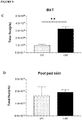
- In vivo imaging of TH action in live animals can be performed using an In Vivo Imaging System that allows repeated measurements, time course studies or determination of the effects of different TH analogues or different doses of the same derivative in different tissues, including the BAT, intestine, skin and salivary gland. This can be also applied ex vivo on organs or tissue slices.
- Thyroid hormone response element (TRE)
- one or more thyroid hormone response element which is/are sufficiently sensitive to provide an appropriate level of thyroid hormone dependent regulation of the reporter expression upon binding of a complex comprising TR and TH is applied.
- the TRE is applied in triplicate.
- the consensus TRE half site is AGGTCA spaced by 4 nucleotides followed by the second AGGTCA half site (TRE DR-4) (7). Less typical TREs are represented by inverted palindromic or palindromic half sites (e.g. F2 or Pal).
- the DR-4 is equally potent both for TR ⁇ and TR ⁇ and binds the most typical form of liganded TR, the TR-RXR (Retinoid-X-Receptor-Receptor) heterodimer.
- the F2 type TRE serves predominantly TR ⁇ homodimers and Pal binds TR/RXR very poorly (7).
- DR-4 provides a preferred option to put a reporter gene under potent and TR-dependent but not TR isoform selective response to thyroid hormone.
- one or more TREs and optionally flanking, separator or linker sequences form a part of the construct called herein a thyroid response segment.
- the function of this segment is to render the expression of the reporter sensitive to binding of a complex comprising TR and TH and, if necessary or desired, other coregulator proteins which may be part of or may bind to said complex.
- a TRE provides a positive regulation by TH.
- other coregulator proteins act as a repressor (or act as repressors) on the TRE. If a TR and/or a TRE functions in any other way it is not considered as an embodiment of the present invention.
- a promoter in the construct integrated into the genome of the mouse of the invention is functionally i.e. operably linked to the thyroid hormone response segment and more particularly to the one or more TRE.
- the promoter drives the transcription and/or expression of the reporter and thereby provides a functional link between the TRE and the reporter.
- the activity of the promoter is regulated by the activated form of thyroid hormone, T3, only in cells endogenously or transiently/stably overexpressing TR.
- T3 the activated form of thyroid hormone
- the promoter has to be sufficiently strong to provide a signal via the reporter.
- the promoter is (preferably) linked to an enhancer which is typically located downstream from the promoter.
- the promoter is preferably a promoter which is capable of driving expression in a wide variety of mammalian tissues, or all mammalian tissues, ie. a ubiquitous promoter.
- the promoter is a promoter that is functional in all mammalian tissues where it is expressed. Selection of an appropriate promoter is, based on his/her knowledge and the teaching provided herein, within the skills of a person skilled in the art. A useful guidance may be provided in "A promoter-level mammalian expression atlas" The FANTOM Consortium and the RIKEN PMI and CLST (DGT) (16).
- a preferred promoter is a Thymidine kinase (TK) minimal promoter, e.g. that of the Herpes simplex virus, that is capable to run ubiquitous transcription in any mammalian cell type.
- TK Thymidine kinase
- Enhancers are able to activate expression of target genes in cis.
- an enhancer is part of the construct and functionally strictly linked to the promoter.
- the expression enhancers typically contain intronic sequences that enhance transcription and promote most of the steps of mRNA metabolism (17).
- Enhancers suitable for the construction of a recombinant cassette are able to optimize heterologous mRNA and thus protect it against elimination by the host cell.
- 3' to the 3xTRE-TK promoter unit there is an expression enhancer cassette that contains the untranslated leader (exon 1)-HTLV-1 R- Synthetic Rabbit ⁇ -globin-based 3' intron-intron unit e.g. of the NTC8681 vector (purchased from Nature Technology Corporations).
- new transgenic lines should be created using new targeting cassettes containing the enhancer to be tested. Preliminary data could be also obtained in cell culture via transient transfection of the new targeting construct, but only the generation of novel lines of transgenic animals will show how the enhancer embedded into a specific region of the chromosome will function.
- fluorescent proteins could be also applied both ex vivo and in vivo.
- both luciferase and fluorescent reporters can be detected.
- the detection of bioluminescence is considered to be more sensitive than that of fluorescence.
- the animals need to be exposed to light of specific wavelength and the reporter needs to be located in superficial tissues.
- Specific injected fluorochromes are detectable with tomography in more embedded tissues if their emission is in the far red wavelength as the absorption of this type of light is less efficient in tissues.
- Discovering or engineering novel fluorescent proteins that are excited and emitting in the far red wavelength would highly enhance the detectability of fluorescent reporter proteins in deeply localized tissues.
- Protein reporters that can be detected by light-microscopic approaches based on the formation of coloured products cannot be used for in vivo detection in live animals.
- the recombinant DNA construct of the description may further comprise a sequence coding for a resistance marker, preferably a positive resistance marker to ensure the successful transformation of the cells or animals with the construct.
- the expression of the sequences coding for the reporter and of the resistance marker are operably linked, e.g. said sequences are fused to each other in frame.
- the recombinant DNA construct also comprises a polyadenylation segment downstream from the coding sequences.
- the resistance marker may be an antibiotic resistance marker, e.g. a broad spectrum antibiotic that is effective against most bacteria, filamentous fungi, yeast, plant, and animal cells, or a narrow spectrum antibiotic effective against the cell type in which the reporter is expressed.
- an antibiotic resistance marker e.g. a broad spectrum antibiotic that is effective against most bacteria, filamentous fungi, yeast, plant, and animal cells, or a narrow spectrum antibiotic effective against the cell type in which the reporter is expressed.
- the antibiotic may be a glycopeptide antibiotic.
- the glycopeptide antibiotic highly preferably belongs to the bleomycin family of antibiotics and is highly preferably a zeocin resistance, in particular a ShBle zeocin resistance antibiotic.
- the antibiotic is preferably encoded in an antibiotic resistance cassette, which is highly preferably a zeocin resistance cassette, in particular a ShBle zeocin resistance cassette.
- the construct described above is flanked by insulator sequences.
- Insulator is the name given to a class of DNA sequence elements that possess a common ability to protect genes from inappropriate signals emanating from their surrounding environment. Insulators can act by blocking the action of a distal enhancer on a promoter, if the insulator separates the promoter from the distal enhancer. Alternatively insulators protect genes by acting as "barriers” that prevent the advance of nearby condensed chromatin that might otherwise silence expression. Some insulators are able to act both as enhancer blockers and barriers (18).
- both role of the insulators may be preferred, in particular the barrier function.
- the cassette preferably allows ubiquitous expression in mammalian cells in a cell-type independent manner.
- Imprinted genes are expressed either from maternal or fraternal alleles. To ensure this, imprinted gene clusters are flanked by insulator sequences that help to isolate them from the transcriptional activity of flanking regions.
- An example for this is the Igf2/H19 locus that is known to function as an insulator (19).
- the recombinant DNA construct thus created is suitable to be used for the generation of transgenic animals with application of an appropriate means of introducing the construct into a cell.
- the complex structure of the construct and the interactions between the elements of the construct result in a successful integration into the genome and ensure that the construct remains functional when integrated.
- transient expression of a TRE containing recombinant construct in a cell line may have been reported earlier, stable integration into the genome of a construct which actually provides TH responsive expression of a reporter and thereby assessment of TH action requires a more complex approach to arrive at a functional solution.
- a unique combination of recombinant DNA elements was first generated as a highly sensitive tool to monitor TH action in transgenic animals and cultured cells ( Fig.1 ).
- the DR4 thyroid hormone response element (TRE) of the 5' flanking region of human dio 1 gene (20) that is considered to be the most sensitive response element to thyroid hormone-mediated induction was placed in triplicate 5' to the Thymidine kinase (TK) minimal promoter of the Herpes simplex virus that is capable to run ubiquitous transcription in any mammalian cell type.
- TK Thymidine kinase
- 3' to the 3xTRE-TK promoter unit a complex expression enhancer cassette that contains the untranslated leader (exon 1)-HTLV-1 R- Synthetic Rabbit ⁇ -globin-based 3' intron-intron unit of the NTC8681 vector (purchased from Nature Technology Corporations) was inserted.
- a codon optimized and methylation resistant dCpG Luciferase coding region was inserted to allow optimal performance in mammalian cells that was fused to ShBle (originated from the pMOD Luc-ShS v02 plasmid, purchased from Invivogen) that provides resistance against Zeocine followed by an EF1 pAn polyadenylation cassette.
- the cassette was assembled in a pWHERE vector (purchased from Invivogen) and it was flanked by the H19 insulators of the vector.
- the targeting cassette was subcloned between the ITR transposase recognition sequences of the pt2-BH expression vector as a HindIII(blunt)-NotI fragment ( Fig 1 ).
- the cassette allows ubiquitous expression in mammalian cells in cell-type independent manner.
- the activity of the promoter is regulated by the activated form of thyroid hormone, T3, only in cells endogenously expressing TR.
- the Sleeping Beauty system is particularly useful for the generation of stable transgenic animal lines as it is present only transiently by the integration of the recombinant cassette. This guarantees that the position of the cassette will not change afterwards and the transgenic animal lines remain stable during breeding.
- the pronucleus of fertilized oocytes were injected with picoliter volumes of a mixture containing the plasmid harbouring the targeting cassette (1 ng/ ⁇ l) and the in vitro transcribed mRNA encoding the Sleeping beauty transposon (5 ng/ul).
- Founders were identified using TaqMan assay with a Luciferase probe and crossed with wild/type FVB/N mice followed with inbred coupling of F1 generation.
- the F2 generation was used for Luciferase assays.
- TaqMan assay assisted determination of transgene dosage in all lines suggested that the transgenic cassette was incorporated in a single copy.
- the mouse model shows stable performance already in the 6th generation.
- Characterization of the #4, 18 and 23 lines identified thyroid hormone (5ug of T4 /day/mouse for 3 days) induced induction of Luciferase expression in various tissues of homozygote males.
- Line #4 showed induction both in various brain regions and in different peripheral tissues (skeletal muscle, bone, intestine, liver and heart) that included a striking response in the BAT.
- Line #23 showed an intense response to TH in the pituitary and hypothalamus, while #18 showed a high basal expression and an intense response in the pituitary.
- Line#23 is highly suitable to study TH response in the hypothalamus and pituitary. Line #18 could be used in the brain when a higher basal activity is required.
- the generated transgenic mouse model can be used to semi-quantitatively assess tissue and cell-specific in vivo thyroid hormone action in tissues of sacrificed animals or in live animals based on thyroid hormone dependent expression of a Luciferase reporter the transcription of which is fully dependent on endogenously expressed intact wild-type TRs and coregulators machinery of TH action.
- Thyroid hormone action can be measured in tissues of sacrificed animals by detecting the translated Luciferase-ShBle fusion protein by luciferase assay or cytochemistry. Expression of the reporter mRNA can be assessed by quantitative PCR or in situ hybridization.
- Ex vivo TH action can be assessed in a tissue sample or tissue explant of a transgenic animal either by using an In Vivo Imaging System or by detecting the translated Luciferase-ShBle fusion protein by luciferase assay or cytochemistry. Similarly to in vivo TH action, ex vivo TH action can also be assessed by measuring the reporter mRNA by quantitative PCR (qPCR) or in situ hybridization. In vitro TH action can be measured in cultured cells containing THAIC by the same methods.
- qPCR quantitative PCR
- the generated transgenic non human animal model provides the first animal model allowing the live assessment of in vivo TH action.
- In vivo imaging of TH action in live animals can be performed using an In Vivo Imaging System that allows repeated measurements, time course studies or determination of the effects of different TH analogues or different doses of the same derivative in different tissues, including the BAT, intestine, skin and salivary gland. This can be also applied ex vivo on organs or tissue explant or in vitro on cell culture.
- In vivo TH action may be assessed by detecting the level of the expression of the reporter in a transgenic non human animal live using an In Vivo Imaging System based on thyroid hormone dependent expression of a Luciferase reporter or in tissue samples of said animal by detecting the translated Luciferase-ShBle fusion protein by luciferase assay or cytochemistry or by detecting Luc mRNA by real time qPCR.
- Ex vivo TH action may be assessed by detecting the level of the expression of the reporter in tissue samples of the transgenic animal using an In Vivo Imaging System based on thyroid hormone dependent expression of a Luciferase reporter or by detecting the translated Luciferase-ShBle fusion protein by luciferase assay or cytochemistry or by detecting Luc mRNA by real time qPCR.
- Ex vivo TH action may be assessed by detecting the level of the expression of the reporter in cells comprising the recombinant construct of the description using an In Vivo Imaging System based on thyroid hormone dependent expression of a Luciferase reporter or by detecting the translated Luciferase-ShBle fusion protein by luciferase assay or cytochemistry or by detecting Luc mRNA by real time qPCR.
- the transgenic non human animal model also provides an ideal source of cells to generate T3-responsive Luciferase expressing primary cultures and cell lines from various tissues. Zeocin can be used to ensure that the TH-responsive Luciferase cassette is maintained during culturing and replating.
- the transgenic non human animal model can be useful for the pharmaceutical industry for the in vivo assessment of TR agonists or antagonists, modulators of coregulators or thyroid hormone transporters produced to take advantage of the beneficial effect of TH action (e.g. weight loss, lowered cholesterol level) without evoking hazardous side effect of TH (e.g. lipogenesis and tachycardia).
- the model also allows fast and efficient testing of subtype or tissue selective agonists or antagonists of TRs.
- the transgenic non human animal model provides a powerful tool to understand TH action in the BAT. Since this tissue is a major site locus of energy dissipation, it represents an intensively studied target of obesity research. Thus the transgenic non human animal model is a valuable tool for obesity research.
- transgenic mouse lines can be crossed with various transgenic mouse models that harbour deletion, mutations or Cre-recombinase targetable floxed versions of thyroid hormone receptors, TH metabolizing deiodinase enzymes, TH transporters or any other genes that might interfere with TH economy.
- the transgenic lines resulting from these crossings will allow the assessment of the impact of the modified gene function on TH action.
- Crossing with TR specific mutants can further facilitate the use of the transgenic mice for testing the receptor subtype specific agonists and antagonists.
- the transgenic non human animal model will also be of great benefit for discovery-driven scientific studies aimed to better understand cell-type specific thyroid hormone action to decipher underlying mechanism of the regulation of cell proliferation, energy homeostasis and any other symptom/condition associated with altered thyroid hormone economy (e.g. nonthyroidal illness syndrome, testing of thyroid hormone combination therapy).
- the THAIC DNA construct can be used to generate transgenic non human animals and cell lines including cells with stable expression of the targeting cassette in order to assess TH action.
- Cells may also be isolated from the transgenic animal and modulators of TH action can be studied also in vitro under culture conditions.
- a transgenic mouse comprising the THAIC DNA construct may be used as an animal model to understand the mechanisms underlining various diseases related to deficient TH action.
- Alteration of TH action is a hallmark of various human symptoms, e.g. resistance to thyroid hormone (RTH) is characterized by mutated TR ⁇ or TR ⁇ (22,23), while impaired TH transport is associated with X-linked psychomotor retardation (Allan-Herndon-Dudley Syndrome, AHD) (24,25).
- TH action is also changed in nonthyroidal illness syndrome (NTIS) (5,26), after TH replacement therapy (27) and TH action also affects the generation of obesity (28).
- NTIS nonthyroidal illness syndrome
- Crossing THAIM with a mouse wherein the mouse is a mouse model of RTH or wherein the mouse comprises a modification which mimics human RTH or wherein the mouse has a mutation in TR ⁇ or TR ⁇ (i.e. mouse models already established for RTH; both for TR ⁇ or TR ⁇ mutant versions) or introducing THAIC in such a mouse are possible ways to create a highly useful animal model to study the mechanisms of human RTH, wherein TH action and agents affecting TH action, isoforms of TR subtypes and coregulators of the TRs as well as potential therapeutic agents may be studied.
- Mouse models of human TR mutations are reviewed by Ortiga-Carvalho (23). Mutations in TR ⁇ are e.g.
- TR ⁇ Thr337del, Thr448fsX17, Glu124Gly and Gly125Ser and Arg429Gln.
- Mutations in TR ⁇ that result in a mouse model phenotypically similar to patients with TR ⁇ mutations are e.g. Pro398His, Thr394fsX17, Leu400Arg, Arg384Cys.
- crossing THAIM with a mouse serving as an animal model of ADH or introducing THAIC in such a mouse are possible ways to create a highly useful animal model to study the Allan-Herndon-Dudley Syndrome wherein TH action and agents affecting TH action as well as isoforms of TR subtypes and coregulators of the TRs and potential therapeutic agents may be studied.
- Currently available mouse models of ADH are mice having MCT8 (monocarboxylate transporter 8) deficiency, such as MCT8 knock-out mice.
- NTIS e.g. by LPS, see (29)
- obesity or aging in THAIM or in a mouse serving as animal model of a TH action related disease or condition and comprising THAIC could provide significant advancement in the treatment or understanding of these syndromes and conditions and can be used as an animal model of these syndromes and conditions.
- A, B, C T4 treatment (5ug/mouse/day for 3 days; i.p .) in mouse lines #4, 18, and 23. Basal activity levels in #18 are higher than other two lines.
- MSG mandibular salivary gland
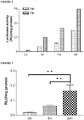
- T3 treatment (1 ⁇ g/g bw i.p. ) in line #4, effect on peripheral organs. The effect of T3 on Luciferase expression is more robust, than that of T4 (Mean ⁇ SEM, n 4). All experiments were performed on homozygote males.
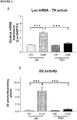
- TH action was determined in the ARC-ME region of the hypothalamus where the axon terminals of the hypophysiotropic axons may sense local TH availability ( Fig. 6 ).
- An increased luciferase mRNA level could be measured with quantitative PCR that reached statistical significance 8h after the treatment (A). This was preceded by the elevation of D2 mRNA level in the same region (B).
- a marked decrease of TRH mRNA level was observed in the PVN of LPS treated animals 8h after the treatment (C).
- the THAIC construct was transfected to the human HEK293 cells along with a pCMV(CAT)T7-SB100 Sleeping Beauty transposon expressing vector and a mouse TRa encoding plasmid. Transfection and cell culturing of HEK293 cells was performed according to our established protocol (36). ( Fig 10 )
Landscapes
- Health & Medical Sciences (AREA)
- Life Sciences & Earth Sciences (AREA)
- Engineering & Computer Science (AREA)
- Genetics & Genomics (AREA)
- Chemical & Material Sciences (AREA)
- Biomedical Technology (AREA)
- Biotechnology (AREA)
- Zoology (AREA)
- Organic Chemistry (AREA)
- Wood Science & Technology (AREA)
- Bioinformatics & Cheminformatics (AREA)
- Molecular Biology (AREA)
- General Engineering & Computer Science (AREA)
- General Health & Medical Sciences (AREA)
- Biochemistry (AREA)
- Physics & Mathematics (AREA)
- Microbiology (AREA)
- Biophysics (AREA)
- Immunology (AREA)
- Plant Pathology (AREA)
- Urology & Nephrology (AREA)
- Veterinary Medicine (AREA)
- Hematology (AREA)
- Endocrinology (AREA)
- Pathology (AREA)
- Animal Behavior & Ethology (AREA)
- Analytical Chemistry (AREA)
- Cell Biology (AREA)
- Environmental Sciences (AREA)
- Toxicology (AREA)
- General Physics & Mathematics (AREA)
- Food Science & Technology (AREA)
- Medicinal Chemistry (AREA)
- Epidemiology (AREA)
- Public Health (AREA)
- Proteomics, Peptides & Aminoacids (AREA)
- Animal Husbandry (AREA)
- Diabetes (AREA)
- Gastroenterology & Hepatology (AREA)
- Rheumatology (AREA)
Description
- The invention relates to the field of cell or tissue specific assessing of thyroid hormone (TH) action in vivo and in vitro. A thyroid hormone action indicator non human animal model that allows assessing in vivo cell or tissue specific thyroid hormone action is provided together with the thyroid hormone action indicator transgenic recombinant DNA construct (THAIC) suitable to generate such a transgenic model animal.
- Thyroid hormone (TH) is a key regulator of a wide range of biological processes. Thyroid hormone exerts its effect on a broad range of crucial phenomena including cell proliferation, energy homeostasis, brain development and function. It is necessary for normal growth in children and young animals, as evidenced by the growth-retardation observed in thyroid deficiency. TH increases heart rate, cardiac contractility and cardiac output. It also promotes vasodilation, which leads to enhanced blood flow to many organs.
- Both decreased and increased concentrations of thyroid hormone lead to alterations in mental state.
- Normal reproductive behavior and physiology is dependent on having essentially normal levels of thyroid hormone. Hypothyroidism in particular is commonly associated with infertility.
- Increased thyroid hormone levels stimulate fat mobilization, leading to increased concentrations of fatty acids in the plasma. Thyroid hormones stimulate almost all aspects of carbohydrate metabolism, including enhancement of insulin-dependent entry of glucose into cells and increased gluconeogenesis and glycogenolysis to generate free glucose.
- The human thyroid gland secrets predominantly a stable prohormone, T4, that needs to be converted to T3 to initiate its nuclear receptor mediated biological effects (1). Thyroid hormone levels are relatively stable in the plasma, but intracellular TH concentration undergoes turbulent and tightly controlled changes evoked by specific physiological or pathophysiological stimuli. Thus TH action on the nuclear receptors is evoked by cell and tissue specific processes. The cell and tissue specific action of thyroid hormones is governed by local thyroid hormone metabolizing enzymes, transporter molecules, receptors and co-regulators (2-5). The cell type specific action of thyroid hormones is regulated by thyroid hormone transporters, deiodinase enzymes, thyroid hormone receptors and co-regulators relatively independently from the circulating thyroid hormone levels.
- Receptors for thyroid hormones (TR) are nuclear DNA-binding proteins that function as hormone-responsive ligand-induced transcription factors. To date, the receptor subtypes TRα and TRβ with several isoforms have been identified. Both TRα and TPβ can bind the same thyroid hormone responsive element (TRE) located in the regulatory regions of thyroid hormone responsive genes (6). The typical consensus TRE half site is AGGTCA spaced by 4 nucleotides followed by the second AGGTCA half site (TRE DR-4) (7). Less typical TREs are represented by inverted palindromic or palindromic half sites (e.g. F2 or Pal) (7).
- TRα plays major role in the regulation of heart rate and muscle whereas TPβ modulates serum cholesterol levels via actions in liver and feedback inhibition of TH production through the hypothalamic-pituitary-thyroid axis. TRs also exhibit subtype-specific effects in regulation of basal metabolic rate, bone development and other processes (6).
- Treatment of patients with thyroid hormone would be beneficial for various symptoms e.g. obesity and hypercholesterolaemia. However, this treatment cannot be performed due to unfavorable, e.g. cardiac effects of thyroid hormone that results in tachycardia. Intense efforts are made to overcome this problem since obesity is getting a devastating health problem in Europe and the USA (8) by increasing the risk of
type 2 diabetes, cardiovascular symptoms, oncogenesis and depression. In the USA, more than 65% of the population is overweight, 31% (more than 61 million people) is obese (www.obesityresearch.nih.gov) and the consequent direct and indirect costs exceed 100 billion USD (9). 20% of the population is obese (BMI>30 kg/m2) and additional 42% is overweight (BMI between 25- 30 kg/m2) in Hungary (10). Furthermore, hypercholesterolaemia represents a massive health risk worldwide since it increases the risk for coronary heart diseases in large populations (∼42% of men and 34% of women are diagnosed with hypercholesterolaemia in the USA) (11). - It is a subject of intense R&D activity to generate TR isoform and/or tissue specific compounds that could modulate TH action in specific tissues while leaving it intact in others in order to exert the beneficial effects of thyroid hormone without evoking unwanted, e.g. cardiac symptoms.
- Numerous studies have been set out to examine the effects of thyroid hormones and thyroid hormone analogues as well as to identify the role of the different TR subtypes and gene specific variations in transcriptional responses of different tissues to TH.
- Lin et al. examined the gene specific actions of thyroid hormone receptor subtypes using genetically modified HepG2 and HeLa cells by introducing exogenous TRs into the cells (6).
-
EP 1 365 034 describes a promoter assay suitable for the assessment of thyroid hormone gene transcription. HepG2 cells were transformed with a 2xIROluc vector, carrying a TRE of two 12 bp inverted palindromes separated by an 8 bp spacer in front of a thymidine kinase minimal promoter and the luciferase gene. The construction is suitable for the determination of TH action in vitro in cell lines such as the HepG2 cells but does not allow the in vivo assessment of TH action since the recombinant construct is not functional in a transgenic animal. - Quignodon et al. report the construction of a transgenic reporter mouse to analyze the spatio-temporal distribution of thyroid hormone signaling during mouse brain development (12). The reporter system is utilizing a chimeric yeast Gal4DNA-binding domain - THα ligand-binding domain fusion protein to drive lacZ expression. The authors were able to generate two transgenic lines, called FINDT3A and FINDT3B, differing in the transgene integration site and copy number. The FINDT3 transgenic reporter system proved to be highly responsive to thyroid hormone in neuronal cells. Transgene expression was dependent on T3, however, the system worked independently of endogenous TR. Therefore this model is inappropriate to report on any regulation dependent on endogenously expressed thyroid hormone receptors.
- Quignodon et al. also recognized that interactions occurring in the N-terminal domains of TR and variations in TR isoforms expression might generate another level of regulation not detected by the FINDT3 system. This renders the model unsuitable to test the effects of isoform specific TH analogues and antagonists. The authors also considered it possible that the onset of endogenous T3 signaling might occur slightly earlier than detected by the model system, because the accumulation of β-galactosidase in a self-inducible system could be delayed as the chimeric receptor used for the generation of the recombinant DNA construct self-regulates its own expression. Therefore, the use of the model is limited when performing time-curve studies in live animals.
- Nucera et al. have generated a transgenic mouse model expressing the LacZ reporter gene (encoding β-galactosidase) under a TRE, to specifically trace maternal TH transcription activity during early and late embryo-foetal development. Although the authors could successfully assess TH action with the model at embryonic stages, information on adult animals is missing. This might be due to the complexity of the regulation of both transgene expression and TH related gene regulation in adult animals which often results in non-functional (e.g. silenced) recombinant constructs in adults. Also, the 2xTRE β gal model does not allow detection in live animals (13) and the variable copy number of the resulting animals does not allow for quantification of the test results.
- There is apparently a need for complex and reliable in vivo and in vitro models for the assessment of thyroid hormone action as well as for the assessment of TR agonists or antagonists, modulators of co-regulators or thyroid hormone transporters produced by the pharmaceutical industry to take advantage of the beneficial effects of TH action (e.g. weight loss, lowered cholesterol level) without evoking hazardous side effects of TH (e.g. lipogenesis and tachycardia). Discovery-driven scientific studies would also greatly benefit from a model that allows better understanding of cell-type specific thyroid hormone action to decipher underlying mechanism of the regulation of cell proliferation, energy homeostasis and any other symptom/condition associated with altered thyroid hormone economy (e.g. nonthyroidal illness syndrome, testing of thyroid hormone combination therapy).
- The invention in its broadest sense is as defined in the independent claims. The invention relates to a transgenic mouse that allows assessing thyroid hormone (TH) action in vivo. The transgenic mouse of the invention is suitable for the tissue specific and/or cell type specific measurement of TH mediated regulation of gene transcription and is dependent on the endogenous apparatus of TH action, including different isoforms of TH receptor (TR) subtypes and coregulators of the TH receptors. In a particular embodiment the expression of a reporter protein or its encoding mRNA is used as readout. The transgenic mouse of the invention allows the assessment of thyroid hormone (TH) action if TR is present or even a lack of such action if either TR or TH is not present. The transgenic mouse of the invention also allows the assessment of the level of tissue and/or cell type specific thyroid hormone (TH) action in cells and/or tissues expressing any isoform of any endogenously expressed TR subtype.
- A thyroid hormone action indicator transgenic mouse is provided, the mouse comprising stably integrated in its haploid genome a single copy of a recombinant DNA construct, useful for the assessment of thyroid hormone (TH) action, wherein the recombinant DNA construct comprises, in 5' to 3' direction, at least the following elements:
- a thyroid hormone responsive segment, wherein the thyroid hormone responsive segment comprises a single copy or multiple copies of a thyroid hormone responsive element (TRE), wherein the TRE is a TRE of the dio1 gene, and wherein said TRE is present in 1 to 5 copies,
- a promoter operably linked to an expression enhancer,
- a coding sequence encoding a reporter, wherein the reporter is a protein which, when expressed in a cell, said cell provides an optically detectable signal or which can be detected by an enzymatic assay,
- the promoter drives expression of the reporter in cells of one or more tissue(s) of said mouse,
- a thyroid hormone receptor (TR), when expressed in said cells, is expressed independently from the construct or is not expressed in said cells,
- a TR, if present and a TH, if present, forms a complex in said cells,
- said complex, if present, up-regulates expression of the reporter via the thyroid hormone responsive segment, whereby
- the level of the expression of the reporter correlates with the level of said complex
and - wherein the recombinant DNA construct is flanked by insulator sequences to protect the DNA construct from influences from neighbouring sequences,
- wherein the promoter is a minimal promoter with minimal responsiveness to transcription factors beyond those that are required to form the basic transcriptional complex or the promoter is a minimal promoter lacking responsiveness to transcription factors beyond those that are required to form the basic transcriptional complex and the promoter is a ubiquitous promoter,
and wherein the recombinant DNA construct is integrated into the genome of the mouse by a transposon based delivery. - In a preferred embodiment the TRE is a TRE of the human dio1 gene and is present in 3 copies.
- In a further preferred embodiment the reporter is a protein which, when expressed in a cell, said cell provides an optically detectable signal.
- In a preferred embodiment the recombinant DNA construct also comprises a resistance marker, wherein preferably the resistance marker is a positive resistance marker and/or the expression of the resistance marker is operably linked with the expression of the reporter.
- The use of the transgenic mouse according to the invention is provided for the assessment or monitoring of TH action in vivo. The use of a cell, tissue or organ derived from the transgenic mouse according to the invention for the assessment of TH action ex vivo is provided, wherein said cell, tissue or organ comprises stably integrated in its haploid genome a single copy of the recombinant DNA construct as defined in any one of the claims.
- Use of a cell derived from the transgenic mouse according to the invention is provided for the assessment or monitoring of TH action in said cell in vitro, wherein said cell comprises stably integrated in its haploid genome a single copy of the recombinant DNA construct as defined in any one of the claims.
- A mouse model of a TH action related disease or condition is provided, wherein the mouse comprises stably integrated in its haploid genome a single copy of the recombinant DNA construct defined in any one of the claims and wherein the recombinant DNA construct is integrated into the genome of the mouse by a transposon based delivery.
- Use of a recombinant DNA construct as defined in any one of the claims for generating a transgenic mouse useful for the assessment of thyroid hormone (TH) action is provided, wherein the recombinant DNA construct is stably integrated in the haploid genome of the generated transgenic mouse in a single copy and wherein the recombinant DNA construct is integrated into the genome of the mouse by a transposon based delivery.
- According to one aspect, the description relates to a thyroid hormone action indicator transgenic mammalian non human animal comprising cells having stably integrated in their genome a recombinant DNA construct useful for the assessment of thyroid hormone (TH) action, wherein the recombinant DNA construct comprises, in 5' to 3' direction, at least the following elements:
- a thyroid hormone responsive segment, comprising one or more thyroid hormone responsive element (TRE),
- a promoter operably linked to an expression enhancer,
- a coding sequence encoding a reporter.
- In this aspect the promoter drives expression of the reporter in cells of one or more tissue(s) of said animal.
- The thyroid hormone receptor (TR) is expressed independently from the construct, when it is expressed in said cells, i.e. in the same cells in which the recombinant DNA construct is present and operable. Alternatively, the TR is not expressed in said cells.
- In particular said recombinant DNA construct is free of a sequence encoding a thyroid hormone receptor.
- A TR, if present and a TH, if present, forms a complex (TR-TH complex) in said cells; this complex, if present, up-regulates expression of the reporter via the thyroid hormone responsive segment, whereby the level of the expression of the reporter correlates, preferably positively correlates, with the level of said complex.
- Thereby regulation of the reporter is dependent on a thyroid hormone receptor (TR). The regulation of the reporter can be dependent also on coregulators of said receptor. The regulation of the reporter is dependent on a thyroid hormone receptor which is in the presence of TH binding, acts as a TRE-dependent activator, while in the absence of TH binding, acts as a TRE-dependent repressor and thereby mediates the transcriptional effects of thyroid hormone via the thyroid hormone responsive segment.
- In particular, when a complex comprising the TR and TH is formed in the cell comprising the recombinant DNA construct, said complex activates the promoter and thereby transcription of the coding sequence encoding the reporter. The level of activation and/or the transcription depends on and/or correlates with the level of the liganded TR complex.
- The complex of the TR and the TH is an activator.
- Thus, the TRE can be activated by binding of said complex.
- If desired the TR and/or the complex of the TR and the TH is bound to one or more further protein which are present in the cells comprising the construct and which are coregulators of TH action.
- In an aspect the thyroid hormone responsive segment of the recombinant DNA construct integrated in the genome of the non human animal shows TR-dependent responsiveness or sensitivity to triiodothyronine (T3).
- In an aspect the thyroid hormone responsive segment contains a thyroid hormone responsive element (TRE) that activates gene transcription and/or expression when TR is liganded with TH.
- The TRE that binds an unliganded TR may act as a repressor of gene transcription and/or expression.
- In another aspect the thyroid hormone responsive segment of the recombinant DNA construct integrated in the genome of the animal comprises a single copy or multiple copies of a thyroid hormone responsive element.
- In a preferred aspect the TRE is the thyroid hormone response element of the dio1 gene, more preferably the human dio1 gene.
- In a highly preferred aspect the TRE is a thyroid hormone response element (TRE) having the sequence motif of GGGTCA nnnn AGGTCA, highly preferably the TRE of the 5' flanking region of the human dio1 gene having the sequence of GGGTCA tctg AGGTCA (14).
- In yet another aspect the TRE is present in more than one copy, preferably in 1, 2, 3, 4 or 5 copies, highly preferably in 3 copies, in particular, 3 copies of the TRE of the dio1 gene.
- In an aspect the promoter is a ubiquitous promoter.
- In a preferred aspect the promoter is a minimal promoter with minimal/lacking responsiveness to transcription factors beyond those that are required to form the basic transcriptional complex.
- In a preferred aspect the promoter is the thymidine kinase (TK) minimal promoter.
- In a highly preferred aspect the promoter is the thymidine kinase (TK) minimal promoter of the Herpes simplex virus.
- In a preferred aspect the expression enhancer contains intronic sequences.
- In a highly preferred aspect the expression enhancer is in the form of an expression enhancer cassette preferably containing an untranslated leader sequence, more preferably an untranslated leader sequence of a beta globin gene intron sequence, highly preferably the untranslated leader (exon 1)-HTLV-1 R-Synthetic Rabbit β-globin-based 3' intron-intron unit of the NTC8681 vector.
- In another aspect the reporter encoded by the coding sequence encoding a reporter is a protein which, when expressed in a cell, said cell provides an optically detectable signal, the optically detectable signal being preferably visible light.
- In certain aspects the protein is an enzyme the activity of which results in a light emitting substrate, highly preferably a luciferase; or a colored substrate, e.g. lacZ.
- In other aspects said protein is a fluorescent protein, preferably selected from GFP, RFP, YFP, CFP, tdTomato.
- In a highly preferred aspect the coding sequence for the reporter protein is a codon optimized and/or methylation resistant sequence, preferably a dCpG sequence, highly preferably a dCpG Luciferase coding region.
- In yet another aspect the reporter encoded by the coding sequence encoding a reporter is a protein the amount and/or activity of which, when expressed in a cell, can be measured by enzymatic assays.
- In another aspect the recombinant DNA construct further comprises a sequence coding for a resistance marker.
- In yet another aspect the sequences coding for the reporter and the resistance marker are fused to each other in frame; wherein the recombinant DNA construct also comprises a polyadenylation segment downstream from the coding sequences.
- In certain aspects the resistance marker is an antibiotic resistance marker, preferably encoded in an antibiotic resistance cassette which is highly preferably a zeocin resistance cassette, in particular a ShBle zeocin resistance cassette.
- In yet another aspect the recombinant DNA construct is flanked by insulator sequences to protect the DNA construct from influences from neighbouring genome sequences.
- In a highly preferred aspect the DNA construct is assembled in a pWHERE vector and/or is flanked by the H19 insulators in particular of that of the vector.
- The recombinant DNA construct may be assembled in any suitable vector that can be grown in E. coli (e.g. pGemT, pUC, pCI-neo, pGL3-basic, pSPORT, pEYFP, D10).
- In an aspect the recombinant DNA construct is integrated into the genome of the non human animal by a transposon based delivery.
- Highly preferably as a transposon based delivery system the Sleeping Beauty system is applied.
- In a preferred aspect the non human animal is a mammal, preferably a rodent, preferably a murine animal.
- In this aspect the mammalian animal is highly preferably a mouse.
- In a highly preferred aspect the transgenic animal is a mouse comprising stably integrated in its genome a recombinant DNA construct useful for the assessment of thyroid hormone action, wherein the recombinant DNA construct comprises, in 5' to 3' direction, the following elements
- a thyroid hormone responsive segment, preferably containing one or more TRE(s) having the sequence motif of GGGTCA nnnn AGGTCA, preferably the TRE of the 5' flanking region of a dio1 gene, preferably of the human dio1 gene,
- a promoter operably linked to an expression enhancer, wherein the promoter is preferably a thymidine kinase minimal promoter, preferably the thymidine kinase minimal promoter of the Herpes simplex virus,
- the expression enhancer is preferably in the form of an expression enhancer cassette preferably containing an intronic sequence e.g. an intron-intron unit and an untranslated leader sequence, in particular the untranslated leader (exon 1)-HTLV-1 R-Synthetic Rabbit β-globin-based 3' intron-intron unit of the NTC8681 vector,
- a coding sequence encoding a reporter, wherein the coding sequence is preferably a dCpG Luciferase coding region,
- In an aspect the recombinant DNA construct is integrated into the genome of the non human animal by the Sleeping Beauty transposon system.
- In an aspect the non human animal is heterozygous for the DNA construct.
- In an aspect the non human animal comprises multiple copies of the DNA construct in its genome.
- In yet another aspect the non human animal preferably comprises a single copy of the DNA construct in its (each) haploid genome(s).
- According to another aspect, the description relates to a recombinant DNA construct that allows assessing thyroid hormone action.
- The recombinant construct according to the description comprises the following elements: a thyroid responsive segment that is responsive to thyroid hormone dependent action via thyroid hormone receptors, a minimal promoter with tissue independent, ubiquitous expression in mammalian tissues with minimal/lacking responsiveness to transcription factors beyond those that are required to form the basic transcriptional complex; a coding region encoding a reporter gene the amount of which can be sensitively detected in vivo in live animals, ex vivo in tissue samples and/or in vitro in cultured cells; an expression enhancer cassette to promote the activity of the minimal promoter driven transcriptional unit; insulators that isolate the thyroid hormone responsive transgenic cassette from the neighboring chromosomal regions.
- In an aspect the recombinant DNA construct of the description comprises, in 5' to 3' direction, at least the following elements:
- a thyroid hormone responsive segment,
- a promoter operably linked to an expression enhancer,
- a coding sequence encoding a reporter
- In this aspect the promoter is capable of driving expression of the reporter in cells of one or more tissue(s) of said animal. Preferably the promoter is a ubiquitous promoter.
- A sequence coding a thyroid hormone receptor (TR) is not part of the construct i.e. said recombinant DNA construct is free of a sequence encoding a TR. Thus a TR, if any, is expressed independently from the construct, when it is expressed in said cells, i.e. in the same cells in which the recombinant DNA construct is present and operable. Alternatively, the TR is not expressed in said cells.
- A TR, if present and a TH, if present, forms a complex (TR-TH complex) in said cells; this complex, if present, up-regulates expression of the reporter via the thyroid hormone responsive segment, whereby the level of the expression of the reporter correlates, preferably positively correlates, with the level of said complex.
- In one embodiment the thyroid hormone responsive segment of the recombinant DNA construct shows TR-dependent responsiveness or sensitivity to T3.
- In one aspect the thyroid hormone responsive segment contains a thyroid hormone responsive element that activates gene expression when TR is liganded with TH.
- In another aspect the thyroid hormone responsive segment of the recombinant DNA construct comprises a single copy or multiple copies of a thyroid hormone responsive element.
- In a preferred aspect the TRE is the thyroid hormone response element of the dio1 gene, more preferably the human dio1 gene.
- In a highly preferred aspect the TRE is a thyroid hormone response element (TRE) having the sequence motif of GGGTCA nnnn AGGTCA, highly preferably the TRE of the 5' flanking region of the human dio1 gene having the sequence of GGGTCA tctg AGGTCA.
- In yet another aspect the TRE is present in one or more than one copy, preferably in 1 to 5 copies, preferably in 3 copies.
- In an aspect the promoter in the recombinant DNA construct is a ubiquitous promoter.
- In a preferred aspect the promoter is a minimal promoter with minimal/lacking responsiveness to transcription factors beyond those that are required to form the basic transcriptional complex.
- In a preferred aspect the promoter is the thymidine kinase minimal promoter.
- In a highly preferred aspect the promoter is the thymidine kinase minimal promoter of the Herpes simplex virus.
- In a preferred aspect the expression enhancer contains intronic sequences.
- In a highly preferred aspect the expression enhancer in the recombinant DNA construct according to the description is in the form of an expression enhancer cassette preferably containing an untranslated leader sequence, more preferably an untranslated leader sequence of a beta globin gene intron sequence, highly preferably the untranslated leader (exon 1)-HTLV-1 R-Synthetic Rabbit β-globin-based 3' intron-intron unit of the NTC8681 vector.
- In another aspect the reporter encoded by the coding sequence encoding a reporter is a protein which, when expressed in a cell, said cell provides an optically detectable signal, the optically detectable signal being preferably visible light.
- In certain aspects the protein is an enzyme the activity of which results in a light emitting substrate, highly preferably a luciferase; or a colored substrate, e.g. lacZ.
- In other aspects
said protein is a fluorescent protein, preferably selected from GFP, RFP, YFP, CFP, tdTomato. - In a highly preferred aspect the coding sequence for the reporter protein is a codon optimized and/or methylation resistant sequence, preferably a dCpG sequence, highly preferably a dCpG Luciferase coding region.
- In yet another aspect the reporter encoded by the coding sequence is a protein the amount and/or activity of which, when expressed in a cell can be measured by enzymatic assays.
- In another aspect the recombinant DNA construct further comprises a sequence coding for a resistance marker.
- In yet another aspect the sequences coding for the reporter and the resistance marker are fused to each other in frame; wherein the recombinant DNA construct also comprises a polyadenylation segment downstream from the coding sequences.
- In certain aspects the resistance marker is an antibiotic resistance marker, preferably encoded in an antibiotic resistance cassette which is highly preferably a zeocin resistance cassette, in particular a ShBle zeocin resistance cassette.
- In yet another aspect the recombinant DNA construct is flanked by insulator sequences to protect the DNA construct from influences from neighboring sequences.
- In a highly preferred aspect the DNA construct is assembled in a pWHERE vector and is flanked by the H19 insulators in particular of that of the vector.
- The recombinant DNA construct of the description may be assembled in any suitable vector, e.g that can be grown in E. coli (e.g. pGemT, pUC, pCI-neo, pGL3-basic, pSPORT, pEYFP, D10).
- In a highly preferred aspect a recombinant DNA construct useful for the assessment of thyroid hormone action is provided, wherein the recombinant DNA construct comprises, in 5' to 3' direction, the following elements
- a thyroid hormone responsive segment, preferably containing one or more TRE having the sequence motif of GGGTCA nnnn AGGTCA, preferably the TRE of the 5' flanking region OF a dio1 gene, preferably of the human dio1 gene,
- a promoter operably linked to an expression enhancer, wherein the promoter is preferably a thymidine kinase minimal promoter, preferably the thymidine kinase minimal promoter of the Herpes simplex virus,
- the expression enhancer is preferably in the form of an expression enhancer cassette preferably containing an intronic sequence e.g. an intron-intron unit and an untranslated leader sequence, in particular the untranslated leader (exon 1)-HTLV-1 R-Synthetic Rabbit β-globin-based 3' intron-intron unit of the NTC8681 vector,
- a coding sequence encoding a reporter, wherein the coding sequence is preferably a dCpG Luciferase coding region,
- In yet another aspect of the description a targeting expression vector useful to integrate the recombinant DNA construct into the genome of said transgenic animal is provided wherein said targeting construct contains the recombinant DNA construct of the description between transposase recognition sequences.
- In an aspect the transposase recognition sequences are ITR transposase recognition sequences.
- In this aspect the transposon system is highly preferably the Sleeping Beauty transposon system.
- In another aspect of the description a cell of an animal comprising the DNA construct of the description is provided wherein said cell expresses increased levels of the reporter protein in the presence of said TH.
- In yet another aspect the cell is a cell derived from said transgenic non human animal.
- In an aspect said cell is a cell being transformed with a DNA construct defined above.
- In another aspect the cell is of a cell line, preferably an established cell line not derived from the animal of the invention.
- In another aspect of the description a method of producing the transgenic non human animal is provided.
- In an aspect the method of producing the transgenic non human animal comprises the following steps:
- introduction of the recombinant DNA targeting construct of the description into the pronucleus of fertilized oocytes,
- identification of the founder animals,
- crossing the founders with wild type animals,
- inbred coupling of the F1 generation.
- In another aspect the method of producing the transgenic non human animal may comprise any genetic engineering method suitable to produce a transgenic animal containing the recombinant DNA construct of the description, e. g. DNA microinjection, stem cell mediated gene transfer, knock-in techniques, etc.
- In a specific aspect the method of producing the transgenic non human animal comprises the following steps
- injecting the pronucleus of fertilized oocytes with a mixture containing the plasmid harbouring the targeting cassette and the in vitro transcribed mRNA encoding the Sleeping beauty transposon,
- identification of the founders using TaqMan assay with a Luciferase probe.
- In another aspect of the description a method of transforming a cell with the recombinant DNA construct of the description is provided wherein the method comprises the steps of introducing the recombinant DNA construct into the cell and culturing said cell.
- According to another aspect of the invention, a mouse model of a TH action related disease or condition is provided, wherein the mouse comprises stably integrated in its haploid genome a single copy of the recombinant DNA construct defined in any one of claims 1 to 4 and wherein the recombinant DNA construct is integrated into the genome of the mouse by a transposon based delivery. The mouse may further comprise a genetic modification or spontaneously generated changes in a gene associated with a TH action related disease.
- In a preferred aspect the genetic modification affects a gene selected from the group comprising TRα, TPβ and MCT8 (monocarboxylate transporter 8).
- In another aspect non-thyroidal illness is induced in the mouse of the mouse model of a TH action related disease or condition.
- In still another aspect obesity is induced in the mouse of the mouse model of a TH action related disease or condition.
- In another aspect the mouse of the mouse model of a TH action related disease or condition is an aged mouse.
- A "transgenic" animal is a genetically modified animal which comprises in its genome an expressible nucleic acid sequence which is different from animal nucleic acid sequences present in nature.
- "Genetic modification" is a process in which the genetic material of a living organism has been altered in a way that does not occur naturally e. g. by recombination and/or recombination and mating.
- The term "thyroid hormone" (TH) as used herein may refer to any form, proform, or derivative of the thyroid hormone, i.e. thyroid hormone as used herein may refer to the prohormone form of triiodothyronine, conventionally termed thyroxine or T4 and it may also refer to triiodothyronine (T3). Preferably, a TH as used herein refers to a thyroid hormone which, when is bound to and/or forms a complex with a thyroid hormone receptor (TR) acts or functions as an activator of the transcription of a gene regulated by a thyroid hormone responsive element. Still more preferably the thyroid hormone is 3,5,3'-triiodothyronine (T3).
- A "thyroid hormone response segment", "thyroid hormone responsive segment" or "TRE segment" as used herein is a nucleic acid segment where the nuclear receptors capable of binding thyroid hormone (i.e. thyroid hormone receptors) may bind thereby regulating the transcription of genes affected by thyroid hormone action. A thyroid hormone response segment may comprise one or more thyroid hormone response elements of one or more genes.
- The term "thyroid hormone response element", thyroid hormone responsive element" or "TRE" describes a nucleic acid sequence where the nuclear receptors capable of binding thyroid hormone (i.e. thyroid hormone receptors) may bind to said sequence thereby regulating the transcription of genes affected by thyroid hormone action. The consensus TRE half site is AGGTCA spaced by 4 nucleotides followed by the second AGGTCA half site (TRE DR-4) (7). Less typical TREs are represented by inverted palindromic or palindromic half sites (e.g. F2 or Pal). The DR-4 is equally potent both for TRα and TRβ and binds the most typical form of liganded TR, the TR-RXR (Thyroid hormone receptor -Retinoid-X-Receptor) heterodimer. TRE as used herein refers to a nucleic acid sequence where a thyroid hormone receptor may bind to thereby positively regulating the transcription of genes affected by thyroid hormone action, i.e. the TRE is a "positive" TRE. On a TRE-containing target gene, TH binding acts as a switch between repressed and activated states if the TRE contained by said gene is a "positive" TRE. "Negative TRE"-s on the other hand, may mediate a negative regulatory effect of TH. The terms "positive" TRE and "negative TRE" may be understood as described in (15).
- The term "5' flanking region of the human dio1 gene" refers to the genomic regulatory region of the human dio1 gene located 5' of the transcriptional start site.
- A "promoter" is a DNA segment preceding the starting point of transcription where the RNA polymerase and transcription factors bind to initiate transcription; a promoter is capable of driving and regulating expression of a gene, e.g. a transgene in an organism.
- A "minimal promoter" (or "native promoter") is a promoter having a sequence comprising elements required and sufficient to drive expression of a gene; preferably a minimal promoter lacks response elements and lacks enhancer elements, highly preferably lacks tissue-specific regulatory elements, even more preferably lacks or essentially lacks regulatory elements. Preferably, minimal promoters consist of a single fragment from the 5' region of a given gene and comprise a core promoter and its natural 5'UTR. In an embodiment the 5'UTR may contain an intron.
- A "ubiquitous promoter" is a promoter which is active in a plurality of cells and tissues, preferably in a wide range of cells and tissues.
- As used herein, the thymidine kinase (TK) minimal promoter is a portion of the TK promoter that is required and sufficient to run the transcription of a cassette cloned 3' to said promoter.
- The thymidine kinase (TK) minimal promoter of the Herpes simplex virus (HSV) is a portion of the TK promoter derived from said virus, that is required and sufficient to run the transcription of a cassette cloned 3' to said promoter.
- An "expression enhancer" or "expression enhancer element" is a DNA sequence that acts together with and/or is operably linked to a promoter and promotes, facilitates or enhances the level of the expression of a gene product that is under the control of said promoter.
- The term "derived from" or "cell derived from" indicates the origin of the cell or object that is "derived from". The cell or object that is "derived from" is taken, received, obtained especially from a specified source or has its origin especially in a specified source. Thus the "cell derived from the transgenic animal" may indicate any cell prepared, obtained or taken from said animal as well as the cells obtained by culturing such a cell.
- When the terms "one", "a", or "an" are used in this disclosure, they mean "at least one" or "one
or more," unless otherwise indicated. The singular forms of nouns, such as "a TRE" may also cover the plural form of said noun. -
-
Fig.1 . The recombinant DNA construct (A) Schematic depiction of the targeting construct. TK promoter: thymidine kinase minimal promoter; TRE: thyroid hormone response elements; EEC; expression enhancer cassette Luc reporter-zeocin sequences encoding a Luciferase/zeocin resistance fusion protein. (B) Structure of the targeting construct generated in the pt2-BH vector. The coding sequence encodes Luciferase (62 kDa) fused to ShBle (14 kDa) allowing selection based on zeocin resistance. -
Fig.2 . Luciferase activity of the transgenic animal model directly depends on copy number T3 was administered to mice from the #4 line (1µg/g bw, i.p.) and luciferase activity was assessed by luciferase assay at four different time points in the brown adipose tissue. Homozygotes showed a 2 fold higher Luciferase activity than heterozygotes (means of two animals of each group). -
Fig.3 . Luciferase activity is up-regulated in the brown adipose tissue of cold stressed transgenic mice Luciferase activity shows a tendency to elevate in BAT after 9 hours at 4°C and is significantly increased after 24 hour cold stress. **P<0.01; by one way ANOVA followed by Newman-Keuls post-test. Data are shown as Mean ± SEM (n =5). -
Fig.4 . Luciferase expression in the cold induced interscapular brown adipose tissue of transgenic mice depends on sympathetic innervation- (A) Luciferase mRNA expression significantly increased by 9h cold challenge at 4°C on the intact side of iBAT. TH action was not influenced by 9h cold on the denervated side. Despite sympathetic denervation, luciferase expression did not decrease at room temperature in the denervated lobe compared to the intact lobe.
- (B) Denervation abolished the cold induced increase of the
T3 generating type 2 deiodinase activity in iBAT, while it did not influenced the D2 activity at room temperature.
*** p<0.001; repeated measure ANOVA followed by Newman-Keuls post-hoc test. Data are shown as Mean ± SEM (N =6).
-
Fig.5 . Luciferase mRNA expression is up-regulated in the pituitary of T3 treated transgenic mice
Luciferase mRNA level is robustly increased by T3-treatment in the pituitary of #23 THAIM mouse line. Expression was assessed with TaqMan assay, Luciferase expression level was denominated with GAPDH expression used as housekeeping gene. Mean ± SEM (n=5) *** p<0.0001 by t test. -
Fig. 6 . Detection of TH action in microdissected brain samples in LPS challenge
Thyroid hormone action was assessed in three different time points after i.p. injection of 150 µg LPS, by real time PCR analysis of luciferase mRNA level in microdissected samples of ARC-ME region in line #23 THAIM mice. LPS evoked significant increase in luciferase mRNA level after 8h (A), that was preceded with the elevation of D2 mRNA (B). In the PVN, TRH mRNA markedly decreased after 8h, at the time point when thyroid hormone action reached the maximum in the ARC-ME (C).* p<0.05,**p<0.01, *** p<0.001; by one way ANOVA followed by Newman-Keuls post-hoc test. Data are shown as Mean ± SEM (n =5). -
Fig.7 . The transgenic mouse model is capable to detect thyroid hormone receptor isoform specific T3 actions. The TRβ agonist GC-24 (i.p. 1.53 nM/g BW) significantly increased Luciferase activity in TRβ isoform dominant liver after 24 hours, while Luciferase activity did not change in TRa isoform dominant heart. Mean ± SEM (n=5) ** p<0.01 by t test. -
Fig.8 . The transgenic mouse model allows the detection of TH action in live animals
In vivo bioluminescence imaging was performed to assess the role of T3 on iBAT and intestine of #4 THAIM mouse line following i.p. luciferin administration. Representative images of control (A,D) and T3 treated (B,E) mice. Light intensity diagram of iBAT and small intestine (C,F). Mean ± SEM (n=4) ** p<0.01 **p<0.0001 by t test. -
Fig. 9 . THAIM allows detection of physiological stimulus induced changes of TH action in live animals
In vivo bioluminescence imaging was performed to assess the role of 24 h cold stress on iBAT and skin of #4 THAIM mouse line following i.p. luciferin administration. Representative images of control (A) and cold stressed (B) mice. Light intensity diagram of iBAT and skin (C,D). Note that cold induced a significant increase of luciferase activity in the region of iBAT, while the luciferase activity was unchanged in other skin regions like the footpad. Mean ± SEM (n=4) ** p<0.001 by t test. -
Fig.10 . The THAIC targeting construct is responsive to T3 in the HEK293 cell line
The HEK293-THAIC cell line stably expressing the THAIC construct responds to TH in a TR dependent manner. Mean ± SEM (n=3) * p<0.05 **p<0.01 by t-test. - To create a transgenic non human animal as well as cells and tissues that allow assessing thyroid hormone action even in vivo, a construct comprising combination of recombinant DNA elements was generated as a highly sensitive tool to monitor thyroid hormone (TH) action in transgenic animals and cultured cells (
Fig.1 ). - The recombinant construct that allows assessing TH action even in vivo is characterized by the following: the construct comprises a thyroid hormone responsive segment that is responsive to thyroid hormone dependent action via thyroid hormone receptors; a minimal promoter with tissue independent, ubiquitous expression in mammalian tissues with minimal/lacking responsiveness to transcription factors beyond those that are required to form the basic transcriptional complex; a coding region encoding a reporter gene that amount of which can be sensitively detected in vivo in live animals, ex vivo in tissue samples and in vitro in cultured cells; an expression enhancer cassette to promote the activity of the minimal promoter driven transcriptional unit; insulators that isolate the thyroid hormone responsive transgenic cassette from the neighbouring chromosomal regions.
- The TR, when no TH binds thereto, forms a complex with corepressor molecules and acts as a TRE dependent repressor of gene transcription after binding to the TRE. When TH is present, the liganded TR forms complex with coactivator proteins. The TR-TH-coactivator complex bound to the TRE mediates the transcriptional effects of thyroid hormone via the thyroid hormone responsive segment. Preferably the binding of the TR-TH-coactivator complex to the TRE upregulates the promoter and thereby the expression of a gene driven by said promoter. The promoter is preferably a minimal promoter and/or is preferably a ubiquitous promoter. Preferably the promoter is operably linked to an enhancer sequence as described above or herein.
- The TH is added during a measurement or assessment of the TH action in vivo or ex vivo or in vitro. Therefore by keeping the TH level at a constant or between ranges the effect of the TR expressed in the cells in which the construct is present and functions can be obtained. In this aspect TH action can be indicated that represents a net result of TH transport, TH metabolism and TR mediated events.
- When altering the level of TH in vivo or ex vivo or in vitro results in no alteration of the expression of the basic expression level measured in a control system it indicates that the cell expressing the reporter does not express TR. In this aspect the presence or absence of TR expression of a cell may be determined. When TR is not expressed in the cells and/or when no TH is present no TR-TH-coactivator complex is formed and thereby a basic level expression of the reporter can be detected.
- TR expression can be endogenous TR expression.
- In a further similar aspect the assessment method is also useful to monitor TR expression in a cultured cell line e.g. mammalian cell line producing TR e.g. high levels of TR for preparative or therapeutic purpose. In this aspect TR expression is provided in said cells by an expression construct. In principle any appropriate means for TR expression is useful in the present invention.
- If the level of TR expression is known the results of the measurement report directly on the TH action. In any case the level of the TR-TH complex defines the level of expression of the reporter.
- In these settings it is important that TR expression is independent from the expression of the reporter.
- In vivo imaging of TH action in live animals can be performed using an In Vivo Imaging System that allows repeated measurements, time course studies or determination of the effects of different TH analogues or different doses of the same derivative in different tissues, including the BAT, intestine, skin and salivary gland. This can be also applied ex vivo on organs or tissue slices.
- Below elements and function of the construct are discussed.
- To ensure high responsiveness to thyroid hormone, one or more thyroid hormone response element (TRE) which is/are sufficiently sensitive to provide an appropriate level of thyroid hormone dependent regulation of the reporter expression upon binding of a complex comprising TR and TH is applied. In a particular aspect the TRE is applied in triplicate.
- The consensus TRE half site is AGGTCA spaced by 4 nucleotides followed by the second AGGTCA half site (TRE DR-4) (7). Less typical TREs are represented by inverted palindromic or palindromic half sites (e.g. F2 or Pal). The DR-4 is equally potent both for TRα and TRβ and binds the most typical form of liganded TR, the TR-RXR (Retinoid-X-Receptor-Receptor) heterodimer. In contrast, the F2 type TRE serves predominantly TRβ homodimers and Pal binds TR/RXR very poorly (7). Thus DR-4 provides a preferred option to put a reporter gene under potent and TR-dependent but not TR isoform selective response to thyroid hormone.
- Within the construct one or more TREs and optionally flanking, separator or linker sequences form a part of the construct called herein a thyroid response segment. The function of this segment is to render the expression of the reporter sensitive to binding of a complex comprising TR and TH and, if necessary or desired, other coregulator proteins which may be part of or may bind to said complex. Such a TRE provides a positive regulation by TH. In lack of TH binding the TR and if necessary or desired, other coregulator proteins act as a repressor (or act as repressors) on the TRE. If a TR and/or a TRE functions in any other way it is not considered as an embodiment of the present invention.
- A promoter in the construct integrated into the genome of the mouse of the invention is functionally i.e. operably linked to the thyroid hormone response segment and more particularly to the one or more TRE. The promoter drives the transcription and/or expression of the reporter and thereby provides a functional link between the TRE and the reporter. Thereby the activity of the promoter is regulated by the activated form of thyroid hormone, T3, only in cells endogenously or transiently/stably overexpressing TR. The lack of TH action in a cell or if no TH action is measured in the cell, it is or may be indicative of the lack of TR in said cell.
- The promoter has to be sufficiently strong to provide a signal via the reporter. To that purpose the promoter is (preferably) linked to an enhancer which is typically located downstream from the promoter.
- The promoter is preferably a promoter which is capable of driving expression in a wide variety of mammalian tissues, or all mammalian tissues, ie. a ubiquitous promoter. For example the promoter is a promoter that is functional in all mammalian tissues where it is expressed. Selection of an appropriate promoter is, based on his/her knowledge and the teaching provided herein, within the skills of a person skilled in the art. A useful guidance may be provided in "A promoter-level mammalian expression atlas" The FANTOM Consortium and the RIKEN PMI and CLST (DGT) (16).
- A preferred promoter is a Thymidine kinase (TK) minimal promoter, e.g. that of the Herpes simplex virus, that is capable to run ubiquitous transcription in any mammalian cell type.
- Enhancers are able to activate expression of target genes in cis. In the present construct an enhancer is part of the construct and functionally strictly linked to the promoter. The expression enhancers typically contain intronic sequences that enhance transcription and promote most of the steps of mRNA metabolism (17). Enhancers suitable for the construction of a recombinant cassette are able to optimize heterologous mRNA and thus protect it against elimination by the host cell. As an example, 3' to the 3xTRE-TK promoter unit there is an expression enhancer cassette that contains the untranslated leader (exon 1)-HTLV-1 R- Synthetic Rabbit β-globin-based 3' intron-intron unit e.g. of the NTC8681 vector (purchased from Nature Technology Corporations). To test the power of another enhancer to promote in vivo expression of the TRE-TK driven luciferase, new transgenic lines should be created using new targeting cassettes containing the enhancer to be tested. Preliminary data could be also obtained in cell culture via transient transfection of the new targeting construct, but only the generation of novel lines of transgenic animals will show how the enhancer embedded into a specific region of the chromosome will function.
- Beyond the used Luciferase reporter, fluorescent proteins could be also applied both ex vivo and in vivo. In live animals, both luciferase and fluorescent reporters can be detected. However, the detection of bioluminescence is considered to be more sensitive than that of fluorescence. For the detection of fluorescence, the animals need to be exposed to light of specific wavelength and the reporter needs to be located in superficial tissues. Specific injected fluorochromes are detectable with tomography in more embedded tissues if their emission is in the far red wavelength as the absorption of this type of light is less efficient in tissues. Discovering or engineering novel fluorescent proteins that are excited and emitting in the far red wavelength would highly enhance the detectability of fluorescent reporter proteins in deeply localized tissues.
- Protein reporters that can be detected by light-microscopic approaches based on the formation of coloured products (e.g. beta-Gal) cannot be used for in vivo detection in live animals.
- The recombinant DNA construct of the description may further comprise a sequence coding for a resistance marker, preferably a positive resistance marker to ensure the successful transformation of the cells or animals with the construct.
- The expression of the sequences coding for the reporter and of the resistance marker are operably linked, e.g. said sequences are fused to each other in frame. Preferably the recombinant DNA construct also comprises a polyadenylation segment downstream from the coding sequences. The advantage is that the expression of the reporter is linked to the expression of the resistance marker which further ensures the selection and/or maintenance of the cells containing the recombinant construct in the presence of a compound to which the resistance marker provides resistance.
- The resistance marker may be an antibiotic resistance marker, e.g. a broad spectrum antibiotic that is effective against most bacteria, filamentous fungi, yeast, plant, and animal cells, or a narrow spectrum antibiotic effective against the cell type in which the reporter is expressed.
- The antibiotic may be a glycopeptide antibiotic. The glycopeptide antibiotic highly preferably belongs to the bleomycin family of antibiotics and is highly preferably a zeocin resistance, in particular a ShBle zeocin resistance antibiotic.
- The antibiotic is preferably encoded in an antibiotic resistance cassette, which is highly preferably a zeocin resistance cassette, in particular a ShBle zeocin resistance cassette.
- The construct described above is flanked by insulator sequences.
- "Insulator" is the name given to a class of DNA sequence elements that possess a common ability to protect genes from inappropriate signals emanating from their surrounding environment. Insulators can act by blocking the action of a distal enhancer on a promoter, if the insulator separates the promoter from the distal enhancer. Alternatively insulators protect genes by acting as "barriers" that prevent the advance of nearby condensed chromatin that might otherwise silence expression. Some insulators are able to act both as enhancer blockers and barriers (18).
- In the present invention both role of the insulators may be preferred, in particular the barrier function.
- However, blocking of a distal enhancer which may influence the reporter expression in the present construct may also be advantageous. The cassette preferably allows ubiquitous expression in mammalian cells in a cell-type independent manner.
- Imprinted genes are expressed either from maternal or fraternal alleles. To ensure this, imprinted gene clusters are flanked by insulator sequences that help to isolate them from the transcriptional activity of flanking regions. An example for this is the Igf2/H19 locus that is known to function as an insulator (19).
- The recombinant DNA construct thus created is suitable to be used for the generation of transgenic animals with application of an appropriate means of introducing the construct into a cell. The complex structure of the construct and the interactions between the elements of the construct result in a successful integration into the genome and ensure that the construct remains functional when integrated.
- Although transient expression of a TRE containing recombinant construct in a cell line may have been reported earlier, stable integration into the genome of a construct which actually provides TH responsive expression of a reporter and thereby assessment of TH action requires a more complex approach to arrive at a functional solution.
- The complexity of integration and regulation of the expression of a transgene in an adult transgenic animal may be illustrated by some of the several unsuccessful attempts of the present inventors to generate a thyroid hormone action indicator transgenic animal. Despite successful integration into the genome in different transgenic mouse lines, the cassettes either remained silent in all tissues, or resulted in tissue-restricted expression (e.g. in the muscle or in the thalamic brain region) with no response to thyroid hormone. Earlier constructs are shown in Table 1.
Table 1. Examples of non-working recombinant constructs TRE promoter reporter insulator 3xTRE TK dEYFP(destabilized EYFP) 3xTRE Rosa26 dEYFP 3xTRE TK Luc (originated from pGL3-basic of Promega) H19 3xTRE TK Luc (originated from pGL3 -basic of Promega) chicken lysosime insulators - The invention will be further described by way of exemplary embodiments.
- To create a transgenic non human animal that allows assessing thyroid hormone action in vivo, a unique combination of recombinant DNA elements was first generated as a highly sensitive tool to monitor TH action in transgenic animals and cultured cells (
Fig.1 ). - To ensure high responsiveness to thyroid hormone, the DR4 thyroid hormone response element (TRE) of the 5' flanking region of human dio1 gene (20) that is considered to be the most sensitive response element to thyroid hormone-mediated induction was placed in triplicate 5' to the Thymidine kinase (TK) minimal promoter of the Herpes simplex virus that is capable to run ubiquitous transcription in any mammalian cell type. 3' to the 3xTRE-TK promoter unit a complex expression enhancer cassette that contains the untranslated leader (exon 1)-HTLV-1 R- Synthetic Rabbit β-globin-based 3' intron-intron unit of the NTC8681 vector (purchased from Nature Technology Corporations) was inserted. 3' to this cassette a codon optimized and methylation resistant dCpG Luciferase coding region was inserted to allow optimal performance in mammalian cells that was fused to ShBle (originated from the pMOD Luc-ShS v02 plasmid, purchased from Invivogen) that provides resistance against Zeocine followed by an EF1 pAn polyadenylation cassette. The cassette was assembled in a pWHERE vector (purchased from Invivogen) and it was flanked by the H19 insulators of the vector. The targeting cassette was subcloned between the ITR transposase recognition sequences of the pt2-BH expression vector as a HindIII(blunt)-NotI fragment (
Fig 1 ). - The cassette allows ubiquitous expression in mammalian cells in cell-type independent manner. The activity of the promoter is regulated by the activated form of thyroid hormone, T3, only in cells endogenously expressing TR.
- To generate transgenic mice with the recombinant DNA construct, a transposon based delivery was applied using the Sleeping Beauty system (21). The Sleeping Beauty system is particularly useful for the generation of stable transgenic animal lines as it is present only transiently by the integration of the recombinant cassette. This guarantees that the position of the cassette will not change afterwards and the transgenic animal lines remain stable during breeding.
- For generating transgenic founders, the pronucleus of fertilized oocytes were injected with picoliter volumes of a mixture containing the plasmid harbouring the targeting cassette (1 ng/µl) and the in vitro transcribed mRNA encoding the Sleeping beauty transposon (5 ng/ul).
- Founders were identified using TaqMan assay with a Luciferase probe and crossed with wild/type FVB/N mice followed with inbred coupling of F1 generation. The F2 generation was used for Luciferase assays. TaqMan assay assisted determination of transgene dosage in all lines suggested that the transgenic cassette was incorporated in a single copy. The mouse model shows stable performance already in the 6th generation.
- Characterization of the #4, 18 and 23 lines identified thyroid hormone (5ug of T4 /day/mouse for 3 days) induced induction of Luciferase expression in various tissues of homozygote males. Line #4 showed induction both in various brain regions and in different peripheral tissues (skeletal muscle, bone, intestine, liver and heart) that included a striking response in the BAT. Line #23 showed an intense response to TH in the pituitary and hypothalamus, while #18 showed a high basal expression and an intense response in the pituitary.
- Thus #4 is a line suitable for general use and shows special expression strength in the BAT. Line#23 is highly suitable to study TH response in the hypothalamus and pituitary. Line #18 could be used in the brain when a higher basal activity is required.
- To further assess the utility of the recombinant DNA construct it was also introduced into the human HEK293 cell line to generate a stably transfected in vitro system for TH action.
- The generated transgenic mouse model can be used to semi-quantitatively assess tissue and cell-specific in vivo thyroid hormone action in tissues of sacrificed animals or in live animals based on thyroid hormone dependent expression of a Luciferase reporter the transcription of which is fully dependent on endogenously expressed intact wild-type TRs and coregulators machinery of TH action. Thyroid hormone action can be measured in tissues of sacrificed animals by detecting the translated Luciferase-ShBle fusion protein by luciferase assay or cytochemistry. Expression of the reporter mRNA can be assessed by quantitative PCR or in situ hybridization. Ex vivo TH action can be assessed in a tissue sample or tissue explant of a transgenic animal either by using an In Vivo Imaging System or by detecting the translated Luciferase-ShBle fusion protein by luciferase assay or cytochemistry. Similarly to in vivo TH action, ex vivo TH action can also be assessed by measuring the reporter mRNA by quantitative PCR (qPCR) or in situ hybridization. In vitro TH action can be measured in cultured cells containing THAIC by the same methods.
- The generated transgenic non human animal model provides the first animal model allowing the live assessment of in vivo TH action.
- In vivo imaging of TH action in live animals can be performed using an In Vivo Imaging System that allows repeated measurements, time course studies or determination of the effects of different TH analogues or different doses of the same derivative in different tissues, including the BAT, intestine, skin and salivary gland. This can be also applied ex vivo on organs or tissue explant or in vitro on cell culture.
- In vivo TH action may be assessed by detecting the level of the expression of the reporter in a transgenic non human animal live using an In Vivo Imaging System based on thyroid hormone dependent expression of a Luciferase reporter or in tissue samples of said animal by detecting the translated Luciferase-ShBle fusion protein by luciferase assay or cytochemistry or by detecting Luc mRNA by real time qPCR.
- Ex vivo TH action may be assessed by detecting the level of the expression of the reporter in tissue samples of the transgenic animal using an In Vivo Imaging System based on thyroid hormone dependent expression of a Luciferase reporter or by detecting the translated Luciferase-ShBle fusion protein by luciferase assay or cytochemistry or by detecting Luc mRNA by real time qPCR.
- Ex vivo TH action may be assessed by detecting the level of the expression of the reporter in cells comprising the recombinant construct of the description using an In Vivo Imaging System based on thyroid hormone dependent expression of a Luciferase reporter or by detecting the translated Luciferase-ShBle fusion protein by luciferase assay or cytochemistry or by detecting Luc mRNA by real time qPCR.
- The transgenic non human animal model also provides an ideal source of cells to generate T3-responsive Luciferase expressing primary cultures and cell lines from various tissues. Zeocin can be used to ensure that the TH-responsive Luciferase cassette is maintained during culturing and replating.
- The transgenic non human animal model can be useful for the pharmaceutical industry for the in vivo assessment of TR agonists or antagonists, modulators of coregulators or thyroid hormone transporters produced to take advantage of the beneficial effect of TH action (e.g. weight loss, lowered cholesterol level) without evoking hazardous side effect of TH (e.g. lipogenesis and tachycardia). The model also allows fast and efficient testing of subtype or tissue selective agonists or antagonists of TRs.
- The transgenic non human animal model provides a powerful tool to understand TH action in the BAT. Since this tissue is a major site locus of energy dissipation, it represents an intensively studied target of obesity research. Thus the transgenic non human animal model is a valuable tool for obesity research.
- The transgenic mouse lines can be crossed with various transgenic mouse models that harbour deletion, mutations or Cre-recombinase targetable floxed versions of thyroid hormone receptors, TH metabolizing deiodinase enzymes, TH transporters or any other genes that might interfere with TH economy. The transgenic lines resulting from these crossings will allow the assessment of the impact of the modified gene function on TH action. Crossing with TR specific mutants can further facilitate the use of the transgenic mice for testing the receptor subtype specific agonists and antagonists.
- The transgenic non human animal model will also be of great benefit for discovery-driven scientific studies aimed to better understand cell-type specific thyroid hormone action to decipher underlying mechanism of the regulation of cell proliferation, energy homeostasis and any other symptom/condition associated with altered thyroid hormone economy (e.g. nonthyroidal illness syndrome, testing of thyroid hormone combination therapy).
- The THAIC DNA construct can be used to generate transgenic non human animals and cell lines including cells with stable expression of the targeting cassette in order to assess TH action. Cells may also be isolated from the transgenic animal and modulators of TH action can be studied also in vitro under culture conditions.
- A transgenic mouse comprising the THAIC DNA construct (THAIM) may be used as an animal model to understand the mechanisms underlining various diseases related to deficient TH action. Alteration of TH action is a hallmark of various human symptoms, e.g. resistance to thyroid hormone (RTH) is characterized by mutated TRα or TRβ (22,23), while impaired TH transport is associated with X-linked psychomotor retardation (Allan-Herndon-Dudley Syndrome, AHD) (24,25). TH action is also changed in nonthyroidal illness syndrome (NTIS) (5,26), after TH replacement therapy (27) and TH action also affects the generation of obesity (28).
- Crossing THAIM with a mouse, wherein the mouse is a mouse model of RTH or wherein the mouse comprises a modification which mimics human RTH or wherein the mouse has a mutation in TRα or TRβ (i.e. mouse models already established for RTH; both for TRα or TRβ mutant versions) or introducing THAIC in such a mouse are possible ways to create a highly useful animal model to study the mechanisms of human RTH, wherein TH action and agents affecting TH action, isoforms of TR subtypes and coregulators of the TRs as well as potential therapeutic agents may be studied. Mouse models of human TR mutations are reviewed by Ortiga-Carvalho (23). Mutations in TRβ are e.g. Thr337del, Thr448fsX17, Glu124Gly and Gly125Ser and Arg429Gln. Mutations in TRα that result in a mouse model phenotypically similar to patients with TRα mutations are e.g. Pro398His, Thr394fsX17, Leu400Arg, Arg384Cys.
- Similarly, crossing THAIM with a mouse serving as an animal model of ADH or introducing THAIC in such a mouse are possible ways to create a highly useful animal model to study the Allan-Herndon-Dudley Syndrome wherein TH action and agents affecting TH action as well as isoforms of TR subtypes and coregulators of the TRs and potential therapeutic agents may be studied. Currently available mouse models of ADH are mice having MCT8 (monocarboxylate transporter 8) deficiency, such as MCT8 knock-out mice.
- Evoking NTIS (e.g. by LPS, see (29)), obesity or aging in THAIM or in a mouse serving as animal model of a TH action related disease or condition and comprising THAIC could provide significant advancement in the treatment or understanding of these syndromes and conditions and can be used as an animal model of these syndromes and conditions.
- The invention will be further described by way of the following examples.
- Administration of 1 µg/g bw T3 i.p. to males of line #4 resulted in a continuous increase of luciferase activity assessed by luciferase assay at four different time points up to 8 hours in the brown adipose tissue. The activity showed a clear dependence on copy number of transgene since homozygotes showed ∼ 2 fold higher activity compared to heterozygotes (
Fig.2 ). - Cold induction is a well-established condition to induce T3 generation in the iBAT (30). A previously established and published protocol was used to evoke cold stress in mice (31) to study whether a physiological increase of local T3 availability can result in an increase of luciferase expression in line#4 that demonstrated thyroid hormone responsiveness in the iBAT (Table 2).
Table 2. Effect of thyroid hormone on Luciferase activity in different tissues of the transgenic mice. Table 2A Effect of T4 on Luciferase activity in different tissues of THAIM line #4 Tissue basal (RLU/mg protein) induced (RLU/mg protein) Fold (mean ± SEM) p value Pituitary (Pit) 0.337 0.791 2.3±0.16 *0.0001 Mediobasal Hypothalamus (MBH) 0.206 0.368 1.8 ± 0.20 *0.013 Hippocampus (HC) 0.060 0.116 1.9 ± 0.03 *0.0001 Hypothalamus (HT) 0.377 0.488 1.3 ± 0.08 *0.031 Cortex (CTX) 0.194 0.359 1.9 ± 0.30 *0.035 Cerebellum (CER) 0.938 2.162 2.3 ± 0.41 *0.019 Liver 0.002 0.005 1.9±0.14 *0.0007 Heart 0.004 0.030 8.5±0.31 *0.0001 iBAT 0.028 1.820 64.6 ± 8.1 *0.0002 Bone 0.031 0.066 2.2 ± 0.18 *0.0015 Muscle 0.025 0.276 11.2±5.7 *0.0041 Mandibular salivatory gland (MSG) 0.052 0.399 7.6 ± 2.60 *0.044 Thyroid 0.115 0.176 1.5 ± 0,07 *0.002 Testicle 4876 4086 0.8 ± 0.06 0.108 Intestine 4.571 9.480 2.1 ± 0.30 *0.012 Skin 0.696 2.798 4.0±0.76 *0.001 Table 2B Effect of T4 on Luciferase activity in different tissues of THAIM line #23 Tissue basal (RLU/mg protein) induced (RLU/mg protein) Fold (mean ± SEM) p value Pit 1.932 16.926 8.8 ± 0.62 *0.0001 MBH 0.142 0.240 1.7 ± 0.29 0.103 HC 0.035 0.040 1.1 ± 0.32 0.756 HT 0.053 0.144 2.7 ± 1.35 0.338 CTX 0.037 0.065 1.8 ± 0.21 0.103 CER 0.012 0.023 1.9 ± 0.28 *0.045 Liver 0.004 0.004 1.7 ± 0.19 0.793 Heart 0.008 0.003 1.0 ± 0.47 - iBAT 0.005 0.038 7.2 ± 1.54 *0.007 Bone 0.010 0.011 0.9 ± 0.56 0.934 Muscle 0.004 0.003 0.7 ± 0.18 Table 2C Effect of T4 on Luciferase activity in different tissues of THAIM line #18 Tissue basal (RLU/mg protein) induced (RLU/mg protein) Fold (mean ± SEM) p value Pit 0.066 0.540 8.2 ± 0.36 *0.0001 MBH 0.372 0.602 2.2 ± 0.25 *0.005 HC 2.308 3.756 2.1 ± 0.25 *0.013 HT 0.755 1.589 2.8 ± 0.35 *0.004 Cortex 1.617 2.586 1.9 ± 1.18 *0.005 Cerebellum 0.045 0.063 1.8 ± 0.31 0.073 Liver no expression Heart iBAT Bone Muscle MSG Thyroid Testicle Intestine Table 2D Effect of T3 on Luciferase activity in THAIM line #4 Tissue basal (RLU/mg protein) induced (RLU/mg protein) Fold (mean ± SEM) p value Liver 0.003 0.017 5.0±0.6 *0.009 Heart 0.006 0.284 45.9±5.65 *0.002 Effect of T3 on Luciferase activity in THAIM line #23 MBH 0.180 2.222 12.31±2.4 *0.003 - Basal and thyroid hormone induced values and fold changes (induced/basal) of Luciferase activities in tissues of sacrificed animals (Mean ± SEM, n=4). P values of t test (basal vs. induced) are provided, * represents statistical significance. (A, B, C) T4 treatment (5ug/mouse/day for 3 days; i.p.) in mouse lines #4, 18, and 23. Basal activity levels in #18 are higher than other two lines. MSG: mandibular salivary gland (D) T3 treatment (1µg/g bw i.p.) in line #4, effect on peripheral organs. The effect of T3 on Luciferase expression is more robust, than that of T4 (Mean ± SEM, n=4). All experiments were performed on homozygote males.
- Cold induction continuously increased luciferase activity in the studied period up to 24 hours demonstrating that the incorporated transgenic cassette is responsive to physiological changes of local T3 concentration (
Fig.3 ). The power of THAIM was demonstrated to study regulation of iBAT by using unilateral sympathetic denervation to study TH action in the absence of sympathetic inputs, since these two signalling pathways are major synergistic regulators of iBAT function. The local activation oftype 2 deiodinase (D2)-mediated thyroid hormone signalling in iBAT of THAIM#4 evoked a 2.5-fold increase in luciferase reporter mRNA expression in the intact lobe as assessed by quantitative PCR (for details see also Example 3) after 9 h cold-exposure. This response was abrogated by unilateral sympathetic denervation of the iBAT, which also prevented cold-induction of D2 activity. Notably, luciferase reporter mRNA expression was maintained in the denervated iBAT lobe compared to the intact lobe at room temperature. These data highlight that THAIM is suitable to study adrenergic stimulation induced TH action in the iBAT and provides mechanistic details on the mechanisms allowing the adaptation of TH action to conditions when sympathetic signalling is impaired. - (
Fig.4 ). Unilateral denervation of sympathetic nerves innervating the iBAT has been performed as described in (32). Measurement of the activity oftype 2 deiodinase was performed according to the American Thyroid Association Guide to investigating thyroid hormone economy and action in rodent and cell models (33)). THAIM #4 mice underwent unilateral denervation of sympathetic nerves innervating the BAT. Luciferase activity assay was performed using our established protocol (34) modified for tissue samples. Luciferase expression increased significantly by cold challenge at 4°C on the intact side between controls vs. 9h. This increase was abolished by denervation but TH action was maintained at room temperature (intact vs. denervated). (A). In the denervated samples, this was paralleled by abolished response of D2 activity to cold and maintenance of the basal D2 activity in the denervated lobe at room temperature (B). - This finding indicates that the model is suitable to study adrenergic stimulation induced TH action in the BAT.
- We also studied whether detection of luciferase mRNA can be used to detect as a readout of TH action in the generated transgenic model. Injection of 1 µg/g bw T3 i.p. into the line #23 generated an ∼50 fold induction of luciferase mRNA in the pituitary using TaqMan assay. TaqMan qPCR was performed on a ViiA 7 Real-Time PCR System (Life Technologies) according to the instructions of the manufacturer. In short, reverse transcription was performed with High Capacity cDNA Reverse Transcriptase Kit (Applied Biosystems by Life Technologies) and concentration of the cDNA was determined using the Qubit 2.0 Fluorometer with the Qubit ssDNA Assay Kit (Life Technologies). A custom Luciferase coding probe was used along with a commercially available probe for Glyceraldehyde-3-phosphate dehydrogenase (GAPDH), later used as housekeeping gene.
- This demonstrated that qPCR can be also used to assay TH action in our model, providing the advantage of direct detection of transcriptional changes evoked by T3 action without waiting until the reporter gene is getting translated. (
Fig. 5 ) - To determine changes of TH action in small tissue samples, e.g. in specific brain nuclei that are too small for direct measurement of their T3 concentration we applied a nonthyroidal illness syndrome model to THAIM #23 since under these conditions marked changes of TH action is expected in the hypothalmus, However, this phenomenon could not be directly studied before THAIM was generated. 150µg bacterial lipopolysaccharide (LPS) or saline as control was injected i.p. and the animals were sacrificed 6, 8 and 10 h later. The hypothalamic arcuate nucleus- median eminence (ARC-ME) region and the paraventricular nucleus (PVN) were subjected to microdissection by punching hypothalamic slices. TH action was determined in the ARC-ME region of the hypothalamus where the axon terminals of the hypophysiotropic axons may sense local TH availability (
Fig. 6 ). An increased luciferase mRNA level could be measured with quantitative PCR that reached statistical significance 8h after the treatment (A). This was preceded by the elevation of D2 mRNA level in the same region (B). A marked decrease of TRH mRNA level was observed in the PVN of LPS treated animals 8h after the treatment (C). These data demonstrate that THAIM is able to detect changes of TH action evoked by altered levels of endogenous TH even in very small brain regions. This could not be assessed before with other approaches. The obtained data revealed hypothalamic increase of TH action in an animal model of the human nonthyriodal illness syndrome that helps to explain the impaired response of the hypothalamo-pituitary-thyroid axis of his patient to falling TH levels. - We decreased the endogenous thyroid hormone levels in line #4 by administering methimazole and perchlorate (0.1% methimazole, 0.5 % perchlorate) in the drinking water followed by the i.p. injection of 1.53 nM/g BW of GC-24, a TRβ specific agonist (35). Luciferase activity assay was performed using our established protocol (34) modified for tissue samples, that included treatment of mouse tissue with liquid nitrogen, followed by sonication. In vivo Luciferase imaging has been performed on an IVIS Lumina II In vivo Imaging System (PerkinElmer Waltham, MA, USA) according to the instructions of the manufacturer. In the liver, a tissue where TRβ is the dominant isoform, Luciferase activity was increased∼
3-fold 24 h after the treatment while in the heart, where TRa expression is the predominant TH isoform, no significant change of luciferase activity could be detected, while T3 administration induced significant increase of luciferase activity in both tissues (Fig.7 ). This finding demonstrates that the model provides a highly sensitive in vivo environment that allows the testing of the performance of TR isoform or tissue specific compounds that can facilitate industrial efforts to generate and market effective compounds to exert the beneficial effects of thyroid hormone treatment. - We also studied whether changes of TH action can be demonstrated in live animals using in vivo detection of Luciferase which approach allows repeated or time course measurements. Line #4 was injected i.p. 1 µg/g BW T3 i.p. and 24h later with the Luciferase substrate luciferin. After 15 min, mice were anesthetized with ketamine followed by detection with IVIS Lumina II In vivo Imaging System (PerkinElmer Waltham, MA, USA). T3 induced very intense increase in reporter activity in the BAT and intestine. Reporter activity was also up- regulated in the mandibular salivary gland (MSG) and in the skin of the tail and foot pads (
Fig.8 ) demonstrating that the model can be used to detect TH action in live animals (A). THAIM could also detect physiological stimulus evoked live TH action in the iBAT after 24 h cold stress while TH action in cold skin remained unchanged under these conditions (Fig. 9 ). - The THAIC construct was transfected to the human HEK293 cells along with a pCMV(CAT)T7-SB100 Sleeping Beauty transposon expressing vector and a mouse TRa encoding plasmid. Transfection and cell culturing of HEK293 cells was performed according to our established protocol (36). (
Fig 10 ) - (A) 100 nM T3 evoked an approximately 4-fold induction of Luciferase expression as assessed by Luciferase promoter assay.
- (B) We also used zeocin-assisted selection and obtained cultures stably expressing Luciferase and generated the HEK293-THAIC cell line stably expressing the TH action indicator construct of the THAM model. The reporter of the cell line is responsive to TH in a TR dependent manner. This demonstrates that the THAIC construct is also suitable to generate cell lines to monitor TH action in cultured cells including cells of human origin.
-
- 1. Larsen PR, Ingbar S. The Thyroid. In: Wilson, Foster, eds. Textbook of Endocrinology. 8 ed. Philadelphia: W.B. Saunders, Co.; 1992:357-487.
- 2. Gereben B, Zavacki AM, Ribich S, Kim BW, Huang SA, Simonides WS, Zeold A, Bianco AC. Cellular and molecular basis of deiodinase-regulated thyroid hormone signaling. Endocrine reviews 2008; 29:898-938
- 3. Visser WE, Friesema EC, Jansen J, Visser TJ. Thyroid hormone transport in and out of cells. Trends Endocrinol Metab 2008; 19:50-56
- 4. Oetting A, Yen PM. New insights into thyroid hormone action. Best Pract Res Clin Endocrinol Metab 2007; 21:193-208
- 5. Fekete C, Lechan RM. Central regulation of hypothalamic-pituitary-thyroid axis under physiological and pathophysiological conditions. Endocrine reviews 2014; 35:159-194
- 6. Lin JZ, Sieglaff DH, Yuan C, Su J, Arumanayagam AS, Firouzbakht S, Cantu Pompa JJ, Reynolds FD, Zhou X, Cvoro A, Webb P. Gene specific actions of thyroid hormone receptor subtypes. PloS one 2013; 8:e52407
- 7. Velasco LF, Togashi M, Walfish PG, Pessanha RP, Moura FN, Barra GB, Nguyen P, Rebong R, Yuan C, Simeoni LA, Ribeiro RC, Baxter JD, Webb P, Neves FA. Thyroid hormone response element organization dictates the composition of active receptor. The Journal of biological chemistry 2007; 282:12458-12466
- 8. Hedley AA, Ogden CL, Johnson CL, Carroll MD, Curtin LR, Flegal KM. Prevalence of overweight and obesity among US children, adolescents, and adults, 1999-2002. JAMA 2004; 291:2847-2850
- 9. Wolf AM, Colditz GA. Current estimates of the economic cost of obesity in the United States. Obes Res 1998; 6:97-106
- 10. Tóth E, Nagy B. Az elhízás egészséggazdaságtani megközelítése. Egészségügyi Gazdasági Szemle (4) 2004:41-48
- 11. Bates HM. Prevalence of hyperlipidemia in a large sample population. Journal of cardiovascular pharmacology 1982; 4 Suppl 2:S196-200
- 12. Quignodon L, Legrand C, Allioli N, Guadano-Ferraz A, Bernal J, Samarut J, Flamant F. Thyroid hormone signaling is highly heterogeneous during pre- and postnatal brain development. Journal of molecular endocrinology 2004; 33:467-476
- 13. Nucera C, Muzzi P, Tiveron C, Farsetti A, La Regina F, Foglio B, Shih SC, Moretti F, Della Pietra L, Mancini F, Sacchi A, Trimarchi F, Vercelli A, Pontecorvi A. Maternal thyroid hormones are transcriptionally active during embryo-foetal development: results from a novel transgenic mouse model. Journal of cellular and molecular medicine 2010; 14:2417-2435
- 14. Zhang C, Kim S, Harney JW, Larsen PR. Further characterization of thyroid hormone response elements in the human type 1 iodothyronine deiodinase gene. Endocrinology 1998; 139:1156-1163
- 15. Lazar MA. Thyroid hormone action: a binding contract. The Journal of clinical investigation 2003; 112:497-499
- 16. Consortium F, the RP, Clst, Forrest AR, Kawaji H, Rehli M, Baillie JK, de Hoon MJ, Lassmann T, Itoh M, Summers KM, Suzuki H, Daub CO, Kawai J, Heutink P, Hide W, Freeman TC, Lenhard B, Bajic VB, Taylor MS, Makeev VJ, Sandelin A, Hume DA, Carninci P, Hayashizaki Y. A promoter-level mammalian expression atlas. Nature 2014; 507:462-470
- 17. Le Hir H, Nott A, Moore MJ. How introns influence and enhance eukaryotic gene expression. Trends in biochemical sciences 2003; 28:215-220
- 18. West AG, Gaszner M, Felsenfeld G. Insulators: many functions, many mechanisms. Genes & development 2002; 16:271-288
- 19. Edwards CA, Ferguson-Smith AC. Mechanisms regulating imprinted genes in clusters. Curr Opin Cell Biol 2007; 19:281-289
- 20. Toyoda N, Zavacki AM, Maia AL, Harney JW, Larsen PR. A novel retinoid X receptor-independent thyroid hormone response element is present in the human type 1 deiodinase gene. Molecular and cellular biology 1995; 15:5100-5112
- 21. Ivics Z, Mates L, Yau TY, Landa V, Zidek V, Bashir S, Hoffmann OI, Hiripi L, Garrels W, Kues WA, Bosze Z, Geurts A, Pravenec M, Rulicke T, Izsvak Z. Germline transgenesis in rodents by pronuclear microinjection of Sleeping Beauty transposons. Nature protocols 2014; 9:773-793
- 22. Refetoff S, DeWind LT, DeGroot LJ. Familial syndrome combining deaf-mutism, stuppled epiphyses, goiter and abnormally high PBI: possible target organ refractoriness to thyroid hormone. The Journal of clinical endocrinology and metabolism 1967; 27:279-294
- 23. Ortiga-Carvalho TM, Sidhaye AR, Wondisford FE. Thyroid hormone receptors and resistance to thyroid hormone disorders. Nature reviews Endocrinology 2014; 10:582-591
- 24. Friesema EC, Grueters A, Biebermann H, Krude H, von Moers A, Reeser M, Barrett TG, Mancilla EE, Svensson J, Kester MH, Kuiper GG, Balkassmi S, Uitterlinden AG, Koehrle J, Rodien P, Halestrap AP, Visser TJ. Association between mutations in a thyroid hormone transporter and severe X-linked psychomotor retardation. Lancet 2004; 364:1435-1437
- 25. Dumitrescu AM, Liao XH, Best TB, Brockmann K, Refetoff S. A novel syndrome combining thyroid and neurological abnormalities is associated with mutations in a monocarboxylate transporter gene. Am J Hum Genet 2004; 74:168-175
- 26. Boelen A, Kwakkel J, Fliers E. Beyond low plasma T3: local thyroid hormone metabolism during inflammation and infection. Endocrine reviews 2011; 32:670-693
- 27. Gereben B, McAninch EA, Ribeiro MO, Bianco AC. Scope and limitations of iodothyronine deiodinases in hypothyroidism. Nature reviews Endocrinology 2015; 11:642-652
- 28. Fonseca TL, Fernandes GW, McAninch EA, Bocco BM, Abdalla SM, Ribeiro MO, Mohacsik P, Fekete C, Li D, Xing X, Wang T, Gereben B, Bianco AC. ;
- 29. Kakucska I, Romero LI, Clark BD, Rondeel JM, Qi Y, Alex S, Emerson CH, Lechan RM. Suppression of thyrotropin-releasing hormone gene expression by interleukin-1-beta in the rat: implications for nonthyroidal illness. Neuroendocrinology 1994; 59:129-137
- 30. Silva JE, Larsen PR. Adrenergic activation of triiodothyronine production in brown adipose tissue. Nature 1983; 305:712-713
- 31. Curcio-Morelli C, Zavacki AM, Christofollete M, Gereben B, de Freitas BC, Harney JW, Li Z, Wu G, Bianco AC. Deubiquitination of
- 32. Vaughan CH, Zarebidaki E, Ehlen JC, Bartness TJ. Analysis and measurement of the sympathetic and sensory innervation of white and brown adipose tissue. Methods in enzymology 2014; 537:199-225
- 33. Bianco AC, Anderson G, Forrest D, Galton VA, Gereben B, Kim BW, Kopp PA, Liao XH, Obregon MJ, Peeters RP, Refetoff S, Sharlin DS, Simonides WS, Weiss RE, Williams GR. American thyroid association guide to investigating thyroid hormone economy and action in rodent and cell models. Thyroid : official journal of the American Thyroid Association 2014; 24:88-168
- 34. Zeold A, Doleschall M, Haffner MC, Capelo LP, Menyhert J, Liposits Z, da Silva WS, Bianco AC, Kacskovics I, Fekete C, Gereben B. Characterization of the nuclear factor-kappa B responsiveness of the human dio2 gene. Endocrinology 2006; 147:4419-4429
- 35. Borngraeber S, Budny MJ, Chiellini G, Cunha-Lima ST, Togashi M, Webb P, Baxter JD, Scanlan TS, Fletterick RJ. Ligand selectivity by seeking hydrophobicity in thyroid hormone receptor. Proceedings of the National Academy of Sciences of the United States of America 2003; 100:15358-15363
- 36. Egri P, Gereben B. Minimal requirements for ubiquitination-mediated regulation of thyroid hormone activation. Journal of molecular endocrinology 2014; 53:217-226
Claims (9)
- A thyroid hormone action indicator transgenic mouse comprising stably integrated in its haploid genome a single copy of a recombinant DNA construct, useful for the assessment of thyroid hormone (TH) action, wherein the recombinant DNA construct comprises, in 5' to 3' direction, at least the following elements:- a thyroid hormone responsive segment, wherein the thyroid hormone responsive segment comprises a single copy or multiple copies of a thyroid hormone responsive element (TRE), wherein the TRE is a TRE of the dio1 gene, and wherein said TRE is present in 1 to 5 copies,- a promoter operably linked to an expression enhancer,- a coding sequence encoding a reporter, wherein the reporter is a protein which, when expressed in a cell, said cell provides an optically detectable signal or which can be detected by an enzymatic assay,wherein- the promoter drives expression of the reporter in cells of one or more tissue(s) of said mouse,- a thyroid hormone receptor (TR), when expressed in said cells, is expressed independently from the construct or is not expressed in said cells,- a TR, if present and a TH, if present, forms a complex in said cells,- said complex, if present, up-regulates expression of the reporter via the thyroid hormone responsive segment, whereby- the level of the expression of the reporter correlates with the level of said complex
and- wherein the recombinant DNA construct is flanked by insulator sequences to protect the DNA construct from influences from neighbouring sequences,- wherein the promoter is a minimal promoter with minimal responsiveness to transcription factors beyond those that are required to form the basic transcriptional complex or the promoter is a minimal promoter lacking responsiveness to transcription factors beyond those that are required to form the basic transcriptional complex and the promoter is a ubiquitous promoter,
and wherein the recombinant DNA construct is integrated into the genome of the mouse by a transposon based delivery. - The transgenic mouse of claim 1 wherein the TRE is a TRE of the human dio1 gene and is present in 3 copies.
- The transgenic mouse of claim 1 or 2, wherein the reporter is a protein which, when expressed in a cell, provides an optically detectable signal in said cell.
- The transgenic mouse of any one of claims 1 to 3, wherein said construct comprises a resistance marker, wherein preferably
the resistance marker is a positive resistance marker and/or
the expression of the resistance marker is operably linked with the expression of the reporter. - Use of a transgenic mouse of any one of claims 1-4 for the assessment or monitoring of TH action in vivo.
- Use of a cell, tissue or organ derived from the transgenic mouse of any one of claims 1-4 for the assessment of TH action ex vivo, wherein said cell, tissue or organ comprises stably integrated in its haploid genome a single copy of the recombinant DNA construct as defined in any one of claims 1 to 4.
- Use of a cell derived from the transgenic mouse of any one of claims 1 to 4 for the assessment or monitoring of TH action in said cell in vitro, wherein said cell comprises stably integrated in its haploid genome a single copy of the recombinant DNA construct as defined in any one of claims 1 to 4.
- A mouse model of a TH action related disease or condition, wherein the mouse comprises stably integrated in its haploid genome a single copy of the recombinant DNA construct defined in any one of claims 1 to 4 and wherein the recombinant DNA construct is integrated into the genome of the mouse by a transposon based delivery.
- Use of a recombinant DNA construct as defined in any one of claims 1 to 4 for generating a transgenic mouse useful for the assessment of thyroid hormone (TH) action, wherein the recombinant DNA construct is stably integrated in the haploid genome of the generated transgenic mouse in a single copy and wherein the recombinant DNA construct is integrated into the genome of the mouse by a transposon based delivery.
Applications Claiming Priority (2)
| Application Number | Priority Date | Filing Date | Title |
|---|---|---|---|
| HU1400563A HU230964B1 (en) | 2014-11-28 | 2014-11-28 | Thyroid hormone action indicator transgenic mouse and recombinant dna construct |
| PCT/HU2015/050020 WO2016083856A1 (en) | 2014-11-28 | 2015-11-30 | Transgenic mouse for the assessment of thyroid hormone (th) action |
Publications (2)
| Publication Number | Publication Date |
|---|---|
| EP3223606A1 EP3223606A1 (en) | 2017-10-04 |
| EP3223606B1 true EP3223606B1 (en) | 2019-05-01 |
Family
ID=89991658
Family Applications (1)
| Application Number | Title | Priority Date | Filing Date |
|---|---|---|---|
| EP15828366.3A Active EP3223606B1 (en) | 2014-11-28 | 2015-11-30 | Transgenic mouse for the assessment of thyroid hormone (th) action |
Country Status (4)
| Country | Link |
|---|---|
| US (1) | US10694724B2 (en) |
| EP (1) | EP3223606B1 (en) |
| HU (1) | HU230964B1 (en) |
| WO (1) | WO2016083856A1 (en) |
Family Cites Families (6)
| Publication number | Priority date | Publication date | Assignee | Title |
|---|---|---|---|---|
| IT1318608B1 (en) * | 2000-07-04 | 2003-08-27 | Univ Degli Studi Milano | TRANSGENIC MOUSE FOR SCREENING AND PHARMACODYNAMIC STUDIES AND PHARMACOKINETICS OF LIGANDS ACTIVE ON THE EXTROGEN RECEPTOR AND ITS |
| CA2357181A1 (en) * | 2001-08-31 | 2003-02-28 | Procyon Biopharma Inc. | Generation of transgenic mouse models for the development of prostate cancer using regulatory regions of the psp94 gene |
| EP1365034A3 (en) | 2002-05-21 | 2004-02-18 | Bayer HealthCare AG | Methods and compositions for the prediction, diagnosis, prognosis, prevention and treatment of malignant neoplasia |
| US20110130444A1 (en) * | 2007-05-04 | 2011-06-02 | Stefan Moisyadi | Methods and compositions for targeted delivery of gene therapeutic vectors |
| AU2009289964A1 (en) | 2008-09-05 | 2010-03-11 | Aarhus Universitet | Nuclear receptor sensor system in transgenic animal |
| AU2010339858B2 (en) | 2009-12-21 | 2016-01-28 | Sanofi | Transgenic non-human animal and uses thereof |
-
2014
- 2014-11-28 HU HU1400563A patent/HU230964B1/en unknown
-
2015
- 2015-11-30 EP EP15828366.3A patent/EP3223606B1/en active Active
- 2015-11-30 US US15/531,100 patent/US10694724B2/en active Active
- 2015-11-30 WO PCT/HU2015/050020 patent/WO2016083856A1/en not_active Ceased
Non-Patent Citations (4)
| Title |
|---|
| GARRICK D ET AL: "REPEAT-INDUCED GENE SILENCING IN MAMMALS", NATURE GENET, NATURE PUBLISHING GROUP, NEW YORK, US, vol. 18, no. 1, 1 January 1998 (1998-01-01), pages 56 - 59, XP009029434, ISSN: 1061-4036, DOI: 10.1038/NG0198-56 * |
| LARS M ITTNER ET AL: "Pronuclear injection for the production of transgenic mice", NATURE PROTOCOLS, vol. 2, no. 5, 1 May 2007 (2007-05-01), GB, pages 1206 - 1215, XP055479515, ISSN: 1754-2189, DOI: 10.1038/nprot.2007.145 * |
| MONASTERSKY G.M. AND ROBBL, J. M.: "Strategies in Transgenic Animal Science", 1995, ASM PRESS, WASHINGTON D.C. * |
| PINKERT, C. A.: "Transgenic animal technology: A laboratory handbook", 2014, ACADEMIC PRESS, INC 1994 AND ELSEVIER 2014 * |
Also Published As
| Publication number | Publication date |
|---|---|
| HU230964B1 (en) | 2019-06-28 |
| EP3223606A1 (en) | 2017-10-04 |
| US10694724B2 (en) | 2020-06-30 |
| HUP1400563A2 (en) | 2016-06-28 |
| WO2016083856A1 (en) | 2016-06-02 |
| US20170325429A1 (en) | 2017-11-16 |
Similar Documents
| Publication | Publication Date | Title |
|---|---|---|
| van den Maagdenberg et al. | A Cacna1a knockin migraine mouse model with increased susceptibility to cortical spreading depression | |
| Gainetdinov et al. | Muscarinic supersensitivity and impaired receptor desensitization in G protein–coupled receptor kinase 5–deficient mice | |
| US7125979B2 (en) | Upstream control elements of the proopiomelanocortin gene and their use | |
| Gainetdinov et al. | Dopaminergic supersensitivity in G protein-coupled receptor kinase 6-deficient mice | |
| Crone et al. | Genetic ablation of V2a ipsilateral interneurons disrupts left-right locomotor coordination in mammalian spinal cord | |
| Lao et al. | MASTR: a technique for mosaic mutant analysis with spatial and temporal control of recombination using conditional floxed alleles in mice | |
| Borgius et al. | A transgenic mouse line for molecular genetic analysis of excitatory glutamatergic neurons | |
| Shainer et al. | Agouti-related protein 2 is a new player in the teleost stress response system | |
| Riccomagno et al. | The RacGAP β2-Chimaerin selectively mediates axonal pruning in the hippocampus | |
| Zeng et al. | Thyrotropin-releasing hormone receptor 1-deficient mice display increased depression and anxiety-like behavior | |
| Li et al. | Retinoic acid triggers meiosis initiation via stra8-dependent pathway in Southern catfish, Silurus meridionalis | |
| CN105555132A (en) | Mrap2 knockouts | |
| Sanz‐Morello et al. | Complex IV subunit isoform COX6A2 protects fast‐spiking interneurons from oxidative stress and supports their function | |
| Morvan-Dubois et al. | Xenopus laevis as a model for studying thyroid hormone signalling: from development to metamorphosis | |
| Latragna et al. | Prdm12 modulates pain-related behavior by remodeling gene expression in mature nociceptors | |
| An et al. | The transmembrane channel-like 6 (TMC6) in primary sensory neurons involving thermal sensation via modulating M channels | |
| Cyphert et al. | Allergic inflammation induces a persistent mechanistic switch in thromboxane-mediated airway constriction in the mouse | |
| Daneau et al. | The porcine SRY promoter is transactivated within a male genital ridge environment | |
| US8809618B2 (en) | Transgenic mouse for screening and for studies of the pharmacodynamics and pharmacokinetics of ligands acting on the oestrogen receptor and its intracellular receptors, and method for the preparation thereof | |
| US10694724B2 (en) | Transgenic mouse for the assessment of thyroid hormone (TH) action | |
| Pin et al. | A fast fiber enhancer exists in the muscle regulatory factor 4 gene promoter | |
| KR101894670B1 (en) | Method of screening agents for treating disorder related to dysregulation of hepatic lipid metabolism through inhibition of PPARγ-mediated transcription | |
| Kim | Regulation of gonadotropin-releasing hormone gene expression | |
| Balu et al. | Behavioral and physiological characterization of PKC-dependent phosphorylation in the Grin2a∆ PKC mouse | |
| Lao et al. | Mosaic mutant Analysis with Spatial and Temporal control of Recombination (MASTR): a new technique for determining the fate of mutant cells using conditional floxed alleles in mice |
Legal Events
| Date | Code | Title | Description |
|---|---|---|---|
| STAA | Information on the status of an ep patent application or granted ep patent |
Free format text: STATUS: THE INTERNATIONAL PUBLICATION HAS BEEN MADE |
|
| PUAI | Public reference made under article 153(3) epc to a published international application that has entered the european phase |
Free format text: ORIGINAL CODE: 0009012 |
|
| STAA | Information on the status of an ep patent application or granted ep patent |
Free format text: STATUS: REQUEST FOR EXAMINATION WAS MADE |
|
| 17P | Request for examination filed |
Effective date: 20170626 |
|
| AK | Designated contracting states |
Kind code of ref document: A1 Designated state(s): AL AT BE BG CH CY CZ DE DK EE ES FI FR GB GR HR HU IE IS IT LI LT LU LV MC MK MT NL NO PL PT RO RS SE SI SK SM TR |
|
| AX | Request for extension of the european patent |
Extension state: BA ME |
|
| STAA | Information on the status of an ep patent application or granted ep patent |
Free format text: STATUS: EXAMINATION IS IN PROGRESS |
|
| 17Q | First examination report despatched |
Effective date: 20171214 |
|
| DAV | Request for validation of the european patent (deleted) | ||
| DAX | Request for extension of the european patent (deleted) | ||
| REG | Reference to a national code |
Ref country code: DE Ref legal event code: R079 Ref document number: 602015029497 Country of ref document: DE Free format text: PREVIOUS MAIN CLASS: A01K0067027000 Ipc: A61K0049000000 |
|
| RIC1 | Information provided on ipc code assigned before grant |
Ipc: C12N 15/85 20060101ALI20181002BHEP Ipc: G01N 33/78 20060101ALI20181002BHEP Ipc: C12Q 1/6897 20180101ALI20181002BHEP Ipc: A61K 49/00 20060101AFI20181002BHEP Ipc: A01K 67/027 20060101ALI20181002BHEP Ipc: G01N 33/50 20060101ALI20181002BHEP |
|
| GRAP | Despatch of communication of intention to grant a patent |
Free format text: ORIGINAL CODE: EPIDOSNIGR1 |
|
| STAA | Information on the status of an ep patent application or granted ep patent |
Free format text: STATUS: GRANT OF PATENT IS INTENDED |
|
| INTG | Intention to grant announced |
Effective date: 20181217 |
|
| RAP1 | Party data changed (applicant data changed or rights of an application transferred) |
Owner name: MAGYAR TUDOMANYOS AKADEMIA KISERLETI ORVOSTUDOMANY |
|
| GRAJ | Information related to disapproval of communication of intention to grant by the applicant or resumption of examination proceedings by the epo deleted |
Free format text: ORIGINAL CODE: EPIDOSDIGR1 |
|
| STAA | Information on the status of an ep patent application or granted ep patent |
Free format text: STATUS: EXAMINATION IS IN PROGRESS |
|
| RIC1 | Information provided on ipc code assigned before grant |
Ipc: C12N 15/85 20060101ALI20181002BHEP Ipc: G01N 33/78 20060101ALI20181002BHEP Ipc: C12Q 1/6897 20180101ALI20181002BHEP Ipc: A61K 49/00 20060101AFI20181002BHEP Ipc: A01K 67/027 20060101ALI20181002BHEP Ipc: G01N 33/50 20060101ALI20181002BHEP |
|
| INTG | Intention to grant announced |
Effective date: 20181217 |
|
| GRAS | Grant fee paid |
Free format text: ORIGINAL CODE: EPIDOSNIGR3 |
|
| STAA | Information on the status of an ep patent application or granted ep patent |
Free format text: STATUS: GRANT OF PATENT IS INTENDED |
|
| GRAA | (expected) grant |
Free format text: ORIGINAL CODE: 0009210 |
|
| STAA | Information on the status of an ep patent application or granted ep patent |
Free format text: STATUS: THE PATENT HAS BEEN GRANTED |
|
| AK | Designated contracting states |
Kind code of ref document: B1 Designated state(s): AL AT BE BG CH CY CZ DE DK EE ES FI FR GB GR HR HU IE IS IT LI LT LU LV MC MK MT NL NO PL PT RO RS SE SI SK SM TR |
|
| REG | Reference to a national code |
Ref country code: GB Ref legal event code: FG4D |
|
| REG | Reference to a national code |
Ref country code: CH Ref legal event code: EP Ref country code: AT Ref legal event code: REF Ref document number: 1126049 Country of ref document: AT Kind code of ref document: T Effective date: 20190515 |
|
| REG | Reference to a national code |
Ref country code: DE Ref legal event code: R096 Ref document number: 602015029497 Country of ref document: DE |
|
| REG | Reference to a national code |
Ref country code: IE Ref legal event code: FG4D |
|
| REG | Reference to a national code |
Ref country code: NL Ref legal event code: MP Effective date: 20190501 |
|
| REG | Reference to a national code |
Ref country code: LT Ref legal event code: MG4D |
|
| PG25 | Lapsed in a contracting state [announced via postgrant information from national office to epo] |
Ref country code: FI Free format text: LAPSE BECAUSE OF FAILURE TO SUBMIT A TRANSLATION OF THE DESCRIPTION OR TO PAY THE FEE WITHIN THE PRESCRIBED TIME-LIMIT Effective date: 20190501 Ref country code: NO Free format text: LAPSE BECAUSE OF FAILURE TO SUBMIT A TRANSLATION OF THE DESCRIPTION OR TO PAY THE FEE WITHIN THE PRESCRIBED TIME-LIMIT Effective date: 20190801 Ref country code: SE Free format text: LAPSE BECAUSE OF FAILURE TO SUBMIT A TRANSLATION OF THE DESCRIPTION OR TO PAY THE FEE WITHIN THE PRESCRIBED TIME-LIMIT Effective date: 20190501 Ref country code: AL Free format text: LAPSE BECAUSE OF FAILURE TO SUBMIT A TRANSLATION OF THE DESCRIPTION OR TO PAY THE FEE WITHIN THE PRESCRIBED TIME-LIMIT Effective date: 20190501 Ref country code: PT Free format text: LAPSE BECAUSE OF FAILURE TO SUBMIT A TRANSLATION OF THE DESCRIPTION OR TO PAY THE FEE WITHIN THE PRESCRIBED TIME-LIMIT Effective date: 20190901 Ref country code: LT Free format text: LAPSE BECAUSE OF FAILURE TO SUBMIT A TRANSLATION OF THE DESCRIPTION OR TO PAY THE FEE WITHIN THE PRESCRIBED TIME-LIMIT Effective date: 20190501 Ref country code: NL Free format text: LAPSE BECAUSE OF FAILURE TO SUBMIT A TRANSLATION OF THE DESCRIPTION OR TO PAY THE FEE WITHIN THE PRESCRIBED TIME-LIMIT Effective date: 20190501 Ref country code: HR Free format text: LAPSE BECAUSE OF FAILURE TO SUBMIT A TRANSLATION OF THE DESCRIPTION OR TO PAY THE FEE WITHIN THE PRESCRIBED TIME-LIMIT Effective date: 20190501 |
|
| PG25 | Lapsed in a contracting state [announced via postgrant information from national office to epo] |
Ref country code: RS Free format text: LAPSE BECAUSE OF FAILURE TO SUBMIT A TRANSLATION OF THE DESCRIPTION OR TO PAY THE FEE WITHIN THE PRESCRIBED TIME-LIMIT Effective date: 20190501 Ref country code: BG Free format text: LAPSE BECAUSE OF FAILURE TO SUBMIT A TRANSLATION OF THE DESCRIPTION OR TO PAY THE FEE WITHIN THE PRESCRIBED TIME-LIMIT Effective date: 20190801 Ref country code: GR Free format text: LAPSE BECAUSE OF FAILURE TO SUBMIT A TRANSLATION OF THE DESCRIPTION OR TO PAY THE FEE WITHIN THE PRESCRIBED TIME-LIMIT Effective date: 20190802 Ref country code: LV Free format text: LAPSE BECAUSE OF FAILURE TO SUBMIT A TRANSLATION OF THE DESCRIPTION OR TO PAY THE FEE WITHIN THE PRESCRIBED TIME-LIMIT Effective date: 20190501 |
|
| REG | Reference to a national code |
Ref country code: AT Ref legal event code: MK05 Ref document number: 1126049 Country of ref document: AT Kind code of ref document: T Effective date: 20190501 |
|
| PG25 | Lapsed in a contracting state [announced via postgrant information from national office to epo] |
Ref country code: IS Free format text: LAPSE BECAUSE OF FAILURE TO SUBMIT A TRANSLATION OF THE DESCRIPTION OR TO PAY THE FEE WITHIN THE PRESCRIBED TIME-LIMIT Effective date: 20190901 |
|
| PG25 | Lapsed in a contracting state [announced via postgrant information from national office to epo] |
Ref country code: SK Free format text: LAPSE BECAUSE OF FAILURE TO SUBMIT A TRANSLATION OF THE DESCRIPTION OR TO PAY THE FEE WITHIN THE PRESCRIBED TIME-LIMIT Effective date: 20190501 Ref country code: RO Free format text: LAPSE BECAUSE OF FAILURE TO SUBMIT A TRANSLATION OF THE DESCRIPTION OR TO PAY THE FEE WITHIN THE PRESCRIBED TIME-LIMIT Effective date: 20190501 Ref country code: CZ Free format text: LAPSE BECAUSE OF FAILURE TO SUBMIT A TRANSLATION OF THE DESCRIPTION OR TO PAY THE FEE WITHIN THE PRESCRIBED TIME-LIMIT Effective date: 20190501 Ref country code: EE Free format text: LAPSE BECAUSE OF FAILURE TO SUBMIT A TRANSLATION OF THE DESCRIPTION OR TO PAY THE FEE WITHIN THE PRESCRIBED TIME-LIMIT Effective date: 20190501 Ref country code: AT Free format text: LAPSE BECAUSE OF FAILURE TO SUBMIT A TRANSLATION OF THE DESCRIPTION OR TO PAY THE FEE WITHIN THE PRESCRIBED TIME-LIMIT Effective date: 20190501 Ref country code: DK Free format text: LAPSE BECAUSE OF FAILURE TO SUBMIT A TRANSLATION OF THE DESCRIPTION OR TO PAY THE FEE WITHIN THE PRESCRIBED TIME-LIMIT Effective date: 20190501 |
|
| REG | Reference to a national code |
Ref country code: DE Ref legal event code: R097 Ref document number: 602015029497 Country of ref document: DE |
|
| PG25 | Lapsed in a contracting state [announced via postgrant information from national office to epo] |
Ref country code: IT Free format text: LAPSE BECAUSE OF FAILURE TO SUBMIT A TRANSLATION OF THE DESCRIPTION OR TO PAY THE FEE WITHIN THE PRESCRIBED TIME-LIMIT Effective date: 20190501 Ref country code: SM Free format text: LAPSE BECAUSE OF FAILURE TO SUBMIT A TRANSLATION OF THE DESCRIPTION OR TO PAY THE FEE WITHIN THE PRESCRIBED TIME-LIMIT Effective date: 20190501 |
|
| PLBE | No opposition filed within time limit |
Free format text: ORIGINAL CODE: 0009261 |
|
| STAA | Information on the status of an ep patent application or granted ep patent |
Free format text: STATUS: NO OPPOSITION FILED WITHIN TIME LIMIT |
|
| PG25 | Lapsed in a contracting state [announced via postgrant information from national office to epo] |
Ref country code: TR Free format text: LAPSE BECAUSE OF FAILURE TO SUBMIT A TRANSLATION OF THE DESCRIPTION OR TO PAY THE FEE WITHIN THE PRESCRIBED TIME-LIMIT Effective date: 20190501 |
|
| 26N | No opposition filed |
Effective date: 20200204 |
|
| PG25 | Lapsed in a contracting state [announced via postgrant information from national office to epo] |
Ref country code: PL Free format text: LAPSE BECAUSE OF FAILURE TO SUBMIT A TRANSLATION OF THE DESCRIPTION OR TO PAY THE FEE WITHIN THE PRESCRIBED TIME-LIMIT Effective date: 20190501 |
|
| PG25 | Lapsed in a contracting state [announced via postgrant information from national office to epo] |
Ref country code: SI Free format text: LAPSE BECAUSE OF FAILURE TO SUBMIT A TRANSLATION OF THE DESCRIPTION OR TO PAY THE FEE WITHIN THE PRESCRIBED TIME-LIMIT Effective date: 20190501 |
|
| REG | Reference to a national code |
Ref country code: CH Ref legal event code: PL |
|
| PG25 | Lapsed in a contracting state [announced via postgrant information from national office to epo] |
Ref country code: MC Free format text: LAPSE BECAUSE OF FAILURE TO SUBMIT A TRANSLATION OF THE DESCRIPTION OR TO PAY THE FEE WITHIN THE PRESCRIBED TIME-LIMIT Effective date: 20190501 Ref country code: LU Free format text: LAPSE BECAUSE OF NON-PAYMENT OF DUE FEES Effective date: 20191130 Ref country code: LI Free format text: LAPSE BECAUSE OF NON-PAYMENT OF DUE FEES Effective date: 20191130 Ref country code: CH Free format text: LAPSE BECAUSE OF NON-PAYMENT OF DUE FEES Effective date: 20191130 |
|
| REG | Reference to a national code |
Ref country code: BE Ref legal event code: MM Effective date: 20191130 |
|
| PG25 | Lapsed in a contracting state [announced via postgrant information from national office to epo] |
Ref country code: IE Free format text: LAPSE BECAUSE OF NON-PAYMENT OF DUE FEES Effective date: 20191130 Ref country code: ES Free format text: LAPSE BECAUSE OF FAILURE TO SUBMIT A TRANSLATION OF THE DESCRIPTION OR TO PAY THE FEE WITHIN THE PRESCRIBED TIME-LIMIT Effective date: 20190501 |
|
| PG25 | Lapsed in a contracting state [announced via postgrant information from national office to epo] |
Ref country code: BE Free format text: LAPSE BECAUSE OF NON-PAYMENT OF DUE FEES Effective date: 20191130 |
|
| PG25 | Lapsed in a contracting state [announced via postgrant information from national office to epo] |
Ref country code: CY Free format text: LAPSE BECAUSE OF FAILURE TO SUBMIT A TRANSLATION OF THE DESCRIPTION OR TO PAY THE FEE WITHIN THE PRESCRIBED TIME-LIMIT Effective date: 20190501 |
|
| PG25 | Lapsed in a contracting state [announced via postgrant information from national office to epo] |
Ref country code: HU Free format text: LAPSE BECAUSE OF FAILURE TO SUBMIT A TRANSLATION OF THE DESCRIPTION OR TO PAY THE FEE WITHIN THE PRESCRIBED TIME-LIMIT; INVALID AB INITIO Effective date: 20151130 Ref country code: MT Free format text: LAPSE BECAUSE OF FAILURE TO SUBMIT A TRANSLATION OF THE DESCRIPTION OR TO PAY THE FEE WITHIN THE PRESCRIBED TIME-LIMIT Effective date: 20190501 |
|
| PG25 | Lapsed in a contracting state [announced via postgrant information from national office to epo] |
Ref country code: MK Free format text: LAPSE BECAUSE OF FAILURE TO SUBMIT A TRANSLATION OF THE DESCRIPTION OR TO PAY THE FEE WITHIN THE PRESCRIBED TIME-LIMIT Effective date: 20190501 |
|
| PGFP | Annual fee paid to national office [announced via postgrant information from national office to epo] |
Ref country code: DE Payment date: 20251119 Year of fee payment: 11 |
|
| PGFP | Annual fee paid to national office [announced via postgrant information from national office to epo] |
Ref country code: GB Payment date: 20251121 Year of fee payment: 11 |
|
| PGFP | Annual fee paid to national office [announced via postgrant information from national office to epo] |
Ref country code: FR Payment date: 20251126 Year of fee payment: 11 |