EP3223209A1 - Methods for creating automated dynamic workflows of interoperable bots and devices thereof - Google Patents
Methods for creating automated dynamic workflows of interoperable bots and devices thereof Download PDFInfo
- Publication number
- EP3223209A1 EP3223209A1 EP16180595.7A EP16180595A EP3223209A1 EP 3223209 A1 EP3223209 A1 EP 3223209A1 EP 16180595 A EP16180595 A EP 16180595A EP 3223209 A1 EP3223209 A1 EP 3223209A1
- Authority
- EP
- European Patent Office
- Prior art keywords
- bot
- bots
- workflows
- subset
- enterprise
- Prior art date
- Legal status (The legal status is an assumption and is not a legal conclusion. Google has not performed a legal analysis and makes no representation as to the accuracy of the status listed.)
- Withdrawn
Links
Images



Classifications
-
- G—PHYSICS
- G06—COMPUTING OR CALCULATING; COUNTING
- G06N—COMPUTING ARRANGEMENTS BASED ON SPECIFIC COMPUTATIONAL MODELS
- G06N20/00—Machine learning
-
- G—PHYSICS
- G06—COMPUTING OR CALCULATING; COUNTING
- G06F—ELECTRIC DIGITAL DATA PROCESSING
- G06F9/00—Arrangements for program control, e.g. control units
- G06F9/06—Arrangements for program control, e.g. control units using stored programs, i.e. using an internal store of processing equipment to receive or retain programs
- G06F9/46—Multiprogramming arrangements
- G06F9/48—Program initiating; Program switching, e.g. by interrupt
- G06F9/4806—Task transfer initiation or dispatching
- G06F9/4843—Task transfer initiation or dispatching by program, e.g. task dispatcher, supervisor, operating system
- G06F9/4881—Scheduling strategies for dispatcher, e.g. round robin, multi-level priority queues
-
- G—PHYSICS
- G06—COMPUTING OR CALCULATING; COUNTING
- G06Q—INFORMATION AND COMMUNICATION TECHNOLOGY [ICT] SPECIALLY ADAPTED FOR ADMINISTRATIVE, COMMERCIAL, FINANCIAL, MANAGERIAL OR SUPERVISORY PURPOSES; SYSTEMS OR METHODS SPECIALLY ADAPTED FOR ADMINISTRATIVE, COMMERCIAL, FINANCIAL, MANAGERIAL OR SUPERVISORY PURPOSES, NOT OTHERWISE PROVIDED FOR
- G06Q10/00—Administration; Management
- G06Q10/06—Resources, workflows, human or project management; Enterprise or organisation planning; Enterprise or organisation modelling
Definitions
- This technology relates to methods for creating dynamic workflows of interoperable application components, referred to as BOTs, which automate portions of processes, and devices therefor.
- BOTs can understand activities, order, and flows of processes, automatically generate rules, perform machine learning and artificial intelligence processes, and validate learned information.
- BOTs can curate requests or problems associated with an enterprise, classify the problems, and automatically resolve the problems, although many other types of BOTs are also currently used by enterprises.
- BOTs there is currently no effective automated way to integrate BOTs into workflows that replicate an entire enterprise process. Additionally, BOTs currently operate relatively independently without interoperability, collaboration, or knowledge transfer, resulting in reduced effectiveness of the BOTs to perform their intended functions. Moreover, there is currently no effective way to automatically evaluate the performance of BOTs in order to dynamically assemble relatively high performing workflows.
- a method for creating automated dynamic workflows of interoperable BOTs includes adding, by an enterprise BOT management computing device, a plurality of interoperable BOTs to a stored BOT inventory.
- Each of the BOTs is associated with one of a plurality of BOT types, has a common structure, and automates at least a portion of an enterprise process.
- a plurality of assembly rules is obtained by the enterprise BOT management computing device.
- Each of the assembly rules includes one or more constraints for inclusion of one or more of the BOTs in one or more of a plurality of workflows based on the one of the BOT types associated with each of the one or more of the BOTs.
- the plurality of workflows is assembled by the enterprise BOT management computing device based on one or more the assembly rules.
- Each of the workflows includes a subset of the BOTs and each BOT of the subsets of the BOTs is included in one or more of the workflows based on at least one of an associated functionality, performance, or service level.
- each BOT of the subset of the BOTs for one of the workflows is included in the one of the workflows based on an associated performance, and the method further comprises: assembling, by the enterprise BOT management computing device, a plurality of test workflows based on a set of the assembly rules, each of the test workflows comprising a plurality of the BOTs having a same subset of the BOT types; evaluating, by the enterprise BOT management computing device, each of the plurality of the BOTs during execution of the test workflows using test data to generate a BOT maturity value for each of the plurality of the BOTs; and assembling, by the enterprise BOT management computing device, the one of the workflows to include at least one of the plurality of the BOTs having a highest associated one of the BOT maturity values for each BOT type in the same subset of the BOT types.
- the method further comprises: evaluating, by the enterprise BOT management computing device, each of the workflows during execution to generate a workflow performance value for each of the workflows, wherein the workflow performance value is based at least in part on a BOT maturity value for each BOT of the subset of the BOTs included in each of the workflows; and outputting, by the enterprise BOT management computing device, one or more of the workflow performance values.
- the method further comprises: obtaining, by the enterprise BOT management computing device, a plurality of reward values, a plurality of penalty values, and a total number of serviced requests for each of the BOTs; and generating, by the enterprise BOT management computing device, the BOT maturity value based on a difference between a sum of all of the reward values and a sum of all of the penalty values divided by the total number of serviced requests for each BOT of the subset of the BOTs included in each of the workflows.
- An enterprise bot management computing device includes memory comprising programmed instructions stored in the memory and one or more processors configured to be capable of executing the programmed instructions stored in the memory to add a plurality of interoperable BOTs to a stored BOT inventory.
- Each of the BOTs is associated with one of a plurality of BOT types, has a common structure, and automates at least a portion of an enterprise process.
- a plurality of assembly rules is obtained.
- Each of the assembly rules includes one or more constraints for inclusion of one or more of the BOTs in one or more of a plurality of workflows based on the one of the BOT types associated with each of the one or more of the BOTs.
- the plurality of workflows is assembled based on one or more the assembly rules.
- Each of the workflows includes a subset of the BOTs and each BOT of the subsets of the BOTs is included in one or more of the workflows based on at least one of an associated functionality, performance, or service level.
- a non-transitory computer readable medium having stored thereon instructions for creating automated dynamic workflows of interoperable BOTs includes executable code which when executed by one or more processors, causes the processors to perform steps comprising adding a plurality of interoperable BOTs to a stored BOT inventory.
- Each of the BOTs is associated with one of a plurality of BOT types, has a common structure, and automates at least a portion of an enterprise process.
- a plurality of assembly rules is obtained.
- Each of the assembly rules includes one or more constraints for inclusion of one or more of the BOTs in one or more of a plurality of workflows based on the one of the BOT types associated with each of the one or more of the BOTs.
- the plurality of workflows is assembled based on one or more the assembly rules.
- Each of the workflows includes a subset of the BOTs and each BOT of the subsets of the BOTs is included in one or more of the workflows based on at least one of an associated functionality, performance, or service level.
- This technology provides a number of advantages including methods, devices, and non-transitory computer readable media that create automated dynamic workflows of interoperable BOTs and more effectively evaluate the performance of the BOTs and workflows.
- interoperable BOTs having a common structure are more efficiently and effectively assembled into workflows based on assembly rules and an associated BOT type.
- the workflows can be generated based on functionality, performance, or service level of the included BOTs.
- This technology can also more effectively evaluate the performance of multiple versions of workflows with varying sets of BOTs, as well as variants of the BOTs themselves. Accordingly, this technology improves the effectiveness of automated solutions for enterprise processes that utilize BOTs.
- FIG. 1 An environment 10 with an example of an enterprise BOT management computing device 12 is illustrated in FIG. 1 .
- the enterprise BOT management computing device 12 is coupled to an enterprise administrator device 14 and an enterprise user device 16 by communication network(s) 18 and to enterprise devices 20(1)-20(n) by communication network(s) 22, although the environment 10 could include other types and numbers of systems, devices, components, and/or other elements in other configurations.
- This technology provides a number of advantages including methods, devices, and non-transitory computer readable media that create dynamic workflows of interoperable BOTs and evaluate the performance of the BOTs and workflows to optimize the workflows and more efficiently and effectively perform associated enterprise processes.
- the enterprise BOT management computing device 12 can include one or more processor(s) 24, a memory 26, and a communication interface 28, which are coupled together by a bus 30 or other communication link, although the enterprise BOT management computing device 12 can include other types and/or numbers of physical and/or virtual systems and/or processors, devices, components, and/or other elements in other configurations.
- the processor(s) 24 of the enterprise BOT management computing device 12 can execute one or more programmed instructions stored in the memory 26 for creating and evaluating the performance of dynamic workflows of interoperable BOTs, as illustrated and described in the examples herein, although other types and/or numbers of instructions can also be performed.
- the processor(s) 24 of the enterprise BOT management computing device 12 may include one or more central processing units and/or general purpose processors with one or more processing cores, for example.
- the memory 26 of the enterprise BOT management computing device 12 stores the programmed instructions and other data for one or more aspects of the present technology as described and illustrated herein, although some or all of the programmed instructions could be stored and executed elsewhere.
- a variety of different types of memory storage devices such as a random access memory (RAM), read only memory (ROM), flash, solid state drives (SSDs), or other computer readable medium which is read from and written to by a magnetic, optical, or other reading and writing system that is coupled to the processor(s) 24, can be used for the memory 26.
- RAM random access memory
- ROM read only memory
- SSDs solid state drives
- the memory 26 includes a BOT service module 32, a BOT type module 34, a BOT group module 36, an assembly rules engine 38, a workflow engine 40, an intelligent workflow decision service module 42, and a BOT inventory 44, although the memory 26 can include other data, modules, or applications in other examples.
- the BOT service module 32 in this example facilitates management of BOTs via a user interface provided to the enterprise administrator device 14.
- BOTs are application or software components that automate a portion of a process (such as a process performed in an enterprise computing system, or "enterprise process") or provide at least a portion of an automated service (such as a service provided by an enterprise computing system, or "enterprise service”).
- the BOTs are interoperable such that the output of one BOT can be utilized as input of another BOT, have a common structure, and can exchange data, among other functions described and illustrated in more detail later.
- Management of the BOTs by the BOT service module 32 can include adding, deleting, viewing, editing, listing, and/or searching the BOTs, for example.
- Other functionality can also be provided by the BOT service module 32, including functionality provided based on the methods illustrated below in Table 1.
- the status can be one of the below BOT_REGISTERED MODEL_BUILD_PROGRESS MODEL_UPLOADING READY_TO_DEPLOY DEPLOY_IN_PROGRESS BOT_DEPLOYED READY_TO_USE BOT_TRANSACTIONS
- the BOT type module 34 facilitates management of BOT types via a user interface provided to the enterprise administrator device 14, for example. Management of the BOT types can include adding, deleting, viewing, editing, listing, or searching the BOT types, for example, and other functionality can also be provided by the BOT type module 34. Exemplary BOT types include investigation BOTs, classifier BOTs, resolver BOTs, outlier BOTs, concept extraction BOTs, summarization BOTs, do it yourself BOTs, task assignment BOTs, research BOTs, service ticket BOTs, and/or diagnosis BOTs, although other types and/or numbers of BOTs can also be used in other examples.
- the BOT group module 36 in this example facilitates management of groups of BOT instances of a same BOT type via a user interface provided to the enterprise administrator device 14, for example. Accordingly, the BOT group module 36 can establish groups of BOTs that assist with load balancing or handle a different set of data than one or more other instances of a same BOT type, for example. Management of the BOT groups can include adding, deleting, viewing, editing, listing, and/or searching the BOT groups, for example. Other functionality can also be provided by the BOT group module 32, including functionality provided based on the methods illustrated below in Table 2. Table 2: SL# Function Name Description 1 Get Maturity(BotGroupId) This method returns the maturity of the BOT with respect to the trained data.
- 2 Set Maturity(BotGroupId) This method sets the maturity of the BOT with respect to the trained data. This helps to know the performance of BOT in terms of learning with respect to the provided data set. If Bot is tried with different set of data, the maturity can help on using right set of data or can suggest the need of more data. Calculation method is explained below at ** 3 Get Rank Order(BotGroupId) This method returns the Rank Order of the BOT with other BOTs of same type. This helps to know the performance of the BOT with other BOTs of same type 4 Set Reward Penalty Point(BotGroupId) This method Sets the Rank Order of the BOT with other BOTs of same type.
- the assembly rules engine 38 facilitates management of assembly rules via a user interface provided to the enterprise administrator device 14, for example.
- the assembly rules are used by the workflow engine 40 to assemble workflows of a plurality of BOTs for replicating enterprise processes.
- the term "workflow" is preferably used herein to refer to a sequence of BOTs constructed to replicate an enterprise process.
- Each BOT type has different associated properties, functionality, and other characteristics to which the assembly rules can be applied when assembling workflows.
- assembly rules can require that BOTs of a classifier BOT type be the first BOT in a workflow, the last BOT in a workflow only if the previous BOT is of a curate BOT type, or the source BOT for a BOT of a resolver BOT type.
- an assembly rule can require that a BOT of a resolver BOT type must have a BOT of a classifier BOT type as its source BOT.
- Management of the assembly rules can include adding, deleting, viewing, editing, listing, and/or searching the assembly rules, for example, and other functionality can also be provided by the assembly rules engine 38.
- the workflow engine 40 assembles workflows that include a plurality of BOTs in order to replicate or perform enterprise processes or functions or provide enterprise services.
- the workflow engine 40 assembles the workflows automatically based on the assembly rules and the current BOT instances and their associated BOT types. Accordingly, BOTs of various BOT types can be assembled by the workflow engine 40 in various manners in order to achieve functional relationships. BOTs are selected for inclusion in a workflow based on their functionality, performance, or service level, as described and illustrated in more detail later.
- a workflow can have a structure indicated below in Table 3, although workflows can also have other structures in other examples.
- Table 3 Property Name Description Bot Work Flow Id Unique ID for the workflow Bot Work flow Name
- BOT workflow name Status Active or inactive BOT Workflow members A BOT ID array in order of workflow.
- Source and target BOTs are identified from the array order
- Source BOT The BOT from which the current BOT gets data or the BOT after which the current BOT starts its operations.
- Target BOT The BOT to which the current BOT sends data or the BOT that starts its operations after the current BOT.
- the workflow engine 40 can facilitate adding, deleting, viewing, editing, listing, or searching workflows, for example. Other functionality can also be provided by the workflow engine 40, including functionality provided based on the methods illustrated below in Table 4.
- 2 Start(Bot WorkflowID) Sets workflow state as Active to make it operational. When Start method is executed, workflow will start responding to requests. Can be used for a workflow whose status is BOT_DEPLOYED. After executing the method, event message with "READY_TO_USE" message is triggered. 3 Stop(Bot WorkflowID) Stops all necessary services. BOT state is set as Inactive. Further workflows cannot be accessible. This is used for a workflow whose status is BOT_TRANSACTIONS or READY_TO_USE. After executing the method, event message with "BOT_DEPLOYED" message is triggered.
- the intelligent workflow decision service module 42 also assembles workflows that include a plurality of BOTs in order to replicate or perform enterprise processes or functions or provide enterprise services.
- the intelligent workflow decision service module 42 assembles the workflows automatically based on the assembly rules and the current BOT instances and their associated BOT types, as well as a functionality, performance, or service level associated with the current BOT instances.
- the intelligent workflow decision service module 42 can provide functions such as FunctionalityBasedWorkflowMethod(), PerformanceBasedWorkFlowSelectionMethod(), or ServiceLevelBasedWorkflowSelection() that can be called by an enterprise administrator using the enterprise administrator device 14, for example, and that are configured to generate workflows based on functionality, performance, or service level associated with the current BOT instances, respectively, as described and illustrated in more detail later.
- functions such as FunctionalityBasedWorkflowMethod(), PerformanceBasedWorkFlowSelectionMethod(), or ServiceLevelBasedWorkflowSelection() that can be called by an enterprise administrator using the enterprise administrator device 14, for example, and that are configured to generate workflows based on functionality, performance, or service level associated with the current BOT instances, respectively, as described and illustrated in more detail later.
- the BOT inventory 44 in this example stores BOT and workflow data including established BOT types, instances of BOTs and associated BOT types, and data regarding established groups of BOTs.
- the BOT inventory 44 can also store assembly rules and current workflows and associated statuses, and other information can also be maintained in the BOT inventory 44.
- the BOT inventory 44 is implemented as a database, although other storage structures can also be used.
- the performance evaluation table 46 maintains reward and penalty values for each BOT and a BOT maturity value for each BOT, as well as workflow performance values for each workflow.
- Reward and penalty values are generated based on expert or end user feedback on the effectiveness of a BOT to perform an expected function or to response to a received request.
- the BOT maturity value for a BOT is generated based on the reward and penalty values for the BOT, as well as a total number of requests serviced by the BOT.
- the workflow performance value for a workflow is generated based on the BOT maturity values for the BOTs that comprise the workflow. Generation of the BOT maturity and workflow performance values is described and illustrated in more detail later.
- the communication interface 28 of the enterprise BOT management computing device 12 operatively couples and communicates between the client enterprise administrator device 14, enterprise user device 16, and the enterprise devices 20(1)-20(n) over the one or more communication network(s) 18 and 22.
- the communication network(s) 18 and 22 can include local area network(s) (LAN(s)) or wide area network(s) (WAN(s)), and can use TCP/IP over Ethernet and industry-standard protocols, although other types and numbers of protocols and/or communication networks can be used.
- the communication network(s) in this example can employ any suitable interface mechanisms and network communication technologies including, for example, teletraffic in any suitable form (e.g., voice, modem, and the like), Public Switched Telephone Network (PSTNs), Ethernet-based Packet Data Networks (PDNs), combinations thereof, and the like.
- PSTNs Public Switched Telephone Network
- PDNs Ethernet-based Packet Data Networks
- the enterprise administrator device 14 can be used by an enterprise administrator to interface with the enterprise BOT management computing device 12 via the communication network(s) 18, such as to submit data and instructions via user interfaces provided by the enterprise BOT management computing device 12 and to receive data (e.g., workflow performance data), for example.
- the enterprise administrator device 14 may include a processor, a memory, and a communication interface, which are coupled together by a bus or other communication link, although the enterprise administrator device 14 could have other types and/or numbers of elements.
- the processor of the enterprise administrator device 14 may include one or more central processing units and/or general purpose processors with one or more processing cores by way of example only.
- the memory of the enterprise administrator device 14 stores the programmed instructions and/or other data for one or more aspects of the present technology as described and illustrated herein, although some or all of the programmed instructions could be stored and executed elsewhere.
- a variety of different types of memory storage devices such as a random access memory (RAM), read only memory (ROM), hard disk, solid state drives, or other computer readable medium which is read from and written to by a magnetic, optical, or other reading and writing system that is coupled to the processor for the enterprise administrator device 14, can be used for the memory for the enterprise administrator device 14.
- the enterprise user device 16 can be used by an enterprise user to submit requests or tickets to the enterprise BOT management computing device 12 or one of the enterprise devices 20(1)-20() via one or more of the communication network(s) 18 and 22.
- a user of the enterprise user device 16 can submit a request for a solution to a problem experience by a printer device, which can be one of the enterprise devices 20(1)-20(n), although requests can be obtained by the enterprise BOT management computing device 12, or directly by one of the BOTs managed thereby, in other ways.
- the enterprise user device 16 may include a processor, a memory, and a communication interface, which are coupled together by a bus or other communication link, although the enterprise user device 16 could have other types and/or numbers of elements.
- the processor of the enterprise user device 16 may include one or more central processing units and/or general purpose processors with one or more processing cores by way of example only.
- the memory of the enterprise user device 16 stores the programmed instructions and/or other data for one or more aspects of the present technology as described and illustrated herein, although some or all of the programmed instructions could be stored and executed elsewhere.
- a variety of different types of memory storage devices such as a random access memory (RAM), read only memory (ROM), hard disk, solid state drives, or other computer readable medium which is read from and written to by a magnetic, optical, or other reading and writing system that is coupled to the processor for the enterprise user device 16, can be used for the memory for the enterprise user device 16.
- the enterprise devices 20(1)-20(n) can be devices within the network environment 10 with which a BOT interacts to obtain or send data or perform another action.
- one of the enterprise devices 20(1) can be a printer device with which a BOT of a resolver BOT type can install a printer drive in the event of printer issue classified by a BOT of a classifier BOT type as being a lack of a printer driver.
- Each of the enterprise devices 20(1)-20(n) may include a processor, a memory, and a communication interface, which are coupled together by a bus or other communication link, although the enterprise devices 20(1)-20(n) could have other types and/or numbers of elements.
- the processor of each of the enterprise devices 20(1)-20(n) may include one or more central processing units and/or general purpose processors with one or more processing cores by way of example only.
- each of the enterprise devices 20(1)-20(n) stores the programmed instructions and/or other data for one or more aspects of the present technology as described and illustrated herein, although some or all of the programmed instructions could be stored and executed elsewhere.
- a variety of different types of memory storage devices such as a random access memory (RAM), read only memory (ROM), hard disk, solid state drives, or other computer readable medium which is read from and written to by a magnetic, optical, or other reading and writing system that is coupled to the processor for the enterprise devices 20(1)-20(n), can be used for the memory for the enterprise devices 20(1)-20(n).
- two or more computing systems or devices can be substituted for any one of the systems or devices in any example. Accordingly, principles and advantages of distributed processing, such as redundancy and replication also can be implemented, as desired, to increase the robustness and performance of the devices, apparatuses, and systems of the examples.
- the examples may also be implemented on computer system(s) that extend across any suitable network using any suitable interface mechanisms and traffic technologies, including by way of example only teletraffic in any suitable form (e.g., voice and modem), wireless traffic media, wireless traffic networks, cellular traffic networks, G3 traffic networks, Public Switched Telephone Network (PSTNs), Packet Data Networks (PDNs), the Internet, intranets, and combinations thereof.
- PSTNs Public Switched Telephone Network
- PDNs Packet Data Networks
- the Internet intranets, and combinations thereof.
- the examples also may be embodied as one or more non-transitory computer readable media having instructions stored thereon for one or more aspects of the present technology as described and illustrated by way of the examples herein, as described herein, which when executed by one or more processors, cause the processors to carry out the steps necessary to implement the methods of this technology as described and illustrated with the examples herein.
- the enterprise BOT management computing device 12 obtains a plurality of different BOT types.
- the BOT types are obtained from the enterprise administrator device 14 via an interface provided by the BOT type module 34 and are stored in the BOT inventory 44, although the BOT types can be obtained or stored in other ways.
- the BOT types comprise the established BOT types available for association with an instance of a BOT.
- the enterprise BOT management computing device 12 obtains assembly rules for the BOT types.
- the assembly rules are obtained from the enterprise administrator device 14 via an interface provided by the assembly rules engine 38 and stored in the BOT inventory 44 in this example, although the assembly rules can also be obtained or stored in other ways.
- the assembly rules are used to generate workflows of BOTs and can constrain the BOTs that are included in workflows based on BOT types.
- the assembly rules can require that BOTs of certain BOT types must be first or last in a workflow or must precede or follow one or more other BOT types, although other types of assembly rules can also be used.
- the enterprise BOT management computing device 12 adds BOTs to the BOT inventory 44.
- the BOTs can be added by an enterprise administrator using the enterprise administrator device 14 and one or more user interfaces or methods provided by the BOT service module 32, for example.
- BOTs are application or software components that automate a portion of an enterprise process or provide at least a portion of an automated enterprise service. Additionally, BOTs are interoperable, have a common structure, and have an associated one of the BOT types obtained in step 300.
- the enterprise BOT management computing device 12 assembles workflows based on one or more of the assembly rules.
- an enterprise administrator using the enterprise administrator device 14 can invoke a method provided by the workflow engine 40 or the intelligent workflow decision service module 42 to generate a workflow that replicates a defined enterprise process or service.
- the workflow engine 40 or the intelligent workflow decision service module 42 identifies instances of BOT types to assemble into the workflow based on the assembly rules. Based on the specific invoked method, the workflow engine 40 or the intelligent workflow decision service module 42 further assembles the work flow based on an associated functionality, performance, or service level of each of the instances of the BOT types, as described and illustrated in more detail below.
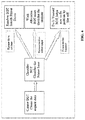
- FIG. 4 a functional block diagram of an example of a workflow of BOTs that is generated based on functionality of the included BOTs is illustrated.
- a FunctionalityBasedWorkflowMethod() method provided by the intelligent workflow decision service module 42 is invoked in order to assemble a workflow that processes issues relating to a printer one of the enterprise devices 20(1)-20(n).
- the enterprise BOT management computing device 12 determines that the enterprise process may require processing a problem message received from a user, classifying the printer issue, and taking an action depending on the classification of the printer issue.
- the enterprise BOT management computing device 12 can include a curator BOT (e.g., a BOT of a curator BOT type) in the workflow first.
- the curator BOT is configured to process, clean, or filter the message received from the user regarding the printer issue.
- the enterprise BOT management computing device 12 determines that there is a stored assembly rule that requires that a classifier BOT must be the target BOT for data output by a curator BOT.
- the enterprise BOT management computing device 12 includes a classifier BOT in the workflow that is configured to classify printer issues.
- the classifier BOT is configured to classify three types of printer issues including determining that a printer driver is not installed, the paper tray for the printer does not have paper, and that a paper jam has occurred. Accordingly, the enterprise BOT management computing device 12 then identifies, and includes in the workflow, instances of 3 BOT types that are configured to handle the output data from the classifier BOT that identifies the printer issue.
- the three BOTs include a resolver BOT that is configured to install the printer driver, a work allocation BOT that is configured to generate a ticket for an engineer to fix the issue by installing more paper, and a do it yourself BOT that is configured to assist the user in fixing the paper jam, such as via a guided process.
- one or more of the included BOTs can be configured to select during execution a target BOT based on generated output data and an input data type of input data for the target BOT.
- the classifier BOT is configured to determine that if the printer issue is classified as a paper jam, the output data includes an indication of a printer location at which the jam has occurred, which corresponds with input data of the do it yourself BOT and results in the do it yourself BOT being selected as one of the target BOTs for the classifier BOT.
- Other types of input and output data, methods for determining target BOTs, and types and number of BOTs can also be used in other examples.
- a PerformanceBasedWorkFlowSelectionMethod() method provided by the intelligent workflow decision service module 42 is invoked in order to assemble a workflow.
- the enterprise BOT management computing device 12 first assembles a plurality of test work flows based on the assembly rules.
- Each of the test workflows includes a set of BOTs that are associated with the same set of BOT types, but one or more of the BOTs in the set of BOTs for each test workflow is different than a corresponding BOT of the same BOT type in another set of BOTs included in another of the test work flows.
- test workflows include at least one or more BOTs that vary as compared to BOTs of the same type in one or more other of the test workflows based on input or output data, the algorithm used to perform the function associated with the BOT type, the role of the BOT, or one or more other characteristics.
- a test workflow WF1 can include BOTs BOTA-1 + BOT B-1 + BOTC-1 and another test workflow WF2 can include BOTs BOTA-2 + BOT B-1 + BOTC-1, wherein BOTA-2 is of the same BOT type as BOTA-1 but uses a different algorithm to provide corresponding functionality as BOTA-1.
- each of the test workflows is tested or executed by the enterprise BOT management computing device 12 with different types of test input data such as positive, negative, false positive, and false negative data, for example.
- test input data such as positive, negative, false positive, and false negative data, for example.
- each of the BOTs that comprise each of the test workflows is evaluated, and an associated BOT maturity value is generated for each of the BOTs based on the evaluation.
- the enterprise BOT management computing device 12 evaluates each of the BOTs based on reward values, penalty values, and a total number of serviced requests for each of the BOTs.
- reward values are allocated to a BOT based on successful resolution of a request processed by the BOT and penalty values are allocated to a BOT based on unsuccessful resolution of a request processed by the BOT, although other types of reward and penalty values can also be used.
- the reward and penalty values can be allocated automatically based on whether a BOT provides a resolution that is predefined and expected, or the reward and penalty values can be allocated based on expert or end user analysis or feedback regarding the resolution provided by a BOT.
- the BOT maturity value for a BOT is generated based on a difference between a sum of all of the reward values and a sum of all of the penalty values for the BOT divided by the total number of serviced requests processed by the BOT.
- the BOT maturity value can be updated upon certain thresholds such as request frequency, time spent services requests, or number of rewards or penalties has been exceeded, for example, although other thresholds can also be used and the BOT maturity values can also be continuously recalculated.
- the BOT maturity values are stored by the enterprise BOT management computing device 12 in the performance evaluation table 46. An exemplary portion of the performance evaluation table 46 for four test work flows each comprising three BOTs of the same set of the three BOT types is illustrated below in Table 5.
- the variant of BOT type A in test workflow-1, BOT type B in test workflow-2, and BOT type C in test workflow-4 have the highest BOT maturity values among the BOTs of the same respective type. Accordingly, as a final step in this example, the workflow will be assembled to include the variant of BOT type A in test workflow-1, BOT type B in test workflow-2, and BOT type C in test workflow-4 in order to optimize the performance of the workflow.
- the relatively low performing BOTs can be discarded or manually analyzed to identify any performance defects.
- a ServiceLevelBasedWorkflowSelection() method provided by the intelligent workflow decision service module 42 is invoked in order to assemble a workflow.
- FIG. 5 a functional block diagram of an example of a workflow of BOTs that is generated based on a service level of the included BOTs is illustrated.
- the enterprise BOT management computing device 12 assembles a workflow that includes multiple BOTs of a same BOT type at multiple different service levels.
- the term "service level" is preferably used herein to describe a level of automation of a BOT in performing a task.
- the service levels may be used to categorize or classify the BOTs according to a degree of automation exhibited by the BOT in performing the task.
- the workflow includes service levels 1, 2, and 3 that include BOT-A1 - BOT-A5, BOT-B1 - BOT-B3, and BOT-C1 and BOT-C2, respectively.
- Each BOT can initially include a different algorithm or can otherwise approach a resolution in a different way than another BOT on a same or different service level.
- the BOTs in service level 2 may be of a do it yourself BOT type that provide different guided assistance in order to provide a resolution to a request and the BOTs in service level 3 may be of a script BOT type that provide different automated scripts that provide assistance without any user intervention in order to provide a resolution to a request.
- Different types and number of BOTs or service levels, and different types of variations between BOTs can also be used in other examples.
- a request when a request is generated, it is initially handled by one of the BOTs in service level 1.
- the one of the BOTs in service level 1 is configured to determine whether it can provide a resolution based on a generated confidence score.
- the one of the BOTs in service level 1 is configured to select an algorithm that is used to generate the confidence score, such as a nearest neighbor algorithm, for example. If the one of the BOTs in service level 1 cannot provide a resolution, then the request is communicated to one of the BOTs in service level 2.
- the one of the BOTs in service level 2 also generates a confidence score and determines whether is can provide a resolution. If the one of the BOTs in service level 2 cannot provide a resolution, then the request is communicated to one of the BOTs in service level 3.
- the enterprise BOT management computing device 12 executes the workflows generated in step 306.
- the enterprise BOT management computing device 12 obtains reward and penalty values and a total number of serviced requests for each of the BOTs included in one of the executed workflows.
- the reward and penalty values and total number of serviced requests are optionally stored in the BOT inventory 44 and obtained as described in more detail earlier with reference to the test workflows evaluated in order to assemble a workflow based on a performance of the included BOTs in step 306.
- performance is preferably used herein to provide an indication of actual output compared expected output of the BOT.
- the enterprise BOT management computing device 12 generates BOT maturity values for each of the BOTs included in one of the workflows executed in step 308.
- the BOT maturity values are generated based on the reward and penalty values and total number of serviced requests for each of the BOTs included in one or more of the workflows executed in step 308.
- the BOT maturity values can also be generated as described in more detail earlier with reference to the test workflows evaluated in order to assemble a workflow based on a performance of the included BOTs in step 306.
- the BOT maturity values can be stored in the BOT inventory 44 as associated with a corresponding one of the BOTs included in one or more of the workflows executed in step 308.
- the enterprise BOT management computing device 12 generates a workflow performance values for each of the workflows based on the BOT maturity values generated in step 312.
- the workflow performance value is a summation of the BOT maturity values for each BOT in a workflow and a weight can be applied to the BOT maturity value for one or more BOT types associated with one or more BOTs in a workflow.
- the workflow performance values can be stored in the performance evaluation table 46 as associated with a corresponding one of the workflows executed in step 308. A portion of an exemplary performance evaluation table 46 is illustrated below in Table 6.
- weights of 3, 2, and 1 are applied to the BOT maturity values for BOTs of BOT type A, B, and C, respectively, although other weights can be use in other examples include an equal weighting. Accordingly, workflow-1 has the highest workflow performance value. Other methods of generating the BOT maturity values or generating the workflow performance values can also be use in other examples.
- the enterprise BOT management computing device 12 outputs one or more of the workflow performance values.
- an enterprise administrator can request a workflow performance value for one or more workflows, using a unique identifier for each of the workflows, from the enterprise BOT management computing device 12.
- the enterprise BOT management computing device 12 can retrieve the workflow performance values for the workflows from the performance evaluation table 46 based on the unique identifiers. Accordingly, the enterprise administrator can optionally analyze the low performing workflows as well as external factors that may be impacting performance, such as infrastructure, network issues, data overloading, or load balancing, for example.
- this technology provides methods, devices, and non-transitory computer readable media that optimize the assembly of workflows of interoperable BOTs having a common structure, as well as more effectively evaluate performance of the BOTs and workflows.
- BOTs that automate portions of enterprise processes are automatically and dynamically assembled into workflows using assembly rules.
- BOT performance can be evaluated using test workflows in order to assemble an optimized workflow for replicating an enterprise process. Additionally, workflows can be more effectively evaluated in order to optimize the workflows that are deployed within the enterprise. Moreover, this technology facilitates communication of resolution information between BOTs of various service levels in order to improve the learning process and optimize the resolution of issues handled by associated workflows.
Landscapes
- Engineering & Computer Science (AREA)
- Theoretical Computer Science (AREA)
- Software Systems (AREA)
- Business, Economics & Management (AREA)
- General Physics & Mathematics (AREA)
- Physics & Mathematics (AREA)
- Economics (AREA)
- Entrepreneurship & Innovation (AREA)
- Human Resources & Organizations (AREA)
- Strategic Management (AREA)
- General Engineering & Computer Science (AREA)
- Tourism & Hospitality (AREA)
- Computer Vision & Pattern Recognition (AREA)
- Operations Research (AREA)
- General Business, Economics & Management (AREA)
- Marketing (AREA)
- Game Theory and Decision Science (AREA)
- Artificial Intelligence (AREA)
- Quality & Reliability (AREA)
- Data Mining & Analysis (AREA)
- Evolutionary Computation (AREA)
- Medical Informatics (AREA)
- Educational Administration (AREA)
- Computing Systems (AREA)
- Development Economics (AREA)
- Mathematical Physics (AREA)
- Management, Administration, Business Operations System, And Electronic Commerce (AREA)
Abstract
Description
- This technology relates to methods for creating dynamic workflows of interoperable application components, referred to as BOTs, which automate portions of processes, and devices therefor.
- Portions of processes are increasingly automated by applications or software components referred to herein as BOTs. BOTs can understand activities, order, and flows of processes, automatically generate rules, perform machine learning and artificial intelligence processes, and validate learned information. As some examples, BOTs can curate requests or problems associated with an enterprise, classify the problems, and automatically resolve the problems, although many other types of BOTs are also currently used by enterprises.
- However, there is currently no effective automated way to integrate BOTs into workflows that replicate an entire enterprise process. Additionally, BOTs currently operate relatively independently without interoperability, collaboration, or knowledge transfer, resulting in reduced effectiveness of the BOTs to perform their intended functions. Moreover, there is currently no effective way to automatically evaluate the performance of BOTs in order to dynamically assemble relatively high performing workflows.
- A method for creating automated dynamic workflows of interoperable BOTs includes adding, by an enterprise BOT management computing device, a plurality of interoperable BOTs to a stored BOT inventory. Each of the BOTs is associated with one of a plurality of BOT types, has a common structure, and automates at least a portion of an enterprise process. A plurality of assembly rules is obtained by the enterprise BOT management computing device. Each of the assembly rules includes one or more constraints for inclusion of one or more of the BOTs in one or more of a plurality of workflows based on the one of the BOT types associated with each of the one or more of the BOTs. The plurality of workflows is assembled by the enterprise BOT management computing device based on one or more the assembly rules. Each of the workflows includes a subset of the BOTs and each BOT of the subsets of the BOTs is included in one or more of the workflows based on at least one of an associated functionality, performance, or service level.
- In an embodiment, each BOT of the subset of the BOTs for one of the workflows is included in the one of the workflows based on an associated performance, and the method further comprises: assembling, by the enterprise BOT management computing device, a plurality of test workflows based on a set of the assembly rules, each of the test workflows comprising a plurality of the BOTs having a same subset of the BOT types; evaluating, by the enterprise BOT management computing device, each of the plurality of the BOTs during execution of the test workflows using test data to generate a BOT maturity value for each of the plurality of the BOTs; and assembling, by the enterprise BOT management computing device, the one of the workflows to include at least one of the plurality of the BOTs having a highest associated one of the BOT maturity values for each BOT type in the same subset of the BOT types.
- In an embodiment, the method further comprises: evaluating, by the enterprise BOT management computing device, each of the workflows during execution to generate a workflow performance value for each of the workflows, wherein the workflow performance value is based at least in part on a BOT maturity value for each BOT of the subset of the BOTs included in each of the workflows; and outputting, by the enterprise BOT management computing device, one or more of the workflow performance values.
- In an embodiment, the method further comprises: obtaining, by the enterprise BOT management computing device, a plurality of reward values, a plurality of penalty values, and a total number of serviced requests for each of the BOTs; and generating, by the enterprise BOT management computing device, the BOT maturity value based on a difference between a sum of all of the reward values and a sum of all of the penalty values divided by the total number of serviced requests for each BOT of the subset of the BOTs included in each of the workflows.
- An enterprise bot management computing device includes memory comprising programmed instructions stored in the memory and one or more processors configured to be capable of executing the programmed instructions stored in the memory to add a plurality of interoperable BOTs to a stored BOT inventory. Each of the BOTs is associated with one of a plurality of BOT types, has a common structure, and automates at least a portion of an enterprise process. A plurality of assembly rules is obtained. Each of the assembly rules includes one or more constraints for inclusion of one or more of the BOTs in one or more of a plurality of workflows based on the one of the BOT types associated with each of the one or more of the BOTs. The plurality of workflows is assembled based on one or more the assembly rules. Each of the workflows includes a subset of the BOTs and each BOT of the subsets of the BOTs is included in one or more of the workflows based on at least one of an associated functionality, performance, or service level.
- A non-transitory computer readable medium having stored thereon instructions for creating automated dynamic workflows of interoperable BOTs includes executable code which when executed by one or more processors, causes the processors to perform steps comprising adding a plurality of interoperable BOTs to a stored BOT inventory. Each of the BOTs is associated with one of a plurality of BOT types, has a common structure, and automates at least a portion of an enterprise process. A plurality of assembly rules is obtained. Each of the assembly rules includes one or more constraints for inclusion of one or more of the BOTs in one or more of a plurality of workflows based on the one of the BOT types associated with each of the one or more of the BOTs. The plurality of workflows is assembled based on one or more the assembly rules. Each of the workflows includes a subset of the BOTs and each BOT of the subsets of the BOTs is included in one or more of the workflows based on at least one of an associated functionality, performance, or service level.
- This technology provides a number of advantages including methods, devices, and non-transitory computer readable media that create automated dynamic workflows of interoperable BOTs and more effectively evaluate the performance of the BOTs and workflows. With this technology, interoperable BOTs having a common structure are more efficiently and effectively assembled into workflows based on assembly rules and an associated BOT type. The workflows can be generated based on functionality, performance, or service level of the included BOTs. This technology can also more effectively evaluate the performance of multiple versions of workflows with varying sets of BOTs, as well as variants of the BOTs themselves. Accordingly, this technology improves the effectiveness of automated solutions for enterprise processes that utilize BOTs.
-
-
FIG. 1 is a diagram of an example of an environment with an enterprise BOT management computing device that creates and evaluates the performance of dynamic workflows of interoperable BOTs; -
FIG. 2 is a block diagram of the enterprise BOT management computing device illustrated inFIG. 1 ; -
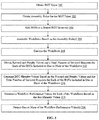
FIG. 3 is a flow chart of an example of a method for creating and evaluating the performance of dynamic workflows of interoperable BOTs; -
FIG. 4 is a functional block diagram of an example of a workflow of BOTs that is generated based on functionality of the included BOTs; and -
FIG. 5 is a functional block diagram of an example of a workflow of BOTs that is generated based on a service level of the included BOTs. - An
environment 10 with an example of an enterprise BOTmanagement computing device 12 is illustrated inFIG. 1 . In this particular example, the enterprise BOTmanagement computing device 12 is coupled to an enterprise administrator device 14 and anenterprise user device 16 by communication network(s) 18 and to enterprise devices 20(1)-20(n) by communication network(s) 22, although theenvironment 10 could include other types and numbers of systems, devices, components, and/or other elements in other configurations. This technology provides a number of advantages including methods, devices, and non-transitory computer readable media that create dynamic workflows of interoperable BOTs and evaluate the performance of the BOTs and workflows to optimize the workflows and more efficiently and effectively perform associated enterprise processes. - Referring more specifically to
FIGS. 1-2 , the enterprise BOTmanagement computing device 12 can include one or more processor(s) 24, amemory 26, and acommunication interface 28, which are coupled together by abus 30 or other communication link, although the enterprise BOTmanagement computing device 12 can include other types and/or numbers of physical and/or virtual systems and/or processors, devices, components, and/or other elements in other configurations. - The processor(s) 24 of the enterprise BOT
management computing device 12 can execute one or more programmed instructions stored in thememory 26 for creating and evaluating the performance of dynamic workflows of interoperable BOTs, as illustrated and described in the examples herein, although other types and/or numbers of instructions can also be performed. The processor(s) 24 of the enterprise BOTmanagement computing device 12 may include one or more central processing units and/or general purpose processors with one or more processing cores, for example. - The
memory 26 of the enterprise BOTmanagement computing device 12 stores the programmed instructions and other data for one or more aspects of the present technology as described and illustrated herein, although some or all of the programmed instructions could be stored and executed elsewhere. A variety of different types of memory storage devices, such as a random access memory (RAM), read only memory (ROM), flash, solid state drives (SSDs), or other computer readable medium which is read from and written to by a magnetic, optical, or other reading and writing system that is coupled to the processor(s) 24, can be used for thememory 26. In this particular example, thememory 26 includes aBOT service module 32, aBOT type module 34, aBOT group module 36, anassembly rules engine 38, aworkflow engine 40, an intelligent workflow decision service module 42, and a BOT inventory 44, although thememory 26 can include other data, modules, or applications in other examples. - The
BOT service module 32 in this example facilitates management of BOTs via a user interface provided to the enterprise administrator device 14. In this example, BOTs are application or software components that automate a portion of a process (such as a process performed in an enterprise computing system, or "enterprise process") or provide at least a portion of an automated service (such as a service provided by an enterprise computing system, or "enterprise service"). In this example, the BOTs are interoperable such that the output of one BOT can be utilized as input of another BOT, have a common structure, and can exchange data, among other functions described and illustrated in more detail later. Management of the BOTs by theBOT service module 32 can include adding, deleting, viewing, editing, listing, and/or searching the BOTs, for example. Other functionality can also be provided by theBOT service module 32, including functionality provided based on the methods illustrated below in Table 1.Table 1: SL # MethodName Description 1 Start(BotID) This method is used to set BOT state as Active to make it operational. When Start method is executed, BOT will start responding to the requests. This can be used for a BOT whose status is BOT_DEPLOYED. After executing the methods, event message with "READY_TO_USE" message is triggered. 2 Stop(BotID) BOT stops all necessary services. BOT state is set as Inactive. Further BOT cannot be accessible. This is used for a BOT whose status is BOT_TRANSACTIONS or READY_TO_USE. After executing the methods, event message with "BOT_DEPLOYED" message is triggered. 3 Assemble(BotID) AKA Build This method is used when the BOT is in BOT_DEPLOYED Status. When user wants to train the BOT with a different set of data, this method is used. This method is used when the BOT is in BOT_REGISTERED Status. This method will build the model and upload the Model so that BOT is ready for deployment. When a new set of data is provided, the assemble function will help to rebuild the model. After completing this method, event message with "READY_TO_DEPLOY" message is triggered. 4 Deploy(BotID) This method helps to load the uploaded model. After completing this method, event message with "BOT_DEPLOYED" message is triggered. 5 Verify(BotID) BOT can be tested using this function. This takes the input text data and processes the data and outputs results. This is used to test the BOT. 6 Status check(BotID) Returns the status of the BOT such as active or inactive 7 Health Check(BotID) This is used to get the status of the BOT. The status can be one of the below BOT_REGISTERED MODEL_BUILD_PROGRESS MODEL_UPLOADING READY_TO_DEPLOY DEPLOY_IN_PROGRESS BOT_DEPLOYED READY_TO_USE BOT_TRANSACTIONS - Each of the BOTs in this example is created as an instance of a BOT type. The
BOT type module 34 facilitates management of BOT types via a user interface provided to the enterprise administrator device 14, for example. Management of the BOT types can include adding, deleting, viewing, editing, listing, or searching the BOT types, for example, and other functionality can also be provided by theBOT type module 34. Exemplary BOT types include investigation BOTs, classifier BOTs, resolver BOTs, outlier BOTs, concept extraction BOTs, summarization BOTs, do it yourself BOTs, task assignment BOTs, research BOTs, service ticket BOTs, and/or diagnosis BOTs, although other types and/or numbers of BOTs can also be used in other examples. - The
BOT group module 36 in this example facilitates management of groups of BOT instances of a same BOT type via a user interface provided to the enterprise administrator device 14, for example. Accordingly, theBOT group module 36 can establish groups of BOTs that assist with load balancing or handle a different set of data than one or more other instances of a same BOT type, for example. Management of the BOT groups can include adding, deleting, viewing, editing, listing, and/or searching the BOT groups, for example. Other functionality can also be provided by theBOT group module 32, including functionality provided based on the methods illustrated below in Table 2.Table 2: SL# Function Name Description 1 Get Maturity(BotGroupId) This method returns the maturity of the BOT with respect to the trained data. This helps to know the performance of BOT in terms of learning with respect to the Data trained. 2 Set Maturity(BotGroupId) This method sets the maturity of the BOT with respect to the trained data. This helps to know the performance of BOT in terms of learning with respect to the provided data set. If Bot is tried with different set of data, the maturity can help on using right set of data or can suggest the need of more data. Calculation method is explained below at ** 3 Get Rank Order(BotGroupId) This method returns the Rank Order of the BOT with other BOTs of same type. This helps to know the performance of the BOT with other BOTs of same type 4 Set Reward Penalty Point(BotGroupId) This method Sets the Rank Order of the BOT with other BOTs of same type. This helps to know the performance of the BOT with other BOTs of same type. Bot performance is calculated based on the accuracy of performance. 5 Set Thresh Hold(BotGroupId) There are three thresh hold Frequency, Time and Points. This method helps to get the values from the configuration file and save for each BOT Among the three thresh holds ( Frequency, Time and Points), when any one the value of thresh hold crosses , the synchronization between happens Separate variables will be used to calculate the latest actual values. When one of the value crosses the thresh hold value, the synchronization happens. - The assembly rules
engine 38 facilitates management of assembly rules via a user interface provided to the enterprise administrator device 14, for example. The assembly rules are used by theworkflow engine 40 to assemble workflows of a plurality of BOTs for replicating enterprise processes. The term "workflow" is preferably used herein to refer to a sequence of BOTs constructed to replicate an enterprise process. Each BOT type has different associated properties, functionality, and other characteristics to which the assembly rules can be applied when assembling workflows. - For example, assembly rules can require that BOTs of a classifier BOT type be the first BOT in a workflow, the last BOT in a workflow only if the previous BOT is of a curate BOT type, or the source BOT for a BOT of a resolver BOT type. In another example, an assembly rule can require that a BOT of a resolver BOT type must have a BOT of a classifier BOT type as its source BOT. Other types and number of assembly rules can also be used in other examples. Management of the assembly rules can include adding, deleting, viewing, editing, listing, and/or searching the assembly rules, for example, and other functionality can also be provided by the assembly rules
engine 38. - The
workflow engine 40 assembles workflows that include a plurality of BOTs in order to replicate or perform enterprise processes or functions or provide enterprise services. Theworkflow engine 40 assembles the workflows automatically based on the assembly rules and the current BOT instances and their associated BOT types. Accordingly, BOTs of various BOT types can be assembled by theworkflow engine 40 in various manners in order to achieve functional relationships. BOTs are selected for inclusion in a workflow based on their functionality, performance, or service level, as described and illustrated in more detail later. In one example, a workflow can have a structure indicated below in Table 3, although workflows can also have other structures in other examples.Table 3: Property Name Description Bot Work Flow Id Unique ID for the workflow Bot Work flow Name BOT workflow name Status Active or inactive BOT Workflow members A BOT ID array in order of workflow. Source and target BOTs are identified from the array order Source BOT: The BOT from which the current BOT gets data or the BOT after which the current BOT starts its operations. Target BOT: The BOT to which the current BOT sends data or the BOT that starts its operations after the current BOT. Workflow Priority The number used for prioritization of a workflow among selected workflows for evaluation table Workflow Performance Value Calculated from performance evaluation table and corresponds to the overall performance of a workflow Last Synch Date The date when the last synchronization of learned data took place in a workflow Among the three values (Frequency, Time and Points), when any one the values crosses a threshold, the synchronization proceeds Last Synch Status The status of the synchronization process of learned data. If previous synchronization is not completed, the process continues from where it stopped. Among the three values (Frequency, Time and Points), when any one the values crosses a threshold, the synchronization proceeds - The
workflow engine 40 can facilitate adding, deleting, viewing, editing, listing, or searching workflows, for example. Other functionality can also be provided by theworkflow engine 40, including functionality provided based on the methods illustrated below in Table 4.Table 4: 1 Horizontal Data Synch Transfers learned model between parallel BOTs when the maturity threshold has been reached so that the other BOTs can perform with increased accuracy. 2 Start(Bot WorkflowID) Sets workflow state as Active to make it operational. When Start method is executed, workflow will start responding to requests. Can be used for a workflow whose status is BOT_DEPLOYED. After executing the method, event message with "READY_TO_USE" message is triggered. 3 Stop(Bot WorkflowID) Stops all necessary services. BOT state is set as Inactive. Further workflows cannot be accessible. This is used for a workflow whose status is BOT_TRANSACTIONS or READY_TO_USE. After executing the method, event message with "BOT_DEPLOYED" message is triggered. - The intelligent workflow decision service module 42 also assembles workflows that include a plurality of BOTs in order to replicate or perform enterprise processes or functions or provide enterprise services. The intelligent workflow decision service module 42 assembles the workflows automatically based on the assembly rules and the current BOT instances and their associated BOT types, as well as a functionality, performance, or service level associated with the current BOT instances.
- The intelligent workflow decision service module 42 can provide functions such as FunctionalityBasedWorkflowMethod(),
PerformanceBasedWorkFlowSelectionMethod(), or
ServiceLevelBasedWorkflowSelection() that can be called by an enterprise administrator using the enterprise administrator device 14, for example, and that are configured to generate workflows based on functionality, performance, or service level associated with the current BOT instances, respectively, as described and illustrated in more detail later. - The BOT inventory 44 in this example stores BOT and workflow data including established BOT types, instances of BOTs and associated BOT types, and data regarding established groups of BOTs. The BOT inventory 44 can also store assembly rules and current workflows and associated statuses, and other information can also be maintained in the BOT inventory 44. In some examples, the BOT inventory 44 is implemented as a database, although other storage structures can also be used.
- The performance evaluation table 46 maintains reward and penalty values for each BOT and a BOT maturity value for each BOT, as well as workflow performance values for each workflow. Reward and penalty values are generated based on expert or end user feedback on the effectiveness of a BOT to perform an expected function or to response to a received request. The BOT maturity value for a BOT is generated based on the reward and penalty values for the BOT, as well as a total number of requests serviced by the BOT. Additionally, the workflow performance value for a workflow is generated based on the BOT maturity values for the BOTs that comprise the workflow. Generation of the BOT maturity and workflow performance values is described and illustrated in more detail later.
- The
communication interface 28 of the enterprise BOTmanagement computing device 12 operatively couples and communicates between the client enterprise administrator device 14,enterprise user device 16, and the enterprise devices 20(1)-20(n) over the one or more communication network(s) 18 and 22. By way of example only, the communication network(s) 18 and 22 can include local area network(s) (LAN(s)) or wide area network(s) (WAN(s)), and can use TCP/IP over Ethernet and industry-standard protocols, although other types and numbers of protocols and/or communication networks can be used. The communication network(s) in this example can employ any suitable interface mechanisms and network communication technologies including, for example, teletraffic in any suitable form (e.g., voice, modem, and the like), Public Switched Telephone Network (PSTNs), Ethernet-based Packet Data Networks (PDNs), combinations thereof, and the like. - The enterprise administrator device 14 can be used by an enterprise administrator to interface with the enterprise BOT
management computing device 12 via the communication network(s) 18, such as to submit data and instructions via user interfaces provided by the enterprise BOTmanagement computing device 12 and to receive data (e.g., workflow performance data), for example. The enterprise administrator device 14 may include a processor, a memory, and a communication interface, which are coupled together by a bus or other communication link, although the enterprise administrator device 14 could have other types and/or numbers of elements. The processor of the enterprise administrator device 14 may include one or more central processing units and/or general purpose processors with one or more processing cores by way of example only. - The memory of the enterprise administrator device 14 stores the programmed instructions and/or other data for one or more aspects of the present technology as described and illustrated herein, although some or all of the programmed instructions could be stored and executed elsewhere. A variety of different types of memory storage devices, such as a random access memory (RAM), read only memory (ROM), hard disk, solid state drives, or other computer readable medium which is read from and written to by a magnetic, optical, or other reading and writing system that is coupled to the processor for the enterprise administrator device 14, can be used for the memory for the enterprise administrator device 14.
- The
enterprise user device 16 can be used by an enterprise user to submit requests or tickets to the enterprise BOTmanagement computing device 12 or one of the enterprise devices 20(1)-20() via one or more of the communication network(s) 18 and 22. For example, a user of theenterprise user device 16 can submit a request for a solution to a problem experience by a printer device, which can be one of the enterprise devices 20(1)-20(n), although requests can be obtained by the enterprise BOTmanagement computing device 12, or directly by one of the BOTs managed thereby, in other ways. - The
enterprise user device 16 may include a processor, a memory, and a communication interface, which are coupled together by a bus or other communication link, although theenterprise user device 16 could have other types and/or numbers of elements. The processor of theenterprise user device 16 may include one or more central processing units and/or general purpose processors with one or more processing cores by way of example only. - The memory of the
enterprise user device 16 stores the programmed instructions and/or other data for one or more aspects of the present technology as described and illustrated herein, although some or all of the programmed instructions could be stored and executed elsewhere. A variety of different types of memory storage devices, such as a random access memory (RAM), read only memory (ROM), hard disk, solid state drives, or other computer readable medium which is read from and written to by a magnetic, optical, or other reading and writing system that is coupled to the processor for theenterprise user device 16, can be used for the memory for theenterprise user device 16. - The enterprise devices 20(1)-20(n) can be devices within the
network environment 10 with which a BOT interacts to obtain or send data or perform another action. For example, one of the enterprise devices 20(1) can be a printer device with which a BOT of a resolver BOT type can install a printer drive in the event of printer issue classified by a BOT of a classifier BOT type as being a lack of a printer driver. Each of the enterprise devices 20(1)-20(n) may include a processor, a memory, and a communication interface, which are coupled together by a bus or other communication link, although the enterprise devices 20(1)-20(n) could have other types and/or numbers of elements. The processor of each of the enterprise devices 20(1)-20(n) may include one or more central processing units and/or general purpose processors with one or more processing cores by way of example only. - The memory of each of the enterprise devices 20(1)-20(n) stores the programmed instructions and/or other data for one or more aspects of the present technology as described and illustrated herein, although some or all of the programmed instructions could be stored and executed elsewhere. A variety of different types of memory storage devices, such as a random access memory (RAM), read only memory (ROM), hard disk, solid state drives, or other computer readable medium which is read from and written to by a magnetic, optical, or other reading and writing system that is coupled to the processor for the enterprise devices 20(1)-20(n), can be used for the memory for the enterprise devices 20(1)-20(n).
- Although the
exemplary network environment 10 with the enterprise BOTmanagement computing device 12, enterprise administrator device 14,enterprise user device 16, enterprise devices 20(1)-20(n), and communication network(s) 18 and 22 are illustrated and described herein, other types and numbers of systems, devices, components, and/or elements in other topologies can be used. It is to be understood that the systems of the examples described herein are for exemplary purposes, as many variations of the specific hardware and software used to implement the examples are possible, as will be appreciated by those skilled in the relevant art(s). - In addition, two or more computing systems or devices can be substituted for any one of the systems or devices in any example. Accordingly, principles and advantages of distributed processing, such as redundancy and replication also can be implemented, as desired, to increase the robustness and performance of the devices, apparatuses, and systems of the examples. The examples may also be implemented on computer system(s) that extend across any suitable network using any suitable interface mechanisms and traffic technologies, including by way of example only teletraffic in any suitable form (e.g., voice and modem), wireless traffic media, wireless traffic networks, cellular traffic networks, G3 traffic networks, Public Switched Telephone Network (PSTNs), Packet Data Networks (PDNs), the Internet, intranets, and combinations thereof.
- The examples also may be embodied as one or more non-transitory computer readable media having instructions stored thereon for one or more aspects of the present technology as described and illustrated by way of the examples herein, as described herein, which when executed by one or more processors, cause the processors to carry out the steps necessary to implement the methods of this technology as described and illustrated with the examples herein.
- An example of a method for creating and evaluating the performance of dynamic workflows of interoperable BOTs will now be described with reference to
FIGS. 3-5 . Referring more specifically toFIG. 3 , instep 300, the enterprise BOTmanagement computing device 12 obtains a plurality of different BOT types. In this example, the BOT types are obtained from the enterprise administrator device 14 via an interface provided by theBOT type module 34 and are stored in the BOT inventory 44, although the BOT types can be obtained or stored in other ways. The BOT types comprise the established BOT types available for association with an instance of a BOT. - In
step 302, the enterprise BOTmanagement computing device 12 obtains assembly rules for the BOT types. The assembly rules are obtained from the enterprise administrator device 14 via an interface provided by the assembly rulesengine 38 and stored in the BOT inventory 44 in this example, although the assembly rules can also be obtained or stored in other ways. As described earlier, the assembly rules are used to generate workflows of BOTs and can constrain the BOTs that are included in workflows based on BOT types. For example, the assembly rules can require that BOTs of certain BOT types must be first or last in a workflow or must precede or follow one or more other BOT types, although other types of assembly rules can also be used. - In step 304, the enterprise BOT
management computing device 12 adds BOTs to the BOT inventory 44. The BOTs can be added by an enterprise administrator using the enterprise administrator device 14 and one or more user interfaces or methods provided by theBOT service module 32, for example. As described in more detail earlier, BOTs are application or software components that automate a portion of an enterprise process or provide at least a portion of an automated enterprise service. Additionally, BOTs are interoperable, have a common structure, and have an associated one of the BOT types obtained instep 300. - In
step 306, the enterprise BOTmanagement computing device 12 assembles workflows based on one or more of the assembly rules. In one example, an enterprise administrator using the enterprise administrator device 14 can invoke a method provided by theworkflow engine 40 or the intelligent workflow decision service module 42 to generate a workflow that replicates a defined enterprise process or service. In response, theworkflow engine 40 or the intelligent workflow decision service module 42 identifies instances of BOT types to assemble into the workflow based on the assembly rules. Based on the specific invoked method, theworkflow engine 40 or the intelligent workflow decision service module 42 further assembles the work flow based on an associated functionality, performance, or service level of each of the instances of the BOT types, as described and illustrated in more detail below. - Referring more specifically to
FIG. 4 , a functional block diagram of an example of a workflow of BOTs that is generated based on functionality of the included BOTs is illustrated. In this particular example, a FunctionalityBasedWorkflowMethod() method provided by the intelligent workflow decision service module 42 is invoked in order to assemble a workflow that processes issues relating to a printer one of the enterprise devices 20(1)-20(n). In this example, the enterprise BOTmanagement computing device 12 determines that the enterprise process may require processing a problem message received from a user, classifying the printer issue, and taking an action depending on the classification of the printer issue. - Accordingly, in this particular example, the enterprise BOT
management computing device 12 can include a curator BOT (e.g., a BOT of a curator BOT type) in the workflow first. The curator BOT is configured to process, clean, or filter the message received from the user regarding the printer issue. The enterprise BOTmanagement computing device 12 then determines that there is a stored assembly rule that requires that a classifier BOT must be the target BOT for data output by a curator BOT. Accordingly, the enterprise BOTmanagement computing device 12 includes a classifier BOT in the workflow that is configured to classify printer issues. - In this example, the classifier BOT is configured to classify three types of printer issues including determining that a printer driver is not installed, the paper tray for the printer does not have paper, and that a paper jam has occurred. Accordingly, the enterprise BOT
management computing device 12 then identifies, and includes in the workflow, instances of 3 BOT types that are configured to handle the output data from the classifier BOT that identifies the printer issue. In this particular example, the three BOTs include a resolver BOT that is configured to install the printer driver, a work allocation BOT that is configured to generate a ticket for an engineer to fix the issue by installing more paper, and a do it yourself BOT that is configured to assist the user in fixing the paper jam, such as via a guided process. - Accordingly, in workflows generated based on functionality of included BOTs, one or more of the included BOTs can be configured to select during execution a target BOT based on generated output data and an input data type of input data for the target BOT. In the example illustrated in
FIG. 4 , the classifier BOT is configured to determine that if the printer issue is classified as a paper jam, the output data includes an indication of a printer location at which the jam has occurred, which corresponds with input data of the do it yourself BOT and results in the do it yourself BOT being selected as one of the target BOTs for the classifier BOT. Other types of input and output data, methods for determining target BOTs, and types and number of BOTs can also be used in other examples. - In another example, a PerformanceBasedWorkFlowSelectionMethod() method provided by the intelligent workflow decision service module 42 is invoked in order to assemble a workflow. In this example, the enterprise BOT
management computing device 12 first assembles a plurality of test work flows based on the assembly rules. Each of the test workflows includes a set of BOTs that are associated with the same set of BOT types, but one or more of the BOTs in the set of BOTs for each test workflow is different than a corresponding BOT of the same BOT type in another set of BOTs included in another of the test work flows. - Accordingly, the test workflows include at least one or more BOTs that vary as compared to BOTs of the same type in one or more other of the test workflows based on input or output data, the algorithm used to perform the function associated with the BOT type, the role of the BOT, or one or more other characteristics. In one particular example, a test workflow WF1 can include BOTs BOTA-1 + BOT B-1 + BOTC-1 and another test workflow WF2 can include BOTs BOTA-2 + BOT B-1 + BOTC-1, wherein BOTA-2 is of the same BOT type as BOTA-1 but uses a different algorithm to provide corresponding functionality as BOTA-1.
- Next, each of the test workflows is tested or executed by the enterprise BOT
management computing device 12 with different types of test input data such as positive, negative, false positive, and false negative data, for example. During the execution of each of the test workflows, each of the BOTs that comprise each of the test workflows is evaluated, and an associated BOT maturity value is generated for each of the BOTs based on the evaluation. - The enterprise BOT
management computing device 12 evaluates each of the BOTs based on reward values, penalty values, and a total number of serviced requests for each of the BOTs. In this example, reward values are allocated to a BOT based on successful resolution of a request processed by the BOT and penalty values are allocated to a BOT based on unsuccessful resolution of a request processed by the BOT, although other types of reward and penalty values can also be used. The reward and penalty values can be allocated automatically based on whether a BOT provides a resolution that is predefined and expected, or the reward and penalty values can be allocated based on expert or end user analysis or feedback regarding the resolution provided by a BOT. - Accordingly, the BOT maturity value for a BOT is generated based on a difference between a sum of all of the reward values and a sum of all of the penalty values for the BOT divided by the total number of serviced requests processed by the BOT. Optionally, the BOT maturity value can be updated upon certain thresholds such as request frequency, time spent services requests, or number of rewards or penalties has been exceeded, for example, although other thresholds can also be used and the BOT maturity values can also be continuously recalculated. Also optionally, the BOT maturity values are stored by the enterprise BOT
management computing device 12 in the performance evaluation table 46. An exemplary portion of the performance evaluation table 46 for four test work flows each comprising three BOTs of the same set of the three BOT types is illustrated below in Table 5.Table 5: Maturity Values for BOT Type A Variants Maturity Values for BOT Type B Variants Maturity Values for BOT Type C Variants Test Work Flow-1 3.25 1.5 1.5 Test Work Flow-2 2.5 2 1.25 Test Work Flow-3 2 1.75 1.75 Test Work Flow-4 1 2 2 - As illustrated above, the variant of BOT type A in test workflow-1, BOT type B in test workflow-2, and BOT type C in test workflow-4 have the highest BOT maturity values among the BOTs of the same respective type. Accordingly, as a final step in this example, the workflow will be assembled to include the variant of BOT type A in test workflow-1, BOT type B in test workflow-2, and BOT type C in test workflow-4 in order to optimize the performance of the workflow. Optionally, the relatively low performing BOTs can be discarded or manually analyzed to identify any performance defects.
- In yet another example, a ServiceLevelBasedWorkflowSelection() method provided by the intelligent workflow decision service module 42 is invoked in order to assemble a workflow. Referring more specifically to
FIG. 5 , a functional block diagram of an example of a workflow of BOTs that is generated based on a service level of the included BOTs is illustrated. In this example, the enterprise BOTmanagement computing device 12 assembles a workflow that includes multiple BOTs of a same BOT type at multiple different service levels. The term "service level" is preferably used herein to describe a level of automation of a BOT in performing a task. The service levels may be used to categorize or classify the BOTs according to a degree of automation exhibited by the BOT in performing the task. - In the example illustrated in
FIG. 5 , the workflow includesservice levels service level 2 may be of a do it yourself BOT type that provide different guided assistance in order to provide a resolution to a request and the BOTs inservice level 3 may be of a script BOT type that provide different automated scripts that provide assistance without any user intervention in order to provide a resolution to a request. Different types and number of BOTs or service levels, and different types of variations between BOTs, can also be used in other examples. - Accordingly, when a request is generated, it is initially handled by one of the BOTs in
service level 1. The one of the BOTs inservice level 1 is configured to determine whether it can provide a resolution based on a generated confidence score. The one of the BOTs inservice level 1 is configured to select an algorithm that is used to generate the confidence score, such as a nearest neighbor algorithm, for example. If the one of the BOTs inservice level 1 cannot provide a resolution, then the request is communicated to one of the BOTs inservice level 2. The one of the BOTs inservice level 2 also generates a confidence score and determines whether is can provide a resolution. If the one of the BOTs inservice level 2 cannot provide a resolution, then the request is communicated to one of the BOTs inservice level 3. - However, if the one of the BOTs in service level 2 (or service level 3) is able to provide a resolution, resolution data including the details of the resolution is communicated, by the resolving BOT or the enterprise BOT
management computing device 12, to each of the BOTs in the lower service level(s). Accordingly, in this example, BOTs in lower service levels are able to learn about resolutions over time and become increasingly effective at resolving requests based on their respective approaches. - Referring back to
FIG. 3 , instep 308, the enterprise BOTmanagement computing device 12 executes the workflows generated instep 306. During execution, instep 310, the enterprise BOTmanagement computing device 12 obtains reward and penalty values and a total number of serviced requests for each of the BOTs included in one of the executed workflows. The reward and penalty values and total number of serviced requests are optionally stored in the BOT inventory 44 and obtained as described in more detail earlier with reference to the test workflows evaluated in order to assemble a workflow based on a performance of the included BOTs instep 306. The term "performance" is preferably used herein to provide an indication of actual output compared expected output of the BOT. - In
step 312, the enterprise BOTmanagement computing device 12 generates BOT maturity values for each of the BOTs included in one of the workflows executed instep 308. The BOT maturity values are generated based on the reward and penalty values and total number of serviced requests for each of the BOTs included in one or more of the workflows executed instep 308. The BOT maturity values can also be generated as described in more detail earlier with reference to the test workflows evaluated in order to assemble a workflow based on a performance of the included BOTs instep 306. Optionally, the BOT maturity values can be stored in the BOT inventory 44 as associated with a corresponding one of the BOTs included in one or more of the workflows executed instep 308. - In
step 314, the enterprise BOTmanagement computing device 12 generates a workflow performance values for each of the workflows based on the BOT maturity values generated instep 312. Optionally, the workflow performance value is a summation of the BOT maturity values for each BOT in a workflow and a weight can be applied to the BOT maturity value for one or more BOT types associated with one or more BOTs in a workflow. Also optionally, the workflow performance values can be stored in the performance evaluation table 46 as associated with a corresponding one of the workflows executed instep 308. A portion of an exemplary performance evaluation table 46 is illustrated below in Table 6.Table 6: Maturity Values for BOT Type A Variants Maturity Values for BOT Type B Variants Maturity Values for BOT Type C Variants Workflow Performance Value Work Flow-1 3.25 1.5 1.5 14.25 Work Flow-2 2.5 2 1.25 12.75 Work Flow-3 2 1.75 1.75 11.25 Work Flow-4 1 2 2 9 - In this example, weights of 3, 2, and 1 are applied to the BOT maturity values for BOTs of BOT type A, B, and C, respectively, although other weights can be use in other examples include an equal weighting. Accordingly, workflow-1 has the highest workflow performance value. Other methods of generating the BOT maturity values or generating the workflow performance values can also be use in other examples.
- In
step 316, the enterprise BOTmanagement computing device 12 outputs one or more of the workflow performance values. Optionally, an enterprise administrator can request a workflow performance value for one or more workflows, using a unique identifier for each of the workflows, from the enterprise BOTmanagement computing device 12. - In response, the enterprise BOT
management computing device 12 can retrieve the workflow performance values for the workflows from the performance evaluation table 46 based on the unique identifiers. Accordingly, the enterprise administrator can optionally analyze the low performing workflows as well as external factors that may be impacting performance, such as infrastructure, network issues, data overloading, or load balancing, for example. - Accordingly, as illustrated and described by way of reference to the examples herein, this technology provides methods, devices, and non-transitory computer readable media that optimize the assembly of workflows of interoperable BOTs having a common structure, as well as more effectively evaluate performance of the BOTs and workflows. With this technology, BOTs that automate portions of enterprise processes are automatically and dynamically assembled into workflows using assembly rules.
- Advantageously, BOT performance can be evaluated using test workflows in order to assemble an optimized workflow for replicating an enterprise process. Additionally, workflows can be more effectively evaluated in order to optimize the workflows that are deployed within the enterprise. Moreover, this technology facilitates communication of resolution information between BOTs of various service levels in order to improve the learning process and optimize the resolution of issues handled by associated workflows.
- Having thus described the basic concept of this technology, it will be rather apparent to those skilled in the art that the foregoing detailed disclosure is intended to be presented by way of example only, and is not limiting. Various alterations, improvements, and modifications will occur and are intended to those skilled in the art, though not expressly stated herein. These alterations, improvements, and modifications are intended to be suggested hereby, and are within the scope of this technology. Additionally, the recited order of processing elements or sequences, or the use of numbers, letters, or other designations therefore, is not intended to limit the claimed processes to any order except as may be specified in the claims. Accordingly, this technology is limited only by the following claims and equivalents thereto.
Claims (8)
- A computer-implemented method for creating automated dynamic workflows of interoperable BOTs, the method comprising:adding a plurality of interoperable BOTs to a stored BOT inventory, wherein each of the BOTs is associated with one of a plurality of BOT types, has a common structure, and automates at least a portion of a process;obtaining a plurality of assembly rules each comprising one or more constraints for inclusion of one or more of the BOTs in one or more of a plurality of workflows based on the one of the BOT types associated with each of the one or more of the BOTs; andassembling the plurality of workflows each comprising a subset of the BOTs based on one or more of the assembly rules, wherein each BOT of the subset of the BOTs is included in one or more of the workflows based on at least one of an associated functionality, performance, or service level.
- The method of claim 1, wherein:each BOT of the subset of the BOTs for one of the workflows is included in the one of the workflows based on an associated functionality; andat least one BOT of the subset of the BOTs for the one of the workflows is configured to select during execution a target BOT of the subset of the BOTs for the one of the workflows based on an output data type of output data generated by the at least one BOT of the subset of the BOTs for the one of the workflows and an input data type of input data for the target BOT of the subset of the BOTs for the one of the workflows.
- The method of claim 1 or claim 2, wherein each BOT of the subset of the BOTs for one of the workflows is included in the one of the workflows based on an associated performance, and the method further comprises:assembling a plurality of test workflows based on a set of the assembly rules, each of the test workflows comprising a plurality of the BOTs having a same subset of the BOT types;evaluating each of the plurality of the BOTs during execution of the test workflows using test data to generate a BOT maturity value for each of the plurality of the BOTs; andassembling the one of the workflows to include at least one of the plurality of the BOTs having a highest associated one of the BOT maturity values for each BOT type in the same subset of the BOT types.
- The method of any preceding claim, wherein:each BOT of the subset of the BOTs for one of the workflows is included in the one of the workflows based on an associated service level;each BOT of the first and second portions of the subset of the BOTs is configured to determine when a solution to a received request can be provided based on a generated confidence score, wherein the one of the workflows comprises at least a first level comprising the first portion of the subset of the BOTs having an associated first service level and a second level comprising the second portion of the subset of the BOTs having a second service level;at least one BOT of the first portion of the subset of the BOTs is further configured to transfer the request to one BOT of the second portion of the subset of the BOTs, when the determining indicates that a solution to the request cannot be provided; andat least one BOT of the second portion of the subset of the BOTs is further configured to provide resolution data to each BOT of the first portion of the subset of the BOTs, when the determining indicates that a solution to the request can be provided.
- The method of any preceding claim, further comprising:evaluating each of the workflows during execution to generate a workflow performance value for each of the workflows, wherein the workflow performance value is based at least in part on a BOT maturity value for each BOT of the subset of the BOTs included in each of the workflows; andoutputting one or more of the workflow performance values.
- The method of claim 5, further comprising:obtaining a plurality of reward values, a plurality of penalty values, and a total number of serviced requests for each of the BOTs; andgenerating the BOT maturity value based on a difference between a sum of all of the reward values and a sum of all of the penalty values divided by the total number of serviced requests for each BOT of the subset of the BOTs included in each of the workflows.
- A bot management computing device, comprising memory comprising programmed instructions stored in the memory and one or more processors configured to be capable of executing the programmed instructions stored in the memory to perform the method of any preceding claim.
- A non-transitory computer readable medium having stored thereon instructions for creating automated dynamic workflows of interoperable BOTs comprising executable code which when executed by one or more processors, causes the processors to perform the method of any of claims 1 to 6.
Applications Claiming Priority (1)
| Application Number | Priority Date | Filing Date | Title |
|---|---|---|---|
| IN201641009861 | 2016-03-21 |
Publications (1)
| Publication Number | Publication Date |
|---|---|
| EP3223209A1 true EP3223209A1 (en) | 2017-09-27 |
Family
ID=57321516
Family Applications (1)
| Application Number | Title | Priority Date | Filing Date |
|---|---|---|---|
| EP16180595.7A Withdrawn EP3223209A1 (en) | 2016-03-21 | 2016-07-21 | Methods for creating automated dynamic workflows of interoperable bots and devices thereof |
Country Status (2)
| Country | Link |
|---|---|
| US (1) | US11295228B2 (en) |
| EP (1) | EP3223209A1 (en) |
Families Citing this family (57)
| Publication number | Priority date | Publication date | Assignee | Title |
|---|---|---|---|---|
| US10212562B2 (en) | 2015-06-03 | 2019-02-19 | Pdffiller, Inc. | Method and systems to support dynamic reconfiguration of document devices |
| US10606848B2 (en) | 2016-04-11 | 2020-03-31 | Facebook, Inc. | Techniques for device configuration using messaging history information |
| US10567312B2 (en) | 2016-04-11 | 2020-02-18 | Facebook, Inc. | Techniques for messaging bot controls based on machine-learning user intent detection |
| US10841264B2 (en) | 2016-09-21 | 2020-11-17 | Facebook, Inc. | Method and system for presenting a subset of messages in a modular inbox |
| US11233760B2 (en) | 2016-09-21 | 2022-01-25 | Facebook, Inc. | Module ranking for a modular inbox |
| US10367767B2 (en) | 2016-09-21 | 2019-07-30 | Facebook, Inc. | Modular inbox and generation of content modules |
| US10356029B2 (en) | 2016-09-21 | 2019-07-16 | Facebook, Inc. | Methods and systems for presenting modules in an inbox interface |
| US10437841B2 (en) * | 2016-10-10 | 2019-10-08 | Microsoft Technology Licensing, Llc | Digital assistant extension automatic ranking and selection |
| US10025567B2 (en) * | 2016-10-14 | 2018-07-17 | Microsoft Technology Licensing, Llc | Bot creation with workflow development system |
| US10880237B2 (en) * | 2016-11-28 | 2020-12-29 | Facebook, Inc. | Methods and systems for ranking messaging bots |
| US20180240022A1 (en) * | 2017-02-23 | 2018-08-23 | Kabushiki Kaisha Toshiba | System and method for predictive oid field identification |
| US11138539B2 (en) * | 2017-08-25 | 2021-10-05 | Target Brands, Inc. | Robtic business process automation system utilizing reusable task-based microbots |
| US10616280B2 (en) | 2017-10-25 | 2020-04-07 | Bank Of America Corporation | Network security system with cognitive engine for dynamic automation |
| US10659482B2 (en) | 2017-10-25 | 2020-05-19 | Bank Of America Corporation | Robotic process automation resource insulation system |
| US10437984B2 (en) | 2017-10-26 | 2019-10-08 | Bank Of America Corporation | Authentication protocol elevation triggering system |
| US10503627B2 (en) | 2017-10-30 | 2019-12-10 | Bank Of America Corporation | Robotic process automation enabled file dissection for error diagnosis and correction |
| US10686684B2 (en) | 2017-11-02 | 2020-06-16 | Bank Of America Corporation | Individual application flow isotope tagging within a network infrastructure |
| US10575231B2 (en) | 2017-11-03 | 2020-02-25 | Bank Of America Corporation | System for connection channel adaption using robotic automation |
| US10606687B2 (en) | 2017-12-04 | 2020-03-31 | Bank Of America Corporation | Process automation action repository and assembler |
| US11775814B1 (en) | 2019-07-31 | 2023-10-03 | Automation Anywhere, Inc. | Automated detection of controls in computer applications with region based detectors |
| JP6818706B2 (en) * | 2018-02-13 | 2021-01-20 | 日本電信電話株式会社 | Information providing equipment, information providing method, and program |
| US11693923B1 (en) | 2018-05-13 | 2023-07-04 | Automation Anywhere, Inc. | Robotic process automation system with hybrid workflows |
| EP3584751A1 (en) * | 2018-06-20 | 2019-12-25 | Siemens Aktiengesellschaft | Method for creating a digital twin |
| US11132681B2 (en) | 2018-07-06 | 2021-09-28 | At&T Intellectual Property I, L.P. | Services for entity trust conveyances |
| US11720810B2 (en) * | 2018-08-21 | 2023-08-08 | Kyndryl, Inc. | Reducing mean time to find problems in enterprise information technology systems using bots |
| US10802872B2 (en) | 2018-09-12 | 2020-10-13 | At&T Intellectual Property I, L.P. | Task delegation and cooperation for automated assistants |
| US11481186B2 (en) | 2018-10-25 | 2022-10-25 | At&T Intellectual Property I, L.P. | Automated assistant context and protocol |
| US11614731B2 (en) | 2019-04-30 | 2023-03-28 | Automation Anywhere, Inc. | Zero footprint robotic process automation system |
| US11301224B1 (en) * | 2019-04-30 | 2022-04-12 | Automation Anywhere, Inc. | Robotic process automation system with a command action logic independent execution environment |
| US11113095B2 (en) | 2019-04-30 | 2021-09-07 | Automation Anywhere, Inc. | Robotic process automation system with separate platform, bot and command class loaders |
| US11243803B2 (en) | 2019-04-30 | 2022-02-08 | Automation Anywhere, Inc. | Platform agnostic robotic process automation |
| US10977058B2 (en) * | 2019-06-20 | 2021-04-13 | Sap Se | Generation of bots based on observed behavior |
| US11656903B2 (en) * | 2019-06-25 | 2023-05-23 | Intel Corporation | Methods and apparatus to optimize workflows |
| US10963231B1 (en) * | 2019-10-15 | 2021-03-30 | UiPath, Inc. | Using artificial intelligence to select and chain models for robotic process automation |
| US11593709B2 (en) * | 2019-10-15 | 2023-02-28 | UiPath, Inc. | Inserting and/or replacing machine learning models in a pipeline for robotic process automation workflows |
| US11334465B2 (en) | 2019-10-16 | 2022-05-17 | UiPath, Inc. | Long running workflows for robotic process automation |
| US10860905B1 (en) | 2019-10-16 | 2020-12-08 | UiPath, Inc. | Long running workflows for document processing using robotic process automation |
| US11442837B2 (en) | 2019-11-01 | 2022-09-13 | UiPath, Inc. | Monitoring long running workflows for robotic process automation |
| US11110601B2 (en) | 2019-11-20 | 2021-09-07 | UiPath, Inc. | Scheduling robots for robotic process automation |
| US11481304B1 (en) | 2019-12-22 | 2022-10-25 | Automation Anywhere, Inc. | User action generated process discovery |
| US11348353B2 (en) | 2020-01-31 | 2022-05-31 | Automation Anywhere, Inc. | Document spatial layout feature extraction to simplify template classification |
| US11514154B1 (en) | 2020-01-31 | 2022-11-29 | Automation Anywhere, Inc. | Automation of workloads involving applications employing multi-factor authentication |
| US11182178B1 (en) | 2020-02-21 | 2021-11-23 | Automation Anywhere, Inc. | Detection of user interface controls via invariance guided sub-control learning |
| US12111646B2 (en) | 2020-08-03 | 2024-10-08 | Automation Anywhere, Inc. | Robotic process automation with resilient playback of recordings |
| US11775321B2 (en) | 2020-08-03 | 2023-10-03 | Automation Anywhere, Inc. | Robotic process automation with resilient playback capabilities |
| US12147787B2 (en) * | 2020-09-08 | 2024-11-19 | UiPath, Inc. | Dynamic robot tray by robotic processes |
| US20220108107A1 (en) | 2020-10-05 | 2022-04-07 | Automation Anywhere, Inc. | Method and system for extraction of table data from documents for robotic process automation |
| US11734061B2 (en) | 2020-11-12 | 2023-08-22 | Automation Anywhere, Inc. | Automated software robot creation for robotic process automation |
| US11568462B1 (en) * | 2021-02-02 | 2023-01-31 | Wells Fargo Bank, N.A. | Computer-based system for product initiation |
| US11820020B2 (en) | 2021-07-29 | 2023-11-21 | Automation Anywhere, Inc. | Robotic process automation supporting hierarchical representation of recordings |
| US11968182B2 (en) | 2021-07-29 | 2024-04-23 | Automation Anywhere, Inc. | Authentication of software robots with gateway proxy for access to cloud-based services |
| US12097622B2 (en) | 2021-07-29 | 2024-09-24 | Automation Anywhere, Inc. | Repeating pattern detection within usage recordings of robotic process automation to facilitate representation thereof |
| US12197927B2 (en) | 2021-11-29 | 2025-01-14 | Automation Anywhere, Inc. | Dynamic fingerprints for robotic process automation |
| US11889153B2 (en) | 2022-05-11 | 2024-01-30 | Bank Of America Corporation | System and method for integration of automatic response generating systems with non-API applications |
| US12147788B2 (en) | 2022-05-11 | 2024-11-19 | Bank Of America Corporation | System and method for intelligently generating code for use in integrating automated response generating systems with non-API applications |
| US11977779B2 (en) | 2022-05-11 | 2024-05-07 | Bank Of America Corporation | Smart queue for distributing user requests to automated response generating systems |
| US12602947B2 (en) | 2022-10-18 | 2026-04-14 | Automation Anywhere Inc. | Method and system for extracting data from documents and automatically modifying data item of the extracted data based on guidance retrieved from feedback file |
Citations (1)
| Publication number | Priority date | Publication date | Assignee | Title |
|---|---|---|---|---|
| US20160019484A1 (en) * | 2014-07-18 | 2016-01-21 | Wipro Limited. | System and method for managing resources of a project |
Family Cites Families (8)
| Publication number | Priority date | Publication date | Assignee | Title |
|---|---|---|---|---|
| JPH10333925A (en) | 1997-02-27 | 1998-12-18 | Zuno Ltd | Autonomous agent architecture |
| US6754647B1 (en) | 2000-09-26 | 2004-06-22 | Verity, Inc. | Method and apparatus for hierarchically decomposed bot scripts |
| US7861252B2 (en) | 2001-03-21 | 2010-12-28 | Andrzej Uszok | Intelligent software agent system architecture |
| US7039654B1 (en) | 2002-09-12 | 2006-05-02 | Asset Trust, Inc. | Automated bot development system |
| US8515804B2 (en) * | 2008-01-23 | 2013-08-20 | Patrick J. Brennan | System and method for managing partner organizations |
| US10810519B2 (en) * | 2009-10-05 | 2020-10-20 | The Boeing Company | Hierarchical mission management |
| US9904579B2 (en) * | 2013-03-15 | 2018-02-27 | Advanced Elemental Technologies, Inc. | Methods and systems for purposeful computing |
| US9412075B2 (en) * | 2013-08-23 | 2016-08-09 | Vmware, Inc. | Automated scaling of multi-tier applications using reinforced learning |
-
2016
- 2016-03-24 US US15/080,030 patent/US11295228B2/en active Active
- 2016-07-21 EP EP16180595.7A patent/EP3223209A1/en not_active Withdrawn
Patent Citations (1)
| Publication number | Priority date | Publication date | Assignee | Title |
|---|---|---|---|---|
| US20160019484A1 (en) * | 2014-07-18 | 2016-01-21 | Wipro Limited. | System and method for managing resources of a project |
Also Published As
| Publication number | Publication date |
|---|---|
| US11295228B2 (en) | 2022-04-05 |
| US20170270431A1 (en) | 2017-09-21 |
Similar Documents
| Publication | Publication Date | Title |
|---|---|---|
| US11295228B2 (en) | Methods for creating automated dynamic workflows of interoperable bots and devices thereof | |
| US11757982B2 (en) | Performing load balancing self adjustment within an application environment | |
| US20210224676A1 (en) | Systems and methods for distributed incident classification and routing | |
| US9104572B1 (en) | Automated root cause analysis | |
| US10354201B1 (en) | Scalable clustering for mixed machine learning data | |
| CA3114246C (en) | System and method for robotic agent management | |
| US20070006177A1 (en) | Automatic generation of hybrid performance models | |
| US20080177586A1 (en) | Apparatus and Method for Identifying Process Elements | |
| US11720434B2 (en) | Data collection agent trained for telemetry data collection | |
| US8606905B1 (en) | Automated determination of system scalability and scalability constraint factors | |
| US9229839B2 (en) | Implementing rate controls to limit timeout-based faults | |
| Chen et al. | Understanding TCP incast and its implications for big data workloads | |
| CN105868070A (en) | Method and apparatus for determining resources consumed by tasks | |
| CN106101213A (en) | Information-distribution type storage method | |
| WO2024118188A1 (en) | Computer application error root cause diagnostic tool | |
| CN114089889A (en) | Model training method, device and storage medium | |
| US8954563B2 (en) | Event enrichment using data correlation | |
| US20240097971A1 (en) | Providing explanation of network incident root causes | |
| CN111368991A (en) | Training method, device and electronic device for deep learning model | |
| Al-Hashimi et al. | Fog-cloud scheduling simulator for reinforcement learning algorithms | |
| CN116391177A (en) | Prioritized inactive memory device updates | |
| CN113190339A (en) | Task processing method and device | |
| CN116628508A (en) | Abnormal detection method, device, equipment and storage medium in model training process | |
| CN105827744A (en) | Data processing method of cloud storage platform | |
| US20230342175A1 (en) | Intelligent capacity planning based on what-if operations for storage in a hyperconverged infrastructure |
Legal Events
| Date | Code | Title | Description |
|---|---|---|---|
| PUAI | Public reference made under article 153(3) epc to a published international application that has entered the european phase |
Free format text: ORIGINAL CODE: 0009012 |
|
| AK | Designated contracting states |
Kind code of ref document: A1 Designated state(s): AL AT BE BG CH CY CZ DE DK EE ES FI FR GB GR HR HU IE IS IT LI LT LU LV MC MK MT NL NO PL PT RO RS SE SI SK SM TR |
|
| AX | Request for extension of the european patent |
Extension state: BA ME |
|
| 17P | Request for examination filed |
Effective date: 20180327 |
|
| RBV | Designated contracting states (corrected) |
Designated state(s): AL AT BE BG CH CY CZ DE DK EE ES FI FR GB GR HR HU IE IS IT LI LT LU LV MC MK MT NL NO PL PT RO RS SE SI SK SM TR |
|
| 17Q | First examination report despatched |
Effective date: 20181001 |
|
| STAA | Information on the status of an ep patent application or granted ep patent |
Free format text: STATUS: THE APPLICATION HAS BEEN WITHDRAWN |
|
| 18W | Application withdrawn |
Effective date: 20191024 |