EP3222728B1 - Method for regulating gene expression using cas9 protein expressed from two vectors - Google Patents
Method for regulating gene expression using cas9 protein expressed from two vectors Download PDFInfo
- Publication number
- EP3222728B1 EP3222728B1 EP15861198.8A EP15861198A EP3222728B1 EP 3222728 B1 EP3222728 B1 EP 3222728B1 EP 15861198 A EP15861198 A EP 15861198A EP 3222728 B1 EP3222728 B1 EP 3222728B1
- Authority
- EP
- European Patent Office
- Prior art keywords
- domain
- cas9 protein
- cas9
- vector
- sequence
- Prior art date
- Legal status (The legal status is an assumption and is not a legal conclusion. Google has not performed a legal analysis and makes no representation as to the accuracy of the status listed.)
- Active
Links
Images




Classifications
-
- C—CHEMISTRY; METALLURGY
- C12—BIOCHEMISTRY; BEER; SPIRITS; WINE; VINEGAR; MICROBIOLOGY; ENZYMOLOGY; MUTATION OR GENETIC ENGINEERING
- C12N—MICROORGANISMS OR ENZYMES; COMPOSITIONS THEREOF; PROPAGATING, PRESERVING, OR MAINTAINING MICROORGANISMS; MUTATION OR GENETIC ENGINEERING; CULTURE MEDIA
- C12N15/00—Mutation or genetic engineering; DNA or RNA concerning genetic engineering, vectors, e.g. plasmids, or their isolation, preparation or purification; Use of hosts therefor
- C12N15/09—Recombinant DNA-technology
- C12N15/63—Introduction of foreign genetic material using vectors; Vectors; Use of hosts therefor; Regulation of expression
-
- C—CHEMISTRY; METALLURGY
- C12—BIOCHEMISTRY; BEER; SPIRITS; WINE; VINEGAR; MICROBIOLOGY; ENZYMOLOGY; MUTATION OR GENETIC ENGINEERING
- C12N—MICROORGANISMS OR ENZYMES; COMPOSITIONS THEREOF; PROPAGATING, PRESERVING, OR MAINTAINING MICROORGANISMS; MUTATION OR GENETIC ENGINEERING; CULTURE MEDIA
- C12N15/00—Mutation or genetic engineering; DNA or RNA concerning genetic engineering, vectors, e.g. plasmids, or their isolation, preparation or purification; Use of hosts therefor
- C12N15/09—Recombinant DNA-technology
- C12N15/63—Introduction of foreign genetic material using vectors; Vectors; Use of hosts therefor; Regulation of expression
- C12N15/74—Vectors or expression systems specially adapted for prokaryotic hosts other than E. coli, e.g. Lactobacillus, Micromonospora
- C12N15/746—Vectors or expression systems specially adapted for prokaryotic hosts other than E. coli, e.g. Lactobacillus, Micromonospora for lactic acid bacteria (Streptococcus; Lactococcus; Lactobacillus; Pediococcus; Enterococcus; Leuconostoc; Propionibacterium; Bifidobacterium; Sporolactobacillus)
-
- C—CHEMISTRY; METALLURGY
- C12—BIOCHEMISTRY; BEER; SPIRITS; WINE; VINEGAR; MICROBIOLOGY; ENZYMOLOGY; MUTATION OR GENETIC ENGINEERING
- C12N—MICROORGANISMS OR ENZYMES; COMPOSITIONS THEREOF; PROPAGATING, PRESERVING, OR MAINTAINING MICROORGANISMS; MUTATION OR GENETIC ENGINEERING; CULTURE MEDIA
- C12N9/00—Enzymes; Proenzymes; Compositions thereof; Processes for preparing, activating, inhibiting, separating or purifying enzymes
- C12N9/14—Hydrolases (3)
- C12N9/16—Hydrolases (3) acting on ester bonds (3.1)
- C12N9/22—Ribonucleases [RNase]; Deoxyribonucleases [DNase]
-
- C—CHEMISTRY; METALLURGY
- C12—BIOCHEMISTRY; BEER; SPIRITS; WINE; VINEGAR; MICROBIOLOGY; ENZYMOLOGY; MUTATION OR GENETIC ENGINEERING
- C12N—MICROORGANISMS OR ENZYMES; COMPOSITIONS THEREOF; PROPAGATING, PRESERVING, OR MAINTAINING MICROORGANISMS; MUTATION OR GENETIC ENGINEERING; CULTURE MEDIA
- C12N15/00—Mutation or genetic engineering; DNA or RNA concerning genetic engineering, vectors, e.g. plasmids, or their isolation, preparation or purification; Use of hosts therefor
- C12N15/09—Recombinant DNA-technology
- C12N15/11—DNA or RNA fragments; Modified forms thereof; Non-coding nucleic acids having a biological activity
-
- C—CHEMISTRY; METALLURGY
- C12—BIOCHEMISTRY; BEER; SPIRITS; WINE; VINEGAR; MICROBIOLOGY; ENZYMOLOGY; MUTATION OR GENETIC ENGINEERING
- C12N—MICROORGANISMS OR ENZYMES; COMPOSITIONS THEREOF; PROPAGATING, PRESERVING, OR MAINTAINING MICROORGANISMS; MUTATION OR GENETIC ENGINEERING; CULTURE MEDIA
- C12N15/00—Mutation or genetic engineering; DNA or RNA concerning genetic engineering, vectors, e.g. plasmids, or their isolation, preparation or purification; Use of hosts therefor
- C12N15/09—Recombinant DNA-technology
- C12N15/11—DNA or RNA fragments; Modified forms thereof; Non-coding nucleic acids having a biological activity
- C12N15/113—Non-coding nucleic acids modulating the expression of genes, e.g. antisense oligonucleotides; Antisense DNA or RNA; Triplex- forming oligonucleotides; Catalytic nucleic acids, e.g. ribozymes; Nucleic acids used in co-suppression or gene silencing
-
- C—CHEMISTRY; METALLURGY
- C12—BIOCHEMISTRY; BEER; SPIRITS; WINE; VINEGAR; MICROBIOLOGY; ENZYMOLOGY; MUTATION OR GENETIC ENGINEERING
- C12N—MICROORGANISMS OR ENZYMES; COMPOSITIONS THEREOF; PROPAGATING, PRESERVING, OR MAINTAINING MICROORGANISMS; MUTATION OR GENETIC ENGINEERING; CULTURE MEDIA
- C12N15/00—Mutation or genetic engineering; DNA or RNA concerning genetic engineering, vectors, e.g. plasmids, or their isolation, preparation or purification; Use of hosts therefor
- C12N15/09—Recombinant DNA-technology
- C12N15/63—Introduction of foreign genetic material using vectors; Vectors; Use of hosts therefor; Regulation of expression
- C12N15/635—Externally inducible repressor mediated regulation of gene expression, e.g. tetR inducible by tetracyline
-
- C—CHEMISTRY; METALLURGY
- C12—BIOCHEMISTRY; BEER; SPIRITS; WINE; VINEGAR; MICROBIOLOGY; ENZYMOLOGY; MUTATION OR GENETIC ENGINEERING
- C12N—MICROORGANISMS OR ENZYMES; COMPOSITIONS THEREOF; PROPAGATING, PRESERVING, OR MAINTAINING MICROORGANISMS; MUTATION OR GENETIC ENGINEERING; CULTURE MEDIA
- C12N15/00—Mutation or genetic engineering; DNA or RNA concerning genetic engineering, vectors, e.g. plasmids, or their isolation, preparation or purification; Use of hosts therefor
- C12N15/09—Recombinant DNA-technology
- C12N15/63—Introduction of foreign genetic material using vectors; Vectors; Use of hosts therefor; Regulation of expression
- C12N15/79—Vectors or expression systems specially adapted for eukaryotic hosts
- C12N15/85—Vectors or expression systems specially adapted for eukaryotic hosts for animal cells
- C12N15/86—Viral vectors
- C12N15/864—Parvoviral vectors, e.g. parvovirus, densovirus
- C12N15/8645—Adeno-associated virus
-
- C—CHEMISTRY; METALLURGY
- C12—BIOCHEMISTRY; BEER; SPIRITS; WINE; VINEGAR; MICROBIOLOGY; ENZYMOLOGY; MUTATION OR GENETIC ENGINEERING
- C12N—MICROORGANISMS OR ENZYMES; COMPOSITIONS THEREOF; PROPAGATING, PRESERVING, OR MAINTAINING MICROORGANISMS; MUTATION OR GENETIC ENGINEERING; CULTURE MEDIA
- C12N15/00—Mutation or genetic engineering; DNA or RNA concerning genetic engineering, vectors, e.g. plasmids, or their isolation, preparation or purification; Use of hosts therefor
- C12N15/09—Recombinant DNA-technology
- C12N15/63—Introduction of foreign genetic material using vectors; Vectors; Use of hosts therefor; Regulation of expression
- C12N15/79—Vectors or expression systems specially adapted for eukaryotic hosts
- C12N15/85—Vectors or expression systems specially adapted for eukaryotic hosts for animal cells
- C12N15/86—Viral vectors
- C12N15/867—Retroviral vectors
-
- C—CHEMISTRY; METALLURGY
- C12—BIOCHEMISTRY; BEER; SPIRITS; WINE; VINEGAR; MICROBIOLOGY; ENZYMOLOGY; MUTATION OR GENETIC ENGINEERING
- C12N—MICROORGANISMS OR ENZYMES; COMPOSITIONS THEREOF; PROPAGATING, PRESERVING, OR MAINTAINING MICROORGANISMS; MUTATION OR GENETIC ENGINEERING; CULTURE MEDIA
- C12N9/00—Enzymes; Proenzymes; Compositions thereof; Processes for preparing, activating, inhibiting, separating or purifying enzymes
- C12N9/14—Hydrolases (3)
- C12N9/16—Hydrolases (3) acting on ester bonds (3.1)
-
- C—CHEMISTRY; METALLURGY
- C12—BIOCHEMISTRY; BEER; SPIRITS; WINE; VINEGAR; MICROBIOLOGY; ENZYMOLOGY; MUTATION OR GENETIC ENGINEERING
- C12N—MICROORGANISMS OR ENZYMES; COMPOSITIONS THEREOF; PROPAGATING, PRESERVING, OR MAINTAINING MICROORGANISMS; MUTATION OR GENETIC ENGINEERING; CULTURE MEDIA
- C12N9/00—Enzymes; Proenzymes; Compositions thereof; Processes for preparing, activating, inhibiting, separating or purifying enzymes
- C12N9/14—Hydrolases (3)
- C12N9/16—Hydrolases (3) acting on ester bonds (3.1)
- C12N9/22—Ribonucleases [RNase]; Deoxyribonucleases [DNase]
- C12N9/222—Clustered regularly interspaced short palindromic repeats [CRISPR]-associated [CAS] enzymes
-
- C—CHEMISTRY; METALLURGY
- C12—BIOCHEMISTRY; BEER; SPIRITS; WINE; VINEGAR; MICROBIOLOGY; ENZYMOLOGY; MUTATION OR GENETIC ENGINEERING
- C12N—MICROORGANISMS OR ENZYMES; COMPOSITIONS THEREOF; PROPAGATING, PRESERVING, OR MAINTAINING MICROORGANISMS; MUTATION OR GENETIC ENGINEERING; CULTURE MEDIA
- C12N2310/00—Structure or type of the nucleic acid
- C12N2310/10—Type of nucleic acid
-
- Y—GENERAL TAGGING OF NEW TECHNOLOGICAL DEVELOPMENTS; GENERAL TAGGING OF CROSS-SECTIONAL TECHNOLOGIES SPANNING OVER SEVERAL SECTIONS OF THE IPC; TECHNICAL SUBJECTS COVERED BY FORMER USPC CROSS-REFERENCE ART COLLECTIONS [XRACs] AND DIGESTS
- Y02—TECHNOLOGIES OR APPLICATIONS FOR MITIGATION OR ADAPTATION AGAINST CLIMATE CHANGE
- Y02A—TECHNOLOGIES FOR ADAPTATION TO CLIMATE CHANGE
- Y02A50/00—TECHNOLOGIES FOR ADAPTATION TO CLIMATE CHANGE in human health protection, e.g. against extreme weather
- Y02A50/30—Against vector-borne diseases, e.g. mosquito-borne, fly-borne, tick-borne or waterborne diseases whose impact is exacerbated by climate change
Definitions
- the present invention relates to an in vitro method for regulating gene expression, comprising introducing into a non-human cell each of a recombinant vector which expresses a first domain comprising the N-terminus of Cas9 protein, and a recombinant vector which expresses a second domain comprising the C-terminus of Cas9 protein, a composition comprising the recombinant vectors, a kit for regulating gene expression, and an in vitro method for intracellular production of Cas9 protein.
- the present invention relates to a transformed non-human cell introduced with a viral vector which packages the first domain, and a viral vector which packages the second domain, and to a composition comprising a virus produced therefrom.
- restriction enzymes are one of the most important tools in current molecular biology research.
- restriction enzymes which are useful for handling genome-sized DNA and which act as a "rare cutter" capable of recognizing and cleaving a DNA nucleotide sequence having a length of 9 bp or more, various attempts have been made.
- artificial nucleases such as meganuclease, zinc-finger nucleases (ZFNs) and TAL-effector nucleases (TALENs) which are tools capable of inducing mutations of endogenous genes in cells and microorganisms, target gene insertions, and chromosomal rearrangements.
- ZFNs zinc-finger nucleases
- TALENs TAL-effector nucleases
- the artificial nucleases as described above recognize specific target nucleotide sequences in cells to induce DNA double strand breaks (DSBs).
- the induced intracellular DSBs can be repaired by the cell's endogenous DNA repair mechanisms (homologous recombination (HR) and nonhomologous end joining (NHEJ)), in which target-specific mutations and genetic modifications occur.
- HR homologous recombination
- NHEJ nonhomologous end joining
- HR-mediated mutations occur while the sequence in HR donor DNA is exactly copied, but NHEJ-mediated mutations randomly occur. Because NHEJ is an error-prone repair mechanism, small insertion/deletion mutations (indel mutations) may occur in regions in which DSBs occurred. Such mutations induce frame-shift mutations to cause gene mutations.
- the Cas9 protein of the CRISPR/Cas system is a useful tool in designing genetic modifications in eukaryotic cells and organisms. Hsu, P.D., Lander, E.S. and Zhang, F., 2014. Development and applications of CRISPR-Cas9 for genome engineering.
- Cell, 157(6), pp. 1262-1278 discloses a split Cas9 consisting of a first domain and a second domain wherein the first domain comprises N-terminus of a Cas9 protein and the second domain comprises C-terminus of a Cas9 protein.
- the present inventors have made extensive efforts to overcome the limited packaging of a viral vector and to develop a system capable of expressing the Cas9 protein by a viral vector.
- the present inventors have divided the Cas9 protein into two domains which can be packaged into viral vectors, and have constructed recombinant vectors capable of expressing each of the domains.
- the present inventors have found that, when the recombinant vectors are introduced into a non-human cell, the domains are fused to each other to exhibit Indel (insertion or deletion) effects on genomic target DNA, thereby completing the present invention.
- Another object of the present invention is to provide a composition comprising a recombinant vector which expresses a first domain comprising N-terminus of a Cas9 protein, and a recombinant vector which expresses a second domain comprising C-terminus of a Cas9 protein.
- Still another object of the present invention is to provide a kit for regulating gene expression, comprising the above-described composition.
- Yet another object of the present invention is to provide a transformed non-human cell introduced with a viral vector which packages a first domain comprising N-terminus of a Cas9 protein, and a viral vector which packages a second domain comprising C-terminus of a Cas9 protein.
- a further object of the present invention is to provide a composition comprising a culture or cell lysate of the above-described transformed non-human cell.
- a still further object of the present invention is to provide an in vitro method for intracellular production of Cas9 protein, comprising introducing into a non-human cell each of a recombinant vector, which expresses a first domain comprising N-terminus of a Cas9 protein, and a recombinant vector which expresses a second domain comprising C-terminus of a Cas9 protein.
- the present invention could improve the target specificity of Cas9 protein, and also enables to apply the Cas9 protein to the viral vector so that it can be useful for regulation of gene expression using the Cas9 protein.
- one embodiment of the present invention provides an in vitro method for regulating gene expression, comprising introducing into a non-human cell each of a recombinant vector, which expresses a first domain comprising N-terminus of a Cas9 protein, and a recombinant vector which expresses a second domain comprising C-terminus of a Cas9 protein.
- the term "regulating gene expression” refers to all acts to increase or decrease the expression of the gene.
- the regulation of gene expression may be performed by Cas9 protein.
- any methods of increasing or decreasing the gene expression using Cas9 proteins can be included within the scope of the invention without any limitations.
- the regulation of gene expression might refer to genome editing, increasing gene expression, or decreasing gene expression.
- genomic editing refers to a technique capable of introducing a targeted mutation into the nucleotide sequence of a gene in animal and plant cells, and refers to knock-out or knock-in a specific gene, or introducing a mutation into a non-coding DNA sequence that does not produce protein.
- genome editing enables deletion, duplication, inversion, replacement or rearrangement of genomic DNA.
- deletion refers to a mutation caused by deletion of a portion of a chromosome or a portion of DNA nucleotides.
- duplication means that two or more identical genes are present in the genome.
- the term "inversion” means that a portion of the genome is arranged inversely relative to the original genome.
- replacement means that one nucleotide sequence is replaced by another nucleotide sequence (that is, replacement of a sequence with information), and does not necessarily mean only that one polynucleotide is chemically or physically replaced by another polynucleotide.
- the term “rearrangement” refers to a structural change leading to a change in the positions and sequence of a chromosomal gene, and also includes insertion of transposable elements such as transposons. In addition, the term may include the conversion of genetic information by nucleotide rearrangement in DNA molecules.
- Cas9 protein refers to the major protein element of the CRISPR/Cas9 system, which forms a complex with crRNA (CRISPR RNA) and tracrRNA (trans-activating crRNA) to form activated endonuclease or nickase.
- Cas9 protein or gene information can be obtained from a known database such as the GenBank of NCBI (National Center for Biotechnology Information), but is not limited thereto.
- the Cas9 protein may be encoded by the nucleotide sequence of SEQ ID NO: 1 or SEQ ID NO: 2, but is not limited thereto, and any Cas9 protein having target-specific nuclease activity together with guide RNA may be included in the scope of the present invention.
- the Cas9 protein may be bound with a protein transduction domain.
- the protein transduction domain may be poly-arginine or HIV TAT protein, but is not limited thereto.
- an additional domain can be suitably bound to the Cas9 protein according to the intended use.
- the Cas9 protein may comprise not only wild-type Cas9, but also deactivated Cas9 (dCas9), or Cas9 variants such as Cas9 nickase.
- the deactivated Cas9 may be RFN (RNA-guided FokI nuclease) comprising a Fokl nuclease domain bound to dCas9, or may be dCas9 to which a transcription activator or repressor domain is bound.
- the Cas9 nickase may be D10A Cas9 or H840A Cas9, but is not limited thereto.
- the Cas9 protein of the present invention is not limited in its origin.
- the Cas9 protein may be derived from Streptococcus pyogenes, Francisella novicida , Streptococcus thermophilus, Legionella pneumophila, Listeria innocua, or Streptococcus mutans.
- the Cas9 protein is one which the size of Cas9 protein is so large that it may not be effectively expressed in the viral vector, but is not limited thereto.
- the Cas9 protein in order to express Cas9 in a viral vector, vectors capable of expressing a portion of Cas9 were constructed. Specifically, the Cas9 protein was divided into domains capable of being expressed from viral vectors, and was expressed from each of the vectors.
- the first domain and second domain of the Cas9 protein refer to portions of the Cas9 protein, and these domains are expressed from separate vectors to be fused in a non-human cell.
- the Cas9 protein constructed in this manner was named "split-Cas9" ( FIG. 1 ).
- Split-Cas9 of the present invention is characterized in that it is constructed by dividing a conventional Cas9 protein, which is not packaged into a viral vector or the like due to its large size, into domains having a packageable size, and these domains do not lose their function in non-human cells even when these are expressed from the respective vectors.
- first domain refers to a domain comprising the N-terminus of the original Cas9 protein, cleaved for the above-described purposes
- second domain refers to a domain comprising the C-terminus of the original Cas9 protein.
- first domain or second domain is used interchangeably with the term “half domain”.
- Each of the domains is to be expressed from viral vectors, and thus may have a size ranging from 400 bp to 3.7 kbp, which can be packaged in each viral vector.
- the first domain and the second domain are fused to each other to form the original full-length of Cas9 protein, and thus the entire size of the Cas9 protein minus the size of the other domain would be the size of one domain.
- a first domain having a size of 2.1 kbp and a second domain having a size of 1.9 kbp were introduced into a plasmid vector and a viral vector.
- split-Cas9 expressed from the vectors could induce Indel at on-target site in a non-human cell.
- vector refers to an expression vector capable of expressing a target protein in suitable host cells and to a genetic construct that includes essential regulatory elements to which a gene insert is operably linked in such a manner as to be expressed.
- operably linked means that a nucleic acid expression control sequence is functionally linked to a nucleic acid sequence encoding the protein of interest so as to execute general functions.
- the sequence encoding the first domain or second domain of the nuclease DNA according to the present invention is operably linked to a promoter such that expression of the coding sequence is under the influence or control of the promoter.
- the two nucleic acid sequences (the sequence encoding the first domain or second domain of DNA and the sequence of the promoter region at the 5' terminus of the encoding sequence) are operably linked to each other when the encoding sequence is transcribed by inducing the promoter action.
- the linking between the two sequences induces no frame-shift mutation, and the two sequences are operably linked to each other when an expression regulatory sequence does not impair the ability to control expression of each domain.
- Operable linkage with the recombinant vector can be performed using a gene recombination technique well known in the art, and site-specific DNA cleavage and ligation can be performed using enzymes generally known in the art.
- the vector may include an expression regulatory element such as a promoter, an operator, an initiation codon, a stop codon, a polyadenylation signal, or an enhancer, as well as a signal sequence or a reader sequence for membrane targeting and secretion, and may be variously manufactured so as to be adapted for some purpose.
- the promoter of the vector may be constructive or inductive.
- the expression vector includes a selective marker for selecting a host cell containing the vector, and a replicable expression vector includes a replication origin.
- the vector may be self-replicating, or may be integrated into the host DNA.
- the vector includes a plasmid vector, a cosmid vector, a viral vector, and the like. Specifically, the vector may be the viral vector.
- viral vector may include, but is not limited to, a vector derived from Retrovirus, for example, HIV (Human Immunodeficiency Virus), MLV (Murine Leukemia Virus), ASLV (Avian Sarcoma/Leukosis), SNV (Spleen Necrosis Virus), RSV (Rous Sarcoma Virus), MMTV (Mouse Mammary Tumor Virus), Adenovirus, Adeno-associated virus, Herpes simplex virus, etc.
- HIV Human Immunodeficiency Virus
- MLV Murine Leukemia Virus
- ASLV Avian Sarcoma/Leukosis
- SNV Stpleen Necrosis Virus
- RSV Raster Sarcoma Virus
- MMTV Mammary Tumor Virus
- Adenovirus Adeno-associated virus
- Herpes simplex virus Herpes simplex virus
- introducing into a non-human cell may use any methods known in the art, and a foreign DNA may be introduced into non-human cells by transfection or transduction.
- the transfection may be performed by various methods known in the art, including calcium phosphate-DNA coprecipitation, DEAE-dextran-mediated transfection, polybrene-mediated transfection, electroporation, microinjection, liposome-mediated transfection, liposome fusion, lipofection and protoplast fusion.
- each recombinant vector encoding each of the first domain and second domain of the Cas9 protein was constructed ( FIG. 1 ), and then introduced and expressed in a non-human cell.
- the expressed domains were fused to each other in the non-human cell to function as a full-length Cas9 protein.
- the first domain and the second domain which are half domains, were expressed from the recombinant vectors, and then fused to each other to form a Cas9 form, and the formed Cas9 protein acted together with sgRNA to induce Indel (insertion or deletion) in all target genes ( FIGS. 2 and 3 ).
- the target specificities of the split-Cas9 protein in Hela cells and Hep1 cells were examined, and as a result, it was shown that the target specificity of the split-Cas9 protein was 80 to 220-fold higher than the specificity of wild-type Cas9 ( FIG. 4 ). This suggests that when split-Cas9 of the present invention is expressed in a non-human cell, it can act at a desired on-target sites while minimizing off-target effects.
- split-Cas9 was expressed using adeno-associated virus vectors, and non-human cells were infected with the produced virus. As a result, it was shown that split-Cas9 effectively induced Indel ( FIG. 5 ). Accordingly, it was found that the Cas9 protein can also be effectively used through viral vectors comprising split-Cas9.
- a sequence-specific guide RNA may additionally be introduced. More specifically, each vector and the guide RNA may be introduced simultaneously, sequentially or in a reversed order.
- the "guide RNA” may consist of two RNAs, i.e., crRNA (CRISPR RNA) and tracrRNA (trans-activating crRNA).
- the guide RNA may be a sgRNA (single-chain RNA) prepared by the fusion of the main parts of crRNA and tracrRNA.
- the guide RNA may be a dual RNA comprising a crRNA and a tracrRNA.
- RGENs known as third-generation programmable nucleases may be composed of Cas protein and dual RNA or may be composed of Cas protein and sgRNA.
- the guide RNA may comprise one or more additional nucleotides at the 5' terminus of sgRNA or crRNA of dual RNA, and may be delivered intracellularly as a RNA or a DNA encoding the RNA.
- compositions comprising a recombinant vector which expresses a first domain comprising N-terminus of a Cas9 protein, and a recombinant vector which expresses a second domain comprising C-terminus of a Cas9 protein.
- the composition may be introduced into non-human cells to regulate expression of a desired gene.
- the composition may further comprise a sequence-specific guide RNA.
- the Cas9 protein and the recombinant vector are the same those as described above.
- a recombinant vector which expresses the first domain
- a recombinant vector which expresses the second domain were introduced into non-human cells.
- the reason is to deliver the Cas9 protein, which has a size making the Cas9 protein be difficult to package into a vector, and to express the delivered protein more efficiently.
- the use of a composition comprising each of the recombinant vector enables the Cas9 protein to be more easily expressed in non-human cells.
- the composition may comprise, in addition to the recombinant vector expressing the first domain and the recombinant vector expressing the second domain, a medium composition capable of maintaining cells or a substance required to introduce the recombinant vectors into non-human cells.
- kits for regulating gene expression comprising a recombinant vector which expresses a first domain of Cas9 protein, and a recombinant vector which expresses a second domain of Cas9 protein.
- the kit may further comprise a sequence-specific guide RNA.
- the kit according to the present invention may comprise not only a substance that induces or promotes expression of the recombinant vectors or a medium composition capable of maintaining cells, but also a composition capable of facilitating the construction or intracellular introduction of the recombinant vectors and a manual for the construction or intracellular introduction of the recombinant vectors.
- Yet another embodiment of the present invention provides a transformed non-human cell, which is introduced with a viral vector packaging a first domain of the Cas9 protein, and a viral vector packaging a second domain of the Cas9 protein.
- transformed non-human cell means a non-human cell obtained by introducing a desired polynucleotide into host cells. Transformation may be accomplished by the "introduction” method and can be performed by selecting suitable standard techniques according to host cells, as is known in the art.
- the host cell refers to eukaryotic or prokaryotic cell into which one or more DNAs or vectors are introduced, and refers not only to the particular subject cell but also to the progeny or potential progeny thereof. Because certain modifications may occur in succeeding generations due to either mutation or environmental influences, such progeny may not, in fact, be identical to the parent cell, but are still included within the scope of the term as used herein.
- the transformed non-human cell is a non-human cell introduced with viral vectors encoding each of the half domains, and a virus that packages the nucleotide sequence encoding each domain of Cas9 can be obtained from the transformed non-human cell.
- the virus can be obtained from a culture or a lysate of the transformed non-human cell.
- non-human cell examples include, but are not limited to, prokaryotic cells such as E. coli, eukaryotic cells such as yeast, fungi, protozoa, higher plants or insects, mammalian cells such as CHO, HeLa, HEK293 or COS-1, etc.
- prokaryotic cells such as E. coli
- eukaryotic cells such as yeast, fungi, protozoa, higher plants or insects
- mammalian cells such as CHO, HeLa, HEK293 or COS-1, etc.
- non-human cells may also be cultured non-human cells ( in vitro ), graft and primary cultures ( in vitro and ex vivo ), and are not particularly limited as long as they are non-human cells that are generally used in the art.
- composition comprising a culture or cell lysate of the transformed non-human cell.
- the transformed non-human cell and the culture and lysate thereof are as described above.
- the composition comprises a virus that packages the nucleotide sequence encoding each of the domains, and thus may be used to regulate gene expression.
- the limitation in packaging of the Cas9 protein by a vector is overcome, and the efficiency of intracellular delivery of the Cas9 protein is increased by constructing recombinant vectors that individually express the two cleaved domains of the Cas9 protein and delivering the constructed recombinant vectors to be expressed in non-human cells.
- the inventive principle developed by the present inventors may be applied regardless of the types of non-human cells or the types of Cas9 protein to increase the efficiency of intracellular delivery of Cas9 protein to thereby efficiently regulate gene expression.
- the middle portion of a disordered linker (SEQ ID NO: 9; agcggccagggc; the sequence encoding SGQG amino acids) present in the middle portion of wild-type (WT) Cas9 (CRISPR associated protein 9) protein (SEQ ID NO: 2) was cleaved, thereby constructing two half domains in which SG amino acids and QG amino acids were linked to the first domain and the second domain, respectively.
- Each of the half domains was configured such that independent domain thereof could be induced by a CMV promoter.
- a stop codon was inserted into the cleaved 3'-end of the first domain by PCR cloning such that expression could be completed, and a start codon was linked to the cleaved 5'-end region of the second domain such that expression could be initiated.
- a HA tag and a NLS were sequentially inserted downstream of the start codon in the 5'-end region of the first domain, a NLS region and a HA tag were sequentially inserted between the 3'-end and stop codon of the second domain, such that protein expression could be measured by nuclear localization and the HA antibody.
- sgRNA single guide RNA
- the 5'-GCCCCCCTTGAGCACACAGAGGG-3' sequence (SEQ ID NO: 12) present in DMD exon 51 was targeted.
- the 5'-TCCTACTCAGACTGTTACTCTGG-3' sequence (SEQ ID NO: 13) present in DMD exon 51 was targeted.
- genomic DNAs were extracted from the Hela cells, and then the target sequence region in each of the HPRT, DMD and CCR5 genes was amplified by PCR.
- T7E1 T7 endonuclease I mutation detection assay
- FIG. 2 results of agarose gel analysis are shown in FIG. 2 .
- the T7E1 assay was performed according to a known method. In brief, genomic DNAs were isolated using the DNeasy Blood & Tissue Kit (G-DEX IIc Genomic extraction kit) according to the manufacturer's instruction.
- each of the half domains was expressed from the intracellularly introduced recombinant vectors (constructed in Example 1), and then the expressed half domains were fused to each other to form Cas9 protein (named "Split-Cas9") which then acted together with sgRNA to induce Indel in all the HPRT, DMD and CCR5 genes.
- Split-Cas9 Cas9 protein
- target sequence regions were amplified by PCR, and then the target sequences were analyzed by a next-generation assay.
- the Indel frequency was 27.1% in the HPRT gene, 23.75% in the DMD gene, and 20.27% in the CCR5 gene.
- only one half domain for the first or second domain was introduced and expressed in cells, and in this case, no Indel appeared ( FIG. 3 ).
- the half domains were expressed normally and then fused to each other to form a full-length Cas9 protein, indicating that the half domains can act together with sgRNA to exhibit Indel effects on target genes.
- Cas9 has reduced intracellular delivery efficiency due to the size of a Cas9 expression cassette, which is larger than a size capable of being packaged in a viral vector.
- the first and second domains of Cas9 are introduced individually into cells so that they can be expressed in the cells and then fused to each other to exhibit their function, thereby solving the problem associated with the packaging of the Cas9 protein into a vector.
- split-Cas9 When on-target efficiency in Hela cells was divided by off-target efficiency, it was shown that the specificity of split-Cas9 was up to 220-fold higher than the specificity of wild-type Cas9 ( FIG. 4a ). In addition, it was shown that the specificity of split-Cas9 in Hep1 cells was up to 80-fold higher than the specificity of wild-type Cas9 ( FIG. 4b ).
- each of the first and second domains was cloned into adeno-associated virus vector plasmids ( FIGS. 5a and 5b ).
- a splicing donor was linked to the C-terminal region of the first domain, and a splicing acceptor was linked to the N-terminal region of the second domain.
- Viruses that package each of the half domains were produced, recovered and delivered intracellularly, and then the cleavage rate of the target sequence region was analyzed.
Landscapes
- Health & Medical Sciences (AREA)
- Life Sciences & Earth Sciences (AREA)
- Genetics & Genomics (AREA)
- Engineering & Computer Science (AREA)
- Chemical & Material Sciences (AREA)
- Zoology (AREA)
- Organic Chemistry (AREA)
- Bioinformatics & Cheminformatics (AREA)
- Wood Science & Technology (AREA)
- Biomedical Technology (AREA)
- General Engineering & Computer Science (AREA)
- Biotechnology (AREA)
- Molecular Biology (AREA)
- Microbiology (AREA)
- Biochemistry (AREA)
- General Health & Medical Sciences (AREA)
- Physics & Mathematics (AREA)
- Biophysics (AREA)
- Plant Pathology (AREA)
- Medicinal Chemistry (AREA)
- Virology (AREA)
- Micro-Organisms Or Cultivation Processes Thereof (AREA)
- Peptides Or Proteins (AREA)
- Enzymes And Modification Thereof (AREA)
- Preparation Of Compounds By Using Micro-Organisms (AREA)
Description
- The present invention relates to an in vitro method for regulating gene expression, comprising introducing into a non-human cell each of a recombinant vector which expresses a first domain comprising the N-terminus of Cas9 protein, and a recombinant vector which expresses a second domain comprising the C-terminus of Cas9 protein, a composition comprising the recombinant vectors, a kit for regulating gene expression, and an in vitro method for intracellular production of Cas9 protein.
- Moreover, the present invention relates to a transformed non-human cell introduced with a viral vector which packages the first domain, and a viral vector which packages the second domain, and to a composition comprising a virus produced therefrom.
- As a tool which is currently being widely used in genetic engineering, restriction enzymes are one of the most important tools in current molecular biology research. However, as the need arose for restriction enzymes which are useful for handling genome-sized DNA and which act as a "rare cutter" capable of recognizing and cleaving a DNA nucleotide sequence having a length of 9 bp or more, various attempts have been made.
- As a part of such attempts, artificial nucleases, such as meganuclease, zinc-finger nucleases (ZFNs) and TAL-effector nucleases (TALENs), were developed which are tools capable of inducing mutations of endogenous genes in cells and microorganisms, target gene insertions, and chromosomal rearrangements. These artificial nucleases can be effectively used as a potent and versatile tool in various fields, including the genetic engineering field, the biotechnology field and the medical field. Recent development of RGENs (RNA-guided engineered nucleases), which are third-generation programmable nucleases using the CRISPR/Cas system known as a microbial immune system, has lead to new discovery and innovation in all areas of the biotechnology field (Kim, H. et al., Nat Rev Genet, 2014, 15: 321-334).
- The artificial nucleases as described above recognize specific target nucleotide sequences in cells to induce DNA double strand breaks (DSBs). The induced intracellular DSBs can be repaired by the cell's endogenous DNA repair mechanisms (homologous recombination (HR) and nonhomologous end joining (NHEJ)), in which target-specific mutations and genetic modifications occur. When a homologous DNA donor is not present in eukaryotic cells and organisms, the DSBs induced by nucleases can be mainly repaired by the NHEJ mechanism rather than the HR mechanism. HR-mediated mutations occur while the sequence in HR donor DNA is exactly copied, but NHEJ-mediated mutations randomly occur. Because NHEJ is an error-prone repair mechanism, small insertion/deletion mutations (indel mutations) may occur in regions in which DSBs occurred. Such mutations induce frame-shift mutations to cause gene mutations.
- In particular, the Cas9 protein of the CRISPR/Cas system is a useful tool in designing genetic modifications in eukaryotic cells and organisms. Hsu, P.D., Lander, E.S. and Zhang, F., 2014. Development and applications of CRISPR-Cas9 for genome engineering. Cell, 157(6), pp. 1262-1278, discloses a split Cas9 consisting of a first domain and a second domain wherein the first domain comprises N-terminus of a Cas9 protein and the second domain comprises C-terminus of a Cas9 protein. However, the size of the gene encoding the Cas9 protein is large, and for this reason, when the Cas9 protein is to be inserted into a viral vector for intracellular delivery, there is a problem in that the efficiency of virus production and the efficiency of intracellular delivery are low due to the limited packaging of the viral vector. Thus, there is a need for studies focused on expressing the Cas9 protein by a viral vector.
- The present inventors have made extensive efforts to overcome the limited packaging of a viral vector and to develop a system capable of expressing the Cas9 protein by a viral vector. As a result, the present inventors have divided the Cas9 protein into two domains which can be packaged into viral vectors, and have constructed recombinant vectors capable of expressing each of the domains. Furthermore, the present inventors have found that, when the recombinant vectors are introduced into a non-human cell, the domains are fused to each other to exhibit Indel (insertion or deletion) effects on genomic target DNA, thereby completing the present invention.
- The embodiments of the present invention are reflected in
independent claims dependent claims 2 to 8, 10 and 11. It is an object of the present invention to provide an in vitro method for regulating gene expression, comprising introducing into a non-human cell each of a recombinant vector, which expresses a first domain comprising N-terminus of a Cas9 protein, and a recombinant vector which expresses a second domain comprising C-terminus of a Cas9 protein. - Another object of the present invention is to provide a composition comprising a recombinant vector which expresses a first domain comprising N-terminus of a Cas9 protein, and a recombinant vector which expresses a second domain comprising C-terminus of a Cas9 protein.
- Still another object of the present invention is to provide a kit for regulating gene expression, comprising the above-described composition.
- Yet another object of the present invention is to provide a transformed non-human cell introduced with a viral vector which packages a first domain comprising N-terminus of a Cas9 protein, and a viral vector which packages a second domain comprising C-terminus of a Cas9 protein.
- A further object of the present invention is to provide a composition comprising a culture or cell lysate of the above-described transformed non-human cell.
- A still further object of the present invention is to provide an in vitro method for intracellular production of Cas9 protein, comprising introducing into a non-human cell each of a recombinant vector, which expresses a first domain comprising N-terminus of a Cas9 protein, and a recombinant vector which expresses a second domain comprising C-terminus of a Cas9 protein.
- The present invention could improve the target specificity of Cas9 protein, and also enables to apply the Cas9 protein to the viral vector so that it can be useful for regulation of gene expression using the Cas9 protein.
-
-
FIG. 1 is a schematic view showing a process in which recombinant vectors comprising the first domain and second domain of the Cas9 protein, respectively, are constructed, and then introduced and expressed in a non-human cell, whereby these domains are fused to each other in the non-human cell to form a full-length Cas9 protein (referred to as Split-Cas9). -
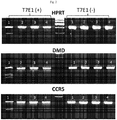
FIG. 2 shows the T7 endonuclease 1 (T7E1) mutation detection assay results indicating that Split-Cas9 protein is formed in a non-human cell and acts together with sgRNA to induce Indel in all of HPRT, DMD and CCR5 genes (1) Split-Cas9 + sgRNA, 2) second domain of the Cas9 + sgRNA, 3) first domain of the Cas9+ sgRNA, 4) mock). -
FIG. 3 shows the results of next-generation sequencing performed to analyze the efficiency of mutagenesis of genes target by the Split-Cas9 protein. -
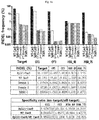
FIG. 4 shows the results of analyzing the specificities of the Split-Cas9 protein for target genes. Specifically,FIG. 4 shows the results of next-generation sequencing performed to analyze the efficiency of mutagenesis at an on-target site and off-target sites in Hela cells (FIG. 4a ) and Hep1 cells (FIG. 4b ). Specificity was analyzed by the specificity ratio obtained by dividing the efficiency of mutagenesis at the on-target site by the efficiency of mutagenesis at each of four off-target sites. -
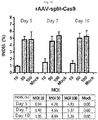
FIG. 5 shows a process of constructing split-Cas9 delivery vectors and the results of examining the function of the vectors. Specifically,FIGS. 5(a) and 5(b) schematically show construction of adeno-associated virus vectors for delivering split-Cas9. U6 promoter, sgRNA, EFS promoter, a first domain, and a splicing donor were sequentially inserted into an adeno-associated virus vector, thereby constructing a virus vector that packages the first domain. In addition, an adeno-associated virus vector was constructed which includes a splicing acceptor, a second domain or which is capable of packaging the second domain together with U6 promoter and sgRNA.FIG. 5(c) shows the results obtained by co-infecting Hela cells with 10, 50 and 100 MOI (multiplicity of infectivity) of an adeno-associated virus that packages U6 promoter, sgRNA, EFS promoter and a first domain and a virus that packages a second domain, and after 5, 7 and 10 days, analyzing induction of mutation in the DMD exon 51 by next-generation sequencing. - To achieve the above objects, one embodiment of the present invention provides an in vitro method for regulating gene expression, comprising introducing into a non-human cell each of a recombinant vector, which expresses a first domain comprising N-terminus of a Cas9 protein, and a recombinant vector which expresses a second domain comprising C-terminus of a Cas9 protein.
- As used herein, the term "regulating gene expression" refers to all acts to increase or decrease the expression of the gene. In particular, for the purpose of the present invention, the regulation of gene expression may be performed by Cas9 protein. Specifically, any methods of increasing or decreasing the gene expression using Cas9 proteins can be included within the scope of the invention without any limitations. For example, the regulation of gene expression might refer to genome editing, increasing gene expression, or decreasing gene expression.
- As used herein, the term "genome editing" refers to a technique capable of introducing a targeted mutation into the nucleotide sequence of a gene in animal and plant cells, and refers to knock-out or knock-in a specific gene, or introducing a mutation into a non-coding DNA sequence that does not produce protein. In addition, genome editing enables deletion, duplication, inversion, replacement or rearrangement of genomic DNA.
- As used herein, the term "deletion" refers to a mutation caused by deletion of a portion of a chromosome or a portion of DNA nucleotides.
- As used herein, the term "duplication" means that two or more identical genes are present in the genome.
- As used herein, the term "inversion" means that a portion of the genome is arranged inversely relative to the original genome.
- As used herein, the term "replacement" means that one nucleotide sequence is replaced by another nucleotide sequence (that is, replacement of a sequence with information), and does not necessarily mean only that one polynucleotide is chemically or physically replaced by another polynucleotide.
- As used herein, the term "rearrangement" refers to a structural change leading to a change in the positions and sequence of a chromosomal gene, and also includes insertion of transposable elements such as transposons. In addition, the term may include the conversion of genetic information by nucleotide rearrangement in DNA molecules.
- As used herein, the term "Cas9 protein" refers to the major protein element of the CRISPR/Cas9 system, which forms a complex with crRNA (CRISPR RNA) and tracrRNA (trans-activating crRNA) to form activated endonuclease or nickase.
- Cas9 protein or gene information can be obtained from a known database such as the GenBank of NCBI (National Center for Biotechnology Information), but is not limited thereto. For example, the Cas9 protein may be encoded by the nucleotide sequence of SEQ ID NO: 1 or SEQ ID NO: 2, but is not limited thereto, and any Cas9 protein having target-specific nuclease activity together with guide RNA may be included in the scope of the present invention. Furthermore, the Cas9 protein may be bound with a protein transduction domain. The protein transduction domain may be poly-arginine or HIV TAT protein, but is not limited thereto. In addition, those skilled in the art can appreciate that an additional domain can be suitably bound to the Cas9 protein according to the intended use.
- In addition, the Cas9 protein may comprise not only wild-type Cas9, but also deactivated Cas9 (dCas9), or Cas9 variants such as Cas9 nickase. The deactivated Cas9 may be RFN (RNA-guided FokI nuclease) comprising a Fokl nuclease domain bound to dCas9, or may be dCas9 to which a transcription activator or repressor domain is bound. The Cas9 nickase may be D10A Cas9 or H840A Cas9, but is not limited thereto.
- The Cas9 protein of the present invention is not limited in its origin. For example, the Cas9 protein may be derived from Streptococcus pyogenes, Francisella novicida, Streptococcus thermophilus, Legionella pneumophila, Listeria innocua, or Streptococcus mutans. For the purpose of the invention, the Cas9 protein is one which the size of Cas9 protein is so large that it may not be effectively expressed in the viral vector, but is not limited thereto.
- In the present invention, in order to express Cas9 in a viral vector, vectors capable of expressing a portion of Cas9 were constructed. Specifically, the Cas9 protein was divided into domains capable of being expressed from viral vectors, and was expressed from each of the vectors. In the present invention, the first domain and second domain of the Cas9 protein refer to portions of the Cas9 protein, and these domains are expressed from separate vectors to be fused in a non-human cell. In the present invention, the Cas9 protein constructed in this manner was named "split-Cas9" (
FIG. 1 ). - Split-Cas9 of the present invention is characterized in that it is constructed by dividing a conventional Cas9 protein, which is not packaged into a viral vector or the like due to its large size, into domains having a packageable size, and these domains do not lose their function in non-human cells even when these are expressed from the respective vectors.
- As used herein, the term "first domain" refers to a domain comprising the N-terminus of the original Cas9 protein, cleaved for the above-described purposes, and the term "second domain" refers to a domain comprising the C-terminus of the original Cas9 protein. In the present invention, the term "first domain" or "second domain" is used interchangeably with the term "half domain". Each of the domains is to be expressed from viral vectors, and thus may have a size ranging from 400 bp to 3.7 kbp, which can be packaged in each viral vector. Specifically, in the present invention, the first domain and the second domain are fused to each other to form the original full-length of Cas9 protein, and thus the entire size of the Cas9 protein minus the size of the other domain would be the size of one domain.
- In a specific example of the present invention, a first domain having a size of 2.1 kbp and a second domain having a size of 1.9 kbp were introduced into a plasmid vector and a viral vector. As a result, it was shown that split-Cas9 expressed from the vectors could induce Indel at on-target site in a non-human cell.
- Furthermore, those skilled in the art can appreciate that a nucleotide sequence having a specific function may be added to the first domain and the second domain according to the intended use. For example, the first domain and the second domain may further comprise an NLS (nuclear localization signal) sequence, a tag sequence, a splicing donor/splicing acceptor sequence, or the like. Furthermore, the first domain may be encoded by the nucleotide sequence of SEQ ID NO: 3, and the second domain may be encoded by the nucleotide sequence of SEQ ID NO: 5, but the scope of the present invention is not limited thereto.
- As used herein, the term "vector" refers to an expression vector capable of expressing a target protein in suitable host cells and to a genetic construct that includes essential regulatory elements to which a gene insert is operably linked in such a manner as to be expressed.
- As used herein, the term "operably linked" means that a nucleic acid expression control sequence is functionally linked to a nucleic acid sequence encoding the protein of interest so as to execute general functions. The sequence encoding the first domain or second domain of the nuclease DNA according to the present invention is operably linked to a promoter such that expression of the coding sequence is under the influence or control of the promoter. The two nucleic acid sequences (the sequence encoding the first domain or second domain of DNA and the sequence of the promoter region at the 5' terminus of the encoding sequence) are operably linked to each other when the encoding sequence is transcribed by inducing the promoter action. Furthermore, the linking between the two sequences induces no frame-shift mutation, and the two sequences are operably linked to each other when an expression regulatory sequence does not impair the ability to control expression of each domain. Operable linkage with the recombinant vector can be performed using a gene recombination technique well known in the art, and site-specific DNA cleavage and ligation can be performed using enzymes generally known in the art.
- In the present invention, the vector may include an expression regulatory element such as a promoter, an operator, an initiation codon, a stop codon, a polyadenylation signal, or an enhancer, as well as a signal sequence or a reader sequence for membrane targeting and secretion, and may be variously manufactured so as to be adapted for some purpose. The promoter of the vector may be constructive or inductive. Furthermore, the expression vector includes a selective marker for selecting a host cell containing the vector, and a replicable expression vector includes a replication origin. The vector may be self-replicating, or may be integrated into the host DNA. The vector includes a plasmid vector, a cosmid vector, a viral vector, and the like. Specifically, the vector may be the viral vector. An example of the viral vector may include, but is not limited to, a vector derived from Retrovirus, for example, HIV (Human Immunodeficiency Virus), MLV (Murine Leukemia Virus), ASLV (Avian Sarcoma/Leukosis), SNV (Spleen Necrosis Virus), RSV (Rous Sarcoma Virus), MMTV (Mouse Mammary Tumor Virus), Adenovirus, Adeno-associated virus, Herpes simplex virus, etc.
- In the present invention, "introducing into a non-human cell" may use any methods known in the art, and a foreign DNA may be introduced into non-human cells by transfection or transduction. The transfection may be performed by various methods known in the art, including calcium phosphate-DNA coprecipitation, DEAE-dextran-mediated transfection, polybrene-mediated transfection, electroporation, microinjection, liposome-mediated transfection, liposome fusion, lipofection and protoplast fusion.
- In one example of the present invention, each recombinant vector encoding each of the first domain and second domain of the Cas9 protein was constructed (
FIG. 1 ), and then introduced and expressed in a non-human cell. As a result, it was shown that the expressed domains were fused to each other in the non-human cell to function as a full-length Cas9 protein. Specifically, it was shown that the first domain and the second domain, which are half domains, were expressed from the recombinant vectors, and then fused to each other to form a Cas9 form, and the formed Cas9 protein acted together with sgRNA to induce Indel (insertion or deletion) in all target genes (FIGS. 2 and3 ). - In another example of the present invention, the target specificities of the split-Cas9 protein in Hela cells and Hep1 cells were examined, and as a result, it was shown that the target specificity of the split-Cas9 protein was 80 to 220-fold higher than the specificity of wild-type Cas9 (
FIG. 4 ). This suggests that when split-Cas9 of the present invention is expressed in a non-human cell, it can act at a desired on-target sites while minimizing off-target effects. - In still another embodiment of the present invention, split-Cas9 was expressed using adeno-associated virus vectors, and non-human cells were infected with the produced virus. As a result, it was shown that split-Cas9 effectively induced Indel (
FIG. 5 ). Accordingly, it was found that the Cas9 protein can also be effectively used through viral vectors comprising split-Cas9. - Specifically, when the vectors are introduced into non-human cells, a sequence-specific guide RNA may additionally be introduced. More specifically, each vector and the guide RNA may be introduced simultaneously, sequentially or in a reversed order.
- In the present invention, the "guide RNA" may consist of two RNAs, i.e., crRNA (CRISPR RNA) and tracrRNA (trans-activating crRNA). Alternatively, the guide RNA may be a sgRNA (single-chain RNA) prepared by the fusion of the main parts of crRNA and tracrRNA. In addition, the guide RNA may be a dual RNA comprising a crRNA and a tracrRNA.
- RGENs known as third-generation programmable nucleases may be composed of Cas protein and dual RNA or may be composed of Cas protein and sgRNA. The guide RNA may comprise one or more additional nucleotides at the 5' terminus of sgRNA or crRNA of dual RNA, and may be delivered intracellularly as a RNA or a DNA encoding the RNA.
- Another embodiment of the present invention provides a composition comprising a recombinant vector which expresses a first domain comprising N-terminus of a Cas9 protein, and a recombinant vector which expresses a second domain comprising C-terminus of a Cas9 protein. The composition may be introduced into non-human cells to regulate expression of a desired gene. The composition may further comprise a sequence-specific guide RNA. The Cas9 protein and the recombinant vector are the same those as described above.
- In an example of the present invention, a recombinant vector, which expresses the first domain, and a recombinant vector which expresses the second domain, were introduced into non-human cells. The reason is to deliver the Cas9 protein, which has a size making the Cas9 protein be difficult to package into a vector, and to express the delivered protein more efficiently. The use of a composition comprising each of the recombinant vector enables the Cas9 protein to be more easily expressed in non-human cells. The composition may comprise, in addition to the recombinant vector expressing the first domain and the recombinant vector expressing the second domain, a medium composition capable of maintaining cells or a substance required to introduce the recombinant vectors into non-human cells.
- Still another embodiment of the present invention provides a kit for regulating gene expression, comprising a recombinant vector which expresses a first domain of Cas9 protein, and a recombinant vector which expresses a second domain of Cas9 protein. Specifically, the kit may further comprise a sequence-specific guide RNA.
- Moreover, the kit according to the present invention may comprise not only a substance that induces or promotes expression of the recombinant vectors or a medium composition capable of maintaining cells, but also a composition capable of facilitating the construction or intracellular introduction of the recombinant vectors and a manual for the construction or intracellular introduction of the recombinant vectors.
- Yet another embodiment of the present invention provides a transformed non-human cell, which is introduced with a viral vector packaging a first domain of the Cas9 protein, and a viral vector packaging a second domain of the Cas9 protein.
- As used herein, the term "transformed non-human cell" means a non-human cell obtained by introducing a desired polynucleotide into host cells. Transformation may be accomplished by the "introduction" method and can be performed by selecting suitable standard techniques according to host cells, as is known in the art.
- It is to be understood that the host cell refers to eukaryotic or prokaryotic cell into which one or more DNAs or vectors are introduced, and refers not only to the particular subject cell but also to the progeny or potential progeny thereof. Because certain modifications may occur in succeeding generations due to either mutation or environmental influences, such progeny may not, in fact, be identical to the parent cell, but are still included within the scope of the term as used herein. In the present invention, the transformed non-human cell is a non-human cell introduced with viral vectors encoding each of the half domains, and a virus that packages the nucleotide sequence encoding each domain of Cas9 can be obtained from the transformed non-human cell. Specifically, the virus can be obtained from a culture or a lysate of the transformed non-human cell.
- Examples of the non-human cell include, but are not limited to, prokaryotic cells such as E. coli, eukaryotic cells such as yeast, fungi, protozoa, higher plants or insects, mammalian cells such as CHO, HeLa, HEK293 or COS-1, etc.
- In addition, the non-human cells may also be cultured non-human cells (in vitro), graft and primary cultures (in vitro and ex vivo), and are not particularly limited as long as they are non-human cells that are generally used in the art.
- In another embodiment of the present invention, there is provided a composition comprising a culture or cell lysate of the transformed non-human cell. The transformed non-human cell and the culture and lysate thereof are as described above. The composition comprises a virus that packages the nucleotide sequence encoding each of the domains, and thus may be used to regulate gene expression.
- According to the present invention, the limitation in packaging of the Cas9 protein by a vector is overcome, and the efficiency of intracellular delivery of the Cas9 protein is increased by constructing recombinant vectors that individually express the two cleaved domains of the Cas9 protein and delivering the constructed recombinant vectors to be expressed in non-human cells. Thus, the inventive principle developed by the present inventors may be applied regardless of the types of non-human cells or the types of Cas9 protein to increase the efficiency of intracellular delivery of Cas9 protein to thereby efficiently regulate gene expression.
- Hereinafter, the present invention will be described in detail with reference to examples. It will be obvious to a person having ordinary skill in the art that these examples are for illustrative purposes only and are not to be construed to limit the scope of the present invention.
- The middle portion of a disordered linker (SEQ ID NO: 9; agcggccagggc; the sequence encoding SGQG amino acids) present in the middle portion of wild-type (WT) Cas9 (CRISPR associated protein 9) protein (SEQ ID NO: 2) was cleaved, thereby constructing two half domains in which SG amino acids and QG amino acids were linked to the first domain and the second domain, respectively.
- Each of the half domains was configured such that independent domain thereof could be induced by a CMV promoter. A stop codon was inserted into the cleaved 3'-end of the first domain by PCR cloning such that expression could be completed, and a start codon was linked to the cleaved 5'-end region of the second domain such that expression could be initiated. A HA tag and a NLS (nuclear localization signal) were sequentially inserted downstream of the start codon in the 5'-end region of the first domain, a NLS region and a HA tag were sequentially inserted between the 3'-end and stop codon of the second domain, such that protein expression could be measured by nuclear localization and the HA antibody.
- The recombinant vectors expressing each half domain, constructed in Example 1, plasmids expressing sgRNA (single guide RNA) for each of CCR5, HPRT and DMD genes, were delivered into cells by transfection using lipofectamin.
- As a target sequence for allele knockout of the CCR5 gene, a conversed sequence commonly present in all humans was used, and the 5'-TGACATCAATTATTATACATCGG-3' sequence (SEQ ID NO: 11) present in
CCR5 exon 2 was targeted. - Furthermore, as a target sequence for allele knockout of the HPRT gene, the 5'-GCCCCCCTTGAGCACACAGAGGG-3' sequence (SEQ ID NO: 12) present in DMD exon 51 was targeted.
- In addition, as a target sequence for allele knockout of the DMD gene, the 5'-TCCTACTCAGACTGTTACTCTGG-3' sequence (SEQ ID NO: 13) present in DMD exon 51 was targeted.
- Next, genomic DNAs were extracted from the Hela cells, and then the target sequence region in each of the HPRT, DMD and CCR5 genes was amplified by PCR.
- Next, whether Indel (insertion or deletion) was induced was analyzed by T7E1 (T7 endonuclease I) mutation detection assay, and the results of agarose gel analysis are shown in
FIG. 2 . The T7E1 assay was performed according to a known method. In brief, genomic DNAs were isolated using the DNeasy Blood & Tissue Kit (G-DEX IIc Genomic extraction kit) according to the manufacturer's instruction. - As can be seen in
FIG. 2 , each of the half domains was expressed from the intracellularly introduced recombinant vectors (constructed in Example 1), and then the expressed half domains were fused to each other to form Cas9 protein (named "Split-Cas9") which then acted together with sgRNA to induce Indel in all the HPRT, DMD and CCR5 genes. - In order to analyze the knockout efficiency of target genes, target sequence regions were amplified by PCR, and then the target sequences were analyzed by a next-generation assay. The results of the analysis indicated that the Indel frequency was 27.1% in the HPRT gene, 23.75% in the DMD gene, and 20.27% in the CCR5 gene. In a control group, only one half domain for the first or second domain was introduced and expressed in cells, and in this case, no Indel appeared (
FIG. 3 ). - From the results as described above, it could be seen that, when the recombinant vectors expressing each half domain of Cas9 were introduced into cells, the half domains were expressed normally and then fused to each other to form a full-length Cas9 protein, indicating that the half domains can act together with sgRNA to exhibit Indel effects on target genes. Cas9 has reduced intracellular delivery efficiency due to the size of a Cas9 expression cassette, which is larger than a size capable of being packaged in a viral vector. According to the present invention, the first and second domains of Cas9 are introduced individually into cells so that they can be expressed in the cells and then fused to each other to exhibit their function, thereby solving the problem associated with the packaging of the Cas9 protein into a vector.
- In order to analyze the off-target effect of target genes, cells were treated with each of split-Cas9 and wild-type Cas9 plasmids, and after 3 days, a similar sequence region having a sequence mismatch with the target sequence of the HBB gene was amplified by PCR. Next, the target sequence was analyzed by a next-generation assay.
- When on-target efficiency in Hela cells was divided by off-target efficiency, it was shown that the specificity of split-Cas9 was up to 220-fold higher than the specificity of wild-type Cas9 (
FIG. 4a ). In addition, it was shown that the specificity of split-Cas9 in Hep1 cells was up to 80-fold higher than the specificity of wild-type Cas9 (FIG. 4b ). - In order to examine whether Split-Cas9 effectively acts even when it is delivered using viral vectors, each of the first and second domains was cloned into adeno-associated virus vector plasmids (
FIGS. 5a and 5b ). - A splicing donor was linked to the C-terminal region of the first domain, and a splicing acceptor was linked to the N-terminal region of the second domain. Viruses that package each of the half domains were produced, recovered and delivered intracellularly, and then the cleavage rate of the target sequence region was analyzed.
- As a result, it could be seen that the half domains were fused to each other to form a full-length Cas9 protein to thereby exhibit gene cleavage effects. Meanwhile, Hela cells were infected with 10, 50 and 100 MOI (multiplicity of infectivity) of adeno-associated virus for delivering Split-Cas9, and after 5, 7 and 10 days, the target sequence cleavage rate was analyzed. As a result, it could be seen that a target sequence cleavage effect of about 5% appeared (
FIG. 5c ). This suggests that split-Cas9 of the present invention effectively acts even when it is delivered using viral vectors. - <110> INSTITUTE FOR BASIC SCIENCE
- <120> A method for regulation of gene expression by expressing Cas9 protein from the two independent vector
- <130> OPA15284-PCT
- <150>
KR 2014-0161809
<151> 2014-11-19 - <160> 54
- <170> KopatentIn 2.0
- <210> 1
<211> 4104
<212> DNA
<213> Artificial Sequence - <220>
<223> Cas9 - <400> 1


- <210> 2
<211> 4173
<212> DNA
<213> Artificial Sequence - <220>
<223> Cas9-modified - <400> 2


- <210> 3
<211> 2145
<212> DNA
<213> Artificial Sequence - <220>
<223>domain 1 - <400> 3


- <210> 4
<211> 2238
<212> DNA
<213> Artificial Sequence - <220>
<223> domain 1-modified - <400> 4


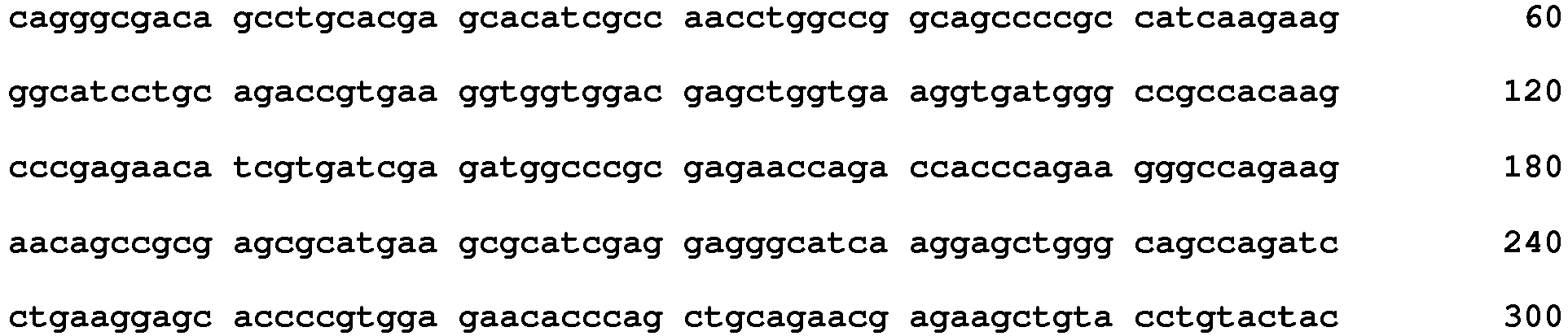
- <210> 5
<211> 1959
<212> DNA
<213> Artificial Sequence - <220>
<223>domain 2 - <400> 5

- <210> 6
<211> 2031
<212> DNA
<213> Artificial Sequence - <220>
<223> domain 2-modified - <400> 6


- <210> 7
<211> 21
<212> DNA
<213> Artificial Sequence - <220>
<223> nuclear localization signal - <400> 7
ccaaagaaaa agagaaaagt a 21 - <210> 8
<211> 27
<212> DNA
<213> Artificial Sequence - <220>
<223> HA tag - <400> 8
tacccctacg acgtgcccga ctacgcc 27 - <210> 9
<211> 12
<212> DNA
<213> Artificial Sequence - <220>
<223> linker - <400> 9
agcggccagg gc 12 - <210> 10
<211> 4
<212> PRT
<213> Artificial Sequence - <220>
<223> linker - <400> 10

- <210> 11
<211> 23
<212> DNA
<213> Artificial Sequence - <220>
<223>CCR5 exon 2 target sequence - <400> 11
tgacatcaat tattatacat cgg 23 - <210> 12
<211> 23
<212> DNA
<213> Artificial Sequence - <220>
<223>HPRT exon 3 target sequence - <400> 12
gccccccttg agcacacaga ggg 23 - <210> 13
<211> 23
<212> DNA
<213> Artificial Sequence - <220>
<223> DMD exon 51 target sequence - <400> 13
tcctactcag actgttactc tgg 23 - <210> 14
<211> 20
<212> DNA
<213> Artificial Sequence - <220>
<223>CCR5 exon 2 target forward primer for T7E1 assay PCR - <400> 14
ctccatggtg ctatagagca 20 - <210> 15
<211> 20
<212> DNA
<213> Artificial Sequence - <220>
<223>CCR5 exon 2 target reverse primer for T7E1 assay PCR - <400> 15
gccctgtcaa gagttgacac 20 - <210> 16
<211> 21
<212> DNA
<213> Artificial Sequence - <220>
<223>CCR5 exon 2 target forward primer for T7E1 assay nested PCR - <400> 16
gagccaagct ctccatctag t 21 - <210> 17
<211> 20
<212> DNA
<213> Artificial Sequence - <220>
<223>CCR5 exon 2 target reverse primer for T7E1 assay nested PCR - <400> 17
gccctgtcaa gagttgacac 20 - <210> 18
<211> 20
<212> DNA
<213> Artificial Sequence - <220>
<223>CCR5 exon 2 target forward primer for deep sequencing PCR - <400> 18
ctccatggtg ctatagagca 20 - <210> 19
<211> 20
<212> DNA
<213> Artificial Sequence - <220>
<223>CCR5 exon 2 target reverse primer for deep sequencing PCR - <400> 19
gccctgtcaa gagttgacac 20 - <210> 20
<211> 59
<212> DNA
<213> Artificial Sequence - <220>
<223>CCR5 exon 2 target forward primer for deep sequencing nested PCR - <400> 20
acactctttc cctacacgac gctcttccga tctaagatca ctttttattt atgcacagg 59 - <210> 21
<211> 54
<212> DNA
<213> Artificial Sequence - <220>
<223>CCR5 exon 2 target reverse primer for deep sequencing nested PCR - <400> 21
gtgactggag ttcagacgtg tgctcttccg atctatgttg cccacaaaac caaa 54 - <210> 22
<211> 20
<212> DNA
<213> Artificial Sequence - <220>
<223>HPRT exon 3 target forward primer for T7E1 assay PCR - <400> 22
ccaggttggt gtggaagttt 20 - <210> 23
<211> 20
<212> DNA
<213> Artificial Sequence - <220>
<223>HPRT exon 3 target reverse primer for T7E1 assay PCR - <400> 23
ggacttttga ctccccacaa 20 - <210> 24
<211> 20
<212> DNA
<213> Artificial Sequence - <220>
<223>HPRT exon 3 target forward primer for T7E1 assay nested PCR - <400> 24
ccaggttggt gtggaagttt 20 - <210> 25
<211> 22
<212> DNA
<213> Artificial Sequence - <220>
<223>HPRT exon 3 target reverse primer for T7E1 assay nested PCR - <400> 25
tggtttgcag agattcaaag aa 22 - <210> 26
<211> 20
<212> DNA
<213> Artificial Sequence - <220>
<223>HPRT exon 3 target forward primer for deep sequencing PCR - <400> 26
ccaggttggt gtggaagttt 20 - <210> 27
<211> 20
<212> DNA
<213> Artificial Sequence - <220>
<223>HPRT exon 3 target reverse primer for deep sequencing PCR - <400> 27
ggacttttga ctccccacaa 20 - <210> 28
<211> 53
<212> DNA
<213> Artificial Sequence - <220>
<223>HPRT exon 3 target forward primer for deep sequencing nested PCR - <400> 28
acactctttc cctacacgac gctcttccga tcttgctcga gatgtgatga agg 53 - <210> 29
<211> 56
<212> DNA
<213> Artificial Sequence - <220>
<223>HPRT exon 3 target reverse primer for deep sequencing nested PCR - <400> 29
gtgactggag ttcagacgtg tgctcttccg atctaagaaa acctactgtt gccact 56 - <210> 30
<211> 25
<212> DNA
<213> Artificial Sequence - <220>
<223> DMD exon 51 target forward primer for T7E1 assay PCR - <400> 30
acttgtccag gcatgagaat gagca 25 - <210> 31
<211> 25
<212> DNA
<213> Artificial Sequence - <220>
<223> DMD exon 51 target reverse primer for T7E1 assay PCR - <400> 31
gctgcgtagt gccaaaacaa acagt 25 - <210> 32
<211> 25
<212> DNA
<213> Artificial Sequence - <220>
<223> DMD exon 51 target forward primer for T7E1 assay nested PCR - <400> 32
ccaggcatga gaatgagcaa aatcg 5 - <210> 33
<211> 24
<212> DNA
<213> Artificial Sequence - <220>
<223> DMD exon 51 target reverse primer for T7E1 assay nested PCR - <400> 33
ggtaagttct gtccaagccc ggtt 24 - <210> 34
<211> 25
<212> DNA
<213> Artificial Sequence - <220>
<223> DMD exon 51 target forward primer for deep sequencing PCR - <400> 34
acttgtccag gcatgagaat gagca 25 - <210> 35
<211> 25
<212> DNA
<213> Artificial Sequence - <220>
<223> DMD exon 51 target reverse primer for deep sequencing PCR - <400> 35
gctgcgtagt gccaaaacaa acagt 25 - <210> 36
<211> 56
<212> DNA
<213> Artificial Sequence - <220>
<223> DMD exon 51 target forward primer for deep sequencing nested PCR - <400> 36
acactctttc cctacacgac gctcttccga tctggctctt tagcttgtgt ttctaa 56 - <210> 37
<211> 58
<212> DNA
<213> Artificial Sequence - <220>
<223> DMD exon 51 target reverse primer for deep sequencing nested PCR - <400> 37
gtgactggag ttcagacgtg tgctcttccg atctggtaag ttctgtccaa gcccggtt 58 - <210> 38
<211> 57
<212> DNA
<213> Artificial Sequence - <220>
<223> On-target (HBB gene) forward primer for deep sequencing nested PCR - <400> 38
acactctttc cctacacgac gctcttccga tcttgtcttg taaccttgat accaacc 57 - <210> 39
<211> 54
<212> DNA
<213> Artificial Sequence - <220>
<223> On-target (HBB gene) reverse primer for deep sequencing nested PCR - <400> 39
gtgactggag ttcagacgtg tgctcttccg atctgcaacc tcaaacagac acca 54 - <210> 40
<211> 53
<212> DNA
<213> Artificial Sequence - <220>
<223> OT1 target forward primer for deep sequencing nested PCR - <400> 40
acactctttc cctacacgac gctcttccga tctgaaaggg gaagatccca gag 53 - <211> 54
<212> DNA
<213> Artificial Sequence - <220>
<223> OT1 target reverse primer for deep sequencing nested PCR - <400> 41
gtgactggag ttcagacgtg tgctcttccg atctatttcc aggctatgct tcca 54 - <210> 42
<211> 53
<212> DNA
<213> Artificial Sequence - <220>
<223> OT3 target forward primer for deep sequencing nested PCR - <400> 42
acactctttc cctacacgac gctcttccga tcttttgtgt gggatgctga gag 53 - <210> 43
<211> 56
<212> DNA
<213> Artificial Sequence - <220>
<223> OT3 target reverse primer for deep sequencing nested PCR - <400> 43
gtgactggag ttcagacgtg tgctcttccg atctagctac cacggtgaca gtaaca 56 - <210> 44
<211> 53
<212> DNA
<213> Artificial Sequence - <220>
<223> HBB_48 target forward primer for deep sequencing nested PCR - <400> 44
acactctttc cctacacgac gctcttccga tctaggaggt gagagtccag tcg 53 - <210> 45
<211> 54
<212> DNA
<213> Artificial Sequence - <220>
<223> HBB_48 target reverse primer for deep sequencing nested PCR - <400> 45
gtgactggag ttcagacgtg tgctcttccg atctgaacca gctgcctcag actt 54 - <210> 46
<211> 53
<212> DNA
<213> Artificial Sequence - <220>
<223> HBB_75 target forward primer for deep sequencing nested PCR - <400> 46
acactctttc cctacacgac gctcttccga tcttgggtgg tagatgagga tga 53 - <210> 47
<211> 54
<212> DNA
<213> Artificial Sequence - <220>
<223> HBB_75 target reverse primer for deep sequencing nested PCR - <400> 47
gtgactggag ttcagacgtg tgctcttccg atctcctggc aaaagtgttt ggat 54 - <210> 48
<211> 23
<212> DNA
<213> Artificial Sequence - <220>
<223> On-target sequence (HBB gene) - <400> 48
cttgccccac agggcagtaa cgg 23 - <210> 49
<211> 23
<212> DNA
<213> Artificial Sequence - <220>
<223> off-target sequence (OT1) - <400> 49
tcagccccac agggcagtaa ggg 23 - <210> 50
<211> 23
<212> DNA
<213> Artificial Sequence - <220>
<223> off-target sequence (OT3) - <400> 50
gctgccccac agggcagcaa agg 23 - <210> 51
<211> 23
<212> DNA
<213> Artificial Sequence - <220>
<223> off-target sequence (HBB_48) - <400> 51
attgccccac ggggcagtga cgg 23 - <210> 52
<211> 23
<212> DNA
<213> Artificial Sequence - <220>
<223> off-target sequence (HBB_75) - <400> 52
gtggccccac agggcaggaa tgg 23 - <210> 53
<211> 50
<212> DNA
<213> Artificial Sequence - <220>
<223> Splicing donor in adeno-associated virusvector carrying domain 1 of spCas9 - <400> 53
gtaagtatca aggttacaag acaggtttaa ggagaccaat agaaactggg 50 - <210> 54
<211> 83
<212> DNA
<213> Artificial Sequence - <220>
<223> Splicing acceptor in adeno-associated virusvector carrying domain 2 of spCas9 - <400> 54

Claims (15)
- An in vitro method for introducing a targeted mutation into a genome, comprising introducing into a non-human cell each of a recombinant vector, which expresses a first domain comprising N-terminus of a Cas9 protein, and a recombinant vector which expresses a second domain comprising C-terminus of a Cas9 protein, wherein the first domain and the second domain are constructed by cleaving a middle portion of a linker of SEQ ID NO.:10 in the Cas9 protein.
- The method of claim 1, wherein the Cas9 protein is wild-type Cas9, deactivated Cas9 (dCas9), or Cas9 nickase and wherein the deactivated Cas9 is preferably RFN (RNA-guided Fokl nuclease) comprising a Fokl nuclease domain bound to dCas9, or dCas9 to which a transcription activator or repressor domain is bound and/or wherein the Cas9 nickase is preferably D10A Cas9 or H840A Cas9.
- The method of claim 1, wherein the Cas9 protein is derived from any one selected from the group consisting of Streptococcus pyogenes, Francisella novicida, Streptococcus thermophilus, Legionella pneumophila, Listeria innocua, and Streptococcus mutans.
- The method of claim 1, wherein the recombinant vector is a plasmid vector, a cosmid vector, or a viral vector, wherein said viral vector is preferably selected from the group consisting of a retrovirus vector, an adenovirus vector, an adeno-associated virus vector, and a herpes simplex virus vector.
- The method of claim 1, further comprising a step of forming Cas9 protein by fusing the first domain and the second domain, which are expressed from each of the introduced recombinant vectors.
- The method of claim 1, wherein each of the first domain and the second domain is encoded by a nucleotide sequence having a size ranging from 400 bp (base pair) to 3.7 kbp (kilo base pair) and/or wherein each of the first domain and the second domain separately further comprise an NLS (nuclear localization signal) sequence, a splicing donor sequence, a splicing acceptor sequence, or a combination thereof.
- The method of claim 1, wherein the first domain is encoded by the nucleotide sequence of SEQ ID NO: 3, and the second domain is encoded by the nucleotide sequence of SEQ ID NO: 5.
- The method of claim 1, further comprising a step of introducing a sequence-specific guide RNA into a non-human cell in the step of introducing into a non-human cell and wherein preferably introducing each vector and the guide RNA is performed in a simultaneous, sequential or a reversed manner.
- A composition comprising a recombinant vector which expresses a first domain comprising N-terminus of a Cas9 protein, and a recombinant vector which expresses a second domain comprising C-terminus of a Cas9 protein, wherein a middle portion of a linker of SEQ ID NO.:10 in the Cas9 protein is cleaved to construct the first domain and the second domain of the Cas9 protein.
- The composition of claim 9, wherein the composition is used for a regulation of gene expression.
- The composition of claim 9, wherein the composition further comprises a sequence-specific guide RNA.
- A kit for regulating a gene expression, which comprises the composition of claim 9 and wherein the kit further preferably comprises a sequence-specific guide RNA.
- A transformed non-human cell, which is introduced with a viral vector packaging a first domain comprising N-terminus of a Cas9 protein, and a viral vector packaging a second domain comprising C-terminus of a Cas9 protein, wherein a middle portion of a linker of SEQ ID NO.:10 in the Cas9 protein is cleaved to construct the first domain and the second domain of the Cas9 protein.
- A composition comprising a culture or cell lysate of the transformed non-human cell of claim 13 and the composition is preferably used for regulation of gene expression.
- An in vitro method for intracellular production of Cas9 protein, comprising introducing into a non-human cell each of a recombinant vector, which expresses a first domain comprising N-terminus of a Cas9 protein, and a recombinant vector which expresses a second domain comprising C-terminus of a Cas9 protein, wherein the first domain and the second domain are constructed by cleaving a middle portion of a linker of SEQ ID NO.:10 in the Cas9 protein.
Applications Claiming Priority (2)
| Application Number | Priority Date | Filing Date | Title |
|---|---|---|---|
| KR20140161809 | 2014-11-19 | ||
| PCT/KR2015/012503 WO2016080795A1 (en) | 2014-11-19 | 2015-11-19 | Method for regulating gene expression using cas9 protein expressed from two vectors |
Publications (3)
| Publication Number | Publication Date |
|---|---|
| EP3222728A1 EP3222728A1 (en) | 2017-09-27 |
| EP3222728A4 EP3222728A4 (en) | 2018-09-12 |
| EP3222728B1 true EP3222728B1 (en) | 2021-07-14 |
Family
ID=56014239
Family Applications (1)
| Application Number | Title | Priority Date | Filing Date |
|---|---|---|---|
| EP15861198.8A Active EP3222728B1 (en) | 2014-11-19 | 2015-11-19 | Method for regulating gene expression using cas9 protein expressed from two vectors |
Country Status (6)
| Country | Link |
|---|---|
| US (1) | US10858662B2 (en) |
| EP (1) | EP3222728B1 (en) |
| JP (2) | JP2017534294A (en) |
| KR (2) | KR20160059994A (en) |
| CN (1) | CN107109422B (en) |
| WO (1) | WO2016080795A1 (en) |
Families Citing this family (36)
| Publication number | Priority date | Publication date | Assignee | Title |
|---|---|---|---|---|
| WO2013066438A2 (en) | 2011-07-22 | 2013-05-10 | President And Fellows Of Harvard College | Evaluation and improvement of nuclease cleavage specificity |
| US20150044192A1 (en) | 2013-08-09 | 2015-02-12 | President And Fellows Of Harvard College | Methods for identifying a target site of a cas9 nuclease |
| US9359599B2 (en) | 2013-08-22 | 2016-06-07 | President And Fellows Of Harvard College | Engineered transcription activator-like effector (TALE) domains and uses thereof |
| US9340799B2 (en) | 2013-09-06 | 2016-05-17 | President And Fellows Of Harvard College | MRNA-sensing switchable gRNAs |
| US9526784B2 (en) | 2013-09-06 | 2016-12-27 | President And Fellows Of Harvard College | Delivery system for functional nucleases |
| US9388430B2 (en) | 2013-09-06 | 2016-07-12 | President And Fellows Of Harvard College | Cas9-recombinase fusion proteins and uses thereof |
| US20150166984A1 (en) | 2013-12-12 | 2015-06-18 | President And Fellows Of Harvard College | Methods for correcting alpha-antitrypsin point mutations |
| WO2016022363A2 (en) | 2014-07-30 | 2016-02-11 | President And Fellows Of Harvard College | Cas9 proteins including ligand-dependent inteins |
| SG10202104041PA (en) | 2015-10-23 | 2021-06-29 | Harvard College | Nucleobase editors and uses thereof |
| KR20250103795A (en) | 2016-08-03 | 2025-07-07 | 프레지던트 앤드 펠로우즈 오브 하바드 칼리지 | Adenosine nucleobase editors and uses thereof |
| US11661590B2 (en) | 2016-08-09 | 2023-05-30 | President And Fellows Of Harvard College | Programmable CAS9-recombinase fusion proteins and uses thereof |
| WO2018039438A1 (en) | 2016-08-24 | 2018-03-01 | President And Fellows Of Harvard College | Incorporation of unnatural amino acids into proteins using base editing |
| SG11201903089RA (en) | 2016-10-14 | 2019-05-30 | Harvard College | Aav delivery of nucleobase editors |
| WO2018119359A1 (en) | 2016-12-23 | 2018-06-28 | President And Fellows Of Harvard College | Editing of ccr5 receptor gene to protect against hiv infection |
| US11898179B2 (en) | 2017-03-09 | 2024-02-13 | President And Fellows Of Harvard College | Suppression of pain by gene editing |
| EP3592381A1 (en) | 2017-03-09 | 2020-01-15 | President and Fellows of Harvard College | Cancer vaccine |
| WO2018165629A1 (en) | 2017-03-10 | 2018-09-13 | President And Fellows Of Harvard College | Cytosine to guanine base editor |
| WO2018176009A1 (en) | 2017-03-23 | 2018-09-27 | President And Fellows Of Harvard College | Nucleobase editors comprising nucleic acid programmable dna binding proteins |
| WO2018209320A1 (en) | 2017-05-12 | 2018-11-15 | President And Fellows Of Harvard College | Aptazyme-embedded guide rnas for use with crispr-cas9 in genome editing and transcriptional activation |
| CN111801345A (en) | 2017-07-28 | 2020-10-20 | 哈佛大学的校长及成员们 | Methods and compositions for evolutionary base editors using phage-assisted sequential evolution (PACE) |
| EP3676376B1 (en) | 2017-08-30 | 2025-01-15 | President and Fellows of Harvard College | High efficiency base editors comprising gam |
| US11795443B2 (en) | 2017-10-16 | 2023-10-24 | The Broad Institute, Inc. | Uses of adenosine base editors |
| WO2019099943A1 (en) * | 2017-11-16 | 2019-05-23 | Astrazeneca Ab | Compositions and methods for improving the efficacy of cas9-based knock-in strategies |
| WO2019118949A1 (en) | 2017-12-15 | 2019-06-20 | The Broad Institute, Inc. | Systems and methods for predicting repair outcomes in genetic engineering |
| US12157760B2 (en) | 2018-05-23 | 2024-12-03 | The Broad Institute, Inc. | Base editors and uses thereof |
| EP3820495A4 (en) | 2018-07-09 | 2022-07-20 | The Broad Institute Inc. | RNA PROGRAMMABLE EPIGENETIC RNA MODIFIERS AND THEIR USES |
| US11168141B2 (en) | 2018-08-02 | 2021-11-09 | Dyne Therapeutics, Inc. | Muscle targeting complexes and uses thereof for treating dystrophinopathies |
| WO2020092453A1 (en) | 2018-10-29 | 2020-05-07 | The Broad Institute, Inc. | Nucleobase editors comprising geocas9 and uses thereof |
| US12351837B2 (en) | 2019-01-23 | 2025-07-08 | The Broad Institute, Inc. | Supernegatively charged proteins and uses thereof |
| EP3942043A2 (en) | 2019-03-19 | 2022-01-26 | The Broad Institute, Inc. | Methods and compositions for editing nucleotide sequences |
| WO2020214842A1 (en) | 2019-04-17 | 2020-10-22 | The Broad Institute, Inc. | Adenine base editors with reduced off-target effects |
| US12435330B2 (en) | 2019-10-10 | 2025-10-07 | The Broad Institute, Inc. | Methods and compositions for prime editing RNA |
| CN119410608A (en) * | 2019-11-01 | 2025-02-11 | 苏州齐禾生科生物科技有限公司 | Method for targeted modification of plant genome sequences |
| BR112022022603A2 (en) | 2020-05-08 | 2023-01-17 | Broad Inst Inc | METHODS AND COMPOSITIONS FOR SIMULTANEOUS EDITING OF BOTH DUAL-STRANDED NUCLEOTIDE TARGET SEQUENCE STRAINS |
| WO2022114815A1 (en) * | 2020-11-25 | 2022-06-02 | 연세대학교 산학협력단 | Composition for prime editing comprising trans-splicing adeno-associated virus vector |
| KR102803306B1 (en) * | 2021-02-04 | 2025-05-07 | 연세대학교 산학협력단 | A composition for prime editing with improved genome editing efficiency |
Family Cites Families (10)
| Publication number | Priority date | Publication date | Assignee | Title |
|---|---|---|---|---|
| US7601517B2 (en) * | 2006-01-10 | 2009-10-13 | Stanford University | Split protein self complementing fragments, systems, and methods of use thereof |
| US9637739B2 (en) * | 2012-03-20 | 2017-05-02 | Vilnius University | RNA-directed DNA cleavage by the Cas9-crRNA complex |
| EP3135765A1 (en) * | 2012-12-06 | 2017-03-01 | Sigma-Aldrich Co. LLC | Crispr-based genome modification and regulation |
| ES2576126T3 (en) * | 2012-12-12 | 2016-07-05 | The Broad Institute, Inc. | Modification by genetic technology and optimization of improved enzyme systems, methods and compositions for sequence manipulation |
| US10378027B2 (en) * | 2013-03-15 | 2019-08-13 | The General Hospital Corporation | RNA-guided targeting of genetic and epigenomic regulatory proteins to specific genomic loci |
| EP3004339B1 (en) * | 2013-05-29 | 2021-07-07 | Cellectis | New compact scaffold of cas9 in the type ii crispr system |
| AU2013405180A1 (en) | 2013-11-18 | 2016-06-02 | Interactive Intelligence, Inc. | System and method for communication routing |
| WO2015089427A1 (en) * | 2013-12-12 | 2015-06-18 | The Broad Institute Inc. | Crispr-cas systems and methods for altering expression of gene products, structural information and inducible modular cas enzymes |
| KR101381368B1 (en) | 2013-12-12 | 2014-04-04 | 유상근 | The hydrostat for portable gas range |
| US20160304893A1 (en) * | 2013-12-13 | 2016-10-20 | Cellectis | Cas9 nuclease platform for microalgae genome engineering |
-
2015
- 2015-11-19 KR KR1020150162799A patent/KR20160059994A/en not_active Ceased
- 2015-11-19 US US15/527,837 patent/US10858662B2/en active Active
- 2015-11-19 WO PCT/KR2015/012503 patent/WO2016080795A1/en not_active Ceased
- 2015-11-19 EP EP15861198.8A patent/EP3222728B1/en active Active
- 2015-11-19 CN CN201580069646.8A patent/CN107109422B/en active Active
- 2015-11-19 JP JP2017527208A patent/JP2017534294A/en active Pending
-
2018
- 2018-01-15 KR KR1020180005097A patent/KR102021585B1/en active Active
-
2020
- 2020-05-07 JP JP2020081896A patent/JP7335200B2/en active Active
Non-Patent Citations (1)
| Title |
|---|
| None * |
Also Published As
| Publication number | Publication date |
|---|---|
| EP3222728A4 (en) | 2018-09-12 |
| KR20160059994A (en) | 2016-05-27 |
| CN107109422A (en) | 2017-08-29 |
| WO2016080795A1 (en) | 2016-05-26 |
| US10858662B2 (en) | 2020-12-08 |
| JP7335200B2 (en) | 2023-08-29 |
| CN107109422B (en) | 2021-08-13 |
| EP3222728A1 (en) | 2017-09-27 |
| JP2020141683A (en) | 2020-09-10 |
| JP2017534294A (en) | 2017-11-24 |
| US20170349905A1 (en) | 2017-12-07 |
| KR102021585B1 (en) | 2019-09-16 |
| KR20180012834A (en) | 2018-02-06 |
Similar Documents
| Publication | Publication Date | Title |
|---|---|---|
| US10858662B2 (en) | Genome editing with split Cas9 expressed from two vectors | |
| JP7083364B2 (en) | Optimized CRISPR-Cas dual nickase system, method and composition for sequence manipulation | |
| AU2019240724B2 (en) | Engineered nucleic-acid targeting nucleic acids | |
| AU2018341985B2 (en) | CRISPR/Cas system and method for genome editing and modulating transcription | |
| JP7423520B2 (en) | Compositions and methods for improving the efficacy of Cas9-based knock-in policies | |
| AU2023208113A1 (en) | Variants of CRISPR from Prevotella and Francisella 1 (Cpf1) | |
| ES2784754T3 (en) | Methods and compositions to modify a target locus | |
| RU2699523C2 (en) | Rna-guided engineering of human genome | |
| JP2023168355A (en) | Methods for improved homologous recombination and compositions thereof | |
| JP6625971B2 (en) | Delivery, engineering and optimization of tandem guide systems, methods and compositions for array manipulation | |
| US20180171360A1 (en) | Methods for increasing cas9-mediated engineering efficiency | |
| WO2016198361A1 (en) | Thermostable cas9 nucleases | |
| CN107794272A (en) | A kind of CRISPR genome editor's systems of high specific | |
| JP2016523084A (en) | Target integration | |
| US12188044B2 (en) | Methods for genomic integration for Kluyveromyces host cells | |
| WO2018172798A1 (en) | Argonaute system | |
| JP2024501892A (en) | Novel nucleic acid-guided nuclease | |
| US20250122535A1 (en) | Crispr-associated transposases and methods of use thereof | |
| KR20250163962A (en) | Improved methods and compositions for CRISPR interference and activation | |
| CA2989084C (en) | Thermostable cas9 nucleases | |
| WO2024038168A1 (en) | Novel rna-guided nucleases and nucleic acid targeting systems comprising such |
Legal Events
| Date | Code | Title | Description |
|---|---|---|---|
| STAA | Information on the status of an ep patent application or granted ep patent |
Free format text: STATUS: THE INTERNATIONAL PUBLICATION HAS BEEN MADE |
|
| PUAI | Public reference made under article 153(3) epc to a published international application that has entered the european phase |
Free format text: ORIGINAL CODE: 0009012 |
|
| STAA | Information on the status of an ep patent application or granted ep patent |
Free format text: STATUS: REQUEST FOR EXAMINATION WAS MADE |
|
| 17P | Request for examination filed |
Effective date: 20170614 |
|
| AK | Designated contracting states |
Kind code of ref document: A1 Designated state(s): AL AT BE BG CH CY CZ DE DK EE ES FI FR GB GR HR HU IE IS IT LI LT LU LV MC MK MT NL NO PL PT RO RS SE SI SK SM TR |
|
| AX | Request for extension of the european patent |
Extension state: BA ME |
|
| DAV | Request for validation of the european patent (deleted) | ||
| DAX | Request for extension of the european patent (deleted) | ||
| A4 | Supplementary search report drawn up and despatched |
Effective date: 20180816 |
|
| RIC1 | Information provided on ipc code assigned before grant |
Ipc: C12N 9/16 20060101ALI20180809BHEP Ipc: C12N 15/63 20060101AFI20180809BHEP |
|
| STAA | Information on the status of an ep patent application or granted ep patent |
Free format text: STATUS: EXAMINATION IS IN PROGRESS |
|
| 17Q | First examination report despatched |
Effective date: 20200227 |
|
| GRAP | Despatch of communication of intention to grant a patent |
Free format text: ORIGINAL CODE: EPIDOSNIGR1 |
|
| STAA | Information on the status of an ep patent application or granted ep patent |
Free format text: STATUS: GRANT OF PATENT IS INTENDED |
|
| INTG | Intention to grant announced |
Effective date: 20210129 |
|
| GRAS | Grant fee paid |
Free format text: ORIGINAL CODE: EPIDOSNIGR3 |
|
| GRAA | (expected) grant |
Free format text: ORIGINAL CODE: 0009210 |
|
| STAA | Information on the status of an ep patent application or granted ep patent |
Free format text: STATUS: THE PATENT HAS BEEN GRANTED |
|
| AK | Designated contracting states |
Kind code of ref document: B1 Designated state(s): AL AT BE BG CH CY CZ DE DK EE ES FI FR GB GR HR HU IE IS IT LI LT LU LV MC MK MT NL NO PL PT RO RS SE SI SK SM TR |
|
| REG | Reference to a national code |
Ref country code: GB Ref legal event code: FG4D |
|
| REG | Reference to a national code |
Ref country code: IE Ref legal event code: FG4D |
|
| REG | Reference to a national code |
Ref country code: DE Ref legal event code: R096 Ref document number: 602015071373 Country of ref document: DE |
|
| REG | Reference to a national code |
Ref country code: AT Ref legal event code: REF Ref document number: 1410685 Country of ref document: AT Kind code of ref document: T Effective date: 20210815 |
|
| REG | Reference to a national code |
Ref country code: LT Ref legal event code: MG9D |
|
| REG | Reference to a national code |
Ref country code: NL Ref legal event code: MP Effective date: 20210714 |
|
| REG | Reference to a national code |
Ref country code: AT Ref legal event code: MK05 Ref document number: 1410685 Country of ref document: AT Kind code of ref document: T Effective date: 20210714 |
|
| PG25 | Lapsed in a contracting state [announced via postgrant information from national office to epo] |
Ref country code: HR Free format text: LAPSE BECAUSE OF FAILURE TO SUBMIT A TRANSLATION OF THE DESCRIPTION OR TO PAY THE FEE WITHIN THE PRESCRIBED TIME-LIMIT Effective date: 20210714 Ref country code: SE Free format text: LAPSE BECAUSE OF FAILURE TO SUBMIT A TRANSLATION OF THE DESCRIPTION OR TO PAY THE FEE WITHIN THE PRESCRIBED TIME-LIMIT Effective date: 20210714 Ref country code: RS Free format text: LAPSE BECAUSE OF FAILURE TO SUBMIT A TRANSLATION OF THE DESCRIPTION OR TO PAY THE FEE WITHIN THE PRESCRIBED TIME-LIMIT Effective date: 20210714 Ref country code: LT Free format text: LAPSE BECAUSE OF FAILURE TO SUBMIT A TRANSLATION OF THE DESCRIPTION OR TO PAY THE FEE WITHIN THE PRESCRIBED TIME-LIMIT Effective date: 20210714 Ref country code: AT Free format text: LAPSE BECAUSE OF FAILURE TO SUBMIT A TRANSLATION OF THE DESCRIPTION OR TO PAY THE FEE WITHIN THE PRESCRIBED TIME-LIMIT Effective date: 20210714 Ref country code: BG Free format text: LAPSE BECAUSE OF FAILURE TO SUBMIT A TRANSLATION OF THE DESCRIPTION OR TO PAY THE FEE WITHIN THE PRESCRIBED TIME-LIMIT Effective date: 20211014 Ref country code: PT Free format text: LAPSE BECAUSE OF FAILURE TO SUBMIT A TRANSLATION OF THE DESCRIPTION OR TO PAY THE FEE WITHIN THE PRESCRIBED TIME-LIMIT Effective date: 20211115 Ref country code: NO Free format text: LAPSE BECAUSE OF FAILURE TO SUBMIT A TRANSLATION OF THE DESCRIPTION OR TO PAY THE FEE WITHIN THE PRESCRIBED TIME-LIMIT Effective date: 20211014 Ref country code: NL Free format text: LAPSE BECAUSE OF FAILURE TO SUBMIT A TRANSLATION OF THE DESCRIPTION OR TO PAY THE FEE WITHIN THE PRESCRIBED TIME-LIMIT Effective date: 20210714 Ref country code: ES Free format text: LAPSE BECAUSE OF FAILURE TO SUBMIT A TRANSLATION OF THE DESCRIPTION OR TO PAY THE FEE WITHIN THE PRESCRIBED TIME-LIMIT Effective date: 20210714 Ref country code: FI Free format text: LAPSE BECAUSE OF FAILURE TO SUBMIT A TRANSLATION OF THE DESCRIPTION OR TO PAY THE FEE WITHIN THE PRESCRIBED TIME-LIMIT Effective date: 20210714 |
|
| PG25 | Lapsed in a contracting state [announced via postgrant information from national office to epo] |
Ref country code: PL Free format text: LAPSE BECAUSE OF FAILURE TO SUBMIT A TRANSLATION OF THE DESCRIPTION OR TO PAY THE FEE WITHIN THE PRESCRIBED TIME-LIMIT Effective date: 20210714 Ref country code: LV Free format text: LAPSE BECAUSE OF FAILURE TO SUBMIT A TRANSLATION OF THE DESCRIPTION OR TO PAY THE FEE WITHIN THE PRESCRIBED TIME-LIMIT Effective date: 20210714 Ref country code: GR Free format text: LAPSE BECAUSE OF FAILURE TO SUBMIT A TRANSLATION OF THE DESCRIPTION OR TO PAY THE FEE WITHIN THE PRESCRIBED TIME-LIMIT Effective date: 20211015 |
|
| REG | Reference to a national code |
Ref country code: DE Ref legal event code: R097 Ref document number: 602015071373 Country of ref document: DE |
|
| PG25 | Lapsed in a contracting state [announced via postgrant information from national office to epo] |
Ref country code: DK Free format text: LAPSE BECAUSE OF FAILURE TO SUBMIT A TRANSLATION OF THE DESCRIPTION OR TO PAY THE FEE WITHIN THE PRESCRIBED TIME-LIMIT Effective date: 20210714 |
|
| PLBE | No opposition filed within time limit |
Free format text: ORIGINAL CODE: 0009261 |
|
| STAA | Information on the status of an ep patent application or granted ep patent |
Free format text: STATUS: NO OPPOSITION FILED WITHIN TIME LIMIT |
|
| PG25 | Lapsed in a contracting state [announced via postgrant information from national office to epo] |
Ref country code: SM Free format text: LAPSE BECAUSE OF FAILURE TO SUBMIT A TRANSLATION OF THE DESCRIPTION OR TO PAY THE FEE WITHIN THE PRESCRIBED TIME-LIMIT Effective date: 20210714 Ref country code: SK Free format text: LAPSE BECAUSE OF FAILURE TO SUBMIT A TRANSLATION OF THE DESCRIPTION OR TO PAY THE FEE WITHIN THE PRESCRIBED TIME-LIMIT Effective date: 20210714 Ref country code: RO Free format text: LAPSE BECAUSE OF FAILURE TO SUBMIT A TRANSLATION OF THE DESCRIPTION OR TO PAY THE FEE WITHIN THE PRESCRIBED TIME-LIMIT Effective date: 20210714 Ref country code: EE Free format text: LAPSE BECAUSE OF FAILURE TO SUBMIT A TRANSLATION OF THE DESCRIPTION OR TO PAY THE FEE WITHIN THE PRESCRIBED TIME-LIMIT Effective date: 20210714 Ref country code: CZ Free format text: LAPSE BECAUSE OF FAILURE TO SUBMIT A TRANSLATION OF THE DESCRIPTION OR TO PAY THE FEE WITHIN THE PRESCRIBED TIME-LIMIT Effective date: 20210714 Ref country code: AL Free format text: LAPSE BECAUSE OF FAILURE TO SUBMIT A TRANSLATION OF THE DESCRIPTION OR TO PAY THE FEE WITHIN THE PRESCRIBED TIME-LIMIT Effective date: 20210714 |
|
| 26N | No opposition filed |
Effective date: 20220419 |
|
| PG25 | Lapsed in a contracting state [announced via postgrant information from national office to epo] |
Ref country code: MC Free format text: LAPSE BECAUSE OF FAILURE TO SUBMIT A TRANSLATION OF THE DESCRIPTION OR TO PAY THE FEE WITHIN THE PRESCRIBED TIME-LIMIT Effective date: 20210714 |
|
| REG | Reference to a national code |
Ref country code: CH Ref legal event code: PL |
|
| PG25 | Lapsed in a contracting state [announced via postgrant information from national office to epo] |
Ref country code: LU Free format text: LAPSE BECAUSE OF NON-PAYMENT OF DUE FEES Effective date: 20211119 Ref country code: IT Free format text: LAPSE BECAUSE OF FAILURE TO SUBMIT A TRANSLATION OF THE DESCRIPTION OR TO PAY THE FEE WITHIN THE PRESCRIBED TIME-LIMIT Effective date: 20210714 Ref country code: BE Free format text: LAPSE BECAUSE OF NON-PAYMENT OF DUE FEES Effective date: 20211130 |
|
| REG | Reference to a national code |
Ref country code: BE Ref legal event code: MM Effective date: 20211130 |
|
| PG25 | Lapsed in a contracting state [announced via postgrant information from national office to epo] |
Ref country code: LI Free format text: LAPSE BECAUSE OF NON-PAYMENT OF DUE FEES Effective date: 20211130 Ref country code: CH Free format text: LAPSE BECAUSE OF NON-PAYMENT OF DUE FEES Effective date: 20211130 |
|
| PG25 | Lapsed in a contracting state [announced via postgrant information from national office to epo] |
Ref country code: IE Free format text: LAPSE BECAUSE OF NON-PAYMENT OF DUE FEES Effective date: 20211119 |
|
| PG25 | Lapsed in a contracting state [announced via postgrant information from national office to epo] |
Ref country code: HU Free format text: LAPSE BECAUSE OF FAILURE TO SUBMIT A TRANSLATION OF THE DESCRIPTION OR TO PAY THE FEE WITHIN THE PRESCRIBED TIME-LIMIT; INVALID AB INITIO Effective date: 20151119 |
|
| PG25 | Lapsed in a contracting state [announced via postgrant information from national office to epo] |
Ref country code: CY Free format text: LAPSE BECAUSE OF FAILURE TO SUBMIT A TRANSLATION OF THE DESCRIPTION OR TO PAY THE FEE WITHIN THE PRESCRIBED TIME-LIMIT Effective date: 20210714 |
|
| PG25 | Lapsed in a contracting state [announced via postgrant information from national office to epo] |
Ref country code: MK Free format text: LAPSE BECAUSE OF FAILURE TO SUBMIT A TRANSLATION OF THE DESCRIPTION OR TO PAY THE FEE WITHIN THE PRESCRIBED TIME-LIMIT Effective date: 20210714 |
|
| PG25 | Lapsed in a contracting state [announced via postgrant information from national office to epo] |
Ref country code: MT Free format text: LAPSE BECAUSE OF FAILURE TO SUBMIT A TRANSLATION OF THE DESCRIPTION OR TO PAY THE FEE WITHIN THE PRESCRIBED TIME-LIMIT Effective date: 20210714 |
|
| PG25 | Lapsed in a contracting state [announced via postgrant information from national office to epo] |
Ref country code: TR Free format text: LAPSE BECAUSE OF FAILURE TO SUBMIT A TRANSLATION OF THE DESCRIPTION OR TO PAY THE FEE WITHIN THE PRESCRIBED TIME-LIMIT Effective date: 20210714 |
|
| PGFP | Annual fee paid to national office [announced via postgrant information from national office to epo] |
Ref country code: DE Payment date: 20251128 Year of fee payment: 11 |
|
| PGFP | Annual fee paid to national office [announced via postgrant information from national office to epo] |
Ref country code: GB Payment date: 20251218 Year of fee payment: 11 |
|
| PGFP | Annual fee paid to national office [announced via postgrant information from national office to epo] |
Ref country code: FR Payment date: 20251128 Year of fee payment: 11 |