EP3220233A1 - Method and system for enabling interaction in a test environment - Google Patents
Method and system for enabling interaction in a test environment Download PDFInfo
- Publication number
- EP3220233A1 EP3220233A1 EP16161115.7A EP16161115A EP3220233A1 EP 3220233 A1 EP3220233 A1 EP 3220233A1 EP 16161115 A EP16161115 A EP 16161115A EP 3220233 A1 EP3220233 A1 EP 3220233A1
- Authority
- EP
- European Patent Office
- Prior art keywords
- data
- test
- vehicle
- test object
- occupant
- Prior art date
- Legal status (The legal status is an assumption and is not a legal conclusion. Google has not performed a legal analysis and makes no representation as to the accuracy of the status listed.)
- Granted
Links
Images



Classifications
-
- G—PHYSICS
- G06—COMPUTING OR CALCULATING; COUNTING
- G06F—ELECTRIC DIGITAL DATA PROCESSING
- G06F3/00—Input arrangements for transferring data to be processed into a form capable of being handled by the computer; Output arrangements for transferring data from processing unit to output unit, e.g. interface arrangements
- G06F3/01—Input arrangements or combined input and output arrangements for interaction between user and computer
- G06F3/011—Arrangements for interaction with the human body, e.g. for user immersion in virtual reality
-
- B—PERFORMING OPERATIONS; TRANSPORTING
- B60—VEHICLES IN GENERAL
- B60R—VEHICLES, VEHICLE FITTINGS, OR VEHICLE PARTS, NOT OTHERWISE PROVIDED FOR
- B60R16/00—Electric or fluid circuits specially adapted for vehicles and not otherwise provided for; Arrangement of elements of electric or fluid circuits specially adapted for vehicles and not otherwise provided for
- B60R16/02—Electric or fluid circuits specially adapted for vehicles and not otherwise provided for; Arrangement of elements of electric or fluid circuits specially adapted for vehicles and not otherwise provided for electric constitutive elements
-
- B—PERFORMING OPERATIONS; TRANSPORTING
- B60—VEHICLES IN GENERAL
- B60W—CONJOINT CONTROL OF VEHICLE SUB-UNITS OF DIFFERENT TYPE OR DIFFERENT FUNCTION; CONTROL SYSTEMS SPECIALLY ADAPTED FOR HYBRID VEHICLES; ROAD VEHICLE DRIVE CONTROL SYSTEMS FOR PURPOSES NOT RELATED TO THE CONTROL OF A PARTICULAR SUB-UNIT
- B60W40/00—Estimation or calculation of non-directly measurable driving parameters for road vehicle drive control systems not related to the control of a particular sub unit, e.g. by using mathematical models
- B60W40/08—Estimation or calculation of non-directly measurable driving parameters for road vehicle drive control systems not related to the control of a particular sub unit, e.g. by using mathematical models related to drivers or passengers
-
- G—PHYSICS
- G06—COMPUTING OR CALCULATING; COUNTING
- G06F—ELECTRIC DIGITAL DATA PROCESSING
- G06F11/00—Error detection; Error correction; Monitoring
- G06F11/36—Prevention of errors by analysis, debugging or testing of software
- G06F11/3698—Environments for analysis, debugging or testing of software
-
- G—PHYSICS
- G07—CHECKING-DEVICES
- G07C—TIME OR ATTENDANCE REGISTERS; REGISTERING OR INDICATING THE WORKING OF MACHINES; GENERATING RANDOM NUMBERS; VOTING OR LOTTERY APPARATUS; ARRANGEMENTS, SYSTEMS OR APPARATUS FOR CHECKING NOT PROVIDED FOR ELSEWHERE
- G07C5/00—Registering or indicating the working of vehicles
- G07C5/008—Registering or indicating the working of vehicles communicating information to a remotely located station
-
- G—PHYSICS
- G09—EDUCATION; CRYPTOGRAPHY; DISPLAY; ADVERTISING; SEALS
- G09B—EDUCATIONAL OR DEMONSTRATION APPLIANCES; APPLIANCES FOR TEACHING, OR COMMUNICATING WITH, THE BLIND, DEAF OR MUTE; MODELS; PLANETARIA; GLOBES; MAPS; DIAGRAMS
- G09B9/00—Simulators for teaching or training purposes
- G09B9/02—Simulators for teaching or training purposes for teaching control of vehicles or other craft
- G09B9/04—Simulators for teaching or training purposes for teaching control of vehicles or other craft for teaching control of land vehicles
- G09B9/042—Simulators for teaching or training purposes for teaching control of vehicles or other craft for teaching control of land vehicles providing simulation in a real vehicle
-
- G—PHYSICS
- G02—OPTICS
- G02B—OPTICAL ELEMENTS, SYSTEMS OR APPARATUS
- G02B27/00—Optical systems or apparatus not provided for by any of the groups G02B1/00 - G02B26/00, G02B30/00
- G02B27/01—Head-up displays
- G02B27/017—Head mounted
-
- G—PHYSICS
- G06—COMPUTING OR CALCULATING; COUNTING
- G06T—IMAGE DATA PROCESSING OR GENERATION, IN GENERAL
- G06T19/00—Manipulating three-dimensional [3D] models or images for computer graphics
- G06T19/006—Mixed reality
-
- G—PHYSICS
- G09—EDUCATION; CRYPTOGRAPHY; DISPLAY; ADVERTISING; SEALS
- G09B—EDUCATIONAL OR DEMONSTRATION APPLIANCES; APPLIANCES FOR TEACHING, OR COMMUNICATING WITH, THE BLIND, DEAF OR MUTE; MODELS; PLANETARIA; GLOBES; MAPS; DIAGRAMS
- G09B9/00—Simulators for teaching or training purposes
- G09B9/02—Simulators for teaching or training purposes for teaching control of vehicles or other craft
- G09B9/04—Simulators for teaching or training purposes for teaching control of vehicles or other craft for teaching control of land vehicles
Definitions
- the present disclosure relates to an interaction test system and a method performed therein, for enabling safe interaction in a test environment between a first test object comprising a vehicle, and at least a second test object.
- motor vehicles may be at least partly autonomous and/or provided with driver assistance systems. These systems may monitor the surroundings of the vehicle, decide whether a collision with an object is likely to occur, and further warn and/or intervene with e.g. the steering system and/or the brake system of the vehicle in order to prevent an impending or probable collision. For instance, when a vehicle enters e.g.
- VRUs vulnerable road users
- functions and/or parameters associated with active safety need to be configured and/or tuned in a suitable manner.
- the vehicle may however be involved in a vast variety of potential collisions and/or impending collisions, and it may accordingly be challenging to anticipate suitable configuration and/or tuning of said functions and/or parameters, for different collision scenarios.
- test sessions involving different traffic scenarios are commonly carried out. Such test sessions, however, tend to be complicated and/or expensive, especially when involving high-risk scenarios.
- US 6,950,788 relates to such a computer-implemented system and method.
- US 6,950,788 discloses a model that simulates motor vehicle traffic, as well as bicycle and pedestrian traffic, the challenge to, in a satisfying manner, configure and/or tune functions and/or parameters associated with active safety, remains.
- an interaction test system for enabling interaction in a test environment between a first test object comprising a vehicle, and at least a second test object adapted to communicate directly or indirectly with the first test object
- an approach is provided which enables testing, e.g. of high risk scenarios, involving a test vehicle and one or more other test objects.
- Interaction may refer to "safe and/or contact-free interaction” and/or “interaction without physical contact”
- enabling interaction may refer to “supporting, providing, monitoring, evaluating, analysing and/or studying” interaction.
- the "test environment” may refer to a "test facility” and/or "test site” and further be physical and/or digital.
- the "vehicle” - which may be a "test vehicle” - may refer to any arbitrary vehicle, for instance an engine-propelled vehicle such as e.g. a car, truck, lorry, van, bus, motorcycle, etc.
- the vehicle - which may comprise a positioning system - may support one or more driving assistance functions, e.g. driving assistance functions related to active safety, such as collision avoidance.
- driving assistance functions e.g. driving assistance functions related to active safety, such as collision avoidance.
- vehicle may thus refer to "vehicle supporting one or more driving assistance functions”.
- the vehicle may be represented by a vehicle supporting partially autonomous, semi-autonomous and/or fully autonomous driving.
- the at least second "test object” may refer to any physical object of interest in a test scenario with the first test object, and may thus e.g. refer to any arbitrary "road user", for instance represented by and/or comprising a human, such as a pedestrian, cyclist or the like, an animal, and/or other vehicle(s). It should be noted that the expression “test object” may mean one or more such "road users”.
- the expression “adapted to communicate” may refer to "adapted to communicate wirelessly, e.g. via WiFi or the like, or an equivalent or successor thereof", and/or “adapted such that information and/or data may be transferred between said first and said at least second test object".
- “indirectly” may refer to "via a remote control server”.
- the "interaction test system” may fully and/or at least partly be comprised in said control server, and/or further be distributed between said first and/or at least second test object.
- test scenarios may be carried out without the first test object and the at least second object having physical contact.
- Test session may refer to "test scenario”
- expression that an object "acts” within a physical test environment throughout this disclosure may refer to that an object "participates in the test session", "is situated” and/or "moves" within a physical test environment.
- first physical test environment may refer to the "first physical test environment of the test environment”
- second physical test environment may refer to the "second physical test environment of the test environment”.
- first and/or the at least second "physical test environment” may refer to a respective - e.g. restricted - arbitrary area, such as e.g. a test track, an essentially open area, site and/or field, an indoor facility and/or room, or the like.
- the characteristics such as structure, disposition, size, range, and/or dimensions of a physical test environment may vary e.g. with the conditions at hand, and may e.g. range from a few metres and/or square metres up to thousands of kilometres and/or square kilometres.
- the characteristics of the first physical test environment may differ - even greatly - from those of the at least second physical test environment; the first physical test environment may for instance be represented by a test track whereas the second physical test environment for instance may be represented by an indoor essentially empty room.
- the expression "physically separated” may refer to "physically separated by at least a minimum distance and/or safe distance", which distance may vary with the conditions at hand, e.g. range from essentially zero metres should the first and the at least second physical test environments be separated by means of e.g. a wall and/or fence or the like, up to an essentially unlimited distance, e.g. thousands of kilometres.
- the interaction test system provides a first virtual reality layer associated with the first test environment, to the first test object, and at least a second virtual reality layer associated with the at least second test environment, to the at least second test object, such that a mixed reality perceived by the first test object corresponds to a mixed reality perceived by the at least second test object
- a first set of information such as data, graphics and/or sound etc. may be overlaid on the first test environment from a point of view of the first test object and at least a second set of information on the at least second test environment from a point of view of the at least second test object, such that the first and the at least second test objects - and/or users thereof - experience a similar "reality".
- the first virtual reality layer may thus differ from the at least second virtual reality layer in that the characteristics of the first physical test environment may differ from the characteristics of the at least second physical test environment.
- “Mixed reality”, as commonly known in the art, may refer to overlaying information on the real world, such that a "digital world” is blended with the real physical world, thus a mix and/or merge of virtual reality and reality.
- “mixed reality” - sometimes referred to as “hybrid reality” - is commonly known to refer to the merging of real and virtual worlds to produce new environments and visualizations where physical and digital objects co-exist and interacts in real time.
- virtual reality layer which may refer to “virtual reality” which in a similar manner is known in the art - may comprise information for instance rendering or providing a specific traffic environment and/or traffic situation.
- a virtual reality layer "associated with” a test environment may refer to a virtual reality layer “overlaid on” and/or “based on” a test environment.
- providing may refer to "applying", “enabling”, “submitting” and/or “providing by means of said control server” a virtual reality layer
- providing "to the test object” may refer to providing "to a virtuality handling unit associated with and/or comprised in said test object, which virtuality handling unit may be adapted to receive, interpret and/or derive information from said virtual reality layer”.
- Said optional "virtuality handling unit” may be comprised in the test object; additionally or alternatively the “virtuality handling unit” may be positioned remote from the test object in wireless connection therewith, for instance be comprised in and/or be represented by an arbitrary electronic unit such as e.g.
- test object may refer to “perceived by said virtuallity handling unit” and/or “perceived by a user of said test object”.
- “Corresponds to” may refer to “essentially corresponds to”, and moreover to “is equivalent to”, “mirrors”, “matches”, “coincides with” and/or “is associated with”.
- first object data associated with the first test object which first object data comprises status information and/or actions of the first test object, information relating to a current status of the first test object and/or information relating to how said first test object acts - e.g. behaves and/or interacts during the test session - is essentially constantly monitored.
- object data "associated with” the test object may throughout this disclosure refer to object data "of” the test object, whereas the expression “object data” throughout this disclosure may refer to "relevant object data", “active safety related object data”, “driver assistance related object data” and/or "current object data”.
- data may throughout this disclosure refer to “information”, “parameters” and/or “attributes”.
- “Status information” may throughout refer to "current status information”, “relevant status information”, “active safety related status information”, “driver assistance related status information” and/or “parameters”, whereas “actions of” the test object throughout may refer to “actions performed by”, “steps”, “activity”, “behaviour” and/or “driving behaviour” of the test object.
- the "status information” and/or “actions” may accordingly throughout this disclosure refer to status information and/or actions relating to e.g. geographical position, speed, direction, sounds, indicators, horn, lights, braking lights, braking, brake force, steering, steering wheel angle, etc.
- Deriving object data may throughout refer to “receiving", “tracking” and/or “monitoring” object data, e.g. with support from one or more sensors on-board the test object and/or at least one vision sensor adapted to externally monitor the test object, such as a camera.
- Such one or more vision sensor(s) may be arbitrarily positioned and/or movable within the test environment, for instance observing the test object(s) from a distance, and/or being positioned on and/or on-board the test object.
- the object data may further be submitted, sent and/or provided to the control server discussed above.
- Deriving object data may hence throughout this disclosure be preceded by an action step “monitoring object data”, and may furthermore refer to "deriving object data by means of said control server".
- the expression “continuously, periodically, or intermittently” may throughout refer to “during said test session, continuously, periodically, or intermittently”.
- the interaction test system further provides continuously, periodically, or intermittently, first object behaviour data based on the first object data, to the at least second virtual reality layer, such that at least a portion of the status information and/or actions of the first test object, are comprised in the mixed reality perceived by the at least second test object
- the virtual reality layer of the second test object incorporates the first test object and - essentially constantly - at least partly its status and/or actions, such that the second test object - and/or a user or occupant thereof - accordingly experiences, via said mixed reality, a virtual replica of the first test object and the status and/or actions thereof.
- the at least second test object - and/or a user or occupant thereof - thus interacts with the virtual replica of the first test object during the test session, and may hence base upcoming acting and/or behaviour during the test session on the behaviour of the first test object, i.e. based on the first object behaviour data.
- object behaviour data may throughout this disclosure refer to "data relating to status and/or actions of the test object", whereas “at least a portion” throughout may refer to "one or more pieces and/or parameters”.
- providing object behaviour data may throughout this disclosure refer to "submitting", “sending” and/or “providing by means of said control server” object behaviour data, whereas the expression “based on” the object data throughout may refer to "derived from” the object data.
- the interaction test system derives, continuously, periodically, or intermittently, at least second object data associated with the at least second test object, which at least second object data comprises status information and/or actions of the at least second test object, information relating to a current status of the at least second test object and/or information relating to how said at least second test object acts - e.g. behaves and/or interacts during the test session - is essentially constantly monitored.
- the interaction test system further provides, continuously, periodically, or intermittently, at least second object behaviour data based on the at least second object data, to the first virtual reality layer, such that at least a portion of the status information and/or actions of the at least second test object are comprised in the mixed reality perceived by the first test object
- the virtual reality layer of the first test object incorporates the at least second test object and - essentially constantly - at least partly its status and/or actions, such that the first test object - and/or a user or occupant thereof - accordingly experiences, via said mixed reality, a virtual replica of the at least second test object and the status and/or actions thereof.
- the first test object - and/or a user or occupant thereof - thus interacts with the virtual replica of the at least second test object during the test session, and may hence base upcoming acting and/or behaviour during the test session on the behaviour of the at least second test object, i.e. based on the at least second object behaviour data. Consequently, with the introduced approach, the first and at least second test object may interact with one another throughout the test session without risking physical contact.
- complex and/or high risk test scenarios may be carried out in a safe manner, for instance test sessions relating to collisions and/or imminent collisions.
- the interaction test system may visualize the test session at least in part on one or more displays associated with the control server discussed above.
- the test session may thereby be at least partly followed, studied and/or evaluated visually by e.g. a test operator and/or test coordinator.
- Input to visualization of the test session may comprise at least digital representations of the first and/or at least second physical test environment, and further be based on the continuously, periodically, or intermittently derived first and/or at least second object data.
- the interaction test system may initiate the test session.
- “Initiating” may for instance refer to “enabling”, “joining” and/or “initiating by means of said control server”.
- Initiating the test session may further optionally comprise providing - e.g. by means of the control server - one or more initial action instructions to the first and/or at least second test object.
- An “action instruction” may throughout this disclosure for instance refer to an instruction relating to and/or insinuating a geographical position, a route, a speed, indicating, honking, using lights and/or headlights, etc., and may furthermore involve a parameter of the "status information" discussed above
- the interaction test system further determines an interaction behaviour of the first test object and/or the at least second test object, based on the derived first object data and/or the derived at least second object data. Then, based on the interaction behaviour, the interaction test system furthermore provides an action instruction to the first and/or the at least second test object.
- the interaction test system furthermore provides an action instruction to the first and/or the at least second test object.
- the test interaction system furthermore adapts a data parameter of the first and/or at least second test object, which data parameter is associated with driving assistance functionality.
- a data parameter of the first and/or at least second test object which data parameter is associated with driving assistance functionality.
- a data parameter may be adapted in a self-learning manner.
- the expression data "parameter” may refer to data “attribute”, whereas “data parameter” may refer to "data parameter associated with active safety and/or driving assistance functionality”.
- a data parameter may accordingly be represented by a parameter associated with braking, steering, honking, indicating, using lights and/or headlights etc., and may further involve a parameter of the "status information” discussed above.
- “adapting” a data parameter may refer to “configuring", “adapting by means of said control server” and/or “initiating adapting" a data parameter.
- the first test object may additionally comprise a vehicle occupant.
- Providing the first virtual reality layer then comprises providing a first vehicle virtual reality layer to the vehicle and/or a first occupant virtual reality layer to a head-mounted display (HMD) carried by the vehicle occupant.
- deriving first object data then comprises deriving vehicle data from the vehicle, and/or occupant data from a first motion capture system carried by, and/or visually sensing, the vehicle occupant.
- the vehicle data comprises status information and/or actions of the vehicle and the occupant data comprises status information and/or actions of the vehicle occupant.
- providing first object behaviour data then comprises providing vehicle behaviour data based on the vehicle data and/or occupant behaviour data based the occupant data, to the at least second virtual reality layer, such that at least a portion of the status information and/or actions of the vehicle and/or the vehicle occupant, are comprised in the mixed reality perceived by the at least second test object.
- providing at least second object behaviour data then comprises providing at least second object behaviour data based on the at least second object data, to the first vehicle virtual reality layer and/or the first occupant virtual reality layer, such that at least a portion of the status information and/or actions of the at least second test object are comprised in the mixed reality perceived by the vehicle and/or in the mixed reality perceived by the vehicle occupant.
- the first object additionally comprising a vehicle occupant such as a driver, for instance in a scenario with a not fully autonomous vehicle
- said vehicle occupant is considered a participant in the test session in that the status and/or actions of the first test object during the test session may be pertinent the vehicle occupant.
- the first virtual reality layer then comprising providing a first vehicle virtual reality layer to the vehicle and/or a first occupant virtual reality layer to a HMD carried by the vehicle occupant, a respective virtual reality layer is provided to the vehicle and/or the vehicle occupant such that a mixed reality perceived by the vehicle and/or a mixed reality perceived by the vehicle occupant, correspond to a mixed reality perceived by the at least second test object.
- a first vehicle set of information may be overlaid on the first test environment from a point of view of the vehicle, and/or a first occupant set of information may be overlaid on the first test environment from a point of view of the vehicle occupant, such that the vehicle - and/or the vehicle occupant - and the at least second test object, experience a similar "reality".
- the first vehicle virtual reality layer may differ from the first occupant virtual reality layer. It may be noted that the first vehicle set of information - or the first occupant set of information - may refer to the first set of information discussed above. It may similarly be noted that the first vehicle virtual reality layer - or the first occupant virtual reality layer - may refer to the previously discussed first virtual reality layer.
- a head-mounted display - which is commonly known in the art - provides the virtual reality information, such that a user thereof - e.g. the vehicle occupant - may experience a mixed reality, i.e. a virtual reality overlaid the real world e.g. the first physical test environment.
- a HMD may further throughout this disclosure be represented by a commonly known optical HMD (OHMD), which allows the user - e.g. the vehicle occupant - to see through it.
- OHMD optical HMD
- the expression of providing a virtual reality layer "to the vehicle” may refer to providing a virtual reality layer "to a virtuality handling unit associated with the vehicle", whereas the expression of providing a virtual reality layer "to a HMD” may refer to providing a virtual reality layer to a virtuality handling unit associated with a HMD".
- the HMD may support wireless communication, and may further communicate with the control server discussed above directly and/or via said virtuality handling unit associated with the HMD.
- first object data then comprising deriving - continuously, periodically, or intermittently - vehicle data from the vehicle - which vehicle data comprises status information and/or actions of the vehicle - and/or occupant data from a first motion capture system carried by, and/or visually sensing, the vehicle occupant - which occupant data comprises status information and/or actions of the vehicle occupant - information relating to a current status of the vehicle and/or information relating to how the vehicle acts, and/or information relating to a current status of the vehicle occupant and/or information relating to how the vehicle occupant acts, are essentially constantly monitored.
- vehicle data may refer to the "object data” discussed above, whereas "occupant data” throughout this disclosure may refer to “relevant occupant data”, “safety related occupant data” and/or “current occupant data”.
- Status information may here additionally refer to “safety related occupant status information” and/or “occupant status information”
- actions of here additionally may refer to "occupant behaviour”.
- the “status information” and/or “actions” may accordingly here additionally refer to information and/or actions relating to occupant geographical position, occupant eye position, occupant head position, occupant hand position, occupant movement, occupant sounds, etc.
- a "motion capture system” may throughout this disclosure refer to any commonly known arbitrary motion capture system, such as a motion capture system comprising a plurality of motion sensors carried e.g. worn by a user - e.g. the vehicle occupant - commonly referred to as a motion tracking system. Additionally or alternatively, a motion capture system may further throughout refer to one or more commonly known vision sensors, e.g. cameras, visually monitoring the test object, e.g. the vehicle occupant.
- Such a visually monitoring motion capture system may be positioned on-board and/or on the test object - such as on-board the vehicle and/or on the vehicle occupant - and/or at any arbitrary position(s) and/or moving position(s) within a physical test environment, for instance the first test environment, thus monitoring the test object - e.g. the vehicle occupant - from a distance.
- first object behaviour data then comprising - continuously, periodically, or intermittently - providing vehicle behaviour data based on the vehicle data and/or occupant behaviour data based on the occupant data, to the at least second virtual reality layer, such that at least a portion of the status information and/or actions of the vehicle and/or the vehicle occupant, are comprised in the mixed reality perceived by the at least second test object
- the virtual reality layer of the second test object incorporates the vehicle and/or the vehicle occupant and - essentially constantly - at least partly the vehicle's and/or the vehicle occupant's status and/or actions, such that the second test object accordingly experiences, via said mixed reality, a virtual replica of the vehicle and/or the vehicle occupant and the status and/or actions thereof.
- the at least second test object thus interacts with the virtual replica of the vehicle and/or vehicle occupant during the test session, and may hence base upcoming acting and/or behaviour during the test session on the behaviour of the vehicle and/or vehicle occupant, i.e. based on the vehicle behaviour data and/or the occupant behaviour data.
- vehicle behaviour data may throughout this disclosure refer to “data relating to status and/or actions of the vehicle”
- occupant behaviour data throughout may refer to "data relating to status and/or actions of the vehicle occupant”.
- the vehicle virtual reality layer- and/or the occupant virtual reality layer - incorporates the at least second test object and - essentially constantly - at least partly its status and/or actions, such that the vehicle - and/or the vehicle occupant - accordingly experiences, via respective mixed reality, a virtual replica of the at least second test object and the status and/or actions thereof.
- the vehicle - and/or the vehicle occupant - thus interacts with the virtual replica of the at least second test object during the test session, and may hence base upcoming acting and/or behaviour during the test session on the behaviour of the at least second test object, i.e. based on the at least second object behaviour data.
- the second test object comprises a vulnerable road user (VRU).
- Providing the at least second virtual reality layer then comprises providing a VRU virtual reality layer to an HMD carried by the VRU, and deriving at least second object data then comprises deriving the second object data from a VRU motion capture system carried by, and/or visually sensing, the VRU.
- VRU vulnerable road user
- a mixed reality perceived by the first test object corresponds to a mixed reality perceived by the HMD - or the VRU.
- a VRU set of information may be overlaid on the second test environment from a point of view of the HMD and/or the VRU, such that the first test object and/or a user or occupant thereof, and the HMD and/or the VRU, experience a similar "reality".
- the VRU set of information may refer to the second set of information discussed above; it may similarly be noted that the VRU virtual reality layer may refer to the previously discussed second virtual reality layer.
- the "VRU" may refer to any arbitrary vulnerable road user, for instance a pedestrian, a pedestrian with a stroller or the like, a cyclist, a motorcyclist, a moped rider, a Segway® rider, etc.
- the HMD carried by the VRU may refer to a HMD similar to that discusses above.
- deriving at least second object data then comprising deriving - continuously, periodically, or intermittently - the second object data from a VRU motion capture system carried by, and/or visually sensing, the VRU, information relating to a current status of the VRU and/or information relating to how the VRU acts, is essentially constantly monitored.
- object data may here additionally refer to "VRU data", “relevant VRU data”, “safety related VRU data” and/or “current VRU data”.
- Status information may here additionally refer to "safety related VRU status information” and/or “VRU status information”
- actions of here additionally may refer to "VRU behaviour”.
- the "status information” and/or “actions” may accordingly here additionally refer to information and/or actions relating to VRU geographical position, VRU eye position, VRU head position, VRU hand position, VRU movement, VRU sounds, etc.
- the "motion capture system” may refer to a motion capture system similar to that discusses above.
- the virtual reality layer of the HMD incorporates the first test object and - essentially constantly - at least partly the first test object's status and/or actions, such that the HMD - and/or VRU - accordingly experiences, via the mixed reality, a virtual replica of the first test object and the status and/or actions thereof.
- the HMD - and/or the VRU - thus interacts with the virtual replica of the first test object during the test session, and may hence base upcoming acting and/or behaviour during the test session on the behaviour of the first test object, i.e. based on the first object behaviour data.
- object behaviour data may here additionally refer to "data relating to status and/or actions of the VRU".
- the virtual reality layer of the first test object incorporates the VRU and - essentially constantly - at least partly its status and/or actions, such that the first test object - and/or a user thereof - accordingly experiences, via the mixed reality, a virtual replica of the VRU and the status and/or actions thereof.
- the first test object thus interacts with the virtual replica of the VRU during the test session, and may hence base upcoming acting and/or behaviour during the test session on the behaviour of the VRU, i.e. based on the second object behaviour data.
- the second test object comprises a vehicle - throughout referred to as a "second vehicle" - and a vehicle occupant thereof.
- Providing the at least second virtual reality layer then comprises providing a second vehicle virtual reality layer to the second vehicle and/or a second occupant virtual reality layer to an HMD carried by the vehicle occupant of the second vehicle.
- providing first object behaviour data then comprises providing first object behaviour data based on the first object data, to the second vehicle virtual reality layer and/or the second occupant virtual reality layer, such that at least a portion of the status information and/or actions of the first test object, is comprised in the mixed reality perceived by the second vehicle and/or in the mixed reality perceived by the HMD carried by the vehicle occupant of the second vehicle.
- deriving at least second object data then comprises deriving second vehicle data from the second vehicle, and/or second occupant data from a second motion capture system carried by, and/or visually sensing, the vehicle occupant of the second vehicle.
- the second vehicle data comprises status information and/or actions of the second vehicle and the second occupant data comprising status information and/or actions of the second vehicle occupant.
- providing at least second object behaviour data then comprises providing second vehicle behaviour data based on the second vehicle data and/or second occupant behaviour data based on the second occupant data, to the first virtual reality layer, such that at least a portion of the status information and/or actions of the second vehicle and/or the second occupant, are comprised in the mixed reality perceived by the first test object.
- the second test object comprising a second vehicle and a vehicle occupant thereof, such as a driver
- said second vehicle and/or the vehicle occupant thereof is considered a participant in the test session in that the status and/or actions of the second test object during the test session may be pertinent either or both of the second vehicle and the vehicle occupant thereof.
- the at least second virtual reality layer then comprising providing a second vehicle virtual reality layer to the second vehicle and/or a second occupant virtual reality layer to an HMD carried by the vehicle occupant of the second vehicle, a respective virtual reality layer is provided to the second vehicle and/or the second vehicle occupant such that a mixed reality perceived by the second vehicle and/or a mixed reality perceived by the second vehicle occupant, correspond to a mixed reality perceived by the first test object.
- a second vehicle set of information may be overlaid on the second test environment from a point of view of the second vehicle, and/or a second occupant set of information may be overlaid on the second test environment from a point of view of the second vehicle occupant, such that the second vehicle - and/or the second vehicle occupant - and the first test object, experience a similar "reality".
- the second vehicle virtual reality layer may differ from the second occupant virtual reality layer. It may be noted that the second vehicle set of information - or the second occupant set of information - may refer to the second set of information discussed above. It may similarly be noted that the second vehicle virtual reality layer - or the second occupant virtual reality layer - may refer to the previously discussed second virtual reality layer.
- the HMD carried by the second vehicle occupant may refer to an HMD similar to that discussed above.
- first object behaviour data then comprising providing - continuously, periodically, or intermittently - first object behaviour data based on the first object data, to the second vehicle virtual reality layer and/or the second occupant virtual reality layer, such that at least a portion of the status information and/or actions of the first test object, is comprised in the mixed reality perceived by the second vehicle and/or in the mixed reality perceived by the HMD carried by the vehicle occupant of the second vehicle
- the second vehicle virtual reality layer and/or the second occupant virtual reality layer then incorporates the first test object and - essentially constantly - at least partly the first test object's status and/or actions, such that the second vehicle - and/or the second vehicle occupant - accordingly experiences, via a respective mixed reality, a virtual replica of the first test object and the status and/or actions thereof.
- the second vehicle - and/or the second vehicle occupant - thus interacts with the virtual replica of the first test object during the test session, and may hence base upcoming acting and/or behaviour during the test session on the behaviour of the first test object, i.e. based on the first object behaviour data.
- deriving at least second object data then comprises deriving - constantly, periodically, or intermittently - second vehicle data from the second vehicle, which second vehicle data comprises status information and/or actions of the second vehicle, and/or second occupant data from a second motion capture system carried by, and/or visually sensing, the vehicle occupant of the second vehicle, which second occupant data comprises status information and/or actions of the second vehicle occupant, information relating to a current status of the second vehicle and/or information relating to how the second vehicle acts, and/or information relating to a current status of the second vehicle occupant and/or information relating to how the second vehicle occupant acts, are essentially constantly monitored.
- the "motion capture system” may refer to a motion capture system similar to that discusses above.
- the first virtual reality layer incorporates the second vehicle and/or the second vehicle occupant and - essentially constantly - at least partly its respective status and/or actions, such that the first test object accordingly experiences, via its mixed reality, a virtual replica of the second vehicle and/or the second vehicle occupant and the status and/or actions thereof.
- the first test object thus interacts with the virtual replica of the second vehicle and/or the second vehicle occupant during the test session, and may hence base upcoming acting and/or behaviour during the test session on the behaviour of the second vehicle and/or second vehicle occupant, i.e. based on the second vehicle behaviour data and/or second occupant behaviour data.
- At least a first auxiliary object acts within the first and/or the at least second physical test environment, which at least first auxiliary object is adapted to communicate directly or indirectly with the first test object and/or the at least second test object.
- the interaction test system then derives - e.g. continuously, periodically, or intermittently - auxiliary object data associated with the at least first auxiliary object, which auxiliary object data comprises status information and/or actions of the auxiliary object.
- the interaction test system then moreover provides auxiliary object behaviour data based on the auxiliary object data, to the first and/or the at least second virtual reality layer, such that at least a portion of the status information and/or actions of the at least first auxiliary object are comprised in the mixed reality perceived by the first test object and/or in the mixed reality perceived by the at least second test object.
- auxiliary objects such as e.g. commonly known traffic light arrangements, traffic sign arrangement and/or moveable robots - able to communicate e.g.
- the at least first auxiliary object may further optionally be controlled, e.g. by said control server.
- a "movable robot” may refer to a commonly known robotized vehicle.
- object data may here additionally refer to "auxiliary data”, “relevant auxiliary data”, “safety related auxiliary data” and/or “current auxiliary data”.
- Status information may here additionally refer to "safety related auxiliary status information” and/or “auxiliary status information”
- actions of here additionally may refer to "auxiliary object behaviour”.
- the "status information” and/or “actions” may accordingly here additionally refer to information and/or actions relating to auxiliary object geographical position, auxiliary object direction, auxiliary object speed, auxiliary object movement, auxiliary object light colour, auxiliary object sounds, etc.
- the virtual reality layer of the first test object and/or the virtual reality layer of the at least second test object respectively incorporates the at least first auxiliary test object and - e.g.
- the first test object and/or the at least second test object thus interacts with the virtual replica of the at least first auxiliary test object during the test session, and may hence base upcoming acting and/or behaviour during the test session on the behaviour of the at least first auxiliary test object, i.e. based on the auxiliary object behaviour data. Consequently, the first and/or at least second test object may interact with one or more auxiliary test objects throughout the test session.
- object behaviour data may here additionally refer to "data relating to status and/or actions of the at least first auxiliary object".
- the interaction test system derives environment conditions data from a cloud service, which environment conditions data comprises one or more environment conditions associated with the first and/or at least second physical test environment.
- the interaction test system then moreover provides - at least a portion of - the environment conditions data to the first test object, the first virtual layer, the at least second test object and/or the at least second virtual layer, such that - at least a portion of - the environment conditions data are comprised in the mixed reality perceived by the first test object and/or in the mixed reality perceived by the at least second test object.
- environment conditions data comprises one or more environment conditions associated with the first and/or at least second physical test environment, external input holding information with regards to e.g.
- a road condition or weather condition relevant for the first and/or second physical test environment may be taken into account in the test session.
- the expression “environment conditions data” may refer to “surroundings conditions data", “environment status data”, “environment conditions input” and/or “environment conditions information”, whereas “environment conditions associated with” a physical test environment may refer to “environment conditions potentially applicable for, valid for and/or of interest to” a physical test environment.
- a “cloud service” may refer to a commonly known cloud service, capable of collecting and distributing information from plural users thereof, such as e.g. vehicles and/or vehicle occupants. The cloud service may moreover refer to a faked cloud service and/or a crowdsourcing cloud service.
- the interaction test system then moreover providing the environment conditions data to the first test object, the first virtual layer, the at least second test object and/or the at least second virtual layer, such that the environment conditions data are comprised in the mixed reality perceived by the first test object and/or in the mixed reality perceived by the at least second test object, the first test object, the virtual reality layer of the first test object, the at least second test object and/or the virtual reality layer of the at least second test object may respectively incorporate the environment conditions data.
- the first test object and/or the at least second test object may thus act taking into account the environment conditions data during the test session, regardless of whether or not said environment conditions data is applicable for the ego physical test environment, and may hence base upcoming acting and/or behaviour during the test session on the environment conditions data.
- the first and/or at least second test object may interact throughout the test session, additionally taking into account the environment conditions data.
- Deriving environment conditions data may refer to “deriving environment conditions data by means of said control server”; similarly, “providing environment conditions data” may refer to “providing environment conditions data by means of said control server”.
- the object is achieved by an interaction test system as discussed above. Similar advantages as those mentioned in the foregoing in relation to the first aspect correspondingly apply to the second aspect, which is why these advantages are not further discussed.
- the object is achieved by a computer program product comprising a computer program containing computer program code means arranged to cause a computer or a processor to execute the steps of the interaction test system discussed above, stored on a computer-readable medium or a carrier wave. Yet again, similar advantages as those mentioned in the foregoing in relation to the first aspect correspondingly apply to the third aspect, which is why these advantages are not further discussed.
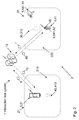
- the interaction test system 1 - which optionally may be at least partly comprised in one or more control servers 10 - is adapted for enabling interaction in a test environment 2 between a first test object 3 comprising a vehicle 31, and at least a second test object 4.
- the at least second test object 4 is adapted to communicate directly or indirectly - e.g. via the control server(s) 10 - with the first test object 3.
- the first test object 3 acts within a first physical test environment 21 and said at least second test object acts within at least a second physical test environment 22 physically separated from said first test environment 21.
- the vehicle 31 is a passenger car adapted to support driving assistance functionality
- the first physical test environment 21 is represented by an outdoor open test area
- the second physical test environment 22 represented by another outdoor open test area physically separated from the first test environment 21, e.g. by a minimum distance 23.
- the second test object 4 is here represented by and/or comprises a vulnerable road user (VRU) 41, carrying a head mounted display (HMD) 45.
- VRU vulnerable road user
- HMD head mounted display
- the motion capture system 5 comprises a wearable motion capture system 52 carried by a test object 3, 4 - here the VRU 41.
- first object data 6 associated with the first test object 3, which first object data 6 comprises status information and/or actions of the first test object 3, here the vehicle 31.
- derived at least second object data 7 associated with the at least second test object 4, which at least second object data 7 comprises status information and/or actions of the at least second test object 4, here the VRU 41.
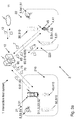
- Figure 2 illustrates a schematic overview of exemplifying mixed realities according to exemplifying embodiments of the disclosure, which may result from the conditions of Fig. 1 ; a mixed reality 210 as perceived by the first test object 3 - here the vehicle 31 and/or a user thereof - and a mixed reality 220 as perceived by the at least second test object 4 - here VRU 41 and/or the HMD 45 carried by the VRU 41.
- Shown in Figure 2 is first object behavior data 60 which is based on the first object data 6, and at least second object behavior data 70 which is based on the at least second object data 7.
- a virtual replica 30 of the first test object 3 Further visualized in the mixed reality 220 as perceived by the at least second test object 4 is an exemplifying a virtual replica 30 of the first test object 3, here a virtual replica 310 of the vehicle 31, and visualized in the mixed reality 210 as perceived by the first test object 3 is an exemplifying virtual replica 40 of the at least second test object 4, here a virtual replica 410 of the VRU 41.
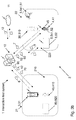
- Figure 3a illustrates schematic overviews of exemplifying alternative mixed realities according to exemplifying embodiments of the disclosure.
- the first test object 3 here comprising the vehicle 31 discussed above, additionally comprises a vehicle occupant 311, which vehicle occupant carries a HMD (not shown).
- the first physical test environment 21 here comprises, similar to the second physical test environment 22, a motion capture system 5 - here a first motion capture system 53 - comprising one or more cameras 51, here visually sensing said vehicle occupant 311. Additionally or alternatively, said first motion capture system 53 comprises a wearable motion capture system 52 here carried by the vehicle occupant 311.
- vehicle data 61 derived from the vehicle 31 and additional or alternative optional occupant data 62 derived from the first motion capture system 53 carried by 52, and/or visually sensing 51, the vehicle occupant 311.
- the vehicle data 61 comprises status information and/or actions of the vehicle 31 and the occupant data 62 comprises status information and/or actions of the vehicle occupant 311.
- Fig. 3a is optional vehicle behavior data 610 which is based on the vehicle data 61 and additional or alternative optional occupant behavior data 620 which is based on the occupant data 62.
- the exemplifying interaction test system 1 of Fig. 3a further comprises at least a first optional auxiliary object 8, here a traffic light arrangement 81, which auxiliary object 8 is adapted to during the test session act within the first 21 and/or the second physical test environment 22.
- the at least first auxiliary object 8, which here is acting within the second test environment 22, is adapted to communicate directly or indirectly - e.g.
- auxiliary object data 9 associated with the at least first auxiliary test object 8, which auxiliary object data 9 comprises status information and/or actions of the auxiliary object 8, here the traffic lights arrangement 81.
- auxiliary object behavior data 90 is based on the auxiliary object data 9.
- the vehicle occupant 311 thereof and/or the HMD carried by the vehicle occupant 31 - is an exemplifying virtual replica 80 of the at least first auxiliary object 8, here a virtual replica 810 of the traffic light arrangement 81.
- Figure 3b illustrates schematic overviews of exemplifying other alternative mixed realities according to exemplifying embodiments of the disclosure.
- the optional auxiliary object 8 is represented by a robot vehicle 82.
- the auxiliary object data 9 here comprises status information and/or actions of the robot vehicle 82, and moreover, the exemplifying virtual replica 80 of the at least first auxiliary object 8 is here represented by a virtual replica 820 of the robot vehicle 82.
- an optional cloud service 11 from which environment conditions data 12 may be derived.
- the environment conditions data 12 comprises one or more environment conditions associated with the first 21 or the at least second physical test environment 22.
- Figure 3c illustrates schematic overviews of exemplifying yet other alternative mixed realities according to exemplifying embodiments of the disclosure.
- the at least second test object 4 - or a further test object - comprises a second vehicle 42 and a vehicle occupant thereof, i.e. a second vehicle occupant 421, which second vehicle occupant 421 carries a HMD (not shown).
- the motion capture system 5 of the second physical test environment 22 here comprises a second motion capture system 54 which may comprise one or more cameras 51, here visually sensing the second vehicle occupant 421 and optionally additionally the second vehicle 42. Additionally or alternatively, said second motion capture system 54 comprises a wearable motion capture system 52 here carried by the second vehicle occupant 421.
- optional second vehicle data 71 derived from the second vehicle 42 and additional or alternative optional second occupant data 72 derived from the second motion capture system 54 carried by 52, and/or visually sensing 51, the second vehicle occupant 421.
- the second vehicle data 71 comprises status information and/or actions of the second vehicle 42 and the second occupant data 72 comprises status information and/or actions of the second vehicle occupant 421.
- Further shown in Fig. 3c is optional second vehicle behavior data 710 which is based on the second vehicle data 71 and additional or alternative optional second occupant behavior data 720 which is based on the second occupant data 72.
- the interaction test system 1 comprises a virtual reality providing unit 102, a data deriving unit 103 and a behavior data providing unit 104, all of which will be described in greater detail further on.
- the interaction test system 1 may furthermore comprise an optional actions instruction providing unit 101, an optional action behavior determining unit 105, an optional data parameter adapting unit 106, an optional environment conditions data deriving unit 107 and/or an optional environment conditions providing unit 108, which similarly will be described in greater detail further on.
- the embodiments herein for enabling interaction in a test environment 2 between a first test object 3 comprising a vehicle 31, and at least a second test object 4 may be implemented through one or more processors, such as a processor 109, here denoted CPU - for instance implemented in a single and/or multi-threaded parallel computing environment for CPU and/or GPU ("graphics processing unit") - together with computer program code for performing the functions and actions of the embodiments herein.
- Said program code may also be provided as a computer program product, for instance in the form of a data carrier carrying computer program code for performing the embodiments herein when being loaded into the interaction test system 1.
- One such carrier may be in the form of a CD ROM disc. It is however feasible with other data carriers such as a memory stick.
- the computer program code may furthermore be provided as pure program code on a server and downloaded to the interaction system 1.
- the interaction test system 1 may further comprise a memory 110 comprising one or more memory units; additionally or alternatively a hard drive, a solid state disk, a flash memory, a GPU memory or the like.
- the memory 110 may be arranged to be used to store e.g. information, and further to store data, configurations, schedulings, and applications, to perform the methods herein when being executed in the interaction test system 1.
- the processor 109 and/or the memory 110 may for instance be implemented in one or several control servers 2, in the first test object 3 and/or in the at least second test object 4 - such as in one or more electronic control units (ECUs) thereof - and/or in one or more mobile units which may be carried on-board, be mounted to and/or be integrated with the first test object 3 and/or the at least second test object 4.
- ECUs electronice control units
- mobile units which may be carried on-board
- processors such as the processor 109 perform as will be described in more detail later on.
- processors may be included in a single ASIC (Application-Specific Integrated Circuitry), or several processors and various digital hardware may be distributed among several separate components, whether individually packaged or assembled into a SoC (System-on-a-Chip).
- SoC System-on-a-Chip
- Figure 5 is a flowchart depicting an exemplifying method of an interaction test system 1 according to embodiments of the disclosure.
- the method - which is performed by the interaction test system 1 - is for enabling interaction in the test environment 2 between the first test object 3 comprising the vehicle 31, and the at least second test object 4 adapted to communicate directly or indirectly with the first test object 3.
- the first test object 3 acts within the first physical test environment 21 and the at least second test object 4 acts within the at least second physical test environment 22 physically separated from the first test environment 21.
- the exemplifying method which may be continuously repeated, comprises the following actions discussed with support from Figs. 1-4 .
- the actions may be taken in any suitable order, for instance may Action 1003 and 1005 be performed simultaneously and/or in an alternate order.
- the interaction test system 1 may initiate the test session, e.g. by means of the action instructions providing unit 101, as shown with support at least from Fig. 4 . Initiating the test session may further optionally comprise providing - e.g. by means of the control server 2 - one or more initial action instructions to the first 3 and/or at least second test object 4.
- the interaction test system 1 provides - e.g. by means of the virtual reality layer providing unit 102 - a first virtual reality layer associated with the first test environment 21, to the first test object 3, and at least a second virtual reality layer associated with the at least second test environment 22, to the at least second test object 4, such that the mixed reality 210 perceived by the first test object 3 corresponds to the mixed reality 220 perceived by the at least second test object 4, as shown with support at least from Figs. 1 , 2 and 4 .
- providing the first virtual reality layer then comprises providing - e.g. by means of the virtual reality layer providing unit 102 - a first vehicle virtual reality layer to the vehicle 311 and/or a first occupant virtual reality layer to a head-mounted display (HMD) carried by the vehicle occupant, as shown with support at least from Fig. 3a .
- HMD head-mounted display
- providing the at least second virtual reality layer then comprises providing - e.g. by means of the virtual reality layer providing unit 102 - a VRU virtual reality layer to the HMD 45 carried by the VRU 41, as shown with support at least from Fig. 2 .
- providing the at least second virtual reality layer then comprises providing - e.g. by means of the virtual reality layer providing unit 102 - a second vehicle virtual reality layer to the second vehicle 42 and/or a second occupant virtual reality layer to the HMD carried by the vehicle occupant 421 of the second vehicle 42, as shown with support at least from Fig. 3c .
- the interaction test system 1 continuously, periodically, or intermittently - derives - e.g. by means of the data deriving unit 103 - first object data 6 associated with the first test object 3, which first object data 6 comprises status information and/or actions of the first test object 3, as shown with support at least from Figs. 1 and 4 .
- deriving first object data 6 then comprises deriving - e.g. by means of the data deriving unit 103 - vehicle data 61 from the vehicle 31, and/or occupant data 62 from the first motion capture system 53 carried by 52, and/or visually sensing 51, the vehicle occupant 311, which vehicle data 61 comprises status information and/or actions of the vehicle 31 and which occupant data 62 comprises status information and/or actions of the vehicle occupant 311, as shown with support at least from Fig. 3a .
- the interaction test system 1 continuously, periodically, or intermittently - provides - e.g. by means of the behaviour data providing unit 104 - first object behaviour data 60 based on the first object data 6, to the at least second virtual reality layer, such that at least a portion of the status information and/or actions of the first test object 3, are comprised in the mixed reality 220 perceived by the at least second test object 4, as shown with support at least from Figs. 2 and 4 .
- providing first object behaviour data 60 then comprises providing - e.g. by means of the behaviour data providing unit 104 - vehicle behaviour data 610 based on the vehicle data 61 and/or occupant behaviour data 620 based the occupant data 62, to the at least second virtual reality layer, such that at least a portion of the status information and/or actions of the vehicle 31 and/or the vehicle occupant 311, are comprised in the mixed reality 220 perceived by the at least second test object 4, as shown with support at least from Fig. 3a .
- providing first object behaviour data 60 then comprises providing first object behaviour data 60 based on the first object data 6, to the second vehicle virtual reality layer and/or the second occupant virtual reality layer, such that at least a portion of the status information and/or actions of the first test object 3, is comprised in the mixed reality 220 perceived by the second vehicle 42 and/or in the mixed reality 220 perceived by the HMD carried by the vehicle occupant 421 of the second vehicle 42, as shown with support at least from Fig. 3c
- the interaction test system 1 continuously, periodically, or intermittently - derives - e.g. by means of the data deriving unit 103 - at least second object data 7 associated with the at least second test object 4, which at least second object data 7 comprises status information and/or actions of the at least second test object 4, as shown with support at least from Figs. 1 and 4 .
- deriving at least second object data 7 then comprises deriving - e.g. by means of the data deriving unit 103 - the second object data 7 from the VRU motion capture system 541 carried by 52, and/or visually sensing 51, the VRU 41, as shown with support at least from Fig. 1 .
- deriving at least second object data 7 then comprises deriving - e.g. by means of the data deriving unit 103 - second vehicle data 71 from the second vehicle 42, and/or second occupant data 72 from the second motion capture system 54 carried by 52, and/or visually sensing 51, the vehicle occupant 421 of the second vehicle 42, which second vehicle data 71 comprises status information and/or actions of the second vehicle 42 and which second occupant data 72 comprises status information and/or actions of the vehicle occupant 421 of the second vehicle 42, as shown with support at least from Fig. 3c .
- the interaction test system 1 continuously, periodically, or intermittently - provides - e.g. by means of the behaviour data providing unit 104 - at least second object behaviour data 70 based on the at least second object data 7, to the first virtual reality layer, such that at least a portion of the status information and/or actions of the at least second test object 4 are comprised in the mixed reality 210 perceived by the first test object 3, as shown at least with support from Figs. 2 and 4 .
- providing at least second object behaviour data 70 then comprises providing - e.g. by means of the behaviour data providing unit 104 - at least second object behaviour data 70 based on the at least second object data 7, to the first vehicle virtual reality layer and/or the first occupant virtual reality layer, such that at least a portion of the status information and/or actions of the at least second test object 4 are comprised in the mixed reality 210 perceived by the vehicle 31 and/or in the mixed reality 210 perceived by the vehicle occupant 311, as shown with support at least from Fig. 3a .
- providing at least second object behaviour data 70 then comprises providing - e.g. by means of the behaviour data providing unit 104 - second vehicle behaviour data 710 based on said second vehicle data 71 and/or second occupant behaviour data 720 based on the second occupant data 72, to the first virtual reality layer, such that at least a portion of the status information and/or actions of the second vehicle 42 and/or the second occupant 421, are comprised in the mixed reality 410 perceived by the first test object 3, as shown with support at least from
- the interaction test system 1 may determine - e.g. by means of the interaction behaviour determining unit 105 - an interaction behaviour of the first test object 3 and/or the at least second test object 4, based on the derived first object data 6 and/or the derived at least second object data 7, as shown with support at least from Figs. 1 and 4 .
- the interaction test system 1 may provide - e.g. by means of the data parameter adapting unit 106 - based on the determined interaction behaviour, an action instruction 65, 75 to the first 3 and/or the at least second test object 4, as shown with support at least from Figs. 1 , 3a and 4 .
- the interaction test system 1 may adapt - e.g. by means of the data parameter adapting unit 106 - based on the determined interaction behaviour, a data parameter of the first 3 and/or at least second test object 4, which data parameter is associated with driving assistance functionality, as shown with support at least from Figs. 1 , 2 and 4 .
- the at least a first auxiliary object 8, 81, 82 may act within the first 21 and/or the at least second physical test environment 22, which at least first auxiliary object 8, 81, 82 is adapted to communicate directly or indirectly with the first test object 3 and/or the at least second test object 4.
- the interaction test system 1 may - continuously, periodically, or intermittently - derive - e.g. by means of the data deriving unit 103 - auxiliary object data 9 associated with the at least first auxiliary object 8, 81, 82, which auxiliary object data 8, 81, 82 comprises status information and/or actions of the auxiliary object 8, 81, 82, as shown with support at least from Figs. 3b and 4 .
- the interaction test system 1 may - continuously, periodically, or intermittently - provide - e.g. by means of the behaviour data providing unit 104 - auxiliary object behaviour data 90 based on the auxiliary object data 9, to the first and/or the at least second virtual reality layer, such that at least a portion of the status information and/or actions of the at least first auxiliary object 8, 81, 82 are comprised in the mixed reality 210 perceived by the first test object 3 and/or in the mixed reality 220 perceived by the at least second test object 4, as shown with support at least from Figs. 3b and 4 .
- the interaction test system 1 may derive - e.g. by means of the environment conditions data deriving unit 107 - environment conditions data 12 from the cloud service 11, which environment conditions data 12 comprises one or more environment conditions associated with the first 21 and/or at least second physical test environment 22, as shown with support at least from Figs. 3b and 4 .
- the interaction test system 1 may provide - e.g. by means of the environment conditions providing unit 108 - the environment conditions data 12 to the first test object 3, the first virtual layer, the at least second test object 4 and/or the at least second virtual layer, such that the environment conditions data 12 are comprised in the mixed reality 210 perceived by the first test object 3 and/or in the mixed reality 220 perceived by the at least second test object, as shown with support at least from Fig. 3b .
Landscapes
- Engineering & Computer Science (AREA)
- Theoretical Computer Science (AREA)
- Physics & Mathematics (AREA)
- General Engineering & Computer Science (AREA)
- General Physics & Mathematics (AREA)
- Human Computer Interaction (AREA)
- Mechanical Engineering (AREA)
- Business, Economics & Management (AREA)
- Aviation & Aerospace Engineering (AREA)
- Educational Administration (AREA)
- Educational Technology (AREA)
- Computer Hardware Design (AREA)
- Mathematical Physics (AREA)
- Transportation (AREA)
- Automation & Control Theory (AREA)
- Quality & Reliability (AREA)
- Computer Graphics (AREA)
- Software Systems (AREA)
- Traffic Control Systems (AREA)
Abstract
Description
- The present disclosure relates to an interaction test system and a method performed therein, for enabling safe interaction in a test environment between a first test object comprising a vehicle, and at least a second test object.
- Since millions of motor vehicles are travelling along roads around the globe day and night, all year around, there is constantly an imminent risk of vehicle collisions involving a vehicle and other road users such as pedestrians, cyclists or other vehicles, etc. A vehicle collision may naturally result in body injuries and/or damage to the vehicle(s) and/or other road users involved. Thus, in striving to avoid vehicle collisions, motor vehicles may be at least partly autonomous and/or provided with driver assistance systems. These systems may monitor the surroundings of the vehicle, decide whether a collision with an object is likely to occur, and further warn and/or intervene with e.g. the steering system and/or the brake system of the vehicle in order to prevent an impending or probable collision. For instance, when a vehicle enters e.g. a city, it is crucial that the vehicle interacts correctly and/or desirably with vulnerable road users (VRUs) - such as e.g. pedestrians - to avoid critical situations. In order for driver assistance systems to function desirably, functions and/or parameters associated with active safety need to be configured and/or tuned in a suitable manner. The vehicle may however be involved in a vast variety of potential collisions and/or impending collisions, and it may accordingly be challenging to anticipate suitable configuration and/or tuning of said functions and/or parameters, for different collision scenarios. Thus, in order to determine proper or desirable settings, test sessions involving different traffic scenarios are commonly carried out. Such test sessions, however, tend to be complicated and/or expensive, especially when involving high-risk scenarios. Should a traffic scenario moreover involve a VRU, then the test session would furthermore be risky and/or dangerous especially to the VRU. Accordingly, it is further commonly known to simulate different traffic scenarios digitally.
US 6,950,788 , for instance, relates to such a computer-implemented system and method. However, althoughUS 6,950,788 discloses a model that simulates motor vehicle traffic, as well as bicycle and pedestrian traffic, the challenge to, in a satisfying manner, configure and/or tune functions and/or parameters associated with active safety, remains. - It is therefore an object of embodiments herein to provide an alternative approach of enabling interaction in a test environment between a first test object comprising a vehicle, and at least a second test object. According to a first aspect of embodiments herein, the object is achieved by a method according to
claim 1. The technical features and corresponding advantages of said method will be discussed in further detail in the following. - By introducing a method performed by an interaction test system for enabling interaction in a test environment between a first test object comprising a vehicle, and at least a second test object adapted to communicate directly or indirectly with the first test object, an approach is provided which enables testing, e.g. of high risk scenarios, involving a test vehicle and one or more other test objects. "Interaction" may refer to "safe and/or contact-free interaction" and/or "interaction without physical contact", whereas "enabling" interaction may refer to "supporting, providing, monitoring, evaluating, analysing and/or studying" interaction. The "test environment" may refer to a "test facility" and/or "test site" and further be physical and/or digital. The "vehicle" - which may be a "test vehicle" - may refer to any arbitrary vehicle, for instance an engine-propelled vehicle such as e.g. a car, truck, lorry, van, bus, motorcycle, etc. The vehicle - which may comprise a positioning system - may support one or more driving assistance functions, e.g. driving assistance functions related to active safety, such as collision avoidance. According to an example, "vehicle" may thus refer to "vehicle supporting one or more driving assistance functions". Additionally or alternatively, the vehicle may be represented by a vehicle supporting partially autonomous, semi-autonomous and/or fully autonomous driving. Furthermore, the at least second "test object" may refer to any physical object of interest in a test scenario with the first test object, and may thus e.g. refer to any arbitrary "road user", for instance represented by and/or comprising a human, such as a pedestrian, cyclist or the like, an animal, and/or other vehicle(s). It should be noted that the expression "test object" may mean one or more such "road users". The expression "adapted to communicate" may refer to "adapted to communicate wirelessly, e.g. via WiFi or the like, or an equivalent or successor thereof", and/or "adapted such that information and/or data may be transferred between said first and said at least second test object". Moreover, "indirectly" may refer to "via a remote control server". Furthermore, the "interaction test system" may fully and/or at least partly be comprised in said control server, and/or further be distributed between said first and/or at least second test object.
- Since, during a test session, the first test object acts within a first physical test environment and the at least second test object acts within at least a second physical test environment physically separated from the first test environment, the first test object and the at least second test object are physically separated from one another during the test session. Accordingly, test scenarios may be carried out without the first test object and the at least second object having physical contact. "Test session" may refer to "test scenario", whereas the expression that an object "acts" within a physical test environment throughout this disclosure may refer to that an object "participates in the test session", "is situated" and/or "moves" within a physical test environment. The "first physical test environment" may refer to the "first physical test environment of the test environment", whereas the "second physical test environment" may refer to the "second physical test environment of the test environment". Moreover, the first and/or the at least second "physical test environment" may refer to a respective - e.g. restricted - arbitrary area, such as e.g. a test track, an essentially open area, site and/or field, an indoor facility and/or room, or the like. The characteristics such as structure, disposition, size, range, and/or dimensions of a physical test environment may vary e.g. with the conditions at hand, and may e.g. range from a few metres and/or square metres up to thousands of kilometres and/or square kilometres. Moreover, the characteristics of the first physical test environment may differ - even greatly - from those of the at least second physical test environment; the first physical test environment may for instance be represented by a test track whereas the second physical test environment for instance may be represented by an indoor essentially empty room. Furthermore, the expression "physically separated" may refer to "physically separated by at least a minimum distance and/or safe distance", which distance may vary with the conditions at hand, e.g. range from essentially zero metres should the first and the at least second physical test environments be separated by means of e.g. a wall and/or fence or the like, up to an essentially unlimited distance, e.g. thousands of kilometres.
- Since the interaction test system provides a first virtual reality layer associated with the first test environment, to the first test object, and at least a second virtual reality layer associated with the at least second test environment, to the at least second test object, such that a mixed reality perceived by the first test object corresponds to a mixed reality perceived by the at least second test object, a first set of information such as data, graphics and/or sound etc. may be overlaid on the first test environment from a point of view of the first test object and at least a second set of information on the at least second test environment from a point of view of the at least second test object, such that the first and the at least second test objects - and/or users thereof - experience a similar "reality". The first virtual reality layer may thus differ from the at least second virtual reality layer in that the characteristics of the first physical test environment may differ from the characteristics of the at least second physical test environment. "Mixed reality", as commonly known in the art, may refer to overlaying information on the real world, such that a "digital world" is blended with the real physical world, thus a mix and/or merge of virtual reality and reality. Thus, "mixed reality" - sometimes referred to as "hybrid reality" - is commonly known to refer to the merging of real and virtual worlds to produce new environments and visualizations where physical and digital objects co-exist and interacts in real time. The expression "virtual reality layer" - which may refer to "virtual reality" which in a similar manner is known in the art - may comprise information for instance rendering or providing a specific traffic environment and/or traffic situation. A virtual reality layer "associated with" a test environment, may refer to a virtual reality layer "overlaid on" and/or "based on" a test environment. Moreover, "providing" a virtual reality layer may refer to "applying", "enabling", "submitting" and/or "providing by means of said control server" a virtual reality layer, whereas providing "to the test object" may refer to providing "to a virtuality handling unit associated with and/or comprised in said test object, which virtuality handling unit may be adapted to receive, interpret and/or derive information from said virtual reality layer". Said optional "virtuality handling unit" may be comprised in the test object; additionally or alternatively the "virtuality handling unit" may be positioned remote from the test object in wireless connection therewith, for instance be comprised in and/or be represented by an arbitrary electronic unit such as e.g. one or more of an electronic control unit (ECU), a laptop and/or a smartphone. Furthermore, the expression "perceived by the test object" may refer to "perceived by said virtuallity handling unit" and/or "perceived by a user of said test object". "Corresponds to" may refer to "essentially corresponds to", and moreover to "is equivalent to", "mirrors", "matches", "coincides with" and/or "is associated with".
- Since the interaction test system moreover derives, continuously, periodically, or intermittently, first object data associated with the first test object, which first object data comprises status information and/or actions of the first test object, information relating to a current status of the first test object and/or information relating to how said first test object acts - e.g. behaves and/or interacts during the test session - is essentially constantly monitored. The expression object data "associated with" the test object may throughout this disclosure refer to object data "of" the test object, whereas the expression "object data" throughout this disclosure may refer to "relevant object data", "active safety related object data", "driver assistance related object data" and/or "current object data". Moreover, "data" may throughout this disclosure refer to "information", "parameters" and/or "attributes". "Status information" may throughout refer to "current status information", "relevant status information", "active safety related status information", "driver assistance related status information" and/or "parameters", whereas "actions of" the test object throughout may refer to "actions performed by", "steps", "activity", "behaviour" and/or "driving behaviour" of the test object. The "status information" and/or "actions" may accordingly throughout this disclosure refer to status information and/or actions relating to e.g. geographical position, speed, direction, sounds, indicators, horn, lights, braking lights, braking, brake force, steering, steering wheel angle, etc. "Deriving" object data may throughout refer to "receiving", "tracking" and/or "monitoring" object data, e.g. with support from one or more sensors on-board the test object and/or at least one vision sensor adapted to externally monitor the test object, such as a camera. Such one or more vision sensor(s) may be arbitrarily positioned and/or movable within the test environment, for instance observing the test object(s) from a distance, and/or being positioned on and/or on-board the test object. The object data may further be submitted, sent and/or provided to the control server discussed above. "Deriving object data" may hence throughout this disclosure be preceded by an action step "monitoring object data", and may furthermore refer to "deriving object data by means of said control server". The expression "continuously, periodically, or intermittently" may throughout refer to "during said test session, continuously, periodically, or intermittently".
- Since the interaction test system further provides continuously, periodically, or intermittently, first object behaviour data based on the first object data, to the at least second virtual reality layer, such that at least a portion of the status information and/or actions of the first test object, are comprised in the mixed reality perceived by the at least second test object, the virtual reality layer of the second test object incorporates the first test object and - essentially constantly - at least partly its status and/or actions, such that the second test object - and/or a user or occupant thereof - accordingly experiences, via said mixed reality, a virtual replica of the first test object and the status and/or actions thereof. The at least second test object - and/or a user or occupant thereof - thus interacts with the virtual replica of the first test object during the test session, and may hence base upcoming acting and/or behaviour during the test session on the behaviour of the first test object, i.e. based on the first object behaviour data. The expression "object behaviour data" may throughout this disclosure refer to "data relating to status and/or actions of the test object", whereas "at least a portion" throughout may refer to "one or more pieces and/or parameters". Furthermore "providing" object behaviour data may throughout this disclosure refer to "submitting", "sending" and/or "providing by means of said control server" object behaviour data, whereas the expression "based on" the object data throughout may refer to "derived from" the object data.
- Moreover, since the interaction test system derives, continuously, periodically, or intermittently, at least second object data associated with the at least second test object, which at least second object data comprises status information and/or actions of the at least second test object, information relating to a current status of the at least second test object and/or information relating to how said at least second test object acts - e.g. behaves and/or interacts during the test session - is essentially constantly monitored.
- Since the interaction test system further provides, continuously, periodically, or intermittently, at least second object behaviour data based on the at least second object data, to the first virtual reality layer, such that at least a portion of the status information and/or actions of the at least second test object are comprised in the mixed reality perceived by the first test object, the virtual reality layer of the first test object incorporates the at least second test object and - essentially constantly - at least partly its status and/or actions, such that the first test object - and/or a user or occupant thereof - accordingly experiences, via said mixed reality, a virtual replica of the at least second test object and the status and/or actions thereof. The first test object - and/or a user or occupant thereof - thus interacts with the virtual replica of the at least second test object during the test session, and may hence base upcoming acting and/or behaviour during the test session on the behaviour of the at least second test object, i.e. based on the at least second object behaviour data. Consequently, with the introduced approach, the first and at least second test object may interact with one another throughout the test session without risking physical contact. Thus, complex and/or high risk test scenarios may be carried out in a safe manner, for instance test sessions relating to collisions and/or imminent collisions.
- Optionally, the interaction test system may visualize the test session at least in part on one or more displays associated with the control server discussed above. The test session may thereby be at least partly followed, studied and/or evaluated visually by e.g. a test operator and/or test coordinator. Input to visualization of the test session may comprise at least digital representations of the first and/or at least second physical test environment, and further be based on the continuously, periodically, or intermittently derived first and/or at least second object data.
- Moreover, optionally, the interaction test system may initiate the test session. "Initiating" may for instance refer to "enabling", "joining" and/or "initiating by means of said control server". Initiating the test session may further optionally comprise providing - e.g. by means of the control server - one or more initial action instructions to the first and/or at least second test object. An "action instruction" may throughout this disclosure for instance refer to an instruction relating to and/or insinuating a geographical position, a route, a speed, indicating, honking, using lights and/or headlights, etc., and may furthermore involve a parameter of the "status information" discussed above
- Optionally, the interaction test system further determines an interaction behaviour of the first test object and/or the at least second test object, based on the derived first object data and/or the derived at least second object data. Then, based on the interaction behaviour, the interaction test system furthermore provides an action instruction to the first and/or the at least second test object. Thereby, by evaluating the interaction between the first test object and the at least second test object - in view of either of, or all of, the test objects - one or more action instructions may be given to one or more of the test objects, instructing the same to act in accordance with the action instruction, for instance to change route, activate headlights, etc. Accordingly, depending on how a test object acts and/or interacts during the test session, new and/or updated action instructions may be given, e.g. during the ongoing test session. "Interaction behaviour" of the test object may refer to "acting" of the test object, whereas the expression "based on" the object data throughout the disclosure may refer to "derived from" the object data. "Determining" the interaction behaviour may refer to "evaluating", "deriving", "monitoring", "studying" and/or "determining by means of said control server" the interaction behaviour. Moreover, "providing" an action instruction may refer to "transmitting", "submitting", "sending", "providing during said test session" and/or "providing by means of said control server" an action instruction. Additionally or alternatively, based on the optionally determined interaction behaviour, the test interaction system furthermore adapts a data parameter of the first and/or at least second test object, which data parameter is associated with driving assistance functionality. Thereby, by evaluating the interaction between the first test object and the at least second test object - in view of either of, or all of, the test objects - one or more data parameters related to driving assistance functionality of one or more of the test objects, may be adapted, for instance steering angle, braking force, activation of honking, etc. Accordingly, depending on how a test object acts and/or interacts during the test session, data parameters of the same or another test object may be configured, e.g. during the ongoing test session. According to an example, a data parameter may be adapted in a self-learning manner. The expression data "parameter" may refer to data "attribute", whereas "data parameter" may refer to "data parameter associated with active safety and/or driving assistance functionality". A data parameter may accordingly be represented by a parameter associated with braking, steering, honking, indicating, using lights and/or headlights etc., and may further involve a parameter of the "status information" discussed above. Moreover, "adapting" a data parameter may refer to "configuring", "adapting by means of said control server" and/or "initiating adapting" a data parameter.
- Optionally, the first test object may additionally comprise a vehicle occupant. Providing the first virtual reality layer then comprises providing a first vehicle virtual reality layer to the vehicle and/or a first occupant virtual reality layer to a head-mounted display (HMD) carried by the vehicle occupant. Moreover, deriving first object data then comprises deriving vehicle data from the vehicle, and/or occupant data from a first motion capture system carried by, and/or visually sensing, the vehicle occupant. The vehicle data comprises status information and/or actions of the vehicle and the occupant data comprises status information and/or actions of the vehicle occupant. Furthermore, providing first object behaviour data then comprises providing vehicle behaviour data based on the vehicle data and/or occupant behaviour data based the occupant data, to the at least second virtual reality layer, such that at least a portion of the status information and/or actions of the vehicle and/or the vehicle occupant, are comprised in the mixed reality perceived by the at least second test object. Moreover, providing at least second object behaviour data then comprises providing at least second object behaviour data based on the at least second object data, to the first vehicle virtual reality layer and/or the first occupant virtual reality layer, such that at least a portion of the status information and/or actions of the at least second test object are comprised in the mixed reality perceived by the vehicle and/or in the mixed reality perceived by the vehicle occupant. Thereby, by the first object additionally comprising a vehicle occupant such as a driver, for instance in a scenario with a not fully autonomous vehicle, said vehicle occupant is considered a participant in the test session in that the status and/or actions of the first test object during the test session may be pertinent the vehicle occupant. Thus, thereby, by providing the first virtual reality layer then comprising providing a first vehicle virtual reality layer to the vehicle and/or a first occupant virtual reality layer to a HMD carried by the vehicle occupant, a respective virtual reality layer is provided to the vehicle and/or the vehicle occupant such that a mixed reality perceived by the vehicle and/or a mixed reality perceived by the vehicle occupant, correspond to a mixed reality perceived by the at least second test object. Thus, a first vehicle set of information may be overlaid on the first test environment from a point of view of the vehicle, and/or a first occupant set of information may be overlaid on the first test environment from a point of view of the vehicle occupant, such that the vehicle - and/or the vehicle occupant - and the at least second test object, experience a similar "reality". The first vehicle virtual reality layer may differ from the first occupant virtual reality layer. It may be noted that the first vehicle set of information - or the first occupant set of information - may refer to the first set of information discussed above. It may similarly be noted that the first vehicle virtual reality layer - or the first occupant virtual reality layer - may refer to the previously discussed first virtual reality layer. A head-mounted display - which is commonly known in the art - provides the virtual reality information, such that a user thereof - e.g. the vehicle occupant - may experience a mixed reality, i.e. a virtual reality overlaid the real world e.g. the first physical test environment. A HMD may further throughout this disclosure be represented by a commonly known optical HMD (OHMD), which allows the user - e.g. the vehicle occupant - to see through it. The expression of providing a virtual reality layer "to the vehicle" may refer to providing a virtual reality layer "to a virtuality handling unit associated with the vehicle", whereas the expression of providing a virtual reality layer "to a HMD" may refer to providing a virtual reality layer to a virtuality handling unit associated with a HMD". The HMD may support wireless communication, and may further communicate with the control server discussed above directly and/or via said virtuality handling unit associated with the HMD. Moreover, thereby, by deriving first object data then comprising deriving - continuously, periodically, or intermittently - vehicle data from the vehicle - which vehicle data comprises status information and/or actions of the vehicle - and/or occupant data from a first motion capture system carried by, and/or visually sensing, the vehicle occupant - which occupant data comprises status information and/or actions of the vehicle occupant - information relating to a current status of the vehicle and/or information relating to how the vehicle acts, and/or information relating to a current status of the vehicle occupant and/or information relating to how the vehicle occupant acts, are essentially constantly monitored. The expression "vehicle data" may refer to the "object data" discussed above, whereas "occupant data" throughout this disclosure may refer to "relevant occupant data", "safety related occupant data" and/or "current occupant data". "Status information" may here additionally refer to "safety related occupant status information" and/or "occupant status information", whereas "actions of" here additionally may refer to "occupant behaviour". The "status information" and/or "actions" may accordingly here additionally refer to information and/or actions relating to occupant geographical position, occupant eye position, occupant head position, occupant hand position, occupant movement, occupant sounds, etc. A "motion capture system" may throughout this disclosure refer to any commonly known arbitrary motion capture system, such as a motion capture system comprising a plurality of motion sensors carried e.g. worn by a user - e.g. the vehicle occupant - commonly referred to as a motion tracking system. Additionally or alternatively, a motion capture system may further throughout refer to one or more commonly known vision sensors, e.g. cameras, visually monitoring the test object, e.g. the vehicle occupant. Such a visually monitoring motion capture system may be positioned on-board and/or on the test object - such as on-board the vehicle and/or on the vehicle occupant - and/or at any arbitrary position(s) and/or moving position(s) within a physical test environment, for instance the first test environment, thus monitoring the test object - e.g. the vehicle occupant - from a distance. Moreover, thereby, by providing first object behaviour data then comprising - continuously, periodically, or intermittently - providing vehicle behaviour data based on the vehicle data and/or occupant behaviour data based on the occupant data, to the at least second virtual reality layer, such that at least a portion of the status information and/or actions of the vehicle and/or the vehicle occupant, are comprised in the mixed reality perceived by the at least second test object, the virtual reality layer of the second test object incorporates the vehicle and/or the vehicle occupant and - essentially constantly - at least partly the vehicle's and/or the vehicle occupant's status and/or actions, such that the second test object accordingly experiences, via said mixed reality, a virtual replica of the vehicle and/or the vehicle occupant and the status and/or actions thereof. The at least second test object thus interacts with the virtual replica of the vehicle and/or vehicle occupant during the test session, and may hence base upcoming acting and/or behaviour during the test session on the behaviour of the vehicle and/or vehicle occupant, i.e. based on the vehicle behaviour data and/or the occupant behaviour data. The expression "vehicle behaviour data" may throughout this disclosure refer to "data relating to status and/or actions of the vehicle", whereas the expression "occupant behaviour data" throughout may refer to "data relating to status and/or actions of the vehicle occupant". Moreover, thereby, by providing at least second object behaviour data then comprising providing - continuously, periodically, or intermittently - at least second object behaviour data based on the at least second object data, to the first vehicle virtual reality layer and/or the first occupant virtual reality layer, such that at least a portion of the status information and/or actions of the at least second test object are comprised in the mixed reality perceived by the vehicle and/or in the mixed reality perceived by the vehicle occupant, the vehicle virtual reality layer- and/or the occupant virtual reality layer - incorporates the at least second test object and - essentially constantly - at least partly its status and/or actions, such that the vehicle - and/or the vehicle occupant - accordingly experiences, via respective mixed reality, a virtual replica of the at least second test object and the status and/or actions thereof. The vehicle - and/or the vehicle occupant - thus interacts with the virtual replica of the at least second test object during the test session, and may hence base upcoming acting and/or behaviour during the test session on the behaviour of the at least second test object, i.e. based on the at least second object behaviour data.
- Optionally, the second test object comprises a vulnerable road user (VRU). Providing the at least second virtual reality layer then comprises providing a VRU virtual reality layer to an HMD carried by the VRU, and deriving at least second object data then comprises deriving the second object data from a VRU motion capture system carried by, and/or visually sensing, the VRU. Thereby, by the second test object comprising a VRU, test scenarios commonly considered for instance too stressful, uncomfortable and/or risky to the VRU, may now be carried out in a safe manner. Accordingly, a high risk scenario involving a VRU - traditionally not possible to fully carry out - may now be comprised in the test session. Moreover, thereby, by providing the at least second virtual reality layer then comprising providing a VRU virtual reality layer to an HMD carried by the VRU, a mixed reality perceived by the first test object corresponds to a mixed reality perceived by the HMD - or the VRU. Thus, a VRU set of information may be overlaid on the second test environment from a point of view of the HMD and/or the VRU, such that the first test object and/or a user or occupant thereof, and the HMD and/or the VRU, experience a similar "reality". It may be noted that the VRU set of information may refer to the second set of information discussed above; it may similarly be noted that the VRU virtual reality layer may refer to the previously discussed second virtual reality layer. The "VRU" may refer to any arbitrary vulnerable road user, for instance a pedestrian, a pedestrian with a stroller or the like, a cyclist, a motorcyclist, a moped rider, a Segway® rider, etc. The HMD carried by the VRU may refer to a HMD similar to that discusses above. Moreover, thereby, by deriving at least second object data then comprising deriving - continuously, periodically, or intermittently - the second object data from a VRU motion capture system carried by, and/or visually sensing, the VRU, information relating to a current status of the VRU and/or information relating to how the VRU acts, is essentially constantly monitored. The expression "object data" may here additionally refer to "VRU data", "relevant VRU data", "safety related VRU data" and/or "current VRU data". "Status information" may here additionally refer to "safety related VRU status information" and/or "VRU status information", whereas "actions of" here additionally may refer to "VRU behaviour". The "status information" and/or "actions" may accordingly here additionally refer to information and/or actions relating to VRU geographical position, VRU eye position, VRU head position, VRU hand position, VRU movement, VRU sounds, etc. The "motion capture system" may refer to a motion capture system similar to that discusses above. Accordingly, the virtual reality layer of the HMD incorporates the first test object and - essentially constantly - at least partly the first test object's status and/or actions, such that the HMD - and/or VRU - accordingly experiences, via the mixed reality, a virtual replica of the first test object and the status and/or actions thereof. The HMD - and/or the VRU - thus interacts with the virtual replica of the first test object during the test session, and may hence base upcoming acting and/or behaviour during the test session on the behaviour of the first test object, i.e. based on the first object behaviour data. The expression "object behaviour data" may here additionally refer to "data relating to status and/or actions of the VRU". Moreover, accordingly, the virtual reality layer of the first test object incorporates the VRU and - essentially constantly - at least partly its status and/or actions, such that the first test object - and/or a user thereof - accordingly experiences, via the mixed reality, a virtual replica of the VRU and the status and/or actions thereof. The first test object thus interacts with the virtual replica of the VRU during the test session, and may hence base upcoming acting and/or behaviour during the test session on the behaviour of the VRU, i.e. based on the second object behaviour data.
- Optionally, the second test object comprises a vehicle - throughout referred to as a "second vehicle" - and a vehicle occupant thereof. Providing the at least second virtual reality layer then comprises providing a second vehicle virtual reality layer to the second vehicle and/or a second occupant virtual reality layer to an HMD carried by the vehicle occupant of the second vehicle. Moreover, providing first object behaviour data then comprises providing first object behaviour data based on the first object data, to the second vehicle virtual reality layer and/or the second occupant virtual reality layer, such that at least a portion of the status information and/or actions of the first test object, is comprised in the mixed reality perceived by the second vehicle and/or in the mixed reality perceived by the HMD carried by the vehicle occupant of the second vehicle. Moreover, deriving at least second object data then comprises deriving second vehicle data from the second vehicle, and/or second occupant data from a second motion capture system carried by, and/or visually sensing, the vehicle occupant of the second vehicle. The second vehicle data comprises status information and/or actions of the second vehicle and the second occupant data comprising status information and/or actions of the second vehicle occupant. Moreover, providing at least second object behaviour data then comprises providing second vehicle behaviour data based on the second vehicle data and/or second occupant behaviour data based on the second occupant data, to the first virtual reality layer, such that at least a portion of the status information and/or actions of the second vehicle and/or the second occupant, are comprised in the mixed reality perceived by the first test object. Thereby, by the second test object comprising a second vehicle and a vehicle occupant thereof, such as a driver, said second vehicle and/or the vehicle occupant thereof is considered a participant in the test session in that the status and/or actions of the second test object during the test session may be pertinent either or both of the second vehicle and the vehicle occupant thereof. Moreover, thereby, by providing the at least second virtual reality layer then comprising providing a second vehicle virtual reality layer to the second vehicle and/or a second occupant virtual reality layer to an HMD carried by the vehicle occupant of the second vehicle, a respective virtual reality layer is provided to the second vehicle and/or the second vehicle occupant such that a mixed reality perceived by the second vehicle and/or a mixed reality perceived by the second vehicle occupant, correspond to a mixed reality perceived by the first test object. Thus, a second vehicle set of information may be overlaid on the second test environment from a point of view of the second vehicle, and/or a second occupant set of information may be overlaid on the second test environment from a point of view of the second vehicle occupant, such that the second vehicle - and/or the second vehicle occupant - and the first test object, experience a similar "reality". The second vehicle virtual reality layer may differ from the second occupant virtual reality layer. It may be noted that the second vehicle set of information - or the second occupant set of information - may refer to the second set of information discussed above. It may similarly be noted that the second vehicle virtual reality layer - or the second occupant virtual reality layer - may refer to the previously discussed second virtual reality layer. The HMD carried by the second vehicle occupant may refer to an HMD similar to that discussed above. Moreover, thereby, by providing first object behaviour data then comprising providing - continuously, periodically, or intermittently - first object behaviour data based on the first object data, to the second vehicle virtual reality layer and/or the second occupant virtual reality layer, such that at least a portion of the status information and/or actions of the first test object, is comprised in the mixed reality perceived by the second vehicle and/or in the mixed reality perceived by the HMD carried by the vehicle occupant of the second vehicle, the second vehicle virtual reality layer and/or the second occupant virtual reality layer then incorporates the first test object and - essentially constantly - at least partly the first test object's status and/or actions, such that the second vehicle - and/or the second vehicle occupant - accordingly experiences, via a respective mixed reality, a virtual replica of the first test object and the status and/or actions thereof. The second vehicle - and/or the second vehicle occupant - thus interacts with the virtual replica of the first test object during the test session, and may hence base upcoming acting and/or behaviour during the test session on the behaviour of the first test object, i.e. based on the first object behaviour data. Moreover, thereby, by deriving at least second object data then comprises deriving - constantly, periodically, or intermittently - second vehicle data from the second vehicle, which second vehicle data comprises status information and/or actions of the second vehicle, and/or second occupant data from a second motion capture system carried by, and/or visually sensing, the vehicle occupant of the second vehicle, which second occupant data comprises status information and/or actions of the second vehicle occupant, information relating to a current status of the second vehicle and/or information relating to how the second vehicle acts, and/or information relating to a current status of the second vehicle occupant and/or information relating to how the second vehicle occupant acts, are essentially constantly monitored. The "motion capture system" may refer to a motion capture system similar to that discusses above. Moreover, thereby, by providing at least second object behaviour data then comprising - continuously, periodically, or intermittently - providing second vehicle behaviour data based on the second vehicle data and/or second occupant behaviour data based on the second occupant data, to the first virtual reality layer, such that at least a portion of the status information and/or actions of the second vehicle and/or the second occupant, are comprised in the mixed reality perceived by the first test object, the first virtual reality layer incorporates the second vehicle and/or the second vehicle occupant and - essentially constantly - at least partly its respective status and/or actions, such that the first test object accordingly experiences, via its mixed reality, a virtual replica of the second vehicle and/or the second vehicle occupant and the status and/or actions thereof. The first test object thus interacts with the virtual replica of the second vehicle and/or the second vehicle occupant during the test session, and may hence base upcoming acting and/or behaviour during the test session on the behaviour of the second vehicle and/or second vehicle occupant, i.e. based on the second vehicle behaviour data and/or second occupant behaviour data.
- Optionally - during the test session - at least a first auxiliary object acts within the first and/or the at least second physical test environment, which at least first auxiliary object is adapted to communicate directly or indirectly with the first test object and/or the at least second test object. The interaction test system then derives - e.g. continuously, periodically, or intermittently - auxiliary object data associated with the at least first auxiliary object, which auxiliary object data comprises status information and/or actions of the auxiliary object. The interaction test system then moreover provides auxiliary object behaviour data based on the auxiliary object data, to the first and/or the at least second virtual reality layer, such that at least a portion of the status information and/or actions of the at least first auxiliary object are comprised in the mixed reality perceived by the first test object and/or in the mixed reality perceived by the at least second test object. Thereby, by at least a first auxiliary object acting within the first and/or the at least second physical test environment, which at least first auxiliary object is adapted to communicate directly or indirectly with the first test object and/or the at least second test object, one or more auxiliary objects - such as e.g. commonly known traffic light arrangements, traffic sign arrangement and/or moveable robots - able to communicate e.g. wirelessly for instance with the control server discussed above, may participate in the test session. The at least first auxiliary object may further optionally be controlled, e.g. by said control server. A "movable robot" may refer to a commonly known robotized vehicle. Moreover, thereby, since the interaction test system then derives - e.g. continuously, periodically, or intermittently - auxiliary object data associated with the at least first auxiliary object, which auxiliary object data comprises status information and/or actions of the auxiliary object, information relating to a status - e.g. current status - of the at least first auxiliary object and/or information relating to how the auxiliary object acts, is monitored, e.g. essentially constantly monitored. The expression "object data" may here additionally refer to "auxiliary data", "relevant auxiliary data", "safety related auxiliary data" and/or "current auxiliary data". "Status information" may here additionally refer to "safety related auxiliary status information" and/or "auxiliary status information", whereas "actions of" here additionally may refer to "auxiliary object behaviour". The "status information" and/or "actions" may accordingly here additionally refer to information and/or actions relating to auxiliary object geographical position, auxiliary object direction, auxiliary object speed, auxiliary object movement, auxiliary object light colour, auxiliary object sounds, etc. Moreover, thereby, by the interaction test system then moreover providing - e.g. constantly, periodically, or intermittently - auxiliary object behaviour data based on the auxiliary object data, to the first and/or the at least second virtual reality layer, such that at least a portion of the status information and/or actions of the at least first auxiliary object are comprised in the mixed reality perceived by the first test object and/or in the mixed reality perceived by the at least second test object, the virtual reality layer of the first test object and/or the virtual reality layer of the at least second test object respectively incorporates the at least first auxiliary test object and - e.g. essentially constantly - at least partly the auxiliary test object's status and/or actions, such that the first test object and/or the at least second test object accordingly experiences, via respective mixed reality, a virtual replica of the at least first auxiliary test object and the status and/or actions thereof. The first test object and/or the at least second test object thus interacts with the virtual replica of the at least first auxiliary test object during the test session, and may hence base upcoming acting and/or behaviour during the test session on the behaviour of the at least first auxiliary test object, i.e. based on the auxiliary object behaviour data. Consequently, the first and/or at least second test object may interact with one or more auxiliary test objects throughout the test session. The expression "object behaviour data" may here additionally refer to "data relating to status and/or actions of the at least first auxiliary object".
- Optionally, the interaction test system derives environment conditions data from a cloud service, which environment conditions data comprises one or more environment conditions associated with the first and/or at least second physical test environment. The interaction test system then moreover provides - at least a portion of - the environment conditions data to the first test object, the first virtual layer, the at least second test object and/or the at least second virtual layer, such that - at least a portion of - the environment conditions data are comprised in the mixed reality perceived by the first test object and/or in the mixed reality perceived by the at least second test object. Thereby, by the interaction test system deriving environment conditions data from a cloud service, which environment conditions data comprises one or more environment conditions associated with the first and/or at least second physical test environment, external input holding information with regards to e.g. a road condition or weather condition relevant for the first and/or second physical test environment, may be taken into account in the test session. The expression "environment conditions data" may refer to "surroundings conditions data", "environment status data", "environment conditions input" and/or "environment conditions information", whereas "environment conditions associated with" a physical test environment may refer to "environment conditions potentially applicable for, valid for and/or of interest to" a physical test environment. A "cloud service" may refer to a commonly known cloud service, capable of collecting and distributing information from plural users thereof, such as e.g. vehicles and/or vehicle occupants. The cloud service may moreover refer to a faked cloud service and/or a crowdsourcing cloud service. Moreover, thereby, by the interaction test system then moreover providing the environment conditions data to the first test object, the first virtual layer, the at least second test object and/or the at least second virtual layer, such that the environment conditions data are comprised in the mixed reality perceived by the first test object and/or in the mixed reality perceived by the at least second test object, the first test object, the virtual reality layer of the first test object, the at least second test object and/or the virtual reality layer of the at least second test object may respectively incorporate the environment conditions data. The first test object and/or the at least second test object may thus act taking into account the environment conditions data during the test session, regardless of whether or not said environment conditions data is applicable for the ego physical test environment, and may hence base upcoming acting and/or behaviour during the test session on the environment conditions data. Consequently, the first and/or at least second test object may interact throughout the test session, additionally taking into account the environment conditions data. "Deriving environment conditions data" may refer to "deriving environment conditions data by means of said control server"; similarly, "providing environment conditions data" may refer to "providing environment conditions data by means of said control server".
- According to a second aspect of embodiments herein, the object is achieved by an interaction test system as discussed above. Similar advantages as those mentioned in the foregoing in relation to the first aspect correspondingly apply to the second aspect, which is why these advantages are not further discussed. According to a third aspect of embodiments herein, the object is achieved by a computer program product comprising a computer program containing computer program code means arranged to cause a computer or a processor to execute the steps of the interaction test system discussed above, stored on a computer-readable medium or a carrier wave. Yet again, similar advantages as those mentioned in the foregoing in relation to the first aspect correspondingly apply to the third aspect, which is why these advantages are not further discussed.
- The various aspects of the non-limiting embodiments of the invention, including particular features and advantages, will be readily understood from the following detailed description and the accompanying drawings, in which:
-
Figure 1 illustrates a schematic overview of an exemplifying interaction test system according to embodiments of the disclosure; -
Figure 2 illustrates a schematic overview of mixed realities according to exemplifying embodiments of the disclosure, which may result from the conditions ofFig. 1 ; -
Figures 3a -c illustrates schematic overviews of alternative mixed realities according to exemplifying embodiments of the disclosure; -
Figure 4 is a schematic block diagram illustrating an exemplifying interaction test system according to embodiments of the disclosure; and -
Figure 5 is a flowchart depicting an exemplifying method of an interaction test system according to embodiments of the disclosure. - The non-limiting embodiments of the present disclosure will now be described more fully hereinafter with reference to the accompanying drawings, in which currently preferred embodiments of the disclosure are shown. This disclosure may, however, be embodied in many different forms and should not be construed as limited to the embodiments set forth herein. Like reference characters refer to like elements throughout, and reference characters followed by one or more apostrophes refer to elements resembling elements previously discussed. Dashed lines of some boxes in the figures indicate that these units or actions are optional and not mandatory. In the following, according to embodiments herein which relate to enabling interaction in a test environment between a first test object comprising a vehicle, and at least a second test object, there will be disclosed an approach enabling safe testing, e.g. of a high risk scenario, involving a test vehicle and one or more other test objects.
- Referring now to the figures and
Figure 1 in particular, there is illustrated a schematic overview of an exemplifyinginteraction test system 1 according to embodiments of the disclosure. The interaction test system 1 - which optionally may be at least partly comprised in one or more control servers 10 - is adapted for enabling interaction in atest environment 2 between afirst test object 3 comprising a vehicle 31, and at least asecond test object 4. The at leastsecond test object 4 is adapted to communicate directly or indirectly - e.g. via the control server(s) 10 - with thefirst test object 3. During a test session, thefirst test object 3 acts within a firstphysical test environment 21 and said at least second test object acts within at least a secondphysical test environment 22 physically separated from saidfirst test environment 21. In the shown exemplifying embodiment, the vehicle 31 is a passenger car adapted to support driving assistance functionality, the firstphysical test environment 21 is represented by an outdoor open test area and the secondphysical test environment 22 represented by another outdoor open test area physically separated from thefirst test environment 21, e.g. by aminimum distance 23. Thesecond test object 4 is here represented by and/or comprises a vulnerable road user (VRU) 41, carrying a head mounted display (HMD) 45. Further shown, in the secondphysical test environment 22, is an exemplifying motion capture system 5 - here a VRU motion capture system 541 - comprising one or more cameras 51 visually sensingtest objects motion capture system 5 comprises a wearable motion capture system 52 carried by atest object 3, 4 - here the VRU 41. Moreover shown is derivedfirst object data 6 associated with thefirst test object 3, whichfirst object data 6 comprises status information and/or actions of thefirst test object 3, here the vehicle 31. Similarly shown is derived at leastsecond object data 7 associated with the at leastsecond test object 4, which at leastsecond object data 7 comprises status information and/or actions of the at leastsecond test object 4, here the VRU 41. -
Figure 2 illustrates a schematic overview of exemplifying mixed realities according to exemplifying embodiments of the disclosure, which may result from the conditions ofFig. 1 ; amixed reality 210 as perceived by the first test object 3 - here the vehicle 31 and/or a user thereof - and amixed reality 220 as perceived by the at least second test object 4 - here VRU 41 and/or theHMD 45 carried by the VRU 41. Shown inFigure 2 is firstobject behavior data 60 which is based on thefirst object data 6, and at least secondobject behavior data 70 which is based on the at leastsecond object data 7. Further visualized in themixed reality 220 as perceived by the at leastsecond test object 4 is an exemplifying a virtual replica 30 of thefirst test object 3, here a virtual replica 310 of the vehicle 31, and visualized in themixed reality 210 as perceived by thefirst test object 3 is an exemplifying virtual replica 40 of the at leastsecond test object 4, here a virtual replica 410 of the VRU 41. -
Figure 3a illustrates schematic overviews of exemplifying alternative mixed realities according to exemplifying embodiments of the disclosure. In the shown embodiment, thefirst test object 3, here comprising the vehicle 31 discussed above, additionally comprises a vehicle occupant 311, which vehicle occupant carries a HMD (not shown). The firstphysical test environment 21 here comprises, similar to the secondphysical test environment 22, a motion capture system 5 - here a first motion capture system 53 - comprising one or more cameras 51, here visually sensing said vehicle occupant 311. Additionally or alternatively, said first motion capture system 53 comprises a wearable motion capture system 52 here carried by the vehicle occupant 311. Moreover shown is optional vehicle data 61 derived from the vehicle 31 and additional or alternative optional occupant data 62 derived from the first motion capture system 53 carried by 52, and/or visually sensing 51, the vehicle occupant 311. The vehicle data 61 comprises status information and/or actions of the vehicle 31 and the occupant data 62 comprises status information and/or actions of the vehicle occupant 311. Further shown inFig. 3a is optional vehicle behavior data 610 which is based on the vehicle data 61 and additional or alternative optional occupant behavior data 620 which is based on the occupant data 62. Additionally shown is how one or more optional action instructions may be provided to one or more of the test objects 3, 4; anaction instruction 75 to thefirst test object 3, here the car 31, and/or an action instruction 65 to the at leastsecond test object 4, here the VRU 41. The exemplifyinginteraction test system 1 ofFig. 3a further comprises at least a first optionalauxiliary object 8, here a traffic light arrangement 81, whichauxiliary object 8 is adapted to during the test session act within the first 21 and/or the secondphysical test environment 22. The at least firstauxiliary object 8, which here is acting within thesecond test environment 22, is adapted to communicate directly or indirectly - e.g. via the control server 10 - with thefirst test object 3, here the vehicle 31 and/or the vehicle occupant 311, and/or with the at leastsecond test object 4, here the VRU 41. Further shown is optional derived auxiliary object data 9 associated with the at least firstauxiliary test object 8, which auxiliary object data 9 comprises status information and/or actions of theauxiliary object 8, here the traffic lights arrangement 81. Additionally shown is optional auxiliary object behavior data 90, which is based on the auxiliary object data 9. Further visualized in themixed reality 210 as perceived by the first test object 3 - here the vehicle 31, the vehicle occupant 311 thereof and/or the HMD carried by the vehicle occupant 31 - is an exemplifying virtual replica 80 of the at least firstauxiliary object 8, here a virtual replica 810 of the traffic light arrangement 81. -
Figure 3b illustrates schematic overviews of exemplifying other alternative mixed realities according to exemplifying embodiments of the disclosure. In the shown embodiment, the optionalauxiliary object 8 is represented by a robot vehicle 82. The auxiliary object data 9 here comprises status information and/or actions of the robot vehicle 82, and moreover, the exemplifying virtual replica 80 of the at least firstauxiliary object 8 is here represented by a virtual replica 820 of the robot vehicle 82. Further shown inFig. 3b is anoptional cloud service 11, from whichenvironment conditions data 12 may be derived. Theenvironment conditions data 12 comprises one or more environment conditions associated with the first 21 or the at least secondphysical test environment 22. -
Figure 3c illustrates schematic overviews of exemplifying yet other alternative mixed realities according to exemplifying embodiments of the disclosure. In the shown embodiment, the at least second test object 4 - or a further test object - comprises a second vehicle 42 and a vehicle occupant thereof, i.e. a second vehicle occupant 421, which second vehicle occupant 421 carries a HMD (not shown). Themotion capture system 5 of the secondphysical test environment 22 here comprises a second motion capture system 54 which may comprise one or more cameras 51, here visually sensing the second vehicle occupant 421 and optionally additionally the second vehicle 42. Additionally or alternatively, said second motion capture system 54 comprises a wearable motion capture system 52 here carried by the second vehicle occupant 421. Moreover shown is optional second vehicle data 71 derived from the second vehicle 42 and additional or alternative optional second occupant data 72 derived from the second motion capture system 54 carried by 52, and/or visually sensing 51, the second vehicle occupant 421. The second vehicle data 71 comprises status information and/or actions of the second vehicle 42 and the second occupant data 72 comprises status information and/or actions of the second vehicle occupant 421. Further shown inFig. 3c is optional second vehicle behavior data 710 which is based on the second vehicle data 71 and additional or alternative optional second occupant behavior data 720 which is based on the second occupant data 72. - As further shown in
Figure 4 , which depicts a schematic block diagram illustrating an exemplifyinginteraction test system 1 according to embodiments of the disclosure, theinteraction test system 1 comprises a virtualreality providing unit 102, adata deriving unit 103 and a behaviordata providing unit 104, all of which will be described in greater detail further on. Theinteraction test system 1 may furthermore comprise an optional actionsinstruction providing unit 101, an optional actionbehavior determining unit 105, an optional dataparameter adapting unit 106, an optional environment conditionsdata deriving unit 107 and/or an optional environmentconditions providing unit 108, which similarly will be described in greater detail further on. Furthermore, the embodiments herein for enabling interaction in atest environment 2 between afirst test object 3 comprising a vehicle 31, and at least asecond test object 4, may be implemented through one or more processors, such as aprocessor 109, here denoted CPU - for instance implemented in a single and/or multi-threaded parallel computing environment for CPU and/or GPU ("graphics processing unit") - together with computer program code for performing the functions and actions of the embodiments herein. Said program code may also be provided as a computer program product, for instance in the form of a data carrier carrying computer program code for performing the embodiments herein when being loaded into theinteraction test system 1. One such carrier may be in the form of a CD ROM disc. It is however feasible with other data carriers such as a memory stick. The computer program code may furthermore be provided as pure program code on a server and downloaded to theinteraction system 1. Theinteraction test system 1 may further comprise amemory 110 comprising one or more memory units; additionally or alternatively a hard drive, a solid state disk, a flash memory, a GPU memory or the like. Thememory 110 may be arranged to be used to store e.g. information, and further to store data, configurations, schedulings, and applications, to perform the methods herein when being executed in theinteraction test system 1. Furthermore, one or more of the units 101-108 discussed above, theprocessor 109 and/or thememory 110, may for instance be implemented in one orseveral control servers 2, in thefirst test object 3 and/or in the at least second test object 4 - such as in one or more electronic control units (ECUs) thereof - and/or in one or more mobile units which may be carried on-board, be mounted to and/or be integrated with thefirst test object 3 and/or the at leastsecond test object 4. Those skilled in the art will also appreciate that one or more of the units 101-108 discussed above, and which will be described in more detail later on in this description, may refer to a combination of analog and digital circuits, and/or one or more processors configured with software and/or firmware, e.g. stored in a memory such as thememory 110, that when executed by the one or more processors such as theprocessor 109 perform as will be described in more detail later on. One or more of these processors, as well as the other digital hardware, may be included in a single ASIC (Application-Specific Integrated Circuitry), or several processors and various digital hardware may be distributed among several separate components, whether individually packaged or assembled into a SoC (System-on-a-Chip). -
Figure 5 is a flowchart depicting an exemplifying method of aninteraction test system 1 according to embodiments of the disclosure. The method - which is performed by the interaction test system 1 - is for enabling interaction in thetest environment 2 between thefirst test object 3 comprising the vehicle 31, and the at leastsecond test object 4 adapted to communicate directly or indirectly with thefirst test object 3. During a test session, thefirst test object 3 acts within the firstphysical test environment 21 and the at leastsecond test object 4 acts within the at least secondphysical test environment 22 physically separated from thefirst test environment 21. The exemplifying method, which may be continuously repeated, comprises the following actions discussed with support fromFigs. 1-4 . The actions may be taken in any suitable order, for instance mayAction - In
optional action 1001, theinteraction test system 1 may initiate the test session, e.g. by means of the actioninstructions providing unit 101, as shown with support at least fromFig. 4 . Initiating the test session may further optionally comprise providing - e.g. by means of the control server 2 - one or more initial action instructions to the first 3 and/or at leastsecond test object 4. - In
Action 1002, theinteraction test system 1 provides - e.g. by means of the virtual reality layer providing unit 102 - a first virtual reality layer associated with thefirst test environment 21, to thefirst test object 3, and at least a second virtual reality layer associated with the at leastsecond test environment 22, to the at leastsecond test object 4, such that themixed reality 210 perceived by thefirst test object 3 corresponds to themixed reality 220 perceived by the at leastsecond test object 4, as shown with support at least fromFigs. 1 ,2 and4 . - Optionally, should the
first test object 3 additionally comprise a vehicle occupant 311, providing the first virtual reality layer then comprises providing - e.g. by means of the virtual reality layer providing unit 102 - a first vehicle virtual reality layer to the vehicle 311 and/or a first occupant virtual reality layer to a head-mounted display (HMD) carried by the vehicle occupant, as shown with support at least fromFig. 3a . - Moreover, optionally, should the
second test object 4 or a further test object comprise a VRU 41, providing the at least second virtual reality layer then comprises providing - e.g. by means of the virtual reality layer providing unit 102 - a VRU virtual reality layer to theHMD 45 carried by the VRU 41, as shown with support at least fromFig. 2 . - Furthermore, optionally, should the
second test object 4 or a further test object comprise a second vehicle 42 and a vehicle occupant 421 thereof, providing the at least second virtual reality layer then comprises providing - e.g. by means of the virtual reality layer providing unit 102 - a second vehicle virtual reality layer to the second vehicle 42 and/or a second occupant virtual reality layer to the HMD carried by the vehicle occupant 421 of the second vehicle 42, as shown with support at least fromFig. 3c . - In
Action 1003, the interaction test system 1 - continuously, periodically, or intermittently - derives - e.g. by means of the data deriving unit 103 -first object data 6 associated with thefirst test object 3, whichfirst object data 6 comprises status information and/or actions of thefirst test object 3, as shown with support at least fromFigs. 1 and4 . - Optionally, should the
first test object 3 additionally comprise a vehicle occupant 311, derivingfirst object data 6 then comprises deriving - e.g. by means of the data deriving unit 103 - vehicle data 61 from the vehicle 31, and/or occupant data 62 from the first motion capture system 53 carried by 52, and/or visually sensing 51, the vehicle occupant 311, which vehicle data 61 comprises status information and/or actions of the vehicle 31 and which occupant data 62 comprises status information and/or actions of the vehicle occupant 311, as shown with support at least fromFig. 3a . - In
Action 1004, the interaction test system 1 - continuously, periodically, or intermittently - provides - e.g. by means of the behaviour data providing unit 104 - firstobject behaviour data 60 based on thefirst object data 6, to the at least second virtual reality layer, such that at least a portion of the status information and/or actions of thefirst test object 3, are comprised in themixed reality 220 perceived by the at leastsecond test object 4, as shown with support at least fromFigs. 2 and4 . - Optionally, should the
first test object 3 additionally comprise a vehicle occupant 311, providing firstobject behaviour data 60 then comprises providing - e.g. by means of the behaviour data providing unit 104 - vehicle behaviour data 610 based on the vehicle data 61 and/or occupant behaviour data 620 based the occupant data 62, to the at least second virtual reality layer, such that at least a portion of the status information and/or actions of the vehicle 31 and/or the vehicle occupant 311, are comprised in themixed reality 220 perceived by the at leastsecond test object 4, as shown with support at least fromFig. 3a . - Moreover, optionally, should the
second test object 4 or a further test object comprise the second vehicle 42 and the vehicle occupant 421 thereof, providing firstobject behaviour data 60 then comprises providing firstobject behaviour data 60 based on thefirst object data 6, to the second vehicle virtual reality layer and/or the second occupant virtual reality layer, such that at least a portion of the status information and/or actions of thefirst test object 3, is comprised in themixed reality 220 perceived by the second vehicle 42 and/or in themixed reality 220 perceived by the HMD carried by the vehicle occupant 421 of the second vehicle 42, as shown with support at least fromFig. 3c - In
Action 1005, the interaction test system 1 - continuously, periodically, or intermittently - derives - e.g. by means of the data deriving unit 103 - at leastsecond object data 7 associated with the at leastsecond test object 4, which at leastsecond object data 7 comprises status information and/or actions of the at leastsecond test object 4, as shown with support at least fromFigs. 1 and4 . - Optionally, should the
second test object 4 or a further test object comprise a VRU 41, deriving at leastsecond object data 7 then comprises deriving - e.g. by means of the data deriving unit 103 - thesecond object data 7 from the VRU motion capture system 541 carried by 52, and/or visually sensing 51, the VRU 41, as shown with support at least fromFig. 1 . - Moreover, optionally, should the
second test object 4 or a further test object comprise the second vehicle 42 and the vehicle occupant 421 thereof, deriving at leastsecond object data 7 then comprises deriving - e.g. by means of the data deriving unit 103 - second vehicle data 71 from the second vehicle 42, and/or second occupant data 72 from the second motion capture system 54 carried by 52, and/or visually sensing 51, the vehicle occupant 421 of the second vehicle 42, which second vehicle data 71 comprises status information and/or actions of the second vehicle 42 and which second occupant data 72 comprises status information and/or actions of the vehicle occupant 421 of the second vehicle 42, as shown with support at least fromFig. 3c . - In
Action 1006, the interaction test system 1 - continuously, periodically, or intermittently - provides - e.g. by means of the behaviour data providing unit 104 - at least secondobject behaviour data 70 based on the at leastsecond object data 7, to the first virtual reality layer, such that at least a portion of the status information and/or actions of the at leastsecond test object 4 are comprised in themixed reality 210 perceived by thefirst test object 3, as shown at least with support fromFigs. 2 and4 . - Optionally, should the
first test object 3 additionally comprise a vehicle occupant 311, providing at least secondobject behaviour data 70 then comprises providing - e.g. by means of the behaviour data providing unit 104 - at least secondobject behaviour data 70 based on the at leastsecond object data 7, to the first vehicle virtual reality layer and/or the first occupant virtual reality layer, such that at least a portion of the status information and/or actions of the at leastsecond test object 4 are comprised in themixed reality 210 perceived by the vehicle 31 and/or in themixed reality 210 perceived by the vehicle occupant 311, as shown with support at least fromFig. 3a . - Moreover, optionally, should the
second test object 4 or a further test object comprise the second vehicle 42 and the vehicle occupant 421 thereof, providing at least secondobject behaviour data 70 then comprises providing - e.g. by means of the behaviour data providing unit 104 - second vehicle behaviour data 710 based on said second vehicle data 71 and/or second occupant behaviour data 720 based on the second occupant data 72, to the first virtual reality layer, such that at least a portion of the status information and/or actions of the second vehicle 42 and/or the second occupant 421, are comprised in the mixed reality 410 perceived by thefirst test object 3, as shown with support at least from -
Fig. 3c . - In
optional Action 1007, theinteraction test system 1 may determine - e.g. by means of the interaction behaviour determining unit 105 - an interaction behaviour of thefirst test object 3 and/or the at leastsecond test object 4, based on the derivedfirst object data 6 and/or the derived at leastsecond object data 7, as shown with support at least fromFigs. 1 and4 . - In
optional Action 1008, optionally following uponoptional Action 1007, theinteraction test system 1 may provide - e.g. by means of the data parameter adapting unit 106 - based on the determined interaction behaviour, anaction instruction 65, 75 to the first 3 and/or the at leastsecond test object 4, as shown with support at least fromFigs. 1 ,3a and4 . - In
optional Action 1009, optionally following uponoptional Action 1007, theinteraction test system 1 may adapt - e.g. by means of the data parameter adapting unit 106 - based on the determined interaction behaviour, a data parameter of the first 3 and/or at leastsecond test object 4, which data parameter is associated with driving assistance functionality, as shown with support at least fromFigs. 1 ,2 and4 . - During the test session, the at least a first
auxiliary object 8, 81, 82 may act within the first 21 and/or the at least secondphysical test environment 22, which at least firstauxiliary object 8, 81, 82 is adapted to communicate directly or indirectly with thefirst test object 3 and/or the at leastsecond test object 4. Accordingly, inoptional Action 1010, theinteraction test system 1 may - continuously, periodically, or intermittently - derive - e.g. by means of the data deriving unit 103 - auxiliary object data 9 associated with the at least firstauxiliary object 8, 81, 82, whichauxiliary object data 8, 81, 82 comprises status information and/or actions of theauxiliary object 8, 81, 82, as shown with support at least fromFigs. 3b and4 . - In
optional Action 1011, following uponoptional Action 1010, theinteraction test system 1 may - continuously, periodically, or intermittently - provide - e.g. by means of the behaviour data providing unit 104 - auxiliary object behaviour data 90 based on the auxiliary object data 9, to the first and/or the at least second virtual reality layer, such that at least a portion of the status information and/or actions of the at least firstauxiliary object 8, 81, 82 are comprised in themixed reality 210 perceived by thefirst test object 3 and/or in themixed reality 220 perceived by the at leastsecond test object 4, as shown with support at least fromFigs. 3b and4 . - In
optional Action 1012, theinteraction test system 1 may derive - e.g. by means of the environment conditions data deriving unit 107 -environment conditions data 12 from thecloud service 11, whichenvironment conditions data 12 comprises one or more environment conditions associated with the first 21 and/or at least secondphysical test environment 22, as shown with support at least fromFigs. 3b and4 . - In
optional Action 1013, following uponoptional Action 1012, theinteraction test system 1 may provide - e.g. by means of the environment conditions providing unit 108 - theenvironment conditions data 12 to thefirst test object 3, the first virtual layer, the at leastsecond test object 4 and/or the at least second virtual layer, such that theenvironment conditions data 12 are comprised in themixed reality 210 perceived by thefirst test object 3 and/or in themixed reality 220 perceived by the at least second test object, as shown with support at least fromFig. 3b . - The person skilled in the art realizes that the present disclosure by no means is limited to the preferred embodiments described above. On the contrary, many modifications and variations are possible within the scope of the appended claims. Furthermore, in the claims, the word "comprising" does not exclude other elements or steps, and the indefinite article "a" or "an" does not exclude a plurality.
Claims (15)
- A method performed by an interaction test system (1) for enabling interaction in a test environment (2) between a first test object (3) comprising a vehicle (31), and at least a second test object (4) adapted to communicate directly or indirectly with said first test object (3), wherein during a test session, said first test object (3) acts within a first physical test environment (21) and said at least second test object (4) acts within at least a second physical test environment (22) physically separated from said first test environment (21), said method comprising:providing (1002) a first virtual reality layer associated with said first test environment (21), to said first test object (3), and at least a second virtual reality layer associated with said at least second test environment (22), to said at least second test object (4), such that a mixed reality (210) perceived by said first test object (3) corresponds to a mixed reality (220) perceived by said at least second test object (4); andcontinuously, periodically, or intermittently:deriving (1003) first object data (6) associated with said first test object (3), said first object data (6) comprising status information and/or actions of said first test object (3);providing (1004) first object behaviour data (60) based on said first object data (6), to said at least second virtual reality layer, such that at least a portion of said status information and/or actions of said first test object (3), are comprised in the mixed reality (220) perceived by said at least second test object (4);deriving (1005) at least second object data (7) associated with said at least second test object (4), said at least second object data (7) comprising status information and/or actions of said at least second test object (4); andproviding (1006) at least second object behaviour data (70) based on said at least second object data (7), to said first virtual reality layer, such that at least a portion of said status information and/or actions of said at least second test object (4) are comprised in the mixed reality (210) perceived by the first test object (3).
- The method according to claim 1, further comprising:determining (1007) an interaction behaviour of said first test object (3) and/or said at least second test object (4), based on said derived first object data (6) and/or said derived at least second object data (7); andbased on said interaction behaviour:providing (1008) an action instruction (65, 75) to said first (3) and/or said at least second test object (4), and/oradapting (1009) a data parameter of said first (3) and/or at least second test object (4), said data parameter being associated with driving assistance functionality.
- The method according to claim 1 or 2, wherein said first test object (3) additionally comprises a vehicle occupant (311);wherein said providing (1002) the first virtual reality layer comprises providing a first vehicle virtual reality layer to said vehicle (31) and/or a first occupant virtual reality layer to a head-mounted display (HMD) carried by said vehicle occupant (311);wherein said deriving (1003) first object data (6) comprises deriving vehicle data (61) from said vehicle (31), and/or occupant data (62) from a first motion capture system (53) carried by (52), and/or visually sensing (51), said vehicle occupant (311), said vehicle data (61) comprising status information and/or actions of said vehicle (31) and said occupant data (62) comprising status information and/or actions of said vehicle occupant (311);wherein said providing (1004) first object behaviour data (60) comprises providing vehicle behaviour data (610) based on said vehicle data (61) and/or occupant behaviour data (620) based said occupant data (62), to said at least second virtual reality layer, such that at least a portion of said status information and/or actions of said vehicle (31) and/or said vehicle occupant (311), are comprised in the mixed reality (220) perceived by said at least second test object (4); andwherein said providing (1006) at least second object behaviour data (70) comprises providing at least second object behaviour data (70) based on said at least second object data (7), to said first vehicle virtual reality layer and/or said first occupant virtual reality layer, such that at least a portion of said status information and/or actions of said at least second test object (4) are comprised in the mixed reality (210) perceived by the vehicle (31) and/or in the mixed reality (210) perceived by the vehicle occupant (331).
- The method according to any one of claims 1-3, wherein said second test object (4) or a further test object comprises a vulnerable road user (VRU) (41);wherein said providing (1002) the at least second virtual reality layer comprises providing a VRU virtual reality layer to an HMD (45) carried by said VRU (41); andwherein said deriving (1005) at least second object data (7) comprises deriving the second object data (7) from a VRU motion capture system (541) carried by (52), and/or visually sensing (51), said VRU (41).
- The method according to any one of claims 1-4, wherein said second test object (4) or a further test object comprises a second vehicle (42) and a vehicle occupant thereof (421);wherein said providing (1002) the at least second virtual reality layer comprises providing a second vehicle virtual reality layer to said second vehicle (42) and/or a second occupant virtual reality layer to an HMD carried by the vehicle occupant (421) of the second vehicle (42);wherein said providing (1004) first object behaviour data (60) comprises providing first object behaviour data (60) based on said first object data, to said second vehicle virtual reality layer and/or said second occupant virtual reality layer, such that at least a portion of said status information and/or actions of said first test object (3), is comprised in the mixed reality (220) perceived by the second vehicle (42) and/or in the mixed reality perceived (220) by the HMD carried by the vehicle occupant (421) of the second vehicle (42); andwherein said deriving (1005) at least second object data (7) comprises deriving second vehicle data (71) from said second vehicle (42), and/or second occupant data (72) from a second motion capture system (54) carried by (52), and/or visually sensing (51), the second vehicle occupant (421), said second vehicle data (71) comprising status information and/or actions of said second vehicle (42) and said second occupant data (72) comprising status information and/or actions of said second vehicle occupant (421); andwherein said providing (1006) at least second object behaviour data (70) comprises providing second vehicle behaviour data (710) based on said second vehicle data (71) and/or occupant behaviour data (720) based on said second occupant data (72), to said first virtual reality layer, such that at least a portion of said status information and/or actions of said second vehicle (42) and/or said second vehicle occupant (421), are comprised in the mixed reality (210) perceived by the first test object (3).
- The method according to any one of claims 1-5, wherein:during said test session, at least a first auxiliary object (8, 81, 82) acts within said first (210) and/or said at least second physical test environment (220), said at least first auxiliary object (8, 81, 82) being adapted to communicate directly or indirectly with said first test object (3) and/or said at least second test object (4);said method further comprising, continuously, periodically, or intermittently:deriving (1010) auxiliary object data (9) associated with said at least first auxiliary object (8, 81, 82), said auxiliary object data (9) comprising status information and/or actions of said auxiliary object (8, 81, 82); andproviding (1011) auxiliary object behaviour data (90) based on said auxiliary object data (9), to said first and/or said at least second virtual reality layer, such that at least a portion of said status information and/or actions of said at least first auxiliary object (8, 81, 82) are comprised in the mixed reality (210) perceived by the first test object (3) and/or in the mixed reality (220) perceived by the at least second test object (4).
- The method according to any one of claims 1-6, said method further comprising:deriving (1012) environment conditions data (12) from a cloud service (11), said environment conditions data (12) comprising one or more environment conditions associated with the first (21) and/or at least second physical test environment (22); andproviding (1013) said environment conditions data (12) to said first test object (3), said first virtual layer, said at least second test object (4) and/or said at least second virtual layer, such that said environment conditions data (12) are comprised in the mixed reality (210) perceived by the first test object (3) and/or in the mixed reality (220) perceived by the at least second test object (4).
- An interaction test system (1) adapted for enabling interaction in a test environment (2) between a first test object (3) comprising a vehicle (31), and at least a second test object (4) adapted to communicate directly or indirectly with said first test object (3), wherein during a test session, said first test object (3) acts within a first physical test environment (21) and said at least second test object (4) acts within at least a second physical test environment (22) physically separated from said first test environment (21), said interaction test system (1) comprising:a virtual reality layer providing unit (102) adapted for providing (1002) a first virtual reality layer associated with said first test environment (21), to said first test object (3), and at least a second virtual reality layer associated with said at least second test environment (22), to said at least second test object (4), such that a mixed reality (210) perceived by said first test object (3) corresponds to a mixed reality (220) perceived by said at least second test object (4); anda data deriving unit (103) adapted for deriving (1003) continuously, periodically, or intermittently first object data (6) associated with said first test object (3), said first object data (6) comprising status information and/or actions of said first test object (3);a behaviour data providing unit (104) adapted for providing (1004) continuously, periodically, or intermittently first object behaviour data (60) based on said first object data (6), to said at least second virtual reality layer, such that at least a portion of said status information and/or actions of said first test object (3), are comprised in the mixed reality (220) perceived by said at least second test object(4);wherein said data deriving unit (103) further is adapted for deriving (1005) at least second object data (7) associated with said at least second test object (4), said at least second object data (7) comprising status information and/or actions of said at least second test object (4); andwherein said behaviour data providing unit (104) further is adapted for providing (1006) continuously, periodically, or intermittently at least second object behaviour data (70) based on said at least second object data (7), to said first virtual reality layer, such that at least a portion of said status information and/or actions of said at least second test object (4) are comprised in the mixed reality (210) perceived by the first test object (3).
- The interaction test system (1) according to claim 8, further comprising:an interaction behaviour determining unit (105) adapted for determining (1007) an interaction behaviour of said first test object (3) and/or said at least second test object (4), based on said derived first object data (6) and/or said derived at least second object data (7); andan actions instruction providing unit (101) adapted for providing (1008), based on said interaction behaviour, an action instruction (65, 75) to said first (3) and/or said at least second test object (4), and/ora data parameter adapting unit (106) adapted for adapting (1009), based on said interaction behaviour, a data parameter of said first (3) and/or at least second test object (4), said data parameter being associated with driving assistance functionality.
- The interaction test system (1) according to claim 8 or 9, wherein said first test object (3) additionally comprises a vehicle occupant (311);wherein said virtual reality layer providing unit (102) further is adapted for providing a first vehicle virtual reality layer to said vehicle (31) and/or a first occupant virtual reality layer to a head-mounted display (HMD) carried by said vehicle occupant (311);wherein said data deriving unit (103) further is adapted for deriving vehicle data (61) from said vehicle (31), and/or occupant data (62) from a first motion capture system (53) carried by (52), and/or visually sensing (51), said vehicle occupant (311), said vehicle data (61) comprising status information and/or actions of said vehicle (31) and said occupant data (62) comprising status information and/or actions of said vehicle occupant (311);wherein said behaviour data providing unit (104) further is adapted for providing vehicle behaviour data (610) based on said vehicle data (61) and/or occupant behaviour data (620) based on said occupant data (62), to said at least second virtual reality layer, such that at least a portion of said status information and/or actions of said vehicle (31) and/or said vehicle occupant (311), are comprised in the mixed reality (220) perceived by said at least second test object (4); andwherein said behaviour data providing unit (104) further is adapted for providing at least second object behaviour data (70) based on said at least second object data (7), to said first vehicle virtual reality layer and/or said first occupant virtual reality layer, such that at least a portion of said status information and/or actions of said at least second test object (4) are comprised in the mixed reality (210) perceived by the vehicle (31) and/or in the mixed reality (210) perceived by the vehicle occupant (311).
- The interaction test system (1) according to any one of claims 8-10, wherein said second test object (4) or a further test object comprises a vulnerable road user (VRU) (41);
wherein said virtual reality layer providing unit (102) further is adapted for providing a VRU virtual reality layer to an HMD (45) carried by said VRU (41); and
wherein said data deriving unit (103) further is adapted for deriving the second object data (7) from a VRU motion capture system (541) carried by (52), and/or visually sensing (51), said VRU (41). - The interaction test system (1) according to any one of claims 8-11, wherein said second test object (4) or a further test object comprises a second vehicle (42) and a vehicle occupant (421) thereof;wherein said virtual reality layer providing unit (102) further is adapted for providing a second vehicle virtual reality layer to said second vehicle (42) and/or a second occupant virtual reality layer to an HMD carried by the second vehicle occupant (421);wherein said behaviour data providing unit (104) further is adapted for providing first object behaviour data (60) based on said first object data (6), to said second vehicle virtual reality layer and/or said second occupant virtual reality layer, such that at least a portion of said status information and/or actions of said first test object (3), is comprised in the mixed reality (220) perceived by the second vehicle (42) and/or in the mixed reality (220) perceived by the HMD carried by the second vehicle occupant (421); andwherein said data deriving unit (103) further is adapted for deriving second vehicle data (71) from said second vehicle (42), and/or second occupant data (72) from a second motion capture system (54) carried by (52), and/or visually sensing (51), the second vehicle occupant (421), said second vehicle data (71) comprising status information and/or actions of said second vehicle (42) and said second occupant data (72) comprising status information and/or actions of the second vehicle occupant (421); andwherein said behaviour data providing unit (104) further is adapted for providing second vehicle behaviour data (710) based on said second vehicle data (71) and/or second occupant behaviour data (720) based on said second occupant data (72), to said first virtual reality layer, such that at least a portion of said status information and/or actions of said second vehicle (42) and/or said second vehicle occupant (421), are comprised in the mixed reality (210) perceived by the first test object (3).
- The interaction test system (1) according to any one of claims 8-12, further comprising at least a first auxiliary object (8, 81, 82) adapted to during said test session act within said first (21) and/or said at least second test environment (22), said at least first auxiliary object (8, 81, 82) being adapted to communicate directly or indirectly with said first test object (3) and/or said at least second test object (4);wherein said data deriving unit (103) further is adapted for deriving (1010), continuously, periodically, or intermittently, auxiliary object data (9) associated with said at least first auxiliary object (8, 81, 82), said auxiliary object data (9) comprising status information and/or actions of said auxiliary object (8, 81, 82); andwherein said behaviour data providing unit (104) further is adapted for providing (1011), continuously, periodically, or intermittently, auxiliary object behaviour data (90) based on said auxiliary object data (9), to said first and/or said at least second virtual reality layer, such that at least a portion of said status information and/or actions of said at least first auxiliary object (8, 81, 82) are comprised in the mixed reality (210) perceived by the first test object (3) and/or in the mixed reality (220) perceived by the at least second test object (4).
- The interaction test system (1) according to any one of claims 8-13, further comprising:an environment conditions data deriving unit (107) adapted for deriving (1012) environment conditions data (12) from a cloud service (11), said environment conditions data (12) comprising one or more environment conditions associated with the first (21) and/or at least second test environment (22); andan environment conditions providing unit (108) adapted for providing (1013) said environment conditions data (12) to said first test object (3), said first virtual layer, said at least second test object (4) and/or said at least second virtual layer, such that said environment conditions data (12) are comprised in the mixed reality (210) perceived by the first test object (3) and/or in the mixed reality (220) perceived by the at least second test object (4).
- A computer program product comprising a computer program containing computer program code means arranged to cause a computer or a processor to execute the steps of a method according to any of claims 1-7, stored on a computer-readable medium or a carrier wave.
Priority Applications (3)
| Application Number | Priority Date | Filing Date | Title |
|---|---|---|---|
| EP16161115.7A EP3220233B1 (en) | 2016-03-18 | 2016-03-18 | Method and system for enabling interaction in a test environment |
| US15/455,783 US10444826B2 (en) | 2016-03-18 | 2017-03-10 | Method and system for enabling interaction in a test environment |
| CN201710142119.6A CN107199966B (en) | 2016-03-18 | 2017-03-10 | Method and system for enabling interaction in a test environment |
Applications Claiming Priority (1)
| Application Number | Priority Date | Filing Date | Title |
|---|---|---|---|
| EP16161115.7A EP3220233B1 (en) | 2016-03-18 | 2016-03-18 | Method and system for enabling interaction in a test environment |
Publications (2)
| Publication Number | Publication Date |
|---|---|
| EP3220233A1 true EP3220233A1 (en) | 2017-09-20 |
| EP3220233B1 EP3220233B1 (en) | 2020-11-04 |
Family
ID=55862510
Family Applications (1)
| Application Number | Title | Priority Date | Filing Date |
|---|---|---|---|
| EP16161115.7A Active EP3220233B1 (en) | 2016-03-18 | 2016-03-18 | Method and system for enabling interaction in a test environment |
Country Status (3)
| Country | Link |
|---|---|
| US (1) | US10444826B2 (en) |
| EP (1) | EP3220233B1 (en) |
| CN (1) | CN107199966B (en) |
Cited By (1)
| Publication number | Priority date | Publication date | Assignee | Title |
|---|---|---|---|---|
| CN113038114A (en) * | 2021-02-01 | 2021-06-25 | 中国船舶重工集团公司第七0九研究所 | AR simulation system and method based on human visual characteristics |
Families Citing this family (10)
| Publication number | Priority date | Publication date | Assignee | Title |
|---|---|---|---|---|
| DE102016219031B4 (en) * | 2016-09-30 | 2024-04-11 | Ford Global Technologies, Llc | Method and device for testing a driver assistance system |
| US11372744B1 (en) * | 2017-03-31 | 2022-06-28 | Headspin, Inc. | System for identifying issues during testing of applications |
| US11954651B2 (en) * | 2018-03-19 | 2024-04-09 | Toyota Jidosha Kabushiki Kaisha | Sensor-based digital twin system for vehicular analysis |
| CN112009395A (en) * | 2019-05-28 | 2020-12-01 | 北京车和家信息技术有限公司 | Interaction control method, vehicle-mounted terminal and vehicle |
| CN112150885B (en) * | 2019-06-27 | 2022-05-17 | 统域机器人(深圳)有限公司 | Cockpit system based on mixed reality and scene construction method |
| CN113192381B (en) * | 2021-05-11 | 2023-07-28 | 上海西井科技股份有限公司 | Hybrid scene-based driving simulation method, system, equipment and storage medium |
| CN116296428A (en) * | 2022-12-16 | 2023-06-23 | 国科础石(重庆)软件有限公司 | Method, device and equipment for testing linkage function in virtual environment |
| US12393971B2 (en) * | 2023-08-23 | 2025-08-19 | GM Global Technology Operations LLC | Method of occupant digital profiling for seamless experience and actionable insights |
| CN121909437A (en) * | 2023-10-19 | 2026-04-21 | 索尼集团公司 | Information processing methods, information processing procedures and information processing devices |
| US12430859B2 (en) | 2023-10-20 | 2025-09-30 | International Business Machines Corporation | Testing of collaborative mixed reality objects |
Citations (3)
| Publication number | Priority date | Publication date | Assignee | Title |
|---|---|---|---|---|
| US4196528A (en) * | 1977-01-26 | 1980-04-08 | Dr.-Ing. Reiner Foerst Gesellschaft mit beschrankter Haftung | Driving simulator |
| US6950788B2 (en) | 2000-09-27 | 2005-09-27 | Ardeshir Faghri | Computer-implemented system and method for simulating motor vehicle and bicycle traffic |
| CN102495959A (en) * | 2011-12-05 | 2012-06-13 | 无锡智感星际科技有限公司 | Augmented reality (AR) platform system based on position mapping and application method |
Family Cites Families (8)
| Publication number | Priority date | Publication date | Assignee | Title |
|---|---|---|---|---|
| US7021937B2 (en) * | 2000-04-14 | 2006-04-04 | Viretek | Race car simulator |
| US20020052724A1 (en) * | 2000-10-23 | 2002-05-02 | Sheridan Thomas B. | Hybrid vehicle operations simulator |
| CN101417637B (en) * | 2008-03-14 | 2012-09-05 | 北京理工大学 | Communications system for pure electric motor coach power cell management system and management method thereof |
| EP2543552B1 (en) * | 2011-07-04 | 2020-05-06 | Veoneer Sweden AB | A vehicle safety system |
| EP2562910B1 (en) * | 2011-08-25 | 2018-07-11 | Volvo Car Corporation | Multi battery system for start/stop |
| JP2014174447A (en) * | 2013-03-12 | 2014-09-22 | Japan Automobile Research Institute | Vehicle dangerous scene reproducer, and method of use thereof |
| US9547173B2 (en) * | 2013-10-03 | 2017-01-17 | Honda Motor Co., Ltd. | System and method for dynamic in-vehicle virtual reality |
| US9755848B2 (en) * | 2014-05-19 | 2017-09-05 | Richard Matthew Cieszkowski, III | System and method for simulating a user presence |
-
2016
- 2016-03-18 EP EP16161115.7A patent/EP3220233B1/en active Active
-
2017
- 2017-03-10 CN CN201710142119.6A patent/CN107199966B/en active Active
- 2017-03-10 US US15/455,783 patent/US10444826B2/en active Active
Patent Citations (3)
| Publication number | Priority date | Publication date | Assignee | Title |
|---|---|---|---|---|
| US4196528A (en) * | 1977-01-26 | 1980-04-08 | Dr.-Ing. Reiner Foerst Gesellschaft mit beschrankter Haftung | Driving simulator |
| US6950788B2 (en) | 2000-09-27 | 2005-09-27 | Ardeshir Faghri | Computer-implemented system and method for simulating motor vehicle and bicycle traffic |
| CN102495959A (en) * | 2011-12-05 | 2012-06-13 | 无锡智感星际科技有限公司 | Augmented reality (AR) platform system based on position mapping and application method |
Non-Patent Citations (2)
| Title |
|---|
| "The national advanced driving simulator: Potential applications to ITS and AHS research", 15 January 1996, article DOUGLAS A. STALL ET AL: "THE NATIONAL ADVANCED DRIVING SIMULATOR: POTENTIAL APPLICATIONS TO ITS AND AHS RESEARCH", XP055299234 * |
| PLASTIC PALS: "Toyota's Driving Simulator", YOUTUBE, 25 November 2009 (2009-11-25), pages 3 pp., XP054976759, Retrieved from the Internet <URL:https://www.youtube.com/watch?v=Bi_GkDqON_s> [retrieved on 20160901] * |
Cited By (1)
| Publication number | Priority date | Publication date | Assignee | Title |
|---|---|---|---|---|
| CN113038114A (en) * | 2021-02-01 | 2021-06-25 | 中国船舶重工集团公司第七0九研究所 | AR simulation system and method based on human visual characteristics |
Also Published As
| Publication number | Publication date |
|---|---|
| CN107199966A (en) | 2017-09-26 |
| US20170269681A1 (en) | 2017-09-21 |
| US10444826B2 (en) | 2019-10-15 |
| EP3220233B1 (en) | 2020-11-04 |
| CN107199966B (en) | 2021-01-22 |
Similar Documents
| Publication | Publication Date | Title |
|---|---|---|
| EP3220233B1 (en) | Method and system for enabling interaction in a test environment | |
| CN111880533B (en) | Driving scene reconstruction method, device, system, vehicle, equipment and storage medium | |
| US10457294B1 (en) | Neural network based safety monitoring system for autonomous vehicles | |
| US10453260B2 (en) | System and method for dynamic in-vehicle virtual reality | |
| US11904688B2 (en) | Method for calculating an AR-overlay of additional information for a display on a display unit, device for carrying out the method, as well as motor vehicle and computer program | |
| US11260852B2 (en) | Collision behavior recognition and avoidance | |
| US10328973B2 (en) | Assisting drivers with roadway lane changes | |
| US11827274B2 (en) | Turn path visualization to improve spatial and situational awareness in turn maneuvers | |
| US20230019934A1 (en) | Presentation control apparatus | |
| DE102021117456A1 (en) | SYSTEMS AND PROCEDURES FOR RISK ASSESSMENT AND DIRECTIONAL WARNING FOR PEDESTRIAN CROSSINGS | |
| US12469307B2 (en) | Display control device | |
| JP2015072687A (en) | System and method for on-vehicle dynamic virtual reality | |
| US20230215196A1 (en) | Information processing apparatus, information processing method, and program | |
| WO2021200122A1 (en) | Presentation control device and presentation control program | |
| JP6910254B2 (en) | Driving support display method and driving support display device | |
| JP7081669B2 (en) | Information processing equipment, information processing methods and information processing programs | |
| EP3838696B1 (en) | A post collision, damage reduction brake system | |
| JP7331875B2 (en) | Presentation controller and presentation control program | |
| Kankoriya et al. | Advance vehicle advanced driver assistance systems: working & features ADAS a path towards intelligent vehicles | |
| KR20250165620A (en) | Driving mode display device and driving mode display method | |
| Pilipovic et al. | Toward intelligent driver-assist technologies and piloted driving: Overview, motivation and challenges | |
| JP2022150821A (en) | Information processing device, vehicle and program | |
| WO2024232244A1 (en) | Information processing device, information processing method, and program | |
| CN121404238A (en) | Control methods, devices and terminals | |
| CN120655812A (en) | Deep learning based environmental modeling for vehicle environment visualization |
Legal Events
| Date | Code | Title | Description |
|---|---|---|---|
| PUAI | Public reference made under article 153(3) epc to a published international application that has entered the european phase |
Free format text: ORIGINAL CODE: 0009012 |
|
| STAA | Information on the status of an ep patent application or granted ep patent |
Free format text: STATUS: THE APPLICATION HAS BEEN PUBLISHED |
|
| AK | Designated contracting states |
Kind code of ref document: A1 Designated state(s): AL AT BE BG CH CY CZ DE DK EE ES FI FR GB GR HR HU IE IS IT LI LT LU LV MC MK MT NL NO PL PT RO RS SE SI SK SM TR |
|
| AX | Request for extension of the european patent |
Extension state: BA ME |
|
| STAA | Information on the status of an ep patent application or granted ep patent |
Free format text: STATUS: REQUEST FOR EXAMINATION WAS MADE |
|
| 17P | Request for examination filed |
Effective date: 20180320 |
|
| RBV | Designated contracting states (corrected) |
Designated state(s): AL AT BE BG CH CY CZ DE DK EE ES FI FR GB GR HR HU IE IS IT LI LT LU LV MC MK MT NL NO PL PT RO RS SE SI SK SM TR |
|
| STAA | Information on the status of an ep patent application or granted ep patent |
Free format text: STATUS: EXAMINATION IS IN PROGRESS |
|
| 17Q | First examination report despatched |
Effective date: 20181005 |
|
| GRAP | Despatch of communication of intention to grant a patent |
Free format text: ORIGINAL CODE: EPIDOSNIGR1 |
|
| STAA | Information on the status of an ep patent application or granted ep patent |
Free format text: STATUS: GRANT OF PATENT IS INTENDED |
|
| INTG | Intention to grant announced |
Effective date: 20200623 |
|
| GRAS | Grant fee paid |
Free format text: ORIGINAL CODE: EPIDOSNIGR3 |
|
| GRAA | (expected) grant |
Free format text: ORIGINAL CODE: 0009210 |
|
| STAA | Information on the status of an ep patent application or granted ep patent |
Free format text: STATUS: THE PATENT HAS BEEN GRANTED |
|
| AK | Designated contracting states |
Kind code of ref document: B1 Designated state(s): AL AT BE BG CH CY CZ DE DK EE ES FI FR GB GR HR HU IE IS IT LI LT LU LV MC MK MT NL NO PL PT RO RS SE SI SK SM TR |
|
| REG | Reference to a national code |
Ref country code: GB Ref legal event code: FG4D |
|
| REG | Reference to a national code |
Ref country code: CH Ref legal event code: EP |
|
| REG | Reference to a national code |
Ref country code: AT Ref legal event code: REF Ref document number: 1331642 Country of ref document: AT Kind code of ref document: T Effective date: 20201115 |
|
| REG | Reference to a national code |
Ref country code: DE Ref legal event code: R096 Ref document number: 602016046987 Country of ref document: DE |
|
| REG | Reference to a national code |
Ref country code: IE Ref legal event code: FG4D |
|
| REG | Reference to a national code |
Ref country code: NL Ref legal event code: MP Effective date: 20201104 |
|
| REG | Reference to a national code |
Ref country code: AT Ref legal event code: MK05 Ref document number: 1331642 Country of ref document: AT Kind code of ref document: T Effective date: 20201104 |
|
| PG25 | Lapsed in a contracting state [announced via postgrant information from national office to epo] |
Ref country code: RS Free format text: LAPSE BECAUSE OF FAILURE TO SUBMIT A TRANSLATION OF THE DESCRIPTION OR TO PAY THE FEE WITHIN THE PRESCRIBED TIME-LIMIT Effective date: 20201104 Ref country code: PT Free format text: LAPSE BECAUSE OF FAILURE TO SUBMIT A TRANSLATION OF THE DESCRIPTION OR TO PAY THE FEE WITHIN THE PRESCRIBED TIME-LIMIT Effective date: 20210304 Ref country code: FI Free format text: LAPSE BECAUSE OF FAILURE TO SUBMIT A TRANSLATION OF THE DESCRIPTION OR TO PAY THE FEE WITHIN THE PRESCRIBED TIME-LIMIT Effective date: 20201104 Ref country code: NO Free format text: LAPSE BECAUSE OF FAILURE TO SUBMIT A TRANSLATION OF THE DESCRIPTION OR TO PAY THE FEE WITHIN THE PRESCRIBED TIME-LIMIT Effective date: 20210204 Ref country code: GR Free format text: LAPSE BECAUSE OF FAILURE TO SUBMIT A TRANSLATION OF THE DESCRIPTION OR TO PAY THE FEE WITHIN THE PRESCRIBED TIME-LIMIT Effective date: 20210205 |
|
| PG25 | Lapsed in a contracting state [announced via postgrant information from national office to epo] |
Ref country code: BG Free format text: LAPSE BECAUSE OF FAILURE TO SUBMIT A TRANSLATION OF THE DESCRIPTION OR TO PAY THE FEE WITHIN THE PRESCRIBED TIME-LIMIT Effective date: 20210204 Ref country code: IS Free format text: LAPSE BECAUSE OF FAILURE TO SUBMIT A TRANSLATION OF THE DESCRIPTION OR TO PAY THE FEE WITHIN THE PRESCRIBED TIME-LIMIT Effective date: 20210304 Ref country code: LV Free format text: LAPSE BECAUSE OF FAILURE TO SUBMIT A TRANSLATION OF THE DESCRIPTION OR TO PAY THE FEE WITHIN THE PRESCRIBED TIME-LIMIT Effective date: 20201104 Ref country code: SE Free format text: LAPSE BECAUSE OF FAILURE TO SUBMIT A TRANSLATION OF THE DESCRIPTION OR TO PAY THE FEE WITHIN THE PRESCRIBED TIME-LIMIT Effective date: 20201104 Ref country code: PL Free format text: LAPSE BECAUSE OF FAILURE TO SUBMIT A TRANSLATION OF THE DESCRIPTION OR TO PAY THE FEE WITHIN THE PRESCRIBED TIME-LIMIT Effective date: 20201104 Ref country code: AT Free format text: LAPSE BECAUSE OF FAILURE TO SUBMIT A TRANSLATION OF THE DESCRIPTION OR TO PAY THE FEE WITHIN THE PRESCRIBED TIME-LIMIT Effective date: 20201104 Ref country code: ES Free format text: LAPSE BECAUSE OF FAILURE TO SUBMIT A TRANSLATION OF THE DESCRIPTION OR TO PAY THE FEE WITHIN THE PRESCRIBED TIME-LIMIT Effective date: 20201104 |
|
| REG | Reference to a national code |
Ref country code: LT Ref legal event code: MG9D |
|
| PG25 | Lapsed in a contracting state [announced via postgrant information from national office to epo] |
Ref country code: HR Free format text: LAPSE BECAUSE OF FAILURE TO SUBMIT A TRANSLATION OF THE DESCRIPTION OR TO PAY THE FEE WITHIN THE PRESCRIBED TIME-LIMIT Effective date: 20201104 |
|
| PG25 | Lapsed in a contracting state [announced via postgrant information from national office to epo] |
Ref country code: SK Free format text: LAPSE BECAUSE OF FAILURE TO SUBMIT A TRANSLATION OF THE DESCRIPTION OR TO PAY THE FEE WITHIN THE PRESCRIBED TIME-LIMIT Effective date: 20201104 Ref country code: RO Free format text: LAPSE BECAUSE OF FAILURE TO SUBMIT A TRANSLATION OF THE DESCRIPTION OR TO PAY THE FEE WITHIN THE PRESCRIBED TIME-LIMIT Effective date: 20201104 Ref country code: CZ Free format text: LAPSE BECAUSE OF FAILURE TO SUBMIT A TRANSLATION OF THE DESCRIPTION OR TO PAY THE FEE WITHIN THE PRESCRIBED TIME-LIMIT Effective date: 20201104 Ref country code: EE Free format text: LAPSE BECAUSE OF FAILURE TO SUBMIT A TRANSLATION OF THE DESCRIPTION OR TO PAY THE FEE WITHIN THE PRESCRIBED TIME-LIMIT Effective date: 20201104 Ref country code: SM Free format text: LAPSE BECAUSE OF FAILURE TO SUBMIT A TRANSLATION OF THE DESCRIPTION OR TO PAY THE FEE WITHIN THE PRESCRIBED TIME-LIMIT Effective date: 20201104 Ref country code: LT Free format text: LAPSE BECAUSE OF FAILURE TO SUBMIT A TRANSLATION OF THE DESCRIPTION OR TO PAY THE FEE WITHIN THE PRESCRIBED TIME-LIMIT Effective date: 20201104 |
|
| REG | Reference to a national code |
Ref country code: DE Ref legal event code: R097 Ref document number: 602016046987 Country of ref document: DE |
|
| PG25 | Lapsed in a contracting state [announced via postgrant information from national office to epo] |
Ref country code: DK Free format text: LAPSE BECAUSE OF FAILURE TO SUBMIT A TRANSLATION OF THE DESCRIPTION OR TO PAY THE FEE WITHIN THE PRESCRIBED TIME-LIMIT Effective date: 20201104 |
|
| PLBE | No opposition filed within time limit |
Free format text: ORIGINAL CODE: 0009261 |
|
| STAA | Information on the status of an ep patent application or granted ep patent |
Free format text: STATUS: NO OPPOSITION FILED WITHIN TIME LIMIT |
|
| 26N | No opposition filed |
Effective date: 20210805 |
|
| PG25 | Lapsed in a contracting state [announced via postgrant information from national office to epo] |
Ref country code: AL Free format text: LAPSE BECAUSE OF FAILURE TO SUBMIT A TRANSLATION OF THE DESCRIPTION OR TO PAY THE FEE WITHIN THE PRESCRIBED TIME-LIMIT Effective date: 20201104 Ref country code: NL Free format text: LAPSE BECAUSE OF FAILURE TO SUBMIT A TRANSLATION OF THE DESCRIPTION OR TO PAY THE FEE WITHIN THE PRESCRIBED TIME-LIMIT Effective date: 20201104 Ref country code: MC Free format text: LAPSE BECAUSE OF FAILURE TO SUBMIT A TRANSLATION OF THE DESCRIPTION OR TO PAY THE FEE WITHIN THE PRESCRIBED TIME-LIMIT Effective date: 20201104 |
|
| REG | Reference to a national code |
Ref country code: CH Ref legal event code: PL |
|
| GBPC | Gb: european patent ceased through non-payment of renewal fee |
Effective date: 20210318 |
|
| PG25 | Lapsed in a contracting state [announced via postgrant information from national office to epo] |
Ref country code: SI Free format text: LAPSE BECAUSE OF FAILURE TO SUBMIT A TRANSLATION OF THE DESCRIPTION OR TO PAY THE FEE WITHIN THE PRESCRIBED TIME-LIMIT Effective date: 20201104 |
|
| REG | Reference to a national code |
Ref country code: BE Ref legal event code: MM Effective date: 20210331 |
|
| PG25 | Lapsed in a contracting state [announced via postgrant information from national office to epo] |
Ref country code: GB Free format text: LAPSE BECAUSE OF NON-PAYMENT OF DUE FEES Effective date: 20210318 Ref country code: IE Free format text: LAPSE BECAUSE OF NON-PAYMENT OF DUE FEES Effective date: 20210318 Ref country code: CH Free format text: LAPSE BECAUSE OF NON-PAYMENT OF DUE FEES Effective date: 20210331 Ref country code: LI Free format text: LAPSE BECAUSE OF NON-PAYMENT OF DUE FEES Effective date: 20210331 Ref country code: LU Free format text: LAPSE BECAUSE OF NON-PAYMENT OF DUE FEES Effective date: 20210318 |
|
| PG25 | Lapsed in a contracting state [announced via postgrant information from national office to epo] |
Ref country code: IS Free format text: LAPSE BECAUSE OF FAILURE TO SUBMIT A TRANSLATION OF THE DESCRIPTION OR TO PAY THE FEE WITHIN THE PRESCRIBED TIME-LIMIT Effective date: 20210304 |
|
| PG25 | Lapsed in a contracting state [announced via postgrant information from national office to epo] |
Ref country code: BE Free format text: LAPSE BECAUSE OF NON-PAYMENT OF DUE FEES Effective date: 20210331 |
|
| PG25 | Lapsed in a contracting state [announced via postgrant information from national office to epo] |
Ref country code: HU Free format text: LAPSE BECAUSE OF FAILURE TO SUBMIT A TRANSLATION OF THE DESCRIPTION OR TO PAY THE FEE WITHIN THE PRESCRIBED TIME-LIMIT; INVALID AB INITIO Effective date: 20160318 |
|
| PG25 | Lapsed in a contracting state [announced via postgrant information from national office to epo] |
Ref country code: CY Free format text: LAPSE BECAUSE OF FAILURE TO SUBMIT A TRANSLATION OF THE DESCRIPTION OR TO PAY THE FEE WITHIN THE PRESCRIBED TIME-LIMIT Effective date: 20201104 |
|
| P01 | Opt-out of the competence of the unified patent court (upc) registered |
Effective date: 20231212 |
|
| PG25 | Lapsed in a contracting state [announced via postgrant information from national office to epo] |
Ref country code: MK Free format text: LAPSE BECAUSE OF FAILURE TO SUBMIT A TRANSLATION OF THE DESCRIPTION OR TO PAY THE FEE WITHIN THE PRESCRIBED TIME-LIMIT Effective date: 20201104 |
|
| PGFP | Annual fee paid to national office [announced via postgrant information from national office to epo] |
Ref country code: IT Payment date: 20240220 Year of fee payment: 9 |
|
| PG25 | Lapsed in a contracting state [announced via postgrant information from national office to epo] |
Ref country code: MT Free format text: LAPSE BECAUSE OF FAILURE TO SUBMIT A TRANSLATION OF THE DESCRIPTION OR TO PAY THE FEE WITHIN THE PRESCRIBED TIME-LIMIT Effective date: 20201104 |
|
| PG25 | Lapsed in a contracting state [announced via postgrant information from national office to epo] |
Ref country code: TR Free format text: LAPSE BECAUSE OF FAILURE TO SUBMIT A TRANSLATION OF THE DESCRIPTION OR TO PAY THE FEE WITHIN THE PRESCRIBED TIME-LIMIT Effective date: 20201104 |
|
| PG25 | Lapsed in a contracting state [announced via postgrant information from national office to epo] |
Ref country code: IT Free format text: LAPSE BECAUSE OF NON-PAYMENT OF DUE FEES Effective date: 20250318 |
|
| PGFP | Annual fee paid to national office [announced via postgrant information from national office to epo] |
Ref country code: DE Payment date: 20260219 Year of fee payment: 11 |
|
| PGFP | Annual fee paid to national office [announced via postgrant information from national office to epo] |
Ref country code: FR Payment date: 20260220 Year of fee payment: 11 |