EP3219254A1 - Method and system for removing corruption in photoplethysmogram signals for monitoring cardiac health of patients - Google Patents
Method and system for removing corruption in photoplethysmogram signals for monitoring cardiac health of patients Download PDFInfo
- Publication number
- EP3219254A1 EP3219254A1 EP17160325.1A EP17160325A EP3219254A1 EP 3219254 A1 EP3219254 A1 EP 3219254A1 EP 17160325 A EP17160325 A EP 17160325A EP 3219254 A1 EP3219254 A1 EP 3219254A1
- Authority
- EP
- European Patent Office
- Prior art keywords
- photoplethysmogram
- ppg
- signals
- module
- segments
- Prior art date
- Legal status (The legal status is an assumption and is not a legal conclusion. Google has not performed a legal analysis and makes no representation as to the accuracy of the status listed.)
- Granted
Links
Images


Classifications
-
- A—HUMAN NECESSITIES
- A61—MEDICAL OR VETERINARY SCIENCE; HYGIENE
- A61B—DIAGNOSIS; SURGERY; IDENTIFICATION
- A61B5/00—Measuring for diagnostic purposes; Identification of persons
- A61B5/72—Signal processing specially adapted for physiological signals or for diagnostic purposes
- A61B5/7203—Signal processing specially adapted for physiological signals or for diagnostic purposes for noise prevention, reduction or removal
- A61B5/7207—Signal processing specially adapted for physiological signals or for diagnostic purposes for noise prevention, reduction or removal of noise induced by motion artifacts
-
- A—HUMAN NECESSITIES
- A61—MEDICAL OR VETERINARY SCIENCE; HYGIENE
- A61B—DIAGNOSIS; SURGERY; IDENTIFICATION
- A61B5/00—Measuring for diagnostic purposes; Identification of persons
- A61B5/02—Detecting, measuring or recording for evaluating the cardiovascular system, e.g. pulse, heart rate, blood pressure or blood flow
- A61B5/024—Measuring pulse rate or heart rate
- A61B5/02416—Measuring pulse rate or heart rate using photoplethysmograph signals, e.g. generated by infrared radiation
-
- A—HUMAN NECESSITIES
- A61—MEDICAL OR VETERINARY SCIENCE; HYGIENE
- A61B—DIAGNOSIS; SURGERY; IDENTIFICATION
- A61B5/00—Measuring for diagnostic purposes; Identification of persons
- A61B5/68—Arrangements of detecting, measuring or recording means, e.g. sensors, in relation to patient
- A61B5/6801—Arrangements of detecting, measuring or recording means, e.g. sensors, in relation to patient specially adapted to be attached to or worn on the body surface
- A61B5/6813—Specially adapted to be attached to a specific body part
- A61B5/6814—Head
- A61B5/6815—Ear
-
- A—HUMAN NECESSITIES
- A61—MEDICAL OR VETERINARY SCIENCE; HYGIENE
- A61B—DIAGNOSIS; SURGERY; IDENTIFICATION
- A61B5/00—Measuring for diagnostic purposes; Identification of persons
- A61B5/68—Arrangements of detecting, measuring or recording means, e.g. sensors, in relation to patient
- A61B5/6801—Arrangements of detecting, measuring or recording means, e.g. sensors, in relation to patient specially adapted to be attached to or worn on the body surface
- A61B5/6813—Specially adapted to be attached to a specific body part
- A61B5/6825—Hand
- A61B5/6826—Finger
-
- A—HUMAN NECESSITIES
- A61—MEDICAL OR VETERINARY SCIENCE; HYGIENE
- A61B—DIAGNOSIS; SURGERY; IDENTIFICATION
- A61B5/00—Measuring for diagnostic purposes; Identification of persons
- A61B5/68—Arrangements of detecting, measuring or recording means, e.g. sensors, in relation to patient
- A61B5/6801—Arrangements of detecting, measuring or recording means, e.g. sensors, in relation to patient specially adapted to be attached to or worn on the body surface
- A61B5/6813—Specially adapted to be attached to a specific body part
- A61B5/6829—Foot or ankle
-
- A—HUMAN NECESSITIES
- A61—MEDICAL OR VETERINARY SCIENCE; HYGIENE
- A61B—DIAGNOSIS; SURGERY; IDENTIFICATION
- A61B5/00—Measuring for diagnostic purposes; Identification of persons
- A61B5/68—Arrangements of detecting, measuring or recording means, e.g. sensors, in relation to patient
- A61B5/6887—Arrangements of detecting, measuring or recording means, e.g. sensors, in relation to patient mounted on external non-worn devices, e.g. non-medical devices
- A61B5/6898—Portable consumer electronic devices, e.g. music players, telephones, tablet computers
-
- A—HUMAN NECESSITIES
- A61—MEDICAL OR VETERINARY SCIENCE; HYGIENE
- A61B—DIAGNOSIS; SURGERY; IDENTIFICATION
- A61B5/00—Measuring for diagnostic purposes; Identification of persons
- A61B5/72—Signal processing specially adapted for physiological signals or for diagnostic purposes
- A61B5/7235—Details of waveform analysis
- A61B5/725—Details of waveform analysis using specific filters therefor, e.g. Kalman or adaptive filters
-
- A—HUMAN NECESSITIES
- A61—MEDICAL OR VETERINARY SCIENCE; HYGIENE
- A61B—DIAGNOSIS; SURGERY; IDENTIFICATION
- A61B5/00—Measuring for diagnostic purposes; Identification of persons
- A61B5/72—Signal processing specially adapted for physiological signals or for diagnostic purposes
- A61B5/7235—Details of waveform analysis
- A61B5/7264—Classification of physiological signals or data, e.g. using neural networks, statistical classifiers, expert systems or fuzzy systems
-
- A—HUMAN NECESSITIES
- A61—MEDICAL OR VETERINARY SCIENCE; HYGIENE
- A61B—DIAGNOSIS; SURGERY; IDENTIFICATION
- A61B5/00—Measuring for diagnostic purposes; Identification of persons
- A61B5/72—Signal processing specially adapted for physiological signals or for diagnostic purposes
- A61B5/7271—Specific aspects of physiological measurement analysis
- A61B5/7278—Artificial waveform generation or derivation, e.g. synthesizing signals from measured signals
-
- G—PHYSICS
- G16—INFORMATION AND COMMUNICATION TECHNOLOGY [ICT] SPECIALLY ADAPTED FOR SPECIFIC APPLICATION FIELDS
- G16H—HEALTHCARE INFORMATICS, i.e. INFORMATION AND COMMUNICATION TECHNOLOGY [ICT] SPECIALLY ADAPTED FOR THE HANDLING OR PROCESSING OF MEDICAL OR HEALTHCARE DATA
- G16H50/00—ICT specially adapted for medical diagnosis, medical simulation or medical data mining; ICT specially adapted for detecting, monitoring or modelling epidemics or pandemics
- G16H50/20—ICT specially adapted for medical diagnosis, medical simulation or medical data mining; ICT specially adapted for detecting, monitoring or modelling epidemics or pandemics for computer-aided diagnosis, e.g. based on medical expert systems
-
- G—PHYSICS
- G16—INFORMATION AND COMMUNICATION TECHNOLOGY [ICT] SPECIALLY ADAPTED FOR SPECIFIC APPLICATION FIELDS
- G16H—HEALTHCARE INFORMATICS, i.e. INFORMATION AND COMMUNICATION TECHNOLOGY [ICT] SPECIALLY ADAPTED FOR THE HANDLING OR PROCESSING OF MEDICAL OR HEALTHCARE DATA
- G16H50/00—ICT specially adapted for medical diagnosis, medical simulation or medical data mining; ICT specially adapted for detecting, monitoring or modelling epidemics or pandemics
- G16H50/30—ICT specially adapted for medical diagnosis, medical simulation or medical data mining; ICT specially adapted for detecting, monitoring or modelling epidemics or pandemics for calculating health indices; for individual health risk assessment
-
- A—HUMAN NECESSITIES
- A61—MEDICAL OR VETERINARY SCIENCE; HYGIENE
- A61B—DIAGNOSIS; SURGERY; IDENTIFICATION
- A61B2576/00—Medical imaging apparatus involving image processing or analysis
-
- A—HUMAN NECESSITIES
- A61—MEDICAL OR VETERINARY SCIENCE; HYGIENE
- A61B—DIAGNOSIS; SURGERY; IDENTIFICATION
- A61B5/00—Measuring for diagnostic purposes; Identification of persons
- A61B5/0002—Remote monitoring of patients using telemetry, e.g. transmission of vital signals via a communication network
- A61B5/0004—Remote monitoring of patients using telemetry, e.g. transmission of vital signals via a communication network characterised by the type of physiological signal transmitted
-
- A—HUMAN NECESSITIES
- A61—MEDICAL OR VETERINARY SCIENCE; HYGIENE
- A61B—DIAGNOSIS; SURGERY; IDENTIFICATION
- A61B5/00—Measuring for diagnostic purposes; Identification of persons
- A61B5/72—Signal processing specially adapted for physiological signals or for diagnostic purposes
- A61B5/7235—Details of waveform analysis
- A61B5/7246—Details of waveform analysis using correlation, e.g. template matching or determination of similarity
Definitions
- the present application generally relates to biomedical signal processing.
- the application provides a method and system for removing corruption in photoplethysmogram (PPG) signals captured using a mobile communication device.
- the application provides a method and system for removing corruption in photoplethysmogram (PPG) signals for monitoring cardiac health of patients.
- Embodiments of the present disclosure present technological improvements as solutions to one or more of the above-mentioned technical problems recognized by the inventors in conventional systems. For example, in one embodiment, a method for removing corruption in photoplethysmogram (PPG) signals for monitoring cardiac health of patients is provided.
- PPG photoplethysmogram
- the method comprises extracting photoplethysmogram signals from the patient, detecting and eliminating corruption caused by larger and transient disturbances in the extracted photoplethysmogram (PPG) signals, segmenting photoplethysmogram (PPG) signals post detection and elimination of corruption caused by larger and transient disturbances, identifying of inconsistent segments from the segmented photoplethysmogram (PPG) signals, detecting anomalies from the identified inconsistent segments of the photoplethysmogram (PPG) signals, analysing the detected anomalies of the photoplethysmogram (PPG) signals and identifying photoplethysmogram (PPG) signal segments corrupted by smaller and prolonged disturbances.
- PPG photoplethysmogram
- a system for removing corruption in photoplethysmogram (PPG) signals for monitoring cardiac health of patients comprises of an image capturing device (202) coupled with a mobile communication device (204), an extrema elimination module (206), a segmentation module (208), an inconsistency identification module (210), an anomaly detection module (212), an anomaly analytics module (214) and a decision module (216).
- PPG photoplethysmogram
- a non-transitory computer readable medium storing instructions wherein when executed by a possessor on a system, the instructions cause the processor to perform method for monitoring cardiac health of patients comprising extracting photoplethysmogram signals from the patient, detecting and eliminating corruption caused by larger and transient disturbances in the extracted photoplethysmogram (PPG) signals, segmenting photoplethysmogram (PPG) signals post detection and elimination of corruption caused by larger and transient disturbances, identifying of inconsistent segments from the segmented photoplethysmogram (PPG) signals, detecting anomalies from the identified inconsistent segments of the photoplethysmogram (PPG) signals, analysing the detected anomalies of the photoplethysmogram (PPG) signals and identifying photoplethysmogram (PPG) signal segments corrupted by smaller and prolonged disturbances.
- the present disclosure provides a method and system for removing corruption in photoplethysmogram (PPG) signals for monitoring cardiac health of patients.
- PPG photoplethysmogram
- a system (200) for removing corruption in photoplethysmogram (PPG) signals for monitoring cardiac health of patients comprises of an image capturing device (202) coupled with a mobile communication device (204), an extrema elimination module (206), a segmentation module (208), an inconsistency identification module (210), an anomaly detection module (212), an anomaly analytics module (214) and a decision module (216).
- PPG photoplethysmogram
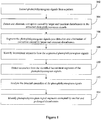
- FIG. 1 it is a flow chart illustrating a method for removing corruption in photoplethysmogram (PPG) signals for monitoring cardiac health of patients.
- PPG photoplethysmogram
- the process starts at step 102, photoplethysmogram signals are extracted from the user using the image capturing device (202) coupled with the mobile communication device (204).
- the step 104 corruption caused by larger and transient disturbances in the extracted photoplethysmogram signals are detected and eliminated.
- photoplethysmogram (PPG) signals post detection and elimination of corruption caused by larger and transient disturbances are segmented.
- inconsistent segments from the segmented photoplethysmogram signals are identified.
- anomalies from the identified inconsistent segments of the photoplethysmogram signals are detected.
- the detected anomalies of the photoplethysmogram signals are analyzed and at step 114, photoplethysmogram (PPG) signal segments corrupted by smaller and prolonged disturbances are identified.
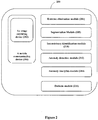
- FIG. 2 it is a block diagram illustrating system architecture for removing corruption in photoplethysmogram (PPG) signals for monitoring cardiac health of patients.
- PPG photoplethysmogram
- the image capturing device (202) coupled with the mobile communication device (204) is adapted for extracting photoplethysmogram signals from the patient.
- the photoplethysmogram signals are extracted from patient's peripheral body parts selected from a group comprising but not limited to finger, ear, and toe. In a specific embodiment, the photoplethysmogram signals are extracted from user's forehead.
- the mobile communication device (204) captures photoplethysmogram signal in reflective mode.
- the mobile communication device (204) is selected from a group comprising of smart phone, mobile phone, laptop, tablet, and personal digital assistant.
- the image capturing device (202) coupled with the mobile communication device (204) is a camera and have a light emitting source for extracting photoplethysmogram signals from the patient's peripheral body parts selected from a group comprising but not limited to finger, ear, toe; forehead, thereby, obtaining a video sequence of the light, reflected from patient's peripheral body parts.
- PPG signal corruption induces erroneous feature extraction and eventually leads to wrong diagnosis.
- the corruption in PPG is classified as: 1. Extremas and 2. Intricates, where extremas are the corruptions due to larger, transient disturbance and intricates are due to smaller and mostly prolonged disturbances as shown in figure 3 .
- Three classes of PPG signal corruption are also defined to model the corruption process as: Error or corruption dominant, normal sample dominates, random mix of both.
- the extremas are first processed for- to detect the larger variation of corruption, which would help in unbiased analysis.
- PPG is filtered to remove the residual invalide sections because human Heart Rate (HR) is a bounded variable and PPG cannot have frequency components beyond that bound.
- LPF low pass filter
- a modified Thompson Tau technique is considered to statistically decide the inconsistencies on the filtered PPG signal for finding the extremas-
- the extremas detection of PPG signal of patient #v748s is depicted (data taken from publicly available MIT-Physionet challenge 2015) in Figure 4 .
- NDWADTW normalized dynamic window-adaptive Dynamic Time Warping
- most probable onset duration is computed using a method to estimate individual's cardiac characteristics.
- two parameters ⁇ , n are to be tuned, where ⁇ , n are the distance and density parameters respectively, where ⁇ is defined as the furthest distance for which a point is density-reachable and n is the minimum number of points required to form a density cluster.
- ⁇ 1 , ..., ⁇ M be the M clusters following ⁇ , ⁇ .
- PPG being a deterministic signal (at least the valid PPG signal would always maintain certain pattern) and each segment length carries that signature or pattern.
- ⁇ k ⁇ 1 , ⁇ 2 ...
- ⁇ l p k consists of l p sample points.
- restricting segment length would underestimate the probability of significantly diverge segment length for cardio-abnormal patients. So, the following adaptive segment length computation method is proposed and implemented-
- MVPT 'Morphologically Valid PPG Template'
- NDWADTW normalized dynamic window-adaptive dynamic time warping
- masking breakdown point ⁇ M is to be close to 0.5.
- Total 750 patients from four hospitals in the USA and Europe are chosen at random and publicly available as MIT-BIH arrhythmia Physionet CinC Challenge 2015 datasets. Corrupt-segments are manually annotated through crowd-sourcing. Random 25 PPG signals out of 750 are taken and number of annotators annotates the corrupt regions and voting result is used as ground truth. Exemplary case of de-corruption of PPG signal for patient # v748s is shown in figure 4 .
- multi-level cluster-based anomaly analytics implemented herein is dynamic in nature because of the system's ability to adapt to the changing nature of the PPG signals.
- a computer-readable storage medium refers to any type of physical memory on which information or data readable by a processor may be stored.
- a computer-readable storage medium may store instructions for execution by one or more processors, including instructions for causing the processor(s) to perform steps or stages consistent with the embodiments described herein.
- the term "computer-readable medium” should be understood to include tangible items and exclude carrier waves and transient signals, i.e., be non-transitory. Examples include random access memory (RAM), read-only memory (ROM), volatile memory, nonvolatile memory, hard drives, CD ROMs, DVDs, flash drives, disks, and any other known physical storage media.
Landscapes
- Health & Medical Sciences (AREA)
- Life Sciences & Earth Sciences (AREA)
- Engineering & Computer Science (AREA)
- Public Health (AREA)
- Medical Informatics (AREA)
- Biomedical Technology (AREA)
- Pathology (AREA)
- General Health & Medical Sciences (AREA)
- Physics & Mathematics (AREA)
- Molecular Biology (AREA)
- Heart & Thoracic Surgery (AREA)
- Surgery (AREA)
- Animal Behavior & Ethology (AREA)
- Veterinary Medicine (AREA)
- Biophysics (AREA)
- Physiology (AREA)
- Signal Processing (AREA)
- Artificial Intelligence (AREA)
- Psychiatry (AREA)
- Computer Vision & Pattern Recognition (AREA)
- Cardiology (AREA)
- Data Mining & Analysis (AREA)
- Epidemiology (AREA)
- Primary Health Care (AREA)
- Databases & Information Systems (AREA)
- Multimedia (AREA)
- Evolutionary Computation (AREA)
- Fuzzy Systems (AREA)
- Mathematical Physics (AREA)
- Otolaryngology (AREA)
- Measuring Pulse, Heart Rate, Blood Pressure Or Blood Flow (AREA)
Abstract
Description
- This patent application claims priority to:
India Application No. 201621008875, filed on 14 March 2016 - The present application generally relates to biomedical signal processing. Particularly, the application provides a method and system for removing corruption in photoplethysmogram (PPG) signals captured using a mobile communication device. More particularly, the application provides a method and system for removing corruption in photoplethysmogram (PPG) signals for monitoring cardiac health of patients.
- An intriguing problem in healthcare analytics, particularly in photoplethysmogram (PPG) signals based proactive cardiac health monitoring, is the frequent presence of corruption in PPG signal from multiple noise sources like motion artifacts, ambient noise. Data preprocessing through denoising results in improved interpretation of the cardiovascular systems and removal of false alarms. In fact, the occurrence of high false alarms (precisely false positives due to the presence of noise) leads to 'alarm fatigue'. In contrary, high false negatives would be fatal to the patients.
- In all practicality, it is infeasible to capture ECG or ABP signals without using extra sensors or through invasive procedures. It is observed that majority of computational techniques do not find widespread clinical use because of their lack of capability in reducing the artifacts and other noises. Prior art illustrates 80 different artifact detection techniques and it is perceived that most of the techniques are highly explicit, hard coded to suit for certain device settings, usage and thus limiting their applicability in almost all practical purposes. Current trend is towards multi-signal corruption analysis and detection. The underlying assumption is that all of the cardiological signals like viz. PPG, ECG, ABP cannot be corrupted simultaneously while source of corruption is independent. Stand-alone method of PPG signal denoising and quality assessment is presented in prior art, which employs computationally heavy machine learning algorithms and multivariate 'voting' threshold mechanism. Such schemes are not suitable for smartphones to deliver real-time performance. Another problem is the single-stage error detection is itself erroneous and prone to have high false negatives.
- Thereby, removing corruption in photoplethysmogram (PPG) signals for monitoring cardiac health of patient's negatives is still considered to be one of the biggest challenges of the technical domain.
- Embodiments of the present disclosure present technological improvements as solutions to one or more of the above-mentioned technical problems recognized by the inventors in conventional systems. For example, in one embodiment, a method for removing corruption in photoplethysmogram (PPG) signals for monitoring cardiac health of patients is provided. The method comprises extracting photoplethysmogram signals from the patient, detecting and eliminating corruption caused by larger and transient disturbances in the extracted photoplethysmogram (PPG) signals, segmenting photoplethysmogram (PPG) signals post detection and elimination of corruption caused by larger and transient disturbances, identifying of inconsistent segments from the segmented photoplethysmogram (PPG) signals, detecting anomalies from the identified inconsistent segments of the photoplethysmogram (PPG) signals, analysing the detected anomalies of the photoplethysmogram (PPG) signals and identifying photoplethysmogram (PPG) signal segments corrupted by smaller and prolonged disturbances.
- In another embodiment, a system for removing corruption in photoplethysmogram (PPG) signals for monitoring cardiac health of patients is provided. The system (200) comprises of an image capturing device (202) coupled with a mobile communication device (204), an extrema elimination module (206), a segmentation module (208), an inconsistency identification module (210), an anomaly detection module (212), an anomaly analytics module (214) and a decision module (216)..
- In yet another embodiment, a non-transitory computer readable medium storing instructions is disclosed wherein when executed by a possessor on a system, the instructions cause the processor to perform method for monitoring cardiac health of patients comprising extracting photoplethysmogram signals from the patient, detecting and eliminating corruption caused by larger and transient disturbances in the extracted photoplethysmogram (PPG) signals, segmenting photoplethysmogram (PPG) signals post detection and elimination of corruption caused by larger and transient disturbances, identifying of inconsistent segments from the segmented photoplethysmogram (PPG) signals, detecting anomalies from the identified inconsistent segments of the photoplethysmogram (PPG) signals, analysing the detected anomalies of the photoplethysmogram (PPG) signals and identifying photoplethysmogram (PPG) signal segments corrupted by smaller and prolonged disturbances.
- It is to be understood that both the foregoing general description and the following detailed description are exemplary and explanatory only and are not restrictive of the invention, as claimed.
- The accompanying drawings, which are incorporated in and constitute a part of this disclosure, illustrate exemplary embodiments and, together with the description, serve to explain the disclosed principles.
-
FIG. 1 shows a flowchart illustrating method for removing corruption in photoplethysmogram (PPG) signals for monitoring cardiac health of patients. -
FIG. 2 shows a block diagram of a system for removing corruption in photoplethysmogram (PPG) signals for monitoring cardiac health of patients. -
FIG. 3A shows a shows a clean or expected photoplethysmogram (PPG) signal. -
FIG. 3B shows a corrupted photoplethysmogram (PPG) signal with extrema corruption and intricate corruption. -
FIG. 4 is shows extrema corruption and intricate corruption in photoplethysmogram (PPG) signal. -
FIG. 5A shows normalized dynamic window-adaptive dynamic time warping distance of corrupted photoplethysmogram (PPG) signal segment. -
FIG 5B shows normalized dynamic window-adaptive dynamic time warping distance of clean photoplethysmogram (PPG) signal segment. - Exemplary embodiments are described with reference to the accompanying drawings. In the figures, the left-most digit(s) of a reference number identifies the figure in which the reference number first appears. Wherever convenient, the same reference numbers are used throughout the drawings to refer to the same or like parts. While examples and features of disclosed principles are described herein, modifications, adaptations, and other implementations are possible without departing from the spirit and scope of the disclosed embodiments. It is intended that the following detailed description be considered as exemplary only, with the true scope and spirit being indicated by the following claims.
- The present disclosure provides a method and system for removing corruption in photoplethysmogram (PPG) signals for monitoring cardiac health of patients.
- In an embodiment of the present invention, a system (200) for removing corruption in photoplethysmogram (PPG) signals for monitoring cardiac health of patients comprises of an image capturing device (202) coupled with a mobile communication device (204), an extrema elimination module (206), a segmentation module (208), an inconsistency identification module (210), an anomaly detection module (212), an anomaly analytics module (214) and a decision module (216).
- Referring to
Figure 1 , it is a flow chart illustrating a method for removing corruption in photoplethysmogram (PPG) signals for monitoring cardiac health of patients. - The process starts at
step 102, photoplethysmogram signals are extracted from the user using the image capturing device (202) coupled with the mobile communication device (204). At thestep 104, corruption caused by larger and transient disturbances in the extracted photoplethysmogram signals are detected and eliminated. At thestep 106, photoplethysmogram (PPG) signals post detection and elimination of corruption caused by larger and transient disturbances are segmented. Atstep 108, inconsistent segments from the segmented photoplethysmogram signals are identified. Atstep 110, anomalies from the identified inconsistent segments of the photoplethysmogram signals are detected. Atstep 112, the detected anomalies of the photoplethysmogram signals are analyzed and atstep 114, photoplethysmogram (PPG) signal segments corrupted by smaller and prolonged disturbances are identified. - Referring to
Figure 2 , it is a block diagram illustrating system architecture for removing corruption in photoplethysmogram (PPG) signals for monitoring cardiac health of patients. - In another embodiment of the present invention, the image capturing device (202) coupled with the mobile communication device (204) is adapted for extracting photoplethysmogram signals from the patient. The photoplethysmogram signals are extracted from patient's peripheral body parts selected from a group comprising but not limited to finger, ear, and toe. In a specific embodiment, the photoplethysmogram signals are extracted from user's forehead. The mobile communication device (204) captures photoplethysmogram signal in reflective mode. The mobile communication device (204) is selected from a group comprising of smart phone, mobile phone, laptop, tablet, and personal digital assistant.
- The image capturing device (202) coupled with the mobile communication device (204) is a camera and have a light emitting source for extracting photoplethysmogram signals from the patient's peripheral body parts selected from a group comprising but not limited to finger, ear, toe; forehead, thereby, obtaining a video sequence of the light, reflected from patient's peripheral body parts.
- Corruption in PPG signal induces erroneous feature extraction and eventually leads to wrong diagnosis. The corruption in PPG is classified as: 1. Extremas and 2. Intricates, where extremas are the corruptions due to larger, transient disturbance and intricates are due to smaller and mostly prolonged disturbances as shown in
figure 3 . Three classes of PPG signal corruption are also defined to model the corruption process as: Error or corruption dominant, normal sample dominates, random mix of both. - In another embodiment of the present invention, the extremas are first processed for- to detect the larger variation of corruption, which would help in unbiased analysis.
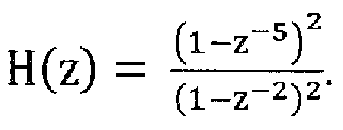
- In another embodiment of the present invention, let P = {pn},n = 1,2, ..., N be the captured PPG signal. Firstly, PPG is filtered to remove the residual invalide sections because human Heart Rate (HR) is a bounded variable and PPG cannot have frequency components beyond that bound. PPG signal P = {pn} is passed through a low pass filter (LPF) with transfer function:
- In another embodiment of the present invention, a modified Thompson Tau technique is considered to statistically decide the inconsistencies on the filtered PPG signal for finding the extremas-
- a. Find median absolute deviationθ n = |pn-median(P)|,∀n ∈ N.
- b. Find the threshold of discard


- c.

- d. Discard εx from the set, and continue from (a) with P = {P - εx} until {εx} = 0̸.
- e. P with all extremas εx removed is stored for further processing.
- In an exemplary embodiment of the present invention, the extremas detection of PPG signal of patient #v748s is depicted (data taken from publicly available MIT-Physionet challenge 2015) in
Figure 4 . - In another embodiment of the present invention, the below table depicts the notational meanings of the symbols used-
Notation Meaning P = {pn}, PPG signal ok Cardiac cycle time instants derived from PPG signal 
Onset time duration lp Most probable onset time duration ψk Peak-to-peak duration at the cardiac cycle 
Template of a normal PPG segment of unit cardiac cycle - With successful extremas detection, decorrupting the entire PPG becomes less error prone. In the next steps, intrcicate detection takes place.
- PPG signal is a time series records sampled at a predefined frequency. It consists of series of continuous segments and each segment start is indicated by cardiac cycle onset time (
figure 5 ) and each segment identifies a single complete heart beat and onset duration Ω (Ω k = {ok-1 : ok}, k = 1,2,.... K)= {Ω k }. is detected. From Ω, the most probable onset duration with the assumption that for a short period (around 1 minute) is derived,. The intricate corruptions are distinguished through dissimilar measurement by applying a normalized dynamic window-adaptive Dynamic Time Warping (NDWADTW) method. - In another embodiment of the present invention, most probable onset duration is computed using a method to estimate individual's cardiac characteristics. In the said method, two parameters
ω , n are to be tuned, whereω ,n are the distance and density parameters respectively, whereω is defined as the furthest distance for which a point is density-reachable and n is the minimum number of points required to form a density cluster. The underlying philosophy is: Letbe the distance of an arbitrary point ρ in Ω to its at least n - 1 nearest neighbors, so the -neighborhood (spherical) contains at least n points. The most probable value of

ω = ┌3σ┐. Let Ω1, ..., Ω M be the M clusters followingω ,η. Anomalous segment lengths Ω' are the subset in Ω that are not part of any Ω m , m= 1,2, .... M and Ω N (normal segment length) = Ω - Ω' and

- In another embodiment of the present invention, PPG being a deterministic signal (at least the valid PPG signal would always maintain certain pattern) and each segment length carries that signature or pattern. The most obvious PPG cardiac segment sample is considered as the template

- To counter the nonlinearity in the PPG segments, each segment is restricted to most probable segment length lp , i.e.

- a. Find segment length of each PPG segment ℓ k = |Ω k |, k∀K.
- b. Compute length-invalidity threshold th = HR|max ×
 r × 60, where
 r= sampling frequency and HR| max = 280 beats per minute (bpm) (safe assumption of highest human heart rate).
- c. Compute adaptive length-abnormality threshold


- d. Length abnormal PPG segments are

- e. lp = |Ω k |, ∀Ω k ∈ Ω k |length-abnormal, i.e. for the length abnormal PPG segments, most probable segment length lp is its own segment length.
- In order to compute the dissimilarity of given PPG segment, distance is measured with the computed 'Morphologically Valid PPG Template' (MVPT). Let P λ := {p 1, p 2, ... , pL } be the PPG signal of length


- With two stages of decorruption performed through extremas and segment length variability detection, finally normalized dynamic window-adaptive dynamic time warping (NDWADTW) distance is computed to address the amplitude-abnormality and is applied for PPG signal cleaning. Each segment is normalized as

 and each of the segments



- In
figure 5 , it is noticed that
- To classify the PPG segments as corrupt or non-corrupt, robust extreme value analysis is performed, which requires masking effect and swamping effect are to be minimized. Masking effect causes one or more anomalous or corrupt points to get undetected, while normal or non-corrupt points are depicted as outlier by swamping effect. As it is intuitive as well as evident from
figure 4 that higher NDWADTW distance is associated with corrupt points, the objective is to minimize the masking effect. - For minimizing masking effect, masking breakdown point ξM is to be close to 0.5. For a large class of identifier Hampel identifier, a nonlinear local outlier detector based on Median Absolute Deviation (MAD) scale estimation provides outlier detection with ξM → 0.5 as follows:

- An observation is identified as corrupt when: . Typically Thr = 3 is considered. The Hampel identifier is applied to decide whether a DTW distance is corrupt. When Hampel identifier declares a NDWADTW distance outlier, the corresponding PPG segment is declared as corrupt.
- In an exemplary embodiment of the present invention, Total 750 patients from four hospitals in the USA and Europe are chosen at random and publicly available as MIT-BIH arrhythmia Physionet CinC Challenge 2015 datasets. Corrupt-segments are manually annotated through crowd-sourcing. Random 25 PPG signals out of 750 are taken and number of annotators annotates the corrupt regions and voting result is used as ground truth. Exemplary case of de-corruption of PPG signal for patient # v748s is shown in
figure 4 . - In another embodiment of the present invention, the dynamic multi-level cluster-based anomaly analytics implemented herein is described below:
- a. Segments with normalized dynamic window-adaptive dynamic time warping (NDWADTW) distance greater than a threshold (thresh) are corrupt, where thresh = median (ceil(dtwppg)) + scale ∗ (made(ceil(dtwppg),1)), scale = 1.5.
- b. To find segments that still remain undetected, a multiple stage clustering approach, 2-means followed by 3-means is taken.
- c. K-means is applied on the derived DTW distances of all segments from the template.
- d. K-Means with k = 2 segregates these points into two clusters with centers c1, c2 (c2 > c1). This is done to verify if there are any segments in cluster c2 that are outliers. This is done by checking the distance between these two centroids.
- e. If |c1-c2| > n ∗ s, where s = std(dtw_ppg), then K-means with k = 3 is applied on the DTW distances to find out elements in c1',c2',c3'. Elements in c2',c3' are considered outliers that remained undetected in the step above.
- f. Burst sequences of corrupt sequences is checked, if there are at most 'num' number of segments present between two detected corrupt segments, then all segments in between are rendered corrupt.
- In another embodiment of the present invention, multi-level cluster-based anomaly analytics implemented herein is dynamic in nature because of the system's ability to adapt to the changing nature of the PPG signals.
- In another embodiment of the present invention, as prediction problem is evaluated by confusion matrix parameters: False Positives (FP), False Negatives (FN), True Positives (TP) and True Negatives (TN) are shown in the table below. It is observed that have achieved very low false negatives (<= 4%), indicating that the very less number of non-detections. With such mechanism of PPG signal de-corruption, better heart condition status and lesser false alarms are expected.
Predicted (Yes) Predicted (No) Actual (Yes) TP= 24% FN= 4% Actual (No) FP= 14% TN= 58% - In an exemplary embodiment of the present invention, 20 subjects with 10 lab-generated and 10 from MIMIC 2 datasets from physionet have been considered-the performance in terms of precision = 78%, recall = 80% and specificity= 96%.
- The illustrated steps are set out to explain the exemplary embodiments shown, and it should be anticipated that ongoing technological development will change the manner in which particular functions are performed. These examples are presented herein for purposes of illustration, and not limitation. Further, the boundaries of the functional building blocks have been arbitrarily defined herein for the convenience of the description. Alternative boundaries can be defined so long as the specified functions and relationships thereof are appropriately performed. Alternatives (including equivalents, extensions, variations, deviations, etc., of those described herein) will be apparent to persons skilled in the relevant art(s) based on the teachings contained herein. Such alternatives fall within the scope and spirit of the disclosed embodiments. Also, the words "comprising," "having," "containing," and "including," and other similar forms are intended to be equivalent in meaning and be open ended in that an item or items following any one of these words is not meant to be an exhaustive listing of such item or items, or meant to be limited to only the listed item or items. It must also be noted that as used herein and in the appended claims, the singular forms "a," "an," and "the" include plural references unless the context clearly dictates otherwise.
- Furthermore, one or more computer-readable storage media may be utilized in implementing embodiments consistent with the present disclosure. A computer-readable storage medium refers to any type of physical memory on which information or data readable by a processor may be stored. Thus, a computer-readable storage medium may store instructions for execution by one or more processors, including instructions for causing the processor(s) to perform steps or stages consistent with the embodiments described herein. The term "computer-readable medium" should be understood to include tangible items and exclude carrier waves and transient signals, i.e., be non-transitory. Examples include random access memory (RAM), read-only memory (ROM), volatile memory, nonvolatile memory, hard drives, CD ROMs, DVDs, flash drives, disks, and any other known physical storage media.
- It is intended that the disclosure and examples be considered as exemplary only, with a true scope and spirit of disclosed embodiments being indicated by the following claims.
Claims (15)
- A method for removing corruption in photoplethysmogram (PPG) signals for monitoring cardiac health of patients; said method comprising:extracting photoplethysmogram (PPG) signals using an image capturing device (202) coupled with a mobile communication device (204);detecting and eliminating corruption caused by larger and transient disturbances in the extracted photoplethysmogram (PPG) signals using an extrema elimination module (206);segmenting the photoplethysmogram (PPG) signals post detection and elimination of corruption caused by larger and transient disturbances using a segmentation module (208);identifying inconsistent segments from the segmented photoplethysmogram (PPG) signals using an inconsistency identification module (210);detecting anomalies from the identified inconsistent segments of the photoplethysmogram (PPG) signals using an anomaly detection module (212);analyzing the detected anomalies of the photoplethysmogram (PPG) signals using an anomaly analytics module (214); andidentifying photoplethysmogram (PPG) signal segments corrupted by smaller and prolonged disturbances using a decision module (216).
- The method according to claim 1, wherein the photoplethysmogram signals are extracted from the patients' peripheral body parts, wherein the patients peripheral body parts are selected from a group comprising fingertip, ear, toe; and forehead.
- The method according to claim 1, wherein the photoplethysmogram signals are extracted from the user using a light emitting source attached to the image capturing device (202) coupled with the mobile communication device (204).
- The method according to claim 1, wherein the image capturing device (202) coupled with the mobile communication device (204) extracts photoplethysmogram signals as a video stream
- The method according to claim 1, wherein the detection and elimination of corruption caused by larger and transient disturbances in the extracted photoplethysmogram (PPG) signals is performed by using Thompson Tau technique.
- The method according to claim 1, wherein identification of inconsistent segments from the segmented photoplethysmogram (PPG) signals is performed using normalized dynamic window-adaptive dynamic time warping (NDWADTW) method.
- The method according to claim 7, wherein the normalized dynamic window-adaptive dynamic time warping (NDWADTW) method is implemented with respect to a dynamic and patient specific PPG signal template.
- The method according to claim 8, wherein the patient specific PPG signal template is a personalized and morphologically valid photoplethysmogram (PPG) template.
- The method according to claim 1, wherein detection of anomalies from the identified inconsistent segments of the photoplethysmogram (PPG) signals is performed using a hampel filter.
- The method according to claim 1, wherein analysis of the detected anomalies of the photoplethysmogram (PPG) signals is performed using a dynamic multi-level cluster-based anomaly analytics method.
- The method according to claim 1, wherein identification of photoplethysmogram (PPG) signal segments corrupted by smaller and prolonged disturbances is based on the analysis of the detected anomalies arising out of one or more sources, wherein the anomalies arising out of one or more sources are selected from a group comprising of external noise, internal noise, motion artifacts and physiological condition.
- The method according to claim 12, wherein identification of photoplethysmogram (PPG) signal segments corrupted by smaller and prolonged disturbances is performed to identify anomalies arising out of external noise, internal noise and motion artifacts.
- The method according to claim 1, wherein identification of photoplethysmogram (PPG) signal segments corrupted by smaller and prolonged disturbances is performed by providing a binary decision with respect to the analysed photoplethysmogram (PPG) signal segments.
- A system for removing corruption in photoplethysmogram (PPG) signals for monitoring cardiac health of patients; said system comprising:an image capturing device (202) coupled with a mobile communication device (204), adapted for extracting photoplethysmogram signals from the user;an extrema elimination module (206) adapted for detecting and eliminating corruption caused by larger and transient disturbances in the extracted photoplethysmogram (PPG) signals;a segmentation module (208) adapted for segmenting the photoplethysmogram (PPG) signals post detection and elimination of corruption caused by larger and transient disturbances;an inconsistency identification module (210) adapted for identifying inconsistent segments from the segmented photoplethysmogram (PPG) signals;an anomaly detection module (212) adapted for detecting anomalies from the identified inconsistent segments of the photoplethysmogram (PPG) signals;an anomaly analytics module (214) adapted for analysing the detected anomalies of the photoplethysmogram (PPG) signals; anda decision module (216) adapted for identifying photoplethysmogram (PPG) signal segments corrupted by smaller and prolonged disturbances.
- A non-transitory computer readable medium storing instructions which when executed by a possessor on a system, cause the processor to perform method for monitoring cardiac health of patients comprising:detecting and eliminating corruption caused by larger and transient disturbances in the extracted photoplethysmogram (PPG) signals using an extrema elimination module (206);segmenting the photoplethysmogram (PPG) signals post detection and elimination of corruption caused by larger and transient disturbances using a segmentation module (208);identifying inconsistent segments from the segmented photoplethysmogram (PPG) signals using an inconsistency identification module (210);detecting anomalies from the identified inconsistent segments of the photoplethysmogram (PPG) signals using an anomaly detection module (212);analyzing the detected anomalies of the photoplethysmogram (PPG) signals using an anomaly analytics module (214); andidentifying photoplethysmogram (PPG) signal segments corrupted by smaller and prolonged disturbances using a decision module (216).
Applications Claiming Priority (1)
| Application Number | Priority Date | Filing Date | Title |
|---|---|---|---|
| IN201621008875 | 2016-03-14 |
Publications (2)
| Publication Number | Publication Date |
|---|---|
| EP3219254A1 true EP3219254A1 (en) | 2017-09-20 |
| EP3219254B1 EP3219254B1 (en) | 2023-05-24 |
Family
ID=58347090
Family Applications (1)
| Application Number | Title | Priority Date | Filing Date |
|---|---|---|---|
| EP17160325.1A Active EP3219254B1 (en) | 2016-03-14 | 2017-03-10 | Method and system for removing corruption in photoplethysmogram signals for monitoring cardiac health of patients |
Country Status (2)
| Country | Link |
|---|---|
| US (1) | US10548533B2 (en) |
| EP (1) | EP3219254B1 (en) |
Cited By (4)
| Publication number | Priority date | Publication date | Assignee | Title |
|---|---|---|---|---|
| EP3506314A1 (en) * | 2017-12-29 | 2019-07-03 | Tata Consultancy Services Limited | Systems and methods for detecting anomaly in a cardiovascular signal using hierarchical extremas and repetitions |
| GB2573855A (en) * | 2018-03-08 | 2019-11-20 | Ninsaw Gbati Israel | Cardiovascular health monitoring |
| CN112836105A (en) * | 2021-02-05 | 2021-05-25 | 浙江工业大学 | A large-scale student aerobic capacity clustering method based on fusion of exercise physiological representations |
| US11373731B2 (en) | 2017-11-04 | 2022-06-28 | Tata Consultancy Services Limited | System and method to classify cardiopulmonary fatigue |
Families Citing this family (4)
| Publication number | Priority date | Publication date | Assignee | Title |
|---|---|---|---|---|
| KR102170733B1 (en) | 2018-09-21 | 2020-10-27 | 서울대학교산학협력단 | Method for denoising of periodic vital signal and apparatus thereof |
| US11860615B2 (en) * | 2019-03-29 | 2024-01-02 | Tata Consultancy Services Limited | Method and system for anomaly detection and diagnosis in industrial processes and equipment |
| TWI749631B (en) * | 2020-07-10 | 2021-12-11 | 緯創資通股份有限公司 | Signal processing method, apparatus and non-transitory computer readable storage medium |
| CN116712049B (en) * | 2023-08-09 | 2023-10-20 | 临沂大学 | A motion data collection and processing method and system |
Citations (4)
| Publication number | Priority date | Publication date | Assignee | Title |
|---|---|---|---|---|
| US20080183232A1 (en) * | 2007-01-30 | 2008-07-31 | Voss Gregory I | Method and system for determining cardiac function |
| WO2012051300A2 (en) * | 2010-10-12 | 2012-04-19 | Worcester Polytechnic Institute | Method and system for detection and rejection of motion/noise artifacts in physiological measurements |
| WO2015130929A2 (en) * | 2014-02-26 | 2015-09-03 | Worcester Polytechnic Institute | Apparatus and method for detecting and removing artifacts in optically acquired biological signals |
| US20150366516A1 (en) * | 2011-09-23 | 2015-12-24 | Nellcor Puritan Bennett Ireland | Systems and methods for determining respiration information from a photoplethysmograph |
Family Cites Families (9)
| Publication number | Priority date | Publication date | Assignee | Title |
|---|---|---|---|---|
| EP2067437B1 (en) | 2001-06-22 | 2011-08-17 | Nellcor Puritan Bennett Ireland | Wavelet-based analysis of pulse oximetry signals |
| JP2010504793A (en) | 2006-09-29 | 2010-02-18 | コーニンクレッカ フィリップス エレクトロニクス エヌ ヴィ | Template synthesis for ECG / PPG based biometrics |
| US8410951B2 (en) | 2008-09-30 | 2013-04-02 | Covidien Lp | Detecting a signal quality decrease in a measurement system |
| US8755854B2 (en) | 2009-07-31 | 2014-06-17 | Nellcor Puritan Bennett Ireland | Methods and apparatus for producing and using lightly filtered photoplethysmograph signals |
| US9918666B2 (en) * | 2014-01-13 | 2018-03-20 | The Board Of Regents, The University Of Texas System | Systems and methods for physiological signal enhancement and biometric extraction using non-invasive optical sensors |
| US10758133B2 (en) * | 2014-08-07 | 2020-09-01 | Apple Inc. | Motion artifact removal by time domain projection |
| EP3185750B1 (en) * | 2014-08-25 | 2020-04-08 | Drägerwerk AG & Co. KGaA | Rejecting noise in a signal |
| TWI538660B (en) * | 2014-09-26 | 2016-06-21 | 原相科技股份有限公司 | Heart rate detection module, and detection and denoising method thereof |
| CN204515353U (en) * | 2015-03-31 | 2015-07-29 | 深圳市长桑技术有限公司 | A kind of intelligent watch |
-
2017
- 2017-03-10 US US15/456,112 patent/US10548533B2/en active Active
- 2017-03-10 EP EP17160325.1A patent/EP3219254B1/en active Active
Patent Citations (4)
| Publication number | Priority date | Publication date | Assignee | Title |
|---|---|---|---|---|
| US20080183232A1 (en) * | 2007-01-30 | 2008-07-31 | Voss Gregory I | Method and system for determining cardiac function |
| WO2012051300A2 (en) * | 2010-10-12 | 2012-04-19 | Worcester Polytechnic Institute | Method and system for detection and rejection of motion/noise artifacts in physiological measurements |
| US20150366516A1 (en) * | 2011-09-23 | 2015-12-24 | Nellcor Puritan Bennett Ireland | Systems and methods for determining respiration information from a photoplethysmograph |
| WO2015130929A2 (en) * | 2014-02-26 | 2015-09-03 | Worcester Polytechnic Institute | Apparatus and method for detecting and removing artifacts in optically acquired biological signals |
Non-Patent Citations (3)
| Title |
|---|
| CHETANYA PURI ET AL: "iCarMa", IOT-ENABLED HEALTHCARE AND WELLNESS TECHNOLOGIES AND SYSTEMS, ACM, 2 PENN PLAZA, SUITE 701 NEW YORK NY 10121-0701 USA, 30 June 2016 (2016-06-30), pages 3 - 8, XP058260975, ISBN: 978-1-4503-4334-3, DOI: 10.1145/2933566.2933567 * |
| ROHAN BANERJEE ET AL: "Noise cleaning and Gaussian modeling of smart phone photoplethysmogram to improve blood pressure estimation", 2015 IEEE INTERNATIONAL CONFERENCE ON ACOUSTICS, SPEECH AND SIGNAL PROCESSING (ICASSP), 1 April 2015 (2015-04-01), pages 967 - 971, XP055303772, ISBN: 978-1-4673-6997-8, DOI: 10.1109/ICASSP.2015.7178113 * |
| VILLIEN MARJORIE ET AL: "Changes in cerebral blood flow and vasoreactivity to CO2measured by arterial spin labeling after 6days at 4350m", NEUROIMAGE, ELSEVIER, AMSTERDAM, NL, vol. 72, 4 February 2013 (2013-02-04), pages 272 - 279, XP028995628, ISSN: 1053-8119, DOI: 10.1016/J.NEUROIMAGE.2013.01.066 * |
Cited By (6)
| Publication number | Priority date | Publication date | Assignee | Title |
|---|---|---|---|---|
| US11373731B2 (en) | 2017-11-04 | 2022-06-28 | Tata Consultancy Services Limited | System and method to classify cardiopulmonary fatigue |
| EP3506314A1 (en) * | 2017-12-29 | 2019-07-03 | Tata Consultancy Services Limited | Systems and methods for detecting anomaly in a cardiovascular signal using hierarchical extremas and repetitions |
| GB2573855A (en) * | 2018-03-08 | 2019-11-20 | Ninsaw Gbati Israel | Cardiovascular health monitoring |
| GB2573855B (en) * | 2018-03-08 | 2022-06-22 | Biostealth Ltd | Cardiovascular health monitoring |
| CN112836105A (en) * | 2021-02-05 | 2021-05-25 | 浙江工业大学 | A large-scale student aerobic capacity clustering method based on fusion of exercise physiological representations |
| CN112836105B (en) * | 2021-02-05 | 2022-05-24 | 浙江工业大学 | Large-scale student aerobic capacity clustering method based on movement physiological characterization fusion |
Also Published As
| Publication number | Publication date |
|---|---|
| US20170273632A1 (en) | 2017-09-28 |
| EP3219254B1 (en) | 2023-05-24 |
| US10548533B2 (en) | 2020-02-04 |
Similar Documents
| Publication | Publication Date | Title |
|---|---|---|
| EP3219254B1 (en) | Method and system for removing corruption in photoplethysmogram signals for monitoring cardiac health of patients | |
| US10575786B2 (en) | System and method for photoplethysmogram (PPG) signal quality assessment | |
| EP3219253B1 (en) | System for detecting arrhythmia using photoplethysmogram signal | |
| EP3456246B1 (en) | A cascaded binary classifier for identifying rhythms in a single-lead electrocardiogram (ecg) signal | |
| EP3367883B1 (en) | Monitoring activities of daily living of a person | |
| EP2829223B1 (en) | Monitoring physiological parameters | |
| US12433495B2 (en) | System and methods for determining health-related metrics from collected physiological data | |
| KR100613697B1 (en) | Fingerprint image acquisition method according to sliding / rolling of finger | |
| Bashar et al. | Developing a novel noise artifact detection algorithm for smartphone PPG signals: Preliminary results | |
| US20190069850A1 (en) | Non-invasive method and system for estimating blood pressure from photoplethysmogram using statistical post-processing | |
| EP3495994A1 (en) | Face video based heart rate monitoring using pulse signal modelling and tracking | |
| Puri et al. | iCarMa: inexpensive cardiac arrhythmia management--an IoT healthcare analytics solution | |
| EP3371723A1 (en) | Prediction of acute respiratory disease syndrome (ards) based on patients' physiological responses | |
| EP3890236B1 (en) | Continuously validating a user during an established authenticated session using photoplethysmogram and accelerometer data | |
| EP3330974B1 (en) | System and method for physiological monitoring | |
| CN111079560A (en) | Tumble monitoring method and device and terminal equipment | |
| EP3977482B1 (en) | System and method for filtering time-varying data for physiological signal prediction | |
| US20240020882A1 (en) | Camera-Based Contactless Monitoring of Physiological Parameters | |
| Ukil et al. | Cardiac condition monitoring through photoplethysmogram signal denoising using wearables: can we detect coronary artery disease with higher performance efficacy? | |
| US20200129080A1 (en) | Systems and methods for performing biometric authentication | |
| CN112957018A (en) | Heart state detection method and device based on artificial intelligence | |
| EP4105827B1 (en) | Method and system for personalized eye blink detection | |
| US20230000442A1 (en) | Method and a system for determining quality of photoplethysmogram (ppg) signal | |
| Olugbenle et al. | User authentication and vital signs extraction from low-frame-rate and monochrome no-contact fingerprint captures | |
| Li et al. | SpindleX: A Multi-Scale Event Detection Window and CBAM Attention-Based Model for Sleep Spindle Detection |
Legal Events
| Date | Code | Title | Description |
|---|---|---|---|
| PUAI | Public reference made under article 153(3) epc to a published international application that has entered the european phase |
Free format text: ORIGINAL CODE: 0009012 |
|
| STAA | Information on the status of an ep patent application or granted ep patent |
Free format text: STATUS: THE APPLICATION HAS BEEN PUBLISHED |
|
| AK | Designated contracting states |
Kind code of ref document: A1 Designated state(s): AL AT BE BG CH CY CZ DE DK EE ES FI FR GB GR HR HU IE IS IT LI LT LU LV MC MK MT NL NO PL PT RO RS SE SI SK SM TR |
|
| AX | Request for extension of the european patent |
Extension state: BA ME |
|
| RIN1 | Information on inventor provided before grant (corrected) |
Inventor name: MANDANA, KAYAPANDA Inventor name: UKIL, ARIJIT Inventor name: BANDYOPADHYAY, SOMA Inventor name: PAL, ARPAN Inventor name: PURI, CHETANYA |
|
| RIN1 | Information on inventor provided before grant (corrected) |
Inventor name: PAL, ARPAN Inventor name: PURI, CHETANYA Inventor name: BANDYOPADHYAY, SOMA Inventor name: MANDANA, KAYAPANDA Inventor name: UKIL, ARIJIT |
|
| STAA | Information on the status of an ep patent application or granted ep patent |
Free format text: STATUS: REQUEST FOR EXAMINATION WAS MADE |
|
| 17P | Request for examination filed |
Effective date: 20180320 |
|
| RBV | Designated contracting states (corrected) |
Designated state(s): AL AT BE BG CH CY CZ DE DK EE ES FI FR GB GR HR HU IE IS IT LI LT LU LV MC MK MT NL NO PL PT RO RS SE SI SK SM TR |
|
| STAA | Information on the status of an ep patent application or granted ep patent |
Free format text: STATUS: EXAMINATION IS IN PROGRESS |
|
| 17Q | First examination report despatched |
Effective date: 20200214 |
|
| GRAP | Despatch of communication of intention to grant a patent |
Free format text: ORIGINAL CODE: EPIDOSNIGR1 |
|
| STAA | Information on the status of an ep patent application or granted ep patent |
Free format text: STATUS: GRANT OF PATENT IS INTENDED |
|
| INTG | Intention to grant announced |
Effective date: 20220509 |
|
| GRAJ | Information related to disapproval of communication of intention to grant by the applicant or resumption of examination proceedings by the epo deleted |
Free format text: ORIGINAL CODE: EPIDOSDIGR1 |
|
| STAA | Information on the status of an ep patent application or granted ep patent |
Free format text: STATUS: EXAMINATION IS IN PROGRESS |
|
| INTC | Intention to grant announced (deleted) | ||
| GRAP | Despatch of communication of intention to grant a patent |
Free format text: ORIGINAL CODE: EPIDOSNIGR1 |
|
| STAA | Information on the status of an ep patent application or granted ep patent |
Free format text: STATUS: GRANT OF PATENT IS INTENDED |
|
| INTG | Intention to grant announced |
Effective date: 20221125 |
|
| GRAS | Grant fee paid |
Free format text: ORIGINAL CODE: EPIDOSNIGR3 |
|
| GRAA | (expected) grant |
Free format text: ORIGINAL CODE: 0009210 |
|
| STAA | Information on the status of an ep patent application or granted ep patent |
Free format text: STATUS: THE PATENT HAS BEEN GRANTED |
|
| AK | Designated contracting states |
Kind code of ref document: B1 Designated state(s): AL AT BE BG CH CY CZ DE DK EE ES FI FR GB GR HR HU IE IS IT LI LT LU LV MC MK MT NL NO PL PT RO RS SE SI SK SM TR |
|
| REG | Reference to a national code |
Ref country code: GB Ref legal event code: FG4D |
|
| REG | Reference to a national code |
Ref country code: CH Ref legal event code: EP |
|
| REG | Reference to a national code |
Ref country code: DE Ref legal event code: R096 Ref document number: 602017068944 Country of ref document: DE |
|
| REG | Reference to a national code |
Ref country code: AT Ref legal event code: REF Ref document number: 1569044 Country of ref document: AT Kind code of ref document: T Effective date: 20230615 |
|
| REG | Reference to a national code |
Ref country code: IE Ref legal event code: FG4D |
|
| P01 | Opt-out of the competence of the unified patent court (upc) registered |
Effective date: 20230526 |
|
| REG | Reference to a national code |
Ref country code: NL Ref legal event code: FP |
|
| REG | Reference to a national code |
Ref country code: LT Ref legal event code: MG9D |
|
| REG | Reference to a national code |
Ref country code: AT Ref legal event code: MK05 Ref document number: 1569044 Country of ref document: AT Kind code of ref document: T Effective date: 20230524 |
|
| PG25 | Lapsed in a contracting state [announced via postgrant information from national office to epo] |
Ref country code: SE Free format text: LAPSE BECAUSE OF FAILURE TO SUBMIT A TRANSLATION OF THE DESCRIPTION OR TO PAY THE FEE WITHIN THE PRESCRIBED TIME-LIMIT Effective date: 20230524 Ref country code: PT Free format text: LAPSE BECAUSE OF FAILURE TO SUBMIT A TRANSLATION OF THE DESCRIPTION OR TO PAY THE FEE WITHIN THE PRESCRIBED TIME-LIMIT Effective date: 20230925 Ref country code: NO Free format text: LAPSE BECAUSE OF FAILURE TO SUBMIT A TRANSLATION OF THE DESCRIPTION OR TO PAY THE FEE WITHIN THE PRESCRIBED TIME-LIMIT Effective date: 20230824 Ref country code: ES Free format text: LAPSE BECAUSE OF FAILURE TO SUBMIT A TRANSLATION OF THE DESCRIPTION OR TO PAY THE FEE WITHIN THE PRESCRIBED TIME-LIMIT Effective date: 20230524 Ref country code: AT Free format text: LAPSE BECAUSE OF FAILURE TO SUBMIT A TRANSLATION OF THE DESCRIPTION OR TO PAY THE FEE WITHIN THE PRESCRIBED TIME-LIMIT Effective date: 20230524 |
|
| PG25 | Lapsed in a contracting state [announced via postgrant information from national office to epo] |
Ref country code: RS Free format text: LAPSE BECAUSE OF FAILURE TO SUBMIT A TRANSLATION OF THE DESCRIPTION OR TO PAY THE FEE WITHIN THE PRESCRIBED TIME-LIMIT Effective date: 20230524 Ref country code: PL Free format text: LAPSE BECAUSE OF FAILURE TO SUBMIT A TRANSLATION OF THE DESCRIPTION OR TO PAY THE FEE WITHIN THE PRESCRIBED TIME-LIMIT Effective date: 20230524 Ref country code: LV Free format text: LAPSE BECAUSE OF FAILURE TO SUBMIT A TRANSLATION OF THE DESCRIPTION OR TO PAY THE FEE WITHIN THE PRESCRIBED TIME-LIMIT Effective date: 20230524 Ref country code: LT Free format text: LAPSE BECAUSE OF FAILURE TO SUBMIT A TRANSLATION OF THE DESCRIPTION OR TO PAY THE FEE WITHIN THE PRESCRIBED TIME-LIMIT Effective date: 20230524 Ref country code: IS Free format text: LAPSE BECAUSE OF FAILURE TO SUBMIT A TRANSLATION OF THE DESCRIPTION OR TO PAY THE FEE WITHIN THE PRESCRIBED TIME-LIMIT Effective date: 20230924 Ref country code: HR Free format text: LAPSE BECAUSE OF FAILURE TO SUBMIT A TRANSLATION OF THE DESCRIPTION OR TO PAY THE FEE WITHIN THE PRESCRIBED TIME-LIMIT Effective date: 20230524 Ref country code: GR Free format text: LAPSE BECAUSE OF FAILURE TO SUBMIT A TRANSLATION OF THE DESCRIPTION OR TO PAY THE FEE WITHIN THE PRESCRIBED TIME-LIMIT Effective date: 20230825 |
|
| PG25 | Lapsed in a contracting state [announced via postgrant information from national office to epo] |
Ref country code: FI Free format text: LAPSE BECAUSE OF FAILURE TO SUBMIT A TRANSLATION OF THE DESCRIPTION OR TO PAY THE FEE WITHIN THE PRESCRIBED TIME-LIMIT Effective date: 20230524 |
|
| PG25 | Lapsed in a contracting state [announced via postgrant information from national office to epo] |
Ref country code: SK Free format text: LAPSE BECAUSE OF FAILURE TO SUBMIT A TRANSLATION OF THE DESCRIPTION OR TO PAY THE FEE WITHIN THE PRESCRIBED TIME-LIMIT Effective date: 20230524 |
|
| PG25 | Lapsed in a contracting state [announced via postgrant information from national office to epo] |
Ref country code: SM Free format text: LAPSE BECAUSE OF FAILURE TO SUBMIT A TRANSLATION OF THE DESCRIPTION OR TO PAY THE FEE WITHIN THE PRESCRIBED TIME-LIMIT Effective date: 20230524 Ref country code: SK Free format text: LAPSE BECAUSE OF FAILURE TO SUBMIT A TRANSLATION OF THE DESCRIPTION OR TO PAY THE FEE WITHIN THE PRESCRIBED TIME-LIMIT Effective date: 20230524 Ref country code: RO Free format text: LAPSE BECAUSE OF FAILURE TO SUBMIT A TRANSLATION OF THE DESCRIPTION OR TO PAY THE FEE WITHIN THE PRESCRIBED TIME-LIMIT Effective date: 20230524 Ref country code: EE Free format text: LAPSE BECAUSE OF FAILURE TO SUBMIT A TRANSLATION OF THE DESCRIPTION OR TO PAY THE FEE WITHIN THE PRESCRIBED TIME-LIMIT Effective date: 20230524 Ref country code: DK Free format text: LAPSE BECAUSE OF FAILURE TO SUBMIT A TRANSLATION OF THE DESCRIPTION OR TO PAY THE FEE WITHIN THE PRESCRIBED TIME-LIMIT Effective date: 20230524 Ref country code: CZ Free format text: LAPSE BECAUSE OF FAILURE TO SUBMIT A TRANSLATION OF THE DESCRIPTION OR TO PAY THE FEE WITHIN THE PRESCRIBED TIME-LIMIT Effective date: 20230524 |
|
| REG | Reference to a national code |
Ref country code: DE Ref legal event code: R097 Ref document number: 602017068944 Country of ref document: DE |
|
| PLBE | No opposition filed within time limit |
Free format text: ORIGINAL CODE: 0009261 |
|
| STAA | Information on the status of an ep patent application or granted ep patent |
Free format text: STATUS: NO OPPOSITION FILED WITHIN TIME LIMIT |
|
| 26N | No opposition filed |
Effective date: 20240227 |
|
| PG25 | Lapsed in a contracting state [announced via postgrant information from national office to epo] |
Ref country code: SI Free format text: LAPSE BECAUSE OF FAILURE TO SUBMIT A TRANSLATION OF THE DESCRIPTION OR TO PAY THE FEE WITHIN THE PRESCRIBED TIME-LIMIT Effective date: 20230524 |
|
| PG25 | Lapsed in a contracting state [announced via postgrant information from national office to epo] |
Ref country code: SI Free format text: LAPSE BECAUSE OF FAILURE TO SUBMIT A TRANSLATION OF THE DESCRIPTION OR TO PAY THE FEE WITHIN THE PRESCRIBED TIME-LIMIT Effective date: 20230524 Ref country code: IT Free format text: LAPSE BECAUSE OF FAILURE TO SUBMIT A TRANSLATION OF THE DESCRIPTION OR TO PAY THE FEE WITHIN THE PRESCRIBED TIME-LIMIT Effective date: 20230524 |
|
| PG25 | Lapsed in a contracting state [announced via postgrant information from national office to epo] |
Ref country code: BG Free format text: LAPSE BECAUSE OF FAILURE TO SUBMIT A TRANSLATION OF THE DESCRIPTION OR TO PAY THE FEE WITHIN THE PRESCRIBED TIME-LIMIT Effective date: 20230524 |
|
| PG25 | Lapsed in a contracting state [announced via postgrant information from national office to epo] |
Ref country code: LU Free format text: LAPSE BECAUSE OF NON-PAYMENT OF DUE FEES Effective date: 20240310 |
|
| PG25 | Lapsed in a contracting state [announced via postgrant information from national office to epo] |
Ref country code: MC Free format text: LAPSE BECAUSE OF FAILURE TO SUBMIT A TRANSLATION OF THE DESCRIPTION OR TO PAY THE FEE WITHIN THE PRESCRIBED TIME-LIMIT Effective date: 20230524 |
|
| PG25 | Lapsed in a contracting state [announced via postgrant information from national office to epo] |
Ref country code: MC Free format text: LAPSE BECAUSE OF FAILURE TO SUBMIT A TRANSLATION OF THE DESCRIPTION OR TO PAY THE FEE WITHIN THE PRESCRIBED TIME-LIMIT Effective date: 20230524 Ref country code: LU Free format text: LAPSE BECAUSE OF NON-PAYMENT OF DUE FEES Effective date: 20240310 Ref country code: BG Free format text: LAPSE BECAUSE OF FAILURE TO SUBMIT A TRANSLATION OF THE DESCRIPTION OR TO PAY THE FEE WITHIN THE PRESCRIBED TIME-LIMIT Effective date: 20230524 |
|
| REG | Reference to a national code |
Ref country code: BE Ref legal event code: MM Effective date: 20240331 |
|
| PG25 | Lapsed in a contracting state [announced via postgrant information from national office to epo] |
Ref country code: BE Free format text: LAPSE BECAUSE OF NON-PAYMENT OF DUE FEES Effective date: 20240331 |
|
| PG25 | Lapsed in a contracting state [announced via postgrant information from national office to epo] |
Ref country code: IE Free format text: LAPSE BECAUSE OF NON-PAYMENT OF DUE FEES Effective date: 20240310 |
|
| PG25 | Lapsed in a contracting state [announced via postgrant information from national office to epo] |
Ref country code: IE Free format text: LAPSE BECAUSE OF NON-PAYMENT OF DUE FEES Effective date: 20240310 Ref country code: BE Free format text: LAPSE BECAUSE OF NON-PAYMENT OF DUE FEES Effective date: 20240331 |
|
| PGFP | Annual fee paid to national office [announced via postgrant information from national office to epo] |
Ref country code: CH Payment date: 20250401 Year of fee payment: 9 |
|
| PG25 | Lapsed in a contracting state [announced via postgrant information from national office to epo] |
Ref country code: CY Free format text: LAPSE BECAUSE OF FAILURE TO SUBMIT A TRANSLATION OF THE DESCRIPTION OR TO PAY THE FEE WITHIN THE PRESCRIBED TIME-LIMIT; INVALID AB INITIO Effective date: 20170310 |
|
| PG25 | Lapsed in a contracting state [announced via postgrant information from national office to epo] |
Ref country code: HU Free format text: LAPSE BECAUSE OF FAILURE TO SUBMIT A TRANSLATION OF THE DESCRIPTION OR TO PAY THE FEE WITHIN THE PRESCRIBED TIME-LIMIT; INVALID AB INITIO Effective date: 20170310 |
|
| PG25 | Lapsed in a contracting state [announced via postgrant information from national office to epo] |
Ref country code: TR Free format text: LAPSE BECAUSE OF FAILURE TO SUBMIT A TRANSLATION OF THE DESCRIPTION OR TO PAY THE FEE WITHIN THE PRESCRIBED TIME-LIMIT Effective date: 20230524 |
|
| REG | Reference to a national code |
Ref country code: CH Ref legal event code: U11 Free format text: ST27 STATUS EVENT CODE: U-0-0-U10-U11 (AS PROVIDED BY THE NATIONAL OFFICE) Effective date: 20260401 |
|
| PGFP | Annual fee paid to national office [announced via postgrant information from national office to epo] |
Ref country code: GB Payment date: 20260304 Year of fee payment: 10 |
|
| PGFP | Annual fee paid to national office [announced via postgrant information from national office to epo] |
Ref country code: DE Payment date: 20260320 Year of fee payment: 10 |
|
| PGFP | Annual fee paid to national office [announced via postgrant information from national office to epo] |
Ref country code: NL Payment date: 20260323 Year of fee payment: 10 |
|
| PGFP | Annual fee paid to national office [announced via postgrant information from national office to epo] |
Ref country code: FR Payment date: 20260323 Year of fee payment: 10 |