EP3217681A1 - Display apparatus - Google Patents
Display apparatus Download PDFInfo
- Publication number
- EP3217681A1 EP3217681A1 EP16186782.5A EP16186782A EP3217681A1 EP 3217681 A1 EP3217681 A1 EP 3217681A1 EP 16186782 A EP16186782 A EP 16186782A EP 3217681 A1 EP3217681 A1 EP 3217681A1
- Authority
- EP
- European Patent Office
- Prior art keywords
- video
- storage amount
- temporary storage
- bit rate
- unit
- Prior art date
- Legal status (The legal status is an assumption and is not a legal conclusion. Google has not performed a legal analysis and makes no representation as to the accuracy of the status listed.)
- Granted
Links
Images





Classifications
-
- H—ELECTRICITY
- H04—ELECTRIC COMMUNICATION TECHNIQUE
- H04N—PICTORIAL COMMUNICATION, e.g. TELEVISION
- H04N5/00—Details of television systems
- H04N5/76—Television signal recording
- H04N5/765—Interface circuits between an apparatus for recording and another apparatus
- H04N5/77—Interface circuits between an apparatus for recording and another apparatus between a recording apparatus and a television camera
-
- H—ELECTRICITY
- H04—ELECTRIC COMMUNICATION TECHNIQUE
- H04N—PICTORIAL COMMUNICATION, e.g. TELEVISION
- H04N21/00—Selective content distribution, e.g. interactive television or video on demand [VOD]
- H04N21/80—Generation or processing of content or additional data by content creator independently of the distribution process; Content per se
- H04N21/83—Generation or processing of protective or descriptive data associated with content; Content structuring
- H04N21/845—Structuring of content, e.g. decomposing content into time segments
- H04N21/8456—Structuring of content, e.g. decomposing content into time segments by decomposing the content in the time domain, e.g. in time segments
-
- H—ELECTRICITY
- H04—ELECTRIC COMMUNICATION TECHNIQUE
- H04N—PICTORIAL COMMUNICATION, e.g. TELEVISION
- H04N21/00—Selective content distribution, e.g. interactive television or video on demand [VOD]
- H04N21/40—Client devices specifically adapted for the reception of or interaction with content, e.g. set-top-box [STB]; Operations thereof
- H04N21/43—Processing of content or additional data, e.g. demultiplexing additional data from a digital video stream; Elementary client operations, e.g. monitoring of home network or synchronising decoder's clock; Client middleware
- H04N21/433—Content storage operation, e.g. storage operation in response to a pause request, caching operations
-
- G—PHYSICS
- G06—COMPUTING OR CALCULATING; COUNTING
- G06T—IMAGE DATA PROCESSING OR GENERATION, IN GENERAL
- G06T3/00—Geometric image transformations in the plane of the image
- G06T3/40—Scaling of whole images or parts thereof, e.g. expanding or contracting
-
- G—PHYSICS
- G06—COMPUTING OR CALCULATING; COUNTING
- G06T—IMAGE DATA PROCESSING OR GENERATION, IN GENERAL
- G06T7/00—Image analysis
- G06T7/70—Determining position or orientation of objects or cameras
-
- H—ELECTRICITY
- H04—ELECTRIC COMMUNICATION TECHNIQUE
- H04N—PICTORIAL COMMUNICATION, e.g. TELEVISION
- H04N21/00—Selective content distribution, e.g. interactive television or video on demand [VOD]
- H04N21/20—Servers specifically adapted for the distribution of content, e.g. VOD servers; Operations thereof
- H04N21/23—Processing of content or additional data; Elementary server operations; Server middleware
- H04N21/231—Content storage operation, e.g. caching movies for short term storage, replicating data over plural servers, prioritizing data for deletion
- H04N21/23103—Content storage operation, e.g. caching movies for short term storage, replicating data over plural servers, prioritizing data for deletion using load balancing strategies, e.g. by placing or distributing content on different disks, different memories or different servers
-
- H—ELECTRICITY
- H04—ELECTRIC COMMUNICATION TECHNIQUE
- H04N—PICTORIAL COMMUNICATION, e.g. TELEVISION
- H04N21/00—Selective content distribution, e.g. interactive television or video on demand [VOD]
- H04N21/20—Servers specifically adapted for the distribution of content, e.g. VOD servers; Operations thereof
- H04N21/23—Processing of content or additional data; Elementary server operations; Server middleware
- H04N21/231—Content storage operation, e.g. caching movies for short term storage, replicating data over plural servers, prioritizing data for deletion
- H04N21/23106—Content storage operation, e.g. caching movies for short term storage, replicating data over plural servers, prioritizing data for deletion involving caching operations
-
- H—ELECTRICITY
- H04—ELECTRIC COMMUNICATION TECHNIQUE
- H04N—PICTORIAL COMMUNICATION, e.g. TELEVISION
- H04N21/00—Selective content distribution, e.g. interactive television or video on demand [VOD]
- H04N21/20—Servers specifically adapted for the distribution of content, e.g. VOD servers; Operations thereof
- H04N21/23—Processing of content or additional data; Elementary server operations; Server middleware
- H04N21/234—Processing of video elementary streams, e.g. splicing of video streams or manipulating encoded video stream scene graphs
- H04N21/2343—Processing of video elementary streams, e.g. splicing of video streams or manipulating encoded video stream scene graphs involving reformatting operations of video signals for distribution or compliance with end-user requests or end-user device requirements
- H04N21/23439—Processing of video elementary streams, e.g. splicing of video streams or manipulating encoded video stream scene graphs involving reformatting operations of video signals for distribution or compliance with end-user requests or end-user device requirements for generating different versions
-
- H—ELECTRICITY
- H04—ELECTRIC COMMUNICATION TECHNIQUE
- H04N—PICTORIAL COMMUNICATION, e.g. TELEVISION
- H04N21/00—Selective content distribution, e.g. interactive television or video on demand [VOD]
- H04N21/20—Servers specifically adapted for the distribution of content, e.g. VOD servers; Operations thereof
- H04N21/23—Processing of content or additional data; Elementary server operations; Server middleware
- H04N21/238—Interfacing the downstream path of the transmission network, e.g. adapting the transmission rate of a video stream to network bandwidth; Processing of multiplex streams
- H04N21/2387—Stream processing in response to a playback request from an end-user, e.g. for trick-play
-
- H—ELECTRICITY
- H04—ELECTRIC COMMUNICATION TECHNIQUE
- H04N—PICTORIAL COMMUNICATION, e.g. TELEVISION
- H04N21/00—Selective content distribution, e.g. interactive television or video on demand [VOD]
- H04N21/20—Servers specifically adapted for the distribution of content, e.g. VOD servers; Operations thereof
- H04N21/25—Management operations performed by the server for facilitating the content distribution or administrating data related to end-users or client devices, e.g. end-user or client device authentication, learning user preferences for recommending movies
- H04N21/262—Content or additional data distribution scheduling, e.g. sending additional data at off-peak times, updating software modules, calculating the carousel transmission frequency, delaying a video stream transmission, generating play-lists
- H04N21/26258—Content or additional data distribution scheduling, e.g. sending additional data at off-peak times, updating software modules, calculating the carousel transmission frequency, delaying a video stream transmission, generating play-lists for generating a list of items to be played back in a given order, e.g. playlist, or scheduling item distribution according to such list
-
- H—ELECTRICITY
- H04—ELECTRIC COMMUNICATION TECHNIQUE
- H04N—PICTORIAL COMMUNICATION, e.g. TELEVISION
- H04N21/00—Selective content distribution, e.g. interactive television or video on demand [VOD]
- H04N21/20—Servers specifically adapted for the distribution of content, e.g. VOD servers; Operations thereof
- H04N21/25—Management operations performed by the server for facilitating the content distribution or administrating data related to end-users or client devices, e.g. end-user or client device authentication, learning user preferences for recommending movies
- H04N21/266—Channel or content management, e.g. generation and management of keys and entitlement messages in a conditional access system, merging a VOD unicast channel into a multicast channel
- H04N21/2662—Controlling the complexity of the video stream, e.g. by scaling the resolution or bitrate of the video stream based on the client capabilities
-
- H—ELECTRICITY
- H04—ELECTRIC COMMUNICATION TECHNIQUE
- H04N—PICTORIAL COMMUNICATION, e.g. TELEVISION
- H04N21/00—Selective content distribution, e.g. interactive television or video on demand [VOD]
- H04N21/40—Client devices specifically adapted for the reception of or interaction with content, e.g. set-top-box [STB]; Operations thereof
- H04N21/41—Structure of client; Structure of client peripherals
- H04N21/4104—Peripherals receiving signals from specially adapted client devices
- H04N21/4126—The peripheral being portable, e.g. PDAs or mobile phones
-
- H—ELECTRICITY
- H04—ELECTRIC COMMUNICATION TECHNIQUE
- H04N—PICTORIAL COMMUNICATION, e.g. TELEVISION
- H04N21/00—Selective content distribution, e.g. interactive television or video on demand [VOD]
- H04N21/40—Client devices specifically adapted for the reception of or interaction with content, e.g. set-top-box [STB]; Operations thereof
- H04N21/43—Processing of content or additional data, e.g. demultiplexing additional data from a digital video stream; Elementary client operations, e.g. monitoring of home network or synchronising decoder's clock; Client middleware
- H04N21/433—Content storage operation, e.g. storage operation in response to a pause request, caching operations
- H04N21/4331—Caching operations, e.g. of an advertisement for later insertion during playback
-
- H—ELECTRICITY
- H04—ELECTRIC COMMUNICATION TECHNIQUE
- H04N—PICTORIAL COMMUNICATION, e.g. TELEVISION
- H04N21/00—Selective content distribution, e.g. interactive television or video on demand [VOD]
- H04N21/40—Client devices specifically adapted for the reception of or interaction with content, e.g. set-top-box [STB]; Operations thereof
- H04N21/45—Management operations performed by the client for facilitating the reception of or the interaction with the content or administrating data related to the end-user or to the client device itself, e.g. learning user preferences for recommending movies, resolving scheduling conflicts
- H04N21/4508—Management of client data or end-user data
- H04N21/4524—Management of client data or end-user data involving the geographical location of the client
-
- H—ELECTRICITY
- H04—ELECTRIC COMMUNICATION TECHNIQUE
- H04N—PICTORIAL COMMUNICATION, e.g. TELEVISION
- H04N21/00—Selective content distribution, e.g. interactive television or video on demand [VOD]
- H04N21/40—Client devices specifically adapted for the reception of or interaction with content, e.g. set-top-box [STB]; Operations thereof
- H04N21/45—Management operations performed by the client for facilitating the reception of or the interaction with the content or administrating data related to the end-user or to the client device itself, e.g. learning user preferences for recommending movies, resolving scheduling conflicts
- H04N21/462—Content or additional data management e.g. creating a master electronic programme guide from data received from the Internet and a Head-end or controlling the complexity of a video stream by scaling the resolution or bit-rate based on the client capabilities
- H04N21/4621—Controlling the complexity of the content stream or additional data, e.g. lowering the resolution or bit-rate of the video stream for a mobile client with a small screen
-
- H—ELECTRICITY
- H04—ELECTRIC COMMUNICATION TECHNIQUE
- H04N—PICTORIAL COMMUNICATION, e.g. TELEVISION
- H04N21/00—Selective content distribution, e.g. interactive television or video on demand [VOD]
- H04N21/60—Network structure or processes for video distribution between server and client or between remote clients; Control signalling between clients, server and network components; Transmission of management data between server and client, e.g. sending from server to client commands for recording incoming content stream; Communication details between server and client
- H04N21/61—Network physical structure; Signal processing
- H04N21/6106—Network physical structure; Signal processing specially adapted to the downstream path of the transmission network
- H04N21/6125—Network physical structure; Signal processing specially adapted to the downstream path of the transmission network involving transmission via Internet
-
- H—ELECTRICITY
- H04—ELECTRIC COMMUNICATION TECHNIQUE
- H04N—PICTORIAL COMMUNICATION, e.g. TELEVISION
- H04N5/00—Details of television systems
- H04N5/76—Television signal recording
-
- H—ELECTRICITY
- H04—ELECTRIC COMMUNICATION TECHNIQUE
- H04N—PICTORIAL COMMUNICATION, e.g. TELEVISION
- H04N7/00—Television systems
- H04N7/01—Conversion of standards, e.g. involving analogue television standards or digital television standards processed at pixel level
- H04N7/0127—Conversion of standards, e.g. involving analogue television standards or digital television standards processed at pixel level by changing the field or frame frequency of the incoming video signal, e.g. frame rate converter
Definitions
- the present invention relates to a display apparatus.
- JP 2004-88480 A discloses a technique of varying information amount of an image encode signal that is transferred according to a bandwidth of a packet communication network.
- a display apparatus displaying a video delivered in a streaming manner displays a video while temporarily storing data of the video.
- a display continuation time increases.
- display at a bit rate having a small value in other words, display of low image quality is continued until the display of the temporarily-stored data ends.
- An object of at least embodiments of the present invention is to enable changing of the temporarily-stored amount of data of a video, which is delivered in a streaming manner, in accordance with a state of an apparatus.
- the amount of data of a video, which is delivered in a streaming manner, temporarily stored can be varied according to a state of the apparatus.
- the amount of data of a video, which is delivered in a streaming manner, temporarily stored can be varied according to the size of the display region of the apparatus.
- the interruption of a video can occur less compared to a case where the temporary storage amount is not increased.
- the temporary storage amount can be prevented from being excessive.
- the amount of data of a video, which is delivered in a streaming manner, temporarily stored can be varied according to the direction of the own apparatus.
- the amount of data of a video, which is delivered in a streaming manner, temporarily stored can be varied according to the moving speed of the display apparatus.
- Fig. 1 illustrates the whole configuration of a video delivery system 1 according to an exemplary embodiment.
- the video delivery system 1 is a system that delivers a video in a streaming manner to a playback apparatus used by a user.
- the streaming delivery of a video is delivery of a video using a structure dividing a video into plural segments and sequentially reproducing segment data while transmitting and receiving the segment data representing a video of each segment in a playback order.
- the segment data is data representing a segment, for example, of about one to ten seconds.
- the video delivery system 1 includes: a communication line 2; a smartphone 10; and a video delivering apparatus 20.
- the communication line 2 for example, includes a mobile communication network, the Internet, and the like and is a system that relays the exchange of data between apparatuses.
- a smartphone 10 is connected to the communication line 2 in a wireless manner
- the video delivering apparatus 20 is connected to the communication line 2 in a wired manner (this is an example, and the connection may be made either in a wired manner or in a wireless manner).
- the smartphone 10 is a display apparatus displaying a video that is delivered in a streaming manner in the video delivery system 1.
- the smartphone 10 is carried by a user and is used at various places.
- the video delivering apparatus 20 is an information processing apparatus that stores plural pieces of segment data representing one video as a whole and delivers the video in a streaming manner by sequentially transmitting such segment data in a playback order.
- a video of which the bit rate can be varied during playback is delivered in a streaming manner, for example, in compliance with a standard called MPEG (Moving Picture Experts Group)-DASH (Dynamic Adaptive Streaming over HTTP).
- MPEG Motion Picture Experts Group
- DASH Dynamic Adaptive Streaming over HTTP
- Fig. 3 illustrates the hardware configuration of the smartphone 10.
- the smartphone 10 is a computer that includes: a central processor unit (CPU) 11; a random access memory (RAM) 12; a read only memory (ROM) 13; a network interface card (NIC) 14; a flash memory 15; a touch screen 16; a speaker 17; and a sensor 18.
- the CPU 11 executes programs stored in the ROM 13 and the flash memory 15 with the RAM 12 used as a work area, thereby controlling the operation of each unit.
- the NIC 14 includes an antenna, a communication circuit, and the like and, for example, performs radio communication compliant with a mobile communication standard.
- the flash memory 15 stores data and programs used by the CPU 11 for a control process.
- a browser program is included in these programs.
- the function according to the present invention which will be described later, is realized by a Java (registered trademark) script executed on the browser.
- the program is not limited thereto, but an application program realizing the function according to the present invention may be stored.
- the touch screen 16 includes a display that is a touch panel disposed on the surface of the display and receives a user's operation together with displaying an image.
- the speaker 17 converts sound data representing a sound into an analog signal and emits the sound.
- the sensor 18, for example, is a tri-axial geomagnetic sensor and supplies data representing the slope of the smartphone 10 to the CPU 11.
- Fig. 4 illustrates the hardware configuration of the video delivering apparatus 20.
- the video delivering apparatus 20 is a computer that includes a CPU 21, a RAM 22, a ROM 23, an NIC 24, and a hard disk drive (HDD) 25.
- the CPU 21 to the ROM 23 are common to the hardware having the same names illustrated in Fig. 3 .
- the NIC 24 includes a communication circuit and performs communication through the communication line 2.
- the HDD 25 stores data and programs used by the CPU 21 for a control process.
- the CPU of each apparatus included in the video delivery system 1 controls each unit by executing a program, whereby functions described below are realized.
- Fig. 5 illustrates the functional configuration realized by each apparatus.
- the smartphone 10 includes: a bit rate information acquiring unit 101; a display region size specifying unit 102; a cache amount specifying unit 103; a communication speed specifying unit 104; a bit rate determining unit 105; a delivery requesting unit 106; a segment data receiving unit 107; a temporary storage unit 108; a video playback unit 109; and a temporary storage amount control processing unit 110.
- the video delivering apparatus 20 includes: a segment data storing unit 201; a bit rate information storing unit 202; a bit rate information transmitting unit 203; a segment data reading unit 204; and a segment data transmitting unit 205.
- the segment data storing unit 201 of the video delivering apparatus 20 stores segment data of a video that is delivered in a streaming manner by the video delivering apparatus 20.
- the segment data storing unit 201 stores segment data representing a video at plural bit rates.
- each segment data is encoded (compressed), for example, into data representing a difference between a reference frame and the current frame.
- the bit rate information storing unit 202 stores bit rate information (for example, a media presentation description (MPD) in MPEG-DASH), which is stored in the segment data storing unit 201, representing plural bit rates of a video to be delivered in a streaming manner by the video delivering apparatus 20.
- the bit rate information storing unit 202 in the case of the example illustrated in Fig. 2 , stores bit rate information representing bit rates of a video represented by the segment data groups A1, A2, and A3. This bit rate information is stored, for example, when segment data of a video is stored by an operator of the video delivering apparatus 20.
- the bit rate information acquiring unit 101 of the smartphone 10 acquires bit rate information representing plural bit rates of the video. For example, in a case where a link to a video to be delivered in a streaming manner by the video delivering apparatus 20 is posted on a web page displayed by the smartphone 10, and a user performs an operation of selecting the link, the bit rate information acquiring unit 101 transmits request data requesting the bit rate information of the video to the video delivering apparatus 20.
- request data for example, a uniform resource locator (URL) or the like of a file (an MPD file in MPEG-DASH)) specifying a video is included.
- the bit rate information transmitting unit 203 of the video delivering apparatus 20 reads bit rate information of a video specified in the request data, in other words, a video stored in the video delivering apparatus 20 from the bit rate information storing unit 202 and transmits the read bit rate information to a request source (in this exemplary embodiment, the smartphone 10).
- the bit rate information acquiring unit 101 acquires the bit rate information transmitted in this way.
- the bit rate information acquiring unit 101 supplies the acquired bit rate information to the bit rate determining unit 105.
- the bit rate determining unit 105 determines one of plural bit rates represented by the bit rate information acquired by the bit rate information acquiring unit 101 as a bit rate of the video to be played back. A method of determining the bit rate will be described later in detail.
- the bit rate determining unit 105 repeatedly performs the determination of a bit rate at a determined time interval.
- As the time interval for example, an interval (for example, in a case where the determined number of pieces of segment data of which the playback time is two seconds is two, for every four seconds or the like) of playback time of a video that is represented by a determined number of pieces of segment data is used. Every time when the bit rate is determined, the bit rate determining unit 105 notifies the delivery requesting unit 106 of the determined bit rate.
- the delivery requesting unit 106 requests an apparatus (in this exemplary embodiment, the video delivering apparatus 20), which performs streaming delivery of a video, to deliver the video at a bit rate determined by the bit rate determining unit 105 in a streaming manner.
- an apparatus in this exemplary embodiment, the video delivering apparatus 20
- the bit rate of the video requested to be delivered in a streaming manner by the delivery requesting unit 106 is also varied.
- the delivery requesting unit 106 performs this request with the number of pieces of segment data to be transmitted being designated.
- the delivery request performed by the delivery requesting unit 106 is performed every time when the bit rate determining unit 105 determines a bit rate. For this reason, as the number of pieces of segment data designated by the delivery requesting unit 106 increases, a video of a scene disposed on a further front side is delivered.
- the segment data reading unit 204 of the video delivering apparatus 20 reads segment data of the requested video.
- the segment data reading unit 204 reads segment data corresponding to a number designated in the designation data from a segment data group of a bit rate designated in the designation data from the beginning of the video.
- the segment data reading unit 204 repeatedly performs a process of reading segment data corresponding to the designated number from the continuation of the segment data that has been read at an interval of a playback time of a portion of the video represented in the segment data read at one time or a time shorter than the playback time.
- the segment data reading unit 204 reads segment data corresponding to the designated number from a portion at which the playback position is continued among segment data of a new bit rate. Every time when the segment data is read, the segment data reading unit 204 supplies the read segment data to the segment data transmitting unit 205.
- the segment data transmitting unit 205 transmits the supplied segment data to a transmission source (in this exemplary embodiment, the smartphone 10) of the designation data, in other words, a request source that has requested the streaming delivery of the video.
- the segment data receiving unit 107 of the smartphone 10 receives segment data that has been transmitted from the video delivering apparatus 20.
- the segment data receiving unit 107 supplies the received segment data to the temporary storage unit 108.
- the temporary storage unit 108 temporarily stores data of a video that is delivered in a streaming manner.
- the temporary storage unit 108 temporarily stores segment data that is received by the segment data receiving unit 107 until a portion of the video that is represented by the segment data is reproduced.
- the video playback unit 109 sequentially reads the stored segment data and sequentially plays back a video represented by the read segment data. As described above, since the segment data is encoded, the video playback unit 109 decodes the segment data and then reproduces the decoded segment data. While displaying the reproduced video in a display region, the video playback unit 109 displays the video in a different display region according to the direction of the smartphone 10.
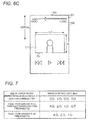
- Figs. 6A, 6B and 6C are diagrams that illustrate examples of videos displayed in display regions.
- videos are displayed on a display surface 161 of the touch screen 16 illustrated in Fig. 2 .
- the display surface 161 is a rectangular surface surrounded by long sides 162 and short sides 163.
- a display region B1 of a case where the smartphone 10 is directed hereinafter, referred to as a "vertical direction" such that the long side 162 of the display surface 161 is disposed along the vertical direction is illustrated.
- a display region B2 of a case where the smartphone 10 is directed (hereinafter, referred to as a "horizontal direction") such that the long side 162 of the display surface 161 is disposed along the horizontal direction is illustrated.
- a video C1 in which a person is shown is displayed.
- the video playback unit 109 determines whether the own apparatus (the smartphone 10) is disposed in the vertical direction or the horizontal direction based on the slope of the own apparatus that is measured by the sensor 18 illustrated in Fig. 3 and displays the video in the display region B1 in the case of the vertical direction and displays the video in the display region B2 in the case of the horizontal direction.
- the display region size specifying unit 102 of the smartphone 10 specifies the size of the display region of a video that is delivered in a streaming manner.
- the display region size specifying unit 102 is an example of a "first specifying unit" according to the exemplary embodiment of the present invention.
- the display region size specifying unit 102 inquires the video playback unit 109 of the type (which one of the display regions B1 and B2) of display region in which the video is displayed. When the inquiry is received, the video playback unit 109 notifies the display region size specifying unit 102 of the type of display region in which the video is displayed.
- the display region size specifying unit 102 specifies a size corresponding to the notified type of display region as the size of the display region.
- the display region size specifying unit 102 specifies a value acquired by multiplying the length L1 of a long side illustrated in Fig. 6A by the length L2 of a short side, in other words, the area of the display region as a size of the display region.
- the display region size specifying unit 102 specifies a value acquired by multiplying the length L3 of a long side illustrated in Fig. 6B by the length L4 of a short side, in other words, the area of the display region as a size of the display region.
- the video playback unit 109 may display the video C1 in a display region B3 having neither a long side nor a short side to be in contact with the long side 162 and the short side 163 of the display surface 161.
- the display region size specifying unit 102 specifies a value acquired by multiplying the length L5 of the long side of the display region B3 by the length L6 of the short side thereof as a size of the display region.
- the display region size specifying unit 102 supplies size information (in this exemplary embodiment, information representing the area of the display region) representing the size of the display region specified as above to the bit rate determining unit 105 and the temporary storage amount control processing unit 110.
- the bit rate determining unit 105 determines a bit rate of a video to be played back based on the size of the display region specified by the display region size specifying unit 102, the cache amount specified by the cache amount specifying unit 103, and the communication speed specified by the communication speed specifying unit 104.
- the bit rate determining unit 105 uses a bit rate table in which the size of the display region and the range of the bit rate are associated with each other.
- Fig. 7 illustrates an example of a bit rate table.
- five bit rates including 4.0 Mbps, 2.0 Mbps, 1.0 Mbps, 0.5 Mbps, and 0.3 Mbps are set.
- a range of the bit rate of "2.0, 1.0, 0.5, and 0.3) (the unit is Mbps) is associated with a size of the display region of "less than threshold Th1".
- the bit rate determining unit 105 narrows down the range of the bit rate into the other "1.0, 0.5, and 0.3".
- the bit rate determining unit 105 cooperates with the delivery requesting unit 106 and the video playback unit 109, thereby serving as a display unit 111 that displays a video while reading data of the video that is temporarily stored.
- the display unit 111 varies the bit rate of a video in accordance with the size of a display region in which the video is displayed. More specifically, the display unit 111 varies the bit rate to a large value in a case where the display region is increased and varies the bit rate to a small value in a case where the display region is decreased.
- Fig. 8 is a diagram that illustrates an example of the segment data number table.
- the number of pieces of segment data is "increased” in a case where the display region size state is an "enlarged state”
- the temporary storage amount is in a state of being “equal to or less than an upper limit”
- the number of pieces of segment data is set to "0" in a case where the display region size state is the "enlarged state”
- the temporary storage amount is in a state of "exceeding the upper limit”
- the number of pieces of segment data is "decreased” in a case where the display region size state is a "reduced state”.
- an upper limit of the amount (temporary storage amount) of data of a video that is temporarily stored by the temporary storage unit 108 is set and determined by a user so as to prevent an available capacity of the RAM from being small due to cached data and prevent processes other than the playback of a video from being delayed.
- an upper limit of the temporary storage amount for securing a predetermined time or more for playback may be set.
- the temporary storage amount control processing unit 110 performs a process of increasing the temporary storage amount as the storage amount control process in a case where the temporary storage amount is equal to or less than the upper limit.
- the temporary storage amount control processing unit 110 determines an enlarged state.
- the temporary storage amount control processing unit 110 determines the number of pieces of segment data requested by the delivery requesting unit 106 and performs an instructing process of giving an instruction for requesting segment data of the determined number as a storage amount control process.
- the temporary storage amount control processing unit 110 performs a determination of increasing the number of pieces of segment data as represented in the segment data number table.
- the temporary storage amount control processing unit 110 may increase the number of pieces of segment data from the previous number or may increase the number from a reference number (for example, the number of pieces of segment data reproduced at the interval at which a delivery request is made; in a case where the playback time of one segment data is two seconds, and the request interval is four seconds, the reference number of two) set in advance.
- the temporary storage amount control processing unit 110 performs a process of increasing the temporary storage amount in a range up to the upper limit as a storage amount control process.
- the temporary storage amount control processing unit 110 determines the next number of pieces of segment data to be zero as represented by the segment data number table, whereby the temporary storage amount does not exceed the upper limit.
- the number of the pieces of segment data of this case is not limited to zero but may be a number for decreasing the temporary storage amount.
- the temporary storage amount control processing unit 110 performs a process of decreasing the temporary storage amount as a storage amount control process. In a case where the size of the display region represented by the size information supplied at this time is smaller than the size of the display region represented by the size information supplied at the previous time, the temporary storage amount control processing unit 110 determines a reduced state.
- Each apparatus included in the video delivery system 1 performs a streaming delivery process of a video based on the configuration described above.
- Fig. 9 illustrates an example of the operation sequence of each apparatus in a streaming delivery process.
- the operation sequence is started by being triggered upon a user's operation (an operation of selecting a link to a video or the like) of playing back a video that is delivered in a streaming manner to the smartphone 10.
- the smartphone 10 receives a playback operation of a video (Step S11).
- the smartphone 10 requests the video delivering apparatus 20 for the bit rate information of the video of which the playback operation is received (Step S12).
- the video delivering apparatus 20 (the bit rate information transmitting unit 203) reads the requested bit rate information of the video and transmits the read bit rate information to the smartphone 10 (Step S13).
- the smartphone 10 (the bit rate information acquiring unit 101) acquires the bit rate information that has been transmitted thereto (Step S14).
- the smartphone 10 (the display region size specifying unit 102) specifies the size of the display region of the video of which the playback operation has been received (Step S 15).
- the smartphone 10 (the temporary storage amount control processing unit 110) determines the number of pieces of segment data according to the specified size (Step S16).
- the smartphone 10 (the bit rate determining unit 105) determines a bit rate of the video according to the specified size (Step S17).
- the smartphone 10 (the delivery requesting unit 106) requests the video delivering apparatus 20 to perform streaming delivery of the video at the bit rate determined in Step S17 (Step S18).
- the video delivering apparatus 20 (the segment data reading unit 204) reads segment data representing the video of the bit rate requested in Step S18 (Step S21). Next, the video delivering apparatus 20 (the segment data transmitting unit 205) transmits the segment data read in Step S21 to the smartphone 10 (Step S22).
- the smartphone 10 (the segment data receiving unit 107) receives the segment data transmitted thereto in Step S22.
- the smartphone 10 (the temporary storage unit 108) temporarily stores the received segment data (Step S23).
- the smartphone 10 (the video playback unit 109) reads and reproduces the segment data that is temporarily stored and displays the reproduced video in a display region (Step S24). Subsequently, the smartphone 10 (the display region size specifying unit 102) specifies the size of the display region of the reproduced video (Step S25). Next, the smartphone 10 (the cache amount specifying unit 103) specifies the data amount of the segment data that is temporarily stored, in other words, the cache amount (Step S26).
- Step S21 The process is returned to Step S21, and the video delivering apparatus 20 (the segment data reading unit 204) reads segment data representing the video at the bit rate requested in Step S29. Thereafter, the operation of Step S21 to S29 is repeated performed until the user performs an operation of ending the playback or until the video is played back up to the end, and the playback of the video ends.
- the amount of data stored in the temporary storage unit 108 in other words, the amount of data of the video, which is delivered in a streaming manner, temporarily stored is changed in accordance with the state of the own apparatus (in this exemplary embodiment, the size of the display region). For example, in the reduced state (a state in which the size of the display region is reduced) in which the bit rate is decreased, by decreasing the temporary storage amount, a playback time for which an image having low image quality (an image having a low bit rate) in a case where the size of the display region is enlarged later is shorter compared to a case where the temporarily storage amount is not decreased in the reduced state.
- the size of the segment data is also increased, and accordingly, the communication may be more easily interrupted than that of a case where the segment data is small.
- the enlarged state by increasing the temporary storage amount, compared to a case where the temporary storage amount is not increased in the enlarged state, even when the communication may be easily interrupted, the interruption of the video occurs less than in a case where the temporary storage amount is not increased.
- the upper limit of the temporary storage amount is set, an excessive increase in the temporary storage amount can be prevented.
- the exemplary embodiment described above is merely an example of the exemplary embodiment of the present invention and may be modified as blow.
- the exemplary embodiment and each modified example may be combined together as is necessary.
- Fig. 10 illustrates an example of a segment data number table according to this modified example.
- the state of the direction of the own apparatus is the "horizontal direction” (a state in which the smartphone 10 is directed such that the long side 162 of the display surface 161 is disposed along the horizontal direction as illustrated in Fig. 6B )
- the number of pieces of segment data is "increased”
- the state of the direction of the own apparatus is the "vertical direction” (a state in which the smartphone 10 is directed such that the short side 163 of the display surface 161 is disposed along the vertical direction as illustrated in Fig. 6A )
- the number of pieces of segment data is "decreased”.
- Fig. 11 illustrates the functional configuration realized by a smartphone 10a according to this modified example.
- the smartphone 10a includes a moving speed measuring unit 112 in addition to the units illustrated in Fig. 5 .
- the sensor 18 illustrated in Fig. 3 is a tri-axial acceleration sensor and supplies data representing the acceleration of the smartphone 10a to the CPU 11.
- the moving speed measuring unit 112 measures the moving speed of the smartphone 10a based on this acceleration.
- the moving speed measuring unit 112 performs measurement at the same interval as that of the delivery request from the delivery requesting unit 106 and supplies a result of the measurement to the temporary storage amount control processing unit 110 for each measurement.
- the temporary storage amount control processing unit 110 performs a process for increasing the temporary storage amount as the storage amount control process in a case where the moving speed of the smartphone 10a is a state of being less than the threshold Th11 and performs a process for decreasing the temporary storage amount as the storage amount control process in a case where the moving speed of the smartphone 10a is a state of being equal to or more than the threshold Th11.
- the amount of data of a video, which is delivered in a streaming manner, temporarily stored is changed in accordance with the moving speed of the smartphone 10a.
- the temporary storage amount control processing unit 110 performs a process for increasing the temporary storage amount as the storage amount control process in a case where the position of the smartphone 10b is in the state of the "house/office” or in the state of "from departure to the front of a station” in a "route of a train” and performs a process for decreasing the temporary storage amount as the storage amount control process in a case where the position of the smartphone 10b is in the state of a "movement path" or in the state of "from front of a station to departure” in a "route of a train”.
- the amount of data of a video, which is delivered in a streaming manner, temporarily stored is changed in accordance with the position of the smartphone 10b.
- the temporary storage amount control processing unit 110 may perform a process for configuring the temporary storage amount to be an amount according to a connection using a connection state between the own apparatus (display apparatus) and the other apparatus as the state of the own apparatus as the storage amount control process.
- the connection state described here is a state of a connection with an apparatus wirelessly communicating with the own apparatus.
- the amount of data of a video, which is delivered in a streaming manner, temporarily stored is changed in accordance with a connection state between the smartphone 10d and the other apparatus.
- a peripheral In a case where a peripheral is connected, a state of mainly using the peripheral is formed, and accordingly, in this modified example, a storage region that can be used by the peripheral is configured to be large by decreasing the temporary storage amount.
- attention to a displayed video may be relatively easily lowered, and accordingly, the influence at the time of decreasing the temporary storage amount is small.
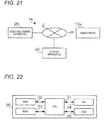
- Fig. 21 illustrates the whole configuration of a video delivery system 1e according to this modified example.
- the video delivery system 1e includes: a communication line 2; a smartphone 10e; a video delivering apparatus 20; and a server apparatus 30.
- the playback operation notification unit 116 of the smartphone 10e notifies the server apparatus 30 of an indication thereof. This notification is received by the bit rate information acquiring unit 101, the display region size specifying unit 102, the cache amount specifying unit 103, and the communication speed specifying unit 104 of the server apparatus 30.
- the present invention is perceived as a video delivering apparatus or a video delivery system including such as an apparatus other than the display apparatus displaying a video that is delivered in a streaming manner like the smartphone described above and an information processing apparatus performing the storage amount control process without displaying the video like the server apparatus described above.
- the present invention is perceived also as an information processing method for realizing the process performed by each apparatus or a program for causing a computer controlling each apparatus to function.
- a program may be provided in a form of a non-transitory recording medium such as an optical disk storing the program thereon, in a form of being downloaded to a computer through a communication line such as the Internet and being installed thereto so as to be usable, or the like.
Landscapes
- Engineering & Computer Science (AREA)
- Multimedia (AREA)
- Signal Processing (AREA)
- Databases & Information Systems (AREA)
- Physics & Mathematics (AREA)
- General Physics & Mathematics (AREA)
- Theoretical Computer Science (AREA)
- Computer Vision & Pattern Recognition (AREA)
- Two-Way Televisions, Distribution Of Moving Picture Or The Like (AREA)
- Information Transfer Between Computers (AREA)
Abstract
Description
- The present invention relates to a display apparatus.
- In a technology for displaying a stream-delivered video, the playback quality such as an image quality level of a video and continuity in a playback (a playback without interruption) is important. In order to improve the playback quality,
JP 2004-88480 A - Generally, a display apparatus displaying a video delivered in a streaming manner displays a video while temporarily storing data of the video. As the amount of data that is temporarily stored increases, for example, even when communication is interrupted, a display continuation time increases. Meanwhile, for example, in streaming delivery of MPEG-DASH or the like capable of varying a bit rate in the middle of display, when the amount of data that is temporarily stored is large, even in a case where the bit rate is varied to a large value, display at a bit rate having a small value, in other words, display of low image quality is continued until the display of the temporarily-stored data ends.
- An object of at least embodiments of the present invention is to enable changing of the temporarily-stored amount of data of a video, which is delivered in a streaming manner, in accordance with a state of an apparatus.
- [1] According to an aspect of the invention, there is provided a display apparatus including: a temporary storage unit that temporarily stores data of a video that is delivered in a streaming manner; a display unit that displays the video while reading the data that is temporarily stored; and a processing unit that performs a storage amount control process such that a temporary storage amount of the data of the video stored in the temporary storage unit is an amount according to a state of the display apparatus displaying the video.
- [2] In the display apparatus according to [1], wherein the video may be a video of which a bit rate can be varied during display, the display unit may vary the bit rate of the video according to a size of a display region in which the video is displayed, and the processing unit may perform the storage amount control process such that the temporary storage amount is an amount according to the size of the display region, the size of the display region being the state of the display apparatus.
- [3] In the display apparatus according to [2], the display unit may vary the bit rate to a large value in a case where the display region is enlarged, and the processing unit may perform the storage amount control process by increasing the temporary storage amount in a case where the size of the display region is enlarged.
- [4] In the display apparatus according to [3], an upper limit may be set on the amount of the data temporarily stored in the temporary storage unit, and the processing unit may perform the storage amount control process for increasing the temporary storage amount in a range up to the upper limit.
- [5] In the display apparatus according to any one of [2] to [4], the display unit may vary the bit rate to a small value in a case where the display region is reduced, and the processing unit may perform the storage amount control process by decreasing the temporary storage amount in a case where the size of the display region is reduced.
- [6] In the display apparatus according to [1], the processing unit may perform the storage amount control process such that the temporary storage amount is an amount according to a direction of the display apparatus, the direction of the display apparatus being the state of the display apparatus.
- [7] In the display apparatus according to [1], the processing unit may perform the storage amount control process that the temporary storage amount is an amount according to a moving speed of the display apparatus, the moving speed of the display apparatus being the state of the display apparatus.
- [8] In the display apparatus according to [1], the processing unit may perform the storage amount control process such that the temporary storage amount is an amount according to a position of the display apparatus, the position of the display apparatus being the state of the display apparatus.
- [9] In the display apparatus according to [1], the processing unit may perform the storage amount control process such that the temporary storage amount is an amount according to a connection state of the display apparatus to another apparatus, the connection state of the display apparatus to another apparatus being the state of the display apparatus.
- According to the display apparatus of [1], the amount of data of a video, which is delivered in a streaming manner, temporarily stored can be varied according to a state of the apparatus.
- According to the display apparatus of [2], the amount of data of a video, which is delivered in a streaming manner, temporarily stored can be varied according to the size of the display region of the apparatus.
- According to the display apparatus of [3], the interruption of a video can occur less compared to a case where the temporary storage amount is not increased.
- According to the display apparatus of [4], the temporary storage amount can be prevented from being excessive.
- According to the display apparatus of [5], in a case where the size of the display region is enlarged later, a time for which an image of low image quality is played back can be shortened compared to a case where the temporary storage amount is not decreased.
- According to the display apparatus of [6], the amount of data of a video, which is delivered in a streaming manner, temporarily stored can be varied according to the direction of the own apparatus.
- According to the display apparatus of [7], the amount of data of a video, which is delivered in a streaming manner, temporarily stored can be varied according to the moving speed of the display apparatus.
- According to the display apparatus of [8], the amount of data of a video, which is delivered in a streaming manner, temporarily stored can be varied according to the position of the display apparatus.
- According to the display apparatus of [9], the amount of data of a video, which is delivered in a streaming manner, temporarily stored can be varied according to the connection state between the display apparatus and another apparatus.
- Exemplary embodiments of the present invention will be described in detail based on the following figures, wherein:
-
Fig. 1 is a diagram that illustrates the whole configuration of a video delivery system according to an exemplary embodiment; -
Fig. 2 is a diagram that illustrates the structure of streaming delivery; -
Fig. 3 is a diagram that illustrates the hardware configuration of a smartphone; -
Fig. 4 is a diagram that illustrates the hardware configuration of a video delivering apparatus; -
Fig. 5 is a diagram that illustrates the functional configuration realized by each apparatus; -
Fig. 6A is a diagram that illustrates an example of a video displayed in a display region; -
Fig. 6B is a diagram that illustrates an example of a video displayed in a display region; -
Fig. 6C is a diagram that illustrates an example of a video displayed in a display region; -
Fig. 7 is a diagram that illustrates an example of a bit rate table; -
Fig. 8 is a diagram that illustrates an example of a segment data number table; -
Fig. 9 is a diagram that illustrates an example of the operation sequence of each apparatus in a stream delivery process; -
Fig. 10 is a diagram that illustrates an example of a segment data number table according to a modified example; -
Fig. 11 is a diagram that illustrates the functional configuration realized by a smartphone according to a modified example; -
Fig. 12 is a diagram that illustrates an example of a segment data number table; -
Fig. 13 is a diagram that illustrates the functional configuration realized by a smartphone according to a modified example; -
Fig. 14 is a diagram that illustrates an example of a segment data number table; -
Fig. 15 is a diagram that illustrates the hardware configuration of a smartphone according to a modified example; -
Fig. 16 is a diagram that illustrates the functional configuration realized by a smartphone; -
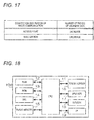
Fig. 17 is a diagram that illustrates an example of a segment data number table; -
Fig. 18 is a diagram that illustrates the hardware configuration of a smartphone according to a modified example; -
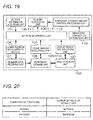
Fig. 19 is a diagram that illustrates the functional configuration realized by a smartphone; -
Fig. 20 is a diagram that illustrates an example of a segment data number table; -
Fig. 21 is a diagram that illustrates the whole configuration of a video delivery system according to a modified example; -
Fig. 22 is a diagram that illustrates the hardware configuration of a server apparatus; and -
Fig. 23 is a diagram that illustrates the functional configuration realized by each apparatus. -
Fig. 1 illustrates the whole configuration of avideo delivery system 1 according to an exemplary embodiment. Thevideo delivery system 1 is a system that delivers a video in a streaming manner to a playback apparatus used by a user. The streaming delivery of a video is delivery of a video using a structure dividing a video into plural segments and sequentially reproducing segment data while transmitting and receiving the segment data representing a video of each segment in a playback order. The segment data is data representing a segment, for example, of about one to ten seconds. - The
video delivery system 1 includes: a communication line 2; asmartphone 10; and avideo delivering apparatus 20. The communication line 2, for example, includes a mobile communication network, the Internet, and the like and is a system that relays the exchange of data between apparatuses. Asmartphone 10 is connected to the communication line 2 in a wireless manner, and thevideo delivering apparatus 20 is connected to the communication line 2 in a wired manner (this is an example, and the connection may be made either in a wired manner or in a wireless manner). - The
smartphone 10 is a display apparatus displaying a video that is delivered in a streaming manner in thevideo delivery system 1. Thesmartphone 10 is carried by a user and is used at various places. Thevideo delivering apparatus 20 is an information processing apparatus that stores plural pieces of segment data representing one video as a whole and delivers the video in a streaming manner by sequentially transmitting such segment data in a playback order. - In the
video delivery system 1, a video of which the bit rate can be varied during playback is delivered in a streaming manner, for example, in compliance with a standard called MPEG (Moving Picture Experts Group)-DASH (Dynamic Adaptive Streaming over HTTP). In the streaming delivery according to this exemplary embodiment, plural bit rates are set in advance. -
Fig. 2 illustrates the structure of streaming delivery. Thevideo delivering apparatus 20 according to this exemplary embodiment stores segment data groups A1, A2, and A3 respectively representing videos at "high", "intermediate", and "low" bit rates. A bit rate is the amount of data transmitted/received for one second (the unit is Mbps (mega bit per second) or MB/sec (megabytes per second). As the bit rate is higher, a video represented by such a segment data group has higher resolution or a higher frame rate of a video. - When requesting streaming delivery of a video, the
smartphone 10 designates a bit rate of the video to be delivered. Thevideo delivering apparatus 20 sequentially reads and transmits segment data from a segment data group of the designated bit rate. Thesmartphone 10 temporarily stores (caches) received segment data and reads and reproduces the cached segment data. - In addition, in a case where, during playback of a video, the
smartphone 10 requests delivery with a bit rate different from that of the video which is played back, after the request is received, thevideo delivering apparatus 20 transmits segment data at a newly-designated bit rate. When the segment data is received, thesmartphone 10, following the video represented by the segment data at the bit rate until now, plays back a video represented by segment data at a new bit rate. As above, the segment data groups A1, A2, and A3 represent a video of which plural segments are sequentially delivered in a streaming manner and of which the bit rate can be varied during playback. -
Fig. 3 illustrates the hardware configuration of thesmartphone 10. Thesmartphone 10 is a computer that includes: a central processor unit (CPU) 11; a random access memory (RAM) 12; a read only memory (ROM) 13; a network interface card (NIC) 14; aflash memory 15; atouch screen 16; aspeaker 17; and asensor 18. TheCPU 11 executes programs stored in theROM 13 and theflash memory 15 with theRAM 12 used as a work area, thereby controlling the operation of each unit. TheNIC 14 includes an antenna, a communication circuit, and the like and, for example, performs radio communication compliant with a mobile communication standard. - The
flash memory 15 stores data and programs used by theCPU 11 for a control process. In this exemplary embodiment, a browser program is included in these programs. The function according to the present invention, which will be described later, is realized by a Java (registered trademark) script executed on the browser. However, the program is not limited thereto, but an application program realizing the function according to the present invention may be stored. Thetouch screen 16 includes a display that is a touch panel disposed on the surface of the display and receives a user's operation together with displaying an image. Thespeaker 17 converts sound data representing a sound into an analog signal and emits the sound. Thesensor 18, for example, is a tri-axial geomagnetic sensor and supplies data representing the slope of thesmartphone 10 to theCPU 11. -
Fig. 4 illustrates the hardware configuration of thevideo delivering apparatus 20. Thevideo delivering apparatus 20 is a computer that includes aCPU 21, aRAM 22, aROM 23, anNIC 24, and a hard disk drive (HDD) 25. TheCPU 21 to theROM 23 are common to the hardware having the same names illustrated inFig. 3 . TheNIC 24 includes a communication circuit and performs communication through the communication line 2. TheHDD 25 stores data and programs used by theCPU 21 for a control process. - The CPU of each apparatus included in the
video delivery system 1 controls each unit by executing a program, whereby functions described below are realized. -
Fig. 5 illustrates the functional configuration realized by each apparatus. Thesmartphone 10 includes: a bit rateinformation acquiring unit 101; a display regionsize specifying unit 102; a cacheamount specifying unit 103; a communicationspeed specifying unit 104; a bitrate determining unit 105; adelivery requesting unit 106; a segmentdata receiving unit 107; atemporary storage unit 108; avideo playback unit 109; and a temporary storage amountcontrol processing unit 110. Thevideo delivering apparatus 20 includes: a segmentdata storing unit 201; a bit rateinformation storing unit 202; a bit rateinformation transmitting unit 203; a segmentdata reading unit 204; and a segmentdata transmitting unit 205. - The segment
data storing unit 201 of thevideo delivering apparatus 20 stores segment data of a video that is delivered in a streaming manner by thevideo delivering apparatus 20. The segmentdata storing unit 201, as described with reference toFig. 2 , stores segment data representing a video at plural bit rates. In order to decrease a communication amount, each segment data is encoded (compressed), for example, into data representing a difference between a reference frame and the current frame. - The bit rate
information storing unit 202 stores bit rate information (for example, a media presentation description (MPD) in MPEG-DASH), which is stored in the segmentdata storing unit 201, representing plural bit rates of a video to be delivered in a streaming manner by thevideo delivering apparatus 20. The bit rateinformation storing unit 202, in the case of the example illustrated inFig. 2 , stores bit rate information representing bit rates of a video represented by the segment data groups A1, A2, and A3. This bit rate information is stored, for example, when segment data of a video is stored by an operator of thevideo delivering apparatus 20. - When requesting streaming delivery of a video, the bit rate
information acquiring unit 101 of thesmartphone 10 acquires bit rate information representing plural bit rates of the video. For example, in a case where a link to a video to be delivered in a streaming manner by thevideo delivering apparatus 20 is posted on a web page displayed by thesmartphone 10, and a user performs an operation of selecting the link, the bit rateinformation acquiring unit 101 transmits request data requesting the bit rate information of the video to thevideo delivering apparatus 20. In this request data, information (for example, a uniform resource locator (URL) or the like of a file (an MPD file in MPEG-DASH)) specifying a video is included. - When the request data transmitted from the
smartphone 10 is received, the bit rateinformation transmitting unit 203 of thevideo delivering apparatus 20 reads bit rate information of a video specified in the request data, in other words, a video stored in thevideo delivering apparatus 20 from the bit rateinformation storing unit 202 and transmits the read bit rate information to a request source (in this exemplary embodiment, the smartphone 10). The bit rateinformation acquiring unit 101 acquires the bit rate information transmitted in this way. The bit rateinformation acquiring unit 101 supplies the acquired bit rate information to the bitrate determining unit 105. - The bit
rate determining unit 105 determines one of plural bit rates represented by the bit rate information acquired by the bit rateinformation acquiring unit 101 as a bit rate of the video to be played back. A method of determining the bit rate will be described later in detail. The bitrate determining unit 105 repeatedly performs the determination of a bit rate at a determined time interval. As the time interval, for example, an interval (for example, in a case where the determined number of pieces of segment data of which the playback time is two seconds is two, for every four seconds or the like) of playback time of a video that is represented by a determined number of pieces of segment data is used. Every time when the bit rate is determined, the bitrate determining unit 105 notifies thedelivery requesting unit 106 of the determined bit rate. - The
delivery requesting unit 106 requests an apparatus (in this exemplary embodiment, the video delivering apparatus 20), which performs streaming delivery of a video, to deliver the video at a bit rate determined by the bitrate determining unit 105 in a streaming manner. In a case where the bit rate determined by the bitrate determining unit 105 is varied, the bit rate of the video requested to be delivered in a streaming manner by thedelivery requesting unit 106 is also varied. - In addition, the
delivery requesting unit 106 performs this request with the number of pieces of segment data to be transmitted being designated. The delivery request performed by thedelivery requesting unit 106 is performed every time when the bitrate determining unit 105 determines a bit rate. For this reason, as the number of pieces of segment data designated by thedelivery requesting unit 106 increases, a video of a scene disposed on a further front side is delivered. - When streaming delivery of a video is requested from an external apparatus, the segment
data reading unit 204 of thevideo delivering apparatus 20 reads segment data of the requested video. When designation data transmitted from thesmartphone 10 is received, the segmentdata reading unit 204 reads segment data corresponding to a number designated in the designation data from a segment data group of a bit rate designated in the designation data from the beginning of the video. - Thereafter, the segment
data reading unit 204 repeatedly performs a process of reading segment data corresponding to the designated number from the continuation of the segment data that has been read at an interval of a playback time of a portion of the video represented in the segment data read at one time or a time shorter than the playback time. When the designated bit rate is varied in the middle, the segmentdata reading unit 204 reads segment data corresponding to the designated number from a portion at which the playback position is continued among segment data of a new bit rate. Every time when the segment data is read, the segmentdata reading unit 204 supplies the read segment data to the segmentdata transmitting unit 205. - The segment
data transmitting unit 205 transmits the supplied segment data to a transmission source (in this exemplary embodiment, the smartphone 10) of the designation data, in other words, a request source that has requested the streaming delivery of the video. The segmentdata receiving unit 107 of thesmartphone 10 receives segment data that has been transmitted from thevideo delivering apparatus 20. The segmentdata receiving unit 107 supplies the received segment data to thetemporary storage unit 108. - The
temporary storage unit 108 temporarily stores data of a video that is delivered in a streaming manner. In more details, thetemporary storage unit 108 temporarily stores segment data that is received by the segmentdata receiving unit 107 until a portion of the video that is represented by the segment data is reproduced. - When the segment data is stored in the
temporary storage unit 108, thevideo playback unit 109 sequentially reads the stored segment data and sequentially plays back a video represented by the read segment data. As described above, since the segment data is encoded, thevideo playback unit 109 decodes the segment data and then reproduces the decoded segment data. While displaying the reproduced video in a display region, thevideo playback unit 109 displays the video in a different display region according to the direction of thesmartphone 10. -
Figs. 6A, 6B and6C are diagrams that illustrate examples of videos displayed in display regions. In the examples illustrated inFigs. 6A, 6B and6C , on adisplay surface 161 of thetouch screen 16 illustrated inFig. 2 , videos are displayed. Thedisplay surface 161 is a rectangular surface surrounded bylong sides 162 andshort sides 163. InFig. 6A , a display region B1 of a case where thesmartphone 10 is directed (hereinafter, referred to as a "vertical direction") such that thelong side 162 of thedisplay surface 161 is disposed along the vertical direction is illustrated. - In
Fig. 6B , a display region B2 of a case where thesmartphone 10 is directed (hereinafter, referred to as a "horizontal direction") such that thelong side 162 of thedisplay surface 161 is disposed along the horizontal direction is illustrated. In both the display regions B1 and B2, a video C1 in which a person is shown is displayed. Thevideo playback unit 109 determines whether the own apparatus (the smartphone 10) is disposed in the vertical direction or the horizontal direction based on the slope of the own apparatus that is measured by thesensor 18 illustrated inFig. 3 and displays the video in the display region B1 in the case of the vertical direction and displays the video in the display region B2 in the case of the horizontal direction. - The display region
size specifying unit 102 of thesmartphone 10 specifies the size of the display region of a video that is delivered in a streaming manner. The display regionsize specifying unit 102 is an example of a "first specifying unit" according to the exemplary embodiment of the present invention. The display regionsize specifying unit 102 inquires thevideo playback unit 109 of the type (which one of the display regions B1 and B2) of display region in which the video is displayed. When the inquiry is received, thevideo playback unit 109 notifies the display regionsize specifying unit 102 of the type of display region in which the video is displayed. The display regionsize specifying unit 102 specifies a size corresponding to the notified type of display region as the size of the display region. - In a case where the display region B1 is notified as the type of display region, the display region
size specifying unit 102 specifies a value acquired by multiplying the length L1 of a long side illustrated inFig. 6A by the length L2 of a short side, in other words, the area of the display region as a size of the display region. On the other hand, in a case where the display region B2 is notified as the type of display region, the display regionsize specifying unit 102 specifies a value acquired by multiplying the length L3 of a long side illustrated inFig. 6B by the length L4 of a short side, in other words, the area of the display region as a size of the display region. - Here, while the short side of the display region B1 is in contact with the
long side 162 of thedisplay surface 161, and the short side of the display region B2 is in contact with theshort side 163 of thedisplay surface 161, the size and the arrangement of the display region are not limited thereto. Thevideo playback unit 109, for example, as illustrated inFig. 6C may display the video C1 in a display region B3 having neither a long side nor a short side to be in contact with thelong side 162 and theshort side 163 of thedisplay surface 161. Also in such a case, the display regionsize specifying unit 102 specifies a value acquired by multiplying the length L5 of the long side of the display region B3 by the length L6 of the short side thereof as a size of the display region. The display regionsize specifying unit 102 supplies size information (in this exemplary embodiment, information representing the area of the display region) representing the size of the display region specified as above to the bitrate determining unit 105 and the temporary storage amountcontrol processing unit 110. - The cache
amount specifying unit 103 of thesmartphone 10 specifies a cache amount in streaming playback, in other words, a data amount of segment data that is temporarily stored for a position of the video, which is played back in a streaming manner, to be reproduced from now. The cacheamount specifying unit 103 is an example of a "second specifying unit". The cacheamount specifying unit 103 refers to the segment data that is temporarily stored in thetemporary storage unit 108 and specifies a playback time of a case where the segment data that has been referred to is reproduced as the cache amount described above. For example, in a case where the cached segment data represents a video for two seconds, and the video corresponding to 0.5 seconds has already been reproduced, the cacheamount specifying unit 103 specifies that a video corresponding to 1.5 seconds is cached and supplies information representing the number of seconds to the bitrate determining unit 105 and the temporary storage amountcontrol processing unit 110 as cache amount information. - The communication
speed specifying unit 104 of thesmartphone 10 specifies a communication speed in reception of segment data of a video that is delivered in a streaming manner. The communicationspeed specifying unit 104 is an example of a "third specifying unit" according to the exemplary embodiment of the present invention. The communicationspeed specifying unit 104 monitors the segmentdata receiving unit 107 and specifies the data size of the segment data received by the segmentdata receiving unit 107 for a unit time as a communication speed. For example, in a case where segment data of 10 Megabits is received for one second, the segmentdata receiving unit 107 specifies 10 Mbps as a communication speed. The segmentdata receiving unit 107 supplies communication speed information representing the communication speed specified in that way to the bitrate determining unit 105. - The display region
size specifying unit 102, the cacheamount specifying unit 103, and the communicationspeed specifying unit 104 perform specific processes thereof at a time interval that is same as the time interval at which the bitrate determining unit 105 repeatedly determines the bit rate. - The bit
rate determining unit 105 determines a bit rate of a video to be played back based on the size of the display region specified by the display regionsize specifying unit 102, the cache amount specified by the cacheamount specifying unit 103, and the communication speed specified by the communicationspeed specifying unit 104. The bitrate determining unit 105, for example, uses a bit rate table in which the size of the display region and the range of the bit rate are associated with each other. -
Fig. 7 illustrates an example of a bit rate table. In the example illustrated inFig. 7 , in streaming delivery, five bit rates including 4.0 Mbps, 2.0 Mbps, 1.0 Mbps, 0.5 Mbps, and 0.3 Mbps are set. In such a case, a range of the bit rate of "2.0, 1.0, 0.5, and 0.3) (the unit is Mbps) is associated with a size of the display region of "less than threshold Th1". In addition, a range of the bit rate of "4.0, 2.0, 1.0, and 0.5) is associated with a size of the display region of "equal to or more than threshold Th1 and less than threshold Th2", and a range of the bit rate of "4.0, 2.0, and 1.0) is associated with a size of the display region of "equal to or more than threshold Th2". - The bit
rate determining unit 105 reads a range of the bit rate associated with a size of the display region that is specified by the display regionsize specifying unit 102 from the bit rate table. The bitrate determining unit 105 narrows down the read range of the bit rate into a range not exceeding the communication speed specified by the communicationspeed specifying unit 104. For example, in a case where the size of the display region less than threshold Th1 is specified, the bitrate determining unit 105 reads the range of the bit rate of "2.0, 1.0, 0.5, and 0.3". Then, in a case where a communication speed of 1.2 Mbps is specified, the bit rate of 2.0 Mbps exceeds the specified communication speed, and thus, the bitrate determining unit 105 narrows down the range of the bit rate into the other "1.0, 0.5, and 0.3". - In a case where a playback time (hereinafter, referred to as a "cache playback time") of a case where a video represented by segment data of which the cache amount specified by the cache
amount specifying unit 103 is temporarily stored is reproduced is equal to or more than threshold Th3, the bitrate determining unit 105 selects one of bit rates up to a sequence determined from the highest bit rate in the narrowed-down range and determines the selected bit rate as the bit rate of the video. In this exemplary embodiment, the bitrate determining unit 105 selects and determines a bit rate of the determined sequence of up to "1", in other words, a maximum bit rate. As in the example described above, in a case where the narrowed-down range is "1.0, 0.5, and 0.3", the bitrate determining unit 105 determines "1.0" that is a maximum bit rate among these as the bit rate of the video to be played back. - On the other hand, in a case where the cache playback time is less than threshold Th3 described above, the bit
rate determining unit 105 selects one of bit rates up to a sequence determined from the lowest bit rate in the narrowed-down range and determines the selected bit rate as the bit rate of the video to be played back. In this exemplary embodiment, a sequence including all the bit rates except for the maximum bit rate is determined. Thus, the bitrate determining unit 105 selects and determines one of bit rates acquired by excluding the maximum bit rate from the narrowed-down range. - As in the example described above, in a case where the narrowed-down range is "1.0, 0.5, and 0.3", the bit
rate determining unit 105 selects one of "0.5 and 0.3" acquired by excluding "1.0" that is a maximum bit rate among these and determines the selected bit rate as the bit rate of the video to be played back. In a case where one of two or more bit rates is finally selected, for example, the bitrate determining unit 105 may constantly select a maximum bit rate among them by placing more importance on the resolution of the video or may constantly select a minimum bit rate among them by placing more importance on the continuity of the video. - The bit
rate determining unit 105 cooperates with thedelivery requesting unit 106 and thevideo playback unit 109, thereby serving as adisplay unit 111 that displays a video while reading data of the video that is temporarily stored. Thedisplay unit 111, as described above, varies the bit rate of a video in accordance with the size of a display region in which the video is displayed. More specifically, thedisplay unit 111 varies the bit rate to a large value in a case where the display region is increased and varies the bit rate to a small value in a case where the display region is decreased. - The temporary storage amount
control processing unit 110 performs a storage amount control process for configuring a temporary storage amount of data of a video stored in thetemporary storage unit 108 to be an amount according to the state of the own apparatus (the smartphone 10) displaying the video. The temporary storage amountcontrol processing unit 110 is an example of a "processing unit" according to the exemplary embodiment of the present invention. In this exemplary embodiment, the temporary storage amountcontrol processing unit 110 performs a process of configuring a temporary storage amount to be an amount according to the size by using a size state of a display region represented by the size information supplied from the display regionsize specifying unit 102 as an own apparatus state as the storage amount control process. - The temporary storage amount
control processing unit 110 performs the determination described above by using a segment data number table in which the display region size state and the number of pieces of segment data are associated with each other. -
Fig. 8 is a diagram that illustrates an example of the segment data number table. In the example illustrated inFig. 8 , it is represented that the number of pieces of segment data is "increased" in a case where the display region size state is an "enlarged state", and the temporary storage amount is in a state of being "equal to or less than an upper limit", and the number of pieces of segment data is set to "0" in a case where the display region size state is the "enlarged state", and the temporary storage amount is in a state of "exceeding the upper limit" On the other hand, it is represented that the number of pieces of segment data is "decreased" in a case where the display region size state is a "reduced state". - In the
smartphone 10, there is an upper limit of the amount (temporary storage amount) of data of a video that is temporarily stored by thetemporary storage unit 108. This upper limit, for example, is set and determined by a user so as to prevent an available capacity of the RAM from being small due to cached data and prevent processes other than the playback of a video from being delayed. In addition, also in a case where the cached amount is sufficiently smaller than the available capacity of the RAM, an upper limit of the temporary storage amount for securing a predetermined time or more for playback may be set. - For example, in a case where the own apparatus state is an enlarged state in which the size of the display region is enlarged, the temporary storage amount
control processing unit 110 performs a process of increasing the temporary storage amount as the storage amount control process in a case where the temporary storage amount is equal to or less than the upper limit. In a case where the size of the display region represented by the size information supplied at this time is larger than the size of the display region represented by the size information supplied at the previous time, the temporary storage amountcontrol processing unit 110 determines an enlarged state. The temporary storage amountcontrol processing unit 110 determines the number of pieces of segment data requested by thedelivery requesting unit 106 and performs an instructing process of giving an instruction for requesting segment data of the determined number as a storage amount control process. - In a case where the enlarged state is determined as described above, the temporary storage amount
control processing unit 110 performs a determination of increasing the number of pieces of segment data as represented in the segment data number table. The temporary storage amountcontrol processing unit 110 may increase the number of pieces of segment data from the previous number or may increase the number from a reference number (for example, the number of pieces of segment data reproduced at the interval at which a delivery request is made; in a case where the playback time of one segment data is two seconds, and the request interval is four seconds, the reference number of two) set in advance. - In any case, the number of pieces of segment data requested by the
delivery requesting unit 106 is increased, segment data representing a further previous screen is transmitted, and the data amount of the segment data stored in thetemporary storage unit 108, in other words, the temporary storage amount is increased. The temporary storage amountcontrol processing unit 110 performs a process of increasing the temporary storage amount in a range up to the upper limit as a storage amount control process. - In a case where the amount (in this exemplary embodiment, the number of seconds of the cached video) represented by the cache amount information supplied from the cache
amount specifying unit 103 arrives at an upper limit set in advance, also in a case where the display region size state is the enlarged state, the temporary storage amountcontrol processing unit 110 determines the next number of pieces of segment data to be zero as represented by the segment data number table, whereby the temporary storage amount does not exceed the upper limit. In addition, the number of the pieces of segment data of this case is not limited to zero but may be a number for decreasing the temporary storage amount. - On the other hand, in a case where the own apparatus state is a reduction state in which the size of the display region is reduced, the temporary storage amount
control processing unit 110 performs a process of decreasing the temporary storage amount as a storage amount control process. In a case where the size of the display region represented by the size information supplied at this time is smaller than the size of the display region represented by the size information supplied at the previous time, the temporary storage amountcontrol processing unit 110 determines a reduced state. - In a case where the reduced state is determined, the temporary storage amount
control processing unit 110 performs a determination of decreasing the number of pieces of segment data as represented in the segment data number table. The temporary storage amountcontrol processing unit 110 may decrease the number of pieces of segment data from the number at the previous time or may decrease the number from the reference number set in advance as described above. In any case, the number of pieces of segment data requested by thedelivery requesting unit 106 is decreased, and the data amount of the segment data stored in thetemporary storage unit 108, in other words, the temporary storage amount is decreased. - Each apparatus included in the
video delivery system 1 performs a streaming delivery process of a video based on the configuration described above. -
Fig. 9 illustrates an example of the operation sequence of each apparatus in a streaming delivery process. In the example illustrated inFig. 9 , the operation sequence is started by being triggered upon a user's operation (an operation of selecting a link to a video or the like) of playing back a video that is delivered in a streaming manner to thesmartphone 10. - First, the
smartphone 10 receives a playback operation of a video (Step S11). Next, the smartphone 10 (the bit rate information acquiring unit 101) requests thevideo delivering apparatus 20 for the bit rate information of the video of which the playback operation is received (Step S12). The video delivering apparatus 20 (the bit rate information transmitting unit 203) reads the requested bit rate information of the video and transmits the read bit rate information to the smartphone 10 (Step S13). The smartphone 10 (the bit rate information acquiring unit 101) acquires the bit rate information that has been transmitted thereto (Step S14). - Subsequently, the smartphone 10 (the display region size specifying unit 102) specifies the size of the display region of the video of which the playback operation has been received (Step S 15). Next, the smartphone 10 (the temporary storage amount control processing unit 110) determines the number of pieces of segment data according to the specified size (Step S16). Subsequently, the smartphone 10 (the bit rate determining unit 105) determines a bit rate of the video according to the specified size (Step S17). Then, the smartphone 10 (the delivery requesting unit 106) requests the
video delivering apparatus 20 to perform streaming delivery of the video at the bit rate determined in Step S17 (Step S18). - The video delivering apparatus 20 (the segment data reading unit 204) reads segment data representing the video of the bit rate requested in Step S18 (Step S21). Next, the video delivering apparatus 20 (the segment data transmitting unit 205) transmits the segment data read in Step S21 to the smartphone 10 (Step S22). The smartphone 10 (the segment data receiving unit 107) receives the segment data transmitted thereto in Step S22. The smartphone 10 (the temporary storage unit 108) temporarily stores the received segment data (Step S23).
- Next, the smartphone 10 (the video playback unit 109) reads and reproduces the segment data that is temporarily stored and displays the reproduced video in a display region (Step S24). Subsequently, the smartphone 10 (the display region size specifying unit 102) specifies the size of the display region of the reproduced video (Step S25). Next, the smartphone 10 (the cache amount specifying unit 103) specifies the data amount of the segment data that is temporarily stored, in other words, the cache amount (Step S26).
- Subsequently, the smartphone 10 (the communication speed specifying unit 104) specifies the communication speed in reception of the segment data (Step S27). Then, the smartphone 10 (the bit rate determining unit 105) determines a bit rate based on the size of the display region specified in Step S25, the cache amount specified in Step S26, and the communication speed specified in Step S27 (Step S28). The smartphone 10 (the delivery requesting unit 106) requests the
video delivering apparatus 20 to deliver the video at the bit rate determined in Step S28 (Step S29). - The process is returned to Step S21, and the video delivering apparatus 20 (the segment data reading unit 204) reads segment data representing the video at the bit rate requested in Step S29. Thereafter, the operation of Step S21 to S29 is repeated performed until the user performs an operation of ending the playback or until the video is played back up to the end, and the playback of the video ends.
- According to this exemplary embodiment, as described above, the amount of data stored in the
temporary storage unit 108, in other words, the amount of data of the video, which is delivered in a streaming manner, temporarily stored is changed in accordance with the state of the own apparatus (in this exemplary embodiment, the size of the display region). For example, in the reduced state (a state in which the size of the display region is reduced) in which the bit rate is decreased, by decreasing the temporary storage amount, a playback time for which an image having low image quality (an image having a low bit rate) in a case where the size of the display region is enlarged later is shorter compared to a case where the temporarily storage amount is not decreased in the reduced state. - On the other hand, in the enlarged state (a state in which the size of the display region is enlarged) in which the bit rate is increased, the size of the segment data is also increased, and accordingly, the communication may be more easily interrupted than that of a case where the segment data is small. In this exemplary embodiment, in the enlarged state, by increasing the temporary storage amount, compared to a case where the temporary storage amount is not increased in the enlarged state, even when the communication may be easily interrupted, the interruption of the video occurs less than in a case where the temporary storage amount is not increased. In addition, since the upper limit of the temporary storage amount is set, an excessive increase in the temporary storage amount can be prevented.
- The exemplary embodiment described above is merely an example of the exemplary embodiment of the present invention and may be modified as blow. In addition, the exemplary embodiment and each modified example may be combined together as is necessary.
- In the exemplary embodiment, while the upper limit of the temporary storage amount is set, the upper limit may not be set. For example, in a case where the
temporary storage unit 108 has a storage capacity exceeding a maximum data size of a video to be streamed, although the upper limit is not set, a case where the storage region used for temporary storage is insufficient, and delivered segment data is discarded does not occur. - The temporary storage amount
control processing unit 110 may use states other than those of the exemplary embodiment as the states of the own apparatus (display apparatus). For example, in a case where thevideo playback unit 109, as illustrated with reference toFig. 6A , displays a video in a display region of a size according to the direction of the own apparatus, the temporary storage amountcontrol processing unit 110 performs a process of configuring the temporary storage amount to be an amount according to the direction by using the state of the direction of the own apparatus as the state of the own apparatus as the storage amount control process. -
Fig. 10 illustrates an example of a segment data number table according to this modified example. In the example illustrated inFig. 10 , it is illustrated that, in a case where the state of the direction of the own apparatus is the "horizontal direction" (a state in which thesmartphone 10 is directed such that thelong side 162 of thedisplay surface 161 is disposed along the horizontal direction as illustrated inFig. 6B ), the number of pieces of segment data is "increased", and, in a case where the state of the direction of the own apparatus is the "vertical direction" (a state in which thesmartphone 10 is directed such that theshort side 163 of thedisplay surface 161 is disposed along the vertical direction as illustrated inFig. 6A ), the number of pieces of segment data is "decreased". - As illustrated in this segment data number table, the temporary storage amount
control processing unit 110 performs a process for increasing the temporary storage amount as the storage amount control process in a case where thesmartphone 10 is in the state of the horizontal direction and performs a process for decreasing the temporary storage amount as the storage amount control process in a case where thesmartphone 10 is in the state of the vertical direction. As described above, in this modified example, the amount of data of a video, which is delivered in a streaming manner, temporarily stored is varied in accordance with the direction of thesmartphone 10. In this way, as presented in the description illustrated inFig. 6A , in a case where thesmartphone 10 has a larger size of the display region in the state of the horizontal direction than in the state of the vertical direction, as in the exemplary embodiment, in a case where the size of the display region is enlarged later, a time for which an image (an image having a low bit rate) of low image quality is played back is shortened, and the interruption of a video is less likely to occur. - The temporary storage amount
control processing unit 110 may use a state of moving speed as the state of the own apparatus (display apparatus). In such a case, the temporary storage amountcontrol processing unit 110 performs a process for configuring the temporary storage amount to be an amount according to the speed using the state of moving speed of the own apparatus as the state of the own apparatus as the storage amount control process. -
Fig. 11 illustrates the functional configuration realized by asmartphone 10a according to this modified example. Thesmartphone 10a includes a movingspeed measuring unit 112 in addition to the units illustrated inFig. 5 . In this modified example, thesensor 18 illustrated inFig. 3 is a tri-axial acceleration sensor and supplies data representing the acceleration of thesmartphone 10a to theCPU 11. The movingspeed measuring unit 112 measures the moving speed of thesmartphone 10a based on this acceleration. The movingspeed measuring unit 112 performs measurement at the same interval as that of the delivery request from thedelivery requesting unit 106 and supplies a result of the measurement to the temporary storage amountcontrol processing unit 110 for each measurement. -
Fig. 12 illustrates an example of a segment data number table according to this modified example. In the example illustrated inFig. 12 , it is illustrated that the number of pieces of segment data is "increased" in a case where the state of the moving speed of thesmartphone 10a is less than "threshold Th11" and "decreases" the number of pieces of segment data in a case where the state of the moving speed of thesmartphone 10a is the "threshold Th11" or more. - As illustrated in the segment data number table, the temporary storage amount
control processing unit 110 performs a process for increasing the temporary storage amount as the storage amount control process in a case where the moving speed of thesmartphone 10a is a state of being less than the threshold Th11 and performs a process for decreasing the temporary storage amount as the storage amount control process in a case where the moving speed of thesmartphone 10a is a state of being equal to or more than the threshold Th11. As above, in this modified example, the amount of data of a video, which is delivered in a streaming manner, temporarily stored is changed in accordance with the moving speed of thesmartphone 10a. - For example, a value (for example, about 2 to 3 km per hour) that is a boundary between a user's walking speed and the moving speed of the
smartphone 10a at the time of user's stopping is set as the threshold Th11. Then, when the user stops, the number of pieces of segment data is increased, and the temporary storage amount is increased, whereby the video is not easily interrupted even when the communication is temporarily interrupted. On the other hand, when the user walks, the number of pieces of segment data is decreased, and the temporary storage amount is decreased, whereby the video may be easily interrupted when the communication is temporarily interrupted. In this way, compared to a case where the storage amount control process according to this modified example is not performed, a behavior (using a smartphone while walking) of watching the smartphone while walking is suppressed, and the video can be watched comfortably when the user stops. - The temporary storage amount
control processing unit 110 may use the state of the position of the own apparatus as the state of the own apparatus (display apparatus). In such a case, the temporary storage amountcontrol processing unit 110 performs a process for configuring the temporary storage amount to be an amount according to the position by using the state of the position of the own apparatus as the state of the own apparatus as the storage amount control process. -
Fig. 13 illustrates the functional configuration realized by asmartphone 10b according to this modified example. Thesmartphone 10b includes apositioning unit 113 in addition to the units illustrated inFig. 5 . In this modified example, thesensor 18 illustrated inFig. 3 is a positioning sensor including a global positioning system (GPS) and supplies position data representing the position of thesmartphone 10b to theCPU 11. Thepositioning unit 113 measures the position of thesmartphone 10b represented by this position data. Thepositioning unit 113 performs measurement of the position at the same interval as that of the delivery request from thedelivery requesting unit 106 and supplies a result of the measurement to the temporary storage amountcontrol processing unit 110 for each measurement. -
Fig. 14 illustrates an example of a segment data number table according to this modified example. In the example illustrated inFig. 14 , it is illustrated that the number of pieces of segment data is "increased" in a case where the state of the position of thesmartphone 10b is a "house/office" and "decreases" the number of pieces of segment data in a case where the state of the position of thesmartphone 10b is a movement path. In addition, it is illustrated that, in a case where the state of the position of thesmartphone 10b is a "route of a train", the number of pieces of segment data is "increased" in the case of "from departure to the front of a station" and "decreases" the number of pieces of segment data in the case of "from the front of a station to departure". - As illustrated in the segment data number table, the temporary storage amount
control processing unit 110 performs a process for increasing the temporary storage amount as the storage amount control process in a case where the position of thesmartphone 10b is in the state of the "house/office" or in the state of "from departure to the front of a station" in a "route of a train" and performs a process for decreasing the temporary storage amount as the storage amount control process in a case where the position of thesmartphone 10b is in the state of a "movement path" or in the state of "from front of a station to departure" in a "route of a train". As above, in this modified example, the amount of data of a video, which is delivered in a streaming manner, temporarily stored is changed in accordance with the position of thesmartphone 10b. - In this modified example, when the user is at his house or office or is in a train, the number of pieces of segment data is increased, and the temporary storage amount is also increased, whereby the video is not easily interrupted even in a case where the communication is temporarily interrupted. On the other hand, when the user is in a movement path or when a train will be arrived at the station soon, the number of pieces of segment data is decreased, and the temporary storage amount is decreased, whereby the video may be easily interrupted when the communication is temporarily stopped. In this way, compared to a case where the storage amount control process according to this modified example is not performed, a behavior (using a smartphone while walking) of watching the smartphone while waking is suppressed. In addition, also in a case where the user moves, the video can be watched comfortably in the case of moving in a train. The moving is not limited to moving in a train, but also in the case of moving in a bus, a ship, or an airplane, as in this modified example, by performing the storage amount control process, a video can be comfortably watched.
- The temporary storage amount
control processing unit 110 may perform a process for configuring the temporary storage amount to be an amount according to a connection using a connection state between the own apparatus (display apparatus) and the other apparatus as the state of the own apparatus as the storage amount control process. The connection state described here, for example, is a state of a connection with an apparatus wirelessly communicating with the own apparatus. -
Fig. 15 illustrates the hardware configuration of asmartphone 10c according to this modified example. Thesmartphone 10c includes a second NIC 14-2 in addition to the hardware illustrated inFig. 3 . In this modified example, theNIC 14 performs radio communication compliant with a mobile communication standard, and the second NIC 14-2 performs radio communication compliant with a standard of a wireless local area network (LAN). -
Fig. 16 illustrates the functional configuration realized by thesmartphone 10c. Thesmartphone 10c includes a radio communication connectiondestination determining unit 114 in addition to the units illustrated inFig. 5 . The radio communication connectiondestination determining unit 114 determines a base station of a mobile communication network as a connection destination of radio communication in a case where theNIC 14 performs radio communication and determines an access point of a wireless LAN as a connection destination of radio communication in a case where the second NIC 14-2 performs radio communication. The radio communication connectiondestination determining unit 114 performs a determination at the same interval as that of the delivery request from thedelivery requesting unit 106 and supplies a result of the determination to the temporary storage amountcontrol processing unit 110 for each determination. -
Fig. 17 illustrates an example of a segment data number table according to this modified example. In the example illustrated inFig. 17 , it is illustrated that the number of pieces of segment data is "increased" in a case where the connection destination of the radio communication is the "access point" and "decreases" the number of pieces of segment data in a case where the connection destination of the radio communication is the "base station". The temporary storage amountcontrol processing unit 110, as represented by this segment data number table, the temporary storage amountcontrol processing unit 110 performs a process for increasing the temporary storage amount in a state in which the connection destination performing the radio communication with thesmartphone 10c is the "access point" as the storage amount control process and performs a process for decreasing the temporary storage amount in a state in which the connection destination performing the radio communication with thesmartphone 10c is the "base station" as the storage amount control process. - As described above, in this modified example, the amount of data of a video, which is delivered in a streaming manner, temporarily stored is changed in accordance with the connection state between the
smartphone 10c and the other apparatus. In addition, in a case where the access point is the connection destination, generally, meter-rate billing is not performed in a case where the access point is the connection destination, compared to a case where the storage amount control process according to this modified example is not performed, the video is not easily interrupted by increasing the temporary storage amount. On the other hand, in a case where the base station is the connection destination, since there are cases where meter-rate billing is performed, or a measure for decreasing the communication speed is performed in the case of exceeding a predetermined communication amount, compared to a case where the storage amount control process according to this modified example is not performed, by decreasing the temporary storage amount, a decrease in the communication charge or avoidance of the measure for decreasing the communication speed can be easily performed. - Here, the connection state, for example, may be a connection state between the own apparatus (display apparatus) and a peripheral other than that described above.
-
Fig. 18 illustrates the hardware configuration of asmartphone 10d according to a modified example. Thesmartphone 10d includes an interface (I/F) 19 in addition to the hardware illustrated inFig. 3 . The I/F 19, for example, is an interface compliance with a standard of Bluetooth (registered trademark), and peripherals corresponding to Bluetooth are connected thereto. -
Fig. 19 illustrates the functional configuration realized by thesmartphone 10d. Thesmartphone 10d includes a peripheralconnection determining unit 115 in addition to the units illustrated inFig. 5 . The peripheralconnection determining unit 115 determines presence/absence of a peripheral connected to the I/F 19. The peripheralconnection determining unit 115, for example, acquires information representing a pairing state of Bluetooth from an operating system (OS) of thesmartphone 10d and, in a case where a paired apparatus is present, determines that a peripheral is connected. The peripheralconnection determining unit 115 performs a determination at the same interval as that of the delivery request from thedelivery requesting unit 106 and supplies a result of the determination to the temporary storage amountcontrol processing unit 110 for each determination. -
Fig. 20 illustrates an example of a segment data number table according to this modified example. In the example illustrated inFig. 20 , it is illustrated that the number of pieces of segment data is "increased" in a case where the connection of a peripheral is "absence" and "decreases" the number of pieces of segment data in a case where the connection of a peripheral is "presence". As illustrated in this segment data number table, the temporary storage amountcontrol processing unit 110 performs a process for increasing the temporary storage amount as the storage amount control process in a state in which a connection between thesmartphone 10d and the peripheral is absent and performs a process for decreasing the temporary storage amount as the storage amount control process in a state in which a connection between thesmartphone 10d and a peripheral is present. - Also in this case, the amount of data of a video, which is delivered in a streaming manner, temporarily stored is changed in accordance with a connection state between the
smartphone 10d and the other apparatus. In a case where a peripheral is connected, a state of mainly using the peripheral is formed, and accordingly, in this modified example, a storage region that can be used by the peripheral is configured to be large by decreasing the temporary storage amount. Meanwhile, in a case where a peripheral is connected, compared to a case where no peripheral is connected, attention to a displayed video may be relatively easily lowered, and accordingly, the influence at the time of decreasing the temporary storage amount is small. - The determination of a bit rate described above may be performed by a server apparatus.
-
Fig. 21 illustrates the whole configuration of avideo delivery system 1e according to this modified example. Thevideo delivery system 1e includes: a communication line 2; asmartphone 10e; avideo delivering apparatus 20; and aserver apparatus 30. -
Fig. 22 is a diagram that illustrates the hardware configuration of theserver apparatus 30. Theserver apparatus 30 is a computer that includes aCPU 31, aRAM 32, aROM 33, anNIC 34, and anHDD 35. From theCPU 31 to theHDD 35 are common to hardware of the same names illustrated inFig. 4 . -
Fig. 23 illustrates the functional configuration realized by each apparatus according to this modified example. Thesmartphone 10e includes a playbackoperation notification unit 116 in addition to the segmentdata receiving unit 107, thetemporary storage unit 108, and thevideo playback unit 109 illustrated inFig. 5 . Theserver apparatus 30 includes: the bit rateinformation acquiring unit 101; the display regionsize specifying unit 102; the cacheamount specifying unit 103; the communicationspeed specifying unit 104; the bitrate determining unit 105; thedelivery requesting unit 106; and the temporary storage amountcontrol processing unit 110 illustrated inFig. 5 . - When an operation of playing a video delivered in a streaming manner is performed for the
smartphone 10e, the playbackoperation notification unit 116 of thesmartphone 10e notifies theserver apparatus 30 of an indication thereof. This notification is received by the bit rateinformation acquiring unit 101, the display regionsize specifying unit 102, the cacheamount specifying unit 103, and the communicationspeed specifying unit 104 of theserver apparatus 30. When this notification is received and the bit rateinformation acquiring unit 101 acquires bit rate information, and each specifying unit communicates with each unit corresponding to thesmartphone 10e (the display regionsize specifying unit 102 communicates with thevideo playback unit 109, the cacheamount specifying unit 103 communicates with thetemporary storage unit 108, and the communicationspeed specifying unit 104 communicates with the segment data receiving unit 107) and starts a specific operation thereof. - The temporary storage amount
control processing unit 110 according to this modified example performs a storage amount control process for configuring the temporary storage amount of a video in a display apparatus (in this modified example, thesmartphone 10e) displaying data of a video delivered in a streaming manner while temporarily storing the data to be an amount according to the state of the display apparatus. This temporary storage amountcontrol processing unit 110 is also an example of a "processing unit" according to the present invention. The temporary storage amountcontrol processing unit 110, for example, by using the state of the size of the display region in which thesmartphone 10e displays the video as the state of the display apparatus, performs a process for configuring the temporary storage amount to be an amount according to the size as the storage amount control process. - While details of the storage amount control process are common to the exemplary embodiment or the modified examples described above, in each of the examples described, the display apparatus performs the storage amount control process, and accordingly, mainly, the own apparatus is a target or a subject of the process. However, in this modified example, since the
server apparatus 30 performs the storage amount control process, not the "own apparatus" but the "display apparatus" that is an external apparatus of theserver apparatus 30 is a target or a subject of the process. Accordingly, as in each of the examples described above, the bitrate determining unit 105 determines the bit rate, the temporary storage amountcontrol processing unit 110 determines the number of pieces of segment data, and the delivery of a video is requested by thedelivery requesting unit 106. - At this time, the
delivery requesting unit 106 performs a request with a delivery destination of the video set as thesmartphone 10e. The segmentdata transmitting unit 205 of thevideo delivering apparatus 20 transmits segment data of the requested video to thesmartphone 10e. In this way, the video of the bit rate determined by theserver apparatus 30 is delivered to thesmartphone 10e. Also in this modified example, since theserver apparatus 30 as thesmartphone 10 according to the exemplary embodiment controls the temporary storage amount, the amount of the data of the video, which is delivered in a streaming manner, temporarily stored is changed according to the state (in this modified example, the size of the display region) of thesmartphone 10. - The present invention is perceived as a video delivering apparatus or a video delivery system including such as an apparatus other than the display apparatus displaying a video that is delivered in a streaming manner like the smartphone described above and an information processing apparatus performing the storage amount control process without displaying the video like the server apparatus described above. In addition, the present invention is perceived also as an information processing method for realizing the process performed by each apparatus or a program for causing a computer controlling each apparatus to function. Such a program may be provided in a form of a non-transitory recording medium such as an optical disk storing the program thereon, in a form of being downloaded to a computer through a communication line such as the Internet and being installed thereto so as to be usable, or the like.
- The foregoing description of the exemplary embodiments of the present invention has been provided for the purposes of illustration and description. It is not intended to be exhaustive or to limit the invention to the precise forms disclosed. Obviously, many modifications and variations will be apparent to practitioners skilled in the art. The embodiments were chosen and described in order to best explain the principles of the invention and its practical applications, thereby enabling others skilled in the art to understand the invention for various embodiments and with the various modifications as are suited to the particular use contemplated. It is intended that the scope of the invention be defined by the following claims and their equivalents.
Claims (9)
- A display apparatus comprising:a temporary storage unit that temporarily stores data of a video that is delivered in a streaming manner;a display unit that displays the video while reading the data that is temporarily stored; anda processing unit that performs a storage amount control process such that a temporary storage amount of the data of the video stored in the temporary storage unit is an amount according to a state of the display apparatus displaying the video.
- The display apparatus according to claim 1,wherein the video is a video of which a bit rate can be varied during display,the display unit varies the bit rate of the video according to a size of a display region in which the video is displayed, andthe processing unit performs the storage amount control process such that the temporary storage amount is an amount according to the size of the display region, the size of the display region being the state of the display apparatus.
- The display apparatus according to claim 2,wherein the display unit varies the bit rate to a large value in a case where the display region is enlarged, andthe processing unit performs the storage amount control process by increasing the temporary storage amount in a case where the size of the display region is enlarged.
- The display apparatus according to claim 3,wherein an upper limit is set on the amount of the data temporarily stored in the temporary storage unit, andthe processing unit performs the storage amount control process for increasing the temporary storage amount in a range up to the upper limit.
- The display apparatus according to any one of claims 2 to 4,wherein the display unit varies the bit rate to a small value in a case where the display region is reduced, andthe processing unit performs the storage amount control process by decreasing the temporary storage amount in a case where the size of the display region is reduced.
- The display apparatus according to claim 1,wherein the processing unit performs the storage amount control process such that the temporary storage amount is an amount according to a direction of the display apparatus, the direction of the display apparatus being the state of the display apparatus.
- The display apparatus according to claim 1,wherein the processing unit performs the storage amount control process that the temporary storage amount is an amount according to a moving speed of the display apparatus, the moving speed of the display apparatus being the state of the display apparatus.
- The display apparatus according to claim 1,wherein the processing unit performs the storage amount control process such that the temporary storage amount is an amount according to a position of the display apparatus, the position of the display apparatus being the state of the display apparatus.
- The display apparatus according to claim 1,wherein the processing unit performs the storage amount control process such that the temporary storage amount is an amount according to a connection state of the display apparatus to another apparatus, the connection state of the display apparatus to another apparatus being the state of the display apparatus.
Applications Claiming Priority (1)
| Application Number | Priority Date | Filing Date | Title |
|---|---|---|---|
| JP2016044906A JP2017163287A (en) | 2016-03-08 | 2016-03-08 | Display device |
Publications (2)
| Publication Number | Publication Date |
|---|---|
| EP3217681A1 true EP3217681A1 (en) | 2017-09-13 |
| EP3217681B1 EP3217681B1 (en) | 2020-02-05 |
Family
ID=57205994
Family Applications (1)
| Application Number | Title | Priority Date | Filing Date |
|---|---|---|---|
| EP16186782.5A Active EP3217681B1 (en) | 2016-03-08 | 2016-09-01 | Display apparatus |
Country Status (5)
| Country | Link |
|---|---|
| US (1) | US9866786B2 (en) |
| EP (1) | EP3217681B1 (en) |
| JP (1) | JP2017163287A (en) |
| KR (1) | KR102123885B1 (en) |
| CN (1) | CN107172503B (en) |
Families Citing this family (2)
| Publication number | Priority date | Publication date | Assignee | Title |
|---|---|---|---|---|
| US10997236B2 (en) * | 2015-04-27 | 2021-05-04 | Samsung Electronics Co., Ltd. | Audio content recognition method and device |
| CN112162665B (en) * | 2020-09-21 | 2021-11-09 | 维沃移动通信有限公司 | Operation method and device |
Citations (8)
| Publication number | Priority date | Publication date | Assignee | Title |
|---|---|---|---|---|
| JP2004088480A (en) | 2002-08-27 | 2004-03-18 | Canon Inc | Imaging device and data transmission control method thereof |
| US20050066089A1 (en) * | 2003-09-22 | 2005-03-24 | Jeyhan Karaoguz | Consumption based source throttling |
| WO2006097872A2 (en) * | 2005-03-16 | 2006-09-21 | Koninklijke Philips Electronics N.V. | Content reproduction system and method |
| EP1843592A1 (en) * | 2006-04-05 | 2007-10-10 | BRITISH TELECOMMUNICATIONS public limited company | Controlling media content quality |
| CN101848382A (en) * | 2010-05-31 | 2010-09-29 | 深圳市景阳科技股份有限公司 | Method and system for adjusting video streaming image resolution ratio and code stream |
| US20130195204A1 (en) * | 2012-01-19 | 2013-08-01 | Vid Scale Inc. | Methods and Systems for Video Delivery Supporting Adaptation to Viewing Conditions |
| US20130308919A1 (en) * | 2012-05-18 | 2013-11-21 | At&T Mobility Ii, Llc | Video Service Buffer Management |
| US9253229B1 (en) * | 2013-01-07 | 2016-02-02 | Cox Communications, Inc. | Correlating video quality with video playback view |
Family Cites Families (18)
| Publication number | Priority date | Publication date | Assignee | Title |
|---|---|---|---|---|
| US7188352B2 (en) * | 1995-07-11 | 2007-03-06 | Touchtunes Music Corporation | Intelligent digital audiovisual playback system |
| JPH1198574A (en) * | 1997-09-24 | 1999-04-09 | Toyota Motor Corp | Mobile radio communication system and radio communication mobile station used in the system |
| JP3475142B2 (en) * | 2000-03-01 | 2003-12-08 | 三菱電機株式会社 | Map data transmission device, map data transmission method, and computer-readable recording medium recording a program for causing a computer to execute the map data transmission method |
| JP2002141860A (en) * | 2000-11-02 | 2002-05-17 | Denso Corp | Vehicle-mounted communication device for short-range wireless communication |
| JP4100182B2 (en) * | 2003-01-30 | 2008-06-11 | 松下電器産業株式会社 | Communication terminal device and control method thereof |
| JP2005151352A (en) * | 2003-11-18 | 2005-06-09 | Matsushita Electric Ind Co Ltd | In-vehicle device, distribution station, and streaming distribution system |
| JP4249672B2 (en) * | 2004-08-16 | 2009-04-02 | Kddi株式会社 | Video information multiple simultaneous encoding device |
| JP4339211B2 (en) * | 2004-08-31 | 2009-10-07 | シャープ株式会社 | Communication apparatus and communication system |
| JP2006148789A (en) | 2004-11-24 | 2006-06-08 | Matsushita Electric Ind Co Ltd | Streaming receiving apparatus and distribution server apparatus |
| US20060215630A1 (en) * | 2005-03-25 | 2006-09-28 | Cherng-Daw Hwang | Feature scalability in a multimedia communication system |
| JP4578396B2 (en) * | 2005-12-08 | 2010-11-10 | 株式会社日立超エル・エス・アイ・システムズ | Information processing device |
| JP5060926B2 (en) * | 2007-11-28 | 2012-10-31 | ルネサスエレクトロニクス株式会社 | Program information processing apparatus and program information processing method |
| JP2011172182A (en) * | 2010-02-22 | 2011-09-01 | Nec Personal Products Co Ltd | Delivery server and delivery system |
| US8751679B2 (en) * | 2011-10-07 | 2014-06-10 | Ericsson Television Inc. | HTTP adaptive streaming server with automatic rate shaping |
| JP2014204395A (en) * | 2013-04-09 | 2014-10-27 | キヤノン株式会社 | Image reproduction device and reproduction method therefor |
| CN104168174A (en) * | 2013-05-16 | 2014-11-26 | 阿里巴巴集团控股有限公司 | Method and apparatus for information transmission |
| US20150281303A1 (en) * | 2014-03-26 | 2015-10-01 | Mohamed Yousef | Adaptive media streaming |
| US20150350369A1 (en) * | 2014-05-30 | 2015-12-03 | Qualcomm Incorporated | Method For Reducing Pre-Fetching Of Multimedia Streaming Data With Minimal Impact On Playback User Experience |
-
2016
- 2016-03-08 JP JP2016044906A patent/JP2017163287A/en active Pending
- 2016-07-22 US US15/217,362 patent/US9866786B2/en not_active Expired - Fee Related
- 2016-09-01 EP EP16186782.5A patent/EP3217681B1/en active Active
- 2016-09-08 KR KR1020160115426A patent/KR102123885B1/en active Active
- 2016-09-12 CN CN201610817539.5A patent/CN107172503B/en active Active
Patent Citations (8)
| Publication number | Priority date | Publication date | Assignee | Title |
|---|---|---|---|---|
| JP2004088480A (en) | 2002-08-27 | 2004-03-18 | Canon Inc | Imaging device and data transmission control method thereof |
| US20050066089A1 (en) * | 2003-09-22 | 2005-03-24 | Jeyhan Karaoguz | Consumption based source throttling |
| WO2006097872A2 (en) * | 2005-03-16 | 2006-09-21 | Koninklijke Philips Electronics N.V. | Content reproduction system and method |
| EP1843592A1 (en) * | 2006-04-05 | 2007-10-10 | BRITISH TELECOMMUNICATIONS public limited company | Controlling media content quality |
| CN101848382A (en) * | 2010-05-31 | 2010-09-29 | 深圳市景阳科技股份有限公司 | Method and system for adjusting video streaming image resolution ratio and code stream |
| US20130195204A1 (en) * | 2012-01-19 | 2013-08-01 | Vid Scale Inc. | Methods and Systems for Video Delivery Supporting Adaptation to Viewing Conditions |
| US20130308919A1 (en) * | 2012-05-18 | 2013-11-21 | At&T Mobility Ii, Llc | Video Service Buffer Management |
| US9253229B1 (en) * | 2013-01-07 | 2016-02-02 | Cox Communications, Inc. | Correlating video quality with video playback view |
Also Published As
| Publication number | Publication date |
|---|---|
| JP2017163287A (en) | 2017-09-14 |
| EP3217681B1 (en) | 2020-02-05 |
| KR102123885B1 (en) | 2020-06-17 |
| CN107172503A (en) | 2017-09-15 |
| US9866786B2 (en) | 2018-01-09 |
| KR20170104913A (en) | 2017-09-18 |
| CN107172503B (en) | 2021-01-01 |
| US20170264854A1 (en) | 2017-09-14 |
Similar Documents
| Publication | Publication Date | Title |
|---|---|---|
| US10382832B2 (en) | Information processing apparatus and information processing method | |
| CN113141514B (en) | Media stream transmission method, system, device, equipment and storage medium | |
| US11652864B2 (en) | Method and apparatus for transmitting resources and non-transitory storage medium | |
| US8886765B2 (en) | System and method for predicitive trick play using adaptive video streaming | |
| US20180367827A1 (en) | Player client terminal, system, and method for implementing live video synchronization | |
| EP3135019B1 (en) | Method and system for bandwidth-dependent file transfer | |
| KR102487000B1 (en) | Advertisement display method, advertisement display device, advertisement display program | |
| CN108781300A (en) | Method, system and medium for recommending content based on network conditions | |
| US20130117685A1 (en) | Apparatus and method of modifying user interface based on network condition | |
| US20210337262A1 (en) | Systems and methods for media content hand-off based on type of buffered data | |
| JP6021385B2 (en) | Streaming media playback apparatus, streaming media playback method, and program | |
| US12342012B2 (en) | Intelligent download of content | |
| EP3217681B1 (en) | Display apparatus | |
| EP3211912A1 (en) | Information processing apparatus | |
| JP6305738B2 (en) | Media playback control device, media playback control method, and program | |
| EP3354033B1 (en) | Dynamic seeking in video delivery systems | |
| EP3785425B1 (en) | Crowdsourced prediction of cdn performance for zero buffer delivery of content | |
| US9247315B2 (en) | Disabling of multiple bitrate algorithm for media programs while playing advertisements | |
| US20100121901A1 (en) | Moving-picture processing device and moving-picture processing method | |
| JP2016015566A (en) | Terminal device and data distribution method | |
| WO2021143388A1 (en) | Bitrate switching method and device | |
| JP5784538B2 (en) | Streaming media playback device, media bit rate change determination method, and program | |
| JP6099715B2 (en) | Streaming media playback apparatus, streaming media playback method, and program | |
| JP2017017738A (en) | Information processing apparatus, information processing method, information processing program, and distribution apparatus |
Legal Events
| Date | Code | Title | Description |
|---|---|---|---|
| PUAI | Public reference made under article 153(3) epc to a published international application that has entered the european phase |
Free format text: ORIGINAL CODE: 0009012 |
|
| STAA | Information on the status of an ep patent application or granted ep patent |
Free format text: STATUS: THE APPLICATION HAS BEEN PUBLISHED |
|
| AK | Designated contracting states |
Kind code of ref document: A1 Designated state(s): AL AT BE BG CH CY CZ DE DK EE ES FI FR GB GR HR HU IE IS IT LI LT LU LV MC MK MT NL NO PL PT RO RS SE SI SK SM TR |
|
| AX | Request for extension of the european patent |
Extension state: BA ME |
|
| STAA | Information on the status of an ep patent application or granted ep patent |
Free format text: STATUS: REQUEST FOR EXAMINATION WAS MADE |
|
| 17P | Request for examination filed |
Effective date: 20180307 |
|
| RBV | Designated contracting states (corrected) |
Designated state(s): AL AT BE BG CH CY CZ DE DK EE ES FI FR GB GR HR HU IE IS IT LI LT LU LV MC MK MT NL NO PL PT RO RS SE SI SK SM TR |
|
| STAA | Information on the status of an ep patent application or granted ep patent |
Free format text: STATUS: EXAMINATION IS IN PROGRESS |
|
| 17Q | First examination report despatched |
Effective date: 20180629 |
|
| RIC1 | Information provided on ipc code assigned before grant |
Ipc: H04N 21/262 20110101ALI20190705BHEP Ipc: H04N 21/2343 20110101ALI20190705BHEP Ipc: H04N 5/76 20060101ALI20190705BHEP Ipc: H04N 5/77 20060101ALI20190705BHEP Ipc: G06T 7/70 20170101ALI20190705BHEP Ipc: G11B 20/10 20060101ALI20190705BHEP Ipc: H04N 21/45 20110101ALI20190705BHEP Ipc: H04N 21/462 20110101ALI20190705BHEP Ipc: G06T 3/40 20060101ALI20190705BHEP Ipc: H04N 21/845 20110101AFI20190705BHEP Ipc: H04N 21/61 20110101ALI20190705BHEP Ipc: H04N 7/01 20060101ALI20190705BHEP |
|
| GRAP | Despatch of communication of intention to grant a patent |
Free format text: ORIGINAL CODE: EPIDOSNIGR1 |
|
| STAA | Information on the status of an ep patent application or granted ep patent |
Free format text: STATUS: GRANT OF PATENT IS INTENDED |
|
| INTG | Intention to grant announced |
Effective date: 20190830 |
|
| GRAS | Grant fee paid |
Free format text: ORIGINAL CODE: EPIDOSNIGR3 |
|
| GRAA | (expected) grant |
Free format text: ORIGINAL CODE: 0009210 |
|
| STAA | Information on the status of an ep patent application or granted ep patent |
Free format text: STATUS: THE PATENT HAS BEEN GRANTED |
|
| AK | Designated contracting states |
Kind code of ref document: B1 Designated state(s): AL AT BE BG CH CY CZ DE DK EE ES FI FR GB GR HR HU IE IS IT LI LT LU LV MC MK MT NL NO PL PT RO RS SE SI SK SM TR |
|
| REG | Reference to a national code |
Ref country code: GB Ref legal event code: FG4D |
|
| REG | Reference to a national code |
Ref country code: AT Ref legal event code: REF Ref document number: 1230747 Country of ref document: AT Kind code of ref document: T Effective date: 20200215 |
|
| REG | Reference to a national code |
Ref country code: DE Ref legal event code: R096 Ref document number: 602016029032 Country of ref document: DE |
|
| REG | Reference to a national code |
Ref country code: IE Ref legal event code: FG4D |
|
| REG | Reference to a national code |
Ref country code: CH Ref legal event code: EP |
|
| REG | Reference to a national code |
Ref country code: NL Ref legal event code: MP Effective date: 20200205 |
|
| PG25 | Lapsed in a contracting state [announced via postgrant information from national office to epo] |
Ref country code: PT Free format text: LAPSE BECAUSE OF FAILURE TO SUBMIT A TRANSLATION OF THE DESCRIPTION OR TO PAY THE FEE WITHIN THE PRESCRIBED TIME-LIMIT Effective date: 20200628 Ref country code: FI Free format text: LAPSE BECAUSE OF FAILURE TO SUBMIT A TRANSLATION OF THE DESCRIPTION OR TO PAY THE FEE WITHIN THE PRESCRIBED TIME-LIMIT Effective date: 20200205 Ref country code: NO Free format text: LAPSE BECAUSE OF FAILURE TO SUBMIT A TRANSLATION OF THE DESCRIPTION OR TO PAY THE FEE WITHIN THE PRESCRIBED TIME-LIMIT Effective date: 20200505 Ref country code: RS Free format text: LAPSE BECAUSE OF FAILURE TO SUBMIT A TRANSLATION OF THE DESCRIPTION OR TO PAY THE FEE WITHIN THE PRESCRIBED TIME-LIMIT Effective date: 20200205 |
|
| REG | Reference to a national code |
Ref country code: LT Ref legal event code: MG4D |
|
| PG25 | Lapsed in a contracting state [announced via postgrant information from national office to epo] |
Ref country code: BG Free format text: LAPSE BECAUSE OF FAILURE TO SUBMIT A TRANSLATION OF THE DESCRIPTION OR TO PAY THE FEE WITHIN THE PRESCRIBED TIME-LIMIT Effective date: 20200505 Ref country code: GR Free format text: LAPSE BECAUSE OF FAILURE TO SUBMIT A TRANSLATION OF THE DESCRIPTION OR TO PAY THE FEE WITHIN THE PRESCRIBED TIME-LIMIT Effective date: 20200506 Ref country code: IS Free format text: LAPSE BECAUSE OF FAILURE TO SUBMIT A TRANSLATION OF THE DESCRIPTION OR TO PAY THE FEE WITHIN THE PRESCRIBED TIME-LIMIT Effective date: 20200605 Ref country code: HR Free format text: LAPSE BECAUSE OF FAILURE TO SUBMIT A TRANSLATION OF THE DESCRIPTION OR TO PAY THE FEE WITHIN THE PRESCRIBED TIME-LIMIT Effective date: 20200205 Ref country code: SE Free format text: LAPSE BECAUSE OF FAILURE TO SUBMIT A TRANSLATION OF THE DESCRIPTION OR TO PAY THE FEE WITHIN THE PRESCRIBED TIME-LIMIT Effective date: 20200205 Ref country code: LV Free format text: LAPSE BECAUSE OF FAILURE TO SUBMIT A TRANSLATION OF THE DESCRIPTION OR TO PAY THE FEE WITHIN THE PRESCRIBED TIME-LIMIT Effective date: 20200205 |
|
| PG25 | Lapsed in a contracting state [announced via postgrant information from national office to epo] |
Ref country code: NL Free format text: LAPSE BECAUSE OF FAILURE TO SUBMIT A TRANSLATION OF THE DESCRIPTION OR TO PAY THE FEE WITHIN THE PRESCRIBED TIME-LIMIT Effective date: 20200205 |
|
| PG25 | Lapsed in a contracting state [announced via postgrant information from national office to epo] |
Ref country code: ES Free format text: LAPSE BECAUSE OF FAILURE TO SUBMIT A TRANSLATION OF THE DESCRIPTION OR TO PAY THE FEE WITHIN THE PRESCRIBED TIME-LIMIT Effective date: 20200205 Ref country code: LT Free format text: LAPSE BECAUSE OF FAILURE TO SUBMIT A TRANSLATION OF THE DESCRIPTION OR TO PAY THE FEE WITHIN THE PRESCRIBED TIME-LIMIT Effective date: 20200205 Ref country code: RO Free format text: LAPSE BECAUSE OF FAILURE TO SUBMIT A TRANSLATION OF THE DESCRIPTION OR TO PAY THE FEE WITHIN THE PRESCRIBED TIME-LIMIT Effective date: 20200205 Ref country code: CZ Free format text: LAPSE BECAUSE OF FAILURE TO SUBMIT A TRANSLATION OF THE DESCRIPTION OR TO PAY THE FEE WITHIN THE PRESCRIBED TIME-LIMIT Effective date: 20200205 Ref country code: EE Free format text: LAPSE BECAUSE OF FAILURE TO SUBMIT A TRANSLATION OF THE DESCRIPTION OR TO PAY THE FEE WITHIN THE PRESCRIBED TIME-LIMIT Effective date: 20200205 Ref country code: SM Free format text: LAPSE BECAUSE OF FAILURE TO SUBMIT A TRANSLATION OF THE DESCRIPTION OR TO PAY THE FEE WITHIN THE PRESCRIBED TIME-LIMIT Effective date: 20200205 Ref country code: DK Free format text: LAPSE BECAUSE OF FAILURE TO SUBMIT A TRANSLATION OF THE DESCRIPTION OR TO PAY THE FEE WITHIN THE PRESCRIBED TIME-LIMIT Effective date: 20200205 Ref country code: SK Free format text: LAPSE BECAUSE OF FAILURE TO SUBMIT A TRANSLATION OF THE DESCRIPTION OR TO PAY THE FEE WITHIN THE PRESCRIBED TIME-LIMIT Effective date: 20200205 |
|
| REG | Reference to a national code |
Ref country code: DE Ref legal event code: R097 Ref document number: 602016029032 Country of ref document: DE |
|
| REG | Reference to a national code |
Ref country code: AT Ref legal event code: MK05 Ref document number: 1230747 Country of ref document: AT Kind code of ref document: T Effective date: 20200205 |
|
| PLBE | No opposition filed within time limit |
Free format text: ORIGINAL CODE: 0009261 |
|
| STAA | Information on the status of an ep patent application or granted ep patent |
Free format text: STATUS: NO OPPOSITION FILED WITHIN TIME LIMIT |
|
| 26N | No opposition filed |
Effective date: 20201106 |
|
| PG25 | Lapsed in a contracting state [announced via postgrant information from national office to epo] |
Ref country code: AT Free format text: LAPSE BECAUSE OF FAILURE TO SUBMIT A TRANSLATION OF THE DESCRIPTION OR TO PAY THE FEE WITHIN THE PRESCRIBED TIME-LIMIT Effective date: 20200205 Ref country code: IT Free format text: LAPSE BECAUSE OF FAILURE TO SUBMIT A TRANSLATION OF THE DESCRIPTION OR TO PAY THE FEE WITHIN THE PRESCRIBED TIME-LIMIT Effective date: 20200205 |
|
| PG25 | Lapsed in a contracting state [announced via postgrant information from national office to epo] |
Ref country code: SI Free format text: LAPSE BECAUSE OF FAILURE TO SUBMIT A TRANSLATION OF THE DESCRIPTION OR TO PAY THE FEE WITHIN THE PRESCRIBED TIME-LIMIT Effective date: 20200205 Ref country code: PL Free format text: LAPSE BECAUSE OF FAILURE TO SUBMIT A TRANSLATION OF THE DESCRIPTION OR TO PAY THE FEE WITHIN THE PRESCRIBED TIME-LIMIT Effective date: 20200205 |
|
| REG | Reference to a national code |
Ref country code: CH Ref legal event code: PL |
|
| REG | Reference to a national code |
Ref country code: BE Ref legal event code: MM Effective date: 20200930 |
|
| PG25 | Lapsed in a contracting state [announced via postgrant information from national office to epo] |
Ref country code: LU Free format text: LAPSE BECAUSE OF NON-PAYMENT OF DUE FEES Effective date: 20200901 |
|
| PG25 | Lapsed in a contracting state [announced via postgrant information from national office to epo] |
Ref country code: CH Free format text: LAPSE BECAUSE OF NON-PAYMENT OF DUE FEES Effective date: 20200930 Ref country code: BE Free format text: LAPSE BECAUSE OF NON-PAYMENT OF DUE FEES Effective date: 20200930 Ref country code: IE Free format text: LAPSE BECAUSE OF NON-PAYMENT OF DUE FEES Effective date: 20200901 Ref country code: LI Free format text: LAPSE BECAUSE OF NON-PAYMENT OF DUE FEES Effective date: 20200930 |
|
| REG | Reference to a national code |
Ref country code: DE Ref legal event code: R081 Ref document number: 602016029032 Country of ref document: DE Owner name: FUJIFILM BUSINESS INNOVATION CORP., JP Free format text: FORMER OWNER: FUJI XEROX CO., LTD., TOKYO, JP |
|
| PG25 | Lapsed in a contracting state [announced via postgrant information from national office to epo] |
Ref country code: TR Free format text: LAPSE BECAUSE OF FAILURE TO SUBMIT A TRANSLATION OF THE DESCRIPTION OR TO PAY THE FEE WITHIN THE PRESCRIBED TIME-LIMIT Effective date: 20200205 Ref country code: MT Free format text: LAPSE BECAUSE OF FAILURE TO SUBMIT A TRANSLATION OF THE DESCRIPTION OR TO PAY THE FEE WITHIN THE PRESCRIBED TIME-LIMIT Effective date: 20200205 Ref country code: CY Free format text: LAPSE BECAUSE OF FAILURE TO SUBMIT A TRANSLATION OF THE DESCRIPTION OR TO PAY THE FEE WITHIN THE PRESCRIBED TIME-LIMIT Effective date: 20200205 |
|
| PG25 | Lapsed in a contracting state [announced via postgrant information from national office to epo] |
Ref country code: MK Free format text: LAPSE BECAUSE OF FAILURE TO SUBMIT A TRANSLATION OF THE DESCRIPTION OR TO PAY THE FEE WITHIN THE PRESCRIBED TIME-LIMIT Effective date: 20200205 Ref country code: MC Free format text: LAPSE BECAUSE OF FAILURE TO SUBMIT A TRANSLATION OF THE DESCRIPTION OR TO PAY THE FEE WITHIN THE PRESCRIBED TIME-LIMIT Effective date: 20200205 Ref country code: AL Free format text: LAPSE BECAUSE OF FAILURE TO SUBMIT A TRANSLATION OF THE DESCRIPTION OR TO PAY THE FEE WITHIN THE PRESCRIBED TIME-LIMIT Effective date: 20200205 |
|
| P01 | Opt-out of the competence of the unified patent court (upc) registered |
Effective date: 20230512 |
|
| PGFP | Annual fee paid to national office [announced via postgrant information from national office to epo] |
Ref country code: DE Payment date: 20240730 Year of fee payment: 9 |
|
| PGFP | Annual fee paid to national office [announced via postgrant information from national office to epo] |
Ref country code: GB Payment date: 20240801 Year of fee payment: 9 |
|
| PGFP | Annual fee paid to national office [announced via postgrant information from national office to epo] |
Ref country code: FR Payment date: 20240808 Year of fee payment: 9 |