EP3217284A1 - Data structure abstraction for model checking - Google Patents
Data structure abstraction for model checking Download PDFInfo
- Publication number
- EP3217284A1 EP3217284A1 EP17158901.3A EP17158901A EP3217284A1 EP 3217284 A1 EP3217284 A1 EP 3217284A1 EP 17158901 A EP17158901 A EP 17158901A EP 3217284 A1 EP3217284 A1 EP 3217284A1
- Authority
- EP
- European Patent Office
- Prior art keywords
- loop
- data structure
- source code
- statement
- accesses
- Prior art date
- Legal status (The legal status is an assumption and is not a legal conclusion. Google has not performed a legal analysis and makes no representation as to the accuracy of the status listed.)
- Granted
Links
Images
Classifications
-
- G—PHYSICS
- G06—COMPUTING OR CALCULATING; COUNTING
- G06F—ELECTRIC DIGITAL DATA PROCESSING
- G06F11/00—Error detection; Error correction; Monitoring
- G06F11/36—Prevention of errors by analysis, debugging or testing of software
- G06F11/3604—Analysis of software for verifying properties of programs
- G06F11/3608—Analysis of software for verifying properties of programs using formal methods, e.g. model checking, abstract interpretation
-
- G—PHYSICS
- G06—COMPUTING OR CALCULATING; COUNTING
- G06F—ELECTRIC DIGITAL DATA PROCESSING
- G06F11/00—Error detection; Error correction; Monitoring
- G06F11/36—Prevention of errors by analysis, debugging or testing of software
- G06F11/3604—Analysis of software for verifying properties of programs
-
- G—PHYSICS
- G06—COMPUTING OR CALCULATING; COUNTING
- G06F—ELECTRIC DIGITAL DATA PROCESSING
- G06F8/00—Arrangements for software engineering
- G06F8/40—Transformation of program code
- G06F8/51—Source to source
-
- G—PHYSICS
- G06—COMPUTING OR CALCULATING; COUNTING
- G06F—ELECTRIC DIGITAL DATA PROCESSING
- G06F9/00—Arrangements for program control, e.g. control units
- G06F9/06—Arrangements for program control, e.g. control units using stored programs, i.e. using an internal store of processing equipment to receive or retain programs
- G06F9/44—Arrangements for executing specific programs
- G06F9/445—Program loading or initiating
- G06F9/44589—Program code verification, e.g. Java bytecode verification, proof-carrying code
Definitions
- This disclosure relates generally to data structure abstraction, and more particularly to method and system for data structure abstraction for model checking.
- Computer programs also referred to as software programs, include codes written in a programming language to perform certain tasks in a computing device on which the computer program is executed. Examples of computing devices include, but are not limited to, a laptop, personal digital assistant (PDA), computer, mobile phone, and so on. Verification of the codes is of utmost importance for safe running of software programs. For example, it is imperative to perform defect detection in all kinds of software programs.
- PDA personal digital assistant
- Static analysis is commonly used technique for sound defect detection. Static analysis includes verification by static verifiers to perform defect detection for any given input, to thereby demonstrate program correctness. Another technique for verification of software programs includes model checking. Model checking includes verifying correctness of programs by model checkers. Model checking can be utilized for effectively checking properties of programs involving scalars.
- model checking is effective for checking properties of programs involving scalars, however, while model checking the programs involving data structures, such as arrays and C style structures, the programs often runs into a state space explosion. Since real life programs are replete with such data structures, model checking is ineffective for such programs.
- a processor-implemented method for data structure abstraction for model checking includes receiving a source code for abstraction, via one or more hardware processors. Further, the method includes identifying, via the one or more hardware processors, one or more data structure accesses in the source code, where the one or more data structure accesses includes expressions for referencing elements of the data structures to access the data structure in the source code. Furthermore, the method includes identifying, via the one or more hardware processors, one or more loops in the one or more data structure accesses.
- a loop of the one or more loops comprising control statement and a loop body, wherein the loop causes the loop body to be repeatedly executed based on the control statement.
- the method includes identifying, via the one or more hardware processors, one or more loop-types in the one or more loops.
- the method includes generating, via the one or more hardware processors, an abstracted code based on the one or more loop types, the abstracted code capable of abstracting the data structure, wherein abstracting the data structure comprises performing for each loop of the one or more loops: replacing the one or more data structure accesses by one of a corresponding representative element and a non-deterministic value in the loop body of said loop based on the elements accessed of the data structure, and eliminating loop control statement of said loop operating on elements of the data structure based on loop type of said loop, and adding a plurality of non-array assignments at a start of the loop body and after the loop body of the source code. Also, the method includes providing the abstracted code for the model checking, via the one or more hardware processors.
- a system for data structure abstraction for model checking includes at least one memory; and one or more hardware processors, the at least one memory coupled to the one or more hardware processors wherein the one or more hardware processors are capable of executing programmed instructions stored in the at least one memory to receive a source code for abstraction. Further, the one or more hardware processors are capable of executing programmed instructions to identify one or more data structure accesses in the source code, where the one or more data structure accesses includes expressions for referencing elements of the data structures to access the data structure in the source code. Furthermore, the one or more hardware processors are capable of executing programmed instructions to identify one or more loops in the one or more data structure accesses.
- a loop of the one or more loops comprising control statement and a loop body, wherein the loop causes the loop body to be repeatedly executed based on the control statement.
- the one or more hardware processors are capable of executing programmed instructions to identify one or more loop-types in the one or more loops.
- the one or more hardware processors are capable of executing programmed instructions to generate an abstracted code based on the one or more loop types, the abstracted code capable of abstracting the data structure, wherein abstracting the data structure include performing for each loop of the one or more loops: replacing the one or more data structure accesses by one of a corresponding representative element and a non-deterministic value in the loop body of said loop based on the elements accessed of the data structure, and eliminating loop control statement of said loop operating on elements of the data structure based on loop type of said loop, and adding a plurality of non-array assignments at a start of the loop body and after the loop body of the source code.
- the one or more hardware processors are capable of executing programmed instructions to provide the abstracted code for the model checking.
- a non-transitory computer-readable medium having embodied thereon a computer program for executing a method for data structure abstraction for model checking includes receiving a source code for abstraction. Further, the method includes identifying one or more data structure accesses in the source code, where the one or more data structure accesses includes expressions for referencing elements of the data structures to access the data structure in the source code. Furthermore, the method includes identifying one or more loops in the one or more data structure accesses. A loop of the one or more loops comprising control statement and a loop body, wherein the loop causes the loop body to be repeatedly executed based on the control statement. Moreover, the method includes identifying one or more loop-types in the one or more loops.
- the method includes generating an abstracted code based on the one or more loop types, the abstracted code capable of abstracting the data structure, wherein abstracting the data structure comprises performing for each loop of the one or more loops: replacing the one or more data structure accesses by one of a corresponding representative element and a non-deterministic value in the loop body of said loop based on the elements accessed of the data structure, and eliminating loop control statement of said loop operating on elements of the data structure based on loop type of said loop, and adding a plurality of non-array assignments at a start of the loop body and after the loop body of the source code. Also, the method includes providing the abstracted code for the model checking.
- a data structure may be referred to as a way of organizing data in a computer for enabling an effective usage of data.
- errors may be encountered in cases of indefinite loops or loops having large loop bounds depending on the size of the data structures.
- the loop bounds may be understood as the maximum number of times a loop has to be executed.
- the program is initially checked for errors, for example, by a program analyzer or a model checker of the computer device.
- the model checker is configured to analyze the program and check for various errors that may occur on execution of the program.
- the model checker ascertains a small upper bound and unrolls the loops in accordance with the upper bound. Further, ascertaining the upper bound may be a time consuming and difficult task for the model checker as the model checker may lack sufficient intelligence for ascertaining such a bound. Thus, providing an inadequate, i.e., a smaller bound than required may cause a bounded model checker to produce results, such as a loop unrolling assertion failure. Additionally, in both the cases of a smaller bound and a larger bound the model checker may produce an "out of memory" failure. Therefore it may not be feasible to verify loops having indefinite or large bounds using a bounded model checker.
- the source code may be understood as a computer program written in a programming language.
- the systems and methods can be implemented in a variety of computing devices.
- the computing devices include, but are not limited to, desktop computers, hand-held devices, laptops or other portable computers, and the like.
- the systems and methods implementing data structure abstraction may be provided for data structure abstraction and subsequent model checking in programs written using programming languages including, but not limited to, C, C++, VC++, C#, and the like.
- the source code received for abstraction may be analyzed to determine a data structure access in a loop having a loop body and a control statement. Further, other variables meaning non-data structure variables are identified in the loop.
- an abstract program corresponding to the original program may be generated.
- the source code received for abstraction is referred to as the original program, for the ease of understanding and for differentiating the received code (original program) from the abstract program/code.
- To generate the abstract program corresponding to original code all data structure accesses in the source code are replaced by a representative element.
- the representative element may be any element of the data structure, thereby implying that the representative element may have same format and properties as that of other elements of the data structure.
- the loop control statement may be replaced with a non-deterministic choice if statement. Further, non-deterministic assignment to all non-data structure variables is added at the start of the loop body and after the loop body. The method further generates the abstract program for model checking.
- the loop control statement in the loop may be understood as an iterating condition for the data structure.
- the loop can be classified as a complete loop and a partial loop.
- a complete loop includes a plurality of conditions such that all the elements of the data structure are accessed.
- a partial loop a subset of data structure elements are accessed or iterated.
- the partial loops can be implemented in various ways, including, but not limited to, using conditional break statements or continue statements in a loop, or incrementing/decrementing the loop by an integer other than 1.
- the data structure accesses in a loop in a computer program is abstracted.
- a computer program such as C Program
- each property to be verified on the data structure referred to as ' a '
- the computer program is sliced with respect to the property ' a ' and the reduced sliced computer program is used for verification of the property ' a '.
- Loops with data structure accesses are removed and the data structure accesses are abstracted.
- the abstracted computer program is then analyzed using a model checker. If the model checker reports the property ' a ' of the abstracted computer program as safe, then it can be safely concluded that the property ' a ' is safe in the original computer program.
- the present data abstraction method replaces the loop header with appropriate an 'if condition' when the data structure access is in loop and introduces an 'if condition' when the data structure access is outside the loop body.
- nested loops of the computer program are abstracted starting from the innermost loop body and proceeding to the outermost loop body of the computer program.
- each non data structure variable is abstracted by assigning a non-deterministic value to it at the start of the abstract loop and after the loop body.
- the systems and methods of the present subject matter thus facilitate in implementing data structure abstraction process in a program.
- the original program is replaced by another program, also referred to as an abstracted program/code, with no array and no loop. This ensures that the program is executed with reduced use of memory resource, processing resource, and time consumption and errors, such as dereferencing of illegal pointer.
- the computer program may be abstracted into another computer program which allows all runs of the original computer program along with additional runs.
- Such an abstracted computer program may be called as an over-approximation of the original computer program. Therefore, if a property of the computer program is valid in the abstracted computer program, then it also holds in the original computer program.
- the model checker returns the assertion to be safe then the original computer program is safe with respect to that assertion.
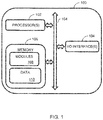
- FIG. 1 illustrates a block diagram of a data structure abstraction system 100 implementing data structure abstraction in a program written in a programming language, in accordance with an implementation of the present subject matter.
- the data structure abstraction system 100 may be implemented in a computing device. Examples of the computing device include, but are not limited to, mainframe computers, workstations, personal computers, desktop computers, minicomputers, servers, multiprocessor systems, laptops, a cellular communicating device, such as a personal digital assistant, a smart phone, and a mobile phone; and the like.
- the data structure abstraction system 100 implemented using the computing device, includes one or more processor(s) 102, IO interface(s) 104, and a memory 106 coupled to the processor 102.
- the processor 102 can be a single processing unit or a number of units.
- the processor 102 may be implemented as one or more microprocessors, microcomputers, microcontrollers, digital signal processors, central processing units, state machines, logic circuitries, and/or any devices that manipulate signals based on operational instructions.
- the processor 102 is configured to fetch and execute computer-readable instructions and data stored in the memory 106.
- processors may be provided through the use of dedicated hardware as well as hardware capable of executing software in association with appropriate software.
- the functions may be provided by a single dedicated processor, by a single shared processor, or by a plurality of individual processors, some of which may be shared.
- explicit use of the term "processor” should not be construed to refer exclusively to hardware capable of executing software, and may implicitly include, without limitation, digital signal processor (DSP) hardware, network processor, application specific integrated circuit (ASIC), field programmable gate array (FPGA), read only memory (ROM) for storing software, random access memory (RAM), and non-volatile storage.
- DSP digital signal processor
- ASIC application specific integrated circuit
- FPGA field programmable gate array
- ROM read only memory
- RAM random access memory
- non-volatile storage Other hardware, conventional and/or customized, may also be included.
- the IO interfaces 104 may include a variety of software and hardware interfaces, for example, interface for peripheral device(s), such as a keyboard, a mouse, an external memory, and a printer. Further, the IO interfaces 104 may enable the computing device to communicate with other computing devices, such as a personal computer, a laptop, and like.
- the memory 106 may include any computer-readable medium known in the art including, for example, volatile memory, such as static random access memory (SRAM) and dynamic random access memory (DRAM), and/or non-volatile memory, such as read only memory (ROM), erasable programmable ROM, flash memories, hard disks, optical disks, and magnetic tapes.
- volatile memory such as static random access memory (SRAM) and dynamic random access memory (DRAM)
- non-volatile memory such as read only memory (ROM), erasable programmable ROM, flash memories, hard disks, optical disks, and magnetic tapes.
- ROM read only memory
- erasable programmable ROM erasable programmable ROM
- the module(s) 108 include routines, programs, objects, components, data structures, etc., which perform particular tasks or implement particular abstract data types.
- the module(s) 108 further include a data structure abstraction module, a model checker module and other module(s).
- the other module(s) may include programs or coded instructions that supplement applications and functions of the computing device.
- the data 110 serves as a repository for storing data processed, received, and generated by one or more of the module(s) 108.
- the data 110 includes, for example, abstraction data, and other data.
- the other data includes data generated as a result of the execution of one or more modules in the other module(s).
- the computing device may receive a source code for abstraction.
- the source code may be referred to as a program or a software program.
- the computing device may receive the source code from a compilation module.
- the compilation module may be internal or external to the computing device.
- the system 100 may be caused to identify one or more data structure accesses in the source code.
- the data structure accesses includes expressions for referencing elements of the data structures to access the data structure in the source code. Examples of the data structure accesses may include, but are not limited to, an array, a hash table, a graph, a tree, a class, a set, and a map.
- the system 100 may further be caused to identify one or more loops in the one or more data structure accesses.
- a loop of the one or more loops includes a control statement and a loop body, such that the loop causes the loop body to be repeatedly executed based on the control statement.
- a loop statement may typically include among other things, an initializing condition, and a termination condition for the original loop.
- the system 100 may further be caused to identify one or more loop-types in the one or more loops.
- the loop-types may include a complete loop and partial loop.
- a complete loop includes a loop iterating over all of elements of the data structure.
- a partial loop includes a loop iterating over a subset of elements of the data structure.
- the system 100 may further be caused to generate an abstracted code based on the one or more loop types.
- the abstracted code is capable of abstracting the data structure.
- the system 100 is capable of generating the abstracted code by abstracting the data structures present in the source code. For example, corresponding to a source code having arrays and loops iterating over said arrays, the system 100 is caused to transform the source code to a transformed program (or source code) that has an additional abstract element and index pair, ( v a , i a ), corresponding to each array a with n a number of elements.
- the transformation of the source code to the abstracted source code is obtained by assigning a non-deterministic value to i a in the range [0.. n a -1].
- the transformation of the source code to the abstracted source code is obtained by modifying the one or more loops based on one or more loop types of said loops to obtain the abstracted code.
- the loop types may include complete loops and partial loop.
- a complete loop includes a loop iterating over all of elements of the data structure and a partial loop comprises a loop iterating over a subset of elements of the data structure.
- condition 1 to generate the abstract data structure, the system can eliminate loop control statement of said loop operating on elements of the data structure based on loop type of said loop.
- the system can eliminate the loop control statement of said loop by determining the loop type of said loop to be the complete loop. On said determination, the system 100 is caused to replace the loop control statement with an if ( true ) statement.
- the if(true) statement may include if expression, statements, end, and the if(true) statement evaluates an expression and executes statements when the expression is true.
- the system can determine the loop type of said loop to be the partial loop, and on said determination, the system 100 is caused to replacing the loop control statement with an if(non-deterministic) statement.
- the system 100 can replace the one or more data structure accesses by one of a corresponding representative element and a non-deterministic value in the loop body of said loop based on the elements accessed of the data structure.
- the system 100 may initially determine a location of occurrence of the data structure access as one of a Left Hand Side (LHS) and Right Hand Side (RHS) of a statement of the source code.
- LHS Left Hand Side
- RHS Right Hand Side
- the system 100 can add a plurality of non-array assignments at a start of the loop body and after the loop body of the source code.
- the system 100 prior to adding plurality of non-array assignments, the system 100 is caused to identify the non-data structure variables in the loop body in LHS. Upon identifying, the system 100 is caused to assign the non-data structure variables in the loop body in LHS.
- Example 1.1 is an original source code and an example 1.2 is an abstracted source code corresponding to the original source code of Example 1.1.
- Example 1.1 contains an original input source code:
- an original software code (or program) with an array of structure, a where nd ( l , u ) returns a non-deterministic value in the range [l::u].
- each field of all elements of the array are initialized to zero in the loop (at line 19) and then in another loop (at line 25), for an arbitrary subset of elements, the field q is set to square of the field p.
- the last loop (at line 32) asserts that for each element either q equals p or q equals p 2 .
- Bounded model checkers are effective at discovering such invariants, however as previously discussed; the bounded model checkers cannot handle loops with large bounds.
- a transformed program (example 1.2) corresponding to the example 1.1 is provided.
- each array access is replaced by x .
- x is the abstract variable corresponding to the array a.
- the assert is violated it can be violated for some index i 0 and the values for a[i 0 ] can reach from either from the initialization or from the point where a [ i 0 ]: p and a [ i 0]: q are assigned k and k*k, respectively.
- Example 1.2 contains the abstracted source code corresponding to the original input source code of Example 1.1
- the system 100 is caused to provide the abstracted code for the model checking.
- An example describing the generation of the abstracted code based on the conditions such as the condition 1, condition 2 and condition 3 is described with reference to an example below.
- the computer program with the abstracted data structure thus obtained may be saved by the processor 102 in the abstraction data. Further, the program with the abstracted data structure may be provided to a model checker module for being analyzed for errors. Providing the program with the abstracted data structure to the model checker module helps in facilitating the abstract program with abstract data structure and the input function for analysis and checks if the input assertion or property of the computer program is safe or not. If it is safe, then the process is stopped otherwise it produces a trace.
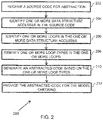
- FIG. 2 illustrates an example method 200 for abstraction of data structures for model checking of a computer program, in accordance with an example embodiment.
- a source code or computer program may be received for abstraction.
- the IO element 104 may cause receipt of the source code.
- one or more data accesses are identified in the source code via one or more hardware processors, such as the processor 102.
- the one or more data structure accesses includes expressions for referencing elements of the data structures to access the data structure in the source code.
- a data structure access may include one of an array, a hash table, a graph, a tree, a class, a set, and a map.
- one or more loops are identified in the one or more data structure accesses via one or more hardware processors, such as the processor 102.
- a loop includes a control statement and a loop body, wherein the loop causes the loop body to be repeatedly executed based on the control statement.
- one or more loop-types are identified in the one or more loops via one or more hardware processors, such as the processor 102.
- the loop types includes complete loops and partial loop. Examples of the complete loop and the partial loop are described with reference to FIG. 1 .
- an abstracted code is generated based on the one or more loop types via one or more hardware processors.
- the abstracted code is capable of abstracting the data structure.
- the abstracting of the data structure includes performing one of the following for each loop of the one or more loops:
- a location of occurrence of the data structure access is determined.
- the location of occurrence of the data structure can be one of a left hand side (LHS) and right hand side (RHS) of a statement of the source code.
- LHS left hand side
- RHS right hand side
- the loop control statement is replaced with an if (true) statement to eliminate the loop control statement.
- the loop control statement is replaced with an if (non-deterministic) statement to eliminate the loop control statement.
- the method 200 includes providing the abstracted code for the model checking.
- the disclosed method and system for data structure abstraction allows in verifying the programs with assertions involving data structures.
- the method and system disclosed herein provides data structure abstraction by eliminating loops that operate on array elements.
- the abstraction is implemented via syntactic transformation of programs.
- data structure access replacement replaces each data structure access with a representative element or non-deterministic value.
- the loops with data structure access are replaced with appropriate if condition. All other variables modified in the loop are assigned with non-deterministic value. If an assertion ' a ' is not violated for the representative elements, it holds for whole of data structure, since the data structure abstraction process assigns non-deterministic or abstracted values to all variables including the representative element.
- the program code generated after applying data structure abstraction process is a sound over-approximation of the original program.
- the transformed program is input to a bounded model checker for verification.
- a computer-readable storage medium refers to any type of physical memory on which information or data readable by a processor may be stored.
- a computer-readable storage medium may store instructions for execution by one or more processors, including instructions for causing the processor(s) to perform steps or stages consistent with the embodiments described herein.
- the term "computer-readable medium” should be understood to include tangible items and exclude carrier waves and transient signals, i.e., be non-transitory. Examples include random access memory (RAM), read-only memory (ROM), volatile memory, nonvolatile memory, hard drives, CD ROMs, DVDs, flash drives, disks, and any other known physical storage media.
Landscapes
- Engineering & Computer Science (AREA)
- Theoretical Computer Science (AREA)
- Software Systems (AREA)
- General Engineering & Computer Science (AREA)
- Physics & Mathematics (AREA)
- General Physics & Mathematics (AREA)
- Computer Hardware Design (AREA)
- Quality & Reliability (AREA)
- Devices For Executing Special Programs (AREA)
- Stored Programmes (AREA)
- Debugging And Monitoring (AREA)
Abstract
Description
- The present invention claims priority to Indian non-provisional application (Title: DATA STRUCTURE ABSTRACTION FOR MODEL CHECKING) Application No.
201621008284, filed on March 09th 2016 - This disclosure relates generally to data structure abstraction, and more particularly to method and system for data structure abstraction for model checking.
- Computer programs, also referred to as software programs, include codes written in a programming language to perform certain tasks in a computing device on which the computer program is executed. Examples of computing devices include, but are not limited to, a laptop, personal digital assistant (PDA), computer, mobile phone, and so on. Verification of the codes is of utmost importance for safe running of software programs. For example, it is imperative to perform defect detection in all kinds of software programs.
- Static analysis is commonly used technique for sound defect detection. Static analysis includes verification by static verifiers to perform defect detection for any given input, to thereby demonstrate program correctness. Another technique for verification of software programs includes model checking. Model checking includes verifying correctness of programs by model checkers. Model checking can be utilized for effectively checking properties of programs involving scalars.
- The inventors here have recognized several technical problems with such conventional systems for defect detection or verification of programs, as explained below. The verification performed by static analysis is scalable, however, it has been observed that it is imprecise for verification of codes. The technique of model checking is effective for checking properties of programs involving scalars, however, while model checking the programs involving data structures, such as arrays and C style structures, the programs often runs into a state space explosion. Since real life programs are replete with such data structures, model checking is ineffective for such programs.
- Embodiments of the present disclosure present technological improvements as solutions to one or more of the above-mentioned technical problems recognized by the inventors in conventional systems. For example, in one embodiment, a processor-implemented method for data structure abstraction for model checking is provided. The method includes receiving a source code for abstraction, via one or more hardware processors. Further, the method includes identifying, via the one or more hardware processors, one or more data structure accesses in the source code, where the one or more data structure accesses includes expressions for referencing elements of the data structures to access the data structure in the source code. Furthermore, the method includes identifying, via the one or more hardware processors, one or more loops in the one or more data structure accesses. A loop of the one or more loops comprising control statement and a loop body, wherein the loop causes the loop body to be repeatedly executed based on the control statement. Moreover, the method includes identifying, via the one or more hardware processors, one or more loop-types in the one or more loops. Also, the method includes generating, via the one or more hardware processors, an abstracted code based on the one or more loop types, the abstracted code capable of abstracting the data structure, wherein abstracting the data structure comprises performing for each loop of the one or more loops: replacing the one or more data structure accesses by one of a corresponding representative element and a non-deterministic value in the loop body of said loop based on the elements accessed of the data structure, and eliminating loop control statement of said loop operating on elements of the data structure based on loop type of said loop, and adding a plurality of non-array assignments at a start of the loop body and after the loop body of the source code. Also, the method includes providing the abstracted code for the model checking, via the one or more hardware processors.
- In another embodiment, a system for data structure abstraction for model checking is provided. The system includes at least one memory; and one or more hardware processors, the at least one memory coupled to the one or more hardware processors wherein the one or more hardware processors are capable of executing programmed instructions stored in the at least one memory to receive a source code for abstraction. Further, the one or more hardware processors are capable of executing programmed instructions to identify one or more data structure accesses in the source code, where the one or more data structure accesses includes expressions for referencing elements of the data structures to access the data structure in the source code. Furthermore, the one or more hardware processors are capable of executing programmed instructions to identify one or more loops in the one or more data structure accesses. A loop of the one or more loops comprising control statement and a loop body, wherein the loop causes the loop body to be repeatedly executed based on the control statement. Moreover, the one or more hardware processors are capable of executing programmed instructions to identify one or more loop-types in the one or more loops. Also, the one or more hardware processors are capable of executing programmed instructions to generate an abstracted code based on the one or more loop types, the abstracted code capable of abstracting the data structure, wherein abstracting the data structure include performing for each loop of the one or more loops: replacing the one or more data structure accesses by one of a corresponding representative element and a non-deterministic value in the loop body of said loop based on the elements accessed of the data structure, and eliminating loop control statement of said loop operating on elements of the data structure based on loop type of said loop, and adding a plurality of non-array assignments at a start of the loop body and after the loop body of the source code. Also, the one or more hardware processors are capable of executing programmed instructions to provide the abstracted code for the model checking.
- In yet another embodiment, a non-transitory computer-readable medium having embodied thereon a computer program for executing a method for data structure abstraction for model checking is provided. The method includes receiving a source code for abstraction. Further, the method includes identifying one or more data structure accesses in the source code, where the one or more data structure accesses includes expressions for referencing elements of the data structures to access the data structure in the source code. Furthermore, the method includes identifying one or more loops in the one or more data structure accesses. A loop of the one or more loops comprising control statement and a loop body, wherein the loop causes the loop body to be repeatedly executed based on the control statement. Moreover, the method includes identifying one or more loop-types in the one or more loops. Also, the method includes generating an abstracted code based on the one or more loop types, the abstracted code capable of abstracting the data structure, wherein abstracting the data structure comprises performing for each loop of the one or more loops: replacing the one or more data structure accesses by one of a corresponding representative element and a non-deterministic value in the loop body of said loop based on the elements accessed of the data structure, and eliminating loop control statement of said loop operating on elements of the data structure based on loop type of said loop, and adding a plurality of non-array assignments at a start of the loop body and after the loop body of the source code. Also, the method includes providing the abstracted code for the model checking.
- It is to be understood that both the foregoing general description and the following detailed description are exemplary and explanatory only and are not restrictive of the invention, as claimed.
- The accompanying drawings, which are incorporated in and constitute a part of this disclosure, illustrate exemplary embodiments and, together with the description, serve to explain the disclosed principles.
-
FIG. 1 illustrates block diagram of a system for data structure abstraction according to some embodiments of the present disclosure. -
FIG. 2 is a flow diagram of a method for data structure abstraction according to some embodiments of the present disclosure. - Exemplary embodiments are described with reference to the accompanying drawings. In the figures, the left-most digit(s) of a reference number identifies the figure in which the reference number first appears. Wherever convenient, the same reference numbers are used throughout the drawings to refer to the same or like parts. While examples and features of disclosed principles are described herein, modifications, adaptations, and other implementations are possible without departing from the spirit and scope of the disclosed embodiments. It is intended that the following detailed description be considered as exemplary only, with the true scope and spirit being indicated by the following claims.
- In a software code, data structure operations generally occur in a loop. Herein a data structure may be referred to as a way of organizing data in a computer for enabling an effective usage of data. While executing programs (or software codes) with data structures, errors may be encountered in cases of indefinite loops or loops having large loop bounds depending on the size of the data structures. Herein, the loop bounds may be understood as the maximum number of times a loop has to be executed. Generally, in order to ensure error free execution of the program, the program is initially checked for errors, for example, by a program analyzer or a model checker of the computer device. The model checker is configured to analyze the program and check for various errors that may occur on execution of the program. However, for the loops with non-deterministic bounds i.e. indefinite or large loop bounds, the model checker ascertains a small upper bound and unrolls the loops in accordance with the upper bound. Further, ascertaining the upper bound may be a time consuming and difficult task for the model checker as the model checker may lack sufficient intelligence for ascertaining such a bound. Thus, providing an inadequate, i.e., a smaller bound than required may cause a bounded model checker to produce results, such as a loop unrolling assertion failure. Additionally, in both the cases of a smaller bound and a larger bound the model checker may produce an "out of memory" failure. Therefore it may not be feasible to verify loops having indefinite or large bounds using a bounded model checker.
- According to an implementation of the present subject matter, systems and methods for abstracting a data structure in a source code for model checking of the source code are described. The source code may be understood as a computer program written in a programming language. The systems and methods can be implemented in a variety of computing devices. The computing devices include, but are not limited to, desktop computers, hand-held devices, laptops or other portable computers, and the like. In one implementation, the systems and methods implementing data structure abstraction may be provided for data structure abstraction and subsequent model checking in programs written using programming languages including, but not limited to, C, C++, VC++, C#, and the like.
- In one implementation, the source code received for abstraction may be analyzed to determine a data structure access in a loop having a loop body and a control statement. Further, other variables meaning non-data structure variables are identified in the loop. Furthermore, an abstract program corresponding to the original program may be generated. Herein, the source code received for abstraction is referred to as the original program, for the ease of understanding and for differentiating the received code (original program) from the abstract program/code. To generate the abstract program corresponding to original code, all data structure accesses in the source code are replaced by a representative element. Herein, the representative element may be any element of the data structure, thereby implying that the representative element may have same format and properties as that of other elements of the data structure. Additionally, the loop control statement may be replaced with a non-deterministic choice if statement. Further, non-deterministic assignment to all non-data structure variables is added at the start of the loop body and after the loop body. The method further generates the abstract program for model checking.
- Herein, the loop control statement in the loop may be understood as an iterating condition for the data structure. The loop can be classified as a complete loop and a partial loop. A complete loop includes a plurality of conditions such that all the elements of the data structure are accessed. In a partial loop, a subset of data structure elements are accessed or iterated. The partial loops can be implemented in various ways, including, but not limited to, using conditional break statements or continue statements in a loop, or incrementing/decrementing the loop by an integer other than 1.
- In one implementation, the data structure accesses in a loop in a computer program, such as C Program, is abstracted. In order to abstract the data structure in the computer program, each property to be verified on the data structure, referred to as 'a', can be determined and may be modelled as an assertion. Further, the computer program is sliced with respect to the property 'a' and the reduced sliced computer program is used for verification of the property 'a'. Loops with data structure accesses are removed and the data structure accesses are abstracted. The abstracted computer program is then analyzed using a model checker. If the model checker reports the property 'a' of the abstracted computer program as safe, then it can be safely concluded that the property 'a' is safe in the original computer program.
- Further, the present data abstraction method replaces the loop header with appropriate an 'if condition' when the data structure access is in loop and introduces an 'if condition' when the data structure access is outside the loop body. Also, nested loops of the computer program are abstracted starting from the innermost loop body and proceeding to the outermost loop body of the computer program. Further, when the data structure access is in the loop, each non data structure variable is abstracted by assigning a non-deterministic value to it at the start of the abstract loop and after the loop body.
- The systems and methods of the present subject matter thus facilitate in implementing data structure abstraction process in a program. The original program is replaced by another program, also referred to as an abstracted program/code, with no array and no loop. This ensures that the program is executed with reduced use of memory resource, processing resource, and time consumption and errors, such as dereferencing of illegal pointer. Further, the computer program may be abstracted into another computer program which allows all runs of the original computer program along with additional runs. Such an abstracted computer program may be called as an over-approximation of the original computer program. Therefore, if a property of the computer program is valid in the abstracted computer program, then it also holds in the original computer program. Furthermore, when an assertion is safe in the computer program after applying the data structure abstraction process, the model checker returns the assertion to be safe then the original computer program is safe with respect to that assertion.
- These and other advantages of the present subject matter would be described in greater detail in conjunction with the following figures. While aspects of described systems and methods for data structure abstraction in a program can be implemented in different computing systems, environments, and/or configurations, the implementations are described in the context of the following exemplary system(s).
-
FIG. 1 illustrates a block diagram of a datastructure abstraction system 100 implementing data structure abstraction in a program written in a programming language, in accordance with an implementation of the present subject matter. The datastructure abstraction system 100 may be implemented in a computing device. Examples of the computing device include, but are not limited to, mainframe computers, workstations, personal computers, desktop computers, minicomputers, servers, multiprocessor systems, laptops, a cellular communicating device, such as a personal digital assistant, a smart phone, and a mobile phone; and the like. The datastructure abstraction system 100, implemented using the computing device, includes one or more processor(s) 102, IO interface(s) 104, and amemory 106 coupled to theprocessor 102. Theprocessor 102 can be a single processing unit or a number of units. Theprocessor 102 may be implemented as one or more microprocessors, microcomputers, microcontrollers, digital signal processors, central processing units, state machines, logic circuitries, and/or any devices that manipulate signals based on operational instructions. Among other capabilities, theprocessor 102 is configured to fetch and execute computer-readable instructions and data stored in thememory 106. - Functions of the various elements shown in the figures, including any functional blocks labeled as "processor(s)", may be provided through the use of dedicated hardware as well as hardware capable of executing software in association with appropriate software. When provided by a processor, the functions may be provided by a single dedicated processor, by a single shared processor, or by a plurality of individual processors, some of which may be shared. Moreover, explicit use of the term "processor" should not be construed to refer exclusively to hardware capable of executing software, and may implicitly include, without limitation, digital signal processor (DSP) hardware, network processor, application specific integrated circuit (ASIC), field programmable gate array (FPGA), read only memory (ROM) for storing software, random access memory (RAM), and non-volatile storage. Other hardware, conventional and/or customized, may also be included.
- The IO interfaces 104 may include a variety of software and hardware interfaces, for example, interface for peripheral device(s), such as a keyboard, a mouse, an external memory, and a printer. Further, the IO interfaces 104 may enable the computing device to communicate with other computing devices, such as a personal computer, a laptop, and like.
- The
memory 106 may include any computer-readable medium known in the art including, for example, volatile memory, such as static random access memory (SRAM) and dynamic random access memory (DRAM), and/or non-volatile memory, such as read only memory (ROM), erasable programmable ROM, flash memories, hard disks, optical disks, and magnetic tapes. Thememory 106 may also include module(s) 108 anddata 110. - The module(s) 108 include routines, programs, objects, components, data structures, etc., which perform particular tasks or implement particular abstract data types. The module(s) 108 further include a data structure abstraction module, a model checker module and other module(s). The other module(s) may include programs or coded instructions that supplement applications and functions of the computing device.
- The
data 110, amongst other things, serves as a repository for storing data processed, received, and generated by one or more of the module(s) 108. Thedata 110 includes, for example, abstraction data, and other data. The other data includes data generated as a result of the execution of one or more modules in the other module(s). - In an embodiment, the computing device may receive a source code for abstraction. The source code may be referred to as a program or a software program. In an embodiment, the computing device may receive the source code from a compilation module. In various embodiments, the compilation module may be internal or external to the computing device.
- On receiving the source code, the
system 100 may be caused to identify one or more data structure accesses in the source code. The data structure accesses includes expressions for referencing elements of the data structures to access the data structure in the source code. Examples of the data structure accesses may include, but are not limited to, an array, a hash table, a graph, a tree, a class, a set, and a map. - The
system 100 may further be caused to identify one or more loops in the one or more data structure accesses. A loop of the one or more loops includes a control statement and a loop body, such that the loop causes the loop body to be repeatedly executed based on the control statement. A loop statement may typically include among other things, an initializing condition, and a termination condition for the original loop. - The
system 100 may further be caused to identify one or more loop-types in the one or more loops. The loop-types may include a complete loop and partial loop. A complete loop includes a loop iterating over all of elements of the data structure. A partial loop includes a loop iterating over a subset of elements of the data structure. - The
system 100 may further be caused to generate an abstracted code based on the one or more loop types. The abstracted code is capable of abstracting the data structure. In an implementation, thesystem 100 is capable of generating the abstracted code by abstracting the data structures present in the source code. For example, corresponding to a source code having arrays and loops iterating over said arrays, thesystem 100 is caused to transform the source code to a transformed program (or source code) that has an additional abstract element and index pair, (va ,ia ), corresponding to each array a with na number of elements. In an embodiment, the transformation of the source code to the abstracted source code is obtained by assigning a non-deterministic value to ia in the range [0..na -1]. - In an embodiment, the transformation of the source code to the abstracted source code is obtained by modifying the one or more loops based on one or more loop types of said loops to obtain the abstracted code. In an embodiment, the loop types may include complete loops and partial loop.
- A complete loop includes a loop iterating over all of elements of the data structure and a partial loop comprises a loop iterating over a subset of elements of the data structure. According to condition 1, to generate the abstract data structure, the system can eliminate loop control statement of said loop operating on elements of the data structure based on loop type of said loop.
- In an embodiment, the system can eliminate the loop control statement of said loop by determining the loop type of said loop to be the complete loop. On said determination, the
system 100 is caused to replace the loop control statement with an if(true) statement. The if(true) statement may include if expression, statements, end, and the if(true) statement evaluates an expression and executes statements when the expression is true. For example, the system replaces complete loops that refer to a, that is loop of the form for(i = 0; i < na; i++) S, by i=ia ; VO =*;S'; VO =* is an assignment of non-deterministic values to all non-array variables modified in the loop body S. - In another embodiment, the system can determine the loop type of said loop to be the partial loop, and on said determination, the
system 100 is caused to replacing the loop control statement with an if(non-deterministic) statement. A non-deterministic function may return same result any time it is called with a specific set of input values. For example, a partial loop can be replaced by if(*){Vo=*;S'}Vo=*;. - According to condition 2 (mentioned above), to generate the abstract data structure, the
system 100 can replace the one or more data structure accesses by one of a corresponding representative element and a non-deterministic value in the loop body of said loop based on the elements accessed of the data structure. In an embodiment, thesystem 100 may initially determine a location of occurrence of the data structure access as one of a Left Hand Side (LHS) and Right Hand Side (RHS) of a statement of the source code. - In an embodiment, on determination of the location of the occurrence of the data structure access to be RHS of the statement of the source code, the
system 100 may be caused to determine whether the element that is accessed in a current iteration of said loop is associated with an iteration different from the current iteration of said loop. If it is determined that the element accessed in the current iteration is different from the element accessed in an iteration different from the current iteration, thesystem 100 replaces the one or more data structure accesses by the corresponding non-deterministic value. For example, each array access, a[e], in the RHS of an assignment is replaced by the expression ia == e'?va : *, where * is a non-deterministic value. - In an embodiment, determination of the location of the occurrence of the data structure access to be LHS of the statement of the source code, the
system 100 may be caused to replace the one or more data structure accesses by the corresponding representative element. For example, each assignment to an array element of the form a[e]=e'1 is replaced by e' == ia?va = e'1 : e'1. - Also, according to condition 3 to generate the abstract data structure, the
system 100 can add a plurality of non-array assignments at a start of the loop body and after the loop body of the source code. In an embodiment, prior to adding plurality of non-array assignments, thesystem 100 is caused to identify the non-data structure variables in the loop body in LHS. Upon identifying, thesystem 100 is caused to assign the non-data structure variables in the loop body in LHS. - An example for data structure abstraction is provided below, where Example 1.1 is an original source code and an example 1.2 is an abstracted source code corresponding to the original source code of Example 1.1.
-

- In example 1.1, an original software code (or program) with an array of structure, a, where nd(l,u) returns a non-deterministic value in the range [l::u]. In this example, each field of all elements of the array are initialized to zero in the loop (at line 19) and then in another loop (at line 25), for an arbitrary subset of elements, the field q is set to square of the field p. The last loop (at line 32) asserts that for each element either q equals p or q equals p2. This is not a linear property and hence the existing techniques that discover linear invariants or those that rely on decidable theories which cannot discover the data structure invariant. Bounded model checkers are effective at discovering such invariants, however as previously discussed; the bounded model checkers cannot handle loops with large bounds.
- A transformed program (example 1.2) corresponding to the example 1.1 is provided. In the transformed code each array access is replaced by x. Herein, x is the abstract variable corresponding to the array a. At the point of assertion, two values of x reach - x:p = 0^x:q = 0 and x:p = k^x:q = k_k. In the original program, if the assert is violated it can be violated for some index i0 and the values for a[i0] can reach from either from the initialization or from the point where a[i 0]:p and a[i0]:q are assigned k and k*k, respectively. Thus, for this example if the property is violated in the original program it will be violated for some i 0 and there will be a run of the abstract program in which x takes the same path as the one taken by a[i 0] in the original program and hence the transformed program can also violate the property. In this particular example, if the property does not hold for the transformed program, then it cannot for the original program too. However, this may not be true generally in all the cases. The transformed code is shown below (example 1.2).
-
  struct S
      unsigned int p;
      unsigned int q;
  }x;
 int i_x , i , k;
 main()
    i_x = nd(0,999);
    i = i_x;
    i == i_x? x.p = 0 : 0;
    i == i_x? x.q = 0 : 0;
    i = *;
    if(nd(0,1))
    {
        i = nd(0,999);
       k = nd(0,1000);
        i == i_x? x.p = k : k;
        i == i_x? x.q = k * k : k*k ;
    }
    i = nd(0,1000);
    k = nd(0,1000);
    i = i_x ;
    assert( i == i_x? x.q == x.p
             | | x.q == x.p * x.p : nd(0,1));
 }
As seen in the source code of example 1.1, the code of the original program:
 for (int i = 0: i<1000 ; i++)
 {
    a[i].p = 0:
    a[i] .q = 0 :
} |
i_x = nd(0.999): i = i_x ; i == i_x? x.p = 0 : 0: i == i_x? x.q = 0 : 0: i = * : |
  while (nd(0,1))
  {
   i = nd(0,999);
   k = and (0 ,1000);
   a[i].p = k;
   a[i].q = k * k ;
} |
 if (nd(0,1))
 {
     i = nd(0,999);
     k = nd(0,1000);
     i == i_x? x.p = k : k;
     i == i_x? x.q = k * k : k*k ;
} |
Claims (15)
- A processor-implemented method for data structure abstraction in a source code, for model checking of the source code, the method comprising:receiving a source code for abstraction, via one or more hardware processors;identifying one or more data structure accesses in the source code, via the one or more hardware processors, the one or more data structure accesses comprising expressions for referencing elements of a data structure to access the data structure in the source code, wherein a data structure access of the one of more data structure accesses comprises one of an array, an hash table, a graph, a tree, a class, a set, and a map;identifying one or more loops in the one or more data structure accesses, via the one or more hardware processors, a loop of the one or more loops comprising control statement and a loop body, wherein the loop causes the loop body to be repeatedly executed based on the control statement;identifying one or more loop-types in the one or more loops, via the one or more hardware processors, wherein the one or more loop-types comprises a complete loop and a partial loop, and wherein the complete loop comprises a loop iterating over all of the elements of the data structure and the partial loop comprises a loop iterating over a subset of the elements of the data structure;generating, via the one or more hardware processors, an abstracted code based at least on the one or more loop types, the abstracted code capable of abstracting the data structure, wherein abstracting the data structure comprises performing, for each loop of the one or more loops:replacing the one or more data structure accesses by one of a corresponding representative element and a non-deterministic value in the loop body of said loop based on the elements of the data structure being accessed in a current iteration of said loop,eliminating loop control statement of said loop operating on the elements of the data structure based on a loop type of said loop, andadding a plurality of non-array assignments at a start of the loop body and after the loop body of the source code; andproviding, via the one or more hardware processors, the abstracted code for the model checking.
- The method of claim 1, wherein eliminating the loop control statement of said loop comprises:determining the loop type of said loop to be the complete loop; andreplacing the loop control statement with an if (true) statement.
- The method of claim 1, wherein eliminating the loop control statement of said loop comprises:determining the loop type of said loop to be the partial loop; andreplacing the loop control statement with an if(non-deterministic) statement.
- The method of claim 1, further comprising determining a location of occurrence of the data structure access, the location being one of a Left Hand Side (LHS) and Right Hand Side (RHS) of a statement of the source code.
- The method of claim 4, wherein on determination that the location of occurrence of the data structure access to be the RHS of the statement of the source code, the method further comprises:determining the accessed element such that the accessed element is associated with an iteration different from a current iteration of said loop; andreplacing the one or more data structure accesses by a corresponding non-deterministic value.
- The method of claim 4, wherein on determination that the location of occurrence of the data structure access to be the LHS of the statement of the source code, the method further comprises:replacing the one or more data structure accesses by a corresponding representative element.
- The method of claim 3, further comprising prior to adding the plurality of non-array assignments at the start of the loop body and after the loop body of the source code:identifying non-data structure variables in the loop body in the LHS of the statement; andassigning corresponding non-deterministic values to the non-data structure variables.
- A system for reconciliation of records comprising:one or more memories; andone or more hardware processors, the one or more memories coupled to the one or more hardware processors wherein the one or more hardware processors are capable of executing programmed instructions stored in the one or more memories to:receive a source code for abstraction;identify one or more data structure accesses in the source code, the one or more data structure accesses comprising expressions for referencing elements of the data structures to access the data structure in the source code, wherein a data structure access of the one of more data structure accesses comprises one of an array, an hash table, a graph, a tree, a class, a set, and a map;identify one or more loops in the one or more data structure accesses, a loop of the one or more loops comprising control statement and a loop body, wherein the loop causes the loop body to be repeatedly executed based on the control statement;identify one or more loop-types in the one or more loops, wherein the one or more loop types comprises a complete loops and partial loop, and wherein a complete loop comprises a loop iterating over all of elements of the data structure and a partial loop comprises a loop iterating over a subset of elements of the data structure;generate an abstracted code based at least on the one or more loop types, the abstracted code capable of abstracting the data structure, wherein abstracting the data structure comprises performing, for each loop of the one or more loops:replace the one or more data structure accesses by one of a corresponding representative element and a non-deterministic value in the loop body of said loop based on the elements of the data structure being accessed in a current iteration of said loop,eliminate loop control statement of said loop operating on the elements of the data structure based on a loop type of said loop, andadd a plurality of non-array assignments at a start of the loop body and after the loop body of the source code; andprovide the abstracted code for the model checking.
- The system of claim 8, wherein to eliminate the loop control statement of said loop, the one or more hardware processors are capable of executing programmed instructions to:determine the loop type of said loop to be the complete loop; andreplace the loop control statement with an if (true) statement.
- The system of claim 8, wherein to eliminate the loop control statement of said loop, the one or more hardware processors are capable of executing programmed instructions to:determine the loop type of said loop to be the partial loop; andreplace the loop control statement with an if(non-deterministic) statement.
- The system of claim 8, wherein the one or more hardware processors are capable of executing programmed instructions to determine a location of occurrence of the data structure access, the location being one of a Left Hand Side (LHS) and Right Hand Side (RHS) of a statement of the source code.
- The system of claim 11, wherein on determination that the location of occurrence of the data structure access to be the RHS of the statement of the source code, the one or more hardware processors are capable of executing programmed instructions to:determine the accessed element such that the accessed element is associated with an iteration different from a current iteration of said loop; andreplace the one or more data structure accesses by a corresponding non-deterministic value.
- The system of claim 11, wherein on determination that the location of occurrence of the data structure access to be the LHS of the statement of the source code, the one or more hardware processors are capable of executing programmed instructions to:replace the one or more data structure accesses by a corresponding representative element.
- The system of claim 11, prior to adding the plurality of non-array assignments at the start of the loop body and after the loop body of the source code, the one or more hardware processors are capable of executing programmed instructions to:identify non-data structure variables in the loop body in the LHS of the statement; andassign corresponding non-deterministic values to the non-data structure variables.
- A non-transitory computer-readable medium having embodied thereon a computer program for executing a method for data structure abstraction in a source code, for model checking of the source code, the method comprising:receiving a source code for abstraction;identifying one or more data structure accesses in the source code, the one or more data structure accesses comprising expressions for referencing elements of a data structure to access the data structure in the source code;identifying one or more loops in the one or more data structure accesses, a loop of the one or more loops comprising control statement and a loop body, wherein the loop causes the loop body to be repeatedly executed based on the control statement;identifying one or more loop-types in the one or more loops;generating an abstracted code based at least on the one or more loop types, the abstracted code capable of abstracting the data structure, wherein abstracting the data structure comprises performing, for each loop of the one or more loops:replacing the one or more data structure accesses by one of a corresponding representative element and a non-deterministic value in the loop body of said loop based on the elements of the data structure being accessed in a current iteration of said loop,eliminating loop control statement of said loop operating on the elements of the data structure based on a loop type of said loop, andadding a plurality of non-array assignments at a start of the loop body and after the loop body of the source code; andproviding the abstracted code for the model checking.
Applications Claiming Priority (1)
| Application Number | Priority Date | Filing Date | Title |
|---|---|---|---|
| IN201621008284 | 2016-03-09 |
Publications (2)
| Publication Number | Publication Date |
|---|---|
| EP3217284A1 true EP3217284A1 (en) | 2017-09-13 |
| EP3217284B1 EP3217284B1 (en) | 2022-06-08 |
Family
ID=58261510
Family Applications (1)
| Application Number | Title | Priority Date | Filing Date |
|---|---|---|---|
| EP17158901.3A Active EP3217284B1 (en) | 2016-03-09 | 2017-03-02 | Data structure abstraction for model checking |
Country Status (3)
| Country | Link |
|---|---|
| US (1) | US10534689B2 (en) |
| EP (1) | EP3217284B1 (en) |
| JP (1) | JP6976064B2 (en) |
Cited By (1)
| Publication number | Priority date | Publication date | Assignee | Title |
|---|---|---|---|---|
| EP3582109A1 (en) * | 2018-06-11 | 2019-12-18 | Tata Consultancy Services Limited | Method and system for verifying properties of source code |
Families Citing this family (5)
| Publication number | Priority date | Publication date | Assignee | Title |
|---|---|---|---|---|
| EP3493051A1 (en) * | 2017-11-30 | 2019-06-05 | The MathWorks, Inc. | System and methods for evaluating compliance of implementation code with a software architecture specification |
| DE102018003142A1 (en) | 2017-12-13 | 2019-06-13 | The Mathworks, Inc. | Automatic setting of multitasking configurations for a code checking system |
| EP3859532B1 (en) * | 2020-01-31 | 2022-10-12 | Tata Consultancy Services Limited | Method and system for counter example guided loop abstraction refinement |
| US11755294B2 (en) | 2020-06-09 | 2023-09-12 | The Mathworks, Inc. | Systems and methods for generating service access points for RTE services in code or other RTE service information for use with the code |
| EP4530829B1 (en) * | 2023-09-29 | 2026-01-21 | Tata Consultancy Services Limited | Method and system for performing outer loop abstraction for efficient verification of reactive systems |
Citations (1)
| Publication number | Priority date | Publication date | Assignee | Title |
|---|---|---|---|---|
| EP2913758A1 (en) * | 2014-02-27 | 2015-09-02 | Tata Consultancy Services Limited | Loop abstraction for model checking |
Family Cites Families (7)
| Publication number | Priority date | Publication date | Assignee | Title |
|---|---|---|---|---|
| NO984777L (en) * | 1998-04-06 | 1999-10-05 | Cable As V Knut Foseide Safety | Theft Alert Cable |
| US7058925B2 (en) | 2002-04-30 | 2006-06-06 | Microsoft Corporation | System and method for generating a predicate abstraction of a program |
| WO2005072257A2 (en) | 2004-01-22 | 2005-08-11 | Nec Laboratories America, Inc. | System and method for modeling, abstraction, and analysis of software |
| US7921411B2 (en) | 2006-10-20 | 2011-04-05 | International Business Machines Corporation | Model checking of non-terminating software programs |
| US8612938B2 (en) * | 2009-01-05 | 2013-12-17 | Tata Consultancy Services Limited | System and method for automatic generation of test data to satisfy modified condition decision coverage |
| US8627273B2 (en) | 2009-07-22 | 2014-01-07 | International Business Machines Corporation | Model checking of liveness property in a phase abstracted model |
| US8473883B2 (en) * | 2011-08-03 | 2013-06-25 | International Business Machines Corporation | Abstraction for arrays in integrated circuit models |
-
2017
- 2017-03-02 EP EP17158901.3A patent/EP3217284B1/en active Active
- 2017-03-02 US US15/448,097 patent/US10534689B2/en active Active
- 2017-03-07 JP JP2017042840A patent/JP6976064B2/en active Active
Patent Citations (1)
| Publication number | Priority date | Publication date | Assignee | Title |
|---|---|---|---|---|
| EP2913758A1 (en) * | 2014-02-27 | 2015-09-02 | Tata Consultancy Services Limited | Loop abstraction for model checking |
Non-Patent Citations (1)
| Title |
|---|
| PRIYANKA DARKE ET AL: "Precise Analysis of Large Industry Code", SOFTWARE ENGINEERING CONFERENCE (APSEC), 2012 19TH ASIA-PACIFIC, IEEE, 4 December 2012 (2012-12-04), pages 306 - 309, XP032332319, ISBN: 978-1-4673-4930-7, DOI: 10.1109/APSEC.2012.97 * |
Cited By (1)
| Publication number | Priority date | Publication date | Assignee | Title |
|---|---|---|---|---|
| EP3582109A1 (en) * | 2018-06-11 | 2019-12-18 | Tata Consultancy Services Limited | Method and system for verifying properties of source code |
Also Published As
| Publication number | Publication date |
|---|---|
| US20170262356A1 (en) | 2017-09-14 |
| JP6976064B2 (en) | 2021-12-01 |
| US10534689B2 (en) | 2020-01-14 |
| JP2017174418A (en) | 2017-09-28 |
| EP3217284B1 (en) | 2022-06-08 |
Similar Documents
| Publication | Publication Date | Title |
|---|---|---|
| US10534689B2 (en) | Data structure abstraction for model checking | |
| CN113383318B (en) | Reducing synchronization dependencies in garbage collection marks | |
| US8732669B2 (en) | Efficient model checking technique for finding software defects | |
| EP2913758B1 (en) | Loop abstraction for model checking | |
| US12379928B2 (en) | Method and apparatus for rectifying weak memory ordering problem | |
| US11550553B2 (en) | Usage-based software library decomposition | |
| JP2007528059A (en) | Systems and methods for software modeling, abstraction, and analysis | |
| US11740875B2 (en) | Type inference in dynamic languages | |
| Gavran et al. | Rely/guarantee reasoning for asynchronous programs | |
| Yerramreddy et al. | An empirical assessment of machine learning approaches for triaging reports of static analysis tools | |
| EP3859532B1 (en) | Method and system for counter example guided loop abstraction refinement | |
| US20070250825A1 (en) | Compiling Alternative Source Code Based on a Metafunction | |
| CN118689481A (en) | A code processing method and device | |
| Lawall et al. | WYSIWIB: exploiting fine‐grained program structure in a scriptable API‐usage protocol‐finding process | |
| CN106407104A (en) | Method and system used for detecting defects related to memory space release | |
| US8745605B2 (en) | Execution contexts with polymorphic type implementations | |
| US9436575B2 (en) | Selective profiling of applications | |
| Chu | A methodology for software engineering | |
| Subbotin et al. | Technique of verified program module modification with algorithm preservation | |
| CN119201564B (en) | Method and apparatus for detecting bounded models of cyclic units | |
| CN119621143B (en) | Program code analysis method and memory state analysis method based on analysis system | |
| US12530274B2 (en) | Systems and techniques for analyzing resource usage by applications of an electronic device | |
| EP4530829B1 (en) | Method and system for performing outer loop abstraction for efficient verification of reactive systems | |
| BELITSKYI et al. | METHOD FOR ADAPTING THE METAMORPHIC TESTING-AS-A-SERVICE ARCHITECTURAL PATTERN FOR THE JAVA PROGRAMMING LANGUAGE | |
| CN118964163A (en) | File descriptor leak location method, device, medium and equipment |
Legal Events
| Date | Code | Title | Description |
|---|---|---|---|
| PUAI | Public reference made under article 153(3) epc to a published international application that has entered the european phase |
Free format text: ORIGINAL CODE: 0009012 |
|
| STAA | Information on the status of an ep patent application or granted ep patent |
Free format text: STATUS: THE APPLICATION HAS BEEN PUBLISHED |
|
| AK | Designated contracting states |
Kind code of ref document: A1 Designated state(s): AL AT BE BG CH CY CZ DE DK EE ES FI FR GB GR HR HU IE IS IT LI LT LU LV MC MK MT NL NO PL PT RO RS SE SI SK SM TR |
|
| AX | Request for extension of the european patent |
Extension state: BA ME |
|
| STAA | Information on the status of an ep patent application or granted ep patent |
Free format text: STATUS: REQUEST FOR EXAMINATION WAS MADE |
|
| 17P | Request for examination filed |
Effective date: 20180313 |
|
| RBV | Designated contracting states (corrected) |
Designated state(s): AL AT BE BG CH CY CZ DE DK EE ES FI FR GB GR HR HU IE IS IT LI LT LU LV MC MK MT NL NO PL PT RO RS SE SI SK SM TR |
|
| STAA | Information on the status of an ep patent application or granted ep patent |
Free format text: STATUS: EXAMINATION IS IN PROGRESS |
|
| 17Q | First examination report despatched |
Effective date: 20190128 |
|
| REG | Reference to a national code |
Ref country code: DE Ref legal event code: R079 Ref document number: 602017058211 Country of ref document: DE Free format text: PREVIOUS MAIN CLASS: G06F0009450000 Ipc: G06F0008510000 |
|
| GRAP | Despatch of communication of intention to grant a patent |
Free format text: ORIGINAL CODE: EPIDOSNIGR1 |
|
| STAA | Information on the status of an ep patent application or granted ep patent |
Free format text: STATUS: GRANT OF PATENT IS INTENDED |
|
| RIC1 | Information provided on ipc code assigned before grant |
Ipc: G06F 9/445 20180101ALI20211116BHEP Ipc: G06F 11/36 20060101ALI20211116BHEP Ipc: G06F 8/51 20180101AFI20211116BHEP |
|
| INTG | Intention to grant announced |
Effective date: 20211216 |
|
| GRAS | Grant fee paid |
Free format text: ORIGINAL CODE: EPIDOSNIGR3 |
|
| GRAA | (expected) grant |
Free format text: ORIGINAL CODE: 0009210 |
|
| STAA | Information on the status of an ep patent application or granted ep patent |
Free format text: STATUS: THE PATENT HAS BEEN GRANTED |
|
| AK | Designated contracting states |
Kind code of ref document: B1 Designated state(s): AL AT BE BG CH CY CZ DE DK EE ES FI FR GB GR HR HU IE IS IT LI LT LU LV MC MK MT NL NO PL PT RO RS SE SI SK SM TR |
|
| REG | Reference to a national code |
Ref country code: AT Ref legal event code: REF Ref document number: 1497385 Country of ref document: AT Kind code of ref document: T Effective date: 20220615 Ref country code: CH Ref legal event code: EP |
|
| REG | Reference to a national code |
Ref country code: DE Ref legal event code: R096 Ref document number: 602017058211 Country of ref document: DE |
|
| REG | Reference to a national code |
Ref country code: IE Ref legal event code: FG4D |
|
| REG | Reference to a national code |
Ref country code: NL Ref legal event code: FP |
|
| REG | Reference to a national code |
Ref country code: LT Ref legal event code: MG9D |
|
| PG25 | Lapsed in a contracting state [announced via postgrant information from national office to epo] |
Ref country code: SE Free format text: LAPSE BECAUSE OF FAILURE TO SUBMIT A TRANSLATION OF THE DESCRIPTION OR TO PAY THE FEE WITHIN THE PRESCRIBED TIME-LIMIT Effective date: 20220608 Ref country code: NO Free format text: LAPSE BECAUSE OF FAILURE TO SUBMIT A TRANSLATION OF THE DESCRIPTION OR TO PAY THE FEE WITHIN THE PRESCRIBED TIME-LIMIT Effective date: 20220908 Ref country code: LT Free format text: LAPSE BECAUSE OF FAILURE TO SUBMIT A TRANSLATION OF THE DESCRIPTION OR TO PAY THE FEE WITHIN THE PRESCRIBED TIME-LIMIT Effective date: 20220608 Ref country code: HR Free format text: LAPSE BECAUSE OF FAILURE TO SUBMIT A TRANSLATION OF THE DESCRIPTION OR TO PAY THE FEE WITHIN THE PRESCRIBED TIME-LIMIT Effective date: 20220608 Ref country code: GR Free format text: LAPSE BECAUSE OF FAILURE TO SUBMIT A TRANSLATION OF THE DESCRIPTION OR TO PAY THE FEE WITHIN THE PRESCRIBED TIME-LIMIT Effective date: 20220909 Ref country code: FI Free format text: LAPSE BECAUSE OF FAILURE TO SUBMIT A TRANSLATION OF THE DESCRIPTION OR TO PAY THE FEE WITHIN THE PRESCRIBED TIME-LIMIT Effective date: 20220608 Ref country code: ES Free format text: LAPSE BECAUSE OF FAILURE TO SUBMIT A TRANSLATION OF THE DESCRIPTION OR TO PAY THE FEE WITHIN THE PRESCRIBED TIME-LIMIT Effective date: 20220608 Ref country code: BG Free format text: LAPSE BECAUSE OF FAILURE TO SUBMIT A TRANSLATION OF THE DESCRIPTION OR TO PAY THE FEE WITHIN THE PRESCRIBED TIME-LIMIT Effective date: 20220908 |
|
| REG | Reference to a national code |
Ref country code: AT Ref legal event code: MK05 Ref document number: 1497385 Country of ref document: AT Kind code of ref document: T Effective date: 20220608 |
|
| PG25 | Lapsed in a contracting state [announced via postgrant information from national office to epo] |
Ref country code: RS Free format text: LAPSE BECAUSE OF FAILURE TO SUBMIT A TRANSLATION OF THE DESCRIPTION OR TO PAY THE FEE WITHIN THE PRESCRIBED TIME-LIMIT Effective date: 20220608 Ref country code: LV Free format text: LAPSE BECAUSE OF FAILURE TO SUBMIT A TRANSLATION OF THE DESCRIPTION OR TO PAY THE FEE WITHIN THE PRESCRIBED TIME-LIMIT Effective date: 20220608 |
|
| PG25 | Lapsed in a contracting state [announced via postgrant information from national office to epo] |
Ref country code: SM Free format text: LAPSE BECAUSE OF FAILURE TO SUBMIT A TRANSLATION OF THE DESCRIPTION OR TO PAY THE FEE WITHIN THE PRESCRIBED TIME-LIMIT Effective date: 20220608 Ref country code: SK Free format text: LAPSE BECAUSE OF FAILURE TO SUBMIT A TRANSLATION OF THE DESCRIPTION OR TO PAY THE FEE WITHIN THE PRESCRIBED TIME-LIMIT Effective date: 20220608 Ref country code: RO Free format text: LAPSE BECAUSE OF FAILURE TO SUBMIT A TRANSLATION OF THE DESCRIPTION OR TO PAY THE FEE WITHIN THE PRESCRIBED TIME-LIMIT Effective date: 20220608 Ref country code: PT Free format text: LAPSE BECAUSE OF FAILURE TO SUBMIT A TRANSLATION OF THE DESCRIPTION OR TO PAY THE FEE WITHIN THE PRESCRIBED TIME-LIMIT Effective date: 20221010 Ref country code: EE Free format text: LAPSE BECAUSE OF FAILURE TO SUBMIT A TRANSLATION OF THE DESCRIPTION OR TO PAY THE FEE WITHIN THE PRESCRIBED TIME-LIMIT Effective date: 20220608 Ref country code: CZ Free format text: LAPSE BECAUSE OF FAILURE TO SUBMIT A TRANSLATION OF THE DESCRIPTION OR TO PAY THE FEE WITHIN THE PRESCRIBED TIME-LIMIT Effective date: 20220608 Ref country code: AT Free format text: LAPSE BECAUSE OF FAILURE TO SUBMIT A TRANSLATION OF THE DESCRIPTION OR TO PAY THE FEE WITHIN THE PRESCRIBED TIME-LIMIT Effective date: 20220608 |
|
| PG25 | Lapsed in a contracting state [announced via postgrant information from national office to epo] |
Ref country code: PL Free format text: LAPSE BECAUSE OF FAILURE TO SUBMIT A TRANSLATION OF THE DESCRIPTION OR TO PAY THE FEE WITHIN THE PRESCRIBED TIME-LIMIT Effective date: 20220608 Ref country code: IS Free format text: LAPSE BECAUSE OF FAILURE TO SUBMIT A TRANSLATION OF THE DESCRIPTION OR TO PAY THE FEE WITHIN THE PRESCRIBED TIME-LIMIT Effective date: 20221008 |
|
| REG | Reference to a national code |
Ref country code: DE Ref legal event code: R097 Ref document number: 602017058211 Country of ref document: DE |
|
| PG25 | Lapsed in a contracting state [announced via postgrant information from national office to epo] |
Ref country code: AL Free format text: LAPSE BECAUSE OF FAILURE TO SUBMIT A TRANSLATION OF THE DESCRIPTION OR TO PAY THE FEE WITHIN THE PRESCRIBED TIME-LIMIT Effective date: 20220608 |
|
| PLBE | No opposition filed within time limit |
Free format text: ORIGINAL CODE: 0009261 |
|
| STAA | Information on the status of an ep patent application or granted ep patent |
Free format text: STATUS: NO OPPOSITION FILED WITHIN TIME LIMIT |
|
| PG25 | Lapsed in a contracting state [announced via postgrant information from national office to epo] |
Ref country code: DK Free format text: LAPSE BECAUSE OF FAILURE TO SUBMIT A TRANSLATION OF THE DESCRIPTION OR TO PAY THE FEE WITHIN THE PRESCRIBED TIME-LIMIT Effective date: 20220608 |
|
| 26N | No opposition filed |
Effective date: 20230310 |
|
| PG25 | Lapsed in a contracting state [announced via postgrant information from national office to epo] |
Ref country code: SI Free format text: LAPSE BECAUSE OF FAILURE TO SUBMIT A TRANSLATION OF THE DESCRIPTION OR TO PAY THE FEE WITHIN THE PRESCRIBED TIME-LIMIT Effective date: 20220608 |
|
| P01 | Opt-out of the competence of the unified patent court (upc) registered |
Effective date: 20230526 |
|
| PG25 | Lapsed in a contracting state [announced via postgrant information from national office to epo] |
Ref country code: MC Free format text: LAPSE BECAUSE OF FAILURE TO SUBMIT A TRANSLATION OF THE DESCRIPTION OR TO PAY THE FEE WITHIN THE PRESCRIBED TIME-LIMIT Effective date: 20220608 |
|
| REG | Reference to a national code |
Ref country code: BE Ref legal event code: MM Effective date: 20230331 |
|
| PG25 | Lapsed in a contracting state [announced via postgrant information from national office to epo] |
Ref country code: LU Free format text: LAPSE BECAUSE OF NON-PAYMENT OF DUE FEES Effective date: 20230302 |
|
| REG | Reference to a national code |
Ref country code: IE Ref legal event code: MM4A |
|
| PG25 | Lapsed in a contracting state [announced via postgrant information from national office to epo] |
Ref country code: IT Free format text: LAPSE BECAUSE OF FAILURE TO SUBMIT A TRANSLATION OF THE DESCRIPTION OR TO PAY THE FEE WITHIN THE PRESCRIBED TIME-LIMIT Effective date: 20220608 Ref country code: IE Free format text: LAPSE BECAUSE OF NON-PAYMENT OF DUE FEES Effective date: 20230302 |
|
| PG25 | Lapsed in a contracting state [announced via postgrant information from national office to epo] |
Ref country code: BE Free format text: LAPSE BECAUSE OF NON-PAYMENT OF DUE FEES Effective date: 20230331 |
|
| PG25 | Lapsed in a contracting state [announced via postgrant information from national office to epo] |
Ref country code: BG Free format text: LAPSE BECAUSE OF FAILURE TO SUBMIT A TRANSLATION OF THE DESCRIPTION OR TO PAY THE FEE WITHIN THE PRESCRIBED TIME-LIMIT Effective date: 20220608 |
|
| PG25 | Lapsed in a contracting state [announced via postgrant information from national office to epo] |
Ref country code: BG Free format text: LAPSE BECAUSE OF FAILURE TO SUBMIT A TRANSLATION OF THE DESCRIPTION OR TO PAY THE FEE WITHIN THE PRESCRIBED TIME-LIMIT Effective date: 20220608 |
|
| PGFP | Annual fee paid to national office [announced via postgrant information from national office to epo] |
Ref country code: CH Payment date: 20250401 Year of fee payment: 9 |
|
| PG25 | Lapsed in a contracting state [announced via postgrant information from national office to epo] |
Ref country code: CY Free format text: LAPSE BECAUSE OF FAILURE TO SUBMIT A TRANSLATION OF THE DESCRIPTION OR TO PAY THE FEE WITHIN THE PRESCRIBED TIME-LIMIT; INVALID AB INITIO Effective date: 20170302 |
|
| PG25 | Lapsed in a contracting state [announced via postgrant information from national office to epo] |
Ref country code: HU Free format text: LAPSE BECAUSE OF FAILURE TO SUBMIT A TRANSLATION OF THE DESCRIPTION OR TO PAY THE FEE WITHIN THE PRESCRIBED TIME-LIMIT; INVALID AB INITIO Effective date: 20170302 |
|
| PG25 | Lapsed in a contracting state [announced via postgrant information from national office to epo] |
Ref country code: TR Free format text: LAPSE BECAUSE OF FAILURE TO SUBMIT A TRANSLATION OF THE DESCRIPTION OR TO PAY THE FEE WITHIN THE PRESCRIBED TIME-LIMIT Effective date: 20220608 |
|
| REG | Reference to a national code |
Ref country code: CH Ref legal event code: U11 Free format text: ST27 STATUS EVENT CODE: U-0-0-U10-U11 (AS PROVIDED BY THE NATIONAL OFFICE) Effective date: 20260401 |
|
| PGFP | Annual fee paid to national office [announced via postgrant information from national office to epo] |
Ref country code: GB Payment date: 20260304 Year of fee payment: 10 |
|
| PGFP | Annual fee paid to national office [announced via postgrant information from national office to epo] |
Ref country code: DE Payment date: 20260320 Year of fee payment: 10 |
|
| PGFP | Annual fee paid to national office [announced via postgrant information from national office to epo] |
Ref country code: NL Payment date: 20260323 Year of fee payment: 10 |
|
| PGFP | Annual fee paid to national office [announced via postgrant information from national office to epo] |
Ref country code: FR Payment date: 20260323 Year of fee payment: 10 |