EP3214946B1 - Extruded pet food product - Google Patents
Extruded pet food product Download PDFInfo
- Publication number
- EP3214946B1 EP3214946B1 EP15788081.6A EP15788081A EP3214946B1 EP 3214946 B1 EP3214946 B1 EP 3214946B1 EP 15788081 A EP15788081 A EP 15788081A EP 3214946 B1 EP3214946 B1 EP 3214946B1
- Authority
- EP
- European Patent Office
- Prior art keywords
- product
- extruded
- food product
- pet food
- pet
- Prior art date
- Legal status (The legal status is an assumption and is not a legal conclusion. Google has not performed a legal analysis and makes no representation as to the accuracy of the status listed.)
- Active
Links
Images


Classifications
-
- A—HUMAN NECESSITIES
- A23—FOODS OR FOODSTUFFS; TREATMENT THEREOF, NOT COVERED BY OTHER CLASSES
- A23K—FODDER
- A23K40/00—Shaping or working-up of animal feeding-stuffs
- A23K40/25—Shaping or working-up of animal feeding-stuffs by extrusion
-
- A—HUMAN NECESSITIES
- A23—FOODS OR FOODSTUFFS; TREATMENT THEREOF, NOT COVERED BY OTHER CLASSES
- A23K—FODDER
- A23K40/00—Shaping or working-up of animal feeding-stuffs
- A23K40/20—Shaping or working-up of animal feeding-stuffs by moulding, e.g. making cakes or briquettes
-
- A—HUMAN NECESSITIES
- A23—FOODS OR FOODSTUFFS; TREATMENT THEREOF, NOT COVERED BY OTHER CLASSES
- A23K—FODDER
- A23K20/00—Accessory food factors for animal feeding-stuffs
- A23K20/10—Organic substances
- A23K20/142—Amino acids; Derivatives thereof
- A23K20/147—Polymeric derivatives, e.g. peptides or proteins
-
- A—HUMAN NECESSITIES
- A23—FOODS OR FOODSTUFFS; TREATMENT THEREOF, NOT COVERED BY OTHER CLASSES
- A23K—FODDER
- A23K20/00—Accessory food factors for animal feeding-stuffs
- A23K20/10—Organic substances
- A23K20/158—Fatty acids; Fats; Products containing oils or fats
-
- A—HUMAN NECESSITIES
- A23—FOODS OR FOODSTUFFS; TREATMENT THEREOF, NOT COVERED BY OTHER CLASSES
- A23K—FODDER
- A23K20/00—Accessory food factors for animal feeding-stuffs
- A23K20/10—Organic substances
- A23K20/163—Sugars; Polysaccharides
-
- A—HUMAN NECESSITIES
- A23—FOODS OR FOODSTUFFS; TREATMENT THEREOF, NOT COVERED BY OTHER CLASSES
- A23K—FODDER
- A23K50/00—Feeding-stuffs specially adapted for particular animals
- A23K50/40—Feeding-stuffs specially adapted for particular animals for carnivorous animals, e.g. cats or dogs
- A23K50/45—Semi-moist feed
Definitions
- the present disclosure relates to an extruded pet food product which enables satiety to be improved in a pet animal.
- the present invention relates to an extruded packaged pet food product containing from over 15% to 30% moisture, from 11 % up to 45% carbohydrate, fat and protein, an a w of over 0.7 and a density in the range of 250 to 300 g/l, for use in improving satiety in a pet animal.
- the disclosure also relates to a method of achieving satiety in an animal, the method comprising feeding an extruded packaged pet food product containing from over 15% to 30% moisture, from 11 % up to 45% carbohydrate, fat and protein an a w of over 0.9 and a density in the range of 250 to 300 g/l to a pet animal.
- US 4,190,679 discloses a meat-based pet food aimed at gathering the advantages of both dry and intermediate-moisture pet foods in a single ration.
- GB 1456433 discloses a semi-moist cat food which is microbiologically stable.
- EP 2413722 relates to an extrusion and conditioning apparatus and does not disclose a pet food composition.
- Rokey et al. 2004, R. Bras. Zootech, Vol. 39 : 510-518
- Yu et al. (2009, Food Chemistry, Vol. 115 : 214-226 ) relates to methods of measuring water activity of saturated salt slurries and food materials.
- the present invention overcomes the above problems in the art, by means of the claimed use and method.
- the present invention provides, in a first embodiment, the use of an extruded packaged pet food product containing from over 15% to 30% moisture, from 11 % up to 45% carbohydrate, fat and protein, an a w of over 0.7, and a density in the range of 250 to 300 g/l, for improving satiety in a pet animal.
- the product used has a pH below 4.5.
- Improving satiety in a pet animal includes prevention of weight gain and/or weight maintenance.
- Improving satiety in a pet animal includes inducing a satiety effect and slowing/reducing food intake and/or slowing/reducing energy intake.
- extruded product may have no ingredient applied after extrusion.
- extruded food products have conventionally been coated after drying with fat such as chicken, pork, lard, copra oil in order to increase palatability and energy supply.
- Extruded pet food has also been known to be coated with liquid palatants such as digests; solid palatants such as powders and in some cases heat sensitive nutrients are applied to extruded dry pet food for example by coating the pet food with green lipid mussel.
- the product of the present disclosure is a natural product providing satiety, as no additional ingredients are used to create the achieved effect and none of the negative associations with known satiety solutions are needed.
- Typical previous satiety solutions include non-digestible ingredients and may have downsides such as increased faecal quantity and decreased faecal quality.
- the product may have from 20% to 27% moisture.
- the product may have 15% to 20% moisture.
- the product may have about 18% moisture.
- the product disclosed herein may have from 13% to 17% carbohydrate.
- the disclosed pet food product is preferably for use in achieving satiety in a pet dog or in a pet cat.
- the product may be produced at least part in the presence of super heated steam.
- the product disclosed herein may have an a w of over 0.9 or over 0.92.
- the product may have an a w of greater than 0.8.
- the product may further comprise of an acid, preferably the acid is lactic acid.
- the acid may be present in the amount of from 0.5 to 10%.
- the food product is packaged.
- the packaging may be any, preferably a sealed package.
- the material of the package may be paper, card, plastic or foil and/or may be a tin, screw-topped jar or film pouch pack.
- the package may be hermetically sealed.
- One packaging may be vacuum packaging.
- the food product may be packaged under aseptic conditions (e.g. in the present of super heated steam) or may be processed to achieve sterile conditions (e.g. by irradiation).
- a second aspect of the disclosure provides a method of achieving satiety in an animal, the method comprising feeding an extruded packaged pet food product containing from over 15% to 30% moisture, from 11 % up to 45% carbohydrate, an a w of over 0.9, and a density in the range of 250 to 300 g/l to a pet animal.
- the invention relates to a method of improving satiety in an animal, the method comprising feeding an extruded packaged pet food product containing from over 15% to 30% moisture, from 11 % up to 45% carbohydrate, fat and protein, an a w of over 0.9, and a density in the range of 250 to 300 g/l and a pH below 4.5 to a pet animal.
- the packaged extruded pet food product feed according to the second aspect of the disclosure may be produced at least in part in the presence of super heated steam.
- the use of the products of the disclosure include medical and cosmetic weight loss.
- the present invention enables a semi-moist pet food product with the moisture levels claimed to be produced and kept in packaging to achieve a long shelf life.
- One way of obtaining such an extruded pet food product may be by the use of super heated steam. Any process using super heated steam can be used to produce a product according to the present invention.
- the pet food product is any format as described in the claims and herein. It may be described as a kibble, snack, treat or biscuit.
- the texture of the product is soft.
- the soft texture may contribute toward the satietogenic effect as it promotes chewing and therefore increases the meal time.
- This soft texture is unexpectedly obtained in the absence of waterbinders, such as glycerol (used to ensure shelf-life stability).
- the ability to obtain such a soft texture, in combination with the specified water level and a w , to provide a shelf-stable product contributes to the satiegenic effect obtained.
- the moisture content and texture of the kibble requires a longer chewing time which may contribute to the satietogenic effect.
- the pet food product is preferably a commercial pet food product. Such a product is preferably sold as a product to feed to a cat or a dog.
- a typical pet food of the disclosure contains about 20-30% crude protein and about 10-20% fat, the remainder being carbohydrate, including dietary fibre and ash.
- the remaining components of the food are not essential to the invention and typical standard products can be included.
- the combined ingredients of the food according to the invention can provide all of the recommended vitamins and minerals for the particular animal in question (a complete and balanced food).
- the food is a cooked product, preferably cooked during extrusion. It may incorporate meat or animal derived material (such as beef, chicken, turkey, lamb, fish, blood plasma, marrow bone etc. or one or more thereof).
- the product alternatively may be meat free (preferably including a meat substitute such as soya, maize gluten or a soya product) in order to provide a protein source.
- the foodstuff may contain additional protein sources such as soya protein concentrate, milk proteins, gluten etc.
- the foodstuff may also contain a starch source such as one or more grains (e.g. wheat, corn, rice, oats, barley etc.).
- the product preferably contains at least one fibre source.
- the product being produced at least part in the presence of super heated steam includes one or more of the following:
- the extruded product is packaged by providing a gaseous atmosphere with super heated steam in a housing, supplying the product to the gaseous atmosphere, delivering the packaging to the gaseous atmosphere, filling the product into the packaging, sealing the packaging inside the gaseous atmosphere and moving the filled packaging out of the gaseous atmosphere.
- the temperature of the gaseous atmosphere may be more than 100°C, 120°C, 140°C, 160°C, 180°C or 220°C.
- the gaseous atmosphere may be at ambient pressure, reduced pressure or elevated pressure.
- the gaseous atmosphere may be a mixture of a first component, consisting of air and/or another gas, and water vapour as a second component and, at least in a horizontal sub-layer, has a steam content of at least 50% by weight, 60% by weight, 70% by weight, 80% by weight, 90% by weight, 95% by weight, 98% by weight, 99% by weight.
- the gaseous atmosphere in at least one horizontal partial layer may have an oxygen content of less than 15% by volume, 10% by volume, 8% by volume, 5% by volume, 2% by volume or 1 % by volume.
- the gaseous atmosphere may be stratified in the vertical direction, with the temperature rising and the oxygen content dropping, towards the top.
- the extruded product may be dried for a predetermined time before packing by dwelling in the gaseous atmosphere.
- the volatile substances escaping from the material especially flavours, may be extracted from the gaseous atmosphere.
- the gaseous atmosphere present in the housing may be mixed and vertical stratification may be avoided.
- the disclosure relates to a product in a packed form in which the food product be cooked, dried and packaged in an atmosphere of super heated steam.
- a w value active water content
- a reduction of pH can also be used to control the growth of spore forming bacteria. Reduction of pH below 4.5 can be achieved by the addition of acid, including lactic acid. The pH reduction can be obtained by acidification of the dry mix during the extrusion process.
- a method of producing a packed food product in the presence of super heated steam may comprise cooking a food product at a cooking temperature of at least 100°C, introducing the cooked food product into an atmosphere of super heated steam, the atmosphere of super heated steam containing less than 3% of oxygen and having a temperature of at least 120°C, drying the food product to an a w value in the range of from 0.7 to 0.92 and, in the super heated steam atmosphere, packaging the food product in a packaging container.
- the packaging container may then be hermetically sealed.
- the super heated steam atmosphere during the process may be maintained at a temperature of at least 130°C.
- the food product may be cooked in water, saturated steam or super heated steam or a mixture.
- the food may be cooked in an extruder and may be directly extruded to the atmosphere of super heated steam.
- the food product may be dried during a drying time of at least 20 seconds, 30 seconds, forty seconds, one minute, two minutes, five minutes or ten minutes.
- the food product may be pasteurised by drying for at least five minutes or at least ten minutes.
- the cooked and dried food product may be packaged without addition of any ingredient, including any preservative.
- the packaging container may have a protective gas fed in during the packaging.
- the temperature of the food product may be maintained at 100°C or above between cooking the food product and sealing the packaging container.
- the food may be cooked while being extruded.
- the atmosphere of super heated steam may be maintained at an atmospheric pressure.
- the protective case may be C0 2 or N 2 .
- the process of producing the product in the presence of super heated steam may include a method for deep frying foods in which the food is delivered to hot oil or fat and transported out of the hot oil after a predetermined residence time, wherein a steam zone with super heated steam is generated above a free surface of the oil which shields the oil from the ambient air and from which a flow of steam corresponding to an amount of water evaporating from the deep fried foods is withdrawn.
- the super heated steam may be circulated, in the course of which the steam is extracted from the steam zone, optionally passed through a heat exchanger and returned to the steam zone by a fan.
- the steam may be blown onto or across the free surface.
- a volume of steam present or circulating in the steam zone may be kept constant.
- An oxygen content in the steam zone over the oil may be kept to less than 10% by volume, 5% by volume, 3% by volume, 2% by volume or 1 % by volume.
- the flow of steam may be at least partially condensed and the energy and/or material may be recovered, especially in order to heat the oil.
- the disclosed process may include, in the super heated steam process, a method of drying an extruded material including the steps of providing a gaseous atmosphere with a super heated steam in a housing, extruding a material in the housing, drying the material in the gaseous atmosphere and moving the dried material out of the housing.
- the temperature of the material when it enters the housing may be more than 100°C, 110°C, 120°C, 130°C or 140°C.
- the gaseous atmosphere may be at a temperature of more than 100°C, 120°C, 140°C, 160°C, 180°C or 220°C.
- the gaseous atmosphere may be a mixture of a first component consisting of air and/or another gas, such as C0 2 , nitrogen or another inert gas and a water vapour as a second component and has a seam content of at least 50% by weight, 60% by weight, 70% by weight, 80% by weight, 90% by weight, 95% by weight, 98% by weight or 99% by weight.
- Volatile substances which escape from the material into the gaseous atmosphere, especially flavours, may be extracted from the gaseous atmosphere. After extraction, the substances may be added to the material again.
- the substances may be added to the material directly or in the form of a carrier material, such as a coating or filling.
- the method in the presence of super heated steam may include a method of drying material comprising steps of providing a gaseous atmosphere with super heated steam in a housing, transporting material into the housing, drying the material in a gaseous atmosphere, transporting the dried material out of the housing and extracting from the gaseous atmosphere volatile substances which escape from the material into the gaseous atmosphere, especially flavours.
- the peroxide value of the product is preferably less than 10 mEq/kg fat (Eq is the equivalent to 0 2 ).
- the Hexanal content is less than 15 ppm
- Test Product % as fed g/M cal H2O 25+/-0.5 84,6 PB 22,27 75,4 Fat 6,55 22,2 Crude Fiber 1,12 3,8 TDF 4,72 16,0 Starch 35,72 120,9 Ash 4,91 16,6 Energy URC 2006 (kcal/kg) 2954 Energy (dry weight) (kcal/kg) 2741
- Control/Dry Product % as fed g/M cal H2O 9,5 24,6 PB 25,21 65,3 Fat 13,95 36,1 Crude Fiber 1,25 3,2 TDF 5,26 13,6 Starch 39,37 101,9 Ash 5,61 14,5 Energy URC 2006 (kcal/kg) 3863 Energy (kcal (dry weight) /kg) 3625
- test product of the disclosure was produced using the following process: Preconditioner settings included a product with 29% moisture.
- the product was extracted under a temperature of around 125°C and a pressure of around 20 bar.
- the product was extracted into superheated steam atmosphere of between 120 - 140°C.
- the product had a round shape, with dimensions of 13 mm, thickness of 7 mm and a die plate which was round, having dimensions of 7.3 mm.
- the design used for the test was a random crossover test. Each week, dogs had three meals (kinetics) with one of the two diets (the test or the control). The following week, the alternative test or control diet was used
- a description of the test is set out as follows: Day Saturday Sunday Monday Tuesday Wednesday Thursday Friday Product Satiety Satiety Test or control product Satiety Test or control product Satiety Test or control product Satiety Test or control product Allowance 100% Energy requirement 100% Energy requirement Kinetic 80% Energy requirement Kinetic 80% Energy requirement Kinetic for 15 min for 15 min for 30 min for 30 min
- the test was carried out on 10 adult Beagle dogs. The dogs had access to unlimited water.
- the energy allowance was:
- the ingredients for the product, as described above were mixed and extruded.
- the product was produced with at least a part of the product being conducted under super heated steam as described above.
- the control diet was dried and a coating of fat and palatants, typical of a dried kibble added (poultry fat).
- Figure 2 shows that the test diet is eaten at 43% less than the control diet.
- Figure 3 shows that the satiety effect appears after the first meal (34% decrease of meal consumption).
- Figure 4 shows that the superior palatability of the products confirm that the satiety cannot be explained by a less palatable product, but the combination of the low energy diet and a soft texture which tends to increase the time between meals
- Figure 5 shows the appearance of the test product pet food versus the control pet food product.
- a two product ranking test was performed with 7 Schnauzer dogs.
- the dogs were scaled and polished two weeks before the beginning of the study.
- the dogs were fed the control diet over a 10 day period and then fed the test product for ten days.
- the dental plaque deposit was brushed before the first meal and monitored after the meal on day 10 (percentage of surface plaque).
- Figure 6 (A) and (B) shows that the dogs fed the test product pet food versus the control fed dogs took longer to ingest the pet food (significant increase of 19.1 %); thereby increasing the time for mastication and increasing satiety in dogs.
- the products defined according to the invention induce satiety in dogs without any adverse effect on digestibility and palatability.
Landscapes
- Life Sciences & Earth Sciences (AREA)
- Chemical & Material Sciences (AREA)
- Polymers & Plastics (AREA)
- Zoology (AREA)
- Engineering & Computer Science (AREA)
- Food Science & Technology (AREA)
- Animal Husbandry (AREA)
- Proteomics, Peptides & Aminoacids (AREA)
- Birds (AREA)
- Fodder In General (AREA)
- Feed For Specific Animals (AREA)
Description
- The present disclosure relates to an extruded pet food product which enables satiety to be improved in a pet animal. The present invention relates to an extruded packaged pet food product containing from over 15% to 30% moisture, from 11 % up to 45% carbohydrate, fat and protein, an aw of over 0.7 and a density in the range of 250 to 300 g/l, for use in improving satiety in a pet animal. The disclosure also relates to a method of achieving satiety in an animal, the method comprising feeding an extruded packaged pet food product containing from over 15% to 30% moisture, from 11 % up to 45% carbohydrate, fat and protein an aw of over 0.9 and a density in the range of 250 to 300 g/l to a pet animal.
- Over eating and overweight pet animals a current issue to be addressed. There is increased focus on having healthy pet animals, as well as ensuring that the overall general health of pet animals is maintained for as long as possible. This is for their own general health and to enable the pet owner to align themselves with a healthy lifestyle. Overweight and obesity predisposes cats and dogs to a variety of diseases and decreased longevity.
-
US 4,190,679 discloses a meat-based pet food aimed at gathering the advantages of both dry and intermediate-moisture pet foods in a single ration.GB 1456433 EP 2413722 relates to an extrusion and conditioning apparatus and does not disclose a pet food composition. Rokey et al. (2004, R. Bras. Zootech, Vol. 39 : 510-518) is a review article relating to feed extrusion processes and does not diclose specific pet food products. Yu et al. (2009, Food Chemistry, Vol. 115 : 214-226) relates to methods of measuring water activity of saturated salt slurries and food materials. Vos et al. (1974, J Agr Food Chem, Vol. 22 (2) : 327-330) pertains to a technique for measurement of water activity in the high Aw range. Scott et al. (1983, Journal of Food Science, Vol. 48 : 552-554) relates to the influence of temperature on the measurement of water activity of food and salt systems.US 2006/0240169 discloses puffed pet food for diet control, I particular low energy-dense food products and methods of making low energy-dense food products. - There is a general need in the art to provide pet food products which are able to achieve satiety in a pet animal in particular without the need to add undesirable additional ingredients and without undue burden on the pet owner having to deal with undesirable begging behaviour
- In pets, foods with increased fibre or water content are the most satiating. However, both can have limitations in terms of digestibility and faecal consistency, respectively.
- The present invention overcomes the above problems in the art, by means of the claimed use and method.
- Accordingly, the present invention provides, in a first embodiment, the use of an extruded packaged pet food product containing from over 15% to 30% moisture, from 11 % up to 45% carbohydrate, fat and protein, an aw of over 0.7, and a density in the range of 250 to 300 g/l, for improving satiety in a pet animal. The product used has a pH below 4.5. Improving satiety in a pet animal includes prevention of weight gain and/or weight maintenance. Improving satiety in a pet animal includes inducing a satiety effect and slowing/reducing food intake and/or slowing/reducing energy intake.
- The extruded product may have no ingredient applied after extrusion. In the prior art, extruded food products have conventionally been coated after drying with fat such as chicken, pork, lard, copra oil in order to increase palatability and energy supply. Extruded pet food has also been known to be coated with liquid palatants such as digests; solid palatants such as powders and in some cases heat sensitive nutrients are applied to extruded dry pet food for example by coating the pet food with green lipid mussel.
- The product of the present disclosure is a natural product providing satiety, as no additional ingredients are used to create the achieved effect and none of the negative associations with known satiety solutions are needed. Typical previous satiety solutions include non-digestible ingredients and may have downsides such as increased faecal quantity and decreased faecal quality.
- The product may have from 20% to 27% moisture. The product may have 15% to 20% moisture. The product may have about 18% moisture. The product disclosed herein may have from 13% to 17% carbohydrate.
- The disclosed pet food product is preferably for use in achieving satiety in a pet dog or in a pet cat.
- The product may be produced at least part in the presence of super heated steam. The product disclosed herein may have an aw of over 0.9 or over 0.92. The product may have an aw of greater than 0.8.
- The product may further comprise of an acid, preferably the acid is lactic acid. The acid may be present in the amount of from 0.5 to 10%.
- The food product is packaged. The packaging may be any, preferably a sealed package. The material of the package may be paper, card, plastic or foil and/or may be a tin, screw-topped jar or film pouch pack. The package may be hermetically sealed. One packaging may be vacuum packaging. The food product may be packaged under aseptic conditions (e.g. in the present of super heated steam) or may be processed to achieve sterile conditions (e.g. by irradiation).
- A second aspect of the disclosure provides a method of achieving satiety in an animal, the method comprising feeding an extruded packaged pet food product containing from over 15% to 30% moisture, from 11 % up to 45% carbohydrate, an aw of over 0.9, and a density in the range of 250 to 300 g/l to a pet animal.
- The invention relates to a method of improving satiety in an animal, the method comprising feeding an extruded packaged pet food product containing from over 15% to 30% moisture, from 11 % up to 45% carbohydrate, fat and protein, an aw of over 0.9, and a density in the range of 250 to 300 g/l and a pH below 4.5 to a pet animal.
- The packaged extruded pet food product feed according to the second aspect of the disclosure may be produced at least in part in the presence of super heated steam.
- All features of the first aspect of the disclosure also applies to the second aspect.
- The use of the products of the disclosure include medical and cosmetic weight loss.
- The present invention enables a semi-moist pet food product with the moisture levels claimed to be produced and kept in packaging to achieve a long shelf life. One way of obtaining such an extruded pet food product may be by the use of super heated steam. Any process using super heated steam can be used to produce a product according to the present invention.
- The pet food product is any format as described in the claims and herein. It may be described as a kibble, snack, treat or biscuit. The texture of the product is soft. The soft texture may contribute toward the satietogenic effect as it promotes chewing and therefore increases the meal time. This soft texture is unexpectedly obtained in the absence of waterbinders, such as glycerol (used to ensure shelf-life stability). The ability to obtain such a soft texture, in combination with the specified water level and aw, to provide a shelf-stable product contributes to the satiegenic effect obtained. The moisture content and texture of the kibble requires a longer chewing time which may contribute to the satietogenic effect.
- The pet food product is preferably a commercial pet food product. Such a product is preferably sold as a product to feed to a cat or a dog.
- A typical pet food of the disclosure contains about 20-30% crude protein and about 10-20% fat, the remainder being carbohydrate, including dietary fibre and ash.
- The remaining components of the food are not essential to the invention and typical standard products can be included. The combined ingredients of the food according to the invention can provide all of the recommended vitamins and minerals for the particular animal in question (a complete and balanced food).
- The food is a cooked product, preferably cooked during extrusion. It may incorporate meat or animal derived material (such as beef, chicken, turkey, lamb, fish, blood plasma, marrow bone etc. or one or more thereof). The product alternatively may be meat free (preferably including a meat substitute such as soya, maize gluten or a soya product) in order to provide a protein source. The foodstuff may contain additional protein sources such as soya protein concentrate, milk proteins, gluten etc. The foodstuff may also contain a starch source such as one or more grains (e.g. wheat, corn, rice, oats, barley etc.). The product preferably contains at least one fibre source.
- It is common knowledge in the art to produce a product using super heated steam. Such methods are well known and are described in earlier documents such as
WO 2009/018990 ,WO 2009/018996 ,WO 2009/018997 ,WO 2010/112097 andWO 2010/108641 . - The product being produced at least part in the presence of super heated steam includes one or more of the following:
The extruded product is packaged by providing a gaseous atmosphere with super heated steam in a housing, supplying the product to the gaseous atmosphere, delivering the packaging to the gaseous atmosphere, filling the product into the packaging, sealing the packaging inside the gaseous atmosphere and moving the filled packaging out of the gaseous atmosphere. The temperature of the gaseous atmosphere may be more than 100°C, 120°C, 140°C, 160°C, 180°C or 220°C. The gaseous atmosphere may be at ambient pressure, reduced pressure or elevated pressure. The gaseous atmosphere may be a mixture of a first component, consisting of air and/or another gas, and water vapour as a second component and, at least in a horizontal sub-layer, has a steam content of at least 50% by weight, 60% by weight, 70% by weight, 80% by weight, 90% by weight, 95% by weight, 98% by weight, 99% by weight. The gaseous atmosphere in at least one horizontal partial layer may have an oxygen content of less than 15% by volume, 10% by volume, 8% by volume, 5% by volume, 2% by volume or 1 % by volume. The gaseous atmosphere may be stratified in the vertical direction, with the temperature rising and the oxygen content dropping, towards the top. The extruded product may be dried for a predetermined time before packing by dwelling in the gaseous atmosphere. In the process, the volatile substances escaping from the material, especially flavours, may be extracted from the gaseous atmosphere. The gaseous atmosphere present in the housing may be mixed and vertical stratification may be avoided. - The disclosure relates to a product in a packed form in which the food product be cooked, dried and packaged in an atmosphere of super heated steam.
- In the prior art, food products have conventionally been dried down to an aw value (active water content) of about 0.60 or 0.65. The reason for such drying is that higher aw values were understood to lead to uncontrolled growth of any micro-organisms remaining in the product, such as bacteria, fungi, yeast etc. A reduction of pH can also be used to control the growth of spore forming bacteria. Reduction of pH below 4.5 can be achieved by the addition of acid, including lactic acid. The pH reduction can be obtained by acidification of the dry mix during the extrusion process.
- More recent studies have shown that substantially less extensive drying of moist products may be sufficient, under certain circumstances, to obtain packaged products with satisfactory long-term storage stability. When a food product is dried in an atmosphere of super heated steam containing less than 3% 02 and at a temperature of at least 120°C to an aw value of 0.9 at most or up to 0.92, any surviving micro-organisms are unable to grow provided the product is hermetically packaged while it is still in the atmosphere of super heated steam with an oxygen content of no more than 3% by volume.
- A method of producing a packed food product in the presence of super heated steam may comprise cooking a food product at a cooking temperature of at least 100°C, introducing the cooked food product into an atmosphere of super heated steam, the atmosphere of super heated steam containing less than 3% of oxygen and having a temperature of at least 120°C, drying the food product to an aw value in the range of from 0.7 to 0.92 and, in the super heated steam atmosphere, packaging the food product in a packaging container. The packaging container may then be hermetically sealed.
- The super heated steam atmosphere during the process may be maintained at a temperature of at least 130°C. The food product may be cooked in water, saturated steam or super heated steam or a mixture. The food may be cooked in an extruder and may be directly extruded to the atmosphere of super heated steam.
- According to the super heated process, the food product may be dried during a drying time of at least 20 seconds, 30 seconds, forty seconds, one minute, two minutes, five minutes or ten minutes. The food product may be pasteurised by drying for at least five minutes or at least ten minutes.
- The cooked and dried food product may be packaged without addition of any ingredient, including any preservative. During the packaging process, the packaging container may have a protective gas fed in during the packaging.
- The temperature of the food product may be maintained at 100°C or above between cooking the food product and sealing the packaging container. The food may be cooked while being extruded. The atmosphere of super heated steam may be maintained at an atmospheric pressure. The protective case may be C02 or N2.
- The process of producing the product in the presence of super heated steam may include a method for deep frying foods in which the food is delivered to hot oil or fat and transported out of the hot oil after a predetermined residence time, wherein a steam zone with super heated steam is generated above a free surface of the oil which shields the oil from the ambient air and from which a flow of steam corresponding to an amount of water evaporating from the deep fried foods is withdrawn. The super heated steam may be circulated, in the course of which the steam is extracted from the steam zone, optionally passed through a heat exchanger and returned to the steam zone by a fan. The steam may be blown onto or across the free surface. A volume of steam present or circulating in the steam zone may be kept constant. An oxygen content in the steam zone over the oil may be kept to less than 10% by volume, 5% by volume, 3% by volume, 2% by volume or 1 % by volume. The flow of steam may be at least partially condensed and the energy and/or material may be recovered, especially in order to heat the oil. The disclosed process may include, in the super heated steam process, a method of drying an extruded material including the steps of providing a gaseous atmosphere with a super heated steam in a housing, extruding a material in the housing, drying the material in the gaseous atmosphere and moving the dried material out of the housing. The temperature of the material when it enters the housing may be more than 100°C, 110°C, 120°C, 130°C or 140°C. The gaseous atmosphere may be at a temperature of more than 100°C, 120°C, 140°C, 160°C, 180°C or 220°C. The gaseous atmosphere may be a mixture of a first component consisting of air and/or another gas, such as C02, nitrogen or another inert gas and a water vapour as a second component and has a seam content of at least 50% by weight, 60% by weight, 70% by weight, 80% by weight, 90% by weight, 95% by weight, 98% by weight or 99% by weight.
- Volatile substances which escape from the material into the gaseous atmosphere, especially flavours, may be extracted from the gaseous atmosphere. After extraction, the substances may be added to the material again. The substances may be added to the material directly or in the form of a carrier material, such as a coating or filling. The method in the presence of super heated steam may include a method of drying material comprising steps of providing a gaseous atmosphere with super heated steam in a housing, transporting material into the housing, drying the material in a gaseous atmosphere, transporting the dried material out of the housing and extracting from the gaseous atmosphere volatile substances which escape from the material into the gaseous atmosphere, especially flavours.
- In terms of shelf stability, the peroxide value of the product is preferably less than 10 mEq/kg fat (Eq is the equivalent to 02). The Hexanal content is less than 15 ppm The present invention is described in
Figures 1 to 6 , in which: -
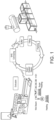
Figure 1 shows the process for producing an extruded package pet food product of the claimed invention. -
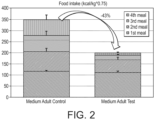
Figure 2 is a graphical representation of the food intake of Beagle dogs fed either the adult control product or the adult test product. The first, second, third and fourth meal food intake are measured from the bottom of the graph up. -
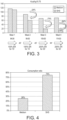
Figure 3 is a graphical representation of the meal consumed by Beagle dogs over a 12 hour period fed either the test food product (SHS) or control food product - (Medium). The bars to the left of the pair of bars is the control pet food product (Medium) and the bars on the right are the test pet food product (SHS).
-
Figure 4 is a graphical representation of the percent amount the Beagle dogs consumed of the test food product (SHS) versus the control food product (Medium). -
Figure 5 shows an image of the control pet food product versus the test food product. -
Figure 6a and Figure 6b is a graphical representation of the kinetic ingestion of the control pet food product versus the test pet food product in Schnauzer dogs. - The present invention can be described with reference to the following non-limiting examples.
- The aim of this trial was to assess the satietogenic effect of an extruded product according to the invention. The comparison is between a product with the same ingredients produced by different technologies and having the formula as set out below:
Test Product % as fed g/M cal H2O 25+/-0.5 84,6 PB 22,27 75,4 Fat 6,55 22,2 Crude Fiber 1,12 3,8 TDF 4,72 16,0 Starch 35,72 120,9 Ash 4,91 16,6 Energy URC 2006 (kcal/kg) 2954 Energy (dry weight) (kcal/kg) 2741 Control/Dry Product % as fed g/M cal H2O 9,5 24,6 PB 25,21 65,3 Fat 13,95 36,1 Crude Fiber 1,25 3,2 TDF 5,26 13,6 Starch 39,37 101,9 Ash 5,61 14,5 Energy URC 2006 (kcal/kg) 3863 Energy (kcal (dry weight) /kg) 3625 - The test product of the disclosure was produced using the following process:
Preconditioner settings included a product with 29% moisture. - The product was extracted under a temperature of around 125°C and a pressure of around 20 bar.
- The product was extracted into superheated steam atmosphere of between 120 - 140°C.
- The product had a round shape, with dimensions of 13 mm, thickness of 7 mm and a die plate which was round, having dimensions of 7.3 mm.
- The process is diagrammatically represented in
Figure 1 . - A two product ranking test was conducted. Two products were used according to the above formula
- The design used for the test was a random crossover test. Each week, dogs had three meals (kinetics) with one of the two diets (the test or the control). The following week, the alternative test or control diet was used
- A description of the test is set out as follows:
Day Saturday Sunday Monday Tuesday Wednesday Thursday Friday Product Satiety Satiety Test or control product Satiety Test or control product Satiety Test or control product Allowance 100 % Energy requirement 100% Energy requirement Kinetic 80% Energy requirement Kinetic 80% Energy requirement Kinetic for 15 min for 15 min for 30 min for 30 min
- The outcome was that there was a total food intake in kcal/kg075 at each kinetic.
- The test was carried out on 10 adult Beagle dogs. The dogs had access to unlimited water.
- The energy allowance was:
- 120 kcal/kg0,75 compounds to 100% of the Energy Requirement
- 240 kcal/kg0,75 corresponds to 200% of the Energy Requirement
- The results also included the fact that in terms of digestibility, no diarrhoea nor constipation was observed.
- The ingredients for the product, as described above were mixed and extruded. For the test product, the product was produced with at least a part of the product being conducted under super heated steam as described above. The control diet was dried and a coating of fat and palatants, typical of a dried kibble added (poultry fat).
- The results are shown in
Figure 2 . -
Figure 2 shows that the test diet is eaten at 43% less than the control diet. -
Figure 3 shows that the satiety effect appears after the first meal (34% decrease of meal consumption). -
Figure 4 shows that the superior palatability of the products confirm that the satiety cannot be explained by a less palatable product, but the combination of the low energy diet and a soft texture which tends to increase the time between meals - Further results are shown in
Figure 5 . -
Figure 5 shows the appearance of the test product pet food versus the control pet food product. - A two product ranking test was performed with 7 Schnauzer dogs. The dogs were scaled and polished two weeks before the beginning of the study. The dogs were fed the control diet over a 10 day period and then fed the test product for ten days. For both diet periods, the dental plaque deposit was brushed before the first meal and monitored after the meal on day 10 (percentage of surface plaque).
- Further results are shown in
Figure 6 . -
Figure 6 (A) and (B) shows that the dogs fed the test product pet food versus the control fed dogs took longer to ingest the pet food (significant increase of 19.1 %); thereby increasing the time for mastication and increasing satiety in dogs. - The products defined according to the invention induce satiety in dogs without any adverse effect on digestibility and palatability.
Claims (15)
- The use of an extruded packaged pet food product containing from over 15% to 30% moisture, from 11% up to 45% carbohydrate, fat and protein, an aw of over 0.7, a density in the range of 250 to 300 g/l and a pH below 4.5, for improving satiety in a pet animal.
- The use of an extruded pet food product as claimed in claim 1, wherein the extruded product has no ingredient applied after extrusion.
- The use of an extruded pet food product as claimed in claim 1 or claim 2, wherein the product has from 20% to 27% moisture.
- The use of an extruded pet food product as claimed in ciaim 1 or ciaim 2, wherein the extruded product has from 15% to 20% moisture.
- The use of an extruded pet food product as claimed in claim 1 or claim 2, wherein the extruded product has about 18% moisture.
- The use of an extruded pet food product according to any previous claim wherein the aw is greater than 0.8.
- The use of an extruded pet food product according to any previous claim, wherein the use in improving satiety includes prevention of weight gain and/or weight maintenance.
- The use of an extruded pet food product according to any previous claim, wherein the pet food product is for use in improving satiety in a pet dog or a pet cat.
- The use of an extruded pet food product according to any previous claim, wherein the carbohydrate is present at a level of from 13 to 17%.
- The use of an extruded pet food product as claimed according to any previous claim produced at least in part in the presence of super heated steam.
- The use of an extruded pet food product according to any previous claim wherein the product further comprises an acid.
- The use of an extruded pet food product according to claim 11, wherein the acid is present in the amount of from 0.5 to 10%.
- The use of an extruded pet food according to claims 11 to 12 wherein the acid is lactic acid.
- A method of improving satiety in an animal, the method comprising feeding an extruded packaged pet food product containing from over 15% to 30% moisture, from 11% up to 45% carbohydrate, fat and protein, an aw of over 0.9, a density in the range of 250 to 300 g/l and a pH below 4.5 to a pet animal.
- A method of improving satiety according to claim 14, wherein the pet animal is a pet cat or a pet dog.
Applications Claiming Priority (2)
| Application Number | Priority Date | Filing Date | Title |
|---|---|---|---|
| EP14306763 | 2014-11-04 | ||
| PCT/EP2015/075648 WO2016071372A1 (en) | 2014-11-04 | 2015-11-03 | Extruded pet food product |
Publications (2)
| Publication Number | Publication Date |
|---|---|
| EP3214946A1 EP3214946A1 (en) | 2017-09-13 |
| EP3214946B1 true EP3214946B1 (en) | 2024-01-17 |
Family
ID=51904931
Family Applications (1)
| Application Number | Title | Priority Date | Filing Date |
|---|---|---|---|
| EP15788081.6A Active EP3214946B1 (en) | 2014-11-04 | 2015-11-03 | Extruded pet food product |
Country Status (8)
| Country | Link |
|---|---|
| US (1) | US20170332667A1 (en) |
| EP (1) | EP3214946B1 (en) |
| JP (1) | JP6730274B2 (en) |
| CN (1) | CN107072253A (en) |
| AU (2) | AU2015341808A1 (en) |
| CA (1) | CA2966544A1 (en) |
| MX (1) | MX2017005755A (en) |
| WO (1) | WO2016071372A1 (en) |
Families Citing this family (8)
| Publication number | Priority date | Publication date | Assignee | Title |
|---|---|---|---|---|
| KR102936019B1 (en) | 2018-06-14 | 2026-03-10 | 마아즈, 인코오포레이티드 | Composition to support animals with cancer |
| CN115087361B (en) * | 2020-02-10 | 2024-07-09 | 马斯公司 | Expanded dry product for caloric restriction and satiety effect, its use and method of manufacture |
| EP4110079A1 (en) * | 2020-02-28 | 2023-01-04 | Roquette Freres | Composition comprising textured leguminous proteins, method for preparing same and use thereof |
| AU2023260810A1 (en) | 2022-04-27 | 2024-11-07 | Mars, Incorporated | Animal food composition comprising a source of glycyrrhizin |
| TW202423299A (en) | 2022-10-07 | 2024-06-16 | 美商瑪斯公司 | Small dog food composition |
| WO2025176874A1 (en) | 2024-02-22 | 2025-08-28 | Mars, Incorporated | Palatable animal food composition |
| WO2025215109A1 (en) | 2024-04-10 | 2025-10-16 | Mars, Incorporated | Food compositions for treating chronic inflammatory joint diseases |
| TW202606576A (en) | 2024-06-27 | 2026-02-16 | 美商瑪氏公司 | Low-fat food composition |
Citations (1)
| Publication number | Priority date | Publication date | Assignee | Title |
|---|---|---|---|---|
| US20060240169A1 (en) * | 2003-03-12 | 2006-10-26 | Heydtmann Patricia C | Puffed pet food for diet control |
Family Cites Families (18)
| Publication number | Priority date | Publication date | Assignee | Title |
|---|---|---|---|---|
| GB1456433A (en) * | 1973-06-25 | 1976-11-24 | Quaker Oats Co | Semi-moist cat food |
| US4011345A (en) * | 1975-11-26 | 1977-03-08 | The Quaker Oats Company | Expanded semi-moist pet food |
| US4022915A (en) * | 1976-06-28 | 1977-05-10 | National Can Corporation | Intermediate moisture food product and method of preparing the same |
| US4190679A (en) * | 1977-04-26 | 1980-02-26 | General Foods Corporation | Meaty textured pet food |
| US4330562A (en) * | 1979-12-31 | 1982-05-18 | Chb Foods, Inc. | Intermediate moisture stabilized chunky food product and method |
| US6630159B2 (en) * | 1999-02-23 | 2003-10-07 | The Procter & Gamble Company | Limiting weight gain of cats by feeding carbohydrate source that excludes rice |
| US7842329B2 (en) * | 2001-09-18 | 2010-11-30 | Nestec S.A. | Pet food product and method of manufacture |
| CA2462251C (en) * | 2001-10-05 | 2011-09-20 | Rubicon Scientific, Llc | Animal feeds including actives and methods of using same |
| AU2004245056B2 (en) * | 2003-06-03 | 2011-03-03 | Hill's Pet Nutrition, Inc. | High protein, low carbohydrate pet food composition comprising non-fermentable fiber |
| EP1981355B1 (en) * | 2006-01-23 | 2018-03-14 | Hill's Pet Nutrition, Inc. | Methods for reducing food intake and controlling the weight of animals |
| DE102007019696A1 (en) * | 2007-04-26 | 2008-10-30 | Mars Incorporated | Method and device for producing a food product |
| DE102007037606A1 (en) | 2007-08-07 | 2009-02-19 | Mars Inc. | Method and device for packaging a material in a packaging container |
| DE102007037607A1 (en) | 2007-08-07 | 2009-02-12 | Mars Incorporated | Method and apparatus for drying an extruded material |
| DE102007037605A1 (en) | 2007-08-07 | 2009-02-12 | Mars Incorporated | Method and device for drying a material |
| WO2010030614A2 (en) * | 2008-09-11 | 2010-03-18 | The Iams Company | Animal feed kibble with protein-based core and related methods |
| DE102009014737A1 (en) | 2009-03-25 | 2010-10-07 | Mars, Incorporated | Process and preparation for frying foodstuffs |
| DE102009015578A1 (en) * | 2009-03-30 | 2010-10-07 | Mars Incorporated | Extrusion and conditioning device |
| EP2583565A1 (en) * | 2011-10-21 | 2013-04-24 | Nestec S.A. | Use of whey protein micelles for enhancing energy expenditure and satiety |
-
2015
- 2015-11-03 EP EP15788081.6A patent/EP3214946B1/en active Active
- 2015-11-03 US US15/524,207 patent/US20170332667A1/en not_active Abandoned
- 2015-11-03 MX MX2017005755A patent/MX2017005755A/en unknown
- 2015-11-03 WO PCT/EP2015/075648 patent/WO2016071372A1/en not_active Ceased
- 2015-11-03 JP JP2017524444A patent/JP6730274B2/en active Active
- 2015-11-03 CA CA2966544A patent/CA2966544A1/en active Pending
- 2015-11-03 CN CN201580060071.3A patent/CN107072253A/en active Pending
- 2015-11-03 AU AU2015341808A patent/AU2015341808A1/en not_active Abandoned
-
2020
- 2020-03-05 AU AU2020201644A patent/AU2020201644B2/en active Active
Patent Citations (1)
| Publication number | Priority date | Publication date | Assignee | Title |
|---|---|---|---|---|
| US20060240169A1 (en) * | 2003-03-12 | 2006-10-26 | Heydtmann Patricia C | Puffed pet food for diet control |
Non-Patent Citations (3)
| Title |
|---|
| SCOTT V N ET AL: "INFLUENCE OF TEMPERATURE ON THE MEASUREMENT OF WATER ACTIVITY OF FOOD AND SALT SYSTEMS", JOURNAL OF FOOD SCIENCE, WILEY-BLACKWELL PUBLISHING, INC, US, vol. 48, no. 2, 1 January 1983 (1983-01-01), pages 552 - 554, XP002584537, ISSN: 0022-1147 * |
| VOS P T ET AL: "TECHNIQUE FOR MEASUREMENT OF WATER ACTIVITY IN THE HIGH AW RANGE", JOURNAL OF AGRICULTURAL AND FOOD CHEMISTRY, AMERICAN CHEMICAL SOCIETY, BOOKS AND JOURNALS DIVISION, US, vol. 22, no. 2, 1 January 1974 (1974-01-01), pages 327 - 330, XP001117899, ISSN: 0021-8561, DOI: 10.1021/JF60192A016 * |
| YU X ET AL: "Uncertainty analysis of hygrometer-obtained water activity measurements of saturated salt slurries and food materials", FOOD CHEMISTRY, ELSEVIER LTD, NL, vol. 115, no. 1, 1 July 2009 (2009-07-01), pages 214 - 226, XP025993141, ISSN: 0308-8146, [retrieved on 20090226], DOI: 10.1016/J.FOODCHEM.2008.12.001 * |
Also Published As
| Publication number | Publication date |
|---|---|
| JP6730274B2 (en) | 2020-07-29 |
| MX2017005755A (en) | 2017-07-28 |
| US20170332667A1 (en) | 2017-11-23 |
| AU2020201644B2 (en) | 2021-08-12 |
| JP2017537614A (en) | 2017-12-21 |
| CA2966544A1 (en) | 2016-05-12 |
| AU2020201644A1 (en) | 2020-03-19 |
| EP3214946A1 (en) | 2017-09-13 |
| WO2016071372A1 (en) | 2016-05-12 |
| CN107072253A (en) | 2017-08-18 |
| AU2015341808A1 (en) | 2017-06-29 |
Similar Documents
| Publication | Publication Date | Title |
|---|---|---|
| AU2020201644B2 (en) | Extruded pet food product | |
| AU2020201567B2 (en) | Extruded pet food product | |
| EP1887854B1 (en) | Methods for enhancing palatability of compositions for animal consumption | |
| JP7126589B2 (en) | Pet food composition and method | |
| US11992033B2 (en) | Pet food | |
| US4294857A (en) | Dog food compositions of improved palatability to dogs | |
| Gautam et al. | Scientific dog feeding for good health and its preparation: A review | |
| RU2222964C2 (en) | Fried delicate feeds for domestic animals (versions) and method of producing the same | |
| KR102491099B1 (en) | Snack for companion dog comprising powder of Locusta migratoria for improving hair quality | |
| JP2019536451A (en) | Pet food compositions and methods | |
| JP7181204B2 (en) | Pet food composition and method | |
| Tanprasertsuk et al. | Does the definition of human ultra-processed foods apply to dog and cat foods? A review of pet food processing techniques, their impact on health, and a call for pet food processing classification | |
| Niamnuy et al. | Pet foods and their physicochemical properties as affected by processing | |
| HK1242522A1 (en) | Extruded pet food product | |
| KR102809816B1 (en) | Manufacturing method of baked feed for pet using oven | |
| JP2007504832A (en) | Oleamide-containing composition for feed | |
| RU2675895C1 (en) | Way of obtaining “creamy mousse” for kittens at 4 weeks of age | |
| IE990687A1 (en) | A process for the preparation of pet food | |
| Mutayoba | ODP 012: Poultry Nutrition And Feeding. | |
| IE83318B1 (en) | A process for the preparation of pet food | |
| IES990688A2 (en) | A process for the preparation of pet food | |
| HK1258891A1 (en) | Pet food | |
| HK1242523A1 (en) | Extruded pet food product |
Legal Events
| Date | Code | Title | Description |
|---|---|---|---|
| STAA | Information on the status of an ep patent application or granted ep patent |
Free format text: STATUS: THE INTERNATIONAL PUBLICATION HAS BEEN MADE |
|
| PUAI | Public reference made under article 153(3) epc to a published international application that has entered the european phase |
Free format text: ORIGINAL CODE: 0009012 |
|
| STAA | Information on the status of an ep patent application or granted ep patent |
Free format text: STATUS: REQUEST FOR EXAMINATION WAS MADE |
|
| 17P | Request for examination filed |
Effective date: 20170602 |
|
| AK | Designated contracting states |
Kind code of ref document: A1 Designated state(s): AL AT BE BG CH CY CZ DE DK EE ES FI FR GB GR HR HU IE IS IT LI LT LU LV MC MK MT NL NO PL PT RO RS SE SI SK SM TR |
|
| AX | Request for extension of the european patent |
Extension state: BA ME |
|
| DAV | Request for validation of the european patent (deleted) | ||
| DAX | Request for extension of the european patent (deleted) | ||
| STAA | Information on the status of an ep patent application or granted ep patent |
Free format text: STATUS: EXAMINATION IS IN PROGRESS |
|
| 17Q | First examination report despatched |
Effective date: 20180726 |
|
| REG | Reference to a national code |
Ref country code: DE Ref legal event code: R079 Free format text: PREVIOUS MAIN CLASS: A23K0050000000 Ipc: A23K0050450000 Ref country code: DE Ref legal event code: R079 Ref document number: 602015087311 Country of ref document: DE Free format text: PREVIOUS MAIN CLASS: A23K0050000000 Ipc: A23K0050450000 |
|
| RIC1 | Information provided on ipc code assigned before grant |
Ipc: A23K 50/45 20160101AFI20210907BHEP |
|
| GRAP | Despatch of communication of intention to grant a patent |
Free format text: ORIGINAL CODE: EPIDOSNIGR1 |
|
| STAA | Information on the status of an ep patent application or granted ep patent |
Free format text: STATUS: GRANT OF PATENT IS INTENDED |
|
| INTG | Intention to grant announced |
Effective date: 20231017 |
|
| GRAS | Grant fee paid |
Free format text: ORIGINAL CODE: EPIDOSNIGR3 |
|
| GRAA | (expected) grant |
Free format text: ORIGINAL CODE: 0009210 |
|
| STAA | Information on the status of an ep patent application or granted ep patent |
Free format text: STATUS: THE PATENT HAS BEEN GRANTED |
|
| AK | Designated contracting states |
Kind code of ref document: B1 Designated state(s): AL AT BE BG CH CY CZ DE DK EE ES FI FR GB GR HR HU IE IS IT LI LT LU LV MC MK MT NL NO PL PT RO RS SE SI SK SM TR |
|
| REG | Reference to a national code |
Ref country code: GB Ref legal event code: FG4D |
|
| REG | Reference to a national code |
Ref country code: CH Ref legal event code: EP |
|
| REG | Reference to a national code |
Ref country code: DE Ref legal event code: R096 Ref document number: 602015087311 Country of ref document: DE |
|
| P01 | Opt-out of the competence of the unified patent court (upc) registered |
Effective date: 20231228 |
|
| REG | Reference to a national code |
Ref country code: IE Ref legal event code: FG4D |
|
| REG | Reference to a national code |
Ref country code: LT Ref legal event code: MG9D |
|
| REG | Reference to a national code |
Ref country code: NL Ref legal event code: MP Effective date: 20240117 |
|
| REG | Reference to a national code |
Ref country code: AT Ref legal event code: MK05 Ref document number: 1649929 Country of ref document: AT Kind code of ref document: T Effective date: 20240117 |
|
| PG25 | Lapsed in a contracting state [announced via postgrant information from national office to epo] |
Ref country code: NL Free format text: LAPSE BECAUSE OF FAILURE TO SUBMIT A TRANSLATION OF THE DESCRIPTION OR TO PAY THE FEE WITHIN THE PRESCRIBED TIME-LIMIT Effective date: 20240117 |
|
| PG25 | Lapsed in a contracting state [announced via postgrant information from national office to epo] |
Ref country code: NL Free format text: LAPSE BECAUSE OF FAILURE TO SUBMIT A TRANSLATION OF THE DESCRIPTION OR TO PAY THE FEE WITHIN THE PRESCRIBED TIME-LIMIT Effective date: 20240117 |
|
| PG25 | Lapsed in a contracting state [announced via postgrant information from national office to epo] |
Ref country code: IS Free format text: LAPSE BECAUSE OF FAILURE TO SUBMIT A TRANSLATION OF THE DESCRIPTION OR TO PAY THE FEE WITHIN THE PRESCRIBED TIME-LIMIT Effective date: 20240517 |
|
| PG25 | Lapsed in a contracting state [announced via postgrant information from national office to epo] |
Ref country code: LT Free format text: LAPSE BECAUSE OF FAILURE TO SUBMIT A TRANSLATION OF THE DESCRIPTION OR TO PAY THE FEE WITHIN THE PRESCRIBED TIME-LIMIT Effective date: 20240117 |
|
| PG25 | Lapsed in a contracting state [announced via postgrant information from national office to epo] |
Ref country code: GR Free format text: LAPSE BECAUSE OF FAILURE TO SUBMIT A TRANSLATION OF THE DESCRIPTION OR TO PAY THE FEE WITHIN THE PRESCRIBED TIME-LIMIT Effective date: 20240418 |
|
| PG25 | Lapsed in a contracting state [announced via postgrant information from national office to epo] |
Ref country code: RS Free format text: LAPSE BECAUSE OF FAILURE TO SUBMIT A TRANSLATION OF THE DESCRIPTION OR TO PAY THE FEE WITHIN THE PRESCRIBED TIME-LIMIT Effective date: 20240417 Ref country code: HR Free format text: LAPSE BECAUSE OF FAILURE TO SUBMIT A TRANSLATION OF THE DESCRIPTION OR TO PAY THE FEE WITHIN THE PRESCRIBED TIME-LIMIT Effective date: 20240117 |
|
| PG25 | Lapsed in a contracting state [announced via postgrant information from national office to epo] |
Ref country code: ES Free format text: LAPSE BECAUSE OF FAILURE TO SUBMIT A TRANSLATION OF THE DESCRIPTION OR TO PAY THE FEE WITHIN THE PRESCRIBED TIME-LIMIT Effective date: 20240117 |
|
| PG25 | Lapsed in a contracting state [announced via postgrant information from national office to epo] |
Ref country code: AT Free format text: LAPSE BECAUSE OF FAILURE TO SUBMIT A TRANSLATION OF THE DESCRIPTION OR TO PAY THE FEE WITHIN THE PRESCRIBED TIME-LIMIT Effective date: 20240117 |
|
| PG25 | Lapsed in a contracting state [announced via postgrant information from national office to epo] |
Ref country code: RS Free format text: LAPSE BECAUSE OF FAILURE TO SUBMIT A TRANSLATION OF THE DESCRIPTION OR TO PAY THE FEE WITHIN THE PRESCRIBED TIME-LIMIT Effective date: 20240417 Ref country code: NO Free format text: LAPSE BECAUSE OF FAILURE TO SUBMIT A TRANSLATION OF THE DESCRIPTION OR TO PAY THE FEE WITHIN THE PRESCRIBED TIME-LIMIT Effective date: 20240417 Ref country code: LT Free format text: LAPSE BECAUSE OF FAILURE TO SUBMIT A TRANSLATION OF THE DESCRIPTION OR TO PAY THE FEE WITHIN THE PRESCRIBED TIME-LIMIT Effective date: 20240117 Ref country code: IS Free format text: LAPSE BECAUSE OF FAILURE TO SUBMIT A TRANSLATION OF THE DESCRIPTION OR TO PAY THE FEE WITHIN THE PRESCRIBED TIME-LIMIT Effective date: 20240517 Ref country code: HR Free format text: LAPSE BECAUSE OF FAILURE TO SUBMIT A TRANSLATION OF THE DESCRIPTION OR TO PAY THE FEE WITHIN THE PRESCRIBED TIME-LIMIT Effective date: 20240117 Ref country code: GR Free format text: LAPSE BECAUSE OF FAILURE TO SUBMIT A TRANSLATION OF THE DESCRIPTION OR TO PAY THE FEE WITHIN THE PRESCRIBED TIME-LIMIT Effective date: 20240418 Ref country code: FI Free format text: LAPSE BECAUSE OF FAILURE TO SUBMIT A TRANSLATION OF THE DESCRIPTION OR TO PAY THE FEE WITHIN THE PRESCRIBED TIME-LIMIT Effective date: 20240117 Ref country code: ES Free format text: LAPSE BECAUSE OF FAILURE TO SUBMIT A TRANSLATION OF THE DESCRIPTION OR TO PAY THE FEE WITHIN THE PRESCRIBED TIME-LIMIT Effective date: 20240117 Ref country code: BG Free format text: LAPSE BECAUSE OF FAILURE TO SUBMIT A TRANSLATION OF THE DESCRIPTION OR TO PAY THE FEE WITHIN THE PRESCRIBED TIME-LIMIT Effective date: 20240117 Ref country code: AT Free format text: LAPSE BECAUSE OF FAILURE TO SUBMIT A TRANSLATION OF THE DESCRIPTION OR TO PAY THE FEE WITHIN THE PRESCRIBED TIME-LIMIT Effective date: 20240117 |
|
| PG25 | Lapsed in a contracting state [announced via postgrant information from national office to epo] |
Ref country code: PT Free format text: LAPSE BECAUSE OF FAILURE TO SUBMIT A TRANSLATION OF THE DESCRIPTION OR TO PAY THE FEE WITHIN THE PRESCRIBED TIME-LIMIT Effective date: 20240517 Ref country code: PL Free format text: LAPSE BECAUSE OF FAILURE TO SUBMIT A TRANSLATION OF THE DESCRIPTION OR TO PAY THE FEE WITHIN THE PRESCRIBED TIME-LIMIT Effective date: 20240117 |
|
| PG25 | Lapsed in a contracting state [announced via postgrant information from national office to epo] |
Ref country code: SE Free format text: LAPSE BECAUSE OF FAILURE TO SUBMIT A TRANSLATION OF THE DESCRIPTION OR TO PAY THE FEE WITHIN THE PRESCRIBED TIME-LIMIT Effective date: 20240117 Ref country code: PT Free format text: LAPSE BECAUSE OF FAILURE TO SUBMIT A TRANSLATION OF THE DESCRIPTION OR TO PAY THE FEE WITHIN THE PRESCRIBED TIME-LIMIT Effective date: 20240517 Ref country code: PL Free format text: LAPSE BECAUSE OF FAILURE TO SUBMIT A TRANSLATION OF THE DESCRIPTION OR TO PAY THE FEE WITHIN THE PRESCRIBED TIME-LIMIT Effective date: 20240117 Ref country code: LV Free format text: LAPSE BECAUSE OF FAILURE TO SUBMIT A TRANSLATION OF THE DESCRIPTION OR TO PAY THE FEE WITHIN THE PRESCRIBED TIME-LIMIT Effective date: 20240117 |
|
| PG25 | Lapsed in a contracting state [announced via postgrant information from national office to epo] |
Ref country code: DK Free format text: LAPSE BECAUSE OF FAILURE TO SUBMIT A TRANSLATION OF THE DESCRIPTION OR TO PAY THE FEE WITHIN THE PRESCRIBED TIME-LIMIT Effective date: 20240117 |
|
| PG25 | Lapsed in a contracting state [announced via postgrant information from national office to epo] |
Ref country code: SM Free format text: LAPSE BECAUSE OF FAILURE TO SUBMIT A TRANSLATION OF THE DESCRIPTION OR TO PAY THE FEE WITHIN THE PRESCRIBED TIME-LIMIT Effective date: 20240117 |
|
| REG | Reference to a national code |
Ref country code: DE Ref legal event code: R097 Ref document number: 602015087311 Country of ref document: DE |
|
| PG25 | Lapsed in a contracting state [announced via postgrant information from national office to epo] |
Ref country code: CZ Free format text: LAPSE BECAUSE OF FAILURE TO SUBMIT A TRANSLATION OF THE DESCRIPTION OR TO PAY THE FEE WITHIN THE PRESCRIBED TIME-LIMIT Effective date: 20240117 Ref country code: EE Free format text: LAPSE BECAUSE OF FAILURE TO SUBMIT A TRANSLATION OF THE DESCRIPTION OR TO PAY THE FEE WITHIN THE PRESCRIBED TIME-LIMIT Effective date: 20240117 |
|
| PG25 | Lapsed in a contracting state [announced via postgrant information from national office to epo] |
Ref country code: SK Free format text: LAPSE BECAUSE OF FAILURE TO SUBMIT A TRANSLATION OF THE DESCRIPTION OR TO PAY THE FEE WITHIN THE PRESCRIBED TIME-LIMIT Effective date: 20240117 |
|
| PG25 | Lapsed in a contracting state [announced via postgrant information from national office to epo] |
Ref country code: SM Free format text: LAPSE BECAUSE OF FAILURE TO SUBMIT A TRANSLATION OF THE DESCRIPTION OR TO PAY THE FEE WITHIN THE PRESCRIBED TIME-LIMIT Effective date: 20240117 Ref country code: SK Free format text: LAPSE BECAUSE OF FAILURE TO SUBMIT A TRANSLATION OF THE DESCRIPTION OR TO PAY THE FEE WITHIN THE PRESCRIBED TIME-LIMIT Effective date: 20240117 Ref country code: RO Free format text: LAPSE BECAUSE OF FAILURE TO SUBMIT A TRANSLATION OF THE DESCRIPTION OR TO PAY THE FEE WITHIN THE PRESCRIBED TIME-LIMIT Effective date: 20240117 Ref country code: EE Free format text: LAPSE BECAUSE OF FAILURE TO SUBMIT A TRANSLATION OF THE DESCRIPTION OR TO PAY THE FEE WITHIN THE PRESCRIBED TIME-LIMIT Effective date: 20240117 Ref country code: DK Free format text: LAPSE BECAUSE OF FAILURE TO SUBMIT A TRANSLATION OF THE DESCRIPTION OR TO PAY THE FEE WITHIN THE PRESCRIBED TIME-LIMIT Effective date: 20240117 Ref country code: CZ Free format text: LAPSE BECAUSE OF FAILURE TO SUBMIT A TRANSLATION OF THE DESCRIPTION OR TO PAY THE FEE WITHIN THE PRESCRIBED TIME-LIMIT Effective date: 20240117 |
|
| PLBE | No opposition filed within time limit |
Free format text: ORIGINAL CODE: 0009261 |
|
| STAA | Information on the status of an ep patent application or granted ep patent |
Free format text: STATUS: NO OPPOSITION FILED WITHIN TIME LIMIT |
|
| PG25 | Lapsed in a contracting state [announced via postgrant information from national office to epo] |
Ref country code: IT Free format text: LAPSE BECAUSE OF FAILURE TO SUBMIT A TRANSLATION OF THE DESCRIPTION OR TO PAY THE FEE WITHIN THE PRESCRIBED TIME-LIMIT Effective date: 20240117 |
|
| 26N | No opposition filed |
Effective date: 20241018 |
|
| PG25 | Lapsed in a contracting state [announced via postgrant information from national office to epo] |
Ref country code: IT Free format text: LAPSE BECAUSE OF FAILURE TO SUBMIT A TRANSLATION OF THE DESCRIPTION OR TO PAY THE FEE WITHIN THE PRESCRIBED TIME-LIMIT Effective date: 20240117 |
|
| PG25 | Lapsed in a contracting state [announced via postgrant information from national office to epo] |
Ref country code: SI Free format text: LAPSE BECAUSE OF FAILURE TO SUBMIT A TRANSLATION OF THE DESCRIPTION OR TO PAY THE FEE WITHIN THE PRESCRIBED TIME-LIMIT Effective date: 20240117 |
|
| REG | Reference to a national code |
Ref country code: CH Ref legal event code: PL |
|
| PG25 | Lapsed in a contracting state [announced via postgrant information from national office to epo] |
Ref country code: MC Free format text: LAPSE BECAUSE OF FAILURE TO SUBMIT A TRANSLATION OF THE DESCRIPTION OR TO PAY THE FEE WITHIN THE PRESCRIBED TIME-LIMIT Effective date: 20240117 |
|
| PG25 | Lapsed in a contracting state [announced via postgrant information from national office to epo] |
Ref country code: LU Free format text: LAPSE BECAUSE OF NON-PAYMENT OF DUE FEES Effective date: 20241103 |
|
| REG | Reference to a national code |
Ref country code: CH Ref legal event code: PL |
|
| PG25 | Lapsed in a contracting state [announced via postgrant information from national office to epo] |
Ref country code: CH Free format text: LAPSE BECAUSE OF NON-PAYMENT OF DUE FEES Effective date: 20241130 |
|
| REG | Reference to a national code |
Ref country code: BE Ref legal event code: MM Effective date: 20241130 |
|
| PG25 | Lapsed in a contracting state [announced via postgrant information from national office to epo] |
Ref country code: BE Free format text: LAPSE BECAUSE OF NON-PAYMENT OF DUE FEES Effective date: 20241130 |
|
| PG25 | Lapsed in a contracting state [announced via postgrant information from national office to epo] |
Ref country code: IE Free format text: LAPSE BECAUSE OF NON-PAYMENT OF DUE FEES Effective date: 20241103 |
|
| PGFP | Annual fee paid to national office [announced via postgrant information from national office to epo] |
Ref country code: DE Payment date: 20251128 Year of fee payment: 11 |
|
| PGFP | Annual fee paid to national office [announced via postgrant information from national office to epo] |
Ref country code: GB Payment date: 20251127 Year of fee payment: 11 |
|
| PGFP | Annual fee paid to national office [announced via postgrant information from national office to epo] |
Ref country code: FR Payment date: 20251125 Year of fee payment: 11 |
|
| PG25 | Lapsed in a contracting state [announced via postgrant information from national office to epo] |
Ref country code: HU Free format text: LAPSE BECAUSE OF FAILURE TO SUBMIT A TRANSLATION OF THE DESCRIPTION OR TO PAY THE FEE WITHIN THE PRESCRIBED TIME-LIMIT; INVALID AB INITIO Effective date: 20151103 |
|
| PG25 | Lapsed in a contracting state [announced via postgrant information from national office to epo] |
Ref country code: CY Free format text: LAPSE BECAUSE OF FAILURE TO SUBMIT A TRANSLATION OF THE DESCRIPTION OR TO PAY THE FEE WITHIN THE PRESCRIBED TIME-LIMIT; INVALID AB INITIO Effective date: 20151103 |