EP3214817A1 - Phishing page detection method and device - Google Patents
Phishing page detection method and device Download PDFInfo
- Publication number
- EP3214817A1 EP3214817A1 EP15902847.1A EP15902847A EP3214817A1 EP 3214817 A1 EP3214817 A1 EP 3214817A1 EP 15902847 A EP15902847 A EP 15902847A EP 3214817 A1 EP3214817 A1 EP 3214817A1
- Authority
- EP
- European Patent Office
- Prior art keywords
- page
- phishing
- current page
- server
- determining
- Prior art date
- Legal status (The legal status is an assumption and is not a legal conclusion. Google has not performed a legal analysis and makes no representation as to the accuracy of the status listed.)
- Granted
Links
Images



Classifications
-
- H—ELECTRICITY
- H04—ELECTRIC COMMUNICATION TECHNIQUE
- H04L—TRANSMISSION OF DIGITAL INFORMATION, e.g. TELEGRAPHIC COMMUNICATION
- H04L63/00—Network architectures or network communication protocols for network security
- H04L63/14—Network architectures or network communication protocols for network security for detecting or protecting against malicious traffic
- H04L63/1441—Countermeasures against malicious traffic
- H04L63/1483—Countermeasures against malicious traffic service impersonation, e.g. phishing, pharming or web spoofing
-
- G—PHYSICS
- G06—COMPUTING OR CALCULATING; COUNTING
- G06F—ELECTRIC DIGITAL DATA PROCESSING
- G06F16/00—Information retrieval; Database structures therefor; File system structures therefor
- G06F16/90—Details of database functions independent of the retrieved data types
- G06F16/95—Retrieval from the web
- G06F16/954—Navigation, e.g. using categorised browsing
-
- H—ELECTRICITY
- H04—ELECTRIC COMMUNICATION TECHNIQUE
- H04L—TRANSMISSION OF DIGITAL INFORMATION, e.g. TELEGRAPHIC COMMUNICATION
- H04L63/00—Network architectures or network communication protocols for network security
- H04L63/08—Network architectures or network communication protocols for network security for authentication of entities
-
- H—ELECTRICITY
- H04—ELECTRIC COMMUNICATION TECHNIQUE
- H04L—TRANSMISSION OF DIGITAL INFORMATION, e.g. TELEGRAPHIC COMMUNICATION
- H04L63/00—Network architectures or network communication protocols for network security
- H04L63/14—Network architectures or network communication protocols for network security for detecting or protecting against malicious traffic
- H04L63/1408—Network architectures or network communication protocols for network security for detecting or protecting against malicious traffic by monitoring network traffic
- H04L63/1425—Traffic logging, e.g. anomaly detection
Definitions
- the present disclosure relates to an Internet page, and specifically to a method and a system for detecting a phishing page.
- Phishing website pages are identical to interfaces of true websites.
- One kind of fraud may include asking visitors to submit privacy information such as bank account numbers and passwords by attracting users with information of winning a lottery.
- Another kind of fraud is to defraud bank card information or Alipay account numbers of users by simulating online payment pages such as Taobao and ICBC. Frequent appearance of the phishing websites causes great damage to privacy and asset securities of network users.
- existing methods for detecting a phishing page have the disadvantages of short effective time and narrow usable range, and thus cannot effectively guarantee the security of network environment for the users.
- the present disclosure provides a method and system for detecting a phishing page based on feedback of detection data.
- a method for detecting a phishing page comprising: intercepting user data attempted to be submitted by a current page to a server; constructing detection data having a structure identical to a structure of the user data, content of the detection data being different from content of the user data; submitting the detection data to the server; and determining whether the current page is a phishing page based on a response from the server.
- the determining whether the current page is a phishing page based on a response from the server comprises: determining that the response from the server is a success in authenticating the detection data; and determining that the current page is a phishing page.
- the determining whether the current page is a phishing page based on a response from the server comprises: determining that the response from the server is a failure in authenticating the detection data; constructing second detection data having a structure identical to the structure of the user data but having content different from the content of the user data and the content of the detection data; submitting the second detection data to the server; and determining that the current page is a phishing page when the response from the server is a success in authenticating the second detection data.
- the method further comprises: determining that the current page is a suspected phishing page; and intercepting the user data attempted by the current page to submit to the server when determining that the current page is the suspected phishing page.
- the determining that the current page is a suspected phishing page comprises: determining that the user data attempted by the current page to submit to the server is a plaintext.
- the determining that the current page is a suspected phishing page comprises: determining a web address of an official website of the current page based on a content of the current page; and determining that the current page is a suspected phishing page when determining that a web address of the current page is inconsistent with the determined web address of the official website.
- the user data comprise a username and a password.
- the method further comprises: displaying the official website to a user based on the determining that the current page is a phishing page.
- the method further comprises: providing a user with a risk warning based on the determining the current page being a phishing page; receiving a feedback on the risk warning from the user; generating a phishing website database based on the feedback; and determining whether the current page is a phishing website by using the phishing website database, before the intercepting user data attempted by the current page to submit to a server.
- a system for detecting a phishing page comprising: an intercepting device, configured to intercept user data attempted to be submitted by a current page to a server; a detection data constructing device, configured to construct detection data having a structure identical to a structure of the user data, content of the detection data being different from content of the user data; a submitting device, configured to submit the detection data to the server; and a determining device, configured to determine whether the current page is a phishing page based on a response from the server.
- the method and the system for detecting a phishing page provided by the present disclosure, it is determined whether the current page is a phishing page by intercepting and replacing user data submitted by a client to a server and by determining a response from the server. In this way, accurately and immediately detecting a phishing page can be achieved, thereby providing a safe network environment for the user, and thus effectively protecting privacies and assets of the user.
- FIG. 1 is an exemplary architecture diagram of a system 100 to which the method or system for detecting a phishing page according to the present disclosure may be applied.
- the system architecture 100 may include client devices 101, 102 and 103, a network 104 and a server 105.
- the network 104 serves as a medium providing a communication link between the client devices 101, 102 and 103 and the server 105.
- the network 104 may include various types of connections, such as wired or wireless communication links, or optical fibers.
- the user may use the client devices 101, 102 and 103 to interact with the server 105 through the network 104, in order to transmit or receive messages, etc.
- Various webpage browsers and client applications may be installed on the client devices 101, 102 and 103.
- the client devices 101, 102, and 103 may be various electronic devices, including but not limited to, a smart phone, a tablet computer, a laptop portable computer, a desktop computer, and the like.
- the server 105 may be a server providing various services, for example, for login on a webpage or an application, a bank account and payment operations.
- Fig. 1 the numbers of the client devices, the network and the server in Fig. 1 are merely illustrative. Any number of client devices, networks and servers may be provided based on the actual requirements.
- the method for detecting a phishing page may be executed by the client devices 101, 102, or 103 separately or by the client devices 101, 102, and 103 and the server 105 together. Accordingly, the system for detecting a phishing page is generally set in the client devices 101, 102, and 103.
- FIG. 2 which illustrates a method 200 for detecting a phishing page according to an embodiment of the present disclosure.
- Step 202 user data attempted to be submitted by a current page to a server is intercepted.
- Step 204 detection data having a structure identical to a structure of the user data is constructed. The content of the detection data is different from content of the user data.
- Step 206 the detection data is submitted to the server.
- Step 208 it is determined whether the current page is a phishing page based on a response from the server.
- the user data may comprise various fields related to the user, for example, including but not limited to: a username, a registered e-mail box, a mobile phone number, a passphrase such as a password and a login verification code.
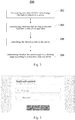
- FIG. 3 exemplarily illustrates a schematic diagram of a phishing page, wherein the login page comprises fields of "Account Number” and "Password". Therefore, the user data in the embodiment as shown in FIG. 3 comprise two fields, namely, an account number and a password.
- an operation of submitting a data packet to the server may be triggered.
- the user data are submitted to the server by using a POST action.
- the POST action may include, for example, constructing data based on the content filled in by the user and submitting the constructed data to the server using, for example, an HTTP protocol.
- an electronic device for example, the clients 101, 102 and 103 in FIG. 1 conducts the operation of submitting a data packet to the server, for example, the POST action being intercepted.
- the electronic device constructs detection data identical in structure but different in content from the intercepted user data.
- the detection data identical in username but different in password from the user data may be constructed, or the detection data different in username and password from the user data may be constructed.
- the length of each field of the constructed detection data may respectively correspond to that of each filed of the user data.
- the electronic device for example, the clients 101, 102 and 103 in FIG. 1
- the server such as the server 105 in FIG. 1
- Step 208 the electronic device (for example, the clients 101, 102 and 103 in FIG. 1 ) determines whether the current page is a phishing page based on a response of the server (such as the server 105 in FIG. 1 ). Determining corresponding phishing pages based on different responses of the server will be specifically discussed hereinafter.
- Case I the response of the server is a success in authenticating the detection data.
- FIG. 4 illustrates a method 400 for detecting a phishing page according to an embodiment of the present disclosure.
- Steps 402-406 of the method 400 are the same as Steps 202-206 of the method 200, and thus are not repeated herein.
- Step 408 it is determined that the response from the server is a success in authenticating the detection data; and in Step 410, it is determined that the current page is a phishing page.
- the response of the server succeeding in authenticating the detection data may be texts such as "Login succeeded” or "De-encapsulation succeeded” displayed on the page. Since the detection data comprise each field counterfeited based on the user data, certainly the detection data fail in authentication for the official website. Therefore, the current page may be determined as the phishing page at this point.
- Case II the response of the server is a failure in authenticating the detection data.
- Some phishing pages may induce the user for a secondary input by prompting information error after the user enters the account number information and the password. This prompt may cause the user to check the entered information, thereby enhancing a success rate of phishing. Therefore, the present disclosure proposes a method for detecting a page for the second time.
- FIG. 5 illustrates a method 500 for detecting a phishing page based on an implementation of the present disclosure.
- Steps 502-506 of the method 500 are the same as Steps 202-206 of the method 200, and thus are not repeated herein.
- Step 508 it is determined that the response from the server is a failure in authenticating the detection data.
- Step 510 second detection data having a structure identical to that of the user data but having a content different from that of both the user data and the detection data is constructed.
- the second detection data is submitted to the server.
- Step 514 it is determined whether the response from the server is a success in authenticating the second detection data.
- the current page is determined as a phishing page based on the determination result of Step 514 being "yes".
- multiple detections such as a third detection or a fourth detection may be further performed in a similar method.
- FIG. 6 illustrates a method 600 for detecting a phishing page based on an implementation of the present disclosure.
- Steps 602-606 of the method 600 are the same as Steps 202-206 of the method 200, and thus are not repeated herein.
- the method 600 further comprises Step 601: determining whether the current page is a suspected phishing page.
- the determining whether the current page is a suspected phishing page may be performed by determining whether the user data attempted by the current page to submit to the server is a plaintext.
- the user data attempted by the current page to submit to the server is a plaintext, that is, when data of the user monitored in a browser is consistent with data of POST, the current page may be determined as the suspected phishing page.
- the determining that the current page is a suspected phishing page also may be performed by following steps: determining a web address of an official website of the current page based on a content of the current page; and determining that the current page is a suspected phishing page when determining that a web address of the current page is inconsistent with the determined web address of the official website.
- a page is determined as a login page when it is found that a page title contains word "XX login", or "value" of an "input" tag in a webpage structure is set as words such as "account number" and "password” or a page contains a button "Login”.
- the web address of the current page may be compared with the official website of the QQ mailbox.
- the current page is determined as the suspected phishing page when the comparison result shows a discrepancy.
- the method may further comprise: displaying the official website to a user based on the determining that the current page is a phishing page. For example, when the current page of the user is a phishing website counterfeiting an electronic bank of a certain industrial and commercial bank, the official website of the certain industrial and commercial bank may be displayed to the user after the current page is determined as the phishing page using the method 200, 400, 500 or 600.
- FIG. 7 illustrates a method 700 for detecting a phishing page according to an embodiment of the present disclosure, comprising: Step 702: providing a user with a risk warning based on the determining that the current page is a phishing page; Step 704: receiving a feedback on the risk warning from the user; Step 706: generating a phishing website database based on the feedback; and Step 708: determining whether the current page is a phishing website by using the phishing website database, before the intercepting user data attempted by a current page to submit to a server.
- each feedback from each user may be uploaded to a cloud, and a contrastive analysis is made on these feedbacks to form pages determined as phishing pages into the phishing website database.
- the current page may be first compared with the phishing website database, and the current page is directly determined as a phishing page when there is a matching record.
- the various aforementioned methods are performed when the current page is absent from the phishing website database.
- the user feeds back and uploads the web address of the current page to the cloud, so that the current page determined as the phishing page is added into the phishing website database.
- the present disclosure provides an embodiment of a system for detecting a phishing page.
- the apparatus embodiment corresponds to the method embodiment as shown in FIG. 2 , and the apparatus of the system 800 may be specifically used in various electronic devices.
- system 800 for detecting a phishing page further comprises some other known structures such as a processor or a memory. These known structures are not shown in FIG. 8 in order to not unnecessarily obscure the embodiments of the present disclosure.
- the system 800 may comprise: an intercepting device, configured to intercept user data attempted by a current page to submit to a server; a detection data constructing device, configured to construct detection data having a structure identical to that of the user data, a content of the detection data being different from that of the user data; a submitting device, configured to submit the detection data to the server; and a determining device, configured to determine whether the current page is a phishing page based on a response from the server.
- Specific operations of the intercepting device 810, the detection data constructing device 820, the submitting device 830 and the determining device 840 are the same as Steps 202-208 of the method 200, and thus a detailed description thereof is omitted.
- the intercepting device 810, the detection data constructing device 820, the submitting device 830 and the determining device 840 may be positioned at the client, for example, embedded as plugins into the browser of the user, or installed as firewall software into a computer of a client.
- the system 800 for detecting a phishing page may further comprise an official website displaying device, configured to display the official website to a user based on the determining that the current page is the phishing page.
- the system 800 for detecting a phishing page may further comprise a phishing website database generating device, configured to: provide a user with a risk warning based on the determining that the current page is a phishing page; receive a feedback on the risk warning from the user; generate a phishing website database based on the feedback; and determine whether the current page is a phishing website by using the phishing website database, before the intercepting user data attempted by the current page to submit to a server.
- a phishing website database generating device configured to: provide a user with a risk warning based on the determining that the current page is a phishing page; receive a feedback on the risk warning from the user; generate a phishing website database based on the feedback; and determine whether the current page is a phishing website by using the phishing website database, before the intercepting user data attempted by the current page to submit to a server.
- the phishing website database generating device correspond to the method 700 as described above, and thus is not described herein again.
- FIG. 9 a schematic structural diagram of a computer system 900 adapted to implement a server of the embodiments of the present disclosure is shown.
- the computer system 900 includes a central processing unit (CPU) 901, which may execute various appropriate actions and processes in accordance with a program stored in a read-only memory (ROM) 902 or a program loaded into a random access memory (RAM) 903 from a storage portion 908.
- the RAM 903 also stores various programs and data required by operations of the system 900.
- the CPU 901, the ROM 902 and the RAM 903 are connected to each other through a bus 904.
- An input/output (I/O) interface 905 is also connected to the bus 904.
- the following components are connected to the I/O interface 905: an input portion 906 including a keyboard, a mouse etc.; an output portion 907 comprising a cathode ray tube (CRT), a liquid crystal display device (LCD), a speaker etc.; a storage portion 908 including a hard disk and the like; and a communication portion 909 comprising a network interface card, such as a LAN card and a modem.
- the communication portion 909 performs communication processes via a network, such as the Internet.
- a driver 910 is also connected to the I/O interface 905 as required.
- a removable medium 911 such as a magnetic disk, an optical disk, a magneto-optical disk, and a semiconductor memory, may be installed on the driver 910, to facilitate the retrieval of a computer program from the removable medium 911, and the installation thereof on the storage portion 908 as needed.
- an embodiment of the present disclosure includes a computer program product, which comprises a computer program that is tangibly embedded in a machine-readable medium.
- the computer program comprises program codes for executing the method as illustrated in the flow chart.
- the computer program may be downloaded and installed from a network via the communication portion 909, and/or may be installed from the removable media 911.
- the computer program when executed by the CPU 901, implements the functions as defined by the methods of the present disclosure.
- each block in the flow charts and block diagrams may represent a module, a program segment, or a code portion.
- the module, the program segment, or the code portion comprises one or more executable instructions for implementing the specified logical function.
- the functions denoted by the blocks may occur in a sequence different from the sequences shown in the figures. For example, in practice, two blocks in succession may be executed, depending on the involved functionalities, substantially in parallel, or in a reverse sequence.
- each block in the block diagrams and/or the flow charts and/or a combination of the blocks may be implemented by a dedicated hardware-based system executing specific functions or operations, or by a combination of a dedicated hardware and computer instructions.
- the units involved in the embodiments of the present disclosure may be implemented by way of software or hardware.
- the described units may also be provided in a processor, for example, described as: a processor, comprising an intercepting unit, a detection data constructing unit, a submitting unit, and a determining unit, where the names of these units or modules are not considered as a limitation to the units or modules.
- the intercepting unit may also be described as "a unit for intercepting user data attempted by a current page to submit to a server".
- the present disclosure further provides a non-transitory computer storage medium.
- the non-transitory computer storage medium may be the non-transitory computer storage medium included in the apparatus in the above embodiments, or a stand-alone non-transitory computer storage medium which has not been assembled into the apparatus.
- the non-transitory computer storage medium stores one or more programs. The one or more programs, when executed by one or more processors, cause the processors to implement the method for detecting a phishing page described in the present application.
- inventive scope of the present disclosure is not limited to the technical solutions formed by the particular combinations of the above technical features.
- inventive scope should also cover other technical solutions formed by any combinations of the above technical features or equivalent features thereof without departing from the concept of the invention, such as, technical solutions formed by replacing the features as disclosed in the present disclosure with (but not limited to), technical features with similar functions.
Landscapes
- Engineering & Computer Science (AREA)
- Computer Security & Cryptography (AREA)
- General Engineering & Computer Science (AREA)
- Computer Hardware Design (AREA)
- Computing Systems (AREA)
- Computer Networks & Wireless Communication (AREA)
- Signal Processing (AREA)
- Databases & Information Systems (AREA)
- Theoretical Computer Science (AREA)
- Remote Sensing (AREA)
- Data Mining & Analysis (AREA)
- Physics & Mathematics (AREA)
- General Physics & Mathematics (AREA)
- Radar, Positioning & Navigation (AREA)
- Information Transfer Between Computers (AREA)
- Management, Administration, Business Operations System, And Electronic Commerce (AREA)
Abstract
Description
- The present disclosure claims the benefit and priority of
Chinese Patent Application No. 201510542777.5 filed on August 28, 2015 - The present disclosure relates to an Internet page, and specifically to a method and a system for detecting a phishing page.
- With the explosive growth of Internet data, there is a growing number of phishing websites stealing private information such as users submitted bank account numbers and passwords. Phishing website pages are identical to interfaces of true websites. One kind of fraud may include asking visitors to submit privacy information such as bank account numbers and passwords by attracting users with information of winning a lottery. Another kind of fraud is to defraud bank card information or Alipay account numbers of users by simulating online payment pages such as Taobao and ICBC. Frequent appearance of the phishing websites causes great damage to privacy and asset securities of network users. However, existing methods for detecting a phishing page have the disadvantages of short effective time and narrow usable range, and thus cannot effectively guarantee the security of network environment for the users.
- In view of the above disadvantages or defects in the prior art, it is expected to provide a solution for more effectively and accurately detecting a phishing page. For the aforementioned one or more objectives, the present disclosure provides a method and system for detecting a phishing page based on feedback of detection data.
- According to one aspect of the present disclosure, a method for detecting a phishing page is provided, comprising: intercepting user data attempted to be submitted by a current page to a server; constructing detection data having a structure identical to a structure of the user data, content of the detection data being different from content of the user data; submitting the detection data to the server; and determining whether the current page is a phishing page based on a response from the server.
- In an embodiment of the present disclosure, the determining whether the current page is a phishing page based on a response from the server comprises: determining that the response from the server is a success in authenticating the detection data; and determining that the current page is a phishing page.
- In an embodiment of the present disclosure, the determining whether the current page is a phishing page based on a response from the server comprises: determining that the response from the server is a failure in authenticating the detection data; constructing second detection data having a structure identical to the structure of the user data but having content different from the content of the user data and the content of the detection data; submitting the second detection data to the server; and determining that the current page is a phishing page when the response from the server is a success in authenticating the second detection data.
- In an embodiment of the present disclosure, the method further comprises: determining that the current page is a suspected phishing page; and intercepting the user data attempted by the current page to submit to the server when determining that the current page is the suspected phishing page.
- In an embodiment of the present disclosure, the determining that the current page is a suspected phishing page comprises: determining that the user data attempted by the current page to submit to the server is a plaintext.
- In an embodiment of the present disclosure, the determining that the current page is a suspected phishing page comprises: determining a web address of an official website of the current page based on a content of the current page; and determining that the current page is a suspected phishing page when determining that a web address of the current page is inconsistent with the determined web address of the official website.
- In an embodiment of the present disclosure, the user data comprise a username and a password.
- In an embodiment of the present disclosure, the method further comprises: displaying the official website to a user based on the determining that the current page is a phishing page.
- In an embodiment of the present disclosure, the method further comprises: providing a user with a risk warning based on the determining the current page being a phishing page; receiving a feedback on the risk warning from the user; generating a phishing website database based on the feedback; and determining whether the current page is a phishing website by using the phishing website database, before the intercepting user data attempted by the current page to submit to a server.
- According to another aspect of the present disclosure, a system for detecting a phishing page is provided, comprising: an intercepting device, configured to intercept user data attempted to be submitted by a current page to a server; a detection data constructing device, configured to construct detection data having a structure identical to a structure of the user data, content of the detection data being different from content of the user data; a submitting device, configured to submit the detection data to the server; and a determining device, configured to determine whether the current page is a phishing page based on a response from the server.
- By using the method and the system for detecting a phishing page provided by the present disclosure, it is determined whether the current page is a phishing page by intercepting and replacing user data submitted by a client to a server and by determining a response from the server. In this way, accurately and immediately detecting a phishing page can be achieved, thereby providing a safe network environment for the user, and thus effectively protecting privacies and assets of the user.
- Other features, objectives and advantages of the present disclosure will become more apparent upon reading the detailed description to non-limiting embodiments with reference to the accompanying drawings, wherein:
-
FIG. 1 is an exemplary architecture diagram of a system to which the method or system for detecting a phishing page according to the present disclosure may be applied; -
FIG. 2 illustrates a method for detecting a phishing page according to an embodiment of the present disclosure; -
FIG. 3 illustrates a phishing page; -
FIG. 4 illustrates a method for detecting a phishing page according to an embodiment of the present disclosure; -
FIG. 5 illustrates a method for detecting a phishing page according to an embodiment of the present disclosure; -
FIG. 6 illustrates a method for detecting a phishing page according to an embodiment of the present disclosure; -
FIG. 7 illustrates a method for detecting a phishing page according to an embodiment of the present disclosure; -
FIG. 8 schematically illustrates a block diagram of a system for detecting a phishing page according to the present disclosure; and -
FIG. 9 illustrates a structural schematic diagram of a computer system adapted to implement a terminal or server of the embodiments of the present disclosure. - The present disclosure will be further described below in detail in combination with the accompanying drawings and the embodiments. It should be appreciated that the specific embodiments described herein are merely used for explaining the relevant invention, rather than limiting the invention. In addition, it should be noted that, for the ease of description, only the parts related to the relevant invention are shown in the accompanying drawings.
- It should also be noted that the embodiments in the present disclosure and the features in the embodiments may be combined with each other on a non-conflict basis. The present disclosure will be described below in detail with reference to the accompanying drawings and in combination with the embodiments.
-
FIG. 1 is an exemplary architecture diagram of asystem 100 to which the method or system for detecting a phishing page according to the present disclosure may be applied. - As shown in
FIG. 1 , thesystem architecture 100 may includeclient devices network 104 and aserver 105. Thenetwork 104 serves as a medium providing a communication link between theclient devices server 105. Thenetwork 104 may include various types of connections, such as wired or wireless communication links, or optical fibers. - The user may use the
client devices server 105 through thenetwork 104, in order to transmit or receive messages, etc. Various webpage browsers and client applications may be installed on theclient devices - The
client devices - The
server 105 may be a server providing various services, for example, for login on a webpage or an application, a bank account and payment operations. - It should be appreciated that the numbers of the client devices, the network and the server in
Fig. 1 are merely illustrative. Any number of client devices, networks and servers may be provided based on the actual requirements. - It should be noted that the method for detecting a phishing page according to the embodiments of the present application may be executed by the
client devices client devices server 105 together. Accordingly, the system for detecting a phishing page is generally set in theclient devices - Referring to
FIG. 2 , which illustrates amethod 200 for detecting a phishing page according to an embodiment of the present disclosure. - As shown in
FIG. 2 , inStep 202, user data attempted to be submitted by a current page to a server is intercepted. InStep 204, detection data having a structure identical to a structure of the user data is constructed. The content of the detection data is different from content of the user data. InStep 206, the detection data is submitted to the server. InStep 208, it is determined whether the current page is a phishing page based on a response from the server. - According to an embodiment of the present disclosure, the user data may comprise various fields related to the user, for example, including but not limited to: a username, a registered e-mail box, a mobile phone number, a passphrase such as a password and a login verification code.
- For example,
FIG. 3 exemplarily illustrates a schematic diagram of a phishing page, wherein the login page comprises fields of "Account Number" and "Password". Therefore, the user data in the embodiment as shown inFIG. 3 comprise two fields, namely, an account number and a password. - Taking
FIG. 3 as an example, when the user fills in the username field and the password field and clicks "Login", an operation of submitting a data packet to the server may be triggered. Generally, the user data are submitted to the server by using a POST action. The POST action may include, for example, constructing data based on the content filled in by the user and submitting the constructed data to the server using, for example, an HTTP protocol. - In
Step 202, an electronic device (for example, theclients FIG. 1 ) conducts the operation of submitting a data packet to the server, for example, the POST action being intercepted. Next, inStep 204, the electronic device (for example, theclients FIG. 1 ) constructs detection data identical in structure but different in content from the intercepted user data. - Taking
FIG. 3 as an example, the detection data identical in username but different in password from the user data may be constructed, or the detection data different in username and password from the user data may be constructed. - To prevent the constructed detection data from seeing through by a phishing website, the length of each field of the constructed detection data may respectively correspond to that of each filed of the user data. In
Step 206, the electronic device (for example, theclients FIG. 1 ) submits the constructed detection data to the server (such as theserver 105 inFIG. 1 ) by using, for example, a POST method. - In
Step 208, the electronic device (for example, theclients FIG. 1 ) determines whether the current page is a phishing page based on a response of the server (such as theserver 105 inFIG. 1 ). Determining corresponding phishing pages based on different responses of the server will be specifically discussed hereinafter. - Case I: the response of the server is a success in authenticating the detection data.
-
FIG. 4 illustrates amethod 400 for detecting a phishing page according to an embodiment of the present disclosure. As shown inFIG. 4 , Steps 402-406 of themethod 400 are the same as Steps 202-206 of themethod 200, and thus are not repeated herein. InStep 408, it is determined that the response from the server is a success in authenticating the detection data; and inStep 410, it is determined that the current page is a phishing page. - For example, the response of the server succeeding in authenticating the detection data may be texts such as "Login succeeded" or "De-encapsulation succeeded" displayed on the page. Since the detection data comprise each field counterfeited based on the user data, certainly the detection data fail in authentication for the official website. Therefore, the current page may be determined as the phishing page at this point.
- Case II: the response of the server is a failure in authenticating the detection data.
- Some phishing pages may induce the user for a secondary input by prompting information error after the user enters the account number information and the password. This prompt may cause the user to check the entered information, thereby enhancing a success rate of phishing. Therefore, the present disclosure proposes a method for detecting a page for the second time.
-
FIG. 5 illustrates amethod 500 for detecting a phishing page based on an implementation of the present disclosure. As shown inFIG. 5 , Steps 502-506 of themethod 500 are the same as Steps 202-206 of themethod 200, and thus are not repeated herein. InStep 508, it is determined that the response from the server is a failure in authenticating the detection data. InStep 510, second detection data having a structure identical to that of the user data but having a content different from that of both the user data and the detection data is constructed. InStep 512, the second detection data is submitted to the server. InStep 514, it is determined whether the response from the server is a success in authenticating the second detection data. InStep 516, the current page is determined as a phishing page based on the determination result ofStep 514 being "yes". - To further guarantee the safety of the network environment, multiple detections such as a third detection or a fourth detection may be further performed in a similar method.
- In practical application, to avoid inconvenience caused to the user by a phishing page detection for each login, before detecting whether the current page is a phishing page, it is determined in advance whether the current page is a suspected phishing page, and the
above methods -
FIG. 6 illustrates amethod 600 for detecting a phishing page based on an implementation of the present disclosure. As shown inFIG. 6 , Steps 602-606 of themethod 600 are the same as Steps 202-206 of themethod 200, and thus are not repeated herein. BeforeStep 602, themethod 600 further comprises Step 601: determining whether the current page is a suspected phishing page. - According to an embodiment of the present disclosure, the determining whether the current page is a suspected phishing page may be performed by determining whether the user data attempted by the current page to submit to the server is a plaintext. When the user data attempted by the current page to submit to the server is a plaintext, that is, when data of the user monitored in a browser is consistent with data of POST, the current page may be determined as the suspected phishing page.
- According to an embodiment of the present disclosure, the determining that the current page is a suspected phishing page also may be performed by following steps: determining a web address of an official website of the current page based on a content of the current page; and determining that the current page is a suspected phishing page when determining that a web address of the current page is inconsistent with the determined web address of the official website.
- In addition, also it may be first determined whether the current page is a login page. For example, a page is determined as a login page when it is found that a page title contains word "XX login", or "value" of an "input" tag in a webpage structure is set as words such as "account number" and "password" or a page contains a button "Login".
- Next, for example, when the content displayed on the current page includes the content related to a "QQ mailbox", the web address of the current page may be compared with the official website of the QQ mailbox. The current page is determined as the suspected phishing page when the comparison result shows a discrepancy.
- According to an embodiment of the present disclosure, the method may further comprise: displaying the official website to a user based on the determining that the current page is a phishing page. For example, when the current page of the user is a phishing website counterfeiting an electronic bank of a certain industrial and commercial bank, the official website of the certain industrial and commercial bank may be displayed to the user after the current page is determined as the phishing page using the
method -
FIG. 7 illustrates amethod 700 for detecting a phishing page according to an embodiment of the present disclosure, comprising: Step 702: providing a user with a risk warning based on the determining that the current page is a phishing page; Step 704: receiving a feedback on the risk warning from the user; Step 706: generating a phishing website database based on the feedback; and Step 708: determining whether the current page is a phishing website by using the phishing website database, before the intercepting user data attempted by a current page to submit to a server. - For example, each feedback from each user may be uploaded to a cloud, and a contrastive analysis is made on these feedbacks to form pages determined as phishing pages into the phishing website database. In the next phishing page detection, the current page may be first compared with the phishing website database, and the current page is directly determined as a phishing page when there is a matching record. On the contrary, the various aforementioned methods are performed when the current page is absent from the phishing website database. When the current page is determined as the phishing page in the following method, the user feeds back and uploads the web address of the current page to the cloud, so that the current page determined as the phishing page is added into the phishing website database.
- Referring to
FIG. 8 , as an implementation of the method as shown in the foregoing figures, the present disclosure provides an embodiment of a system for detecting a phishing page. The apparatus embodiment corresponds to the method embodiment as shown inFIG. 2 , and the apparatus of thesystem 800 may be specifically used in various electronic devices. - Those skilled in the art may understand that the
system 800 for detecting a phishing page further comprises some other known structures such as a processor or a memory. These known structures are not shown inFIG. 8 in order to not unnecessarily obscure the embodiments of the present disclosure. - As shown in
FIG. 8 , thesystem 800 may comprise: an intercepting device, configured to intercept user data attempted by a current page to submit to a server; a detection data constructing device, configured to construct detection data having a structure identical to that of the user data, a content of the detection data being different from that of the user data; a submitting device, configured to submit the detection data to the server; and a determining device, configured to determine whether the current page is a phishing page based on a response from the server. Specific operations of the interceptingdevice 810, the detectiondata constructing device 820, the submittingdevice 830 and the determiningdevice 840 are the same as Steps 202-208 of themethod 200, and thus a detailed description thereof is omitted. - In addition, based on an implementation of the present disclosure, the intercepting
device 810, the detectiondata constructing device 820, the submittingdevice 830 and the determiningdevice 840 may be positioned at the client, for example, embedded as plugins into the browser of the user, or installed as firewall software into a computer of a client. - According to an embodiment of the present disclosure, the
system 800 for detecting a phishing page may further comprise an official website displaying device, configured to display the official website to a user based on the determining that the current page is the phishing page. - According to an embodiment of the present disclosure, the
system 800 for detecting a phishing page may further comprise a phishing website database generating device, configured to: provide a user with a risk warning based on the determining that the current page is a phishing page; receive a feedback on the risk warning from the user; generate a phishing website database based on the feedback; and determine whether the current page is a phishing website by using the phishing website database, before the intercepting user data attempted by the current page to submit to a server. - The phishing website database generating device correspond to the
method 700 as described above, and thus is not described herein again. - Referring to
Fig. 9 , a schematic structural diagram of acomputer system 900 adapted to implement a server of the embodiments of the present disclosure is shown. - As shown in
Fig. 9 , thecomputer system 900 includes a central processing unit (CPU) 901, which may execute various appropriate actions and processes in accordance with a program stored in a read-only memory (ROM) 902 or a program loaded into a random access memory (RAM) 903 from astorage portion 908. TheRAM 903 also stores various programs and data required by operations of thesystem 900. TheCPU 901, theROM 902 and theRAM 903 are connected to each other through abus 904. An input/output (I/O)interface 905 is also connected to thebus 904. - The following components are connected to the I/O interface 905: an
input portion 906 including a keyboard, a mouse etc.; anoutput portion 907 comprising a cathode ray tube (CRT), a liquid crystal display device (LCD), a speaker etc.; astorage portion 908 including a hard disk and the like; and acommunication portion 909 comprising a network interface card, such as a LAN card and a modem. Thecommunication portion 909 performs communication processes via a network, such as the Internet. Adriver 910 is also connected to the I/O interface 905 as required. Aremovable medium 911, such as a magnetic disk, an optical disk, a magneto-optical disk, and a semiconductor memory, may be installed on thedriver 910, to facilitate the retrieval of a computer program from theremovable medium 911, and the installation thereof on thestorage portion 908 as needed. - In particular, according to an embodiment of the present disclosure, the process described above with reference to the flow chart may be implemented in a computer software program. For example, an embodiment of the present disclosure includes a computer program product, which comprises a computer program that is tangibly embedded in a machine-readable medium. The computer program comprises program codes for executing the method as illustrated in the flow chart. In such an embodiment, the computer program may be downloaded and installed from a network via the
communication portion 909, and/or may be installed from theremovable media 911. The computer program, when executed by theCPU 901, implements the functions as defined by the methods of the present disclosure. - The flowcharts and block diagrams in the figures illustrate architectures, functions and operations that may be implemented according to the system, the method and the computer program product of the various embodiments of the present disclosure. In this regard, each block in the flow charts and block diagrams may represent a module, a program segment, or a code portion. The module, the program segment, or the code portion comprises one or more executable instructions for implementing the specified logical function. It should be noted that, in some alternative implementations, the functions denoted by the blocks may occur in a sequence different from the sequences shown in the figures. For example, in practice, two blocks in succession may be executed, depending on the involved functionalities, substantially in parallel, or in a reverse sequence. It should also be noted that, each block in the block diagrams and/or the flow charts and/or a combination of the blocks may be implemented by a dedicated hardware-based system executing specific functions or operations, or by a combination of a dedicated hardware and computer instructions.
- The units involved in the embodiments of the present disclosure may be implemented by way of software or hardware. The described units may also be provided in a processor, for example, described as: a processor, comprising an intercepting unit, a detection data constructing unit, a submitting unit, and a determining unit, where the names of these units or modules are not considered as a limitation to the units or modules. For example, the intercepting unit may also be described as "a unit for intercepting user data attempted by a current page to submit to a server".
- In another aspect, the present disclosure further provides a non-transitory computer storage medium. The non-transitory computer storage medium may be the non-transitory computer storage medium included in the apparatus in the above embodiments, or a stand-alone non-transitory computer storage medium which has not been assembled into the apparatus. The non-transitory computer storage medium stores one or more programs. The one or more programs, when executed by one or more processors, cause the processors to implement the method for detecting a phishing page described in the present application.
- The foregoing is only a description of the preferred embodiments of the present disclosure and the applied technical principles. It should be appreciated by those skilled in the art that the inventive scope of the present disclosure is not limited to the technical solutions formed by the particular combinations of the above technical features. The inventive scope should also cover other technical solutions formed by any combinations of the above technical features or equivalent features thereof without departing from the concept of the invention, such as, technical solutions formed by replacing the features as disclosed in the present disclosure with (but not limited to), technical features with similar functions.
Claims (20)
- A method for detecting a phishing page, characterized in that the method comprises:intercepting user data attempted to be submitted by a current page to a server;constructing detection data having a structure identical to a structure of the user data, content of the detection data being different from content of the user data;submitting the detection data to the server; anddetermining whether the current page is a phishing page based on a response from the server.
- The method according to claim 1, characterized in that, the determining whether the current page is a phishing page based on a response from the server comprises:determining that the response from the server is a success in authenticating the detection data; anddetermining that the current page is a phishing page.
- The method according to claim 1, characterized in that, the determining whether the current page is a phishing page based on a response from the server comprises:determining that the response from the server is a failure in authenticating the detection data;constructing second detection data having a structure identical to the structure of the user data but having content different from the content of the user data and the content of the detection data;submitting the second detection data to the server; anddetermining that the current page is a phishing page when the response from the server is a success in authenticating the second detection data.
- The method according to claim 1, characterized in that the method further comprises:determining that the current page is a suspected phishing page; andintercepting the user data attempted by the current page to submit to the server when determining that the current page is the suspected phishing page.
- The method according to claim 4, characterized in that, the determining that the current page is a suspected phishing page comprises:determining that the user data attempted by the current page to submit to the server is a plaintext.
- The method according to claim 4, characterized in that, the determining that the current page is a suspected phishing page comprises:determining a web address of an official website of the current page based on content of the current page; anddetermining that the current page is a suspected phishing page when determining that a web address of the current page is inconsistent with the determined web address of the official website.
- The method according to any one of claims 1-6, characterized in that, the user data comprise a username and a password.
- The method according to any one of claims 1-6, characterized in that the method further comprising:displaying the official website to a user based on the determining the current page being a phishing page.
- The method according to any one of claims 1-6, characterized in that the method further comprises:providing a user with a risk warning based on the determining current page being a phishing page;receiving a feedback on the risk warning from the user;generating a phishing website database based on the feedback; anddetermining whether the current page is a phishing website by using the phishing website database, before the intercepting user data attempted by the current page to submit to the server.
- A system for detecting a phishing page, characterized in that the system comprises:an intercepting device, configured to intercept user data attempted to be submitted by a current page to a server;a detection data constructing device, configured to construct detection data having a structure identical to a structure of the user data, content of the detection data being different from content of the user data;a submitting device, configured to submit the detection data to the server; anda determining device, configured to determine whether the current page is a phishing page based on a response from the server.
- The system according to claim 10, characterized in that, the determining device is further configured to:determine that the response from the server is a success in authenticating the detection data; anddetermine that the current page is a phishing page.
- The system according to claim 10, characterized in that:the detection data constructing device is further configured to construct second detection data having a structure identical to the structure of the user data but having content different from the content of the user data and the content of the detection data, by the determining device, that the response from the server is a failure in authenticating the detection data;the submitting device is further configured to submit the second detection data to the server; andthe determining device is further configured to determine that the current page is a phishing page when the response from the server is a success in authenticating the second detection data.
- The system according to claim 10, characterized in that the system further comprise:a suspected phishing page determining device, configured to determine whether the current page is a suspected phishing page.
- The system according to claim 13, characterized in that, the suspected phishing page determining device is configured to determine whether the user data attempted by the current page to submit to the server is a plaintext.
- The system according to claim 13, characterized in that, the suspected phishing page determining device is configured to:determine a web address of an official website of the current page based on a content of the current page; anddetermine whether a web address of the current page is consistent with the determined web address of the official website.
- The system according to any one of claims 10-15, characterized in that, the user data comprise a username and a password.
- The system according to any one of claims 10-15, further comprising:an official website displaying device, configured to display the official website to a user based on the determining the current page being a phishing page.
- The system according to any one of claims 10-15, further comprising a phishing website database generating device, configured to:provide a user with a risk warning based on the determining that the current page is a phishing page;receive a feedback on the risk warning from the user;generate a phishing website database based on the feedback; anddetermine whether the current page is a phishing website by using the phishing website database, before the intercepting user data attempted by the current page to submit to the server.
- A device, characterized in that the device comprises:a processor; anda memory,the memory storing computer-readable instructions executable by the processor, which when executed by the processor, cause the processor to perform the method according to any one of claims 1-9.
- A non-transitory computer storage medium, storing computer-readable instructions executable by a processor, the computer-readable instructions when executed by the processor, cause the processor to perform the method according to any one of claims 1-9.
Applications Claiming Priority (2)
| Application Number | Priority Date | Filing Date | Title |
|---|---|---|---|
| CN201510542777.5A CN105141610A (en) | 2015-08-28 | 2015-08-28 | Phishing page detection method and system |
| PCT/CN2015/099898 WO2017036043A1 (en) | 2015-08-28 | 2015-12-30 | Phishing page detection method and device |
Publications (3)
| Publication Number | Publication Date |
|---|---|
| EP3214817A1 true EP3214817A1 (en) | 2017-09-06 |
| EP3214817A4 EP3214817A4 (en) | 2018-01-24 |
| EP3214817B1 EP3214817B1 (en) | 2019-01-30 |
Family
ID=54726818
Family Applications (1)
| Application Number | Title | Priority Date | Filing Date |
|---|---|---|---|
| EP15902847.1A Not-in-force EP3214817B1 (en) | 2015-08-28 | 2015-12-30 | Phishing page detection method and device |
Country Status (6)
| Country | Link |
|---|---|
| US (1) | US10367849B2 (en) |
| EP (1) | EP3214817B1 (en) |
| JP (1) | JP6487555B2 (en) |
| KR (1) | KR102026544B1 (en) |
| CN (1) | CN105141610A (en) |
| WO (1) | WO2017036043A1 (en) |
Cited By (1)
| Publication number | Priority date | Publication date | Assignee | Title |
|---|---|---|---|---|
| US10027708B2 (en) | 2016-02-18 | 2018-07-17 | Trend Micro Incorporated | Login failure sequence for detecting phishing |
Families Citing this family (11)
| Publication number | Priority date | Publication date | Assignee | Title |
|---|---|---|---|---|
| CN105141610A (en) * | 2015-08-28 | 2015-12-09 | 百度在线网络技术(北京)有限公司 | Phishing page detection method and system |
| US11316895B1 (en) * | 2016-10-20 | 2022-04-26 | United Services Automobile Association (Usaa) | Method of generating and using credentials to detect the source of account takeovers |
| US10419477B2 (en) * | 2016-11-16 | 2019-09-17 | Zscaler, Inc. | Systems and methods for blocking targeted attacks using domain squatting |
| CN109257751A (en) * | 2018-11-14 | 2019-01-22 | 四川长虹电器股份有限公司 | It goes fishing in a kind of pseudo-base station note the processing system of link |
| US11233820B2 (en) | 2019-09-10 | 2022-01-25 | Paypal, Inc. | Systems and methods for detecting phishing websites |
| US11595435B2 (en) | 2020-03-09 | 2023-02-28 | EC-Council International Limited | Methods and systems for detecting phishing emails using feature extraction and machine learning |
| CN114640494A (en) * | 2020-12-16 | 2022-06-17 | 深圳市奇虎智能科技有限公司 | Fraud identification method, device, storage medium and gateway equipment |
| CN112559993B (en) * | 2020-12-24 | 2024-02-02 | RealMe重庆移动通信有限公司 | Identity authentication method, device and system and electronic equipment |
| JP2023019935A (en) * | 2021-07-30 | 2023-02-09 | サクサ株式会社 | Communication processing device and communication processing program |
| US12542796B2 (en) * | 2021-12-16 | 2026-02-03 | International Business Machines Corporation | Dark pattern detection and mitigation |
| JP7796314B2 (en) * | 2022-02-18 | 2026-01-09 | サクサ株式会社 | Communications processing device and communications processing program |
Family Cites Families (15)
| Publication number | Priority date | Publication date | Assignee | Title |
|---|---|---|---|---|
| US7913302B2 (en) * | 2004-05-02 | 2011-03-22 | Markmonitor, Inc. | Advanced responses to online fraud |
| JP2006221242A (en) * | 2005-02-08 | 2006-08-24 | Fujitsu Ltd | Authentication information fraud prevention system, program and method |
| KR100670826B1 (en) | 2005-12-10 | 2007-01-19 | 한국전자통신연구원 | Internet privacy method and device |
| JP2007334759A (en) | 2006-06-16 | 2007-12-27 | Oki Electric Ind Co Ltd | Information leakage prevention device, method, and program |
| US20080244715A1 (en) * | 2007-03-27 | 2008-10-02 | Tim Pedone | Method and apparatus for detecting and reporting phishing attempts |
| CN101978376A (en) | 2008-03-19 | 2011-02-16 | 网圣公司 | Method and system for defending against information stealing software |
| US9130986B2 (en) | 2008-03-19 | 2015-09-08 | Websense, Inc. | Method and system for protection against information stealing software |
| JP5661290B2 (en) | 2010-01-26 | 2015-01-28 | ヤフー株式会社 | Information processing apparatus and method |
| US9083733B2 (en) * | 2011-08-01 | 2015-07-14 | Visicom Media Inc. | Anti-phishing domain advisor and method thereof |
| US9111090B2 (en) * | 2012-04-02 | 2015-08-18 | Trusteer, Ltd. | Detection of phishing attempts |
| CN103516693B (en) * | 2012-06-28 | 2017-10-24 | 中国电信股份有限公司 | Differentiate the method and apparatus of fishing website |
| US9027126B2 (en) * | 2012-08-01 | 2015-05-05 | Bank Of America Corporation | Method and apparatus for baiting phishing websites |
| US8839369B1 (en) | 2012-11-09 | 2014-09-16 | Trend Micro Incorporated | Methods and systems for detecting email phishing attacks |
| JP5753302B1 (en) * | 2014-08-25 | 2015-07-22 | 株式会社 ディー・エヌ・エー | Program, method and system for warning access to web page |
| CN105141610A (en) | 2015-08-28 | 2015-12-09 | 百度在线网络技术(北京)有限公司 | Phishing page detection method and system |
-
2015
- 2015-08-28 CN CN201510542777.5A patent/CN105141610A/en active Pending
- 2015-12-30 JP JP2017530712A patent/JP6487555B2/en not_active Expired - Fee Related
- 2015-12-30 WO PCT/CN2015/099898 patent/WO2017036043A1/en not_active Ceased
- 2015-12-30 EP EP15902847.1A patent/EP3214817B1/en not_active Not-in-force
- 2015-12-30 US US15/533,925 patent/US10367849B2/en active Active
- 2015-12-30 KR KR1020177015129A patent/KR102026544B1/en not_active Expired - Fee Related
Cited By (1)
| Publication number | Priority date | Publication date | Assignee | Title |
|---|---|---|---|---|
| US10027708B2 (en) | 2016-02-18 | 2018-07-17 | Trend Micro Incorporated | Login failure sequence for detecting phishing |
Also Published As
| Publication number | Publication date |
|---|---|
| US20180205758A1 (en) | 2018-07-19 |
| JP2018504677A (en) | 2018-02-15 |
| KR102026544B1 (en) | 2019-09-27 |
| EP3214817A4 (en) | 2018-01-24 |
| CN105141610A (en) | 2015-12-09 |
| KR20170101905A (en) | 2017-09-06 |
| EP3214817B1 (en) | 2019-01-30 |
| US10367849B2 (en) | 2019-07-30 |
| WO2017036043A1 (en) | 2017-03-09 |
| JP6487555B2 (en) | 2019-03-20 |
Similar Documents
| Publication | Publication Date | Title |
|---|---|---|
| US10367849B2 (en) | Method and system for detecting phishing page | |
| KR101148627B1 (en) | Method and apparatus for preventing phishing attacks | |
| US9923876B2 (en) | Secure randomized input | |
| US9426149B2 (en) | Mobile secure login system and method | |
| US8019995B2 (en) | Method and apparatus for preventing internet phishing attacks | |
| US20150310194A1 (en) | Authentication Using Device ID | |
| CN104092811B (en) | Mobile terminal information download method, system, terminal device and server | |
| US20150222435A1 (en) | Identity generation mechanism | |
| US9294479B1 (en) | Client-side authentication | |
| US8689345B1 (en) | Mitigating forgery of electronic submissions | |
| US20210377309A1 (en) | System and method for establishing secure session with online disambiguation data | |
| US10015191B2 (en) | Detection of man in the browser style malware using namespace inspection | |
| US20170237726A1 (en) | Mobile Secure Login System and Method | |
| WO2019037417A1 (en) | Webpage data crawling method and apparatus, webpage data crawling platform, and storage medium | |
| US20150312248A1 (en) | Identity authentication | |
| CN106682489A (en) | Password security detection method, password security reminding method and corresponding devices | |
| US12052236B2 (en) | Method and system for detecting two-factor authentication | |
| US12587518B2 (en) | Website verification with proof of origin | |
| CN113973004B (en) | Providing multi-factor authentication credentials via device notifications | |
| US10659235B1 (en) | Distributed endpoint authentication | |
| KR102800368B1 (en) | Short url processing server and control method therof |
Legal Events
| Date | Code | Title | Description |
|---|---|---|---|
| STAA | Information on the status of an ep patent application or granted ep patent |
Free format text: STATUS: THE INTERNATIONAL PUBLICATION HAS BEEN MADE |
|
| PUAI | Public reference made under article 153(3) epc to a published international application that has entered the european phase |
Free format text: ORIGINAL CODE: 0009012 |
|
| STAA | Information on the status of an ep patent application or granted ep patent |
Free format text: STATUS: REQUEST FOR EXAMINATION WAS MADE |
|
| 17P | Request for examination filed |
Effective date: 20170531 |
|
| AK | Designated contracting states |
Kind code of ref document: A1 Designated state(s): AL AT BE BG CH CY CZ DE DK EE ES FI FR GB GR HR HU IE IS IT LI LT LU LV MC MK MT NL NO PL PT RO RS SE SI SK SM TR |
|
| AX | Request for extension of the european patent |
Extension state: BA ME |
|
| A4 | Supplementary search report drawn up and despatched |
Effective date: 20171222 |
|
| RIC1 | Information provided on ipc code assigned before grant |
Ipc: H04L 29/06 20060101AFI20171218BHEP |
|
| RIC1 | Information provided on ipc code assigned before grant |
Ipc: G06F 17/30 20060101ALI20180827BHEP Ipc: H04L 29/06 20060101AFI20180827BHEP |
|
| GRAP | Despatch of communication of intention to grant a patent |
Free format text: ORIGINAL CODE: EPIDOSNIGR1 |
|
| STAA | Information on the status of an ep patent application or granted ep patent |
Free format text: STATUS: GRANT OF PATENT IS INTENDED |
|
| INTG | Intention to grant announced |
Effective date: 20181010 |
|
| DAV | Request for validation of the european patent (deleted) | ||
| DAX | Request for extension of the european patent (deleted) | ||
| GRAS | Grant fee paid |
Free format text: ORIGINAL CODE: EPIDOSNIGR3 |
|
| GRAA | (expected) grant |
Free format text: ORIGINAL CODE: 0009210 |
|
| STAA | Information on the status of an ep patent application or granted ep patent |
Free format text: STATUS: THE PATENT HAS BEEN GRANTED |
|
| AK | Designated contracting states |
Kind code of ref document: B1 Designated state(s): AL AT BE BG CH CY CZ DE DK EE ES FI FR GB GR HR HU IE IS IT LI LT LU LV MC MK MT NL NO PL PT RO RS SE SI SK SM TR |
|
| REG | Reference to a national code |
Ref country code: GB Ref legal event code: FG4D |
|
| REG | Reference to a national code |
Ref country code: CH Ref legal event code: EP |
|
| RIC2 | Information provided on ipc code assigned after grant |
Ipc: G06F 17/30 20060101ALI20180827BHEP Ipc: H04L 29/06 20060101AFI20180827BHEP |
|
| REG | Reference to a national code |
Ref country code: AT Ref legal event code: REF Ref document number: 1094140 Country of ref document: AT Kind code of ref document: T Effective date: 20190215 |
|
| REG | Reference to a national code |
Ref country code: IE Ref legal event code: FG4D |
|
| REG | Reference to a national code |
Ref country code: DE Ref legal event code: R096 Ref document number: 602015024242 Country of ref document: DE |
|
| REG | Reference to a national code |
Ref country code: LT Ref legal event code: MG4D |
|
| REG | Reference to a national code |
Ref country code: NL Ref legal event code: MP Effective date: 20190130 |
|
| PG25 | Lapsed in a contracting state [announced via postgrant information from national office to epo] |
Ref country code: NO Free format text: LAPSE BECAUSE OF FAILURE TO SUBMIT A TRANSLATION OF THE DESCRIPTION OR TO PAY THE FEE WITHIN THE PRESCRIBED TIME-LIMIT Effective date: 20190430 Ref country code: FI Free format text: LAPSE BECAUSE OF FAILURE TO SUBMIT A TRANSLATION OF THE DESCRIPTION OR TO PAY THE FEE WITHIN THE PRESCRIBED TIME-LIMIT Effective date: 20190130 Ref country code: SE Free format text: LAPSE BECAUSE OF FAILURE TO SUBMIT A TRANSLATION OF THE DESCRIPTION OR TO PAY THE FEE WITHIN THE PRESCRIBED TIME-LIMIT Effective date: 20190130 Ref country code: NL Free format text: LAPSE BECAUSE OF FAILURE TO SUBMIT A TRANSLATION OF THE DESCRIPTION OR TO PAY THE FEE WITHIN THE PRESCRIBED TIME-LIMIT Effective date: 20190130 Ref country code: PT Free format text: LAPSE BECAUSE OF FAILURE TO SUBMIT A TRANSLATION OF THE DESCRIPTION OR TO PAY THE FEE WITHIN THE PRESCRIBED TIME-LIMIT Effective date: 20190530 Ref country code: PL Free format text: LAPSE BECAUSE OF FAILURE TO SUBMIT A TRANSLATION OF THE DESCRIPTION OR TO PAY THE FEE WITHIN THE PRESCRIBED TIME-LIMIT Effective date: 20190130 Ref country code: LT Free format text: LAPSE BECAUSE OF FAILURE TO SUBMIT A TRANSLATION OF THE DESCRIPTION OR TO PAY THE FEE WITHIN THE PRESCRIBED TIME-LIMIT Effective date: 20190130 Ref country code: ES Free format text: LAPSE BECAUSE OF FAILURE TO SUBMIT A TRANSLATION OF THE DESCRIPTION OR TO PAY THE FEE WITHIN THE PRESCRIBED TIME-LIMIT Effective date: 20190130 |
|
| REG | Reference to a national code |
Ref country code: AT Ref legal event code: MK05 Ref document number: 1094140 Country of ref document: AT Kind code of ref document: T Effective date: 20190130 |
|
| PG25 | Lapsed in a contracting state [announced via postgrant information from national office to epo] |
Ref country code: RS Free format text: LAPSE BECAUSE OF FAILURE TO SUBMIT A TRANSLATION OF THE DESCRIPTION OR TO PAY THE FEE WITHIN THE PRESCRIBED TIME-LIMIT Effective date: 20190130 Ref country code: HR Free format text: LAPSE BECAUSE OF FAILURE TO SUBMIT A TRANSLATION OF THE DESCRIPTION OR TO PAY THE FEE WITHIN THE PRESCRIBED TIME-LIMIT Effective date: 20190130 Ref country code: LV Free format text: LAPSE BECAUSE OF FAILURE TO SUBMIT A TRANSLATION OF THE DESCRIPTION OR TO PAY THE FEE WITHIN THE PRESCRIBED TIME-LIMIT Effective date: 20190130 Ref country code: GR Free format text: LAPSE BECAUSE OF FAILURE TO SUBMIT A TRANSLATION OF THE DESCRIPTION OR TO PAY THE FEE WITHIN THE PRESCRIBED TIME-LIMIT Effective date: 20190501 Ref country code: IS Free format text: LAPSE BECAUSE OF FAILURE TO SUBMIT A TRANSLATION OF THE DESCRIPTION OR TO PAY THE FEE WITHIN THE PRESCRIBED TIME-LIMIT Effective date: 20190530 Ref country code: BG Free format text: LAPSE BECAUSE OF FAILURE TO SUBMIT A TRANSLATION OF THE DESCRIPTION OR TO PAY THE FEE WITHIN THE PRESCRIBED TIME-LIMIT Effective date: 20190430 |
|
| PG25 | Lapsed in a contracting state [announced via postgrant information from national office to epo] |
Ref country code: EE Free format text: LAPSE BECAUSE OF FAILURE TO SUBMIT A TRANSLATION OF THE DESCRIPTION OR TO PAY THE FEE WITHIN THE PRESCRIBED TIME-LIMIT Effective date: 20190130 Ref country code: DK Free format text: LAPSE BECAUSE OF FAILURE TO SUBMIT A TRANSLATION OF THE DESCRIPTION OR TO PAY THE FEE WITHIN THE PRESCRIBED TIME-LIMIT Effective date: 20190130 Ref country code: RO Free format text: LAPSE BECAUSE OF FAILURE TO SUBMIT A TRANSLATION OF THE DESCRIPTION OR TO PAY THE FEE WITHIN THE PRESCRIBED TIME-LIMIT Effective date: 20190130 Ref country code: IT Free format text: LAPSE BECAUSE OF FAILURE TO SUBMIT A TRANSLATION OF THE DESCRIPTION OR TO PAY THE FEE WITHIN THE PRESCRIBED TIME-LIMIT Effective date: 20190130 Ref country code: CZ Free format text: LAPSE BECAUSE OF FAILURE TO SUBMIT A TRANSLATION OF THE DESCRIPTION OR TO PAY THE FEE WITHIN THE PRESCRIBED TIME-LIMIT Effective date: 20190130 Ref country code: SK Free format text: LAPSE BECAUSE OF FAILURE TO SUBMIT A TRANSLATION OF THE DESCRIPTION OR TO PAY THE FEE WITHIN THE PRESCRIBED TIME-LIMIT Effective date: 20190130 Ref country code: AL Free format text: LAPSE BECAUSE OF FAILURE TO SUBMIT A TRANSLATION OF THE DESCRIPTION OR TO PAY THE FEE WITHIN THE PRESCRIBED TIME-LIMIT Effective date: 20190130 |
|
| REG | Reference to a national code |
Ref country code: DE Ref legal event code: R097 Ref document number: 602015024242 Country of ref document: DE |
|
| PG25 | Lapsed in a contracting state [announced via postgrant information from national office to epo] |
Ref country code: SM Free format text: LAPSE BECAUSE OF FAILURE TO SUBMIT A TRANSLATION OF THE DESCRIPTION OR TO PAY THE FEE WITHIN THE PRESCRIBED TIME-LIMIT Effective date: 20190130 |
|
| PLBE | No opposition filed within time limit |
Free format text: ORIGINAL CODE: 0009261 |
|
| STAA | Information on the status of an ep patent application or granted ep patent |
Free format text: STATUS: NO OPPOSITION FILED WITHIN TIME LIMIT |
|
| PG25 | Lapsed in a contracting state [announced via postgrant information from national office to epo] |
Ref country code: AT Free format text: LAPSE BECAUSE OF FAILURE TO SUBMIT A TRANSLATION OF THE DESCRIPTION OR TO PAY THE FEE WITHIN THE PRESCRIBED TIME-LIMIT Effective date: 20190130 |
|
| 26N | No opposition filed |
Effective date: 20191031 |
|
| PG25 | Lapsed in a contracting state [announced via postgrant information from national office to epo] |
Ref country code: SI Free format text: LAPSE BECAUSE OF FAILURE TO SUBMIT A TRANSLATION OF THE DESCRIPTION OR TO PAY THE FEE WITHIN THE PRESCRIBED TIME-LIMIT Effective date: 20190130 |
|
| PG25 | Lapsed in a contracting state [announced via postgrant information from national office to epo] |
Ref country code: TR Free format text: LAPSE BECAUSE OF FAILURE TO SUBMIT A TRANSLATION OF THE DESCRIPTION OR TO PAY THE FEE WITHIN THE PRESCRIBED TIME-LIMIT Effective date: 20190130 |
|
| REG | Reference to a national code |
Ref country code: CH Ref legal event code: PL |
|
| REG | Reference to a national code |
Ref country code: BE Ref legal event code: MM Effective date: 20191231 |
|
| PG25 | Lapsed in a contracting state [announced via postgrant information from national office to epo] |
Ref country code: MC Free format text: LAPSE BECAUSE OF FAILURE TO SUBMIT A TRANSLATION OF THE DESCRIPTION OR TO PAY THE FEE WITHIN THE PRESCRIBED TIME-LIMIT Effective date: 20190130 |
|
| PG25 | Lapsed in a contracting state [announced via postgrant information from national office to epo] |
Ref country code: IE Free format text: LAPSE BECAUSE OF NON-PAYMENT OF DUE FEES Effective date: 20191230 Ref country code: LU Free format text: LAPSE BECAUSE OF NON-PAYMENT OF DUE FEES Effective date: 20191230 |
|
| PG25 | Lapsed in a contracting state [announced via postgrant information from national office to epo] |
Ref country code: CH Free format text: LAPSE BECAUSE OF NON-PAYMENT OF DUE FEES Effective date: 20191231 Ref country code: LI Free format text: LAPSE BECAUSE OF NON-PAYMENT OF DUE FEES Effective date: 20191231 Ref country code: BE Free format text: LAPSE BECAUSE OF NON-PAYMENT OF DUE FEES Effective date: 20191231 |
|
| PG25 | Lapsed in a contracting state [announced via postgrant information from national office to epo] |
Ref country code: CY Free format text: LAPSE BECAUSE OF FAILURE TO SUBMIT A TRANSLATION OF THE DESCRIPTION OR TO PAY THE FEE WITHIN THE PRESCRIBED TIME-LIMIT Effective date: 20190130 |
|
| PG25 | Lapsed in a contracting state [announced via postgrant information from national office to epo] |
Ref country code: MT Free format text: LAPSE BECAUSE OF FAILURE TO SUBMIT A TRANSLATION OF THE DESCRIPTION OR TO PAY THE FEE WITHIN THE PRESCRIBED TIME-LIMIT Effective date: 20190130 Ref country code: HU Free format text: LAPSE BECAUSE OF FAILURE TO SUBMIT A TRANSLATION OF THE DESCRIPTION OR TO PAY THE FEE WITHIN THE PRESCRIBED TIME-LIMIT; INVALID AB INITIO Effective date: 20151230 |
|
| REG | Reference to a national code |
Ref country code: DE Ref legal event code: R079 Ref document number: 602015024242 Country of ref document: DE Free format text: PREVIOUS MAIN CLASS: H04L0029060000 Ipc: H04L0065000000 |
|
| PG25 | Lapsed in a contracting state [announced via postgrant information from national office to epo] |
Ref country code: MK Free format text: LAPSE BECAUSE OF FAILURE TO SUBMIT A TRANSLATION OF THE DESCRIPTION OR TO PAY THE FEE WITHIN THE PRESCRIBED TIME-LIMIT Effective date: 20190130 |
|
| P01 | Opt-out of the competence of the unified patent court (upc) registered |
Effective date: 20230526 |
|
| PGFP | Annual fee paid to national office [announced via postgrant information from national office to epo] |
Ref country code: GB Payment date: 20231109 Year of fee payment: 9 |
|
| PGFP | Annual fee paid to national office [announced via postgrant information from national office to epo] |
Ref country code: FR Payment date: 20231108 Year of fee payment: 9 Ref country code: DE Payment date: 20231107 Year of fee payment: 9 |
|
| REG | Reference to a national code |
Ref country code: DE Ref legal event code: R119 Ref document number: 602015024242 Country of ref document: DE |
|
| GBPC | Gb: european patent ceased through non-payment of renewal fee |
Effective date: 20241230 |
|
| PG25 | Lapsed in a contracting state [announced via postgrant information from national office to epo] |
Ref country code: DE Free format text: LAPSE BECAUSE OF NON-PAYMENT OF DUE FEES Effective date: 20250701 |
|
| PG25 | Lapsed in a contracting state [announced via postgrant information from national office to epo] |
Ref country code: GB Free format text: LAPSE BECAUSE OF NON-PAYMENT OF DUE FEES Effective date: 20241230 |
|
| PG25 | Lapsed in a contracting state [announced via postgrant information from national office to epo] |
Ref country code: FR Free format text: LAPSE BECAUSE OF NON-PAYMENT OF DUE FEES Effective date: 20241231 |