EP3214546A1 - Server apparatus in energy management system and operating method of thereof - Google Patents
Server apparatus in energy management system and operating method of thereof Download PDFInfo
- Publication number
- EP3214546A1 EP3214546A1 EP16193065.6A EP16193065A EP3214546A1 EP 3214546 A1 EP3214546 A1 EP 3214546A1 EP 16193065 A EP16193065 A EP 16193065A EP 3214546 A1 EP3214546 A1 EP 3214546A1
- Authority
- EP
- European Patent Office
- Prior art keywords
- processes
- management system
- energy management
- task
- data
- Prior art date
- Legal status (The legal status is an assumption and is not a legal conclusion. Google has not performed a legal analysis and makes no representation as to the accuracy of the status listed.)
- Ceased
Links
Images



Classifications
-
- G—PHYSICS
- G05—CONTROLLING; REGULATING
- G05B—CONTROL OR REGULATING SYSTEMS IN GENERAL; FUNCTIONAL ELEMENTS OF SUCH SYSTEMS; MONITORING OR TESTING ARRANGEMENTS FOR SUCH SYSTEMS OR ELEMENTS
- G05B19/00—Program-control systems
- G05B19/02—Program-control systems electric
- G05B19/04—Program control other than numerical control, i.e. in sequence controllers or logic controllers
- G05B19/042—Program control other than numerical control, i.e. in sequence controllers or logic controllers using digital processors
-
- G—PHYSICS
- G06—COMPUTING OR CALCULATING; COUNTING
- G06F—ELECTRIC DIGITAL DATA PROCESSING
- G06F9/00—Arrangements for program control, e.g. control units
- G06F9/06—Arrangements for program control, e.g. control units using stored programs, i.e. using an internal store of processing equipment to receive or retain programs
- G06F9/46—Multiprogramming arrangements
- G06F9/50—Allocation of resources, e.g. of the central processing unit [CPU]
- G06F9/5005—Allocation of resources, e.g. of the central processing unit [CPU] to service a request
- G06F9/5027—Allocation of resources, e.g. of the central processing unit [CPU] to service a request the resource being a machine, e.g. CPUs, Servers, Terminals
- G06F9/505—Allocation of resources, e.g. of the central processing unit [CPU] to service a request the resource being a machine, e.g. CPUs, Servers, Terminals considering the load
-
- G—PHYSICS
- G06—COMPUTING OR CALCULATING; COUNTING
- G06F—ELECTRIC DIGITAL DATA PROCESSING
- G06F9/00—Arrangements for program control, e.g. control units
- G06F9/06—Arrangements for program control, e.g. control units using stored programs, i.e. using an internal store of processing equipment to receive or retain programs
- G06F9/46—Multiprogramming arrangements
- G06F9/50—Allocation of resources, e.g. of the central processing unit [CPU]
- G06F9/5083—Techniques for rebalancing the load in a distributed system
-
- H—ELECTRICITY
- H04—ELECTRIC COMMUNICATION TECHNIQUE
- H04L—TRANSMISSION OF DIGITAL INFORMATION, e.g. TELEGRAPHIC COMMUNICATION
- H04L67/00—Network arrangements or protocols for supporting network services or applications
- H04L67/01—Protocols
- H04L67/12—Protocols specially adapted for proprietary or special-purpose networking environments, e.g. medical networks, sensor networks, networks in vehicles or remote metering networks
-
- G—PHYSICS
- G05—CONTROLLING; REGULATING
- G05B—CONTROL OR REGULATING SYSTEMS IN GENERAL; FUNCTIONAL ELEMENTS OF SUCH SYSTEMS; MONITORING OR TESTING ARRANGEMENTS FOR SUCH SYSTEMS OR ELEMENTS
- G05B2219/00—Program-control systems
- G05B2219/20—Pc systems
- G05B2219/26—Pc applications
- G05B2219/2639—Energy management, use maximum of cheap power, keep peak load low
Definitions
- the present invention relates to a server in an energy management and a method of operating the server and more particularly, to a server which is capable of alleviating a service delay due to a load by improving a method of processing a process requested by a client, and a method of operating the server.
- the optimal operation of the power system means the system operation to maximize the economic feasibility while maintaining the reliability of supply of power at a certain level or higher.
- An energy management system is utilized for the optimal operation of the power system.
- the energy management system is a system having a function of monitoring and controlling the state of a power system based on data collected through a remote supervisory control and data acquisition (SCADA) or the like.
- SCADA remote supervisory control and data acquisition
- Fig. 1 is a diagram used to explain a process performed in a typical energy management system.
- an energy management system 100 is configured to include a sever 110 which receives and processes data, and one or more clients 120, each of which has a screen on which data are displayed.
- the data displayed on the screen of each client 120 are received from the server 110 through a data service module 112 incorporated in the server 110.
- the energy management system 100 uses the data service module 112 to transfer instructions and a data service between the server 110 and each client 120.
- each client 120 accesses the data service module 112 in the server 110 to receive the data service.
- the client 120 When executing the screen, the client 120 requests the data service module 112 of the server 110 to send data required for the screen to the client 120, receives the data from the data service module 112, and displays the data on the screen.
- instructions such as value designation, tag setting and so on, are sent to the server 110 of the energy management system 100 or field equipment in a power plant or the like.
- the data service module 112 requested to send the data retrieves a real-time database (RTDB) 114 to search the data, processes the searched data according to the request, and transmits the processed data to the client 120.
- RTDB real-time database
- the data service module 112 requested to send the instructions checks whether or not the instructions are valid. If so, the data service module 112 processes the valid instructions and transmits the processed instructions to the client 120.
- the data service module 112 of the current energy management system 100 processes the request from the client 120 alone, a load thereof increases with increase in the number of clients 112.
- both of a data service with an overload and a data service with a light load may become as a whole. This may result in a limitation in the number of clients 120 which can access the server 110.
- one data service module 112 processes all the data, only one CPU is used. Therefore, even when hardware equipment is added to the system, this has little effect on improvement of the performance of data processing.
- an energy management system including: a client device; and a server including: a communication unit configured to communicate with the client device; a processor configured to perform a process requested by the client device; a storage unit in which data related to control and management of the energy management system; and a controller configured to control the processor to classify a plurality of tasks included in a first process according to a predetermined criterion, create a plurality of second processes from the first process, and process the plurality of second processes by referring to the data.
- a method of operating a server in an energy management system including: receiving a request for a process from a client device; classifying a plurality of tasks included in a first process according to a predetermined criterion and creating a plurality of second processes from the first process; processing the plurality of second processes at once by referring to data related to control and management of the energy management system; and transmitting results of the processing of the plurality of second processes to the client device.
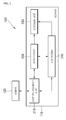
- Fig. 2 is a block diagram illustrating the configuration of a server according to one embodiment of the present invention.
- a server 110 included in an energy management system 100 may process a request from a client 120 and perform the overall control of the energy management system 100.
- the server 110 may include a communication unit 210, a processor 220, a storage unit 230 and a controller 240.
- the communication unit 210 may communicate with the client 120.
- the client 120 may be included in the energy management system 100.
- the present invention is not limited thereto.
- the client 120 may be included in a system other than the energy management system 100 or may be located outside the energy management system 100.
- Schemes of communication of the communication unit 210 with the client 120 may include various forms of wired/wireless communication schemes.
- the communication unit 210 and the client 120 may be interconnected by a cable, a transmission line, a power line or a local area network (LAN) to conduct wired communication or may be interconnected by wireless to conduct wireless communication such as radio LAN communication, mobile communication, data communication and the like.
- LAN local area network
- the communication unit 210 may conduct the communication with the client 120 to receive a request for a process from the client 120 or transmit a result of the process performed by the server 110 in response to the received request to the client 120.
- the client 120 may be used with the same meaning as a client device.
- the client 120 and the client device may be exchangeable.
- a "process” used herein may refer to an operation or process for data input/output, a program being executed, or an operation or procedure of performing a task.
- the process may include a parent process as an upper layer, and a child process as a lower layer.
- the parent process begins according to a program or instruction and the child process is created by the parent process.
- one parent process forks and manages a plurality of child processes.
- task processing by multi-process become possible.
- a child process may recreate its child process (i.e., a grandchild process) in a next lower layer.
- the processor 220 may execute the process requested by the client 120.
- the processor 220 may include a plurality of central processing units (CPUs), each of which can interpret and operate an instruction received in association with the process and output a result of the operation.
- CPUs central processing units
- one CPU processes one process. Therefore, assuming that the processor 220 includes N CPUs, the processor 220 can process the maximum ofN processes.
- the processor 220 can process a plurality of processes at once.
- the plurality of processes may be child processes created by the controller 240, which will be described below.
- the controller 240 classifies the plurality of tasks according to a predetermined criterion. Thereafter, the controller 240 creates a plurality of child processes from the process requested by the client 120.
- the processor 220 can multi-process the plurality of child processes created by the controller 240.
- the processor 220 can process the plurality of processes sequentially or at different times rather than simultaneously.
- the processor 220 may refer to real-time data associated with the energy management system 100 and stored in the storage unit 230.
- the storage unit 230 may store the real-time data associated with the energy management system 100.
- the real-time data associated with the energy management system 100 may include all data associated with control and management of the energy management system 100, such as a voltage, a current and so on.
- the storage unit 230 may be a real-time database (RTDB).
- the RTDB collects, stores and manages, in real time, data of processes performed by a variety of sub-systems included in the energy management system 100.
- the RTDB can be used as a means for decision-making required for power system analysis and system operation.
- the storage unit 230 may be implemented with at least one of storage media including RAM (Random Access Memory), SRAM (Static RAM), ROM (Read-Only Memory), EEPROM (Electrically Erasable Programmable ROM), PROM (Programmable ROM) and a magnetic memory.
- RAM Random Access Memory
- SRAM Static RAM
- ROM Read-Only Memory
- EEPROM Electrically Erasable Programmable ROM
- PROM Program Memory
- the controller 240 can create a plurality of child processes from the process by classifying the plurality of tasks according to a predetermined criterion.
- Each of the plurality of tasks included in the process may be referred to as a "thread” or "worker.”
- a thread used herein refers to a task unit of a program or an operating system.
- One process may include a plurality of threads.
- the reason for creating the plurality of child processes from the process is to increase a throughput by multi-processing the plurality of child processes.
- One CPU processes one process. For example, even when one process includes 100 threads, this process can be processed only by one CPU. Specifically, only threads as many as cores of the CPU can be executed at the same point of time. If there are 10 CPUs, each of which has 8 cores, and one process includes 100 threads, 8 threads are executed at the same point of time.
- controller 240 can cause the processor 220 to execute the plurality of child processes at once, which is created from one parent process.
- the controller 240 may allocate the plurality of CPUs to the plurality of child processes, respectively. Since one CPU processes one process, the number of child processes created cannot be larger than the number of CPUs. Accordingly, in this case, the number of child processes may be equal to or smaller than the number of CPUs, which will be described in more detail later with reference to Figs. 5 and 6 .
- the controller 240 can additionally create a new child process which can perform the predetermined task.
- the predetermined criterion according to which the plurality of tasks included in one process is classified may include one of kind of a service offered by a task and role of a task.
- the kind of a service offered by a task may include a database-related service, a control-related service, a file-related service, etc.
- the role of a task may include data request, control instruction, file creation and loading, database value storage, etc.
- the controller 240 can control the processor 220 to process the plurality of child processes at once by referring to the real-time data.
- the controller 240 can control the communication unit 210 to transmit a result of the processing to the client 120.
- Fig. 3 is a diagram used to explain a procedure of processing a process in the energy management system according to one embodiment of the present invention.
- a process performed by one data service module 112 in the existing server 110 may be performed by a plurality of workers 310, 320 and 330.
- the data service module 112 performs only creation and management of the plurality of workers 310, 320 and 330 and load balancing for a data service through service request distribution but processes no process.
- the process is processed by the plurality of workers 310, 320 and 330.
- the plurality of workers 310, 320 and 330 may correspond to the child processes created by the data service module 112.
- the server 110 may include the data service module 112, a real-time database (RTDB) 114, a first worker 310, a second worker 320 and a third worker 330.
- RTDB real-time database
- the first worker 310, the second worker 320 and the third worker 330 correspond to the child processes created from the process requested by the client 120.
- the server 110 can process the process requested from the client 120 and transmit a result of the processing to the client 120.
- the data service module 112 creates and executes the workers 310, 320 and 330 as child processes one by one according to a predefined role.
- the workers 310, 320 and 330 executed by the data service module 112 classify, arrange and complement tasks, which have been performed by the existing data service module 112, by respective roles.
- the data service module 112 may classify data request, control instruction, file creation and loading, database value storage, etc., by the respective roles, and allocate the roles to the workers 310, 320 and 330, respectively. For example, upon receiving an instruction related to database value storage, a database-related worker stores the database value after verifying the validity for the database value storage. As another example, upon receiving a field equipment control instruction, a control-related worker verifies the validity for the field equipment control instruction and then transmits a control signal to the field equipment.
- the data service module 112 transmits the request to the workers 310, 320 and 330.
- the workers 310, 320 and 330 execute tasks, such as data request, control instruction, file creation and loading, database value storage, etc., received from the data service module 112, and transmit results of the execution to the data service module 112.
- the data service module 112 transmits the results received from the workers 310, 320 and 330 to the client 120 requesting a service.
- the data service module 112 upon receiving a request for a service or a process, plays only a role of distributing the received request to the workers 310, 320 and 330 and managing the workers 310, 320 and 330, while an actual task for the request is performed by the workers 310, 320 and 330. Therefore, the data service module 112 can eliminate a load which occurs due to service processing which occupies the highest percentage of load, thereby preventing the whole data service from being delayed with increase in load.
- the workers 310, 320 and 330 can show the performance optimized for the service.
- Fig. 4 is a diagram used to explain a procedure of processing a process in the energy management system according to one embodiment of the present invention.
- the data service module 112 of the server 110 can create a plurality of grandchild processes 412, 414 and 416 from a child process 310 to perform a hierarchical process.
- a first worker 310, a second worker 320 and a third worker 330 correspond to the child processes created by the data service module 112.
- a first sub worker 412, a second sub worker 414 and a third sub worker 416 correspond to the grandchild processes created by the first worker 310.
- the created processes 310, 320 and 330 or grandchild processes 412, 414 and 416 disappear when they play their own roles no longer.
- the parent process created the child processes 310, 320 and 330 may stop the child processes 310, 320 and 330, or the child processes 310, 320 and 330 or the grandchild processes 412, 414 and 416 may be terminated for themselves.
- the energy management system of Fig. 4 has the same configuration as that of Fig. 3 except that the grandchild processes 412, 414 and 416 are again created from the child process 310 and, therefore, explanation of which will not repeated for the sake of brevity.
- Fig. 5 is a diagram used to explain a procedure of allocating CPUs to a plurality of child processes, respectively, according to one embodiment of the present invention.
- Fig. 6 is a diagram used to explain another procedure of allocating CPUs to a plurality of child processes, respectively, according to one embodiment of the present invention.
- a plurality of CPUs is allocated to a plurality of workers 310,320,330, ..., N, respectively.
- the plurality of workers 310, 320, 330, ..., N can be processed at once in parallel by their respective corresponding CPUs.
- the number of created workers 310, 320, 330, ..., N cannot be larger than the number of CPUs. That is, the number of created workers 310, 320, 330, ..., N has to be equal to or smaller than the number of CPUs. It is shown in Fig. 5 that n workers 310, 320, 330, ..., N are created to correspond to n CPUs.
- a plurality of workers 310, 320 and 320 is created in a sequential manner. If a load is weighted on a second worker 320 performing a particular task, the data service module 112 can additionally create another second worker 320 performing the same task. Thereafter, upon receiving a request for the task from the client 120, the data service module 112 distributes the task to the most ideal one of the workers performing the task.
- Fig. 7 is a flow chart illustrating a procedure of operation of the server according to one embodiment of the present invention.
- the server 110 receives a request for a process from the client device 120 (S601).
- the server 110 classifies the plurality of tasks according to a predetermined criterion and creates a plurality of second processes from the first process (S602).
- the predetermined criterion may include one of the kind of a service offered by a task and the role of a task.
- the kind of a service offered by a task may include a database-related service, a control-related service, a file-related service, etc.
- the role of a task may include data request, control instruction, file creation and loading, database value storage, etc.
- the first process may be a parent process and the plurality of second processes may be child processes.
- the server 110 processes the plurality of second processes at once by referring to real-time data related to the energy management system 100 (S603).
- the server 110 transmits results of the processing of the plurality of second processes to the client device 120 (S604).
Landscapes
- Engineering & Computer Science (AREA)
- Theoretical Computer Science (AREA)
- Software Systems (AREA)
- Physics & Mathematics (AREA)
- General Physics & Mathematics (AREA)
- Business, Economics & Management (AREA)
- General Engineering & Computer Science (AREA)
- Health & Medical Sciences (AREA)
- General Health & Medical Sciences (AREA)
- Automation & Control Theory (AREA)
- Economics (AREA)
- Tourism & Hospitality (AREA)
- Signal Processing (AREA)
- General Business, Economics & Management (AREA)
- Strategic Management (AREA)
- Computer Networks & Wireless Communication (AREA)
- Accounting & Taxation (AREA)
- Medical Informatics (AREA)
- Computing Systems (AREA)
- Marketing (AREA)
- Finance (AREA)
- Human Resources & Organizations (AREA)
- Primary Health Care (AREA)
- Remote Monitoring And Control Of Power-Distribution Networks (AREA)
- Public Health (AREA)
- Water Supply & Treatment (AREA)
- Development Economics (AREA)
- Management, Administration, Business Operations System, And Electronic Commerce (AREA)
- Computer And Data Communications (AREA)
Abstract
Description
- The present invention relates to a server in an energy management and a method of operating the server and more particularly, to a server which is capable of alleviating a service delay due to a load by improving a method of processing a process requested by a client, and a method of operating the server.
- A power system has become more and more complex with consistent increase in its scale and introduction of new equipment. Accordingly, many efforts have been made to provide the optimal operation of the power system. The optimal operation of the power system means the system operation to maximize the economic feasibility while maintaining the reliability of supply of power at a certain level or higher.
- An energy management system (EMS) is utilized for the optimal operation of the power system. The energy management system is a system having a function of monitoring and controlling the state of a power system based on data collected through a remote supervisory control and data acquisition (SCADA) or the like.
-
Fig. 1 is a diagram used to explain a process performed in a typical energy management system. - Referring to
Fig. 1 , anenergy management system 100 is configured to include asever 110 which receives and processes data, and one ormore clients 120, each of which has a screen on which data are displayed. The data displayed on the screen of eachclient 120 are received from theserver 110 through adata service module 112 incorporated in theserver 110. - In this way, the
energy management system 100 uses thedata service module 112 to transfer instructions and a data service between theserver 110 and eachclient 120. In this case, eachclient 120 accesses thedata service module 112 in theserver 110 to receive the data service. - When executing the screen, the
client 120 requests thedata service module 112 of theserver 110 to send data required for the screen to theclient 120, receives the data from thedata service module 112, and displays the data on the screen. In addition, instructions such as value designation, tag setting and so on, are sent to theserver 110 of theenergy management system 100 or field equipment in a power plant or the like. - The
data service module 112 requested to send the data retrieves a real-time database (RTDB) 114 to search the data, processes the searched data according to the request, and transmits the processed data to theclient 120. In addition, thedata service module 112 requested to send the instructions checks whether or not the instructions are valid. If so, thedata service module 112 processes the valid instructions and transmits the processed instructions to theclient 120. - Since the
data service module 112 of the currentenergy management system 100 processes the request from theclient 120 alone, a load thereof increases with increase in the number ofclients 112. In addition, if the load increases over a certain level, both of a data service with an overload and a data service with a light load may become as a whole. This may result in a limitation in the number ofclients 120 which can access theserver 110. In addition, since onedata service module 112 processes all the data, only one CPU is used. Therefore, even when hardware equipment is added to the system, this has little effect on improvement of the performance of data processing. - It is an aspect of the present invention to provide a server which is capable of improving a structure of a data service module so that a service delay due to a load can be prevented.
- The present invention is not limited to the above aspect and other aspects of the present invention will be clearly understood by those skilled in the art from the following description.
- In accordance with one aspect of the present invention, there is provided an energy management system including: a client device; and a server including: a communication unit configured to communicate with the client device; a processor configured to perform a process requested by the client device; a storage unit in which data related to control and management of the energy management system; and a controller configured to control the processor to classify a plurality of tasks included in a first process according to a predetermined criterion, create a plurality of second processes from the first process, and process the plurality of second processes by referring to the data.
- In accordance with another aspect of the present invention, there is provided a method of operating a server in an energy management system, including: receiving a request for a process from a client device; classifying a plurality of tasks included in a first process according to a predetermined criterion and creating a plurality of second processes from the first process; processing the plurality of second processes at once by referring to data related to control and management of the energy management system; and transmitting results of the processing of the plurality of second processes to the client device.
- According to embodiments of the present invention, it is possible to improve a structure of a data service module so that a service delay due to a load can be prevented.
- Furthermore, by defining a process by service type or by role of a task, it is possible to show the performance optimized for the service in processing the process.
-
-
Fig. 1 is a diagram used to explain a process performed in a typical energy management system. -
Fig. 2 is a block diagram illustrating the configuration of a server according to one embodiment of the present invention. -
Fig. 3 is a diagram used to explain a procedure of processing a process in an energy management system according to one embodiment of the present invention. -
Fig. 4 is a diagram used to explain a procedure of processing a process in an energy management system according to one embodiment of the present invention. -
Fig. 5 is a diagram used to explain a procedure of allocating CPUs to a plurality of child processes, respectively, according to one embodiment of the present invention. -
Fig. 6 is a diagram used to explain another procedure of allocating CPUs to a plurality of child processes, respectively, according to one embodiment of the present invention. -
Fig. 7 is a flow chart illustrating a procedure of operation of the server according to one embodiment of the present invention. - Hereinafter, embodiments of the present invention will be described in detail in junction with the accompanying drawings. It should be understood that the present invention is not limited to the following embodiments, and that the embodiments are provided for illustrative purposes only. The present invention is not intended to exclude regressive inventions in which other elements are added, altered, deleted, etc. The present invention encompasses other different embodiments which fall within the spirit and scope of the invention.
- Although the present invention is described with general terms which are currently being in wide use, terms arbitrarily selected by the applicant may be used for particular cases. In these cases, the meanings of the terms are described in relevant portions of the detailed description of the invention. Therefore, the present invention should be construed with the meaning of the terms, not just the name of the terms. In the following description, the term 'include(s)' is not intended to exclude other elements or steps which are not enumerated in the description.
-
Fig. 2 is a block diagram illustrating the configuration of a server according to one embodiment of the present invention. - Referring to
Fig. 2 , aserver 110 included in anenergy management system 100 may process a request from aclient 120 and perform the overall control of theenergy management system 100. - In one embodiment, the
server 110 may include acommunication unit 210, aprocessor 220, astorage unit 230 and acontroller 240. - The
communication unit 210 may communicate with theclient 120. - In this case, the
client 120 may be included in theenergy management system 100. However, the present invention is not limited thereto. For example, theclient 120 may be included in a system other than theenergy management system 100 or may be located outside theenergy management system 100. - Schemes of communication of the
communication unit 210 with theclient 120 may include various forms of wired/wireless communication schemes. Specifically, thecommunication unit 210 and theclient 120 may be interconnected by a cable, a transmission line, a power line or a local area network (LAN) to conduct wired communication or may be interconnected by wireless to conduct wireless communication such as radio LAN communication, mobile communication, data communication and the like. - The
communication unit 210 may conduct the communication with theclient 120 to receive a request for a process from theclient 120 or transmit a result of the process performed by theserver 110 in response to the received request to theclient 120. - In the specification, the
client 120 may be used with the same meaning as a client device. Hereinafter, theclient 120 and the client device may be exchangeable. - A "process" used herein may refer to an operation or process for data input/output, a program being executed, or an operation or procedure of performing a task.
- The process may include a parent process as an upper layer, and a child process as a lower layer. The parent process begins according to a program or instruction and the child process is created by the parent process. In this case, one parent process forks and manages a plurality of child processes. When the parent process creates the plurality of child processes, task processing by multi-process become possible. In addition, a child process may recreate its child process (i.e., a grandchild process) in a next lower layer.
- The
processor 220 may execute the process requested by theclient 120. - To this end, the
processor 220 may include a plurality of central processing units (CPUs), each of which can interpret and operate an instruction received in association with the process and output a result of the operation. In this case, one CPU processes one process. Therefore, assuming that theprocessor 220 includes N CPUs, theprocessor 220 can process the maximum ofN processes. - The
processor 220 can process a plurality of processes at once. - Here, the plurality of processes may be child processes created by the
controller 240, which will be described below. Specifically, when a process requested by theclient 120 includes a plurality of tasks, thecontroller 240 classifies the plurality of tasks according to a predetermined criterion. Thereafter, thecontroller 240 creates a plurality of child processes from the process requested by theclient 120. In this case, theprocessor 220 can multi-process the plurality of child processes created by thecontroller 240. - In another embodiment, the
processor 220 can process the plurality of processes sequentially or at different times rather than simultaneously. - In processing the plurality of child processes, the
processor 220 may refer to real-time data associated with theenergy management system 100 and stored in thestorage unit 230. - The
storage unit 230 may store the real-time data associated with theenergy management system 100. Specifically, the real-time data associated with theenergy management system 100 may include all data associated with control and management of theenergy management system 100, such as a voltage, a current and so on. - In one embodiment, the
storage unit 230 may be a real-time database (RTDB). The RTDB collects, stores and manages, in real time, data of processes performed by a variety of sub-systems included in theenergy management system 100. The RTDB can be used as a means for decision-making required for power system analysis and system operation. - To this end, the
storage unit 230 may be implemented with at least one of storage media including RAM (Random Access Memory), SRAM (Static RAM), ROM (Read-Only Memory), EEPROM (Electrically Erasable Programmable ROM), PROM (Programmable ROM) and a magnetic memory. - When the process includes the plurality of tasks, the
controller 240 can create a plurality of child processes from the process by classifying the plurality of tasks according to a predetermined criterion. - Each of the plurality of tasks included in the process may be referred to as a "thread" or "worker." A thread used herein refers to a task unit of a program or an operating system. One process may include a plurality of threads.
- In this embodiment, the reason for creating the plurality of child processes from the process is to increase a throughput by multi-processing the plurality of child processes. One CPU processes one process. For example, even when one process includes 100 threads, this process can be processed only by one CPU. Specifically, only threads as many as cores of the CPU can be executed at the same point of time. If there are 10 CPUs, each of which has 8 cores, and one process includes 100 threads, 8 threads are executed at the same point of time.
- However, rather than one process including 100 threads, for example, if there are 10 processes, each of which includes 10 threads, since the 10 processes can be executed by the respective 10 CPUs at once although the total number of threads is 100 as in the earlier-mentioned example, the number of threads executed (processed) at the same point of time is 80.
- Accordingly, the
controller 240 can cause theprocessor 220 to execute the plurality of child processes at once, which is created from one parent process. - In one embodiment, when the
processor 220 includes a plurality of CPUs, thecontroller 240 may allocate the plurality of CPUs to the plurality of child processes, respectively. Since one CPU processes one process, the number of child processes created cannot be larger than the number of CPUs. Accordingly, in this case, the number of child processes may be equal to or smaller than the number of CPUs, which will be described in more detail later with reference toFigs. 5 and6 . - Furthermore, if a load is weighted on the child processes which perform predetermined tasks, the
controller 240 can additionally create a new child process which can perform the predetermined task. - The predetermined criterion according to which the plurality of tasks included in one process is classified may include one of kind of a service offered by a task and role of a task. The kind of a service offered by a task may include a database-related service, a control-related service, a file-related service, etc. The role of a task may include data request, control instruction, file creation and loading, database value storage, etc.
- After the plurality of child processes is created from the process, the
controller 240 can control theprocessor 220 to process the plurality of child processes at once by referring to the real-time data. - In this case, after the
processor 220 processes the plurality of child processes, thecontroller 240 can control thecommunication unit 210 to transmit a result of the processing to theclient 120. -
Fig. 3 is a diagram used to explain a procedure of processing a process in the energy management system according to one embodiment of the present invention. - As illustrated in
Fig. 3 , according to one embodiment of the present invention, a process performed by onedata service module 112 in the existingserver 110 may be performed by a plurality ofworkers data service module 112 performs only creation and management of the plurality ofworkers workers workers data service module 112. - Referring to
Fig. 3 , theserver 110 may include thedata service module 112, a real-time database (RTDB) 114, afirst worker 310, asecond worker 320 and athird worker 330. Here, thefirst worker 310, thesecond worker 320 and thethird worker 330 correspond to the child processes created from the process requested by theclient 120. - The
server 110 can process the process requested from theclient 120 and transmit a result of the processing to theclient 120. - Specifically, when the
energy management system 100 is operated, thedata service module 112 creates and executes theworkers - The
workers data service module 112 classify, arrange and complement tasks, which have been performed by the existingdata service module 112, by respective roles. - To this end, the
data service module 112 may classify data request, control instruction, file creation and loading, database value storage, etc., by the respective roles, and allocate the roles to theworkers - Thereafter, upon receiving a request for a process from the
client 120, thedata service module 112 transmits the request to theworkers workers data service module 112, and transmit results of the execution to thedata service module 112. - The
data service module 112 transmits the results received from theworkers client 120 requesting a service. - In this embodiment, upon receiving a request for a service or a process, the
data service module 112 plays only a role of distributing the received request to theworkers workers workers data service module 112 can eliminate a load which occurs due to service processing which occupies the highest percentage of load, thereby preventing the whole data service from being delayed with increase in load. - In addition, if the
workers - Furthermore, by defining the roles of the
workers workers -
Fig. 4 is a diagram used to explain a procedure of processing a process in the energy management system according to one embodiment of the present invention. - According to this embodiment, when a plurality of child processes is created from a parent process, it may be possible to again create a plurality of grandchild processes from each of the plurality of child processes. Specifically, as illustrated in
Fig. 4 , thedata service module 112 of theserver 110 can create a plurality of grandchild processes 412, 414 and 416 from achild process 310 to perform a hierarchical process. - In
Fig. 4 , afirst worker 310, asecond worker 320 and athird worker 330 correspond to the child processes created by thedata service module 112. - A
first sub worker 412, asecond sub worker 414 and athird sub worker 416 correspond to the grandchild processes created by thefirst worker 310. - In this case, the created
processes - The energy management system of
Fig. 4 has the same configuration as that ofFig. 3 except that the grandchild processes 412, 414 and 416 are again created from thechild process 310 and, therefore, explanation of which will not repeated for the sake of brevity. -
Fig. 5 is a diagram used to explain a procedure of allocating CPUs to a plurality of child processes, respectively, according to one embodiment of the present invention.Fig. 6 is a diagram used to explain another procedure of allocating CPUs to a plurality of child processes, respectively, according to one embodiment of the present invention. - As illustrated in
Fig. 5 , a plurality of CPUs is allocated to a plurality of workers 310,320,330, ..., N, respectively. In this case, the plurality ofworkers workers workers Fig. 5 thatn workers - It is illustrated in
Fig. 6 that a plurality ofworkers second worker 320 performing a particular task, thedata service module 112 can additionally create anothersecond worker 320 performing the same task. Thereafter, upon receiving a request for the task from theclient 120, thedata service module 112 distributes the task to the most ideal one of the workers performing the task. - As illustrated in
Fig. 6 , by adjusting the number ofworkers workers -
Fig. 7 is a flow chart illustrating a procedure of operation of the server according to one embodiment of the present invention. - Referring to
Fig. 7 , first, theserver 110 receives a request for a process from the client device 120 (S601). - If the process is a first process including a plurality of tasks, the
server 110 classifies the plurality of tasks according to a predetermined criterion and creates a plurality of second processes from the first process (S602). - Here, the predetermined criterion may include one of the kind of a service offered by a task and the role of a task. The kind of a service offered by a task may include a database-related service, a control-related service, a file-related service, etc. The role of a task may include data request, control instruction, file creation and loading, database value storage, etc.
- The first process may be a parent process and the plurality of second processes may be child processes.
- The
server 110 processes the plurality of second processes at once by referring to real-time data related to the energy management system 100 (S603). - The
server 110 transmits results of the processing of the plurality of second processes to the client device 120 (S604). - In conclusion, according to the above embodiments of the present invention, it is possible to improve a structure of a data service module so that a service delay due to a load can be prevented.
- Furthermore, by defining a process by service type or by role of a task, it is possible to show the performance optimized for the service in processing the process.
- While certain embodiments have been described, these embodiments have been presented by way of example only, and are not intended to limit the scope of the disclosures. Indeed, the novel methods and apparatuses described herein may be embodied in a variety of other forms; furthermore, various omissions, substitutions and changes in the form of the embodiments described herein may be made without departing from the spirit of the disclosures. The accompanying claims and their equivalents are intended to cover such forms or modifications as would fall within the scope and spirit of the disclosures.
Claims (10)
- An energy management system (100) comprising:a client device (120); anda server (110) including:wherein, if a load is weighted on a second process performing a predetermined task, the controller (240) is further configured to control the processor (220) to additionally create another second process performing the predetermined task.a communication unit (210) configured to communicate with the client device (120);a processor (220) configured to perform a process requested by the client device (120);a storage unit (230) in which data related to control and management of the energy management system (100); anda controller (240) configured to control the processor (220) to classify a plurality of tasks included in a first process according to a predetermined criterion, create a plurality of second processes from the first process, and process the plurality of second processes by referring to the data,
- The energy management system (100) according to claim 1, wherein the processor (220) includes a plurality of CPUs, and the controller (240) allocates the plurality of CPUs to the plurality of second processes, respectively.
- The energy management system (100) according to claim 2, wherein the number of second processes is equal to or smaller than the number of CPUs.
- The energy management system (100) according to claim 1, wherein the first process is a parent process and the second processes are child processes.
- The energy management system (100) according to claim 1, wherein the predetermined criterion includes one of the kind of a service offered by the task and the role of the task.
- The energy management system (100) according to claim 5, wherein the kind of a service offered by the task includes a database-related service, a control-related service, and a file-related service.
- The energy management system (100) according to claim 5, wherein the role of the task includes data request, control instruction, file creation and loading, and database value storage.
- The energy management system (100) according to claim 1, wherein the controller (240) is further configured to control the communication unit (210) to transmit results of the processing of the plurality of second processes to the client device (120).
- A method of operating a server (110) in an energy management system (100), comprising:receiving a request for a process from a client device (120);classifying a plurality of tasks included in a first process according to a predetermined criterion, creating a plurality of second processes from the first process, and, if a load is weighted on a second process performing a predetermined task, additionally creating another second process performing the predetermined task;processing the plurality of second processes by referring to data related to control and management of the energy management system (100); andtransmitting results of the processing of the plurality of second processes to the client device (120).
- The method according to claim 9, wherein the server (110) includes a plurality of CPUs and allocates the plurality of CPUs to the plurality of second processes, respectively.
Applications Claiming Priority (1)
| Application Number | Priority Date | Filing Date | Title |
|---|---|---|---|
| KR1020160026408A KR102553966B1 (en) | 2016-03-04 | 2016-03-04 | Server apparatus in energy management system and operating method of thereof |
Publications (1)
| Publication Number | Publication Date |
|---|---|
| EP3214546A1 true EP3214546A1 (en) | 2017-09-06 |
Family
ID=57121140
Family Applications (1)
| Application Number | Title | Priority Date | Filing Date |
|---|---|---|---|
| EP16193065.6A Ceased EP3214546A1 (en) | 2016-03-04 | 2016-10-10 | Server apparatus in energy management system and operating method of thereof |
Country Status (4)
| Country | Link |
|---|---|
| US (1) | US10394208B2 (en) |
| EP (1) | EP3214546A1 (en) |
| KR (1) | KR102553966B1 (en) |
| CN (1) | CN107153575A (en) |
Families Citing this family (1)
| Publication number | Priority date | Publication date | Assignee | Title |
|---|---|---|---|---|
| CN108319502A (en) * | 2018-02-06 | 2018-07-24 | 广东工业大学 | A kind of method and device of the D2D tasks distribution based on mobile edge calculations |
Citations (3)
| Publication number | Priority date | Publication date | Assignee | Title |
|---|---|---|---|---|
| US20080109814A1 (en) * | 2006-11-06 | 2008-05-08 | Samsung Electronics Co., Ltd. | Apparatus and method for balancing load in multi-core processor system |
| US20100269110A1 (en) * | 2007-03-01 | 2010-10-21 | Microsoft Corporation | Executing tasks through multiple processors consistently with dynamic assignments |
| US20130125133A1 (en) * | 2009-05-29 | 2013-05-16 | Michael D. Schuster | System and Method for Load Balancing of Fully Strict Thread-Level Parallel Programs |
Family Cites Families (11)
| Publication number | Priority date | Publication date | Assignee | Title |
|---|---|---|---|---|
| US5784616A (en) * | 1997-05-02 | 1998-07-21 | Microsoft Corporation | Apparatus and methods for optimally using available computer resources for task execution during idle-time for future task instances exhibiting incremental value with computation |
| JP2007174512A (en) | 2005-12-26 | 2007-07-05 | Nippon Telegr & Teleph Corp <Ntt> | Data management system |
| US8141078B2 (en) * | 2006-02-23 | 2012-03-20 | International Business Machines Corporation | Providing shared tasks amongst a plurality of individuals |
| KR100833127B1 (en) | 2006-08-18 | 2008-05-28 | 포스데이타 주식회사 | A component management system of a wireless communication network having an expandable structure |
| KR101754713B1 (en) | 2010-10-28 | 2017-07-06 | 에스케이텔레콤 주식회사 | Asymmetric distributed file system, apparatus and method for distribution of computation |
| KR101392584B1 (en) * | 2012-06-07 | 2014-05-27 | 주식회사 엘지씨엔에스 | Apparatus for dynamic data processing using resource monitoring and method thereof |
| WO2015121925A1 (en) * | 2014-02-12 | 2015-08-20 | 株式会社日立製作所 | System managing method |
| KR20150108167A (en) | 2014-03-17 | 2015-09-25 | 한국전자통신연구원 | Apparatus and method for balancing load |
| KR101553769B1 (en) * | 2014-03-20 | 2015-09-30 | 엘에스산전 주식회사 | Apparatus for data processing of Energy Management System |
| KR20150124706A (en) * | 2014-04-29 | 2015-11-06 | 엘에스산전 주식회사 | System for data processing of energy management system |
| US10169248B2 (en) * | 2016-09-13 | 2019-01-01 | International Business Machines Corporation | Determining cores to assign to cache hostile tasks |
-
2016
- 2016-03-04 KR KR1020160026408A patent/KR102553966B1/en active Active
- 2016-10-10 EP EP16193065.6A patent/EP3214546A1/en not_active Ceased
- 2016-10-28 CN CN201610967157.0A patent/CN107153575A/en active Pending
-
2017
- 2017-01-04 US US15/398,064 patent/US10394208B2/en active Active
Patent Citations (3)
| Publication number | Priority date | Publication date | Assignee | Title |
|---|---|---|---|---|
| US20080109814A1 (en) * | 2006-11-06 | 2008-05-08 | Samsung Electronics Co., Ltd. | Apparatus and method for balancing load in multi-core processor system |
| US20100269110A1 (en) * | 2007-03-01 | 2010-10-21 | Microsoft Corporation | Executing tasks through multiple processors consistently with dynamic assignments |
| US20130125133A1 (en) * | 2009-05-29 | 2013-05-16 | Michael D. Schuster | System and Method for Load Balancing of Fully Strict Thread-Level Parallel Programs |
Also Published As
| Publication number | Publication date |
|---|---|
| CN107153575A (en) | 2017-09-12 |
| KR20170103462A (en) | 2017-09-13 |
| US10394208B2 (en) | 2019-08-27 |
| US20170255175A1 (en) | 2017-09-07 |
| KR102553966B1 (en) | 2023-07-11 |
Similar Documents
| Publication | Publication Date | Title |
|---|---|---|
| US10877801B2 (en) | Systems and methods for scheduling tasks | |
| US10439901B2 (en) | Messaging queue spinning engine | |
| CN113347641B (en) | Network deployment method, device and computer readable storage medium | |
| US20160253402A1 (en) | Adaptive data repartitioning and adaptive data replication | |
| CN104092756A (en) | A method for dynamic resource allocation of cloud storage system based on DHT mechanism | |
| CN113448947B (en) | Method and device for distributed deployment operation and maintenance of mongo database | |
| US11805067B1 (en) | Dynamically generating and managing request queues for processing electronic requests via a shared processing infrastructure | |
| CN117715088B (en) | Network slice management method, device, equipment and medium based on edge calculation | |
| US9575487B2 (en) | Computer program, method, and system for optimized kit nesting | |
| EP3722897A1 (en) | Control hive architecture engineering efficiency for an industrial automation system | |
| US10748161B1 (en) | System and method for managing computing resource orders | |
| US10394208B2 (en) | Server apparatus in energy management system and operating method of thereof | |
| US20240303131A1 (en) | System and Method for Optimal Serverless Deployment of Analytics Tasks Across Hierarchical Edge Network | |
| KR102684039B1 (en) | System for managing smart-factory based on cloud and method for determining optimized transfer route using the same | |
| JP5530878B2 (en) | Data replication management method in distributed system | |
| US20250307105A1 (en) | Authorization-based data collection for monitored service infrastructure | |
| CN118796359B (en) | ES containerized deployment method, device, computer equipment and storage medium | |
| TWI783685B (en) | Distributed prediction method and system thereof for calculation of resource usage of servers | |
| US20250365198A1 (en) | Systems And Methods For Dynamic Provisioning Of Clusters Within A Cloud Environment | |
| US11044320B2 (en) | Data distribution method for a process automation and internet of things system | |
| KR102334975B1 (en) | System For Controlling An Automate Equipment | |
| CN121658463A (en) | Distributed database data migration method, device, equipment and medium | |
| CN119960974A (en) | A remote control task allocation method, device, equipment and storage medium | |
| KR20240083939A (en) | Method, apparatus, system and computer program for work deployment in Cloud system including Function Acceleration Card | |
| CN117675548A (en) | Data collection methods, devices, equipment and storage media |
Legal Events
| Date | Code | Title | Description |
|---|---|---|---|
| PUAI | Public reference made under article 153(3) epc to a published international application that has entered the european phase |
Free format text: ORIGINAL CODE: 0009012 |
|
| STAA | Information on the status of an ep patent application or granted ep patent |
Free format text: STATUS: THE APPLICATION HAS BEEN PUBLISHED |
|
| AK | Designated contracting states |
Kind code of ref document: A1 Designated state(s): AL AT BE BG CH CY CZ DE DK EE ES FI FR GB GR HR HU IE IS IT LI LT LU LV MC MK MT NL NO PL PT RO RS SE SI SK SM TR |
|
| AX | Request for extension of the european patent |
Extension state: BA ME |
|
| STAA | Information on the status of an ep patent application or granted ep patent |
Free format text: STATUS: REQUEST FOR EXAMINATION WAS MADE |
|
| 17P | Request for examination filed |
Effective date: 20180216 |
|
| RBV | Designated contracting states (corrected) |
Designated state(s): AL AT BE BG CH CY CZ DE DK EE ES FI FR GB GR HR HU IE IS IT LI LT LU LV MC MK MT NL NO PL PT RO RS SE SI SK SM TR |
|
| STAA | Information on the status of an ep patent application or granted ep patent |
Free format text: STATUS: EXAMINATION IS IN PROGRESS |
|
| 17Q | First examination report despatched |
Effective date: 20190731 |
|
| STAA | Information on the status of an ep patent application or granted ep patent |
Free format text: STATUS: THE APPLICATION HAS BEEN REFUSED |
|
| 18R | Application refused |
Effective date: 20201107 |