EP3210532A1 - Evoked potential measuring apparatus - Google Patents
Evoked potential measuring apparatus Download PDFInfo
- Publication number
- EP3210532A1 EP3210532A1 EP17156848.8A EP17156848A EP3210532A1 EP 3210532 A1 EP3210532 A1 EP 3210532A1 EP 17156848 A EP17156848 A EP 17156848A EP 3210532 A1 EP3210532 A1 EP 3210532A1
- Authority
- EP
- European Patent Office
- Prior art keywords
- evoked potential
- average
- waveform
- statistical value
- measuring apparatus
- Prior art date
- Legal status (The legal status is an assumption and is not a legal conclusion. Google has not performed a legal analysis and makes no representation as to the accuracy of the status listed.)
- Withdrawn
Links
Images


Classifications
-
- A—HUMAN NECESSITIES
- A61—MEDICAL OR VETERINARY SCIENCE; HYGIENE
- A61B—DIAGNOSIS; SURGERY; IDENTIFICATION
- A61B5/00—Measuring for diagnostic purposes; Identification of persons
- A61B5/24—Detecting, measuring or recording bioelectric or biomagnetic signals of the body or parts thereof
- A61B5/316—Modalities, i.e. specific diagnostic methods
- A61B5/369—Electroencephalography [EEG]
- A61B5/377—Electroencephalography [EEG] using evoked responses
-
- A—HUMAN NECESSITIES
- A61—MEDICAL OR VETERINARY SCIENCE; HYGIENE
- A61B—DIAGNOSIS; SURGERY; IDENTIFICATION
- A61B5/00—Measuring for diagnostic purposes; Identification of persons
- A61B5/72—Signal processing specially adapted for physiological signals or for diagnostic purposes
- A61B5/7203—Signal processing specially adapted for physiological signals or for diagnostic purposes for noise prevention, reduction or removal
- A61B5/7207—Signal processing specially adapted for physiological signals or for diagnostic purposes for noise prevention, reduction or removal of noise induced by motion artifacts
-
- A—HUMAN NECESSITIES
- A61—MEDICAL OR VETERINARY SCIENCE; HYGIENE
- A61B—DIAGNOSIS; SURGERY; IDENTIFICATION
- A61B5/00—Measuring for diagnostic purposes; Identification of persons
- A61B5/72—Signal processing specially adapted for physiological signals or for diagnostic purposes
- A61B5/7203—Signal processing specially adapted for physiological signals or for diagnostic purposes for noise prevention, reduction or removal
- A61B5/7207—Signal processing specially adapted for physiological signals or for diagnostic purposes for noise prevention, reduction or removal of noise induced by motion artifacts
- A61B5/7214—Signal processing specially adapted for physiological signals or for diagnostic purposes for noise prevention, reduction or removal of noise induced by motion artifacts using signal cancellation, e.g. based on input of two identical physiological sensors spaced apart, or based on two signals derived from the same sensor, for different optical wavelengths
-
- A—HUMAN NECESSITIES
- A61—MEDICAL OR VETERINARY SCIENCE; HYGIENE
- A61B—DIAGNOSIS; SURGERY; IDENTIFICATION
- A61B5/00—Measuring for diagnostic purposes; Identification of persons
- A61B5/72—Signal processing specially adapted for physiological signals or for diagnostic purposes
- A61B5/7235—Details of waveform analysis
Definitions
- An evoked potential means a transient potential variation which appears in the brain waves and myopotential of the subject in response to nerve stimulation.
- Japanese Patent No. 2,842,409 discloses an apparatus of this type.
- a technique called "arithmetic average method" is employed. Specifically, a plurality of stimulations are repeatedly applied to the subject, and evoked potential waveforms which are obtained in response to the respective stimulations are added with reference to the stimulation timings. An average waveform is calculated by dividing the waveform which is obtained by the addition, by the number of additions. When such an average waveform is obtained, influences of electric/magnetic noises which are momentarily or constantly mixed into the waveforms can be eliminated, and a waveform which is approximated to the evoked potential waveform derived from the subject can be acquired.
- the presently disclosed subject matter may provide an evoked potential measuring apparatus which can perform highly accurately an evoked potential measurement in which the arithmetic average method is used, while the burden on the subject is reduced.
- the evoked potential measuring apparatus may comprise: an evoked potential acquiring section which is configured to acquire a plurality of evoked potential waveforms from a subj ect in response to stimulation; an average processing section which is configured to arithmetically average the plurality of evoked potential waveforms to acquire an average waveform; a first statistical value calculator which, each time a waveform set including an N (N is 2 or more) number of evoked potential waveforms is acquired, is configured to calculate a first statistical value of the waveform set; and an updation processing section which is configured to update the average waveform to eliminate a waveform set in which the first statistical value exceeds a first threshold, from the arithmetic average.
- Fig. 1 is a block diagram illustrating the functional configuration of an evoked potential measuring apparatus 1 of a first embodiment.
- the evoked potential measuring apparatus 1 may include an evoked potential acquiring section 11, an average processing section 12, a displaying section 13, a first variance value calculator 14 (an example of the first statistical value calculator), and an updation processing section 15.
- an evoked potential waveform When stimulation is applied to a subject 2, an evoked potential waveform can be obtained.
- An evoked potential waveform shows a transient potential variation which appears in the brain waves and myopotential of the subject 2 as a response to the stimulation. Namely, an evoked potential waveform appears as a temporal change of the biopotential in which the timing of stimulation application is set as the reference timing.
- stimulation examples include visual stimulation, auditory stimulation, electrical stimulation, and pain stimulation.
- Stimulation may be provided by an apparatus which is independent from the evoked potential measuring apparatus 1, or by a stimulation generator which is disposed in the evoked potential measuring apparatus 1, and which is not illustrated.
- the evoked potential acquiring section 11 is configured so as to acquire evoked potential waveforms from the subject 2 in response to stimulation.
- the stimulation is repeatedly applied to the subject 2. Therefore, the evoked potential acquiring section acquires a plurality of evoked potential waveforms.
- the average processing section 12 is configured so as to arithmetically average the plurality of evoked potential waveforms which are acquired by the evoked potential acquiring section 11, to acquire an average waveform.
- the displaying section 13 is configured so as to display the average waveform which is acquired by the average processing section 12.
- the first variance value calculator 14 is configured so as to, each time a waveform set including an N number of evoked potential waveforms is obtained, calculate a variance value (first variance value, an example of the first statistical value) from variations of waveforms in the waveform set.
- first variance value an example of the first statistical value
- An integer of 2 or more may be adequately selected as N. Examples of N are 10, 25, and 50.
- the first variance value is calculated in the following manner.
- Each evoked potential waveform is expressed as a set of potential values at an X number of timings.
- X is 1,000.
- a Y number of timings are selected from the X number of timings, and the variance values of potential values at the Y number of timings are calculated with respect to the N number of evoked potential waveforms.
- Y is 10 or 100.
- the variance value of a waveform set including the 25 evoked potential waveforms is calculated.
- the potential values at 10 timings are selected from those at 1,000 timings constituting each of the evoked potential waveforms, and the variance values of the potential values at the selected timings are calculated with respect to the 25 evoked potential waveforms.
- the first variance value calculator 14 calculates 10 first variance values from one waveform set.
- the updation processing section 15 is configured so as to determine whether the maximum value of the plurality of first variance values calculated by the first variance value calculator 14 exceeds a first threshold or not. If it is determined that the maximum value exceeds the first threshold, the updation processing section 15 updates the average waveform acquired by the average processing section 12 so as to eliminate a waveform set including such variance values from the arithmetic average. The updated average waveform is displayed on the displaying section 13.
- Fig. 2 is a flow chart illustrating the operation of the evoked potential measuring apparatus 1.
- the evoked potential acquiring section 11 acquires a first evoked potential waveform as a response to the first stimulation application (S1). Because of one evoked potential waveform, the average processing section 12 handles the evoked potential waveform acquired in step S1, as the average waveform (S2). The displaying section 13 displays the evoked potential waveform as the average waveform (S3).
- step S4 it is determined whether the predetermined number (N) of evoked potential waveforms constituting the waveform set have been acquired or not (S4).
- N the predetermined number of evoked potential waveforms constituting the waveform set
- S4 one evoked potential waveform has been acquired (NO in step S4), and therefore the process returns to step S1. That is, the evoked potential acquiring section 11 acquires a second evoked potential waveform as a response to the second stimulation application (S1).
- the average processing section 12 arithmetically averages the two evoked potential waveforms to update the average waveform (S2).
- the displaying section 13 displays the updated average waveform (S3).
- step S4 10 evoked potential waveforms have been acquired (YES in step S4), and therefore the first variance value calculator 14 calculates the first variance value with respect to the waveform set including the 10 evoked potential waveforms (S5).
- potential values corresponding to the Y number of timings are selected from potential values corresponding to the X number of timings constituting each evoked potential waveform, and the variance values of the potential values at the Y number of timings are calculated with respect to 10 evoked potential waveforms.
- a Y number of first variance values are calculated with respect to the waveform set. For example, X is 1,000, and Y is 10.
- the updation processing section 15 determines whether the maximum value of the first variance values calculated by the first variance value calculator 14 exceeds the first threshold or not (S6).
- Fig. 3 (A) illustrates an average waveform which is obtained by arithmetically averaging about 1,000 evoked potential waveforms that are acquired with respect to about 1,000 stimulations.
- the abscissa indicates the time (which may be regarded as the number of timings) .
- the ordinate indicates the potential.
- Fig. 3 (B) illustrates a temporal change of the maximum value of the first variance values which are calculated for each waveform set including 10 evoked potential waveforms.
- the abscissa indicates the number of stimulations which are applied to the subject, and the ordinate indicates the maximum value of the first variance values.
- Fig. 3 (C) illustrates an average waveform which is obtained by arithmetically averaging about 1,000 evoked potential waveforms in the case where such noises are superimposed on the waveforms
- Fig. 3(D) illustrates a temporal change of the maximum value of first variance values that, in such a case, are acquired in a manner similar to that illustrated in Fig. 3(B) . It can be seen that, in the vicinities of 250-th and 500-th stimulation applications, such noises are added, and the maximum value of the first variance values is extremely raised.
- the updation processing section 15 in the embodiment updates the average waveform so as to eliminate a waveform set containing the first variance values from the arithmetic average (S7).
- the process then returns to step S1, and the above-described processes are repeated in order to acquire the next waveform set. If it is determined that the maximum value of the first variance values calculated by the first variance value calculator 14 does not exceed the first threshold (NO in step S6), it is determined whether conditions for ending the process are satisfied or not (S8).
- the ending conditions are that stimulation has been applied a predetermined number (for example, 3,000) of times (a predetermined number of evoked potential waveforms are acquired), and that a command for ending the measurement is input by the user.
- step S8 If it is determined that the ending conditions are satisfied (YES in step S8), the evoked potential measurement is ended. If it is determined that the ending conditions are not satisfied (NO in step S8), the process returns to step S1, and the above-described processes are repeated in order to acquire the next waveform set.
- Fig. 3 (E) illustrates an average waveform which is obtained by arithmetically averaging about 1,000 evoked potential waveforms in the case where noises are added under the same conditions as those illustrated in Fig. 3 (C) and Fig. 3 (D) , and the process in the embodiment is performed.
- Fig. 3 (F) corresponds to Fig. 3 (D) , and illustrates a temporal change of the maximum value of the first variance values.
- the dash-dot line Th1 indicates the first threshold.
- Plots indicated by cross-like symbols show maximum values of the first variance values of the waveform sets in which the maximum values exceed the first threshold, and which are therefore eliminated from the arithmetic average.
- the evoked potential measuring apparatus 1 may include a second variance value calculator 16 and a controller 17.
- the second variance value calculator 16 is configured so as to calculate a variance value (second variance value, an example of the second statistical value) of the average waveform acquired by the average processing section 12.
- the second variance value is calculated in the following manner.
- An average waveform is expressed as a set of potential values at an X number of timings.
- X is 1,000.
- a Y number of timings are selected from the X number of timings, and the variance values of potential values at the Y number of timings are calculated with respect to all evoked potential waveforms which have been added hitherto.
- Y is 10 or 100.
- the controller 17 is configured so as to determine whether the maximum value of the plurality of second variance values calculated by the second variance value calculator 16 is smaller than a predetermined second threshold or not. If it is determined that the maximum value is smaller than the second threshold, the controller 17 causes the acquisition of evoked potential waveforms by the evoked potential acquiring section 11, to be automatically stopped.
- Fig. 4 illustrates relationships between the number of stimulations applied to the subject 2, and the maximum value of the second variance values calculated by the second variance value calculator 16.
- the abscissa indicates the number of stimulations which are applied to the subject 2, and the ordinates indicates the maximum value of the second variance values.
- the second variance value calculator 16 calculates the second variance value with respect to the average waveform which is currently acquired by the average processing section 12 (S9).
- the controller 17 determines whether the maximum value of the second variance values calculated by the second variance value calculator 16 is smaller than the second threshold or not (S10).
- the dash-dot line Th2 in Fig. 4 indicates the second threshold.
- the second threshold is empirically determined as a variance value that is as small as that at which a significant evoked potential waveform can be determined.
- step S10 If it is determined that the maximum value of the second variance values calculated by the second variance value calculator 16 is smaller than the second threshold (YES in step S10), the acquisition of evoked potential waveforms by the evoked potential acquiring section 11 is automatically stopped, and the measurement of an evoked potential is ended (S11).
- the dash-dot line Ts in Fig. 4 indicates the timing when the automatic stopping process is performed by the controller 17.
- the configuration while a significant evoked potential waveform is acquired from the subject 2, it is possible to prevent a situation where an unnecessary evoked potential measurement is continued by a subjective determination of the user, from occurring. Unnecessary stimulation application can be avoided. In an evoked potential measurement in which the arithmetic average method is used, therefore, the measurement can be performed highly accurately while the burden on the subject 2 is reduced.
- the controller 17 may be configured so as to, if it is determined that the maximum value of the plurality of second variance values calculated by the second variance value calculator 16 is smaller than the predetermined second threshold, change the manner of displaying the average waveform on the displaying section 13.
- the manner of displaying the average waveform on the displaying section 13 is changed (S12).
- Examples of the change of the display manner are a change of the color of at least one of the average waveform and the background screen, and a display of a notification symbol.
- the dash-dot line Ts in Fig. 4 indicates the timing when such a change of the display manner is performed.
- the measurement of an evoked potential is not automatically ended, and the process transfers to the determination whether the ending conditions are satisfied or not (S8). If it is determined that the ending conditions are satisfied (YES in step S8), the evoked potential measurement is ended. If it is determined that the ending conditions are not satisfied (NO in step S8), the process returns to step S1, and the above-described processes are repeated in order to acquire the next waveform set.
- the configuration at a timing when a significant evoked potential waveform is acquired from the subject 2, it is possible to encourage the user to stop the evoked potential measurement. Unnecessary stimulation application can be avoided. In an evoked potential measurement in which the arithmetic average method is used, therefore, the measurement can be performed highly accurately while the burden on the subject 2 is reduced.
- the controller 17 may be configured so as to determine whether the maximum value of the plurality of first variance values calculated by the first variance value calculator 14 exceeds the first threshold or not.
- the controller 17 may be further configured so as to, if it is determined that the maximum value exceeds the first threshold, change the manner of displaying the average waveform on the displaying section 13.
- the controller 17 changes the manner of displaying the average waveform on the displaying section 13 (S13). Examples of the change of the display manner are a change of the color of at least one of the average waveform and the background screen, and a display of a notification symbol.
- the user can be informed of the execution of the process of eliminating a waveform set which is affected by noises, from the arithmetic average.
- the process which is performed without involving consciousness is visualized, and therefore the user can be provided with a sense of safety due to the execution of the process which can reduce the burden on the subject 2.
- the evoked potential measuring apparatus 1 may include a threshold determining section 18.
- the threshold determining section 18 is configured so as to determine the first threshold based on the maximum value of a predetermined number of first valiance values calculated by the first variance value calculator 14.
- the threshold determining section 18 determines whether the number of times when the maximum value of the first variance values is calculated by the first variance value calculator 14 is equal to or larger than M (S14).
- M is 3.
- N 10
- M 3
- the above means that it is determined whether 3 waveform sets containing evoked potential waveforms up to the 30-th one after the start of the measurement are obtained or not.
- step S14 If it is determined that the number of times when the maximum value of the first variance values is calculated is not larger than M (NO in step S14), the process returns to step S1, and the above-described processes are repeated in order to acquire the next waveform set. If it is determined that the number of times when the maximum value of the first variance values is calculated reaches M (YES in step S14), the threshold determining section 18 determines the first threshold based on the M number of maximum values of the first variance values (S15).
- the manner of determining the first threshold may be adequately determined in accordance with the specifications. For example, the average value of the M number of maximum values of the first variance values is calculated, and the average value is multiplied by a predetermined coefficient, whereby the first threshold may be determined.
- the first threshold is determined based on variance values calculated from the M x N number of evoked potential waveforms which are acquired from each subject 2, and a waveform set which is to be eliminated from the arithmetic average is determined based on this first threshold. Accordingly, a more dynamic and flexible process according to the subject 2 is enabled, and a significant average waveform can be acquired in a short period of time and highly accurately. In an evoked potential measurement in which the arithmetic average method is used, therefore, an accurate measurement can be performed while the burden on the subject 2 is reduced.
- the functions of the average processing section 12, the first variance value calculator 14, the updation processing section 15, the second variance value calculator 16, the controller 17, and the threshold determining section 18 are realized from software executed by a cooperation of a processor and memory which are communicably connected to each other.
- the processor are a CPU and an MPU.
- Examples of the memory are a RAM and a ROM.
- the function of at least one of the average processing section 12, the first variance value calculator 14, the updation processing section 15, the second variance value calculator 16, the controller 17, and the threshold determining section 18 may be realized by hardware such as circuit devices, or a combination of hardware and software.
- an evoked potential measuring apparatus 101 of a second embodiment will be described with reference to Fig. 5 .
- Components which are substantially identical with those of the evoked potential measuring apparatus 1 of the first embodiment are denoted by the same reference numerals, and duplicated descriptions are omitted.
- the evoked potential measuring apparatus 101 may include a stimulation generator 110.
- the stimulation generator 110 is configured so as to generate stimulation which is to be applied to the subject 2. Examples of stimulation are visual stimulation, auditory stimulation, and pain stimulation.
- the stimulation generator 110 may be disposed in the evoked potential measuring apparatus 101, or outside the evoked potential measuring apparatus 101.
- the evoked potential measuring apparatus 101 may include a variance value calculator 116 (an example of the statistical value calculator).
- the variance value calculator 116 is configured so as to calculate a variance value (an example of the statistical value) of the average waveform acquired by the average processing section 12.
- the variance value is calculated in the following manner.
- An average waveform is expressed as a set of potential values at an X number of timings.
- X is 1,000.
- a Y number of timings are selected from the X number of timings, and the variance values of potential values at the Y number of timings are calculated with respect to all evoked potential waveforms which have been added hitherto.
- Y is 10 or 100.
- the evoked potential measuring apparatus 101 may include a controller 117.
- the controller 117 is configured so as to determine whether the maximum value of the plurality of variance values calculated by the variance value calculator 116 is smaller than a predetermined threshold or not. If it is determined that the maximum value is smaller than the threshold, the controller 117 causes the stimulation generation by the stimulation generator 110, to be automatically stopped.
- the configuration while a significant evoked potential waveform is acquired from the subject 2, it is possible to prevent a situation where an unnecessary evoked potential measurement is continued by a subjective determination of the user, from occurring. Unnecessary stimulation application can be avoided. In an evoked potential measurement in which the arithmetic average method is used, therefore, the measurement can be performed highly accurately while the burden on the subject 2 is reduced.
- the functions of the average processing section 12, the variance value calculator 116, and the controller 117 are realized from software executed by a cooperation of a processor and memory which are communicably connected to each other.
- the processor are a CPU and an MPU.
- the memory are a RAM and a ROM.
- the function of at least one of the average processing section 12, the variance value calculator 116, and the controller 117 may be realized by hardware such as circuit devices, or a combination of hardware and software.
- an evoked potential measuring apparatus 201 of a third embodiment will be described with reference to Fig. 6 .
- Components which are substantially identical with those of the evoked potential measuring apparatus 1 of the first embodiment are denoted by the same reference numerals, and duplicated descriptions are omitted.
- the evoked potential measuring apparatus 201 may include a variance value calculator 216 (an example of the statistical value calculator).
- the variance value calculator 216 is configured so as to calculate a variance value (an example of the statistical value) of the average waveform acquired by the average processing section 12.
- the variance value is calculated in the following manner.
- An average waveform is expressed as a set of potential values at an X number of timings.
- X is 1,000.
- a Y number of timings are selected from the X number of timings, and the variance values of potential values at the Y number of timings are calculated with respect to all evoked potential waveforms which have been added hitherto.
- Y is 10 or 100.
- the evoked potential measuring apparatus 201 may include a controller 217.
- the controller 217 is configured so as to determine whether the maximum value of the plurality of variance values calculated by the variance value calculator 216 is smaller than a predetermined threshold or not. If it is determined that the maximum value is smaller than the threshold, the controller 217 causes the manner of displaying the average waveform on the displaying section 13, to be changed. Examples of the change of the display manner are a change of the color of at least one of the average waveform and the background screen, and a display of a notification symbol.
- the configuration at the timing when a significant evoked potential waveform is acquired from the subject 2, it is possible to encourage the user to stop the evoked potential measurement. Unnecessary stimulation application can be avoided. In an evoked potential measurement in which the arithmetic average method is used, therefore, the measurement can be performed highly accurately while the burden on the subject 2 is reduced.
- the functions of the average processing section 12, the variance value calculator 216, and the controller 217 are realized from software executed by a cooperation of a processor and memory which are communicably connected to each other.
- the processor are a CPU and an MPU.
- the memory are a RAM and a ROM.
- the function of at least one of the functions of the average processing section 12, the variance value calculator 216, and the controller 217 may be realized by hardware such as circuit devices, or a combination of hardware and software.
- the maximum value of variance values is exemplified as the statistical value which is calculated based on evoked potential waveforms acquired from the subject 2.
- various statistical values may be employed in accordance with the specifications. For example, the average value, standard deviation value, unbiased variance value, expected value, or correlation coefficient of variance values may be employed.
- the statistical value may be obtained based on the latencies of response or areas under waveform of evoked potential waveforms which are acquired in response to stimulation.
- an evoked potential measuring apparatus comprising: an evoked potential acquiring section which is configured to acquire a plurality of evoked potential waveforms from a subject in response to stimulation; an average processing section which is configured to arithmetically average the plurality of evoked potential waveforms to acquire an average waveform; a first statistical value calculator which, each time a waveform set including an N (N is 2 or more) number of evoked potential waveforms is acquired, is configured to calculate a first statistical value of the waveform set; and an updation processing section which is configured to update the average waveform to eliminate a waveform set in which the first statistical value exceeds a first threshold, from the arithmetic average.
- an evoked potential measuring apparatus comprising: a stimulation generator which is configured to generate stimulation that is to be applied to a subject; an evoked potential acquiring section which is configured to acquire a plurality of evoked potential waveforms from the subject in response to the simulation; an average processing section which is configured to arithmetically average the plurality of evoked potential waveforms to acquire an average waveform; a statistical value calculator which is configured to calculate a statistical value of the average waveform; and a controller which, when the statistical value is smaller than a threshold, is configured to cause the generation of the stimulation to be automatically stopped.
- the configuration while a significant evoked potential waveform is acquired from the subject, it is possible to prevent a situation where an unnecessary evoked potential measurement is continued by a subjective determination of the user, from occurring. Unnecessary stimulation application can be avoided. In an evoked potential measurement in which the arithmetic average method is used, therefore, the measurement can be performed highly accurately while the burden on the subject is reduced. Moreover, the measurement is ended at the timing when an appropriate result is obtained, and therefore the measurement time period can be shortened.
- an evoked potential measuring apparatus comprising: an evoked potential acquiring section which is configured to acquire a plurality of evoked potential waveforms from a subject in response to stimulation; an average processing section which is configured to arithmetically average the plurality of evoked potential waveforms to acquire an average waveform; a displaying section which is configured to display the average waveform; a statistical value calculator which is configured to calculate a statistical value of the average waveform; and a controller which, when the statistical value is smaller than a threshold, is configured to cause a manner of displaying the average waveform on the displaying section, to be changed.
- the configuration at the timing when a significant evoked potential waveform is acquired from the subject, it is possible to encourage the user to stop the evoked potential measurement. Unnecessary stimulation application can be avoided. In an evoked potential measurement in which the arithmetic average method is used, therefore, the measurement can be performed highly accurately while the burden on the subject is reduced.
Landscapes
- Health & Medical Sciences (AREA)
- Life Sciences & Earth Sciences (AREA)
- Engineering & Computer Science (AREA)
- Surgery (AREA)
- Animal Behavior & Ethology (AREA)
- Veterinary Medicine (AREA)
- Public Health (AREA)
- Physics & Mathematics (AREA)
- General Health & Medical Sciences (AREA)
- Biophysics (AREA)
- Pathology (AREA)
- Biomedical Technology (AREA)
- Heart & Thoracic Surgery (AREA)
- Medical Informatics (AREA)
- Molecular Biology (AREA)
- Signal Processing (AREA)
- Psychiatry (AREA)
- Computer Vision & Pattern Recognition (AREA)
- Artificial Intelligence (AREA)
- Physiology (AREA)
- Psychology (AREA)
- Measurement And Recording Of Electrical Phenomena And Electrical Characteristics Of The Living Body (AREA)
- Cardiology (AREA)
Abstract
Description
- The presently disclosed subject matter relates to an apparatus for measuring an evoked potential. An evoked potential means a transient potential variation which appears in the brain waves and myopotential of the subject in response to nerve stimulation.
- Japanese Patent No.
2,842,409 - In order to obtain a significant average waveform, stimulation is performed several hundreds to thousands of times. Therefore, the measurement is burdensome to the subject. Furthermore, there is a technique in which, in order to accurately perform such a measurement, noises of excessive amplitudes are detected, and the noises are automatically eliminated from the arithmetic average. However, not only noises of excessive amplitudes, but also environmental noises of a high frequency due to an electrocautery or the like, and noises of a low frequency due to large body motion may adversely affect the arithmetic average waveform.
- The presently disclosed subject matter may provide an evoked potential measuring apparatus which can perform highly accurately an evoked potential measurement in which the arithmetic average method is used, while the burden on the subject is reduced.
- The evoked potential measuring apparatus may comprise: an evoked potential acquiring section which is configured to acquire a plurality of evoked potential waveforms from a subj ect in response to stimulation; an average processing section which is configured to arithmetically average the plurality of evoked potential waveforms to acquire an average waveform; a first statistical value calculator which, each time a waveform set including an N (N is 2 or more) number of evoked potential waveforms is acquired, is configured to calculate a first statistical value of the waveform set; and an updation processing section which is configured to update the average waveform to eliminate a waveform set in which the first statistical value exceeds a first threshold, from the arithmetic average.
-
-
Fig. 1 is a block diagram illustrating the functional configuration of an evoked potential measuring apparatus of a first embodiment. -
Fig. 2 is a flow chart illustrating processes which are executed by the evoked potential measuring apparatus ofFig. 1 . -
Figs. 3(A) to 3(F) are views illustrating processes which are executed by the evoked potential measuring apparatus ofFig. 1 . -
Fig. 4 is a view illustrating processes which are executed by the evoked potential measuring apparatus ofFig. 1 . -
Fig. 5 is a block diagram illustrating the functional configuration of an evoked potential measuring apparatus of a second embodiment. -
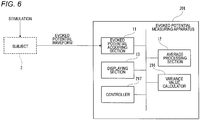
Fig. 6 is a block diagram illustrating the functional configuration of an evoked potential measuring apparatus of a third embodiment. - Embodiments will be described in detail with reference to the accompanying drawings.
-
Fig. 1 is a block diagram illustrating the functional configuration of an evoked potential measuringapparatus 1 of a first embodiment. The evoked potential measuringapparatus 1 may include an evoked potential acquiringsection 11, anaverage processing section 12, a displayingsection 13, a first variance value calculator 14 (an example of the first statistical value calculator), and anupdation processing section 15. - When stimulation is applied to a
subject 2, an evoked potential waveform can be obtained. An evoked potential waveform shows a transient potential variation which appears in the brain waves and myopotential of thesubject 2 as a response to the stimulation. Namely, an evoked potential waveform appears as a temporal change of the biopotential in which the timing of stimulation application is set as the reference timing. - Examples of stimulation are visual stimulation, auditory stimulation, electrical stimulation, and pain stimulation. Stimulation may be provided by an apparatus which is independent from the evoked potential measuring
apparatus 1, or by a stimulation generator which is disposed in the evokedpotential measuring apparatus 1, and which is not illustrated. - The evoked potential acquiring
section 11 is configured so as to acquire evoked potential waveforms from thesubject 2 in response to stimulation. The stimulation is repeatedly applied to thesubject 2. Therefore, the evoked potential acquiring section acquires a plurality of evoked potential waveforms. - The
average processing section 12 is configured so as to arithmetically average the plurality of evoked potential waveforms which are acquired by the evoked potential acquiringsection 11, to acquire an average waveform. The displayingsection 13 is configured so as to display the average waveform which is acquired by theaverage processing section 12. - The first
variance value calculator 14 is configured so as to, each time a waveform set including an N number of evoked potential waveforms is obtained, calculate a variance value (first variance value, an example of the first statistical value) from variations of waveforms in the waveform set. An integer of 2 or more may be adequately selected as N. Examples of N are 10, 25, and 50. - For example, the first variance value is calculated in the following manner. Each evoked potential waveform is expressed as a set of potential values at an X number of timings. For example, X is 1,000. A Y number of timings are selected from the X number of timings, and the variance values of potential values at the Y number of timings are calculated with respect to the N number of evoked potential waveforms. For example, Y is 10 or 100.
- In the case where N is 25, X is 1,000, and Y is 10, each time 25 evoked potential waveforms are acquired with respect to 25 stimulations applied to the
subject 2, the variance value of a waveform set including the 25 evoked potential waveforms is calculated. The potential values at 10 timings are selected from those at 1,000 timings constituting each of the evoked potential waveforms, and the variance values of the potential values at the selected timings are calculated with respect to the 25 evoked potential waveforms. Namely, the firstvariance value calculator 14 calculates 10 first variance values from one waveform set. - The
updation processing section 15 is configured so as to determine whether the maximum value of the plurality of first variance values calculated by the firstvariance value calculator 14 exceeds a first threshold or not. If it is determined that the maximum value exceeds the first threshold, theupdation processing section 15 updates the average waveform acquired by theaverage processing section 12 so as to eliminate a waveform set including such variance values from the arithmetic average. The updated average waveform is displayed on the displayingsection 13. - Next, the operation of the thus configured evoked potential measuring
apparatus 1 will be described in detail with reference toFigs. 2 to 3(F) .Fig. 2 is a flow chart illustrating the operation of the evoked potential measuringapparatus 1. - When the measurement is started, the evoked potential acquiring
section 11 acquires a first evoked potential waveform as a response to the first stimulation application (S1). Because of one evoked potential waveform, theaverage processing section 12 handles the evoked potential waveform acquired in step S1, as the average waveform (S2). The displayingsection 13 displays the evoked potential waveform as the average waveform (S3). - Next, it is determined whether the predetermined number (N) of evoked potential waveforms constituting the waveform set have been acquired or not (S4). Here, one evoked potential waveform has been acquired (NO in step S4), and therefore the process returns to step S1. That is, the evoked potential acquiring
section 11 acquires a second evoked potential waveform as a response to the second stimulation application (S1). Theaverage processing section 12 arithmetically averages the two evoked potential waveforms to update the average waveform (S2). The displayingsection 13 displays the updated average waveform (S3). - In the case where N is 10, the above-described process is repeated 10 times. In the tenth determination in step S4, 10 evoked potential waveforms have been acquired (YES in step S4), and therefore the first
variance value calculator 14 calculates the first variance value with respect to the waveform set including the 10 evoked potential waveforms (S5). - As described above, potential values corresponding to the Y number of timings are selected from potential values corresponding to the X number of timings constituting each evoked potential waveform, and the variance values of the potential values at the Y number of timings are calculated with respect to 10 evoked potential waveforms. Namely, a Y number of first variance values are calculated with respect to the waveform set. For example, X is 1,000, and Y is 10.
- Next, the
updation processing section 15 determines whether the maximum value of the first variance values calculated by the firstvariance value calculator 14 exceeds the first threshold or not (S6). -
Fig. 3 (A) illustrates an average waveform which is obtained by arithmetically averaging about 1,000 evoked potential waveforms that are acquired with respect to about 1,000 stimulations. The abscissa indicates the time (which may be regarded as the number of timings) . The ordinate indicates the potential.Fig. 3 (B) illustrates a temporal change of the maximum value of the first variance values which are calculated for each waveform set including 10 evoked potential waveforms. The abscissa indicates the number of stimulations which are applied to the subject, and the ordinate indicates the maximum value of the first variance values. - The phenomenon has been described in which, when the arithmetic averaging is repeated, noises that are momentarily superimposed on the evoked potential waveforms can be eliminated. However, there is a case where sudden noises due to body motion, or electromyogram, an electrocautery, or the like cannot be eliminated by arithmetic averaging.
Fig. 3 (C) illustrates an average waveform which is obtained by arithmetically averaging about 1,000 evoked potential waveforms in the case where such noises are superimposed on the waveforms, andFig. 3(D) illustrates a temporal change of the maximum value of first variance values that, in such a case, are acquired in a manner similar to that illustrated inFig. 3(B) . It can be seen that, in the vicinities of 250-th and 500-th stimulation applications, such noises are added, and the maximum value of the first variance values is extremely raised. - As seen from
Fig. 3(C) , in such a situation, even when about 1,000 arithmetic averaging processes are performed, noises remain to be superimposed on the average waveform, and it is difficult to read an evoked potential waveform derived from the subject. In order to obtain a waveform such as illustrated inFig. 3 (A) , stimulation and arithmetic averaging must be further continued, and therefore a large burden is imposed on the subject. - As illustrated in
Fig. 2 , if it is determined that the maximum value of the first variance values calculated by the firstvariance value calculator 14 exceeds the first threshold (YES in step S6), theupdation processing section 15 in the embodiment updates the average waveform so as to eliminate a waveform set containing the first variance values from the arithmetic average (S7). - In the case where a waveform set in which the maximum value of the first variance values is large to some extent is obtained, it is highly probable that, at the timing when the waveform set is obtained, noises which are hardly eliminated by arithmetic averaging are added to the waveform set. When such a waveform set remains as a component of the average waveform, a substantial time period is required to obtain a significant average waveform as illustrated in
Fig. 3 (C) . In the embodiment, such a waveform set is eliminated from the arithmetic average, whereby the average waveform can be returned to the state attained before the problematic noises are mixed into the waveform. - As illustrated in
Fig. 2 , the process then returns to step S1, and the above-described processes are repeated in order to acquire the next waveform set. If it is determined that the maximum value of the first variance values calculated by the firstvariance value calculator 14 does not exceed the first threshold (NO in step S6), it is determined whether conditions for ending the process are satisfied or not (S8). Example of the ending conditions are that stimulation has been applied a predetermined number (for example, 3,000) of times (a predetermined number of evoked potential waveforms are acquired), and that a command for ending the measurement is input by the user. - If it is determined that the ending conditions are satisfied (YES in step S8), the evoked potential measurement is ended. If it is determined that the ending conditions are not satisfied (NO in step S8), the process returns to step S1, and the above-described processes are repeated in order to acquire the next waveform set.
-
Fig. 3 (E) illustrates an average waveform which is obtained by arithmetically averaging about 1,000 evoked potential waveforms in the case where noises are added under the same conditions as those illustrated inFig. 3 (C) and Fig. 3 (D) , and the process in the embodiment is performed.Fig. 3 (F) corresponds toFig. 3 (D) , and illustrates a temporal change of the maximum value of the first variance values. InFig. 3 (F) , the dash-dot line Th1 indicates the first threshold. Plots indicated by cross-like symbols show maximum values of the first variance values of the waveform sets in which the maximum values exceed the first threshold, and which are therefore eliminated from the arithmetic average. As seen from the comparison betweenFig. 3(C) and Fig. 3(E) , although the numbers of stimulations inFig. 3(C) and Fig. 3(E) are approximately equal to each other, the waveform ofFig. 3(E) is obtained as a significant average waveform in which influences of environmental noises are eliminated, and which is equivalent to that illustrated inFig. 3(A) . - According to the configuration of the embodiment, therefore, influences of disturbance noises which are hardly coped by the related-art arithmetic average method can be eliminated by the relatively simple process. Consequently, the time period which elapses until a significant average waveform is obtained can be shortened, and namely the number of times when stimulation is applied to the subject 2 can be reduced. In an evoked potential measurement in which the arithmetic average method is used, therefore, the measurement can be performed highly accurately while the burden on the
subject 2 is reduced. - As indicated by the broken lines in
Fig. 1 , the evokedpotential measuring apparatus 1 may include a secondvariance value calculator 16 and acontroller 17. - The second
variance value calculator 16 is configured so as to calculate a variance value (second variance value, an example of the second statistical value) of the average waveform acquired by theaverage processing section 12. - For example, the second variance value is calculated in the following manner. An average waveform is expressed as a set of potential values at an X number of timings. For example, X is 1,000. A Y number of timings are selected from the X number of timings, and the variance values of potential values at the Y number of timings are calculated with respect to all evoked potential waveforms which have been added hitherto. For example, Y is 10 or 100.
- The
controller 17 is configured so as to determine whether the maximum value of the plurality of second variance values calculated by the secondvariance value calculator 16 is smaller than a predetermined second threshold or not. If it is determined that the maximum value is smaller than the second threshold, thecontroller 17 causes the acquisition of evoked potential waveforms by the evokedpotential acquiring section 11, to be automatically stopped. - The operation of the thus configured evoked
potential measuring apparatus 1 will be described with reference toFigs. 2 and4. Fig. 4 illustrates relationships between the number of stimulations applied to thesubject 2, and the maximum value of the second variance values calculated by the secondvariance value calculator 16. The abscissa indicates the number of stimulations which are applied to thesubject 2, and the ordinates indicates the maximum value of the second variance values. - As indicated by the broken lines in
Fig. 2 , the secondvariance value calculator 16 calculates the second variance value with respect to the average waveform which is currently acquired by the average processing section 12 (S9). - Next, the
controller 17 determines whether the maximum value of the second variance values calculated by the secondvariance value calculator 16 is smaller than the second threshold or not (S10). The dash-dot line Th2 inFig. 4 indicates the second threshold. The second threshold is empirically determined as a variance value that is as small as that at which a significant evoked potential waveform can be determined. - If it is determined that the maximum value of the second variance values calculated by the second
variance value calculator 16 is smaller than the second threshold (YES in step S10), the acquisition of evoked potential waveforms by the evokedpotential acquiring section 11 is automatically stopped, and the measurement of an evoked potential is ended (S11). The dash-dot line Ts inFig. 4 indicates the timing when the automatic stopping process is performed by thecontroller 17. - According to the configuration, while a significant evoked potential waveform is acquired from the
subject 2, it is possible to prevent a situation where an unnecessary evoked potential measurement is continued by a subjective determination of the user, from occurring. Unnecessary stimulation application can be avoided. In an evoked potential measurement in which the arithmetic average method is used, therefore, the measurement can be performed highly accurately while the burden on thesubject 2 is reduced. - Alternatively, the
controller 17 may be configured so as to, if it is determined that the maximum value of the plurality of second variance values calculated by the secondvariance value calculator 16 is smaller than the predetermined second threshold, change the manner of displaying the average waveform on the displayingsection 13. - As indicated by the broken lines in
Fig. 2 , if it is determined that the maximum value of the second variance values calculated by the secondvariance value calculator 16 is smaller than the second threshold (YES in step S10), specifically, the manner of displaying the average waveform on the displayingsection 13 is changed (S12). Examples of the change of the display manner are a change of the color of at least one of the average waveform and the background screen, and a display of a notification symbol. The dash-dot line Ts inFig. 4 indicates the timing when such a change of the display manner is performed. - Unlike the above-described example, the measurement of an evoked potential is not automatically ended, and the process transfers to the determination whether the ending conditions are satisfied or not (S8). If it is determined that the ending conditions are satisfied (YES in step S8), the evoked potential measurement is ended. If it is determined that the ending conditions are not satisfied (NO in step S8), the process returns to step S1, and the above-described processes are repeated in order to acquire the next waveform set.
- According to the configuration, at a timing when a significant evoked potential waveform is acquired from the
subject 2, it is possible to encourage the user to stop the evoked potential measurement. Unnecessary stimulation application can be avoided. In an evoked potential measurement in which the arithmetic average method is used, therefore, the measurement can be performed highly accurately while the burden on thesubject 2 is reduced. - In addition to or in place of the above-described functions, the
controller 17 may be configured so as to determine whether the maximum value of the plurality of first variance values calculated by the firstvariance value calculator 14 exceeds the first threshold or not. Thecontroller 17 may be further configured so as to, if it is determined that the maximum value exceeds the first threshold, change the manner of displaying the average waveform on the displayingsection 13. - As indicated by the broken line in
Fig. 2 , if it is determined that the maximum value of the plurality of first variance values calculated by the firstvariance value calculator 14 exceeds the first threshold (YES in step S6), specifically, thecontroller 17 changes the manner of displaying the average waveform on the displaying section 13 (S13). Examples of the change of the display manner are a change of the color of at least one of the average waveform and the background screen, and a display of a notification symbol. - According to the configuration, the user can be informed of the execution of the process of eliminating a waveform set which is affected by noises, from the arithmetic average. The process which is performed without involving consciousness is visualized, and therefore the user can be provided with a sense of safety due to the execution of the process which can reduce the burden on the
subject 2. - As indicated by the broken lines in
Fig. 1 , the evokedpotential measuring apparatus 1 may include athreshold determining section 18. Thethreshold determining section 18 is configured so as to determine the first threshold based on the maximum value of a predetermined number of first valiance values calculated by the firstvariance value calculator 14. - As indicated by the broken lines in
Fig. 2 , specifically, thethreshold determining section 18 determines whether the number of times when the maximum value of the first variance values is calculated by the firstvariance value calculator 14 is equal to or larger than M (S14). For example, M is 3. In the case where N is 10, and M is 3, the above means that it is determined whether 3 waveform sets containing evoked potential waveforms up to the 30-th one after the start of the measurement are obtained or not. - If it is determined that the number of times when the maximum value of the first variance values is calculated is not larger than M (NO in step S14), the process returns to step S1, and the above-described processes are repeated in order to acquire the next waveform set. If it is determined that the number of times when the maximum value of the first variance values is calculated reaches M (YES in step S14), the
threshold determining section 18 determines the first threshold based on the M number of maximum values of the first variance values (S15). - The manner of determining the first threshold may be adequately determined in accordance with the specifications. For example, the average value of the M number of maximum values of the first variance values is calculated, and the average value is multiplied by a predetermined coefficient, whereby the first threshold may be determined.
- The characteristics of the evoked potential waveforms which are acquired from the subject 2 by the evoked
potential acquiring section 11 vary among individuals. According to the above-described configuration, the first threshold is determined based on variance values calculated from the M x N number of evoked potential waveforms which are acquired from each subject 2, and a waveform set which is to be eliminated from the arithmetic average is determined based on this first threshold. Accordingly, a more dynamic and flexible process according to thesubject 2 is enabled, and a significant average waveform can be acquired in a short period of time and highly accurately. In an evoked potential measurement in which the arithmetic average method is used, therefore, an accurate measurement can be performed while the burden on thesubject 2 is reduced. - In the embodiment, the functions of the
average processing section 12, the firstvariance value calculator 14, theupdation processing section 15, the secondvariance value calculator 16, thecontroller 17, and thethreshold determining section 18 are realized from software executed by a cooperation of a processor and memory which are communicably connected to each other. Examples of the processor are a CPU and an MPU. Examples of the memory are a RAM and a ROM. However, the function of at least one of theaverage processing section 12, the firstvariance value calculator 14, theupdation processing section 15, the secondvariance value calculator 16, thecontroller 17, and thethreshold determining section 18 may be realized by hardware such as circuit devices, or a combination of hardware and software. - Next, an evoked
potential measuring apparatus 101 of a second embodiment will be described with reference toFig. 5 . Components which are substantially identical with those of the evokedpotential measuring apparatus 1 of the first embodiment are denoted by the same reference numerals, and duplicated descriptions are omitted. - The evoked
potential measuring apparatus 101 may include astimulation generator 110. Thestimulation generator 110 is configured so as to generate stimulation which is to be applied to thesubject 2. Examples of stimulation are visual stimulation, auditory stimulation, and pain stimulation. Thestimulation generator 110 may be disposed in the evokedpotential measuring apparatus 101, or outside the evokedpotential measuring apparatus 101. - The evoked
potential measuring apparatus 101 may include a variance value calculator 116 (an example of the statistical value calculator). Thevariance value calculator 116 is configured so as to calculate a variance value (an example of the statistical value) of the average waveform acquired by theaverage processing section 12. For example, the variance value is calculated in the following manner. An average waveform is expressed as a set of potential values at an X number of timings. For example, X is 1,000. A Y number of timings are selected from the X number of timings, and the variance values of potential values at the Y number of timings are calculated with respect to all evoked potential waveforms which have been added hitherto. For example, Y is 10 or 100. - The evoked
potential measuring apparatus 101 may include acontroller 117. Thecontroller 117 is configured so as to determine whether the maximum value of the plurality of variance values calculated by thevariance value calculator 116 is smaller than a predetermined threshold or not. If it is determined that the maximum value is smaller than the threshold, thecontroller 117 causes the stimulation generation by thestimulation generator 110, to be automatically stopped. - According to the configuration, while a significant evoked potential waveform is acquired from the
subject 2, it is possible to prevent a situation where an unnecessary evoked potential measurement is continued by a subjective determination of the user, from occurring. Unnecessary stimulation application can be avoided. In an evoked potential measurement in which the arithmetic average method is used, therefore, the measurement can be performed highly accurately while the burden on thesubject 2 is reduced. - In the embodiment, the functions of the
average processing section 12, thevariance value calculator 116, and thecontroller 117 are realized from software executed by a cooperation of a processor and memory which are communicably connected to each other. Examples of the processor are a CPU and an MPU. Examples of the memory are a RAM and a ROM. However, the function of at least one of theaverage processing section 12, thevariance value calculator 116, and thecontroller 117 may be realized by hardware such as circuit devices, or a combination of hardware and software. - Next, an evoked
potential measuring apparatus 201 of a third embodiment will be described with reference toFig. 6 . Components which are substantially identical with those of the evokedpotential measuring apparatus 1 of the first embodiment are denoted by the same reference numerals, and duplicated descriptions are omitted. - The evoked
potential measuring apparatus 201 may include a variance value calculator 216 (an example of the statistical value calculator). Thevariance value calculator 216 is configured so as to calculate a variance value (an example of the statistical value) of the average waveform acquired by theaverage processing section 12. For example, the variance value is calculated in the following manner. An average waveform is expressed as a set of potential values at an X number of timings. For example, X is 1,000. A Y number of timings are selected from the X number of timings, and the variance values of potential values at the Y number of timings are calculated with respect to all evoked potential waveforms which have been added hitherto. For example, Y is 10 or 100. - The evoked
potential measuring apparatus 201 may include acontroller 217. Thecontroller 217 is configured so as to determine whether the maximum value of the plurality of variance values calculated by thevariance value calculator 216 is smaller than a predetermined threshold or not. If it is determined that the maximum value is smaller than the threshold, thecontroller 217 causes the manner of displaying the average waveform on the displayingsection 13, to be changed. Examples of the change of the display manner are a change of the color of at least one of the average waveform and the background screen, and a display of a notification symbol. - According to the configuration, at the timing when a significant evoked potential waveform is acquired from the
subject 2, it is possible to encourage the user to stop the evoked potential measurement. Unnecessary stimulation application can be avoided. In an evoked potential measurement in which the arithmetic average method is used, therefore, the measurement can be performed highly accurately while the burden on thesubject 2 is reduced. - In the embodiment, the functions of the
average processing section 12, thevariance value calculator 216, and thecontroller 217 are realized from software executed by a cooperation of a processor and memory which are communicably connected to each other. Examples of the processor are a CPU and an MPU. Examples of the memory are a RAM and a ROM. However, the function of at least one of the functions of theaverage processing section 12, thevariance value calculator 216, and thecontroller 217 may be realized by hardware such as circuit devices, or a combination of hardware and software. - The above-described embodiments are mere examples for facilitating understanding of the presently disclosed subject matter. The configurations of the embodiments may be adequately changed or improved without departing the spirit of the presently disclosed subject matter. It is obvious that equivalents are included within the technical scope of the presently disclosed subject matter.
- In the above-described embodiments, the maximum value of variance values is exemplified as the statistical value which is calculated based on evoked potential waveforms acquired from the
subject 2. However, various statistical values may be employed in accordance with the specifications. For example, the average value, standard deviation value, unbiased variance value, expected value, or correlation coefficient of variance values may be employed. Alternatively, the statistical value may be obtained based on the latencies of response or areas under waveform of evoked potential waveforms which are acquired in response to stimulation. - According to an aspect of the presently disclosed subject matter, there is provided an evoked potential measuring apparatus comprising: an evoked potential acquiring section which is configured to acquire a plurality of evoked potential waveforms from a subject in response to stimulation; an average processing section which is configured to arithmetically average the plurality of evoked potential waveforms to acquire an average waveform; a first statistical value calculator which, each time a waveform set including an N (N is 2 or more) number of evoked potential waveforms is acquired, is configured to calculate a first statistical value of the waveform set; and an updation processing section which is configured to update the average waveform to eliminate a waveform set in which the first statistical value exceeds a first threshold, from the arithmetic average.
- In the case where a waveform set in which the first statistical value exceeds the first threshold is acquired, it is highly probable that, at the timing when the waveform set is acquired, noises which are hardly eliminated by the arithmetic averaging are added to the waveform set. When such a waveform set remains as a component of the average waveform, a substantial time period is required to acquire a significant average waveform. According to the configuration, such a waveform set is eliminated from the arithmetic average, whereby the average waveform can be returned to the state attained before the problematic noises are mixed into the waveform. Therefore, the time period which elapses until a significant average waveform is acquired can be shortened, and namely the number of times when stimulation is applied to the subject can be reduced. In an evoked potential measurement in which the arithmetic average method is used, therefore, the measurement can be performed highly accurately while the burden on the subject is reduced.
- According to an aspect of the presently disclosed subject matter, there is also provided an evoked potential measuring apparatus comprising: a stimulation generator which is configured to generate stimulation that is to be applied to a subject; an evoked potential acquiring section which is configured to acquire a plurality of evoked potential waveforms from the subject in response to the simulation; an average processing section which is configured to arithmetically average the plurality of evoked potential waveforms to acquire an average waveform; a statistical value calculator which is configured to calculate a statistical value of the average waveform; and a controller which, when the statistical value is smaller than a threshold, is configured to cause the generation of the stimulation to be automatically stopped.
- According to the configuration, while a significant evoked potential waveform is acquired from the subject, it is possible to prevent a situation where an unnecessary evoked potential measurement is continued by a subjective determination of the user, from occurring. Unnecessary stimulation application can be avoided. In an evoked potential measurement in which the arithmetic average method is used, therefore, the measurement can be performed highly accurately while the burden on the subject is reduced. Moreover, the measurement is ended at the timing when an appropriate result is obtained, and therefore the measurement time period can be shortened.
- According to an aspect of the presently disclosed subject matter, there is provided an evoked potential measuring apparatus comprising: an evoked potential acquiring section which is configured to acquire a plurality of evoked potential waveforms from a subject in response to stimulation; an average processing section which is configured to arithmetically average the plurality of evoked potential waveforms to acquire an average waveform; a displaying section which is configured to display the average waveform; a statistical value calculator which is configured to calculate a statistical value of the average waveform; and a controller which, when the statistical value is smaller than a threshold, is configured to cause a manner of displaying the average waveform on the displaying section, to be changed.
- According to the configuration, at the timing when a significant evoked potential waveform is acquired from the subject, it is possible to encourage the user to stop the evoked potential measurement. Unnecessary stimulation application can be avoided. In an evoked potential measurement in which the arithmetic average method is used, therefore, the measurement can be performed highly accurately while the burden on the subject is reduced.
Claims (10)
- An evoked potential measuring apparatus comprising:an evoked potential acquiring section which is configured to acquire a plurality of evoked potential waveforms from a subject in response to stimulation;an average processing section which is configured to arithmetically average the plurality of evoked potential waveforms to acquire an average waveform;a first statistical value calculator which, each time a waveform set including an N (N is 2 or more) number of evoked potential waveforms is acquired, is configured to calculate a first statistical value of the waveform set; andan updation processing section which is configured to update the average waveform to eliminate a waveform set in which the first statistical value exceeds a first threshold, from the arithmetic average.
- The evoked potential measuring apparatus according to claim 1, further comprising:a second statistical value calculator which is configured to calculate a second statistical value of the average waveform; anda controller which, when the second statistical value is smaller than a second threshold, is configured to cause the acquisition of the evoked potential waveforms to be automatically stopped.
- The evoked potential measuring apparatus according to claim 1, further comprising:a second statistical value calculator which is configured to calculate a second statistical value of the average waveform; anda controller which, when the second statistical value is smaller than a second threshold, is configured to cause a manner of displaying the average waveform on a displaying section, to be changed.
- The evoked potential measuring apparatus according to any one of claims 1 to 3, further comprising:a displaying section which is configured to display the average waveform; anda controller which, when the first statistical value exceeds the first threshold, is configured to cause a manner of displaying the average waveform on the displaying section, to be changed.
- The evoked potential measuring apparatus according to any one of claims 1 to 4, further comprising a threshold determining section which is configured to determine the first threshold based on a predetermined number of first statistical values.
- The evoked potential measuring apparatus according to any one of claims 1 to 5, wherein
the first statistical value is one of a variance value, a standard deviation value, an unbiased variance value, an expected value, and a correlation coefficient. - The evoked potential measuring apparatus according to any one of claims 2 to 6, wherein
the second statistical value is one of a variance value, a standard deviation value, an unbiased variance value, an expected value, and a correlation coefficient. - An evoked potential measuring apparatus comprising:a stimulation generator which is configured to generate stimulation that is to be applied to a subject;an evoked potential acquiring section which is configured to acquire a plurality of evoked potential waveforms from the subject in response to the simulation;an average processing section which is configured to arithmetically average the plurality of evoked potential waveforms to acquire an average waveform;a statistical value calculator which is configured to calculate a statistical value of the average waveform; anda controller which, when the statistical value is smaller than a threshold, is configured to cause the generation of the stimulation to be automatically stopped.
- An evoked potential measuring apparatus comprising:an evoked potential acquiring section which is configured to acquire a plurality of evoked potential waveforms from a subject in response to stimulation;an average processing section which is configured to arithmetically average the plurality of evoked potential waveforms to acquire an average waveform;a displaying section which is configured to display the average waveform;a statistical value calculator which is configured to calculate a statistical value of the average waveform; anda controller which, when the statistical value is smaller than a threshold, is configured to cause a manner of displaying the average waveform on the displaying section, to be changed.
- The evoked potential measuring apparatus according to claim 8 or 9, wherein
the statistical value is one of a variance value, a standard deviation value, an unbiased variance value, an expected value, and a correlation coefficient.
Applications Claiming Priority (1)
| Application Number | Priority Date | Filing Date | Title |
|---|---|---|---|
| JP2016035795A JP6694733B2 (en) | 2016-02-26 | 2016-02-26 | Evoked potential measuring device |
Publications (1)
| Publication Number | Publication Date |
|---|---|
| EP3210532A1 true EP3210532A1 (en) | 2017-08-30 |
Family
ID=58098505
Family Applications (1)
| Application Number | Title | Priority Date | Filing Date |
|---|---|---|---|
| EP17156848.8A Withdrawn EP3210532A1 (en) | 2016-02-26 | 2017-02-20 | Evoked potential measuring apparatus |
Country Status (3)
| Country | Link |
|---|---|
| US (1) | US11020039B2 (en) |
| EP (1) | EP3210532A1 (en) |
| JP (1) | JP6694733B2 (en) |
Families Citing this family (3)
| Publication number | Priority date | Publication date | Assignee | Title |
|---|---|---|---|---|
| JP2019076374A (en) * | 2017-10-24 | 2019-05-23 | 日本光電工業株式会社 | Biological information measurement device and program |
| JP7091747B2 (en) | 2018-03-19 | 2022-06-28 | 株式会社リコー | Biometric information processing equipment and biometric information processing system |
| JP7528489B2 (en) * | 2020-03-23 | 2024-08-06 | 株式会社リコー | Information analysis device and information analysis method |
Citations (4)
| Publication number | Priority date | Publication date | Assignee | Title |
|---|---|---|---|---|
| US5697379A (en) * | 1995-06-21 | 1997-12-16 | Neely; Stephen T. | Method and apparatus for objective and automated analysis of auditory brainstem response to determine hearing capacity |
| JP2842409B2 (en) | 1996-09-06 | 1999-01-06 | 日本電気株式会社 | Evoked waveform calculator |
| US20110040202A1 (en) * | 2009-03-16 | 2011-02-17 | Neurosky, Inc. | Sensory-evoked potential (sep) classification/detection in the time domain |
| US20130324880A1 (en) * | 2011-10-18 | 2013-12-05 | Panasonic Corporation | Auditory event-related potential measurement system, auditory event-related potential measurement apparatus, auditory event-related potential measurement method, and computer program thereof |
Family Cites Families (20)
| Publication number | Priority date | Publication date | Assignee | Title |
|---|---|---|---|---|
| JP2596372B2 (en) | 1994-04-21 | 1997-04-02 | 日本電気株式会社 | Evoked potential measurement device |
| US5601091A (en) * | 1995-08-01 | 1997-02-11 | Sonamed Corporation | Audiometric apparatus and association screening method |
| JPH10286244A (en) * | 1997-04-15 | 1998-10-27 | Shimadzu Corp | Biological activity current source estimation device |
| JP3230460B2 (en) * | 1997-06-17 | 2001-11-19 | 株式会社島津製作所 | Biomagnetic measurement device |
| US6196977B1 (en) * | 1999-04-26 | 2001-03-06 | House Ear Institute | Method for detection on auditory evoked potentials using a point optimized variance ratio |
| US7133715B1 (en) * | 2000-01-07 | 2006-11-07 | Natus Medical Inc. | Hearing evaluation device with noise detection and evaluation capability |
| US6331164B1 (en) * | 2000-03-17 | 2001-12-18 | Etymotic Research, Inc. | Hearing test apparatus and method having adaptive artifact rejection |
| US7399282B2 (en) * | 2000-05-19 | 2008-07-15 | Baycrest Center For Geriatric Care | System and method for objective evaluation of hearing using auditory steady-state responses |
| WO2004071280A2 (en) * | 2003-02-07 | 2004-08-26 | Michael Sasha John | Rapid screening, threshold, and diagnostic tests for evaluation of hearing |
| US7269456B2 (en) * | 2002-05-30 | 2007-09-11 | Collura Thomas F | Repetitive visual stimulation to EEG neurofeedback protocols |
| JP2004216184A (en) * | 2004-04-26 | 2004-08-05 | Hitachi Ltd | Biomagnetic field measurement device |
| EP1788937A4 (en) * | 2004-09-16 | 2009-04-01 | Brainscope Co Inc | METHOD FOR ADAPTIVE FILTERING OF EEG SIGNALS FROM COMPLEX WAVELET |
| US20110196615A1 (en) * | 2010-01-26 | 2011-08-11 | Stmicroelectronics S.R.L. | Processing of biological signals |
| US8700141B2 (en) * | 2010-03-10 | 2014-04-15 | Brainscope Company, Inc. | Method and apparatus for automatic evoked potentials assessment |
| JP6072005B2 (en) * | 2011-05-04 | 2017-02-01 | カーディオインサイト テクノロジーズ インコーポレイテッド | Signal averaging |
| CN103081515B (en) | 2011-06-30 | 2016-12-21 | 松下知识产权经营株式会社 | Discomfort threshold level estimation system, method, sonifer adjust system and uncomfortable threshold value supposition processes circuit |
| JP6055679B2 (en) | 2013-01-08 | 2016-12-27 | 日本光電工業株式会社 | Biological signal averaging processor |
| PL224517B1 (en) * | 2013-09-03 | 2017-01-31 | Silvermedia Spółka Z Ograniczoną Odpowiedzialnością | System for recording and processing of signals for the diagnostics of hearing system and method of recording and processing of signals for the diagnostics of hearing system |
| JP6878269B2 (en) * | 2014-08-15 | 2021-05-26 | アクソニクス モジュレーション テクノロジーズ インコーポレイテッド | Systems and Methods for Nerve Stimulation Electrode Configuration Based on Nerve Positioning |
| EP3197351B1 (en) * | 2014-09-24 | 2025-03-12 | Vivosonic Inc. | System, method and apparatus for detecting an evoked response signal |
-
2016
- 2016-02-26 JP JP2016035795A patent/JP6694733B2/en active Active
-
2017
- 2017-02-20 EP EP17156848.8A patent/EP3210532A1/en not_active Withdrawn
- 2017-02-20 US US15/436,910 patent/US11020039B2/en active Active
Patent Citations (4)
| Publication number | Priority date | Publication date | Assignee | Title |
|---|---|---|---|---|
| US5697379A (en) * | 1995-06-21 | 1997-12-16 | Neely; Stephen T. | Method and apparatus for objective and automated analysis of auditory brainstem response to determine hearing capacity |
| JP2842409B2 (en) | 1996-09-06 | 1999-01-06 | 日本電気株式会社 | Evoked waveform calculator |
| US20110040202A1 (en) * | 2009-03-16 | 2011-02-17 | Neurosky, Inc. | Sensory-evoked potential (sep) classification/detection in the time domain |
| US20130324880A1 (en) * | 2011-10-18 | 2013-12-05 | Panasonic Corporation | Auditory event-related potential measurement system, auditory event-related potential measurement apparatus, auditory event-related potential measurement method, and computer program thereof |
Also Published As
| Publication number | Publication date |
|---|---|
| JP6694733B2 (en) | 2020-05-20 |
| JP2017148404A (en) | 2017-08-31 |
| US20170245775A1 (en) | 2017-08-31 |
| US11020039B2 (en) | 2021-06-01 |
Similar Documents
| Publication | Publication Date | Title |
|---|---|---|
| CN102473036A (en) | Brain wave interface system, brain wave interface provision device, execution method of brain wave interface, and program | |
| EP3893746B1 (en) | Device, system and method for providing bio-feedback to a user | |
| KR20190056287A (en) | Visual stimulation-based brain-computer interface apparatus and method of processing information thereof | |
| US11020039B2 (en) | Evoked potential measuring apparatus | |
| DE112014004760T5 (en) | Vitalsignal measuring apparatus and method for estimating a contact condition | |
| JP2017520297A5 (en) | ||
| US8648800B2 (en) | Control method and system of brain computer interface with stepping delay flickering sequence | |
| GB2611672A (en) | Wearable infection monitor | |
| US20170330475A1 (en) | Learning system, learning method, storage medium, and apparatus | |
| US10750961B2 (en) | Diagnosis assistance apparatus, diagnosis assistance method, diagnosis assistance program | |
| CN115590514A (en) | Physiological information processing method, physiological information processing device and physiological information processing system | |
| KR101973081B1 (en) | Method and system for distinguishing optimal visual stimulation | |
| JP2015047452A (en) | Method for analyzing and evaluating brain wave signal, brain wave signal analysis and evaluation apparatus, and program for analyzing and evaluating brain wave signal | |
| JPH11123181A (en) | Data display method | |
| US12303304B2 (en) | Electrode disconnect detection | |
| US11484237B2 (en) | Physiological information measurement apparatus and program | |
| CN115177271B (en) | Personalized threshold determination method and application of detection indicators in SSVEP asynchronous system | |
| WO2016097937A1 (en) | Device and method for influencing brain activity | |
| US10191545B1 (en) | Content presentation | |
| JP6577858B2 (en) | Muscle relaxation monitoring device, muscle relaxation monitoring method, and muscle relaxation monitoring program | |
| CN110613444B (en) | Method and device for displaying mother-fetus mixed electrocardiosignals | |
| US20180092566A1 (en) | Method for determining the perceptiveness of a subject | |
| JP6680825B2 (en) | EEG evaluation method and evaluation apparatus | |
| US11172820B2 (en) | Physiological information processing apparatus, physiological information processing method, and storage medium | |
| US20250352120A1 (en) | Electroencephalogram Analysis Device and Electroencephalogram Analysis Program, and Movement Assistance System, and Movement Assistance Method |
Legal Events
| Date | Code | Title | Description |
|---|---|---|---|
| PUAI | Public reference made under article 153(3) epc to a published international application that has entered the european phase |
Free format text: ORIGINAL CODE: 0009012 |
|
| AK | Designated contracting states |
Kind code of ref document: A1 Designated state(s): AL AT BE BG CH CY CZ DE DK EE ES FI FR GB GR HR HU IE IS IT LI LT LU LV MC MK MT NL NO PL PT RO RS SE SI SK SM TR |
|
| AX | Request for extension of the european patent |
Extension state: BA ME |
|
| 17P | Request for examination filed |
Effective date: 20180123 |
|
| RBV | Designated contracting states (corrected) |
Designated state(s): AL AT BE BG CH CY CZ DE DK EE ES FI FR GB GR HR HU IE IS IT LI LT LU LV MC MK MT NL NO PL PT RO RS SE SI SK SM TR |
|
| STAA | Information on the status of an ep patent application or granted ep patent |
Free format text: STATUS: THE APPLICATION HAS BEEN WITHDRAWN |
|
| 18W | Application withdrawn |
Effective date: 20180816 |