EP3208996B1 - Method and apparatus for efficient storage and processing of global and local cyber threat data in a distributed factor graph database - Google Patents
Method and apparatus for efficient storage and processing of global and local cyber threat data in a distributed factor graph database Download PDFInfo
- Publication number
- EP3208996B1 EP3208996B1 EP17157429.6A EP17157429A EP3208996B1 EP 3208996 B1 EP3208996 B1 EP 3208996B1 EP 17157429 A EP17157429 A EP 17157429A EP 3208996 B1 EP3208996 B1 EP 3208996B1
- Authority
- EP
- European Patent Office
- Prior art keywords
- workspace
- local
- local workspace
- cyber
- global
- Prior art date
- Legal status (The legal status is an assumption and is not a legal conclusion. Google has not performed a legal analysis and makes no representation as to the accuracy of the status listed.)
- Not-in-force
Links
Images




Classifications
-
- H—ELECTRICITY
- H04—ELECTRIC COMMUNICATION TECHNIQUE
- H04L—TRANSMISSION OF DIGITAL INFORMATION, e.g. TELEGRAPHIC COMMUNICATION
- H04L41/00—Arrangements for maintenance, administration or management of data switching networks, e.g. of packet switching networks
- H04L41/04—Network management architectures or arrangements
- H04L41/044—Network management architectures or arrangements comprising hierarchical management structures
-
- G—PHYSICS
- G06—COMPUTING OR CALCULATING; COUNTING
- G06F—ELECTRIC DIGITAL DATA PROCESSING
- G06F16/00—Information retrieval; Database structures therefor; File system structures therefor
- G06F16/20—Information retrieval; Database structures therefor; File system structures therefor of structured data, e.g. relational data
- G06F16/23—Updating
-
- H—ELECTRICITY
- H04—ELECTRIC COMMUNICATION TECHNIQUE
- H04L—TRANSMISSION OF DIGITAL INFORMATION, e.g. TELEGRAPHIC COMMUNICATION
- H04L63/00—Network architectures or network communication protocols for network security
- H04L63/14—Network architectures or network communication protocols for network security for detecting or protecting against malicious traffic
-
- H—ELECTRICITY
- H04—ELECTRIC COMMUNICATION TECHNIQUE
- H04L—TRANSMISSION OF DIGITAL INFORMATION, e.g. TELEGRAPHIC COMMUNICATION
- H04L63/00—Network architectures or network communication protocols for network security
- H04L63/14—Network architectures or network communication protocols for network security for detecting or protecting against malicious traffic
- H04L63/1408—Network architectures or network communication protocols for network security for detecting or protecting against malicious traffic by monitoring network traffic
- H04L63/1416—Event detection, e.g. attack signature detection
-
- H—ELECTRICITY
- H04—ELECTRIC COMMUNICATION TECHNIQUE
- H04L—TRANSMISSION OF DIGITAL INFORMATION, e.g. TELEGRAPHIC COMMUNICATION
- H04L63/00—Network architectures or network communication protocols for network security
- H04L63/14—Network architectures or network communication protocols for network security for detecting or protecting against malicious traffic
- H04L63/1433—Vulnerability analysis
-
- H—ELECTRICITY
- H04—ELECTRIC COMMUNICATION TECHNIQUE
- H04L—TRANSMISSION OF DIGITAL INFORMATION, e.g. TELEGRAPHIC COMMUNICATION
- H04L41/00—Arrangements for maintenance, administration or management of data switching networks, e.g. of packet switching networks
- H04L41/12—Discovery or management of network topologies
Definitions
- the methods and apparatus described herein are generally related, for example, to improving the data storage and data processing efficiency of cybersecurity technologies.
- analysts can determine rules or risk values (e.g., cyber-threat values, and/or similar values) for devices in their portion of the network system.
- the rules and/or values determined by each analyst may depend on how other devices in the network are configured, values associated with the network as a whole, and/or other values.
- Such determinations therefore, can involve transmission of large quantities of data, as some known network systems may send information about each device (e.g., network information, and/or threat intelligence information) to each analyst in the network.
- the analyst cannot view data from the rest of the network.
- the limited scope of information can affect the analysts' ability to calculate certain values (such as cyber-threat values and/or threat intelligence values), to predict changes in the network (e.g., with respect to network and/or cyber-threat changes), and/or to perform other actions within their portions of the network.
- Analysts in some known network systems also lack an efficient way to simultaneously process data received from a global representation of the network, and to reconcile those changes with other changes being made, substantially in real-time, to the global representation.
- WO 02/069186 discloses a method for archiving and retrieving documents within a computer system as well as a computer system used to implement said method.
- US9,118,714 relates to a cyber threat intelligence confidence rating visualization and editing user interface technology provides a user interface that allows a user (e.g., a cyber threat analyst, etc.) to submit ratings for various characteristics associated with a cyber threat indicator.
- a user e.g., a cyber threat analyst, etc.
- an apparatus can include a global workspace management compute device that is implemented in at least one of a processor or a memory, and that, when operative, can generate a workspace hierarchy tree that both represents a hierarchy of a set of workspaces in a network, and includes a global workspace.
- the apparatus can also include a local workspace management compute device operatively coupled to the global workspace management compute device.
- the local workspace management compute device when operative, can calculate workspace cyber-threat data for a local workspace that is both from the set of workspaces and is instantiated at the local workspace management compute device.
- the local workspace cyber-threat data can be calculated based on global workspace cyber-threat data associated with the global workspace.
- the apparatus can also include a local workspace interface operatively coupled to the local workspace management compute device.
- the local workspace interface can, when operative, display a representation of the set of workspaces in the network, based on the local workspace cyber-threat data associated with the local workspace.
- the local workspace interface can also, when operative, receive input from a local workspace administrator that includes a modification to the local workspace cyber-threat data associated with the local workspace.
- the local workspace management compute device can, when operative, define a child node of the local workspace based on the modification to the local workspace cyber-threat data associated with the local workspace.
- the local workspace interface can, when operative, modify the representation of the set of workspaces in the network based on the child node.
- an apparatus can include a global workspace management compute device implemented in at least one of a processor or a memory.
- the global workspace management compute device can, when operative, generate a workspace hierarchy tree that includes a global workspace.
- the apparatus can also include a local workspace management compute device operatively coupled to the global workspace management compute device, and that receives a request for workspace cyber-threat data for a local workspace from a set of workspaces.
- the local workspace management compute device can, when operative, determine the workspace cyber-threat data based on a first delta child node, and can send the workspace cyber-threat data in response to the request.
- the local workspace management compute device can, when operative, receive a global workspace modification message indicating that global workspace cyber-threat data associated with the global workspace has been modified, and can generate a second delta child node based on the global workspace modification message.
- a process can include generating a global workspace factor graph representing a set of objects, such that each object from the set of objects includes representation of a hierarchy of a set of workspaces in a network, the set of objects including a first object and a second object.
- the process can also include generating a set of local workspace factor graphs, where each local workspace factor graph from the set of local workspace factor graphs is associated with an object of the set of objects and generated based on the global workspace factor graph.
- the process can also include substantially simultaneously distributing each local workspace factor graph from the set of local workspace factor graphs to a workspace analysis processor associated with the first object associated with the local workspace factor graph, and to a workspace analysis processor associated with the second object associated with the local workspace factor graph.
- the process can include substantially simultaneously receiving, at the first object and from the second object, global workspace factor graph modifications for the global workspace factor graph, and defining a child node associated with a workspace represented in the global workspace factor graph based on the global workspace factor graph modifications and so as to modify the global workspace factor graph.
- the process can include generating a set of modified local workspace factor graphs based on the modified global workspace factor graph, and distributing each modified local workspace factor graph from the set of modified local workspace factor graphs to the workspace analysis processor associated with the first object associated with the local workspace factor graph and to the workspace analysis processor associated with the second object associated with the local workspace factor graph.
- FIG. 1 is a schematic diagram illustrating a workspace network 100.
- the workspace network 100 can include a global workspace management server 102.
- the global workspace management server 102 can include at least one processor 104, at least one memory 106, and/or at least one factor graph database 110.
- the at least one processor 104 can be any hardware module and/or component configured to receive and process data, and/or to execute code representing executable instructions.
- the at least one processor 104 can be a general purpose processor, a Field Programmable Gate Array (FPGA), an Application Specific Integrated Circuit (ASIC), a Digital Signal Processor (DSP), and/or the like.
- FPGA Field Programmable Gate Array
- ASIC Application Specific Integrated Circuit
- DSP Digital Signal Processor
- the at least one memory 106 can be a hardware module and/or component configured to store data accessible by the at least one processor 104, and/or to store code representing executable instructions for the at least one processor 104.
- the memory 106 can be, for example, a random access memory (RAM), a memory buffer, a hard drive, a database, an erasable programmable read-only memory (EPROM), an electrically erasable read-only memory (EEPROM), a read-only memory (ROM) and/or so forth.
- the memory 106 stores instructions to cause the processor to execute modules, processes and/or functions associated with a global workspace management server 102 and/or system.
- the at least one processor 104 can implement a number of modules, compute devices, and/or server components, including but not limited to a global workspace manager 108 and a local workspace manager 116.
- the at least one processor 104 can be configured to execute instructions generated by any of the modules and/or server components, and/or instructions stored in the memory 106.
- the modules and/or server components can be distributed among and/or executed by the multiple processors.
- the at least one memory 106 can be configured to store processor-readable instructions that are accessible and executable by the processor 104.
- the modules, compute devices, and/or server components can be implemented on the processor 104 (e.g., as software executed on and/or implemented by the processor).
- the modules, compute devices, and/or server components can be software stored in the memory 106 and executed by the processor 104.
- the modules, compute devices, and/or server components can be any assembly and/or set of operatively-coupled electrical components separate from the processor 104 and the memory, including but not limited to field programmable gate arrays (FPGAs) and/or application-specific integrated circuits (ASICs).
- FPGAs field programmable gate arrays
- ASICs application-specific integrated circuits
- a global workspace manager 108 can be a module, compute device, and/or server component configured to manage the generation and modification of a global workspace hierarchy factor graph.
- the global workspace manager 108 can use information about the workspace network 100 and a number of analysts 120 accessing the workspace network 100, to arrange a set of workspaces associated with the analysts 120 into a workspace hierarchy (e.g., represented in a factor graph and/or a similar representation).
- the workspace hierarchy can be used to determine how information is stored and/or propagated in the workspace network 100.
- the global workspace manager 108 can also manage modifications to data in the global workspace hierarchy factor graph, e.g., by applying the modification and propagating the effects of the modification throughout the global workspace hierarchy factor graph.
- a local workspace manager 116 can be a module, compute device, and/or server component configured to manage the generation, propagation, and modification of local workspace hierarchy factor graphs.
- the local workspace manager 116 can generate local workspace hierarchy factor graphs based on the global workspace hierarchy factor graph, can distribute the local workspace hierarchy factor graphs to local workspace computers 114a-z, and/or can process revisions made to each local workspace hierarchy factor graph at each local workspace computer 114a-z. Further examples may be found in FIGs. 6-10 , described in further detail herein.
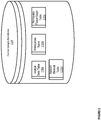
- the at least one factor graph database 110 can be a data store and/or memory configured to store multiple data records.
- the factor graph database 110 can include an analyst data table 110a, a workspaces table 110b, a workspace factor graph table 110c, and/or a network element table 110d. Tables in the at least one factor graph database 110 can be distributed across multiple databases, or can be stored in one database.
- the analyst data table 110a can contain records relating to analysts 120 and/or other entities in the workspace network 100 and can receive and/or manage a local workspace hierarchy factor graph.
- the term "analysts" can refer to computing devices (e.g., local workspace computer 114a-z ), users operating local computing devices such as local workspace computers 114a-z, and/or the like.
- a record in an analyst data table 110a can include an identifier of the analyst 120 and/or other entity, identifying information associated with a local workspace computer 114a-z associated with the analyst 120, a local workspace associated with the analyst 120, a local workspace hierarchy factor graph associated with the analyst 120, a date at which the analyst 120 was added to the factor graph database 110, and/or other information relating to the threat analyst 120.
- a workspaces table 110b can include information relating to analyst workspaces, and/or other workspaces included in a workspace factor graph.
- Workspaces can include data relating to a particular organization, a member of the organization, and/or other information, depending on the location of the workspace in a workspace hierarchy factor graph, and can also specify network elements and/or other network and/or threat information associated with a particular analyst 120, organization, and/or similar entity.
- a record in a workspaces table 110b can include a workspace identifier, a workspace scope (e.g., a global workspace and/or a local workspace), an identifier associated with an analyzer, an identifier of a global workspace hierarchy to which the workspace belongs, devices and/or other network elements associated with the workspace, a list of connections between various network elements associated with the workspace, threat information associated with the workspace, a set of scoring parameters associated with the workspace, a date indicating the last time the workspace data was updated and/or other information relating to a workspace.
- a workspace scope e.g., a global workspace and/or a local workspace
- an identifier associated with an analyzer e.g., an identifier associated with an analyzer
- an identifier of a global workspace hierarchy to which the workspace belongs e.g., devices and/or other network elements associated with the workspace
- a list of connections between various network elements associated with the workspace e.g., threat information associated with the workspace
- the data stored in each workspace record can be different from data stored at a workspace record associated with a workspace higher in a workspace hierarchy, than a workspace associated with that workspace record. Further information relating to how data may be stored at a workspace can be found at least in FIGs. 3-10 , described in more detail herein.
- a workspace factor graph table 110c can include representations of local and global workspace hierarchy factor graphs for a network.
- a record in the workspace factor graph table 110c can include, for example, an identifier for a workspace hierarchy factor graph, a workspace hierarchy factor graphs type (e.g., global or local), an identifier of a network with which the workspace hierarchy factor graph is associated, a list of workspaces associated with the workspace hierarchy factor graphs, a hierarchy graph specifying the hierarchy of the list of workspaces, a list of identifiers associated with local workspace computers 114a-z and/or analysts 120 associated with the workspace hierarchy factor graph, a date indicating the last time the workspace hierarchy factor graph was updated, and/or other information relating to workspace hierarchy factor graphs.
- a network element table 110d can include data relating to network elements and/or network objects associated with workspaces.
- a record in the network element table 110d can include a network element identifier, a network element type (e.g., a virtual network element, and/or a physical network element such as a network server, a computer and/or other electronic device connected to the workspace network 100, and/or the like), a list of connections between a network element represented by the network element record and other network elements in the workspace network 100, a workspace with which the network element and/or network object is associated, an analyst 120 with which the network element and/or network object is associated, a threat indicator confidence score associated with the network element and/or network object, and/or other information relating to network elements and/or network objects.
- a network element type e.g., a virtual network element, and/or a physical network element such as a network server, a computer and/or other electronic device connected to the workspace network 100, and/or the like
- a communications network 112 can be the Internet, and/or a similar wireless and/or wired network that enables the global workspace management server 102 to communicate with multiple local workspace computers 114a-z, and/or with other network devices.
- the communications network 112 can be a telephone network, an Ethernet network, a fiber-optic network, a cellular network, and/or a similar wired and/or wireless network.
- the communications network 112 can include a single network to which a number of workspaces, network elements, and/or network objects can belong.
- the communications network 112 can include multiple networks operatively coupled to each other, e.g., via one or more routers, switches, and/or network gateways.
- Each of local workspace computers 114a-z can be a computing device including at least one of a processor and/or memory similar to those of the global workspace management server 102.
- the local workspace computers 114a- z can be configured to receive local workspace hierarchy factor graph information for a local workspace, and can process the information, and/or can display the information on at least one display operatively coupled to the local workspace computer 114a-z.
- the local workspace computers 114a-z can each instantiate a local workspace interface 118a-z, which can render the local workspace hierarchy factor graph information at the respective local workspace computer 114a-z.
- the information displayed can be modified, e.g., when global workspace hierarchy factor graph information has been updated, when the local workspace hierarchy factor graph information has been updated, and/or under similar circumstances.
- Each local workspace computers 114a-z can be associated with a particular workspace stored in the factor graph database 110.
- local workspace computers 114a can be associated with one or more particular workspaces in the global hierarchy factor graph, such that if a cyber-threat event involving the local workspace computers 114a occurs, the one or more workspaces in the global hierarchy factor graph can be updated to reflect the cyber-threat event.
- Local versions of the global workspace hierarchy factor graph can also be stored at each local workspace computer 114a-z, and can be further modified by an analyst 120 and/or the local workspace computer 114a-z. More information on local versions of workspace hierarchy factor graphs can be found at least in FIGs. 7-10 and their related discussion below.
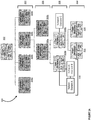
- FIG. 3A is a diagram illustrating an example workspace hierarchy 300.
- workspaces can be arranged into hierarchies, where workspaces that fall below other workspaces in the hierarchy can inherit information and/or settings from higher-level workspaces.
- system workspace 302 e.g., a global workspace including information and/or settings that all workspaces in the network share.
- Workspaces at the organization workspace level 304 can inherit information (including threat data, network element data, rules for calculating threat scores, and/or other information) from the system workspace 302.
- workspaces at the sub-organization workspace level 306 can inherit information from the organization workspaces 304.
- the same inheritance can occur between the user workspace level 308 and the sub-organization level 306, and the project workspace level 310 and the user workspace level 308.
- Such information can pertain to scoring parameters used to calculate threat information, network elements associated with the workspace, connections between the network elements, observations of the network elements, an approach to calculating threat information (e.g., using an average or maximum value obtained from higher-level workspaces and/or the network elements to calculate threat data), and/or similar information.
- Workspaces at lower levels e.g., at the user workspace level 308
- the workspace hierarchy can indicate whether that additional information should be referenced by and/or relied upon by other workspaces (and which workspaces can inherit the additional information).
- a data structure representing a workspace hierarchy, as well as data structures associated with each workspace that is included in the workspace hierarchy, can be stored at the factor graph database 110 (e.g., the workspaces being stored in the workspaces table 110b, and the workspace hierarchy being stored in the workspace factor graph table 110c). While the workspace hierarchy herein is described as being implemented as a factor graph, it should be understood that the workspace hierarchy can be implemented as a standard graph data structure, a tree data structure, and/or a similar hierarchical data structure.
- a project workspace 312 can inherit information from a user workspace 308b without storing the information at the user workspace 308b. Said another way, while the project workspace 312 can inherit information from the user workspace 308b by referencing data at the user workspace 308b, a workspace record associated with the project workspace 312 may not store any data that is in a workspace record associated with the user workspace 308b. Instead, the workspace record associated with the project workspace 312 can include data that differs from the user workspace 308b, and can reference the data stored at the user workspace 308b, to the extent that the data stored at the user workspace affects data at the project workspace 312.
- the project workspace 312 can include information indicating the addition of another Network Element F (not shown), and/or can include information indicating the deletion and/or removal of Network Element C from the workspace network 100, but may not include other data about Network Element C.
- the workspace data structure associated with user workspace 308b includes a first set of scoring parameters
- the workspace data structure associated with project workspace 312 can include a second set of scoring parameters including parameters from the first set of scoring parameters that have been modified by an analyst 120, and/or a similar entity.
- the project workspace 312 can also store a threat indicator confidence (TIC) score different from a TIC score of the user workspace 308b, e.g., when the project workspace TIC score differs from the user workspace TIC score by a predetermined amount, and/or based on similar criteria.
- TIC threat indicator confidence
- Similar inheritance mechanisms can exist for each of the user workspace level 308, the sub-organization workspace level 306, and/or the organization workspace level 304.
- the inheritance of data from higher-level workspaces can be dynamic and automatic.
- the global workspace management server 102 can automatically propagate changes at higher-level workspaces to lower-level workspaces, such that the global workspace management server 102 can modify lower-level workspaces information based on the changes. Further information relating to TIC scores and how TIC scores are calculated can be found in U.S. Patent Application Serial No. 14/562,623 ( U.S. Patent No. 9,210,185 ).
- an analyst 120 and/or other entity retrieves scoring parameters and/or other data, e.g., from a workspace data structure in the factor graph database 110 that is associated with the project workspace 312
- the analyst 120 can retrieve a related workspace hierarchy from the factor graph database 110, e.g., based on using a workspace hierarchy identifier stored in the workspace data structure.
- the analyst 120 can use the workspace hierarchy to determine identifiers associated with higher-level workspaces, can retrieve data from the higher-level workspaces, and can use the data from the higher-level workspaces along with data (also known as delta data) from the project workspace 312 to determine information about the project workspace 312 (e.g., including but not limited to a workspace cyber-threat score).
- This approach can allow for a compressed representation of workspaces that can reduce the amount of data stored for each workspace in the workspace hierarchy, and therefore can reduce the amount of data transmitted to analysts 120 and/or other entities for processing.
- data structures representing each workspace from the plurality of workspaces can include a representation of a set of associated network elements 316, a TIC score calculated in part based on the network elements and/or based on a TIC score of a higher-level workspace and/or set of workspaces, and/or similar information.
- data structures including information about the network elements 316 can be stored in the network element table 110d of the factor graph database 110, and identifiers of network element records from the network element table 110d can be stored in the data structures of workspaces with which the network elements 316 are associated.
- the global workspace management server 102 can generate a new workspace data structure representing a modified project workspace 314, that can include any changes to project workspace 312 that have been made at the system workspace level 302.
- An analyst 120 can continue to modify project workspace 312 (e.g., modifying elements associated with the project workspace 312, modifying how the project workspace calculates a TIC score, and/or the like).
- the local workspace manager 116 and/or a local workspace computer 114a-z can receive the modifications and either directly modify the information stored in the workspace data structure of the project workspace 312, and/or can generate a child workspace node (not shown) of the project workspace 312 that includes the modifications to the project workspace 312.
- the local workspace manager 116 can also merge the modified portions of project workspace 312 and modified project workspace 314, so as to combine the changes made at the system level with the changes made at the local level.
- the local workspace manager 116 can include the changes included in modified project workspace 314 in the workspace data structure representing project workspace 312, and then can delete modified project workspace 314.
- such changes can be provided to the global workspace manager 108 so that the global workspace manager 108 can
- the local workspace manager 116 and/or the local workspace computer 114a-z can store changes to a local workspace (such as project workspace 312 ) without substantially duplicating other workspace data.
- the workspace hierarchy factor graph can also record changes made to the workspaces by various entities in a compressed manner that can more efficiently be transmitted to and used by other entities in the network.
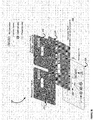
- FIG. 3B is a diagram illustrating an additional example workspace hierarchy 300.
- a workspace e.g., including but not limited to a system workspace 318
- indicators e.g., threat intelligence data and/or threat scores such as TIC scores
- similar network objects 324 e.g., connections between network devices 320 and/or network objects associated with the workspace
- a workspace threat score 322 can be calculated based on data relating to network objects A, B, and C; however, in the organization workspace 328, the workspace threat score can be calculated based in data relating to network objects A, B, and D.
- each workspace can use different parameters, based on different network devices 320 and/or network objects 324, to calculate a workspace threat score 322 for that workspace.
- some portion of the network devices 320, and/or the network objects 324 can be filtered 326 (e.g., may not appear in the data structure of the workspace).
- Network devices 320 and/or network objects 324 can be filtered when the workspace is inheriting data about the network element 320 and/or network object 324 from a higher-level workspace.
- data corresponding to network object C can be stored in the data structure for system workspace 318, but may not be stored in the data structure for organization workspace 328, and/or within the data structures for sub-organization workspaces 330 and 332.
- organization workspace 328 and sub-organization workspaces 330 and 332 can reference network object C from the system workspace 318.
- FIG. 4 is a schematic diagram illustrating an example of network elements.
- a network element 400 e.g., a network computer, network server, and/or similar network elements
- Each network element may be associated with a workspace and/or a set of workspaces, such that workspace data structures representing the workspace and/or set of workspaces include an identifier of that network element.
- network element 400 can be associated with user workspace 308a, sub-organization workspace 306a, organization workspace 304c, and system workspace 302; network element 404 can be associated with user workspace 308b, sub-organization workspace 306a, organization workspace 304c, and system workspace 302.
- a workspace data structure stored in the factor graph database 110 that represents user workspace 308a can include an identifier of network element 400.
- a workspace data structure stored in the factor graph database 110 that represents sub-organization workspace 306a can also include an identifier of network element 400.
- An association between a network element and a workspace can indicate that the network element is included in the workspace, affects other network elements in the workspace, and/or otherwise affects the workspace.
- Each network element can store parameters associated with the workspaces with which the network element is associated.
- local user workspace parameters 408 can include threat scores and/or other data stored at a local version of user workspace 308a (e.g., where the local version of user workspace 308a is stored at the local workspace computer 114a ).
- Network element 400 can, at network element 400, store the threat scores and/or other data associated with the user workspace 308a.
- the network element can also store local sub-organization workspace parameters 410 stored at a local version of sub-organization workspace 306a.
- the network element 400 can store local parameters for workspaces with which it is associated. In some implementations, a network element can store multiple local workspace parameters.
- network element 400 can store a first set of local parameters for workspaces, where the first set of local parameters were generated at and/or by local workspace computer 114a.
- Network element 400 can also store a second set of local parameters for the same workspaces, where the second set of local parameters were generated at and/or by local workspace computer 114b.
- each network element can store parameters from one or more local workspace hierarchy factor graphs.
- network element 400 can also store a representation of the local workspace hierarchy factor graph.
- workspace and/or a workspace hierarchy factor graph data structures can include connection values indicating whether or not a network element is associated with a workspace and/or whether the network element is connected to other network elements, and/or to network objects.
- the workspace hierarchy factor graph can include Boolean values for each workspace, each value specifying whether a particular network element exists at that workspace.
- the global workspace management server 102 can store, at the system workspace 302 (e.g., in a workspace data structure associated with the system workspace 302 ), a list, array, and/or similar data structure including Boolean values for each network element in the workspace network 100, and/or can generate child nodes of the system workspace 302, each representing a different network element.
- a link between the child nodes representing the network elements, and the system workspace 302 can be represented via a Boolean value indicating whether or not the network element is associated with (e.g., exists within) the system workspace 302.
- a "True” value can indicate that the network element is represented within a workspace
- a "False” value can indicate that the network element does not is represented within the workspace.
- the workspace hierarchy factor graph can also include binary values 406 indicating a network element's relationship with other network elements and/or network objects in the workspace network 100.
- the binary value "1" e.g., such as that between network element 400 and network element 402
- a binary value of "0” e.g., such as that between network element 400 and network element 404
- an inactive and/or non-existent connection between network elements can indicate an inactive and/or non-existent connection between network elements.
- FIG. 5 is a block diagram illustrating examples of workspace child nodes.
- a user workspace 308a can be associated with a number of network elements, such as network elements A, B, and D 502.
- the global workspace management server 102 can (in processes described in more detail herein) generate a user workspace child node 500, e.g., in response to a change being made to the user workspace.
- the global workspace management server 102 can generate user workspace child node 500 (e.g., a workspace data structure that is a child node of the user workspace 308a ).
- User workspace child node 500 can include information relating to network element E 504 (including but not limited to an identifier of network element F 504 ), and can also include information relating to the connection 506 between network element E and network element D.
- the workspace data structure associated with the user workspace child node 500 may not include information relating to network element D, and/or information relating to network elements A or B.
- the global workspace management server 102 can use the information for network element E 504 (i.e., the information indicating that it is included in the user workspace, and that it has a connection 506 to another network element D for which the user workspace does not have information stored), to infer that additional information about the network element D, and other network elements (i.e., network elements A and B) for which the user workspace does not store information, can be found in at least one higher-level workspace node in the workspace hierarchy factor graph (e.g., such as sub-organization workspace, organization workspace, and/or system workspace).
- the workspace hierarchy factor graph e.g., such as sub-organization workspace, organization workspace, and/or system workspace.
- the global workspace management server 102 can therefore use data from other levels of the workspace hierarchy factor graph to determine a complete set of network elements that are included in the user workspace.
- the global workspace management server 102 instead of the user workspace child node storing information representing the connection between the network node D and new network element E 504, the global workspace management server 102 can store information relating to the new network element E 504 at the user workspace child node 500, and can generate an additional user workspace child node (not shown) including an indication of the addition of a connection between new network element E 504 and network element D.
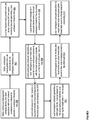
- FIG. 6 is a logic flow diagram illustrating an example of displaying a workspace hierarchy tree.
- a global workspace manager 108 can generate at 600 a workspace hierarchy tree.
- the global workspace manager 108 can arrange a set of workspaces into levels (e.g., a system level, an organization level, a user level, and/or the like), based on which workspaces are likely to inherit data from and/or share similar data with other workspaces, and/or based on other workspace hierarchy conditions.
- the global workspace manager 108 can specify to which level each workspace is assigned, based on predetermined rules, based on analyst 120 input, and/or based on other factors.
- the global workspace manager 108 can specify to which level a workspace has been assigned, e.g., by assigning an identifier, tag, and/or other information to each workspace specifying which level the workspace has been assigned, and/or by adding an identifier of the workspace to a node in the workspace hierarchy that corresponds to the workspace.
- Workspaces can be assigned to workspace hierarchy levels based on numerous factors.
- the global workspace manager 108 can specify a workspace as a user workspace if it is likely to be associated with a single analyst 120, and/or if the workspace is likely to include data that is also in an organization workspace.
- the global workspace manager 108 can specify a workspace as a project workspace if it is likely to be associated with a single analyst 120, and if the workspace is likely to include data that is also in a user workspace associated with the analyst 120.
- the global workspace manager 108 can specify a workspace as a sub-organization workspace if it is likely to be associated with multiple analysts 120 operating within the same location, interacting with the same network elements, operating within the same branch of an organization, and/or the like, and if the workspace is likely to include data that is also in an organization workspace.
- the global workspace manager 108 can specify a workspace as an organization workspace if it is likely to be associated with multiple analysts 120 working within different sub-organizations, and if it is likely to include data also included at a system workspace.
- the global workspace manager 108 can specify a workspace as a system workspace if it is likely to be associated with multiple organizations, and if the data included at that workspace will be included in at least one other workspace in the workspace network 100.
- the global workspace manager 108 can use these specifications to generate the workspace hierarchy. Specifically, the global workspace manager 108 can then generate a factor graph, tree, and/or similar data structure that allows the global workspace manager 108 to facilitate inheritance from higher-level workspaces to lower-level workspaces. For example, the global workspace manager 108 can generate the factor graph such that each node of the factor graph and/or similar data structure can represent a workspace (e.g., is an identifier of a workspace, and/or the like), with each edge and/or path between nodes representing a connection between the workspace and other workspaces, network elements, and/or other entities in the workspace network 100.
- a workspace e.g., is an identifier of a workspace, and/or the like
- the global workspace manager 108 can add each workspace into the workspace hierarchy, based on its relationship to other workspaces in the workspace network 100 and based on other conditions of the workspace hierarchy as noted above.
- the global workspace manager 108 can modify workspace locations in the workspace hierarchy by modifying the connections between the workspaces in the workspace hierarchy, until the workspace hierarchy conditions have been met. This process can continue until each workspace in the workspace network 100 has been added to the workspace hierarchy, and until connections between the workspaces in the workspace hierarchy have been modified to ensure that workspace hierarchy conditions have been met.
- the global workspace manager 108 can store at 602 a copy of this workspace hierarchy tree in a factor graph database 110.
- a local workspace manager 116 can calculate at 604 local workspace cyber-threat data for a local workspace associated with a local workspace computer 114a, e.g., using global workspace data from the workspace hierarchy tree.
- the local workspace manager 116 can calculate workspace cyber-threat data for a local instance of a workspace represented in the workspace hierarchy tree, using workspace data from a system workspace and/or similar global (i.e., top-level) workspace in the workspace hierarchy tree.
- the local workspace manager 116 can provide at 606 the calculated local workspace cyber-threat data to the local workspace computer 114a.
- the local workspace computer 114a can then display, via a local workspace interface 118a and at 608, a representation of the workspaces in the workspace hierarchy tree (e.g., using the calculated local workspace cyber-threat data). For example, an analyst 120 working at a local workspace computer 114a and/or similar electronic device can access the local workspace interface 118a at the local workspace computer 114a to view a local version of the workspace hierarchy tree that is stored at the local workspace computer 114a, and that includes the calculated local workspace cyber-threat data.
- the local workspace interface 118a can receive at 610 input from the local workspace computer 114a (e.g., directly from the local workspace computer 114a, and/or based on input from the analyst 120 ) that includes a modification to the local workspace cyber-threat data of a local workspace represented in the local version of the workspace hierarchy tree that is stored at the local workspace computer 114a.
- the modification can include the addition or deletion of a network element associated with the local workspace, a modification of scoring parameters used to calculate a TIC score, and/or the like.
- the local workspace interface 118a can send a message and/or a signal to the local workspace manager 116, so that the local workspace manager 116 can define at 612 a child node of the local workspace of the local version of the workspace hierarchy tree local workspace computer 114a, to include the modification to the local workspace cyber-threat data (e.g., as described in FIGs. 3-5 ).
- the local workspace manager 116 can then provide at 614 the modified local workspace cyber-threat data (e.g., as a new child node of the local version of the workspace hierarchy tree) to the local workspace computer 114a, such that the modified data can be displayed in the local workspace interface 118a.
- the local workspace interface 118a can modify (e.g., re-render) at 616 the representation of the workspace in the local version of the workspace hierarchy tree stored at the local workspace computer 114a, based on the new child node defined by the local workspace manager 116.
- FIG. 7 is logic flow diagram illustrating an example of generating child nodes for display at a local workspace manager 116.
- a global workspace manager 108 can use at 700 data associated with each network workspace in a network to generate a workspace hierarchy tree (e.g., in a manner similar to that described in FIG. 6 ).
- the global workspace manager 108 can store at 702 the workspace hierarchy tree in the factor graph database 110.
- a local workspace management compute device 116 can retrieve at 704 the workspace hierarchy tree and use the workspace hierarchy tree to calculate local workspace cyber-threat data for a local workspace associated with a local workspace computer (i.e., a workspace in a local version of the workspace hierarchy tree that is associated with the local workspace computer 114a).
- the local workspace manager 116 can provide at 706 the local workspace cyber-threat data to the local workspace computer 114a, e.g., via displaying the data in a local workspace interface 118a instantiated at the local workspace computer 114a, and/or via sending the data directly to the local workspace computer 114a.
- the local workspace manager 116 can receive at 708 a modification to the local workspace from the local workspace computer 114a in response to being provided the local workspace manager 116.
- the local workspace manager 116 can generate at 710, in response to receiving the modification, a workspace data structure (such as a child node, and/or a similar data structure) that includes the modifications being made to the local workspace.
- a workspace data structure such as a child node, and/or a similar data structure
- the child node can include a difference between the modification and the current local workspace stored locally at local workspace computer 114a, the modification itself, and/or similar information.
- the local workspace manager 116 can calculate at 712 workspace cyber-threat data for the local workspace associated with the child node, e.g., using local workspace cyber-threat data (e.g., the existing workspace cyber-threat data for the local workspace), and using the data stored in the newly-defined child node (e.g., the modification to the local workspace) to modify the existing workspace cyber-threat data.
- the local workspace manager 116 can then provide at 714 the child node workspace cyber-threat data to the local workspace computer 114a, e.g., by displaying the child node workspace cyber-threat data in the local workspace interface 118a, and/or by sending the child node workspace cyber-threat data directly to the local workspace computer 114a.
- FIG. 8 is logic flow diagram illustrating an example of generating child nodes for display at a local workspace computer 114a.
- the global workspace manager 108 can use data associated with each network workspace in a network, to generate at 800 a workspace hierarchy tree.
- the global workspace manager 108 can use a number of network elements associated with a network workspace, and/or other information associated with the network workspace, to generate a workspace hierarchy tree.
- the global workspace manager 108 can store at 802 the generated workspace hierarchy tree, e.g., in a factor graph database 110.
- a local workspace manager 116 can retrieve the workspace hierarchy tree from the factor graph database 110, and can generate at 804 a local workspace hierarchy tree, e.g., by generating a duplicate version of the tree for an analyst 120 at a local workspace computer 114a, and/or by generating a null workspace hierarchy tree (e.g., to which child nodes may be added when the analyst 120 modifies the local workspace hierarchy tree).
- the local workspace manager 116 can send at 806 the local workspace hierarchy tree to a local workspace computer 114a associated with the analyst 120.
- the local workspace computer 114a can calculate at 808 a local workspace cyber-threat data score for a local workspace associated with the local workspace computer 114a, e.g., based on the local workspace hierarchy tree and cyber-threat data associated with workspaces represented in the local workspace hierarchy tree.
- the local workspace computer 114a can receive at 810 (e.g., from the local workspace manager 116, the global workspace manager 108, and/or from another local workspace computer 114b-z ) a request (e.g., from an analyst 120 using local workspace computer 114a, from a third-party source, and/or from a similar entity) to modify a local workspace in the local workspace hierarchy tree.
- the local workspace can be a local workspace associated with the local workspace computer 114a, and/or can be a different local workspace in the local workspace hierarchy tree.
- the request to modify the local workspace can be a request to modify cyber-threat scoring parameters, a request to add or delete network elements from the local workspace, and/or to make similar modifications, and can be based on changes made to a global workspace, changes made to other local workspaces, and/or based on other similar events.
- the local workspace computer 114a can generate at 812 a child node of the local workspace that includes the modification specified in the request, and can recalculate at 814 a local workspace cyber-threat data score for the local workspace, e.g., based on the generated child node.
- the local workspace computer 114a can then provide at 816 the recalculated local workspace cyber-threat data score to a threat analyst 120 for processing.
- the analyst 120 can use the generated workspace cyber-threat data score to initiate a cyber-threat event, can send the generated workspace cyber-threat data score to other analysts 120 and/or local workspace computers 114b-z such that other analysts 120 modify the calculation of workspace cyber-threat data at their respective local workspaces, and/or can send the generated workspace cyber-threat data to the global workspace manager 108 so as to allow the global workspace manager 108 to modify the global workspace and/or the global workspace hierarchy tree.
- FIG. 9 is logic flow diagram illustrating an example of generating multiple child nodes for a workspace.
- a global workspace manager 108 can generate at 900 a workspace hierarchy tree (e.g., in a manner similar to that described in FIGs. 6-8 ) and can store a copy of the workspace hierarchy tree in the factor graph database 110.
- a local workspace manager 116 can receive at 902 (e.g., from a local workspace computer) a request for local workspace cyber-threat data for a local workspace associated with the local workspace computer 114a.
- the local workspace manager 116 can calculate at 904 local workspace cyber-threat data for the local workspace, e.g., based on a first delta child node (e.g., a child node of the local workspace that includes a delta between a current version of the local workspace and a modified version of the local workspace) that has already been defined for the local workspace (e.g., in a manner similar to that described in FIGs. 6-8 ).
- the local workspace manager 116 can send at 906 the calculated local workspace cyber-threat data to the local workspace computer 114a, which can then display the data via a local workspace interface 118.
- the global workspace manager 108 can, at any point before and/or after the request, modify at 908 global workspace cyber-threat data associated with a global workspace of the workspace hierarchy tree.
- the local workspace manager 116 receives at 910 the modified global workspace cyber-threat data from the global workspace manager 108, the local workspace manager 116 can generate at 912 a second delta child node that includes at least some of the modified global workspace cyber-threat data.
- the second delta child node can also be associated with the local workspace, and can be used in addition to the first delta child node to calculate a workspace cyber-threat data score for the local workspace.
- the analyst 120 can use the generated workspace cyber-threat data score to further refine global workspace information, to initiate a cyber-threat event, and/or can send the generated workspace cyber-threat data score to other analysts 120 and/or local workspace computers 114b-z so as to modify the calculation of workspace cyber-threat data at local workspace hierarchy trees associated with said other analysts 120 and/or local workspace computers 114b-z.
- the local workspace manager 116 can generate one or more delta child nodes each time the global workspace cyber-threat data is modified, with each delta child node including at least some of the modified global workspace cyber-threat data.
- each local workspace can be associated with an unlimited number of delta child nodes representing numerous changes to the global workspace cyber-threat data.
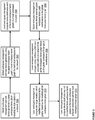
- FIG. 10 is logic flow diagram illustrating propagating global workspace modifications.
- a global workspace manager 108 can generate at 1000 a global workspace factor graph (e.g., a global workspace hierarchy tree implemented via a factor graph) that includes multiple objects and/or network elements in the workspace network 100.
- the global workspace manager 108 can generate at 1002, using the global workspace factor graph, a local workspace factor graph for each local workspace in the workspace network 100 (e.g., in a manner similar to that described in FIG. 8 ).
- a local workspace manager 116 can distribute at 1004 each of the generated local workspace factor graphs to at least one local workspace computer in the workspace network 100.
- the local workspace manager 116 can use the modifications received by the global workspace manager 108 to define at 1008 a child node for at least one workspace in the global workspace factor graph.
- the global workspace manager 108 can determine the at least one workspace to modify based on information identifying the relevant workspaces in the global workspace factor graph modifications, and/or based on identifying information in a request that includes the global workspace factor graph modifications.
- the local workspace manager 116 can generate at 1010 a set of modified local workspace factor graphs for each analyst 120, based on the global workspace factor graph modifications.
- the local workspace manager 116 can generate a set of modifications that each local workspace computer 114a-z can perform on its respective local workspace factor graph, e.g., to update that local workspace factor graph. Said another way, in other implementations, the local workspace manager 116 can generate a set of modified local workspace factor graphs for each analyst 120 associated with a workspace that is affected by the global workspace factor graph modifications, and may not generate a set of modified local workspace factor graphs for analysts 120 associated with a workspace that is not affected by the global workspace factor graph modifications, and/or that is not substantially affected by the global workspace factor graph modifications (i.e., the global workspace factor graph modifications do not change cyber-threat data, TIC scores, and/or other information calculated at the workspace beyond a predetermined threshold, and/or the like).
- the local workspace manager 116 can then distribute at 1012 each of the modified local workspace factor graphs, and/or the local workspace factor graph modifications, to the local workspace computer(s) 114a-z associated with that local workspace factor graph.
- the local workspace computer(s) 114a-z can use the data distributed from the local workspace manager 116 to modify and/or replace a local workspace factor graph at that local workspace computer.
- That local workspace computer can also recalculate workspace cyber-threat data scores, TIC scores, and/or other data, in response to receiving a modified local workspace factor graph, and/or receiving modifications to the local workspace factor graph.
- Hardware modules may include, for example, a general-purpose processor, a field programmable gate array (FPGA), and/or an application specific integrated circuit (ASIC).
- Software modules (executed on hardware) can be expressed in a variety of software languages (e.g., computer code), including Unix utilities, C, C++, JavaTM, Ruby, SQL, SAS@, the R programming language/software environment, Visual BasicTM, and other object-oriented, procedural, or other programming language and development tools.
- Examples of computer code include, but are not limited to, micro-code or micro-instructions, machine instructions, such as produced by a compiler, code used to produce a web service, and files containing higher-level instructions that are executed by a computer using an interpreter. Additional examples of computer code include, but are not limited to, control signals, encrypted code, and compressed code.
- Each of the devices described herein can include one or more processors as described above.
- Non-transitory computer-readable medium also can be referred to as a non-transitory processor-readable medium or memory
- the computer-readable medium is non-transitory in the sense that it does not include transitory propagating signals per se (e.g., a propagating electromagnetic wave carrying information on a transmission medium such as space or a cable).
- the media and computer code also can be referred to as code
- non-transitory computer-readable media include, but are not limited to: magnetic storage media such as hard disks, floppy disks, and magnetic tape; optical storage media such as Compact Disc/Digital Video Discs (CD/DVDs), Compact Disc-Read Only Memories (CD-ROMs), and holographic devices; magneto-optical storage media such as optical disks; carrier wave signal processing modules; and hardware devices that are specially configured to store and execute program code, such as Application-Specific Integrated Circuits (ASICs), Programmable Logic Devices (PLDs), Read-Only Memory (ROM) and Random-Access Memory (RAM) devices.
- ASICs Application-Specific Integrated Circuits
- PLDs Programmable Logic Devices
- ROM Read-Only Memory
- RAM Random-Access Memory
- Other embodiments described herein relate to a computer program product, which can include, for example, the instructions and/or computer code discussed herein.
Landscapes
- Engineering & Computer Science (AREA)
- Computer Security & Cryptography (AREA)
- Computer Networks & Wireless Communication (AREA)
- Signal Processing (AREA)
- General Engineering & Computer Science (AREA)
- Computing Systems (AREA)
- Computer Hardware Design (AREA)
- Theoretical Computer Science (AREA)
- Data Mining & Analysis (AREA)
- Databases & Information Systems (AREA)
- Physics & Mathematics (AREA)
- General Physics & Mathematics (AREA)
- Information Retrieval, Db Structures And Fs Structures Therefor (AREA)
Description
- The methods and apparatus described herein are generally related, for example, to improving the data storage and data processing efficiency of cybersecurity technologies.
- In some known network systems, analysts can determine rules or risk values (e.g., cyber-threat values, and/or similar values) for devices in their portion of the network system. The rules and/or values determined by each analyst may depend on how other devices in the network are configured, values associated with the network as a whole, and/or other values. Such determinations, therefore, can involve transmission of large quantities of data, as some known network systems may send information about each device (e.g., network information, and/or threat intelligence information) to each analyst in the network. Additionally, in some known systems that only send a portion of a network's data to an analyst (e.g., to reduce the amount of information transmitted across the network), the analyst cannot view data from the rest of the network. The limited scope of information can affect the analysts' ability to calculate certain values (such as cyber-threat values and/or threat intelligence values), to predict changes in the network (e.g., with respect to network and/or cyber-threat changes), and/or to perform other actions within their portions of the network. Analysts in some known network systems also lack an efficient way to simultaneously process data received from a global representation of the network, and to reconcile those changes with other changes being made, substantially in real-time, to the global representation.
- Accordingly, a need exists for methods and apparatus that efficiently provide information about the network (including network device and threat intelligence data) as a whole to each analyst in the network, and that efficiently allow analysts to process data about their portion of the network while reconciling their changes with other changes being made to the rest of the network.
-
WO 02/069186 -
US9,118,714 - In some implementations, an apparatus can include a global workspace management compute device that is implemented in at least one of a processor or a memory, and that, when operative, can generate a workspace hierarchy tree that both represents a hierarchy of a set of workspaces in a network, and includes a global workspace. The apparatus can also include a local workspace management compute device operatively coupled to the global workspace management compute device. The local workspace management compute device, when operative, can calculate workspace cyber-threat data for a local workspace that is both from the set of workspaces and is instantiated at the local workspace management compute device. In some implementations, the local workspace cyber-threat data can be calculated based on global workspace cyber-threat data associated with the global workspace. The apparatus can also include a local workspace interface operatively coupled to the local workspace management compute device. The local workspace interface can, when operative, display a representation of the set of workspaces in the network, based on the local workspace cyber-threat data associated with the local workspace. The local workspace interface can also, when operative, receive input from a local workspace administrator that includes a modification to the local workspace cyber-threat data associated with the local workspace. The local workspace management compute device can, when operative, define a child node of the local workspace based on the modification to the local workspace cyber-threat data associated with the local workspace. The local workspace interface can, when operative, modify the representation of the set of workspaces in the network based on the child node.
- In some implementations, an apparatus can include a global workspace management compute device implemented in at least one of a processor or a memory. The global workspace management compute device can, when operative, generate a workspace hierarchy tree that includes a global workspace. The apparatus can also include a local workspace management compute device operatively coupled to the global workspace management compute device, and that receives a request for workspace cyber-threat data for a local workspace from a set of workspaces. The local workspace management compute device can, when operative, determine the workspace cyber-threat data based on a first delta child node, and can send the workspace cyber-threat data in response to the request. The local workspace management compute device can, when operative, receive a global workspace modification message indicating that global workspace cyber-threat data associated with the global workspace has been modified, and can generate a second delta child node based on the global workspace modification message.
- In some implementations, a process can include generating a global workspace factor graph representing a set of objects, such that each object from the set of objects includes representation of a hierarchy of a set of workspaces in a network, the set of objects including a first object and a second object. The process can also include generating a set of local workspace factor graphs, where each local workspace factor graph from the set of local workspace factor graphs is associated with an object of the set of objects and generated based on the global workspace factor graph. The process can also include substantially simultaneously distributing each local workspace factor graph from the set of local workspace factor graphs to a workspace analysis processor associated with the first object associated with the local workspace factor graph, and to a workspace analysis processor associated with the second object associated with the local workspace factor graph. The process can include substantially simultaneously receiving, at the first object and from the second object, global workspace factor graph modifications for the global workspace factor graph, and defining a child node associated with a workspace represented in the global workspace factor graph based on the global workspace factor graph modifications and so as to modify the global workspace factor graph. The process can include generating a set of modified local workspace factor graphs based on the modified global workspace factor graph, and distributing each modified local workspace factor graph from the set of modified local workspace factor graphs to the workspace analysis processor associated with the first object associated with the local workspace factor graph and to the workspace analysis processor associated with the second object associated with the local workspace factor graph.
- In accordance with a first aspect of the invention, there is provided a method as defined by
claim 1. Optional features of this method are defined by the dependent claims. In another aspect of the invention, there is provided apparatus for carrying out the method of the first aspect of the invention as defined by claim 14. -
-
FIG. 1 is a schematic diagram illustrating a workspace network, according to an embodiment. -
FIG. 2 is a schematic diagram illustrating a factor graph database, according to an embodiment. -
FIGs. 3A-B are diagrams illustrating a workspace hierarchy, according to an embodiment. -
FIG. 4 is a schematic diagram illustrating network elements, according to an embodiment. -
FIG. 5 is a block diagram illustrating workspace child nodes, according to an embodiment. -
FIG. 6 is a logic flow diagram illustrating displaying a workspace hierarchy tree, according to an embodiment. -
FIG. 7 is logic flow diagram illustrating generating child nodes for display at a local workspace management compute device, according to an embodiment. -
FIG. 8 is logic flow diagram illustrating generating child nodes for display at a local workspace computer, according to an embodiment. -
FIG. 9 is logic flow diagram illustrating generating multiple child nodes for a workspace, according to an embodiment. -
FIG. 10 is logic flow diagram illustrating propagating global workspace modifications, according to an embodiment. -
FIG. 1 is a schematic diagram illustrating aworkspace network 100. For example, in some implementations, theworkspace network 100 can include a globalworkspace management server 102. The globalworkspace management server 102 can include at least oneprocessor 104, at least onememory 106, and/or at least onefactor graph database 110. The at least oneprocessor 104 can be any hardware module and/or component configured to receive and process data, and/or to execute code representing executable instructions. In some embodiments, the at least oneprocessor 104 can be a general purpose processor, a Field Programmable Gate Array (FPGA), an Application Specific Integrated Circuit (ASIC), a Digital Signal Processor (DSP), and/or the like. - The at least one
memory 106 can be a hardware module and/or component configured to store data accessible by the at least oneprocessor 104, and/or to store code representing executable instructions for the at least oneprocessor 104. Thememory 106 can be, for example, a random access memory (RAM), a memory buffer, a hard drive, a database, an erasable programmable read-only memory (EPROM), an electrically erasable read-only memory (EEPROM), a read-only memory (ROM) and/or so forth. In some embodiments, thememory 106 stores instructions to cause the processor to execute modules, processes and/or functions associated with a globalworkspace management server 102 and/or system. - The at least one
processor 104 can implement a number of modules, compute devices, and/or server components, including but not limited to aglobal workspace manager 108 and alocal workspace manager 116. The at least oneprocessor 104 can be configured to execute instructions generated by any of the modules and/or server components, and/or instructions stored in thememory 106. In some implementations, if the globalworkspace management server 102 includesmultiple processors 104, the modules and/or server components can be distributed among and/or executed by the multiple processors. The at least onememory 106 can be configured to store processor-readable instructions that are accessible and executable by theprocessor 104. - In some implementations, the modules, compute devices, and/or server components can be implemented on the processor 104 (e.g., as software executed on and/or implemented by the processor). In some implementations, the modules, compute devices, and/or server components can be software stored in the
memory 106 and executed by theprocessor 104. In other implementations, the modules, compute devices, and/or server components can be any assembly and/or set of operatively-coupled electrical components separate from theprocessor 104 and the memory, including but not limited to field programmable gate arrays (FPGAs) and/or application-specific integrated circuits (ASICs). - A
global workspace manager 108 can be a module, compute device, and/or server component configured to manage the generation and modification of a global workspace hierarchy factor graph. For example, theglobal workspace manager 108 can use information about theworkspace network 100 and a number ofanalysts 120 accessing theworkspace network 100, to arrange a set of workspaces associated with theanalysts 120 into a workspace hierarchy (e.g., represented in a factor graph and/or a similar representation). The workspace hierarchy can be used to determine how information is stored and/or propagated in theworkspace network 100. Theglobal workspace manager 108 can also manage modifications to data in the global workspace hierarchy factor graph, e.g., by applying the modification and propagating the effects of the modification throughout the global workspace hierarchy factor graph. - A
local workspace manager 116 can be a module, compute device, and/or server component configured to manage the generation, propagation, and modification of local workspace hierarchy factor graphs. For example, thelocal workspace manager 116 can generate local workspace hierarchy factor graphs based on the global workspace hierarchy factor graph, can distribute the local workspace hierarchy factor graphs tolocal workspace computers 114a-z, and/or can process revisions made to each local workspace hierarchy factor graph at eachlocal workspace computer 114a-z. Further examples may be found inFIGs. 6-10 , described in further detail herein. - The at least one
factor graph database 110 can be a data store and/or memory configured to store multiple data records. Referring toFIG. 2 , in some implementations, thefactor graph database 110 can include an analyst data table 110a, a workspaces table 110b, a workspace factor graph table 110c, and/or a network element table 110d. Tables in the at least onefactor graph database 110 can be distributed across multiple databases, or can be stored in one database. - For example, the analyst data table 110a can contain records relating to
analysts 120 and/or other entities in theworkspace network 100 and can receive and/or manage a local workspace hierarchy factor graph. In some instances, the term "analysts" can refer to computing devices (e.g.,local workspace computer 114a-z), users operating local computing devices such aslocal workspace computers 114a-z, and/or the like. A record in an analyst data table 110a can include an identifier of theanalyst 120 and/or other entity, identifying information associated with alocal workspace computer 114a-z associated with theanalyst 120, a local workspace associated with theanalyst 120, a local workspace hierarchy factor graph associated with theanalyst 120, a date at which theanalyst 120 was added to thefactor graph database 110, and/or other information relating to thethreat analyst 120. - A workspaces table 110b can include information relating to analyst workspaces, and/or other workspaces included in a workspace factor graph. Workspaces can include data relating to a particular organization, a member of the organization, and/or other information, depending on the location of the workspace in a workspace hierarchy factor graph, and can also specify network elements and/or other network and/or threat information associated with a
particular analyst 120, organization, and/or similar entity. A record in a workspaces table 110b can include a workspace identifier, a workspace scope (e.g., a global workspace and/or a local workspace), an identifier associated with an analyzer, an identifier of a global workspace hierarchy to which the workspace belongs, devices and/or other network elements associated with the workspace, a list of connections between various network elements associated with the workspace, threat information associated with the workspace, a set of scoring parameters associated with the workspace, a date indicating the last time the workspace data was updated and/or other information relating to a workspace. With respect to data relating to connections between network elements, threat information associated with the workspace, and/or scoring parameters associated with the workspace, the data stored in each workspace record can be different from data stored at a workspace record associated with a workspace higher in a workspace hierarchy, than a workspace associated with that workspace record. Further information relating to how data may be stored at a workspace can be found at least inFIGs. 3-10 , described in more detail herein. - A workspace factor graph table 110c can include representations of local and global workspace hierarchy factor graphs for a network. A record in the workspace factor graph table 110c can include, for example, an identifier for a workspace hierarchy factor graph, a workspace hierarchy factor graphs type (e.g., global or local), an identifier of a network with which the workspace hierarchy factor graph is associated, a list of workspaces associated with the workspace hierarchy factor graphs, a hierarchy graph specifying the hierarchy of the list of workspaces, a list of identifiers associated with
local workspace computers 114a-z and/oranalysts 120 associated with the workspace hierarchy factor graph, a date indicating the last time the workspace hierarchy factor graph was updated, and/or other information relating to workspace hierarchy factor graphs. - A network element table 110d can include data relating to network elements and/or network objects associated with workspaces. A record in the network element table 110d can include a network element identifier, a network element type (e.g., a virtual network element, and/or a physical network element such as a network server, a computer and/or other electronic device connected to the
workspace network 100, and/or the like), a list of connections between a network element represented by the network element record and other network elements in theworkspace network 100, a workspace with which the network element and/or network object is associated, ananalyst 120 with which the network element and/or network object is associated, a threat indicator confidence score associated with the network element and/or network object, and/or other information relating to network elements and/or network objects. - Returning to
FIG. 1 , acommunications network 112 can be the Internet, and/or a similar wireless and/or wired network that enables the globalworkspace management server 102 to communicate with multiplelocal workspace computers 114a-z, and/or with other network devices. For example, thecommunications network 112 can be a telephone network, an Ethernet network, a fiber-optic network, a cellular network, and/or a similar wired and/or wireless network. In some implementations, thecommunications network 112 can include a single network to which a number of workspaces, network elements, and/or network objects can belong. In other implementations, thecommunications network 112 can include multiple networks operatively coupled to each other, e.g., via one or more routers, switches, and/or network gateways. Each oflocal workspace computers 114a-z can be a computing device including at least one of a processor and/or memory similar to those of the globalworkspace management server 102. Thelocal workspace computers 114a-z can be configured to receive local workspace hierarchy factor graph information for a local workspace, and can process the information, and/or can display the information on at least one display operatively coupled to thelocal workspace computer 114a-z. For example, thelocal workspace computers 114a-z can each instantiate a local workspace interface 118a-z, which can render the local workspace hierarchy factor graph information at the respectivelocal workspace computer 114a-z. The information displayed can be modified, e.g., when global workspace hierarchy factor graph information has been updated, when the local workspace hierarchy factor graph information has been updated, and/or under similar circumstances. Eachlocal workspace computers 114a-z can be associated with a particular workspace stored in thefactor graph database 110. For example,local workspace computers 114a can be associated with one or more particular workspaces in the global hierarchy factor graph, such that if a cyber-threat event involving thelocal workspace computers 114a occurs, the one or more workspaces in the global hierarchy factor graph can be updated to reflect the cyber-threat event. Local versions of the global workspace hierarchy factor graph can also be stored at eachlocal workspace computer 114a-z, and can be further modified by ananalyst 120 and/or thelocal workspace computer 114a-z. More information on local versions of workspace hierarchy factor graphs can be found at least inFIGs. 7-10 and their related discussion below. -
FIG. 3A is a diagram illustrating anexample workspace hierarchy 300. For example, in some implementations, workspaces can be arranged into hierarchies, where workspaces that fall below other workspaces in the hierarchy can inherit information and/or settings from higher-level workspaces. For example, at the top of theworkspace hierarchy 300 can be a system workspace 302 (e.g., a global workspace including information and/or settings that all workspaces in the network share). Workspaces at theorganization workspace level 304 can inherit information (including threat data, network element data, rules for calculating threat scores, and/or other information) from thesystem workspace 302. Similarly, workspaces at thesub-organization workspace level 306 can inherit information from the organization workspaces 304. The same inheritance can occur between theuser workspace level 308 and thesub-organization level 306, and theproject workspace level 310 and theuser workspace level 308. Such information can pertain to scoring parameters used to calculate threat information, network elements associated with the workspace, connections between the network elements, observations of the network elements, an approach to calculating threat information (e.g., using an average or maximum value obtained from higher-level workspaces and/or the network elements to calculate threat data), and/or similar information. Workspaces at lower levels (e.g., at the user workspace level 308) can also store additional information that is not included at workspaces at a higher level (e.g., sub-organization workspace level 306). The workspace hierarchy can indicate whether that additional information should be referenced by and/or relied upon by other workspaces (and which workspaces can inherit the additional information). A data structure representing a workspace hierarchy, as well as data structures associated with each workspace that is included in the workspace hierarchy, can be stored at the factor graph database 110 (e.g., the workspaces being stored in the workspaces table 110b, and the workspace hierarchy being stored in the workspace factor graph table 110c). While the workspace hierarchy herein is described as being implemented as a factor graph, it should be understood that the workspace hierarchy can be implemented as a standard graph data structure, a tree data structure, and/or a similar hierarchical data structure. - In some implementations, a
project workspace 312 can inherit information from auser workspace 308b without storing the information at the user workspace 308b. Said another way, while theproject workspace 312 can inherit information from theuser workspace 308b by referencing data at theuser workspace 308b, a workspace record associated with theproject workspace 312 may not store any data that is in a workspace record associated with theuser workspace 308b. Instead, the workspace record associated with theproject workspace 312 can include data that differs from theuser workspace 308b, and can reference the data stored at theuser workspace 308b, to the extent that the data stored at the user workspace affects data at theproject workspace 312. For example, if theuser workspace 308b includes a representation of Network Element C, theproject workspace 312 can include information indicating the addition of another Network Element F (not shown), and/or can include information indicating the deletion and/or removal of Network Element C from theworkspace network 100, but may not include other data about Network Element C. As another example, if the workspace data structure associated withuser workspace 308b includes a first set of scoring parameters, the workspace data structure associated withproject workspace 312 can include a second set of scoring parameters including parameters from the first set of scoring parameters that have been modified by ananalyst 120, and/or a similar entity. Theproject workspace 312 can also store a threat indicator confidence (TIC) score different from a TIC score of theuser workspace 308b, e.g., when the project workspace TIC score differs from the user workspace TIC score by a predetermined amount, and/or based on similar criteria. Similar inheritance mechanisms can exist for each of theuser workspace level 308, thesub-organization workspace level 306, and/or theorganization workspace level 304. The inheritance of data from higher-level workspaces can be dynamic and automatic. For example, the globalworkspace management server 102 can automatically propagate changes at higher-level workspaces to lower-level workspaces, such that the globalworkspace management server 102 can modify lower-level workspaces information based on the changes. Further information relating to TIC scores and how TIC scores are calculated can be found inU.S. Patent Application Serial No. 14/562,623 (U.S. Patent No. 9,210,185 - As an example, when an
analyst 120 and/or other entity retrieves scoring parameters and/or other data, e.g., from a workspace data structure in thefactor graph database 110 that is associated with theproject workspace 312, theanalyst 120 can retrieve a related workspace hierarchy from thefactor graph database 110, e.g., based on using a workspace hierarchy identifier stored in the workspace data structure. Theanalyst 120 can use the workspace hierarchy to determine identifiers associated with higher-level workspaces, can retrieve data from the higher-level workspaces, and can use the data from the higher-level workspaces along with data (also known as delta data) from theproject workspace 312 to determine information about the project workspace 312 (e.g., including but not limited to a workspace cyber-threat score). This approach can allow for a compressed representation of workspaces that can reduce the amount of data stored for each workspace in the workspace hierarchy, and therefore can reduce the amount of data transmitted toanalysts 120 and/or other entities for processing. - In some implementations, data structures representing each workspace from the plurality of workspaces can include a representation of a set of associated
network elements 316, a TIC score calculated in part based on the network elements and/or based on a TIC score of a higher-level workspace and/or set of workspaces, and/or similar information. For example, data structures including information about thenetwork elements 316 can be stored in the network element table 110d of thefactor graph database 110, and identifiers of network element records from the network element table 110d can be stored in the data structures of workspaces with which thenetwork elements 316 are associated. When data at a workspace (e.g., project workspace 312) is modified (e.g., at a system workspace level 302), the globalworkspace management server 102 can generate a new workspace data structure representing a modifiedproject workspace 314, that can include any changes to projectworkspace 312 that have been made at thesystem workspace level 302. Ananalyst 120 can continue to modify project workspace 312 (e.g., modifying elements associated with theproject workspace 312, modifying how the project workspace calculates a TIC score, and/or the like). Thelocal workspace manager 116 and/or alocal workspace computer 114a-z can receive the modifications and either directly modify the information stored in the workspace data structure of theproject workspace 312, and/or can generate a child workspace node (not shown) of theproject workspace 312 that includes the modifications to theproject workspace 312. - The
local workspace manager 116 can also merge the modified portions ofproject workspace 312 and modifiedproject workspace 314, so as to combine the changes made at the system level with the changes made at the local level. For example, thelocal workspace manager 116 can include the changes included in modifiedproject workspace 314 in the workspace data structure representingproject workspace 312, and then can delete modifiedproject workspace 314. In some implementations, such changes can be provided to theglobal workspace manager 108 so that theglobal workspace manager 108 can In this manner, thelocal workspace manager 116 and/or thelocal workspace computer 114a-z can store changes to a local workspace (such as project workspace 312) without substantially duplicating other workspace data. In this manner, the workspace hierarchy factor graph can also record changes made to the workspaces by various entities in a compressed manner that can more efficiently be transmitted to and used by other entities in the network. -
FIG. 3B is a diagram illustrating an additionalexample workspace hierarchy 300. For example, in some implementations, a workspace (e.g., including but not limited to a system workspace 318) can include data pertaining to networkdevices 320 associated with the workspace, indicators (e.g., threat intelligence data and/or threat scores such as TIC scores) and/or similar network objects 324, connections betweennetwork devices 320 and/or network objects associated with the workspace, aworkspace threat score 322 and/or parameters used to calculate theworkspace threat score 322, and/or other data. For example, insystem workspace 318, aworkspace threat score 322 can be calculated based on data relating to network objects A, B, and C; however, in theorganization workspace 328, the workspace threat score can be calculated based in data relating to network objects A, B, and D. Thus, each workspace can use different parameters, based ondifferent network devices 320 and/or network objects 324, to calculate aworkspace threat score 322 for that workspace. - As noted in
FIG. 3B , some portion of thenetwork devices 320, and/or the network objects 324, can be filtered 326 (e.g., may not appear in the data structure of the workspace).Network devices 320 and/or network objects 324 can be filtered when the workspace is inheriting data about thenetwork element 320 and/or network object 324 from a higher-level workspace. For example, data corresponding to network object C can be stored in the data structure forsystem workspace 318, but may not be stored in the data structure fororganization workspace 328, and/or within the data structures forsub-organization workspaces 330 and 332. Instead,organization workspace 328 andsub-organization workspaces 330 and 332 can reference network object C from thesystem workspace 318. -
FIG. 4 is a schematic diagram illustrating an example of network elements. For example, in some implementations, a network element 400 (e.g., a network computer, network server, and/or similar network elements) can be a network device and/or object that is connected to a number of other network elements (e.g.,network element 402 and network element 404) in theworkspace network 100. Each network element may be associated with a workspace and/or a set of workspaces, such that workspace data structures representing the workspace and/or set of workspaces include an identifier of that network element. For example,network element 400 can be associated withuser workspace 308a,sub-organization workspace 306a,organization workspace 304c, andsystem workspace 302;network element 404 can be associated withuser workspace 308b,sub-organization workspace 306a,organization workspace 304c, andsystem workspace 302. Thus, for example, a workspace data structure stored in thefactor graph database 110 that representsuser workspace 308a can include an identifier ofnetwork element 400. A workspace data structure stored in thefactor graph database 110 that representssub-organization workspace 306a can also include an identifier ofnetwork element 400. An association between a network element and a workspace can indicate that the network element is included in the workspace, affects other network elements in the workspace, and/or otherwise affects the workspace. - Each network element can store parameters associated with the workspaces with which the network element is associated. For example, local
user workspace parameters 408 can include threat scores and/or other data stored at a local version ofuser workspace 308a (e.g., where the local version ofuser workspace 308a is stored at thelocal workspace computer 114a).Network element 400 can, atnetwork element 400, store the threat scores and/or other data associated with theuser workspace 308a. The network element can also store localsub-organization workspace parameters 410 stored at a local version ofsub-organization workspace 306a. Thenetwork element 400 can store local parameters for workspaces with which it is associated. In some implementations, a network element can store multiple local workspace parameters. For example, in some implementations,network element 400 can store a first set of local parameters for workspaces, where the first set of local parameters were generated at and/or bylocal workspace computer 114a.Network element 400 can also store a second set of local parameters for the same workspaces, where the second set of local parameters were generated at and/or bylocal workspace computer 114b. Thus, each network element can store parameters from one or more local workspace hierarchy factor graphs. In some implementations,network element 400 can also store a representation of the local workspace hierarchy factor graph. - In some implementations, workspace and/or a workspace hierarchy factor graph data structures can include connection values indicating whether or not a network element is associated with a workspace and/or whether the network element is connected to other network elements, and/or to network objects. For example, the workspace hierarchy factor graph can include Boolean values for each workspace, each value specifying whether a particular network element exists at that workspace. As another example, the global
workspace management server 102 can store, at the system workspace 302 (e.g., in a workspace data structure associated with the system workspace 302), a list, array, and/or similar data structure including Boolean values for each network element in theworkspace network 100, and/or can generate child nodes of thesystem workspace 302, each representing a different network element. In the latter implementation, a link between the child nodes representing the network elements, and thesystem workspace 302, can be represented via a Boolean value indicating whether or not the network element is associated with (e.g., exists within) thesystem workspace 302. In some implementations, a "True" value can indicate that the network element is represented within a workspace, and a "False" value can indicate that the network element does not is represented within the workspace. - The workspace hierarchy factor graph can also include
binary values 406 indicating a network element's relationship with other network elements and/or network objects in theworkspace network 100. For example, the binary value "1" (e.g., such as that betweennetwork element 400 and network element 402) can indicate an active connection between network elements, and a binary value of "0" (e.g., such as that betweennetwork element 400 and network element 404) can indicate an inactive and/or non-existent connection between network elements. -
FIG. 5 is a block diagram illustrating examples of workspace child nodes. For example, auser workspace 308a can be associated with a number of network elements, such as network elements A, B, andD 502. The globalworkspace management server 102 can (in processes described in more detail herein) generate a userworkspace child node 500, e.g., in response to a change being made to the user workspace. For example, if a new network element E 504 (e.g., that has been previously added to theworkspace network 100, and/or that is being newly added to the workspace network 100) is added to the user workspace, and if aconnection 506 to newnetwork element E 504 and network element D is established within the workspace, the globalworkspace management server 102 can generate user workspace child node 500 (e.g., a workspace data structure that is a child node of theuser workspace 308a). Userworkspace child node 500 can include information relating to network element E 504 (including but not limited to an identifier of network element F 504), and can also include information relating to theconnection 506 between network element E and network element D. - The workspace data structure associated with the user
workspace child node 500, however, may not include information relating to network element D, and/or information relating to network elements A or B. The globalworkspace management server 102 can use the information for network element E 504 (i.e., the information indicating that it is included in the user workspace, and that it has aconnection 506 to another network element D for which the user workspace does not have information stored), to infer that additional information about the network element D, and other network elements (i.e., network elements A and B) for which the user workspace does not store information, can be found in at least one higher-level workspace node in the workspace hierarchy factor graph (e.g., such as sub-organization workspace, organization workspace, and/or system workspace). The globalworkspace management server 102 can therefore use data from other levels of the workspace hierarchy factor graph to determine a complete set of network elements that are included in the user workspace. In some implementations, instead of the user workspace child node storing information representing the connection between the network node D and newnetwork element E 504, the globalworkspace management server 102 can store information relating to the newnetwork element E 504 at the userworkspace child node 500, and can generate an additional user workspace child node (not shown) including an indication of the addition of a connection between newnetwork element E 504 and network element D. -
FIG. 6 is a logic flow diagram illustrating an example of displaying a workspace hierarchy tree. For example, in some implementations, aglobal workspace manager 108 can generate at 600 a workspace hierarchy tree. For example, theglobal workspace manager 108 can arrange a set of workspaces into levels (e.g., a system level, an organization level, a user level, and/or the like), based on which workspaces are likely to inherit data from and/or share similar data with other workspaces, and/or based on other workspace hierarchy conditions. Theglobal workspace manager 108 can specify to which level each workspace is assigned, based on predetermined rules, based onanalyst 120 input, and/or based on other factors. Theglobal workspace manager 108 can specify to which level a workspace has been assigned, e.g., by assigning an identifier, tag, and/or other information to each workspace specifying which level the workspace has been assigned, and/or by adding an identifier of the workspace to a node in the workspace hierarchy that corresponds to the workspace. - Workspaces can be assigned to workspace hierarchy levels based on numerous factors. For example, the
global workspace manager 108 can specify a workspace as a user workspace if it is likely to be associated with asingle analyst 120, and/or if the workspace is likely to include data that is also in an organization workspace. Theglobal workspace manager 108 can specify a workspace as a project workspace if it is likely to be associated with asingle analyst 120, and if the workspace is likely to include data that is also in a user workspace associated with theanalyst 120. Theglobal workspace manager 108 can specify a workspace as a sub-organization workspace if it is likely to be associated withmultiple analysts 120 operating within the same location, interacting with the same network elements, operating within the same branch of an organization, and/or the like, and if the workspace is likely to include data that is also in an organization workspace. Theglobal workspace manager 108 can specify a workspace as an organization workspace if it is likely to be associated withmultiple analysts 120 working within different sub-organizations, and if it is likely to include data also included at a system workspace. Theglobal workspace manager 108 can specify a workspace as a system workspace if it is likely to be associated with multiple organizations, and if the data included at that workspace will be included in at least one other workspace in theworkspace network 100. - The
global workspace manager 108 can use these specifications to generate the workspace hierarchy. Specifically, theglobal workspace manager 108 can then generate a factor graph, tree, and/or similar data structure that allows theglobal workspace manager 108 to facilitate inheritance from higher-level workspaces to lower-level workspaces. For example, theglobal workspace manager 108 can generate the factor graph such that each node of the factor graph and/or similar data structure can represent a workspace (e.g., is an identifier of a workspace, and/or the like), with each edge and/or path between nodes representing a connection between the workspace and other workspaces, network elements, and/or other entities in theworkspace network 100. Theglobal workspace manager 108 can add each workspace into the workspace hierarchy, based on its relationship to other workspaces in theworkspace network 100 and based on other conditions of the workspace hierarchy as noted above. Theglobal workspace manager 108 can modify workspace locations in the workspace hierarchy by modifying the connections between the workspaces in the workspace hierarchy, until the workspace hierarchy conditions have been met. This process can continue until each workspace in theworkspace network 100 has been added to the workspace hierarchy, and until connections between the workspaces in the workspace hierarchy have been modified to ensure that workspace hierarchy conditions have been met. - The
global workspace manager 108 can store at 602 a copy of this workspace hierarchy tree in afactor graph database 110. Alocal workspace manager 116 can calculate at 604 local workspace cyber-threat data for a local workspace associated with alocal workspace computer 114a, e.g., using global workspace data from the workspace hierarchy tree. For example, thelocal workspace manager 116 can calculate workspace cyber-threat data for a local instance of a workspace represented in the workspace hierarchy tree, using workspace data from a system workspace and/or similar global (i.e., top-level) workspace in the workspace hierarchy tree. Thelocal workspace manager 116 can provide at 606 the calculated local workspace cyber-threat data to thelocal workspace computer 114a. Thelocal workspace computer 114a can then display, via a local workspace interface 118a and at 608, a representation of the workspaces in the workspace hierarchy tree (e.g., using the calculated local workspace cyber-threat data). For example, ananalyst 120 working at alocal workspace computer 114a and/or similar electronic device can access the local workspace interface 118a at thelocal workspace computer 114a to view a local version of the workspace hierarchy tree that is stored at thelocal workspace computer 114a, and that includes the calculated local workspace cyber-threat data. - The local workspace interface 118a can receive at 610 input from the
local workspace computer 114a (e.g., directly from thelocal workspace computer 114a, and/or based on input from the analyst 120) that includes a modification to the local workspace cyber-threat data of a local workspace represented in the local version of the workspace hierarchy tree that is stored at thelocal workspace computer 114a. For example, the modification can include the addition or deletion of a network element associated with the local workspace, a modification of scoring parameters used to calculate a TIC score, and/or the like. The local workspace interface 118a can send a message and/or a signal to thelocal workspace manager 116, so that thelocal workspace manager 116 can define at 612 a child node of the local workspace of the local version of the workspace hierarchy treelocal workspace computer 114a, to include the modification to the local workspace cyber-threat data (e.g., as described inFIGs. 3-5 ). Thelocal workspace manager 116 can then provide at 614 the modified local workspace cyber-threat data (e.g., as a new child node of the local version of the workspace hierarchy tree) to thelocal workspace computer 114a, such that the modified data can be displayed in the local workspace interface 118a. The local workspace interface 118a can modify (e.g., re-render) at 616 the representation of the workspace in the local version of the workspace hierarchy tree stored at thelocal workspace computer 114a, based on the new child node defined by thelocal workspace manager 116. -
FIG. 7 is logic flow diagram illustrating an example of generating child nodes for display at alocal workspace manager 116. For example, aglobal workspace manager 108 can use at 700 data associated with each network workspace in a network to generate a workspace hierarchy tree (e.g., in a manner similar to that described inFIG. 6 ). Theglobal workspace manager 108 can store at 702 the workspace hierarchy tree in thefactor graph database 110. A local workspacemanagement compute device 116 can retrieve at 704 the workspace hierarchy tree and use the workspace hierarchy tree to calculate local workspace cyber-threat data for a local workspace associated with a local workspace computer (i.e., a workspace in a local version of the workspace hierarchy tree that is associated with thelocal workspace computer 114a). Thelocal workspace manager 116 can provide at 706 the local workspace cyber-threat data to thelocal workspace computer 114a, e.g., via displaying the data in a local workspace interface 118a instantiated at thelocal workspace computer 114a, and/or via sending the data directly to thelocal workspace computer 114a. - The
local workspace manager 116 can receive at 708 a modification to the local workspace from thelocal workspace computer 114a in response to being provided thelocal workspace manager 116. Thelocal workspace manager 116 can generate at 710, in response to receiving the modification, a workspace data structure (such as a child node, and/or a similar data structure) that includes the modifications being made to the local workspace. The child node can include a difference between the modification and the current local workspace stored locally atlocal workspace computer 114a, the modification itself, and/or similar information. Thelocal workspace manager 116 can calculate at 712 workspace cyber-threat data for the local workspace associated with the child node, e.g., using local workspace cyber-threat data (e.g., the existing workspace cyber-threat data for the local workspace), and using the data stored in the newly-defined child node (e.g., the modification to the local workspace) to modify the existing workspace cyber-threat data. Thelocal workspace manager 116 can then provide at 714 the child node workspace cyber-threat data to thelocal workspace computer 114a, e.g., by displaying the child node workspace cyber-threat data in the local workspace interface 118a, and/or by sending the child node workspace cyber-threat data directly to thelocal workspace computer 114a. -
FIG. 8 is logic flow diagram illustrating an example of generating child nodes for display at alocal workspace computer 114a. For example, theglobal workspace manager 108 can use data associated with each network workspace in a network, to generate at 800 a workspace hierarchy tree. For example, theglobal workspace manager 108 can use a number of network elements associated with a network workspace, and/or other information associated with the network workspace, to generate a workspace hierarchy tree. Theglobal workspace manager 108 can store at 802 the generated workspace hierarchy tree, e.g., in afactor graph database 110. Alocal workspace manager 116 can retrieve the workspace hierarchy tree from thefactor graph database 110, and can generate at 804 a local workspace hierarchy tree, e.g., by generating a duplicate version of the tree for ananalyst 120 at alocal workspace computer 114a, and/or by generating a null workspace hierarchy tree (e.g., to which child nodes may be added when theanalyst 120 modifies the local workspace hierarchy tree). Thelocal workspace manager 116 can send at 806 the local workspace hierarchy tree to alocal workspace computer 114a associated with theanalyst 120. Thelocal workspace computer 114a can calculate at 808 a local workspace cyber-threat data score for a local workspace associated with thelocal workspace computer 114a, e.g., based on the local workspace hierarchy tree and cyber-threat data associated with workspaces represented in the local workspace hierarchy tree. - The
local workspace computer 114a can receive at 810 (e.g., from thelocal workspace manager 116, theglobal workspace manager 108, and/or from anotherlocal workspace computer 114b-z) a request (e.g., from ananalyst 120 usinglocal workspace computer 114a, from a third-party source, and/or from a similar entity) to modify a local workspace in the local workspace hierarchy tree. The local workspace can be a local workspace associated with thelocal workspace computer 114a, and/or can be a different local workspace in the local workspace hierarchy tree. The request to modify the local workspace can be a request to modify cyber-threat scoring parameters, a request to add or delete network elements from the local workspace, and/or to make similar modifications, and can be based on changes made to a global workspace, changes made to other local workspaces, and/or based on other similar events. Thelocal workspace computer 114a can generate at 812 a child node of the local workspace that includes the modification specified in the request, and can recalculate at 814 a local workspace cyber-threat data score for the local workspace, e.g., based on the generated child node. Thelocal workspace computer 114a can then provide at 816 the recalculated local workspace cyber-threat data score to athreat analyst 120 for processing. For example, theanalyst 120 can use the generated workspace cyber-threat data score to initiate a cyber-threat event, can send the generated workspace cyber-threat data score toother analysts 120 and/orlocal workspace computers 114b-z such thatother analysts 120 modify the calculation of workspace cyber-threat data at their respective local workspaces, and/or can send the generated workspace cyber-threat data to theglobal workspace manager 108 so as to allow theglobal workspace manager 108 to modify the global workspace and/or the global workspace hierarchy tree. -
FIG. 9 is logic flow diagram illustrating an example of generating multiple child nodes for a workspace. For example, in some implementations, aglobal workspace manager 108 can generate at 900 a workspace hierarchy tree (e.g., in a manner similar to that described inFIGs. 6-8 ) and can store a copy of the workspace hierarchy tree in thefactor graph database 110. Alocal workspace manager 116 can receive at 902 (e.g., from a local workspace computer) a request for local workspace cyber-threat data for a local workspace associated with thelocal workspace computer 114a. Thelocal workspace manager 116 can calculate at 904 local workspace cyber-threat data for the local workspace, e.g., based on a first delta child node (e.g., a child node of the local workspace that includes a delta between a current version of the local workspace and a modified version of the local workspace) that has already been defined for the local workspace (e.g., in a manner similar to that described inFIGs. 6-8 ). Thelocal workspace manager 116 can send at 906 the calculated local workspace cyber-threat data to thelocal workspace computer 114a, which can then display the data via a local workspace interface 118. - The
global workspace manager 108 can, at any point before and/or after the request, modify at 908 global workspace cyber-threat data associated with a global workspace of the workspace hierarchy tree. When thelocal workspace manager 116 receives at 910 the modified global workspace cyber-threat data from theglobal workspace manager 108, thelocal workspace manager 116 can generate at 912 a second delta child node that includes at least some of the modified global workspace cyber-threat data. The second delta child node can also be associated with the local workspace, and can be used in addition to the first delta child node to calculate a workspace cyber-threat data score for the local workspace. Theanalyst 120 can use the generated workspace cyber-threat data score to further refine global workspace information, to initiate a cyber-threat event, and/or can send the generated workspace cyber-threat data score toother analysts 120 and/orlocal workspace computers 114b-z so as to modify the calculation of workspace cyber-threat data at local workspace hierarchy trees associated with saidother analysts 120 and/orlocal workspace computers 114b-z. Thelocal workspace manager 116 can generate one or more delta child nodes each time the global workspace cyber-threat data is modified, with each delta child node including at least some of the modified global workspace cyber-threat data. Thus, each local workspace can be associated with an unlimited number of delta child nodes representing numerous changes to the global workspace cyber-threat data. -
FIG. 10 is logic flow diagram illustrating propagating global workspace modifications. For example, in some implementations, aglobal workspace manager 108 can generate at 1000 a global workspace factor graph (e.g., a global workspace hierarchy tree implemented via a factor graph) that includes multiple objects and/or network elements in theworkspace network 100. Theglobal workspace manager 108 can generate at 1002, using the global workspace factor graph, a local workspace factor graph for each local workspace in the workspace network 100 (e.g., in a manner similar to that described inFIG. 8 ). Alocal workspace manager 116 can distribute at 1004 each of the generated local workspace factor graphs to at least one local workspace computer in theworkspace network 100. - When the
global workspace manager 108 receives at 1006 global workspace factor graph modifications to the global workspace factor graph (e.g., from ananalyst 120, from a third-party device, and/or from a different network device), thelocal workspace manager 116 can use the modifications received by theglobal workspace manager 108 to define at 1008 a child node for at least one workspace in the global workspace factor graph. Theglobal workspace manager 108 can determine the at least one workspace to modify based on information identifying the relevant workspaces in the global workspace factor graph modifications, and/or based on identifying information in a request that includes the global workspace factor graph modifications. In some implementations, thelocal workspace manager 116 can generate at 1010 a set of modified local workspace factor graphs for eachanalyst 120, based on the global workspace factor graph modifications. In other implementations, thelocal workspace manager 116 can generate a set of modifications that eachlocal workspace computer 114a-z can perform on its respective local workspace factor graph, e.g., to update that local workspace factor graph. Said another way, in other implementations, thelocal workspace manager 116 can generate a set of modified local workspace factor graphs for eachanalyst 120 associated with a workspace that is affected by the global workspace factor graph modifications, and may not generate a set of modified local workspace factor graphs foranalysts 120 associated with a workspace that is not affected by the global workspace factor graph modifications, and/or that is not substantially affected by the global workspace factor graph modifications (i.e., the global workspace factor graph modifications do not change cyber-threat data, TIC scores, and/or other information calculated at the workspace beyond a predetermined threshold, and/or the like). - The
local workspace manager 116 can then distribute at 1012 each of the modified local workspace factor graphs, and/or the local workspace factor graph modifications, to the local workspace computer(s) 114a-z associated with that local workspace factor graph. The local workspace computer(s) 114a-z can use the data distributed from thelocal workspace manager 116 to modify and/or replace a local workspace factor graph at that local workspace computer. That local workspace computer can also recalculate workspace cyber-threat data scores, TIC scores, and/or other data, in response to receiving a modified local workspace factor graph, and/or receiving modifications to the local workspace factor graph. - It is intended that the systems and methods described herein can be performed by software (stored in memory and/or executed on hardware), hardware, or a combination thereof. Hardware modules may include, for example, a general-purpose processor, a field programmable gate array (FPGA), and/or an application specific integrated circuit (ASIC). Software modules (executed on hardware) can be expressed in a variety of software languages (e.g., computer code), including Unix utilities, C, C++, Java™, Ruby, SQL, SAS@, the R programming language/software environment, Visual Basic™, and other object-oriented, procedural, or other programming language and development tools. Examples of computer code include, but are not limited to, micro-code or micro-instructions, machine instructions, such as produced by a compiler, code used to produce a web service, and files containing higher-level instructions that are executed by a computer using an interpreter. Additional examples of computer code include, but are not limited to, control signals, encrypted code, and compressed code. Each of the devices described herein can include one or more processors as described above.
- Some embodiments described herein relate to devices with a non-transitory computer-readable medium (also can be referred to as a non-transitory processor-readable medium or memory) having instructions or computer code thereon for performing various computer-implemented operations. The computer-readable medium (or processor-readable medium) is non-transitory in the sense that it does not include transitory propagating signals per se (e.g., a propagating electromagnetic wave carrying information on a transmission medium such as space or a cable). The media and computer code (also can be referred to as code) may be those designed and constructed for the specific purpose or purposes. Examples of non-transitory computer-readable media include, but are not limited to: magnetic storage media such as hard disks, floppy disks, and magnetic tape; optical storage media such as Compact Disc/Digital Video Discs (CD/DVDs), Compact Disc-Read Only Memories (CD-ROMs), and holographic devices; magneto-optical storage media such as optical disks; carrier wave signal processing modules; and hardware devices that are specially configured to store and execute program code, such as Application-Specific Integrated Circuits (ASICs), Programmable Logic Devices (PLDs), Read-Only Memory (ROM) and Random-Access Memory (RAM) devices. Other embodiments described herein relate to a computer program product, which can include, for example, the instructions and/or computer code discussed herein.
- While various embodiments have been described above, it should be understood that they have been presented by way of example only, and not limitation. Where methods and steps described above indicate certain events occurring in certain order, the ordering of certain steps may be modified. Additionally, certain of the steps may be performed concurrently in a parallel process when possible, as well as performed sequentially as described above. Although various embodiments have been described as having particular features and/or combinations of components, other embodiments are possible having any combination or sub-combination of any features and/or components from any of the embodiments described herein. Furthermore, although various embodiments are described as having a particular entity associated with a particular compute device, in other embodiments different entities can be associated with other and/or different compute devices.
Claims (14)
- A method, comprising:calculating (604), via a local workspace management compute device operatively coupled to a global workspace management compute device, local workspace cyber-threat data associated with a first local workspace from a plurality of workspaces in a network and instantiated at the local workspace management compute device, the local workspace cyber-threat data associated with the first local workspace calculated based on global workspace cyber-threat data associated with the global workspace included in a workspace hierarchy tree generated by a global workspace management compute device, the workspace hierarchy tree representing a hierarchy of the plurality of workspaces;sending (606) a first signal to a local workspace interface operatively coupled to the local workspace management compute device, the first signal including instructions to display a representation of the plurality of workspaces in the network based on the local workspace cyber-threat data associated with the first local workspace;defining (612), via the local workspace management compute device, a child node of the first local workspace based on a modification (610) to the local workspace cyber-threat data associated with the first local workspace in response to the local workspace interface receiving input from a local workspace administrator, the input including the modification to the local workspace cyber- threat data associated with the first local workspace;sending (614) a second signal to the local workspace interface, the second signal including instructions to apply a first modification to the representation of the plurality of workspaces in the network based on the child node;determining, via the local workspace management compute device, modified local workspace cyber-threat data for a second local workspace from the plurality of workspaces and associated with the first local workspace based on the modification to the local workspace cyber-threat data associated with the first local workspace; andsending a third signal to the local workspace interface, the third signal including instructions to apply a second modification to the representation of the plurality of workspaces in the network based on the modified workspace cyber-threat data for the second local workspace and an influence factor of the first local workspace.
- The method of claim 1, wherein:the child node includes modified local workspace cyber-threat data for the first local workspace, andthe modified local workspace cyber-threat data for the first local workspace is represented by a difference between the local workspace cyber-threat data for the first local workspace and the input from the local workspace administrator.
- The method of any of the preceding claims, wherein the child node is further defined based on output generated by an application programming interface (API) call to the local workspace management compute device.
- The method of any of the preceding claims, wherein the first local workspace includes an influence factor for an object associated with the first local workspace.
- The method of any of the preceding claims, wherein the modification is a first modification, the method further comprising:detecting, via the local workspace management compute device, a second modification of the first local workspace; anddefining, via the local workspace management compute device, at least one additional child node of the first local workspace based on the second modification of the first local workspace.
- The method of any of the preceding claims, wherein the child node is a first child node, the method further comprising:defining, at the local workspace management compute device, a second child node of the first local workspace based on a subsequent modification to the local workspace cyber-threat data associated with the first local workspace,the local workspace cyber-threat data including in each of the first child node and the second child node includes a threat indicator confidence score.
- The method of any of the preceding claims, wherein the child node is defined when a difference between the local workspace cyber-threat data of the first local workspace and the modification of the local workspace cyber-threat data of the first local workspace exceeds a predetermined limit.
- The method of any of the preceding claims, wherein the workspace hierarchy tree and child nodes associated with each workspace in the workspace hierarchy tree are implemented as a distributed factor graph.
- The method of any of the preceding claims, wherein the modification of the representation of the plurality of workspaces in the network is further based on a modification of the global workspace cyber-threat data associated with the global workspace.
- The method of any of the preceding claims, wherein the child node includes a threat score, the method further comprising:calculating a threat score of the first local workspace;calculating a threat score of the child node based on the threat score of the first local workspace; andstoring the threat score of the child node when a difference between the threat score of the first local workspace and the threat score of the child node exceeds a predetermined limit.
- The method of any of the preceding claims, further comprising:receiving, at the local workspace management compute device, a request for local workspace cyber-threat data for the first local workspace from the plurality of workspaces,determining the local workspace cyber-threat data based on the child node of the first local workspace; andsending the workspace cyber-threat data in response to the request.
- The method of any of the preceding claims, wherein the child node of the first local workspace is a first child node of the first local workspace, the method further comprising:
receiving, at the local workspace management compute device, a global workspace modification message indicating that global workspace cyber-threat data associated with the global workspace has been modified, the local workspace management compute device configured to generate a second child node of the first local workspace based on the global workspace modification message. - The method of any of the preceding claims, wherein:the first local workspace includes a subset of a plurality of elements; andthe workspace hierarchy tree includes a set of Boolean values for the first local workspace indicating which elements of the plurality of elements are included in the subset of the plurality of elements included in the first local workspace.
- An apparatus, comprising:the local workspace interface (118); andthe local workspace management compute device (114) implemented in at least one of a processor or a memory, operatively coupled to the local workspace interface, and configured to carry out a method according to any of the preceding claims.
Applications Claiming Priority (1)
| Application Number | Priority Date | Filing Date | Title |
|---|---|---|---|
| US15/049,782 US10469515B2 (en) | 2016-02-22 | 2016-02-22 | Methods and apparatus for efficient storage and processing of global and local cyber threat data in a distributed factor graph database |
Publications (2)
| Publication Number | Publication Date |
|---|---|
| EP3208996A1 EP3208996A1 (en) | 2017-08-23 |
| EP3208996B1 true EP3208996B1 (en) | 2020-08-05 |
Family
ID=58191274
Family Applications (1)
| Application Number | Title | Priority Date | Filing Date |
|---|---|---|---|
| EP17157429.6A Not-in-force EP3208996B1 (en) | 2016-02-22 | 2017-02-22 | Method and apparatus for efficient storage and processing of global and local cyber threat data in a distributed factor graph database |
Country Status (3)
| Country | Link |
|---|---|
| US (1) | US10469515B2 (en) |
| EP (1) | EP3208996B1 (en) |
| ES (1) | ES2832539T3 (en) |
Families Citing this family (35)
| Publication number | Priority date | Publication date | Assignee | Title |
|---|---|---|---|---|
| US10805331B2 (en) | 2010-09-24 | 2020-10-13 | BitSight Technologies, Inc. | Information technology security assessment system |
| US9438615B2 (en) | 2013-09-09 | 2016-09-06 | BitSight Technologies, Inc. | Security risk management |
| US11182720B2 (en) | 2016-02-16 | 2021-11-23 | BitSight Technologies, Inc. | Relationships among technology assets and services and the entities responsible for them |
| US10095726B2 (en) * | 2016-07-22 | 2018-10-09 | Ebay Inc. | Multiple workspace database engine |
| US10425380B2 (en) | 2017-06-22 | 2019-09-24 | BitSight Technologies, Inc. | Methods for mapping IP addresses and domains to organizations using user activity data |
| US10257219B1 (en) | 2018-03-12 | 2019-04-09 | BitSight Technologies, Inc. | Correlated risk in cybersecurity |
| US10812520B2 (en) | 2018-04-17 | 2020-10-20 | BitSight Technologies, Inc. | Systems and methods for external detection of misconfigured systems |
| US10747578B2 (en) * | 2018-04-27 | 2020-08-18 | Microsoft Technology Licensing, Llc | Nested tenants |
| US10951482B2 (en) | 2018-05-16 | 2021-03-16 | Microsoft Technology Licensing, Llc | Device identification on a building automation control network |
| US11456915B2 (en) | 2018-05-21 | 2022-09-27 | Microsoft Technology Licensing, Llc | Device model templates |
| US11200323B2 (en) | 2018-10-17 | 2021-12-14 | BitSight Technologies, Inc. | Systems and methods for forecasting cybersecurity ratings based on event-rate scenarios |
| US10521583B1 (en) | 2018-10-25 | 2019-12-31 | BitSight Technologies, Inc. | Systems and methods for remote detection of software through browser webinjects |
| US10726136B1 (en) | 2019-07-17 | 2020-07-28 | BitSight Technologies, Inc. | Systems and methods for generating security improvement plans for entities |
| US11956265B2 (en) | 2019-08-23 | 2024-04-09 | BitSight Technologies, Inc. | Systems and methods for inferring entity relationships via network communications of users or user devices |
| US10848382B1 (en) | 2019-09-26 | 2020-11-24 | BitSight Technologies, Inc. | Systems and methods for network asset discovery and association thereof with entities |
| US11032244B2 (en) | 2019-09-30 | 2021-06-08 | BitSight Technologies, Inc. | Systems and methods for determining asset importance in security risk management |
| US11425150B1 (en) | 2020-01-10 | 2022-08-23 | Bank Of America Corporation | Lateral movement visualization for intrusion detection and remediation |
| US10791140B1 (en) | 2020-01-29 | 2020-09-29 | BitSight Technologies, Inc. | Systems and methods for assessing cybersecurity state of entities based on computer network characterization |
| US10893067B1 (en) | 2020-01-31 | 2021-01-12 | BitSight Technologies, Inc. | Systems and methods for rapidly generating security ratings |
| USD1071973S1 (en) | 2020-02-26 | 2025-04-22 | BitSight Technologies, Inc. | Computer display screen with graphical user interface for risk vector analysis |
| US11023585B1 (en) | 2020-05-27 | 2021-06-01 | BitSight Technologies, Inc. | Systems and methods for managing cybersecurity alerts |
| CN112000848B (en) * | 2020-08-20 | 2024-11-26 | 南京智慧图谱信息技术有限公司 | A graph data processing method, device, electronic device and storage medium |
| US11122073B1 (en) | 2020-12-11 | 2021-09-14 | BitSight Technologies, Inc. | Systems and methods for cybersecurity risk mitigation and management |
| CN112596705B (en) * | 2020-12-14 | 2024-06-25 | 抖音视界有限公司 | Project version control method and device, electronic equipment and storage medium |
| US12079347B2 (en) | 2021-03-31 | 2024-09-03 | BitSight Technologies, Inc. | Systems and methods for assessing cybersecurity risk in a work from home environment |
| US12353563B2 (en) | 2021-07-01 | 2025-07-08 | BitSight Technologies, Inc. | Systems and methods for accelerating cybersecurity assessments |
| US12425437B2 (en) | 2021-09-17 | 2025-09-23 | BitSight Technologies, Inc. | Systems and methods for precomputation of digital asset inventories |
| WO2023039676A1 (en) * | 2021-09-17 | 2023-03-23 | Willowglen Systems Inc. | Methods and systems for assessing and enhancing cybersecurity of a network |
| US12204651B2 (en) | 2022-03-29 | 2025-01-21 | Dazz, Inc. | Cyber attribution of software containers |
| US20230130649A1 (en) | 2021-10-21 | 2023-04-27 | Dazz, Inc. | Techniques for semantic analysis of cybersecurity event data and remediation of cybersecurity event root causes |
| US12488097B2 (en) | 2022-07-27 | 2025-12-02 | Wiz, Inc. | Techniques for securing deployment of infrastructure as code |
| US12314387B2 (en) | 2022-03-29 | 2025-05-27 | Dazz, Inc. | Systems and methods for cybersecurity alert deduplication, grouping, and prioritization |
| US12282564B2 (en) | 2022-01-31 | 2025-04-22 | BitSight Technologies, Inc. | Systems and methods for assessment of cyber resilience |
| US20250278254A1 (en) | 2024-03-01 | 2025-09-04 | Dazz, Inc. | Techniques for code fingerprinting |
| US12475248B1 (en) * | 2024-05-16 | 2025-11-18 | Notion Labs, Inc. | Consolidating a source workspace and a target workspace into a single workspace |
Family Cites Families (10)
| Publication number | Priority date | Publication date | Assignee | Title |
|---|---|---|---|---|
| US7917628B2 (en) * | 1999-12-02 | 2011-03-29 | Western Digital Technologies, Inc. | Managed peer-to-peer applications, systems and methods for distributed data access and storage |
| WO2002069186A1 (en) | 2001-02-26 | 2002-09-06 | Akodi S.A. | A method and system for archiving and retrieving data in an electronic document management system |
| US8874685B1 (en) * | 2009-09-22 | 2014-10-28 | Threatguard, Inc. | Compliance protocol and architecture |
| US8494996B2 (en) * | 2010-06-23 | 2013-07-23 | International Business Machines Corporation | Creation and revision of network object graph topology for a network performance management system |
| WO2012092576A1 (en) * | 2010-12-30 | 2012-07-05 | Coral Networks, Inc. | System and method for creating, deploying, integrating, and distributing nodes in a grid of distributed graph databases |
| US10635817B2 (en) * | 2013-01-31 | 2020-04-28 | Micro Focus Llc | Targeted security alerts |
| CN105556526B (en) * | 2013-09-30 | 2018-10-30 | 安提特软件有限责任公司 | Non-transitory machine readable media, the system and method that layering threatens intelligence are provided |
| US9118714B1 (en) | 2014-07-23 | 2015-08-25 | Lookingglass Cyber Solutions, Inc. | Apparatuses, methods and systems for a cyber threat visualization and editing user interface |
| US9892210B2 (en) * | 2014-10-31 | 2018-02-13 | Microsoft Technology Licensing, Llc | Partial graph incremental update in a social network |
| US9210185B1 (en) | 2014-12-05 | 2015-12-08 | Lookingglass Cyber Solutions, Inc. | Cyber threat monitor and control apparatuses, methods and systems |
-
2016
- 2016-02-22 US US15/049,782 patent/US10469515B2/en active Active
-
2017
- 2017-02-22 ES ES17157429T patent/ES2832539T3/en active Active
- 2017-02-22 EP EP17157429.6A patent/EP3208996B1/en not_active Not-in-force
Non-Patent Citations (1)
| Title |
|---|
| None * |
Also Published As
| Publication number | Publication date |
|---|---|
| ES2832539T3 (en) | 2021-06-10 |
| US20170244742A1 (en) | 2017-08-24 |
| US10469515B2 (en) | 2019-11-05 |
| EP3208996A1 (en) | 2017-08-23 |
Similar Documents
| Publication | Publication Date | Title |
|---|---|---|
| US10469515B2 (en) | Methods and apparatus for efficient storage and processing of global and local cyber threat data in a distributed factor graph database | |
| US12045151B2 (en) | Graph-based impact analysis of misconfigured or compromised cloud resources | |
| US10033754B2 (en) | Cyber threat monitor and control apparatuses, methods and systems | |
| US8494996B2 (en) | Creation and revision of network object graph topology for a network performance management system | |
| US8938489B2 (en) | Monitoring system performance changes based on configuration modification | |
| US8533714B2 (en) | Dynamic virtual machine domain configuration and virtual machine relocation management | |
| US20230153223A1 (en) | Dynamic cloud based alert and threshold generation | |
| US9930059B1 (en) | Methods and apparatus for analyzing asynchronous cyber-threat event data using discrete time intervals | |
| US20230325294A1 (en) | Models for detecting and managing excessive log patterns | |
| US9727665B2 (en) | Grouping records in buckets distributed across nodes of a distributed database system to perform comparison of the grouped records | |
| US20200073781A1 (en) | Systems and methods of injecting fault tree analysis data into distributed tracing visualizations | |
| CN107832446B (en) | Configuration item information searching method and computing device | |
| WO2025000993A1 (en) | Fault prediction method and apparatus, device, and readable storage medium | |
| JP2022536019A (en) | Automatic Resolution of Overspecified and Underspecified in Knowledge Graph | |
| US10394773B2 (en) | Determining when a change set was delivered to a workspace or stream and by whom | |
| US20240241945A1 (en) | System and method for correlating alerts generated by endpoints | |
| US11294917B2 (en) | Data attribution using frequent pattern analysis | |
| CN108737197A (en) | Failure prediction method and device under a kind of cloud environment | |
| CN112241337B (en) | Method, apparatus and computer program product for managing backup data | |
| US20080126430A1 (en) | Intermediary document for critical change control | |
| US12184742B1 (en) | Automatic service discovery | |
| CN115658424B (en) | Monitoring methods, devices, equipment, media and program products based on knowledge graphs | |
| US11176108B2 (en) | Data resolution among disparate data sources | |
| CN115883188A (en) | Server cluster security control information generation method and device and computer equipment | |
| CN112667956A (en) | Multi-path data stream generator and generation method for stream-oriented computation |
Legal Events
| Date | Code | Title | Description |
|---|---|---|---|
| PUAI | Public reference made under article 153(3) epc to a published international application that has entered the european phase |
Free format text: ORIGINAL CODE: 0009012 |
|
| STAA | Information on the status of an ep patent application or granted ep patent |
Free format text: STATUS: THE APPLICATION HAS BEEN PUBLISHED |
|
| AK | Designated contracting states |
Kind code of ref document: A1 Designated state(s): AL AT BE BG CH CY CZ DE DK EE ES FI FR GB GR HR HU IE IS IT LI LT LU LV MC MK MT NL NO PL PT RO RS SE SI SK SM TR |
|
| AX | Request for extension of the european patent |
Extension state: BA ME |
|
| STAA | Information on the status of an ep patent application or granted ep patent |
Free format text: STATUS: REQUEST FOR EXAMINATION WAS MADE |
|
| 17P | Request for examination filed |
Effective date: 20180223 |
|
| RBV | Designated contracting states (corrected) |
Designated state(s): AL AT BE BG CH CY CZ DE DK EE ES FI FR GB GR HR HU IE IS IT LI LT LU LV MC MK MT NL NO PL PT RO RS SE SI SK SM TR |
|
| STAA | Information on the status of an ep patent application or granted ep patent |
Free format text: STATUS: EXAMINATION IS IN PROGRESS |
|
| 17Q | First examination report despatched |
Effective date: 20190611 |
|
| GRAP | Despatch of communication of intention to grant a patent |
Free format text: ORIGINAL CODE: EPIDOSNIGR1 |
|
| STAA | Information on the status of an ep patent application or granted ep patent |
Free format text: STATUS: GRANT OF PATENT IS INTENDED |
|
| INTG | Intention to grant announced |
Effective date: 20200228 |
|
| GRAS | Grant fee paid |
Free format text: ORIGINAL CODE: EPIDOSNIGR3 |
|
| GRAA | (expected) grant |
Free format text: ORIGINAL CODE: 0009210 |
|
| STAA | Information on the status of an ep patent application or granted ep patent |
Free format text: STATUS: THE PATENT HAS BEEN GRANTED |
|
| AK | Designated contracting states |
Kind code of ref document: B1 Designated state(s): AL AT BE BG CH CY CZ DE DK EE ES FI FR GB GR HR HU IE IS IT LI LT LU LV MC MK MT NL NO PL PT RO RS SE SI SK SM TR |
|
| REG | Reference to a national code |
Ref country code: GB Ref legal event code: FG4D |
|
| REG | Reference to a national code |
Ref country code: CH Ref legal event code: EP |
|
| REG | Reference to a national code |
Ref country code: AT Ref legal event code: REF Ref document number: 1300320 Country of ref document: AT Kind code of ref document: T Effective date: 20200815 |
|
| REG | Reference to a national code |
Ref country code: DE Ref legal event code: R096 Ref document number: 602017020831 Country of ref document: DE |
|
| REG | Reference to a national code |
Ref country code: IE Ref legal event code: FG4D |
|
| REG | Reference to a national code |
Ref country code: LT Ref legal event code: MG4D |
|
| REG | Reference to a national code |
Ref country code: NO Ref legal event code: T2 Effective date: 20200805 |
|
| REG | Reference to a national code |
Ref country code: NL Ref legal event code: MP Effective date: 20200805 |
|
| REG | Reference to a national code |
Ref country code: AT Ref legal event code: MK05 Ref document number: 1300320 Country of ref document: AT Kind code of ref document: T Effective date: 20200805 |
|
| PG25 | Lapsed in a contracting state [announced via postgrant information from national office to epo] |
Ref country code: LT Free format text: LAPSE BECAUSE OF FAILURE TO SUBMIT A TRANSLATION OF THE DESCRIPTION OR TO PAY THE FEE WITHIN THE PRESCRIBED TIME-LIMIT Effective date: 20200805 Ref country code: HR Free format text: LAPSE BECAUSE OF FAILURE TO SUBMIT A TRANSLATION OF THE DESCRIPTION OR TO PAY THE FEE WITHIN THE PRESCRIBED TIME-LIMIT Effective date: 20200805 Ref country code: FI Free format text: LAPSE BECAUSE OF FAILURE TO SUBMIT A TRANSLATION OF THE DESCRIPTION OR TO PAY THE FEE WITHIN THE PRESCRIBED TIME-LIMIT Effective date: 20200805 Ref country code: GR Free format text: LAPSE BECAUSE OF FAILURE TO SUBMIT A TRANSLATION OF THE DESCRIPTION OR TO PAY THE FEE WITHIN THE PRESCRIBED TIME-LIMIT Effective date: 20201106 Ref country code: AT Free format text: LAPSE BECAUSE OF FAILURE TO SUBMIT A TRANSLATION OF THE DESCRIPTION OR TO PAY THE FEE WITHIN THE PRESCRIBED TIME-LIMIT Effective date: 20200805 Ref country code: SE Free format text: LAPSE BECAUSE OF FAILURE TO SUBMIT A TRANSLATION OF THE DESCRIPTION OR TO PAY THE FEE WITHIN THE PRESCRIBED TIME-LIMIT Effective date: 20200805 Ref country code: BG Free format text: LAPSE BECAUSE OF FAILURE TO SUBMIT A TRANSLATION OF THE DESCRIPTION OR TO PAY THE FEE WITHIN THE PRESCRIBED TIME-LIMIT Effective date: 20201105 Ref country code: PT Free format text: LAPSE BECAUSE OF FAILURE TO SUBMIT A TRANSLATION OF THE DESCRIPTION OR TO PAY THE FEE WITHIN THE PRESCRIBED TIME-LIMIT Effective date: 20201207 |
|
| PG25 | Lapsed in a contracting state [announced via postgrant information from national office to epo] |
Ref country code: IS Free format text: LAPSE BECAUSE OF FAILURE TO SUBMIT A TRANSLATION OF THE DESCRIPTION OR TO PAY THE FEE WITHIN THE PRESCRIBED TIME-LIMIT Effective date: 20201205 Ref country code: NL Free format text: LAPSE BECAUSE OF FAILURE TO SUBMIT A TRANSLATION OF THE DESCRIPTION OR TO PAY THE FEE WITHIN THE PRESCRIBED TIME-LIMIT Effective date: 20200805 Ref country code: RS Free format text: LAPSE BECAUSE OF FAILURE TO SUBMIT A TRANSLATION OF THE DESCRIPTION OR TO PAY THE FEE WITHIN THE PRESCRIBED TIME-LIMIT Effective date: 20200805 Ref country code: PL Free format text: LAPSE BECAUSE OF FAILURE TO SUBMIT A TRANSLATION OF THE DESCRIPTION OR TO PAY THE FEE WITHIN THE PRESCRIBED TIME-LIMIT Effective date: 20200805 Ref country code: LV Free format text: LAPSE BECAUSE OF FAILURE TO SUBMIT A TRANSLATION OF THE DESCRIPTION OR TO PAY THE FEE WITHIN THE PRESCRIBED TIME-LIMIT Effective date: 20200805 |
|
| PG25 | Lapsed in a contracting state [announced via postgrant information from national office to epo] |
Ref country code: CZ Free format text: LAPSE BECAUSE OF FAILURE TO SUBMIT A TRANSLATION OF THE DESCRIPTION OR TO PAY THE FEE WITHIN THE PRESCRIBED TIME-LIMIT Effective date: 20200805 Ref country code: DK Free format text: LAPSE BECAUSE OF FAILURE TO SUBMIT A TRANSLATION OF THE DESCRIPTION OR TO PAY THE FEE WITHIN THE PRESCRIBED TIME-LIMIT Effective date: 20200805 Ref country code: RO Free format text: LAPSE BECAUSE OF FAILURE TO SUBMIT A TRANSLATION OF THE DESCRIPTION OR TO PAY THE FEE WITHIN THE PRESCRIBED TIME-LIMIT Effective date: 20200805 Ref country code: SM Free format text: LAPSE BECAUSE OF FAILURE TO SUBMIT A TRANSLATION OF THE DESCRIPTION OR TO PAY THE FEE WITHIN THE PRESCRIBED TIME-LIMIT Effective date: 20200805 Ref country code: EE Free format text: LAPSE BECAUSE OF FAILURE TO SUBMIT A TRANSLATION OF THE DESCRIPTION OR TO PAY THE FEE WITHIN THE PRESCRIBED TIME-LIMIT Effective date: 20200805 |
|
| REG | Reference to a national code |
Ref country code: DE Ref legal event code: R097 Ref document number: 602017020831 Country of ref document: DE |
|
| PG25 | Lapsed in a contracting state [announced via postgrant information from national office to epo] |
Ref country code: AL Free format text: LAPSE BECAUSE OF FAILURE TO SUBMIT A TRANSLATION OF THE DESCRIPTION OR TO PAY THE FEE WITHIN THE PRESCRIBED TIME-LIMIT Effective date: 20200805 |
|
| REG | Reference to a national code |
Ref country code: ES Ref legal event code: FG2A Ref document number: 2832539 Country of ref document: ES Kind code of ref document: T3 Effective date: 20210610 |
|
| PLBE | No opposition filed within time limit |
Free format text: ORIGINAL CODE: 0009261 |
|
| STAA | Information on the status of an ep patent application or granted ep patent |
Free format text: STATUS: NO OPPOSITION FILED WITHIN TIME LIMIT |
|
| PG25 | Lapsed in a contracting state [announced via postgrant information from national office to epo] |
Ref country code: SK Free format text: LAPSE BECAUSE OF FAILURE TO SUBMIT A TRANSLATION OF THE DESCRIPTION OR TO PAY THE FEE WITHIN THE PRESCRIBED TIME-LIMIT Effective date: 20200805 |
|
| 26N | No opposition filed |
Effective date: 20210507 |
|
| PG25 | Lapsed in a contracting state [announced via postgrant information from national office to epo] |
Ref country code: IT Free format text: LAPSE BECAUSE OF FAILURE TO SUBMIT A TRANSLATION OF THE DESCRIPTION OR TO PAY THE FEE WITHIN THE PRESCRIBED TIME-LIMIT Effective date: 20200805 |
|
| PG25 | Lapsed in a contracting state [announced via postgrant information from national office to epo] |
Ref country code: SI Free format text: LAPSE BECAUSE OF FAILURE TO SUBMIT A TRANSLATION OF THE DESCRIPTION OR TO PAY THE FEE WITHIN THE PRESCRIBED TIME-LIMIT Effective date: 20200805 |
|
| PG25 | Lapsed in a contracting state [announced via postgrant information from national office to epo] |
Ref country code: MC Free format text: LAPSE BECAUSE OF FAILURE TO SUBMIT A TRANSLATION OF THE DESCRIPTION OR TO PAY THE FEE WITHIN THE PRESCRIBED TIME-LIMIT Effective date: 20200805 |
|
| REG | Reference to a national code |
Ref country code: BE Ref legal event code: MM Effective date: 20210228 |
|
| PG25 | Lapsed in a contracting state [announced via postgrant information from national office to epo] |
Ref country code: CH Free format text: LAPSE BECAUSE OF NON-PAYMENT OF DUE FEES Effective date: 20210228 Ref country code: LU Free format text: LAPSE BECAUSE OF NON-PAYMENT OF DUE FEES Effective date: 20210222 Ref country code: LI Free format text: LAPSE BECAUSE OF NON-PAYMENT OF DUE FEES Effective date: 20210228 |
|
| REG | Reference to a national code |
Ref country code: DE Ref legal event code: R079 Ref document number: 602017020831 Country of ref document: DE Free format text: PREVIOUS MAIN CLASS: H04L0029060000 Ipc: H04L0065000000 |
|
| PG25 | Lapsed in a contracting state [announced via postgrant information from national office to epo] |
Ref country code: IE Free format text: LAPSE BECAUSE OF NON-PAYMENT OF DUE FEES Effective date: 20210222 |
|
| PG25 | Lapsed in a contracting state [announced via postgrant information from national office to epo] |
Ref country code: BE Free format text: LAPSE BECAUSE OF NON-PAYMENT OF DUE FEES Effective date: 20210228 |
|
| PGFP | Annual fee paid to national office [announced via postgrant information from national office to epo] |
Ref country code: NO Payment date: 20230227 Year of fee payment: 7 Ref country code: FR Payment date: 20230223 Year of fee payment: 7 Ref country code: ES Payment date: 20230301 Year of fee payment: 7 |
|
| PG25 | Lapsed in a contracting state [announced via postgrant information from national office to epo] |
Ref country code: HU Free format text: LAPSE BECAUSE OF FAILURE TO SUBMIT A TRANSLATION OF THE DESCRIPTION OR TO PAY THE FEE WITHIN THE PRESCRIBED TIME-LIMIT; INVALID AB INITIO Effective date: 20170222 |
|
| PGFP | Annual fee paid to national office [announced via postgrant information from national office to epo] |
Ref country code: GB Payment date: 20230227 Year of fee payment: 7 Ref country code: DE Payment date: 20230223 Year of fee payment: 7 |
|
| PG25 | Lapsed in a contracting state [announced via postgrant information from national office to epo] |
Ref country code: CY Free format text: LAPSE BECAUSE OF FAILURE TO SUBMIT A TRANSLATION OF THE DESCRIPTION OR TO PAY THE FEE WITHIN THE PRESCRIBED TIME-LIMIT Effective date: 20200805 |
|
| P01 | Opt-out of the competence of the unified patent court (upc) registered |
Effective date: 20230527 |
|
| PG25 | Lapsed in a contracting state [announced via postgrant information from national office to epo] |
Ref country code: MK Free format text: LAPSE BECAUSE OF FAILURE TO SUBMIT A TRANSLATION OF THE DESCRIPTION OR TO PAY THE FEE WITHIN THE PRESCRIBED TIME-LIMIT Effective date: 20200805 |
|
| PG25 | Lapsed in a contracting state [announced via postgrant information from national office to epo] |
Ref country code: TR Free format text: LAPSE BECAUSE OF FAILURE TO SUBMIT A TRANSLATION OF THE DESCRIPTION OR TO PAY THE FEE WITHIN THE PRESCRIBED TIME-LIMIT Effective date: 20200805 |
|
| REG | Reference to a national code |
Ref country code: DE Ref legal event code: R119 Ref document number: 602017020831 Country of ref document: DE |
|
| PG25 | Lapsed in a contracting state [announced via postgrant information from national office to epo] |
Ref country code: MT Free format text: LAPSE BECAUSE OF FAILURE TO SUBMIT A TRANSLATION OF THE DESCRIPTION OR TO PAY THE FEE WITHIN THE PRESCRIBED TIME-LIMIT Effective date: 20200805 |
|
| GBPC | Gb: european patent ceased through non-payment of renewal fee |
Effective date: 20240222 |
|
| PG25 | Lapsed in a contracting state [announced via postgrant information from national office to epo] |
Ref country code: NO Free format text: LAPSE BECAUSE OF NON-PAYMENT OF DUE FEES Effective date: 20240229 |
|
| PG25 | Lapsed in a contracting state [announced via postgrant information from national office to epo] |
Ref country code: DE Free format text: LAPSE BECAUSE OF NON-PAYMENT OF DUE FEES Effective date: 20240903 |
|
| PG25 | Lapsed in a contracting state [announced via postgrant information from national office to epo] |
Ref country code: GB Free format text: LAPSE BECAUSE OF NON-PAYMENT OF DUE FEES Effective date: 20240222 |
|
| PG25 | Lapsed in a contracting state [announced via postgrant information from national office to epo] |
Ref country code: FR Free format text: LAPSE BECAUSE OF NON-PAYMENT OF DUE FEES Effective date: 20240229 |
|
| PG25 | Lapsed in a contracting state [announced via postgrant information from national office to epo] |
Ref country code: GB Free format text: LAPSE BECAUSE OF NON-PAYMENT OF DUE FEES Effective date: 20240222 Ref country code: FR Free format text: LAPSE BECAUSE OF NON-PAYMENT OF DUE FEES Effective date: 20240229 Ref country code: DE Free format text: LAPSE BECAUSE OF NON-PAYMENT OF DUE FEES Effective date: 20240903 |
|
| REG | Reference to a national code |
Ref country code: ES Ref legal event code: FD2A Effective date: 20250331 |
|
| PG25 | Lapsed in a contracting state [announced via postgrant information from national office to epo] |
Ref country code: ES Free format text: LAPSE BECAUSE OF NON-PAYMENT OF DUE FEES Effective date: 20240223 |