EP3208275A1 - Phosphorylcholine group-containing compound and phosphorylcholine complex - Google Patents
Phosphorylcholine group-containing compound and phosphorylcholine complex Download PDFInfo
- Publication number
- EP3208275A1 EP3208275A1 EP15850193.2A EP15850193A EP3208275A1 EP 3208275 A1 EP3208275 A1 EP 3208275A1 EP 15850193 A EP15850193 A EP 15850193A EP 3208275 A1 EP3208275 A1 EP 3208275A1
- Authority
- EP
- European Patent Office
- Prior art keywords
- phosphorylcholine
- compound
- group
- complex
- solvent
- Prior art date
- Legal status (The legal status is an assumption and is not a legal conclusion. Google has not performed a legal analysis and makes no representation as to the accuracy of the status listed.)
- Granted
Links
- MIJDTCJCIFXZJT-UHFFFAOYSA-N CC(CCC1=O)(N1OC(c1cc(C(ON(C(CC2)=O)C2=O)=O)cc(OCCOP([O-])(OCC[N+](C)(C)C)=O)c1)=O)O Chemical compound CC(CCC1=O)(N1OC(c1cc(C(ON(C(CC2)=O)C2=O)=O)cc(OCCOP([O-])(OCC[N+](C)(C)C)=O)c1)=O)O MIJDTCJCIFXZJT-UHFFFAOYSA-N 0.000 description 1
Images




Classifications
-
- C—CHEMISTRY; METALLURGY
- C07—ORGANIC CHEMISTRY
- C07K—PEPTIDES
- C07K14/00—Peptides having more than 20 amino acids; Gastrins; Somatostatins; Melanotropins; Derivatives thereof
- C07K14/435—Peptides having more than 20 amino acids; Gastrins; Somatostatins; Melanotropins; Derivatives thereof from animals; from humans
- C07K14/76—Albumins
-
- C—CHEMISTRY; METALLURGY
- C07—ORGANIC CHEMISTRY
- C07F—ACYCLIC, CARBOCYCLIC OR HETEROCYCLIC COMPOUNDS CONTAINING ELEMENTS OTHER THAN CARBON, HYDROGEN, HALOGEN, OXYGEN, NITROGEN, SULFUR, SELENIUM OR TELLURIUM
- C07F9/00—Compounds containing elements of Groups 5 or 15 of the Periodic Table
- C07F9/02—Phosphorus compounds
- C07F9/06—Phosphorus compounds without P—C bonds
- C07F9/08—Esters of oxyacids of phosphorus
- C07F9/09—Esters of phosphoric acids
- C07F9/12—Esters of phosphoric acids with hydroxyaryl compounds
-
- C—CHEMISTRY; METALLURGY
- C07—ORGANIC CHEMISTRY
- C07F—ACYCLIC, CARBOCYCLIC OR HETEROCYCLIC COMPOUNDS CONTAINING ELEMENTS OTHER THAN CARBON, HYDROGEN, HALOGEN, OXYGEN, NITROGEN, SULFUR, SELENIUM OR TELLURIUM
- C07F9/00—Compounds containing elements of Groups 5 or 15 of the Periodic Table
- C07F9/02—Phosphorus compounds
- C07F9/06—Phosphorus compounds without P—C bonds
- C07F9/08—Esters of oxyacids of phosphorus
- C07F9/09—Esters of phosphoric acids
-
- C—CHEMISTRY; METALLURGY
- C07—ORGANIC CHEMISTRY
- C07F—ACYCLIC, CARBOCYCLIC OR HETEROCYCLIC COMPOUNDS CONTAINING ELEMENTS OTHER THAN CARBON, HYDROGEN, HALOGEN, OXYGEN, NITROGEN, SULFUR, SELENIUM OR TELLURIUM
- C07F9/00—Compounds containing elements of Groups 5 or 15 of the Periodic Table
- C07F9/02—Phosphorus compounds
- C07F9/547—Heterocyclic compounds, e.g. containing phosphorus as a ring hetero atom
- C07F9/553—Heterocyclic compounds, e.g. containing phosphorus as a ring hetero atom having one nitrogen atom as the only ring hetero atom
- C07F9/572—Five-membered rings
-
- C—CHEMISTRY; METALLURGY
- C07—ORGANIC CHEMISTRY
- C07K—PEPTIDES
- C07K14/00—Peptides having more than 20 amino acids; Gastrins; Somatostatins; Melanotropins; Derivatives thereof
- C07K14/435—Peptides having more than 20 amino acids; Gastrins; Somatostatins; Melanotropins; Derivatives thereof from animals; from humans
- C07K14/46—Peptides having more than 20 amino acids; Gastrins; Somatostatins; Melanotropins; Derivatives thereof from animals; from humans from vertebrates
- C07K14/47—Peptides having more than 20 amino acids; Gastrins; Somatostatins; Melanotropins; Derivatives thereof from animals; from humans from vertebrates from mammals
Definitions
- the present invention relates to a phosphorylcholine group-containing compound and a phosphorylcholine complex.
- PC Phosphorylcholine
- a compound containing a PC group is used as a PC antigen for the purpose of production of a PC specific antibody.
- Atherosclerosis is a chronic disease that causes a thickening of the innermost layer (the intima) of large and medium-sized arteries. Atherosclerosis is the major cause of cardiovascular disease including myocardial infarction. Blood flow is decreased in affected areas in atherosclerosis, and ischemia and tissue destruction may be caused in organs supplied by the affected vessel.
- Patent Literature 1 it is indicated that a monoclonal antibody with specificity to PC and a composition thereof are obtained by using, as a PC antigen, a PC-protein conjugate obtained by boding an immunological carrier protein to PC, and the PC specific monoclonal antibody and the composition thereof are effective in immunization treatment of atherosclerosis. Further, in Patent Literature 2, use of a PC antigen as a vaccine for inducing immunoprotection against infections by Streptococcus pneumoniae or the like is disclosed. Other examples of the study aimed at such a vaccine include Non-Patent Literature 1. In Non-Patent Literature 1, it has been reported that a PC antibody titer is increased by administering a PC-protein conjugate in the presence of an immunopotentiating agent in an animal experiment.
- Patent Literatures 3 and 4 various methods of introducing a phosphorylcholine group into a molecule to form a polymer complex have been proposed (e.g., Patent Literatures 3 and 4), a PC-protein complex based on a phosphorylcholine group-containing compound has not been developed. This is mainly because a manufacturing process therefor needs a reaction of a plurality of stages and it is not easily manufactured due to the structure for a phosphorylcholine group-containing compound to express its function. Therefore, a PC group-containing compound that is easily manufactured and functions as a PC-protein complex is desired.
- Non-Patent Literature 1 Norimitsu T. et. al., "Vaccine”, 2007, 25(14), p. 2680-2687 .
- the present inventors have extensively studied to solve the above-mentioned problems. As a result, the present inventors have found that a compound having a compact structure in which an aromatic carboxylic acid structure is in a molecule can unexpectedly solve the above-mentioned problems, and have completed the present invention.
- the present invention is the following [1] to [4].
- a phosphorylcholine group-containing compound capable of producing a phosphorylcholine complex, and the phosphorylcholine complex, the phosphorylcholine complex being easily manufactured and suitable for use as a phosphorylcholine antigen.
- a phosphorylcholine group-containing compound according to the present invention has a structure represented by the following formula (1).
- (X represents a hydrogen atom, a monovalent cation residue, or a structure represented by the following formula (2))
- Y represents a hydrogen atom or SO 3 Na
- Examples of the above-mentioned monovalent cation residue include, but particularly not limited to, an alkali metal such as lithium, sodium, and potassium, and a nitrogen-containing organic compound in which ammonia, imidazole, dimethylaminopyridine, triethylamine, diazabicyclooctane, diazabicyclononene (DBN), diazabicycloundecene (DBU), or the like is protonated.
- an alkali metal such as lithium, sodium, and potassium
- a nitrogen-containing organic compound in which ammonia, imidazole, dimethylaminopyridine, triethylamine, diazabicyclooctane, diazabicyclononene (DBN), diazabicycloundecene (DBU), or the like is protonated.
- X is hydroxysuccinimide having a structure represented by the above-mentioned formula (2)
- Hydroxysuccinimide is amidated immediately before desorbing.
- the -COOX group in the formula (1) is bonded to any one of carbons in the benzene ring, it is favorably bonded to a para-position to the phosphorylcholine group.
- a PC group-containing compound according to the present invention has a structure in which one PC group and one carboxyl group are bonded to a benzene ring. Specifically, since it has one carboxyl group in a molecule, a cross-linking reaction does not occur when it is bonded to a protein, oligopeptide, or amino acid. Accordingly, it is possible to achieve a water-soluble PC-protein complex, PC-peptide complex, or PC-amino acid complex, which is suitable for use as a PC antigen, by using the PC group-containing compound according the present disclosure as a raw material of a PC complex.
- the PC group-containing compound according to the present invention can be manufactured by the following manufacturing method 1 or 2.
- a manufacturing method 1 for a PC group-containing compound specifically includes the following processes A1 to A3.
- Process A1 By causing a carboxylate ester-containing phenolic compound and 2-chloro-2-oxo-1,3,2-dioxaphospholane (COP) to react in a solvent by using a dehydrochlorination agent, a carboxylate ester-containing oxaphospholane (OP) compound is generated.
- COP 2-chloro-2-oxo-1,3,2-dioxaphospholane
- Process A2 By causing the carboxylate ester-containing OP compound obtained in the process A1 to react with trimethylamine, a carboxylate ester-containing PC compound is generated.
- Process A3 By hydrolyzing the ester of the carboxylate ester-containing PC compound obtained in the process A2 in the presence of a basic compound in water, a compound having a structure that contains a carboxyl group and is represented by the formula (1) is produced.
- the process A1 is a process in which a carboxylate ester-containing OP compound is generated by causing a carboxylate ester-containing phenolic compound and COP to react in a solvent by using a dehydrochlorination agent.
- a carboxylate ester-containing phenolic compound for example, a compound having a structure in which one carboxylate ester is bonded to a benzene ring, such as an oxybenzoic acid ester, can be used.
- any of ortho-, meta-, and para-positional isomers thereof can also be used.
- Examples of the above-mentioned oxybenzoic acid ester include methyl esters (methyl hydroxybenzoate), ethyl esters (ethyl hydroxybenzoate), propyl esters (propyl hydroxybenzoate), butyl esters (butyl hydroxybenzoate), pentyl esters (pentyl hydroxybenzoate), hexyl esters (hexyl hydroxybenzoate), and benzyl esters (benzyl hydroxybenzoate).
- oxybenzoic acid ester is favorably, for example, a para-oxybenzoic acid ester such as methyl para-hydroxybenzoate, ethyl para-hydroxybenzoate, propyl para-hydroxybenzoate, butyl para-hydroxybenzoate, and benzyl para-hydroxybenzoate in view of the availability or economy.
- a para-oxybenzoic acid ester such as methyl para-hydroxybenzoate, ethyl para-hydroxybenzoate, propyl para-hydroxybenzoate, butyl para-hydroxybenzoate, and benzyl para-hydroxybenzoate in view of the availability or economy.
- the process A1 can be performed in the presence of a solvent.
- a non-protic solvent is favorable.
- the non-protic solvent include nitriles such as acetonitrile, ketones such as acetone and methylethylketone, amides such as dimethylformamide, esters such as ethyl acetate and isopropyl acetate, ethers such as tetrahydrofuran, and chlorine-based organic solvents such as chloroform and dichloromethane.
- the amount of use of the solvent is not particularly limited.
- the reaction temperature is not particularly limited as long as it is higher than the freezing point of the solvent. However, it is favorably -20°C to 50°C, which is easily controlled, and more favorably, -20°C to 0°C from a viewpoint of preventing sub-reaction from occurring.
- the reaction time in the process A1 is not particularly limited, it can be normally 1 to 8 hours.
- the amount of use of COP is normally 0.7 to 3.0 molar equivalent, favorably 0.8 to 2.0 molar equivalent, and more favorably 0.9 to 1.2 molar equivalent, to 1 mole of the carboxylate ester-containing phenolic compound.
- the dehydrochlorination agent used in the process A1 include organic bases and inorganic bases. Further, the dehydrochlorination agent is favorably trimethylamine, triethylamine, diisopropylamine, pyridine, or the like from a viewpoint of the solubility to the solvent, the filterability of the generated salt, and the like.
- the amount of use of the above-mentioned dehydrochlorination agent is normally 0.7 to 3.0 molar equivalent, favorably 0.8 to 2.0 molar equivalent, and more favorably 0.9 to 1.2 molar equivalent, to COP.
- the process A2 is a process in which a carboxylate ester-containing PC compound is generated by causing the carboxylate ester-containing OP compound obtained in the process A1 to react with trimethylamine.
- the process A2 can be performed in the presence of a solvent.
- a solvent a non-protic solvent is favorable.
- the non-protic solvent include nitriles such as acetonitrile, ketones such as acetone and methylethylketone, amides such as dimethylformamide, esters such as ethyl acetate and isopropyl acetate, ethers such as tetrahydrofuran, and chlorine-based organic solvents such as chloroform and dichloromethane.
- the amount of use of the solvent is not particularly limited. However, 1 to 100 parts by mass of the solvent with respect to 1 part by mass of the carboxylate ester-containing OP compound is favorable from a viewpoint of the temperature control at the time of reaction or control of sub-reaction. In particular, with regard to the amount of use of the solvent, 1 to 20 parts by mass of the solvent with respect to 1 part by mass of the carboxylate ester-containing OP compound is more favorable in view of the economy.
- the reaction temperature is not particularly limited. However, it can be normally 40°C to 80°C.
- the reaction time in the process A2 is not particularly limited, it can be normally 6 to 24 hours.
- the amount of use of trimethylamine is normally 1 to 2 molar equivalent to the carboxylate ester-containing OP compound.
- the process A3 is a process in which a carboxyl group-containing PC compound is synthesized by hydrolyzing the ester of the carboxylate ester-containing PC compound obtained in the process A2 in the presence of a basic compound in water.
- the process A3 can be performed in the presence of a solvent.
- the solvent is normally only water or an organic solvent containing water, and favorably only water.
- the amount of use of the solvent is not particularly limited, 1 to 100 parts by mass of the solvent with respect to 1 part by mass of the carboxylate ester-containing PC compound is favorable from a viewpoint of the temperature control at the time of reaction or control of sub-reaction.
- 1 to 20 parts by mass of the solvent with respect to 1 part by mass of the carboxylate ester-containing PC compound is more favorable in view of the economy.
- the basic compound used in the process A3 is not particularly limited as long as it is capable of cutting the ester bond and converting it into a carboxyl group.
- the basic compound include a strong basic compound such as potassium hydroxide, sodium hydroxide, diazabicyclononene (DBN), diazabicycloundecene (DBU), and trimethylamine from a viewpoint of the reaction rate.
- the amount of use of the above-mentioned basic compound can be normally 1 to 2 molar equivalent to the carboxylate ester-containing PC compound.
- the reaction temperature is not particularly limited, it can be normally 0°C to 100°C.
- the reaction time in the process A3 is not particularly limited, it can be normally 1 to 6 hours.
- a manufacturing method 2 for a PC group-containing compound specifically includes the following processes B1 to B3.
- Process B1 By causing an alkyl group-containing phenolic compound and COP to react in a solvent by using a dehydrochlorination agent, an alkyl group-containing OP compound is generated.
- Process B2 By causing the alkyl group-containing OP compound obtained in the process B1 to react with trimethylamine, an alkyl group-containing PC compound is generated.
- Process B3 By oxidizing the alkyl group-containing PC compound obtained in the process B2 by using an oxidizing agent, a compound having a structure that contains a carboxyl group and is represented by the formula (1) is generated.
- the process B1 is a process in which an alkyl group-containing OP compound is generated by causing an alkyl group-containing phenolic compound and COP to react in a solvent by using a dehydrochlorination agent.
- a compound having a structure in which one alkyl group is bonded to a benzene ring, such as cresol can be used.
- any of ortho-, meta-, and para-positional isomers thereof can also be used.
- the process B1 can be performed in the presence of a solvent.
- a non-protic solvent is favorable.
- the non-protic solvent include nitriles such as acetonitrile, ketones such as acetone and methylethylketone, amides such as dimethylformamide, esters such as ethyl acetate and isopropyl acetate, ethers such as tetrahydrofuran, and chlorine-based organic solvents such as chloroform and dichloromethane.
- the amount of use of the solvent is not particularly limited.
- 1 to 100 parts by mass of the solvent with respect to 1 part by mass of the alkyl group-containing phenolic compound is favorable from a viewpoint of the temperature control at the time of reaction or control of sub-reaction.
- 1 to 100 parts by mass of the solvent with respect to 1 part by mass of the alkyl group-containing phenolic compound is more favorable in view of the economy.
- the reaction temperature is not particularly limited as long as it is higher than the freezing point of the solvent. However, it is favorably -20°C to 50°C, which is easily controlled, and more favorably, -20°C to 0°C from a viewpoint of preventing sub-reaction from occurring.
- the reaction time in the process B1 is not particularly limited, it can be normally 1 to 6 hours.
- the amount of use of COP is normally 0.7 to 3.0 molar equivalent, favorably 0.8 to 2.0 molar equivalent, and more favorably 0.9 to 1.2 molar equivalent, to 1 mole of the alkyl group-containing phenolic compound.
- the dehydrochlorination agent used in the process B1 include organic bases and inorganic bases. Further, the dehydrochlorination agent is favorably trimethylamine, triethylamine, diisopropylamine, pyridine, or the like from a viewpoint of the solubility to the solvent, the filterability of the generated salt, and the like.
- the amount of use of the above-mentioned dehydrochlorination agent is normally 0.7 to 3.0 molar equivalent, favorably 0.8 to 2.0 molar equivalent, and more favorably 0.9 to 1.2 molar equivalent, to COP.
- the process B2 is a process in which an alkyl group-containing PC compound is generated by causing the alkyl group-containing OP compound obtained in the process B1 to react with trimethylamine.
- the process B2 can be performed in the presence of a solvent.
- a solvent a non-protic solvent is favorable.
- the non-protic solvent include nitriles such as acetonitrile, ketones such as acetone and methylethylketone, amides such as dimethylformamide, esters such as ethyl acetate and isopropyl acetate, ethers such as tetrahydrofuran, and chlorine-based organic solvents such as chloroform and dichloromethane.
- the amount of use of the solvent is not particularly limited. However, 1 to 100 parts by mass of the solvent with respect to 1 part by mass of the alkyl group-containing OP compound is favorable from a viewpoint of the temperature control at the time of reaction or control of sub-reaction. In particular, with regard to the amount of use of the solvent, 1 to 20 parts by mass of the solvent with respect to 1 part by mass of the alkyl group-containing OP compound is more favorable in view of the economy.
- the reaction temperature is not particularly limited. However, it can be normally 40°C to 80°C.
- the reaction time in the process B2 is not particularly limited, it can be normally 6 to 24 hours.
- the amount of use of trimethylamine is normally 1 to 2 molar equivalent to the alkyl group-containing OP compound.
- the process B3 is a process in which a carboxyl group-containing PC compound is produced by oxidizing the alkyl group-containing PC compound obtained in the process B2 by using an oxidizing agent.
- the process B3 can be performed in the presence of a solvent.
- the solvent is not particularly limited. However, it is favorably a protic solvent, and particularly, more favorably, water.
- the amount of use of the solvent is not particularly limited, 1 to 100 parts by mass of the solvent with respect to 1 part by mass of the alkyl group-containing PC compound is favorable from a viewpoint of the temperature control at the time of reaction or control of sub-reaction.
- 1 to 10 parts by mass of the solvent with respect to 1 part by mass of the alkyl group-containing PC compound is more favorable in view of the economy.
- the oxidizing agent used in the process B3 is not particularly limited as long as it is capable of converting the alkyl group into a carboxyl group.
- the oxidizing agent is favorably a strong oxidizing agent such as permanganate from a viewpoint of the reaction rate, and more favorably potassium permanganate in view of the availability.
- the amount of use of the above-mentioned oxidizing agent is not particularly limited. However, it is favorably 1 to 10 molar equivalent, and more favorably 1 to 3 molar equivalent, to the alkyl group-containing PC compound in view of the economy and environmental burden.
- reaction temperature is not particularly limited, it is favorable that the reaction is caused to proceed at the temperature of approximately the boiling point of the solvent under reflux, in view of the reaction rate.
- reaction time in the process B3 is not particularly limited, it can be normally 1 to 8 hours.
- the compound in which X is hydroxysuccinimide or N-hydroxysulfosuccinimide sodium salt, which have a structure represented by the formula (2), (hereinafter, abbreviated as NHS compound) is obtained by further performing the following process C on the carboxyl group-containing PC compound in which X is a carboxylic acid or salt obtained in the above.
- the process C is a process in which the carboxyl group-containing PC compound (X is a carboxylic acid or salt) obtained in the process A3 or B3 and N-hydroxysuccinimide or N-hydroxysulfosuccinimide sodium salt are condensed by using a condensation agent to produce NHS compound.
- the process C can be performed in the presence of a solvent.
- a solvent a non-protic solvent is favorable.
- non-protic solvent examples include nitriles such as acetonitrile and benzonitrile, ketones such as acetone and methylethylketone, amides such as dimethylformamide, sulfoxides such as dimethyl sulfoxide, esters such as ethyl acetate and isopropyl acetate, ethers such as tetrahydrofuran and 1,4-dioxane, and a chlorine-based organic solvent such as chloroform and dichloromethane.
- the solvent is favorably acetonitrile or dimethylformamide in view of the solubility and reaction rate.
- the amount of use of the solvent is not particularly limited, 1 to 100 parts by mass of the solvent with respect to 1 part by mass of the carboxyl group-containing PC compound is favorable from a viewpoint of the temperature control and preventing sub-reaction from occurring. In particular, in view of the economy, with regard to the amount of use of the solvent, 1 to 10 parts by mass of the solvent with respect to 1 part by mass of the carboxyl group-containing PC compound is more favorable.
- the reaction temperature is not particularly limited, it can be normally 0°C to 50°C.
- the reaction time in the process C is not particularly limited, it can be normally 8 to 96 hours.
- condensation agent used in the process C examples include 1-ethyl-3-(3-dimethylaminopropyl) carbodiimide hydrochloride, N,N'-diisopropylcarbodiimide, and 1,3-dicyclohexylcarbodiimide.
- the condensation agent is favorably 1,3-dicyclohexylcarbodiimide.
- the amount of use of the above-mentioned condensation agent can normally be 1 to 5 molar equivalent to the carboxyl group-containing PC compound.
- the amount of use of N-hydroxysuccinimide or N-hydroxysulfosuccinimide sodium salt can be normally 1 to 5 molar equivalent to the carboxyl group-containing PC compound.
- the phosphorylcholine group-containing compound according to the present invention By causing the phosphorylcholine group-containing compound according to the present invention to react with an amino acid amine site of a protein, peptide, or amino acid to form an amide bond, it is possible to obtain a phosphorylcholine-protein complex, a phosphorylcholine-peptide complex, or a phosphorylcholine-amino acid complex, respectively.
- HSA human serum albumin
- BSA bovine serum albumin
- OVA egg white albumin
- KLH keyhole limpet hemocyanin
- CGG chicken gamma globulin
- diphtheria toxoid protein D, and the like
- HSA human serum albumin
- BSA bovine serum albumin
- OVA egg white albumin
- KLH keyhole limpet hemocyanin
- CGG chicken gamma globulin
- diphtheria toxoid protein D, and the like
- the reaction temperature, reaction time, and pH at the time when the PC-protein complex is synthesized are not particularly limited as long as the protein is not degraded or denatured.
- the reaction temperature in the case where reaction is caused to proceed in an aqueous buffer solution under atmospheric pressure is normally 0°C to 100°C, and favorably 20°C to 60°C.
- the reaction time in this case is normally 1 second to 1 week, and favorably 1 hour to 3 days.
- the pH in this case is normally 2 to 12, and favorably 5 to 9.
- a dialysis film For purification of the PC-protein complex, a dialysis film can be used, for example.
- an aqueous buffer solution used for synthesis and dialysis purification an aqueous buffer solution used in a biochemical field, such as a phosphate buffer solution, a borate buffer solution, and a carbonate buffer solution, can be used.
- the salt concentration of the aqueous buffer solution is normally 0.0001 to 10 mol/L, and favorably 0.01 to 1 mol/L.
- an oligopeptide in which 2 to 10 amino acids including an arbitrary combination selected from alanine, arginine, asparagine, aspartic acid, cysteine, glutamine, glutamic acid, glycine, histidine, isoleucine, leucine, lysine, methionine, phenylalanine, proline, serine, threonine, tryptophan, tyrosine, and valine are bonded together can be used as an oligopeptide.
- the reaction temperature, reaction time, and pH at the time when the PC-peptide complex is synthesized are not particularly limited as long as the oligopeptide is not degraded or denatured.
- the reaction temperature in the case where reaction is caused to proceed in an aqueous buffer solution under atmospheric pressure is normally 0°C to 100°C, and favorably 20°C to 60°C.
- the reaction time in this case is normally 1 second to 1 week, and favorably 1 hour to 3 days.
- the pH in this case is normally 2 to 12, and favorably 5 to 9.
- the PC group-containing compound according to the present invention is used to synthesize a PC-amino acid complex
- alanine, arginine, asparagine, aspartic acid, cysteine, glutamine, glutamic acid, glycine, histidine, isoleucine, leucine, lysine, methionine, phenylalanine, proline, serine, threonine, tryptophan, tyrosine, and valine can be used as an amino acid.
- Examples of the method of synthesizing the PC-amino acid complex include a method of causing a binding reaction to proceed in water or a buffer solution by using a condensation agent.
- condensation agent is not particularly limited.
- highly water-soluble ethyl dimethylaminopropyl carbodiimide hydrochloride can be used, for example.
- the reaction temperature, reaction time, and pH at the time when the PC-amino acid complex is synthesized are not particularly limited as long as the amino acid is not degraded or denatured.
- the reaction temperature in the case where reaction is caused to proceed in an aqueous buffer solution under atmospheric pressure is normally 0°C to 100°C, and favorably 20°C to 60°C.
- the reaction time in this case is normally 1 second to 1 week, and favorably 1 hour to 3 days.
- the pH in this case is normally 2 to 12, and favorably 5 to 9.
- the PC-amino acid complex can be used as a raw material for obtaining a PC-protein complex or a PC-peptide complex by bonding the PC-amino acid complex to another oligopeptide or protein.
- JNM-AL400 (trade name) manufactured by JEOL Ltd. was used, and measurement was performed under the conditions of solvent: D 2 O, reference material: HOD, sample concentration: 10 mg/g, and number of times of integration: 32.
- JNM-AL400 (tradename) manufactured by JEOL Ltd. was used, and measurement was performed under the conditions of solvent: D 2 O, reference material: H 3 PO 4 , sample concentration: 10 mg/g, and number of times of integration: 32.
- Q-micro2695 (trade name) manufactured by Waters Co., Ltd. was used, and measurement was performed under the conditions of sample concentration: 100 ppm, detection mode: ESI+, capillary voltage: 3.54 V, cone voltage: 30 V, ion source heater: 120°C, and desolvation gas: 350°C.
- SpectraMax M3 (trade name) manufactured by Molecular Devices, LLC. was used, and the absorbance of 450 nm (OD 450 ) was measured.
- Fig. 1 and Fig. 2 respectively show a 1 H NMR spectrum and a 31 P NMR spectrum of 4-methoxycarbonylphenyl phosphorylcholine obtained in the above. Further, Fig. 3 shows an MS spectrum of 4-methoxycarbonylphenyl phosphorylcholine obtained in the above.
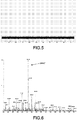
- Fig. 4 and Fig. 5 respectively show a 1 H NMR spectrum and a 31 P NMR spectrum of 4-carboxyphenyl phosphorylcholine obtained in the above. Further, Fig. 6 shows an MS spectrum of 4-carboxyphenyl phosphorylcholine obtained in the above.
- Fig. 7 and Fig. 8 respectively show a 1 H NMR spectrum and a 31 P NMR spectrum of 4-methylphenyl phosphorylcholine obtained in the above. Further, Fig. 9 shows an MS spectrum of 4-methylphenyl phosphorylcholine obtained in the above.
- Fig. 10 and Fig. 11 respectively show 1 H NMR spectrum and a 31 P NMR spectrum of 4-carboxyphenyl phosphorylcholine obtained in the above. Further, Fig. 12 shows an MS spectrum of 4-carboxyphenyl phosphorylcholine obtained in the above.
- MES morpholinoethanesulfonic acid hydrate
- purified water to prepare a MES buffer solution of 0.1M.
- 50 mg of 4-carboxyphenyl phosphorylcholine synthesized in the example a1-1, 50 mg of phenylalanine, and 25 mg of ethyl dimethylaminopropyl carbodiimide hydrochloride (manufactured by Pierce Biotechnologies, inc.) as a condensation agent were dissolved in 10 mL of MES buffer solution of 0.1M, and stirred at 25°C for 24 hours. Accordingly, a PC-phenylalanine complex having a structure represented by a formula (8) was obtained.
- Fig. 13 and Fig. 14 respectively show an HPLC chromatogram of the solution before stirring for 24 hours (before reaction) and an HPLC chromatogram of the solution after stirring for 24 hours (after reaction) in the synthesis of the above-mentioned PC-amino acid complex.
- Fig. 13 and Fig. 14 it was confirmed that the peak of 4-carboxyphenyl phosphorylcholine disappeared, and a new peak appeared.
- Fig. 15 shows an MS spectrum of the product obtained in the above. From Fig.
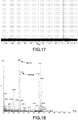
- Fig. 16 and Fig. 17 respectively show a 1 H NMR spectrum and a 31 P NMR spectrum of 4-carboxyphenyl phosphorylcholine succinimidyl obtained in the above. Further, Fig. 18 shows an MS spectrum of 4-carboxyphenyl phosphorylcholine succinimidyl.
- PC-BSA PC-protein complex
- Saliva was collected from five healthy subjects in their twenties to forties, and a solution obtained by diluting the saliva 16-fold with Block Ace (manufactured by Sumitomo Dainippon Pharma Co., Ltd.) of 10% was used as a sample.
- Block Ace manufactured by Sumitomo Dainippon Pharma Co., Ltd.
- a carbonate/bicarbonate buffer solution manufactured by Sigma-Aldrich Co. LLC.
- HRP horseradish peroxidase
- anti-PC (OD 450 ) The difference (anti-PC (OD 450 )) between the absorbance obtained from the plate on which PC-BSA was adsorbed (anti-PC-BSA (OD 450 )) and the absorbance obtained from the plate on which BSA was adsorbed (anti-BSA (OD 450 )) as a negative control was calculated by using a formula (10).
- a calibration curve was created for each measurement, and an anti-PC antibody value ( ⁇ g equal amount/mL) of each sample from the obtained value of the anti-PC (OD 450 ) was calculated.
- anti ⁇ PC OD 450 anti ⁇ PC ⁇ BSA OD 450 ⁇ anti ⁇ BSA OD 450
- Table 1 shows the measurement results of an anti-PC antibody value of PC-BSA (example a2-2) according to a PC group-containing compound in which X is a hydrogen atom or a monovalent cation residue.
- Subject number 1 2 3 4 5
- Anti-PC antibody value ( ⁇ g equal amount/mL) 0.075 0.092 0.084 0.127 0.098
- Table 2 shows the measurement results an anti-PC antibody value of PC-BSA (example b2) according to a PC group-containing compound in which X is a hydroxysuccinimide group.
- a comparative example a1 is a comparative example of the PC group-containing compound according to the present invention, in which X is a hydrogen atom or a monovalent cation residue.
- a compound having a structure represented by a formula (11) was synthesized.
- Four mg of the obtained compound having a structure represented by a formula (11), 4 mg of bovine serum albumin (BSA, manufactured by Sigma-Aldrich Co. LLC.), and 2 mg of ethyl dimethylaminopropyl carbodiimide hydrochloride (manufactured by Tokyo Chemical Industry Co., Ltd.) as a condensation agent were dissolved in 1.6 mL of a MES buffer solution of 0.1M. This solution was stirred at 25°C, and attempts were made to synthesize a PC-protein complex.
- the product was in gel form, and could't be dissolved in a MES buffer solution of 0.1M used for measurement of an anti-PC antibody value.
- a comparative example b1 is a comparative example of the PC group-containing compound according to the present disclosure, in which X is a hydroxysuccinimide group.
- a compound having a structure represented by a formula (11) was synthesized. Twenty mg of the obtained compound having a structure represented by a formula (11), 8 mg of bovine serum albumin (BSA, manufactured by Sigma-Aldrich Co. LLC.), and 8 mg of sodium hydrogen carbonate were dissolved in 2 mL of distilled water. This solution was stirred at 25°C for 24 hours. However, the product was in gel form, and could't be dissolved in a MES buffer solution of 0.1 M used for measurement of an anti-PC antibody value.
- BSA bovine serum albumin
- a comparative example b2 is a comparative example of the PC group-containing compound according to the present invention, in which X is a hydroxysuccinimide group.
- a compound having a structure represented by a formula (11) was synthesized. Five point zero g of the obtained compound having a structure represented by a formula (11) and 6.0 g of N-hydroxysuccinimide were added to 35.0 g of DMF. This solution was maintained at 25°C, 13.6 g of 1,3-dicyclohexylcarbodiimide dissolved in 20 g of DMF was added thereto, and reaction was caused to proceed at 25°C for 72 hours. After the reaction, the solution was filtered to collect a solid, and recrystallization was performed with acetonitrile. After drying under reduced pressure, 4.4 g (yield 56%) of a compound having a structure represented by a formula (12) was obtained.
- An aromatic compound having a structure that is represented by the formula (1) and includes one carboxyl group and a PC group can be effectively used as a raw material for obtaining a PC-protein complex.
- the obtained PC-protein complex, PC-peptide complex, or PC-amino acid complex can be used as a PC antigen or a raw material for manufacturing a PC antigen.
- the obtained PC antigen can be effectively used a raw material for producing a PC antibody in manufacturing a pharmaceutical drug containing a PC antibody.
Landscapes
- Chemical & Material Sciences (AREA)
- Organic Chemistry (AREA)
- Health & Medical Sciences (AREA)
- Life Sciences & Earth Sciences (AREA)
- Biochemistry (AREA)
- General Health & Medical Sciences (AREA)
- Molecular Biology (AREA)
- Zoology (AREA)
- Toxicology (AREA)
- Gastroenterology & Hepatology (AREA)
- Biophysics (AREA)
- Genetics & Genomics (AREA)
- Medicinal Chemistry (AREA)
- Proteomics, Peptides & Aminoacids (AREA)
- Medicines Containing Antibodies Or Antigens For Use As Internal Diagnostic Agents (AREA)
- Peptides Or Proteins (AREA)
Abstract
Description
- The present invention relates to a phosphorylcholine group-containing compound and a phosphorylcholine complex.
- Phosphorylcholine (PC) is a main component of not only an inflammatory phospholipid such as a platelet-activating factor or an oxidized low density lipoprotein but also an immunogenic component of many bacteria including Streptococcus pneumoniae. A compound containing a PC group is used as a PC antigen for the purpose of production of a PC specific antibody. For example, in Patent Literature 1, an example where a PC antigen is used in immunization treatment of atherosclerosis is disclosed. Atherosclerosis is a chronic disease that causes a thickening of the innermost layer (the intima) of large and medium-sized arteries. Atherosclerosis is the major cause of cardiovascular disease including myocardial infarction. Blood flow is decreased in affected areas in atherosclerosis, and ischemia and tissue destruction may be caused in organs supplied by the affected vessel.
- According to Patent Literature 1, it is indicated that a monoclonal antibody with specificity to PC and a composition thereof are obtained by using, as a PC antigen, a PC-protein conjugate obtained by boding an immunological carrier protein to PC, and the PC specific monoclonal antibody and the composition thereof are effective in immunization treatment of atherosclerosis. Further, in Patent Literature 2, use of a PC antigen as a vaccine for inducing immunoprotection against infections by Streptococcus pneumoniae or the like is disclosed. Other examples of the study aimed at such a vaccine include Non-Patent Literature 1. In Non-Patent Literature 1, it has been reported that a PC antibody titer is increased by administering a PC-protein conjugate in the presence of an immunopotentiating agent in an animal experiment.
- Further, although various methods of introducing a phosphorylcholine group into a molecule to form a polymer complex have been proposed (e.g.,
Patent Literatures 3 and 4), a PC-protein complex based on a phosphorylcholine group-containing compound has not been developed. This is mainly because a manufacturing process therefor needs a reaction of a plurality of stages and it is not easily manufactured due to the structure for a phosphorylcholine group-containing compound to express its function. Therefore, a PC group-containing compound that is easily manufactured and functions as a PC-protein complex is desired. -
- Patent Literature 1:
WO 2005/100405 - Patent Literature 2:
US Patent No. 5455032 - Patent Literature 3: Japanese Unexamined Patent Application Publication No.
2007-119643 - Patent Literature 4:
WO 2004/074298 - Non-Patent Literature 1: Norimitsu T. et. al., "Vaccine", 2007, 25(14), p. 2680-2687.
- As described above, it is an object of the present invention to provide a phosphorylcholine group-containing compound capable of producing a phosphorylcholine complex, and the phosphorylcholine complex, the phosphorylcholine complex being easily manufactured and suitable for use as a phosphorylcholine antigen.
- The present inventors have extensively studied to solve the above-mentioned problems. As a result, the present inventors have found that a compound having a compact structure in which an aromatic carboxylic acid structure is in a molecule can unexpectedly solve the above-mentioned problems, and have completed the present invention.
- Specifically, the present invention is the following [1] to [4].
- [1] A phosphorylcholine group-containing compound having a structure represented by the following formula (1).


- [2] A phosphorylcholine-protein complex having a structure in which a phosphorylcholine group-containing compound having a structure represented by the following formula (1') and an amino acid amine site of a protein are amide bonded.

- [3] A phosphorylcholine-peptide complex having a structure in which a phosphorylcholine group-containing compound having a structure represented by the following formula (1') and an amino acid amine site of an oligopeptide are amide bonded.

- [4] A phosphorylcholine-amino acid complex having a structure in which a phosphorylcholine group-containing compound having a structure represented by the following formula (1') and an amino acid amine site of an amino acid are amide bonded.

- It is possible to provide a phosphorylcholine group-containing compound capable of producing a phosphorylcholine complex, and the phosphorylcholine complex, the phosphorylcholine complex being easily manufactured and suitable for use as a phosphorylcholine antigen.
-
- [
Fig. 1 ] A 1H NMR spectrum of 4-methoxycarbonylphenyl phosphorylcholine. - [
Fig. 2 ] A 31P NMR spectrum of 4-methoxycarbonylphenyl phosphorylcholine. - [
Fig. 3 ] An MS spectrum of 4-methoxycarbonylphenyl phosphorylcholine. - [
Fig. 4 ] A 1H NMR spectrum of 4-carboxyphenyl phosphorylcholine obtained by a DBU method. - [
Fig. 5 ] A 31P NMR spectrum of 4-carboxyphenyl phosphorylcholine obtained by a DBU method. - [
Fig. 6 ] An MS spectrum of 4-carboxyphenyl phosphorylcholine obtained by a DBU method. - [
Fig. 7 ] A 1H NMR spectrum of 4-methylphenyl phosphorylcholine. - [
Fig. 8 ] A 31P NMR spectrum of 4-methylphenyl phosphorylcholine. - [
Fig. 9 ] An MS spectrum of 4-methylphenyl phosphorylcholine. - [
Fig. 10 ] A 1H NMR spectrum of 4-carboxyphenyl phosphorylcholine obtained by a permanganate method. - [
Fig. 11 ] A 31P NMR spectrum of 4-carboxyphenyl phosphorylcholine obtained by a permanganate method. - [
Fig. 12 ] An MS spectrum of 4-carboxyphenyl phosphorylcholine obtained by a permanganate method. - [
Fig. 13 ] An HPLC chromatogram before the reaction in synthesis of a PC-amino acid complex. - [
Fig. 14 ] An HPLC chromatogram after the reaction in synthesis of a PC-amino acid complex. - [
Fig. 15 ] An MS spectrum of a PC-phenylalanine complex. - [
Fig. 16 ] A 1H NMR spectrum of 4-carboxyphenyl phosphorylcholine succinimidyl. - [
Fig. 17 ] A 31P NMR spectrum of 4-carboxyphenyl phosphorylcholine succinimidyl. - [
Fig. 18 ] An MS spectrum of 4-carboxyphenyl phosphorylcholine succinimidyl. - A phosphorylcholine group-containing compound according to the present invention has a structure represented by the following formula (1).


- Examples of the above-mentioned monovalent cation residue include, but particularly not limited to, an alkali metal such as lithium, sodium, and potassium, and a nitrogen-containing organic compound in which ammonia, imidazole, dimethylaminopyridine, triethylamine, diazabicyclooctane, diazabicyclononene (DBN), diazabicycloundecene (DBU), or the like is protonated.
- Further, when X is hydroxysuccinimide having a structure represented by the above-mentioned formula (2), it is more advantageous for causing the amidation reaction to advantageously proceed as an activated carboxyl group to achieve a PC complex. Hydroxysuccinimide is amidated immediately before desorbing. Further, although the -COOX group in the formula (1) is bonded to any one of carbons in the benzene ring, it is favorably bonded to a para-position to the phosphorylcholine group.
- A PC group-containing compound according to the present invention has a structure in which one PC group and one carboxyl group are bonded to a benzene ring. Specifically, since it has one carboxyl group in a molecule, a cross-linking reaction does not occur when it is bonded to a protein, oligopeptide, or amino acid. Accordingly, it is possible to achieve a water-soluble PC-protein complex, PC-peptide complex, or PC-amino acid complex, which is suitable for use as a PC antigen, by using the PC group-containing compound according the present disclosure as a raw material of a PC complex.
- The PC group-containing compound according to the present invention can be manufactured by the following manufacturing method 1 or 2.
- By hydrolyzing a compound having a structure represented by the following formula (3) by using a basic compound, a compound having a structure that contains a carboxyl group and is represented by the formula (1) is produced.

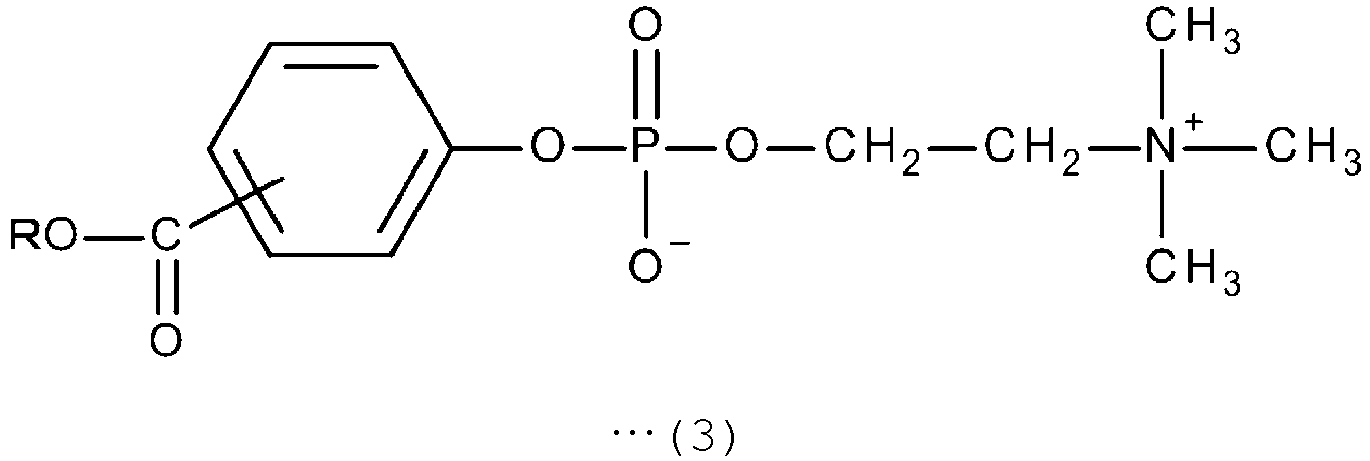
- By oxidizing a compound having a structure represented by the following formula (4) by using an oxidizing agent, a compound having a structure that contains a carboxyl group and is represented by the formula (1) is produced.

- A manufacturing method 1 for a PC group-containing compound specifically includes the following processes A1 to A3.
- Process A1: By causing a carboxylate ester-containing phenolic compound and 2-chloro-2-oxo-1,3,2-dioxaphospholane (COP) to react in a solvent by using a dehydrochlorination agent, a carboxylate ester-containing oxaphospholane (OP) compound is generated.
- Process A2: By causing the carboxylate ester-containing OP compound obtained in the process A1 to react with trimethylamine, a carboxylate ester-containing PC compound is generated.
- Process A3: By hydrolyzing the ester of the carboxylate ester-containing PC compound obtained in the process A2 in the presence of a basic compound in water, a compound having a structure that contains a carboxyl group and is represented by the formula (1) is produced.
- The process A1 is a process in which a carboxylate ester-containing OP compound is generated by causing a carboxylate ester-containing phenolic compound and COP to react in a solvent by using a dehydrochlorination agent. As the above-mentioned carboxylate ester-containing phenolic compound, for example, a compound having a structure in which one carboxylate ester is bonded to a benzene ring, such as an oxybenzoic acid ester, can be used. In addition, any of ortho-, meta-, and para-positional isomers thereof can also be used. Examples of the above-mentioned oxybenzoic acid ester include methyl esters (methyl hydroxybenzoate), ethyl esters (ethyl hydroxybenzoate), propyl esters (propyl hydroxybenzoate), butyl esters (butyl hydroxybenzoate), pentyl esters (pentyl hydroxybenzoate), hexyl esters (hexyl hydroxybenzoate), and benzyl esters (benzyl hydroxybenzoate). Further, the above-mentioned oxybenzoic acid ester is favorably, for example, a para-oxybenzoic acid ester such as methyl para-hydroxybenzoate, ethyl para-hydroxybenzoate, propyl para-hydroxybenzoate, butyl para-hydroxybenzoate, and benzyl para-hydroxybenzoate in view of the availability or economy.
- The process A1 can be performed in the presence of a solvent. As the solvent, a non-protic solvent is favorable. Examples of the non-protic solvent include nitriles such as acetonitrile, ketones such as acetone and methylethylketone, amides such as dimethylformamide, esters such as ethyl acetate and isopropyl acetate, ethers such as tetrahydrofuran, and chlorine-based organic solvents such as chloroform and dichloromethane. In the process A1, the amount of use of the solvent is not particularly limited. However, 1 to 100 parts by mass of the solvent with respect to 1 part by mass of the carboxylate ester-containing phenolic compound is favorable from a viewpoint of the temperature control at the time of reaction or control of sub-reaction. In particular, with regard to the amount of use of the solvent, 1 to 10 parts by mass of the solvent with respect to 1 part by mass of the carboxylate ester-containing phenolic compound is more favorable in view of the economy. In the process A1, the reaction temperature is not particularly limited as long as it is higher than the freezing point of the solvent. However, it is favorably -20°C to 50°C, which is easily controlled, and more favorably, -20°C to 0°C from a viewpoint of preventing sub-reaction from occurring.
- Although the reaction time in the process A1 is not particularly limited, it can be normally 1 to 8 hours. In the process A1, the amount of use of COP is normally 0.7 to 3.0 molar equivalent, favorably 0.8 to 2.0 molar equivalent, and more favorably 0.9 to 1.2 molar equivalent, to 1 mole of the carboxylate ester-containing phenolic compound. Examples of the dehydrochlorination agent used in the process A1 include organic bases and inorganic bases. Further, the dehydrochlorination agent is favorably trimethylamine, triethylamine, diisopropylamine, pyridine, or the like from a viewpoint of the solubility to the solvent, the filterability of the generated salt, and the like.
- The amount of use of the above-mentioned dehydrochlorination agent is normally 0.7 to 3.0 molar equivalent, favorably 0.8 to 2.0 molar equivalent, and more favorably 0.9 to 1.2 molar equivalent, to COP.
- The process A2 is a process in which a carboxylate ester-containing PC compound is generated by causing the carboxylate ester-containing OP compound obtained in the process A1 to react with trimethylamine. The process A2 can be performed in the presence of a solvent. As the solvent, a non-protic solvent is favorable. Examples of the non-protic solvent include nitriles such as acetonitrile, ketones such as acetone and methylethylketone, amides such as dimethylformamide, esters such as ethyl acetate and isopropyl acetate, ethers such as tetrahydrofuran, and chlorine-based organic solvents such as chloroform and dichloromethane. In the process A2, the amount of use of the solvent is not particularly limited. However, 1 to 100 parts by mass of the solvent with respect to 1 part by mass of the carboxylate ester-containing OP compound is favorable from a viewpoint of the temperature control at the time of reaction or control of sub-reaction. In particular, with regard to the amount of use of the solvent, 1 to 20 parts by mass of the solvent with respect to 1 part by mass of the carboxylate ester-containing OP compound is more favorable in view of the economy.
- In the process A2, the reaction temperature is not particularly limited. However, it can be normally 40°C to 80°C. Although the reaction time in the process A2 is not particularly limited, it can be normally 6 to 24 hours. In the process A2, the amount of use of trimethylamine is normally 1 to 2 molar equivalent to the carboxylate ester-containing OP compound.
- The process A3 is a process in which a carboxyl group-containing PC compound is synthesized by hydrolyzing the ester of the carboxylate ester-containing PC compound obtained in the process A2 in the presence of a basic compound in water. The process A3 can be performed in the presence of a solvent. The solvent is normally only water or an organic solvent containing water, and favorably only water. In the process A3, although the amount of use of the solvent is not particularly limited, 1 to 100 parts by mass of the solvent with respect to 1 part by mass of the carboxylate ester-containing PC compound is favorable from a viewpoint of the temperature control at the time of reaction or control of sub-reaction. In particular, with regard to the amount of use of the solvent, 1 to 20 parts by mass of the solvent with respect to 1 part by mass of the carboxylate ester-containing PC compound is more favorable in view of the economy.
- The basic compound used in the process A3 is not particularly limited as long as it is capable of cutting the ester bond and converting it into a carboxyl group. Examples of the basic compound include a strong basic compound such as potassium hydroxide, sodium hydroxide, diazabicyclononene (DBN), diazabicycloundecene (DBU), and trimethylamine from a viewpoint of the reaction rate. The amount of use of the above-mentioned basic compound can be normally 1 to 2 molar equivalent to the carboxylate ester-containing PC compound. In the process A3, although the reaction temperature is not particularly limited, it can be normally 0°C to 100°C. Although the reaction time in the process A3 is not particularly limited, it can be normally 1 to 6 hours.
- A manufacturing method 2 for a PC group-containing compound specifically includes the following processes B1 to B3.
- Process B1 : By causing an alkyl group-containing phenolic compound and COP to react in a solvent by using a dehydrochlorination agent, an alkyl group-containing OP compound is generated.
- Process B2: By causing the alkyl group-containing OP compound obtained in the process B1 to react with trimethylamine, an alkyl group-containing PC compound is generated.
- Process B3: By oxidizing the alkyl group-containing PC compound obtained in the process B2 by using an oxidizing agent, a compound having a structure that contains a carboxyl group and is represented by the formula (1) is generated.
- The process B1 is a process in which an alkyl group-containing OP compound is generated by causing an alkyl group-containing phenolic compound and COP to react in a solvent by using a dehydrochlorination agent. As the above-mentioned alkyl group-containing phenolic compound, a compound having a structure in which one alkyl group is bonded to a benzene ring, such as cresol, can be used. In addition, any of ortho-, meta-, and para-positional isomers thereof can also be used.
- The process B1 can be performed in the presence of a solvent. As the solvent, a non-protic solvent is favorable. Examples of the non-protic solvent include nitriles such as acetonitrile, ketones such as acetone and methylethylketone, amides such as dimethylformamide, esters such as ethyl acetate and isopropyl acetate, ethers such as tetrahydrofuran, and chlorine-based organic solvents such as chloroform and dichloromethane. In the process B1, the amount of use of the solvent is not particularly limited. However, 1 to 100 parts by mass of the solvent with respect to 1 part by mass of the alkyl group-containing phenolic compound is favorable from a viewpoint of the temperature control at the time of reaction or control of sub-reaction. In particular, with regard to the amount of use of the solvent, 1 to 100 parts by mass of the solvent with respect to 1 part by mass of the alkyl group-containing phenolic compound is more favorable in view of the economy.
- In the process B1, the reaction temperature is not particularly limited as long as it is higher than the freezing point of the solvent. However, it is favorably -20°C to 50°C, which is easily controlled, and more favorably, -20°C to 0°C from a viewpoint of preventing sub-reaction from occurring. Although the reaction time in the process B1 is not particularly limited, it can be normally 1 to 6 hours.
- In the process B1, the amount of use of COP is normally 0.7 to 3.0 molar equivalent, favorably 0.8 to 2.0 molar equivalent, and more favorably 0.9 to 1.2 molar equivalent, to 1 mole of the alkyl group-containing phenolic compound. Examples of the dehydrochlorination agent used in the process B1 include organic bases and inorganic bases. Further, the dehydrochlorination agent is favorably trimethylamine, triethylamine, diisopropylamine, pyridine, or the like from a viewpoint of the solubility to the solvent, the filterability of the generated salt, and the like. The amount of use of the above-mentioned dehydrochlorination agent is normally 0.7 to 3.0 molar equivalent, favorably 0.8 to 2.0 molar equivalent, and more favorably 0.9 to 1.2 molar equivalent, to COP.
- The process B2 is a process in which an alkyl group-containing PC compound is generated by causing the alkyl group-containing OP compound obtained in the process B1 to react with trimethylamine. The process B2 can be performed in the presence of a solvent. As the solvent, a non-protic solvent is favorable. Examples of the non-protic solvent include nitriles such as acetonitrile, ketones such as acetone and methylethylketone, amides such as dimethylformamide, esters such as ethyl acetate and isopropyl acetate, ethers such as tetrahydrofuran, and chlorine-based organic solvents such as chloroform and dichloromethane. In the process B2, the amount of use of the solvent is not particularly limited. However, 1 to 100 parts by mass of the solvent with respect to 1 part by mass of the alkyl group-containing OP compound is favorable from a viewpoint of the temperature control at the time of reaction or control of sub-reaction. In particular, with regard to the amount of use of the solvent, 1 to 20 parts by mass of the solvent with respect to 1 part by mass of the alkyl group-containing OP compound is more favorable in view of the economy.
- In the process B2, the reaction temperature is not particularly limited. However, it can be normally 40°C to 80°C. Although the reaction time in the process B2 is not particularly limited, it can be normally 6 to 24 hours. In the process B2, the amount of use of trimethylamine is normally 1 to 2 molar equivalent to the alkyl group-containing OP compound.
- The process B3 is a process in which a carboxyl group-containing PC compound is produced by oxidizing the alkyl group-containing PC compound obtained in the process B2 by using an oxidizing agent. The process B3 can be performed in the presence of a solvent. The solvent is not particularly limited. However, it is favorably a protic solvent, and particularly, more favorably, water. In the process B3, although the amount of use of the solvent is not particularly limited, 1 to 100 parts by mass of the solvent with respect to 1 part by mass of the alkyl group-containing PC compound is favorable from a viewpoint of the temperature control at the time of reaction or control of sub-reaction. In particular, with regard to the amount of use of the solvent, 1 to 10 parts by mass of the solvent with respect to 1 part by mass of the alkyl group-containing PC compound is more favorable in view of the economy.
- The oxidizing agent used in the process B3 is not particularly limited as long as it is capable of converting the alkyl group into a carboxyl group. The oxidizing agent is favorably a strong oxidizing agent such as permanganate from a viewpoint of the reaction rate, and more favorably potassium permanganate in view of the availability. The amount of use of the above-mentioned oxidizing agent is not particularly limited. However, it is favorably 1 to 10 molar equivalent, and more favorably 1 to 3 molar equivalent, to the alkyl group-containing PC compound in view of the economy and environmental burden.
- In the process B3, although the reaction temperature is not particularly limited, it is favorable that the reaction is caused to proceed at the temperature of approximately the boiling point of the solvent under reflux, in view of the reaction rate. Although the reaction time in the process B3 is not particularly limited, it can be normally 1 to 8 hours.
- The compound in which X is hydroxysuccinimide or N-hydroxysulfosuccinimide sodium salt, which have a structure represented by the formula (2), (hereinafter, abbreviated as NHS compound) is obtained by further performing the following process C on the carboxyl group-containing PC compound in which X is a carboxylic acid or salt obtained in the above.
- The process C is a process in which the carboxyl group-containing PC compound (X is a carboxylic acid or salt) obtained in the process A3 or B3 and N-hydroxysuccinimide or N-hydroxysulfosuccinimide sodium salt are condensed by using a condensation agent to produce NHS compound. The process C can be performed in the presence of a solvent. As the solvent, a non-protic solvent is favorable. Examples of the non-protic solvent include nitriles such as acetonitrile and benzonitrile, ketones such as acetone and methylethylketone, amides such as dimethylformamide, sulfoxides such as dimethyl sulfoxide, esters such as ethyl acetate and isopropyl acetate, ethers such as tetrahydrofuran and 1,4-dioxane, and a chlorine-based organic solvent such as chloroform and dichloromethane. In particular, the solvent is favorably acetonitrile or dimethylformamide in view of the solubility and reaction rate.
- In the process C, although the amount of use of the solvent is not particularly limited, 1 to 100 parts by mass of the solvent with respect to 1 part by mass of the carboxyl group-containing PC compound is favorable from a viewpoint of the temperature control and preventing sub-reaction from occurring. In particular, in view of the economy, with regard to the amount of use of the solvent, 1 to 10 parts by mass of the solvent with respect to 1 part by mass of the carboxyl group-containing PC compound is more favorable. In the process C, although the reaction temperature is not particularly limited, it can be normally 0°C to 50°C. Although the reaction time in the process C is not particularly limited, it can be normally 8 to 96 hours.
- Examples of the condensation agent used in the process C include 1-ethyl-3-(3-dimethylaminopropyl) carbodiimide hydrochloride, N,N'-diisopropylcarbodiimide, and 1,3-dicyclohexylcarbodiimide. In particular, in view of the economy, the condensation agent is favorably 1,3-dicyclohexylcarbodiimide.
- The amount of use of the above-mentioned condensation agent can normally be 1 to 5 molar equivalent to the carboxyl group-containing PC compound. In the process C, the amount of use of N-hydroxysuccinimide or N-hydroxysulfosuccinimide sodium salt can be normally 1 to 5 molar equivalent to the carboxyl group-containing PC compound.
- With the above-mentioned manufacturing method, it is possible to efficiently manufacture the PC group-containing compound according to the present invention.
- By causing the phosphorylcholine group-containing compound according to the present invention to react with an amino acid amine site of a protein, peptide, or amino acid to form an amide bond, it is possible to obtain a phosphorylcholine-protein complex, a phosphorylcholine-peptide complex, or a phosphorylcholine-amino acid complex, respectively.
- In the case where the PC group-containing compound according to the present disclosure is used to synthesize a PC-protein complex, human serum albumin (HSA), bovine serum albumin (BSA), egg white albumin (OVA), keyhole limpet hemocyanin (KLH), chicken gamma globulin (CGG), diphtheria toxoid, protein D, and the like can be used as a protein.
- The reaction temperature, reaction time, and pH at the time when the PC-protein complex is synthesized are not particularly limited as long as the protein is not degraded or denatured. For example, the reaction temperature in the case where reaction is caused to proceed in an aqueous buffer solution under atmospheric pressure is normally 0°C to 100°C, and favorably 20°C to 60°C. The reaction time in this case is normally 1 second to 1 week, and favorably 1 hour to 3 days. Further, the pH in this case is normally 2 to 12, and favorably 5 to 9.
- For purification of the PC-protein complex, a dialysis film can be used, for example. As the aqueous buffer solution used for synthesis and dialysis purification, an aqueous buffer solution used in a biochemical field, such as a phosphate buffer solution, a borate buffer solution, and a carbonate buffer solution, can be used. The salt concentration of the aqueous buffer solution is normally 0.0001 to 10 mol/L, and favorably 0.01 to 1 mol/L.
- In the case where the PC group-containing compound according to the present invention is used to synthesize a PC-peptide complex, an oligopeptide in which 2 to 10 amino acids including an arbitrary combination selected from alanine, arginine, asparagine, aspartic acid, cysteine, glutamine, glutamic acid, glycine, histidine, isoleucine, leucine, lysine, methionine, phenylalanine, proline, serine, threonine, tryptophan, tyrosine, and valine are bonded together can be used as an oligopeptide.
- The reaction temperature, reaction time, and pH at the time when the PC-peptide complex is synthesized are not particularly limited as long as the oligopeptide is not degraded or denatured. For example, the reaction temperature in the case where reaction is caused to proceed in an aqueous buffer solution under atmospheric pressure is normally 0°C to 100°C, and favorably 20°C to 60°C. The reaction time in this case is normally 1 second to 1 week, and favorably 1 hour to 3 days. Further, the pH in this case is normally 2 to 12, and favorably 5 to 9.
- In the case where the PC group-containing compound according to the present invention is used to synthesize a PC-amino acid complex, alanine, arginine, asparagine, aspartic acid, cysteine, glutamine, glutamic acid, glycine, histidine, isoleucine, leucine, lysine, methionine, phenylalanine, proline, serine, threonine, tryptophan, tyrosine, and valine can be used as an amino acid.
- Examples of the method of synthesizing the PC-amino acid complex include a method of causing a binding reaction to proceed in water or a buffer solution by using a condensation agent.
- The above-mentioned condensation agent is not particularly limited. However, highly water-soluble ethyl dimethylaminopropyl carbodiimide hydrochloride can be used, for example.
- The reaction temperature, reaction time, and pH at the time when the PC-amino acid complex is synthesized are not particularly limited as long as the amino acid is not degraded or denatured. For example, the reaction temperature in the case where reaction is caused to proceed in an aqueous buffer solution under atmospheric pressure is normally 0°C to 100°C, and favorably 20°C to 60°C. The reaction time in this case is normally 1 second to 1 week, and favorably 1 hour to 3 days. Further, the pH in this case is normally 2 to 12, and favorably 5 to 9.
- The PC-amino acid complex can be used as a raw material for obtaining a PC-protein complex or a PC-peptide complex by bonding the PC-amino acid complex to another oligopeptide or protein.
- Hereinafter, the present invention will be more specifically described with examples and comparative examples. However, the present invention is not limited to the scope of these examples. Note that various kinds of measurement in the examples were performed as follows.
- "JNM-AL400" (trade name) manufactured by JEOL Ltd. was used, and measurement was performed under the conditions of solvent: D2O, reference material: HOD, sample concentration: 10 mg/g, and number of times of integration: 32.
- "JNM-AL400" (tradename) manufactured by JEOL Ltd. was used, and measurement was performed under the conditions of solvent: D2O, reference material: H3PO4, sample concentration: 10 mg/g, and number of times of integration: 32.
- "Q-micro2695" (trade name) manufactured by Waters Co., Ltd. was used, and measurement was performed under the conditions of sample concentration: 100 ppm, detection mode: ESI+, capillary voltage: 3.54 V, cone voltage: 30 V, ion source heater: 120°C, and desolvation gas: 350°C.
- "Atlantis T3 3µm 4.6×100mm" (trade name) manufactured by Waters Co., Ltd. was used as a column, and measurement was performed under the conditions of flow rate: 0.9 mL/min, temperature: 40°C, amount of sample injection: 10 µL, detection wavelength: 254 nm, mobile phase: 0.1 vol% trifluoroacetic acid-containing distilled water/0.1 vol% trifluoroacetic acid-containing acetonitrile, and gradient condition: distilled water/acetonitrile=100/0 (0 minute), 85/15 (0 to 20 minutes), and 85/15 (20 to 30 minutes).
- "SpectraMax M3" (trade name) manufactured by Molecular Devices, LLC. was used, and the absorbance of 450 nm (OD450) was measured.
- One hundred and sixty g of acetonitrile and 15 g of trimethylamine were added to 20 g of 4-methyl hydroxybenzoate, and they were dissolved and cooled to 0°C. After that, 21 g of COP was dropped thereinto. After the dropping was finished, reaction was caused to proceed at 0°C for 5 hours, and the generated trimethylamine hydrochloride was removed by filtration. After 200 g of acetonitrile and 12 g of trimethylamine were added to the obtained filtrate, reaction was caused to proceed at 75°C for 15 hours. After that, they were cooled to 60°C and concentrated until the amount of solutions was approximately 200 ml while blowing nitrogen. After the concentration, the solution was cooled to 25°C, and the precipitated crystal was filtered and dried under reduced pressure. Accordingly, 35.2 g (yield 85%) of 4-methoxycarbonylphenyl phosphorylcholine having a structure represented by a formula (5) was obtained as a reaction intermediate.

-
Fig. 1 and Fig. 2 respectively show a 1H NMR spectrum and a 31P NMR spectrum of 4-methoxycarbonylphenyl phosphorylcholine obtained in the above. Further,Fig. 3 shows an MS spectrum of 4-methoxycarbonylphenyl phosphorylcholine obtained in the above. - The results of 1H NMR measurement, 31P NMR measurement, and mass analysis of the obtained product are as follows.
1H NMR: δ=8.04 ppm (d, 2H, J=8.8: d), 7.30 ppm (d, 2H, J=8.8: e), 4.41 ppm (brs, 2H: c), 3.91 ppm (s, 3H: f), 3.68 ppm (m, 2H: b), 3.18 ppm (s, 9H: a)
31P NMR: -4.59 ppm (t, J=15.9)
MS: [M+H]+=317.91, [M+Na]+=340.01 - Ten g of 4-methoxycarbonylphenyl phosphorylcholine obtained in the above was dissolved in 90 g of distilled water, 5.0 g of DBU was added thereto, and they were stirred at 25°C for 3 hours. After that, 3.6 g of concentrated hydrochloric acid was added thereto to neutralize the reaction solution, and the resulting solution was concentrated and dried by an evaporator. The obtained solid was recrystallized with 50 g of ethanol. Accordingly, 9.0 g (yield 94%) of the solid of 4-carboxyphenyl phosphorylcholine having a structure represented by a formula (6) was obtained.

-
Fig. 4 andFig. 5 respectively show a 1H NMR spectrum and a 31P NMR spectrum of 4-carboxyphenyl phosphorylcholine obtained in the above. Further,Fig. 6 shows an MS spectrum of 4-carboxyphenyl phosphorylcholine obtained in the above. - The results of 1H NMR measurement, 31P NMR measurement, and mass analysis of the obtained product are as follows.
1H NMR: δ=8.06 ppm (d, 2H, J=8.8: d), 7.33 ppm (d, 2H, J=8.8: e), 4.43 ppm (brs, 2H: b), 3.70 ppm (m, 2H: c), 3.19 ppm (s, 9H: a)
31P NMR: -4.56 ppm (t, J=15.9)
MS: [M+H]+=304.12 - Five g of 4-methoxycarbonylphenyl phosphorylcholine obtained in the above was dissolved in 45 g of distilled water, 3.19 g of trimethylamine was added thereto, and reaction was caused to proceed under reflux for 4 hours. After the reaction was finished, they were cooled to room temperature, 3.4 g of concentrated hydrochloric acid was added thereto to neutralize the reaction solution, and the resulting solution was concentrated under reduced pressure by a rotary evaporator. An operation of adding 50 g of 2-propanol and concentrating under reduced pressure was performed two times on the obtained residue, 50 g of 2-propanol was added thereto, and crystal was precipitated after stirring all night at -10°C. The solution was pressurized and filtered, and 4.0 g of the solid was obtained by drying the obtained crystal under reduced pressure.
- 1H NMR measurement, 31P NMR measurement, and mass analysis were performed on the obtained product, and it was confirmed to be 4-carboxyphenyl phosphorylcholine (yield 84%). The results of 1H NMR measurement are as follows.
1H NMR: δ=8.06 ppm (d, 2H, J=8.8), 7.33 ppm (d, 2H, J=8.8), 4.43 ppm (brs, 2H), 3.70 ppm (m, 2H), 3.19 ppm - Ten g of 4-methoxycarbonylphenyl phosphorylcholine obtained in the above was dissolved in 90 g of distilled water, 1.2 g of sodium hydroxide was added thereto, and they were stirred at 25°C for 2 hours. After that, 3.6 g of concentrated hydrochloric acid was added thereto to neutralize the reaction solution, and the resulting solution was concentrated and dried by an evaporator. After the obtained solid was column-purified, 8.5 g of the solid was obtained by evaporating the solvent.
- 1H NMR measurement, 31P NMR measurement, and mass analysis of the obtained product were performed, and it was confirmed to be 4-carboxyphenyl phosphorylcholine (yield 88%). The results of 1H NMR measurement are as follows.
1H NMR: δ=8.06 ppm (d, 2H, J=8.8), 7.33 ppm (d, 2H, J=8.8), 4.43 ppm (brs, 2H), 3.70 ppm (m, 2H), 3.19 ppm (s, 9H). - One hundred g of acetonitrile and 22.5 g of diisopropylamine were added to 20.0 g of p-cresol, and they were dissolved and cooled to 0°C. After that, 31.6 g of COP was dropped thereinto. After the dropping was finished, reaction was caused to proceed at 0°C for 3 hours, and the generated diisopropylamine hydrochloride was removed by filtration. One hundred g of acetonitrile and 16.4 g of trimethylamine were added to the obtained filtrate, and reaction was caused to proceed at 75°C for 15 hours. After that, they were cooled to 60°C, concentrated until the amount of solutions was approximately 200 ml while blowing nitrogen, and cooled to 25°C. The precipitated crystal was filtered, washed with 100 g of acetonitrile, and then, filtered and dried under reduced pressure. Accordingly, 32.8 g of the solid of 4-methylphenyl phosphorylcholine having a structure represented by a formula (7) (yield 65%) was obtained as a reaction intermediate.


-
Fig. 7 and Fig. 8 respectively show a 1H NMR spectrum and a 31P NMR spectrum of 4-methylphenyl phosphorylcholine obtained in the above. Further,Fig. 9 shows an MS spectrum of 4-methylphenyl phosphorylcholine obtained in the above. - The results of 1H NMR measurement, 31P NMR measurement, and mass analysis of the obtained product are as follows.
1H NMR: δ=7.25 ppm (d, 2H, J=7.8: b), 7.11 ppm (d, 2H, J=8.3: c), 4.38 ppm (brs, 2H: e), 3.65 ppm (m, 2H: d), 3.16 ppm (s, 9H: f), 2.32 ppm (s, 3H: a)
31P NMR: -3.70 ppm (t, J=15.9)
MS: [M+H]+=296.23 - Five g of 4-methylphenyl phosphorylcholine obtained in the above was dissolved in 45 g of distilled water, and 6.1 g of potassium permanganate was added thereto. This solution was heated to 100°C, and reaction was caused to proceed under reflux for 3 hours. After it was cooled to 25°C, the insoluble matter was removed by filtration, and 4 g of hydrochloric acid of 35% was added to the obtained solution. After that, the solution was dried under reduced pressure by an evaporator, and after the column purification of the obtained solid, the solvent was evaporated.. Accordingly, 4.4g of the solid of 4-carboxyphenyl phosphorylcholine (yield 80%) was obtained.
-
Fig. 10 andFig. 11 respectively show 1H NMR spectrum and a 31P NMR spectrum of 4-carboxyphenyl phosphorylcholine obtained in the above. Further,Fig. 12 shows an MS spectrum of 4-carboxyphenyl phosphorylcholine obtained in the above. - The results of 1H NMR measurement, 31P NMR measurement, and mass analysis of the obtained product are as follows.
1H NMR: δ=8.06 ppm (d, 2H, J=8.8: d), 7.33 ppm (d, 2H, J=8.8: e), 4.43 ppm (brs, 2H: b), 3.70 ppm (m, 2H: c), 3.19 ppm (s, 9H: a)
31P NMR: -4.56 ppm (t, J=15.9)
MS: [M+H]+=304.12, [M+NH4]+=320.13 - First, morpholinoethanesulfonic acid hydrate (MES, manufactured by Sigma-Aldrich Co. LLC.) was dissolved in purified water to prepare a MES buffer solution of 0.1M. Next, 50 mg of 4-carboxyphenyl phosphorylcholine synthesized in the example a1-1, 50 mg of phenylalanine, and 25 mg of ethyl dimethylaminopropyl carbodiimide hydrochloride (manufactured by Pierce Biotechnologies, inc.) as a condensation agent were dissolved in 10 mL of MES buffer solution of 0.1M, and stirred at 25°C for 24 hours. Accordingly, a PC-phenylalanine complex having a structure represented by a formula (8) was obtained.

-
Fig. 13 and Fig. 14 respectively show an HPLC chromatogram of the solution before stirring for 24 hours (before reaction) and an HPLC chromatogram of the solution after stirring for 24 hours (after reaction) in the synthesis of the above-mentioned PC-amino acid complex. In comparison withFig. 13 and Fig. 14 , it was confirmed that the peak of 4-carboxyphenyl phosphorylcholine disappeared, and a new peak appeared.Fig. 15 shows an MS spectrum of the product obtained in the above. FromFig. 15 , the product was confirmed to be a PC-phenylalanine complex because a peak ([M+H]+=451.16, [M+Na]+=473.13) corresponding to the molecular weight of PC-phenylalanine complex was obtained. - Four mg of 4-carboxyphenyl phosphorylcholine obtained in the example a1-1, 4 mg of bovine serum albumin (BSA, manufactured by Sigma-Aldrich Co. LLC.), and 2 mg of ethyl dimethylaminopropyl carbodiimide hydrochloride (Tokyo Chemical Industry Co., Ltd.) as a condensation agent were dissolved in 1.6 mL of MES buffer solution of 0.1M. After this solution was stirred at 25°C for 2 hours, dialysis purification was performed at 4°C in phosphate buffered saline (PBS) of pH 7.4. Accordingly, a PC-protein complex (PC-BSA) was obtained.
- Five point zero g of 4-carboxyphenyl phosphorylcholine obtained in the example a1-1 and 3.0 g of N-hydroxysuccinimide were suspended in 35 g of N,N-dimethylformamide (DMF). The temperature of this solution was maintained at 25°C, 6.8 g of 1,3-dicyclohexylcarbodiimide dissolved in 10 g of DMF was added thereto, and reaction was caused to proceed at 25°C for 72 hours. After the reaction, the solution was filtered to collect a solid, and recrystallization was performed with 160 g of acetonitrile. After drying under reduced pressure, 4.5 g (yield 68%) of 4-carboxyphenyl phosphorylcholine succinimidyl having a structure represented by a formula (9) was obtained.

-
Fig. 16 andFig. 17 respectively show a 1H NMR spectrum and a 31P NMR spectrum of 4-carboxyphenyl phosphorylcholine succinimidyl obtained in the above. Further,Fig. 18 shows an MS spectrum of 4-carboxyphenyl phosphorylcholine succinimidyl. - The results of 1H NMR measurement, 31P NMR measurement, and mass analysis of the obtained product are as follows.
1H NMR: δ= 8.23 ppm (d, 2H, J=8.8: e), 7.42 ppm (d, 2H, J=8.3: d), 4.45 ppm (brs, 2H: b), 3.72 ppm (m, 2H: c), 3.22 ppm (s, 9H: a), 3.04 ppm (s, 4H: f)
31P NMR: -4.96 ppm (t, J=15.9)
MS: [M+H]+=400.99, [M+Na]+=423.03 - Twenty mg of 4-carboxyphenyl phosphorylcholine succinimidyl obtained in the example b1, 8 mg of bovine serum albumin (BSA, manufactured by Sigma-Aldrich Co. LLC.), and 8 mg of sodium hydrogen carbonate were dissolved in 2 mL of distilled water. After this solution was stirred at 25°C for 24 hours, dialysis purification was performed at 4°C in phosphate buffered saline (PBS) of pH 7.4. Accordingly, a PC-protein complex (PC-BSA) was obtained.
- Saliva was collected from five healthy subjects in their twenties to forties, and a solution obtained by diluting the saliva 16-fold with Block Ace (manufactured by Sumitomo Dainippon Pharma Co., Ltd.) of 10% was used as a sample.
- First, PC-BSA or BSA obtained in the above-mentioned example a2-2 or b2, respectively, was dissolved in a carbonate/bicarbonate buffer solution (manufactured by Sigma-Aldrich Co. LLC.), and the concentration thereof was adjusted to 5 µL/mL. Fifty µL/well of the resulting solution was dispensed in a 96-well microtiter plate (manufactured by DYNATEC CORP.), and the plate was held at 4°C for 16 hours. Next, after PBS to which Tween20 of 0.05% was added was used to wash the plate, 200 µL/well of block ace of 25% was dispensed therein, and the plate was held at 36°C for 1 hour. Next, PBS to which Tween20 with concentration of 0.05% was added was used to wash the plate, 50 µL/well of the sample was injected thereinto, and the plate was held at 25°C for 1 hour. Next, PBS to which Tween20 with concentration of 0.05% was added was used to wash the plate, 50 µL/well of horseradish peroxidase (HRP)-labeled goat anti-human IgA antibody (manufactured by Southern Biotechnology Associates, Inc.) diluted 2000-fold was dispensed therein, and the plate was held at 25°C for 1 hour. Next, PBS to which Tween20 with concentration of 0.05% was added was used to wash the plate, 100 µL/well of an HRP substrate solution was dispensed therein, and the reaction was caused to proceed at 25°C for 15 minutes. After 15 minutes, 100 µL/well of dilute sulfuric acid was added thereto and the reaction was stopped. After that, the absorbance of 450 nm (OD450) was measured.
- The difference (anti-PC (OD450)) between the absorbance obtained from the plate on which PC-BSA was adsorbed (anti-PC-BSA (OD450)) and the absorbance obtained from the plate on which BSA was adsorbed (anti-BSA (OD450)) as a negative control was calculated by using a formula (10). A calibration curve was created for each measurement, and an anti-PC antibody value (µg equal amount/mL) of each sample from the obtained value of the anti-PC (OD450) was calculated.

- Table 1 shows the measurement results of an anti-PC antibody value of PC-BSA (example a2-2) according to a PC group-containing compound in which X is a hydrogen atom or a monovalent cation residue.
[Table 1] Subject number 1 2 3 4 5 Anti-PC antibody value (µg equal amount/mL) 0.075 0.092 0.084 0.127 0.098 - Table 2 shows the measurement results an anti-PC antibody value of PC-BSA (example b2) according to a PC group-containing compound in which X is a hydroxysuccinimide group.
[Table 2] Subject number 1 2 3 4 5 Anti-PC antibody value (µg equal amount/mL) 0.094 0.112 0.075 0.087 0.088 - From Tables 1 and 2, an anti-PC antibody valent was confirmed in any of the subjects. Accordingly, it became clear that PC-BSA used in this test functioned as a PC antigen. From the above-mentioned results, it become clear that the PC-protein complex using the PC group-containing compound according to the present invention was a water-soluble PC-protein complex suitable for use as a PC antigen because a cross-linking reaction did not occur between PC and a protein.
- A comparative example a1 is a comparative example of the PC group-containing compound according to the present invention, in which X is a hydrogen atom or a monovalent cation residue.
- In accordance with the method described in the specification of
WO 2004/074298 , a compound having a structure represented by a formula (11) was synthesized. Four mg of the obtained compound having a structure represented by a formula (11), 4 mg of bovine serum albumin (BSA, manufactured by Sigma-Aldrich Co. LLC.), and 2 mg of ethyl dimethylaminopropyl carbodiimide hydrochloride (manufactured by Tokyo Chemical Industry Co., Ltd.) as a condensation agent were dissolved in 1.6 mL of a MES buffer solution of 0.1M. This solution was stirred at 25°C, and attempts were made to synthesize a PC-protein complex. However, the product was in gel form, and couldn't be dissolved in a MES buffer solution of 0.1M used for measurement of an anti-PC antibody value.
- A comparative example b1 is a comparative example of the PC group-containing compound according to the present disclosure, in which X is a hydroxysuccinimide group.
- In accordance with the method described in the specification of
WO 2004/074298 , a compound having a structure represented by a formula (11) was synthesized. Twenty mg of the obtained compound having a structure represented by a formula (11), 8 mg of bovine serum albumin (BSA, manufactured by Sigma-Aldrich Co. LLC.), and 8 mg of sodium hydrogen carbonate were dissolved in 2 mL of distilled water. This solution was stirred at 25°C for 24 hours. However, the product was in gel form, and couldn't be dissolved in a MES buffer solution of 0.1 M used for measurement of an anti-PC antibody value. - A comparative example b2 is a comparative example of the PC group-containing compound according to the present invention, in which X is a hydroxysuccinimide group.
- In accordance with the method described in the specification of
WO 2004/074298 , a compound having a structure represented by a formula (11) was synthesized. Five point zero g of the obtained compound having a structure represented by a formula (11) and 6.0 g of N-hydroxysuccinimide were added to 35.0 g of DMF. This solution was maintained at 25°C, 13.6 g of 1,3-dicyclohexylcarbodiimide dissolved in 20 g of DMF was added thereto, and reaction was caused to proceed at 25°C for 72 hours. After the reaction, the solution was filtered to collect a solid, and recrystallization was performed with acetonitrile. After drying under reduced pressure, 4.4 g (yield 56%) of a compound having a structure represented by a formula (12) was obtained.
- Twenty mg of the obtained compound having a structure represented by a formula (12), 8 mg of bovine serum albumin (BSA, manufactured by Sigma-Aldrich Co. LLC.), and 8 mg of sodium hydrogen carbonate were dissolved in 2 mL of distilled water. This solution was stirred at 25°C for 24 hours. However, the product was in gel form, and couldn't be dissolved in a MES buffer solution of 0.1 M used for measurement of an anti-PC antibody value.
- An aromatic compound having a structure that is represented by the formula (1) and includes one carboxyl group and a PC group can be effectively used as a raw material for obtaining a PC-protein complex. Further, the obtained PC-protein complex, PC-peptide complex, or PC-amino acid complex can be used as a PC antigen or a raw material for manufacturing a PC antigen. In addition, the obtained PC antigen can be effectively used a raw material for producing a PC antibody in manufacturing a pharmaceutical drug containing a PC antibody.
Claims (4)
- A phosphorylcholine group-containing compound having a structure represented by the following formula (1).


- A phosphorylcholine-protein complex having a structure in which a phosphorylcholine group-containing compound having a structure represented by the following formula (1') and an amino acid amine site of a protein are amide bonded.

- A phosphorylcholine-peptide complex having a structure in which a phosphorylcholine group-containing compound having a structure represented by the following formula (1') and an amino acid amine site of an oligopeptide are amide bonded.
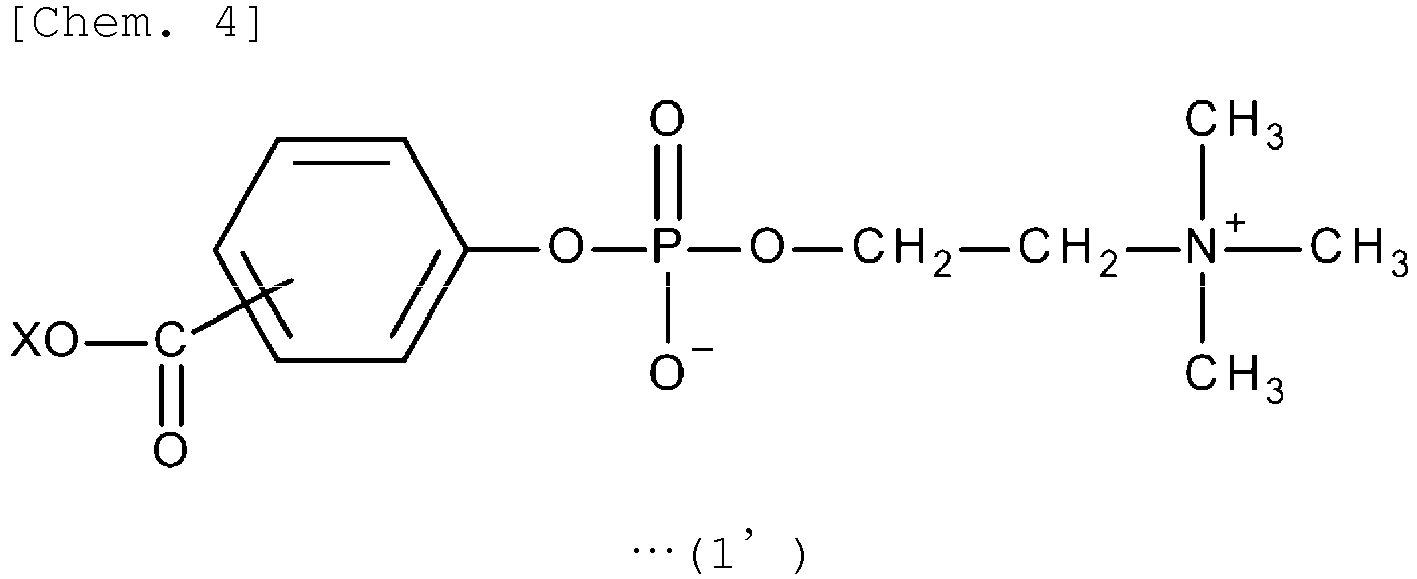
- A phosphorylcholine-amino acid complex having a structure in which a phosphorylcholine group-containing compound having a structure represented by the following formula (1') and an amino acid amine site of an amino acid are amide bonded.

Applications Claiming Priority (3)
| Application Number | Priority Date | Filing Date | Title |
|---|---|---|---|
| JP2014210546 | 2014-10-15 | ||
| JP2014210547 | 2014-10-15 | ||
| PCT/JP2015/078862 WO2016060096A1 (en) | 2014-10-15 | 2015-10-13 | Phosphorylcholine group-containing compound and phosphorylcholine complex |
Publications (3)
| Publication Number | Publication Date |
|---|---|
| EP3208275A1 true EP3208275A1 (en) | 2017-08-23 |
| EP3208275A4 EP3208275A4 (en) | 2018-06-06 |
| EP3208275B1 EP3208275B1 (en) | 2019-01-09 |
Family
ID=55746642
Family Applications (1)
| Application Number | Title | Priority Date | Filing Date |
|---|---|---|---|
| EP15850193.2A Active EP3208275B1 (en) | 2014-10-15 | 2015-10-13 | Phosphorylcholine group-containing compound and phosphorylcholine complex |
Country Status (4)
| Country | Link |
|---|---|
| US (1) | US9850266B2 (en) |
| EP (1) | EP3208275B1 (en) |
| JP (1) | JP6547755B2 (en) |
| WO (1) | WO2016060096A1 (en) |
Families Citing this family (2)
| Publication number | Priority date | Publication date | Assignee | Title |
|---|---|---|---|---|
| JP7165327B2 (en) * | 2019-01-31 | 2022-11-04 | 国立大学法人 鹿児島大学 | Adjuvants for nasal mucosal vaccines |
| CN113816990B (en) * | 2021-03-22 | 2023-08-22 | 联宁(苏州)生物制药有限公司 | Modified amino acids and their use in ADCs |
Family Cites Families (10)
| Publication number | Priority date | Publication date | Assignee | Title |
|---|---|---|---|---|
| FR1551060A (en) * | 1967-09-21 | 1968-12-27 | ||
| US5455032A (en) | 1993-07-29 | 1995-10-03 | The United States Of America As Represented By The Department Of Health And Human Services | Use of phosphocholine hapten conjugates in vaccines |
| US5830432A (en) * | 1997-03-31 | 1998-11-03 | Amur Pharmacuticals, Inc. | Phospholipid drug derivatives |
| ATE267586T1 (en) * | 1999-02-18 | 2004-06-15 | Supergen Inc | PHOSPHOCHOLINE BONDED PRODRUG DERIVATIVES |
| WO2003036297A1 (en) * | 2001-09-27 | 2003-05-01 | Tridelta Development Limited | Non-immunological assays for the detection and determination of c-reactive protein |
| EP1528063B1 (en) * | 2003-02-18 | 2010-09-29 | Tokai University | Compound having phosphorylcholine group, polymer thereof, and process for producing the same |
| CN103908669B (en) | 2004-04-15 | 2017-07-04 | 阿瑟拉生物技术公司 | Phosphorylcholine conjugates and corresponding antibodies |
| US7408075B1 (en) * | 2005-03-23 | 2008-08-05 | The United States Of America As Represented By The Department Of Health And Human Services | Synthesis of phosphocholine ester derivatives and conjugates thereof |
| JP5013575B2 (en) | 2005-10-28 | 2012-08-29 | 株式会社 資生堂 | Material surface treatment method |
| JP5614281B2 (en) * | 2008-04-14 | 2014-10-29 | 和光純薬工業株式会社 | Phenyl phosphorylcholine derivative |
-
2015
- 2015-10-13 JP JP2016554073A patent/JP6547755B2/en active Active
- 2015-10-13 EP EP15850193.2A patent/EP3208275B1/en active Active
- 2015-10-13 US US15/519,746 patent/US9850266B2/en active Active
- 2015-10-13 WO PCT/JP2015/078862 patent/WO2016060096A1/en not_active Ceased
Also Published As
| Publication number | Publication date |
|---|---|
| EP3208275B1 (en) | 2019-01-09 |
| WO2016060096A1 (en) | 2016-04-21 |
| JPWO2016060096A1 (en) | 2017-08-31 |
| EP3208275A4 (en) | 2018-06-06 |
| JP6547755B2 (en) | 2019-07-24 |
| US20170240576A1 (en) | 2017-08-24 |
| US9850266B2 (en) | 2017-12-26 |
Similar Documents
| Publication | Publication Date | Title |
|---|---|---|
| JP6942147B2 (en) | Bicyclic peptide-toxin conjugate specific for MT1-MMP | |
| DK2678037T3 (en) | Branched linker for protein pharmaceutical conjugates | |
| Raj et al. | Aldehyde capture ligation for synthesis of native peptide bonds | |
| EP2651964B1 (en) | Cross-linked peptides and proteins, methods of making same, and uses thereof | |
| WO2015030014A1 (en) | Macrocyclic peptide, method for producing same, and screening method using macrocyclic peptide library | |
| EP3584576B1 (en) | Bis-biotin and bis-iminobiotin derivatives as labels for identification of potential drug target proteins for development of antibody drugs | |
| EP3208275B1 (en) | Phosphorylcholine group-containing compound and phosphorylcholine complex | |
| EP4306535A1 (en) | Compound or salt thereof, and antibody obtained using same | |
| WO2021045182A1 (en) | Tryptase activity measurement substrate | |
| Garbati et al. | A new method to synthesize creatine derivatives | |
| CN114642718B (en) | A drug target for treating cancer and its application | |
| CN111505175A (en) | A kind of cross-linking agent for mass spectrometry and its preparation and application | |
| CN115894617A (en) | Polypeptide compound and application thereof | |
| ES2439322T3 (en) | Amino alcohol derivatives and their therapeutic activities | |
| Hoque et al. | Design and synthesis of mono and bicyclic tetrapeptides thioester as potent inhibitor of histone deacetylases | |
| US6800612B2 (en) | S-nitrosothiols as agents for the treatment of circulatory dysfunctions | |
| US20260008755A1 (en) | Inhibitors of protein arginine deiminase 1 and methods of preparation and use thereof | |
| US9593142B2 (en) | Aldehyde capture ligation technology for synthesis of amide bonds | |
| RU2727508C1 (en) | Agent exhibiting antiaggregatory activity | |
| EP4365184A1 (en) | Analysis method for peptide bound to carrier for liquid phase peptide synthesis | |
| WO2025239453A1 (en) | Functional compound | |
| CN107935895B (en) | Compound and its preparation method and application | |
| JP7302847B2 (en) | Novel fluorodinitrophenyl compound and use thereof | |
| Parker et al. | Examining ubiquitinated peptide enrichment efficiency through an epitope labeled protein | |
| Orgren Calabretta | Guanidinium Compounds: Synthesis, Oxoanion Binding, and Cellular Delivery |
Legal Events
| Date | Code | Title | Description |
|---|---|---|---|
| STAA | Information on the status of an ep patent application or granted ep patent |
Free format text: STATUS: THE INTERNATIONAL PUBLICATION HAS BEEN MADE |
|
| PUAI | Public reference made under article 153(3) epc to a published international application that has entered the european phase |
Free format text: ORIGINAL CODE: 0009012 |
|
| STAA | Information on the status of an ep patent application or granted ep patent |
Free format text: STATUS: REQUEST FOR EXAMINATION WAS MADE |
|
| 17P | Request for examination filed |
Effective date: 20170428 |
|
| AK | Designated contracting states |
Kind code of ref document: A1 Designated state(s): AL AT BE BG CH CY CZ DE DK EE ES FI FR GB GR HR HU IE IS IT LI LT LU LV MC MK MT NL NO PL PT RO RS SE SI SK SM TR |
|
| AX | Request for extension of the european patent |
Extension state: BA ME |
|
| DAV | Request for validation of the european patent (deleted) | ||
| DAX | Request for extension of the european patent (deleted) | ||
| A4 | Supplementary search report drawn up and despatched |
Effective date: 20180507 |
|
| RIC1 | Information provided on ipc code assigned before grant |
Ipc: C07K 14/47 20060101ALI20180430BHEP Ipc: C07F 9/09 20060101AFI20180430BHEP Ipc: C07F 9/572 20060101ALI20180430BHEP |
|
| GRAP | Despatch of communication of intention to grant a patent |
Free format text: ORIGINAL CODE: EPIDOSNIGR1 |
|
| STAA | Information on the status of an ep patent application or granted ep patent |
Free format text: STATUS: GRANT OF PATENT IS INTENDED |
|
| INTG | Intention to grant announced |
Effective date: 20180905 |
|
| GRAS | Grant fee paid |
Free format text: ORIGINAL CODE: EPIDOSNIGR3 |
|
| GRAA | (expected) grant |
Free format text: ORIGINAL CODE: 0009210 |
|
| STAA | Information on the status of an ep patent application or granted ep patent |
Free format text: STATUS: THE PATENT HAS BEEN GRANTED |
|
| AK | Designated contracting states |
Kind code of ref document: B1 Designated state(s): AL AT BE BG CH CY CZ DE DK EE ES FI FR GB GR HR HU IE IS IT LI LT LU LV MC MK MT NL NO PL PT RO RS SE SI SK SM TR |
|
| REG | Reference to a national code |
Ref country code: GB Ref legal event code: FG4D |
|
| REG | Reference to a national code |
Ref country code: CH Ref legal event code: EP Ref country code: AT Ref legal event code: REF Ref document number: 1087150 Country of ref document: AT Kind code of ref document: T Effective date: 20190115 |
|
| REG | Reference to a national code |
Ref country code: DE Ref legal event code: R096 Ref document number: 602015023415 Country of ref document: DE |
|
| REG | Reference to a national code |
Ref country code: IE Ref legal event code: FG4D |
|
| REG | Reference to a national code |
Ref country code: NL Ref legal event code: MP Effective date: 20190109 |
|
| REG | Reference to a national code |
Ref country code: LT Ref legal event code: MG4D |
|
| PG25 | Lapsed in a contracting state [announced via postgrant information from national office to epo] |
Ref country code: NL Free format text: LAPSE BECAUSE OF FAILURE TO SUBMIT A TRANSLATION OF THE DESCRIPTION OR TO PAY THE FEE WITHIN THE PRESCRIBED TIME-LIMIT Effective date: 20190109 |
|
| REG | Reference to a national code |
Ref country code: AT Ref legal event code: MK05 Ref document number: 1087150 Country of ref document: AT Kind code of ref document: T Effective date: 20190109 |
|
| PG25 | Lapsed in a contracting state [announced via postgrant information from national office to epo] |
Ref country code: NO Free format text: LAPSE BECAUSE OF FAILURE TO SUBMIT A TRANSLATION OF THE DESCRIPTION OR TO PAY THE FEE WITHIN THE PRESCRIBED TIME-LIMIT Effective date: 20190409 Ref country code: PL Free format text: LAPSE BECAUSE OF FAILURE TO SUBMIT A TRANSLATION OF THE DESCRIPTION OR TO PAY THE FEE WITHIN THE PRESCRIBED TIME-LIMIT Effective date: 20190109 Ref country code: ES Free format text: LAPSE BECAUSE OF FAILURE TO SUBMIT A TRANSLATION OF THE DESCRIPTION OR TO PAY THE FEE WITHIN THE PRESCRIBED TIME-LIMIT Effective date: 20190109 Ref country code: LT Free format text: LAPSE BECAUSE OF FAILURE TO SUBMIT A TRANSLATION OF THE DESCRIPTION OR TO PAY THE FEE WITHIN THE PRESCRIBED TIME-LIMIT Effective date: 20190109 Ref country code: PT Free format text: LAPSE BECAUSE OF FAILURE TO SUBMIT A TRANSLATION OF THE DESCRIPTION OR TO PAY THE FEE WITHIN THE PRESCRIBED TIME-LIMIT Effective date: 20190509 Ref country code: SE Free format text: LAPSE BECAUSE OF FAILURE TO SUBMIT A TRANSLATION OF THE DESCRIPTION OR TO PAY THE FEE WITHIN THE PRESCRIBED TIME-LIMIT Effective date: 20190109 Ref country code: FI Free format text: LAPSE BECAUSE OF FAILURE TO SUBMIT A TRANSLATION OF THE DESCRIPTION OR TO PAY THE FEE WITHIN THE PRESCRIBED TIME-LIMIT Effective date: 20190109 |
|
| PG25 | Lapsed in a contracting state [announced via postgrant information from national office to epo] |
Ref country code: GR Free format text: LAPSE BECAUSE OF FAILURE TO SUBMIT A TRANSLATION OF THE DESCRIPTION OR TO PAY THE FEE WITHIN THE PRESCRIBED TIME-LIMIT Effective date: 20190410 Ref country code: LV Free format text: LAPSE BECAUSE OF FAILURE TO SUBMIT A TRANSLATION OF THE DESCRIPTION OR TO PAY THE FEE WITHIN THE PRESCRIBED TIME-LIMIT Effective date: 20190109 Ref country code: BG Free format text: LAPSE BECAUSE OF FAILURE TO SUBMIT A TRANSLATION OF THE DESCRIPTION OR TO PAY THE FEE WITHIN THE PRESCRIBED TIME-LIMIT Effective date: 20190409 Ref country code: RS Free format text: LAPSE BECAUSE OF FAILURE TO SUBMIT A TRANSLATION OF THE DESCRIPTION OR TO PAY THE FEE WITHIN THE PRESCRIBED TIME-LIMIT Effective date: 20190109 Ref country code: IS Free format text: LAPSE BECAUSE OF FAILURE TO SUBMIT A TRANSLATION OF THE DESCRIPTION OR TO PAY THE FEE WITHIN THE PRESCRIBED TIME-LIMIT Effective date: 20190509 Ref country code: HR Free format text: LAPSE BECAUSE OF FAILURE TO SUBMIT A TRANSLATION OF THE DESCRIPTION OR TO PAY THE FEE WITHIN THE PRESCRIBED TIME-LIMIT Effective date: 20190109 |
|
| REG | Reference to a national code |
Ref country code: DE Ref legal event code: R097 Ref document number: 602015023415 Country of ref document: DE |
|
| PG25 | Lapsed in a contracting state [announced via postgrant information from national office to epo] |
Ref country code: DK Free format text: LAPSE BECAUSE OF FAILURE TO SUBMIT A TRANSLATION OF THE DESCRIPTION OR TO PAY THE FEE WITHIN THE PRESCRIBED TIME-LIMIT Effective date: 20190109 Ref country code: AL Free format text: LAPSE BECAUSE OF FAILURE TO SUBMIT A TRANSLATION OF THE DESCRIPTION OR TO PAY THE FEE WITHIN THE PRESCRIBED TIME-LIMIT Effective date: 20190109 Ref country code: SK Free format text: LAPSE BECAUSE OF FAILURE TO SUBMIT A TRANSLATION OF THE DESCRIPTION OR TO PAY THE FEE WITHIN THE PRESCRIBED TIME-LIMIT Effective date: 20190109 Ref country code: IT Free format text: LAPSE BECAUSE OF FAILURE TO SUBMIT A TRANSLATION OF THE DESCRIPTION OR TO PAY THE FEE WITHIN THE PRESCRIBED TIME-LIMIT Effective date: 20190109 Ref country code: RO Free format text: LAPSE BECAUSE OF FAILURE TO SUBMIT A TRANSLATION OF THE DESCRIPTION OR TO PAY THE FEE WITHIN THE PRESCRIBED TIME-LIMIT Effective date: 20190109 Ref country code: CZ Free format text: LAPSE BECAUSE OF FAILURE TO SUBMIT A TRANSLATION OF THE DESCRIPTION OR TO PAY THE FEE WITHIN THE PRESCRIBED TIME-LIMIT Effective date: 20190109 Ref country code: EE Free format text: LAPSE BECAUSE OF FAILURE TO SUBMIT A TRANSLATION OF THE DESCRIPTION OR TO PAY THE FEE WITHIN THE PRESCRIBED TIME-LIMIT Effective date: 20190109 Ref country code: AT Free format text: LAPSE BECAUSE OF FAILURE TO SUBMIT A TRANSLATION OF THE DESCRIPTION OR TO PAY THE FEE WITHIN THE PRESCRIBED TIME-LIMIT Effective date: 20190109 |
|
| PLBE | No opposition filed within time limit |
Free format text: ORIGINAL CODE: 0009261 |
|
| STAA | Information on the status of an ep patent application or granted ep patent |
Free format text: STATUS: NO OPPOSITION FILED WITHIN TIME LIMIT |
|
| PG25 | Lapsed in a contracting state [announced via postgrant information from national office to epo] |
Ref country code: SM Free format text: LAPSE BECAUSE OF FAILURE TO SUBMIT A TRANSLATION OF THE DESCRIPTION OR TO PAY THE FEE WITHIN THE PRESCRIBED TIME-LIMIT Effective date: 20190109 |
|
| 26N | No opposition filed |
Effective date: 20191010 |
|
| PG25 | Lapsed in a contracting state [announced via postgrant information from national office to epo] |
Ref country code: SI Free format text: LAPSE BECAUSE OF FAILURE TO SUBMIT A TRANSLATION OF THE DESCRIPTION OR TO PAY THE FEE WITHIN THE PRESCRIBED TIME-LIMIT Effective date: 20190109 |
|
| PG25 | Lapsed in a contracting state [announced via postgrant information from national office to epo] |
Ref country code: TR Free format text: LAPSE BECAUSE OF FAILURE TO SUBMIT A TRANSLATION OF THE DESCRIPTION OR TO PAY THE FEE WITHIN THE PRESCRIBED TIME-LIMIT Effective date: 20190109 |
|
| PG25 | Lapsed in a contracting state [announced via postgrant information from national office to epo] |
Ref country code: MC Free format text: LAPSE BECAUSE OF FAILURE TO SUBMIT A TRANSLATION OF THE DESCRIPTION OR TO PAY THE FEE WITHIN THE PRESCRIBED TIME-LIMIT Effective date: 20190109 |
|
| REG | Reference to a national code |
Ref country code: CH Ref legal event code: PL |
|
| PG25 | Lapsed in a contracting state [announced via postgrant information from national office to epo] |
Ref country code: CH Free format text: LAPSE BECAUSE OF NON-PAYMENT OF DUE FEES Effective date: 20191031 Ref country code: LI Free format text: LAPSE BECAUSE OF NON-PAYMENT OF DUE FEES Effective date: 20191031 Ref country code: LU Free format text: LAPSE BECAUSE OF NON-PAYMENT OF DUE FEES Effective date: 20191013 |
|
| REG | Reference to a national code |
Ref country code: BE Ref legal event code: MM Effective date: 20191031 |
|
| PG25 | Lapsed in a contracting state [announced via postgrant information from national office to epo] |
Ref country code: BE Free format text: LAPSE BECAUSE OF NON-PAYMENT OF DUE FEES Effective date: 20191031 |
|
| PG25 | Lapsed in a contracting state [announced via postgrant information from national office to epo] |
Ref country code: IE Free format text: LAPSE BECAUSE OF NON-PAYMENT OF DUE FEES Effective date: 20191013 |
|
| PG25 | Lapsed in a contracting state [announced via postgrant information from national office to epo] |
Ref country code: CY Free format text: LAPSE BECAUSE OF FAILURE TO SUBMIT A TRANSLATION OF THE DESCRIPTION OR TO PAY THE FEE WITHIN THE PRESCRIBED TIME-LIMIT Effective date: 20190109 |
|
| PG25 | Lapsed in a contracting state [announced via postgrant information from national office to epo] |
Ref country code: MT Free format text: LAPSE BECAUSE OF FAILURE TO SUBMIT A TRANSLATION OF THE DESCRIPTION OR TO PAY THE FEE WITHIN THE PRESCRIBED TIME-LIMIT Effective date: 20190109 Ref country code: HU Free format text: LAPSE BECAUSE OF FAILURE TO SUBMIT A TRANSLATION OF THE DESCRIPTION OR TO PAY THE FEE WITHIN THE PRESCRIBED TIME-LIMIT; INVALID AB INITIO Effective date: 20151013 |
|
| PG25 | Lapsed in a contracting state [announced via postgrant information from national office to epo] |
Ref country code: MK Free format text: LAPSE BECAUSE OF FAILURE TO SUBMIT A TRANSLATION OF THE DESCRIPTION OR TO PAY THE FEE WITHIN THE PRESCRIBED TIME-LIMIT Effective date: 20190109 |
|
| P01 | Opt-out of the competence of the unified patent court (upc) registered |
Effective date: 20230410 |
|
| PGFP | Annual fee paid to national office [announced via postgrant information from national office to epo] |
Ref country code: DE Payment date: 20251021 Year of fee payment: 11 |
|
| PGFP | Annual fee paid to national office [announced via postgrant information from national office to epo] |
Ref country code: GB Payment date: 20251024 Year of fee payment: 11 |
|
| PGFP | Annual fee paid to national office [announced via postgrant information from national office to epo] |
Ref country code: FR Payment date: 20251030 Year of fee payment: 11 |