EP3207693B1 - Interpreter desk for a conferencing system - Google Patents
Interpreter desk for a conferencing system Download PDFInfo
- Publication number
- EP3207693B1 EP3207693B1 EP15781643.0A EP15781643A EP3207693B1 EP 3207693 B1 EP3207693 B1 EP 3207693B1 EP 15781643 A EP15781643 A EP 15781643A EP 3207693 B1 EP3207693 B1 EP 3207693B1
- Authority
- EP
- European Patent Office
- Prior art keywords
- interpreter
- language
- audio input
- audio
- desk
- Prior art date
- Legal status (The legal status is an assumption and is not a legal conclusion. Google has not performed a legal analysis and makes no representation as to the accuracy of the status listed.)
- Active
Links
Images

Classifications
-
- G—PHYSICS
- G06—COMPUTING OR CALCULATING; COUNTING
- G06F—ELECTRIC DIGITAL DATA PROCESSING
- G06F9/00—Arrangements for program control, e.g. control units
- G06F9/06—Arrangements for program control, e.g. control units using stored programs, i.e. using an internal store of processing equipment to receive or retain programs
- G06F9/44—Arrangements for executing specific programs
- G06F9/451—Execution arrangements for user interfaces
- G06F9/454—Multi-language systems; Localisation; Internationalisation
-
- G—PHYSICS
- G06—COMPUTING OR CALCULATING; COUNTING
- G06F—ELECTRIC DIGITAL DATA PROCESSING
- G06F3/00—Input arrangements for transferring data to be processed into a form capable of being handled by the computer; Output arrangements for transferring data from processing unit to output unit, e.g. interface arrangements
- G06F3/01—Input arrangements or combined input and output arrangements for interaction between user and computer
- G06F3/048—Interaction techniques based on graphical user interfaces [GUI]
-
- G—PHYSICS
- G06—COMPUTING OR CALCULATING; COUNTING
- G06Q—INFORMATION AND COMMUNICATION TECHNOLOGY [ICT] SPECIALLY ADAPTED FOR ADMINISTRATIVE, COMMERCIAL, FINANCIAL, MANAGERIAL OR SUPERVISORY PURPOSES; SYSTEMS OR METHODS SPECIALLY ADAPTED FOR ADMINISTRATIVE, COMMERCIAL, FINANCIAL, MANAGERIAL OR SUPERVISORY PURPOSES, NOT OTHERWISE PROVIDED FOR
- G06Q10/00—Administration; Management
- G06Q10/10—Office automation; Time management
- G06Q10/109—Time management, e.g. calendars, reminders, meetings or time accounting
- G06Q10/1093—Calendar-based scheduling for persons or groups
-
- H—ELECTRICITY
- H04—ELECTRIC COMMUNICATION TECHNIQUE
- H04L—TRANSMISSION OF DIGITAL INFORMATION, e.g. TELEGRAPHIC COMMUNICATION
- H04L12/00—Data switching networks
- H04L12/02—Details
- H04L12/16—Arrangements for providing special services to substations
- H04L12/18—Arrangements for providing special services to substations for broadcast or conference, e.g. multicast
- H04L12/1813—Arrangements for providing special services to substations for broadcast or conference, e.g. multicast for computer conferences, e.g. chat rooms
- H04L12/1822—Conducting the conference, e.g. admission, detection, selection or grouping of participants, correlating users to one or more conference sessions, prioritising transmission
-
- H—ELECTRICITY
- H04—ELECTRIC COMMUNICATION TECHNIQUE
- H04M—TELEPHONIC COMMUNICATION
- H04M3/00—Automatic or semi-automatic exchanges
- H04M3/42—Systems providing special services or facilities to subscribers
- H04M3/56—Arrangements for connecting several subscribers to a common circuit, i.e. affording conference facilities
- H04M3/563—User guidance or feature selection
-
- H—ELECTRICITY
- H04—ELECTRIC COMMUNICATION TECHNIQUE
- H04M—TELEPHONIC COMMUNICATION
- H04M3/00—Automatic or semi-automatic exchanges
- H04M3/42—Systems providing special services or facilities to subscribers
- H04M3/56—Arrangements for connecting several subscribers to a common circuit, i.e. affording conference facilities
- H04M3/563—User guidance or feature selection
- H04M3/566—User guidance or feature selection relating to a participants right to speak
-
- H—ELECTRICITY
- H04—ELECTRIC COMMUNICATION TECHNIQUE
- H04M—TELEPHONIC COMMUNICATION
- H04M2203/00—Aspects of automatic or semi-automatic exchanges
- H04M2203/20—Aspects of automatic or semi-automatic exchanges related to features of supplementary services
- H04M2203/2061—Language aspects
Definitions
- the present invention is generally related to the field of interpreting equipment for use in digital conferencing systems.
- a conferencing system comprises a central unit, connected with several delegate units for the participating delegates.
- the central unit serves to combine audio channels of various delegate units and to distribute the received audio and data channel and combinations of these channels.
- a team of interpreters provides translation for the conference participants. This typically takes the form of simultaneous interpretation.
- Interpreters usually have a so-called 'interpreter desk' to assist them in performing their work.
- This unit provides an interface that allows the interpreter to select the incoming language of their choice as well as the language into which they will be interpreting.
- the language out of which the interpreter interprets is referred to as the 'relay language'.
- the interpreter desk includes a number of relay buttons, often equipped with an LED indicator. These buttons can be easily programmed when going through the list of available languages.
- the interpreter desk contains a display, for example an LCD display, on which relevant information can be shown (for example, quality of the relay languages, output channels or other additional information).
- a special input channel is the floor channel of the conferencing system, i.e., the language that is being spoken on the conference floor at that moment. If this is a language that the interpreter does not master, the interpreter will be unable to directly use the floor channel signal. The interpreter then has to rely on a translation of the language of the floor channel.
- a relevant part of information for the interpreter may contain an indication of the translation quality. This is usually done using a qualifier, such as, +, ++, +++ or FL, -1, -2; where 'FL' stands for 'floor language', i.e., the language that is being spoken on the conference floor at that moment. In this way, it is possible for interpreters to distinguish between direct and indirect translation and indirect translations can easily be avoided as much as possible.
- the present invention more specifically relates to the selection of the relay channel, i.e. the channel out of which the interpreter will be translating.
- the relay channel i.e. the channel out of which the interpreter will be translating.
- this is done by means of an interface to a number of relay channels (typically ranging between five and seven channels), which are configurable via programming by an operator or by the interpreter him or herself.
- a system for interpreter management. It includes a web server, an application server suitable for interpreting activities, a mail server for transmission/reception of an email, a multimedia server, an information terminal of a user of the system, an information terminal of an interpreter, an information terminal in a business to which the user belongs, an information terminal in an interpreting company to which the interpreter belongs and an information terminal in a company that handles the management of the system.
- the respective system components are connected via a communication network.
- US2009/089042 discusses a computer system with one or more interfaces that allow communication with one or more communication devices.
- a first database is stored in a memory that links geographic regions with the most commonly spoken language or languages of those regions.
- a second database links interpreters with different languages and a third database includes demographic data of persons who previously registered with the service and includes, for example, telephone numbers and languages spoken.
- the computer system checks in the third database which languages the requestor masters, determines a geographic region linked to the relevant communication device and a language of that region as indicated in the first database.
- an appropriate interpreter is chosen who speaks both the language of the region and one of the languages spoken by the participant.
- the above objective is accomplished by a method and processing unit for a target arrangement according to the present invention.
- the invention relates to an interpreter desk for a conferencing system comprising
- the proposed method is mainly characterised in that the options suggested to the interpreter are based not only on an indication of the quality of the language offered (i.e. how often the original language has already been translated in order to arrive at the translation offered), but also takes into account the preferences of the interpreter, i.e. the language or languages out of which he or she prefers to interpret.
- the suggestion of one or more audio input channels is further based on the audio quality of the audio input channels.
- the processing unit is equipped to display the original language of a language corresponding to an audio input channel of the plurality of audio channels. In this way, the interpreter can see what language was started from, in order to arrive at the language that corresponds to the appropriate audio input channel.
- one of the audio-input channels is the floor channel of the conference system.
- the suggested one or more audio input channels are further based on information about which interpreters are active in an interpreter session.
- the invention relates to a method for carrying out an interpreter session, including
- the present invention proposes an interpreter desk for use in a digital conferencing system.
- Such a desk allows interpreters to perform their simultaneous interpreting in a more comfortable manner during an audio/video conference.
- the algorithm takes into account at least the preferences of the interpreter with regard to the languages out of which he or she must translate. Preferably, account will also be taken of which interpreters are actively interpreting in a session at a given moment. On this basis, a number of languages that offer the highest degree of quality are suggested to the interpreter. That is, those languages are suggested that have undergone the least number of successive translations. After all, as already indicated in the introduction, it may happen that an interpreter does not master the language spoken on the conference floor, and has to rely on a translation from the floor language into another language. There may even be several intermediate steps, which may result in an additional loss of quality each time.
- the algorithm also takes into account the quality of the received audio signals.
- a signal in an appropriate language e.g., which is nevertheless greatly disturbed by a technical fault, can still be set aside. Only signals of sufficient quality (expressed e.g. in a sufficiently high signal-to-noise ratio) can thus be considered as a possible language to select from.
- Fig.2 illustrates a case where the interpreter has to translate from the floor language into Italian (ITA), via Spanish and Portuguese.
- ITA Italian
- Portuguese Portuguese
- an interpreter will not directly select the relay corresponding to Italian, but would rather choose a language which is translated more directly from the floor language (e.g. German, translated directly from the floor language).
- this invention proposes an interpreter desk, where a clear graphic image can be shown on the display screen of the way in which the different successive languages have been translated, starting from the floor language and finally arriving at the relay language.
- a clear graphic image can be shown on the display screen of the way in which the different successive languages have been translated, starting from the floor language and finally arriving at the relay language.
- Fig.2 shows how the relay language has been formed, but also an immediate indication is given of the quality of the translation through symbols (e.g. -, +, 0, etc.).
- the interpreter him or herself may choose the best predefined relay or best relay channel suggested by the interpreter equipment.
- a number of other improvements are also possible through the use of a graphic display.
- This is for example illustrated in Fig.3 (indicating that an output channel is set to 'mute') or in Fig.4 , which (in the context of the 'rewind function') indicates when the inbound channel is once again in sync with the meeting.
- the rewind function is a function that allows an interpreter to accelerate playback of a specific portion of the meeting (e.g. if the interpreter misheard what was said).
- a computer program may be stored/distributed on a suitable medium, such as an optical storage medium or a solid-state medium supplied together with or as part of other hardware, but may also be distributed in other forms, such as via the Internet or other wired or wireless telecommunication systems. Any reference signs in the claims should not be construed as limiting the scope.
Landscapes
- Engineering & Computer Science (AREA)
- Business, Economics & Management (AREA)
- Theoretical Computer Science (AREA)
- Human Resources & Organizations (AREA)
- Multimedia (AREA)
- Signal Processing (AREA)
- Software Systems (AREA)
- General Engineering & Computer Science (AREA)
- Computer Vision & Pattern Recognition (AREA)
- Physics & Mathematics (AREA)
- General Physics & Mathematics (AREA)
- Strategic Management (AREA)
- Entrepreneurship & Innovation (AREA)
- Human Computer Interaction (AREA)
- Data Mining & Analysis (AREA)
- Economics (AREA)
- Marketing (AREA)
- Operations Research (AREA)
- Quality & Reliability (AREA)
- Tourism & Hospitality (AREA)
- General Business, Economics & Management (AREA)
- Computer Networks & Wireless Communication (AREA)
- Machine Translation (AREA)
Description
- The present invention is generally related to the field of interpreting equipment for use in digital conferencing systems.
- A conferencing system comprises a central unit, connected with several delegate units for the participating delegates. The central unit serves to combine audio channels of various delegate units and to distribute the received audio and data channel and combinations of these channels.
- A team of interpreters provides translation for the conference participants. This typically takes the form of simultaneous interpretation. Interpreters usually have a so-called 'interpreter desk' to assist them in performing their work. This unit provides an interface that allows the interpreter to select the incoming language of their choice as well as the language into which they will be interpreting. The language out of which the interpreter interprets is referred to as the 'relay language'. For this purpose, the interpreter desk includes a number of relay buttons, often equipped with an LED indicator. These buttons can be easily programmed when going through the list of available languages. The interpreter desk contains a display, for example an LCD display, on which relevant information can be shown (for example, quality of the relay languages, output channels or other additional information).
- A special input channel is the floor channel of the conferencing system, i.e., the language that is being spoken on the conference floor at that moment. If this is a language that the interpreter does not master, the interpreter will be unable to directly use the floor channel signal. The interpreter then has to rely on a translation of the language of the floor channel. In addition to, for example, an indication of the incoming languages, a relevant part of information for the interpreter may contain an indication of the translation quality. This is usually done using a qualifier, such as, +, ++, +++ or FL, -1, -2; where 'FL' stands for 'floor language', i.e., the language that is being spoken on the conference floor at that moment. In this way, it is possible for interpreters to distinguish between direct and indirect translation and indirect translations can easily be avoided as much as possible.
- The present invention more specifically relates to the selection of the relay channel, i.e. the channel out of which the interpreter will be translating. In an interpreter desk in accordance with the prior art, this is done by means of an interface to a number of relay channels (typically ranging between five and seven channels), which are configurable via programming by an operator or by the interpreter him or herself.
- In
JP2006/268561 -
US2009/089042 discusses a computer system with one or more interfaces that allow communication with one or more communication devices. A first database is stored in a memory that links geographic regions with the most commonly spoken language or languages of those regions. A second database links interpreters with different languages and a third database includes demographic data of persons who previously registered with the service and includes, for example, telephone numbers and languages spoken. When a request is received, the computer system checks in the third database which languages the requestor masters, determines a geographic region linked to the relevant communication device and a language of that region as indicated in the first database. By means of the second database, an appropriate interpreter is chosen who speaks both the language of the region and one of the languages spoken by the participant. - In
US2014/156254 a solution for conducting a conference between a multitude of geographically dispersed participants whereby simultaneous interpretation in a plurality of languages and automatic floor control is applied, is presented. An audio bridge is established for each of the languages. Each participant connects to a bridge through a network based upon a preferred language. The interpreter is connected to a first and second bridge, whereby the interpreter listens via a first bridge and speaks a translation in the second channel. The audio connections are configured automatically according to the language being spoken and the abilities of the interpreters. - There is therefore a need for an improved interpreter desk that offers the possibility to automatically choose the language which needs to be interpreted.
- It is an object of embodiments of the present invention to provide for an improved interpreter desk that offers the possibility of selecting the language that needs to be interpreted in an automatic manner, taking into account at least the interpreter's preferences.
- The above objective is accomplished by a method and processing unit for a target arrangement according to the present invention.
- In a first aspect the invention relates to an interpreter desk for a conferencing system comprising
- a first interface configured to select an audio input channel from a plurality of audio input channels, each corresponding to a different language, from which selected audio input channel a translation into a target language is to be performed, the first interface being configurable,
- a second interface, configured to select an audio output channel to transmit the translation to a conference participant,
- The proposed method is mainly characterised in that the options suggested to the interpreter are based not only on an indication of the quality of the language offered (i.e. how often the original language has already been translated in order to arrive at the translation offered), but also takes into account the preferences of the interpreter, i.e. the language or languages out of which he or she prefers to interpret.
- In a preferred embodiment the suggestion of one or more audio input channels is further based on the audio quality of the audio input channels.
- In an advantageous embodiment the processing unit is equipped to display the original language of a language corresponding to an audio input channel of the plurality of audio channels. In this way, the interpreter can see what language was started from, in order to arrive at the language that corresponds to the appropriate audio input channel.
- In another embodiment one of the audio-input channels is the floor channel of the conference system.
- Preferably, the suggested one or more audio input channels are further based on information about which interpreters are active in an interpreter session.
- In another aspect the invention relates to a method for carrying out an interpreter session, including
- receiving in an interpreter desk a plurality of audio-input channels, each corresponding to a different language,
- determining in a processing unit of the interpreter desk of one or more audio input channels and the corresponding languages from the plurality, in order to suggest these one or more audio input channels to the interpreter as a source for translation into the target language, based on at least one user preference and an indication of the quality of the different languages,
- selecting, from the suggested audio input channels, an audio input channel and its corresponding language out of which a translation is performed into a target language,
- transmitting said translation to a conference participant via an audio output channel of said interpreter desk.
- For purposes of summarizing the invention and the advantages achieved over the prior art, certain objects and advantages of the invention have been described herein above. Of course, it is to be understood that not necessarily all such objects or advantages may be achieved in accordance with any particular embodiment of the invention. Thus, for example, those skilled in the art will recognize that the invention may be embodied or carried out in a manner that achieves or optimizes one advantage or group of advantages as taught herein without necessarily achieving other objects or advantages as may be taught or suggested herein.
- The above and other aspects of the invention will be apparent from and elucidated with reference to the embodiment(s) described hereinafter.
- The invention will now be described further, by way of example, with reference to the accompanying drawings, wherein like reference numerals refer to like elements in the various figures.
-
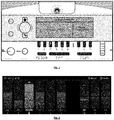
Fig.1 illustrates a complete implementation of an interpreter desk interface (display, buttons). -
Fig.2 illustrates quality indicators for relays and channels. -
Fig.3 illustrates a possibility of additional information (e.g. channel muted). -
Fig.4 illustrates the possibility of additional information (e.g. rewind function). - The present invention will be described with respect to particular embodiments and with reference to certain drawings but the invention is not limited thereto but only by the claims.
- Furthermore, the terms first, second and the like in the description and in the claims, are used for distinguishing between similar elements and not necessarily for describing a sequence, either temporally, spatially, in ranking or in any other manner. It is to be understood that the terms so used are interchangeable under appropriate circumstances and that the embodiments of the invention described herein are capable of operation in other sequences than described or illustrated herein.
- It is to be noticed that the term "comprising", used in the claims, should not be interpreted as being restricted to the means listed thereafter; it does not exclude other elements or steps. It is thus to be interpreted as specifying the presence of the stated features, integers, steps or components as referred to, but does not preclude the presence or addition of one or more other features, integers, steps or components, or groups thereof. Thus, the scope of the expression "a device comprising means A and B" should not be limited to devices consisting only of components A and B. It means that with respect to the present invention, the only relevant components of the device are A and B.
- Reference throughout this specification to "one embodiment" or "an embodiment" means that a particular feature, structure or characteristic described in connection with the embodiment is included in at least one embodiment of the present invention. Thus, appearances of the phrases "in one embodiment" or "in an embodiment" in various places throughout this specification are not necessarily all referring to the same embodiment, but may. Furthermore, the particular features, structures or characteristics may be combined in any suitable manner, as would be apparent to one of ordinary skill in the art from this disclosure, in one or more embodiments.
- Similarly it should be appreciated that in the description of exemplary embodiments of the invention, various features of the invention are sometimes grouped together in a single embodiment, figure, or description thereof for the purpose of streamlining the disclosure and aiding in the understanding of one or more of the various inventive aspects. This method of disclosure, however, is not to be interpreted as reflecting an intention that the claimed invention requires more features than are expressly recited in each claim. Rather, as the following claims reflect, inventive aspects lie in less than all features of a single foregoing disclosed embodiment. Thus, the claims following the detailed description are hereby expressly incorporated into this detailed description, with each claim standing on its own as a separate embodiment of this invention.
- Furthermore, while some embodiments described herein include some but not other features included in other embodiments, combinations of features of different embodiments are meant to be within the scope of the invention, and form different embodiments, as would be understood by those in the art. For example, in the following claims, any of the claimed embodiments can be used in any combination.
- It should be noted that the use of particular terminology when describing certain features or aspects of the invention should not be taken to imply that the terminology is being redefined herein to be restricted to include any specific characteristics of the features or aspects of the invention with which that terminology is associated.
- In the description provided herein, numerous specific details are set forth. However, it is understood that embodiments of the invention may be practiced without these specific details. In other instances, well-known methods, structures and techniques have not been shown in detail in order not to obscure an understanding of this description.
- The present invention proposes an interpreter desk for use in a digital conferencing system. Such a desk allows interpreters to perform their simultaneous interpreting in a more comfortable manner during an audio/video conference.
- In the proposed solution a set of possible languages is chosen algorithmically from all possible audio input channels of the interpreter desk to offer to the interpreter, in a processing unit of the interpreter desk.
- The algorithm takes into account at least the preferences of the interpreter with regard to the languages out of which he or she must translate. Preferably, account will also be taken of which interpreters are actively interpreting in a session at a given moment. On this basis, a number of languages that offer the highest degree of quality are suggested to the interpreter. That is, those languages are suggested that have undergone the least number of successive translations. After all, as already indicated in the introduction, it may happen that an interpreter does not master the language spoken on the conference floor, and has to rely on a translation from the floor language into another language. There may even be several intermediate steps, which may result in an additional loss of quality each time.
- In an embodiment the algorithm also takes into account the quality of the received audio signals. In this way, for example, a signal in an appropriate language, e.g., which is nevertheless greatly disturbed by a technical fault, can still be set aside. Only signals of sufficient quality (expressed e.g. in a sufficiently high signal-to-noise ratio) can thus be considered as a possible language to select from.
-
Fig.2 illustrates a case where the interpreter has to translate from the floor language into Italian (ITA), via Spanish and Portuguese. In principle, an interpreter will not directly select the relay corresponding to Italian, but would rather choose a language which is translated more directly from the floor language (e.g. German, translated directly from the floor language). - As a further improvement, this invention proposes an interpreter desk, where a clear graphic image can be shown on the display screen of the way in which the different successive languages have been translated, starting from the floor language and finally arriving at the relay language. This is also clearly illustrated in
Fig.2 , in which the bars and the intermediate language not only show how the relay language has been formed, but also an immediate indication is given of the quality of the translation through symbols (e.g. -, +, 0, etc.). - In this way, the interpreter him or herself may choose the best predefined relay or best relay channel suggested by the interpreter equipment.
- This is also illustrated in
Fig.2 . The best relay channel is clearly relay 3, the direct floor channel, but the algorithm also indicates that for this particular interpreter, who would prefer not to translate out of English, another channel such as German is better suited. The interpreter has entered these preferences at the start of the session through a number of configuration menus. - In addition to the above-mentioned aspects of the interpreter desk, such as the graphic display of the most suitable relay channel, a number of other improvements are also possible through the use of a graphic display. This is for example illustrated in
Fig.3 (indicating that an output channel is set to 'mute') or inFig.4 , which (in the context of the 'rewind function') indicates when the inbound channel is once again in sync with the meeting. The rewind function is a function that allows an interpreter to accelerate playback of a specific portion of the meeting (e.g. if the interpreter misheard what was said). - While the invention has been illustrated and described in detail in the drawings and foregoing description, such illustration and description are to be considered illustrative or exemplary and not restrictive. The foregoing description details certain embodiments of the invention. It will be appreciated, however, that no matter how detailed the foregoing appears in text, the invention may be practiced in many ways. The invention is not limited to the disclosed embodiments.
- Other variations to the disclosed embodiments can be understood and effected by those skilled in the art in practicing the claimed invention, from a study of the drawings, the disclosure and the appended claims. In the claims, the word "comprising" does not exclude other elements or steps, and the indefinite article "a" or "an" does not exclude a plurality. A single processor or other unit may fulfil the functions of several items recited in the claims. The mere fact that certain measures are recited in mutually different dependent claims does not indicate that a combination of these measures cannot be used to advantage. A computer program may be stored/distributed on a suitable medium, such as an optical storage medium or a solid-state medium supplied together with or as part of other hardware, but may also be distributed in other forms, such as via the Internet or other wired or wireless telecommunication systems. Any reference signs in the claims should not be construed as limiting the scope.
Claims (6)
- Interpreter desk for a conferencing system comprising- a first interface configured to select an audio input channel from a plurality of audio input channels, each corresponding to a different language, from which selected audio input channel a translation into a target language is to be performed, said first interface being configurable,- a second interface configured to select an audio output channel to send out said translation to a conference participant,characterised in that said interpreter desk includes a processing unit arranged to suggest one or more audio input channels and corresponding language as a source language for translation into said target language, based on at least one user preference and an indication of how many consecutive translations from the original language said different languages have undergone.
- Interpreter desk for a conferencing system as in claim 1, where said suggesting one or more audio input channels is further based on the audio quality of said audio input channels.
- Interpreter desk for a conferencing system as in claim 1 or 2, wherein said processing unit is arranged to display the original language of a language corresponding to an audio input channel of said plurality of audio channels.
- Interpreter desk for a conferencing system as in any of the preceding claims, wherein one of said audio input channels is the floor channel of the conferencing system.
- Interpreter desk for a conferencing system as in any of the preceding claims, wherein said suggesting one or more audio input channels is further based on information about which interpreters are active in an interpreter session.
- Method for carrying out an interpreter session, including- receiving in an interpreter desk, a plurality of audio-input channels, each corresponding to a different language,- determining in a processing unit of said interpreter desk of one or more audio input channels and the corresponding languages from said plurality, in order to suggest these to the interpreter as a source for translation into said target language, based on at least one user preference and an indication of how many consecutive translations from the original language the different languages have undergone,- selecting, from the suggested audio input channels, an audio input channel and its corresponding language out of which a translation is performed into a target language,- sending said translation to a conference participant via an audio output channel of said interpreter desk.
Applications Claiming Priority (2)
| Application Number | Priority Date | Filing Date | Title |
|---|---|---|---|
| BE20145016A BE1022611A9 (en) | 2014-10-19 | 2014-10-19 | Device for audio input / output |
| PCT/EP2015/074071 WO2016062641A1 (en) | 2014-10-19 | 2015-10-16 | Interpreter desk for a conferencing system |
Publications (2)
| Publication Number | Publication Date |
|---|---|
| EP3207693A1 EP3207693A1 (en) | 2017-08-23 |
| EP3207693B1 true EP3207693B1 (en) | 2020-01-15 |
Family
ID=52874877
Family Applications (1)
| Application Number | Title | Priority Date | Filing Date |
|---|---|---|---|
| EP15781643.0A Active EP3207693B1 (en) | 2014-10-19 | 2015-10-16 | Interpreter desk for a conferencing system |
Country Status (5)
| Country | Link |
|---|---|
| US (1) | US10310875B2 (en) |
| EP (1) | EP3207693B1 (en) |
| CN (1) | CN107079069B (en) |
| BE (1) | BE1022611A9 (en) |
| WO (1) | WO2016062641A1 (en) |
Families Citing this family (7)
| Publication number | Priority date | Publication date | Assignee | Title |
|---|---|---|---|---|
| BE1022378B1 (en) * | 2014-12-23 | 2016-03-18 | Televic Conference Nv | Central Unit for a Conference System |
| CN107707873A (en) * | 2017-09-18 | 2018-02-16 | 成都卓元科技有限公司 | Matrix tele-control system control interface |
| KR102449875B1 (en) | 2017-10-18 | 2022-09-30 | 삼성전자주식회사 | Voice signal translation method and electronic device according thereto |
| WO2019084890A1 (en) * | 2017-11-03 | 2019-05-09 | Tencent Technology (Shenzhen) Company Limited | Method and system for processing audio communications over a network |
| CN108650484A (en) * | 2018-06-29 | 2018-10-12 | 中译语通科技股份有限公司 | A kind of method and device of the remote synchronous translation based on audio/video communication |
| US20200388292A1 (en) * | 2019-06-10 | 2020-12-10 | Google Llc | Audio channel mixing |
| CN114638237A (en) * | 2020-12-15 | 2022-06-17 | 华为云计算技术有限公司 | Method, device and system for realizing simultaneous interpretation |
Family Cites Families (13)
| Publication number | Priority date | Publication date | Assignee | Title |
|---|---|---|---|---|
| CN1294464A (en) * | 2000-11-08 | 2001-05-09 | 何联泉 | Simultaneous interpreting method used in movement |
| JP2006268561A (en) | 2005-03-24 | 2006-10-05 | Communication Bridge:Kk | Interpreter management system |
| US8249854B2 (en) * | 2005-05-26 | 2012-08-21 | Microsoft Corporation | Integrated native language translation |
| JP2008077601A (en) * | 2006-09-25 | 2008-04-03 | Toshiba Corp | Machine translation apparatus, machine translation method, and machine translation program |
| US20090089042A1 (en) | 2007-01-03 | 2009-04-02 | Samuel Joseph Wald | System and method for interpreter selection and connection to communication devices |
| WO2009073194A1 (en) * | 2007-12-03 | 2009-06-11 | Samuel Joseph Wald | System and method for establishing a conference in tow or more different languages |
| EP2497258A4 (en) * | 2009-11-06 | 2013-05-01 | Freescale Semiconductor Inc | Conference call system, method, and computer program product |
| FR2972587B1 (en) * | 2011-03-10 | 2015-10-30 | Streamwide | DEVICE AND METHOD FOR DISTRIBUTED MIXING OF DATA STREAMS |
| US8175244B1 (en) * | 2011-07-22 | 2012-05-08 | Frankel David P | Method and system for tele-conferencing with simultaneous interpretation and automatic floor control |
| WO2013147901A1 (en) * | 2012-03-31 | 2013-10-03 | Intel Corporation | System, device, and method for establishing a microphone array using computing devices |
| US9081762B2 (en) * | 2012-07-13 | 2015-07-14 | Enyuan Wu | Phrase-based dictionary extraction and translation quality evaluation |
| US9031827B2 (en) * | 2012-11-30 | 2015-05-12 | Zip DX LLC | Multi-lingual conference bridge with cues and method of use |
| US20140236566A1 (en) * | 2013-02-20 | 2014-08-21 | Reinhard Schreier | Computer system and computer implemented method of setting up language translation services |
-
2014
- 2014-10-19 BE BE20145016A patent/BE1022611A9/en not_active IP Right Cessation
-
2015
- 2015-10-16 US US15/520,006 patent/US10310875B2/en active Active
- 2015-10-16 EP EP15781643.0A patent/EP3207693B1/en active Active
- 2015-10-16 WO PCT/EP2015/074071 patent/WO2016062641A1/en not_active Ceased
- 2015-10-16 CN CN201580056553.1A patent/CN107079069B/en active Active
Non-Patent Citations (1)
| Title |
|---|
| None * |
Also Published As
| Publication number | Publication date |
|---|---|
| CN107079069B (en) | 2019-11-19 |
| CN107079069A (en) | 2017-08-18 |
| US10310875B2 (en) | 2019-06-04 |
| EP3207693A1 (en) | 2017-08-23 |
| BE1022611A9 (en) | 2016-10-06 |
| BE1022611B1 (en) | 2016-06-16 |
| US20170322819A1 (en) | 2017-11-09 |
| BE1022611A1 (en) | 2016-06-16 |
| WO2016062641A1 (en) | 2016-04-28 |
Similar Documents
| Publication | Publication Date | Title |
|---|---|---|
| US10310875B2 (en) | Device for audio input/output | |
| US10250847B2 (en) | Video endpoints and related methods for transmitting stored text to other video endpoints | |
| US10049659B2 (en) | Method and system for providing visual interactive voice response (IVR) to an enhanced visual call (EVC) client device | |
| US8064888B2 (en) | Communications system that provides user-selectable data when user is on-hold | |
| US20060120307A1 (en) | Video telephone interpretation system and a video telephone interpretation method | |
| JP7023274B2 (en) | Caller queue methods and systems to manage incoming video callers | |
| US11647157B2 (en) | Multi-device teleconferences | |
| KR20140078258A (en) | Apparatus and method for controlling mobile device by conversation recognition, and apparatus for providing information by conversation recognition during a meeting | |
| US10523819B2 (en) | Central unit for a conferencing system | |
| US20250373457A1 (en) | Automatic mapping of highlighted video feeds to detected camera locations | |
| US9842108B2 (en) | Automated escalation agent system for language interpretation | |
| JP2017123590A (en) | Information distribution device | |
| US20200193965A1 (en) | Consistent audio generation configuration for a multi-modal language interpretation system | |
| EP2747424A1 (en) | Video transport and control in an audio conference system | |
| JP5727810B2 (en) | Language ability determination device, language ability determination method, content distribution system, and program | |
| INTERPRETING | Agnieszka Chmiel and Nicoletta Spinolo | |
| BE1024897A1 (en) | Device for audio input / output | |
| JP2001292429A (en) | Video communication terminal |
Legal Events
| Date | Code | Title | Description |
|---|---|---|---|
| STAA | Information on the status of an ep patent application or granted ep patent |
Free format text: STATUS: THE INTERNATIONAL PUBLICATION HAS BEEN MADE |
|
| PUAI | Public reference made under article 153(3) epc to a published international application that has entered the european phase |
Free format text: ORIGINAL CODE: 0009012 |
|
| STAA | Information on the status of an ep patent application or granted ep patent |
Free format text: STATUS: REQUEST FOR EXAMINATION WAS MADE |
|
| 17P | Request for examination filed |
Effective date: 20170509 |
|
| AK | Designated contracting states |
Kind code of ref document: A1 Designated state(s): AL AT BE BG CH CY CZ DE DK EE ES FI FR GB GR HR HU IE IS IT LI LT LU LV MC MK MT NL NO PL PT RO RS SE SI SK SM TR |
|
| AX | Request for extension of the european patent |
Extension state: BA ME |
|
| DAV | Request for validation of the european patent (deleted) | ||
| DAX | Request for extension of the european patent (deleted) | ||
| GRAP | Despatch of communication of intention to grant a patent |
Free format text: ORIGINAL CODE: EPIDOSNIGR1 |
|
| STAA | Information on the status of an ep patent application or granted ep patent |
Free format text: STATUS: GRANT OF PATENT IS INTENDED |
|
| INTG | Intention to grant announced |
Effective date: 20190731 |
|
| GRAS | Grant fee paid |
Free format text: ORIGINAL CODE: EPIDOSNIGR3 |
|
| GRAA | (expected) grant |
Free format text: ORIGINAL CODE: 0009210 |
|
| STAA | Information on the status of an ep patent application or granted ep patent |
Free format text: STATUS: THE PATENT HAS BEEN GRANTED |
|
| AK | Designated contracting states |
Kind code of ref document: B1 Designated state(s): AL AT BE BG CH CY CZ DE DK EE ES FI FR GB GR HR HU IE IS IT LI LT LU LV MC MK MT NL NO PL PT RO RS SE SI SK SM TR |
|
| REG | Reference to a national code |
Ref country code: CH Ref legal event code: EP Ref country code: GB Ref legal event code: FG4D |
|
| REG | Reference to a national code |
Ref country code: IE Ref legal event code: FG4D |
|
| REG | Reference to a national code |
Ref country code: DE Ref legal event code: R096 Ref document number: 602015045669 Country of ref document: DE |
|
| REG | Reference to a national code |
Ref country code: AT Ref legal event code: REF Ref document number: 1226184 Country of ref document: AT Kind code of ref document: T Effective date: 20200215 |
|
| REG | Reference to a national code |
Ref country code: NL Ref legal event code: MP Effective date: 20200115 |
|
| REG | Reference to a national code |
Ref country code: LT Ref legal event code: MG4D |
|
| PG25 | Lapsed in a contracting state [announced via postgrant information from national office to epo] |
Ref country code: NO Free format text: LAPSE BECAUSE OF FAILURE TO SUBMIT A TRANSLATION OF THE DESCRIPTION OR TO PAY THE FEE WITHIN THE PRESCRIBED TIME-LIMIT Effective date: 20200415 Ref country code: RS Free format text: LAPSE BECAUSE OF FAILURE TO SUBMIT A TRANSLATION OF THE DESCRIPTION OR TO PAY THE FEE WITHIN THE PRESCRIBED TIME-LIMIT Effective date: 20200115 Ref country code: NL Free format text: LAPSE BECAUSE OF FAILURE TO SUBMIT A TRANSLATION OF THE DESCRIPTION OR TO PAY THE FEE WITHIN THE PRESCRIBED TIME-LIMIT Effective date: 20200115 Ref country code: PT Free format text: LAPSE BECAUSE OF FAILURE TO SUBMIT A TRANSLATION OF THE DESCRIPTION OR TO PAY THE FEE WITHIN THE PRESCRIBED TIME-LIMIT Effective date: 20200607 Ref country code: FI Free format text: LAPSE BECAUSE OF FAILURE TO SUBMIT A TRANSLATION OF THE DESCRIPTION OR TO PAY THE FEE WITHIN THE PRESCRIBED TIME-LIMIT Effective date: 20200115 |
|
| PG25 | Lapsed in a contracting state [announced via postgrant information from national office to epo] |
Ref country code: IS Free format text: LAPSE BECAUSE OF FAILURE TO SUBMIT A TRANSLATION OF THE DESCRIPTION OR TO PAY THE FEE WITHIN THE PRESCRIBED TIME-LIMIT Effective date: 20200515 Ref country code: GR Free format text: LAPSE BECAUSE OF FAILURE TO SUBMIT A TRANSLATION OF THE DESCRIPTION OR TO PAY THE FEE WITHIN THE PRESCRIBED TIME-LIMIT Effective date: 20200416 Ref country code: HR Free format text: LAPSE BECAUSE OF FAILURE TO SUBMIT A TRANSLATION OF THE DESCRIPTION OR TO PAY THE FEE WITHIN THE PRESCRIBED TIME-LIMIT Effective date: 20200115 Ref country code: LV Free format text: LAPSE BECAUSE OF FAILURE TO SUBMIT A TRANSLATION OF THE DESCRIPTION OR TO PAY THE FEE WITHIN THE PRESCRIBED TIME-LIMIT Effective date: 20200115 Ref country code: SE Free format text: LAPSE BECAUSE OF FAILURE TO SUBMIT A TRANSLATION OF THE DESCRIPTION OR TO PAY THE FEE WITHIN THE PRESCRIBED TIME-LIMIT Effective date: 20200115 Ref country code: BG Free format text: LAPSE BECAUSE OF FAILURE TO SUBMIT A TRANSLATION OF THE DESCRIPTION OR TO PAY THE FEE WITHIN THE PRESCRIBED TIME-LIMIT Effective date: 20200415 |
|
| REG | Reference to a national code |
Ref country code: DE Ref legal event code: R097 Ref document number: 602015045669 Country of ref document: DE |
|
| PG25 | Lapsed in a contracting state [announced via postgrant information from national office to epo] |
Ref country code: DK Free format text: LAPSE BECAUSE OF FAILURE TO SUBMIT A TRANSLATION OF THE DESCRIPTION OR TO PAY THE FEE WITHIN THE PRESCRIBED TIME-LIMIT Effective date: 20200115 Ref country code: EE Free format text: LAPSE BECAUSE OF FAILURE TO SUBMIT A TRANSLATION OF THE DESCRIPTION OR TO PAY THE FEE WITHIN THE PRESCRIBED TIME-LIMIT Effective date: 20200115 Ref country code: LT Free format text: LAPSE BECAUSE OF FAILURE TO SUBMIT A TRANSLATION OF THE DESCRIPTION OR TO PAY THE FEE WITHIN THE PRESCRIBED TIME-LIMIT Effective date: 20200115 Ref country code: ES Free format text: LAPSE BECAUSE OF FAILURE TO SUBMIT A TRANSLATION OF THE DESCRIPTION OR TO PAY THE FEE WITHIN THE PRESCRIBED TIME-LIMIT Effective date: 20200115 Ref country code: CZ Free format text: LAPSE BECAUSE OF FAILURE TO SUBMIT A TRANSLATION OF THE DESCRIPTION OR TO PAY THE FEE WITHIN THE PRESCRIBED TIME-LIMIT Effective date: 20200115 Ref country code: RO Free format text: LAPSE BECAUSE OF FAILURE TO SUBMIT A TRANSLATION OF THE DESCRIPTION OR TO PAY THE FEE WITHIN THE PRESCRIBED TIME-LIMIT Effective date: 20200115 Ref country code: SK Free format text: LAPSE BECAUSE OF FAILURE TO SUBMIT A TRANSLATION OF THE DESCRIPTION OR TO PAY THE FEE WITHIN THE PRESCRIBED TIME-LIMIT Effective date: 20200115 Ref country code: SM Free format text: LAPSE BECAUSE OF FAILURE TO SUBMIT A TRANSLATION OF THE DESCRIPTION OR TO PAY THE FEE WITHIN THE PRESCRIBED TIME-LIMIT Effective date: 20200115 |
|
| REG | Reference to a national code |
Ref country code: AT Ref legal event code: MK05 Ref document number: 1226184 Country of ref document: AT Kind code of ref document: T Effective date: 20200115 |
|
| PLBE | No opposition filed within time limit |
Free format text: ORIGINAL CODE: 0009261 |
|
| STAA | Information on the status of an ep patent application or granted ep patent |
Free format text: STATUS: NO OPPOSITION FILED WITHIN TIME LIMIT |
|
| 26N | No opposition filed |
Effective date: 20201016 |
|
| PG25 | Lapsed in a contracting state [announced via postgrant information from national office to epo] |
Ref country code: IT Free format text: LAPSE BECAUSE OF FAILURE TO SUBMIT A TRANSLATION OF THE DESCRIPTION OR TO PAY THE FEE WITHIN THE PRESCRIBED TIME-LIMIT Effective date: 20200115 Ref country code: AT Free format text: LAPSE BECAUSE OF FAILURE TO SUBMIT A TRANSLATION OF THE DESCRIPTION OR TO PAY THE FEE WITHIN THE PRESCRIBED TIME-LIMIT Effective date: 20200115 |
|
| PG25 | Lapsed in a contracting state [announced via postgrant information from national office to epo] |
Ref country code: PL Free format text: LAPSE BECAUSE OF FAILURE TO SUBMIT A TRANSLATION OF THE DESCRIPTION OR TO PAY THE FEE WITHIN THE PRESCRIBED TIME-LIMIT Effective date: 20200115 Ref country code: SI Free format text: LAPSE BECAUSE OF FAILURE TO SUBMIT A TRANSLATION OF THE DESCRIPTION OR TO PAY THE FEE WITHIN THE PRESCRIBED TIME-LIMIT Effective date: 20200115 |
|
| PG25 | Lapsed in a contracting state [announced via postgrant information from national office to epo] |
Ref country code: MC Free format text: LAPSE BECAUSE OF FAILURE TO SUBMIT A TRANSLATION OF THE DESCRIPTION OR TO PAY THE FEE WITHIN THE PRESCRIBED TIME-LIMIT Effective date: 20200115 |
|
| PG25 | Lapsed in a contracting state [announced via postgrant information from national office to epo] |
Ref country code: IE Free format text: LAPSE BECAUSE OF NON-PAYMENT OF DUE FEES Effective date: 20201016 |
|
| PG25 | Lapsed in a contracting state [announced via postgrant information from national office to epo] |
Ref country code: TR Free format text: LAPSE BECAUSE OF FAILURE TO SUBMIT A TRANSLATION OF THE DESCRIPTION OR TO PAY THE FEE WITHIN THE PRESCRIBED TIME-LIMIT Effective date: 20200115 Ref country code: MT Free format text: LAPSE BECAUSE OF FAILURE TO SUBMIT A TRANSLATION OF THE DESCRIPTION OR TO PAY THE FEE WITHIN THE PRESCRIBED TIME-LIMIT Effective date: 20200115 Ref country code: CY Free format text: LAPSE BECAUSE OF FAILURE TO SUBMIT A TRANSLATION OF THE DESCRIPTION OR TO PAY THE FEE WITHIN THE PRESCRIBED TIME-LIMIT Effective date: 20200115 |
|
| PG25 | Lapsed in a contracting state [announced via postgrant information from national office to epo] |
Ref country code: MK Free format text: LAPSE BECAUSE OF FAILURE TO SUBMIT A TRANSLATION OF THE DESCRIPTION OR TO PAY THE FEE WITHIN THE PRESCRIBED TIME-LIMIT Effective date: 20200115 Ref country code: AL Free format text: LAPSE BECAUSE OF FAILURE TO SUBMIT A TRANSLATION OF THE DESCRIPTION OR TO PAY THE FEE WITHIN THE PRESCRIBED TIME-LIMIT Effective date: 20200115 |
|
| P01 | Opt-out of the competence of the unified patent court (upc) registered |
Effective date: 20230524 |
|
| PGFP | Annual fee paid to national office [announced via postgrant information from national office to epo] |
Ref country code: BE Payment date: 20250925 Year of fee payment: 11 |
|
| REG | Reference to a national code |
Ref country code: CH Ref legal event code: U11 Free format text: ST27 STATUS EVENT CODE: U-0-0-U10-U11 (AS PROVIDED BY THE NATIONAL OFFICE) Effective date: 20251101 |
|
| PGFP | Annual fee paid to national office [announced via postgrant information from national office to epo] |
Ref country code: LU Payment date: 20251022 Year of fee payment: 11 |
|
| PGFP | Annual fee paid to national office [announced via postgrant information from national office to epo] |
Ref country code: DE Payment date: 20251021 Year of fee payment: 11 |
|
| PGFP | Annual fee paid to national office [announced via postgrant information from national office to epo] |
Ref country code: GB Payment date: 20251024 Year of fee payment: 11 |
|
| PGFP | Annual fee paid to national office [announced via postgrant information from national office to epo] |
Ref country code: FR Payment date: 20251030 Year of fee payment: 11 |
|
| PGFP | Annual fee paid to national office [announced via postgrant information from national office to epo] |
Ref country code: CH Payment date: 20251101 Year of fee payment: 11 |