EP3203402A1 - Method for calculating interaction energy, calculation device, program, and recording medium - Google Patents
Method for calculating interaction energy, calculation device, program, and recording medium Download PDFInfo
- Publication number
- EP3203402A1 EP3203402A1 EP14903465.4A EP14903465A EP3203402A1 EP 3203402 A1 EP3203402 A1 EP 3203402A1 EP 14903465 A EP14903465 A EP 14903465A EP 3203402 A1 EP3203402 A1 EP 3203402A1
- Authority
- EP
- European Patent Office
- Prior art keywords
- interaction energy
- drug candidate
- molecular
- fragments
- target molecule
- Prior art date
- Legal status (The legal status is an assumption and is not a legal conclusion. Google has not performed a legal analysis and makes no representation as to the accuracy of the status listed.)
- Granted
Links
Images


Classifications
-
- G—PHYSICS
- G06—COMPUTING OR CALCULATING; COUNTING
- G06F—ELECTRIC DIGITAL DATA PROCESSING
- G06F17/00—Digital computing or data processing equipment or methods, specially adapted for specific functions
- G06F17/10—Complex mathematical operations
- G06F17/18—Complex mathematical operations for evaluating statistical data, e.g. average values, frequency distributions, probability functions, regression analysis
-
- G—PHYSICS
- G06—COMPUTING OR CALCULATING; COUNTING
- G06F—ELECTRIC DIGITAL DATA PROCESSING
- G06F7/00—Methods or arrangements for processing data by operating upon the order or content of the data handled
- G06F7/38—Methods or arrangements for performing computations using exclusively denominational number representation, e.g. using binary, ternary, decimal representation
- G06F7/48—Methods or arrangements for performing computations using exclusively denominational number representation, e.g. using binary, ternary, decimal representation using non-contact-making devices, e.g. tube, solid state device; using unspecified devices
- G06F7/52—Multiplying; Dividing
- G06F7/535—Dividing only
-
- G—PHYSICS
- G16—INFORMATION AND COMMUNICATION TECHNOLOGY [ICT] SPECIALLY ADAPTED FOR SPECIFIC APPLICATION FIELDS
- G16B—BIOINFORMATICS, i.e. INFORMATION AND COMMUNICATION TECHNOLOGY [ICT] SPECIALLY ADAPTED FOR GENETIC OR PROTEIN-RELATED DATA PROCESSING IN COMPUTATIONAL MOLECULAR BIOLOGY
- G16B15/00—ICT specially adapted for analysing two-dimensional [2D] or three-dimensional [3D] molecular structures, e.g. structural or functional relations or structure alignment
-
- G—PHYSICS
- G16—INFORMATION AND COMMUNICATION TECHNOLOGY [ICT] SPECIALLY ADAPTED FOR SPECIFIC APPLICATION FIELDS
- G16B—BIOINFORMATICS, i.e. INFORMATION AND COMMUNICATION TECHNOLOGY [ICT] SPECIALLY ADAPTED FOR GENETIC OR PROTEIN-RELATED DATA PROCESSING IN COMPUTATIONAL MOLECULAR BIOLOGY
- G16B15/00—ICT specially adapted for analysing two-dimensional [2D] or three-dimensional [3D] molecular structures, e.g. structural or functional relations or structure alignment
- G16B15/30—Drug targeting using structural data; Docking or binding prediction
-
- G—PHYSICS
- G16—INFORMATION AND COMMUNICATION TECHNOLOGY [ICT] SPECIALLY ADAPTED FOR SPECIFIC APPLICATION FIELDS
- G16B—BIOINFORMATICS, i.e. INFORMATION AND COMMUNICATION TECHNOLOGY [ICT] SPECIALLY ADAPTED FOR GENETIC OR PROTEIN-RELATED DATA PROCESSING IN COMPUTATIONAL MOLECULAR BIOLOGY
- G16B5/00—ICT specially adapted for modelling or simulations in systems biology, e.g. gene-regulatory networks, protein interaction networks or metabolic networks
-
- G—PHYSICS
- G16—INFORMATION AND COMMUNICATION TECHNOLOGY [ICT] SPECIALLY ADAPTED FOR SPECIFIC APPLICATION FIELDS
- G16B—BIOINFORMATICS, i.e. INFORMATION AND COMMUNICATION TECHNOLOGY [ICT] SPECIALLY ADAPTED FOR GENETIC OR PROTEIN-RELATED DATA PROCESSING IN COMPUTATIONAL MOLECULAR BIOLOGY
- G16B5/00—ICT specially adapted for modelling or simulations in systems biology, e.g. gene-regulatory networks, protein interaction networks or metabolic networks
- G16B5/30—Dynamic-time models
-
- G—PHYSICS
- G16—INFORMATION AND COMMUNICATION TECHNOLOGY [ICT] SPECIALLY ADAPTED FOR SPECIFIC APPLICATION FIELDS
- G16C—COMPUTATIONAL CHEMISTRY; CHEMOINFORMATICS; COMPUTATIONAL MATERIALS SCIENCE
- G16C20/00—Chemoinformatics, i.e. ICT specially adapted for the handling of physicochemical or structural data of chemical particles, elements, compounds or mixtures
- G16C20/30—Prediction of properties of chemical compounds, compositions or mixtures
-
- G—PHYSICS
- G16—INFORMATION AND COMMUNICATION TECHNOLOGY [ICT] SPECIALLY ADAPTED FOR SPECIFIC APPLICATION FIELDS
- G16C—COMPUTATIONAL CHEMISTRY; CHEMOINFORMATICS; COMPUTATIONAL MATERIALS SCIENCE
- G16C10/00—Computational theoretical chemistry, i.e. ICT specially adapted for theoretical aspects of quantum chemistry, molecular mechanics, molecular dynamics or the like
-
- G—PHYSICS
- G16—INFORMATION AND COMMUNICATION TECHNOLOGY [ICT] SPECIALLY ADAPTED FOR SPECIFIC APPLICATION FIELDS
- G16C—COMPUTATIONAL CHEMISTRY; CHEMOINFORMATICS; COMPUTATIONAL MATERIALS SCIENCE
- G16C20/00—Chemoinformatics, i.e. ICT specially adapted for the handling of physicochemical or structural data of chemical particles, elements, compounds or mixtures
- G16C20/50—Molecular design, e.g. of drugs
Definitions
- the embodiments discussed herein relate to a method for calculating interaction energy between target molecules and drug candidate molecules and a calculation device, a program for causing a computer to execute the calculation method, and a recording medium including the program stored thereon.
- a drug candidate molecule is to calculate a molecule (ligand) strongly interact with a target molecule associated with a target disease (a targeted disease) as a drug candidate. Screening of a compound based on a target molecular steric structure by means of calculators has been actively performed.
- a structure of a complex of protein and a ligand often used in the determination is a crystalline structure obtained by an experiment. There is however a problem that the crystalline structure is different from a structure at room temperature and being covered with water molecules in vivo.
- NPL 1 The Fragment Molecular Orbital Method: Practical Applications to Large Molecular Systems., CRC Press (2009) ISBN/ISSN:1420078488
- the disclosed embodiments aim to solve the above-described various problems existing in the art, and to achieve the following object.
- the present disclosure has an object to provide a method for calculating interaction energy and a calculation device, both of which can efficiently calculate appropriate interaction energy between target molecules and drug candidate molecules, a program for executing the calculation method, and a recording medium including the program.
- the disclosed method for calculating interaction energy includes:
- the disclosed program for causing a computer to execute a method including:
- the disclosed computer-readable recording medium including the disclosed program stored thereon.
- the disclosed calculation device includes the disclosed computer-readable recording medium.
- the disclosed program can solve the above-described various problems existing in the art, achieve the above-described object, and efficiently calculate appropriate interaction energy between a target molecule and a drug candidate molecule.
- the disclosed computer-readable recording medium can solve the above-described various problems existing in the art, achieve the above-described object, and efficiently calculate appropriate interaction energy between a target molecule and a drug candidate molecule.
- the disclosed calculation device can solve the above-described various problems existing in the art, achieve the above-described object, and efficiently calculate appropriate interaction energy between a target molecule and a drug candidate molecule.
- a trajectory of a MD simulation is divided into groups based on interaction energy of molecular mechanics (MM), not based on an index related to the structure (e.g., RMSD).
- MM molecular mechanics
- RMSD index related to the structure
- the interaction energy based on MM may have an absolute value that is less accurate compared to interaction energy based on quantum mechanics, but accuracy of a relative value of the Mm interaction energy is high. Therefore, a problem in accuracy can be solved by focusing on only a deviation of the MM interaction energy.
- interaction energy (the molecular mechanic interaction energy) is calculated using classical mechanics.
- a molecular force field is used.
- the molecular force field is a function for applying potential energy of a molecule.
- the molecular dynamic calculation with which the molecular dynamic simulation is performed is based on classical mechanics.
- the molecular dynamic simulation can be performed using a molecular dynamic calculation program.
- the molecular dynamic calculation program include AMBER, CHARMm, GROMACS, GROMOS, NAMD, and myPresto.
- the computational complexity can be further reduced without losing accuracy of the calculation by dividing the target molecule into the fragments, and performing the above-mentioned three processes.
- the process for obtaining an average value (E M ) is a process including obtaining an average value (E M ) of molecular mechanic interaction energy of each of fragments and the drug candidate molecules per a predetermined unit time within the total time duration, for each of the fragments over the total time duration, where the fragments are obtained by dividing the target molecule into partial structures, and the molecular mechanic interaction energy is calculated over the total time duration of the molecular dynamic simulation of the target molecule and the drug candidate molecule.
- the molecular mechanic interaction energy in the process for obtaining an average value (EM) can be calculated by molecular mechanics.
- the fragments are obtained by dividing the target molecule into partial structures.
- a method for dividing the target molecule into the partial structures is not particularly limited and may be appropriately selected depending on the intended purpose. Examples of the method include a method where the target molecule is divided into partial structures by amino acid residue units.
- the predetermined unit time is not particularly limited and may be appropriately selected depending on the intended purpose.
- the predetermined unit time is from 1 ps to 100 ps.
- the predetermined time unit may be identical to or different from an interval (time step) between one snapshot and a subsequent snapshot of the molecular dynamic simulation.
- the predetermined unit time may be a time interval between one snapshot and a snapshot coming a few snapshots after the one snapshot.
- the average values (E M ) are obtained for each fragment.
- fragments having large interaction with the drug candidate molecule can be extracted by selecting fragments using the threshold A.
- the degree of the interaction is not particularly limited and may be appropriately selected depending on the intended purpose.
- the number of the threshold A set when the process for extracting fragments is performed is typically one.
- the threshold A is not particularly limited and may be appropriately selected depending on the intended purpose.
- the threshold A is appropriately set depending on the average value (E M ) obtained for each of the fragments.
- the threshold A may be automatically set by a calculator, or may be input manually into the calculator.
- Examples of the process for extracting fragments include a process where a representative average value (E RM ) representing all of the average values (E M ) of each of the fragments is determined for each of the fragments, and the fragments are extracted when the representative average value (E RM ) is the threshold A or greater.
- E RM representative average value
- Examples of the representative average value (E RM ) include a maximum value of all of the average values (E M ), and an arithmetic mean value of all of the average values (E M ).
- the process for dividing into groups is a process including dividing the trajectory over the total time duration of the molecular dynamic simulation of the target molecule and the drug candidate molecule into groups using a fluctuation range of the average value (E M ) of each of the fragments extracted during the molecular dynamic simulation, and a predetermined threshold B.
- the number of the threshold B set when the process for dividing into groups is performed is typically one.
- the threshold B is not particularly limited and may be appropriately selected depending on the intended purpose.
- the threshold B is appropriately set depending on the fluctuation range.
- the threshold B may be automatically set by a calculator, or may be manually input into the calculator.
- the fluctuation range means a difference in a value between an average value (E M )i, and an average value (E M )i+1 calculated for the time unit i+1 after the time unit i for which the average value (E M )i is calculated.
- Examples of the process for dividing into groups include grouping where the fluctuation range of the average values (E M ) of the extracted fragments is compared to the predetermined threshold B, and a time range when the fluctuation range of each of the fragments is the predetermined threshold B or less is grouped as one group.
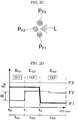
- FIGs. 2A to 2D One example of the grouping is explained using FIGs. 2A to 2D .
- protein P is divided into partial structures to obtain a plurality of fragments P F ( FIG. 2B ).
- the fragment P F is one amino acid residue.
- molecular mechanic interaction energy between the fragment P F and the drug candidate molecule L which is interaction energy calculated over a total time duration of the molecular dynamic simulation, and is calculated by molecular mechanics, is determined.
- An average value (E M ) of the interaction energy per unit time within the total time duration is determined for each fragment P F over the total time duration.
- the predetermined unit time is, for example, identical to time increments of a molecular dynamic simulation.
- fragments having large interaction with the drug candidate molecule L are extracted from the fragments P F using the average values (E M ) and a threshold A. For example, as illustrated in FIG. 2C , fragments P F1 , P F2 , and P F3 present near the drug candidate molecule L are extracted.
- a trajectory over a total time duration of the molecular dynamic simulation of the target molecule P and the drug candidate molecule L is divided into groups using a fluctuation range obtained from the molecular dynamic simulation of the average values (E M ) of the extracted fragments P F1 , P F2 , and P F3 , and the predetermined threshold B.
- a fluctuation line F1 of the average value (E M ) of the molecular mechanic interaction energy between the fragment P F1 and the drug candidate molecule L a fluctuation line F2 of the average value (E M ) of the molecular mechanic interaction energy between the fragment P F2 and the drug candidate molecule L
- a fluctuation line F3 of the average value (E M ) of the molecular mechanic interaction energy between the fragment P F3 and the drug candidate molecule L are plotted in a graph.
- the time ranges when the fluctuation range of each of the fluctuation lines F1, F2, and F3 is the threshold B or less are grouped as groups G1 to G3.
- the group G1 is a group which includes from the initial stage (t 0 ) of the MD simulation to the time (t 1 ).
- the fluctuation range of the fluctuation line F2 is greater than the threshold B. Accordingly, the time range from the MD initial stage (t 0 ) to the time (t 1 ) is grouped as one group.
- the fluctuation range of the fluctuation line F1 is large at the time (t 2 ) and is greater than the threshold B. Accordingly, the time range from the time (t 1 ) to the time (t 2 ) is grouped as one group (the group G2).
- the time range from the time (t 2 ) to the termination of the MD simulation is grouped as one group (the group G3).
- E the expected value
- a representative structure for the target molecule and the drug candidate molecule is determined in each of the groups
- interaction energy (E Q ) of an electron state based on quantum mechanics is calculated for the determined representative structure of each of the groups
- an expected value (E) of interaction energy is calculated from the calculated interaction energy (E Q ) of the representative structure of each of the groups and a duration of each of the groups.
- the representative structure is a structure of a complex of the target molecule and the drug candidate molecule, and a structure representing each of the groups.
- a method for determining the representative structure for each of the groups is not particularly limited and may be appropriately selected depending on the intended purpose. Examples of the method include a method where an average value of a coordinate of each of atoms constituting the complex in the group is determined, and the obtained average coordinate is determined as a representative structure, and a method where a resultant structure having the average value of the average value (E M ) of the group, or similar to the average value (E M ) is determined as a representative structure.
- the interaction energy (E Q ) is determined by molecular orbital calculation according to a molecular orbital method.
- the molecular orbital calculation include nonempirical molecular orbital calculation (ab initio molecular orbital calculation), and semiempirical molecular orbital calculation.
- Examples of a methodology of the nonempirical molecular orbital calculation include the Hartree-Fock method, and the electron correlation method.
- Examples of a methodology of the semiempirical molecular orbital calculation include CNDO, INDO, AM1, and PM3.
- Examples of a program of the nonempirical molecular orbital calculation include Gaussian03, GAMESS, ABINIT-MP, and Protein DF.
- Examples of a program of the semiempirical molecular orbital calculation include MOPAC.
- t Gi is an "i"th duration (t G ) where i is a number, and E Qi is "i"th interaction energy (E Q ).
- a duration of the group G1 is t G1
- interaction energy of the representative structure of the group G1 is E Q1 .
- a duration of the group G2 is t G2
- interaction energy of the representative structure of the group G2 is E Q2 .
- a duration of the group G3 is t G3
- interaction energy of the representative structure of the group G3 is E Q3 .
- the calculation of the expected value (E) is preferably repeated with fluctuating the predetermined threshold B until a fluctuation value of the expected value (E) is converged on a predetermined value.
- the repetition of the calculation can improve accuracy of the expected value (E).
- the value with which the repetition of the calculation is terminated and the convergence is confirmed is not particularly limited and may be appropriately selected depending on the intended purpose.
- the value may be automatically set by a calculator, or may be manually input into the calculator.
- the method for calculating interaction energy can be performed by means of any of general computer systems (e.g., various network servers, work stations, and personal computers) including central processing units (CPUs), random access memories (RAMs), hard disks, can various computer peripherals.
- general computer systems e.g., various network servers, work stations, and personal computers
- CPUs central processing units
- RAMs random access memories
- hard disks can various computer peripherals.
- the disclosed program is a program for causing a computer to execute the disclosed method for calculating interaction energy.
- a preferable embodiment for executing the method for calculating interaction energy is identical to a preferable embodiment of the method for calculating interaction energy.
- the program can be created using any of various programing languages known in the art according to a configuration of a computer system for use, a type or version of an operation system for use.
- the program may be recorded on a recording medium, such as an integral hard disk, and an external hard disk, or recorded on a recording medium, such as a compact disc read only memory (CD-ROM), a digital versatile disk read only memory (DVD-ROM), a magneto-optical (MO) disk, and a universal serial bus (USB) memory stick (USB flash drive).
- a recording medium such as a CD-ROM, a DVD-ROM, an MO disk, and an USB memory stick
- the program can be used, as required, directly or by installing a hard disk via a recording medium reader equipped in a computer system.
- the program may be recorded in an external memory region (e.g. another computer) accessible from the computer system via an information and communication network, and the program may be used, as required, by directly from the external memory region or installing into a hard disk from the external memory region via the information and communication network.
- the program may be divided into predetermined processes and recorded on a plurality of recording mediums.
- the disclosed computer-readable recording medium includes the disclosed program stored thereon.
- the computer-readable recording medium is not particularly limited and may be appropriately selected depending on the intended purpose.
- Examples of the computer-readable recording medium include integral hard disks, external hard disks, CD-ROMs, DVD-ROMs, MO disks, and USB memory sticks.
- the recording medium may be a plurality of recording mediums to which the program is divided into the predetermined processes and recorded.
- the disclosed interaction energy calculation device includes the disclosed computer-readable recording medium.
- the calculation device may be a plurality of calculation devices each including a recording medium, where the program is divided into the predetermined processes and recorded on a plurality of the recording mediums included in the calculation devices.
- protein is used as a target molecule
- a drug candidate molecule is referred to as a ligand.
- FIG. 4 An example of a hardware structure of the disclosed device is illustrated in FIG. 4 .
- the device 10 is composed by connecting CPU 11, a memory 12, a memory unit 13, a display unit 14, an input unit 15, an output unit 16, and an I/O interface unit 17 via a system bus 18.
- the central processing unit (CPU) 11 is configured to perform calculation (e.g., four arithmetic operation, and relational operation), and control of operations of hardware and software.
- the memory 12 is a memory, such as a random access memory (RAM), and a read only memory (ROM).
- the RAM is configured to store an operation system (OS) and application programs read from the ROM and the memory unit 13, and function as a main memory and work area of the CPU 11.
- OS operation system
- the memory 12 is a memory, such as a random access memory (RAM), and a read only memory (ROM).
- the RAM is configured to store an operation system (OS) and application programs read from the ROM and the memory unit 13, and function as a main memory and work area of the CPU 11.
- OS operation system
- the memory unit 13 is a device for storing various programs and data.
- the memory unit 13 is a hard disk.
- programs to be executed by the CPU 11, data required for executing the programs, and an OS are stored.
- the program is stored in the memory unit 13, loaded on the RAM (a main memory) of the memory 12, and executed by the CPU 11.
- the display unit 14 is a display device.
- the display unit is a display device, such as a CRT monitor, and a liquid crystal panel.
- the input unit 15 is an input device for various types of data. Examples of the input unit include a key board, and a pointing device (e.g., a mouse).
- the output unit 16 is an output device for various types of data.
- the output unit is a printer.
- the I/O interface unit 17 is an interface for connecting to various external devices.
- the I/O interface unit enables input and output of data of CD-ROMs, DVD-ROMs, MO disks, and USB memory sticks.
- FIG. 5 An example of a data structure of the memory unit is illustrated in FIG. 5 .
- a data structure illustrated in FIG. 5 is generated in the memory unit.
- the flow illustrated in FIG. 3 is executed using the data structure.
- the data structure illustrated in FIG. 5 is generated as follows.
- Protein is divided into N pieces of fragments.
- the number of atoms constituting the fragment j at the time t is set to M[t] ⁇ F[j] ⁇ NA
- the identification number k of the constituting atom is set to M[t] ⁇ F[j] ⁇ D[k]
- an extraction judgement flag of each fragment is set to M[t] ⁇ F[j] ⁇ P.
- the above-described data has separate data for the time t, but the data structure may be a data structure regardless of time.
- the MD simulation is performed and a data structure for MD is set. For each time period of MD, MM interaction energy between each fragment of the protein and a ligand is set to M[t] ⁇ F[j] ⁇ EM.
- a moving average deviation during a certain time period F is calculated and updated as EM data. Fragments each having a value of the EM equal to or greater than the threshold A over the total time duration are extracted.
- a time period when values of EM of all of the extracted fragments are fluctuated by a value equal to or less than the threshold B is grouped as a group duration.
- the number of divided groups is set to NG, a duration of I Group is set to G[I] ⁇ TG, and a coordinate of an atom m in the representative structure of I Group is set to G[I] ⁇ C[m].
- QM interaction energy of the representative structure of I Group is calculated and set to G[I] ⁇ EQ.
- An expected value (E) of QM interaction energy is obtained by determining a sum of all of values of [G[I] ⁇ EQ]*[G[I] ⁇ TG] for I, and dividing the sum by the total time duration of MD.
- 3MY0 of the protein data bank (PDB) was used as the protein and the ligand.
- the grouping was performed using interaction energy between fragments of the protein and the ligand.
- the fragmentation of the protein was performed using one amino acid residue as a unit.
- the threshold A used for extracting fragments was 1/5 or greater the entire resultant structures and was set to 20 kcal/mol.
- the MD simulation was performed using GROMACS.
- the threshold B used for grouping the trajectory of MD was set to 6 kcal/mol.
- the number of the extracted fragments were 3 (Frag1, Frag2, and Frag3).
- the trajectory of the MD simulation was divided into 15 groups.
- 3MY0 of the protein data bank (PDB) was used as the protein and the ligand.
- the grouping was performed based on RMSD of a complex of the protein and the ligand in a MD simulation.
- the MD simulation was performed in the same manner as in Example 1.
- a threshold of RMSD was 2.5 nm, and a level where the RMSD exceeded the threshold was determined as a boundary of a group.
- Example 2 The MD simulation, and the grouping into the three fragment groups identical to Example 1 were performed. As a result, the trajectory of the MD simulation was divided into 43 groups.
Landscapes
- Engineering & Computer Science (AREA)
- Physics & Mathematics (AREA)
- Life Sciences & Earth Sciences (AREA)
- Bioinformatics & Cheminformatics (AREA)
- Theoretical Computer Science (AREA)
- Health & Medical Sciences (AREA)
- Spectroscopy & Molecular Physics (AREA)
- Bioinformatics & Computational Biology (AREA)
- Evolutionary Biology (AREA)
- General Health & Medical Sciences (AREA)
- Chemical & Material Sciences (AREA)
- Biotechnology (AREA)
- Medical Informatics (AREA)
- Biophysics (AREA)
- General Physics & Mathematics (AREA)
- Crystallography & Structural Chemistry (AREA)
- Computing Systems (AREA)
- Mathematical Optimization (AREA)
- Computational Mathematics (AREA)
- Mathematical Analysis (AREA)
- Pure & Applied Mathematics (AREA)
- Data Mining & Analysis (AREA)
- Physiology (AREA)
- Molecular Biology (AREA)
- Mathematical Physics (AREA)
- General Engineering & Computer Science (AREA)
- Medicinal Chemistry (AREA)
- Pharmacology & Pharmacy (AREA)
- Probability & Statistics with Applications (AREA)
- Algebra (AREA)
- Databases & Information Systems (AREA)
- Software Systems (AREA)
- Operations Research (AREA)
- Management, Administration, Business Operations System, And Electronic Commerce (AREA)
Abstract
Description
- The embodiments discussed herein relate to a method for calculating interaction energy between target molecules and drug candidate molecules and a calculation device, a program for causing a computer to execute the calculation method, and a recording medium including the program stored thereon.
- In recent years, various simulations have been performed by calculators in order to reduce enormous costs and efforts spent on experimentally calculating drug candidate molecules. The calculation of a drug candidate molecule is to calculate a molecule (ligand) strongly interact with a target molecule associated with a target disease (a targeted disease) as a drug candidate. Screening of a compound based on a target molecular steric structure by means of calculators has been actively performed.
- As a judgement whether a bond between protein that is a target molecule and a ligand that is a drug candidate molecule is stable, for example, energy associated with interaction can be highly accurately determined by a method based on quantum mechanics (QM) (see, for example, NPL1). A structure of a complex of protein and a ligand often used in the determination is a crystalline structure obtained by an experiment. There is however a problem that the crystalline structure is different from a structure at room temperature and being covered with water molecules in vivo.
- When it is desired to obtain a structure of a complex of protein and a ligand in vivo, use of a biological simulation according to molecular dynamics (MD) is considered. In the MD simulation, however, a structure defers per time period because a force and speed applied on each atom are calculated on each time period, and a position of each atom is determined with a sequential time. Accordingly, actual interaction energy cannot be appropriately determined by calculating interaction energy with a structure of the complex for one time period. In order to determine appropriate interaction energy, it is necessary to calculate interaction energy of structures of the complex for a plurality of time periods, and perform statistical processing.
- When interaction energy of structures of a complex for a plurality of time periods, it is necessary to select many structures in order to obtain a statistically excellent result. However, to calculate all of the selected structures by a method based on quantum mechanics takes a long time for calculation, hence such a calculation is difficult.
- NPL 1: The Fragment Molecular Orbital Method: Practical Applications to Large Molecular Systems., CRC Press (2009) ISBN/ISSN:1420078488
- The disclosed embodiments aim to solve the above-described various problems existing in the art, and to achieve the following object. Specifically, the present disclosure has an object to provide a method for calculating interaction energy and a calculation device, both of which can efficiently calculate appropriate interaction energy between target molecules and drug candidate molecules, a program for executing the calculation method, and a recording medium including the program.
- Means for solving the above-described problems are as follows.
- The disclosed method for calculating interaction energy includes:
- dividing a trajectory over a total time duration of a molecular dynamic simulation of the target molecule and the drug candidate molecule into groups based on molecular mechanic interaction energy between the target molecule and the drug candidate molecule calculated by molecular mechanics,
- where the method is a method for calculating the interaction energy between the target molecule and the drug candidate molecule using a calculator.
- The disclosed program for causing a computer to execute a method including:
- dividing a trajectory over a total time duration of a molecular dynamic simulation of the target molecule and the drug candidate molecule into groups based on molecular mechanic interaction energy between the target molecule and the drug candidate molecule calculated by molecular mechanics.
- The disclosed computer-readable recording medium including the disclosed program stored thereon.
- The disclosed calculation device includes the disclosed computer-readable recording medium.
- The disclosed method for calculating interaction energy can solve the above-described various problems existing in the art, achieve the above-described object, and efficiently calculate appropriate interaction energy between a target molecule and a drug candidate molecule.
- The disclosed program can solve the above-described various problems existing in the art, achieve the above-described object, and efficiently calculate appropriate interaction energy between a target molecule and a drug candidate molecule.
- The disclosed computer-readable recording medium can solve the above-described various problems existing in the art, achieve the above-described object, and efficiently calculate appropriate interaction energy between a target molecule and a drug candidate molecule.
- The disclosed calculation device can solve the above-described various problems existing in the art, achieve the above-described object, and efficiently calculate appropriate interaction energy between a target molecule and a drug candidate molecule.
-
-
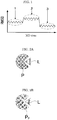
FIG. 1 is a graph depicting one example of groups of resultant structures of the MD simulation using RMSD. -
FIG. 2A is a schematic view for explaining a step including dividing groups (part 1). -
FIG. 2B is a schematic view for explaining a step including dividing groups (part 2). -
FIG. 2C is a schematic view for explaining a step including dividing groups (part 3). -
FIG. 2D is a graph for explaining a step including dividing groups. -
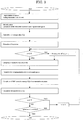
FIG. 3 is a flow-chart depicting one example of the disclosed method for calculating interaction energy. -
FIG. 4 is a hardware configuration example of the disclosed device. -
FIG. 5 is a data configuration example of a memory unit. -
FIG. 6 is a graph depicting a result of grouping of Example 1. -
FIG. 7 is a graph depicting a result of grouping of Comparative Example 1. - The disclosed method for calculating interaction energy is a method for calculating interaction energy between target molecules and drug candidate molecules using a calculator.
- The method for calculating interaction energy includes at least a step including dividing into groups, preferably further includes a step including calculating an expected value (E) of interaction energy, and may further include other steps according to the necessity.
- The method for calculating interaction energy is performed using a calculator. The number of the calculators used for performing the method for calculating interaction energy may be 1, or 2 or more. For example, a plurality of the calculator may be allowed to execute the method for calculating interaction energy with decentralizing.
- In the step including dividing into groups, dividing a trajectory over a total time duration of a molecular dynamic simulation of the target molecule and the drug candidate molecule into groups based on molecular mechanic interaction energy between the target molecule and the drug candidate molecule calculated by molecular mechanics.
- Note that, in the scope of claims and the present specification, interaction energy calculated by molecular mechanics may be referred to as "molecular mechanic interaction energy" in order to clarify a difference with interaction energy in an electron state based on quantum mechanics.
- A typical method for dividing a trajectory of a molecular dynamic (MD) simulation into groups is a method using root-mean-square deviation (RMSD) that is an index representing deviation of resultant structures.
- A value of RMSD of Structure B relative to Structure A can be represented by the following mathematical formula.

- In the formula above, ai is an "i"th coordinate of Structure A where i is a number, bi is an "i"th coordinate of Structure B, and N is the total number of coordinates.
-
FIG. 1 illustrates one example of grouping of a trajectory of a MD simulation using RMSD. As illustrated inFIG. 1 , RMSD in the MD simulation is calculated to determine a relationship between the MD time period and RMSD. The resultant structures are divided intogroups - In case of a large scale structure, such as protein and a ligand, however, the slightest difference of RMSD leads to a large difference in interaction energy. Therefore, it is difficult to divide into appropriate groups according to the above-described method.
- Accordingly, the present inventors have found that a trajectory of a MD simulation is divided into groups based on interaction energy of molecular mechanics (MM), not based on an index related to the structure (e.g., RMSD). As a result of grouping based on the molecular mechanic interaction energy, it is possible to classify complexes having similar interaction into the same group among complexes of a target molecule and a drug candidate molecule obtained in each time period of the MD simulation. The interaction energy based on MM may have an absolute value that is less accurate compared to interaction energy based on quantum mechanics, but accuracy of a relative value of the Mm interaction energy is high. Therefore, a problem in accuracy can be solved by focusing on only a deviation of the MM interaction energy.
- The target molecule is not particularly limited and may be appropriately selected depending on the intended purpose. Examples of the target molecule include protein, ribonucleic acid (RNA), and deoxyribonucleic acid (DNA).
- In the grouping, a trajectory over a total time duration of the molecular dynamic simulation of the target molecule and the drug candidate molecule is divided into groups based on the molecular mechanic interaction energy of the target molecule and the drug candidate molecule calculated by molecular mechanics.
- In the molecular mechanics (MM) (molecular force field calculation), interaction energy (the molecular mechanic interaction energy) is calculated using classical mechanics. When the interaction energy is calculated, a molecular force field is used. The molecular force field is a function for applying potential energy of a molecule.
- The molecular force field used when the interaction energy is calculated by the molecular mechanics is not particularly limited and may be appropriately selected depending on the intended purpose. Examples of the molecular force field include the AMBER molecular force field, the CHARMm molecular force field, and the GROMOS molecular force field. For example, the interaction energy is calculated using a non-bonded part of any of the above-listed molecular force fields. Examples of the nonbonding item include electrostatic energy and can der Waals energy.
- The molecular dynamic calculation with which the molecular dynamic simulation is performed is based on classical mechanics.
- The molecular dynamic simulation can be performed using a molecular dynamic calculation program. Examples of the molecular dynamic calculation program include AMBER, CHARMm, GROMACS, GROMOS, NAMD, and myPresto.
- The trajectory means a time-series structural change in the molecular dynamic simulation.
- In the grouping, the following three processes [a process for obtaining an average value (EM), a process for extracting fragments, and a process for dividing into groups] are preferably performed in this order.
- The computational complexity can be further reduced without losing accuracy of the calculation by dividing the target molecule into the fragments, and performing the above-mentioned three processes.
- The process for obtaining an average value (EM) is a process including obtaining an average value (EM) of molecular mechanic interaction energy of each of fragments and the drug candidate molecules per a predetermined unit time within the total time duration, for each of the fragments over the total time duration, where the fragments are obtained by dividing the target molecule into partial structures, and the molecular mechanic interaction energy is calculated over the total time duration of the molecular dynamic simulation of the target molecule and the drug candidate molecule.
- The molecular mechanic interaction energy in the process for obtaining an average value (EM) can be calculated by molecular mechanics.
- The molecular mechanic interaction energy is interaction energy calculated over a total time duration of the molecular dynamic simulation of the target molecule and the drug candidate molecule.
- The molecular mechanic interaction energy is interaction energy between each of fragments and the drug candidate molecule, where the fragments are obtained by dividing the target molecule into partial structures.
- The fragments are obtained by dividing the target molecule into partial structures. A method for dividing the target molecule into the partial structures is not particularly limited and may be appropriately selected depending on the intended purpose. Examples of the method include a method where the target molecule is divided into partial structures by amino acid residue units.
- The division of the target molecule into the fragments may be performed by an automatic setting of a calculator, or by manually inputting various conditions to a calculator.
- The average value (EM) of the molecular mechanic interaction energy is not particularly limited and may be appropriately selected depending on the intended purpose. Examples of the average value (EM) include a moving average value. Examples of moving average for determining the moving average value include simple moving average, weighted moving average, and exponential moving average.
- The total time duration of the molecular dynamic simulation is not particularly limited and may be appropriately selected depending on the intended purpose. For example, the total time duration of the molecular dynamic simulation is from 100 ns to 1,000 ns.
- The predetermined unit time is not particularly limited and may be appropriately selected depending on the intended purpose. For example, the predetermined unit time is from 1 ps to 100 ps. The predetermined time unit may be identical to or different from an interval (time step) between one snapshot and a subsequent snapshot of the molecular dynamic simulation. For example, the predetermined unit time may be a time interval between one snapshot and a snapshot coming a few snapshots after the one snapshot.
- The average values (EM) are obtained for each fragment.
- The average values (EM) are obtained over the total time duration.
- The number of the average values (EM) for the fragments is a number obtained by dividing the total time duration by the predetermined unit time.
- The process for extracting fragments is a process including extracting fragments having large interaction with the drug candidate molecule from all of the fragments using the average values (EM) and a predetermined threshold A.
- In the process for extracting fragments, fragments having large interaction with the drug candidate molecule can be extracted by selecting fragments using the threshold A. The degree of the interaction is not particularly limited and may be appropriately selected depending on the intended purpose.
- The number of the threshold A set when the process for extracting fragments is performed is typically one.
- The threshold A is not particularly limited and may be appropriately selected depending on the intended purpose. For example, the threshold A is appropriately set depending on the average value (EM) obtained for each of the fragments.
- The threshold A may be automatically set by a calculator, or may be input manually into the calculator.
- Examples of the process for extracting fragments include a process where a representative average value (ERM) representing all of the average values (EM) of each of the fragments is determined for each of the fragments, and the fragments are extracted when the representative average value (ERM) is the threshold A or greater.
- Examples of the representative average value (ERM) include a maximum value of all of the average values (EM), and an arithmetic mean value of all of the average values (EM).
- The process for dividing into groups is a process including dividing the trajectory over the total time duration of the molecular dynamic simulation of the target molecule and the drug candidate molecule into groups using a fluctuation range of the average value (EM) of each of the fragments extracted during the molecular dynamic simulation, and a predetermined threshold B.
- The number of the threshold B set when the process for dividing into groups is performed is typically one.
- The threshold B is not particularly limited and may be appropriately selected depending on the intended purpose. For example, the threshold B is appropriately set depending on the fluctuation range.
- The threshold B may be automatically set by a calculator, or may be manually input into the calculator.
- The fluctuation range means a difference in a value between an average value (EM)i, and an average value (EM)i+1 calculated for the time unit i+1 after the time unit i for which the average value (EM)i is calculated.
- Examples of the process for dividing into groups include grouping where the fluctuation range of the average values (EM) of the extracted fragments is compared to the predetermined threshold B, and a time range when the fluctuation range of each of the fragments is the predetermined threshold B or less is grouped as one group.
- One example of the grouping is explained using
FIGs. 2A to 2D . - First, protein P is divided into partial structures to obtain a plurality of fragments PF (
FIG. 2B ). For example, the fragment PF is one amino acid residue. - Next, molecular mechanic interaction energy between the fragment PF and the drug candidate molecule L, which is interaction energy calculated over a total time duration of the molecular dynamic simulation, and is calculated by molecular mechanics, is determined. An average value (EM) of the interaction energy per unit time within the total time duration is determined for each fragment PF over the total time duration.
- The predetermined unit time is, for example, identical to time increments of a molecular dynamic simulation.
- Next, the fragments having large interaction with the drug candidate molecule L are extracted from the fragments PF using the average values (EM) and a threshold A. For example, as illustrated in
FIG. 2C , fragments PF1, PF2, and PF3 present near the drug candidate molecule L are extracted. - Next, a trajectory over a total time duration of the molecular dynamic simulation of the target molecule P and the drug candidate molecule L is divided into groups using a fluctuation range obtained from the molecular dynamic simulation of the average values (EM) of the extracted fragments PF1, PF2, and PF3, and the predetermined threshold B.
- In
FIG. 2D , a fluctuation line F1 of the average value (EM) of the molecular mechanic interaction energy between the fragment PF1 and the drug candidate molecule L, a fluctuation line F2 of the average value (EM) of the molecular mechanic interaction energy between the fragment PF2 and the drug candidate molecule L, and a fluctuation line F3 of the average value (EM) of the molecular mechanic interaction energy between the fragment PF3 and the drug candidate molecule L are plotted in a graph. The time ranges when the fluctuation range of each of the fluctuation lines F1, F2, and F3 is the threshold B or less are grouped as groups G1 to G3. For example, the group G1 is a group which includes from the initial stage (t0) of the MD simulation to the time (t1). At the time (t1), the fluctuation range of the fluctuation line F2 is greater than the threshold B. Accordingly, the time range from the MD initial stage (t0) to the time (t1) is grouped as one group. Although there is hardly any deviation in the fluctuation lines F1, F2, and F3 from the time (t1) to the time (t2), the fluctuation range of the fluctuation line F1 is large at the time (t2) and is greater than the threshold B. Accordingly, the time range from the time (t1) to the time (t2) is grouped as one group (the group G2). There is a slight deviation in the fluctuation line F2 from the time (t2) to the termination of the MD simulation, but the deviation is not a fluctuation range greater than the threshold B, and there is hardly any deviation in the fluctuation lines F1 and F3. Accordingly, the time range from the time (t2) to the termination of the MD simulation is grouped as one group (the group G3). - In the calculation of the expected value (E), a representative structure for the target molecule and the drug candidate molecule is determined in each of the groups, interaction energy (EQ) of an electron state based on quantum mechanics is calculated for the determined representative structure of each of the groups, and an expected value (E) of interaction energy is calculated from the calculated interaction energy (EQ) of the representative structure of each of the groups and a duration of each of the groups.
- The representative structure is a structure of a complex of the target molecule and the drug candidate molecule, and a structure representing each of the groups.
- A method for determining the representative structure for each of the groups is not particularly limited and may be appropriately selected depending on the intended purpose. Examples of the method include a method where an average value of a coordinate of each of atoms constituting the complex in the group is determined, and the obtained average coordinate is determined as a representative structure, and a method where a resultant structure having the average value of the average value (EM) of the group, or similar to the average value (EM) is determined as a representative structure.
- The interaction energy (EQ) is determined by molecular orbital calculation according to a molecular orbital method. Examples of the molecular orbital calculation include nonempirical molecular orbital calculation (ab initio molecular orbital calculation), and semiempirical molecular orbital calculation.
- Examples of a methodology of the nonempirical molecular orbital calculation include the Hartree-Fock method, and the electron correlation method.
- Examples of a methodology of the semiempirical molecular orbital calculation include CNDO, INDO, AM1, and PM3.
- Examples of a program of the nonempirical molecular orbital calculation include Gaussian03, GAMESS, ABINIT-MP, and Protein DF.
- Examples of a program of the semiempirical molecular orbital calculation include MOPAC.
- Examples of a method for calculating the expected value (E) include a method using the following mathematical formula.

- In the formula above, tGi is an "i"th duration (tG) where i is a number, and EQi is "i"th interaction energy (EQ).
- A specific example of the calculation method of the expected value (E) is explained using
FIG. 2D . - A duration of the group G1 is tG1, and interaction energy of the representative structure of the group G1 is EQ1.
- A duration of the group G2 is tG2, and interaction energy of the representative structure of the group G2 is EQ2.
- A duration of the group G3 is tG3, and interaction energy of the representative structure of the group G3 is EQ3.
- Accordingly, an expected value is determined from the mathematical formula above as E = [(tG1×EQ1)+(tG2×EQ2)+(tG3×EQ3)]/(tG1+tG2+tG3).
- In the method for calculating interaction energy, the calculation of the expected value (E) is preferably repeated with fluctuating the predetermined threshold B until a fluctuation value of the expected value (E) is converged on a predetermined value. The repetition of the calculation can improve accuracy of the expected value (E).
- The value with which the repetition of the calculation is terminated and the convergence is confirmed is not particularly limited and may be appropriately selected depending on the intended purpose. The value may be automatically set by a calculator, or may be manually input into the calculator.
- For example, the method for calculating interaction energy can be performed by means of any of general computer systems (e.g., various network servers, work stations, and personal computers) including central processing units (CPUs), random access memories (RAMs), hard disks, can various computer peripherals.
- The disclosed program is a program for causing a computer to execute the disclosed method for calculating interaction energy.
- A preferable embodiment for executing the method for calculating interaction energy is identical to a preferable embodiment of the method for calculating interaction energy.
- The program can be created using any of various programing languages known in the art according to a configuration of a computer system for use, a type or version of an operation system for use.
- The program may be recorded on a recording medium, such as an integral hard disk, and an external hard disk, or recorded on a recording medium, such as a compact disc read only memory (CD-ROM), a digital versatile disk read only memory (DVD-ROM), a magneto-optical (MO) disk, and a universal serial bus (USB) memory stick (USB flash drive). In the case where the program is recorded on a recording medium, such as a CD-ROM, a DVD-ROM, an MO disk, and an USB memory stick, the program can be used, as required, directly or by installing a hard disk via a recording medium reader equipped in a computer system. Moreover, the program may be recorded in an external memory region (e.g. another computer) accessible from the computer system via an information and communication network, and the program may be used, as required, by directly from the external memory region or installing into a hard disk from the external memory region via the information and communication network.
- The program may be divided into predetermined processes and recorded on a plurality of recording mediums.
- The disclosed computer-readable recording medium includes the disclosed program stored thereon.
- The computer-readable recording medium is not particularly limited and may be appropriately selected depending on the intended purpose. Examples of the computer-readable recording medium include integral hard disks, external hard disks, CD-ROMs, DVD-ROMs, MO disks, and USB memory sticks.
- The recording medium may be a plurality of recording mediums to which the program is divided into the predetermined processes and recorded.
- The disclosed interaction energy calculation device includes the disclosed computer-readable recording medium.
- The calculation device may be a plurality of calculation devices each including a recording medium, where the program is divided into the predetermined processes and recorded on a plurality of the recording mediums included in the calculation devices.
- One example of the method for calculating interaction energy is explained with reference to the flow chart of
FIG. 3 . - In the example as illustrated, protein is used as a target molecule, and a drug candidate molecule is referred to as a ligand.
- (1) Fragmentation of protein is performed. Moreover, setting of thresholds A and B is performed. At the time of the setting, n is set to 0 (n=0) as a repeating number.
- (2) Next, a molecular dynamic (MD) simulation of the protein and the ligand is performed. Moreover, molecular mechanic (MM) interaction energy between each fragment of the protein and the ligand is calculated.
- (3) Next, an average value (EM) per predetermined unit time within the total time duration of the MD simulation is calculated from the calculated MM interaction energy.
- (4) Next, extraction of fragments is performed using the average values (EM) and the threshold A.
- (5) Next, determination of n is performed. Since a value of n is 0, proceed to the next process without changing the threshold B.
- (6) Next, grouping of resultant structures of the MD simulation is performed.
- (7) Next, a representative structure for each group is determined.
- (8) Next, interaction energy (EQ) based on quantum mechanics (QM) is calculated for each of the determined representative structures.
- (9) Next, an expected value (E) is calculated from the interaction energy (EQ) of the representative structure of each group and a duration of each group.
- (10) Next, determination of n is performed.
- (11) Since a value of n is 0, 1 is added to the repeating number n and the determination of n of (5) is performed.
- (12) Since n is 1 in the determination of n, the threshold B is changed. Here, the threshold B is reduced by multiplying the threshold B with a number smaller than 1.
- (13) Next, the same processes to the processes (6) to (9) are performed.
- (14) Next, determination of n is performed.
- (15) Since n is 1, not 0, convergence of the expected value (E) is confirmed. When the convergence of the expected value (E) is confirmed, the calculation is terminated. If the expected value (E) is not converged, on the other hand, 1 is added to the repeating number n, and return to the determination of n of (11) above.
- An example of a hardware structure of the disclosed device is illustrated in
FIG. 4 . - The
device 10 is composed by connectingCPU 11, amemory 12, amemory unit 13, adisplay unit 14, aninput unit 15, anoutput unit 16, and an I/O interface unit 17 via asystem bus 18. - The central processing unit (CPU) 11 is configured to perform calculation (e.g., four arithmetic operation, and relational operation), and control of operations of hardware and software.
- The
memory 12 is a memory, such as a random access memory (RAM), and a read only memory (ROM). The RAM is configured to store an operation system (OS) and application programs read from the ROM and thememory unit 13, and function as a main memory and work area of theCPU 11. - The
memory unit 13 is a device for storing various programs and data. For example, thememory unit 13 is a hard disk. In thememory unit 13, programs to be executed by theCPU 11, data required for executing the programs, and an OS are stored. - The program is stored in the
memory unit 13, loaded on the RAM (a main memory) of thememory 12, and executed by theCPU 11. - The
display unit 14 is a display device. For example, the display unit is a display device, such as a CRT monitor, and a liquid crystal panel. - The
input unit 15 is an input device for various types of data. Examples of the input unit include a key board, and a pointing device (e.g., a mouse). - The
output unit 16 is an output device for various types of data. For example, the output unit is a printer. - The I/
O interface unit 17 is an interface for connecting to various external devices. For example, the I/O interface unit enables input and output of data of CD-ROMs, DVD-ROMs, MO disks, and USB memory sticks. - An example of a data structure of the memory unit is illustrated in
FIG. 5 . - In one example of the disclosed method for calculating interaction energy, a data structure illustrated in
FIG. 5 is generated in the memory unit. For example, the flow illustrated inFIG. 3 is executed using the data structure. - For example, the data structure illustrated in
FIG. 5 is generated as follows. - Protein is divided into N pieces of fragments. The number of atoms constituting the fragment j at the time t is set to M[t]→F[j]→NA, the identification number k of the constituting atom is set to M[t]→F[j]→D[k], and an extraction judgement flag of each fragment is set to M[t]→F[j]→P. The above-described data has separate data for the time t, but the data structure may be a data structure regardless of time.
- The MD simulation is performed and a data structure for MD is set. For each time period of MD, MM interaction energy between each fragment of the protein and a ligand is set to M[t]→F[j]→EM.
- As for the EM, a moving average deviation during a certain time period F is calculated and updated as EM data. Fragments each having a value of the EM equal to or greater than the threshold A over the total time duration are extracted.
- A time period when values of EM of all of the extracted fragments are fluctuated by a value equal to or less than the threshold B is grouped as a group duration. The number of divided groups is set to NG, a duration of I Group is set to G[I]→TG, and a coordinate of an atom m in the representative structure of I Group is set to G[I]→C[m].
- QM interaction energy of the representative structure of I Group is calculated and set to G[I]→EQ.
- An expected value (E) of QM interaction energy is obtained by determining a sum of all of values of [G[I]→EQ]*[G[I]→TG] for I, and dividing the sum by the total time duration of MD.
- The disclosed technique is explained hereinafter, but Examples below shall not be construed as to limit the scope of the disclosed technology.
- Using the disclosed technique, grouping of resultant structures of a molecular dynamic simulation of protein and a ligand was performed.
- As the protein and the ligand, 3MY0 of the protein data bank (PDB) was used.
- The grouping was performed using interaction energy between fragments of the protein and the ligand.
- The fragmentation of the protein was performed using one amino acid residue as a unit.
- The threshold A used for extracting fragments was 1/5 or greater the entire resultant structures and was set to 20 kcal/mol.
- The MD simulation was performed using GROMACS.
- The threshold B used for grouping the trajectory of MD was set to 6 kcal/mol.
- As a result of the MD simulation and the grouping, the number of the extracted fragments were 3 (Frag1, Frag2, and Frag3). The trajectory of the MD simulation was divided into 15 groups.
- The result is presented in
FIG. 6 . - Grouping of resultant structures of a molecular dynamic simulation of protein and a ligand was performed according to a conventional method.
- As the protein and the ligand, 3MY0 of the protein data bank (PDB) was used.
- The grouping was performed based on RMSD of a complex of the protein and the ligand in a MD simulation.
- The MD simulation was performed in the same manner as in Example 1.
- A threshold of RMSD was 2.5 nm, and a level where the RMSD exceeded the threshold was determined as a boundary of a group.
- The MD simulation, and the grouping into the three fragment groups identical to Example 1 were performed. As a result, the trajectory of the MD simulation was divided into 43 groups.
- The result is presented in
FIG. 7 . - Comparing Example 1 with Comparative Example 1, the number of groups is smaller in Example 1. Therefore, computational complexity of interaction energy based on quantum mechanics is lower in Example 1. Since grouping was performed based on interaction energy calculated by molecular mechanics in Example 1, moreover, appropriate grouping could be performed, and as a result, reliability of the calculation result of the interaction energy based on mechanics by the MD simulation was enhanced.
-
- 10
- Device
- 11
- CPU
- 12
- Memory
- 13
- Memory unit
- 14
- Display unit
- 15
- Input unit
- 16
- Output unit
- 17
- I/O interface unit
- 18
- System bus
- L
- Drug candidate molecule
- P
- Protein
- PF
- Fragment
- PF1, PF2, PF3
- Extracted fragments
Claims (10)
- A method for calculating interaction energy between a target molecule and a drug candidate molecule, the method comprising:dividing a trajectory over a total time duration of a molecular dynamic simulation of the target molecule and the drug candidate molecule into groups based on molecular mechanic interaction energy between the target molecule and the drug candidate molecule calculated by molecular mechanics,where the method is a method for calculating the interaction energy between the target molecule and the drug candidate molecule using a calculator.
- The method according to claim 1,
wherein the dividing comprises:obtaining an average value (EM) of molecular mechanic interaction energy of each of fragments and the drug candidate molecules per a predetermined unit time within the total time duration, for each of the fragments over the total time duration, where the fragments are obtained by dividing the target molecule into partial structures, and the molecular mechanic interaction energy is calculated over the total time duration of the molecular dynamic simulation of the target molecule and the drug candidate molecule;extracting the fragments having large interaction with the drug candidate molecule from all of the fragments using the average values (EM) and a predetermined threshold A; anddividing the trajectory over the total time duration of the molecular dynamic simulation of the target molecule and the drug candidate molecule into groups using a fluctuation range of the average value (EM) of each of the fragments extracted during the molecular dynamic simulation, and a predetermined threshold B. - The method according to claim 2,
wherein the method further comprises:determining a representative structure for the target molecule and the drug candidate molecule for each of the groups, calculating interaction energy (EQ) of the representative structure determined for each of the groups in an electron state based on quantum mechanics, and calculating an expected value (E) of the interaction energy from the interaction energy (EQ) calculated of the representative structure in each of the groups, and a duration of each of the groups. - The method according to claim 3,
wherein the expected value (E) is repeatedly calculated by fluctuating the predetermined threshold B until a fluctuation value of the expected value (E) is converged on a predetermined value. - A program for causing a computer to execute a method comprising:dividing a trajectory over a total time duration of a molecular dynamic simulation of the target molecule and the drug candidate molecule into groups based on molecular mechanic interaction energy between the target molecule and the drug candidate molecule calculated by molecular mechanics.
- The program according to claim 5,
wherein the dividing comprises:obtaining an average value (EM) of molecular mechanic interaction energy of each of fragments and the drug candidate molecules per a predetermined unit time within the total time duration, for each of the fragments over the total time duration, where the fragments are obtained by dividing the target molecule into partial structures, and the molecular mechanic interaction energy is calculated over the total time duration of the molecular dynamic simulation of the target molecule and the drug candidate molecule;extracting the fragments having large interaction with the drug candidate molecule from all of the fragments using the average values (EM) and a predetermined threshold A; anddividing the trajectory over the total time duration of the molecular dynamic simulation of the target molecule and the drug candidate molecule into groups using a fluctuation range of the average value (EM) of each of the fragments extracted during the molecular dynamic simulation, and a predetermined threshold B. - The program according to claim 6,
wherein the dividing further comprises:determining a representative structure for the target molecule and the drug candidate molecule for each of the groups, calculating interaction energy (EQ) of the representative structure determined for each of the groups in an electron state based on quantum mechanics, and calculating an expected value (E) of the interaction energy from the interaction energy (EQ) calculated of the representative structure in each of the groups, and a duration of each of the groups. - The program according to claim 7,
wherein the expected value (E) is repeatedly calculated by fluctuating the predetermined threshold B until a fluctuation value of the expected value (E) is converged on a predetermined value. - A computer-readable recording medium comprising the program according to any one of claims 5 to 8 stored thereon.
- A calculation device of interaction energy, the calculation device comprising:the computer-readable recording medium according to claim 9.
Applications Claiming Priority (1)
| Application Number | Priority Date | Filing Date | Title |
|---|---|---|---|
| PCT/JP2014/076549 WO2016051587A1 (en) | 2014-10-03 | 2014-10-03 | Method for calculating interaction energy, calculation device, program, and recording medium |
Publications (3)
| Publication Number | Publication Date |
|---|---|
| EP3203402A1 true EP3203402A1 (en) | 2017-08-09 |
| EP3203402A4 EP3203402A4 (en) | 2018-05-09 |
| EP3203402B1 EP3203402B1 (en) | 2021-07-28 |
Family
ID=55629673
Family Applications (1)
| Application Number | Title | Priority Date | Filing Date |
|---|---|---|---|
| EP14903465.4A Active EP3203402B1 (en) | 2014-10-03 | 2014-10-03 | Method for calculating interaction energy, calculation device, program, and recording medium |
Country Status (4)
| Country | Link |
|---|---|
| US (1) | US20170199958A1 (en) |
| EP (1) | EP3203402B1 (en) |
| JP (1) | JP6319452B2 (en) |
| WO (1) | WO2016051587A1 (en) |
Families Citing this family (1)
| Publication number | Priority date | Publication date | Assignee | Title |
|---|---|---|---|---|
| JP7547799B2 (en) * | 2020-06-05 | 2024-09-10 | 富士通株式会社 | Structure search method, structure search device, structure search program, and interaction potential specifying method |
Family Cites Families (4)
| Publication number | Priority date | Publication date | Assignee | Title |
|---|---|---|---|---|
| JPH09147139A (en) * | 1995-10-26 | 1997-06-06 | Hitachi Ltd | Molecular structure display method and device |
| EP1687627A4 (en) * | 2003-10-14 | 2010-01-27 | Verseon | SYSTEM FOR OPTIMIZING AND ANTICIPATING CROSS-REACTIONS OF MOLECULES PRIMERS |
| WO2010036927A2 (en) * | 2008-09-26 | 2010-04-01 | The Regents Of The University Of Michigan | High-throughput ensemble-based docking and elucidation of 3-dimensional structural conformations of flexible biomolecular targets |
| JP5704386B2 (en) * | 2010-10-12 | 2015-04-22 | 日本電気株式会社 | Amino acid substitution site selection device, substitution amino acid selection device, amino acid substitution site selection method, substituted amino acid selection method, program and recording medium of protein molecule |
-
2014
- 2014-10-03 EP EP14903465.4A patent/EP3203402B1/en active Active
- 2014-10-03 JP JP2016551448A patent/JP6319452B2/en not_active Expired - Fee Related
- 2014-10-03 WO PCT/JP2014/076549 patent/WO2016051587A1/en not_active Ceased
-
2017
- 2017-03-27 US US15/470,393 patent/US20170199958A1/en not_active Abandoned
Also Published As
| Publication number | Publication date |
|---|---|
| EP3203402A4 (en) | 2018-05-09 |
| US20170199958A1 (en) | 2017-07-13 |
| WO2016051587A1 (en) | 2016-04-07 |
| JP6319452B2 (en) | 2018-05-09 |
| EP3203402B1 (en) | 2021-07-28 |
| JPWO2016051587A1 (en) | 2017-08-10 |
Similar Documents
| Publication | Publication Date | Title |
|---|---|---|
| Ma et al. | Protein contact prediction by integrating joint evolutionary coupling analysis and supervised learning | |
| Zambelli et al. | Motif discovery and transcription factor binding sites before and after the next-generation sequencing era | |
| Dong et al. | Optimized atomic statistical potentials: assessment of protein interfaces and loops | |
| Pinello et al. | Applications of alignment-free methods in epigenomics | |
| EP3462386B1 (en) | Learning data selection program, learning data selection method, and learning data selection device | |
| Hu et al. | PennSeq: accurate isoform-specific gene expression quantification in RNA-Seq by modeling non-uniform read distribution | |
| Li et al. | Pairwise sequence alignment for very long sequences on GPUs | |
| US11501849B2 (en) | Method for calculating binding free energy, calculation device, and program | |
| Colombo et al. | FastMotif: spectral sequence motif discovery | |
| KR102622760B1 (en) | Method for analysis of protein binding site similarity based on topological water molecule network | |
| Guo et al. | Protein–protein interface prediction based on hexagon structure similarity | |
| EP3203402B1 (en) | Method for calculating interaction energy, calculation device, program, and recording medium | |
| Minas et al. | Distance-based differential analysis of gene curves | |
| AL-Mashanji et al. | Computational methods for preprocessing and classifying gene expression data-survey | |
| CN114496103B (en) | Method and device for analyzing movement process of transcription factor protein on DNA | |
| Murad et al. | UbiSites-SRF: ubiquitination sites prediction using statistical moment with random forest approach | |
| EP3460689A1 (en) | Method and device for calculating binding free energy, and program | |
| CN109801676B (en) | Method and device for evaluating activation effect of compound on gene pathway | |
| EP3239874B1 (en) | Interaction energy calculation method, calculation device, and program | |
| Moskowitz et al. | Nonparametric analysis of contributions to variance in genomics and epigenomics data | |
| Liu et al. | Including probe-level measurement error in robust mixture clustering of replicated microarray gene expression. | |
| Maind et al. | Computational analysis of biclustering algorithms for identification of co-expressed genes | |
| Serafimova et al. | Using machine learning in accuracy assessment of knowledge-based energy and frequency base likelihood in protein structures | |
| JP6488728B2 (en) | Anchor point determination method, bond free energy calculation method, calculation device, and program | |
| Liu et al. | A Fast Screening Algorithm for EEG Data Features Based on GPU |
Legal Events
| Date | Code | Title | Description |
|---|---|---|---|
| STAA | Information on the status of an ep patent application or granted ep patent |
Free format text: STATUS: THE INTERNATIONAL PUBLICATION HAS BEEN MADE |
|
| PUAI | Public reference made under article 153(3) epc to a published international application that has entered the european phase |
Free format text: ORIGINAL CODE: 0009012 |
|
| STAA | Information on the status of an ep patent application or granted ep patent |
Free format text: STATUS: REQUEST FOR EXAMINATION WAS MADE |
|
| 17P | Request for examination filed |
Effective date: 20170328 |
|
| AK | Designated contracting states |
Kind code of ref document: A1 Designated state(s): AL AT BE BG CH CY CZ DE DK EE ES FI FR GB GR HR HU IE IS IT LI LT LU LV MC MK MT NL NO PL PT RO RS SE SI SK SM TR |
|
| AX | Request for extension of the european patent |
Extension state: BA ME |
|
| DAX | Request for extension of the european patent (deleted) | ||
| A4 | Supplementary search report drawn up and despatched |
Effective date: 20180409 |
|
| RIC1 | Information provided on ipc code assigned before grant |
Ipc: G06F 19/16 20110101AFI20180403BHEP Ipc: G06F 19/00 20110101ALI20180403BHEP |
|
| REG | Reference to a national code |
Ref country code: DE Ref legal event code: R079 Ref document number: 602014079134 Country of ref document: DE Free format text: PREVIOUS MAIN CLASS: G06F0019160000 Ipc: G16C0020300000 |
|
| GRAP | Despatch of communication of intention to grant a patent |
Free format text: ORIGINAL CODE: EPIDOSNIGR1 |
|
| STAA | Information on the status of an ep patent application or granted ep patent |
Free format text: STATUS: GRANT OF PATENT IS INTENDED |
|
| RIC1 | Information provided on ipc code assigned before grant |
Ipc: G16B 15/00 20190101ALI20210303BHEP Ipc: G16C 10/00 20190101ALI20210303BHEP Ipc: G16C 20/30 20190101AFI20210303BHEP Ipc: G16C 20/50 20190101ALN20210303BHEP |
|
| INTG | Intention to grant announced |
Effective date: 20210319 |
|
| GRAS | Grant fee paid |
Free format text: ORIGINAL CODE: EPIDOSNIGR3 |
|
| GRAA | (expected) grant |
Free format text: ORIGINAL CODE: 0009210 |
|
| STAA | Information on the status of an ep patent application or granted ep patent |
Free format text: STATUS: THE PATENT HAS BEEN GRANTED |
|
| AK | Designated contracting states |
Kind code of ref document: B1 Designated state(s): AL AT BE BG CH CY CZ DE DK EE ES FI FR GB GR HR HU IE IS IT LI LT LU LV MC MK MT NL NO PL PT RO RS SE SI SK SM TR |
|
| REG | Reference to a national code |
Ref country code: GB Ref legal event code: FG4D |
|
| REG | Reference to a national code |
Ref country code: CH Ref legal event code: EP |
|
| REG | Reference to a national code |
Ref country code: AT Ref legal event code: REF Ref document number: 1415441 Country of ref document: AT Kind code of ref document: T Effective date: 20210815 |
|
| REG | Reference to a national code |
Ref country code: IE Ref legal event code: FG4D |
|
| REG | Reference to a national code |
Ref country code: DE Ref legal event code: R096 Ref document number: 602014079134 Country of ref document: DE |
|
| REG | Reference to a national code |
Ref country code: LT Ref legal event code: MG9D |
|
| REG | Reference to a national code |
Ref country code: NL Ref legal event code: MP Effective date: 20210728 |
|
| REG | Reference to a national code |
Ref country code: AT Ref legal event code: MK05 Ref document number: 1415441 Country of ref document: AT Kind code of ref document: T Effective date: 20210728 |
|
| PG25 | Lapsed in a contracting state [announced via postgrant information from national office to epo] |
Ref country code: SE Free format text: LAPSE BECAUSE OF FAILURE TO SUBMIT A TRANSLATION OF THE DESCRIPTION OR TO PAY THE FEE WITHIN THE PRESCRIBED TIME-LIMIT Effective date: 20210728 Ref country code: RS Free format text: LAPSE BECAUSE OF FAILURE TO SUBMIT A TRANSLATION OF THE DESCRIPTION OR TO PAY THE FEE WITHIN THE PRESCRIBED TIME-LIMIT Effective date: 20210728 Ref country code: HR Free format text: LAPSE BECAUSE OF FAILURE TO SUBMIT A TRANSLATION OF THE DESCRIPTION OR TO PAY THE FEE WITHIN THE PRESCRIBED TIME-LIMIT Effective date: 20210728 Ref country code: AT Free format text: LAPSE BECAUSE OF FAILURE TO SUBMIT A TRANSLATION OF THE DESCRIPTION OR TO PAY THE FEE WITHIN THE PRESCRIBED TIME-LIMIT Effective date: 20210728 Ref country code: BG Free format text: LAPSE BECAUSE OF FAILURE TO SUBMIT A TRANSLATION OF THE DESCRIPTION OR TO PAY THE FEE WITHIN THE PRESCRIBED TIME-LIMIT Effective date: 20211028 Ref country code: LT Free format text: LAPSE BECAUSE OF FAILURE TO SUBMIT A TRANSLATION OF THE DESCRIPTION OR TO PAY THE FEE WITHIN THE PRESCRIBED TIME-LIMIT Effective date: 20210728 Ref country code: NL Free format text: LAPSE BECAUSE OF FAILURE TO SUBMIT A TRANSLATION OF THE DESCRIPTION OR TO PAY THE FEE WITHIN THE PRESCRIBED TIME-LIMIT Effective date: 20210728 Ref country code: PT Free format text: LAPSE BECAUSE OF FAILURE TO SUBMIT A TRANSLATION OF THE DESCRIPTION OR TO PAY THE FEE WITHIN THE PRESCRIBED TIME-LIMIT Effective date: 20211129 Ref country code: NO Free format text: LAPSE BECAUSE OF FAILURE TO SUBMIT A TRANSLATION OF THE DESCRIPTION OR TO PAY THE FEE WITHIN THE PRESCRIBED TIME-LIMIT Effective date: 20211028 Ref country code: ES Free format text: LAPSE BECAUSE OF FAILURE TO SUBMIT A TRANSLATION OF THE DESCRIPTION OR TO PAY THE FEE WITHIN THE PRESCRIBED TIME-LIMIT Effective date: 20210728 Ref country code: FI Free format text: LAPSE BECAUSE OF FAILURE TO SUBMIT A TRANSLATION OF THE DESCRIPTION OR TO PAY THE FEE WITHIN THE PRESCRIBED TIME-LIMIT Effective date: 20210728 |
|
| PG25 | Lapsed in a contracting state [announced via postgrant information from national office to epo] |
Ref country code: PL Free format text: LAPSE BECAUSE OF FAILURE TO SUBMIT A TRANSLATION OF THE DESCRIPTION OR TO PAY THE FEE WITHIN THE PRESCRIBED TIME-LIMIT Effective date: 20210728 Ref country code: LV Free format text: LAPSE BECAUSE OF FAILURE TO SUBMIT A TRANSLATION OF THE DESCRIPTION OR TO PAY THE FEE WITHIN THE PRESCRIBED TIME-LIMIT Effective date: 20210728 Ref country code: GR Free format text: LAPSE BECAUSE OF FAILURE TO SUBMIT A TRANSLATION OF THE DESCRIPTION OR TO PAY THE FEE WITHIN THE PRESCRIBED TIME-LIMIT Effective date: 20211029 |
|
| PG25 | Lapsed in a contracting state [announced via postgrant information from national office to epo] |
Ref country code: DK Free format text: LAPSE BECAUSE OF FAILURE TO SUBMIT A TRANSLATION OF THE DESCRIPTION OR TO PAY THE FEE WITHIN THE PRESCRIBED TIME-LIMIT Effective date: 20210728 |
|
| REG | Reference to a national code |
Ref country code: DE Ref legal event code: R097 Ref document number: 602014079134 Country of ref document: DE |
|
| PG25 | Lapsed in a contracting state [announced via postgrant information from national office to epo] |
Ref country code: SM Free format text: LAPSE BECAUSE OF FAILURE TO SUBMIT A TRANSLATION OF THE DESCRIPTION OR TO PAY THE FEE WITHIN THE PRESCRIBED TIME-LIMIT Effective date: 20210728 Ref country code: SK Free format text: LAPSE BECAUSE OF FAILURE TO SUBMIT A TRANSLATION OF THE DESCRIPTION OR TO PAY THE FEE WITHIN THE PRESCRIBED TIME-LIMIT Effective date: 20210728 Ref country code: RO Free format text: LAPSE BECAUSE OF FAILURE TO SUBMIT A TRANSLATION OF THE DESCRIPTION OR TO PAY THE FEE WITHIN THE PRESCRIBED TIME-LIMIT Effective date: 20210728 Ref country code: EE Free format text: LAPSE BECAUSE OF FAILURE TO SUBMIT A TRANSLATION OF THE DESCRIPTION OR TO PAY THE FEE WITHIN THE PRESCRIBED TIME-LIMIT Effective date: 20210728 Ref country code: CZ Free format text: LAPSE BECAUSE OF FAILURE TO SUBMIT A TRANSLATION OF THE DESCRIPTION OR TO PAY THE FEE WITHIN THE PRESCRIBED TIME-LIMIT Effective date: 20210728 Ref country code: AL Free format text: LAPSE BECAUSE OF FAILURE TO SUBMIT A TRANSLATION OF THE DESCRIPTION OR TO PAY THE FEE WITHIN THE PRESCRIBED TIME-LIMIT Effective date: 20210728 |
|
| PLBE | No opposition filed within time limit |
Free format text: ORIGINAL CODE: 0009261 |
|
| STAA | Information on the status of an ep patent application or granted ep patent |
Free format text: STATUS: NO OPPOSITION FILED WITHIN TIME LIMIT |
|
| REG | Reference to a national code |
Ref country code: CH Ref legal event code: PL |
|
| REG | Reference to a national code |
Ref country code: BE Ref legal event code: MM Effective date: 20211031 |
|
| PG25 | Lapsed in a contracting state [announced via postgrant information from national office to epo] |
Ref country code: MC Free format text: LAPSE BECAUSE OF FAILURE TO SUBMIT A TRANSLATION OF THE DESCRIPTION OR TO PAY THE FEE WITHIN THE PRESCRIBED TIME-LIMIT Effective date: 20210728 |
|
| 26N | No opposition filed |
Effective date: 20220429 |
|
| PG25 | Lapsed in a contracting state [announced via postgrant information from national office to epo] |
Ref country code: LU Free format text: LAPSE BECAUSE OF NON-PAYMENT OF DUE FEES Effective date: 20211003 Ref country code: IT Free format text: LAPSE BECAUSE OF FAILURE TO SUBMIT A TRANSLATION OF THE DESCRIPTION OR TO PAY THE FEE WITHIN THE PRESCRIBED TIME-LIMIT Effective date: 20210728 Ref country code: BE Free format text: LAPSE BECAUSE OF NON-PAYMENT OF DUE FEES Effective date: 20211031 |
|
| PG25 | Lapsed in a contracting state [announced via postgrant information from national office to epo] |
Ref country code: LI Free format text: LAPSE BECAUSE OF NON-PAYMENT OF DUE FEES Effective date: 20211031 Ref country code: CH Free format text: LAPSE BECAUSE OF NON-PAYMENT OF DUE FEES Effective date: 20211031 |
|
| PG25 | Lapsed in a contracting state [announced via postgrant information from national office to epo] |
Ref country code: IE Free format text: LAPSE BECAUSE OF NON-PAYMENT OF DUE FEES Effective date: 20211003 |
|
| PGFP | Annual fee paid to national office [announced via postgrant information from national office to epo] |
Ref country code: GB Payment date: 20220901 Year of fee payment: 9 |
|
| PGFP | Annual fee paid to national office [announced via postgrant information from national office to epo] |
Ref country code: FR Payment date: 20220908 Year of fee payment: 9 |
|
| PGFP | Annual fee paid to national office [announced via postgrant information from national office to epo] |
Ref country code: DE Payment date: 20220831 Year of fee payment: 9 |
|
| PG25 | Lapsed in a contracting state [announced via postgrant information from national office to epo] |
Ref country code: HU Free format text: LAPSE BECAUSE OF FAILURE TO SUBMIT A TRANSLATION OF THE DESCRIPTION OR TO PAY THE FEE WITHIN THE PRESCRIBED TIME-LIMIT; INVALID AB INITIO Effective date: 20141003 |
|
| PG25 | Lapsed in a contracting state [announced via postgrant information from national office to epo] |
Ref country code: CY Free format text: LAPSE BECAUSE OF FAILURE TO SUBMIT A TRANSLATION OF THE DESCRIPTION OR TO PAY THE FEE WITHIN THE PRESCRIBED TIME-LIMIT Effective date: 20210728 |
|
| PG25 | Lapsed in a contracting state [announced via postgrant information from national office to epo] |
Ref country code: MK Free format text: LAPSE BECAUSE OF FAILURE TO SUBMIT A TRANSLATION OF THE DESCRIPTION OR TO PAY THE FEE WITHIN THE PRESCRIBED TIME-LIMIT Effective date: 20210728 |
|
| REG | Reference to a national code |
Ref country code: DE Ref legal event code: R119 Ref document number: 602014079134 Country of ref document: DE |
|
| GBPC | Gb: european patent ceased through non-payment of renewal fee |
Effective date: 20231003 |
|
| PG25 | Lapsed in a contracting state [announced via postgrant information from national office to epo] |
Ref country code: TR Free format text: LAPSE BECAUSE OF FAILURE TO SUBMIT A TRANSLATION OF THE DESCRIPTION OR TO PAY THE FEE WITHIN THE PRESCRIBED TIME-LIMIT Effective date: 20210728 |
|
| PG25 | Lapsed in a contracting state [announced via postgrant information from national office to epo] |
Ref country code: GB Free format text: LAPSE BECAUSE OF NON-PAYMENT OF DUE FEES Effective date: 20231003 |
|
| PG25 | Lapsed in a contracting state [announced via postgrant information from national office to epo] |
Ref country code: GB Free format text: LAPSE BECAUSE OF NON-PAYMENT OF DUE FEES Effective date: 20231003 Ref country code: FR Free format text: LAPSE BECAUSE OF NON-PAYMENT OF DUE FEES Effective date: 20231031 Ref country code: DE Free format text: LAPSE BECAUSE OF NON-PAYMENT OF DUE FEES Effective date: 20240501 |
|
| PG25 | Lapsed in a contracting state [announced via postgrant information from national office to epo] |
Ref country code: MT Free format text: LAPSE BECAUSE OF FAILURE TO SUBMIT A TRANSLATION OF THE DESCRIPTION OR TO PAY THE FEE WITHIN THE PRESCRIBED TIME-LIMIT Effective date: 20210728 |