EP3196216A1 - Method of removing bleeding component and/or blooming component - Google Patents
Method of removing bleeding component and/or blooming component Download PDFInfo
- Publication number
- EP3196216A1 EP3196216A1 EP16207233.4A EP16207233A EP3196216A1 EP 3196216 A1 EP3196216 A1 EP 3196216A1 EP 16207233 A EP16207233 A EP 16207233A EP 3196216 A1 EP3196216 A1 EP 3196216A1
- Authority
- EP
- European Patent Office
- Prior art keywords
- component
- polymer
- blooming
- bleeding
- observation
- Prior art date
- Legal status (The legal status is an assumption and is not a legal conclusion. Google has not performed a legal analysis and makes no representation as to the accuracy of the status listed.)
- Granted
Links
- 230000000740 bleeding effect Effects 0.000 title claims abstract description 52
- 238000000034 method Methods 0.000 title claims abstract description 43
- 229920000642 polymer Polymers 0.000 claims abstract description 85
- 239000000203 mixture Substances 0.000 claims abstract description 35
- 238000000605 extraction Methods 0.000 claims abstract description 29
- 239000002904 solvent Substances 0.000 claims abstract description 20
- XLYOFNOQVPJJNP-UHFFFAOYSA-N water Substances O XLYOFNOQVPJJNP-UHFFFAOYSA-N 0.000 claims abstract description 16
- 238000010079 rubber tapping Methods 0.000 claims description 4
- 239000000523 sample Substances 0.000 description 39
- CSCPPACGZOOCGX-UHFFFAOYSA-N Acetone Chemical compound CC(C)=O CSCPPACGZOOCGX-UHFFFAOYSA-N 0.000 description 20
- 229920001971 elastomer Polymers 0.000 description 17
- 239000005060 rubber Substances 0.000 description 17
- 244000043261 Hevea brasiliensis Species 0.000 description 10
- 229920003052 natural elastomer Polymers 0.000 description 10
- 229920001194 natural rubber Polymers 0.000 description 10
- LFQSCWFLJHTTHZ-UHFFFAOYSA-N Ethanol Chemical compound CCO LFQSCWFLJHTTHZ-UHFFFAOYSA-N 0.000 description 8
- VYPSYNLAJGMNEJ-UHFFFAOYSA-N Silicium dioxide Chemical compound O=[Si]=O VYPSYNLAJGMNEJ-UHFFFAOYSA-N 0.000 description 8
- XLOMVQKBTHCTTD-UHFFFAOYSA-N Zinc monoxide Chemical compound [Zn]=O XLOMVQKBTHCTTD-UHFFFAOYSA-N 0.000 description 8
- -1 methanol or ethanol Chemical compound 0.000 description 8
- 239000003921 oil Substances 0.000 description 7
- NINIDFKCEFEMDL-UHFFFAOYSA-N Sulfur Chemical compound [S] NINIDFKCEFEMDL-UHFFFAOYSA-N 0.000 description 6
- 230000000052 comparative effect Effects 0.000 description 6
- 238000013329 compounding Methods 0.000 description 6
- QIQXTHQIDYTFRH-UHFFFAOYSA-N octadecanoic acid Chemical compound CCCCCCCCCCCCCCCCCC(O)=O QIQXTHQIDYTFRH-UHFFFAOYSA-N 0.000 description 6
- 230000003287 optical effect Effects 0.000 description 6
- 239000003960 organic solvent Substances 0.000 description 6
- 239000011593 sulfur Substances 0.000 description 6
- 229910052717 sulfur Inorganic materials 0.000 description 6
- 239000004636 vulcanized rubber Substances 0.000 description 6
- 239000005062 Polybutadiene Substances 0.000 description 5
- 238000000944 Soxhlet extraction Methods 0.000 description 5
- 235000021355 Stearic acid Nutrition 0.000 description 5
- 230000002209 hydrophobic effect Effects 0.000 description 5
- OQCDKBAXFALNLD-UHFFFAOYSA-N octadecanoic acid Natural products CCCCCCCC(C)CCCCCCCCC(O)=O OQCDKBAXFALNLD-UHFFFAOYSA-N 0.000 description 5
- 229920002857 polybutadiene Polymers 0.000 description 5
- 239000008117 stearic acid Substances 0.000 description 5
- 238000004073 vulcanization Methods 0.000 description 5
- 239000003963 antioxidant agent Substances 0.000 description 4
- 230000003078 antioxidant effect Effects 0.000 description 4
- 238000010992 reflux Methods 0.000 description 4
- 239000000377 silicon dioxide Substances 0.000 description 4
- 229920003048 styrene butadiene rubber Polymers 0.000 description 4
- 239000000126 substance Substances 0.000 description 4
- 239000011787 zinc oxide Substances 0.000 description 4
- OKKJLVBELUTLKV-UHFFFAOYSA-N Methanol Chemical compound OC OKKJLVBELUTLKV-UHFFFAOYSA-N 0.000 description 3
- 229920000459 Nitrile rubber Polymers 0.000 description 3
- YXFVVABEGXRONW-UHFFFAOYSA-N Toluene Chemical compound CC1=CC=CC=C1 YXFVVABEGXRONW-UHFFFAOYSA-N 0.000 description 3
- 239000003795 chemical substances by application Substances 0.000 description 3
- 229920001577 copolymer Polymers 0.000 description 3
- 229920003049 isoprene rubber Polymers 0.000 description 3
- 239000000463 material Substances 0.000 description 3
- HEDRZPFGACZZDS-UHFFFAOYSA-N Chloroform Chemical compound ClC(Cl)Cl HEDRZPFGACZZDS-UHFFFAOYSA-N 0.000 description 2
- IAZDPXIOMUYVGZ-UHFFFAOYSA-N Dimethylsulphoxide Chemical compound CS(C)=O IAZDPXIOMUYVGZ-UHFFFAOYSA-N 0.000 description 2
- 229920000181 Ethylene propylene rubber Polymers 0.000 description 2
- 229920005683 SIBR Polymers 0.000 description 2
- 239000006087 Silane Coupling Agent Substances 0.000 description 2
- 239000002174 Styrene-butadiene Substances 0.000 description 2
- WYURNTSHIVDZCO-UHFFFAOYSA-N Tetrahydrofuran Chemical compound C1CCOC1 WYURNTSHIVDZCO-UHFFFAOYSA-N 0.000 description 2
- 239000000853 adhesive Substances 0.000 description 2
- 230000001070 adhesive effect Effects 0.000 description 2
- 229920005549 butyl rubber Polymers 0.000 description 2
- 238000011161 development Methods 0.000 description 2
- 229920005558 epichlorohydrin rubber Polymers 0.000 description 2
- 238000009472 formulation Methods 0.000 description 2
- 230000002401 inhibitory effect Effects 0.000 description 2
- 238000004898 kneading Methods 0.000 description 2
- 238000005259 measurement Methods 0.000 description 2
- 229920001084 poly(chloroprene) Polymers 0.000 description 2
- OVSKIKFHRZPJSS-UHFFFAOYSA-N 2,4-D Chemical compound OC(=O)COC1=CC=C(Cl)C=C1Cl OVSKIKFHRZPJSS-UHFFFAOYSA-N 0.000 description 1
- ROGIWVXWXZRRMZ-UHFFFAOYSA-N 2-methylbuta-1,3-diene;styrene Chemical compound CC(=C)C=C.C=CC1=CC=CC=C1 ROGIWVXWXZRRMZ-UHFFFAOYSA-N 0.000 description 1
- ZZMVLMVFYMGSMY-UHFFFAOYSA-N 4-n-(4-methylpentan-2-yl)-1-n-phenylbenzene-1,4-diamine Chemical compound C1=CC(NC(C)CC(C)C)=CC=C1NC1=CC=CC=C1 ZZMVLMVFYMGSMY-UHFFFAOYSA-N 0.000 description 1
- OKTJSMMVPCPJKN-UHFFFAOYSA-N Carbon Chemical compound [C] OKTJSMMVPCPJKN-UHFFFAOYSA-N 0.000 description 1
- XDTMQSROBMDMFD-UHFFFAOYSA-N Cyclohexane Chemical compound C1CCCCC1 XDTMQSROBMDMFD-UHFFFAOYSA-N 0.000 description 1
- YCKRFDGAMUMZLT-UHFFFAOYSA-N Fluorine atom Chemical compound [F] YCKRFDGAMUMZLT-UHFFFAOYSA-N 0.000 description 1
- 239000006057 Non-nutritive feed additive Substances 0.000 description 1
- 229920002845 Poly(methacrylic acid) Polymers 0.000 description 1
- 239000004952 Polyamide Substances 0.000 description 1
- 239000004695 Polyether sulfone Substances 0.000 description 1
- 239000004698 Polyethylene Substances 0.000 description 1
- 239000004743 Polypropylene Substances 0.000 description 1
- 239000004793 Polystyrene Substances 0.000 description 1
- 229910052581 Si3N4 Inorganic materials 0.000 description 1
- 229920002125 Sokalan® Polymers 0.000 description 1
- 229920006311 Urethane elastomer Polymers 0.000 description 1
- 229920000800 acrylic rubber Polymers 0.000 description 1
- 229920001893 acrylonitrile styrene Polymers 0.000 description 1
- 239000000654 additive Substances 0.000 description 1
- 239000012298 atmosphere Substances 0.000 description 1
- 238000000089 atomic force micrograph Methods 0.000 description 1
- 238000000594 atomic force spectroscopy Methods 0.000 description 1
- 230000005540 biological transmission Effects 0.000 description 1
- 230000015572 biosynthetic process Effects 0.000 description 1
- 238000009835 boiling Methods 0.000 description 1
- VLLYOYVKQDKAHN-UHFFFAOYSA-N buta-1,3-diene;2-methylbuta-1,3-diene Chemical compound C=CC=C.CC(=C)C=C VLLYOYVKQDKAHN-UHFFFAOYSA-N 0.000 description 1
- 125000004432 carbon atom Chemical group C* 0.000 description 1
- 239000006229 carbon black Substances 0.000 description 1
- 238000006243 chemical reaction Methods 0.000 description 1
- 239000003086 colorant Substances 0.000 description 1
- 238000004132 cross linking Methods 0.000 description 1
- 230000003247 decreasing effect Effects 0.000 description 1
- 238000009826 distribution Methods 0.000 description 1
- 239000003822 epoxy resin Substances 0.000 description 1
- 238000002481 ethanol extraction Methods 0.000 description 1
- 238000011156 evaluation Methods 0.000 description 1
- 239000000945 filler Substances 0.000 description 1
- 238000011049 filling Methods 0.000 description 1
- 229910052731 fluorine Inorganic materials 0.000 description 1
- 239000011737 fluorine Substances 0.000 description 1
- 229920002681 hypalon Polymers 0.000 description 1
- 238000007654 immersion Methods 0.000 description 1
- 229910052741 iridium Inorganic materials 0.000 description 1
- GKOZUEZYRPOHIO-UHFFFAOYSA-N iridium atom Chemical compound [Ir] GKOZUEZYRPOHIO-UHFFFAOYSA-N 0.000 description 1
- 238000000874 microwave-assisted extraction Methods 0.000 description 1
- 238000002156 mixing Methods 0.000 description 1
- IUJLOAKJZQBENM-UHFFFAOYSA-N n-(1,3-benzothiazol-2-ylsulfanyl)-2-methylpropan-2-amine Chemical compound C1=CC=C2SC(SNC(C)(C)C)=NC2=C1 IUJLOAKJZQBENM-UHFFFAOYSA-N 0.000 description 1
- 238000005191 phase separation Methods 0.000 description 1
- 230000000704 physical effect Effects 0.000 description 1
- 229920002492 poly(sulfone) Polymers 0.000 description 1
- 229920000058 polyacrylate Polymers 0.000 description 1
- 239000004584 polyacrylic acid Substances 0.000 description 1
- 229920002647 polyamide Polymers 0.000 description 1
- 229920001707 polybutylene terephthalate Polymers 0.000 description 1
- 229920000515 polycarbonate Polymers 0.000 description 1
- 239000004417 polycarbonate Substances 0.000 description 1
- 229920000647 polyepoxide Polymers 0.000 description 1
- 229920006393 polyether sulfone Polymers 0.000 description 1
- 229920000573 polyethylene Polymers 0.000 description 1
- 229920000139 polyethylene terephthalate Polymers 0.000 description 1
- 239000005020 polyethylene terephthalate Substances 0.000 description 1
- 229920001195 polyisoprene Polymers 0.000 description 1
- 229920001155 polypropylene Polymers 0.000 description 1
- 229920002223 polystyrene Polymers 0.000 description 1
- 239000005077 polysulfide Substances 0.000 description 1
- 229920001021 polysulfide Polymers 0.000 description 1
- 150000008117 polysulfides Polymers 0.000 description 1
- 229920001343 polytetrafluoroethylene Polymers 0.000 description 1
- 239000004810 polytetrafluoroethylene Substances 0.000 description 1
- 229920002635 polyurethane Polymers 0.000 description 1
- 239000004814 polyurethane Substances 0.000 description 1
- 239000004800 polyvinyl chloride Substances 0.000 description 1
- 229920000915 polyvinyl chloride Polymers 0.000 description 1
- 238000002360 preparation method Methods 0.000 description 1
- 238000002203 pretreatment Methods 0.000 description 1
- 239000011164 primary particle Substances 0.000 description 1
- SCUZVMOVTVSBLE-UHFFFAOYSA-N prop-2-enenitrile;styrene Chemical compound C=CC#N.C=CC1=CC=CC=C1 SCUZVMOVTVSBLE-UHFFFAOYSA-N 0.000 description 1
- 239000012744 reinforcing agent Substances 0.000 description 1
- 229920005989 resin Polymers 0.000 description 1
- 239000011347 resin Substances 0.000 description 1
- HQVNEWCFYHHQES-UHFFFAOYSA-N silicon nitride Chemical compound N12[Si]34N5[Si]62N3[Si]51N64 HQVNEWCFYHHQES-UHFFFAOYSA-N 0.000 description 1
- 229920002379 silicone rubber Polymers 0.000 description 1
- 239000004945 silicone rubber Substances 0.000 description 1
- NTHWMYGWWRZVTN-UHFFFAOYSA-N sodium silicate Chemical compound [Na+].[Na+].[O-][Si]([O-])=O NTHWMYGWWRZVTN-UHFFFAOYSA-N 0.000 description 1
- 229920002803 thermoplastic polyurethane Polymers 0.000 description 1
- VTHOKNTVYKTUPI-UHFFFAOYSA-N triethoxy-[3-(3-triethoxysilylpropyltetrasulfanyl)propyl]silane Chemical compound CCO[Si](OCC)(OCC)CCCSSSSCCC[Si](OCC)(OCC)OCC VTHOKNTVYKTUPI-UHFFFAOYSA-N 0.000 description 1
- WFKWXMTUELFFGS-UHFFFAOYSA-N tungsten Chemical compound [W] WFKWXMTUELFFGS-UHFFFAOYSA-N 0.000 description 1
- 229910052721 tungsten Inorganic materials 0.000 description 1
- 239000010937 tungsten Substances 0.000 description 1
- 229920006337 unsaturated polyester resin Polymers 0.000 description 1
- 239000001993 wax Substances 0.000 description 1
- 229910052725 zinc Inorganic materials 0.000 description 1
Images

Classifications
-
- C—CHEMISTRY; METALLURGY
- C08—ORGANIC MACROMOLECULAR COMPOUNDS; THEIR PREPARATION OR CHEMICAL WORKING-UP; COMPOSITIONS BASED THEREON
- C08C—TREATMENT OR CHEMICAL MODIFICATION OF RUBBERS
- C08C3/00—Treatment of coagulated rubber
- C08C3/02—Purification
-
- C—CHEMISTRY; METALLURGY
- C08—ORGANIC MACROMOLECULAR COMPOUNDS; THEIR PREPARATION OR CHEMICAL WORKING-UP; COMPOSITIONS BASED THEREON
- C08L—COMPOSITIONS OF MACROMOLECULAR COMPOUNDS
- C08L7/00—Compositions of natural rubber
Definitions
- the present invention relates to a method of removing a bleeding component and/or a blooming component in a polymer.
- phase structure comprising phases having a size of from several nanometers to several-hundred micrometers.
- a size and an alignment of each phase are influenced by formulation and heat history of a blend polymer and additives such as a reinforcing agent and a coloring agent contained in the polymer, and therefore, complicated and various phase structures are formed. Since the phase structure has influence on physical properties of the blend polymer, exact observation of the phase structure is an essential technique in the material development using blend polymers.
- a transmission electron microscope (TEM), a scanning electron microscope (SEM), an atomic force microscope (AFM), and the like have been used so far in a method of observing a phase structure of a blend polymer as an image.
- AFM is excellent in a point that the AFM has a resolution equivalent to that of the TEM and there is no need of preparing ultra-thin sample slices.
- the AFM is excellent also in a point that observation in the presence of air and in water can be made. Examples of documents explaining the method of observing a phase structure by means of the AFM include JP 2000-017091 A , JP 2009-236606 A and JP 2014-190883 A .
- An AFM has a cantilever provided with a probe at its leading end. This probe scans a surface of a sample piece and an action of the probe is detected by the cantilever to make an image of the sample, thereby making it possible to observe a measuring surface.
- observation is conducted in water in order to decrease the adhesion.
- a bleeding component or a blooming component is hydrophobic
- most of it can be removed using an organic solvent such as acetone, and therefore bleeding or blooming can be inhibited by executing extraction treatment before observation. Further, if observation in water is possible, it can inhibit bleeding and blooming of hydrophobic components.
- a hydrophilic bleeding component or blooming component is contained in a sample, it is difficult to remove such a component with an organic solvent, and there is a problem that bleeding or blooming is accelerated during the observation in water and the observation becomes difficult.
- An object of the present invention is to provide a method of removing, from a polymer, a bleeding component and/or a blooming component, mainly a hydrophilic bleeding component and/or blooming component which makes observation of a surface of a polymer difficult.
- the present invention relates to a method of removing a bleeding component and/or a blooming component in a polymer by subjecting the polymer to extraction using at least one or more of amphipathic solvents.
- the present invention relates to a method of observing a phase structure of a blend polymer comprising two or more polymer components, wherein the phase structure of the blend polymer, from which the bleeding component or the blooming component has been removed by the above-mentioned removal method, is observed in water using an atomic force microscope.
- the observation in the above-mentioned observation step is made by a tapping mode or a force volume mode of the atomic force microscope.
- the hydrophilic bleeding component and/or blooming component in the polymer can be removed.
- the observation can be made while inhibiting the bleeding or the blooming even in the case of observing a phase structure of a polymer comprising a hydrophilic bleeding component and/or blooming component with an atomic force microscope.
- the method of removing a bleeding component and/or a blooming component in a polymer of the present invention is characterized by subjecting the polymer to extraction using at least one or more of amphipathic solvents.
- a bleeding component and/or a blooming component mainly a hydrophilic bleeding component and/or blooming component contained in the polymer can be removed.
- an organic solvent such as acetone having low hydrophilicity
- the extraction method is not limited particularly as far as amphipathic solvents can be used.
- Examples of the extraction method include immersion extraction, refluxing extraction, high-speed extraction, microwave extraction, and the like.
- an extractor such as a Soxhlet extractor can be used.
- the refluxing extraction method is preferred for the reason that the extraction can be conducted efficiently with a relatively small amount of a solvent since the refluxing solvent does not contain a component to be extracted, and the Soxhlet extraction method is more preferred.
- An amount of the amphipathic solvent for a polymer sample is preferably 100 times the volume of the polymer sample or more, more preferably 1000 times or more from the viewpoint of a solvent amount sufficient for enabling the bleeding component and the blooming component in the polymer to be dissolved in the solvent.
- An upper limit of the amount of the amphipathic solvent is not limited particularly, and is preferably 5000 times the volume of an unvulcanized rubber composition or less, more preferably 3000 times or less, from the viewpoint of workability.
- An extraction temperature and an extraction time can be adjusted adequately according to the extraction method and the solvent amount.
- the amphipathic solvents are not limited particularly as far as at least one or more of solvents being capable of invading the polymer sample and enabling the hydrophilic bleeding component and/or blooming component in the polymer sample to be dissolved therein.
- the amphipathic solvent is preferably a lower alcohol such as methanol or ethanol, more preferably a lower alcohol having 1 to 5 carbon atoms, and ethanol is further preferable since a property of dissolving a hydrophilic component and an extraction efficiency are satisfactory.
- a polymer from which a bleeding component and/or a blooming component can be removed by the method of the present invention is not limited particularly, and an example thereof includes a rubber composition prepared by blending various compounding agents into a polymer component.
- the polymer component is not limited particularly, and examples thereof include various polymers such as polyethylene, polypropylene, polybutadiene, polyisoprene, an ethylene-propylene copolymer, polystyrene, a styrene-butadiene copolymer, an acrylonitrile-styrene copolymer, polyvinyl chloride, polyacrylic acid, polymethacrylic acid, polyamide, polyurethane, polyethylene terephthalate, polybutylene terephthalate, polytetrafluoroethylene, polycarbonate, polysulfone and polyether sulfone; various resins such as an epoxy resin, a urethane resin and an unsaturated polyester resin; modified natural rubbers such as natural rubber (NR) and epoxidized natural rubber (ENR); and rubber components such as isoprene rubber (IR), butadiene rubber (BR), styrene-butadiene rubber (SBR), butyl rubber
- the polymer may be one prepared by using only one of the above-mentioned polymer components or may be a blend polymer prepared by combination use of two or more thereof.
- the polymer is preferably a blend polymer comprising two or more of incompatible polymer components, more preferably a blend polymer comprising two or more of polymer components forming a sea-island structure, from a point that a phase structure comprising different polymer components can be observed.
- incompatibility means a state of different polymers being not mixed uniformly at a molecular level.
- phase separation of respective polymers occurs to form a phase structure or in some case, form a sea-island structure.
- Examples of a combination of polymer components enabling a sea-island structure to be formed include a combination of NR and BR, a combination of NR and SBR, a combination of NR, EPDM, SBR and NBR, etc.
- compounding agents are not limited particularly, and it is possible to appropriately blend compounding agents used commonly for preparing a rubber composition and the like, for example, fillers such as carbon black and silica, zinc oxide, stearic acid, a processing aid, an antioxidant, oil, wax, sulfur, a vulcanization accelerator, and the like.
- fillers such as carbon black and silica, zinc oxide, stearic acid, a processing aid, an antioxidant, oil, wax, sulfur, a vulcanization accelerator, and the like.
- the vulcanized rubber composition comprises the above-mentioned rubber component as a polymer component and can be prepared by a crosslinking reaction.
- An unvulcanized rubber composition may dissolve depending on kinds of a polymer component and a solvent.
- the hydrophobic bleeding component and blooming component being present in the polymer by conducting the extraction with an organic solvent such as acetone before or after carrying out the method of removal of the present invention.
- organic solvent being usable for removing hydrophobic components
- examples of the organic solvent being usable for removing hydrophobic components include acetone, toluene, THF, cyclohexane, dimethyl sulfoxide, chloroform, and the like.
- acetone is preferred from the viewpoint of a handling property.
- the polymer subjected to the treatment by the method of removing a bleeding component and/or a blooming component of the present invention bleeding and blooming of the hydrophilic components are inhibited not only in the atmosphere but also in water, and a measuring surface is not covered with a bleeding component or a blooming component. Therefore, it is preferable to use the polymer as a sample for surface observation.
- an observation method are observation using an optical microscope, and observation using a scanning type microscope such as a scanning electron microscope (SEM) or an atomic force microscope (AFM). Since a sample having a strong adhesive force to a probe of the AFM can be observed satisfactory even in the case of observation in water for decreasing the adhesive force, a method of observing a phase structure in water by the AFM is preferred.
- a shape and a size of a sample piece to be used for the observation by the AFM are not limited particularly as far as the sample piece can be placed on a sample stage of the AFM.
- a knife, scissors, razor, cryomicrotome, or the like can be used appropriately. From the viewpoint that a smooth surface suitable for observation by the AFM is formed, use of cryomicrotome is preferable.
- the AFM has a cantilever provided with a probe at its end, and this probe scans a surface of a sample piece and an action of the probe is detected with the cantilever. The action of the probe detected by the cantilever is visualized to obtain an AFM image.
- a three-dimensional shape of the sample piece surface, and mechanical properties of the sample piece such as a surface hardness and a friction force can be measured.
- Examples of an AFM usable in the observation method of the present invention include MultiMode 8 available from Bruker AXS, E-sweep available from Hitachi High-Tech Science Corporation, etc.
- the measuring conditions of the AFM can be selected appropriately according to kinds and surface conditions of sample pieces. Probes made of tungsten, iridium, silicon nitride, and the like can be used.
- the observation with the AFM in the present invention is made by a proper measuring mode provided on the AFM.
- the proper measuring mode can be appropriately selected according to kinds of polymer components contained in the polymer sample and surface conditions of a sample piece to be subjected to observation with the AFM.
- Examples of the typical measuring mode of the AFM include a contact mode, a tapping mode, and a non-contact mode.
- a force modulation mode being capable of measuring a hardness of a micro-region on a surface of a sample piece or a force volume mode being capable of measuring distributions of Young modulus and a modulus of elasticity may be selected.
- Preferred measuring modes are a tapping mode giving a short contact time of a probe with a sample piece and being suitable for measurement of a soft sample piece and a force volume mode enabling a difference in a mechanical property of a micro-region of a sample piece to be visualized into an image.
- a hydrophilic bleeding component and/or blooming component can be removed from the polymer.
- the observation can be made while inhibiting the bleeding or the blooming.
- Example and Comparative Example Various chemicals used in Example and Comparative Example are collectively shown below.
- a rubber component, an antioxidant, stearic acid and zinc oxide were poured into a 1.7-liter Banbury mixer available from Kobe Steel, Ltd. according to the compounding formulation shown in Table 1 to give a filling percentage of 58%, followed by kneading at 80 rpm until a temperature reached 140°C.
- To the obtained kneaded product were added sulfur and the vulcanization accelerator in amounts shown in Table 1, followed by further kneading to obtain an unvulcanized rubber composition.
- the obtained unvulcanized rubber composition was molded and subjected to vulcanization at 160°C for 20 minutes to obtain each vulcanized rubber composition.
- 500 mg of the vulcanized rubber composition was subjected to Soxhlet extraction treatment at 90°C for 48 hours with 100 ml of ethanol to obtain an extracted product of Example 1, and 500 mg of the vulcanized rubber composition was subjected to Soxhlet extraction treatment at 70°C for 48 hours with 100 ml of acetone to obtain an extracted product of Comparative Example 1.
- Example 1 in which the method of the present invention for removing the bleeding component and/or the blooming component was performed ( Fig. 1 ), it is seen that as a result of removal of a hydrophilic bleeding component and blooming component from the polymer, neither a bleeding component nor a blooming component was present on the smooth surface (A) irrespective of completion of the AFM observation in an underwater environment. Meanwhile, in Comparative Example 1, in which only the extraction with acetone was performed, the smooth surface ( Fig. 2 ) was covered substantially with the bleeding component or the blooming component (B).
- An object of the present invention is to provide a method of removing, from a polymer, a bleeding component and/or a blooming component, mainly a hydrophilic bleeding component and/or blooming component which makes observation of a surface of a polymer difficult.
Landscapes
- Chemical & Material Sciences (AREA)
- Health & Medical Sciences (AREA)
- Chemical Kinetics & Catalysis (AREA)
- Medicinal Chemistry (AREA)
- Polymers & Plastics (AREA)
- Organic Chemistry (AREA)
- General Chemical & Material Sciences (AREA)
- Compositions Of Macromolecular Compounds (AREA)
- Sampling And Sample Adjustment (AREA)
Abstract
Description
- The present invention relates to a method of removing a bleeding component and/or a blooming component in a polymer.
- In developing materials for a polymer, it is important to make an image showing a polymer phase structure and a relation of compounding components of the polymer with the polymer and observe the image.
- Further in recent development of materials, importance of a blend polymer is increasing in order to comply with various needs. Many of blend polymers have a phase structure comprising phases having a size of from several nanometers to several-hundred micrometers. A size and an alignment of each phase are influenced by formulation and heat history of a blend polymer and additives such as a reinforcing agent and a coloring agent contained in the polymer, and therefore, complicated and various phase structures are formed. Since the phase structure has influence on physical properties of the blend polymer, exact observation of the phase structure is an essential technique in the material development using blend polymers.
- A transmission electron microscope (TEM), a scanning electron microscope (SEM), an atomic force microscope (AFM), and the like have been used so far in a method of observing a phase structure of a blend polymer as an image. Among these, AFM is excellent in a point that the AFM has a resolution equivalent to that of the TEM and there is no need of preparing ultra-thin sample slices. Furthermore, while in the case of observation using the TEM and SEM, a sample needs to be put into an evacuated state, the AFM is excellent also in a point that observation in the presence of air and in water can be made. Examples of documents explaining the method of observing a phase structure by means of the AFM include
JP 2000-017091 A JP 2009-236606 A JP 2014-190883 A - An AFM has a cantilever provided with a probe at its leading end. This probe scans a surface of a sample piece and an action of the probe is detected by the cantilever to make an image of the sample, thereby making it possible to observe a measuring surface. In the case of a sample having a strong adhesion to the probe of the AFM such as natural rubber, observation is conducted in water in order to decrease the adhesion.
- Further, in the measurement by means of an AFM, it is necessary to make a smooth measuring surface on a sample surface using a microtome or the like. However, in the case where components which are apt to bleed or bloom are contained in the sample, there is a problem that the measuring surface is covered with a bleeding component or a blooming component and intended observation becomes difficult. Examples of solutions include a method of executing Soxhlet extraction using an organic solvent such as acetone as pre-treatment before the observation and a method of observation performed in water, where bleeding or blooming hardly occurs.
- In the case where a bleeding component or a blooming component is hydrophobic, most of it can be removed using an organic solvent such as acetone, and therefore bleeding or blooming can be inhibited by executing extraction treatment before observation. Further, if observation in water is possible, it can inhibit bleeding and blooming of hydrophobic components. However, when a hydrophilic bleeding component or blooming component is contained in a sample, it is difficult to remove such a component with an organic solvent, and there is a problem that bleeding or blooming is accelerated during the observation in water and the observation becomes difficult.
- Furthermore, even in observation with a scanning electron microscope (SEM) and an optical microscope, it is assumed that a problem with bleeding or blooming of a hydrophilic component may occur.
- An object of the present invention is to provide a method of removing, from a polymer, a bleeding component and/or a blooming component, mainly a hydrophilic bleeding component and/or blooming component which makes observation of a surface of a polymer difficult.
- The present invention relates to a method of removing a bleeding component and/or a blooming component in a polymer by subjecting the polymer to extraction using at least one or more of amphipathic solvents.
- Further, the present invention relates to a method of observing a phase structure of a blend polymer comprising two or more polymer components, wherein the phase structure of the blend polymer, from which the bleeding component or the blooming component has been removed by the above-mentioned removal method, is observed in water using an atomic force microscope.
- It is preferable that the observation in the above-mentioned observation step is made by a tapping mode or a force volume mode of the atomic force microscope.
- According to the method of removing a bleeding component and/or a blooming component in a polymer by subjecting the polymer to extraction using at least one or more of amphipathic solvents, the hydrophilic bleeding component and/or blooming component in the polymer can be removed.
- According to the method of observing a phase structure of a blend polymer comprising two or more kinds of polymers, wherein the phase structure of the blend polymer, from which the bleeding component or the blooming component has been removed by the above-mentioned removal method, is observed in water using an atomic force microscope, the observation can be made while inhibiting the bleeding or the blooming even in the case of observing a phase structure of a polymer comprising a hydrophilic bleeding component and/or blooming component with an atomic force microscope.
-
-
FIG. 1 is a photograph of an optical microscope of Example 1. -
FIG. 2 is a photograph of an optical microscope of Comparative Example 1. -
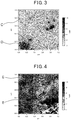
FIG. 3 shows the results of observation of Example 1 using an atomic force microscope. -
FIG. 4 shows the results of observation of Comparative Example 1 using an atomic force microscope. - The method of removing a bleeding component and/or a blooming component in a polymer of the present invention is characterized by subjecting the polymer to extraction using at least one or more of amphipathic solvents. By subjecting the polymer to extraction using at least one or more of amphipathic solvents, a bleeding component and/or a blooming component, mainly a hydrophilic bleeding component and/or blooming component contained in the polymer can be removed. Meanwhile, in conventional extraction using an organic solvent such as acetone having low hydrophilicity, it is possible to remove a hydrophobic component in a polymer, but a hydrophilic component cannot be removed.
- The extraction method is not limited particularly as far as amphipathic solvents can be used. Examples of the extraction method include immersion extraction, refluxing extraction, high-speed extraction, microwave extraction, and the like. In the case of the refluxing extraction, an extractor such as a Soxhlet extractor can be used. Among the methods, the refluxing extraction method is preferred for the reason that the extraction can be conducted efficiently with a relatively small amount of a solvent since the refluxing solvent does not contain a component to be extracted, and the Soxhlet extraction method is more preferred.
- An amount of the amphipathic solvent for a polymer sample is preferably 100 times the volume of the polymer sample or more, more preferably 1000 times or more from the viewpoint of a solvent amount sufficient for enabling the bleeding component and the blooming component in the polymer to be dissolved in the solvent. An upper limit of the amount of the amphipathic solvent is not limited particularly, and is preferably 5000 times the volume of an unvulcanized rubber composition or less, more preferably 3000 times or less, from the viewpoint of workability.
- An extraction temperature and an extraction time can be adjusted adequately according to the extraction method and the solvent amount. For example, in the case of extraction by the Soxhlet extraction method, it is preferable to perform the extraction for 4 to 72 hours at a temperature higher by 10°C or more than a boiling point of the solvent.
- The amphipathic solvents are not limited particularly as far as at least one or more of solvents being capable of invading the polymer sample and enabling the hydrophilic bleeding component and/or blooming component in the polymer sample to be dissolved therein. The amphipathic solvent is preferably a lower alcohol such as methanol or ethanol, more preferably a lower alcohol having 1 to 5 carbon atoms, and ethanol is further preferable since a property of dissolving a hydrophilic component and an extraction efficiency are satisfactory.
- A polymer from which a bleeding component and/or a blooming component can be removed by the method of the present invention is not limited particularly, and an example thereof includes a rubber composition prepared by blending various compounding agents into a polymer component.
- The polymer component is not limited particularly, and examples thereof include various polymers such as polyethylene, polypropylene, polybutadiene, polyisoprene, an ethylene-propylene copolymer, polystyrene, a styrene-butadiene copolymer, an acrylonitrile-styrene copolymer, polyvinyl chloride, polyacrylic acid, polymethacrylic acid, polyamide, polyurethane, polyethylene terephthalate, polybutylene terephthalate, polytetrafluoroethylene, polycarbonate, polysulfone and polyether sulfone; various resins such as an epoxy resin, a urethane resin and an unsaturated polyester resin; modified natural rubbers such as natural rubber (NR) and epoxidized natural rubber (ENR); and rubber components such as isoprene rubber (IR), butadiene rubber (BR), styrene-butadiene rubber (SBR), butyl rubber (IIR), brominated isobutylene-p-methylstyrene copolymer, acrylonitrile-butadiene rubber (NBR), chloroprene rubber (CR), ethylene-propylene rubber (EPM), ethylene-propylene-diene copolymer rubber (EPDM), styrene-isoprene rubber, styrene-isoprene-butadiene rubber copolymer rubber (SIBR), isoprene-butadiene rubber, chlorosulfonated polyethylene (CSM), acrylic rubber (ACM, ANM), epichlorohydrin rubber (CO, ECO, GECO), polysulfide rubber (T), silicone rubber (Q), fluorine-containing rubbers (FKM) and urethane rubber (U).
- The polymer may be one prepared by using only one of the above-mentioned polymer components or may be a blend polymer prepared by combination use of two or more thereof. The polymer is preferably a blend polymer comprising two or more of incompatible polymer components, more preferably a blend polymer comprising two or more of polymer components forming a sea-island structure, from a point that a phase structure comprising different polymer components can be observed. Here, incompatibility means a state of different polymers being not mixed uniformly at a molecular level. In a blend polymer comprising a plurality of polymers being incompatible with each other, phase separation of respective polymers occurs to form a phase structure or in some case, form a sea-island structure. Examples of a combination of polymer components enabling a sea-island structure to be formed include a combination of NR and BR, a combination of NR and SBR, a combination of NR, EPDM, SBR and NBR, etc.
- The above-mentioned compounding agents are not limited particularly, and it is possible to appropriately blend compounding agents used commonly for preparing a rubber composition and the like, for example, fillers such as carbon black and silica, zinc oxide, stearic acid, a processing aid, an antioxidant, oil, wax, sulfur, a vulcanization accelerator, and the like.
- While it does not matter whether the polymer is vulcanized or not, a vulcanized rubber composition is preferred. The vulcanized rubber composition comprises the above-mentioned rubber component as a polymer component and can be prepared by a crosslinking reaction. An unvulcanized rubber composition may dissolve depending on kinds of a polymer component and a solvent.
- For a reason that the bleeding and the blooming can be inhibited more surely, it is preferable to remove the hydrophobic bleeding component and blooming component being present in the polymer by conducting the extraction with an organic solvent such as acetone before or after carrying out the method of removal of the present invention.
- Examples of the organic solvent being usable for removing hydrophobic components include acetone, toluene, THF, cyclohexane, dimethyl sulfoxide, chloroform, and the like. Among these, acetone is preferred from the viewpoint of a handling property.
- In the case of the polymer subjected to the treatment by the method of removing a bleeding component and/or a blooming component of the present invention, bleeding and blooming of the hydrophilic components are inhibited not only in the atmosphere but also in water, and a measuring surface is not covered with a bleeding component or a blooming component. Therefore, it is preferable to use the polymer as a sample for surface observation. Examples of an observation method are observation using an optical microscope, and observation using a scanning type microscope such as a scanning electron microscope (SEM) or an atomic force microscope (AFM). Since a sample having a strong adhesive force to a probe of the AFM can be observed satisfactory even in the case of observation in water for decreasing the adhesive force, a method of observing a phase structure in water by the AFM is preferred.
- A shape and a size of a sample piece to be used for the observation by the AFM are not limited particularly as far as the sample piece can be placed on a sample stage of the AFM. For formation of a polymer sample, a knife, scissors, razor, cryomicrotome, or the like can be used appropriately. From the viewpoint that a smooth surface suitable for observation by the AFM is formed, use of cryomicrotome is preferable.
- The AFM has a cantilever provided with a probe at its end, and this probe scans a surface of a sample piece and an action of the probe is detected with the cantilever. The action of the probe detected by the cantilever is visualized to obtain an AFM image. In the AFM, a three-dimensional shape of the sample piece surface, and mechanical properties of the sample piece such as a surface hardness and a friction force can be measured. Examples of an AFM usable in the observation method of the present invention include
MultiMode 8 available from Bruker AXS, E-sweep available from Hitachi High-Tech Science Corporation, etc. The measuring conditions of the AFM can be selected appropriately according to kinds and surface conditions of sample pieces. Probes made of tungsten, iridium, silicon nitride, and the like can be used. - The observation with the AFM in the present invention is made by a proper measuring mode provided on the AFM. The proper measuring mode can be appropriately selected according to kinds of polymer components contained in the polymer sample and surface conditions of a sample piece to be subjected to observation with the AFM. Examples of the typical measuring mode of the AFM include a contact mode, a tapping mode, and a non-contact mode. A force modulation mode being capable of measuring a hardness of a micro-region on a surface of a sample piece or a force volume mode being capable of measuring distributions of Young modulus and a modulus of elasticity may be selected. Preferred measuring modes are a tapping mode giving a short contact time of a probe with a sample piece and being suitable for measurement of a soft sample piece and a force volume mode enabling a difference in a mechanical property of a micro-region of a sample piece to be visualized into an image.
- According to the method of the present invention for removing a bleeding component and/or a blooming component, a hydrophilic bleeding component and/or blooming component can be removed from the polymer.
- Further according to the method of observing a phase structure of the present invention, even in the case of observing a phase structure of a polymer comprising a hydrophilic bleeding component and/or blooming component in water with an atomic force microscope, the observation can be made while inhibiting the bleeding or the blooming.
- The present invention is explained by means of Example, but is not limited to the example.
- Various chemicals used in Example and Comparative Example are collectively shown below.
- NR: TSR20
- Silica: ZEOSIL 115GR available from Rhodia Japan Kabushiki Kaisha
- (N2SA: 110 m2/g, average primary particle size: 20 nm)
- Silane coupling agent: Si69 available from Evonik Degussa GmbH (comprising bis(3-triethoxysilylpropyl)tetrasulfide as a main component)
- Oil: PROCESS X-140 available from JX Nippon Oil & Energy Corporation
- Zinc oxide: GINREI R available from TOHO ZINC CO., LTD.
- Stearic acid: Stearic acid "Tsubaki" available from NOF CORPORATION Wax: OZOACE 0355 available from Nippon Seiro Co., Ltd.
- Antioxidant: NOCRAC 6C (N-(1,3-dimethylbutyl)-N'-phenyl-p-phenylenediamine) available from Ouchi Shinko Chemical Industrial Co., Ltd.
- Powdered Sulfur (comprising 5% oil): 5% oil-treated powdered sulfur (soluble sulfur comprising 5% by mass of oil) available from Tsurumi Chemical Industry Co., Ltd.
- Vulcanization accelerator: NOCCELER NS (N-tert-butyl-2-benzothiazylsulfenamide) available from Ouchi Shinko Chemical Industrial Co., Ltd.
- A rubber component, an antioxidant, stearic acid and zinc oxide were poured into a 1.7-liter Banbury mixer available from Kobe Steel, Ltd. according to the compounding formulation shown in Table 1 to give a filling percentage of 58%, followed by kneading at 80 rpm until a temperature reached 140°C. To the obtained kneaded product were added sulfur and the vulcanization accelerator in amounts shown in Table 1, followed by further kneading to obtain an unvulcanized rubber composition. The obtained unvulcanized rubber composition was molded and subjected to vulcanization at 160°C for 20 minutes to obtain each vulcanized rubber composition.
- 500 mg of the vulcanized rubber composition was subjected to Soxhlet extraction treatment at 90°C for 48 hours with 100 ml of ethanol to obtain an extracted product of Example 1, and 500 mg of the vulcanized rubber composition was subjected to Soxhlet extraction treatment at 70°C for 48 hours with 100 ml of acetone to obtain an extracted product of Comparative Example 1.
- Each of extracted products was cut with a razor into small pieces which were cut with cryomicrotome to form a smooth surface. The formed smooth surface was observed with an AFM (
MultiMode 8 available from Bruker AXS, force volume mode, in water, cantilever: 40 N/m (a rate of spring), frequency: 5 Hz, a measuring range: 1µm × 1 µm). Further, after the observation with the AFM, water was removed from the smooth surface and the smooth surface was observed with an optical microscope (BX 63 available from OLYMPUS). The results of the observation with the optical microscope are shown inFigs. 1 and 2 , and the results of the AFM observation are shown inFigs. 3 and 4 .Table 1 Example 1 Com. Ex. 1 Compounding amount (part by mass) NR 100 100 Silica 10 10 Silane coupling agent 1 1 Oil 3 3 Zinc oxide 3 3 Stearic acid 2 2 Wax 1 1 Antioxidant 2 2 Sulfur 2 2 Vulcanization accelerator 1 1 1 Extraction treatment Extraction with ethanol Extraction with acetone - In Example 1, in which the method of the present invention for removing the bleeding component and/or the blooming component was performed (
Fig. 1 ), it is seen that as a result of removal of a hydrophilic bleeding component and blooming component from the polymer, neither a bleeding component nor a blooming component was present on the smooth surface (A) irrespective of completion of the AFM observation in an underwater environment. Meanwhile, in Comparative Example 1, in which only the extraction with acetone was performed, the smooth surface (Fig. 2 ) was covered substantially with the bleeding component or the blooming component (B). - Further, in the result (
Fig. 3 ) of the AFM observation of Example 1, in which the removal method of the present invention was performed, silica (D) scattering in the rubber component phase (C) showing an elastic modulus of around 2 to 3 MPa could be observed clearly. Meanwhile, in the result (Fig. 4 ) of the AFM observation of Comparative Example 1, in which only the extraction with acetone was performed, it is seen that the observation result is so unnatural that almost no phase representing the rubber component phase having an elastic modulus of around 2 to 3 MPa can be confirmed. Further, it is conjectured that the rubber component phase cannot be observed due to the influence of the bleeding component (E) observed inFig. 2 . - An object of the present invention is to provide a method of removing, from a polymer, a bleeding component and/or a blooming component, mainly a hydrophilic bleeding component and/or blooming component which makes observation of a surface of a polymer difficult. A method of removing a bleeding component and/or a blooming component in a polymer by subjecting the polymer to extraction using at least one or more of amphipathic solvents, and a method of observing a phase structure of a blend polymer comprising two or more polymer components, wherein the phase structure of the blend polymer, from which the bleeding component or the blooming component has been removed by the above-mentioned removal method, is observed in water using an atomic force microscope.
-
- A
- Smooth surface
- B
- Bleeding component or blooming component
- C
- Rubber component phase
- D
- Silica
- E
- Bleeding component
Claims (3)
- A method of removing a bleeding component and/or a blooming component in a polymer by subjecting the polymer to extraction using at least one or more of amphipathic solvents.
- A method of observing a phase structure of a blend polymer comprising two or more polymer components, wherein the phase structure of the blend polymer, from which the bleeding component or the blooming component has been removed by the removal method of claim 1, is observed in water using an atomic force microscope.
- The method of observing a phase structure of claim 2, wherein the observation in the observation step is made by a tapping mode or a force volume mode of the atomic force microscope.
Applications Claiming Priority (1)
| Application Number | Priority Date | Filing Date | Title |
|---|---|---|---|
| JP2016010934A JP2017129542A (en) | 2016-01-22 | 2016-01-22 | Method for removing bleeding component and/or bloom component |
Publications (2)
| Publication Number | Publication Date |
|---|---|
| EP3196216A1 true EP3196216A1 (en) | 2017-07-26 |
| EP3196216B1 EP3196216B1 (en) | 2018-12-19 |
Family
ID=57850855
Family Applications (1)
| Application Number | Title | Priority Date | Filing Date |
|---|---|---|---|
| EP16207233.4A Active EP3196216B1 (en) | 2016-01-22 | 2016-12-29 | Method of removing bleeding component and/or blooming component |
Country Status (2)
| Country | Link |
|---|---|
| EP (1) | EP3196216B1 (en) |
| JP (1) | JP2017129542A (en) |
Citations (9)
| Publication number | Priority date | Publication date | Assignee | Title |
|---|---|---|---|---|
| US5478921A (en) * | 1994-08-25 | 1995-12-26 | United States Surgical Corporation | Method of purifying bioabsorable polymer |
| JP2000017091A (en) | 1998-06-29 | 2000-01-18 | Hitachi Ltd | Fluororesin molded article having surface modified layer, surface treatment method for fluororesin, and treatment apparatus |
| US20040254336A1 (en) * | 2003-06-16 | 2004-12-16 | Xiao Steven Shuyong | Methods to purify polymers |
| US20050092679A1 (en) * | 2003-10-29 | 2005-05-05 | Bespak Plc | Method of cleaning or purifying a polymer |
| US20060228386A1 (en) * | 2005-02-22 | 2006-10-12 | University Of Tennessee Research Foundation | Polymeric microstructures |
| JP2009236606A (en) | 2008-03-26 | 2009-10-15 | Dainippon Printing Co Ltd | Mask pattern forming and confirming method |
| US20100059452A1 (en) * | 2008-09-11 | 2010-03-11 | Lanxess, Inc. | Method of purifying block copolymers |
| JP2014190883A (en) | 2013-03-28 | 2014-10-06 | Sumitomo Rubber Ind Ltd | Phase structure observation method |
| US20160017077A1 (en) * | 2014-07-21 | 2016-01-21 | Gwangju Institute Of Science And Technology | Donor-acceptor conjugated polymer and organic electronic device comprising the same |
-
2016
- 2016-01-22 JP JP2016010934A patent/JP2017129542A/en active Pending
- 2016-12-29 EP EP16207233.4A patent/EP3196216B1/en active Active
Patent Citations (9)
| Publication number | Priority date | Publication date | Assignee | Title |
|---|---|---|---|---|
| US5478921A (en) * | 1994-08-25 | 1995-12-26 | United States Surgical Corporation | Method of purifying bioabsorable polymer |
| JP2000017091A (en) | 1998-06-29 | 2000-01-18 | Hitachi Ltd | Fluororesin molded article having surface modified layer, surface treatment method for fluororesin, and treatment apparatus |
| US20040254336A1 (en) * | 2003-06-16 | 2004-12-16 | Xiao Steven Shuyong | Methods to purify polymers |
| US20050092679A1 (en) * | 2003-10-29 | 2005-05-05 | Bespak Plc | Method of cleaning or purifying a polymer |
| US20060228386A1 (en) * | 2005-02-22 | 2006-10-12 | University Of Tennessee Research Foundation | Polymeric microstructures |
| JP2009236606A (en) | 2008-03-26 | 2009-10-15 | Dainippon Printing Co Ltd | Mask pattern forming and confirming method |
| US20100059452A1 (en) * | 2008-09-11 | 2010-03-11 | Lanxess, Inc. | Method of purifying block copolymers |
| JP2014190883A (en) | 2013-03-28 | 2014-10-06 | Sumitomo Rubber Ind Ltd | Phase structure observation method |
| US20160017077A1 (en) * | 2014-07-21 | 2016-01-21 | Gwangju Institute Of Science And Technology | Donor-acceptor conjugated polymer and organic electronic device comprising the same |
Also Published As
| Publication number | Publication date |
|---|---|
| EP3196216B1 (en) | 2018-12-19 |
| JP2017129542A (en) | 2017-07-27 |
Similar Documents
| Publication | Publication Date | Title |
|---|---|---|
| KR101890121B1 (en) | Process for producing carbon nanotube composition and carbon nanotube composition | |
| CN111670216B (en) | Rubber composition for tire | |
| Yao et al. | Microstructure and properties of bromo-isobutylene–isoprene rubber/polyamide 12 thermoplastic vulcanizate toward recyclable inner liners for green tires | |
| WO2011068846A2 (en) | Modified rubber compositions and methods of preparation | |
| Vu et al. | Fabrication of natural rubber/epoxidized natural rubber/nanosilica nanocomposites and their physical characteristics | |
| JP2014190883A (en) | Phase structure observation method | |
| JP2008297493A (en) | Rubber composition for tire | |
| KR102699049B1 (en) | Method for producing polymer latex | |
| WO2015008565A1 (en) | Tire | |
| JP2009029961A (en) | Masterbatch for rubber composition and its manufacturing method | |
| EP2740756A1 (en) | Method for lowering dynamic-to-static modulus ratio of vulcanized rubber | |
| EP3196216B1 (en) | Method of removing bleeding component and/or blooming component | |
| JP2008222845A (en) | Rubber composition for tire | |
| JP2008019334A (en) | Rubber composition for tire tread | |
| JP4876403B2 (en) | Rubber composition for tire | |
| JP2017129407A (en) | Phase structure observation method | |
| JPH10176081A (en) | Rubber composition | |
| Wang et al. | Dynamically vulcanized blends of polyethylene–octene elastomer and ethylene–propylene–diene terpolymer | |
| Hinchiranan et al. | Cure characteristics and mechanical properties of hydrogenated natural rubber/natural rubber blends | |
| JP6697668B2 (en) | Rubber composition for fender | |
| JP2022095438A (en) | Method for observing polymer composition | |
| JP2016002716A (en) | Laminate and tire | |
| CN113185756A (en) | Magnetic sensitive rubber composition and preparation method thereof | |
| JP2002053701A (en) | Rubber composition for tire | |
| KR20220017929A (en) | trisulfide compounds |
Legal Events
| Date | Code | Title | Description |
|---|---|---|---|
| PUAI | Public reference made under article 153(3) epc to a published international application that has entered the european phase |
Free format text: ORIGINAL CODE: 0009012 |
|
| AK | Designated contracting states |
Kind code of ref document: A1 Designated state(s): AL AT BE BG CH CY CZ DE DK EE ES FI FR GB GR HR HU IE IS IT LI LT LU LV MC MK MT NL NO PL PT RO RS SE SI SK SM TR |
|
| AX | Request for extension of the european patent |
Extension state: BA ME |
|
| 17P | Request for examination filed |
Effective date: 20171106 |
|
| 17Q | First examination report despatched |
Effective date: 20180226 |
|
| GRAP | Despatch of communication of intention to grant a patent |
Free format text: ORIGINAL CODE: EPIDOSNIGR1 |
|
| INTG | Intention to grant announced |
Effective date: 20180703 |
|
| GRAS | Grant fee paid |
Free format text: ORIGINAL CODE: EPIDOSNIGR3 |
|
| GRAA | (expected) grant |
Free format text: ORIGINAL CODE: 0009210 |
|
| AK | Designated contracting states |
Kind code of ref document: B1 Designated state(s): AL AT BE BG CH CY CZ DE DK EE ES FI FR GB GR HR HU IE IS IT LI LT LU LV MC MK MT NL NO PL PT RO RS SE SI SK SM TR |
|
| REG | Reference to a national code |
Ref country code: GB Ref legal event code: FG4D |
|
| REG | Reference to a national code |
Ref country code: CH Ref legal event code: EP |
|
| REG | Reference to a national code |
Ref country code: IE Ref legal event code: FG4D |
|
| REG | Reference to a national code |
Ref country code: DE Ref legal event code: R096 Ref document number: 602016008419 Country of ref document: DE |
|
| REG | Reference to a national code |
Ref country code: AT Ref legal event code: REF Ref document number: 1078608 Country of ref document: AT Kind code of ref document: T Effective date: 20190115 |
|
| REG | Reference to a national code |
Ref country code: NL Ref legal event code: MP Effective date: 20181219 |
|
| PG25 | Lapsed in a contracting state [announced via postgrant information from national office to epo] |
Ref country code: BG Free format text: LAPSE BECAUSE OF FAILURE TO SUBMIT A TRANSLATION OF THE DESCRIPTION OR TO PAY THE FEE WITHIN THE PRESCRIBED TIME-LIMIT Effective date: 20190319 Ref country code: NO Free format text: LAPSE BECAUSE OF FAILURE TO SUBMIT A TRANSLATION OF THE DESCRIPTION OR TO PAY THE FEE WITHIN THE PRESCRIBED TIME-LIMIT Effective date: 20190319 Ref country code: LT Free format text: LAPSE BECAUSE OF FAILURE TO SUBMIT A TRANSLATION OF THE DESCRIPTION OR TO PAY THE FEE WITHIN THE PRESCRIBED TIME-LIMIT Effective date: 20181219 Ref country code: FI Free format text: LAPSE BECAUSE OF FAILURE TO SUBMIT A TRANSLATION OF THE DESCRIPTION OR TO PAY THE FEE WITHIN THE PRESCRIBED TIME-LIMIT Effective date: 20181219 Ref country code: LV Free format text: LAPSE BECAUSE OF FAILURE TO SUBMIT A TRANSLATION OF THE DESCRIPTION OR TO PAY THE FEE WITHIN THE PRESCRIBED TIME-LIMIT Effective date: 20181219 Ref country code: HR Free format text: LAPSE BECAUSE OF FAILURE TO SUBMIT A TRANSLATION OF THE DESCRIPTION OR TO PAY THE FEE WITHIN THE PRESCRIBED TIME-LIMIT Effective date: 20181219 |
|
| REG | Reference to a national code |
Ref country code: LT Ref legal event code: MG4D |
|
| REG | Reference to a national code |
Ref country code: AT Ref legal event code: MK05 Ref document number: 1078608 Country of ref document: AT Kind code of ref document: T Effective date: 20181219 |
|
| PG25 | Lapsed in a contracting state [announced via postgrant information from national office to epo] |
Ref country code: AL Free format text: LAPSE BECAUSE OF FAILURE TO SUBMIT A TRANSLATION OF THE DESCRIPTION OR TO PAY THE FEE WITHIN THE PRESCRIBED TIME-LIMIT Effective date: 20181219 Ref country code: GR Free format text: LAPSE BECAUSE OF FAILURE TO SUBMIT A TRANSLATION OF THE DESCRIPTION OR TO PAY THE FEE WITHIN THE PRESCRIBED TIME-LIMIT Effective date: 20190320 Ref country code: SE Free format text: LAPSE BECAUSE OF FAILURE TO SUBMIT A TRANSLATION OF THE DESCRIPTION OR TO PAY THE FEE WITHIN THE PRESCRIBED TIME-LIMIT Effective date: 20181219 Ref country code: RS Free format text: LAPSE BECAUSE OF FAILURE TO SUBMIT A TRANSLATION OF THE DESCRIPTION OR TO PAY THE FEE WITHIN THE PRESCRIBED TIME-LIMIT Effective date: 20181219 |
|
| PG25 | Lapsed in a contracting state [announced via postgrant information from national office to epo] |
Ref country code: NL Free format text: LAPSE BECAUSE OF FAILURE TO SUBMIT A TRANSLATION OF THE DESCRIPTION OR TO PAY THE FEE WITHIN THE PRESCRIBED TIME-LIMIT Effective date: 20181219 |
|
| PG25 | Lapsed in a contracting state [announced via postgrant information from national office to epo] |
Ref country code: CZ Free format text: LAPSE BECAUSE OF FAILURE TO SUBMIT A TRANSLATION OF THE DESCRIPTION OR TO PAY THE FEE WITHIN THE PRESCRIBED TIME-LIMIT Effective date: 20181219 Ref country code: PL Free format text: LAPSE BECAUSE OF FAILURE TO SUBMIT A TRANSLATION OF THE DESCRIPTION OR TO PAY THE FEE WITHIN THE PRESCRIBED TIME-LIMIT Effective date: 20181219 Ref country code: ES Free format text: LAPSE BECAUSE OF FAILURE TO SUBMIT A TRANSLATION OF THE DESCRIPTION OR TO PAY THE FEE WITHIN THE PRESCRIBED TIME-LIMIT Effective date: 20181219 Ref country code: PT Free format text: LAPSE BECAUSE OF FAILURE TO SUBMIT A TRANSLATION OF THE DESCRIPTION OR TO PAY THE FEE WITHIN THE PRESCRIBED TIME-LIMIT Effective date: 20190419 Ref country code: IT Free format text: LAPSE BECAUSE OF FAILURE TO SUBMIT A TRANSLATION OF THE DESCRIPTION OR TO PAY THE FEE WITHIN THE PRESCRIBED TIME-LIMIT Effective date: 20181219 |
|
| PG25 | Lapsed in a contracting state [announced via postgrant information from national office to epo] |
Ref country code: EE Free format text: LAPSE BECAUSE OF FAILURE TO SUBMIT A TRANSLATION OF THE DESCRIPTION OR TO PAY THE FEE WITHIN THE PRESCRIBED TIME-LIMIT Effective date: 20181219 Ref country code: LU Free format text: LAPSE BECAUSE OF NON-PAYMENT OF DUE FEES Effective date: 20181229 Ref country code: SM Free format text: LAPSE BECAUSE OF FAILURE TO SUBMIT A TRANSLATION OF THE DESCRIPTION OR TO PAY THE FEE WITHIN THE PRESCRIBED TIME-LIMIT Effective date: 20181219 Ref country code: SK Free format text: LAPSE BECAUSE OF FAILURE TO SUBMIT A TRANSLATION OF THE DESCRIPTION OR TO PAY THE FEE WITHIN THE PRESCRIBED TIME-LIMIT Effective date: 20181219 Ref country code: RO Free format text: LAPSE BECAUSE OF FAILURE TO SUBMIT A TRANSLATION OF THE DESCRIPTION OR TO PAY THE FEE WITHIN THE PRESCRIBED TIME-LIMIT Effective date: 20181219 Ref country code: IS Free format text: LAPSE BECAUSE OF FAILURE TO SUBMIT A TRANSLATION OF THE DESCRIPTION OR TO PAY THE FEE WITHIN THE PRESCRIBED TIME-LIMIT Effective date: 20190419 |
|
| REG | Reference to a national code |
Ref country code: DE Ref legal event code: R097 Ref document number: 602016008419 Country of ref document: DE |
|
| REG | Reference to a national code |
Ref country code: BE Ref legal event code: MM Effective date: 20181231 Ref country code: IE Ref legal event code: MM4A |
|
| PLBE | No opposition filed within time limit |
Free format text: ORIGINAL CODE: 0009261 |
|
| STAA | Information on the status of an ep patent application or granted ep patent |
Free format text: STATUS: NO OPPOSITION FILED WITHIN TIME LIMIT |
|
| PG25 | Lapsed in a contracting state [announced via postgrant information from national office to epo] |
Ref country code: DK Free format text: LAPSE BECAUSE OF FAILURE TO SUBMIT A TRANSLATION OF THE DESCRIPTION OR TO PAY THE FEE WITHIN THE PRESCRIBED TIME-LIMIT Effective date: 20181219 Ref country code: AT Free format text: LAPSE BECAUSE OF FAILURE TO SUBMIT A TRANSLATION OF THE DESCRIPTION OR TO PAY THE FEE WITHIN THE PRESCRIBED TIME-LIMIT Effective date: 20181219 Ref country code: MC Free format text: LAPSE BECAUSE OF FAILURE TO SUBMIT A TRANSLATION OF THE DESCRIPTION OR TO PAY THE FEE WITHIN THE PRESCRIBED TIME-LIMIT Effective date: 20181219 Ref country code: IE Free format text: LAPSE BECAUSE OF NON-PAYMENT OF DUE FEES Effective date: 20181229 |
|
| 26N | No opposition filed |
Effective date: 20190920 |
|
| PG25 | Lapsed in a contracting state [announced via postgrant information from national office to epo] |
Ref country code: BE Free format text: LAPSE BECAUSE OF NON-PAYMENT OF DUE FEES Effective date: 20181231 |
|
| PG25 | Lapsed in a contracting state [announced via postgrant information from national office to epo] |
Ref country code: MT Free format text: LAPSE BECAUSE OF NON-PAYMENT OF DUE FEES Effective date: 20181229 |
|
| PG25 | Lapsed in a contracting state [announced via postgrant information from national office to epo] |
Ref country code: SI Free format text: LAPSE BECAUSE OF FAILURE TO SUBMIT A TRANSLATION OF THE DESCRIPTION OR TO PAY THE FEE WITHIN THE PRESCRIBED TIME-LIMIT Effective date: 20181219 |
|
| PG25 | Lapsed in a contracting state [announced via postgrant information from national office to epo] |
Ref country code: TR Free format text: LAPSE BECAUSE OF FAILURE TO SUBMIT A TRANSLATION OF THE DESCRIPTION OR TO PAY THE FEE WITHIN THE PRESCRIBED TIME-LIMIT Effective date: 20181219 |
|
| PG25 | Lapsed in a contracting state [announced via postgrant information from national office to epo] |
Ref country code: MK Free format text: LAPSE BECAUSE OF NON-PAYMENT OF DUE FEES Effective date: 20181219 Ref country code: CY Free format text: LAPSE BECAUSE OF FAILURE TO SUBMIT A TRANSLATION OF THE DESCRIPTION OR TO PAY THE FEE WITHIN THE PRESCRIBED TIME-LIMIT Effective date: 20181219 Ref country code: HU Free format text: LAPSE BECAUSE OF FAILURE TO SUBMIT A TRANSLATION OF THE DESCRIPTION OR TO PAY THE FEE WITHIN THE PRESCRIBED TIME-LIMIT; INVALID AB INITIO Effective date: 20161229 |
|
| REG | Reference to a national code |
Ref country code: CH Ref legal event code: PL |
|
| PG25 | Lapsed in a contracting state [announced via postgrant information from national office to epo] |
Ref country code: LI Free format text: LAPSE BECAUSE OF NON-PAYMENT OF DUE FEES Effective date: 20191231 Ref country code: CH Free format text: LAPSE BECAUSE OF NON-PAYMENT OF DUE FEES Effective date: 20191231 |
|
| GBPC | Gb: european patent ceased through non-payment of renewal fee |
Effective date: 20201229 |
|
| PG25 | Lapsed in a contracting state [announced via postgrant information from national office to epo] |
Ref country code: GB Free format text: LAPSE BECAUSE OF NON-PAYMENT OF DUE FEES Effective date: 20201229 |
|
| P01 | Opt-out of the competence of the unified patent court (upc) registered |
Effective date: 20230510 |
|
| PGFP | Annual fee paid to national office [announced via postgrant information from national office to epo] |
Ref country code: DE Payment date: 20241105 Year of fee payment: 9 |
|
| PGFP | Annual fee paid to national office [announced via postgrant information from national office to epo] |
Ref country code: FR Payment date: 20241111 Year of fee payment: 9 |