EP3196185B1 - Asymmetrical hydrogenation reaction of ketonic acid compound - Google Patents
Asymmetrical hydrogenation reaction of ketonic acid compound Download PDFInfo
- Publication number
- EP3196185B1 EP3196185B1 EP15842631.2A EP15842631A EP3196185B1 EP 3196185 B1 EP3196185 B1 EP 3196185B1 EP 15842631 A EP15842631 A EP 15842631A EP 3196185 B1 EP3196185 B1 EP 3196185B1
- Authority
- EP
- European Patent Office
- Prior art keywords
- base
- compound
- molar
- hydrogen
- reaction
- Prior art date
- Legal status (The legal status is an assumption and is not a legal conclusion. Google has not performed a legal analysis and makes no representation as to the accuracy of the status listed.)
- Active
Links
- 238000005984 hydrogenation reaction Methods 0.000 title claims description 30
- 150000001875 compounds Chemical class 0.000 title claims description 25
- 239000002253 acid Substances 0.000 title claims description 19
- 238000006243 chemical reaction Methods 0.000 claims description 31
- 229910052739 hydrogen Inorganic materials 0.000 claims description 22
- 239000001257 hydrogen Substances 0.000 claims description 22
- LFQSCWFLJHTTHZ-UHFFFAOYSA-N Ethanol Chemical compound CCO LFQSCWFLJHTTHZ-UHFFFAOYSA-N 0.000 claims description 16
- UFHFLCQGNIYNRP-UHFFFAOYSA-N Hydrogen Chemical compound [H][H] UFHFLCQGNIYNRP-UHFFFAOYSA-N 0.000 claims description 16
- KWYUFKZDYYNOTN-UHFFFAOYSA-M Potassium hydroxide Chemical compound [OH-].[K+] KWYUFKZDYYNOTN-UHFFFAOYSA-M 0.000 claims description 15
- HEMHJVSKTPXQMS-UHFFFAOYSA-M Sodium hydroxide Chemical group [OH-].[Na+] HEMHJVSKTPXQMS-UHFFFAOYSA-M 0.000 claims description 15
- 239000003054 catalyst Substances 0.000 claims description 13
- 239000003446 ligand Substances 0.000 claims description 13
- 238000000034 method Methods 0.000 claims description 12
- 239000000758 substrate Substances 0.000 claims description 12
- OKKJLVBELUTLKV-UHFFFAOYSA-N Methanol Chemical group OC OKKJLVBELUTLKV-UHFFFAOYSA-N 0.000 claims description 9
- MYHNUQVKTSTVDI-UHFFFAOYSA-N 2-methyl-2-[(2-methylpropan-2-yl)oxy]propane;potassium Chemical compound [K].CC(C)(C)OC(C)(C)C MYHNUQVKTSTVDI-UHFFFAOYSA-N 0.000 claims description 8
- 125000001624 naphthyl group Chemical group 0.000 claims description 8
- 239000012299 nitrogen atmosphere Substances 0.000 claims description 8
- 125000001997 phenyl group Chemical group [H]C1=C([H])C([H])=C(*)C([H])=C1[H] 0.000 claims description 8
- 229910052741 iridium Inorganic materials 0.000 claims description 7
- GKOZUEZYRPOHIO-UHFFFAOYSA-N iridium atom Chemical compound [Ir] GKOZUEZYRPOHIO-UHFFFAOYSA-N 0.000 claims description 7
- KFZMGEQAYNKOFK-UHFFFAOYSA-N Isopropanol Chemical compound CC(C)O KFZMGEQAYNKOFK-UHFFFAOYSA-N 0.000 claims description 6
- YXFVVABEGXRONW-UHFFFAOYSA-N Toluene Chemical compound CC1=CC=CC=C1 YXFVVABEGXRONW-UHFFFAOYSA-N 0.000 claims description 6
- 150000002431 hydrogen Chemical group 0.000 claims description 6
- 239000002904 solvent Substances 0.000 claims description 6
- 125000004169 (C1-C6) alkyl group Chemical group 0.000 claims description 4
- WRBRIRNGWAUZRF-UHFFFAOYSA-N 2-methyl-2-[(2-methylpropan-2-yl)oxy]propane;sodium Chemical compound [Na].CC(C)(C)OC(C)(C)C WRBRIRNGWAUZRF-UHFFFAOYSA-N 0.000 claims description 4
- BZLVMXJERCGZMT-UHFFFAOYSA-N Methyl tert-butyl ether Chemical compound COC(C)(C)C BZLVMXJERCGZMT-UHFFFAOYSA-N 0.000 claims description 4
- ZMXDDKWLCZADIW-UHFFFAOYSA-N N,N-Dimethylformamide Chemical compound CN(C)C=O ZMXDDKWLCZADIW-UHFFFAOYSA-N 0.000 claims description 4
- WYURNTSHIVDZCO-UHFFFAOYSA-N Tetrahydrofuran Chemical compound C1CCOC1 WYURNTSHIVDZCO-UHFFFAOYSA-N 0.000 claims description 4
- BDERNNFJNOPAEC-UHFFFAOYSA-N propan-1-ol Chemical compound CCCO BDERNNFJNOPAEC-UHFFFAOYSA-N 0.000 claims description 4
- 125000004191 (C1-C6) alkoxy group Chemical group 0.000 claims description 2
- RYHBNJHYFVUHQT-UHFFFAOYSA-N 1,4-Dioxane Chemical compound C1COCCO1 RYHBNJHYFVUHQT-UHFFFAOYSA-N 0.000 claims description 2
- 125000003710 aryl alkyl group Chemical group 0.000 claims description 2
- 229910052736 halogen Inorganic materials 0.000 claims description 2
- 150000002367 halogens Chemical class 0.000 claims description 2
- 239000003960 organic solvent Substances 0.000 claims description 2
- 125000001424 substituent group Chemical group 0.000 claims description 2
- YLQBMQCUIZJEEH-UHFFFAOYSA-N tetrahydrofuran Natural products C=1C=COC=1 YLQBMQCUIZJEEH-UHFFFAOYSA-N 0.000 claims description 2
- LRHPLDYGYMQRHN-UHFFFAOYSA-N N-Butanol Chemical compound CCCCO LRHPLDYGYMQRHN-UHFFFAOYSA-N 0.000 description 12
- 238000005481 NMR spectroscopy Methods 0.000 description 10
- 230000003287 optical effect Effects 0.000 description 7
- -1 aryl alkyl ketones Chemical class 0.000 description 5
- VYPSYNLAJGMNEJ-UHFFFAOYSA-N Silicium dioxide Chemical compound O=[Si]=O VYPSYNLAJGMNEJ-UHFFFAOYSA-N 0.000 description 4
- 238000004128 high performance liquid chromatography Methods 0.000 description 4
- 239000000741 silica gel Substances 0.000 description 4
- 229910002027 silica gel Inorganic materials 0.000 description 4
- 238000006467 substitution reaction Methods 0.000 description 4
- QTBSBXVTEAMEQO-UHFFFAOYSA-N Acetic acid Chemical compound CC(O)=O QTBSBXVTEAMEQO-UHFFFAOYSA-N 0.000 description 3
- 229910052751 metal Inorganic materials 0.000 description 3
- 239000002184 metal Substances 0.000 description 3
- 238000001228 spectrum Methods 0.000 description 3
- IWYDHOAUDWTVEP-UHFFFAOYSA-N R-2-phenyl-2-hydroxyacetic acid Natural products OC(=O)C(O)C1=CC=CC=C1 IWYDHOAUDWTVEP-UHFFFAOYSA-N 0.000 description 2
- 125000003178 carboxy group Chemical group [H]OC(*)=O 0.000 description 2
- 230000003197 catalytic effect Effects 0.000 description 2
- 238000006555 catalytic reaction Methods 0.000 description 2
- 125000000468 ketone group Chemical group 0.000 description 2
- VLKZOEOYAKHREP-UHFFFAOYSA-N n-Hexane Chemical compound CCCCCC VLKZOEOYAKHREP-UHFFFAOYSA-N 0.000 description 2
- FWVNWTNCNWRCOU-BYPYZUCNSA-N (2r)-2-hydroxy-3,3-dimethylbutanoic acid Chemical compound CC(C)(C)[C@@H](O)C(O)=O FWVNWTNCNWRCOU-BYPYZUCNSA-N 0.000 description 1
- UJDJTWLEXYIASW-NSHDSACASA-N (2s)-2-hydroxy-2-naphthalen-2-ylacetic acid Chemical compound C1=CC=CC2=CC([C@@H](C(O)=O)O)=CC=C21 UJDJTWLEXYIASW-NSHDSACASA-N 0.000 description 1
- IWYDHOAUDWTVEP-ZETCQYMHSA-N (S)-mandelic acid Chemical compound OC(=O)[C@@H](O)C1=CC=CC=C1 IWYDHOAUDWTVEP-ZETCQYMHSA-N 0.000 description 1
- 238000009876 asymmetric hydrogenation reaction Methods 0.000 description 1
- 150000004718 beta keto acids Chemical class 0.000 description 1
- 150000001728 carbonyl compounds Chemical class 0.000 description 1
- 150000001732 carboxylic acid derivatives Chemical class 0.000 description 1
- 230000007547 defect Effects 0.000 description 1
- 230000000694 effects Effects 0.000 description 1
- 238000002474 experimental method Methods 0.000 description 1
- 150000002561 ketenes Chemical class 0.000 description 1
- 150000002739 metals Chemical class 0.000 description 1
- 230000035484 reaction time Effects 0.000 description 1
Images


Classifications
-
- C—CHEMISTRY; METALLURGY
- C07—ORGANIC CHEMISTRY
- C07C—ACYCLIC OR CARBOCYCLIC COMPOUNDS
- C07C51/00—Preparation of carboxylic acids or their salts, halides or anhydrides
- C07C51/347—Preparation of carboxylic acids or their salts, halides or anhydrides by reactions not involving formation of carboxyl groups
- C07C51/367—Preparation of carboxylic acids or their salts, halides or anhydrides by reactions not involving formation of carboxyl groups by introduction of functional groups containing oxygen only in singly bound form
-
- B—PERFORMING OPERATIONS; TRANSPORTING
- B01—PHYSICAL OR CHEMICAL PROCESSES OR APPARATUS IN GENERAL
- B01J—CHEMICAL OR PHYSICAL PROCESSES, e.g. CATALYSIS OR COLLOID CHEMISTRY; THEIR RELEVANT APPARATUS
- B01J31/00—Catalysts comprising hydrides, coordination complexes or organic compounds
- B01J31/16—Catalysts comprising hydrides, coordination complexes or organic compounds containing coordination complexes
- B01J31/18—Catalysts comprising hydrides, coordination complexes or organic compounds containing coordination complexes containing nitrogen, phosphorus, arsenic or antimony as complexing atoms, e.g. in pyridine ligands, or in resonance therewith, e.g. in isocyanide ligands C=N-R or as complexed central atoms
- B01J31/1805—Catalysts comprising hydrides, coordination complexes or organic compounds containing coordination complexes containing nitrogen, phosphorus, arsenic or antimony as complexing atoms, e.g. in pyridine ligands, or in resonance therewith, e.g. in isocyanide ligands C=N-R or as complexed central atoms the ligands containing nitrogen
- B01J31/181—Cyclic ligands, including e.g. non-condensed polycyclic ligands, comprising at least one complexing nitrogen atom as ring member, e.g. pyridine
- B01J31/1815—Cyclic ligands, including e.g. non-condensed polycyclic ligands, comprising at least one complexing nitrogen atom as ring member, e.g. pyridine with more than one complexing nitrogen atom, e.g. bipyridyl, 2-aminopyridine
-
- B—PERFORMING OPERATIONS; TRANSPORTING
- B01—PHYSICAL OR CHEMICAL PROCESSES OR APPARATUS IN GENERAL
- B01J—CHEMICAL OR PHYSICAL PROCESSES, e.g. CATALYSIS OR COLLOID CHEMISTRY; THEIR RELEVANT APPARATUS
- B01J31/00—Catalysts comprising hydrides, coordination complexes or organic compounds
- B01J31/16—Catalysts comprising hydrides, coordination complexes or organic compounds containing coordination complexes
- B01J31/18—Catalysts comprising hydrides, coordination complexes or organic compounds containing coordination complexes containing nitrogen, phosphorus, arsenic or antimony as complexing atoms, e.g. in pyridine ligands, or in resonance therewith, e.g. in isocyanide ligands C=N-R or as complexed central atoms
- B01J31/189—Catalysts comprising hydrides, coordination complexes or organic compounds containing coordination complexes containing nitrogen, phosphorus, arsenic or antimony as complexing atoms, e.g. in pyridine ligands, or in resonance therewith, e.g. in isocyanide ligands C=N-R or as complexed central atoms containing both nitrogen and phosphorus as complexing atoms, including e.g. phosphino moieties, in one at least bidentate or bridging ligand
-
- B—PERFORMING OPERATIONS; TRANSPORTING
- B01—PHYSICAL OR CHEMICAL PROCESSES OR APPARATUS IN GENERAL
- B01J—CHEMICAL OR PHYSICAL PROCESSES, e.g. CATALYSIS OR COLLOID CHEMISTRY; THEIR RELEVANT APPARATUS
- B01J31/00—Catalysts comprising hydrides, coordination complexes or organic compounds
- B01J31/16—Catalysts comprising hydrides, coordination complexes or organic compounds containing coordination complexes
- B01J31/24—Phosphines, i.e. phosphorus bonded to only carbon atoms, or to both carbon and hydrogen atoms, including e.g. sp2-hybridised phosphorus compounds such as phosphabenzene, phosphole or anionic phospholide ligands
- B01J31/2404—Cyclic ligands, including e.g. non-condensed polycyclic ligands, the phosphine-P atom being a ring member or a substituent on the ring
- B01J31/2442—Cyclic ligands, including e.g. non-condensed polycyclic ligands, the phosphine-P atom being a ring member or a substituent on the ring comprising condensed ring systems
- B01J31/2447—Cyclic ligands, including e.g. non-condensed polycyclic ligands, the phosphine-P atom being a ring member or a substituent on the ring comprising condensed ring systems and phosphine-P atoms as substituents on a ring of the condensed system or on a further attached ring
-
- C—CHEMISTRY; METALLURGY
- C07—ORGANIC CHEMISTRY
- C07B—GENERAL METHODS OF ORGANIC CHEMISTRY; APPARATUS THEREFOR
- C07B53/00—Asymmetric syntheses
-
- B—PERFORMING OPERATIONS; TRANSPORTING
- B01—PHYSICAL OR CHEMICAL PROCESSES OR APPARATUS IN GENERAL
- B01J—CHEMICAL OR PHYSICAL PROCESSES, e.g. CATALYSIS OR COLLOID CHEMISTRY; THEIR RELEVANT APPARATUS
- B01J2231/00—Catalytic reactions performed with catalysts classified in B01J31/00
- B01J2231/60—Reduction reactions, e.g. hydrogenation
- B01J2231/64—Reductions in general of organic substrates, e.g. hydride reductions or hydrogenations
- B01J2231/641—Hydrogenation of organic substrates, i.e. H2 or H-transfer hydrogenations, e.g. Fischer-Tropsch processes
- B01J2231/643—Hydrogenation of organic substrates, i.e. H2 or H-transfer hydrogenations, e.g. Fischer-Tropsch processes of R2C=O or R2C=NR (R= C, H)
-
- B—PERFORMING OPERATIONS; TRANSPORTING
- B01—PHYSICAL OR CHEMICAL PROCESSES OR APPARATUS IN GENERAL
- B01J—CHEMICAL OR PHYSICAL PROCESSES, e.g. CATALYSIS OR COLLOID CHEMISTRY; THEIR RELEVANT APPARATUS
- B01J2531/00—Additional information regarding catalytic systems classified in B01J31/00
- B01J2531/02—Compositional aspects of complexes used, e.g. polynuclearity
- B01J2531/0238—Complexes comprising multidentate ligands, i.e. more than 2 ionic or coordinative bonds from the central metal to the ligand, the latter having at least two donor atoms, e.g. N, O, S, P
- B01J2531/0241—Rigid ligands, e.g. extended sp2-carbon frameworks or geminal di- or trisubstitution
-
- B—PERFORMING OPERATIONS; TRANSPORTING
- B01—PHYSICAL OR CHEMICAL PROCESSES OR APPARATUS IN GENERAL
- B01J—CHEMICAL OR PHYSICAL PROCESSES, e.g. CATALYSIS OR COLLOID CHEMISTRY; THEIR RELEVANT APPARATUS
- B01J2531/00—Additional information regarding catalytic systems classified in B01J31/00
- B01J2531/80—Complexes comprising metals of Group VIII as the central metal
- B01J2531/82—Metals of the platinum group
- B01J2531/827—Iridium
-
- C—CHEMISTRY; METALLURGY
- C07—ORGANIC CHEMISTRY
- C07B—GENERAL METHODS OF ORGANIC CHEMISTRY; APPARATUS THEREFOR
- C07B2200/00—Indexing scheme relating to specific properties of organic compounds
- C07B2200/07—Optical isomers
-
- C—CHEMISTRY; METALLURGY
- C07—ORGANIC CHEMISTRY
- C07C—ACYCLIC OR CARBOCYCLIC COMPOUNDS
- C07C2601/00—Systems containing only non-condensed rings
- C07C2601/12—Systems containing only non-condensed rings with a six-membered ring
- C07C2601/14—The ring being saturated
-
- C—CHEMISTRY; METALLURGY
- C07—ORGANIC CHEMISTRY
- C07C—ACYCLIC OR CARBOCYCLIC COMPOUNDS
- C07C59/00—Compounds having carboxyl groups bound to acyclic carbon atoms and containing any of the groups OH, O—metal, —CHO, keto, ether, groups, groups, or groups
- C07C59/01—Saturated compounds having only one carboxyl group and containing hydroxy or O-metal groups
-
- C—CHEMISTRY; METALLURGY
- C07—ORGANIC CHEMISTRY
- C07C—ACYCLIC OR CARBOCYCLIC COMPOUNDS
- C07C59/00—Compounds having carboxyl groups bound to acyclic carbon atoms and containing any of the groups OH, O—metal, —CHO, keto, ether, groups, groups, or groups
- C07C59/01—Saturated compounds having only one carboxyl group and containing hydroxy or O-metal groups
- C07C59/11—Saturated compounds having only one carboxyl group and containing hydroxy or O-metal groups containing rings
-
- C—CHEMISTRY; METALLURGY
- C07—ORGANIC CHEMISTRY
- C07C—ACYCLIC OR CARBOCYCLIC COMPOUNDS
- C07C59/00—Compounds having carboxyl groups bound to acyclic carbon atoms and containing any of the groups OH, O—metal, —CHO, keto, ether, groups, groups, or groups
- C07C59/40—Unsaturated compounds
- C07C59/42—Unsaturated compounds containing hydroxy or O-metal groups
- C07C59/48—Unsaturated compounds containing hydroxy or O-metal groups containing six-membered aromatic rings
-
- C—CHEMISTRY; METALLURGY
- C07—ORGANIC CHEMISTRY
- C07C—ACYCLIC OR CARBOCYCLIC COMPOUNDS
- C07C59/00—Compounds having carboxyl groups bound to acyclic carbon atoms and containing any of the groups OH, O—metal, —CHO, keto, ether, groups, groups, or groups
- C07C59/40—Unsaturated compounds
- C07C59/42—Unsaturated compounds containing hydroxy or O-metal groups
- C07C59/48—Unsaturated compounds containing hydroxy or O-metal groups containing six-membered aromatic rings
- C07C59/50—Mandelic acid
-
- C—CHEMISTRY; METALLURGY
- C07—ORGANIC CHEMISTRY
- C07C—ACYCLIC OR CARBOCYCLIC COMPOUNDS
- C07C59/00—Compounds having carboxyl groups bound to acyclic carbon atoms and containing any of the groups OH, O—metal, —CHO, keto, ether, groups, groups, or groups
- C07C59/40—Unsaturated compounds
- C07C59/42—Unsaturated compounds containing hydroxy or O-metal groups
- C07C59/56—Unsaturated compounds containing hydroxy or O-metal groups containing halogen
-
- C—CHEMISTRY; METALLURGY
- C07—ORGANIC CHEMISTRY
- C07C—ACYCLIC OR CARBOCYCLIC COMPOUNDS
- C07C59/00—Compounds having carboxyl groups bound to acyclic carbon atoms and containing any of the groups OH, O—metal, —CHO, keto, ether, groups, groups, or groups
- C07C59/40—Unsaturated compounds
- C07C59/58—Unsaturated compounds containing ether groups, groups, groups, or groups
- C07C59/64—Unsaturated compounds containing ether groups, groups, groups, or groups containing six-membered aromatic rings
-
- C—CHEMISTRY; METALLURGY
- C07—ORGANIC CHEMISTRY
- C07F—ACYCLIC, CARBOCYCLIC OR HETEROCYCLIC COMPOUNDS CONTAINING ELEMENTS OTHER THAN CARBON, HYDROGEN, HALOGEN, OXYGEN, NITROGEN, SULFUR, SELENIUM OR TELLURIUM
- C07F9/00—Compounds containing elements of Groups 5 or 15 of the Periodic Table
- C07F9/02—Phosphorus compounds
- C07F9/547—Heterocyclic compounds, e.g. containing phosphorus as a ring hetero atom
- C07F9/553—Heterocyclic compounds, e.g. containing phosphorus as a ring hetero atom having one nitrogen atom as the only ring hetero atom
- C07F9/576—Six-membered rings
- C07F9/58—Pyridine rings
Definitions
- the present invention relates to the technical field of ligand chemistry, specifically to the asymmetrical hydrogenation reaction of an ⁇ -ketonic acid compound.
- the asymmetrical hydrogenation reaction of an ⁇ -ketonic acid compound is rarely disclosed in the present ligand field.
- the disclosure of the asymmetrical hydrogenation reaction of an ⁇ -ketonic acid compound by directly using a metal ligand complex is also basically on a vacancy stage.
- the reasons through analyzing can be concluded as: the carboxyl group on the ⁇ -ketonic acid compound can coordinate with metal, in that way it will result the catalysts to be poisoned and spoiled, so the reaction yield is lowered.
- the present invention provides the following technical proposal:
- R 1 is a phenyl, a substituted phenyl, a naphthyl, a substituted naphthyl, a C 1 -C 6 alkyl or aralkyl; wherein the substitute is a C 1 -C 6 alkyl, a C 1 -C 6 alkoxy, a halogen; wherein the number of the substituents is 1-3.
- M can be the following structure chiral spiro-pyridylamidophosphine ligand iridium complex:
- R is hydrogen, 3-methyl, 4- t Bu or 6-methyl.
- the base can be selected from sodium hydroxide, potassium hydroxide, sodium tert-butyl oxide, potassium tert-butyl oxide.
- the molar dosage ratio of the said base to the substrate A compound is (1.0-3):1, the preferred molar ratio is 1.001-1.5):1.
- the said solvent can be selected from methanol, ethanol, propanol, isopropanol, tetrahydrofuran, toluene, methyl tert-butyl ether, dioxane, DMF etc.
- R 1 represents phenyl, substituted phenyl, naphthyl, substituted naphthyl.
- the present invention takes the following technical proposal: under the protection of nitrogen atmosphere, at a hydrogen pressure of 0.5-10MPa, with a base dosage 1.0 ⁇ 3.0 molar equivalent, in the presence of organic solvent, ⁇ -ketonic acid compound is successfully formed into B compound in under catalysis with the chiral spiro-pyridylamidophosphine ligand iridium complex (M) at the molar dosage of 0.00001 ⁇ 0.01 molar equivalent.
- M chiral spiro-pyridylamidophosphine ligand iridium complex
- the technical proposal of the present invention can overcome the produced strong coordination effects between carboxyl group of the substrate and central metals through changing the base dosage, and successfully realize directly asymmetrical hydrogenation reaction of ⁇ -ketonic acid compound.
- B/S represents the molar ratio of dosage of the base and dosage of the substrate ⁇ -ketonic acid, conv. represents the conversion rate analyzed by nuclear magnetic resonance (NMR).
- NMR nuclear magnetic resonance
- the reaction solution was filtered through a short silica gel column to remove the catalyst, and the conversion rate and yield of the reaction were analyzed by nuclear magnetic resonance (NMR). The conversion rate is 100%. And the optical purity of the product was analyzed after derived to benzyl ester compound. The optical purity is 85% ee.
Landscapes
- Chemical & Material Sciences (AREA)
- Organic Chemistry (AREA)
- Chemical Kinetics & Catalysis (AREA)
- Engineering & Computer Science (AREA)
- Inorganic Chemistry (AREA)
- Materials Engineering (AREA)
- Oil, Petroleum & Natural Gas (AREA)
- Organic Low-Molecular-Weight Compounds And Preparation Thereof (AREA)
- Catalysts (AREA)
- Low-Molecular Organic Synthesis Reactions Using Catalysts (AREA)
Description
- The present application claims priority of Chinese application number
201410468805.9 - The present invention relates to the technical field of ligand chemistry, specifically to the asymmetrical hydrogenation reaction of an α-ketonic acid compound.
- The asymmetrical hydrogenation reaction of an α-ketonic acid compound is rarely disclosed in the present ligand field. In the ligand field, the disclosure of the asymmetrical hydrogenation reaction of an α-ketonic acid compound by directly using a metal ligand complex is also basically on a vacancy stage. The reasons through analyzing can be concluded as: the carboxyl group on the α-ketonic acid compound can coordinate with metal, in that way it will result the catalysts to be poisoned and spoiled, so the reaction yield is lowered. What's more, the two αcarbonyl groups one on the α-ketonic acid compound and the other on the carboxylic acid are nearly in coplanar position, there will result equal opportunities for chiral ligand catalysts to attack α-ketonic acid compound from two sides, of course, leads to lower enantioselectivity and reaction yield.
- The following structure chiral spiro-pyridylamidophosphine ligand iridium complex are developed at the earliest by Nankai university,

- And it has been disclosed in Chinese application documents with the publication number
CN102040625 , the chiral spiro-pyridylamidophosphine ligand iridium complex used as a catalyst in the asymmetrical hydrogenation reaction of carbonyl compounds including aryl alkyl ketones, ketenes and keto esters. However, the chiral catalysts provided poor catalysis results for keto esters compounds according to Example 11 table 1 serial number 27 in this disclosure.EP0667350 is concerned with asymmetric hydrogenations of beta-keto-acids. - Considering asymmetrical hydrogenation reaction technology are on an important position and are widely used in organic chemistry, it is necessary to overcome the defects of this technology in the application of α-ketonic acid compound. And it is also necessary to improve the asymmetrical hydrogenation reaction technology to form a new technical proposal to finally solve the problem which hardly or difficultly to catalytic α-ketonic acid compound.
- To solve the technical problem of α-ketonic acid compound which are hard or difficult to carry out asymmetrical hydrogenation reaction technology, the present invention provides the following technical proposal:

- Wherein R1 is a phenyl, a substituted phenyl, a naphthyl, a substituted naphthyl, a C1-C6 alkyl or aralkyl; wherein the substitute is a C1-C6 alkyl, a C1-C6 alkoxy, a halogen; wherein the number of the substituents is 1-3.
- Wherein M can be the following structure chiral spiro-pyridylamidophosphine ligand iridium complex:

- Wherein R is hydrogen, 3-methyl, 4- t Bu or 6-methyl.
- The base can be selected from sodium hydroxide, potassium hydroxide, sodium tert-butyl oxide, potassium tert-butyl oxide. The molar dosage ratio of the said base to the substrate A compound is (1.0-3):1, the preferred molar ratio is 1.001-1.5):1.
- The said solvent can be selected from methanol, ethanol, propanol, isopropanol, tetrahydrofuran, toluene, methyl tert-butyl ether, dioxane, DMF etc.
- Preferably, R1 represents phenyl, substituted phenyl, naphthyl, substituted naphthyl.
- Preferably, the present invention takes the following technical proposal: under the protection of nitrogen atmosphere, at a hydrogen pressure of 0.5-10MPa, with a base dosage 1.0∼3.0 molar equivalent, in the presence of organic solvent, α-ketonic acid compound is successfully formed into B compound in under catalysis with the chiral spiro-pyridylamidophosphine ligand iridium complex (M) at the molar dosage of 0.00001∼0.01 molar equivalent.
- More preferably, under the protection of nitrogen atmosphere, were added into the inner hydrogenation tube substrate A, 1.0-3.0 molar equivalent (eq) of a base selected from sodium hydroxide, potassium hydroxide, sodium tert-butyl oxide or potassium tert-butyl oxide, chiral spiro-pyridylamidophosphine ligand compound (M) at the molar dosage 0.00001-0.01 molar equivalent (eq) and the solvent. The inner reaction tube was placed into the hydrogenation reactor and was filled at a hydrogen pressure of 0.5-10 MPa. The reaction was stirred for 1-30 hours at a temperature of 10-90 °C to obtain B compound.
- The technical proposal of the present invention can overcome the produced strong coordination effects between carboxyl group of the substrate and central metals through changing the base dosage, and successfully realize directly asymmetrical hydrogenation reaction of α-ketonic acid compound.
-
-
Figure 1 illustrates the spectrum of High Performance Liquid Chromatography (HPLC) of the 3a compound prepared in accordance with Example 12 of the present invention. -
Figure 2 illustrates the spectrum of High Performance Liquid Chromatography (HPLC) of the 3c compound prepared in accordance with Example 17 of the present invention. -
Figure 3 illustrates the spectrum of High Performance Liquid Chromatography (HPLC) of the 3l compound prepared in accordance with Example 26 of the present invention. - In order to further understand the present invention, preferred embodiments of the present invention will be described by reference to the examples, but it should be appreciated that these descriptions are merely intended to further illustrate the features and advantages of the present invention, rather than limiting the claims of the invention.
- HPLC analytical instrument and method:
- instrument model: Agilent 1200
- chromatographic column: Chiracel OD-H, 4.6 mm × 250 mm × 5 µm
- mobile phase A: n-hexane
- mobile phase B: isopropanol
- flow velocity: 1.0 mL/min
- column temperature: 35 °C
- wave length: 210 nm
- sample size: 5 µL
-

- Under the protection of nitrogen atmosphere, to the inner hydrogenation tube (200 mL), were added substrate α-ketonic acid 2a (3 g, 20 mmol), potassium tert-butyl oxide (112 mg, 1 mmol), catalyst M (20 mg, 0.02 mmol, R = 3-methyl) and solvent (50 mL). The inner reaction tube was placed into the hydrogenation reactor. After substitution by hydrogen, with hydrogen filled to a pressure of 15 atm, the reaction was stirred under the hydrogen pressure at room temperature for 24 hours. After the hydrogenation was finished, hydrogen was released, and the hydrogenation reactor was opened. The reaction solution was filtered through a short silica gel column to remove the catalyst, and the conversion rate and yield of the reaction were analyzed by nuclear magnetic resonance (NMR). And the optical purity of the product was analyzed after derived to methyl ester compound. The results are listed as Table 1.
- The experimental results of Example 2-15 in the following Table 1 were carried out according to or referred to the same method of the Example 1.

Table 1: Example M B/S P H2 (atm) Solvent Time (h) Conv. (%) Ee (%) 1 1b 0.05 15 EtOH 24 trace not determined 2 1b 0.5 15 EtOH 24 trace not determined 3 1b 1.0 15 EtOH 10 100 87 (S) 4 1b 1.06 15 EtOH 2 100 87 (S) 5 1b 1.5 15 EtOH 2 100 87 (S) 6 1b 3 15 EtOH 2 100 85 (S) 7 1b 1.06 15 MeOH 21 92 78 (S) 8 1b 1.06 15 i PrOH 20 100 87 (S) 9 1b 1.06 15 n PrOH 2 100 88 (S) 10 1b 1.06 15 n BuOH 2 100 89 (S) 11 1a 1.06 15 n BuOH 3 100 85 (S) 12 1c 1.06 15 n BuOH 1.5 100 96 (S) 13 1d 1.06 15 n BuOH 2 100 83 (S) 14 1c 1.06 5 n BuOH 8 100 91 (S) 15 1c 1.06 60 n BuOH 1.5 100 92 (S) - B/S represents the molar ratio of dosage of the base and dosage of the substrate α-ketonic acid, conv. represents the conversion rate analyzed by nuclear magnetic resonance (NMR). The experimental results of Example 16-30 in the following Table 2 were carried out in the catalytic of 1c according to or referred to the same method of the Example 1.

Table 2 Example Substrate Product Reaction time (h) Yield (%) Ee (%) 16 

1 93 91 (S) 17 

1 98 98 (S) 18 

3 97 92 (S) 19 

5 94 91 (S) 20 

3 95 92 (S) 21 

4 97 94 (S) 22 

5 94 90 (S) 23 

4 97 88 (S) 24 

4 97 90 (S) 25 

8 96 90 (S) 26 

1 98 99.2 (S) 27 

12 98 91 (S) 28 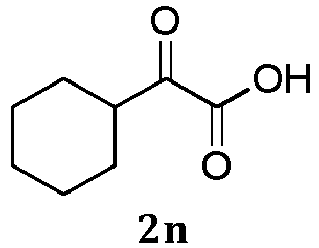

2 95 82 (S) 29 

21 92 77 (R) 30 

1 96 56 (S) - S/C = 50000. Carry out the highly conversion experiment in accordance with the same method disclosed in Example 1.

-

- Under the protection of nitrogen atmosphere, to the inner hydrogenation tube (200 mL), were added substrate α-ketonic acid 2a (3 g, 20 mmol), potassium tert-butyl oxide (1.68 g, 30 mmol), catalyst 1c (20 mg, 0.02 mmol) and n-butanol (50 mL). The inner reaction tube was placed into the hydrogenation reactor. After substitution by hydrogen, with hydrogen filled to a pressure of 30 atm, the reaction was stirred under the hydrogen pressure at room temperature for 10 hours. After the hydrogenation was finished, the hydrogen was released, and the hydrogenation reactor was opened. The reaction solution was filtered through a short silica gel column to remove the catalyst, and the conversion rate and yield of the reaction were analyzed by nuclear magnetic resonance (NMR). The conversion rate is 100%. And the optical purity of the product was analyzed after derived to methyl ester compound. The optical purity is 84% ee.
-

- Under the protection of nitrogen atmosphere, to the inner hydrogenation tube (200 mL), were added substrate α-ketonic acid 2m (4 g, 20 mmol), potassium tert-butyl oxide (3.36 g, 30 mmol), catalyst 1b (20 mg, 0.02 mmol) and n-butanol (50 mL). The inner reaction tube was placed into the hydrogenation reactor. After substitution by hydrogen, with hydrogen filled to a pressure of 15 atm, the reaction was stirred under the hydrogen pressure at room temperature for 12 hours. After the hydrogenation was finished, the hydrogen was released, and the hydrogenation reactor was opened. The reaction solution was filtered through a short silica gel column to remove the catalyst, and the conversion rate and yield of the reaction were analyzed by nuclear magnetic resonance (NMR). The conversion rate is 100%. And the optical purity of the product was analyzed after derived to methyl ester compound. The optical purity is 95% ee.
-

- Under the protection of nitrogen atmosphere, to the inner hydrogenation tube (200 mL), were added substrate α-ketonic acid 2o (2.6 g, 20 mmol), potassium tert-butyl oxide (3.36 g, 30 mmol) ,catalyst 1b (40 mg, 0.04 mmol) and n-butanol (50 mL). The inner reaction tube was placed into the hydrogenation reactor. After substitution by hydrogen, with hydrogen filled to a pressure of 15 atm, the reaction was stirred under the hydrogen pressure at room temperature for 24 hours. After the hydrogenation was finished, the hydrogen was released, and the hydrogenation reactor was opened. The reaction solution was filtered through a short silica gel column to remove the catalyst, and the conversion rate and yield of the reaction were analyzed by nuclear magnetic resonance (NMR). The conversion rate is 100%. And the optical purity of the product was analyzed after derived to benzyl ester compound. The optical purity is 85% ee.
Claims (8)
- A method of preparing the structure of formula B:

Wherein M is a chiral spiro-pyridylamidophosphine ligand iridium complex of the following structure:
wherein the base is selected from sodium hydroxide, potassium hydroxide, sodium tert-butyl oxide or potassium tert-butyl oxide;
and wherein the molar dosage ratio of the base to the substrate A compound is (1.0-3):1. - The method according to claim 1, wherein the molar dosage ratio of the base to the substrate A compound is (1.001-1.5):1.
- The method according to claim 1, wherein R1 is a phenyl, a substituted phenyl, a naphthyl or a substituted naphthyl.
- The method according to claim 1, wherein, R is 4- t Bu.
- The method according to claim 1, wherein, the base is sodium hydroxide or potassium hydroxide.
- The method according to any one of claims 1, or claims 3 to 5, wherein under the protection of nitrogen atmosphere, at a hydrogen pressure of 0.5-10 MPa, with a base dosage of 1.0-3.0 molar equivalent, in the presence of an organic solvent, the α-ketonic acid compound is formed into the B compound in the presence of a molar dosage of 0.00001-0.01 molar equivalent of the chiral spiro-pyridylamidophosphine ligand iridium complex (M) as a catalyst.
- The method according to any one of claims 1, or claims 3 to 5, wherein substrate A, 1.0-3.0 molar equivalent base, chiral spiro-pyridylamidophosphine ligand iridium complex (M) at a molar dosage of 0.00001-0.01 molar equivalent and the solvent are added under the protection of nitrogen atmosphere into an inner hydrogenation tube; the inner reaction tube is placed into the hydrogenation reactor and filled with hydrogen at a pressure of 0.5-10 MPa; the reaction is stirred for 1-30 hours at a temperature of 10-90 °C to obtain compound B; and wherein the base is selected from sodium hydroxide, potassium hydroxide, sodium tert-butyl oxide or potassium tert-butyl oxide.
- The method according to claim 1, wherein the solvent is selected from methanol, ethanol, propanol, isopropanol, tetrahydrofuran, toluene, methyl tert-butyl ether, dioxane or DMF.
Applications Claiming Priority (2)
| Application Number | Priority Date | Filing Date | Title |
|---|---|---|---|
| CN201410468805.9A CN105481677B (en) | 2014-09-15 | 2014-09-15 | Asymmetric Hydrogenation of ɑ-ketoacids |
| PCT/CN2015/077660 WO2016041351A1 (en) | 2014-09-15 | 2015-04-28 | Asymmetrical hydrogenation reaction of ketonic acid compound |
Publications (3)
| Publication Number | Publication Date |
|---|---|
| EP3196185A1 EP3196185A1 (en) | 2017-07-26 |
| EP3196185A4 EP3196185A4 (en) | 2018-01-31 |
| EP3196185B1 true EP3196185B1 (en) | 2019-06-12 |
Family
ID=55532516
Family Applications (1)
| Application Number | Title | Priority Date | Filing Date |
|---|---|---|---|
| EP15842631.2A Active EP3196185B1 (en) | 2014-09-15 | 2015-04-28 | Asymmetrical hydrogenation reaction of ketonic acid compound |
Country Status (5)
| Country | Link |
|---|---|
| US (1) | US10112884B2 (en) |
| EP (1) | EP3196185B1 (en) |
| JP (1) | JP6475341B2 (en) |
| CN (1) | CN105481677B (en) |
| WO (1) | WO2016041351A1 (en) |
Families Citing this family (6)
| Publication number | Priority date | Publication date | Assignee | Title |
|---|---|---|---|---|
| CN107089920A (en) * | 2017-04-25 | 2017-08-25 | 武汉理工大学 | L 3 N, N dibenzyl amino 1(3 cyclohexyl methoxies)Phenyl)The preparation method of the third 1 alcohol |
| CN107827802B (en) * | 2017-10-17 | 2021-06-11 | 南京红杉生物科技有限公司 | Synthesis method of D-proline |
| CN110790664A (en) * | 2018-08-01 | 2020-02-14 | 浙江九洲药业股份有限公司 | Asymmetric hydrogenation of gamma-or delta-keto acids |
| CN111410604B (en) * | 2019-01-08 | 2023-06-16 | 浙江九洲药业股份有限公司 | Asymmetric Hydrogenation of Enenoic Acids |
| CN109748788B (en) * | 2019-01-17 | 2021-05-14 | 南方科技大学 | ɑ-hydroxy acid preparation method |
| CN115160264B (en) * | 2021-03-18 | 2025-12-19 | 九洲药业(杭州)有限公司 | Preparation method of Engliflozin intermediate |
Family Cites Families (5)
| Publication number | Priority date | Publication date | Assignee | Title |
|---|---|---|---|---|
| US5536858A (en) * | 1994-02-12 | 1996-07-16 | Hoffmann-La Roche Inc. | Tetrasulfonated diphosphine compounds and metal complexes thereof for asymmetric catalytic reactions |
| CN1238361C (en) * | 2003-02-21 | 2006-01-25 | 南开大学 | Spiro-diphosphine ligand |
| JP5283867B2 (en) * | 2007-07-26 | 2013-09-04 | 国立大学法人 千葉大学 | Method for producing optically active β-hydroxycarboxylic acid derivative |
| CN101671365A (en) * | 2009-09-18 | 2010-03-17 | 南开大学 | Chiral spiro aminophosphine ligand compound and synthesis method as well as application thereof |
| CN102040625B (en) * | 2010-11-19 | 2013-09-25 | 浙江九洲药业股份有限公司 | Chiral spiro pyridylamidophosphine ligand compounds and synthesis method and application thereof |
-
2014
- 2014-09-15 CN CN201410468805.9A patent/CN105481677B/en active Active
-
2015
- 2015-04-28 WO PCT/CN2015/077660 patent/WO2016041351A1/en not_active Ceased
- 2015-04-28 US US15/508,933 patent/US10112884B2/en active Active
- 2015-04-28 JP JP2017533670A patent/JP6475341B2/en not_active Expired - Fee Related
- 2015-04-28 EP EP15842631.2A patent/EP3196185B1/en active Active
Non-Patent Citations (1)
| Title |
|---|
| None * |
Also Published As
| Publication number | Publication date |
|---|---|
| US10112884B2 (en) | 2018-10-30 |
| EP3196185A1 (en) | 2017-07-26 |
| CN105481677B (en) | 2019-10-22 |
| WO2016041351A1 (en) | 2016-03-24 |
| JP6475341B2 (en) | 2019-02-27 |
| JP2017534672A (en) | 2017-11-24 |
| EP3196185A4 (en) | 2018-01-31 |
| US20170260119A1 (en) | 2017-09-14 |
| CN105481677A (en) | 2016-04-13 |
Similar Documents
| Publication | Publication Date | Title |
|---|---|---|
| EP3196185A1 (en) | Asymmetrical hydrogenation reaction of ketonic acid compound | |
| Zell et al. | Highly efficient, general hydrogenation of aldehydes catalyzed by PNP iron pincer complexes | |
| EP2431353B1 (en) | Process for preparing amine compound | |
| Gao et al. | Highly efficient transfer hydrogenation of aldehydes and ketones using potassium formate over AlO (OH)-entrapped ruthenium catalysts | |
| EP2641910A1 (en) | Chiral spiro-pyridylamidophosphine ligand compound, synthesis method therefor and application thereof | |
| CN110437054B (en) | Method for selectively hydrogenating alpha, beta-unsaturated carbonyl compound by cobalt complex | |
| EP4328221A1 (en) | Preparation method of l-nicotine | |
| CN104383918A (en) | Catalyst composition, preparation method thereof and method for preparing methyl propionate by using catalyst composition | |
| KR20190040257A (en) | Metal oxide for high-efficiency organic transformation - Rich metal catalyst on supported earth | |
| EP2653457B1 (en) | Reduction method for the reduction of carbon dioxide and carbon dioxide derivatives | |
| WO2010020671A1 (en) | Novel selective hydrogenation catalyst comprising palladium on porous silica glass and the use thereof | |
| Cai et al. | Formic acid as an inexpensive and convenient reagent | |
| CN108083981A (en) | Application of Tricene Rare Earth Metal Complexes in Catalyzing the Reaction of Aldehydes with Allylboronic Acid | |
| Titova et al. | Metal oxides and silica as efficient catalysts for the preparative organic chemistry | |
| EP3256455B1 (en) | Method for the reduction of carboxylic acids or carbonic acid and their derivatives | |
| EP2665698B1 (en) | Preparation of 4-acetoxy-2-methylbutanal by catalytic carbon carbon double bond hydrogenation | |
| EP2394977A1 (en) | Process for producing optically active alcohol | |
| JP3847653B2 (en) | Chiral zirconium catalyst and anti-selective asymmetric aldol reaction method | |
| WO2021089482A1 (en) | New transition metal catalyst | |
| EP3722287B1 (en) | Method for producing cyclic ether | |
| CN107337573B (en) | Green and novel decarbonylation and hydrogenation method for disubstituted amide derivative | |
| EP3019459B1 (en) | Selective transfer hydrogenation of retinal | |
| EP4434995A1 (en) | Catalytic decarboxylation reactions using ionic liquids | |
| KR101818836B1 (en) | SYNTHESIZING METHOD OF α-ARYL-β-HYDROXY WEINREB AMIDES | |
| CN116199716B (en) | A chiral P,N,N ligand and its preparation and application |
Legal Events
| Date | Code | Title | Description |
|---|---|---|---|
| STAA | Information on the status of an ep patent application or granted ep patent |
Free format text: STATUS: THE INTERNATIONAL PUBLICATION HAS BEEN MADE |
|
| PUAI | Public reference made under article 153(3) epc to a published international application that has entered the european phase |
Free format text: ORIGINAL CODE: 0009012 |
|
| STAA | Information on the status of an ep patent application or granted ep patent |
Free format text: STATUS: REQUEST FOR EXAMINATION WAS MADE |
|
| 17P | Request for examination filed |
Effective date: 20170418 |
|
| AK | Designated contracting states |
Kind code of ref document: A1 Designated state(s): AL AT BE BG CH CY CZ DE DK EE ES FI FR GB GR HR HU IE IS IT LI LT LU LV MC MK MT NL NO PL PT RO RS SE SI SK SM TR |
|
| AX | Request for extension of the european patent |
Extension state: BA ME |
|
| DAV | Request for validation of the european patent (deleted) | ||
| DAX | Request for extension of the european patent (deleted) | ||
| A4 | Supplementary search report drawn up and despatched |
Effective date: 20180105 |
|
| RIC1 | Information provided on ipc code assigned before grant |
Ipc: C07C 59/48 20060101ALI20171222BHEP Ipc: B01J 31/24 20060101ALI20171222BHEP Ipc: C07C 51/367 20060101AFI20171222BHEP Ipc: C07C 59/64 20060101ALI20171222BHEP Ipc: C07C 59/11 20060101ALI20171222BHEP Ipc: C07C 59/56 20060101ALI20171222BHEP Ipc: C07C 59/01 20060101ALI20171222BHEP Ipc: C07C 59/50 20060101ALI20171222BHEP Ipc: C07F 9/58 20060101ALI20171222BHEP |
|
| GRAP | Despatch of communication of intention to grant a patent |
Free format text: ORIGINAL CODE: EPIDOSNIGR1 |
|
| STAA | Information on the status of an ep patent application or granted ep patent |
Free format text: STATUS: GRANT OF PATENT IS INTENDED |
|
| INTG | Intention to grant announced |
Effective date: 20181212 |
|
| GRAS | Grant fee paid |
Free format text: ORIGINAL CODE: EPIDOSNIGR3 |
|
| GRAA | (expected) grant |
Free format text: ORIGINAL CODE: 0009210 |
|
| STAA | Information on the status of an ep patent application or granted ep patent |
Free format text: STATUS: THE PATENT HAS BEEN GRANTED |
|
| AK | Designated contracting states |
Kind code of ref document: B1 Designated state(s): AL AT BE BG CH CY CZ DE DK EE ES FI FR GB GR HR HU IE IS IT LI LT LU LV MC MK MT NL NO PL PT RO RS SE SI SK SM TR |
|
| REG | Reference to a national code |
Ref country code: GB Ref legal event code: FG4D |
|
| REG | Reference to a national code |
Ref country code: CH Ref legal event code: EP |
|
| REG | Reference to a national code |
Ref country code: AT Ref legal event code: REF Ref document number: 1142377 Country of ref document: AT Kind code of ref document: T Effective date: 20190615 |
|
| REG | Reference to a national code |
Ref country code: DE Ref legal event code: R096 Ref document number: 602015032006 Country of ref document: DE |
|
| REG | Reference to a national code |
Ref country code: IE Ref legal event code: FG4D |
|
| REG | Reference to a national code |
Ref country code: NL Ref legal event code: MP Effective date: 20190612 |
|
| REG | Reference to a national code |
Ref country code: LT Ref legal event code: MG4D |
|
| PG25 | Lapsed in a contracting state [announced via postgrant information from national office to epo] |
Ref country code: FI Free format text: LAPSE BECAUSE OF FAILURE TO SUBMIT A TRANSLATION OF THE DESCRIPTION OR TO PAY THE FEE WITHIN THE PRESCRIBED TIME-LIMIT Effective date: 20190612 Ref country code: NO Free format text: LAPSE BECAUSE OF FAILURE TO SUBMIT A TRANSLATION OF THE DESCRIPTION OR TO PAY THE FEE WITHIN THE PRESCRIBED TIME-LIMIT Effective date: 20190912 Ref country code: LT Free format text: LAPSE BECAUSE OF FAILURE TO SUBMIT A TRANSLATION OF THE DESCRIPTION OR TO PAY THE FEE WITHIN THE PRESCRIBED TIME-LIMIT Effective date: 20190612 Ref country code: HR Free format text: LAPSE BECAUSE OF FAILURE TO SUBMIT A TRANSLATION OF THE DESCRIPTION OR TO PAY THE FEE WITHIN THE PRESCRIBED TIME-LIMIT Effective date: 20190612 Ref country code: SE Free format text: LAPSE BECAUSE OF FAILURE TO SUBMIT A TRANSLATION OF THE DESCRIPTION OR TO PAY THE FEE WITHIN THE PRESCRIBED TIME-LIMIT Effective date: 20190612 Ref country code: AL Free format text: LAPSE BECAUSE OF FAILURE TO SUBMIT A TRANSLATION OF THE DESCRIPTION OR TO PAY THE FEE WITHIN THE PRESCRIBED TIME-LIMIT Effective date: 20190612 |
|
| PG25 | Lapsed in a contracting state [announced via postgrant information from national office to epo] |
Ref country code: GR Free format text: LAPSE BECAUSE OF FAILURE TO SUBMIT A TRANSLATION OF THE DESCRIPTION OR TO PAY THE FEE WITHIN THE PRESCRIBED TIME-LIMIT Effective date: 20190913 Ref country code: LV Free format text: LAPSE BECAUSE OF FAILURE TO SUBMIT A TRANSLATION OF THE DESCRIPTION OR TO PAY THE FEE WITHIN THE PRESCRIBED TIME-LIMIT Effective date: 20190612 Ref country code: RS Free format text: LAPSE BECAUSE OF FAILURE TO SUBMIT A TRANSLATION OF THE DESCRIPTION OR TO PAY THE FEE WITHIN THE PRESCRIBED TIME-LIMIT Effective date: 20190612 Ref country code: BG Free format text: LAPSE BECAUSE OF FAILURE TO SUBMIT A TRANSLATION OF THE DESCRIPTION OR TO PAY THE FEE WITHIN THE PRESCRIBED TIME-LIMIT Effective date: 20190912 |
|
| REG | Reference to a national code |
Ref country code: AT Ref legal event code: MK05 Ref document number: 1142377 Country of ref document: AT Kind code of ref document: T Effective date: 20190612 |
|
| PG25 | Lapsed in a contracting state [announced via postgrant information from national office to epo] |
Ref country code: SK Free format text: LAPSE BECAUSE OF FAILURE TO SUBMIT A TRANSLATION OF THE DESCRIPTION OR TO PAY THE FEE WITHIN THE PRESCRIBED TIME-LIMIT Effective date: 20190612 Ref country code: RO Free format text: LAPSE BECAUSE OF FAILURE TO SUBMIT A TRANSLATION OF THE DESCRIPTION OR TO PAY THE FEE WITHIN THE PRESCRIBED TIME-LIMIT Effective date: 20190612 Ref country code: PT Free format text: LAPSE BECAUSE OF FAILURE TO SUBMIT A TRANSLATION OF THE DESCRIPTION OR TO PAY THE FEE WITHIN THE PRESCRIBED TIME-LIMIT Effective date: 20191014 Ref country code: CZ Free format text: LAPSE BECAUSE OF FAILURE TO SUBMIT A TRANSLATION OF THE DESCRIPTION OR TO PAY THE FEE WITHIN THE PRESCRIBED TIME-LIMIT Effective date: 20190612 Ref country code: AT Free format text: LAPSE BECAUSE OF FAILURE TO SUBMIT A TRANSLATION OF THE DESCRIPTION OR TO PAY THE FEE WITHIN THE PRESCRIBED TIME-LIMIT Effective date: 20190612 Ref country code: NL Free format text: LAPSE BECAUSE OF FAILURE TO SUBMIT A TRANSLATION OF THE DESCRIPTION OR TO PAY THE FEE WITHIN THE PRESCRIBED TIME-LIMIT Effective date: 20190612 Ref country code: EE Free format text: LAPSE BECAUSE OF FAILURE TO SUBMIT A TRANSLATION OF THE DESCRIPTION OR TO PAY THE FEE WITHIN THE PRESCRIBED TIME-LIMIT Effective date: 20190612 |
|
| PG25 | Lapsed in a contracting state [announced via postgrant information from national office to epo] |
Ref country code: SM Free format text: LAPSE BECAUSE OF FAILURE TO SUBMIT A TRANSLATION OF THE DESCRIPTION OR TO PAY THE FEE WITHIN THE PRESCRIBED TIME-LIMIT Effective date: 20190612 Ref country code: IT Free format text: LAPSE BECAUSE OF FAILURE TO SUBMIT A TRANSLATION OF THE DESCRIPTION OR TO PAY THE FEE WITHIN THE PRESCRIBED TIME-LIMIT Effective date: 20190612 Ref country code: ES Free format text: LAPSE BECAUSE OF FAILURE TO SUBMIT A TRANSLATION OF THE DESCRIPTION OR TO PAY THE FEE WITHIN THE PRESCRIBED TIME-LIMIT Effective date: 20190612 Ref country code: IS Free format text: LAPSE BECAUSE OF FAILURE TO SUBMIT A TRANSLATION OF THE DESCRIPTION OR TO PAY THE FEE WITHIN THE PRESCRIBED TIME-LIMIT Effective date: 20191012 |
|
| REG | Reference to a national code |
Ref country code: DE Ref legal event code: R097 Ref document number: 602015032006 Country of ref document: DE |
|
| PG25 | Lapsed in a contracting state [announced via postgrant information from national office to epo] |
Ref country code: TR Free format text: LAPSE BECAUSE OF FAILURE TO SUBMIT A TRANSLATION OF THE DESCRIPTION OR TO PAY THE FEE WITHIN THE PRESCRIBED TIME-LIMIT Effective date: 20190612 |
|
| PLBE | No opposition filed within time limit |
Free format text: ORIGINAL CODE: 0009261 |
|
| STAA | Information on the status of an ep patent application or granted ep patent |
Free format text: STATUS: NO OPPOSITION FILED WITHIN TIME LIMIT |
|
| PG25 | Lapsed in a contracting state [announced via postgrant information from national office to epo] |
Ref country code: DK Free format text: LAPSE BECAUSE OF FAILURE TO SUBMIT A TRANSLATION OF THE DESCRIPTION OR TO PAY THE FEE WITHIN THE PRESCRIBED TIME-LIMIT Effective date: 20190612 Ref country code: PL Free format text: LAPSE BECAUSE OF FAILURE TO SUBMIT A TRANSLATION OF THE DESCRIPTION OR TO PAY THE FEE WITHIN THE PRESCRIBED TIME-LIMIT Effective date: 20190612 |
|
| 26N | No opposition filed |
Effective date: 20200313 |
|
| PG25 | Lapsed in a contracting state [announced via postgrant information from national office to epo] |
Ref country code: IS Free format text: LAPSE BECAUSE OF FAILURE TO SUBMIT A TRANSLATION OF THE DESCRIPTION OR TO PAY THE FEE WITHIN THE PRESCRIBED TIME-LIMIT Effective date: 20200224 Ref country code: SI Free format text: LAPSE BECAUSE OF FAILURE TO SUBMIT A TRANSLATION OF THE DESCRIPTION OR TO PAY THE FEE WITHIN THE PRESCRIBED TIME-LIMIT Effective date: 20190612 |
|
| PG2D | Information on lapse in contracting state deleted |
Ref country code: IS |
|
| REG | Reference to a national code |
Ref country code: DE Ref legal event code: R119 Ref document number: 602015032006 Country of ref document: DE |
|
| PG25 | Lapsed in a contracting state [announced via postgrant information from national office to epo] |
Ref country code: MC Free format text: LAPSE BECAUSE OF FAILURE TO SUBMIT A TRANSLATION OF THE DESCRIPTION OR TO PAY THE FEE WITHIN THE PRESCRIBED TIME-LIMIT Effective date: 20190612 |
|
| REG | Reference to a national code |
Ref country code: CH Ref legal event code: PL |
|
| PG25 | Lapsed in a contracting state [announced via postgrant information from national office to epo] |
Ref country code: LU Free format text: LAPSE BECAUSE OF NON-PAYMENT OF DUE FEES Effective date: 20200428 Ref country code: CH Free format text: LAPSE BECAUSE OF NON-PAYMENT OF DUE FEES Effective date: 20200430 Ref country code: FR Free format text: LAPSE BECAUSE OF NON-PAYMENT OF DUE FEES Effective date: 20200430 Ref country code: LI Free format text: LAPSE BECAUSE OF NON-PAYMENT OF DUE FEES Effective date: 20200430 Ref country code: DE Free format text: LAPSE BECAUSE OF NON-PAYMENT OF DUE FEES Effective date: 20201103 |
|
| REG | Reference to a national code |
Ref country code: BE Ref legal event code: MM Effective date: 20200430 |
|
| PG25 | Lapsed in a contracting state [announced via postgrant information from national office to epo] |
Ref country code: BE Free format text: LAPSE BECAUSE OF NON-PAYMENT OF DUE FEES Effective date: 20200430 |
|
| GBPC | Gb: european patent ceased through non-payment of renewal fee |
Effective date: 20200428 |
|
| PG25 | Lapsed in a contracting state [announced via postgrant information from national office to epo] |
Ref country code: GB Free format text: LAPSE BECAUSE OF NON-PAYMENT OF DUE FEES Effective date: 20200428 Ref country code: IE Free format text: LAPSE BECAUSE OF NON-PAYMENT OF DUE FEES Effective date: 20200428 |
|
| PG25 | Lapsed in a contracting state [announced via postgrant information from national office to epo] |
Ref country code: MT Free format text: LAPSE BECAUSE OF FAILURE TO SUBMIT A TRANSLATION OF THE DESCRIPTION OR TO PAY THE FEE WITHIN THE PRESCRIBED TIME-LIMIT Effective date: 20190612 Ref country code: CY Free format text: LAPSE BECAUSE OF FAILURE TO SUBMIT A TRANSLATION OF THE DESCRIPTION OR TO PAY THE FEE WITHIN THE PRESCRIBED TIME-LIMIT Effective date: 20190612 |
|
| PG25 | Lapsed in a contracting state [announced via postgrant information from national office to epo] |
Ref country code: MK Free format text: LAPSE BECAUSE OF FAILURE TO SUBMIT A TRANSLATION OF THE DESCRIPTION OR TO PAY THE FEE WITHIN THE PRESCRIBED TIME-LIMIT Effective date: 20190612 |