EP3193537A1 - Operating a communications device in a mobile communications network - Google Patents
Operating a communications device in a mobile communications network Download PDFInfo
- Publication number
- EP3193537A1 EP3193537A1 EP16151700.8A EP16151700A EP3193537A1 EP 3193537 A1 EP3193537 A1 EP 3193537A1 EP 16151700 A EP16151700 A EP 16151700A EP 3193537 A1 EP3193537 A1 EP 3193537A1
- Authority
- EP
- European Patent Office
- Prior art keywords
- communications device
- network
- ciot
- capabilities
- enodeb
- Prior art date
- Legal status (The legal status is an assumption and is not a legal conclusion. Google has not performed a legal analysis and makes no representation as to the accuracy of the status listed.)
- Granted
Links
Images



Classifications
-
- H—ELECTRICITY
- H04—ELECTRIC COMMUNICATION TECHNIQUE
- H04L—TRANSMISSION OF DIGITAL INFORMATION, e.g. TELEGRAPHIC COMMUNICATION
- H04L67/00—Network arrangements or protocols for supporting network services or applications
- H04L67/01—Protocols
- H04L67/12—Protocols specially adapted for proprietary or special-purpose networking environments, e.g. medical networks, sensor networks, networks in vehicles or remote metering networks
-
- H—ELECTRICITY
- H04—ELECTRIC COMMUNICATION TECHNIQUE
- H04W—WIRELESS COMMUNICATION NETWORKS
- H04W4/00—Services specially adapted for wireless communication networks; Facilities therefor
- H04W4/70—Services for machine-to-machine communication [M2M] or machine type communication [MTC]
-
- H—ELECTRICITY
- H04—ELECTRIC COMMUNICATION TECHNIQUE
- H04W—WIRELESS COMMUNICATION NETWORKS
- H04W48/00—Access restriction; Network selection; Access point selection
- H04W48/17—Selecting a data network PoA [Point of Attachment]
-
- H—ELECTRICITY
- H04—ELECTRIC COMMUNICATION TECHNIQUE
- H04W—WIRELESS COMMUNICATION NETWORKS
- H04W60/00—Affiliation to network, e.g. registration; Terminating affiliation with the network, e.g. de-registration
-
- H—ELECTRICITY
- H04—ELECTRIC COMMUNICATION TECHNIQUE
- H04W—WIRELESS COMMUNICATION NETWORKS
- H04W8/00—Network data management
- H04W8/22—Processing or transfer of terminal data, e.g. status or physical capabilities
Definitions
- the present invention relates to methods of operating a communications device (so called UE (UE: User Equipment)), especially including communication devices (UE) for NB-IoT respectively CIoT, like M2M devices, in a mobile communications network including one or more network elements (for example eNodeB, MME or CIoT-BS, C-SGN), which are especially for providing a wireless access interface for the communications device (UE), especially according to LTE (LTE: Long Term Evolution) or CIoT (CIoT: Cellular Internet of Things; IoT: Internet of Things).
- UE User Equipment
- UE User Equipment
- the present invention further relates to a mobile communications system for operating a communications device (UE), especially including communication devices (UE) for NB-IoT respectively CIoT, like M2M devices, in a mobile communications network including one or more network elements (for example eNodeB, MME; CIoT-BS, C-SGN), which are especially for providing a wireless access interface for the communications device (UE), especially according to LTE or CIoT, whereby the communications device (UE) and a network element (for example eNodeB; CIoT-BS) of the mobile communications network providing a wireless access interface for the communications device (UE) are adapted to perform the steps of a method according to the present invention.
- Further objects of the present invention are a communication device (UE) and a network element (for example eNodeB; CIoT-BS) which are adapted to perform the steps of a method according to the present invention.
- 3GPP networks are beginning to support communications devices and/or customers with very different and/or special respectively specific characteristics, such as M2M (M2M: Machine to Machine) devices, etc.
- M2M Machine to Machine
- These classes of communications devices and/or customers may have different requirements from the network elements (for example eNodeB (eNB), MME, CIoT-BS, C-SGN) of a mobile communications network in terms of optional feature support, traffic characteristic support, availability, congestion management, ratio of signaling to user plane traffic, etc.
- Such requirements relates to radio related capabilities of the communications device (UE) and/or regarding core network capabilities of the communications device (UE), which are for example defined in 3GPP TS 36.331, Chapter 6.3.6 "Other information elements", "UE-EUTRA-Capability" and relate for example to PDCP parameters, RLC parameters, RF parameters etc. It is supposed, that the classes of communications devices and/or customers will continue to increase.
- One cost effective mechanism for operators to support these different classes of communications devices and customers is to create separate dedicated core networks consisting of specialized core network elements that are designed and deployed to meet the requirements of these different communications devices and/or customers. It is cost-effective as the network availability or redundancy requirements may be easier met with different hardware and/or software than the existing network elements of a mobile communications network.
- especially creating separate core network elements enables independent scaling or specific feature provisioning for specific communications devices and/or customers or traffic types and isolating specific communications devices and/or customers and traffic from each other.
- the mechanism to transport information regarding radio related capabilities of the communications device (UE) and/or regarding core network capabilities of the communications device (UE) is designed in a way that during an attach procedure, especially with RRC (RRC: Radio Resource Control), and the first TAU procedure (TAU: Tracking Area Update) to LTE the mobile communications network retrieves the UE capabilities from the communications device (UE), especially according to 3GPP TS 23.401, 3GPP TS 36.300, 3GPP TS 36.331 respectively 3GPP TS 36.413, which are herewith cited by reference, especially for purposes of supporting disclosure and the scope of the present invention.
- RRC Radio Resource Control
- TAU Tracking Area Update
- MME Mobility Management Entity
- eNodeB eNodeB
- INITIAL CONTEXT SETUP message over so called S1 when the default bearer is setup.
- the mechanism is for example shown in 3GPP 36.300, chapter 18 "UE capabilities" (also compare enclosed Fig. 1 ).
- the core network elements for example C-SGN
- the core network elements has to support a very large number of IoT communication devices which have very different traffic characteristics than for example communication devices that the EPC respectively EPS is currently supporting.
- the message sizes and traffic load in CIoT is much smaller (for example 20 bytes to 200 bytes), single/limited transfers (for example 1 to 2 packets per transmission/reception) and sent infrequently (for example several times a day) than the traffic model assumed for existing EPC traffic. Also requirements for supporting respectively not-supporting seamless mobility are different.
- the core network respectively core network elements of a mobile communication network according to CIoT can have an simplified and different architecture from the existing EPC architecture according to LTE to cope with such communication devices (UE), especially including communication devices (UE) for NB-IoT respectively CIoT, like M2M devices respectively MTC devices and/or the like.
- the two options for developing the CIoT core network are to have the existing EPC support S1 interface while not modifying the existing EPC architecture, nodes and/or interfaces, such as MME, SGW, PGW, SII, S5, SIO, etc., or to have a modified core-network architecture for CIoT and have S1 as interface between the CIoT core network and the CIoT RAN.
- the CIoT core network than only serves communication devices that attach to CIoT RAN.
- NB-IoT Narrow Band IoT
- 3GPP TR 23.720 which is herewith cited by reference, especially for purposes of supporting disclosure and the scope of the present invention, shows for example within Solution 2 one agreed way of doing it (compare for example chapter 6.2 of 3GPP TR 23.720).
- the enclosed Fig. 2 shows the corresponding message flow for mobile originated small data transmission according to 3GPP TR 23-720 Solution 2.
- the attach procedure which is an RRC connection establishment and from RRC perspective also comprises three messages (in Fig.
- the present invention suggests a method of operating a communications device (UE), especially including communication devices (UE) for NB-IoT respectively CIoT, like M2M devices in a mobile communications network, especially according to LTE or CIoT, whereby the communications device (UE) during an attach procedure transmits an information element regarding radio related capabilities of the communications device (UE) and/or regarding core network capabilities of the communications device (UE) to a network element, preferably eNodeB and/or CIoT-BS, of the mobile communications network providing a wireless access interface for the communications device (UE).
- a network element preferably eNodeB and/or CIoT-BS
- the information element regarding radio related capabilities of the communications device (UE) and/or regarding core network capabilities of the communications device (UE) is advantageously transferred to the network element (eNodeB; CIoT-BS) of the mobile communications network with a RRC connection request, preferably within MAC header used for RRC connection request transport.
- the network element eNodeB; CIoT-BS
- the information element regarding radio related capabilities of the communications device (UE) and/or regarding core network capabilities of the communications device (UE) is inserted within the RRC connection request by the communications device (UE), preferably within MAC header used for RRC connection request transport.
- the information element regarding radio related capabilities of the communications device (UE) and/or regarding core network capabilities of the communications device (UE) is entered within reserved values of the LCID of the RRC connection request.
- the communications device (UE) provides the capability related information element at the first possibility while establishing the RRC connection.
- the capabilities of the communications device (UE), especially radio related capabilities of the communications device (UE) and/or core network capabilities of the communications device (UE) are as fast as possible available, advantageously before RRC connection is established and data can be transmitted, and usable at a network element, especially eNodeB (eNB) and/or CIoT-BS, of the mobile communications network providing a wireless access interface for the communications device (UE).
- the establishment of the RRC connection might be done in order to transport attach request, TAU request, and/or any other NAS message, but also to transmit data or both.
- the communications device inserts or includes at least some of the capabilities into the MAC header, preferably by using reserved LCID values and/or R fields of the header, which is used to transport RRC connection request message. It has to be noted, that it is not the RRC connection request message itself, but the header of the layer below.
- the network element for example eNodeB; CIoT-BS
- the communications device US
- the communications device US
- the communications device US
- the communications device for example is a NB-IoT/CIoT device with a certain characteristic and can especially assign resources for follow up messages like "RRC connection setup complete", for admission control and/or for choice respectively selection of a core network element (for example eNodeB; CIoT-BS) in an improved way.
- the information element regarding radio related capabilities of the communications device (UE) and/or regarding core network capabilities of the communications device (UE) is created by the communications device (UE) out of the parameters of the capabilities of the communications device (UE), especially UE-EUTRA capabilities according to 3GPP TS 36.331, chapter 6.3.6, with PDCP parameters, RLC parameters, RF parameters and/or the like according to 3GPP TS 36.306, which is herewith cited by reference, especially for purposes of supporting disclosure and the scope of the present invention, or like other future respectively new NB-IoT-specific parameters, like for example so called single tone.
- the communication device (UE) preferably comprises a logic respectively logic module or algorithm.
- the present invention further suggests a method of operating a communications device (UE), especially including communication devices (UE) for NB-IoT respectively CIoT, like M2M devices in a mobile communications network, especially according to LTE or CIoT, whereby a network element, preferably eNodeB and/or CIoT-BS, of the mobile communications network providing a wireless access interface for the communications device (UE) during an attach procedure receives an information element regarding radio related capabilities of the communications device (UE) and/or regarding core network capabilities of the communications device (UE) and whereby the network element (eNodeB; CIoT-BS) of the mobile communications network is able to use the received information element regarding radio related capabilities of the communications device (UE) and/or regarding core network capabilities of the communications device (UE) itself, preferably directly, for selecting a core network node, preferably MME and/or C-SGN, of the mobile communications network, especially in such a way that for such a selection of a core network node (MME;
- MME
- the information element regarding radio related capabilities of the communications device (UE) and/or regarding core network capabilities of the communications device (UE) is advantageously received by the network element (eNodeB; CIoT-BS) of the mobile communications network with a RRC connection request, preferably within MAC header used for RRC connection request transport.
- the network element eNodeB; CIoT-BS
- the information element regarding radio related capabilities of the communications device (UE) and/or regarding core network capabilities of the communications device (UE) is contained within the received RRC connection request, preferably within MAC header used for RRC connection request transport.
- the information element regarding radio related capabilities of the communications device (UE) and/or regarding core network capabilities of the communications device (UE) is extracted by the network element (eNodeB; CIoT-BS) of the mobile communications network from the received RRC connection request, preferably from the received MAC header used for RRC connection request transport, preferably out of reserved values of the LCID of the RRC connection request.
- the network element eNodeB; CIoT-BS
- the capability related information element is thus provides at the first possibility while establishing the RRC connection.
- the capabilities of the communications device (UE), especially radio related capabilities of the communications device (UE) and/or core network capabilities of the communications device (UE) are as fast as possible available, advantageously before RRC connection is established and data can be transmitted, and usable at a network element, especially eNodeB (eNB) and/or CIoT-BS, of the mobile communications network providing a wireless access interface for the communications device (UE).
- eNB eNodeB
- CIoT-BS eNodeB
- the establishment of the RRC connection might be done in order to transport attach request, TAU request, and/or any other NAS message, but also to transmit data or both.
- the communications device inserts or includes at least some of the capabilities into the MAC header, preferably by using reserved LCID values and/or R fields of the header, which is used to transport RRC connection request message. It has to be noted, that it is not the RRC connection request message itself, but the header of the layer below.
- the network element for example eNodeB; CIoT-BS
- the communications device (UE) for example is a NB-IoT/CIoT device with a certain characteristic and can especially assign resources for follow up messages like "RRC connection setup complete", for admission control and/or for choice respectively selection of a core network element (for example eNodeB; CIoT-BS) in an improved way.
- the information element regarding radio related capabilities of the communications device (UE) and/or regarding core network capabilities of the communications device (UE) is used by the network element (for example eNodeB; CIoT-BS) of the mobile communications network to determine on side of the network element (eNodeB; CIoT-BS) the parameters of the capabilities of the communications device (UE), especially UE-EUTRA capabilities according to 3GPP TS 36.331, chapter 6.3.6, with PDCP parameters, RLC parameters, RF parameters and/or the like according to 3GPP TS 36.306 or like other future respectively new NB-IoT-specific parameters, like for example so called single tone.
- the network element for example eNodeB; CIoT-BS
- Object of the present invention is further a mobile communications system for operating a communications device (UE) in a mobile communications network including one or more network elements, preferably eNodeB, MME respectively CIoT-BS, C-SGN, which are especially for providing a wireless access interface for the communications device (UE), especially according to LTE or CIoT, whereby the communications device (UE) is adapted to perform the steps of a method of a communications device (UE) according to the present invention and whereby a network element, preferably eNodeB respectively CIoT-BS, of the mobile communications network providing a wireless access interface for the communications device (UE) is adapted to perform the steps of a method of a network element (eNodeB; Clot-BS) according to the present invention.
- network elements preferably eNodeB, MME respectively CIoT-BS, C-SGN, which are especially for providing a wireless access interface for the communications device (UE), especially according to LTE or CIoT
- the communications device (UE)
- Object of the present invention is further a communications device (UE) for being operated in a in a mobile communications network, especially according to LTE or CIoT, which communications device (UE) is adapted to perform the steps of a method of a communications device (UE) according to the present invention, especially with a mobile communications system according to the present invention, and/or comprises means for performing the steps of a method of a communications device (UE) according to the present invention, especially with a mobile communications system according to the present invention.
- UE communications device
- Object of the present invention is further a mobile communications network including one or more network elements, preferably eNodeB, MME, CIoT-BS and/or C-SGN, which are especially for providing a wireless access interface for a communications device (UE), especially according to LTE or CIoT, whereby a network element, preferably eNodeB respectively CIoT-BS, of the mobile communications network providing a wireless access interface for the communications device (UE) is adapted to perform the steps of a method of a network element (eNodeB; CIoT-BS) according to the present invention, especially with a mobile communications system according to the present invention, and/or comprises means for performing the steps of a method of a network element (eNodeB; CIoT-BS) according to the present invention, especially with a mobile communications system according to the present invention and/or a communications device (UE) according to the present invention.
- a network element preferably eNodeB, MME, CIoT-BS and/or C
- Object of the present invention is further a network element, preferably eNodeB respectively CIoT-BS, of a mobile communications network providing a wireless access interface for a communications device (UE), especially according to LTE or CIoT, which is adapted to perform the steps of a method of a network element (eNodeB; CIoT-BS) according to the present invention, especially with a mobile communications system according to the present invention, and/or comprises means for performing the steps of a method of a network element (eNodeB; CIoT-BS) according to the present invention, especially with a mobile communications system according to the present invention, a communications device (UE) according to the present invention and/or a mobile communications network according to the present invention.
- UE communications device
- Fig. 1 shows the message flow diagram of Initial UE Capability Handling according to 3GPP TS 36.300 chapter 18 "UE Capabilities" (state of the art), which is done after an RRC connection establishment, comprising a RRC connection request message, during an attach procedure, especially with RRC (RRC: Radio Resource Control), and the first TAU procedure (TAU: Tracking Area Update) to LTE, which is not shown in Fig. 1 .
- the mobile communications network retrieves the UE capabilities from the communications device (UE), especially according to 3GPP TS 23.401, 3GPP TS 36.300, 3GPP TS 36.331 respectively 3GPP TS 36.413, which are herewith cited by reference, especially for purposes of supporting disclosure and the scope of the present invention.
- MME Mobility Management Entity
- eNodeB eNodeB
- INITIAL CONTEXT SETUP message over S1 when the default bearer is setup.
- the mechanism is for example shown in 3GPP 36.300, chapter 18 "UE capabilities”.
- UERadioAccessCapabilitylnformation For sending the UE capabilities to the eNodeB (eNB) according to 3GPP TS 36.331 a so called “UERadioAccessCapabilitylnformation” message is used (compare 3GPP TS 36.331, chapter 10.2.2).
- the communication device (UE) When the UE-EUTRA capabilities are known in the eNodeB (eNB), the communication device (UE) respectively the connection of the communication device (UE) to the core network is routed with a so called “UE Capability Info Indication” (compare 3GPP 36.413, chapter 9.1.10) to an appropriate core network element and stored there.
- UE Capability Info Indication a so called “UE Capability Info Indication”
- the UE-EUTRA capabilities are downloaded from the core network, for example MME, to the eNodeB (eNB) within "Initial Context Setup” (compare 3GPP 36.413, chapter 9.1.4.1), since the UE-EUTRA capabilities are already stored within the core network and thus the "UE Capability Info Indication” (compare 3GPP 36.413, chapter 9.1.10) needs not to be repeated.
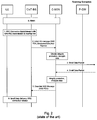
- Fig. 2 shows the message flow for mobile originated small data transmission in CIoT according to 3GPP TR 23.720, especially Solution 2.
- the attach procedure which is an RRC connection establishment and from RRC perspective also comprises three messages (in Fig. 2 it is shown summarized as one step "0. Attach"), namely RRC connection request, RRC connection setup and RRC connection setup complete, there is no INITIAL CONTEXT SETUP message over S1 or a similar mechanism, with which the capabilities of the communications devices, especially radio related capabilities of a communications device (UE) and/or core network capabilities of a communications device (UE) respectively required and/or supported by a communications device (UE), could be transferred to the core network element CIoT-BS.
- the connection for small data delivery (Message 6 "Small Data Delivery, RRC connection release” in Fig. 2 ) is released only after first downlink NAS message (Message 5 "Downlink NAS Message (NAS PDU)" in Fig. 2 ).
- Fig. 3 shows a message flow diagram for handling the capabilities of a communications device (UE) according to a first embodiment of the present invention, which is compared with Fig. 1 modified in such a way, that the communications device (UE) during an attach procedure transmits an information element regarding radio related capabilities of the communications device (UE) and/or regarding core network capabilities of the communications device (UE) to the eNodeB (eNB) of the mobile communications network, which is according to the present invention a network element providing a wireless access interface for the communications device (UE).
- eNB eNodeB
- the information element is transferred to the eNodeB (eNB) of the mobile communications network with a RRC connection request, whereby the information element is inserted within the RRC connection request by the communications device (UE), by entering the information element within reserved values of the LCID of the RRC connection request.
- eNB eNodeB
- UE communications device
- the creation respectively generation of the information element regarding radio related capabilities of the communications device (UE) and/or regarding core network capabilities of the communications device (UE) is preferably done by the communications device (UE) out of the parameters of the capabilities of the communications device (UE), especially UE-EUTRA capabilities according to 3GPP TS 36.331, chapter 6.3.6, with PDCP parameters, RLC parameters, RF parameters and/or the like according to 3GPP TS 36.306 or by any new parameters which might be included into the existing parameter categories as listed above (e.g. Multi Tone/Single Tone Support, Support of different ways of Data transport within CIoT architecture (especially Solution/Option 2 or Solution/Option 18 according to 3GPP TR 23.720)).
- the communication device (UE) preferably comprises a logic respectively logic module or algorithm.
- the capabilities of the communications device (UE), especially radio related capabilities of the communications device (UE) and/or core network capabilities of the communications device (UE) are as fast as possible available and usable at the eNodeB (eNB) providing a wireless access interface for the communications device (UE) to the mobile communications network.
- eNB eNodeB
- the establishment of the connection includes from RRC perspective three messages:
- LCID is currently defined in 3GPP TS 36.321 (for example Table 6.2.1-1 Values of LCID for DL-SCH):
- the capabilities of the NB-IoT needed to be transported to the mobile communications network are rather small, but might advantageously include frequency band (1 or 2) to be supported, Layer 1 techniques (single tone/multi tone) to be used, and/or the communications device (UE) supports one or more way of data transport for the NB-IoT (compare 3GPP TR 23.720, Solution 2 and Solution 18).
- the invention suggests to re-use some of the reserved values to signal capability set of the UE.
- the use of R bits can advantageously also be used to achieve the same goal.
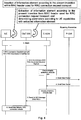
- Fig. 4 shows a message flow diagram for handling the capabilities of a communications device (UE) according to a second embodiment of the present invention, which is compared with Fig. 2 modified in such a way, that the communications device (UE) during an attach procedure transmits an information element regarding radio related capabilities of the communications device (UE) and/or regarding core network capabilities of the communications device (UE) to the CIoT-BS of the mobile communications network, which is according to the present invention a network element providing a wireless access interface for the communications device (UE).
- the information element is transferred to the CIoT-BS of the mobile communications network with a RRC connection request, whereby the information element is inserted within the RRC connection request by the communications device (UE), by entering the information element within reserved values of the LCID of the RRC connection request.
- the creation respectively generation of the information element regarding radio related capabilities of the communications device (UE) and/or regarding core network capabilities of the communications device (UE) is preferably done by the communications device (UE) out of the parameters of the capabilities of the communications device (UE), especially UE-EUTRA capabilities according to 3GPP TS 36.331, chapter 6.3.6, with PDCP parameters, RLC parameters, RF parameters and/or the like according to 3GPP TS 36.306 or by any new parameters which might be included into the existing parameter categories as listed above (e.g. Multi Tone/Single Tone Support, Support of different ways of Data transport within CIoT architecture (especially Solution/Option 2 or Solution/Option 18 according to 3GPP TR 23.720)).
- the communication device (UE) preferably comprises a logic respectively logic module or algorithm.
- the capabilities of the communications device (UE), especially radio related capabilities of the communications device (UE) and/or core network capabilities of the communications device (UE) are as fast as possible available and usable at the CIoT-BS providing a wireless access interface for the communications device (UE) to the mobile communications network
- the establishment of the connection includes - as stated above - from RRC perspective three messages:
- LCID is currently defined in 3GPP TS 36.321 (for example Table 6.2.1-1 Values of LCID for DL-SCH):
- the capabilities of the NB-IoT needed to be transported to the mobile communications network are rather small, but might advantageously include frequency band (1 or 2) to be supported, Layer 1 techniques (single tone/multi tone) to be used, and/or the communications device (UE) supports one or more way of data transport for the NB-IoT (compare 3GPP TR 23.720, Solution 2 and Solution 18).
- the invention suggests to re-use some of the reserved values to signal capability set of the UE.
- the use of R bits can advantageously also be used to achieve the same goal.
Landscapes
- Engineering & Computer Science (AREA)
- Computer Networks & Wireless Communication (AREA)
- Signal Processing (AREA)
- Databases & Information Systems (AREA)
- Health & Medical Sciences (AREA)
- Computing Systems (AREA)
- General Health & Medical Sciences (AREA)
- Medical Informatics (AREA)
- Computer Security & Cryptography (AREA)
- Mobile Radio Communication Systems (AREA)
Abstract
Description
- The present invention relates to methods of operating a communications device (so called UE (UE: User Equipment)), especially including communication devices (UE) for NB-IoT respectively CIoT, like M2M devices, in a mobile communications network including one or more network elements (for example eNodeB, MME or CIoT-BS, C-SGN), which are especially for providing a wireless access interface for the communications device (UE), especially according to LTE (LTE: Long Term Evolution) or CIoT (CIoT: Cellular Internet of Things; IoT: Internet of Things).
- The present invention further relates to a mobile communications system for operating a communications device (UE), especially including communication devices (UE) for NB-IoT respectively CIoT, like M2M devices, in a mobile communications network including one or more network elements (for example eNodeB, MME; CIoT-BS, C-SGN), which are especially for providing a wireless access interface for the communications device (UE), especially according to LTE or CIoT, whereby the communications device (UE) and a network element (for example eNodeB; CIoT-BS) of the mobile communications network providing a wireless access interface for the communications device (UE) are adapted to perform the steps of a method according to the present invention. Further objects of the present invention are a communication device (UE) and a network element (for example eNodeB; CIoT-BS) which are adapted to perform the steps of a method according to the present invention.
- 3GPP networks are beginning to support communications devices and/or customers with very different and/or special respectively specific characteristics, such as M2M (M2M: Machine to Machine) devices, etc. These classes of communications devices and/or customers may have different requirements from the network elements (for example eNodeB (eNB), MME, CIoT-BS, C-SGN) of a mobile communications network in terms of optional feature support, traffic characteristic support, availability, congestion management, ratio of signaling to user plane traffic, etc. Such requirements relates to radio related capabilities of the communications device (UE) and/or regarding core network capabilities of the communications device (UE), which are for example defined in 3GPP TS 36.331, Chapter 6.3.6 "Other information elements", "UE-EUTRA-Capability" and relate for example to PDCP parameters, RLC parameters, RF parameters etc. It is supposed, that the classes of communications devices and/or customers will continue to increase. One cost effective mechanism for operators to support these different classes of communications devices and customers is to create separate dedicated core networks consisting of specialized core network elements that are designed and deployed to meet the requirements of these different communications devices and/or customers. It is cost-effective as the network availability or redundancy requirements may be easier met with different hardware and/or software than the existing network elements of a mobile communications network. Also, especially creating separate core network elements enables independent scaling or specific feature provisioning for specific communications devices and/or customers or traffic types and isolating specific communications devices and/or customers and traffic from each other.
- In a mobile communications network according to LTE the mechanism to transport information regarding radio related capabilities of the communications device (UE) and/or regarding core network capabilities of the communications device (UE) is designed in a way that during an attach procedure, especially with RRC (RRC: Radio Resource Control), and the first TAU procedure (TAU: Tracking Area Update) to LTE the mobile communications network retrieves the UE capabilities from the communications device (UE), especially according to 3GPP TS 23.401, 3GPP TS 36.300, 3GPP TS 36.331 respectively 3GPP TS 36.413, which are herewith cited by reference, especially for purposes of supporting disclosure and the scope of the present invention. For subsequent RRC connections, MME (MME: Mobility Management Entity) provides these capabilities to the eNodeB (eNB) within an INITIAL CONTEXT SETUP message over so called S1 when the default bearer is setup. The mechanism is for example shown in 3GPP 36.300, chapter 18 "UE capabilities" (also compare enclosed
Fig. 1 ). - For a mobile communication network according to CIoT the core network elements (for example C-SGN) has to support a very large number of IoT communication devices which have very different traffic characteristics than for example communication devices that the EPC respectively EPS is currently supporting. The message sizes and traffic load in CIoT is much smaller (for example 20 bytes to 200 bytes), single/limited transfers (for example 1 to 2 packets per transmission/reception) and sent infrequently (for example several times a day) than the traffic model assumed for existing EPC traffic. Also requirements for supporting respectively not-supporting seamless mobility are different.
- Thus the core network respectively core network elements of a mobile communication network according to CIoT can have an simplified and different architecture from the existing EPC architecture according to LTE to cope with such communication devices (UE), especially including communication devices (UE) for NB-IoT respectively CIoT, like M2M devices respectively MTC devices and/or the like. The two options for developing the CIoT core network are to have the existing EPC support S1 interface while not modifying the existing EPC architecture, nodes and/or interfaces, such as MME, SGW, PGW, SII, S5, SIO, etc., or to have a modified core-network architecture for CIoT and have S1 as interface between the CIoT core network and the CIoT RAN. The CIoT core network than only serves communication devices that attach to CIoT RAN.
- For CIoT NB-IoT systems (NB-IoT: Narrow Band IoT) are designed within 3GPP, which especially intend to provide means for a much more efficient way to send respectively receive small amount of very infrequent data. 3GPP TR 23.720, which is herewith cited by reference, especially for purposes of supporting disclosure and the scope of the present invention, shows for example within
Solution 2 one agreed way of doing it (compare for example chapter 6.2 of 3GPP TR 23.720). The enclosedFig. 2 shows the corresponding message flow for mobile originated small data transmission according to 3GPP TR 23-720Solution 2. As it can be seen fromFig. 2 , after the attach procedure, which is an RRC connection establishment and from RRC perspective also comprises three messages (inFig. 2 it is shown summarized as one step "0. Attach"), namely RRC connection request, RRC connection setup and RRC connection setup complete, there is no INITIAL CONTEXT SETUP message over S1 or a similar mechanism, with which the capabilities of the communications devices, especially radio related capabilities of a communications device (UE) and/or core network capabilities of a communications device (UE) respectively required and/or supported by a communications device (UE), could be transferred. Furthermore the connection for small data delivery (Message 6 "Small Data Delivery, RRC connection release" inFig. 2 ) might be released just after first downlink NAS message (Message 5 "Downlink NAS Message (NAS PDU)" inFig. 2 ). - In spite of this there is a need for a mechanism which allows operating a communications device (UE) in a mobile communications network, especially according to LTE or CIoT, whereby the capabilities of the communications device (UE), especially radio related capabilities of the communications device (UE) and/or core network capabilities of the communications device (UE) are as fast as possible available and usable at a network element, especially eNodeB (eNB) and/or CIoT-BS, of the mobile communications network providing a wireless access interface for the communications device (UE).
- As a technical solution the present invention suggests a method of operating a communications device (UE), especially including communication devices (UE) for NB-IoT respectively CIoT, like M2M devices in a mobile communications network, especially according to LTE or CIoT, whereby the communications device (UE) during an attach procedure transmits an information element regarding radio related capabilities of the communications device (UE) and/or regarding core network capabilities of the communications device (UE) to a network element, preferably eNodeB and/or CIoT-BS, of the mobile communications network providing a wireless access interface for the communications device (UE).
- The information element regarding radio related capabilities of the communications device (UE) and/or regarding core network capabilities of the communications device (UE) is advantageously transferred to the network element (eNodeB; CIoT-BS) of the mobile communications network with a RRC connection request, preferably within MAC header used for RRC connection request transport.
- It is advantageously provided, that the information element regarding radio related capabilities of the communications device (UE) and/or regarding core network capabilities of the communications device (UE) is inserted within the RRC connection request by the communications device (UE), preferably within MAC header used for RRC connection request transport.
- Further it is advantageously provided, that the information element regarding radio related capabilities of the communications device (UE) and/or regarding core network capabilities of the communications device (UE) is entered within reserved values of the LCID of the RRC connection request.
- Thus the communications device (UE) according to the present invention provides the capability related information element at the first possibility while establishing the RRC connection. As a result the capabilities of the communications device (UE), especially radio related capabilities of the communications device (UE) and/or core network capabilities of the communications device (UE) are as fast as possible available, advantageously before RRC connection is established and data can be transmitted, and usable at a network element, especially eNodeB (eNB) and/or CIoT-BS, of the mobile communications network providing a wireless access interface for the communications device (UE). The establishment of the RRC connection might be done in order to transport attach request, TAU request, and/or any other NAS message, but also to transmit data or both. In order to do it, the communications device (UE) inserts or includes at least some of the capabilities into the MAC header, preferably by using reserved LCID values and/or R fields of the header, which is used to transport RRC connection request message. It has to be noted, that it is not the RRC connection request message itself, but the header of the layer below. Advantageously the network element (for example eNodeB; CIoT-BS) knows immediately that the communications device (US) for example is a NB-IoT/CIoT device with a certain characteristic and can especially assign resources for follow up messages like "RRC connection setup complete", for admission control and/or for choice respectively selection of a core network element (for example eNodeB; CIoT-BS) in an improved way.
- In a further embodiment of the present invention the information element regarding radio related capabilities of the communications device (UE) and/or regarding core network capabilities of the communications device (UE) is created by the communications device (UE) out of the parameters of the capabilities of the communications device (UE), especially UE-EUTRA capabilities according to 3GPP TS 36.331, chapter 6.3.6, with PDCP parameters, RLC parameters, RF parameters and/or the like according to 3GPP TS 36.306, which is herewith cited by reference, especially for purposes of supporting disclosure and the scope of the present invention, or like other future respectively new NB-IoT-specific parameters, like for example so called single tone. For this the communication device (UE) preferably comprises a logic respectively logic module or algorithm.
- As a technical solution the present invention further suggests a method of operating a communications device (UE), especially including communication devices (UE) for NB-IoT respectively CIoT, like M2M devices in a mobile communications network, especially according to LTE or CIoT, whereby a network element, preferably eNodeB and/or CIoT-BS, of the mobile communications network providing a wireless access interface for the communications device (UE) during an attach procedure receives an information element regarding radio related capabilities of the communications device (UE) and/or regarding core network capabilities of the communications device (UE) and whereby the network element (eNodeB; CIoT-BS) of the mobile communications network is able to use the received information element regarding radio related capabilities of the communications device (UE) and/or regarding core network capabilities of the communications device (UE) itself, preferably directly, for selecting a core network node, preferably MME and/or C-SGN, of the mobile communications network, especially in such a way that for such a selection of a core network node (MME; C-SGN) of the mobile communications network no further communication between the network element (eNodeB; CIoT-BS) of the mobile communications network and the communications device (UE) and/or a core network node (MME; C-SGN) of the mobile communications network is needed.
- The information element regarding radio related capabilities of the communications device (UE) and/or regarding core network capabilities of the communications device (UE) is advantageously received by the network element (eNodeB; CIoT-BS) of the mobile communications network with a RRC connection request, preferably within MAC header used for RRC connection request transport.
- It is advantageously provided, that the information element regarding radio related capabilities of the communications device (UE) and/or regarding core network capabilities of the communications device (UE) is contained within the received RRC connection request, preferably within MAC header used for RRC connection request transport.
- Further it is advantageously provided, that the information element regarding radio related capabilities of the communications device (UE) and/or regarding core network capabilities of the communications device (UE) is extracted by the network element (eNodeB; CIoT-BS) of the mobile communications network from the received RRC connection request, preferably from the received MAC header used for RRC connection request transport, preferably out of reserved values of the LCID of the RRC connection request.
- As stated above the capability related information element is thus provides at the first possibility while establishing the RRC connection. As a result the capabilities of the communications device (UE), especially radio related capabilities of the communications device (UE) and/or core network capabilities of the communications device (UE) are as fast as possible available, advantageously before RRC connection is established and data can be transmitted, and usable at a network element, especially eNodeB (eNB) and/or CIoT-BS, of the mobile communications network providing a wireless access interface for the communications device (UE).The establishment of the RRC connection might be done in order to transport attach request, TAU request, and/or any other NAS message, but also to transmit data or both. In order to do it, the communications device (UE) inserts or includes at least some of the capabilities into the MAC header, preferably by using reserved LCID values and/or R fields of the header, which is used to transport RRC connection request message. It has to be noted, that it is not the RRC connection request message itself, but the header of the layer below. Advantageously the network element (for example eNodeB; CIoT-BS) knows immediately that the communications device (UE) for example is a NB-IoT/CIoT device with a certain characteristic and can especially assign resources for follow up messages like "RRC connection setup complete", for admission control and/or for choice respectively selection of a core network element (for example eNodeB; CIoT-BS) in an improved way.
- In a further embodiment of the present invention the information element regarding radio related capabilities of the communications device (UE) and/or regarding core network capabilities of the communications device (UE) is used by the network element (for example eNodeB; CIoT-BS) of the mobile communications network to determine on side of the network element (eNodeB; CIoT-BS) the parameters of the capabilities of the communications device (UE), especially UE-EUTRA capabilities according to 3GPP TS 36.331, chapter 6.3.6, with PDCP parameters, RLC parameters, RF parameters and/or the like according to 3GPP TS 36.306 or like other future respectively new NB-IoT-specific parameters, like for example so called single tone. For this the network element (for example eNodeB; CIoT-BS), preferably with a logic respectively logic module or algorithm and/or a database respectively means for storage such information respectively data.
- Object of the present invention is further a mobile communications system for operating a communications device (UE) in a mobile communications network including one or more network elements, preferably eNodeB, MME respectively CIoT-BS, C-SGN, which are especially for providing a wireless access interface for the communications device (UE), especially according to LTE or CIoT, whereby the communications device (UE) is adapted to perform the steps of a method of a communications device (UE) according to the present invention and whereby a network element, preferably eNodeB respectively CIoT-BS, of the mobile communications network providing a wireless access interface for the communications device (UE) is adapted to perform the steps of a method of a network element (eNodeB; Clot-BS) according to the present invention.
- Object of the present invention is further a communications device (UE) for being operated in a in a mobile communications network, especially according to LTE or CIoT, which communications device (UE) is adapted to perform the steps of a method of a communications device (UE) according to the present invention, especially with a mobile communications system according to the present invention, and/or comprises means for performing the steps of a method of a communications device (UE) according to the present invention, especially with a mobile communications system according to the present invention.
- Object of the present invention is further a mobile communications network including one or more network elements, preferably eNodeB, MME, CIoT-BS and/or C-SGN, which are especially for providing a wireless access interface for a communications device (UE), especially according to LTE or CIoT, whereby a network element, preferably eNodeB respectively CIoT-BS, of the mobile communications network providing a wireless access interface for the communications device (UE) is adapted to perform the steps of a method of a network element (eNodeB; CIoT-BS) according to the present invention, especially with a mobile communications system according to the present invention, and/or comprises means for performing the steps of a method of a network element (eNodeB; CIoT-BS) according to the present invention, especially with a mobile communications system according to the present invention and/or a communications device (UE) according to the present invention.
- Object of the present invention is further a network element, preferably eNodeB respectively CIoT-BS, of a mobile communications network providing a wireless access interface for a communications device (UE), especially according to LTE or CIoT, which is adapted to perform the steps of a method of a network element (eNodeB; CIoT-BS) according to the present invention, especially with a mobile communications system according to the present invention, and/or comprises means for performing the steps of a method of a network element (eNodeB; CIoT-BS) according to the present invention, especially with a mobile communications system according to the present invention, a communications device (UE) according to the present invention and/or a mobile communications network according to the present invention.
- Further details, characteristics and advantages of the present invention are explained in the following in more detail based on the description of the exemplary embodiments shown in the figures of the drawing. In these figures:
- Fig. 1
- shows a message flow diagram of Initial UE Capability Handling according to 3GPP TS 36.300, chapter 18 "UE Capabilities" (state of the art);
- Fig. 2
- shows a message flow diagram for mobile originated small data transmission in CIoT according to 3GPP TR 23.720 (state of the art);
- Fig. 3
- shows a message flow diagram for handling the capabilities of a communications device (UE) according to a first embodiment of the present invention;
- Fig. 4
- shows a message flow diagram for handling the capabilities of a communications device (UE) according to a second embodiment of the present invention; and
- Fig. 5
- shows a header for RCC CONNECTION REQUEST according to 3GPP TS 36.321.
-
Fig. 1 shows the message flow diagram of Initial UE Capability Handling according to 3GPP TS 36.300 chapter 18 "UE Capabilities" (state of the art), which is done after an RRC connection establishment, comprising a RRC connection request message, during an attach procedure, especially with RRC (RRC: Radio Resource Control), and the first TAU procedure (TAU: Tracking Area Update) to LTE, which is not shown inFig. 1 . The mobile communications network retrieves the UE capabilities from the communications device (UE), especially according to 3GPP TS 23.401, 3GPP TS 36.300, 3GPP TS 36.331 respectively 3GPP TS 36.413, which are herewith cited by reference, especially for purposes of supporting disclosure and the scope of the present invention. For subsequent RRC connections, MME (MME: Mobility Management Entity) provides these capabilities to the eNodeB (eNB) within an INITIAL CONTEXT SETUP message over S1 when the default bearer is setup. The mechanism is for example shown in 3GPP 36.300, chapter 18 "UE capabilities". For sending the UE capabilities to the eNodeB (eNB) according to 3GPP TS 36.331 a so called "UERadioAccessCapabilitylnformation" message is used (compare 3GPP TS 36.331, chapter 10.2.2). When the UE-EUTRA capabilities are known in the eNodeB (eNB), the communication device (UE) respectively the connection of the communication device (UE) to the core network is routed with a so called "UE Capability Info Indication" (compare 3GPP 36.413, chapter 9.1.10) to an appropriate core network element and stored there. If the communications device (UE) now went to so called Idle Mode and then again went to RRC connected state, the UE-EUTRA capabilities are downloaded from the core network, for example MME, to the eNodeB (eNB) within "Initial Context Setup" (compare 3GPP 36.413, chapter 9.1.4.1), since the UE-EUTRA capabilities are already stored within the core network and thus the "UE Capability Info Indication" (compare 3GPP 36.413, chapter 9.1.10) needs not to be repeated. -
Fig. 2 shows the message flow for mobile originated small data transmission in CIoT according to 3GPP TR 23.720, especiallySolution 2. After the attach procedure, which is an RRC connection establishment and from RRC perspective also comprises three messages (inFig. 2 it is shown summarized as one step "0. Attach"), namely RRC connection request, RRC connection setup and RRC connection setup complete, there is no INITIAL CONTEXT SETUP message over S1 or a similar mechanism, with which the capabilities of the communications devices, especially radio related capabilities of a communications device (UE) and/or core network capabilities of a communications device (UE) respectively required and/or supported by a communications device (UE), could be transferred to the core network element CIoT-BS. The connection for small data delivery (Message 6 "Small Data Delivery, RRC connection release" inFig. 2 ) is released only after first downlink NAS message (Message 5 "Downlink NAS Message (NAS PDU)" inFig. 2 ). -
Fig. 3 shows a message flow diagram for handling the capabilities of a communications device (UE) according to a first embodiment of the present invention, which is compared withFig. 1 modified in such a way, that the communications device (UE) during an attach procedure transmits an information element regarding radio related capabilities of the communications device (UE) and/or regarding core network capabilities of the communications device (UE) to the eNodeB (eNB) of the mobile communications network, which is according to the present invention a network element providing a wireless access interface for the communications device (UE). The information element is transferred to the eNodeB (eNB) of the mobile communications network with a RRC connection request, whereby the information element is inserted within the RRC connection request by the communications device (UE), by entering the information element within reserved values of the LCID of the RRC connection request. - The creation respectively generation of the information element regarding radio related capabilities of the communications device (UE) and/or regarding core network capabilities of the communications device (UE) is preferably done by the communications device (UE) out of the parameters of the capabilities of the communications device (UE), especially UE-EUTRA capabilities according to 3GPP TS 36.331, chapter 6.3.6, with PDCP parameters, RLC parameters, RF parameters and/or the like according to 3GPP TS 36.306 or by any new parameters which might be included into the existing parameter categories as listed above (e.g. Multi Tone/Single Tone Support, Support of different ways of Data transport within CIoT architecture (especially Solution/
Option 2 or Solution/Option 18 according to 3GPP TR 23.720)). For this the communication device (UE) preferably comprises a logic respectively logic module or algorithm. - Thus the capabilities of the communications device (UE), especially radio related capabilities of the communications device (UE) and/or core network capabilities of the communications device (UE) are as fast as possible available and usable at the eNodeB (eNB) providing a wireless access interface for the communications device (UE) to the mobile communications network. This advantageously provides the mobile communications network, especially the eNodeB, a possibility to assign resources, execute admission control and/or for choice respectively selection of a core network element (for example eNodeB) in an improved way.
- The establishment of the connection includes from RRC perspective three messages:
- RRC CONNECTION REQUEST
- RRC CONNECTION SETUP
- RRC CONNECTION SETUP COMPLETE
- Singe felds are defined as follow in 3GPP TS 36.321:
- LCID: The Logical Channel ID field identifies the logical channel instance of the corresponding MAC SDU or the type of the corresponding MAC control element or padding as described in tables 6.2.1-1, 6.2.1-2 and 6.2.1-4 for the DL-SCH, UL-SCH and MCH respectively. There is one LCID field for each MAC SDU, MAC control element or padding included in the MAC PDU. In addition to that, one or two additional LCID fields are included in the MAC PDU, when single-byte or two-byte padding is required but cannot be achieved by padding at the end of the MAC PDU. A UE of Category 0 [12] shall indicate CCCH using LCID "01011", otherwise the UE shall indicate CCCH using LCID "00000". The LCID field size is 5 bits;
- E: The Extension field is a flag indicating if more fields are present in the MAC header or not. The E field is set to "1" to indicate another set of at least R/R/E/LCID fields. The E field is set to "0" to indicate that either a MAC SDU, a MAC control element or padding starts at the next byte;
- R: Reserved bit, set to "0".
- LCID is currently defined in 3GPP TS 36.321 (for example Table 6.2.1-1 Values of LCID for DL-SCH):

- The capabilities of the NB-IoT needed to be transported to the mobile communications network are rather small, but might advantageously include frequency band (1 or 2) to be supported,
Layer 1 techniques (single tone/multi tone) to be used, and/or the communications device (UE) supports one or more way of data transport for the NB-IoT (compare 3GPP TR 23.720,Solution 2 and Solution 18). - The invention suggests to re-use some of the reserved values to signal capability set of the UE. The use of R bits can advantageously also be used to achieve the same goal.
- In addition, it is advantageously proposed to use DL NAS Message to transport UE capabilities in case the connection last for a little bit longer time.
-
Fig. 4 shows a message flow diagram for handling the capabilities of a communications device (UE) according to a second embodiment of the present invention, which is compared withFig. 2 modified in such a way, that the communications device (UE) during an attach procedure transmits an information element regarding radio related capabilities of the communications device (UE) and/or regarding core network capabilities of the communications device (UE) to the CIoT-BS of the mobile communications network, which is according to the present invention a network element providing a wireless access interface for the communications device (UE). The information element is transferred to the CIoT-BS of the mobile communications network with a RRC connection request, whereby the information element is inserted within the RRC connection request by the communications device (UE), by entering the information element within reserved values of the LCID of the RRC connection request. - The creation respectively generation of the information element regarding radio related capabilities of the communications device (UE) and/or regarding core network capabilities of the communications device (UE) is preferably done by the communications device (UE) out of the parameters of the capabilities of the communications device (UE), especially UE-EUTRA capabilities according to 3GPP TS 36.331, chapter 6.3.6, with PDCP parameters, RLC parameters, RF parameters and/or the like according to 3GPP TS 36.306 or by any new parameters which might be included into the existing parameter categories as listed above (e.g. Multi Tone/Single Tone Support, Support of different ways of Data transport within CIoT architecture (especially Solution/
Option 2 or Solution/Option 18 according to 3GPP TR 23.720)). For this the communication device (UE) preferably comprises a logic respectively logic module or algorithm. - Thus the capabilities of the communications device (UE), especially radio related capabilities of the communications device (UE) and/or core network capabilities of the communications device (UE) are as fast as possible available and usable at the CIoT-BS providing a wireless access interface for the communications device (UE) to the mobile communications network This advantageously provides the mobile communications network, especially the CIoT-BS, a possibility to assign resources, execute admission control and/or for choice respectively selection of a core network element (for example CIoT-BS) in an improved way.
- The establishment of the connection includes - as stated above - from RRC perspective three messages:
- RRC CONNECTION REQUEST
- RRC CONNECTION SETUP
- RRC CONNECTION SETUP COMPLETE
- Singe felds are defined as follow in 3GPP TS 36.321:
- LCID: The Logical Channel ID field identifies the logical channel instance of the corresponding MAC SDU or the type of the corresponding MAC control element or padding as described in tables 6.2.1-1, 6.2.1-2 and 6.2.1-4 for the DL-SCH, UL-SCH and MCH respectively. There is one LCID field for each MAC SDU, MAC control element or padding included in the MAC PDU. In addition to that, one or two additional LCID fields are included in the MAC PDU, when single-byte or two-byte padding is required but cannot be achieved by padding at the end of the MAC PDU. A UE of Category 0 [12] shall indicate CCCH using LCID "01011", otherwise the UE shall indicate CCCH using LCID "00000". The LCID field size is 5 bits;
- E: The Extension field is a flag indicating if more fields are present in the MAC header or not. The E field is set to "1" to indicate another set of at least R/R/E/LCID fields. The E field is set to "0" to indicate that either a MAC SDU, a MAC control element or padding starts at the next byte;
- R: Reserved bit, set to "0".
- LCID is currently defined in 3GPP TS 36.321 (for example Table 6.2.1-1 Values of LCID for DL-SCH):

- The capabilities of the NB-IoT needed to be transported to the mobile communications network are rather small, but might advantageously include frequency band (1 or 2) to be supported,
Layer 1 techniques (single tone/multi tone) to be used, and/or the communications device (UE) supports one or more way of data transport for the NB-IoT (compare 3GPP TR 23.720,Solution 2 and Solution 18). - The invention suggests to re-use some of the reserved values to signal capability set of the UE. The use of R bits can advantageously also be used to achieve the same goal.
- In addition, it is advantageously proposed to use DL NAS Message to transport UE capabilities in case the connection last for a little bit longer time.
- The exemplary embodiments of the invention shown in the figures of the drawing and explained in connection with the description merely serve to explain the invention and are in no way restrictive.
- While the invention has been illustrated and described in detail in the drawings and foregoing description, such illustration and description are to be considered illustrative or exemplary and not restrictive. The invention is not limited to the disclosed embodiments. Other variations to the disclosed embodiments can be understood and effected by those skilled in the art in practicing the claimed invention, from a study of the drawings, the disclosure, and the appended claims, especially with the mentioned 3GPP documents, which are all cited by reference, especially for purposes of supporting disclosure and the scope of the present invention.
- In the claims, the word "comprising" or "including" does not exclude other elements or steps, and the indefinite article "a" or "an" does not exclude a plurality. A single processor or other unit or means may fulfill the functions of several items recited in the claims. Any reference signs in the claims should not be construed as limiting the scope.
Claims (12)
- A method of operating a communications device (UE) in a mobile communications network including one or more network elements (eNodeB, MME; CIoT-BS, C-SGN), which are especially for providing a wireless access interface for the communications device (UE), especially according to LTE or CIoT, whereby the communications device (UE) during an attach procedure transmits an information element regarding radio related capabilities of the communications device (UE) and/or regarding core network capabilities of the communications device (UE) to a network element (eNodeB; CIoT-BS) of the mobile communications network providing a wireless access interface for the communications device (UE).
- The method according to claim 1, wherein the information element regarding radio related capabilities of the communications device (UE) and/or regarding core network capabilities of the communications device (UE) is transferred to the network element (eNodeB; CIoT-BS) of the mobile communications network with a RRC connection request, preferably within MAC header used for RRC connection request transport.
- The method according to claim 2, wherein the information element regarding radio related capabilities of the communications device (UE) and/or regarding core network capabilities of the communications device (UE) is inserted within the RRC connection request by the communications device (UE), preferably within MAC header used for RRC connection request transport.
- The method according to claim 3, wherein the information element regarding radio related capabilities of the communications device (UE) and/or regarding core network capabilities of the communications device (UE) is entered within reserved values of the LCID of the RRC connection request.
- A method of operating a communications device (UE) in a mobile communications network including one or more network elements (eNodeB, MME; CIoT-BS, C-SGN), which are especially for providing a wireless access interface for the communications device (UE), especially according to LTE or CIoT, whereby a network element (eNodeB; CIoT-BS) of the mobile communications network providing a wireless access interface for the communications device (UE) during an attach procedure receives an information element regarding radio related capabilities of the communications device (UE) and/or regarding core network capabilities of the communications device (UE) and whereby the network element (eNodeB; CIoT-BS) of the mobile communications network is able to use the received information element regarding radio related capabilities of the communications device (UE) and/or regarding core network capabilities of the communications device (UE) itself, preferably directly, for selecting a core network node (MME; C-SGN) of the mobile communications network.
- The method according to claim 5, wherein the information element regarding radio related capabilities of the communications device (UE) and/or regarding core network capabilities of the communications device (UE) is received by the network element (eNodeB; CIoT-BS) of the mobile communications network with a RRC connection request, preferably within MAC header used for RRC connection request transport.
- The method according to claim 6, wherein the information element regarding radio related capabilities of the communications device (UE) and/or regarding core network capabilities of the communications device (UE) is contained within the received RRC connection request, preferably within MAC header used for RRC connection request transport.
- The method according to claim 7, wherein the information element regarding radio related capabilities of the communications device (UE) and/or regarding core network capabilities of the communications device (UE) is extracted by the network element (eNodeB; CIoT-BS) of the mobile communications network from respectively out of the received RRC connection request, preferably from respectively out of the received MAC header used for RRC connection request transport, preferably out of reserved values of the LCID of the RRC connection request.
- A mobile communications system for operating a communications device (UE) in a mobile communications network including one or more network elements (eNodeB, MME; CIoT-BS, C-SGN), which are especially for providing a wireless access interface for the communications device (UE), especially according to LTE or CIoT, whereby the communications device (UE) is adapted to perform the steps of a method according to one or more of the claims 1 to 4 and whereby a network element (eNodeB; CIoT-BS) of the mobile communications network providing a wireless access interface for the communications device (UE) is adapted to perform the steps of a method according to one or more of the claims 5 to 8.
- A communications device (UE) for being operated in a in a mobile communications network including one or more network elements (eNodeB, MME; CIoT-BS, C-SGN), which are especially for providing a wireless access interface for the communications device (UE), especially according to LTE or CIoT, which is adapted to perform the steps of a method according to one or more of the claims 1 to 4, especially with a mobile communications system according to claim 9, and/or comprises means for performing the steps of a method according to one or more of the claims 1 to 4, especially with a mobile communications system according to claim 9.
- A mobile communications network including one or more network elements (eNodeB, MME; CIoT-BS, C-SGN), which are especially for providing a wireless access interface for a communications device (UE), especially according to LTE or CIoT, whereby a network element (eNodeB; CIoT-BS) of the mobile communications network providing a wireless access interface for the communications device (UE) is adapted to perform the steps of a method according to one or more of the claims 5 to 8, especially with a mobile communications system according to claim 9, and/or comprises means for performing the steps of a method according to one or more of the claims 5 to 8, especially with a mobile communications system according to claim 9 and/or a communications device (UE) according to claim 10.
- A network element (eNodeB; CIoT-BS) of a mobile communications network providing a wireless access interface for a communications device (UE), especially according to LTE or CIoT, which is adapted to perform the steps of a method according to one or more of the claims 5 to 8, especially with a mobile communications system according to claim 9, and/or comprises means for performing the steps of a method according to one or more of the claims 5 to 8, especially with a mobile communications system according to claim 9, a communications device (UE) according to claim 10 and/or a mobile communications network according to claim 11.
Priority Applications (3)
| Application Number | Priority Date | Filing Date | Title |
|---|---|---|---|
| EP16151700.8A EP3193537B1 (en) | 2016-01-18 | 2016-01-18 | Operating a communications device in a mobile communications network |
| US15/409,252 US10349315B2 (en) | 2016-01-18 | 2017-01-18 | Operating a communications device in a mobile communications network |
| US16/427,491 US10750412B2 (en) | 2016-01-18 | 2019-05-31 | Operating a communications device in a mobile communications network |
Applications Claiming Priority (1)
| Application Number | Priority Date | Filing Date | Title |
|---|---|---|---|
| EP16151700.8A EP3193537B1 (en) | 2016-01-18 | 2016-01-18 | Operating a communications device in a mobile communications network |
Publications (2)
| Publication Number | Publication Date |
|---|---|
| EP3193537A1 true EP3193537A1 (en) | 2017-07-19 |
| EP3193537B1 EP3193537B1 (en) | 2021-07-21 |
Family
ID=55177787
Family Applications (1)
| Application Number | Title | Priority Date | Filing Date |
|---|---|---|---|
| EP16151700.8A Active EP3193537B1 (en) | 2016-01-18 | 2016-01-18 | Operating a communications device in a mobile communications network |
Country Status (2)
| Country | Link |
|---|---|
| US (2) | US10349315B2 (en) |
| EP (1) | EP3193537B1 (en) |
Cited By (2)
| Publication number | Priority date | Publication date | Assignee | Title |
|---|---|---|---|---|
| EP3611997A4 (en) * | 2017-05-10 | 2020-04-15 | LG Electronics Inc. -1- | METHOD FOR REQUESTING AN RRC CONNECTION AND APPARATUS SUPPORTING IT |
| CN112331052A (en) * | 2020-11-03 | 2021-02-05 | 武汉慧联无限科技有限公司 | Internet of things demonstration system determination method and device |
Families Citing this family (5)
| Publication number | Priority date | Publication date | Assignee | Title |
|---|---|---|---|---|
| CN107046728B (en) * | 2016-02-06 | 2020-09-22 | 中兴通讯股份有限公司 | Information reporting method and device, and method for discontinuous transmission |
| EP3361777B1 (en) * | 2017-02-09 | 2022-02-09 | HTC Corporation | Device and method for handling evolved long-term evolution network |
| US20190053157A1 (en) * | 2017-08-11 | 2019-02-14 | Mediatek Inc. | NB-IoT UE Differentiation |
| CN109874127B (en) * | 2017-12-05 | 2022-05-17 | 中国电信股份有限公司 | Routing system, method, apparatus and computer readable storage medium |
| CN114698154A (en) * | 2020-12-31 | 2022-07-01 | 华为技术有限公司 | Method and communication device for determining characteristics of terminal |
Citations (1)
| Publication number | Priority date | Publication date | Assignee | Title |
|---|---|---|---|---|
| US20140086177A1 (en) * | 2012-09-27 | 2014-03-27 | Interdigital Patent Holding, Inc. | End-to-end architecture, api framework, discovery, and access in a virtualized network |
Family Cites Families (2)
| Publication number | Priority date | Publication date | Assignee | Title |
|---|---|---|---|---|
| CN101772173B (en) * | 2009-01-07 | 2012-09-05 | 鼎桥通信技术有限公司 | Method for distributing radio resource control (RRC) connection frequency points in time division synchronous code division multiple access (TD-SCDMA) system |
| US10904943B2 (en) * | 2016-01-07 | 2021-01-26 | Nokia Technologies Oy | Time discontinuous transmission for narrow band internet of things |
-
2016
- 2016-01-18 EP EP16151700.8A patent/EP3193537B1/en active Active
-
2017
- 2017-01-18 US US15/409,252 patent/US10349315B2/en active Active
-
2019
- 2019-05-31 US US16/427,491 patent/US10750412B2/en active Active
Patent Citations (1)
| Publication number | Priority date | Publication date | Assignee | Title |
|---|---|---|---|---|
| US20140086177A1 (en) * | 2012-09-27 | 2014-03-27 | Interdigital Patent Holding, Inc. | End-to-end architecture, api framework, discovery, and access in a virtualized network |
Non-Patent Citations (3)
| Title |
|---|
| ERICSSON: "TBS limitation and indication of category for low complexity UEs", vol. RAN WG2, no. Dresden, Germany; 20140818 - 20140822, 17 August 2014 (2014-08-17), XP050794383, Retrieved from the Internet <URL:http://www.3gpp.org/ftp/Meetings_3GPP_SYNC/RAN2/Docs/> [retrieved on 20140817] * |
| NTT DOCOMO: "Key Issue: Selection of CIoT CN", vol. SA WG2, no. Dubrovnik, Croatia; 20150706 - 20150710, 14 July 2015 (2015-07-14), XP050987106, Retrieved from the Internet <URL:http://www.3gpp.org/ftp/tsg_sa/WG2_Arch/TSGS2_110_Dubrovnik/Docs/> [retrieved on 20150714] * |
| QUALCOMM EUROPE: "Framework for UE capability handling in LTE", 3GPP DRAFT; R2-071211, 3RD GENERATION PARTNERSHIP PROJECT (3GPP), MOBILE COMPETENCE CENTRE ; 650, ROUTE DES LUCIOLES ; F-06921 SOPHIA-ANTIPOLIS CEDEX ; FRANCE, vol. RAN WG2, no. St. Julian; 20070322, 22 March 2007 (2007-03-22), XP050134183 * |
Cited By (3)
| Publication number | Priority date | Publication date | Assignee | Title |
|---|---|---|---|---|
| EP3611997A4 (en) * | 2017-05-10 | 2020-04-15 | LG Electronics Inc. -1- | METHOD FOR REQUESTING AN RRC CONNECTION AND APPARATUS SUPPORTING IT |
| US11576226B2 (en) | 2017-05-10 | 2023-02-07 | Lg Electronics Inc. | Method for requesting RRC connection and apparatus supporting same |
| CN112331052A (en) * | 2020-11-03 | 2021-02-05 | 武汉慧联无限科技有限公司 | Internet of things demonstration system determination method and device |
Also Published As
| Publication number | Publication date |
|---|---|
| EP3193537B1 (en) | 2021-07-21 |
| US20170208510A1 (en) | 2017-07-20 |
| US10349315B2 (en) | 2019-07-09 |
| US20190289507A1 (en) | 2019-09-19 |
| US10750412B2 (en) | 2020-08-18 |
Similar Documents
| Publication | Publication Date | Title |
|---|---|---|
| US11770865B2 (en) | Relay communication method and relay communications apparatus and system | |
| US10750412B2 (en) | Operating a communications device in a mobile communications network | |
| US11621916B2 (en) | Information transmission method and device in IAB architecture | |
| KR102047710B1 (en) | User equipment and data transmission method, network node and data transmission method | |
| US10623990B2 (en) | User equipment and method for transmitting data, and network node and method for receiving data | |
| KR20190131150A (en) | Method for using ladn in wireless communication system and appatatus therefor | |
| US10805835B2 (en) | Method for transmitting message and user equipment | |
| EP3079384A1 (en) | Method for transmitting small data packet, base station, and user equipment | |
| KR20180099732A (en) | Data receiving method and user equipment, data transmission method and base station | |
| JP2019527006A (en) | Report receiving method and network device, report execution method and base station | |
| WO2014048224A1 (en) | Method, device and system for transmitting data through control plane signaling | |
| US12432618B2 (en) | Data forwarding in centralized unit and distributed unit split architectures | |
| CN112970299B (en) | Paging of idle state wireless communication equipment | |
| JP5389826B2 (en) | Method and apparatus for processing padding buffer status reports | |
| KR102553785B1 (en) | Method, system, and computer program for the transmission of irregular small data in a communication system | |
| EP3457758B1 (en) | Data transmission methods and devices | |
| EP3659386B1 (en) | Method and device for device-to-device (d2d) communication | |
| CN104160775A (en) | Method for performing connection management in a mobile communication network, user terminal and base station | |
| CN108370489A (en) | Variable Data Transmission in Mobile Communication Networks |
Legal Events
| Date | Code | Title | Description |
|---|---|---|---|
| PUAI | Public reference made under article 153(3) epc to a published international application that has entered the european phase |
Free format text: ORIGINAL CODE: 0009012 |
|
| STAA | Information on the status of an ep patent application or granted ep patent |
Free format text: STATUS: THE APPLICATION HAS BEEN PUBLISHED |
|
| AK | Designated contracting states |
Kind code of ref document: A1 Designated state(s): AL AT BE BG CH CY CZ DE DK EE ES FI FR GB GR HR HU IE IS IT LI LT LU LV MC MK MT NL NO PL PT RO RS SE SI SK SM TR |
|
| AX | Request for extension of the european patent |
Extension state: BA ME |
|
| STAA | Information on the status of an ep patent application or granted ep patent |
Free format text: STATUS: REQUEST FOR EXAMINATION WAS MADE |
|
| 17P | Request for examination filed |
Effective date: 20180119 |
|
| RBV | Designated contracting states (corrected) |
Designated state(s): AL AT BE BG CH CY CZ DE DK EE ES FI FR GB GR HR HU IE IS IT LI LT LU LV MC MK MT NL NO PL PT RO RS SE SI SK SM TR |
|
| STAA | Information on the status of an ep patent application or granted ep patent |
Free format text: STATUS: EXAMINATION IS IN PROGRESS |
|
| 17Q | First examination report despatched |
Effective date: 20190403 |
|
| GRAP | Despatch of communication of intention to grant a patent |
Free format text: ORIGINAL CODE: EPIDOSNIGR1 |
|
| STAA | Information on the status of an ep patent application or granted ep patent |
Free format text: STATUS: GRANT OF PATENT IS INTENDED |
|
| RIC1 | Information provided on ipc code assigned before grant |
Ipc: H04W 8/22 20090101ALN20210301BHEP Ipc: H04W 48/00 20090101AFI20210301BHEP Ipc: H04L 29/08 20060101ALN20210301BHEP Ipc: H04W 4/70 20180101ALN20210301BHEP |
|
| RIC1 | Information provided on ipc code assigned before grant |
Ipc: H04W 48/00 20090101AFI20210310BHEP Ipc: H04W 8/22 20090101ALN20210310BHEP Ipc: H04L 29/08 20060101ALN20210310BHEP Ipc: H04W 4/70 20180101ALN20210310BHEP |
|
| INTG | Intention to grant announced |
Effective date: 20210330 |
|
| GRAS | Grant fee paid |
Free format text: ORIGINAL CODE: EPIDOSNIGR3 |
|
| GRAA | (expected) grant |
Free format text: ORIGINAL CODE: 0009210 |
|
| STAA | Information on the status of an ep patent application or granted ep patent |
Free format text: STATUS: THE PATENT HAS BEEN GRANTED |
|
| AK | Designated contracting states |
Kind code of ref document: B1 Designated state(s): AL AT BE BG CH CY CZ DE DK EE ES FI FR GB GR HR HU IE IS IT LI LT LU LV MC MK MT NL NO PL PT RO RS SE SI SK SM TR |
|
| REG | Reference to a national code |
Ref country code: GB Ref legal event code: FG4D |
|
| REG | Reference to a national code |
Ref country code: CH Ref legal event code: EP |
|
| REG | Reference to a national code |
Ref country code: DE Ref legal event code: R096 Ref document number: 602016060817 Country of ref document: DE |
|
| REG | Reference to a national code |
Ref country code: AT Ref legal event code: REF Ref document number: 1413792 Country of ref document: AT Kind code of ref document: T Effective date: 20210815 |
|
| REG | Reference to a national code |
Ref country code: IE Ref legal event code: FG4D |
|
| REG | Reference to a national code |
Ref country code: LT Ref legal event code: MG9D |
|
| REG | Reference to a national code |
Ref country code: NL Ref legal event code: MP Effective date: 20210721 |
|
| REG | Reference to a national code |
Ref country code: AT Ref legal event code: MK05 Ref document number: 1413792 Country of ref document: AT Kind code of ref document: T Effective date: 20210721 |
|
| PG25 | Lapsed in a contracting state [announced via postgrant information from national office to epo] |
Ref country code: HR Free format text: LAPSE BECAUSE OF FAILURE TO SUBMIT A TRANSLATION OF THE DESCRIPTION OR TO PAY THE FEE WITHIN THE PRESCRIBED TIME-LIMIT Effective date: 20210721 Ref country code: SE Free format text: LAPSE BECAUSE OF FAILURE TO SUBMIT A TRANSLATION OF THE DESCRIPTION OR TO PAY THE FEE WITHIN THE PRESCRIBED TIME-LIMIT Effective date: 20210721 Ref country code: RS Free format text: LAPSE BECAUSE OF FAILURE TO SUBMIT A TRANSLATION OF THE DESCRIPTION OR TO PAY THE FEE WITHIN THE PRESCRIBED TIME-LIMIT Effective date: 20210721 Ref country code: ES Free format text: LAPSE BECAUSE OF FAILURE TO SUBMIT A TRANSLATION OF THE DESCRIPTION OR TO PAY THE FEE WITHIN THE PRESCRIBED TIME-LIMIT Effective date: 20210721 Ref country code: FI Free format text: LAPSE BECAUSE OF FAILURE TO SUBMIT A TRANSLATION OF THE DESCRIPTION OR TO PAY THE FEE WITHIN THE PRESCRIBED TIME-LIMIT Effective date: 20210721 Ref country code: NO Free format text: LAPSE BECAUSE OF FAILURE TO SUBMIT A TRANSLATION OF THE DESCRIPTION OR TO PAY THE FEE WITHIN THE PRESCRIBED TIME-LIMIT Effective date: 20211021 Ref country code: NL Free format text: LAPSE BECAUSE OF FAILURE TO SUBMIT A TRANSLATION OF THE DESCRIPTION OR TO PAY THE FEE WITHIN THE PRESCRIBED TIME-LIMIT Effective date: 20210721 Ref country code: PT Free format text: LAPSE BECAUSE OF FAILURE TO SUBMIT A TRANSLATION OF THE DESCRIPTION OR TO PAY THE FEE WITHIN THE PRESCRIBED TIME-LIMIT Effective date: 20211122 Ref country code: AT Free format text: LAPSE BECAUSE OF FAILURE TO SUBMIT A TRANSLATION OF THE DESCRIPTION OR TO PAY THE FEE WITHIN THE PRESCRIBED TIME-LIMIT Effective date: 20210721 Ref country code: BG Free format text: LAPSE BECAUSE OF FAILURE TO SUBMIT A TRANSLATION OF THE DESCRIPTION OR TO PAY THE FEE WITHIN THE PRESCRIBED TIME-LIMIT Effective date: 20211021 Ref country code: LT Free format text: LAPSE BECAUSE OF FAILURE TO SUBMIT A TRANSLATION OF THE DESCRIPTION OR TO PAY THE FEE WITHIN THE PRESCRIBED TIME-LIMIT Effective date: 20210721 |
|
| PG25 | Lapsed in a contracting state [announced via postgrant information from national office to epo] |
Ref country code: PL Free format text: LAPSE BECAUSE OF FAILURE TO SUBMIT A TRANSLATION OF THE DESCRIPTION OR TO PAY THE FEE WITHIN THE PRESCRIBED TIME-LIMIT Effective date: 20210721 Ref country code: LV Free format text: LAPSE BECAUSE OF FAILURE TO SUBMIT A TRANSLATION OF THE DESCRIPTION OR TO PAY THE FEE WITHIN THE PRESCRIBED TIME-LIMIT Effective date: 20210721 Ref country code: GR Free format text: LAPSE BECAUSE OF FAILURE TO SUBMIT A TRANSLATION OF THE DESCRIPTION OR TO PAY THE FEE WITHIN THE PRESCRIBED TIME-LIMIT Effective date: 20211022 |
|
| REG | Reference to a national code |
Ref country code: DE Ref legal event code: R097 Ref document number: 602016060817 Country of ref document: DE |
|
| PG25 | Lapsed in a contracting state [announced via postgrant information from national office to epo] |
Ref country code: DK Free format text: LAPSE BECAUSE OF FAILURE TO SUBMIT A TRANSLATION OF THE DESCRIPTION OR TO PAY THE FEE WITHIN THE PRESCRIBED TIME-LIMIT Effective date: 20210721 |
|
| PLBE | No opposition filed within time limit |
Free format text: ORIGINAL CODE: 0009261 |
|
| STAA | Information on the status of an ep patent application or granted ep patent |
Free format text: STATUS: NO OPPOSITION FILED WITHIN TIME LIMIT |
|
| PG25 | Lapsed in a contracting state [announced via postgrant information from national office to epo] |
Ref country code: SM Free format text: LAPSE BECAUSE OF FAILURE TO SUBMIT A TRANSLATION OF THE DESCRIPTION OR TO PAY THE FEE WITHIN THE PRESCRIBED TIME-LIMIT Effective date: 20210721 Ref country code: SK Free format text: LAPSE BECAUSE OF FAILURE TO SUBMIT A TRANSLATION OF THE DESCRIPTION OR TO PAY THE FEE WITHIN THE PRESCRIBED TIME-LIMIT Effective date: 20210721 Ref country code: RO Free format text: LAPSE BECAUSE OF FAILURE TO SUBMIT A TRANSLATION OF THE DESCRIPTION OR TO PAY THE FEE WITHIN THE PRESCRIBED TIME-LIMIT Effective date: 20210721 Ref country code: EE Free format text: LAPSE BECAUSE OF FAILURE TO SUBMIT A TRANSLATION OF THE DESCRIPTION OR TO PAY THE FEE WITHIN THE PRESCRIBED TIME-LIMIT Effective date: 20210721 Ref country code: CZ Free format text: LAPSE BECAUSE OF FAILURE TO SUBMIT A TRANSLATION OF THE DESCRIPTION OR TO PAY THE FEE WITHIN THE PRESCRIBED TIME-LIMIT Effective date: 20210721 Ref country code: AL Free format text: LAPSE BECAUSE OF FAILURE TO SUBMIT A TRANSLATION OF THE DESCRIPTION OR TO PAY THE FEE WITHIN THE PRESCRIBED TIME-LIMIT Effective date: 20210721 |
|
| 26N | No opposition filed |
Effective date: 20220422 |
|
| PG25 | Lapsed in a contracting state [announced via postgrant information from national office to epo] |
Ref country code: IT Free format text: LAPSE BECAUSE OF FAILURE TO SUBMIT A TRANSLATION OF THE DESCRIPTION OR TO PAY THE FEE WITHIN THE PRESCRIBED TIME-LIMIT Effective date: 20210721 |
|
| PG25 | Lapsed in a contracting state [announced via postgrant information from national office to epo] |
Ref country code: MC Free format text: LAPSE BECAUSE OF FAILURE TO SUBMIT A TRANSLATION OF THE DESCRIPTION OR TO PAY THE FEE WITHIN THE PRESCRIBED TIME-LIMIT Effective date: 20210721 |
|
| REG | Reference to a national code |
Ref country code: CH Ref legal event code: PL |
|
| REG | Reference to a national code |
Ref country code: BE Ref legal event code: MM Effective date: 20220131 |
|
| PG25 | Lapsed in a contracting state [announced via postgrant information from national office to epo] |
Ref country code: LU Free format text: LAPSE BECAUSE OF NON-PAYMENT OF DUE FEES Effective date: 20220118 |
|
| PG25 | Lapsed in a contracting state [announced via postgrant information from national office to epo] |
Ref country code: BE Free format text: LAPSE BECAUSE OF NON-PAYMENT OF DUE FEES Effective date: 20220131 |
|
| PG25 | Lapsed in a contracting state [announced via postgrant information from national office to epo] |
Ref country code: LI Free format text: LAPSE BECAUSE OF NON-PAYMENT OF DUE FEES Effective date: 20220131 Ref country code: CH Free format text: LAPSE BECAUSE OF NON-PAYMENT OF DUE FEES Effective date: 20220131 |
|
| PG25 | Lapsed in a contracting state [announced via postgrant information from national office to epo] |
Ref country code: IE Free format text: LAPSE BECAUSE OF NON-PAYMENT OF DUE FEES Effective date: 20220118 |
|
| P01 | Opt-out of the competence of the unified patent court (upc) registered |
Effective date: 20230725 |
|
| PG25 | Lapsed in a contracting state [announced via postgrant information from national office to epo] |
Ref country code: HU Free format text: LAPSE BECAUSE OF FAILURE TO SUBMIT A TRANSLATION OF THE DESCRIPTION OR TO PAY THE FEE WITHIN THE PRESCRIBED TIME-LIMIT; INVALID AB INITIO Effective date: 20160118 |
|
| PG25 | Lapsed in a contracting state [announced via postgrant information from national office to epo] |
Ref country code: MK Free format text: LAPSE BECAUSE OF FAILURE TO SUBMIT A TRANSLATION OF THE DESCRIPTION OR TO PAY THE FEE WITHIN THE PRESCRIBED TIME-LIMIT Effective date: 20210721 Ref country code: CY Free format text: LAPSE BECAUSE OF FAILURE TO SUBMIT A TRANSLATION OF THE DESCRIPTION OR TO PAY THE FEE WITHIN THE PRESCRIBED TIME-LIMIT Effective date: 20210721 |
|
| PG25 | Lapsed in a contracting state [announced via postgrant information from national office to epo] |
Ref country code: MT Free format text: LAPSE BECAUSE OF FAILURE TO SUBMIT A TRANSLATION OF THE DESCRIPTION OR TO PAY THE FEE WITHIN THE PRESCRIBED TIME-LIMIT Effective date: 20210721 |
|
| PG25 | Lapsed in a contracting state [announced via postgrant information from national office to epo] |
Ref country code: TR Free format text: LAPSE BECAUSE OF FAILURE TO SUBMIT A TRANSLATION OF THE DESCRIPTION OR TO PAY THE FEE WITHIN THE PRESCRIBED TIME-LIMIT Effective date: 20210721 |
|
| PGFP | Annual fee paid to national office [announced via postgrant information from national office to epo] |
Ref country code: GB Payment date: 20260123 Year of fee payment: 11 |
|
| PGFP | Annual fee paid to national office [announced via postgrant information from national office to epo] |
Ref country code: DE Payment date: 20260121 Year of fee payment: 11 |
|
| PGFP | Annual fee paid to national office [announced via postgrant information from national office to epo] |
Ref country code: FR Payment date: 20260123 Year of fee payment: 11 |