EP3191508B1 - Mammalian cell lines expressing functional nematode acetylcholine receptors and use thereof for high-throughput screening assays - Google Patents
Mammalian cell lines expressing functional nematode acetylcholine receptors and use thereof for high-throughput screening assays Download PDFInfo
- Publication number
- EP3191508B1 EP3191508B1 EP15771813.1A EP15771813A EP3191508B1 EP 3191508 B1 EP3191508 B1 EP 3191508B1 EP 15771813 A EP15771813 A EP 15771813A EP 3191508 B1 EP3191508 B1 EP 3191508B1
- Authority
- EP
- European Patent Office
- Prior art keywords
- acr
- protein
- ric3
- gene
- sequence
- Prior art date
- Legal status (The legal status is an assumption and is not a legal conclusion. Google has not performed a legal analysis and makes no representation as to the accuracy of the status listed.)
- Active
Links
Images



Classifications
-
- G—PHYSICS
- G01—MEASURING; TESTING
- G01N—INVESTIGATING OR ANALYSING MATERIALS BY DETERMINING THEIR CHEMICAL OR PHYSICAL PROPERTIES
- G01N33/00—Investigating or analysing materials by specific methods not covered by groups G01N1/00 - G01N31/00
- G01N33/48—Biological material, e.g. blood, urine; Haemocytometers
- G01N33/50—Chemical analysis of biological material, e.g. blood, urine; Testing involving biospecific ligand binding methods; Immunological testing
- G01N33/5005—Chemical analysis of biological material, e.g. blood, urine; Testing involving biospecific ligand binding methods; Immunological testing involving human or animal cells
- G01N33/5008—Chemical analysis of biological material, e.g. blood, urine; Testing involving biospecific ligand binding methods; Immunological testing involving human or animal cells for testing or evaluating the effect of chemical or biological compounds, e.g. drugs, cosmetics
- G01N33/502—Chemical analysis of biological material, e.g. blood, urine; Testing involving biospecific ligand binding methods; Immunological testing involving human or animal cells for testing or evaluating the effect of chemical or biological compounds, e.g. drugs, cosmetics for testing non-proliferative effects
-
- C—CHEMISTRY; METALLURGY
- C07—ORGANIC CHEMISTRY
- C07K—PEPTIDES
- C07K14/00—Peptides having more than 20 amino acids; Gastrins; Somatostatins; Melanotropins; Derivatives thereof
- C07K14/435—Peptides having more than 20 amino acids; Gastrins; Somatostatins; Melanotropins; Derivatives thereof from animals; from humans
- C07K14/705—Receptors; Cell surface antigens; Cell surface determinants
- C07K14/70571—Receptors; Cell surface antigens; Cell surface determinants for neuromediators, e.g. serotonin receptor, dopamine receptor
-
- C—CHEMISTRY; METALLURGY
- C07—ORGANIC CHEMISTRY
- C07K—PEPTIDES
- C07K14/00—Peptides having more than 20 amino acids; Gastrins; Somatostatins; Melanotropins; Derivatives thereof
- C07K14/435—Peptides having more than 20 amino acids; Gastrins; Somatostatins; Melanotropins; Derivatives thereof from animals; from humans
- C07K14/43504—Peptides having more than 20 amino acids; Gastrins; Somatostatins; Melanotropins; Derivatives thereof from animals; from humans from invertebrates
- C07K14/43536—Peptides having more than 20 amino acids; Gastrins; Somatostatins; Melanotropins; Derivatives thereof from animals; from humans from invertebrates from worms
- C07K14/4354—Peptides having more than 20 amino acids; Gastrins; Somatostatins; Melanotropins; Derivatives thereof from animals; from humans from invertebrates from worms from nematodes
-
- C—CHEMISTRY; METALLURGY
- C07—ORGANIC CHEMISTRY
- C07K—PEPTIDES
- C07K14/00—Peptides having more than 20 amino acids; Gastrins; Somatostatins; Melanotropins; Derivatives thereof
- C07K14/435—Peptides having more than 20 amino acids; Gastrins; Somatostatins; Melanotropins; Derivatives thereof from animals; from humans
- C07K14/46—Peptides having more than 20 amino acids; Gastrins; Somatostatins; Melanotropins; Derivatives thereof from animals; from humans from vertebrates
- C07K14/47—Peptides having more than 20 amino acids; Gastrins; Somatostatins; Melanotropins; Derivatives thereof from animals; from humans from vertebrates from mammals
- C07K14/4701—Peptides having more than 20 amino acids; Gastrins; Somatostatins; Melanotropins; Derivatives thereof from animals; from humans from vertebrates from mammals not used
- C07K14/4702—Regulators; Modulating activity
- C07K14/4705—Regulators; Modulating activity stimulating, promoting or activating activity
-
- C—CHEMISTRY; METALLURGY
- C12—BIOCHEMISTRY; BEER; SPIRITS; WINE; VINEGAR; MICROBIOLOGY; ENZYMOLOGY; MUTATION OR GENETIC ENGINEERING
- C12N—MICROORGANISMS OR ENZYMES; COMPOSITIONS THEREOF; PROPAGATING, PRESERVING, OR MAINTAINING MICROORGANISMS; MUTATION OR GENETIC ENGINEERING; CULTURE MEDIA
- C12N5/00—Undifferentiated human, animal or plant cells, e.g. cell lines; Tissues; Cultivation or maintenance thereof; Culture media therefor
- C12N5/06—Animal cells or tissues; Human cells or tissues
- C12N5/0602—Vertebrate cells
-
- G—PHYSICS
- G01—MEASURING; TESTING
- G01N—INVESTIGATING OR ANALYSING MATERIALS BY DETERMINING THEIR CHEMICAL OR PHYSICAL PROPERTIES
- G01N33/00—Investigating or analysing materials by specific methods not covered by groups G01N1/00 - G01N31/00
- G01N33/48—Biological material, e.g. blood, urine; Haemocytometers
- G01N33/50—Chemical analysis of biological material, e.g. blood, urine; Testing involving biospecific ligand binding methods; Immunological testing
- G01N33/68—Chemical analysis of biological material, e.g. blood, urine; Testing involving biospecific ligand binding methods; Immunological testing involving proteins, peptides or amino acids
- G01N33/6872—Intracellular protein regulatory factors and their receptors, e.g. including ion channels
-
- C—CHEMISTRY; METALLURGY
- C12—BIOCHEMISTRY; BEER; SPIRITS; WINE; VINEGAR; MICROBIOLOGY; ENZYMOLOGY; MUTATION OR GENETIC ENGINEERING
- C12N—MICROORGANISMS OR ENZYMES; COMPOSITIONS THEREOF; PROPAGATING, PRESERVING, OR MAINTAINING MICROORGANISMS; MUTATION OR GENETIC ENGINEERING; CULTURE MEDIA
- C12N2503/00—Use of cells in diagnostics
- C12N2503/02—Drug screening
-
- C—CHEMISTRY; METALLURGY
- C12—BIOCHEMISTRY; BEER; SPIRITS; WINE; VINEGAR; MICROBIOLOGY; ENZYMOLOGY; MUTATION OR GENETIC ENGINEERING
- C12N—MICROORGANISMS OR ENZYMES; COMPOSITIONS THEREOF; PROPAGATING, PRESERVING, OR MAINTAINING MICROORGANISMS; MUTATION OR GENETIC ENGINEERING; CULTURE MEDIA
- C12N2510/00—Genetically modified cells
-
- G—PHYSICS
- G01—MEASURING; TESTING
- G01N—INVESTIGATING OR ANALYSING MATERIALS BY DETERMINING THEIR CHEMICAL OR PHYSICAL PROPERTIES
- G01N2333/00—Assays involving biological materials from specific organisms or of a specific nature
- G01N2333/435—Assays involving biological materials from specific organisms or of a specific nature from animals; from humans
- G01N2333/43504—Assays involving biological materials from specific organisms or of a specific nature from animals; from humans from invertebrates
- G01N2333/43526—Assays involving biological materials from specific organisms or of a specific nature from animals; from humans from invertebrates from worms
- G01N2333/4353—Assays involving biological materials from specific organisms or of a specific nature from animals; from humans from invertebrates from worms from nematodes
-
- G—PHYSICS
- G01—MEASURING; TESTING
- G01N—INVESTIGATING OR ANALYSING MATERIALS BY DETERMINING THEIR CHEMICAL OR PHYSICAL PROPERTIES
- G01N2333/00—Assays involving biological materials from specific organisms or of a specific nature
- G01N2333/435—Assays involving biological materials from specific organisms or of a specific nature from animals; from humans
- G01N2333/46—Assays involving biological materials from specific organisms or of a specific nature from animals; from humans from vertebrates
- G01N2333/47—Assays involving proteins of known structure or function as defined in the subgroups
- G01N2333/4701—Details
- G01N2333/4703—Regulators; Modulating activity
- G01N2333/4706—Regulators; Modulating activity stimulating, promoting or activating activity
-
- G—PHYSICS
- G01—MEASURING; TESTING
- G01N—INVESTIGATING OR ANALYSING MATERIALS BY DETERMINING THEIR CHEMICAL OR PHYSICAL PROPERTIES
- G01N2500/00—Screening for compounds of potential therapeutic value
- G01N2500/10—Screening for compounds of potential therapeutic value involving cells
Definitions
- the disclosure generally relates to the production of mammalian cells lines, which express functional ion channels from heterologous species.
- the disclosure further relates to use of the stable cells lines for high throughput screening assays to identify compounds useful in modulating these receptors.
- anthelmintic drugs e.g. levamisole, pyrantel, morantel, monepantel, derquantel
- GI parasite populations that are resistant to traditional anthelmintics, including cholinergic anthelmintics, are spreading globally and cause significant losses in farm productivity and profitability each year.
- One strategy to overcome current and minimize or prevent new resistance is to develop an anthelmintic with a novel mode of action.
- Ongoing research continues to identify and characterize additional components of the ACh signaling pathway in nematodes. Based on the precedent for the anthelmintic effectiveness of drugs that target ACh signaling, other components of the ACh signaling pathway may be exploited as novel anthelmintic targets.
- ACR-16 is a homopentameric, levamisole-insensitive nicotinic acetylcholine receptor (nAChR) similar to the human alpha-7 nicotinic AChR that is found in neuromuscular junctions of both free-living and parasitic nematodes.
- ACR-16 functions as a ligand-gated ion channel that likely regulates fast action of acetylcholine at neuromuscular junctions and in the nervous system.
- RIC 3 resistance to inhibitors of cholinesterase 3 is a chaperone protein that in humans is encoded by the RIC 3 gene.
- the RIC 3 gene was first discovered in C . elegans, and influences the maturation of various ligand-gated ion channels including the serotonin 5-HT 3 receptor and nicotinic acetylcholine receptors, particularly the homomeric ⁇ 7 nicotinic receptor.
- RIC 3 enhances currents generated by these receptors by expediting receptor transport to the cell surface and by increasing receptor number. Before the instant disclosure, the importance of RIC 3 expression in yielding functional ACR-16-containing channels in cells was not appreciated.
- Haemonchus contortus also known as the barber's pole worm, is a blood-feeding, parasitic GI nematode and one of the most pathogenic nematodes of ruminants.
- Adult worms attach to abomasal mucosa and feed on blood, which causes anemia, edema, and death of infected cattle, sheep and goats, mainly during summer months in warm, humid climates.
- Adult female Hco may lay over 10,000 eggs a day, which pass from the host animal in the feces. After hatching from their eggs, Hco larvae molt several times to the infective larval stage 3 (L3), which is ingested by host animals during grazing. Ingested larvae mature to the adult stage in the host GI tract and ultimately attach to the abomasal mucosa.
- L3 infective larval stage 3
- Hco infection or haemonchosis
- Anthelmintics are used to treat and control ruminant GI infections of Hco and other parasitic nematodes, but growing resistance of parasites to anthelmintics such as levamisole and monepantel has rendered nematode control strategies extremely challenging, if not ineffective. Accordingly, a critical need exists to develop new anthelmintics against GI parasitic nematodes with novel modes of action.
- anthelmintics are needed for other parasitic nematode species have developed resistance to commercial anthelmintics.
- One important example is Dirofilaria immitis ( Dim ), a filarial nematode transmitted by mosquitoes that causes heartworm disease in dogs, cats, ferrets, and wild canids.
- Heartworm disease is a serious and potentially fatal condition caused by the adult stage of Dim that affects the right side of the heart and pulmonary arteries.
- Heartworm larvae are transmitted year-round. Although heartworm disease is most prevalent in warmer climates (with higher mosquito populations), it has been diagnosed in all fifty US states and throughout southern Europe.
- Bennet et al. discloses the expression of ACR-16 from C. elegans in Xenopus oocytes together with Xenopus RIC-3, however the oocyte is not regarded in a cell line and ACR-16 and RIC-3 are not stably expressed.
- Bennet H et al., Xenopus laevis RIC-3 enhances the functional expression of the C. elegans homomeric nicotinic receptor, ACR-16, in Xenopus oocytes. J. Neurochem. 2012; 123: 911-918 .
- Touroutine D et al., acr-16 encodes an essential subunit of the levamisole-resistant nicotinic receptor at the Caenorhabditis elegans neuromuscular junction. J. Biol Chem. 2005; 280(29): 27013-27021 .
- ACR-16 is an essential subunit of the levamisole-insensitive receptor.
- the present invention provides a stable cell line that contains within its genomic DNA and stably expresses both a gene encoding a functional heterologous nicotinic acetylcholine receptor (nACR) protein and a gene encoding a functional resistance to inhibitors of cholinesterase 3 (RIC3) protein, such that the cell line expresses a functional ion channel comprising the heterologous nACR protein, wherein the heterologous nACR protein is a nematode acetylcholine receptor subunit ACR-16.
- nACR nicotinic acetylcholine receptor
- RIC3 cholinesterase 3
- the present invention provides a method for identifying modulators of ACR-16-containing channels comprising the steps of:
- the present invention provides a vector for producing the stable cell line of the first aspect, comprising both a gene encoding a heterologous nicotinic acetylcholine receptor (nACR) protein and a gene encoding and a resistance to inhibitors of cholinesterase 3 (RIC3) protein, wherein the gene encoding the functional nACR protein is a nematode ACR-16 gene.
- nACR heterologous nicotinic acetylcholine receptor
- RIC3 cholinesterase 3
- the disclosure provides new and useful mammalian cells lines which have been genetically engineered to express functional nematode acetylcholine receptors from Hco or Dim.
- applicants are unaware of anyone successfully expressing functional nematode channels, not only ACR-16, in mammalian cells.
- Applicants are also unaware of any previous successful expression of functional Hco or Dim ACR-16 in any cell system, transiently or stably. This lack of success in the field can be explained by Applicants' surprising finding that, while co-expression of the obligate chaperone protein, RIC3, derived from either human or Hco, was sufficient to achieve functional Hco ACR-16 expression in mammalian cells, co-expression of Hco ACR-16 and C.
- the disclosure provides for ACR-16 functional validation and high-throughput screening assays.
- ACR-16 functional validation and high-throughput screening assays.
- no nematode species ACR-16 has ever been subjected to a large-scale, systematic screen for new active compounds.
- nematodes have become increasingly resistant to parasiticides, making the search for new, safe and effective active ingredients essential to the future of our food supply.
- HTS high throughput screening
- the present invention provides a stable cell line that stably expresses both a gene encoding a nematode ACR-16 protein and a gene encoding a RIC3 protein.
- the presence of the RIC3 protein may be necessary for the expression of a resulting functional heterologous ion channel, which comprises the ACR-16 protein.
- ACR-16 protein is equivalent to and used interchangeably with "acetylcholine receptor subunit ACR-16.”
- the stable cell line contains within its genomic DNA and stably expresses both a gene encoding a functional heterologous nicotinic acetylcholine receptor (nACR) subunit protein, and a gene encoding a functional resistance to inhibitors of cholinesterase 3 (RIC3) protein.
- nACR nicotinic acetylcholine receptor
- RIC3 cholinesterase 3
- the cell line expresses a functional ion channel comprising the heterologous nACR protein or subunit.
- the nACR protein or subunit is an ACR-16 protein, also referred to herein as an "acetylcholine receptor subunit ACR-16.”
- the stable cell line is produced by transfecting a human embryonic kidney (HEK) cell, or another mammalian cell, and selecting for stable recombinant cells.
- HEK human embryonic kidney
- the stable cell line contains and expresses a gene encoding a nematode ACR-16 protein or subunit.
- the ACR-16 protein may have a sequence having at least 90% identity to a sequence as set forth in SEQ ID NO: 2, 19, 8, 20, 21, 22, 23, 24, 13 or 25, with the proviso that the ACR-16 protein forms part of the functional ion channel.
- an ACR-16 protein having at least 90% identity to the polypeptide sequence as set forth in SEQ ID NO: 2 means that the referenced non-identical protein must have at least 90% of the same amino acids in the same locations, relative to SEQ ID NO: 2, and it also means that the non-identical protein must serve the substantially similar function of being able to form part of a functional nACR ion channel.
- nucleic acids Similarly, implicit in statements as to polynucleotide sequence identity is the understanding that the referenced non-identical nucleic acids must have substantial functional equivalence to the exemplified nucleic acids.
- substantial functional equivalence of nucleic acids means that they encode for cognate polypeptides having substantial functional equivalence to one another.
- an ACR-16 gene having at least 80% identity to the polynucleotide sequence as set forth in SEQ ID NO: 1 means that the referenced non-identical nucleic acid must have at least 80% of the same nucleotides in the same locations, relative to SEQ ID NO: 1, and it also means that the non-identical nucleic acid must serve the substantially similar function of coding for a protein that is able to form part of a functional ACR-16-containing nACR ion channel.
- the stably-expressed ACR-16 protein has the sequence as set forth in SEQ ID NO: 2, 19, 8, 20, 21, 22, 23, 24, 13 or 25.
- the stable cell line contains and expresses a gene encoding for a RIC 3 protein having at least 90% identity to the sequence as set forth in SEQ ID NO: 4, 26, 27, 28, 29, 30, 31, 6, 32, 33, 10 or 16.
- the RIC 3 protein has a polypeptide sequence having the sequence as set forth in SEQ ID NO: 4, 26, 27, 28, 29, 30, 31, 6, 32, 33, 10 or 16.
- the ACR-16 and RIC 3 proteins are Haemonchus contortus ( H. contortus ) and Homo sapiens proteins, respectively.
- both the ACR-16 and the RIC 3 proteins are H . contortus proteins.
- the ACR-16 and RIC 3 proteins may also both be Dirofilaria Immitis (D. immitis ) proteins.
- the ACR-16 protein is a D.immitis protein and the RIC 3 protein is a human RIC 3 protein.
- the ACR-16 protein is a D. immitis protein and the RIC 3 protein is a H. contortus protein.
- the disclosure provides a high throughput screening (HTS) method for identifying modulators of ACR-16-containing channels
- the HTS method may comprise the general steps of:
- the determining step may comprise the step of measuring a significantly greater or lesser amount of calcium influx in the experimental aliquots of cells, relative to the amount of calcium influx in the control aliquots of cells.
- the disclosure provides at least one vector for producing the ACR-16-and RIC3-expressing stable cell lines.
- DNA vectors including plasmid vectors
- stable cells lines including stable HEK cells.
- the stable cell line of the disclosure may be produced using the reagents and techniques disclosed herein, or they may be made using any other routine methods known by those of skill in the art.
- the vector contains a gene encoding a functional nematode ACR-16 protein and a gene encoding a functional RIC3 protein.
- the gene encoding the RIC3 protein may be selected from a human RIC3 gene, an H. contortus RIC3 gene, a C. elegans RIC3 gene and a D . immitis RIC3 gene. Since applicants have surprisingly found that vectors containing an Hco ACR-16 gene and a C. elegans RIC3 gene fail to produce stable cells expressing functional ACR-16-containing channels, a non- C. elegans RIC3 gene is preferred when an Hco ACR-16 gene is present in the vector.
- the ACR-16 gene has at least 80% identity to the sequence as set forth in SEQ ID NO: 1, 7, 11 or 12 and the RIC3 gene has at least 80% identity to the sequence as set forth in SEQ ID NO: 3, 5, 9, 14 or 15, in any combination of ACR-16 gene and RIC3 gene, with the proviso that when the vector contains an Hco ACR-16, the RIC3 gene is not a C. elegans RIC3 gene.
- the ACR-16 gene may also have a polynucleotide sequence that encodes a polypeptide as set forth in SEQ ID NO: 2, 19, 8, 20, 21, 22, 23, 24, 13 or 25.
- the ACR-16 gene may encode a polypeptide that is at least 90% identical to a polypeptide sequence as set forth in SEQ ID NO: 2, 19, 8, 20, 21, 22, 23, 24, 13 or 25.
- the ACR-16 gene has the sequence as set forth in SEQ ID NO: 3, 5, 9, 14 or 15; and the RIC 3 gene has the sequence as set forth in SEQ ID NO: 3, 5, 9, 14 or 15. Any combination of ACR-16 gene and RIC 3 gene is envisioned, with the proviso that when the vector contains an Hco ACR-16, it is preferred that the RIC 3 gene be other than a C. elegans RIC 3 gene.
- the RIC 3 gene may encode a polypeptide as set forth in SEQ ID NO: 4, 26, 27, 28, 29, 30, 31, 6, 32, 33, 10 or 16.
- the RIC 3 gene may also encode a polypeptide having at least 90% identity to a polypeptide as set forth in SEQ ID NO: 4, 26, 27, 28, 29, 30, 31, 6, 32, 33, 10 or 16.
- the ACR-16 gene has the sequence as set forth in SEQ ID NO: 1 and the RIC 3 gene has the sequence as set forth in SEQ ID NO: 3.
- the disclosure provides a method for producing cells that stably express functional ACR-16-containing ion channels, which comprises the step of stably transfecting cells with both an ACR-16 gene and a RIC 3 gene.
- the ACR-16 gene has the sequence as set forth in SEQ ID NO: 1 and the RIC 3 gene has the sequence as set forth in SEQ ID NO: 3.
- Example 1 Production of Mammalian Cells Expressing Functional Nematode AChR: Hco ACR-16 / human RIC3
- the Flp-InTM T-RexTM - 293 Human Embryonic Kidney cells
- the Flp-InTM T-RexTM system # FITR were used to produce the stable cell lines.
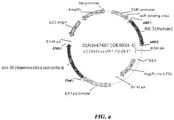
- the vector was pCDNA 5 -FRT-TO_DEST and the insert sequences were Hco ACR-16 (SEQ ID NO: 1) and Human RIC3 (SEQ ID NO: 3) (depicted in FIG. 2 ).
- Cells were grown in DMEM (#31966, Invitrogen) supplemented with 10% FCS (#10500, Gibco), 15 ⁇ g/ml Blasticidin (#ant-bl-1, InVivoGen) and 80 ⁇ g/ml Hygromycin B (#10867, Invitrogen). Cells were grown at 37 °C, 5% CO2 and 90% humidity, and passaged using Accutase (#091000449, Sigma). Finally, inductions were carried out using 0.1 ⁇ g/ml doxycycline at for 24 h at 37 °C.
- the Flp-InTM T-RexTM expression system allows the generation of stable mammalian cell lines.
- the gene of interest can be integrated at a specific genomic location called Flp Recombination Target (FRT) site.
- FRT Flp Recombination Target
- the integration of the gene of interest into the genome is mediated through a Flp recombinase.
- FIG. 2 19 and is available in more detail in the product manuals for pcDNATM 5 /FRT/TO (herein incorporated by reference in their entirety.
- the inducible expression vector was designed for use with the Flp-InTM T-RExTM System (Cat. no. V6520-20).
- the Haemonchus contortus ACR-16 clone was obtained from the University of Manchester and was back-mutated to match the publicly available accession number. The following primers were then used to equip the clone with suitable restriction sites for cloning into pCDNA5dual-FRT-TO_DEST. Cloning was done using the InFusion technology.
- pOG44 and 1.2 ⁇ g of pCDNA5 dual-FRT-TO-target were mixed to 500 ⁇ l Opti-MEM I medium containing 72 ⁇ l Lipofectamine reagents. After 20 minutes of incubation at room temperature, the transfection reagent/DNA complex was distributed drop wise onto the cells.
- Flp-In-T-Rex-293 or -CHO cells were incubated at 37 °C /10% CO2. Five hours after transfection the cells were washed and fresh culture medium was added to the cells.
- Cells were harvested from the culture flasks by a short treatment (2-5 minutes) with accutase, resuspended in culture medium and centrifuged at 1000 rpm/10 min. Cells were resuspended in 90% fetal calf serum containing 10% DMSO and stored frozen in liquid nitrogen. All cell lines in culture and in the frozen stock were mycoplasma-free.
- DMEM Gibco 31966 supplemented with 10% FCS (Gibco 10500) and 100 ⁇ g/ml Penicillin & Streptomycin (Gibco 15140); 80 ⁇ g/ml Hygromycin B (Invitrogen 10687); and 15 ⁇ g/ml Blasticidin (InVivoGen ant-bl-i).
- Subculturing was performed by the following procedure: detach cells with Accutase (Sigma A6964), 1 ml/T75cm2 flask Count: Vi-Cell (Beckman Coulter) Split Ratio: A subcultivation inoculum of 1:10 for 3 days maintenance and 1:15 for 4 days maintenance is recommended. Environment: 5% CO2 / 37 °C / 95% RH Culture Flasks: 75 cm 2 flask (Corning 430641).
- Example 1 The methods of Example 1 were used, except that the insert sequences used were Hco ACR-16 (SEQ ID NO: 1) and Hco RIC 3 (SEQ ID NO: 5) (depicted in FIG. 3 ).
- Flp-InTM T-RexTM - 293 Human Embryonic Kidney cells
- Flp-InTM T-RexTM system # FITR were used to produce the stable cell lines.
- the vector was pCDNA 5 -FRT-TO_DEST and the inserts were codon-optimized Dim ACR-16 (SEQ ID NO:12) and codon-optimized Dim RIC3 (SEQ ID NO:15) (depicted in FIG. 4 ).
- Fluorescence intensity was measured on a Hamamatsu station (camera, polychromator, Simple PCI software) with two excitation wavelengths 340 (free fura2) & 380 nm (Ca2+-fura2) and emission beyond 510 nm.
- the Ca 2+ increase through either Hco or Dim ACR-16 was monitored using Fluo-4AM dye and measured by a FDSS6000 platform (Hamamatsu). Twenty-four hours before the experiment, cells were seeded in growth medium into 384-well black, clear bottom poly-lysine coated plates, at a cell density of 10.000 cells/well in 50 ⁇ l complemented with 1 ⁇ g/ml doxycycline.
- Dye loading buffer was removed by washing three times with assay buffer (Cell washer BioTek), keeping a residual volume of 50 ⁇ l per well.
- Assay Buffer Composition Reagent Chemicals Remarks Assay buffer HBSS (+Ca/+Mg) 1X 1 mM CaCl 2 20 mM Hepes 0.001 % Pluronic acid Set to pH 7.4 Agonist / compound buffer Assay buffer Fresh solution of epibatidine/nicotine was prepared Dye loading buffer Assay buffer containing: 4 ⁇ M Fluo-4/AM 0.1% BSA Fluo-4/AM is added from a 0.5 mM stock solution in DMSO (1 mg diluted in 910 ⁇ l DMSO, protected from light) Table 5 .
- a Z' value of 1 is ideal and greater than 0.5 is considered excellent.
- Z' is typically calculated for each plate with plate-specific positive and negative controls.
- Table 6 EC50 values for reference compounds vs Hco ACR-16 / hRIC 3 cell line
- Reference compounds EC50 value ( ⁇ M) Remarks Epibatidine 0.006 Revealed by co-application of PNU-12095 6 Nicotine 0.20 Revealed by co-application of PNU-12095 6 Acetylcholine 0.48 Revealed by co-application of PNU-12095 6 PNU-120956 0.16 Revealed by co-application of EC100 orthosteric reference agonist Table 7 .
Landscapes
- Health & Medical Sciences (AREA)
- Life Sciences & Earth Sciences (AREA)
- Chemical & Material Sciences (AREA)
- Engineering & Computer Science (AREA)
- Biomedical Technology (AREA)
- Organic Chemistry (AREA)
- Molecular Biology (AREA)
- Biochemistry (AREA)
- General Health & Medical Sciences (AREA)
- Immunology (AREA)
- Cell Biology (AREA)
- Genetics & Genomics (AREA)
- Zoology (AREA)
- Medicinal Chemistry (AREA)
- Proteomics, Peptides & Aminoacids (AREA)
- Biotechnology (AREA)
- Urology & Nephrology (AREA)
- Hematology (AREA)
- Toxicology (AREA)
- Tropical Medicine & Parasitology (AREA)
- Biophysics (AREA)
- Microbiology (AREA)
- Gastroenterology & Hepatology (AREA)
- Bioinformatics & Cheminformatics (AREA)
- Wood Science & Technology (AREA)
- Pathology (AREA)
- General Physics & Mathematics (AREA)
- Analytical Chemistry (AREA)
- Physics & Mathematics (AREA)
- Food Science & Technology (AREA)
- General Engineering & Computer Science (AREA)
- Neurology (AREA)
- Measuring Or Testing Involving Enzymes Or Micro-Organisms (AREA)
- Micro-Organisms Or Cultivation Processes Thereof (AREA)
Description
- The disclosure generally relates to the production of mammalian cells lines, which express functional ion channels from heterologous species. The disclosure further relates to use of the stable cells lines for high throughput screening assays to identify compounds useful in modulating these receptors.
- Several commercial anthelmintic drugs (e.g. levamisole, pyrantel, morantel, monepantel, derquantel) disrupt the acetylcholine signaling pathway by agonizing or antagonizing AChRs in parasitic gastrointestinal (GI) nematodes of ruminants. However, GI parasite populations that are resistant to traditional anthelmintics, including cholinergic anthelmintics, are spreading globally and cause significant losses in farm productivity and profitability each year. One strategy to overcome current and minimize or prevent new resistance is to develop an anthelmintic with a novel mode of action. Ongoing research continues to identify and characterize additional components of the ACh signaling pathway in nematodes. Based on the precedent for the anthelmintic effectiveness of drugs that target ACh signaling, other components of the ACh signaling pathway may be exploited as novel anthelmintic targets.
- ACR-16 is a homopentameric, levamisole-insensitive nicotinic acetylcholine receptor (nAChR) similar to the human alpha-7 nicotinic AChR that is found in neuromuscular junctions of both free-living and parasitic nematodes. ACR-16 functions as a ligand-gated ion channel that likely regulates fast action of acetylcholine at neuromuscular junctions and in the nervous system. In 2005 and 2007, Touroutine et al. showed that a "gain-of-function" mutation in ACR-16 was lethal to the free-living nematode Caenorhabditis elegans (Cel), and that ACR-16-containing receptors account for all non-levamisole sensitive nicotinic synaptic signaling at the Cel neuromuscular junction. These observations suggest that ACR-16 plays a vital role in nematode physiology, which led us and several other research groups to hypothesize that an agonist or positive allosteric modulator of ACR-16 could impair parasitic nematode physiology and, thus, be an effective anthelmintic.
- RIC3 (resistance to inhibitors of cholinesterase 3) is a chaperone protein that in humans is encoded by the RIC3 gene. The RIC3 gene was first discovered in C. elegans, and influences the maturation of various ligand-gated ion channels including the serotonin 5-HT3 receptor and nicotinic acetylcholine receptors, particularly the homomeric α7 nicotinic receptor. RIC3 enhances currents generated by these receptors by expediting receptor transport to the cell surface and by increasing receptor number. Before the instant disclosure, the importance of RIC3 expression in yielding functional ACR-16-containing channels in cells was not appreciated.
- Haemonchus contortus (Hco), also known as the barber's pole worm, is a blood-feeding, parasitic GI nematode and one of the most pathogenic nematodes of ruminants. Adult worms attach to abomasal mucosa and feed on blood, which causes anemia, edema, and death of infected cattle, sheep and goats, mainly during summer months in warm, humid climates. Adult female Hco may lay over 10,000 eggs a day, which pass from the host animal in the feces. After hatching from their eggs, Hco larvae molt several times to the infective larval stage 3 (L3), which is ingested by host animals during grazing. Ingested larvae mature to the adult stage in the host GI tract and ultimately attach to the abomasal mucosa.
- Hco infection, or haemonchosis, causes large economic losses for farmers globally, but, especially for those living in warmer climates. Anthelmintics are used to treat and control ruminant GI infections of Hco and other parasitic nematodes, but growing resistance of parasites to anthelmintics such as levamisole and monepantel has rendered nematode control strategies extremely challenging, if not ineffective. Accordingly, a critical need exists to develop new anthelmintics against GI parasitic nematodes with novel modes of action.
- In addition to GI parasites of ruminants, novel anthelmintics are needed for other parasitic nematode species have developed resistance to commercial anthelmintics. One important example is Dirofilaria immitis (Dim), a filarial nematode transmitted by mosquitoes that causes heartworm disease in dogs, cats, ferrets, and wild canids. Heartworm disease is a serious and potentially fatal condition caused by the adult stage of Dim that affects the right side of the heart and pulmonary arteries. Heartworm larvae are transmitted year-round. Although heartworm disease is most prevalent in warmer climates (with higher mosquito populations), it has been diagnosed in all fifty US states and throughout southern Europe. Commercial heartworm disease preventives work by interrupting the parasite life cycle within the host, thereby preventing the development of adult worms and associated pathology. Only one chemical class, the macrocyclic lactones (MLs), is approved by the FDA and other global agencies for the prevention of heartworm disease.
- Since 2005, the existence of Dim subpopulations that are resistant to MLs populations in the US has been confirmed. These populations appear to be localized, mostly to the Mississippi Delta region of the US, though transportation of pets and shelter dogs across state lines or even internationally puts other regions at risk. Both the inherent mechanism(s) of Dim resistance to MLs and the potential of ML resistance to spread are unknown. Thus, an urgent need exists to develop new heartworm disease preventives with novel modes of action.
- Bennet et al. discloses the expression of ACR-16 from C. elegans in Xenopus oocytes together with Xenopus RIC-3, however the oocyte is not regarded in a cell line and ACR-16 and RIC-3 are not stably expressed.
- Bennet H et al., Xenopus laevis RIC-3 enhances the functional expression of the C. elegans homomeric nicotinic receptor, ACR-16, in Xenopus oocytes. J. Neurochem. 2012; 123: 911-918.
- Touroutine D et al., acr-16 encodes an essential subunit of the levamisole-resistant nicotinic receptor at the Caenorhabditis elegans neuromuscular junction. J. Biol Chem. 2005; 280(29): 27013-27021.
- Touroutine D et al., ACR-16 is an essential subunit of the levamisole-insensitive receptor. International Worm Meeting 2005.
- In a first aspect, the present invention provides a stable cell line that contains within its genomic DNA and stably expresses both a gene encoding a functional heterologous nicotinic acetylcholine receptor (nACR) protein and a gene encoding a functional resistance to inhibitors of cholinesterase 3 (RIC3) protein, such that the cell line expresses a functional ion channel comprising the heterologous nACR protein, wherein the heterologous nACR protein is a nematode acetylcholine receptor subunit ACR-16.
- In a second aspect, the present invention provides a method for identifying modulators of ACR-16-containing channels comprising the steps of:
- a. culturing the stable cell line of the first aspect;
- b. exposing aliquots of the stable cells to control and experimental compounds; and
- c. determining which experimental compounds are able to modulate the activity of the ACR-16-containing ion channel, thereby identifying modulators of the ACR-16-containing ion channel.
- In a third aspect, the present invention provides a vector for producing the stable cell line of the first aspect, comprising both a gene encoding a heterologous nicotinic acetylcholine receptor (nACR) protein and a gene encoding and a resistance to inhibitors of cholinesterase 3 (RIC3) protein, wherein the gene encoding the functional nACR protein is a nematode ACR-16 gene.
- In one aspect, the disclosure provides new and useful mammalian cells lines which have been genetically engineered to express functional nematode acetylcholine receptors from Hco or Dim. At the time of this disclosure, applicants are unaware of anyone successfully expressing functional nematode channels, not only ACR-16, in mammalian cells. Applicants are also unaware of any previous successful expression of functional Hco or Dim ACR-16 in any cell system, transiently or stably. This lack of success in the field can be explained by Applicants' surprising finding that, while co-expression of the obligate chaperone protein, RIC3, derived from either human or Hco, was sufficient to achieve functional Hco ACR-16 expression in mammalian cells, co-expression of Hco ACR-16 and C. elegans (Cel) RIC3 fails to yield a functional Hco ACR-16 channel. Moreover, and also quite unexpectedly, co-expression of Cel ACR-16 and Cel RIC3 did show functional responses. Accordingly, the knowledge in the field at the time of this disclosure, combined with applicants' unexpected results, support the nonobviousness of their invention.
- Similarly, applicants have successfully generated a stable inducible HEK cell line co-expressing Dim ACR-16 and Dim RIC3 proteins that results in expression of a functional ACR-16 channel. Although applicants are aware of Hco ACR-16 being cloned previously, Applicants identified and cloned a novel, previously unknown ortholog expressed by Dim larvae.
- In another aspect, the disclosure provides for ACR-16 functional validation and high-throughput screening assays. To the applicants' knowledge, no nematode species ACR-16 has ever been subjected to a large-scale, systematic screen for new active compounds. As indicated, nematodes have become increasingly resistant to parasiticides, making the search for new, safe and effective active ingredients essential to the future of our food supply.
- A full and enabling disclosure of the present invention, including the best mode thereof, to one of ordinary skill in the art, is set forth more particularly in the remainder of the specification, including reference to the accompanying figures, wherein:
-
FIG. 1 shows a scheme for using the Flip-In-T-REX system; -
FIG. 2 shows a map of the Haemonchus contortus (Hco) ACR-16 / Human RIC3 construct; -
FIG. 3 shows a map of the Hco ACR-16 / Hco RIC3 construct; -
FIG. 4 shows a map of the Dim ACR-16 / Dim RIC3 construct; -
FIG. 5 shows video-imaging results for the Hco ACR-16 / hRIC3 stable cell line (each line represents one individual cell). Highlighted are calcium signal levels obtained following application of buffer, 10 µM PNU120596, and 300 nM epibatidine; -
FIG. 6 shows video-imaging results for the Hco ACR-16 / Hco RIC3 stable cell line. Highlighted are calcium signal levels obtained following application of buffer, 10 µM PNU120596, and 300 nM epibatidine; -
FIG. 7 shows video-imaging results for the Dim ACR-16 / Dim RIC3 stable cell line. Highlighted are calcium signal levels obtained following application of buffer, 10 µM PNU120596, and 300 nM epibatidine; -
FIG. 8 shows PNU-120956 concentration-response curves fitted using a four-parameter logistic equation of the form y=[A1-A2/(1+ x/xo )p)+A2, where A1 is the maximum asymptote, A2 is the minimum asymptote, x0 is the XC50, and p is the Hill slope. A value of 160 nM was calculated; -
FIG. 9 shows concentration response curves for cells stably expressing Hco ACR-16 / hRIC3 for three orthosteric reference agonists, epibatidine (6 nM), nicotine (200 nM) and acetylcholine (480 nM); -
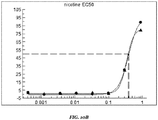
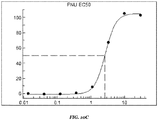
FIG. 10 shows the concentration response curves for Dim ACR-16 / Dim RIC3 stable cells for two orthosteric reference agonists, epibatidine (EC50 10 nM) (A); nicotine (EC50 350 nM) (B); and the allosteric modulator PNU120596 (EC50 2.4 µM) (C). - Disclosed herein is the production of mammalian cells lines, which express functional ion channels comprised of subunits from heterologous species. The disclosure further relates to use of the stable cells lines for high throughput screening (HTS) assays to identify compounds useful in modulating these receptors.
- In a first aspect, the present invention provides a stable cell line that stably expresses both a gene encoding a nematode ACR-16 protein and a gene encoding a RIC3 protein. The presence of the RIC3 protein may be necessary for the expression of a resulting functional heterologous ion channel, which comprises the ACR-16 protein. As used herein, "ACR-16 protein" is equivalent to and used interchangeably with "acetylcholine receptor subunit ACR-16."
- In an embodiment of the first aspect, the stable cell line contains within its genomic DNA and stably expresses both a gene encoding a functional heterologous nicotinic acetylcholine receptor (nACR) subunit protein, and a gene encoding a functional resistance to inhibitors of cholinesterase 3 (RIC3) protein. As a result of the stable expression of these two genes, the cell line expresses a functional ion channel comprising the heterologous nACR protein or subunit. In a particular embodiment, the nACR protein or subunit is an ACR-16 protein, also referred to herein as an "acetylcholine receptor subunit ACR-16."
- In another embodiment, the stable cell line is produced by transfecting a human embryonic kidney (HEK) cell, or another mammalian cell, and selecting for stable recombinant cells.
- In yet another embodiment, the stable cell line contains and expresses a gene encoding a nematode ACR-16 protein or subunit. The ACR-16 protein may have a sequence having at least 90% identity to a sequence as set forth in SEQ ID NO: 2, 19, 8, 20, 21, 22, 23, 24, 13 or 25, with the proviso that the ACR-16 protein forms part of the functional ion channel.
- When percent identity language is used herein, it is to be understood that the protein or nucleic acid having substantial identity, at either the polypeptide sequence or polynucleotide sequence level, to one of the exemplified proteins or nucleic acids, must still exhibit sufficient structural and/or functional similarly to serve a substantially equivalent function as the exemplified protein or nucleic acid. For example, "an ACR-16 protein having at least 90% identity to the polypeptide sequence as set forth in SEQ ID NO: 2" means that the referenced non-identical protein must have at least 90% of the same amino acids in the same locations, relative to SEQ ID NO: 2, and it also means that the non-identical protein must serve the substantially similar function of being able to form part of a functional nACR ion channel.
- Similarly, implicit in statements as to polynucleotide sequence identity is the understanding that the referenced non-identical nucleic acids must have substantial functional equivalence to the exemplified nucleic acids. Here, substantial functional equivalence of nucleic acids means that they encode for cognate polypeptides having substantial functional equivalence to one another. Accordingly, "an ACR-16 gene having at least 80% identity to the polynucleotide sequence as set forth in SEQ ID NO: 1" means that the referenced non-identical nucleic acid must have at least 80% of the same nucleotides in the same locations, relative to SEQ ID NO: 1, and it also means that the non-identical nucleic acid must serve the substantially similar function of coding for a protein that is able to form part of a functional ACR-16-containing nACR ion channel.
- In yet another embodiment of the stable cell line, the stably-expressed ACR-16 protein has the sequence as set forth in SEQ ID NO: 2, 19, 8, 20, 21, 22, 23, 24, 13 or 25.
- In another embodiment, the stable cell line contains and expresses a gene encoding for a RIC3 protein having at least 90% identity to the sequence as set forth in SEQ ID NO: 4, 26, 27, 28, 29, 30, 31, 6, 32, 33, 10 or 16. In an embodiment, the RIC3 protein has a polypeptide sequence having the sequence as set forth in SEQ ID NO: 4, 26, 27, 28, 29, 30, 31, 6, 32, 33, 10 or 16.
- In a particular embodiment, the ACR-16 and RIC3 proteins are Haemonchus contortus (H. contortus) and Homo sapiens proteins, respectively.
- In another particular embodiment, both the ACR-16 and the RIC3 proteins are H. contortus proteins. The ACR-16 and RIC3 proteins may also both be Dirofilaria Immitis (D.immitis) proteins.
- In one embodiment, the ACR-16 protein is a D.immitis protein and the RIC3 protein is a human RIC3 protein.
- In another embodiment, the ACR-16 protein is a D. immitis protein and the RIC3 protein is a H. contortus protein.
- In a second aspect, the disclosure provides a high throughput screening (HTS) method for identifying modulators of ACR-16-containing channels
- In an embodiment, the HTS method may comprise the general steps of:
- a) culturing the disclosed stable cell lines that express functional ACR-16-containing ion channels;
- b) exposing aliquots of the stable cells to control and experimental compounds; and
- c) determining which experimental compounds are able to modulate the activity of the ACR-16-containing ion channel, thereby identifying modulators of the ACR-16-containing ion channel.
- In one embodiment, the determining step may comprise the step of measuring a significantly greater or lesser amount of calcium influx in the experimental aliquots of cells, relative to the amount of calcium influx in the control aliquots of cells.
- In a particular embodiment of the method, the calcium influx may be determined to be significantly greater in the experimental cells, indicating that the modulators are agonists of the ACR-16-containing ion channel. In an embodiment, the agonists are safe and effective parasiticidal agents for administration to animals in need thereof.
- In a third aspect, the disclosure provides at least one vector for producing the ACR-16-and RIC3-expressing stable cell lines.
- In an embodiment, the vector comprises both a gene encoding a heterologous nicotinic acetylcholine receptor (nACR) protein and a gene encoding a resistance to inhibitors of cholinesterase 3 (RIC3) protein. The vector may contain a variety of elements known to those of skill in the art. For example, it is routine practice to incorporate antibiotic resistance cassettes, promoters, enhancers, transcription terminators, origins of replication, and any other elements required for gene expression, plasmid production / replication, and selection of stable recombinant cells. Now that the inventive combinations of ACR-16 and RIC3 have been disclosed, Applicants envision that a wide range of DNA vectors, including plasmid vectors, may be employed to produce a wide range of stable cells lines, including stable HEK cells. The stable cell line of the disclosure may be produced using the reagents and techniques disclosed herein, or they may be made using any other routine methods known by those of skill in the art.
- In another embodiment, the vector contains a gene encoding a functional nematode ACR-16 protein and a gene encoding a functional RIC3 protein. The gene encoding the RIC3 protein may be selected from a human RIC3 gene, an H. contortus RIC3 gene, a C. elegans RIC3 gene and a D. immitis RIC3 gene. Since applicants have surprisingly found that vectors containing an Hco ACR-16 gene and a C. elegans RIC3 gene fail to produce stable cells expressing functional ACR-16-containing channels, a non-C. elegans RIC3 gene is preferred when an Hco ACR-16 gene is present in the vector.
- In still another embodiment of the vector, the ACR-16 gene has at least 80% identity to the sequence as set forth in SEQ ID NO: 1, 7, 11 or 12 and the RIC3 gene has at least 80% identity to the sequence as set forth in SEQ ID NO: 3, 5, 9, 14 or 15, in any combination of ACR-16 gene and RIC3 gene, with the proviso that when the vector contains an Hco ACR-16, the RIC3 gene is not a C. elegans RIC3 gene.
- The ACR-16 gene may also have a polynucleotide sequence that encodes a polypeptide as set forth in SEQ ID NO: 2, 19, 8, 20, 21, 22, 23, 24, 13 or 25. Alternatively, the ACR-16 gene may encode a polypeptide that is at least 90% identical to a polypeptide sequence as set forth in SEQ ID NO: 2, 19, 8, 20, 21, 22, 23, 24, 13 or 25.
- In another embodiment of the vector, the ACR-16 gene has the sequence as set forth in SEQ ID NO: 3, 5, 9, 14 or 15; and the RIC3 gene has the sequence as set forth in SEQ ID NO: 3, 5, 9, 14 or 15. Any combination of ACR-16 gene and RIC3 gene is envisioned, with the proviso that when the vector contains an Hco ACR-16, it is preferred that the RIC3 gene be other than a C. elegans RIC3 gene.
- In yet another embodiment, the RIC3 gene may encode a polypeptide as set forth in SEQ ID NO: 4, 26, 27, 28, 29, 30, 31, 6, 32, 33, 10 or 16. The RIC3 gene may also encode a polypeptide having at least 90% identity to a polypeptide as set forth in SEQ ID NO: 4, 26, 27, 28, 29, 30, 31, 6, 32, 33, 10 or 16.
- In a particular embodiment of the vector, the ACR-16 gene has the sequence as set forth in SEQ ID NO: 1 and the RIC3 gene has the sequence as set forth in SEQ ID NO: 3.
- In a fourth aspect, the disclosure provides a method for producing cells that stably express functional ACR-16-containing ion channels, which comprises the step of stably transfecting cells with both an ACR-16 gene and a RIC3 gene. In a particular embodiment, the ACR-16 gene has the sequence as set forth in SEQ ID NO: 1 and the RIC3 gene has the sequence as set forth in SEQ ID NO: 3.
- The invention will now be further described by way of the following non-limiting examples.
- Below discloses the development of the disclosed stable cell lines, which express functional ACR-16 channels, and are useful for the high-throughput screening of compounds capable of modulating ACR-16 channel function.
- Materials & Methods. In general, the Flp-In™ T-Rex™ - 293 (Human Embryonic Kidney cells) and the Flp-In™ T-Rex™ system # FITR were used to produce the stable cell lines. The vector was pCDNA5-FRT-TO_DEST and the insert sequences were Hco ACR-16 (SEQ ID NO: 1) and Human RIC3 (SEQ ID NO: 3) (depicted in
FIG. 2 ). Cells were grown in DMEM (#31966, Invitrogen) supplemented with 10% FCS (#10500, Gibco), 15 µg/ml Blasticidin (#ant-bl-1, InVivoGen) and 80 µg/ml Hygromycin B (#10867, Invitrogen). Cells were grown at 37 °C, 5% CO2 and 90% humidity, and passaged using Accutase (#091000449, Sigma). Finally, inductions were carried out using 0.1 µg/ml doxycycline at for 24 h at 37 °C. - The Flp-In™ T-Rex™ expression system allows the generation of stable mammalian cell lines. The gene of interest can be integrated at a specific genomic location called Flp Recombination Target (FRT) site. The integration of the gene of interest into the genome is mediated through a Flp recombinase. With this system, the generation of stable cell line is rapid and efficient as it permits the generation of isogenic cell lines without clonal selection. This system is illustrated in
FIG. 2 , 19, and is available in more detail in the product manuals for pcDNA™5/FRT/TO (herein incorporated by reference in their entirety. The inducible expression vector was designed for use with the Flp-In™ T-REx™ System (Cat. no. V6520-20). - The Haemonchus contortus ACR-16 clone was obtained from the University of Manchester and was back-mutated to match the publicly available accession number. The following primers were then used to equip the clone with suitable restriction sites for cloning into pCDNA5dual-FRT-TO_DEST. Cloning was done using the InFusion technology. SEQ ID NO:17 (9924-01 forward primer PmlI InFusion) 5'-AGG TGT CGT GAA CAC GTG CCA CCA TGT GGA GCT TGC TGA TCG C-3'; SEQ ID NO:18 (9924-02 reverse primer PmlI InFusion) 5'-AGC GGC CGC GAC CAC GTG CTA GGC GAC CAG ATA TGG AG-3'. The human RIC3 was taken from a clone that was cloned from adrenal tissue at Sanofi. For cloning into pCDNA5 dual-FRT-TO_DEST, the Gateway cloning technology was used.
- Transfections. One day prior to transfection, 1.5*106 Flp-In-T-Rex-293 or -CHO cells were seeded in 10 ml DMEM or HAM-F12 containing 10% FCS into a Petri Dish (ø =100 mm) and incubated at 37 °C / 10% CO2 overnight. Using the Lipofectamine transfection reagent, cells were co-transfected with the Flp recombinase expression plasmid pOG44 and the pCDNA5 dual-FRT-TO-target with a 9:1 ratio. For the transfection of one dish, 10.8 µg of pOG44 and 1.2 µg of pCDNA5 dual-FRT-TO-target were mixed to 500 µl Opti-MEM I medium containing 72 µl Lipofectamine reagents. After 20 minutes of incubation at room temperature, the transfection reagent/DNA complex was distributed drop wise onto the cells. Flp-In-T-Rex-293 or -CHO cells were incubated at 37 °C /10% CO2. Five hours after transfection the cells were washed and fresh culture medium was added to the cells.
- Forty-eight hours after transfection the cells were washed and fresh cultivation medium containing the selection antibiotic was added. Flp-In-T-Rex-293-HcoACR-16 hRic3 cells were selected with 80 µg/ml hygromycin. The culture medium was exchanged every 2-3 days until a resistant population of cells had grown. After two to three weeks of selection, the cells were cultivated in T75 flasks for scale-up and batch production.
- In parallel, a transitory expression of HcoACR-16 with Hco and Cel Ric3 was performed in the HEK parental cell line. The combination of Hco AChR-16 + Cel Ric3 did not yield functional AChR16 channels while expression of HcoACR-16 + Hco or human Ric3 did yield functional channels.
- Cells were harvested from the culture flasks by a short treatment (2-5 minutes) with accutase, resuspended in culture medium and centrifuged at 1000 rpm/10 min. Cells were resuspended in 90% fetal calf serum containing 10% DMSO and stored frozen in liquid nitrogen. All cell lines in culture and in the frozen stock were mycoplasma-free. DMEM (Gibco 31966) supplemented with 10% FCS (Gibco 10500) and 100 µg/ml Penicillin & Streptomycin (Gibco 15140); 80 µg/ml Hygromycin B (Invitrogen 10687); and 15 µg/ml Blasticidin (InVivoGen ant-bl-i). Subculturing was performed by the following procedure: detach cells with Accutase (Sigma A6964), 1 ml/T75cm2 flask Count: Vi-Cell (Beckman Coulter) Split Ratio: A subcultivation inoculum of 1:10 for 3 days maintenance and 1:15 for 4 days maintenance is recommended. Environment: 5% CO2 / 37 °C / 95% RH Culture Flasks: 75 cm2 flask (Corning 430641).
- The methods of Example 1 were used, except that the insert sequences used were Hco ACR-16 (SEQ ID NO: 1) and Hco RIC3 (SEQ ID NO: 5) (depicted in
FIG. 3 ). - The methods of Example 1 were used, except that the vector was pCDNA3.1neo_DEST and the insert sequences were Cel ACR-16 (SEQ ID NO: 7) and Cel RIC3 (SEQ ID NO: 9). Transfections were carried out using FuGENE 6 (#E2691, Promega).
- As in Example 1, Flp-In™ T-Rex™ - 293 (Human Embryonic Kidney cells) and the Flp-In™ T-Rex™ system # FITR were used to produce the stable cell lines. The vector was pCDNA5-FRT-TO_DEST and the inserts were codon-optimized Dim ACR-16 (SEQ ID NO:12) and codon-optimized Dim RIC3 (SEQ ID NO:15) (depicted in
FIG. 4 ). Applicants cloned Hco RIC3 from Hco cDNA prepared from field isolates, and to their knowledge, no one has previously published this sequence. - Fluorescence intensity was measured on a Hamamatsu station (camera, polychromator, Simple PCI software) with two excitation wavelengths 340 (free fura2) & 380 nm (Ca2+-fura2) and emission beyond 510 nm.
- In distilled water: 10 mM Hepes (Sigma H7523), 150 mM NaCl (Sigma S6191), 4 mM KCl (Sigma P5405), 2 mM CaCl2 (Sigma C4901), 1 mM MgCl2 (Sigma M2670), adjusted at pH 7.3 by NaOH 2M (Fisher). All products are in powder form except NaOH in solution form. Osmolarity was set up at 301 mmol/kg.
- Ca2+ increase was monitored using Flura-2 (AM) dye and imagery of fluorescence was performed on a Hamamatsu platform (Nikon Eclipse TE2000U + Photonics Polychromator + Orca Camera + SimplePCI software).
- ◆ Cells were seeded in growth medium with 1 µg/ml of doxycycline onto Labtek Chamber slideck, poly-lysine coated at a cell density of 200 X 103 cells/chamber in 1 mL.
- ◆ Induction:
doxycycline 1 µg/ml for 24h @ 37°C @ 5% CO2, - ◆ 1 µM of Fura-2-AM was added for 20 minutes at 37°C / 5% CO2
- ◆ Medium was replaced by assay buffer (Ringer's solution).
- ◆ Fluorescence intensity was measured above 510 nm with both excitation wavelengths of 340 (free-fura2) and 380 nm excitation (Ca2+ bound fura2).
- ◆ Calcium increase was triggered by reference agonist application: 300 nM epibatidine in assay buffer following pre-incubation of 10 µM PNU-120596.
- The Ca2+ increase through either Hco or Dim ACR-16 was monitored using Fluo-4AM dye and measured by a FDSS6000 platform (Hamamatsu). Twenty-four hours before the experiment, cells were seeded in growth medium into 384-well black, clear bottom poly-lysine coated plates, at a cell density of 10.000 cells/well in 50 µl complemented with 1 µg/ml doxycycline.
- Medium was replaced by washing three times with assay buffer, keeping a residual volume of 25 µl per well. Subsequently 25 µl of dye loading buffer were added and the plate was incubated for 1h at RT.
- Dye loading buffer was removed by washing three times with assay buffer (Cell washer BioTek), keeping a residual volume of 50 µl per well.
- Plates were transferred to the FDSS6000 reader and measured for agonist response by adding 5 µl of agonist solution.
Table 3. Calcium Imaging Reagents Materials Supplier Cat.No. Function Fluo-4/AM Invitrogen Calcium sensitive fluorescent dye HBSS (10x) with calcium/magnesium Invitrogen 14065 Buffer solution Flp-In-2Q3-Hco ACR-16/ hRIC3 hybrid Cell line expressing ACR-16 Epibatidine nAChR agonist reference PNU-120596 nAChR positive allosteric modulator reference 384-well plate (poly-lysine coated) BD Assay plate Table 4. Assay Buffer Composition Reagent Chemicals Remarks Assay buffer HBSS (+Ca/+Mg) 1X 1mM CaCl 2 20 mM Hepes 0.001 % Pluronic acid Set to pH 7.4Agonist / compound buffer Assay buffer Fresh solution of epibatidine/nicotine was prepared Dye loading buffer Assay buffer containing: 4 µM Fluo-4/AM 0.1% BSA Fluo-4/AM is added from a 0.5 mM stock solution in DMSO (1 mg diluted in 910 µl DMSO, protected from light) Table 5. Robustness values obtained for 384-w format assay using Hco ACR-16 / hRIC3 cell line Conditions Signal amplitude with 10 µM PNU120596 + 300 nM epibatidine application (RFU) Z' 24h @ 37°C 1503 0.89 24h @ 37°C + 24h @ 30°C 2160 0.90 - As a measure of assay robustness, the Z' value is calculated as follows using the means (µ) and standard deviations (σ) of both positive (p) and negative (n) controls (µp,µn,σp and σn):

- For a high-throughput screen, a Z' value of 1 is ideal and greater than 0.5 is considered excellent. Z' is typically calculated for each plate with plate-specific positive and negative controls.
Table 6. EC50 values for reference compounds vs Hco ACR-16 / hRIC3 cell line Reference compounds EC50 value (µM) Remarks Epibatidine 0.006 Revealed by co-application of PNU-12095 6 Nicotine 0.20 Revealed by co-application of PNU-12095 6 Acetylcholine 0.48 Revealed by co-application of PNU-12095 6 PNU-120956 0.16 Revealed by co-application of EC100 orthosteric reference agonist Table 7. Robustness values obtained for 384-w format assay using Hco ACR-16 / Hco RIC3 cell line Conditions Signal amplitude with 10 µM PNU120596 + 300 nM epibatidine application (RFU) Z' 24h @ 37°C 680 0.81 24h @ 37°C + 24h @ 30°C 1601 0.85 Table 8. Hco ACR-16 / Hco RIC3 stable cell line Result on FDSS6000 setup Reference compounds EC50 value (µM) Remarks Epibatidine 0.005 Revealed by co-application of PNU-120956 PNU-120956 1.4 Revealed by co-application of EC100 orthosteric reference agonist Table 9. Dim ACR-16 / Dim RIC3 stable cell line Results on FDSS6000 setup Reference compounds EC50 value (µM) Remarks Epibatidine 0.005 Revealed by co-application of PNU-120956 Nicotine 0.4 Revealed by co-application of PNU-120956 PNU-120956 2.4 Revealed by co-application of EC100 orthosteric reference agonist Table 10. Robustness values obtained for 384-w format assay using Dim ACR-16 / Dim RIC3 cell line Conditions Signal amplitude with 10 µM PNU120596 + 300 nM epibatidine application (RFU) Z' 24h @ 37°C + 24h @ 30°C 450 0.81 - The invention will now be set forth in the following claims.
-
- <110> Merial, Inc.
Sanofi
Hammerland, Lance
Chambard, Jean-Marie - <120> Mammalian Cell Lines Expressing Functional Nematode Acetylcholine Receptors and Use thereof for High-Throughput Screening Assays
- <130> MER 14-243
- <150>
US 62/047,822
<151> 2014-09-09 - <160> 33
- <170> PatentIn version 3.5
- <210> 1
<211> 1482
<212> DNA
<213> Artificial Sequence - <220>
<223> Hco ACR-16 (Accession number for Hco ACR-16 is EU051823.1) - <400> 1


- <210> 2
<211> 494
<212> PRT
<213> Artificial Sequence - <220>
<223> Hco ACR-16 protein (translation of SEQ ID NO:1) - <400> 2


- <210> 3
<211> 1104
<212> DNA
<213> Artificial Sequence - <220>
<223> Human RIC3 (Accession number forHuman RIC 3 sequence is NM_024557) - <400> 3


- <210> 4
<211> 368
<212> PRT
<213> Artificial Sequence - <220>
<223> Human RIC3 protein (translation of SEQ ID NO:3) - <400> 4


- <210> 5
<211> 1095
<212> DNA
<213> Artificial Sequence - <220>
<223> Hco RIC3 (predictive, in view of accession numbers HQ116824.1 and HQ116823.1) - <400> 5


- <210> 6
<211> 365
<212> PRT
<213> Artificial Sequence - <220>
<223> Hco RIC3 protein - translation of SEQ ID NO:5 - <400> 6


- <210> 7
<211> 1494
<212> DNA
<213> Artificial Sequence - <220>
<223> Cel ACR-16 (Accession number for Caenorhabditis elegans ACR-16 sequence is NM_072806) - <400> 7


- <210> 8
<211> 498
<212> PRT
<213> Artificial Sequence - <220>
<223> Cel ACR-16 protein (gi|17557182|ref|NP_505207.1| Protein ACR-16, isoform a Caenorhabditis elegans) - <400> 8


- <210> 9
<211> 1134
<212> DNA
<213> Artificial Sequence - <220>
<223> Cel Ric3 (Accession number for C. elegans RIC3 sequence is NM_068898.4) - <400> 9


- <210> 10
<211> 378
<212> PRT
<213> Artificial Sequence - <220>
<223> Cel Ric3 protein (translation of SEQ ID NO:9) - <400> 10


- <210> 11
<211> 1521
<212> DNA
<213> Artificial Sequence - <220>
<223> Dim ACR-16 (Dirofilaria immitis ACR-16 sequence, sequence from clone 4346-2) - <400> 11


- <210> 12
<211> 1521
<212> DNA
<213> Artificial Sequence - <220>
<223> Dim ACR-16 codon-optimized for expression in mammalian cells - <400> 12


- <210> 13
<211> 507
<212> PRT
<213> Artificial Sequence - <220>
<223> Dim ACR-16 (translation of SEQ ID NOs:11 & 12) - <400> 13



- <210> 14
<211> 891
<212> DNA
<213> Artificial Sequence - <220>
<223> Dim RIC3 short sequence from clone 4350-1 - <400> 14

- <210> 15
<211> 891
<212> DNA
<213> Artificial Sequence - <220>
<223> Dim RIC3 codon-optimized for expression in mammalian cells - <400> 15


- <210> 16
<211> 297
<212> PRT
<213> Artificial Sequence - <220>
<223> Dim Ric3 (translation of SEQ ID NOs:14 & 15) - <400> 16


- <210> 17
<211> 42
<212> DNA
<213> Artificial Sequence - <220>
<223> 9924-01 forward primer PmlI InFusion - <400> 17
aggtgtcgtg aacacgtgcc accatgtgga gcttgctgat cg 42 - <210> 18
<211> 38
<212> DNA
<213> Artificial Sequence - <220>
<223> 9924-02 reverse primer PmlI InFusion - <400> 18
agcggccgcg accacgtgct aggcgaccag atatggag 38 - <210> 19
<211> 494
<212> PRT
<213> Artificial Sequence - <220>
<223> CDJ95690 Neurotransmitter-gated ion-channel transmembrane region domain containing protein [Haemonchus contortus] - <400> 19


- <210> 20
<211> 500
<212> PRT
<213> Artificial Sequence - <220>
<223> XP_003110639 CRE-ACR-16 protein [Caenorhabditis remanei] - <400> 20


- <210> 21
<211> 514
<212> PRT
<213> Artificial Sequence - <220>
<223> EGT55171 hypothetical protein CAEBREN_30258 [Caenorhabditis brenneri] - <400> 21


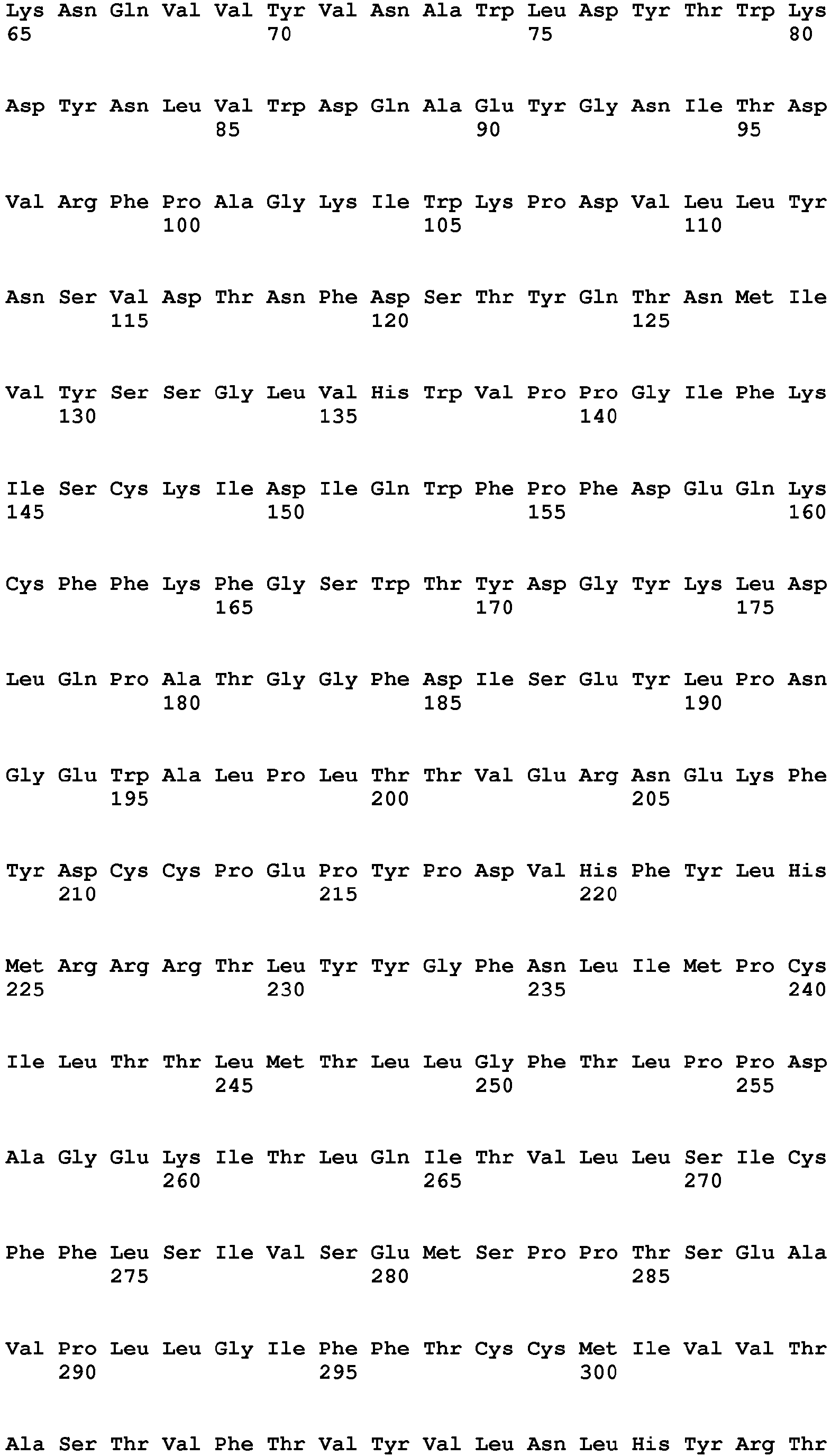
- <210> 22
<211> 515
<212> PRT
<213> Artificial Sequence - <220>
<223> EGT34516 hypothetical protein CAEBREN_16973 [Caenorhabditis brenneri] - <400> 22


- <210> 23
<211> 497
<212> PRT
<213> Artificial Sequence - <220>
<223> XP_002635324 C. briggsae CBR-ACR-16 protein, partial - <400> 23


- <210> 24
<211> 499
<212> PRT
<213> Artificial Sequence - <220>
<223> A8WQK3 Acetylcholine receptor subunit alpha-type acr-16 - <400> 24


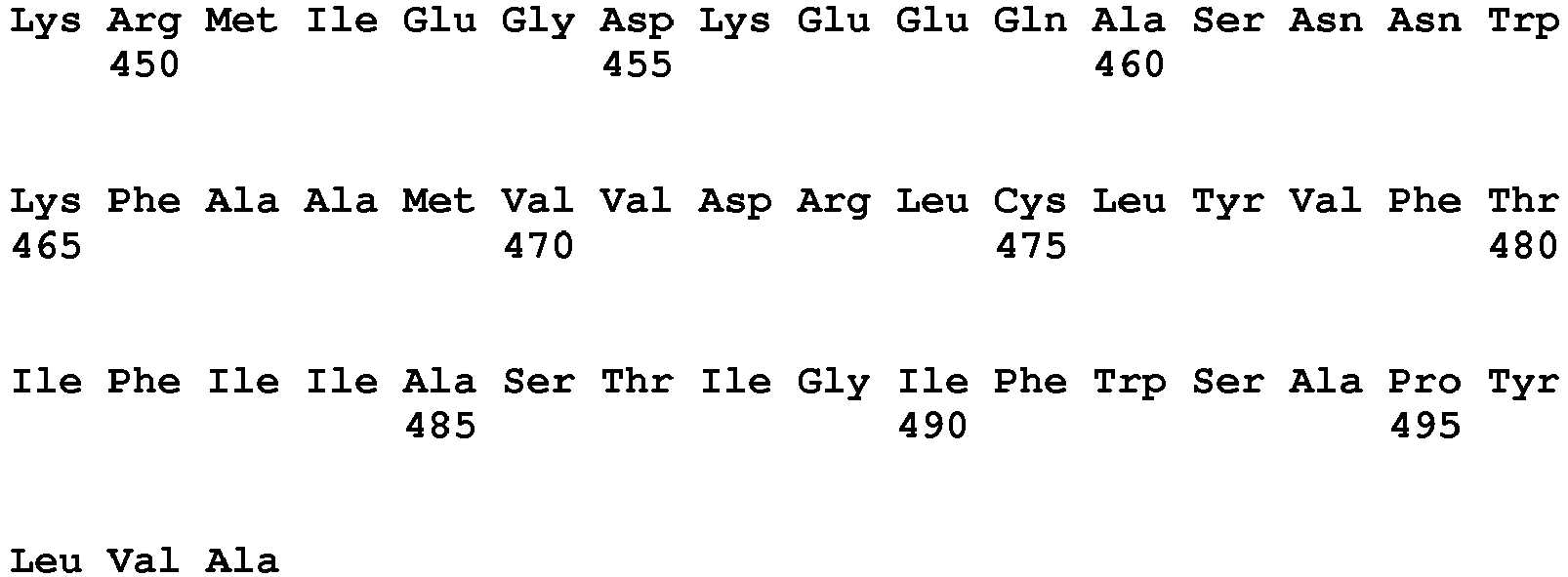
- <210> 25
<211> 506
<212> PRT
<213> Artificial Sequence - <220>
<223> EJD73698 nicotinic acetylcholine receptor alpha 34E [Loa loa] - <400> 25


- <210> 26
<211> 368
<212> PRT
<213> Artificial Sequence - <220>
<223> protein RIC-3 isoform 1 [Gorilla gorilla gorilla] - <400> 26

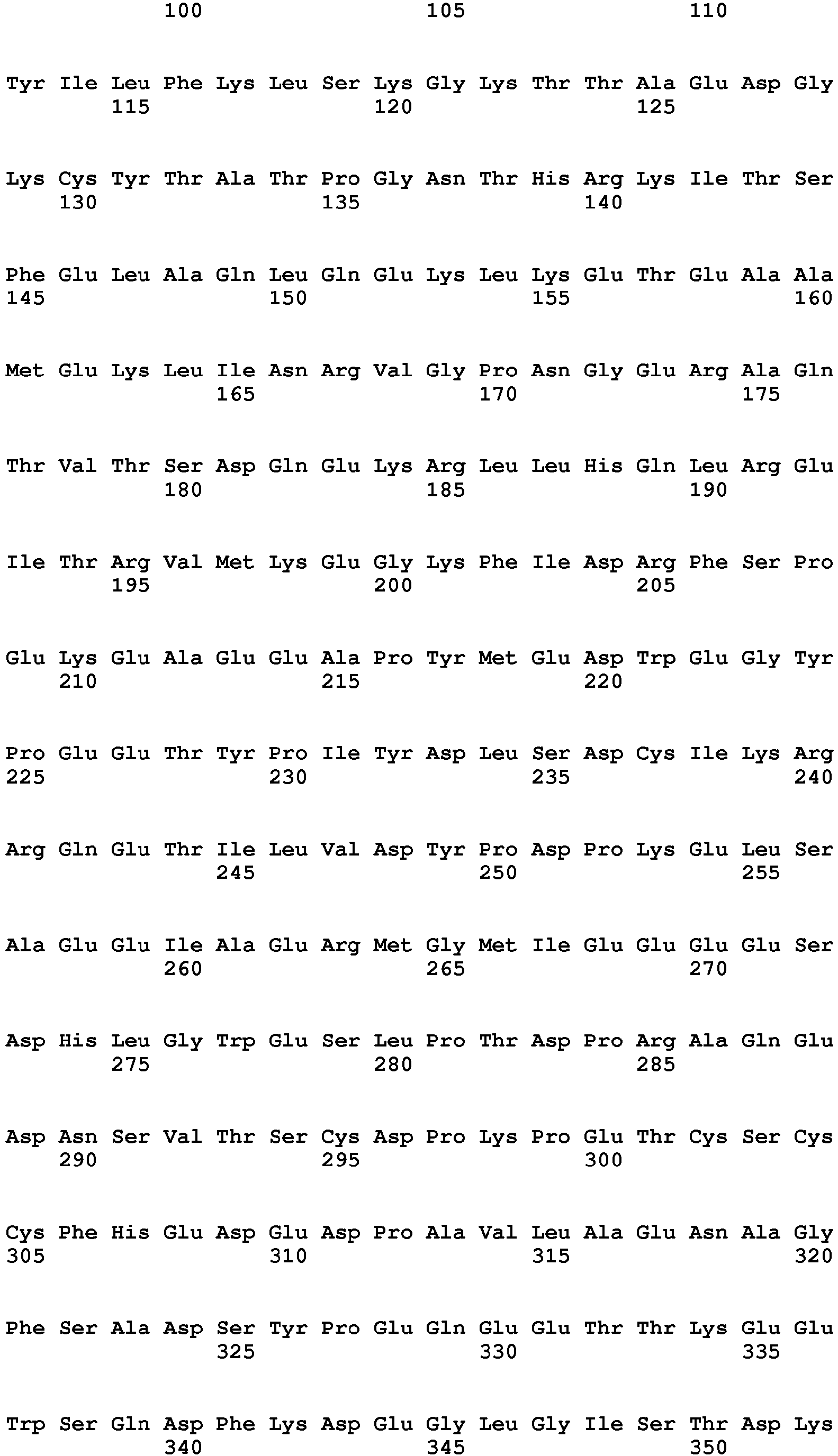

- <210> 27
<211> 397
<212> PRT
<213> Artificial Sequence - <220>
<223> protein RIC-3 isoform X2 [Homo sapiens] - <400> 27


- <210> 28
<211> 368
<212> PRT
<213> Artificial Sequence - <220>
<223> protein RIC-3 isoform X3 [Nomascus leucogenys] - <400> 28


- <210> 29
<211> 397
<212> PRT
<213> Artificial Sequence - <220>
<223> protein RIC-3 isoform X1 [Nomascus leucogenys] - <400> 29


- <210> 30
<211> 367
<212> PRT
<213> Artificial Sequence - <220>
<223> protein RIC-3 isoform X2 [Microcebus murinus] - <400> 30


- <210> 31
<211> 368
<212> PRT
<213> Artificial Sequence - <220>
<223> protein RIC-3 isoform X3 - <400> 31


- <210> 32
<211> 365
<212> PRT
<213> Artificial Sequence - <220>
<223> resistance to inhibitors of cholinesterase protein 3.2 [Haemonchus contortus] - <400> 32

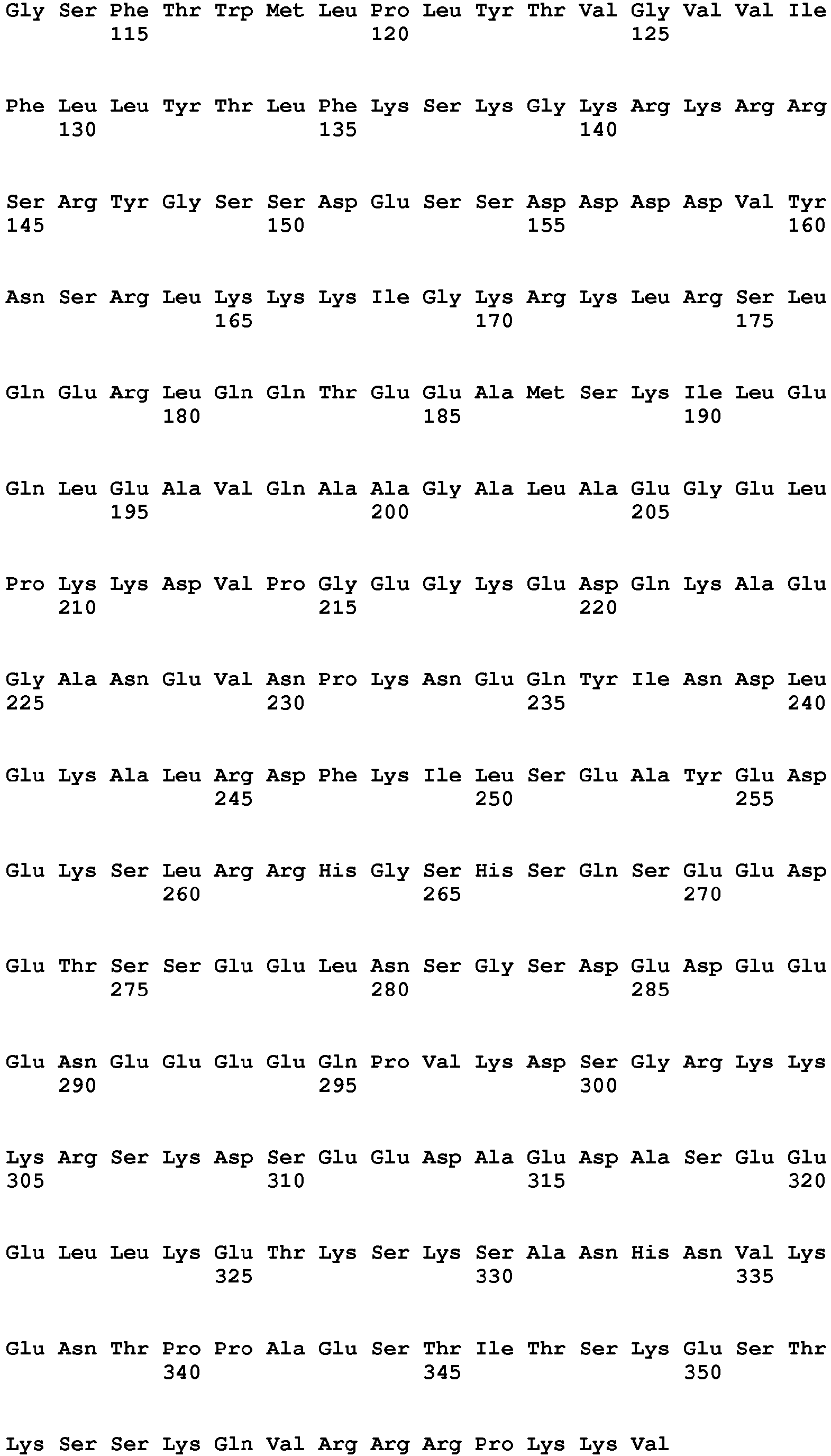

- <210> 33
<211> 365
<212> PRT
<213> Artificial Sequence - <220>
<223> resistance to inhibitors of cholinesterase protein 3.1 [Haemonchus contortus] - <400> 33
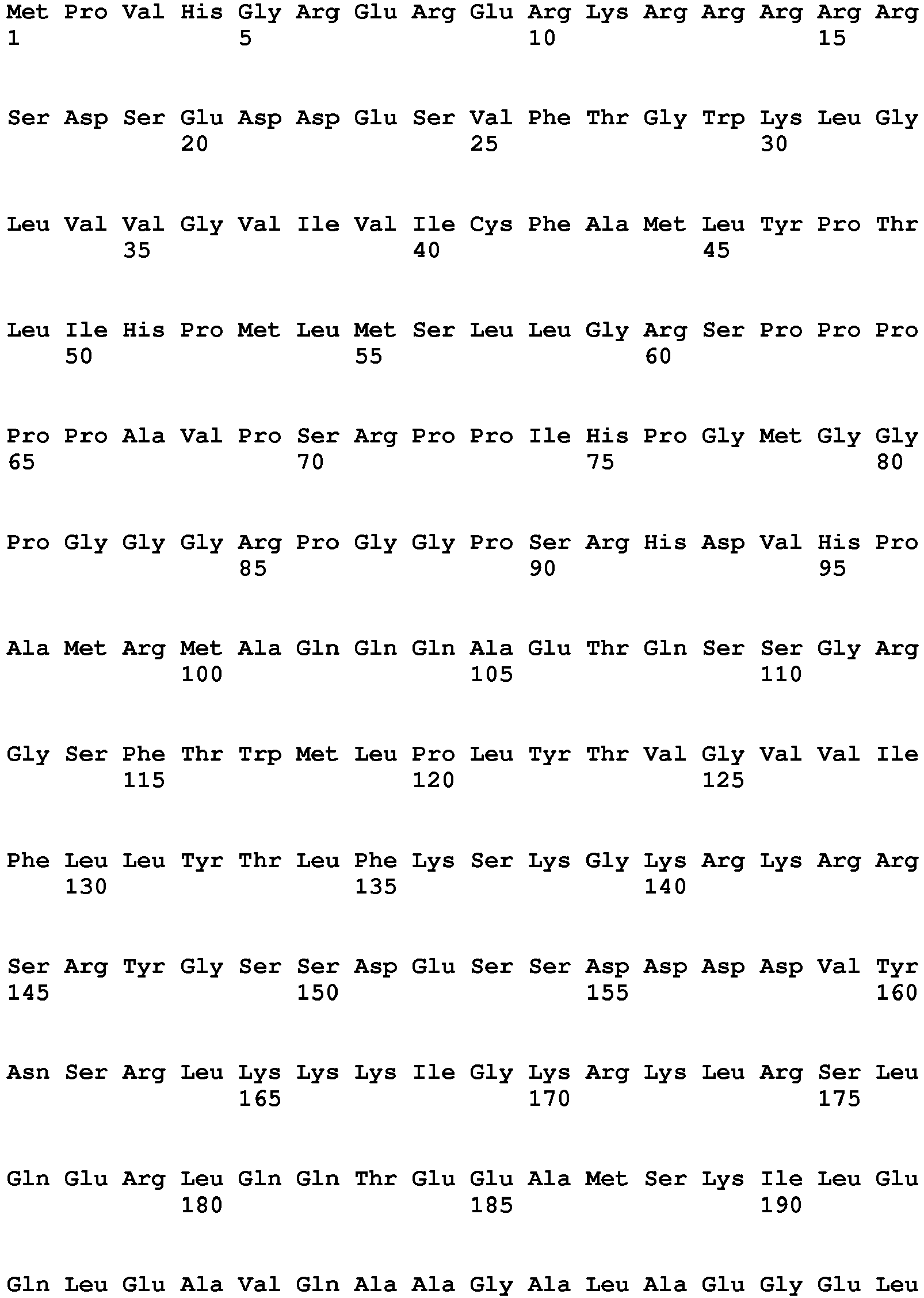

| Materials | Supplier | Cat. No. | Function |
| Flura-2 AM | Molecular Probes | F1221 | Calcium sensitive fluorescent dye |
| HEPES | SIGMA | H7523 | Ringer's Buffer solution |
| NaCl | SIGMA | S6191 | Ringer's Buffer solution |
| KCl | SIGMA | P5405 | Ringer's Buffer solution |
| MgCl2 | SIGMA | M2670 | Ringer's Buffer solution |
| CaCl2 | SIGMA | C4901 | Ringer's Buffer solution |
| NaOH | Fisher | Ringer's Buffer solution pH adjusted | |
| Epibatidine | SIGMA | P178 | nAChR agonist Reference |
| PNU 120596 | nAChR positive allosteric modulator reference | ||
| Flp-In-293-Hco ACR-16 hRic3 | Cell line expressing the Hco ACR-16 and hRic3 (i.e. the line described in Example 1) | ||
| Flp-In-293 | Parental cell line | ||
| Poly-D-Lysine | SIGMA | P6407 | Coating |
| Lab-Tek II® Chamber slide | NUNC | 155379 | Assay plate |
| Event | Est. | N | Mean | Std Dev | Medi an | nMAD | | Max |
| Epibatidine | ||||||||
| 300 nM | Rmin | 98 | 1.02 | 0.12 | 1.04 | 0.07 | 0.49 | 1.39 |
| Epibatidine 300 nM | Rmax | 98 | 2.62 | 1.69 | 2.34 | 1.42 | 0.49 | 9.16 |
| Epibatidine 300 nM | Ratio | 98 | 2.51 | 1.57 | 2.15 | 1.31 | 0.99 | 8.10 |
| Epibatidine 300 nM | Reactio n Time | 51 | 17.69 | 9.79 | 15.03 | 0.00 | 15.03 | 80.2 0 |
| | AUC | 98 | 271.25 | 141.44 | 253.67 | 110.84 | 33.42 | 869.8 |
Claims (15)
- A stable cell line that contains within its genomic DNA and stably expresses both a gene encoding a functional heterologous nicotinic acetylcholine receptor (nACR) protein and a gene encoding a functional resistance to inhibitors of cholinesterase 3 (RIC3) protein, such that the cell line expresses a functional ion channel comprising the heterologous nACR protein, wherein the heterologous nACR protein is a nematode acetylcholine receptor subunit ACR-16.
- The stable cell line of claim 1, wherein the cell is a human embryonic kidney (HEK) cell, or is another mammalian cell.
- The stable cell line of claim 1, wherein the ACR-16 protein has a polypeptide sequence having at least 90% identity to a sequence as set forth in SEQ ID NO: 2, 19, 8, 20, 21, 22, 23, 24, 13 or 25, preferably wherein the ACR-16 protein has the sequence as set forth in SEQ ID NO: 2, 19, 8, 20, 21, 22, 23, 24, 13 or 25, with the proviso that the ACR-16 protein forms part of the functional ion channel.
- The stable cell line of claim 1, wherein the RIC3 protein has a polypeptide sequence having at least 90% identity to the sequence as set forth in SEQ ID NO: 4, 26, 27, 28, 29, 30, 31, 6, 32, 33, 10 or 16, preferably wherein the RIC3 protein has a polypeptide sequence having the sequence as set forth in SEQ ID NO: 4, 26, 27, 28, 29, 30, 31, 6, 32,33, 10 or 16.
- The stable cell line of claim 1, wherein the ACR-16 and RIC3 proteins are Haemonchus contortus (H. contortus) and Homo sapiens proteins, respectively.
- The stable cell line of claim 1, wherein both the ACR-16 and the RIC3 proteins are both H. contortus proteins or wherein both the ACR-16 and the RIC3 proteins are both Dirofilaria Immitis (D.immitis) proteins.
- The stable cell line of claim 1, wherein the ACR-16 protein is a D.immitis protein and the RIC3 protein is a human RIC3 protein.
- The stable cell line of claim 1, wherein the ACR-16 protein is a D. immitis protein and the RIC3 protein is a H. contortus protein.
- A method for identifying modulators of ACR-16-containing channels comprising the steps of:a. culturing the stable cell line of claim 1;b. exposing aliquots of the stable cells to control and experimental compounds; andc. determining which experimental compounds are able to modulate the activity of the ACR-16-containing ion channel, thereby identifying modulators of the ACR-16-containing ion channel.
- The method of claim 9, wherein the determining step comprises the step of measuring a significantly greater or lesser amount of calcium influx in the experimental aliquots of cells, relative to the amount of calcium influx in the control aliquots of cells.
- The method of claim 10, wherein the calcium influx is determined to be significantly greater in the experimental cells, indicating that the modulators are agonists of the ACR-16-containing ion channel, and wherein the agonists are safe and effective parasiticidal agents for administration to animals in need thereof.
- A vector for producing the stable cell line of claim 1, comprising both a gene encoding a heterologous nicotinic acetylcholine receptor (nACR) protein and a gene encoding and a resistance to inhibitors of cholinesterase 3 (RIC3) protein, wherein the gene encoding the functional nACR protein is a nematode ACR-16 gene.
- The vector of claim 12, wherein the gene encoding the functional RIC3 protein is selected from a human RIC3 gene, an H. contortus RIC3 gene, a C. elegans RIC3 gene and a D. immitis RIC3 gene, with the proviso that when the vector contains an Hco ACR-16 gene, the RIC3 gene is not a C. elegans RIC3 gene.
- The vector of claim 12, wherein the ACR-16 gene has at least 80% identity to the sequence as set forth in SEQ ID NO: 1, 7, 11 or 12 and the RIC3 gene has at least 80% identity to the sequence as set forth in SEQ ID NO: 3, 5, 9, 14 or 15, preferably wherein the ACR-16 gene has the sequence as set forth in SEQ ID NO: 1, 7, 11 or 12 and preferably wherein the RIC3 gene has the sequence as set forth in SEQ ID NO: 3, 5, 9, 14 or 15, in any combination of ACR-16 gene and RIC3 gene, with the proviso that when the vector contains an Hco ACR-16, the RIC3 gene is not a C. elegans RIC3 gene.
- The vector of claim 14, wherein the ACR-16 gene has the sequence as set forth in SEQ ID NO: 1 and the RIC3 gene has the sequence as set forth in SEQ ID NO: 3.
Applications Claiming Priority (2)
| Application Number | Priority Date | Filing Date | Title |
|---|---|---|---|
| US201462047822P | 2014-09-09 | 2014-09-09 | |
| PCT/US2015/049237 WO2016040517A1 (en) | 2014-09-09 | 2015-09-09 | Mammalian cell lines expressing functional nematode acetylcholine receptors and use thereof for high-throughput screening assays |
Publications (2)
| Publication Number | Publication Date |
|---|---|
| EP3191508A1 EP3191508A1 (en) | 2017-07-19 |
| EP3191508B1 true EP3191508B1 (en) | 2020-11-04 |
Family
ID=54207735
Family Applications (1)
| Application Number | Title | Priority Date | Filing Date |
|---|---|---|---|
| EP15771813.1A Active EP3191508B1 (en) | 2014-09-09 | 2015-09-09 | Mammalian cell lines expressing functional nematode acetylcholine receptors and use thereof for high-throughput screening assays |
Country Status (5)
| Country | Link |
|---|---|
| US (1) | US10345292B2 (en) |
| EP (1) | EP3191508B1 (en) |
| CA (1) | CA2960644C (en) |
| ES (1) | ES2848322T3 (en) |
| WO (1) | WO2016040517A1 (en) |
Families Citing this family (2)
| Publication number | Priority date | Publication date | Assignee | Title |
|---|---|---|---|---|
| CN118307629A (en) * | 2018-12-26 | 2024-07-09 | 思亲美有限公司 | Acetylcholine receptor inhibiting peptides and uses thereof |
| WO2023008913A1 (en) * | 2021-07-27 | 2023-02-02 | 주식회사 스킨메드 | Optimized shortened peptide that binds to acetylcholine receptor, and use thereof |
Family Cites Families (6)
| Publication number | Priority date | Publication date | Assignee | Title |
|---|---|---|---|---|
| US6087160A (en) | 1993-06-24 | 2000-07-11 | The General Hospital Corporation | Programmed cell death genes and proteins |
| GB9913248D0 (en) | 1999-06-09 | 1999-08-04 | Babraham Inst | Recombinant nematode nicotinic receptor and uses |
| US20040038875A1 (en) | 2000-03-29 | 2004-02-26 | Greenfield Susan Adele | Alpha 7nicotinic receptor screening assays |
| WO2005121339A1 (en) | 2004-06-09 | 2005-12-22 | Mcgill University | Polynucleotides encoding acetylcholine-gated chloride channel subunits of caenorhabditis elegans |
| US9005981B2 (en) * | 2008-12-30 | 2015-04-14 | Dow Agrosciences Llc | Assays utilizing nicotinic acetylcholine receptor subunits |
| JO3250B1 (en) | 2009-09-22 | 2018-09-16 | Novartis Ag | Use of nicotinic acetylcholine receptor alpha 7 activators |
-
2015
- 2015-09-09 ES ES15771813T patent/ES2848322T3/en active Active
- 2015-09-09 EP EP15771813.1A patent/EP3191508B1/en active Active
- 2015-09-09 CA CA2960644A patent/CA2960644C/en active Active
- 2015-09-09 US US14/849,446 patent/US10345292B2/en active Active
- 2015-09-09 WO PCT/US2015/049237 patent/WO2016040517A1/en not_active Ceased
Non-Patent Citations (1)
| Title |
|---|
| None * |
Also Published As
| Publication number | Publication date |
|---|---|
| US20170067873A1 (en) | 2017-03-09 |
| EP3191508A1 (en) | 2017-07-19 |
| CA2960644C (en) | 2021-06-29 |
| US10345292B2 (en) | 2019-07-09 |
| CA2960644A1 (en) | 2016-03-17 |
| ES2848322T3 (en) | 2021-08-06 |
| WO2016040517A1 (en) | 2016-03-17 |
Similar Documents
| Publication | Publication Date | Title |
|---|---|---|
| Bellomo et al. | Reticular fibroblasts expressing the transcription factor WT1 define a stromal niche that maintains and replenishes splenic red pulp macrophages | |
| Bercier et al. | Dynactin1 depletion leads to neuromuscular synapse instability and functional abnormalities | |
| US20240247049A1 (en) | Agent for restoring visual function or agent for preventing deterioration in visual function | |
| Kochan et al. | Enhanced mitochondrial fusion during a critical period of synaptic plasticity in adult-born neurons | |
| Rufener et al. | acr-23 Encodes a monepantel-sensitive channel in Caenorhabditis elegans | |
| US20140128800A1 (en) | Photoactivatable receptors and their uses | |
| Welz et al. | SLO-1-channels of parasitic nematodes reconstitute locomotor behaviour and emodepside sensitivity in Caenorhabditis elegans slo-1 loss of function mutants | |
| Bermingham et al. | The atypical MAP kinase SWIP-13/ERK8 regulates dopamine transporters through a Rho-dependent mechanism | |
| Marquina-Solis et al. | Antagonism between neuropeptides and monoamines in a distributed circuit for pathogen avoidance | |
| Jin et al. | Third-generation rabies viral vectors allow nontoxic retrograde targeting of projection neurons with greatly increased efficiency | |
| JP2021508236A (en) | Non-human animals containing the humanized TRKB locus | |
| Throesch et al. | Functional sensory circuits built from neurons of two species | |
| CA2960644C (en) | Mammalian cell lines expressing functional nematode acetylcholine receptors and use thereof for high-throughput screening assays | |
| HK1234077A1 (en) | Mammalian cell lines expressing functional nematode acetylcholine receptors and use thereof for high-throughput screening assays | |
| HK1234077B (en) | Mammalian cell lines expressing functional nematode acetylcholine receptors and use thereof for high-throughput screening assays | |
| Ma et al. | Mea6/cTAGE5 cooperates with TRAPPC12 to regulate PTN secretion and white matter development | |
| Eghbalsaied et al. | Development of a transposon-based technology for transfection of day 0 chicken embryos | |
| EP3037534A1 (en) | Polypeptide exhibiting fluorescent properties, and utilization of same | |
| JP2021502089A (en) | Non-human animals containing the SLC30A8 mutation and usage | |
| US20200080991A1 (en) | Screening for agents that target the actin cytoskeleton using c. elegans exposed to heat shock | |
| CA3035651C (en) | Agent for restoring visual function or agent for preventing deterioration in visual function | |
| Fadeev et al. | ALKALs are in vivo ligands for ALK family Receptor Tyrosine Kinases in the neural crest and derived cells | |
| Connacher | Regulation of mRNA Stability by the RNA-Binding Protein Brat | |
| Oranth | Optogenetic, behavioral and molecular analysis of neuronal networks regulating locomotion in Caenorhabditis elegans | |
| Mathiason | The Role of RNA Editing Within Calcium-dependent Activator for Secretion 1 in Large Dense Core Vesicle Fusion |
Legal Events
| Date | Code | Title | Description |
|---|---|---|---|
| STAA | Information on the status of an ep patent application or granted ep patent |
Free format text: STATUS: THE INTERNATIONAL PUBLICATION HAS BEEN MADE |
|
| PUAI | Public reference made under article 153(3) epc to a published international application that has entered the european phase |
Free format text: ORIGINAL CODE: 0009012 |
|
| STAA | Information on the status of an ep patent application or granted ep patent |
Free format text: STATUS: REQUEST FOR EXAMINATION WAS MADE |
|
| 17P | Request for examination filed |
Effective date: 20170410 |
|
| AK | Designated contracting states |
Kind code of ref document: A1 Designated state(s): AL AT BE BG CH CY CZ DE DK EE ES FI FR GB GR HR HU IE IS IT LI LT LU LV MC MK MT NL NO PL PT RO RS SE SI SK SM TR |
|
| AX | Request for extension of the european patent |
Extension state: BA ME |
|
| DAV | Request for validation of the european patent (deleted) | ||
| DAX | Request for extension of the european patent (deleted) | ||
| REG | Reference to a national code |
Ref country code: HK Ref legal event code: DE Ref document number: 1234077 Country of ref document: HK |
|
| STAA | Information on the status of an ep patent application or granted ep patent |
Free format text: STATUS: EXAMINATION IS IN PROGRESS |
|
| 17Q | First examination report despatched |
Effective date: 20180903 |
|
| RAP1 | Party data changed (applicant data changed or rights of an application transferred) |
Owner name: SANOFI Owner name: BOEHRINGER INGELHEIM ANIMAL HEALTH USA INC. |
|
| GRAP | Despatch of communication of intention to grant a patent |
Free format text: ORIGINAL CODE: EPIDOSNIGR1 |
|
| STAA | Information on the status of an ep patent application or granted ep patent |
Free format text: STATUS: GRANT OF PATENT IS INTENDED |
|
| INTG | Intention to grant announced |
Effective date: 20200513 |
|
| GRAS | Grant fee paid |
Free format text: ORIGINAL CODE: EPIDOSNIGR3 |
|
| GRAA | (expected) grant |
Free format text: ORIGINAL CODE: 0009210 |
|
| STAA | Information on the status of an ep patent application or granted ep patent |
Free format text: STATUS: THE PATENT HAS BEEN GRANTED |
|
| AK | Designated contracting states |
Kind code of ref document: B1 Designated state(s): AL AT BE BG CH CY CZ DE DK EE ES FI FR GB GR HR HU IE IS IT LI LT LU LV MC MK MT NL NO PL PT RO RS SE SI SK SM TR |
|
| REG | Reference to a national code |
Ref country code: GB Ref legal event code: FG4D |
|
| REG | Reference to a national code |
Ref country code: CH Ref legal event code: EP |
|
| REG | Reference to a national code |
Ref country code: AT Ref legal event code: REF Ref document number: 1330699 Country of ref document: AT Kind code of ref document: T Effective date: 20201115 |
|
| REG | Reference to a national code |
Ref country code: DE Ref legal event code: R096 Ref document number: 602015061532 Country of ref document: DE |
|
| REG | Reference to a national code |
Ref country code: IE Ref legal event code: FG4D |
|
| REG | Reference to a national code |
Ref country code: NL Ref legal event code: MP Effective date: 20201104 |
|
| REG | Reference to a national code |
Ref country code: AT Ref legal event code: MK05 Ref document number: 1330699 Country of ref document: AT Kind code of ref document: T Effective date: 20201104 |
|
| PG25 | Lapsed in a contracting state [announced via postgrant information from national office to epo] |
Ref country code: FI Free format text: LAPSE BECAUSE OF FAILURE TO SUBMIT A TRANSLATION OF THE DESCRIPTION OR TO PAY THE FEE WITHIN THE PRESCRIBED TIME-LIMIT Effective date: 20201104 Ref country code: RS Free format text: LAPSE BECAUSE OF FAILURE TO SUBMIT A TRANSLATION OF THE DESCRIPTION OR TO PAY THE FEE WITHIN THE PRESCRIBED TIME-LIMIT Effective date: 20201104 Ref country code: PT Free format text: LAPSE BECAUSE OF FAILURE TO SUBMIT A TRANSLATION OF THE DESCRIPTION OR TO PAY THE FEE WITHIN THE PRESCRIBED TIME-LIMIT Effective date: 20210304 Ref country code: NO Free format text: LAPSE BECAUSE OF FAILURE TO SUBMIT A TRANSLATION OF THE DESCRIPTION OR TO PAY THE FEE WITHIN THE PRESCRIBED TIME-LIMIT Effective date: 20210204 Ref country code: GR Free format text: LAPSE BECAUSE OF FAILURE TO SUBMIT A TRANSLATION OF THE DESCRIPTION OR TO PAY THE FEE WITHIN THE PRESCRIBED TIME-LIMIT Effective date: 20210205 |
|
| PG25 | Lapsed in a contracting state [announced via postgrant information from national office to epo] |
Ref country code: BG Free format text: LAPSE BECAUSE OF FAILURE TO SUBMIT A TRANSLATION OF THE DESCRIPTION OR TO PAY THE FEE WITHIN THE PRESCRIBED TIME-LIMIT Effective date: 20210204 Ref country code: AT Free format text: LAPSE BECAUSE OF FAILURE TO SUBMIT A TRANSLATION OF THE DESCRIPTION OR TO PAY THE FEE WITHIN THE PRESCRIBED TIME-LIMIT Effective date: 20201104 Ref country code: LV Free format text: LAPSE BECAUSE OF FAILURE TO SUBMIT A TRANSLATION OF THE DESCRIPTION OR TO PAY THE FEE WITHIN THE PRESCRIBED TIME-LIMIT Effective date: 20201104 Ref country code: IS Free format text: LAPSE BECAUSE OF FAILURE TO SUBMIT A TRANSLATION OF THE DESCRIPTION OR TO PAY THE FEE WITHIN THE PRESCRIBED TIME-LIMIT Effective date: 20210304 Ref country code: SE Free format text: LAPSE BECAUSE OF FAILURE TO SUBMIT A TRANSLATION OF THE DESCRIPTION OR TO PAY THE FEE WITHIN THE PRESCRIBED TIME-LIMIT Effective date: 20201104 Ref country code: PL Free format text: LAPSE BECAUSE OF FAILURE TO SUBMIT A TRANSLATION OF THE DESCRIPTION OR TO PAY THE FEE WITHIN THE PRESCRIBED TIME-LIMIT Effective date: 20201104 |
|
| REG | Reference to a national code |
Ref country code: LT Ref legal event code: MG9D |
|
| PG25 | Lapsed in a contracting state [announced via postgrant information from national office to epo] |
Ref country code: HR Free format text: LAPSE BECAUSE OF FAILURE TO SUBMIT A TRANSLATION OF THE DESCRIPTION OR TO PAY THE FEE WITHIN THE PRESCRIBED TIME-LIMIT Effective date: 20201104 |
|
| PG25 | Lapsed in a contracting state [announced via postgrant information from national office to epo] |
Ref country code: SK Free format text: LAPSE BECAUSE OF FAILURE TO SUBMIT A TRANSLATION OF THE DESCRIPTION OR TO PAY THE FEE WITHIN THE PRESCRIBED TIME-LIMIT Effective date: 20201104 Ref country code: RO Free format text: LAPSE BECAUSE OF FAILURE TO SUBMIT A TRANSLATION OF THE DESCRIPTION OR TO PAY THE FEE WITHIN THE PRESCRIBED TIME-LIMIT Effective date: 20201104 Ref country code: LT Free format text: LAPSE BECAUSE OF FAILURE TO SUBMIT A TRANSLATION OF THE DESCRIPTION OR TO PAY THE FEE WITHIN THE PRESCRIBED TIME-LIMIT Effective date: 20201104 Ref country code: SM Free format text: LAPSE BECAUSE OF FAILURE TO SUBMIT A TRANSLATION OF THE DESCRIPTION OR TO PAY THE FEE WITHIN THE PRESCRIBED TIME-LIMIT Effective date: 20201104 Ref country code: CZ Free format text: LAPSE BECAUSE OF FAILURE TO SUBMIT A TRANSLATION OF THE DESCRIPTION OR TO PAY THE FEE WITHIN THE PRESCRIBED TIME-LIMIT Effective date: 20201104 Ref country code: EE Free format text: LAPSE BECAUSE OF FAILURE TO SUBMIT A TRANSLATION OF THE DESCRIPTION OR TO PAY THE FEE WITHIN THE PRESCRIBED TIME-LIMIT Effective date: 20201104 |
|
| REG | Reference to a national code |
Ref country code: DE Ref legal event code: R097 Ref document number: 602015061532 Country of ref document: DE |
|
| REG | Reference to a national code |
Ref country code: ES Ref legal event code: FG2A Ref document number: 2848322 Country of ref document: ES Kind code of ref document: T3 Effective date: 20210806 |
|
| PG25 | Lapsed in a contracting state [announced via postgrant information from national office to epo] |
Ref country code: DK Free format text: LAPSE BECAUSE OF FAILURE TO SUBMIT A TRANSLATION OF THE DESCRIPTION OR TO PAY THE FEE WITHIN THE PRESCRIBED TIME-LIMIT Effective date: 20201104 |
|
| PLBE | No opposition filed within time limit |
Free format text: ORIGINAL CODE: 0009261 |
|
| STAA | Information on the status of an ep patent application or granted ep patent |
Free format text: STATUS: NO OPPOSITION FILED WITHIN TIME LIMIT |
|
| 26N | No opposition filed |
Effective date: 20210805 |
|
| PG25 | Lapsed in a contracting state [announced via postgrant information from national office to epo] |
Ref country code: NL Free format text: LAPSE BECAUSE OF FAILURE TO SUBMIT A TRANSLATION OF THE DESCRIPTION OR TO PAY THE FEE WITHIN THE PRESCRIBED TIME-LIMIT Effective date: 20201104 Ref country code: AL Free format text: LAPSE BECAUSE OF FAILURE TO SUBMIT A TRANSLATION OF THE DESCRIPTION OR TO PAY THE FEE WITHIN THE PRESCRIBED TIME-LIMIT Effective date: 20201104 |
|
| PG25 | Lapsed in a contracting state [announced via postgrant information from national office to epo] |
Ref country code: SI Free format text: LAPSE BECAUSE OF FAILURE TO SUBMIT A TRANSLATION OF THE DESCRIPTION OR TO PAY THE FEE WITHIN THE PRESCRIBED TIME-LIMIT Effective date: 20201104 |
|
| REG | Reference to a national code |
Ref country code: CH Ref legal event code: PL |
|
| REG | Reference to a national code |
Ref country code: BE Ref legal event code: MM Effective date: 20210930 |
|
| PG25 | Lapsed in a contracting state [announced via postgrant information from national office to epo] |
Ref country code: IS Free format text: LAPSE BECAUSE OF FAILURE TO SUBMIT A TRANSLATION OF THE DESCRIPTION OR TO PAY THE FEE WITHIN THE PRESCRIBED TIME-LIMIT Effective date: 20210304 Ref country code: MC Free format text: LAPSE BECAUSE OF FAILURE TO SUBMIT A TRANSLATION OF THE DESCRIPTION OR TO PAY THE FEE WITHIN THE PRESCRIBED TIME-LIMIT Effective date: 20201104 |
|
| PG25 | Lapsed in a contracting state [announced via postgrant information from national office to epo] |
Ref country code: LU Free format text: LAPSE BECAUSE OF NON-PAYMENT OF DUE FEES Effective date: 20210909 Ref country code: IE Free format text: LAPSE BECAUSE OF NON-PAYMENT OF DUE FEES Effective date: 20210909 Ref country code: BE Free format text: LAPSE BECAUSE OF NON-PAYMENT OF DUE FEES Effective date: 20210930 |
|
| PG25 | Lapsed in a contracting state [announced via postgrant information from national office to epo] |
Ref country code: LI Free format text: LAPSE BECAUSE OF NON-PAYMENT OF DUE FEES Effective date: 20210930 Ref country code: CH Free format text: LAPSE BECAUSE OF NON-PAYMENT OF DUE FEES Effective date: 20210930 |
|
| PG25 | Lapsed in a contracting state [announced via postgrant information from national office to epo] |
Ref country code: HU Free format text: LAPSE BECAUSE OF FAILURE TO SUBMIT A TRANSLATION OF THE DESCRIPTION OR TO PAY THE FEE WITHIN THE PRESCRIBED TIME-LIMIT; INVALID AB INITIO Effective date: 20150909 |
|
| PG25 | Lapsed in a contracting state [announced via postgrant information from national office to epo] |
Ref country code: CY Free format text: LAPSE BECAUSE OF FAILURE TO SUBMIT A TRANSLATION OF THE DESCRIPTION OR TO PAY THE FEE WITHIN THE PRESCRIBED TIME-LIMIT Effective date: 20201104 |
|
| PG25 | Lapsed in a contracting state [announced via postgrant information from national office to epo] |
Ref country code: MK Free format text: LAPSE BECAUSE OF FAILURE TO SUBMIT A TRANSLATION OF THE DESCRIPTION OR TO PAY THE FEE WITHIN THE PRESCRIBED TIME-LIMIT Effective date: 20201104 |
|
| PG25 | Lapsed in a contracting state [announced via postgrant information from national office to epo] |
Ref country code: TR Free format text: LAPSE BECAUSE OF FAILURE TO SUBMIT A TRANSLATION OF THE DESCRIPTION OR TO PAY THE FEE WITHIN THE PRESCRIBED TIME-LIMIT Effective date: 20201104 |
|
| PG25 | Lapsed in a contracting state [announced via postgrant information from national office to epo] |
Ref country code: MT Free format text: LAPSE BECAUSE OF FAILURE TO SUBMIT A TRANSLATION OF THE DESCRIPTION OR TO PAY THE FEE WITHIN THE PRESCRIBED TIME-LIMIT Effective date: 20201104 |
|
| P01 | Opt-out of the competence of the unified patent court (upc) registered |
Free format text: CASE NUMBER: UPC_APP_117222/2023 Effective date: 20230510 |
|
| PGFP | Annual fee paid to national office [announced via postgrant information from national office to epo] |
Ref country code: DE Payment date: 20250919 Year of fee payment: 11 |
|
| PGFP | Annual fee paid to national office [announced via postgrant information from national office to epo] |
Ref country code: IT Payment date: 20250923 Year of fee payment: 11 |
|
| PGFP | Annual fee paid to national office [announced via postgrant information from national office to epo] |
Ref country code: GB Payment date: 20250919 Year of fee payment: 11 |
|
| PGFP | Annual fee paid to national office [announced via postgrant information from national office to epo] |
Ref country code: FR Payment date: 20250922 Year of fee payment: 11 |
|
| PGFP | Annual fee paid to national office [announced via postgrant information from national office to epo] |
Ref country code: ES Payment date: 20251028 Year of fee payment: 11 |