EP3191045B1 - A disposable article including at least one elastic bonded region - Google Patents
A disposable article including at least one elastic bonded region Download PDFInfo
- Publication number
- EP3191045B1 EP3191045B1 EP15766716.3A EP15766716A EP3191045B1 EP 3191045 B1 EP3191045 B1 EP 3191045B1 EP 15766716 A EP15766716 A EP 15766716A EP 3191045 B1 EP3191045 B1 EP 3191045B1
- Authority
- EP
- European Patent Office
- Prior art keywords
- hot melt
- melt adhesive
- disposable article
- elastic
- adhesive composition
- Prior art date
- Legal status (The legal status is an assumption and is not a legal conclusion. Google has not performed a legal analysis and makes no representation as to the accuracy of the status listed.)
- Active
Links
Images

Classifications
-
- A—HUMAN NECESSITIES
- A61—MEDICAL OR VETERINARY SCIENCE; HYGIENE
- A61F—FILTERS IMPLANTABLE INTO BLOOD VESSELS; PROSTHESES; DEVICES PROVIDING PATENCY TO, OR PREVENTING COLLAPSING OF, TUBULAR STRUCTURES OF THE BODY, e.g. STENTS; ORTHOPAEDIC, NURSING OR CONTRACEPTIVE DEVICES; FOMENTATION; TREATMENT OR PROTECTION OF EYES OR EARS; BANDAGES, DRESSINGS OR ABSORBENT PADS; FIRST-AID KITS
- A61F13/00—Bandages or dressings; Absorbent pads
- A61F13/15—Absorbent pads, e.g. sanitary towels, swabs or tampons for external or internal application to the body; Supporting or fastening means therefor; Tampon applicators
- A61F13/51—Absorbent pads, e.g. sanitary towels, swabs or tampons for external or internal application to the body; Supporting or fastening means therefor; Tampon applicators characterised by the outer layers of the pads
- A61F13/515—Absorbent pads, e.g. sanitary towels, swabs or tampons for external or internal application to the body; Supporting or fastening means therefor; Tampon applicators characterised by the outer layers of the pads characterised by the interconnection of the topsheet and the backsheet
-
- A—HUMAN NECESSITIES
- A61—MEDICAL OR VETERINARY SCIENCE; HYGIENE
- A61F—FILTERS IMPLANTABLE INTO BLOOD VESSELS; PROSTHESES; DEVICES PROVIDING PATENCY TO, OR PREVENTING COLLAPSING OF, TUBULAR STRUCTURES OF THE BODY, e.g. STENTS; ORTHOPAEDIC, NURSING OR CONTRACEPTIVE DEVICES; FOMENTATION; TREATMENT OR PROTECTION OF EYES OR EARS; BANDAGES, DRESSINGS OR ABSORBENT PADS; FIRST-AID KITS
- A61F13/00—Bandages or dressings; Absorbent pads
- A61F13/15—Absorbent pads, e.g. sanitary towels, swabs or tampons for external or internal application to the body; Supporting or fastening means therefor; Tampon applicators
- A61F13/15577—Apparatus or processes for manufacturing
- A61F13/15699—Forming webs by bringing together several webs, e.g. by laminating or folding several webs, with or without additional treatment of the webs
-
- A—HUMAN NECESSITIES
- A61—MEDICAL OR VETERINARY SCIENCE; HYGIENE
- A61F—FILTERS IMPLANTABLE INTO BLOOD VESSELS; PROSTHESES; DEVICES PROVIDING PATENCY TO, OR PREVENTING COLLAPSING OF, TUBULAR STRUCTURES OF THE BODY, e.g. STENTS; ORTHOPAEDIC, NURSING OR CONTRACEPTIVE DEVICES; FOMENTATION; TREATMENT OR PROTECTION OF EYES OR EARS; BANDAGES, DRESSINGS OR ABSORBENT PADS; FIRST-AID KITS
- A61F13/00—Bandages or dressings; Absorbent pads
- A61F13/15—Absorbent pads, e.g. sanitary towels, swabs or tampons for external or internal application to the body; Supporting or fastening means therefor; Tampon applicators
- A61F13/15577—Apparatus or processes for manufacturing
- A61F13/15707—Mechanical treatment, e.g. notching, twisting, compressing, shaping
- A61F13/15739—Sealing, e.g. involving cutting
-
- A—HUMAN NECESSITIES
- A61—MEDICAL OR VETERINARY SCIENCE; HYGIENE
- A61F—FILTERS IMPLANTABLE INTO BLOOD VESSELS; PROSTHESES; DEVICES PROVIDING PATENCY TO, OR PREVENTING COLLAPSING OF, TUBULAR STRUCTURES OF THE BODY, e.g. STENTS; ORTHOPAEDIC, NURSING OR CONTRACEPTIVE DEVICES; FOMENTATION; TREATMENT OR PROTECTION OF EYES OR EARS; BANDAGES, DRESSINGS OR ABSORBENT PADS; FIRST-AID KITS
- A61F13/00—Bandages or dressings; Absorbent pads
- A61F13/15—Absorbent pads, e.g. sanitary towels, swabs or tampons for external or internal application to the body; Supporting or fastening means therefor; Tampon applicators
- A61F13/45—Absorbent pads, e.g. sanitary towels, swabs or tampons for external or internal application to the body; Supporting or fastening means therefor; Tampon applicators characterised by the shape
- A61F13/49—Absorbent pads, e.g. sanitary towels, swabs or tampons for external or internal application to the body; Supporting or fastening means therefor; Tampon applicators characterised by the shape specially adapted to be worn around the waist, e.g. diapers or nappies
- A61F13/49007—Form-fitting, self-adjusting disposable diapers
- A61F13/49009—Form-fitting, self-adjusting disposable diapers with elastic means
-
- A—HUMAN NECESSITIES
- A61—MEDICAL OR VETERINARY SCIENCE; HYGIENE
- A61F—FILTERS IMPLANTABLE INTO BLOOD VESSELS; PROSTHESES; DEVICES PROVIDING PATENCY TO, OR PREVENTING COLLAPSING OF, TUBULAR STRUCTURES OF THE BODY, e.g. STENTS; ORTHOPAEDIC, NURSING OR CONTRACEPTIVE DEVICES; FOMENTATION; TREATMENT OR PROTECTION OF EYES OR EARS; BANDAGES, DRESSINGS OR ABSORBENT PADS; FIRST-AID KITS
- A61F13/00—Bandages or dressings; Absorbent pads
- A61F13/15—Absorbent pads, e.g. sanitary towels, swabs or tampons for external or internal application to the body; Supporting or fastening means therefor; Tampon applicators
- A61F13/45—Absorbent pads, e.g. sanitary towels, swabs or tampons for external or internal application to the body; Supporting or fastening means therefor; Tampon applicators characterised by the shape
- A61F13/49—Absorbent pads, e.g. sanitary towels, swabs or tampons for external or internal application to the body; Supporting or fastening means therefor; Tampon applicators characterised by the shape specially adapted to be worn around the waist, e.g. diapers or nappies
- A61F13/49007—Form-fitting, self-adjusting disposable diapers
- A61F13/49009—Form-fitting, self-adjusting disposable diapers with elastic means
- A61F13/4902—Form-fitting, self-adjusting disposable diapers with elastic means characterised by the elastic material
-
- A—HUMAN NECESSITIES
- A61—MEDICAL OR VETERINARY SCIENCE; HYGIENE
- A61F—FILTERS IMPLANTABLE INTO BLOOD VESSELS; PROSTHESES; DEVICES PROVIDING PATENCY TO, OR PREVENTING COLLAPSING OF, TUBULAR STRUCTURES OF THE BODY, e.g. STENTS; ORTHOPAEDIC, NURSING OR CONTRACEPTIVE DEVICES; FOMENTATION; TREATMENT OR PROTECTION OF EYES OR EARS; BANDAGES, DRESSINGS OR ABSORBENT PADS; FIRST-AID KITS
- A61F13/00—Bandages or dressings; Absorbent pads
- A61F13/15—Absorbent pads, e.g. sanitary towels, swabs or tampons for external or internal application to the body; Supporting or fastening means therefor; Tampon applicators
- A61F13/45—Absorbent pads, e.g. sanitary towels, swabs or tampons for external or internal application to the body; Supporting or fastening means therefor; Tampon applicators characterised by the shape
- A61F13/49—Absorbent pads, e.g. sanitary towels, swabs or tampons for external or internal application to the body; Supporting or fastening means therefor; Tampon applicators characterised by the shape specially adapted to be worn around the waist, e.g. diapers or nappies
- A61F13/496—Absorbent pads, e.g. sanitary towels, swabs or tampons for external or internal application to the body; Supporting or fastening means therefor; Tampon applicators characterised by the shape specially adapted to be worn around the waist, e.g. diapers or nappies in the form of pants or briefs
- A61F13/4963—Absorbent pads, e.g. sanitary towels, swabs or tampons for external or internal application to the body; Supporting or fastening means therefor; Tampon applicators characterised by the shape specially adapted to be worn around the waist, e.g. diapers or nappies in the form of pants or briefs characterized by the seam
-
- A—HUMAN NECESSITIES
- A61—MEDICAL OR VETERINARY SCIENCE; HYGIENE
- A61L—METHODS OR APPARATUS FOR STERILISING MATERIALS OR OBJECTS IN GENERAL; DISINFECTION, STERILISATION OR DEODORISATION OF AIR; CHEMICAL ASPECTS OF BANDAGES, DRESSINGS, ABSORBENT PADS OR SURGICAL ARTICLES; MATERIALS FOR BANDAGES, DRESSINGS, ABSORBENT PADS OR SURGICAL ARTICLES
- A61L15/00—Chemical aspects of, or use of materials for, bandages, dressings or absorbent pads
- A61L15/16—Bandages, dressings or absorbent pads for physiological fluids such as urine or blood, e.g. sanitary towels, tampons
- A61L15/42—Use of materials characterised by their function or physical properties
- A61L15/58—Adhesives
-
- B—PERFORMING OPERATIONS; TRANSPORTING
- B32—LAYERED PRODUCTS
- B32B—LAYERED PRODUCTS, i.e. PRODUCTS BUILT-UP OF STRATA OF FLAT OR NON-FLAT, e.g. CELLULAR OR HONEYCOMB, FORM
- B32B27/00—Layered products comprising a layer of synthetic resin
- B32B27/12—Layered products comprising a layer of synthetic resin next to a fibrous or filamentary layer
-
- B—PERFORMING OPERATIONS; TRANSPORTING
- B32—LAYERED PRODUCTS
- B32B—LAYERED PRODUCTS, i.e. PRODUCTS BUILT-UP OF STRATA OF FLAT OR NON-FLAT, e.g. CELLULAR OR HONEYCOMB, FORM
- B32B27/00—Layered products comprising a layer of synthetic resin
- B32B27/30—Layered products comprising a layer of synthetic resin comprising vinyl (co)polymers; comprising acrylic (co)polymers
- B32B27/302—Layered products comprising a layer of synthetic resin comprising vinyl (co)polymers; comprising acrylic (co)polymers comprising aromatic vinyl (co)polymers, e.g. styrenic (co)polymers
-
- C—CHEMISTRY; METALLURGY
- C09—DYES; PAINTS; POLISHES; NATURAL RESINS; ADHESIVES; COMPOSITIONS NOT OTHERWISE PROVIDED FOR; APPLICATIONS OF MATERIALS NOT OTHERWISE PROVIDED FOR
- C09J—ADHESIVES; NON-MECHANICAL ASPECTS OF ADHESIVE PROCESSES IN GENERAL; ADHESIVE PROCESSES NOT PROVIDED FOR ELSEWHERE; USE OF MATERIALS AS ADHESIVES
- C09J153/00—Adhesives based on block copolymers containing at least one sequence of a polymer obtained by reactions only involving carbon-to-carbon unsaturated bonds; Adhesives based on derivatives of such polymers
-
- C—CHEMISTRY; METALLURGY
- C09—DYES; PAINTS; POLISHES; NATURAL RESINS; ADHESIVES; COMPOSITIONS NOT OTHERWISE PROVIDED FOR; APPLICATIONS OF MATERIALS NOT OTHERWISE PROVIDED FOR
- C09J—ADHESIVES; NON-MECHANICAL ASPECTS OF ADHESIVE PROCESSES IN GENERAL; ADHESIVE PROCESSES NOT PROVIDED FOR ELSEWHERE; USE OF MATERIALS AS ADHESIVES
- C09J153/00—Adhesives based on block copolymers containing at least one sequence of a polymer obtained by reactions only involving carbon-to-carbon unsaturated bonds; Adhesives based on derivatives of such polymers
- C09J153/02—Vinyl aromatic monomers and conjugated dienes
-
- C—CHEMISTRY; METALLURGY
- C09—DYES; PAINTS; POLISHES; NATURAL RESINS; ADHESIVES; COMPOSITIONS NOT OTHERWISE PROVIDED FOR; APPLICATIONS OF MATERIALS NOT OTHERWISE PROVIDED FOR
- C09J—ADHESIVES; NON-MECHANICAL ASPECTS OF ADHESIVE PROCESSES IN GENERAL; ADHESIVE PROCESSES NOT PROVIDED FOR ELSEWHERE; USE OF MATERIALS AS ADHESIVES
- C09J153/00—Adhesives based on block copolymers containing at least one sequence of a polymer obtained by reactions only involving carbon-to-carbon unsaturated bonds; Adhesives based on derivatives of such polymers
- C09J153/02—Vinyl aromatic monomers and conjugated dienes
- C09J153/025—Vinyl aromatic monomers and conjugated dienes modified
-
- C—CHEMISTRY; METALLURGY
- C09—DYES; PAINTS; POLISHES; NATURAL RESINS; ADHESIVES; COMPOSITIONS NOT OTHERWISE PROVIDED FOR; APPLICATIONS OF MATERIALS NOT OTHERWISE PROVIDED FOR
- C09J—ADHESIVES; NON-MECHANICAL ASPECTS OF ADHESIVE PROCESSES IN GENERAL; ADHESIVE PROCESSES NOT PROVIDED FOR ELSEWHERE; USE OF MATERIALS AS ADHESIVES
- C09J5/00—Adhesive processes in general; Adhesive processes not provided for elsewhere, e.g. relating to primers
- C09J5/06—Adhesive processes in general; Adhesive processes not provided for elsewhere, e.g. relating to primers involving heating of the applied adhesive
-
- A—HUMAN NECESSITIES
- A61—MEDICAL OR VETERINARY SCIENCE; HYGIENE
- A61F—FILTERS IMPLANTABLE INTO BLOOD VESSELS; PROSTHESES; DEVICES PROVIDING PATENCY TO, OR PREVENTING COLLAPSING OF, TUBULAR STRUCTURES OF THE BODY, e.g. STENTS; ORTHOPAEDIC, NURSING OR CONTRACEPTIVE DEVICES; FOMENTATION; TREATMENT OR PROTECTION OF EYES OR EARS; BANDAGES, DRESSINGS OR ABSORBENT PADS; FIRST-AID KITS
- A61F13/00—Bandages or dressings; Absorbent pads
- A61F13/15—Absorbent pads, e.g. sanitary towels, swabs or tampons for external or internal application to the body; Supporting or fastening means therefor; Tampon applicators
- A61F13/15577—Apparatus or processes for manufacturing
- A61F2013/15821—Apparatus or processes for manufacturing characterized by the apparatus for manufacturing
- A61F2013/15861—Apparatus or processes for manufacturing characterized by the apparatus for manufacturing for bonding
- A61F2013/1591—Apparatus or processes for manufacturing characterized by the apparatus for manufacturing for bonding via adhesive
-
- A—HUMAN NECESSITIES
- A61—MEDICAL OR VETERINARY SCIENCE; HYGIENE
- A61F—FILTERS IMPLANTABLE INTO BLOOD VESSELS; PROSTHESES; DEVICES PROVIDING PATENCY TO, OR PREVENTING COLLAPSING OF, TUBULAR STRUCTURES OF THE BODY, e.g. STENTS; ORTHOPAEDIC, NURSING OR CONTRACEPTIVE DEVICES; FOMENTATION; TREATMENT OR PROTECTION OF EYES OR EARS; BANDAGES, DRESSINGS OR ABSORBENT PADS; FIRST-AID KITS
- A61F13/00—Bandages or dressings; Absorbent pads
- A61F13/15—Absorbent pads, e.g. sanitary towels, swabs or tampons for external or internal application to the body; Supporting or fastening means therefor; Tampon applicators
- A61F13/45—Absorbent pads, e.g. sanitary towels, swabs or tampons for external or internal application to the body; Supporting or fastening means therefor; Tampon applicators characterised by the shape
- A61F13/49—Absorbent pads, e.g. sanitary towels, swabs or tampons for external or internal application to the body; Supporting or fastening means therefor; Tampon applicators characterised by the shape specially adapted to be worn around the waist, e.g. diapers or nappies
- A61F13/49007—Form-fitting, self-adjusting disposable diapers
- A61F13/49009—Form-fitting, self-adjusting disposable diapers with elastic means
- A61F13/4902—Form-fitting, self-adjusting disposable diapers with elastic means characterised by the elastic material
- A61F2013/49022—Form-fitting, self-adjusting disposable diapers with elastic means characterised by the elastic material being elastomeric sheet
-
- A—HUMAN NECESSITIES
- A61—MEDICAL OR VETERINARY SCIENCE; HYGIENE
- A61F—FILTERS IMPLANTABLE INTO BLOOD VESSELS; PROSTHESES; DEVICES PROVIDING PATENCY TO, OR PREVENTING COLLAPSING OF, TUBULAR STRUCTURES OF THE BODY, e.g. STENTS; ORTHOPAEDIC, NURSING OR CONTRACEPTIVE DEVICES; FOMENTATION; TREATMENT OR PROTECTION OF EYES OR EARS; BANDAGES, DRESSINGS OR ABSORBENT PADS; FIRST-AID KITS
- A61F13/00—Bandages or dressings; Absorbent pads
- A61F13/15—Absorbent pads, e.g. sanitary towels, swabs or tampons for external or internal application to the body; Supporting or fastening means therefor; Tampon applicators
- A61F13/45—Absorbent pads, e.g. sanitary towels, swabs or tampons for external or internal application to the body; Supporting or fastening means therefor; Tampon applicators characterised by the shape
- A61F13/49—Absorbent pads, e.g. sanitary towels, swabs or tampons for external or internal application to the body; Supporting or fastening means therefor; Tampon applicators characterised by the shape specially adapted to be worn around the waist, e.g. diapers or nappies
- A61F13/49007—Form-fitting, self-adjusting disposable diapers
- A61F2013/49042—Form-fitting, self-adjusting disposable diapers with only stretchable part, i.e. part being not elastic but only extensible with not a full recovery of its original length
- A61F2013/49044—Form-fitting, self-adjusting disposable diapers with only stretchable part, i.e. part being not elastic but only extensible with not a full recovery of its original length being stretchable non-elastic panels
- A61F2013/49049—Form-fitting, self-adjusting disposable diapers with only stretchable part, i.e. part being not elastic but only extensible with not a full recovery of its original length being stretchable non-elastic panels on the hips
-
- B—PERFORMING OPERATIONS; TRANSPORTING
- B32—LAYERED PRODUCTS
- B32B—LAYERED PRODUCTS, i.e. PRODUCTS BUILT-UP OF STRATA OF FLAT OR NON-FLAT, e.g. CELLULAR OR HONEYCOMB, FORM
- B32B37/00—Methods or apparatus for laminating, e.g. by curing or by ultrasonic bonding
- B32B37/12—Methods or apparatus for laminating, e.g. by curing or by ultrasonic bonding characterised by using adhesives
- B32B37/1207—Heat-activated adhesive
- B32B2037/1215—Hot-melt adhesive
-
- B—PERFORMING OPERATIONS; TRANSPORTING
- B32—LAYERED PRODUCTS
- B32B—LAYERED PRODUCTS, i.e. PRODUCTS BUILT-UP OF STRATA OF FLAT OR NON-FLAT, e.g. CELLULAR OR HONEYCOMB, FORM
- B32B38/00—Ancillary operations in connection with laminating processes
- B32B2038/0052—Other operations not otherwise provided for
- B32B2038/0072—Orienting fibers
-
- B—PERFORMING OPERATIONS; TRANSPORTING
- B32—LAYERED PRODUCTS
- B32B—LAYERED PRODUCTS, i.e. PRODUCTS BUILT-UP OF STRATA OF FLAT OR NON-FLAT, e.g. CELLULAR OR HONEYCOMB, FORM
- B32B2255/00—Coating on the layer surface
- B32B2255/02—Coating on the layer surface on fibrous or filamentary layer
-
- B—PERFORMING OPERATIONS; TRANSPORTING
- B32—LAYERED PRODUCTS
- B32B—LAYERED PRODUCTS, i.e. PRODUCTS BUILT-UP OF STRATA OF FLAT OR NON-FLAT, e.g. CELLULAR OR HONEYCOMB, FORM
- B32B2255/00—Coating on the layer surface
- B32B2255/26—Polymeric coating
-
- B—PERFORMING OPERATIONS; TRANSPORTING
- B32—LAYERED PRODUCTS
- B32B—LAYERED PRODUCTS, i.e. PRODUCTS BUILT-UP OF STRATA OF FLAT OR NON-FLAT, e.g. CELLULAR OR HONEYCOMB, FORM
- B32B2262/00—Composition or structural features of fibres which form a fibrous or filamentary layer or are present as additives
- B32B2262/02—Synthetic macromolecular fibres
- B32B2262/0253—Polyolefin fibres
-
- B—PERFORMING OPERATIONS; TRANSPORTING
- B32—LAYERED PRODUCTS
- B32B—LAYERED PRODUCTS, i.e. PRODUCTS BUILT-UP OF STRATA OF FLAT OR NON-FLAT, e.g. CELLULAR OR HONEYCOMB, FORM
- B32B2262/00—Composition or structural features of fibres which form a fibrous or filamentary layer or are present as additives
- B32B2262/02—Synthetic macromolecular fibres
- B32B2262/0276—Polyester fibres
-
- B—PERFORMING OPERATIONS; TRANSPORTING
- B32—LAYERED PRODUCTS
- B32B—LAYERED PRODUCTS, i.e. PRODUCTS BUILT-UP OF STRATA OF FLAT OR NON-FLAT, e.g. CELLULAR OR HONEYCOMB, FORM
- B32B2262/00—Composition or structural features of fibres which form a fibrous or filamentary layer or are present as additives
- B32B2262/04—Cellulosic plastic fibres, e.g. rayon
-
- B—PERFORMING OPERATIONS; TRANSPORTING
- B32—LAYERED PRODUCTS
- B32B—LAYERED PRODUCTS, i.e. PRODUCTS BUILT-UP OF STRATA OF FLAT OR NON-FLAT, e.g. CELLULAR OR HONEYCOMB, FORM
- B32B2262/00—Composition or structural features of fibres which form a fibrous or filamentary layer or are present as additives
- B32B2262/06—Vegetal fibres
-
- B—PERFORMING OPERATIONS; TRANSPORTING
- B32—LAYERED PRODUCTS
- B32B—LAYERED PRODUCTS, i.e. PRODUCTS BUILT-UP OF STRATA OF FLAT OR NON-FLAT, e.g. CELLULAR OR HONEYCOMB, FORM
- B32B2262/00—Composition or structural features of fibres which form a fibrous or filamentary layer or are present as additives
- B32B2262/14—Mixture of at least two fibres made of different materials
-
- B—PERFORMING OPERATIONS; TRANSPORTING
- B32—LAYERED PRODUCTS
- B32B—LAYERED PRODUCTS, i.e. PRODUCTS BUILT-UP OF STRATA OF FLAT OR NON-FLAT, e.g. CELLULAR OR HONEYCOMB, FORM
- B32B2305/00—Condition, form or state of the layers or laminate
- B32B2305/10—Fibres of continuous length
- B32B2305/20—Fibres of continuous length in the form of a non-woven mat
-
- B—PERFORMING OPERATIONS; TRANSPORTING
- B32—LAYERED PRODUCTS
- B32B—LAYERED PRODUCTS, i.e. PRODUCTS BUILT-UP OF STRATA OF FLAT OR NON-FLAT, e.g. CELLULAR OR HONEYCOMB, FORM
- B32B2307/00—Properties of the layers or laminate
- B32B2307/50—Properties of the layers or laminate having particular mechanical properties
- B32B2307/51—Elastic
-
- B—PERFORMING OPERATIONS; TRANSPORTING
- B32—LAYERED PRODUCTS
- B32B—LAYERED PRODUCTS, i.e. PRODUCTS BUILT-UP OF STRATA OF FLAT OR NON-FLAT, e.g. CELLULAR OR HONEYCOMB, FORM
- B32B2307/00—Properties of the layers or laminate
- B32B2307/50—Properties of the layers or laminate having particular mechanical properties
- B32B2307/54—Yield strength; Tensile strength
-
- B—PERFORMING OPERATIONS; TRANSPORTING
- B32—LAYERED PRODUCTS
- B32B—LAYERED PRODUCTS, i.e. PRODUCTS BUILT-UP OF STRATA OF FLAT OR NON-FLAT, e.g. CELLULAR OR HONEYCOMB, FORM
- B32B2307/00—Properties of the layers or laminate
- B32B2307/70—Other properties
- B32B2307/726—Permeability to liquids, absorption
-
- B—PERFORMING OPERATIONS; TRANSPORTING
- B32—LAYERED PRODUCTS
- B32B—LAYERED PRODUCTS, i.e. PRODUCTS BUILT-UP OF STRATA OF FLAT OR NON-FLAT, e.g. CELLULAR OR HONEYCOMB, FORM
- B32B2437/00—Clothing
-
- B—PERFORMING OPERATIONS; TRANSPORTING
- B32—LAYERED PRODUCTS
- B32B—LAYERED PRODUCTS, i.e. PRODUCTS BUILT-UP OF STRATA OF FLAT OR NON-FLAT, e.g. CELLULAR OR HONEYCOMB, FORM
- B32B2535/00—Medical equipment, e.g. bandage, prostheses or catheter
-
- B—PERFORMING OPERATIONS; TRANSPORTING
- B32—LAYERED PRODUCTS
- B32B—LAYERED PRODUCTS, i.e. PRODUCTS BUILT-UP OF STRATA OF FLAT OR NON-FLAT, e.g. CELLULAR OR HONEYCOMB, FORM
- B32B2555/00—Personal care
- B32B2555/02—Diapers or napkins
-
- B—PERFORMING OPERATIONS; TRANSPORTING
- B32—LAYERED PRODUCTS
- B32B—LAYERED PRODUCTS, i.e. PRODUCTS BUILT-UP OF STRATA OF FLAT OR NON-FLAT, e.g. CELLULAR OR HONEYCOMB, FORM
- B32B37/00—Methods or apparatus for laminating, e.g. by curing or by ultrasonic bonding
- B32B37/12—Methods or apparatus for laminating, e.g. by curing or by ultrasonic bonding characterised by using adhesives
- B32B37/1284—Application of adhesive
- B32B37/1292—Application of adhesive selectively, e.g. in stripes, in patterns
-
- B—PERFORMING OPERATIONS; TRANSPORTING
- B32—LAYERED PRODUCTS
- B32B—LAYERED PRODUCTS, i.e. PRODUCTS BUILT-UP OF STRATA OF FLAT OR NON-FLAT, e.g. CELLULAR OR HONEYCOMB, FORM
- B32B5/00—Layered products characterised by the non- homogeneity or physical structure, i.e. comprising a fibrous, filamentary, particulate or foam layer; Layered products characterised by having a layer differing constitutionally or physically in different parts
- B32B5/02—Layered products characterised by the non- homogeneity or physical structure, i.e. comprising a fibrous, filamentary, particulate or foam layer; Layered products characterised by having a layer differing constitutionally or physically in different parts characterised by structural features of a fibrous or filamentary layer
- B32B5/022—Non-woven fabric
-
- B—PERFORMING OPERATIONS; TRANSPORTING
- B32—LAYERED PRODUCTS
- B32B—LAYERED PRODUCTS, i.e. PRODUCTS BUILT-UP OF STRATA OF FLAT OR NON-FLAT, e.g. CELLULAR OR HONEYCOMB, FORM
- B32B5/00—Layered products characterised by the non- homogeneity or physical structure, i.e. comprising a fibrous, filamentary, particulate or foam layer; Layered products characterised by having a layer differing constitutionally or physically in different parts
- B32B5/02—Layered products characterised by the non- homogeneity or physical structure, i.e. comprising a fibrous, filamentary, particulate or foam layer; Layered products characterised by having a layer differing constitutionally or physically in different parts characterised by structural features of a fibrous or filamentary layer
- B32B5/08—Layered products characterised by the non- homogeneity or physical structure, i.e. comprising a fibrous, filamentary, particulate or foam layer; Layered products characterised by having a layer differing constitutionally or physically in different parts characterised by structural features of a fibrous or filamentary layer the fibres or filaments of a layer being of different substances, e.g. conjugate fibres, mixture of different fibres
-
- B—PERFORMING OPERATIONS; TRANSPORTING
- B32—LAYERED PRODUCTS
- B32B—LAYERED PRODUCTS, i.e. PRODUCTS BUILT-UP OF STRATA OF FLAT OR NON-FLAT, e.g. CELLULAR OR HONEYCOMB, FORM
- B32B5/00—Layered products characterised by the non- homogeneity or physical structure, i.e. comprising a fibrous, filamentary, particulate or foam layer; Layered products characterised by having a layer differing constitutionally or physically in different parts
- B32B5/22—Layered products characterised by the non- homogeneity or physical structure, i.e. comprising a fibrous, filamentary, particulate or foam layer; Layered products characterised by having a layer differing constitutionally or physically in different parts characterised by the presence of two or more layers which are next to each other and are fibrous, filamentary, formed of particles or foamed
- B32B5/24—Layered products characterised by the non- homogeneity or physical structure, i.e. comprising a fibrous, filamentary, particulate or foam layer; Layered products characterised by having a layer differing constitutionally or physically in different parts characterised by the presence of two or more layers which are next to each other and are fibrous, filamentary, formed of particles or foamed one layer being a fibrous or filamentary layer
- B32B5/26—Layered products characterised by the non- homogeneity or physical structure, i.e. comprising a fibrous, filamentary, particulate or foam layer; Layered products characterised by having a layer differing constitutionally or physically in different parts characterised by the presence of two or more layers which are next to each other and are fibrous, filamentary, formed of particles or foamed one layer being a fibrous or filamentary layer another layer next to it also being fibrous or filamentary
-
- B—PERFORMING OPERATIONS; TRANSPORTING
- B32—LAYERED PRODUCTS
- B32B—LAYERED PRODUCTS, i.e. PRODUCTS BUILT-UP OF STRATA OF FLAT OR NON-FLAT, e.g. CELLULAR OR HONEYCOMB, FORM
- B32B7/00—Layered products characterised by the relation between layers; Layered products characterised by the relative orientation of features between layers, or by the relative values of a measurable parameter between layers, i.e. products comprising layers having different physical, chemical or physicochemical properties; Layered products characterised by the interconnection of layers
- B32B7/04—Interconnection of layers
- B32B7/05—Interconnection of layers the layers not being connected over the whole surface, e.g. discontinuous connection or patterned connection
-
- B—PERFORMING OPERATIONS; TRANSPORTING
- B32—LAYERED PRODUCTS
- B32B—LAYERED PRODUCTS, i.e. PRODUCTS BUILT-UP OF STRATA OF FLAT OR NON-FLAT, e.g. CELLULAR OR HONEYCOMB, FORM
- B32B7/00—Layered products characterised by the relation between layers; Layered products characterised by the relative orientation of features between layers, or by the relative values of a measurable parameter between layers, i.e. products comprising layers having different physical, chemical or physicochemical properties; Layered products characterised by the interconnection of layers
- B32B7/04—Interconnection of layers
- B32B7/12—Interconnection of layers using interposed adhesives or interposed materials with bonding properties
-
- B—PERFORMING OPERATIONS; TRANSPORTING
- B32—LAYERED PRODUCTS
- B32B—LAYERED PRODUCTS, i.e. PRODUCTS BUILT-UP OF STRATA OF FLAT OR NON-FLAT, e.g. CELLULAR OR HONEYCOMB, FORM
- B32B7/00—Layered products characterised by the relation between layers; Layered products characterised by the relative orientation of features between layers, or by the relative values of a measurable parameter between layers, i.e. products comprising layers having different physical, chemical or physicochemical properties; Layered products characterised by the interconnection of layers
- B32B7/04—Interconnection of layers
- B32B7/12—Interconnection of layers using interposed adhesives or interposed materials with bonding properties
- B32B7/14—Interconnection of layers using interposed adhesives or interposed materials with bonding properties applied in spaced arrangements, e.g. in stripes
-
- C—CHEMISTRY; METALLURGY
- C09—DYES; PAINTS; POLISHES; NATURAL RESINS; ADHESIVES; COMPOSITIONS NOT OTHERWISE PROVIDED FOR; APPLICATIONS OF MATERIALS NOT OTHERWISE PROVIDED FOR
- C09J—ADHESIVES; NON-MECHANICAL ASPECTS OF ADHESIVE PROCESSES IN GENERAL; ADHESIVE PROCESSES NOT PROVIDED FOR ELSEWHERE; USE OF MATERIALS AS ADHESIVES
- C09J2301/00—Additional features of adhesives in the form of films or foils
- C09J2301/30—Additional features of adhesives in the form of films or foils characterized by the chemical, physicochemical or physical properties of the adhesive or the carrier
- C09J2301/304—Additional features of adhesives in the form of films or foils characterized by the chemical, physicochemical or physical properties of the adhesive or the carrier the adhesive being heat-activatable, i.e. not tacky at temperatures inferior to 30°C
-
- C—CHEMISTRY; METALLURGY
- C09—DYES; PAINTS; POLISHES; NATURAL RESINS; ADHESIVES; COMPOSITIONS NOT OTHERWISE PROVIDED FOR; APPLICATIONS OF MATERIALS NOT OTHERWISE PROVIDED FOR
- C09J—ADHESIVES; NON-MECHANICAL ASPECTS OF ADHESIVE PROCESSES IN GENERAL; ADHESIVE PROCESSES NOT PROVIDED FOR ELSEWHERE; USE OF MATERIALS AS ADHESIVES
- C09J2301/00—Additional features of adhesives in the form of films or foils
- C09J2301/30—Additional features of adhesives in the form of films or foils characterized by the chemical, physicochemical or physical properties of the adhesive or the carrier
- C09J2301/312—Additional features of adhesives in the form of films or foils characterized by the chemical, physicochemical or physical properties of the adhesive or the carrier parameters being the characterizing feature
-
- C—CHEMISTRY; METALLURGY
- C09—DYES; PAINTS; POLISHES; NATURAL RESINS; ADHESIVES; COMPOSITIONS NOT OTHERWISE PROVIDED FOR; APPLICATIONS OF MATERIALS NOT OTHERWISE PROVIDED FOR
- C09J—ADHESIVES; NON-MECHANICAL ASPECTS OF ADHESIVE PROCESSES IN GENERAL; ADHESIVE PROCESSES NOT PROVIDED FOR ELSEWHERE; USE OF MATERIALS AS ADHESIVES
- C09J2400/00—Presence of inorganic and organic materials
- C09J2400/20—Presence of organic materials
- C09J2400/26—Presence of textile or fabric
- C09J2400/263—Presence of textile or fabric in the substrate
-
- C—CHEMISTRY; METALLURGY
- C09—DYES; PAINTS; POLISHES; NATURAL RESINS; ADHESIVES; COMPOSITIONS NOT OTHERWISE PROVIDED FOR; APPLICATIONS OF MATERIALS NOT OTHERWISE PROVIDED FOR
- C09J—ADHESIVES; NON-MECHANICAL ASPECTS OF ADHESIVE PROCESSES IN GENERAL; ADHESIVE PROCESSES NOT PROVIDED FOR ELSEWHERE; USE OF MATERIALS AS ADHESIVES
- C09J2453/00—Presence of block copolymer
Definitions
- Adhesives are often used to bond substrates together.
- hot melt adhesives are commonly used to bond together a wide variety of articles including disposable absorbent articles comprising non-woven substrates e.g. diapers, training paints, surgical garments, swim wear, absorbent underpants, adult incontinence products, sanitary napkins and medical dressings (e.g. wound care products).
- hot melt adhesives used in the manufacture of a disposable absorbent article.
- hot melt adhesives are used for construction (e.g. bonding the backsheet to the nonwoven and optionally the absorbent pad), elastic attachment (e.g. bonding the elastic material to the backsheet in for example the leg or waist area), and for core stabilization (e.g. applying a hot melt adhesive to the absorbent core to increase the strength of the core).
- Hot melt adhesives can also be used to form elastic composites that are useful in disposable articles.
- elastic composites are often formed in a 5-layer configuration including the following layers: nonwoven, hot melt adhesive, elastic material, hot melt adhesive, nonwoven.
- the hot melt adhesive bonds the non adhesive elastic to the nonwoven to form a composite.
- a hot melt adhesive with elastic properties can replace the elastic material to form simplified composites that can impart stretch to various portions of the disposable article.
- the invention includes a disposable article including at least two adjacent bonded regions, the first bonded region, including: a first and second substrate; and an elastic hot melt adhesive composition between the first and second substrates thereby bonding the first and second substrates to each other; the elastic hot melt adhesive composition having a viscosity of less than about 15,000 cps at 177°C (350°F) and a set after 50% hysteresis of no greater than about 20%; the second bonded region comprising:a first and second substrate; and a hot melt adhesive composition between the first and second substrates thereby bonding the first and second substrates to each other, the second bonded region having properties different from the first.
- the at least two adjacent bonded regions comprise the same elastic hot melt adhesive applied at different coat weights or the second bonded region comprises a second hot melt adhesive composition different from the elastic hot melt adhesive composition.
- the two different hot melt adhesives are applied to the substrate using two different application methods.
- At least one of the substrates is nonwoven.
- the nonwoven is airlaid, carded and hydroentangled.
- the nonwoven is extensible to greater than 100% in the cross web direction.
- the at least two adjacent bonded regions are used in a application selected from the group consisting of fastening ear, waist band, belly band and side panel.
- three adjacent bonded regions make up the fastening ear; the three adjacent bonded regions comprising an elastic bonded region between two second bonded regions.
- the disposable article is selected from the group consisting of diaper, absorbent undergarment, feminine hygiene product and medical bandage.
- the disposable article is an absorbent undergarment including adjacent bonded regions throughout the absorbent undergarment, the adjacent bonded regions comprising elasticized regions alternating with second bonded regions.
- At least one of the hot melt adhesives is applied to the substrate using an application method selected from the group consisting of slot and non contact coating. In another embodiment, at least one of the hot melt adhesives is applied to the substrate using an application method selected from the group consisting of screen printing, spraying, comb shim slot and gravure roll.
- the invention claims a disposable article including at least two elastic regions, the elastic regions including: at least one substrate; and an elastic hot melt adhesive composition bonded to the substrate wherein the hot melt adhesive composition provides elasticity to the bonded area; the elastic hot melt adhesive composition having a viscosity of less than about 15,000 cps at 177°C (350°F) and a set after 50% hysteresis of no more than about 20%.
- the invention includes a disposable article including at least one layered bonded region, the layered bonded region including: a first substrate, an elastic hot melt adhesive composition coated in a continous coating on the first substrate, a second hot melt adhesive composition coated in a discontinuous manner on the elastic hot melt adhesive, and a second substrate; wherein the second substrate is bonded to the elastic hot melt adhesive composition through the second hot melt adhesive composition; the elastic hot melt adhesive composition having a viscosity of less than about 15,000 cps at 177°C (350°F) and a set after 50% hysteresis of no more than about 20%.
- hot melt adhesive compositions that can be used to form elastic regions that are useful in disposable articles (e.g. disposable absorbent articles).
- the compositions have good elastic recovery and a viscosity of less than about 15,000 cps at 177°C (350°F).
- the low viscosity makes it possible to apply the hot melt adhesive at a high line speed and register i.e. provide zoned application to only those areas requiring elastic performance.
- the low viscosity further makes it possible to apply the hot melt adhesive within the disposable article manufacturing line.
- the low viscosity of the hot melt adhesive composition gives flexibility to the user, resulting in the ability to create elastic bonded regions.
- the disposable article can comprise at least two bonded regions, the at least two regions can be adjacent to each other.
- adjacent it is meant that the two bonded regions are side by side.
- the two adjacent bonded regions can slightly overlap each other.
- At least one of the adjacent bonded regions is bonded with an elastic hot melt adhesive.
- the second region can be bonded with an elastic hot melt adhesive or alternatively is bonded with a second hot melt adhesive.
- the second hot melt adhesive can be used to introduce additional properties into the article e.g. stiffness (i.e. by use an adhesive with a higher modulus as compared to the elastic hot melt adhesive), breathability, lower cost, improved adhesion and/or improved creep resistance.
- the second hot melt adhesive can be used to control the extent to which the elastic hot melt adhesive can elongate by varying the width of the elastic bonded regions relative to the second bonded regions.
- the at least two adjacent bonded regions are different from each other.
- the same elastic hot melt adhesive applied at two different coat weights is used to construct two adjacent bonded regions.
- the elastic region can include a first substrate and a hot melt adhesive composition.
- the hot melt adhesive composition imparts elasticity to the first substrate.
- the elastic region can include a first substrate, a second substrate and an elastic hot melt adhesive composition.
- the elastic hot melt adhesive composition is present between the first and second substrate, permanently bonding the substrates to each other and providing elasticity in the bonded area.
- One of the substrates can be a nonwoven. Any nonwoven can be used.
- the nonwoven can contain fibers made from one or more polymers (e.g. PET (polyethylene terephthalate), PBT (polybutylene terphthalate), nylon, polypropylene and polyethylene), one or more natural fibers (e.g. rayon cellulose, cotton cellulose, hemp and viscose) or combinations thereof.
- the nonwoven can be formed by a number of different methods, including e.g. airlaid, wetlaid, spunbond or meltblown.
- the fibers can be carded (e.g. run through a comb) so that they are oriented in a particular direction.
- the webs can be bonded together in any manner including e.g.
- the nonwoven is comprised of a blend of polypropylene and polyethylene fibers which are airlaid, carded and hydroentangled.
- the nonwoven may be a self-elastic. This is accomplished by incorporation of elastic fibers into the nonwoven, or by incorporating absorbed elastic material to improve elasticity. Hot melt adhesives described herein can be used in conjunction with elastic nonwoven to augment the elastic performance of the composite.
- the first and second substrate can be nonwoven.
- the nonwoven can have a basis weight of less than 40 gsm (grams per square meter), less than 35 gsm, or even less than about 30 gsm.
- the nonwoven can be extensible to greater than 100 % in the cross-web direction.
- At least one of the substrates is selected from the group consisting of nonwoven and polymer film.
- the elastic hot melt adhesive can be applied to the first and/or second substrate using a variety of applicator methods including slot coating, non-contact coating, comb shim coating, spraying including, e.g., spiral spraying and random spraying, screen printing, foaming (e.g. using chemical foaming agents or a Nordson FoamMelt® Dispensing System), engraved roller, gravure roller, extrusion and meltblown.
- applicator methods including slot coating, non-contact coating, comb shim coating, spraying including, e.g., spiral spraying and random spraying, screen printing, foaming (e.g. using chemical foaming agents or a Nordson FoamMelt® Dispensing System), engraved roller, gravure roller, extrusion and meltblown.
- the elastic hot melt adhesive can be applied to one substrate.
- the elastic hot melt adhesive can be applied to the first substrate and then contacted by the second substrate to form the bonded region. Pressure,tension and/or line speed can be used to aid in forming the bonded region.
- the bonded regions can be formed within a disposable article manufacturing process. Alternatively, the bonded regions are formed prior to the disposable article manufacturing process.
- the elastic hot melt adhesive can be a pressure sensitive (i.e. exhibit tack at room temperature) hot melt adhesive.
- the elastic hot melt adhesive composition can be light in color and can have good thermal stability. In a cooled film, the hot melt adhesive can be clear i.e. translucent or alternatively the hot melt adhesive can be opaque.
- the elastic hot melt adhesive can have an Initial Molten Gardner Color after manufacturing of less than about 3, or even less than about 2. Alternately, the elastic hot melt adhesive can be pigmented to an opaque color such as e.g. pink, blue, white, gray, etc.
- the elastic hot melt adhesive composition has low viscosity at application temperature.
- the viscosity is no greater than about 15,000 cps at around 177°C (350°F), no greater than about 10,000 cps at around 177°C (350°F), no greater than about 7,500 cps at around 177°C (350°F), or even no greater than about 5,000 cps at 177°C (350°F).
- the elastic hot melt adhesive composition gives a set after 50% hysteresis of no greater than about 20%, no greater than about 12%, no greater than about 10% or even no greater than about 8% when tested according to the 2-Peak Hysteresis Test Method.
- the elastic hot melt adhesive composition provides good adhesion when tested according to the Peel Force Test Method.
- the elastic hot melt adhesivecan have a peel adhesion of greater than about 100 grams, greater than about 200 grams, or even greater than about 300 grams.
- the elastic hot melt adhesive includes one or more styrene block copolymers.
- the diene polymer block can be derived from a variety of diene-containing compounds including, e.g., isoprene, butadiene, hexadiene, 2,3-dimethyl-1,3-butadiene, 1,3-pentadiene, and hydrogenated versions thereof, and combinations thereof.
- the one or more styrene block copolymers have an average styrene content of at least about 30%, at least about 35%, at least about 40%, or even from about 35% to about 45% by weight.
- the elastic hot melt adhesive can be free from end block resin that has a melting point greater than about 130°C.
- the hot melt adhesive comprises from about 0.1 to about 2.0 % by weight pigment, or even from about 0.1 to about 0.5% by weight pigment.
- the bonded regions of this invention can be incorporated into any suitable disposable article including personal care garments, medical garments and industrial worker garments.
- the adjacent bonded regions of this invention are useful in elasticizing the fastening tab/ear of a disposable absorbent article.
- the hot melt adhesives can applied using two or more different coating heads using a slot coating or non-contact coating application to one substrate, forming a series of side by side continuous films that can be used to bond the first and second substrates together and create the bonded regions.
- three coating heads (42) are used to apply 3 adjacent adhesive regions (44), that slightly overlap each other, to a substrate (49).
- Viscosity is determined in accordance with ASTM D-3236 entitled, " Standard Test Method for Apparent viscosity of Adhesives and Coating Materials," (October 31, 1988 ), using a Brookfield Thermosel viscometer Model RVDV 2 and a number 27 spindle. The results are reported in centipoise (cps).
- Test laminations were prepared by continuous slot coating the elastic hot melt adhesive composition between two nonwoven* substrates at an application temperature of 177°C(350°F), a nip pressure of 10.5 Newtons/centimeter (N/cms) (6 pounds per linear inch (PLI)), and a run speed of at least 6.1 meters/min (m/min) (20 feet/min).
- Laminations were prepared with an adhesive coat weight of 100 grams per square meter (gsm) and the width of the adhesive was at least 7.6 cms (3 inches).
- a sufficient amount of laminate was prepared such that at least 1.5 m (60 inches) of representative lamination was collected for testing. *The nonwoven used is carded, hydroentangled and comprises 50/50 (PET/PP).
- Test laminates were prepared by coating elastic hot melt adhesive between two substrates according to the Test Lamination Preparation method above. Peel force is determined using ASTM D1876-01 entitled; "Test Method for Determining Peel Resistance of Adhesive (T-Peel Test Method),” with the exception that the test is run at a rate of 30.5 cms per minute (12 inches per minute), instead of 25.4 cms per minute (10 in per minute), over a period of 10 seconds, and 7 replicates are run instead of the 10 specified in ASTM D1876. The samples are run on an INSTRON type-test instrument. The test samples are 2.54 cms (1 inch) in width and at least 10.16 cms (4 inches) in length. The average peel force over 10 seconds of peeling is recorded, and the results are reported in grams. The initial peel force is measured at least 24 hours after the laminate is prepared.
- Test laminates were prepared by coating elastic hot melt adhesive between two substrates according to the Test Lamination Preparation method above. Test samples are prepared by cutting the laminates in cross-web direction, with 1 inch in width and at least 3 inches in length. The test is conducted at least 24 hours after the non-woven laminate is prepared.
Landscapes
- Health & Medical Sciences (AREA)
- Engineering & Computer Science (AREA)
- Chemical & Material Sciences (AREA)
- Public Health (AREA)
- Life Sciences & Earth Sciences (AREA)
- Animal Behavior & Ethology (AREA)
- General Health & Medical Sciences (AREA)
- Veterinary Medicine (AREA)
- Epidemiology (AREA)
- Heart & Thoracic Surgery (AREA)
- Vascular Medicine (AREA)
- Biomedical Technology (AREA)
- Organic Chemistry (AREA)
- Chemical Kinetics & Catalysis (AREA)
- Manufacturing & Machinery (AREA)
- Hematology (AREA)
- Materials Engineering (AREA)
- Mechanical Engineering (AREA)
- Textile Engineering (AREA)
- Adhesives Or Adhesive Processes (AREA)
- Absorbent Articles And Supports Therefor (AREA)
- Laminated Bodies (AREA)
- Orthopedics, Nursing, And Contraception (AREA)
- Manufacturing Of Multi-Layer Textile Fabrics (AREA)
- Nonwoven Fabrics (AREA)
- Polymers & Plastics (AREA)
- Medicinal Chemistry (AREA)
- Adhesive Tapes (AREA)
- Details Of Garments (AREA)
- Professional, Industrial, Or Sporting Protective Garments (AREA)
Description
- Adhesives are often used to bond substrates together. In the area of industrial adhesives, hot melt adhesives are commonly used to bond together a wide variety of articles including disposable absorbent articles comprising non-woven substrates e.g. diapers, training paints, surgical garments, swim wear, absorbent underpants, adult incontinence products, sanitary napkins and medical dressings (e.g. wound care products).
- There can be multiple hot melt adhesives used in the manufacture of a disposable absorbent article. For example, in the manufacture of a disposable diaper, hot melt adhesives are used for construction (e.g. bonding the backsheet to the nonwoven and optionally the absorbent pad), elastic attachment (e.g. bonding the elastic material to the backsheet in for example the leg or waist area), and for core stabilization (e.g. applying a hot melt adhesive to the absorbent core to increase the strength of the core).
- Hot melt adhesives can also be used to form elastic composites that are useful in disposable articles. Currently, elastic composites are often formed in a 5-layer configuration including the following layers: nonwoven, hot melt adhesive, elastic material, hot melt adhesive, nonwoven. The hot melt adhesive bonds the non adhesive elastic to the nonwoven to form a composite.
- Alternatively, a hot melt adhesive with elastic properties can replace the elastic material to form simplified composites that can impart stretch to various portions of the disposable article.
- The invention includes a disposable article including at least two adjacent bonded regions, the first bonded region, including: a first and second substrate; and an elastic hot melt adhesive composition between the first and second substrates thereby bonding the first and second substrates to each other; the elastic hot melt adhesive composition having a viscosity of less than about 15,000 cps at 177°C (350°F) and a set after 50% hysteresis of no greater than about 20%; the second bonded region comprising:a first and second substrate; and a hot melt adhesive composition between the first and second substrates thereby bonding the first and second substrates to each other, the second bonded region having properties different from the first.
- The at least two adjacent bonded regions comprise the same elastic hot melt adhesive applied at different coat weights or the second bonded region comprises a second hot melt adhesive composition different from the elastic hot melt adhesive composition. In still another embodiment, the two different hot melt adhesives are applied to the substrate using two different application methods.
- In a different embodiment, the disposable article is a disposable absorbent article.
- In one embodiment, at least one of the substrates is nonwoven. In another embodiment, the nonwoven is airlaid, carded and hydroentangled. In a different embodiment, the nonwoven is extensible to greater than 100% in the cross web direction.
- In one embodiment, the at least two adjacent bonded regions are used in a application selected from the group consisting of fastening ear, waist band, belly band and side panel. In a different embodiment, three adjacent bonded regions make up the fastening ear; the three adjacent bonded regions comprising an elastic bonded region between two second bonded regions.
- In one embodiment, the disposable article is selected from the group consisting of diaper, absorbent undergarment, feminine hygiene product and medical bandage.
- In another embodiment, the disposable article is an absorbent undergarment including adjacent bonded regions throughout the absorbent undergarment, the adjacent bonded regions comprising elasticized regions alternating with second bonded regions.
- In one embodiment, the elastic hot melt adhesive composition includes about 30% by weight to about 60% by weight of one or more styrene block copolymers wherein the one or more styrene block copolymers has an average styrene content of at least about 30% by weight and an average MFR (200°C/5 kg) of no less than about 20 dg/min, greater than about 10 % of a plasticizer and, a tackifying agent.
- In another embodiment, the elastic hot melt adhesive composition includes a tackifying agent that is a hydrocarbon resin with about 5% to about 20% by weight of aromatic content, and; a plasticizer that is a naphthenic oil. In a different embodiment, the average styrene content of the one or more styrene block copolymers is at least about 40% by weight. In one embodiment, the one or more styrene block copolymers has an average MFR (200°C/5 kg) of no less than about 30 dg/min.
- In one embodiment, at least one of the hot melt adhesives is applied to the substrate using an application method selected from the group consisting of slot and non contact coating. In another embodiment, at least one of the hot melt adhesives is applied to the substrate using an application method selected from the group consisting of screen printing, spraying, comb shim slot and gravure roll.
- In another aspect, the invention claims a disposable article including at least two elastic regions, the elastic regions including: at least one substrate; and an elastic hot melt adhesive composition bonded to the substrate wherein the hot melt adhesive composition provides elasticity to the bonded area; the elastic hot melt adhesive composition having a viscosity of less than about 15,000 cps at 177°C (350°F) and a set after 50% hysteresis of no more than about 20%.
- In a different aspect, the invention includes a disposable article including at least one layered bonded region, the layered bonded region including: a first substrate, an elastic hot melt adhesive composition coated in a continous coating on the first substrate, a second hot melt adhesive composition coated in a discontinuous manner on the elastic hot melt adhesive, and a second substrate; wherein the second substrate is bonded to the elastic hot melt adhesive composition through the second hot melt adhesive composition; the elastic hot melt adhesive composition having a viscosity of less than about 15,000 cps at 177°C (350°F) and a set after 50% hysteresis of no more than about 20%.
-
-
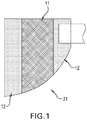
Fig 1 is a top view of a diaper fastening tab comprising three adjacent bonded regions. -
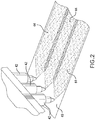
Fig 2 is an illustration of how three adjacent bonded regions could be applied to a substrate using three different coating heads. -
Fig 3 is a front view of a absorbent undergarment with adjacent bonded regions present in a vertical stripe pattern throughout undergarment. - Applicants have discovered hot melt adhesive compositions that can be used to form elastic regions that are useful in disposable articles (e.g. disposable absorbent articles). The compositions have good elastic recovery and a viscosity of less than about 15,000 cps at 177°C (350°F). The low viscosity makes it possible to apply the hot melt adhesive at a high line speed and register i.e. provide zoned application to only those areas requiring elastic performance. The low viscosity further makes it possible to apply the hot melt adhesive within the disposable article manufacturing line. The low viscosity of the hot melt adhesive composition gives flexibility to the user, resulting in the ability to create elastic bonded regions.
- The disposable article can comprise at least two bonded regions, the at least two regions can be adjacent to each other. By adjacent, it is meant that the two bonded regions are side by side. The two adjacent bonded regions can slightly overlap each other. At least one of the adjacent bonded regions is bonded with an elastic hot melt adhesive. The second region can be bonded with an elastic hot melt adhesive or alternatively is bonded with a second hot melt adhesive.
- The second hot melt adhesive can be used to introduce additional properties into the article e.g. stiffness (i.e. by use an adhesive with a higher modulus as compared to the elastic hot melt adhesive), breathability, lower cost, improved adhesion and/or improved creep resistance.
- The second hot melt adhesive can be used to control the extent to which the elastic hot melt adhesive can elongate by varying the width of the elastic bonded regions relative to the second bonded regions.
- The at least two adjacent bonded regions are different from each other. In one embodiment, the same elastic hot melt adhesive applied at two different coat weights is used to construct two adjacent bonded regions.
- The elastic region can include a first substrate and a hot melt adhesive composition. The hot melt adhesive composition imparts elasticity to the first substrate.
- Alternatively, the elastic region can include a first substrate, a second substrate and an elastic hot melt adhesive composition. The elastic hot melt adhesive composition is present between the first and second substrate, permanently bonding the substrates to each other and providing elasticity in the bonded area.
- In a different embodiment, the invention includes a layered bonded region. In this embodiment, the elastic hot melt adhesive can be coated in a continuous film on a first substrate and then a second hot melt adhesive is applied in a discontinous manner directly on top of the elastic hot melt adhesive. The second hot melt can then be used to bond the second substrate to the elastic hot melt adhesive to form a composite with four layers: first substrate, elastic hot melt adhesive film, discontinous coating of a second hot melt adhesive, and second substrate.
- One of the substrates can be a nonwoven. Any nonwoven can be used. The nonwoven can contain fibers made from one or more polymers (e.g. PET (polyethylene terephthalate), PBT (polybutylene terphthalate), nylon, polypropylene and polyethylene), one or more natural fibers (e.g. rayon cellulose, cotton cellulose, hemp and viscose) or combinations thereof. The nonwoven can be formed by a number of different methods, including e.g. airlaid, wetlaid, spunbond or meltblown. The fibers can be carded (e.g. run through a comb) so that they are oriented in a particular direction. The webs can be bonded together in any manner including e.g. hydroentangled, chemical bonded, needle punched or thermally bonded. In one embodiment, the nonwoven is comprised of a blend of polypropylene and polyethylene fibers which are airlaid, carded and hydroentangled. In another embodiment, the nonwoven may be a self-elastic. This is accomplished by incorporation of elastic fibers into the nonwoven, or by incorporating absorbed elastic material to improve elasticity. Hot melt adhesives described herein can be used in conjunction with elastic nonwoven to augment the elastic performance of the composite.
- Alternatively one of the substrates can be nonwoven and the other can be a polymer film. Any polymer film can be used. The polymer film can be selected from the group consisting of polyethylene, polypropylene, polyethylene copolymers, polypropylene copolymers, and PET.
- The first and second substrate can be nonwoven. The nonwoven can have a basis weight of less than 40 gsm (grams per square meter), less than 35 gsm, or even less than about 30 gsm. The nonwoven can be extensible to greater than 100 % in the cross-web direction. At least one of the substrates is selected from the group consisting of nonwoven and polymer film.
- Various post treatments, such as treatment with grooved rolls i.e. activation can be used to adjust the mechanical properties (e.g. extensibility) of the composite.
- The elastic hot melt adhesive can be applied to the first and/or second substrate using a variety of applicator methods including slot coating, non-contact coating, comb shim coating, spraying including, e.g., spiral spraying and random spraying, screen printing, foaming (e.g. using chemical foaming agents or a Nordson FoamMelt® Dispensing System), engraved roller, gravure roller, extrusion and meltblown.
- The elastic hot melt adhesive can be applied to one substrate.
- Alternatively, the elastic hot melt adhesive can be applied to the first substrate and then contacted by the second substrate to form the bonded region. Pressure,tension and/or line speed can be used to aid in forming the bonded region. The bonded regions can be formed within a disposable article manufacturing process. Alternatively, the bonded regions are formed prior to the disposable article manufacturing process.
- The elastic hot melt adhesive can be a pressure sensitive (i.e. exhibit tack at room temperature) hot melt adhesive. The elastic hot melt adhesive composition can be light in color and can have good thermal stability. In a cooled film, the hot melt adhesive can be clear i.e. translucent or alternatively the hot melt adhesive can be opaque. The elastic hot melt adhesive can have an Initial Molten Gardner Color after manufacturing of less than about 3, or even less than about 2. Alternately, the elastic hot melt adhesive can be pigmented to an opaque color such as e.g. pink, blue, white, gray, etc.
- The elastic hot melt adhesive composition has low viscosity at application temperature. The viscosity is no greater than about 15,000 cps at around 177°C (350°F), no greater than about 10,000 cps at around 177°C (350°F), no greater than about 7,500 cps at around 177°C (350°F), or even no greater than about 5,000 cps at 177°C (350°F). The elastic hot melt adhesive composition gives a set after 50% hysteresis of no greater than about 20%, no greater than about 12%, no greater than about 10% or even no greater than about 8% when tested according to the 2-Peak Hysteresis Test Method.
- The elastic hot melt adhesive composition provides good adhesion when tested according to the Peel Force Test Method. In some embodiments, the elastic hot melt adhesivecan have a peel adhesion of greater than about 100 grams, greater than about 200 grams, or even greater than about 300 grams.
- The elastic hot melt adhesive composition can include one or more styrene block copolymers, a tackifying agent, and greater than about 15% by weight of a plasticizer.
- The elastic hot melt adhesivecomposition can have a viscosity curve with a Viscosity Ratio (i.e. Viscosity @ 149°C(300°F) (cps)/Viscosity @ 177°C(350°F) that is less than about 7, less than about 6, less than about 5, or even less than about 4. A low viscosity ratio can indicate improved machining at high line speeds as the hot melt adhesive does not gain viscosity as quickly as it cools.
- The elastic hot melt adhesive composition can include a tackifying agent with at least some aromatic content and a plasticizer such as naphthenic oil.
- The elastic hot melt adhesive includes one or more styrene block copolymers.
- A styrene block copolymer includes an aromatic vinyl polymer block and a conjugated diene polymer block, a hydrogenated conjugated diene polymer block, or a combination thereof. The blocks can be arranged in a variety of configurations including, e.g., linear, branched, radial, star block, and combinations thereof. The aromatic vinyl polymer block can be derived from a variety of aromatic vinyl compounds including, e.g., styrene, alpha-methylstyrene, beta-methylstyrene, o-, m-, p-methylstyrene, t-butylstyrene, 2,4,6-trimethylstyrene, monofluorostyrene, difluorostyrene, monochlorostyrene, dichlorostyrene, methoxystyrene, 1,3-vinylnaphthalene, vinylanthracene, indene, acenaphthylene, and combinations thereof. The diene polymer block can be derived from a variety of diene-containing compounds including, e.g., isoprene, butadiene, hexadiene, 2,3-dimethyl-1,3-butadiene, 1,3-pentadiene, and hydrogenated versions thereof, and combinations thereof.
- Useful styrene block copolymers include, e.g., diblock, triblock and multiblock copolymers including, e.g., styrene-butadiene, styrene-butadiene-styrene, styrene-isoprene, styrene-isoprene-styrene, styrene-ethylene/butene, styrene-ethylene/butene-styrene, styrene-ethylene/propylene, styrene-ethylene/propylene-styrene, styrene-ethylene-ethylene/propylene-styrene, and combinations thereof.
- The one or more styrene block copolymers have an average styrene content of at least about 30%, at least about 35%, at least about 40%, or even from about 35% to about 45% by weight.
- As an example, if a hot melt composition comprises two styrene block copolymers A and B. Polymer A is present at 25 weight % with a styrene content of 35% and polymer B is present at 25 weight % with a styrene content of 45 weight %. The average styrene content of the one or more styrene block copolymers is calculated in the following way: 0.5 (35) + 0.5 (45) = 40 weight %.
- The one or more styrene block copolymers have an average Melt Flow Rate (MFR) according to ASTM D 1238 (200°C/5 kg) in dg/min of no less than about 20, no less than about 25, or even no less than about 30. The average MFR of the styrene block copolymers is calculated in a similar manner as the average styrene content.
- The elastic hot melt adhesivecan include at least one styrene block copolymer with a styrene content of at least about 40% by weight.
- The composition has a total styrene block copolymer content of greater than 40 % by weight, greater than 45 % by weight, from about 30% to about 60 % by weight, from about 35% to about 55% by weight, or even from about 40% to about 50 % by weight.
- The styrene block copolymers can be pure tri-block copolymers containing no di-block. Alternately, the styrene block copolymer can include a portion of di-block. The styrene block copolymer can include diblock content of greater than 30 %.
- Useful styrene block copolymers include VECTOR 6241 (Linear, styrene-butadiene-styrene, pure triblock copolymer, 43 wt% styrene, MFR (200°C/5kg) = 23 dg/min), VECTOR 8508 (Linear, styrene-butadiene-styrene, pure triblock copolymer, 29 wt% styrene, MFR (200°C/5kg) = 12 dg/min and VECTOR 4411 (Linear, styrene-isoprene-styrene, pure triblock copolymer, 44 wt% styrene, MFR (200°C/5kg) = 40 dg/min) all available from TSRC Dexco (Houston, Texas) and GLOBALPRENE 3545 (Linear, styrene-butadiene-styrene block copolymer, 63% diblock, 45 wt% styrene, MFR (190°C/5kg) = 55) available from LCY CHEMICAL CORP. (Taipei, Taiwan). Another useful styrene block copolymer includes KRATON FG 1901 G (Linear, styrene-ethylene/butylene-styrene, 30 wt% styrene, with 1.7% bound maleic anhydride) available from KRATON POLYMERS U.S. LLC (Houston, Texas).
- The elastic hot melt adhesivecan include a tackifying agent. The tackifying agent can be fluid or solid at room temperature. Suitable classes of tackifying agents include, e.g., aromatic, aliphatic and cycloaliphatic hydrocarbon resins, mixed aromatic and aliphatic modified hydrocarbon resins, aromatic modified aliphatic hydrocarbon resins, and hydrogenated versions thereof; terpenes, modified terpenes and hydrogenated versions thereof; natural rosins, modified rosins, rosin esters, and hydrogenated versions thereof; low molecular weight polylactic acid; and combinations thereof. Examples of useful natural and modified rosins include gum rosin, wood rosin, tall oil rosin, distilled rosin, hydrogenated rosin, dimerized rosin and polymerized rosin. Examples of useful rosin esters include e.g., glycerol esters of pale wood rosin, glycerol esters of hydrogenated rosin, glycerol esters of polymerized rosin, pentaerythritol esters of natural and modified rosins including pentaerythritol esters of pale wood rosin, pentaerythritol esters of hydrogenated rosin, pentaerythritol esters of tall oil rosin, and phenolic-modified pentaerythritol esters of rosin.
- Useful tackifying agents are commercially available under a variety of trade designations including, e.g., the ESCOREZ series of trade designations from Exxon Mobil Chemical Company (Houston, Texas) including ESCOREZ 5400 (1% aromatic content), ESCOREZ 5600 (9.8% aromatic content), ESCOREZ 5690 (10% aromatic content), ESCOREZ 5615 (9.9% aromatic content), the EASTOTAC series of trade designations from Eastman Chemical (Kingsport, Tennessee) including EASTOTAC H-100R and EASTOTAC H-100L, and the WINGTACK series of trade designations from Cray Valley HSC (Exton, Pennsylvania) including WINGTACK 86, WINGTACK EXTRA, and WINGTACK 95 and the PICCOTAC and KRISTALEX series of trade designations from Eastman Chemical Company (Kingsport, Tennessee) including, e.g., PICCOTAC 8095 and KRISTALEX 3100.
- The elastic hot melt adhesivecan be free from end block resin that has a melting point greater than about 130°C.
- The elastic hot melt adhesivecomposition can include at least one tackifying agent with aromatic content. The tackifying agent can have an aromatic content of greater than 5%, greater than 20%, greater than 50%, from about 5% to about 20% by weight, or even from about 8% to about 15% by weight.
- The composition can include a tackifying agent with a melt point of less than 100°C, or even less than 95°C.
- The elastic hot melt adhesivecomposition can include at least about 20 % by weight, at least about 25 % by weight, from about 10 % by weight to about 50 % by weight, from about 15 % by weight to about 40 % by weight, or even from about 20 % by weight to about 37 % by weight tackifying agent.
- The elastic hot melt adhesivecomposition can include a plasticizer. Suitable plasticizers include, e.g., naphthenic oils, paraffinic oils (e.g., cycloparaffin oils), mineral oils, phthalate esters, adipate esters, olefin oligomers (e.g., oligomers of polypropylene, polybutene, and hydrogenated polyisoprene), polybutenes, polyisoprene, hydrogenated polyisoprene, polybutadiene, benzoate esters, animal oil, plant oils (e.g. castor oil, soybean oil (e.g. high oleic soy oil), derivatives of oils, glycerol esters of fatty acids, polyesters, polyethers, lactic acid derivatives and combinations thereof.
- Useful commercially available plasticizers include CALSOL 550 naphthenic oil from Calumet Specialty Products Partners, LP (Indianapolis, Indiana), KAYDOL OIL mineral oil from Sonneborn (Tarrytown New York) PARAPOL polybutene from Exxon Mobil Chemical Company (Houston, Texas), OPPANOL polyisobutylene from BASF (Ludwigsjhafen, Germany), KRYSTOL 550 mineral oil from Petrochem Carless Limited (Surrey, England), PURETOL 35 and 15 both mineral oils from Petro Canada Lubricants Inc. (Mississauga, Ontario) and PLENISH from Pioneer DuPont.
- The plasticizer can be a naphthenic oil. Alternately, the plasticizer includes aromatic or naphthenic groups.
- The plasticizer can be present in the elastic hot melt adhesivecomposition in an amount of at least about 10%, at least about 15 % by weight, at least about 18% by weight, from about 10 % to about 30% by weight, or even from about 15% to about 25% by weight.
- The elastic hot melt adhesivecomposition can include a wax. Useful classes of wax include, e.g., paraffin waxes, microcrystalline waxes, high density low molecular weight polyethylene waxes, by-product polyethylene waxes, polypropylene waxes, Fischer-Tropsch waxes, oxidized Fischer-Tropsch waxes, functionalized waxes such as acid, anhydride, and hydroxy modified waxes, animal waxes, vegetable waxes (e.g. soy wax) and combinations thereof. Useful waxes are solid at room temperature and preferably have a Ring and Ball softening point of from 50°C to 170°C. Useful waxes are commercially available from a variety of suppliers including EPOLENE N and C series of trade designations from Westlake Chemical Corporation (Houston, Texas) including e.g. EPOLENE N-21 and the LICOCENE series of trade designations from Clariant International Ltd. (Muttenz, Switzerland) including e.g. TP LICOCENE PP 6102.
- The elastic hot melt adhesive composition can include no greater than about 8% by weight, no greater than about 5% by weight, from about 1% by weight to about 7.5 % by weight, or even from about 1% to about 5% by weight wax.
- The elastic hot melt adhesive composition optionally includes additional components including but not limited to, e.g., foaming agents, stabilizers, antioxidants, additional polymers (e.g. olefin based polymers (e.g. propylene homopolymers, propylene copolymers, ethylene homopolymers, ethylene copolymers,, functionalized polymers such as acid, anhydride, and hydroxy modified polymers), amorphous poly-alpha olefins, polyethylene copolymers), adhesion promoters, ultraviolet light stabilizers, corrosion inhibitors, odor absorbers/neutralizers, colorants (e.g., pigments (e.g. titanium dioxide, carbon black, and mixtures thereof) and dyes), fragrances, fillers (e.g. nano particles, calcium carbonate, clay, talc, fumed silica), surfactants, wetness indicators, superabsorbents, coextrusion coatings, processing aids and combinations thereof.
- The hot melt adhesive comprises from about 0.1 to about 2.0 % by weight pigment, or even from about 0.1 to about 0.5% by weight pigment.
- Useful antioxidants include, e.g., pentaerythritol tetrakis[3,(3,5-di-tert-butyl-4-hydroxyphenyl)propionate], 2,2'-methylene bis(4-methyl-6-tert-butylphenol), phosphites including, e.g., tris-(p-nonylphenyl)-phosphite (TNPP) and bis(2,4-di-tert-butylphenyl)4,4'-diphenylene-diphosphonite, di-stearyl-3,3'-thiodipropionate (DSTDP), and combinations thereof. Useful antioxidants are commercially available under a variety of trade designations including, e.g., the IRGANOX series of trade designations including, e.g., IRGANOX 1010, IRGANOX 565, and IRGANOX 1076 hindered phenolic antioxidants and IRGAFOS 168 phosphite antioxidant, all of which are available from BASF Corporation (Florham Park, New Jersey), and ETHYL 702 4,4'-methylene bis(2,6-di-tert-butylphenol). When present, the elastic hot melt adhesive composition preferably includes from about 0.1 % by weight to about 2 % by weight antioxidant.
- The bonded regions of this invention can be incorporated into any suitable disposable article including personal care garments, medical garments and industrial worker garments.
- The bonded regions of this invention are useful in a variety of applications and constructions to improve comfort and fit including e.g., disposable absorbent articles including, e.g., diapers, training paints, swim wear, absorbent undergarments (e.g. adult incontinence products), sanitary napkins, medical dressings (e.g., wound care products and bandages), surgical pads, medical gowns, caps, gloves, drapes, face masks, laboratory coats, coveralls, meat-packing products, and components of absorbent articles including, e.g., an absorbent element, absorbent cores, impermeable layers (e.g., backsheets), tissue (e.g., wrapping tissue), acquisition layers and woven and nonwoven web layers (e.g., top sheets, absorbent tissue).
- The bonded regions of this invention are useful for elasticizing many areas of disposable absorbent articles including leg cuffs, waist portions, belly bands, side panels and fastening tabs/ears. The elastic composite of this invention can further be used to elasticize any portion of the disposable article or even the entire disposable article.
- The adjacent bonded regions of this invention are useful in elasticizing the fastening tab/ear of a disposable absorbent article.
- In one embodiment (
Fig 1 ), the fastening tab (21) comprises three adjacent bonded regions. An elastic bonded region (11) with a second bonded region on either side (12). - Each bonded region comprises a first and second substrate and a hot melt adhesive composition between the first and second substrates thereby bonding the first and second substrates together. The elastic region comprises an elastic hot melt adhesive. The second bonded region can comprise a second hot melt adhesive.
- The elastic region allows the fastening tab area to stretch while the second bonded regions can add strength to the fastening tab area.
- The second hot melt adhesive can be stiffer (i.e. have a higher modulus) than the elastic hot melt adhesive.
- The hot melt adhesives can applied using two or more different coating heads using a slot coating or non-contact coating application to one substrate, forming a series of side by side continuous films that can be used to bond the first and second substrates together and create the bonded regions. In one embodiment (
Fig 2 ), three coating heads (42) are used to apply 3 adjacent adhesive regions (44), that slightly overlap each other, to a substrate (49). - The adjacent bonded regions of this invention can be useful in creating absorbent undergarments that have the feel and stretch of cotton while being capable of absorbing body fluids. In one embodiment (
Fig 3 ), the absorbent undergarment (5) includes adjacent bonded regions that are present in a vertical stripe pattern throughout the absorbent article, elastic regions (7) alternating with second bonded regions (9). These vertical stripes can be more like a pin stripe; alternatively the vertical stripes can be wider. Individual stripes may be of the same or differing widths. The vertical stripes can have a width of from about 1 mm to about 100 mm, from about 1 mm to about 50 mm or even from about 2-25 mm. - The second bonded regions can comprise a second hot melt adhesive that introduces certain properties into the disposable absorbent article. The second hot melt adhesive can provide breathability, cohesion, stiffness, and/or lower creep. In one embodiment, breathability is introduced by coating one or both hot melt adhesives in a discontinuous manner.
- Composition amounts in tables are all in weight %.
- Test procedures used in the examples and throughout the specification, unless stated otherwise, include the following.
- Viscosity is determined in accordance with ASTM D-3236 entitled, "Standard Test Method for Apparent viscosity of Adhesives and Coating Materials," (October 31, 1988), using a Brookfield Thermosel
viscometer Model RVDV 2 and a number 27 spindle. The results are reported in centipoise (cps). - The hot melt adhesive is tested (in the molten state) to determine Molten Gardner Color by comparing the color of the sample against the Gardner Color Standards as set forth in ASTM D-1544. The comparison is made using a Gardner Delta Comparator equipped with an Illuminator available from Pacific Scientific (Bethesda, Maryland).
- Test laminations were prepared by continuous slot coating the elastic hot melt adhesive composition between two nonwoven* substrates at an application temperature of 177°C(350°F), a nip pressure of 10.5 Newtons/centimeter (N/cms) (6 pounds per linear inch (PLI)), and a run speed of at least 6.1 meters/min (m/min) (20 feet/min). Laminations were prepared with an adhesive coat weight of 100 grams per square meter (gsm) and the width of the adhesive was at least 7.6 cms (3 inches). A sufficient amount of laminate was prepared such that at least 1.5 m (60 inches) of representative lamination was collected for testing.
*The nonwoven used is carded, hydroentangled and comprises 50/50 (PET/PP). It has a basis weight of 29g/m2, a cross direction tensile strength of 93 grams/cm2 (600 grams/in2), a CD elongation at break = 217% WSP Method 110.4, and an elongation ratio (CD/MD) = 4.3. - Test laminates were prepared by coating elastic hot melt adhesive between two substrates according to the Test Lamination Preparation method above. Peel force is determined using ASTM D1876-01 entitled; "Test Method for Determining Peel Resistance of Adhesive (T-Peel Test Method)," with the exception that the test is run at a rate of 30.5 cms per minute (12 inches per minute), instead of 25.4 cms per minute (10 in per minute), over a period of 10 seconds, and 7 replicates are run instead of the 10 specified in ASTM D1876. The samples are run on an INSTRON type-test instrument. The test samples are 2.54 cms (1 inch) in width and at least 10.16 cms (4 inches) in length. The average peel force over 10 seconds of peeling is recorded, and the results are reported in grams. The initial peel force is measured at least 24 hours after the laminate is prepared.
- Test laminates were prepared by coating elastic hot melt adhesive between two substrates according to the Test Lamination Preparation method above. Test samples are prepared by cutting the laminates in cross-web direction, with 1 inch in width and at least 3 inches in length. The test is conducted at least 24 hours after the non-woven laminate is prepared.
- The strips prepared are extended to a certain strain (e.g. 50%, 100 %, 150% or 200%) and then retracted to their original dimension. Subsequently the specimen goes through a second extension-retraction cycle with the same deformation. The cross head speed is set to 50.8 cms per minute (20 inches per minute). There is no holding time between extension and retraction. The samples are run on an INSTRON type-test instrument with at least 3 replicates. The permanent set after each cycle is determined by the tensile strain on the retraction curve where the tensile stress reduces to 5 gram force. The peak load/stress at maximum deformation and percent energy loss between each cycles are also recorded.
- Rheological Creep and Recovery was run on a Texas Instruments AR-G2 rheometer using parallel plate geometry with a 8 mm plate. The test was run isothermally at 38°C with a gap of 300 um.
- Once equilibrated at 38°C, a pressure of 26,800 Pa was applied. The sample was held at this pressure for 20 minutes (creep portion of test). The pressure was then released to 0 Pa for 20 minutes (recovery portion of test).
- The strain was measured. Values at specified intervals are reported in the table.
Table One Comparative 1 and 2 are compositions outside of the inventive ranges. Both have a viscosity at 177°C (350°F) of greater than 15,000 cps and would not be expected to apply well on a high speed production line. Comparative 1 Comparative 2VECTOR 8508 (Avg. MFR (200°C/5kg) = 12) 40 45 ESCOREZ 5615 49.5 29.5 CALSOL 550 10 25 IRGANOX 1010 0.5 0.5 Viscosity @ 177°C (350°F) (cps) 43,400 30,870 Table Two - Elastic Hot Melt Adhesive Examples Ex. 1 Ex. 2 Ex. 3 Ex. 4 Ex. 5 Ex. 6 Ex. 7 Ex. 8 Ex. 9 Ex. 10 Ex. 11 VECTOR 6241 20 20 VECTOR 4411 46 46 46 42.5 42.5 26 26 50 50 35 35 ESCOREZ 5490 32 29.5 29.5 38.5 ESCOREZ 5400 33.5 ESCOREZ 5690 33.5 33.5 32 31.5 31.5 29.5 38.5 PURETOL 35 20 20 25 20 26 CALSOL 550 20 25 22 20 26 PLENISH 22 IRG 1010 0.5 0.5 0.5 0.5 0.5 0.5 0.5 0.5 0.5 0.5 0.5 Viscosity (cps) @149°C (300°F) 204,500 68,000 38,800 77,000 18,250 33,500 28,100 279,600 74,800 18400 6000 @163°C (325°F) 14,050 9,700 8,020 6,950 4,210 8,940 7,750 30,150 12,550 2545 2065 @177°C (350°F) 14.56 7.01 4.83 11.10 4.34 3.75 3.63 9.27 6.0 7.23 2.91 Rheo. Creep Strain @ 0.01 sec .078 .067 .052 .084 .078 Strain @ 600 sec .232 .169 .162 .457 .377 Strain @ 1200 sec .246 .192 .189 .488 .424 Rheo. Recovery Strain @ 1200 sec .246 .192 .189 .488 .424 Strain @ 1800 seconds .05 .041 .048 .106 .104 Strain @ 2400 sec .043 .033 .039 .094 .087 Table Three - Elastic Hot Melt Adhesive Examples Ex. 12 Ex. 13 Ex. 6 Ex. 14 Ex. 15 Ex. 16 Ex. 17 VECTOR 8508 20 15 VECTOR 4411 26 31 26 26 46.5 VECTOR 6241 20 20 30 46.5 GLOBALPREN E 3545 15 Avg. Styrene Content of SBC 37.5 39.1 43.6 43.6 43.7 44 43 Avg. MFR (200°C/5kg) 27.8 30.9 32.6 32.6 >33 40 23 ESCOREZ 5690 31.5 31.5 31.5 33.5 29.75 29.75 ESCOREZ 5615 34.5 CALSOL 550 22 22 22 20 20 23.25 23.25 IRGANOX 1010 0.5 0.5 0.5 0.5 0.5 0.5 0.5 Table Four Ex. 12 Ex. 13 Ex. 6 Ex. 14 Ex. 15 Ex. 16 Ex. 17 Viscosity (cps) @149°C (300°F) 47,000 48,590 33,500 33,000 33,800 35,150 37,800 @163°C (325°F) 23,125 21,570 16,290 16,150 17,750 14,250 18,850 @177°C (350°F) 12,700 12,800 8,940 9,250 11,050 7,050 12,050 Viscosity Ratio@ 3.70 3.80 3.75 3.56 3.06 4.99 3.11 149°C/177°C Elasticity 50% hysteresis Set 1st cycle (%) 6 6 6 8 9 6 5 Set 2nd cycle (%) 7 6 7 10 10 7 6 Energy loss (%) 31.1 31.1 35.1 37.0 37.9 35.1 34.5 100% hysteresis Set 1st cycle (%) 15 14 15 21 23 16 14 Set 2nd cycle (%) 17 17 17 23 26 18 16 Energy loss (%) 43.0 44.2 46.7 48.7 51.2 46.9 45.6 150% hysteresis Set 1st cycle (%) 24 24 27 37 41 26 23 Set 2nd cycle (%) 27 27 30 40 45 28 27 Energy loss (%) 54.3 55.1 55.2 59.8 61.6 56.2 54.4 Adhesion Average peel (gram force) 278 238 437 256 852 68 272
Claims (13)
- A disposable article comprising at least two adjacent bonded regions:
the first bonded region comprising:a first and second substrate; and an elastic hot melt adhesive composition between the first and second substrates thereby bonding the first and second substrates to each other; the elastic hot melt adhesive composition having a viscosity of less than about 15,000 cps at 177°C (350°F) and a set after 50% hysteresis of no greater than about 20%;the second bonded region comprising:
a first and second substrate; and a hot melt adhesive composition between the first and second substrates thereby bonding the first and second substrates to each other, wherein the at least two adjacent bonded regions comprise the same elastic hot melt adhesive applied at different coat weights, or
wherein the second bonded region comprises a hot melt adhesive composition different from the elastic hot melt adhesive composition of the first bonded region. - The disposable article of claim 1 wherein the disposable article is a disposable absorbent article.
- The disposable article of claim 2 selected from the group consisting of diaper, absorbent undergarment, feminine hygiene product and medical bandage.
- The disposable article of claim 3 which is an absorbent undergarment comprising adjacent bonded regions throughout the absorbent undergarment, the adjacent bonded regions comprising elastic bonded regions alternating with second bonded regions.
- The disposable article of any one of claims 1 to 4 wherein at least one of the substrates is nonwoven.
- The disposable article of claim 5 wherein the nonwoven is airlaid, carded and hydroentangled.
- The disposable article of claim 5 or 6 wherein the nonwoven is extensible to greater than 100% in the cross web direction.
- The disposable article of any one of claims 1 to 7 wherein the at least two adjacent bonded regions are used in an application selected from the group consisting of fastening ear, waist band, belly band and side panel.
- The disposable article of claim 8 wherein three adjacent bonded regions make up a fastening ear; the three adjacent bonded regions comprising an elastic bonded region between two second bonded regions.
- The disposable article of any one of claims 1 to 9 wherein the elastic hot melt adhesive composition comprises:about 30% by weight to about 60% by weight of one or more styrene block copolymers wherein the one or more styrene block copolymers has an average styrene content of at least about 30% by weight and an average MFR (200°C/5 kg) of no less than about 20 dg/min,greater than about 10 % of a plasticizer and,a tackifying agent.
- The disposable article of claim 10 wherein the elastic hot melt adhesive composition comprises:as tackifying agent: a hydrocarbon resin with about 5% to about 20% by weight of aromatic content, andas plasticizer: a naphthenic oil.
- The disposable article of claim 10 or 11 wherein the average styrene content of the one or more styrene block copolymers is at least about 40% by weight.
- The disposable article of any one of claims 10 to 12 wherein the one or more styrene block copolymers has an average MFR (200°C/5 kg) of no less than about 30 dg/min.
Applications Claiming Priority (4)
| Application Number | Priority Date | Filing Date | Title |
|---|---|---|---|
| US201462048047P | 2014-09-09 | 2014-09-09 | |
| US201462048066P | 2014-09-09 | 2014-09-09 | |
| US201562171129P | 2015-06-04 | 2015-06-04 | |
| PCT/US2015/049186 WO2016040483A1 (en) | 2014-09-09 | 2015-09-09 | A disposable article including at least one elastic bonded region |
Publications (2)
| Publication Number | Publication Date |
|---|---|
| EP3191045A1 EP3191045A1 (en) | 2017-07-19 |
| EP3191045B1 true EP3191045B1 (en) | 2019-11-06 |
Family
ID=54147352
Family Applications (3)
| Application Number | Title | Priority Date | Filing Date |
|---|---|---|---|
| EP15766715.5A Active EP3191044B1 (en) | 2014-09-09 | 2015-09-09 | An elastic hot melt adhesive composition and an elastic composite made with the same |
| EP15766716.3A Active EP3191045B1 (en) | 2014-09-09 | 2015-09-09 | A disposable article including at least one elastic bonded region |
| EP15766368.3A Withdrawn EP3191043A1 (en) | 2014-09-09 | 2015-09-09 | A disposable garment |
Family Applications Before (1)
| Application Number | Title | Priority Date | Filing Date |
|---|---|---|---|
| EP15766715.5A Active EP3191044B1 (en) | 2014-09-09 | 2015-09-09 | An elastic hot melt adhesive composition and an elastic composite made with the same |
Family Applications After (1)
| Application Number | Title | Priority Date | Filing Date |
|---|---|---|---|
| EP15766368.3A Withdrawn EP3191043A1 (en) | 2014-09-09 | 2015-09-09 | A disposable garment |
Country Status (9)
| Country | Link |
|---|---|
| US (3) | US20160068721A1 (en) |
| EP (3) | EP3191044B1 (en) |
| JP (3) | JP6910297B2 (en) |
| KR (2) | KR20170051432A (en) |
| CN (3) | CN106794093A (en) |
| CO (2) | CO2017002333A2 (en) |
| MX (3) | MX369600B (en) |
| WO (3) | WO2016040495A1 (en) |
| ZA (2) | ZA201700966B (en) |
Families Citing this family (27)
| Publication number | Priority date | Publication date | Assignee | Title |
|---|---|---|---|---|
| US20160068721A1 (en) | 2014-09-09 | 2016-03-10 | H.B. Fuller Company | Elastic hot melt adhesive composition and an elastic composite made with the same |
| US10603402B2 (en) | 2015-03-16 | 2020-03-31 | H.B. Fuller Company | Elastic adhesive composition and an elastic composite made with the same |
| KR102397831B1 (en) | 2017-12-27 | 2022-05-12 | 주식회사 엘지화학 | Hot melt adhesive composition |
| WO2019132320A1 (en) * | 2017-12-27 | 2019-07-04 | 주식회사 엘지화학 | Hot-melt adhesive composition |
| KR102546024B1 (en) | 2018-01-31 | 2023-06-22 | 킴벌리-클라크 월드와이드, 인크. | Pant-type disposable absorbent article with improved chassis structure |
| US12144710B2 (en) | 2018-01-31 | 2024-11-19 | Kimberly-Clark Worldwide, Inc. | Pant-like disposable absorbent articles with improved chassis construction |
| JP7235251B2 (en) * | 2018-01-31 | 2023-03-08 | 積水フーラー株式会社 | Method for manufacturing elastic laminate |
| JP2019130272A (en) * | 2018-01-31 | 2019-08-08 | 長瀬産業株式会社 | Wearing article |
| WO2019165273A1 (en) * | 2018-02-23 | 2019-08-29 | H.B. Fuller Company | Self-supporting fiberized web including a hot melt composition for use in disposable absorbent articles and application method |
| EP3725926B1 (en) * | 2018-02-26 | 2023-03-22 | Kuraray Co., Ltd. | Fabric for fusion bonding and multilayer body comprising said fabric for fusion bonding |
| CN111727026B (en) | 2018-03-20 | 2022-05-31 | 宝洁公司 | Bond patterns in absorbent articles |
| WO2019235454A1 (en) * | 2018-06-04 | 2019-12-12 | 積水フーラー株式会社 | Hot-melt composition |
| EP3760684A1 (en) * | 2019-07-05 | 2021-01-06 | Bostik Sa | Low tack hot-melt pressure sensitive adhesives |
| WO2021021184A1 (en) * | 2019-07-31 | 2021-02-04 | Kimberly-Clark Worldwide, Inc. | Zoned elastic film and laminates comprising the same |
| EP4038226A1 (en) * | 2019-10-04 | 2022-08-10 | Berry Global, Inc. | Biopolymer-containing nonwoven fabric |
| CN114929472B (en) * | 2020-01-27 | 2025-01-10 | 宝洁公司 | Absorbent article with high toughness adhesive |
| EP3916053A1 (en) | 2020-05-27 | 2021-12-01 | Bostik SA | Hot melt adhesive composition having improved wet bonding strength |
| EP4181850A1 (en) * | 2020-07-17 | 2023-05-24 | H.B. Fuller Company | Hot melt pressure sensitive adhesive compositions and articles including the same |
| JP2023535922A (en) * | 2020-07-21 | 2023-08-22 | ボスティク エス アー | hot melt adhesive composition |
| CN112127149B (en) * | 2020-08-19 | 2023-04-14 | 杭州传化精细化工有限公司 | Hydrophilic small-layer-difference smoothing agent for cheese and preparation method thereof |
| JP7547120B2 (en) * | 2020-08-28 | 2024-09-09 | ユニ・チャーム株式会社 | Absorbent articles |
| JP2024500327A (en) * | 2020-12-08 | 2024-01-09 | ヘンケル・アクチェンゲゼルシャフト・ウント・コムパニー・コマンディットゲゼルシャフト・アウフ・アクチェン | Hot melt adhesives and their uses |
| US20220387661A1 (en) * | 2021-05-27 | 2022-12-08 | H.B. Fuller Company | Hot melt pressure sensitive adhesive compositions and articles including the same |
| CN113855397A (en) * | 2021-10-21 | 2021-12-31 | 广东昱升个人护理用品股份有限公司 | Comfortable paper diaper and manufacturing method thereof |
| CN118139942A (en) * | 2021-10-22 | 2024-06-04 | 汉高股份有限及两合公司 | Hot melt adhesive composition and use thereof |
| JP2024025413A (en) * | 2022-08-12 | 2024-02-26 | Dic株式会社 | Adhesive tape and electronic equipment |
| US20240181431A1 (en) * | 2022-12-02 | 2024-06-06 | First Quality Retail Services, Llc | Multi-layer composites and absorbent articles including the same |
Family Cites Families (78)
| Publication number | Priority date | Publication date | Assignee | Title |
|---|---|---|---|---|
| DE2967055D1 (en) * | 1978-09-22 | 1984-07-19 | Fuller H B Co | Hot melt adhesive for elastic banding and methods for utilizing the same |
| US4543099A (en) | 1978-12-06 | 1985-09-24 | H. B. Fuller Company | Method for imparting elastic properties to a flexible substrate |
| US4789699A (en) | 1986-10-15 | 1988-12-06 | Kimberly-Clark Corporation | Ambient temperature bondable elastomeric nonwoven web |
| JPH0337062A (en) * | 1989-07-03 | 1991-02-18 | Nitta Gelatin Inc | Manufacture of disposable product |
| US5149741A (en) * | 1989-07-21 | 1992-09-22 | Findley Adhesives, Inc. | Hot melt construction adhesives for disposable soft goods |
| US5342858A (en) * | 1993-06-30 | 1994-08-30 | The Procter & Gamble Company | Elastomeric adhesive foam |
| MX9702542A (en) | 1994-10-07 | 1998-02-28 | Procter & Gamble | Adhesive composition, method and apparatus for manufacture thereof and abosrbent articles comprising said adhesive compostion. |
| US6620143B1 (en) * | 1994-10-28 | 2003-09-16 | Kimberly-Clark Worldwide, Inc. | Sanitary napkin article having body-facing adhesive |
| MX9703947A (en) * | 1994-11-30 | 1998-05-31 | Procter & Gamble | Stretchable absorbent article core. |
| US5536563A (en) | 1994-12-01 | 1996-07-16 | Kimberly-Clark Corporation | Nonwoven elastomeric material |
| US5745922A (en) | 1995-01-31 | 1998-05-05 | Kimberly Clark Corporation | Disposable garment and related manufacturing equipment and methods |
| US6120887A (en) * | 1995-02-23 | 2000-09-19 | H. B. Fuller Licensing & Financing, Inc. | Disposable articles having a continuous thermoplastic coating comprising a metallocene polyolefin |
| DE69634533T3 (en) * | 1995-02-23 | 2009-10-15 | H.B. Fuller Licensing & Financing, Inc., St. Paul | disposable |
| JP4104167B2 (en) | 1995-11-09 | 2008-06-18 | キンバリー クラーク ワールドワイド インコーポレイテッド | Disposable absorbent articles including elastic regions |
| US6582829B1 (en) | 1996-03-14 | 2003-06-24 | H.B. Fuller Licensing & Financing Inc. | Hot melt adhesive composition comprising homogeneous ethylene interpolymer and block copolymer |
| EP0802251B1 (en) * | 1996-04-15 | 2003-10-15 | Eastman Chemical Resins, Inc. | Styrenic block copolymer based hot-melt adhesives |
| JPH10110144A (en) * | 1996-10-04 | 1998-04-28 | Nitto Denko Corp | Z-type adhesive tape |
| CN1241922A (en) * | 1996-12-23 | 2000-01-19 | 普罗克特和甘保尔公司 | Disposable absorbent article capable of self-shaping during use with topical adhesive securely secured to the wearer's skin |
| US6025071A (en) * | 1997-10-23 | 2000-02-15 | H.B.Fuller Licensing & Financing Inc. | Removable grade hot melt pressure sensitive adhesive |
| US6184285B1 (en) * | 1997-12-04 | 2001-02-06 | Henkel Corporation | Hot melt construction adhesives for disposable articles |
| US6533765B1 (en) * | 1998-05-01 | 2003-03-18 | The Procter & Gamble Company | Absorbent articles having a lotion resistant adhesive |
| JP3946270B2 (en) * | 1998-05-28 | 2007-07-18 | ザ プロクター アンド ギャンブル カンパニー | Disposable pull-on garment |
| JP2000198155A (en) * | 1999-01-04 | 2000-07-18 | Kao Corp | Manufacturing method of laminated sheet |
| US6613175B1 (en) * | 1999-04-08 | 2003-09-02 | Mcneil-Ppc Inc. | Method for making an absorbent article having a low autoadhesion attachment means |
| US6162859A (en) | 1999-06-07 | 2000-12-19 | National Starch And Chemical Investment Holding Corporation | Hot melt pressure sensitive adhesives based on compatibilized blends of elastomers |
| US6497696B1 (en) | 1999-08-23 | 2002-12-24 | Kimberly-Clark Worldwide, Inc. | Refastenable absorbent article exhibiting improved body fit |
| US6503239B1 (en) | 1999-08-23 | 2003-01-07 | Kimberly-Clark Worldwide, Inc. | Refastenable absorbent article exhibiting improved body fit |
| JP2002155257A (en) * | 2000-11-20 | 2002-05-28 | Toyo Chem Co Ltd | Hot melt adhesive |
| US7207979B2 (en) | 2001-07-05 | 2007-04-24 | Kimberly-Clark Worldwide, Inc. | Refastenable absorbent garment |
| US7297139B2 (en) | 2001-07-05 | 2007-11-20 | Kimberly-Clark Worldwide, Inc. | Refastenable absorbent garment |
| US6702798B2 (en) | 2001-08-16 | 2004-03-09 | Kimberly-Clark Worldwide, Inc. | Folded absorbent article |
| US20050013996A1 (en) | 2002-03-08 | 2005-01-20 | Hatfield Stephen F. | Hot melt pressure sensitive adhesives for disposable articles |
| EP1354648B1 (en) * | 2002-04-17 | 2005-05-11 | Mabi Ag | Device for processing metal sheet |
| US7316842B2 (en) | 2002-07-02 | 2008-01-08 | Kimberly-Clark Worldwide, Inc. | High-viscosity elastomeric adhesive composition |
| US7015155B2 (en) * | 2002-07-02 | 2006-03-21 | Kimberly-Clark Worldwide, Inc. | Elastomeric adhesive |
| US6979380B2 (en) | 2002-10-01 | 2005-12-27 | Kimberly-Clark Worldwide, Inc. | Three-piece disposable undergarment and method for the manufacture thereof |
| MXPA05003628A (en) * | 2002-10-07 | 2005-06-03 | Fuller H B Licensing Financ | Hot melt thermoplastic elastomer composition and articles including same. |
| JP4436599B2 (en) * | 2002-10-15 | 2010-03-24 | ヘンケルジャパン株式会社 | Hot melt adhesive and disposable product using the same |
| US7749211B2 (en) | 2002-10-18 | 2010-07-06 | Kimberly-Clark Worldwide, Inc. | Body conforming absorbent garment and methods for the use and manufacture thereof |
| US7795336B2 (en) | 2002-10-18 | 2010-09-14 | Henkel Ag & Co. Kgaa | Low application temperature hot melt adhesive |
| US7329621B2 (en) | 2002-12-26 | 2008-02-12 | Kimberly-Clark Worldwide, Inc. | Stretchable film laminates and methods and apparatus for making stretchable film laminates |
| JP2006519269A (en) | 2003-02-21 | 2006-08-24 | クレイトン・ポリマーズ・リサーチ・ベー・ベー | Adhesive composition and tape and label obtained therefrom |
| US6803412B2 (en) * | 2003-03-13 | 2004-10-12 | H.B. Fuller Licensing & Financing Inc. | Moisture curable hot melt sealants for glass constructions |
| US7604624B2 (en) | 2003-05-30 | 2009-10-20 | Kimberly-Clark Worldwide, Inc. | Disposable absorbent article with overlapping absorbent assembly secured to front and back panels |
| US7201815B2 (en) * | 2003-09-02 | 2007-04-10 | H.B. Fuller Licensing & Financing Inc. | Paper laminates manufactured using foamed adhesive systems |
| US7824389B2 (en) | 2003-10-24 | 2010-11-02 | Kimberly-Clark Worldwide, Inc. | Disposable absorbent undergarment for males |
| US7872168B2 (en) | 2003-10-31 | 2011-01-18 | Kimberely-Clark Worldwide, Inc. | Stretchable absorbent article |
| US7621900B2 (en) | 2003-12-23 | 2009-11-24 | Kimberly-Clark Worldwide, Inc. | Disposable absorbent garment that incorporates a continuous reinforced leg gasket and method for the manufacture thereof |
| US20050176867A1 (en) | 2004-02-06 | 2005-08-11 | Qiwei He | Low application temperature elastic attachment adhesive |
| US8465844B2 (en) * | 2004-02-13 | 2013-06-18 | Henkel Ag & Co. Kgaa | Elastic attachment adhesive containing radial block copolymer |
| CN100569849C (en) | 2004-03-03 | 2009-12-16 | 克拉通聚合物研究有限公司 | Elastomeric bicomponent fibers comprising block copolymers with high flow |
| JP2004249116A (en) * | 2004-03-22 | 2004-09-09 | Uni Charm Corp | Laminated panel |
| US7717893B2 (en) | 2004-06-04 | 2010-05-18 | The Procter & Gamble Company | Absorbent articles comprising a slow recovery elastomer |
| US8377023B2 (en) * | 2004-06-30 | 2013-02-19 | Kimberly-Clark Worldwide, Inc. | Absorbent garments with tailored stretch properties in the lateral direction |
| US8277430B2 (en) | 2004-12-28 | 2012-10-02 | Kimberly-Clarl Worldwide, Inc. | Absorbent garment with strand coated adhesive components |
| US20060246804A1 (en) | 2005-04-29 | 2006-11-02 | Thomas Oomman P | Elastomeric materials |
| CN101947164A (en) * | 2005-05-09 | 2011-01-19 | 花王株式会社 | Disposable diaper |
| US20070088116A1 (en) * | 2005-10-14 | 2007-04-19 | Fabienne Abba | Low application temperature hot melt adhesive |
| US20070117934A1 (en) * | 2005-11-21 | 2007-05-24 | National Starch And Chemical Investment Holding Company | Adhesive containing block copolymers |
| US8129298B2 (en) | 2006-05-31 | 2012-03-06 | Mitsui Chemicals, Inc. | Nonwoven laminates and process for producing the same |
| CN101517028B (en) * | 2006-09-27 | 2013-07-17 | H.B.富勒公司 | Hot melt pressure sensitive adhesive composition that includes vegetable wax and articles including the same |
| US20080081858A1 (en) | 2006-10-02 | 2008-04-03 | Genta Okazaki | High styrene SBS hot melt adhesive |
| US8163824B2 (en) | 2006-10-02 | 2012-04-24 | Bostik, Inc. | High styrene SBS hot melt adhesive |
| DE102008019030A1 (en) * | 2008-04-15 | 2009-10-29 | Nordenia Technologies Gmbh | Composite material, in particular for closure elements on diapers, having high elasticity and semi-elastic properties |
| JP5280276B2 (en) * | 2009-03-31 | 2013-09-04 | ユニ・チャーム株式会社 | Disposable diapers |
| JP5740614B2 (en) * | 2009-08-20 | 2015-06-24 | ヘンケル アイピー アンド ホールディング ゲゼルシャフト ミット ベシュレンクテル ハフツング | Low application temperature hot melt adhesive |
| JP2011131044A (en) | 2009-11-24 | 2011-07-07 | Kao Corp | Absorbent article |
| US8324309B2 (en) | 2010-04-27 | 2012-12-04 | Kraton Polymers Us Llc | High melt flow block copolymers for non-woven adhesives |
| KR101932166B1 (en) | 2011-02-14 | 2018-12-24 | 쿠라레이 아메리카 인코포레이티드 | Elastomeric formulations useful in films and sheets |
| RU2620389C2 (en) * | 2011-02-18 | 2017-05-25 | ХЕНКЕЛЬ АйПи ЭНД ХОЛДИНГ ГМБХ | Low temperature hot melt adhesives for disposable articles with high creep resistance |
| US9771473B2 (en) | 2012-02-24 | 2017-09-26 | Kraton Polymers U.S. Llc | High flow, hydrogenated styrene-butadiene-styrene block copolymers and applications |
| US20130225020A1 (en) | 2012-02-24 | 2013-08-29 | Kraton Polymers Us Llc | High flow, hydrogenated styrene-butadiene-styrene block copolymer and applications |
| EP3004272B1 (en) | 2013-05-29 | 2017-11-01 | H. B. Fuller Company | Packaged hot-melt pressure sensitive adhesive |
| JP6449273B2 (en) | 2013-07-11 | 2019-01-09 | ボスティック,インコーポレイテッド | Hot melt adhesive containing hydrogenated styrenic block copolymer and ethylene vinyl acetate copolymer showing low blocking power |
| DE102014204465A1 (en) * | 2014-03-11 | 2015-09-17 | Henkel Ag & Co. Kgaa | UV-reactive hotmelt adhesive for lamination of transparent films |
| JP6673653B2 (en) | 2014-08-26 | 2020-03-25 | 日東電工株式会社 | Stretchable laminate and articles containing it |
| US20160068721A1 (en) * | 2014-09-09 | 2016-03-10 | H.B. Fuller Company | Elastic hot melt adhesive composition and an elastic composite made with the same |
| US10603402B2 (en) | 2015-03-16 | 2020-03-31 | H.B. Fuller Company | Elastic adhesive composition and an elastic composite made with the same |
-
2015
- 2015-09-09 US US14/849,139 patent/US20160068721A1/en not_active Abandoned
- 2015-09-09 JP JP2017533171A patent/JP6910297B2/en active Active
- 2015-09-09 US US14/849,273 patent/US20160067116A1/en not_active Abandoned
- 2015-09-09 WO PCT/US2015/049207 patent/WO2016040495A1/en not_active Ceased
- 2015-09-09 MX MX2017002983A patent/MX369600B/en active IP Right Grant
- 2015-09-09 JP JP2017513060A patent/JP6707529B2/en active Active
- 2015-09-09 EP EP15766715.5A patent/EP3191044B1/en active Active
- 2015-09-09 US US14/849,226 patent/US10265225B2/en active Active
- 2015-09-09 JP JP2017533173A patent/JP2017529210A/en active Pending
- 2015-09-09 MX MX2017002982A patent/MX2017002982A/en unknown
- 2015-09-09 KR KR1020177005708A patent/KR20170051432A/en not_active Withdrawn
- 2015-09-09 WO PCT/US2015/049186 patent/WO2016040483A1/en not_active Ceased
- 2015-09-09 MX MX2017002984A patent/MX369599B/en active IP Right Grant
- 2015-09-09 CN CN201580047864.1A patent/CN106794093A/en active Pending
- 2015-09-09 EP EP15766716.3A patent/EP3191045B1/en active Active
- 2015-09-09 EP EP15766368.3A patent/EP3191043A1/en not_active Withdrawn
- 2015-09-09 WO PCT/US2015/049176 patent/WO2016040474A1/en not_active Ceased
- 2015-09-09 CN CN201580047869.4A patent/CN106687082B/en not_active Expired - Fee Related
- 2015-09-09 KR KR1020177005707A patent/KR20170052579A/en not_active Withdrawn
- 2015-09-09 CN CN201580048261.3A patent/CN107072827A/en active Pending
-
2017
- 2017-02-08 ZA ZA2017/00966A patent/ZA201700966B/en unknown
- 2017-02-08 ZA ZA2017/00967A patent/ZA201700967B/en unknown
- 2017-03-09 CO CONC2017/0002333A patent/CO2017002333A2/en unknown
- 2017-03-09 CO CONC2017/0002335A patent/CO2017002335A2/en unknown
Non-Patent Citations (1)
| Title |
|---|
| None * |
Also Published As
| Publication number | Publication date |
|---|---|
| US20160067116A1 (en) | 2016-03-10 |
| US20160067117A1 (en) | 2016-03-10 |
| US10265225B2 (en) | 2019-04-23 |
| WO2016040483A1 (en) | 2016-03-17 |
| ZA201700967B (en) | 2019-06-26 |
| KR20170051432A (en) | 2017-05-11 |
| MX369600B (en) | 2019-11-13 |
| JP2017529210A (en) | 2017-10-05 |
| MX2017002984A (en) | 2017-09-01 |
| CO2017002333A2 (en) | 2017-06-20 |
| JP6707529B2 (en) | 2020-06-10 |
| CO2017002335A2 (en) | 2017-06-09 |
| EP3191044B1 (en) | 2019-11-06 |
| CN106794093A (en) | 2017-05-31 |
| WO2016040495A1 (en) | 2016-03-17 |
| JP2017534481A (en) | 2017-11-24 |
| JP6910297B2 (en) | 2021-07-28 |
| MX2017002982A (en) | 2017-05-30 |
| CN107072827A (en) | 2017-08-18 |
| MX2017002983A (en) | 2017-05-30 |
| EP3191044A1 (en) | 2017-07-19 |
| WO2016040474A1 (en) | 2016-03-17 |
| CN106687082B (en) | 2021-03-09 |
| JP2017534413A (en) | 2017-11-24 |
| KR20170052579A (en) | 2017-05-12 |
| EP3191043A1 (en) | 2017-07-19 |
| ZA201700966B (en) | 2019-07-31 |
| EP3191045A1 (en) | 2017-07-19 |
| MX369599B (en) | 2019-11-13 |
| US20160068721A1 (en) | 2016-03-10 |
| CN106687082A (en) | 2017-05-17 |
Similar Documents
| Publication | Publication Date | Title |
|---|---|---|
| US10265225B2 (en) | Disposable article including at least one elastic bonded region | |
| EP3271438B1 (en) | An elastic adhesive composition and an elastic composite made with the same | |
| EP3271437B1 (en) | Low application temperature hot melt adhesive composition | |
| EP3003410B1 (en) | An elastic attachment adhesive and a disposable absorbent article made with the same | |
| CA2554813C (en) | Low application temperature elastic adhesive | |
| CN1918257B (en) | Ionomer-containing hot melt adhesive | |
| WO2018140406A1 (en) | An elastic adhesive composition and an elastic composite made with the same | |
| US20180333514A1 (en) | Disposable absorbent article including an elastic hot melt adhesive back sheet | |
| US20180355130A1 (en) | Thermoplastic film and an elastic composite made with the same | |
| EP4346726A1 (en) | Hot melt pressure sensitive adhesive compositions and articles including the same |
Legal Events
| Date | Code | Title | Description |
|---|---|---|---|
| STAA | Information on the status of an ep patent application or granted ep patent |
Free format text: STATUS: THE INTERNATIONAL PUBLICATION HAS BEEN MADE |
|
| PUAI | Public reference made under article 153(3) epc to a published international application that has entered the european phase |
Free format text: ORIGINAL CODE: 0009012 |
|
| STAA | Information on the status of an ep patent application or granted ep patent |
Free format text: STATUS: REQUEST FOR EXAMINATION WAS MADE |
|
| 17P | Request for examination filed |
Effective date: 20170323 |
|
| AK | Designated contracting states |
Kind code of ref document: A1 Designated state(s): AL AT BE BG CH CY CZ DE DK EE ES FI FR GB GR HR HU IE IS IT LI LT LU LV MC MK MT NL NO PL PT RO RS SE SI SK SM TR |
|
| AX | Request for extension of the european patent |
Extension state: BA ME |
|
| DAV | Request for validation of the european patent (deleted) | ||
| DAX | Request for extension of the european patent (deleted) | ||
| REG | Reference to a national code |
Ref country code: DE Ref legal event code: R079 Ref document number: 602015041200 Country of ref document: DE Free format text: PREVIOUS MAIN CLASS: A61F0013490000 Ipc: B32B0005020000 |
|
| GRAP | Despatch of communication of intention to grant a patent |
Free format text: ORIGINAL CODE: EPIDOSNIGR1 |
|
| STAA | Information on the status of an ep patent application or granted ep patent |
Free format text: STATUS: GRANT OF PATENT IS INTENDED |
|
| RIC1 | Information provided on ipc code assigned before grant |
Ipc: A61F 13/496 20060101ALI20190315BHEP Ipc: B32B 7/12 20060101ALI20190315BHEP Ipc: C09J 5/06 20060101ALI20190315BHEP Ipc: B32B 38/00 20060101ALI20190315BHEP Ipc: B32B 7/14 20060101ALI20190315BHEP Ipc: C09J 153/00 20060101ALI20190315BHEP Ipc: B32B 5/26 20060101ALI20190315BHEP Ipc: A61L 15/58 20060101ALI20190315BHEP Ipc: A61F 13/49 20060101ALI20190315BHEP Ipc: A61F 13/15 20060101ALI20190315BHEP Ipc: B32B 37/12 20060101ALI20190315BHEP Ipc: B32B 5/02 20060101AFI20190315BHEP Ipc: C09J 153/02 20060101ALI20190315BHEP Ipc: B32B 5/08 20060101ALI20190315BHEP |
|
| INTG | Intention to grant announced |
Effective date: 20190404 |
|
| GRAS | Grant fee paid |
Free format text: ORIGINAL CODE: EPIDOSNIGR3 |
|
| GRAA | (expected) grant |
Free format text: ORIGINAL CODE: 0009210 |
|
| STAA | Information on the status of an ep patent application or granted ep patent |
Free format text: STATUS: THE PATENT HAS BEEN GRANTED |
|
| AK | Designated contracting states |
Kind code of ref document: B1 Designated state(s): AL AT BE BG CH CY CZ DE DK EE ES FI FR GB GR HR HU IE IS IT LI LT LU LV MC MK MT NL NO PL PT RO RS SE SI SK SM TR |
|
| REG | Reference to a national code |
Ref country code: GB Ref legal event code: FG4D |
|
| REG | Reference to a national code |
Ref country code: CH Ref legal event code: EP Ref country code: AT Ref legal event code: REF Ref document number: 1198182 Country of ref document: AT Kind code of ref document: T Effective date: 20191115 |
|
| REG | Reference to a national code |
Ref country code: IE Ref legal event code: FG4D |
|
| REG | Reference to a national code |
Ref country code: DE Ref legal event code: R096 Ref document number: 602015041200 Country of ref document: DE |
|
| REG | Reference to a national code |
Ref country code: NL Ref legal event code: MP Effective date: 20191106 |
|
| REG | Reference to a national code |
Ref country code: LT Ref legal event code: MG4D |
|
| PG25 | Lapsed in a contracting state [announced via postgrant information from national office to epo] |
Ref country code: PT Free format text: LAPSE BECAUSE OF FAILURE TO SUBMIT A TRANSLATION OF THE DESCRIPTION OR TO PAY THE FEE WITHIN THE PRESCRIBED TIME-LIMIT Effective date: 20200306 Ref country code: NO Free format text: LAPSE BECAUSE OF FAILURE TO SUBMIT A TRANSLATION OF THE DESCRIPTION OR TO PAY THE FEE WITHIN THE PRESCRIBED TIME-LIMIT Effective date: 20200206 Ref country code: PL Free format text: LAPSE BECAUSE OF FAILURE TO SUBMIT A TRANSLATION OF THE DESCRIPTION OR TO PAY THE FEE WITHIN THE PRESCRIBED TIME-LIMIT Effective date: 20191106 Ref country code: GR Free format text: LAPSE BECAUSE OF FAILURE TO SUBMIT A TRANSLATION OF THE DESCRIPTION OR TO PAY THE FEE WITHIN THE PRESCRIBED TIME-LIMIT Effective date: 20200207 Ref country code: LT Free format text: LAPSE BECAUSE OF FAILURE TO SUBMIT A TRANSLATION OF THE DESCRIPTION OR TO PAY THE FEE WITHIN THE PRESCRIBED TIME-LIMIT Effective date: 20191106 Ref country code: SE Free format text: LAPSE BECAUSE OF FAILURE TO SUBMIT A TRANSLATION OF THE DESCRIPTION OR TO PAY THE FEE WITHIN THE PRESCRIBED TIME-LIMIT Effective date: 20191106 Ref country code: LV Free format text: LAPSE BECAUSE OF FAILURE TO SUBMIT A TRANSLATION OF THE DESCRIPTION OR TO PAY THE FEE WITHIN THE PRESCRIBED TIME-LIMIT Effective date: 20191106 Ref country code: NL Free format text: LAPSE BECAUSE OF FAILURE TO SUBMIT A TRANSLATION OF THE DESCRIPTION OR TO PAY THE FEE WITHIN THE PRESCRIBED TIME-LIMIT Effective date: 20191106 Ref country code: FI Free format text: LAPSE BECAUSE OF FAILURE TO SUBMIT A TRANSLATION OF THE DESCRIPTION OR TO PAY THE FEE WITHIN THE PRESCRIBED TIME-LIMIT Effective date: 20191106 Ref country code: BG Free format text: LAPSE BECAUSE OF FAILURE TO SUBMIT A TRANSLATION OF THE DESCRIPTION OR TO PAY THE FEE WITHIN THE PRESCRIBED TIME-LIMIT Effective date: 20200206 |
|
| PG25 | Lapsed in a contracting state [announced via postgrant information from national office to epo] |
Ref country code: HR Free format text: LAPSE BECAUSE OF FAILURE TO SUBMIT A TRANSLATION OF THE DESCRIPTION OR TO PAY THE FEE WITHIN THE PRESCRIBED TIME-LIMIT Effective date: 20191106 Ref country code: RS Free format text: LAPSE BECAUSE OF FAILURE TO SUBMIT A TRANSLATION OF THE DESCRIPTION OR TO PAY THE FEE WITHIN THE PRESCRIBED TIME-LIMIT Effective date: 20191106 Ref country code: IS Free format text: LAPSE BECAUSE OF FAILURE TO SUBMIT A TRANSLATION OF THE DESCRIPTION OR TO PAY THE FEE WITHIN THE PRESCRIBED TIME-LIMIT Effective date: 20200306 |
|
| PG25 | Lapsed in a contracting state [announced via postgrant information from national office to epo] |
Ref country code: AL Free format text: LAPSE BECAUSE OF FAILURE TO SUBMIT A TRANSLATION OF THE DESCRIPTION OR TO PAY THE FEE WITHIN THE PRESCRIBED TIME-LIMIT Effective date: 20191106 |
|
| PG25 | Lapsed in a contracting state [announced via postgrant information from national office to epo] |
Ref country code: DK Free format text: LAPSE BECAUSE OF FAILURE TO SUBMIT A TRANSLATION OF THE DESCRIPTION OR TO PAY THE FEE WITHIN THE PRESCRIBED TIME-LIMIT Effective date: 20191106 Ref country code: EE Free format text: LAPSE BECAUSE OF FAILURE TO SUBMIT A TRANSLATION OF THE DESCRIPTION OR TO PAY THE FEE WITHIN THE PRESCRIBED TIME-LIMIT Effective date: 20191106 Ref country code: CZ Free format text: LAPSE BECAUSE OF FAILURE TO SUBMIT A TRANSLATION OF THE DESCRIPTION OR TO PAY THE FEE WITHIN THE PRESCRIBED TIME-LIMIT Effective date: 20191106 Ref country code: ES Free format text: LAPSE BECAUSE OF FAILURE TO SUBMIT A TRANSLATION OF THE DESCRIPTION OR TO PAY THE FEE WITHIN THE PRESCRIBED TIME-LIMIT Effective date: 20191106 Ref country code: RO Free format text: LAPSE BECAUSE OF FAILURE TO SUBMIT A TRANSLATION OF THE DESCRIPTION OR TO PAY THE FEE WITHIN THE PRESCRIBED TIME-LIMIT Effective date: 20191106 |
|
| REG | Reference to a national code |
Ref country code: DE Ref legal event code: R097 Ref document number: 602015041200 Country of ref document: DE |
|
| REG | Reference to a national code |
Ref country code: AT Ref legal event code: MK05 Ref document number: 1198182 Country of ref document: AT Kind code of ref document: T Effective date: 20191106 |
|
| PG25 | Lapsed in a contracting state [announced via postgrant information from national office to epo] |
Ref country code: SK Free format text: LAPSE BECAUSE OF FAILURE TO SUBMIT A TRANSLATION OF THE DESCRIPTION OR TO PAY THE FEE WITHIN THE PRESCRIBED TIME-LIMIT Effective date: 20191106 Ref country code: SM Free format text: LAPSE BECAUSE OF FAILURE TO SUBMIT A TRANSLATION OF THE DESCRIPTION OR TO PAY THE FEE WITHIN THE PRESCRIBED TIME-LIMIT Effective date: 20191106 |
|
| PLBE | No opposition filed within time limit |
Free format text: ORIGINAL CODE: 0009261 |
|
| STAA | Information on the status of an ep patent application or granted ep patent |
Free format text: STATUS: NO OPPOSITION FILED WITHIN TIME LIMIT |
|
| 26N | No opposition filed |
Effective date: 20200807 |
|
| PG25 | Lapsed in a contracting state [announced via postgrant information from national office to epo] |
Ref country code: SI Free format text: LAPSE BECAUSE OF FAILURE TO SUBMIT A TRANSLATION OF THE DESCRIPTION OR TO PAY THE FEE WITHIN THE PRESCRIBED TIME-LIMIT Effective date: 20191106 Ref country code: AT Free format text: LAPSE BECAUSE OF FAILURE TO SUBMIT A TRANSLATION OF THE DESCRIPTION OR TO PAY THE FEE WITHIN THE PRESCRIBED TIME-LIMIT Effective date: 20191106 |
|
| PG25 | Lapsed in a contracting state [announced via postgrant information from national office to epo] |
Ref country code: MC Free format text: LAPSE BECAUSE OF FAILURE TO SUBMIT A TRANSLATION OF THE DESCRIPTION OR TO PAY THE FEE WITHIN THE PRESCRIBED TIME-LIMIT Effective date: 20191106 |
|
| REG | Reference to a national code |
Ref country code: CH Ref legal event code: PL |
|
| GBPC | Gb: european patent ceased through non-payment of renewal fee |
Effective date: 20200909 |
|
| REG | Reference to a national code |
Ref country code: BE Ref legal event code: MM Effective date: 20200930 |
|
| PG25 | Lapsed in a contracting state [announced via postgrant information from national office to epo] |
Ref country code: LU Free format text: LAPSE BECAUSE OF NON-PAYMENT OF DUE FEES Effective date: 20200909 |
|
| PG25 | Lapsed in a contracting state [announced via postgrant information from national office to epo] |
Ref country code: CH Free format text: LAPSE BECAUSE OF NON-PAYMENT OF DUE FEES Effective date: 20200930 Ref country code: BE Free format text: LAPSE BECAUSE OF NON-PAYMENT OF DUE FEES Effective date: 20200930 Ref country code: LI Free format text: LAPSE BECAUSE OF NON-PAYMENT OF DUE FEES Effective date: 20200930 Ref country code: GB Free format text: LAPSE BECAUSE OF NON-PAYMENT OF DUE FEES Effective date: 20200909 Ref country code: IE Free format text: LAPSE BECAUSE OF NON-PAYMENT OF DUE FEES Effective date: 20200909 |
|
| PG25 | Lapsed in a contracting state [announced via postgrant information from national office to epo] |
Ref country code: TR Free format text: LAPSE BECAUSE OF FAILURE TO SUBMIT A TRANSLATION OF THE DESCRIPTION OR TO PAY THE FEE WITHIN THE PRESCRIBED TIME-LIMIT Effective date: 20191106 Ref country code: MT Free format text: LAPSE BECAUSE OF FAILURE TO SUBMIT A TRANSLATION OF THE DESCRIPTION OR TO PAY THE FEE WITHIN THE PRESCRIBED TIME-LIMIT Effective date: 20191106 Ref country code: CY Free format text: LAPSE BECAUSE OF FAILURE TO SUBMIT A TRANSLATION OF THE DESCRIPTION OR TO PAY THE FEE WITHIN THE PRESCRIBED TIME-LIMIT Effective date: 20191106 |
|
| PG25 | Lapsed in a contracting state [announced via postgrant information from national office to epo] |
Ref country code: MK Free format text: LAPSE BECAUSE OF FAILURE TO SUBMIT A TRANSLATION OF THE DESCRIPTION OR TO PAY THE FEE WITHIN THE PRESCRIBED TIME-LIMIT Effective date: 20191106 |
|
| PGFP | Annual fee paid to national office [announced via postgrant information from national office to epo] |
Ref country code: DE Payment date: 20220620 Year of fee payment: 8 |
|
| PGFP | Annual fee paid to national office [announced via postgrant information from national office to epo] |
Ref country code: FR Payment date: 20220922 Year of fee payment: 8 |
|
| PGFP | Annual fee paid to national office [announced via postgrant information from national office to epo] |
Ref country code: IT Payment date: 20220926 Year of fee payment: 8 |
|
| P01 | Opt-out of the competence of the unified patent court (upc) registered |
Effective date: 20230424 |
|
| REG | Reference to a national code |
Ref country code: DE Ref legal event code: R119 Ref document number: 602015041200 Country of ref document: DE |
|
| PG25 | Lapsed in a contracting state [announced via postgrant information from national office to epo] |
Ref country code: FR Free format text: LAPSE BECAUSE OF NON-PAYMENT OF DUE FEES Effective date: 20230930 Ref country code: DE Free format text: LAPSE BECAUSE OF NON-PAYMENT OF DUE FEES Effective date: 20240403 |
|
| PG25 | Lapsed in a contracting state [announced via postgrant information from national office to epo] |
Ref country code: IT Free format text: LAPSE BECAUSE OF NON-PAYMENT OF DUE FEES Effective date: 20230909 |
|
| PG25 | Lapsed in a contracting state [announced via postgrant information from national office to epo] |
Ref country code: IT Free format text: LAPSE BECAUSE OF NON-PAYMENT OF DUE FEES Effective date: 20230909 |